Tag: Pierre-Harvey National Training Centre

  • Proving Her Place: Browne’s Unplanned Route to the Olympics

    Proving Her Place: Browne’s Unplanned Route to the Olympics

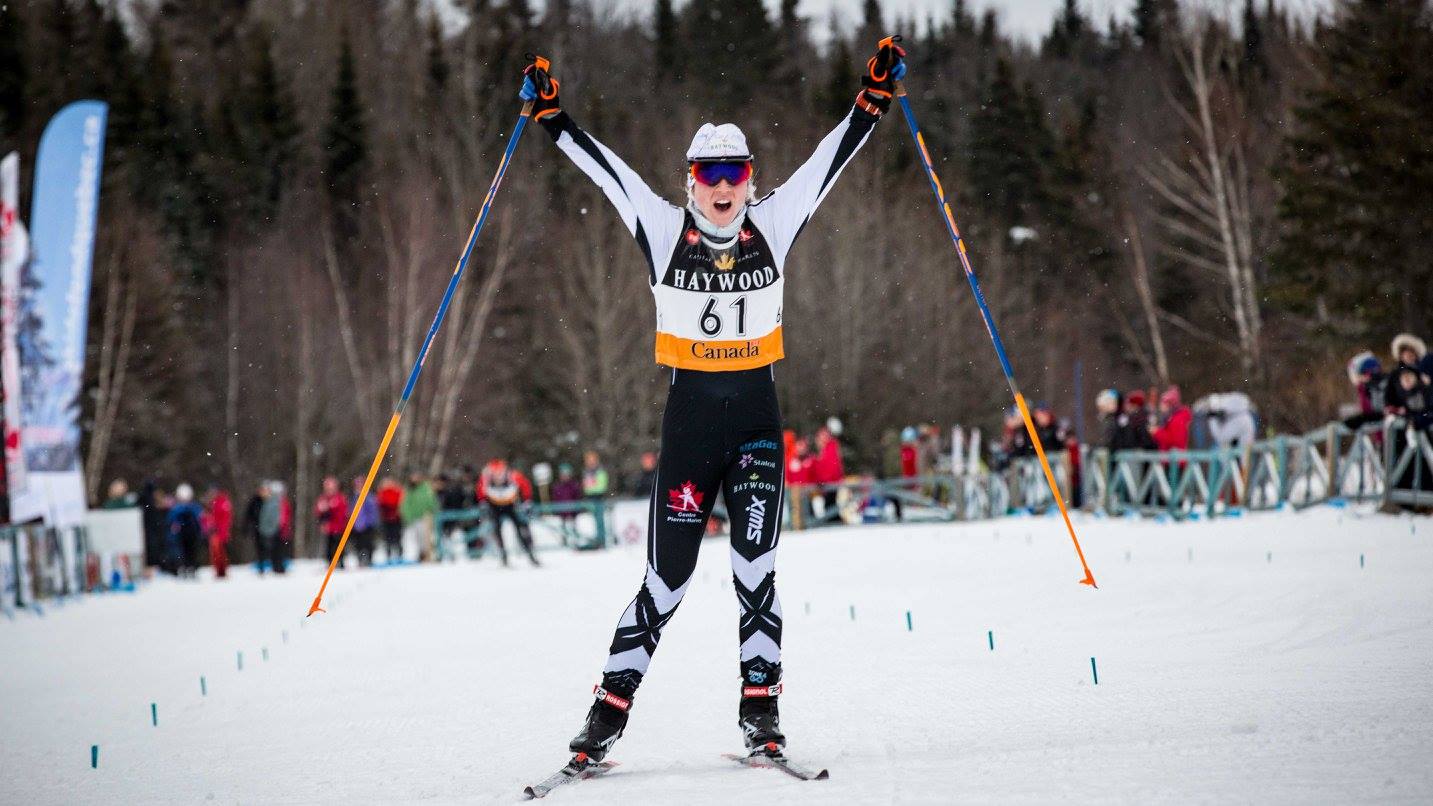
    Cendrine Browne (CNEPH/Canadian National U25 Team) celebrates her 11.9-second win in the women’s 15 k skiathlon on Jan. 8 at Mont Sainte-Anne NorAm Trials in Quebec. (Photo: Mario Walker/NorAm MSA 2018 Facebook)

    Since March of last year, Cendrine Browne has been waiting and trying, with all her might, for another top 30. She achieved it twice last season, placing 26th in the World Championships 30-kilometer mass start and 35th in the World Cup 10 k skate in Ulricehamn, Sweden (30th with Olympic-style scoring, which counts the top-four athletes for each nation in a given race).

    To meet Cross Country Canada’s (CCC) alternate qualifying criteria for the 2018 Olympics, Browne, who turned 24 this past September, needed one more top 30 at the World Cup with the same type of scoring.

    She had four weekends to give it her all in late November and December.

    Browne, of the Canadian National U25 Team and Centre National d’Entraînement Pierre Harvey (CNEPH), a.k.a. Pierre-Harvey National Training Centre, finished the 2017/2018 season-opening World Cup mini tour in 72nd overall with the 62nd-ranked pursuit time in Kuusamo, Finland.

    “That was my first [weekend of racing] so it was tough,” Browne recalled on the phone in early January. “But the last race of the mini tour went much better. I started to have good race feelings so I knew I was going in the right direction. The next weekend was Lillehammer [Norway] and I performed pretty well there in the skiathlon.”

    She finished 45th to lead two Canadian women finishers. With Olympic-style scoring, she was 31st.

    “To qualify for the Olympics I had to do a top 30 so 31st was a little frustrating, but I knew I was able to do a top 30,” Browne said. “I knew I could do a real top 30, not only a four per nation top 30. But I only had four weekends to do a top 30 and I was down to two.”
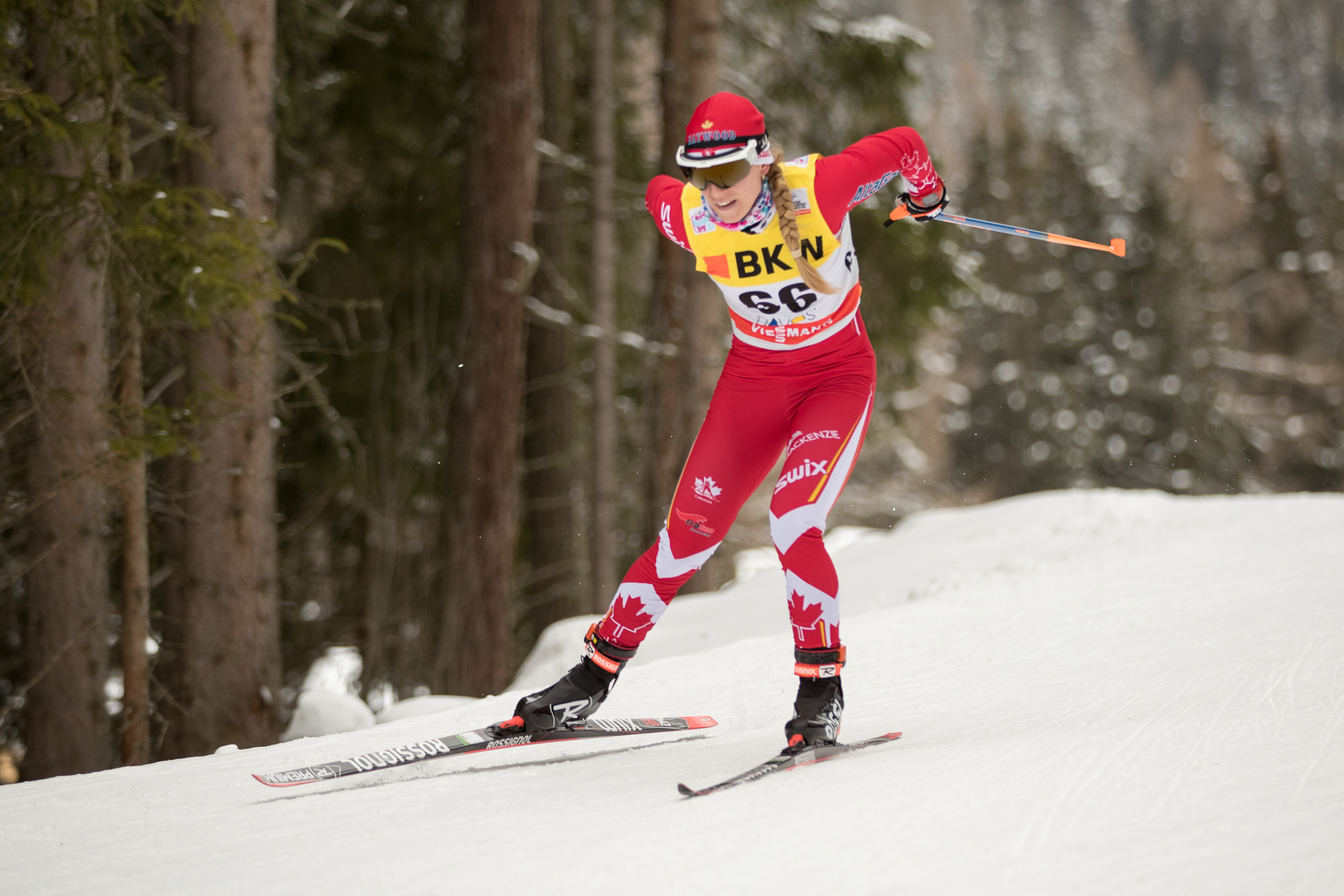
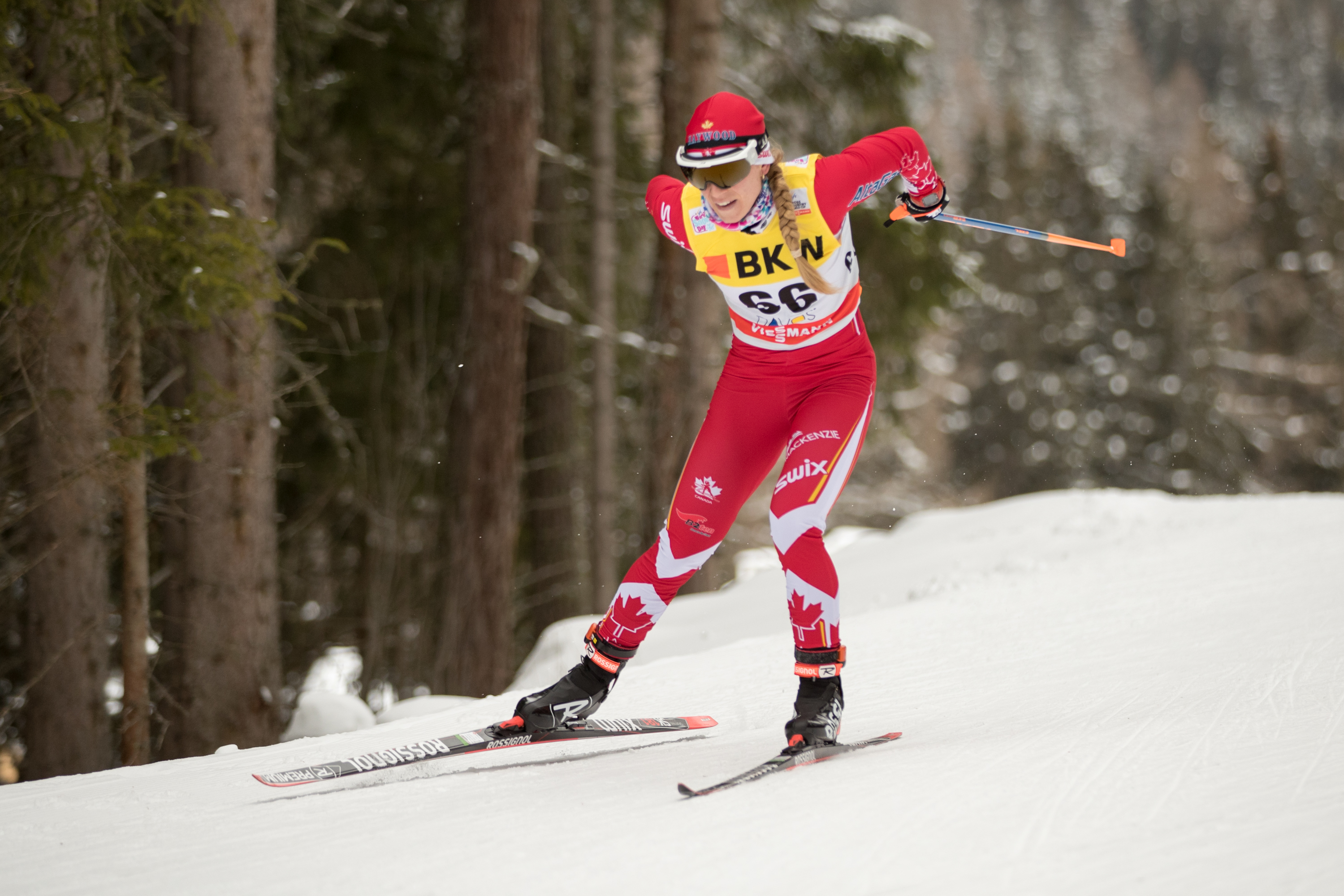
    Cendrine Browne racing in the World Cup 10 k freestyle on Dec. 10 in Davos, Switzerland. She placed 45th for the second World Cup distance race in a row. (Photo: Reese Brown / U.S. Ski & Snowboard)

    In Davos, Switzerland, she tied her season best of 45th in the 10-kilometer freestyle and led four Canadian women, but she was still outside the top 30 with Olympic scoring. Her result at altitude (about 1,560 meters above sea level) was promising, she said, but still not quite there in terms of what she needed.

    One weekend later, it all came down to two races in Toblach, Italy. There, she finished 55th in the 10 k skate and 66th in the 10 k classic pursuit.

    “Maybe I had put some pressure on myself, but I felt pressure from my federation and pressure to do that top 30, and I don’t work very well with pressure,” she said. “So unfortunately when we went to Toblach, I didn’t perform at all. I was so stressed out that I didn’t even have fun racing, and I just felt awful the whole skate race. I cried a lot.”

    With Period 1 of the World Cup behind her and Christmas break on the horizon, she told herself it wasn’t over yet. But she was still disappointed.

    “I was supposed to stay [in Europe] for Christmas … I was so focused on Plan A that I didn’t even think about Plan B,” she said.

    On the bright side, “Plan B” involved races in her home province of Quebec at Mont Sainte-Anne (MSA), where she trains with CNEPH. And she got to spent time with her family and boyfriend in her hometown of St-Jérôme, about 50 kilometers northwest of Montreal, as well as reset mentally for NorAm Olympic trials starting Jan. 5.

    “I was so focused on Plan A that I didn’t even think about Plan B.” — Cendrine Browne, Canadian National U25 Team and Pierre-Harvey National Training Centre, on qualifying for the Olympics

    “I was really really stressed out the week before the first race [at trials] and I was feeling the pressure again, and I really didn’t want to react the the same way as I did in Toblach so I went to see my sports psychologist,” Browne said. “She explained some stuff to me, like instead of thinking that the pressure is bad and instead of trying to run away from it, she said I have to try to accept it, and if I accept it, it would help me to go faster.”

    With that in mind, Browne tried to keep everything in perspective. Then, she came out at full steam for the classic sprint on Jan. 5, the first day of MSA NorAm trials.

    “I think it really worked well because I managed to sleep better the night before the race, and the morning of the race I was feeling like myself again,” she said. “I was skiing and just loving the glide as I usually do when I’m having a good day. I was smiling … and I felt free and I felt like myself. I feel like when I’m stressed out, I’m not having fun any more and that day I was having fun again.”

    A self-described freestyle distance specialist, she placed second in the classic-sprint qualifier then fourth overall in the final. As the top-performing woman between the qualifier and final, excluding fellow national-team member Dahria Beatty (who had previously met Canada’s alternate qualifying criteria for the Olympics), Browne effectively secured one of Canada’s coveted quota spots at the 2018 Olympics in PyeongChang, South Korea.

    While that wasn’t a done deal until a few weeks later, when CCC named its 11-athlete Olympic team, that result put Browne in the best place any Canadian Olympic hopeful would want to be.

    “I can’t say I’m qualified yet because it’s kind of complicated,” Browne said on Jan. 7. “… We can only say, like Daria, Emily [Nishikawa] and I, that we have reached an Olympic criteria and that we’re in good position to go to the Olympics.”

    Beatty and Emily Nishikawa, members of Canada’s World Cup Team, met CCC’s “Alternate Qualifying Criteria A” (three top-30 results) last season. According to CCC’s Olympic selection criteria, one female sprinter and one female distance skier would be selected to the Olympic team based on trials. So Browne effectively secured the female sprint spot, and as the rest of the week at MSA played out, she ended up being the top distance skier at trials as well.

    On Jan. 8, Browne won the women’s 15 k skiathlon on Day 2 of the trials. Two days later, she won the 10 k classic interval start as well. In the event that the trials sprint leader was the top distance skier as well, as was Browne, the criteria was written so that the second-ranked distance skier in those two distance races would be selected.

    That spot went to Anne-Marie Comeau, Browne’s former teammate. The two trained together at CNEPH three years ago, before Comeau left skiing due to an injury and concentrated on running. At last month’s trials, Comeau placed second in the skiathlon, about 12 seconds behind Browne, and third in the 10 k classic, about a minute and 5 seconds back. Browne won the classic individual start by 39 seconds over Katherine Stewart-Jones, who had previously placed fifth in the skiathlon.

    “I know she has a huge VO2 max,” Browne said of Comeau, a student at the Université Laval. “She has a huge cardio and these courses were perfect for her, so I knew she could do well, but I’m really surprised that she could actually be on the Olympic team, just because she wasn’t sure she wanted to ski anymore, so that’s really a big surprise for everybody. She trained for running for two years almost, and we didn’t think she would be such a big comeback.”

    (Browne is also enrolled at Laval, where she takes classes toward a bachelor’s degree in sports intervention in the fall, as well as HEC Montréal, a university business school where Browne is pursuing a certificate in administration during the summer and winter terms. “It’s important to prepare my post-career now,” she said during another interview this summer.)

    While both Browne and Comeau were named to the Olympic team on Jan. 29, along with Beatty and Nishikawa on the women’s side, Browne said her results at trials gave her confidence moving forward.

    “I was surprised because classic sprints usually are not my best race at all,” she said of her result in the classic-sprint qualifier to start the trials. “But I think I’m in good shape right now and that’s why I managed to do so well. Also the sprint course is really hard here, it’s like a World Cup course, so it’s made for distance skiers, I would say. Pure sprinters get tired on that course, it’s so hard. So I think it was a good course for me.”

    Going into the races at MSA, Browne had been on the NorAm podium 12 times since 2013. Two of those races were sprints (both in 2015).

    “I’m definitely more of a distance skate skier, without a doubt,” she said.

    Four Races, Four Big Results

    The MSA classic sprint marked Browne’s first time skiing heats since last year’s U.S. nationals in Utah, where she qualified fifth in the classic sprint and went on to finish 22nd after being eliminated in the quarterfinals.

    On Jan. 5, she clocked the second-fastest qualifying time on MSA’s 1.2 k course, 3.13 seconds behind Beatty, who won the qualifier in 3:41.55. Olivia Bouffard-Nesbitt, of Rocky Mountain Racers (RMR), qualified third (+8.08) and Maya MacIsaac-Jones (Canadian U25 Team/RMR) qualified fourth (+8.49). Taking Beatty out of the equation, that meant Browne needed to place fourth or better in the final to lock up that women’s sprint spot. According to the CCC sprint selection process, a given athlete’s result in the qualifier and final were scored equally (one point per place, lowest points win). So Browne had 2 points after qualifying and MacIsaac-Jones had 4. In the final, MacIsaac-Jones placed second to Beatty and Browne finished fourth, bringing both of their point totals to 6. The tiebreaker, according to the criteria, was the top qualifying result, which Browne had.

    Asked about home-course advantage on the trails she’s skied on for the last six years with CNEPH, Browne said the sprint course was brand new and specifically designed for the 2018 trials.

    “I hadn’t tried those yet, but they’re great. They’re really hard,” she said.

    In the heats, she made a point to lead early in her quarterfinal and semifinal in order to set the pace.

    “The course was so hard that you couldn’t start too fast, so I went in front of everybody and didn’t go too fast on the first uphill,” Browne recalled. “My race really started at the top of the first huge pitch, and at the top of that big uphill, that’s when I started to go faster and that’s where I created a little gap.”

    She won both her quarterfinal and semifinal to advance with ease to the heats, 1.5 seconds ahead of Annika Hicks, of the Alberta World Cup Academy (AWCA) in the quarter and 2.81 seconds ahead of Hicks again in the semifinal.
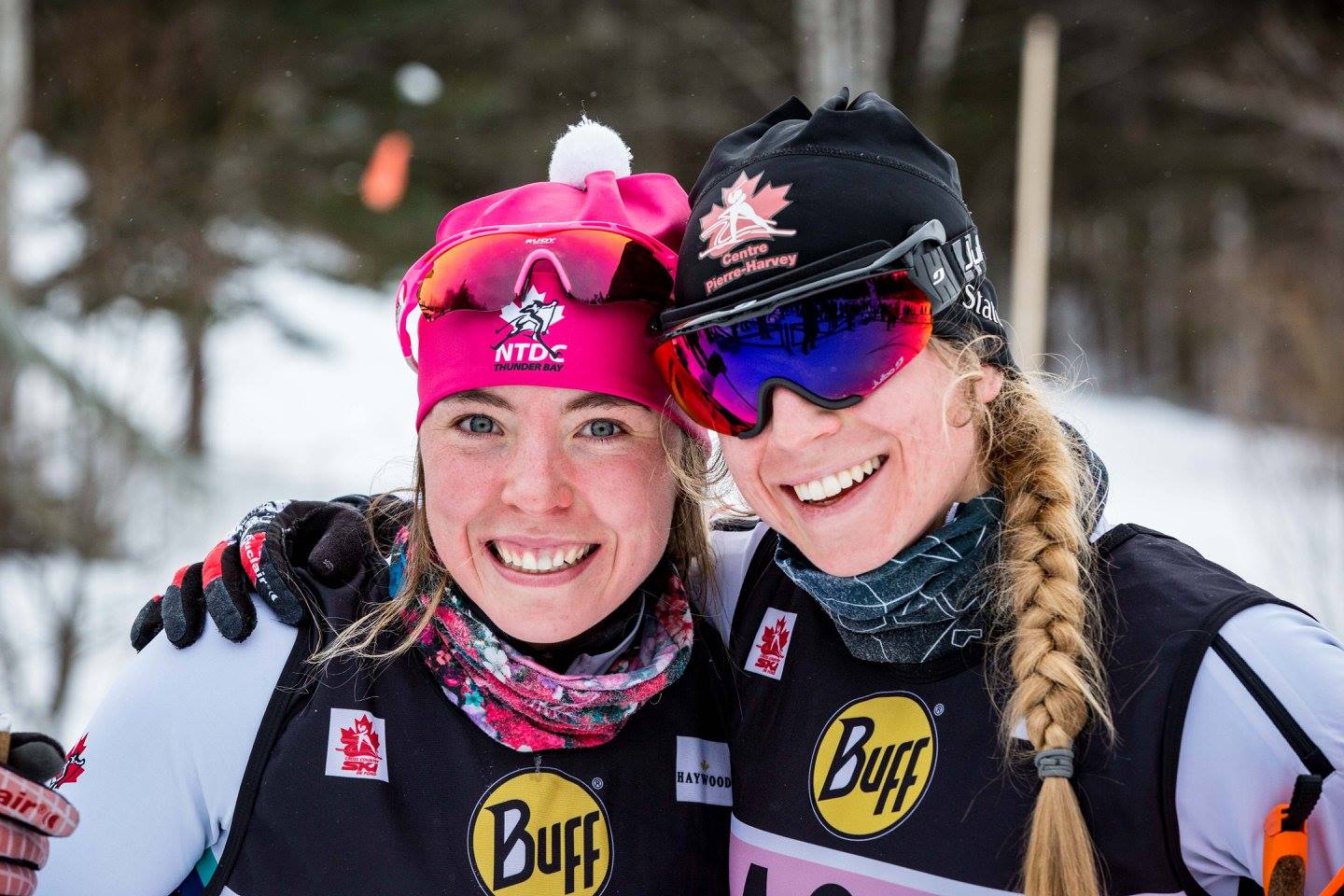
    NTDC Thunder Bay’s Katherine Stewart-Jones (l) and CNEPH’s Cendrine Browne, both the Canadian U25 Team, after the NorAm Trials classic sprint on Jan. 5 at Mont Sainte-Anne, Quebec. (Photo: Mario Walker/NorAm MSA 2018)

    In the final, Browne found herself behind Beatty (also of AWCA) and Stewart-Jones, of the Canadian U25 Team and National Team Development Centre (NTDC) Thunder Bay, at the top of the last major climb. They jumped in the tracks on either side of her, and Browne found herself without a track for the downhill.

    Beatty crossed the finish line first once more (after winning both her quarterfinal and semifinal as well), finishing in 3:45.02, while MacIsaac-Jones followed 0.64 seconds later in second place. Stewart-Jones was 1.2 seconds back in third, and Browne 4.5 seconds behind in fourth. Hicks placed fifth (+10.21) and Andrea Dupont (RMR) rounded out the women’s final in sixth (+12.18).

    Going into the final, Browne wasn’t aware she needed to finish fourth or better.

    “I don’t really like thinking about criteria before I go into a race so I had no idea what I had just done,” she recalled. “A friend [Alexis Turgeon] told me when I crossed the finish line, he said, ’I think you got that Olympic spot!’ I was like, ‘What?’ and then the rumors started to spread and then my coaches told me it was true, I had made it. It was pretty great.”

    One of those coaches was her coach, Louis Bouchard, head coach at CNEPH, also a Canadian World Cup coach and Alex Harvey’s personal coach, who attended the classic sprint at NorAm trials then left for Europe on Sunday.

    “He said he was almost as stressed out as I was and he didn’t sleep before the first race,” Browne said. “It’s a relief for him as well.”

    As for the distance races at trials, Browne said she had been targeting both.

    “I really didn’t expect to qualify in a sprint race,” she said on Jan. 7. “I was hoping to win those [distance] races and do a spectacular criteria, so I still want to do really well in those races. I don’t want to think about the result because I only want to think about what I can control, which is my movements and how I ski, but I want to have great feelings during this race and ski really well.”
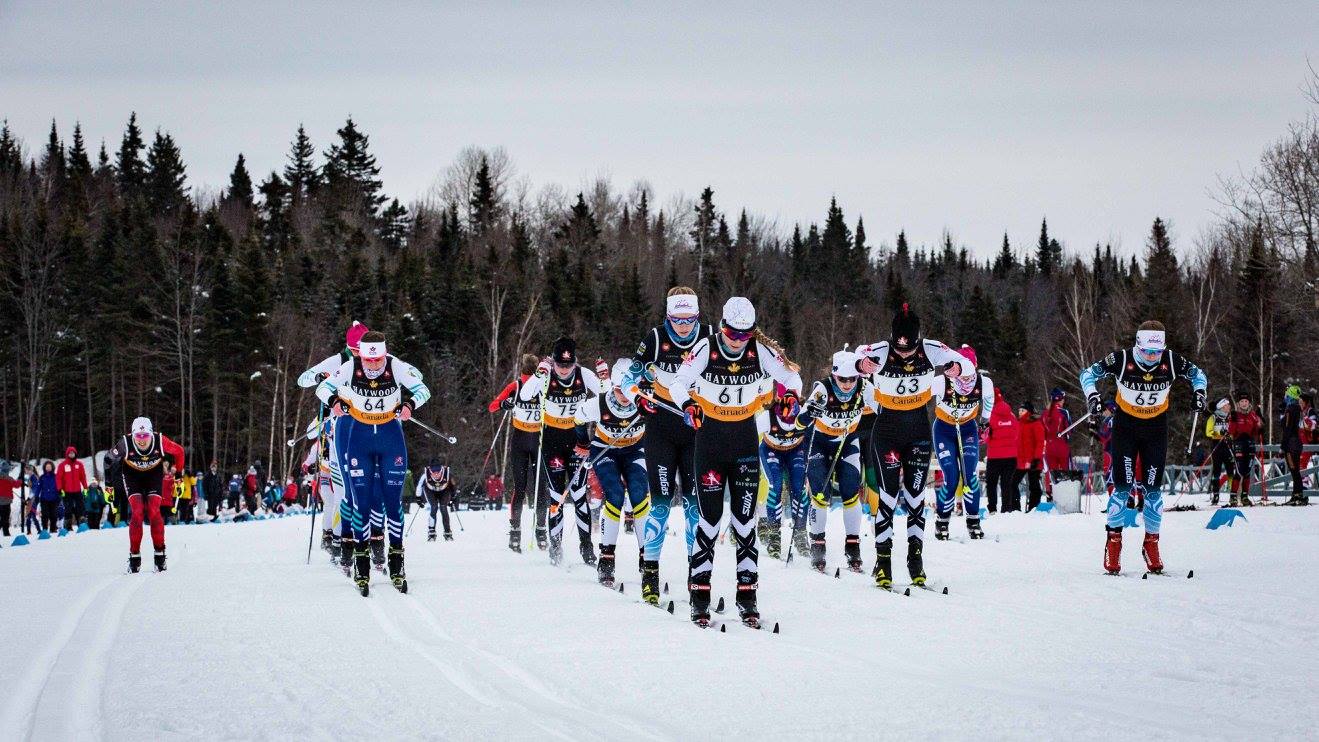
    Cendrine Browne (61) leading the women’s 15 k skiathlon on Jan. 8 at Mont Sainte-Anne NorAm Trials in Quebec. She went on to take the win by 11.9 seconds over Anne-Marie Comeau (Université Laval). (Photo: Mario Walker/NorAm MSA 2018 Facebook)

    On Monday, Jan. 8, she went on to win the 15 k skiathlon by almost 12 seconds after leaving the pack toward the end of the first 7.5 k classic leg.

    “My goal was to start really hard and try to break away right at the start,” Browne recalled.

    But she wasn’t able to shake skiers such as Beatty, MacIsaac-Jones, Comeau, or Stewart-Jones as quickly as she’d hoped. She built a small gap on the others around 6 k, but Comeau caught her before the transition to skate and Browne fell on the final climb before the exchange.

    “I fell right before the downhill so I lost my gap,” Browne recalled. “And then we headed towards the ski exchange and I had some trouble with my binding and I couldn’t clip it on. It didn’t work, so I lost like another five seconds there. Anne-Marie was at the ski exchange before [me], and it took me like 2.5 k to catch up to her.”

    After catching Comeau about a third of the way into the skate leg, Browne said she took the lead in an effort to drop Comeau over the next 2.5 k.

    “I thought I could gap her, but I couldn’t,” Browne said. “And so on the last 2.5 k, I thought about my tactic. I saw how she skied, and I saw where I could pass her, so I stayed behind her and waited for the last big uphill, and I passed here there. … I knew I had faster skis and I knew I’m better on sections that need more power.”

    With about a kilometer to go, Browne skied away to an 11.9-second victory. The next day, she raced to second in the freestyle sprint (a NorAm race but not an Olympic trials event) after qualifying in third.

    She hadn’t planned on racing that second sprint of trials (and her third race in five days), but her coach, Bouchard, encouraged her to use it as intensity training before the Olympics.

    “At first I wasn’t supposed to do that sprint, but … I had to race as much as I could before leaving [for Europe],” she said. “After the qualifier, I asked Louie, ‘I’m feeling really tired. Should I race in the heats?’ and he said, ‘Yeah, you should.’ … I didn’t know how it would turn out, but it turned out pretty well.”

    The next day, she woke up for her fourth race of the week, the 10 k classic, not feeling as fatigued as she had on some of the previous days.

    “Of course, I was tired, but I was telling myself everybody’s really tired,” Browne recalled. “My goal was to push as hard as I could during the whole race because I had to prepare as well as I could for the Olympics.”
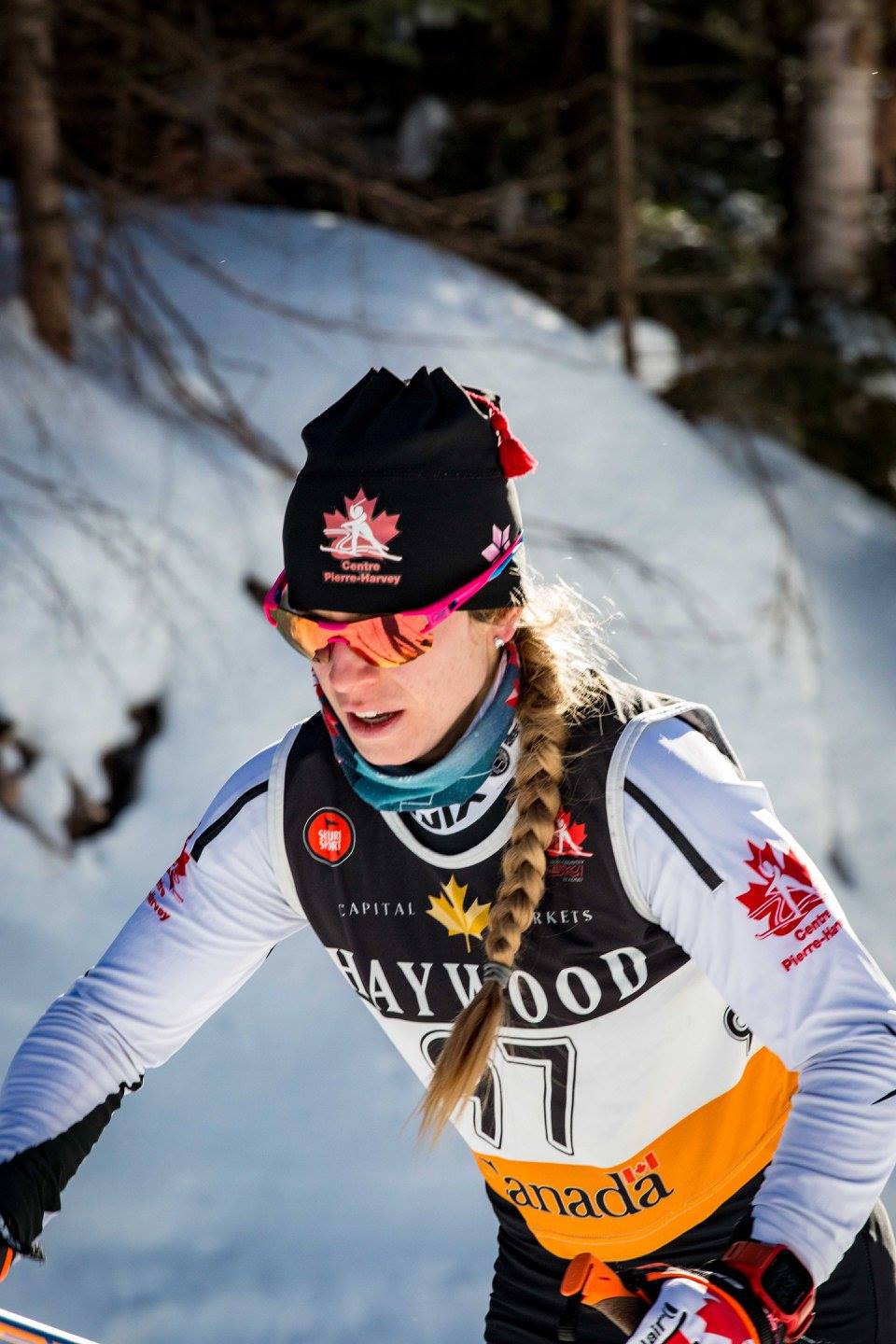
    Cendrine Browne racing to first in the women’s 10 k classic on Jan. 10 at Mont Sainte-Anne NorAm Trials in Quebec. (Photo: Mario Walker/NorAm MSA 2018 Facebook)

    Despite being one of the last starters in that race, she said she wasn’t quite sure where she stood during it, so she simply pushed as hard as she could.

    “It was like, I don’t wanna be second … and then it turned out that I had a really big gap,” she said. “I felt so good during that race. You don’t feel that good that often in races during the year, so I think I’m in really good shape leading towards the Olympics so that’s really exciting and it’s great news.”

    Before leaving Quebec for a mid-January training camp in Livigno, Italy, Browne summarized her trials performance.

    “I really wanted to show that I deserved my spot,” she said. “I qualified in a sprint race, but I really wanted to show that I was that I was good in distance racing, too, because I am a distance racer. … I guess you could say I qualified in all the events, but I just wanted to show Cross Country Canada that I that I deserved my spot and I really wanted to be safe. I think that’s what kept me going.”

    And while qualifying domestically was her last resort to get to her first Olympics, Browne said it all worked out in the end.

    “‘Actually I’m kind of happy I was in Mont Sainte-Anne; it gave me confidence that I really deserve my place and it was really nice to ski at home, well, kind of at home,” she said. “My boyfriend was there, my family was there, and lots of friends and everybody was cheering … it was really fun. Great atmosphere and the races were really well-organized.”

    “You don’t feel that good that often in races during the year, so I think I’m in really good shape leading towards the Olympics so that’s really exciting…” — Browne

    Browne and the rest of the Canadian World Cup team returned to World Cup racing Jan. 27-28 in Seefeld, Austria. There, she placed 54th in the freestyle sprint then 37th in the 10 k freestyle mass start. She was the second Canadian in the 10 k, after Nishikawa in 35th, and with Olympic-style scoring, Browne would’ve been 33rd.

    “I think us three girls did really well today, considering we are just coming back from a training camp,” Browne said after the mass start, referring to Nishikawa, herself, and Beatty, who placed 45th. “So it’s really looking good for the Olympics.”

    Path to PyeongChang

    Last summer, Browne worked to rehab back tension and knee tendonitis. Those injuries only set her back about two weeks in July, she said, and she attended all training camps, including the Canadian women’s team camp in New Zealand in late July and early August.

    “I did a total of 60 hours of training in just under three weeks and realized that despite my small injuries my shape was intact; I was as much in my place as before among these girls,” Browne said in August.
    As of early January, she said she was injury free.

    With more than 40 World Cup starts currently behind her, Browne said she’s reached a new level with her racing. Last year was about understanding “the importance of self-confidence,” she said last summer, “but also that the most important thing is to have fun.

    “It’s easy to forget when you’re at the top level,” she continued. “When I was stressed before the start of a race, I would ask myself, ‘Why are you doing this?’ Because I like it.”

    Initially, it was lining up against the best skiers in the world that intimidated her.

    “In the beginning, you reach the highest level, you face the best in the world. It’s intimidating being new to the field, but I’ve learned to master this stress throughout the season,” she said. “At the end, I felt in my place.”

    — François Léger Dionne, Andrea Potyondy-Smith and Gabby Naranja contributed
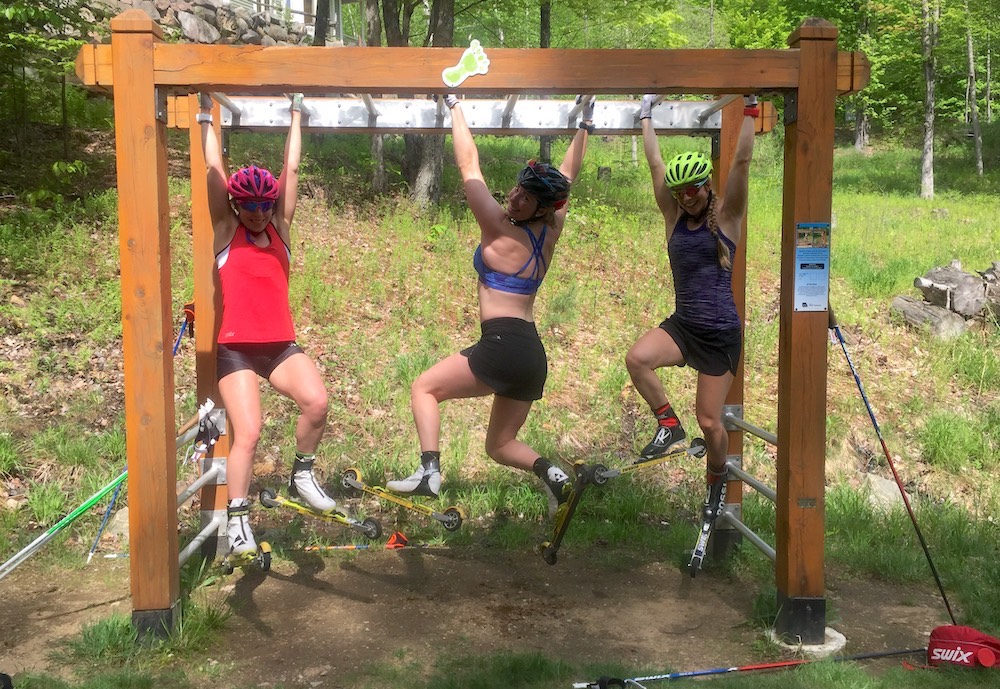
    Canadian national-team member Cendrine Browne (r) hanging with her teammates Katherine Stewart-Jones (l) and Dahria Beatty at a training camp in Tremblant, Quebec, in May. (Photo: Dahria Beatty)
    La membre de l’équipe nationale canadienne Cendrine Browne (D) en compagnie de ses coéquipières Katherine Stewart-Jones (G) et Dahria Beatty lors d’un camp d’entraînement à Tremblant, Québec, en mai. (Photo: Dahria Beatty)

     

  • Monday Rundown: Leclair Leads North Americans in 15th in U23 Worlds Sprint (Updated)

    Monday Rundown: Leclair Leads North Americans in 15th in U23 Worlds Sprint (Updated)

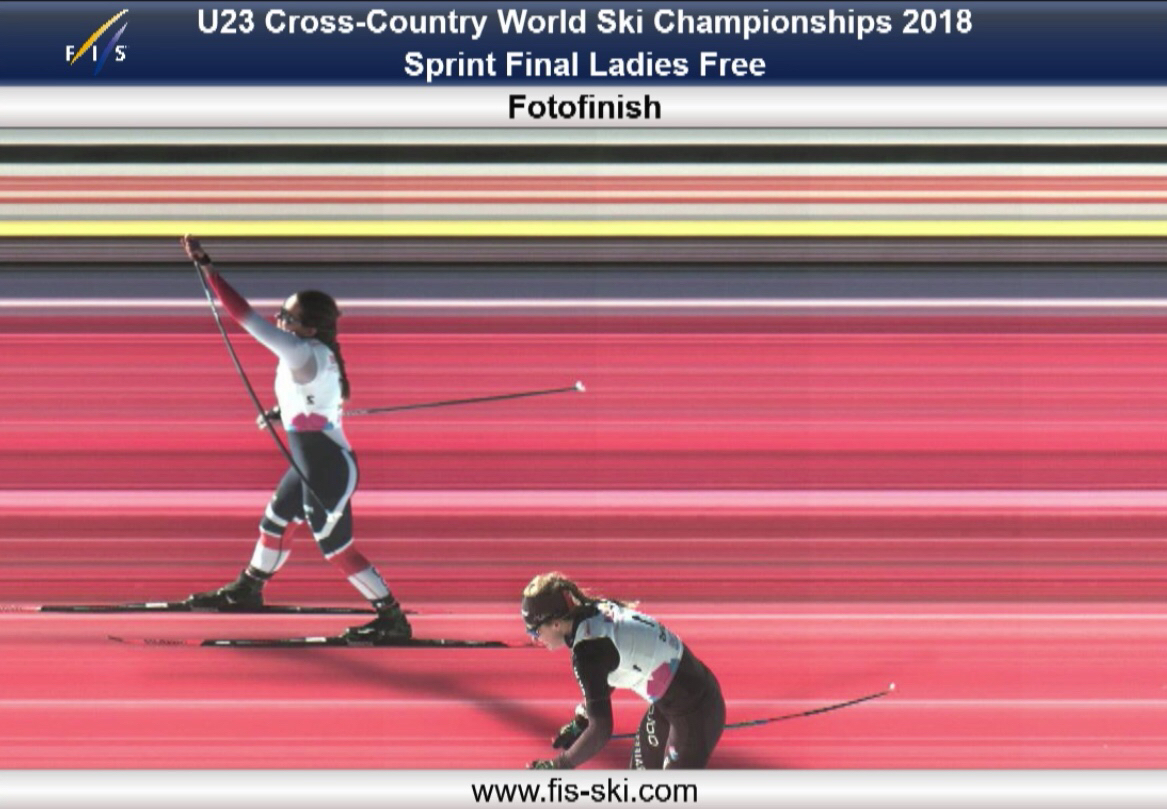
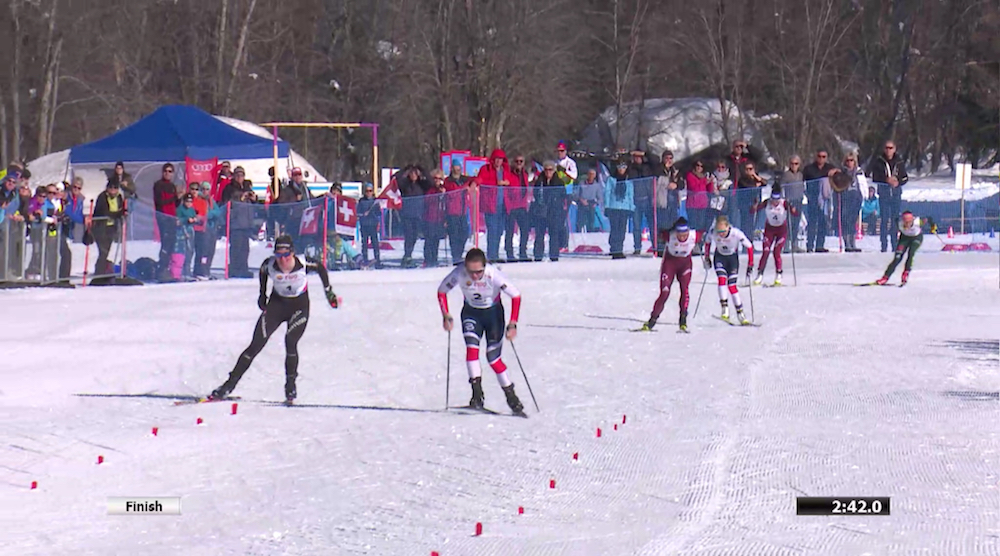
    Norway’s Tiril Udnes Weng (second from l) and Switzerland’s Nadine Fähndrich (l) battle for first down the finishing stretch of the women’s final for the gold medal in the U23 World Championships skate sprint in Goms, Switzerland. Weng won it by eight-hundredths of a second. (Screenshot: Swiss Ski livestream)

    (This article has been updated to include comments from Canada’s Laura Leclair, Katherine Stewart-Jones and Maya MacIsaac-Jones, as well as American Julia Kern.)

    U23 World Championships (Goms, Switzerland): Freestyle sprints

    On the first day of U23 World Championships racing in Goms, Switzerland, Norway’s Tiril Udnes Weng tallied her first individual world title in the women’s 1.2-kilometer freestyle sprint, winning the A-final in 2:50.24 minutes, just 0.08 seconds ahead of Swiss World Cup regular Nadine Fähndrich in second. Another World Cup skier, Natalia Nepryaeva of Russia finished third, 4.78 seconds out of first.

    Weng, 21, is no stranger to World Cups, either. Just two days ago, she qualified 11th in the World Cup skate sprint in Seefeld, Austria, and went on to place 17th overall.

    On Monday, she qualified second, 0.2 seconds off Fähndrich’s top qualifying time of 3:03.51. Weng then placed second to Nepryaeva in the fourth quarterfinal, a heat that included Canadians Maya MacIsaac-Jones and Katherine Stewart-Jones, both of the Canadian National U25 Team. While Sweden’s Moa Olsson finished third in that quarterfinal and advanced as a lucky loser based on time, the two Canadians did not. MacIsaac-Jones had previously qualified in 19th and Stewart-Jones in 22nd. Overall, MacIsaac-Jones placed 18th and Stewart-Jones was 23rd on the day.

    In an email, MacIsaac-Jones explained her goal had been to make the semifinals.

    “My strategy was to stick behind the top two girls, and hang on as best I could,” she wrote of her quarterfinal. “As Canadians we tend to be pretty good at downhilling, so I tried to use that to my advantage. I wasn’t quite able to stick with the top girls over the crest of the big hill, but I was happy to be fairly competitive in the heat overall!”

    Still, the top 20 was her best result in her fourth trip to Junior/U23 Worlds.

    “I’m disappointed of course to have missed out on making the semi-final, but I feel I did the best I could with what my body had on the day so I’m happy with that,” she continued. “It was of course exciting to get my first top-20 , but also disappointing because I felt like my body wasn’t moving as well as it was at trials a few weeks ago (I got sick right after arriving in Europe which probably didn’t help with that).”

    For Stewart-Jones, this marks her fifth Junior/U23 World Championships.

    “Over the years I have learned that it’s just another race, and that I don’t need to treat it any differently,” she wrote in an email on Tuesday. “Coming into te race I knew that I was in the best shape I’ve been all year, but I also had only done one skate sprint qualifier  and no heats) this year so I wasn’t sure what to expect.”

    Her goal had been to reach the semifinals and finish in the top 12.

    “I am happy with how I skied the qualifier. The quarterfinal was tough,” Stewart-Jones wrote. “My teammate Maya and I ended up being in a really fast heat. I felt like I skied well technically but I don’t think I skied it how I needed to to have a chance of moving on. I tried holding on to the top 2 girls over the top of the first hill and ended up losing time on the second… I think it would have made more sense to lay back a bit over the top of the first to save some gas for the end.”

    Stewart-Jones as well as MacIsaac-Jones came incredibly close to making Canada’s 2018 Olympic team based on their results at NorAm trials earlier this month.

    “Overall, I am happy with how the body feels but disappointed with how I skied tactically,” Stewart-Jones wrote. “Not making the Olympic team was definitely more frustrating than it was disappointing. The whole ordeal was a bit exhausting, with first missing out on the 4th spot by less than a second and then being 12th on the list of [11] quota spots, it was really as close as it gets. I’m doing my best to fuel that frustration into positive energy so that I can perform at my best here. I am really looking forward to the next 2 races!!”

    Norway’s Tiril Udnes Weng (l) and Switzerland’s Nadine Fähndrich in a photo finish for first in the women’s freestyle sprint final at U23 World Championships on Monday in Goms, Switzerland. Weng won it by eight-hundredths of a second. (Screenshot: Swiss Ski livestream)

    Fähndrich won both her quarterfinal and semifinal leading up to the final, and Weng won the second semifinal by 0.59 seconds over Nepryaeva. In the final, Weng had the edge.

    “I dream about winning, that’s the goal of my season,” Weng said during a post-race interview in the arena. “So it felt good to win.”

    Three Canadians made the heats, with Laura Leclair of the Pierre-Harvey National Training Centre (CNEPH) qualifying in 26th then placing third in her quarterfinal, 2.75 seconds behind German winner Nadine Herrmann. That put Leclair 15th overall on the day in her first U23 World Championships race.

    “As it is my first time at Worlds and my first year in a big category (U23) I was coming here for experience,” Leclair wrote in an email on Tuesday. “Experience to ski internationally, in Europe and against the best. Of course, I was hoping to perform but I never anticipated a top 15.

    “Since I was seeded 30th, I was a little skeptical of making it through the qualifier,” she continued. “Qualifying 26th was a very exciting moment.”

    In her quarterfinal, she said the pace didn’t pick up until about halfway up a long uphill out of the start, a climb that lasted for about a minute and a half.

    “I was in a strong position (4th) but it was hard to make my way to the top,” Leclair wrote. “At the top of the big hill, a girl broke a pole and I was able to pass her and push over the hill into the downhill in order to come closer to the two girls in front. The last uphill felt like it was just give or take. Obviously, I chose the give option and gave it all I had into the finish. My heat wasn’t one of the fastest so I wasn’t a lucky loser but I am very happy of how I skied that course.

    “This season has been full [of] surprise,” she concluded. “Just qualifying for Worlds in Canada was one! I am very happy that all my efforts and my dedication to the sport are paying off. For the rest of the week, I want to have some strong races, especially in the skiathlon and maybe surprise myself again.”

    Two Americans qualified in the top 30 as well, with Lauren Jortberg (Dartmouth Ski Team) in 14th and Julia Kern (U.S. Ski Team/Dartmouth/Stratton Mountain School T2 Team) in 21st. Jortberg went on to finish fifth in her quarterfinal, 7.28 seconds behind German winner Pia Fink, and Kern finished sixth in Fähndrich’s quarterfinal, 22.28 seconds out of first. Overall, Jortberg placed 22nd and Kern was 27th.

    In an email, Jortberg, who competed at U23 World Championships last year at Soldier Hollow in Midway, Utah, explained her goal was to qualify for the heats.

    “I honestly had no idea what to expect in Goms this year because Soldier Hollow felt just like US Nationals and the Super Junior National Qualifiers I’d been going to for the past ten years,” Jortberg, a Dartmouth College sophomore, wrote on Monday. “Obviously the competitors from all over the world was different, but was easy to visualize what is going to be like. The venues are similar in many ways because there are very few trees making it very open and a great spectators course.

    “A big difference between Goms and Soldier Hollow is the little towns everywhere,” she continued. “The first ski we did here, we skied through the roads and through a town. There are ski trails everywhere here, we could even ski from the venue to the hotel (which is pretty far)! For the ski courses, I think Goms is one of the most challenging ski courses I’ve ever raced on. There are huge climbs are incredibly technical downhills! Its a one of the most exciting places I’ve ever raced, I love it so much.”

    As for her racing on Monday, she wrote that she was “really psyched because I felt really strong and smooth in the qualifier! I was a bit bummed because I had to scrub a fair amount of speed skiing behind a girl I caught on the really technical downhill. The heats were really fun!! I had a great starting position and skied really smooth up the big climb. Then I took a very gutsy move on the downhill to sling shot into first place on the inside corner around the downhill turn. Unfortunately right after that I got caught up in a tangle on the last climb, and then I lost contact with the lead group. I was bummed to get caught up in a tangle, but it was really cool to be able to ski with these girls!”

    Overall, Jortberg described the day as “pretty incredible.”

    “My motto has always been that sprints are funny because ‘anything can happen’ for the good and bad!” she added. “I’m pretty excited for the rest of the week of racing even though this race was my main target. These courses play really strongly to my strengths so it should be fun to see what I can do!”

    Kern explained in an email that she’s been sick for the past month so her main goal was to start Monday’s race. But for a long time leading up to this race, she had envisioned a top 10.

    “Regardless of how I was feeling, one of my goals was to ski with good technique because that is something you can always control,” Kern wrote. “I was pretty content with my qualifier, given being sick. Skiing out there today, I had no idea if I would surprise myself and my illness wouldn’t impact my skiing or if I was just going to feel absolutely terrible. I was happy with how I placed given how I felt.”

    In the heats, she wanted to stay in contact with leaders up the course’s big climb, then try to “drop the hammer on the downhill and last uphill.”

    “However, my quarterfinal did not play out that way,” she wrote. “The pace was hot from the start, with bib #1 [Fähndrich] gunning from the start. I stuck with the heat until part way up the first climb, where I started to lose the leaders. I did not feel good and I had no energy so I was not able to hold the pace of the other competitors. I had considered not doing the heats because I felt pretty wiped after the qualifier, but the competitor inside me couldn’t just walk away from my favorite thing—sprint heats.

    “Given my current health state, I feel okay about my day, but I am obviously bummed because this was the race I was looking forward to most this season,” Kern added. “I am looking forward to getting healthy in time to race the 10k classic, or at the very least the skiathlon!”

    Also for the U.S., Lydia Blanchet missed qualifying by 0.32 seconds in 32nd, as did Canada’s Sophie Carrier-Laforte, who was 3.68 seconds out of the top 30 in 34th. American Nicole Schneider finished 44th.

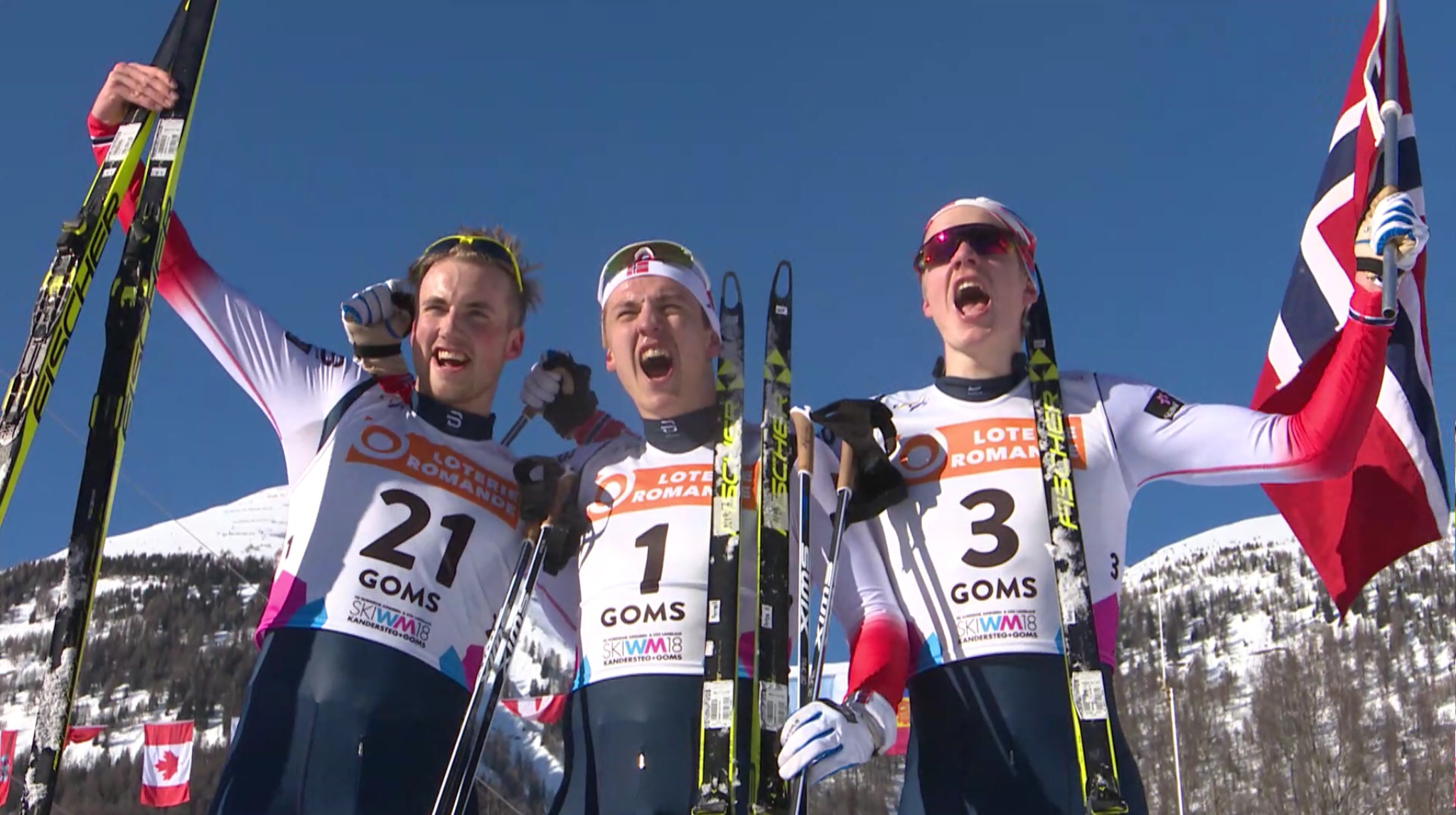
    The all-Norwegian men’s freestyle sprint podium on Monday at U23 World Championships in Goms, Switzerland, with Erik Valnes (c) in first, Jan Thomas Jenssen (l) in second and Even Northug (r) in third. (Screenshot: Swiss Ski livestream)

    In the men’s 1.5 k skate sprint on Monday, Norway swept the men’s podium, with Erik Valnes winning his first World Championships medal in 2:56.38, Jan Thomas Jenssen finishing 0.24 seconds back in second, and Even Northug placing third (+6.34).

    For the 21-year-old Valnes, this marked his first U23 World Championships (or Junior Worlds for that matter). He’s competed in two World Cup sprints this season, placing 22nd in the skate sprint earlier this month in Dresden, Germany, and 27th in a classic sprint in December in Lillehammer, Norway.

    Valnes started Monday by winning the qualifying round in 3:00.18, by 0.77 seconds over Sweden’s Anton Persson, then won his quarterfinal and semifinal, both by nearly half a second, before besting his fellow Norwegians in the final.

    “Fun to take the gold medal at the end,” Valnes said during a televised in-arena interview after the final. “It was my biggest goal this year, so it means a lot, of course. A gold medal is always good to have.”

    No North American men qualified for the heats. Canada’s Ricardo Izquierdo-Bernier placed 40th, Antoine Briand was 41st, Philippe Boucher 42nd, and Olivier Hamel 60th.

    For the U.S., Bill Harmeyer finished 46th, Andrew Egger was 47th, Thomas O’Harra 64th, and Zak Ketterson 65th.

    Results: Women’s qualifierWomen’s final| Men’s qualifier| Men’s final

  • FasterSkier’s Canadian Continental Skiers of 2016: Andy Shields and Dahria Beatty

    FasterSkier’s Canadian Continental Skiers of 2016: Andy Shields and Dahria Beatty

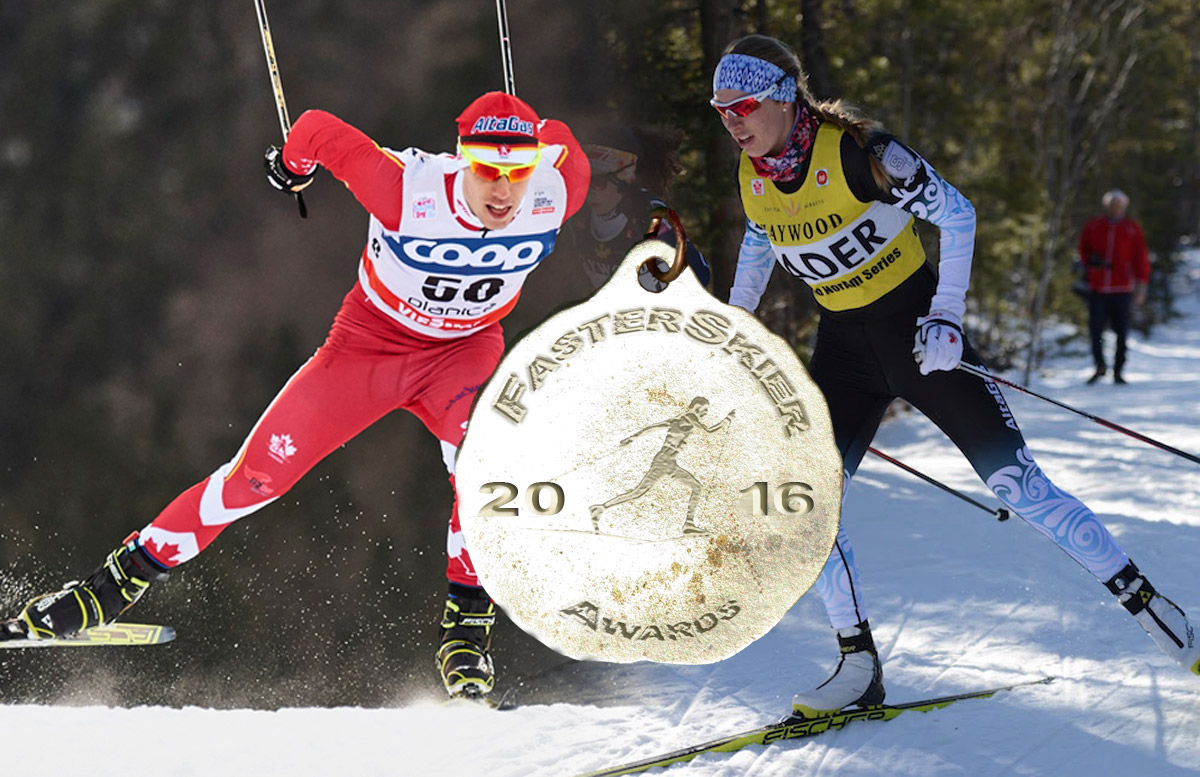
    The 2015/2016 aggregate NorAm leaders Andy Shields (l) and Dahria Beatty are FasterSkier's Continental Skiers of the Year for Canada. (Photos: Fischer/NordicFocus and W. James MacLean)
    The 2015/2016 aggregate NorAm leaders Andy Shields (l) and Dahria Beatty are FasterSkier’s Continental Skiers of the Year for Canada. (Photos: Fischer/NordicFocus and W. James MacLean)

    The 2015/2016 awards continue, chosen by the FasterSkier staff based on performances from last season. While not scientific, these points of recognition are intended to reflect a broader sense of the season in review.

    Previous categories: Breakthrough Skiers (Canada & U.S.) | Biathletes | Coaches | Collegiate Skiers | Juniors | Nordic Combined | Para-Nordic

    ***

    Andy Shields, Thunder Bay National Development Centre

    One point. That was the difference between the men’s overall NorAm winner and the runner-up of Canada’s Continental Cup circuit this season, and emerging skier Andy Shields came out on top.

    The 25-year-old Thunder Bay National Development Centre member — who broke through at the World Cup level with the 30th-fastest time in the men’s 15 k freestyle pursuit at the Ski Tour Canada (STC) in Quebec City — made his international World Cup debut this season. In all, he tallied eight World Cup starts in 2016 (including six stages of the Tour), but it’s what he did on the NorAm that makes him our choice for Continental Cup Skier of the Year.

    “It was a pretty good race,” Shields told FasterSkier after the Quebec City pursuit, his second World Cup distance race, in which he placed 65th with the 30th-best time. “The wave start I was in was pretty quick, so I was able to get in the front group with them, and they pulled me along to a really good time on the day. Pretty happy that I’m able to manage that pace.”

    Shields started 2015/2016 modestly, with an 11th-place finish in the freestyle sprint at the U.S. SuperTour opener in West Yellowstone, Mont., followed by a 37th place in the 15 k skate the next day.

    In the first NorAm of the season in Canmore, Alberta, Shields reached the podium in the classic sprint, placing third behind his NDC teammate Bob Thompson and Patrick Stewart-Jones, of the Alberta World Cup Academy (AWCA), respectively. From there, Shields continued to gain momentum, winning the skate sprint at the next NorAm in Sovereign Lake, B.C., and placing fourth in the 15 k skate race before leaving for nearly a month of World Cup racing in Europe.

    Upon returning to Canada in late January, Shields didn’t waste any time jetting to first and second in two NorAm distance races in Mont Sainte-Anne, Quebec. He went on to win the 20 k classic mass start at Eastern Canadian Championships, and at Western Championships, he finished in the top six in all four races: placing second in the 20 k classic mass start and third in the classic sprint. After that, Shields packed his bags for the STC, raced six World Cups in nine days, then finished his season at Canadian Ski Nationals in Whitehorse, Yukon. There, he missed the podium in four individual races, but reached the skate sprint final and placed sixth.

    Between the men’s NorAm distance and sprint races this past season, Shields was the most consistent — besting Kevin Sandau (AWCA) by the slimmest of margins (1 point) in the men’s overall. Shields was fourth in the overall sprint standings, behind Julien Locke (Black Jack), Bob Thompson (NDC Thunder Bay), and Patrick Stewart-Jones (AWCA), respectively.

    Dahria Beatty, Alberta World Cup Academy/Canadian U23 Development Team

    The winner of the both the women’s NorAm overall and sprint series, Dahria Beatty dominated from start to finish last season, winning both a distance skate race and classic sprint at the Canmore NorAm opener, then winning four more NorAms before taking part in the STC.

    During her first-ever World Cup tour, in which she notched 15th in the Canmore classic sprint, Beatty turned 22. The national U23 development team skier went on to win two out of three individual races she competed in at nationals in her hometown of Whitehorse (winning the 10 k skate and skate sprint, and placing second in the 5 k classic).

    For her 15th place — her first individual World Cup top 30 — FasterSkier dubbed her Breakthrough Skier of the Year. For her performances at home in Canada on the NorAm circuit, finishing in the top eight of every race she competed in this season, Beatty is Continental Skier of the Year.

    “My ideal goal for this season would be able to crack the top 30 on the World Cup,” Beatty said in December before leaving for Canada’s U25 B-Tour trip in Europe. “That’s a big goal…”

    Honorable mentions

    Kevin Sandau, Alberta World Cup Academy

    Race winner Kevin Sandau (AWCA) (r) in the leader's bib leads Bob Thompson (Team Hardwood) during the men's NorAm 15 k freestyle individual start on Sunday in Vernon, British Columbia. (Photo: XTS Photography)
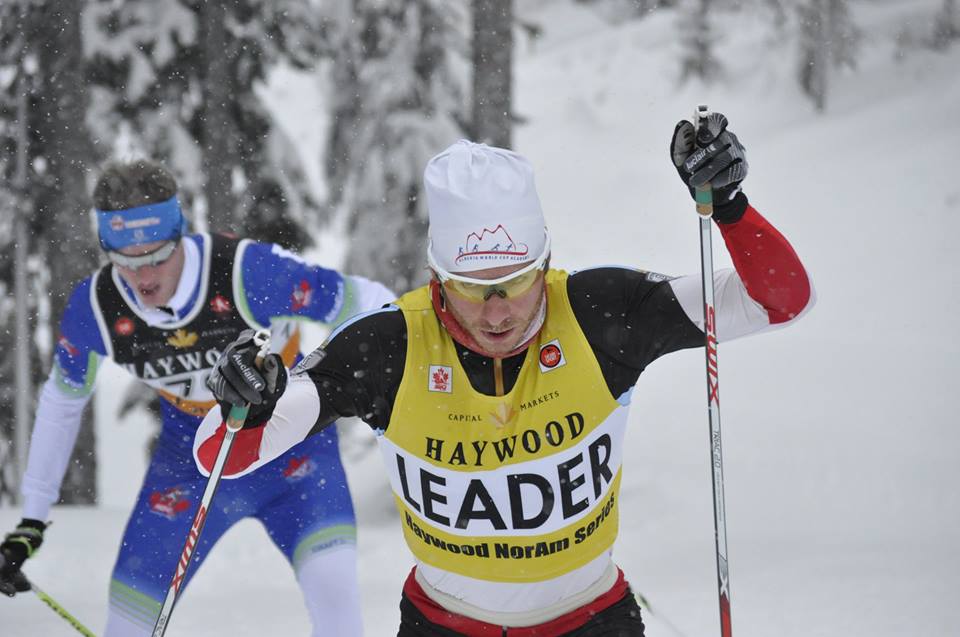
    Kevin Sandau (AWCA) in the NorAm leader’s bib leads Bob Thompson (r) during the men’s NorAm 15 k freestyle individual start at Sovereign Lake, B.C. Sandau went on to win by 37 seconds over Knute Johnsgaard (not shown). (Photo: XTS Photography)

    Kevin Sandau’s only 27, but it feels like he’s been at the forefront of Canadian cross-country skiing for a long time. After debating whether he would compete in 2015/2016, Sandau started the winter on a tear, winning back-to-back Canmore distance races in December and remaining undefeated in NorAm distance races until Easterns in early February (where NDC Thunder Bay’s Michael Somppi dethroned him in the 15 k skate).

    After that, Sandau never reached the top of the podium again, but he came close in second in the 10 k skate at Westerns (behind Russell Kennedy of Canmore Nordic). At the end of the season, he finished second in the NorAm overall with 724 points, one short of Shields.

    On March 26, after placing fifth in his final race of the season (the 50 k classic mass start at nationals), Sandau announced his retirement on Facebook.

    “Today marks the end of my racing career. The memories are countless and the experiences beyond amazing. I can’t think of a better way to have spent the past 10+ years,” he wrote. “Thanks so much to all the volunteers, coaches, teammates, skiers, parents, fans and role models for the journey. I’m looking forward to the next chapter and hope it’s as good as the last. KevOut.”

    Sandau previously stated that his season-long goal was to qualify and focus on the STC. He did so, placing 43rd overall in the Tour. In his career, he raced 29 World Cups, starting with his first in 2008 in Canmore.

    Besides skiing, Sandau brought humor to his ski racing and shared it on social media.

    In a prank April Fools’ article on FasterSkier, Sandau played along with the idea that he would be Canada’s next head coach.

    “I feel like my practical experience on the domestic circuit and top-50ish on the World Cup is what really sets me apart from the rest,” he jested. “You learn a lot of racing in the back of a World Cup, it’s like the best seat in the house, and you can watch firsthand the whole race as it unfolds, at least for a little bit.”

    Cendrine Browne, Pierre-Harvey National Training Centre/U23 Development Team

    "Me and Dahria [Beatty] worked together to stay on the tail of Emily Nishikawa, who's our best Canadian. It was a tough course with few spots to rest. ... Today was a critical stage because we were afraid to get lapped by the winner, but we didn't so we're now heading to Canmore with confidence." -- Cendrine Browne (CNEPH/CNST)
    Cendrine Browne at the Ski Tour Canada in Quebec City. (Photo: John Lazenby/Lazenbyphoto.com)
    Second to Beatty by 160 points in the NorAm overall, Cendrine Browne, a 22-year-old member of the Pierre-Harvey Training Centre (CNEPH) in Quebec and national development team, was one of Beatty’s biggest rivals on the circuit.

    After placing second to her in the first sprint of the season in Canmore, Browne joined Beatty on the European B-tour trip. She returned to her home trails at MSA to win both the 5 k classic and 10 k freestyle pursuit — but Beatty didn’t race.

    “I chose to race because I would have done intensity anyways,” Browne wrote in an email afterward. “The Noram points are also interesting if I win.”

    Browne beat Beatty outright in the 10 k freestyle at Easterns, then bested the women’s field by nearly 53 seconds in the 15 k classic mass start at Westerns (ahead of Annika Hicks of Canmore Nordic and Katherine Stewart-Jones of NDC Thunder Bay and the national development team, respectively).

    Browne finished the eight-stage STC in 40th overall and placed second to Emily Nishikawa in the season-ending 30 k classic mass start at nationals.

  • The Four: Pierre-Harvey Training Centre

    The Four: Pierre-Harvey Training Centre

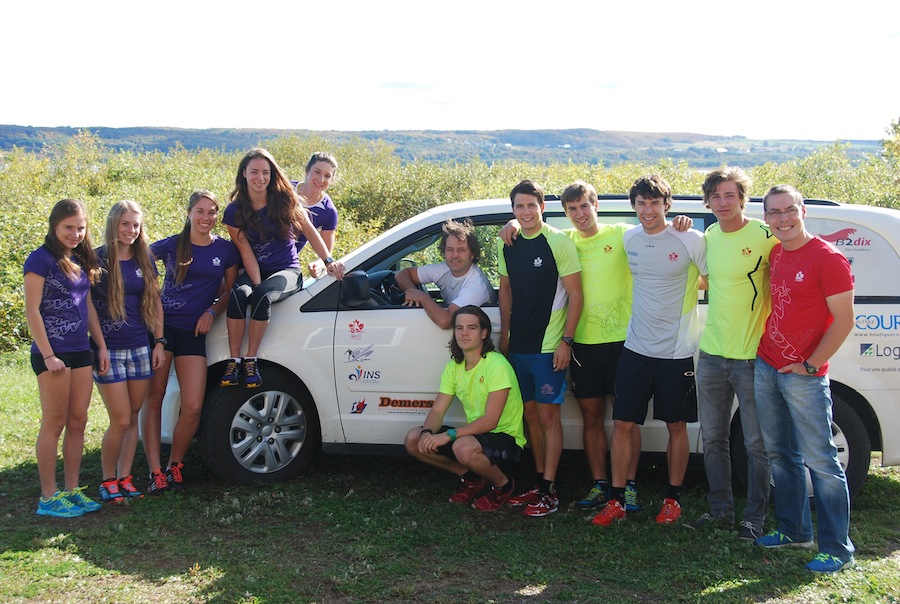
    The 2013/2014 Pierre-Harvey National Training Centre team. (Courtesy photo)
    The 2013/2014 Pierre-Harvey National Training Centre team. (Courtesy photo)

    Note: This is the second of four previews providing an inside look at Canada’s national training centres and their respective senior teams this season. We asked coaches to tell us what’s new, whom to look out for, and the outlook on the winter ahead. Teams are presented in no particular order.

    Team: Centre National d’Entraînement Pierre-Harvey (CNEPH), a.k.a. Pierre-Harvey National Training Centre

    Coaches: Louis Bouchard (head coach), Francois Pepin (assistant coach), Charles Castonguay (assistant coach), Lee Churchill (assistant coach/wax tech), Sacha Bergeron (World Cup wax tech,  Andre Renart (wax tech) 

    Senior roster: Alex Harvey (World Cup Team), Raphaël Couturier, Simon Lapointe, Alexis Turgeon;

    Dasha Gaiazova (World Cup Team), Cendrine Browne, Anne-Marie Comeau, Maya MacIssac-Jones, Frédérique Vézina

    Who’s new: The entire women’s team, minus Gaiazova, moved up from CNEPH’s junior ranks to the big leagues, including Browne, Comeau and Vézina. Formerly with Rocky Mountain Racers in Canmore, Alberta, MacIssac-Jones made the Quebec training centre this season.

    Who’s missing: According to head coach Louis Bouchard, three of the team’s senior men (Frédéric Touchette, Aidan Lennie, Steffan Lloyd) went back to school. World Cup skier Lenny Valjas moved to Canmore to train with the national team.

    Touchette joined the Laval University ski program, Lennie is coaching for Skibec in Mont-Sainte Anne and Llyod is in Ottawa.

    Top results last season: The Canadians were out for medals at World Championships in Val di Fiemme, Italy, and Alex Harvey (the son of Pierre Harvey, whom CNEPH is named after) delivered with a bronze in the classic sprint. Earlier in the season in Val di Fiemme, Valjas and Harvey, now 25, placed second and third, respectively in the Tour de Ski 15-kilometer classic mass start.

    Gaiazova, 29, tallied bronze in the February pre-Olympic team sprint with teammate Perianne Jones in Sochi, Russia. In January, she placed fourth in a World Cup classic sprint in Liberec, Czech Republic.

    Also in Liberec, Browne, who turned 20 last month, notched 15th in the 5 k skate race at Junior World Championships. In turn, she earned a spot on Canada’s senior development team.

    Couturier, 20, also made the national senior team this year, after placing 17th in the 20 k skiathlon at Junior Worlds.

    Coach’s comments:

    Bouchard is a pretty busy guy between heading CNEPH in Quebec City/Mont-Sainte Anne and working with the World Cup team as an assistant men’s coach. This season, he explained in an email that he’ll be in Europe with the World Cup team all winter starting Nov. 10, when he flies with Harvey to Davos, Switzerland. As a result, Pepin, Castonguay and Churchill will be more responsible for the NorAm team.

    When it comes to training camps, CNEPH goes big. This year, the staff brought its team to Montreal for testing in June and France in July to learn about altitude training and coping with jet lag. Earlier this month, they wrapped up another altitude camp in Canmore. Browne and Couturier were invited to the national-team training camps in Bend, Oregon, in June and New Zealand for on-snow training in late August.

    In terms of goals, Bouchard laid them out pretty clearly: one Olympic podium, one top 20 at Junior Worlds, and one top 20 at U23 World Championships.

    One good starting point: most everyone on the young team has already made it to Junior Worlds.

    See also: Callaghan Valley

  • Pros of Tomorrow: Cendrine Browne

    Pros of Tomorrow: Cendrine Browne

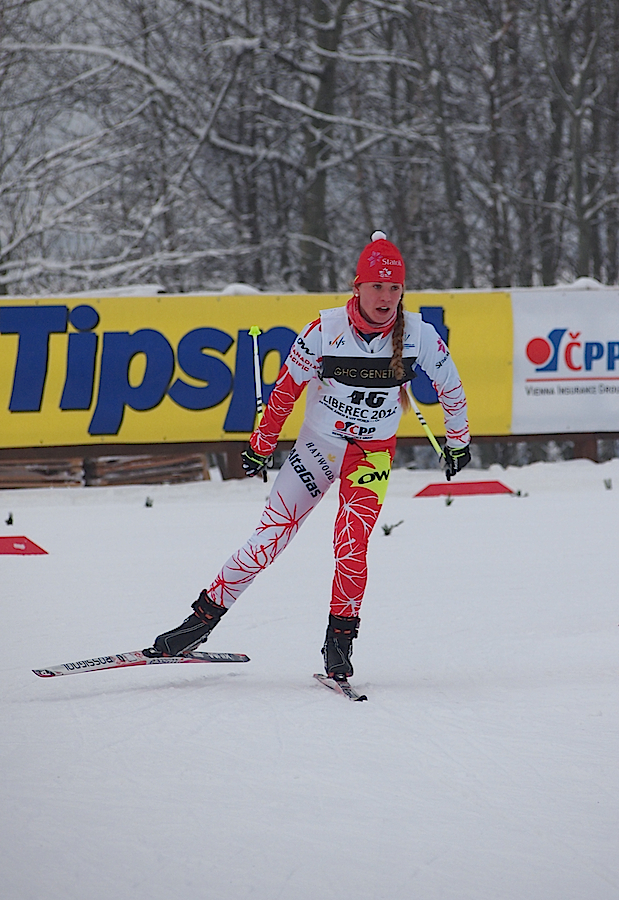
    Cendrine Browne (CNEPH) racing to a personal-best 15th in the 5 k freestyle individual start Wednesday at Junior World Championships in Liberec, Czech Republic. (Courtesy photo)
    Cendrine Browne (CNEPH) racing to a personal best 15th in the 5 k freestyle individual start at the 2013 Junior World Championships in Liberec, Czech Republic. (Courtesy photo)

    It’s BACK! FasterSkier is excited to relaunch its ‘Pros of Tomorrow’ series, which highlights some of the most notable up-and-coming athletes around the world. Have an idea for a skier you’re itching to read more about? Email info@fasterskier.com with the subject line: Pros of Tomorrow.

    ***

    Four years is nothing in the cross-country ski world – a couple good winters, some not-so-snowy ones, and for elite racers, tons of competitions and countless training sessions in between.

    But four years ago, Cendrine Browne was just starting out.

    “I skied when I was young, like in the forest with my family,” the 19-year-old said on the phone from her home in Saint-Jérôme, Québec. “I had no technique and I had no good skis; it was just for fun. I started doing competitions when I was 15 years old.”

    At the same time, Browne was also dabbling in triathlons and excelling at the Québec Cup level.

    “I really liked that sport and I still do, but I prefer skiing,” she said. “If I wasn’t cross-country skiing, yes, I would probably still be doing triathlons. But I don’t think I would be as far in triathlons as I am today in skiing.”

    A fast-rising star within the Fondeurs Laurentides ski club, Browne earned a spot on the Pierre-Harvey National Training Centre (CNEPH) in Québec. She joined the ranks of the National Ski Team (NST) Junior Development squad, and at her first Junior World Ski Championships last season, Browne notched Canada’s best individual performance in Liberec, Czech Republic: 15th in the 5-kilometer freestyle individual start.

    NST Senior Development Team
    Coaches:
    Mike Cavaliere, Chris Jeffries (AWCA); Louis Bouchard (CNEPH)
    Athletes:

    • Cendrine Browne (CNEPH)
    • Raphael Couturier (CNEPH)
    • Jess Cockney (AWCA)
    • Graeme Killick (AWCA)
    • Alysson Marshall (AWCA)
    • Emily Nishikawa (AWCA)
    • Graham Nishikawa (AWCA)
    • Kevin Sandau (AWCA)
    • Michael Somppi (AWCA)
    • Heidi Widmer (AWCA)
    • Phil Widmer (AWCA)

    It was a result that not only instilled confidence; it essentially bumped her up to Canada’s Senior Development Team. Last month, a Cross Country Canada announcement confirmed Browne was nominated to the NST senior team, an achievement that comes with prestige, more training support and a financial boost from Canada’s Athlete Assistance Program.

    “There’s also another training camp that I’m going to do with the senior team,” she said. “We have more health services provided (physio, etc.) … and we get fun stuff like more clothes and a paid cellphone. So let’s say this is all pretty exciting!”

    “It wasn’t expected,” she added. “I didn’t know I needed a top 15 [at Junior Worlds] to be on the senior team, but it wasn’t really an objective for me. … It’s kind of a surprise.”

    In fact, what she needed was a top 20. Now the only one under 20 on Canada’s 11-person senior team, Browne’s focused on making the Olympics in Sochi, Russia.

    “I might have some chances to qualify for the Olympics next year, so if I qualify, I’m certainly not going to stop,” she said. “I’m going to ski longer and try to qualify for the next Olympics in 2018.”

    As for the events she’s focused on, Browne said 5 and 10 k skate races are usually her best. She spent most of the spring studying human sciences at a university in Saint-Jérôme and is almost done. Next, she’ll pursue a degree in kinesiology.

    But first, she’ll reunite with her CNEPH teammates in June, driving three and a half hours to train near Québec City for the rest of the summer.

    “It’s going to be even more motivating training with these girls,” Browne said of her teammates, including top juniors like Anne-Marie Comeau, Frédérique Vézina and now Maya MacIsaac-Jones.

    “We’re so close to each other, like when we do intensity and stuff, so it really pushes us to train harder and faster.”

    Another reason for sticking with CNEPH: having Dasha Gaiazova as a teammate. This summer, Browne will again try to keep up with the World Cup team skier and 2010 Olympian.

    “I’m really happy when I’m able to follow her,” Browne said. “It’s really motivating for me.”

    ***

    Note: Cendrine Browne joins the ranks of several FS ‘Pros of Tomorrow,’ including Canadian World Cup skier Lenny Valjas, U.S. Ski Team member Ida Sargent, British World Cup skier Andrew Musgrave, and U.S. Biathlon’s Leif Nordgren.

  • Elite Team Preview: Pierre-Harvey NTC

    Elite Team Preview: Pierre-Harvey NTC

    A look at the 2012/2013 Pierre-Harvey National Training Centre (CNEPH) team. (Courtesy photo)

    This is the second preview in a quick-and-dirty series about Canadian national-training centres. We asked coaches to send their 2012/2013 rosters and tell us what’s new for the coming season. We will be publishing additional reports over the next few weeks. Teams are presented in no particular order.

    Team: Centre National d’Entraînement Pierre-Harvey (CNEPH), a.k.a. Pierre-Harvey National Training Centre

    Coaches: Louis Bouchard (head coach), Godefroy Bilodeau (assistant coach), Vincent Renart (assistant coach), Lee Churchill (assistant coach/wax tech), Sacha Bergeron (World Cup wax tech, equipment/administration manager), Andre Renart (wax tech)

    Roster: Alex Harvey (Canadian National Ski Team), Lenny Valjas (CNST), Frédéric Touchette, Aidan Lennie, Steffan Lloyd; Dasha Gaiazova (CNST)

    Who’s new:

    Gaiazova (CNST) in the 20 k classic mass start on Jan. 6 at U.S. nationals in Rumford, Maine. She finished fourth and later won the classic sprint. Formerly of Rocky Mountain Racers, Gaiazova moved east this spring to work with the Pierre-Harvey National Training Centre and its coach Louis Bouchard. (Photo: Flying Point Road/flyingpointroad.com)

    Gaiazova, who left Rocky Mountain Racers in Canmore, Alberta, to head back to Québec. (A Moscow native, she moved to Montreal and later lived in Banff, Alberta.) In a CNEPH blog post, the 28-year-old wrote she switched teams, and coaches, to become a better sprinter, and is working with B2ten in Montreal and CNEPH in Mont-Sainte Anne and Québec City to achieve that.

    “My coaches and I are going to try something different and focus only on specific ski sprinting,” she wrote. “I am excited to work on just one thing, one type of race, and I’m also very curious to see the changes this new focus will bring to my racing.”

    Bouchard wrote in an email that he mentored Gaiazova in 2000 and they maintained a positive relationship since. Twelve years later, Bouchard, the new assistant men’s coach of the Canadian World Cup Team, invited her to train with him again this summer.

    In addition to training in Mont-Sainte Anne, she’s also been working on sprint-specific power and speed in Montreal. According to Bouchard, B2ten has assisted CNEPH athletes for the last five years in areas such as mental preparation, physiology and World Cup funding.

    “B2ten is a sort of a dream team capable of turning great athletes, some of the world’s best, into unbeatable champions,” Gaiazova wrote. “What can I say? When I train here I feel like I’d won jackpot in the lottery.”

    — Lloyd, formerly of Nakkertok, recently joined the Pierre-Harvey development team after notching three NorAm top 10s in distance races last year. Bouchard wrote that he has good potential and is another positive addition to the team.

    Who’s missing: N/A

    Top results last season:

    Alex Harvey leading Norway’s Niklas Dyrhaug in the men’s 15 k freestyle pursuit at World Cup Finals on March 18 in Falun, Sweden. Harvey ended up second to Petr Sedov of Russia and Dyrhaug was ninth.

    Harvey won gold, two silvers and a bronze between the 2011/2012 World Cup and Tour de Ski, capturing his first victory in the World Cup Finals skate prologue in Falun, Sweden. He did so 25 years after his father, Pierre Harvey, whom the training centre is named after, won his first World Cup race in at the 1987 finals in Falun.

    Harvey, 23, finished sixth overall in the World Cup this year, not far behind his teammate Devon Kershaw in second, and was 12th in the Tour de Ski. At Canadian Ski Nationals, he swept the three races he competed in.

    Another 23-year-old World Cup skier, Valjas notched a career-best silver in March at the classic sprints in Drammen, Norway. A week later, he was third in the classic sprint in Stockholm and soon after emerged on the distance scene, winning bronze in the 15 k classic mass start in Falun.

    A veteran national-team member, Gaiazova tallied two World Cup top 10s in classic sprints (eighth in Drammen; ninth in Rogla, Slovenia) and took second at Canadian nationals in the skate sprint.

    Touchette has been battling injuries for the last two years, and according to the CNEPH website, he saw last season shortened because of “force majeure” – unforseeable circumstances that were out of the athlete’s control. He enters his eighth season with the team (same as Harvey) after pulling off four NorAm top 10s last year. According to Bouchard, the 24-year-old is in good shape now and could vie for a spot on the World Cup team next year.

    Coach’s comment: With half of his seniors on the national team, Bouchard explained the focus is 2013 World Championships in Val di Fiemme, Italy, and they’ll be ready.

    “I think we have the strongest junior team in the country,” he added. “Raphaël Couturier and Alexis Turgeon can be really good [at the] international level soon, and also Anne-Marie Comeau,” all of which went to Junior World Championships last season.

    “We try to prepare the next generation, so we want to use Alex, Lenny and Dasha for that,” Bouchard wrote. “So for sure in short term the biggest goal is the WC team, but if we want to be ready with the next generation (2018 and 2022), we need WC team close with my junior team … no secret sauce.”

    With five young females, CNEPH has one of the largest junior squads in the nation, and Bouchard will continue to work with them for most of the summer. Once the World Cup season starts, he will head overseas while Bilodeau and Vincent Renart help the remaining skiers on the domestic circuit.

    ***

  • Once in His Son’s Shoes, Pierre Harvey in Awe

    Once in His Son’s Shoes, Pierre Harvey in Awe

    Alex Harvey and his father, Pierre, embrace after Alex won the 3.3 k freestyle sprint at the World Cup Finals on March 16 in Falun, Sweden. Harvey is a local hero in Québec and returned for Canadian nationals there the following week.

    MONT SAINTE ANNE, Québec – Standing on the hill above the stadium at the Canadian Ski Nationals in March, Pierre Harvey smiled as he soaked up the sights and sounds buzzing around him.

    Earlier that morning on the last day of competition, his only son, Alex, purposely tied his best friend and teammate Devon Kershaw for the 50-kilometer classic victory. Several hours later, Pierre Harvey, a three-time Olympian whose name belongs to the Pierre-Harvey National Training Centre, stuck around his home venue.

    This was where Alex, a 2010 Olympian who finished sixth overall on the World Cup last season, started the sport nearly 20 years ago. Back then, he used to ski for about 15 minutes before hopping into a baby glider behind his parents. By the time he hit double digits, Alex was well on his way into becoming a Canadian superstar in both skiing and cycling.

    After claiming Canada’s first gold medal at U23 World Ski Championships, Alex notched another national first with Kershaw at the 2011 World Championships, where they won the team sprint. Last season, the national team member clinched his first World Cup victory at the age of 23 – almost exactly 25 years after his father did the same thing in Falun, Sweden.

    At the 2012 World Cup Finals, Alex won the 3.3 k skate prologue and Kershaw placed third to once again make Canadian history. Pierre dominated the 30 k freestyle in Falun in 1987 and again in 1988, about six months before Alex was born.

    After going to the 1976 and 1984 Olympics in cycling, Pierre became the first Canadian to compete in another Olympics the same year in the winter of ’84. He went to the 1988 Olympics as a cross-country skier and retired from the sport following that season.

    Reflecting on what his son had accomplished already, Pierre, 55, said it was hard to believe. He hadn’t anticipated Alex, who also made the Québec National Cycling Team, would necessarily stick with skiing.

    Alex Harvey talks to reporters after winning the 15 k freestyle at Canadian Ski Nationals in Mont Sainte Anne, Quebec, on March 20. He finished the week by sweeping every event he competed in (including a first-place tie with teammate Devon Kershaw in the 50 k classic mass start).

    FasterSkier: What’s it like being at nationals as a father?

    Pierre Harvey: I live here, it’s my hometown, but to see my son … it’s quite unbelievable what he’s doing in the last two, three years. Every year, he’s improving. Like three years ago, he was 40th in the World Cup and now this year, he finished sixth and he won a World Cup. It’s a progression, a really fast progression. Usually it takes maybe 10 years to do what he did in the last three years. Sometimes I think it’s almost too fast, but it’s the way it is and it’s good.

    FS: What kind of advice have you given him?

    PH: I don’t give so much advice. He has a good coach [Louis Bouchard at the Pierre-Harvey National Training Centre in Québec] and we just try to make a good environment for the athlete. I’m a member of the Pierre-Harvey Training Centre, it’s my name, but I’m just one of the guys on the board. We just try to have the best environment for the athlete, best coach and a good support team, wax men and all of that and a good training opportunity and make a group where they really have fun together. I think the most important thing is to have fun. The day you don’t have fun, you will never improve anymore.

    But advice, no, I talk with Alex, but not even every day. When he’s away from home for 10 months, a year, I talk with him maybe two, three times on the phone and just send an email after a tough race and say, ‘You know, take it easy, it’s a long season and all those guys are really strong around you. You’re not alone.

    ‘If you would win everything it would not be fun anymore. Those guys train as hard as you do and they’re top athletes. Just try to learn from them and try to see how you can improve, but don’t think that you can win all the time. It’s not possible.’

    A guy like [Switzerland’s Dario] Cologna is doing that and Cologna, even five years ago, he was not winning all the time. Alex is 23 years old so he still has to be patient.

    FS: What about coaching tips?

    PH: I never want to be a coach for [Alex]. It’s too much. We have to keep a distance and let him do his own thing and do what he likes.

    I’m surprised that he keeps skiing because he started so young. I thought that around 16 years old he would decide to do something different because here we have ski school so you can go to school and train so two days in school, two days in training so skiing in winter so these programs are really good.

    That’s why in Québec we have lots of good athletes in any sport because of these school programs, but on the other hand, I thought that you do so much that when you get to 16, 18 years old, it’s too much and you want to do something different, especially you don’t want to do what your father did. Usually a kid would try to do something different than his father or mother, they want to do their own thing. That’s why I’m surprised that he kept enjoying that and doing that.

    FS: Why did Alex keep skiing?

    PH: I guess it’s because when he was 16 years old, he could go to a World Junior Championship in biking in the fall and then World Junior Championship in the winter in skiing so it was those nice trips. It was like the carrot that makes you go, ‘OK, one step more, one step more. Next year maybe I’d like to do that.’

    It’s like you always want to do more, and I don’t know the real reason why he kept doing it, but anyway, he did it.

    FS: What did you think of Alex’s homecoming at Mont Sainte Anne with all of the fans and media and even one of his sponsors in a helicopter?

    PH: Every year, it’s getting bigger and bigger because we’ve got so much coverage, media coverage, it’s unbelievable. We’re used to seeing a professional hockey player have coverage, but for another athlete in Québec at his age, there is no other athlete that gets so much coverage.

    I don’t know how he does it, maybe he’s nice with the media, but he has so much coverage. That’s why people come and see it. For sure, I’m quite impressed by him because of all that he does. He keeps going to school, he’s skiing and sometimes I think it’s almost too much.

    FS: We heard your two daughters helped welcome Alex home at the airport in Québec. What are they up to these days?

    PH: They all do skiing and biking. Laurence was [training] to go to the Canadian championships in biking. She did the World Cup here as a junior last summer and she broke her elbow. Her goal was to go to the world championship in biking. Laurence is training all year round.

    Sophie doesn’t race anymore, but she used to race in Canada Games and Canadian championships biking and skiing. She quit racing because for her she didn’t enjoy the pressure. She put so much pressure on herself. We go skiing and biking together really often and she enjoys the sport.

    FS: And Alex is going to law school?

    PH: He’s been [studying at Laval University in Québec City] for two years, and he has six to eight years left. … He’s in no rush because he said, ‘Even if I finish tomorrow, I will never work until I stop racing.’ His plan is to go to the next Olympics and if he still enjoys it, maybe another one.

  • McMurtry Opens NorAm Mini Tour with Definitive Win

    It’s not as if one of the top two men on this year’s NorAm circuit really had an advantage.

    While Kevin Sandau had more recently heaved himself up the grinding hills at the Canmore Nordic Centre with his Alberta World Cup Academy teammates, both he and Brent McMurtry (Pierre-Harvey National Training Centre) spent plenty of time training there with the Canadian National Ski Team.

    Both Senior Development Team members, Sandau and McMurtry also grew up skiing together with the Foothills Nordic Ski Club an hour away in Calgary, Alberta.

    Essentially, both were favored to win Friday’s 10 k classic interval start, which opened a three-day NorAm mini tour known as the Western Canadian Championships.

    McMurtry did his part in proving his first win of the season last weekend was no fluke, winning the 10 k by 21.4 seconds in 27:33.7. Sandau was second, and Erik Carleton (Rocky Mountain Racers) placed third (+25.8).

    Before McMurtry’s last race — the 15 k classic interval start in Whistler, British Columbia – he was runner-up to Sandau in every NorAm distance race this season. He placed second in every other NorAm race, too, except the freestyle sprints in Whistler, where he was fourth.

    Brent McMurtry at the NorAm Teck Sprints in Sovereign Lake (Photo by Jesse Winter/JesseWinterPhotography.com)

    On Friday, McMurtry decided to go out hard and hold it. With three relentless laps, marked by two hills and few flats, he said he felt the effects of that effort on the last lap, yet tried to stay relaxed regardless.

    “I knew that I had a pretty good lead,” McMurtry said. “[With] only 3.2 k left, I was fairly certain I was going to win. Knowing it was a mini tour and the first day made me push harder and made me want to keep fighting through. … People were yelling at me to push for every second.”

    The leader after the first lap, McMurtry was 6.7 seconds ahead of Graham Nishikawa (AWCA), who started 30 seconds behind him. By the second lap, McMurtry lengthened the gap to 24.4 seconds ahead of second place. By then, Sandau had worked his way from fourth to second overall. Carleton was close behind in third.

    “[I] tried to go out strong at the start, but similar to last weekend, I guess Brent got most of his time on the first lap,” Sandau said. “He’s been the contender that I need to beat so far this season. He’s been the big target.”

    After Carleton, David Greer (Whitehorse) finished fourth, and Raphaël Couturier (Skibec) was fifth.

    Brian McKeever, Carleton’s adaptive nordic teammate and Foothills skier, was sixth. The two have already won several medals earlier this season at the International Paralympic Committee (IPC) World Cup, with McKeever, who is legally blind, working with Carleton as a guide.

    At 33, Carleton achieved his best individual result since 2007 in Canmore on Friday. He placed fourth in a NorAm 30 k last year, but had not been as close to third since.

    “I knew it was just a matter of time before I had a really good race,” Carleton said. “Last week, I was in it for the first two-thirds, and this time I held it the whole way.”

    He ended up eighth in the 15 k classic in Whistler. In the same race, McKeever was fifth.

    “I just wanted to be a little more consistent at maintaining my pace and whatever happens, happens,” Carleton said. “And it seemed to work out today.”

    Rounding out the top 10, Geoffrey Richards (Black Jack) was the top junior in seventh. Phil Widmer (AWCA) was eighth, Nishikawa placed ninth and Michael Somppi (NDC Thunder Bay) was 10th.

    Competition continues Saturday with freestyle sprints, followed by a freestyle distance pursuit on Sunday.

    Men’s 15 k results

  • McMurtry, Greer ‘Fine’ After Car Accident

    McMurtry, Greer ‘Fine’ After Car Accident

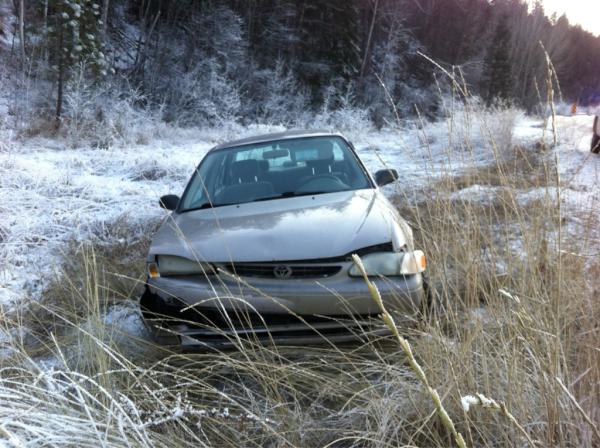
    Brent McMurtry (CNEPH) took a photo of his totaled Toyota Corolla on Monday after he and passenger (and teammate) David Greer were involved in a car accident. McMurtry's vehicle slid on black ice into a cement barrier and stopped in a ditch. The two were just over halfway to Rossland after leaving Silver Star, British Columbia, for the second set of NorAm races. Courtesy photo.

    Brent McMurtry of the Pierre-Harvey National Training Centre and Foothills Nordic Ski Club said he and teammate David Greer were unhurt after his car slid off the road while driving from Silver Star to Rossland, British Columbia.

    Brent McMurtry races to a second-place finish in the NorAm 15 k classic individual start on Sunday. He was second in the 1.4 k classic sprint on Saturday. (Photo by Jesse Winter/JesseWinterPhotography.com)

    The accident happened near the town of Midway, slightly more than halfway into the 370-kilometer (230-mile) trip. Several cross-country skiers and teams traveled the same route to prepare for the second set of NorAm races in Rossland this weekend.

    The roads had been dry throughout the afternoon, said McMurtry, the two-time runner-up from the first set of NorAm races in Sovereign Lake.

    While driving about 100 kilometers an hour in his personal vehicle, a Toyota Corolla, McMurtry said he drove over a depression in the road where it went over a creek. The car hit black ice and began sliding into oncoming traffic.

    McMurtry said he overcorrected and swerved into a cement guardrail. His car slid along the barrier and into a ditch.

    “I was just hoping it wouldn’t flip over,” he said. “Luckily we came to a stop in the ditch.”

    A little shaken up but uninjured, McMurtry and Greer stepped out of the car and removed their luggage. Without collision on the vehicle, McMurtry knew it was a loss. He had no cell service but police came within minutes.

    Three people stopped and told McMurtry they slid on the same spot earlier that day. Five minutes after his accident, a gravel truck drove up to take care of that exact section.

    NorAm Sovereign Lake
    David Greer of the Pierre-Harvey National Training Centre in Sunday's 15 k classic, in which he was 10th. (Photo by Jesse Winter/JesseWinterPhotography.com)

    “Kind of bad luck,” McMurtry said. “I guess locals know.”

    About 10 minutes behind them on the road, the Thunder Bay National Development Centre team came to their rescue. With two 15-passenger vans, its members made room for McMurtry, Greer and all their belongings.

    “It’s kind of surreal to crash my car and 30 minutes later never see my car again,” McMurtry said. “(But it) did enough damage to my ’99 Corolla that it wasn’t worth getting it fixed.”

    He bought the car from a friend for about $2,000 Canadian dollars two years ago.

    “It’s not a super-valuable car to start out with,” he said of his decision to leave it with the police.

    He will next try to find a ride to Canmore, Alberta, after this weekend’s races and then he will deal with the car. He wasn’t too concerned about either.

    “I’m not too stressed about it,” he said. “There’s lots of people from Canmore here so it’ll be pretty easy to find a ride home.”

    On Wednesday, McMurtry said everything was normal and he was training as usual.

    “I’m fine,” he said. “I feel 100 percent.”

    ***

    A video from Brent McMurtry detailing his trip to Silver Star, taken before the accident.