From the FasterSkier archive — posts syndicated from athletes’ and coaches’ own blogs between 2004 and 2012, kept online as published. Current coverage is at fasterskier.com.

Tag: pierre-harvey training centre

  • Lauren Jortberg and the Long Way Around to the Olympics

    Lauren Jortberg and the Long Way Around to the Olympics

    This article was made possible through the generous support of our voluntary subscribers.  If you value coverage like this, please support FasterSkier with a voluntary subscription.  

    By the time Lauren Jortberg made the U.S. Olympic Cross-Country Ski Team, the achievement arrived not as a burst of disbelief or relief, but as something quieter and stranger: a moment that required processing.

    “It is a lot to take in,” she said, speaking from Seefeld, Austria in the middle of a pre-Olympic training block. “It’s been a big goal. But it’s one of those big goals that I’ve tried not to think about too much and just really focus on being my best self.”

    The phrasing matters. Jortberg did not describe the Olympics as a finish line or a culmination. She spoke about it as something she had to learn how to hold — something earned, yes, but also something that could overwhelm if mishandled. “Now,” she said, “I’m trying to put aside the completion of the goal and really focus on performing. And performing really well.”

    That distinction — between achievement and performance, between arrival and presence — has come to define her career. It is also the reason her story resists easy telling. Jortberg was not a prodigy. She was not a junior star. She did not dominate early or move cleanly through the system. She took the long way around.

    The Long Way Around

    Jortberg grew up in Boulder, Colorado, a town dense with endurance athletes and outdoor ambition. “I’m super fortunate to have been born and raised in Boulder,” she said. “It has one of the highest percentages of Olympians for cycling and running.”

    Her parents were athletic — her mother was a professional runner, her father competed in multiple sports — and movement was woven into daily life. There was mountain biking, trail running, hiking, time spent at a family place in Winter Park. But skiing, she noted, was not central to Boulder’s identity. “If you’re familiar with Boulder, it’s not really a winter place. We had to work hard to get to snow.”

    Her earliest athletic identity was split. She loved soccer deeply and still wonders what might have happened had she stayed with it. “I do kind of wonder what I could have done if I had pursued soccer,” she said. Her father spent hours training with her, and she took pride in improvement more than outcome.

    The turn toward skiing came, in part, through her older sister — six years ahead, a steady presence, someone to chase. When her sister tore her ACL playing soccer and pivoted fully to skiing, Jortberg followed. “I really looked up to my sister,” she said. “She went to U18 Scandinavian Cup, Junior Nationals, skied at the University of Denver. Seeing her do all these cool things with skiing really felt like, well, I can do that.”

    But progression was slow. In high school, Jortberg struggled. She did not make Junior Nationals her first year — a moment she still remembers clearly. “I was devastated,” she said. “It was one of the first big adversities in my career.”

    She never cracked the top ten at Junior Nationals until she was a U20. “I had a lot of 11th places,” she said. “I could never crack that top ten.”

    It is difficult, in hindsight, to overstate how thoroughly unremarkable her junior results were by Olympic standards. This is not revisionism; it is the point. There was no obvious through-line, no early validation to cling to.

    After high school, she took a gap year at Stratton Mountain School. It did not go smoothly. She fractured her arm in a parking lot crash. The season was disrupted. Progress stalled again.

    What she had, instead, was a willingness to stay.

    Dartmouth and the Work of Becoming

    At Dartmouth, something shifted. Not overnight, and not magically — but structurally.

    “I think it was a big surprise starting at Dartmouth,” Jortberg said, “the level I was at and the level the team was at.” She majored in environmental science and found herself inside a women’s program that emphasized individual growth within collective intensity.

    Under coach Cami Thompson Graves, the team culture was demanding but non-coercive. “She’s really amazing at coaching athletes to really know what is good for them,” Jortberg said. “She’s incredibly good at getting athletes to become very independent with an amazing team culture.”

    The women’s team was deep, competitive, and internally driven. “We were going one through five, or one to four, five, eight, ten,” she said. “It was insane.” NCAA spots were scarce; no one could coast.

    Crucially, Dartmouth supported international racing alongside collegiate commitments. Jortberg went to World Juniors, U23s, OPA Cups — sometimes twice in a season. “Having that support was super helpful,” she said. “Not just to perform in a green suit, but to perform later on.”

    For the first time, development felt cumulative.

    The women’s final of the 2021 Keys to the Castle rollerski sprint in Lake Placid, NY. From left to right, Lauren Jortberg (BSF Pro), Julia Kern (SMS T2/USST), Jessie Diggins (SMS T2/USST), Alayna Sonnesyn (SMS T2). (Photo: Reese Brown RDB Marketing)

    The Bubble Years

    Post-collegiately, Jortberg entered what many American skiers know intimately: the bubble.

    She moved through programs, spent time with Bridger Ski Foundation Pro and later SMS T2, and began working with coach Perry Thomas. She earned World Cup starts, lost them, re-earned them. Progress was intermittent. Confidence, fragile.

    “It was a lot of back and forth,” Thomas said. “Getting starts and not getting starts. Proving herself again in the U.S. and then getting those World Cup starts again.”

    Thomas had recruited Jortberg as one of his first athletes when he began coaching at the professional level. Their early years together were not seamless. “Our first year together, there was a lot of figuring things out,” he said. “There were ups and downs.”

    What mattered was not immediate success but shared patience. “We were both willing to make it work,” Thomas said. “And work through difficulty together.”

    During this period, Jortberg made a deliberate choice that would shape the rest of her career: she doubled down.

    Lauren Jortberg (USA) training in Tignes, France, last June. (Photo: Authamayou/NordicFocus)

    Choosing One Thing

    Sprinting had always been her strength — particularly skate sprinting. Classic sprinting lagged behind. Rather than attempting to become broadly better at everything, Jortberg and Thomas made a narrower decision.

    “Let’s spend one day a week, every week, for an entire summer and fall, working on classic skiing,” Thomas said. “Double pole. Thirty to sixty minutes. Just consistently.”

    It was not glamorous work. It was not optimized for social media or immediate payoff. But Jortberg committed fully. “She was like, ‘Hell yeah, let’s do this,’” Thomas said.

    Even when they were no longer formally affiliated with the same team, she continued the work remotely. “She continued that work on her own,” he said. “From afar.”

    At the same time, something else was happening — something less visible.

    Lauren Jortberg (USA) during the qualification of the World Cup Individual Skate Sprint in Oberhof, Germany, two weeks ago. (Photo: Authamayou/NordicFocus)


    The Mental Turn

    Jortberg began working seriously with a sports psychologist. She and Thomas independently immersed themselves in books, podcasts, and writing about mental performance. They traded recommendations. They talked openly about processing failure.

    “I don’t care how pretty your technique is,” Thomas said. “If you don’t have control over the on-off switch in your brain, you’re not going to get to the line fastest.”

    What Thomas noticed later, during Period 1 Super Tour in Alaska, was a change. “That was a different Lauren than even a year ago,” he said. “In such a good way.”

    Jortberg describes it less as a breakthrough than a reframing. “Everyone is going to have setbacks,” she said. “It’s about how you respond. Chipping away little by little. Not letting setbacks impact how you see yourself.”

    She learned to loosen her grip on outcomes. “Often when we think things have to happen a certain way,” she said, “that’s when they don’t.”

    Lauren Jortberg with boyfriend Antoine Cyr (CAN). (Photo: Courtesy Photo)

    Two Places at Once

    In the fall, Jortberg moved to the Mount Sainte-Anne area of Quebec. The decision was partly personal — she is dating Canadian skier Antoine Cyr — but also practical.

    She began training at the Pierre Harvey Training Centre, known for its demanding terrain and extensive roller-ski infrastructure. “The terrain is really hard,” she said. “I think it’s been awesome for intensity. Especially my classic skiing.”

    Her coaching arrangement became hybrid: remote communication with Thomas, daily training in Quebec. “We text pretty much every day,” Thomas said. “Or we’re on the phone.”

    Jortberg chose not to maintain two residences. “That’s just not something that financially would be feasible,” she said. More importantly, she valued stability. “I really prioritize my personal life. That’s what allows me to perform at the highest level.”

    It is an unromantic truth of elite skiing: stability is performance.


    Alaska and Leadership

    When Jortberg declined early World Cup starts to focus on Super Tour and U.S. Nationals, she rejoined Coach Thomas and the rest of the Mansfield Nordic Pro team in Alaska. What stood out was not just her skiing.

    “I was so impressed with her as a leader,” Thomas said. “We used her a ton in team meetings. Tactics. Pacing. Course preview.”

    After Alaska, the decision to formally add her back to the team was unanimous. “It was an easy decision,” Thomas said. “She just wanted to be part of the team and demonstrated awesome leadership.”

    Kendall Kramer, Samantha Smith, Lauren Jortberg, and Julia Kern (l-r) will join Jessie Diggins, Rosie Brennan, Novie McCabe, and Hailey Swirbul to represent the United States in Val di Fiemme, Italy, from Feb. 6–22, 2026. (Photo: Authamayou/NordicFocus)

    Not Jaded

    Jortberg will arrive at her first Olympics as one of three women on the U.S. team making their Olympic debut. She sees that as an asset.

    “I want to bring non-jaded energy,” she said. “Just that first-time excitement.”

    She wants to be present — not consumed by outcome. “I want to look back and be grateful that I was even there,” she said. “And really appreciate the experience.”

    It is not a rejection of ambition. It is a different relationship to it.

    Forward

    Jortberg plans to continue racing. She hopes for 2030, in the French Alps — a place she loves, a skate sprint on a stage that suits her. She is considering an online master’s program in sustainability and renewable energy, thinking carefully about how to prepare for the life that will follow skiing without rushing herself toward it. For the first time in her career, she feels no urgency to escape the present.

    “I feel the most stable I’ve ever felt in my career,” she said. “And it’s showing.”

    Stability, for Jortberg, has never been accidental. It is something she built deliberately, after years of motion without certainty — years of chasing snow from a town where Olympians ran past her on bike paths and reservoir loops, where excellence was ambient and ordinary at the same time. In Boulder, she grew up watching greatness move casually through public space, learning early that world-class athletes were not mythical figures but people who showed up every day and kept going.

    She was not the fastest junior in that environment. She was not the one with the early results or the easy narrative. She lingered on the edges, finished just outside the frame, learned patience in a place that celebrated inevitability. And still, she stayed.

    Lauren Jortberg (USA) anchors the relay for the United States in Toblach, Italy, in 2023. (Photo: Modica/NordicFocus)

    Now she is an Olympian — not because she followed the shortest line between promise and performance, but because she learned how to endure the long arcs in between. She learned when to narrow her focus, when to loosen her grip, when to trust work that did not announce itself right away. She learned how to live inside uncertainty without mistaking it for failure.

    There is something quietly astonishing about that return: a young woman who grew up surrounded by Olympians, never quite believing she was one of them, becoming one anyway — not by force or speed, but by accumulation. By choosing stability when chaos was easier. By learning how to stay.

    For an athlete who never arrived early, this moment is not a surprise step so much as a natural one. The long way around, it turns out, still leads somewhere.


    Help Support Our Olympic Coverage!

    FasterSkier will have our own Nat Herz on the ground at the Olympics, which, to be honest, is a very big financial lift for us. If you value the thoughtful work and access FasterSkier provides at championships like this one, please consider becoming a Voluntary Subscriber. Your support directly fuels the work we do to cover the people, places, and moments that make our sport special.

    Join the FasterSkier community!


  • FasterSkier’s Coach of 2015: Louis Bouchard

    FasterSkier’s Coach of 2015: Louis Bouchard

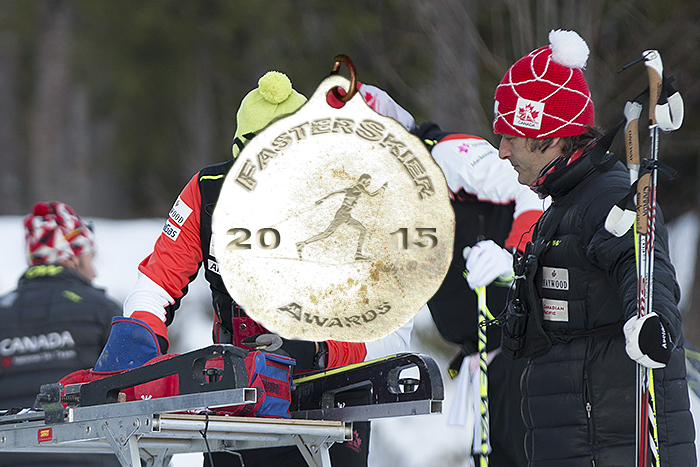
    Louis Bouchard (r), a Canadian World Cup Team coach and Alex Harvey's personal coach, at work with the team's wax staff. (Photo: Cross Country Canada)
    Louis Bouchard (r), a Canadian World Cup Team coach and Alex Harvey’s personal coach, at work with the team’s wax staff. Bouchard is FasterSkier’s pick for 2015 Coach of the Year. (Photo: Cross Country Canada)

    With the 2014/2015 season officially in the rearview, FasterSkier is excited to unveil its annual award winners for this past winter. Votes stem from the FS staff, scattered across the U.S. and Canada, and while not scientific, they are intended to reflect a broader sense of the season in review.

    ***

    Louis Bouchard has been Alex Harvey’s go-to coach for the last decade and the man in charge of the Pierre-Harvey Training Centre — one of three national training academies in Canada —  for 15 years.

    Also Cross Country Canada’s co-World Cup coach, Bouchard is well known across the country and internationally. He’s won multiple awards, including the 2014 Gala Triomphe International Coach of the Year, one of 15 accolades recognizing top athletes, coaches, volunteers, and sporting events around Québec City.

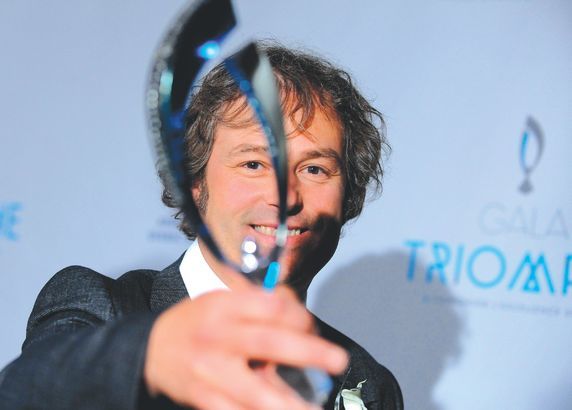
    Louis Bouchard,  Gala Triomphe 2014 Coach of the Year (Photo: CCC/Simon Clark)
    Louis Bouchard, Gala Triomphe 2014 Coach of the Year (Photo: CCC/Simon Clark)

    The soft-spoken French Canadian re-entered the spotlight this past February when Harvey, 26, lunged for a best-ever silver in the classic sprint at 2015 World Championships in Falun, Sweden. Not only had Harvey outdone his previous best of third in the classic sprint at 2013 World Championships, he also secured an important initial medal for Canada.

    “Now we can expect so many things,” Bouchard said after the Falun sprint. “You need it for the program. You need it for the development. That is a benefit for everybody in Canada, so that is good.”

    Development was key when it came to Harvey’s rise to two individual medals at 2015 World Championships in the classic sprint and the skiathlon (in which he took bronze two days later).

    “He’s more stable, he has less injury, he can train more and recover more, so I think it’s normal to expect to see him get better and better at 26 years old,” Bouchard said.

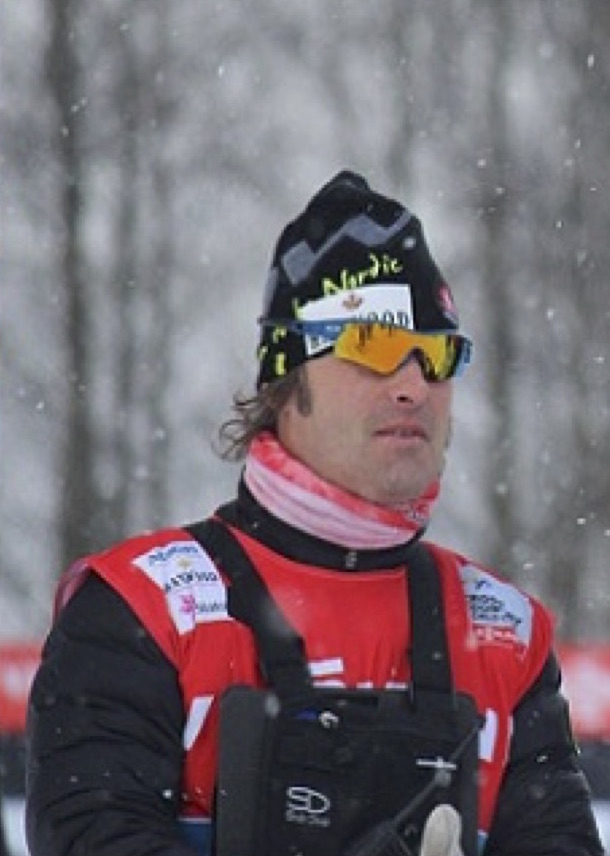
    Louis Bouchard (Photo: CCC)
    Louis Bouchard (Photo: CCC)

    And Bouchard is also responsible for developing a strong contingent of up-and-coming skiers in and around Québec City. Five of his athletes were nominated to the 2015/2016 national junior team (Anne-Marie Comeau, Marie Corriveau, Phillipe Boucher, Zachary Cristofanilli, and Olivier Hamel), and Cendrine Browne was one of five women named to Canada’s senior team (specifically, the C-U23 development team).

    “I spend a lot of time thanking the people who occupy each of the development stages in my sport. Without them, I would not have this success,” Bouchard said after receiving his 2014 Gala Triomphe award, according to a translation. “I’m just finishing a job that was started long ago with Alex, as well as other athletes. All these people are important.

    “We have developed a healthy human relationship exchange,” he added. “Alex is an academic, me, coach. He teaches me and I learn it.”

    This season, Bouchard and national-team head coach Justin Wadsworth will trade off weekends heading the World Cup Team in Europe. The two have worked together with the team’s highest-level athletes for the last five years.

    “Louis and I [have] a great relationship and great communication,” Wadsworth said shortly after CCC announced its integrated coaching structure in April. “I think that working relationship now is almost stronger than ever.”

    ***

  • Pros of Tomorrow Presented by Fischer: Frédérique Vézina

    Pros of Tomorrow Presented by Fischer: Frédérique Vézina

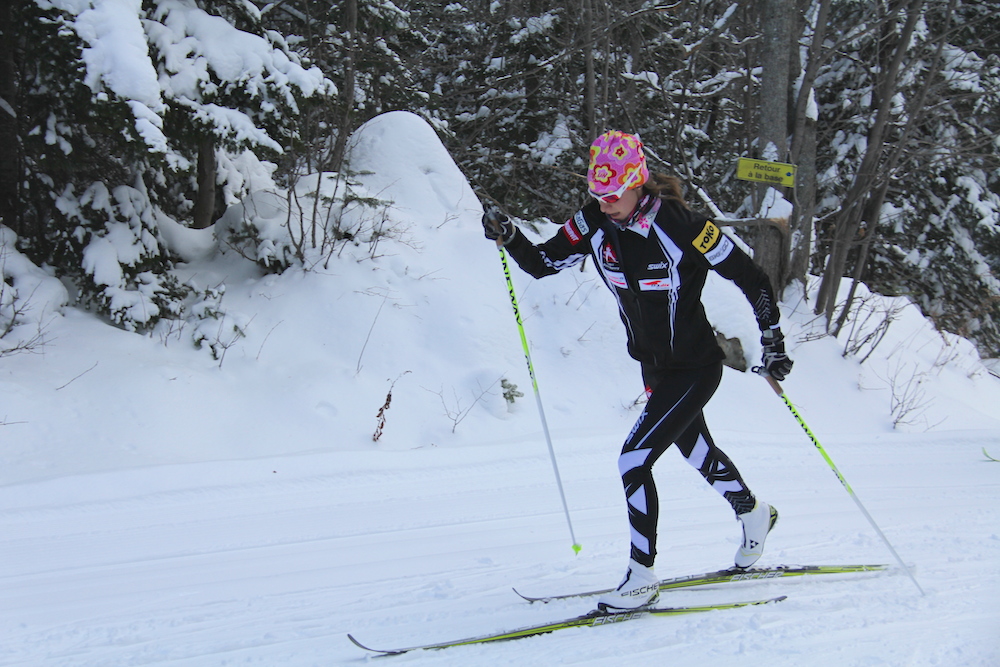
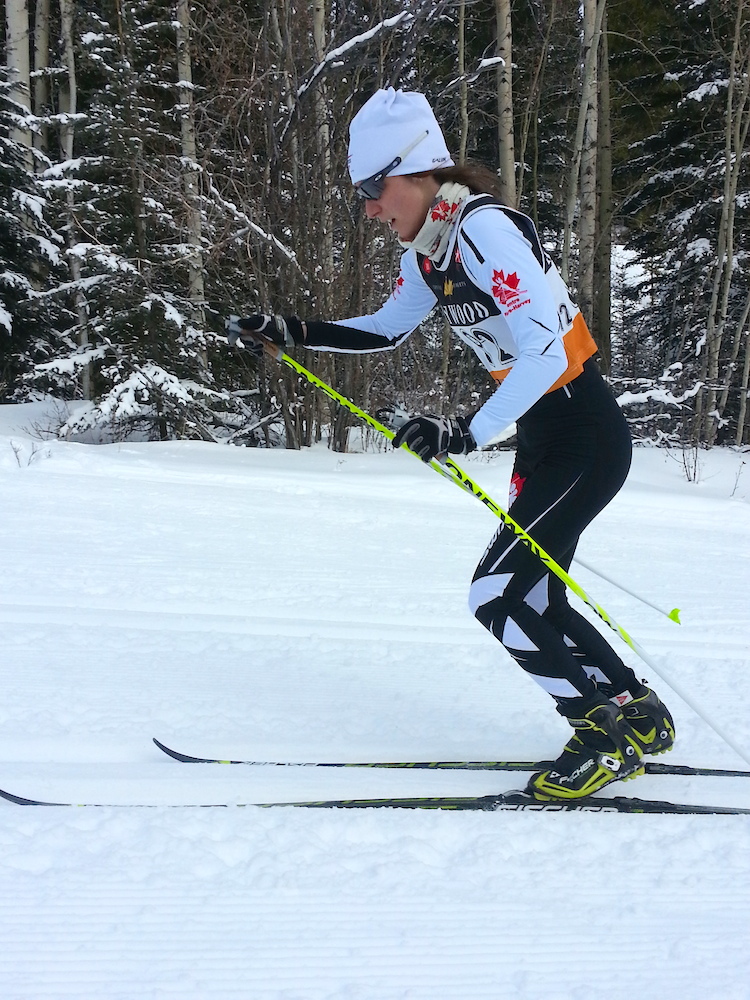
    First-year senior Frédérique Vézina, 20, of the Pierre-Harvey National Training Centre, training in Quebec.
    First-year senior Frédérique Vézina, 20, of the Pierre-Harvey National Training Centre, training in Quebec.

    This ‘Pros of Tomorrow’ series, brought to you by the generous support of Fischer Sports, aims to highlight some of the most notable up-and-coming athletes around the world, which may or may not be Fischer-sponsored skiers. If you have an idea for a top-notch skier you’d like to read more about, please email info@fasterskier.com with the subject line: ‘Pros of Tomorrow’. We’re also looking for stories about intriguing juniors, collegiate skiers, or lesser-known athletes; please email us with names — subject line: ‘From the Pack’.

    ***

    Frédérique Vézina of the Pierre-Harvey Training Centre during a NorAm race.
    Frédérique Vézina of the Pierre-Harvey Training Centre during a NorAm classic race.

    While the famous father-and-son duo Pierre and Alex Harvey is at the very heart of cross-country skiing in the province of Quebec, another family name has become increasingly part of Quebec’s nordic culture: Vézina.

    Former Canadian Ski Team member Jocelyn Vézina was one of Canada’s strongest skiers in the ’80s, alongside teammates Pierre Harvey and Yves Bilodeau (now Canada’s head wax technician). His 20-year-old daughter, Frédérique Vézina, a first-year senior, is rising fast on the Canadian nordic ski scene.

    Just like Alex Harvey, she grew up at the foot of the Mont-Sainte-Anne ski slopes — 200 meters precisely. Eager to race and expend her energy, she joined MSA Nordic Ski Club. Competing in both cross-country skiing and kayak at the time, she chose to give up the latter in her mid-teens.

    “The ski lifestyle was more appealing to me. I liked the fact that it involved so much diversity,” Vézina said last month on the phone from her home in Saint-Ferréol-Les-Neiges. “In the summer, I’ll run, cycle, even do triathlons, which all prepare me well for skiing.”

    And while her background in kayak boosted her upper-body strength in skiing, she said that now she struggles to keep up on the water with her former teammates.

    Last year’s racing season was “long but rewarding,” the former junior national-team member said. Her consistency at the Canadian Juniors — she placed third, second and won the last race —- enabled her to make the trip to Val di Fiemme, Italy, for the 2014 FIS Junior World Ski Championships.

    With wax setbacks, she placed 30th in the skiathlon, but found success a week later in a FIS race in Ramsau, Austria.

    “Last season, I spent two months away from home, competing in Europe,” she said. “We had bad skis in Italy, but Austria was a big hit for me! I made it to the podium [in second place] in the 7.5 k skate race, which was really unexpected.”

    She loves distance races, especially the skiathlon, said sprinting isn’t her strongest suit.

    “I think I have much more slow-twitch muscle fibres. I’m built on my father’s slim frame,” she said.

    This summer, she worked on her weaknesses, focusing on speed and devoting more time to anaerobic training. She stayed mainly at home, training with the Pierre-Harvey Training Centre (Centre National d’Entraînement Pierre Harvey, or CNEPH) team, then in October, joined other members of the Canadian national team in Park City, Utah, for an altitude camp.

    This season, she hopes to qualify for the U23 World Ski Championships in Almaty, Kazakhstan. So far, she’s posted two top-30 results at the U.S. SuperTour in Bozeman, Mont., where she was 23rd in the 10 k classic and 29th in the classic sprint, and two top 20’s (13th and 18th) in the 7.5 and 10 k classic races at the NorAm opener Dec. 13-14 in Rossland, British Columbia. She did not race at the most recent NorAm Dec. 19-20 at Sovereign Lake, B.C.

    “I’m aiming for a top 20 in Kazakhstan,” she said. “I just received a bunch of skis to try out. I hope that the only thing stopping me from good results will be myself, not my skis!”

    Asked whether she dreams of representing Canada at the Olympics one day, she hesitates for a moment.

    “I’m not one to dream too much. Of course I would like to race at the Olympics, but if I do, I want to do well, not just participate. If anything, I dream of becoming the next Beckie Scott!” she said. “She didn’t benefit from all the programs available to today’s young athletes, yet did really well and became a role model for us. If she could do it, why can’t I?”

    Vézina recently completed her CEGEP (Collège d’Enseignement Général et Professionnel) and has considered pursuing a career in sports medicine.

    ***

  • Wednesday Workout: Yoga with Frédérique Vézina

    Wednesday Workout: Yoga with Frédérique Vézina

    Frederique Vezina training at the Snow Farm in New Zealand last summer. Off snow, she uses yoga to recover. (Courtesy photo)
    Frederique Vezina training at the Snow Farm in New Zealand last summer. Off snow, she uses yoga to recover. (Courtesy photo)

    This week, Canadian National Junior Development Team skier Frédérique Vézina, who trains with the Pierre-Harvey Training Centre in Quebec, writes about her favourite recovery activity –  yoga — and admits she was a sceptic at first.

    ***

    Yoga training can be as important as the most hardcore interval sessions if you get yourself into it. It isn’t always easy and can be a real challenge.

    I was a little skeptical and thought I was wasting my time when my coach first introduced me to yoga some years ago. But relaxing is part of training and is mandatory to achieve top notch recovery. Yoga is now my favorite recovery activity.

    If you have thought of yoga as soft, I welcome you to one of our modified sessions that our CNEPH coach and physical trainer Charles Castonguay specifically prepared for us. Let me tell you, it’s not for softies! Ask the boys of my team and the few braves that sometimes join us. Yoga is good at any time of the year and can be used not only to relax, but to strengthen.

    The Workout: Yoga, cross-country skiing oriented

    Warmup: Our usual sessions start with light stretching and some elementary yoga: Child’s Pose, Upward-and Downward-Facing Dog.

    Then things start to slowly increase in difficulty when we move into the Chair pose, the Eagle pose and the various Warrior poses. (If this sounds like Chinese to you, for more information and photos, check out yogajournal.com)

    As if doing yoga wasn’t enough body contortions, Charles adds some movements to the positions to strengthen up our core and small muscles that we didn’t even know existed. We do positions such as the Full Boat, Crane, Headstand, Peacock, and Upward Plank!

    They hurt and make you sweat without moving much – just staying over your tiny mattress. It is a perfect way to relieve the bad toxins out of your body after a large training and helps your muscles relax in a way you couldn’t even imagine.

    Cool down: By the end of a 45-60 minute session, the last pose – the Corpse – is one of total relaxation: you just lay there, and it is one of the most challenging. You have to meditate to only focus on your breathing, to live in the moment, and forget everything else, EVERYTHING! It’s just you and your breathing for the five most relaxing minutes.

    After the session, your body feels lighter and stronger; it provides a great relaxed sensation.

    The effects: Yoga poses and contortions are also excellent ways to stretch your muscles which can diminish your chances of acquiring injuries throughout your training and racing season. It also helps increases the circulation of the lymphatic system, ideal during the flu season!

    Yoga is a mindfulness-based stress reduction that benefits your strength, flexibility, and immune system. It is also a great getaway from studying, racing, working or anything else by bringing us balance! It is important to remember that it takes a lot of practice to become flexible as shown on the nicest photos we can see. That is what makes the challenge even more fun and another reason why I like it. After all, it’s all about improvements!

    — Stephanie Drolet contributed reporting

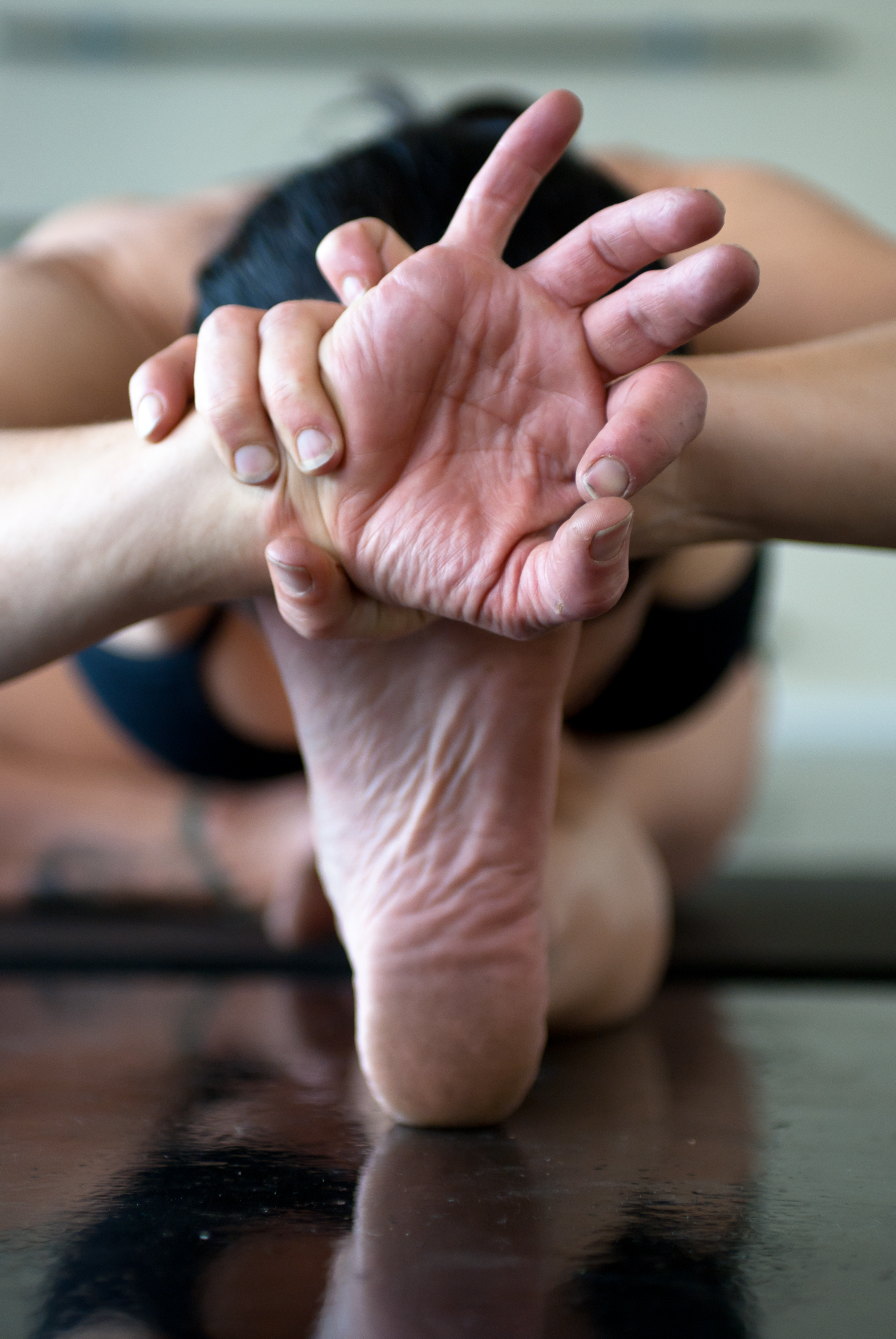
    Yoga, good for the mind, body and soul http://commons.wikimedia.org/wiki/File:Antoinette_08.jpg
    Yoga, good for the mind, body and soul (Photo: Wikimedia Commons)
  • Between Training and Law School, Harvey One Busy Skier

    Between Training and Law School, Harvey One Busy Skier

    Canadian Alex Harvey on his way to winning the 3.3 k freestyle prologue at the World Cup Finals in Falun, Sweden, on March 16. Harvey is gearing up for another season with some spring training at home in Québec.

    Most days of the week, Alex Harvey hits the road to Québec City, where he works out with the Pierre-Harvey National Training Centre, undergoes physio treatments and studies law at Laval University.

    The drive along route 440 from Mont Sainte-Anne (MSA) to Québec’s capital is about 45 kilometers and lined with views worth pulling over for. Just outside the city, there’s Montmorency Falls, the province’s largest waterfall and 30 meters (98 feet) higher than Niagara Falls. On the other side of the road is the Saint Lawrence River, so wide it becomes tidal near Québec City.

    Looking out at the Île d’Orléans Bridge across the Saint Lawrence on the way to Mont Sainte-Anne, Québec.

    But Harvey was born just north in Saint-Ferréol-les-Neiges and grew up skiing at MSA. Sights like the Île d’Orléans Bridge are daily  for the World Cup skier, at least when he’s home in the summer.

    The 23-year-old won’t be around long with upcoming trips to Hawaii and New Zealand and additional camps at the Haig Glacier in Alberta and Park City, Utah. Before joining the Canadian men’s team in Maui on June 16, Harvey spoke to FasterSkier on the phone while driving to Quebec City.

    Early last Tuesday afternoon, he was done with training and on his way to treatment. After that, Harvey had a three-hour night course at Laval, and then it was back north to MSA, where he’d start all over again the next morning.

    FasterSkier: What’s your university schedule like?

    Alex Harvey: It’s a summer semester (April 30-June 15) so it’s condensed to a month and a half. While you’re in it, it’s pretty intense (two classes per week), but the finals are only a month and a half after the first class so you can remember more I think. I like it. [The classes are] all in the evening from 6 to 9 so I can train all day and do all I have to during the day and then I come in for class and come back.

    FS: How long do you think it will take to earn your law degree?

    AH: I’m in second year or the equivalent of second year. I think from now on it’s going to be harder to get the classes I want. I was on a four-class-a-year pace and normal law students at Laval do 10 a year. I’ll need at least five or six more years so two more Olympics and then I can be done when I’m done skiing and [take] the bar and start practicing, hopefully.

    FS: How’s training going? What about your back injury?

    AH: The back’s good. Last year at this time of the year, I wasn’t allowed to run because I wasn’t strong enough to stabilize myself. My back was making my knee hurt and all sorts of things. Now I can do anything I want to do. I can run as much as I want, I can do all the training I want. I think it’s better than last year and the training is going well.

    I’m starting to get pretty tired now because it’s been two big weeks of training, but it’s good. We’ve had an early start to the summer so it’s nice to get some training in warmer temperatures.

    FS: What’s new with your training plan?

    AH: This year we’re putting a lot of emphasis on, during strength training, not necessarily exercises that will develop a lot of strength, but for me, just stabilize the back and use the muscles properly. [It’s] good to learn how to compensate different ways, to compensate for the instabilities, but last year during the summer and the winter, it just reached a point where the body couldn’t compensate anymore.

    Now I’m just kind of teaching the muscles how to, like use the glutes more, to stabilize myself. I’m spending the same amount of time in the gym as last year, but doing less pure strength exercise and doing a lot of pilates now and a lot of things [for] control. I think I already have enough strength, especially upper-body strength, so I just need to learn how to transfer that into the skiing and not get injured.

    Harvey en route to placing third in the World Cup skiathlon March 3 in Lahti, Finland. A year earlier in Lahti, he did not finish the 20 k pursuit because of a back injury. (Photo: Fischer/Nordic Focus)

    FS: Had you done pilates before?

    AH: I started last year. The osteopath that I’m working with is making the plan for that and talking a lot with our strength coach. (Note: Both the national-team osteopath and strength coach plan to accompany Harvey and his teammates on the World Cup next season).

    FS: You must be excited that your personal coach and Pierre-Harvey National Training Centre (CNEPH) head coach, Louis Bouchard is now also the assistant national-team men’s coach. How will that change things?

    AH: Last year he was at most camps. He was in Hawaii, but he wasn’t in New Zealand. This year he’s going to come to every camp, so Hawaii, the Haig, New Zealand and Park City, so all the camps I’m going to.

    He spent a lot of time with the team [last] winter, and it’s going to be the same next year. It’s exciting that he can follow me the whole winter around, and now with Lenny [Valjas] being a full-time World Cup racer and Dasha [Gaiazova] in Québec right now, too, training with [CNEPH], there’s three athletes. We’re all supported by B210 so that’s how we can be on the World Cup.

    FS: Will Bouchard be with you in Europe all winter?

    AH: He’s not going to come everywhere; it’s going to be kind of the same as last year. Last year, they were alternating between him and [head coach] Justin [Wadsworth] mostly, and [assistant coach] Eric de Nys sometimes. They know for the athletes it’s hard to go back and fourth [between Canada and Europe] because of the risk of illness and getting tired, but for the staff it’s not that big of a deal. It’s actually better because they all have families and things back home so they usually stay three weeks in Europe and then they go back for a bit. There’s a rotation between Louis and Justin, and then for world champs, they’re both going to be there because it’s the main goal of the season. Other than that, they alternate.

    FS: What do you think your travel schedule will be like for Canada’s World Cups in Québec and Canmore?

    AH: I think we will be coming from Europe and going right to Canmore. There’s going to be snow for the [Québec] races, but I’m not sure how good the training will be in early December so we might be in Canmore until, like, last minute and then just show up in Québec a couple days before the race then go right back to Canmore.

    FS: With the Tour de Ski starting just 12 days after the Canmore World Cup, how will you prepare?

    AH: For me next year, world champs is the main goal, and last year, it was the Tour just because there was no main championship. The Tour will be not the huge focus. Especially with the final climb, I have a lot of problems with the blood flow in my arteries on a steady climb like that. Last year, I was double poling by the end. I can’t really do well in the Tour because of the climb so it’s not really a big deal not to be in great shape there.

    ***

    Related story: Québec Ready for First World Cup; Harvey Shows Support