From the FasterSkier archive — posts syndicated from athletes’ and coaches’ own blogs between 2004 and 2012, kept online as published. Current coverage is at fasterskier.com.

Tag: Pierre Mignerey

  • Switching to Equal Distance and the “Trickle Down” Effect

    Switching to Equal Distance and the “Trickle Down” Effect

    In most sports, the question of whether men and women would compete on equal playing fields, so to speak, was answered long ago. While gender inequalities remain- a recent decision by the IOC to maintain the exclusion of Women’s Nordic Combined from the Olympics comes to mind- the sport of cross-country skiing will now be joining the list of those in which competition is equal for men and women. In a press release issued on May 18th 2022, the International Ski Federation (FIS) announced that 57% of the Cross-Country Committee (CCC) had voted in favor of an equal distance proposal. 
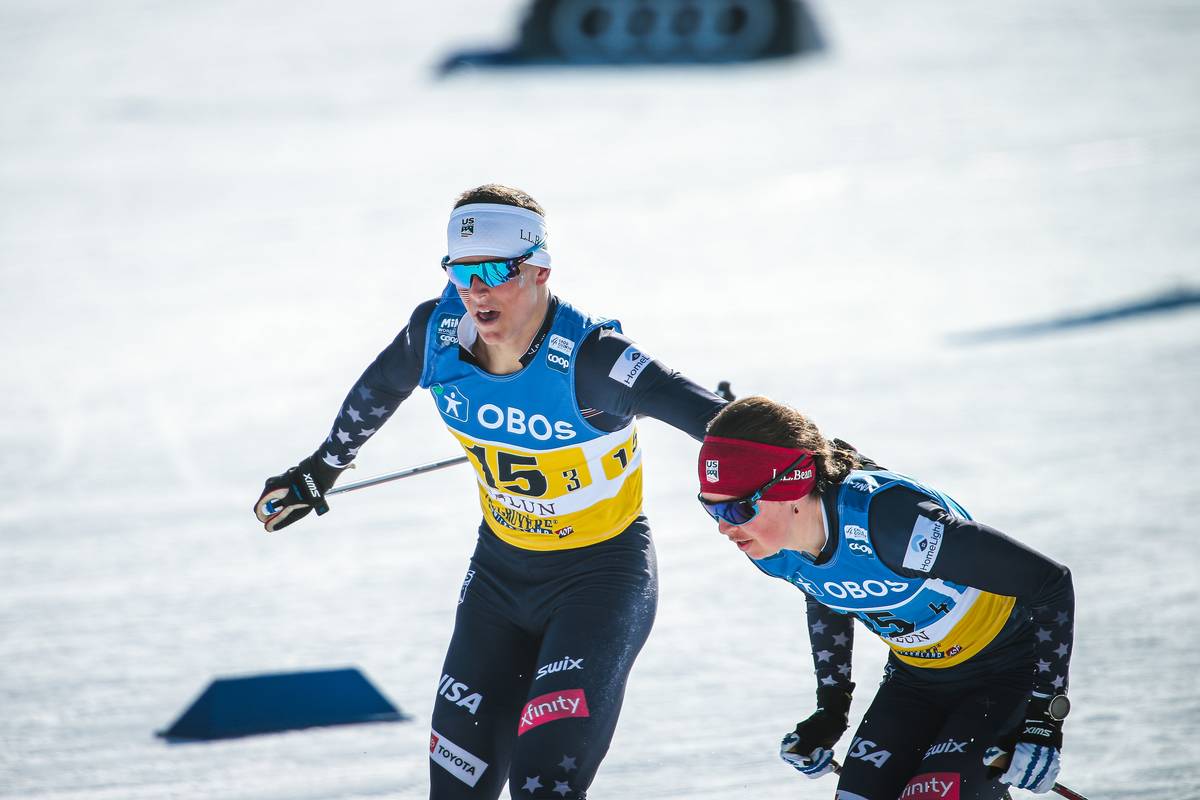
    Adam Martin tags Craftsbury Green Racing teammate Caitlin Patterson during a March, 2022 4 x 5 k mixed gender relay in Falun, Sweden. (Photo: NordicFocus)

    The push for equal distance, within the U.S., began in earnest in 2020 when the lack of racing due to the pandemic gave Vermont’s St. Michael’s College coach, Molly Peters, more time to focus on the issue. “I’ve always been sort of bringing it up,” said Peters, “through the EISA,  I’ve tried to get it changed at the NCAA level before, but I put in a proposal, and slowly I was getting more and more support. But then when the pandemic hit, I finally sort of had the time to really put a lot of time into it.”

    With the help and support of fellow EISA coaches, Peters started the Equal Distance Group and in May of 2021 the Ski Equal Group sent a letter to the U.S. Ski & Snowboard Cross Country Sport Committee urging them to adopt equal distance racing. The letter was signed by 23 prominent members of the nordic ski community, including Jessie Diggins and Bill Koch. 
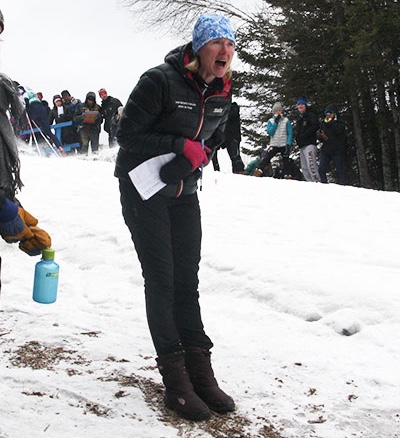
    Head Cross-Country Ski Coach at St. Michael’s. (Photo: St. Michael’s)

    Reflecting back, U.S. Ski Team Head Coach, Matt Whitcomb shared, “The first time Molly Peters brought this to my inbox I felt ambivalent. This was only two years ago. I’m embarrassed that I can’t claim to be an early adopter. However, the more it sat with me over the next months, and the more I reread Molly’s reasons, the more I warmed to it.” Whitcomb said he wasn’t sure exactly what sparked the movement at the FIS level but shared, “it was a popular topic of conversation last year on the World Cup, and in a FIS competitions format working group. It didn’t all just happen this spring, but I applaud FIS for having the spine to make a big change.”

    On her part, Peters gives credit to both Whitcomb and U.S. Ski Team Program Director, Chris Grover, for their efforts to advance the proposal, saying, “I spoke to them both, numerous times and they kept me updated, which was amazing. And they’re the ones that really pushed it at the higher level.” 

    For those not closely following the issue, the decision announced by FIS this spring might have come as a bit of a shock. Even to Peters, it came as a surprise. “It kind of came out of nowhere,” she said. “I mean, I knew that the U.S. had been pushing for it, on the domestic level. I’ve spoken at the U.S. Ski and Snowboard Congress twice and I’ve been talking to a lot of people within U.S. Ski and Snowboard about sort of how to get it moving up the chain. But I had no idea.” 

    Peters said she knew that a FIS committee had formed to talk about the issue and then, “all of a sudden, I got an email or call maybe from Chris Grover like, ‘Hey, this is happening. You know, we’re pushing this hard. It’s looking like it’s gonna pass’ and I was kind of floored by that just because, I knew it had slowly, over the past year and a half, more and more races were equal and I’ve been pushing hard at every level I could possibly push at. But yeah, to go all the way for it to jump to the FIS level was a complete surprise and pretty amazing.”
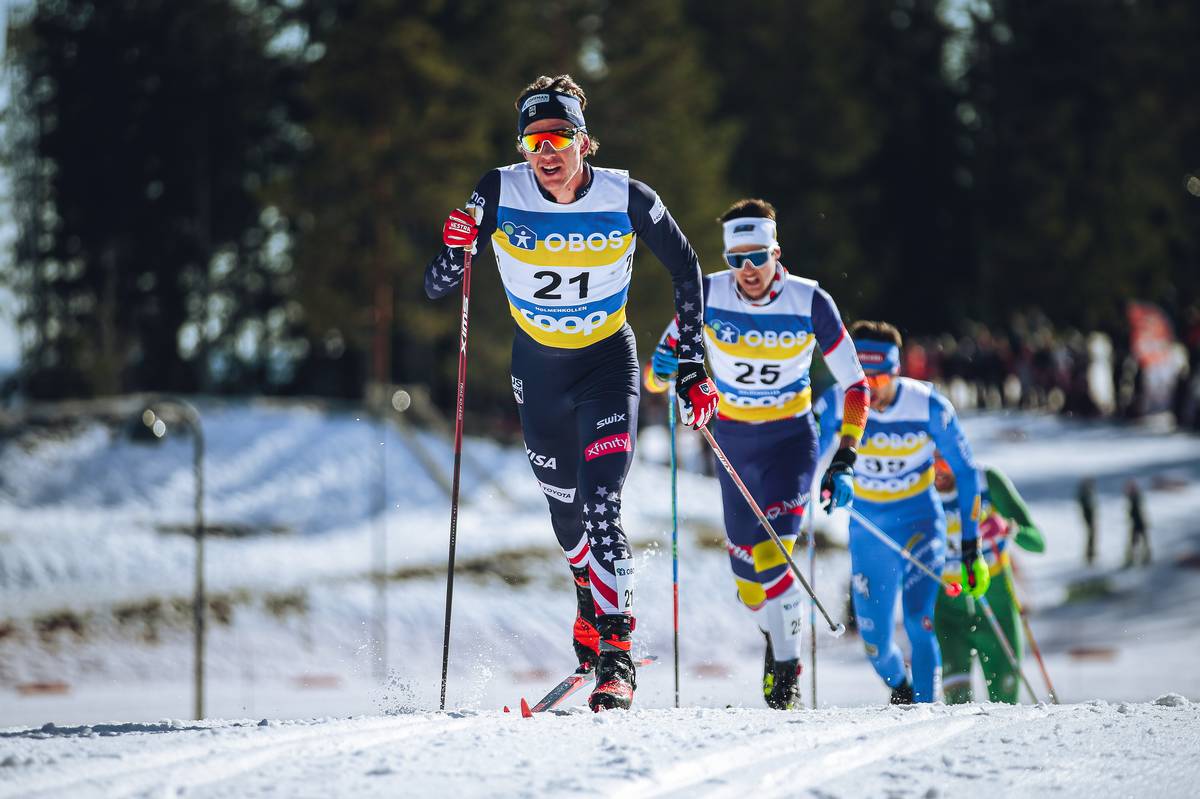
    Both men and women will now race 50 k at the prestigious Holmenkollen race, pictured here, Scott Patterson races the 50 k mass start classic in Oslo, NOR. (Photo: NordicFocus)

    U.S. Ski Team A-Team member, Julia Kern, wrote in an email to FasterSkier that she too was surprised by the seemingly sudden decision but through conversation with others she came to realize that, “if these decisions were tested first or implemented more slowly, it would take time and potentially not be as adopted. Instead, the decision was made and carried out across the board in all World Cups for the coming season.”

    In a recent interview, FIS’s Cross-Country Race Director, Pierre Mignerey, spoke about the reaction to this decision. Mignerey said, “as expected, it created quite some discussions among the cross-country community. Some people were very happy and some were strictly against racing equal distances.” (FasterSkier’s Nat Herz wrote about the various perspectives on this issue during the 2022 Winter Olympics).

    Mignerey expressed understanding for the opposition, saying, “It is understandable to see some resistance from athletes or coaches because it is a decision which may disturb their routines, their habits and pushes them to adapt their training plans and develop new strategies. But I’m convinced that it will be seen – or maybe is already seen – as a very logical and meaningful decision.” 

    Whitcomb shared a similar sentiment, “That’s just how change goes; most humans don’t do it easily or well. But it’s going to be okay. And to those who say they are going to miss the five or 15 kilometer distances, I hear you. I will too. But we’re not forever locked into what distances we do, so much as the idea that we’ll be doing them together.”
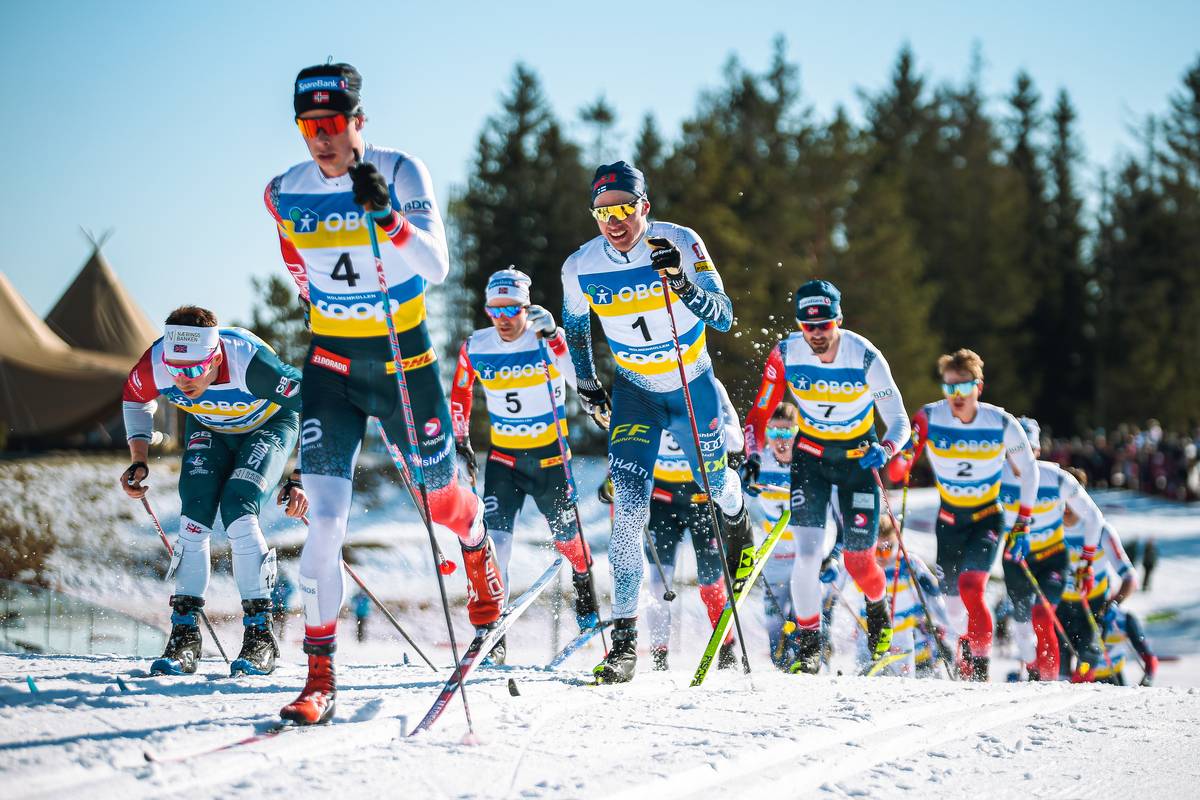
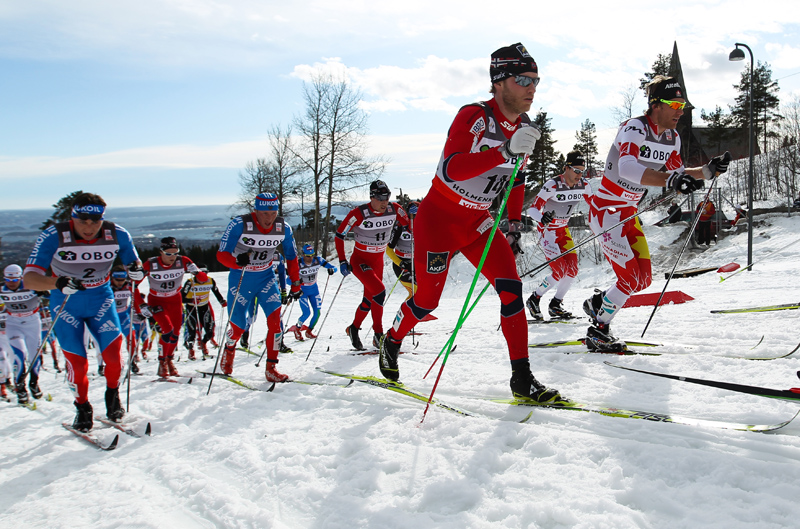
    The lead men kick and glide as a large group early in the 2022 50 k classic at Holmenkollen in Oslo, Norway. (Photo: NordicFocus)

    In the same meeting that passed the proposal, the CCC decided on the race formats for the World Cup, U23 World Championships and Junior World Championships, as well as Youth Olympic Games. FIS has shared the 2022/23 World Cup race calendar which can be found here. 

    The 2022/23 race formats decided on by the Cross-Country Committee at FIS (Source: FIS)

    Speaking from a coaching standpoint, Whitcomb talked about what this change will mean for the athletes. He started by saying, “to simplify things, you can look at the changes each gender will experience; women will be racing longer, and men will be racing shorter.” To prepare for this shift, “we’ll see some longer threshold sessions and time trials that women adopt, and the men will be navigating the demand for slightly higher race speeds, by working on finishing tactics.” 
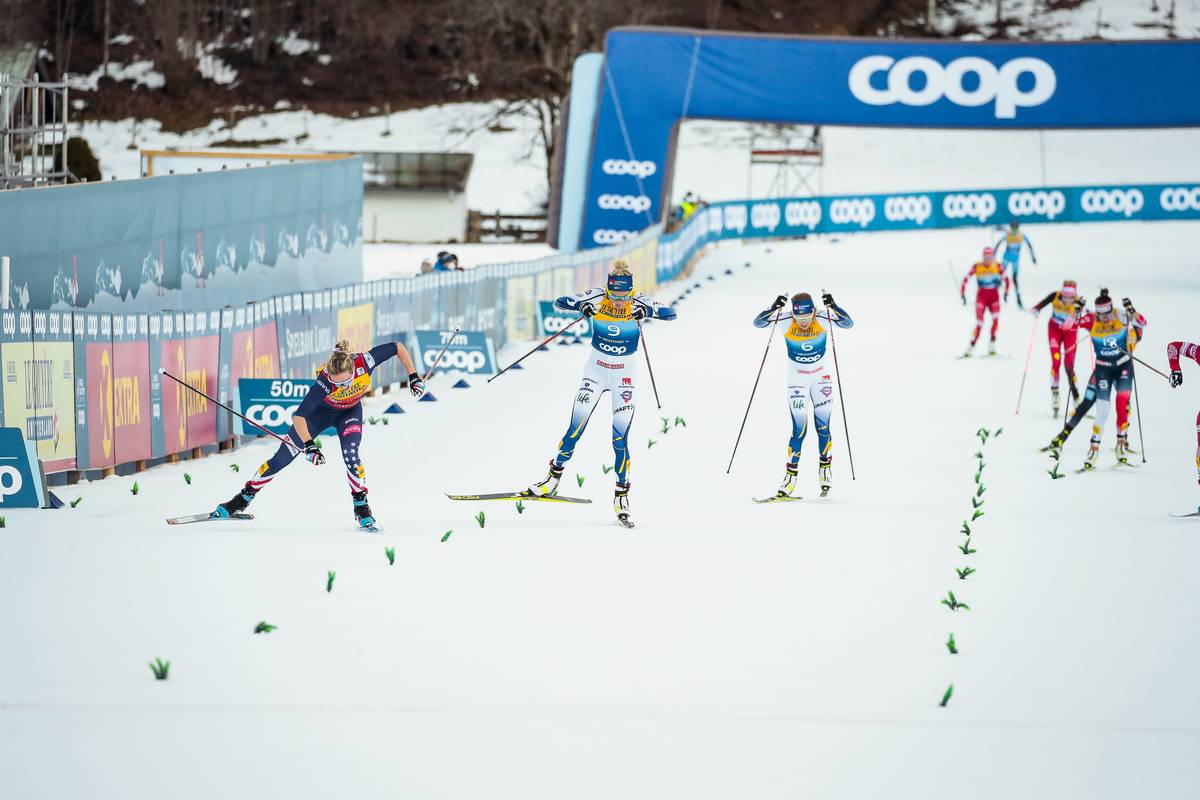
    Head down and free skating, Jessie Diggins fights all the way to the line against Frida Karlsson (SWE) in Oberstdorf Germany. (Photo: NordicFocus)

    He was also quick to point out that these changes have nothing to do with the athletes physiology, “the reason this change is happening is because we’re eliminating sexist programming, and not because anything has changed with physiology,” he said. “It began in the late 60’s or early 70’s because it was thought that women couldn’t handle the demands of such long efforts. The day this was discovered to be untrue became the first day this should’ve changed. To put the change in perspective, I think athletes who have done well on the World Cup will continue to do well. The change feels crazy, but I bet we’ll discover it isn’t.” 

    As an athlete who will be racing these new distances, Kern shared, “It is definitely a big change I think for the women, because we go from racing 10 k to doubling the distance to 20 k, whereas the men only change by 5 k up or down in length. I think it will be interesting to see if this decision creates more specialization on the women’s side.”

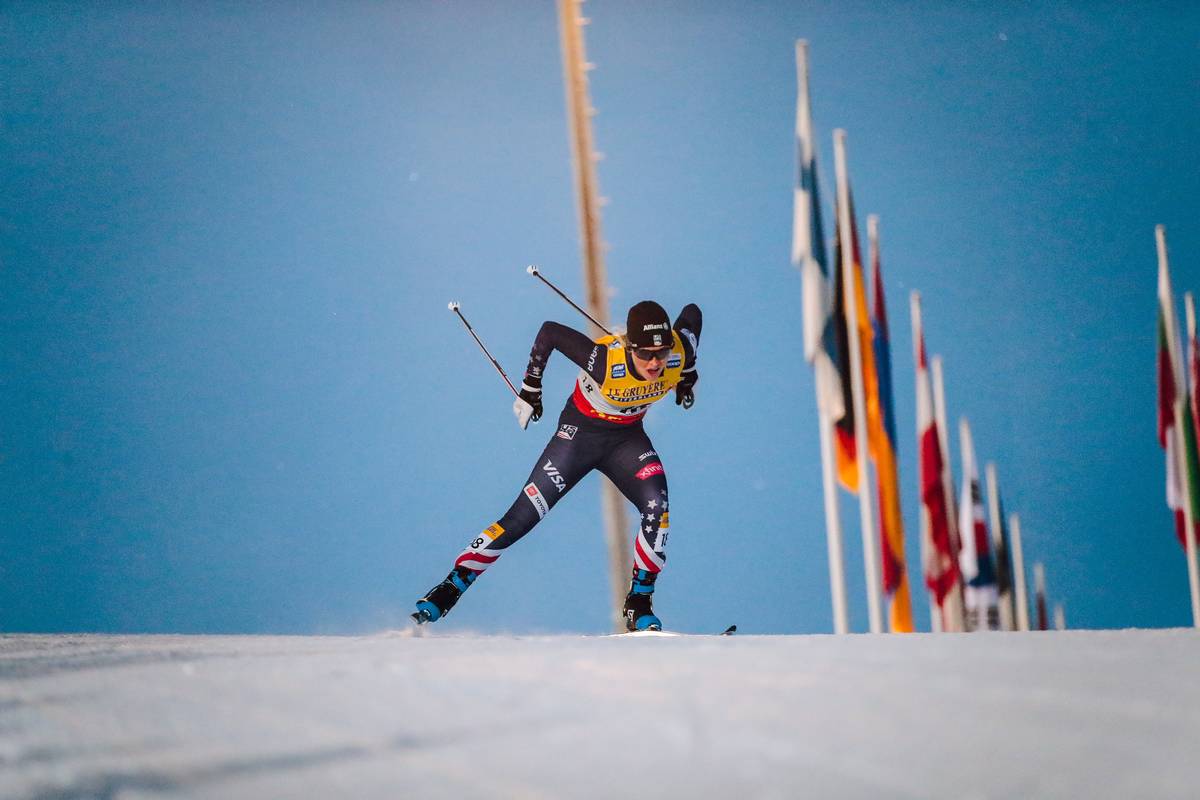
    Smooth and powerful, Julia Kern races through the heats during a classic spring in Falun, SWE in March 2022. (Photo: NordicFocus)

    Anticipating how she might navigate this shift, Kern reflected, “I personally think it will change how I approach the race schedule potentially, because a 20 k race can have much a larger toll on the body than a 10 k, so I could see myself having to pick and choose races more, especially with the full World Cup schedule this year.”

    She added, “of course for me, as someone who prefers sprinting, a 20 k seems quite long, but on the flip side, I have really enjoyed racing 30 k races, so I am not sure how a 20 k will go, but I am excited to find out.”

    From the FIS perspective, according to Mignerey, the debate was not about the capability of female cross-country skiers, but rather what the realization of equal distance racing would look like. He said, “In 2022, we should not have to discuss anymore if women are capable of racing the same distances, having the same rules and using the same courses as men. The discussion in the CCC was never about IF women are capable of racing the same distances and course profiles, but about how to implement it, for example into our sports community or into a TV product.”

    Mignergy continued by saying, “from a global standpoint, I have the feeling that this decision is very well perceived by most people which are not directly or personally involved in cross-country skiing. And if you put things into perspective, the fact that this decision was so much discussed and named a ‘historical decision’ shows that this move was long overdue.”
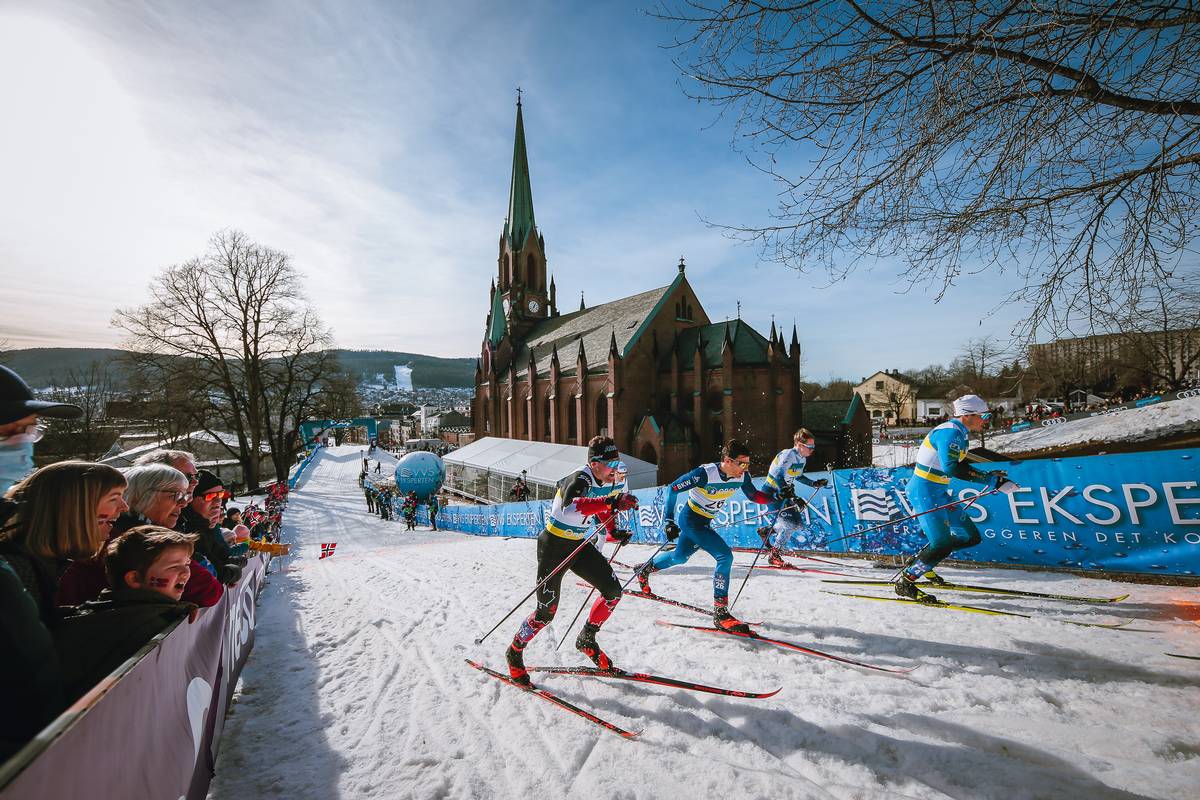
    Graham Ritchie (CAN) races in the second heat of the classic sprint quarterfinals in Drammen, NOR. (Photo: NordicFocus)

    At the domestic level, Peters felt that some of the resistance to the idea came from the fact that races at the World Cup level weren’t contested at equal distances between genders. With this decision from FIS, that no longer becomes a sticking point. U.S. Ski & Snowboard’s Cross-country Sport Coordinator, Adam St. Pierre, explained that, “the recently finalized Super Tour calendar had men and women racing the same distance in each race. This includes the races at U.S. Nationals in Houghton.”

    At the time of writing, a decision about NCAA races had not yet been made but St. Pierre thought it was “likely” that they would also be run as equal distance. At the junior level, he explained, “The Junior Working Group has also discussed having boys and girls race equal distances, but hasn’t settled on what those distances should be for each age group (u16, u18, u20).” Based on a schedule for Midwestern junior national qualifier races, it appears that they have opted to adopt equal distance between genders, with a few 7.5 k events for all age groups and mostly 5 k for u16 skiers and 10 k for u18/u20.

    Peters reflected, “it’s pretty amazing how fast that [came about] and I knew that would happen. I knew it would just be like a light switch. Like as soon as they did it up at the higher levels, it would just trickle down to everyone doing it.”

    For Peters, this means her work is done. At least in regards to the Ski Equal push. “Really with skiing I’m kind of done,” she paused, “I mean, I would love to see The World University Games, (hosted in Lake Placid this year) and for some reason, they’re not going to be equal races. So, I have a few ideas on that.” But mostly, Peters is now switching her focus to cross-country running. “Cross country running for NCAA is also not equal,” she explained, “skiing was pretty much [unequal for] the whole world and, and it’s kind of crazy that running is actually equal at the world level but has not changed at the NCAA level. So I have a few proposals. I’ve written so many proposals, I can’t even tell you.”

    Most of all Peters hopes this change within the ski racing world can be viewed through the lens of inclusivity. She concluded by saying, “I hope that we continue to move forward as a sport and I think that this is a huge part of [that]. You know, we want people to love skiing. We want them to see the sport as being inclusive. And I think that this is a huge step forward in that process.” 

  • China spent millions on cross-country skiing in the leadup to Beijing. What happens now?

    China spent millions on cross-country skiing in the leadup to Beijing. What happens now?

    ZHANGJIAKOU, CHINA — A month ago, I met with a source close to the Chinese government in a tiny room in this mountain resort outside Beijing, which hosted the 2022 Olympic cross-country skiing events. 

    There, the source explained how a decision by international skiing officials to disqualify a Chinese cross-country skier from a race was like killing a baby.

    China does not have, exactly, a long tradition of success in winter sports like cross-country skiing. But after several years of work and hundreds of millions of dollars invested in facilities, Scandinavian and Russian coaches, athlete development and gear, it was hoping for big results in Beijing, especially from star sprinter Wang Qiang.

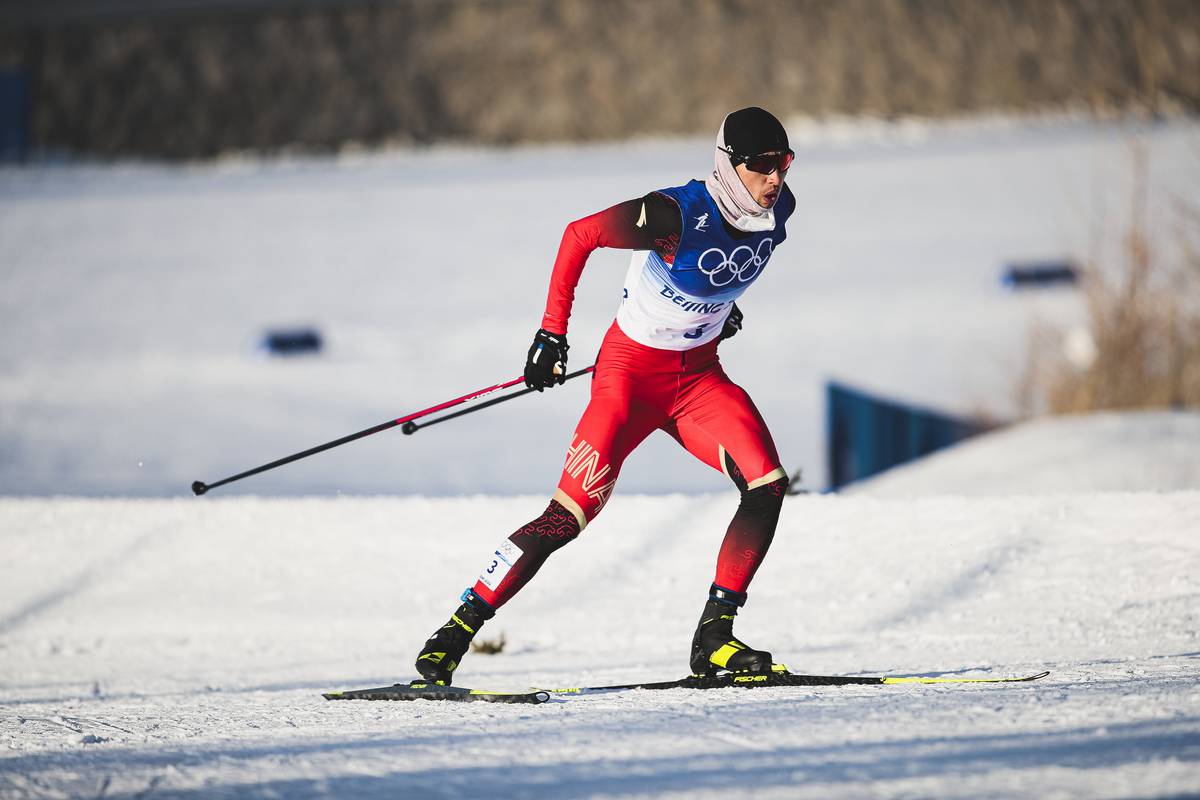
    China’s Wang Qiang races to fifth in the freestyle sprint qualifier in Zhangjiakou during the 2022 Beijing Olympic Winter Games. (Photo: NordicFocus)

    Wang, in cross-country’s Olympic skate sprint last month, was poised for a top-10 finish, and maybe even a medal — definitely the only hardware that China’s cross-country ski team had a chance to win on home snow during the Games.

    But in one of the event’s preliminary head-to-head knockout rounds, Wang tangled with a Norwegian skier, Pål Golberg, who crashed. The International Ski Federation jury overseeing the race relegated Wang to 30th place, ruling that he’d obstructed Golberg, even though China vehemently disagreed.

    Hence the tamped-down outrage I was witnessing from my source, who wanted international followers of cross-country skiing to understand his country’s anger over the disqualification.

    China had just poured huge amounts of money into hosting the Olympics and building up cross-country skiing; thousands of volunteers had put their lives on hold to pull off the Games during a pandemic. The ski federation, known as FIS, couldn’t give Wang the benefit of the doubt? In a country with hundreds of millions of potential new cross-country skiers and skiing fans, where the sport was still in its infancy?

    “You don’t kill infants,” the source said.

    This is a Chinese-friendly perspective on Wang’s disqualification, and many others disagree, saying that Wang committed a clear infraction and that skiing’s rules must be enforced without regard to politics or business.

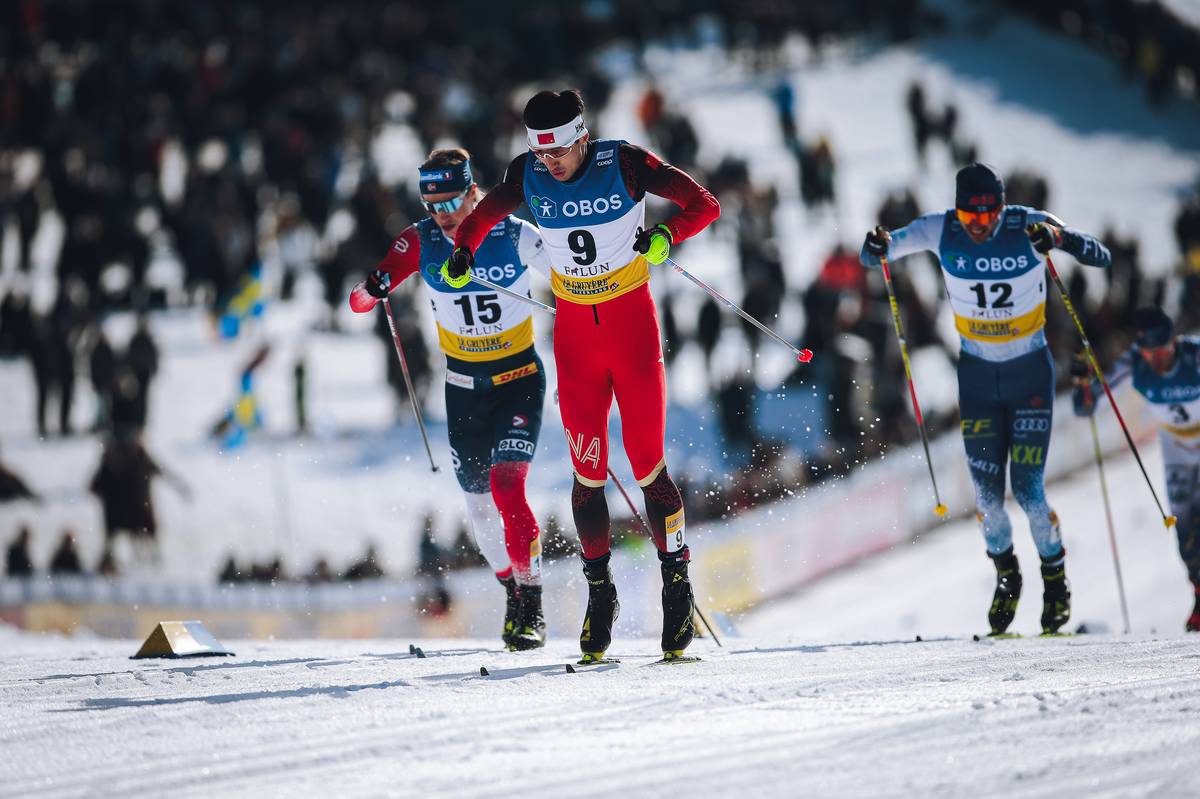
    China’s Wang Qiang races through the heats during a classic sprint in Falun, Sweden. (Photo: NordicFocus)

    But the Chinese perspective on the event is one that’s worth understanding. Because doing so can help answer one of the most interesting, and important, questions in cross-country skiing right now: Will China keep up its investment in the sport?.

    “What I’m very curious about is: What next?” Vegard Ulvang, the retired Norwegian Olympic gold medalist who now chairs FIS’ cross-country committee, said in a phone interview. “Will they continue? Will they have a national team? Will they join the World Cup? To be honest, we don’t know. I have no information on what they will do.”

    The question has enormous implications for the sport of cross-country skiing, given the size of China’s potential market for skis, wax and television broadcasts. 

    But I got conflicting answers when I asked the people who would know the answer. 

    The source close to the government said Wang’s disqualification soured China’s sports minister, Gou Zhongwen, on further investment in cross-country skiing, and he said the sport’s future in the nation looks deeply uncertain. Many of the team’s Scandinavian employees have contracts that end in May, without assurances they’ll be renewed.

    “Everything is political, and the culture is completely different,” said Tor Arne Hetland, a Norwegian coach and former Olympic gold medalist who’s worked with Chinese athletes. “If the sports minister says, ‘We are not going to pursue winter sport or cross-country skiing or biathlon,’ then of course, there will not be any money for it. And the project will be completely dead.”

    But in an interview in Zhangjiakou during the Games, Zhang Bei, the Communist Party official who leads China’s cross-country ski team, struck a positive note.

    She said her country’s commitment to training athletes will continue into next year, and plans have already been announced that the team will keep sending athletes to train in Finland through the 2026 Games. Wang also proved his potential with a podium performance on the top-level World Cup circuit earlier this month in Drammen, Norway.

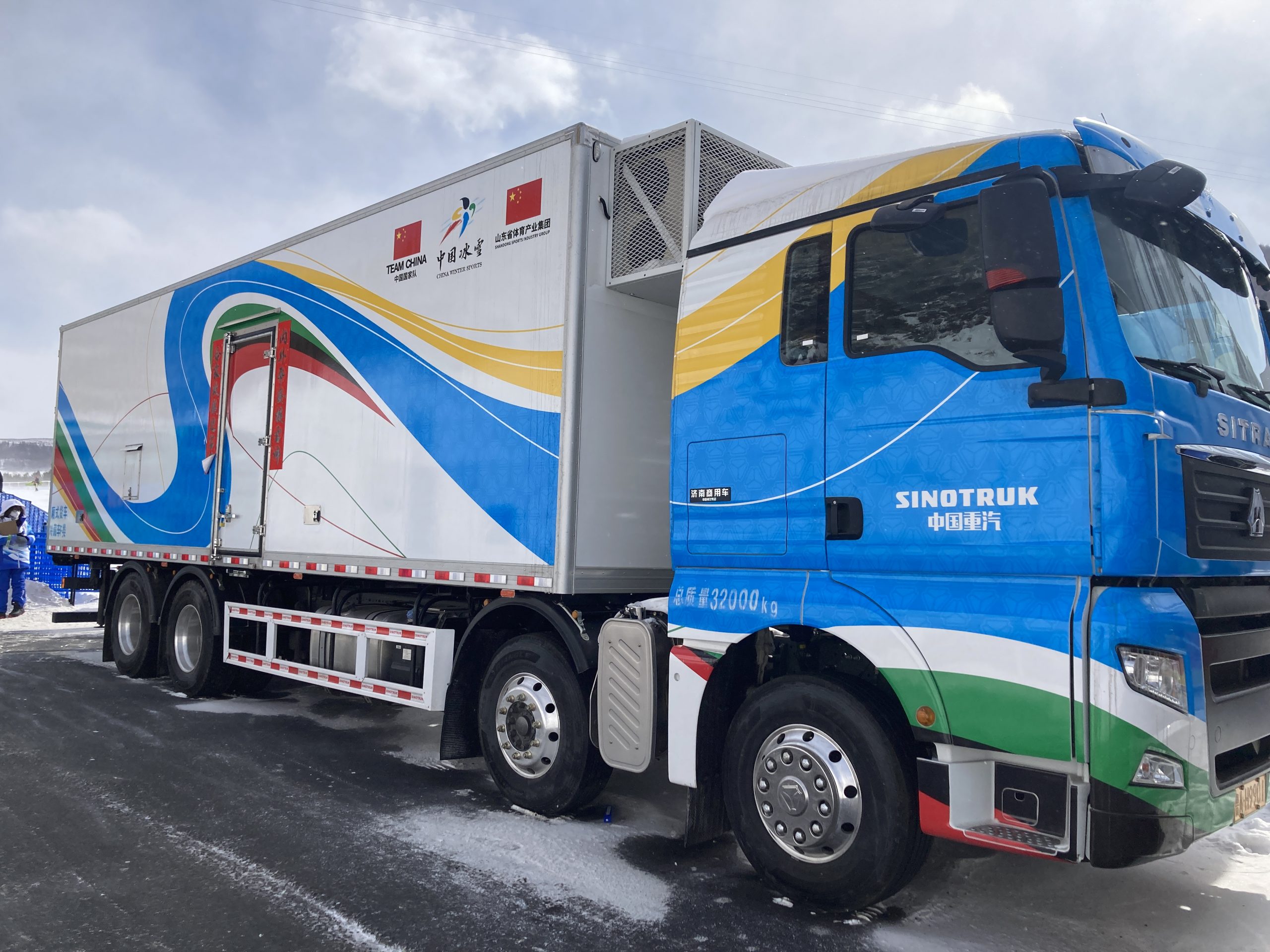
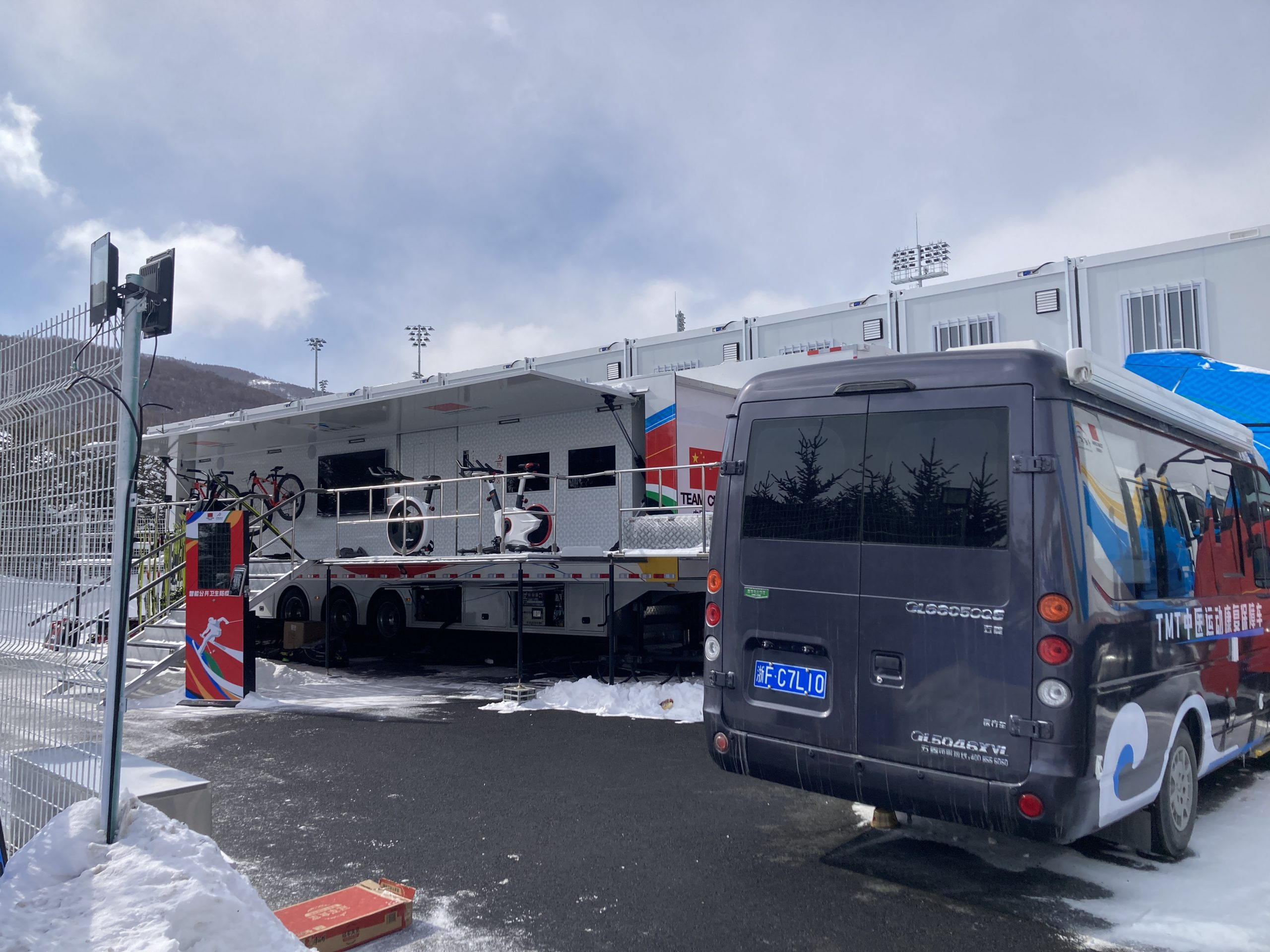
    One of the multiple vehicles that China’s cross-country ski team had stationed at the 2022 Olympics in Zhangjiakou. (Photo: Nat Herz)

    But Zhang would not reveal details about China’s cross-country budget. And she also suggested, logically, that the country would be scaling back its investment in skiing infrastructure from its big Olympics build-up.

    “There is a saying in China: Everything is difficult to start,” Zhang said in the interview, conducted through a translator. “After you have the bases for the infrastructure, then of course, there is an adjustment.”

    Ulvang has closely watched China’s cross-country program and, as the country’s athletes trained in Scandinavia before the Olympics, he hosted two of the nation’s top female prospects, Bayani Jialin and Dinigeer Yilamujiang, for a week at his home.

    Ulvang described China’s efforts to train ski champions as “all out.” But he’s still waiting to see if the country’s commitment will last, because, he said, developing a durable skiing culture takes time.

    “We need to see if this was motivated by the medals on the home field,” Ulvang said, “or if this was part of a long term strategy.”


    “Starting from zero”

    China’s huge pre-Games spending on cross-country skiing was fueled by Zhongwen’s belief that the discipline was one of the best measures of a nation’s overall prowess in winter sports, said the source close to the government.

    The country spared no expense. Among its investments was a $150 million, 1.3-kilometer indoor ski tunnel that athletes can use to train year-round; one Chinese team employee showed me a video of another contraption that resembled an enormous plate with snow on top, which spun in circles while athletes stayed in the same place by skiing in the opposite direction.

    China hired dozens of Scandinavian coaches and experts at yearly salaries that reached $120,000. The government recruited hundreds of Chinese athletes from other sports into cross-country skiing, and sent them to training centers in Norway and Finland. (Chinese officials considered Alaska as an option, where athletes could fly in helicopters to train at Alaska Pacific University’s facility on Eagle Glacier, but Zhang said securing visas proved too difficult.)

    The team spent millions more on wax and equipment. In Zhangjiakou, the Chinese team had access to the Games’ only on-site ski waxing bus, which has sliding doors and facial recognition technology.

    The Chinese ski team’s main wax bus at the 2022 Olympics in Zhangjiakou. (Photo: Nat Herz)

    “They have started from zero,” said Hetland. The skiing infrastructure that the country has built up, he added, “is more than what Norway has done in the last few years.”

    In the years before the Olympics, the team’s athletes recorded impressive results, even though some had only been skiing a few years — unlike many European athletes who have raced for the majority of their lives. 

    Yilamujiang and Bayani both cracked the top 30 on the World Cup circuit, and notched top-15 results at the world championships for juniors and athletes under 23 years old. Wang, China’s star male skier, performed at a similar level.

    But at the Olympics, other than Wang, none of China’s cross-country skiers cracked the top 30. Some people close to the team described the event as a disappointment, given the Chinese athletes’ proven potential.

    Former employees of the Chinese team said two dynamics help explain the results. 

    One was a tendency by Chinese team leaders to disrupt the Scandinavian coaches’ training programs, by pushing athletes through brutally difficult workouts that the Chinese staff thought were needed. 

    The other was the decision by team leaders to pull China’s athletes out of the World Cup circuit during the COVID-19 pandemic — a move that kept the skiers safe but deprived them of experience against international-caliber competition on trails outside their home country. (Chinese officials did hire semi-elite Russian athletes to travel to China to give the country’s athletes more racing experience.)

    “They need to spend even more time in Scandinavia and learn from everybody in the environment that is around a skier,” said Hetland, the Norwegian coach. “And that has been maybe the biggest challenge for the team, when due to COVID they have stayed at home in China in the last two years.”

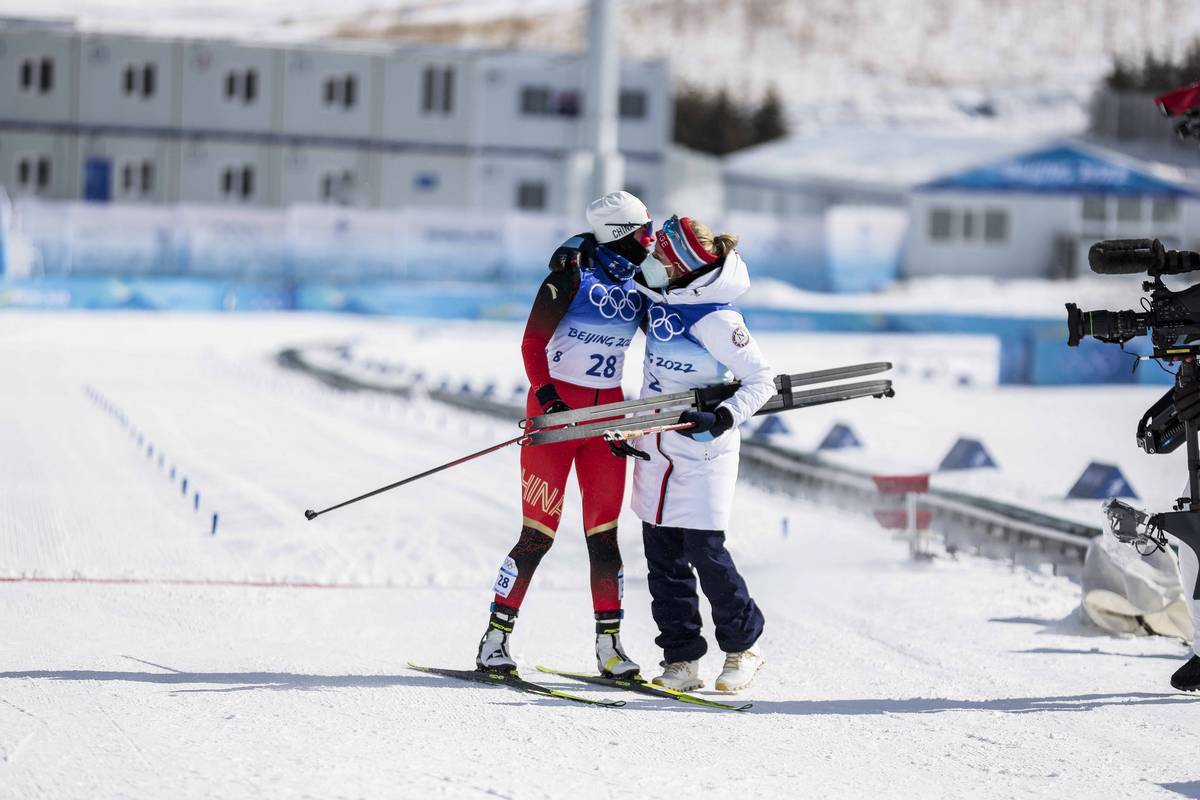
    Olympic 30 k winner Therese Johaug (NOR) greets last place finisher Dinigeer Yilamujiang of China who finished over 25 minutes behind the Norwegian (Photo: NordicFocus)

    Hetland said it’s important to remember that China has its own distinct culture from those of the European nations that have historically dominated cross-country skiing. Adapting that culture takes time, he and others said.

    “I visited China two years ago, and I was clear to the officials there that developing or training up a good skier, fighting for medals, is not a quick fix,” said Ulvang, the Norwegian FIS official. Still, he added: “It’s really special to see such fast development into some of the best racers in the world.”

    Zhang, the Chinese leader, had no complaints about her team’s Olympic results.

    “I am very much satisfied with the performance of our athletes,” she said. “I also feel very satisfied that each of our athletes is enjoying the competition, and that they are happy.”


    “They cut him”

    Zhang spoke with me in a busy athletes’ lounge in the bowels of Zhangjiakou’s biathlon building. 

    With the help of some of her European coaches, I’d picked her out of her white-jacketed, fur-hatted entourage at the cross-country skiing venue a few days before. She reacted with surprising openness, and agreed to an interview after I supplied her with enough details to get approval from her superiors.

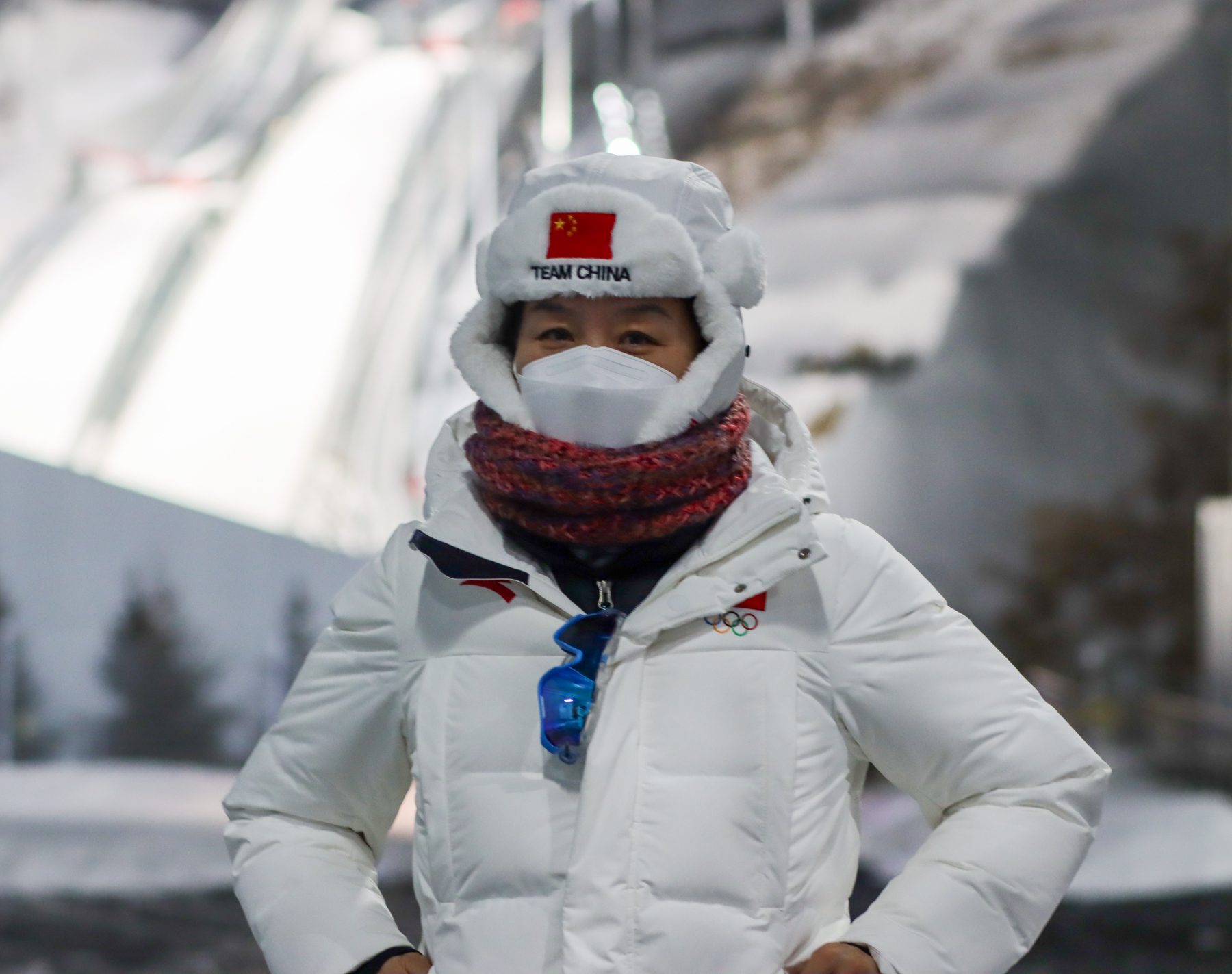
    Zhang Bei is the Chinese Communist Party official in charge of the country’s cross-country ski team. (Photo: Nat Herz)

    Zhang embodies China’s recent foray into winter sports: She came to her job four years ago, with a background as an elite rower, and only recently took up cross-country skiing herself. She told me she was too shy to try it in front of her athletes because she was worried they’d laugh at her.

    In our hour-long discussion, Zhang came across more like a politician or ambassador than a coach or executive, striking a vague but upbeat tone that glossed over some of the challenges I’d heard about from former employees. 

    “We have a very good start,” she said in response to a question about her program’s future. “Most importantly, we have many young people that are interested in cross-country skiing. And we have to help them to fulfill their dream.”

    The only time Zhang acknowledged even a hint of tension or conflict was on the subject of the disqualification of Wang, China’s star athlete. She said she and other team members were upset about the decision at the Olympics, which Zhang called “wrong.”

    Technically, FIS’ race jury ruled that Wang would be “ranked as last” in the freestyle for breaking international competition rules against obstructing other skiers. 

    Slow motion replay of the event shows Wang in his neck-and-neck sprint heat edging to his right in a way that appeared to impede Golberg, the Norwegian, who was skiing alongside Wang and ultimately crashed. (The video cannot be posted here due to Olympic broadcasting rules, but FasterSkier can provide a copy by email upon request.)

    The video isn’t exactly conclusive, and the jury’s decision has its critics — including, apparently, Gou, China’s sports minister. 

    Four separate sources told me that Gou learned of the disqualification during a dinner with Johan Eliasch, the FIS president, where Gou subsequently “lost his appetite” and raised his concerns with Eliasch directly. (A FIS spokesperson said in an email that the federation “does not comment on speculation about discussions between individuals during private dinners.”)

    China ultimately appealed the jury’s decision, but the appeal was rejected, said Ulvang. The source close to the government said China also asked FIS to extend some type of goodwill gesture after the disqualification, but that request wasn’t granted either. 

    Representatives from cross-country ski equipment manufacturers were frustrated, too. Currently, the industry sells only small amounts of gear and skis in China, and only to elite athletes there — not to “normal people,” said Hans Hubinger, an official from ski giant Fischer who was working at the cross-country venue in Zhangjiakou.

    “It’s not easy for us to see if there’s a future for the Chinese market or not,” Hubinger said in an interview.

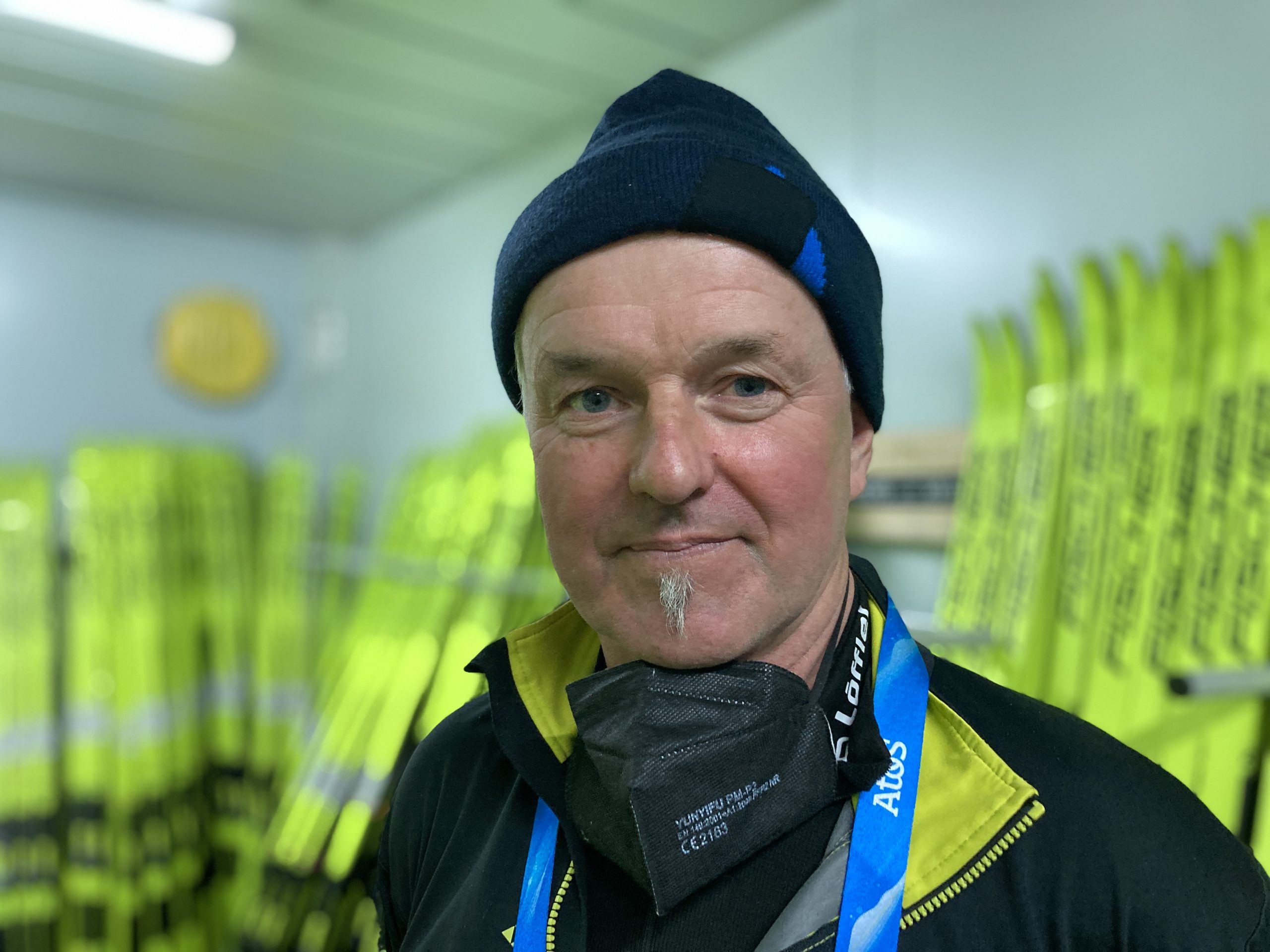
    Hans Hubinger is an official from ski company Fischer who was working at the 2022 Olympics in Zhangjiakou. (Photo: Nat Herz)

    Wang was the industry’s only hope for a Chinese cross-country skiing medal, which could have stimulated new interest, and gear sales, in the nation’s massive market. That market could also bring much-needed television viewers to cross-country skiing’s broadcasts — a major source of revenue for the sport. 

    Hubinger said he thought Wang’s disqualification was a close call where the jury could have given him the benefit of the doubt.

    “I think, ‘Oh, this is the chance now, to turn some guys into heroes’…and they cut him,” he said. “If the rules are clear, then you have to cut him. But this rule is not clear.”

    Pierre Mignerey, FIS’ cross-country skiing race director and a member of the jury that disqualified Wang, said he sees the situation completely differently. 

    In an interview in Zhangjiakou, Mignerey said it would be completely inappropriate for a race jury to weigh political factors, like the size of China’s ski market or its investment in the Games, in their decisions.

    “Sports mean that we have some rules. And that would be, in my opinion, quite shocking if the rules would not apply to everyone in the same way, regardless of if it’s the host nation,” said Mignerey, a retired French racer. “What would people say if the jury had decided something else?”

    Others placed responsibility for the disqualification on Chinese team leaders, arguing that their decision to skip international races during the pandemic left athletes like Wang without enough experience in the kind of tight-quarters competition that happened in the Olympic sprint.

    In the weeks after the Games, Wang delivered results that only underscored the opportunity he missed when he was disqualified — regardless of who bears the ultimate responsibility for that decision.

    In his first World Cup race after the Games, in Finland, Wang, 28, finished a career-best sixth place. The following week, in Norway, he landed on the podium for the first time.

    That result delivered a shot of hope to those who want to see the Chinese program continue. 

    On social media afterward, Wang made clear his intentions to continue in the sport, even if his country’s commitment to its skiing program remains something of a mystery. 

    “Today is a milestone. This is the first time a Chinese athlete stands on the podium of the World Cup series. We have won the respect of the world,” Wang said on a platform called Weibo. He added: “I will continue to pursue my dream with a humble attitude.”

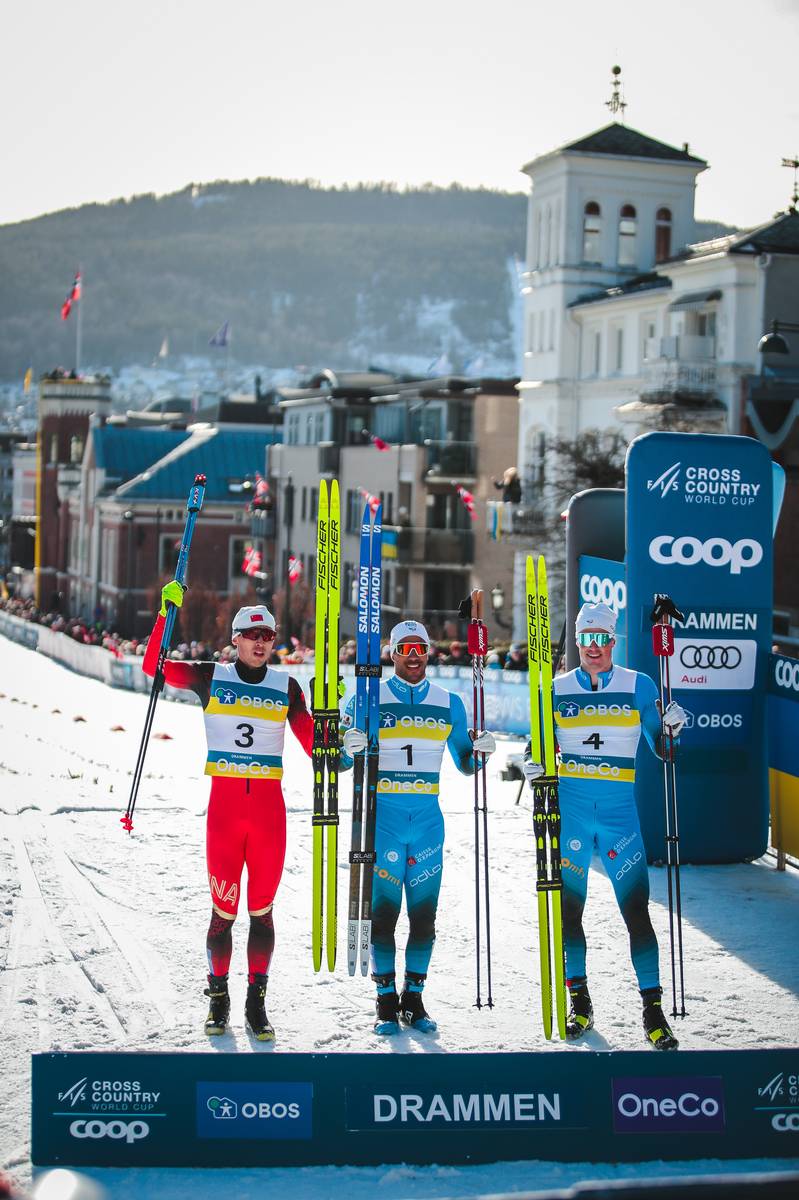
    Richard Jouve (FRA) takes the win in Drammen, NOR, with a first podium for China’s Wang Qiang, who took second ahead of Lucas Chanavat (FRA) in third. (Photo: NordicFocus)
  • Ukraine tensions could scuttle World Cup finals in Russia, but FIS says no changes yet

    Ukraine tensions could scuttle World Cup finals in Russia, but FIS says no changes yet

    ZHANGJIAKOU, CHN — International Ski Federation officials say they’re exploring backup options for season-ending races in Russia amid fears of a war between that country and Ukraine, though they’re still planning on holding the event as scheduled next month unless circumstances change.

    The final races of the top-level World Cup are scheduled to be held in Tyumen, Russia, in an oil-rich area in Siberia — about 1,000 miles away from the border with Ukraine, where American officials are warning that Russia could invade.

    In an interview at the Beijing Olympic cross-country ski venue, an official from the federation, known as FIS, said that if conditions remain unchanged, the World Cup finals will happen as planned.

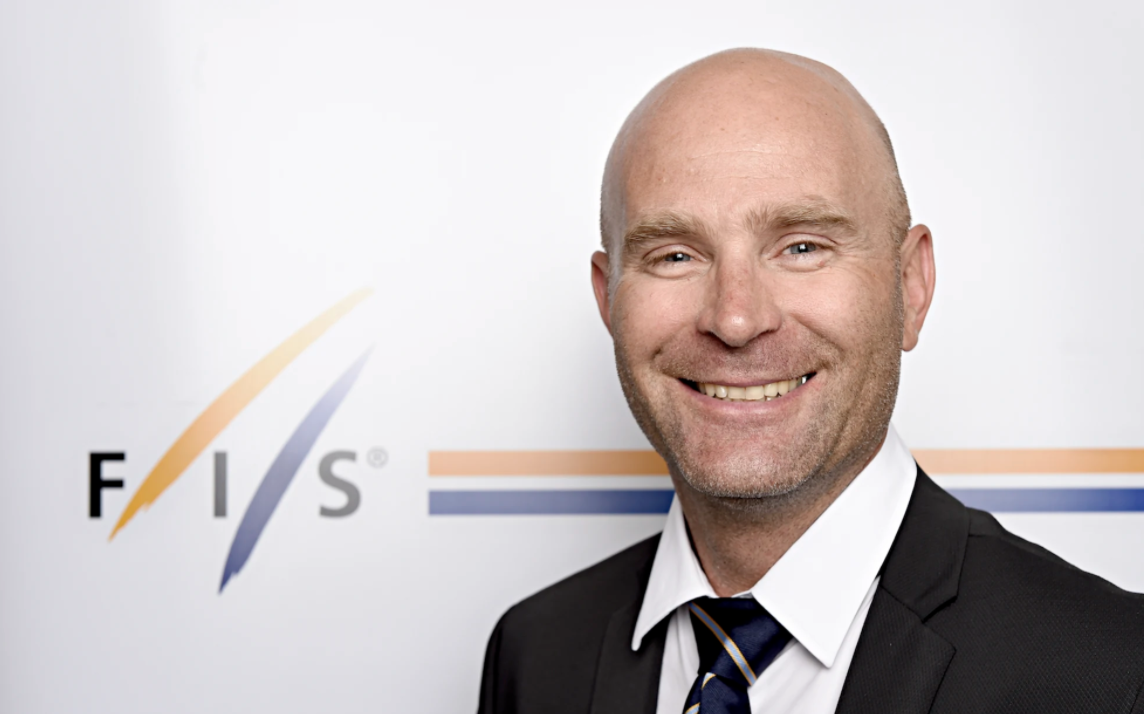
    FIS cross country race Director, Pierre Mignerey. (Photo: FIS-Ski.com)

    “But of course, we need to see what will go on in the upcoming days,” said Pierre Mignerey, FIS’s cross-country race director. “We will start to prepare some backup solutions, in case.”

    Mignerey said he’s had conversations in the past few days with organizers in Sweden and Norway, which could be convenient backups since the World Cup circuit will be racing in Scandinavia before it’s scheduled to head to Russia. The coronavirus pandemic also forced cancelations of races in Slovenia and France last month, so those countries could also be potential replacements, Mignerey said.

    The U.S. Ski Team is still planning on attending the races in Russia and is excited to see the new venue in Tyumen, said Head Coach Matt Whitcomb. But he also said the team is monitoring the situation.

    “There’s never any guarantee, particularly with the political climate, currently, but also with COVID,” Whitcomb said. “We’re only going to go places we feel like will be safe.”

    Officials working with Tyumen’s race organizing committee didn’t respond to a request for comment Tuesday.

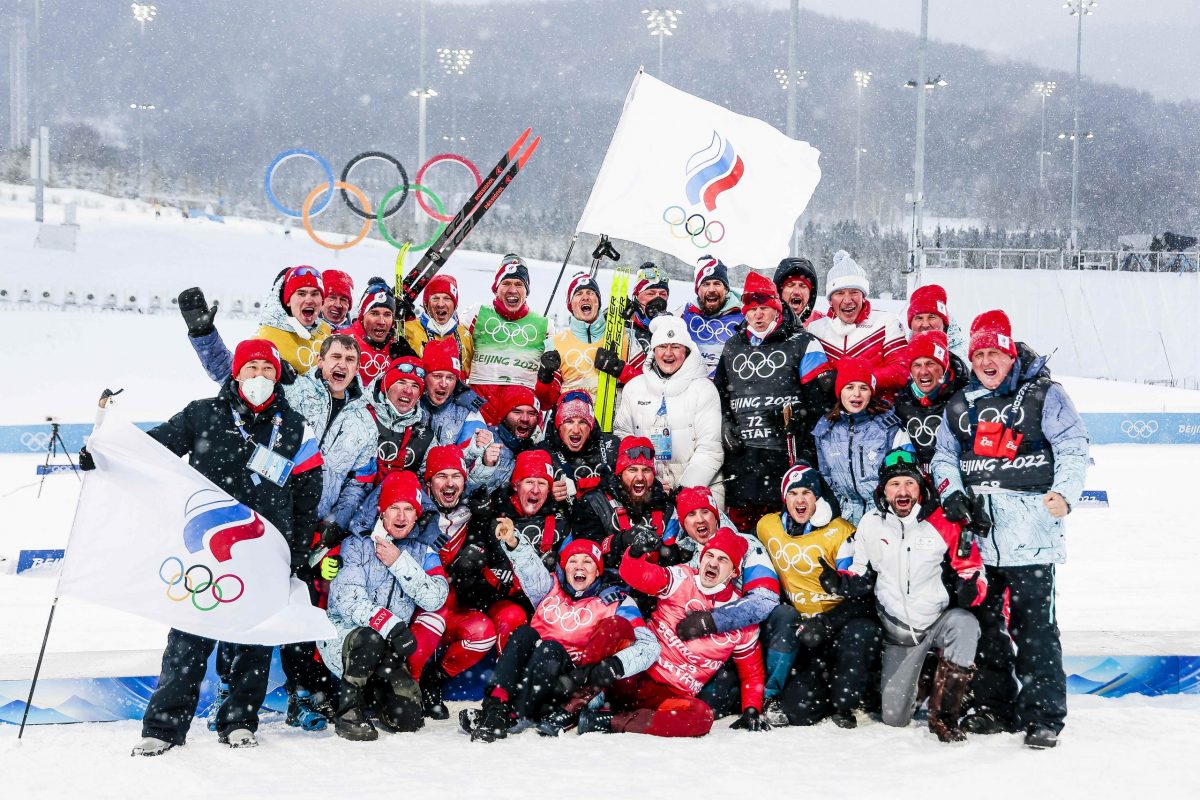
    The ROC contingent celebrates their gold medal performance in the men’s 4 x 10 k relay. (Photo: NordicFocus)

    Russia is one of the world’s leading nations in cross-country skiing, with its athletes winning gold medals in both the men’s and women’s distance relay events at the Olympics. 

    The World Cup finals are the first events set to held in Russia in several years, a consequence of doping-related sanctions.

  • At the Olympics, women cross-country ski race half as far as men. But that could be changing.

    At the Olympics, women cross-country ski race half as far as men. But that could be changing.

    Female American and Swedish cross-country skiers are pushing to race equal distances as men. But some of the sport’s star women remain unconvinced. 

    ZHIANGJIAKOU, CHINA — At the end of her first-ever competition at the Winter Olympics — a 15-kilometer effort that left her sprawled on the ground gasping for breath — Julia Kern contemplated the idea of racing twice as far.

    “I personally like the shorter distances,” said Kern, a rising American star. But, she added: “I think equal time makes sense to me.”

    Equity, however, remains an elusive target for athletes competing in the Olympic cross-country ski races here.

    In opening competitions, on Saturday and Sunday, the women raced 15 kilometers, while the men raced 30. In relays later in the Games, men will ski legs of 10 kilometers while the women race half as far. And when men ski a 50-kilometer marathon as their last event, women will race 30.

    A group of Americans, including the U.S. team’s biggest star, Jessie Diggins, has launched a campaign to change that.

    “I think it’s really, really cool to see people who are really good at long distance have their shot, and we get very few chances,” Diggins said. “We train just as hard, just as much as the men. As I’m sure you can see when I cross the finish line, we give just as much in every single race. And so I think we should be afforded the same opportunities for a variety of distance.”

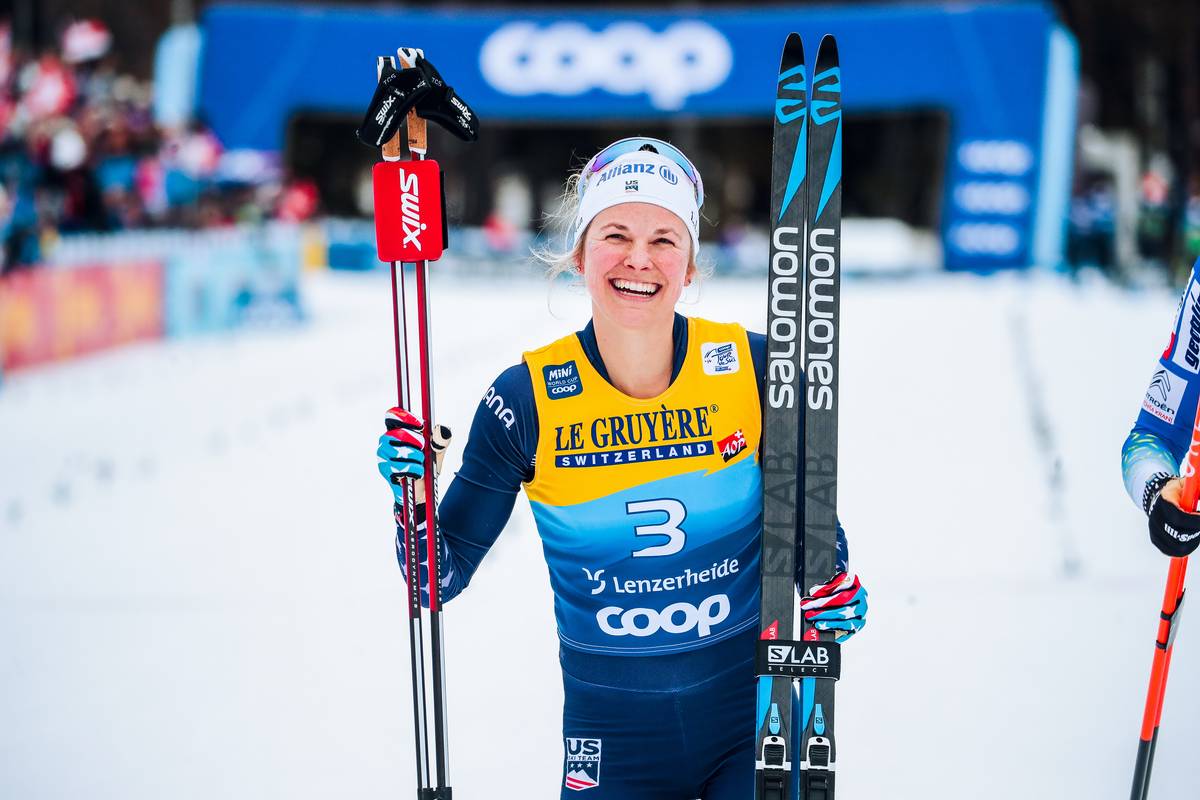
    Jessie Diggins (USA) all smiles after finishing first in the 1.5 k skate sprint in Lenzerheide, SUI. (Photo: NordicFocus)

    The sport’s leaders say discussions about closing that gender gap are happening at the international level. But there’s no time frame or firm commitment yet. 

    And while advocates say they’ve made progress on the U.S. domestic racing circuit, they stress that it’s hard to get traction without change at the top. That’s because athletes and coaches want to make sure that up-and-coming athletes are preparing themselves to race at the sport’s highest levels.

    In the mean time, frustration is lingering.

    “We wonder why women are paid, like, 75% of what men are paid,” said Molly Peters, a collegiate ski coach in Vermont who leads the group called Equal Distance. “I just think if women are going to be empowered and feel like they’re equal, the races should be the same.”

    The world’s fastest women increasingly agree with Peters and Diggins, according to surveys by the International Ski Federation (FIS). But not all of them.

    Theresa Stadlober (AUT) takes bronze in the women’s 15 k skiathlon, the opening event of the 2022 Beijing Olympic Winter Games. (Photo: NordicFocus)

    “I think it’s good like it is,” said Teresa Stadlober, the Austrian who won a bronze medal in Saturday’s Olympic opening event. “Men are stronger. They have other muscles than we girls.”

    Therese Johaug of Norway, the winner of that race, also said the 15-kilometer distance — compared to 30 kilometers for men — “is good for us.” “Maybe we could go 20,” she added. “But 15 is also great for me.”

    Peters acknowledged that the idea of equalizing distances isn’t universally popular among women, which she attributes to some athletes’ comfort with the status quo.

    “You’re going to want to keep doing what you’re most successful at,” she said.

    The differences have been baked into cross-country skiing for decades. And until recently, calls for equity haven’t gotten much traction.

    At the Olympic level, there are discrepancies between men’s and women’s events in several other winter sports. Nordic combined lacks a women’s competition whatsoever. 

    But in the sports where women do compete, cross-country skiing has the most events with substantial differences between women and men.

    Until recently, the FIS surveys showed that the majority of women on the elite-level World Cup circuit “didn’t see the need for change,” said Pierre Mignerey, the federation’s cross-country race director. Last year was the first time a narrow majority favored races at the same distance.

    The FIS has tasked a working group with studying the idea. 

    But the process comes with tricky questions. Should women race longer distances? Or should the federation shorten men’s events? Meet in the middle? Or race slightly different distances that take men and women the same amount of time?

    And what about races where the distances are part of the tradition, like the 50-kilometer and 30-kilometer events for men and women, respectively, held at the Holmenkollen in Oslo?

    Those questions, in turn, intersect with an ongoing FIS debate about which race formats and distances are most appealing to the World Cup’s European-focused TV audience.

    “You’ll occasionally hear, ‘well, it’s hard to find the TV time for the two genders to go 50 k,’’ said Matt Whitcomb, the U.S. team’s head coach. “Well, find it. Or shorten the men. Otherwise it’s a sexist system.”

    Any changes to the race program must be proposed to FIS’s governing council by the 20 nations in the federation’s cross-country committee, Mignerey said in an interview. Which means, he added, that any decisions will likely be driven by the sport’s biggest players.

    “Basically, if the Scandinavians in cross-country are convinced that it’s a good change, there is a big chance,” Mignerey said.

    In Sweden, at least, several stars have weighed in against unequal race distances, with 22-year-old Frida Karlsson last year declaring the difference between the 15- and 30-kilometer skiathlons “almost a little offensive.”

    Frida Karlsson (SWE) races a 10 k freestyle in Davos, SUI in December, 2021. (Photo: NordicFocus)

    “In soccer, ladies and gentlemen have 90 minutes, plus overtime. It is the same in most sports,” Swedish sprint star Linn Svahn told a news outlet in her country. “I see no reason why it should not be the same in cross-country skiing. It is a conservative tradition that we should race shorter than the boys.”

    Norwegian men’s coach Eirik Myhr Nossum, in an interview, said his country is also open to a conversation about distances, and he called gender equality “a very important question.” 

    But, he added: “I’m not sure if having them race the same distances is the right way to say it’s gender equality. Gender quality is to be paid the same, and I think the situation in cross-country skiing is quite good.” (Men and women earn the same amount of prize money on the World Cup circuit.)

    While FIS studies the issue, change is already happening at lower-level races.

    Sweden ran equal distance races at a top-level domestic event last year.

    In the U.S., organizers ran into a problem when they tried to schedule a 7.5-kilometer race for both men and women at a top-level SuperTour event last weekend: FIS rules say that men cannot score distance ranking points for races shorter than 10 kilometers. For women, the minimum is just five kilometers.

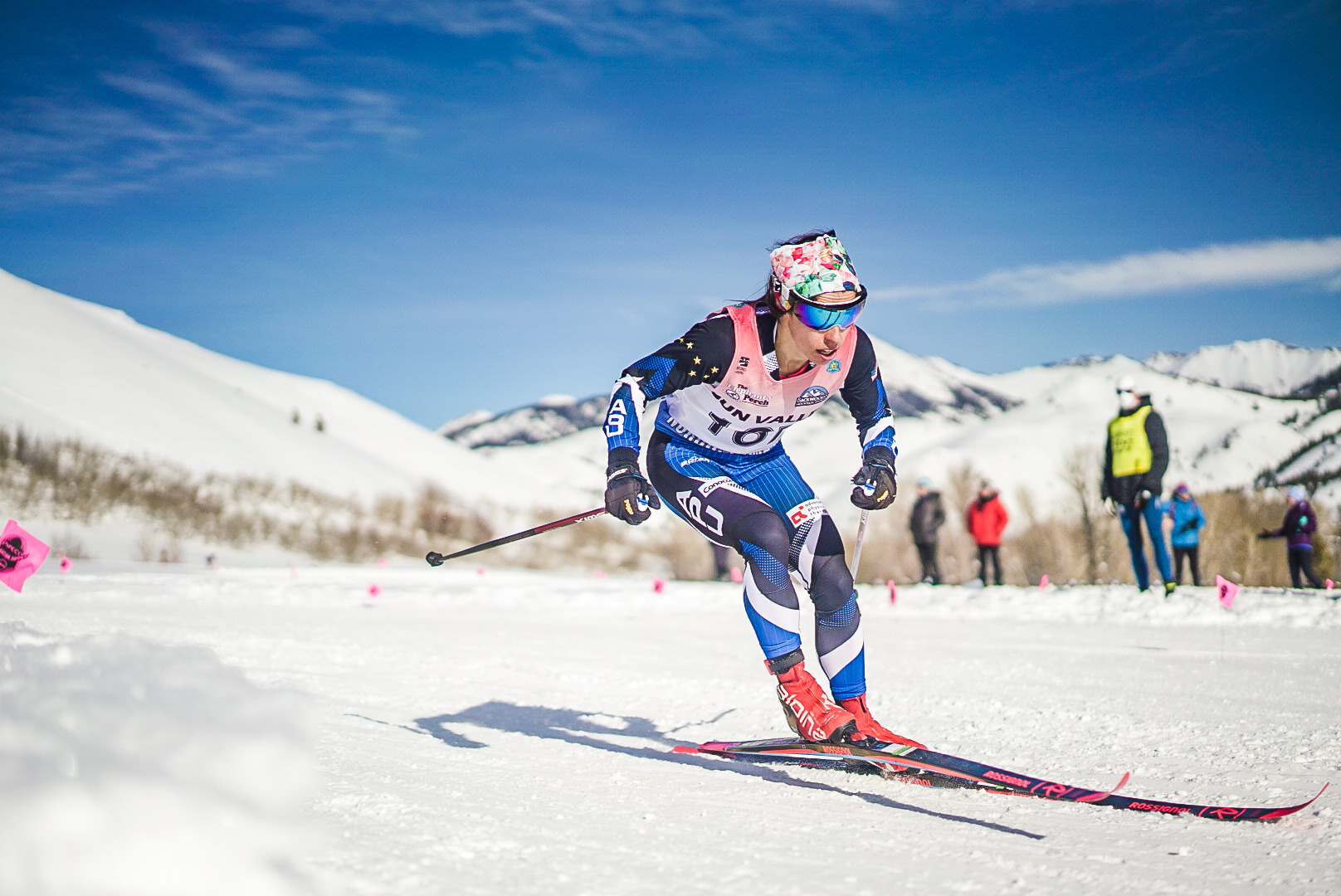
    Rosie Frankowski skis to fourth in the SuperTour 10k mass start classic in Sun Valley. (Photo: Tobias Albrigtsen / @untraceableg)

    But other SuperTour events have been equal. And Peters has made progress in pushing regional races on the NCAA circuit in the same direction — though she’s still waiting for other coaches to agree on a change at the national championships.

    Peters, who coaches the ski team at St. Michael’s College in Vermont, said it was “amazing” to watch the women on her own team race the same 20-kilometer event as the men for the first time ever this year — a step up from the 15 kilometers they used to race.

    “It was so hard,” Peters said. “The women were like, ‘We did it! We raced the same distances and we feel so proud of ourselves. And there was so much talk.”


  • Sweden’s Svahn and Two Finnish Athletes Cleared to Race Friday (Updated)

    Sweden’s Svahn and Two Finnish Athletes Cleared to Race Friday (Updated)


    Update: Expressen Sport, a Swedish daily, has reported Linn Svahn and two unnamed Finnish cross-country skiers are cleared to race in Friday’s mass start events after more sensitive Covid-19 PCR tests returned negative.

    Original Post: Earlier today, Swedish team doctor Per Andersson announced that Linn Svahn, who won the first two stages of the 2021 Tour de Ski in Val Müstair, has tested positive for COVID-19 on an antigen test. (The antigen test is less sensitive than PCR testing.) Svahn did compete in both distance races in Toblach, though she finished well off the podium, 40th in the 10-kilometer skate and 23rd in the classic.

    A champion in sprint and distance, Sweden’s Linn Svahn wins back-to-back stages of the 2021 Tour de Ski. (Photo: NordicFocus)

    According to the Swedish new outlet SVT, two additional Finnish athletes were also notified after testing positive with an antigen test.

    In the SVT interview, FIS Event Director and organizer of the Tour de Ski Pierre Mignerey was questioned about how these potential positive cases will be handled in terms of the impact to the remainder of the Swiss and Finnish teams and their eligibility to continue with the tour. Mignerey explained that this decision is outside of FIS jurisdiction and is left to the local and national governance.

    “It is an answer for the authorities [whether the teams can continue the Tour],” Mignerey said according to translation. “I can not answer and I have no answer. There are many factors that need to be taken into account. We must leave that decision to those who have the competence, that means the doctors and the people in the authorities.”


  • News Round Up

    News Round Up

    Here’s a news brief from around the Inter-webs. 

    Unofficial thoughts on next season’s World Cup 

    On April 9, Nowegian news outlet VG published an interview with International Ski Federation (FIS) Cross-Country Race Director Pierre Mignerey. The interview created some mild buzz, as Mignerey discussed some 2020-2021 World Cup scheduling scenarios. Still seven months away, but with the Covid-19 pandemic impacting global sport, it is no surprise FIS officials are discussing contingency plans. 

    VG’s article was not part of an official FIS press release. The FIS is scheduled to discuss how Covid-19 may impact next season at a later date. However, Mignerey was frank in his comments, and discussed worst case scenarios. (FasterSkier used Google Translate to pull quotes from the piece, which was written in Norwegian.) 

    Mignerey noted that if full travel restrictions remain in effect, producing a World Cup series will be nearly impossible. Further, the article states that if cross-border travel restrictions are lifted, but gatherings are limited to 100 people or less, the race season could be in jeopardy. 

    Here’s a translated quote regarding quotas on the size of gatherings: “If there is regulation with a maximum of 100 people allowed in the same place, then there will be no World Cup, but with regulation of 500 or 1000 people, it is possible with runners, support equipment, organizer and media.”

    According to the translated article, VG published the following bullet points relating to what Mignerey is positing for next season. 

    “These are some of what the race manager has on the drawing board:

    • If travel regulations are such that people cannot move from their own country, the World Cup is impossible.
    • If there is quarantine travel regulation, we can move from country to country with some world cup races.
    • It may be appropriate to separate men and women. A weekend with men and one with ladies. Or, for example, we can have men for two weeks in Norway, then two weeks with the ladies in Finland for not having too many in the same place at the same time. Everything is on the table.
    • Tour de Ski should start in the Christmas season, but is uncertain. It may be appropriate to have the entire tour in the same country so that we do not spread the virus.”

    Mignerey also expressed that the possibility of running some events with no fans in attendance. This policy would add some complexity to the pending schedule, as some venues allow fans to attend for free, while other local organizing committees generate revenue through ticket sales. (This past season, Oslo authorities banned spectators from the main Holmenkollen stadium area. However, along the unregulated portions of the course outside the stadium, the course was lined with fans.)

    Reminder, this interview with Mignerey conducted and posted by VG was not an official FIS press release. 

    Virtual Doping Test 

    In news closer to home, Matthew Futterman of the New York Times wrote a piece on U.S. Anti-Doping’s (USADA) efforts to test athletes virtually. According to the article, USADA began experimenting with virtual tests two weeks ago. The testing procedures eliminate the need for a certified observer to visit the athlete. Athletes are sent a testing kit through the mail, and a video link between the athlete and test observer is used to ensure test protocols are followed. 

    After the athlete provides a video tour of the bathroom, proving no other individuals are present, “Off camera, the athlete gives a urine sample into a supplied container.” This is a change from the standard protocol for collecting a urine sample, in which the athlete urinates “under direct observation” of a doping control officer or witnessing chaperone of the same gender. (with a link to: https://www.usada.org/sample-collection-process/urine/)

    The article goes on to discuss the pitfalls of virtual testing, and efforts to mitigate those downsides. For now, with travel restrictions in place and anti-doping authorities across the globe limited in their face-to-face reach to observe athletes when tested (as is the norm), virtual testing may become the short-term new normal.

  • Brits Claim Benefits in New Waxing Partnership with Norway

    Brits Claim Benefits in New Waxing Partnership with Norway

    Great Britain's Andrew Musgrave (pictured here at 2013 World Championships), who lives in Norway, got wax help at this weekend's World Cup from the Norwegian national team. The arrangement benefits Britain, which has a tiny budget and can't afford to fill its team staff quota, and also Norway - the dominant ski country can increase the number of technician bibs it is allowed on course.
    Great Britain’s Andrew Musgrave (pictured here at 2013 World Championships), who lives in Norway, got wax help at this weekend’s World Cup from the Norwegian national team. The arrangement benefits Britain, which has a tiny budget and can’t afford to fill its team staff quota, and also Norway – the dominant ski country can increase the number of technician bibs it is allowed on course. Musgrave finished the Kuusamo mini-tour ranked 16th and is in the top 20 in the overall World Cup.

    As the FIS Cross-Country World Cup opened in Kuusamo, Finland, last weekend, Swedish media picked up on a strange image: Norwegian chief waxer Knut Nystad skiing around in a bib that said not “NOR”, but “GBR”.

    Great Britain.

    The news touched off a firestorm in Sweden, possibly caused by jealousy that the Norwegians had found a new rule around the FIS quotas on team staff.

    The teams with the most ranked skiers have a cap off 22 staff members who can receive accreditation. In previous seasons, teams wanting to get more bibs to allow technicians on course could simply pay a small fee of 20 Euros per bib and end up with a maximum of 35 staff members.

    This year, that extra possibility was removed. So Sweden, Norway, and Russia are capped at a total of 22 staff members – no more. Finland is next with 18, then Germany, France, and Italy with 16, and the United States and Canada with 14.

    The rules were on one hand part of a FIS effort to level the playing field so that dominant ski countries don’t become even more dominant in a sort of positive feedback loop with resource wealth.

    But it was also an effort to reduce the number of skiers on the race course before a competition. Too many trips around the track can cause snow conditions to break down, especially with more and more races being held in warm weather.

    Norway had seemed to find a way around the cap by partnering with the British Ski Team.

    “In the eyes of many, this is certainly cheating,” said Swedish television host André Pops.

    Not so, says FIS Cross Country Race Director Pierre Mignerey.

    “We have [made clear at] the team leader meeting that it is allowed to cooperate in ski preparation,” he told Norwegian broadcaster NRK, according to a translation. “We see it as positive that small nations are assisted by the major nations. This is competence that strengthens our sport.”

    And if you ask the Brits, they don’t feel like they are being taken advantage of at all. With top skiers yet a miniscule budget, head coach Roy Young feels he has made a good deal.

    “Our aim is to work with the Norwegian wax team – that is, our wax team will join them for testing & sharing information on test results,” he wrote in an email to FasterSkier. “The objective for us is to spend more time testing the athlete skis rather than testing wax. So we will still have our wax team and we will wax our own skis, we will have testing of skis. We hope to better prepare our athletes for the races, develop our technician team & perform better in the race while not increasing our costs.”

    Other small teams don’t seem so bothered by this arrangement, conceding that it’s a smart move.

    “It is very hard as you know for a small nation to fund the staff and waxing infrastructure that a big nation can,” wrote U.S. Ski Team Head Coach Chris Grover. “A small country always struggles to complete the myriad of waxing duties on a daily basis that are necessary to make fast skis… I know teams like Australia and Great Britain have teamed up before as well. Yes, this does effectively give Norway more service bibs but it also gives them a lot more skis to wax! Probably not a big advantage for them in the end, but a very helpful arrangement for Great Britain.”

    “I think it’s good for smaller countries to get knowledge and support from the larger more experienced ones,” Canadian Head Coach Justin Wadsworth agreed. “But does Norway really need more of an advantage… We’ve talked in the past about potentially working with the US as a North American force, but when it comes down to it, it just isn’t realistic.”

    In this case, the pairing is far from random. Two top British athletes, Andrew Musgrave and Andrew Young, are based in Norway. Musgrave is part of Team Leaseplan Go, a Norwegian ski marathon team, and both athletes already know many of the Norwegian athletes and staff. Musgrave even won a Norwegian national championship title, and often appears in the Norwegian media, where he speaks fluent Norwegian.

    “My role is clear in that, I’m hired to enable the British Athletes to perform to the best of their abilities & I currently believe that a collaboration with Norway is a good way of potentially enabling the athletes to do this,” Young wrote. “As you suggest, the 2 Andrews live and train in Norway and are well known for the professionalism that they bring to sessions, which gives us a natural connection with the Norwegian team.”

    The hopes of a whole country are pinned on Musgrave, Young, and their teammates, and yet in the past they have never had the type of resources which their competitors can rely on.

    “When we reviewed how Sochi went for us we were very clear that the athletes did not get the amount of support they needed,” Coach Young wrote. “We identified roles we would like to see in our team and are trying to fill them. Help with wax testing allows us to cross some of the gap with little additional costs (and remember we are team struggling to find enough money to have 3 support staff at a Ruka World Cup even though we have an athlete that many people believe is capable of a top 10).”

    Indeed, in Kuusamo Musgrave skied to 13th in the 10 k skate, then skied the 11th-fastest time in the 15 k classic pursuit to finish 16th in the overall mini-tour. He’s now ranked in the top 20 in the overall World Cup.

    Although the Brits qualify for a staff quota of eight according to the FIS rubric, they can never fill all of those spots because of their small budget.

    Young explained that the partnership was an ongoing discussion and would be re-evaluated, but that three bibs were given to Norway to help with wax testing in Kuusamo, and probably two would be shared at the next World Cup the team attends in Davos, Switzerland.

    “Part of my discussion with Norway has been to make sure that there is transparency on what we are doing and that we would not transgress any rule (we Brits are very rule bound people),” Coach Young wrote. “I have written to FIS about what we are doing. Obviously, our collaboration on wax will only occur when we are racing at a world cup. Both Norway and Great Britain view this as a trial with a review on the benefits both teams feel they get from this, risks to the teams and where it can be developed.”

    When asked about the arrangement by Scandinavian media, the Norwegians also stressed that FIS had been made aware of the situation and did not view it as a breach of the rules.

    And in the end of the day, the goal of keeping the snow on the race courses nice and firm hasn’t been sacrificed.

    “The course stays in good shape since the number of total service bibs hasn’t increased,” Grover concluded.

    And Sweden? Maybe they can survive with “just” 22 team staff.

    Or else they can find their own small nation to adopt.

  • A Balancing Act: Keeping World Cup Skiing Relevant

    A Balancing Act: Keeping World Cup Skiing Relevant

    Martin Johnsrud Sundby (NOR) on his way to third place.  Photo: Fischer/Nordic Focus.
    World Cup athletes competing in Oslo, Norway, in 2012. Television interests have influenced the evolution of the Holmenkollen 30/50 k over the last few years, and the event continues to represent the challenge of keeping cross-country relevant while staying true to the sport. Photo: Fischer/Nordic Focus.

    Every year, at the International Ski Federation’s (FIS) spring Calendar Conference, the media company responsible for the production and distribution of FIS World Cup and World Championship race coverage gives a presentation surveying TV audience data from the last season. The presentation from Infront Sports and Media is a kind of performance review for the entire sport. Coaches, administrators and organizers from around the globe attend the meetings to play a part in the creation of future World Cup calendars, but a key part of the process is the consideration of how many people tuned in to the races they either participated in or produced over the last year.

    The inclusion of a television viewership presentation at this meeting makes clear the fact that media plays a significant role at the highest level of the sport. FIS makes no secret of this; last summer, newly promoted FIS Cross-Country Race Director Pierre Mignerey spoke openly about television’s influence on the World Cup in an interview.

    “We can like it or not but today a high-level sport cannot live without television,” he said. “Without substantial television coverage in Germany, Cross-Country skiing, like most winter sports, would get in great difficulties and even probably perish in short term. Germany and Poland are the largest countries in terms of Cross-Country skiing viewers. It is no coincidence that the most important World Cup sponsors are German companies.”

    In short, television viewership is critical to the very existence of the sport. The size of the World Cup’s audience every year directly affects the amount of sponsorship dollars that TV, organizers, FIS and ultimately athletes and national teams can negotiate.

    “The development of our sport (like all high-level sports) requires to take into account the interests and wishes of television,” Mignerey continued last July. “This does not mean that we accept all the proposals but generally what television has looked for (create dynamic competitions, attacks, failures, strategy. Etc.) has been in the right way and has never put the essence of our sport in danger.”

    A central challenge of FIS’s spring meetings, therefore, is to set a new World Cup calendar that strikes a balance between the interests of television and the interests of  the other parties who play a role in the circuit: organizers, national governing bodies, national teams and, of course, the athletes. Representatives from each demographic play a role at the conference on committees and sub-committees, and the decisions  reached at the meetings are, in theory, a compromise between all parties involved.

    This spring, those compromises included the decision to keep a longer ski exchange penalty in the 30/50 k in Oslo, Norway, the creation of a new nordic opening weekend across all nordic disciplines in Kuusamo, Finland, a temporary break from city sprints, and an overall shorter season.

    Knowing that television plays no small role in the World Cup calendar, it’s worth asking which calendaring decisions were made with whose interests in mind. To begin to understand the reasoning behind next season’s schedule design and their implications for national teams, we called up U.S. Ski Team head coach Chris Grover, who attended last month’s Conference and sits on the cross-country World Cup committee and the Executive Committee.


    Athletic Decisions Dominate Pre-Olympic Races

    According to Grover, the Conference was relatively low-key this spring. Many of the calendaring changes between the 2013/2014 season and the one before it have to do with athletic needs, not television’s. Specifically, many early season race formats were set to accommodate training and team selection needs before the Olympics, which is the highlight of next season.

    “There are some variances in terms of the schedule from year to year — how many relays you can get in, if you can get in a skiathlon before Christmas,” Grover said. “I think one of the main considerations that always plays into that, especially in an Olympic year, is that a lot of the teams and coaches really want to use the World Cup as their trials, and want to be able to pick their Olympic teams based on races they’re going to see at the Games.”

    This is why there are so many skate sprints and classic 10/15 k races before February; those races are the shorter, individual events that will be seen in Sochi.

    “Bigger teams in particular are trying to pick out their four best skate sprinters and their four best classic skiers, and so that becomes a little more paramount in an Olympic year,” Grover said.

    The Olympics also partly explain why there are no city sprints on the schedule. Grover says that coaches generally want to pick their Sochi sprinters based on results from courses that most closely resemble Sochi’s challenging terrain, and city sprints are simply too flat.

    The calendar also makes considerations for a pre-Olympic altitude training block, Grover said. The last pre-Olympic World Cup was placed in Toblach, Italy, specifically for the venue’s proximity to popular altitude training venues in central Europe, where most World Cup athletes will likely train on the break before flying to Russia.


    Where Audience Influences the Calendar: Strategies to Generate Hype

    One major difference on the calendar next season is on the very first weekend. Kuusamo, Finland, site of the Ruka Triple mini-tour, is the season opener next season instead of its usually start in Northern Scandinavia. FIS decided to start the World Cup in Kuusamo this winter because its possession of a jumping hill allows that weekend to be a one-stop season kickoff for cross-country, ski jumping and nordic combined. Grover says FIS hopes the event will boost hype at the start of winter.

    “One goal of the cross-country committee and FIS is to really have a nordic opener. So Kuusamo has the opportunity to combine forces with nordic combined and special jumping,” Grover said. “They feel that’s a way to build interest in the nordic sports when you start them all at once, so I think we’ll continue to see that be the kickoff weekend. Over the next few years that opening weekend may rotate a little bit more between Kuusamo and Lillehammer.”

    Television’s interests show again in Oslo, the penultimate weekend on the World Cup. It’s one of the highest-profile events of the year, and it’s also a venue that has already seen significant change to its races in the name of spectator interest. The 30/50 k, originally an individual event, became a mass start in 2009 before ski changes were added to increase the importance of strategy and increase spectator interest. Last year, the race was changed again with the audience in mind; more distance was added to the ski exchange pit to add even more drama.

    After a trial run of the newest format, it appears that the penalty component — and its accompanying ski changes — are here to stay for at least another year in Oslo.

    “The feedback from television was positive; it provided more interest to the television spectator,” Grover said. “And the athletes — Kikkan [Randall, one of FIS’s athlete representatives] surveyed them, and she’s obviously surveying athletes on all kinds of issues on the World Cup. And they were mixed on that particular question, as I recall.”

    According to Grover, approximately one third of the athlete survey respondents were supportive of the exchange penalties, another third preferred exchanges without the added time, and another third were against the concept of ski changes altogether.

    “So it kind of comes out a little bit of a mixed message, but I think what you end up with is two thirds of the athletes saying ski exchanges are great, but some debate within that group in terms of how long [the penalty] should be,” Grover said. “So right now, it’ll stay at that longer distance.”

    Grover added that his personal opinion on the penalty wasn’t strong one way or another.

    “It did not play to our advantage last year, but that’s just because we had some athletes that didn’t necessarily make the best tactical decision as to whether to change skis or not on some of those exchanges,” he said. “I think they learned their lessons a little bit about it, and will be stronger in the event next year. But…as a nation it’s the same decision making process for everybody, so everybody’s in the same boat and I don’t think it necessarily takes away from the race from an athletic perspective.”


    How Much Television Influence is Acceptable?

    One of the ideas Randall brought to the conference as an athlete representative was a proposal to return the Oslo marathon to its original form — an individual event with no possibility for ski changes, just every athlete against the clock. The last time Holmenkollen hosted an individual 30/50 k was in 2008.

    The motion didn’t go through for 2013/2014 — Vegard Ulvang, the leader of the FIS cross-country committee, told the NRK last month that an immediate change would be impossible for organizers. But he also suggested the individual format could be considered again down the road.

    “It is very interesting that today’s practitioners so strongly desired [to bring the] interval start back,” Ulvang said via translation. “It is clear that the idea of ​​the individual’s struggle with himself through the forest remains very strong. So the question is whether the public thinks the same way, or if the athletes want to sing a song that nobody is interested in listening to.”

    The kind of event that takes place in Oslo, and the ongoing discussion surrounding the format, can be seen as a distillation of the challenges skiing faces to meet the sometimes-conflicting needs of its stakeholders — to keep itself relevant while maintaining the “essence of the sport,” as Mignerey put it.

    As the leader of the U.S. national team, Grover believes it is part of his job and of others in a similar position to help keep the sport relevant.

    “Frankly, it’s part of our responsibility is to make sure that cross-country stays popular, and cross-country continues to grow in popularity and that people are interested and tuning in and watching it,” he said.

    Regarding the mass start, ski change, and penalty aspects to the Oslo 30/50 k, he says, “if it’s one of those things that can make a difference in terms of popularity then I think we need to support it.”

    Ultimately, Grover thought the evolution of formats and rules on the World Cup should account for the interests of everyone that participates in the circuit, from the athletes, to television, to the organizers, teams, and coaches.

    “It’s a balance for sure…all those energies really need to be balanced in these calendaring decisions, and decision about the rules for a specific event,” Grover said. “The television is a big part of it. And you know, there’s other sports that are part of the FIS family that are really struggling with their television viewership and maintaining their market share, and I think we’re probably very fortunate in cross-country in that we’ve had leadership over the past however many years that has allowed this port to change, that has made steps to modify the types of races that we do to make those races more attractive for television. And because of that, we’ve built interest and a fan base in the sport and I think it’s critical that we continue to do so.”

  • Randall Brings Athlete Proposals to FIS Calendar Conference: Bring Back the Individual 30/50 k

    Randall Brings Athlete Proposals to FIS Calendar Conference: Bring Back the Individual 30/50 k

    With the mass start 30/50 k a staple at major championships, athletes would like to see the individual format return to the regular World Cup in the future. This is one of the proposals Kikkan Randall will bring to the FIS Calendar Conference this week in Croatia.
    With the mass start 30/50 k a staple at major championships, athletes would like to see the individual format return to the regular World Cup in the future. This is one of the proposals Kikkan Randall will bring to the FIS Calendar Conference this week in Croatia.

    Of all the races to go by the wayside in recent years, the 30/50 k is often missed by longtime fans of the cross-country World Cup. Athletes miss it too, and at the annual International Ski Federation (FIS) Calendar Conference this week in Dubrovnik, Croatia, one of the biggest items on athlete representative Kikkan Randall’s agenda is to propose its return.

    “[There is] already a mass start at major championships,” Randall said. “Every athlete says it’s something they want to see. It’s something we keep bringing up and it’s not really a FIS decision, it’s more up to the organizers, but it’s…an idea for the future.”

    The spring meetings began on Monday, where the governing body’s priorities are to finalize the 2013/2014 World Cup calendar and begin to think about a schedule for the non-championship year in 2015/2016. A major consideration from FIS Cross-Country Race Director Pierre Mignerey’s perspective is to create a race circuit that builds and retains interest in the sport.

    “We have some items to be discussed regarding next winter’s calendar,” he said in a FIS Cross Country press release. “I am convinced we will have a good competition program for the Olympic season. For the next seasons, the task for the Cross-Country Committee is to find an event that would retain the interest in our sport also during the ‘no-title year’ of 2016. We have received proposals for a couple of projects and we will discuss them thoroughly.”

    In that vein, Randall will bring another format idea to the table for the future that may be of interest to TV stakeholders: a mixed relay where men and women compete together, as seen on the biathlon World Cup.

    Another of the major items on her agenda will be to work on a standard procedure for situations like the athletes and governing body experienced in Falun, Sweden, in March, where skiers at World Cup Finals threatened to boycott the last three races on what they thought was a dangerous course. Last-minute meetings before the first race amongst athletes and between Randall and FIS created a media frenzy at the season-ender. In the future, Randall says, athletes don’t want to resort to such a dramatic measure to get results.

    “With the situation we encountered at the end of the season where we had a safety concern, we’re figuring out how we could better work with FIS and have a process in place where we don’t have to threaten to boycott to make something happen in the future,” Randall said.

    At the time, Randall said the threatened boycott was the biggest way she’d ever seen her fellow athletes come together on an issue, and the outcome was a groundbreaking example of what such unity could achieve. Overall, Randall says the relationship between FIS and World Cup athletes has evolved since she first became a representative of the Athlete’s Commission to the International Ski Federation in 2009. Randall shared her role with fellow representative Sami Jauhojärvi (FIN) for her first two terms, and she begins her newest one with Norway’s Øystein Pettersen, though Pettersen won’t be present in Croatia.

    “We’ve learned a lot as far as our place within FIS over the past few years, so hopefully we can continue to improve upon what we’ve built,” Randall said.

    Four years ago the meetings were also in Croatia, and at the time the athlete proposals were more basic, like what requirements should be mandatory at each World Cup venue. The formal network of athletes that Randall now leads was in its infancy then, and where once Randall struggled to get athletes to speak their minds freely, she says communication has now improved between athletes and their governing body.

    “Before I came on board there was no athlete involvement at the highest level. So I think on the cross-country side it’s been really positive; the cross-country committee has welcomed the athletes’ involvement,” she said. “We’ve done athlete surveys the last three seasons and we have a network of athlete representatives in each country, so the pathway of communication has improved. We still have a lot to do, but I know the way things work now so we can really start making things happen.”

  • Jumps, Bumps & Curves, Oh My! International Racers Reflect on Québec World Cup

    Jumps, Bumps & Curves, Oh My! International Racers Reflect on Québec World Cup

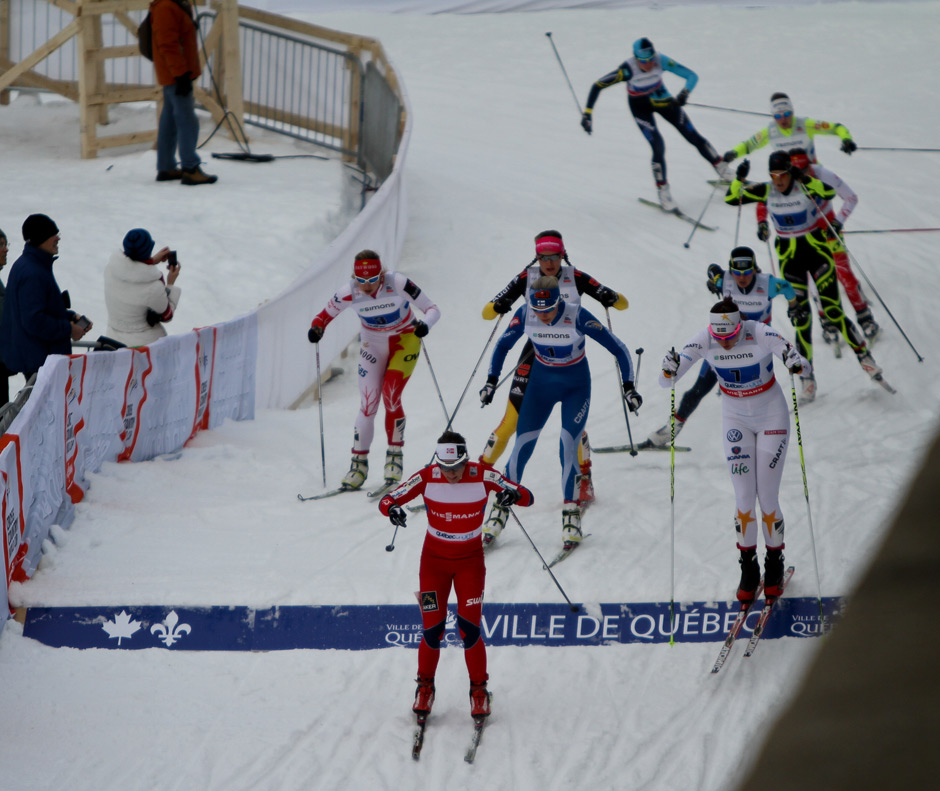
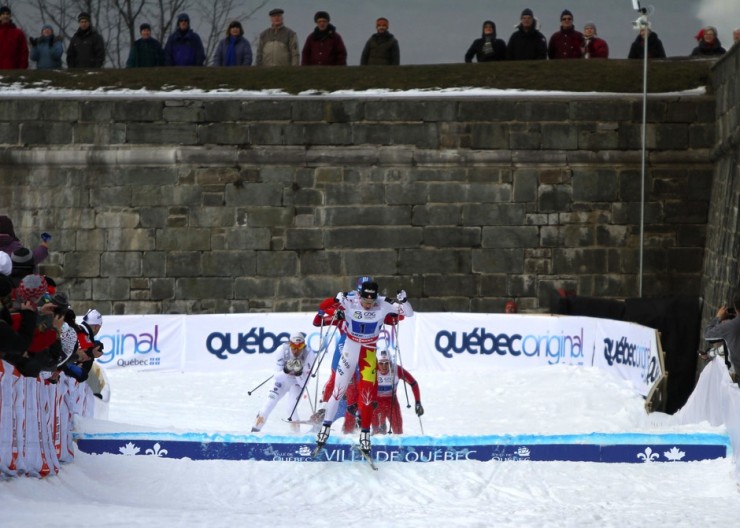
    Canadian Alex Harvey leads racers over the step down/jump, which was used for the first time in a World Cup on Dec. 7 during the 1.6-kilometer team sprints in Quebec City.

    QUÉBEC CITY— It was an unprecedented stop, an unknown to everyone who raced there. Even the Canadians weren’t entirely sure what to expect in Québec City last weekend for the province’s first World Cup city sprints.

    Nobody did. Spectators came out by the thousands. Gestev president and chief organizer Patrice Drouin estimated 50,000 people visited the venue in front of the Parliament building throughout the two days, with team sprints on Friday and individual sprints on Saturday.

    That was a pretty good turnout considering there was little to no snow elsewhere in Québec in the weeks and days leading up to the event. Nearly 140 athletes from 17 nations showed up as well without knowing how competitive the sprints would be. (Top skiers like Marit Bjørgen, Therese Johaug, Petter Northug and Dario Cologna skipped the trip to Canada to prepare for the Tour de Ski.)

    Spectators got quite the World Cup experience Dec. 7-8 in Quebec City.

    It didn’t really matter. There was enough else going on to keep people entertained and buzzing about the Québec World Cup.

    For one, race organizers introduced a step down, or a jump, at the tail end of the 800-meter sprint course. It wasn’t huge, starting at a height of about 30 centimeters, but it did create enough space for a small “Ville de Québec” banner and a miniature ledge for racers to ski off.

    The brainchild of Drouin, the step down was approved by the International Ski Federation (FIS) last spring to be used for the first time at the Québec World Cup. Coaches and racers had mixed oreactions – some said they didn’t see the point and others wanted it bigger – but in the end, few expressed strong feelings about it.

    “It’s not a jump. It’s a bump,” said former Norwegian skier and Olympic champion Tor-Arne Hetland, a sprint coach for Switzerland.

    “As long as it’s fair, then it’s good,” he added. “It shouldn’t be a problem, but it has to be well done.”

    “It was too small. Bring us on a bigger one,” said Saturday’s individual sprint winner from Sweden, Emil Jönsson. “We don’t want to have a crash race. The strongest man should win, but it can be fun if we do it in a good way. Not a back flip, just a normal jump.”

    The jump, bump, whatever you call it wasn’t really a game changer. A few athletes tumbled on or before it, but that generally happened when they were vying for position after the last downhill curve. Some people took more of an issue with the course’s curviness. Hetland suggested fewer curves and more straightaways, but said overall, “the track is good.”

    The first semifinal of the Quebec World Cup women’s team sprint crests the step down, which was used for the first time in a cross-country World Cup on Dec. 7.

    Norwegian sprint coach Ulf Morten Aune was slightly more animated about the obstacle, calling it an unnecessary spectacle.

    “There are enough curves and other stuff,” he said. “You do not have to do stuff like that. … This is not a circus, it is cross-country.”

    From the standpoint of someone who’s designed mountain-bike courses, Drouin was curious whether it would work in cross-country. Twenty years ago, mountain bike races didn’t incorporate jumps, and now they do. He decided to give it a try and proposed the step down to FIS Cross-Country Race Director Pierre Mignerey, who ran it by homologation experts.

    “They didn’t say no, so that means yes,” Mignerey said. He garnered the approval of FIS and gave Drouin the go-ahead.

    “I know it’s a big deal because the fact that Pierre got out of that commission meeting and just gave me a big slap in the back and said, ‘Your jump is approved,’ I was surprised,” Drouin said. “I didn’t even think it was a case for a commission as technical as cross-country. Before changing things you have to get approval from the whole family.”

    Drouin said FIS Cross-Country requirements were stricter than other world-class sporting events he’s organized (i.e. snowboarding and mountain biking), but he’d do it again without hesitation.

    He created the step down knowing FIS inspectors might shoot down the final product and make him dismantle it before the races. It was ultimately OKed, but Drouin made a few alterations before the races started Friday.

    “Everybody said, ‘If you can take this little uphill out, then we are fine,’ ” he said after hearing from athletes and coaches on Thursday. But the jump wasn’t finished yet; training wasn’t supposed to open until Friday morning so the feedback was based on a work in progress.

    “The jump is was not an issue for us; it was not a deal breaker,” Drouin said. “It was just an additional thing to open up options.”

    Mignerey said also it wasn’t a big deal, just a first step in something that could be used more in the future. The improvements made after Thursday quelled most people’s complaints, and Mignerey was open to seeing more of these jumps perhaps between 40 and 50 centimeters tall. “Why not?” he said, adding that it fits with city sprints.

    At the same time, this doesn’t need to be something FIS standardizes, he added.

    “We already have enough rules,” Mignerey said.

    Some people just don’t understand it. Russia’s Gleb Retivykh said it would be better if Québec didn’t use one again “because it’s not interesting.”

    “He don’t like it,” said Russian wax tech Urmas Vyalbe, who served as Retivykh’s translator. “He asked many times, ‘What is this? Why?’ ”

    Norway’s Maiken Caspersen Falla, who placed third in Saturday’s individual sprint, said she hardly noticed it.

    “I was thinking about it during the warmup, but in the race I just forgot about it,” she said. “I don’t see the point in cross-country skiing to have a jump, but if the crowd and the TV watchers like to see a jump, maybe we should have it.”

    From a revenue point of view, it adds an attractive advertizing space for sponsors.

    “It’s fun,” Slovenian head coach Marko Gracer said. “I think it’s also for the TV promotion.”

    The Big Picture

    Overall, participants’ reactions to Québec’s first World Cup were less divided. Gracer said it was well organized and perfect for a city sprint despite the challenges organizers faced in keeping the snow in tact.

    Hard-packed conditions on Thursday deteriorated to a softer, sugar-like base by the end of Friday’s races. Temperatures above freezing made it difficult for groomers to change the snow structure, which left racers struggling to stay quick and upright in on Saturday.

    “The snow was perfect Thursday and then it dried up when [they] packed the snow over again,” Hetland said. “There was not enough, it was getting soft … so that was too bad.”

    Regardless, he said the course was fair and he’d like to see the World Cup return to Québec or at least Canada every year. Right now, the circuit visits North America every three years.

    “I think it was absolutely something for the future and they should keep on doing this,” Hetland said. “When you get good skiers in Canada and America you should definitely every year have races here. Let’s make the cross-country family big. The World Cup opening should be in Canmore and here and then we should go home and then Tour de Ski.”

    He added that Canada deserves to host the world’s best skiers at home. Having North American World Cups at the beginning of the season would eliminate the timing conflict for those preparing for the Tour de Ski in late December. On the other hand, snow is usually scarce or non-existent in most parts of the U.S. and Canada in November. Just 10 days before the Québec event, organizers were unable to make much snow. One option is to hold the races at the end of the season in March.

    Norwegian Pål Golberg said earlier races in Canada would make adjusting to the time difference easier: once back in Europe, they’d be there for good.

    “I think this works for those who aren’t skiing the Tour de Ski, but if we had this two weekends in November, I think there would be even more skiers here,” Golberg said.

    In his first experience racing in North America, the 22-year-old would like to come back.

    “The crowd is really enthusiastic and I think that’s maybe one of the most important things for the cross-country sport,” Golberg said.

    “This is the best place, this town,” said Vyalbe, who was also visiting Québec for the first time. “When my friend called to me and asked, ‘Where are you?’ I said, ‘I am in Québec [pronounced Koo-bec].’ He said, ‘Ohh, the best place.’ ”

    With the next stop in Canmore, Norway’s Øystein Pettersen said it’ll be hard to leave after the races Dec. 13-16.

    “I love Canada,” Pettersen said. “Canada reminds me of Norway only everything is a lot bigger, people are a lot more open-minded. In Norway we like to focus on ourself and don’t talk, don’t smile. In Canada everybody’s happy.”

    — Nat Herz and Topher Sabot contributed reporting