From the FasterSkier archive — posts syndicated from athletes’ and coaches’ own blogs between 2004 and 2012, kept online as published. Current coverage is at fasterskier.com.
We’re back, with some incremental improvements to our audio production and full stoke for a new season of the Devon Kershaw Show. On this first episode of the new season, Devon and Nat break down the winter’s opening races in Sweden, Finland and Norway, and prime the pump for the World Cup kickoff in Finland next weekend. As always, email us at devon@fasterskier.com and nat@fasterskier.com.
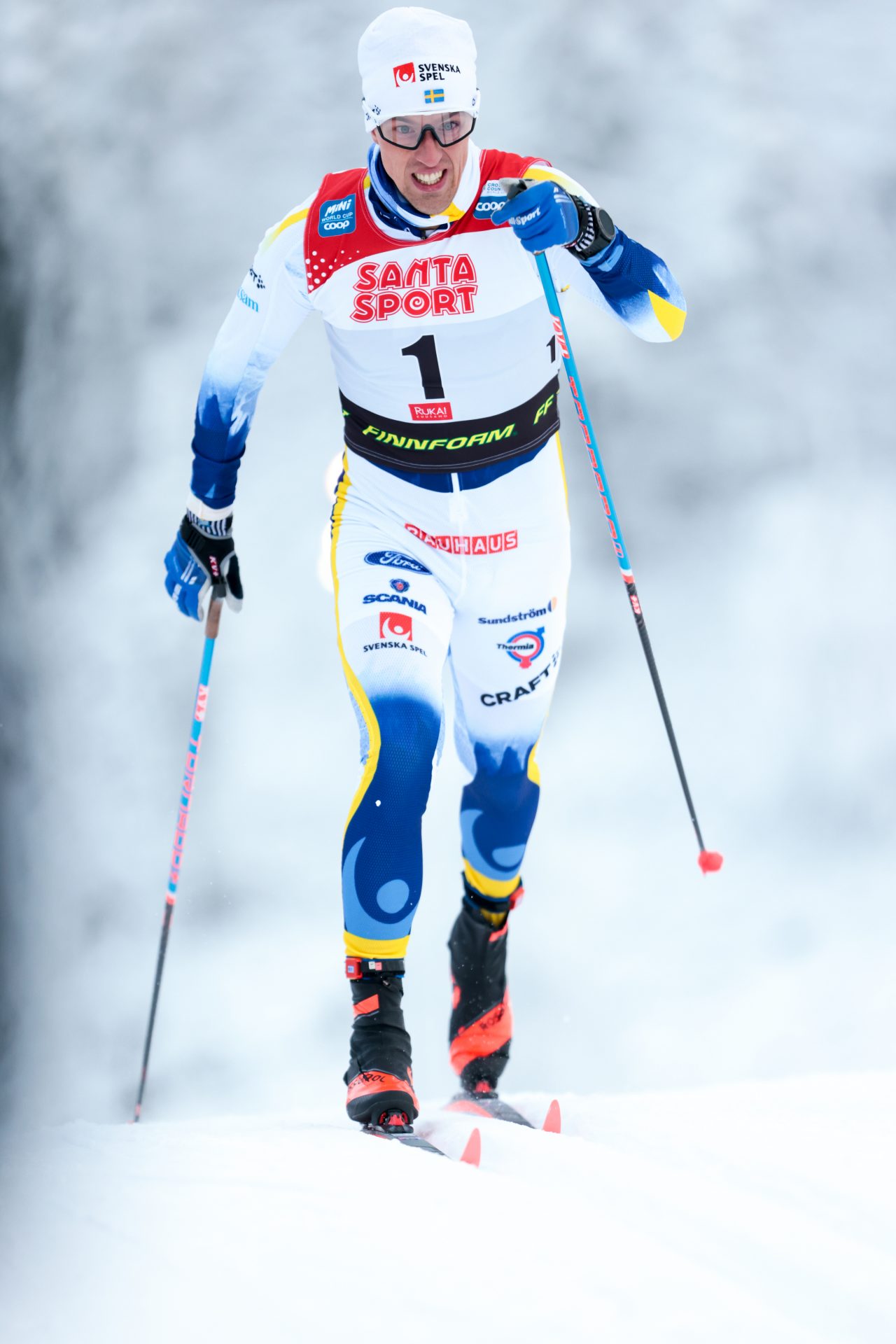
A resurgent Calle Halfversson had a breakout weekend in Ruka — until his encounter with the race jury on Sunday. (photo: Fischer/NordicFocus)
The Sadie System, as in the Sadie Bjornsen system, is the topic in this episode of Nordic Nation. That system involves a basic understanding of how hard and long to train and how to recover effectively, a question many athletes struggle to answer. But Bjornsen, a U.S. Ski Team all-arounder, has overcome chronic foot injuries and arrived on the World Cup scene this year poised for podiums. She has three World Cup podiums so far in the 2017/2018 season and she’ll be competing at her second Olympics this February. And she does have some bronze bling from last year’s World Championship team sprint with Jessie Diggins.
When asked about interesting media exposure she’s had during the run up to the Olympics, Bjornsen mentioned a Twitter exchange the U.S. Ski Team’s women had with Paula Poundstone of NPR’s Wait Wait. Rule of thumb: it’s a bad idea to dis World Championship medalist.
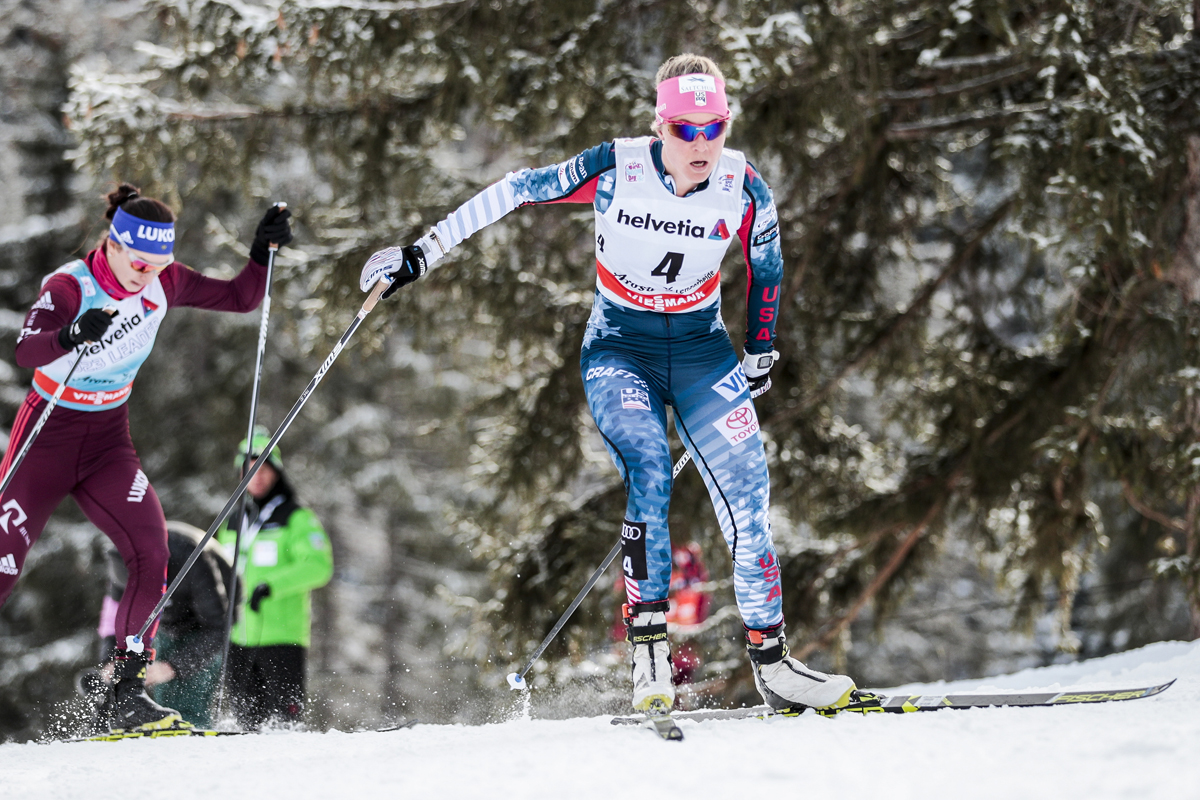
U.S. Ski Team member Sadie Bjornsen (4) racing to fifth in the women’s 10 k freestyle pursuit at Stage 3 of the 2018 Tour de Ski in Lenzerheide, Switzerland. She went on to finish ninth overall in the Tour. (Photo: Fischer/NordicFocus)
We caught up with the 28-year-old Bjornsen on the phone on Jan. 18, a few days before last weekend’s World Cup races in Planica, Slovenia. The skier originally from Washington’s Methow Valley, who trains with Alaska Pacific University (APU) in Anchorage, Alaska, is a model of perseverance, goal setting and getting things done.
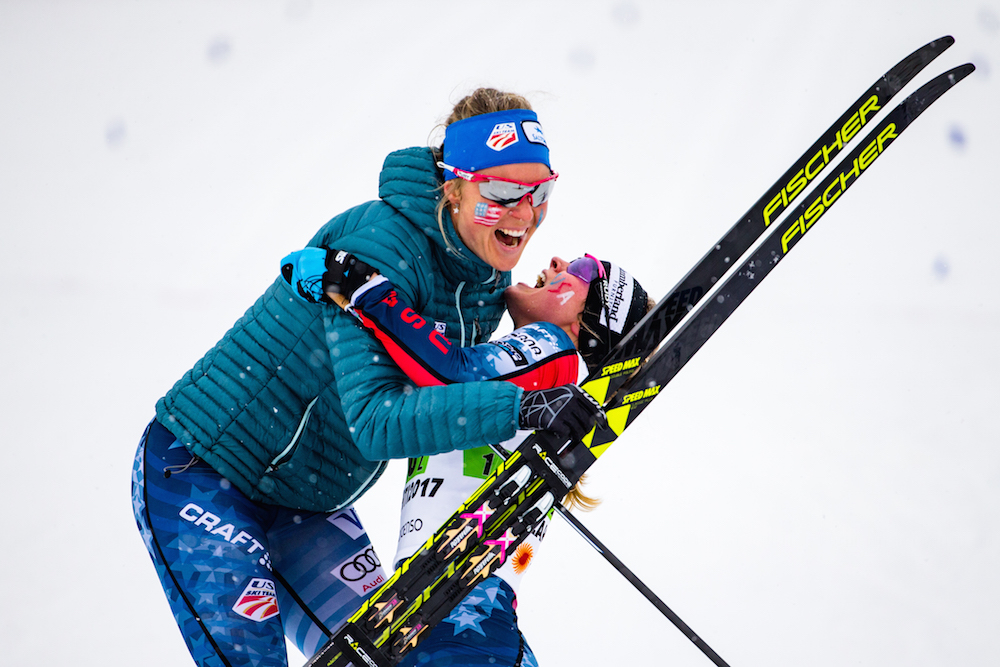
Sadie Bjornsen (l) catches her teammate Jessie Diggins after they placed third in the women’s classic team sprint on Feb. 26 at 2017 FIS Nordic World Ski Championships in Lahti, Finland. (Photo: John Lazenby/Lazenbyphoto.com)
Bill McKibben — author, educator, environmentalist as stated on his personal website. He is one of us, too: an individual dedicated to the sport and culture of human-powered skiing. Back when he was 37, McKibben penned a great book titled “Long Distance: Testing the Limits of Body and Spirit in a Year of Living Strenuously“. If you’ve ever wondered what it would be like to train like an Olympian in the body of a burgeoning masters skier, it’s a great read. It’s also the real deal type of book from a writer who actually left a job at the New Yorker — not many people give up that gig — for the greener pastures and colder ski tracks of Vermont.
Bill McKibben: Climate activist, educator, and lover of all things xc skiing. (Photo: BillMcKibben.com)
Twenty years after he wrote that book, McKibben, who just turned 57, is a Middlebury College professor and perhaps the foremost political organizer when it comes to the issue of climate change. He helped start the climate justice organization 350.org.
The author of many books, McKibben released his first novel this fall titled “Radio Free Vermont“. Let’s just say it has all the hallmarks of a good tale with some cross-country skiing and biathlon thrown in for good measure.
Nordic Nation connected with McKibben back about a month ago on Dec. 4, 2017. It’s pretty much an all-inclusive interview: climate change, World Cup, Simi Hamilton as an undergrad skier, and some discussion of “Radio Free Vermont“.
Enjoy the interview before we get sucked into the Olympic vortex here on Nordic Nation.
Back in the spring of 2013, NCAA champion Joanne Reid was at the proverbial fork in the road: pursue academics after graduating with an Applied Mathematics degree from the University of Colorado-Boulder (CU) or compete as an elite-level nordic skier? Reid was coming off a collegiate season where she won the 15-kilometer freestyle and helped the CU Buffs win outright at NCAA Skiing Championships.
Joanne Reid celebrates her win in the 15 k freestyle at 2013 NCAA Skiing Championships at the Rikert Nordic Center in Ripton, Vt. (Photo: flyingpointroad.com)
It turns out, Reid, who turns 25 on Wednesday, is near completion for a master’s in engineering. And as it turns out, she also pursued skiing as a biathlete at the highest level.
Last season was Reid’s first shot at a full World Cup biathlon schedule. And on the first World Cup weekend, she placed 29th in the individual 15 k individual in Östersund, Sweden, helping her earn an US Biathlon A-team nomination for this season.
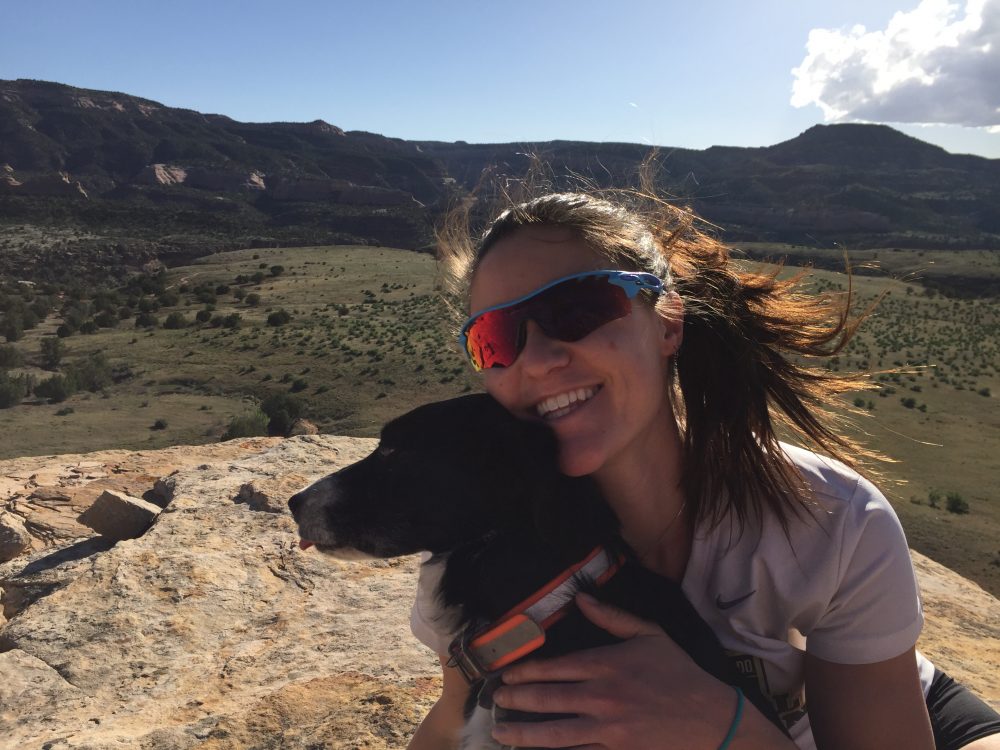
In this episode, we’ll hear Reid explain why she chose biathlon over straight-up cross-country skiing (one hint: there’s no kick wax), and why she’s willing to forgo the doctorate for the time being. Reid appears to be a mover and shaker: when not based at the Lake Placid Olympic Training Center, this desert lover doesn’t shy away from high temps, cacti or sweeping sandstone vistas. For the time being, Reid, who grew up in Houghton, Mich., and Palo Alto, Calif., lives and trains in western Colorado’s mesa country. From the sound of it, she says the desert is set up quite nicely for target practice.
US Biathlon A-team member Joanne Reid during target practice — desert style — in western Colorado. (Courtesy photo)
And a heads up for those listening on headphones, due to a small technical error the audio sounds best on a speaker.
Reid and one of her three canine training partners. Reid will spend much of the summer training in western Colorado. (Courtesy photo)Reid getting some air with her guitar. (Courtesy photo)
Nordic Nation heads north and more than a few time zones away for this episode. On May 22, we spoke with Swedish ski star Charlotte Kalla. The five-time Olympic medalist will turn 30 on July 22. She remains a motivated athlete willing to work hard to improve as she turns an eye toward the 2018 Olympic Winter Games.
Her resume is long. In what seems like a different era, 2006 and 2007, Kalla hauled in a bronze, a silver and three golds during her two appearances at Junior World Championships. And more than a decade ago, in 2006, Kalla began her World Cup career. Between 2009 and 2017, she’s earned 12 World Championship medals to go along with those five Olympic medals. It’s quite the curriculum vitae.
Kalla’s performances also trend towards the dramatic. She bested the field to win the 10-kilometer skate at 2015 World Championships at home in Falun, Sweden and came from behind as the anchor leg at the 2014 Sochi Games to secure an unlikely gold for Sweden. During an era when the Norwegian national team has remained a consistent podium lock, Kalla is an omnipresent spoiler for Sweden’s neighbor to the west. Think of her as a 10 k skate specialist? She earned two bronze medals this year in the 10 k classic and 15 k skiathlon at 2017 World Championships in Lahti, Finland.
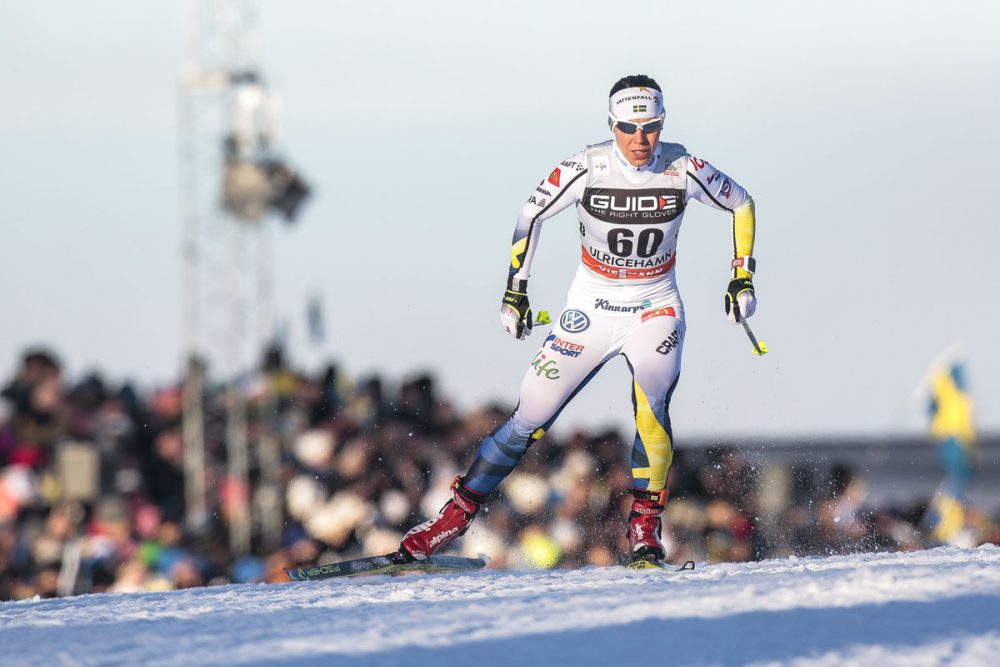
Sweden’s Charlotte Kalla racing to a third in the women’s 10-kilometer freestyle race at last season’s World Cup in Ulricehamn, Sweden. (Photo: Fischer/NordicFocus)
Give the interview a listen and you’ll hear Kalla describe those races, her decision to train separate from the Swedish national team, and recovering from an uneasy start to the 2016/2017 season. Additionally, she talks about how male and female athletes are treated differently at the highest level of her sport, and her admiration for the Norwegian and U.S. women’s teams.
“I think it’s really fun to see and meet the American girls and think of what a journey they have been going through,” Kalla says. “It’s so amazing to see what position they have today in the women’s World Cup. [They have] so many good athletes and really nice attitude and very welcoming to other nations, and the way they develop sports, it’s really impressive.”
In this episode we put the elusive Fast Big Dog, known in the business world as Jon Schafer, in front of the mic for his answers to the 17 Questions for 2017. It brings a conclusion to the FasterSkier interview series run last fall before the start of the 2016/2017 cross-country, nordic combined and biathlon race seasons.
Schafer is knee deep in the nordic scene as high performance director for USA Nordic Sport, a supporter of many aspiring skiers, and a huge Evel Knievel devotee — note Schafer’s race suit.
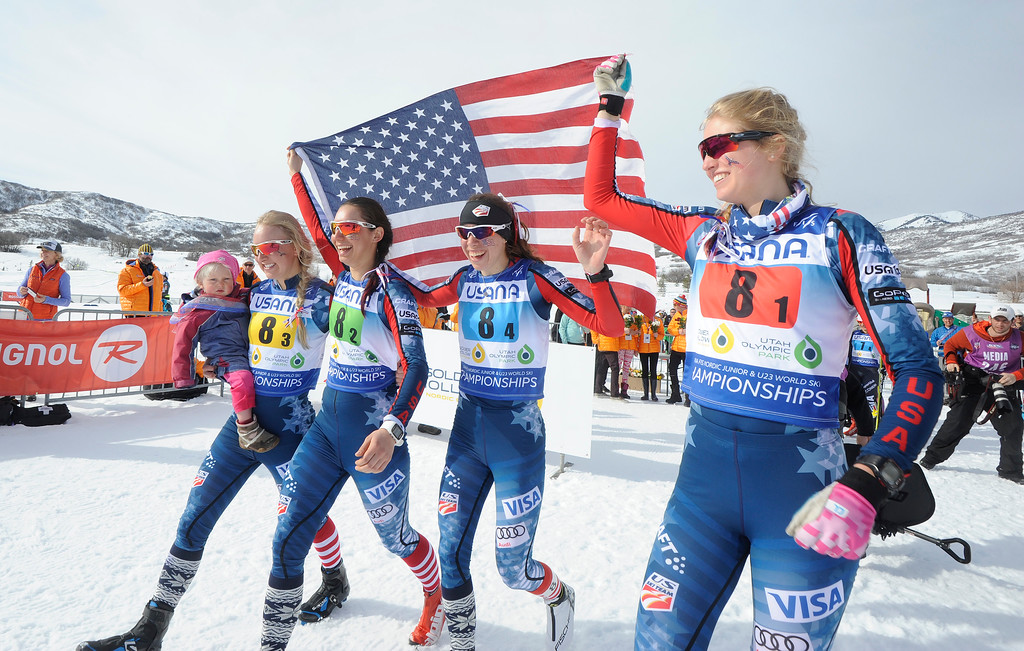
U.S. Ski Team Development Coach Bryan Fish celebrating with (from left to right) Hailey Swirbul, Julia Kern and Hannah Halvorsen after their bronze-medal performance with Katharine Ogden (not pictured) in the 4 x 3.3 k relay on Feb 5 at 2017 Junior World Championships at Soldier Hollow in Midway, Utah. (Photo: FlyingPointRoad.com)
On Feb. 5, the U.S. women’s team of Hailey Swirbul, Julia Kern, Hannah Halvorsen, and Katherine Ogden placed third in the 4 x 3.3-kilometer relay at Junior World Championships at Soldier Hollow in Midway, Utah. The following week, Nordic Nation jumped through some scheduling hoops to reach all four skiers and their lead coach, U.S. Ski Team Development Coach Bryan Fish. (Swirbul was back at school in Anchorage, Alaska, Ogden home in Vermont, and Halvorsen, Kern and Fish reached in Park City, Utah.)
In this podcast episode, you’ll hear Fish describe how the team was selected as well as each athlete describe this career highlight. Scroll all the way to the bottom, below the photo gallery, to play.
The first leg of the women’s 4 x 3.3 k relay at 2017 Junior World Championships, with Germany and Russia leading and American Hailey Swirbul with the lead group. (Photo: U.S. Ski Team/Tom Kelly)
Hailey Swirbul (University of Alaska Anchorage) racing the first leg of the women’s 4 x 3.3 k relay at 2017 Junior World Championships at Soldier Hollow. (Photo: U.S. Ski Team/Tom Kelly)
This move by Hannah Halvorsen going into the final short climb of her third leg put the U.S. into third during the women’s 4 x 3.3 k relay at 2017 Junior World Championships at Soldier Hollow. (Photo: U.S. Ski Team/Tom Kelly)
The U.S. women’s relay after taking a historic third in the 4 x 3.3 k relay at 2017 Junior World Championships on Sunday at Soldier Hollow in Midway Utah, with (from left to right) Hailey Swirbul, Julia Kern, Hannah Halvorsen, and Katharine Ogden. (Photo: U.S. Ski Team/Tom Kelly)
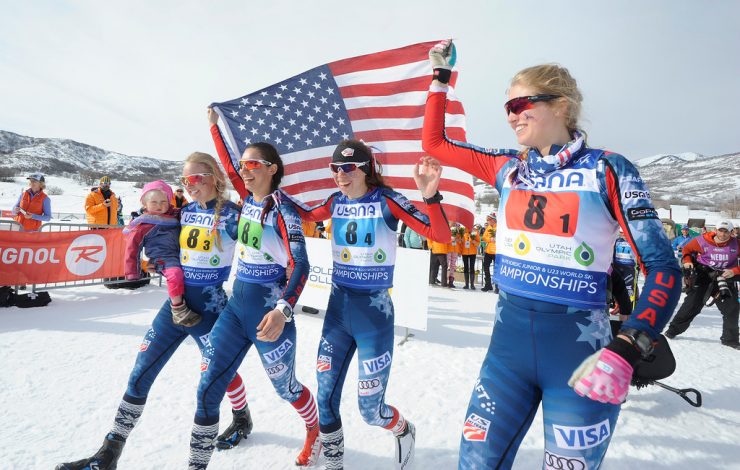
The U.S. women’s relay after taking a historic third in the 4 x 3.3 k relay at 2017 Junior World Championships on Sunday at Soldier Hollow in Midway Utah, with (from left to right) Hannah Halvorsen, Julia Kern, Katharine Ogden, and Hailey Swirbul. (Photo: U.S. Ski Team/Tom Kelly)
The Russian relay team awaits their introduction to the podium as the gold-medal winners of the Junior World Championships women’s 4 x 3.3 k relay on Feb. 5 at Soldier Hollow. Italy (l) placed second and the U.S. (r) third. (Photo: U.S. Ski Team/Tom Kelly)
The women’s 4 x 3.3 k relay podium on the final day of 2017 Junior World Championships at Soldier Hollow in Midway, Utah, with Russia (c) in first, Italy (l) in second, and the U.S. (with Hannah Halvorsen, Julia Kern, Katharine Ogden, and Hailey Swirbul) in third. (Photo: U.S. Ski Team/Tom Kelly)
For non-traditional cross-country ski nations like the U.S. and Canada, bringing home Olympic hardware is the benchmark for success. The World Cup, although prestigious among fans and athletes, doesn’t share the same fanfare. And just below Olympic success, and again, off the general public’s radar are World Championship results. Canada has Olympic nordic sport hardware: Beckie Scott’s 2002 gold, Chandra Crawford’s 2006 gold, and the duo of Scott and Sara Renner winning silver in in the team sprint also in 2006. Recent World Championship awards include Alex Harvey and Devon Kershaw winning team sprint gold in 2011. Harvey followed that up with more world-champs hardware: a sprint bronze in 2013, a sprint silver in 2015, and bronze that same year in the 30 k skiathlon.
Shane Pearsall will take over as CEO of Cross Country Canada starting Jan. 1, 2017. (Courtesy photo)
Canada’s cross country scene is not lacking for international medals. Yet in recent years, the sport has received a smaller piece of the sports funding pie from government entities like Own The Podium (OTP), and from independent sponsors. Canada is now emerging into the women’s World Cup ranks again, Dahria Beatty recently advanced to the sprint quarterfinals in Davos, Switzerland — she finished 25th on the day. But for many years as the men’s team was loaded with Harvey, Kershaw, and Valjas, on and off the record the sense was that the women’s side of the equation languished. The responsibility for developing the sport in Canada ultimately falls to Cross Country Canada (CCC), the national governing body for the sport.
CCC’s most recent CEO, Pierre Lafontaine, remained in the job for a year. Starting Jan. 1, 2017, the CEO role will belong to Shane Pearsall.
Sound like a new name in cross-country ski circles? It is. Pearsall, 58, does come to the job with administrative experience in sport, for three years he served as Bobsleigh Canada Skeleton’s (BCS) chief operating officer. In terms of connection to potential sponsors, Pearsall also worked in the oil and gas industry for 25 years including a long stint with AltaGas, a primary sponsor of CCC and its World Cup team. As an athlete, Pearsall was an elite hockey player and was a member of the 1980 Canadian men’s national team.
In this Nordic Nation episode, Pearsall answers questions about his vision for CCC and how he’ll measure success.
It may be hyperbole, but “faster than a speeding bullet,” is a good place to start when thinking about biathlon at the World Cup level. Sure, race pace is slower than a speeding bullet, but watching masterful biathletes clean their shooting rounds on the way to victory deserves statements bordering on the hyperbolic. Most of us can imagine stumbling across a finish line, lungs burning. It’s a whole other realm of precision like suffering to pound out the kilometers while intermittently trying to hit a small target.
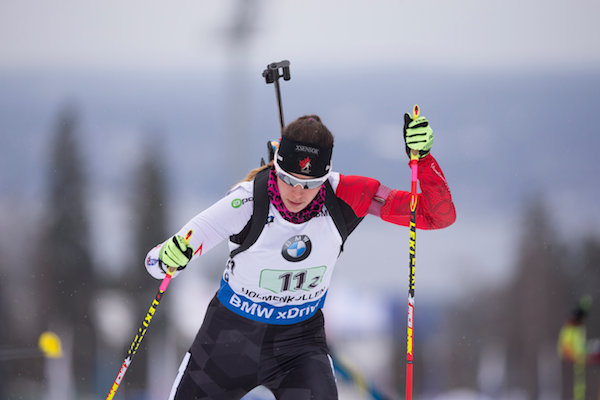
Clare Egan (US Biathlon) racing at an IBU World Cup last December in Hochfilzen, Austria. (Photo: Fischer/NordicFocus)
This episode of Nordic Nation is the second of our two-part series on biathlon. The first segment featured Biathlon Canada veteran Rosanna Crawford. Up now, it’s US Biathlon’s Clare Egan. At 28, she’s now a full time International Biathlon Union (IBU) World Cupper — and she picked up her first rifle at the age of 25. From Egan, we’ll learn what it’s like coming to the sport as a novice shooter with Olympic aspirations. From developing muscle memory to learning new coping strategies for when those bullets down exactly hit the bullseye, Egan fills us in.
Clare Egan: Screen shot from the IBU World Cup. Egan shoots clean.
It’s worth asking this question: could an entire continent having a love affair with a sport that combines skate skiing and shooting be wrong? There’s the raw, heart-thumping power of the skiing mingled with the laser-focus almost the zen-like quality of shooting at a quarter-size target. Throw in a few thousand fans with cowbells, horns,and a long winter night’s worth of libations, and you’ve got a sport that either live in person or broadcast on a screen has captured the wintertime sport scene in Europe.
For the diehard nordic ski fan, International Biathlon Union (IBU) World Cups have for sometime been easily streamable on the Internet. If you were disinterested in the shooting, there’s obviously the skiing. But understanding the shooting process — where athletes immerse themselves in a mind-body flow shooting at small targets sandwiched between full-throttle ski laps — broadens one’s appreciation for the sport.
Rosanna Crawford (Biathlon Canada) skiing the second-fastest course time of second-leg relay skiers in the Oslo World Cup relay in February 2015. (Photo: Biathlon Canada/NordicFocus.com)
In this episode of Nordic Nation, Biathlon Canada veteran Rosanna Crawford brings listeners into the shooting range — in fact she debriefs her world champs personal-best race at the 2016 IBU World Championships in Oslo, Norway.
Hear those cheers roar after a target flips black with a direct hit? What’s not to love? Click the play arrow below to listen to the podcast. (To subscribe to the Nordic Nation podcast channel, download the iTunes app. If you have iTunes, subscribe to Nordic Nation here.)
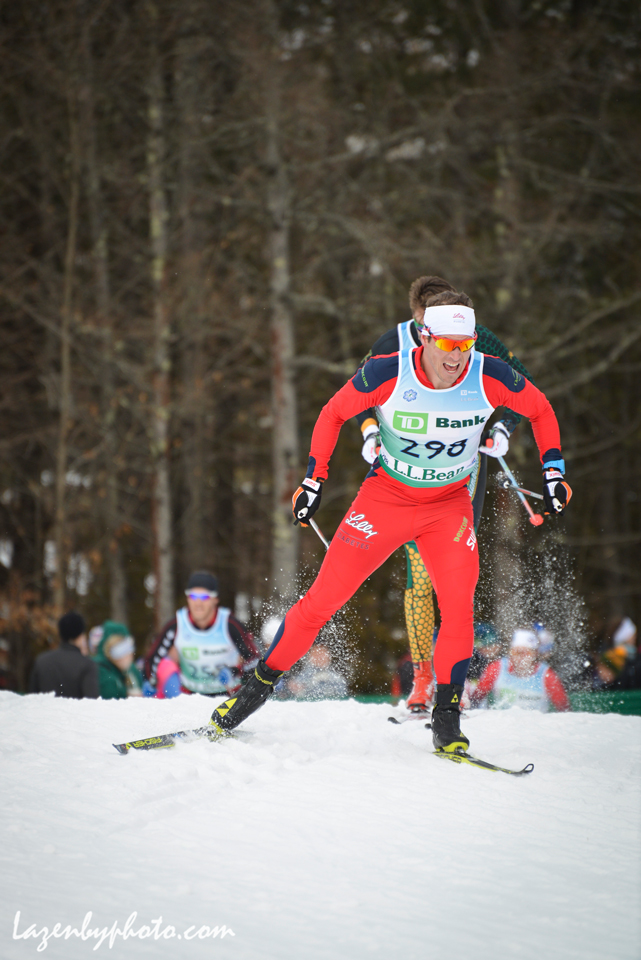
Kris Freeman (Team Freebird) racing to first in the SuperTour men’s 10 k classic individual start this past February in Craftsbury, Vt. (Photo: John Lazenby/Lazenbyphoto.com)
Few athletes remain at the top end of endurance for five years, let alone a single decade. New Hampshire native Kris Freeman, at 35, has been chasing fast times and fast skiers around cross-country ski loops for 16 years as a professional.
For much of that time, Freeman was a staple on the men’s U.S. Ski Team. He was fourth twice, in 2003 and 2009, in the 15-kilometer classic at World Championships.
Type 1 diabetes is not something we associate with four-time Olympians. Yet Freeman has dispelled the physiological odds of a diabetes diagnosis at the age of 20. Flagged for blood sugar anomalies as a U.S. Ski Team development skier during a routine blood test, Freeman and his tight-knit cadre of coaches and endocrinologists have been managing his disease ever since.
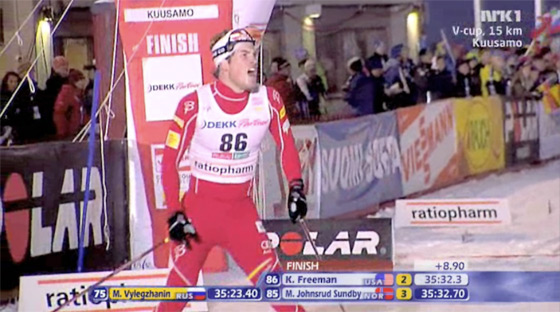
Kris Freeman at the finish of a 2009 World Cup race in Kuusamo, Finland. He finished fourth, 0.4 seconds ahead of Norway’s Martin Johnsrud Sundby.
Freeman said his initial foray into the literature of elite endurance sport and Type 1 diabetes was a black hole. As an athlete at the highest end of sport — racing to win, not simply finish an event — Freeman remains a sample size of one. And even now, Freeman is a student of what he realizes is the inexact science of managing his blood sugar for endurance sport. Needless to say, all that takes some serious commitment to endure. And endure where a margin of error involves high stakes physiological consequences.
Asked about what advice he’d give an up-and-coming cross country skier with the same predicament, Freeman said this: “Learn as much as you can about physiology, learn as much as you can about diet, and finding doctors that believe in you are the keys. For sure, I am not doing everything perfectly, and I know that. I’m sure it can be done better, I just haven’t figured out how. On the positive side, treatments for diabetes: better insulin pumps, continuous glucose monitors, have gotten light-years better even in the 16 years now that I have had diabetes. So at the progression it is going, I am hoping it will be a lot easier to manage in time.”
Press the play arrow below to hear about both the ups and downs of Freeman’s ski racing life. And if you didn’t catch this elsewhere, Freeman is also a newlywed.
(Courtesy photo)
(Courtesy photo)
The wedding party toasts to groom Kris Freeman (third from r) and bride Amber Dodge (fifth from l). (Courtesy photo)
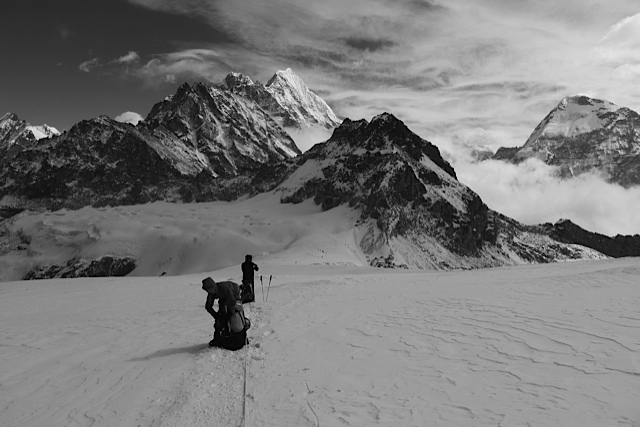
Heading up to high camp on the glacier of Mera Peak, Nepal, in April 2014. (Photo: Devon Kershaw)
As long as the Canadian men’s national ski team has been a force, Devon Kershaw’s name has been synonymous with that success. As recently as 2012, Kershaw finished the season ranked second overall in the final World Cup standings. And in 2011, along with teammate Alex Harvey, he won the classic team sprint at World Championships in Oslo, Norway.
Beyond his Oslo win, Kershaw has settled for the time being with his wife, former Norwegian ski star Kristin Størmer Steira. The two live close to downtown Oslo where Kershaw has found a profoundly livable city; it’s easy to find world-class training and as he works on his Norwegian, he can default to English. Kershaw says nearly the entire population can converse in perfect English.
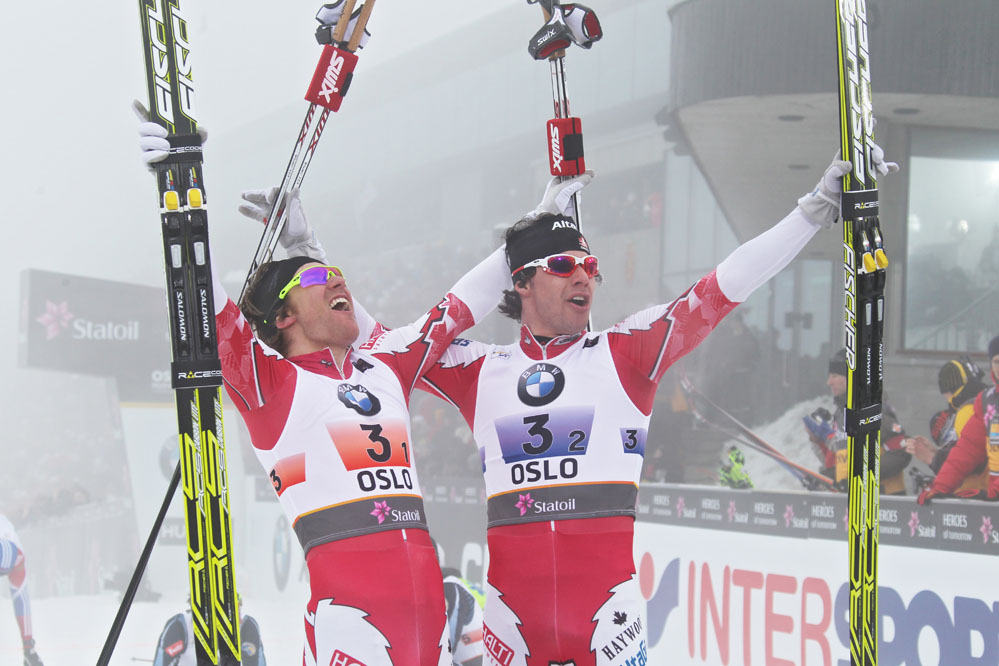
Kershaw (l) and Alex Harvey (r) celebrating their team sprint victory at the 2011 World Championships in Oslo, Norway. (Photo: Hemmersbach/NordicFocus)
At 33, and having been on the international ski scene for over a decade, Kershaw speaks with experience and authority when it comes to the evolution of the sport. Then there’s the dark side exposed bare this July with the release of the McLaren report.
“As an athlete, I’m just getting a bit sick of lip service. How much lip service do we need to take? It’s either a priority for us, for like, WADA, IOC, FIS … or it is not,” Kershaw said in the podcast.
Kershaw notes he’ll continue competing through the 2018 Winter Olympics, then it’s most likely back to school for the Sudbury, Ontario, native.
Listen to the full podcast here by clicking the play button below.
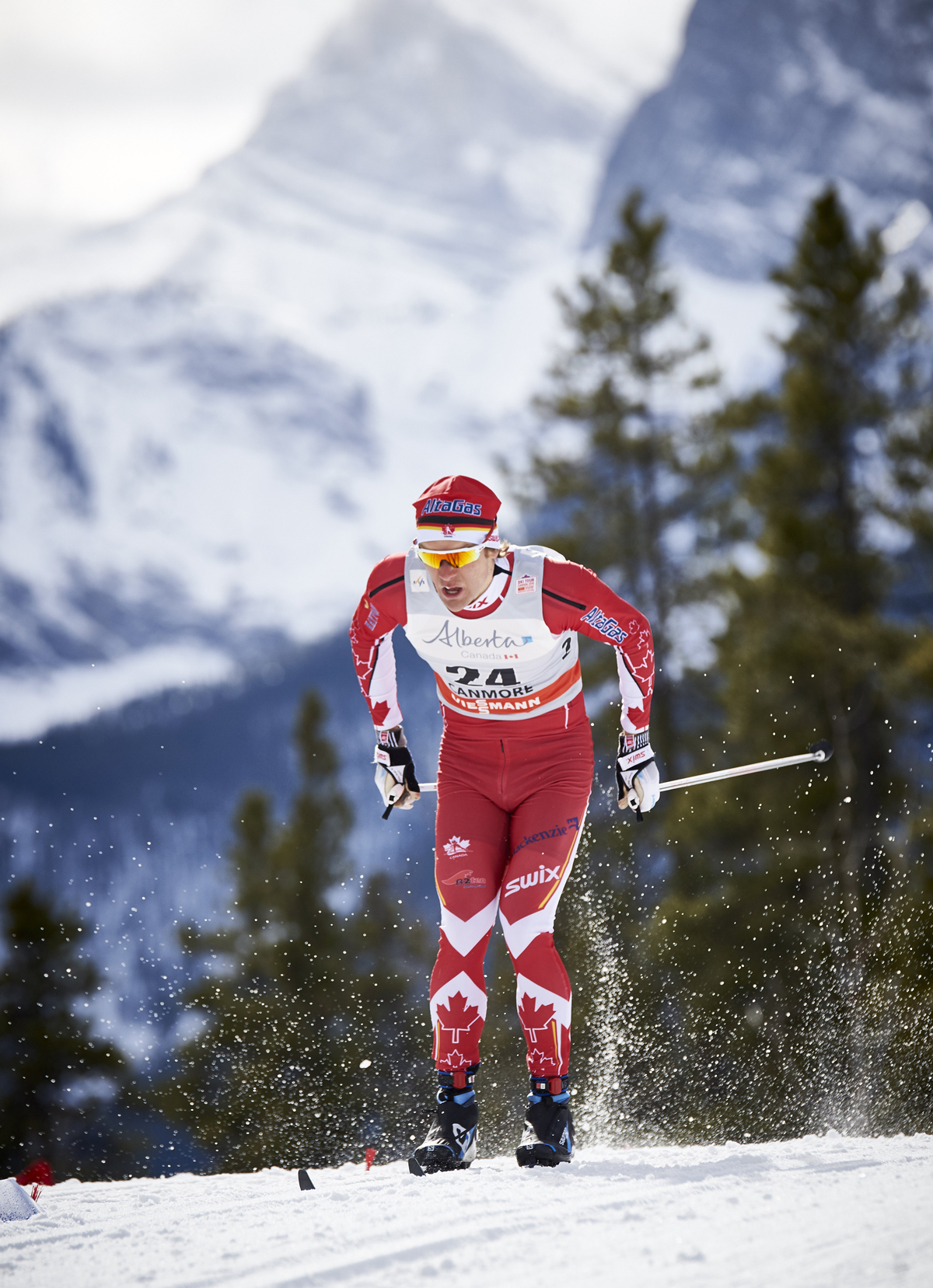
Devon Kershaw (Canadian World Cup Team) competing in the classic sprint at the Ski Tour Canada on March 8 in Canmore, Alberta. (Photo: Fischer/NordicFocus)
For skiers aspiring to World Cup starts, a World Championship or Olympic birth, the International Ski Federation’s (FIS) website can be either a glimmer of hope or something to smudge out dreams. The FIS site allows for a query of any single athlete: there you can analyze the full historical record of a skier’s FIS race results. It’s essentially an elite skier’s domestic and international rankings laid bare.
This last year of domestic racing proved it may be time for 25-year-old Alaska Pacific University (APU) skier David Norris to break into the international racing scene. A quick analysis of his recent results on the FIS site reveals a skier steadily becoming one of America’s top-tier skiers.
In January of this year, Norris won his first Super Tour in Lake Placid, N.Y., a freestyle sprint. The next day, he came up huge again, winning the 10 k classic. Three weeks later, Norris capped off the cold months of winter with an American Birkebeiner win.
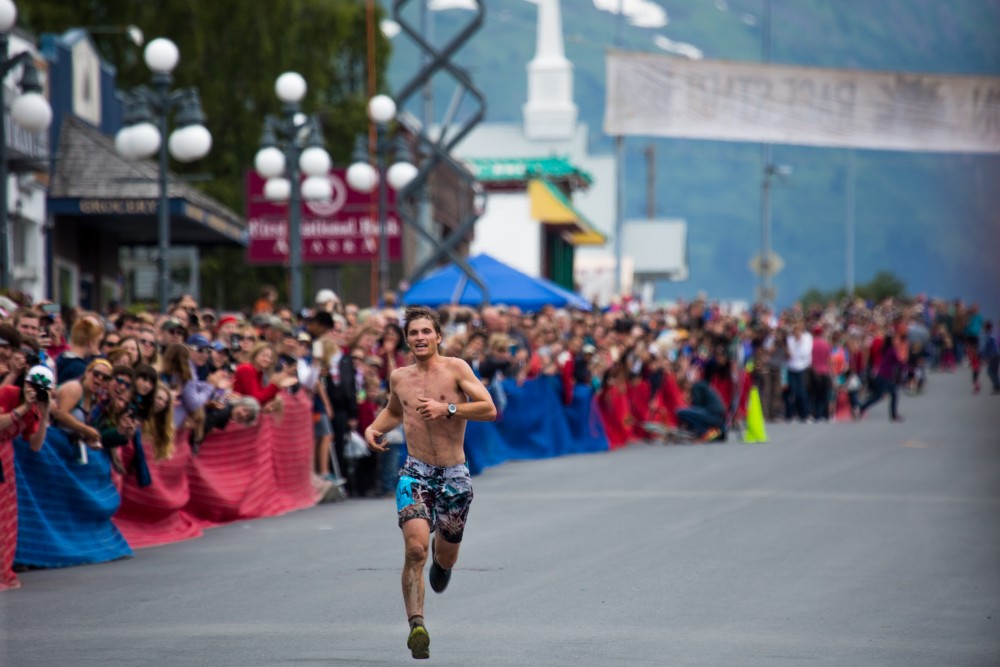
Despite the uptick in positive results, Norris’s late-season push did not qualify him for U.S. start rights at the Ski Tour Canada. His strong finish to the season, he also placed third in the 50 k classic at U.S. Distance Nationals, makes him a skier to watch this winter. He’s also a mountain runner to watch — Norris won his first-ever Mt. Marathon Race, a storied uphill and downhill running/scrambling race in Seward, Alaska.
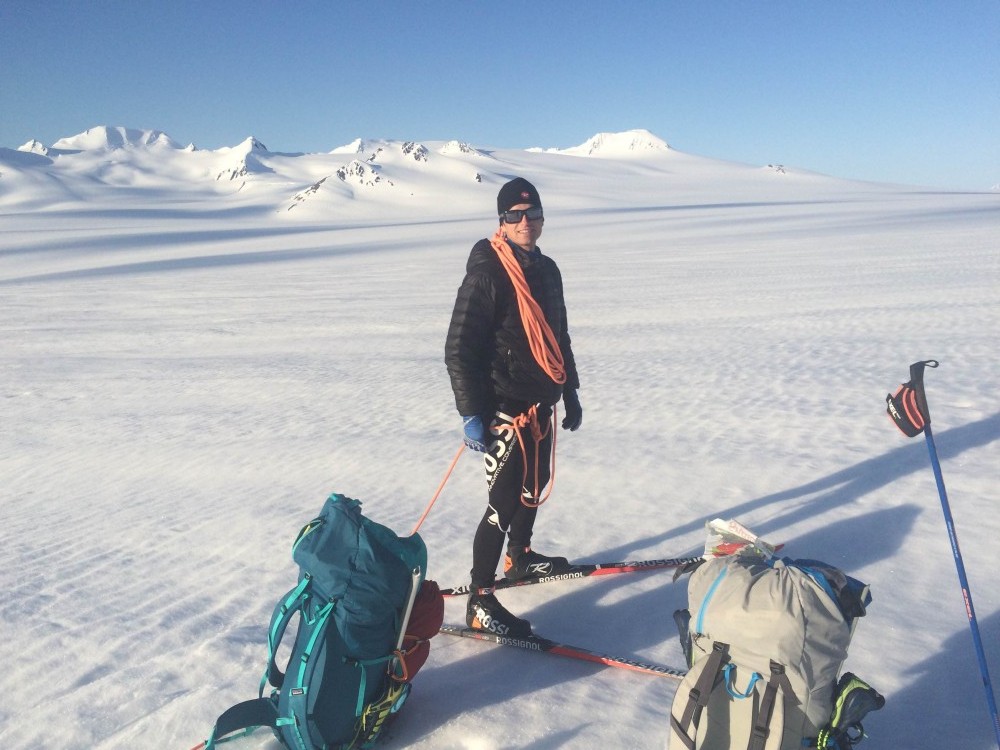
David Norris on an Alaskan-style backcountry skate ski on the Harding Icefield. (Photo: Scott Patterson)
FasterSkier interviewed Norris for its latest podcast episode. Norris describes his efforts to heal from a debilitating virus which prevented him from training seriously during the 2013/2014 season and his uncanny ability to pretty much just show up and crush the Mt. Marathon course in record time. He did so even after last year’s Mt. Marathon men’s winner, international trail-running and ski-mo star Kilian Jornet, set a new benchmark.
“I did go camp in Seward for a weekend a few weeks before the race. I went to the top only once, but I did a few laps of the lower section, where there’s more, I think there’s more danger, and more importance on knowing the specific route you want to take. So I practiced that a few times,” Norris said of his less than hyper-detailed study of the Mt. Marathon course.
What is clear is that Norris is a quick study, calculated risk taker and able to harness his serious lung power when it’s on the line.
For the full podcast interview click the play arrow below.
A busy, busy week on the anti-doping front. The big news for cross-country fans was the hit Norway’s reigning World Cup champion Martin Johnsrud Sundby took regarding his asthma-medication use two seasons ago. But casting an even bigger net — one that has implications for global sport and Russia in the both short and long term — was the McLaren report released Monday morning. (You can find the full McLaren report here).
In this podcast episode, FS takes a shallow dive into the report, illuminates the thoughts of athletes on both the World Anti-Doping Agency (WADA) Athlete Commission and International Olympic Committee (IOC) Athlete’s Commission, and seeks some answers from FS Editor-At-Large Chelsea Little. Yup, there’s a lot in there.
You’ll hear from Richard McLaren, WADA’s independent counsel/investigator, Beckie Scott (Canada) chair of WADA’s athlete committee; Adam Pengilly (United Kingdom) of the IOC athletes’ commission for skeleton/bobsleigh, Hayley Wickenheiser (Canada) of the IOC athletes’ commission for ice hockey, and Ben Sandford (New Zealand) of the WADA athletes’ commission for skeleton.
Note: The interview with Little was recorded Thursday before the International Biathlon Union (IBU) responded to the McLaren report with a press release on Friday.
Ivan Babikov and his son, Sergei, in 2008. His oldest son is now 13. (Photo: Ivan Babikov)
A ski-career-ago, Ivan Babikov (35, he’ll turn 36 on Monday, July 4), made a bold move. Back in 2003, he immigrated to Canada from Russia. With it came a new language, a new culture. Babikov’s ski results on the Canadian domestic scene ultimately fast tracked him up the Cross Country Canada (CCC) hierarchy.
In 2007, Babikov became a Canadian citizen and represented his new home country at the 2010 and 2014 Olympics. And since 2009, he’s been a pillar of the Canadian men’s national team. With a solid finishing result at the Ski Tour Canada — he placed 14th overall — Babikov seemed to have regained his confidence after beginning the season in a lull.
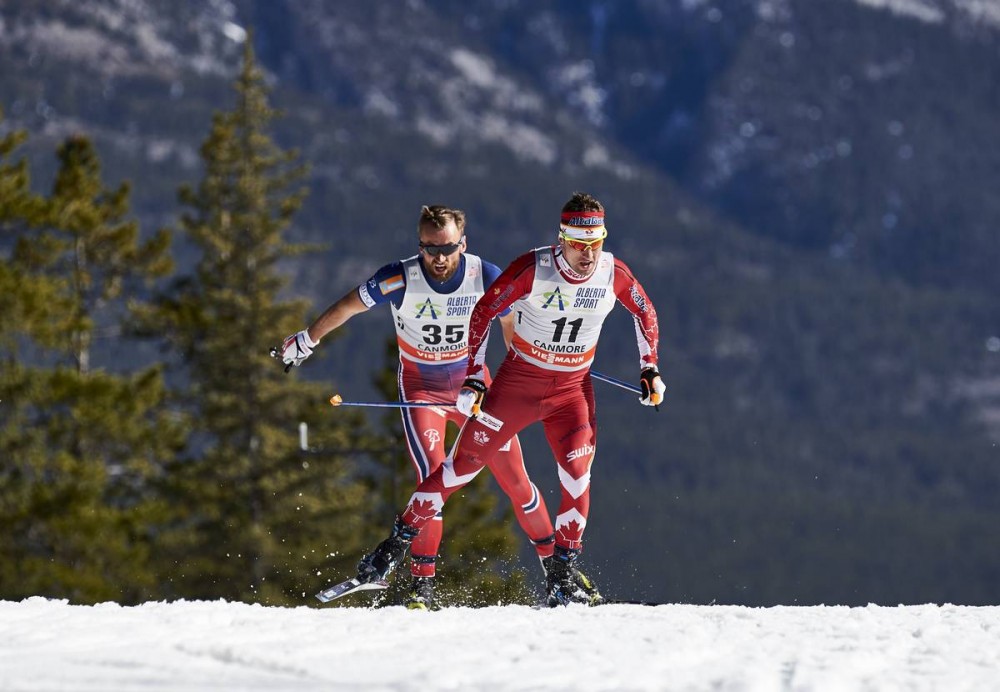
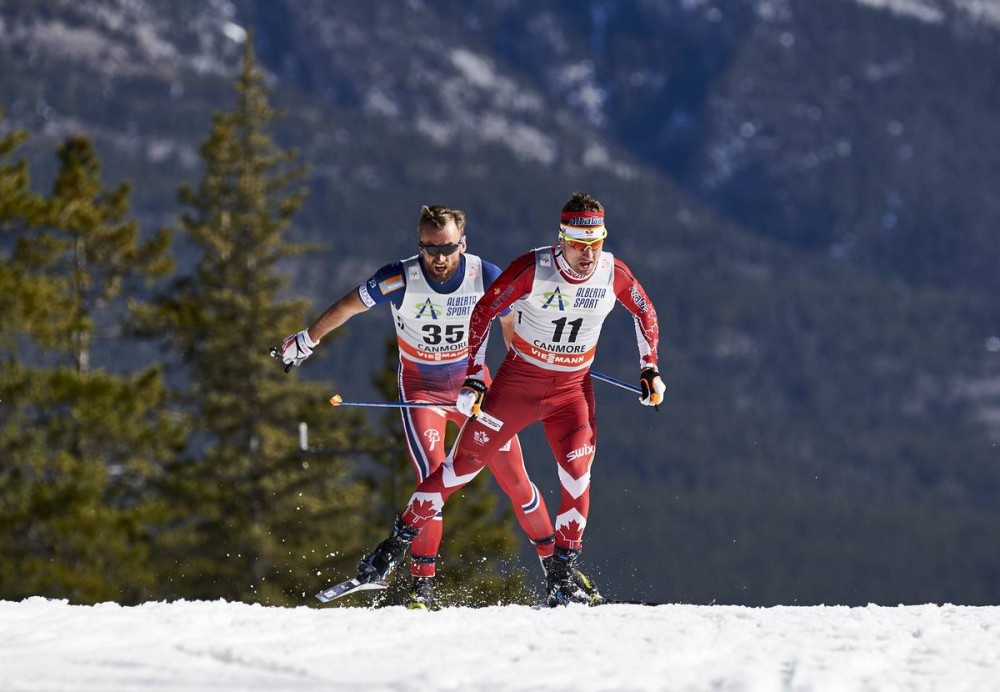
Canada’s Ivan Babikov (11) skiing ahead of Norway’s Petter Northug during the men’s 15 k freestyle individual start at Stage 7 of the Ski Tour Canada in Canmore, Alberta. Northug placed eighth and Babikov finished 10th on the day. (Photo: Salomon/NordicFocus)
At this year’s Canadian National Championships he placed third in the 50-kilometer classic mass start and second in the 15 k free. His results indicated he still had game amidst his Canadian peers.
FasterSkier reached Babikov on the phone Thursday for a podcast interview. Currently, Babikov is in Mont-Tremblant, Quebec, helping lead, along with national-team lead coach Louis Bouchard, his first camp in a leadership role.
Now retired from international racing, Babikov will have an opportunity to lead an experienced team toward the 2017 World Championships and 2018 Olympics.
“Right now I don’t feel really that much different,” Babikov said. “I’m still spending lots of time with them and going out for some training and some rollerski workouts. But I think I will feel it more when the season actually starts, when they are going to start racing and I’ll be on the sidelines. For now I am totally fine with what I do, I love what I do. Hopefully the guys will feel the same way; that I am doing some, that I am helping them with the stuff they need help with.”
(Press the play button below to listen to the full audio interview.)
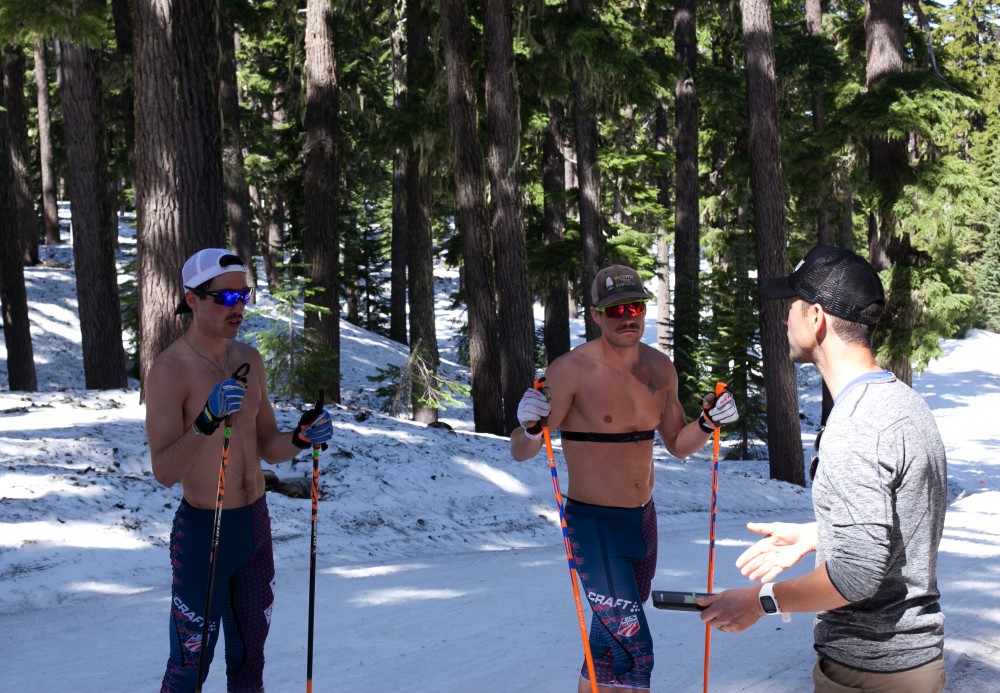
U.S. Ski Team Head Coach Chris Grover supervises a classic-technique drill at an on-snow camp last month at Mt. Bachelor in Bend, Ore.
Chris Grover has been at it a long time. Since 1993, when he first began coaching cross-country skiing under the tutelage of Sverre Caldwell at the Stratton Mountain School, Grover has migrated from Vermont, to Bend, Ore., and back to his home state of Idaho — all with the goal of fostering the fastest cross-country skiers. Grover caught the attention of the U.S. Ski & Snowboard Association (USSA) and was brought into the national-team fold as an assistant coach in 1999.
In 2010, he was named head coach of the U.S. Cross Country Ski Team. Since then, the team has experienced unparalleled success. Skiers like Simi Hamilton, Jessie Diggins, Sadie Bjornsen, Kikkan Randall, and Sophie Caldwell have excelled. But that success also comes at a time when the team’s budget is thin compared to powerhouse nations like Norway.
U.S. Ski Team Head Coach Chris Grover (r) discussing classic technique with national-team members Simi Hamilton (c) and Ian Torchia last month at an on-snow camp in Bend, Ore.
Despite the wavering budget, the team has made a go of it under Grover’s leadership. Asked about decreasing the stress on B-Team and D-Team athletes that are not fully funded, Grover said the team has created infrastructure to make life easier on the World Cup.
“We have been able to increase the infrastructure that we build around all athletes on the team, whatever their designation is,” Grover said. “If we go back four or five years ago, we might have only had two to three weeks, maybe four weeks of PT [physiotherapy] coverage on the World Cup during the competition season. And now we are at a point where we have PT coverage continuously on the World Cup season. And that’s because we have been able to use funding to support all athletes all year, to build out the infrastructure.”
The team is heading into an important two-year cycle with World Championships this coming season followed by the 2018 Olympics. The team is built around a core of skiers that at this point can be called veterans. With that in mind, FasterSkier asked Grover how he attempts to keep skiers from becoming “stale”?
“Oh gosh. It’s a really good question. It’s one that we are actually we are wrestling with right now, and dealing with right now,” Grover noted.
Forward thinking and shepherding the skiers to success is foremost on Grover’s mind. Along with his fellow coaches Matt Whitcomb, Jason Cork and Bryan Fish, Grover intends to implement a plan in the next two years he hopes will bring unprecedented success.
FasterSkier spoke with Grover in Bend on May 19 during the team’s on-snow camp at Mt. Bachelor.
(To listen to complete interview, click “play” arrow below.)
U.S. Ski Team member Ida Sargent gets encouragement from head coach Chris Grover (r) in 2011.
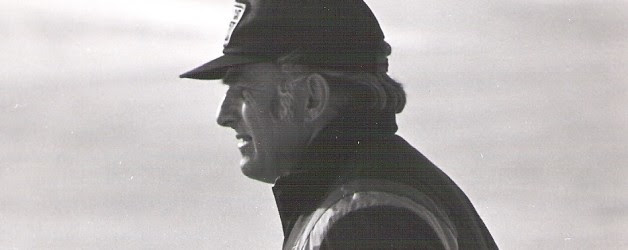
Marty Hall coached both the U.S. Ski Team (1968-1878) and Canadian National Team (1982-1992).
Marty Hall, 78, often needs no introduction. He’s established a canon of strongly worded comments and articles about the past and current state of cross-country ski racing. If there’s an opinion to be had, he’s got one.
Hall was interviewed for the FasterSkier podcast on Nov. 13. We spoke mainly about doping and sport in light of newly released WADA report. That report, The Independent Commission Report #1, was released Nov. 9. The interview was split into two segments; episode 1 and episode 2.
“You know, I read this thing and I said, ‘Holy Cow,’ they got ‘em. They did it the right way,’ ” Hall said. “But you know what I’m worried about? They’ll let them off the hook. Everyone of those son-of-a-biscuits should be cooked. Out. Gone. That’s how I feel.”
Marty Hall on Doping: Episode 1
Hall’s thoughts are based on experience. What may seem reactionary or knee-jerk is grounded in where he’s been and what he’s done. Hall’s relationship with cross-country skiing goes back decades. Having learned to ski as a child in the backwoods of New Hampshire — he move there at the end of World War II from New York City — Hall fell in love with the sport. From pine boards and toe straps, to composites and fluoros, Hall has seen and been a part of it all. He skied for the University of New Hampshire and eventually climbed the coaching ranks, spending a decade with the U.S. Ski Team (1968-1978) in a variety of roles. He led both the women’s and men’s squads and served as head coach. In 1982, he headed north to Canada where he became the Canadian National Team head coach. He remained in that role until 1992.
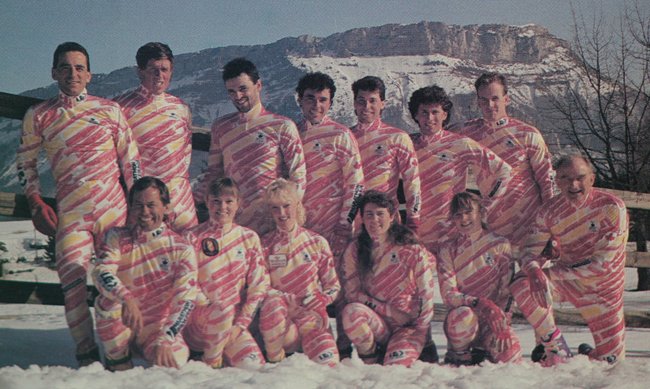
Canada’s 1992 Albertville Olympic team: (from left to right) Top: Alain Masson, Dave Wood (Wax Technician), Dany Bouchard, Yves Bilodeau, Darren Derochie, Al Pilcher, Wayne Dustin. Bottom: Laurent Roux (Head Coach) Jane Vincent, Lucy Steele, Lorna Daudrich, Rhonda De Long, Marty Hall (NST Director), Absent Angela Schmidt-Foster. (Photo: Cross Country Canada)
He then helped revolutionize how cross country skiing is viewed in person and on television. When planning the 1995 Thunder Bay World Championships, rather than one long 25-kilometer loop, with skiers away in the woods for long periods, Hall suggested a smaller loop, around 5 k, which would regularly bring athletes through the main stadium. If you enjoy watching today’s easier-to-view international events, Hall had a hand in that.
But his contributions to sport come with something Hall is comfortable with. He speaks his mind. That can be tough to digest for many.
““I’m a tough guy and you’ll hear it straight from me. … When you cross over and do something stupid you’re gonna hear about it,” he said.
Marty Hall on Doping: Episode 2
Back in 1988, as head of the Canadian National Team, a scandal erupted at the Calgary Winter Olympics. At a post-race press conference, he tacitly accused the Russians of doping. Although he’d been suspicious of dopers since 1974, he remained relatively quiet. Until Calgary.
“How about the Sport Minister,” Hall said. “He told me to shut up! And he wrote me a letter and said, ‘Oh your venue up there is beautiful. I had a great day watching the race. But … Marty shut up. You’re in hot water.’ ”
The fallout from those accusations took awhile to settle. And Hall didn’t step down until 1992, four years later. But it certainly left a few questions unanswered. Like how much doping was going on back then? Who was involved?
As the WADA report and its implications play out, it doesn’t appear Hall holds a gripe. For him, it seems a matter of righting a wrong and serving his former athletes like Pierre Harvey, who Hall claims was robbed of a fair race at his home Olympics. Glad to see the report’s findings, Hall hopes the sport he loves benefits from the report in the end.
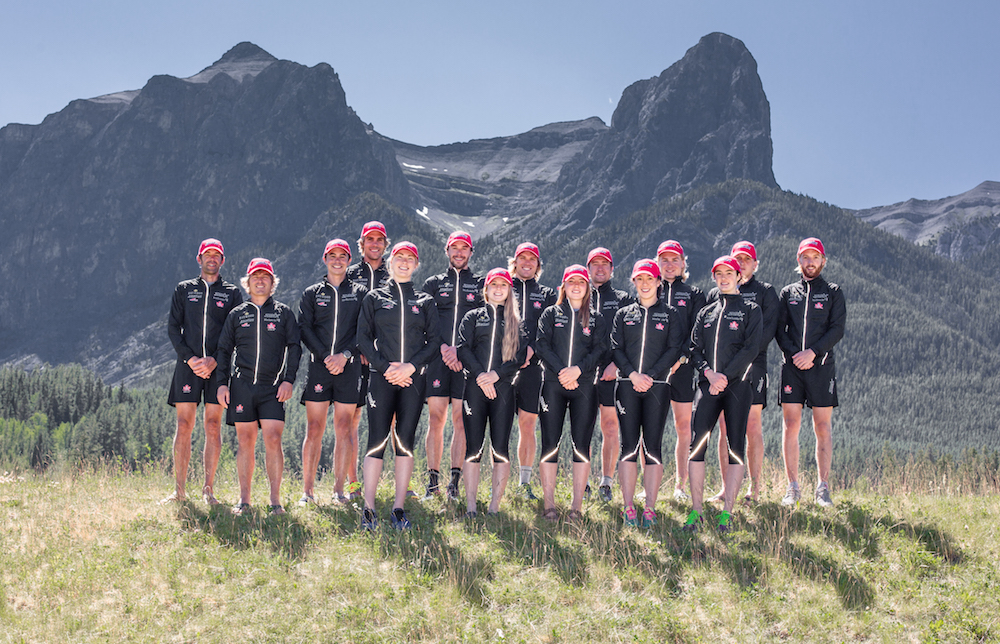
The 2015/2016 Canadian National Senior Team, with co-head World Cup coaches Justin Wadsworth (l) and Louis Bouchard (second from l) and athletes (from l to right) Jess Cockney, Len Valjas, Dahria Beatty, Alex Harvey, Cendrine Browne, Devon Kershaw, Katherine Stewart-Jones, Ivan Babikov, Emily Nishikawa, Knute Johnsgaard, Olivia Bouffard-Nesbitt, technical services coordinator Joel Jaques, and Graeme Killick during a photo shoot in their new Swix training wear in Canmore, Alberta. (Photo: CCC)
Six years in as the Canadian national team’s head coach, Justin Wadsworth speaks with tempered confidence. And there’s good reason for that. After concluding an altitude camp in Park City, Utah, three weeks ago, he says the Canadians are fit, healthy and primed for what he hopes will be a special season.
FasterSkier reporter Jason Albert spoke with Wadsworth last Friday, Oct. 23, three days before the Frozen Thunder classic sprint in Canmore, Alberta.
Wadsworth attributes some of the team’s positive outlook to an organization emphasizing better communication and collaboration between the national team and regional training centres.
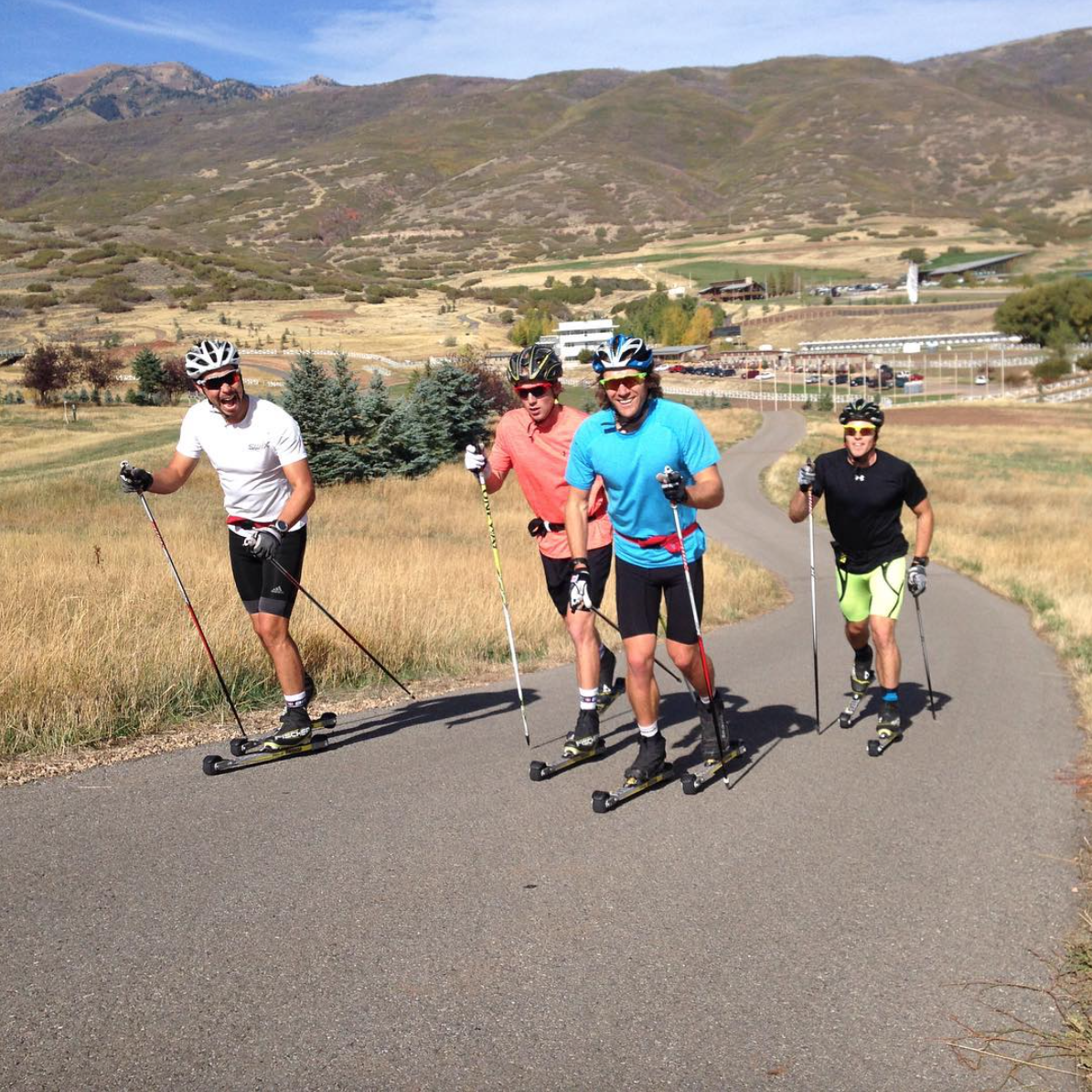
Graeme Killick, Jess Cockney, Devon Kershaw, and Michael Somppi rollerski at Soldier Hollow during their last day of a dryland altitude camp near Park City, Utah. (Photo: Ivan Babikov/Instagram)
“I feel like we’ve struggled with that a little bit in the past, but now more than ever, our training centres, coaches, and national training centre are really working closely together,” he explained.
Canada’s series of training camps this summer and fall were an opportunity for skiers striving for international starts to work out with World Cup skiers.
“I really feel like this year has been a huge success and a step forward a far as our collaboration with the training centres,” Wadsworth said. “I think we have a very methodical stable program and we are just checking off the boxes and now we are coming up to that part of the season where we have to transition all that into speed on the snow.”
According to Wadsworth, national-team skiers like Emily Nishikawa are ready for that transition.
“She’s in the best shape she’s ever been in by far,” he said.
He added that veteran World Cup skier Ivan Babikov is returning to his former levels of fitness.
Canadian World Cup veteran Ivan Babikov (14) leads Patrick Stewart-Jones and Jess Cockney (r) during the Frozen Thunder classic sprint on Monday, in which he placed third. (Photo: Marie-Eve Bilodeau-Corriveau/Instagram)
“He showed us in the time trial in Soldier Hollow. He was five seconds behind Alex [Harvey] in that, and we all know where Alex is,” Wadsworth said.
With two individual World Championship medals last season, it’s hard to imagine Harvey could exceed expectations this season. But post iliac artery surgery, Wadsworth says Harvey is a new skier.
“His surgery really allowed him to come to a new level. He’s just been breaking all his running time trial efforts by minutes,” Wadsworth said. “He’s going to be scary this year with his legs feeling good.”
After on-snow racing this week at Frozen Thunder, the national team heads to Gällivare, Sweden, in mid-November for its final preseason training camp. The World Cup eventually lands in Canada in March for the 2016 Ski Tour Canada. As the host country, Canada is allotted 26 starts in the tour: 14 male and 12 female, Wadsworth said.
He acknowledged expectations are high. “Without a doubt our biggest race this year is the Tour of Canada,” he said. “It’s our World Championships, and we really want to have a lot of great results there from all different levels of our program.”
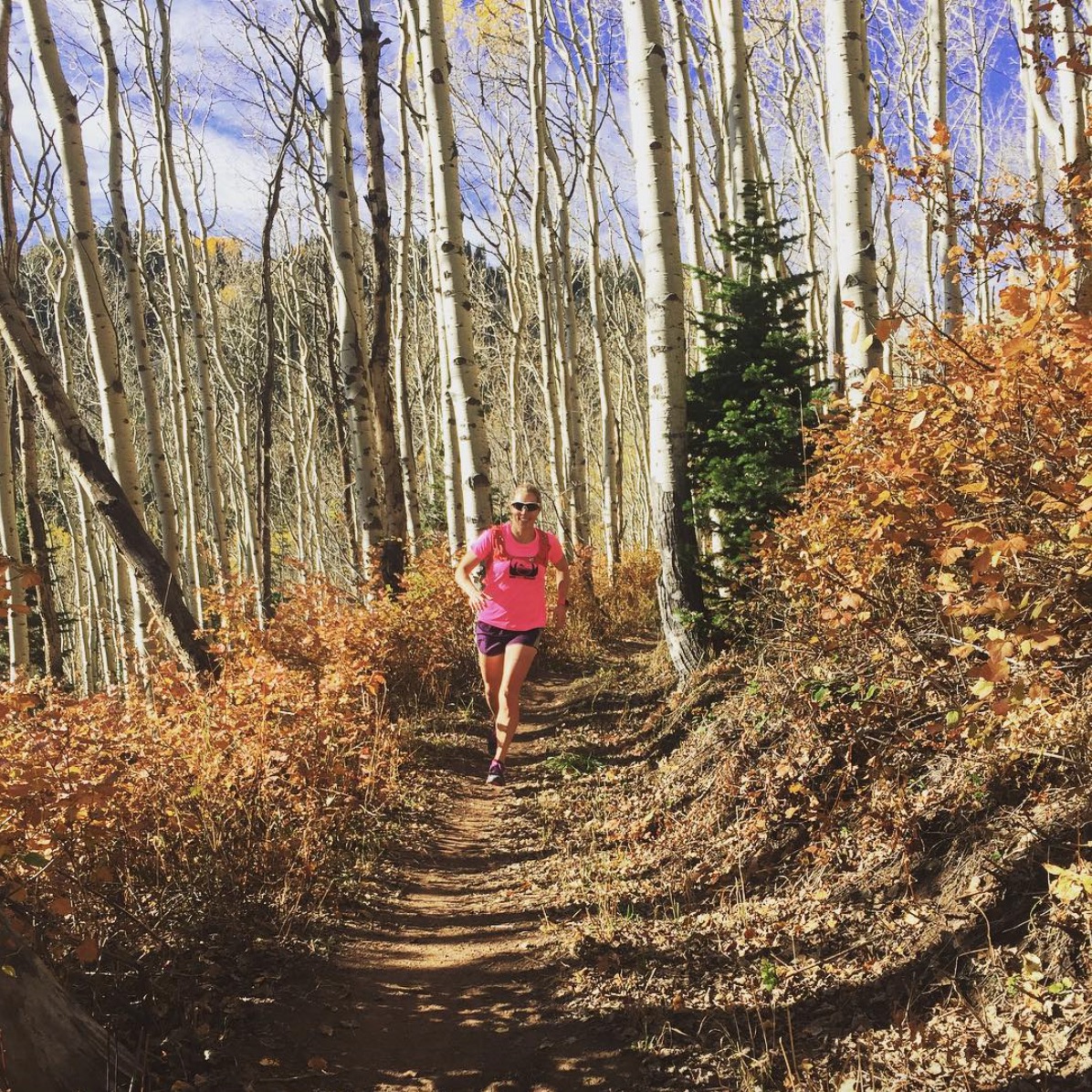
Kikkan Randall running near Park City, Utah, earlier this week before she publicly announced she was pregnant with her first child. “Great to enjoy a few more sunny warm days as we count down to winter!” she wrote. (Photo: Kikkan Randall/Instagram)
For at least the last year and a half, Kikkan Randall has publicly noted her desire to start a family with her husband Jeff Ellis. Their dream became a reality approximately 13 weeks ago, when Randall became pregnant with their first child. She found out four weeks later, and just this week, Randall and Ellis announced via a U.S. Ski & Snowboard Association (USSA) press release that they were expecting in April 2016.
FasterSkier reporter Jason Albert spoke with Randall, 32, on Friday — a day after the news hit social and mainstream media.
(To listen to complete interview, click “play” arrow below.)
“It was really hard to keep the secret over the last few weeks, but we wanted to get through the first trimester…,” Randall explained.
Kikkan Randall and her husband Jeff Ellis recently announced they are expecting their first child in late April 2016. Randall, 32, will skip the 2015/2016 season, but plans to return for 2016/2017. (Photo: Sarah Brunson/USSA)
She waited until the U.S. Ski Team’s dryland camp in Park City, Utah, which started earlier this week, to tell her teammates.
“My husband and I baked a cake that was half blue and half pink, frosted it, and then wrote, ‘We’re expecting a baby’ on it,” Randall said. “At one of the team dinners we just nonchalantly put it out there and said, ‘Hey guys, there’s dessert for everybody,’ and let people wander over and see it and have that initial surprised reaction. … Once they saw it they immediately came over and gave us congratulatory hugs.
“The response has been amazing,” she added. “It’s incredible how fast word spreads through social media.”
While she’s experienced some nausea, Randall said she’s feeling pretty good and is still training with the team. She plans to scale back and will not race this season. Meanwhile, Ellis will continue to work for International Ski Federation (FIS) Cross Country, managing website content and social media while traveling to all the World Cup stops from late November through early March.
“Lucky for us our timing worked out so he should wrap up a little over a month before the due date,” Randall explained in an email.
“It’s pretty cool that you can continue your career and you can start a family,” she explained in the podcast, adding that she plans to race through the 2018 Olympics.
“I’m definitely motivated to go after medals one more time,” Randall said.
Kikkan Randall announced via social media on Thursday that she and her husband, Jeff Ellis, are expecting their first child in April 2016. (Photo: Kikkan Randall)
About the Author: New to the FasterSkier team,Jason Albert lives in Bend, Ore., and can often be seen chasing his two boys around town. He’s a self-proclaimed audio geek. That all started back in the early 1990s when he convinced a naive public radio editor he should report a story from Alaska’s, Ruth Gorge. Now, Jason’s common companion is his field-recording gear.
Welcome back to the FasterSkier podcast. In this edition, FasterSkier editors Nathaniel Herz and Topher Sabot break down last weekend’s historic World Cup results, which included the first-ever podium for the American women in a relay, and the first-ever podium in a distance race for Kikkan Randall.