Tag: Pole Pedal Paddle

  • Wednesday Workout (PPP Bonus!): Ride/Run & Run/Play with Sarah Max

    Wednesday Workout (PPP Bonus!): Ride/Run & Run/Play with Sarah Max

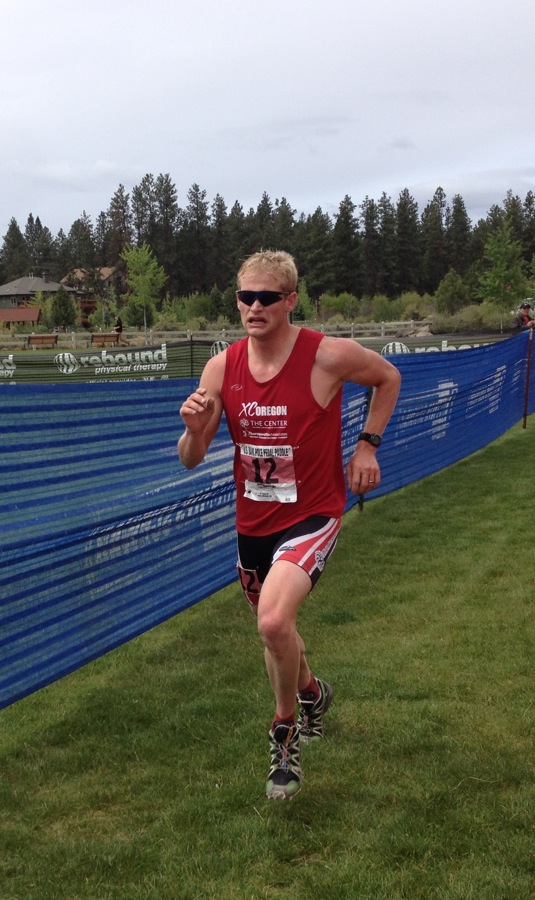
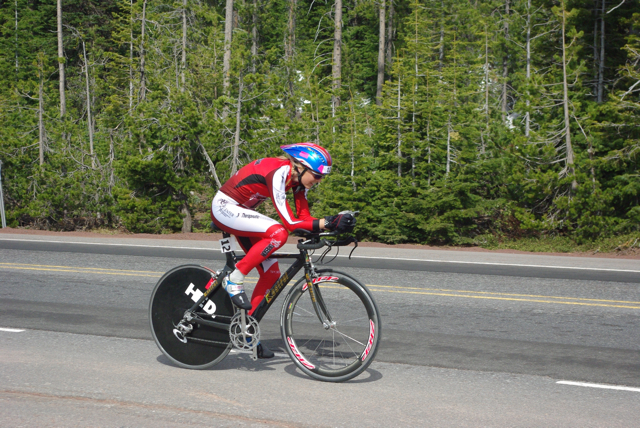
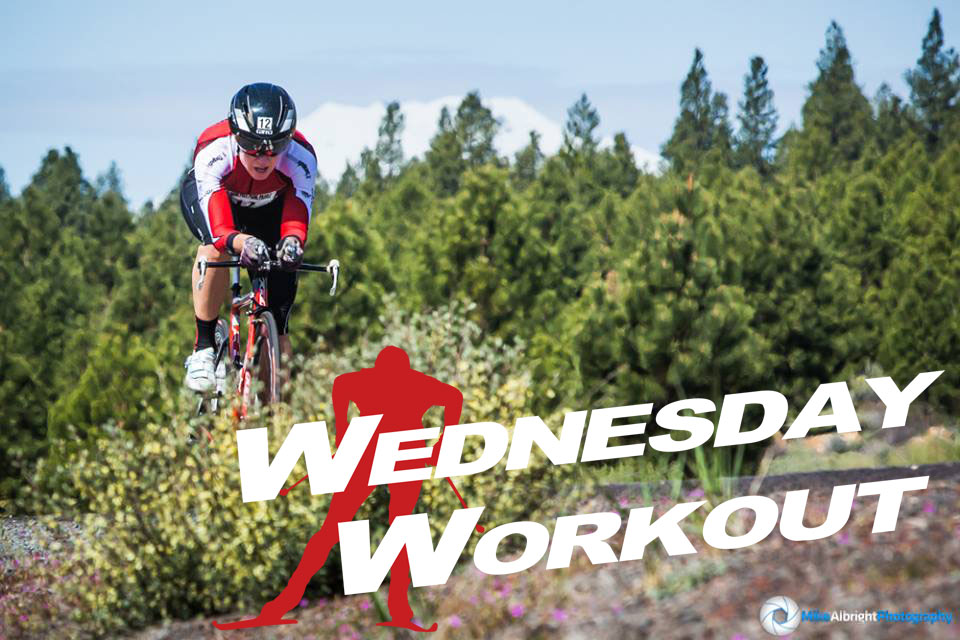
    Sarah Max (XC Oregon) on her way to winning her fourth Pole Pedal Paddle title on May 17 in Bend, Ore. (Photo: Mike Albright/Mike Albright Photography)
    Sarah Max (XC Oregon) on her way to winning her fourth Pole Pedal Paddle title on May 17 in Bend, Ore. (Photo: Mike Albright/Mike Albright Photography)

    After racking up her fourth Pole Pedal Paddle (PPP) victory on May 17 in Bend, Ore., Sarah Max got back to her day job as a financial writer (for publications like The New York Times, Barron’s, Entrepreneur, and Money Magazine) and executive editor of 1859 Oregon Magazine. At 39, she’s a mother of 11-year-old twins, yet Max still finds time to train and race with XC Oregon in Bend, focusing on ski marathons throughout the winter.
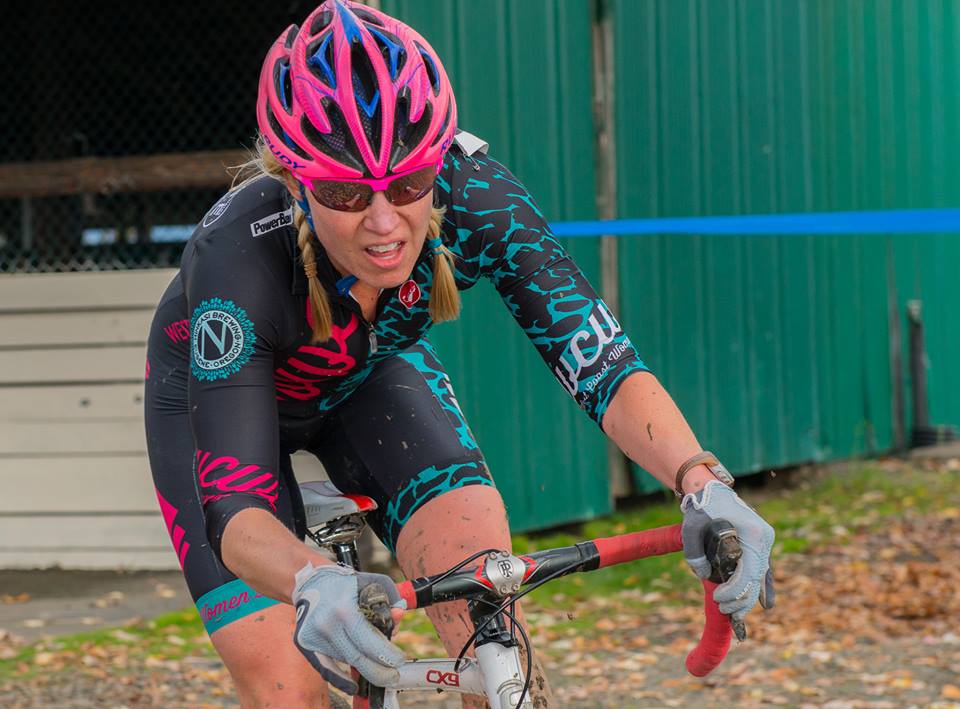
    Sarah Max during a cyclocross race. (Courtesy photo)
    Sarah Max during a cyclocross race. (Courtesy photo)

    “I’ll probably stick with a similar program as the last couple of years, which is a few bigger races, ideally in fun locations,” she wrote in an email. “Next year I may go do the Norwegian Birkie again. (I’m not a great classic skier, so like the challenge of a long, hard race.) I will probably do American Birkie again too… It’s just a nice, hard race.  I usually do Boulder Mtn Tour every year, partly because my whole family likes to go — though that course doesn’t suit me. I like to ease my way into a race, and there is none of that there.”

    After her seventh solo PPP (she’s also done it other times with a team), Max will likely move on to cyclocross races in the fall and some off-road triathlons or other multi-sport events this summer. This Saturday, she’s doing the Hood 2 River Relay for the first time as a pair.

    In preparation for the PPP, she wasn’t overly regimented with her workouts (especially after winter of ski training), but she did work on running (see below). 

    ***

    After a winter of planned workouts, I generally don’t follow a training plan for the Pole Pedal Paddle. This year followed a similar script. Starting about six weeks before the event, I tried to get in most of the major events (ski, bike, run and paddle) about twice a week, with some doubles on a few of those days. Skiing was lowest on my list of priorities since I already had ski fitness and didn’t want to use up precious training time driving to and from Mt. Bachelor. Plus, I was ready for a change of pace.
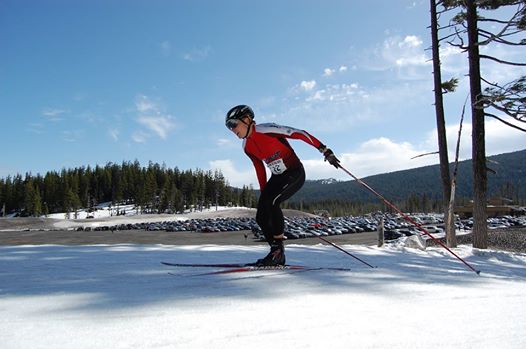
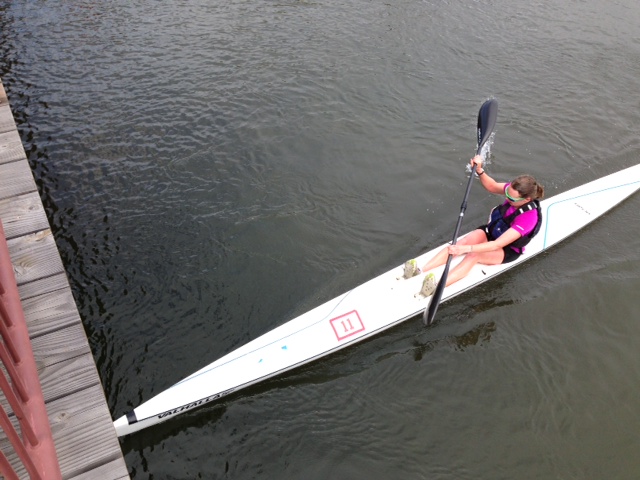
    Sarah Max on her way to another Pole Pedal Paddle victory on May 17 in Bend, Ore. (Photo: Neil Korn/BendOR Magazine)
    Sarah Max on her way to another Pole Pedal Paddle victory on May 17 in Bend, Ore. (Photo: Neil Korn/BendOR Magazine)

    Most of my workouts were short, usually about 45 minutes to 90 minutes tops. My thinking was that since I have a pretty big base going into the spring – training for the 90km Swedish Vasaloppet is good for that – endurance wasn’t as important as sports specificity.

    Up until a couple weeks before the race, I planned my workouts around the weather, which always a crapshoot in the spring in Bend, and what my friends were doing. Probably the best thing about training for something with so many different legs is it opens the universe of workout buddies.

    To recap, the PPP is a short alpine ski, followed by an 8km skate, 22-mile bike, 5-mile (ish) run, 1.5 mile paddle and short sprint to the finish.

    The hardest part of the race for me, and probably most individual racers, is the run. The run in and of itself isn’t bad. It’s when you do it after alpine skiing and Nordic skiing on icy conditions, then going hard on the bike. The first 10 minutes of running always hurts. A good way to prepare for this is to tag on a short run to most of your bike workouts or do a quick bike before your longer runs. In the triathlon world this is known as a “brick,” an apt term for the discomfort of biking then running.

    Here’s one workout I did along those lines.

    The Plan: 1 hour 15-minute road ride followed by 15 minute run.

    Warm up: My house is on the road heading toward Mt. Bachelor, which is the PPP bike course. I started out my door riding easy for the first 20 minutes, where the grade is relatively gentle.

    Uphill intensity: When I hit the steeper section I started a 30-minute tempo workout, keeping my heart rate about five beats below threshold. Normally I would let myself climb out of the saddle for the steeper stretches, but I tried to stay seated for most of this.

    Downhill speed: At about 50 minutes total, I turned back for the downhill. Rather than just coasting, I tried to keep pedaling through the downhill and working the few uphill sections and flats going back to my house. I can usually get back down the hill in half the time it takes to get up.

    Transition: With my garage as my staging area, I changed out of bike shoes and helmet and into running shoes. Though it was tempting to go in the house and check email, change out of bike shorts, I tried to keep the transition quick, for maximum discomfort going into the run.

    Ugh, the Run: Probably the most important thing about the bike to run transition is knowing that it will hurt and that you will feel slow. I play different mind games to get through the first 10 minutes, anything to just keep my legs moving. After about 10 minutes, like clockwork, things improve immensely. Though I’d planned to just run 15 minutes, I ended up going about 30 minutes.

    Cool down: Since the hard part of my workout was the bike, my run was effectively a cool down. That said, I usually slow things down for the last five minutes and walk another five minutes. I try to stretch a little before I head back into the house… not always successfully.

    Here’s another notable workout, mostly because it illustrates the crazy logistics that go into training for and doing this race:

    The plan: 1 hour run and soccer/paddle

    A week before the race, my twin daughters (11 years old) wanted to run the PPP course. They competed on a team this year, with Izzy doing the Nordic ski and Fiona doing the run, which was 2.5 miles for teams 12 and under.

    My husband, Kevin, and I loaded my surf ski onto my car, and we all piled in – dog included. Kevin dropped us off at the start of the run course. While my girls and I ran the course, he drove the boat to the boat put-in at the river and took our dog for a run.

    After a pretty quick run lead by Fiona, the girls helped me unload my boat and get it into the water. They grabbed their soccer balls and had a kick around, and I banged out a 30-minute paddle.  An hour after we left our house, we all loaded back into the car.
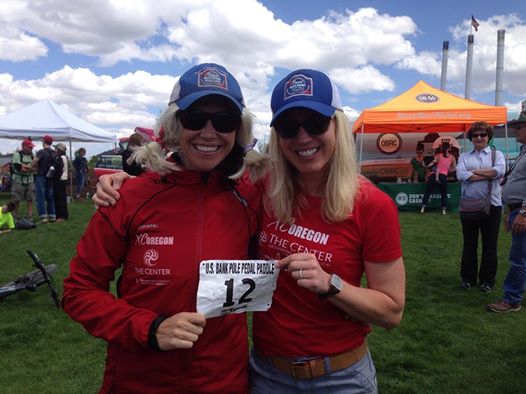
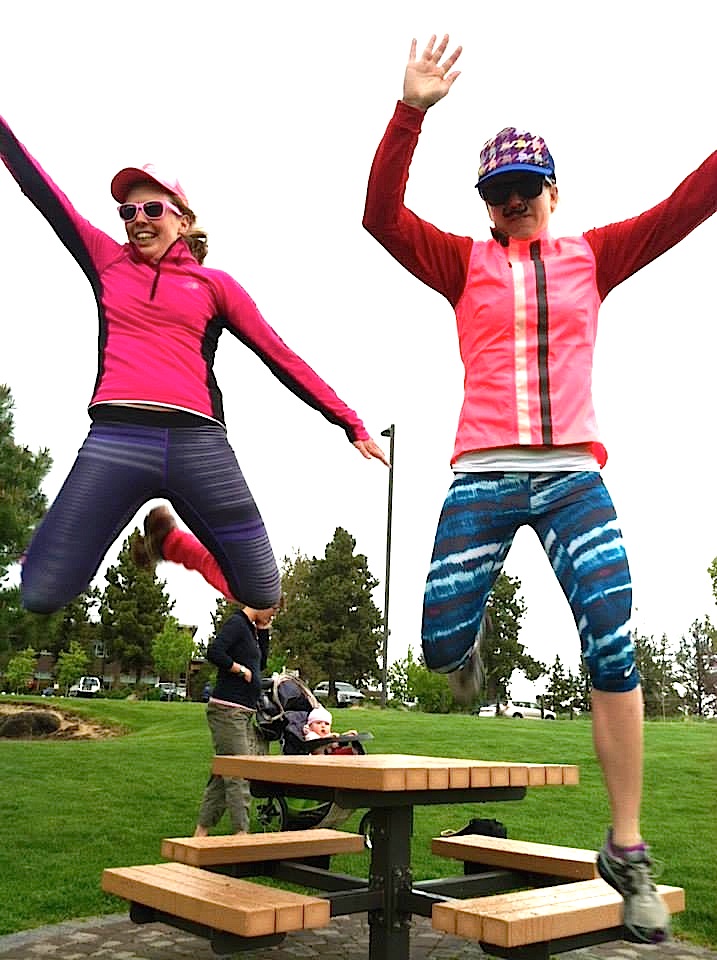
    Sarah Max (r) with her "twin," Amanda Porino, her support person who surprised Max by dressing as her for the Pole Pedal Paddle on May 17. (Courtesy photo)
    Sarah Max (r) with her “twin,” Amanda Porino, her support person who surprised Max by dressing as her for the Pole Pedal Paddle on May 17. (Courtesy photo)
  • Ocariz Digs Deep to Win Debut Pole Pedal Paddle; Bend Native Roy Nabs Second

    Ocariz Digs Deep to Win Debut Pole Pedal Paddle; Bend Native Roy Nabs Second

    Santi Ocariz bringing it home for a 49-second win at Saturday's Pole Pedal Paddle in Bend, Ore. (Courtesy photo)
    Santi Ocariz bringing it home for a 49-second win at Saturday’s Pole Pedal Paddle in Bend, Ore. (Courtesy photo)

    Seven years after discovering the annual Pole Pedal Paddle in Bend, Ore., Santi Ocariz couldn’t shake the urge to try it.

    A 26-year-old Wisconsin native, Ocariz visited Bend during his college summers, fell in love with the area, and resolved to come back and one day compete in the alpine, cross-country, bike, run, kayak and sprint race.

    Two months before last year’s big event, Ocariz and his wife Carolyn set out for their new home in Bend on rollerskis, raising close to $20,000 to feed impoverished children. They anticipated the 3,000-mile trip would take close to three months, but the couple sped up the pace to get Ocariz to Oregon for the PPP.

    They arrived four days before. Ocariz ultimately reasoned he was underprepared in terms of training and equipment, and did not race.

    This year, he was ready — maybe not in training hours, but definitely mentally. Last summer, Ocariz launched toward fatherhood when Carolyn became pregnant with their first child. He shifted his priorities to train less and work more in preparation for the hospital bills and additional expenses, and in March, welcomed baby Sonia to the family.

    Suddenly, two-a-day workouts were no longer a thing, and he was lucky to ski once a week.

    “I don’t think I have trained this little in a year since I was a junior in high school,” Ocariz recalled in an email. “However, what I lacked for in time, I made up in effort.”

    Intervals and time trials become his bread and butter, and Ocariz worked with expert paddler Torsten Heycke on kayak-specific training.

    He started biking in February to work on his weaker link, practiced transitions and graciously accepted a gift from his friends: a plane ticket to Bend for the event on May 18.

    A week and a half before the PPP, the Ocarizes had moved to Moorhead, Minn., where Santi started an accelerated nursing program at Concordia College.

    Suddenly, his initial urge to participate had culminated into a driving motivation to beat everyone else — including several defending champions. Ocariz knew his family could use the $1,000 grand prize for winning the elite individual race, and he remembered that as first place started to slip away last Saturday.

    “Everyone crushed me in the beginning of the race,” Ocariz wrote of the alpine leg, which involves sprinting to the top of Mt. Bachelor to click into skis before navigating gates on the descent.

    With little experience downhill skiing, Ocariz fell behind race leaders Andrew Boone, the 2011 winner, and 2010 champ Marshall Greene. By the start of the 8-kilometer nordic leg, he estimated they had 40 seconds on him.

    Ocariz cut the deficit to 10 seconds by the end of the cross-country ski, and early in the 22-mile bike leg, passed Greene up front. A few minutes later, Greene regained the lead.

    “Marshall destroyed me on the bike,” Ocariz wrote. “By the time I was out of the running transition, Marshall was 2 minutes ahead of me. From here I put my nose to the grindstone and began working on reeling him in.”

    Three miles into the 5-mile run, Ocariz started to lose hope, but only for a moment.

    “As soon as I reminded myself how much the prize money would mean for our family, I leaned forward, shortened my stride, and pushed harder,” he wrote.

    Forty seconds behind at the kayak transition, Ocariz could see Greene. His friend and supporter, Heycke heaved Ocariz’s boat forward in the water, helping him gain 20 seconds. From there, Ocariz focused on staying smooth and paddling smart, gauging his distance from Greene and how hard he was working behind him.

    “By the second turn-around buoy I had almost caught Marshall,” Ocariz wrote. “With about 200 meters to go I put in a surge and passed Marshall.  I was able to put 5-10 seconds on him in that last sprint.  When I hit the beach I burst out of the Kayak, flung my paddle and life jacket, and began sprinting for the finish.  800 meters later, at the finish, I was 49 seconds ahead of him.”

    As a rookie, Ocariz had done it — winning the elite race in 1:44:35 over a slew of local favorites. Marshall was second and Boone finished more than six minutes behind in third.

    “With my PPP inexperience and lack of ability to train as I have in the past, I was unsure of my ability to match up,” Ocariz wrote. “I was definitely the dark horse. … Winning the PPP in Bend is viewed similarly to how winning the Birkie is viewed in the Hayward area.”

    Enough said.

    ***

    For women’s runner up Zoe Roy, achieving a personal best in her hometown’s celebrated race was also significant. A 25-year-old skier currently training in Canada, Roy remembered first racing the PPP on a team when she was 9 or 10. She did it solo at age 12.

    Zoe Roy near the end of Saturday's Pole Pedal Paddle in Bend, Ore. She placed second for a personal best after friend and three-time winner Sarah Max. (Courtesy photo)
    Zoe Roy near the end of Saturday’s Pole Pedal Paddle in Bend, Ore. She placed second for a personal best after friend and three-time winner Sarah Max. (Courtesy photo)

    In 2009, Roy shared the individual podium with her mom, Muffy, a multiple PPP champion.

    “She was second and I was third,” Roy wrote in an email. “Pretty sweet to be on the podium with your mom, though!”

    She hadn’t raced it since. Back in Bend for an on-snow camp at Mt. Bachelor, Roy decided to enter the 2013 race a week before.

    “I banked mostly on leftover fitness from the winter and tried to do a little a bit of everything just to get comfortable with all the different legs,” she explained.

    Early in on Saturday, Roy led through the alpine and cross-country ski legs into the bike transition. Her friend Sarah Max caught her on the ride, but Roy got back in front during the run.

    “I had about a 20-second lead going in to the paddle and she caught me!” Roy wrote of the kayak leg. “I think my body was so tired from everything else that I could barely hold my arms up, I didn’t know if I was going to make it!”

    Zoe Roy (l) and Sarah Max the day before the Pole Pedal Paddle on May 18 in Bend, Ore. A Canadian skier originally from Bend, Roy placed second behind Max, now a three-time champion. (Courtesy photo)
    Zoe Roy (l) and Sarah Max the day before the Pole Pedal Paddle on May 18 in Bend, Ore. A Canadian skier originally from Bend, Roy placed second behind Max, now a three-time champion. (Courtesy photo)

    A back-to-back champion in 2008 and 2009, Max claimed her third PPP title in 2:04:24, a minute and two seconds ahead of Roy in second. Another Bend resident, Mary Wellington finished third, nearly 5 1/2 minutes behind Max.

    In a race packed with more than a thousand competitors between tandems and teams, Roy stressed the draw of racing individually.

    “The individual is definitely the most team event out there when you factor in the number of people that helped me out, from my awesome support crew (my brother Tosch and my good friend from Bend, Matea) to all the people that I borrowed equipment from,” she wrote. “It takes a village!”

    Now, it’s back to skiing, she explained. Roy is hosting fellow independent Canadian skiers Chandra Crawford, Amanda Ammar and Alana Thomas at her house in Bend for 10 days of training.

    As for Ocariz, he’s already back in classes. After a season off, Carolyn has resumed full-time training and will race remotely for XC Oregon. Santi explained that he and Sonia, now 10 weeks old, will be her support crew.

    “I won’t be training for or focusing on elite racing,” he wrote. “I hope to get to the opportunity to jump into a citizen race or two, but it is not going to be a priority. We have been thrilled with J.D. [Downing] and his organization of the XC Oregon team … The community and team are a perfect fit for us.”

    PPP results

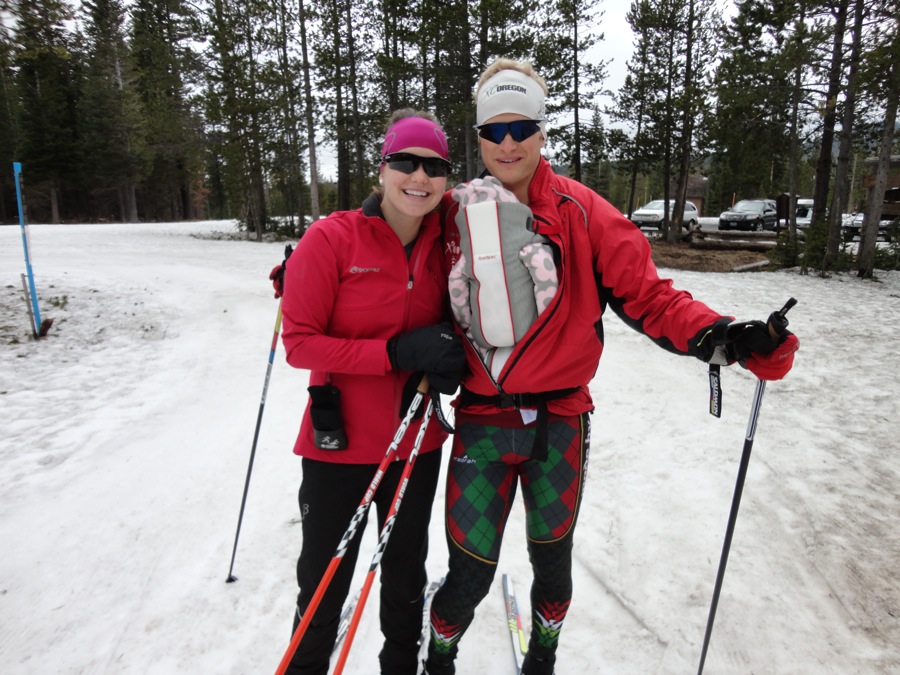
    Carolyn and Santi Ocariz with newborn Sonia on their first family ski. (Courtesy photo)
    Carolyn and Santi Ocariz with newborn Sonia on their first family ski last winter. (Courtesy photo)
  • XC Oregon’s Howe Wins Third Straight Pole Pedal Paddle; U.S. Ski Team Has Fastest Women’s Teams

    XC Oregon’s Howe Wins Third Straight Pole Pedal Paddle; U.S. Ski Team Has Fastest Women’s Teams

    Stephanie Howe working a new bike on the course from Mount Bachelor down to Bend.

    BEND, OREGON – How would a veteran describe Bend’s five-sport Pole, Pedal, Paddle to someone who has never seen it?

    “It’s a circus,” XC Oregon racer Stephanie Howe told FasterSkier at the race’s conclusion. “It’s the biggest logistic nightmare in the world… I just never have stuff lined up ahead of time. It’s always scrambling at the last minute.”

    First there’s the equipment: alpine skis, poles, boots, and a helmet; nordic skis, poles, and boots; a bike – for elite racers, most likely a time trial bike, maybe even with a disc wheel – and an aerodynamic helmet; running shoes; and a kayak, paddle, and life preserver.

    Then there’s getting all that gear to the right exchange zones at the right time and switching from one setup to another.

    Then, of course, there’s the racing – about which Howe was remarkably cautious for someone who had already won two titles.

    “You never know,” she said of her competition. “There are so many different legs and places where things can go wrong.”

    Howe had a large lead throughout the race, and eventually finished in 2:01:05, more than five minutes ahead of teammate and runner-up Mary Wellington. But it wasn’t until she got in her kayak for the second-to-last stage of the six-part race that she knew just how big her lead was.

    “I don’t get comfortable,” she said. “I don’t look behind me, so I just go. I race. I will say that when I got in the boat I did know where I was, so I relaxed. I went hard, but I relaxed.”

    Howe had very few obstacles en route to her win. She did crash in the cross-country ski section of the race – “which is not like me” – and was a bit unsure of her bike, which she had only received two days before. She describes herself as not a strong cyclist; through the two skiing stages, Howe was right with the men’s field, but once on the bike, she lost contact.

    In the run, though, she caught back up. Although Howe is a successful nordic skier, particularly in marathons, running is her specialty.

    “I’m living in Corvallis, so I’ve been doing a ton of running,” she said. “I started racing ultras, and that’s been great.”

    In the end, Howe felt the same about victory number three as she had about the first two: exhausted.

    “I always say, oh my god, that’s so hard, I don’t want to do it again, but I forget,” she said.

    Will she go for a fourth title next year?

    “We’ll see. It’s cool because so many people do it – there’s families out here, and that is really cool. Some day I want to do it in a costume and have fun like that.”

    * * *

    Starting more than an hour after Howe in the team division, two groups of U.S. Ski Team women had a competition of their own, and it was largely against each other.

    “We weren’t talking to each other this morning,” Sadie Bjornsen laughed about the inter-team rivalry.

    Her squad, which also included Kikkan Randall and Jessie Diggins, came out on top, but just barely, finishing in 2:00:28 to 2:02:32 by Ida Sargent, Holly Brooks, and Liz Stephen. They were the first two female teams on the results sheet.

    While Bjornsen pumped her fist as she crossed the finish line and was exuberant about her team’s victory, Randall, who had raced two earlier legs, didn’t want to brag too much.

    “It sounds like Liz maybe got off course a little bit out there, which is too bad because otherwise I think we would have been really close,” she said as she snagged some recovery snacks from the Rebound Physical Therapy tent.

    If the race was a logistic nightmare for Howe, it was maybe even more of one for the U.S. Ski Team athletes, who are in Bend for camp and didn’t bring their own equipment for the race. Luckily, Rebound helped them out.

    “Andy Fecteau from Rebound got everything together for us besides my nordic skis – those are mine!” Bjornsen said.

    Even that didn’t mean smooth sailing though. When Randall arrived at Mount Bachelor before kicking off the alpine leg, she encountered problems.

    “We pulled out the skis and I couldn’t make the bindings small enough for the boots I had,” she explained. “And then we realized there was glide wax on the bottom. So we had to quickly rent some skis, but they were awesome because they were tuned and set to go.”

    Randall, who raced alpine in middle school, enjoyed getting to do a different sort of competition; she also competed in the bike leg.

    “We heard a lot about how turny the course was, but it was actually super straight, so it was really fun – I wish I could have done about ten more runs,” she said. “The biking leg was hard, holy cow. Solid 40 minutes and just burn the whole time. I think it’s always good to challenge yourself in different venues than you’re used to, so hurting for 40 minutes on the bike actually makes me appreciate ski races where it’s hard, but you get little breaks here and there.”

    Full results

  • After Years Spent Hoping To Race Pole Pedal Paddle, USST’s Freeman Finally Enters – And Wins

    After Years Spent Hoping To Race Pole Pedal Paddle, USST’s Freeman Finally Enters – And Wins

    Freeman powering through the penultimate leg of the Pole Pedal Paddle.

    BEND, Oregon – It’s hard to imagine Kris Freeman as an underdog in a race that involves cross country skiing and running. But to this city’s residents, that’s exactly what he was on Saturday morning before the start of the 36th annual Pole Pedal Paddle: some Olympian who was trying to unseat the hometown favorite, Andrew Boone.

    Boone had won the race – which combines downhill skiing through gates, roughly eight k of nordic skiing, 20 miles of biking, several more of running, a kayak course on the Deschutes River, and finally a half-mile “sprint” to the finish – in 2011 by three minutes over longtime nordic standout Brayton Osgood. With Osgood out of the picture this year, who could be against Boone?

    “This is my weekend warrior event now,” Boone said in an interview after the race. “Bend came out to support me.”

    But a few people were familiar enough with Freeman’s accomplishments on the U.S. Ski Team, as well as his competitive drive, that they wouldn’t count him out. One of them was Boone.

    Freeman in the final meters of the cross country ski leg.

    “There’s no doubt that he came in, he wanted to win, and we all knew that he was going to throw down a good race,” Boone said. “It elevated [the level of the field] for sure. I haven’t seen the times, but I bet I was faster than last year.”

    Boone was faster, beating his previous time by about 50 seconds. In the end, Freeman won by 57 seconds in a time of 1:46:00, but it was a tight, tactical race from start to finish. Boone led through the alpine-to-nordic exchange and out onto the Mount Bachelor trails; at that point, Freeman wasn’t even in second.

    That didn’t last for long, as Freeman predictably came charging by once he was back on his own equipment; Boone told reporters that it was cool to see such a strong skier flying past him. By the time Freeman reached the next exchange and was helped onto his bike and into his clipless pedals by U.S. Ski Team staff, he had a roughly 30-second lead. Sprinting off onto Century Drive for his net-elevation-loss trip from Bachelor down to the town of Bend, he was chased by shouts that Boone still wasn’t in sight.

    But Freeman knew that his gap might not be enough. Of all of the sections of the race, the bike was what worried him the most.

    “It’s only my fourth time on a bike this year, so that was hard,” Freeman told FasterSkier. “I’m riding Andy Fecteau’s time trial bike, just once, and going 50 miles an hour for 30 minutes is a little nerve-racking.”

    Boone, meanwhile, knew that the biking section might be his only chance to regain the lead – so he attacked as hard as he could.

    Freeman, with Mount Bachelor in the background, on one of the bike course's few uphills.

    “I knew he was a good runner, and I haven’t been running well off the bike,” Boone said. “I wanted to get as much of a cushion as I could.”

    Freeman was hoping to maintain his lead until the run, but Boone passed him with several miles to go, as the road finally flattened out and headed into town. Adding insult to injury, drafting is illegal in the race, so Freeman was unable to tuck in behind his competitor as he would in a ski race.

    “I didn’t really like that,” Freeman said. But even if he had been able to draft, that didn’t change the fact that Freeman was definitely the weaker cyclist. “He looked really comfortable, and I was definitely suffering those last couple miles.”

    The U.S. Ski Team athlete faced one other challenge, too. Police directed him the wrong way around a roundabout.

    “I had to jump a curb to get back on the road,” Freeman explained. “I lost probably 20 seconds there.”

    Freeman was still flying compared to the rest of the field; the pair added to their lead and it was clear that nobody else would be able to touch them (XC Oregon’s Zach Violett finished third in 1:49:39). Freeman crept up on Boone in the first section of the run, then sat on his shoulder for two miles before putting in a small burst to create a gap.

    “It went how I hoped it would,” Freeman said of the late stages of the race. “I was able to put ten seconds on Andrew at the end of the run, and then I thought I’d be a stronger paddler, and I was.”

    Freeman and Boone separated by just seconds in the run stage.

    Freeman – who says that he spend roughly four hours in a boat every week in the spring for cross-training – extended his lead in the kayak portion, and the race was essentially decided before he even began the sprint.

    “He’s a pretty strong guy,” Boone said.

    He was gracious about the loss, and if he felt disappointment, he didn’t let it show.

    “I executed the best race I possibly could have today,” Boone said. “My training was definitely not where it should have been this spring, so to race against Kris Freeman and to go back and forth with him, I feel really good about it, and he was the better man today.”

    He even praised Freeman for making the race more competitive.

    “Last year I had a lead off the bike and just held it, so this time it was fun to have to use tactics,” he said.

    Boone is loosely affiliated with XC Oregon, a ski team based here in Bend. Due to his other commitments, he barely ever has time to ski; according to coach JD Downing, just hanging with Freeman for two hours was an accomplishment.

    “Being sick for three months, working full time, being a parent, and going to grad school, that’s so amazing,” he gushed. “He has a lot going on, and with that big a load it’s no wonder why he was ill. To do that against – everybody knows how great an athlete Kris is. I’m probably as proud of him as any athlete I’ve ever had in fourteen years.”

    As for Freeman? The victory knocks off a longstanding goal that he’s been frustratingly unable to accomplish.

    “I’ve always wanted to do this race. I’ve been coming here since I was 17, and I’m always coming here either right before or right after it, and always wanted to do it, and now I have. The last couple days I’ve barely seen my team because I’ve been so preoccupied getting everything organized, so now it’s back to work.”

    Victory!