Tag: post grad

  • NYSEF Post-Graduate Program Provides Opportunities for Recent High School Graduates

    NYSEF Post-Graduate Program Provides Opportunities for Recent High School Graduates


    Mission: It is the mission of the NYSEF PG Program to bridge the gap between high school/ collegiate/national teams for athletes who have demonstrated a desire to focus on cross country ski racing preparation and competition at an elite level.  


    Program Overview: The NYSEF PG Program provides the opportunity for post-graduate athletes to strive towards reaching their full potential on the race circuit regionally, domestically and internationally. Sport becomes the primary focus for the athletes in this high-intensity program. 


    Housing: PG athletes will have lodging at a private residence in Lake Placid with a NYSEF staff member/family. They will be provided with limited supervision yet a level of independence along with a bed, access to a kitchen and waxing/equipment space in a garage. Space is limited, first come first serve. 


    PG Academics: Athletes will have an opportunity to continue their academic  journey through local North Country Community College. NYSEF will provide an academic liaison to facilitate this process – working with the athlete to find the best program/s that align with their academic goals and fit within their athletic calendar. Additional fees are determined based on course selection and not part of NYSEF program fees. 


    Expectations: PG athletes are the role models in the program – they have a responsibility to serve as mentors to younger athletes in the program by acting professionally and will be held to the highest standard. They represent the ideal athlete due to their disciplined schedules, motivation to compete at the highest level and dedication to instill a love of the sport in the next generation. We encourage PG athletes to engage in volunteerism while with us at NYSEF.


    Eligibility: Must have graduated high school and demonstrated a commitment to pursuing competitive ski racing at the collegiate or national team level. 


    Facilities: NYSEF Cross Country and Biathlon utilize the new World Cup venue at Mt. Van Hoevenberg. This venue features over 6k of rollerski loops and closed roads, full weight room and field house, rollerski treadmill, 5k race loop of automated snowmaking. Beyond our home base our program takes full advantage of the Adirondack experience around us on a daily basis.


    Program Fees: 

    • Base Athletic fee: Full Year 6-8 training session/week ($5500) +($875 for Biathlon)
    • Fall/Winter: 6-8 Training Sessions/week ($4000) +(600 for Biathlon)
    • Housing at private residence with supervision: $600 per month 


    Scholarship: NYSEF programming has scholarship opportunities. Please apply for scholarship through this link.


    Included: Professional coaching, personalized training plan, rollerski treadmill usage, video analysis of technique, strength training at Lake Placid Training Center, Lactate threshold testing, ORDA rollerski loops, Range usage (biathlon), ammo (biathlon), and the Adirondack High Peaks as your training “backyard!”


    Not Included: Additional training camps, academic programs, competition fees, and travel expenses (including athlete/coach lodging/meals and out-of-region travel), membership in NYSSRA/US Ski and Snowboard/FIS.


    Questions? Please contact Shane MacDowell at shanem@nysef.org or fill out an application online!


  • Unraveling the College Athlete Admission Process: A Look Into Post Graduate Gap Year Programs with Paul Smith of SVSEF

    Unraveling the College Athlete Admission Process: A Look Into Post Graduate Gap Year Programs with Paul Smith of SVSEF

    Deciding how to handle the “college conflict”, as aptly phrased by Alayna Sonnesyn, is a daunting and somewhat mysterious prospect, particularly for athletes and families who are unfamiliar with the process. How does a junior athlete know that they are cut out for a collegiate program? NCAA or USCSA? What about a gap year? In this series, FasterSkier spoke with collegiate and junior coaches and athletes who have chosen different pathways to create a resource for the athlete or parent amidst this conundrum. Also check out Part 1 with Craftsbury Junior Program Head Coach Anna Schulz and Part 2 with Dartmouth College head coach Cami Thompson Graves.

    An important piece of the college decision puzzle, post-graduate (PG) programs offer a skier an extra year of development that can serve as a bridge between junior club programs and collegiate or national team level skiing. Though a relatively small in number, programs can be found nationwide at well established ski clubs like Steamboat Winter Sports Club in Colorado and the Bridger Ski Foundation in Montana, and at ski academies such as Stratton Mountain School in Vermont and the Sugar Bowl Academy in California. 

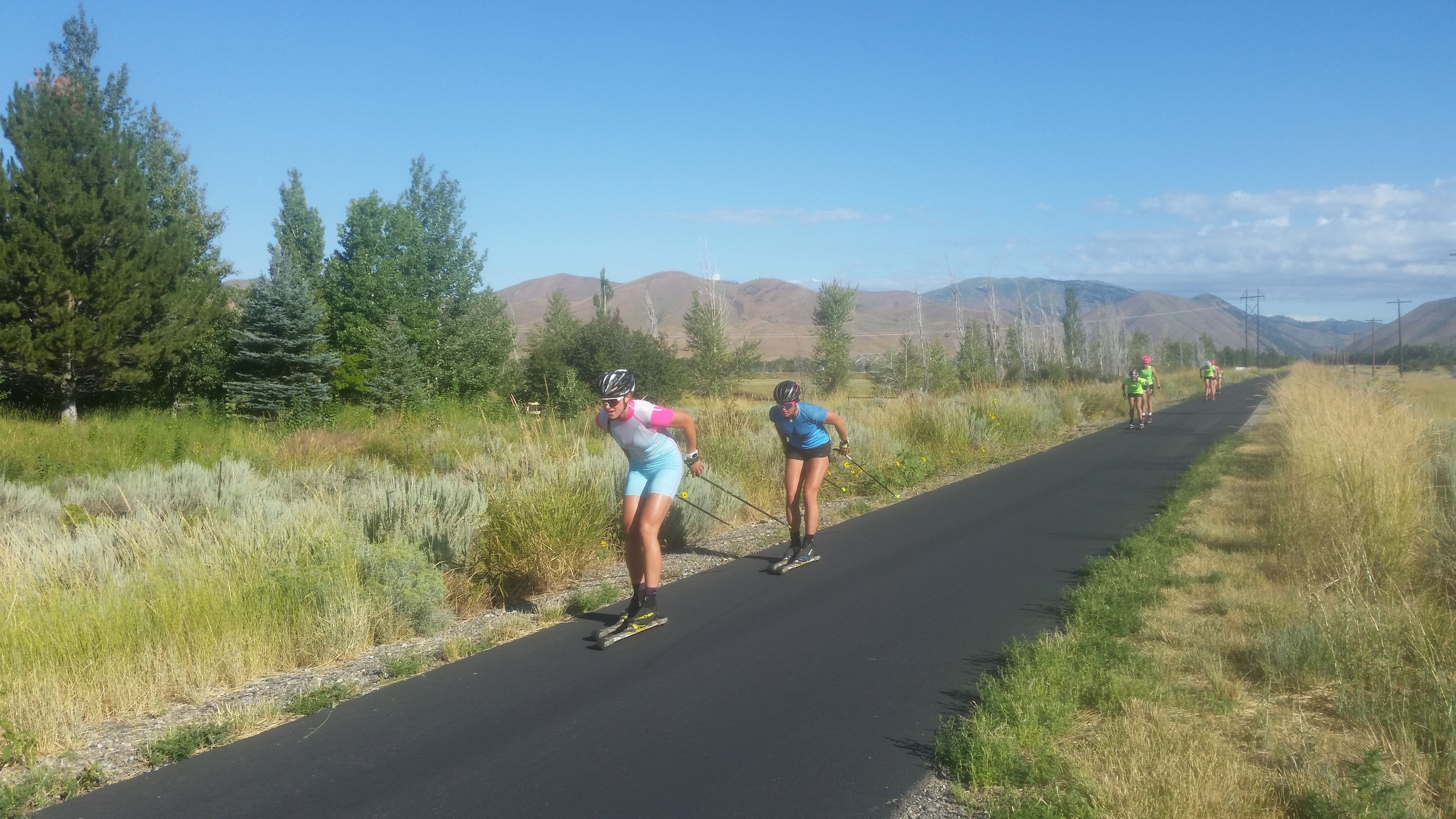
    Paul Smith is the head PG coach at Sun Valley Ski Education Foundation. (Photo: https://svsef.org)

    The Sun Valley Ski Education Foundation (SVSEF) directed by Rick Kapala has offered an official PG program since 2005. The program, which serves five to ten skiers annually, is led by University of Vermont graduate Paul Smith. Now in his second year with the SVSEF, Smith also works with some of the younger juniors and assists senior skiers as a service and wax technician. FasterSkier spoke with Smith and Kapala for their insight into why an athlete might choose a gap year and what can be expected during the PG experience.

    Though athletes elect to take a PG gap year less frequently than joining a collegiate program or leaving ski racing, both Kapala and Smith expressed that the number of skiers selecting this option is trending upward. The reason an athlete might opt into a PG year varies, but typically, the PG athlete enters the year on the cusp of achieving a goal that is just out of reach.

    “[PG’s are] looking to put in a year or more of focused training to make a step forward into their skiing capacities so that they may have college opportunities that were not readily available coming straight out of high school,” explained Kapala in an email. 

    These opportunities include earning a spot on an NCAA team, improving scholarship potential, and increasing the likelihood of making the competition team at a particular school.  

    “Or, they may be looking to achieve top international results as a U20 and want more space to program a bigger training and travel schedule,” wrote Kapala. 

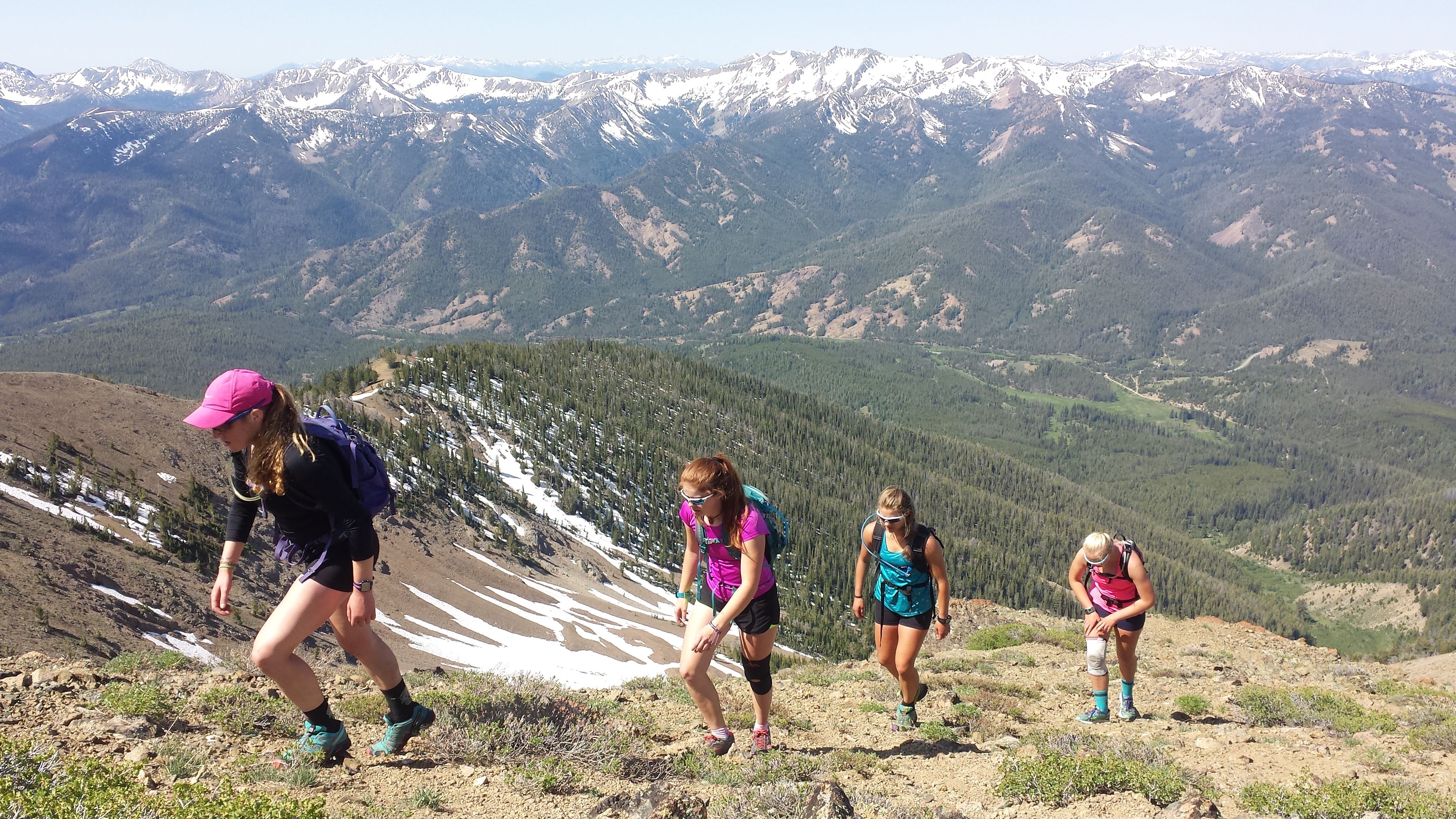
    Members of the SVSEF PG program hike it out during an OD in the mountains. (Courtesy photo)

    He added that outside of skiing, the athlete may be looking to experience independence and develop life skills without the pressures of keeping up with an academic workload. Regardless of long term goal, Smith expressed that anyone who chooses to take a gap year can expect improvement in their skiing. 

    “From a development perspective, just taking a year to just focus on that and not get thrown into the whole gamut of classes can really help a lot,” said Smith in a call.

    “You can always expect to show some improvement, especially if you’ve had a junior have some success while they were doing a bunch of other things and they can now focus on [skiing] for a year. From what I’ve seen, the ones that are committed to the process benefit tremendously.”

    Unlike collegiate programs that typically send information to junior athletes to initiate conversations, Smith explained that athletes typically contact him first regarding interest in the SVSEF PG program. 

    The program originated to serve athletes graduating from the SVSEF junior program, but has since begun to serve athletes coming from a range of other states. Though Smith is not one of the primary junior coaches, he explains that he stays involved with this age group to help connect with prospective athletes. 

    “I try to keep a presence at regional or national camps,” explained Smith. “So I’ve tried to make a connection with a lot of different athletes from different clubs and different regions.”

    Rather than communicating through email, Smith prioritizes phone calls and meeting with athletes at races to establish connections with those considering his program. 

    “I have definitely noticed, for myself and some of our other coaches in Sun Valley, having a presence in the [junior ski] community has helped a lot. We almost always know the kid if they have a genuine interest in taking a gap year with us.”

    Apart from making juniors aware of the PG option, Smith explained that he does very little recruiting. He acknowledged that the choice is not a good fit for all athletes, particularly those with strong academic aspirations.

    “The athlete themselves usually know whether they’d be a good fit. They’ll usually have some idea — going to school, they’re either excited about it or they’re not. For the athlete that isn’t or if taking classes for a year isn’t a priority, that’s where I would say it works the best.”

    The PG program in Sun Valley is heavily weighted toward male skiers, 70-80% on average. This trend holds throughout other programs as well. Smith hypothesized that one reason for this might be that on average, boys finish puberty later than girls. Some male juniors whose biological development might be slower than their peers may not have sufficient time during high school to build the strength and muscle mass needed to excel in ski racing. An extra year to catch up in this arena can help athletes take a big step forward in performance. 

    “There are instances, generalizing a little bit, where a lot of boys who are 16 to 18, their biological age might not match up to their peers, so they feel like, ‘Well I really like skiing and I want to go for it.’ Taking that year for development makes a lot of sense.”

    The program at Sun Valley does not establish performance requirements for admission as it seeks to be flexible enough to cater to the needs of an athlete at any level. 

    “It has been the case in the past few years that we’ve had all of the above,” said Smith. “Skiers that are looking to make the jump to the national team, skiers that just wanted to get into an NCAA program, and then skiers that had kind of figured out that [pursuing skiing] actually wasn’t what they wanted to do. I think all of those athletes are important. Not only does it make a stronger group, it makes a better team functionally.”

    He continued, “As a club we do a pretty good job of thinking of things from the development perspective, the idea that, yeah, we’re coaching athletes that go on to win and maybe go onto race World Cups, but we’re also coaching future parents and future coaches. I think having it open and not narrowing the framework of the program itself is important.”

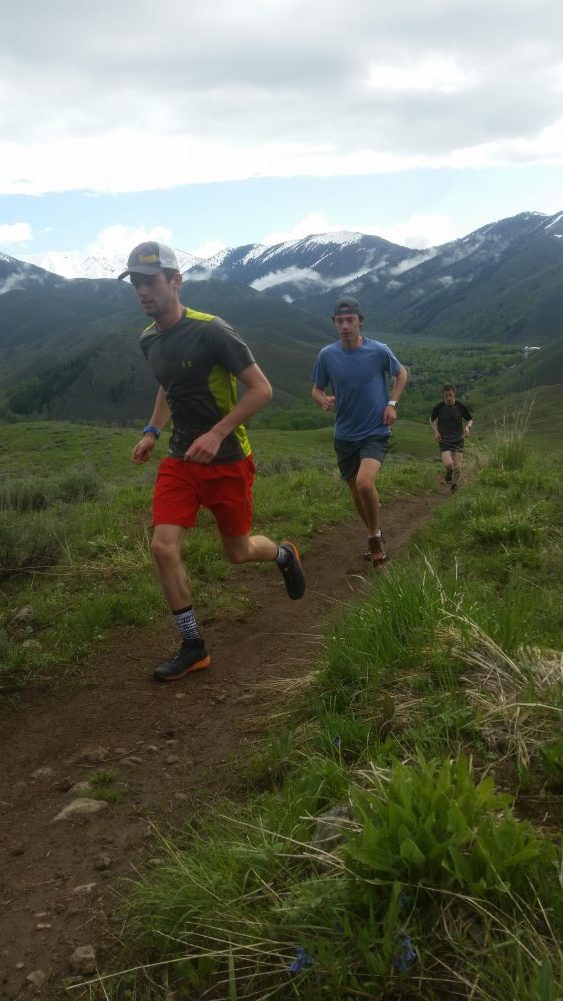
    Members of the SVSEF PG team mid-workout in Ketchum, ID. (Courtesy Photo)

    Despite not requiring a top twenty finish at Junior Nationals or another performance marker, Smith explains that the athlete should be entering the PG program with a clear goal and a belief backed by evidence from their development that the next step is attainable. Smith explained that these are the broad conversations he has with athlete who express interest in the program.

    “I have a lot of conversations in the spring with prospective athletes and parents about what they saw in their own skiing that puts them at that level. When you look at your results and other aspects of training, what is it that makes you think that the jump will be significant?”

    For athletes who are interested in taking a gap year, Smith provided information on what to consider in weighing options and on what to expect. 

    “Probably on most family’s minds, the cost is going to be the foremost thing.”

    The PG program at SVSEF comes with a price tag of $5,450 which does not include housing or food, which can be significant in small mountain towns like Ketchum. Apart from being expensive, housing can also be challenging to find, particularly since not all housing authorities are keen on renting to a 19-year-old living on their own for the first time. This challenge can be avoided by local athletes, but should be a significant consideration for out-of-towners. 

    “We’ve made it work through the years just piecing together host families, generous families in the ski communities that have helped out. The best thing that has worked is connecting athletes in the program together and their families to go in on housing in the rental market.”

    Additionally, Smith explained that it would be challenging for an athlete to get by without a car, though public transportation and carpool options are possible. Smith added that it is possible to receive financial aid and scholarships for trips such as World Juniors. 

    At SVSEF, most athletes choose to take a part-time job, which can help subsidize the costs. Smith explained that this also provides a life-balance to offset the singular focus of full time ski training.

    “We always recommend that they have something else going on other than skiing. It could be a part-time job, some have taken online classes, and some have gotten pretty good internships. I think we have a good community for that kind of work.”

    He continued that mountain towns offer ample opportunities to work in the tourism or service industry. 

    Smith suggested that the cost and challenge of finding housing might be the biggest drawback to choosing Sun Valley for a gap year. He countered this with the pros of making this decision.

    “Our coaching staff is definitely top level and all of our post grads have the opportunity to work with any of our coaches. Location, being out west, being at altitude but not being too high.”

    He added access to quality rollerski terrain, reliable snow, the ability to perform physiological testing, and having a strong junior and senior team to mix with as additional strengths of his program.

    “I’ll admit that we can’t really have the atmosphere that a ski academy offers. I think at the Sugar Bowl Academy, Stratton Mountain, Green Mountain Valley School, their post grad programs offer that in-house, community, full team feel that admittedly we can’t offer, though I think we come close.”

    Smith explained that these all-inclusive programs are significantly more expensive. Stratton Mountain School rings in at $56,750 for a full term boarding post-graduates (these athletes are also taking classes at SMS) and ski-only PG tuition at the Green Mountain Valley School is $21,500

    “For families that can get a lot of financial aid to those programs, I think you can definitely do well there. But I understand that we are better priced compared to them and I think that is where we get a lot of interest.”

    Members of the SVSEF PG program on a training run in Ketchum, ID. (Courtesy photo)

    Other factors Smith believes are important to consider include whether it is possible to mix in with a strong group of junior and senior skiers and if the program has a coach focused specifically on the PG group.

    “Having a coach that is dedicated to the post grad group is definitely helpful. I think too many times, even though they’re older juniors, just throwing them into senior training or scaled back senior training isn’t the best thing for their development. So having their own coach is definitely a plus.”

    In terms of lifestyle and training load, PG athletes at SVSEF participate in 5-7 coached sessions per week, including strength training.

    “We train most mornings, but the key is being flexible with the program where if an athlete was at a level where they were training twice a day everyday, you can do that.”

    After training, most athletes head to their job, but Smith regularly inputs other touch-points into his athletes daily routine to build the team dynamic and support the athletes’ development of independent life skills.  

    “We’ll have team meals once or twice a month, which is also part of a nutrition program, basically learning how to cook on their own for the first time. Also, having some camps and trips input in there too, which I feel is important. Since they’re not in school, they can do those trips, but we want to make sure it’s cost effective too. If you’re an athlete from the east coast, it’s already a camp being away from home. You don’t need too many, but it helps keep the training lively and exciting.”

    For athletes whose eyes are set on NCAA racing, it is valuable to have an understanding of the eligibility rules. 

    For Division I programs, the eligibility clock starts when a student-athlete enrolls full-time in classes or turns 21, whichever comes first. Once the clock starts, there are five years to complete four seasons of the sport, which allows for a redshirt year or year-in-residence following a transfer between schools. At Division II and III schools, student-athletes have three years following graduation to enroll full-time. Once enrolled, four seasons of competition can be completed over 10 semesters. Semesters are not counted if enrolled either part time or not enrolled without competition.  

    Some PG programs discourage athletes from taking classes if they plan to enroll the following year at an NCAA program as they may be classified as a transfer student, thereby needing to complete an “academic year in residence” before being eligible to compete.

    Athletes may earn prize money from finishes in SuperTour or other races while still remaining compliant with NCAA amateurism rules. The rule states: “An individual may accept prize money based on his or her place finish or performance in an athletics event. Such prize money may not exceed actual and necessary expenses and may be provided only by the sponsor of the event. The calculation of actual and necessary expenses shall not include the expenses or fees of anyone other than the individual.”

    [See this document for more information on NCAA eligibility rules.]

    As a takeaway, Smith encourages families to consider the benefits an athlete might gain from a PG year and to see a gap year as a potential option in the college process. 

    “Taking a year should always be considered as an option, especially for a kid who really wants to go for something. It may not even be skiing, it might be art, or music, or something else. When they’re younger, we always recommend that they’re doing a lot of different things so that they are more well-rounded. By the time they’re 18, picking skiing should be okay and they should be given the option to do that for a year if they want. I think making sure that is an option is an important thing, whether that’s coming from a parent, a college coach, or their coach when they were a junior.” 

    Kapala concluded by explaining the role the PG program plays in the overall cross country program at SVSEF and pointing to athletes who have greatly benefited from their gap year.

    “We consider our SVSEF PG team a really important part of our programming,” concluded Kapala. “It has helped some of our talented juniors take the next step in their skiing and it also has built relationships with skiers who have years later returned to become members of our SVSEF Senior Gold Team. For example, Kevin Bolger and Sam Woods, now members of our Gold Team, were both PGs. We got to know them and when the opportunity came to add them to our Gold Team roster, it was really helpful to know them as people and skiers.”

  • The College Conflict: Part 1

    The College Conflict: Part 1

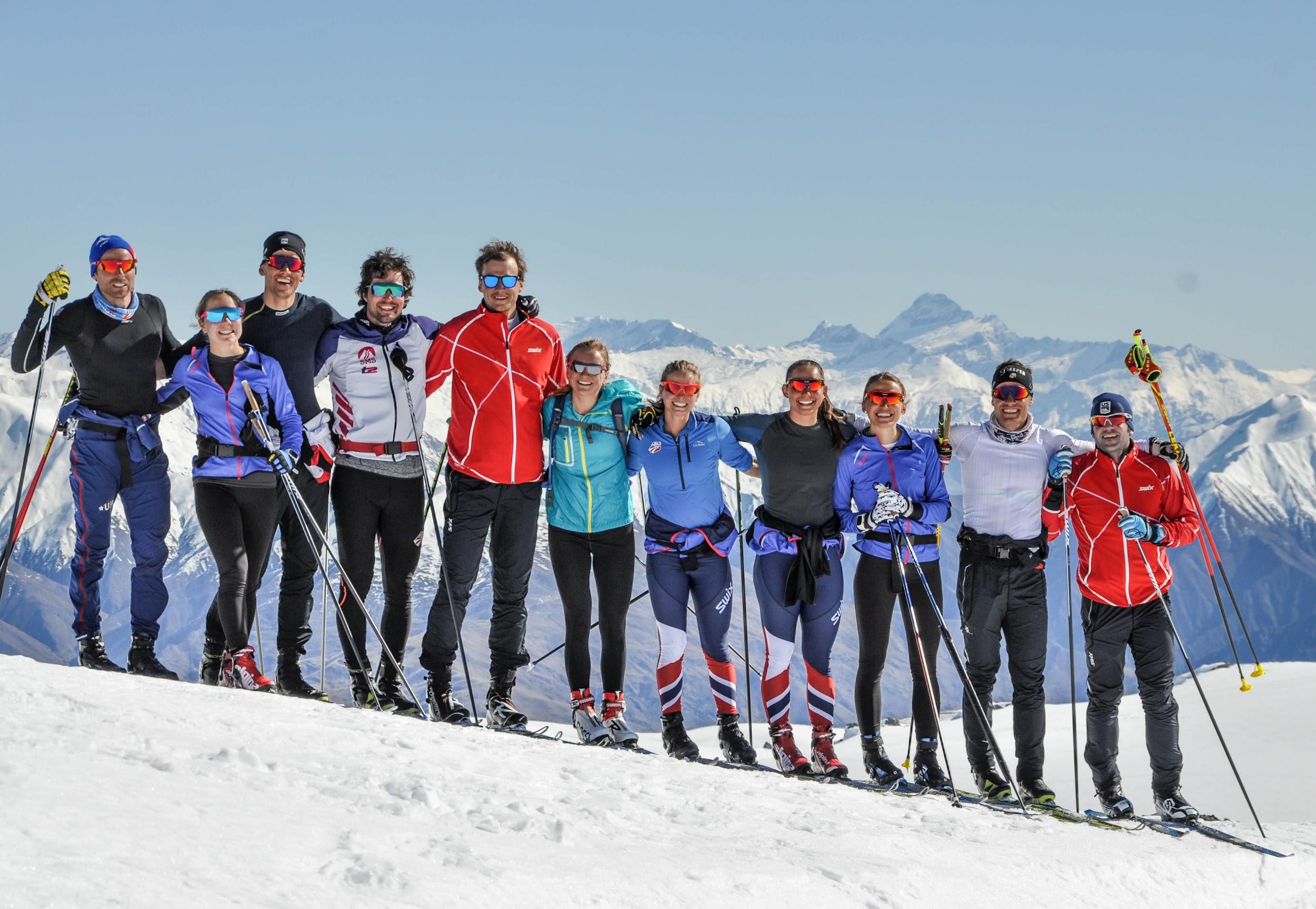
    2018 U.S. Ski Team camp at the Snow Farm in New Zealand, with author Alayna Sonnesyn (teal jacket) in the middle of the group shot. (Photo: Matt Whitcomb)

    The following was written by Alayna Sonnesyn, a new member of the Stratton Mountain School (SMS) T2 Team who graduated from the University of Vermont (UVM) this past spring.

    Originally from Plymouth, Minnesota, Sonnesyn, 22, raced on the UVM Ski Team for four years and qualified for four NCAA Skiing Championships teams. She placed second and third in two races at 2017 NCAA Championships, and in her senior season, won the first five Eastern Intercollegiate Ski Association (EISA) races and went on to reach the podium in 10 out of 11 EISA races. Sonnesyn expressed an interest in exploring the dilemma many of the nation’s top skiing talents face out of high school: whether to attend college or get an early jump on a pro-racing career. She plans to post this two-part series on her blog as well.

    ***

    For the first time in 17 years I will not be going back to school this fall. Saying that out loud is more daunting than I had anticipated. For the most part, the classmates that I graduated with can say that they are “going to grad school,” “starting a new job,” or “taking a year off to travel,” but I still don’t know where I lie. I am not taking any classes this year, I am not working anywhere consistently, and I am doing more than just traveling to explore, I’m traveling to race!

    I am wrapping up a three-week training camp in New Zealand with the SMS, Craftsbury, and US Ski Team. When I walked through customs I had to write down my reason for visiting New Zealand: Was I a student? Was I visiting a family or friend? Was I working? What was my job? In the rush of the moment and due to habit, I wrote that I was still a student and continued on my way. I later had a few reflections; I still haven’t reached the point yet where I can say I have a job. I don’t have a salary and there are no company benefits. Yet, I work 24/7 toward my job — my job is ski racing. But why is this so hard for me to admit to myself? Is it because, for my entire life, I’ve been a student? What if I hadn’t taken this route? How do others make this decision?

    National Training Group (NTG), summer 2013, in Park City, Utah.

    Racing throughout high school, I was given a number of perspectives about picking skiing versus school. My friends were all preparing to go to college and I always assumed I would go to college, too. My parents and older sister went to school, why wouldn’t I go as well? But then I thought about skiing. I never had the most outstanding results in high school (never qualified to race internationally), but I was good enough to qualify for regional and national level camps like REG, NEG and NTG. I traveled to these camps and trained with other high-level athletes, getting more and more motivated by each skier or coach that I met. Then the thought came to me… what if I didn’t go to college? I could focus on training, make those vital steps toward international racing, and continue along the “pipeline” that so many Olympians had followed. Maybe I would make bigger jumps and improve my skiing exponentially? I was entering the unknown and I was unsure how to pick the right choice for me. Looking back on this four years later, I realize that I was far from alone in this predicament.

    buy clomid online, buy yaz online, yasmin buy online

    I have since had the opportunity to talk to a wide variety of skiers and competitors and have learned so much that I wish I knew in high school. It’s OK to be confused. It’s OK to make your own path. Every athlete is in a different situation, comes from diverse athletic and academic backgrounds, and has various goals that they hope to achieve post-high school.

    “I’ve always believed that the most important thing to remember when discussing the decision to go to school or not (or when to go to school) is that is it a completely individual decision and the right decision for one person might not be the right decision for the next.” — Sophie Caldwell

    Personally, I finally decided that taking a gap year might be too big of a jump for me. I wasn’t ready to focus on skiing and I had a lot of goals for myself academically. I decided to attend the University of Vermont and upon reflection, can admit that this was one of the best decisions of my life. Similarly, SMS teammate, Kelsey Phinney, went from high school in Boulder, Colorado, directly to Middlebury College.

    “The reason I chose Middlebury College was simple: I went to visit and I was ready to unpack and stay for good. I loved the people, the area, the ski team, and the classes I sat in on.” — Kelsey Phinney

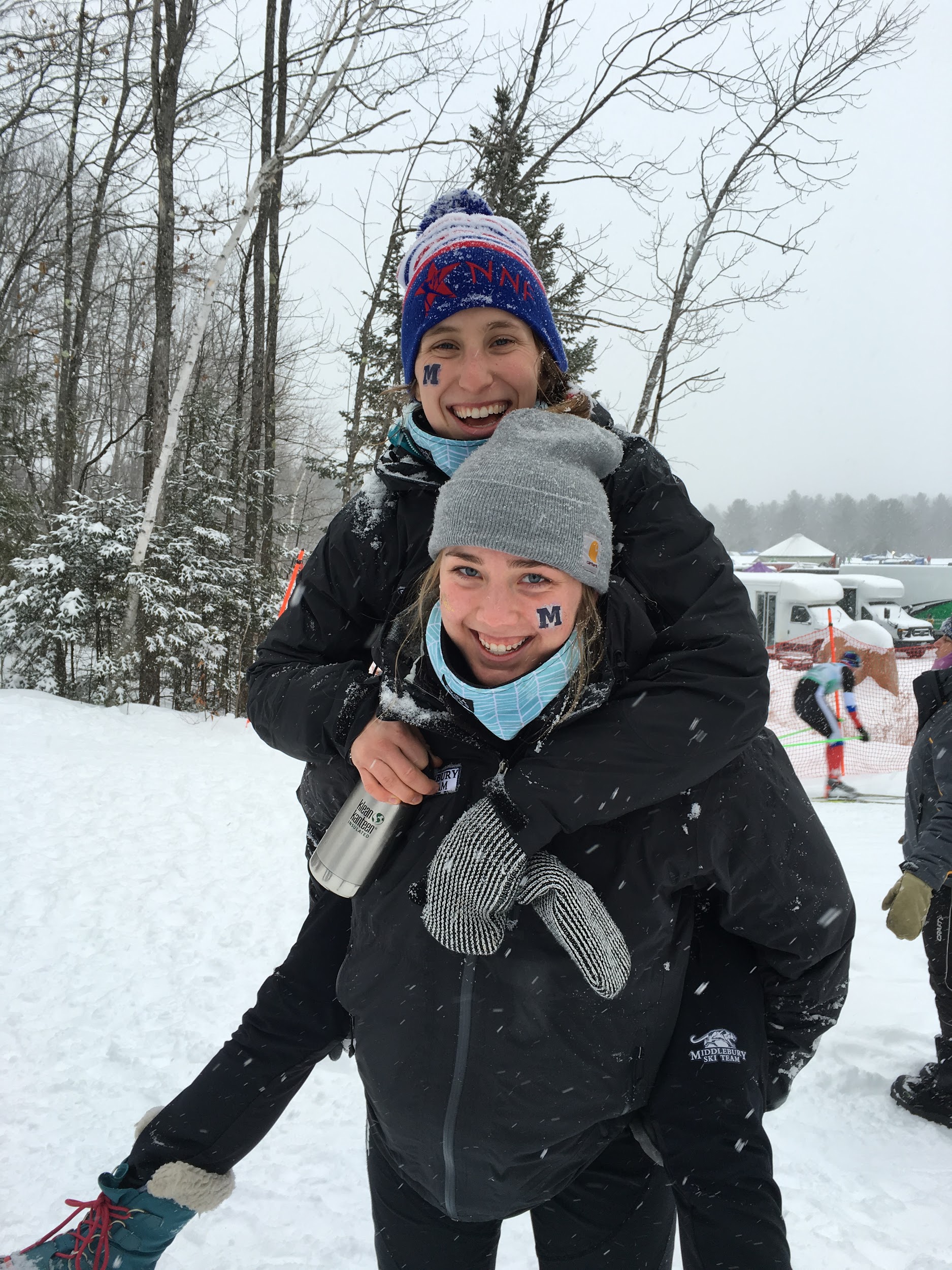
    Carnival love, with Kelsey Phinney (top) and Katie Feldman.

    Kelsey and I both fell in love with our schools from the start and knew we were where we belonged. We took these college experiences as learning opportunities; maybe we wouldn’t have been ready to jump right into the professional circuit but we both determined this was the right path for us.

    “I loved the experiences I had on the Carnival circuit. Both good and bad times taught me a lot about life and skiing, and I felt like the balance of school and sport made me better at both,” Kelsey reflects.

    Similarly, Sophie Caldwell had her mind made up without the need to hesitate over a gap year or jumping into full-time skiing.

    “I chose to go to college right out of high school, and it was something I had always known I wanted to do. I knew there was a good chance I wanted to ski professionally at some point in my life, but when I was 18, I wasn’t ready to 100% commit to skiing,” Sophie, a Dartmouth graduate, explains.

    With academic goals in mind and the confidence to pursue skiing in the long run, sometimes there’s no need to question it. Going directly to college might challenge you more than you think and it might make you question what you’re doing. The balance of school and skiing is great, but it’s TOUGH! At least you worked through those challenges and figured out where you want to be though.

    “I definitely had my ups and downs throughout college and at times I considered not pursuing skiing after college, but by the time I entered my senior spring, I knew I wanted to give skiing professionally a shot and knew it was because it was what I wanted to do, not what I had to do,” Sophie notes.

    Over the course of four years, we were able to say goodbye to our homes, grow into adults and develop as skiers, allowing a much smoother transition into the professional racing circuit post-college. This decision to go right to college made sense for Kelsey, Sophie and me — it was simple; but I recognize that this choice isn’t as straightforward for everyone.

    ***

    “I loved my time at Burke and wasn’t quite ready to leave. I also didn’t know where I wanted to go to college as part of me wanted to go out west while part of me wanted to stay closer to home.”  — Ida Sargent

    The conflict of picking a school, a place we are willing to spend at least four years of our lives at, can be intimidating to anyone. Taking a year off to think and explore what motivates you once the structure of school is taken out of the picture can be extremely vital to one’s skiing longevity. Other times, this year off can be done to test out what skiing professionally is actually like.

    “I wanted to test out whether I could do only professional skiing.” — Katharine Ogden

    A feat that might sound easy to accomplish — ski, eat, sleep, repeat — can’t be THAT hard! But what happens when you suddenly put all of your time and energy into one goal?

    “Ironically, my gap year did not turn out even close to how I had planned or imagined!” reflects Julia Kern.

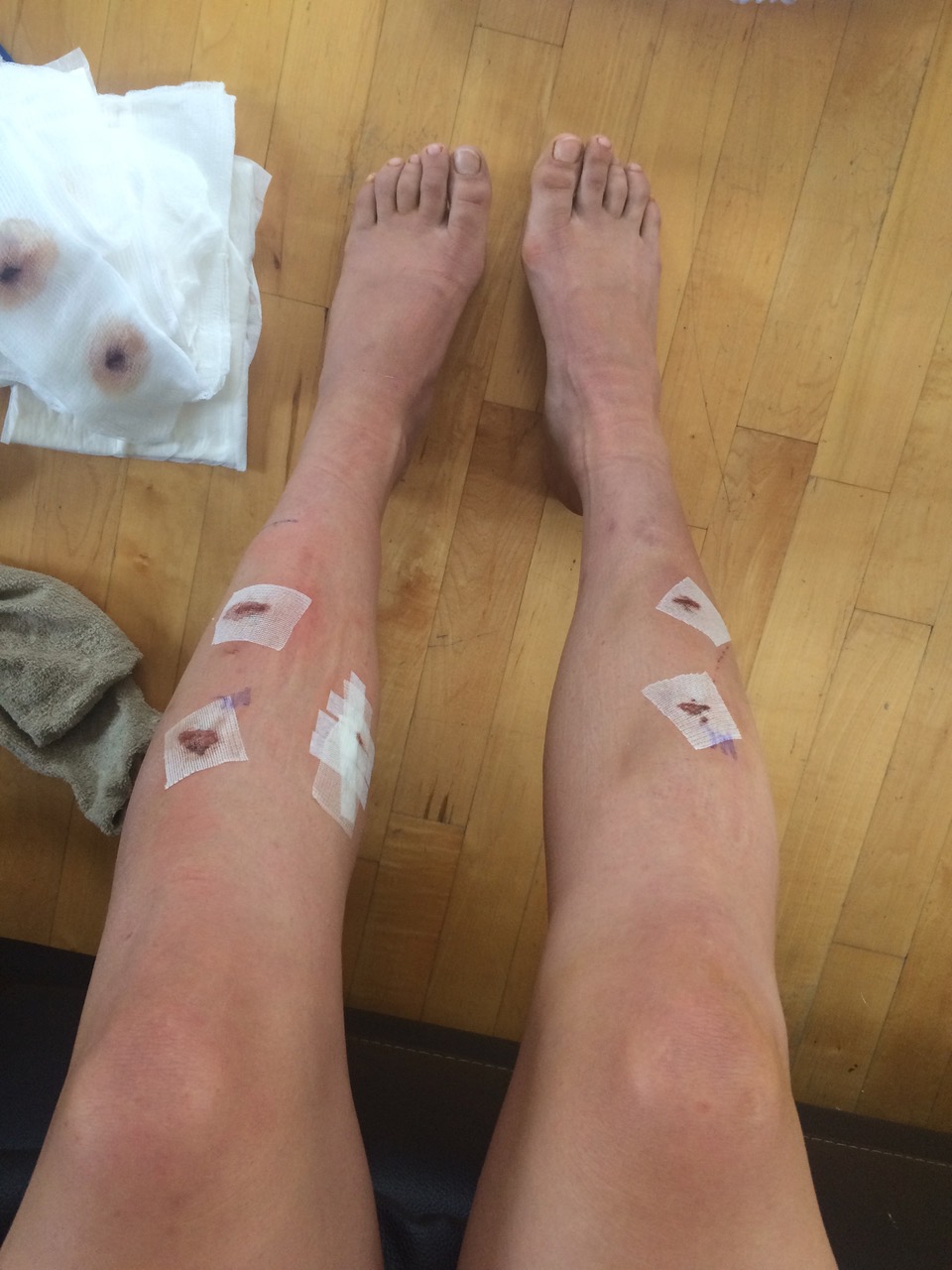
    Julia Kern with swollen legs after surgery, requiring A LOT of physical therapy during the summer.

    After facing an early summer surgery for compartment syndrome and then an untimely back injury in the fall, Julia notes that her gap year was extremely tough with plenty of lows and setbacks.

    Ida Sargent offers, “My PG year was a bit of a disappointment as I wasn’t as happy as I was expecting and I also didn’t feel like I made as big of a jump with my results as I had hoped.”

    “I think in hindsight it was a good philosophy but I think I approached it wrong. I didn’t do a good job securing other things to do besides training and was thus pretty bored, which led to me putting a lot of stress on skiing and racing,” says Katharine Ogden.

    Maybe taking a gap year isn’t as easy as it sounds? Coming face-to-face with this type of ski-focused intensity as an 18 year old can be challenging.

    “It showed me how much I really wanted to go to college,” offers Katharine.

    It can also be validating, as it can prove to oneself where they really belong at that point in their life.

    “It made me realize that I wasn’t ready to ski full time and I still needed balance in my life,” reflects Ida.

    What might be the most beneficial aspect of taking a gap year are the lessons you learn throughout. How to deal with the pressure, free time, potential obstacles, and how to respond when you’re suddenly put in an unfamiliar situation.

    “My gap year turned out to be far from ideal from a training/fitness standpoint, but I became very in tune with my body, learned how my body responds to training, became mentally tougher, and learned that I love the skiing lifestyle (even if it is tough sometimes) and that I want to ski at the highest level possible,” says Julia.

    Some things you just can’t learn in a classroom.

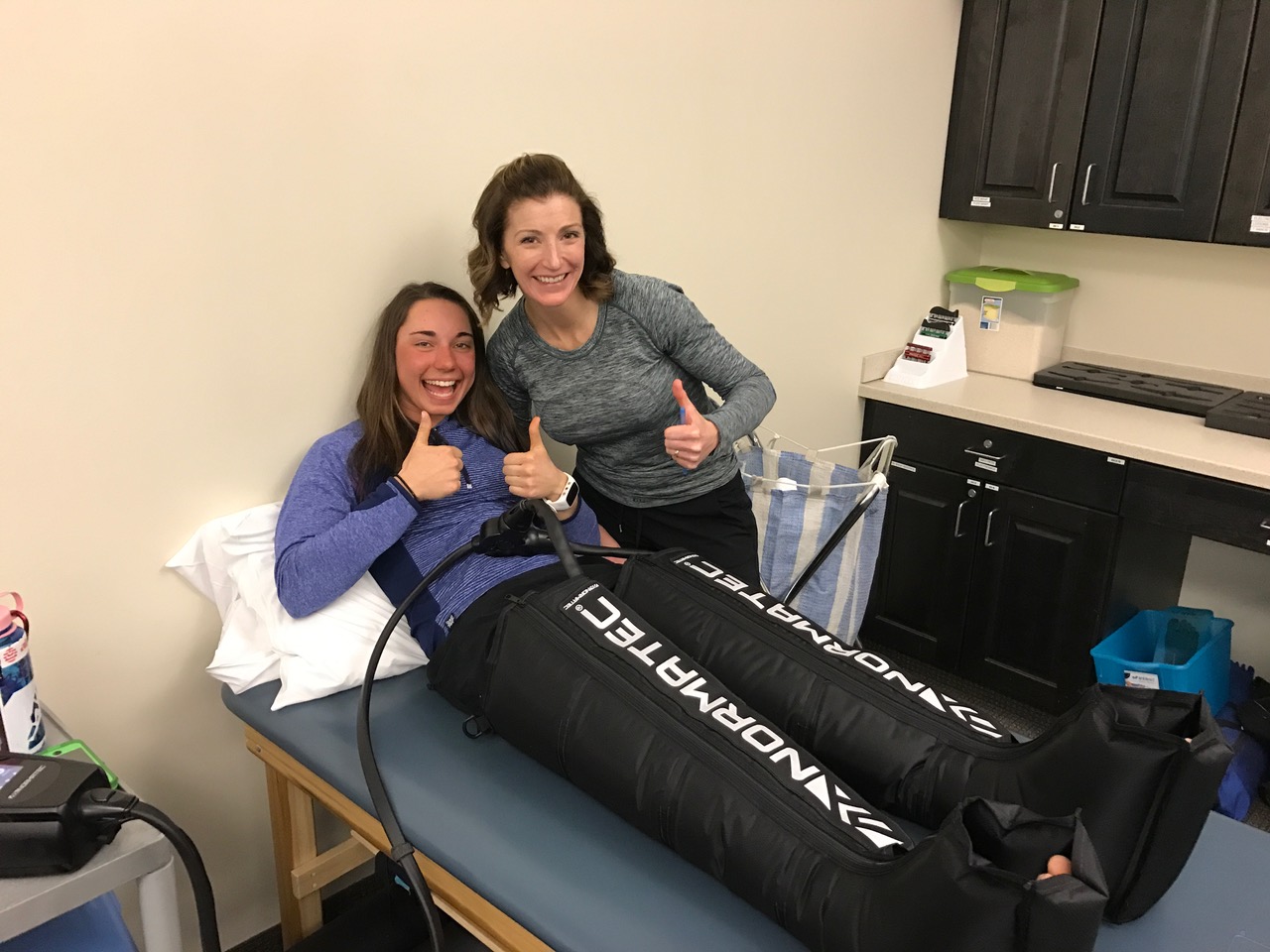
    Julia Kern (on table) still smiling!
    Julia Kern taking the time to think about something other than skiing during her gap year. (Photo: Julia Kern)

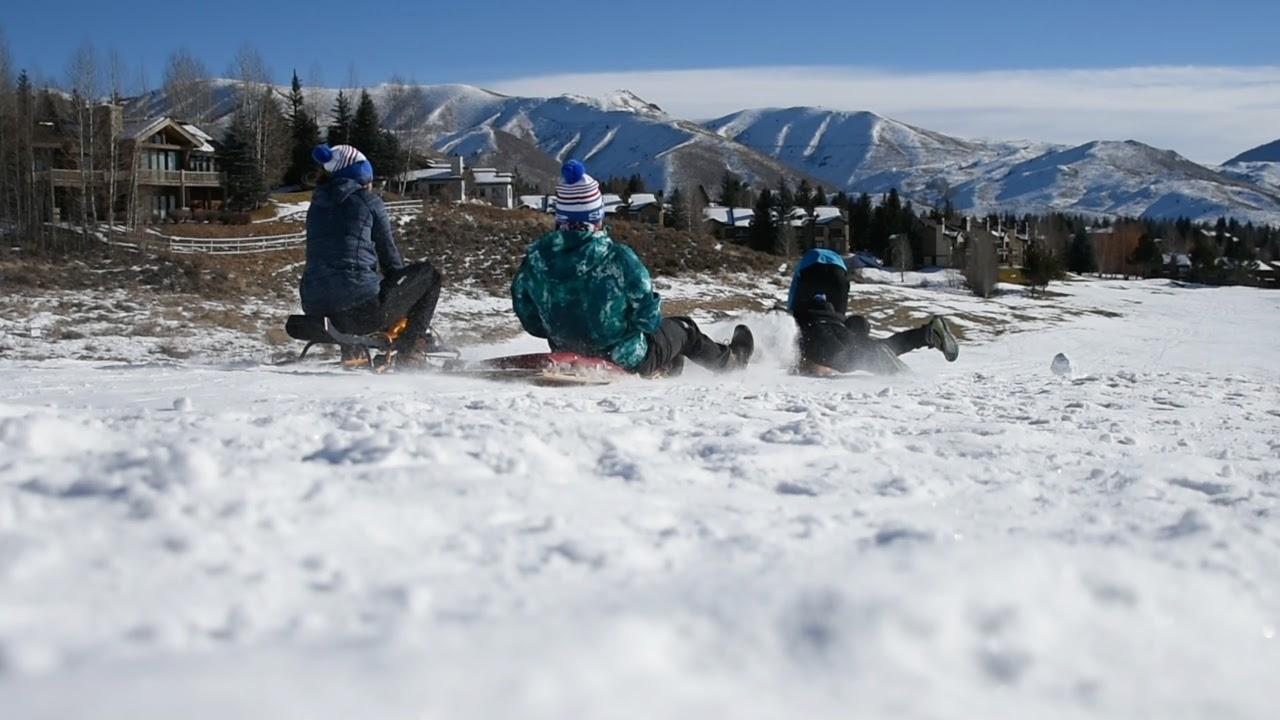
    How to pass the time away, when you have so much of it. (Photo: Julia Kern)

    After taking a gap year to figure out what skiing was like full-time; Ida, Katharine, and Julia attended Dartmouth College (via various routes):

    Ida states, “I started by going to school full time and I raced for Dartmouth for three years and then made the National team so I took my senior winter off to race for the USST and then I went back for a spring term my fifth year.”

    “One year in [as a traditional student], I am very happy at Dartmouth and racing the collegiate circuit last year reignited my love for the sport,” adds Katharine.

    While Julia contributes, “I chose Dartmouth because I wasn’t sure what skiing and school balance I wanted to have, but I did know that I wanted to be able to take terms off to race internationally.”

    Regardless of which Dartmouth plan they followed, all three skiers seem to have enjoyed the choices they made. Whether taking a gap year is or isn’t part of your plan, the most important takeaway is that you should TAKE SOMETHING AWAY! Learn something new about yourself, about skiing, or about classes you want to study.

    So what about other options for pursuing a ski career? Jessie Diggins and Andy Newell both chose to skip college and go straight into skiing. Stay tuned for my next post when I’ll include input from both of them as well as what U.S. Ski Team coach Matt Whitcomb has to say on this topic.

  • Far West Elite Team Looking to Grow

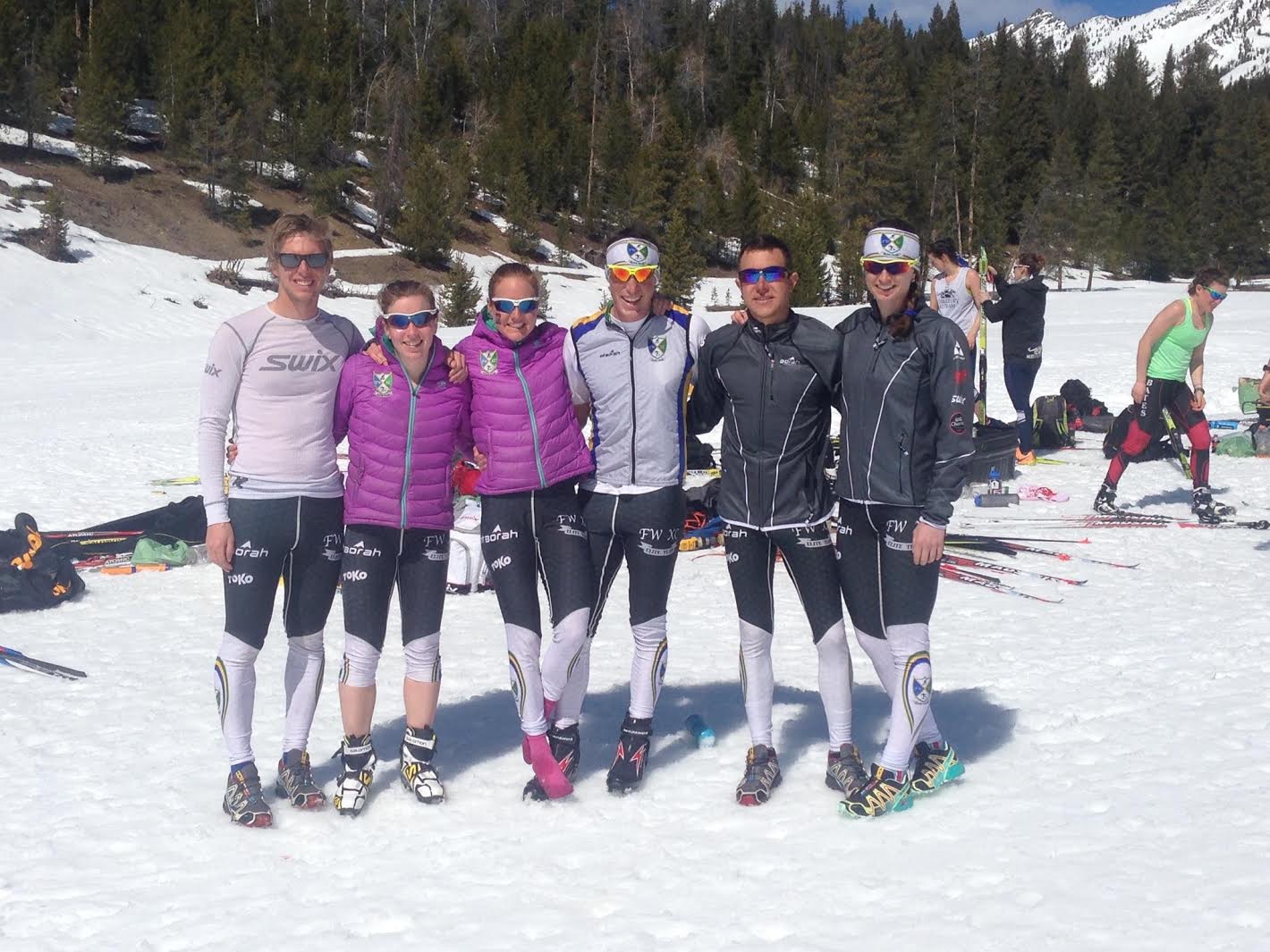
    Far West Elite Team 2014/2015
    (Press release)
    The Far West Elite Team, a post-collegiate senior team based in Truckee, Calif., is looking to support six athletes for the 2015-16 season. Our goal is to develop post-collegiate skiers towards being named to the U.S. Ski Team. The primary focus of the team is the USSA Supertour race series. The large collegiate summer training program, run by Martin Benes, in Truckee makes for excellent summer training. Team members receive funding to offset race, travel, and living expenses as well as additional support within the Tahoe region.
    The team is currently working to iron out specific funding details and an exact dollar amount to be offered to each 2015-2016 athlete. Applications will officially open later this spring. In the meantime, any interested parties are encouraged to contact us to learn more about how the team works and functions throughout the year.
    Team Captain: Spencer Eusden seusden@gmail.com
    Team Manager: Roger Chaney rossi_nordic@yahoo.com
  • The Post-Grad Trip to Scandinavia

    The Post-Grad Trip to Scandinavia

    Part One – Before You Go

    Recently a potential six-week stay in Scandinavia for our team has been occupying a lot of my planning time. We have a time block, we have the school’s blessing, we have some connections, and we have enthusiasm for the idea. Still, there is a lot to pull together; the usual essentials like money, lodging and transport.

    The most important planning I have been doing, though, is laying out goals for the trip, locations that contribute the most, contacts to cement and develop, and preparation of the team for the time there. This is a fun and educational process, but often the part of planning that gets short shrift.

    Over the past years I’ve had the good fortune to lead at least 14 different ski-focused trips to Sweden and Norway, and it occurred to me the other night that maybe I should try to share some “Before You Go” thoughts, stuff that might be useful to individuals thinking about a PG year, or a summer training course, or attending school and skiing in Scandinavia.

    These are reflections only and I suppose they are directed mostly towards juniors and U23 skiers. Parents might find something here. It could be they might help add things to the check list or suggest a fresh idea. My primary reason for sharing them is to perhaps help make the trip a success by eliminating a common myth and identifying some questions that need answers before setting sail.

    In deciding to take a year off from the usual North American routine one encounters a process not unlike goal setting for a race season or mastering another skill set.

    Initially the goal is pretty vague: “I am going to spend a year in Norway and just ski!” I know some kids who have gone there with only that for preparation and it worked, but usually that doesn’t lead to the best trip.

    Before you even get to that point you need to do a little work on “Why, When, Where and How” you want to go. Next, if you are committed to making the trip a success along the lines you have set out, you need to prepare. Of course very little will go exactly as you plan it, but having the plan and preparing for it will also leave you in much better position to deal with change.

    Myth Busting – the “Why?”

    Why do you want to go? For skiers this one usually is answered by, “I want to get faster.” It is a good reason to go, but it has to be in perspective.

    This is the first place to start with a dose of realism. The Norwegian and Swedish juniors get faster the same way we do; they work their tails off. There is no magic in the air, no wand that comes down softly while you sleep and “Poof!” takes 30 seconds off a 10 k time.

    Understanding and being ready to jump into the work, and to chase kids who are a lot faster because they have chased kids who are a lot faster is essential to reaching that part of “Why.” Don’t think you will go to Scandinavia and come home to immediately crush your competition. Likely you won’t, but if you work as hard as the natives do you might see a pretty distinct incremental improvement over time.

    There are subsets of answers to the “Why” question and they too are important not to consider. They may very well help determine answers to “Where” and “How”. Among these are a desire to study: the language, sport physiology, coaching, or less specifically, to put oneself in school in order to establish some daily structure, a desire to experience a different culture, a hope to see and live in a specific new place.

    At each point along the way here we want to stop and perform a reality check and to see how well we may have thought about the things that might not work out. Do we really want to go to school? If not what are we ready to do? It is OK to go to a training camp and take naps in the middle of the day, but that only is good for about seven to 10 days. Then we need a life.

    What will you do if you are not in school? Really. “Hang out” doesn’t cut it. If you don’t have an extremely fat wallet, “hang out” won’t be in the picture anyway. So what will you do? Travel? That cuts into training pretty hard, and it costs money.

    Being a free loader works for a while, but it isn’t a way to create a situation to which you can return over the years because you have been a good guest. Work? Paying work is hard to find in Scandinavia now. Eastern Europe has set a lot of people loose and willing to take the low paying jobs. You might find something on a farm or in a shop, but again it won’t fit too well with training.

    Where and how do you want to live? Apartment? Alone? With a family? With other skiers? If the training is the motivation make plans to facilitate the training situation. In my experience the best ways to do that is membership in a local club, time at a local school or participation in a well-connected program from home.

    The Questions – When? Where? How?

    The question “When” is pivotal as well. We can attach the question of “how long?” to the question of “When?” When and how long? During high school? The year after high school? Between freshman and sophomore college years? Summer, fall, winter or spring? Training or racing season? A month, 90 days, a full academic year?

    Over the years my own enthusiasm for life and skiing in Scandinavia has probably helped to lead some kids down a primrose path that didn’t work out as well as we hoped. I feel badly about that and for that reason I have tempered things a bit and I run through the reality checks more often before I hand out any thoughts.

    Again the idea here is to help make these trips work. I have come to appreciate the shorter trip initially; a time period that is long enough to settle in to a bit of a routine, to become acquainted with people and place, to get a feel for the working of the language but not so long that it requires a special visa, or puts the demands on time that loom up as “What do I do now?”

    Too long a trip and one without the variety and society that a school situation provides can rob energy and enthusiasm. In the worst cases the empty time can send kids into a real homesick tailspin. A little of that is natural, and a constructive learning experience but an over dose ain’t good. Here is a dark little picture to keep in mind:

    You are in Central Norway, latitude 63.5 degrees north. It is October and you have been there for two months. You have some friends but you are not the “new kid in town” anymore and they have started talking more Norwegian among themselves, and do not come find you quite as often. The language has eluded you and now when you hear it, you shut it off.

    You have started to play solitaire and watch movies on the computer. You have not yet spoken to another person today. It is raining and this afternoon at 3 p.m. it is damn near full dark. You need a head lamp to train. Boiled potatoes have taken on a dimension of terror. You miss your dog. Facebook makes it worse.

    You are always the last to get home, which is in the basement of a house. Both your roommates are Norwegians and they have known each other for years. They are top juniors in the district and you struggle to keep up in Level 1 workouts.

    It is raining harder and it is cold. You really miss your dog. It doesn’t rain in Aspen in October. You start to identify with the Norwegian painting “The Scream”, and idly price tickets to Denver on Kayak. You skip the workout. In fact you have skipped the last three workouts. No one seems to notice.

    If you are prepared for this and you weather it, it does indeed build character. However, this is not where you want to be. If you are not prepared, chances are the ship could go down with all hands.

    This sort of grim scenario doesn’t play out often on a shorter trip, and the tastes of it serve only to prepare you better for a longer trip next time. For the first trip, take the one- to three-month idea into consideration. There are great arguments for almost any time of year.

    Summer is light all night and the whole world up there is open to runs and hikes and camping is open to all comers almost anywhere. The training possibilities are limitless. Fall is the transition time and the high-training volume time. It could be one of the best times to find your self with a club or a school to experience getting down to business.

    There is most often early snow. Winter clearly is great because there are endless kilometers of skiing and good races at every turn. Spring … ahhh, spring! Those endless kilometers are still groomed, there is a lot of sun, the days are long and all the “waffle houses” open up along the trails. Long slow distance; hundreds of kilometers of it, makes spring the perfect wind-down to the year and a great lead in to summer training. You can’t lose.

    Where to go?

    This takes a little time, too. Both geography and social situation play a role. You need to decide on a rural, or an urban setting, a small or large town.

    Small villages in Scandinavia can be pretty quiet, with not much more than a grocery store and a gas station. Occasionally you’ll find a café, but small is small. Proximity to town is a factor if it is important to you.

    If you are not used to too much solitude try to locate in a hub of sorts. Save the isolation for the next trip after you have learned how it works. How far north? There is no direct sun above the Arctic Circle for the heart of the winter. That takes a little getting used to.

    If it is a school how do the students live? In apartments on their own or on campus? How do the classes fit your abilities and is there anything in Englis? (More on the language topic later.) Does the school have a “ski line,” a curriculum of study oriented to winter sport, or is skiing through the local club? Is the club receptive to foreigners?

    Norway and Sweden are the places with which I am most familiar. A lot of kids I know have had good experiences in Finland as well. All the ski nations offer wonderful opportunities to interested folk so it is not out of prejudice that I keep my comments related to Scandinavia, but out of familiarity.

    The 30-90 day option can free up time to experience both Norway and Sweden and there are no visas required. In planning for a longer stay if there is not an automatic reason such as family, friends, past stays or specific geography for picking Sweden or Norway as first choice, then a look at the opportunities with the schools and clubs is warranted.

    Sweden has a few more schools that have ski lines in the curriculum and offers a little more latitude in terms of ability. Visas there may be a bit easier to obtain. The most exclusive Swedish and Norwegian ski gymnasiums are geared to kids who have come up through the systems there and who have reached an elite level of performance as Juniors.

    These schools, six in Sweden and three in Norway, are far more rigorous in selection than is any of the ski academies here in the U.S. Contrary to popular U.S. opinion, that does not mean the athletes have specialized on skiing from the time they can walk. What is does mean is that after 16, the kids are not trying to letter in four school sports and are not competing all year long.

    At around 16, if they want to be skiers, they start to train for skiing as the main sport. They still play soccer, they still run, they still hike and climb and bike, but those become adjuncts and diversions for the rest of the training program. They rarely start to count hours before 16 and if they do the hours are reasonable e.g. 325.

    Where our kids have a problem adapting to the rigors of ski-gymnasium training in Scandinavia is that we have a more thinly spread approach into pretty key years for solid training.  In most high school situations we compete in four seasons and never truly train. High-school tradition can lead to a lot of subtle coercion in the spreading thin of talent and energy. Performance is often flight on the wings of talent alone and the foundation for real endurance training is left shaky and incomplete.

    Where we seem to drop behind the Scandinavians as skiers is between 16 and 19.  At the same age, we are less familiar with the rhythm of training zones and loads. Finding yourself at a ski gymnasium in Scandinavia and playing catch up there can be a lot to handle at first. But if you plan for it and you know a little about what you are getting into, you can handle it and profit from it.

    The key is to understand that the profit builds over time. You will not go to a Scandinavian ski gymnasium for a year and come home and win everything. That is a short-sighted and short-lived dream. It is the wrong reason for going.

    “How” you arrange your time there is the last question. It comes along after you have determined “Why” and “When” and “Where”. This has to do with your actual experience in the country and can determine a lot as to how that plays out.

    Some of the considerations leading into “How” you spend your time are whether or not you go with a program from North America or if you blend into one over there. You might have the opportunity to go with your school here and to get a good introduction to the training climate and culture, or if you have more time, you might simply go it alone and apply and enter one of the ski gymnasiums there if you are accepted.

    Some organizations smooth out the visa issues, and if you are lucky, can put you in a good living situation, but many organizations load the participation with restrictions, have their own agendas and are not always happy to cater to your hopes for a good training situation.

    Each possibility needs to be looked at and you need to decide what fits best. As you get a little older more and less structured plans can open up, but you still need to have an idea of how to fund things, what you hope to get out of the time and initially where and whom you will be and with.

    The plans do not have to be rigid. When it comes to what you do when you are there, the plans are lines on a chart. You may find things that make you want to change course and a good plan can give you the confidence to do that. There are a lot of opportunities. Turn over every rock and every log on the beach and be ready to have a great time and to write an exciting chapter in your book.

    There is one final piece I want to put on the table and if your trip is any longer than a couple of weeks I think it is a most important one. It is some competency with the foreign language.

    If I divide the kids I have worked with setting up a period of time in Scandinavia into groups that had really good times and groups that didn’t have the best experiences, a common thread is that virtually all the winners developed a high level of proficiency with the language, and among those the ones who started to get the basics before they left North America had a still better time and tend to have repeat visits.

    The language opens doors that would otherwise remain closed. It makes friends, breaks the ice, lets you laugh at yourself in the struggle and makes you approachable. Little things like humor and customs take on a different dimension. The dark time isn’t as dark because you begin to think and live in the same tongue everyone around you uses. You are included, you include yourself.

    Yes, almost all Norwegians and Swedes speak excellent English. Still, if you are going over with an idea of learning some things about skiing and culture from them, why hobble your effort by forcing them to speak YOUR language, when theirs may have the subtleties and expressions they need and yours may not?

    If you are living with a family, and any time you are the members have to drop their language to speak yours, how real a picture of that life are you getting? It sets up and leaves up a certain wall.

    Before you go, get to a language course. There are good ones available on the web and on CD’s. Get advice from the Scandinavian departments at major universities. I know Harvard, the University of Minnesota, and the University of Washington all have Norwegian and Swedish faculties.

    Break the mystery of the basics and be able to start using it as soon as you arrive. The experience will develop much further in every direction and you will not only come home with the chance of skiing faster for a while, but also with a skill you have earned and can use for the rest of your life.

    Personally in looking back at the great times I have had traveling in Scandinavia and in actually feeling at home over there I value the ability to communicate in the native language most of all. It has enriched my whole life experience.

    Next go round we’ll look at some of the things to do and to avoid once you are there and the horse that you rode in on has turned and headed home without you.