

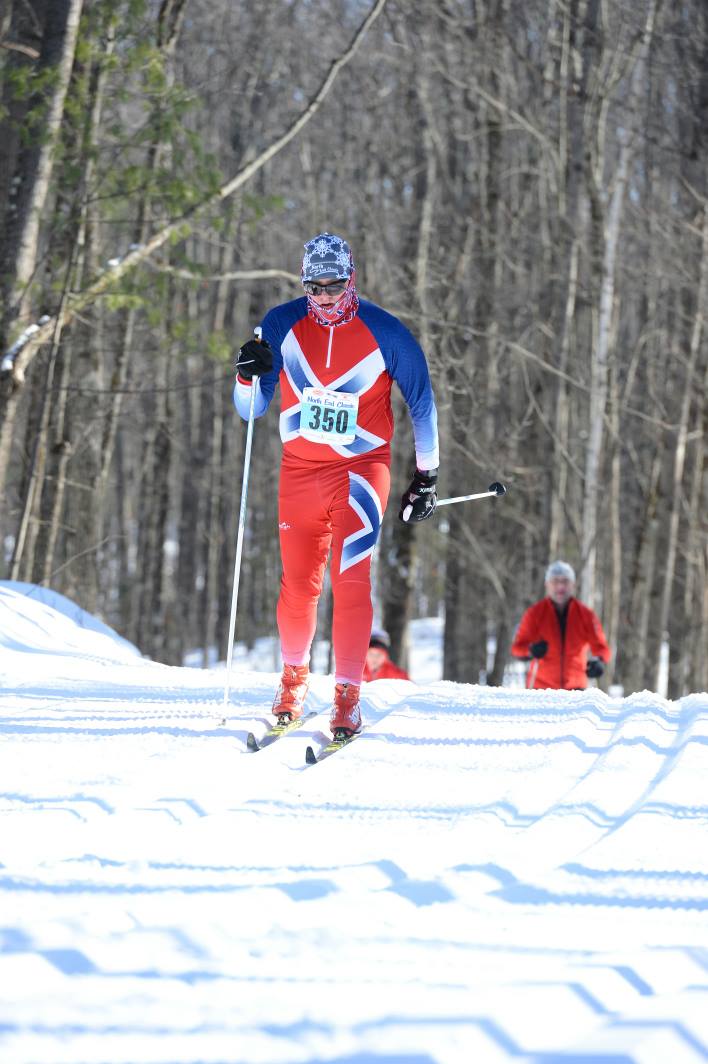
In March of 2016, we published an article penned by Scott “Bjorn” Cummings, a Postbaccalaureate student working towards his Academic Behavorial Strategist K-12 (ABS) Special Education License at the University of Minnesota Duluth (UMD), titled “Why Skiing? How a Sport Saved My Life”. He’s now teaching and even more in love with XC, and we published his “Part II” update in September. Here’s his latest Birkie leadup piece.
***
The annual benchmark nordic ski race is here. The American Birkebeiner in Hayward, Wisconsin, for nordic skiers is like the Hajj in Mecca for Muslims. Everyone who is physically and financially able has to do it at least once. The Birkie is a must-do. To help get myself pumped up for the race, I created a YouTube playlist of Birkie songs. I’m sure there are more out there, too, but these were my favorites from online a couple years ago. Plus, I had to contact Birkie Director Ben Popp to get the MP3 files and upload them to YouTube.
As most of you know, last year’s Birkie was canceled to the due to lack of snow. Second time in history since 2000. But what most forget is that canceling the 2017 Birkie delayed most of the changes to the up-and-coming year and has me rethinking of my Birkie-wave placement. The first big change that will happen in this year’s Birkie is the Korte. The Korteloppet race was moved from Saturday to Friday. There were a number of reasons of doing this, but one of them was to cut down on the number of Birkie race waves. In the past there had always been 10 waves but now there will be seven.
I used my awesome time of 3:16 at the 2016 50-kilometer Great Bear Chase to move up from Wave 4 to Wave 2. My honest “friend” Jenna pointed out that I was not that good enough for the Wave 2.
I could and I am sure most of you reading this could read this seven-year-old blog post on Birkie waves. I could also look at how I did mathematically. This Birkie regression website says I am good enough for Wave 2. By simply searching “Scott Cummings” on the Nordic Race Analysis Birkie Predictor, it factored my marathon times into a mathematical model to predict where I should be.
Do I really belong in Wave 2? Let’s look at my races this season and see how Bjorn matches up.
Noque 50 k
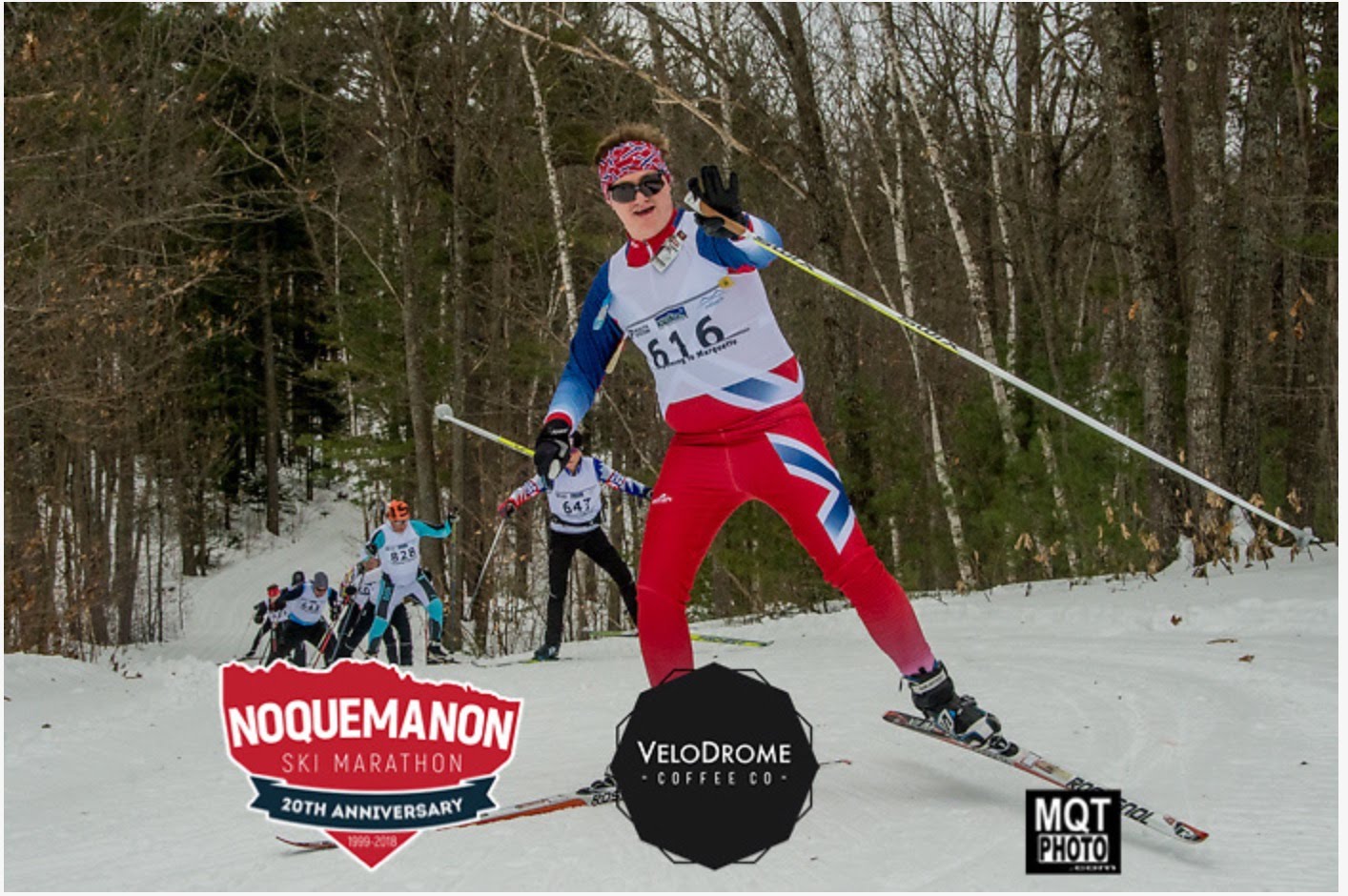
My first big race of the ski season is a personal favorite. The race is called the Noquemanon Ski Marathon, or “Noque” for short, and is on the Upper Peninsula in Marquette, Michigan. The course is a hilly, hard but well-organized by the Uppers. At each aid station, volunteers get what you need in quick time. The first half of the course is more technical, highlighted by sharp turns on the downhills and many famous downhills ruts from timid skiers snowplowing.
(Side note: the Noque logo actually has the trail elevation drawn into it.)
One drawback is the seven-hour drive from the Twin Cities. Plus, a time-zone change to Eastern time. But the city of Marquette is affordable, super-outdoorsy, in the Upper Peninsula of Michigan and just fun. Another minor downside of this race is post-race food: chicken noodle or vegetarian noodle soup. Not as good as their fellow U.P. nordic ski race, the Great Bear Chase, which has post-race pasty.
I finished with a great time, in all types of conditions, fresh snow; ice on the lakes, slushy an each road crossing. Good enough for 3:23:17, which according to the Birkie Predictor makes me good enough for Wave 2. I still don’t believe it. Let’s look at another race.
City of Lakes Loppet 38 k Freestyle
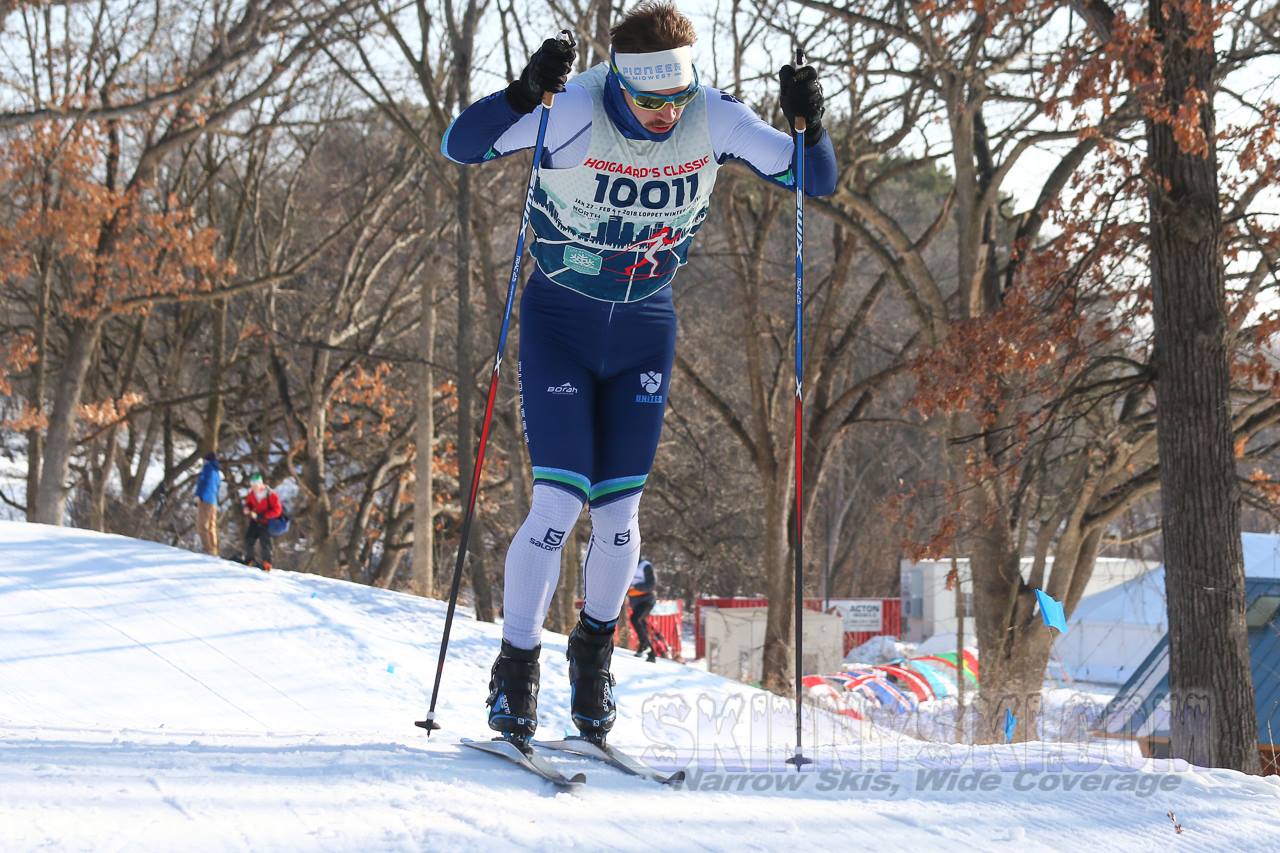
After my U.P. trip, thus started the countdown to the next ski race on Super Bowl Sunday, the City of Lakes Loppet. Also, for those who live under a rock, some 4.5 miles away at US Bank Stadium, was the most popular sporting in the United States, the Super Bowl. In celebration for the Super Bowl LII, the American Birkebeiner put its International Bridge in downtown Minneapolis. The Loppet Foundation, which also runs the City of Lakes Loppet, held sprints in downtown. The photos here were magical and merit a look.
Now onto the City of Lakes Loppet ski marathon. First off, this is a great race if you live in the Twin Cities like myself. No travel, unique urban course, and this year they put it on Super Bowl Sunday. Notice on that this year’s bib has a skier skiing across a football field, or a gridiron.
The City of Lakes was pushed back only 30 minutes, which didn’t make much of difference with temperatures around 1 degree Fahrenheit. The snow was cold; the wind blew around 10-15 mph. I was underdressed and without any wind-stopper base layers, but still safe from frostbite. The conditions were a little bit icy in Theodore Wirth Park and wind-blown in the golf course. The bog area was hilly and every hill had mashed-potato snow. The race was really a grinder; never in a race had I experienced such difficulty being positive.
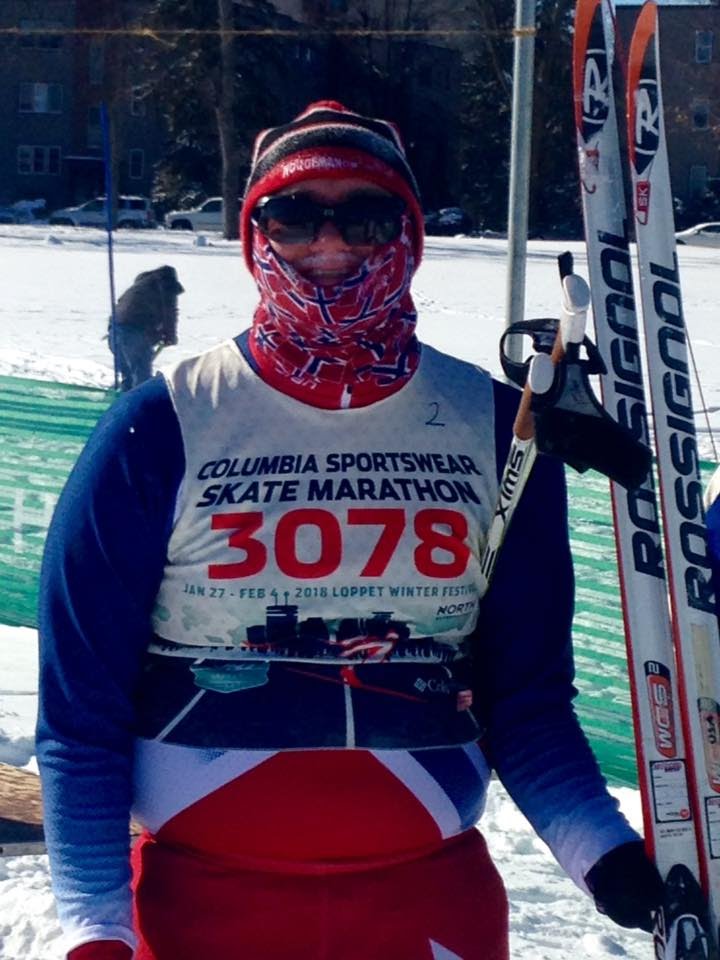
Here is a photo of me after the race. The good news was, after the race a first-aid ski patrol double-checked my ice/snot mustache for frostbite. Nice to know the Loppet was looking for that. The area in question was just excess warm skin/Vaseline. I finished at 3:10:43. Not bad at all. But I still think I don’t belong in Wave 2. So let’s look at the Pre-Birkie.
42 k Pre-Birkie
Again, the conditions for the 2018 Pre-Birkie had temperatures in single digits with 10-15 mph wind just like the previous week at the City of Lakes. But unlike the Loppet, this course was sheltered in the wind with the woods. The course is arguably harder than the actually Birkie Trail. This is great training for the Birkie and is the same weekend at the Mora Vasaloppet. The Vassaloppet is also a great race but it’s flat. So the Pre-Birkie got the nod this year.
The Pre-Birkie starts in Lake Hayward and follows the American Birkebeiner course backwards. As you can the see by the trail profile (read from right to left), the racers are climbing, climbing and climbing.
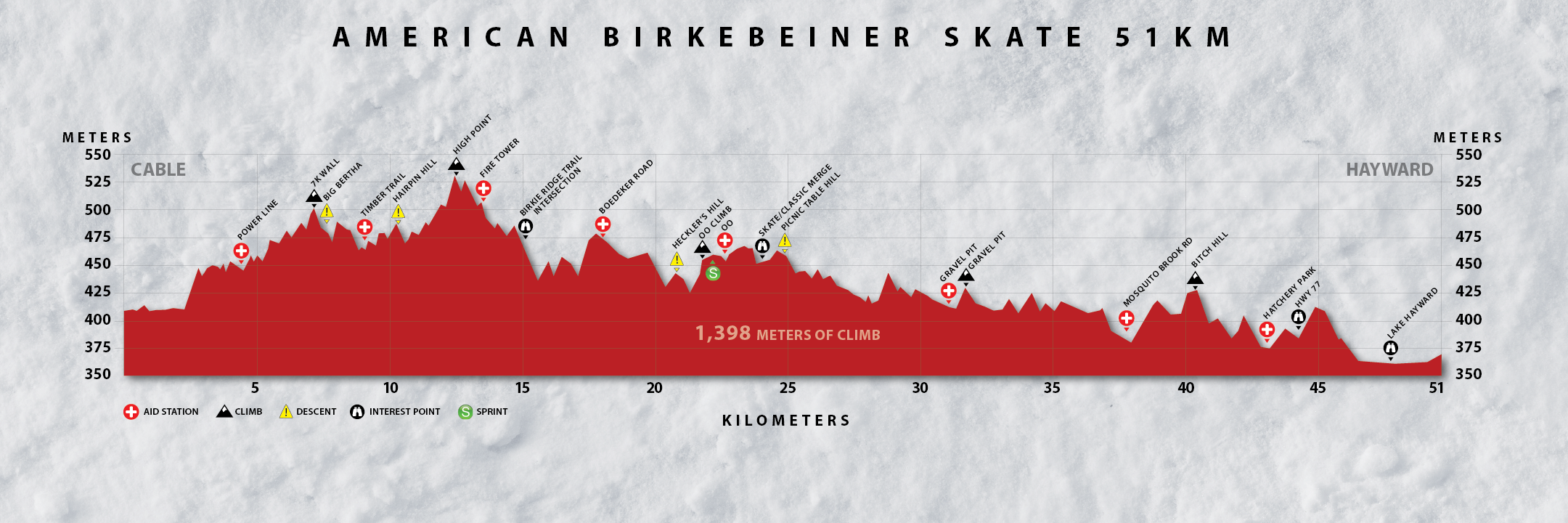
From Lake Hayward, racers climb the hills past “00” (the Birkie course’s halfway point) and ski about another 10 k past it before turning around. The next 8 k or so, racers climb the toughest hills of the course on the Birkie Classic Trail. Again, this last stretch was tough. It beat me up. I finished with a 3:17:17 time. That was a time I was extremely proud of and I felt my best. I could tell I left it all out because post-race, I was coughing and hacking pretty well. A fellow skier saw me hacking post race and said, “That’s when you know you went hard.”
I don’t have a cool photo of me skiing, but here’s a great video of me finishing a tough course. I hit the finish Sign with poles.
North End Classic
I recommend the North End Classic, a great “little” classic race on the Sunday after the Pre-Birkie. This was my first classic race and I really liked the course. They were some nice uphills and downhills, with 3-4 classic ski tracks. That made for a fun 12.5 k course. If you registered for the long one, that would be two loops around for total of 25 k. Since, this was my first classic race after the grueling 42 k Pre-Birkie the day before, I settled for just one loop. With my long time of 1 hour, 12 minutes — not bad but as my “friend” Jenna pointed out — that was good enough for second in age group, out of two! Thanks Jenna for the support.
***
Now, back to the Birkie. Am I good enough for Wave 2?
To be honest, probably not. But as one coach said so well, people get too hung up on wave placements. So my strategy will be to just hang in the back of Wave 2 and let the good skiers go by. The fast Wave 3, Wave 4, and later-wave skiers will not intimate as they me pass me. I am just going to race like me, Bjorn. If you see me with my Norwegian race suit, please cheer on me!


