Tag: pre-race

  • Prime the Body for Race Day with a Race-Prep Workout from Jessica Yeaton

    Prime the Body for Race Day with a Race-Prep Workout from Jessica Yeaton

    David Norris and Scott Patterson complete a set of pre-race classic intervals to optimize their performance in the next day’s races. (Photo: Tom Horrocks)

    All the athletes are all stripped down to their race suits and zooming around the course with laser focus.  They are breathing hard; in fact, some of them seem to be skiing at max effort. If it weren’t for the lack of announcements, race bibs, and cheering from the crowd (pre-COVID, of course) you might actually think it’s race day – but it’s not. It’s actually the day before the race, and many of the athletes are performing their race-prep workout. 

    For most cross-country skiers, a race-prep workout entails skiing fairly hard, often involving a similar pace to that of the race the following day. This may seem counter-intuitive, as you might think that energy conservation is key to peak performance. I distinctly remember being a middle-school cross-country runner and taking the day before the race entirely off; my race-prep “workout” would then consist of 20 minutes of walking to ensure that my legs didn’t get “too tired”. Sadly, this leisurely myth was debunked, and I have learned over the years that race-prep the day prior is actually a great time to put in some harder efforts to optimize performance. 

    Here are a few of the reasons why it’s a great idea to push yourself out of your comfort zone the day before, and a few suggestions for improving your race-prep workout before your next race.

    Hailey Swirbul completes a pre-race training session in Davos, SUI in December, 2021. (Photo: NordicFocus)

    While rest is important, taking a day off can often make your legs feel heavy or sluggish the next day. This is one of the main reasons why it is important to get out and ski the day prior to a race, even if minimally. Many athletes opt to take two days prior to the race completely off instead. 

    One of the biggest goals of a race-prep workout is to help switch your legs on and avoid any lethargic feelings on race day. It is not uncommon for athletes to report feeling “terrible” and having heavy legs during a race-prep workout. Rather than serving as a bad omen for the race the next day, it actually can be a positive sign that both feelings and performance will improve on race day. That being said, the length of the race helps determine the intensity of the workout the day prior. The shorter and more intense the race is the next day, the harder the pre-race workout will be, and vice versa.

    U.S. Ski Team member and soon to be two-time-Olympian, Rosie Brennan, offered her advice for a race prep-workout and how it differs depending on the type of race. Rosie excels at both sprint and distance racing; last season she won both the sprint and distance world cup races in Davos, Switzerland. Additionally, while many other world cup athletes specialize in sprint or distance events, Rosie’s race calendar consists of a mix, which has given her plenty of practice perfecting her race-prep. 

     “For sprint days, I do one lap of the course L3, take a break, and then one lap L4. After that I will run through a few speeds on key sections of the course.”

    Before distance races, Brennan states that her preparation is a little more variable. “If I’ve been racing a fair amount, I will generally do one 10 min interval that is mostly level 3 and kicks up into level 4 the last few minutes. If I haven’t raced in a while or feel like I need to rev the engine a little more, then I will do something like 3×4 minutes progressive, starting in level 3 and moving into level 4 for the last interval.”

    Race prep is also used to feel the rhythm of the course and practice corners, transitions, downhills, or other key spots on course at race speed. That is the beauty of skiing so quickly during these workouts – you can really get a feel for the way the course will ski the following day. Brennan says that race prep helps her to get a feel of how the course and snow might ski at race speed. “This allows me to better develop a race plan or do some visualization of how I want to ski on race day”, she states. 
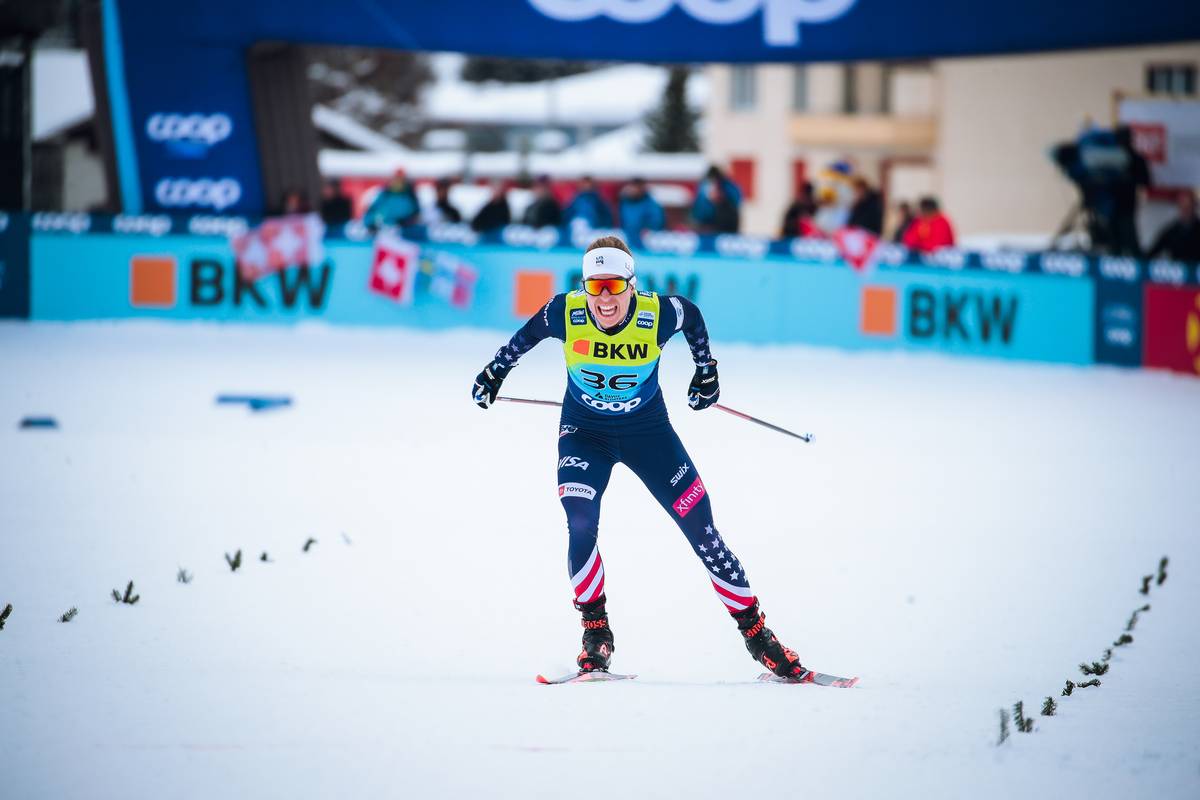
    Rosie Brennan powers through the final stretch to finish 4th in Davos in December, 2021. (Photo: NordicFocus)

    Although race-prep is often performed at a zone 3-4 pace, or just below/touching into anaerobic threshold, the total work time rarely exceeds 10-12 minutes.  For elite cross-country skiers, a typical interval set is generally between 25-60 minutes of work time depending on the target heart rate zone. By keeping the total time of race-prep significantly lower than a standard interval set, it ensures that the overall fatigue is minimized while still allowing for adequate practice of critical spots on the race course.

    Another goal of the workout the day before pertains to fueling. Muscle glycogen, or the major source of carbohydrate for energy during exercise, is pertinent to optimal performance. The greater muscle glycogen stores are, the longer the time to exhaustion, and the faster you can ski. Hard race-prep intervals serve as a stimulus for the resynthesis of muscle glycogen. Following this workout, muscle glycogen is rapidly replenished due to increased insulin sensitivity and cell membrane permeability to glucose. (1)

    That being said, it is critical to adequately fuel post-workout to ensure that this happens. So, while the race-prep workout might be slightly taxing in the short term, it ultimately assists our bodies in jump-starting the fueling process and ensuring that our muscles are ready to perform an even higher-intensity workout (race) the next day.
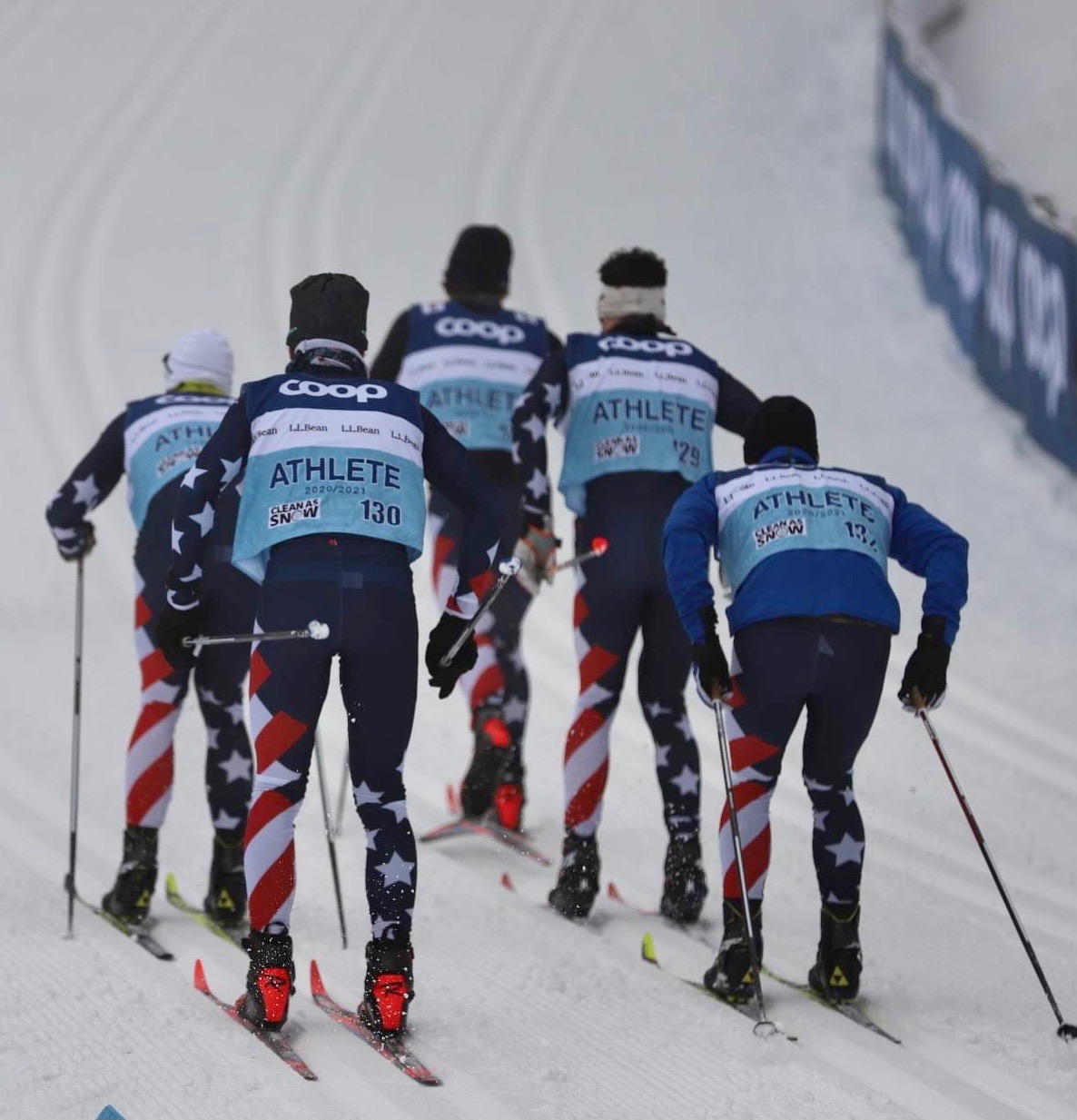
    A group of American men complete their pre-race workout. (Photo: Tom Horrocks)

    Ultimately, race-prep helps prepare our bodies both physically and mentally for a race effort the following day. When performed correctly, the stimulus of intervals the day prior to a race can prime our muscles and spark our metabolism for peak performance. While your legs may not seem super fresh during the session, trust that race-prep helps pave the way for better feelings on race day.


    Sources:
    1.     Ivy JL. Muscle Glycogen Synthesis Before and After Exercise. Sports Med. 1991;11(1):6-19. doi:10.2165/00007256-199111010-00002

  • How to Hydrate for Tip-Top Performance When It’s Oh-So Cold

    How to Hydrate for Tip-Top Performance When It’s Oh-So Cold

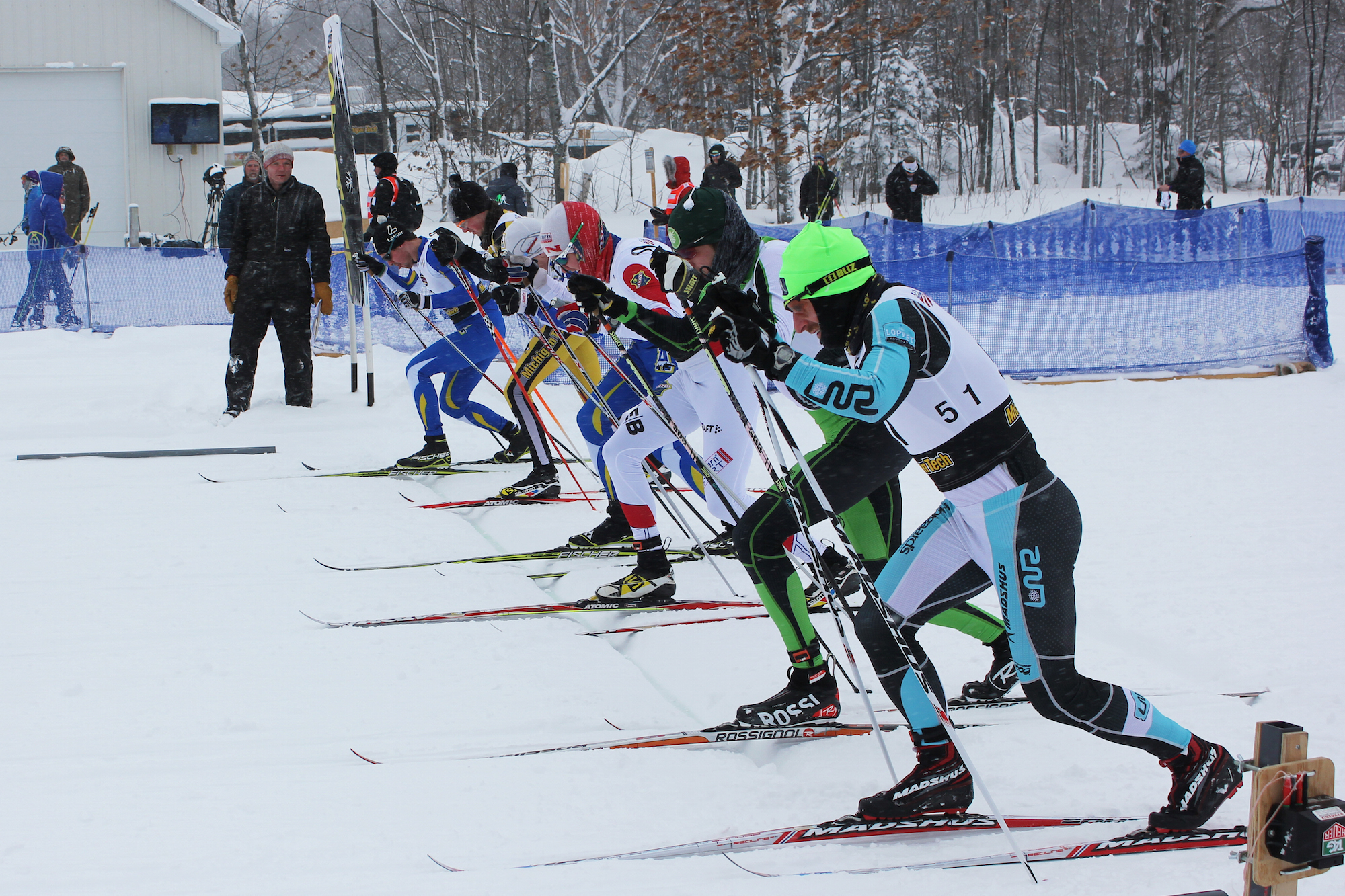
    Men's 1.5 k classic sprint at the 2015 U.S. Cross Country Championships in Houghton, Mich.
    When the temperatures plummet, like they did at U.S. Cross Country Championships last week in Houghton, Mich., make sure you hydrate. Guest writer Ted Burns explains how to implement a hydration strategy.

    Optimizing performance is a tricky business for winter-endurance athletes. Climate variations, equipment choices and training methods are all factors in a successful performance, and frequently leave nutrition at the bottom of a long checklist. For many reasons, hydration is an overlooked aspect of winter-sports performance.

    There are several common issues that cross country skiers run into. Cold weather can lead skiers to believe they are not sweating as much as they might be in other endurance activities. Evening races can cause issues due to the passive dehydration that occurs over the course of the day. Poor pre-race hydration, combined with eating too close to race time, can leave racers under-hydrated and over fueled. Long-distance events require athletes to keep their fluids topped up for 3-5 hours or risk losing the power and reflexes needed for efficient skiing.

    In order to improve performance and comfort skiers of all levels should implement a hydration strategy.

    Dr. Stacy Sims, founder and chief scientist of Osmo Nutrition, has worked with many professional endurance athletes including elite cross-country skiers and biathletes. Her work in hydration, nutrition, and thermoregulation has rippled across everything from triathlons to car racing.

    Regardless of a skier’s athletic level, Sims first recommends having a good daily hydration routine. “A few days before a race, you are eating watery fruits and vegetables and lightly salting your food,” Sims recommends. “Any water that you are drinking, you are adding a pinch of salt. These are all techniques to stay hydrated throughout daily life.”

     “A few days before a race, you are eating watery fruits and vegetables and lightly salting your food. Any water that you are drinking, you are adding a pinch of salt. These are all techniques to stay hydrated throughout daily life.” — Dr. Stacy Sims, founder and chief scientist of Osmo Nutrition, also an exercise physiologist, nutrition scientist and athlete

    ‘Pre-loading’, the method of hyper-hydrating before an event is a strategy Sims recommends for both short and long distance skiers.

    “They way hyper hydration works, you want to do small sips across the course of an hour so that it actually gets absorbed,” said Sims “If you guzzle it down then you can sometimes have what we call a baroreflex. This is when the volume in the stomach, stretches the stomach. This signals the kidneys to uptake the liquid a lot faster, and pee it out. If you go in small sips across an hour then it all gets absorbed.”

    Drink mix formulas designed for pre-loading, like Osmo Pre-Load Formula, The Right Stuff, or Skratch Labs, are now easily found online and at local bike and ski stores. Athletes can play with alternatives such as creating their own buffer mix or just using water.

    Putting a hydration plan in place is not difficult. It can be accomplished with a few simple steps, many of which athletes already execute in some manner already.

    Hydration Plan

    1. Drink some pre-load or water the morning of or night before event to top up body water
    2. Finish meals 2 hours before the race
    3. Prepare pre-load drink (water or with mix) 1.5 hours before event
    4. Start drinking pre-load an hour before race
    5. Sip pre-load fluid slowly,10 mls/kg or 1-2 water bottles, over the course of an hour
    6. Finish drink approximately 20 minutes before the race.
    7. For longer events use a hydration pack or bottles to take in 8-10 mls/kg per hour.

    An effective hydration plan is easy to implement, and will enable skiers to check off one more detail on the long list of to do’s that are required for maximum performance and comfort.

    ***

    About the author: Ted Burns has been writing and producing content about outdoor sports since 1998 when he covered his first Tour De France. Since then he’s been a frequent contributor to VeloNews, cyclingnews.com, Cyclocross Magazine, Behind the Barriers TV and other print, online, and video properties. Ted moved to Madison Wisconsin in 2011 and took up cross-country skiing to stay sane. He’s recently started training for his first biathlon race despite having never shot a rifle before.

  • Wednesday Workout: Gelso’s Throwback Pre-Race Warmup

    Wednesday Workout: Gelso’s Throwback Pre-Race Warmup

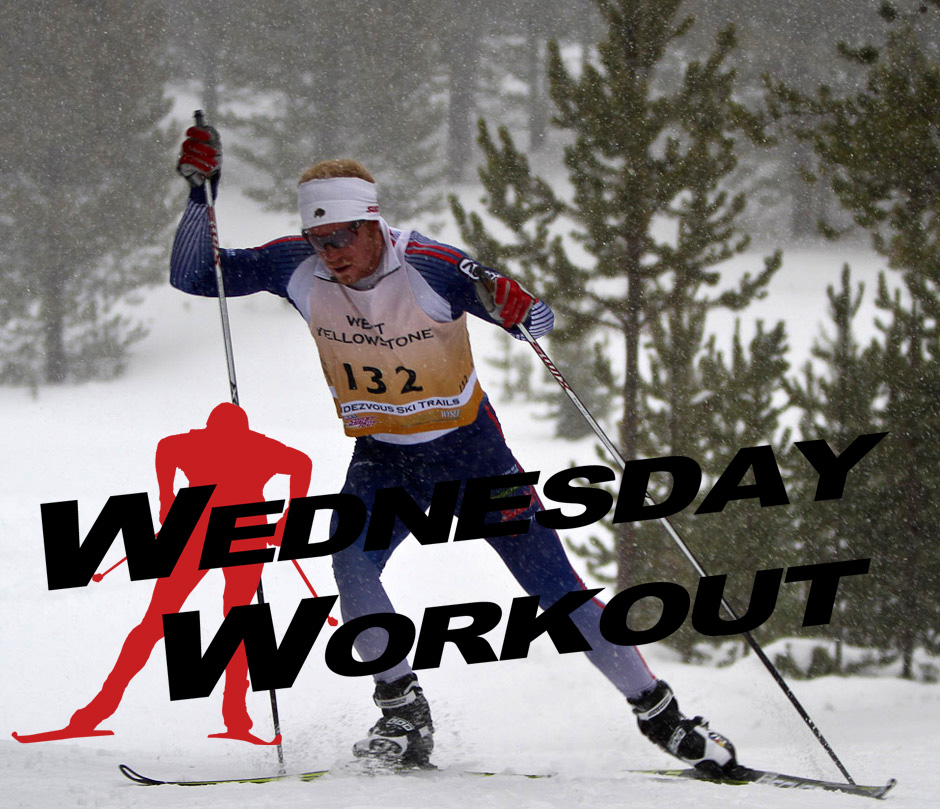
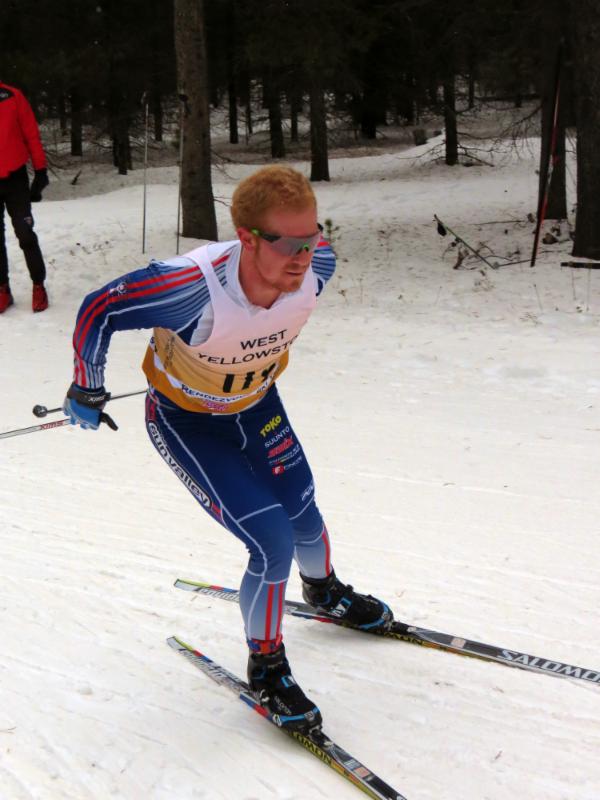
    Matt Gelso (SVSEF) racing in West Yellowstone in November 2011. There, he placed fourth in both the 15 k freestyle and 10 k classic. Last week, Gelso, 26, nabbed his first West Yellowstone SuperTour win in the 15 k freestyle.
    Matt Gelso (SVSEF) racing in West Yellowstone in November 2011. There, he placed fourth in both the 15 k freestyle and 10 k classic. Last week, Gelso, 26, nabbed his first West Yellowstone SuperTour win in the 15 k freestyle.

    This week, we bring back a Pro Workout from three years ago, in which Matt Gelso of the Sun Valley Ski Education Foundation Gold Team shared his pre-race routine. Last weekend, Gelso busted onto the SuperTour scene with a nearly 10-second win in the first distance race of the season. For his original pro workout, published Dec. 14, 2011, click here.

    ***

    When race morning rolls around, it is important to know what you need to do in order to maximize your effort on the race course. For some, that means superstitious traditions, like always wearing a certain pair of socks (or even mismatched socks). For others it means eating exactly two bowls of oatmeal and finishing breakfast precisely two hours before their start time. Regardless of your pre-race routine, it is imperative that a solid, active warm-up is achieved to be sure your body is primed for the strain of a hard race.

    Matt Gelso racing to first in the West Yellowstone SuperTour 15 k freestyle on Nov. 29, 2014. (Photo: Toko)
    Matt Gelso racing to first in the West Yellowstone SuperTour 15 k freestyle on Nov. 29, 2014. (Photo: Toko)

    Everyone is different, especially when it comes to a sport like nordic ski racing. There are many different perspectives about every detail regarding training or racing. I require a longer and very substantial warm-up, some simply need a few minutes to move around. It is important that you find your own unique methods and progression that gets you perfectly warmed up before a race. My process begins with some easy, level one skiing, followed by a moderate intensity portion, and finishing with some short speeds and a little more easy skiing.

    To begin my warm-up, I ski easy level 1 for 15-25 minutes. This is easy skiing to get blood flowing through the body and get the muscles moving easily. This is also a good time to get yourself fully focused on the business of the day. Once I am moving well I will stop for a couple minutes and have a sip of water and stretch a little to continue working out any last bits of stiffness.

    Intensity is the next portion of the warm-up and is very crucial and will be different for everyone. It is important to get your heart rate out of the easy level one zones to make sure your body is ready to respond to hard stimulus. It is imperative to make sure you progress into the intensity properly, touching all your training zones on the way up the intensity latter. After I finish the easy skiing segment I find some rolling or hilly terrain and start my intensity ladder. I begin with four minutes of level 2 skiing, followed by two minutes rest.  Next is four minutes of level 3 skiing, again followed by 2 minutes rest. Lastly, I ski two minutes of level 4 or full on ‘race pace’, followed by two minutes rest.

    This intensity progression provides time for the body to progress through every levels to fully warm up all the systems. It is crucial to work through all these levels to fully warm your body in a controlled manner, and not make huge jumps in levels and build large amounts of lactate.

    Gelso’s Warmup Routine (circa 2011): 

    1. Level 1 for 15 – 25 minutes
    2. Level 2 for 4 minutes (2 min rest)
    3. Level 3 for 4 minutes (2 min rest)
    4. Level 4 for 2 minutes (2 min rest)
    5. Warm-down for 10-20 minutes (with 3-5 speeds for 10-15 seconds each)
    6. Leave 15-20 before race start for last-minute prep

    Please note that the exact time guidelines I use here for intensity on-time length are not set in stone—I vary the on-time length of each interval depending on how I am feeling, whether or not I raced the day before, when I did my last intensity, and the length of the race. Each day is a different situation, so use circumstance (to a reasonable extent) to dictate what needs to be done.

    Once the intensity portion is complete I ‘warm-down’ for 10-20 minutes. This easy skiing after the intensity is to be sure that any lactate that was produced is removed before you being your race. During this easy skiing, I will do three to five accelerations or speeds above race pace. These will be 10-15 seconds. These speeds will help better clear any residual lactate produced during the intensity portion of the warm-up, as well get your muscles up to speed for a race effort.

    Once the warm-up is complete it is important to stay warm before your start and not let your muscles cool down too much. I like to end my warm-up 15-20 minutes before my race start to make certain I have time to get skis and everything else ready to race, but not too much time to let my body cool down.

    My specific race warm-up works well for me and gets me ready to provide a solid effort on the race course. This exact warm-up is not meant for everyone and even I change and adapt it to fit my time, ski, resources, and space/snow constraints. The most important aspect of the warm-up is making sure it gets your body ready to throw down a hard effort on the race course. It should be efficient, fairly consistent each time (at its base level), not resource consuming, and most importantly, adaptable to the plethora of changing conditions and constraints that race day tends to provide.

    A solid warm-up will give you the best chance of skiing your way up onto the podium—or maybe just off it in 4th, like I have been every distance race this year.