From the FasterSkier archive — posts syndicated from athletes’ and coaches’ own blogs between 2004 and 2012, kept online as published. Current coverage is at fasterskier.com.

Tag: pregnancy

  • On Pregnancy, Postpartum Recovery, and NCAA Ski Coaching: Eliška Albrigtsen (Part 2)

    On Pregnancy, Postpartum Recovery, and NCAA Ski Coaching: Eliška Albrigtsen (Part 2)

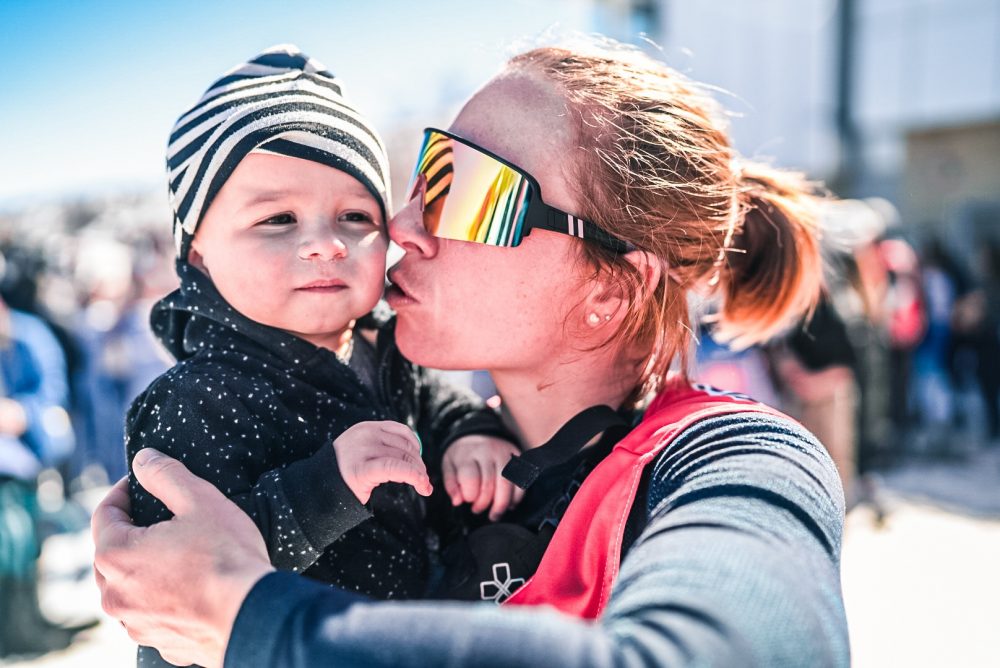
    The journey into motherhood, though challenging, has also been rewarding for UAF head coach Eliška Albrigtsen. (Photo: Tobias Albrigtsen / @untraceableg)

    Part 1 of this story details Eliška’s experience coaching through pregnancy and the birth of her son. Keep reading to learn about the challenges she, like many women, experienced during the postpartum recovery process, and what it took to navigate year one of life on the road with baby Viggo.

    Expectation versus reality. 

    When preparing to interview Eliška Albrigtsen about her experience pairing NCAA coaching with new motherhood, I expected the challenges she faced during her transition to primarily be focused on the balancing act of managing a demanding job with frequent travel and a new baby. Maybe a few relatable stories of airport meltdowns, sleepless nights in hotels while on the road with the team, and inopportune timing of diaper blowouts. Or any number of other ways societal systems in the US seem to be structured in opposition to new moms in the workplace.  

    But Eliška’s passion for her job and dedication to her athletes were abundantly clear throughout the conversation; coaching is where she thrived. Her grit and energy allowed her to problem solve bringing baby Viggo on the road with the team – perhaps paired with the added fortune of a husband whose skill set includes waxing and ski testing and a well placed mother-in-law eager to help care for her grandson. And the team embraced its new member without hesitation.

    In reality, the biggest challenges Eliška faced in returning to coaching postpartum were connected to the physiological impacts pregnancy and delivery had on her body. In short, it was a discussion on the shortcomings of our healthcare system and the myriad of ways the current standard of postpartum care falls short of what many women require to restore their body to full function.

    Her story highlights a few key takeaways for programs looking to support women coaches surrounding pregnancy; in particular, there’s much more to the return to coaching than navigating who will care for your child while you’re out training with athletes and traveling to races. Respecting the timeline of a slow return, and perhaps offsetting the costs of postpartum physical therapy, may be an essential component of an improved and holistic support system.  

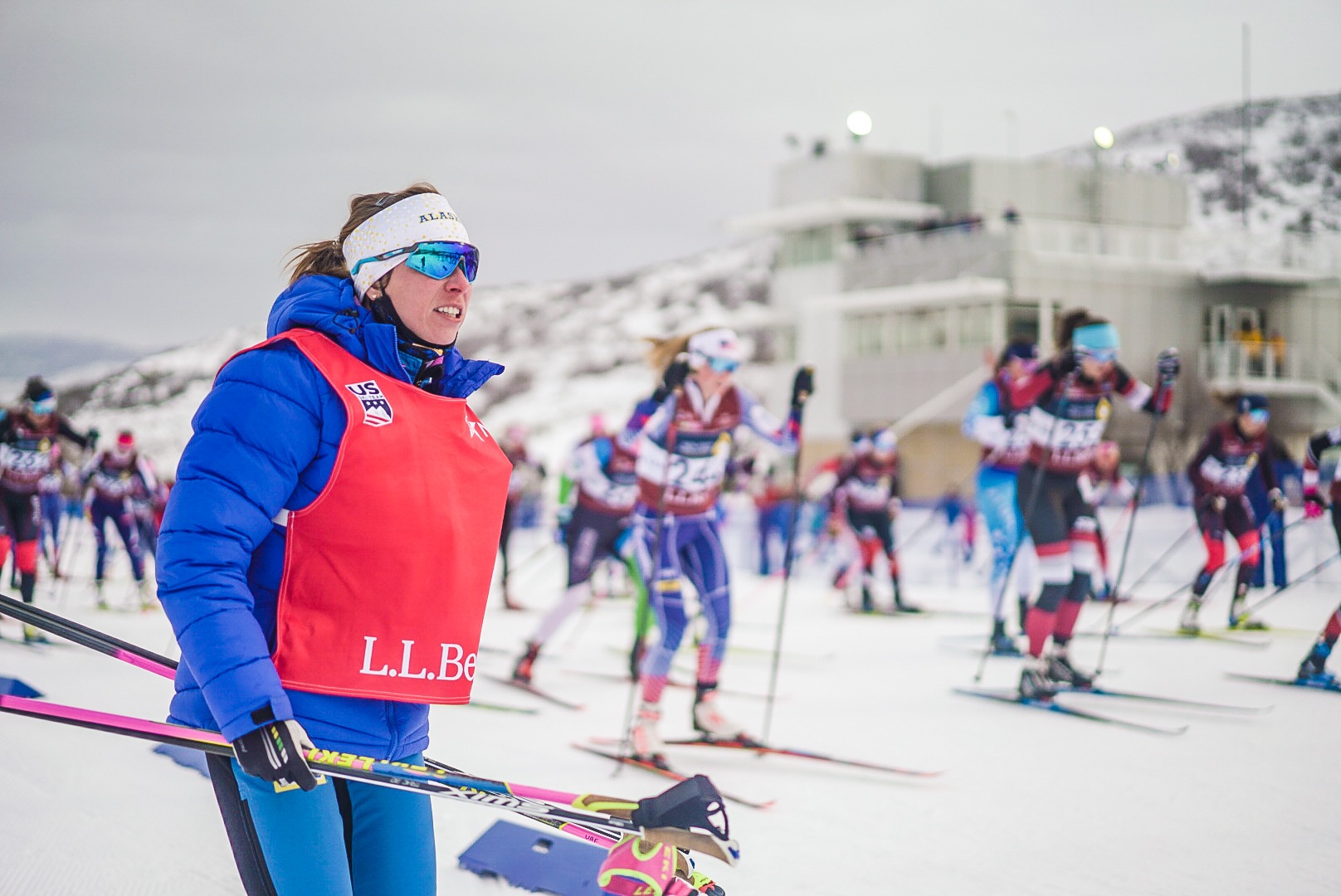
    Eliška Albrigtsen in action at US Nationals in Soldier Hollow, UT. (Photo: Tobias Albrigtsen / @untraceableg)

    Postpartum Recovery

    A theme of Eliška’s narrative of her perinatal experience was the ways in which her “athlete mindset” served and hindered her ability to roll with the punches. 

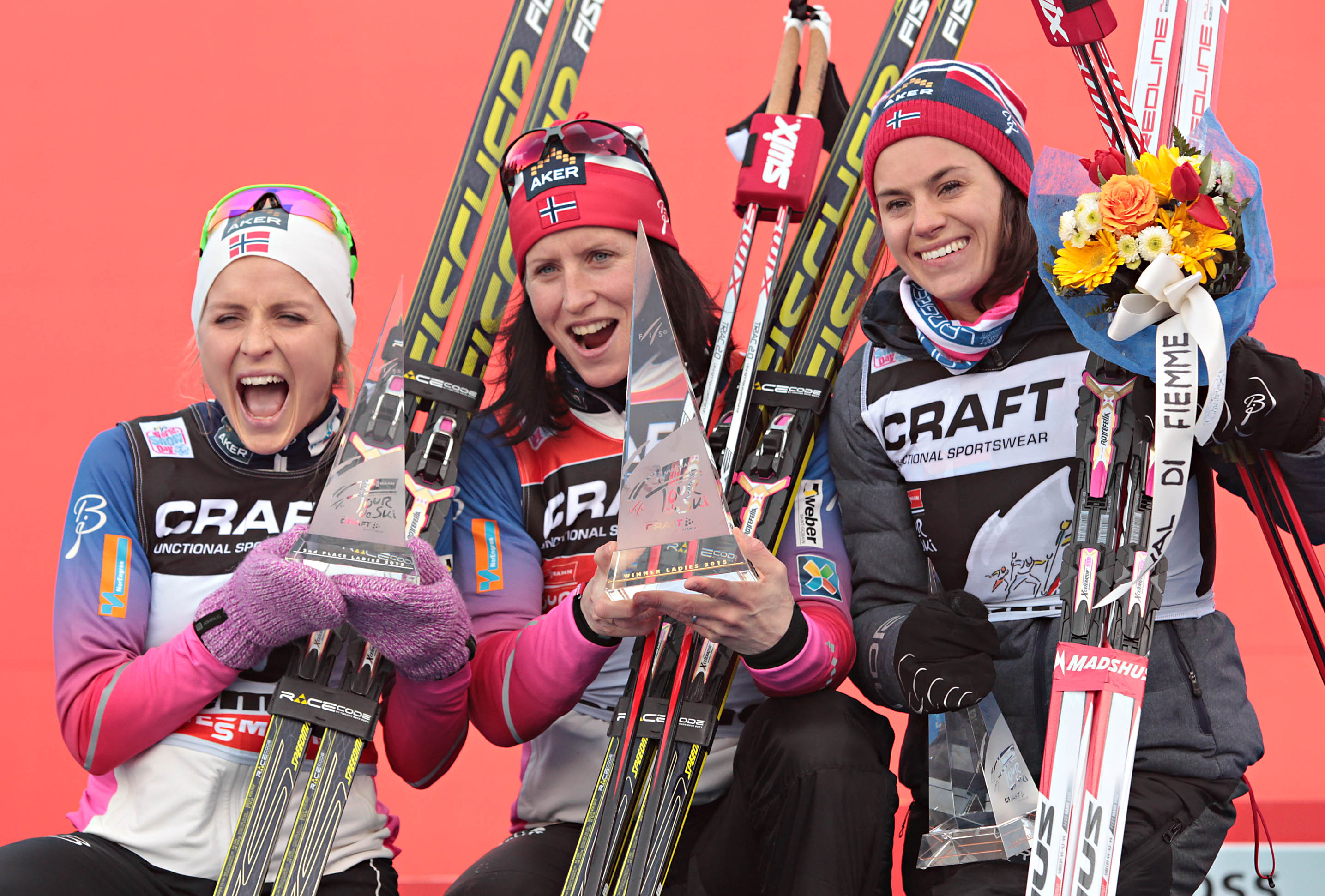
    While women like Kikkan Randall, Marit Bjørgen, Aino-Kaisa Saarinen paved the way for women looking to begin their family before retiring from professional skiing in many ways, Eliška said that the ease with which they outwardly seemed to rebound beyond their previous levels of fitness was, in some ways, a disservice to women like herself who did not experience as smooth a return. In her mind, she had expected a comparable experience given her athleticism and good health, but quickly learned that women might be better served using caution when extrapolating from outliers. 

    “You see these professional skiers having babies and then coming back and winning gold medals at [the] Olympics,” she said. “And you’re like, ‘Oh, yeah, that’s gonna be me.’ But no one really sees the giant support team they have behind them.

    “They have professional doctors, physical therapists, and strength and conditioning [specialists] to go through their pregnancy with them, monitoring everything, having them at the birth, and then jumping right into the recovery. As a coach, you don’t get that. You probably have the same amount of on-ski hours as professional skiers – not the same quality of course, but you can’t do your job without being there. So I think that’s how most of our ski community sees pregnancy – so easy and you are an even better athlete afterwards, because all these women did it…

    “For me, it was the opposite. It was hell. I can’t wear the clothes that I wore when I was pregnant because I have extreme PTSD from that… it was such a, not just physically but painfully, impacting experience.” 

    Though expectation and reality could not have been more different, her drive to recover from the injuries sustained from pregnancy and birth, and the creativity required to adapt during the recovery process, mirrored her general approach as an athlete more broadly. 

    “I think the athlete mindset in me was, ‘Okay, I had this baby. Now I put myself through physical therapy, and I’m gonna recover’… Just like after having a shoulder dislocation or having a torn iliopsoas, all those pretty crazy injuries – I knew that eventually you get better, and you get back to yourself.”

    What Eliška identified as the biggest physical challenge she faced after the birth of her son was the repair of a condition called diastasis recti (DR), which is a separation and consequential loss of function and strength of the rectus abdominis muscles. 
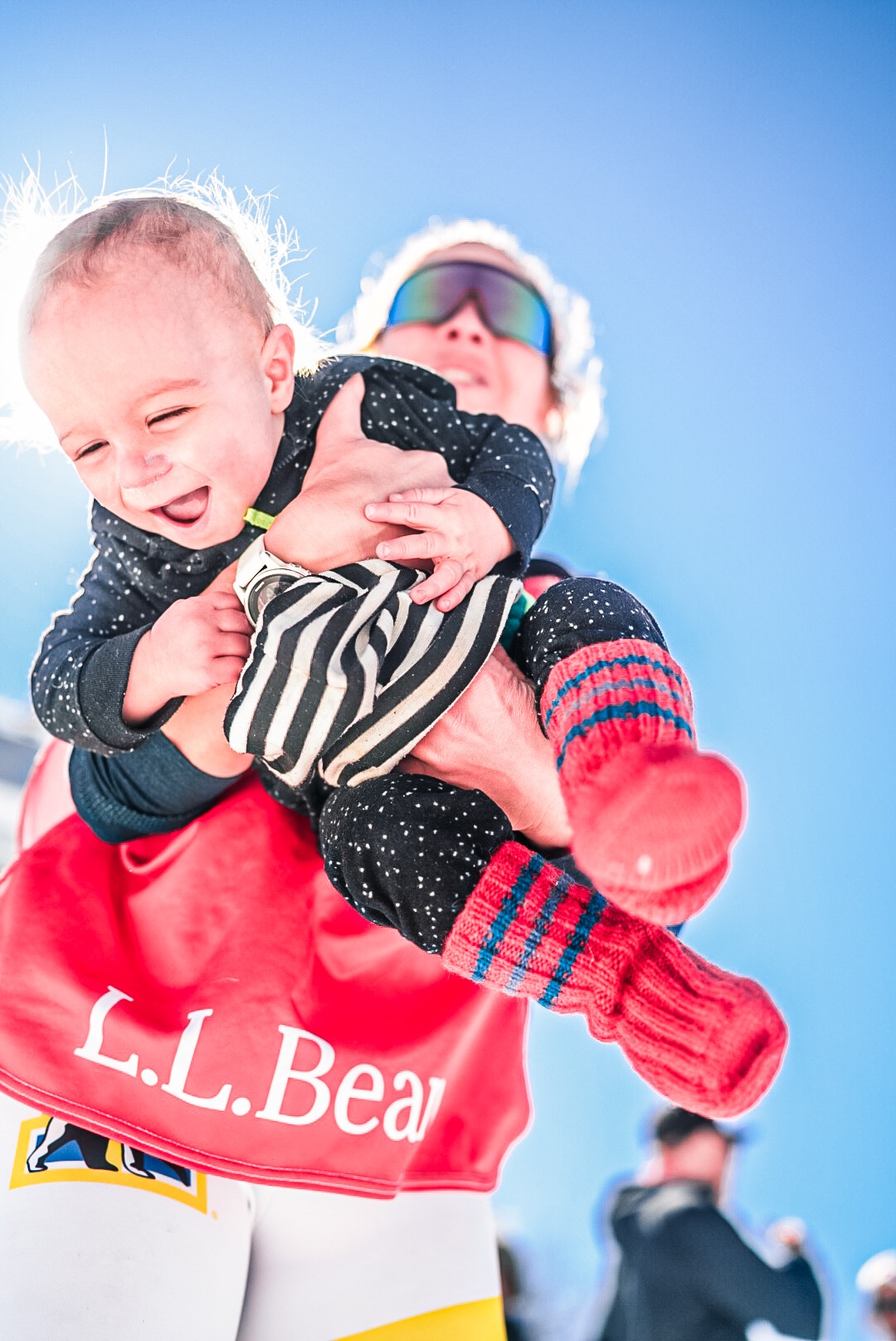
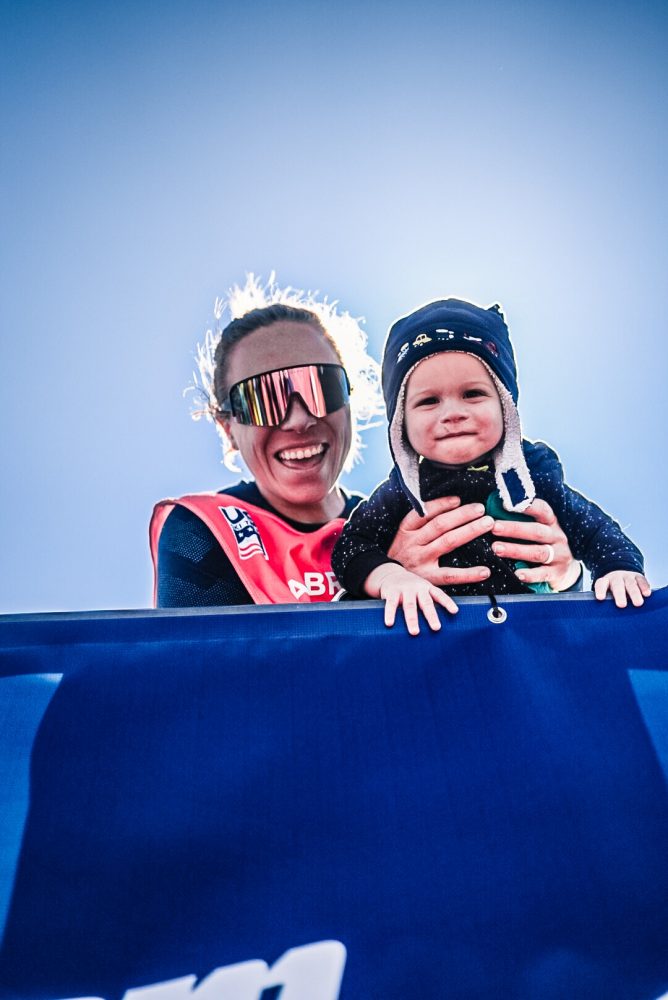
    Happy baby and happy mom. (Photo: Tobias Albrigtsen / @untraceableg)

    During pregnancy, as a woman’s belly expands to accommodate the growing baby, the muscles of the abdomen are forced to stretch. The deeper muscle layers, known as the transverse abdominis, are structured like a corset wrapping around the belly, giving them a greater capacity to expand. However, the rectus abdominis muscles, better known as the “six pack” muscles, run vertically while connected by fascia, and have significantly less ability to adapt to the expansion. 

    Instead, the outward pressure and growth of the belly causes the rectus abdominis muscles to separate, thinning and weakening the fascia as it stretches, or in extreme cases, tearing it.

    “When I was the most pregnant, my six pack was under my armpits.” 

    This connective tissue cannot simply snap back to its original state after delivery. As fascia lacks the blood flow of muscle tissue, it is slow to heal, leaving many women with a gap between muscles known as a diastasis. All women experience some amount of ab separation during pregnancy, but if the gap of two or more finger widths between the muscles persists postpartum, she is diagnosed with DR. 

    Because of the combination of her stature, a short torso, and the size of her baby, Eliška found herself with an extreme separation. 

    “Basically, you could stick your whole fist into my stomach. That was the biggest problem for me because I basically lost my core. And my core was a big part of me as an athlete – not just as a skier, but as an athlete. So that was really hard.” 

    As she hopes for a second child down the road, any surgical repair options were contraindicated, and instead, Eliška dedicated herself to a physical therapy regimen. She felt lucky to have access to a Fairbanks-based Osteopathic medicine expert, Dr. Todd Capistrant, who specializes in the Fascial Distortion Model and was therefore primed to help Eliška improve her diastasis. 

    “I saw him basically on a weekly basis.”

    She also met regularly with a pelvic floor physical therapist, both to work on the diastasis, and to restore appropriate function to the muscles of her pelvic floor. Her PT identified that her pelvic floor was hypertonic, meaning the muscles carried tension chronically, rather than contracting and relaxing in functional patterns. Like holding a flexed arm hang and then being asked to knock out a set of chin-ups, this chronic low-level tension leads to fatigue in the pelvic floor muscles, preventing them from outputting the strength and tension required to support the organs sitting inside the pelvic girdle and interact appropriately with surrounding musculature when recruited during activity.

    With the guidance of the PT and a set of progressive exercises to relax and engage her muscles appropriately, Eliška saw progress, but it took time for her muscles to function in coordination subconsciously.

    “It took me probably around eight months to incorporate the mental [and neuromuscular] connections back. I was able to [engage the muscles] when I wanted to, but all the muscles of the pelvic floor, everything that’s sitting in the pelvis, they were not working with the rest of my body.”
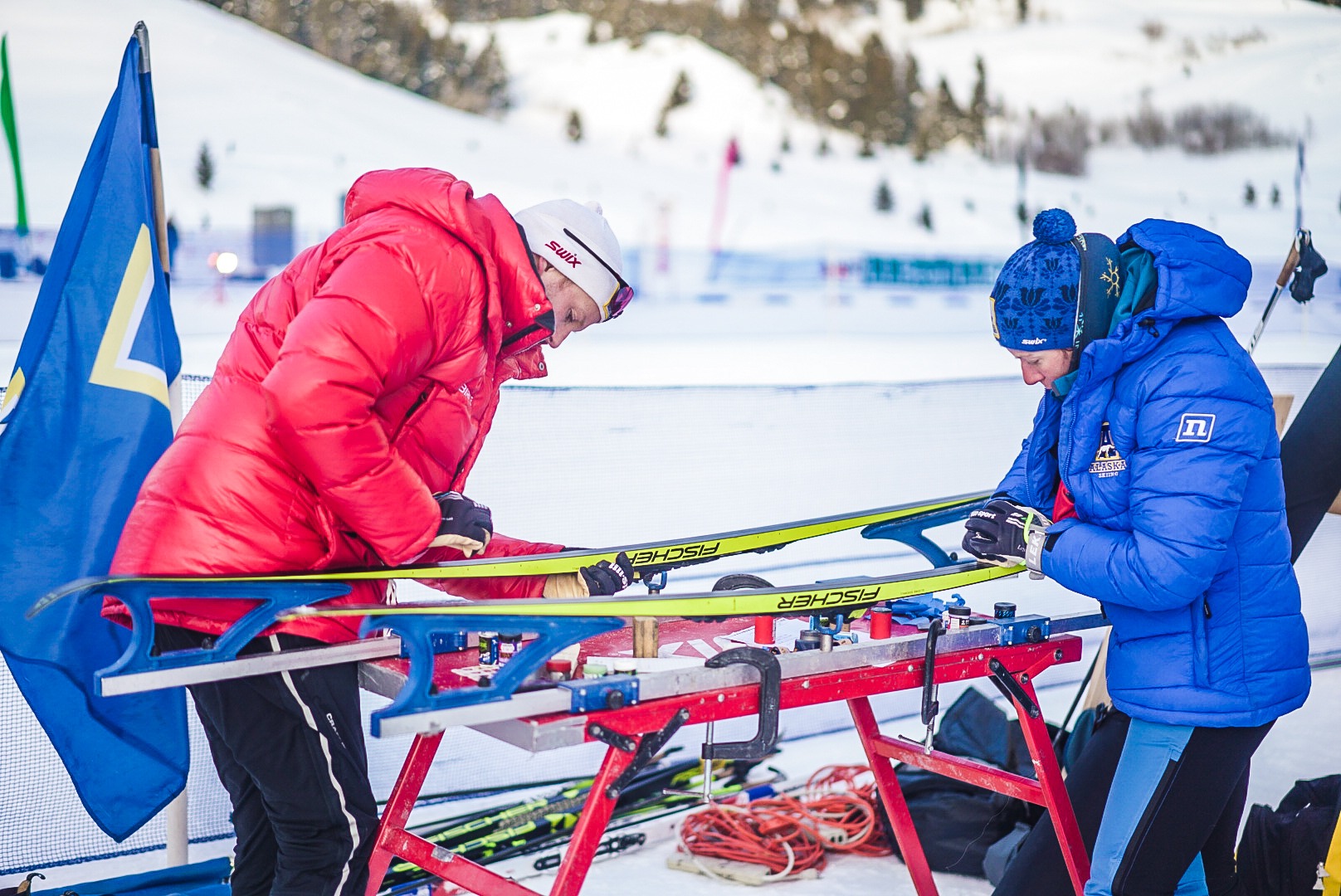
    On the bench: Eliška Albrigtsen prepares skis for the UAF athletes. (Photo: Tobias Albrigtsen / @untraceableg)

    She expressed feeling lucky to have access to high level care in Fairbanks, including her therapist who could incorporate a variety of techniques to help her recover, including deep tissue massage, cupping, electrical muscle stimulation, and biofeedback.

    “I think biofeedback for athletes just works the best. Because we’re such strong willed people. Like, if we see it happening, we can really focus on making it happen more.” 

    An unexpected benefit of time and resources being placed into learning how to strengthen and reintegrate her deeper core musculature trickled down to her athletes. She recognized that several of her athletes, who had complained of back pain surrounding core workouts, were not sufficiently engaging their transverse abdominis muscles, instead relying too heavily on the outer rectus abdominis or other smaller core muscles. Teaching the techniques she learned through PT helped improve the form of her athletes, relieving the back pain they had experienced previously. 

    “It definitely deepened my understanding of how the core should work, and how we use it when we ski.”

    As she navigated her own challenges, she became aware through talking with friends of how common these experiences are amongst mothers. Describing herself as “someone who says everything”, she felt it was important to both be open regarding the challenges she’s faced, and the resources and options available for women to make progress toward recovery, rather than accept the conditions as permanent. 

    Most women only receive one postpartum checkup, approximately six weeks after delivery. As my own pelvic floor PT described it, these visits typically only check to see that the tissues have healed and that there are no visible pelvic organ prolapses, but most midwives and OB/GYN practitioners do not have the depth of knowledge to assess muscle function, hence the need for an evaluation from a pelvic floor PT. However, quality pelvic floor physical therapy is not universally available, and as it is not always covered by insurance, making it cost-prohibitive for many women to continue care long enough to make sufficient progress.  

    “I think the most tragic experience post-pregnancy that I had was the realization that women are left being damaged from bringing life to the world.”

    As she discussed her own experience with the women in her community, in turn, many of them shared that they continued to suffer from the impacts of ab separation or pelvic floor dysfunction from pregnancies, including friends who were more than ten years postpartum. Some of these women had given up activities they had enjoyed previously, like running, because they felt as though they were “spilling their guts” out of their bellies due to a lack of core function. 

    “How is this okay for women to live this way? That was just mind blowing to me.”

    Imparting the knowledge she gained in the process, and advocating for women to find their own ways to make it work, she offered up suggestions.

    “I was just like, ‘Hey, if you can’t go to physical therapy, this is how you tape your belly, so at least you can start hiking fast.”

    At roughly 13 months postpartum at the time of the call, Eliška recognized the improvements she’s made, while still acknowledging she has not fully recovered. 

    “It’s [been] more than a year, and I feel functional. I still have pains and I would not go and enter a race, because my brain can push much harder than my body can, so I know I would hurt myself. But I’m so much better than most of my friends that, you know, [had to] just give it up…”
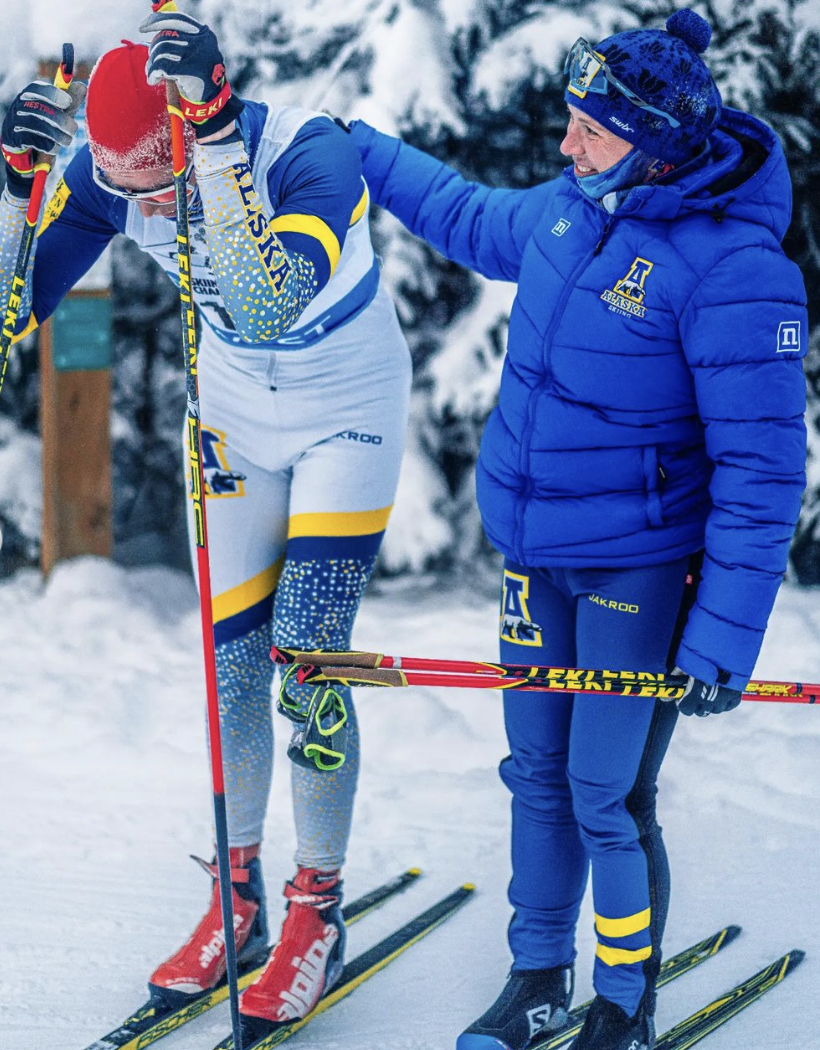
    Eliška Albrigtsen lead the UAF Nanooks to an historic seventh place finish at 2022 NCAA Championships following the birth of her son in February 2021. (Photo: Tobias Albrigtsen / @untraceableg)

    As she worked with athletes through the fall and winter, Eliška found ways to adapt her ski technique to avoid putting unnecessary strain on the musculature she was working to rehab, and work instead with the muscles that already had the necessary strength. In particular, she needed to change her doublepole technique.

    By returning to the older style of doublepoling, which involved less of a crunch through the abdomen than modern technique, instead increasing the bend at the waist and relying more heavily on the arm and shoulder muscles. 

    “I don’t have the strength there anymore [to crunch]. My muscles are two three packs, they’re not connected. So I go into doublepole and I tighten my  lower belly, but then I pull my butt up kind of like into downward dog instead, and work with my arms again.”

    Multitasking: Eliška Albrigtsen feeds her son trailside while on the road for competition. (Photo: Tobias Albrigtsen / @untraceableg)

    Another lingering problem she has experienced is a result of the endocrinological changes experienced surrounding pregnancy. To allow the body to grow during pregnancy and a widening of the hips for delivery, the body releases an aptly-named hormone called relaxin, which acts on cartilage and other soft tissues to allow expansion and increased joint mobility to occur. The production of relaxin typically declines after delivery, but remains higher than normal for the duration of breastfeeding.

    While beneficial for pregnancy, it also puts perinatal women at a higher risk of joint instability and consequently injury. 

    Eliška shared that she seems to produce an above average amount of relaxin, which has continued to affect her postpartum as a nursing mom. She experienced joint pain, particularly in her pubic symphysis joint at the front of the pelvis, with unexpected movements – like slipping on ice or mud. “And it’s always slippery here. Like 10 months out of the year.”

    “On skis, I don’t have a problem. Because everything’s gliding and I already have the natural anticipation of gliding. But walking and slipping – I try to catch myself and my muscles, my joints, my tendons are just too loose.” 

    Reflecting on her journey through the first year postpartum, the lack of care available to most women remained at the forefront of her mind. The impact of these types of conditions, which linger if left untreated, affects more than just the level of activity a woman can enjoy. As those who have experienced it (waves hand) can attest, the emotional toll affects quality of life more broadly. 

    “I would absolutely fight for every woman to be able to have a year of free PT [after pregnancy]. You just need your life back.”

    Life on the Road

    There’s a commonly used phrase when it comes to raising children: “It takes a village.” This resonated as Eliška shared insights into what support was necessary to allow baby Viggo to travel with the team through the competition season.

    While children under two-years-old are typically able to fly for free on their parents’ laps, the travel of the person who would care for Viggo while Eliška was working is not. Fortunately, her husband Tobias was already incorporated as a volunteer assistant coach, and had both the skillset and the NCAA certifications to play a variety of roles during travel, which also got him on the payroll to offset travel costs.

    “I’m lucky that my husband’s quite good tester and waxer as well. And traveling with a full team this year, six [women] and six [men], I knew that we will need more than two coaches to wax.”

    And, conveniently, Tobias’ mother is based in Boulder, CO. “She was able to actually drive to all the races and babysit when we were ski waxing and racing.”
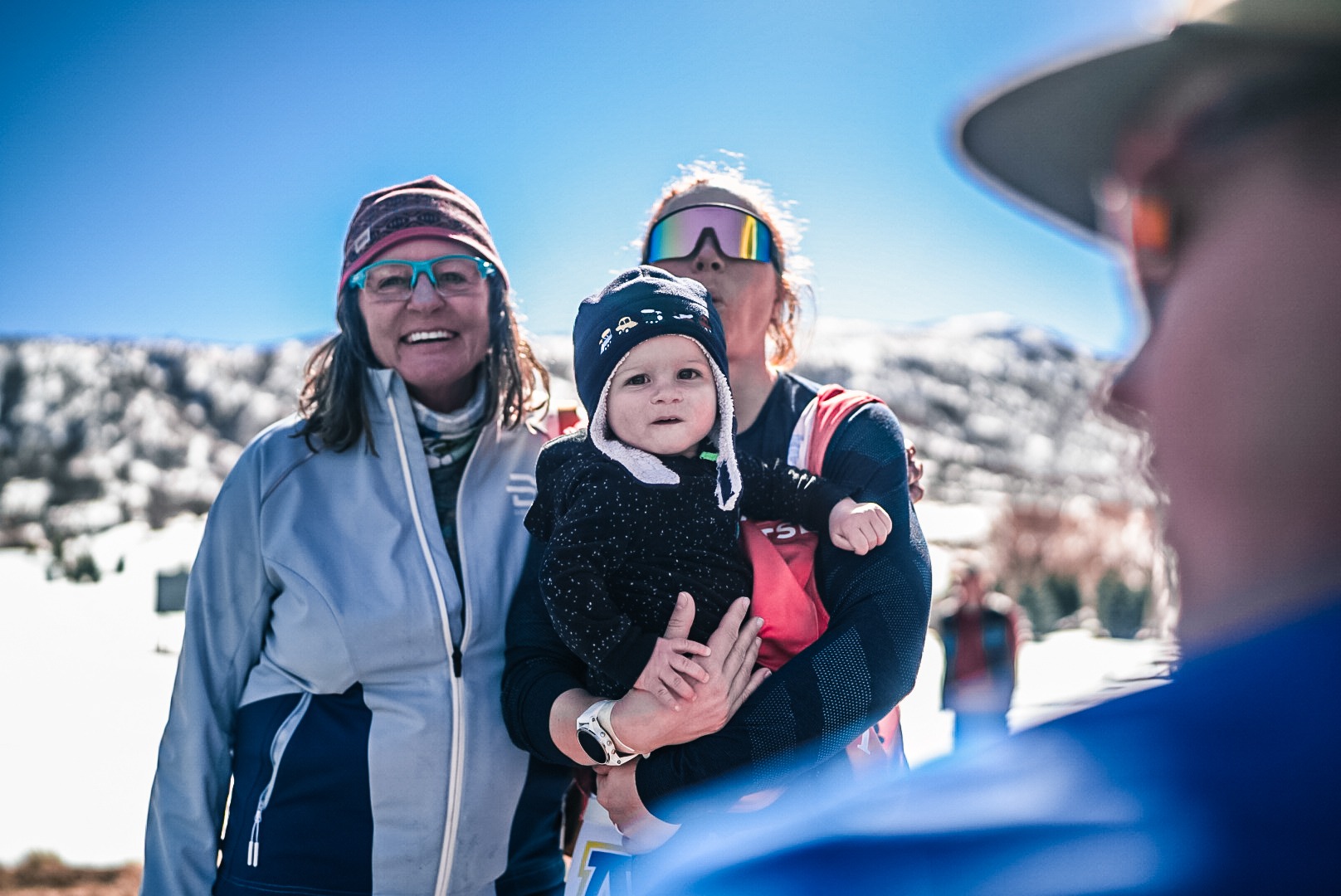
    The village: Eliška Albrigtsen has help from her mother-in-law during the RMISA Championships in Steamboat Springs, CO. (Photo: Tobias Albrigtsen / @untraceableg)

    For US Nationals, UAF collaborated with other Alaskan clubs to wax, but it was still useful to have an extra driver to bring athletes back and forth to the venue. Consequently, they paid out of pocket for the flight, but Tobias was able to get a per-diem salary as a driver. “So we got at least the food covered,” she laughed.

    For other RMISA and SuperTour races where UAF was only waxing for their own athletes, Tobias could have his travel expenses fully covered in exchange for his work. It’s perhaps a model that’s hard to replicate for other mom-coaches, but still demonstrates that with some creativity and determination, bringing the family along for the ride is possible. 

    “We call it the primary. He’s the primary on the baby when we have training days, where me and my assistant go with athletes and train. And then when we were testing and race waxing, grandma was the primary. And oh my God, bless her heart — she paid for all of her gas and her accommodation and food. She would just come to the house where we were staying when we had to leave and just babysat for us… So that’s the way that we made it work, but it’s a very, I think, exceptional situation.”

    Was traveling back and forth from Fairbanks to Colorado and Utah challenging with a toddler? Yes. But Eliška knew it was something they would need to navigate as a family regardless of her career. 

    “I know living in Alaska, he’s gonna fly anywhere he goes. That’s just what it is. So that was just like one thing that we were like, ‘Yeah, there’s no way around it.’ We did have to travel with more things. Because you have to have the car seat, we have to have the crib, we had to have a bunch of diapers with us.”

    The system worked for the first year, but it will need to be modified for next season. The full RMISA calendar has not yet been set, however, the regional championships will be held in Anchorage, which will make at least one competition easier to travel to. 

    From there, it will be running the calculus on what makes sense financially. She laughed that Viggo is already a squirmy baby to keep on their laps on the plane and will need his own seat next year, but she is also not sure whether he will still be nursing, which may make it easier for her to leave him behind with Tobias.
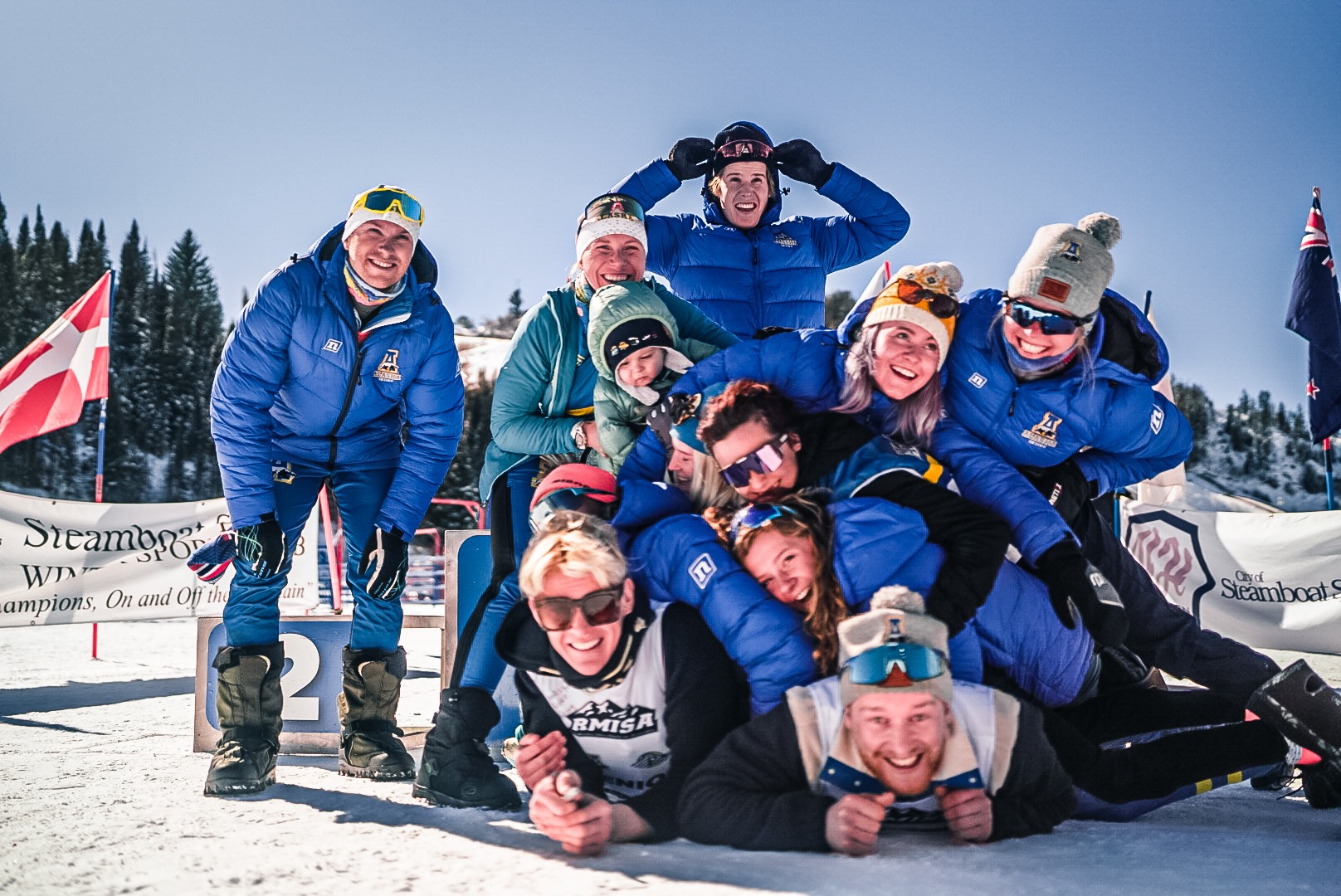
    Just another member of the team: the UAF skiers pose with coach Eliška Albrigtsen and baby Viggo at the RMISA Championships in Steamboat Springs, CO. (Photo: Tobias Albrigtsen / @untraceableg)

    In terms of the impact to the team, better worded as the lack thereof, Eliška felt Viggo’s presence on the road improved the atmosphere. Rather than lamenting their littlest teammate, they found humor and joy in his presence. 

    “When you’re stressed before the race, and you’re having breakfast and you’re barely putting the oatmeal into your mouth [because of nerves], and the baby in front of you is just like throwing the food and laughing… I think that it helped with the team atmosphere, for sure.”

    In addition to helping distribute the weight of ski, wax, and baby gear when navigating through the airport, the athletes also served as an extra set of eyes in the team house. 

    “The team, in general, was super helpful as well. When we would be waxing in the garage, they were playing with Viggo, and he believes they’re all his brothers and sisters, I’m pretty sure.”
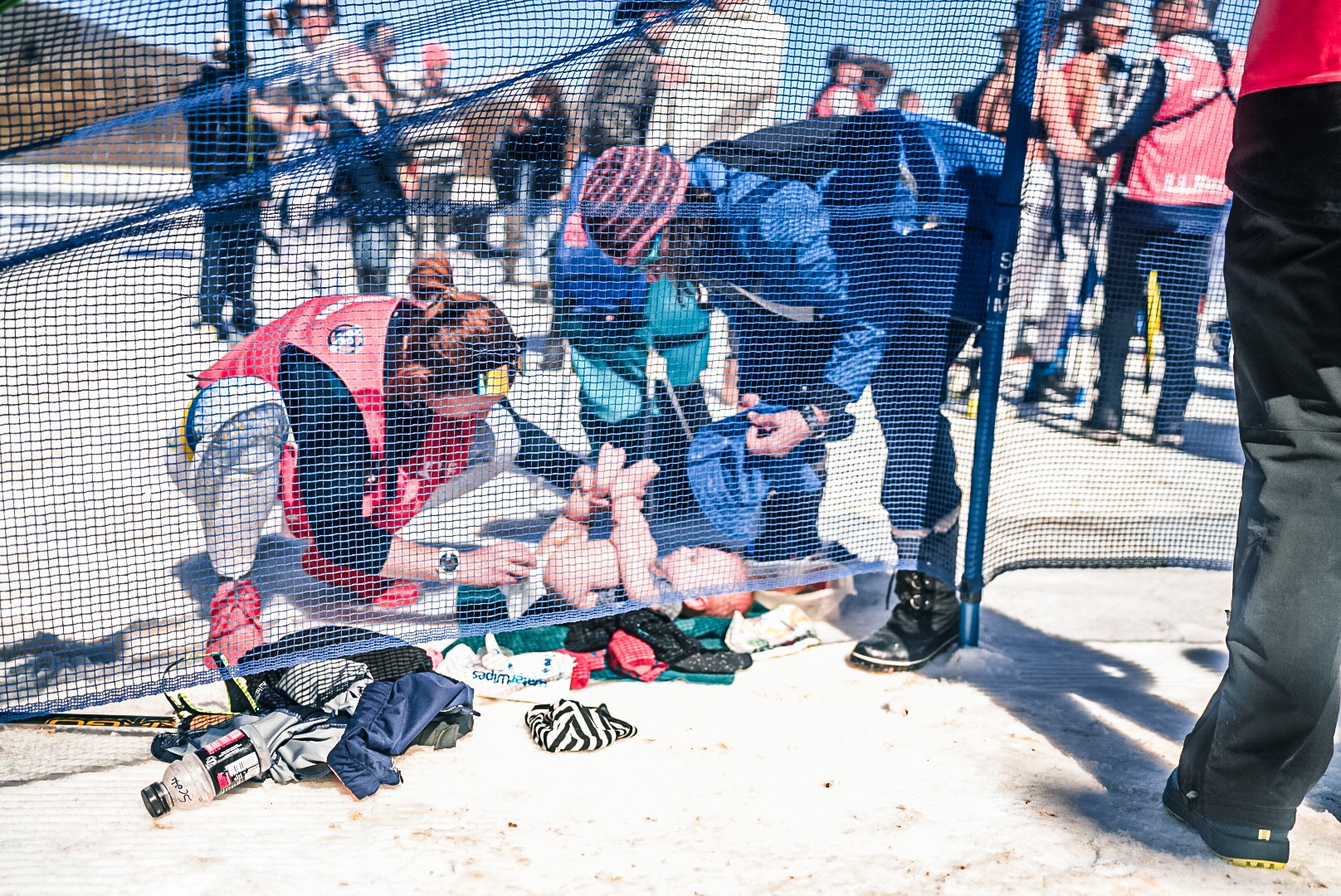
    A relatable image: the al fresco diaper change during a competition weekend. (Photo: Tobias Albrigtsen / @untraceableg)

    Reflections on the Experience Thus Far

    Praising the community in Fairbanks, Eliška was grateful for the help and support she received through her perinatal journey, which allowed her to not only continue as head coach, but help the team to new heights this season. Rather than holding her back, becoming a mother enhanced her ability to lead the Nanooks program. 

    “I also feel like my season was so much more successful this year because I really wanted to go home to my baby. So I was really trying to work smarter and more efficiently, and I think the athletes probably had that push too.”

    While some might fault a woman who shares that her priorities have shifted since having a child, Eliška explained the number of ways this desire to optimize practice time served her team. 

    “I was always driven for success – I love being successful. But now it’s more like, ‘Yes, I will be successful so then I can spend more time with my child.’”  
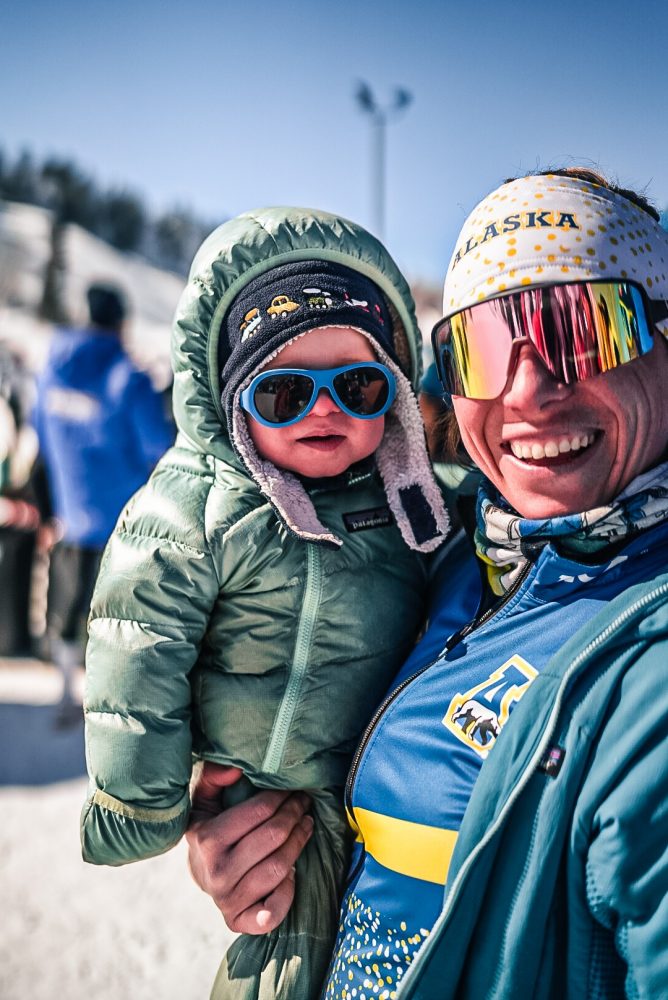
    University of Alaska Fairbanks head coach Eliška Albrigtsen shares her experience with pregnancy, postpartum recovery, and life on the road with baby Viggo in tow. (Photo: Tobias Albrigtsen / @untraceableg)

    As to whether there was anything she would have done differently, Eliška’s answer was more focused on reducing barriers to mom-coaches as a group surrounding pregnancy. 

    “I think the side that no one ever talks about is: how fit coaches should actually be able to do their job well.”

    Because her insurance cycle was aligned with the school calendar, her deductible reset in July. Having maximized her out of pocket expenses with prenatal care and delivery, this meant the physical therapy treatments she needed were essentially free for the first four months. However, after the plan turned over for the new year, each pelvic floor PT visit cost $60–70, and she was looking to go twice per week to continue to make steady progress. This adds up quickly, particularly for a family relying on one salary, which happens to be a ski coaching salary. 

    While nationwide free postpartum PT for all women would be the ideal, Eliška proposed that these costs should, at minimum, be offset by the school or program.

    “That is something I would definitely fight for women coaches. Talk to your boss, or whoever, and tell them, ‘If you want me to come back to the same level of coaching, you need to pay for occupational therapy for me to recover.”

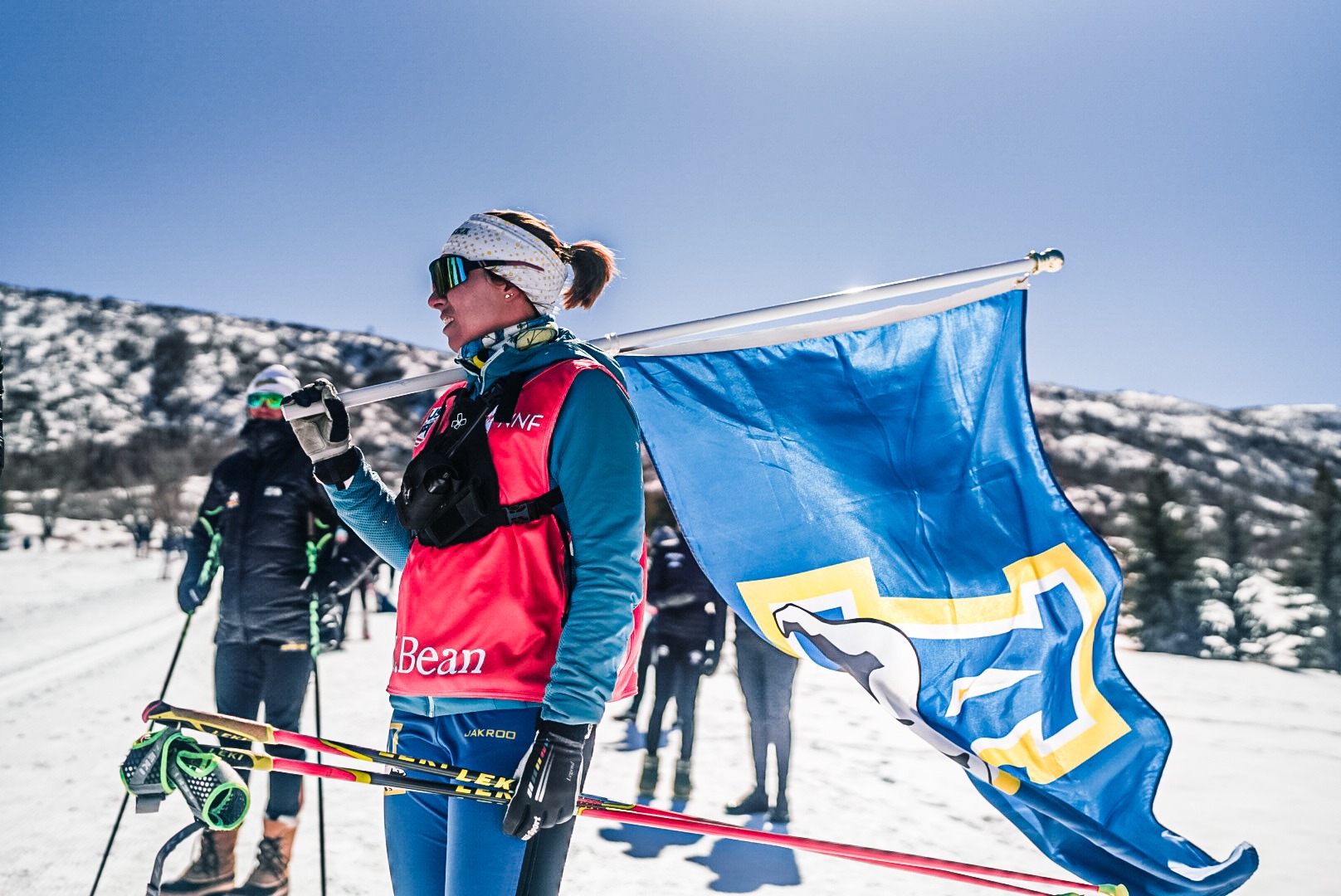
  • On Pregnancy, Postpartum Recovery, and NCAA Ski Coaching: Eliška Albrigtsen (Part 1)

    On Pregnancy, Postpartum Recovery, and NCAA Ski Coaching: Eliška Albrigtsen (Part 1)

    University of Alaska Fairbanks head coach Eliška Albrigtsen shares her experience with pregnancy, postpartum recovery, and life on the road with baby in tow. (Photo: Tobias Albrigtsen / @untraceableg)

    While skimming through the extensive photo albums shared by Tobias Albrigtsen during the U.S. Cross Country Ski Championships in Soldier Hollow this past January, one head coach caught my attention. University of Alaska Fairbanks (UAF) head coach Eliška Albrigtsen (Tobias’ wife) had an extra member of the team in tow: her then 11-month-old son, Viggo. 

    As most ski coaches know all too well, the demands of the job are multifactorial, and can make it challenging for women coaches who are looking to start a family. It’s a physically demanding job with frequent travel butting up against a physically demanding biological process that results in a tiny being that is, at least in the short term, still very dependent on its mother. 

    Yes, some women have a fairly smooth perinatal experience and (somehow?) enjoy the experience of pregnancy. And yes, a woman’s ability to grow a new life inside her body is a wonderful and sometimes mind-blowing feat, but the experience of pregnancy and childbirth can also undeniably leave behind a lasting impact. A woman’s uterus grows to be the size of a watermelon over the course of roughly 40 weeks, forcing supporting musculature to stretch well beyond its normal capacity, while other internal organs are forced to relocate elsewhere. And that’s just a small subset of what’s happening throughout the body.

    The process of repairing this damage after birth is often nonlinear, leaving those who rely on their bodies for work, recreation, or both, in need of extensive postpartum physical therapy while making a careful progression back to activity. 

    And everyone’s experience is unique. 

    It’s the miracle of life, but it’s also a little bit like donating your body to science for at least 15 months. I can attest; as I write this, the daughter I’ve been growing for the last 30 weeks feels like she’s trying to claw her way out of my belly button, which remains herniated from growing her sister.

    And, if you live in Fairbanks and spend weeks at a time traveling to races 3000 miles away (or more), it creates a logistical challenge. How do you bring the baby, who you continue to nurse, along with you while coaching your athletes to an historic seventh place at the NCAA Championships? In addition to benches, wax boxes, and heavy ski bags, you’ll need, at minimum, a cumbersome car seat, and plenty of spare clothes and diapers. And you’ll need someone to care for the child while you’re on the wax bench, testing skis, and otherwise supporting your athletes. 

    It turns out that the experience has been as challenging and rewarding as it sounds. Let’s start at the beginning. 

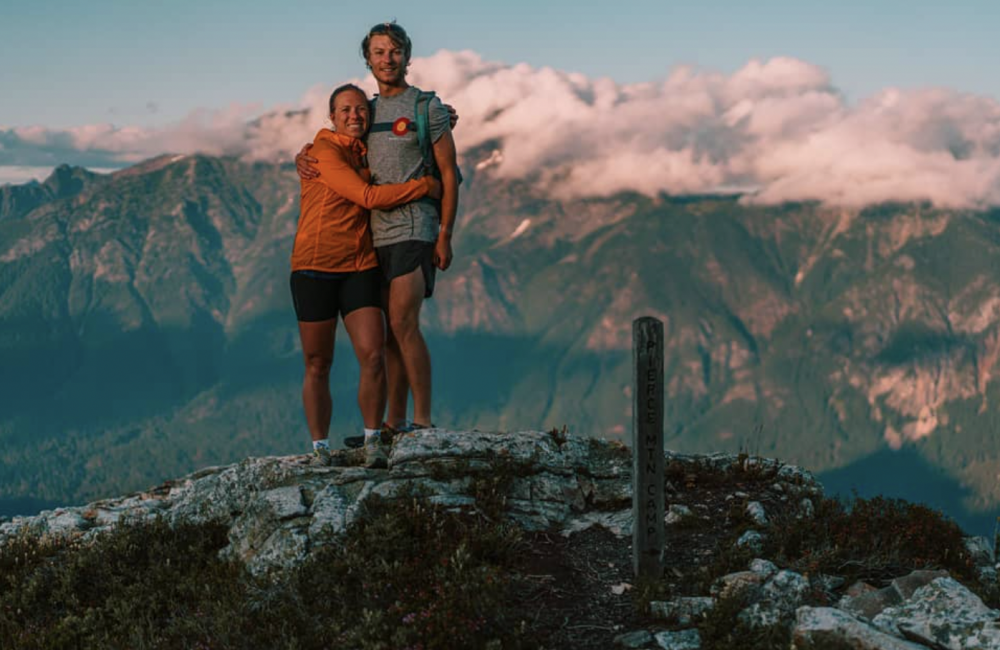
    Eliška Albrigtsen and her husband, Tobias, on a trail run in the North Cascades. (Photo: Instagram @untraceableg)
    Preparing for Baby

    Though baby Albrigsten was conceived in the spring of 2020, he was not simply a “COVID baby”. The urge to begin a family came out of feelings of being “stupidly comfortable”. 

    “Our life started to be kind of plain, so we thought, ‘Okay, this is the time to do it’ – to go into another hardship, I guess,” Eliška said with a laugh.  

    With a few years under her belt, she felt efficient and dialed in her role with the UAF team, and she knew she could leave the program in good hands in her absence given the capability and coaching talents of her assistant coach, Jennie Bender. After her own NCAA racing career at the University of Vermont, where she became an All-American, Bender trained and raced professionally through 2017 in cross country, earning four national championship sprints, and standing on over 25 SuperTour podiums. 

    (Bender has since moved to Whitefish, MT where she is the executive director and head comp coach for the Glacier Nordic Club.)  

    While women coaches in the NCAA are already a minority, there are even fewer examples of women who have started families while in the head coaching role. However, Eliška was not without footsteps to follow. She explained that her friend, former UAF coach Christina Turman, had given birth to her first child while actively coaching, so she knew it was “somewhat possible”, and while racing at University of Colorado Boulder (CU) during her own collegiate career, then assistant coach Jana Weinberger had begun her family. 

    University of Alaska Fairbanks head coach Eliška Albrigtsen leads the Nanooks to an historic seventh place finish at the NCAA Championships with baby Viggo in tow. (Photo: Tobias Albrigtsen / @untraceableg)

    Looking to be informed and prepared, Eliška applauded the time and energy she and Tobias put into learning about the process in terms of what would be available to her for maternity leave, the amount of perinatal care her insurance would cover, and more. As her job included benefits and had flexible hours, she and Tobias agreed in advance that it made more sense for him to leave his job and become the full-time caregiver for their child, keeping her in a coaching role she loved. And then, they began trying to conceive. 

    Nailing the timing, Eliška knew that her baby’s predicted arrival in February would allow her to take three months of maternity leave, with an additional month of leave per her usual 11-month contract. This would bring her to June, when athletes are typically away for summer, allowing her to ease back in while writing summer training plans and handling the many other non-coaching aspects of leading an NCAA program. 

    Coaching Through Pregnancy

    As winter approached and the 2020-2021 race season loomed, Eliška began to step back from her usual involvement with team training, “which for me, is not standing on the side of the trail and watching the athletes. It’s to be there with them when they’re struggling, to see where they can improve in the highest point of their performance.” 

    Her knowledge and expertise as a coach are rooted in both her academic studies in physiology and her own accomplishments as an athlete. Growing up in the Czech Republic, she was named to the national team at 14. During her junior career, she earned a silver medal at the European Youth Olympic Festival in Switzerland in 2005, then went on to place in the top ten at three World Junior ski championships, and helped her relay team to a bronze medal. 

    Heading to CU for college with World Cup starts under her belt, she went on to become one of the most accomplished skiers in the school’s history, if not the NCAA more broadly. Of the 48 races she entered, she missed the top-10 only three times, and stood on 33 podiums. Eliška (then Hájková) was NCAA champion in classic in 2011, and contributed to two NCAA team titles for the Buffaloes. 

    In short, she is an incredible athlete and skier. And yet, perhaps both in spite of and because of that strength and athleticism, she was significantly challenged by the toll pregnancy took on her body. 

    Eliška identified that she has a very short torso relative to her height at roughly 5’5”. In the context of growing a human, this means that there is nowhere for the baby to go but out. 

    At 40 weeks, Eliška Albrigtsen snaps a shot of her large pregnant belly and swollen face. (Courtesy photo)

    “It literally looked like I swallowed basketball,” she laughed as she described her body toward the end of pregnancy.

    Even earlier in the process, she found herself regularly adjusting to her rapidly growing belly, and she had to be creative in ways to remain active for the sake of her health and maintaining her usual active lifestyle. She abandoned running early, and had to stop biking halfway through pregnancy “because my belly was just so big.” Because of the risk to the baby of a crash, she did not feel comfortable rollerskiing. “I did an insane amount of hiking with poles.” And, she enjoyed prenatal yoga throughout pregnancy.  

    ***

    Returning to the impacts on coaching, as she entered into the third trimester, the physical demands of pregnancy began to significantly impede her ability to work with athletes as she was accustomed. 

    “I was at the practices, but not really skiing. I skied until the end of the year, and then, my feet were so swollen, I couldn’t fit into my boots. But I was still walking to the practices, and [timed] some time trials until halfway through January. And then I was just too pregnant to move.”

    Outgrowing her ski clothes long before winter, she also had to be creative to stay warm for practices. She began wearing spare team jackets in a men’s extra-large to accommodate her belly, and could be sometimes found sporting a large fleecy Chewbacca onesie. 

    Having outgrown her clothes, Eliška Albrigtsen sports a Chewbacca onesie to stay warm at practice. (Courtesy photo)

    As the competition season began, team leadership responsibilities began shifting to Bender, who would assume the role of interim head coach, giving her the authority to call the shots on the road while Eliška remained in Fairbanks. 

    Still shrouded in COVID precautions, the 2021 RMISA calendar was contained to Utah and Colorado, with most races happening in Soldier Hollow. This worked out well for Bender, who was able to rely on contacts from her racing career to fill in for wax support, primarily Josh Korn, who is the events coordinator in SoHo. 

    Had Bender not been available and able to fill in so seamlessly as head coach, the program might have been compromised during the season. While the skillset of a high level coach already narrows the pool able to cover a maternity leave, Eliška explained that the clearance process to become an NCAA coach adds another barrier. 

    “With all the college or university regulations, it’s quite hard to just hire a coach as an independent contractor… it’s so much easier to actually hire someone as a wax tech because they don’t have to [go through the whole process].”

    Ever problem solving and adapting, with Bender at the helm, the race season rolled by. And on February 25th, midway through the RMISA championships, Eliška gave birth to her son. 

    Delivery Day: The Baby is Born

    With her aforementioned background as an athlete, combined with participating in training with her athletes and fueling her own passion for outdoor recreation, Eliška explained that she came into pregnancy “quite fit”, which she believes was helpful as she adapted to the load of a growing and changing body. “Honestly, sometimes I was thinking ‘how do women who are not in [good] physical shape do this?’ Because when I was eight, nine months [along], I could barely walk and I was quite strong.”

    However, it proved to be a double-edged sword that she felt complicated her delivery. “I had a lot of tightness in muscles, which we want for sport, but not for giving birth.” In particular, this applied to the muscles of her pelvic floor.

    Like an extension of the core that line the pelvis, these muscles have a myriad of important roles. They’re responsible for the support and stability of the joints and organs surrounding the pelvis, including regulating the function of the bladder, bowels, and reproductive organs, and they interact with larger muscle groups of the hips, legs, and abdomen used for movement. 

    For Eliška, her pelvic floor was so strong and rigid that they were unable to sufficiently relax and stretch to allow the baby to pass through her birth canal. 

    Her due date had come and gone, and time began to run out for her to deliver at the local hospital.

    “I was 41 weeks already. And in Fairbanks, they don’t have the NICU specialty, so they don’t let you go over 41 weeks because if something happens, they have to fly you to Anchorage.”

    Eliška Albrigtsen provides trailside support for the UAF skiers. (Photo: Tobias Albrigtsen / @untraceableg)

    With no signs of the onset of labor happening naturally, she awaited an induction, but Alaska was experiencing a surge in COVID cases in February 2021 and beds in the hospital were at a premium.

    “I was just sitting at home with my cup on my belly just waiting for them to call me that they have a space, because the hospital was overwhelmed. They had so many emergency cases coming in that week.”

    When she was finally called to come in, she and Tobias headed to the hospital, but her body was reluctant to respond to the Pitocin used to kickstart labor. 

    “For three days, they kept inducing. The second day, my water broke, and then suddenly, it was happening. Then I was in contractions for like 18 hours, every two and a half minutes a contraction, and it was just so painful that I started to throw up.”

    Worn out from the previous 18 hours of labor, her body began to tighten in response to the pain, rather than relax to allow the baby to make progress. Her doctors recommended an epidural in hopes that pain relief would improve her ability to relax and allow her pelvic floor muscles to release. 

    “After the epidural, I was like, ‘Oh, this is hilarious. I don’t feel anything.’ But then the baby’s oxygen started to drop with every contraction. They put me on oxygen, and that helped, but when they took me off, [his oxygen] was dropping. And the heartbeats were dropping as well.”

    The doctors felt it was no longer safe for her to continue trying for a vaginal birth, and instead prepared her for an emergency C-section. 

    “That was like 11:30 p.m. on the 25th. And he was born at 11:57. It was just so cool.”

    Returning to the concept of “donating your body to science”, Eliška recounted a strange experience resulting from the inability to eat during the induction process. Most hospitals do not allow women to eat in case they need to be put under anesthesia for an emergency procedure.

    “At that point, I was three days without food… they were giving me sugars through IV, but I was shaking like this,” she said as she demonstrated full body tremors. “They had to have extra nurses to hold me down during the C-section because my body was just trying to shake all the glycogen from my muscles out into the bloodstream… physiologically, I literally shook all the sugar that I had in my whole body out into the bloodstream to make this baby happen.”

    Despite the complications, both Eliška and baby Viggo were fully healthy, and the remainder of their hospital stay went by without a hitch. She fondly remembered his perfectly round head, a mark of a baby delivered via C-section, and proudly showed a picture of her sweet newborn. 

    The journey into motherhood, though challenging, has also been rewarding for UAF head coach Eliška Albrigtsen. (Photo: Tobias Albrigtsen / @untraceableg)

    Reflecting on the unexpected hurdles she faced, she voiced the opinion that, like her athletic body had been “detrimental to the birth” process, her athlete mindset stood in her way of entering the labor and delivery room with open-minded acceptance. 

    “I had a ‘perfect’ birth plan. I knew that I’m going to go there and I’m not going to push until I’m [dilated to] 10. And then I’m going to have the baby. But it does not work that way. No one told me that.”

    As skiers, we’re accustomed to the notion that diligently following a training plan and putting in the work during the build up to a key race will lead to a somewhat predictable outcome: ideally, an optimal performance, or at minimum, an improvement from previous cycles. But for Eliška, this expectation proved to be crippling as she was faced with the realities of her birth experience, which differed greatly from her “plan”.

    “That’s how I raced. I trained hard and I did a lot of technique, and then I was the best skier out there because I prepared… If I went there without any plan, I would be so much happier. When they came and said, ‘You have to get the epidural’, I cried. But at that point, I was throwing up every two and a half minutes with pain. When they came and said, ‘He has to come out, we have to do a C-section,’ I totally lost it.

    “So that’s kind of what I would do differently next time. Now knowing that, you know, birth really messes people up. It’s not this perfect thing that just happens.”

    Stay tuned for part 2, discussing Eliška’s postpartum recovery, return to coaching, and year one on the road to competitions with baby in tow. 

  • Nordic Nation: Moms Matter Now with Holly Brooks and Calisa Kastning

    Nordic Nation: Moms Matter Now with Holly Brooks and Calisa Kastning


    Moms Matter Now founders Calisa Kastning (left) and Holly Brooks (right) with their five children. (Photo: Orzel Photography)

    In this episode, we discuss the topic of maternal mental health with Holly Brooks and Calisa Kastning. On Mother’s Day, the partners announced the launch of their passion project, Moms Matter Now with the aim of supporting and empowering women as they transition into motherhood. 

    Moms Matter Now co-founders Calisa Kastning and Holly Brooks aim to support and empower women as they transition into motherhood. (Photo: Orzel Photography)

    For those unfamiliar with these names, Brooks is a two-time Olympian and U.S. Ski Team alumna who became a licensed professional counselor after retiring from professional skiing in 2016. After struggling with infertility as a result of RED-S, Brooks successfully conceived and became the mom to twins, born in August, 2017. Kastning moved to Anchorage from Montana ten years ago, just a few weeks before the birth of her first of three children. She and her husband, Andrew, were led to Alaska by the job as head coach of University of Alaska Anchorage (UAA), which Andrew ultimately accepted. Kastning is now the executive director of Skiku, a nonprofit which brings cross country skiing to children in remote towns in the far reaches of the Last Frontier. 

    As we discuss, there is so much more to this topic than clinical postpartum depression and anxiety. The transition to motherhood is a time in many women’s lives where it is common to experience feelings of identity loss, isolation, resentment, body frustration, and sadness, despite also feeling excited and happy to be a new parent. Brooks explains that endurance athletes are perhaps especially primed for these feelings. 

    Filling their own cups, Moms Matter Now co-founders Holly Brooks (left) and Calisa Kastning (right) enjoy the Alaska backcountry. (Courtesy photo)

    Through the Moms Matter Now platform and the online courses they are building — their pilot group launched on September 22nd — they hope to provide women with the tools to prepare for the emotional and psychological changes they might experience surrounding pregnancy and into motherhood. They also aspire to empower each participant to prioritize her own well-being in order to be the mother, partner, athlete, employee, and more, that she wants to be. 

    To follow Moms Matter Now, you can subscribe to email updates via their website, momsmatternow.com or follow them on Facebook and Instagram @momsmatternow. If this conversation resonates with you, you can also support Moms Matter Now by becoming a startup booster. Donations can also be made through Venmo with the handle @momsmatternow. Thanks for listening.  

    Practicing what they preach, Kastning and Brooks make time for themselves and head out on a backpacking trip. (Courtesy photo)
  • First Tracks as a New Parent: Caitlin Gregg [Part 1]

    First Tracks as a New Parent: Caitlin Gregg [Part 1]

    The “First Tracks” series highlights the pregnancy, postpartum, and parenting experiences of noteworthy athletes in cross-country skiing in various stages of their professional careers. The sharing of these experiences can benefit athletes in any stage of their career, whether they are an elite or recreational skier, by demonstrating that it is very possible to return to skiing, competition, and an active lifestyle with a growing family. The series will include the physical challenges of being an athlete during and after pregnancy, balancing family life with skiing, and the joy that starting a family can bring. So far, this series has highlighted Kikkan Randall (Part 1 | Part 2) and Holly Brooks (Part 1 | Part 2).

    In October, 2018, FasterSkier spoke with Caitlin and Brian Gregg, the Olympian husband and wife dyad of Team Gregg, about the transitions in both of their lives following the PyeongChang Olympics. The couple had also recently announced that they were expecting a baby girl in February of 2019. 

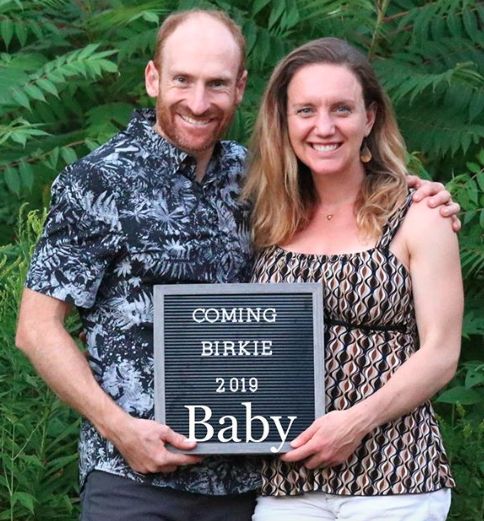
    Caitlin and Brian Gregg announced their pregnancy on social media in August 2018. (Photo: Instagram @caitlincgregg)

    At the time of the interview, Caitlin was about 24 weeks pregnant and undergoing treatment for the blood clots that she had experienced early on in the pregnancy. Brian was working full time in finance while completing coursework to become a financial planner, in addition to training. He has since placed second in the 2019 Birkie and passed both the Series 7 and Series 66 exams, certifying him as an investment advisor or securities agent. 

    In this conversation, Caitlin shared a deeper look into how the blood clots impacted her both physically and emotionally and recounts her training during pregnancy and her recovery postpartum.

    For Olympic caliber athletes, conception can include tracking more than just the cycles of mother-to-be; the quadrennial cycle of the Olympics is also taken into account. Caitlin explained that she and Brian had always hoped to have a family of their own. The Greggs have cherished their work as mentors of kids ages 6 – 13 for the In-the-Arena Organization, a nonprofit which connects at-risk youth in their community with elite athlete mentors, as well as their time coaching juniors at the Loppet Foundation. However, before embarking on the journey to create their own family, they wanted to first explore their limits as athletes and also take advantage of the opportunities to race internationally.  

    “We wanted to see if we could get the training, racing, and travel bug out of our system first,” Caitlin explained in a call. “So after the 2018 Olympics, we decided, ‘Okay, this is when we’re going to try.’”

    She elaborated that they were mentally prepared that the conception process might not be simple, based on the experiences of her former Olympic teammate, Holly Brooks, and other friends who had shared their difficulties. While optimistic, the Greggs were open-minded to all possibilities of what “a family” might look like, including adoption or simply continuing to be mentors and role models for lots of children without one of their own. 

    The Greggs approached the 2018 season with the goal of competing together at the Olympics in PyeongChang and their race performances landed them both on the cusp. However, neither were selected for the team. Caitlin

    went on to win her fifth Birkie, then the couple wrapped up their season competing at Canadian Nationals.

    While parenting roles can be shared, there is no denying that the creation of a baby takes a much greater role on the mother than the father. In any pregnancy, there are plenty of unknowns, especially in regard to how much training an elite athlete might be able to sustain while gestating. Caitlin explained that while she was eager to have a baby, the idea of being pregnant and putting her athletic goals aside for an indefinite amount of time was daunting.  

    “Initially, I mentioned to Brian that as soon as we found out about the Olympics [it would be time], meaning if we didn’t make the Olympics, we would start trying. And then I got kind of cold feet and I kept saying, ‘Oh, you know, the Birkie is coming up and I don’t think I want to be pregnant for the Birkie,’ and ‘Oh, there’s Grandma’s Marathon, I’ve always wanted to run a marathon.’”

    As she was encroaching on “advanced maternal age”, Brian gently nudged her that they may not want to delay the process for too much longer. They began “trying”, but as the timeline of when she might become pregnant was vague, she continued to train, focusing on marathon-specific road running. Despite not cutting back, Caitlin fell pregnant quickly and the Greggs found out that they were expecting a baby girl just two weeks before the next Birkie. 

    “We realize that we are really fortunate. I was 37 at the time, training a lot. I had kind of convinced myself it wasn’t going to happen [right away], which maybe then took the pressure off, so that was the caveat to it all.”

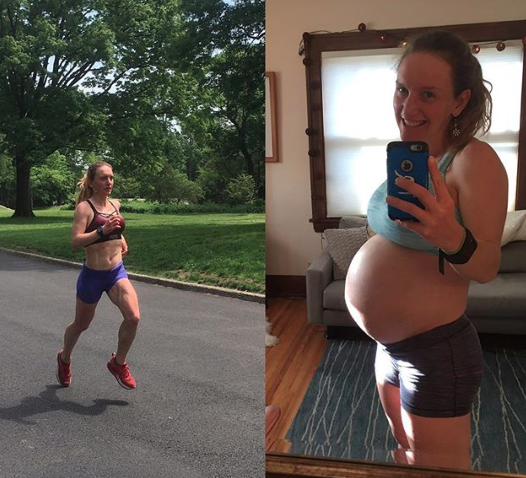
    Caitlin captioned this photo: “regnancy…from the first couple of weeks to the last couple of weeks!!! I am in awe of what the female body can do! From pushing the limits of physical capacity to growing another human…I am humbled and proud to be a woman! Here’s to many more years of being fearless and spreading my passions to our daughter.” (Photo: Instagram @caitlincgregg)

    The Greggs were “super excited” that they were on their way to a family so quickly. As Grandma’s Marathon in Duluth, MN was imminent and Caitlin was still feeling like herself, she decided to race but switched to the half, finishing in 1:31:38, an average pace of about 7 minutes per mile. A few weeks later, after a long car ride back from Thunder Bay, Ontario where she had cheered for Brian in a rollerski race, Caitlin felt a sharp pain in her calf, which was later diagnosed as a blood clot.

    “What I think I’ve learned about pregnancy is that if it isn’t one thing, there’s another thing. Everyone has good and bad experiences. For us, getting pregnant wasn’t a problem, but then I developed blood clots in my left leg, which was really scary for me.”

    During the first trimester of pregnancy, women are in a hypercoagulable state as their blood volume increases by 40 to 50 percent to support the growing baby. This change in blood volume also increases cardiac output — essentially how hard the heart is working — and the likelihood of developing a blood clot. A blood clot poses a threat to both the mother and the baby, as the risks include heart attack, stroke, pulmonary embolism, and miscarriage. 

    Her doctors started her on anti-clotting medications, which she learned to inject into her belly twice each day throughout the pregnancy and for the first six weeks postpartum. She immediately reached out to the ski community, contacting Holly Brooks about her experiences with high-risk pregnancy and Kikkan Randall, who had experienced a blood clot in 2008. She recounted that their support and advice were essential in helping her through the stressful news.

    “[Talking to them] was key for me to have a much better experience overall.”

    In the few days following the formation of a clot, there is a risk that the clot may dislodge from the blood vessel, which could be life threatening. Because of this, doctors advise avoiding intense activity until the clot hardens enough that the risk of embolism is much lower. 

    “I went from feeling great and being able to do everything I was doing before and coaching and having fun, to really scared, like ‘Oh my goodness, what does this blood clot mean? I don’t want it to dislodge or embolize or anything like that.’ And my doctors really couldn’t tell me if I should train, if I shouldn’t train, if activity was good – because, in theory, activity helps circulate the blood, but at what point is the clot stabilized? So there were a couple of weeks that were pretty nerve-wracking where I couldn’t get answers and didn’t know what I was supposed to do.”

    Caitlin recalled talking with her doctors and reading as much as possible before coming to the decision to take two weeks completely off, during which the clot would stabilize and the medication she was taking would dissolve the clot, though not fully. It was an abrupt change, but for better or worse, the anxiety she felt about her health kept her mind off the training hours. 

    “For me, those two weeks were a combination of being very scared and anxious about what the blood clot meant, which overrode the, ‘Oh my gosh, I’m not training.’ Then as I started training again, there were a lot of unknowns going forward as to, ‘Okay, what does this mean with the blood thinners?’ And I kept trying to be optimistic about it and say, ‘Oh, I can probably keep doing things and just be conscientious.’ But what the doctors said, ‘You can’t ride a bike. You can’t rollerski.’ And not because of the pregnancy, but because the risk of falling while on blood thinners was so dangerous.”

    She explained that it would not be the road rash or scrapes from a fall that would cause problems. Rather, if she took a hard fall on her abdomen or hit her head, there would be a very high risk of internal bleeding. 

    Though pregnancy and training while pregnant were shaping up much differently than she envisioned, the need to cut back did not take as much of an emotional toll as she thought. It simply required a change in approach.

    “When everything was great at the beginning, I was like, ‘I’m going to have this awesome summer of fun adventures while pregnant.’ And all of a sudden it was like, ‘Whoa, I’m going to have to navigate things differently now.’”

    Though biking and rollerskiing were cut out, she continued to run and bound. She also sought out a strength training coach, Andrea Claassen, who specializes in working with prenatal athletes to ensure that she was moving in ways that were safe for her changing body. 

    She also joined Blooma, a group that offers pilates, yoga, and barre classes for expecting and postpartum women in addition to childbirth education classes and body work. Adding new faces to her support system helped prevent Caitlin from feeling as though she was missing out on the training partners she might otherwise be logging hours with. 

    “That was awesome because all of a sudden I had a new community that I could exercise with,” she said. “And some of the groups that I had been training with here in the twin cities, I could still run and bound with them. So that helped normalize what I was hoping for in my pregnancy.”

    Caitlin Gregg demonstrates a hanging row with her pregnancy “weight vest”. (Photo: Instagram @caitlincgregg)

    As her belly grew and her body changed, Caitlin became conscious of her exercise routine in hopes of avoiding diastasis recti, or the separation of the rectus abdominis muscles. Grateful for the professional athletes who have spoken out about this topic, including professional runner Stephanie Bruce and Olympic Gold Medalist in Triathlon Gwen Jorgensen, Caitlin was aware that strategies and devices existed to reduce the strain on these muscles during exercise. 

    “One of the strategies I used was the FitSplint to help alleviate that expansion, especially when I’m training and trying to really give my body as much support as I could.”

    Designed by Celeste Goodson of ReCORE Fitness, a pre and postnatal trainer who experienced diastasis recti herself, the FitSplint band wraps snugly under and around the belly, lifting gently to relieve some pressure on the bladder and strain on the low back. The band also reduces bouncing and offers structural support, relieving the abdominal muscles from some of the work they would otherwise be responsible for. 

    Caitlin wore the band daily from 17 weeks onward. She especially felt it benefitted her during running or bounding sessions but used it regardless of the activity. She also explained that she changed the types of exercises she was doing while strength training to avoid moves that heavily recruited the core. 

    “I really worked with my strength coach to really avoid any ab work that would put strain on those muscles and to sort of let the abs that I had disappear so that there wasn’t that extra force there.”

    While reducing training did not have much emotional toll, Caitlin did struggle with the lifestyle change from traveling regularly for training and racing to suddenly needing to stay put in Minneapolis. 

    “One of the things that was really different for me was that I was unable to travel as much as I had envisioned. That was something I was really excited about – being on the road and supporting Brian while he was racing. That was tough, for sure. I missed that part of our life, for the last twelve years what we’ve been doing together. I had to tell myself that I could do it in the future and be patient.”

    She recalled missing Brian while he was away and also the experience of being in different places and taking part in events. 

    As the weeks ticked by and winter approached, running became more and more uncomfortable for Caitlin. Luckily, in early November, temperatures in the Midwest dropped and snow began to fall. To the week, when Caitlin was ready to retire her running shoes, she was able to slip into ski boots and begin skate skiing on a 400 meter loop. 

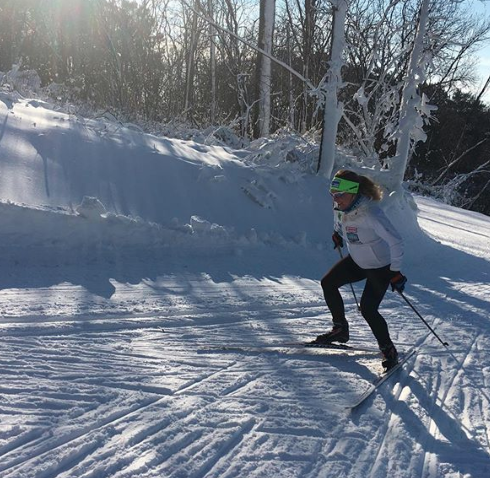
    Caitlin Gregg loved being able to skate ski on natural snow during the later months of her pregnancy with her daughter Heidi, born February 2019. (Photo: Instagram @caitlincgregg)

    “I was just on cloud nine. It felt so great to skate ski. I was a little nervous to classic ski because I was unsure with my balance with my belly and kicking, and I just didn’t want to mess around with hitting an oak leaf and falling.”

    Because she has spent so much of her life skiing, she and her doctors agreed that it was safe so long as she took it easy and remained confident that she wouldn’t fall. 

    “The motion was just so perfect and it was nice to mix it up again and be back moving how I love to move.”

    Caitlin was thankful that both she and her baby were healthy throughout pregnancy, despite being labeled high-risk because of her age and the blood clot. She explained that blood thinners can sometimes cause babies to have a low birth weight, but at each of the regular growth checks, baby Gregg measured perfectly. Because of the medication she was taking, her doctors advised scheduling an induction at 38.5 weeks. This allowed her medical team to gradually wean her off the blood thinners in time for the delivery without prolonging the amount of time she was without the medication. 

    “I was really scared about the delivery on the blood thinners,” she recalled.

    Most women experience some apprehension about delivery, but Caitlin felt especially concerned since if she went into labor earlier than her induction date, the blood thinners would still be in her system, increasing the likelihood of severe bleeding. 

    “At that point, I had a lot of friends who were pregnant that [delivered] early, and that was what I was most scared about. What if she decides to come a week or two early?” 

    Though she had confidence in her doctors and in the advice they provided, that remained her biggest fear. However, as the date of the induction drew near, Caitlin felt no signs of impending labor.

    Caitlin Gregg seen “nesting” in the nursery in the final days before the birth of her daughter, Heidi, who arrived in February 2019. (Photo: Instagram @caitlincgregg)

    “She wasn’t ready,” she laughed. “She had no intention of coming out, so we went in for a scheduled induction, which was kind of different knowing that you are just going to pack your bags and head to the hospital at a specific time to have a baby. For people who like schedules, that’s great.”

    One of the many pregnancy resources Caitlin sought out was a doula who helped her and Brian understand their options for pain management during the birth. Caitlin was apprehensive about getting an epidural, as there is a slightly increased risk of needing a c-section among other risks. She was also concerned about simply having a needle placed in her spine. Ultimately, her priority was delivering a healthy baby and remaining healthy herself throughout the birth. 

    As she thought about her birth plan, Caitlin found herself reading about the birth experiences of other athletes who had shared their stories, eventually finding an article in Runner’s World by pro runner Lauren Fleshman. Here’s an excerpt:

    “My goal was to have a natural labor. Not to be on some moral high ground against the use of medical technology, but because I wanted to know what it felt like. Call it old-fashioned curiosity. Part of my job as a pro athlete is believing in my body’s ability to do amazing things, and I wanted to test its limits. Experiencing a natural birth was a challenge and an opportunity to feel a bond to all the women around the world since the beginning of time. But when talking to my doulas, I made one thing clear: I’m not interested in heroics. If I’m having what’s considered an average birth experience, I want to be coached to persevere, but if things move toward the extreme, I’m open to the help of modern medicine.”

    Reading this section helped Caitlin to reflect on her own response to pain and helped her become comfortable with the idea of getting an epidural to help her relax during labor. 

    “As athletes, we have very strong pelvic floors, and that can be really hard to release,” she explained. “So one of the things I thought a lot about is this concept of, ‘When I feel pain, do I tense up or do I relax?’ And I definitely am someone who when I am racing or training hard, when things get tough, I grit my teeth and try to push through it. That’s just my mentality. So what we talked with our doula about is that childbirth is the opposite. As soon as you feel that pain, you need to relax and let it go.”

    When she went in for her induction, her plan was to see how her body responded to the pitocin and to labor, then ask for the epidural when she felt that she needed it. 

    “As soon as I started getting to the point where every contraction I started fighting it, and I was gritting my teeth and trying to be tough, I knew that it wasn’t going to work, I needed the epidural. And I had no qualms requesting it and I think that was the best decision I made.”

    However, there was a chance that she would not be able to have the epidural because of the anti-clotting medication. If the concentration of the blood thinners remaining in her body was above a certain level, it would be unsafe for an epidural to be administered since it could cause a spinal epidural hematoma, a bleed inside the spinal canal which can cause an injury to the spinal cord, potentially resulting in paralysis. Luckily, when the doctors tested her before delivery, the concentration was at a safe level. 

     “So there were a couple of things that had to come together at the right moment. I couldn’t be too far dilated or too far along. I couldn’t be too anticoagulated. So when they came in and said, ‘Alright, you’re in a good spot. Do you want the epidural?’ And I was like, ‘YES!’”

    Because she was able to relax and allow her body to progress through labor comfortably, neither she nor the baby showed any signs of distress. She also expressed that the epidural contributed to a positive overall experience.

    “It took away so much anxiety. I had anxiety about the needle and the side effects, but in the moment, it helped me be more present.”


    Stay tuned for Part 2 of this conversation in which Caitlin discusses her recovery from pregnancy and birth and Team Gregg’s adventures navigating parenthood, travel, and training.

  • First Tracks as a New Parent: Holly Brooks [Part 1]

    First Tracks as a New Parent: Holly Brooks [Part 1]

    The “First Tracks” series highlights the pregnancy, postpartum, and parenting experiences of noteworthy athletes in cross-country skiing in various stages of their professional careers. The sharing of these experiences can benefit athletes in any stage of their career, whether they are an elite or recreational skier, by demonstrating that it is very possible to return to skiing, competition, and an active lifestyle with a growing family. The series will include the physical challenges of being an athlete during and after pregnancy, balancing family life with skiing, and the joy that starting a family can bring. The first athlete highlighted in this series was Kikkan Randall, whose story can be found here: Part 1 | Part 2.

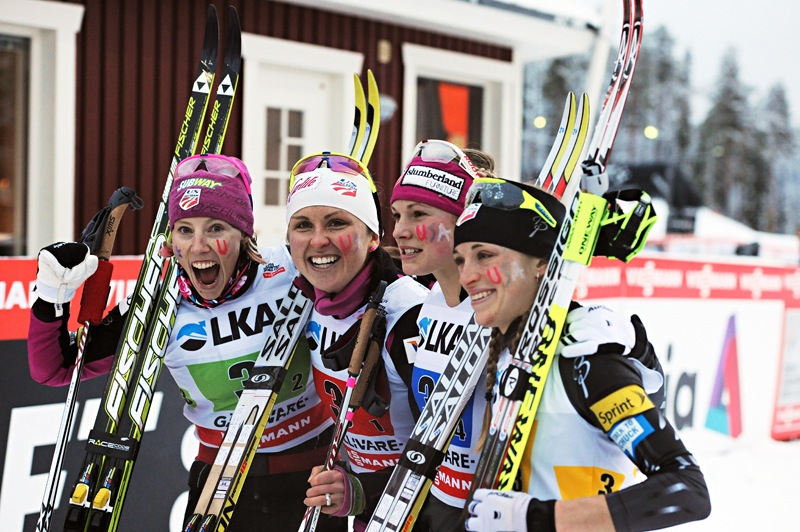
    The U.S. women (l-r Kikkan Randall, Holly Brooks, Jessie Diggins, and Liz Stephen) after their first ever World Cup relay podium in November 2012. (Photo: Fischer/NordicFocus)

    When Holly Brooks retired from professional ski racing in 2016, she shared with FasterSkier that she and her husband, Rob Whitney, were trying to start a family. About a year after this conversation, she gave birth to twins, a daughter, Ruby Joy, and a son, Brooks on August 24th, 2017.  

    While the process of getting pregnant can be easy for some, their journey to create their “insta-relay team” was complicated by the fact that Brooks had been without a period for eight years.  This condition, formally called amenorrhea, can be a result of many factors, from low body weight to thyroid problems, to heavy or high volume exercise, to excessive stress. It can also be a side-effect of some forms of hormonal birth control, as was the case for Brooks.

    Brooks initially lost her cycle while using the Mirena IUD, which is known to reduce the frequency or severity of periods, or to eliminate menstrual cycles for women using it. At first, Brooks didn’t recognize this as being problematic. In fact, as a professional athlete, not worrying about her cycle had plenty of perks.

    “Let’s be honest, for a really long time I was happy not to have a period as an athlete,” said Brooks in a call. “It was pretty convenient.”

    Brooks shared that having amenorrhea as an athlete is not an uncommon phenomenon. While she believed that her nutritional habits were sound and that she was not underweight during her professional career, the condition is often linked to relative energy deficiency syndrome (RED-S, formerly known as the female athlete triad) which is typically a result of under-fueling possibly coupled with inadequate rest to accommodate an athlete’s training load. It is commonly seen with athletes with disordered eating habits, but the two are not always linked. The implications of having amenorrhea for women can include low bone density, leading to osteopenia or osteoporosis, and also infertility. 

    The pervasiveness of the condition was a concern for Brooks, and her own experience losing her cycle raised a red flag long before she and Whitney began trying to conceive. 

    “I think that there’s this myth that if you don’t have a period, you’re in shape. If you don’t have a period, it’s okay,” she said. “I’m not a doctor, so it’s hard for me to speak directly to that, but at some point, if you’re not taking birth control that takes it away as a side effect, you probably should be having a period, you should be having a cycle.”

    When the Mirena IUD expired five years after it was placed, Brooks switched to a copper IUD called Paragard, which is a non-hormonal form of birth control, in hopes of regaining her cycle. This IUD can increase bleeding or frequency of periods, in contrast to the first. However, her period did not return. 

    Holly Brooks after placing fourth in the 2014 Engadin Ski Marathon in Switzerland. (Courtesy photo/HollySkis.blogspot.com) http://hollyskis.blogspot.com/2014/03/home-sweet-home.html

    As her professional career waned and her age and desire to start a family with her husband increased, Brooks began hormone replacement therapy (HRT) to coax her reproductive system back into functioning normally in preparation for conception. HRT involves taking artificial hormones sequentially to mimic the changes that naturally occur during a menstrual cycle. 

    “So essentially, I had to stop exercising, take a bunch of estrogen, then take a bunch of progesterone to try to jump-start a cycle,” Brooks recalled. 

    It took a few months of HRT for Brooks to successfully regain her period.

    “It almost felt like my body had just been kind of dormant and was fine with not having a cycle. And sometimes that’s convenient when you’re an athlete, but when you want to start a family, it’s not that awesome.”

    Because she was 35 and it had already taken so much effort to get her body back into a fertile state, Brooks began working with a team of infertility specialists to help the couple get pregnant as quickly as possible. In any other context, the mid-30’s is likely considered the prime of life, but medically speaking, the risks of perinatal complications increase significantly after this point. A woman over the age of 35 who conceives is classified as a “geriatric pregnancy”, or listed for insurance purposes as having “advanced maternal age”. Typically these pregnancies are also labeled “high-risk”. 

    Brooks describes herself as an “eternal optimist” and managed to handle her battle with infertility with grace, but she expressed that she was not immune to the emotional challenges her situation created.

    “There’s tons of frustration, there’s tons of impatience, and there’s also a lot of comparison too,” she said. “Which is human nature and it doesn’t always help.”

    She shared that one of her favorite quotes is by Eleanor Roosevelt who said, “Comparison is the thief of joy.” While she remained hopeful that she and her husband would eventually be successful in becoming pregnant, she still found herself pulled into the comparison trap.

    buy acular online

    “Especially when you’re trying to get pregnant, you notice everyone else who is pregnant,” she observed. “And you’re like, ‘Well these athletes who were super fit, they had no problem getting pregnant.’”

    With their infertility team, she and Whitney began the process of Intrauterine Insemination (IUI), which is a less invasive infertility treatment than In Vitro Fertilization (IVF).  The IUI process involved Brooks taking a follicle stimulant during the first half of her cycle, prompting her ovaries to develop and grow a follicle containing a mature egg. She then took other fertility medications to induce ovulation, at which time doctors would inject a washed and concentrated sample of her husband’s sperm into her uterus, increasing the likelihood that the sperm and egg meet. This process requires close and careful monitoring throughout the cycle in order to be successful, which was not totally unlike the process of being a professional athlete. 

    “At some point, when you’re doing infertility [treatments], it starts to take over your life because you are paying so much attention to your cycle, and what day it is in your cycle, and what day you’re ovulating, and what day you’re going to trigger ovulation, and how many follicles you have, and how big the follicles are,” she explained. “As an athlete, you pay a lot of attention to periodization and training. And doing infertility [treatments], you kind of do the same thing, but it feels like you have way less control.” 

    She expanded by explaining that in training for skiing, she had control over her rest, how hard she pushed in a workout, what she ate, and so on, whereas during the conception process, no matter how hard a couple might “try”, much of it is out of their hands. 

    Although not frequently discussed, studies estimate that between 10-25% of pregnancies end in miscarriage, most commonly during the first trimester. In many cases, miscarriages occur early during the implantation process and go unnoticed, as the bleeding that occurs as the body sheds the undeveloped embryo often occurs when the woman might expect her regular period, leaving the pregnancy undetected. Miscarriage can also be a result of a chromosomal defect or other abnormality of the developing embryo, or due to lifestyle factors such as poor maternal health, smoking, or drug use. 

    Regardless of the cause or when the miscarriage occurs, the experience of pregnancy loss can be incredibly difficult for parents. During their voyage through cycles with IUI, Brooks was able to conceive twice before her successful pregnancy with the twins. In both of those cases, she lost the baby just before the end of the first trimester, which is when a pregnancy is typically deemed viable. 

    Miscarriage is one of the primary reasons most couples choose not to announce their pregnancy until the second trimester begins, lest they also are faced with sharing their loss. Many women that go through one or more miscarriages choose never to divulge their experience. Brooks wants to bring more attention to the topic as it is so commonly experienced but rarely discussed. This lack of attention can leave women grieving in silence and feeling as though they have failed, even though miscarriage is most commonly out of one’s control. 

    “I’m really happy to [talk about it] because it’s really common and a lot of people don’t talk about it.”

    She added that it is one of her missions in life to talk about “the hard stuff” in order to reduce the stigma about these issues. 

    Because of the treatment method they were using, Brooks was closely monitored in the weeks following the IUI. 

    “If I were to go back and track how many ultrasounds I’ve had, I would guess 50, 60, 70.”

    She explained that her doctors wanted to closely track whether an embryo was growing, and if so, whether it was growing at the appropriate rate with no noticeable problems. This was a stressful process since she and her husband remained so acutely aware of the processes happening within her body.

    “Although it’s out of your control, you’re very in tune with what’s happening,” she said. “And it’s a rollercoaster of excitement and disappointment and excitement and disappointment.”

    Her doctors were able to determine very rapidly whether or not the IUI had been effective, so in each case, the couple found out they were pregnant rather quickly after the treatment. Then the wait began; there was nothing that she could do but hope that the pregnancy would last through 13-weeks. She remained optimistic but tempered her excitement.

    “That was really, really hard,” she emphasized. “It’s such a long journey to get there, and you get excited, but in the back of your mind, you know some of the statistics.”

    At about the 12-week mark in both cases, she experienced bleeding which indicated a miscarriage. In some cases, women experiencing a miscarriage are able to pass the contents of the uterus naturally over the course of a few days, sort of like a very heavy period. In others, women need the support of medication to help force the body to shed everything. 

    Brooks fell into the second category, sharing that she spent two days in bed with horrific cramps each time, only to find out with an ultrasound that her body still had not shed everything, indicating that she would need a procedure called a dilation and curettage (D&C) to surgically remove the remaining contents in order to prevent a severe infection.  

    “I ended up having to do that twice around the 12-week mark, which felt kind of like deja vu,” she recalled. “And then you’re wondering if it’s ever going to happen or if you’re cursed. And then again, you look around at everyone else with their kids or their pregnant bellies, and you ask yourself the question, ‘Why can’t I get there?’”

    Holly Brooks with her husband Rob Whitney and their six chicks in Alaska. (Courtesy photo)

    Luckily, she did get there. With infertility treatment, multiples are more commonly seen. Brooks’ three younger siblings are also triplets, indicating that she is also genetically predisposed to conceiving multiples herself. While the risk of complications increases with twins, after all that she and her husband had been through, they were “ecstatic” about the idea of being able to complete the family that they envisioned in one pregnancy.

    “When you feel like you’re behind and you feel like you had such a hard time getting pregnant to begin with, then you find out you’re getting a twofer,” she laughed. “We were ecstatic, slash terrified.”

    After such an extended battle to achieve a healthy pregnancy, it seems impossible not to experience some trepidation about its success. Brooks reflected on if or when she began to feel confident that the pregnancy would work out and that they were finally stepping off of the rollercoaster. 

    “I think that there’s always some anxiety,” she stated matter-of-factly. “There’s always that voice in the back of your head, ‘Should I do this? Should I not do that? Even if I do all the right things, something could still happen.’ You hear these horror stories of people being pregnant with twins and one of the twins dying. These stories come out of the woodwork and your attention goes to weird places when you’re pregnant, and of course, you’re overly hormonal, obviously. 

    “So the anxiety was pretty much always there, then it’s there during birth, and it’s there when you have newborns, and it’s still there when you have toddlers,” she ended with a laugh. 

    Though she acknowledged that many women and also men experience more severe forms of anxiety and depression surrounding pregnancy, which she commented on further later in the conversation (see Part 2), ultimately, few parents are truly immune to some level of it.

    ventolin buy online

    “I think to some extent, some anxiety is part of being a parent,” she said. “And it can be heightened or lowered, based on not only your genetics but the environment you’re in and the situations you’ve experienced.”


    Stay tuned for part two of this story in which Brooks discusses the remainder of her pregnancy with twins, birth, and adjustment to life as a working parent and athlete. She also shares what’s next for her business, Holly Brooks LLC. 

  • Randall to Resume Training, Cautious but Excited: ‘I Feel Refreshed’

    Randall to Resume Training, Cautious but Excited: ‘I Feel Refreshed’

    June 1. That’s the date Kikkan Randall’s had in her head for a while now, and it has nothing to do with a milestone or a checkup involving her first child.

    That’s when she’s getting back at it.

    “I know I’m not going to be able to jump right in cold turkey to what I’ve been doing in the past so it’s going to be a gradual build,” Randall said on the phone from Anchorage, Alaska, earlier this month, about three and a half weeks after baby Breck was born.

    “Just talking with Erik [Flora], my coach, we’ve been trying to set it up so there’s different little stages to clear before moving onto the next thing,” she explained. “First building up the volume and then adding the intensity as each intensity feels good and then hopefully be a kind of normal training rhythm by the end of July into August.”

    Normally when she’s home for the summer, Randall, a four-time Olympian and three-time overall Sprint World Cup champion, trains with her team, Alaska Pacific University (APU), about four times a week. The rest of the week she trains solo or in small groups, and this summer, she plans to do a little of all of the above.

    With her coach, Randall has formulated a plan that works for her, her husband, Jeff Ellis, and most of all, Breck.

    “This first time at home has been so wonderful, just to have no schedule and spend some time getting to know Breck and be here for him,” she said. “That’s been great, but I also know that I miss training so it’ll be nice to have a blend where, it’s not like I have to disappear off to work for 8 to 10 hours and then miss him all day. I can go out and do my work and come back and be with him and then go out and do it again.”

    For the coming 2016/2017 race season, the 33-year-old Randall, who has been competing at the sport’s highest level since she was 19, plans to spend the entire winter in Europe on the World Cup circuit. That will involve traveling with Breck, her parents and in-laws at times, and eventually an au pair. Jeff will be there, too, as he works for the International Ski Federation (FIS) Cross Country marketing support.

    “We’re going to rely on our parents a little bit, they’re going to come over in intervals on certain weekends and periods and then there’s going to be a point in the middle of the season where we’d like to find a European-based nanny to help out,” Randall said.

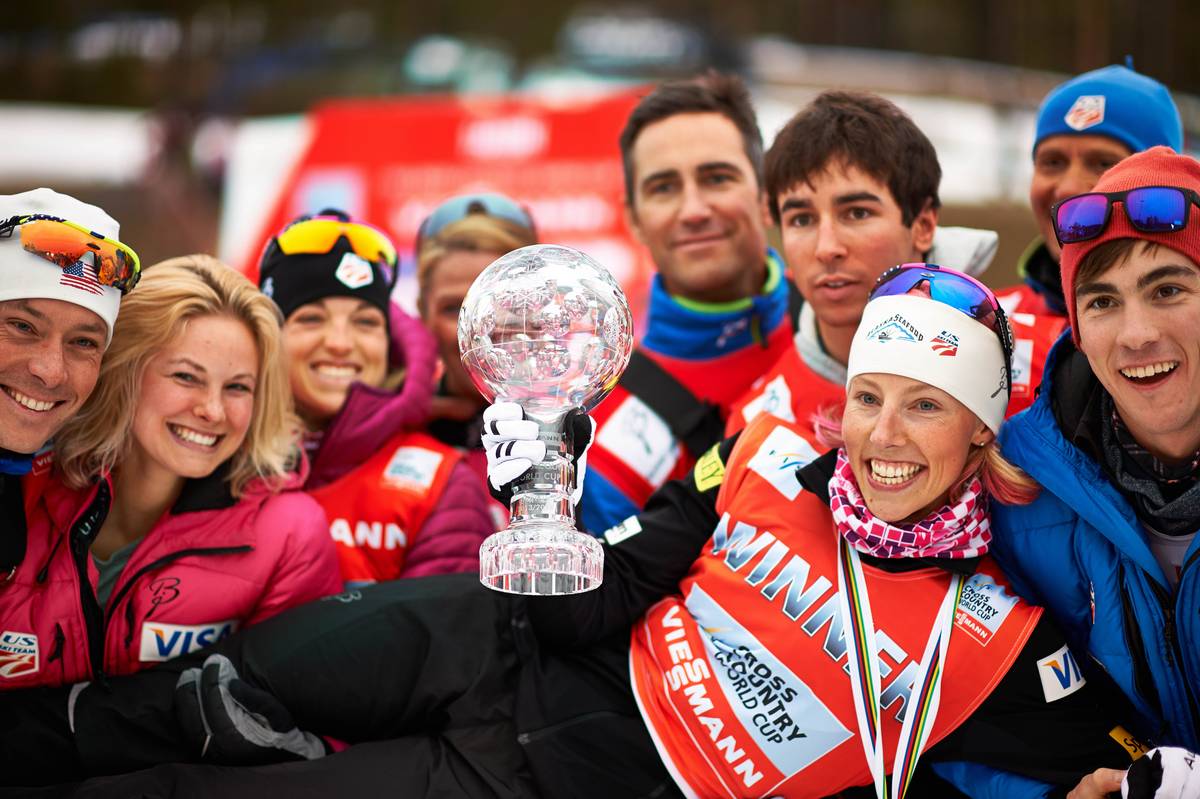
    Several members of the U.S. Ski Team lift up Kikkan Randall after she won her third-straight World Cup sprint Crystal Globe a the end of the 2013/2014 season. (Photo: Fischer/Nordic Focus)
    Kikkan Randall and her U.S. Ski Team teammates and coaches after she won her third-straight Sprint World Cup Crystal Globe at the end of the 2013/2014 season. (Photo: Fischer/Nordic Focus)

    With the challenges of coordinating caregivers comes the cost of traveling with at least one extra person, like a nanny, on the circuit. While Randall retained her spot on the U.S. Ski Team’s A-team based on her FIS world ranking and Red Group status from two seasons ago and could potentially have much of her room-and-board costs covered by FIS, she anticipated the need to make different arrangements.

    “While I want to be as much a part of the team as I can, I don’t want to be disruptive and I think living in a hotel room with a baby for a whole year would be challenging,” she said.

    For the holiday break in late December, Randall and her husband reserved a condo in Davos, Switzerland, for a more-homey alternative and they are hoping to find a similar setup in Sweden before World Championships in Lahti, Finland.

    “We’ve started to formulate a plan, but we have a lot to learn, but we’re excited we get to bring [Breck] on this journey,” she said. “And our parents, we’re lucky that they’re able to assist and that’ll get us going, and we’ll learn the ropes as we go.”

    It’s a Boy!

    On April 14, after 13 1/2 hours of labor, Randall gave birth to her son, Breck Stuart Randall Ellis. The gender was a surprise, but they had a boy name ready.

    A few years ago, Jeff did a mountain-bike race called the Breck Epic in Breckenridge, Colo.

    “He came back with all this stuff, a T-shirt, a belt buckle and it said the name of the race on it and I thought, ‘Oh Breck, that sounds really cool! That could be a good name,’ ” Randall said. “So we just kind of had it tossed around for a while and when it came time to narrow it down, we just liked the sound of it. It’s kind of unique, but still simple.”

    Breck’s middle name, Stuart, is his grandfather’s first name, dad’s middle name and great grandmother’s maiden name.

    “It relates back to a royal clan in Scotland, apparently, so that’s got some fun family history,” Randall said.

    His second middle name is Randall, and Ellis is his last name.

    “The whole process has been so fun,” Randall reflected. “The pregnancy went great and toward the end, the anticipation was building and building, and we ended up inducing my labor so things progressed pretty quickly that day, so it was kind of fun to get to the point that we were pushing him out…”

    (Ed. note: Fun and childbirth aren’t usually part of the same sentence, but we digress.)

    “When he came out and he got put on my chest, that’s such a strong emotion at that point, it’s hard to put into words…,” she continued. “I kind of felt like it was the end of a ski race, particularly something like the Tour de Ski where it’s so hard and so painful and you’re pushing, but you just want to get to that finish line and then when you do it’s just like that bliss of laying in the snow, of course one hundred times greater, but kind of that similar feeling.”

    So what’s harder — the hardest ski race she’s ever done or giving birth?

    “It was a different kind of pain than I’ve ever experienced before,” Randall said of the latter. “I was curious to see how it would feel to the toughest race or VO2max test or tough intervals or something like that, but instead of being like a lactic-acid burning pain, it was almost like a flu, crampy kind of pain and I think the hardest part was just not knowing when it was going to end.”

    It eventually did end and Breck, 8 pounds, 11 ounces, was born. Within two weeks he was back up and slightly heavier than his birthweight — thriving in his new world — and in the 90th percentile for length and 60th for weight.

    “He’s a little string bean; he has big feet,” Randall said with a laugh. “He’s got a really good temperament, doesn’t get too fussy … He loves to be in the front carrier or the Chariot, that instantly puts him to sleep. I think he was used to riding along with me for the nine months.”

    Now a month-and-a-half old, he’s up to 11 pounds and out of the newborn outfits and diapers.

    “He’s awake a lot of the day now and even giving us some involuntary smiles,” she wrote in an email. “Can’t wait until the real ones start!!”

    Six-Week Marker

    This week, Randall goes in for her six-week checkup, at which point she’s hoping the doctor will give her the “all-clear.”
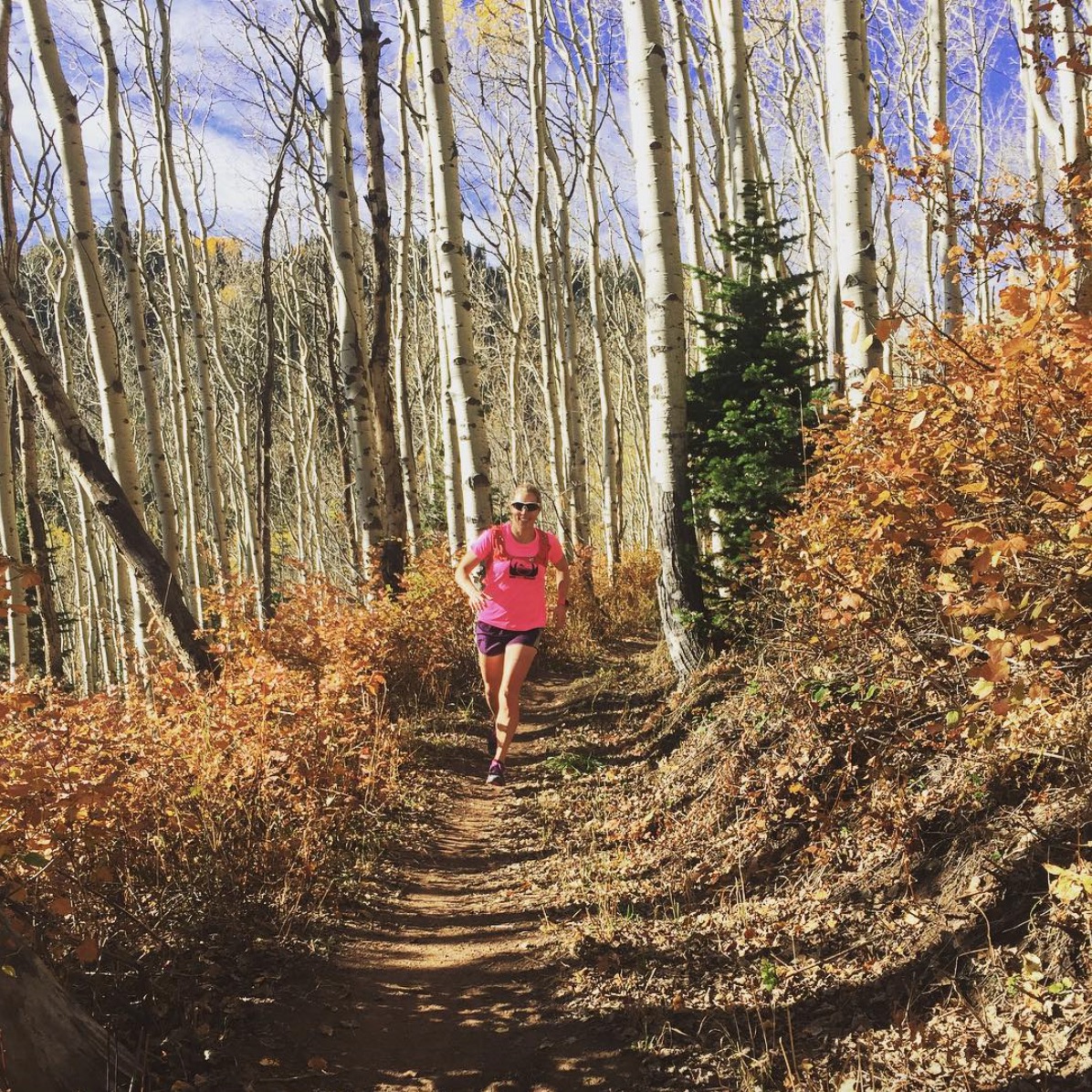
    So far, she’s done some easy rollerskiing and biking the last three weeks, in addition to walking and “testing the waters” with the SkiErg.

    “I feel like I’m healing up pretty well. I’ve been pleasantly surprised with how intact my abs feel and everything still feels like it has good tensions so I’m happy about that,” she explained. “… I’m trying to really keep this first six weeks as just an opportunity to heal and get my body ready to train, but just being careful so I don’t risk getting injured.”
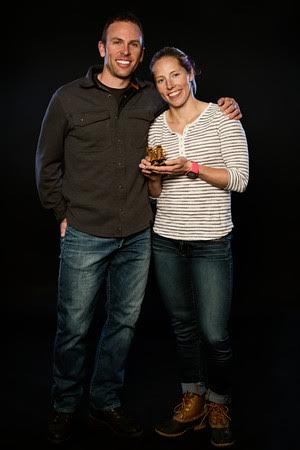
    Regardless of how anxious she is, Randall asked the doctor to give it to her straight and what the most conservative approach is to returning to physical activity.

    “I have definitely been antsy and wanted to test things a little bit so it’s nice to have that voice in the back of my head that says, ‘No, just go on six weeks, be careful,’ ” she said. “I also have been in touch with Marit a little bit and she said to be cautious about coming back. She maybe feels like she pushed it a little bit.”
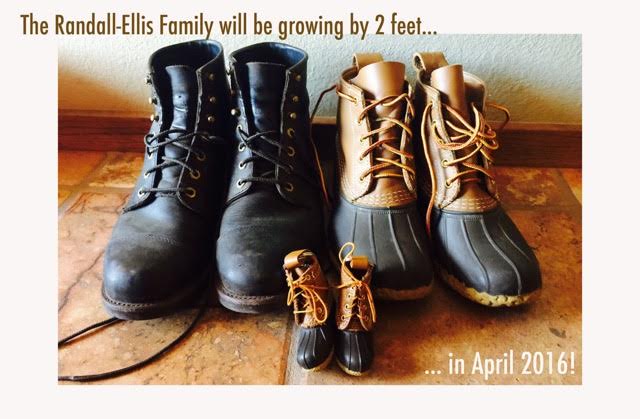
    Three months after having her first child, Norwegian legend Marit Bjørgen injured her hip while jogging in March, having previously completed a 42-kilometer ski race. She and Randall have exchanged some text messages in the time since.

    “I think you need to be cautious for caution’s sake,” Randall said. “But it’s so hard because you’ve essentially taken off a weight vest and you feel light.”

    In terms of goals, Randall’s focused on getting in shape for the U.S. Ski Team (USST) camp in Anchorage in mid-July. She figured that would give her six weeks of training beforehand. That Eagle Glacier camp will likely be her first time on snow.

    Randall with Breck in the front pack during a spring walk in Anchorage, Alaska. (Courtesy photo)
    Randall with Breck in the front pack during a spring walk in Anchorage, Alaska. (Courtesy photo)

    Beyond that, she plans to spend most of her summer and fall at home, with the exception of the USST October camp in Park City, Utah, and a trip north of Toronto to visit Jeff’s parents. Asked if she’ll take Breck along for some workouts (i.e. in one of her two Thule jogging strollers or in a front or back pack), Randall said she’d like to.

    “I could get in some good workouts with him, which would be fun, and Jeff will be along as well so we can do it as a family, and then there will be some times when I can just get out the door and do a workout and get right back. I think it’ll be a nice balance,” she said. “I have a lot of really good training opportunities right out my door for times where I just really need to go get in a workout and be right back and hopefully I’ll be able to join in some team sessions with APU as well, but that will really depend on how [Breck] is adapting to the schedule. Hopefully I can get it in that way, but we’ll have to just wait and see.”

    Come fall, she plans to start the season in Europe with the rest of the team on the World Cup in late November. Her goal is to be in top shape by February for World Championships.

    “Other than that it’s going to be a lot of playing it by ear and seeing how my body responds to things,” she said.

    After a year off and now a mother, will she be the same racer? Randall said she’s not sure.

    “This is a big question mark right now. There were certainly days where I was training while pregnant and as we got toward the end it was getting harder and harder and I felt a little more disconnected from those days when I was in peak shape. I just started to feel like, ‘Woah, getting back to that level is going to be challenging and racing every weekend and every discipline is going to be hard,’ ” she reflected. “Then on the other hand, I hear these amazing stories of women who say they only got stronger when they came back, training with that weight vest for at least six months of the pregnancy, and those nice physiological adaptations that you have throughout the pregnancy and then of course the change of focus, the fact that you don’t take your training time for granted any more, you maximize the time you have and you have this other thing in your life that is so important that you don’t sweat the small stuff.”

    Her friend and fellow Olympian James Southam told her that having a child gave him new motivation to do his best and set a good example.

    “I’m really curious to see how it feels,” Randall said of racing. “I know there’s parts that are going to be really challenging, just getting back into shape and trying to still be able to handle that high load with this new lifestyle, but on the other hand, I feel refreshed. My body is refreshed from a little break, my mind is refreshed and that could open totally new doors.”

    Randall’s not alone. Several other top World Cup women have also had their first children in the last year, including Finland’s Aino-Kaisa Saarinen (in early May), Slovenia’s Katja Višnar (last November) and Bjørgen (in December). FIS has taken notice and is initiating new rules that give caregivers (i.e. a nanny) World Cup accommodation travel rates and access to venues, according to Randall.

    FIS Cross-Country Event Coordinator Sandra Spitz said she could not comment on the changes until after the FIS Congress in early June.

    “I’m not really sure how to explain why this kind of [baby] boom hasn’t happened in the past,” Randall said. “This [past] year, it’s probably no coincidence that there was no major championship, if anyone had to miss a season this was the one to do it and you still have two years now leading into the Olympics. But we certainly had years like this in the past, so why now? I don’t really know how to explain that, but I think it is really cool, but I think it’s maybe becoming a little bit more acceptable. Maybe teams and sponsors are being a little bit more supportive so it’s not this scary unknown … There’s a support system for that.”

    She’s hoping this group of women, all of which plan to continue competing, can prompt change and show that one can continue with their career after starting a family, rather than have to chose one over the other.

    “I think [FIS is] recognizing, too, that it’s worth their while to keep the top athletes in the sport versus them leaving to have a family,” she added. “Any way you can encourage that is good for everybody.”

    As she held Breck in her arms, he cooed and grunted; she laughed and reviewed the last few weeks.

    “I don’t think I could’ve imagined just how happy and content I would be,” she said of motherhood. “When he’s just as cute as can be cuddled up, sleeping on my shoulder or when he’s just spit up for the third time and we’ve had to change his outfit and he’s spit up all over me, I seem to just really love every moment of it. And also how relaxed I’ve been able to be through it. I feel like I enjoy every moment and I’m just loving it.

    “It’s so crazy how your life really does change in an instant,” she continued. “You go from being completely independent to now always having this responsibility, but suddenly I can’t imagine that that life would be satisfying anymore because it’s so fun.”

  • Weeks Away from Due Date, Randall Talks About Her Return to Racing

    Weeks Away from Due Date, Randall Talks About Her Return to Racing

    Three-time U.S. Sprint World Cup champion Kikkan Randall is due with her first child in April. (Courtesy photo)
    Three-time U.S. Sprint World Cup champion Kikkan Randall is due with her first child in April. (Courtesy photo)

    Below is an interview with Kikkan Randall, a three-time Sprint World Cup champion and U.S. Ski Team and Alaska Pacific University skier, who is pregnant with her first child and due in April.This interview originally appeared Feb. 9 on SlowTwitch.com and has been adapted for FasterSkier. SlowTwitch is a comprehensive resource for a wide variety of endurance sports, in particular triathlon, and has recently launched a new feature designed to introduce triathletes to nordic skiing. FasterSkier also recently shared SlowTwitch-original interviews with national champions Eric Packer and Tad Elliott. 

    ***

    Kikkan Randall, 33, is the most successful American women’s cross-country skier of all time, winning three Overall World Cup Sprint Titles, a World Championships team sprint, 13 World Cups and countless podium appearances. This has been another exciting year for Randall but in a very different way, as she elected to sit out this racing season in order to start a family. I caught up with her in her home in Alaska to talk about the challenges of training through pregnancy, life away from the World Cup and what’s in store for her moving forward.

    Fast Big Dog: What is it like not racing for the first winter in close to 20 years?

    Kikkan Randall: It has been weird. It was very hard at the beginning of the racing season. I’ve been doing this for so long that your usual routines start to kick in once it’s time to get ready to leave for Europe in the late fall, but this year I had to keep reminding myself, “Oh that’s right, I’m not going to Europe this year.” That was very strange. Even once the season began and I was watching the races on TV there was this sense in the back of my mind, “OK, you’re not going to be there for the first few….”, but then it finally really set it that I wasn’t going to be racing at all. So it was a lot of adjustment at the beginning, but I am fine with it now. In fact, I think this break has only rekindled my desire to race.

    Randall's view of her baby bump. (Courtesy photo)
    Randall’s view of her baby bump. (Courtesy photo)

    FBD: What’s a typical day for you right now?

    KR: I’m at 29 weeks into my pregnancy right now [ed. Randall is currently 33 weeks into her pregnancy], so I’m more than two-thirds of the way there. Each trimester my training and overall routine has shifted, albeit gradually, so it’s hard to describe a “typical day,” as each day is a bit different, especially as I get closer to my due date.

    Overall though, everything is going great. My main goal is a healthy baby, so everything is structured around that. I have still been able to get in two workouts/day on most days, but I have been careful to shorten the volume and intensity, in particular the further along I get in the pregnancy. I’m feeling good, but I clearly don’t have as much energy. A 90-minute ski used to be easy, now it’s challenging. So that’s an adjustment for sure.

    Another big change is I’ve always followed a structured training plan, but now I’m totally playing it by ear. If I feel good and the skiing is good, I work hard, but if energy is down, I take it easy. I think being flexible is key and I’m being very careful to listen to my body.

    Probably the biggest difference between this and previous years is that this year I don’t have to push myself in training, so this is something that I’ve been trying to enjoy. At times it has been a bit of a challenge to find balance, for as a competitive athlete you know how to push yourself and when you hear stuff about other pregnant athletes going out and training hard, you can’t help but wonder if you are doing enough, but every person is different and I feel like I’m right where I should be for the baby, for training, for everything. So overall I’m trying to just relax, enjoy this time and most of all, be smart.

    FBD: You were one of the best, if not the best sprint racer in the world for the last several years. Was it a difficult decision was it to have a child at this point in your career?

    KR: Not at all. I knew that after Sochi I didn’t want to wait four more years to start a family. This is a year that does not have a World Championships or an Olympics, so the timing made a lot of sense. Every season has something you don’t want to miss, but this season seemed like the best fit. The timing for my return also seemed to work well, so it wasn’t a hard decision at all.

    FBD: Do you plan to return to the World Cup after having the baby?

    KR: My hope is to have the baby in April, return to normal training by mid-summer, ramp up for the 2016/17 season on the World Cup, then peak for World Championships at the end of the season. Based on how I feel right now fairly far into the pregnancy, I’d say I’m right on track for this, so I’m optimistic. We’ll see, as anything can happen, but so far, so good.

    FBD: After you return, how many more years do you plan on racing on the World Cup?

    KR: Right now I’ve set the endpoint as the 2018 Olympics, but we’ll see. I’ve had a great run and I still love racing, but I have lots of other goals in life, too, and part of a great career is knowing when to call it quits. I’m going to finish school, probably have a few more kids and I’m looking forward to putting all of my energy into my family. My husband Jeff is amazing — the focus has all been on me these last few years, so I’m excited for him to be able to pursue some more things as well.

    FBD: I know firsthand just how difficult and taxing European travel can be. How will you manage the additional demands of having a young baby while racing World Cups in Europe?

    KR: Jeff and I have thought about this a lot. I want to be a part of the team but I don’t want to be disruptive. Jeff works with FIS (International Ski Federation), so thankfully I’m not over there in Europe alone. We’ll go over to Europe early next year as a family and both sets of parents have agreed to come over and help out, which will be huge. I may even look for a U.S. college student to serve as a part-time nanny, so while it’s a lot to figure out, we’ve got some time and we’ve got some good options.

    A U.S. Ski Team veteran, Kikkan Randall, 33, has won three Sprint World Cup Crystal Globes. (Courtesy photo)
    A U.S. Ski Team veteran, Kikkan Randall, 33, has won three Sprint World Cup Crystal Globes. (Courtesy photo)

    FBD: Do you think the baby will be an added distraction or an asset to your racing?

    KR: Initially it will be an adjustment, for sure: different sleep pattern and lots of other things that can disrupt training, so I may not be able to do everything absolutely perfectly. However, when you’re just ski racing it can be easy to lose sight of what really matters, so having something that is bigger and more important than skiing can really help you find balance and perspective. I’ve talked to lots of the other girls who’ve come back after having babies and they’ve said that the baby has made them appreciate racing more. Like everything else, I’m sure it will come with tradeoffs, but I think overall the implications on my racing will be a positive. More importantly, in the big picture, what the baby means to Jeff and me almost goes without saying, so even if it is a distraction from time to time, I’m sure it’ll be worth it.

    FBD: We have lots of readers who train through pregnancy and resume racing not long after childbirth, please take us through your plan to managing all of these challenges.

    KR: Well, my overall plan all started with my plan through pregnancy. The advice that was given to me is that while pregnant, you can continue at the level to which you are accustomed. For me, that meant my first month was completely normal. In fact, I didn’t even know I was pregnant in the first month. In the second month, I cut my training volume by about 25 percent.

    My number one goal is a healthy baby, so I’ve been very careful this entire time to never push myself to my limit. I kept a pretty normal schedule early on though: I went to team training camps, did intervals, etc. Fairly normal stuff. I was fighting fatigue more than usual, but I only missed one session. I also often didn’t feel good waking up, but I would go out to see how I felt. More often then not, once I got going, I felt better. I’m certain that training actually helped me feel better during this part of the pregnancy, in particular since I was smart and cautious.

    In my second trimester, much of the fatigue and queasiness went away. I dialed back my hours a bit more too, which I’m sure helped. A three-hour training day used to be no big deal, but it now felt like it was too much, so I generally capped sessions at 2 or 2.5 hours.

    Now that I’m in my third trimester, I’m still feeling good but I’m definitely taking it much easier — more time off, lots of recovery and a very cautious, day-to-day approach to training. Overall though I feel like my body is in a good place. I’ve done a good job maintaining fitness and strength and I believe I have set the stage for a healthy, happy baby and a good return to racing.

    Probably the biggest change was I shifted my strength training from peak strength to maintenance. I’ve been training for more general strength and less explosive power. This not only puts me at lower risk for injury, but I think it also makes sense from a fitness perspective, for developing a healthy baby and for building a good base for my return.

    My strategy when I resume racing will be the same: listen to my body and be smart. This is uncharted territory so I don’t feel like I can comment too much on what it will be like post-baby until I’m actually there, so I’m just doing the best I can now to be well prepared.

    FBD: What is your advice to other women in this situation?

    KR: It was really smart for me to not deviate to much from the normal Kikkan — I tried to just be me. I’ve been lucky to not have complications, which can change everything, but keeping my routine as close to normal as possible has helped a lot. I’m feeling good and I encourage other women who have been active prior to pregnancy to not feel like they need to make major changes: don’t push it, but keep to your general routine. Be confident. You don’t have to give up everything to have a child. Sure you need to make changes, but that’s okay, in fact it is great. And certainly don’t be afraid to rest.

    I’m glad you asked this question, too, as one of the things that I’ve noticed in my many years on the World Cup is that it is now much more accepted for women to return to racing after having a child and I think this is a great thing, not just in skiing, but everywhere. I know of four other skiers who are currently out on maternity leave who plan on racing next year and I hope that all of us can serve as examples for women in all types of careers. I’m very happy that we’re seeing a bit of a shift where people don’t have to decide between career and family. The same is true to some degree for male athletes who want to start families. I’d like to see everyone get more support here but it’s nice to see things moving in the right direction.

     “It was really smart for me to not deviate to much from the normal Kikkan — I tried to just be me.” — Kikkan Randall, on being pregnant

    FBD: What has been the most difficult part of this process thus far?

    KR: The hardest part has been not being with the team. I miss them. I’m also used to feeling improvement in my skiing, so going the opposite way is tough. The added body weight makes everything harder even though I understand the reason why. It does give me greater appreciation for the role of excess body weight and it has me very motivated to getting my pre-baby body back.

    FBD: This season has been a breakout year for a few of the other women on the team and you are widely credited as the person that set the tone for the entire U.S. cross-country team. Your work ethic, attitude and results have raised the bar to the point that the standard is now nothing short of the top of the podium. How does this make you feel?

    KR: I’m excited and honored to be looked at in this manner. I could tell in training that there was a new level of confidence and maturity in the team this season. A lot of them are coming into that magical age range of 24 – 27: they now have lots of hours training, more experience racing and I could just see everyone developing the recognition that they could be at the top soon if they kept working hard. I was actually incredibly nervous watching them race — way more nervous than when I’m racing — which is kinda funny. I guess it was because I knew that everyone was so close. So yes, certainly I was very excited to see the results at the Tour de Ski and elsewhere, but to be honest, I kind of knew it was coming.

    FBD: You’ve traveled the world for over a decade with the U.S. Ski Team. You’ve seen some beautiful places and experienced many different countries and cultures. When everything is said and done and you put the final bow on the racing career, where do you think you will settle down?

    KR: Great question. Tricky question. In racing you have very clear goals and objectives: you have key races, a training plan to get you ready for those races and life can be mapped out literally years in advance. Then your career ends and you’re thinking, “OK, now what?” It’s an interesting discussing. We love Alaska, but it’s a big world out there, so we’re excited to look at some new opportunities as a family. It’s fun looking ahead, discussing options and seeing where life will take us.

    FBD: Last question — I know interesting and unique baby names are all the rage these days, so have you and Jeff considered naming the child Fast Big Dog? I’m not sure if the kid will be able to find those little mini license plates that they sell in the gift shops at Disney World, but it will certainly be a name that stands out, and in a very, strong, independent way. That’s a very Alaska thing, right?

    KR: (Laughing) Well, hmmm, we’re actually talking about names right now, so I promise we’ll give that very careful consideration.

  • Randall Talks Baby and Future Plans in FS Podcast Exclusive

    Randall Talks Baby and Future Plans in FS Podcast Exclusive

    Kikkan Randall running near Park City, Utah, earlier this week before she announced she was pregnant with her first child. "Great to enjoy a few more sunny warm days as we count down to winter!" she wrote. (Photo: Kikkan Randall/Instagram)
    Kikkan Randall running near Park City, Utah, earlier this week before she publicly announced she was pregnant with her first child. “Great to enjoy a few more sunny warm days as we count down to winter!” she wrote. (Photo: Kikkan Randall/Instagram)

    For at least the last year and a half, Kikkan Randall has publicly noted her desire to start a family with her husband Jeff Ellis. Their dream became a reality approximately 13 weeks ago, when Randall became pregnant with their first child. She found out four weeks later, and just this week, Randall and Ellis announced via a U.S. Ski & Snowboard Association (USSA) press release that they were expecting in April 2016.

    FasterSkier reporter Jason Albert spoke with Randall, 32, on Friday — a day after the news hit social and mainstream media.

    (To listen to complete interview, click “play” arrow below.)


    “It was really hard to keep the secret over the last few weeks, but we wanted to get through the first trimester…,” Randall explained.

    Kikkan Randall and her husband Jeff Ellis recently announced they are expecting their first child in late April 2016. Randall, 32, will skip the 2015/2016 season, but plans to return for 2016/2017. (Photo: Sarah Brunson/USSA)
    Kikkan Randall and her husband Jeff Ellis recently announced they are expecting their first child in late April 2016. Randall, 32, will skip the 2015/2016 season, but plans to return for 2016/2017. (Photo: Sarah Brunson/USSA)

    She waited until the U.S. Ski Team’s dryland camp in Park City, Utah, which started earlier this week, to tell her teammates.

    “My husband and I baked a cake that was half blue and half pink, frosted it, and then wrote, ‘We’re expecting a baby’ on it,” Randall said. “At one of the team dinners we just nonchalantly put it out there and said, ‘Hey guys, there’s dessert for everybody,’ and let people wander over and see it and have that initial surprised reaction. … Once they saw it they immediately came over and gave us congratulatory hugs.

    “The response has been amazing,” she added. “It’s incredible how fast word spreads through social media.”

    While she’s experienced some nausea, Randall said she’s feeling pretty good and is still training with the team. She plans to scale back and will not race this season. Meanwhile, Ellis will continue to work for International Ski Federation (FIS) Cross Country, managing website content and social media while traveling to all the World Cup stops from late November through early March.

    “Lucky for us our timing worked out so he should wrap up a little over a month before the due date,” Randall explained in an email.

    “It’s pretty cool that you can continue your career and you can start a family,” she explained in the podcast, adding that she plans to race through the 2018 Olympics.

    “I’m definitely motivated to go after medals one more time,” Randall said.

    Kikkan Randall announced via social media on Thursday that she and her husband, Jeff Ellis, are expecting their first child in April 2016. (Photo: Kikkan Randall)
    Kikkan Randall announced via social media on Thursday that she and her husband, Jeff Ellis, are expecting their first child in April 2016. (Photo: Kikkan Randall)

    About the Author: New to the FasterSkier team, Jason Albert lives in Bend, Ore., and can often be seen chasing his two boys around town. He’s a self-proclaimed audio geek. That all started back in the early 1990s when he convinced a naive public radio editor he should report a story from Alaska’s, Ruth Gorge. Now, Jason’s common companion is his field-recording gear.

  • Marit the Mom: Before and After Baby

    Marit the Mom: Before and After Baby

    Therese Johaug, Marit Bjørgen, and Heidi Weng (l-r) sweeping the podium of the 2015 Tour de Ski (Photo: Val di Fiemme/www.fiemmeworldcup.com)
    Marit Bjørgen (c) led a Norwegian sweep of the 2015/2016 Tour de Ski podium, with teammates Therese Johaug (l) and Heidi Weng (r) placing second and third, respectively. They finished the season in that order as well, with Bjørgen winning the overall World Cup, Johaug placing second and Weng placing third. (Photo: Val di Fiemme World Cup)

    Lately, life is looking a little different for Marit Bjørgen, Norway’s most decorated female cross-country skier. The six-time Olympic gold medalist and 14-time world champion is due to have her first child in December. While Bjørgen, 35, won’t officially be a mom until then, if you ask her teammates, she’s already filled the role.

    Heidi Weng grew up watching Bjørgen. Now 24, Weng as one of the most competitive women on Norway’s national team is hoping to make the next leap in the overall World Cup standings without Bjørgen to contend with.

    “I’ve learned from a lot of people, but I think I’ve learned the most from Marit,” Weng told the Norwegian newspaper Aftenposten in August. Weng finished third overall last season; Bjørgen won the 2015/2016 World Cup outright and their teammate Therese Johaug placed second.

    “Heidi has always been very close to Marit Bjørgen. Bjørgen is like a mom to her,” Weng’s mother, May Bente Weng, said.

    “I think it’s like that for a lot of us on the team,” Weng explained. “[Marit] is the one who has been in the game the longest, and she has solid routines for everything. She is very confident. It’s not just me saying this, most of us think that.”

    Norway's Marit Bjørgen striding to a 17-second win on March 8 in the final classic distance race of the season, the women's 10 k classic at the World Cup in Lahti, Finland. (Photo: Fischer/NordicFocus)
    Norway’s Marit Bjørgen striding to a 17-second win in the final classic distance race of the 2014/2015 season, the women’s 10 k classic on March 8 at the World Cup in Lahti, Finland. (Photo: Fischer/NordicFocus)

    Like most of her teammates, Weng has learned from Bjørgen by chasing her in workouts and mimicking her technique.

    “Technically, I’ve become a much better skier. Skiing behind her has helped me a lot,” said Weng, who’s focusing on the Tour de Ski in January and the Canadian World Cup tour in March.

    Meanwhile, Bjørgen, headed into her third trimester of pregnancy, has backed off the hard workouts and, according to Aftenposten, plans to join a few more camps before easing off more.

    “I think we’ll do fine without her,” Weng said. “It’s not like we lose her. But it will be strange that she’s not there on all the workouts and that she wont be winning all the races.”

    But she will be back — with 2017 World Championships as her main target — and plans to compete again as soon as 10 weeks after giving birth.

    “I hope to be back as early as March,” Bjørgen told NRK last week during a team camp in Livigno, Italy.

    “I think it certainly is possible, but it is difficult to say in advance,” she said more specifically of her return to racing in that time. “I am in very good shape, and I don’t think it will mean much losing three months of training.”

    She’ll focus on racing closer to home first, which means the Tour of Canada is probably out. Bjørgen told NRK she thought it was a “shame” to have the final World Cup races in Canada.

    “It could instead be in Holmenkollen, Falun and Lahti in March, but that’s not the case this year,” she said, according to a translation. “To travel to Canada with a little one … I will probably be back in Norway.”

    She added that it’s tough to prepare for the unknown.

    “I’m going into something completely new,” she said. “Getting a small child means a new life. It changes a lot. But I have a plan to get back to the World Championships in Lahti.”