From the FasterSkier archive — posts syndicated from athletes’ and coaches’ own blogs between 2004 and 2012, kept online as published. Current coverage is at fasterskier.com.

Tag: PyeongChang Winter Olympics

  • Meet Kequyen Lam, Portuguese Olympic Skier (with Video)

    Meet Kequyen Lam, Portuguese Olympic Skier (with Video)

    Kequyen Lam, January 21, 2018, one day before he was officially named to the Portugal Olympic team. (Photo: Raj - theprimaldesire.com)
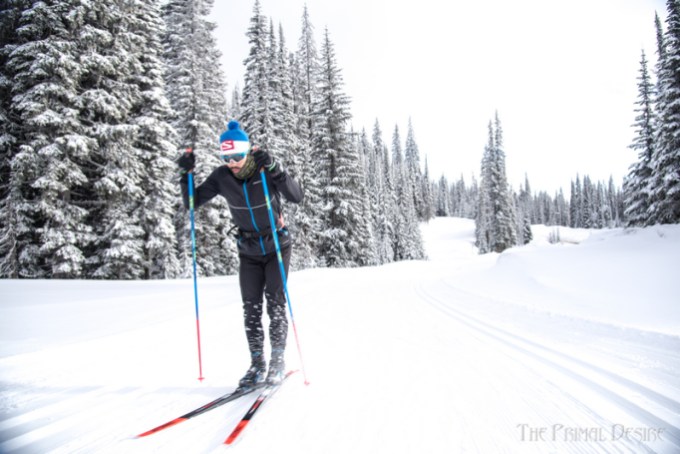
    Kequyen Lam skiing at the Sovereign Lake Nordic Centre on Jan. 19, three days before he was officially named to the Portugal Olympic team. (Photo: Raj/theprimaldesire.com)

    FasterSkier would like to thank Fischer Sport USA, Madshus USA, Concept2, Boulder Nordic Sport and Swix Sport US for their generous support, which made this coverage possible.

    *****

    VERNON, B.C. — In May of 2015, a new skier turned up at the Sovereign Lake snow camp. He struggled to skate up small hills and fell down often. In the coming week, that same skier will represent Portugal at the 2018 Winter Olympics in PyeongChang, South Korea.

    At first glance, Kequyen Lam seemed like a typical Canadian nordic newbie. Great lateral balance combined with regular falls forward and backward revealed his alpine background. Six months later, Lam turned up at the Sovereign Lake NorAm with intermediate technique, much-improved fitness and a total determination to recover from a bad cough in time for the distance race. Asked by FasterSkier to explain the shocking improvement over the summer, he said, “I used to be a snowboarder. And I worked hard.”

    Fast-forward to 2018 and Lam, 38, has a FIS ranking that created an Olympic quota spot for Portugal. The journey was anything but simple, both as a skier and as a dual citizen.

    FasterSkier caught up with Lam at the Sovereign Lake Nordic Centre on Jan. 21, one day before the official announcement of the 2018 Olympic quota allocation.
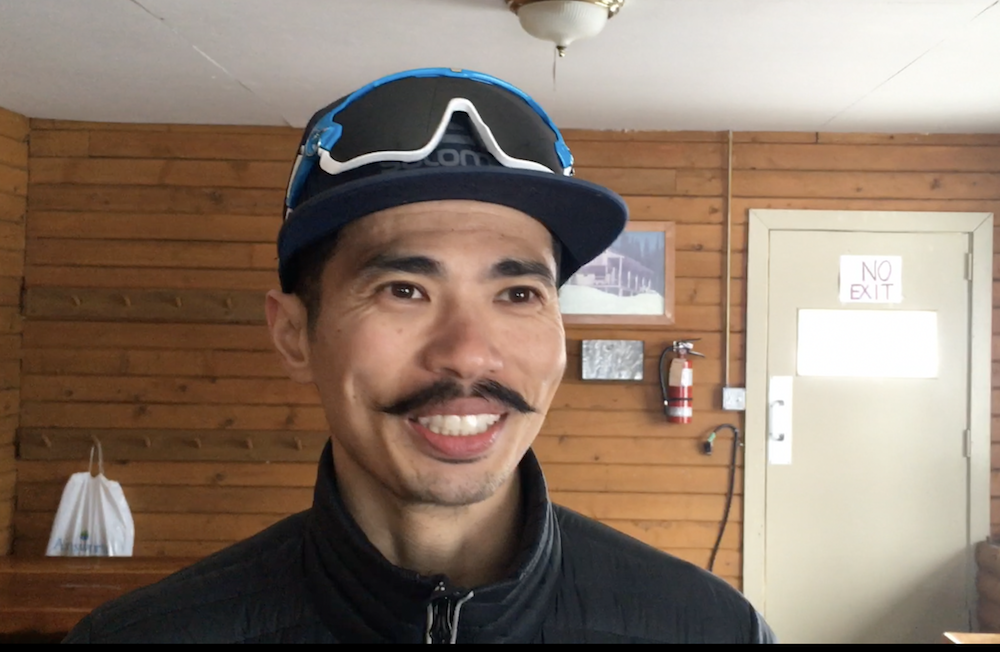
    "I’m a united nations individual. I would say that I’m proud to have the entire heritage that I do have, the history. I’m super proud that my parents are boat people, are refugees." Kequyen Lam, 2018 Olympian
    “I’m a united-nations individual. I would say that I’m proud to have the entire heritage that I do have, the history. I’m super proud that my parents are boat people, refugees.” — Kequyen Lam, 2018 Olympian

    Becoming A Nordic Skier

    A bit of Googling shows that Lam’s casual reference to snowboarding wasn’t the whole truth. He competed at the 2013 Sochi Snowboard World Cup and was on track to qualify for the 2014 Olympics in that sport. A season-ending crash in Austria resulted in a shoulder injury that stopped that dream and changed Lam’s path.

    “Everything was going super well, but at this track, something mentally wasn’t right,” he recalled. “I was in a state of fear: fear of getting hurt, fear of injury. Physically, I believe I was ready, but mentally, it was tough.”

    After the end of his snowboarding dream, Lam worked in Golden, B.C., as a pharmacist.

    “I kind of moved on with my life, lived in Golden, did the whole career thing, did things for fun,” Lam explained. “I’m just the type of person where doing things for fun isn’t enough.”

    Lam’s path into cross-country skiing started less than three years ago, at age 36, with Paralympic athlete and friend Tyler Mosher, who told Lam to “talk to Maria.” 

    “I talked to Maria Lundgren, and she forwarded me to Tony Chin,” he said of Lundgren, a British Columbia Ski Team coach, and Chin, one of the head coaches at the Nordic Racers Ski Club in Vancouver.  

    Through Chin, he met Ryan Olson, a masters skier.

    “Ryan Olson is pretty hardcore guy when it comes to skiing,” Lam said. “He is dedicated and he gives ‘er hard. That was the reason I was able to learn the beginning steps of cross-country skiing.”

    Olson connected Lam with Matt Liebsch, an American Birkebeiner champion and competitive American skier who organizes an annual camp at the Haig glacier near Canmore, Alberta. Lam spent three days there with Canadian Olympians Dasha Gaiazova and Ivan Babikov before training with Liebsch’s group on the glacier.

    “I spent ten days total up at the Haig in 2015, and that’s when I learned how to ski, how to skate ski,” Lam explained.

    His introduction to nordic skiing took him through a who’s who of Western Canadian skiing in just his first three months of the sport. From Mosher to Glenn Bond (Lam’s current coach), there was and is a large community of people who help skiers progress. For Lam and the Olympics, progress is measured in FIS points.

    “The magic points! The first races happened in Finland,” Lam explained. “Last year, I went to Finland, I did a couple races there. I scored some good points there. And then there were some [rollerski] races in Columbia in December of this year where I got the majority of my points. It was actually those races that got me enough points to get under the 300-point standard to meet the Olympic qualification criteria.”

    Representing Portugal

    How does a Canadian come to have dual citizenship with Portugal? The story starts in Asia.

    Lam’s grandparents immigrated to Vietnam from China before being driven out by the Indochina War (a 31-year Vietnamese civil war which bled over into Cambodia and Laos). When the war ended in 1975 with the defeat of the South Vietnamese government, Lam’s parents returned to their noodle business. The new Socialist Republic of Vietnam was not forgiving to groups that were believed to have supported the losing side. In 1978 and ’79, around 450,000 Vietnamese of Chinese ethnicity were expelled or escaped from Vietnam. Lam’s parents left as ‘boat people’, spending a month on an open boat before landing in Macao. Lam was conceived and born in a refugee camp in Macao in 1979, which was then a Portuguese colony, before being flown to Canada at the age of three months to live with a host family in Abbotsford, British Columbia.

    “My grandfather on my mum’s side, they had made it to Abbotsford from Hong Kong,” Lam said. “The family split up entirely. [My grandparents] went to Hong Kong and they made their way to Abbotsford, and when they found out that we were coming over, they went to one of the churches in Abbotsford and found a family to take care of us when we got there. I mean, the Canadian government would have figured that out, but [my grandfather] wanted to make sure that the people that were going to take care of us were gonna be good people. That’s what he did. We were super, super fortunate.”

    At 27, Lam started the process of connecting with his family history.

    “I contacted the [Portuguese] consulate in Vancouver, they contacted the hospital that I was born in in Macao, and sure enough my name was there,” he said. “I get a letter in the mail, all in Portuguese, I had no idea what it meant.”

    That all happened in 2006, the year he started pharmacy school.

    “I took a year of Portuguese, I enrolled in two semesters, learning how to read and write, how to understand,” he said. “Then I spent two months in Portugal, travelling all over the coast, surfing. I did some volunteer work in a pharmacy in Faro, for a few days, just to see what it was all about.”

    The Portuguese media has connected with Lam’s story and a part of Portugal’s colonial history. Their country has a second representative in PyeongChang, alpine skier Arthur Hanse, whose parents emigrated from Portugal to France. Lam was selected to be the flag bearer at Friday’s Opening Ceremony. 

    (Article continues below)

    https://www.instagram.com/p/Be-05tGhD6L/?taken-by=kequyenlam

    According to The Portugal News Online, the last time Portugal sent more than one athlete to the Winter Olympics was in 1988 when its four-man bobsled team qualified. That team competed against the famous Jamaican bobsled team and finished last in the final, while Jamaica did not finish.

    “I’m a united-nations individual,” Lam said. “I would say that I’m proud to have the entire heritage that I do have, the history. I’m super proud that my parents are boat people, refugees.”

    The Olympic Dream

    Lam is one of many who dream of representing ‘small nations’ at the Olympics: athletes who work together to build a worldwide community and inspire others to chase their dreams.

    “For two and a half years, nobody really knew what I was doing,” he said. “They knew that I was skiing, that I was passionate. That was 100 percent, but there was a purpose behind it, and that purpose was to make it to the Games in 2018. And tomorrow [Jan. 22] is judgment day.”

    The ‘big nations’ in nordic skiing have big solutions. From dedicated wax teams in country-specific waxing rooms to physio staff to multiple coaches, the support is total. The ‘small nations’ live in a different world, sharing wax rooms among multiple countries and relying on the wax companies and ski companies for testing.

    Team Portugal has Lam, supported by coach (and Atomic ambassador) Glenn Bond.

    “What we’re going to do is we are going to see if Atomic will look at skis, wax skis and get everything dialed for training days and the race day,” Lam said. “I think that’s the best route to go. They’re testing skis every day, and they know what’s going to be fast.”

    Like many of his peers, Lam has qualified for one event: the 15-kilometer freestyle individual start next Friday, Feb. 16. The people who have met him on his journey will be celebrating. You can follow Lam on his website or Instagram @kequyenlam.


  • Opening Acts in PyeongChang: USST Press Conference and Catching Up with Sargent

    (From left to right) U.S. Ski Team members and 2018 Olympians Rosie Brennan, Kikkan Randall, Sadie Bjornsen, Jessie Diggins, Erik Bjornsen, and Ida Sargent posing after their intro press conference on 2-7-18. (Photo: Flyingpointroad.com)

    FasterSkier would like to thank Fischer Sport USA, Madshus USA, Concept2, Boulder Nordic Sport and Swix Sport US for their generous support, which made this coverage possible.

    ***

    PYEONGCHANG, South Korea — Sitting one-by-one across the stage dressed in what appeared to be the brightest of bright white tops, Kikkan Randall, Jessie Diggins, Rosie Brennan, Ida Sargent, and the Bjornsens (both Erik and Sadie) held court for the attending media Wednesday afternoon at PyeongChang’s mountain cluster media center. All athletes are members of the U.S. Ski Team (USST) and 2018 Olympians.  

    Randall, the seasoned vet, fielded a spectrum of questions centered around her role as the foundational piece of the U.S. women’s cross-country-ski juggernaut. It’s the Anchorage-based skier’s fifth Olympic Games.

    Back in 2002, when Nina Kemppel competed in her last of four Games for the U.S. cross-country ski team, Randall, as part of the same 2002 Salt Lake squad, was beginning her own five-Olympiad odyssey. Sixteen years later, Randall could reflect on being, at times, a lonely success story on the women’s side, to the present, when on the most recent World Cup weekend in Seefeld, Austria, two U.S. women scored wins: Sophie Caldwell in the freestyle sprint, Diggins in the 10 k mass start skate.

    Jessie Diggins and the media swarm during her intro press conference at the 2018 PyeongChang Olympic Games. (Photo: Flyingpointroad)

    As much as the press was there to see a champ like Randall, they also were captured by Diggins’s spunk and verve. Erik Bjornsen took it all in after stating in his intro that this was his first press conference. He proceeded to take out his smartphone and unabashedly capture a few panning video shots of the scrum of reporters there to learn more about the U.S. cross-country team poised to make history in South Korea.

    For those who follow the sport and in particular the U.S. women, much was said about the “team” and their devotion to it. But each athlete also spoke of their personal goals and ambitions.

    After the main press conference, when athletes took one-on-one questions, FasterSkier had an opportunity to check in with Brennan, Erik Bjornsen and Sargent.

    2018 is Brennan’s first Olympics, yet she arrives with a broad scope of World Cup experience to draw from. She scored two top-20’s in successive World Cup 10 k freestyle races in Davos, Switzerland and Toblach, Italy. She nailed a 15th place in the Tour de Ski’s opening skate sprint. It was a solid Period 1 on the World Cup for Brennan.

    Much has been written about the U.S. women’s collective prospects in the 4 x 5 k relay. That team, which could include more names than the four-member team is alloted, is still not set in stone.

    Asked if she would be approaching her first race opportunities as a demonstration to the coaches of her overall fitness, Brennan was anything but coy.

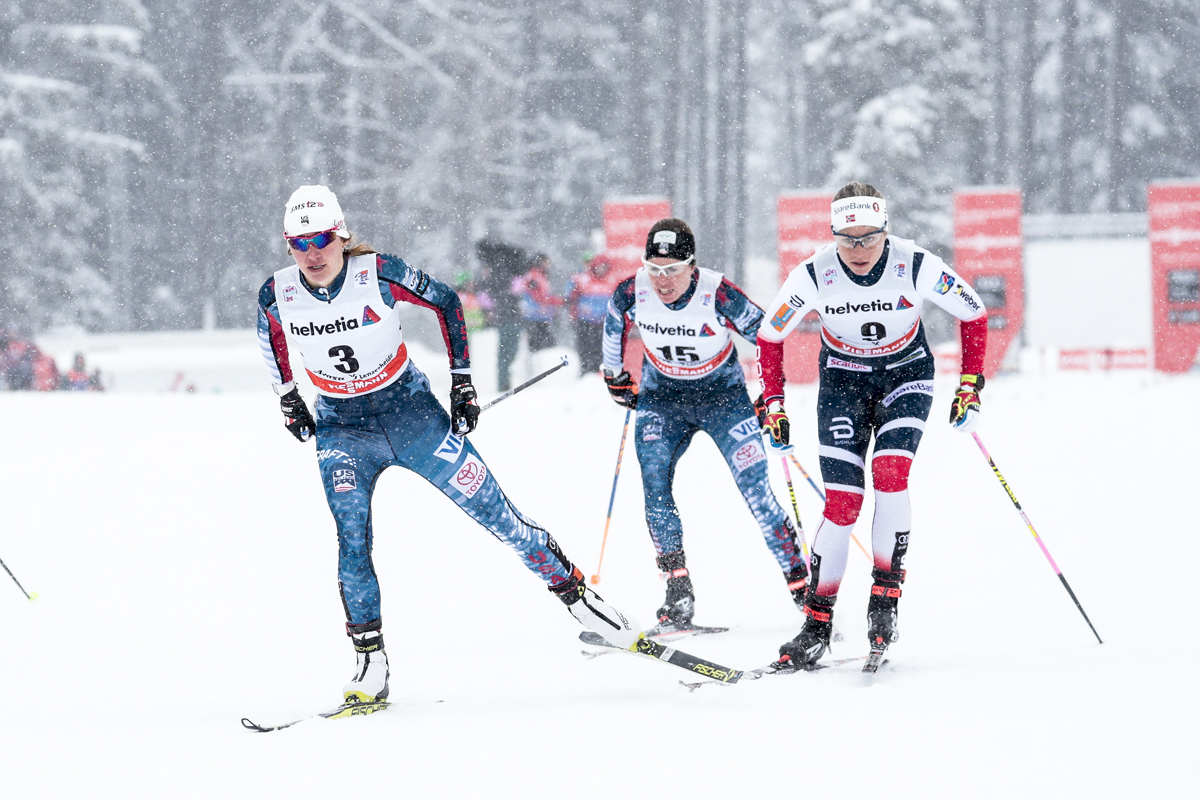
    Sophie Caldwell (3) leading her U.S. teammate Rosie Brennan (15) and Norway’s Astrid Uhrenholdt Jacobsen in the quarterfinal of the women’s freestyle sprint at Stage 1 of the 2018 Tour de Ski in Lenzerheide, Switzerland. (Photo: Fischer/NordicFocus)

    “I have been struggling the last few weeks since the TdS with my own racing,” the 29-year-old Brennan said. “And so at this point I am just hoping to had enough time to turn my form around and to race better myself. I obviously don’t want to be part of a relay team that I’m going to let down. So I want to be in my best shape before I even think about that. That is one of my goals and I hope I’ve had some time to turn my shape around. But I think at this point, I am looking for every opportunity to race that I can get to show that I have turned this around and that I am ready and then will start looking at that relay spot.”

    Most recently, Brennan struggled in Seefeld’s 10 k skate mass start, finishing 53rd. Brennan also after completed the Tour de Ski (TdS), which concluded Jan. 7. Understanding that maintain high level fitness on the World Cup is a challenge few master, Brennan said the TdS had sapped her energy.

    “Just a little more fatigue than I expected from the Tour despite the fact that we only had six and half races,” Brennan acknowledged. “There were a lot of weather events so everything was a little more energy intensive and a little hectic. I came in with a lot more training than I have in the past, I trained a little harder during Period 1 in hope to be sharp for the Olympics, and I think I didn’t respect that as much as should have and was a little tired afterwards. And also fighting a little illness and things like that. I am feeling a lot better now and I hope a little rest is all I needed.”

    For Erik Bjornsen, who is experiencing his second Olympics after racing three individual events and the 4 x 10 k relay in Sochi, these Games could become a stepping stone. In Seefeld, Bjornsen placed ninth in the 15 k mass start skate. If Bjornsen’s positive energy in the press conference was any indication, he might be trending into rarefied air on the men’s side.

    “I think I could have some good performances,” Bjornsen, 26, said. “I don’t have the pressure that everybody else does, but I do have have the potential to put in some really solid results.”

    (Left to right) USST members and 2018 Olympians Ida Sargent, Erik Bjornsen and Kikkan Randall during thier intro press conference on Wednesday at the PyeongChang Games. (Photo: Flyingpointroad)

    Last year at the Nordic World Championships in Lahti, Finland, he and teammate Simi Hamilton placed fifth in the team sprint. In PyeongChang, the course remains championship-tough, but athletes are more exposed to the elements as the tracks were built on a hilly golf course.

    “Of course, I’m really excited for the team sprint,” Bjornsen said. “And these courses, I’ve been out there once, it is a little early to say. It seems good. It is a golf course, but there are some big climbs, which I like. I like hard-work sections but there are also some flatter sections, which suits a big guy like myself. And then having wind, I was joking before, it should be good for the guys that are chasing.”

    Then let’s talk about tough and gritty. Topping the list would be Sargent. If you missed this, here’s the short version. Back on Jan. 27, prior to her start in Seefeld’s skate sprint qualifier, Sargent fell and broke her thumb.

    “It was a complete clean break,” Sargent, 30, stated. “Every pole plant was very painful. But actually, I felt like my brain was a bigger a detriment because it happened 15 minutes at most before the start and I knew that something was wrong. I was thinking the whole time, ‘This is bad, this is bad.’ I could feel the pain and was thinking that something very serious was going on.”

    On her literal whirlwind of treatment, Sargent flew to Vail, Colorado, for surgery on her thumb at The Steadman Clinic.

    “I had a plate inserted and seven screws securing this plate,” Sargent explained during a follow-up phone interview on Thursday. “So good hardware in there, and an amazing surgeon. My surgeon was very confident; he has done this before, and he knew that the plate was extremely secure so that he wasn’t at all concerned about it moving or not me not having  the stability. I think he ended up using a slightly larger plate just to make sure it was plenty secure.”

    The next morning, post-surgery, Sargent was cleared for active recovery to increase her mobility and bring down the swelling.

    “Two days later I was skiing, doing some one pole and some two pole,” Sargent added. It was incredible to me that they can take a clean break and fully stabilize it.”

    Sargent was clear when asked if there’s anything she cannot do.

    “Nope,” she said. “The only restriction is just personally managing the pain when I ski. The bone is not fused together yet, that eventually will happen. I also obviously have the trauma of having screws put into the bone and there is the swelling, but that has been going down. I have been working with Zuzanna Rodgers here in Korea. We have working on some exercises and some massage to reduce the swelling.”

    Ida Sargent (5) leads her semifinal heat and teammates Jessie Diggins (4) and Sophie Caldwell (9) around a corner at this season’s Davos World Cup. (Photo: Reese Brown / U.S. Ski & Snowboard)

    It is cold here in PyeongChang. It’s a dry cold, but when temps are slow to budge from the single digits and eventually warm to the low teens, cold is cold. Most people with surgical procedures requiring the insertion of metal plates claim cold temps can complicate their sensations. Here in Korea, that seems not to be a problem for Sargent.

    “I was talking with someone yesterday who has a plate in their hand as well, and they feel the cold,” Sargent said “I don’t think I feel it because I still have a fair amount of swelling on top of the plate at the moment. So I think that that is providing some increased insulation. That is the bonus of that maybe. I haven’t felt the cold from it.”

    Sargent stated she was scheduled to race next Tuesday’s classic sprint.

    “As long as I am feeling like my thumb is good to go and I feel confident in my ability to ski well with it, I’ll be racing that,” Sargent explained. “The sprint is on Tuesday, so I still have five days or something at this point That is the plan right now and putting the full focus on being recovered and ready for that day.”

    The 2018 PyeongChang Olympics begin Saturday with the women’s 15 k skiathlon.