Tag: Q & A

  • USBA CEO on NoCo: ‘The Good Thing is That They Have a Track Record of Being Super Successful’

    USBA CEO on NoCo: ‘The Good Thing is That They Have a Track Record of Being Super Successful’

    With the announcement this spring that the U.S. Ski and Snowboard Association (USSA) would cease financial support for the Nordic Combined team, there has been much discussion about what happens next. Among the options is for Nordic Combined to start its own national governing body (NGB), perhaps combining forces with USA Ski Jumping and Women’s Ski Jumping USA.

    Another nordic sport with its own governing body also jumps to mind: biathlon. The United States Biathlon Association, founded in 1980 after splitting from modern pentathlon, has had medals and podium finishes at every level except the Olympics: from World Youth and Junior Championships through the World University Games, World Military Championships, World Cup, and senior World Championships.

    Recently, USBA felt financially secure enough to restart its development program. IRS financials are not released yet for the last year, but in 2011 and 2012 had total revenues of $2.6 and $2.4 million. In the past years USBA has forged close ties with the U.S. Olympic Committee (USOC), much to its benefit.

    So, what did it take to get there, and what advice might USBA have for Nordic Combined, if they choose the separate-NGB route? FasterSkier called up Max Cobb, the President and CEO of USBA, to chat.
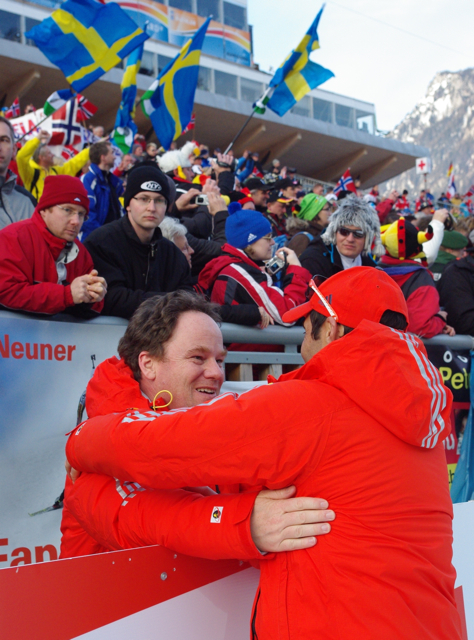
    Max Cobb, who besides acting as CEO of USBA also chairs the International Biathlon Union's Technical Committee, receives a hug from a fellow official after U.S. athlete Susan Dunklee placed fifth in the 2012 World Championships.
    Max Cobb, who besides acting as CEO of USBA also chairs the International Biathlon Union’s Technical Committee, receives a hug from a fellow official after U.S. athlete Susan Dunklee placed fifth in the 2012 World Championships.

    FasterSkier: I’m assuming that you’ve been following, to some extent, the news about USSA and Nordic Combined.

    Max Cobb: Yes, I have heard some of the news.

    FS: As someone who is running an NGB for a small nordic sport, do you have any words of wisdom for them? Advice? Warnings?

    MC: I think that the good thing for the Nordic Combined guys is that they have a track record of being super successful. Like us, it takes time to reach that level.

    FS: So that’s what you need to be able to make your case?

    MC: I don’t really know enough about what is going on with those guys and with USSA. So I don’t know what I can say other than that I think the important thing is to continue to demonstrate that there’s an orientation towards high-performance success, and if you can demonstrate that the right the athletes are in the system for achieving that, then I think it’s possible to gain support from both sponsors and donors.

    FS: Do you have a sense of how long, after USBA was started, it took for the organization to start to feel like it was on its feet?

    MC: I think it grew very gradually. It wasn’t really until the late 80s or mid- to late-80s, after the 1984 Olympics, that the USOC provided a really substantial and reliable source of funding. We were able to offer fairly strong programming starting in 1986, and then in 1987 Josh Thompson won a silver medal [at World Championships] so there was a big push for the 1988 Games. So I think that was when biathlon really came into its own. But I think a lot of that … there was not very much funding available from the USOC between 1980 to 1984.

    FS: It seems like there are more and more sports now, compared to back in 1980. Do you think it’s harder to get USOC’s attention if you are starting your own NGB now?

    MC: In terms of what is different now, I would just say that in general, there are more resources available and more sophisticated fundraising around Olympic sport than there were in the mid-80s. That’s very clear to me.

    FS: So that is good for nordic sports?

    MC: I think in terms of identifying donors – just look at what the National Nordic Foundation has been able to do. They have raised a huge amount of money [note: for the 2012/2013 year, the National Nordic Foundation had revenue of just over $350,000]. It has been very impactful for the sport. That kind of relatively grassroots fundraising didn’t exist at all in the 1980s. You look at things like Rally Me and our whole digital communication, and that has made it much easier to bring together a very diffuse group of people who care, of supporters. When you think about doing paper mailings to groups like that [when USBA was getting started], it would have been impossible.

    FS: Is that what you think Nordic Combined should be focusing on?

    MC: I just make those comments in general. It’s not necessarily specific to what’s going on with Nordic Combined because I don’t really have a sense of what is envisioned there.

    FS: OK, thanks Max!
  • Q & A: Your Rollerski Questions Answered

    Q & A: Your Rollerski Questions Answered

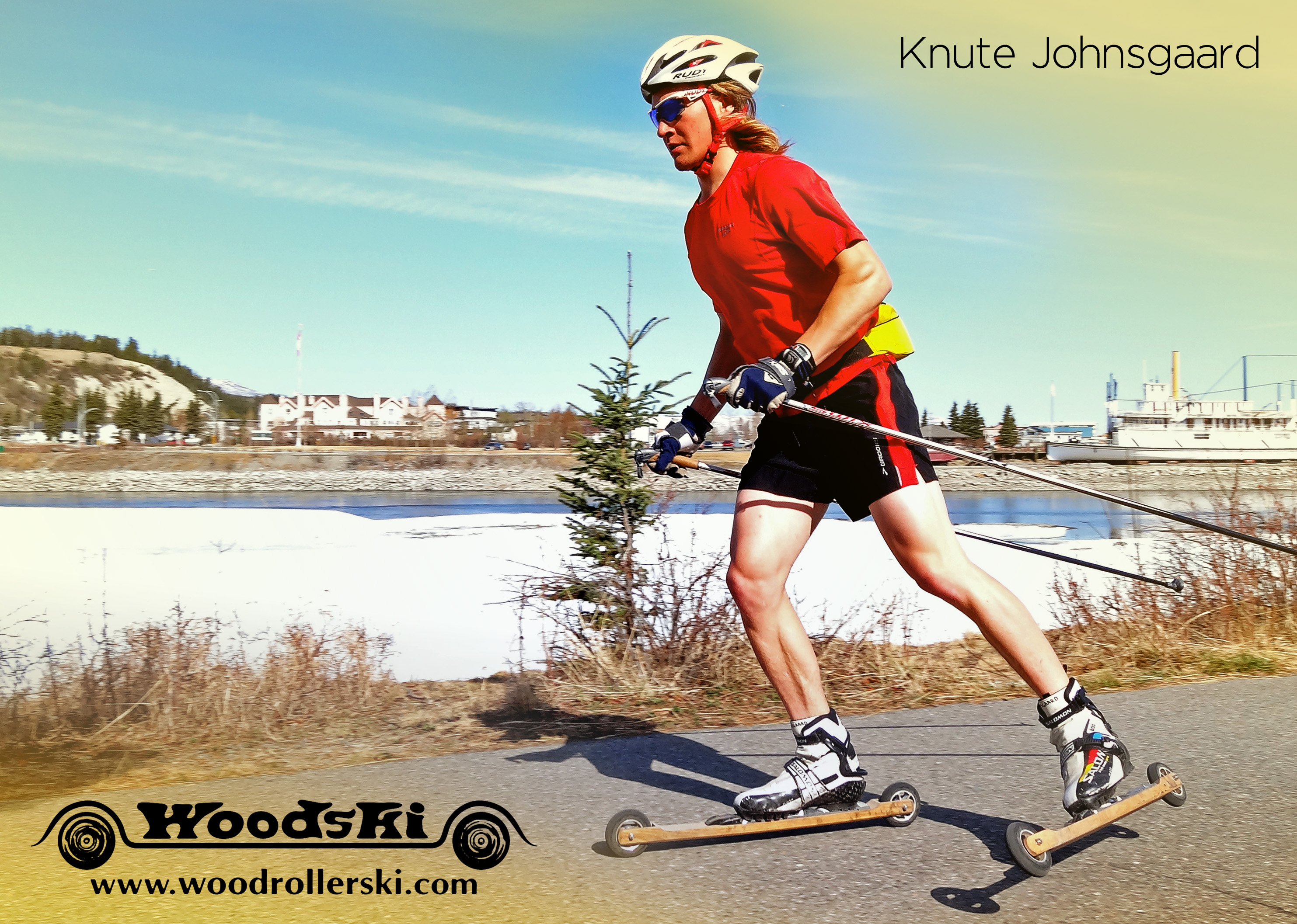
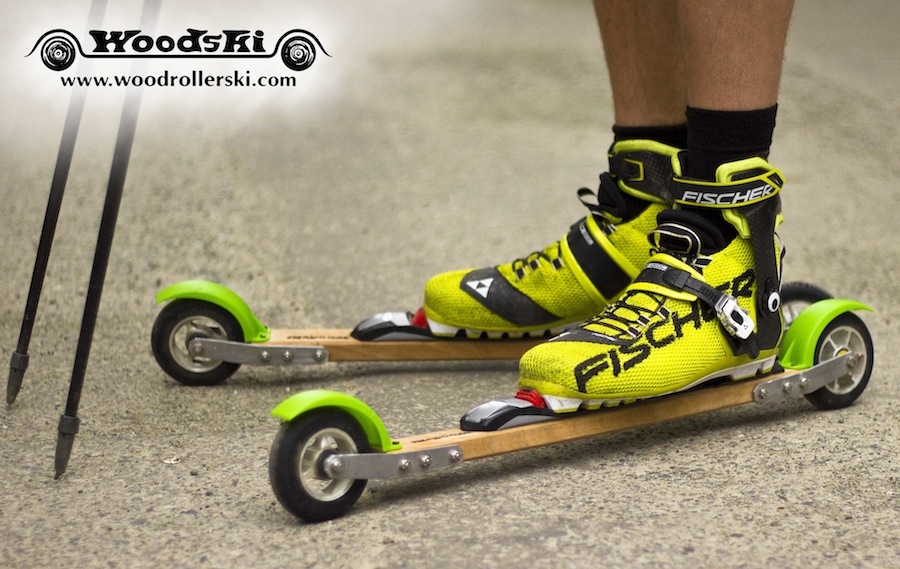
    Knute Johnsgaard of the Yukon Elite Squad training on his wood rollerskis courtesy of Woodski, Inc
    Knute Johnsgaard of the Yukon Elite Squad training on his wood rollerskis courtesy of Woodski, Inc

    You asked, we answered! Welcome back to another installment of our Question and Answer series. This time around, the owners of RollerSkiShop.com and Woodski, Inc. shed some insight on rollerski speed and off-road models. Got questions of your own? Email questions@fasterskier.com

    ***

    1. What are the pros and cons of the various off-road classic roller skis? – Rick from Vermont

    Clayton Keim, owner of RollerSkiShop.com, wrote in an email his company doesn’t carry off-road rollerskis, but listed some pros and cons:

    “Pros: Can roll over bigger stuff for smoother ride, go on gravel and crushed limestone opening up more routes.

    Cons: Bulky, heavier typically, if pneumatic wheels you can get a flat.

    “Some people don’t have paved trails as an option and just have crushed limestone for training, in which case they have to get an off-road rollerski,” Keim writes. “For those that have paved trails or decent paved shoulders on roads I would suggest avoiding off road rollerskis. For skating get either 100 mm or 105 mm wheels and you can roll over a little more than a wheel that is smaller. Trying to skate on wheels that are less than 90 mm isn’t much fun and not very safe as every stick, crack, and little rock will jolt you more.”

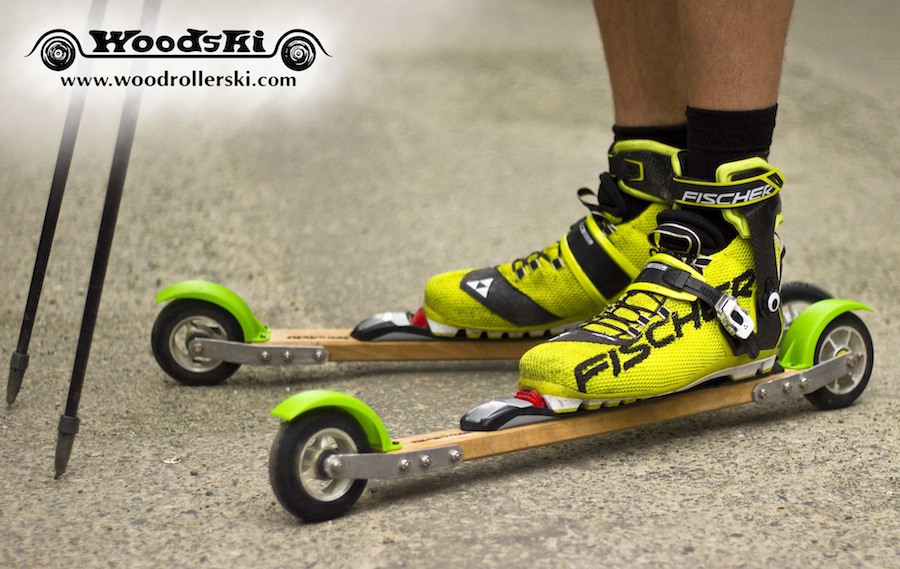
    Wood rollerskis
    Photo: Woodski, Inc.

    2. Does rollerski speed change when it gets colder? I notice that my intervals around a set loop are not as fast as the weather gets colder. — Warren

    “Rollerski wheels run slower in the cold,” writes Keim. “Prime example was this January after a meltdown and rain I went out rollerskiing in Minneapolis. Air temp was mid 20’s and rollerskiing was really slow compared to how it was late fall on the same setup. The cold will slow down the bearings causing this as the grease becomes thicker. I’m not sure at what temp you start to really notice it, but I feel it’s pretty cold like the low 30’s. Our bearings and most rollerski bearings out there are greased, but if someone has oiled bearings they shouldn’t slow down as much. The amount of grease in them would be a factor as well.

    Most of the wheel speed under normal temps however mostly comes from the rebound of the rubber. Doing a spin out test isn’t a very accurate way to measure speed as that just looks at how much grease is in the bearings and how thick it is. A good way to compare rebounds at home between different wheels is drop them next to a wall and see how high they bounce. A faster wheel will bounce higher and a slow wheel won’t bounce much as the energy is absorbed. Under normal temps this is how we achieve our different speeds as greased bearings will only slow you down so much.”

    But if it’s sizzlin’ hot, it’s going to be slower, explains Peter Breu, president of Woodski, Inc.

    “You should be faster as the temperature drops as the rubber of the wheels will indeed be harder as they get colder,” Breu wrote in an email. “If I had to guess, I’d say that the difference between wheels at 80 [degrees] F and 32 [degrees] F would be quite noticeable – perhaps 5-10% faster. If the wheel bearings were packed in thick grease that would offset any increase in speed, but most bearings have very light and little grease so that would not normally be a factor.”

  • Your Questions Answered: Ask Away!

    It’s back! FasterSkier is extending its invitation for questions on ski-related topics for its Q & A series (some of which will be featured in the biweekly Start List).

    Pretty much anything goes – from tech and training questions to what World Cup skiers actually do during the summer (besides grind down pavement and tear up trails). You simply ask, and we’ll do our best to find the answer.

    Questions can be submitted anonymously or with a first name and town to questions@fasterskier.com. Email addresses will not be published.

  • FasterSkier Q & A: Kikkan talks Injury Training

    FasterSkier Q & A: Kikkan talks Injury Training

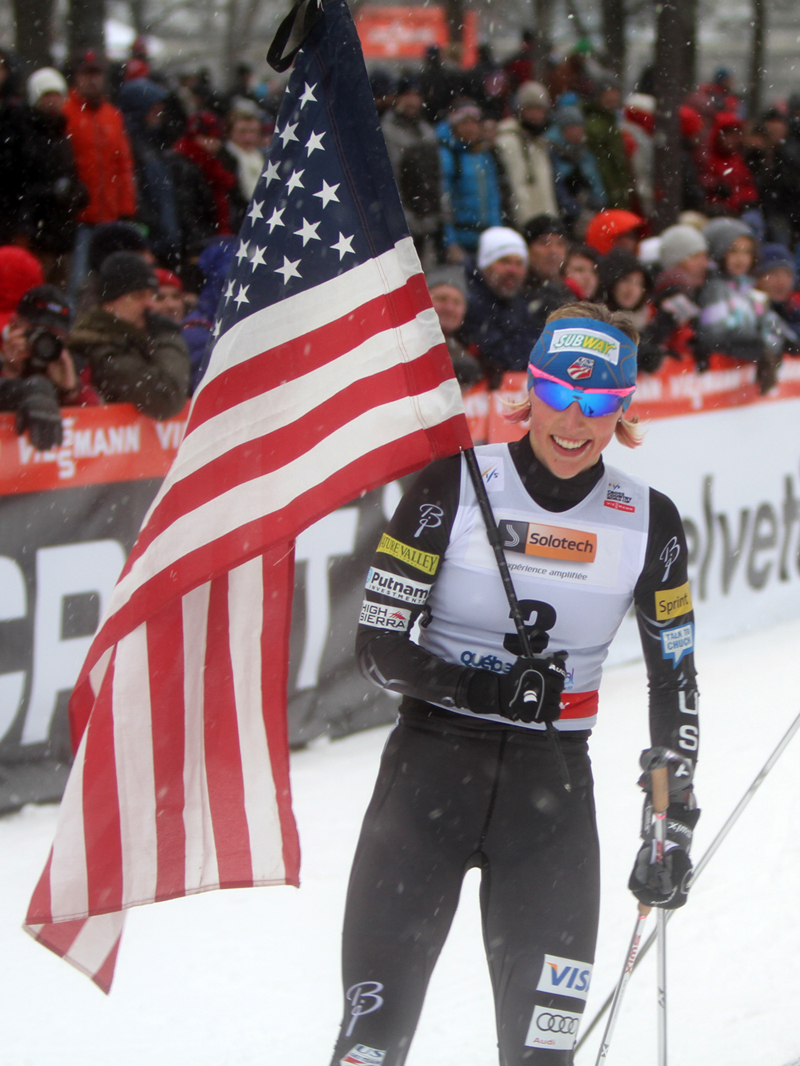
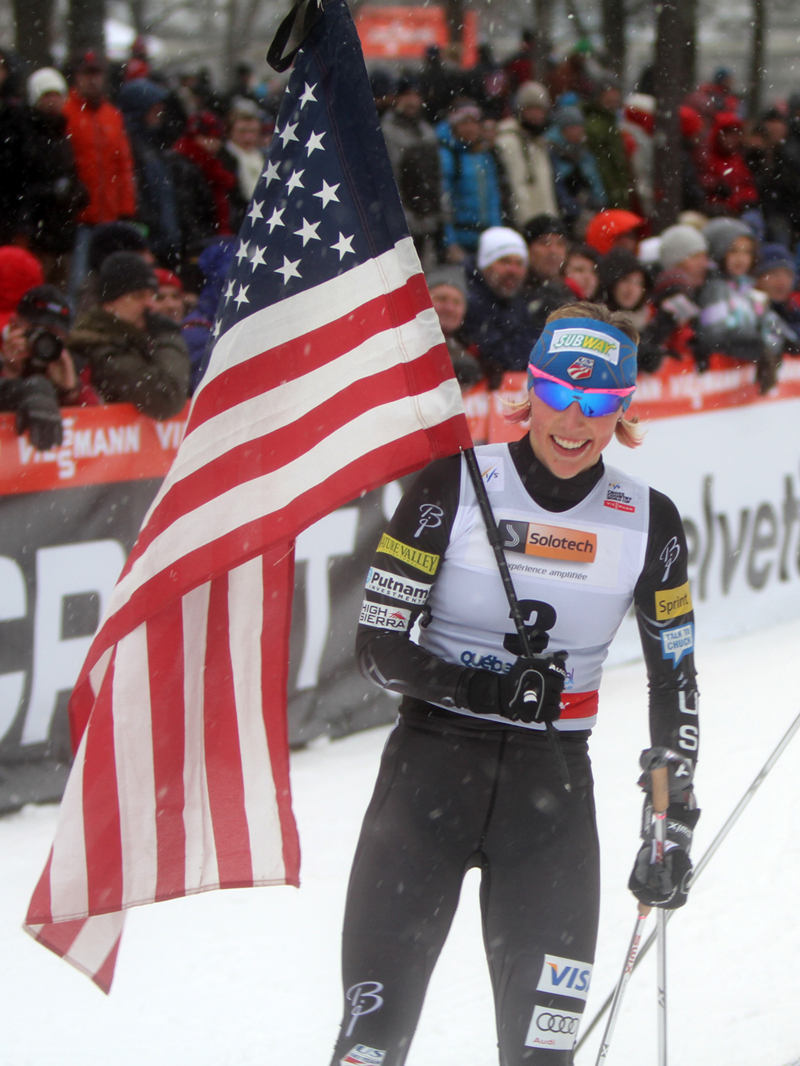
    Randall: “To be able to do that victory lap afterwards was something I will definitely remember for the rest of my life.”

    In this edition of our Q & A series, American star Kikkan Randall discusses specific workouts performed during her recovery from a stress fracture, and we break down the different race series, and how they relate.

    If you have questions you would like us to answer, email us at questions@fasterskier.com.

    I’m an older Master skier but would love to learn what kind of speed strength and other workouts Kikkan did while healing from her issues this fall. It sure seems to have worked for her and could be enlightening for all of us.

    — Kim from Wyoming


    Here are a couple of the workouts I did while healing my foot injury:

    – Pool running intervals: 15 min warm-up, 20-30 min of 30 secs sprinting, 30 secs recovery, cool down.

    – Upper Body distance: 30 min at solid distance pace on the Exer-Genie followed by 30 min at solid distance pace on the SkiErg.

    – Double-pole intervals: warm-up, 4×10 min at threshold on rolling terrain, cool-down.

    – Climbing on a mountain bike while staying seated, 90-120 mins at 75-85% of max heart rate.

    – Upper body and core specific circuits in the weight room.

    Recovering from an injury can be a great opportunity to work on your weaknesses and focus on improving specific skills. Stay positive and focus on what you CAN do!

    Best of luck!

    Cheers,

    Kikkan

    ___________________

    Can you explain the organization of race series across the country, continent, and World? Continental Cup, NorAm, SuperTour – define each of these and how they relate to each other and regional series like the Eastern Cup, as well as the World Cup and other European series. 

    — Zack in California


    It would take more space than I have here to discuss every race series but this is a timely question with the 2013 still in the early stages.

    We can begin at the top. The World Cup is the highest level of racing in the world – the major leagues as it were. The NorAm series and the SuperTour are Canada’s and USA’s entries in the Continental Cup.

    So while the World Cup is a series, the Continental Cup is actually a classification of series. In addition to North America’s two circuits, there is a Scandinavian Cup and a Balkan Cup among others.

    These represent the highest level of the minor leagues, and skiers racing in these events usually aspire to the World Cup. And that aspiration can be fulfilled in a practical way. At various points in the season, the leaders of Continental Cups are granted World Cup start spots in addition to national quotas. This is how Holly Brooks started the season on the World Cup last year and provides a clear path to the big show.

    After this, however, things start to get less defined, with no real relation or hierarchy.

    The main delineator is FIS points. A race is either scored for such points or not. All World Cup and Continental Cup races are by default. FIS points are the currency of the professional and aspiring skier, impacting team selections, start seeding, and ranking lists.

    Such races generally must be held on homologated courses and often attract strong fields.

    In the US, some collegiate races have been FIS sanctioned for points, and certain marathons are as well.

    There is the elite marathon series in Europe – the Ski Classics, as well as the FIS Marathon Cup, and the World Loppet. Many of the events overlap, and participants include everyone from recreational skiers to Olympians.

    The Eastern Cup is the New England Nordic Ski Association’s regional race series and act primarily as qualifiers for Junior Nationals. All regions that participate in Junior Nationals hold qualifying races, but they may not be presented as a “series.”

    Ultimately only the Continental Cup and World Cup have a truly direct relationship. The rest may be tied together by FIS points or qualification criteria but are mainly separate entities.

    Topher Sabot, FasterSkier

  • New to FS: Your Questions Answered

    New to FS: Your Questions Answered

    (Don Moyer/Flickr)

    Calling all questions! We want them. FasterSkier is seeking questions on any ski-related topic for a new Q & A series (which will be featured in its biweekly Start List).

    So pretty much anything goes – from tech and training questions to what life is really like on the World Cup. You simply ask, and we’ll do our best to find the answer.

    Questions can be submitted anonymously or with a first name and town to questions@fasterskier.com. Email addresses will not be published.