Tag: Qaniq Challenge

  • Globetrotting Fritz & Kovacs Take Titles, Cash in Snowy Qaniq Challenge

    Globetrotting Fritz & Kovacs Take Titles, Cash in Snowy Qaniq Challenge

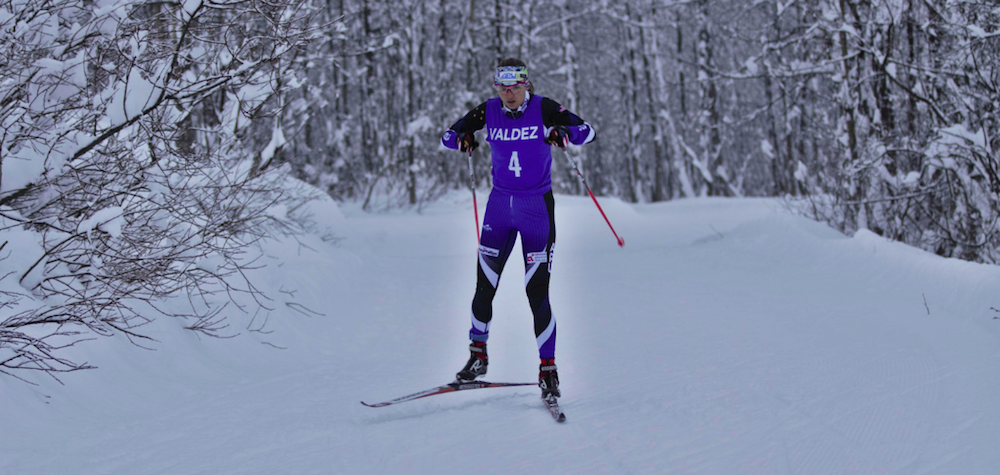
    Women's winner Lauren Fritz (APU) races in the 15 k freestyle in the Qaniq Challenge in Valdez, Alaska, Jan. 14, 2017. (photo: Calvin J. Fifarek)
    Women’s winner Lauren Fritz (APU) races in the 15 k freestyle in the Qaniq Challenge in Valdez, Alaska, Jan. 14, 2017. (Photo: Calvin J. Fifarek)

    VALDEZ, Alaska — Official Winter Storm Warnings for the state of Alaska are graded on a curve. In Fairbanks, which has a relatively dry winter climate and low snowfall totals, a forecast eight inches of snow in 24 hours are required before the National Weather Service (NWS) will issue a warning. In moister maritime Anchorage, that figure becomes 12 inches in 12 hours. But in Valdez, world-famous for its deep snowfalls and epic backcountry skiing in the Chugach Mountains, the standard is a full 24 inches in 12 hours before a warning will issue. It’s forecast to snow 18 inches before noon? Three feet by the end of the day? NWS doesn’t want to hear about it.

    All of which is to say that it was snowy in Valdez over the weekend for the third-annual Qaniq Challenge, but not historically so. Like, it only snowed roughly eight inches during the day on Friday, 14 inches Friday night, a few more inches Saturday, six or eight more inches on Saturday night into Sunday, and another foot or so on Sunday through Monday.

    Paul (PK) Kovacs of the Australian National Team and Lauren Fritz of Alaska Pacific University (APU) romped through the fresh snowfall to pick up victories in the third-annual Qaniq Challenge, a two-day, roughly 35-kilometer total classic and freestyle race series. Notably, first place earned each of them $2,000 dollars, the second-richest prize in domestic cross-country skiing, behind the American Birkebeiner. The Qaniq’s total purse, $10,000, also trails only the American Birkie.

    The Qaniq, whose name comes from the Alutiiq word for “falling snow,” has been held in a variety of formats during its three years of existence. This year’s race saw a 15.7 k freestyle individual start on Saturday, followed by an 18.6 k classic pursuit on Sunday. First racer to cross the finish line on Sunday wins.
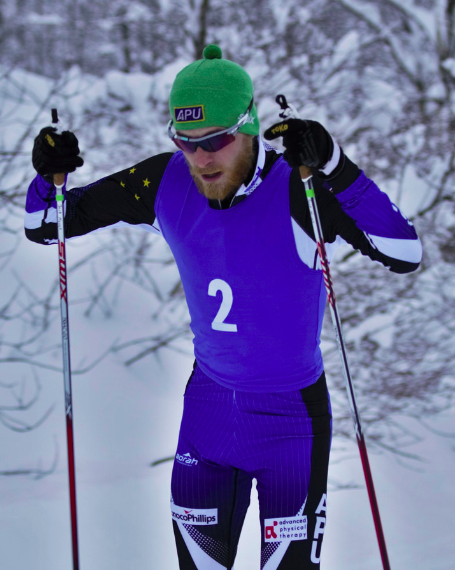
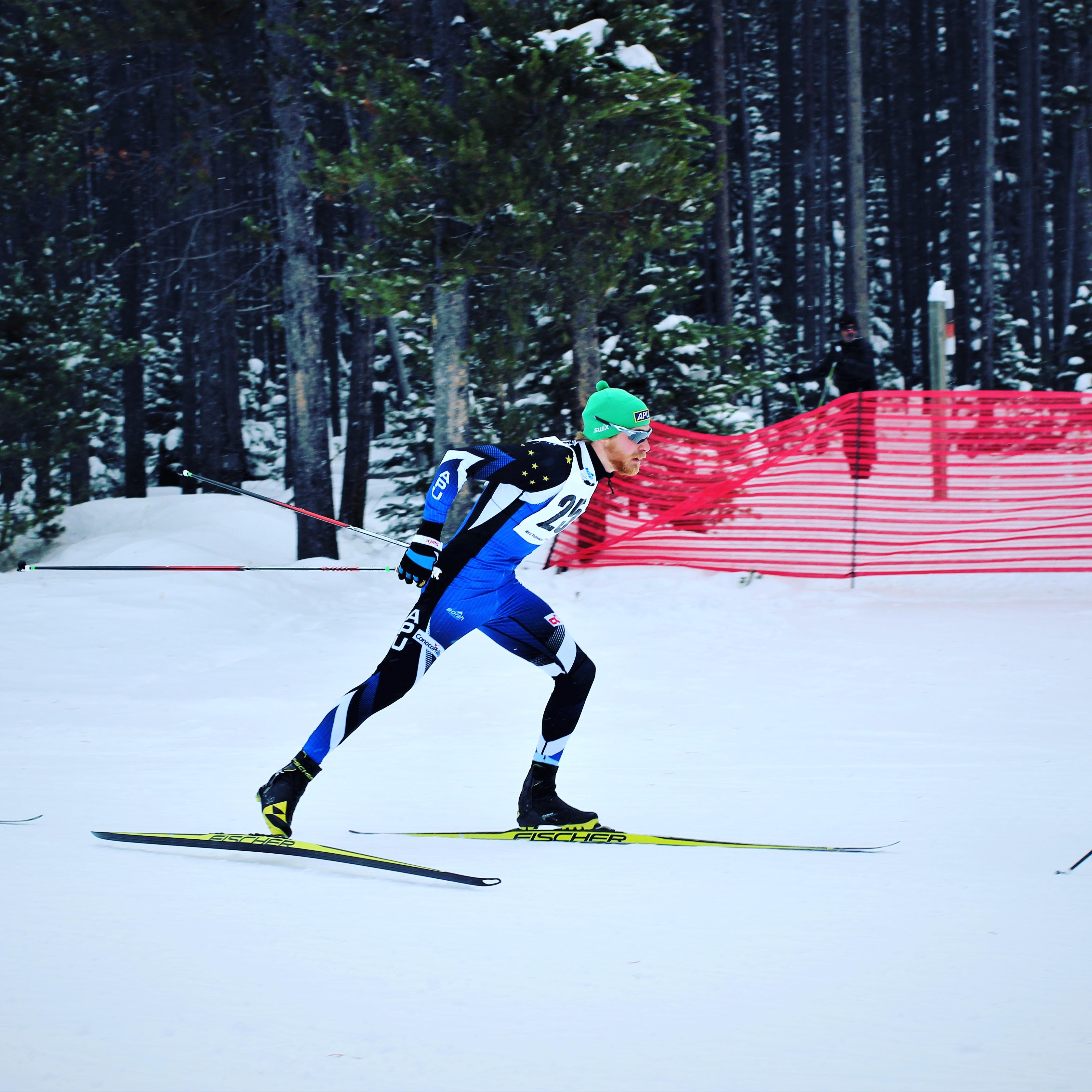
    Men's second-place skier Jack Novak (APU) races in the 15 k freestyle in the Qaniq Challenge in Valdez, Alaska, Jan. 14, 2017. (photo: Calvin J. Fifarek)
    Men’s second-place skier Jack Novak (APU) races in the 15 k freestyle in the Qaniq Challenge in Valdez, Alaska, Jan. 14, 2017. (Photo: Calvin J. Fifarek)

    On Saturday, that racer was Kovacs. The Australian national, who lives and trains in Anchorage but is a member of the Australian National Team, started in bib 5, 90 seconds behind APU skier Jack Novak and a minute behind APU skier Andre Lovett. But roughly 16 kilometers later, it was Kovacs who was the first to return to the starting area plowed out of the 14 inches of fresh snow near the Coast Guard Housing on the western edge of a residential Valdez neighborhood.

    Kovacs’s time for 15.7 k was a laborious 46:51.7. Novak (+2:11.7) and Lovett (+5:04.2) followed.

    In the women’s division, Fritz (APU) skied to victory in 55:51.7. Kate Backstrum (citizen racer, formerly of Montana State University) in second (+5:49.5) and Krista Heeringa (citizen racer, formerly of University of Alaska Anchorage) in third (+7:57.3) made up the rest of the Day 1 podium. Fritz started somewhat ahead of them in bib 4, then skied by herself for nearly the entire course.

    Saturday’s race was not easy for anyone, as a snow/rain/sleet mix falling on top of nearly two feet of recently groomed fresh snow, and temperatures around 34 degrees Fahrenheit with close to 100-percent humidity, made for slow going no matter how many fluoros were applied. Kovacs’s winning time on Saturday, for a 15.7 k skate race including 9 k of pancake-flat trail, was nearly 47 minutes. The previous month, at a Besh Cup race in Anchorage, he covered a much hillier, International Ski Federation (FIS)-certified 15 k course in 37:15. Last year he skied a World Cup 15 k in 39:10. Novak, in second, clocked a 35:40 for the Besh Cup skate, and a 49:03 in Valdez. Saturday was slow for everyone.

    Sunday brought somewhat less fresh snow, down to eight inches or so (plus more falling during the race), but more of the same on the results sheet, as both Kovacs and Fritz maintained their lead in the classic race to win the overall title.

    Novak had the fastest time on day on Sunday, pushing through the fresh snow in the classic pursuit start to finish in 56:52.0, 16 seconds faster than Kovacs. Lovett (+2:32.1) was again third. Those margins were not enough to change the overall podium based on combined times for both races: first Kovacs, then Novak (combined +1:55), then Lovett (combined +7:20).

    Sunday was once more all Fritz in the women’s race. The APU skier fought through jetlag and energy issues to ski the classic race in 1:06:12.4. Backstrum (+5:31.9) and Heeringa (+11:24.7) again followed. The final podium was the same: Fritz, Backstrum and Heeringa.

    If it’s Saturday, this must be Valdez

    Despite Fritz’s large lead throughout the weekend, she never felt that her victory was guaranteed. Fritz had raced in China from Jan. 1-9, completing six races in nine days. Then she played tourist in Beijing for a few days. Then she made the not-short trip back to Alaska, arriving at the Anchorage airport at 4 p.m. on Thursday. Then she woke up on Friday and drove more than 300 miles to Valdez.

    “I literally hadn’t skied in almost a week,” Fritz told FasterSkier of Saturday’s race.
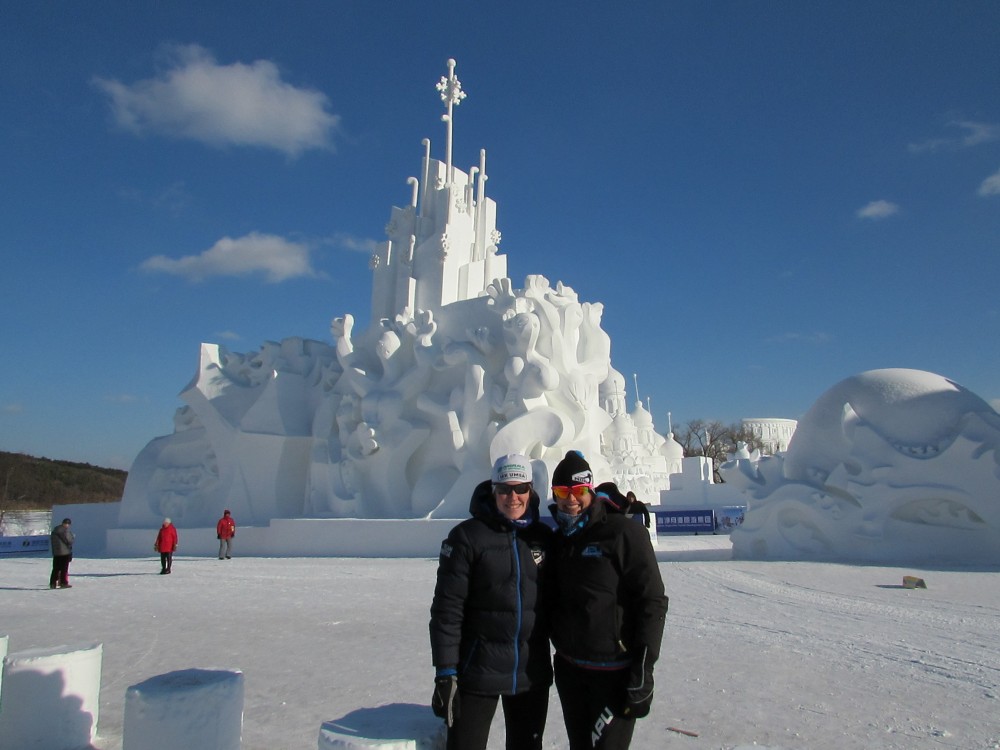
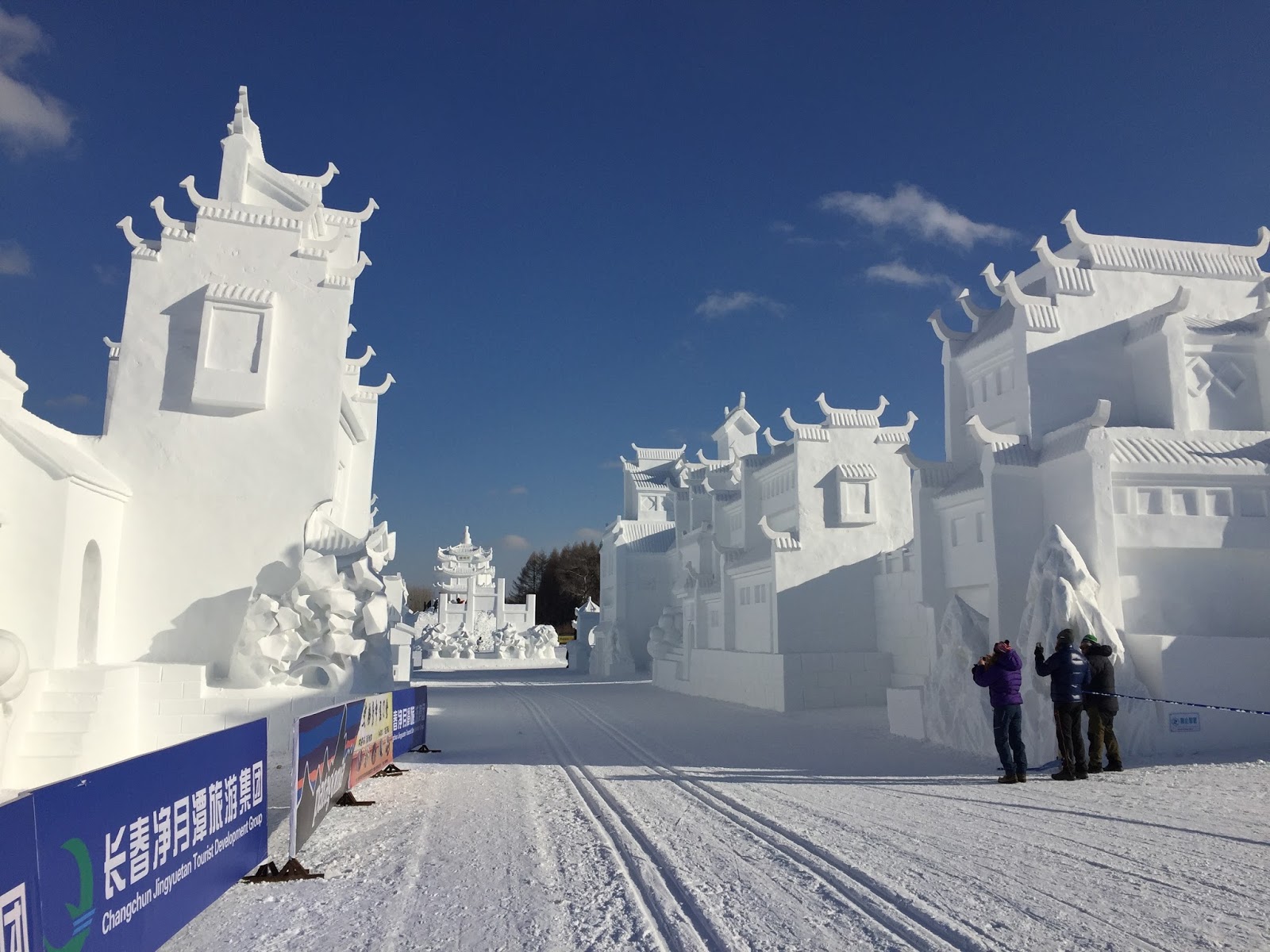
    Swedish skier and former University of Vermont athlete, Linda Danvind-Malm (l) and American Lauren Fritz (APU) stand in front of one of the many snow castles that line the lap lane to the 50 k classic Vasaloppet marathon during the 2016 China Tour de Ski in Changchun. (Photo: Lauren Fritz)
    Swedish skier and former University of Vermont athlete, Linda Danvind-Malm (l) and American Lauren Fritz (APU) stand in front of one of the many snow castles that line the lap lane to the 50 k classic Vasaloppet marathon during the 2016 China Tour de Ski in Changchun. (Photo: Lauren Fritz)

    I think my last race in China was like the 9th, which would have been the 8th here, and then after the race I spent a few days in Beijing, touring around, being a tourist, and didn’t run, didn’t ski. Didn’t have time when I got home. So literally [Saturday] testing skis, warming up was the first time I had been on skis or worked out in a week. And then with the delayed start, that kind of sucked, because I got kind of cold again. And I started, and I felt like I flooded on the first hill that was 500 meters out of the start, so I thought it was going to be a really, really rough race. But I think just having really good base fitness helps you keep it together.”

    Base and experience and a six-minute lead notwithstanding, Fritz was taking nothing for granted on Sunday. Not in some Bill Belichick coach-speak sense of anodyne platitudes about taking all competitions seriously and not celebrating too early, but rather in the very real sense that her international travel schedule and recent nutrition issues left her honestly concerned about her ability to complete a flat 18 k double pole course.

    “Don’t pass out on the side of the trail,” a relieved-but-tired Fritz said after Sunday’s victory. “That was pretty much my only strategy, because I was actually legitimately worried about something like that. Because I’ve been super low energy, because I lost a lot of weight in China, because it was like hard to eat a lot of stuff. So my energy stores are probably very much in a negative balance. So it was a legitimate concern, running out of energy, just falling over. But that didn’t happen.”

    Fritz was able to complete Sunday’s race despite a second day of challenging conditions – with two minutes between her and the preceding racer in the pursuit start, enough snow would fall in those two minutes to make it difficult to discern which track the leading skiers had taken – and the effects of international travel.

    “I definitely go through periods during the day where I get really, really tired and kind of, almost like dizzy and spacey, just really out of it,” Fritz said. “And then there will be like times in the middle of the night where I wake up wide awake for a like a couple of hours. So, this is definitely some pretty severe jetlag, I think.”

    While the jetlag was pronounced, Fritz was unphased by Friday’s 300-mile drive to get to the race start.

    “The, like, 5 1/2 hour drive from Anchorage to Valdez was – well, we did two five-hour drives, a 16-hour drive, and a 10-hour drive in China,” Fritz recounted of her recent travels for the China Tour de Ski. So “this was like pretty easy. It went by fast.”

    (Men’s second-place finisher Novak went from China to Anchorage to Valdez on the same schedule. Novak’s father drove him from Anchorage on Friday, while Novak fils slept the whole way.)
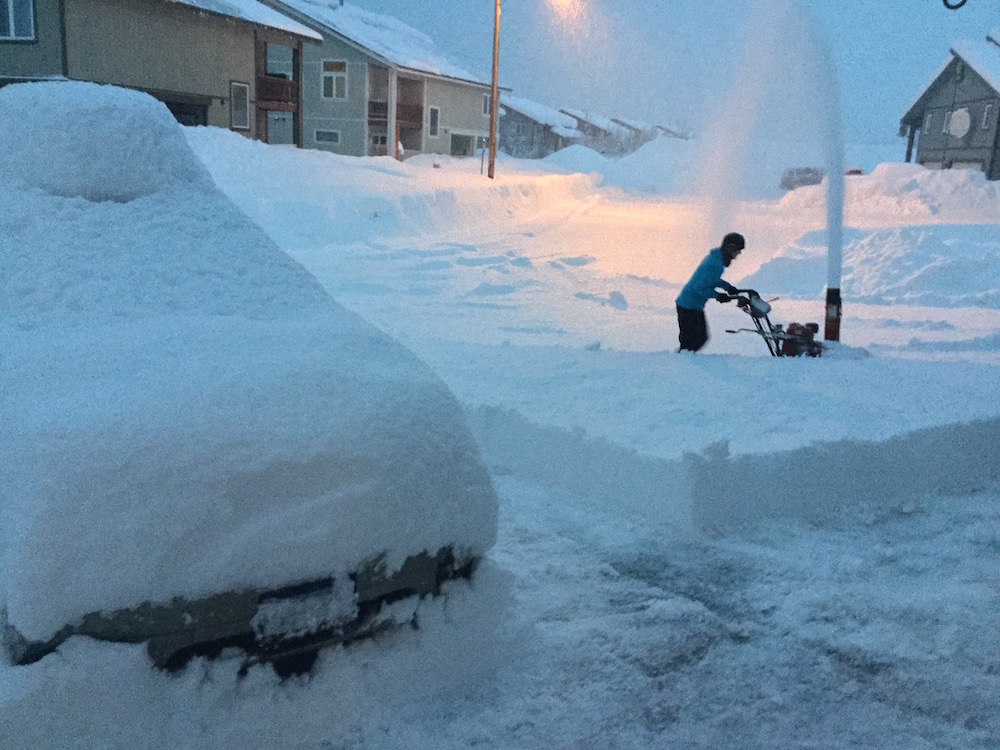
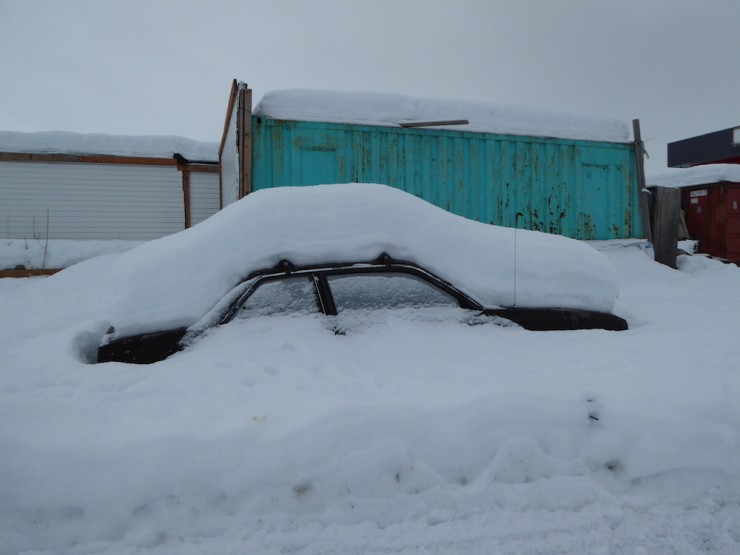
    This used to be a rocket box: digging out on Saturday morning after 14 inches of snow fell overnight in Valdez, Alaska, in January 2017. (Photo: Gavin Kentch)
    This used to be a rocket box: digging out on Saturday morning after 14 inches of snow fell overnight in Valdez, Alaska, in January 2017. (Photo: Gavin Kentch)

    Fritz is the only skier to make the podium in all three years of the Qaniq Challenge, logging a cumulative first, second, and third since 2015. That’s $4,000 combined lifetime winnings from this race, including $2,000 this year.

    So what does it mean for an American skier to win $2,000 in a ski race?

    “It’s pretty big money,” Fritz said. “It’s more than a national championship. So that’s sweet. I mean, it’s such a cool race; I really hope that it can grow over the years.”

    For Backstrum, meanwhile, a thousand dollars for second was apparently going to aid her with more quotidian concerns. “It  feels like I have a good amount of beer money now,” Backstrum joked. “No,” she continued, “I didn’t get my PFD this year, so it will be a nice replacement.”

    (The reference is to the Permanent Fund Dividend check, the payout given to all eligible Alaskans representing their share of the state’s sovereign wealth fund.)

    Backstrum had graduated from Montana State in 2014, and had trained sporadically since then. “This was a good inspiration to start training again” for ski racing, she said.

    For Kovacs, who also earned $2,000 for his victory in the men’s race, the cash prize was “huge.” It marked “the biggest paycheque I’ve ever received in any ski race,” Kovacs said. “It’s really helpful. I mean, that’s like four months’ rent back in Anchorage, or that will pay for all my flights to Europe and all my other flights in Europe for the season this year, which is just massive. So it’s a big help.”

    Kovacs surveyed other races in which he had won money, and concluded that he had not quite won $2,000 in all other races in his career combined. “Maybe,” he said. “Probably just under. So this has probably, like, doubled my entire career earnings.”

    The payout came in a race that Kovacs nearly did not enter. He had done some of the races at last week’s U.S. nationals, leaving Utah on Wednesday and returning to Anchorage only at 5 a.m. Thursday.
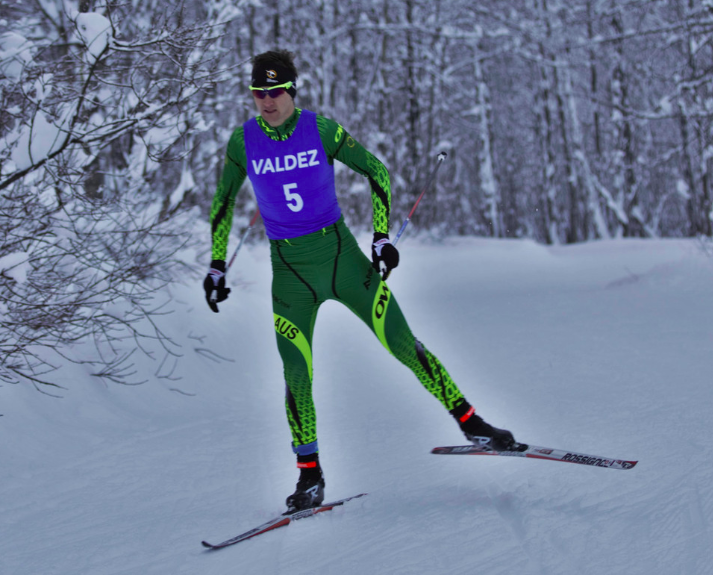
    Men's winner Paul (PK) Kovacs (Australian National Team) races in the 15 k freestyle in the Qaniq Challenge in Valdez, Alaska, Jan. 14, 2017. (photo: Calvin J. Fifarek)
    Men’s winner Paul (PK) Kovacs (Australian National Team) races in the 15 k freestyle in the Qaniq Challenge in Valdez, Alaska, Jan. 14, 2017. (Photo: Calvin J. Fifarek)

    “I then picked up Lauren [that afternoon],” Kovacs said, “And she said, ‘Hey, I’m going to go to Valdez,’ and I said, ‘OK, well I guess I’ll come.’ Because up until that point I wasn’t even coming. I had originally planned to just have a few days at home before I fly to Europe. … It was a very last-minute decision, and we kind of just got up the next day, after doing a bunch of washing the night before, and just packed gear and went.”

    Kovacs and Fritz have been an item for some time; on this trip, Kovacs was the more functional of the two. “I’ve been holding it together pretty well,” he said. “I’ve managed to get a lot more sleep than Lauren has. I know that Lauren’s been up at like midnight, and a few hours in the middle of the night the last few nights. But I definitely took a couple naps, for sure. We’ve been holding it together all right, but it’s definitely like, once we’ve finished today and tonight I think we’re going to take it easy for the next few days.”

    “This has probably, like, doubled my entire career earnings.” — Paul (PK) Kovacs on his 2017 Qaniq Challenge victory

    But not for too long – Kovacs flew to Europe today, for two weeks of training in Falun. He had World Cup starts lined up after that across Europe and Asia (Falun, Pyeongchang, and Otepää) before planning to race World Championships in Lahti.

    Back in Alaska, Kovacs found conditions for Saturday’s race “really challenging. I mean, we’d had a lot of fresh snow, almost two feet of fresh snow. And they’d done a fantastic job to pack it and groom it, but it still was pretty aerated pack, so it was pretty spongy. And then we’d had almost torrential rain on top. And so it was just kind of that mashed potato sludge.”

    Despite the trying conditions, Kovacs said, “I was fortunate, I had some really solid skis, and maybe coming from altitude … I was able to really attack it a lot harder, I think, than the other two guys. Who also had I think pretty bad skis.”

    In a gracious gesture, following Saturday’s race Kovacs formed “a gentleman’s agreement” with the two APU skiers immediately behind him, “and they all came over and waxed the same wax at my house, which was good.”

    Kovacs didn’t want to claim too much credit for nailing the wax on Saturday, saying, “Honestly, it wasn’t like I was a mastermind and figured it out.” (He then explained that he and Fritz had, in their jetlagged state, packed “just one or two” warm waxes, making their options easy to work through.)

    Rather, Kovacs credited his grind, a Caldwell VDF, which he called “exceptionally good – that’s a chevron grind, and it was able to, I think, flush out the liquid in the snow much easier.”
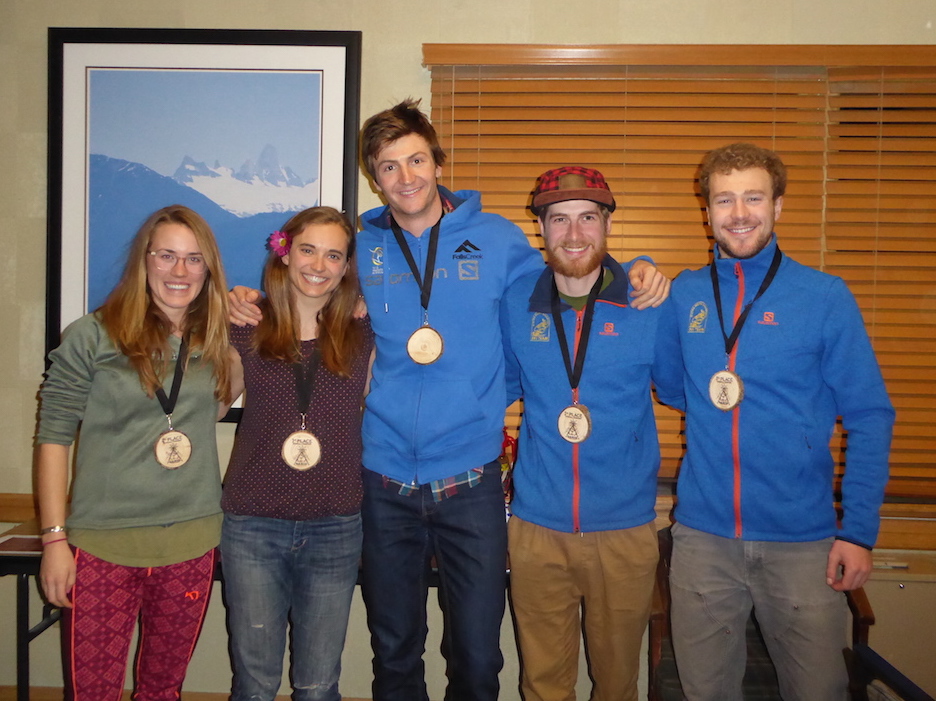
    The overall podium for the Qaniq Challenge in Valdez, Alaska, in January 2017: left to right, Kate Backstrum (former Montana State University), Lauren Fritz (APU), PK Kovacs (Australian National Team), Jack Novak (APU), Andre Lovett (APU). (Photo: Gavin Kentch)
    The overall podium for the Qaniq Challenge in Valdez, Alaska, in January 2017: left to right, Kate Backstrum (former Montana State University), Lauren Fritz (APU), PK Kovacs (Australian National Team), Jack Novak (APU), Andre Lovett (APU). (Photo: Gavin Kentch)

    Kovacs’s approach for Sunday, when he had a two-minute lead in the pursuit, was simple: “Basically the strategy was to go out as hard as I could. … With double poling you don’t quite blow up, or I find I don’t blow up, aerobically so much as my arms just blow up. And so I just wanted to see how hard I could go.”

    Being the first starter was disadvantageous in the fresh snowfall, but Kovacs benefited from a snowmachine that passed through moments before the race began, creating a firmer and less snowed-in platform than in either of the two set classic tracks. “My strategy was just to try and find fast snow,” Kovacs said, “And luckily a snowmobile had driven out some volunteers, and so I just skied on that.”

    Kovacs appreciated the chance to see Fritz during one of the loops of the course.

    “In a race like this, I definitely think about how Lauren is doing. I definitely was curious to see what was going on, and even just the fun things like racing against the master skier, and seeing how they’re going, because you know they knew each other, and how that was going duking it out, that’s fun. In other races I normally wouldn’t consider it; I do really try to just focus on my own race. But I guess in this race, because it just has more of a relaxed atmosphere, I let myself just think about other things a little bit more. So yeah, I was definitely curious to see how she was going. I mean, being so far out there, if you break a pole or lose a basket it’s a complete game-changer compared to a normal FIS race, where there’s a lot more people on the course that are able to give you equipment. So there’s more variables I guess here.”

    Looking to the future

    The Qaniq is universally beloved by those skiers who have made the trip to Valdez to race, reflecting quality organization and overwhelming community embrace of the event. But not that many skiers have made it: 31 in 2015, 37 in 2016, 33 this year.

    So will there be a fourth year? Maybe. Hopefully. Not certain. Race organizer Darryl Verfaille is nothing if not optimistic.

    The status of next year’s race is “truly undecided,” Verfaille told FasterSkier at the Sunday awards banquet, “but I’m going to do everything I can, even if I have to morph the format a bit. And we’re going to reach out – I’m going to do everything I can, including maybe seeking some external sponsors, maybe fundraisers. Some may change again with the political winds of Valdez, come next election, but I think we’ve got the city itself – the executive staff of the city of Valdez is in favor of this, because they recognize the true value, which is just exposing folks to Valdez in the winter. So I can’t say for sure we’re going to have it, but I’m going to do everything I can to make it happen for the fourth year.”

    Both Fritz and Kovacs addressed the room at the awards banquet in brief unscheduled remarks, praising the race organization and experience and hoping for its continued success.

    They also expressed similar sentiments in their comments to FasterSkier. “I think it’s a great race, and I hope they can keep it going,” Fritz said.

    “It’s an extremely fun event,” Kovacs echoed. “And I heard next year with U.S. nationals being in Anchorage that a lot more people will make the choice to come down here and really give this race kind of what it deserves. Because the volunteers put in a phenomenal effort, and it’s probably one of the best atmospheres of any race I do anywhere in the world. It just is really fun, and people should get involved.”

    The trip home

    Back in Valdez in January 2017, the APU skiers and Kovacs spent Monday morning after the race conducting a free clinic for the Valdez High ski team. The remainder of the field began their journey home on the only road out of town, where they were treated to an official NWS Blizzard Warning for their drive home through Keystone Canyon and Thompson Pass, including another 12 to 18 inches of snow and winds to 40 miles per hour. In a bit of meteorological ecumenicalism, the criteria for a blizzard warning (snow reducing visibility to less than a quarter-mile and winds gusting to 35 mph for four hours or more) are the same throughout the entire country.

    Results

  • Americans Abroad: APU Skiers Take on China Tour de Ski

    Americans Abroad: APU Skiers Take on China Tour de Ski

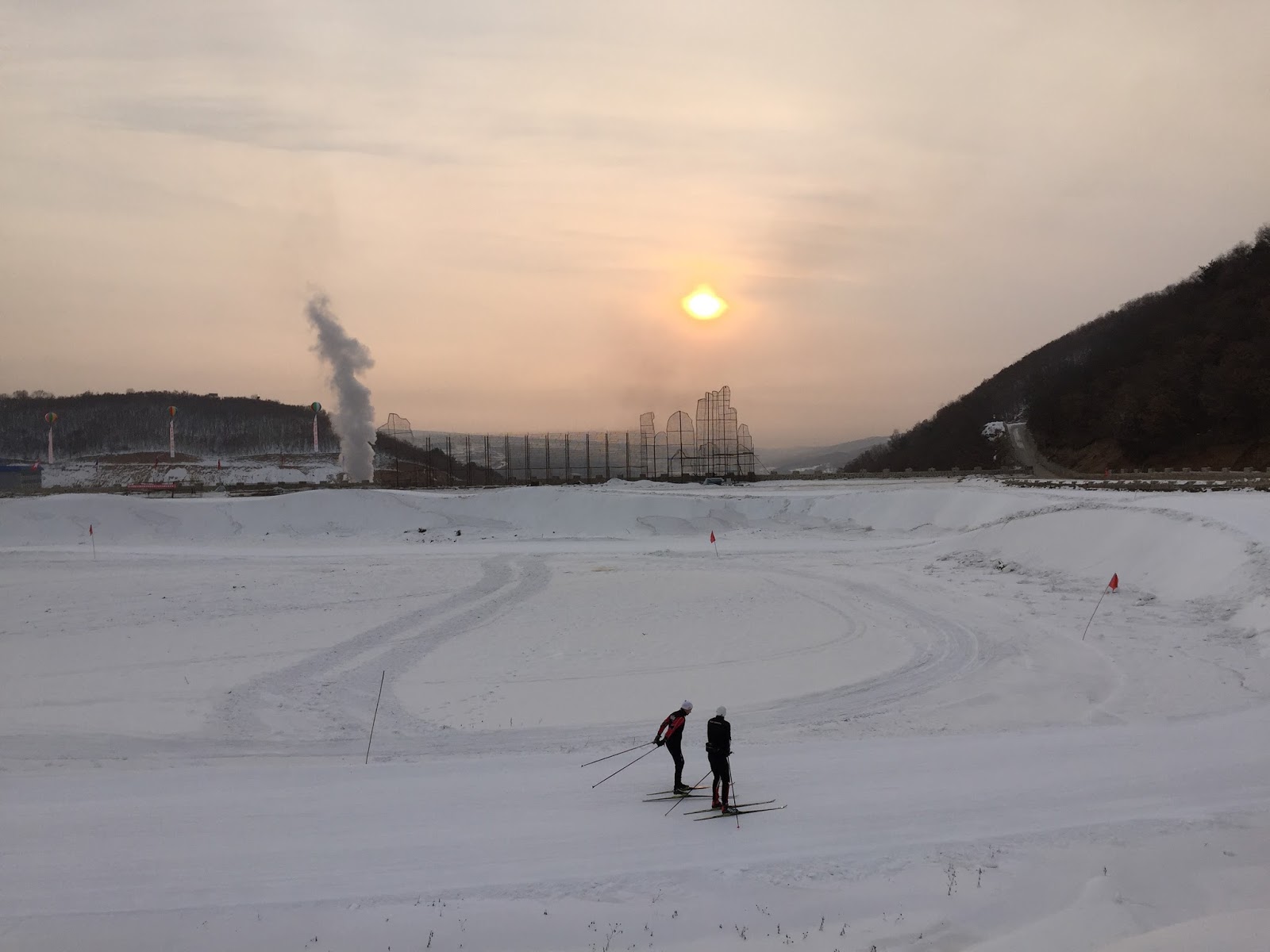
    Snow sculptures in the stadium in Changchun at the 2016 China Tour de Ski. (Photo: Holly Brooks)
    Snow sculptures in the stadium in Changchun at the 2016 China Tour de Ski. (Photo: Holly Brooks)

    Note: Alaska Pacific University skier Skyler Kenna, 21, will also be racing the 2017 China Tour de Ski. FasterSkier learned of Kenna’s participation after publication.

    ****

    Be a ski racer, see the world. That’s the approach of a pair of Alaska Pacific University (APU) skiers Jack Novak and Lauren Fritz, who leave for Asia later this week to race in the China Tour de Ski, set to begin in Changbaishan on Sunday, Jan. 1.

    Novak has never been to Asia before, and has yet to ride a camel on any continent. Fritz competed in the race series for the first time last year, and has skied on five continents. Both athletes are at a point in their ski career where they are seeking experiences more than SuperTour points or championship team selection. Some prize money wouldn’t hurt, either.

    The China Tour de Ski marks its 10th anniversary this year, which makes it only one year younger than the “other” Tour de Ski that begins in Val Müstair, Switzerland, this Saturday, Dec. 31. Prior versions of the Chinese Tour have featured a sprint on trucked-in snow inside the Bird’s Nest stadium built for the 2008 Summer Olympics, stage races across China and inner Mongolia, long bus rides, and a lot of photogenic camels.

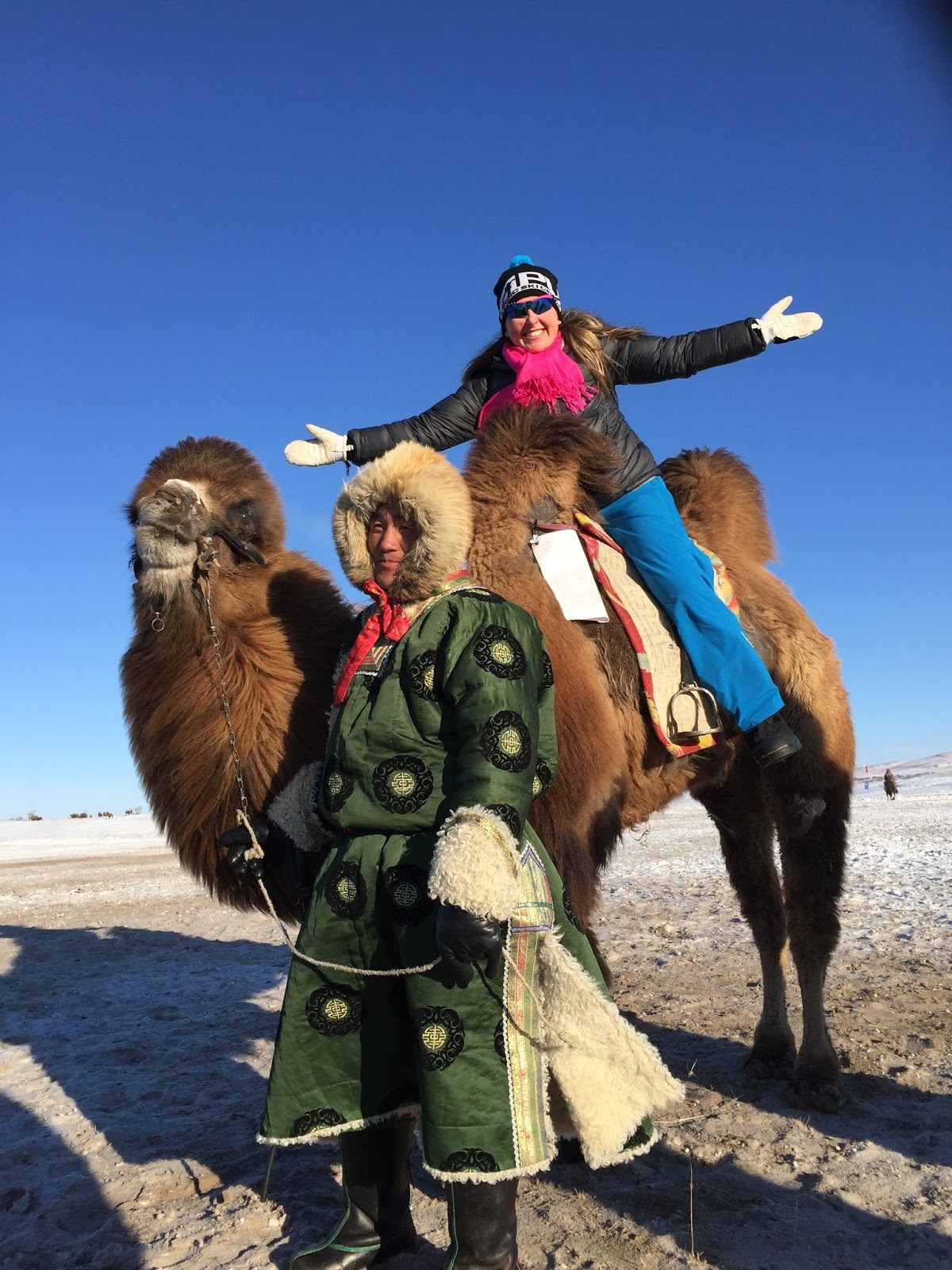
    Holly Brooks (retired APU and U.S. Ski Team) rides a camel during the 2016 China Tour de Ski. (Photo: courtesy Holly Brooks)
    Holly Brooks (retired, APU/U.S. Ski Team) rides a camel during the 2016 China Tour de Ski. (Photo: courtesy Holly Brooks)

    American skiers who have previously participated include Fritz, Peter Kling and Holly Brooks, all currently or formerly of APU; Ryan Scott, formerly of Ski & Snowboard Club Vail/Team HomeGrown; and former U.S. Ski Team member Torin Koos. They have consistently reported genuinely warm welcomes and intriguing cultural experiences.

    This year’s Tour takes racers through six stages over nine days across a wide swath of the country. (Changbaishan to Beijing is a 13-hour drive.) It’s heavy on the skate sprints: a full four out of six stages (Stages 1, 2, 5, and 6) are freestyle sprints. In the middle, Stage 4 is a prologue to short distance skate mass start race, 3.8 kilometers for the women and 5.7 k for the men.

    And Stage 3 is the Chinese Vasaloppet, a classic marathon now in its 15th year. Last year, the Tour de Ski racers covered the whole 50 k distance, with Brooks and Fritz on course for 2:44 and 2:51, respectively. This year’s Tour racers will participate in “a modified course and a shorter total distance,” though precisely how much shorter is not immediately apparent. The 2017 full-distance Chinese Vasaloppet also marks the third event of the 2016/2017 Visma Ski Classics series.

    While many multi-stage tours – the Tour de France, the Giro d’Italia, the original Tour de Ski – operate on a principle of lowest combined time wins, perhaps augmented by time bonuses for top positions, the China Tour de Ski instead applies World Cup scoring based on finishing position. Among other things, this avoids making the person who performs best in the Chinese Vasaloppet (which is much longer than all the other races combined) the de facto champion based on combined time.

    Last year’s overall winners were a pair of Swedes, Emil Johansson and Lisa Svensson. Johansson has a World Cup top-30 sprint finish to his name and won the 2013 SuperTour skate sprint in West Yellowstone, Mont., while studying at the University of Colorado-Boulder during the 2013/2014 season. Svensson, who will be competing in her fifth consecutive China Tour de Ski, has never had a podium finish in an International Ski Federation (FIS) race on European soil… but has 17 of them in China.

    One American has cracked the overall podium in the first nine years of the China Tour de Ski: Kling was second in 2015. Chinese skiers make up a minority of historic podium finishers in the event, likely reflecting both the nascency of Chinese cross-country skiing (the Chinese National Team was established in 2006) and race organizers’ willingness to attract non-Chinese skiers to their event.

    The gravel pit-turned-skate sprint course in Yanji during the 2016 China Tour de Ski. (Photo: Holly Brooks)
    The gravel pit-turned-skate sprint course in Yanji during the 2016 China Tour de Ski. (Photo: Holly Brooks)

    When it comes to convincing European skiers to fly across Asia, or Alaskan skiers to fly across the Pacific Ocean, money talks.

    To start with, virtually all of the racers’ expenses, including transportation, are covered by the race organizers. As Scott wrote to FasterSkier during the 2015 Tour, the race paid for all of his travel, lodging, and food. “My only expense is $500 Euros to the organizers and paying for bags,” Scott wrote.

    On top of that, there’s real money to be made. In this year’s Tour, first through fourth in four of the stages is good for 2,000 to 10,000 renminbi (yuan) per race. (At current exchange rates, 10,000 yuan is equal to approximately $1,400 – or more than the $1,200 prize for first place in any race at next month’s U.S. nationals.) For the Stage 2 sprint, it’s up to 20,000 yuan for the men ($2,800), 15,000 yuan ($2,200) for the women. For the Chinese Vasaloppet, Stage 3, first place takes home 5,000 euros, or $5,200. Plus there are additional prizes for top four in the overall Tour standings, starting with 20,000 yuan for first. (With the exception of Stage 2, all other stages and overall standings feature the same prize amounts between the genders.)

    The total prize purse for Stages 1-2 and 4-6, not counting the Chinese Vasaloppet, is 251,000 yuan, or over $36,000. That’s slightly less than the $39,000 purse for the American Birkebeiner, but it’s in the ballpark. Within the world of cross-country ski racing, this is a princely sum. It is roughly to skiing as Russia’s $1.5 million for Diana Taurasi is to women’s basketball, or China’s 60 to 70 million euros for Oscar is to international soccer – eye-opening sums of money paid to entice athletes to a part of the world they might not otherwise consider visiting.

    In related news, the Qaniq Challenge will once again pay out a total purse of $10,000 in Valdez, Alaska, next month. Fritz earned $500 for her third-place finish in last year’s race, behind fellow China veteran Brooks in second.

    The athletes

    Fritz: Rekindling her love of skiing

    But for Fritz, it’s not all about the money. The native of Chugiak, Alaska, and longtime APU skier has been a competitive racer for many years, with career highlights that include SuperTour podiums, top-10 national championship finishes, and World Cup starts in Canada in 2012. But in 2015, she wrote, she suffered through “a rough season prior, a summer of illness, injury and just general low-quality training,” and was getting ready to call it a career.

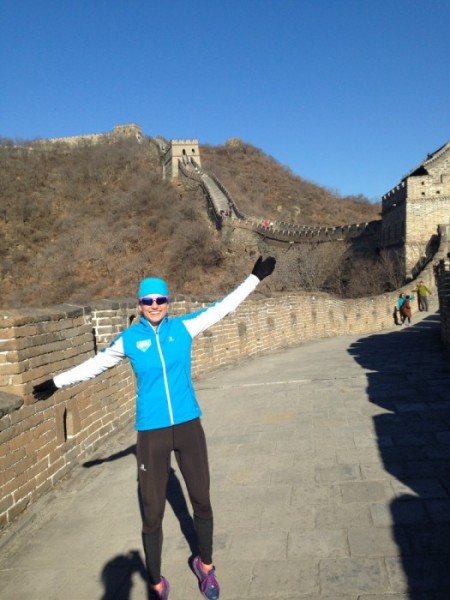
    Lauren Fritz (APU) poses for a moment during a run along the Great Wall of China during the 2016 China Tour de Ski. (Courtesy photo)
    Lauren Fritz (APU) poses for a moment during a run along the Great Wall of China during the 2016 China Tour de Ski. (Courtesy photo)

    “I decided I was going to move away from SuperTour racing and do some ski marathons and probably retire [following the 2015/2016 season],” Fritz, 28, wrote to FasterSkier earlier this week during a break from packing. “I was fed up with racing SuperTour, racing poorly and not getting anywhere (figuratively, with my ski career). And I wasn’t having fun anymore. I was so used to being around skiers who are very focused on high level goals and incredibly (unspokenly) competitive that you can lose sight of why you do what you do beyond just a number on a result sheet, especially if you aren’t achieving those results (and I most certainly wasn’t).”

    Her inaugural trip to China changed all that.

    “Being with the group in China, it was just all about how we got this amazing opportunity and it was simply because we skied,” she wrote. “It reminded me that skiing has taken me so many places and connected me with so many people, and I get to be outside so much, and that was why I love it so much. I came home with a fresh attitude and it really helped boost me mentally and physically.”

    Fritz’s enthusiasm is immediately apparent in her answer to a reporter’s question about why she is going back to China.

    “Last year’s Tour de Ski China was one of the most fun, unique, and craziest ski trips I’ve ever been on,” she wrote. “So it’s more a question of ‘Why not?’ than ‘Why?’ am I going back, which probably makes it obvious why I’m going again. It was low-stress, low-pressure, with high energy, excitement and general enjoyment.”

    A chicken head featured prominently on the menu during the 2016 China Tour de Ski. (Photo: courtesy Holly Brooks)
    A chicken head featured prominently on the menu during the 2016 China Tour de Ski. (Photo: Holly Brooks)

    “Everyone on the trip was there primarily for the experience of being in China and seeing cool new places with the added bonus that we got to do some ski races,” Fritz enthused. “I mean, how many ski races have you been to where you have to squat over a board over an open pit in a communal poop shack, and get handed a can of random Chinese ‘RedBull’ and a personal size bottle of Chinese spirits, cross a finish after skiing through a literal snow castle city, and be treated afterwards to a show and a table full of food you don’t recognize but eat anyways… Oh, and get to go for a hike on a Great Wonder of the World [the Great Wall of China] after the last race?”

    Fritz continued, “Everyone’s attitude was more geared towards having a great time and experiencing what China had to offer than doing well in the races, and that gave it a more relaxed feeling. Not that people didn’t take the races seriously, they/we certainly did because there was money on the line! But once the bib came off, it was about having fun. The group we had was amazing, everyone was fun to hang out with and easy to get along with, and we had a great time. Not often is two straight weeks of living and traveling with a big group like that so easy and enjoyable.”

    “Last year’s Tour de Ski China was one of the most fun, unique, and craziest ski trips I’ve ever been on. … It was low-stress, low-pressure, with high energy, excitement and general enjoyment.” — Lauren Fritz, APU skier

    While she is largely going back for the experience, Fritz is not above hoping that, in a virtuous cycle, the improved training she was inspired to do following her trip to China last year will translate to better results this year.

    “This year I definitely want to get some podiums,” Fritz wrote. “I had two 4th places last year, so I’d like to improve on that! I think it’s possible to be on the podium a few times if I ski the way I know I can right now with my fitness level. (Read: Fitness level waaaay better than last year, ha!)”

    “Pretty much, the TDS China is my season,” she concluded. “As I said, I was going to retire after last year, but I kind of felt rejuvenated and wanted to keep training pretty much just so I could go back to China this year! I will still do some races later in the season, but China is definitely top of the priority list.”

    Novak: Looking for adventure and an inaugural camel ride

    Jack Novak (APU) during a SuperTour race in West Yellowstone, Mont., this month. (Photo: Forrest Mahlen)
    Jack Novak (APU) during a SuperTour race in West Yellowstone, Mont., this month. (Photo: Forrest Mahlen)

    Novak, 23, from Anchorage and also a longtime APU racer, finds himself in much the same boat as Fritz – underwhelmed by his recent performances, and looking for a low-stress adventure to mix things up.

    “I decided to go on the Tour de Ski China because I was looking for a change of pace after the past couple of years of injuries,” Novak wrote to FasterSkier. “I am not in a place where I am racing for a World Champs start spot, so for me racing at nationals didn’t have a huge draw this year. I heard about this race from my teammates over the years and thought this is a good year to race this series. It should be quite an adventure and that is what I am looking for right now, having fun racing and doing what I love.

    “I also have never ridden a camel but I hope this trip affords me the opportunity,” he added.

    In less Bactrian goals, Novak wrote, “My goals for this series are to really see how I stack up. I would love to be in the mix hopefully fighting for the win every once in a while. Also I already am going to get to travel to China and Inner Mongolia seeing part of the world I have never seen which is a goal achieved as soon as I leave. Being able to travel around the world to ski race is a real pleasure and an opportunity that not many get to experience so I feel very lucky.”

    Back in this country, Novak wrote that the China trip meshes well with the rest of his season goals, as he plans to enter some local races in Alaska in January before heading to the Midwest in February for SuperTour races and the Birkie.

    “Finally,” Novak wrote, “we will finish up the season in Fairbanks [for Spring Series] which should be a hoot and a half. We race so infrequently in Alaska on a national stage that it is fun to race at ‘home’ or at least the same state.”

  • The Qaniq Challenge: Travelogue Edition

    The Qaniq Challenge: Travelogue Edition

    A panorama view of the classic course at the second-annual Qaniq Challenge Jan. 16-17 in Valdez, Alaska. (All photos: Gavin Kentch)
    A panorama view of the classic course at the second-annual Qaniq Challenge Jan. 16-17 in Valdez, Alaska. (All photos: Gavin Kentch)

    By Gavin Kentch

    VALDEZ, Alaska — Sometimes it’s easy to lose sight of the “cross-country” part of cross-country skiing.  Particularly in this winter of discontent, when a lot of your training time ends up being spent doing 2.9-kilometer laps around a snowmaking loop.  

    Sometimes it’s important to travel for five days so that you can spend less than two hours racing, but do so on a course that goes from a mountain overlook to the shores of the Pacific Ocean.  

    Sometimes, surreally, the country’s second-richest ski race is held in Valdez, Alaska, in the middle of January, and gives away a purse of $10,000 dollars to a field of 36 racers.  Sometimes it’s just time to take a road trip with your mom.  This is the story of all of those events.

    Dramatis personae

    Holly Brooks finished her racing obligations in China a few days before this race, returned from China to Washington to visit family, flew back to Alaska on Thursday, then drove to Valdez on Friday before racing the Qaniq Challenge on Saturday.  I assume this is basically a normal week for her.  Other local athletes carpooled with each other for the over 300-mile drive from Anchorage to Valdez.

    Personally, I traveled with my mom, because I am just that cool.  (Also, I needed her to chauffeur me across southcentral Alaska: My car is a 1989 Toyota Camry, named Teakettle, which at 27 years old is more venerable than at least half the modern-day World Cup field, not to mention the advent of FIS points.  I suspect that Teakettle would literally be unable to drive over Thompson Pass, and so to leave Valdez by road when the weekend was over.  And the next ferry back to Whittier wasn’t until a week later.)  Her husband, Jim Bouchard, got the other front seat.

    Of the three of us, my mother is a good sports mom, who spent my childhood waking up very early on very many occasions to drive me to a variety of endurance sporting events.  She once drove six hours one way, in the evening after work, to pick up my little brother after he had been struck by lightning on a solo bike trip outside of Tok, Alaska.  My stepfather spent decades living by himself in a log cabin he built off the road system, about 30 miles south of Denali.  He was a national age group champion at the 1992 Masters World Cup held in Anchorage.  And as for me?  Well, not to pull rank, but I have previously been described on this website as “a nothing-special recreational skier.”

    ‘Getting here is half the challenge’

    Valdez is slightly over 300 road miles from Anchorage, a drive of approximately six hours, depending upon winter driving conditions.  (This assumes that spectacularly massive avalanches do not close the only road into town for over two weeks.)  I decided we should take the ferry there, saving hours’ worth of driving – the ferry leaves from Whittier, a little over an hour’s drive south of Anchorage.

    A waterside view of the old apartment building in Whittier, a “city” in the Valdez–Cordova census area of Alaska. As of 2014, the population estimate was 217, according to Wikipedia. The city is also a port for the Alaska Marine Highway and known as the Gateway to Prince William Sound.I may or may not have also harbored fantasies in which an avalanche closed the Richardson Highway the day before race weekend, harming no one, but nonetheless preventing all the real skiers from getting there in time for the race, and then I won the first prize of $3,000 dollars.  This did not happen.

    My mom and Jim arrived at my house in the predawn darkness on Jan. 14.  With some difficulty, we added my skis and ski accoutrements to the car, then carved out space for me in the backseat.

    We left my driveway shortly after 9 a.m.  It was not exactly light out, but by this point in the year at least sunrise was within an hour.  We headed toward the Seward Highway.  We had a combined 11 pairs of skis, six pairs of poles, and five pairs of ski boots.  Plus snacks.  The car was packed.  The gas tank was full.  Nothing could go wrong.

    It was shortly discovered that certain parties had forgotten to pack their wallet, containing, crucially, the state-issued identification necessary to board the ferry.  Words were exchanged.  A backtrack was undertaken.  Houses were returned to.  A wallet was obtained, and with it a legitimate form of ID.  We set off once more in stony silence, now calamitously late, making plans to do the long drive the next day and ruing the not-small amount of money now wasted on ferry tickets.  We decided to try to drive to Whittier anyway, and to hope that the ferry was somehow running late.

    We drove down Turnagain Arm under low fog and amber skies, the water in the fjord smooth as glass.  Last month, this stretch of road was closed due to 91 mph winds.  Also, a semitruck had been blown over on its side and completely off the road.  Also, the tunnel that we intended to drive to, in order to reach Whittier, in order to get on the ferry, had been closed.

    That did not happen today.  We could not see more than 100 feet above the ground as we drove along the Arm, but all the roads were passable.  We arrived at the designated snow-plowed field, in seemingly the middle of nowhere, to queue for the 11:30 a.m. opening of the tunnel to Whittier, having long since missed our intended 10:30 a.m. opening, and still assuming that we were about to miss the ferry altogether.  At least we could have lunch in Whittier before returning.

    (N.B.: I have not fact-checked this final statement.  It may literally not be possible to buy a restaurant meal in Whittier on a Thursday in winter.  I’ll figure this out next trip.)

    We were met by a wonderful sight: a handful of cars sat in the field ahead of us, still waiting for the 10:30 tunnel opening.  An Alaska Department of Transportation message board slowly scrolled the reason for the delay: “Please stand by.  Tunnel will reopen when smoke is purged.”

    I have never been so grateful to drive through an icy, slippery, claustrophobic five-mile long tunnel cut into the mountains that apparently had had rogue smoke in it just a few minutes before.

    We emerged, blinking, into the light, and into the town of Whittier, Alaska.

    Whittier is a special place.  For one, it is the rare settlement that was literally founded where it is because the weather there is always bad.  For another, there are virtually no private houses in Whittier; all of the town’s residents live inside the same large apartment building.  

    For the first few decades of Whittier’s existence, everyone in Whittier lived inside the Buckner Building, a seven-story concrete apartment building erected by the U.S. Army shortly after World War II (see photo above).  Later, that building was abandoned.  

    The new apartment building in Whittier, Alaska.Now everyone lives in the much more colorful Begich Towers, a few hundred yards away from its predecessor.  (The concrete hulk of the Buckner Building lives on, standing sentinel over the Valdez waterfront.  It gained passing fame a few years ago when two bros descended its asbestos-choked stairwells on downhill skis.)  We marveled at the Ghosts of Whittier Past and Present, and drove the car onto the M/V Aurora.

    The ferry ride took six hours.  It was amazing.  The sun was out.  Prince William Sound was, atypically, placid and still.  Snow-covered peaks shimmered over hillsides of spruce trees cascading down to the water.  

    At one point, I literally said, “Oh look, yet more dolphins are playing around the bow of the boat.  How nice.”  I felt like an athlete going over to London for the 1912 Olympics, although there was no track set up on the deck for us to exercise on.  And I guess they had fewer glaciers.  And more alcohol.  Seriously, though, it was probably the most sublime day I have ever spent on a boat in my life.

    The M/V Aurora, an Alaska Marine Highway System ferry.Valdez

    Valdez is also a special place, though for different reasons than Whittier.  It has an average annual snowfall of 300 inches, for one, and two to three times that just up the road in Thompson Pass.

    It is also home to the southern terminus of the Trans-Alaska Pipeline System, which undergirds what remains of the state’s suddenly fragile economy.  Valdez’s taxes on the pipeline itself make it shockingly wealthy, a lucrative petro-state enclave even within resource-dependent Alaska.  (This also explains why Valdez was able to essentially move $10,000 dollars of oil tax money from its own coffers to the pockets of young elite cross-country skiers, which actually feels to me like a pretty positive development.)

    A street view in Valdez, Alaska, last month.Standards of what is normal change when you live in such an environment.  When I spoke with Qaniq Challenge race director Darryl Verfaillie about ten days before the race, his talk of contingency plans and water drainage made me assume that snow coverage for the race courses was marginal at best.  

    After inspecting the trails in person after we got to town, I learned that their coverage ranged from a low of one foot of base to a high of at least three feet.  As Anchorage suffers through its second low-snow year in a row, Valdez was looking like a pretty good place to be a cross-country skier.

    Valdez has also had a relatively snow-sparse winter, at least for Valdez.  Therefore, the piles of cleared snow filling spare lots around town were only one to two stories high.  These towers stood guard over a neat gridlock of residential streets (Valdez was essentially rebuilt from scratch following the 1964 Good Friday earthquake), where virtually every house was flanked by multiple snowblowers and snowmachines.

    Valdez is also the type of place where there are still pay phones. Or maybe not pay phones per se, just telephones in public spaces that permit one to make free calls to anyone else in town. (I don’t know if this institution is common in the states.  It persists in Alaska.)  It was very pleasant.  There was admittedly not too much going on on a Thursday evening in January.

    Valdez is also the type of place where there are still pay phones. Or maybe not pay phones per se, just telephones in public spaces that permit one to make free calls to anyone else in town. (I don’t know if this institution is common in the states.  It persists in Alaska.)

    A royal welcome

    I don’t want to be obsequious, but race organizers were beyond accommodating of the skiers.  Late on Thursday night, recently arrived in town, I politely emailed the race director, making a tentative inquiry about whether I might be able to find any waxing facilities during the day on Friday.  He wrote back at 6:30 a.m. Friday morning, putting me in touch with the local cross-country ski coach (go Valdez Buccaneers!).  We were ensconced in the ski team wax room by midmorning.

    On multiple occasions, during the middle of the school day, a very clearly not-high-school-age skier walked through the halls of Valdez High School, carrying a large ski bag over his shoulder and bags of waxing supplies in both hands.  There were irons, vials, strange powders, an extension cord or two sticking out, and of course the large ski bag.  In different contexts, it could be described as suspicious.  No one batted an eye.

    The royal treatment continued at the Friday-evening racers’ meeting.  

    “Will there be indoor waxing available tomorrow morning?” someone (me) asked.

     “I don’t know, do you want it?” said the race director.  

    “Uh, yeah,” I said, “if that’s possible, thanks.”  

    “Okay,” said the RD.  “We’ll have someone open the Teen Center for you by 8 a.m.”

    And so Jim and I waxed our skis for the classic race inside, warm and dry, with numerous outlets and a bathroom and music.  For a ski race on the road, it was paradisiacal.

    It was that sort of weekend; everyone could not have been more accommodating.  Or maybe I just have really extravagant demands when it comes to ski waxing.

    Actual racing: Day 1 (classic)

    I previously wrote a real article about the real skiers here.  I saw some of these real skiers, if briefly, on race day.  Lex Treinen came past me at one point, an unsurprising occurrence in the classic interval start.  He was going very, very fast, and even said hi to me by name as he nimbly stepped around me and re-entered the tracks, all while going approximately Mach 9.  I had scarcely registered his presence before he was past me.  I was impressed.

    Trailside view from the classic race course on Day 1 of the Qaniq Challenge.I was also impressed by the army of volunteers and support staff that the race had mustered.  I think there were literally as many volunteers and support staff on course as there were racers.  Road crossing?  They had four people there, including one to hold up traffic on each side, and real, groomed snow across the road.  

    There was a section where all racers had to do two loops around a 3 k lap, and to help count the number of laps, they had two people at that intersection.  One, with a clipboard, counted laps for each racer; the other, with large flags, would direct each racer to head around for another lap or to go back down the course when they approached this junction, as if they were directing an airplane taxiing up to the jetway.  If memory serves, I passed six on-course checkpoints during the approximately 15 k race.  It was impossible to take a wrong turn.

    It was not, however, impossible to fall down.  In an impressive display of consistency, I did so twice, once on each lap, in the same place each time.  (That place was a six- or seven-foot wide section of trail, presenting the first of two extremely tight corkscrewed turns, with substantial exposure on either side.  Alaska is an exciting place to be a ski racer.)

    I learned while doing interviews after the race that Tyler Kornfield, an inestimably more talented skier than me, had also fallen twice, in the same place I had.  And unlike me, he was wearing skate boots.  That made me feel better.

    The Pacific Ocean from classic course.After around 50 minutes of skiing, and going from a scenic mountain overlook down to the shores of the Pacific Ocean and back, I approached the finish.  I crossed the finish line, immediately began feeling the effects of the longest all-double-pole race in my life, and teetered over to the edge of the finish area to collapse in the snow.  I lay on the ground.  After a few minutes, I tried to pick my head up, but I was still dizzy, and things were still spinning, so I lay back down.  I was not unhappy.

    A woman, a local resident who was volunteering with the race, came over.  She was wearing a knee-length fur parka that probably cost roughly as much as the entire purse for the weekend’s race.  It was one of the most beautiful things I have seen in my life.

    She looked down on me not unkindly.  “Are you still breathing, hon?” she asked me.  I looked up at her.  I attempted to form the words, “Thanks, I’m fine.”  I met with some success.

    It is sort of uncomfortable to sprawl on the ground with one’s skis still on.  (Shoutout to my APU Masters coach Galen Johnston, who took my skis off for me unasked while I convulsed on the ground following a recent Besh Cup.)  

    “Do you think you could help take off my skis?” I said.  “Just pull up on the bindings.”  She knelt down and began, with great enthusiasm, to pull on my entire foot.  “That’s okay,” I said, “don’t worry about it.  Maybe you could just help me get up.”  This fur-clad vision graciously reached down, gave me a hand, and helped me stand upright again.  I was suddenly very conscious of having just finished racing.  I tried very, very hard not to get snot, spittle, extruded Apple-Cinnamon Hammer Gel, or any other form of race-induced effluvia on her beautiful jacket.

    “Sorry about your boots,” she said.  “I’m really more of a hockey mom.”

    Eventually, I found my bag, put on every piece of spare clothing I had brought (temps were in the 20s above, but humid maritime cold is cold-cold), and set out for an attempt at a cooldown.  I skied part of the way with Holly.  At one point, I confessed to her, “I’ve actually never raced on consecutive days before.  What do I do in the 23 hours before the next race?”  She graciously told me what I should do.  Her advice (get warm, dry, and food immediately; active cooldown; warm shower; stretching and jog later that day) was not rocket science, but was much appreciated.

    Actual racing: Day 2 (skate)

    The start/finish area of skate course at the Qaniq Challenge.Day 2 was a skate race.  They took everyone’s first day results, re-seeded the field based on classic time, then had a chevron start for the mass start skate race.  There were little numbered placards alongside the tracks in the start area to help everyone line up correctly.  It was adorable.

    The chevron start, which I may never encounter again in my life, made me feel like a real ski racer.  Lining up behind Dylan Watts and Holly did not change this sensation.

    The gun went off, and I very quickly felt like less of a ski racer.  I guess I’m not very good at starting races fast.  Apparently I’m more of an interval-start specialist (says the Masters racer who has done precisely two interval-start races in his life, counting the previous day’s classic race).

    Two to three minutes into the race, places #1-4 (the top four guys) were quickly pulling off the front in the lead pack.  Places #5-8 (Holly, overall winner Rosie Frankowski, and two male citizen racers) were coming together into a chase pack.  I moved up into ninth overall, and took aim at shortening the gap of ten feet that had opened up between me and eighth.  In a sudden moment of prescience, I saw the next 45 minutes unfolding before me.  I told myself, “You’d better catch this train, or you’re going to spend the entire rest of the race skiing by yourself.”

    I did not catch the group.  I did ski the entire rest of the race myself.  I caught glimpses of the chase pack ahead of me, at greater and greater distances, until as late as 8 k into the race.  They were moving very fast, taking turns trading off the lead on a pancake-flat, all-V2 course.  They looked like they were having fun.  They looked like they were happy.  I hoped they were happy.

    I was not unhappy; I was skiing, and skiing is fun.  But it is more fun when you can see.  I think it was colder than I realized; soon my eyes were watering profusely, and I was having a hard time making out the trail, the time on my watch, or anything else.

    I had previously been telling myself things like “get forward” and “weight on the balls of the feet,” giving myself technique cues like Jessie Diggins lite (very lite), and at least trying to stay focused while I skied along entirely on my own.  

    But soon my thoughts became slightly less focused.  Like, “my eyes are really cold right now.  I really can’t see.  I wonder if I’m doing them permanent harm?  Like that musher who just got airlifted out of the Kusko 300 sled dog race because she frostbit her eyeball.  Is that what’s happening to me right now?  Man, I hope I’m okay?”  These were understandably valid concerns.  They were not particularly effective as technique cues.

    (My eyes were ultimately fine.  They hurt more when I finished, and again when I shut them to go to sleep that night, and they were bloodshot as hell for a few days later, but that was all.)

    I eventually emerged from my solitary ski through the woods and back to the finish line.  I did not appreciate it at the time, but apparently they had sent out a PistenBulley during the race to re-groom the start/finish area and take out the set tracks from the chevron start.  It was that sort of race weekend.

    I crossed the finish line, returned my race bib to Woman in Beautiful Parka, and once more put on every piece of clothing I had brought.  This time, it wasn’t enough.  I shivered through a ten-minute cooldown, then went inside the old trap range building that had a roaring fire going and served as race headquarters.  I stood immediately behind the massive stove, slowly picked the ice out of my thawing beard, and regaled a very patient Dylan Watts with stories of my race while learning what had happened up front.  It sure beat getting into Teakettle and turning on the heater that no longer actually produces any appreciable heat whatsoever.

    After the race

    I headed home for food and a shower.  Around the time I was deciding between a nap and writing up my race article, Holly, only furthering her role as worldwide ambassador for cross-country skiing, was back on skis, leading a free clinic for local high school kids.  I’m sure this is just what her fellow two-time Olympian Kobe Bryant does for his post-game recovery regimen.  (My Holly Brooks hero worship notwithstanding, I should emphasize that she was joined by the rest of the APU Elite Team and associated skiers that were in town, including Frankowski, Lauren Fritz, Paul Kovacs, Dylan Watts, Treinen, and Kornfield.  Pretty good day to be a novice skier in Valdez.)

    That night, the awards banquet was held in a local bar, The Fat Mermaid.  Ten thousand dollars was redistributed from oil money to impoverished elite skiers.  Lex and Rosie posed with oversized $3,000 checks.

    Awards went five deep per gender.  There were also prizes for the fastest locals, and for the fastest skier over 50 (shoutout to my stepfather).  That’s 13 awards among 36 racers, or over a third of the field.  Also, we all got good pizza, and one free drink ticket each.  Also, they had applause not only for the sponsors and volunteers, but also for the press (me).  It was a good awards banquet.

    Heading the home

    The next morning, it was time to go home.  It was tough to leave, but we were wrapping up a five-day trip so that I could ski for a combined 101 minutes, so it was probably time.  About half the field went backcountry skiing in Thompson Pass on the way home.  We headed straight back to Anchorage, so that I could get back to my exceptionally patient wife and our two young girls.

    Before we left, we had breakfast at the Totem Inn; poor Jim was yearning for meat after three mornings of oatmeal.

    The Totem Inn was very… Alaskan.  Of the twenty people in the restaurant on this Monday morning, nineteen of them were men.  My mother stood out, because she was the only woman.  I stood out, because my race T-shirt, pretty pink sports watch, and choice of tea over coffee clearly marked me as Not An Oilpatch Worker.  (My stepfather did not stand out; people who have lived in the woods for three decades also look like they could work at the pipeline terminal.)

    The inn’s motto, I have since learned, is, “Where everything about us says, ‘Alaska!’”  I applaud their honest marketing.

    We hit the road soon after.  It was a different experience than the ferry – think six hours of trying to avoid the stench of unwashed ski gear and citrus solvent emanating from the ski bags wedged against my perch in the backseat – but Interior Alaska in midwinter is starkly beautiful, and an amazing contrast to the Sound.

    By 4 p.m. I was back home in Anchorage, with its two inches of snow in my front yard, a world away from Valdez and its towering snow piles.  By that evening my 3 ½ year old, having heard stories of my race weekend, was playing “cross the finish line and fall down.”

    What it all means

    Cross-country ski racing is a beautiful, amazing, rewarding, and sometimes surreally random sport.  Sometimes your local Masters ski coach turns out to actually be really good at skiing, and goes on to compete in two Olympics.  Sometimes your local masters-degree candidate turns out to actually be really good at skiing and shooting, and is racing on the World Cup in her eighth biathlon race ever.  Sometimes your local elite skier almost cripples himself in a scary fall in the mountains, then wins a national title six months later.  Stuff happens.

    Skiing is also, in many ways, an intensely democratic sport.  (Let’s elide for a moment the fact that Norway has like a billion World Cup wax techs to the U.S.’s handful – and that’s not counting another dozen or so under the aegis of Great Britain – and that some countries may be more equal than others.)

    Sometimes you buy your first-ever race suit secondhand from Holly Brooks, then the next winter find yourself lining up immediately behind her in a mass start race.  Sometimes you find yourself double-poling through a gorgeous valley as fast as you can, with the only other skier visible in front or behind you the quickly disappearing form of Lex Treinen.  And sometimes, the local high-school kids race against regional high schools one weekend in the Valdez Invite, then against the APU Elite Team the next weekend in the Qaniq Challenge, all on their home course.  Skiing is special like that.

    ***

    About the Author: Gavin Kentch lives in Anchorage.  He skis with the Alaska Pacific University Masters team, plays with his two adorable daughters, and occasionally works as a solo attorney.  He was probably on snow this year before you were.

    Author Gavin Kentch (Photo: Krystal Moulton)

  • Second Qaniq Challenge, Set for Saturday and Sunday, Still Boasts Big-Time Payout

    Second Qaniq Challenge, Set for Saturday and Sunday, Still Boasts Big-Time Payout

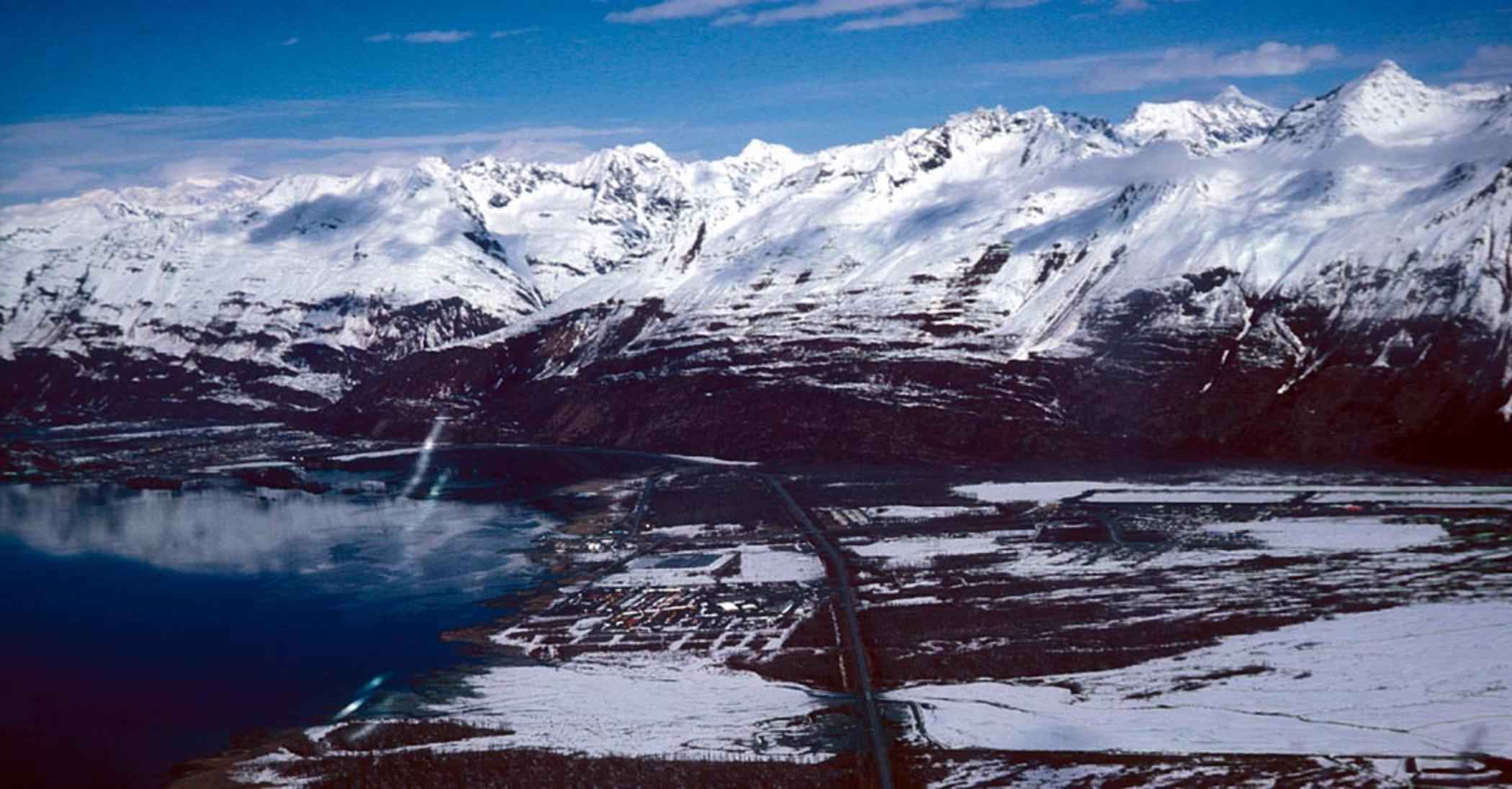
    Valdez from a distance in winter. (Photo: public-domain-image.com)
    Valdez from a distance in winter. (Photo: public-domain-image.com)

    The country’s second-richest cross-country ski race will take place in the remote community of Valdez, Alaska, this weekend, and there might still be time for you to get there. That’s the optimistic report from Qaniq Challenge Race Director Darryl Verfaillie, director of parks and recreation and cultural services for the city of Valdez, as race day approaches.

    The Qaniq Challenge, named after the Alutiiq word for “falling snow,” is set for this Saturday and Sunday, Jan. 16-17 in Valdez. The two-day, 35-kilometer race weekend requires participants to do a 17.5 k classic race on Saturday and a 17.5 k skate race on Sunday. Each technique is held on a different course. A random drawing the night before the race will determine the order in which skiers complete the courses. The lowest combined time for both races wins.

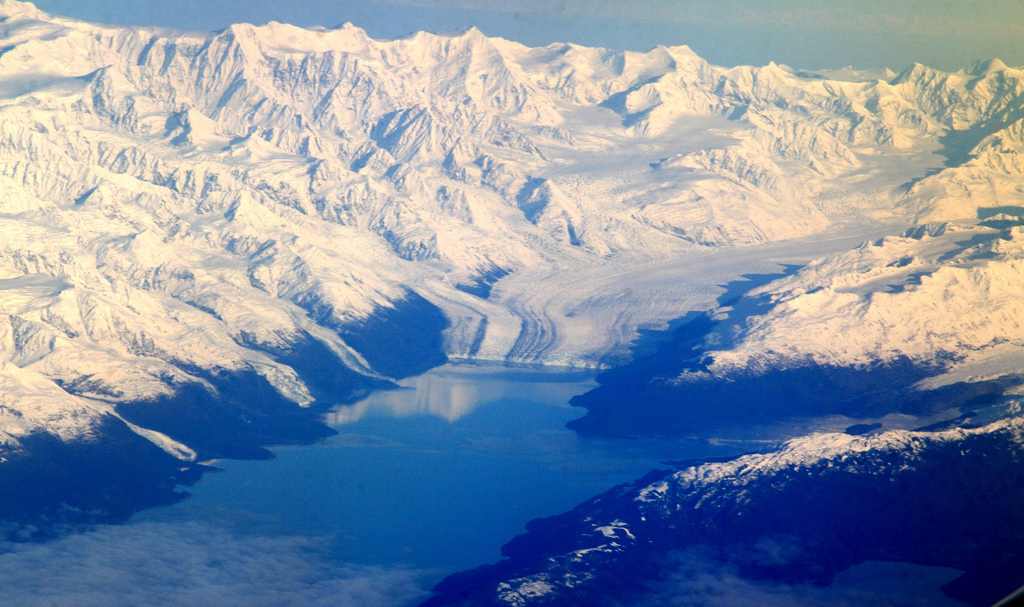
    Prince William Sound in early winter (January 2009): Valdez is just to the right of the frame. (Photo: Flickr/Frank Kovalchek)
    Prince William Sound in early winter (January 2009): Valdez is just to the right of the frame.
    (Photo: Flickr/Frank Kovalchek)

    2016 marks the second year of the Qaniq Challenge.  The inaugural year saw some challenges stemming from snow conditions, but racing occurred on both days (albeit on the same course twice).

    In a small field – 31 racers total – with an elite top end, Alaska Pacific University (APU) skier Becca Rorabaugh paced the women while teammate Lauren Fritz (APU) finished second, and Shalane Frost of Fairbanks placed third. In the men’s race, APU swept the podium with Lex Treinen claiming the first-ever win, Scott Patterson following in second and Peter Kling in third.

    Verfaillie was more than pleased with the first year of the event.  

    “It went uncharacteristically well for a first race. I think it went flawlessly,” he said in a recent phone interview.

    Verfaillie cited the positive reviews that he got from participants, and proudly noted – perhaps accurately, in light of southcentral Alaska’s snow-challenged winter in 2014/2015 – “For those two days, we had the best ski trails anywhere in Alaska.”

    Kling, a recently retired competitive skier who has raced across the U.S. and world, including at the 2015 China Tour de Ski, echoed Verfaillie’s analysis of the success of the inaugural event.

    “The entire community of Valdez (Valdez Nordic Ski Club, Parks and Recreation, Valdez Snowmachine Club, Search and Rescue and many community volunteers) came together last year to pull off a great event with difficult conditions,” Kling wrote in an email. ” You would have never known it was their first year hosting the race.”

    Treinen, the reigning men’s champion, had similar thoughts.

    “Going to the Qaniq last year was definitely a unique experience. On one hand there was not a very high turnout – likely because of the low snowfall – but the prize money made it a very serious competition,” Treinen wrote. “Scott Patterson, who finished second, and I, made a little gentlemen’s agreement not to blow out too much money on pure fluoro waxes, but other than that there were no holds barred.  We both opted to double pole on the classic day, which I think was the right decision for us both, and then in the skate day it was a huge tactical battle because the trail was so fast and narrow.  Luckily, nothing too dirty happened and it was a really fair race.

    “Aside from the competition, what stood out to me was how motivated the organizers were,” he added. “It is very rare to have race organizers who can conceive something becoming so much bigger than what it is now, and these guys definitely have that vision.  They knew what they were doing from experience and looking into how big races are held, but didn’t hesitate to ask racers for input.  I can definitely see it becoming something big in the next few years.”

    “It is very rare to have race organizers who can conceive something becoming so much bigger than what it is now, and these guys definitely have that vision.” — Lex Treinen, defending Qaniq Challenge champion

    Compared to last year’s atypically snow-sparse race, things on the ground in Valdez are looking better this year. Verfaillie cited preventative measures taken from last year’s race, including grooming all winter with an eye to repairing future meltdowns and building dams and water bars to divert water from the trails during rain events.  

    Verfaillie reports that, as of a week ago, the trails were  “all snow,” and the plan was to run the full, 17.5 k distance over both courses. Verfaillie is particularly pleased to let skiers race over the in-town course, unavailable last year, which takes skiers from the Chugach Mountains right up to the edge of Prince William Sound.

    The long-range forecast for Valdez currently shows wintry temperatures, with highs on Saturday and Sunday in the mid-20s, and the possibility of snow on Sunday.

    Verfaillie describes the race trails as “easy to moderate,” with the in-town trails more challenging than the out-of-town trails.  He is particularly pleased to let skiers experience the out-of-town trails, which are typically multi-use trails open to snowmachine traffic and don’t get that much skier use.  (All trails will be closed to snowmachine use during the races.)

    There are some unique factors about the Qaniq Challenge – for example, the order in which each skier skis each course is chosen by random drawing, so hypothetically, some top skiers could be skating on hardpack on Saturday while others have to wade through 18 inches of moist snow on Sunday – but Verfaillie’s race preparations and concerns ultimately sound a lot like those of any other race director getting ready for a ski race.  It’s the prize money that really sets this race apart.

    (Story continues below)

    The total prize purse for the Qaniq Challenge is $10,000 dollars.  For each gender, first place (based on combined times for both days) gets $3,000, second place gets $1,500, and third place gets $500.  First place at Valdez is rewarded with as much as third place at the American Birkebeiner (the only ski race in the country with a richer purse).  Second place in Valdez nets more than the $1,200 awarded for winning a national championship – Patterson won more in Valdez last year for finishing second than he did in Houghton last week for winning the 15 k classic.  Any way you slice it, it’s a lot of money for a ski race.

    That’s by design, says Verfaillie.  And he’s well aware that those numbers will raise eyebrows within the ski community.  He chose the cash amounts he did based in part on the input of Fritz and longtime APU skier and Olympian Holly Brooks, who were in Valdez a few summers ago for a community outreach event.  He asked them then how much money they were competing for elsewhere, and how much it would take to get skiers to come to Valdez.  When he mentioned a $10,000 purse, Verfaillie says, “that really got Lauren’s attention.”

    Money talks.  When asked by email whether he was planning on defending his title in this year’s race, Treinen responded, “I am definitely falling for the sin of avarice and going back this year.”

    Verfaillie has lofty ambitions for the event.  When asked about having the country’s second-largest prize purse for a cross-country ski race, Verfaillie responded, “I would love to have the largest.”  If that were to happen, “that’d be years from now,” he continued.  “But if I were to give away 50 or 60 thousand dollars total, I would love that.”  

    Verfaillie acknowledges that it’s not easy to get to Valdez in winter, so “we want to make it worth people’s while.”  As for the ample amounts of prize money, Verfaillie says, “I know I don’t have to [give out that much] – but if we can, why not.”

    The race itself is funded by the city of Valdez, which guaranteed funding, including prize money, at current levels for three years beginning in 2015.  Verfaillie noted that the Qaniq Challenge is one of the few items in the city budget that rolls over from year to year.  

    “The [Valdez City] Council was kind enough to say, We believe in the potential for this race,” Verfaillie explained. “All the money [brought in this year] rolls over into next year’s race.”

    Verfaillie obviously hopes to see participation numbers increase from 2015 through 2017; if numbers don’t go up, he acknowledges that the structure of prize money may need to be changed, and the race’s bottom line will suffer.  But he remains committed to his race, and to the goal of showing that Valdez can be a viable winter destination for cross-country skiers.  “This ski race belongs to the skiers,” he notes.  “If folks want to have a ski race, they need to come do this.”

    Verfaillie estimates that it costs the City of Valdez $25,000 to put on the race, including prize money but excluding the use of city time and resources.  He acknowledges that Valdez, which gets much of its revenue from taxes on the Trans-Alaska Pipeline, whose southern terminus is in Valdez, is in an enviable fiscal position.  For example, he notes that Valdez, with a population of around 4,100 people, has an annual city budget of $65 million (this comes out to close to $16,000 per person.  Anchorage, by contrast, with a population of approximately 300,000, has an annual budget of $481 million – around $1,600 per person.)  The city also has its own sovereign wealth fund, a muncipal-level version of the statewide Alaska Permanent Fund.

    For the time being, though, the Qaniq Challenge may still be working through the growing pains of an event in its infancy.  There were 31 finishers in the race’s first year. As of Thursday, 29 skiers had registered for this year’s event, including likely podium contenders Brooks, Fritz, and Rorabaugh.  (Also, full disclosure, this reporter.)

    “I anticipate several more from Anchorage will register this week,” Verfaillie wrote in an email two days before the race weekend. 

    The buoyant Verfaillie, described in a 2015 Alaska Dispatch News article as “an energetic retired U.S. Coast Guard captain,” sounds completely unconcerned about the turnout.  “We are guaranteed to run the race,” he promises.  

    In response to the low numbers, he notes that “the odds couldn’t be any better for those folks” who are entered.  Verfaillie also observes that over half of last year’s racers registered in the week before the event, and that he has “far more commitments than I do registrations” right now.

    Valdez is slightly over 300 miles from Anchorage, a drive of approximately six to eight hours depending on winter road conditions. The state ferry system also runs between Whittier and Valdez. Race spots and hotel rooms remain available; late registration is currently $125. Budget around $300 more to take the short flight from Anchorage to Valdez, or find a car or carpool for the all-day drive.

    Stay tuned for this author’s firsthand report of the racing experience at the second-annual Qaniq Challenge.

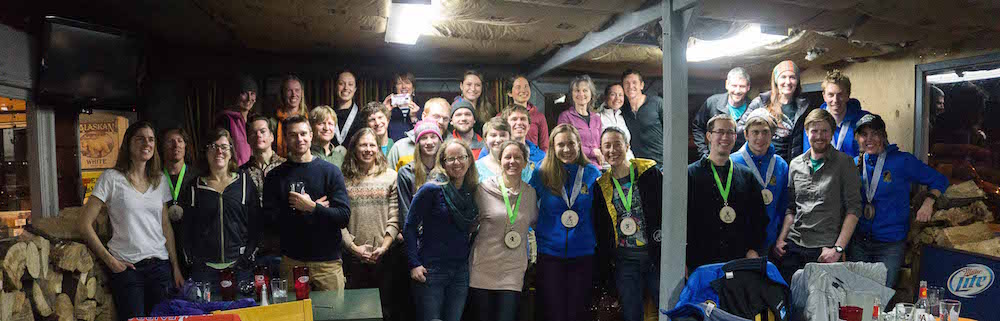
    The entire field of the 2015 Qaniq Challenge at the awards banquet in Valdez, Alaska. (Photo: Seth Adams)
    The entire field of the 2015 Qaniq Challenge at the awards banquet in Valdez, Alaska. (Photo: Seth Adams)