From the FasterSkier archive — posts syndicated from athletes’ and coaches’ own blogs between 2004 and 2012, kept online as published. Current coverage is at fasterskier.com.
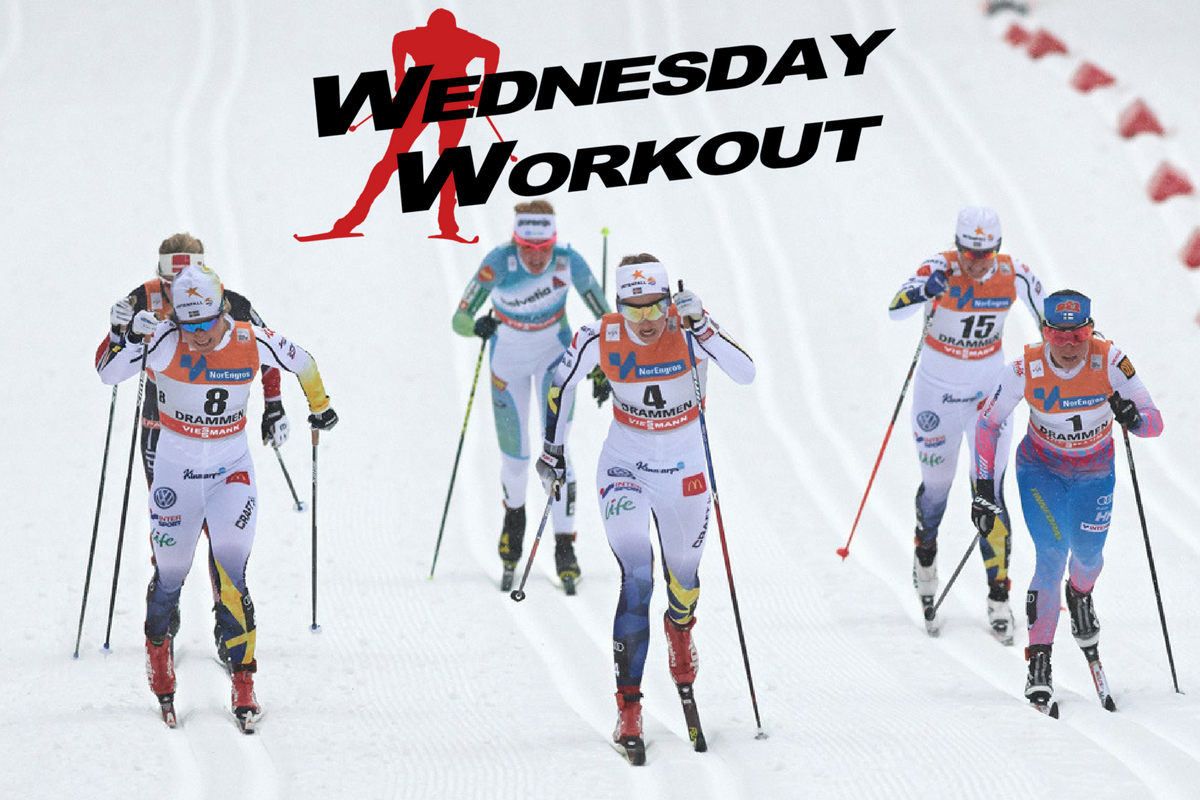
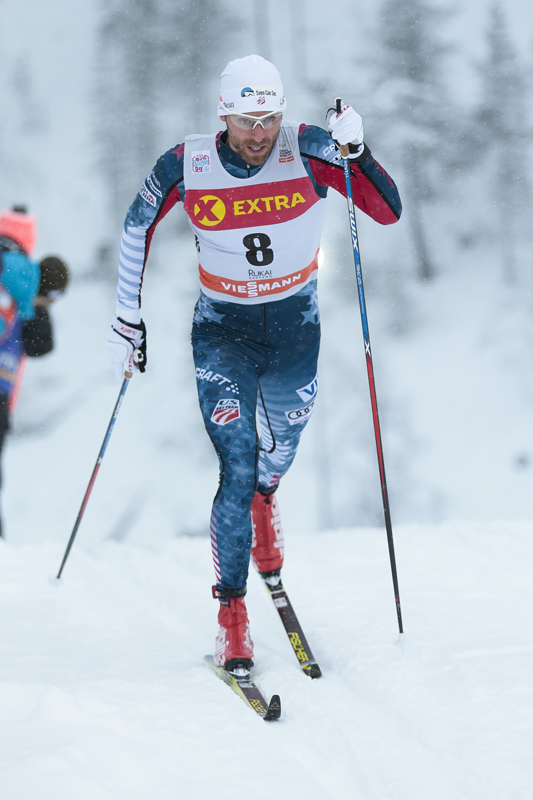
Sweden’s Hanna Falk (8) going for it in a sprint finish in Drammen, Norway, with her teammate Stina Nilsson (4) and Finland’s Krista Parmakoski (1) on March 8, 2017. (Photo: Fischer/NordicFocus)
“I have a workout that I like and usually do in the autumn when it’s time to shape up.”
Those are the words of Swedish national-team member Hanna Falk. To take Falk’s words literally, it is that time of year: in the Northern Hemisphere, it’s officially autumn and “time to shape up”. In two months, the 2017/2018 World Cup will open with classic sprints on Nov. 26 in Kuusamo, Finland.
For the figurative aspect of Falk’s comment, if you’ve been eschewing hard workouts and log six days a week of perfunctory OD, yes, “it’s time to shape up”. For World Cuppers, potential 2018 Olympians and those giving a Heisman to Father Time, it’s the season to think about priming for those moments when latching on to those skiers pushing the sharp-end pace is paramount.
In group sprints or distance events, no one likes to be yo-yoed off the back of the pack.
Last season on the World Cup, Falk finished third in the sprint rankings and 20th overall (a combination of both sprint and distance results.) Although certainly a sprinting force, Falk now considers herself an all-arounder. She placed eighth in the World Cup 10-kilometer freestyle race held in her birthplace of Ulricehamn, Sweden. After we interviewed Falk for FasterSkier’s Nordic Nation, we reached out for a Wednesday Workout, requesting something she uses this time of year to round herself into shape.
The Workout: 6 x 5 minutes with 2 minutes rest
“I usually do the workout on roller skis in variable/tough terrain,” she explained. “I also try to do a real sprint start in the start of each interval, just to practice that special moment. It means 10 seconds all out and then continuing the interval in the speed you can manage. You can also do a short sprint at the end of the interval if you want to practice the change of frequency in the finish. It’s a race-inspired workout that will get you tired!”
How to pace it:
“You should try to go hard, at high speed, without losing the technique — and with the same speed from the first to the last interval. It probably means Level 4. If you start off too hard and you are not able to have the same speed on the last interval, you are doing it wrong!”
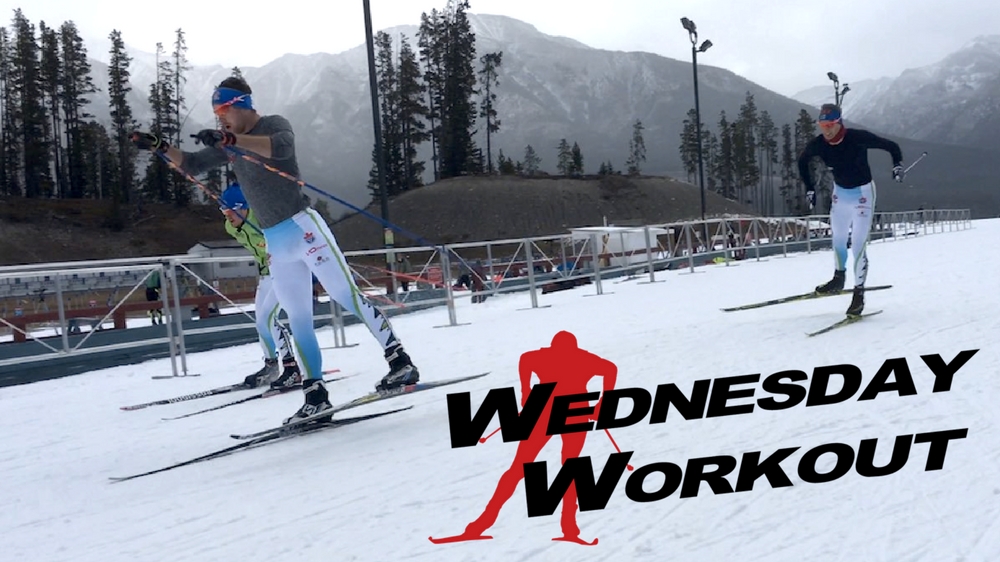
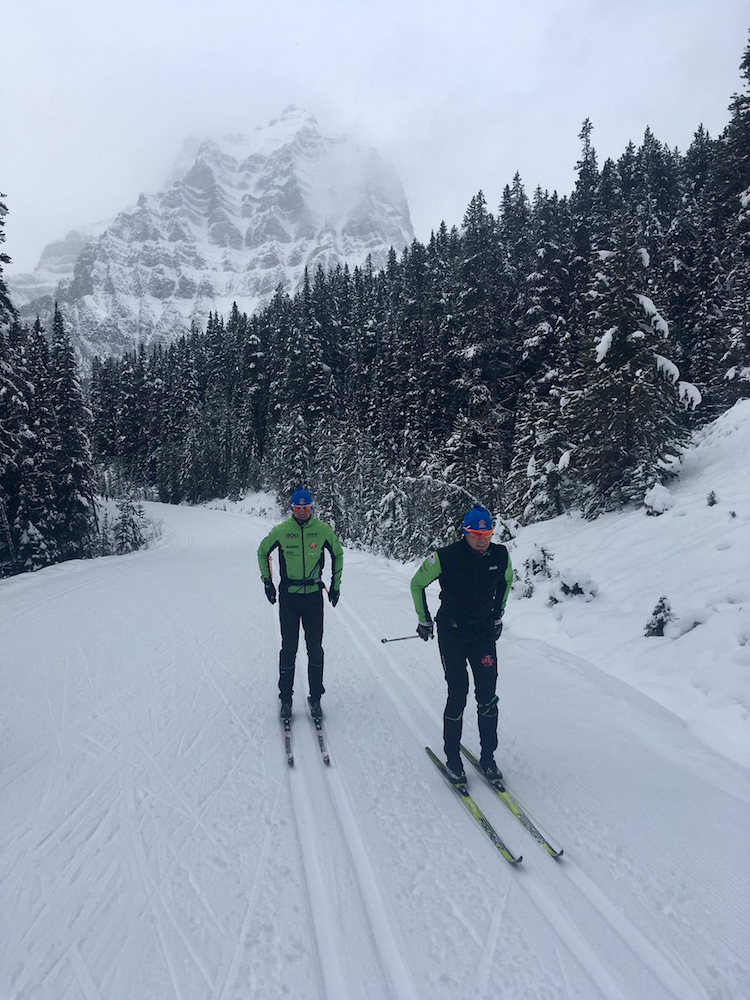
Evan Palmer-Charrette (left, in green) during an intensity session with his National Team Development Centre (NTDC) Thunder Bay teammates Angus Foster (front) and Julian Smith (right) at the Canmore Nordic Centre last November. (Photo: Timo Puiras)
Evan Palmer-Charrette, of Thunder Bay’s National Team Development Centre (NTDC), had an eventful 2016/2017 season, starting with compartment syndrome surgery in the summer to remedy an issue that had plagued him for four years, his first U23 World Championships, his first World Cup races in Quebec, and his first national title.
Palmer-Charrette finished the season ranked second in the overall NorAm standings behind Russell Kennedy (Canmore Nordic/Team R.A.D.) after notching four NorAm podiums. One of those included his third-place finish in the classic sprint at Canadian Ski Nationals, behind two U.S.-based university skiers, which made him the top Canadian.
“Awesome to be Canadian champion, but a surprise for sure in a classic sprint,” he told FasterSkier at nationals, reflecting his preference for distance racing.
A week later at SuperTour Finals in Fairbanks, Alaska, Palmer-Charrette placed second in the skate sprint behind winner Logan Hanneman of Alaska Pacific University. He was FasterSkier’s pick for Canadian Continental Skier of the Year and turned 23 this past Sunday. Palmer-Charrette is currently testing at the Canadian Sport Institute Ontario in Toronto and plans to spend another season with the NTDC in Thunder Bay. He started the new training year with an on-snow volume camp at Sovereign Lake in British Columbia.
He submitted the following workout regarding race-prep intensity.
***
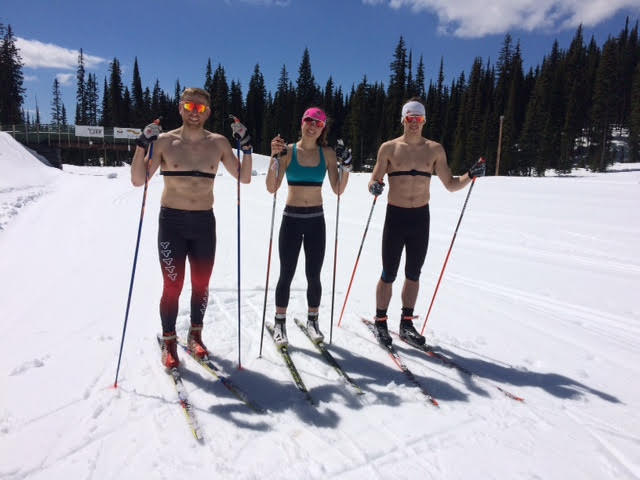
Evan Palmer-Charrette (r) with NTDC Thunder Bay teammate Annika Richardson (c) and former teammate Greg Kilroy. (Courtesy photo)
“From an early start, most everyone knows it is crucial to warm up well the morning of a race to experience each energy system before you put yourself through it during the real deal. I have heard a number of junior athletes surprised to hear that it’s a common practice to put in an intensity workout within a day or two of a race, I was the same as a junior, I would always do some sprints and a bit of speed but nothing with serious structure that I tracked and replicated like the intensity I would do in my race morning warm-up.
Race prep intensity (RPI) is a great way to get the body fine-tuned for a race weekend, especially in the early season when you don’t have as much racing and intensity under the belt. Now, this is not an exam-style cram before the test workout to try and get in better shape two days out, just something light much like you would do the morning of a race. More often than not, you will have traveled for a ski race and a light intensity is a great way to shake the body out and get a feel for a new race course skiing it the same speed you will in a race.
The Warmup
Start out with an easy recovery pace to begin the ski. Closing in on a race weekend, there are very minimal benefits for pushing the pace while skiing easy, but overdoing it can leave the body feeling fatigued. During the warmup, pick up the pace to a point where it feels comfortable, well below threshold, but enough of an increase that you feel like you are gliding rather than shuffling and apply some power to feel the snap in your limbs. I like to do 2-4 minutes of Zone 2 to get the body ready.
The Workout
Zone 3: If your first race or the big race is a sprint, I like to take two laps at a moderate Zone 3 effort. Trying to ski the course as smooth as I can and getting a sense for where the technical sections are that I will use for the following intervals of the workout. If you are prepping for a distance race, I like to do my 5-6 minutes of Zone 3 on what I think will be the most challenging section of the course, getting a feel for cresting the big A-climb into a technical downhill without perfectly rested legs.
Zone 4: This is the most variable portion of the workout. As I mentioned earlier, depending on the time of year I might adjust my RPI workout to how I am feeling — this is generally the section that takes on the change. By the latter half of the race season, if I’m going into a multi-race weekend I’ll skip the stage altogether, however prior to Christmas, I have added more repetitions or duration.
Sprints: 3 x 30 seconds is really just an example, but a good amount to put some snap in the legs and get an idea of what the upcoming course will throw at you. These qualifier-pace sprints are best done on the technical sections of the course that really allow you to get a feel for how a tricky transition or corner will ski while in a race situation.
The Cool Down
Wrap the workout up with a good cool down to flush out the legs making sure to get in at least 25-30 minutes. I like to throw in a few Zone 2 surges if my legs were not feeling great during the intensity to try and flush them out a bit more. If it’s cold, I’ll change my top I wore during the workout, there is nothing worse than getting a chill and catching a cold a day or two before a race.”
Evan Palmer-Charrette (l) and Michael Somppi during a cool-down ski at Lake Louise near Canmore, Alberta, in November 2016. (Photo: Timo Puiras)
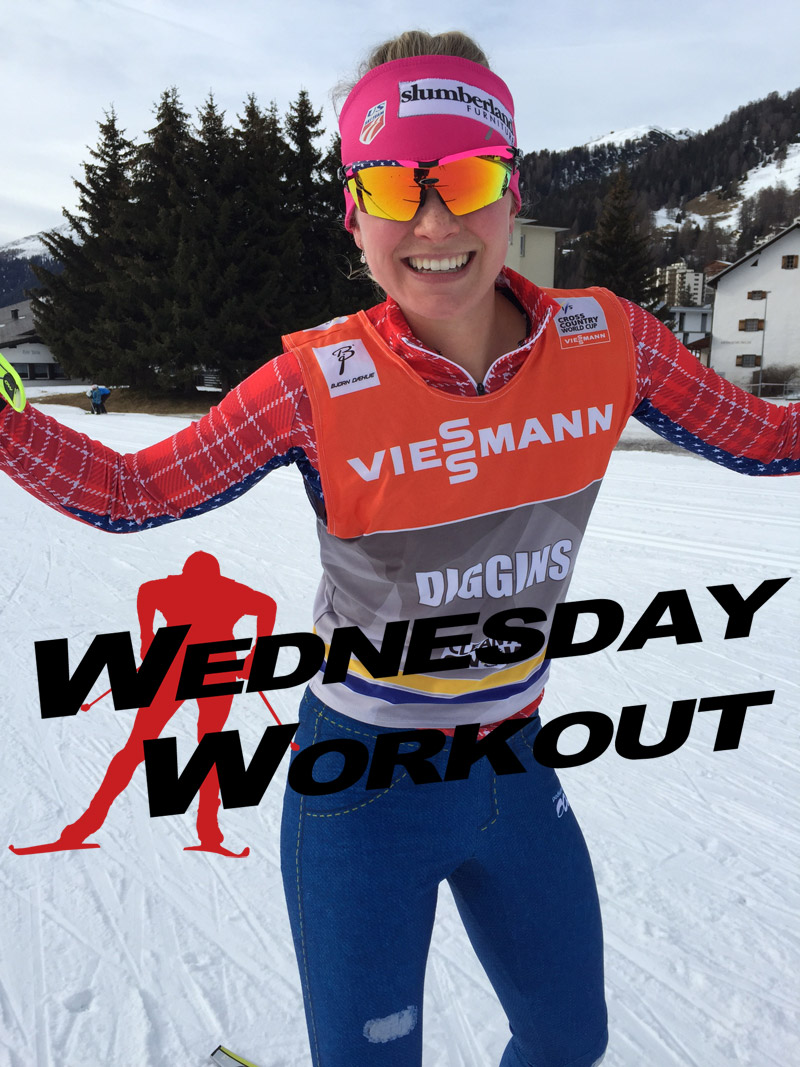
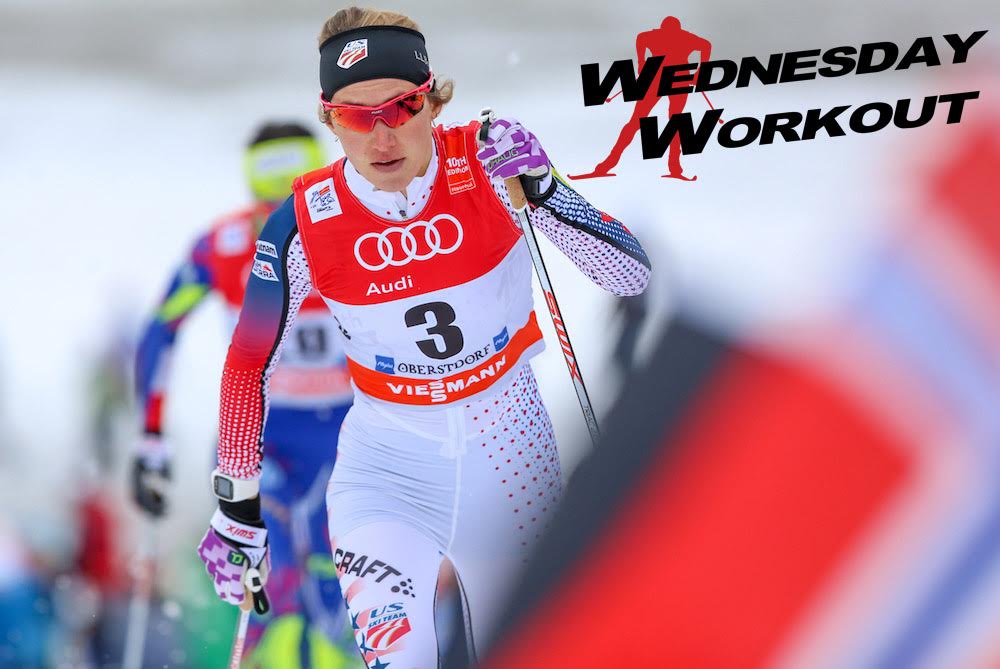
Jessie Diggins (U.S. Ski Team) on a prologue-practice day in December 2014 in Davos, Switzerland. (Courtesy photo)
Here’s a blast from the past. Two seasons ago, we asked Jessie Diggins, of the U.S. Ski Team, how she prepped for a prologue as the first stage of the 2015 Tour de Ski. She explained she did a “prologue practice day” about a week and a half before the Tour-opening 3 k freestyle prologue. Read the original workout here.
***
[circa December 2014]
When it comes to Tour de Ski prep, World Cup racers do a lot more than just chill over the holidays and rest up for the seven-stage tour. Jessie Diggins is one of two U.S. Ski Team members who plans on completing the tour (along with Liz Stephen), and to kick things off on the right foot, she does a “prologue practice day” about a week-and-a-half out from the first event: the freestyle prologue in Obertsdorf, Germany (which takes place this Saturday).
“We almost never race prologues, and it’s such a funny distance at 3 km, but in the start of the Tour de Ski we race one!” Diggins, 23, explained in an email. “I like to take an interval workout and turn it into a time trial to practice my pacing and tempo for a 3km. If I have good energy that day, I’ll do two of them, so that I can play around with my pacing and tactics and learn from the different times.
“I’ll also skate it since for whatever reason it seems like the World Cup prologues are usually skate,” she added.
The workout takes about 1:45 to 2 hours from start to finish.
30 minute warmup: just skiing easy
5-8 minute Level 3 “to get my body going and warm up my lungs”
Ski back to the start area, start first prologue. “I will have mapped out a course beforehand —figured out where about 3km is on the trail and given myself a fairly realistic course. This week, I just raced part of the Davos course!”
After first prologue, ski easy for 10 minutes to let legs recover and lower heart rate back to normal
Start second prologue
Cool down: slow ski for 20-30 minutes
“I also like to wear a full race suit and bib when I’m doing this so I can get into the racing mindset a little easier,” Diggins explained. “And of course, if the trails are crowded people tend to let you pass easier if you’re wearing a race bib! :)”
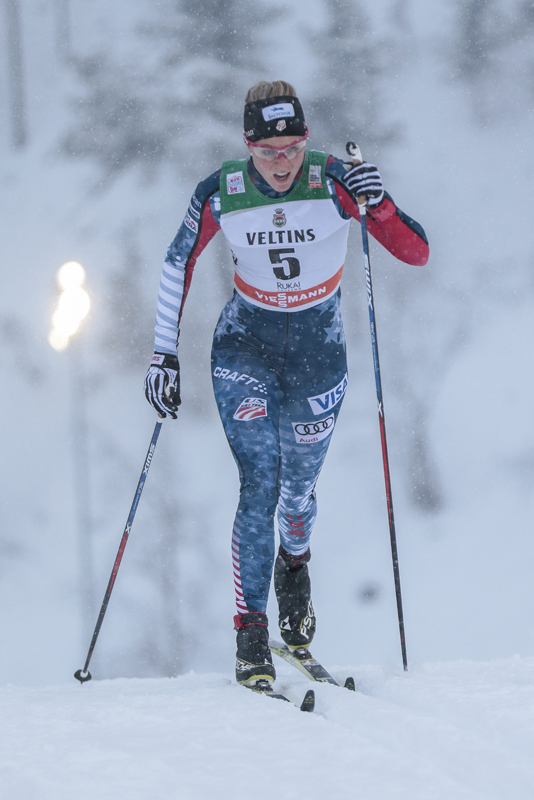
Out of Kuusamo and onto Lillehammer. U.S. Ski Team member Sadie Bjornsen (pictured racing to seventh in the women’s classic sprint qualifier last Saturday in Finland) enjoyed an off-the-race-course ski to Sjusjøen, Norway, this week. (Photo: Fischer/NordicFocus)
We hear a lot about the details of a cross-country ski racer’s day on race day, but what about those four or five days in between? What do World Cup racers do then, in the middle of the week? FasterSkier Norwegian contributor Aleks Tangen ventured to Lillehammer on Wednesday and Thursday to find out.
***
LILLEHAMMER, Norway — The first mini tour of the World Cup season starts today — Friday — in Lillehammer. A year ago at this venue, the U.S. women’s team placed third in the relay a day after Sadie Bjornsen finished 20th in the skiathlon. This year’s three-day series consists of a classic sprint on Friday (the second of the season), 5- and 10-kilometer freestyle races on Saturday and 10/15 k classic pursuits on Sunday. FasterSkier spoke with Bjornsen, Jessie Diggins, Andy Newell and U.S. Women’s Coach Matt Whitcomb to see how they prepare for Lillehammer and in particular, this mini tour.
Whitcomb explained that on Wednesdays, in this case two days before a race, it’s common for the athletes to do 90 to 120 minutes of light skiing in the morning and a strength session in afternoon.
“Some might do an easy jog instead,” Whitcomb said. “On a normal week, our strength session falls on a Wednesday. That gives us two full days of recovery before the races. Usually this is also our intensity day and we like doing strength in the afternoon of those. However, in an instance such as this one, where we’re going from a World Cup weekend into a mini tour, we have limited time to recover and for most of our team that means that they will have to pass on mid-week interval session in place for something speed-oriented.”
On Wednesdays, in this case two days before a race, it’s common for [U.S. Ski Team] athletes to do 90 to 120 minutes of light skiing in the morning and a strength session in afternoon.
Bjornsen, who placed 17th last Sunday in the Ruka 10 k classic, did just that. She said this week that she thinks it’s possible to improve upon that performance and that she is looking for more.
“Two weeks ago, I was not even sure that I was going to be here…,” she said, referring to bone spurs in her feet that impeded her World Cup leadup. “Each time I ski, it’s going to become more familiar and hopefully better.”
This week, Bjornsen opted for a distance ski with some speed.
“I find it really special that we can ski on the non-race courses, because we’re always dealing with the lack of snow and then we’re left with a 3.5 k, exceptionally hard, groomed course,” she explained. “It’s something that can contribute to built up fatigue.”
She also did speed work on the course to familiarize herself with the transitions and plan where to change gears.
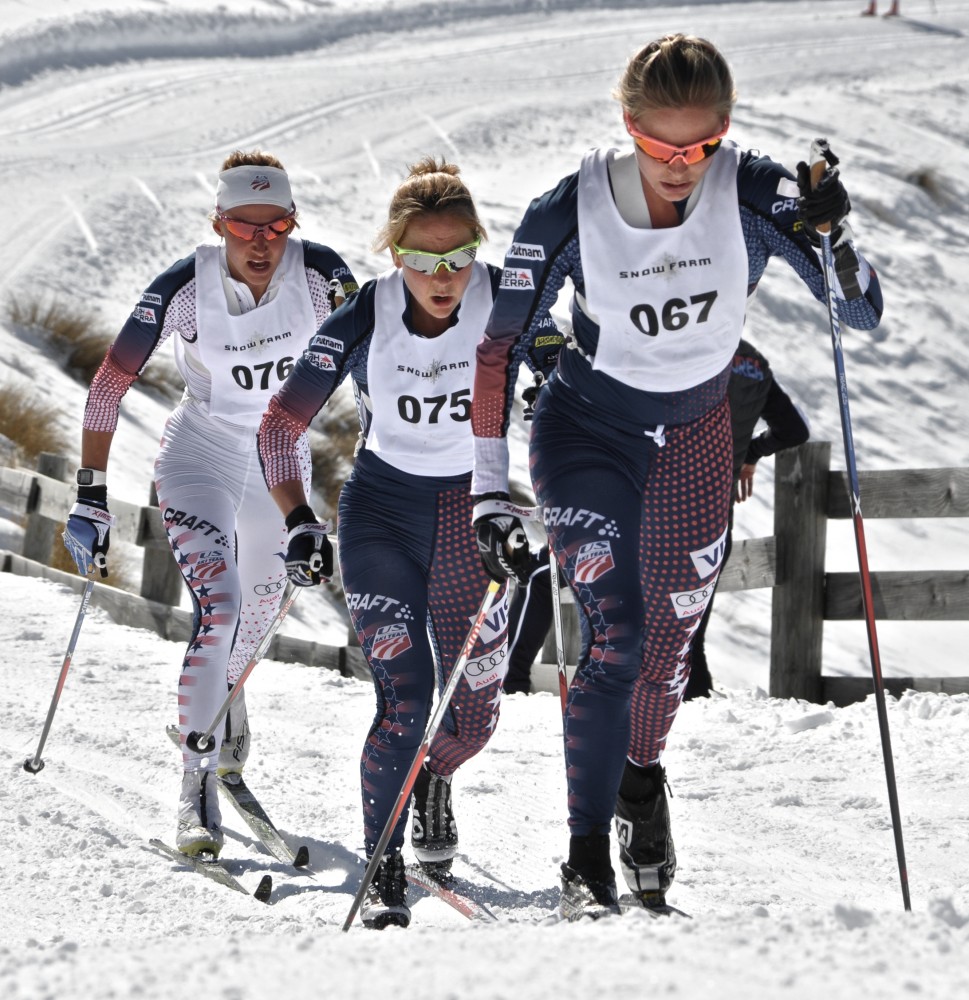
Jessie Diggins leads fellow U.S. Ski Team members Ida Sargent (c) and Sophie Caldwell (l) in the women’s classic sprint at New Zealand National Championships on Sept. 9 at the Snow Farm in Wanaka, New Zealand. Sargent won the final, Diggins placed second and Caldwell was third. (Photo: Matt Whitcomb)
Her teammate Diggins chose a similar kind of workout on the trail leading to Sjusjøen, for 90 minutes of easy skiing.
Asked on Wednesday what goes through her mind during a training session two days before a race, Diggins said it doesn’t have much to do with the race itself.
“I don’t think about the race really, I just try to stay relaxed and do what I’m supposed to do,” she said. “In the middle of two race weekends, you want to stay relaxed, but also improve your conditioning, so I did five minutes at L3 [Level 3 intensity] and 4 x 4 [minutes] at low level on Tuesday in order to have time to recover from traveling and in time for the race.”
In terms of how she balances recovery and improves conditioning at the same time, she said, “That’s a good question. I think it’s really about listening to your body and paying attention to the signals it’s sending you. If you don’t feel good in the morning then maybe you should take it easy and vice versa. And you should always communicate with your coaches, but I really think that first and foremost, it’s important to pay attention to your mind before schedule.”
Diggins said her schedule amounts to roughly 750 training hours a year, but she warned against looking too far into those numbers.
“I don’t like to think about the numbers, really, I feel like that’s not the right thing to do,” she said. “It’s what you do in those hours that matter. It’s more about quality than quantity, and I feel like focusing on the numbers sends the wrong message to for example young athletes.”
Asked what she would say to young athletes considering increasing their volume, Diggins said they should be “very careful about increasing hours. Don’t just throw on hours for the sake of more, think about what the hours contains and go from there.”
According to Whitcomb, Diggins “is in a great state of fitness. … She’s just a really hard worker who does what she needs to do during workouts. She has also gotten to a point where she absorbs her training really well,” he explained.
Andy Newell (U.S. Ski Team) on his way to 40th in the men’s classic-sprint qualifier in the first race of the 2016/2017 World Cup season last Saturday in Kuusamo, Finland. (Photo: Fischer/NordicFocus)
Newell met with FasterSkier on Thursday to talk about his preparations. Normally he would do some form of threshold training “like 3 x 8 minutes and some shorter speeds, just to get a feel for the track,” but this Wednesday, things didn’t turn out quite the way he had hoped. Newell skipped training to treat a cold that had been brewing since last Thursday.
“I might have gotten sick from traveling” he said.
If he had been training, his race-prep day would have likely included an hour of skiing, with ski testing (maybe four or five pairs) for the first 45 minutes.
“Once I find a good pair, we usually get together as a team and ski the lap, once at 70 percent of max and once at 90 percent.” Newell said of previewing the course.
When asked about how he balances recovery and fitness, Newell’s answer was similar to that of Diggins and Bjornsen. He said it’s about feeling good before the races, and since the races are like hard workouts, what matters in the time in between is to recover well enough in order to feel good when you’re on the starting line.
“Some people come out of, for example, the Tour de Ski super-fit and that’s the kind of magical balance we’re striving for, where we can be in a state of fitness where we can absorb the benefit of the races,” he said. “For me, that means to maintain threshold base and focus on short bursts of speed during the races.”
And how does nutrition factor into this equation, especially considering you’re in a different country every week?
“I normally don’t have any problems with it, the foods really good here and there is so much to choose from,” Newell said. “I might supplement with multivitamin or fish oil, especially in places like Kuusamo.”
Speaking specifically about Lillehammer, Newell said he loves the course, calling it “perfect”, “very challenging but very skiable, unlike Kuusamo, which are not that fun. Lillehammer’s [courses] are very enjoyable.”
This season, Newell explained that his biggest goal is “to stay strong and healthy.”
“I am trying to be careful with the cold I have now. I know I can be among the strongest in the world and I try not think about place, but instead feeling strong and take one race at the time,” he said.
Sophie Caldwell racing to the first World Cup win of her career on Jan. 5 at Stage 4 of the Tour de Ski in the classic sprint in Oberstdorf, Germany. (Photo: Marcel Hilger)
Before a weekend of World Cup freestyle-sprint racing in Planica, Slovenia, we caught up with Sophie Caldwell of the U.S. Ski Team, who recently won her first World Cup in the Stage 4 classic sprint at the Tour de Ski.
The 25 year old wrote to FasterSkier via email while still in Italy, with plans to travel to Slovenia on Thursday. She explained she was still battling “a little nagging cold I got after the Tour, but I should be good to go by Saturday.”
After the eight-stage Tour de Ski from Jan. 1-10, the regular World Cup season resumes in Planica with an individual freestyle sprint on Saturday and freestyle team sprint on Sunday.
So how does Caldwell prepare for a day of sprinting, or World Cup racing in general? Is it a day-before kind of thing? Not necessarily, she explained.
“Something I’ve been playing with this year is my ‘race prep’ workout the day before the race,” Caldwell wrote. “A lot of skiers do a bit of a shorter harder workout to wake the body up the day before a race. I found that doing this right before a race often tired me out more than it woke me up, so I started playing with doing that same ‘race prep’ workout two or three days before the race.”
The Workout: Sophie Caldwell’s Race Prep
Warm up as usual.
Then:
– 1 x around sprint course, Level 3
– 1 x sprint course, Level 4
– 5-6 speeds across important parts of course
“It’s not a crazy hard workout,” Caldwell explained.
She opts to do it 2-3 days before the race, “This way I can get in a semi hard workout on the race course, but have enough time to recover before the race itself and go in feeling fresh,” she wrote.
“I think it’s important to find a race prep plan that works for you,” Caldwell continued. “Most of my teammates do race prep the day before the race, and this works great for them. There isn’t a perfect workout that is a recipe for success, but I think it’s important to try different pre race plans to figure out what works the best. Sometimes it’s also necessary to alter the plan based on energy levels that day and that week and being flexible and willing to change the plan is key.”
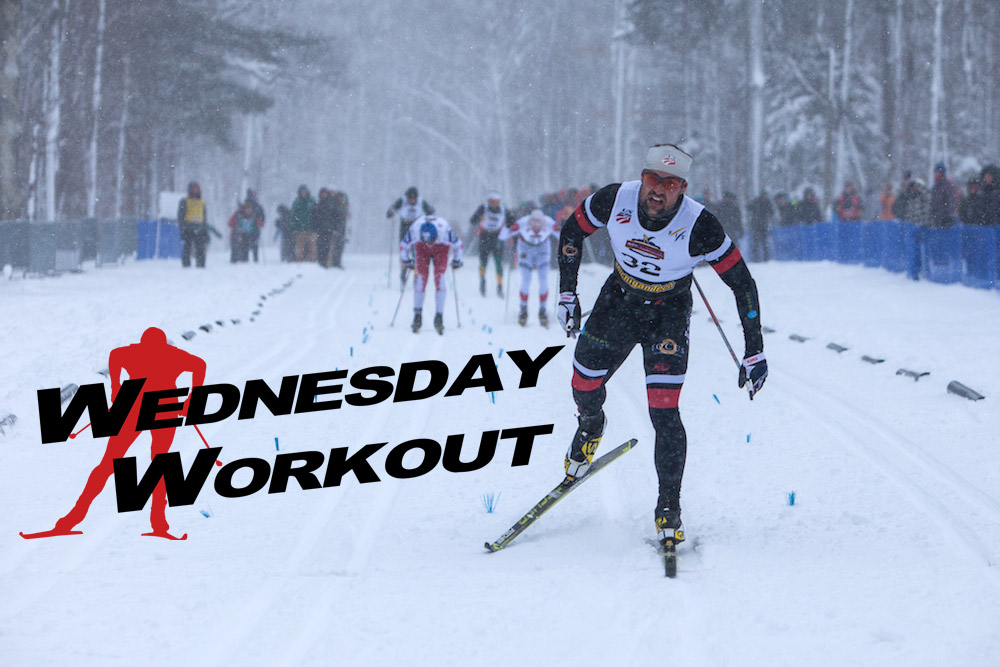
Dakota Blackhorse-von Jess (Bend Endurance Academy) clinches a nearly seven-second win in the 1.5 k classic sprint at the 2015 U.S. Cross Country Championships in Houghton, Mich. (Photo: Jake Ellingson)
For this week’s workout, we caught up with the Bend Endurance Academy’s Dakota Blackhorse-von Jess, who won back-to-back sprint titles last week at U.S. nationals in Houghton, Mich. As he told FasterSkier after his skate-sprint win last Saturday, that was exactly his goal — to put himself in contention for a call up to the U.S. World Championships team and at the very least, earn World Cup starts later in the season as the SuperTour sprint leader.
“This year everything has been geared toward Word Championships so this is a stepping-stone,” he said after his initial classic-sprint victory on Jan. 6. “The goal was to put myself in a position to win and see if I can do it. Everything worked out really well and I’m excited. Obviously I can’t control if I go to World Championships, but I know that the way we set up the training, we are on the upswing and things will continue to rise in February.”
As of Tuesday, Blackhorse-von Jess, 29, was home in Bend, Ore., where he explained the weather was “awful. We need snow!! And to kick this fog … but it will come around. It’s never nasty here for long!”
In an email, he wrote that this period leading up to the next set of races, the Craftsbury SuperTours Jan. 30-Feb. 1 and Feb. 6-8, is his last chance to log a good training block before leaving for Europe.
“Obviously there are a few different scenarios in play but the gist of the training plan is to make sure that I have my feet under me and then start ramping up the intensity and use the sprints in Craftsbury as a tune-up for Europe,” he wrote.
And while it wasn’t exactly ideal not to have access to good snow, the Bend Endurance Academy (BEA) has been getting a few workouts done on rollerskis.
“The benefits of being at 3500 feet instead of 6000 feet and of a consistent high impact scenario on the roads (as opposed to the potentially soft and low impact scenario of snow) mean that we just aren’t that negatively affected by the lack of snow for intensity training,” Blackhorse-von Jess explained. “There’s plenty of snow up in the high country and plenty of terrain to get good distance training in, so that’s not a worry.
“We are sticking to our tried-and-true training model of continuing to build upon specific capacities and edging ever closer to my absolute values: aerobic, anaerobic, and maximal speed,” he added. “I have yet to do any true speed work this season, so that will play a more prominent role in our training these next four weeks. This is our fifth year in a long term training progression and every year we get a little further with the plan and we are really excited to see what I can bring to the table in Europe this spring!
“I have yet to do any true speed work this season, so that will play a more prominent role in our training these next four weeks.” — Dakota Blackhorse-von Jess (Bend Endurance Academy), who won both sprints at 2015 U.S. Cross Country Championships
The workout: Qualifier prep with the 15-15
“Of the many, many facets of training one of the most critical is understanding race pace. People throw around the word ‘race pace’ an awful lot, but I see very little overlap between a true race simulation and other intensity workouts.
While technique, conditions, race distance, mass start vs. individual start, and terrain all play a role in determining what race pace means, using measured training can be one of the most effective tools for internalizing that meaning. Personally I have an incredibly hard time replicating a race effort. There is just a lightness and intensity that possesses me when I step up to the line. Even when I’m not ‘feeling great’, my body just knows what to do — for the first ten strides or so. Then what? That’s where pace training comes in.
As a sprinter, the 15-15 is how I practice qualification. In my personal notation, the colon denotes the break between intensity and rest while the dash shows a change inside the intensity. For example, 3x6x60:30 would be 3 sets of 6 repeats of 1 minute on, 30 seconds off, consistent intensity.
In this case, the workout goes 10×15-15 or 10 repeats of 15-15 (I like 4.5 minutes of rest, but rest can be a pretty individual thing). The purpose of the workout is to simulate qualification pace without the taxation of a full-duration simulation.
Here’s how it goes:
45 seconds to go, get into line behind the starting cone. Whether you do this alone or with teammates, I think it’s important to simulate the minute BEFORE starting qualification. This can be a critical time and it’s an opportunity to try different mental strategies. You never know when you’re going to stumble across a technique that really syncs with you. Hear the clock in your head and see the skiers ahead of you starting. Step up to the line, see the wand, move your skis, set your poles, whatever your thing is – do it. See the clock, hear the beeps, and go. This is a great opportunity to practice different styles of starting. If you can use the clock to get into a routine that becomes automatic, you’ve already made yourself a better racer. When I do this workout, I like to have my coach time the first interval and yell at me at 15 seconds and 30 seconds, then set out cones so a.) no one has to be keeping an eye on the watch and b.) it’s immediately obvious when you start to slow down — or speed up.
I try to make the first 15 seconds of the interval exactly the way I’d want the first 15 seconds of qualification to go: quick smooth start, build speed, find rhythm, relax and flow. The second 15 seconds is a maximal effort; a simulation of the final stretch of a qualification. Don’t forget to ski THROUGH the final cone. That 10th of a second could make all the difference. Each repetition should be a test of your muscles and your neurons but not an aerobic test or a lactate loading workout. For me, it’s the management of the workout that is the best indicator of actual ‘race pace’. If each subsequent intervals is slower and slower, I started too fast. If there is no change in pace between the first and second half of the interval, I either started too fast or I have no top-end. Once I’ve started to find repeatable paces this workout really becomes effective because I can play with the paces — the “feeling”, if you will. Can I use more pace in the opening 15 seconds? Can I find MORE speed, whether through relaxation or technique focus under fatigue in the final 15 seconds? Are there mental queues or mantras that make a difference?
In the past I’ve done this workout three or four times in my race prep, but this year I’ve only done it once during the lead up for Nationals. It’s a great way to remind myself what racing should feel like — both how “easy” and how ‘hard’ it can be — in the same race. We might not do this workout again this year, but even just the one session helps me feel like I’m in full race rode.”
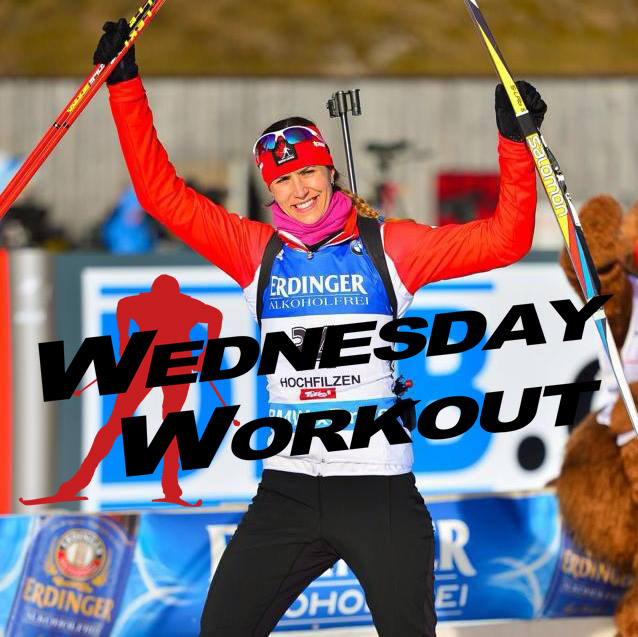
Rosanna Crawford celebrates her IBU World Cup best: fifth place in the women’s pursuit on Sunday in Hochfilzen, Austria. (Photo: Andrei Ivanov/Facebook)
It’s a long grind on the World Cup circuit, especially for biathletes, who potentially race three times — three separate days — every week.
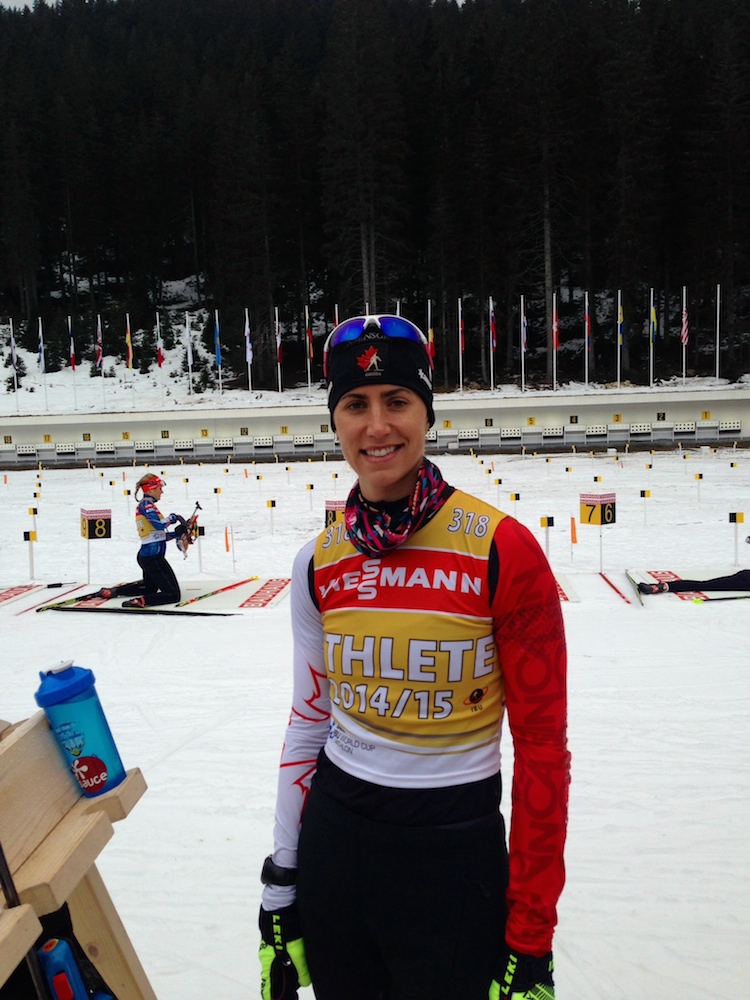
Rosanna Crawford during training on Wednesday in Pokljuka, Slovenia. (Courtesy photo)
That leaves four days for recovery between the next stop, but in that time, an athlete has to fit in travel, rest, easy efforts and then race prep. That can leave them worn down at the end of what international biathletes call a trimester, but it also gets them into phenomenal shape.
As Biathlon Canada’s Rosanna Crawford — who notched a career-best fifth on Sunday in Hochfilzen, Austria — explained, as the season progresses, she doesn’t need to do as much to be race ready.
On that days that she and the rest of her team are revving up — this week Wednesday, the day before the women’s race in Pokljuka, Slovenia — Crawford does race prep.
“For me that involves skiing Z1 (easy) for about 20 minutes and then I’ll zero and confirm my rifle,” she wrote in an email. “Then I’ll do 1×2.5km our race loop in Z3 (just below race pace) and shoot 1x prone, ski around the fence, and 1x standing.”
After that, depending on the course, she usually tries to find a loop that takes about 2 to 2 1/2 minutes and finishes in the range. She does that four times in max-aerobic speed (MAS), just above race pace.
“If it’s too difficult to find a loop that’s hard enough that ends in the range then I’ll just do them other places on the course,” she added, “And then do 4×15-20 sprints with shooting, total workout is usually 1hr15.”
– Warmup: Ski Zone 1 (easy) for 20 minutes (then zero and confirm rifle if you’re a biathlete)
– Do one 2 1/2 k loop at Zone 3, just below race pace. (Shoot one prone, ski back to beginning of range, then shoot one standing.)
– Find a loop that takes 2 to 2 1/2 minutes to complete. Ski it four times at max-aerobic speed (MAS), just above race pace.
– Finish up with four 15 to 20 sprints (with shooting)
In the afternoon, she’ll typically go for a 20-minute run, followed by some mobility and stretching.
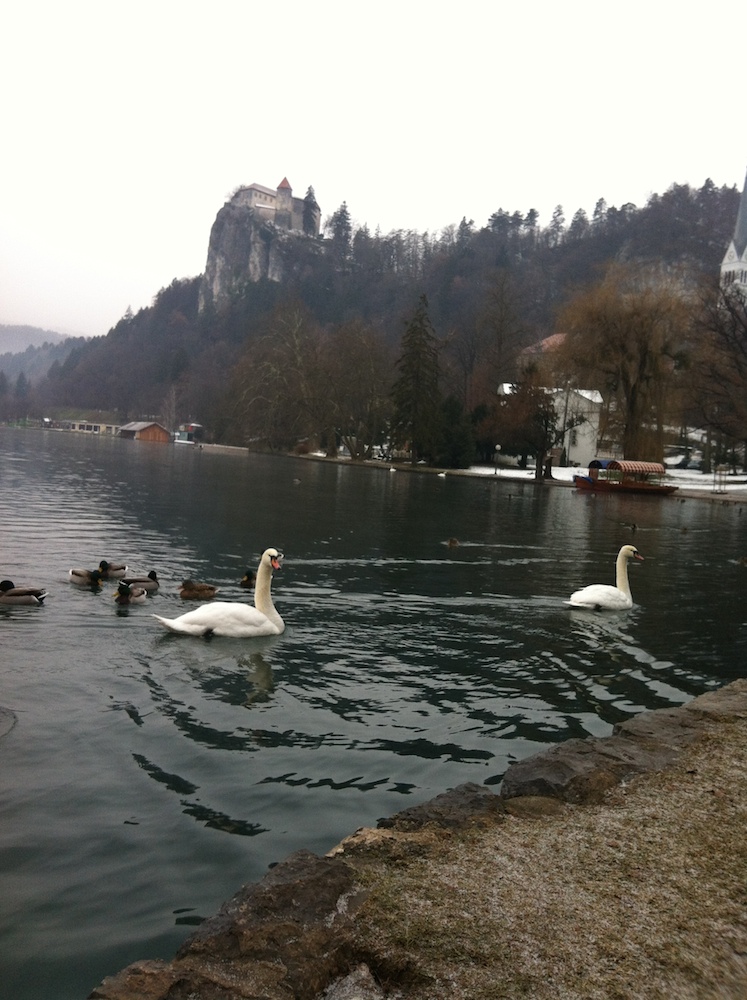
The lake in Slovenia with a castle in the background. (Photo: Rosanna Crawford)
What about the rest of the week? Mondays, they travel.
“This week that involved driving 3 hrs from Hochfilzen, Austria, to Bled, Slovenia. Much nicer than the 10 hr travel day from Ostersund, Sweden, to Hochfilzen,” she wrote.
Once in Slovenia, she and her boyfriend/teammate Brendan Green went for a “little walk” around the lake, then Crawford took a nap.
“The rest of the afternoon is pretty chill, stretching, maybe a massage and getting settled into our new location,” she explained.
Tuesday is typically their easy day, in which she likes to classic ski for 1 1/2 hours or less if she’s feeling tired. This week, she shot 60 bullets on Tuesday to get used to the range in Pokljuka. Height levels can vary between ranges, she explained.
That afternoon, she planned to take a nap and go for a 20-minute jog, followed by some mobility and physio exercises.
Thursday of this week is race day for the IBU World Cup women with a 7.5 k sprint. The men’s 10 k sprint is on Friday.
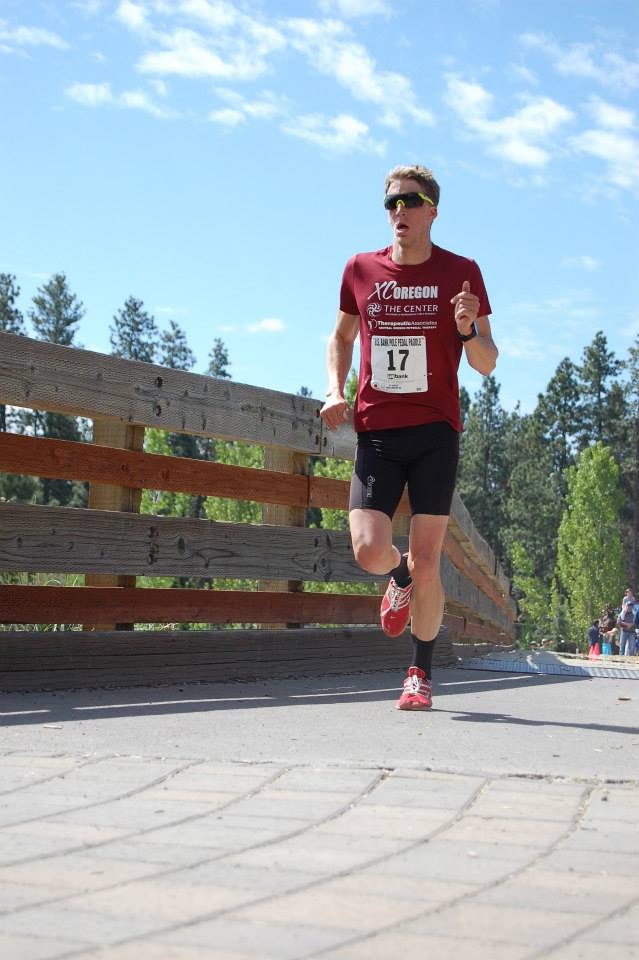
XC Oregon’s Matt Briggs on his way to third in the Pole Pedal Paddle on May 17 in Bend, Ore. (Photo: Neil Korn/BendOR Magazine)
In his Pole Pedal Paddle (PPP) debut two weekends ago, Matt Briggs, 27, placed third behind fellow XC Oregon skiers Marshall Greene and Andrew Boone, respectively. For Greene, it was his sixth victory in the six-stage, multi-event race (his first since winning four years ago). Briggs left inspired. “I’ve got to come back and beat the old guys,” he told The Bend Bulletin. “I’ll beat [Greene] before he retires.”
In preparation, Briggs explained in an email that he didn’t do anything too out of the box.
“Basically all I did was a bunch of easy running, mountain biking, kayaking, and a few interval workouts cycling, running, and skiing,” he wrote. But there was one workout — really the only special one — he did leading up to the PPP, and he called it Sanity Day.
***
Bend, Oregon is a town obsessed with recreating. We have world class running, biking, and skiing and for a few choice months in the spring all of it is at its very best. On the third weekend in May the whole city turns out to try to figure out who’s the best at stringing all our favorite endurance sports together in an annual celebration called the Pole Pedal Paddle.
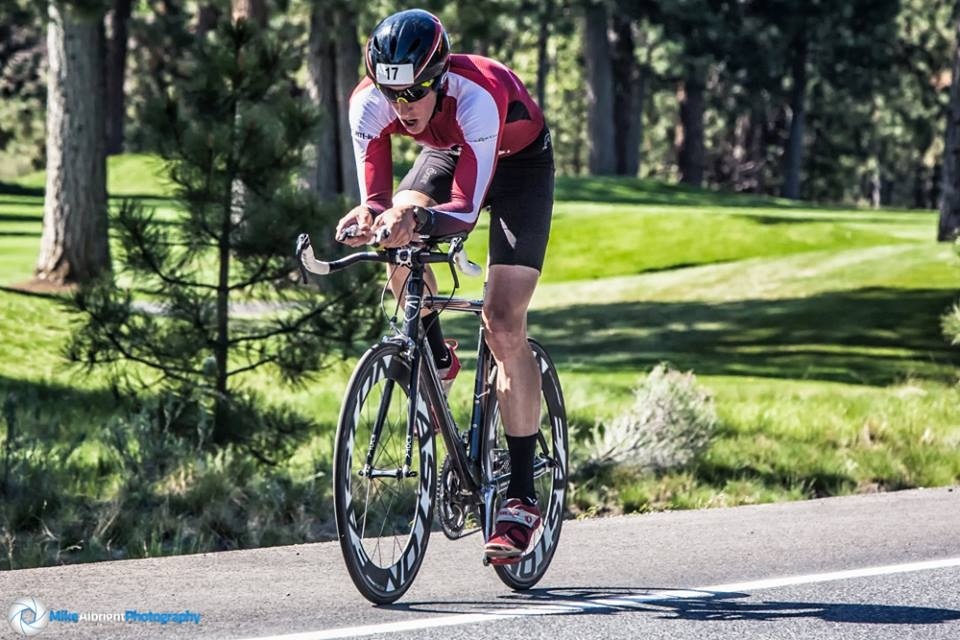
Matt Briggs during the 2014 Pole Pedal Paddle in Bend, Ore., in which he placed third.(Photo: Mike Albright/Mike Albright Photography)
The PPP is made up of six legs: a ski down the alpine mountain, a seven kilometer Nordic ski, a twenty mile bike on the road from the mountain to town, a five mile run along the river, a two mile paddle on the Deschutes, and a half-mile sprint into the finish line.
The winner of this race is awarded celebrity status, year-long bragging rights, and the unofficial title as Bend’s fittest athlete. The race is often dominated by Nordic skiers and has been won over the years by some names FasterSkier readers will recognize, including Dan Simoneau, Justin Wadsworth, Ben Husaby, Marshall Greene, and Kris Freeman. In this town, this race is a huge deal.
As if it wasn’t hard enough to deal with trying to get race-level fitness in five sports (including teaching myself to paddle a tippy surfski in 45 degree water) this race also presents massive logistical problems.
I needed two dedicated helpers (one at the mountain and one in town) to help with transitions.
I needed rear-entry alpine boot shells large enough to fit my Nordic boots inside of (so that I wasn’t putting on Nordic boots three minutes after the gun).
I needed a TT bike with fast wheels and a massive front chainring to push the gears down the steep declines of the 2500 foot drop in the course (the top three all ran a 58-tooth chainring/dinner plate).
I needed a fast kayak and a carbon-wing paddle.
I had to deal with more media interviews and photo shoots than I have in my life. All of that on top of the normal concerns that go with a Nordic ski race (testing, waxing, structure, etc.) This race was basically a full-time job for the three weeks leading up to the race. It was hard at times to keep a clear mind on why I was putting myself through it all. It was a lot of fun putting all the pieces of the puzzle together but if I had let it, the race and preparation would drive me out of my mind.
So my most important workout each week (above the 5×1 mile running repeats, the 40 minute bike TTs, the 5x6min ski intervals, and the cold hours spent in the kayak trying to keep it upright) is a workout I call “Sanity Day.”
Sanity Day would start with me calling my friend who was getting married the same day as PPP and telling him that I had had enough PPP business for a lifetime. He would reply by telling me that he and his fiancée were thinking of eloping just to avoid any further planning. I’d tell him I’d meet them at their house the next morning. I’d head over there on my mountain bike and meet the two of them for our big day out. We’d start by drinking a bunch of coffee and eating any wedding-cupcake samples they had left over and talk about what trails we should check out that day. We’d set a conservative plan and saddle up and head out. The conversation would sound like this:
Matt Briggs during the 2014 Pole Pedal Paddle in Bend, Ore., in which he placed third. (Photo: Neil Korn/BendOR Magazine)
“I can’t find a decent kayak and I really don’t have 1500 dollars to drop on a new boat right now.”
“Did I tell you about what the napkin people are trying to charge us?”
“Do you think I should try to carry a bottle on my bike or do you think it’s not worth it?”
“How long into the night do we play the ’80s hits before switching to ’90s hip-hop?”
“You think I can take Marshall by two minutes on this run course?”
“Oh shoot we can’t forget to call the shuttle people as soon as we get home!”
You get the idea. Our heads were all spinning with logistics and we were in need of the soothing relaxation that can only come from a high-quality piece of singletrack. We’d hit the trailhead, stop and drink Gatorade, make a few jokes, and finally hit the trail. The pace was not high. The miles were not tough. I can’t honestly say anyone was getting fit out there. But it doesn’t take long on singletrack before you’re pretty well focused on the task at hand and only stopping to drink some water, tell some stories, and figure out where to go next. By the time we’re coming in (and sometimes this was pretty quickly after we started), the conversation was more fluid, less stressed, and a whole lot more interesting:
“I bet you crush Marshall on the ski and hold him off on the bike.”
“Either way, I’m gonna crush it on the dance floor when Country Grammar comes on.”
The pace was not high. The miles were not tough. I can’t honestly say anyone was getting fit out there. But it doesn’t take long on singletrack before you’re pretty well focused on the task at hand.
In hindsight there are a lot of workouts I maybe should have done that I didn’t do to take back the 2:48 I lost on first place and 2:16 I lost on second, but it feels to me like I would have been in a whole lot more trouble if I had passed on these sanity days in lieu of one more ski, road ride, run, or paddle. It might be a little cliché but it’s definitely important to build these days in because if you’re training for any race or preparing for any event and not having fun out there you’re probably not doing it right.
***
Editor’s Notes: The non-traditional Sanity Day workout should be based on time, not mileage. Briggs usually aims for 1-2 hours or whatever time one has between appointments and meetings. To be clear, this is not a rest day “but the training load was pretty low,” he explains. “Mostly it was not going to be hard because we were too busy telling stories and stuff, but also because I had probably done intervals the day before and had to do some more the next day.”