Tag: Ralph Bovard

  • Going It Alone, with Help from Friends: Social Support and Exercise Behavior in Birkie Racers

    Going It Alone, with Help from Friends: Social Support and Exercise Behavior in Birkie Racers

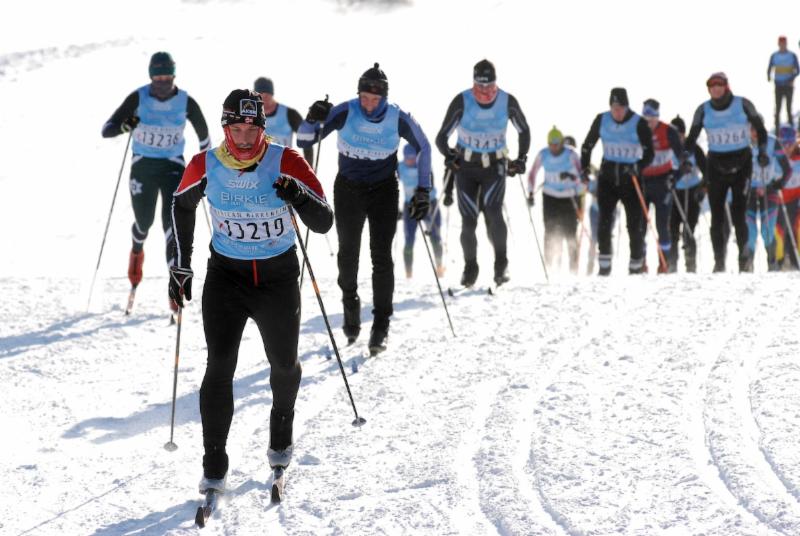
    Racers at the 2014 American Birkebeiner. (Photo: ABSF/Kelly Randolph)

    Part I of this interview discussed findings about general health and exercise habits of American Birkebeiner participants compared to the general public. You can catch up on that piece here.

    When the Birkie Health Study launched in 2014, the role of social support in forming and keeping healthy habits was a big a question for researchers – and their high-profile supporters.

    “Why people choose to get out in the first place, and what keeps them staying active, especially when we’re talking about the social aspect of it which is super huge for girls and women – I’m interested to look at the results and glean some things from it that we can apply to Fast and Female so that we can continue to make our programming more effective, and really work towards achieving our mission of keeping girls and women involved in sports for their whole lives,” World Champion skier Kikkan Randall said at the time.

    Researchers Paul Anderson and Ralph Bovard received survey responses from more than 5,000 people who had participated in the American Birkebeiner, a cross-country ski marathon held every year in Wisconsin.

    While the survey asked about exercise, general health status, and behavior, it also sought to understand why people exercised. Their results were published in BMJ Open last year (and can be read free of charge here).

    Among survey respondents – typically middle-aged, married men with a four-year education and a full-time job – nearly 80% had been introduced to skiing by family or friends, and 96% said that they were “highly motivated to exercise by signing up for races like the Birkie.”

    “I think that the masters athlete movement in America and worldwide has been a terrific incentive to many people,” Bovard wrote in an email. “It lets adults know that it is okay to move and revel in their bodily movement. It is okay to aspire to race and challenge one another in physical activity even if you’re 65 or 85 years old. We hosted the national masters swim meet and Minneapolis in early August… [One older] swimmer said: ‘I can still swim because I’m healthy. But I’m only healthy because I swim.’”

    What does “social support” mean, though?

    The survey asked a series of questions to find out how skiers interacted with other people regarding exercise.

    Maybe most obviously, that meant finding out whether skiers trained with other people. They did. For instance, 35% of respondents said that they most often exercised with other people, and 71% of respondents said that they trained with others at least once a week.

    But other behaviors are also considered social support, and some of them are so simple and basic that a skier might not realize they are doing it. An example is simply talking about exercise with a friend, family member, or co-worker. The survey asked whether family and friends talked about their own exercise, encouraged the respondent to exercise, or simply “discussed exercise with me.”

    That last was the most common social support interaction among all of the choices.

    “Among individuals who are training together or are interested in fitness, verbal processing of training challenges and successes builds connection, reinforces the value of physical activity, and provides a strong context for the positive meaning of an active life,” Anderson wrote in an email. “This is not surprising since language is one of the predominant forms of human connection in virtually all the important aspects of life.”

    Simply talking about a workout might seem trivial, but survey respondents with high “social support scores” were more likely to spend more time exercising, get more sleep, eat more fruits and vegetables, and suffer less from depression or low moods.

    That last relationship is complex, but important. While exercise can often relieve some symptoms of depression, non-exercise specific social support also can lead to better outcomes in depressed patients. So which caused the lower rates of depression in the Birkie skiers?

    “Physical activity is a well-known intervention for mood disorders and I think we observed an expected change in this metric,” Anderson wrote. “Our data doesn’t allow us to speculate about causal relationships, however… we would need to design a study to look at this question specifically if we wanted to answer this question definitively.”

    Besides simply talking about exercise, other forms of social support were also prevalent. Family and friends often offered to exercise with a survey respondent, scheduled activities around the respondent’s need to exercise, or planned to exercise on recreational outings.

    The authors speculated that this was a second mechanism to help survey respondents get over the motivational barriers to exercising. For adults with full-time jobs, time and energy aren’t always in abundance.

    This finding also highlighted an interesting complexity in the data: most survey participants trained primarily alone, and yet training with friends was also very important to them. For instance, only 22% said that they wouldn’t do the Birkie if their family or friends didn’t sign up as well. Yet 75% said that exercising with family or friends motivated them to sign up for races like the Birkie.

    “While these responses seem difficult to reconcile, it may be that on the one hand the predominance of solitary training coupled with the determination to sign up for races regardless of social support suggests a high level of self-efficacy,” the authors wrote in the paper. “On the other hand, the pattern of weekly exercise with others and the fact that skiers do sign up for races because of motivation derived from others suggests that any pre-existing self-efficacy may be reinforced by regular doses of exercise-specific social support.”

    In other words, even those who are highly self-motivated benefit from getting social support.

    “I think a big part of the argument of Paul’s research is that the social aspects of physical activity participation can be life changing,” Bovard wrote. “When I lived in Arizona I joined a master swim group. I did not know any of those people before I went there but they quickly became good friends… I think the essence of this is that people develop a shared, camaraderie that is life enhancing. I always say that I do not hang out with the people I work with, rather I hang out with the people I work out with.”

    Bovard, however, was already looking for a swim group to join: he had pre-existing motivation, and so it was probably relatively easy to fold into a community in a new place. Many skiers have likely experienced the same thing when they move to a new area and sign up for a race or join a training group.

    The question remains of whether such behavior can simply maintain exercise and training habits, or start them off. Can the same social support systems that keep Birkie skiers exercising be used to get a non-exercising member of the public to start being more active?

    “Exactly how this would work between a fitness-minded individual and one who isn’t currently active highlights the complexity of initiating a new behavior,” Anderson wrote in an email. “It would be interesting to study whether or not language (talking) was the strongest factor leading someone to initiate physical activity or if the was another form of social support that was more influential.”

    The survey results generated lots of new ideas and Anderson is looking forward to studying Birkie skiers in more detail. But even these first results give some hints at strategies to improve public health.

    “Those wanting to initiate, maintain or increase physical activity regimens should receive guidance that emphasises the importance of physical activities in groups, especially family of friend groups connected to larger fitness cultures that often surround community races or large national or international competitive events,” the study concluded.

    Interested in this study? Anderson wrote, “We are also very interested in learning what Birkie skiers wonder about and doing some studies that answer their questions too. They should feel free to email me at Paul.J.Anderson@HealthPartners.com with their ideas.”

  • Birkie Health Survey Underscores Link Between Exercise and Healthy Behavior

    Birkie Health Survey Underscores Link Between Exercise and Healthy Behavior

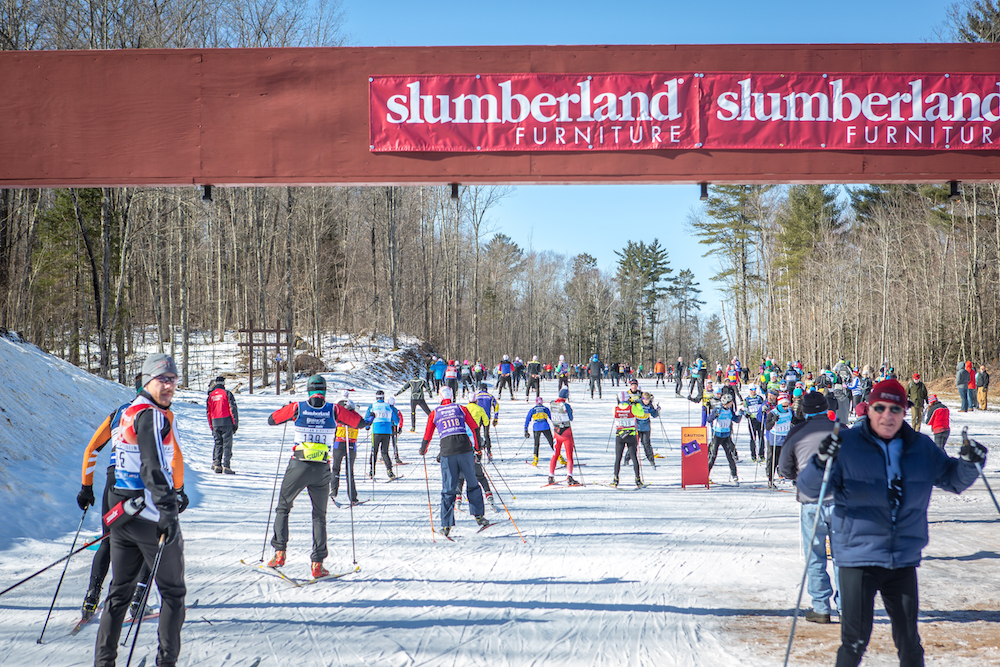
    The scene at 2017 BirkieFest on Feb. 25 at the American Birkebeiner trailhead near Cable, Wis. A health survey showed that Birkie participants are five times as likely as the average American to have all of the “healthy four” health characteristics that decrease stroke risk: exercising at least 150 minutes per week, not smoking, eating at least five fruits and vegetables per day, and having a body mass index (BMI) less than 25. (Photo: American Birkebeiner Ski Foundation)

    Back in 2014, Paul Anderson and his colleague, Ralph Bovard, set out to study the health habits of cross-country skiers by surveying those who participated in the American Birkebeiner (“the Birkie”), a cross-country ski marathon in Wisconsin.

    “We wanted to understand and characterize the role of social support for exercise among Birkie skiers,” Anderson explained in an email this month. “Dr. Bovard and myself are both Birkie skiers and we have both experienced how the Birkie motivates us and others to stay fit throughout the year. Also, we wanted to document the health status in a population of people who follow recommended guidelines for exercise and diet in order to underscore the value of preventive health measures.”

    Anderson and Bovard sent their survey out to nearly 24,000 race participants, getting a 23% response rate.

    “When over 5,000 people take the time to answer a long survey, it shows a high level of interest in the Birkie itself and the culture surrounding it,” Anderson wrote.

    In a paper recently published in BMC Research Notes (available for free/open access here), the pair and their colleagues compared the health and behavior of Birkie skiers to that of a representative swath of Americans. That data had been collected as part of the National Health and Nutrition Examination Survey and the Behavioral Risk Factor Surveillance System.

    Perhaps unsurprisingly, by many metrics the Birkie participants were healthier than the “average American.” For instance, they had an average body mass index (BMI) of 23.8, vs. 26.7 for the U.S. population sample. And only 3.23% had a BMI over 30, which is said to indicate obesity, compared to 27.7 for the U.S. population sample.

    BMI is a problematic index, as it is based only on height and weight. Muscle is heavy, so lean but strong people often have high BMI scores even though they have little fat on their bodies.

    “BMI has upwards of a 40 percent error rate with approximately 20 percent of these being false positives and 20 percent being false negatives,” Bovard explained. “It is a 180-year-old metric created by a Belgian astronomer named Adolphe Quetelet who was trying to find a formula that would be able to calculate & predict the dimensions of the ‘average man.’”

    You can calculate your BMI here to understand the measurement.

    “The BMI is a metric used to evaluate populations, but it isn’t very good at characterizing individuals,” Anderson wrote in an email. “We used it because it remains the standard language for describing body habitus in the health literature.”

    In other words: the research team knew that it might not be a great measure, but it’s the standard tool of the trade, so still made sense to use in order to compare the Birkie participants with other populations.

    Other data from the study indicate that even as a flawed measurement, the BMI data is showing something real. The Birkie survey participants had healthier habits than the average American. (And they weren’t shy about saying so: 99.1% of respondents estimated that they were “as fit/more fit than their peers.”)

    Just 3.1% of the survey participants smoked. More than 65% of them reported sleeping on average more than seven hours per night, compared to 35.3% in the the U.S. population sample. Birkie skiers reported eating more fruits and vegetables, and only one-fifth as many of them reported doing no physical activity in their leisure time compare to the the U.S. population sample – where 25.5% of Americans report this to be true.

    There are four healthy lifestyle characteristics that public health professionals see as, combined, leading to a 40-80% reduction in stroke risk. They are exercising at least 150 minutes a week (2 ½ hours), not smoking, eating at least five fruits and/or vegetables a day, and keeping a BMI under 25.

    It’s quite rare for Americans to hit all those marks, and in the U.S. population sample, just 3% did. But 15% of Birkie survey participants reported having all of the four healthy characteristics.

    “We were trying to make a point about cardiovascular health,” Anderson wrote of this comparison. “Some researchers have suggested that too much exercise can be harmful for cardiovascular health, but in general, their conclusions are based on small studies.”

    As shown by the U.S. population sample, the main heart health risks to most Americans come from too little activity, not too much. And the Birkie skiers didn’t, on average, report doing so much training that the risks would come from the other side. In fact, less than 40% of the respondents reported getting more than 2 ½ hours of exercise a week, although Anderson warned about taking that number too literally.

    “We may not have asked the question in a way that people normally think about their exercise and it may have been confusing,” he wrote. “On the other hand, it may tell us that people can come out to do this race on a very modest fitness regimen. This was self-reported exercise and this number should be viewed with caution. In future studies, I would really like to measure physical activity using a wearable device and an online data repository (e.g. Garmin Connect).”

    Nevertheless, the amount of exercise the Birkie participants were doing was, compared to the general public, very much in a range that should promote health and decrease risk of cardiac events.

    “There may be some evidence that highly trained endurance athletes (especially males) are more likely to experience cardiac arrhythmias than those who exercise moderately,” Anderson wrote. “[But] In general, the scientific evidence continues to find that the benefits of physical activity far outweigh the risks.”

    That’s in line with a recent study from Finland. There, researchers found that even after adjusting for confounding factors like total amount of physical activity, age, smoking status, and BMI, male cross-country skiers had a 16-18% reduction in risk of death for any reason after 30 years of follow-up. The original study participants had been selected in the mid-1980’s.

    In the Birkie study, it’s harder to draw concrete conclusions because these confounding factors were not controlled for in any way. So when it comes to trying to disentangle causes and effects – are Birkie participants healthy because they exercise? Do they exercise because they already had low self-reported rates of physical limitations? – there are no clear answers.

    Overall, the Birkie survey respondents were quite different than the general population: predominantly male, on average 48 years old, with more than 70% of survey respondents married and more than 65% employed full time, vs. 53.1% married and 29.4% employed full-time in the surveillance system data. Nearly 90% of the Birkie participants had a four-year college degree, well above the 31% rate for the U.S. population sample.

    “Nordic skiing can be costly and our study participants reported higher socioeconomic status, higher levels of educational attainment, and more leisure time for training,” the authors wrote in their paper. “The Nordic origins of cross-country skiing and the trails in the United States where it can be practiced currently attract predominantly white participants although there are exceptions to this trend.”

    These are factors that are correlated to many health characteristics and behaviors. As a result, it’s hard to tell if differences in health between the Birkie participants and the general population sample are due to the Birkie and cross-country skiing in particular, or are simply artifacts of the different demographic and socioeconomic characteristics of the samples.

    “A cross-sectional survey of a population can’t really be used to test a hypothesis, but it can tell you where to look next,” Anderson wrote in an email. “I’d like to design a study that compares two similar groups of people who are randomly selected from the population except for one thing: one group would participate in the Birkie culture, the other group would not. We would measure and study both groups before and at the end of the study period and observe how the groups differed.   Our guess (hypothesis) is that the group exposed to the Birkie culture would do slightly better at starting and sticking with an exercise regimen.”

    A few studies have been published in Sweden and Finland tracking the long-term status of cross-country skiers.

    “We are highly interested in creating our own longitudinal study of Nordic skiers in the U.S. to compare with these populations,” Anderson wrote. “The task is harder for us because we do not have national health registries like those in Norway, Finland, or Sweden. These registries allow researchers to mine individual medical records and hospital records to track disease occurrence over time. Nevertheless, we can do the work but we have to find other ways of getting accurate health data on a large number of people over time without losing too many in follow-up.”

    The research team is planning further studies, but for now they can say that for one reason or another, the type of person who participates in the Birkie is fairly healthy compared to the average American. As Anderson had hoped, this “underscore the commonly observed coexistence of vigorous physical activity and higher levels of other beneficial health behaviors,” he and his co-authors wrote in their paper.

    If public health and policy experts could find ways to help more Americans be like Birkie participants, perhaps through informal or organized exercise groups, there would be many benefits.

    “Our basic point is that individuals in the U.S. have primarily been told to exercise in order to be healthy, but the importance of social support (i.e. working out with a community or group) has been less emphasized,” Anderson eplained. “This is changing, I think. I do believe that programs and events that simply expose less active folks to fitness events (5K, fun walks for a cause, the MS 150) can be potent mechanisms by which they see people having fun, enjoying health, and feeling ‘alive.’ These events can also help new participants meet others and join running groups, ski clubs, bike shop teams, close to their homes, schools, and workplaces.”

    Stay tuned for Part II of this interview, which is more specifically about the role of social support in forming and keeping exercise habits.

    Interested in this study? Anderson wrote, “We are also very interested in learning what Birkie skiers wonder about and doing some studies that answer their questions too. They should feel free to email me at Paul.J.Anderson@HealthPartners.com with their ideas.”