From the FasterSkier archive — posts syndicated from athletes’ and coaches’ own blogs between 2004 and 2012, kept online as published. Current coverage is at fasterskier.com.

Tag: Red Bull 400

  • Stephen on Switching It Up and Staying Fresh

    Stephen on Switching It Up and Staying Fresh

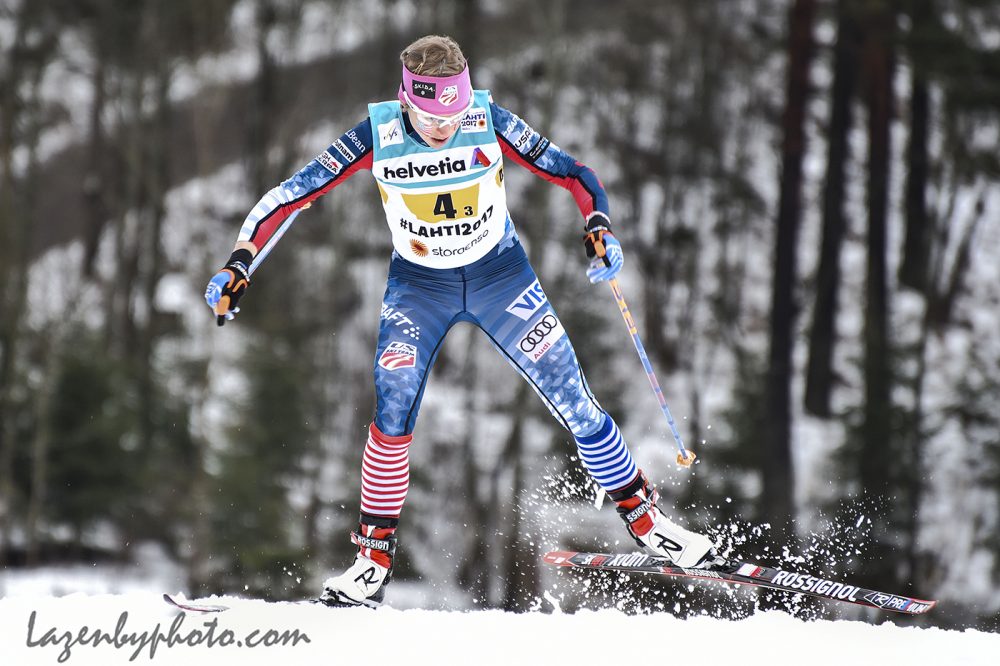
    Liz Stephen racing the third leg for the U.S. women’s team in the 4 x 5 k relay at the 2017 Nordic World Championships in Lahti, Finland. (Photo: John Lazenby/Lazenbyphoto.com)

    There is no faking a smile.

    As a visual social-media feed, Instagram places a premium on how we’d like to be perceived by the viewing world. Instagram’s editing tools come with an assortment of beautifying filters.

    But smiles? Fake smiles are filter-proof.

    Although not a habitual Instagram poster, scroll through U.S. Ski Team (USST) athlete Liz Stephen’s account, @lizhillstephen — it’s hard not to notice her genuine grin and the smiles of those around her. Those smiles are for real.

    https://www.instagram.com/p/BYPpoDABfxU/?hl=en&taken-by=lizhillstephen

    There are other moments for Stephen when the disappointment is palpable. For instance, Stephen began the 30-kilometer freestyle at 2017 World Championships wearing bib 13. At 15 k, Stephen was less than a minute back from eventual winner, Norway’s Marit Bjørgen. By 25 k the gap to Bjørgen bumped to almost two minutes. Crossing the finish, Stephen was 3:09.4 minutes behind the Norwegian, good enough for 25th.  

    With her USST overcoat draped over her 5-foot-2 frame and it’s hood shrouding her face, it was clear there’d be no post-race comment. In her strongest technique, on a hill-climbing course in Lahti, Finland, the race and result were not what she’d hoped for.

    Stephen is already a two-time Olympian (2010, 2014) and she’s gunning for a third in PyeongChang, South Korea. By the time those Games transpire, the up-tempo Park City, Utah, resident will be 31 years old.

    Today at 30, Stephen still chases those smiles.

    “Last year I just wanted to be a person,” Stephen said on the phone from Park City on Sept. 8. “Because that seemed to be what I needed to do in order to get happy. But it also kept me at altitude, at home in Park City. And it kind of kept me in the same stale spot for the whole summer.”

    This dryland cycle, the Vermont native took note and modified her summer training plans — trying to maximize the benefits of training at altitude with low-elevation oxygen baths.

    “This year I have been to Bend, I have been to Sweden, and I skipped New Zealand,” Stephen explained. “Kind of for those reasons, just because New Zealand is at altitude. I live at altitude, so I wanted all my camps to be as much as possible at sea level.”

    Stephen spent time this summer training in relatively low Norway and Sweden. While in Sweden, accompanied by USST teammate Kikkan Randall, Stephen trained with the Swedish national women’s team. The Sweden camp proved a solid low-altitude respite.

    “When I looked at the schedule, going to Sweden was a good fit,” Stephen said. “I’d always loved it there. I think I should probably have been a Swede. And I wanted to be inspired by them, which I was. I got my ass totally kicked in Sweden, in a good way, and in Norway. And, you know, I think it’s good to get your ass kicked sometimes, especially when it is mid-summer and you can come home and make some changes, which I have done. I came home [to Park City] and am psyched to be training, psyched to be a skier.”

    When asked what those changes were, Stephen was clear and forthright in her response.

    “We did kind of an interesting workout in Sweden that I actually just did this morning on the Erg,” Stephen said. “The idea is lactate production. That’s been something that I have struggled with over the last few years I think especially, and I think that this might be part physiological, just the type of athlete that I am, but also living at altitude has made me a little bit slower I guess in a lot of aspects. So in this workout, the idea is to produce as much lactate as possible. There is no pacing. You just go all out for 40 seconds on and 50 off. You do a bunch of rounds of this.

    “I think for me, where I lose a lot in races is the ability to change speed,” she continued. “I can go forever, but races aren’t forever, they are only as long as they are. So you have to be able, especially with more mass-start races, you have to be able to stay with the pack and stay with the moves. And maybe sometimes make your own moves and that is where I think this workout could really benefit me.”

    Liz Stephen (front, yellow jacket) training with Sweden’s national team and U.S. teammate Kikkan Randall (back row, third from left) in Sweden this summer. (Photo: Instagram/@lizhillstephen)

    A few days after our interview, Stephen left Park City and flew back to her parents’ home in Vermont. There she planned to conduct an informal sea-level training camp with a schedule dense with hard interval training. Stephen returned to Park City at the end of September to take part in the USST training camp. And last Saturday, she ran the Red Bull 400 (a 400-meter near-vertical sprint to the top of a ski jump) in Park City for the third straight year, where she placed second behind Utah native Megan Foley.

    https://www.instagram.com/p/BZrvX8_n216/?hl=en&taken-by=lizhillstephen

    In early September, Stephen said she felt good. But she’s quick to reflect that a professional endurance athlete’s life offers many opportunities to dwell.

    “Definitely there are ups and downs, there always are,” she said. “I guess I should put it this way, as athletes we think in the moment all the time. We are supposed to be the best we can be every session. We are supposed to be doing the best we can. We are 24-hour athletes. Everything is so in the moment that it is really hard. We also take the negative parts of that too. You have a bad workout and all of a sudden, even if the day before was great, you live in the moment of the bad workout. So I think that’s always a challenge. I think for me, recognizing that is what is happening, and that the workout that you just completed that was really bad really doesn’t mean you are in terrible shape or that you are not a great athlete, it’s just where you’re at that day. I think there are always going to be ups and downs, and the trajectory of this year has been more positive than a couple years ago.”

    Stephen said she remains undecided if she’ll continue her ski career after the 2017/2018 season. Her focus remains laser-like: be the best she can be mid-February in PyeongChang.

    The 2018 Olympic cross-country race schedule offers several opportunities for Stephen. There’s the 10 k freestyle, the 15 k skiathlon and the 30 k classic mass start.

    But five klicks remains the magic distance.

    Stephen cannot deny that a potential skate leg start on the 4 x 5 k women’s relay team and helping her team win a medal remains a steadfast goal. With a plan in mind and quality training hours ticked off, does she internally think “5 k skate”?

    “Yeah. Absolutely I do,” she said. “And I have said this to my psychologist a few times and others. That I, of course, for me, I am focused on that race in particular and I have been for years.”

    Liz Stephen at work during the U.S. Ski Team women’s team’s camp in the Methow Valley in late June/early July. (Photo: Matt Whitcomb)

    With a strong USST women’s team and several domestic skiers striving to break through internationally, the USST coaches responsible for determining the relay squad may have a tough task culling the team down to four. A few years back, Stephen understood her inclusion on a 4 x 5 k relay team was almost automatic. Now her focus on that race is qualified.

    “We have changed a little bit,” she said. “Specifically the psychological plan, just focused on that 5 k effort and that day and that race. But, but I also want it to be very clear that I want the team to medal. Not for myself. Even if I wasn’t on the team that day, that’s what I love about the relays — it’s not about one person. It’s about four. And whether I am one of those four people who have the best chance of winning that medal or skiing the fastest, I am not focused on that. I am focused on being the best I can be that day and hopefully that is good enough to be on that team.

    “It is really kind of like a practice for your brain, I think, to decide what is most important to you and what you are going to go for,” she added. “And I think that it’s scary to put it out there. Yeah, I want to be on that team, but you know what? A lot of people that want to be on that team, and there are a lot of people that could be on that team. So yeah, I think it’s fun to have pressure like that and to have a goal, but it is certainly not something that I am banking on. Things can change in a heartbeat.”

    Those types of changes are random — a stumble on a trail run, an errant pole plant while rollerskiing, a tumble on an icy World Cup course. This season Stephen decided to make a calculated change and switch to Madshus, a Norwegian-based company, for her skis.

    “You know it’s a been a little bit tough this summer because I did have to leave Rossignol who I have been with for 15 years and they have been very good to me,” she said. “I am loyal. I am a loyal person. I felt like I needed to make a decision to change because I felt like after doing some testing, I felt like I needed to try a new ski.”

    As the primary interface between skier and snow, nordic skiers can be obsessed with ski choice. On the World Cup, it’s not unheard of for skiers to travel with 40 pairs of skis. Just the sheer number of skis an athlete carries during the season begs the question of how Stephen will build a new ski quiver.

    She won’t be starting from scratch.  

    “Ida Sargent on the U.S. Team has Madshus as well and we are similar sizes,” Stephen said. “We almost never do the same races. So the idea of having somebody to share skis with at times, both she taking mine and me taking hers if they are better on those days, takes the edge off of needing your own perfect fleet going into a very important year on very different skis than you are used to.”

    To jumpstart her understanding of the new ski fleet, Stephen is planning a November pre-World Cup training trip with Sargent to La Forêt Montmorency in Quebec.

    Heading into the season, much remains the same for Stephen. She’ll still charge headlong up the World Cup’s stout gradients. She’ll still smile for real. But along the journey, she’ll embrace the prospect of taking big performance risks where the outcome remains uncertain. 
  • Running: National Champ Stephen’s Secret to Keeping Skiing ‘Happy and Fresh’

    Running: National Champ Stephen’s Secret to Keeping Skiing ‘Happy and Fresh’

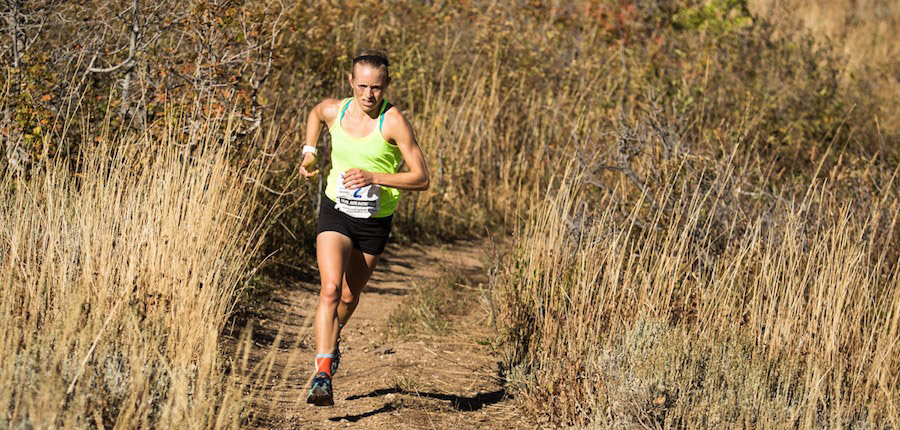
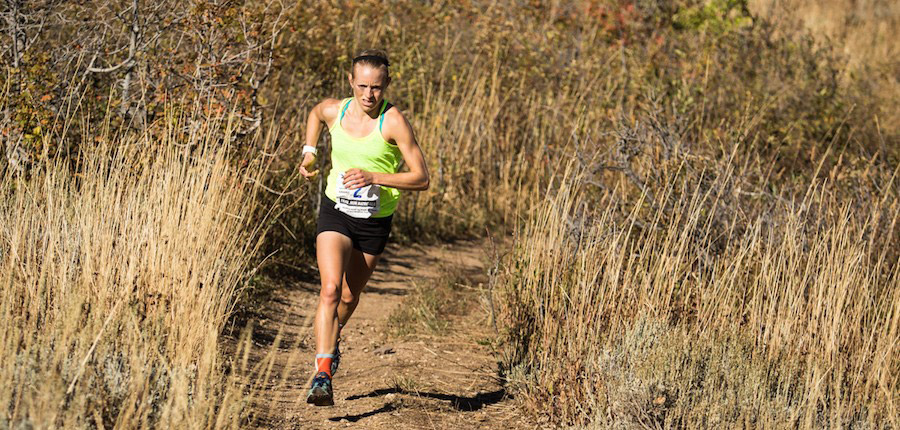
    U.S. Ski Team member Liz Stephen competes in the XTERRA Trail Run National Championship on Sept. 20 at Snowbasin Resort near Ogden, Utah. (Photo: Liz Stephen)
    U.S. Ski Team member Liz Stephen competes in the XTERRA Trail Run National Championship on Sept. 20 at Snowbasin Resort near Ogden, Utah. (Photo: Liz Stephen)

    Since wrapping up a successful camp in Norway with two top-10 results at Toppidrettsveka, U.S. Ski Team (USST) veteran Liz Stephen has been enjoying some time at home in Park City, Utah, working on her double pole and preparing for another busy winter. She skipped the weeklong USST camp in Lake Placid, N.Y., so she would not have to travel and could instead work more on some personal goals.

    “As you get older, and apparently I am doing that, [traveling] definitely begins to wear on you a little more,” Stephen, 28, said in a recent phone interview. “I want to be ready to be on the road for four months, and I needed to stay close to home for a little bit to settle before the season.”

    So stay home she did. But for Stephen, staying at home does not mean taking it easy. She, as well as several other USST athletes, left Norway wanting to improve her double-pole strength and technique. Even though double pole had already been a main focus for Stephen this summer, she learned even more improvement was necessary if she wanted to compete amongst the world’s best. So Stephen has been doing a lot of lower-core-activation exercises, both before double-pole sessions and before strength workouts. She has also been doing some shorter duration double-pole sessions where the focus is on having high-quality technique and energy rather than double poling for extended periods of time and risking a relapse to her old double-pole habits.

    However, improving her double pole has not been the only thing Stephen has been doing during her extended time at home. She has also been enjoying one of her favorite activities, running. According to Stephen, the fall weather in Utah has been gorgeous, and there is no better way to enjoy it than by going for a run.

    “I feel so lucky every time I can lace up my shoes and I am healthy enough to go run a 17-mile loop just quick in the morning. I hope I am able to do that my whole life,” she said. “When you’re running, you’re just enjoying being active and healthy and I think that keeps all the other workouts that maybe you don’t love as much in perspective because you know at least once a week, you are going to get a big run in.”

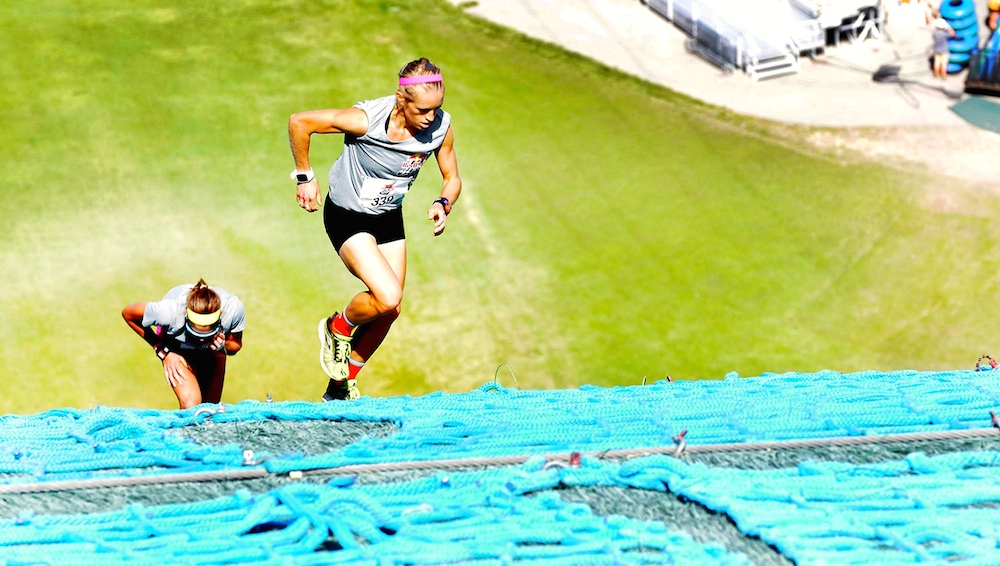
    Liz Stephen holds the lead over Austria’s Veronika Mayerhofer running up the Olympic ski jump in the Red Bull 400 hill climb at the Utah Olympic Park ski jumps. (Tom Kelly/USSA)
    Liz Stephen holds the lead over Austria’s Veronika Mayerhofer while running up the Olympic ski jump in the Red Bull 400 hill climb at the Utah Olympic Park ski jumps. (Photo: Tom Kelly/USSA)

    For the two-time Olympian, going for a run is the perfect way to clear her mind, but it also is a great workout. Stephen even uses running as a means to improve her classic technique, sometimes running with poles for a more classical-style workout and bounding up hills to improve kick power. After all, skating has traditionally been Stephen’s stronger technique, and in order to achieve her goal of being on the podium either at the end of the 2016 Tour de Ski or Ski Tour Canada, she said her classic skiing has to improve.

    “When you’re running, you’re just enjoying being active and healthy and I think that keeps all the other workouts that maybe you don’t love as much in perspective because you know at least once a week, you are going to get a big run in.” — Liz Stephen, U.S. Nordic Ski Team member and two-time defending Trail Run National champion (and the winner of the inaugural Park City Red Bull 400)

    On Sept. 20, Stephen raced in her fifth-consecutive XTERRA Trail Run National Championship, which took place at Snowbasin Resort near Ogden, Utah. The race is a half marathon (13.1 miles) that features two big hills and a final, mile-long incline to the finish.

    Right out of the start, competitors ascend a two-and-a-half mile slope that also includes the steepest section of the course. After storming back down, the racers climb roughly 1,000 feet in another two-and-a-half miles to the high point and then descend to the low point of the course. Finally, there are a few more hills before the finish.

    “I’ve gotten a little faster since they have changed the course and I think this is my fourth time on this course. It’s a great course,” Stephen said.

    For Stephen, the competition at the trail-running nationals varies. The last two years, she won handily, as no other woman came close to matching her pace. But three years ago, Lindsey Anderson, a steeplechase Olympian from Utah, battled with Stephen for the entire race before dropping her on the last half mile with a strong finishing kick. The year before that, Morgan Arritola, a former cross-country skier and current world-champion mountain runner, finished minutes ahead of Stephen. This year, Stephen’s closest competition was Alayna Szucha, an 11-year-old girl from Evergreen, Colo. Szucha finished 17 minutes behind Stephen with a time of 1:45:32, averaging 8:03 minute/miles. Stephen won in 1:28:39 with 6:46 as her average mile pace.

    “I actually didn’t run with a single person the entire 13 miles so it felt a bit lonely at times, but I have to say, the most inspiring and just crazy thing is that the second-place girl is 11 years old. It was her first half marathon,” Stephen said. “I got a chance to chat with her for a little bit after the race, just like a fired up little kid … It’s going to be fun to have a little penpalship with her and maybe send her some cross-country gear, see if we can give her the bug.”

    While Stephen did accomplish one goal at nationals — winning — she did not accomplish her other goal of beating her previous year’s time. Despite having perfect weather this year compared to last year’s windy and rainy race day, Stephen could not quite match her pace from 2014.

    “Being a little slower than the year before was a bit of a bummer, but at the same time it was like 40 seconds slower or something, which, in a 13-mile race, isn’t too much when you take a step back. I was happy with it and I just had fun,” Stephen explained.

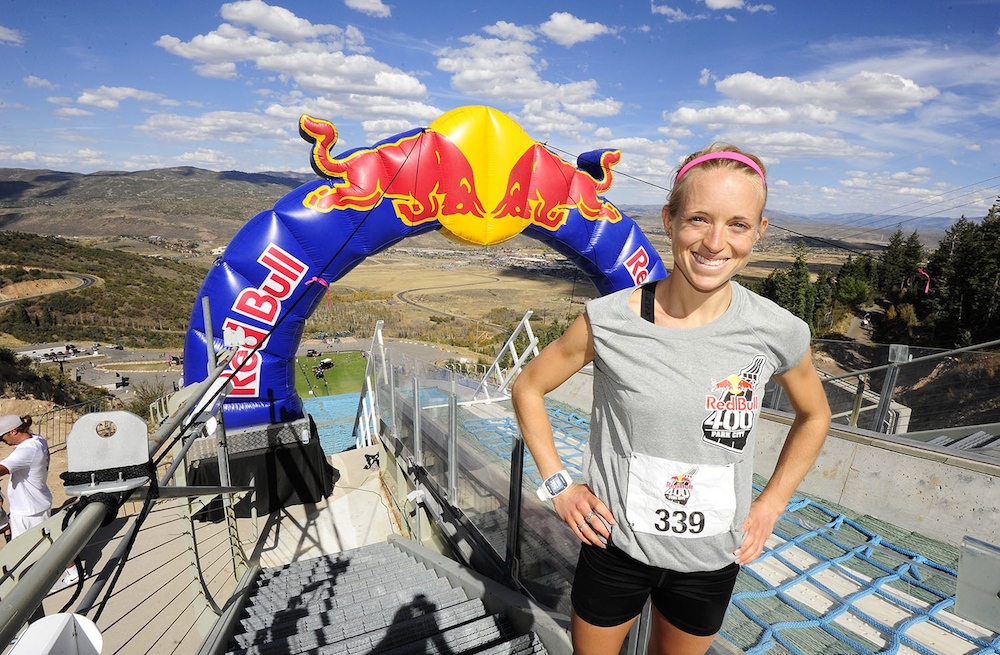
    Liz Stephen celebrates her win in the Red Bull 400 hill climb up the Olympic ski jump at the Utah Olympic Park. It was the first time the Red Bull 400 has been held in America. (Tom Kelly/USSA)
    Liz Stephen celebrates her win in the Red Bull 400 hill climb up the Olympic ski jump at the Utah Olympic Park. It was the first time the Red Bull 400 has been held in the U.S. (Photo: Tom Kelly/USSA)

    However, the Trail Run Championship was not enough for Stephen. On top of nationals, she did the Beach to Beacon 10-kilometer race in Maine earlier this summer, where she finished as the seventh woman, and the USA’s inaugural Red Bull 400 in Park City last weekend.

    In the Red Bull 400, contestants charge up the large-hill (HS134) ski jump landing, onto a ramp that goes up to the jump takeoff, and then up the stairs to the top of the in-run. Organizers even placed cargo netting across the incline so competitors could more effectively crawl up the extremely steep sections of the jump. Five hundred racers came out, ready to test their limits.

    After winning the qualifier, Stephen managed to hold off the University of Utah’s Veronika Mayerhofer, an NCAA champion from Austria, in the final to win the event.

    “I tried to stay out of the nets as much as I could; I didn’t want to trip and you don’t have as much control over your limbs as usual,” Stephen said. “I tried to stay out and use it where I needed to. Most of it was a hike with your hands and legs.”

    Meanwhile, on the men’s side, U.S. nordic-combined Olympians Bryan Fletcher and Billy Demong placed in the top 10, with Fletcher in fifth and Demong in ninth, and cross-country ski Olympian Torin Koos finished seventh.

    For Stephen, all of these events both contribute to her fitness and her love for running. After all, summer — and early fall — are the perfect times to take advantage of her desire to run competitively.

    “Running has a really special place in my heart because I grew up doing it and it’s so pure,” Stephen noted. “I really love the sport of running so to be able to compete and get my competitive fix and racing in during the summer by running is really perfect for me.

    “All you need is a pair of shoes and a pair of shorts and you’re out the door. And I think that being able to use [running] so much for training keeps [cross-country skiing] really happy and fresh for me.”