

From the FasterSkier archive — posts syndicated from athletes’ and coaches’ own blogs between 2004 and 2012, kept online as published. Current coverage is at fasterskier.com.

Tag: Red Group

  • Six U.S. Women Make Year-End Red Groups, a Record High

    Six U.S. Women Make Year-End Red Groups, a Record High

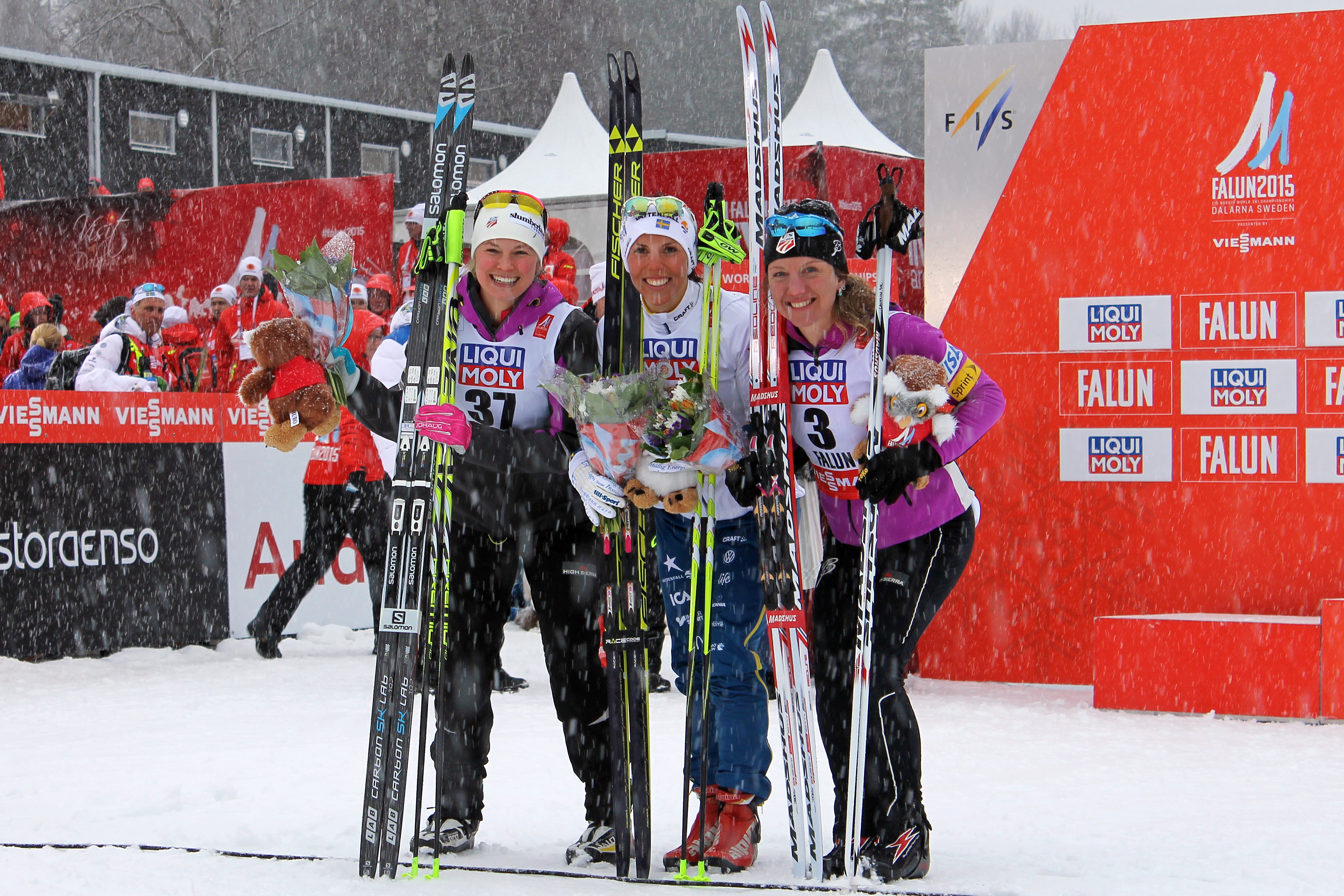
    Six different U.S. women, including Jessie Diggins (l), ended the season ranked in the top 30 of the World Cup standings for either sprinting, distance skiing, or in some cases both, which is a record number. Caitlin Gregg (r) didn't get in the Red Group, but she did get a World Championships bronze medal. As a team, the U.S. women ranked sixth in the 2014-2015 season.
    Six different U.S. women, including Jessie Diggins (l), ended the season ranked in the top 30 of the World Cup standings for either sprinting, distance skiing, or in some cases both, which is a record number. Caitlin Gregg (r) didn’t, but she did win a World Championships bronze medal. As a team, the U.S. women ranked sixth in the 2014-2015 season.

    Nine North American cross country skiers have finished the season ranked in the top 30 overall of the FIS World Cup for either distance or sprint racing.

    Combined with points from World Championships, which are not counted in overall World Cup rankings, that equates to all nine making the “Red Group”, a FIS designation meaning that their travel and living costs will be paid for by organizing committees of each World Cup weekend, at least for the first period of World Cup racing. The Red Group is calculated at the end of each of four periods of competition throughout the year, so skiers can move into and out of the costs-covered group over the course of the season.

    Top 30 rankings at the end of the season, though, carry more prestige, and are additionally useful for sponsorship and team namings.

    Meanwhile, the number of skiers scoring World Cup points is used to calculate the number of quota spots available for a country in the next World Cup season. 11 Americans and 7 Canadians scored World Cup points for their top-30 finishes in individual races this season.

    Overall World Cup rankings for men and women are posted on the FIS website.

    Women’s Field

    Among the Americans, Liz Stephen was the top-ranked overall, landing seventh in the World Cup distance rankings, fifth in the Red Group rankings, and tenth in the World Cup total score. But more teammates than ever followed her into the Red Groups: Jessie Diggins and Sadie Bjornsen ended up 22nd and 23rd in the World Cup, and inside the top-30 Red Group calculations in both distance and sprints; Kikkan Randall ranked 17th in the Sprint Cup and the sprint Red Group, although mid-season she fell out of the distance Red Group for the first time in several years; and Sophie Caldwell and Ida Sargent ranked 20th and 26th in the Sprint Cup, equating to 18th and 29th in the Red Group when World Championships results were included.

    That’s one more woman than has ever earned year-ending Red Group status for the U.S., which has seen a steady climb in its women’s team rankings. At the end of the 2014 season, there were five in the red group, and at the end of the 2013 season just four.

    Two more American women scored World Cup points: Rosie Brennan ended the season ranked 87th overall and Caitlin Gregg ranked 99th. Both were well outside the Red Group cutoff. But thanks to their points, which were all scored in distance races, the U.S. will be able to start five women in distance competitions next season. They will only have four spots in sprints, a decline from previous years. At the end of the 2014 season, seven U.S. women had scored points (including Holly Brooks, who did not compete on the World Cup this year), and each of them scored in both disciplines, netting five spots each – plus Kikkan Randall won the overall Sprint Cup title and was thus guaranteed an extra starting spot in addition to the Americans’ quotas in sprint races. This season, Marit Bjørgen of Norway won the Sprint Cup.

    As a team, the U.S. women finished sixth in the Nations Cup standings, two spots down from their fourth-place finish in 2014 and scoring 1,573 points to the 2,421 scored in 2014. Although more different women scored points, two factors changed this season: the Norwegian women were even more dominant, taking home almost 1,500 more Nations Cup points than they had in 2014 and leaving fewer for the other teams; and Kikkan Randall scored 156 points this season compared to 841 in 2014.

    For Canada, Emily Nishikawa and Perianne Jones both scored World Cup points, but were not close to making the Red Groups. With Nishikawa scoring in distance and Jones in sprint, the Canadian women will get three starters in each discipline next season.

    Men’s Field

    Alex Harvey led the way for North American men, finishing ranked ninth in distance racing, 13th in sprinting, and ninth overall on the World Cup.

    He was the only Canadian to make a red group; Lenny Valjas finished the season just outside, placing 33rd in the sprint standings. Valjas was 74th in the overall World Cup, slightly behind Ivan Babikov, who ended up 69th. Devon Kershaw and Jesse Cockney also scored a few points for Canada.

    It’s a slight drop for Canada: last season Harvey finished third in the overall World Cup standings, while in 2012 Kershaw finished second and Harvey sixth. In Nations Cup standings, the team fell from seventh to eighth. They will still be able to start four men in both distance and sprint competitions next season, however.

    Andy Newell led the U.S. men’s team, ending the season ranked 18th in the Sprint Cup and 53rd overall on the circuit. Teammate Simi Hamilton also snuck inside the Red Group sprint rankings, ending up 26th in the World Cup and 20th in the Red Group. Hamilton also scored a few distance points, which added up to 63rd overall on the World Cup. The only other American man to score points was Erik Bjornsen, who is ranked 132nd overall. The U.S. men will be able to start three men in both distance and sprint racing next season.

    The team climbed from 12th to 11th in the Nations Cup standings, despite no points scored this year by Noah Hoffman, the team’s strongest distance skier in the past few seasons who broke a bone in his leg and had to sit out much of the 2014/2015 campaign.

  • Six Canadians and Five Americans Make Season-Ending Red Group

    Six Canadians and Five Americans Make Season-Ending Red Group

    Red Group Period IV

    With the conclusion of the 2012-2013 World Cup season and of competition Period IV in Falun, Sweden, FIS released the world ranking lists in sprint and distance disciplines from which the new Red Group is determined.

    A top-30 spot on either the sprint or distance list gets athletes a spot in this elite set of skiers whose travel, lodging and living expenses are paid for, within the sprint or distance discipline, through the next competition period, until the rankings are recalculated.

    Out of all the rankings released periodically throughout the winter, a spot in the Red Group after Period IV most truly represents performance consistency within a single season. Rankings are tabulated from World Cup points from the previous calendar year, which means that lists released after Period I, II and III include results from the previous season. Period IV, however, only represents races from the last five months, and in contrast to the straight World Cup rankings include points from World Championships.

    This can turn out to be good news for athletes who sat outside the bubble at the end of Period III, and bad news for those who were previously inside it. Moving in or out of the top-30 from one period to the next comes down to relativity — whether an athlete performs better within a period than they did in the same time frame the previous season. New results at the same venues supplant the old ones with the release of each list.

    American Holly Brooks, for example, was outside the top-30 cutoff at the end of Period III in the distance rankings, when she was 41st. With a few of her best results of the season in Falun this past weekend, however, she moved up to 29th and will have her expenses covered at the beginning of next year for distance World Cups.

    Her teammate Jessie Diggins, by contrast, moved from 30th in the distance list at the end of Period III to 35th for Period IV, just outside the Red Group cutoff. Diggins ended this season with a strong eighth in the Falun prologue, but it didn’t quite match the results she posted last season in the same period and she consequently moved down the list.

    Outside the bubble skiers, there were few changes amongst those who made the Red Group on the American and Canadian teams between this period and the last. In the sprint rankings, Kikkan Randall led the way at the top of the women’s list and Ida Sargent joined her in the top-30 in 23rd.

    Canada’s Dasha Gaiazova and Perianne Jones both remained in the money in 17th and 30th, respectively.

    Andy Newell finished the season comfortably in the Red Group with a seventh-place sprint ranking and is the lone American in the top 30.

    Canada’s Lenny Valjas finished the year only a few points behind him in eighth, and Alex Harvey and Devon Kershaw also squeaked into cutoff in 21st and 23rd.

    Randall also finished the season with a high ranking in the distance list, in tenth, to lead two additional Americans in the top 30: Liz Stephen was 14th and Brooks just made the cutoff in a points tie with Italy’s Virginia De Martin Topranin in 29th.

    No American men made the distance Red Group; Noah Hoffman was 42 points away in 35th.

    Ivan Babikov and Harvey each made it in for the Canadians, Babikov in 18th and Harvey in 23rd. Kershaw and Valjas were outside in 43rd and 44th.

    In all, five Americans (four women, one man) and six Canadians (two women, four men) are in the Red Group for the start of the 2013-2014 season. For athletes on the U.S. Ski Team the distinction is an important one; Hoffman told FasterSkier he was informed at the beginning of the season that Red Group would be sufficient for A-Team nomination for the following year.


    North Americans on the World Ranking Lists, Period IV:

    Distance Men

    18. Ivan Babikov (CAN)

    23. Alex Harvey (CAN)

    35. Noah Hoffman (USA)

    43. Devon Kershaw (CAN)

    44. Lenny Valjas (CAN)

    52. Kris Freeman (USA)

    72. Andy Newell (USA)

    81. Graham Nishikawa (CAN)

    97. Torin Koos (USA)

    102. Tad Elliott (USA)


    Distance Women

    10. Kikkan Randall (USA)

    14. Liz Stephen (USA)

    29. Holly Brooks (USA)

    35. Jessie Diggins (USA)

    51. Ida Sargent (USA)

    58. Sadie Bjornsen (USA)

    87. Dasha Gaiazova (CAN)

    Sprint Men:

    7. Andy Newell (USA)

    8. Lenny Valjas (CAN)

    21. Alex Harvey (CAN)

    23. Devon Kershaw (CAN)

    50. Simi Hamilton (USA)

    59. Jesse Cockney (CAN)

    70. Torin Koos (USA)

    73. Phil Widmer (CAN)

    95. Skyler Davis (USA)


    Sprint Women:

    1. Kikkan Randall (USA)

    17. Dasha Gaiazova (CAN)

    23. Ida Sargent (USA)

    30. Perianne Jones (CAN)

    39. Sadie Bjornsen (USA)

    43. Chandra Crawford (CAN)

    44. Holly Brooks (USA)

    45. Jessie Diggins (USA)

    47. Sophie Caldwell (USA)

    70. Becca Rorabaugh (USA)

  • Stephen Cracks Red Group, One of Nine North Americans in Period III

    With the conclusion of the second World Cup period following last weekend’s races in Oteppa, Estonia, the International Ski Federation (FIS) has released updated Red Group rankings.

    The Red Group consists of the top-30 skiers from the past calendar year, ranked by World Cup points in both sprint and distance.

    Inclusion in the Red Group provides significant financial benefit for teams, as travel and lodging expenses for Red Group skiers are covered by World Cup organizing committees.

    All told nine North American skiers, six Canadians and three Americans, achieved Red Group status entering Period III. The only change is American Liz Stephen, who is ranked 27th on the strength of of an impressive result in the Tour de Ski Final Climb. World Cup points were awarded for the time of the day in that event, and Stephen was 8th in the trek to the top of the Alpe Cermis, garnering 30 points for her effort.

    “The Red Group has been a goal for Liz this season, but of course it is more a result of many smaller goals being accomplished,” US Ski Team (USST) Women’s Coach Matt Whitcomb wrote to FasterSkier in an email.

    In addition to the strong day in the Tour de Ski finale, Whitcomb pointed to the fact that Stephen cracked the top-30 in a World Cup classic race for the first time this season, a feat she then replicated two more times.

    “Top-30’s in classic were a big focus in her preparation this year,” Whitcomb wrote.

    The biggest names in North American ski racing easily held their positions. Kikkan Randall (USA) is the top ranked sprinter, and is also 12th in the distance rankings. Canadians Alex Harvey and Devon Kershaw join Randall in both the sprint and distance rankings, a definite plus.

    On sprint-only weekends (like Milan or Dusseldorf) only the sprint Red Group has expenses covered with the inverse true for distance weekends.

    Liz Stephen (USA) 37th place in the skate prologue at the Tour de Ski.

    Perhaps more importantly, as distance-only, and sprint-only events are the exception, only three nights of lodging are covered in a mixed weekend for skiers on just one list, while Red Group athletes in both sprint and distance get a full four.

    According to Whitcomb, the current rate is 125 Swiss Francs (CHF) per night—$136 at current exchange rates. This is in addition to the 750CHF ($816) in travel money for the week.

    On the Canadian side, Chandra Crawford, Dasha Gaiazova, and Len Valjas all remained in the sprint Red Group and Ivan Babikov still joins Harvey and Kershaw on the distance side.

    For the Americans, Andy Newell remains the only man to make either Red Group, solidly within the top-30 on the sprint side.

    Since the Red Group consists of results from a full year, 2011 Period III and IV are included. With the the release of each new list, a period from the previous year is dropped. This can create significant turnover at the bottom third of the Red Group, and the pressure to consistently crack the top-30 is high.

    Gaiazova, for example, will lose two 20th place finishes next period, for a total of 22 points. She will need similar results in the upcoming weeks to hold on to her 25th spot.

    Of course other skiers are also losing and gaining points, so it is impossible to determine exactly what an athlete needs to do to hold Red Group status.

    The surest bet is to crack the top-10. With World Cup points heavily weighted toward the top, a single high result can be worth half a dozen finishes in the high 20’s.

    There are several North Americans who are in position to move into the top-30 with continued strong racing. Perianne Jones (CAN) is 41st on the women’s sprint list, and Simi Hamilton (USA) is 45th in the men’s sprint field, despite an illness plagued early season.

    And while she has only just joined the World Cup, Jessie Diggins (USA) has cracked the top-20 in both a sprint and a distance race. It would not be out of the question to see her climb to the top-30 by the end of the season.

    The closest, however, is Holly Brooks (USA), who likely would have made the grade had she not broken her wrist over Christmas.

    Brooks competed in the Tour de Ski, and even picked up a few points, but was nowhere near the level she showed earlier in the season.

    She has not raced since the Tour, but is still ranked 36th on the women’s distance list, 22 points out.

    Brooks, however, will be hurt by the fact that she will lose three points races from World Championships last year when the next list is released after Period III.

    Kris Freeman (USA), an on-again, off-again Red Group member, has fallen down the rankings with a rough 2012 campaign. Freeman has not managed to place in the top-20 this season, and is currently 55th, 106 points out.

    Complete Red Group Rankings


  • For North Americans, First Period of World Cup Creates Short-Term Changes in Red Group, Long Term Changes in Quotas

    The Canadian men pushing the pace in Rogla, Slovenia. Photo: Fischer/NordicFocus

    Lenny Valjas and Ivan Babikov are in, Kris Freeman is out, and the U.S. is looking forward to more quota spots for its women’s team next year

    During the first period of World Cup racing, the U.S. and Canadian ski teams had plenty of notable results.

    Kikkan Randall won and won again, much to the delight of the Americans. She and Sadie Bjornsen shared a team sprint podium, while Holly Brooks notched a couple of top-twenties, Simi Hamilton made the top ten, and Andy Newell found his distance legs. Rookies Tad Elliott and Ida Sargent scored their first World Cup points.

    For Canada, Chandra Crawford returned to the sprint podium, while Devon Kershaw and Lenny Valjas also appeared in finals. Alex Harvey placed fifth in the very first race of the season, Ivan Babikov collected his sixth top-ten in straight-up World Cup racing, and Dasha Gaiazova her second.

    Randall after her second win of the season. Photo: Fischer/Nordic Focus.

    All of this activity led to changes when the Period II Red Group was announced last week. For the North Americans, the biggest news was that Randall sat atop the Sprint Cup rankings. The speedy Alaskan holds a 108-point lead over Maiken Caspersen Falla of Norway.

    But while Randall’s ranking is both a literal and symbolic victory, her actual presence on the list doesn’t change much – Randall was a member of both the distance and sprint Red Groups, which include the top 30 racers by World Cup points in each discipline, by the end of last season.

    Instead, the major winners in the new rankings include Valjas, who joined the sprint Red Group for the first time, and Babikov, who has been in and out of the rankings but last appeared on the list in the third period of 2011.

    After their top-ten performances, Babikov moved up to 23rd place on the distance list while Valjas clocked in at 29th  among sprinters, sandwiched between Anssi Pentsinen of Finland and Daniel Rickardsson of Sweden.

    “Having Lenny in the Red Group was a goal we had,” Justin Wadsworth, head coach of the Canadian national team, told FasterSkier.

    What’s the benefit of being in the Red Group? Besides the satisfaction of a high ranking, the International Ski Federation (FIS) requires race organizers to pay the lodging and travel costs for all Red Group skiers, as well as the Continental Cup leaders.

    For Canada, free rides for Valjas and Babikov won’t make much of a difference, according to Wadsworth.

    Kershaw, Harvey, and Babikov in Rogla.

    “Of course it helps our budget, but not to the point where we will change anything based on it,” he said.

    Red Group rankings are recalculated at the end of each period of racing and include World Cup points accrued in the previous four periods. So while Valjas had scored World Cup points on two occasions last year – in Drammen, Norway, and then at World Championships in nearby Oslo – they weren’t enough to compete with a year’s worth of points from his rivals.

    At this point, Valjas has only collected points from two of the possible four periods, so if he continues to appear in sprint finals as the season continues, his ranking will almost certainly improve. His competitors will lose old points and gain some new ones, but Valjas won’t see any points erased.

    For Canada, Valjas and Babikov become the fifth and sixth members of the team to have his expenses covered by FIS. Crawford and Gaiazova appear on the sprint list, while Harvey and Kershaw are ranked in both distance and sprinting. Those four have been in the Red Group since before the beginning of this season.

    “We have now three distance men, three sprint men, and two sprint ladies in the Red Group, so it’s very good for our program,” Wadsworth said.

    The Americans faced an opposite revelation when the new rankings were published.

    Freeman en route to 55th place in the World Cup opener in Sjusjøen, Norway. Photo: Fischer/NordicFocus.

    Kris Freeman slipped out of the top 30 in the distance rankings for the first time since 2011 World Championships. Like Babikov, he has bounced on and off the list for several years. Most recently, Freeman had been ranked 29th for several periods. He fell behind after scoring only seven points so far this season.

    The pair’s fortunes can be explained by the fact that the scoring system is top-heavy – after a race, first place nets 100 points, second 80, third 60, and tenth only 26. By the time the list reaches the 20s, 21st place only receives ten points and 30th a single one.

    As a result, a single very strong result like Babikov’s seventh-place finish in Davos does more for an athlete’s Red Group ranking than consistently finishing in the twenties or even the teens. If Freeman pops a top-ten – as he has done several times in the past – he will likely rejoin the top 30, even if he doesn’t score any other World Cup points.

    With Freeman’s departure from the list, only Andy Newell, who is ranked 14th on the sprint list, accompanies Randall on the FIS dole.

    U.S. Ski Team Head Coach Chris Grover did not comment on what that might mean for the notoriously small team budget when reached by FasterSkier over e-mail.

    But even though only two Americans appear in the Red Group rankings, there were encouraging signs on the new lists. Brooks is ranked 35th on the distance list, just 14 points behind 30th-place Alija Iksanova of Russia, and Stephen is seven points behind her in 37th.

    Like Valjas of Canada, neither woman has any points from the second period of 2011, meaning that if they can continue to accrue points during the next period of 2012, they will be replacing a “zero” with something positive in the next set of rankings. That almost guarantees a climb up the list.

    And that’s not all. At the end of every year, a nation’s total World Cup quota is recalculated based on how many different skiers have finished in the top thirty. For each gender within a discipline, a nation receives start rights for each athlete who had scored points at least once in regular World Cup racing, plus one more spot.

    For instance, for the U.S., Randall, Stephen and Morgan Arritola scored distance points during 2011, so the American women receive four starting spots in distance races in 2012.

    After a single period of racing this season, the U.S. has had three scorers in both women’s disciplines and in men’s distance skiing; two American men have scored points in sprints. With most of the season still to come, it seems likely that more athletes can notch top-thirty finishes and expand the U.S. quotas for next season.

    “Only two so far in the men’s sprint, but hopefully a Continental Cup winner like Mike [Sinnott] can get in there,” Grover, the head coach, told FasterSkier. “Last year Kris took points in the Tour, which got our quota up to 4.”

    Grover was particularly optimistic about the women’s sprinters.

    “I am expecting that Sadie and Jessie [Diggins] might even help to get our sprint quota up to 5 for next year,” he said.

    Another bonus? The overall World Cup leaders from the previous year, as well as the Distance and Sprint Cup leaders, get automatic start rights regardless of quota numbers. So if Randall hangs onto her lead in the Sprint Cup, she could compete without even using one of the five potential starting positions.

    For Canada, the women’s sprint team has already expanded its quota. They currently receive three spots, but with all three of the starters already making sprint heats, their number will bump up to four in 2012.

  • Period IV Red Group Rankings – Freeman Back on Distance List

    The end of the 2011 World Championships also marks the close of World Cup period III and as usual, a new Red Group ranking list is released.

    The Red Group consists of the top-30 men and women in sprint and distance, ranked by World Cup points from the last calendar year. Red Group skiers have travel and lodging covered by World Cup organizing committees, saving significant funds.

    Kikkan Randall (USA) has been a mainstay on the sprint list of late, but she also made it into the top-30 on the distance rankings following period II, and has held onto that spot. This would only help for a distance-only World Cup weekend, of which there are none until next fall, but with a solid performance in the World Cup finals, she could maintain her ranking heading into the 2012 season.

    Randall is ranked 27th, with 130 points, 21 points clear of 31st. She has continued to take steps forward as a distance skier, and scored World Cup points (top-30 result) in 12 events this season.

    While championship events – the Olympic Games and World Championships – are not scored to World Cup ranking lists, races from those events do count toward the Red Group standings. Randall picked up 13 points for her finish in the 30km freestyle on Saturday.

    Freeman.

    On the men’s side, Kris Freeman got back into the Red Group with consistent season in which he scored points in eleven different races. Freeman is ranked 29th, 22 points ahead of Germany’s Tom Reichelt.

    Like Randall, Freeman has a good shot at holding his spot if he can turn in some solid performances as the World Cup winds down. There are quite a few men within striking distance of the top-30, however, so nothing is guaranteed.

    Canadians Devon Kersahw and Alex Harvey both are well within the cut-off, and with both men skiing well, should have no problem maintaining their rankings.

    No other US or Canadian skiers made the distance lists, with Ivan Babikov (CAN) the next closest in 39th, 53 points out.

    On the sprint side, Randall was a lock, ranked third overall. Dasha Gaiazova (CAN) clung to her spot in the top-30, tying with Krista Lahteenmaki (FIN) for the final place.

    Chandra Crawford (CAN) is currently 39th, and would need a surprisingly good finish in the Lahti classic sprint this weekend to move up, and qualify for the World Cup Finals.

    For the men, Harvey and Kershaw are ranked 15th and 21st respectively, while Andy Newell leads all North Americans in 8th.

    Len Valjas is 40th, but just 24 points out of 30th. He placed 9th in the Drammen skate sprint prior to World Championships, so it isn’t out of the question that he could move up during the last period.

    He will be at a disadvantage as, barring an unexpected result (read win), Valjas will not be eligible for the World Cup finals, and therefore will not be able to race the Stockholm city sprint.

    Complete Red Group lists

  • US and Canada Four Each in Red Group

    With the end of the first World Cup period comes updated “Red Group” lists from FIS.  The Red Group consists of the top-30 men and women in both distance and sprint.  Ranking is based on World Cup points and includes races from the previous twelve months.

    Racers in the Red Group have travel and lodging expenses covered by World Cup event organizers, so this is a big deal for National Governing Bodies.

    The Red Group IN NO WAY IMPACTS SEEDING.  The seeded group in World Cup races is often referred to as the Red Group, but is actually completely different.  The seeded group for any race is determined by the CURRENT World Rankings, based on World Cup points.  These rankings only include races from the current season.

    The US and Canada each have four skiers in the Red Group.

    US Red Group Skiers

    Andy Newell 11th (sprint)

    Torin Koos 28th (sprint)

    Kris Freeman 27th (distance)

    Kikkan Randall 12th (sprint)

    Canadian Red Group Skiers

    Sara Renner 19th (distance)

    Devon Kershaw 22nd (distance)

    Alex Harvey 19th (distance)

    Chandra Crawford 29th (sprint)

    In addition, Ivan Babikov is just out of the top-30 on the distance list, currently ranked 33rd, 19 points behind 30th.

    Crawford is included despite the fact that she missed all of last year.  FIS rules have a provision for athletes who miss an entire season due to injury.

    Complete Red Group Lists

    The Red Group mean all expenses are covered!

  • Final World Cup Red Group Annonuced

    The Red Group consists of the top 30 distance and sprint racers in the world. It is based on World Cup points from the previous four World Cup periods. The Red Group rankings are extremely important, in that the race organizer must pay the travel and living costs (accommodation, food, etc) for every athlete in the Red Group. Expenses must also be covered for a maximum of one coach per nation and sex, if there are three or more athletes per sex in the Red Group List for that nation. Obviously, this can amount to significant savings for National programs.

    The Red Group is not used for seeding purposes. The current World Cup ranking list, updated after every World Cup event, is used to seed the top 30 competitors in every event. This is somewhat confusing as this group is often referred to as the “Red Group” during race commentary. Technically this group should be referred to as the “Seeded Group.”

    This recently released list will be used for the first period of next year’s World Cup, and features some exciting North American additions.  Torin Koos, with a storng finish to his seaon, climbed on to the men’s sprint list, and Alex Harvey joined the top 30 in men’s distance.

    It is worth noting that Red Group lists include points from the World Championships in Liberec.  The Liberec races do not count toward the World Cup standings however.

    North American Athletes in the Red Group

    Sprint Men
    13. Andy Newell USA
    27. Torin Koos (USA)

    Devon Kershaw (CAN) is the next closest North American in 39th.  Kershaw is in the distance Red Group.

    Sprint Women
    14. Kikkan Randall (USA)

    This is the second consecutive Red Group for Kikkan after falling out of the top 30 for one period.

    Sara Renner (CAN) is 45th but is in the distance Red Group.

    Finland is top top team with 6 athletes in the Red Group. Sweden has 5 and Norway  4.

    Distance Men
    19. Devon Kershaw (CAN)

    24. Alex Harvey (CAN)

    26. Ivan Babikov (CAN)

    Kris Freeman is the first US skier on the list in 40th place with 106 points, 54 points out of 30th. Had Freman not had his season cut short due to surgery, he would have had a shot to crack the top-30, especially given how he was skiing.

    Distance Women
    18. Sara Renner (CAN)

    Liz Stephen is 44th with 37 points.

    The Red Group mean all expenses are covered!

  • Distance Red Group for World Cup Period IV Announced

    With the completion of World Championships, the distance Red Group for the final World Cup period has been announced.  The Red Group consists of the top 30 men and women in distance and sprint by World Cup points.  Red Group athletes receive full travel and living expenses from race organizers.  It is not used for seeding purposes.

    Devon Kershaw and Ivan Babikov both made the distance Red Group for Canada.  Kershaw is ranked 20th with 244 points, and Babikov 25th with 179 points.  Kershaw also made the Sprint Red Group.

    No US athletes made the top-30.  Kris Freeman is the closest, ranked 40th with 106 points, 47 points out of 30th.  Because he is having season ending surgery, Kris will not have an opportunity to continue moving up the list over the final weeks of the season.

    Sara Renner (CAN) is the lone North American woman to crack the top-30.  She is ranked 17th with 269 points.

    Liz Stephen is the top US skier in 46th with 37 points.  She is 67 points out of 30th.

    The Red Group mean all expenses are covered!

  • Period IV Red Group Announced – Randall Back In

    FIS announced the Sprint Red Group for the final World Cup period of the 2008-2009 season.  The Red Group consists of the top 30 skiers in both sprint and distance as measured by total World Cup points earned over the preceeding four World Cup periods.

    Athletes that are part of the Red Group have travel and lodging expenses paid by the organizing committees, so this ranking can be very important for national programs.

    Kikkan Randall leads the North Americans in 12th position.  Randall slipped out of the top 30 for the last period, but consistent results and her silver medal performance catapulted back into the select group.

    Chandra Crawford of Canada remains in the Red Group.  She has not raced this year due to injury and has had season ending surgery.  She is currently ranked 28th.

    No other North American women are ranked in the top 30.  Sara Renner (CAN) is the next best in 46th.

    On the men’s sprint list, Andy Newell (USA) is 8th and Devon Kershaw just squeaked on by 6 points in 30th.

    Torin Koos (USA) is 38th, 30 points out of the top 30.

    The distance Red Group lists have not been released yet as the 30/50km events at World Championships will count.  Renner shuld make it on the distance list, and Kershaw will also have a good shot.

    It is imprtant to remember that the Red Group is only used for funding purposes.  It is not used for seeding.

    The Red Group mean all expenses are covered!

  • Red Group Announced for World Cup Period III

    Red Group Announced for World Cup Period III

    The Red Group consists of the top 30 distance and sprint racers in the world. It is based on World Cup points from the previous four World Cup periods. The Red Group rankings are extremely important, in that the race organizer must pay the travel and living costs (accommodation, food, etc) for every athlete in the Red Group. Expenses must also be covered for a maximum of one coach per nation and sex, if there are three or more athletes per sex in the Red Group List for that nation. Obviously, this can amount to significant savings for National programs.

    The Red Group is not used for seeding purposes. The current World Cup ranking list, updated after every World Cup event, is used to seed the top 30 competitors in every event. This is somewhat confusing as this group is often referred to as the “Red Group” during race commentary. Technically this group should be referred to as the “Seeded Group.”

    The new Red Group list includes races from February 10th 2008 through last weekend’s races in Otepaa. There is a separate Red Group for distance and sprint. A new Red Group list is compiled at the end of every World Cup period. There are four periods every winter.

    North American Athletes in the Red Group

    Sprint Men
    8. Andy Newell USA
    24. Devon Kershaw (CAN)

    Torin Koos is the next closest North American in 64th with 35 points. Nikolay Chebotko (KAZ) is 30th with 90 points.

    Norway has 11 of the men’s sprint Red Group spots, including 7 of the top 10. Andy Newell is the only non-Scandinavian in the top 10.

    Italy is the next best nation with 5 in the top 30. Sweden only has two athletes in the Red Group, but both are ranked in the top 10.

    Sprint Women
    16. Chandra Crawford (CAN)

    Kikkan Randall (USA) just missed the Red Group and is ranked 33rd with 89 points, 12 points out of 30th. 12 points is the equivalent of a 19th place finish. Kikkan has been a member of the Red Group for about a year, based mainly on her victory in Rybinsk last season.  Given how World Cup points are allocated (100 for 1st, 80 for 2nd, down to 1 for 30th), a single top performance can be enough to hold a skier solidly in the Red Group, until that result comes off the books.  With several freestyle sprints in the next period, and her improving classic sprinting, Randall has a good shot at regaining Red Group status.

    Sara Renner (CAN) is 47th with 39 points. Crawford, Canada’s top sprinter, has been out all season with an injury and has not raced.

    Finland is top top team with 5 athletes in the Red Group. Sweden and Norway both have 4.

    Distance Men
    17. Devon Kershaw (CAN)
    28. Ivan Babikov (CAN)

    Kris Freeman is the first US skier on the list in 49th place with 69 points, 71 points out of 30th. Both Norway and Germany have 5 skiers in the distance Red Group.

    Distance Women
    22. Sara Renner (CAN)

    Shayla Swanson (CAN) is the next North American on the list in 58th with 14 points. Kikkan Randall is the top American in 70th with 8 points. Norway is the top team with 5 athletes in the Red Group. Several teams qualified 4.

    Complete Red Group Lists from FIS in PDF form

    Men’s Distance Red Group 2009 Period III

    Women’s Distance Red Group 2009 Period III

    Men’s Sprint Red Group 2009 Period III

    Women’s Sprint Red Group 2009 Period III

    The Red Group mean all expenses are covered!