Tag: Reid Goble

  • Getting the Call To the Big Show

    Getting the Call To the Big Show

    This coverage is made possible through the generous support of Marty and Kathy Hall and A Hall Mark of Excellence Award. To learn more about A Hall Mark of Excellence Award, or to learn how you can support FasterSkier’s coverage, please contact info@fasterskier.com.
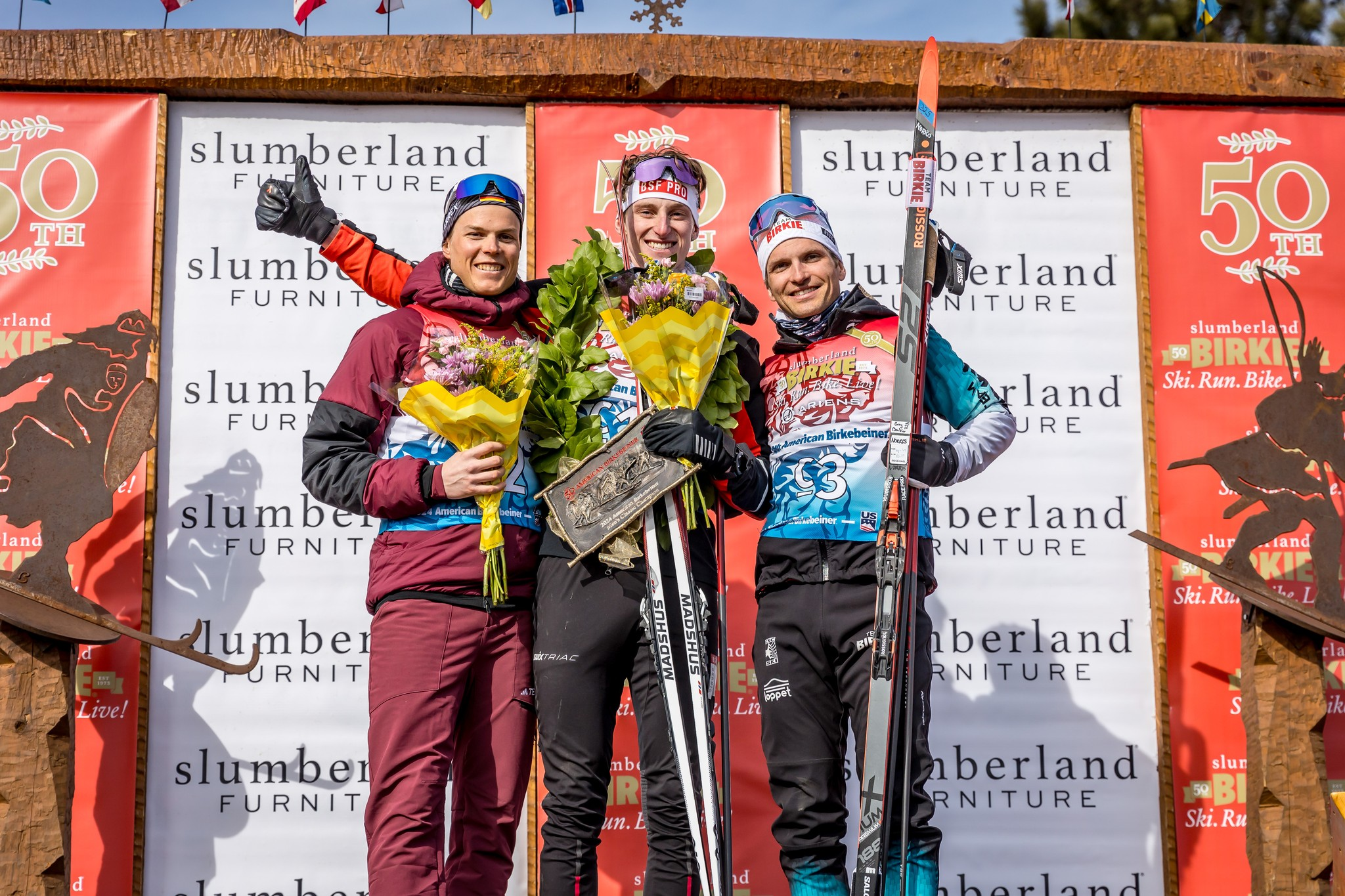
    Reid Goble won the Birkie Classic after recently being called up to the US team. (Photo: 2024 American Birkebeiner Ski Foundation)

    Most people visiting FasterSkier are probably familiar with the lives led by the American “A” team athletes. Their lifestyles and races are thoroughly documented. But, with the addition of new racers for North American World Cup events, due to the host nations being allotted extra positions, it’s time to look in on some lesser known names and learn what their lives are like.
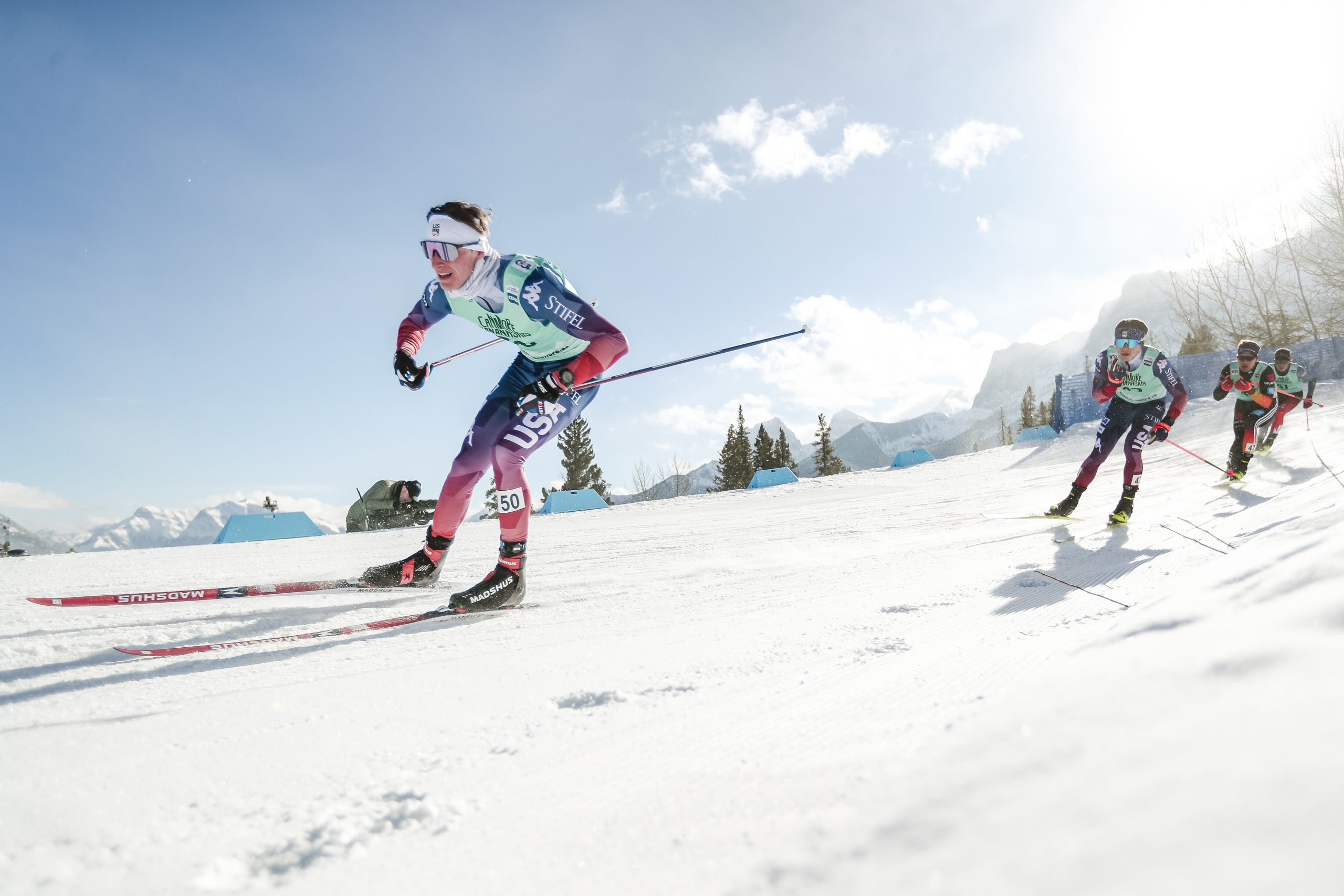
    Reid Goble (USA) got the call up to the American team to race in the World Cup. (Photo: NordicFocus)

    Reid Goble is a 24 year old American who races for the Bridger Ski Foundation (BSF), and lives in Bozeman, Montana. He got the call up to join the U.S. squad for the North American World Cups after the Super Tour races in Lake Placid, New York, only a couple of weeks before he would be racing in Canmore. His plan was to race Canmore and Minneapolis, then travel to Wisconsin and ski the Birkie 50-kilometer Freestyle on Saturday, and then the 30- kilometer Classic race Sunday. However, illness forced him to modify his plans, and he decided to skip the Freestyle Saturday and ski the Classic on Sunday. Still feeling under the weather, he nonetheless managed to go out and win the Classic race finishing ahead of some stiff competition; edging out David Norris (USA) and Scott Patterson (USA).
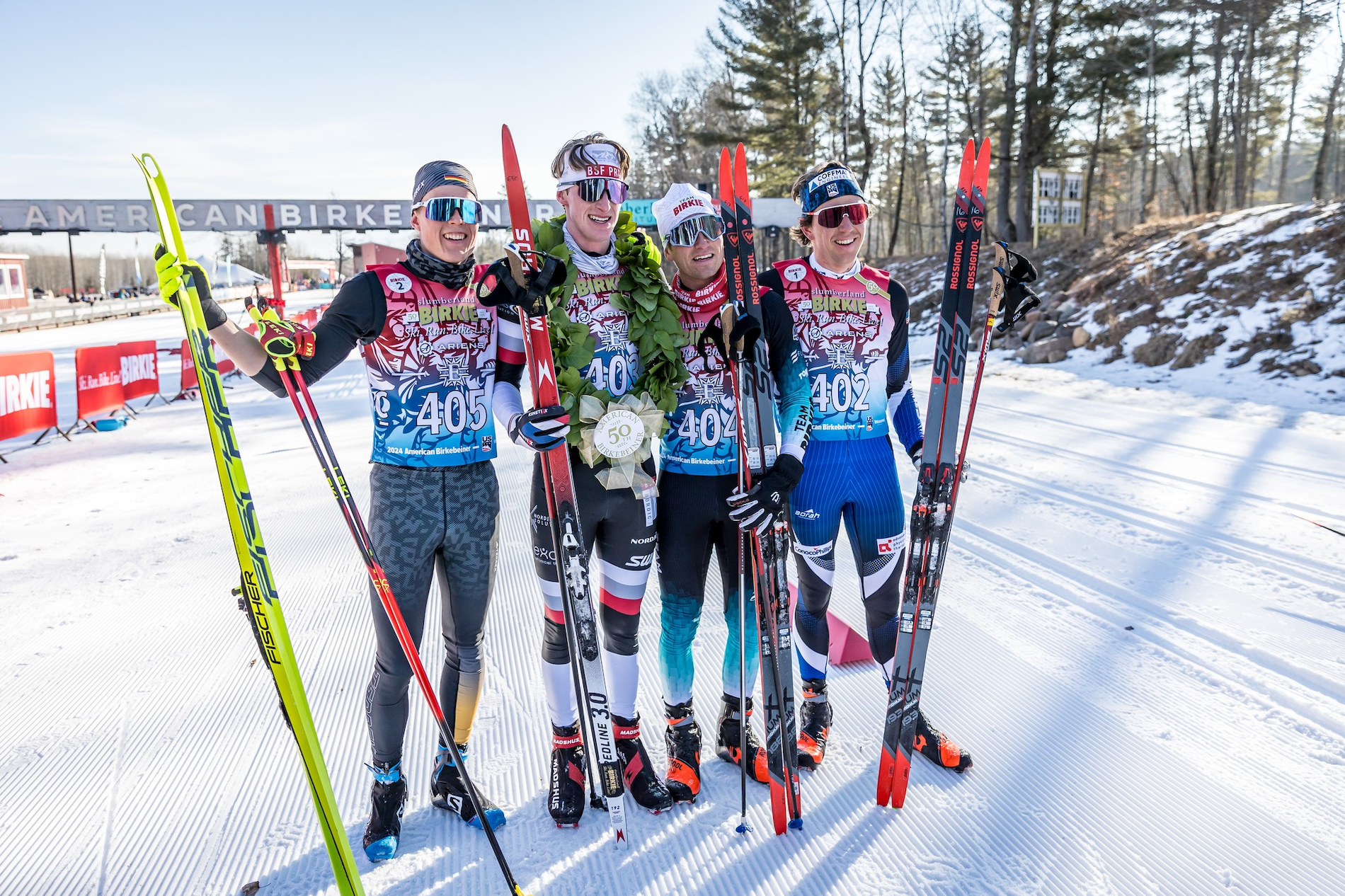
     

    Goble and the other top Birkie Classic finishers after the race. (Photo: 2024 American Birkebeiner Ski Foundation)

    For Goble, the weeks spent racing between Canmore and Hayward were the most exciting of his ski career. “[Making the World Cup has been] one of my main goals,” Goble said. “And it was exciting to make it, but it’s not everything. It’s the stuff you do along the way that counts.” But checking that box isn’t Goble’s end goal. “I want to do well on the World Cup, not just make it.”

    The life of a professional skier who isn’t on the national team is in some ways similar to that of a national team member, but is also starkly different. Goble competes regularly on the U.S. Super Tour, noting that the BSF provides great support, but that he still is responsible for much of his own financing. In fact, a fundraiser was held recently in his native Michigan for Goble and his sister Sarah—who also competes professionally— with local ski areas and ski shops donating prizes to help raise money.
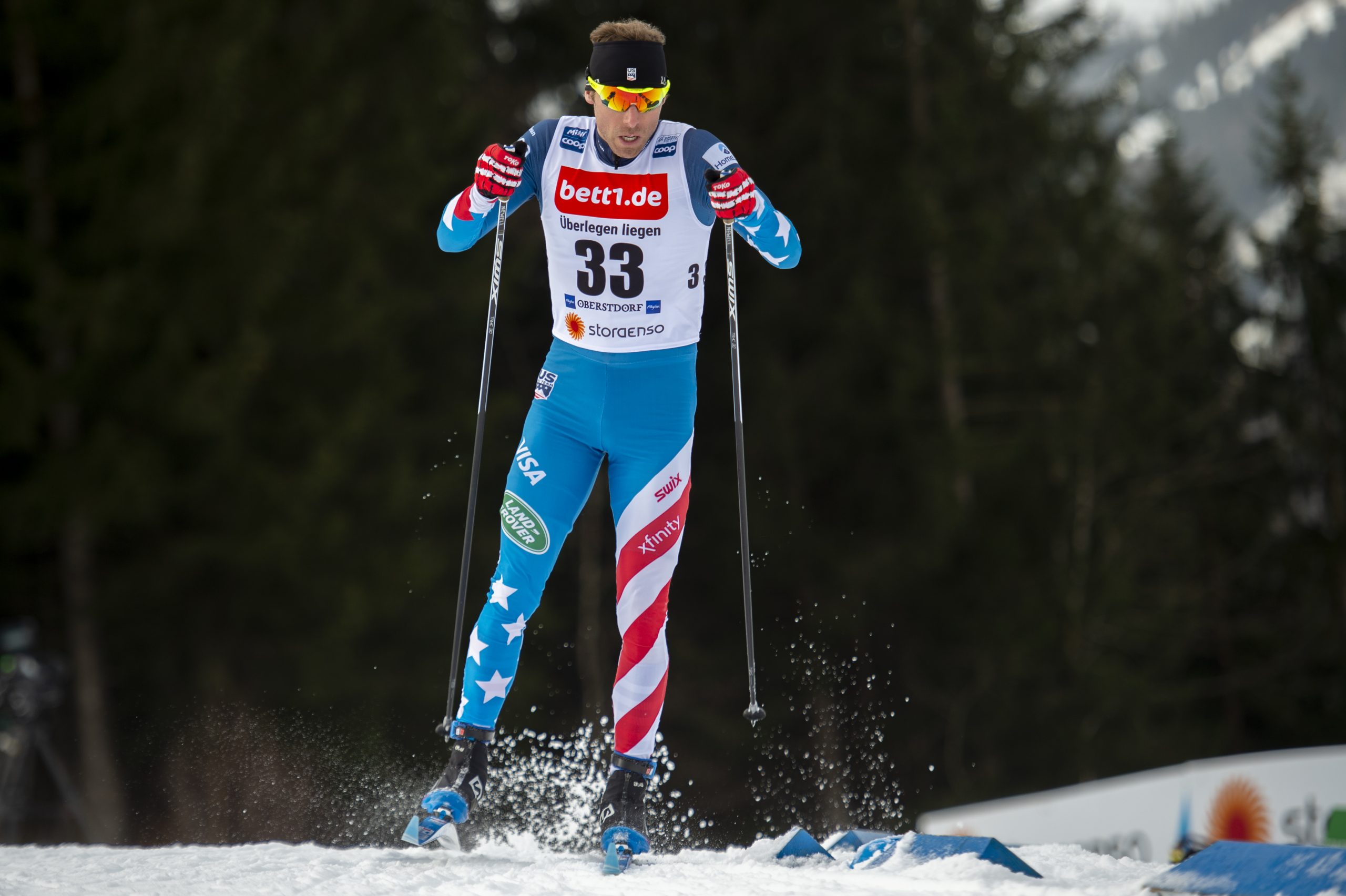
    Former US ski team member Andy Newell (USA) shown racing in Oberstdorf, Germany now coaches at the Bridger Ski Foundation. (Photo: NordicFocus)

    He is coached by Andy Newell at BSF, and the Foundation provides a good basic amount of support, but doesn’t cover everything. “We do very well with fundraising. Fundraising is hard, but BSF supports us generously. Most of us have part time jobs and support ourselves through that as well.”

    Goble works part time as a home health care aid to help pay for his expenses and day to day living costs. It’s a job that not only helps to pay the bills, but also dovetails nicely with what he hopes will one day be his future career as he plans to attend medical school after his racing days are over. He isn’t rushing to walk away from ski racing, but realizes he needs to plan for the future.
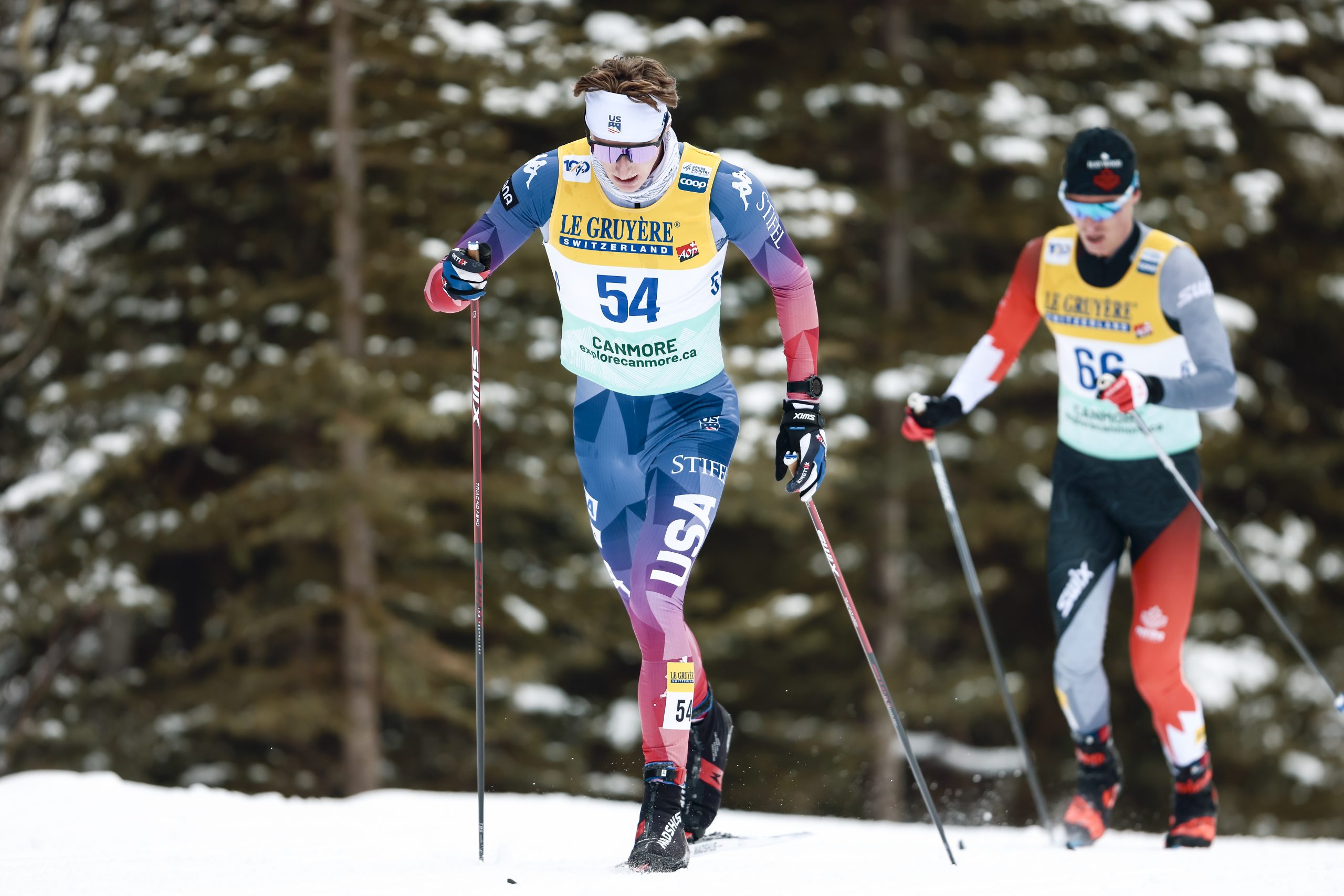

    Reid Goble (USA) racing in Canmore in his first ever weekend of World Cup skiing. (Photo: NordicFocus)

    Unfortunately, Goble was ill for much of his World Cup experience, so his Birkie victory was particularly sweet. “It’s a special experience,” he said. Even in a terrible snow year like this one it was still special. “We’re driving into Hayward, and there’s no snow, and then you get to the Birkie course, and they have 10k of trail. I don’t how they did that. It’s really impressive and you definitely can’t complain. It was fun that you got to do laps and people got to cheer for you. It was kind of special.” He noted that after Saturday’s race one hill was removed from the course which had presented problems with numerous falls. This change allowed the top contenders—and Goble, himself—to double pole the entire course.
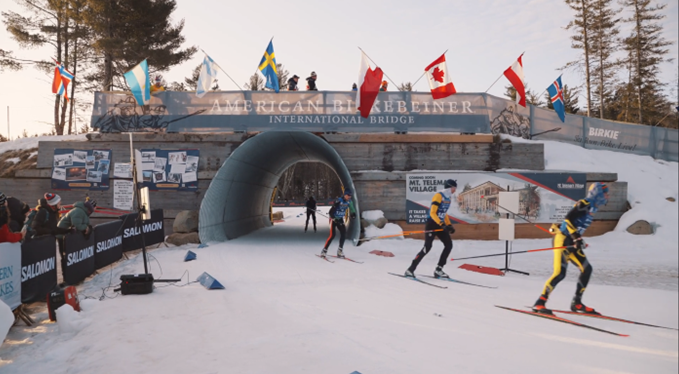
    Doing the first ever Birkie lap course was in some ways a special treat. (Photo: ©2024 American Birkebeiner Ski Foundation)

    Racing the World Cup in the Nations Quota group is a little different. With 12 athletes starting each race, the wax technicians are spread thin. “Andy came up and waxed for all the BSF athletes,” Goble said. “And other clubs had their coach come and wax. It was collaborative, and seemed to work well.”

    Racing in Minneapolis was particularly rewarding for Goble. “I got to race in front of my friends and family,” he said. “You’re also with the regular US team members, which is fun, so that was special.” Also special is the international level of competition. In the 10 k Individual Start, Goble started sandwiched between Jens Burman (SWE), and Simen Hegstad Krueger (NOR), a rather intimidating position. “Yes, Krueger is a very good skier,” Goble noted in a bit of an understatement, while also recognizing that they are human. “If they pass me and I feel good, I’m not going to not try and ski with them.” But waking up sick the morning of the Minneapolis race took a little wind out of his sails. “Normally racing sick is not the move, but this was an acceptable move, especially with Gus’ results. It was really cool to be a small part of it.”

    Competing in the World Cup is a goal, but it doesn’t necessarily occupy all of Goble’s focus. “The US ski team is always a goal” he said. “But day to day and race to race, I just try to think about racing fast.” He recognizes that making the team isn’t a black and white question. “There are really good athletes who don’t perform at the right time. There has to be a cut off somewhere; this time I was on the right side.”

    The work-life-training balance isn’t always easy. It’s definitely challenging to support yourself. “You sometimes have to remind yourself that doing this is still a privilege, Goble observed.” I remind myself why I’m doing this and why it’s worth it.” Goble takes a philosophical view toward the divide between his colleagues on the US team and those who race domestically. “Racing is fun if you’re doing well. It can be frustrating when you’re not doing well, at any level. It’s easy to compare yourself to other skiers but, really, you’re just trying to be the best skier you can be no matter what level that is.”
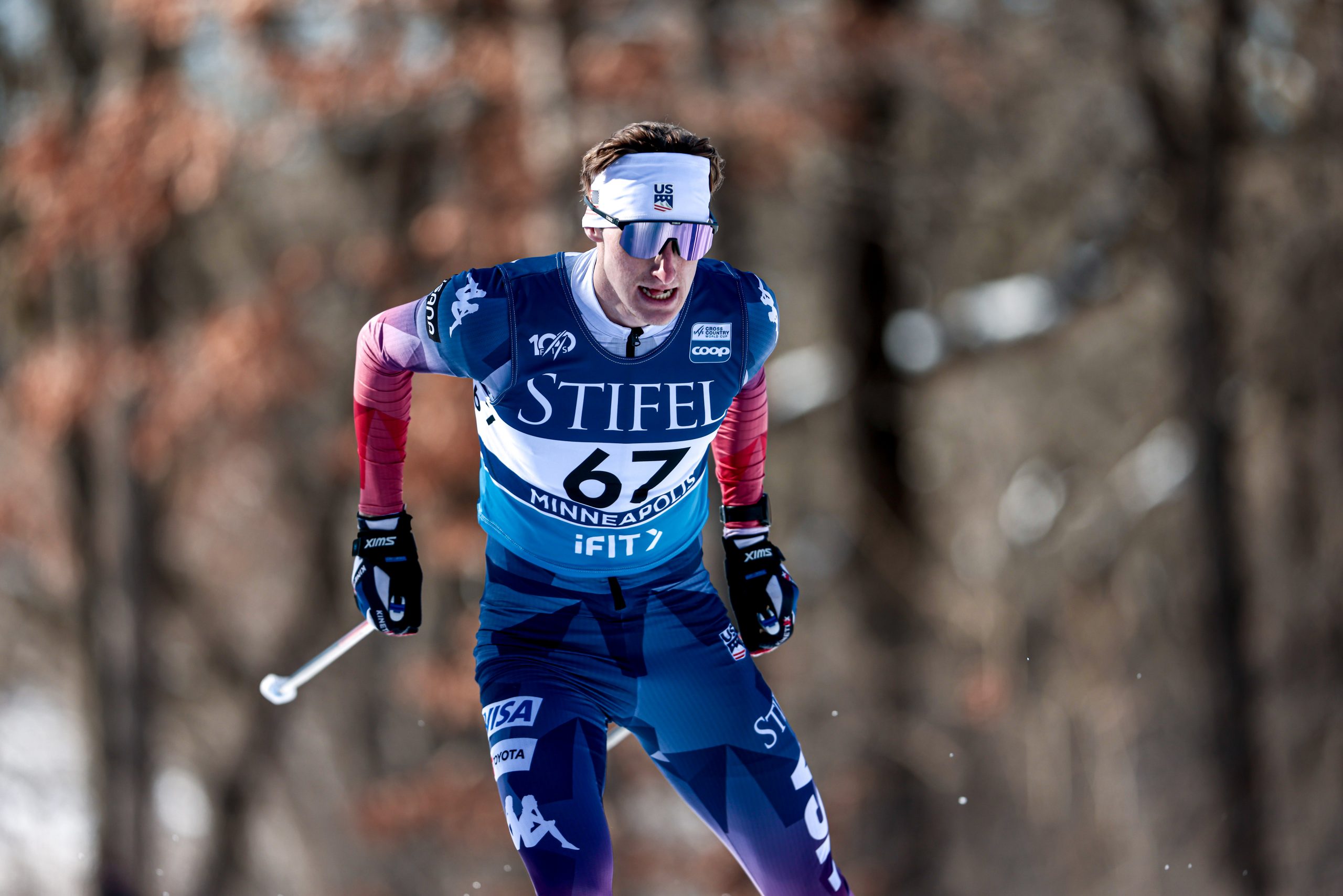
    Reid Goble (USA) doesn’t focus on just making the U.S. team. His goal is to ski as fast as he can every race. (Photo: NordicFocus)

    The next big stop in the race circuit for Goble will be at the end of March when the Super Tour stops in Duluth, Minnesota beginning March 21st. It’s expected that many of the U.S. team members will join the race circuit after completing World Cup racing. But in the meantime, starting this week, Goble will be back to work in his part-time job, and resume training, fundraising, and trying to live the life of a professional American skier who isn’t on the American team.

  • In Bozeman, Jim Bridger Rollerski Races Look to Bring Summer Competition to the West

    In Bozeman, Jim Bridger Rollerski Races Look to Bring Summer Competition to the West

    Logan Diekmann, Nina Seeman win on the streets of Bozeman, and BSF’s Rollerski races look to harness the momentum of summer training out West. Featuring Results and Video Highlights.

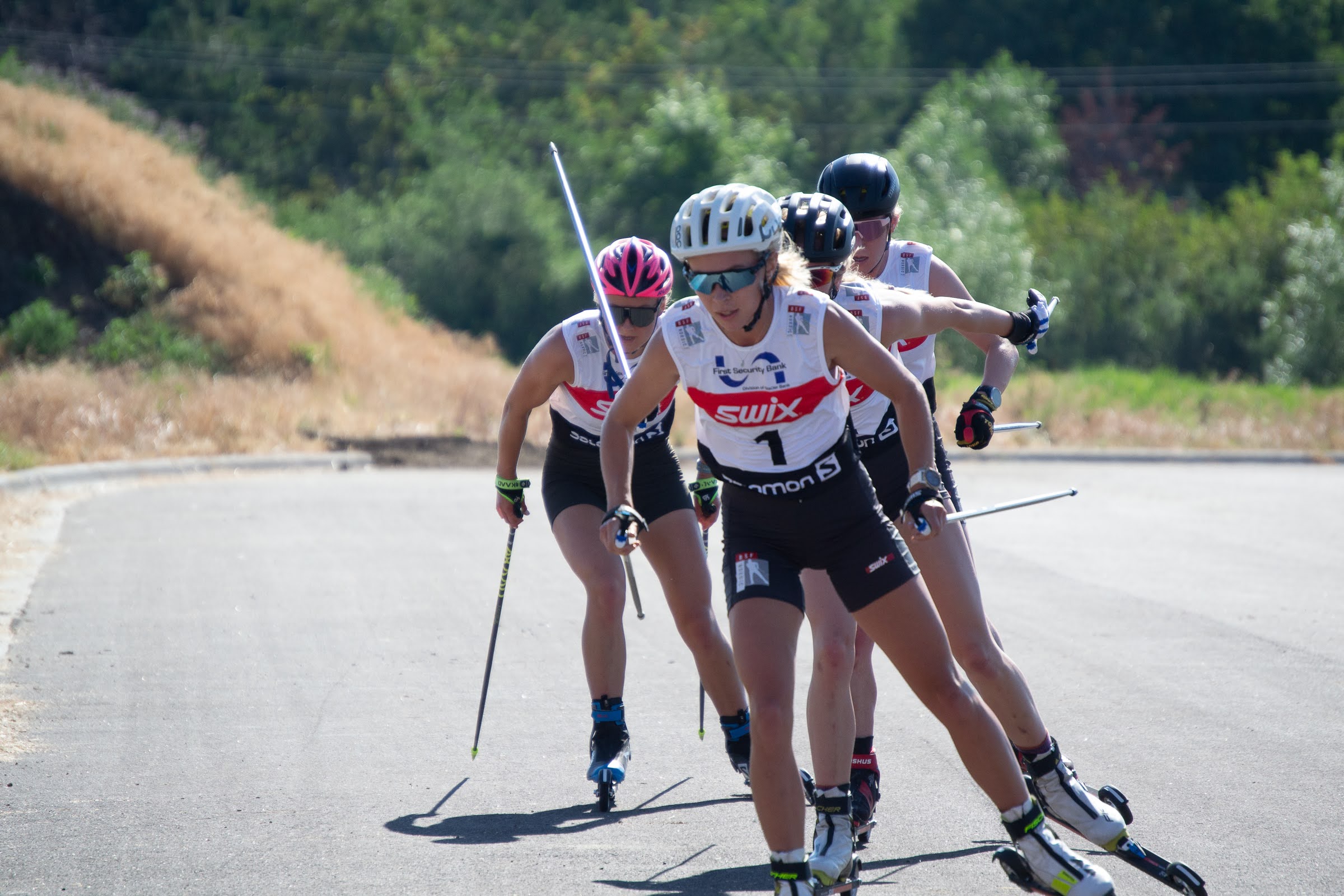
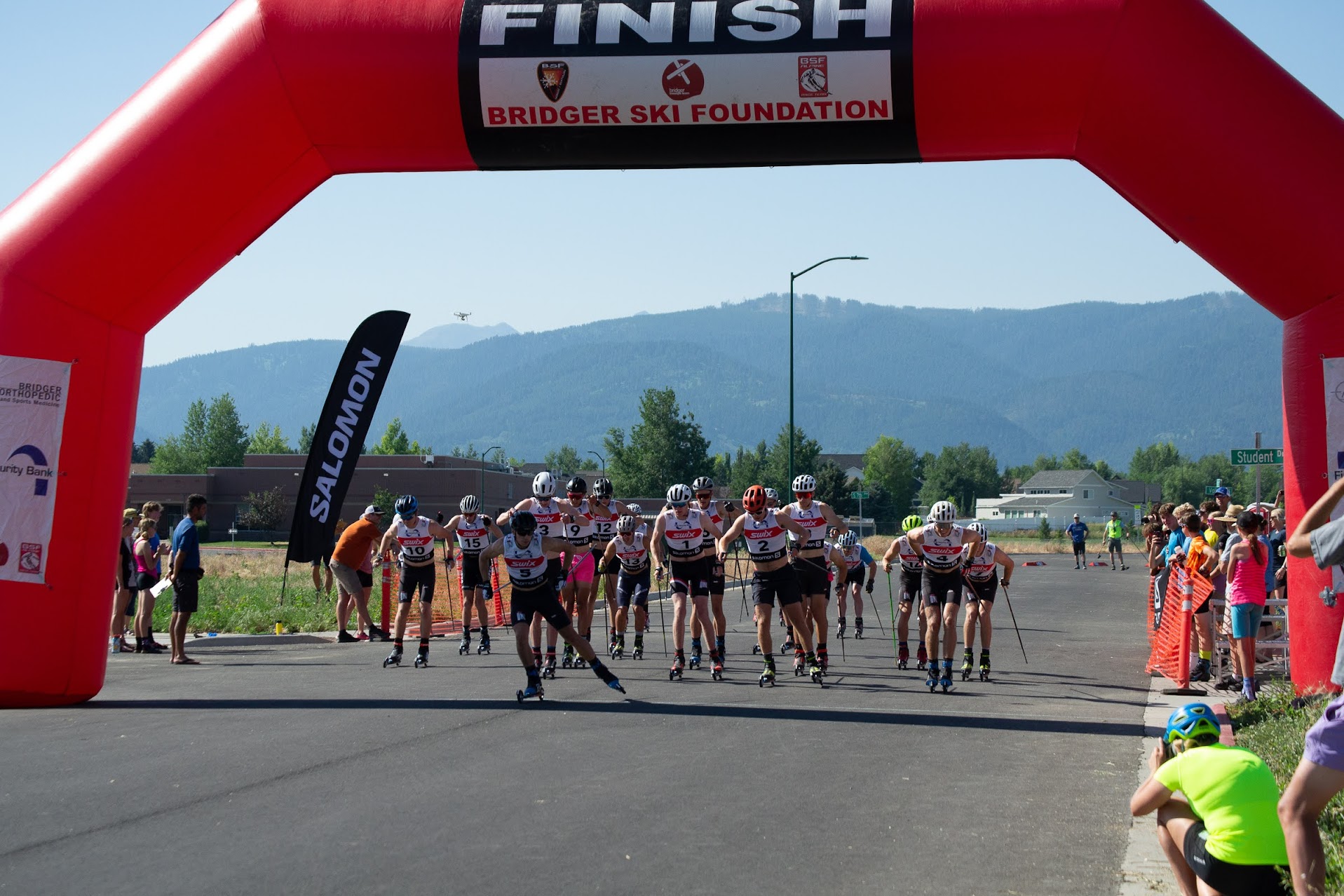
    Men’s Open field rolls out at last weekend’s Jim Bridger Rollerski Races, held in Bozeman, MT (Photo: Jenny White/BSF).

    BOZEMAN – Jim Bridger was a mountain man. One of those figures born firmly entrenched in the old ways back East, before he split for the Mountain West for something new. A character to chart a theme pervasive through the American vision of the West – that ability to make something new and pursue it with everything you got.

    It’s a tortured and uncomplicated metaphor (Bridger was one of the first white men into the intermountain West, but of course, wasn’t the first person to exist there). But if you were going to distill that character, and tap in purely to that “Pioneer, O Pioneer” spirit, you could do worse than the Bridger Ski Foundation (BSF) Pro Team Head Coach Andy Newell.

    For most of the 21st century, Andy Newell was a metonym for the very top of American men’s skiing. Through four Olympics, 220 World Cup starts, and breakthroughs every step of the way, Newell was there, making the in-roads that a generation of men’s skiers is now picking up on. Newell retired from racing in 2018, and in just four years has quickly transitioned his ebullient energy into setting up a coaching consulting business, Nordic Team Solutions, expanded BSF’s Nordic programming to include a successful Pro Team, and made Bozeman’s mountains and plains a popular training ground for collegiate athletes during their summers.

    Andy Newell in his latest roll as Race Director last Saturday in Bozeman. (Photo: Jenny White/BSF).

    Long home to an established nordic community with Montana State’s NCAA program and BSF, the efforts of Newell and the athletes he works with have been based in an effort to re-think and try out approaches to skiing development, training, and culture in Bozeman, and in the larger U.S. Ski Community. And in the latest example, that meant looking at a nearly 30-year-old BSF-held running race and saying, why not add a rollerskiing event?

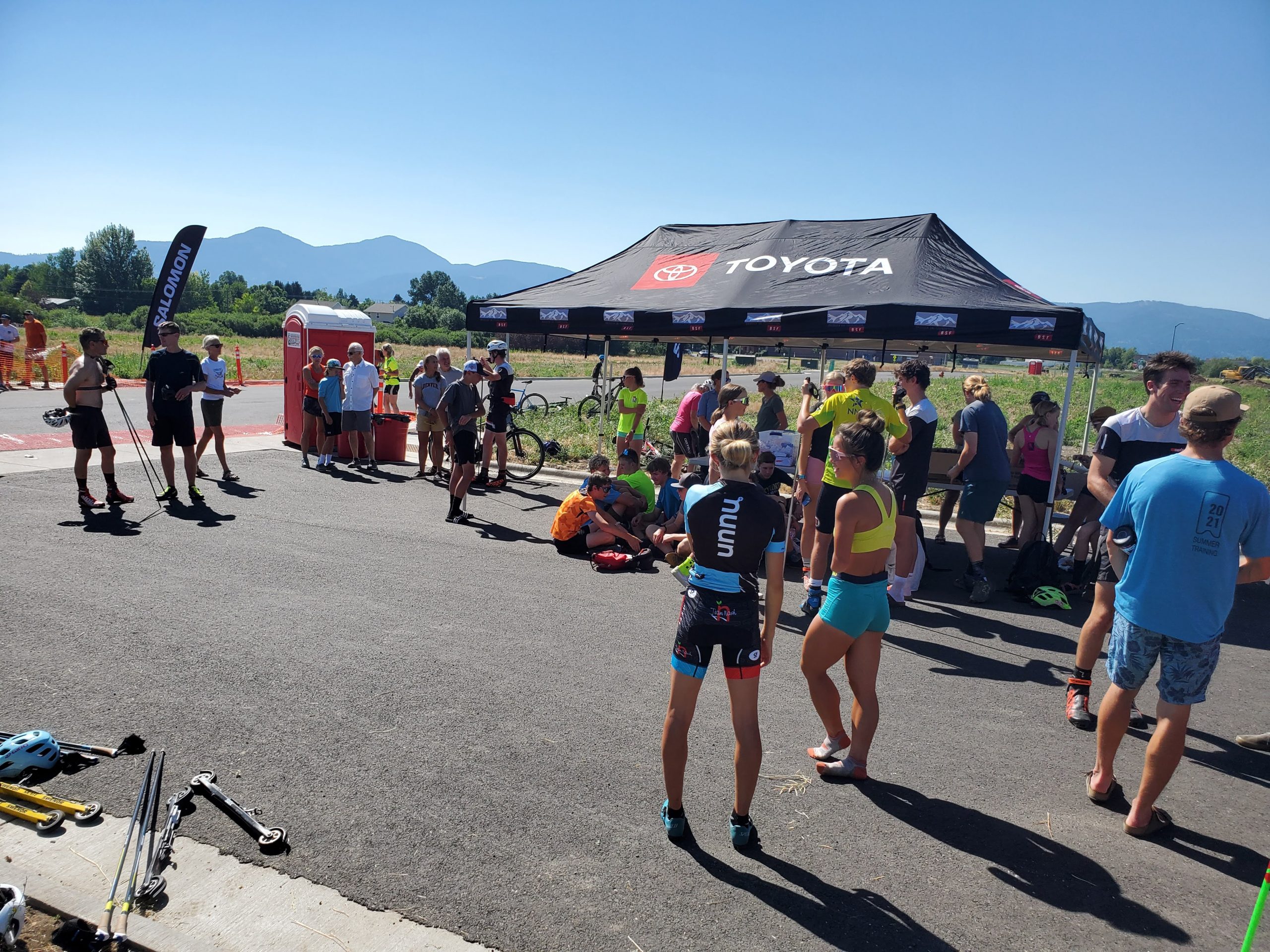
    The 29th annual Jim Bridger Trail Run last weekend then, also marked the 1st annual Jim Bridger Roller Ski Races. And the impetus, as for many things with Andy Newell, was to simply go all in on nordic in the pursuit of promoting the sport. “I’ve always loved racing the big European rollerski races like Blink and Toppidrettsveka. I thought this would be a fun opportunity to pair a legit rollerski event with a trail run and host them back-to-back. Having races like this is a great development tool for athletes” said Newell, in an email to FasterSkier. The races also acted as a fundraiser specifically for the BSF Pro Team, which has been one of the fastest growing and competitive programs in the U.S. since it was founded. Something that Newell talked about at length with FasterSkier earlier this summer.

    Andrew Morehouse, BSF’s Nordic Program Director also added that the impulse to bring rollerski races inspired by those in Scandinavia to the United States is one that has been successful in the East and Midwest, but hasn’t found its way out West quite yet, “We’ve seen the success of roller ski races in the East and have talked within the Intermountain Division of how we can create a meaningful roller ski race series for our athletes in the West. I think this race, along with the Schutzenski Festival in Utah (to be held at Soldier Hollow during the US Ski Team’s Fall Camp there this October), is a great step towards that goal.”

    The Women’s Open field goes into a corner during their 12 k race in Bozeman last Saturday. (Photo: Jenny Smith/BSF).
    Inaugural Jim Bridger Rollerski Race Report

    In the pursuit to bring top-level rollerski racing to the hot, dry, and high Mountains out west, BSF’s efforts were a success.

    A field full of BSF’s Pro and Comp (U14-U20) program athletes, along with racers from across the Intermountain West and a strong contingent of collegiate racers sure to show up on Eastern Carnival result sheets this winter made for an incredibly competitive and robust field.

    They raced distances of either 6 k for the U16/U18 fields, or 12 k for U20/Open field on a 1.5 k loop that took them around the streets south of the Montana St. campus in Bozeman. The design was in line with the vision of promotion for the event, “high speed, multi-lap races right in [town] to make it spectator friendly and exciting,” said Newell. As with many roller ski events, racers also were provided matched skis, in this case from sponsors Swix and Solomon.

    All races were skate, and with relatively flat terrain on course, that made for an event in which there was hardly a V1 to be seen. This was a day for V2, and a great opportunity for athletes to work theirs at max-effort next to other skiers and see where they can tweak their power application and tempo. Rollerski races, by design, are meant to be a stepping stone in training on the way to next winter, after all.

    The early going in both the men’s and women’s open field were tight-packed affairs. Racers hemmed and hawed through tight-corners to bring the top-end of the field together, until slowly but surely, those lead packs became smaller and smaller.

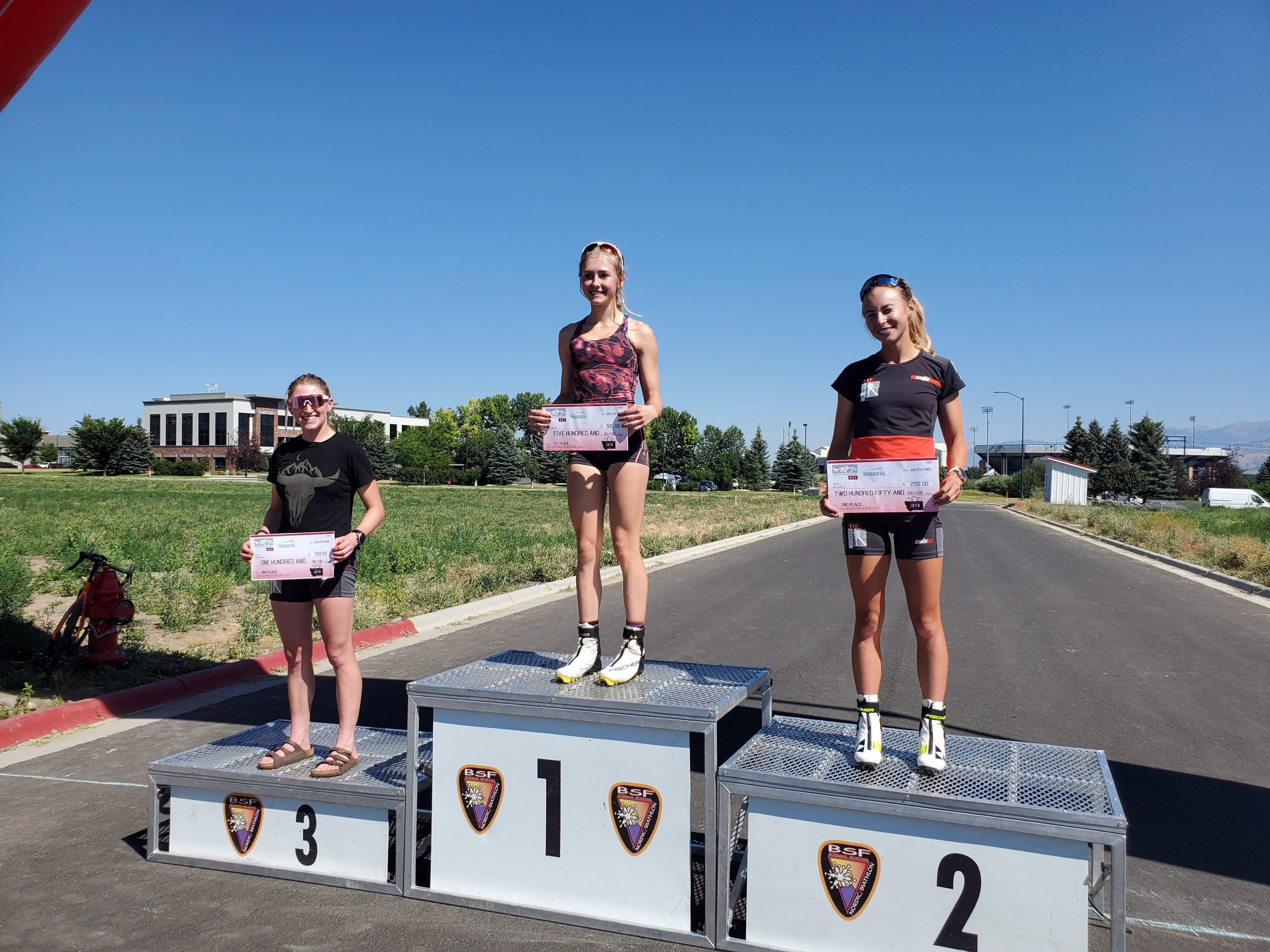
    In the women’s field, the last couple laps saw a group containing Dartmouth College (DAR) skier Nina Seeman, along with BSF Pro members Mariah Bredal and Sarah Goble gain an advantage. There was nothing between them until the race’s end, when Seeman and Bredal broke for a final sprint, and Seeman came away the winner (27:58). Bredal finished second (27:59), with Goble coming in shortly after (28:07) to complete the podium.

    Mariah Bredal (BSF) leads the Women’s field. Bredal finished 2nd overall to Nina Seeman (Dartmouth), tucked in 2nd place here. (Photo: Jenny Smith/BSF).

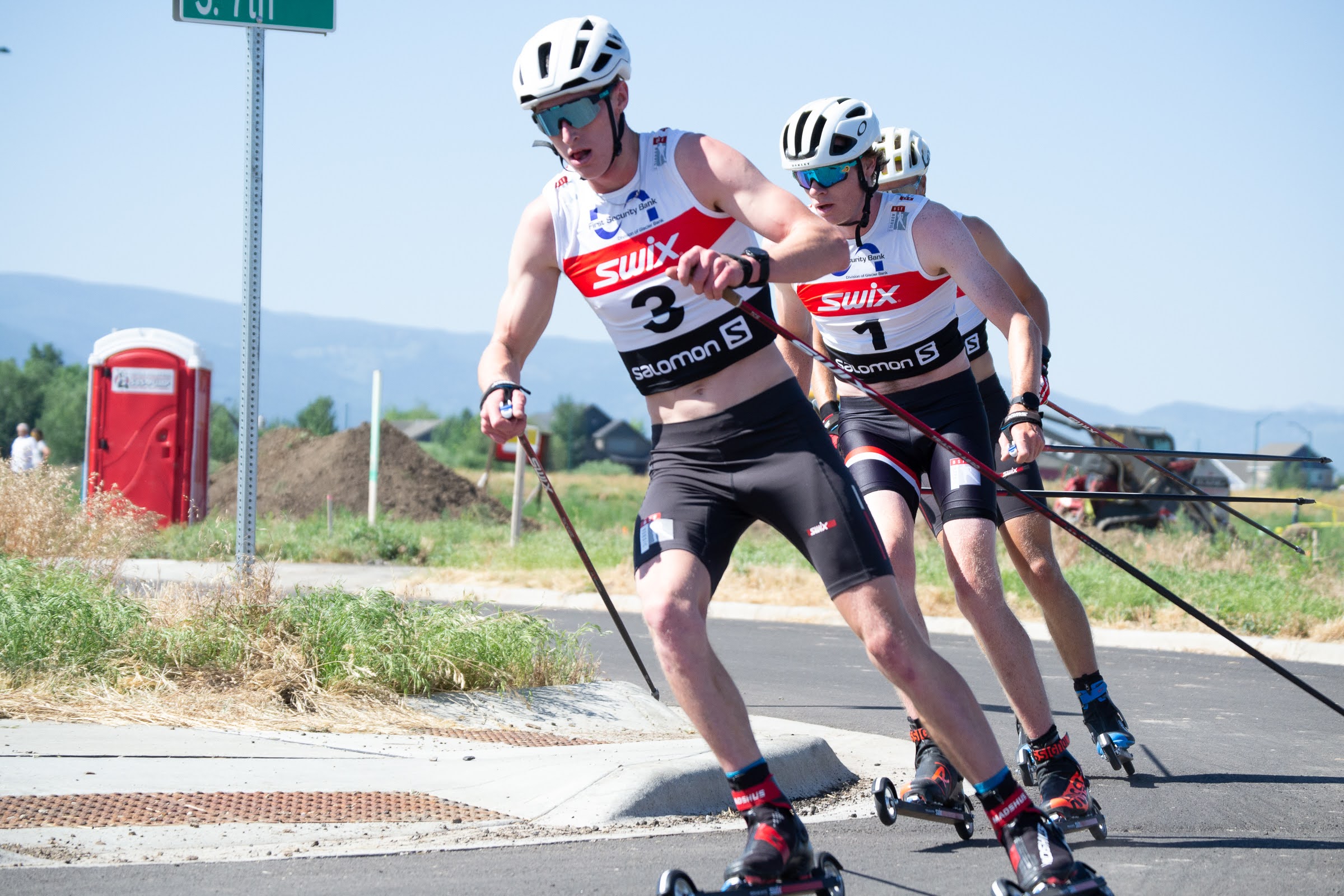
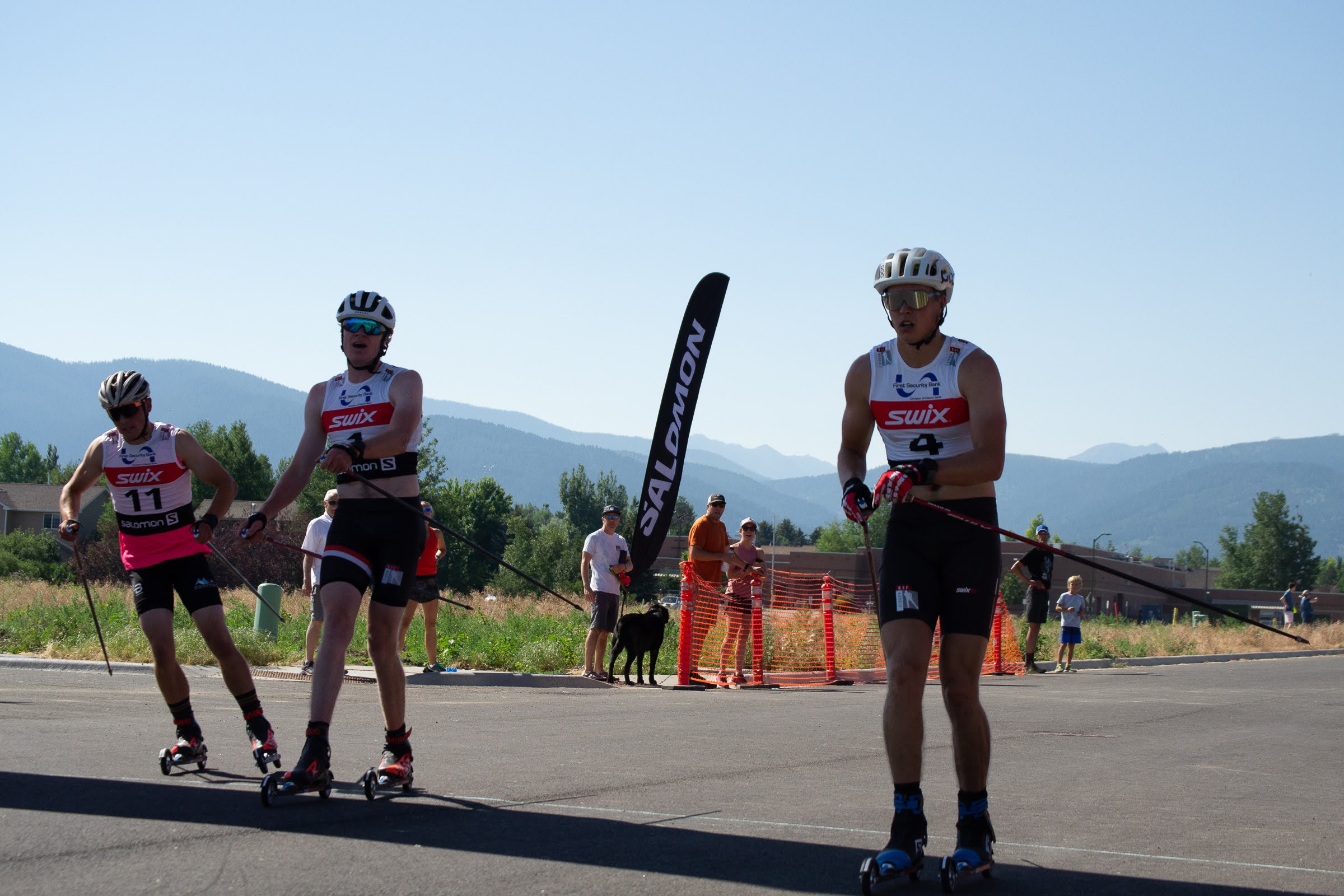
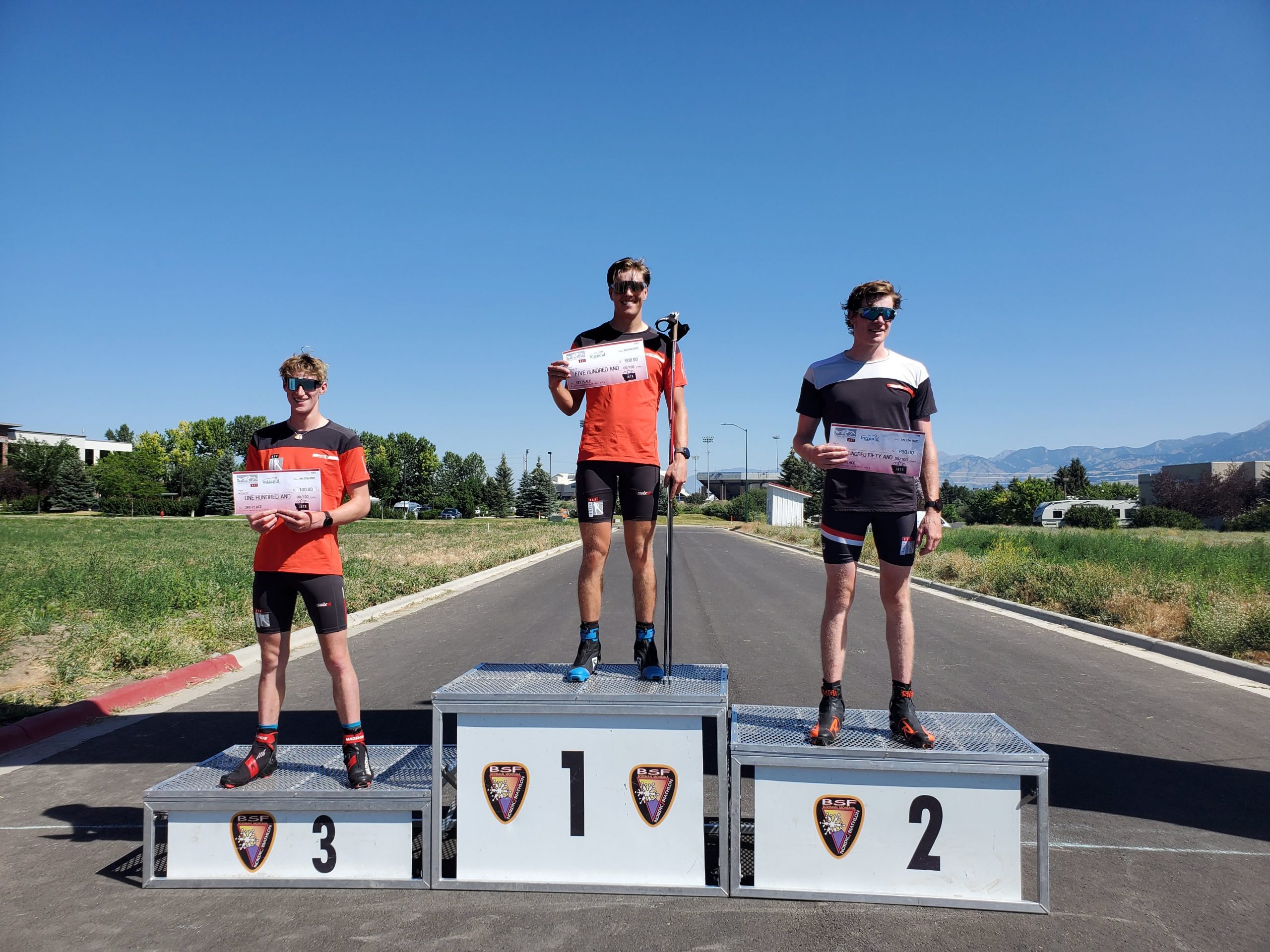
    The men’s field saw a similar battle at the finish between three of BSF Pro’s leading lights. Into the final lap, Logan Diekmann, Finn O’Connell and Reid Goble were locked into a pack, with the promise of a true sprint all but assured for spectators. Goble found himself leading the pack for most of the lap, with O’Connell taking second wheel and Diekmann in third. Diekmann and O’Connell then launched their attack from behind their would-be lead-out, with Diekmann putting just enough gap over the line that the rare (and dangerous) rollerski lunge finish wasn’t needed. Diekmann in first (24:44), O’Connell in second (24:45), with Reid Goble rounding out the podium in third place (24:57).

    Above – Reid Goble (BSF) leads Finn O’Connell (BSF) and Logan Diekmann (BSF) in the final lap of the Men’s Open 12 k. Below – Diekmann takes the sprint finish ahead of O’Connell. (Photos: Jenny White/BSF).

    In the 12 k U20 Women’s race, St. Scholastica (CSS) skier Mia Case took the win over Park City’s Elena Grissom in second, and Sidney Benyon. The 12 k U20 Men’s race BSF’s Phin Fischer took first place ahead of Sumner Cotton (BSF) in second and third place Soren Davidson (BSF).

    The inaugural BSF roller ski races were filled with fields of those who will find themselves at the top of NCAA, SuperTour, and even perhaps a World Cup this winter. That’s not bad for an inaugural running on the southside streets of Bozeman, and is yet another marker of the city, and Bridger Ski Foundation’s growth and development into a leader in the country’s ski community.

    Many skiers then showed up to put impressive results up in Sunday’s Jim Bridger 10-mile Trail Run. Reid Goble (BSF) placed second overall (1:20:24), Peter Wolter (Sun Valley) was third (1:21:17), and Finn O’Connell (BSF) fourth (1:22:24). Mariah Bredal won the Women’s race (1:26:59), with Hannah Rudd (BSF) third (1:35:03), and Sarah Goble (BSF) fourth (1:37:37).

    The BSF, and Bozeman, Nordic community together in Bozeman for some rollerski racing. (Photo: Jenny Smith/BSF).

    Junior Rollerski Results:

    U18 6 k Women:

    1st Natalie Nichols

    2nd Elsa Futch

    3rd Keely Fischer

    U18 6 k Men:

    1st Woody West

    2nd Jasper Jacobson

    3rd Nate Strubel

    U16 Women:

    1st Izzy Waters

    2nd Necia Nichols

    3rd Olivia Nelson

    U16 Men:

    1st Lucan Fascio

    2nd Colton Petsch

    3rd Ian Carmack

    Full Running Results here

    Video Highlights!

    Men’s Open Field podium. 1st – Logan Diekmann (BSF). 2nd – Finn O’Connell (BSF). 3rd – Reid Goble (BSF).
    Women’s Open Podium. 1st – Nina Seeman (Dartmouth). 2nd – Mariah Bredal (BSF). 3rd – Sarah Goble (BSF). (Photo: Jenny White/BSF).
  • Elite Team Preview: Bridger Ski Foundation Pro Team

    Elite Team Preview: Bridger Ski Foundation Pro Team

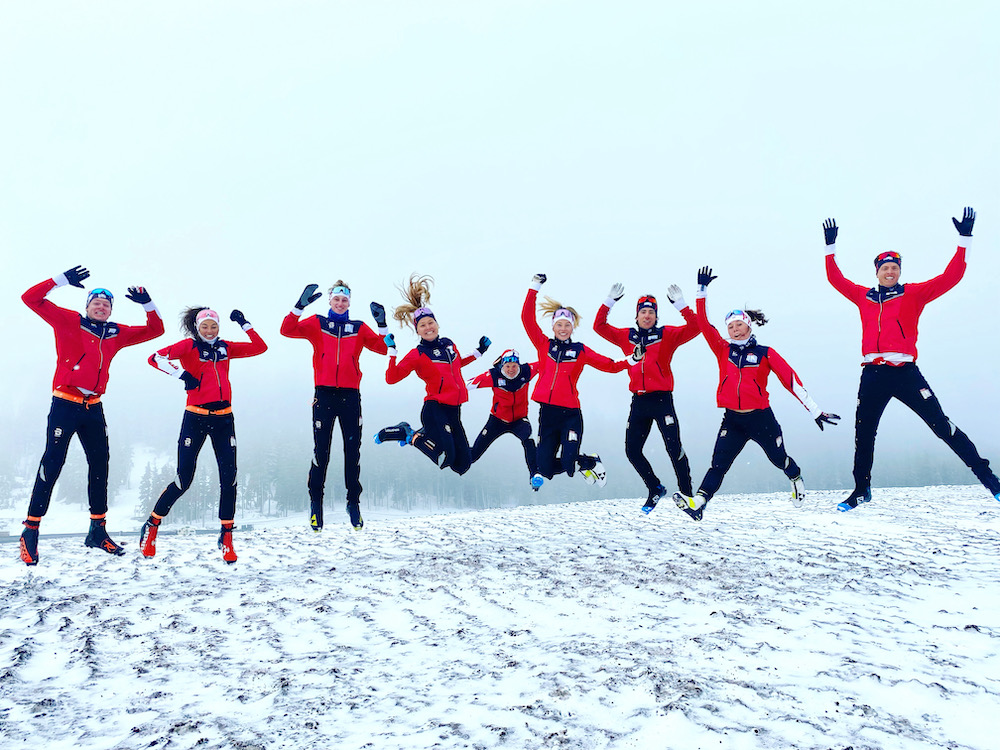
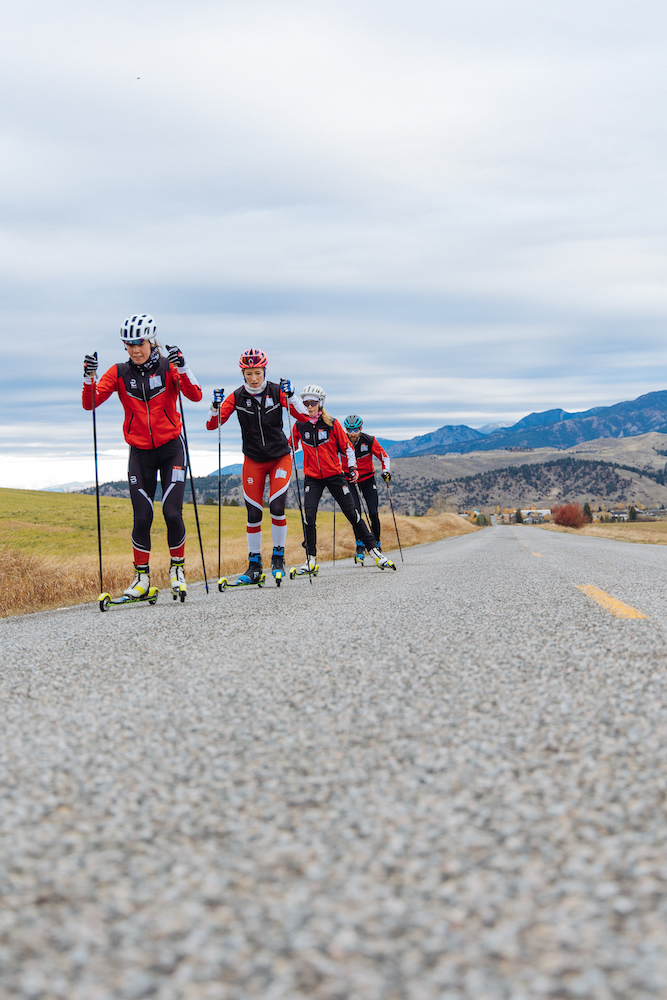
    Bridger Ski Foundation athletes, 2021. (photo: courtesy BSF)

    Team name and location: Bridger Ski Foundation Nordic Pro Team (BSF); Bozeman, Montana

    Coaches: Andy Newell (Nordic Pro Team), Hannah Cole (Post Grad Team)

    Current roster: Finn O’Connell, Graham Houtsma, Hannah Rudd, Lauren Jortberg, Leah Lange, Logan Diekmann, Mariah Bredal, Reid Goble, Simon Zink, Erika Flowers

    Who’s still on this team, or otherwise involved in American skiing, from when we did this in 2012: No one; Torin Koos and Leif Zimmermann haven’t raced in years, though the third athlete on that team, Sawyer Kesselheim, was the guide for Paralympian Jake Adicoff in Adicoff’s silver-medal performance in the B3 classification 10-kilometer classic in PyeongChang

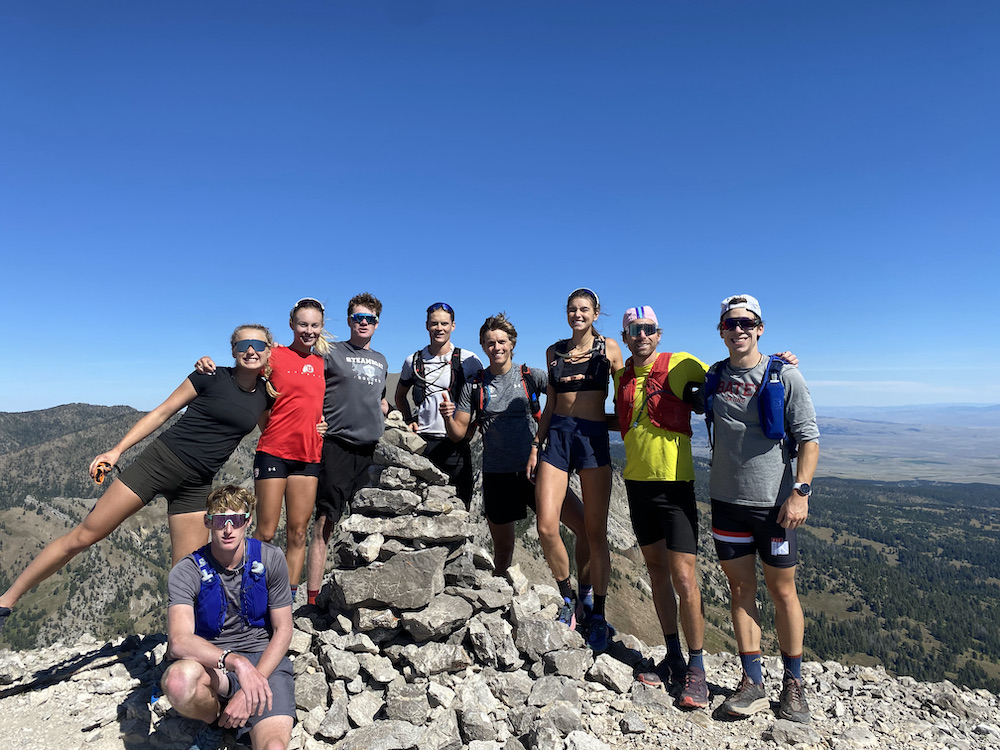
    Bridger Ski Foundation athletes, 2021. (photo: courtesy BSF)

    Top results last season: While the SuperTour obviously didn’t happen, BSF sent a strong team to the American Birkebeiner, the closest anyone came to a nationwide domestic field last year. BSF athletes came away with a combined four top-10 finishes in the skate race, including O’Connell in 4th, Flowers in 5th, Jortberg in 7th, and Rudd in 9th. Graham was 12th in this race, and Diekmann 23rd. In the classic race, O’Connell was 11th and Diekmann 15th. O’Connell had a pair of podium finishes in Sun Valley in March 2021, against a loaded regional field with multiple RMISA athletes, and was third in a RMISA race in January. Diekmann tied for first in a RMISA sprint qual in January, while Jortberg was second among the women. Flowers was 6th in a separate January RMISA race. Finally, going back to the ill-fated spring of 2020, Diekmann was scheduled to make his World Cup debut in the Québec City sprints before the races were cancelled, while Flowers was among the starters for the women.

    Andy Newell, Bridger Ski Foundation coach, 2021. (photo: courtesy BSF)

    Coach’s comments: Andy Newell wrote:

    “Off-season training for us has been super fun and productive. I’m really proud of the way the team has come tougher over the past year and a half. It’s always a risk when you create a new team from scratch, you never know what kind of team dynamic will play out. But this group does an amazing job working together, pushing one another, while also showing authentic support. We have a lot of fun.
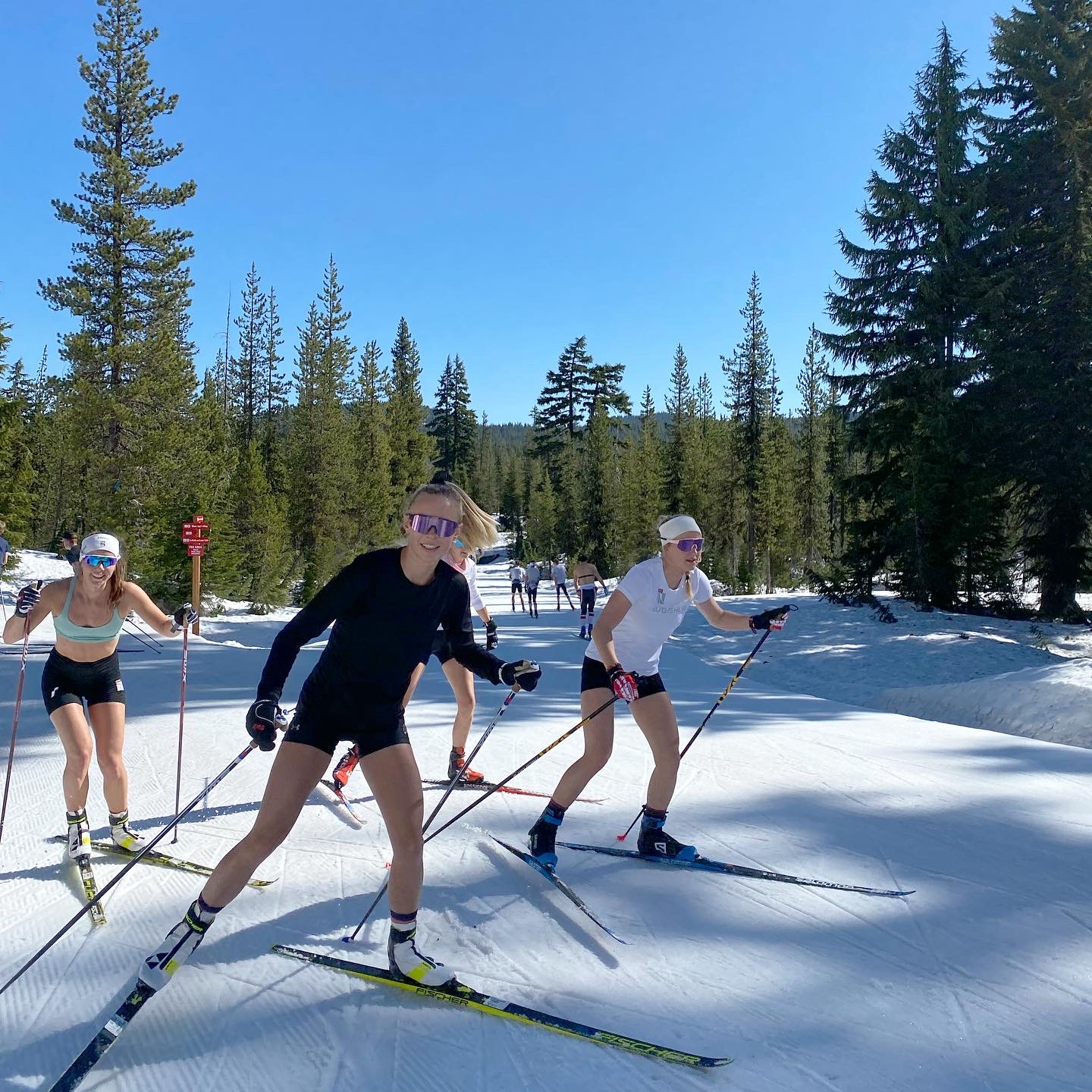
    BSF athletes on snow in Bend, May 2021. (photo: courtesy BSF)
    “Our summer preparation started in May with our first ever team Bend camp with the US Ski Team. During the months of June and July we try to focus on solid, steady team training here in Bozeman alongside the BSF collegiate group and comp teams. This is an important time for the Pro Team to connect with the community and the younger members of the BSF club. Since then we have tried to prioritize high quality training camps each month. In August we had a great low altitude training camp in Cable, Wisconsin, an intensity camp with rollerski TT’s in Lake Placid in September, and our annual October training camp with the US Ski Team. I think because last season was so isolating we’ve tried to collaborate with the other elite teams as much as possible and have had a fun time working with Sun Valley, SMS, Team Birkie and others.
    “The Pro Team is itching to get on snow and get the season started. We will travel to Canmore in mid-November for more on-snow training and TT’s, then focus on our final preparations for the first SuperTours in the Midwest. The athletes have big goals this year so everyone is excited to return to a legit race calendar. Although we need to prioritize SuperTour racing our ultimate goal with this team is to get everyone racing in Europe whether that’s in World Cup starts, U23s, or other championship races.
    Bridger Ski Foundation athletes, 2021. (photo: courtesy BSF)
    “Folks can follow along from our team blog.”