From the FasterSkier archive — posts syndicated from athletes’ and coaches’ own blogs between 2004 and 2012, kept online as published. Current coverage is at fasterskier.com.

Tag: Reid Pletcher

  • Have What It Takes for American Ninja Warrior? Reid Pletcher Takes a Stab at It

    Have What It Takes for American Ninja Warrior? Reid Pletcher Takes a Stab at It

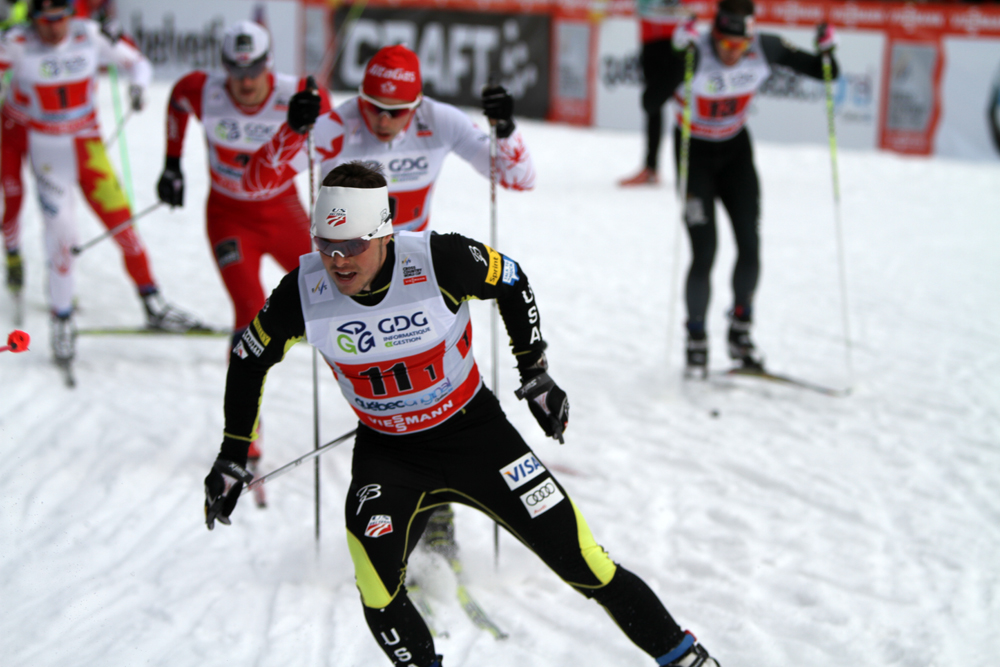
    Reid Pletcher (SVSEF) in the his first World Cup team sprint in Quebec City on Friday. Pletcher and Sylvan Ellefson (SSCV/Team HomeGrown) combined to finish 24th in their first team sprint since racing together as J1s.
    Reid Pletcher, formerly of the Sun Valley Ski Education Foundation, competing in the 2012 World Cup freestyle team sprint in Quebec City.

    FasterSkier recently caught up with Reid Pletcher, a former University of Colorado-Boulder skier and Sun Valley Ski Education Foundation (SVSEF) racer. Below is a summary of what Pletcher, 27, has been up to since he retired from skiing in 2013, including his most recent endeavor to become an American Ninja Warrior.

    ***

    More than 3,000 hopefuls submitted applications to the U.S. reality television series American Ninja Warrior (ANW) in 2014. Of those applicants, only 400 were selected for the Season 6 qualifying rounds. Applying to ANW is almost akin to applying to an Ivy League school, with ANW acceptance rates hovering just above the single digits. The application itself is a four-hour endeavor, involving a series of multiple-choice questions, short answers, long-form essays, and a two- to three-minute personal video.

    Furthermore, even if some of the obstacles on ANW, a spin-off of a Japanese TV series Sasuke, look a little comical from an outsider’s perspective, ANW courses often challenge even the toughest athletes in terms of strength, balance, control, and speed. Many competitors spend years training for the show. Producers take into careful consideration not only an applicant’s “Life Story,” but also his or her physical and athletic background.

    All things considered, one would have to be either semi-superhuman or semi-insane — or perhaps both — to meet the show standards. It may come as no surprise then, that when former nordic racer, Reid Pletcher applied to be on Season 8 of ANW, the show’s producers found he fit the bill.

    However, Pletcher, originally from Ketchum, Idaho, had no idea he would be offered the opportunity to appear on the show and compete in the qualifying rounds — taking place this Friday in Oklahoma City — until three weeks ago.
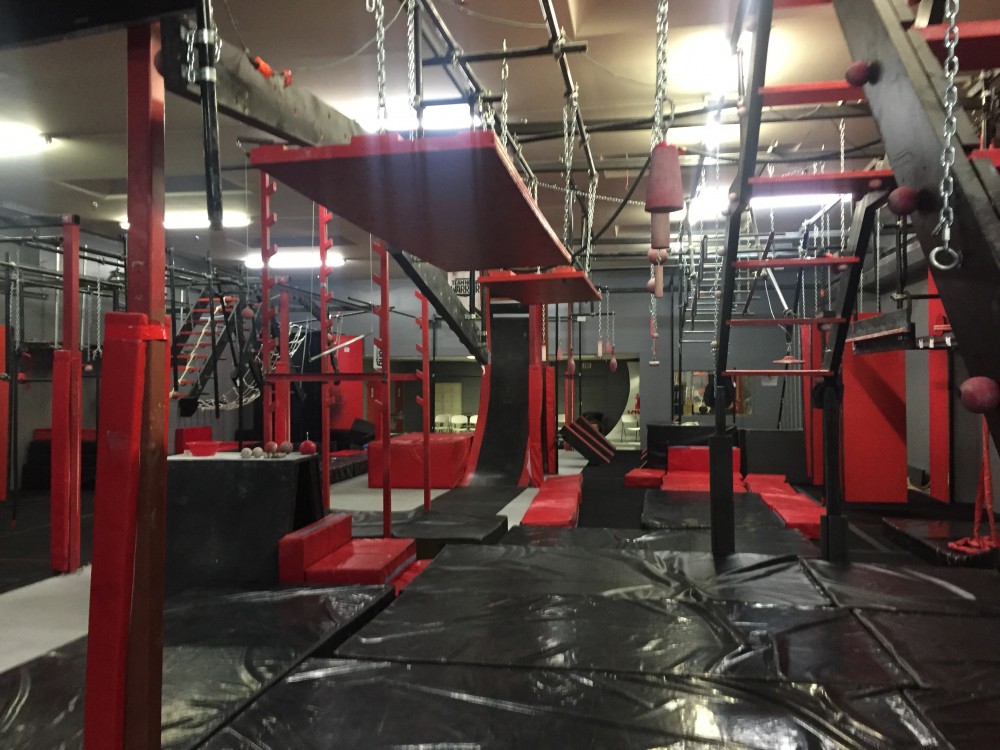
    An American Ninja Warrior gym Reid Pletcher trained at in Salt Lake City, Utah. (Photo: Courtesy Photo)
    An American Ninja Warrior gym where Reid Pletcher trained in Salt Lake City, Utah. (Courtesy photo)

    “The last time you could put in the application was mid-February and the [show website] said, ‘You’ll know within a couple weeks,’ and it had been like two months [with no word], so I just assumed I hadn’t made it,” Pletcher said in a phone interview.

    Pletcher submitted his online application last November and spent December through January training, until he broke his hand while playing soccer. After the hand injury, though still plenty active, he was nowhere near the 100 pull-ups a day he had been doing for two months.

    “I had kind of just given up on Ninja Warrior,” Pletcher said. “So I just kept going to class, doing nothing, hanging out and then did a couple river trips with the family and got my cast off and the day after I got my cast off, like a week ago, or two weeks ago now, someone calls me and is like, ‘Hey, this is American Ninja Warrior to congratulate you on qualifying for Season 8 American Ninja Warrior in Oklahoma City.”

    With two weeks to get back into ANW shape, Pletcher was neither bleak or big-talk about his chances to advance through the qualifying rounds. His first visit to an official ANW gym was only a week ago. Even with limited ANW obstacle experience, Pletcher is positive about his potential.

    “I’m in official damage control where I can’t get in insane shape in the two and half weeks that they gave me,” Pletcher said. “I think they keep it under the radar, like they don’t want people to know too early.”

    “I can’t blow myself out in three weeks because you know I can’t change my whole physiology and anatomy in three weeks,” he added. “I just need to stay steady, do nothing too ambitious and just do the best I can.”

    Pletcher’s ‘Life Story’: How He Won the Hearts of ANW Producers

    It’s no wonder Pletcher’s application stuck out to ANW producers. The former nordic racer’s history is anything but normal.

    After winning his first individual NCAA Championships title in the spring of 2011 while racing for the University of Colorado-Boulder (CU), Pletcher endured a harrowing climbing accident, in which he broke his skull. Though he would eventually recover and race again, qualifying for the Canadian World Cups in 2012, a few things for Pletcher would never be the same.
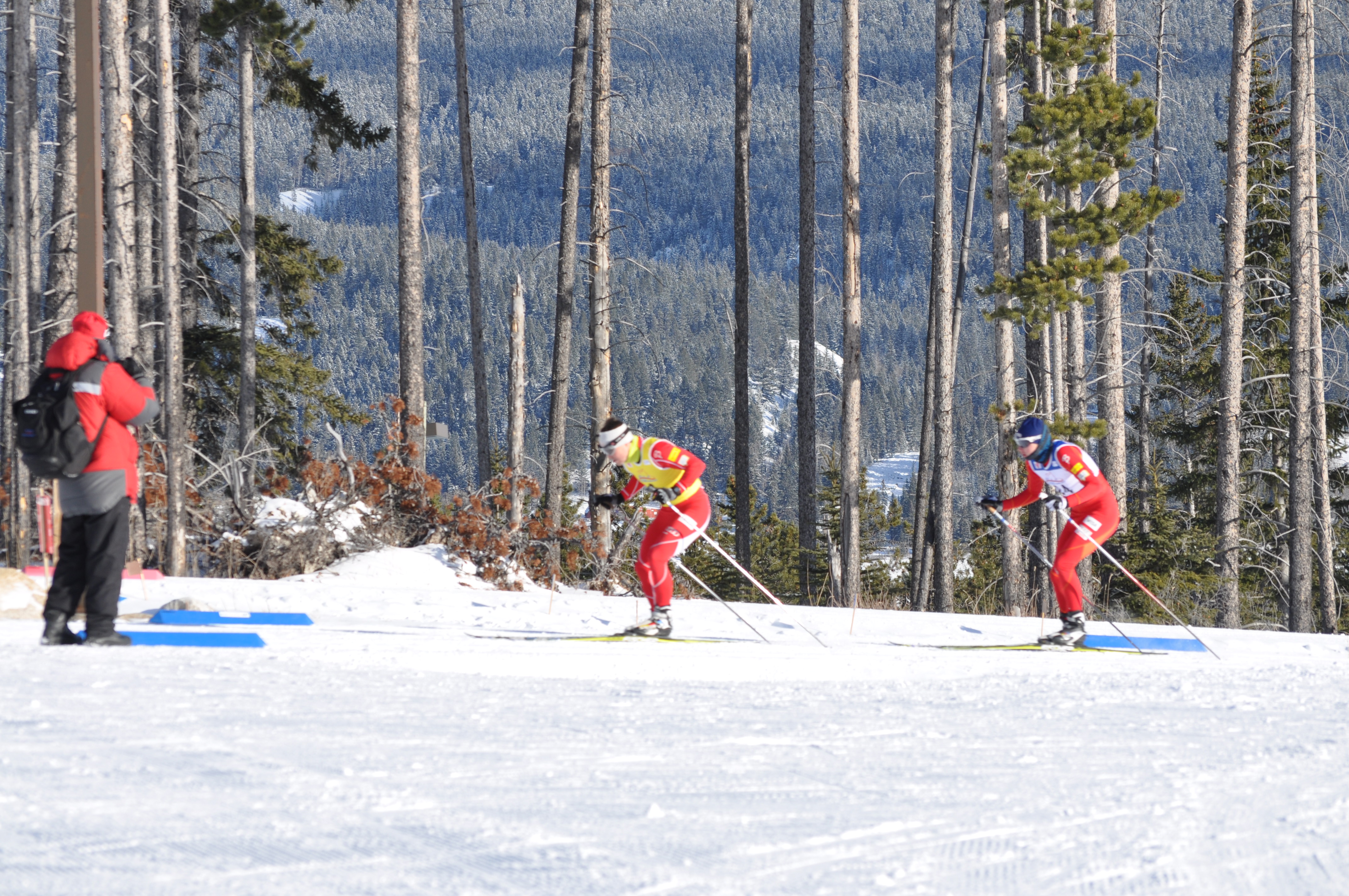
    Reid Pletcher (l) guiding U.S. Paralympic nordic skier, Jake Adicoff  during the 2014 Winter Olympic Games in Sochi, Russia. (Photo: Courtesy Photo)
    Reid Pletcher (in yellow bib) guiding U.S. Paralympic nordic skier Jake Adicoff during the 2014 Winter Olympic Games in Sochi, Russia. (Courtesy photo)

    “I still can’t smell,” Pletcher said of lingering side-effects he still experiences from the fall. “I lost my smell and I lost a significant part of the English language, but I can talk now, so that’s good.”

    “I couldn’t say nouns for a year and a half, like fork, knife, spoon,” he added. “I knew what everything was, I just couldn’t come up with the word. It was the weirdest thing. I still can’t really smell and I’m on some medication for chemical imbalances and stuff, but other than that I’m all engines running.”

    For about a year and a half after the accident, Pletcher continued to ski race. He graduated from CU with a degree in finance and went on to compete professionally for the Sun Valley Ski Education Foundation (SVSEF) elite nordic team.  He won the first SuperTour sprint of the 2012/2013 season and qualified for the 2012 Quebec and Canmore World Cups the next month. However, those December 2012 races would be his last; he ultimately stepped down from ski racing due to side effects from his head injury.

    Yet, it was not the end of his cross-country ski career. After spending a summer leading river trips in Stanley, Idaho, through a company called Mackay Wilderness River Trips, Pletcher received a call from the U.S. Paralympic Nordic Ski Team. They wanted Pletcher to work as a guide for visually impaired skiers.

    “The U.S. Paralympic Ski team called me the winter after I stopped river guiding, the 2013/2014 season and said ‘Hey, if you’re not racing for yourself, do you want to race for visually impaired athletes?’ ” Pletcher explained.

    He decided to go for it and began to training full time with Jake Adicoff, an up-and-coming members of the U.S. Paralympics team. He and Adicoff trained in Sweden for a month and competed in events around the world. Within the year, Adicoff had qualified for the 2014 Winter Olympics in Sochi, Russia.

    “Pretty unbelievable experience,” Pletcher said. “We raced five events together in Sochi.”

    Pletcher Starts Speed Skating

    The rush and euphoria of the Olympic Games is enough to motivate even the non-athlete, sports-enthusiast. For people like Pletcher, it was the spark that reignited his race fire.

    “After going to the Olympics I found the urge to want to race again for myself,” Pletcher said. “But I wanted to try a different sport because I didn’t want the stress and expectations [of skiing] … So I went with speed skating.”
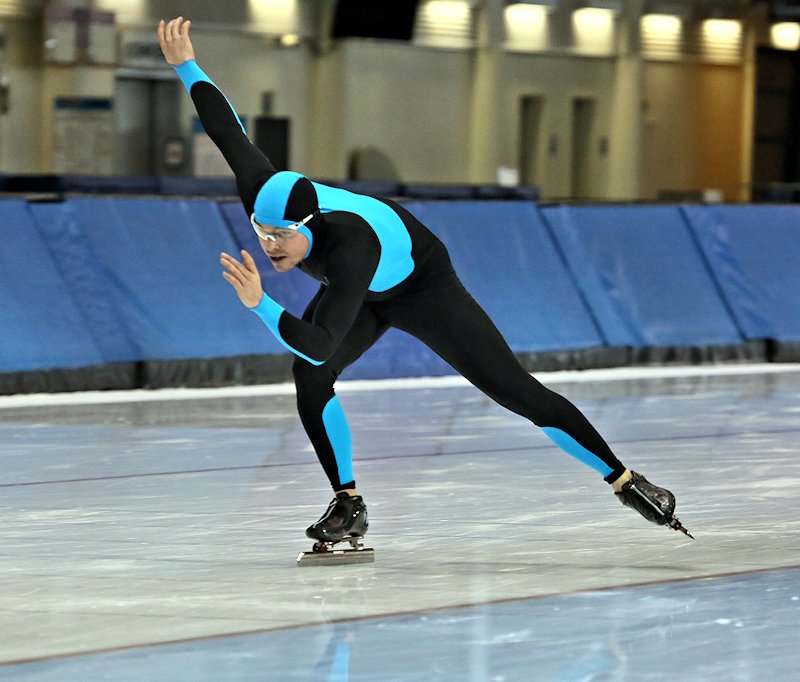
    Reid Pletcher speed skating at the Utah Olympic Oval. (Photo: Courtesy Photo)
    Reid Pletcher speed skating at the Utah Olympic Oval. (Courtesy photo)

    After making a few phone calls and purchases, Pletcher moved to Salt Lake City, Utah with $1,400 dollar speed skates in tow, to train full-time at the Utah Olympic Oval.  Though he indicated that the crossover from nordic skiing to speed skating is historically strong, he also admitted that his limited experience in the sport — in fact, none — made for a difficult transition at first.

    “I just called the Olympic Oval and I visited them a couple times a month prior and was like, ‘Hey, can I just show up and start skating? Like how does this work?’ ” he said. “I was a terrible ice skater — I had only skated maybe ten times in my life before — when I showed up.”

    But being years behind some of the fastest speed skaters in the country didn’t seem to bother Pletcher. If anything, he seemed more confident in his abilities, despite his lack of experience.

    “I had pretty ambitious plans,” he explained. “In speed skating, everything is based off time. If you hit this time, you’re on this team. And my goal was to try and hit every single A-time in six months in my first winter after never speed skating before.”

    According to Pletcher, team status is determined by time. There are three different times a speed skater can strive for: ‘A’ times, ‘B’ times, and ‘C’ times, with ‘A’ times being the most advanced. Pletcher also indicated that there are two types of speed skating: short track, which is classically paired with Olympic speed skater Anton Apolo Ohno, and long track. Pletcher chose long track. 

    In long track, speed skaters race in pairs usually around a 400-meter distance oval, with one competitor starting in an outer lane and one competitor in an inner lane. After a lap, the two skaters switch lanes, so that both ultimately cover the same distance. Results are based on time, with the shortest races taking an average of 35 seconds and the longest races taking an average of six minutes.

    “It took a while for me to figure my sh*t out, but three months in, I was putting some pretty consistent times down,” he said. “And by the end of the season I was super super close to all the ‘A’ times. I was probably about four or five percent off of each of the times.”

    After finishing his first season within reach of the ‘A’ times — despite also having bilateral knee surgery the previous summer — Pletcher knew he still had more to give in the sport of speed skating. However, an opportunity to lead trips on the 104-mile Middle Fork sections Idaho’s Salmon River, pulled Pletcher away from his new professional pastime.

    “The Mackay Wilderness River Trips offered me a significant raise and trip leading on the Middle Fork and that’s pretty much like the top end, what everyone wants to achieve in their river guiding career,” Pletcher explained.

    With that, he decided to postpone the speed-skating dream. He returned to Boise, Idaho, where he is currently living, and began going back to school at Boise State University. Prior to beginning his first semester of mechanical engineering courses this fall, he ventured back to the river for the summer.
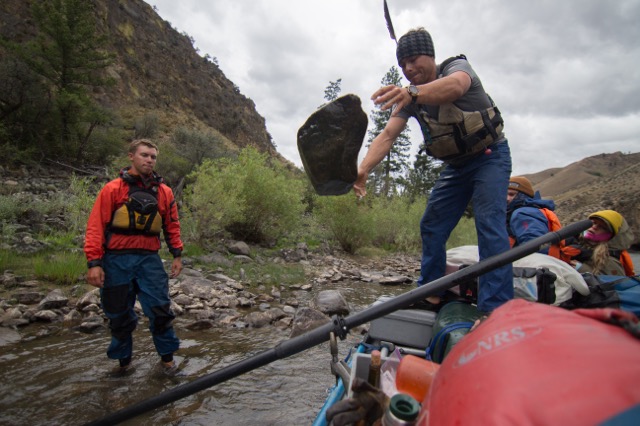
    Reid Pletcher (r) hucks a rock in order to dislodge a trapped oar from the raft during a Mackay Wilderness River Trip. (Photo: Courtesy Photo)
    Reid Pletcher (r) hucks a rock in order to dislodge a trapped oar from the raft during a Mackay Wilderness River Trip. (Courtesy Photo)

    “It’s kind of soul-crushing manual labor sometimes with 22 hour days, but it’s worth it,” he said of river guiding. “Starting June 1st and ending October 1st; seven days on, one day off, seven days on, one day off, I kind of disappear from the world for a while.”

    Yet when winter rolled around, Pletcher realized that for the first time, his usual race season would not include training or racing full-time. Queue American Ninja Warrior.

    “So I didn’t have much to do this winter and this is where Ninja Warrior comes in,” Pletcher said. “My ex-girlfriend, Mali Noyes just texted me and was like, ‘Hey, apparently there’s a Ninja Warrior gym in Salt Lake and there’s going to be tryouts and you should try out, you’re a shifty little guy. That’s, like, exactly what you do. You could be perfect for Ninja Warrior.”

    With that, Pletcher submitted his “Life Story” to ANW, pushing much of he above mentioned experiences in his application video. With a long list of uncommon circumstances, Pletcher was awarded a spot in the show’s Season 8 qualifier.

    “The producer called me for an interview,” Pletcher said. “And she was like, ‘Yeah I just watched your video. Holy sh*t, that was intense.’”

    “I’m glad I stood out,” he added. 

    Pletcher, the Next American Ninja Warrior?

    With two days to go before Season 8 of ANW qualifiers kicks off in Oklahoma City, Pletcher plans is to take it as it comes. On top of having to work with a recovering hand injury, and limited amounts of ANW gym experience, he explained he will most likely be racing in the wee hours of the morning.  

    “I think they do it all through the night because it looks better in the lights,” he said. “So it goes from 10 p.m. to 4 a.m. And most of the families with kids go first for logical reasons. I’m just kind of a lone wolf there, so I’m most likely going to go at 3 in the morning.”

    With only 30 advancing to the second day — those who complete the entire course and those who cover the greatest course distance in the least amount of time — Pletcher plans to watch for the ‘problem obstacle’ and put down as fast a time as possible to that point.

    “My strategy is basically, I’m going to watch as many people as I can before I go,” he said. “I’m going to watch where everyone’s falling and then just try in a controlled way, to get there slightly faster than most other people are getting there.”

    If Pletcher makes it through the first day, he will have to complete the same obstacle course again, along with an extra half-course segment, the following day (Saturday, May 14) to advance to ANW finals. This year, ANW finals will take place mid-June in Las Vegas. Only 15 individuals from the Day 2 qualifier advance to the finals.

    “I’ve trained with three or four other people I’ll be competing against and I have a pretty good feeling, let’s put it that way,” Pletcher explained of his competition. “I mean, I’m a pretty ambitious kid … In the back of my mind, I know I’m strong enough to get to Vegas.”

    If Pletcher qualifies for the Las Vegas finals, ANW will pay for his travel and lodging. However, Pletcher must fund himself at the qualifier to get there. If Pletcher were to make it all the way through the final–which includes a back-to-back four stage course–in the fastest amount of time, he would win $1 million dollars.

    “There are no awards at all except for the one person that wins,” Pletcher explained, adding that last year marked the first year in history where two finalists completed the fourth stage, but only one walked away with the million dolla prize and the other with nothing. 

    “There’s no paycheck for anyone, ” Pletcher said, “So you really got to love it. I mean I could see the drive. I’m the type, where I get through it and I’m like ‘I could do so much better, I’m going to spend all year doing it and I will crush it next year,’ I’m that type of mentality.”

    Regardless of his end result, he relayed that the experience of applying and attempting ANW is worth the effort.

    “It’s going to be an adventure,” Pletcher said. “It already is.”

    Season 8 will premiere June 1 on NBC.

  • Wednesday Workout: Pletcher’s ‘Ninja’ Pull-Ups (with Video)

    Wednesday Workout: Pletcher’s ‘Ninja’ Pull-Ups (with Video)

    Reid Pletcher training in the Salt Lake City American Ninja Warrior gym this month. (Courtesy photo)
    Reid Pletcher training in the Salt Lake City American Ninja Warrior gym this month. (Courtesy photo)

    Ever wonder what it takes to be an American Ninja Warrior? A recent conversation with former professional nordic racer Reid Pletcher revealed the answer to be a little balance, a lot of grip strength, and plenty of patience. With the eighth season of ANW qualification rounds taking place this Friday, FasterSkier presents a workout sure to bring out your springtime cross-country warrior.  

    ***

    Ninety-eight. Ninety-nine. One-hundred. Though this may not represent the average cross country skier’s final pull-up count, American Ninja Warrior (ANW) qualifier Reid Pletcher sees pull-ups in centenary sets as a sure-fire way to prepare for competition day.

    Pletcher, a 2011 NCAA skiing champion, four-year Mackay Wilderness River Trips river guide, 2014 Winter Paralympics nordic guide and pro-nordic-skier-gone-speed-skater (read more about his story here) is most recently a qualifier for Season 8 of ANW. Pletcher divulged that so far, his fool-proof training plan really only involves one component: pull-ups.

    “I applied in November, and then I started my training plan, which was pretty straightforward because most of Ninja Warrior is like grip strength and hanging strength and ladders and pull-up bars,” Pletcher said on the phone. “Most people fail when their grip gives out, so my training plan was do a 100 pull-ups a day.”

    Along with pull-ups, Pletcher also stresses the importance of previewing course obstacles. Though he hadn’t heard of ANW gyms until a week before his qualifier trial date — Friday, May 13 — Pletcher insisted that spending time on obstacles, such as the Salmon Ladder, cannot be understated. Overcoming obstacles such as these not only provide alternative methods of core strength, but also assure the successful ‘Salmon Ladder ascend-er’, infinite bragging rights.

    “You see the the obstacles on Ninja Warrior and a lot of them look insanely hard, but a lot of them look pretty easy,” Pletcher said. “But then when you’re at that gym in real life, it’s pretty eye opening. You’re like sh*t, this is actually pretty hard, even the simple looking ones. I mean there’s probably 300 different obstacles they could throw at us, but I got to jump on 20-30 of them. Which is better than zero. I definitely have a better understanding of what I’m getting myself into now.”

    Pletcher’s American Ninja Workout:

    – Find a neighborhood playground.

    -Spend some time doing pull-ups on the monkey bars.

    – Transition to the swing sets for more pull ups.

    – Return to the monkey bars for, you guessed it, more pull-ups.

    Goal: 100 pull-ups a day (Pletcher says they don’t need to be all at once and can be spread out throughout the day)

    Total Allotted Time: 24 hours

    *Alternatively, check out ninjawarriorgyms.com to see if there’s a ANW gym near you and try your luck on the various gym obstacles.

    Pletcher’s Top Three Pull-Up Suggestions

    1. Jump Back On the Jungle Gym. Go back to your elementary school days, or better yet, your elementary school playground. “Before I found the obstacle gyms, I was literally creeping on children’s playgrounds. Go hang out with little children, but try not to look too creepy and try not to get arrested while they’re swinging on the swings,” Pletcher said.
    2. Don’t Sweat the Small Set. Break up your pull ups into smaller segments. “Do like 10 here, 15 here, 20 there, 10 there throughout the day,” he suggested. “Not all at once, even I’m not that hardcore.”
    3. Failure Forces Refinement. Don’t be afraid to go until your grip goes out. If anything, it’ll make you stronger for next time. “I know at some point my grip is going to give, which I’m fine with because I’ll try as hard as I can until I can’t,” Pletcher said. “The most important thing is I tried.”
  • 2014 U.S. Paralympics Nordic Team Nominated

    2014 U.S. Paralympics Nordic Team Nominated

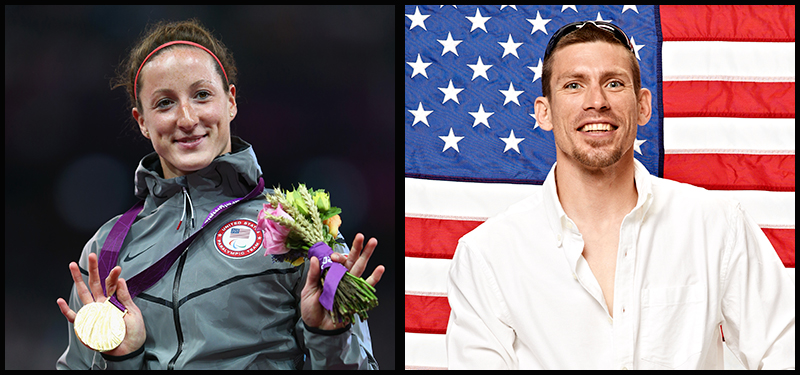
    Tatyana McFadden (l) and Jeremy Wagner are headed to the 2014 Paralympics in Sochi, Russia. (Photo: TeamUSA.org)
    Tatyana McFadden (l) and Jeremy Wagner are headed to the 2014 Paralympics from March 7-16 in Sochi, Russia. (Photo: TeamUSA.org)

    (Press release)

    COLORADO SPRINGS – U.S. Paralympics, a division of the United States Olympic Committee, announced Wednesday that 16 Nordic skiing athletes and two guides have been nominated to the 2014 U.S. Paralympic Team to compete in biathlon and cross-country skiing at the 2014 Paralympic Winter Games in Sochi, Russia, March 7-16. The nominations are subject to approval of the USOC.

    After sending six athletes to the Vancouver 2010 Paralympic Winter Games, Team USA’s Nordic roster will nearly triple in size with 12 men, four women and two guides for visually impaired athletes.

    “We are thrilled to bring such a large team of athletes and professional staff to Sochi,” said John Farra, high performance director for U.S. Paralympics Nordic skiing. “We have made a concerted effort to introduce more athletes to the sports of cross-country skiing and biathlon over the past two-and-a-half seasons, and this growth is a sign of our success in keeping many of them excited about our Nordic sports and working toward becoming internationally competitive.

    “In addition to building the numbers with new developing athletes, we have also focused many resources to help our top athletes get close to hitting the podium. Great focus was given towards equipment design for sit skiers, race ski selection and preparation in partnership with the U.S. Biathlon Association, and access to the best training camps and competitions around the world.”

    2014 U.S. Paralympic Nordic Team Nominees:
    (Subject to USOC approval)

    Women
    Monica Bascio (Evergreen, Colo.)

    Oksana Masters (Louisville, Ky.)
    Tatyana McFadden (Clarksville, Md.)
    Beth Requist (Winter Park, Colo.)

    Men

    Jake Adicoff (Sun Valley, Idaho)

    Omar Bermejo (Grand Rapids, Mich.)
    Kevin Burton (Boulder, Colo.)
    Lt. Cmdr. Dan Cnossen (Topeka, Kan.)
    Travis Dodson (Deming, N.M.)
    Sean Halsted (Spokane, Wash.)
    John Oman (Rice Lake, Wis.)
    Augusto Perez (East Syracuse, N.Y.)
    Aaron Pike (Park Rapids, Minn.)
    Bryan Price (Belton, Mo.)
    Andy Soule (San Antonio, Texas)
    Jeremy Wagner (Nanakuli, Hawaii)

    Guides

    David Chamberlain (Wilton, Maine)

    Reid Pletcher (Ketchum, Idaho)

    Three athletes return from the Vancouver 2010 Paralympic Winter Games, including Andy Soule (San Antonio, Texas) who won the first-ever U.S. medal in the Olympic or Paralympic Winter Games in the biathlon with his bronze in the men’s 2.4-kilometer race. Soule will be joined by his 2010 teammates Sean Halsted (Spokane, Wash.) and Monica Bascio (Evergreen, Colo.).

    Bascio boasts the most Winter Games experience, with Sochi marking her third Winter Games and fourth Games overall.  Having just recently retired from cycling, Bascio is one of three athletes who medaled at the London 2012 Paralympic Games. Other cross-over athletes include Tatyana McFadden (Clarksville, Md.) and Oksana Masters (Louisville, Ky.). McFadden is a 10-time Paralympic medalist in track and field, while Masters partnered with Rob Jones to become the first Americans to win a Paralympic rowing medal in the trunk and arms mixed double sculls event with their third place finish.

    More than half of the athletes nominated to the men’s team are military veterans: Omar Bermejo (Marines/Grand Rapids, Mich.), Kevin Burton (Navy/Boulder, Colo.), Travis Dodson (Marines/Deming, N.M.), Halsted (Air Force/Spokane, Wash.), Bryan Price (Army/ Belton, Mo.), Soule (Army) and Jeremy Wagner (Army Reserves/Nanakuli, Hawaii). Lieutenant Commander Dan Cnossen (Topeka, Kan.) is the only active duty member of the team as he currently serves with the United States Navy.

    Competition for Nordic skiing will take place March 8-16 with March 13 scheduled as an off-day. Nordic skiing includes both biathlon and cross-country skiing, both of which have three events contested at the Games, in addition to two cross-country relays.

    The majority of the U.S. Paralympic Nordic Skiing Team will compete in both sports. A list of events entered by each athlete will be available in February.

    The USOC and NBC Olympics have partnered to provide an unprecedented level of coverage to the Paralympic Winter Games. NBC and NBC Sports Network will combine to air 50 hours of television, starting on March 7 with the Opening Ceremony. It will be followed by daily coverage of all five Paralympic sports in the Sochi program, before the Games’ Closing Ceremony is broadcast on March 16. In addition to the unprecedented U.S. television coverage, the USOC and streaming sponsors BMW, BP, Citi, Liberty Mutual Insurance, Procter & Gamble and The Hartford will provide live online coverage at TeamUSA.org.

    U.S. Paralympic Team nominees for alpine skiing, biathlon, cross-country skiing, sled hockey, snowboarding and wheelchair curling will be finalized by the USOC no later than Feb. 21, the deadline to submit Sochi 2014 Paralympic Winter Games delegation rosters to the International Paralympic Committee. Selection procedures and dates can be found at TeamUSA.org/ParalympicGames/.

  • Hello, World Cup

    Hello, World Cup

    The Quebec City sprint course is practically designed to make competitors feel like rock stars this Friday and Saturday during the much-anticipated World Cups. Photo: Ryan Scott.

    A rare opportunity presented itself this season for a higher than usual number of American athletes to compete in the two World Cups in Canada this December. For many of the best domestic-level athletes in the country, it was the chance to break into the next level and compete for the U.S. on the biggest stage there is in cross-country skiing. Earning one of those start rights became the focal point of the season for SuperTour athletes who thought they had a shot at making it.

    For American athletes in Quebec City about to compete in their first World Cup, that dream became a reality last week in Bozeman, Mont. Two hard-fought sprints later and just like that: they’re here. Hello, World Cup.

    “It was certainly stressful having such important races right off the bat this season,” said Alaska Pacific University’s Kate Fitzgerald “Had a few restless nights wondering how things were going to turn out.”

    Athletes learned they had made it in fittingly dramatic fashion: while lining up for the final race in Bozeman last weekend. U.S. Ski Team Head Coach Chris Grover emailed successful qualifiers the morning after the classic sprint, but at the remote, service-less Bohart Ranch the day of the mass start event, some athletes didn’t see it before departing for the venue.

    “When I heard…I was absolutely floored,” said Crafsbury Green Racing Project’s Pat O’Brien. “I got the news from some of the other athletes that had made the team right before the distance race. Needless to say it was a huge relief going into the last race in Bozeman!”

    The APU contingent found out from a teammate at about the same time.

    “Brent Knight came running up to us ten minutes before the 10 k classic and told us the list,” said APU’s Becca Rorabaugh. “It was a great boost to hear about it before we started; it certainly took the pressure off!”

    “I started yelling and whooping and giving all the girls high fives,” Fitzgerald said. “I was so excited! I knew it was going to be close so it was all the more exciting when I found out that I made it.”

    The cold, hard math of the selection criteria made the last few available spots heart-breakingly close. A single SuperTour point separated the last female who qualified from the first one that didn’t. Two points made that difference in the men’s field.

    “I was ecstatic upon hearing that I had officially made the World Cup team,” said Ryan Scott (SSCV Team HomeGrown). “I had such a disappointing classic sprint race in Bozeman that I thought for sure that I had lost my only opportunity to qualify with that one poor performance.”

    Now that they’ve made it, however, the real work begins. Simply wearing a World Cup bib is not enough; these athletes want to compete. In the words of Reid Pletcher, “TIME TO THROW DOWN!”

    Presenting the Americans who fought tooth-and-nail to make their first Eurosport appearance this Friday and Saturday — their hopes, dreams and aspirations. (For the full list of Americans competing in Quebec this weekend, look over here.)

    Get your cowbells ready.

    __________

    Erik Bjornsen (APU)

    The Methow Valley native has been on the U.S. Ski Team development squad for over a year, but this will be his first World Cup appearance. With a second and third-place showing in the Bozeman sprints, he was pretty clearly going to be on the Quebec roster. Still, Bjornsen said it was satisfying to officially meeting the season-long goal.

    “I was so excited to be named,” Bjornsen said. “It has been my goal since the beginning of the summer.”

    The 21-year-old turned down World Cup start spots last season because he didn’t think he was quite ready. “Now I think I should have a pretty good shot of mixing it up with some guys and I hope that in a couple years I will be a full time World Cup athlete,” he said.

    Bjornsen is approaching the Quebec races like he would any other.

    “I’m doing my usual training leading up to the races,” he said. “I’m sure I will start getting more nervous tomorrow but for now I’m just really excited to be here experiencing it. Quebec City seems really cool and it’s nice to be back with some of the USST crew.”

    __________

    Reid Pletcher (Sun Valley Ski Education Foundation)

    This is his first year out of college, but the Hailey, Idaho, native has already skied twice on the World Cup before: first in Canmore in 2008 at the age of 19 and again in Whistler in 2009. Quebec won’t be his first rodeo, but Pletcher is just as excited about the prospect of racing there as anybody else.

    “I would say I am most excited for the crowds and cheering,” he said. “There is nothing like hitting the last 100 meters and you can’t even focus because the noise is so overwhelming.”

    Pletcher was 35th and 37th, respectively, in Canmore and Whistler. He skied to his best SuperTour sprint result in Bozeman last weekend, and coming off the confidence of the win he wants to see action in the rounds in both Quebec and Canmore these next two weekends.

    “My goals for the next two weeks are to qualify for the heats and be in the mix of things,” he said. “My goals this season were to prove to myself and my competition that I have what it takes to be very competitive in professional skiing. Last week I had my best SuperTour result ever, and the World Cup makes it even more amazing.”

    __________

    Reese Hanneman (APU)

    With his classic sprint victory on Saturday, Hanneman all but guaranteed himself a ticket to Canada. It won’t be his first time on the World Cup stage, having competed in Canmore in 2010, but that didn’t make the moment he realized he was going any less meaningful.

    “When I actually saw my name on the list, it was a mix of excitement and calm,” Hanneman said. “It’s something that I had as a goal for such a long time, and I have spent so much time and energy trying to actually do it, and so to complete that objective gives you a sense of completion.”

    Like Bjornsen and Pletcher, Hanneman has moved past the initial excitement and says he’s ready for World Cup action — “Now I’m just so amped up!”

    In Canmore in 2010, where he was 70th, Hanneman was “inevitably nervous and star-struck,” he said. “Now I feel like I will be in a much better place mentally, having a lot more international racing experience and just more high level racing. My goal is to be able to just keep myself calm and go about business like its just another race, albeit an important one.”

    __________

    Skyler Davis (SMS T2/USST)

    Davis’ World Cup debut in 2011 didn’t go as planned thanks to mono, but it’s a different year and different season now: with a new coach and new team, Davis is feeling good about where he’s at.

    A slight cold held him back in Bozeman, but now Davis says he’s back to feeling 100% headed into the big show, and has a top-30 in his sights.

    “My biggest goal is to make it into the rounds,” Davis said. “I believe I’m capable, just have to put it together.”


    __________

    Pat O’Brien (CGRP)

    Craftsbury went to more training camps this summer in order to push its intensity with people from around the country, and for Pat O’Brien, the work paid off.

    “Obviously being my first World Cup, I am simply excited for the experience,” he said. Other than a few FIS races in Europe this will also O’Brien’s first significantly international race.

    “So much of ski racing is seeing that higher level and figuring out how to get there. The US girls have shown this year that there is no reason the American skiers can’t succeed on the big stage. It’s just a matter of hard work and believing in it.”

    He has performance goals, but believes the World Cup exposure will be more valuable than anything. The atmosphere will probably be pretty cool, too.

    “You know that everyone will be showing up and cheering like mad, especially for Alex Harvey. If he had a helicopter following him at Canadian nationals, imagine how nuts it’s going to be for a World Cup city sprint! I think this is great for the sport, to show Europeans that yes, skiing may not be the biggest sport here in the US or Canada, but it is a sport on the rise and something people care hugely about.”

    __________

    Ryan Scott (SSCV Team HomeGrown)

    The Boulder, Colorado, native spent a lot of time working on his skate sprinting this summer specifically for the purpose of competing in Quebec. “My emphasis all fall was to develop true speed for flat terrain,” he said.

    A few man-made bumps represent the only climbing on the city street course, which suits Scott just fine. “I do think this course…suits my skiing skyle and so I know that I will be prepared for a good performance. The first SuperTour races of the season were a great warm-up for these races.”

    Like his countrymen, Scott has high expectations — merely qualifying is not enough, he’s looking for a top-20.

    “Racing at such a large venue as in Quebec will be unparalleled to anything I have experienced in the U.S.,” he added. “The crowds provide great motivation so that will be something that I look forward to most. The team sprint will be an excellent chance to test my fitness and stay competitive with the rest of the field.”

    __________

    Dakota Blackhorse-von Jess (Bend Endurance Academy)

    Blackhorse-von Jess found out a little bit after everyone else that he would be going to Canada, as a new spot became available when Torin Koos declined the trip. He and coach Ben Husaby thought for a moment whether they’d be able to make it work, but realized “there aren’t any drawbacks to going and this is living the dream the way we all envision it,” Blackhorse-von Jess said.

    The Bend native has been to the big show before. In the Whistler World Cup in 2009, he was 34th in the classic sprint. As the last name on the qualifying list this year he has just the individual race to turn in the performance he wants: a top-30. In 2009 he says he let the whole production get to him; this time he knows what to expect.

    “I’m here to compete. You don’t get a lot of opportunities (they are few and far between with a lot of talented athletes competing for them) so when you get a chance like this, you have to do everything with it you can,” Blackhorse-von Jess said.

    “From watching Simi [Hamilton]’s career as a World Cup skier, it’s pretty clear that being off even a little can end a day early, but also that there is a completely reasonable expectation for success, even with little or no World Cup experience. So the plan is to go out there and qualify as fast as I can. It’s time to quit being a little conservative during qualifying and push deeper. Find that extra bit I’d normally save and push it as far as I can. This field isn’t looking like the normal weakened North American field of the last few years, so every hundredth could make the difference.”

    __________

    Sophie Caldwell (SMS T2)

    With numerous Junior World Championship trips under her belt, Caldwell is no stranger to high-profile international skiing. But this is the big-leagues, and as it will be the first World Cup of her career, she was thrilled when she heard she’d made her biggest early-season goal.

    Now that she’s here Caldwell is not sure where she’ll stack up, but is looking forward to turning in the best race she can.

    “I’m really looking forward to racing in the city,” she said. “Sadie [Bjornsen] told me the city sprint is the most I’ll ever feel like a celebrity in my life! I have a lot of family and friends coming up so it will be fun to see everyone and hopefully I’ll have some good races.”

    __________

    Lauren Fritz (APU)

    Fritz has seen Alpen Cup and OPA Cup-level skiing before, but this will be her first World Cup experience.

    “I’m pretty psyched to be here,” she said. “It took a while to process that I actually made the cut, but it was exciting to get the news with my teammates who also made it. There were a lot of high fives.”

    Once she takes to the snow in front of the Parliament building, Fritz says she’s going to go out and ski the best race she can.

    “Hopefully the results will be good. I have a tendency to do pretty well when I have no real expectations because I’m just psyched to be skiing and I’m more relaxed,” she said.

    “I think Quebec is going to be awesome because there are going to be a lot of fans here cheering for the Americans — family, friends from the East coast driving up, etc — and i’ve never done a race that is packed with fans the entire way.”

    __________

    Corey Stock (Dartmouth/Cambridge Sports Union)

    The 18-year-old from Massachusettes has done it again, and skied much faster than where her experience level would have predicted. It must be time to get used to it.

    The Dartmouth freshman focused her training this summer, spending time with APU on Eagle Glacier to give herself competitive training partners and quality on-snow time. Based on her third-place finish in the Bozeman classic sprint, which was thisclose to being a place or two higher, Stock clearly knew what she was doing. Now she’s in Quebec for her first World Cup races.

    Stock is a fierce competitor, but once the bib comes off after a race she’s all happy excitement, and makes a point of soaking in every part of her experience. It’s just a hunch, but we’ve a feeling the World Cup scene will be a commonplace one for her down the road.

    __________

    Becca Rorabaugh (APU)

    The Alaskan competed in the Canmore World Cup in 2009, where she was 59th in the classic sprint. Though she says she’s been a bit more tired than usual this fall, she’s worked more recovery into her preparation to be ready for Quebec. Rorabaugh certainly has a handful of international races under her belt, so she knows what she’s in for.

    “I was really relieved to hear that I was going. I knew I must have been close,” she said. “I really hope to improve on my last sprint place in Canmore, and I am so excited to be around a city sprint atmosphere!”


    __________

    Kate Fitzgerald (APU)

    It’s always thrilling to watch Ftizgerald race because every time she puts on a bib, she pushes herself just a bit further over the edge than those around her. Her reaction to finding out she’d made the Quebec team demonstrates why: it means that much.

    Now that she’s in Canada for her World Cup debut, Fitzgerald is taking in every part of the event.

    “The whole experience is so new to me so I do not really have many expectations,” she said. “My plan is to enjoy this incredible experience, soak it all in and see what it is like to be a World Cup skier! And on race day I plan to approach it like I do any other race- work hard and try my best. Only in these races I get the unique opportunity to see where I stack up with the best skiers in the world!”

    __________

    Caitlin Gregg (CXC)

    Unlike the rest of the Quebec qualifiers from the SuperTour, Gregg has seen her fair share of World Cup, World Championship, and Olympic-caliber racing. She was on her way to making the switch to post-skiing life this summer when she realized, after taking four months off of training to go to school, that she missed the sport too much to leave it quite yet.

    “With such a short amount of time to prepare I feel very fortunate to have skied as well as I did in Montana and to be heading to the World Cup,” she said.

    Her goals now are simple: to ski the best she can.

    “The US women are so strong right now on the World Cup and that excitement and enthusiasm is contagious,” she said. “I fell like I am racing in the company of celebrities and they are from the USA! The atmosphere of the City will bring an amazing amount of energy to the races.”

  • Pletcher Comes From Behind to Take Skate Sprint in Bozeman

    Pletcher Comes From Behind to Take Skate Sprint in Bozeman

    Reid Pletcher, victorious in the first true sprint of the season in Bozeman, Mont. Erik Bjornsen (left) was second and Ryan Scott (center) took third.

    BOZEMAN, Mont. — A certain excitement hung in the air at Bohart Ranch on Thursday morning. Perhaps it was because this was the first true sprint of the season. Maybe the field was happy to finally contest the event that was cancelled last weekend. Sprinting in its true, head-to-head format was also a long time returning to the beginning of the SuperTour calendar. Expectations were most certainly piqued with several World Cup qualifying spots up for the taking.

    When it was all said and done — the qualifying, the heats, the nervous skiing around between races — Sun Valley Ski Education Foundation’s Reid Pletcher came out on top, just edging out Erik Bjornsen (APU/USST) and Ryan Scott (SSCV Team HomeGrown). Alex Howe (Craftsbury Green Racing Project) finished a close fourth, Skyler Davis (SMS T2/USST) took fifth and Torin Koos (BSF/Rossignol) straggled in sixth.

    Pletcher finishing with Howe in the earlier heats.

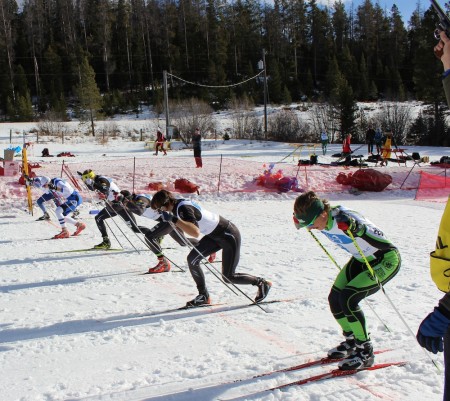
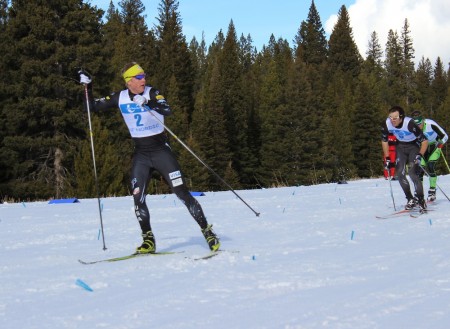
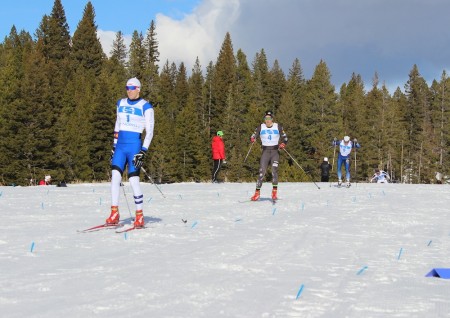
    Pletcher flew under the radar throughout the morning, qualifying in fifth and never once winning a quarterfinal or semifinal. Even in the final round he followed the leader and tucked in behind Scott, who had dominated each of his earlier heats and did the same in the early stages of the final. Pletcher hadn’t even expected to make the last round, and at that point was simply skiing to hang on.

    “I was hoping for a top twelve,” he said. “I mean, I have a decent history in sprinting, but I haven’t done heats in years because of college racing [for Colorado University].

    “I’ll take this one, for sure. [The Quebec World Cup] would be amazing. All my goals are coming through, so I feel pretty good about this. I needed a good result to show me I was on track.”

    Earlier that morning, Pletcher finished second to Scott in his quarterfinal just ahead of Sam Naney (Methow Olympic Development/Madshus). In the semifinals he scraped through in third thanks in part to crashes that took out Rune Odegaard (Colorado University) and Pat O’Brien (Craftsbury Green Racing Project). All day long, Scott and Bjornsen made it look easy and Pletcher seemed to require more of an effort to survive each round. Or perhaps that’s just his style of skiing.

    “I was thinking for the final, I’m not going to have the energy for it, I’m just going to try to hold on.” Pletcher said.

    The men’s final leaving the line.

    He managed leave the double pole zone in second, but Scott quickly gapped the field and there was no drafting him. But before long he and Davis, who ended up in fifth, worked together and caught back up in time to catch a pull down the final hill.

    “I had the advantage on the downhill, and there was a strong headwind into the finish,” Pletcher said. “It just worked out. I had a little draft and did a little slingshot move coming into the finish. It went better than planned. It was phenomenal.”

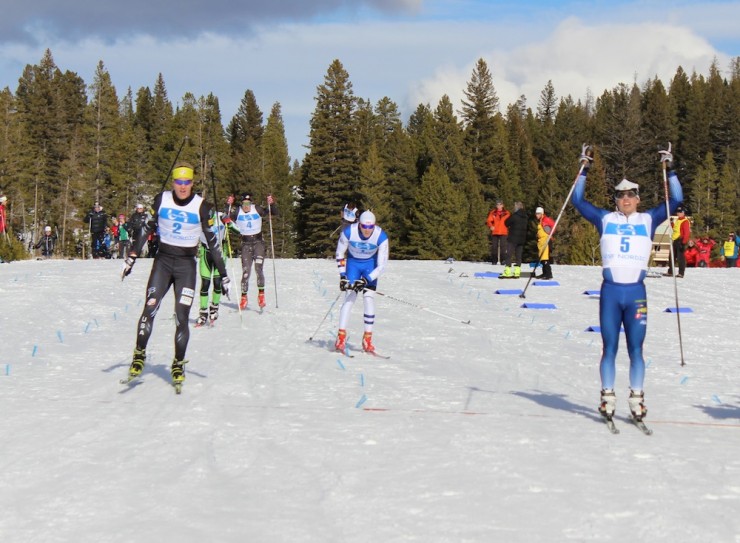
    The difference between the top three was slim, but the win was definitive enough for Bjornsen to look sideways in the last stretch to see Pletcher with his arms already raised in celebration.

    A new International Ski Federation (FIS) rule gets rid of the penalty for changing finish lanes and Bjornsen made the most of it, first choosing the line behind Pletcher and then traveling left in front of Scott’s. In the end, though, Pletcher simply had too much momentum.

    “I’m always going for the win, but second is awesome so I’m pretty happy about that,” Bjornsen said. The USST D-Team member dug his way out from the back of the pack early on to first pass Koos, then Davis, then Scott.

    Bjornsen easily sliding through his semifinal.

    “I took it slow, so I felt I had quite a bit of energy left, and got past this big kid [pointing to Davis] on the flat section before the finish. Ryan was kind of dying, so I got past him. I was happy; it was fun.”

    Scott, who won the qualifying round and breezed through each of his heats without needing to exert much energy in the finish, said that he may have ultimately underestimated the men who lined up next to him in the final.

    “I had a lot of confidence coming out of last week,” Scott said. “My goal was obviously to win today; I just didn’t quite play it right in the final.”

    After skiing so easily through the rounds, Scott set out to immediately put distance between himself and the field in the last one.

    “I sized up the guys I was against and thought my best bet was to try to break [them], because I know they’re real quick in the finish,” Scott said. “I thought perhaps if I could string them out, and I’ve been feeling good, then I could maybe break them. The other heats I never had to finish very hard because I was able to break the group earlier, but not so much in the final. I underestimated the speed of the group a bit.”

    Scott, leading Davis and Pletcher, coasting through the end of the semis.

    Not appearing too put out, Scott concluded that he’d simply take Thursday’s performance as fuel for the next race, a classic sprint on Saturday.

    In fourth place, the domination of the SuperTour rookies continued with Alex Howe (Craftsbury Green Racing Project). The University of Vermont alum qualified in sixth and next won his quarterfinal, beating Pletcher. In the final he got boxed out and stuck at the very back of the pack, but bided his time and slowly moved up. Howe’s expectations earlier that morning had simply been to advance.

    “I really just wanted to be able to qualify and ski more than once,” Howe said. “So I was really happy.”

    Davis, in fifth, gave his result a “six out of ten.” He skied in second or third for most of the race but built up lactic acid in his legs so that, by the end, he was running on steam and upper body strength.

    “I came up into the finish and my legs were just gone,” he said. “It did anything to try to stay with these guys.”

    Koos, once unbeatable in any given sprint, has been battling illness recently and finished the final behind the field with his arms on his knees and his head down. The image is perhaps emblematic of a changing of the guard that seems to be taking place on the domestic circuit — the top five male sprinters on Thursday were all 24 years old and under.

    “I’m definitely excited to see younger guys skiing fast and coming through now,” Scott said. “I think it definitely bodes well.”

    Official results.

  • SuperTour Preview: Get ‘Em To the World Cups

    SuperTour Preview: Get ‘Em To the World Cups

    The major focal points for the SuperTour field this year are qualifying for the Canadian World Cups in December and World Championships in February. Photo: Flying Point Road.

    Ready or not, the 2013 SuperTour season is fast approaching. Here’s what you need to know about the domestic race scene this year.

    At this point, we’ve pretty much said everything we can about the twelve senior ski programs in the U.S. We ran a series throughout the summer highlighting each team’s past accomplishments and goals for the future. Read back through ‘em for comprehensive rosters and standalone previews (scroll down for links). Now that it’s November, it’s time to discuss who stands a shot at beating whom.

    First, there are a few unusual things about the race schedule to understand, as domestic results have an important role to play in qualifying athletes for bigger things this season. The U.S. can enter more athletes than usual in each World Cup race in Canada and can have eight athletes of each gender on its World Champs team, meaning that U.S. Ski Team (USST) members have a shot at top-end international competition this winter (those on the USST are not guaranteed World Championship slots, either).

    Not surprisingly, the big focus is a combination of Canadian World Cup starts and World Championships. The overall, sprint and distance SuperTour leader(s) at the end of each competition period get World Cup start rights no matter what year it is, but being consistently fast enough to be in one of those positions is hard.

    The five extra Nation’s Group spots afforded to the U.S. for each of the Quebec and Canmore World Cup races will be partially filled based on the SuperTour standings after the Bozeman races. With selection criteria theoretically reaching further into the field and requiring just two weekends of top results, the international stage suddenly seems much closer and more attainable. Who cares if SuperDario Cologna won’t be there, it’s still the World Cup!

    World Championship criteria are a slightly different story, but early SuperTour races could still help decide who gets to go. The U.S. will bring up to eight men and eight women, with the first spots going to athletes who reach a certain World Cup ranking by January 14. After that, USSA goes down the National Ranking List, which is created off of competitors’ best four USSA-scored races from the twelve months prior to the selection date.

    The road to Val di Fiemme, then, has already begun. The beginning of the current SuperTour and the week’s worth of racing at U.S. Nationals are further opportunities for athletes to turn in one of their four-best results and move up the ranking list.

    Consequently, there’s a lot potentially riding on the SuperTour this year, despite the continued absence of leader bonuses at the end of the season. It’s not that everyone wasn’t trying hard before, but with a handful of top-level start rights on the line that only come around every so often, things could get feisty. Dreams will come true and hearts will be broken.

    Now, the players: last year’s overall SuperTour leaders, Sylvan Ellefson (SSCV Team HomeGrown) and Jessie Diggins (SMS T2/USST), are already in Europe and out of the domestic picture for the next two weekends. Even so, the potential lineups for West Yellowstone and Bozeman are impressive.

    The Rookies

    Eric Packer (DAR). Photo: Flying Point Road.

    For the purposes of this preview, athletes can pretty much be divided into two groups: knowns and unknowns. Every spring a handful of top-tier college skiers graduate and the domestic circuit gets an injection of new blood. Most graduates have competed in SuperTours before, but not when it’s actually been their job to ski fast.

    So while the rookies aren’t joining the circuit as complete unknowns, their changed training circumstances can make the first results of the year a bit of a surprise. The 2012-2013 freshman class has generally never trained without academic demands competing for their time, and given the results they’ve been able to churn out even during school, count on them disrupting the status quo on the SuperTour this year.

    Take Eric Packer, who joins the SMS T2 team from Dartmouth College and already has a handful of SuperTour and national podiums to his name. Packer was probably the most consistent college performer, sprinting and distance-wise, on the circuit last year, and could be ready for a significant step forward in his transition to full-time racing.

    Reid Pletcher (CU) winning the skate sprint qualifier at West Yellowstone, 2011.

    There’s also Reid Pletcher, who has been described as a “sprint fiend” and returns to skiing for Sun Valley this winter after graduating from CU. Remember how he won the skate sprint in West Yellowstone last year, just six months after a climbing accident landed him in the ICU? Yeah, that was ridiculous. Imagine what he might do this winter with a strong summer of training behind him.

    Ryan Scott will be another sprinter to watch for. Regardless of the whole obstruction controversy, he was still in the classic finals at U.S. Nationals. At U23s he was the top American performer in the freestyle sprint. He didn’t race a whole lot after that, but his coaches at Ski & Snowboard Club Vail think he’s looking mighty fast in the run-up to the first race of the year.

    In the women’s field, newcomer Sophie Caldwell (SMS T2) presents the greatest threat to the usual SuperTour standbys. Amy Glen (Craftsbury Green Racing Project) did beat her by a toe-length at the biggest college race of 2012, but the name Caldwell regularly shows up at or near the top of the results sheet week after week — whether it’s Sophie or one of her equally fast relatives.

    The Upperclassmen

    Though they represent relatively known quantities, the more seasoned SuperTour athletes are no less intimidating for it. They’ve been around the block and they know what it takes to be at the top of the domestic field.

    Jennie Bender (CXC) was the second-ranked woman on the SuperTour last year, and stands a good chance at leading it in winter with Jessie Diggins now in Europe. Photo: Flying Point Road.

    Central Cross Country (CXC) was indisputably the best all-around team last year, and won the National Nordic Foundation’s team trophy in a landslide to prove it. The Midwest squad has lost a few athletes and coaches to other programs since last spring, but still claims four athletes ranked in the top five on the SuperTour in 2012: Jennie Bender, Karl Nygren and Caitlin and Brian Gregg. Look out for their fire engine-red spandex when the gun goes off.

    The next team to mention is undoubtedly Alaska Pacific University (APU). Sadie and Erik Bjornsen (APU/USST) are both racing stateside this November, and present a formidable threat when united with the rest of their teammates. Kate Fitzgerald, Becca Rorabough, Rosie Brennan, Reese Hanneman, Peter Kling — the Alaskans have a lot of returning talent. Thanks to Eagle Glacier, they’ll also be stepping onto their skis with more on-snow hours under their belts than anyone else.

    From the Bridger Ski Foundation, Torin Koos and Leif Zimmerman present solid all-around threats. Zimmerman has traditionally pulled off a distance win at West Yellowstone every year, and Koos will no doubt be looking for redemption for getting erased from the results the last time he raced in the U.S. When we spoke with him in June, Koos said that every day he thinks about the Canadian World Cups more than anything else.

    He’s probably not the only one. Mikey Sinnott (SVSEF), after finally earning his first World Cup starts in March, will be raring to get back. With two real, actual, sprints on the schedule in the first two weeks, Sinnott should be in contention to go to Canada. His teammate Matt Gelso is another name to watch in both sprint and distance. Representing Sun Valley’s women, Chelsea Holmes is coming off a strong finish to her 2012 season, where she was fifth in the 30 k at distance nationals.

    Matt Liebsch (Team Strong Heart/Team Birkie) skiing to the finish. Photo: Flying Point Road.

    Racing for Team StrongHeart/Team Birkie, Matt Liebsch is a perennial distance challenger. He took second in the 15 k freestyle at nationals and usually puts up solid distance results at the opening races. This year he’s been training in West Yellowstone longer than anyone getting ready to hit the ground running on November 23.

    In the east, the CGRP has another impressive lineup. Tim Reynolds and Pat O’Brien both finished the season strong at distance nationals and will want to continue the trajectory in 2013. To the north, Maine Winter Sports Center’s Welly Ramsey has been logging the hours with Kris Freeman and apparently been able to keep up at times, which can only be good for his skiing. Skyler Davis will be on the domestic circuit for the first period, at least, and could be a sprint contender for SMS T2 if he’s in full form.

    From Oregon, Dakota Blackhorse-von Jess (Bend Endurance Academy) proved last year he is not to be overlooked on a sprint day. And with more of those legitimately on the SuperTour schedule this year he’ll have plenty of opportunity to contend in the heats. XC Oregon added Santi and Carolyn Ocariz to its roster this year, and returning skiers Matt Briggs and Ollie Burruss will be looking to top their career-best SuperTour finishes from last season.

    That’s a lot of skiers entering the starting gate this week, and this list doesn’t even include everyone. At some level, each athlete is trying to do the same thing: ski better than they ever have before and hope that it’s enough to break through to the next level. The trouble is, they’ll have to get around each other first.

    * * *

    For more in-depth discussion of each team and its athletes, read FasterSkier’s features from this summer:

    Alaska Pacific University Nordic Ski Center | Bend Endurance Academy | Bridger Ski Foundation | Craftsbury GRP | CXC | Far West Farm Team | Maine Winter Sports Center | Methow OD | SMS T2 Team | SSCV Team HomeGrown |  Sun Valley SEF | XC Oregon

  • Elite Team Preview: Sun Valley Gold Team

    Elite Team Preview: Sun Valley Gold Team

    Sun Valley Ski Education Foundation 2012/2013 Gold Team (SVSEF photo)

    Note: This is the eighth preview in a quick-and-dirty series on U.S. elite teams. We asked coaches to send their 2012/2013 rosters and tell us what’s new for the coming season. We will be publishing additional reports over the next few weeks. Teams are presented in no particular order.

    Team: Sun Valley Ski Education Foundation (SVSEF) Gold Team

    Coaches: Colin Rodgers (head coach), Clarke Sullivan (service tech)

    Roster: Simi Hamilton (U.S. Ski Team), Mike Sinnott, Matt Gelso, Reid Pletcher, Patrick Johnson;

    Chelsea Holmes, Alexia Turzian, Mali Noyes, Lucy Garrec

    Who’s new: Patrick Johnson (2012 Middlebury grad); Lucy Garrec (University of Vermont grad, spent previous summers training in Sun Valley); Mali Noyes (moving up from junior squad, University of Utah grad)

    Who’s missing: Morgan Arritola (2010 Olympian, former USST member)

    Top results last season: A regular on the World Cup circuit, Hamilton landed in the Red Group and earned a spot on the USST A-team this spring. He notched a career best of seventh in March at a classic sprint in Drammen, Norway. Before that, he finished 10th in December at a World Cup skate sprint in Rogla, Slovenia.

    Mikey Sinnott (left) working on his sit-ups during a recent workout with the Lucy Garrec and the rest of the Sun Valley Gold Team in Idaho. (Photo courtesy of Colin Rodgers/SVSEF)

    Sinnott started several World Cup races this year and cracked the top 50 twice, finishing with a season-best 37th in a skate sprint in Moscow. Holmes made the podium at SuperTour Finals, finishing third in the hill climb in Jay, Vt. She was fifth in the 30 k freestyle mass start two days later.

    About six months after suffering serious head injuries in a rock-climbing accident, Pletcher won a SuperTour skate sprint at West Yellowstone last November. After graduating the University of Colorado at Boulder (CU) this spring, the 2011 NCAA champion is back home in Idaho, and SVSEF program director Rick Kapala thinks he’s ready for life as a full-time racer.

    “You can’t help but love his enthusiasm and effort,” Kapala wrote in an email. “I think Reid will be a force on the circuit right away … and that’s good not just for us but for skiing.”

    Another former NCAA champ, Gelso won a SuperTour 10 k in February in Aspen, Colo., and was sixth at U.S. nationals in both the 15 k skate and 30 k classic.

    Turzian worked hard to graduate CU last fall and was back into racing form by the end of the season, placing ninth in the 30 k skate at U.S. Distance Nationals in March. Kapala wrote they were “psyched to have her for a full season” this year.

    Gold Team rookie Patrick Johnson climbing Snowyside Peak near Ketchum, Idaho. (Photo courtesy of Colin Rodgers/SVSEF)

    As a Middlebury senior, Johnson won several NCAA races and EISA titles, and placed ninth at U.S. nationals in the 15 k skate. Kapala explained that Johnson’s distance strengths were important for Sun Valley, which has been “a little sprint heavy on [the] guys team for a couple of years.”

    Garrec had similar success at the college level, tallying numerous carnival victories and helping UVM win the 2012 NCAA championship with third- and fourth-place finishes. In past summers, she trained with Sun Valley as a guest.

    “Adding her was a very easy decision,” Kapala wrote. “She also seems to have a lot of confidence in her approach and we really value that sort of direct, no-bs approach to training.”

    Previously a Sun Valley junior, Noyes posted several strong results – including two SuperTour top 20’s – in her post-grad year. Kapala considers the junior-nationals champ an all-around skier, which is good for the distance-heavy women’s squad.

    From the program director: While Sun Valley will miss it’s longtime racer and former USST member Morgan Arritola, who retired this spring, Kapala wrote they were looking forward to maintaining the strength of both their women’s and men’s teams. Rodgers, an accomplished skier who still competes, enters his second years as head coach, and Kapala said the athletes value his attitude, work ethic and knowledge.

    The Gold Team has a new wax tech in Clarke, a former U.S. Nordic Combined staff member who also worked for Madshus and the Bridger Ski Foundation (and skier Torin Koos).

    “We had to take a step forward on the service side of things. It is just too much to ask someone to coach 8-10 athletes AND manage ski services,” Kapala wrote. “Clarke has been in the game quite awhile and worked for us last year. … He’s really into the process of helping the skiers in every way he can.”

    “Every season poses new challenges,” Kapala continued. “We are establishing our team personality, our  ‘QUAN’ if you will. Those other programs out there are very solid and for sure we can expect that our guys and gals will need to give it their all for us to meet our team goals and for them to meet their own goals. But that’s sport.  That’s what is fun and rewarding about being involved with sport at any level. It’s a blending of the human, the method and the spirit.

    ‘”We are very fortunate to be able to promote skiing in our community and across the US through the efforts of our Sun Valley program and while we are still months from the first big races at the World Cup and at the Super Tour, it also seems like we’ll be there tomorrow.  Every day, every workout is precious.  Today we GET to be cross-country skiers.”

    Coach’s comment: The entire Gold Team is currently training in Sun Valley for the week of July 4th, according to Rodgers.

    “We are doing some dry-land training and preparing for our on snow camp in [Alaska],” he wrote. “ We head up to Anchorage to train with APU on the 10th.  The plan includes 5 days of sea level training with sme speed and intensity followed by 7 days on-snow on Eagle Glacier.  Everyone is looking forward to some great training.”

    ***

    Other previews: Bend Endurance Academy | Craftsbury GRP | CXC | Far West | Maine Winter Sports Center | Methow OD | XC Oregon

  • Notes and Quotes from the Showdown


    Diggins suffering after her classic victory.

    With four separate races run in West Yellowstone on Wednesday, there was a lot going on. Here are bits and pieces of what didn’t make the official race report cut:

    On Getting the Season Started

    “At the start of the season you never quite know where you’re at, it takes a bit of time to get into the race season. We typically try to have our athletes start in good shape.” Chris Jeffries, Alberta World Cup Academy coach

    On the Uniquely Hilly Course

    We talked with Chief of Competition David Robinson just prior to the start of the classic sprint about new features on the sprint course. Due to technical difficulties, we weren’t able to upload this interview before the start of the race, but here it is now (apologies for the gradual lens-fogging):

    “It is definitely different to finish off a sprint with a climb like that. The first half of that climb — that new bench (a newly-cut, more gradual trail up the first part of the final hill) is a really nice sprint climb…It’s a Tour de Ski [final climb]-style at the top; you just get over the line before you fall over.” Reese Hanneman, APU

    “I liked [the uphill finish], it was good, hard. I like V1 though.” Brian Gregg, CXC

    On Equipment Failures

    “Sometimes that lights a positive fire under my butt, even if I don’t feel it at the time. Perhaps [losing a basket] gave a boost of adrenaline.” Jennie Bender, CXC

    On Returning to Racing after a Serious Head Injury

    “I feel a little behind on training after missing two months. All of my time trials this fall have been a couple of seconds behind last year’s times…Mentally I’m a little behind, but physically…” Reid Pletcher, CU

    On Appreciating Your Crew

    “I’m so impressed with the waxing. We’re not one-man bands, any of us. I’m just so impressed with our coaches; waking up at 5:00 am must be so fun!” Jessie Diggins, CXC

    On Jumping in His First Classic Race in Four Years

    U.S. Ski Team Nordic Combined B-teamer Nick Hendrickson competed in both sprint races on Wednesday — the classic race was his first time competing in the discipline in “four or five years.” He ended up in 36th in the classic and 37th in the freestyle. Check out this interview with him at the end of the day:

  • Sinnott Clinches Overall Sprint Showdown Victory; Pletcher Comes Back From Injury to Win Skate

    Sinnott Clinches Overall Sprint Showdown Victory; Pletcher Comes Back From Injury to Win Skate

    Reid Pletcher (CU). Agressive.

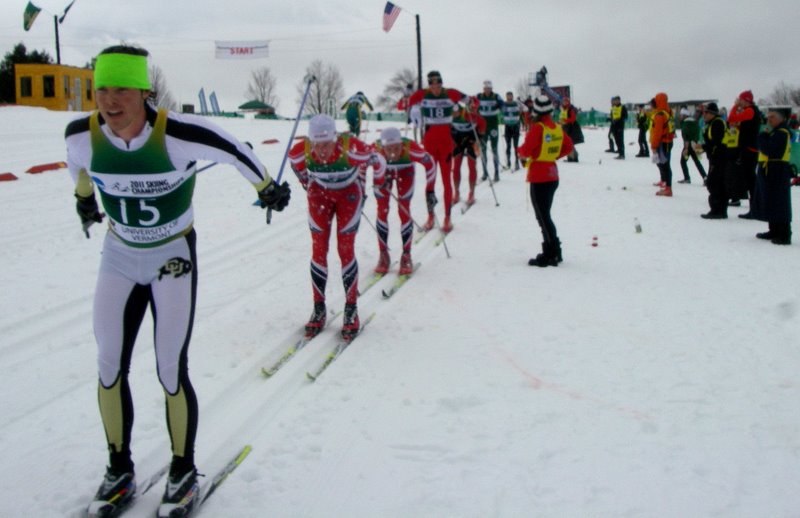
    If there was any question as to whether Reid Pletcher would be able to make a comeback after his climbing accident this May, wonder no more. Despite taking two months off of training this summer to recover from severe head trauma from a fall in Boulder Canyon, the Colorado University senior silenced doubters by winning the skate race at the West Yellowstone SuperTour Sprint Showdown on Wednesday morning, 0.25 seconds ahead of runner-up Mike Sinnott of the Sun Valley Ski Education Foundation (SVSEF). Matt Gelso (SVSEF) rounded out the skate podium in third at +1.82.

    “[The race] went better than planned,” said Pletcher after his skate race, before results had been posted. “Physically, I’m 100% back…I’m just going to race my way back into shape. I feel great, considering.”

    His competitors were understandably impressed with his performance. “That is just amazing,” said Alaska Pacific University’s Reese Hanneman. “That guy’s an altitude-sprint fiend.”

    Mike Sinnott (SVSEF) will hold the sprint leader bib.

    Sinnott, whose second-place in the skate race and win in the classic sprint clinched him the SuperTour Sprint Showdown victory, headlined a successful day for Sun Valley. “We’re really happy with [today],” said SVSEF coach Chris Mallory. “It’s a good way to start off for sure.”

    Sinnott, who left the gate wearing the SuperTour sprint leader bib, said he and his teammates had practiced the double-header sprint format leading up to Wednesday’s opener, which featured an unconventional point-to-point, two part individual sprint. The preparation clearly paid off, as Sinnott came away with the overall win.

    The man and woman with the fastest combined time between the two races won $250, but the real golden ticket lay in the separate scoring of the classic and skate sprints. Holding essentially two SuperTours on one day gave athletes the opportunity to accumulate more points in the jockey for the World Cup starts awarded to the overall SuperTour leaders after the completion of the December 2- 4 races in Bozeman, MT.

    When asked if he felt any pressure to perform well in his stronger discipline, Sinnott was nonchalant. “I don’t feel like I put pressure on; you only race as fast as you can race,” he said. However, he continued, “this year it’s certainly a big goal to get World Cup starts mid-season.”

    Sinnott won the classic sprint the hour before the skate, with runner-up Torin Koos (Bridger Ski Foundation/Rossignol) close behind in +0.36. Philip Widmer  (Alberta World Cup Academy) took third in + 1.12.

    Torin Koos (BSF) strides over the top in the classic sprint.

    Koos, who recently put in on-snow training in Ramsau, Austria, felt that his races went well. After the skate, in which he finished eighth (+ 4.10) he admitted to feeling much better during the classic portion of the day. The qualifier-format also didn’t play to his strengths, as he has considerable experience in World Cup head-to-head heats. “I have a little more experience with tactics,” he said, but “it was interesting to do back-to-back qualifiers with the different techniques.”

    Widmer, who came down from Canada with seven Alberta World Cup Academy (AWCA) teammates to get races under his belt before the NorAms in Silver Star, was especially happy with his third-place classic result, as he’s been working on improving his striding all summer. Widmer has seven years of experience racing internationally for Canada, and though a format like Wednesday’s is never seen on the World Cup, he felt it was still a valuable race experience.

    “I think any time you have to adapt and change your approach, there’s always some merit to [a race],” he said. “If nothing else it’s a mental exercise…and you do the best you can. A race is still a race.”

    The point-to-point course layout allowed the for another unusual feature on Wednesday: a “wall” of a final climb to the finish, which visibly took its toll on racers as they crossed the line and created interesting strategy on the terrain preceding it.

    “If the hill were in the middle of the course…it would be more like a World Cup sprint course where you have to double pole, rolling climb and then finish it off fast,” said Hanneman, a sprint-specialist who finished seventh in the classic sprint and 29th in the skate.

    “Usually you are working the big climbs and then finish at max speed.” In anticipation of a tough finish, he said, most people were reserving speed earlier in the 1.5 k course to have energy for the end.

    In spite of the SuperTour points on the line, many athletes and coaches treated the season opener as just that—time to get the season started and practice race-day protocol before it really matters.

    “We didn’t come down with a lot of expectations,” said AWCA coach Mike Cavaliere. “It was [our] first race, and [Widmer] had a bit of trouble determining what the right take was, as none of them have been down here at this altitude. It’s a good setup for…Silver Star.”

    Phil Widmer (AWCA) brings it home.

    Full Freestyle Sprint Results

    Full Classic Sprint Results

    Topher Sabot and Matt Voisin contributed reporting.

  • Pletcher Expected To Make Full Recovery From Climbing Accident

    Pletcher Expected To Make Full Recovery From Climbing Accident


    Reid Pletcher charging hard in West Yellowstone last fall

    Three weeks after being flown out of Boulder Canyon with serious head trauma, Reid Pletcher is ready to head home to Sun Valley after his expected discharge from Craig Hospital in Denver this Friday.

    The 2011 NCAA Champion from CU fell 20 feet on May 26 when, during a fall, two pieces of climbing protection came out of the rock face.  His girlfriend Mali Noyes, who was belaying Pletcher on what was going to be their last climb of the day, described what happened.

    “He was leading the climb on a 5.11b hand crack, requiring pro placement for protection.  When he was about 20-30 feet up the wall he unexpectedly fell.  He had four trad pieces in at this point, but the top two pulled out,” she said.  “It’s rare for two pieces of equipment to pop, but there was a very old tree root in the crack that was hard to see, so what looked like really good placement actually wasn’t.”

    Pletcher, who learned to climb at a young age from his father, wasn’t wearing a helmet when he fell.  “For a climber of Reid’s ability, it’s common not to wear one unless you’re doing a multi-route.  This was a single pitch without any loose rock,” said Noyes.

    “He’ll always be wearing one now.”

    Reid Pletcher and Mali Noyes on his first day in the hospital. Photo: Mali Noyes.

    After the fall, Noyes called for help and assessed Pletcher’s condition.  “He landed on the rock ledge next to me, and because it was downward sloping, I had to keep Reid on belay to keep him from sliding off the ledge.  For the minute or two while I waited for help I could see Reid slowly moving his arms and legs.  He had a laceration on the back of his head and was bleeding a lot from his left ear.  Reid was very confused and uncooperative—he kept trying to stand up.

    “I applied pressure to the laceration on the back of his head and treated him the best I could for shock.  For the first few minutes after the fall, he was conscious and knew his name, but had no idea where he was, what had happened, or the date.”

    Noyes said she feels incredibly lucky to have taken a first aid and CPR class earlier this year.  While she applied pressure to his head, nearby climbers flagged someone down on the road to call an ambulance, and help arrived within the half hour.

    “The ledge made it difficult to treat, access, and transport Reid, but the rescue team did a great job,” she said.  “I would also like to thank the climbers who helped.  Reid was very lucky and I was grateful that they were so close and so knowledgeable.”

    Pletcher was first flown to Trauma 1 at St. Anthony Central in Denver.  “With head injuries they’re always careful.  They can look good and then go bad, so for 72 hours or more you don’t know the full extent of the injury,” said Bruce Cranmer, the head coach at CU.  Noyes called Cranmer immediately after getting back in cell range, and together they headed straight to the hospital.

    Pletcher and his father Del about a week into recovery. Photo: Mali Noyes.

    “When we got there, Reid knew who we were, but that was about it.  Even days later, he would say, ‘Really, what happened?  Why am I here?’  But his memory has been getting better every day,” said Cranmer, who has been posting regular updates on Facebook to let Pletcher’s friends know how he’s doing.

    According to Noyes, he had two skull fractures and brain contusions—bruising of the brain—with a subdural hemorrhage, which means his brain was bleeding on the surface.  His only other injury was a wrist contusion.

    “His doctors kept saying, ‘This is one lucky kid,’” Cranmer recalled.  The doctors are confident that Pletcher will make a full recovery.

    Pletcher was in the ICU at St. Anthony’s for a week and a half due to a sodium imbalance, which can frequently happen with brain injuries.  Doctors wanted to make sure he was stable before transferring him to Craig.  Due to a contusion on his left frontal lobe, he also currently has no sense of smell, which may or may not come back with time. When FasterSkier spoke with Cranmer, Pletcher no longer needed an IV and was able to leave the hospital to go to dinner with friends.  Now he is set to be released on Friday.

    As far as training goes, Cranmer says he’s going to have Pletcher take it one day at a time.  “There’s plenty of time to be fit by January or February.  I know he’ll be chomping at the bit, but his dad is an orthopedist, so he’ll make sure Reid takes things slow.”

    Pletcher working on his reflexes earlier this week. Photo: Mali Noyes.
  • NTG Camp Update: Agony Hill Time Trial

    The first annual National Training Group (NTG) camp in Park City is underway, and participants were challenged early on with the infamous Agony Hill Time Trial on the first day.

    Alexa Turzian (SVSEF/CU) and Caitlin Patterson (Alaska Winter Stars/UVM) tied in the women’s race, both posting a time of 18:40.  Kate Dolan (BSF/DU) finished third, 40 seconds back.

    Scott Patterson (Alaska Winter Stars/UVM) edged Reid Pletcher (SVSEF/CU) by two seconds in the men’s event, clocking in at 15:00.  Sylvan Ellefson (Ski and Snowboard Club of Vail) was third in 15:18.

    Commented US Ski Team (USST) World Cup Coach Matt Whitcomb, “As far as today’s test goes, I’m encouraged with U.S. development.  The effort was maximal without exception.”

    Video of the time trial can be seen below.

    <Get Microsoft Silverlight

    Camp participants followed up the time trial with two easy distance sessions and a speed workout before getting a day off.

    Whitcomb pointed out that the USST has found that the third or fourth day after travel is usually hardest on the athletes, compounding the issues of jetlag, dehydration, altitude, and training load.

    Whitcomb described the off day as a “precautionary rest day that can yield very productive camps.”

    Matt Gelso (SVSEF) joined the group on Monday, and USST members Andy Newell, Liz Stephen, and Noah Hoffman have participated in several workouts.

    USST National Training Group Agony Time Trial

    Women

    1.   Alexa Turzian                        18:40
    1.   Caitlin Patterson                        18:40
    3.   Kate Dolan                        19:20
    4.   Sophie Caldwell                        19:22
    5.   Rebecca Rorabaugh            19:43

    Men

    1.   Scott Patterson                        15:00
    2.   Reid Pletcher                        15:02
    3.   Sylvan Ellefson                        15:18
    4.   Erik Bjornsen                        15:28
    5.   Andrew Dougherty            16:13
    6.   Rolf Figi (U of U)                      16:29
    7.   Ben Fick (independent)            16:38
    8.   Tyler Kornfield                        16:55
    9.   Sam Tarling                        16:58

  • Sinnott and Arritola Lead Strong Nordic Contingent in Elephant’s Perch Backcountry Run

    Sinnott and Arritola Lead Strong Nordic Contingent in Elephant’s Perch Backcountry Run

    268 trail runners and off season Nordic Skiers turned out on a hot sunny summer morning for the annual Elephant’s Perch Backcountry Run(10 miles/16.5 miles), north of Ketchum. The runners traversed from Hulen Meadows through Adams Gulch on a trail with many steep climbs and long descents, mostly single track.

    Many SVSEF skiers were among the racers. Mike Sinnott, SVSEF ODT, won the Men’s 10 mile race, posting a time of 57.29, more than 3 and a half minutes ahead of 2nd place finisher Simi Hamilton (SVSEF ODT; 1:01:05); Reid Pletcher was 5th (1:20:11); SVSEF J1 Boys included Danny Sundali (8th/1:04:31), Andrew Pfeiffer (13th/1:08:00) and Torin Tucker (24th/1:12:43); and SVSEF Comp Team Coach Chris Mallory (22nd/1:12:25).
    Morgan Arritola (SVSEF ODT/USST) won the Women’s 10 mile event (1:07:05), SVSEF ODT skier Alexa Turzian placed 3rd (1:09:27), Kate Whitcomb was 7th (1:14:15), and Maggie Williams, SVSEF J2, was 42 (1:30:10).

    The Men’s 16.5 mile event included a loop through Fox Creek, where a bear demolished the Gatoraid at aid station number 4. Taylor Sundali, SVSEF/Middlebury College, placed 3rd (1:58:21). William Spiller, SVSEF J1, was 10th (2:22:15).

    The race drew entrants from Boise, Twin Falls, McCall, Salt Lake City as well as the Wood River Valley.

    Mike Sinnott, SVSEF ODT, out in front , approaching mile 9.
    Mike Sinnott, SVSEF ODT, out in front , approaching mile 9.
    Torin Tucker, SVSEF J1,  ahead of SVSEF Comp Team Coach Chris Mallory, approaching mile 9 (Photo: Kathryn Tucker)
    Torin Tucker, SVSEF J1, ahead of SVSEF Comp Team Coach Chris Mallory, approaching mile 9 (Photo: Kathryn Tucker)