Tag: Relative Energy Deficiency in Sport

  • New Year, Same You: Nutrition Resolutions that Last

    New Year, Same You: Nutrition Resolutions that Last

    This article was possible through the generous support of The Memory Clinic, in Bennington, VT.  Since, 1987, clinicians at The Memory Clinic have been providing diagnosis and treatment of memory loss and are excited to work with FasterSkier to support physical and mental health through exercise, rest and nutrition.
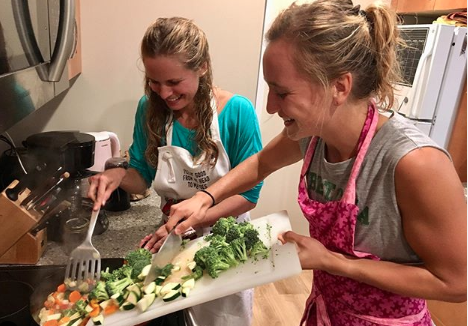
    Alayna Sonnesyn (SMST2) captions this shot of cooking with Jessie Diggins, “Gotta fuel hard to train hard!”. (Photo: Instagram @asonnesyn)

    Are you prepping your list of resolutions for the New Year? Do you, like many people, incorporate a weight loss goal? According to Business Wire, the market value of the diet industry in the US alone was ~$72.6 billion in 2021 (ref. 1), and increases near-annually. There are reasons why this industry is so successful. Sadly, it’s got little to do with the efficacy of their programs, products, or dieting as a whole. After all, what good is the long-term profitability of weight loss if it works after a single try? Don’t even get me started on the origins of body policing and the BMI… that’s for another day!

    Large scale reviews of research studies, called meta-analyses, have found that the effectiveness of weight reduction programs vary considerably, with 40-65% of participants regaining all the weight they lose, plus more, within 2-3 years – regardless of diet approach (ref. 2). Rarely do studies of this kind, or stories in the news, mention the unintended consequences that dieting and negative body talk has on your mental health and the mental health and body image of those around you, particularly children and adolescents (ref. 3).

    After working with endurance athletes across sports, genders and age groups for nearly a decade—and bolstered by a robust and growing body of research—I would like to make the argument that you can create and maintain nutrition habits that have lasting impacts on health and performance, entirely independent of weight loss. I say this with the acknowledgement that in athletes who compete at the highest levels of endurance sport, body composition monitoring and management can play a role. Even for these athletes, weight changes must be realistic, periodized, supported, and monitored closely by their care team.
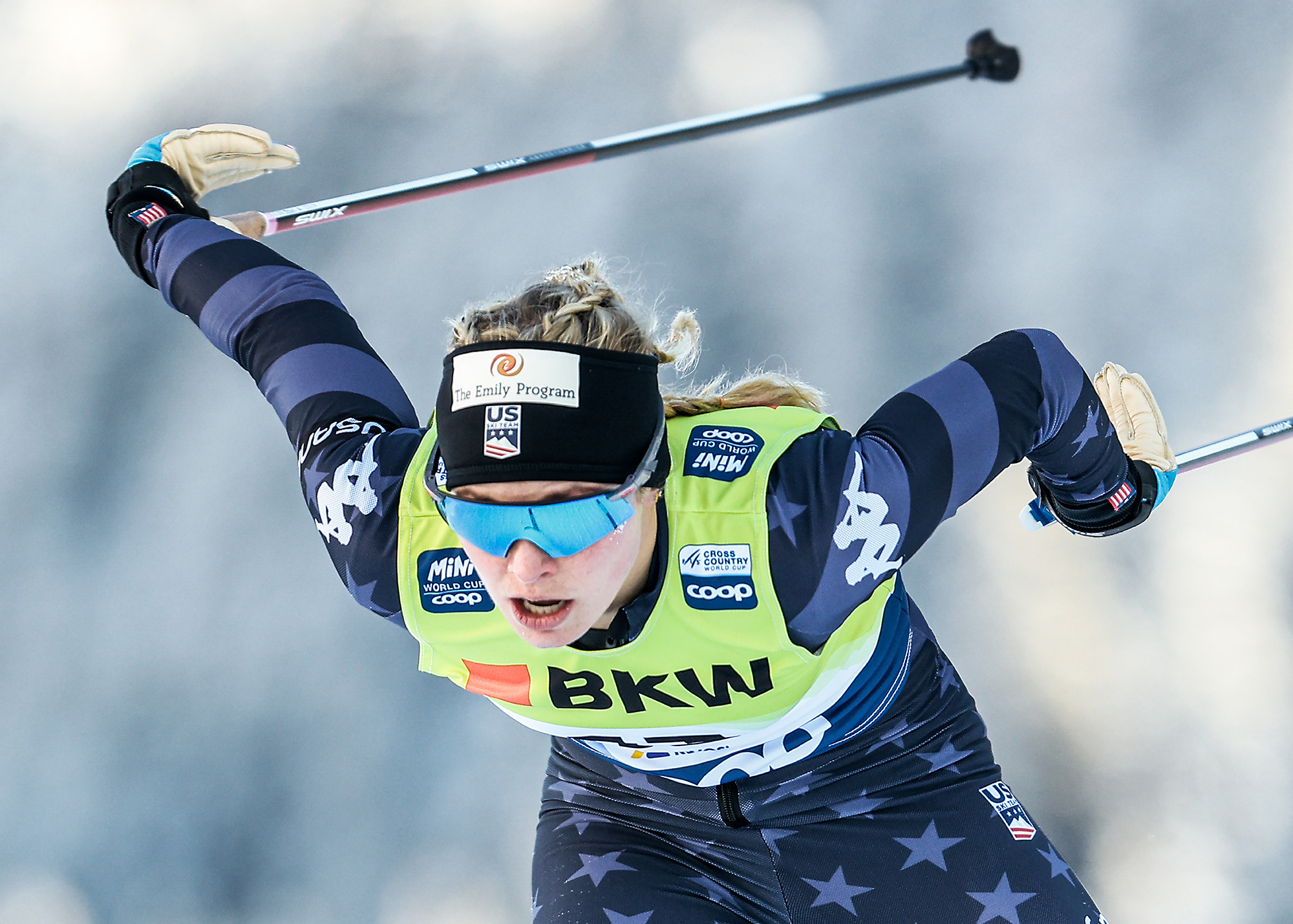
    This season you may notice Jessie Diggins (USA) promoting The Emily Program on her headband. The Emily Program offers proven and personalized treatment for all types of eating disorders. (Photo: NordicFocus)

    Athletes tend to be hard working, high achieving, focused, goal-oriented people. While these are largely viewed as positive character traits, they can also put athletes at risk for undereating, disordered eating, and eating disorders. FasterSkier has discussed Relative Energy Deficiency in Sport (RED-S) before, but I want to take a moment to dive a bit deeper. Low Energy Availability (LEA) is the main underpinning of RED-S, and is defined as a consistent mismatch in energy intake versus expenditure (ref. 4). LEA can occur for a number of reasons; for some athletes, it’s functionally difficult to meet their needs due to a demanding training, work and/or school schedule. Others might be eagerly trying to “eat healthier” and unintentionally undereat. There are also, of course, those who overtly restrict their eating in an effort to lose weight.

    Here’s the thing: the relative influence of body composition change on performance is often inflated – and wildly variable. It can also quickly become outright dangerous and career-ending, as many elite athletes have attested to in recent years. I urge athletes at every level to consider that, perhaps, bodies are just meant to be different—and to change over time.


    Check out the figure below to learn about Low Energy Availability (LEA) and RED-S:
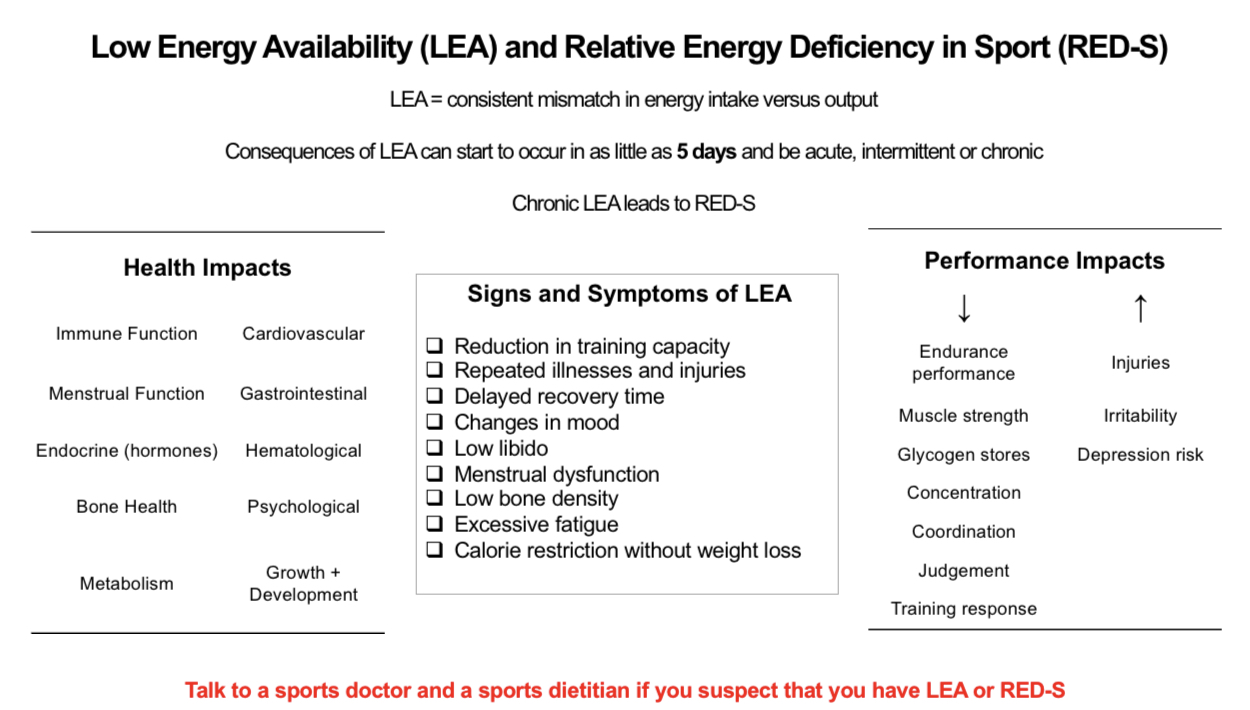
    Adapted from the 2018 IOC Consensus statement on relative energy deficiency in sport (ref. 4).


    This year, we challenge you to choose realistic, actionable, long-term goals over a short-term diet du jour. Your body, mind and community will thank you for it!

    Here are some performance-focused, weight-independent resolutions to consider in the new year:

    • Hydrate. This means peeing pale yellow every ~2 hours, give or take.
    • Eat meals + snacks throughout the day, every 3-4 hours or so.       
    • Incorporate a protein source into meals and snacks, especially at odd times (like between a 12pm lunch and a 7pm dinner).
    • Learn how to fuel exercise sessions that are longer than 75 minutes. Understand there is a dose-response relationship (longer = more), seek guidance and adjust accordingly.
    • Include a variety of fats, colorful foods + spices to improve diet quality and decrease inflammation. These do not need to be fancy; frozen and dried options are convenient, comparable & cheaper.
    • Make sure to consume calcium-rich foods daily. This is especially important if you are post-menopausal and born female, have a history of an eating disorder, are taking corticosteroids, or have ever transitioned genders.
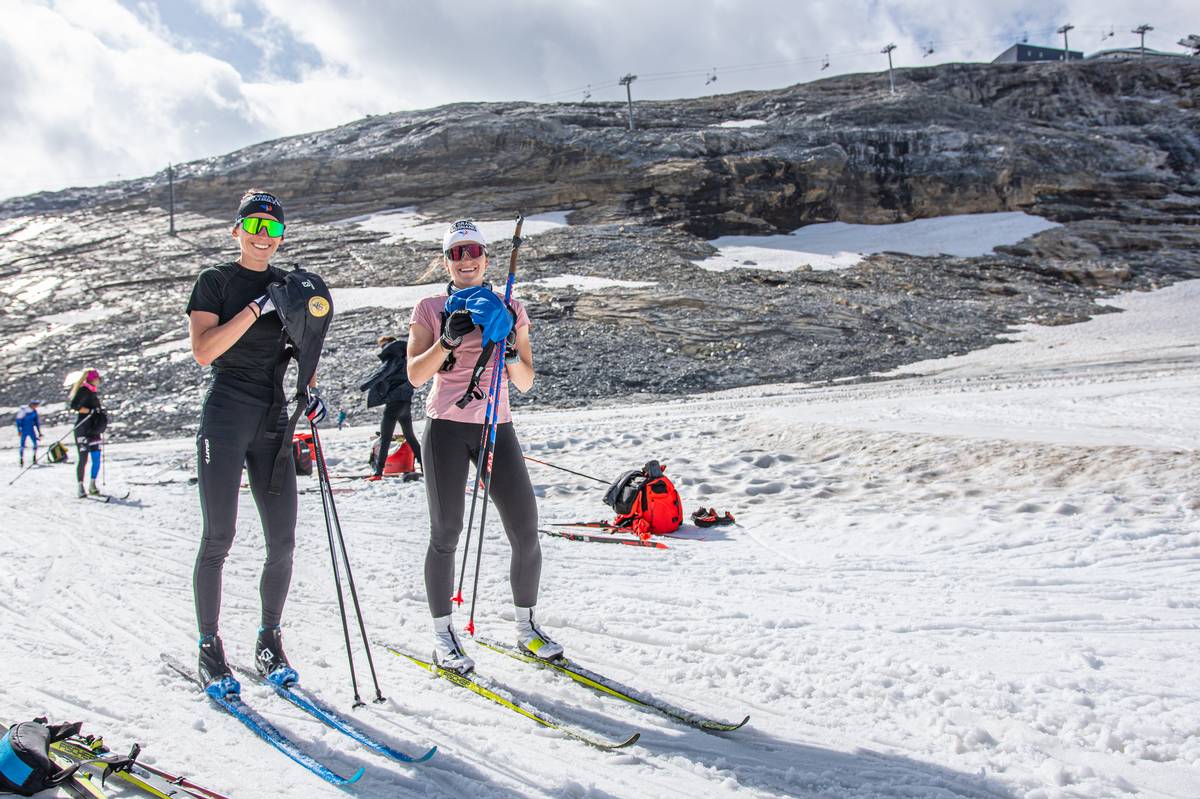
    French skiers Delphine Claudel and Lena Quintin stop to refuel during a training camp on the Glacier de la Grande Motte near Tignes, FRA. (Photo: NordicFocus)
    Sick of diet culture? Try these resolutions:
    • Consider evaluating your relationship with food and your body; engage in reparative work where it’s helpful. Do this for yourself, your loved ones, your teammates/athletes, and the people you don’t yet know who will be influenced by seeing you simply accept and love yourself unconditionally. 
    • Unfollow or mute people on social media who make you feel bad about your body or your food choices. Purposely change your algorithm by quickly swiping past diet content (TikTok and Instagram keep note of how long you watch for), selecting “not interested” or reporting it.
    • Take ownership of conversations about diets and bodies amongst friends and family that make you feel uncomfortable, or (if you are a parent) if you’re within earshot of your kids. Consider ways you might respond in advance (e.g. friendly correction, ignore, honesty, subject change, sassy). As you begin to pay attention to negative body talk and conversations about dieting, you’ll quickly notice how many opportunities there will be to practice.

    Want to learn more? Be sure to follow FasterSkier in 2023 for my upcoming five-part web series: The Five R’s: Sports Nutrition for Faster Skiing.

    Sources:

    1. Jensen, Michael D., et al. “2013 AHA/ACC/TOS guideline for the management of overweight and obesity in adults: a report of the American College of Cardiology/American Heart Association Task Force on Practice Guidelines and The Obesity Society.” Journal of the American college of cardiology 63.25 Part B (2014): 2985-3023.
    2. Goldfield, Gary S., et al. “Body dissatisfaction, dietary restraint, depression, and weight status in adolescents.” Journal of school health 80.4 (2010): 186-192.
    3. Mountjoy, Margo, et al. “International Olympic Committee (IOC) consensus statement on relative energy deficiency in sport (RED-S): 2018 update.” International journal of sport nutrition and exercise metabolism 28.4 (2018): 316-331.
  • Stress Fracture Ends Østberg’s Season Prematurely

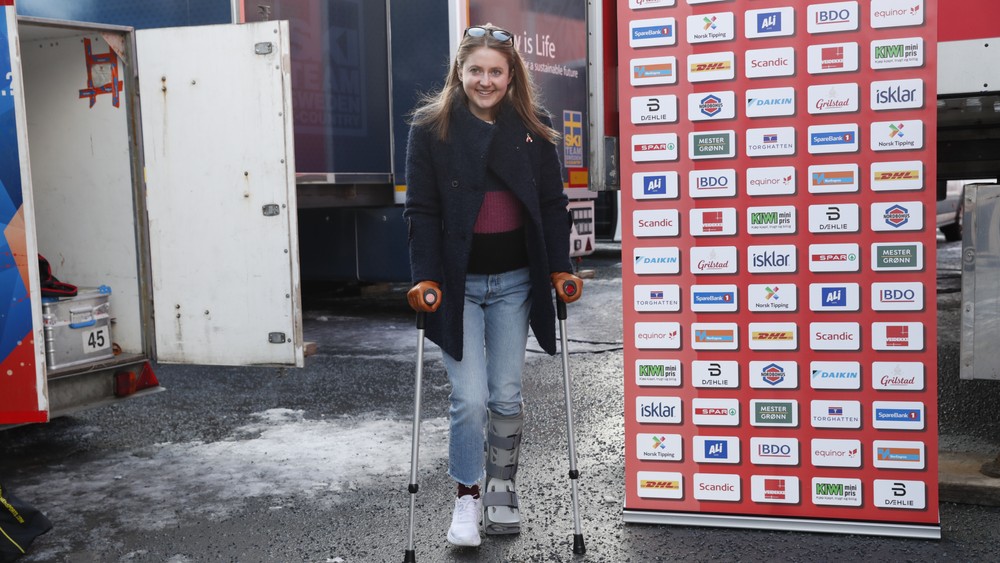
    Ingvild Flugstad Østberg is forced to end her season early after sustaining a stress fracture in her heel. (Photo: Terje Bendiksby/NRK)

    Earlier this morning, the Norwegian news outlet NRK posted that Ingvild Flugstad Østberg has been forced to end her season early after sustaining a fracture in her heel. The news was announced by the Norwegian Ski Federation, after Østberg spoke with the press while carrying crutches and wearing a protective boot, which she will be wearing for the next five to six weeks. 

    Østberg believes that the injury, which team doctors are calling a stress fracture, was sustained after jumping off a ledge onto concrete in combination with the cumulative stress of training and racing throughout the year.

    It has been a trialsome season for the 29-year-old, who sat out the first eight races of the season after failing to meet team health criteria. Media speculated that the specific criteria included minimum body weight requirements. 

    “Cross-country skiing is demanding. In some periods, it is difficult to find the right balance between exercise and energy availability and to find it out in a good way,” Østberg said in the press conference, according to translation.

    This discrepancy between energy availability and training load leads athletes into the condition called “Relative Energy Deficiency in Sport” (RED-S), which, among other side-effects, causes impaired hormone function and decreased bone health. The condition was formerly titled the “Female Athlete Triad”, but has since been expanded to include male athletes and the myriad of other associated health impacts. 

    Ingvild Flugstad Østberg (NOR) for the Stage 4 win in the 2020 Tour de Ski with Therese Johaug (NOR) in second.

    Last weekend, Østberg took fifth in the 10-kilometer classic in Lahti, Finland and skied the second leg of the winning 4×5 k relay team. She is currently ranked third in the World Cup distance standings and fifth in the overall standings. As Østberg is unable to compete in tomorrow’s 30 k classic at the Holmenkollen in Oslo or the distance races in Canmore, Alberta, she will lose these positions in the season rankings. 

    When asked whether she will be healthy again to begin training for the 2020/21 season in early May, Østberg gave an optimistic reply.

    “First and foremost, I’m going to drag this (the boot on my leg) with me for five to six weeks… It’s actually some weeks until May 1st. I think I can do a lot of good for it.”


  • Nordic Nation: Relative Energy Deficiency in Sport (RED-S) and the Climate in High Performance Skiing

    Nordic Nation: Relative Energy Deficiency in Sport (RED-S) and the Climate in High Performance Skiing

    In this episode, hosted by FasterSkier contributor Rachel Perkins, we dive into the issue of Relative Energy Deficiency in Sport (RED-S). This condition was formerly known as the female athlete triad, which was described as inadequate energy intake, the loss of menstruation (amenorrhea), and decreased bone mineral density. The name was changed to include males, who are also affected, and to expand beyond the three symptoms originally included. Though not quite the same, the condition is closely linked with eating disorders.

    This topic has seen a lot of buzz following a November opinion piece in the New York Times where former high school running phenom Mary Cain shared her story of abuse by her coach, Alberto Salazar, at the Nike Oregon Project. While trying to get down to the weight he deemed optimal for her, she lost her period, her performance decreased, and she was littered with stress fractures.

    Further concerns arose a few weeks later when Ingvild Flugstad Oestberg and Frida Karlsson were pulled from their World Cup starts after not meeting team health standards for BMI and bone density, presumably due to under eating. 

    We speak with licensed professional counselor and two-time Olympian Holly Brooks, registered sports dietician and author of “Finding Your Sweet Spot: How to Avoid RED-S (Relative Energy Deficit in Sport) by Optimizing Your Energy BalanceRebecca McConville, and long-time coach turned voice of World Cup cross country skiing and biathlon, Chad Salmela

    This panel unpacks the misunderstanding that RED-S is an exclusively female phenomenon and how the climate in sport influences the prevalence of this condition, and offers suggestions to shift from a results focused climate in sport to a positive, informed, healthy, and athlete centric program. 

    Here are links to the resources and articles mentioned in this episode:

    Jessie Diggins Eating Disorder Activism

    Lauren Fleshman’s New York Times Opinion Piece “I Changed My Body for My Sport. No Girl Should.” and letter to her younger self, which was posted to MileSplit.

    The WithAll Foundation and the “What To Say” campaign, which  offers suggestions for talking to food and body positive phrases to include in conversations with kids and athletes. 

    HBO Documentary “The Norwegian Way” which details the Norwegian development program, in particular the omission of results in youth skiing before the age of 12.  

    The IOC Periodic Health Evaluation statement regarding more regular health screenings, including bone density measurement and blood laboratory work. 

    The National Eating Disorder Association (NEDA) “Coaches & Trainers’ Toolkit

    The Opal Treatment Center and Podcast