From the FasterSkier archive — posts syndicated from athletes’ and coaches’ own blogs between 2004 and 2012, kept online as published. Current coverage is at fasterskier.com.
It is Monday after all. A day late for the Lahti relay recap but right on time to discuss U.S. skier, Gus Schumacher’s 10 k classic win at World Juniors. The 19-year-old Schumacher from Anchorage, Alaska can close – and he did that Monday with a burning fast final 3.3 k loop in taking the win.
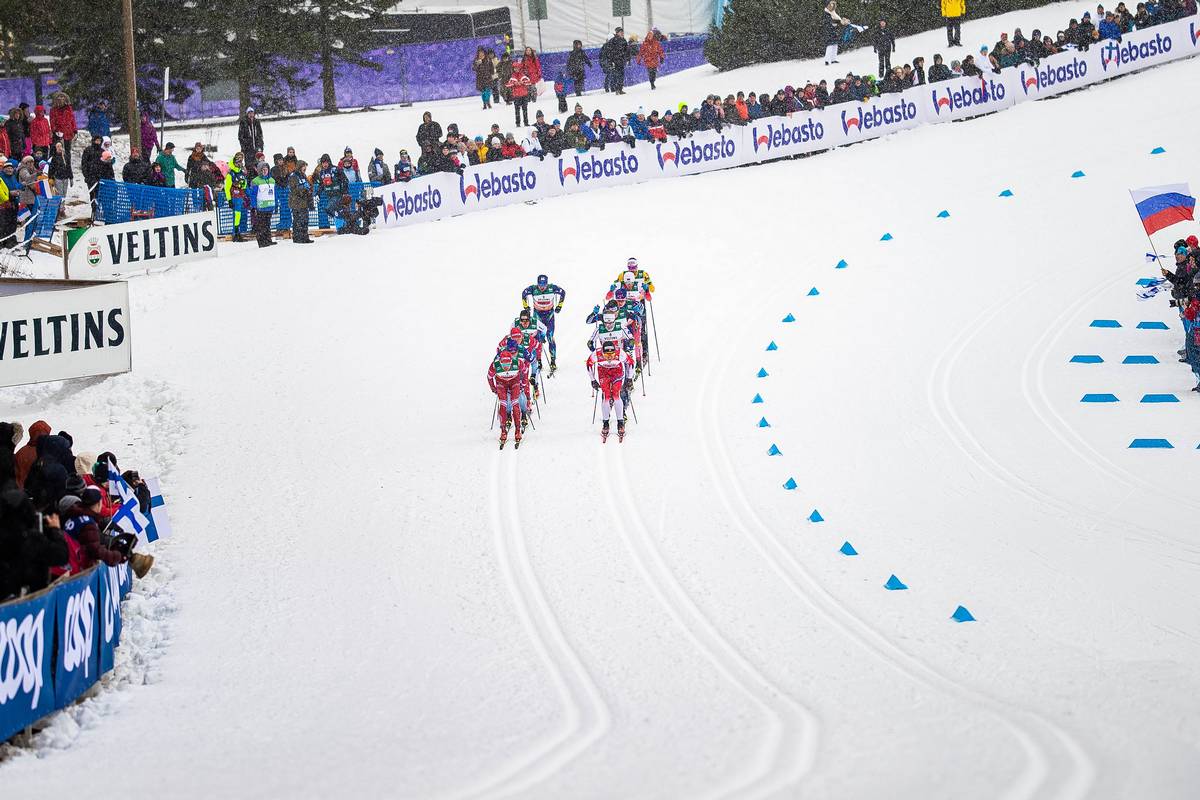
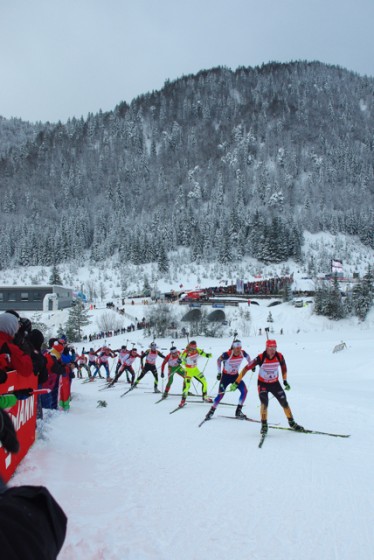
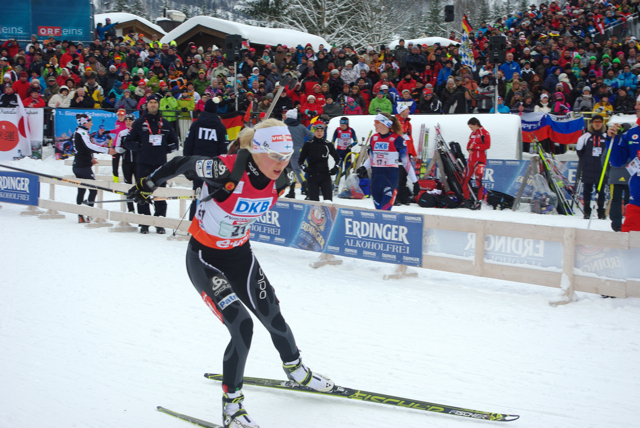
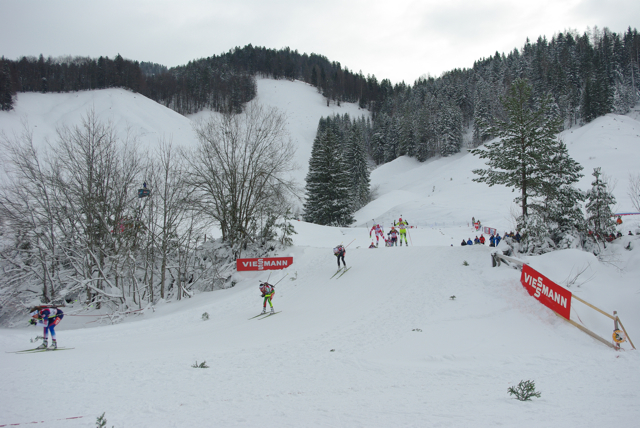
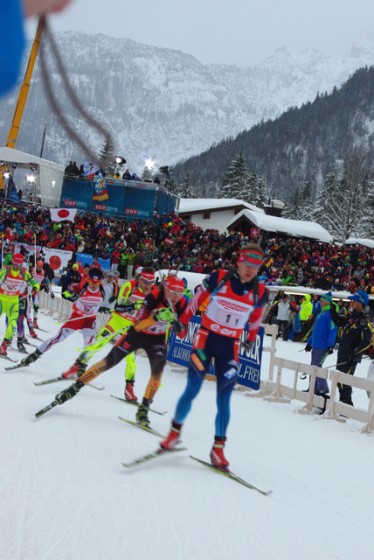
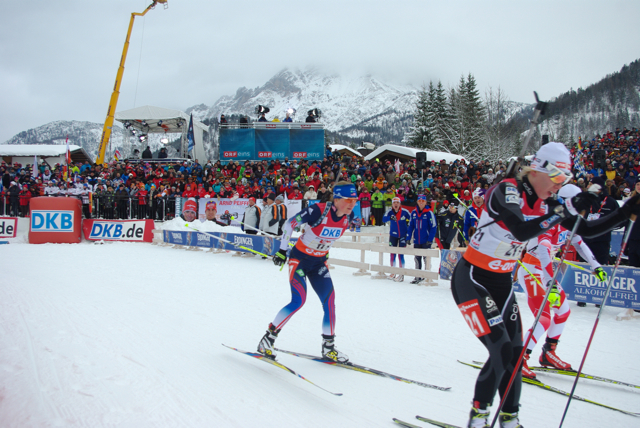
First leg pack racing in Lahti, Finland. (Photo: NordicFocus)
And yeah, the women’s 4 x 5 k and the men’s 4 x 7.5 k relays played out at Lahti’s World Cup on Sunday. It wasn’t exactly a yawner but simply put, the relays, this late in a jam-packed season lacked consequence. Like we note, some interesting racing went down (yeah Finland’s women for second place), it just simply seemed to lack some shine.
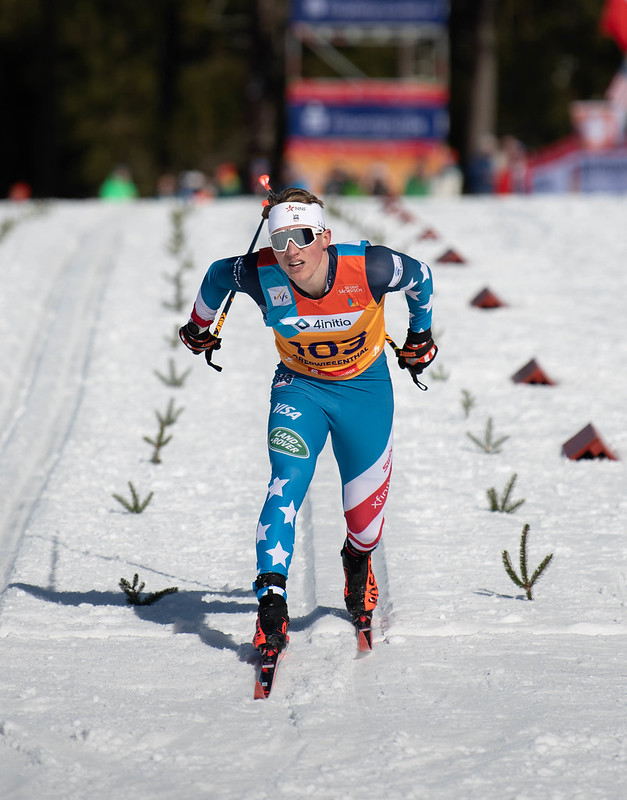
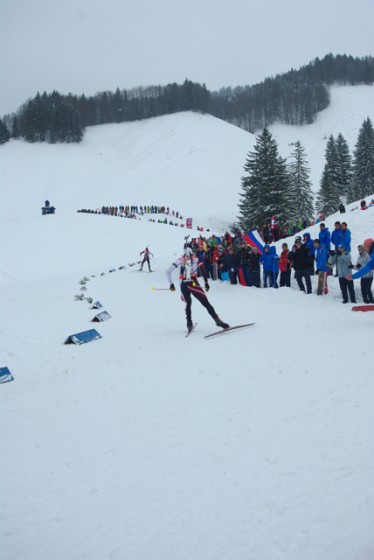
Taking it. Gus Schumacher of the U.S. wins the World Junior’s 10 k classic. (Photo: Doug Stephen)
That said, evidently, according to Kershaw, the sun was out in Oberweisenthal, Germany for maybe the first time in 27 years today. That seems excessive. Come out more often sun.
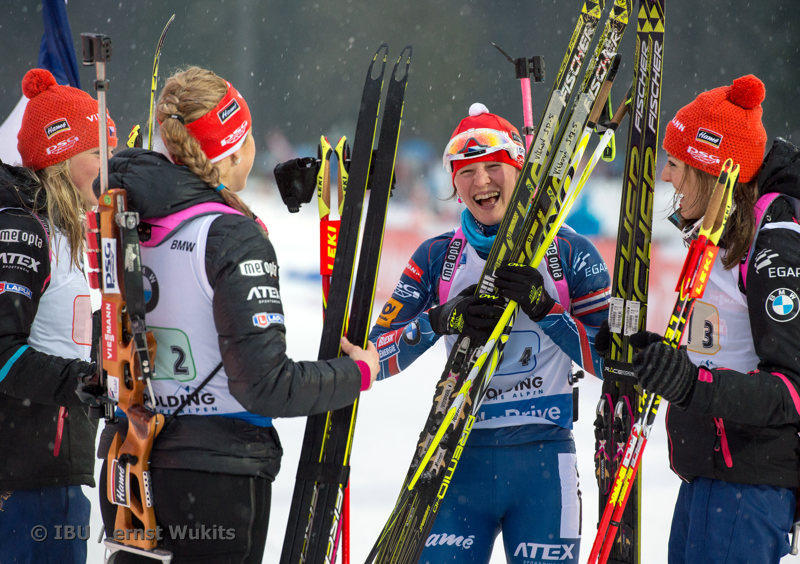
The Czech Republic women’s 4 x 6 k team celebrates its second-straight relay win on Thursday at the IBU World Cup in Ruhpolding, Germany. (Photo: IBU/Ernst Wukits)
All it took the Canadian women to have one of the greatest starts of their relay careers was a pep talk from a two-time Norwegian Olympic gold medalist, Halvard Hanevold, who notched 40 IBU World Cup podiums in his career.
According to Megan Heinicke, the team’s first skier in Wednesday’s 4 x 6-kilometer relay at the IBU World Cup in Ruhpolding, Germany, the Canadians had a team meeting with Hanevold on Tuesday night. She said it was “fantastic” and helped them going into the relay with “a really supportive team attitude,” she wrote in an email.
Whatever it was, it worked — and especially well for Heinicke — who shot out of the mass start with the leaders and put herself in fourth heading into the first shooting stage within two seconds of the Czech Republic, Finland and Norway, respectively.
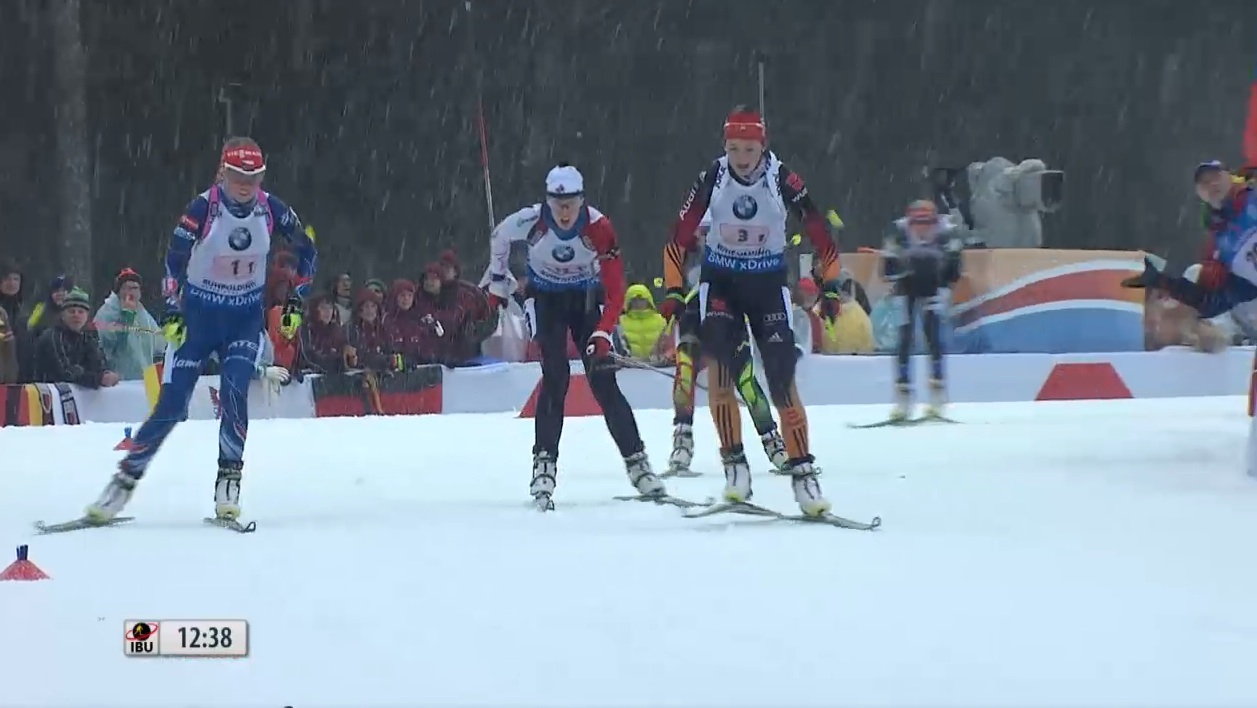
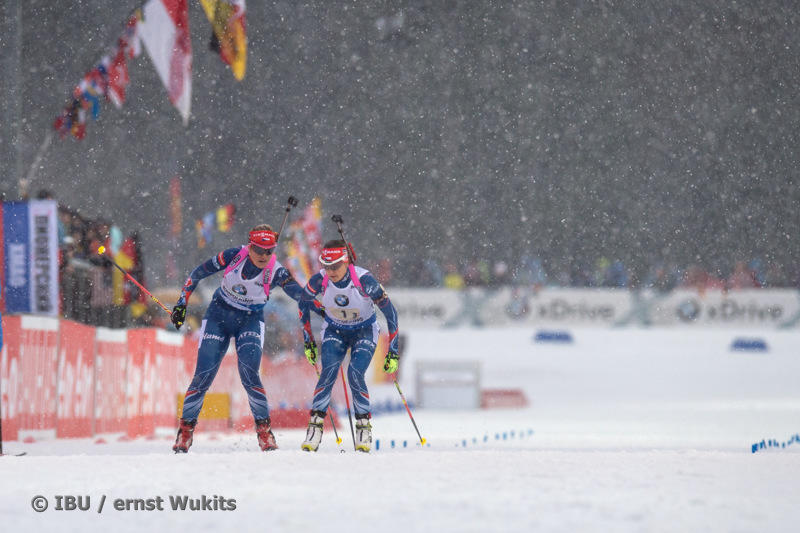
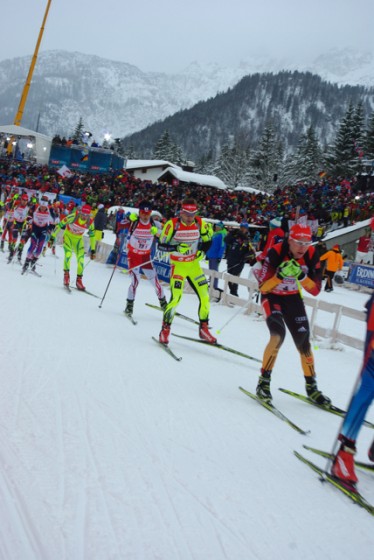
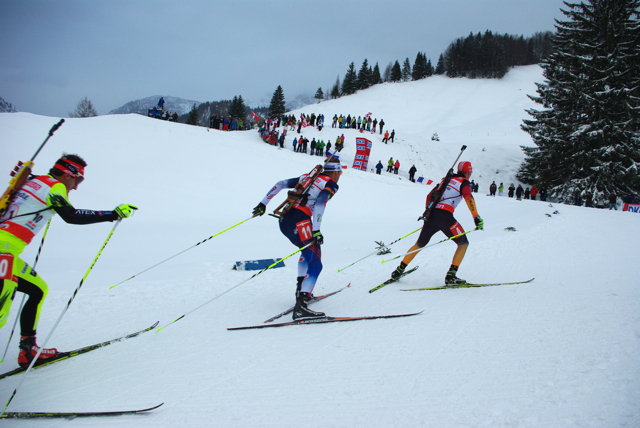
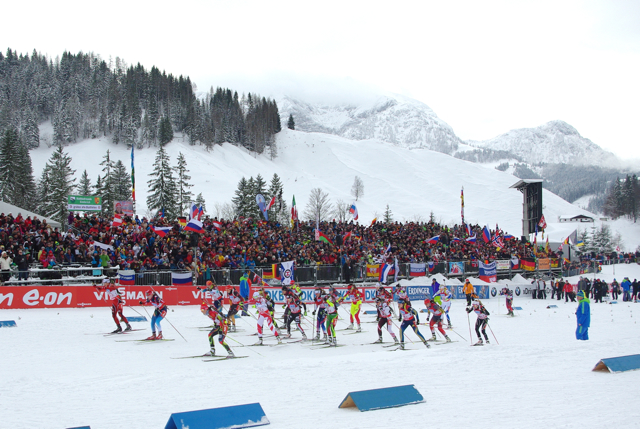
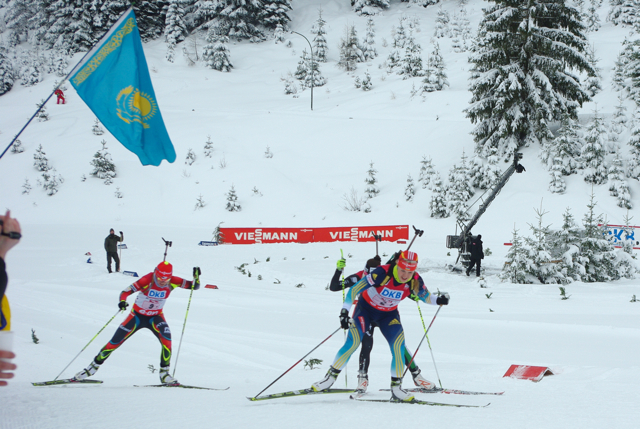
Germany’s Franziska Preuss (r) and Eva Puskarcikova of the Czech Republic (l) lead Canada’s Megan Heinicke (c) and Belarus’s Nadezhda Skardino (behind Preuss and Heincke) during the first leg of the IBU World Cup women’s 4 x 6 k relay on Thursday in Ruhpolding, Germany.
There, Heinicke shot fast and flawlessly to find herself in second coming out of the range, 1.3 seconds behind Eva Puskarcikova of the Czech Republic and just 0.1 seconds ahead of Germany’s Franziska Preuss in third.
“I was thinking ‘holy cow I’m up here again!’ ” Heinicke recalled. “I was excited and motivated. I also tried to think tactically and stay in our little group of 3 and not let myself do too much work.”
The Czech Republic, with Puskarcikova, Gabriela Soukalova, Jitka Landova, and Veronika Vitkova, was coming off a relay victory a week earlier in Oberhof, Germany. The German women had placed 10th in that race, but with a new lineup of Franziska Preuss, Franziska Hildebrand, Vanessa Hinz, and Laura Dahlmeier, respectively, they knew they could be in contention.
“We changed the team [with Hildebrand and Dahlmeier in place of Luise Kummer and Karolin Horchler],” Hildebrand told the IBU after the race. “That is all, but we were confident that we could be on the podium…”
So were the Canadians, but they were among the teams flying lowest on the radar after being lapped in the Oberhof relay.
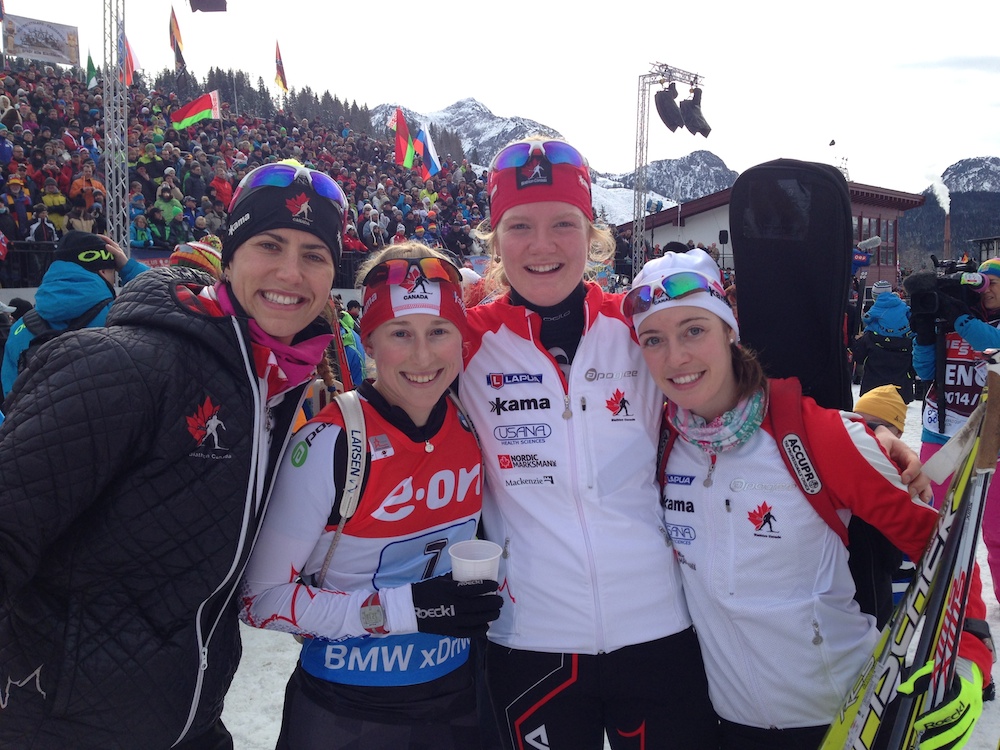
The Canadian women’s relay team after placing 11th earlier this season in Hochfilzen, Austria. (From left to right) Rosanna Crawford, Audrey Vaillancourt, Sarah Beaudry, and Megan Heinicke. (Photo: Rosanna Crawford)
Yet Heinicke, and the rest of her teammates — Julia Ransom, Audrey Vaillancourt and Zina Kocher — knew they had the potential. Hanevold reminded them of that. With Rosanna Crawford out with a cold, Heinicke explained they tried new relay combination, which was an important step before IBU World Championships in March.
Coming into the second shooting within a second of Preuss and Puskarcikova, Heinicke used one spare to leave the range in second, 17.6 seconds behind Puskarcikova, who cleaned.
“It was hard to shoot clean with the snow falling, but it was easier than in Oberhof,” Puskarcikova told the IBU. “I am not exactly sure how I shot 10 for the second week in a row.”
A rainstorm began before zero, 1 1/2 hours before the race on Thursday, and didn’t let up, coating competitors and spectators in a wet, slushy mixture between rain and snow. That made both skiing and shooting tough, but Heinicke didn’t notice.
“I was so focused on the race in the moment that the conditions didn’t effect me too much,” she wrote. “I think the pressure and excitement of being near the front of the race helps me have a sharper focus in a weird ‘heightened senses’ kind of way.”
Heinicke focused on her technique and held her position through the exchange, tagging Ransom in second, 25.2 seconds behind the Czechs and 2.5 seconds ahead of Poland in third.
“Sprinting is really not my strength and I was really giving my all so I was just mentally coaching myself along!” Heinicke wrote.
Gabriela Soukalova (l) tagging Czech teammate Jitka Landova in first in the women’s 4 x 6 k relay at the Ruhpolding IBU World Cup on Thursday in Germany. (Photo: IBU/Ernst Wukits)
Meanwhile, Ransom, in her first World Cup season at age 21, tried to control her excitement.
“Megan has tagged off to me in excellent positions twice now!” Ransom wrote in an email. “All I could think was that opportunity was there ready to be seized.”
She maintained second through the first shooting, which she cleaned, and up until her standing stage, where she entered the range 59 seconds behind Soukalova in first and 10 seconds behind Hildebrand in second.
“I would be lying if I said the conditions were easy, but I secretly love it when it’s miserable out there,” Ransom wrote. “Canadians are tough! And if you can be tougher than the others, a little bit of rain, sleet, wind, or cold will feel like nothing.”
In that second stage, she missed three but avoided penalty loops with three spares.
“I think my standing shooting was affected by my excitement. I know I can hit targets, but when I am not 100% ‘there’, that’s when things can get squirrelly!” she wrote. “I buckled down for the spares and got out as quick as I could. When there were three spares for three targets, I remember thinking, ‘I’m going to give my parents a heart attack.’ They watch the live stream back in Canada.”
Meanwhile, Soukalova and Hildebrand used two spares, and Belarus’s second leg, Iryna Kryuko, cleaned her second-straight stage to move into third behind the Czech Republic and Germany, respectively.
By now, Soukalova had built up a minute lead over Hildebrand, and Kryuko was 1:13 back, followed by Ukraine’s Natalya Burdyga in fourth (+1:18) and Norway’s Fanny Welle-Strand Horn in fifth (+1:22). Ransom left the range just another second behind in sixth, and tagged Vaillancourt in the same position, 1:53.1 behind the Czechs.
“Being the youngest on the team, I sometimes feel an internal pressure to prove myself and I believe I did today,” Ransom wrote.
Vaillancourt explained in an email that she was excited to start in a pack.
“I thought it was possible for us to finish in the top 6 if Zina and I both had a great race,” Vaillancourt wrote.
With Landova, the Czechs began to extend their lead on Germany. Entering their first prone, Landova was up to 1:15 ahead of Hinz. Ukraine’s Olga Abramova was 1:41 back, just 0.6 seconds ahead of Norway’s Elise Ringen and 2.4 seconds ahead of Nadzeya Pisareva of Belarus. Vaillancourt followed in sixth, 2:13 behind Landova.
In her first stage, Landova missed two shots and had to use a third spare to avoid her team’s first penalty loop of the day. She delivered and left the range still well ahead of Hinz, who cleaned to cut the deficit to 29.7 seconds.
Abramova cleaned as well to hold onto third, 52 seconds behind Landova. Pisareva and Ringen used one spare each and left in fourth and fifth, 1:02 and 1:05 back. Vaillancourt used one spare as well to stay in sixth, another 33 seconds behind.
One the next lap, Poland’s Weronika Nowakowska-Ziemniak passed Vaillancourt early on, and Canada slipped one spot to seventh.
Vaillancourt cleaned her standing stage and left the range still in seventh, but lost one more place by the final exchange.
“I was mostly losing time on the uphills,” she recalled. “I have been very sick in the past two weeks and hardly have been able to train, so I knew this was going to be a tough one on the skis. I am glad the ice is broken though.”
Landova held steady up front, missing her second-standing shot and using a spare, but leaving the range 29 seconds ahead of Hinz, who also used one spare to stay in second. Belarus jumped to third, 1:12 behind, with clean shooting from Pisareva, and Norway was another 6 seconds back in fourth despite Ringen using two more spares.
Abramova used three spares to fall to fifth for Ukraine, and Russia improved to sixth with 10-for-10 shooting from Ekaterina Shumilova.
By the last exchange, the Czech Republic had a 30-second cushion to Germany in second, and was a whopping 1:14 ahead of Belarus in third. Norway and Ukraine skied together in fourth and fifth, more than a minute and a half back, Poland moved into sixth (+2:10), and Russia tagged off in seventh (+2:12.5).
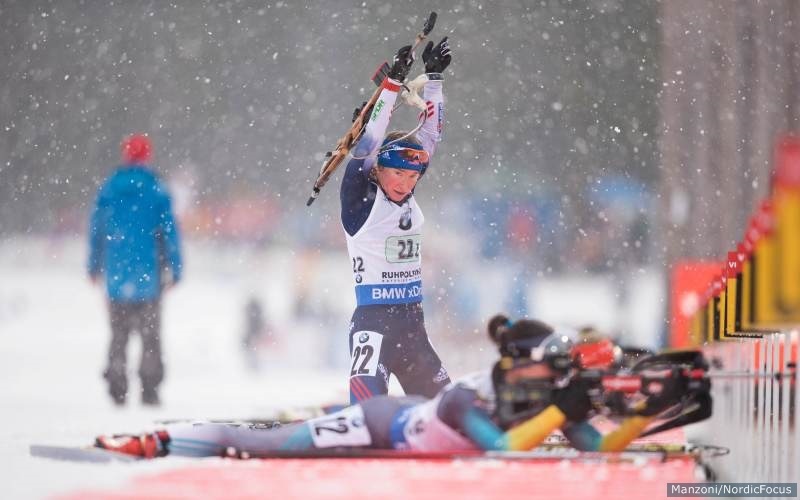
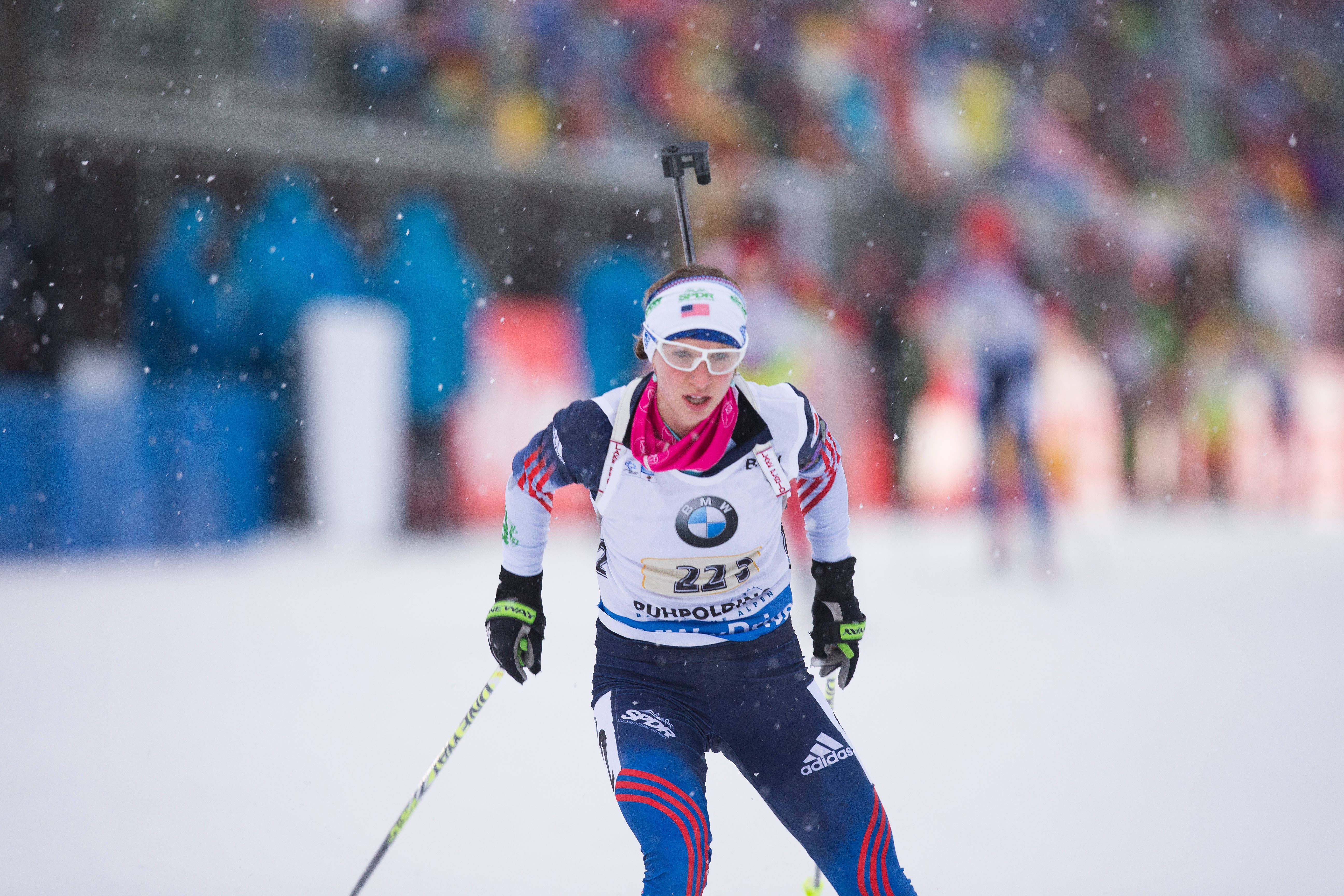
U.S. second-leg skier Hannah Dreissigacker after her prone shooting stage, where she used three spares and went on to keep her team in 10th in the women’s relay in Ruhpolding, Germany. (Photo: USBA/NordicFocus)
Canada was 2:37.1 back in eighth with one 6-kilometer leg to go, and the U.S. women, in their first relay of the season, started the last leg in 16th (+5:28.4).
Ninth heading into prone, Kocher used three spares and had to ski Canada’s first penalty loop to drop to 12th, 4:18 behind Vitkova, who used one spare to keep the Czechs in control.
Germany’s Dalhmeier and Domracheva of Belarus both cleaned after her, but were well out of sight by the time they left the range in second and third, one minute and 1:24 later, respectively.
“Shooting was basically catastrophic considering it wasn’t like last week in Oberhof,” Kocher wrote of Thursday. “Prone, I evaluated the wind flags wrong. Wind really picked up when I got into prone. I made a correction before I started shooting. But it was not enough for the change in direction. I corrected more once I was on spares and hit 3 shots with the 3 spares but then it was too late, I already had 4 misses.”
She skied up to 11th with the fourth-fastest course time on her second lap, but missed four again for another penalty loop, which put Canada 5:36 behind and still in 11th. Kocher posted the second-fastest last loop of the anchor legs to finish 5:33.8 behind the winner — Vitkova of the Czech Republic.
Vitkova had used a single spare on each stage to stay more than a minute ahead in first. Belarus moved to second with Domracheva skiing the fastest anchor leg and using a single spare throughout her two stages.
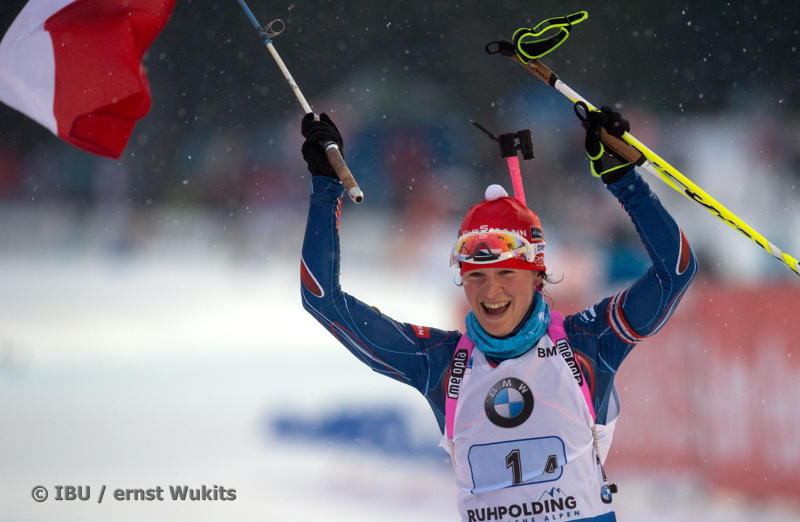
While Vitkova had enough time to take her poles off and grab a Czech flag from a spectator before casually skiing across the line, Domracheva entered the stadium uncontested as well and looked back before celebrating second, 1:13.3 behind the Czechs, who won in 1:23:57.7.
Veronika Vitkova anchoring the Czech Republic to its second-straight women’s relay win on Thursday the IBU World Cup in Ruhpolding, Germany. (Photo: IBU/Ernst Wukits)
“It was easier for me today because the other girls gave me such a big lead,” Vitkova told the IBU.
Germany hung on to the podium in third, 1:39.3 back from the winners, and a minute ahead of Norway (anchored by Tiril Eckhoff, who cleaned her first stage and used three spares on the second) in fourth.
Ukraine placed fifth (+2:49.7) with a clean final stage and one early spare from Valj Semerenko. France was sixth (+3:55.3) with 17 total spares, Poland placed seventh (+4:14.4) with two penalties and 10 spares, Russia was eighth (+4:36.5) with two penalties and 13 spares, Italy ninth (+4:44.6) with two penalties and 13 spares as well, and Austria took 10th (+4:51.2) with two penalties and eight spares.
Canada crossed the line 42.6 seconds later with two penalties and 11 total spares.
“Can’t say I feel great about my performance today. I skied strong but that doesn’t make up for the 2 laps,” Kocher wrote. “It’s great to see that there are younger athletes coming up showing such strong performances. It’s always motivating for the entire team.”
While Heinicke explained the race could have been better, she added that it also could have been worse. “We gave it our all,” she wrote.
“Our relay shows so much potential and I know that our day to shine will come,” Ransom wrote.
“It think we showed that if everyone has a good day, we can definitely be one of the top nations!” Vaillancourt added.
U.S. Women in 16th Before Being Lapped
The Americans stayed in the race until the final leg, when Maddy Phaneuf in her World Cup debut completed two stages and was lapped before coming into the finish. She had one penalty and three spares in prone, and used one spare in standing to bring the team’s grand total to three penalties and 19 spares.
The team’s opening skier, Susan Dunklee used two spares in each of her shooting stages to go from 15th to 12th, and finally up to 10th (+1:03.5) with the fourth-fastest, first-leg course time.
And she started in the back.
“I had the last row of the starting lanes all to myself,” Dunklee explained in an email. “I followed Mari [Laukkanen] from Finland (also seeded near the back) because she is a strong skier who knows how to maneuver in a crowd. That whole first loop was about being patient in the pack, moving when spaces opened up, but not wasting energy. The weather worked to my advantage today because I am a strong V1 skier and the entire course felt like one long uphill because of the resistance.”
Dunklee explained that the heavy rain caught the racers off guard.
“I think everyone assumed the crappy weather was behind us after Oberhof,” she wrote. “The snow behaved like sandpaper and we had to V2 many of the downhills. I used every change of dry clothes that I brought and still struggled to stay warm. It was especially difficult to keep enough feeling in our hands to shoot.”
U.S. third leg Annelies Cook during the women’s relay on Thursday in Ruhpolding, Germany. (Photo: USBA/NordicFocus)
Dunklee came through the exchange in 10th, and Dreissigacker held the position throughout the second leg, despite using three spares in both her prone and standing stages. She tagged Annelies Cook in 10th, 2:31.7 behind the leaders.
Cook dropped to 16th after her first shooting, with two penalties and three spares. She used two spares on the second stage and tagged Phaneuf in 16th (+5:28.4).
According to Dunklee, the team always aims for a top result each time they toe the line, but they were also simply excited to have enough women to field a relay for the first time this year.
“Maddie has never been on the World Cup before, but what an epic way to start!” she wrote. “She got the full experience with thousands of crazy fans and unpredictable weather. She is very young with lots of racing ahead of her, and I think she did a great job today taking it all in and staying level headed.”
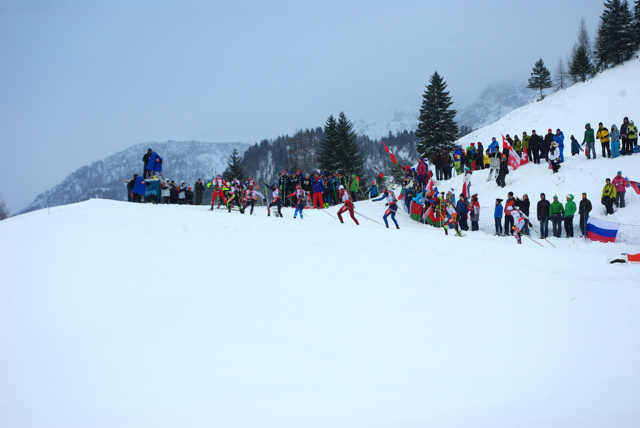
The men’s field reaches the top of the course’s biggest hill.
HOCHFILZEN, Austria – The men’s and women’s World Cup biathlon relays brought excitement to this small town on Saturday – along with a lot of fans. Announcers reported that the crowd of 40,000+ spectators was the largest they had ever had for a regular World Cup race (the venue has also twice hosted World Championships).
The Ukraine women’s team flexed their muscle at the start of the day, taking over the lead halfway through and never relinquishing it, skiing to a one minute victory. Germany’s Laura Dahlmeier outsprinted France’s Anais Bescond for second.
In the men’s race, Norway staged one of its usual comebacks to take yet another win, while Sweden was a more improbable presence on the podium – after a slow start, the team used exceptional shooting, a blazing fast leg from Fredrik Lindström, and a furious finishing sprint from Carl Johan Bergman to shoot past Russia’s Dmitry Malyshko and into second place.
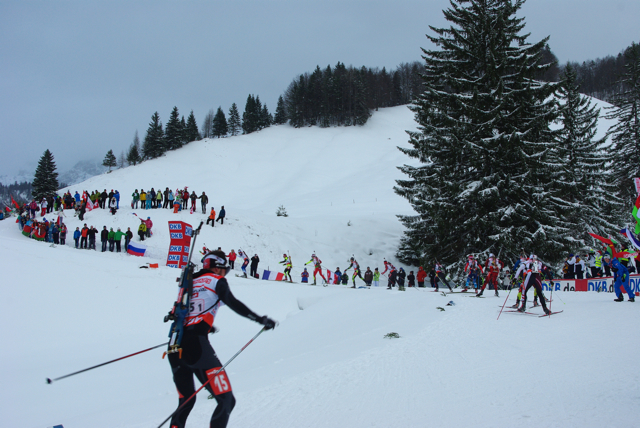
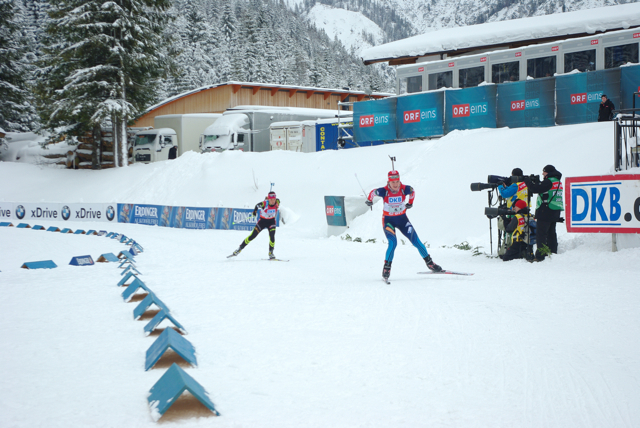
The trains of skiers were picturesque and beautiful as they moved through the venue’s wide-open landscape and up its snaking hills. A heavy snowstorm came through partway through the men’s relay, meaning we didn’t snap any photos from the second half of the race – but enjoy these images from the women’s race and the start of the men’s!
the men’s field skis towards the big hill.
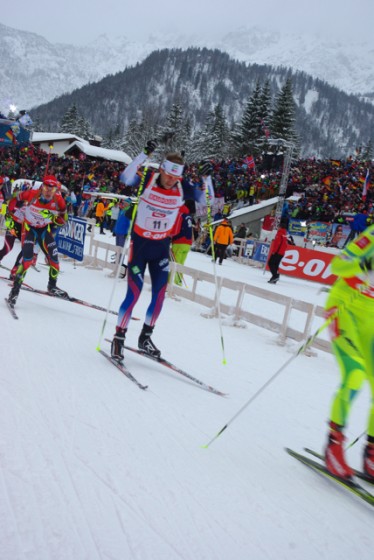
The men’s field, with Daniel Boehm (GER) in the lead, attacks an uphill.
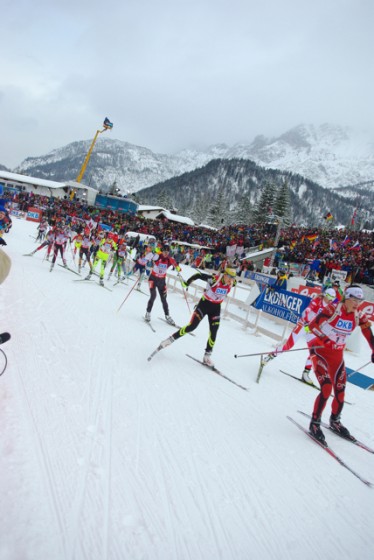
The start of the men’s relay.
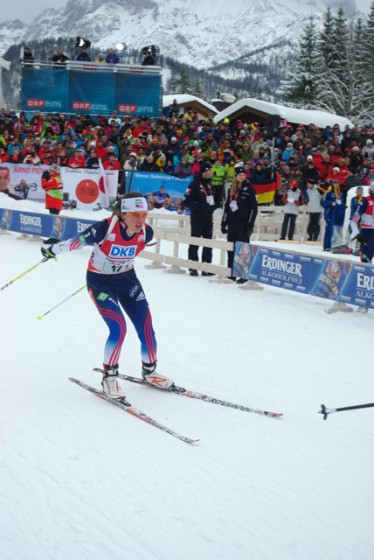
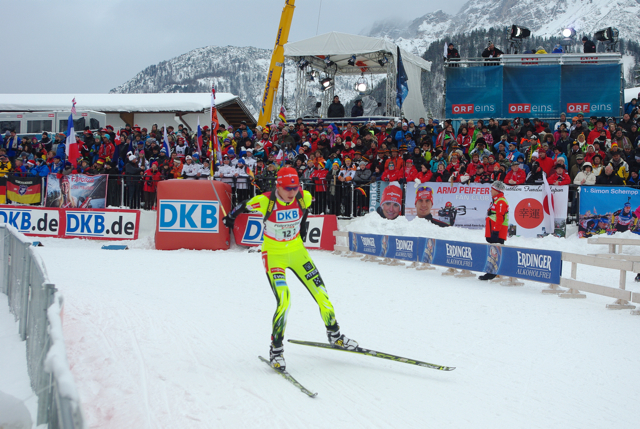
Rosanna Crawford (CAN).
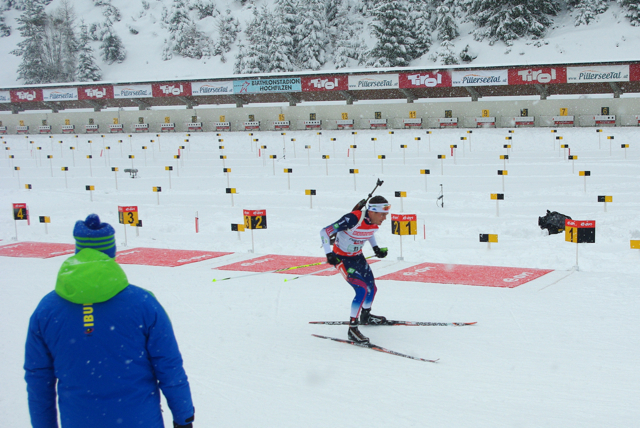
The second leg of the men’s relay in prone.
Mari Laukkanen (FIN).
Early in the men’s relay.
Ann Kristin Flatland (NOR) leads the women’s field down a hill.
Dominik Windisch (ITA), Vladimir Chepelin (BLR), and Ole Einar Bjørndalen (NOR).
Susan Dunklee (USA, left) on a downhill.
Some fans requested to have their photo taken…
Lowell Bailey (USA) in second behind Daniel Boehm (GER).
Megan Heinicke (CAN) and Hannah Dreissigacker (USA).
Alexey Volkov (RUS) on the first leg of the relay.
Synnøve Solemdal (NOR) and Karin Oberhofer (ITA).
Evgeniy Ustyugov (RUS) and Jena Guillaume Beatrix (FRA).
Marie Laure Brunet (FRA) in the lead.
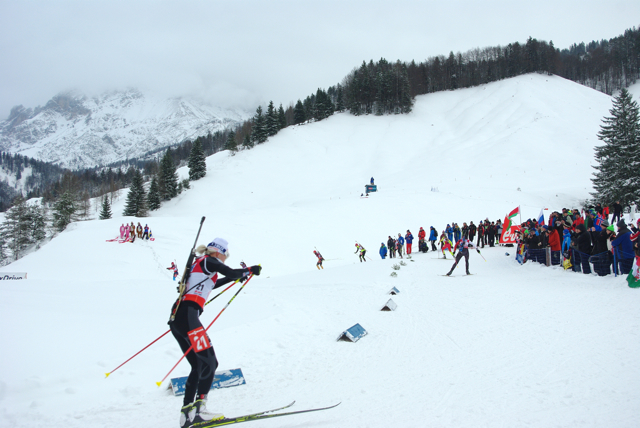
Sara Studebaker (USA).
Ann Kristin Flatland (NOR) and Marie Laure Brunet (FRA) in the pack.
Alexis Boeuf (FRA) and Vetle Sjåstad Christiansen (NOR).
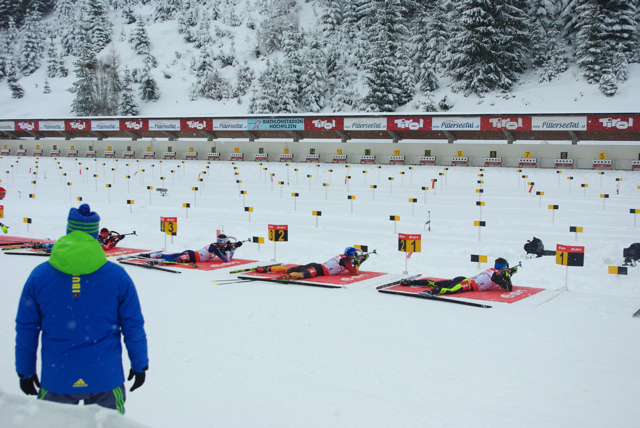
The second leg of the men’s relay in standing shooting.
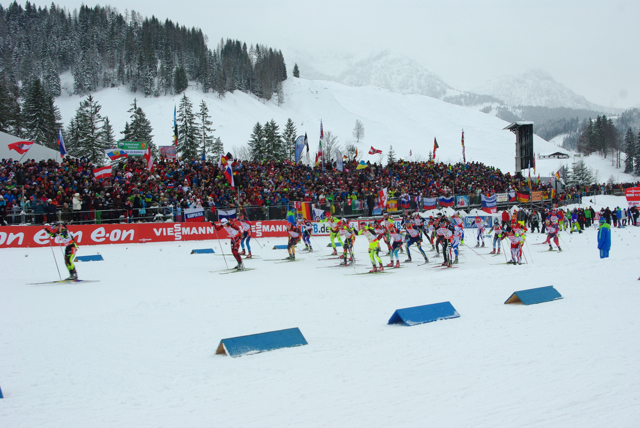
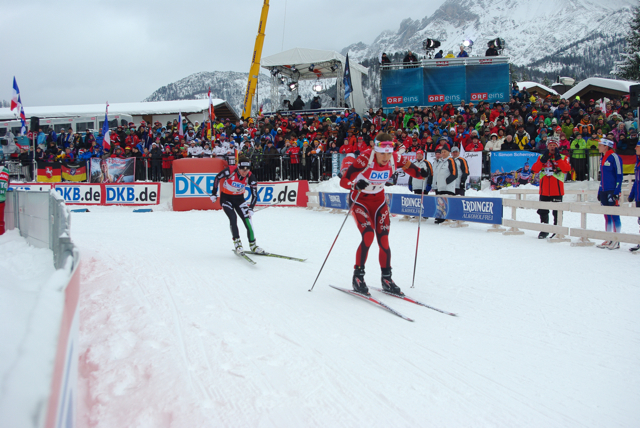
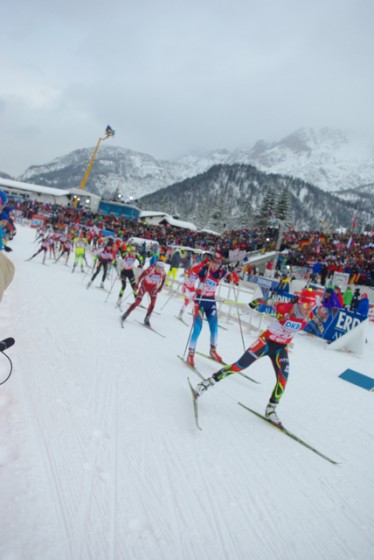
The start of the women’s relay.
Anastasiya Kuzmina (SVK).
Kaisa Makarainen (FIN).
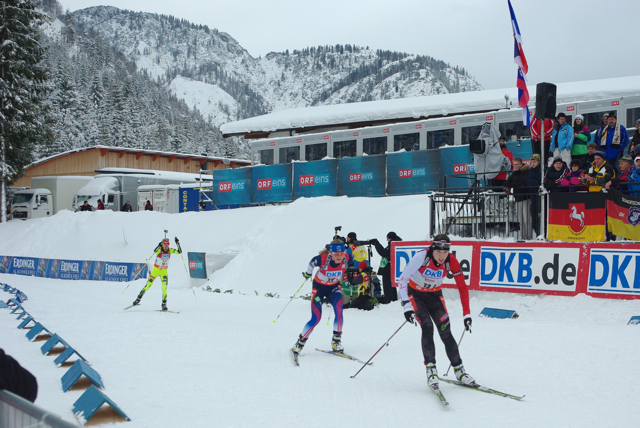
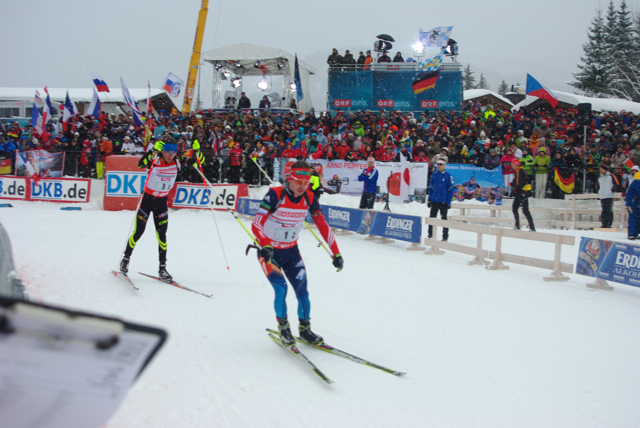
Nadezhda Skardino (BLR) was the first to tag off after the first leg of the women’s relay.
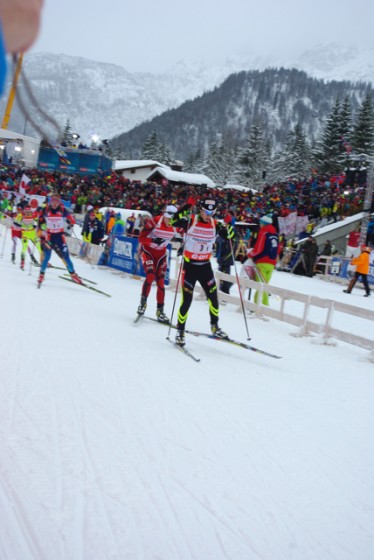
Veronika Vitkova (CZE) and Ekaterina Glazyrina (RUS) at the front as the women’s relay kicks off.
Tim Burke (USA) leaving the range.
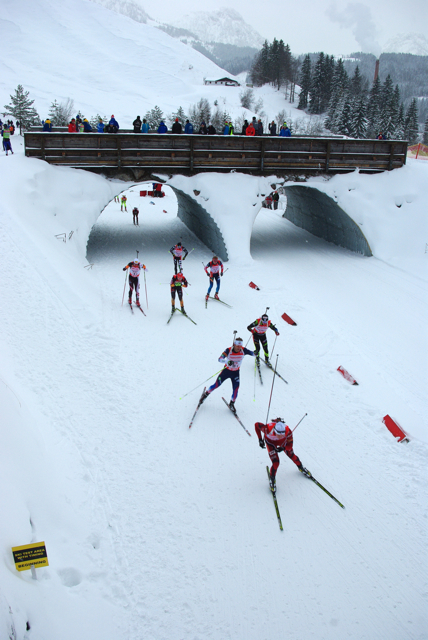
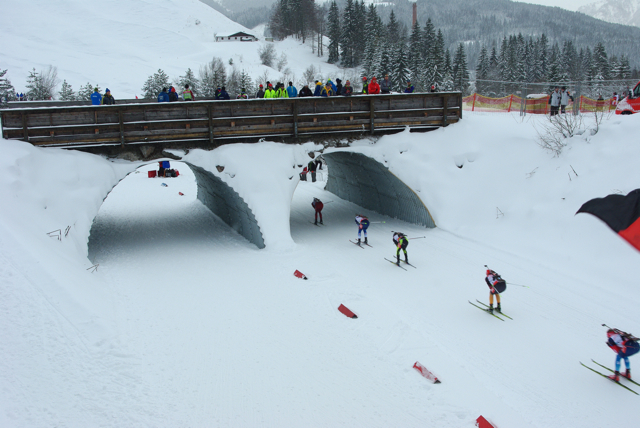
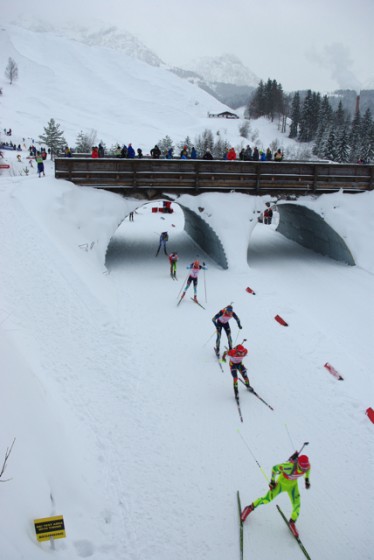
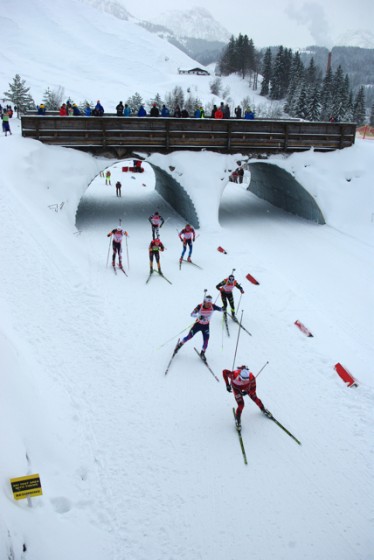
Men ski through a tunnel.
Lowell Bailey (USA) on his first time through the stadium.
The men’s field reaches the top of the course’s biggest hill.
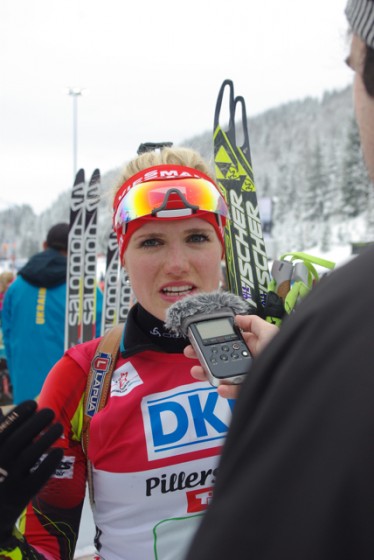
Gabriela Soukalova (CZE) interviewed about her subpar relay leg, which dropped her team from 2nd to 7th.
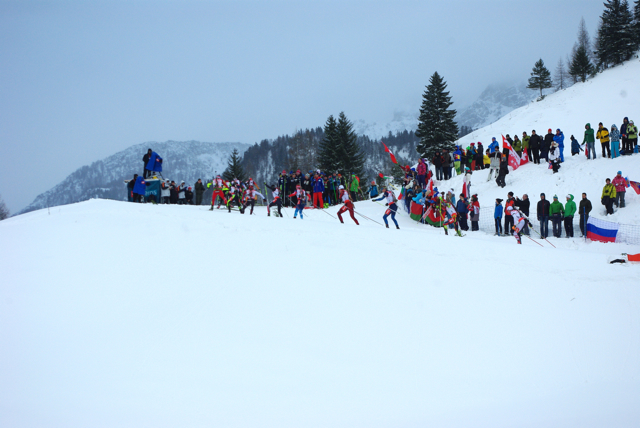
The men’s relay snakes up a hill.
Irina Starykh (RUS) on her way to a World Cup podium earlier this season in Hochfilzen, Austria.
Vita Semerenko (UKR) takes off from the range.
Sanna Markkanen (FIN) and Hannah Dreissigacker (USA).
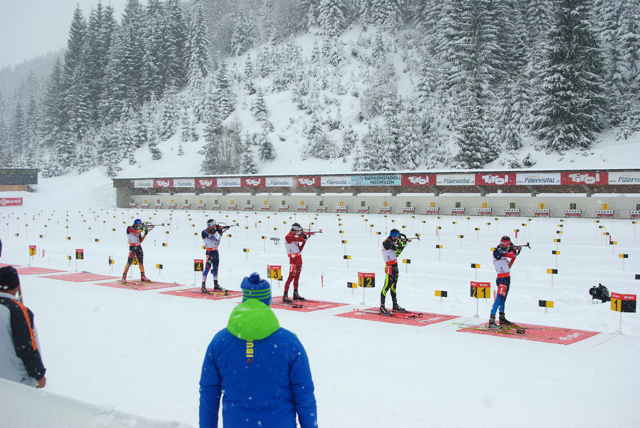
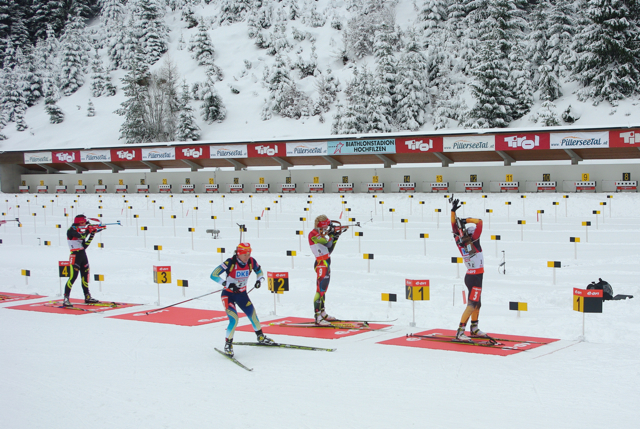
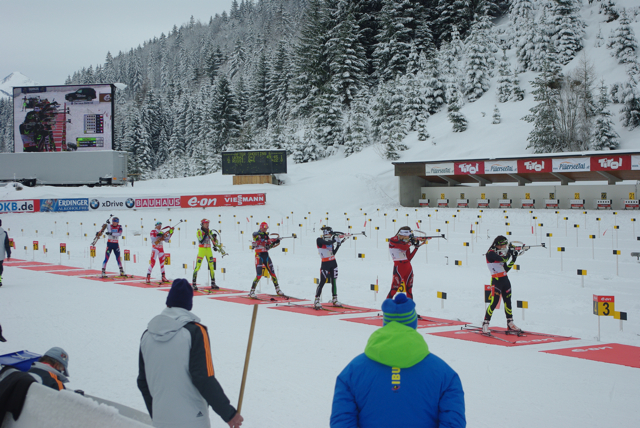
The third leg of the women’s relay on the range for standing.
Christoph Sumann (AUT) chases up the hill.
Vetle Sjåstad Christiansen (NOR) leads Lowell Bailey (USA) on the first loop.
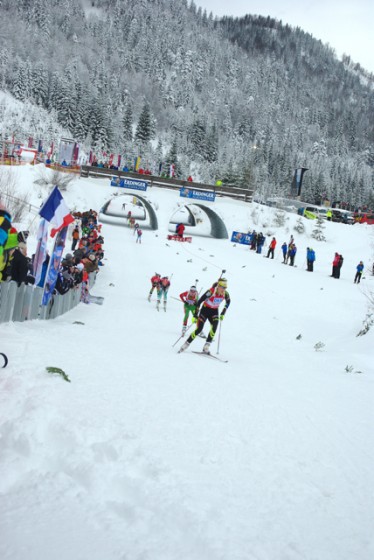
Juliya Dzhyma (UKR) leads a pack on the first leg.
When Tim Burke and Russell Currier shook hands with the Ukrainians at Friday’s flower ceremony, they were congratulating a team that didn’t even exist 25 years ago.
In Oberhof, Germany, this weekend, the U.S. men’s biathlon team placed fifth in the relay, tying the country’s best result in the era of modern biathlon. At World Championships in 2011 the team, largely the same but with Jay Hakkinen in the place of Russell Currier, placed sixth; the season before they had finished sixth in a World Cup relay in Ruhpolding, Germany, and the year before that at the same venue fifth.
“It was a great day and a great return to the World Cup after Christmas break,” Head Coach Per Nilsson said in a USBA press release after the competition. “It was a solid team effort, and good to see our team up there fighting against the best nations throughout the race.”
But what does their success mean, and why do you have to qualify it by referring to the “modern era”? Biathlon has changed a lot in the last 25 years, and relay success is even harder to come by these days than it was before.
“The 1990’s saw lots of changes for biathlon,” United States Biathlon Association President Max Cobb explained. “First gender equity: women were added to the World Championships and World Cups (before the 1990s they competed with the juniors at the World Junior Championships). Second geopolitical: the Soviet Union broke up and gave birth to many strong biathlon nations: Belarus, Ukraine, Estonia, Latvia, Lithuania, and Kazakhstan to name just a few. The two strong German programs (East & West) were merged.”
Another defining point to the new biathlon was the fact that it became a TV sport – one of the most popular in the winter for Europeans. In an effort to make things more exciting, the pursuit and mass start formats were developed.
There were other changes, too, in venue and organization of the World Cup. And technology.
“Ski service has advanced to an extremely high level unimaginable 20 years ago when athletes largely prepped their own skis the night before each race,” Cobb said.
A growing number of countries are bringing strong biathlon teams to the World Cup circuit.
Cobb wasn’t quite sure how to pinpoint the switch to modern biathlon – unlike the introduction of small bore rifles, which were used at World Championships for the first time in 1978, there’s no definiting cutoff – but a few dates are useful. Germany re-unified in 1990, the Soviet Union fell in 1991, Yugoslavia concluded (more or less) its violent breakup in 1992, and Czechoslovakia split into two nations in 1993. Women competed in biathlon in the Olympics for the first time in Albertville in 1992.
“Pinpointing exactly when these changes all came together is hard but it’s sometime after the 1992 season and before the 1996 World Championships in Ruhpolding,” Cobb wrote in an e-mail. “So I usually look at 1993 or 1994 as the breaking point.”
In terms of performance before and after that point, U.S. racers had it tough either way.
“The great biathletes of the 1980s need to be fully respected for all their success,” Cobb said. “Josh Thompson’s silver medal at the World Champs in 1987 still remains the best ever American finish at the Worlds. Kari Swenson, Anna Sonnerup, and Joan Smith (now Miller) were all on the podium at World Cup races in the 1980 or early 1990s and these were great achievements.”
In one sense, teams were stronger then; the USSR could draw athletes from a vast geographical area and develop them (or burn them out) in a highly organized sport system. And there’s also the specter of doping. While there have been relatively few positive tests in the sport – most have come from Russia in the last decade – former star Frank Luck has admitted that the East German system doped him in the 1980s.
“Given what has come to light about doping in sport generally during this period, it seems likely that these athletes competed on a steeply tilted field, but of course we will never know,” Cobb said.
So individual podiums are tough, any way you slice it. But in terms of relay success, a fifth- or sixth-place finish might actually be more notable now. With the majority of geopolitical changes leading to more teams, not fewer as with the reunification of Germany, the field has grown immeasurably in depth over the last 20 years. It took a while for the former Soviet republics to hit their stride, as they faced challenges in developing infrastructure and funding for their sports teams. (For a great description of this era as well as a glimpse into the Soviet system, revisit Nat Herz’s 2011 piece about the history of Estonian skiing.)
“In the early 1990s there were six strong teams – the Germans, Russians, Norwegians and then French, Italians, Swedes,” Cobb wrote. “If some were not there or had an athlete or two off then anything could happen. Now there are 12 teams that have a reasonable chance, so I think it’s harder now.”
Another factor is that some other European nations didn’t have strong programs. Finland, for instance, has had only sporadic success in biathlon, a sport that is nowhere near as popular in the country as cross-country skiing; comparatively, biathlon is a much bigger deal in neighboring Scandinavia and Russia. The Finns have earned several Olympic medals including two relay silvers from the 1970’s, but as a team have not been so strong in the last few decades.
Nor did Czechoslovakia loom as large in biathlon as it did in skiing, where the country won two relay medals in the 1980’s. Despite success in skiing, Switzerland’s only Olympic medal in biathlon came in 1924.
It’s unclear exactly why biathlon was dominated by the same small group of countries for so long, but one possible explanation is to again look at history. Much of what drives a country’s investment into various sports is Olympic visibility, and biathlon has suffered in that respect. Originally on the winter Olympic schedule as a patrol race in 1924, it was demoded to a demonstration event in 1928, 1936, and 1948. Then it left the Olympics entirely, in part because of anti-military sentiment.
The first World Championships for the sport weren’t held until 1958, where 25 men from seven countries competed. It reappeared at the winter Olympics in 1960; only a single race, a 20 k individual competition, was contested.
How things change. With a burgeoning number of race formats and the inclusion of women, biathlon is among the sports offering the most Olympic medals these days, with ten different races offering 30 medals at the 2010 Olympics, and an additional format, the mixed relay, on tap for Sochi next year.
So perhaps it’s not surprising that more countries are targeting the sport. Biathlon is catching up with skiing in terms of diversity: in Vancouver, 10 different countries won the sport’s 30 medals, including not only the favorites from the 1980’s but also Slovakia, Austria, Belarus, Kazakhstan, and Croatia. In skiing, 11 countries won some of the 36 medals available.
And a few former members of the Soviet Union have been particularly successful. In the relays in Oberhof, Ukraine won the women’s race and was fourth in men’s race. In the 1980’s and earlier, these athletes, as well has those from Kazakhstan and Estonia, who both made appearances at near the front early in the men’s relay, and from Belarus, which placed eighth in the women’s relay and tenth in the men’s, would have been fed into the Soviet system.
Four teams were ahead of the U.S. men, but Russia and Ukraine were two of them – a very tangible example of how the depth of the field has changed. But it’s not just the Soviet Union: former countrymen from the Czech Republic and Slovakia finished eighth and ninth in the men’s race, and eleventh and ninth in the women’s.
(Sixth-place Slovenia is the only country from the former Yugoslavia to have developed a successful nordic sports program. Interestingly, while their team is full of very successful athletes, their World Champion Jakov Fak originally hails from Croatia, another part of former Yugoslavia.)
While the same pattern is true to some extent in skiing, teams like Belarus and Ukraine are not currently as strong there, and the sport has always been a bit more diverse. But as biathlon has developed from a strange military competition into a full-fledged, television-ready sport, it has also profited more from the geopolitical changes. Taken together, these factors have made biathlon more exciting than ever before – and harder for teams to consistently win.
“The terrain of the World Cup is very different now,” Cobb said. “All the teams go to all the World Cups with strong teams. With prize money both for individual races and the World Cup overall title, top athletes rarely miss a start. There are simply many more nations with very competitive teams.”
With so much happening in Gällivare, Sweden, this weekend, we didn’t have the chance to put quite everything into our main feature stories. Here are some leftovers from the races, as well as some small pieces about the U.S. men’s and Canadian women’s relays.
Women’s Relay
When asked about the U.S. women’s relay podium, Development Coach Bryan Fish initially didn’t get too specific… he was just impressed. “That was exciting to watch,” he told FasterSkier in a classic understatement. “One of the things, Jessie just really dug deep to get that third place. That was awesome. It was certainly a team effort. It’s really exciting.”
A little-known fact from that relay is that Holly Brooks fell down during her opening-leg effort for the U.S. Her teammates didn’t even realize it until she was telling FasterSkier about the incident at the finish line: “On that first hard corner you come up a short hill with a lot of speed and you have to go into a herringbone, and I don’t know what happened, but I went down. I got up pretty fast, but I had been in fourth or third. Luckily it was an uphill. But then it was hard to get that position because that was right when they accelerated.”
Nevertheless, Brooks was happy with her performance and said that being the scramble skier was a lot of fun.
“It was a great start position, and that scramble leg, it is scrappy,” she said. “You have to be a total bulldog. You’re out there with [Ida] Ingemarsdotter and Vibeke [Skofterud], so it’s scrappy and they make their presence known. I had a blast. Of course I would have liked to have come in a little faster, but I felt like I kept us in there and then these girls really poured it on.”
Meanwhile, the Canadian women were quietly having a solid race of their own. According to the FIS results database, the last time a Canadian women’s team finished a regular World Cup relay was at this same race series…. in 2004. And it wasn’t a completely Canadian team, with Sara Renner instead joining up with three Germans. While the Canadians regularly field relay teams at championship events like the Olympic Games and World Championships, to have four racers competing on Sunday was a landmark.
Perianne Jones racing the second leg for Canada.
“It was fun to be out there, racing with everyone, for sure,” Perianne Jones told FasterSkier. “It was my first World Cup of the season, and I think it’s a huge success for us to have a relay team. We finished, and there were people behind us, so those were all positive things.”
Expectations weren’t sky-high, she said: “All of us are sprinters.” Coach Justin Wadsworth had confirmed to FasterSkier the day before that sprinting has their full focus. But the ladies were happy with their performances; Alysson Marshall won a photo finish against Kazakhstan to net the team 14th place out of 18 finishers.
“I was kind of lonely for most of it,” anchor skier Marshall said. “I could tell that those two girls were working together to catch me, so it was kind of fun once they caught me that I could just stay behind them and ski with them until the finish. I think I got the sprint finish. So that was fun.”
Men’s Relay
Not as happy with their performances were the U.S. men. After an anchor leg from Andy Newell that left them in eighth place, 13 seconds behind the leaders, Noah Hoffman and Tad Elliott struggled to find their pace on the short 7.5 k loops – a new format this year, since men’s relays have always been 4 x 10 k. Although Kris Freeman turned in the seventh-fastest anchor leg, he was only able to gain a few spots, and finished 15th, a second behind Sweden II.
“I got tagged pretty far back there,” he told FasterSkier. “I started out with a group of three and I wasn’t expecting that Swede to be as strong as he was – I’m curious who he was, because he was skiing very well. The Finn dropped off pretty quick, and we were reeling a couple of guys in, but there just wasn’t enough course.”
The Swede Freeman was referring to was Calle Halfvarsson, a Swedish national team member who finished fourth in the opening 15 k skate in Sjusjøen last season. Like Freeman, he was probably hoping to receive the tag a little further up in the field. But the two turned out to be good allies.
Kris Freeman about to make a pass as he anchors the U.S. 4 x 7.5 k relay.
Freeman, however, was disappointed with the distance change: “I think that every time skiing makes a change for TV, it’s really bad for the sport,” he said with a smile that was difficult to interpret.
Hoffman was slightly more diplomatic.
“It’s hard for me,” he said of the change. “But I think it probably makes it more exciting, and I understand why they did it.”
Despite the fact that the distance change without a doubt made it tougher for Hoffman – or Elliott or Freeman, since all are distance specialists – nail a good relay leg doesn’t mean that he wasn’t frustrated. He believes he can do much better. “Disappointing” was the first word he used to describe his performance.
“Newell skied awesome,” Hoffman said. “I was super impressed and psyched that he handed off to me basically with the pack. And then I just struggled. It’s fast – 7.5 k goes really fast, and the pace went out really hard. I just couldn’t hang onto those guys.”
When the World Cup was last in Gallivare two years ago, the U.S. had a strong run through three legs. Newell skied an almost identical opening leg, before Freeman skied the team into fifth. At that time just 21 years old, Hoffman had attacked the third leg and kept the team in contention, sitting in sixth place. (He tagged off to SuperTour leader Chris Cook, and the team dropped to 17th by the finish.)
While that performance was skating, which had been Hoffman’s stronger technique, he didn’t feel that he should have done any worse classic skiing now in 2012.
“I believe I can ski better than I did today in any leg in the future,” he said. “I’ve really worked hard on both techniques and trying to stay balanced in both, so I don’t really have a prefrence at this point. So whatever the team needs me to do, I hope to be able to produce a good result for it.”
Newell, despite having one of the stronger performances on the team, was merely ambivalent about his performance: he’d been hoping for something a little better. His strategy was to be at the front when “the move went down,” but he was stuck behind a French skier and unable to respond for just a moment, meaning that he then had to play catch-up. While the deficit to the leaders wasn’t much by the time he tagged, “I would have liked to have been closer to the top three or four,” Newell said.
Women’s 10 k
More from Brooks, who was surprised with her fifth-place performance, but says that she now knows what it takes to do well at the World Cup level: “There were some really, really high speed corners, and I don’t know – you just gotta go for it. If there’s anything I’ve learned, it’s that if you hold back at all on anything – and I did, I was a little bit of a wuss on some of the hills, and I was three seconds from the podium. So I have no regrets at all, but every second out here counts. Every second, every half a second.”
Canada’s Chandra Crawford on the corners that took out Stephen and Diggins: “It’s really dark up here in the afternoons, so I’ve been skiing around on this course when it’s really dark. Some parts of it have no lights. I was really glad about that when I got out there, because I could ski all the downhills with my eyes almost closed.”
Teammate Dasha Gaiazova on the FIS policy, new in the last few years, to alternate the seeded group with unseeded skiers (she is the latter): “I really liked that, for sure. As a slow person, I loved that. It was definitely good to see those fast girls. To see Vibeke [Skofterud, of Norway] go by, and to see that with just a little more on the hills, I’d be able to stay with her longer and get in a few more positions.”
Men’s 15 k
Hoffman of the U.S. wasn’t thrilled with Saturday’s race, either, where he placed 38th: “Yesterday was a little disappointing place-wise, I was hoping to do better, but it was so tight and so fast, 30 ½ minutes for [winner Martin Johnsrud] Sundby, which is really fast, so I was feeling like I wasn’t that far out of the points, 15 seconds or so, and I was only 45 seconds out of the top ten, so I think that it’s a good place to start from. I’m hoping to build on it.”
This year, a big focus for Hoffman has been technique work and gaining efficiency in both disciplines. How did all of the changes work in a race setting?
“I think it’s an improvement,” he told FasterSkier on Sunday. “Last week in Muonio and yesterday were both challenging conditions for me, and I think I handled them better than I have in the past, so I think that’s a good step in the right direction. But obviously there’s a lot of work still to go.”
Team Norway poses after their 4×10 k relay victory last season in Nove Mesto. This winter, they'll have 10 fewer kilometers to work with. Photo: Fischer/Nordic Focus.
The 2012 edition of the spring International Ski Federation (FIS) Congress draws to a close on Thursday in Kangwonland, South Korea. While the selection of the 2017 World Championships host has yet to be announced, several decisions have been finalized pertaining to World Cup races for next season. The Norwegian National Team’s official website details some of the most notable developments and includes comments from FIS cross-country committee chairman Vegard Ulvang.
Many of the decisions listed below pertain to FIS’s ongoing effort to increase the marketability of cross-country skiing while maintaining quality of racing. Television viewership in Europe skyrocketed this year, but there are still tweaks being made to race formats, including:
A shortened men’s relay. For the two World Cup relays on the calendar this coming winter, the distance of each leg will be shortened from 10 k to 7.5 k. The World Championships relay in Val di Fiemme will still be the traditional 4×10, but if the trial during the regular season proves that a shorter run time makes for a more exciting race, we could see shorter Olympic and championship relays in the future. There are no alterations planned for the women’s 4×5 k.
Ski changes during the Holmenkollen 30/50 k will be penalized next year. Previously, athletes could switch skis during the course of the race and enjoy faster boards at no cost. FIS wants there to be a bigger tactical component to the race, so skiers will now have to make an extra lap of the stadium if they choose to change equipment, forcing individuals to carefully weigh whether a fresh pair of skis is worth the extra distance.
Women’s sprints can now be up to 1.6 k long, up from the previous 1.4 k limit.
The future of city sprints on the World Cup will be under review this season. None have been cut from the calendar (and Quebec presents an addition), but the practicality of the format is constantly being considered. “[It] is very good for the sport, but races are often a challenge for organizers,” Ulvang said. “Therefore, FIS will make a policy assessment over the next year whether city sprints should be on the schedule or not. Tracks have often not been good enough, but there was agreement at the meeting to proceed with city sprints at least another season.”
Lillehammer, Norway, will host the World Cup season opener in 2013. This isn’t necessarily a marketing-related decision, but the number of spectators at the 1994 Olympic venue will likely be quite high.
APU's Sadie Bjornsen (also USST) and Kate Fitzgerald head for the final tagoff.
BEND, Ore. – It may have been spring at Mount Bachelor this weekend, but by the time Wednesday rolled around, it was more like winter. Snow had fallen overnight and stuck to the mountain’s flanks, and flurries continued to drift from the sky as the U.S. and Canadian national ski teams competed in relay races with several club teams.
Canadian Olympian and current Alberta World Cup Academy coach George Grey skied the course before the start and estimated that it was about eight minutes long. It featured a long, grinding climb up the “central corridor” from the start/tag zone at Emil’s Corner, before looping behind the nordic lodge and back down a descent back to the start. Conditions were fairly ideal – fresh powder on top of a packed, icy, base meant that neither the early-morning ice nor the midday slush skiers had contended with over the weekend were anywhere in sight.
Racers were matched up more or less randomly, and usually pairs included athletes from separate teams. Among the clubs represented were the Alberta World Cup Academy, the Sun Valley Gold Team, the Maine Winter Sports Center, CXC, Team Homegrown, Bend Endurance Academy, XC Oregon, Steamboat Springs, the Craftsbury Green Racing Project, and APU.
For a prize – besides bragging rights, that is – coaches seemed to settle on the consensus of a roasted chicken.
That reward will end up going to Welly Ramsey of the Maine Winter Sports Center and Kris Freeman of the U.S. Ski Team, who led the men’s race more or less wire to wire, and to Ida Sargent of the U.S. Ski Team and Chelsea Holmes of the Sun Valley Gold Team, who won the women’s race.
Below, a gallery of the action.
Chelsea Holmes taking the win at the finish.
APU’s Sadie Bjornsen (also USST) and Kate Fitzgerald.
Stephen leads Canadian biathlete Nathan Smith, who was doing a separate workout.
Sargent feeling the burn at the end of her second lap.
Noah Hoffman (USST/Team Homegrown) and Reese Hanneman (APU).
Tim Reynolds (Craftsbury Green Racing Project).
Simi Hamilton of the U.S. Ski Team leads Sun Valley’s Mikey Sinnott.
Liz Stephen (US Ski Team) leads the women’s chase group.
Ida Sargent (US Ski Team/Craftsbury) in the lead.
Kris Freeman (US Ski Team) takes a corner.
Amanda Ammar leads the women’s field on leg two.
The end of the men’s field heading up the hill.
Welly Ramsey (Maine Winter Sports Center) already in the lead.