
From the FasterSkier archive — posts syndicated from athletes’ and coaches’ own blogs between 2004 and 2012, kept online as published. Current coverage is at fasterskier.com.

Tag: results

  • Is Cross-Country Skiing Predictable?

    Is Cross-Country Skiing Predictable?

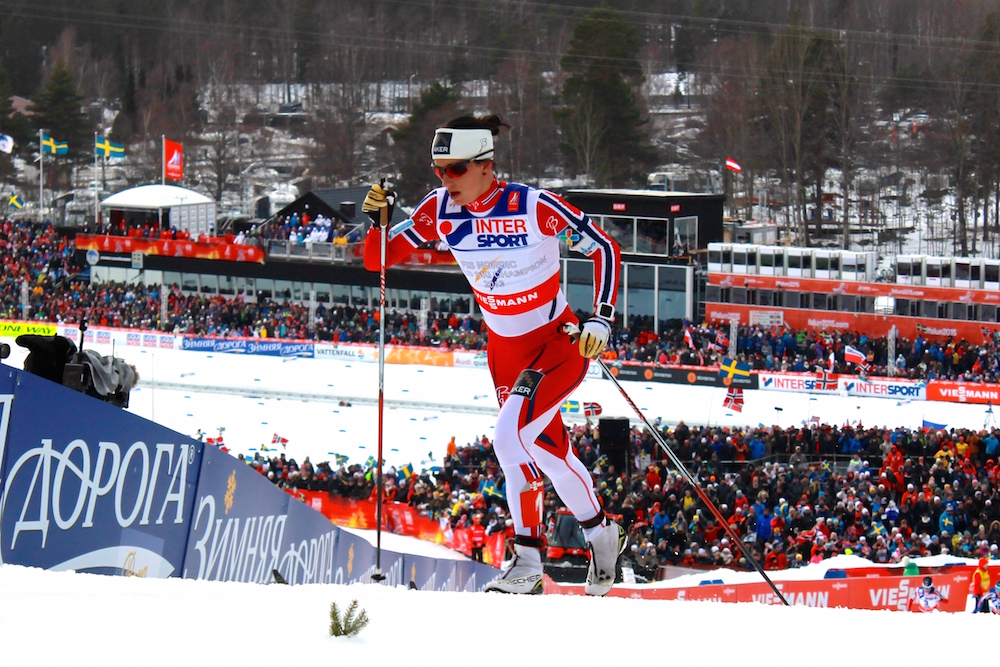
    One thing was pretty predictable last season: Marit Bjørgen was better than almost everybody else, almost all of the time.
    One thing was pretty predictable last season: Marit Bjørgen was better than almost everybody else, almost all of the time.

    How predictable do you find the results of a cross-country ski race? A study published in December comparing within-athlete and between-athlete variability in multiple sports found that cross-country ski races were among the most predictable of athletic competitions.

    The study, published in the journal Sports Medicine by New Zealand-based researchers Rita Macata and Will Hopkins, compared sixteen different studies of competition in different sports. First, they assessed data on how consistently top athletes within each sport performed compared to themselves. Then, they looked at how large these variations in performance were compared to winning margins.

    For cross-country skiing, the data was based on a 2014 paper in the International Journal of Sports Physiology and Performance written by Matt Spencer, Hopkins, and others, who were based at the time at the Norwegian Research Center for Training and Performance in Oslo. Spencer and the co-authors looked at results from the 2002 to 2011 seasons for more than 400 skiers competing in World Championships, World Cup, and Olympic races.

    After removing effects like snow conditions and altitude, the authors found that the coefficient of variation for skiers was about 1.5 to 1.8% of race time from race to race, with the best athletes (the top 10 on the World Cup that season) having more consistent performances and only varying by 1.1 to 1.4%. This is perhaps not surprising: the best athletes are the best-trained and able to turn in good performances race after race.

    In the December paper, Macata and Hopkins compared that to values calculated in other sports. Within-athlete variation in skiing fell somewhere in the middle, along with many other endurance and running-like sports.

    The competitions with the smallest within-athlete variation came in skeleton and 1,000-meter speedskating. The authors explained that this was because most of the outcome in these races was determined by having a very fast start, and little changed after this initial burst. Thus, they called these “low-skill” sports which depended mainly on one highly trainable factor.

    Those with the most variation? Surfing, where competitions are won and lost based on a judge’s objective score and tricks can either be successful and go wrong, and women’s weightlifting, which the authors explained might have extra variation because it is relatively new as an Olympic sport and the field is not so deep or well-developed.

    The next step was to compare this within-athlete variation to among-athlete variation. To do this, researchers often use a metric called “ICC”, or the Intraclass Competition Coefficient. It essentially tells how well-correlated the results of one competition are to another.

    Interestingly, the Spencer paper found that while overall results in cross-country skiing were very predictable, with >90% correlation between competition results both within and between seasons on the World Cup, it was much harder to predict the top 10. In the men’s field, there was practically no correlation between results of races from one weekend to the next. In the women’s field, the ICC was about 30% in distance racing, but much lower in sprints.

    Why so low, particularly in the men’s field? Because the top athletes are so well-matched, within-athlete variability in performance was able to affect the outcome. The women’s field was less deep, the authors argued, so the within-athlete variations did not so often overwhelm the differences between athletes.

    However, when Macata and Hopkins compared the ICC values to that of other sports, they used the high values of all the results rather than the low values of top-10 results. They also did this for the other sports, since it was difficult to find published ICC values at all, much less for only the best athletes (more papers had calculated within-athlete variation than ICC’s).

    And with that overall World Cup field, cross-country skiing is more predictable than most other sports, they concluded. Rowing had an ICC of 65%; speedskating 74%; triathlon, 36%. Down at the bottom was surfing, where the difference of scores for any given athlete between two competitions could be extremely large. There, the ICC showed that results from one event to the next were only 18% replicated.

    Of course, the review was not completely exhaustive. They used only sports which have time-, weight- or distance-based results, like track and field, rowing, speed skating, triathlon, and cycling. Surfing was the anomaly in terms of being a judged sport, and potentially other judged sports (like gymnastics, figure skating, or freestyle skiing) would have similarly low ICC numbers.

    They also excluding team scoring-based sports like soccer, basketball, and hockey, where it’s difficult to directly compare performances between games.

    But for the type of sports they could analyze, and find data for, cross-country skiing came out on top.

    “For highly predictable sports, such as cross-country skiing, placings in any single competition are a good representation of a ranking of athletes’ abilities,” the authors wrote.

    One takehome message? This should make it easy for coaches to calculate, using testing, what magnitude of improvement would win an athlete an extra medal.

    “In this review we focused on the within-athlete variability as a statistic to derive the smallest and other important magnitude thresholds for changes in competitive performance,” Macata and Hopkins concluded. “These thresholds can be transformed into thresholds for research on factors affecting performance in laboratory and field tests.”

  • Canadians Snag Three Podium Finishes in Rovaniemi Sprint; Koos Fourth

    Canadians Snag Three Podium Finishes in Rovaniemi Sprint; Koos Fourth

    Dasha Gaiazova of Canada leading her quarterfinal heat in Rovaniemi.

    The Canadian National Team led the way in Rovaniemi, Finland today, with Chandra Crawford, Dasha Gaiazova, and Lenny Valjas all cracking the podium in an FIS classic sprint.  Meanwhile, the United States was led by Torin Koos in fourth.

    Weber.

    Temperatures were quite reasonable – between negative five and negative seven degrees Celsius – and the tracks were firm on the out-and-back course, which featured two bridges, a large hill, and several tight corners including a corkscrew leading out of the stadium, through the underpass of one bridge, and ultimately over the top of it.

    Gaiazova and Crawford led the North Americans in qualifying, finishing second and third behind Victoria Melina of Russia. Hannah Dreissigacker of the Craftsbury Green Racing Project (CGRP) finished tenth, leading all U.S. skiers, while Audrey Weber from Go! Training was 24th.

    In the men’s race, several North Americans had strong results. Canadians Stefan Kuhn and Lenny Valjas led qualifying with sixth- and seventh-place finishes. Their national team compatriots Phil Widmer and Frederic Touchette qualified 17th and 24th, while Americans Pat O’Brien of the CGRP and Torin Koos of the Methow Olympic Development Project skied to 16th and 25th. Also of interest were results from Vahur Teppan, an Estonian who formerly skied for the University of Alaska-Fairbanks; and Andrey Golovko, a Kazakh who spent a year skiing for the Factory Team in the U.S. The European pair qualified 4th and 23rd.

    Among all of these performances, O’Brien’s was perhaps one of the more surprising results of the day, given that the other American and Canadian men who advanced were all national team or former national team athletes.

    Dreissigacker.

    In the quarterfinals, Gaiazova and Crawford both led their heats from start to finish, while Dreissigacker skied to second-place showing in her quarterfinal, also advancing easily. Weber finished sixth in her heat.

    Gaiazova and Crawford went one-two in their semifinal, while Dreissigacker was boxed out in the corkscrew and was sent to the B-Final.

    “It’s a herringbone sort of corkscrew, so you really have to get into good position,” Dreissigacker said. “I did get off to a good start, but I guess I just got behind the wrong person. Then the problem was that there was four of us going the same side, and I couldn’t get around them.”

    In the B-Final, she faced similar problems at the start, but took an outside lane going up the large hill and ended up second, for eighth on the day.

    “It was fun – in the quarterfinal, there was one girl way ahead of me, and I was in front of everyone else. But the other two heats were fun because you’re just skiing with those people. The coolest thing about today is that I felt like I was competitive here – I feel like I belonged racing against those people.”

    O’Brien (left) was forced to swing wide in his quarterfinal heat.

    In the A-Final, Gaiazova, Crawford, and Melina came into the finish in a tight pack, with Melina leading the way. However, strong finishing sprints and a pair of toe-slides helped the Canadians edge out the Russian.

    After the final, Crawford was overheard discussing her double-poling with a coach.

    “No matter how long you’ve been skiing, it’s really tough to keep your technique together after a long day of racing when you’re tired,” she told FasterSkier.

    When asked whether she and Gaiazova had planned to work together in the final, she smiled.

    “I told Dasha that my life would be complete if I could just stay on her, or at least close to her, on the uphill,” Crawford said. “In the semifinal she had probably ten meters on me just on that hill.

    “You know, this is a small race. It’s not a World Cup; there isn’t a single World Cup skier here. But it’s really important right now to go out there and ski four rounds. It’s good for development, and it gives you confidence. You could go straight to the World Cup and not qualify and get depressed, but here I am skiing four heats.”

    Koos.

    In the men’s heats, there was a bit more excitement with some hard crashes and a number false starts. Widmer was the victim of one crash after tangling with Kari Varis (FIN) on a downhill, and Anssi Pentsinen (FIN), the top qualifier, fell hard about 200 meters from the finish in his semifinal heat, ultimately finishing 11th overall.

    Several rounds included multiple North Americans, making it tough for all the athletes to advance – O’Brien and Koos were paired in the same heat, with only the latter advancing. In another heat, Valjas profited from Widmer’s fall, making his way through to the final more easily than he might have otherwise. Touchette finished third in his quarterfinal and failed to advance.

    In the B-Final, Kuhn skied to second place, and finished eighth in the overall standings.

    The A-Final included Koos and Valjas, as well as Teppan, the former Alaska-Fairbanks skier. After a restart, they were off. Initially, things looked bad for the North Americans, but by the time they entered the finishing straightaway, Teppan held an insurmountable lead, Valjas had second place locked down, and Koos was in fourth place. Vasili Rotchev of Russia finished third, rounding out the podium.

    Valjas, post-race.

    “It was kind of a rough start, in the outside lane,” Koos said. “But I put in a good move going around the corkscrew. Going over the last bridge I was in fourth – I touched the leaders – but then Rotchev and I kind of tangled a little bit. He pushed me out. But I tried to ski inside him a little bit too. In the end I just didn’t have enough in the tank.”

    “It is really great to see Vahur up there,” Koos added.

    Valjas, who turns twenty-two tomorrow, was clearly excited about his race. Because the Canadians are using the Rovaniemi races as trials, only the top men will get a start at the World Cup mini-tour in Kuusamo next weekend – and Valjas said he was looking forward to it.

    As for today’s final, he said that he got off to a slow start – as usual.

    “But on the big uphill, I switched to the outside track, and the two skiers in front of me were in a different track, so I could attack and move up. Then it was just hanging on,” he said.

    Valjas did note the Canadian team “had some bad luck in the heats, like what happened to Phil. You don’t want that to happen in trials.”

    Racing continues in Rovaniemi tomorrow with a classic interval-start races, 5 k for women and 10 k for men.

    Gaiazova (right) and Crawford leading out the A-Final.
    Phil Widmer of Canada near the front of his quarterfinal heat. Teammate Lenny Valjas is in the background.
    Valjas (bib 7) in his semifinal.
    Gaiazova and Crawford are all smiles on the podium.