Tag: richard lemoine

  • Remembering Larry Sinclair: A Legacy Extending Well Beyond Highlands Nordic

    Remembering Larry Sinclair: A Legacy Extending Well Beyond Highlands Nordic

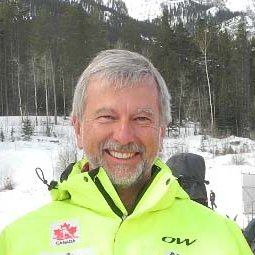
    Canada's Larry Sinclair, a founding member of the Highlands Trailblazers Ski Club and provincial- and national-level coach since the late 1970s, died at age 59 on Jan. 25 after battling cancer. (Photo: "Light the trails for Larry")
    Canada’s Larry Sinclair, a founding member of the Highlands Trailblazers Ski Club and provincial- and national-level coach since the late 1970s, died at age 59 on Jan. 25 after battling cancer. (Photo: “Light the trails for Larry”/fundrazr.com)

    There are some things you must know about Larry, for he is no ordinary man. He is one of the most extraordinary human beings I have ever met. — Brittany Webster, on Highland Trailblazers Ski Club founder Larry Sinclair

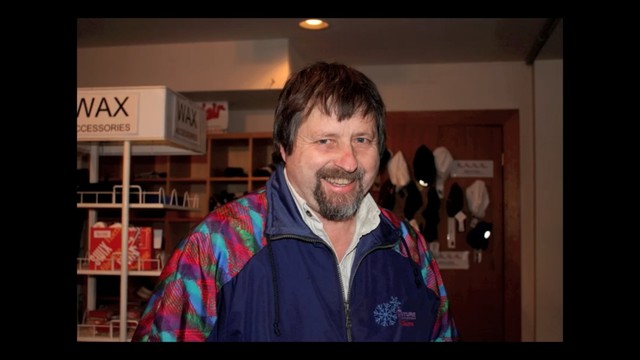
    Larry Sinclair was, in a word, dedicated — to his sport and to young skiers, and not just in helping them become top-level athletes, but making them the best people they could be, according to former Cross Country Canada (CCC) President Richard Lemoine.
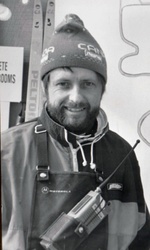
    A provincial and national skier from Collingwood, Ontario, who went on to help found Cross Country Ontario and the Highlands Trailblazers Ski Club, Lawrence "Larry" Sinclair passed away at home on Jan. 25 at age 59 after battling cancer. (Photo: Obitsforlife.com)
    A provincial and national skier from Collingwood, Ontario, who went on to help found Cross Country Ontario and the Highlands Trailblazers Ski Club, Lawrence “Larry” Sinclair passed away at home on Jan. 25 at age 59 after battling cancer. (Photo: Obitsforlife.com)

    And the longtime coach, national-team wax technician and founding member of the Highland Trailblazers Ski Club knew his time was limited. Fifteen days before Sinclair, 59, passed away on Jan. 25 after battling cancer, the NorAm and Junior/U23 World Championships Team Trials were held at Highlands Nordic in Duntroon, Ontario.

    “We all knew that Larry was very sick and while we were all hopeful, we knew he faced a huge challenge,” Lemoine reflected in an email. “Despite this, Larry dedicated his efforts to making sure that our trails were ready to be homologated – that included spending weeks laying out some new trails and wielding a chain saw to cut down hundreds of trees.”

    The races were a success “and many athletes commented on how the trails were a true test of athletic abilities that separated the very good from the very best,” he added. There were no free rides at Highlands, something Sinclair was proud of: “You have to work to get around the course and grunt your way up every last hill,” Lemoine wrote.

    That NorAm weekend, Lemoine and Sinclair’s brother Shawn, the chief of competition, reminisced while watching some of the races. How would Sinclair be remembered? Shawn noted that his brother had created a race site at Highlands, and that the ski resort it had become was an afterthought.

    “It was if Larry hung on to make sure that the races were a success. That was the last time he was able to make it to the resort he so loved and dedicated so much of his life to,” Lemoine explained. “Larry touched many in his too brief stay on this planet. He was a mentor to not only athletes but also to many ski coaches and officials. He was also a stalwart in the community for many other causes.”

    “Larry touched many in his too brief stay on this planet. He was a mentor to not only athletes but also to many ski coaches and officials.” — Richard Lemoine

    A competitive provincial and national skier from Collingwood, Ontario, Sinclair became a coach in the late 1970s, starting his career with the University of Guelph ski team, according to a CCC press release. In 1989, he coached Canada at its first World University Games appearance in Sofia, Bulgaria, and additionally led several junior and provincial team trips to Europe.

    Sinclair went on to join Team Canada at the 1988 Olympics in Calgary, Alberta, as a wax tech. He served as the head coach of Ontario and Southern Ontario for several years and received the Heinz Niederhauser Coaching Award for his excellence in coaching.

    He helped create Cross Country Ontario (CCO) to promote the regional development of the sport and enable direct access to provincial funding. In the ’90s, he instructed coaches and course conductors and also mentored athletes and coaches as the founder of Highlands Trailblazers, with a nordic facility that’s developed into “one of the finest, all privately funded, cross country facilities in the country,” according to CCC.

    “It was a family operation with any profits in a volatile, weather related business, going back into the further development of the facility itself,” the release stated.

    “While Larry was such a force in the skiing community he was even more dedicated to his wife Pat and his cherished daughters Kelly and Megan,” Lemoine wrote. “I had the honour of being a good friend of the entire Sinclair family and saw the love and attention he lavished on his daughters.

    “We truly lost a great person,” he added. “He will be truly missed. Perhaps the best way to sum up his and his family’s dedication to the sport is that in lieu of flowers the family has requested that donations be made to the ski club he founded so many years ago – the Highlands Trailblazers.”

    Unrivaled Commitment

    A two-time Olympian and 2013 Senior World Championships team member, Brittany Webster, 27, grew up at Highlands. She remembered Sinclair as “a person with a huge heart who puts everyone and anyone before himself. He has single-handedly developed the Highlands Nordic facility through his sheer love of cross-country skiing and has devoted his life to sharing his passion with others,” she wrote in an email.

    Webster first met Sinclair when she was a “keen yet very novice” high-school racer.

    “For all Larry knew, I was yet another one of the thousands of high school racers he had seen pass through his club on their way to a University career path who would occasionally drag out their skis once every few years to go for a jaunt on the trails,” she wrote. “The amazing thing was that he treated me just like everyone else, like gold.”

    He gave her a 60-percent discount on her first pair of race skis, helped her out with a “great set of boots” and let her use the facility essentially for free.

    “I could not even ski,” Webster wrote. “This is the kind of person Larry is, he does anything for anyone in hopes that they will one day share his and their enthusiasm for cross-country skiing with their young ones.

    “Perhaps he did not expect it, perhaps he did, but I took Larry up on his offer and went to Highlands Nordic every weekend I could. As Larry saw me develop into a somewhat decent provincial racer he began to develop his race program as best he could to accommodate me,” she added. “With no money and no race program in place, Larry found a way to hire a full-time coach for our little club. His time, effort, and dedication to me took me places I would have never dreamed.”

    Three years later, Webster was the top Canadian at 2007 Junior World Championships in Tarvisio, Italy, placing sixth and ninth in two individual distance races.

    “I travelled the world racing in different countries, but always always made the effort to come home to Highlands Nordic,” wrote Webster, who now trains with the Alberta World Cup Academy in Canmore, Alberta. “It is a very special place Larry has developed. It is my home, they are my family.”

    Sinclair started his days at 5 a.m. and worked until close, 7 p.m., after which he would meet Webster and review her video technique sessions with her.

    “Larry takes no days off. Even a few years ago, when he suffered through many chemo treatments to treat his stage 4 cancer, he was up at the crack of dawn getting ready for a 10 hr day at the Nordic Centre,” she recalled.

    Whatever spare time he had, Sinclair mulled ways to give back to his sport and his family, she added.

    “Every year I return back home I see new changes to the facility,” she wrote. “[Eight kilometers] of new race trails have been built over the last 3 years, there have been additions to the chalet, new wax trailers, and new equipment for the athletes.

    “It goes without saying that Larry’s commitment to me, and my dreams has gotten me to the Olympics. Without him I would not be an Olympian. His legacy continues as he mentors young kids just like me and is developing a facility and program that is raising eyebrows and collecting medals all over the country.”

    Light the Trails for Larry

    After Sinclair’s passing, Lemoine initiated an online campaign called, “Light the trails for Larry,” which initially aimed to raise $9,000 to light at least 3 kilometers of trails at Highlands — part of Sinclair’s vision to provide the public with more hours on snow.

    “Larry reached out to the larger community and an affordable solution was found – a mixture of low voltage LED lights – deep cycle batteries – solar panels to recharge the batteries,” the fundrazr.com website explains. “The cost per light is approximately $300 – much cheaper than any other system. A light is required about every 100 metres.”

    The first part of the plan is to illuminate 3 k of trails, and eventually, 8 kilometers, which would cost approximately $24,000. Contributors of $300 or more will be recognized with a plaque at the chalet. As of Wednesday, more than $18,000 had been raised.

    For more information, visit https://fundrazr.com/campaigns/7wDpf/sh/64UK15.
  • Cross Country Canada’s President Richard Lemoine Resigns, Elections This Weekend: ‘I Was Asked Not to Run’

    Cross Country Canada’s President Richard Lemoine Resigns, Elections This Weekend: ‘I Was Asked Not to Run’

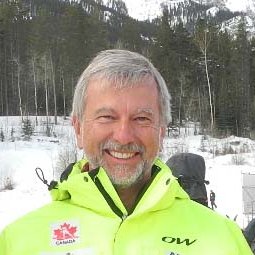
    Former CCC President Richard Lemoine (Photo: Richard Lemoine/LinkedIn)
    CCC President Richard Lemoine stepped down from his volunteer position on the Board of Directors two weeks ago. (Photo: LinkedIn)

    After this weekend, there’s going to be a new president/chairman of Cross Country Canada’s Board of Directors after Richard Lemoine stepped down from the volunteer position a few weeks ago.

    “I was asked not to run,” Lemoine explained on the phone Tuesday from Mississauga, Ontario, where he works as a partner with the chartered accounting firm, Lemoine Hyland LLP.

    Acting chair Jim McCarthy, Lemoine’s predecessor who served four consecutive years (two terms) as CCC president/chair from 2008 until 2012, said on the phone Tuesday that Lemoine’s resignation was “not really anticipated, but it happened.”

    “There was a difference of opinions as to how CCC should move forward and he felt he didn’t want to continue under those circumstances,” McCarthy added.

    President of the board since 2012, Lemoine said he chose to resign rather than not be reelected for a second term by CCC’s division chairs and board members at their Annual General Meeting (AGM), an open board meeting, this weekend in Canmore, Alberta. He’ll be in attendance, however, but will no longer hold a position on the board.

    “It really came down to where the board should have influence,” Lemoine said. “We’re a policy board and the model … some people think we should be running under is the Carver model, which has been described as nose in, fingers off.”

    He explained that this system, also known as policy governance, as “something that’s loved by executive directors, but I believe at the end of the day the board is going to be held accountable so they should be more knowledgeable and involved in the day-to-day process.”

    Accountability arrived front and center after the Sochi Olympics, a time in which CCC’s decision makers looked at their athletes’ results and lack of medals and decided it was time for change. In April, CCC hired Tor-Arne Hetland, a Norwegian Olympic gold medalist and former Swiss sprint coach, to help head up its World Cup Team.

    Lemoine said he advocated developing a stronger, domestic-coaching model, while acknowledging there were two sides to any decision and adding, “It’s not a decision for the board to take, but from a policy point of view, we need to make sure that we are preparing our domestic coaches for the top coaching positions.”

    But he and CCC’s Executive Director Davin MacIntosh often did not see eye to eye, Lemoine said.

    MacIntosh wrote in an email that he declined to comment.

    “There have been a number of areas of tension between Davin and I,” Lemoine said. “He was not pleased when I was proclaimed president.”

    There was a fundamental disagreement over what constitutes policy decisions — which the board should oversee — and operations decisions— which the executive director is responsible for, he explained.

    “Certainly post-Sochi I didn’t think the hard questions were being asked,” he added. “For example, I look at what the U.S. has been able to do over the last four years, converting athletes to the World Cup… and I look at that and say we could do better.”

    Yes, Canada’s seen unprecedented success in recent years, Lemoine said, but the nation’s athlete-feeder pipeline is dwindling.

    “We came out of our high-performance meeting this April not being able to fill our spots for training centres and having to decide to stop supporting the Callaghan Valley Training Centre as there weren’t enough athletes to go around,” he said. “Certainly the depth of talent is not what we want it to be … We are generally seeing a drop in retention rates of our athletes once they graduate from high school.”

    He pushed for Canada to fill its World Cup quota and bring the next tier of the best domestic racers over to Europe. With that comes costs, and likely struggles, but Lemoine pointed out that’s how Canada’s Olympic gold medalist Beckie Scott got her start — getting crushed by the competition.

    “You send them to Europe, you support them right, give them the best chances you can, and they see what the difference is,” Lemoine said. “We know our skiers are skiing slower than their European counterparts.”

    When it came to hiring coaches or restructuring the staff, Lemoine said, “that’s definitely getting past to where the board should be.” But he did look at the athlete-development system on the whole, and ask what direction it was trending in.

    “In my opinion we had a horrible Olympics; seventeenth was our best finish,” he said. “So you then ask the question, I like to quote Einstein: [insanity is] if you do ‘the same thing over and over again and expect different results’… Don’t come back with the same team because something’s gotta change. That’s where our executive director thought I was crossing the line.”

    Two weeks ago, Lemoine said the provincial and territorial directors met to consider the situation before the AGM on June 14.

    “They sided with Davin and decided it would be best if I stepped down,” Lemoine said.

    While CCC presidents can run for back-to-back two year terms, McCarthy is the only one who has held the position for four years, Lemoine said. At the request of the provincial chairs, Lemoine agreed to step aside rather than stay at the helm until this coming Sunday, when he would have likely been officially voted out.

    “I know all  of these people; I am going to stay involved in the sport,” he said. “I’m going to be the chief of competition at this year’s trials races for World Juniors/U23 Championships. I would have nothing to gain other than saying it’s going to protect my reputation a little bit … the sport is more important. I learned a long time ago that it’s all about the athletes.”

    According to McCarthy, who served as CCC Ontario chair before becoming president in 2008, he’s known Lemoine for “a dozen years” and observed, “he’s a pretty strong-minded character, works hard, has his own vision of things.”

    “I would have nothing to gain other than saying it’s going to protect my reputation a little bit … the sport is more important. I learned a long time ago that it’s all about the athletes.” — Richard Lemoine, President/Chair of Cross Country Canada’s Board of Directors from 2012-2014

    “The two of us worked well together, but occasionally clashed and … that’s what Richard’s about — he’s made a big contribution,” McCarthy said. “Like all volunteer organizations, it depends inordinately on a relatively small number of volunteers that put out.”

    At the end of the day, however, and on what McCarthy called an ongoing basis, “the executive director is more important to the operations of CCC than the board chairman.”

    In the last few weeks since Lemoine resigned, McCarthy has been filling in as chair, but said he would not be up for another term as president. As of June 4, no candidates had been nominated for the position, but McCarthy said they could be chosen and subsequently elected this weekend. Candidates do not have to be current members of the nine-person board.

    Lemoine’s involvement with CCC dates back to more than a decade ago, where he remains treasurer of the CCC Ontario board. From 2003-2004, he served as a director-at-large under CCC’s former structure and chaired the marketing committee from 2003 until 2005. That year, the structure of the board changed, and Lemoine went on to run three times to be a director-at-large from 2006 to 2009. He didn’t win, but was ultimately appointed to the board after his third failure, he said.

    “Oddly after being rejected three times as a director at large, the same people acclaimed me as president,” he said. “Dave Rees who was also acclaimed as president in 2006 also failed to win a position as a director-at-large at a previous AGM.”

    McCarthy explained that the board is made up of nine people: a chairman, six directors-at-large, one director representing the chairs of the provincial and territorial divisions, and an athlete director, “preferably an active athlete who tries to represent that perspective.” The divisions meet once a year, and the board meets three times annually, including at the AGM. They also check in via monthly phone meetings.

    The board hires and oversees an executive director who’s responsible for the day-to-day running of the organization. The executive director reports to the board “usually by monthly meetings, usually by telephone,” McCarthy said. MacIntosh was hired by CCC in 2009 and will retain his position in the immediate future, McCarthy said.

    Asked about the level of stress within the organization the last few months since the start of a new Olympic cycle, McCarthy said, “I’d say it’s pretty close to the same level of stress [as usual]. Everybody in this business is pretty passionate. People develop strong viewpoints of how things should be done.”