From the FasterSkier archive — posts syndicated from athletes’ and coaches’ own blogs between 2004 and 2012, kept online as published. Current coverage is at fasterskier.com.
On a bright March afternoon at Dartmouth’s Oak Hill, with a soft and slow course under his skis and a band he himself had organized blasting in the stadium above, John Steel Hagenbuch approached the final climb where he learned something that would shape the early years of his career far more than any podium ever could.
He had come into the NCAA Championships with the weight of a thousand private dreams — a home championship crescendo and an entire community behind him. Then, with Utah’s Joe Davies charging to the finish line waving the Utes flag and Peter Graves’ voice echoing through the trees, Hagenbuch realized he was not going to win.
“I got dropped, and it just wasn’t gonna happen,” he says. “I told myself, you’ve got until the top of this hill to be upset about it.”
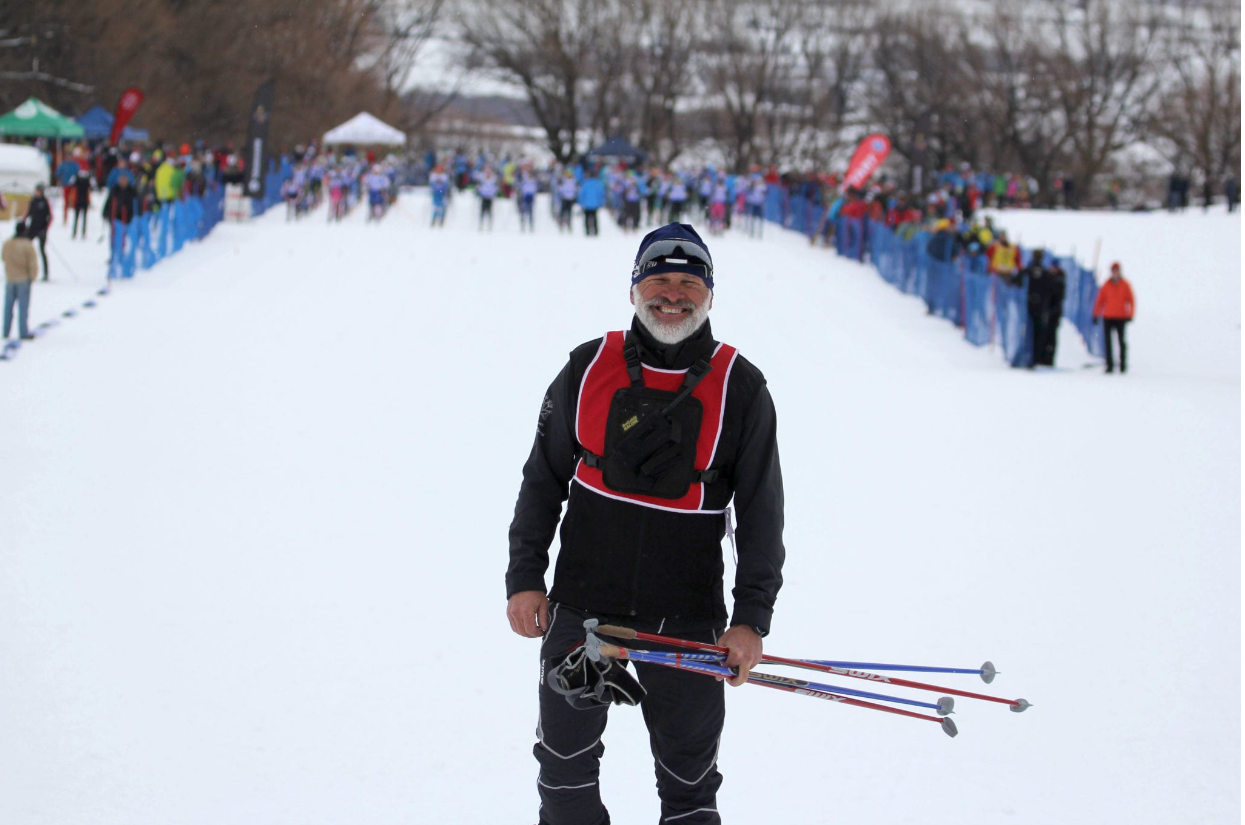
John Steel Hagenbuch was all smiles after crossing the 20k Freestyle finish in second place at the 2025 NCAA Championship where he represented Dartmouth College on their home course at Oak Hill. (Photo: Courtesy Photo)
What happened next wasn’t the reaction of an athlete who had just been beaten in the race he’d been thinking about, talking about, training for, and dreaming about for three years. It was something quieter. Something older. Something that didn’t look like the scripted champion he’d imagined — but ended up becoming the cornerstone of the athlete he is now.
“I stopped poling,” he says. “And I just kind of skated through the stadium… smiling, waving, like the Penguins of Madagascar — smile and wave.”
He remembers the sunshine, the thousands of people lining the stadium, the Stripers — Dartmouth’s biggest student band, coaxed back from post-graduation life because he wanted the place to feel alive — and the thrum of friends, professors, fraternity brothers, and family in the crowd.
“Did I win the ski race? No. But it actually didn’t matter,” he says. “I was just so grateful… all the amazing things in my life that had led me to that point.”
Every day since, he thinks about that race. “But not for the reasons you’d expect.”
John Steel Hagenbuch (USA) racing the World Cup opener in Ruka (FIN) in 2023. (Photo: Modica/NordicFocus)
Muonio, Finland: The Final Quiet Before the Season Begins
Eight months later, Hagenbuch is sitting in a small room in Muonio, Finland, speaking over a fickle internet connection. Outside, winter is closing in; inside, the early-season nervous energy is beginning to hum.
“It’s been a good way to start the season,” he says of the classic sprint and 10k skate he raced the previous weekend. “Hopefully more to come.”
He will likely stay on the World Cup through the Tour de Ski. His primary goal, stated simply and without ornament, is clear: “Primary goal is to go to the Olympics. Everything else is secondary.”
He’s 24, still at Dartmouth — technically a senior, though he took this fall off to focus on training. When winter term begins on January 7, he’ll be back in class, shifting between World Cups and essays, navigating the dual life of a college student and a professional skier the way only NCAA athletes truly understand.
But he is not rushed. Not impatient. Not gripping the rail of his career with white knuckles.
He learned something on that hill at Oak Hill, something that has become his ballast. “It reminds me why I do this,“ he says. “And why this sport is so special.”
Before he was an NCAA champion, skiing on the World Cup, and a trying to qualify for the Olympics, John Steel Hagenbuch was just a kid who loved skiing around on the trails of Sun Valley, ID. (Photo: Courtesy Photo)
The Long View: Three Olympics and a Full-Moon Ski
Hagenbuch surprises you with the distance of his vision.
When asked about the future, he doesn’t talk only about Milano-Cortina in 2026. He talks about three Olympics — a decade of life sketched out in calm, confident lines.
“I would love to go to the next three Olympics,“ he says. “Milano-Cortina, then the French Alps, and then retire at the Salt Lake City 2034 Games.”
Soldier Hollow, where he has raced “probably 50 times,“ would be the perfect ending. But it’s not the race he imagines most clearly. Not the ceremony. Not the result.
It’s the lead-up.
“What will be the crown jewel of my ski career,“ he says, “is having the 2034 Olympic pre-camp in Sun Valley. At my house. With all the fellows.”
He can picture it already: the team skiing at Prairie Creek under a full moon, crispy tracks at 15 degrees after a sunny day, the quiet of the Sawtooths pressing close.
“That’s what I’m gonna remember when I’m 75,“ he says. “That Prairie Creek ski.”
In this way, Hagenbuch does not think like most 24-year-old athletes. He thinks like someone who has already lost something, already gained something, and has made peace with what remains.
A Training Philosophy Built on Feel (and a Fearless Lack of Overthinking)
In an era where professional endurance athletes run lactate strips daily and analyze heart-rate drift with the devotion of day traders, Hagenbuch stands apart.
“Do you do lactate testing?“ I ask him.
“Maybe like once a year.”
He trains primarily by feel—not just how his body feels, but what he feels like doing: long backcountry days, ridge runs, mountain biking, skiing deep into the mountains around Sun Valley. There is structure, but only when he believes it should exist.
“Not taking it too seriously,“ he says, “and kind of just going by what I would like to do and what I think is going to be fun.”
June and July? “Absolutely not“ analytical. Fall? Yes, that’s when he “locks in a bit.”
And if it ever stops being fun, he says, “I will not stick around.”
He has seen athletes grind themselves into dust out of fear of what’s next. “I respect the grit,“ he says, “but… I’m incredibly grateful to have had experiences and opportunities in my life that that’s not the case for me.”
He isn’t clinging to skiing. He’s choosing it — every day — until it no longer feels right.
That clarity is rare. Maybe even elite.
Being cheered up a climb in Soldier Hollow by one of his SVSEF coaches, Rick Kapala, John Steel Hagenbuch proves athletes like him aren’t built by themselves or through the guidance of one coach, they are lifted by a community. (Photo: Tryg Solberg/Courtesy Photo)
The Consortium: Osgood, Whitcomb, Kapala, and Holmes
Though he trains by feel, he is not without guidance. His coaching structure is more like a board of advisors — four voices, each offering a different vantage point.
“I talk with Brayton at Dartmouth, and Matt on the U.S. team, and Rick — my high school coach — and Peter Holmes on the Gold Team,“ he says. “I get input from all of those guys.”
When deciding to come to Muonio early, he called all four. Not for permission — for perspective.
“When I’m at Dartmouth, I do Brayton’s plan,“ he says. “But if I feel like I need to do something different, he’s totally cool with that.”
And contrary to what a young elite athlete might hope to hear, most of what they tell him is not “do more.“
“Oftentimes,“ he says, “it’s settled down.”
Dartmouth College’s John Steel Hagenbuch skied to a 15-second victory on his home trails in the 7.5 k Classic at the NCAA Championship. (Photo: Tobias Albrigtsen)
The Place That Built Him
If you want to understand why Hagenbuch thinks the way he does — why gratitude flows so naturally through him, and why he measures life through moments rather than medals — you have to understand Dartmouth.
“NCAA skiing is a really special thing,“ he says. “People are going to roll their eyes… but there aren’t a lot of places that have the components Dartmouth has.”
The social component is not a distraction — it’s a pillar. “Last year, every single guy on the team was in a fraternity,“ he says. “Different fraternities.”
He explains the structure: students join Greek life in their sophomore year, after they’ve already found their people, their communities, their balance.
“Everything acts as a complement,“ he says. “And providing that much balance… makes everything greater than the sum of its parts.”
The feeling at NCAAs captured this perfectly. “Anyone who was there,“ he says, “left thinking two things: college skiing is [so] sick and Dartmouth is [so] sick.”
He means it.
And he knows it won’t come again — not in this form.
Luke Allen, one of his closest friends, once asked an older alumnus if life ever gets as good as Dartmouth skiing. The man looked him straight in the eye and said, “No.“
There was lots of great energy at Oak Hill for the final day of the 2025 NCAA Championship. (Photo: Tobias Albrigtsen)
The Beauty of Losing
Here is the strange and elegant truth of Hagenbuch’s current career: his most important athletic memory is a loss.
He doesn’t hide from that. He doesn’t twist it into “motivation“ or pretend it fuels some internal fire for revenge.
Instead, he carries it like a compass.
“I think about that race every single day,“ he says. “But not because I lost… It reminds me to be grateful for these amazing people, places, and things in my life.”
He printed 150 photos at CVS the night before leaving Hanover in August — family, friends, the Haig Glacier, Sun Valley, Dartmouth — and plastered them across his fridge at home.
“Think how many times a day you walk by your fridge,“ he says. “All my friends are right there.“
It’s his daily reminder of what matters.
The Thursday classic race at NCAAs, the unexpected great day, the team’s move from fifth to first — these have become larger in his memory than the race he thought he wanted most.
“What was the special day at NCAAs?“ he says. “It was Thursday. I wasn’t even thinking about Thursday. I didn’t care how that one went.”
And yet: “I had probably my best classic race ever… it was such a culmination of a lot of hard work and belief.”
This is the philosophy he now lives by: you learn more from your losses, and sometimes the thing you didn’t expect becomes the thing you carry forever.
John Steel Hagenbuch, who won the 7.5k Classic, celebrates with his teammates after the three raced Dartmouth into the NCAA Championship lead. (Photo: Courtesy Photo)
The Advice Only Someone Who Has Lived It Can Give
At the Haig Glacier last summer — years after his last high school camp there — Hagenbuch offered a piece of advice that caught the younger kids off guard.
They were expecting training insight. Intensity zones. Technique tweaks.
Instead, he told them the thing he wishes someone had told him at 15:
“Be a kid more.”
Growing up in Sun Valley, he had an idyllic childhood — but he wishes he’d stayed on the high school soccer team after freshman year. Wishes he’d allowed himself to do more of what felt right, not what looked right.
“Don’t try to do what you think you should do,“ he says. “Do what you feel you should do.”
And if your friends are doing something slightly reckless, something that wouldn’t make the parental brochure?
“Maybe… F-it, do it,“he says, laughing. “You’ll figure it out for yourself.”
Because that, too, is how you learn.
John Steel Hagenbuch (USA) racing the individual sprint at the Minneapolis World Cup. (Photo: Modica/NordicFocus)
A Career Just Beginning, with the Wisdom of One Already Lived
Hagenbuch is young — young enough to dream of three Olympic Games, young enough to talk about walking onto the Dartmouth lightweight rowing team or running the 5k or 10k for the track team “as a fun challenge“ in his final spring on campus.
But he is also old in the ways that matter. Not jaded — never that. But precise in what deserves his attention, and ruthless in discarding what doesn’t.
He knows what a good race feels like: “When you finish and think, damn, I could have gone a little harder.”
He knows what a good life feels like: something filled with people and place, community and joy, full-moon skis and carnival tailgates and the band you recruited yourself playing you through the stadium after a loss.
And he knows — already — that the real currency of this sport isn’t medals, nor money, nor even wins.
“If you wanted to have glory or make money in sports,“ he says, “we’re all doing the wrong sport.”
So what is it about?
“It’s about the things I’ve talked about,“ he says. “It’s the parking lot tailgates. The little antics in the van. The dumb jokes with your boys. The feeling of being part of something bigger.”
And that’s why the NCAA hilltop moment carries him into this World Cup season — a season he hopes travels through Italy, under Olympic lights, wearing the colors he’s dreamed about.
Because that hill taught him the thing every great athlete eventually learns:
Sometimes the race you don’t win becomes the story you never stop telling.
Sometimes the best version of your career begins the moment you stop being upset… and start taking in the view.
Love Stories Like This? Help Keep Them Coming.
Feature interviews like this one take time, access, and care to produce. If you value thoughtful storytelling and independent ski journalism, please consider becoming a Voluntary Subscriber. Your support directly fuels the work we do to cover the people, places, and moments that make our sport special.
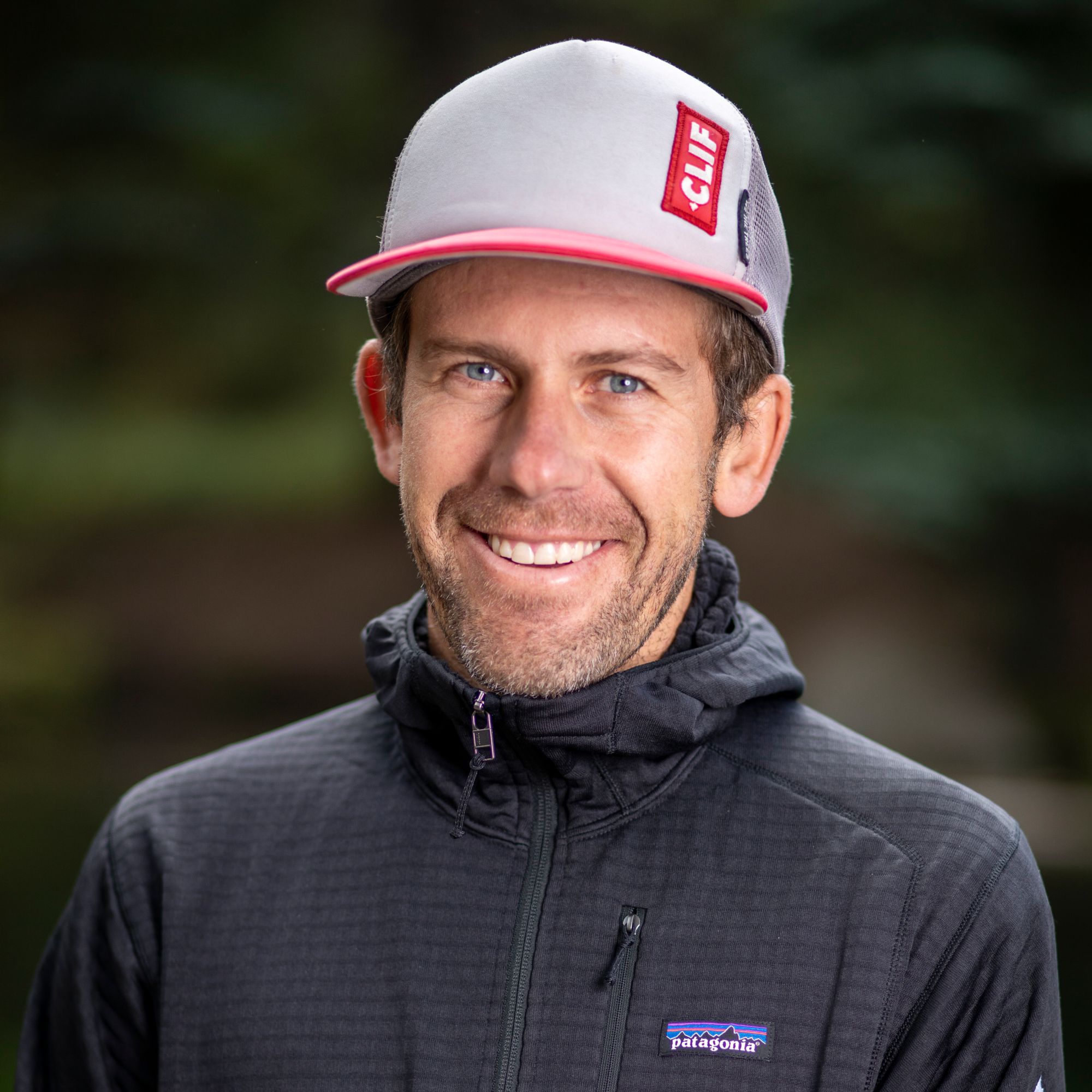
A common sight in the Intermountain West for the past 35 years: Rick Kapala on race day. Kapala is stepping away from coaching, and into sport development, this season. (Photo: Sun Valley Ski Education Foundation – SVSEF).
“I’m sorry, but once I start talking cross-country skiing, I can’t stop,” admits Rick Kapala. Remove the “talking” from that statement, and it’s still a succinct summary of long-time Sun Valley coach Rick Kapala’s career.
This season will mark the first time in thirty-five years that Kapala won’t be manning the wax bench on race day for the Sun Valley Ski Education Foundation. This summer, he turned to a new role at the Sun Valley Ski Education Foundation withthe title “Sport Development Director.” In his stead, formerBates College Coach Becky Woods will take over his former Program Director duties.
For those who have known Kapala during his long tenure in US skiing, his new title signals an exciting prospect. Kapala has been a constant, forward-thinking mind in US Skiing. He has played a role in creating a domestic professional skiing scene, helped start theNational Nordic Foundation, and counts a plethora of key figures in US Skiing as his former athletes, coaches, and mentees.
FasterSkier caught up with Kapala to reflect on his own journey to this point and get a glimpse into some of the most exciting ideas pushing US Skiing, from one of its most passionate minds.
(This interview has been edited for length and clarity.)
FS/FasterSkier (FS): Let’s start with your biography as a coach. Can you give us a summary of your career as a coach and at Sun Valley?
Rick Kapala (RK): Coaching for me started at my alma mater, Michigan Technological University (Michigan Tech), the year I graduated. Then I moved out west and I coached for a couple years in Washington state at a club program run by Pacific Lutheran University.
Then I moved to Anchorage which was where I was really fortunate in my timing. I landed coaching at West Anchorage High School as their ski coach, track, and cross-country coach. And the stable of athletes I had there was full. Nina Campbell, Joey Caterinichio, and Chris Grover are just a few your readers might know. I was really lucky that was my first exposure to sort of an “all-in” type coaching job. Then I came down to Sun Valley in the summer of 1987 and have been here ever since.
FS: What did the Sun Valley team look like when you got to Idaho?
RK: We had a pretty good little program, this being the ski town that it is. The Alpine program was big, but the cross-country team was this small, ancillary program. We had seven to nine on the high school team, and then seven or eight middle schoolers.
FS: How did you approach building out that program back then? Was it adding a younger development program? Bolstering numbers for the high schoolers?
RK: There was a separate, kind of “Bill Koch League” (learn-to-ski) type program in the Valley. We assimilated that and made it our Devo program under the umbrella of our offerings. The program immediately began to grow from there. I attribute that to having really good coaches at that younger age who were really invested in the right way over the course of the first four or five years I was in Sun Valley. That eventually led to steady growth for the Comp (high school) program. That model is the basic infrastructure of a club. The same can be said about New England with theBill Koch League, or in Minneapolis withthe Minnesota Youth Ski League. Really dedicated coaches at the younger level are what end up powering competitive programs.
FS: At what point did Sun Valley grow beyond the junior programming? When did the Gold Team (Sun Valley’s Pro Team) and Post-Grad programs start to develop?
RK: The genesis of theGold Team was a really fortuitous set of circumstances. We had a great coach, Chris Grover (who Kapala had coached at West Anchorage), landed in Sun Valley after the Nagano Olympics in 1998. He had been with the national team, but at the time there were budget cuts. Grover, coming off of that, had a pretty profound instinct that skiing couldn’t just develop within the [United States Ski and Snowboard Association]. He came to me and said, “we should start a pro team [in Sun Valley],” which, in retrospect, was such an important development because it allowed us to imagine a whole new ecosystem for our programming.
Having Grover come off of the national team also made it an easy prospect to get athletes here.Chris Cook, for example, got cut loose from the national team, and Grover was able to step in and give him an obvious avenue to keep pursuing professional skiing. That was key—having an avenue to go down. Cook won a national championship the first year he was at Sun Valley, and then made it to the Olympic Games.
That was a part of the fortuitous nature I talked about too. That the next Olympics were in Salt Lake City [in 2002]. The Gold Team was originally the Olympic Development Program—we got told eventually we couldn’t use that name, but it gave us a lot of visibility from the community here in Sun Valley, and a clear “brand” for talented skiers to know what they were pursuing here.
Ben Lustgarten and Rick Kapala at a SVSEF training session in 2014 (Photo: Ben Lustgarten).
FS:What strikes me as interesting about that “fortuitous” timing is that there was a push around US skiing at the same time Sun Valley’s team got started to have those Olympic Development programs around the country, but most of them weren’t nearly as sustainable as Sun Valley ended up being. In the past few years, we’re seeing a renewed push to introduce more pro racing opportunities across the country, whether that’sBridger Ski Foundation’s team in Bozeman, orTeam Birkie in the Midwest. What are some of the things that have made Sun Valley sustainable that could help make those programs sustainable as well?
RK: Whenever I get a question like this, I always start with a disclaimer. Sun Valley is a really unique place that affords us some big advantages when it comes to building and sustaining new programming. We have one of the richest traditions of skiing in the country, and it is still a ski town—it hasn’t sprawled out in the same way that other places have. It is also a fairly affluent community.
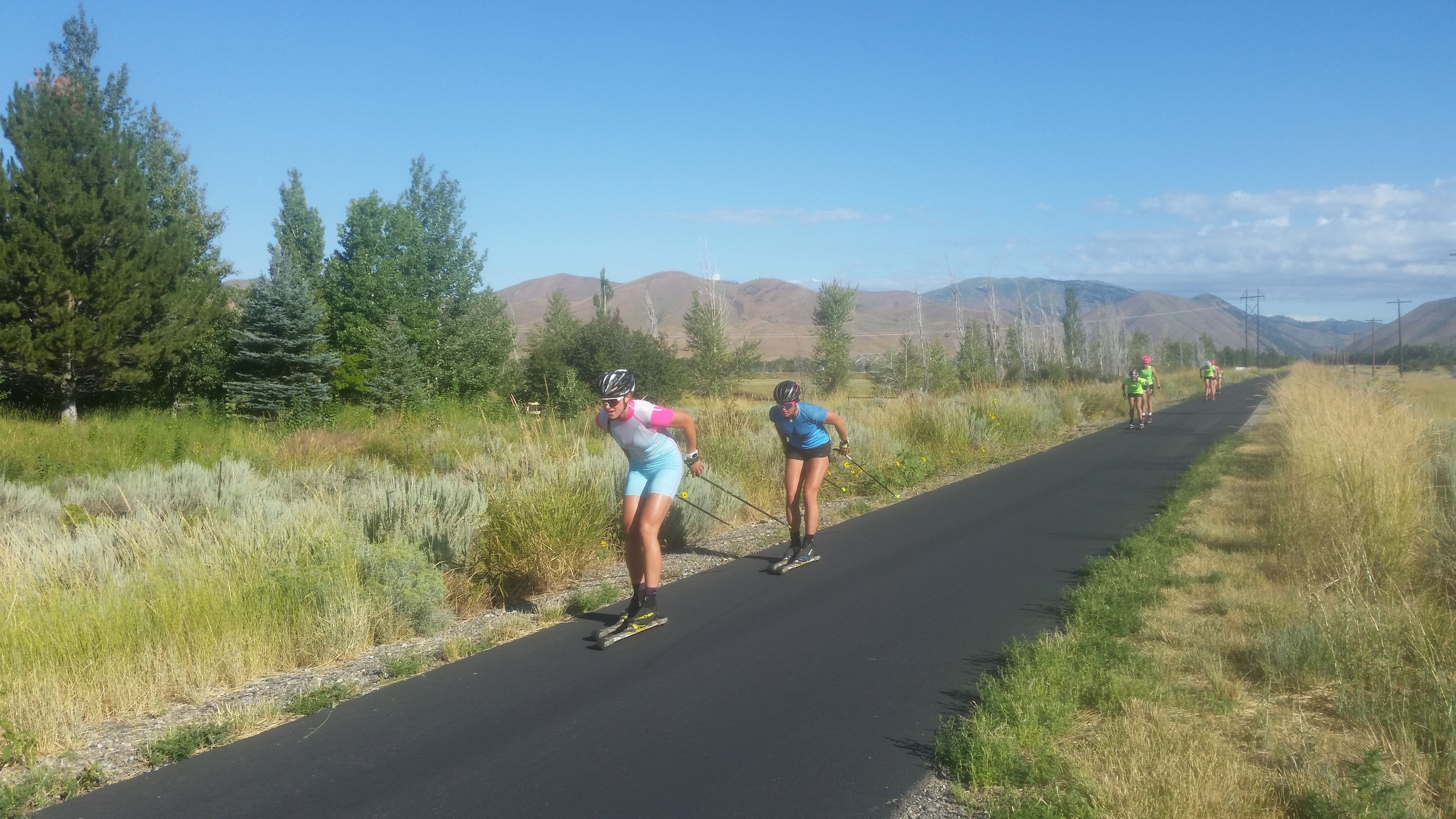
The industry here is skiing too, that always is going to be an advantage. We have an outsized role in our community because of that. When we roller ski in the summer, people are cheering on our kids, that’s not happening in other places, right?
I think we have had to center our approach around the idea that we are a community asset here. We try to have success, just like any sports team, but what we are really trying to be is the highest-quality recreational and competitive opportunity for kids in our valley. That gives kids the resources they need to take skiing as far as they can. Whether that was Morgan Arritola, or now Sammy Smith and Cora Faye Scott. They all came through a program that at the start was really a way to get out and involved in our community and kept true to that impetus. Naturally, that is going to engender warmth and engagement from outside of just the ski community. There is also making sure that the talent that is coming through the Gold Team, for example, is able to invest in the wider community here. We need to make sure they have the chance to do that. And they have.
I am not saying the model here is the model everywhere. What theLoppet Foundation has done to make skiing the big deal it is in Minneapolis—that’s phenomenal—they figured out how to balance programming, events, and facilities in a way where kids might just want to go skiing on Sundays rather than watch the Minnesota Vikings play football. And not every kid will, but they have the option to and feel like it is worth it. That is so important.
Or in Anchorage, right, skiers are on the front page of the newspaper. That’s a big deal. It is the same in Sun Valley, and I think that speaks to creating a community ecosystem that celebrates and invests in skiing.
FS: I am struck by how the skiers that the Gold Team has a pretty consistent mix of kids from your junior program and from other programs across the country . . .
RK: That’s super intentional. There just needs to be a critical mass to be able to inspire and also, provide a high-quality training environment. Johnny Hagenbuch, right now, for example: when he got to a point as a junior, having the Gold Team for him to hop into for training made a big difference in his development.
FS: With regard to “development,” we haven’t covered your new position in detail. You’re moving from individual athletic development to a more club-wide role. What does that look like in Sun Valley, and how do you see what you’re doing in Sun Valley pertaining to US Skiing in general?
RK: Well first, I don’t want to say I have answers beyond the community here. I think keeping my focus here is really important.
My new position as “Sport Development Director” is multi-pronged. I’m still doing the resource development for the Nordic Team and coordinating events like the upcoming SuperTour. Then, there are a few other initiatives that follow along the lines of thinking, “what is the next thing?” in sport development. One of those is coach education. In our organization [at Sun Valley] we have about one-hundred coaches on the payroll during the season. Right now, the coaches certification process they go through is kind of transactional with US Ski and Snowboard, right? Meaning they take this coaches’ course and maybe do a continuing education credit, but that might be it. One thing I think is big incongruency in [American] skiing right now is that we work on cultivating a growth mindset for our athletes, but we don’t have the same mentality for our coaches, let alone the resources to make it possible. I think that’s where we need to go. Like Doctors have the American Medical Association, we need to have an organization—or use our existing organizations—to cultivate a culture of what I’d call “professional development.” As a ski community, we’re past the point where we are simply hiring people to coach based on the merits of their skiing. I think it is a positive development that it is a distinguishable profession, but now we need to do the work to not make it a profession where everyone is kind of self-educating.
Kapala out in the Idaho mountains in 2022. (Photo: SVSEF).
FS: I’ve been thinking about that a lot the past few weeks, coming off of theNational Coaches’ Symposium and off ofDr. Stephen Seiler’s talk with NNF last week (which Kapala was partly the brainpower behind). My operable knowledge of physiology as a coach up to now was based on what I learned at an REG camp presentation as a sixteen- or seventeen-year-old kid, and all of a sudden it was like, “whoa, this whole field has evolved a bunch” and I came away with three or four things I was ready to change in my coaching right away . . .
RK: Yeah, and that coaches conference happens what, every two years? Imagine if we made that part of coaching culture. That collaboration and knowledge-sharing: it is imperative. I’ve been paying attention to the system of coaching in international soccer, for example, where American coaches are going over to Germany and realizing just how beneficial the structure and rigor of coaching education is over there.
FS: As in, the accreditation system?
RK: Not so much the accreditation, but more so just how seriously they invest in all the individual aspects of sport development. Like this American soccer coach I was listening to a podcast with [Jesse Marsch, who came up through the German coaching system and now is the first American coach in English Premier League history with Leeds United]. He said he had a year-long course in sports psychology just to get accredited in Germany. We are no year to making that investment in something as beneficial as that.
One of my other initiatives is on that front: I’d like to create a dedicated professional position at Sun Valley who can work with our athletes on sports psychology and wellness. We have always been great at catering to the physical aspects of our athletes, but not the emotional, or just human, aspect of human athletic performance.
FS: Putting the resources to institutionalize new developments in athletic performance seems to be a theme of your work. I ran across an articlefrom our archives where you talk about making training camps, like the U16 camp system, a regular part of the developmental pipeline in the US. That was a decade ago, and now, that’s well-established across US skiing. Is sports psychology and wellness the next front for that you think?
RK: The U16 camp idea was a collaborative idea that came from a couple coaches at REG camp being like, “this is a great system, why aren’t we expanding this type of incentive and experience to kids at the crucial point where they decide to go all in on skiing or not?” And we could do it quickly with relatively few resources. That is the same thing with wellness and catering to that aspect of our athletes. I actually think it is even more important in the American context, too, because we’re correcting for that persistent “toughness” or “suck-it-up” mentality that is a feature in our athletic culture. That has never worked when you look at skiing.
FS: It was interesting that in Johan Olsson’s presentation at the National Coaching Symposium a couple weeks ago, he citeda study on [UCLA’s legendary basketball coach John Wooden] where the main finding was essentially that his main feedback to his players was positive, rather than negative; that was a revelation in the 1970s.
RK: Yeah, and then a couple years after that, [Indiana University basketball coach] Bobby Knight was throwing chairs at his players! Somewhere it got lost, and so we still have to address it in the landscape of our coaching.
FS: Is the answer doing more coach education and dedicating resources to making it part of our clubs?
RK: Yes, I also think it goes to a base-level of empathy. One of the cool things about skiing now versus when I first started coaching is that there is a critical mass of people—coaches or even just parents of athletes—who went through all the highs and lows of ski racing as athletes themselves. We have a depth of knowledge present in skiing that just did not exist in the 1970s and 1980s, and it is so helpful as an athlete to not just have one coach, but a support network, that can help you navigate a really hard, and really rewarding sport. That is special, and we have that going for us.
FS: How do you incorporate that experience into the practice of coaching?
RK: I actually think it is a community thing. Which enough individuals working together is always going to lead to. At the end of the day, that is what we have that is special. I’ve been in this game long enough to see how skiing connections last. Our kids meet other kids from across Intermountain West at JNQs, and they go on to become their friends, neighbors, teammates later in life. It just lasts.
I think about what drives our community to do this sport a lot. There’s certainly not a lot of money in it, and there is not the capital of a lot of Division One college scholarships on offer. I think the ethos of it truly is that the people in cross-country skiing love it deeply. Love it individually, and together.
FS: That’s a beautiful way to say a really true thing. Just to try and collect some of the themes I am seeing run through this, the “Rick Kapala” philosophy towards skiing development seems to include a community powered by that ethos—that love of skiing you talk about—that provides a “complete ecosystem” in terms of the resources needed for athletes to succeed. And you seem to be very careful to say that needs to match the specific context of the place in which the ski community exists.
RK: I think that is fairly well put. The levers we can pull in Sun Valley are different than what those in Minneapolis—or you in Crested Butte—can pull. So you have to be collaborative and observe what works and what doesn’t in the place you are, and then take in knowledge from other places too. That’s how we ultimately make skiing in this country go ’round.
We can’t just do what the Norwegians or Swedes are doing. We have to think about how we do things soundly, but differently. We have been successful in doing that to some extent, but there is always room to improve—which was the most important lesson of my coaching career.
FS: And that’s the most important thing you’re now bringing to development?
RK: For sure.
Long-time SVSEF XC Program Director Rick Kapala. (Photo: SVSEF)
Here are links to earlier installments in this five-part series. The first two parts (part one; part two) spoke to the perspectives of high level wax technicians and industry representatives, while part three focused on the Wisconsin Nordic Ski League. To read the beginning of this article on the wax protocols of Western clubs, part four, click here.
Leveling the Playing Field
In regard to the question of whether the policy widens the gap in equity because of equipment differences, coaches expressed that the opposite has been observed.
“It probably has a little bit to do with what level we’re talking about,” said Teague. “But certainly, club or high school wise, I’ve only seen it take down one of the barriers of entry to our sport, and decrease costs for both programs and individuals.”
Speaking on behalf of RMN, Teague added that this removal of barriers has opened up opportunities for smaller clubs, and the support expressed among coaches speaks for itself.
“My opinion is – of everybody that’s gone to [a wax protocol], no one has said: ‘That’s a mistake. We’re gonna go back,’” said Teague. “Yes, there is some advantage that can be gained for an athlete or a program that has the capacity to go and invest in a quiver of skis to try and overcome the playing field, but more often than not, what we’re seeing is that small programs, or athletes without a program at all, [such as one of my former skiers who lived on Colorado’s Grand Mesa in the Southwest corner of the state], all of a sudden can be competitive.”
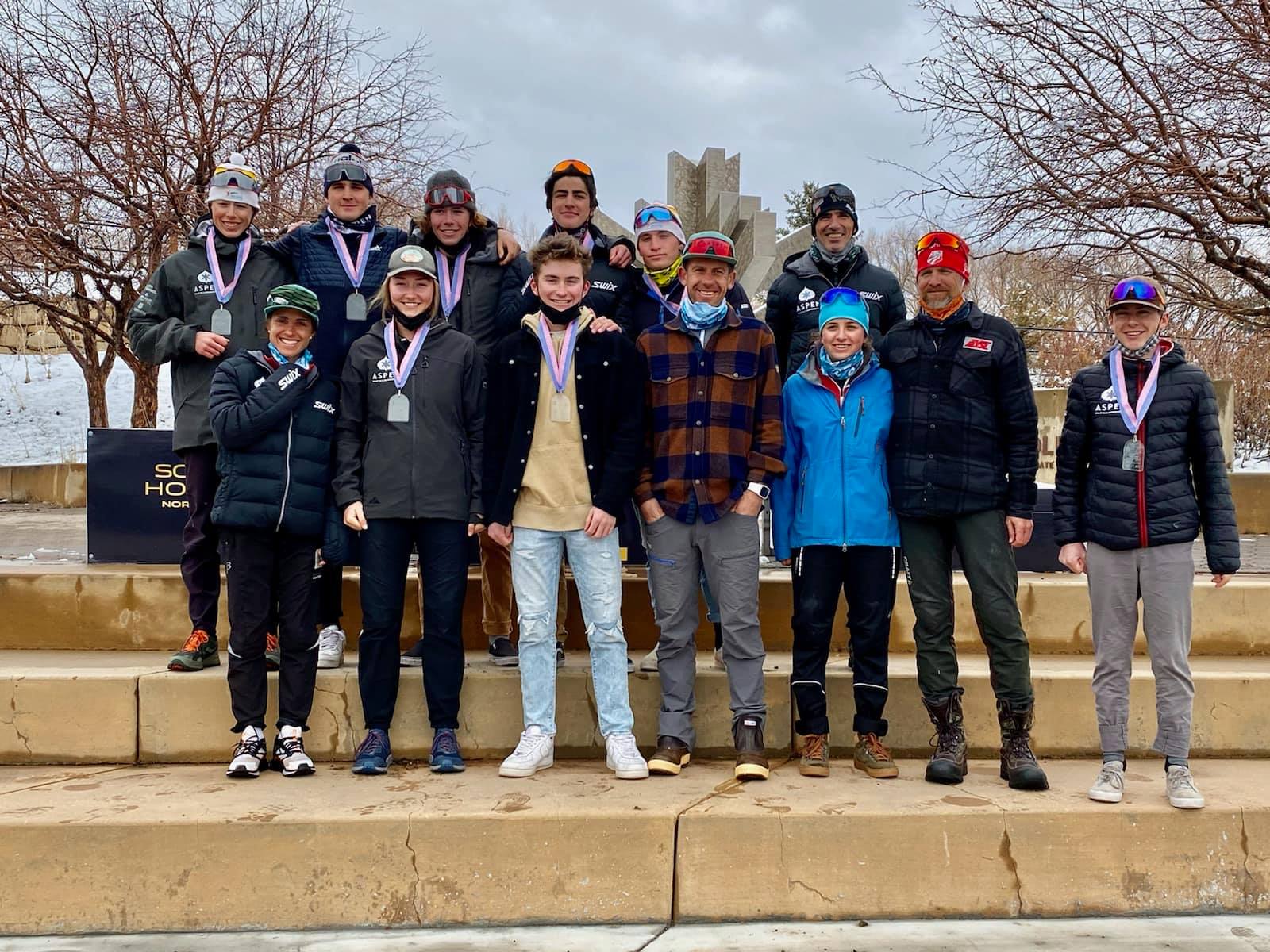
AVSC nordic athletes compete at the Western Regional Championships, held in Soldier Hollow, UT in place of the 2021 Junior National Championships due to the COVID-19 pandemic. (Photo: Aspen Valley Ski and Snowboard Club)
This phenomenon could be attributed to the aforementioned power previously held by larger clubs; when glide testing is no longer a priority, perhaps smaller clubs can finally find a seat at the table.
“We have 14 clubs in the division,” Kapala said of Intermountain. “Last year, 13 of them placed a kid on the Junior National team. Prior to that, we were running more like seven or eight [clubs]. So what was going on was Sun Valley, Bozeman, Jackson, and to some extent Park City – the bigger clubs – were rolling in, and to put it bluntly, we were steamrolling the small programs. It wasn’t a fair fight. And fortunately, the larger clubs in our division say, ‘Clearly, that’s not good for skiing.’”
Kapala spoke specifically of an athlete who hailed from Whitefish, MT, which is “way at the far flung edges of the realm. They’ve gotta drive forever to get to races.”
This athlete raced for the Glacier Nordic Club under the guidance of head coach Jennie Bender, who he described as “a huge asset and we’re so fortunate to have her come to our division.” Clarifying that Bender is as skilled and capable as any other coach on a wax bench, he acknowledged that she was largely on her own at races with roughly 12 kids. This ratio is not equivalent to the SVSEF team which might have 35 kids with five to seven coaches at a JNQ.
“It’s just not a fair fight.”
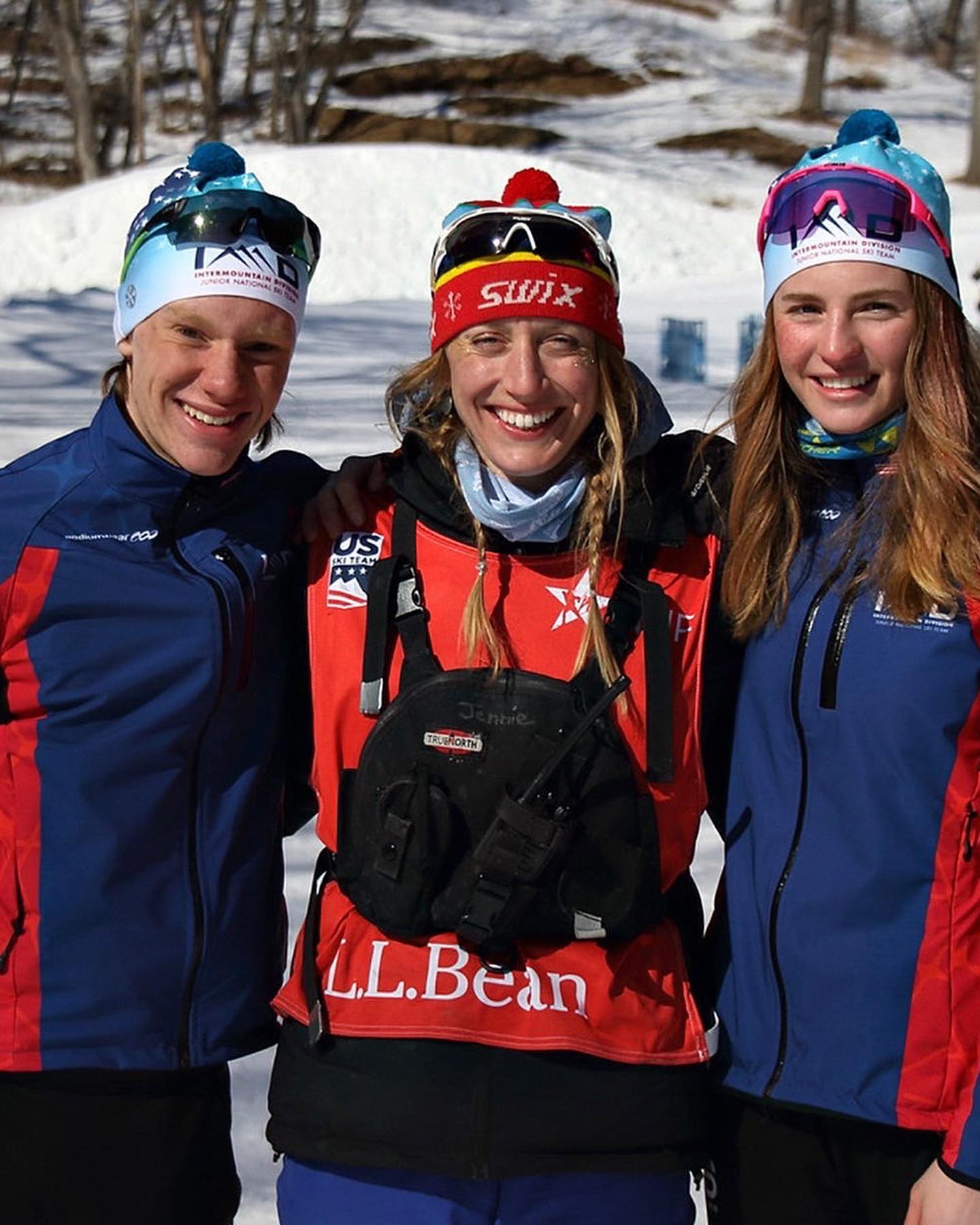
Glacier Nordic Club head coach Jennie Bender with the two athletes, Jacob Hansen and Maeve Ingelfinger, who earned spots on the 2022 Intermountain Division team at Junior Nationals. (Photo: Glacier Nordic Club)
Despite less support on the waxing front, the athlete grew into the season and was regularly finishing between fourth and sixth at JNQs, which earned her a spot on the IMD team at Junior Nationals.
“So what happens is: we go to JNs, we leverage all of the Intermountain resources on behalf of her and the other kids and what does she do? She’s on the podium. And so our policy afforded her the opportunity to at least be in the conversation to make sure she assuredly got through… she was good enough in that setting of fair and equitable ski service, that – what else was going on? She believed. ‘Oh wow. I’m actually not that far away.’”
Once this seed was planted, the athlete thrived. In Kapala’s mind, it’s an intangible, but nonetheless vital, component of the development process for that age group.
“None of this stuff happens in a vacuum, and athlete development is this really, really – I don’t want to say funky – but really nuanced process… This girl has gone from we didn’t even know who she was, to one of the best U16 girls in the country. And I contend that our wax policy, while it wasn’t more important than Jennie’s great coaching, certainly didn’t hurt. She was on a level playing field as level as we can make it in those formative JNQs where she started believing [in herself]. And that’s the whole game.”
Teague also acknowledged the apples-to-oranges capacity of programs, relating it to his experience with the Australian national team, whom he coached and supported through two World Championships surrounding the 2014 Olympics in Sochi. While Australia now typically partners with the U.S. team on the World Cup for waxing, the capacity of this small program pales in comparison to a robust and well-funded nation like Norway, which has been supported by technician Knut Nystad who was quoted in the first two parts of this series. While Teague emphasized his respect for Nystad’s expertise both as a coach and tech, he felt the understanding club level coaches have of the specific challenges of their leagues might offer a different lens with which to consider these issues.
“Knut was my coach [when I was racing collegiately at Denver University], and worked on the Norwegian wax team when I was coaching in Australia. What they were able to do and the testing they were able to do, versus what I could do with Australia – it’s not even comparable. And sometimes we could be competitive with them, but often, they were able to test significantly more. Now, would a waxing protocol make it fair in that situation? Absolutely not. Because they could have every different grind, and a grinder going, and along the continuum.
“But at the high school level, an AVSC can send four coaches over early to test [glide] wax and at least apply wax on site, rather than make a guess. Whereas [a small program like the Colorado Rocky Mountain School (for whom the author is a former head coach)], or even Battle Mountain where there’s two coaches and 70 or 80 kids, there’s no way they could do that.”
An Arms Race for Skis and Grinds
But what about the arms race for equipment that was cited as a concern in the first two installments of this series? Have these policies induced higher demand to increase the size of an athlete’s fleet of skis? Across the board, the coaches with whom this topic was discussed expressed that this was not a trend that they had observed in the years that a policy has been enforced.
Aspen Valley Ski and Snowboard Club head coach August Teague provides insights into the evolution and impact of the Rocky Mountain Nordic Wax Protocol. (Photo: teamavsc.org / Matt Power)
“There are probably exceptions, just like every rule,” said Teague. “But we really aren’t seeing people going out and investing in 30 pairs of skis. We’re still seeing athletes start off with a pair of skate and a pair of classic, and slowly expand upon that fleet.”
Leonard explained that PNSA coaches are not seeing an increase in ski purchasing either, nor does the level of competition at divisional events necessarily warrant that level of specificity in an athletes ski fleet.
“The field density is such at our [JNQs] that the wax is not the deciding factor so much,” Leonard explained regarding clubs in the Pacific Northwest. “And having multiple pairs of skis – most of the kids, I’d say, have one pair of race skate and one pair of race classic and some of the higher-end kids who have been at it a little longer or are a little more involved or or whatever – have a little more means – maybe have a couple pairs of skis that they’re deciding between. But you know, they’re growing kids too, and skis are expensive, so a lot of times it’s sort of like, it’s one pair that fits and one pair that’s a little bit softer from when they were a little smaller a year or two ago. So it’s not such a huge factor.”
Shift in Focus Toward Structure and Ski Selection
While programs aren’t seeing athletes rapidly investing in equipment, coaches did observe a shift in focus toward the application and testing of structure on race day.
“My test fleet, instead of testing glide and structure, is now focused pretty much just on structure at, say, an RMN [race weekend],” Teague explained. “When I show up at Senior Nationals, then I’ve got to be able to test glide and structure and everything else as it unfolds.
“So structure has become more and more important. That probably, again, depends a little bit on the level. If we’re talking about high school kids, there are high school kids that ski club and ski high school, who have the ability to get their skis ground every year and have the ability to have skis that are for specific conditions. But for the most part, we’re talking about kids that own one pair of skate skis, or even don’t own a pair of skate skis and rent or borrow them from the program. And they’re getting whatever [base] is on those and then we’re adjusting the structure by hand structures a little bit to try and improve them.”
Crested Butte Nordic Team head coach Molly Susla supports athlete Sawyer Ezzell during the 2022 Junior National Championships in Minneapolis. (Photo: David J Owen Photography)
Reception of Wax Protocol Among Teams
As far as how these policies might evolve with time, coaches expressed that the specific brand being used would always be open for discussion, provided that equivalent availability could be guaranteed and cost per gram remained comparable. With the increase in liquid waxes, which might offer versatility on race day without the encumberment of the full glide waxing setup, there may be an evolution that includes more liquid wax options as well.
For the time being, coaches expressed that the addition of these protocols has been net-positive, with no member clubs looking to steer the trajectory back toward open waxing.
“We’re at least two years through this experiment of running this policy,” said Kapala for IMD. “And I am 100% certain, because I’ve asked… we have 14 clubs that are saying, ‘No way are we going back.’ There is uniform agreement and acceptance of the policy.”
In Leonard’s concluding statements, he acknowledged the inherent equipment-based inequity in the sport, while also offering ways to problem solve, and confirming that PNSA has also been well-served by the protocol.
“You might get beaten at some point by someone who has better skis than you or something like that,” he said. “And when that becomes a factor, you figure out a way to make it work. With the advent of zeros, for instance, suddenly those became a ski that was like – in those conditions, man, you needed to have that. When I was in Alaska, teams were starting to procure fleets of zeros that they could hand out to their kids and maybe rotate through a few kids on a given race day. [Now,] if we have a race coming up that we know is potentially a zero day, we’re working through our community [in the Methow Valley] to grab some zeros for our kids so hopefully, they have a decent option there.
“So there are ways to make those things happen and work, and hopefully still remain competitive in the sport. There are a lot of trade-offs with all of it, but people are feeling like, for our division right now, it has been a good decision to go this direction.”
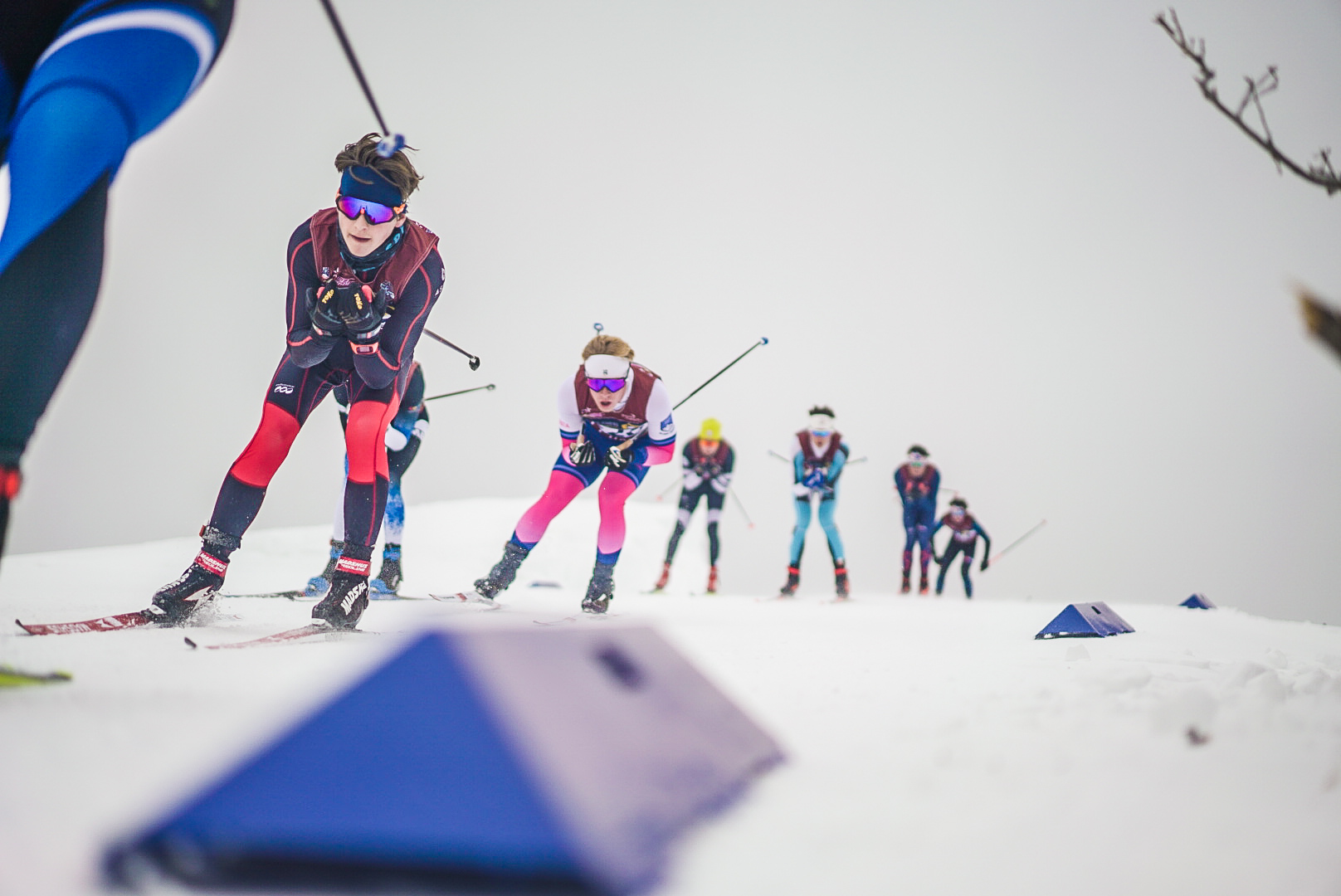
Junior athletes race during the 2022 U.S. Cross Country Championships in Soldier Hollow, UT. (Photo: Tobias Albrigtsen / @untraceableg)
In speaking with representatives from each of the leagues featured in this series, a few main points rose to the foreground in this discussion: the level of competition matters, how the policy came about matters, and how a program can enhance athlete support holistically by relieving wax-related expenses – measured both in time and dollars – matters.
Also note that these conversations took place in late-April, prior to further discussions at the U.S. Ski & Snowboard spring congress sessions in May where subsequent conversations among leadership may have occurred. Should significant changes occur, FasterSkier will continue to follow the story.
Here are links to earlier installments in this five-part series. The first two parts (part one; part two) spoke to the perspectives of high level wax technicians and industry representatives, while part three focused on the Wisconsin Nordic Ski League.
University of Colorado head coach Jana Weinberger waxes skis for her athletes during an 2022 RMISA/US SuperTour race weekend in Sun Valley. (Photo: Tobias Albrigtsen / @untraceableg)
The Evolution of Western Club Wax-Protocols
There’s a lot to unpack surrounding the impact of wax policies on the sport, and it is not reasonable to project that what makes sense for junior club programs can be extrapolated to the sport as a whole, which includes everything from the recreational level to masters racing to the World Cup. However, as a major player in the U.S. development pathway and a collective that encompasses a large volume of the nation’s athlete base, considering the evolution and impact of wax policies at the club level provides valuable insight into what the objectives and outcomes may be more broadly.
Conversations on this subject began long before any official policies were accepted, and their initial aim was to uniformly address the use of fluorocarbons at Junior National Qualifiers (JNQs). With both the health of athletes and coaches, and the inequity of buying power among clubs, the goal was to reduce spending and expensive fluorinated top coats.
Timelines are now blurred, but long-time Sun Valley Ski Education Foundation Program Director Rick Kapala indicated that Rocky Mountain had perhaps been the division who got the ball rolling. Though the policies have since converged on a single wax call made in advance by host coaches depending on forecasted conditions, Kapala explained that at the onset, Intermountain’s policy was only focused on the elimination of pure fluoros.
Long-time SVSEF XC Program Director Rick Kapala explains the evolution and impact of IMD’s wax protocol. (Photo: SVSEF.org)
“Initially, Intermountain had what we could call ‘wax policy-lite’… Our policy was: you can use any wax as long as it wasn’t pure-fluoro. You can use a high-fluoro, a low-flouro, or non-fluorinated version, and of course, in different brands, that meant different things. But basically, we went for a number of years with a no powder, no liquid and no rub-on policy. And that had some effect on trying to mitigate the arms race, if you will.”
Executive Director at Methow Valley Ski Education Foundation Pete Leonard explained that the Pacific Northwest Ski Association, for whom he is the Nordic Director, was developed with a similar progression.
“It initially started in the fluorocarbon era, moving away from powdering skis to just having blocks and liquids – the top coat type of applications – and then to a base paraffin application… I think we had a year of that and then [the policy] went to fluoro-free – the same basic, simple base paraffin called several days out.”
Further motivation to align policies stemmed from “cross-pollination” between these three leagues, which with the addition of the California-Nevada Far West division and Alaska, encompass the Western region as defined by U.S. Ski & Snowboard. In particular, these divisions overlap during the Junior National Super Qualifier Event held in January at Soldier Hollow, hence landing on a very similar model.
“There’s a little bit of a cascade effect, and it’s just simpler for us to match what IMD has,” Leonard explained.
Kapala felt strongly that it was important to emphasize that this slow progression happened organically, which he felt was in stark contrast to the Wisconsin Nordic Ski League, where a sponsorship proposal made by a corporate entity included stipulations on waxing at league events.
“It’s a wholly different thing when a grassroots community, like a bunch of clubs in a division, promulgates a policy that they think results in the best athletic outcomes,” he said. “And it is very important to differentiate the genesis of a given policy… the order in which you arrive at a policy really informs a lot of the motivations about why you’re doing what you’re doing.”
Kapala said IMD would have “given the Heisman” to a wax company that required a policy; however, Swix products have been selected based on trust in the availability for all programs.
“We settled on Swix without getting into the specifics of brand value,” he said. “I.e., Swix is better than Start, and Start is better than Toko, or whatever – it’s just simply because virtually everybody knew they had enough access to that wax.”
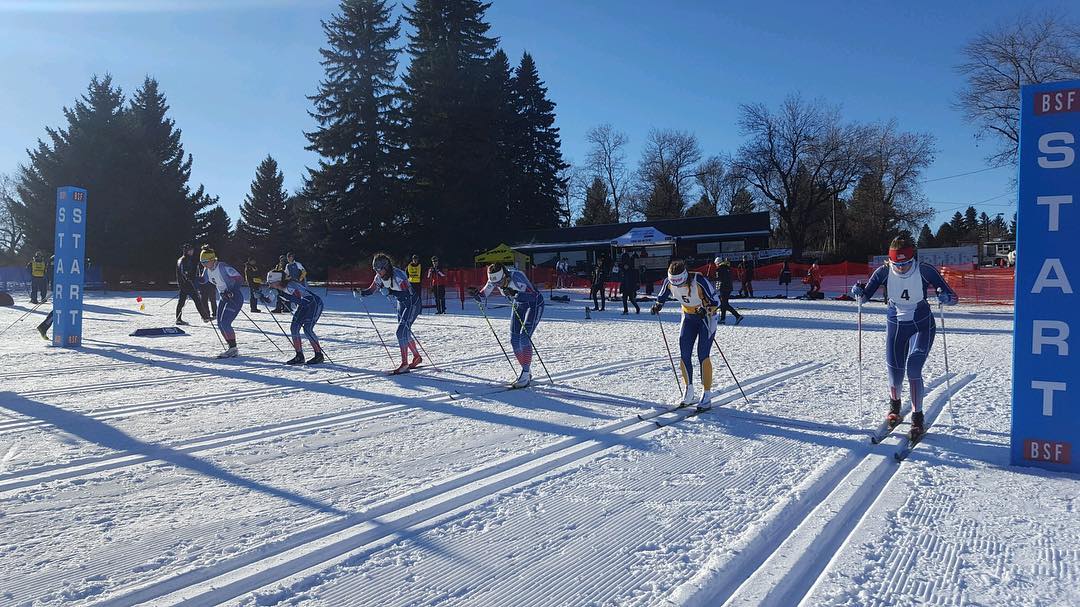
A scene from the start line of a 2018 Intermountain JNQ in Bozeman, MT. (Photo: Sun Valley Ski Education Foundation Facebook)
Observed Program Benefits
There’s a sizable jump between eliminating fluoros and further reducing a wax box to a small array of products, but Kapala emphasized that these “athletic outcomes” are the central tenet around which discussions regarding changes take place within Intermountain. How does the protocol impact the opportunity and capacity for athletes from clubs of all sizes to be successful on race day and have a positive experience in the sport?
We’ll start with the impact to a program’s budget, which on its own is a source of inequality among clubs in a given region. Speaking specifically for Intermountain, but also the West more broadly, Kapala pointed out that there are a number of “super clubs” whose financial means and staff power made it hard for smaller clubs to compete in an open wax environment.
“They’re usually clubs that are in these mountain towns that are part of [larger] ski foundations or clubs that are multi-discipline, really big clubs. And so they have a lot of administrative function, a lot of underpinning financial security, and so on.”
He was quick to include SVSEF in that pool, saying cost was not a primary concern when it came to his wax purchasing or race staffing prior to the enactment of IMD’s policy.
He went on to explain that within Intermountain, there are six JNQs which are subject to the wax policy, plus an Intermountain opener. However, what he called the “lion’s share” of races, including U.S. Nationals, SuperTours, and any Canadian-based races, remain open wax events where the policy does not apply. Still, with IMD’s policy in place, Kapala said SVSEF has been able to shave $5,000 dollars annually off its spending on wax, equating to a reduction of 30-40%.
“The question then is: ‘What am I doing with that $5,000?’” posed Kapala. “Well, what I’m really doing with it now, in my particular case, we have put that money into our merit scholarship program. So instead of me spending money on just making sure I have every wax in the universe in my wax box, I’m actually leveraging those dollars to help kids get to training camps or to go to competitions they wouldn’t normally be able to afford. And that’s huge.”
Rather than ignoring the impact this reduction in spending has on the landscape for suppliers, he acknowledged that this could be detrimental, as other clubs are likely reducing their spending by similar percentages. But bringing the focus back to the athletes, he said, “what we’re really spending less of is human capital on things other than coaching.”
For Kapala, this makes the cost-benefit analysis check out.
“We think being available to coach kids – that are especially young in their developmental process – at events like JNQs, is actually what the [coaching] game should be all about. So while it’s true that there can be impacts regarding the finances, it is also undoubtedly true that athletic outcomes – true athletic outcomes, the actual ones that we should be concerned about – are actually being serviced way more effectively. And if those two competing interests are both true, we have to pick one. And the one we’re picking is we’re making it more fair for athletes.”
August Teague supports AVSC alumna Kate Oldham while teching at the 2022 FIS World Junior Ski Championships in Lygna, NOR. (Photo: flyingpointroad.com)
Speaking for what he has observed within his own program and the Rocky Mountain Nordic division more broadly, August Teague – Cross-country Program Director at the Aspen Valley Ski and Snowboard Club (AVSC) – shared similar sentiments.
“I guess the real question to me becomes: ‘What is the purpose of a waxing protocol and at what level and why? And I certainly believe that barriers to entry in sport are a real good reason to have a waxing protocol, and time allocation or time management.”
Adding specificity to the statement, he said, “The biggest thing that I see is that I can spend more time coaching instead of teching. And there certainly is an argument as to the need for better wax techs both from this country and elsewhere, but I think that’s a separate discussion than the coaching discussion and where my time is best served.”
While the AVSC nordic program is significantly smaller than that of SVSEF, Teague also noted differences in how his monetary budget is allocated. “We have started to explore structures more than we ever have. So money that was being spent on product is now being spent on different structure devices and/or ways to test that structure.”
Similarly, Steamboat Winter Sports Club U16/U18/U20 head coach Josh Smullin wrote to FasterSkier that the protocol has supported a safer environment for both coaches and athletes while on the road. In particular, he cited driving – there are roughly 3,200 serious injuries and 600 fatalities on average annually in Colorado – as a place where some relief in the toll on coaches during a race weekend has shown value.
“It used to be that we coaches were up late waxing,” he explained. “Waking up the next morning to go set up at the venue, and then would drive many hours home after the race. A waxing protocol has helped us to be safer drivers, less sleep deprived, and more present with the athletes.”
Smullin also commented on ventilation, which remains important for the health of waxers even without fluorinated products.
“At many of our home clubs we have some sort of ventilated wax facility. We do not have that on the road [while staying in hotels] unless the weather is nice and we are able to wax outside. Regardless of the fluoro ban, [proper] ventilation is healthier for coaches and athletes.”
Methow Valley Nordic skiers take to the course during the December 2021 Ski Rodeo event. (Photo: Methow Valley Nordic Ski Education Foundation Facebook)
“Everybody’s got their opinion…” said Leonard on behalf of PNSA. “There’s no overarching study on these things, and costs, and whether there’s a major difference [in ski speed], but I think what is clear to the coaches is that there’s less time spent testing glide products at races and there’s less of an incentive to do that, especially with the calling it [a few days] prior. There’s also more time that they can focus during that weekend on other things, like with the athletes and their preparation, instead of testing wax, waxing skis and leaving [coaching and direct athlete support] right up to the race time.”
For Leonard, the question of whether the policy widens the gap for skiers based on the quality or condition specificity of their skis was not a priority when it came to identifying how the policy has served PNSA teams. For a club based in the Methow Valley which travels to regional competitions across Oregon and Washington, as well as to the Super Qualifier in Utah, the policy has reduced the toll of travel.
“I don’t know that it’s necessarily a parity – it’s really difficult to get that down.. but I think for us, calling the wax several days out just makes it simpler for people, and there is less [equipment and product] to travel with, one less thing to think about when you’re booking hotels, and all those details. It makes it simpler for teams.”
He said he has also found it quicker and easier to apply structure on race day without the variable of glide wax testing. And without the need to cart around as much product and equipment, getting his athletes’ skis race ready has been “way easier to manage”.
“Rather than bringing a wax box with several waxes in it, irons, enough benches that you can get your whole team through, scrapers, brushes, etc. – already, you’re packing the van to the ceiling and then, sometimes it’s driving eight hours, or for the Super Q for us, it’s driving four hours to the airport, [hauling our skis and gear through the airport on both ends], then driving another hour-plus to SoHo, and then doing it all again on the way back.”
Stay tuned for the final installment, where you can read more on leveling the playing field, the arms race (or lack thereof) for skis, and the reception among Western Division coaches.
Deciding how to handle the “college conflict”, as aptly phrased by Alayna Sonnesyn, is a daunting and somewhat mysterious prospect, particularly for athletes and families who are unfamiliar with the process. How does a junior athlete know that they are cut out for a collegiate program? NCAA or USCSA? What about a gap year? In this series, FasterSkier spoke with collegiate and junior coaches and athletes who have chosen different pathways to create a resource for the athlete or parent amidst this conundrum. Also check out Part 1 with Craftsbury Junior Program Head Coach Anna Schulz and Part 2 with Dartmouth College head coach Cami Thompson Graves.
An important piece of the college decision puzzle, post-graduate (PG) programs offer a skier an extra year of development that can serve as a bridge between junior club programs and collegiate or national team level skiing. Though a relatively small in number, programs can be found nationwide at well established ski clubs like Steamboat Winter Sports Club in Colorado and the Bridger Ski Foundation in Montana, and at ski academies such as Stratton Mountain School in Vermont and the Sugar Bowl Academy in California.
Paul Smith is the head PG coach at Sun Valley Ski Education Foundation. (Photo: https://svsef.org)
The Sun Valley Ski Education Foundation (SVSEF) directed by Rick Kapala has offered an official PG program since 2005. The program, which serves five to ten skiers annually, is led by University of Vermont graduate Paul Smith. Now in his second year with the SVSEF, Smith also works with some of the younger juniors and assists senior skiers as a service and wax technician. FasterSkier spoke with Smith and Kapala for their insight into why an athlete might choose a gap year and what can be expected during the PG experience.
Though athletes elect to take a PG gap year less frequently than joining a collegiate program or leaving ski racing, both Kapala and Smith expressed that the number of skiers selecting this option is trending upward. The reason an athlete might opt into a PG year varies, but typically, the PG athlete enters the year on the cusp of achieving a goal that is just out of reach.
“[PG’s are] looking to put in a year or more of focused training to make a step forward into their skiing capacities so that they may have college opportunities that were not readily available coming straight out of high school,” explained Kapala in an email.
These opportunities include earning a spot on an NCAA team, improving scholarship potential, and increasing the likelihood of making the competition team at a particular school.
“Or, they may be looking to achieve top international results as a U20 and want more space to program a bigger training and travel schedule,” wrote Kapala.
Members of the SVSEF PG program hike it out during an OD in the mountains. (Courtesy photo)
He added that outside of skiing, the athlete may be looking to experience independence and develop life skills without the pressures of keeping up with an academic workload. Regardless of long term goal, Smith expressed that anyone who chooses to take a gap year can expect improvement in their skiing.
“From a development perspective, just taking a year to just focus on that and not get thrown into the whole gamut of classes can really help a lot,” said Smith in a call.
“You can always expect to show some improvement, especially if you’ve had a junior have some success while they were doing a bunch of other things and they can now focus on [skiing] for a year. From what I’ve seen, the ones that are committed to the process benefit tremendously.”
Unlike collegiate programs that typically send information to junior athletes to initiate conversations, Smith explained that athletes typically contact him first regarding interest in the SVSEF PG program.
The program originated to serve athletes graduating from the SVSEF junior program, but has since begun to serve athletes coming from a range of other states. Though Smith is not one of the primary junior coaches, he explains that he stays involved with this age group to help connect with prospective athletes.
“I try to keep a presence at regional or national camps,” explained Smith. “So I’ve tried to make a connection with a lot of different athletes from different clubs and different regions.”
Rather than communicating through email, Smith prioritizes phone calls and meeting with athletes at races to establish connections with those considering his program.
“I have definitely noticed, for myself and some of our other coaches in Sun Valley, having a presence in the [junior ski] community has helped a lot. We almost always know the kid if they have a genuine interest in taking a gap year with us.”
Apart from making juniors aware of the PG option, Smith explained that he does very little recruiting. He acknowledged that the choice is not a good fit for all athletes, particularly those with strong academic aspirations.
“The athlete themselves usually know whether they’d be a good fit. They’ll usually have some idea — going to school, they’re either excited about it or they’re not. For the athlete that isn’t or if taking classes for a year isn’t a priority, that’s where I would say it works the best.”
The PG program in Sun Valley is heavily weighted toward male skiers, 70-80% on average. This trend holds throughout other programs as well. Smith hypothesized that one reason for this might be that on average, boys finish puberty later than girls. Some male juniors whose biological development might be slower than their peers may not have sufficient time during high school to build the strength and muscle mass needed to excel in ski racing. An extra year to catch up in this arena can help athletes take a big step forward in performance.
“There are instances, generalizing a little bit, where a lot of boys who are 16 to 18, their biological age might not match up to their peers, so they feel like, ‘Well I really like skiing and I want to go for it.’ Taking that year for development makes a lot of sense.”
The program at Sun Valley does not establish performance requirements for admission as it seeks to be flexible enough to cater to the needs of an athlete at any level.
“It has been the case in the past few years that we’ve had all of the above,” said Smith. “Skiers that are looking to make the jump to the national team, skiers that just wanted to get into an NCAA program, and then skiers that had kind of figured out that [pursuing skiing] actually wasn’t what they wanted to do. I think all of those athletes are important. Not only does it make a stronger group, it makes a better team functionally.”
He continued, “As a club we do a pretty good job of thinking of things from the development perspective, the idea that, yeah, we’re coaching athletes that go on to win and maybe go onto race World Cups, but we’re also coaching future parents and future coaches. I think having it open and not narrowing the framework of the program itself is important.”
Members of the SVSEF PG team mid-workout in Ketchum, ID. (Courtesy Photo)
Despite not requiring a top twenty finish at Junior Nationals or another performance marker, Smith explains that the athlete should be entering the PG program with a clear goal and a belief backed by evidence from their development that the next step is attainable. Smith explained that these are the broad conversations he has with athlete who express interest in the program.
“I have a lot of conversations in the spring with prospective athletes and parents about what they saw in their own skiing that puts them at that level. When you look at your results and other aspects of training, what is it that makes you think that the jump will be significant?”
For athletes who are interested in taking a gap year, Smith provided information on what to consider in weighing options and on what to expect.
“Probably on most family’s minds, the cost is going to be the foremost thing.”
The PG program at SVSEF comes with a price tag of $5,450 which does not include housing or food, which can be significant in small mountain towns like Ketchum. Apart from being expensive, housing can also be challenging to find, particularly since not all housing authorities are keen on renting to a 19-year-old living on their own for the first time. This challenge can be avoided by local athletes, but should be a significant consideration for out-of-towners.
“We’ve made it work through the years just piecing together host families, generous families in the ski communities that have helped out. The best thing that has worked is connecting athletes in the program together and their families to go in on housing in the rental market.”
Additionally, Smith explained that it would be challenging for an athlete to get by without a car, though public transportation and carpool options are possible. Smith added that it is possible to receive financial aid and scholarships for trips such as World Juniors.
At SVSEF, most athletes choose to take a part-time job, which can help subsidize the costs. Smith explained that this also provides a life-balance to offset the singular focus of full time ski training.
“We always recommend that they have something else going on other than skiing. It could be a part-time job, some have taken online classes, and some have gotten pretty good internships. I think we have a good community for that kind of work.”
He continued that mountain towns offer ample opportunities to work in the tourism or service industry.
Smith suggested that the cost and challenge of finding housing might be the biggest drawback to choosing Sun Valley for a gap year. He countered this with the pros of making this decision.
“Our coaching staff is definitely top level and all of our post grads have the opportunity to work with any of our coaches. Location, being out west, being at altitude but not being too high.”
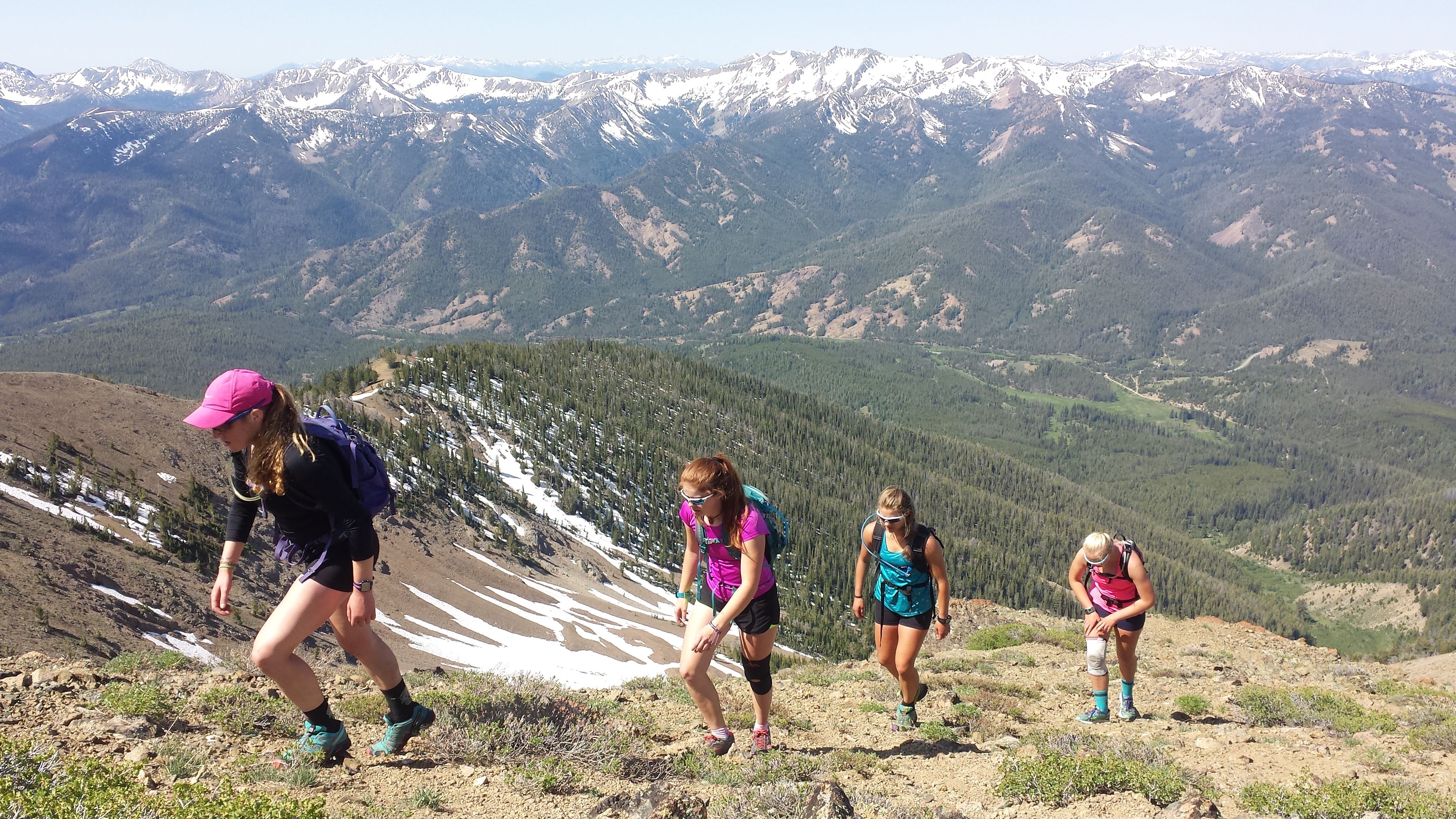
He added access to quality rollerski terrain, reliable snow, the ability to perform physiological testing, and having a strong junior and senior team to mix with as additional strengths of his program.
“I’ll admit that we can’t really have the atmosphere that a ski academy offers. I think at the Sugar Bowl Academy, Stratton Mountain, Green Mountain Valley School, their post grad programs offer that in-house, community, full team feel that admittedly we can’t offer, though I think we come close.”
Smith explained that these all-inclusive programs are significantly more expensive. Stratton Mountain School rings in at $56,750 for a full term boarding post-graduates (these athletes are also taking classes at SMS) and ski-only PG tuition at the Green Mountain Valley School is $21,500.
“For families that can get a lot of financial aid to those programs, I think you can definitely do well there. But I understand that we are better priced compared to them and I think that is where we get a lot of interest.”
Members of the SVSEF PG program on a training run in Ketchum, ID. (Courtesy photo)
Other factors Smith believes are important to consider include whether it is possible to mix in with a strong group of junior and senior skiers and if the program has a coach focused specifically on the PG group.
“Having a coach that is dedicated to the post grad group is definitely helpful. I think too many times, even though they’re older juniors, just throwing them into senior training or scaled back senior training isn’t the best thing for their development. So having their own coach is definitely a plus.”
In terms of lifestyle and training load, PG athletes at SVSEF participate in 5-7 coached sessions per week, including strength training.
“We train most mornings, but the key is being flexible with the program where if an athlete was at a level where they were training twice a day everyday, you can do that.”
After training, most athletes head to their job, but Smith regularly inputs other touch-points into his athletes daily routine to build the team dynamic and support the athletes’ development of independent life skills.
“We’ll have team meals once or twice a month, which is also part of a nutrition program, basically learning how to cook on their own for the first time. Also, having some camps and trips input in there too, which I feel is important. Since they’re not in school, they can do those trips, but we want to make sure it’s cost effective too. If you’re an athlete from the east coast, it’s already a camp being away from home. You don’t need too many, but it helps keep the training lively and exciting.”
For athletes whose eyes are set on NCAA racing, it is valuable to have an understanding of the eligibility rules.
For Division I programs, the eligibility clock starts when a student-athlete enrolls full-time in classes or turns 21, whichever comes first. Once the clock starts, there are five years to complete four seasons of the sport, which allows for a redshirt year or year-in-residence following a transfer between schools. At Division II and III schools, student-athletes have three years following graduation to enroll full-time. Once enrolled, four seasons of competition can be completed over 10 semesters. Semesters are not counted if enrolled either part time or not enrolled without competition.
Some PG programs discourage athletes from taking classes if they plan to enroll the following year at an NCAA program as they may be classified as a transfer student, thereby needing to complete an “academic year in residence” before being eligible to compete.
Athletes may earn prize money from finishes in SuperTour or other races while still remaining compliant with NCAA amateurism rules. The rule states: “An individual may accept prize money based on his or her place finish or performance in an athletics event. Such prize money may not exceed actual and necessary expenses and may be provided only by the sponsor of the event. The calculation of actual and necessary expenses shall not include the expenses or fees of anyone other than the individual.”
[See this document for more information on NCAA eligibility rules.]
As a takeaway, Smith encourages families to consider the benefits an athlete might gain from a PG year and to see a gap year as a potential option in the college process.
“Taking a year should always be considered as an option, especially for a kid who really wants to go for something. It may not even be skiing, it might be art, or music, or something else. When they’re younger, we always recommend that they’re doing a lot of different things so that they are more well-rounded. By the time they’re 18, picking skiing should be okay and they should be given the option to do that for a year if they want. I think making sure that is an option is an important thing, whether that’s coming from a parent, a college coach, or their coach when they were a junior.”
Kapala concluded by explaining the role the PG program plays in the overall cross country program at SVSEF and pointing to athletes who have greatly benefited from their gap year.
“We consider our SVSEF PG team a really important part of our programming,” concluded Kapala. “It has helped some of our talented juniors take the next step in their skiing and it also has built relationships with skiers who have years later returned to become members of our SVSEF Senior Gold Team. For example, Kevin Bolger and Sam Woods, now members of our Gold Team, were both PGs. We got to know them and when the opportunity came to add them to our Gold Team roster, it was really helpful to know them as people and skiers.”
Partners in coaching: Tom Smith and Kristin Monahan (both coaches with the Sun Valley Ski Education Foundation) are new hires at Michigan Technological University in Houghton, Mich. Smith will become the new head coach of nordic skiing, and Monahan will be an assistant coach and instructor at the school. (Courtesy photo)
Locked in the heart of Michigan’s Upper Peninsula on an arm of land stretching into Lake Superior is the small city of Houghton. Locals there are intimate with lake-effect snow, long winters and a strong sense of community. Houghton is also home to Michigan Technological University (MTU) and the school’s nordic ski team, which Joe Haggenmiller led for the the last 14 years.
Joel Isaacson, the associate athletic director for external relations and head of the search committee responsible for hiring MTU’s newest nordic head coach, said the search wasn’t simply about wins and losses.
Tom Smith, head coach of the postgraduate nordic program at the Sun Valley Ski Education Foundation, was recently named head nordic coach of Michigan Tech University. (Courtesy photo)
“We always look for the best fit for Michigan Tech, and I know it’ a little cliche to say, but we are looking for somebody that is going to mentor our student-athletes,” said Isaacson, also head coach of the cross-country running team and track and field teams. “We want not only good athletes, good academics, but we want good people and we want a head coach that is going to mentor young people, to turn them into future husbands and wives, employees and members of the community. These are values that we look for in athletics and that comes out of our head coaches.”
The nordic-coach hunt became a nationwide search for a good fit. Ultimately, the committee zeroed in on 27-year-old Tom Smith, head of the postgraduate program at the Sun Valley Ski Education Foundation (SVSEF) in Sun Valley, Idaho. The postgraduate program focuses on U20 skiers trying to make the next leap to competitive cross-country skiing at the collegiate level.
Ten days ago, Smith was officially named MTU’s newest nordic head coach and cross-country running assistant coach. He’ll be joined by his partner and MTU alumna, Kristen Monahan, who was hired as an assistant nordic coach and academic instructor. Monahan, 29, competed collegiately in cross-country running and skiing and earned a master’s in exercise physiology from the University of Jyväskylä in Finland. She is currently an assistant coach for SVSEF’s competition team.
“I think first and foremost, Kristin and I both saw this as a potential and incredible opportunity to be able to lead a program together at the collegiate level,” Smith said on phone from Sun Valley. “Obviously with Kristin’s roots there as an alumna, that’s huge with just having familiarity with the program itself that we want to build off of.”
Growing up in Bend, Ore., Smith was a multiple-time junior All-American and a Junior National champion in 2007. Both his parents, Doug Smith and Monica McClain-Smith, ski raced in college, and he joined his brother Charlie on the University of Utah Ski Team while their sister Isabella raced for Montana State University. After using up his four years of NCAA eligibility, Smith opted for a fifth year to complete his bachelor’s degrees in environmental-and-sustainability studies and international studies and became an assistant coach for the Utes ski team.
He also lived in Australia where he served as the head domestic coach for the national team, the Birkebeiner Nordic Ski Club and Victorian Junior Cross-Country Ski Team, and a program instructor for the Australian Primary and Secondary Schools.
“I would say I had some life experiences that really caused me to evaluate what was really important in life,” Smith said when asked why he decided to pursue coaching as a career. “I had the opportunity to just jump into the sport in a new perspective as an assistant coach with Utah. And really under Abi Holt and Kevin Sweeney’s guidance, I really saw that coaching was the path that I wanted to take.
“I decided that year I wanted to be coaching because I value what it provides athletes in terms of really being able to give them a challenging pursuit in life that brings out the best in themselves,” he continued. “That’s really what I try to coach in my athletes as well. That’s the paradigm shift I had in the sport and my basic philosophy.”
In 2014, after coaching at Utah, Smith was hired as a SVSEF assistant competition coach. He held that position for a year and then took over the postgrad program.
SVSEF postgrad coach Tom Smith with his athletes in the background. (Courtesy photo)
For 14 years, Smith has been either a competitor or coach. He’ll come to the MTU position with a young person’s energy bundled with the wisdom afforded him by longtime SVSEF Cross Country Program Director Rick Kapala. An MTU graduate and former MTU assistant nordic coach, Kapala has imprinted himself upon Smith’s coaching philosophy.
“The strength of the pack is the wolf, but the strength of the wolf is the pack,” Smith said was one of his favorite “Kapala-isms” that originated in Rudyard Kipling’s The Jungle Book.
The cyclic nature of that quote, where the individual and group are interdependent, gets to the crux of collegiate cross-country skiing, where team performance counts as much if not more than an individual’s. Isaacson said that individual and team performance has bigger implications in a place like Houghton where the community is invested in the college’s athletic culture.
“Being a Division II institution with a Division I men’s ice hockey team, our community is heavily involved in what we do and we feel that our coaches, our programs, need to give back,” Isaacson said. “So we are bringing in somebody that can establish or articulate that they have a good background in the community, and their engagement and they understand the fiscal responsibilities that you need to maintain. All of our head coaches have to be well-rounded and I think Tom fits that mold.”
Michigan Tech Nordic is a NCAA Division II team that competes against Division I programs. Unlike many schools, MTU owns and operates its own cross-country ski trail complex that includes International Ski Federation (FIS) homologated trails.
“There is no lack of competitive advantage to pull in the best athletes in the country and for sure in the Midwest, and some international talents as well,” Smith said. “But I think what student-athletes really value about going to Tech is the return on investment of their education.”
One issue that both Isaacson and Smith said arose in the interview process was the relative viability of MTU’s cross-country ski team. Smith’s hire comes after a year when two Division I programs, the University of Alaska Anchorage and the University of New Mexico, faced the very real prospect of de-funding and subsequent program termination.
“I think that’s obviously not a secret — that every college program is seeking to have that sort of engagement with the greater ski communities that will really ensure the vitality of the programs in the long term,” Smith said. “I think it really means that all of our communities are engaged in the sport and with collegiate skiing. I think that in reality, Michigan Tech has probably the best opportunities to really grow that aspect of their program. Greater than anybody else.”
Isaacson said the program remains in good financial standing.
“We are a STEM [science, technology, engineering, and math] institution, and we have strong academic programs,” he said. “Our enrollment is on the rise, we have strong government funding when it comes to resources, when it comes to the programs that we offer and the research that our faculty are doing here on campus. I think Michigan Tech is through those bumps or those financial difficulties and maybe other institutions aren’t where we are and efficient in how we budget. We are smart about our resources.”
Smith and Monahan will bring their team to Michigan Tech’s team and the broader Houghton community after concluding their coaching duties in Sun Valley at the end of July.
Colin Rodgers (left) as the MC for Chris Mallory’s (right) wedding, September, 2015. The two coaches and former nordic ski racers were grew up about 15 miles away from each other in Vermont. (Courtesy photo)
Their cars won’t literally pass on the interstate, but the image is worth rendering. Colin Rodgers, five years the head of the Sun Valley Ski Education Foundation (SVSEF) Gold Team, is heading back to his native Vermont to become nordic director for the Green Mountain Valley School (GMVS) in Waitsfield, Vt. (Rodgers is currently in Italy with GMVS leading a training camp.)
Heading the opposite direction from Vermont to Sun Valley, Idaho, where he recently resigned as assistant coach at University of Vermont (UVM) after three years, is Chris Mallory — also a native Vermonter.
It’s safe to say that Rodgers’s and Mallory’s lives are seperated by far less than six-degrees: the world of elite ski coaching is small and close knit. That their paths have crossed on their career transects isn’t odd at all when you consider something Rick Kapala, SVSEF’s longtime nordic director, said in a recent phone interview.
“You know, somebody was asking me is it really hard to lose a guy like Colin,” Kapala reflected. “And of course the answer is yes … but all of our programs, whether you talk to APU [Alaska Pacific University], or whatever, it is part of the game that you if you have really good coaches, you are going to lose really good coaches because they are going to have opportunities to move to another level.”
There’s two highly qualified and highly recommended coaches in Rodgers and Mallory — it’s no surprise opportunities have arisen.
Colin Rodgers, formally head coach of the SVSEF Gold Team, has taken the job of nordic director with Green Mountain Valley School in Vermont. (Courtesy photo)
After captaining the Middlebury College Ski Team and graduating in 2004, Rodgers lived the professional skier’s life. He skied for the Gold Team from 2006 to 2011. Since that time, the Westford, Vt., native has been the lead waxer, travel agent, coach, and all-around, go-to leader of the Gold Team.
According to Kapala, the first word that came to mind when asked about the indelible fingerprint Rodgers left on the Gold Program was: “professionalism”.
“We have always prided ourselves as trying to run a really pro program,” Kapala said. “But Colin as an athlete, really, I feel gave everything he possibly had to his racing career and the same thing was true as a coach. He demanded a lot of himself in that role, held himself to a really high standard, … worked as hard as he could, cared so deeply about the program and the athletes and the process of getting to the highest levels. I really think that all the athletes that we had engaged in our program benefitted from the approach Colin had, which was leave no stone unturned … look for every advantage, bring your best every day, and I look at it and go, we were very fortunate to have him.”
Rodgers, 35, takes over a transitioning GMVS program. Last October, longtime GMVS Nordic Director Justin Beckwith stepped down. 2010 Olympian Garrott Kuzzy took over with help from newly hired nordic coach Katrina Howe. Now, nearly a year later, Rodgers will take over a program with 13 athletes — comprised of nine men and four women. Howe will remain as a nordic coach. (According to Rodgers, Kuzzy will be pursuing an MBA in Innsbruck, Austria, this year. Kuzzy could not be reached for comment by press time.)
Junior skiers are not elite senior skiers. Yet Rodgers mentioned that his core mission remains the same: building bonds.
“Of course, I will need to make some adjustments to my approach to the younger athletes, but it is all truly about sharing my passion for the sport of cross country skiing,” Rodgers explained. “The age of the athlete is not so important, but rather that you share a common interest with the individual and you can pass along a bit of knowledge that will help them improve. Then you are making a difference. It is still all about building relationships and doing your best to support the team.”
For Rodgers, directing a program is the biggest new opportunity beyond moving back to his home state. “Running a program in my home state seemed like a fun challenge that I was up for,” he said.
Back in Vermont, a state with a rich and proud nordic tradition, Rodgers commented that one of his biggest hurdles at GMVS, a private high school, will be making the sport he loves more accessible.
“The biggest challenge will be in trying to help kids join the program that may not have the financial means to do so,” he said. “Ideally, we want athletes at the school that have the drive to ski fast and work hard. Hopefully, those two un-biased character traits will allow any motivated student/athlete the ability ski for our program.”
Gold Team rookies Cole Morgan and Jack Hegman run above Twin Lakes in Idaho’s southern Sawtooths this summer. (Photo: Rogan Brown)
For SVSEF’s Gold Team, the benchmark for participation isn’t overtly financial, it’s performance based. Be a motivated, willing-to-develop, fast skier and you might make the cut. And for the coach, there’s no study hall to schedule and monitor, less shuttling skiers back and forth.
“One of the most important things [with this level of senior coaching] is you need to have somebody who has both the depth of experience but also the ability to really keep the ship level,” Kapala said from Sun Valley. “The senior athletes that we have that work with the Gold Team are all highly motivated, so it’s a little bit different than junior coaching. For the junior coaching, I have a lot of kids that are very, very early on in their ski racing career. So you do a lot of really base-level educating and motivating. … The problem with these Gold Team-type positions, whether you are talking our program, Stratton or APU or what not, you sort of have to be able to do everything.”
With Rodgers’s exit from SVSEF, enters Mallory.
After skiing at the University of New Hampshire, Mallory headed west to Sun Valley where he began coaching in 2006. That SVSEF stint, where he began as a development-team coach and progressed to head post-graduate coach, lasted eight years. In May 2013, he took the assistant coach position at UVM. He also served as a wax-tech on three separate Junior World Championships trips.
According to Kapala, Mallory can do a bit of everything, making him a good fit for the Gold Team. The bonus: Mallory has a positive history with the local community. Although deciding to leave a program like UVM for the Gold Team was difficult according to Mallory. “It was a tough decision to leave UVM. There is a big incoming freshmen class this year with some good young energy and it’s hard to leave the athletes on the team who you’ve created relationships with after a few seasons, but these opportunities only come around so often.”
Like Rodgers, Mallory enters his new position with some challenges. For the 34-year-old Mallory, his is entering a training season already in full swing.
Chris Mallory, in 2012, on the Haig Glacier, Canadian Rockies. (Courtesy photo)
“At this point I’m coming in halfway through the training season, so there is going to be a transition for myself and the team,” Mallory, a Colchester, Vt., native, explained in an email while packing for his move West. “It’s going to be important to establish good working relationships with each of the athletes, so they can reach their highest potential. Luckily I’ve worked with half the team in the past, so I look forward to building on those relationships and taking the time to create a strong team dynamic.”
For both Rodgers and Mallory their shared history with SVSEF may pay dividends for the broader U.S. cross-country culture.
“Their will be a time when I’m not the program director here [at SVSEF], and I hope that what happens is the day after I leave, the program is moving just right ahead. Seamless. No hiccups at all,” Kapala reflected as he spoke about coaching changes and building programmatic legacies. “And that will be the sign that you’ve been able to develop a program which isn’t about a personality or one individual it’s about the strength of the program as a whole.”
Rodgers and Mallory, who grew up about 15 miles away from each other, are on their way.
When members of the USSA Cross Country Sport Committee head to Park City next week for the annual USSA Congress, they will be deciding the fate of the High Plains division.
Before the 2015/2016 season began, the regional cross-country ski associations around America hammered out a deal with the U.S. Ski and Snowboard Association (USSA): they crafted “affiliation agreements” detailing the relationship between geographic divisions and the national governing body.
Until that point, regional bodies like Central Cross Country (CXC), Intermountain Division (IMD), the New England Nordic Ski Associaion (NENSA), and the Pacific Northwest Ski Association (PNSA) had been organizing much of skiing on their own. They ran USSA-sanctioned races, placed members on USSA committees, and were represented as teams at Junior Nationals. But in terms of day-to-day governance and regional racing, they were their own non-profits and to a large extent their own bosses.
15 conference calls later, the divisions are still their own nonprofits but are now legally affiliated with USSA.
Two weeks ago, the chair of the board of the High Plains division got a call from Robert Lazzaroni, the nordic domestic programs director for USSA.
“He was asking a few questions about High Plains, and just getting a better feel for how our division is laid out and what we’re made up of,” said Rebecca Watson. “How many U14s do we have coming up? How many NRL races do we have? Details like that.”
Lazzaroni was hired by USSA in August of last year, and the national governing body has been pushing to make additional partnerships with cross-country ski organizations at all levels and gain members in the nordic world.
It seemed to Watson like Lazzaroni was doing an educational fact-finding mission about a remote division. High Plains includes all of Wyoming except for Jackson Hole (which is part of Intermountain), and also serves some communities in eastern Montana and western South Dakota which are far from their designated divisions’ resources. It is a geographically large region in a sparsely populated part of the country.
Then an email arrived in Watson’s inbox.
“About four days later I got an email from Alex [Natt, USSA’s executive vice president and general counsel] saying that they had decided not to renew our affiliation agreement and that we would talk about it at Congress,” Watson said. “That was a little bit of a shock, that it wasn’t going to be renewed. It seemed like they didn’t give me much of a reason for the non-renewal.”
Since the affiliation agreement system has only been in place for a year, it’s unclear what ending the agreement will mean for Wyoming skiers and teams — other than, as Lazzaroni made clear in a later email to Watson, no High Plains team at Junior Nationals.
There’s still a chance that High Plains will be an affiliate of USSA next year, because the decision has to be voted on by USSA’s Cross Country Committee.
“At Congress, there will certainly be a continuation of the discussion on [High Plains],” USSA CEO Tiger Shaw wrote in an email. “This is a constructive and engaging discussion that is fully in flight, and as such it wouldn’t be right for me to comment on anything about it. I want the players to sort it out.”
Those in the High Plains region are perplexed, and leaders of other divisions concerned.
“Let me tell you, I have gotten an incredible amount of support from around the nation, from other team leaders and coaches,” Watson said. “It’s been really amazing. I’m just hoping that we can continue to grow the sport, and to make it accessible to everybody. That’s my biggest thing, is access.”
Like his boss, Lazzaroni did not elaborate on the reasons for the decision.
“See below the exact wording,” he wrote in an email on Tuesday. “USSA has decided not to renew the Affiliation Agreement with High Plains which would otherwise auto renew effective May 1, 2016. High Plains’ status as a USSA Affiliate will be considered at the USSA Congress later in May.”
Why Affiliate?
According to another divisional leader, one of the main purposes of the affiliation agreements were to cover everyone’s legal backs.
PNSA is one of the few divisions where alpine and cross-country skiing are still integrated under one governing body. The association’s Director of Nordic Alan Watson – no relation to Rebecca – was able to watch the alpine divisions go through the same process a year earlier.
“One of the things the McKinsey study had pointed out is that there’s no legal relationship between the divisions and USSA – they weren’t really divisions, they were their own nonprofit organizations,” Alan Watson explained. “They thought it would be good to have a contract … My understanding is that one reason to have the affiliation agreements is to protect us against some sort of unfortunate legal repercussions that could happen, but for practical purposes nothing changes.”
Indeed, once the agreements went into effect, not a lot changed. One main thing, said Rebecca Watson, is that divisions could now purchase liability insurance from USSA at a lower cost.
There were also agreements about race organization fees and head taxes, the use of the USSA logo, and communication between USSA and the affiliates, for instance about education and coach and official certification. In many cases, regional races now require a USSA membership, which is more affordable thanks in part to initiatives by Shaw and also to agreements worked out by Joey Caterinichio, Lazzaroni’s predecessor who stayed on with USSA this winter despite resigning last summer.
“Through all 15 or so conference calls, I most definitely got the feel from Tiger [Shaw, the USSA CEO] that he just wanted to have a better understanding of what the divisions were doing and to help grow the sport,” Rebecca Watson said. “That was the biggest thing that he kept saying: ‘I just want to increase membership and help grow the sport and help the health of the divisions.’ ”
Shaw confirmed as much in an email, writing, “You are correct in that the goals and initiatives of USSA have not changed. We do want to grow membership, enable competition and foster all of our sports. That is core to our mission.”
FasterSkier obtained a copy of an affiliate agreement from another division, with the source requesting anonymity in order to protect ongoing relations with USSA.
The agreement had virtually no references to elite racing, results, or the development pipeline: while divisions were responsible for communicating with USSA when they wanted to schedule USSA-sanctioned races, they were also welcome to continue to host non-sanctioned races (i.e., without points) and allow non-members to enter them. Junior Nationals was never mentioned.
‘Bottom of the Ranking List’
When Rebecca Watson asked Lazzaroni for a rationale about why her affiliate agreement was being terminated, however, high performance and the development pipeline seemed to be the focus.
Watson gave FasterSkier a copy of an email Lazzaroni had sent her (after also sharing it with other divisional leaders and the Sports Committee), and it focuses mainly on junior programming and racing.
Among his concerns: the division organizes few races, and even fewer that are USSA-sanctioned National Ranking List (NRL) competitions; there are few year-round clubs, and most of the teams are high school teams; and the region finished at the “bottom of the ranking list” at 2016 Junior Nationals.
With just 584,000 people and few major population centers in Wyoming, it’s not surprising that there are a limited number of ski teams in the state. As for the matter of most of them being high school teams, Watson said that’s partially a matter of logistics.
“Because of the distances that we have to travel it would be crazy to have two separate race series,” she explained. “I think people can look at that and say that we’re just high school. But we do have both club and high school, it’s just that we try to work it out so that we can do things together.”
Watson said that High Plains is looking into hosting more NRL races, but that it’s an ongoing challenge in part because of the expense. According to USSA’s website, hosting a USSA race costs $50 dollars, plus a $3 per person head tax up to a maximum of $300 per gender. That’s potentially $650 in cash to hand over. Hosting a FIS race series carries an additional $500 fee.
Several venues in Wyoming are upgrading their race-hosting abilities, including Watson’s hometown of Laramie and, perhaps most notably, Casper — which is using donated land and pouring more than $700,000 into putting up a state-of-the-art biathlon facility.
But still, in 2016 the 22-member High Plains team was last in the Junior Nationals Alaska Cup scoring, by a wide margin. They had only one skier hit the top 30: Adam Pickett, who finished 23rd in the U16 5 k and 26th in the U16 sprint.
Mike Elliott, a head of the Rocky Mountain division and a member of the USSA Cross Country Committee, said that during the affiliation agreement negotiations, he had interpreted some of the top goals of the process to be increasing membership and gaining more non-competitive members.
The process was not as contentious as it had been for alpine, he said, and everyone seemed to be talking in good faith.
“That is why I was so surprised at USSA notifying [High Plains] that they were not renewing the affiliation agreement,” he wrote in an email on Thursday. “Judging how the conference calls were handled, I would have thought USSA would have reached out to [High Plains] to offer professional help. There was no notification to the USSA Cross Country Committee that USSA was even thinking about not renewing the affiliation agreement that I am aware of, and I am on the Cross Country Committee.”
Geography
Another issue Lazzaroni seemed to have with the division was geography: he told Watson that one-state divisions don’t make sense.
“One division should represent more than one state (High Plain represent only Wyoming, minus Jackson Hole). Club, state, division, region, national is the map. AK is clearly a unique geographical situation,” Lazzaroni wrote in the email Watson shared.
In fact, there are other divisions which represent primarily one state. Great Lakes includes Michigan, Indiana, Kentucky, and Ohio, but almost all of its skiers hail from northern Michigan. It is considered a sub-division of Midwest, also governed by CXC.
Mid-Atlantic comprises New York, New Jersey, Pennsylvania, Delaware, West Virginia, Maryland and the District of Columbia. But its skiers are almost exclusively from New York.
The reason for High Plains encompassing primarily one state is partly the size of Wyoming (the organization does also include parts of Montana and South Dakota). The state is roughly 280 miles wide and 360 miles long. Cut out and put together, all of the traditional ski regions of Lazzaroni’s native France would easily fit within the borders of Wyoming.
“Before [2003] Wyoming was split into four different divisions,” Watson explained. “It made it very dysfunctional within the state. Laramie was with Rocky Mountain, Pinedale with Intermountain, Cody went up to what was Northern, but now no longer exists.”
High Plains teams do travel to the western Super JNQs; to get to Soldier Hollow, Utah, might be a six-hour drive. Sun Valley, Idaho, is over nine hours from Casper, Wyoming.
“I was actually on that coaching crew which put forward the initial proposal for [High Plains to exist],” Watson said. “One of main reasons was, geographically, it was impossible to get to the IMD qualifiers. One skier attempted it, and was driving 21 hours in a weekend to and from a qualifier. It was just absurd.”
In his email to Watson, Lazzaroni suggested that once High Plains no longer exists, Wyoming athletes could choose between “geographically close divisions”: IMD, including Idaho, Montana, Utah, and Jackson Hole, or Rocky Mountain, which comprises Colorado and New Mexico.
This plan has not yet been sussed out.
“We have not had any discussions within IMD about what would happen to [High Plains] regarding their participation in other divisions,” IMD Competition Committee member Rick Kapala, also the Cross Country Program Director of the Sun Valley Ski Education Foundation, wrote in an email.
Furthermore, there was confusion as to why this was surfacing now, rather than last year when several of the first conference calls were dedicated to mapping out regions and divisions.
“[A goal of the affiliation agreements was] clarification of geographic boundaries for all divisions to include states that may have a limited number of participants,” Elliott wrote. “I do not remember any discussion regarding there were issues about High Plains representing only one state.”
“Why did we go through all this stuff last summer, and why did nobody say, ‘OK, High Plains, you’re sort of a weak division, you’re on probation?’” Alan Watson asked.
Another Theory?
There might be one other factor: Jackson Hole. The town stayed part of IMD, but recently a skier who lived in Pinedale, Wyoming, and skied with Jackson Hole as a J3 (U14) decided to compete in the High Plains junior national qualifiers instead, and thus was able to meet qualification criteria where she would have failed in IMD.
The idea that this could happen provoked strong reaction.
“What, if anything, does our non-renewal have to do with the border town issues with Jackson?” Watson asked in her email.
“We do not believe that offering a way for skiers to qualify to junior national Championship that do not require skiers to train more and to become better skier is the right way,” Lazzaroni replied.
But others, including Alan Watson, don’t see this as a major issue.
“One thing that Tiger [Shaw] clearly said is that kids in border towns should be able to choose which division they want to compete in,” the PNSA head said. “Which makes sense to me, because we want kids to want to race.”
What is clear is that if the Sports Committee follows USSA’s recommendation, there will be no more High Plains division.
That, Watson believes, would be unfortunate.
“We took [the state] and were able to join it as one division,” she said. “And it’s been huge for Wyoming skiing. The accessibility to skiing, and to skiing at the national level, has increased so dramatically.”
Wednesday was an off day at 2016 Junior Nationals, but it wasn’t originally scheduled to be. Warm temperatures and melting snow in the stadium and on the trails at Telemark in Cable, Wis., forced organizers to postpone the races one day and shift the formats to a freestyle individual start on Thursday, freestyle sprint on Friday, and freestyle relay on Saturday. (Photo: Hailey Swirbul)
The good news: “We’ll have a race tomorrow,” Chief of Competition Gary Larson said Wednesday of the Junior National Championships currently taking place at the Telemark Trail System in Cable, Wis. Due to exceedingly warm temperatures on Tuesday reaching into the 60’s, the 5-kilometer and 1.3-kilometer race courses have been jeopardized.
“It was impossible to realize how much this weather did to the snow. This is very unusual for Wisconsin,” Larson said. “The snow was good up until Saturday.”
On Monday, the racers and coaches representing regions from across the U.S. began to notice the deteriorating conditions as they fought through spring-like ski trails during the 5/10 k classic individual start races. The following day, a small section of the course was opened only to coaches to test classic kick for the following classic sprint, while all athletes were redirected to sections of the American Birkebeiner trail to ski for the day. Eventually, the organizing committee decided to change and postpone the planned events for the rest of the Junior Nationals.
Junior Nationals volunteers work on draining water from the stadium at Telemark in Cable, Wis. Hundreds of volunteers made the event possible, and even in adverse conditions, “Our problem is we don’t have enough shovels,” Chief of Competition Gary Larson said Wednesday. (Photo: Hailey Swirbul)
“We ended up changing the schedule a lot,” Larson said. “We just can’t get [classic] tracks in, so the sprint is going to be skate on Friday. We still at this time don’t know whether or not we are going to be able to do heats, or if it is just going to be a prologue.”
Instead of the original classic sprint, freestyle distance mass start, and freestyle relay set for the week, athletes are preparing for a freestyle individual distance race, freestyle sprint and a freestyle relay.
“At first I was pretty upset, but then I realized the course changes were made for the best,” Rocky Mountain athlete Nolan Herzog said. “It is kind of a roll-with-the-punches scenario right now, because we don’t really know what is going to happen.”
He hopes that there will be adequate snow for the three scheduled remaining races.
According to Larson, the prolonged above-freezing temperatures in Cable have created the issues with the course. The lack of snow on the trails is not the problem, it is the water that pools at low points on the trail and softens the snow due to lack of drainage.
Larson, for the most part, has received supportive responses from parents, coaches, and athletes about this unexpected turn of weather.
“I’m glad that the organizing committee is as committed as they are to trying to deliver a good quality race,” Intermountain coach Rick Kapala said. “I think that if they can put the big climb in, the A-climb, we are going to have a really, really good athletic test.”
The organizing committee and Larson are striving to maintain as much of the original 5 k loop as possible to ensure that athletes are met with a fair and challenging series of races thanks to hundreds of volunteers.
“Our problem is we don’t have enough shovels,” Larson noted. As chief of this event, he said he has received “unbelievable” response from service people, coaches and parents eager to help distribute snow throughout the manmade and natural snow course.
A puddle in the center of the stadium, where the 2016 Junior Nationals races both start and finish, as seen Wednesday at the Telemark Trails in Cable, Wis. (Photo: Hailey Swirbul)
“They have been exceedingly understanding, and out here helping. It takes that kind of effort and that kind of understanding to make it work,” Larson said.
Reflecting on the preparation for such unpredictable conditions, Larson acknowledges that the one thing that may have helped prevent this would have been to put “thicker snow on the trail that we can access with the snowmaking.” Despite the fact that the 5 k course at Telemark was the first ever World Cup course, requiring reliable snowmaking, the pipes used for snowmaking are damaged except for a small loop. The Telemark Trail System has not utilized the snowmaking tools since November.
“The future of our cross-country ski sport is going to be tough. Make snow and place the snow early, as insurance,” Larson suggests to future hosts of events like Junior Nationals.
Back to the good news: there will be a race tomorrow. New England coach Rob Bradlee acknowledges that he is “impressed how everybody is dealing with very, very difficult conditions that are way outside our control. I’m admiring everyone’s spirit, both the organizers’ and the participants.”
Despite the sporadic drizzles of rain in Cable, Bradlee is feeling what most are; the anticipation and excitement are high among athletes, coaches and organizers as the rest of the week unfolds.
Update: Wednesday’s course will be a 3.7 k loop involving two laps for 5 k, three laps for 10 k, and four laps for 15 k. Temperatures were expected to drop below freezing on Wednesday night and organizers planned to salt the course. Regardless, they have still ruled out classic races.
Annie Pokorny (SMST2) at the top of the coach’s climb for the SuperTour 1.3 k classic race course in Sun Valley, Idaho.
SUN VALLEY, Idaho — Armed with plenty of shovels and smiles, the Sun Valley Ski Education Foundation crew has been moving snow to make the next stop on the SuperTour circuit happen at the Lake Creek venue in Sun Valley, Idaho.
“We’re cautiously optimistic that we’ll be able to do both races [at Lake Creek], with the sprint race happening here for sure,” Sun Valley Ski Education Foundation (SVSEF) Nordic Director Rick Kapala said on Wednesday afternoon.
With close to six inches of snow currently covering the trails, according to Sun Valley’s assistant nordic program director Kelly Sinnott, local volunteers and coaches are putting their shovels to work to increase that numerical amount by the work hour.
The SuperTour races are scheduled for Saturday and Sunday, with a classic sprint followed by 10- and 15-kilometer classic individual starts. On Thursday morning, temperatures were below freezing, around 28 degrees Fahrenheit in Sun Valley.
“We spent hours [on Tuesday] shoveling the course and there’s a crew out there today as well,” Sinnott said on Wednesday.
While a decent snow storm might be the preferred way of covering the race course, many of the volunteers don’t seem to mind scooping snow for the sake of this weekend’s SuperTour races.
“I was out here yesterday, I would say three-plus hours,” said Mel Dyke, of Hailey, Idaho, a snow-shoveling volunteer, and webmaster for 5B Nordic News.
(Left to right): Mel Dyke (volunteer), Kate Barton (Burke Mountain Academy coach) and Colin Rogers (SVSEF Gold Team head coach) push a sled full of snow on Wednesday afternoon to dump onto the SuperTour 10/15 k classic distance race course in Sun Valley, Idaho.
“There were three crews of 15-20 people yesterday,” he said. “I’m just doing it because it’s fun.”
While pushing snow piles is not everyone’s idea of “fun,” the dedicated group of individuals working out on the trails for free will make the Sun Valley SuperTour races possible.
“We’ve got a community of people that just jump in and do it. And we’ve had a few low snow years so we’ve had to do a lot of this,” said Bob Rosso, another volunteer and owners of Elephant’s Perch sports speciality shop in Ketchum.
“We’re die hard cross-country skiers,” Rosso added. “When the race coordinators call out for help, people show up.”
Still, even with a soldiery of willing snow-shovelers, why not use host trails with enough coverage nearby?
Kapala points to the quality of the race course at Lake Creek as motivation for making it the preferred race site.
“One of the biggest concerns that the coaching community has with regards to the early SuperTours is that we’re able to have appropriately difficult courses,” Kapala said.
“We could go to Galena, and we could make the races work there … but putting the work in here gives the athletes an opportunity to test themselves appropriately on the kinds of courses that they need to be prepared to ski on,” he said. “These are homologated, FIS [International Ski Federation-standard] courses, they have A-climbs and that’s important.”
On top of the promise of challenging racers, the Lake Creek venue offers coaches, spectators and skiers a perspective like no other.
“One of the unique things about the Lake Creek venue, is it’s really open,” said Kapala. “You can stand in one spot and watch the entire race happen.”
Kids ski around the SuperTour 1.3 k classic sprint course, while athletes and coaches convene in the Lake Creek stadium center in Sun Valley, Idaho.
Alex Howe (CGRP) (r) leads Caitlin Patterson (CGRP) Wednesday morning before the last downhill of the SuperTour 1.3 k classic sprint course in Sun Valley, Idaho.
Paddy Caldwell (SMST2) rounds a turn while teammates stride up the coaches’ climb in the the background during a Wednesday morning ski on the SuperTour 1.3 k classic sprint course in Sun Valley, Idaho.
Heather Mooney (CGRP) smiles and strides into the final turn before the las downhill on the SuperTour 1.3 k classic sprint course in Sun Valley, Idaho.
Wednesday morning, skiers from Stratton Mountain School and the Craftsbury Green Racing Project practice striding up the coach’s climb of the SuperTour 1.3 k classic sprint course in Sun Valley, Idaho.
Bob Rosso, with shovel in hand and plenty to spare, is ready to help scoop snow Wednesday afternoon onto the SuperTour 10/15 k classic distance race course in Sun Valley, Idaho.
Comp coach Tom Smith (SVSEF) (r) pulls Gold Team head coach, Colin Rogers (SVSEF) out to shovel snow onto the SuperTour 10/15 k classic distance race course in Sun Valley, Idaho.
Left to right: Sam East, Mel Dyke, and Grace Dyke get ready to hit the trails with their shovels and smiles.
Volunteers (left to right) Grace Dyke, Mel Dyke, Sam East, and Gary Storey trek across the Lake Creek trail bridge on Wednesday afternoon to shovel snow onto the SuperTour 10/15 k classic distance race course in Sun Valley, Idaho.
Head coach for SMST2 Patrick O’Brien and Mike Sinnott pushing piles of snow Wednesday afternoon onto the SuperTour 10/15 k classic distance race course in Sun Valley, Idaho.
Bob Rosso, Mike Sinnott, Gary Storey, Kate Barton, Kelly McClowskey, and Colin Rogers shovel snow onto the SuperTour 10/15 k classic distance race course in Sun Valley, Idaho, in 2015.
“When the race coordinators call out for help, people show up,” says Rosso while shoveling snow Wednesday afternoon onto the SuperTour 10/15 k classic distance race course in Sun Valley, Idaho.
Alysson Marshall (AWCA/NST) in bib 4 and Heidi Widmer (AWCA/NST) in bib 1 lead (from l-r) Rosie Brennan (APU), Eva Severrus (UNM), Chelsea Holmes (APU) and Jennie Bender (BSF) in the women’s A-final of the 2014 West Yellowstone SuperTour freestyle sprint. Marshall won the event with Widmer and Bender finishing second and third.
WEST YELLOWSTONE, Mont. — Alysson Marshall had plenty of opportunities to practice her finishing lunge in Friday’s SuperTour freestyle sprint in West Yellowstone.
The Canadian National Development Team member, who skis for the Alberta World Cup Academy (ACWA) in Canmore, Alberta, barely earned an automatic qualifying spot in her quarterfinal after outlunging Stratton Mountain School (SMS) T2 skier Erika Flowers for second place in the heat.
Alysson Marshall (AWACA/NST) racing to a fourth place finish in the qualification round of Friday’s SuperTour freestyle sprint in West Yellowstone, Mont. Marshall went on to win the event.
In the semifinal, Marshall was neck-and-neck with University of New Mexico’s Eva Severrus, but was able to eke out a position in the A-final despite finishing in fourth behind her competitor. Both Severrus and Marshall earned the lucky loser positions as their times were faster than the second semifinal’s third-place finisher, Becca Rorabaugh of Alaska Pacific University (APU).
When it came to the last heat of the day, Marshall positioned herself in third for most of the A-final. When she reached the finishing stretch into the stadium, however, she surged past APU’s Chelsea Holmes to go head-to-head with fellow AWCA and Canadian national team member Heidi Widmer. As the two approached the finish, Marshall did what she had been doing all day and lunged for the win.
Her practice paid off as she edged Widmer by 0.28 seconds.
“In sprint races, I tend to get stronger as it goes on, so I felt good in the final and had enough in the final kick,” Marshall said.
Marshall, who has competed in both the Canadian and international World Cup circuits, said that the result was an indication that she was on the right track for her season goals. While she considered Friday’s sprint a warmup and acknowledged that anyone in the A-final could have nabbed the top spot, she said that her win was a confidence boost that would serve her well in future races.
Just a boot length behind Marshall, Widmer lost steam in the finishing stretch of the 1.5-kilometer race.
“I felt really strong but I’m a little disappointed that I lost in that little finishing stretch there… It’s nice to have it under the belt and get into the rhythm of ski racing,” the 2014 Olympian said after finishing the A-final.
Heidi Widmer (AWCA/NST) racing to a first place finish in Friday’s SuperTour freestyle sprint qualification round. She finished second in the A-final behind teammate Alysson Marshall.
Widmer started the day with a strong finish in the qualification round, where she placed first ahead of Annie Pokorny (SMST2) and Rosie Brennan (APU), who were second and third, respectively.
The qualification result propelled Widmer throughout the heats as she won both her quarterfinal and semifinal by healthy margins.
Like Marshall, Widmer said that the result added to her confidence but had no concrete significance regarding her season goals – racing on the World Cup and skiing at the 2015 World Championships in Falun, Sweden.
Despite the significance of the race, Widmer said the American competition was refreshing, as Canadian sprint heats are often only competitive in the final.
“It is always good to practice skiing in the heats… getting used to that kind of stuff, especially when we can come down to the states and ski in more competitive heats,” she said. “In Canada we have great skiers, but often it won’t really come together until the final, so we won’t have a competitive heat until the final.”
Two-time U.S. National sprint champion Jennie Bender (Bridger Ski Foundation), agreed, saying that the competition, especially in the A-final, was “stacked.”
Bender, who finished in third position as the top American, fought back after 17th in qualification to handily win her quarterfinal and semifinal.
Once in the A-final, Bender said that it was one most competitive heats she has ever raced, with all six women jostling for a strategic position the entire 1.5 k.
“It was fun and awesome, but scary because you’re in self-preservation mode and you’re trying to hold your line,” she explained. “That was one of the closest finals I’ve had in a long time — just five of us right there.”
Bender, who was in fifth as the skiers crested the final hill into the stadium, looked to find an opening in which she could make her move.
All that was open between the five skiers was a gap to her far right. Although she had to use precious time to place herself into the opening, Bender explained that she believed it was better than the alternative of sitting in behind another athlete.
“You pick [an opening] and you go for it, there’s no time to really jump in behind anyone in my opinion,” she said.
Jennie Bender (BSF) was the first American in Friday’s SuperTour freestyle sprint in West Yellowstone, Mont. She finished the day 3rd overall. (Photo: Toko)
Bender was happy with her third-place finish, but acknowledged that she needed to improve if she wanted to accomplish her season goal of making World Championships.
“I have high expectations for myself, and this is what I wanted to do,” she said. “So, a podium’s good – it’s okay, but it’s not first.”
Just five-hundredths of a second behind Bender was Holmes, positioned in second before Marshall and Bender passed her in the finishing stretch.
Holmes, who qualified in seventh and is traditionally a stronger distance skier, said she was excited to perform well in sprinting and explained that it was a testament to the work she has put into her training the past year.
She said that what set her apart from much of Friday’s field was her ability to climb the final hill into the stadium.
Her teammate, Brennan was also in the hunt for a position on the podium. The 2014 national champion in the classic sprint was a favorite for the top spot and skied both a strong quarterfinal and semifinal to make her way into the A-final.
Brennan said that she was happy with her fifth-place finish and explained it was a victory in itself that she was racing Friday because of the many difficulties she has dealt with in the previous months.
Rounding out the A-final was Severrus, a Slovenian who skis for University of New Mexico. She finished sixth, 1.8 seconds behind Marshall.
Despite the high spirits of the SuperTour racers, there were several organizational issues that caused the day to be longer than planned.
As skiers prepared for their second round of heats, several coaches, including Sun Valley’s Rick Kapala and Stratton’s Patrick O’Brien noticed that the semifinal lists were incorrectly ordered. While the issue was eventually fixed, racing was postponed, leaving skiers in the cold wind while they waited for their start order.
The incorrect order of the men’s semifinal would soon become the least of the organizers’ worries as it was soon discovered that they had incorrectly placed Hailey Swirbul (Aspen Valley Ski Club) into one of the women’s semifinals.
Swirbul had placed fourth in the quarterfinal, 3.03 seconds behind Flowers, but the results read that Swirbul had instead finished ahead of Flowers.
Flowers and several other members of SMST2 alerted organizers of the mishap, but it wasn’t until Swirbul herself came forward that the timers reversed the placement and gave Flowers a position in the semifinal.
When all was said and done, the schedule was delayed by more than 40 minutes.
Flowers said she understood that mistakes happen and explained that the best ski racers are the ones who can work past such setbacks.
“There are a million things that can affect you on race day and that’s just something you have to be prepared for,” Flowers said after placing fifth in the B-final for 11th overall. “The best racers are the ones who can roll with it and that’s always something I can work on so this was good practice of that. It’s frustrating but everyone’s trying to make the best outcome. I think ultimately it worked out even if it added some delays.”
Other athletes were equally as graceful, with Marshall joking that the delays had made her “ready for lunch.” She explained that her key to staying warm and snappy during such a long waiting period was to do a signature running shuffle — a move that often draws the laughter of her teammates.
The SuperTour women will continue competition Saturday with a 10 k freestyle individual start.
Members of the Sun Valley Ski Education Foundation Gold Team with coach Colin Rodgers in Europe last season. (Photo: NNF)Five years ago, David Knoop was a self-described master blaster looking for a cause, and the National Cross Country Ski Education Foundation (NCCSEF) was going to be it.
His process of finding the NCCSEF didn’t happen overnight. In fact, the nonprofit had been more or less defunct since 2008, when founder Reid Lutter decided he was too busy to continue its mission of supporting junior development in U.S. nordic skiing.
After starting the NCCSEF, formerly based in St. Paul, Minn., 14 years earlier with Rick Kapala and evolving to the point where they could send American kids to Junior World Championships, Lutter simply had other focuses as a ski coach and owner of a custom-apparel company, Podiumwear.
Meanwhile, Knoop, who lives in Park City, Utah, and works as an insurance broker in Salt Lake City, was figuring out his own calling. In the spring of 2008, his 20-year-old son Matthew Knoop was killed by a hit-and-run driver while on a mission for The Church of Jesus Christ of Latter-day Saints in Brazil. The oldest of Knoop’s two children, Matthew was a Park City High School soccer standout who captained his team to a state championship in 2006, his senior year.
After his passing, Knoop started to research charitable causes to devote himself to.
“My son didn’t get paid to go on a volunteer mission — it was something he wanted to do because he made a difference,” Knoop said on the phone this week. “He taught me a lesson there and I just decided I could give back.”
Simi Hamilton on his way to winning the U23 World Championships skate-sprint qualifier by one second in 2010 in Hinterzarten, Germany. He went on to place 26th after his pole broke in the quarterfinal. This season, Hamilton, 27, is a member of the U.S. Ski Team A-team. (Photo: NNF)By way of the U.S. Ski Team, he found the NCCSEF. A regular donor to the team, Knoop eventually got a direct request from then-U.S. Ski Team (USST) director John Farra.
“Farra said, ‘I want you to take over the NCCSEF,’ ” Knoop recalled. “I was like, ‘I don’t even know what you’re talking about it.’ He was like, ‘I’ll help you with it for a couple of months.’ ”
Knoop remembered thinking about the potential of the sport and the ranging emotions people have when it comes to their perception of the USST or its national governing body, the U.S. Ski and Snowboard Association (USSA). Instead of admiring the problem, he decided it was time to take positive action.
According to Knoop, the National Nordic Foundation (NNF), which came to be in 2011 out of the same 501(c) because “just saying [NCCSEF] is a mouthful,” started with a basic structure — not exactly a business plan.
“[Farra] said, this is junior development, this is how junior development works, these are the projects that are sorely in need of funding,” Knoop said.
From there, the former soccer coach and longtime nordic enthusiast began to immerse himself in U.S. cross-country skiing from the club to national-team levels.
The 2011 NCCSEF calendar cover. (Photo: FasterSkier)Then, he got some help from Kapala. The head of the Sun Valley Ski Education Foundation (SVSEF) nordic program, Kapala knew of a generous donor in Sun Valley, Idaho, who would likely support a national cause as well, and he connected him with Knoop.
“The first year I did a bit of wandering in the wilderness by myself — John Farra gave me a lot of guidance in terms of projects he felt were important … Rick Kapala had a few people he introduced to me,” Knoop said. “They were kind to me. They could tell I really didn’t know what I was talking about, but I had an idea and there was probably half a dozen donors that wrote some good-sized checks and said, good luck with your experiment.”
Knoop was not a professional fundraiser; he was a volunteer with a demanding day job. Once donors realized that and understood that he had little to gain, he said they became easier to approach and usually more likely to open their wallets.
NNF’s Rise
In 2009, the NCCSEF came back to life with roughly $35,000 dollars in the bank. Five years later, Knoop as the director checked the balance from his Salt Lake office: the NNF had about $215,000 in reserves for cross-country skiing and about $43,000 for nordic combined. And that was more than three weeks before the Drive for 25 (D25) ended.
Annually the foundation raises more than half a million dollars in donations. With goals of raising $150,000 for cross-country and $50,000 for nordic combined in this year’s D25, the NNF was more than halfway there with 19 days to go. As of Friday, 75 percent of the target had been reached for cross-country and 14 percent for nordic combined.
While the discrepancy between the two sports might seem large, Knoop explained that it’s misleading: nordic combined parted ways with the NNF this summer, then returned to the organization three weeks before the D25 started Oct. 1.
When USSA defunded nordic combined in April, NNF board member and nordic-combined veteran Billy Demong devoted his offseason to fundraising to save his sport. One of his first moves was partnering with USA Ski Jumping.
NNF Board of Directors:
David Knoop (executive director)
Reid Lutter
Joey Caterinichio
Yuriy Gusev
Jennifer Barba
Steve Fuller
Kerry Lynch
Billy Demong
Contract employees:
James Southam (administrator)
Andrew Gardner (public relations)
According to Knoop, that led nordic combined — which was in search of top-to-bottom funding — to search for funding outside the NNF, which reserves financial support for national B-team athletes and those in the developing ranks below them and above Junior Nationals.
“My response to Billy [was], ‘You can leave the NNF, but we’re not kicking you out. There’s no hard feelings,’ ” he said, explaining that they kept their lines of communication and nordic-combined’s checking account within NNF open.
“We even funded a summer project for them with some remaining funds they had,” he added. “Kerry [Lynch] and Billy remained on our Board of Directors.”
Over the course of the summer, nordic combined generated most of the money it needed to get through the next season and put a renewed emphasis on development and future sustainability. As a result, Knoop said the program was probably stronger as a result.
“They’ve had a heck of a ride,” he said. “They got a fair amount done through [USA Ski Jumping] all summer long, then they kind of realized, we benefit from being part of the NNF. There’s no takeaway here — why wouldn’t we have three buckets of revenue?
“They came back to us three weeks before the Drive for 25 and you can see the result,” he added. “It’s not very scintillating, but they’ll be back.”
At the same time, the Drive is one of multiple nordic-combined fundraisers held each year. The then-NCCSEF added nordic combined to its support structure in the spring of 2011.
“Nordic combined historically has done really well,” Knoop said. “[As] Kerry Lynch said, ‘We might be small, but we’re mighty.’ ”
The Drive: what it is and how it started
NNF’s D25-donation tally by state, with director David Knoop emphasizing the importance of the number of donors over the fundraising amount. “There’s a national appetite for this,” he says.
In its fourth year, the D25 is one of two annual fundraisers the NNF holds for cross-country. Alternatively, nordic combined prefers to spread its efforts, and typically solicits donations in different forms multiple times a year.
The idea to encourage an estimated 4,000 U.S. nordic enthusiasts to donate in the name of development came to life in 2011 with founders Peter Vordenberg and Matt Whitcomb, then both U.S. Ski Team coaches. They reasoned if thousands donated $25 on a single day — Nov. 15 — it could make a lasting impact on developing cross-country skiers.
“U.S. cross country skiing is in financial trouble,” a 2011 press release for the D25 stated. “While we have improved from a nation that seldom put a single skier in the top 15 on the World Cup to a nation with World Cup and World Championship podiums we are currently operating at a budget of less than a tenth of our toughest competitors. And more importantly our budget shortfalls are making it impossible for our younger developing athletes to afford the racing opportunities they require to compete among the best.”
There were two ways to get involved: simply donate $25 on Nov. 15, or even better, become an ambassador and persuade at least 10 others to donate $25 on the same day.
The premise was solid, but NNF’s mailbox nearly couldn’t handle it. Knoop said it was a good problem to have, “Sure enough, on November 15, it rained [money] on that day … We raised like $50,000, like, holy smokes,” and the buzz surrounding the Drive was what left a lasting impression.
But there were questions. Knoop said he received checks in the months following with letters asking if the NNF would still accept donations. Of course they would, he always responded. And while the Drive took different forms in the years to come — from lasting almost three months last year, to six weeks this year — the goal was the same: to get “hay in the barn” so NNF’s board could allocate funds for the fast-approaching winter.
“Sure enough, on November 15, it rained on that day … We raised like $50,000, like, holy smokes.” — David Knoop, NNF director on the inaugural Drive for 25 in 2011
Before the Drive, Knoop said he focused on larger donors, and Vordenberg and Whitcomb drew his attention to the importance of a grassroots presence. What he later found was the NNF could have the best of both worlds, with big-time donors offering to match the amounts raised by grassroots donors.
The NNF is currently promoting a matching challenge for U.S. Nordic Combined’s Drive for 25, effective until Nov. 12, 2014. (Photo: NNF press release)Nordic combined currently has a matching challenge on the table: if it reaches $20,000, it’ll receive $20,000 in matching grants. As of Oct. 24, it had raised just over $7,000.
NNF’s athlete ambassadors sometimes have their own matching proposals to help them reach individual fundraising goals.
Katharine Ogden of the Stratton Mountain School led this year’s ambassadors in donations after exceeding her goal of $3,000 with more than $4,300 as of Oct. 24. The second-highest fundraiser, Paddy Caldwell of the USST D-team raised nearly $2,000 of his $2,500 goal in that time.
Knoop said those athletes went above and beyond their expectations as ambassadors, but he encouraged anyone who has benefited or could benefit from the NNF’s support to fundraise on its behalf as well.
And that’s the part of the Drive that hasn’t changed over the last four years. According to Knoop, the bottom line is, ambassadors are still expected to get 10 friends to donate $25 before Nov. 12.
While fundraising isn’t glamorous, it’s necessary, Knoop said.
“It’s about as tedious as your parents asking you to mow the lawn,” he said. “In terms of the timing of it, we run it a bit longer because all these kids are going to school, they’re training and to tell them they’ve got to get something done in one or two weeks, it’s not going to happen. We need to give these kids some time to build momentum.”
Not all of NNF’s roughly 80 ambassadors are developing athletes. USST Head Coach Chris Grover has raised the third-most amount of donations as an individual and USST Assistant Coach Jason Cork is fifth on the list after Team Gregg.
Several members of the USST A-team, the elite tier that doesn’t receive money from the NNF, are also ambassadors. According to NNF’s public-relations director Andrew Gardner, everyone on the USST with the exception of Andy Newell received NNF funds as developing skiers — and Newell supports the NNF regardless.
“What we’re trying to do now, twenty years later is say, there’s a whole development need and there’s a space between Junior Nationals and the A-team on the U.S. Ski Team that’s a funding void. In terms of development, that’s what you need.” — Knoop
Understanding the NNF
Last year, the D25 exceeded its goal of $150,000 for cross-country and raised $170,000 with 1,071 donors. That’s great, Knoop said, but what confounds him is how many nordic skiers still don’t know what the NNF is.
“I race a lot in the Midwest; it is master-blaster central,” he said. “Just imagine, part of our tagline is: generations helping generations. I wear an NNF patch on my hat and yet as a master blaster going to a fairly large citizen race, I can stand there at the starting line and easily 90 percent of the athletes will have no clue what that NNF patch is. That’s the potential. Whether or not we ever reach a broader base, that is the question mark.”
An example of thank-you postcards the NNF receives by the dozens each season. Above: from Italy. Below: from the SMST2 Team
In a perfect world, he’d set a goal of half a million dollars for the D25 and the NNF could still “blow through that money” if it was all raised. The U.S. is competing in an international realm with players like Norway and Germany with multi-million dollar budgets.
“I’m glad that we’re a half-million dollar organization,” he said, referring to the $516,000 NNF received in donations last year (up from $192,000 in 2012 and $352,000 in 2013). “I’d like to see us one day get to be a million-dollar organization, but as you can see we’re competing against countries that are far more robust. … We’ve been able to do far more with far little, and the reality is that it’s never enough.”
Last year, the NNF’s expenses amounted to about $120,500 in administrative-and-fundraising costs like website development and maintenance, and two contract salaries with Gardner and full-time administrator James Southam. On top of that, NNF spent some $313,000 on athletics in 2013/2014, specifically pillar projects — the initiatives it stands behind and works to support year after year — for a total profit of about $82,000.
Since the foundation’s inception, helping athletes afford U23 and Junior World Championships has been a priority. This season, the NNF stated on its website that it aims to spend $80,000 on that event (70 to 80 percent of its cost to U.S. athletes) and $348,000 total on athletics.
“I want to say that’s a three to four-thousand dollar expense per athlete,” Knoop said. “We typically tell the athlete the event will cost you $700 or $500 … plus your airfare. We want you over there and focused on racing and not have your parents stressed about money.”
After the D25 ends in Nov. 12, Knoop said his eight-member board will meet over conference calls to discuss how to spend the money — and how much they should use.
“Let’s say we hit $150,000 — it’s going to be a fun meeting for cross-country to say we have $350,000 in the bank, what do you want to spend?” he explained. “They all want to know, here’s how much we have, how much do we want to spend? Let’s be careful, let’s be conservative … how much should we save? As a rule of thumb, with $350,000, we typically spend half of it.”
NNF’s funding goals for 2015 amount to nearly $350,000, between projects like U23/junior worlds, paying for a development coach, assisting World Cup skiers, and supplementing the OPA, Scando and U18 trips in Europe. Besides the D25, the NNF relies on other fundraisers throughout the year, like the online auction held last winter that raised upwards of $150,000.
“Let’s just say for whatever reason the Drive for 25 falls flat, we’ve got those other fundraising mechanisms,” he said.
The NNF also gets direct donations from certain photographers like board member Steve Fuller, who sells his nordic photos on FlyingPointRoad.com and gives all proceeds to the foundation.
A thank-you postcard from Mattie Watts from New Brighton, Minn., now a freshman on the University of Vermont nordic team.Over time, Knoop has learned about the delicate balance of relying on loyal donors while searching for new support. For this reason, he writes handwritten thank-you notes to anyone that mails a check, and while online donations far outnumber those received by mail (and come with automatically generated thank-you’s), he tries to remember to thank online donors when he sees them in person.
When it comes to the timing of fundraisers, Knoop said it’s OK when others in the ski community are raising money simultaneously. The Stratton Mountain School T2 Team is currently promoting its own Matching Grant Challenge, where a private donor will match all team donations up to $25,000 before Nov. 15.
As a team, Stratton’s raised more than $7,000 for the NNF this year.
“If they’re donating to a club or some other cross-country initiative, there’s no need to cannibalize each other — that’s not going to further our sport,” Knoop said. “To the degree that people want to donate to the NNF and they see the value of what we’re doing, then I fully support that. If they want to support an initiative in another part of the country, then that’s great … and they should do it. We still win as a sport.”
The Greater Goal
In the years since its resurrection, Knoop said the NNF’s growth has been more gratifying than surprising.
“We’re not a huge nonprofit, but for our sport and the niche that we provide, I’d say we’re pretty successful,” he said.
“When you look at the entire potential of cross-county skiing, then I’m like, OK, I guess we’re never going to be like Norway where every citizen owns a pair of cross-country skis,” he later added. “But if we have a couple thousand people who get what cradle-to-grave skiing is all about, then we should have no problem getting our message across.”
That said, Knoop, in his late 50s, isn’t sure he’ll be onboard when the NNF reaches full steam.
“I’m going to get tired one of these days and I hope to hand the NNF baton off to someone who has the energy,” he said, noting his gratitude to Lutter for having the vision to start it.
With a cash fund to rely on for rainy days, Knoop said he dreams of finding enough money to start an endowment: a “big chunk of cash” that goes into an interest-bearing account and cannot be touched. Meanwhile, his example of a million-dollar endowment would generate $100,000 in additional cash each year — and he imagined what the NNF could spend that on.
At the same time, saving that much reserve money or finding a million- or half-million-dollar donor isn’t easy.
“I’ve never asked people for money in my life, and I’ve gotten more comfortable with it,” Knoop said. “I’m moderately comfortable getting people to write checks for $10,000 to $100,000 dollars so far…”
At the end of the day, there’s one thing that matters most to Knoop, and that’s whether the NNF is staying true to its mission statement: “to support athletic excellence in developing nordic athletes in the United States.”
Whenever there’s a question or debate amongst the board regarding what they should help pay for, he said that’s what they go back to.
Never Saw It Coming
In August, Knoop suffered a stroke that knocked him to the ground shortly after finishing a running-interval workout in Park City.
“Obviously that was quite a shock and it’ll probably take me a year to recover,” he said. “I had a brain aneurism. It had been there like a ticking time bomb … [that] dated back to youth football.”
National Nordic Foundation (NNF) Director Dave Knoop doing his thing as a self-described master blaster. (Photo: NationalNordicFoundation.org)
At the time, he was only about a mile from USSA’s Center of Excellence (COE), located next to a hospital. Knoop had been feeling strong and striding along some single-track trails when he finished his last interval, walked for a bit, then began an easy jog.
“I walked about a hundred or two-hundred meters and then just about as I started to run, I got really dizzy and I had no feeling and I dropped in the dust,” he recalled. “[I thought], ‘Oh, that’s great, you look like an idiot here.’ I knew something was wrong, but I had no comprehension it was a stroke.”
He tried to get back to his feet, but fell down without any feeling along the right side of his body. He later learned he had 50 percent paralysis.
Within minutes, a mountain biker discovered him and told Knoop to relax. He could talk, but with the right side of his face not working, it was difficult. As the biker tried to call for help, his cellphone was dying. Meanwhile, thunderstorms started to roll in.
“I’m like great, the fire station is only a mile away, the guy’s cell battery’s dying, it was just a calamity,” Knoop said.
It took the paramedics two hours to get to him.
“These firefighter guys were totally city and they had no idea that the trails existed,” Knoop said, adding that he still intended to thank them personally and provide them with some info on the trail system.
They loaded him onto a stretcher with a single wheel and pushed him a bumpy mile to their entry point, which was about 500 meters away from the hospital. Knoop couldn’t remember when, but at some point, they transferred him to an ambulance.
Once inside the hospital, he was informed he had about 45-minutes left in a three-hour window to reverse his paralysis with an anti-stroke medicine. While there was a 97 percent success rate, there was also a slight chance that the drug could lead to complete paralysis or death.
“The way they read the riot act to you, it’s like, big gulp,” Knoop said.
With his 24-year-old daughter at his side, they decided to take the chance. Within three minutes of being injected, Knoop could feel the medicine starting to work with tingling sensations in his right arm and leg.
Fewer than three months later, he was working out three to four times a week at “low Level 1” to avoid raising his heart rate. “I’m glad I can do this,” he said. “Walking I’m a little dizzy and yet I can go for a run on a trail and I feel fine. It’s weird how your brain gets affected.”
Sitting at his desk earlier this week, Knoop explained his short-term memory has been affected, his right arm and one of his fingers still tingle, and certain nerves in his arm and shoulder muscles feel like they’re firing at all times.
“I’ve had a number of CAT scans and MRI’s that show me pictures of parts of the brain that have been damaged,” he explained. “I’m not sure how it all works but your brain will remap itself in terms of just sending nerves and neurons around the dead parts, but it takes months if not over a year for that to [happen].”
Regardless, he feels lucky and compelled to carry a cell phone any time he works out alone.
“I didn’t take a cell phone with me — I prefer to workout away from people. I love to be in the wilderness all the time, mostly because I’m working in an office in downtown Salt Lake City,” he explained. “Now it’s like, I cant work out anymore without having my cell phone on me.”
And with responsibilities like NNF, he was grateful to have Southam and Gardner around. While the “three amigos” planned for this year’s D25 well before August, Knoop said they finalized its structure and implementation without him in the weeks after.
“James worked for a number of months on new fundraising mechanism [for nonprofits]: StayClassy,” he said. “Andrew worked on photography and getting the message out.”
“I think this year we’re much more organized,” he added. “If there was ever a time for somebody on the team to take a hit … I’m glad to see it doing well. The NNF or the Drive for 25 really shouldn’t be about any one person or a few key people, it should be about a whole community putting it together. As long as there’s the right framework, there should be the structure to make it happen.”
Mikey Sinnott on the World Cup last December in Lillehammer, Norway. (Photo: Facebook/MWSC)
A freshman skier in Sun Valley, Idaho, Mikey Sinnott was literally a foot shorter than the rest of the guys on his team, or so his longtime coach Rick Kapala says. Small but mighty, Sinnott came up through the Sun Valley Ski Education Foundation (SVSEF) junior ranks, making it to the Idaho youth championships and eventually winning two Junior National titles, and reaching Junior World Championships in 2004 and 2005 and U23 World Championships in 2006, 2007 and 2008.
But before he was a globetrotter, Sinnott was a fighter — holding his own in a wrestling brawl with two dozen kids and a handful of coaches, an annual lighthearted tradition at the SVSEF. According to Kapala, who was always at the bottom of the pile, Sinnott was forever the last man standing. Everyone else would eventually give up, but not Mikey.
Mikey Sinnott at the 2011 U.S. nationals classic sprint, where he place second for a career best. He repeated the feat in 2012 with another silver in the classic sprint in Rumford, Maine. (Photo: FlyingPointRoad/flyingpointroad.com)
“You could never pin Mikey,” the SVSEF head coach and nordic program director said. “He was the definition of scrappy.”
As Kapala spoke those words on the phone Tuesday, he almost immediately retracted them. Sinnott would not want to be called scrappy, but that’s what he was. He didn’t tap out, Kapala said, he never quit.
Looking back, he was glad Sinnott didn’t get overlooked like some U16s that haven’t reached physical maturity do. While Sinnott’s results and performances were promising, an outside coach observing him at a glance might not have picked him to achieve what he later would.
But Sinnott understood the importance of grit, and paired with an academic gift that led him to study psychology and neuroscience at Dartmouth College, he had punched his ticket to success early on, Kapala said.
His timing was also ideal. By the time he finished up at Dartmouth, where he was an NCAA All-American and named to the association’s Division I Skiing Championships Team all four years, Sinnott was ready for the big leagues, and his choice to return to Sun Valley was simple.
They had started an Olympic development team (now the Gold Team) a few years earlier — an attractive option for a hometown skier looking to go pro.
“At that point, I wasn’t going to go to northern Maine, I wasn’t going to go to the Midwest, I wasn’t going to go to Alaska — there weren’t really any other teams,” Sinnott reflected on the phone two weeks ago. “When I went off to college, that was one of Rick’s goals … to make the Sun Valley Ski Education program one of the cradle-to-the-grave programs like in Europe.
“I think it’s been a very, very wonderful program,” he added after seven years on the team. “It’s been a model for how we need to start developing more in the U.S. Sun Valley was the model for what’s made the U.S. Ski Team [in the 1960s] … I think we continue to be that model and impress and improve.”
In five seasons, Sinnott, now 29, amassed more than 20 World Cup starts. He claimed the overall SuperTour title in 2013 to start last season in Europe, where he raced seven of those World Cups.
But last winter, starting in November, Sinnott didn’t feel anywhere close to on top of the world. He was fatigued and had been feeling that way since late October, yet he couldn’t pinpoint why. His legs lacked power, but he figured he could compensate with mental toughness, which some call ‘grit.’
“I just kept telling myself that I had to make it work,” he said. “I never really had a lot of explosive energy in my legs for whatever reason, but I kind of knew that was the year, if I was going to fight through any stupidity, that was the year I had to do it … It was an Olympic year.”
The Continental Cup leader who kicked his season off with the U.S. Ski Team (USST) in Kuusamo, Finland, Sinnott placed 74th in his first race (a classic sprint) and 113th in the 10 k classic the next day. By the end of the three-day series, he was 92nd overall.
A few weeks later in mid-December, he spoke openly about not being in top form. But he still wanted to perform well at U.S. nationals and give his best shot at making the 2014 Winter Olympics in Sochi, Russia.
At the same time, Sinnott, widely respected as a master of calculating points in the U.S., knew his domestic ranking wasn’t competitive enough to put him in the running for the Olympic team. If he wanted to make it to Sochi, his first Olympics in two Olympic cycles he’d been training through, he knew he needed a top 30 on the World Cup.
The closest he’d come after Kuusamo was 78th in the classic sprint at Asiago World Cup in Italy. In late December, he returned to the U.S. for nationals in Utah, where he placed fourth in the 30 k freestyle mass start and fifth in the classic sprint. Even if he’d won all of nationals, Sinnott didn’t expect to make the Olympics. At the same time, he said anyone’s best chance was to ski faster than lone USST male there: Erik Bjornsen.
“I knew how fast I was skiing and I knew I wasn’t going to beat him,” Sinnott said.
“The U.S. Ski Team wants to do everything they can to not take any non-U.S. Ski Team members to the Olympics,” he added. “So I knew the only opportunity I had was to get a top 30 on the World Cup … That’s why I stayed [in Europe].”
Mikey Sinnott (l), of the Sun Valley Ski Education Foundation (SVSEF), climbs up and over a hill in the 30 k freestyle mass start at 2014 U.S. nationals. (Photo: Bert Boyer/All proceeds from photo sales donated to NNF)
Olympic selections came and went, Sinnott wasn’t picked, and by the time February rolled around, he was back on the SuperTour circuit and feeling drained. He recalled one race in St. Paul, Minn., where he was skiing in the top three with four kilometers to go, and he was bored.
“I was like, ‘I don’t know, maybe I should just drop out because I don’t even care,’ and that was kind of pathetic,” he reflected.
He ended up third on the day, and later that month, placed 24th in the American Birkebeiner — an event, like nationals, he said he felt horrible in.
“I’ve never just been so sluggish through an entire season like that,” Sinnott said. “It wasn’t an overtraining thing, but I just never felt that I had the spark.”
He ended up eighth in the 2013/2014 SuperTour overall. Because he wasn’t among the closest contenders for an Olympic spot, he wasn’t crushed when he didn’t make the team. But his season did leave him with untied ends he would later have to reconcile.
“There was no sudden crash or hope lingering on that some people were affected with because I had a better understanding [of the criteria],” Sinnott said. “When I was younger I thought, race your hardest and things will turn out well, and I quickly realized that wasn’t the case. You have to make your own luck and work your hardest because nothing’s going to be given to you … you have to force your way onto a team or force your way into a start race because you earned your way.”
Change of Seasons, Change of Pace
A couple Fridays ago, Sinnott was hanging up a piñata midday in his Sun Valley home. He wasn’t recovering from the morning’s training session with the Gold Team, and he wasn’t gearing up for an afternoon workout, either.
Since last spring, he had been a working man in a different sense: marketing and writing for the Sun Valley Harvest Festival, one of the top 10 fall festivals in the country. And with the September festival in the rearview, he was prepping for a party at his place.
Mikey Sinnott (lower r, facing camera in green) at Sun Valley’s annual Baldy Hill Climb, while Darlene Young (with poles, in blue) pushes on. (Photo: Facebook/Jon Engan)
He’d certainly been working out — just not in the traditional sense that he’d been accustomed to for the last seven years. He’d done the unofficial Ultimate Man.Ultimate Woman series, the brainchild of former Sun Valley coach Chris Mallory and a compilation of four local offroad endurance events: the Boulder Mountain Tour (30-kilometer ski race), Backcountry Run (16-mile trail run), Double Galena Grinder (45-mile mountain-bike race), and the Cheeso Double Baldy Hill Climb.
The series ended Sept. 27 at the top of the 9,020-foot Bald Mountain, where Sinnott placed eighth on the day and fourth overall.
Rather than run more than 3,000 meters to the summit, the ultimate men and women had to ascend it twice: biking up Baldy, riding the gondola down and running/hiking back up. Twenty-five people started the series, four finished, and among them, Sinnott skied the fastest time in the Boulder Mountain Tour (BMT) and notched the second-fastest time in another event. He lost an hour in the mountain-bike race and was down to fourth — last — by the end of the series.
“Running after you bike is awful,” he said. “Eleven months ago, I signed up for [this] race series … I know I’m not going to do it again.”
Meanwhile, after the BMT in February and before the Backcountry Run in July, Sinnott decided whether to continue ski racing through 2014/2015. Still unsure exactly what went wrong last winter — he tried to rest more; he tried to train more — he reasoned it was worth stepping back and trying to put everything back together, and started training again in May.
Sinnott and Miles Havlick during an August 2013 training run through the sagebrush in the Upper Salmon River Valley, Idaho. (Photo: Facebook/Miles Havlick)
It didn’t take long until he realized he wasn’t having fun anymore.
“I just wasn’t enjoying getting out the door anymore,” he said. “If there wasn’t someone waiting for me, then I wasn’t motivated to go exercise on my own.”
Reasoning he was “fighting an uphill battle in an uphill sport,” Sinnott said it wasn’t worth wasting his time or his coaches’. Kapala said they sat down and talked about it.
“We sort of sensed it was coming,” Kapala explained. “There’s a natural lifespan to cross-country careers. Mike was certainly of the caliber that he could’ve chosen to ski another year or two years — I don’t think we would’ve seen any drop off in his production … but I think he looked at it like he was trying to make this Olympic squad …
“I said, ‘You’ve had an exceptional career in ski racing,’ ” he added. “ ‘You really think the experiences in total that you’ve had in ski racing would be that much enhanced by slugging it out for another four years?’ He was already like, yeah, I think it’s time for some new challenges.”
Sinnott said conversations with Gold Team head coach Colin Rodgers also helped open his eyes to where he stood mentally.
Last season’s Gold Team, with former skiers Mikey Sinnott (retired, third from r) Chelsea Holmes (now at APU, second from r), and Rose Kemp (retired, second from l). (Photo: Facebook/SVSEF Gold Team)
“He’s been saying for the last year I just didn’t have the same personality with skiing,” Sinnott said. “And I saw him recently and he thought I’d recovered into my old self. Rick’s super supportive … and they all just care so much. All my coaches just want what’s best for me.”
Sinnott’s Favorite Moments:
(as written in an email)
“A few highlights for myself were the Dartmouth College National Championship, winning the Boulder Mountain Tour, my first European World Cup in Milan, and racing the Holmenkollen. Lots of memories, but those were special for a variety of reasons:I loved collegiate racing. It is the best domestic race series we have. Such comaraderie, and racing for something bigger than yourself. I loved how much of a team we were, and how meaningful it was to so many people to bring home the National Championship. Our school, our alums, the East Coast. I even remember heading straight to U23s while they were still tabulating the scores, and upon arrival getting a hearty cheer from Pat Casey. He was so proud to see a group of Americans, all under 23, be the top team. It showed US skiing was on the rise, and we didn’t have to look up to the Euros anymore. It was a pretty cool feat, and an incredible group of people to be a part of. I think there were three or four future Olympians, and two future World Championship runners.
Winning the Boulder Mountain Tour was special because it was my first real professional title, and it was in my home town, in front of family and friends. Wow. Such a special moment to represent them. My home town is beyond supportive, and it feels great to show them what they are supporting.
Of course skiing in Milan was all together unreal, and a wonderful new persepective on what could be achieved through skiing. I remember seeing Kikkan on the podium, and seeing her mobbed for autographs. I remember seeing lots of the U.S. team being mobbed for autographs. Riding the bus with all the world elites, joking with them (okay, Simi joked with them, I gawked a little), being in such a world center and to have it lined with fans of nordic skiing. Wow. I thought it couldnt get any better… But oh did it.
Finally, racing the Holmenkollen. I had a terrible race that day, and was well out the back from the get go. It was slushy and slow. I loved every minute of that suffer slog. The course was lined by thousands of fans who had camped out for days. They were chanting my name around every corner, before I was even in sight. There was such energy and appreciation and excitement, it was beyond contagious. They willed me onwards no matter how tired I became. I cannot express what that felt like, to be among the worst in the race, and still have this wall of humanity urging you and screaming for you. Wow. Those Norwegians do it right.
A lot of my best memories come from the people I met, and the people I shared my career with. I could list a multitude more stories, but they mostly center around the people and how their interactions left an imprint on me. I stayed and raced for a week with a Norwegian racing team — so generous, so kind. Erik Stange took me for a ski tour outside Lillehammer that ended at a waffle house, only available via skiing. Last season, a friend came to watch me race in Davos and brought a huge poster that had personal remarks from a dozen or so close college friends encouraging, and cajoling me. It was great.”
Looking back, Sinnott had a long list of career highlights: Dartmouth’s national championship, winning the 2008 BMT, his first European World Cup in Milan in 2012, and racing at Holmenkollen that same season.
“I loved collegiate racing,” he explained. “It is the best domestic race series we have. Such camaraderie, and racing for something bigger than yourself. I loved how much of a team we were, and how meaningful it was to so many people to bring home the National Championship.
“Winning the Boulder Mountain Tour was special because it was my first real professional title, and it was in my home town, in front of family and friends,” he added. “Such a special moment to represent them. My hometown is beyond supportive, and it feels great to show them what they are supporting.”
And that’s why he planned to stick around town and help out while he plans his next move. Throughout the offseason, Sinnott has been working with U18 skiers and younger on the SVSEF Comp Team, shadowing them during workouts to push and motivate them a few times a week.
“He’s getting ready to transition to the next phase of his life … [and] he’s taking this year to give back to our program,” Kapala said. “We’ve got this group of ten kick-ass U18 guys — think of that workout when they’re going out for this hour-and-a-half roll and Mike is embedded in that workout with them. … That’s huge.”
Kapala said his program reserves some money for guest coaching, and while it’s not much, he knew Sinnott would do it for free.
“I’ve been blessed with the coaching that I’ve had over the years … [with Kapala, Ruff Patterson in college, Travis Jones and Rodgers on the Gold Team],” Sinnott said. “I know that I don’t have some of those characteristics especially at a youth level … I don’t have the consistency day in and out required of a quality coach.”
So he doesn’t necessarily envision himself as a full-time coach one day, but he’s happy to jump in as needed.
In the meantime, he said he’ll be taking the next year to figure out his new career path and will continue to work with the Sun Valley Harvest Festival through the winter. He started the job in May as a means of keeping him mentally stimulated while training. When he stepped away from skiing in late May/early June, he began to call it his career.
Sinnott spent the next several months focusing on the leadup to the festival and coaching on the side. He create a life plan beyond that, but he has a few ideas.
“I thought I was going to map [it] out this summer — that never happened,” he said. “I want to know exactly what I want to do before I start looking into grad school. Since I graduated, neuroscience has become a more popular field among the smarty pants of the world, and my brain has atrophied…”
He has yet to find out what that field holds for him, but above all, Sinnott remembers enjoying school, the curriculum, “the knowledge, and the horizon they presented with some of the unknown,” he said.
He has a Sun Valley mountain pass this winter, so he figured he’d take some downhill runs on powder days to sort it out. This month, he headed east for 10 days for a wedding in New Hampshire.
“I’ll bring running shoes, but I don’t have to bring rollerskis, so that’s a plus,” he noted.
And while he might travel a bit, and give races like the Birkie another try (at a more leisurely pace), he’ll continue to call Sun Valley his home.
“I’ve traveled around and looked at various places and there’s nothing compared to here,” he said. “The Norwegian national team, they [came] here before the Olympics in Salt Lake and Vancouver, and they say this is the perfect training place.”
And the team has been an integral part of his experiences.
“It’s always been, the team I want to hang out with on the [domestic] circuit is Sun Valley,” he said. “They’re good people that I have fun with.”
Leaving the Gold Team, which includes Miles Havlick, Matt Gelso, Ben Lustgarten, Mary Rose, Makayla Cappel, and Paige Schember, Sinnott said it’s in a good place.
“[That’s] the best team in the country this year. They’re unbelievable,” he said. “There’s definitely times where I’ll see time trials and I’ll say, ‘Oh man, I wish I could be out there.’ If I wanted to be out there, I would be. It’s not like anyone told me no, I just don’t want to be out there anymore. It’s been really good to be more social and adventure with friends. I haven’t really second-guessed it.”
Kapala said Sinnott could be the poster child of how to have a great life ski racing, which is why it’s so valuable having him around.
“I’ve learned way more as a coach from Mike than Mike has learned from me,” he said. “I never got the sense that Mikey was just in it for results. Because of that, you get the kind of guy who’s perspective on the sport is really helpful and powerful and now he’s out there training with our juniors. … That’s another piece of us really getting somewhere.”
After four years of professional cycling Max Durtschi has made the decision to join the biathlon community. (Photo: Max Durtschi)
Max Durtschi is goal-oriented individual. So when the Sun Valley native retired from professional cycling in 2014, he decided that he needed a new endeavor.
That endeavor became biathlon.
It’s no surprise that Durtschi returned to nordic skiing. Under the guidance of coach Rick Kapala, he found success on the national and international level as a junior skier.
However, by the time Durtschi reached his senior year of high school he had started to explore other avenues of his athleticism.
An avid biker in the summers, Durtschi raced in the 2009 Junior National Championships and walked away with two titles in the Road Race and the Criterium. Not only did he win both races, he did it with a fractured right hand.
After his two national championships, Durtschi began to race professionally and moved to Boulder, Colo. to train for cycling full-time.
He was a member of the U.S. National Team for the next four years, and had the opportunity to train both domestically and abroad.
Durtschi spent his first two seasons riding for Garmin-Cervelo’s continental program. While he was primarily based in Boulder, he rarely spent time in the U.S. as he was racing in Europe for most of the year.
Max Durtshi spent his last year professional cycling with the Leopard Trek Team in Europe. (Photo: Max Durtschi)
After his two seasons with Garmin-Cervelo, Durtschi made the move to Europe so that he could be closer to the action. Last year he was part of the Leopard-Trek cycling team and was based in Lucca, Italy. Of the 11 nationalities boasted by the Trek team, Durtschi was the only American.
Durtschi said his experience as a professional cyclist was one he would never forget.
“It was a great experience,” he said in a phone interview. “I got to race in North and South America, Europe, Africa, and Asia. I got to meet and spend time with a lot of great people.”
Cycling was also a learning opportunity for Durtschi. Not only did he continue to discover the joys of of the sport, but he also learned Italian, French and some Dutch.
He also began to understand more about himself as an athlete. When confronted with a variety of different attitudes toward training, Durtschi realized the importance of being in tune to his personal needs.
“The way the different nationalities approach the sport and training and racing is very different than what I grew up with. It really enforces the need to be true to yourself and to trust in your own preparation and process on race day,” he explained.
While Durtschi was very grateful for all that his cycling career had given him over the years, something was missing.
“The focus of the past five years had been cycling and I was ready to experience new things,” Durtschi said. “I was ready to be a college student, I wanted to get back to being in touch with friends and family, and I wanted to get back to being active in a way that wasn’t just solely cycling.”
So when the racing season ended after the fall of 2013, he reevaluated his priorities and made the decision to return to Dartmouth College as a full-time student, where he had been attending school in the off season since 2010.
However, ending his cycling career wasn’t without its challenges. Even as a busy pre-med student studying neuroscience, Durtschi still found himself with ample time on his hands.
“It was daunting at first because my slate was quite open,” Durtschi said. “I’m a goal-oriented person and I wasn’t building up for a season or anything like that so it was a little scary. I focused on school and connecting with people.”
This past winter, Durtschi began skiing frequently once again. Given his status as a former professional athlete whose salary was paid by corporate funds, racing for the Dartmouth ski team was out of the question. However, biathlon had always been in the back of his mind since his junior skiing years and it seemed as if all signs were pointing him in that direction.
“There was a point this winter where some strange, serendipitous things happened that cued me in to give it a shot,” said Durtschi.
He reached out to the U.S. Biathlon Association (USBA) and kept in contact with the organization throughout the rest of the winter and spring.
Then in June, Durtschi was invited to the U.S. Biathlon Talent ID Recruiting Camp in Lake Placid, New York where he enjoyed the training atmosphere created by the team.
Max Durtschi’s goals for the upcoming season include improving his fitness and marksmanship. (Photo: Max Durtschi)
Currently, Durtschi is attending the joint U.S. Ski Team and USBA Camp in Lake Placid and will train at the Olympic facility for most of September.
Durtschi said that there are many challenges that come with starting as a new biathlete.
The Idaho native participated in sport shooting from a young age, but the rifle used in biathlon has proved much different. In addition, he said that shooting while skiing is even harder than it looks.
“It’s been a fun challenge and I have a whole new level of respect for biathletes,” he said. “The targets are small and the challenge of shooting when your heart rate is high and you’re breathing hard is a whole different level.”
For now, Durtschi plans to return to Dartmouth in the fall where he will attend classes and continue to train for the upcoming season.
He will then take time off during the winter term in order to focus on his skiing and shooting. While Durtschi has a wealth of competitive experience under his belt, the Dartmouth junior is realistic about his first season racing as a biathlete. His main goals include continuing to improve his shooting and fitness. Once he’s done as much work as he can on those fronts, he plans to see to see where that takes him.
“Right now my two main goals are to keep improving my fitness and improve my marksmanship. I’m hoping that it will lead to some exciting opportunities this winter,” Durtschi said when asked what his goals were for the upcoming season.
“I don’t know what this season will look like. I’m just trying to keep my options open in terms of racing opportunities and hopefully I can make some big improvements this winter,” he said.
The National Nordic Foundation-supported U16 Camp just wrapped up in Jackson Hole, Wyoming. (The location changes annually.) NNF caught up with one of the camp’s founders, Sun Valley Coach, Rick Kapala on what the U16 Camp does and means in the scope of skiing development. See original article and a video by athlete Skyler Mullings.
***
1. How did the U16 camp come into being? What’s its primary goal?
Six years ago, a group of us – Janice Sibilia, Alison Deines-Sehnert, Josh Smullin and myself decided it would be helpful to get the better U16 juniors together earlier than at the typical REG camps. The idea was that we might be able to help kids get more effective in their training at an earlier age and to get more buy in. Club teams are the foundation of all development but obviously no one club team can match the depth of talent at a national level camp and as such maybe the kids get psyched about being with a group of kids that they race against but who are essentially new faces. The challenge with this age class is that most of these better kids also do other sports and that’s okay up to a point. But for the kids hoping to start making Scando Teams and World Jrs, they need to be encouraged to pick cross country ski racing as their primary sport. In addition the other sports that we compete with for these same talented kids, like xc run, swimming and soccer take this kind of approach which is to say they try to channel motivated kids into their sports. We needed to step up and say “pick Cross Country Ski Racing”. It helps club coaches at home who are also delivering that message when their top kids hear it at a camp like this as well.
2. What goes on at the camp? What do the athletes leave with?
All other nations and all other sports see the value of assembling top kids for training camps. What happens in some ways is very organic in that just putting motivated kids together to train results in a raising of the bar without us even having to say anything. Whether it’s a sports camp or a music or math camp, when you get people together there is an opportunity for accelerated growth – it’s a fertile field. It’s the same as when we get together as coaches at conferences – we get jazzed about coaching and we start brain storming. It’s the same at training camps. The kids get amped . What we think they leave with is a deeper understanding about the physical and technical demands of the sport through the evening educational sessions but more importantly we strive to build team cohesion with that age group of kids so that they see themselves as the next wave. That they understand the power of shared commitment.
3. How is it decided who hosts? What’s the process for hosting?
We set the camp up on a rotation through the country – Midwest, West and East. So far we have been at Michigan Tech in Houghton MI, Sun Valley, Crafstbury , Northern Michigan in Marquette and this year in Jackson Hole Wyoming. 2015 is back East again. The camp has some pretty specific logistical needs that have to be met in order to ensure a high quality experience. Quality lodging and food, safe rollerskiing and really good dryland facilities that are adjacent to the lodging as with a group this large 40-50 kids, we want to minimize travel logistical challenges. We need big sport fields and a large classroom with tech support. Also, ideally an airport with a lot of direct service within ½ hour drive. When you look at those needs right away we start reducing sites just because a camp for 40 is way different to manage than a camp for 10-20. Plus these kids are younger so its has to a camp that has everything we need and we need to be able to provide a safe environment with appropriate supervision For most this will be their first big camp away from their division. Our group of coordinators – now myself, Josh, Janice and Bryan – USST Development Coach start working on next year’s site right after we finish this year’s camp and we hope to have dates and location mid mid Autumn for next year. We shoot for end of July to stay off the REG’s and the start up of Fall sports plus some academies and clubs like to have their final summer camp before school starts.
4. Are there ways that you think talent ID is something coaches can do year round? What do you look for at this camp that others can find?
Right off I’d say that the talent that is most important but is also hard to id is one’s talent or ability to make a goal and commit to the process. Of course all the kids there are already obviously “talented “ because they are there but the talent that is most obvious at this age – skiing fast is not necessarily the best predictor of sustained success. The big message at the camp is 1) you have to love the life of skiing and training and racing to really grow 2) You have to own it – coaches, mentors, parents can help support you but the desire has to come from within 3) There are many, many abilities needed to succeed at the highest levels of this sport so you need to start working now on “the list” – aerobic capacity, anaerobic capacity, allt eh techniques, race tactics, nutrition and recovery etc etc, etc. We try to stress that as coaches we really can’t say who will be the next few kids to maybe make it to the world cup. But what we can do is set up an array of challenges and opportunities for growth (and of course this has to happen in concert with their home teams) that give the truly motivated kids the experiences they need to move ahead. So what critical traits do we see among kids at this camp that MAY predict future progress? Its behavioral stuff mostly – diligence, resilience, optimistic spirit, curiosity, openness, willingness to engage and learn Those traits combined with what may turn out to be a predisposition to develop big physical capacities indicate future growth. But without what we call a Growth Mindset its pretty hard to get to the top.
5. As the founder of this camp and as a long time coach, what are the changes you see in the culture of training with younger (U16) athletes? To what do you credit those changes, if any?
If the camp has done anything hopefully it has helped kids take a step towards cross country skiing at a higher level at an earlier age. Remember we are competing against nations like Norway, Sweden where the last thing they have to do is convince their kids about the value of ski sport at a high level. Those kids over there already believe. I think our kids love the sport but against the cultural backdrop of US mega pro sport culture and hype and the undercurrent of slackerdom that is pervasive in pop culture , its hard for kids to understand its okay to throw it out there – to really love something like cross country skiing and to commit to trying hard. Lest someone think we are a little too intense , we also throw in stuff like whitewater rafting and lip sync contests at the camp to get the point across that you’ll go farther if you are also someone who knows how to have fun when its time to chill.
From an athletic standpoint, we have seen definitive improvement in the aerobic abilities of the group, we have also seen really big improvements improvement in rollerski ability and in foundations of strength. For example, we finished this year with a four hour L1 hike through the Tetons finishing at the top of the Jackson Hole Tram and the group handled the effort no problem. This year we also had a top Norwegian Coach, Bjorn Ilsemann from Hemming at the camp and his observations were that 1) The Norwegians start their kids PLAYING on rollerskis at 10-11 and as such they are still somewhat ahead of us in technique development. It is key to stress that they are not hammering Intervals on rollerskis or doing distance session but playing on rollskis and that this translates into improved confidence and agility on rollskis and as such they are better able to utilize the tools for training when it is time to step it up. 2) He says if anything we are a little ahead on strength – so that is good.
Overall, Bryan and I , who have been at all the camps can unequivocally say that every year the kids are better in base aerobic fitness, rollski skills and strength but the real credit there goes to the club coaches who have all raised the bar within their own programs. The advances have come from daily training at home combined with the carrot of camp opportunities like the National U16, The REG.s and the NTG/NEG programs. Its no one thing and its everything that has helped the steady progress across the country. Every day the camp I learned something new and I came back super energized to put even more to my own program in Sun Valley. That’s what I mean by the idea of creating a fertile field.
6. Anything else folks should know about this? Anything to add?
This camp is a great example of what we can all do to help the big picture. The support from The National Nordic Foundation in funding the camp so that it remains affordable is critical. In addition every year we get coaches and interns from the host region to assist with coaching ; this year we had Martin Benes – Sugarbowl, Paul Smith/Pete Phillips – Jackson, Gordon Lange – Park City, Kate Barton- Burke M.A., Rebecca Watson – Lander as well as college athlete interns Lucy Newman and Jesse Knori – CU, Deedra Irwin – MTU and Sam Wiswell – U of Wyo helping with coaching duties and Bjorn Ilsemann from Norway No one gets paid – we all just chip in. And of course the National Team is all in with Bryan Fish being the guy who helps tie it all together with the other athletic objectives of the Nation al Development System. This same kind of group effort is happening with the REG’s and with divisional camps across the country as well. You know what they say, make the little plays every day like hitting the cut off man, moving the runner over, throwing strikes, and you’ll help the team win. Think process, raise the bar and never ever give up.
The fifth edition of the USSA National U16 Camp will be held Sunday July 27 to Sunday August 3, 2014 Jackson Hole, WY. The National U16 Camp brings together the top U16 Boys and Girls from across the Country for a week of intensive training and ski sport education as one the first steps in the USSA National Development Pipeline. The National Nordic Foundation has designated the U16 Camp as one of its Pillar Projects and has been instrumental in helping the U16 Camp project grow into one of our country’s key development initiatives.
The camp rotates in location throughout the country and this year’s camp will be based at the Teton Science School Campus, located in Jackson Hole, Wyoming. The community of Jackson offers unlimited opportunities for ski training in a beautiful mountain setting. US Ski Team Head Development Coach, Bryan Fish will lead the camp along with a selection of top regional coaches. Selection for the camp is based on results from US Junior Championships, held in Stowe, Vermont using a system of best 2 of the 3 individual results.
In addition to the automatic selections of the top twenty boys and top twenty girls based on JN results, each USSA division is afforded two discretionary picks of one boy and one girl in addition to however many may have qualified via the JN selection procedure. It is the responsibility of each USSA Division to select these discretionary divisional skiers and forward those selections onto the camp director, Rick Kapala of the Sun Valley Ski Education Foundation, rick@svsef.org. Please include discretionary names with phone and email contact. We also ask all Divisional Leaders to alerting all athletes who have been selected, that they have qualified for this opportunity.
Attendees are required to organize their own flights or ground transport into Jackson, WY to arrive on Sunday, July 27 and to depart on the following Sunday, August 3rd. Note that it is possible to fly directly into Jackson, WY connecting through an assortment of major airline hubs. All skiers arriving by air into Jackson will be picked up by U16 staff and transported to the lodging. All Lodging, meals and all associated camp costs are included in the camp fee of $660.00. Skiers who have been selected through the JN selection procedure may immediately confirm their attendance by emailing U16 Camp Director Rick Kapala at rick@svsef.org. Participants will receive a comprehensive registration packet upon confirmation. The Final date for confirmation is Friday June 6, 2014. We would also appreciate an email declining participation as well if a skier may not attend.
USSA/NNF 2014 U16 Camp Selections based on best 2 of 3 from US Junior Nationals
U16 Boys
1. WILLIAMS, Zach 14 IM Sun Valley SEF
2. WONDERS, Hunter 15 AK APU
3. HAMILTON, Forrest 15 NE Mansfield Nordic
4. LUKENS, Leo 15 PN Mt Bachelor SEF
5. WOLTER, Peter 15 IM Sun Valley SEF
6. BOSWELL, Russell 14 NE Stratton Mountain School
7. KOENIG, Benjamin 15 AK NSCF-Fairbanks-FXC
8. STREINZ, Daniel 15 NE Maine Winter Sports Center
9. POLITO, Max 15 IM Jackson Hole SSC
10. KNOPP, Tracen 15 AK Alaska Nordic Racing
11. HOEFLER, Matthew 15 AK Alaska Winter Stars
12. SAPP, Everett 14 MA New York SEF
13. BALCAO, Will 15 AK Alaska Winter Stars
14. GLUECK, Adam 14 NE Ford Sayre
15. CONSENSTEIN, Jack 15 AK APU
16. VORSE, River 15 IM Sun Valley SEF
17. HANSON, Anders 15 NE Craftsbury Nordic
18. KNOPP, Dawson 15 AK Alaska Nordic Racing
19. BATES, Calvin 15 NE Dublin School
20. ROS, Carter 15 IM Sun Valley SEF
U16 Girls
1. SWIRBUL, Hailey RM Aspen Valley Ski
2. HALVORSEN, Hannah 15 FW Sugar Bowl Academy
3. KAUTZER, Amanda 15 MW Loppet Nordic Racing
4. LANGE, Leah 15 IM Park City Nordic Ski Club
5. LEVINS, Chloe 15 NE Mountain Top Nordic
6. BRAMS, Leah 15 NE Cambridge Sports Union
7. YOUKEY, Lydia 14 PN Leavenworth Winter Sport
8. O `CONNELL, Kathleen 15 RM Steamboat Springs WSC
9. BENTON, Claire 15 MW Loppet Nordic Racing
10. RUDD, Hannah 15 MW Loppet Nordic Racing
11. RIZIO, Mackenzie 15 NE Stratton Mountain School
12. LARKINS, Lizzie 15 FW Auburn Ski Club
13. FLOYD, Jordan 15 RM Steamboat Springs WSC
14. MOENING, Erin 14 MW Endurance United
15. JOHNSON, Anna 14 MW Mesabi East
16. DUNNAGAN, Brooke 14 IM Bogus Basin Nordic Team
17. DARNELL, Anna 15 AK APU
18. GIBSON, Anna 14 IM Jackson Hole SSC
19. MORGAN, Madison 14 IM Park City Nordic Ski Club
The fourth edition of the USSA National J2 Camp will be held Saturday, July 27, to Saturday, August 3, 2013 in Marquette, Michigan.
The National J2 Camp brings together the top J2 boys and girls from across the country for a week of intensive training and ski sport education as one the first steps in the USSA National Development Pipeline. The National Nordic Foundation has designated the J2 Camp as one of its Pillar Projects and has been instrumental in helping the J2 Camp project grow into one of our country’s key development initiatives.
The camp rotates in location throughout the country and this year’s camp will be held on the Northern Michigan University Campus, home to the always powerful NMU NCAA Ski Team. US Ski Team staff will lead the camp along with a selection of top regional coaches.
Selection for the camp is based on results from US Junior Championships, recently completed in Fairbanks, Alaska. In addition to the automatic selections of the top twenty boys and top twenty girls based on JN results, each USSA division is afforded two discretionary picks of one boy and one girl, in addition to however many may have qualified via the JN selection procedure. It is the responsibility of each USSA Division to select these additional skiers and forward those selections onto the camp director, Rick Kapala of the Sun Valley Ski Education Foundation, rick@svsef.org.
Attendees are required to organize their own flights or ground transport into Marquette, MI to arrive on Saturday, July 27, and to depart on the following Saturday, August 3rd. Lodging, meals and all associated camp costs are included in the camp fee of $585.00. Skiers who have been selected through the JN selection procedure may immediately confirm their attendance by emailing Camp Director Rick Kapala at rick@svsef.org. Participants will receive a comprehensive registration packet upon confirmation. The Final date for confirmation is Friday May 24, 2013.
2013 National J2 Camp Selections
Females
1. Julia Kern – Cambridge Sports Union
2. Katharine Ogden – Stratton Mountain School
3. Lydia Blanchet – APU Nordic Ski Center
4. Hailey Swirbul – Aspen Valley SSC
5. Leah Brams – Cambridge Sports Union
6. Leah Lange – Park City NSC
7. Sofia Shomento – Bridger Ski Foundation
8. Hannah Halvorsen – Sugar Bowl Academy
9. Racquel Wohlk – Sisu Nordic Ski Foundation
10. Taeler McCrerey – Summit Nordic Ski Club
11. Morgan Flynn – APU Nordic Ski Center
12. Katy Bonacci – The Utah Nordic Alliance
13. Nina Armstrong – New York SEF
14. Hannah Rudd – Loppet Nordic Racing
15. Maya Seckinger – Methow Valley XCNC
16. Lauren Jortberg – Boulder Nordic Jr Racing Team
17. Katie Brodie – Steamboat Springs WSC
18. Jordan Floyd – Steamboat Springs WSC
19. Keely Jackson – Central Cross Country Team
20. Amanda Kautzer – Loppet Nordic Racing
Males
1. Koby Gordon – Stratton Mountain School
2. Jake Bassett – Alaska Winter Stars
3. Max Donaldson – NSCFairbanks/FXC
4. Zak Ketterson – Loppet Nordic Racing
5. Logan Diekmann – Bridger Ski Foundation
6. Henry Harmeyer – Mansfield Nordic
7. Bill Harmeyer – Mansfield Nordic
8. Tristan Sayre – FAST
9. Dylan Syben – Unleashed Coaching
10. Henry Trowbridge – Summit Nordic Ski Club
11. Fischer Heimburger – Soldier Hollow
12. Julien Bordes – Unleashed Coaching
13. Gavin McEwen – Cambridge Sports Union
14. Cory Rouw – Sisu Nordic Ski Foundation
15. Zach Williams – Sun Valley SEF
16. Conner Truskowski – APU Nordic Ski Center
17. Joe Bue – NSCFairbanks/FXC
18. Tracen Knopp Alaska Nordic Racing
19. Paolo Takagi-Atilano Boulder Nordic Jr Racing Team
Athletes who buy U.S. Ski and Snowboard Association (USSA) membership and compete in National Ranking List (NRL) events throughout the season will face higher race and membership prices this winter than in previous years. Due to an increase in its own administrative and insurance costs, USSA has raised the price of some of its services, which has some coaches and regional coordinators concerned about pricing entry-level skiers out of the sport.
The head tax that race organizers must pay in order to hold a sanctioned NRL event increased by $4 per entrant across all USSA disciplines — from $4 to $8 per head in cross country, with a cap at $800 per race where the limit was once $400. Many regional organizers said they would have to pass on the rate hike to the consumer in the form of higher entry fees.
USSA’s annual cross-country competitor and club membership dues have also gone up; club membership increased from $150 to $200, individual membership (ages 13 and older) was $140 in 2011 and is now $150, and youth membership (under 13) is $60 where it was once $50.
According to USSA, the hike in the head tax is necessary to cover its own increasing costs. In the eight years since rates were last changed, there has been a 55% increase in the price the governing body pays to provide liability insurance at sanctioned events, including a 22% increase in the last year alone.
USSA is also experiencing the added costs of implementing new race administration services. It plans to add an online race registration tool to its website, a service organizers have commonly outsourced to third parties like Active.com in the past and for which competitors pay a processing fee. USSA hopes that internalizing the service will make it easier for organizers to integrate information from its member database into start lists and results, as well as divert processing fee revenue back to the governing body.
USSA Vice President of Athletics Luke Bodensteiner said that revenue from the increase in cross-country fees will go directly back to supporting cross-country membership programs, such as administration of the ranking list.
“There are costs we incur to have members, have member clubs, have member races,” Bodensteiner said. “What we try to do is make sure we are bringing in income to support the membership programs.”
Bodensteiner acknowledged that the increase in head tax would be a challenge for race organizers, who either have to absorb the extra cost or pass it along to the competitors’ entry fees. But he didn’t anticipate much of a drop in registered NRL races.
“It’s early to gauge, but so far it doesn’t look like there will be a major change in that,” he said in early June.
Any time there is an increase in fees to members, the USSA board votes on the action. The board includes athlete representatives as well as chairpersons from each of the respective sport committees, who are given the chance to gauge response to any given proposal from the stakeholders within the disciplines at the annual USSA Congress.
Some regional administrators and event organizers contacted in June for comment on the increase said they would likely not cut the number of NRL races on their respective 2012-2013 calendars, and expected to increase entry fees in order to meet the added cost. Others said they would consider holding fewer NRL events if the added cost didn’t make sense for typically smaller races.
What the regions agreed upon was a sense of disappointment in not initially being informed of the reasons for the rate hike.
“We heard about it when we went to the USSA Congress and saw the packet of information before the meeting started,” said Rocky Mountain representative Mike Elliott.
“There was outrage.”
Cross-country committee chairman Jon Engen listened to initial feedback at the USSA Congress before reporting back to the board, and sympathized with the frustration expressed by regional representatives.
“If you had a dollar increase ten years ago, and another dollar increase six years ago, maybe this wouldn’t have been an issue,” Engen said. “But that never did happen, and now with a $4 increase it’s very unpopular.”
Ultimately, he added, “the price of milk is hard to argue with.”
Once made aware of the reasons for the rate hike, coaches and program directors were understanding of the financial reality but remained unhappy with USSA’s communication regarding the change.
“We understand where they’re coming from,” said New England Nordic Ski Association (NENSA) director Zach Stegeman. “We’d have liked to be a part of the conversation, but the reality is that they are increasing fees to represent some real expenses and they are intending to keep all the revenue in the nordic community, so we certainly can’t complain about that.”
While Stegeman was fairly certain that NENSA uses a separate insurance provider, clubs like the Sun Valley Ski Education Foundation (SVSEF) that also encompass alpine disciplines do rely fully on USSA’s coverage.
The root of some community members’ disappointment in a perceived exclusion from the rate hike conversation lies in the fear that raising entry fees and membership dues might price some athletes out of the sport.
“Making the sport more expensive is not a good thing in general, especially for entry level athletes,” said Central Cross Country director Yuriy Gusev. “NRL events always have great competitive atmosphere around them and high level of competition. If this change will affect the number of participants in NRL events that will be a big downside.”
SVSEF director Rick Kapala made a similar point about the increase in membership.
“The one I’m the most concerned about is the youth membership increase,” Kapala said. “Every barrier to entry you put into sport at the youngest levels, that’s not good. If you’d have had a discussion about it, which we didn’t, I’d have argued for keeping youth membership exactly the same, and increasing [membership for] J2 and older. They utilize the services more; the points, the pipeline is more geared towards them.”
For a significant base of USSA members — juniors — the value of membership and participation in NRL races lies in earning potential for USSA points. Points are awarded to USSA members based on NRL results, and USSA keeps track of each athlete’s points on a list that ranks their season-long performance against skiers from all over the country. The list is then used to seed juniors in mass starts at Junior Nationals, and provides certain regions a standard metric with which to determine its elite groups.
Cutting NRLs out of a regional calendar, therefore, would hurt athletes’ JNs seeding. In Rocky Mountain, Elliott felt the division has no choice but to accept the decision and increase their NRL race entry fees. Other regions felt the same; they would continue sanctioning the same number of NRL races, but would have no choice but to raise prices.
“I don’t imagine that we are so close to the tipping point that it will have a great effect in entries, but it might deter some people,” wrote Pete Leonard, interim Alaska representative and Fairbanks Nordic Ski Club head coach, in an email. “Hopefully our efforts to make the events…better will counteract that.”
Sun Valley Ski Education Foundation 2012/2013 Gold Team (SVSEF photo)
Note: This is the eighth preview in a quick-and-dirty series on U.S. elite teams. We asked coaches to send their 2012/2013 rosters and tell us what’s new for the coming season. We will be publishing additional reports over the next few weeks. Teams are presented in no particular order.
Team: Sun Valley Ski Education Foundation (SVSEF) Gold Team
Coaches: Colin Rodgers (head coach), Clarke Sullivan (service tech)
Roster: Simi Hamilton (U.S. Ski Team), Mike Sinnott, Matt Gelso, Reid Pletcher, Patrick Johnson;
Chelsea Holmes, Alexia Turzian, Mali Noyes, Lucy Garrec
Who’s new: Patrick Johnson (2012 Middlebury grad); Lucy Garrec (University of Vermont grad, spent previous summers training in Sun Valley); Mali Noyes (moving up from junior squad, University of Utah grad)
Who’s missing: Morgan Arritola (2010 Olympian, former USST member)
Top results last season: A regular on the World Cup circuit, Hamilton landed in the Red Group and earned a spot on the USST A-team this spring. He notched a career best of seventh in March at a classic sprint in Drammen, Norway. Before that, he finished 10th in December at a World Cup skate sprint in Rogla, Slovenia.
Mikey Sinnott (left) working on his sit-ups during a recent workout with the Lucy Garrec and the rest of the Sun Valley Gold Team in Idaho. (Photo courtesy of Colin Rodgers/SVSEF)
Sinnott started several World Cup races this year and cracked the top 50 twice, finishing with a season-best 37th in a skate sprint in Moscow. Holmes made the podium at SuperTour Finals, finishing third in the hill climb in Jay, Vt. She was fifth in the 30 k freestyle mass start two days later.
About six months after suffering serious head injuries in a rock-climbing accident, Pletcher won a SuperTour skate sprint at West Yellowstone last November. After graduating the University of Colorado at Boulder (CU) this spring, the 2011 NCAA champion is back home in Idaho, and SVSEF program director Rick Kapala thinks he’s ready for life as a full-time racer.
“You can’t help but love his enthusiasm and effort,” Kapala wrote in an email. “I think Reid will be a force on the circuit right away … and that’s good not just for us but for skiing.”
Another former NCAA champ, Gelso won a SuperTour 10 k in February in Aspen, Colo., and was sixth at U.S. nationals in both the 15 k skate and 30 k classic.
Turzian worked hard to graduate CU last fall and was back into racing form by the end of the season, placing ninth in the 30 k skate at U.S. Distance Nationals in March. Kapala wrote they were “psyched to have her for a full season” this year.
Gold Team rookie Patrick Johnson climbing Snowyside Peak near Ketchum, Idaho. (Photo courtesy of Colin Rodgers/SVSEF)
As a Middlebury senior, Johnson won several NCAA races and EISA titles, and placed ninth at U.S. nationals in the 15 k skate. Kapala explained that Johnson’s distance strengths were important for Sun Valley, which has been “a little sprint heavy on [the] guys team for a couple of years.”
Garrec had similar success at the college level, tallying numerous carnival victories and helping UVM win the 2012 NCAA championship with third- and fourth-place finishes. In past summers, she trained with Sun Valley as a guest.
“Adding her was a very easy decision,” Kapala wrote. “She also seems to have a lot of confidence in her approach and we really value that sort of direct, no-bs approach to training.”
Previously a Sun Valley junior, Noyes posted several strong results – including two SuperTour top 20’s – in her post-grad year. Kapala considers the junior-nationals champ an all-around skier, which is good for the distance-heavy women’s squad.
From the program director: While Sun Valley will miss it’s longtime racer and former USST member Morgan Arritola, who retired this spring, Kapala wrote they were looking forward to maintaining the strength of both their women’s and men’s teams. Rodgers, an accomplished skier who still competes, enters his second years as head coach, and Kapala said the athletes value his attitude, work ethic and knowledge.
The Gold Team has a new wax tech in Clarke, a former U.S. Nordic Combined staff member who also worked for Madshus and the Bridger Ski Foundation (and skier Torin Koos).
“We had to take a step forward on the service side of things. It is just too much to ask someone to coach 8-10 athletes AND manage ski services,” Kapala wrote. “Clarke has been in the game quite awhile and worked for us last year. … He’s really into the process of helping the skiers in every way he can.”
“Every season poses new challenges,” Kapala continued. “We are establishing our team personality, our ‘QUAN’ if you will. Those other programs out there are very solid and for sure we can expect that our guys and gals will need to give it their all for us to meet our team goals and for them to meet their own goals. But that’s sport. That’s what is fun and rewarding about being involved with sport at any level. It’s a blending of the human, the method and the spirit.
‘”We are very fortunate to be able to promote skiing in our community and across the US through the efforts of our Sun Valley program and while we are still months from the first big races at the World Cup and at the Super Tour, it also seems like we’ll be there tomorrow. Every day, every workout is precious. Today we GET to be cross-country skiers.”
Coach’s comment: The entire Gold Team is currently training in Sun Valley for the week of July 4th, according to Rodgers.
“We are doing some dry-land training and preparing for our on snow camp in [Alaska],” he wrote. “ We head up to Anchorage to train with APU on the 10th. The plan includes 5 days of sea level training with sme speed and intensity followed by 7 days on-snow on Eagle Glacier. Everyone is looking forward to some great training.”
Morgan Arritola, formerly of the Sun Valley Ski Education Foundation Gold Team, skates to a 15 k SuperTour victory in West Yellowstone, Mont., on Nov. 25, 2011. After more than 10 years with the team, the 2010 Olympian is hanging up her skis to pursue other interests.
Inside the Sun Valley Ski Education Foundation center on Tuesday, Morgan Arritola made her usual rounds, visiting longtime friends and coaches and introducing them to her new addition – a puppy.
A staple of the team for nearly a decade, the 25-year-old Olympian affectionately known as “Mo” wasn’t stopping in for training plans. She hadn’t just finished a workout and she wasn’t preparing to start one, either.
Arritola was on a lunch break from her new full-time job at Scott Sports, her running-shoe sponsor. Still based in Ketchum, Idaho, she started there as a receptionist about a week earlier, and looking ahead to the summer, that was where she planned to spend the most time.
After three seasons on the U.S. Ski Team, Arritola declined a fourth term two years ago. Last year, she notched two national titles and a world championship – in trail running – and after being featured in the Trail edition of Runners World’s last month, she said even that wasn’t going to be her priority.
Arritola was essentially retiring from skiing and would likely step back from running to pursue other professional interests.
“I’m not really focusing on any one particular thing or training for it,” she said on the phone while fielding incoming calls at work. “Life’s just taking a new turn, so that’s how that goes.”
Running was something she jumped into, much like her early approach to skiing. After moving from Salem, Ore., to Sun Valley, Idaho, in high school, Arritola put on her first pair of nordic skis as a junior. Four or five weeks later, she won a race.
From then on, Arritola’s nordic success was history. In addition to making two Junior World Championships, she notched several silver medals at U.S. Nationals, placed 11th in Switzerland’s Engadin Ski Marathon, and tallied two top-40 finishes at the 2010 Olympics.
Last June, Arritola won the USATF Trail Half-Marathon National Championship in Bend, Ore., and went on to dominate the Xterra Trail Run nationals in Ogden, Utah, in September. That victory brought her to Hawaii for the Xterra Trail Running World Championship, which she won by nearly four minutes in December.
Arritola (third from right) and former USST teammate Liz Stephen (second from left) atop the podium at the 2011 Xterra Trail Run National Championship at Snowbasin Resort in Ogden, Utah, on Sept. 25. Arritola won the 21 k event by roughly two minutes ahead of Steven in second. Photo courtesy of Liz Stephen.
Known for her humbleness, Arritola downplayed her expectations and performance in the race.
“It was really cool,” she said. “I didn’t really know what to expect, but I learned that I’m not very good at running in the heat. I thought I was going to die. It was really hot.”
Her ski coach from the start, Sun Valley’s nordic program director Rick Kapala watched Arritola develop into a founding member of his Gold Team and an icon in Sun Valley circles. When she walked into the program’s main building, heads turned, he said.
“She walks into the hut and kids are like, ‘That’s Morgan Arritola!’ ” Kapala said. “We live in a relatively small community here so she’s been highly visible as a very successful cross-country skier … and maybe the most successful and recognized athlete in our community in the last 10 years. She’s accomplished a lot.”
Years of competitive racing can take its toll, even on a 20-something still in the height of his or her athletic career. A few weeks ago, Arritola said she decided to leave the Gold Team.
“I’ll probably do some races here and there throughout the winter, [but] I’m not going to ski anymore,” Arritola said. “I’m working and I’m going to run.”
Kapala said the news wasn’t unexpected.
“We entered last year always knowing that it was going to be, to some extent, an evaluation period,” he said, echoing his statement to the Idaho Mountain Express nearly two years ago when Arritola turned down a U.S. Ski Team spot.
At the time, Arritola said she wasn’t entirely satisfied with her performance at the Vancouver Olympics, where she was 34th in the 10 k freestyle race and 38th in the 15 k pursuit. In November 2011, she was also dabbling in endurance running and taking online courses through Montana State University.
“On one hand, she showed herself and everybody else that she still can race really fast,” Kapala said. “But I also think that she’s somebody that, when she undertakes something, is 100 percent in. … Her choices have to be probably seen through the prism of ‘I know what it takes to be the best in the world, and can I do that, and do I want to do that?’ ”
Following her trail-running world championship last December, Arritola came down with appendicitis and needed surgery. She missed U.S. Nationals in Rumford, Maine, and spent the first few weeks of January recovering. Back at full strength after a smooth healing process, Arritola said she was working to pay her medical bills.
Despite winning some prize money at trail running nationals ($1,000) and worlds ($2,000), Arritola said being a two-sport athlete in skiing and running wasn’t bringing in the big bucks. That’s why she wasn’t going to concentrate on running, either.
“I don’t consider myself a runner; I just go out and do races when I can,” she said. “I’m just ready for some different things in life I guess right now. That’s just what I’ve got to do and I like to work so that’s not a problem. It’s a lot of things, but kind of where I’m at right now.”
A talented runner who often crushes local competitions, Kapala affirmed that foot races were never her focus.
“She sees running as sort of an extracurricular recreational pursuit even though she’s really fast,” he said. “I think what she is looking for is probably just a little bit of freedom to chart some new paths in her life.”
While she planned to do some running races this summer, starting with the Teva Mountain Games in June, Arritola said she wouldn’t be specifically training for any and didn’t plan to pursue trail running as a career.
“I think it would involve going back to the lifestyle of skiing, which is pretty selfish,” she said. “I’ve done it for a lot of years and I’m just ready for something different. We’ll see what happens this year with running and everything and then, who knows?”
Following a smattering of NorAm, SuperTour and Alpen Cup races last season, Arritola hung up her skis in late March after placing 18th in one of the first races at SuperTour Finals in Craftsbury, Vt. – the 3 k skate.
“I did one race and then kind of decided that I was not into skiing and needed to not be there,” she said. “I left.”
Back in Ketchum, Arritola was looking ahead. She spent the previous weekend with her mother, driving 20 hours to and from Washington to pick up a Swiss mountain dog. They named the puppy Eiger and Arritola planned to hike with the little guy, who was expected to grow to between 120 and 140 pounds.
In the meantime, she was interested following other interests and potentially continuing her education. If she decided to go back to school, Arritola said she would probably study science or biology – maybe physical therapy or veterinary sciences if she had the time. Born and raised in the West, she was also open to moving.
Kapala said he would do everything he could to keep her involved in Sun Valley’s development program.
“I’m going to try to figure out how to get her out there skiing with our kids as much as her schedule allows,” he said. “For us, it’s been nothing but great, and the impact she’s had goes far beyond that she’s won some ski races and participated at World Championships and Olympics and scored World Cup points and all that stuff.
“She shows to kids what’s capable if you show up and train hard and have the kind of attitude that Morgan has had, which is ‘I’m going to train really hard, I’m going to work really hard,” Kapala added.
One of her teammates at Sun Valley, Simi Hamilton of the U.S. Ski Team wrote in an email that it was hard to see Arritola leave skiing, but he looked forward to running and climbing with her in the offseason.
“I’m extremely excited to see Morgan pursue some of her other interests in life,” Hamilton wrote. “She is such a talented, diverse, and mature athlete and person. She is a great friend and I will for sure miss having her around.”