Tag: Rio de Janeiro

  • Rio Highlights: McFadden Breaks Paralympic Record; Putney’s Dana Takes Silver in TT (Updated)

    Rio Highlights: McFadden Breaks Paralympic Record; Putney’s Dana Takes Silver in TT (Updated)

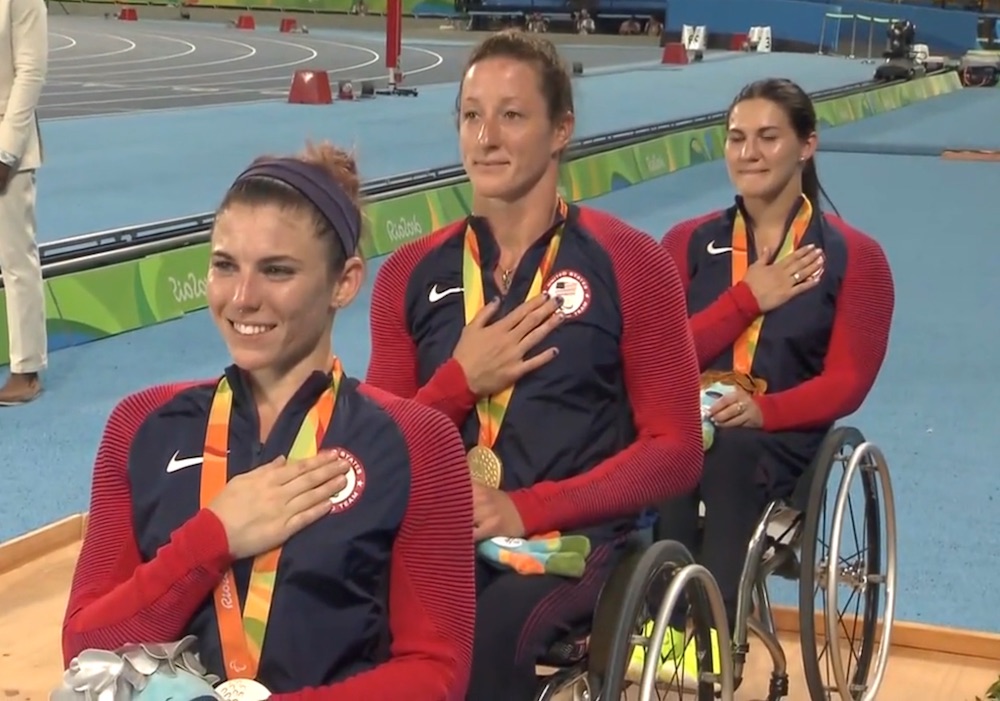
    Tatyana McFadden (c) led a U.S. sweep of the women's 1500-meter T53/54 podium in wheelchair track racing at the 2016 Summer Paralympics on Wednesday in Rio de Janeiro, Brazil. Less than two-tenths of a second behind her, Amanda McGrory (l) and Chelsea McClammer (r) placed second and third, respectively. (Photo: U.S. Paralympics Highlights from Rio Day 6 video)
    Tatyana McFadden (c) led a U.S. sweep of the women’s 1500-meter T53/54 podium in wheelchair track racing at the 2016 Summer Paralympics on Wednesday in Rio de Janeiro, Brazil. Less than two-tenths of a second behind her, Amanda McGrory (l) and Chelsea McClammer (r) placed second and third, respectively. (Photo: U.S. Paralympics Highlights from Rio Day 6 video)

    Note: This article has been updated to include results from Thursday’s road cycling and evening track races, as well as Tatyana McFadden’s selection as recipient of the Whang Youn Dai Achievement Award.

    On Tuesday and Wednesday in Rio de Janeiro, Brazil, two Paralympians who also dabble in skiing racked up medals at the Paralympic Games — with Tatyana McFadden winning the women’s 1500 T53/54 track event and Alicia Brelsford Dana placing second in the road-cycling time trial.

    McFadden, 27, of Clarksville, Md., rocketed to her third medal in three races in Rio, leading what the U.S. Olympic Committee (USOC) dubbed a “Mc-sweep” in her event, ahead of fellow Americans Amanda McGrory (+0.11) and Chelsea McClammer (+0.17). It was the first U.S. track-and-field podium sweep at these Games, and McFadden led from the start to capture a Paralympic record of 3:22.50.
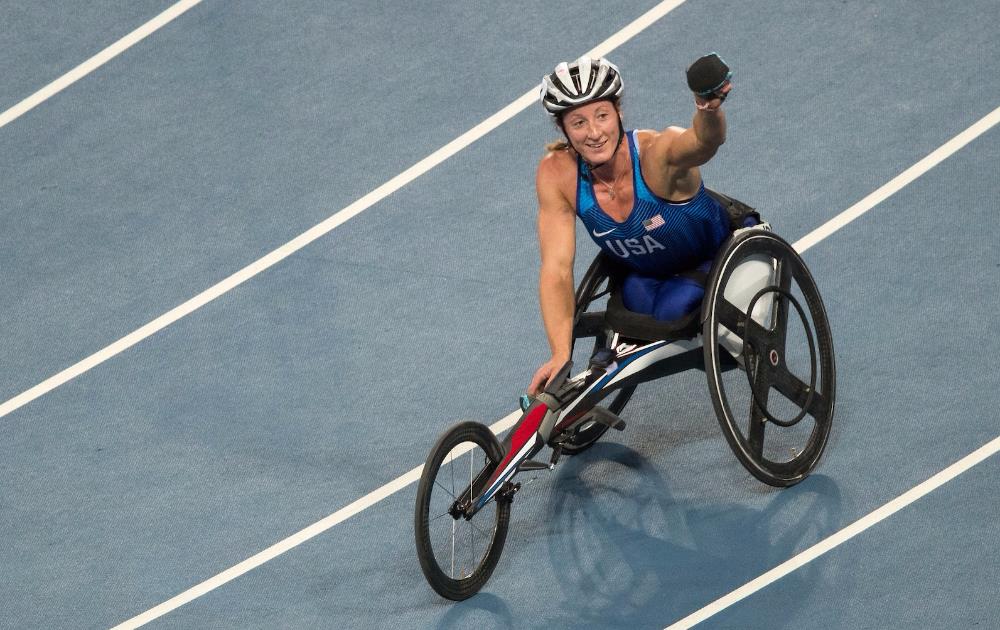
    Tatyana McFadden celebrates winning the women's T54 5000m final at the Olympic Stadium at the Paralympics in Rio de Janeiro, Brazil. (Photo: Simon Bruty for OIS/IOC)
    Tatyana McFadden celebrates winning the women’s T54 5000m final at the Olympic Stadium at the Paralympics in Rio de Janeiro, Brazil. (Photo: Simon Bruty for OIS/IOC)

    This marks her 13th Paralympic medal in track and field. She also has a silver in sit-skiing at the 2014 Winter Games.

    “It’s amazing,” McFadden said, according to a USOC press release. “It’s the first time, I think, in history or in a long, long time since we’ve gotten an American sweep in the 1500 and it happens to be the girls, so it’s really cool.”

    “We went into this morning with a pretty good plan and decided we were going to go for it,” McGrory said. “We raced together, we raced smart and we pulled it off.”

    (Update: Two days after her latest gold, McFadden was selected to receive another honorary gold medal as one of two recipients of the Whang Youn Dai Achievement Award. According to a International Paralympic Committee (IPC) press release, an independent panel of judges comprised of IPC Governing Board members selected the winners on Thursday — McFadden and Syria’s Ibrahim Al Hussein, a swimmer who is competing independently in Rio. They will each receive a pure gold medal, weighing 75 grams, at the Closing Ceremony.

    The panel chose McFadden and Hussein for best exemplifying “the spirit of the Paralympic Games and the Paralympic values.” Seventeen participating countries nominated 21 athletes, and the IPC narrowed the list down to six athletes. McFadden was the only North American among the six finalists.)

    On Thursday night, the “Mc-trio” (as the USOC called them) of McFadden, McClammer and McGrory — teammates at the University of Illinois Urbana-Champaign — swept the podium again in the women’s 5000-meter T53/54. McFadden made her move on the final lap to notch her third gold in four individual races in Rio, winning in 11:54:07. McClammer edged McGrory by one-hundredth of a second for silver (+0.26) and McGrory took bronze (+0.27).

    “We train together, so we work really, really well together,” McFadden said, according to a USOC press release. “There’s no one I want more on the podium than my teammates. I think the whole world was looking at us and we were looking at them and we said ‘hey, we’re going to work together’. We’re stronger that way and it definitely showed today.”

    Two hours later, McFadden and McClammer raced the 4×400 T53/54 relay with McFadden’s younger sister Hannah McFadden and Cheri Madsen. They crossed the line second behind the People’s Republic of China, which smashed the world record of 3:40.66 with a time of 3:32.11. However, according to the final results, the Americans were disqualified (along with Turkey) and relegated to fourth (while Turkey was listed as third). Australia, which had a season-best time of 3:46.63, took silver, and according to the results, no bronze was awarded.

    Dana Second in Time Trial, Fourth in Road Race
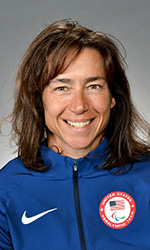
    Alicia Brelsford Dana (Photo: TeamUSA.org)
    Alicia Brelsford Dana (Photo: TeamUSA.org)

    On Wednesday, the seventh day of the Paralympics and first day of road cycling, Dana, of Putney, Vt., notched silver in the H1-2-3 time trial with a time of 33:57.48, less than 13 seconds behind the winner, Karen Darke of Great Britain.

    Four years ago at the Paralympics in London, Dana, now 47, placed fifth in the same event. At 2015 World Championships, she took silver in both the time trial and road race. In 2014, she was a world champion in the time trial.

    In all, the U.S. cycling team racked up nine medals on Wednesday (one gold, five silver and three bronze). Oksana Masters finished fifth in the women’s H4-5 time trial with a time of 33:49.7, about 47 seconds off the podium and 2:14.24 behind the winner, Dorothee Vieth of Germany.

    On her official Facebook page, Masters, 27, of Louisville, Ky., also a silver medalist in Sochi and a bronze medalist in doubles rowing at the 2012 London Paralympics, summed up her race on Wednesday: “I Finished 5th today in my combined H4-5 category for the TT. Just like skiing I like courses that have climbs in it. Today was the opposite. Flat as a pancake course with high winds which favors bigger people. I gave it everything I had, plus some blood and it was not enough to bring home a medal for team USA. Tomorrow is a new Day and another chance to race and leave everything on the course. It is a Road Race which will be a mass start. I am feeling hopeful for this race. It is my favorite event. I Can’t wait to throw it down tomorrow. I will be racing around noon rio time tomorrow.”

    On Thursday, Masters placed fourth in the women’s H5 road race. She is one of two Americans at the Games who has competed in the last three Paralympics in three different sports.

    Germany’s Andrea Eskau — a skier and Winter Paralympic medalist in both biathlon and cross-country in Sochi — won the event in 1:37:07. She finished 2 seconds ahead of the Netherlands’ Laura De Vaan and Jennette Jansen, who placed second and third, respectively. Masters was listed with the same time just 2 seconds back in fourth.

    “I’m bummed I finished fourth today and came up a little short, but I’m super happy because I feel like I’ve learned so much from this race alone,” Masters said, according to a USOC press release. “I am just so shocked that I am even here competing in my third Paralympic Games in a row.”

    Dana also placed fourth in Thursday in the women’s H1-2-3 road race. With a time of 1:16:01, she was 3 seconds off the podium and 5 seconds behind German winner Christiane Reppe (1:15:56). South Korea’s Do-Yeon Lee finished second and Italy’s Francesca Porcellato was third.

    Results: 

    Tuesday: Women’s 1500 T53/54 final

    Wednesday: Women’s H1-2-3 time trial | Women’s H4-5 time trial

    Thursday: Women’s H1-2-3 road race | Women’s H5 road race | Women’s 5000-meter T53/54Women’s 4×400 T53/54 relay
  • Rio Highlights: McFadden Takes Gold, Silver in Opening Paralympic Track Races

    Rio Highlights: McFadden Takes Gold, Silver in Opening Paralympic Track Races

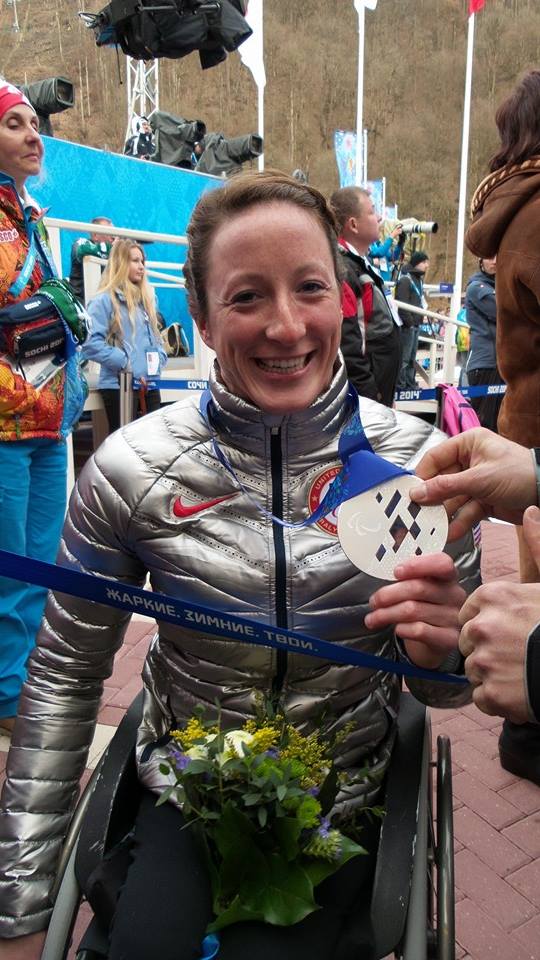
    Tatyana McFadden with her sprint silver medal in Sochi. Photo BethAnn Chamberlain/U.S. Paralympics Nordic.
    U.S. Paralympian Tatyana McFadden with her 2014 sprint silver medal at her first winter games in Sochi, Russia. McFadden is competing in her fifth Paralympics this month in Rio de Janeiro, Brazil. (Photo: BethAnn Chamberlain/U.S. Paralympics Nordic)

    In the first three days of the 2016 Summer Paralympic Games in Rio de Janeiro, Brazil, Tatyana McFadden, a seasoned wheelchair racer with 11 Paralympic medals to her name coming into the Games, took silver and gold in her first two races.

    McFadden, 27, of Clarksville, Md., has competed in four Summer Paralympics and a Winter Paralympics in 2014 in Russia — her birthplace. She was born with spina bifida and adopted around age 6, then moved to Maryland, where she developed strength and discovered her athleticism in swimming, gymnastics, wheelchair basketball, sled hockey, and track and field. Sit-skiing came later while she was studying at the University of Illinois, and shortly after taking up the sport, McFadden earned silver in the 2014 Paralympics sprint in Sochi.

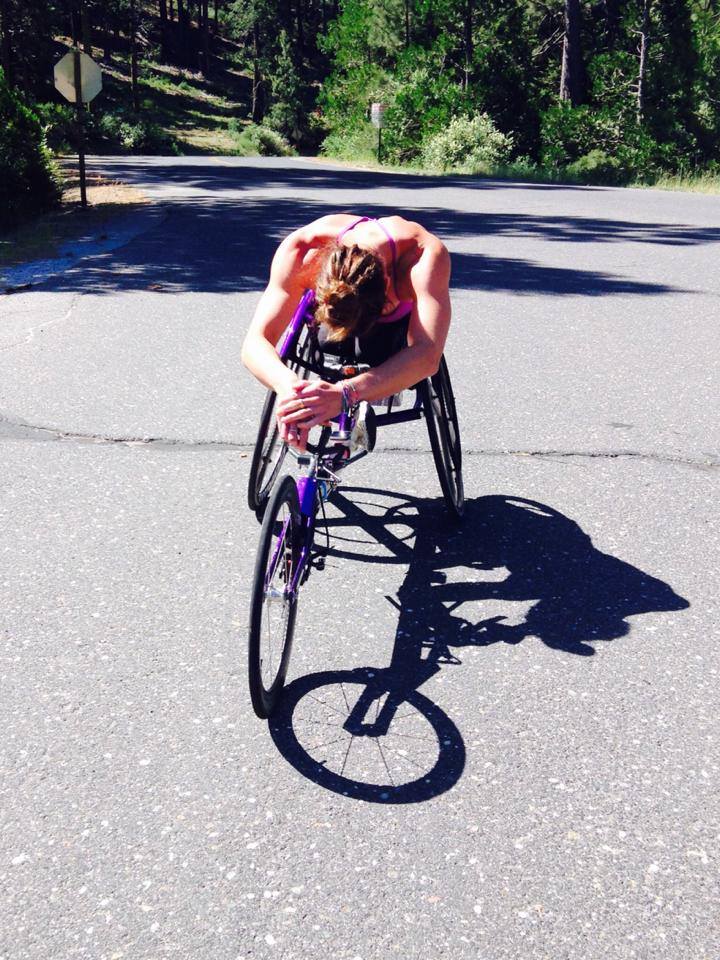
    Tatyana McFadden while training in July for U.S. nationals in her summer sport,  wheelchair racing, of which she's a three-time Paralympic and 10-time World Championship gold medalist in track and field. (Photo: U.S. Paralympics Nordic/Facebook) https://www.facebook.com/ParalympianTatyanaMcFadden/photos/pcb.597862103645740/597861653645785/?type=1&theater
    Tatyana McFadden training in July 2014 for U.S. nationals in wheelchair racing, her summer sport, of which she’s a three-time Paralympic and 10-time World Championship gold medalist in track and field. (Photo: U.S. Paralympics Nordic/Facebook)

    This past Friday, Sept. 9, on the opening day of the Rio Paralympics, McFadden captured the first medal of the Games for U.S. women’s track and field. The world-record holder in the women’s 100 T54 event, McFadden placed second, 0.13 seconds behind the defending Paralympic and world champion, Wenjun Liu of China, who won in 16.0.

    McFadden’s younger sister, 20-year-old Hannah McFadden, placed fourth (+0.34) while a third American, Cheri Becerra-Madsen, coming off a 16-year Paralympic hiatus, was fifth (+0.4). According to a U.S. Olympic Committee (USOC) press release, McFadden entered Rio aiming for seven gold medals to add to her collection of three from London 2012.

    She would have to wait for her first one.

    “To get the first medal for the U.S. women is amazing,” McFadden said in a USOC press release on Friday. “This is one of my hardest events. I’ve really had a rollercoaster ride with the 100 meters. In Beijing, I got sixth; In London, I got third and today I got silver. I’m really quite happy and am just looking forward to my next event.”

    On Sunday, Sept. 11, she defended her Paralympic title in the women’s 400 T54, winning in 53.30 seconds. Becerra-Madsen joined her on the podium in second (+1.2).

    Fifteen years after the Sept. 11 tragedies, McFadden dedicated her win to the victims, families and first responders of that day.

    “Today I won with my heart,” she told the USOC. “I ran for America. It’s September 11 so I ran for the folks back at home; thoughts and prayers for those affected. I honor my country today with a gold medal.”

    Several summer/winter cross-over Paralympians are competing in these Games. Oksana Masters, one of two U.S. Paralympians in their third Paralympic sport, is competing in road cycling, which begins on Wednesday.

    Results: Women’s 100 T54 | Women’s 400 T54

    Upcoming events: Athletics | Road cycling

  • Olympic Tidbits: Canada’s Whitten 7th in Cycling TT; Kristina Valjas 9th in Beach Volleyball (Updated)

    Olympic Tidbits: Canada’s Whitten 7th in Cycling TT; Kristina Valjas 9th in Beach Volleyball (Updated)

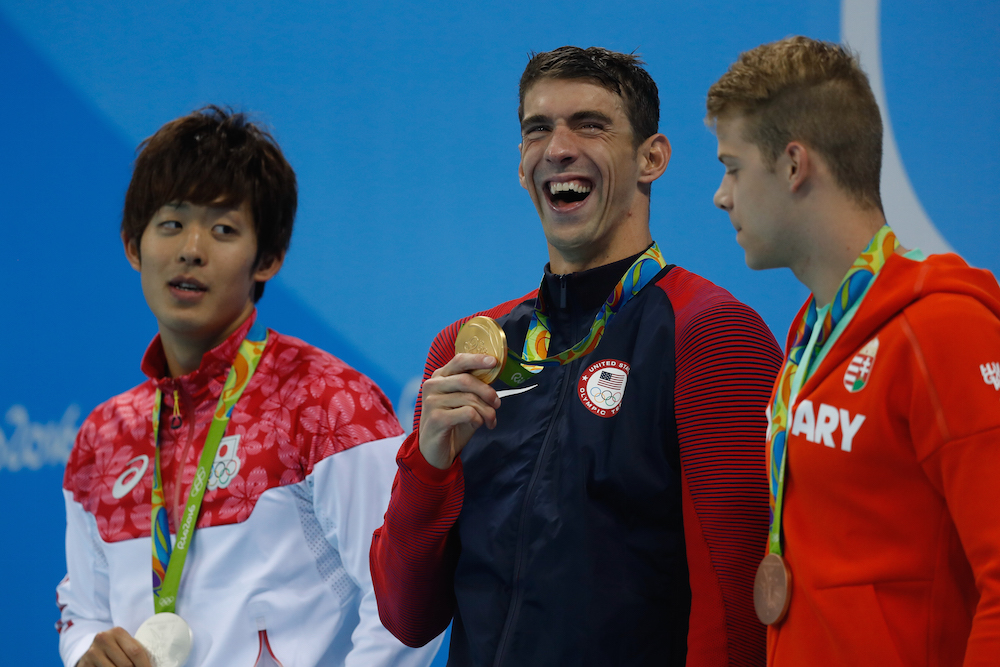
    American Michael Phelps after winning his 20th Olympic gold medal in the 200-meter butterfly stroke. (Photo: Wikimedia Commons/Fernando Frazão/Agency Brazil)
    American Michael Phelps after winning his 20th Olympic gold medal in the 200-meter butterfly stroke. (Photo: Wikimedia Commons/Fernando Frazão/Agency Brazil)

    Note: This Olympic roundup has been updated to include the results of Czech skier Eva Vrabcová-Nývltová (who placed 26th in the Rio Olympics marathon on Sunday) and Kristina Valjas, Lenny Valjas’s sister (who finished ninth in the Olympic beach volleyball tournament on Saturday). 

    Vrabcová-Nývltová 26th in Marathon

    In her first Summer Olympics, Czech World Cup skier Eva Vrabcová Nývltová placed 26th in the women’s marathon on Sunday in Rio de Janeiro, Brazil, finishing in 2 hours, 33 minutes and 51 seconds (9:47 behind the winner). Kenya’s Jemima Sumgong won it in 2:24:04, outlasting Bahrain’s Eunice Jepkirui Kirwa by 9 seconds, while Ethiopia’s Mare Dibaba took bronze in 2:24:30.

    Three Americans placed in the top 10: Shalane Flanagan (6th), Desiree Linden (7th) and Amy Cragg (9th).

    Valjas Represents Canada in Beach Volleyball

    There’s Olympic blood in the Valjas family. This summer, Kristina Valjas, the older sister of Canadian national-team cross-country skier Lenny Valjas, qualified for her first Olympics in beach volleyball in Rio. And on Saturday, Aug. 13, her run with teammate Jamie Broder ended with a match against another Canadian team, Sarah Pavan and Heather Bansley.

    After what was dubbed the ‘Clash of Canadians’, Pavan and Bansley advanced to the quarterfinals with a 2-0 win (21-16, 21-11) over Valjas and Broder. Valjas and Broder went 2-1 in the preliminary round and end up ninth in the Olympic tournament overall.

    At 6-foot-2, Valjas is two years older and a few inches shorter than her 6-6, 27 year old brother. Pavan, her competitor on Saturday, is 6-5 and outreached Valjas.

    Fourcade on Phelps

    Michael Phelps is an inspiration to Martin Fourcade. That’s what the 10-time world champion, two-time Olympic gold medalist, and five-time defending overall International Biathlon Union (IBU) World Cup champion told Le Parisian this week. Fourcade, 27, said he is hooked on watching Olympic swimming and has “tremendous admiration” for the 31-year-old Phelps, the most decorated Olympian of all time with 26 medals, 22 of which are gold.  What does he like most about him? His story of renewal. “It’s impressive,” Fourcade said, adding that he likes Phelps’ jovial demeanor.

    Whitten Seventh in Time Trial

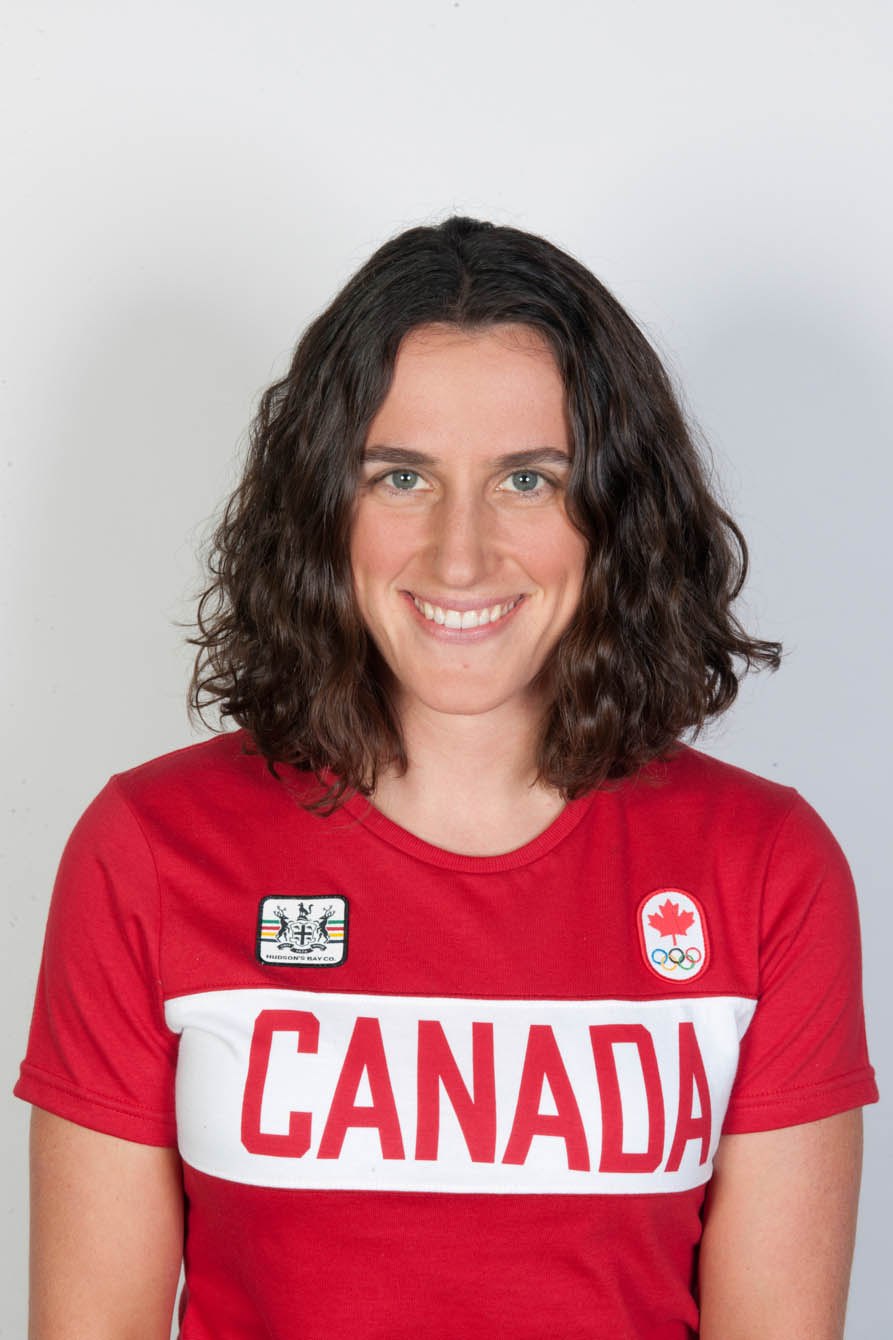
    Tara Whitten (Photo: Canadian Olympic Team)
    Tara Whitten (Photo: Canadian Olympic Team)

    Former Canadian national cross-country skier Tara Whitten, of Calgary, placed seventh in the women’s Olympic cycling time trial on Wednesday in Rio de Janeiro, Brazil. Whitten finished the 29.8-kilometer course in 45:1.16, 34.74 seconds behind winner American Kristin Armstrong (who won her third-straight Olympic time trial).

    “A medal was the goal but I’m extremely proud of my 7th place finish yesterday,” Whitten tweeted.

    Whitney’s compatriot, Karol-Ann Canuel of Gatineau, Que., placed 13th.

    “When I crossed the finish line, I realized that [Whitten] was tentatively in first place, and that I was third,” Canuel told the Canadian Press. “She cut about one minute to my time, so I said to myself: ‘Wow, Tara might make an upset.’ I think she was happy with her performance and she was feeling great. Good for her.”

    Whitten, 36, is a three-time world champion and two-time Olympian in cycling. At the 2012 London Games, she helped the Canadian team to bronze in the women’s team pursuit and placed fourth in the omnium (a multiple-race track cycling event). Earlier this year in March, she was injured while inspecting the road course in Rio when her bike collided with the back of a bus. She was knocked unconscious and broke a bone at the base of her scull, according to a University of Alberta article. Despite her training interruption and subsequent delay in being named to the Canadian Olympic team, Whitten made the cut and returned to Rio.

    Before her career as a cyclist, Whitten was a national-team skier and silver medalist at the 2003 Nordic U23 World Championships. She reached the 2005 Nordic World Championships, but missed qualifying for the 2006 Winter Olympics the following year. In 2007 at the age of 27, she became a competitive cyclist and captured her first world championship medal in 2009. This past June, she earned her PhD in neuroscience from the University of Alberta. According to the Canadian Olympic Team website, she’ll be looking for a post-doctoral position after the Rio Games.

    Nordic Nations Lead Medals Per Capita

    Check out MedalsPerCapita.com, and you’ll likely notice a trend: three of the top five countries are Nordic countries. Computer scientist Craig Nevill-Manning has tracked and ranked the world’s nations by how many medals they’ve won per capita since 1896, and Finland and Sweden are at the top with 17,904 and 19,649 people per medal, respectfully. Denmark is fourth (after Hungary) with 31,176. Norway is just outside the top five with 33,595 people per medal. When ranked by gold medals specifically, Norway ranks fifth, with Finland and Sweden are first and third, respectively.

    “The main reason the Nordic nations have been so successful in the Olympics is the same reason many argue they’re successful in other domains: They’re tiny countries,” Business Insider reporter Chris Weller explains. “One gold medal translates to a much greater medal-per-capita count in Finland (population: 5.4 million) than it does in the US (population: 313 million).

    “To put the domination in perspective: In order to match Finland’s medals per capita, the US would need to have earned an additional 15,000 medals throughout its Olympic history — a mind-boggling, if impossible achievement given that Medals Per Capita totals its current medal count at 2,401.”

    But population aside, Nordic countries have a history of being extremely successful at the Olympics. Business Insider points out that Finland, with just 1.6 percent of the U.S. population, has earned 12.5 percent of the U.S.’s total medal count. “That over-representation is likely a testament to the snowy Northern European countries’ strength in winter sports,” Weller writes. “They do their best in cross-country skiing, ski jumping, and speed skating.”

    At the Rio Games, Denmark is currently 13th in the medals-per-capita count, Sweden is 15th, and Norway is 22nd. Finland has yet to place. Among other skiing nations, Slovenia is first, Kazakhstan is 10th, Slovakia 11th, and Switzerland 12th.

  • IPC Suspends Russia from Rio Paralympics

    IPC Suspends Russia from Rio Paralympics

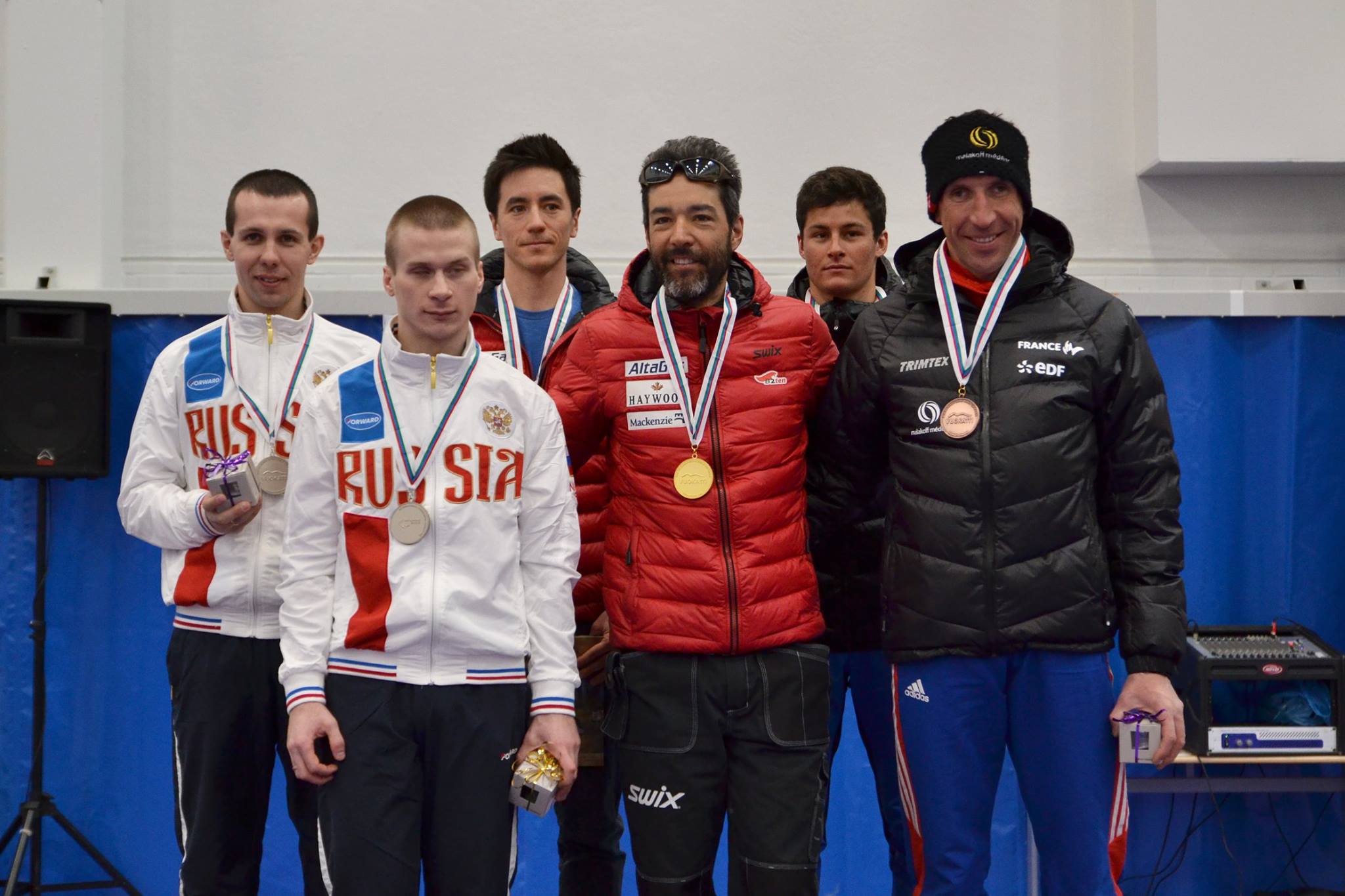
    Brian McKeever (c) and his guide Graham Nishikawa with their gold medals after the men's visually impaired 30 k at 2016 IPC World Cup Finals in Vuokatti, Finland. Russia's Alexsander Artemov (l) placed second and France’s Thomas Clarion (r) was third. (Photo: IPC Nordic Skiing/Facebook)
    Brian McKeever (c) and his guide Graham Nishikawa with their gold medals after the men’s visually impaired 30 k at 2016 IPC World Cup Finals in Vuokatti, Finland. Russia’s Alexsander Artemov (l) placed second and France’s Thomas Clarion (r) was third. (Photo: IPC Nordic Skiing/Facebook)

    As many athletes continue to prepare for the upcoming Paralympic Games taking place exactly one month from Sunday in Rio de Janeiro, Brazil, those sporting the white, blue and red flag of Russia will not. On Sunday, Aug. 7, the International Paralympic Committee (IPC) announced its decision to suspend the Russian Paralympic Committee from competition in Rio and upcoming IPC competitions.

    A press conference was held Sunday morning in Rio to announce the IPC Governing Board’s unanimous ultimatum that the Russian Paralympic Committee had failed its duties as an active member to the IPC in light of recent investigations. Namely, the Russian Paralympic Committee was found at fault in their inability to comply with sanctions set forth by the IPC Anti-Doping Code and the World Anti-Doping Code. Prior to any decision from the IPC Governing Board, the Russian Paralympic Committee was permitted to provide a written and verbal claim during the conference.

    The logo for the 2016 Summer Paralympic Games, which will be held Sept. 7-18 in Rio de Janeiro, Brazil.
    The logo for the 2016 Summer Paralympic Games, which will be held Sept. 7-18 in Rio de Janeiro, Brazil.

    The repercussions of the decision for the Russian Paralympic Committee include the suspension of its IPC membership rights and privileges. This means Russia is not allowed to vote at IPC member meetings nor enter athletes in IPC-sanctioned events, which includes the 2016 Summer Paralympics and IPC competitions (involving summer and winter sports) beyond that.

    Much of the decision, according to IPC President Sir Philip Craven, was based on the findings of the McLaren report. Within the report, “35 disappearing positive samples from Paralympic sport in 2012 to 2015,” were included in the report’s findings.

    “Since the publication of the McLaren Report on 18 July our priority has been to establish the full facts in respect of Para sport,” Craven stated in the press release.

    “In particular, we have taken the necessary time to ask further questions of Professor McLaren and his investigation team, to await the results of samples undergoing further forensic examination and to invite the Russian Paralympic Committee to present its case to the IPC and enter into dialogue with the IPC Governing Board. With the full facts to hand, we were deeply saddened to find that the State-sponsored doping programme that exists within Russian sport regrettably extends to Russian Para sport as well.”

    As head of the IPC, Craven maintains it is his and the governing body’s responsibility to ensure equity between all competitors. The motion to suspend Russia, he indicates, represents an attempt to create fair competition among all para-athletes.

    “Tragically this situation is not about athletes cheating a system, but about a State-run system that is cheating the athletes,” Craven said. “Our decision is driven by the need to hold our members accountable for their obligations. On the basis of the evidence we have, in the current environment our member the Russian Paralympic Committee cannot comply with the IPC’s Anti-Doping Code and the World Anti-Doping Code.  Those obligations are crucial to the IPC’s guarantee of fair competition for all.”

    Tragically this situation is not about athletes cheating a system, but about a State-run system that is cheating the athletes.“– IPC President Sir Philip Craven on the decision to suspend Russia from the Rio Paralympics

    Also on Sunday, the World Anti-Doping Agency (WADA) announced its support of the decision.

    “WADA supports the decision taken by the IPC, which we believe is in the interest of clean athletes and the clean sport movement,” a WADA statement noted. “The IPC’s decision follows the WADA Executive Committee’s 18 July recommendation to the IPC that they consider declining entries of athletes by the Russian Paralympic Committee for Rio 2016 as a result of the McLaren Report.”

    Robin McKeever, head coach of the Canadian Para Nordic Ski Team, pointed that beyond the summer games in Rio, the decision will also impact the upcoming winter ski season.

    “It’s a very sad day for IPC sports and in the end, the athletes pay the heaviest price overall in sport,” McKeever wrote in an email to FasterSkier. “From what I read the entire RUS IPC is banned from competition so that includes winter sports for the upcoming season. Whether or not that changes in the coming days or weeks time will tell. This obviously will have a huge effect on the size of the IPC Nordic World Cup field for this winter…True Sport must prevail and the line between what’s fair or unfair has to be drawn. I only hope we can all play on an equal playing field and move forward from this point.”

    In a phone interview before the IPC decision on Russia, McKeever emphasized that the Russian doping scandal is rooted in far more than just the athletes themselves.

    “The opportunities that the paralympics provide for some countries athletes are astronomical,” McKeever said last month.  “Russian athletes winning a gold medal at the paralympics is 145,000 euros for athlete, guide — if there’s a guide involved — and the coach. All paid out by the state. So this is a huge, huge organization from the political side all the way down. There’s one Russian who won six medals in Sochi and that’s the difference between living life in a wheelchair — pretty much fighting day to day to have a meal — versus living life as a rock star.”

    With the present decision instated, the IPC is currently working to redistribute the 267 slots that had been given to Russian athletes for Rio 2016. No action will be taken, however, until the 21-day time period that the Russian Paralympic Committee has to appeal the decision is complete. The Rio Paralympics start in 31 days on Sept. 7.

  • FIS on What’s Next Regarding Russia (Updated)

    FIS on What’s Next Regarding Russia (Updated)

    Alexander Legkov after winning the Olympic 50 k in 2014. He didn't have that feeling often in the 2015 season.
    Russia’s Alexander Legkov after winning the Olympic 50 k mass start at the 2014 Sochi Winter Games.

    (Note: This article has been updated to include the IBU’s official statement in response to the McLaren report, published in an IBU press release on Friday.)

    What’s a sports federation to do when informed that 13 of its athletes (skiers — not distinguished by discipline, whether it be cross-country, nordic combined, jumping, alpine or freestyle) were involved in the cover-up of positive doping tests between 2011 and 2015? Or even 10 — the amount of Russian biathletes’ samples found to have been “disappeared” by the Moscow anti-doping laboratory during that time period?

    The good news for an international sports federation like the International Ski Federation (FIS) is, they’re dealing with winter sports in summer. That buys them more time to make a plan of action when deciding how to deal with the allegations against Russia and its systematic doping confirmed in the McLaren report earlier this week.

    In response to the 97-page independent report, which made no recommendations for action and left it up to the World Anti-Doping Agency (WADA), the International Olympic Committee (IOC), international sports federations (IFs), and relevant authorities moving forward, WADA’s executive board outlined seven recommendations for affected federations. Most prominently, they called for a complete ban on Russian athletes from the upcoming Summer Olympics and Paralympics in Rio de Janeiro, Brazil.

    The IOC Executive Board then came out with a list of “provisional measures” of its own, applicable until further review this December. Among the measures, it asked Professor Richard McLaren to share the names of the Russian athletes implicated in the “disappearing positive methodology” (i.e. the 13 skiers and 10 biathletes) with their respective IFs, and for all winter sports federations to “freeze their preparations for major events in Russia, such as World Championships, World Cups or other major international competitions under their responsibility, and to actively look for alternative organisers.”

    So how is FIS moving forward? For starters, they are relieved to have more time to process these findings than, say, a summer Olympic sports federation.

    “As far as the winter sports federations are concerned, I don’t think I need to repeat the fact that the whole situation is utterly, utterly, shocking, appalling,” FIS Secretary General Sarah Lewis, also the secretary general of the Association of International Winter Sports Federations (AIOWF), said on the phone Wednesday. “It is totally against all of the values that we believe sports stand up for and that it’s built on trust, on fair play, on demonstrating personal excellence…”

    Because at least six of the seven winter IFs were mentioned in the report, decisions on how to move forward will be made at a previously scheduled AIOWF meeting in early August at the IOC session in Rio.

    “This will clearly be the main item on the agenda so that we can all address this jointly, commonly, exchange information, exchange positions, and potentially there can even be areas where we can undertake some management matters together as well in order to try to expedite and consolidate the process,” Lewis explained. “That’s what we’ve agreed to do because our season isn’t immediately around the corner and [the] Olympic Games on our doorstep, as is the case for the summer sports. In fact, this time next week, I’ll be on my way to Rio and meeting the IOC already at the end of next week in order to be able to obtain more detailed information.”

    In terms of what information FIS currently has, Lewis explained that it “is in the process of obtaining information about specific names of athletes and/or other persons who may be subject to an anti-doping rule violation.”

    Once information is obtained from WADA to follow up on, FIS will then proceed with results management based on FIS rules and the WADA Code, and will do so on an individual, case-by-case basis, she added.

    “How the process works, if there are any tests connected with the Olympic Winter Games, which of course the investigation was centered around, then it’s the IOC’s responsibility to undertake the results management there,” Lewis said. “But what will be addressed is whether this can be addressed in a joint way with the respective international federation when the IOC has to carry it out anyway. The IOC only has the authority to be able to sanction the person related to their participation at the Olympic Games and then they give then the task to the respective international federation to follow up with any further sanctions and procedures under their jurisdiction.”

    When it comes to freezing events, such as Cross-Country World Cup finals in Tyumen, FIS has eight major events across its sports previously scheduled in Russia. They are now suspended until further notice to comply with what Lewis explained as an immediate measure from the IOC.

    As for seeking alternate venues, Lewis said that’s premature.

    “The decision of the IOC Executive Board hasn’t even been communicated for 24 hours, and I haven’t been dealing specifically with whether there are other organizers who have already offered to step in. That’s in the hands of our cross-country management,” she said. “One thing is freezing the events now and it’s quite another story whether it’s going to be necessary to reassign events. But in any case, don’t worry, there won’t be a shortage of organizers for the [events]. Everyone wants to do the best thing for the sport and be committed to it. And for sure, other nations will be ready to rally around to ensure that the athletes and the World Cup circuits are not affected, should it be necessary.”

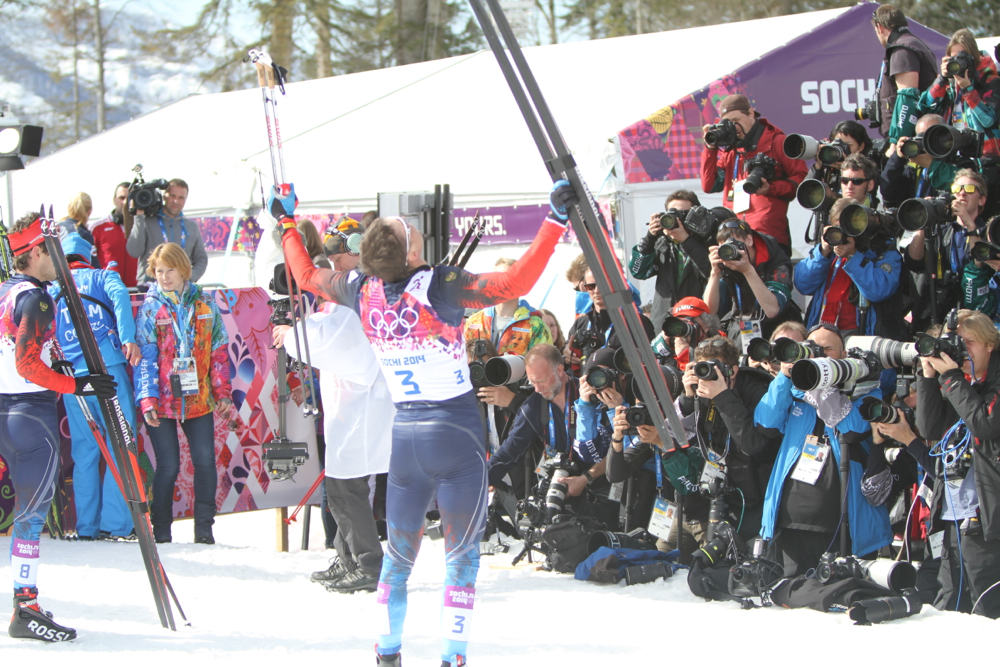
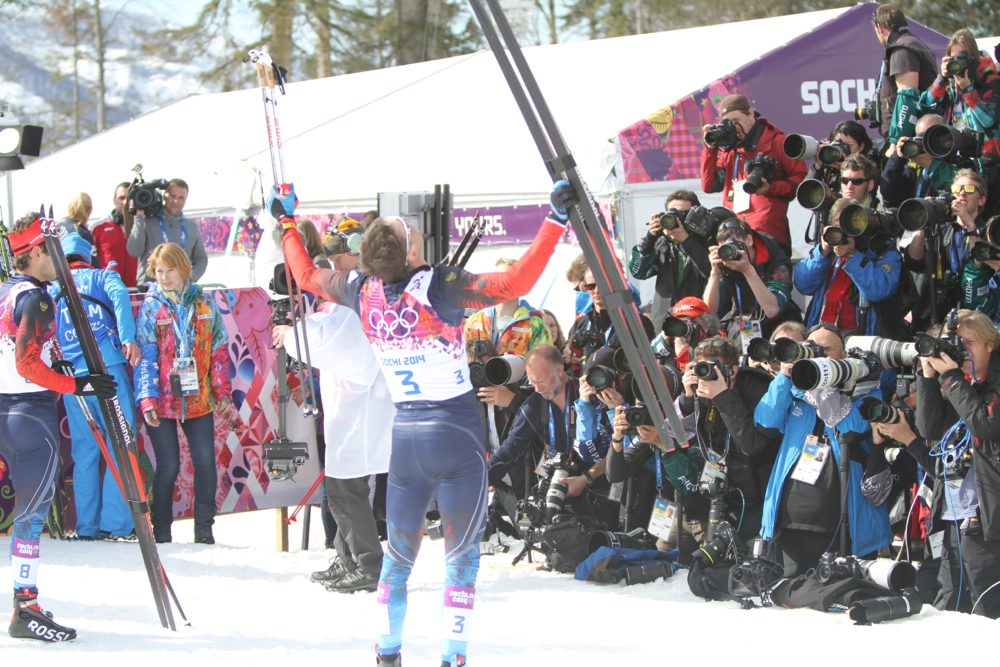
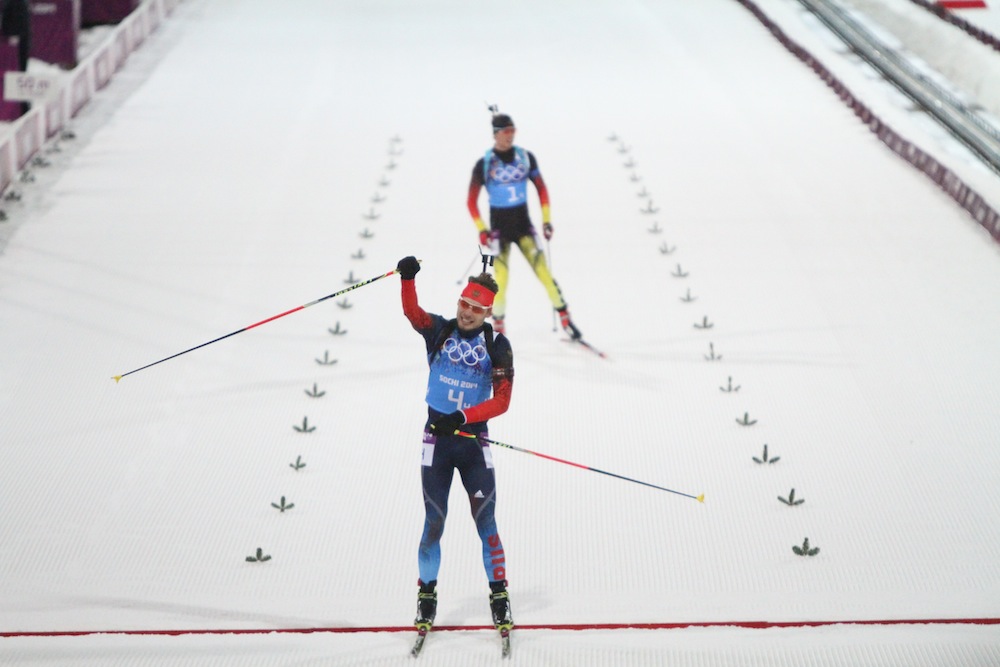
    Russian anchor Anton Shipulin celebrates his team's gold medal in the men's relay over Germany's Simon Schempp. Austria was third.
    Russian anchor Anton Shipulin (front) celebrates his team’s gold medal in the men’s biathlon relay at the 2014 Sochi Olympics. Germany’s Simon Schempp anchored his team to second and Austria placed third.

    In an email seeking a comment on the McLaren report, International Biathlon Union (IBU) Secretary General Nicole Resch responded on Wednesday, “Due to travelling I did not have the chance to read the full report yet.”

    Resch did not respond to a follow-up email requesting to speak with another IBU spokesperson.

    The IBU released a statement on Friday, noting: “The IBU is truly appalled and deeply saddened by the findings of the McLaren Report (IP Report).

    “The IBU has always emphasized clean sport, fight against doping and protection of clean athletes as its top priorities,” the press release continued. “We will therefore carefully evaluate this report and the recommendations of the IOC and will proceed with investigations concerning references to biathlon included in the IP Report. If and when appropriate, the IBU will not hesitate to open disciplinary proceedings against bodies or persons subject to infringements of the IBU Anti-Doping Rules.”

    Lowell Bailey, a U.S. Biathlon team veteran and IBU Athlete Representative, said he was awaiting an official statement from the IBU as of Wednesday.

    “The McLaren report specifically says that they advise that no international federation should hold international competition in Russia,” Bailey said on the phone. “So in my mind, I think a strong response from the IBU, something that would be a definitive sign that they are very much supporting and fighting for clean competition would be to ban the upcoming Tyumen [World] Cups. I think that’s the least they can do at this point, is to show that, no, we are not complicit, we are not OK with this and as a punishment, we’re moving the World Cup…

    “I think it’s just really unfortunate if we are outwardly saying, as a sport, ‘We hear you, WADA, and we are very much against doping and we are trying to clean up our sport,’ then in the same 12-month period to go and hold a World Cup in that country, which is in violation of the WADA code. I think that’s a double standard,” he added. “So I’m hopeful that the IBU will do the right thing…”

  • Vrabcová-Nývltová Gears Up for Marathon at Rio Olympics

    Vrabcová-Nývltová Gears Up for Marathon at Rio Olympics

    Liz Stephen of the United States skiing with the Czech Republic's Eva Vrabcova-Nyvltova, who had her own standout result in finishing ninth.
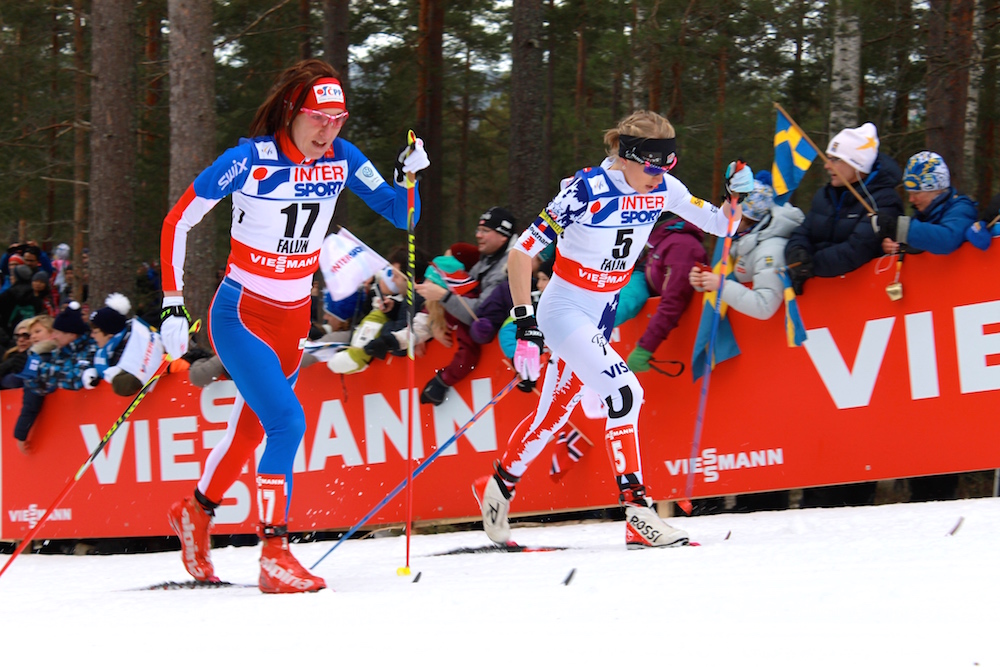
    Eva Vrabcová-Nývltová (l) of the Czech Republic racing alongside Liz Stephen (U.S. Ski Team) in the women’s 30 k classic mass start at 2015 World Championships in Falun, Sweden. Vrabcová-Nývltová placed ninth for a career best at World Championships and went on to place 10th in the skiathlon in Falun. Stephen finished 11th in both races.

    Winter Olympians can shine in the summer — just ask Czech cross-country skier Eva Vrabcová-Nývltová, who’s headed to the upcoming Summer Olympics in Rio de Janeiro, Brazil.

    On Sunday, the 30-year-old three-time Winter Olympian placed eighth in the women’s half marathon at 2016 European Athletics Championships in Amsterdam, finishing in 1 hour, 12 minutes and 1 second. She came within a minute of her personal record, which she set in the Prague Half Marathon in April. In May, she ran a 2:30:10 in the Prague Marathon, which qualified her for the Rio Olympics and solidified her plan to step back from skiing for at least a season to focus on running.

    “The overwhelming satisfaction, I sort of wanted to be closer to a personal record, but the experience to run the race with only women is great,” Vrabcová-Nývltová told the Brněnský Deník newspaper on Sunday, according to a loose translation.

    Portugal’s Sara Moreira won the race in 1:10:19, followed by Italy’s Veronica Inglese in second (1:10:35) and Jessica Augusto, also from Portugal, in third (1:10:55). Behind the medalists, Vrabcová held onto the top 10 within a larger chase group.

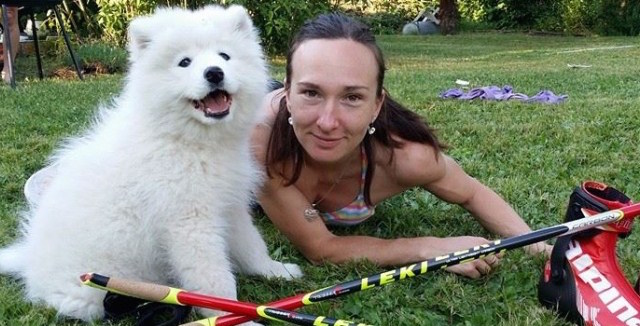
    Eva Vrabcova Nyvltova is taking a break from skiing and sitting out the 2016/2017 season to focus on running. She qualified for the 2016 Summer Olympics at the Prague Marathon in May and plans to race the marathon in Rio de Janeiro, Brazil, in August. (Photo: Czech Ski Association/FIS)
    Eva Vrabcová-Nývltová is taking a break from skiing and sitting out the 2016/2017 season to focus on running. She qualified for the 2016 Summer Olympics at the Prague Marathon in May and plans to race the marathon in Rio de Janeiro, Brazil, in August. (Photo: Czech Ski Association/FIS)

    “I think this race definitely met my expectations before Rio,” Vrabcová-Nývltová said.

    She plans to race the marathon on Aug. 21 at the 2016 Olympics, which will be her first Summer Olympics.

    A World Cup cross-country skier since 2005, she has a personal-best Olympic result of fifth in the 30-kilometer freestyle mass start at the 2014 Winter Games in Sochi, Russia.

    Reflecting on Sunday’s half marathon, she said her finishing kick needed some fine tuning.

    “My final acceleration [is] a bit lacking. We still have a lot of work ahead,” she said. “We can see where the reserves are, and we have enough time … I evaluate it positively.”

    Vrabcová-Nývltová has not competed in an international ski race since November 2015. In an interview with iSport.cz she said she’s “starting to enjoy life,” which includes her husband, training and most recently, college after being accepted to a university. While she might jump into a ski race or two this winter, she said they’ll likely be based in the Czech Republic as she plans to stay home for the holidays.

    “It’s great challenge and motivation, therefore I decided to focus fully on athletics. I agreed with the Czech Ski Association that I am going to skip next season,” Vrabcová-Nývltová said, according to FIS.

    Asked how the running atmosphere compares to skiing, she told iSport, according to a rough translation, “It can not be compared, because I was so excited. Czech running is a higher level, but the people are fantastic … Holmenkollen and Falun are also super, but mostly cheers northern [countries]. Here the atmosphere in the Czech team [is something] else and I’m very happy that I can be here.”