Tag: RMN

  • The Pros & Cons of League-wide Wax Protocols: Western Clubs Consider the Evolution and Impact (Part 2)

    The Pros & Cons of League-wide Wax Protocols: Western Clubs Consider the Evolution and Impact (Part 2)

    Here are links to earlier installments in this five-part series. The first two parts (part one; part two) spoke to the perspectives of high level wax technicians and industry representatives, while part three focused on the Wisconsin Nordic Ski League. To read the beginning of this article on the wax protocols of Western clubs, part four, click here

    Leveling the Playing Field

    In regard to the question of whether the policy widens the gap in equity because of equipment differences, coaches expressed that the opposite has been observed.

    “It probably has a little bit to do with what level we’re talking about,” said Teague. “But certainly, club or high school wise, I’ve only seen it take down one of the barriers of entry to our sport, and decrease costs for both programs and individuals.”

    Speaking on behalf of RMN, Teague added that this removal of barriers has opened up opportunities for smaller clubs, and the support expressed among coaches speaks for itself. 

    “My opinion is – of everybody that’s gone to [a wax protocol], no one has said: ‘That’s a mistake. We’re gonna go back,’” said Teague. “Yes, there is some advantage that can be gained for an athlete or a program that has the capacity to go and invest in a quiver of skis to try and overcome the playing field, but more often than not, what we’re seeing is that small programs, or athletes without a program at all, [such as one of my former skiers who lived on Colorado’s Grand Mesa in the Southwest corner of the state], all of a sudden can be competitive.” 
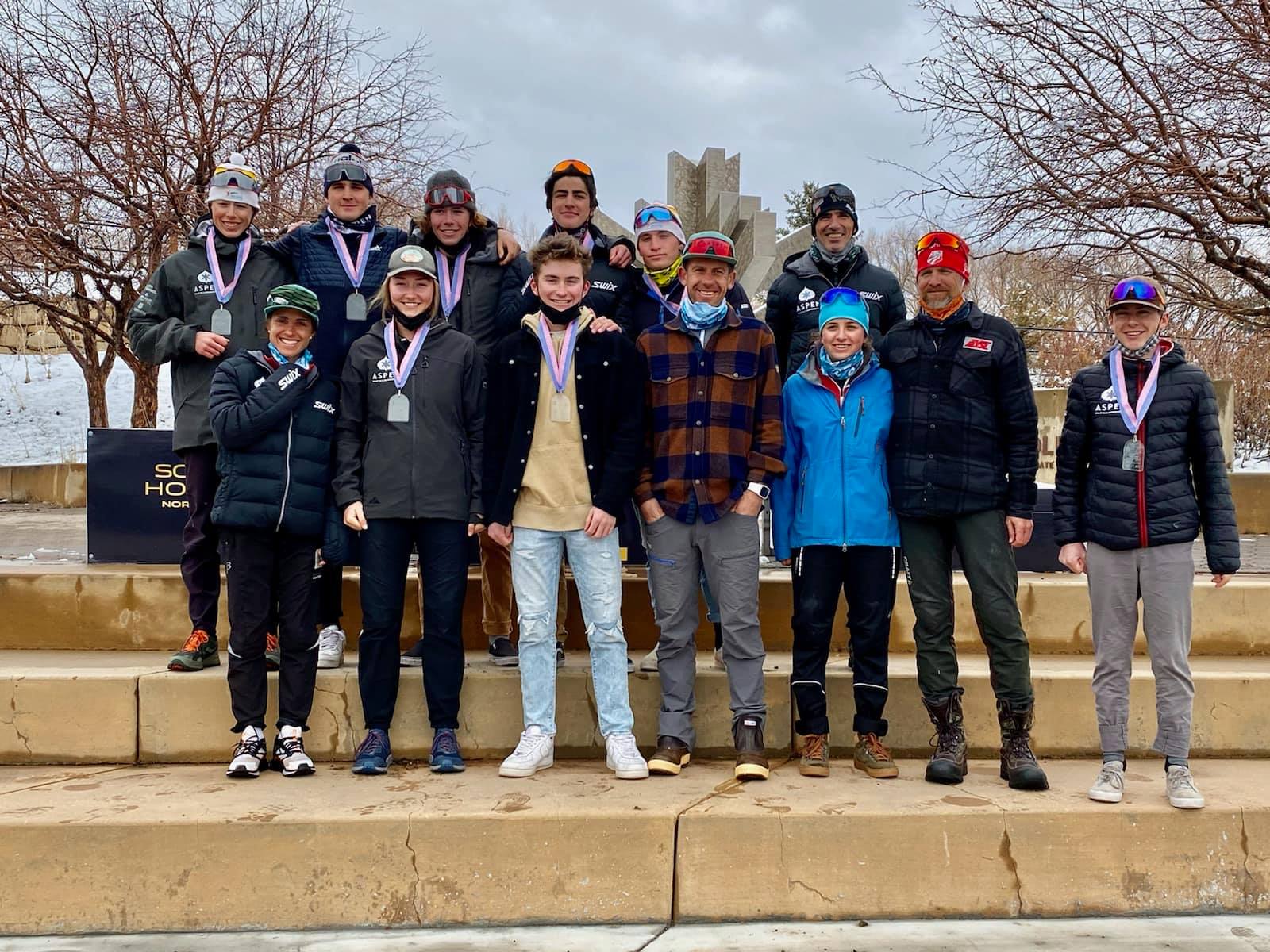
    AVSC nordic athletes compete at the Western Regional Championships, held in Soldier Hollow, UT in place of the 2021 Junior National Championships due to the COVID-19 pandemic. (Photo: Aspen Valley Ski and Snowboard Club)

    This phenomenon could be attributed to the aforementioned power previously held by larger clubs; when glide testing is no longer a priority, perhaps smaller clubs can finally find a seat at the table. 

    “We have 14 clubs in the division,” Kapala said of Intermountain. “Last year, 13 of them placed a kid on the Junior National team. Prior to that, we were running more like seven or eight [clubs]. So what was going on was Sun Valley, Bozeman, Jackson, and to some extent Park City – the bigger clubs – were rolling in, and to put it bluntly, we were steamrolling the small programs. It wasn’t a fair fight. And fortunately, the larger clubs in our division say, ‘Clearly, that’s not good for skiing.’” 

    Kapala spoke specifically of an athlete who hailed from Whitefish, MT, which is “way at the far flung edges of the realm. They’ve gotta drive forever to get to races.”

    This athlete raced for the Glacier Nordic Club under the guidance of head coach Jennie Bender, who he described as “a huge asset and we’re so fortunate to have her come to our division.” Clarifying that Bender is as skilled and capable as any other coach on a wax bench, he acknowledged that she was largely on her own at races with roughly 12 kids. This ratio is not equivalent to the SVSEF team which might have 35 kids with five to seven coaches at a JNQ. 

    “It’s just not a fair fight.”
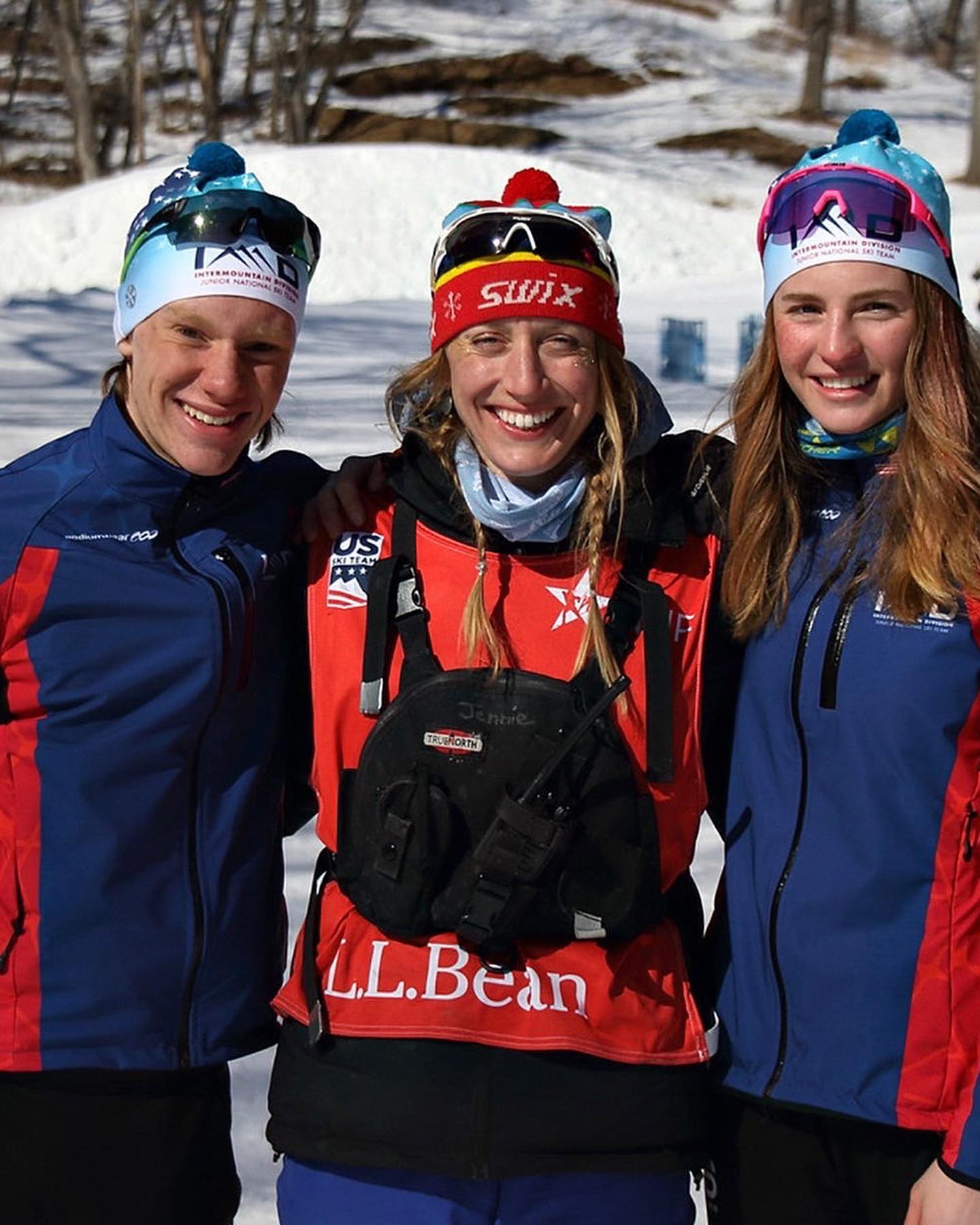
    Glacier Nordic Club head coach Jennie Bender with the two athletes, Jacob Hansen and Maeve Ingelfinger, who earned spots on the 2022 Intermountain Division team at Junior Nationals. (Photo: Glacier Nordic Club)

    Despite less support on the waxing front, the athlete grew into the season and was regularly finishing between fourth and sixth at JNQs, which earned her a spot on the IMD team at Junior Nationals. 

    “So what happens is: we go to JNs, we leverage all of the Intermountain resources on behalf of her and the other kids and what does she do? She’s on the podium. And so our policy afforded her the opportunity to at least be in the conversation to make sure she assuredly got through… she was good enough in that setting of fair and equitable ski service, that – what else was going on? She believed. ‘Oh wow. I’m actually not that far away.’”

    Once this seed was planted, the athlete thrived. In Kapala’s mind, it’s an intangible, but nonetheless vital, component of the development process for that age group.

    “None of this stuff happens in a vacuum, and athlete development is this really, really – I don’t want to say funky – but really nuanced process… This girl has gone from we didn’t even know who she was, to one of the best U16 girls in the country. And I contend that our wax policy, while it wasn’t more important than Jennie’s great coaching, certainly didn’t hurt. She was on a level playing field as level as we can make it in those formative JNQs where she started believing [in herself]. And that’s the whole game.”

    Teague also acknowledged the apples-to-oranges capacity of programs, relating it to his experience with the Australian national team, whom he coached and supported through two World Championships surrounding the 2014 Olympics in Sochi. While Australia now typically partners with the U.S. team on the World Cup for waxing, the capacity of this small program pales in comparison to a robust and well-funded nation like Norway, which has been supported by technician Knut Nystad who was quoted in the first two parts of this series. While Teague emphasized his respect for Nystad’s expertise both as a coach and tech, he felt the understanding club level coaches have of the specific challenges of their leagues might offer a different lens with which to consider these issues. 

    “Knut was my coach [when I was racing collegiately at Denver University], and worked on the Norwegian wax team when I was coaching in Australia. What they were able to do and the testing they were able to do, versus what I could do with Australia – it’s not even comparable. And sometimes we could be competitive with them, but often, they were able to test significantly more. Now, would a waxing protocol make it fair in that situation? Absolutely not. Because they could have every different grind, and a grinder going, and along the continuum.

    “But at the high school level, an AVSC can send four coaches over early to test [glide] wax and at least apply wax on site, rather than make a guess. Whereas [a small program like the Colorado Rocky Mountain School (for whom the author is a former head coach)], or even Battle Mountain where there’s two coaches and 70 or 80 kids, there’s no way they could do that.” 

    An Arms Race for Skis and Grinds

    But what about the arms race for equipment that was cited as a concern in the first two installments of this series? Have these policies induced higher demand to increase the size of an athlete’s fleet of skis? Across the board, the coaches with whom this topic was discussed expressed that this was not a trend that they had observed in the years that a policy has been enforced.
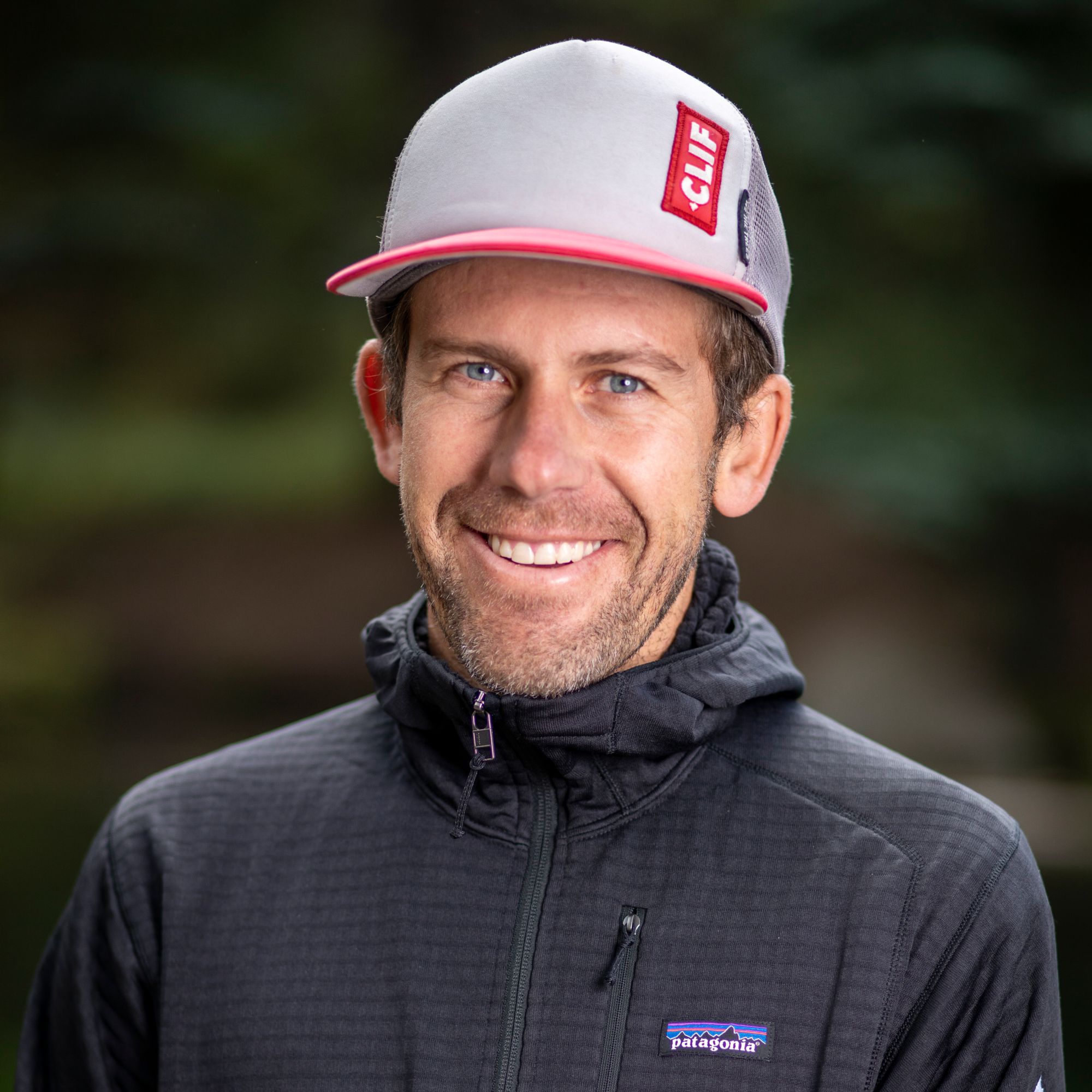
    Aspen Valley Ski and Snowboard Club head coach August Teague provides insights into the evolution and impact of the Rocky Mountain Nordic Wax Protocol. (Photo: teamavsc.org / Matt Power)

    “There are probably exceptions, just like every rule,” said Teague. “But we really aren’t seeing people going out and investing in 30 pairs of skis. We’re still seeing athletes start off with a pair of skate and a pair of classic, and slowly expand upon that fleet.”

    Leonard explained that PNSA coaches are not seeing an increase in ski purchasing either, nor does the level of competition at divisional events necessarily warrant that level of specificity in an athletes ski fleet. 

    “The field density is such at our [JNQs] that the wax is not the deciding factor so much,” Leonard explained regarding clubs in the Pacific Northwest. “And having multiple pairs of skis – most of the kids, I’d say, have one pair of race skate and one pair of race classic and some of the higher-end kids who have been at it a little longer or are a little more involved or or whatever – have a little more means – maybe have a couple pairs of skis that they’re deciding between. But you know, they’re growing kids too, and skis are expensive, so a lot of times it’s sort of like, it’s one pair that fits and one pair that’s a little bit softer from when they were a little smaller a year or two ago. So it’s not such a huge factor.”

    Shift in Focus Toward Structure and Ski Selection

    While programs aren’t seeing athletes rapidly investing in equipment, coaches did observe a shift in focus toward the application and testing of structure on race day.

    “My test fleet, instead of testing glide and structure, is now focused pretty much just on structure at, say, an RMN [race weekend],” Teague explained. “When I show up at Senior Nationals, then I’ve got to be able to test glide and structure and everything else as it unfolds. 

    “So structure has become more and more important. That probably, again, depends a little bit on the level. If we’re talking about high school kids, there are high school kids that ski club and ski high school, who have the ability to get their skis ground every year and have the ability to have skis that are for specific conditions. But for the most part, we’re talking about kids that own one pair of skate skis, or even don’t own a pair of skate skis and rent or borrow them from the program. And they’re getting whatever [base] is on those and then we’re adjusting the structure by hand structures a little bit to try and improve them.”
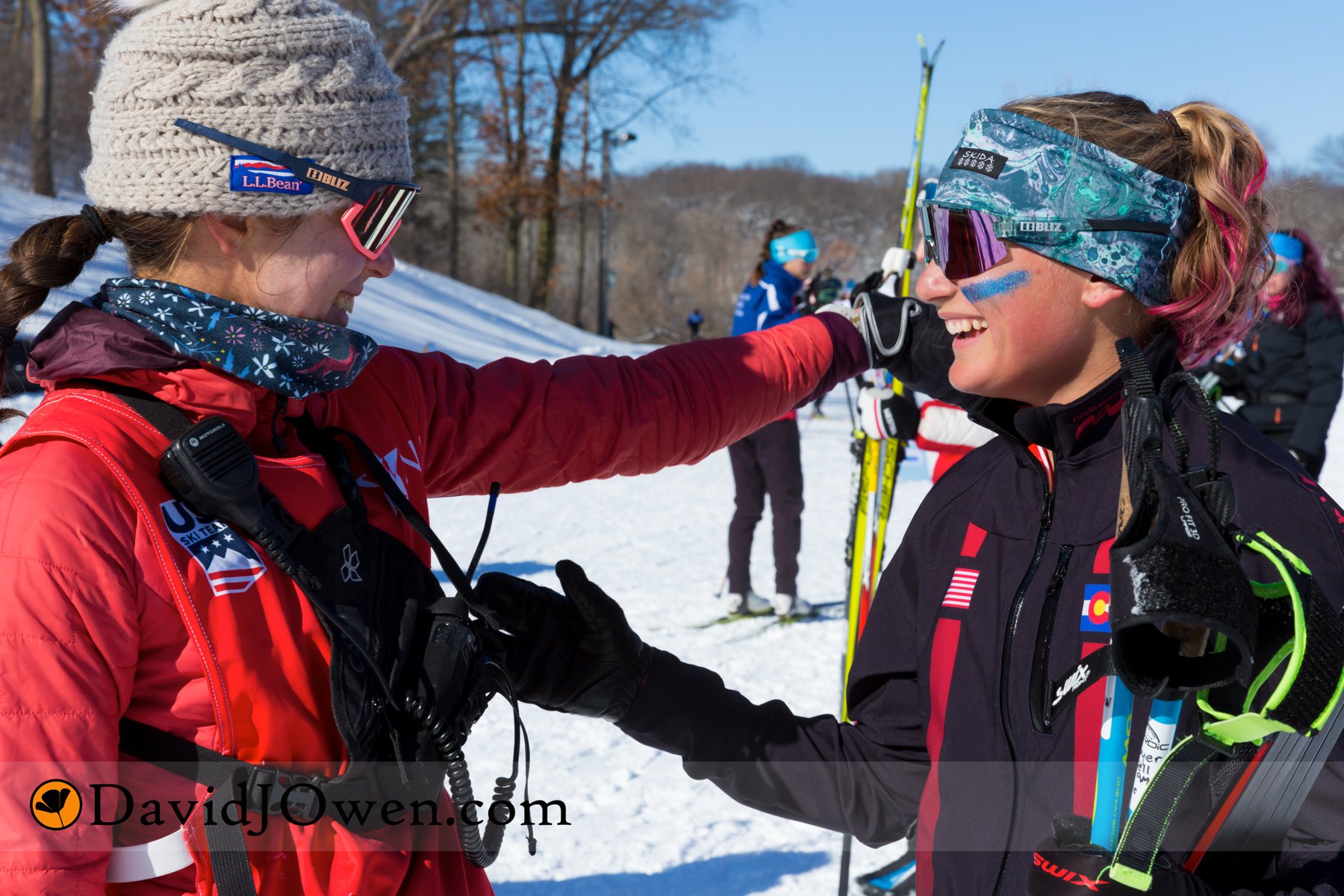
    Crested Butte Nordic Team head coach Molly Susla supports athlete Sawyer Ezzell during the 2022 Junior National Championships in Minneapolis. (Photo: David J Owen Photography)

    Reception of Wax Protocol Among Teams

    As far as how these policies might evolve with time, coaches expressed that the specific brand being used would always be open for discussion, provided that equivalent availability could be guaranteed and cost per gram remained comparable. With the increase in liquid waxes, which might offer versatility on race day without the encumberment of the full glide waxing setup, there may be an evolution that includes more liquid wax options as well. 

    For the time being, coaches expressed that the addition of these protocols has been net-positive, with no member clubs looking to steer the trajectory back toward open waxing. 

    “We’re at least two years through this experiment of running this policy,” said Kapala for IMD. “And I am 100% certain, because I’ve asked… we have 14 clubs that are saying, ‘No way are we going back.’ There is uniform agreement and acceptance of the policy.” 

    In Leonard’s concluding statements, he acknowledged the inherent equipment-based inequity in the sport, while also offering ways to problem solve, and confirming that PNSA has also been well-served by the protocol.

    “You might get beaten at some point by someone who has better skis than you or something like that,” he said. “And when that becomes a factor, you figure out a way to make it work. With the advent of zeros, for instance, suddenly those became a ski that was like – in those conditions, man, you needed to have that. When I was in Alaska, teams were starting to procure fleets of zeros that they could hand out to their kids and maybe rotate through a few kids on a given race day. [Now,] if we have a race coming up that we know is potentially a zero day, we’re working through our community [in the Methow Valley] to grab some zeros for our kids so hopefully, they have a decent option there. 

    “So there are ways to make those things happen and work, and hopefully still remain competitive in the sport. There are a lot of trade-offs with all of it, but people are feeling like, for our division right now, it has been a good decision to go this direction.”
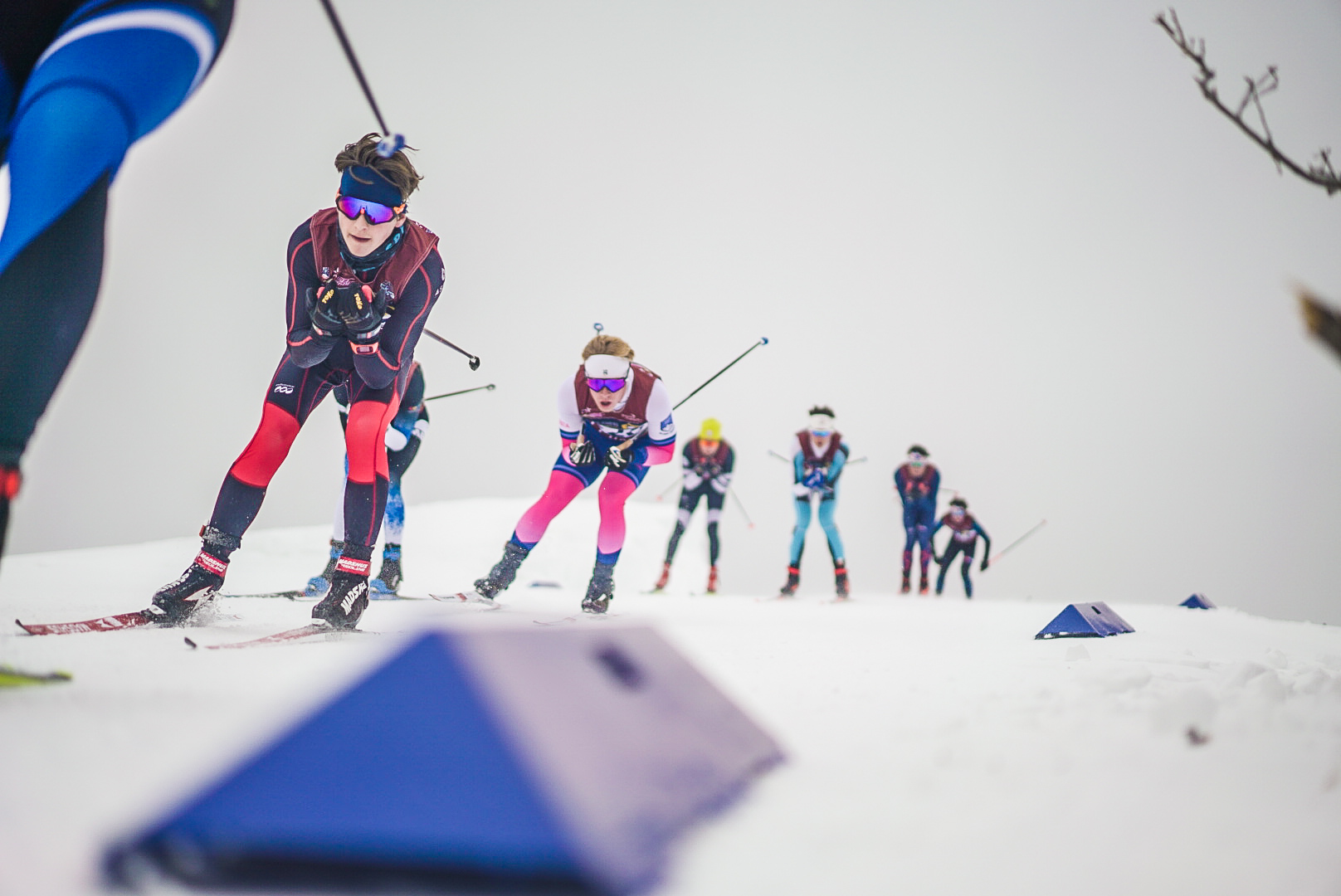
    Junior athletes race during the 2022 U.S. Cross Country Championships in Soldier Hollow, UT. (Photo: Tobias Albrigtsen / @untraceableg)
  • The Pros & Cons of League-wide Wax Protocols: Western Clubs Consider the Evolution and Impact (Part 1)

    The Pros & Cons of League-wide Wax Protocols: Western Clubs Consider the Evolution and Impact (Part 1)

    In speaking with representatives from each of the leagues featured in this series, a few main points rose to the foreground in this discussion: the level of competition matters, how the policy came about matters, and how a program can enhance athlete support holistically by relieving wax-related expenses – measured both in time and dollars – matters. 

    Before jumping into discussions for club level programs across the West, here are the links to view the details of each wax policy specifically: Intermountain Division (IMD); Rocky Mountain Nordic (RMN); Pacific Northwest Ski Association (PNSA)

    Also note that these conversations took place in late-April, prior to further discussions at the U.S. Ski & Snowboard spring congress sessions in May where subsequent conversations among leadership may have occurred. Should significant changes occur, FasterSkier will continue to follow the story. 

    Here are links to earlier installments in this five-part series. The first two parts (part one; part two) spoke to the perspectives of high level wax technicians and industry representatives, while part three focused on the Wisconsin Nordic Ski League. 

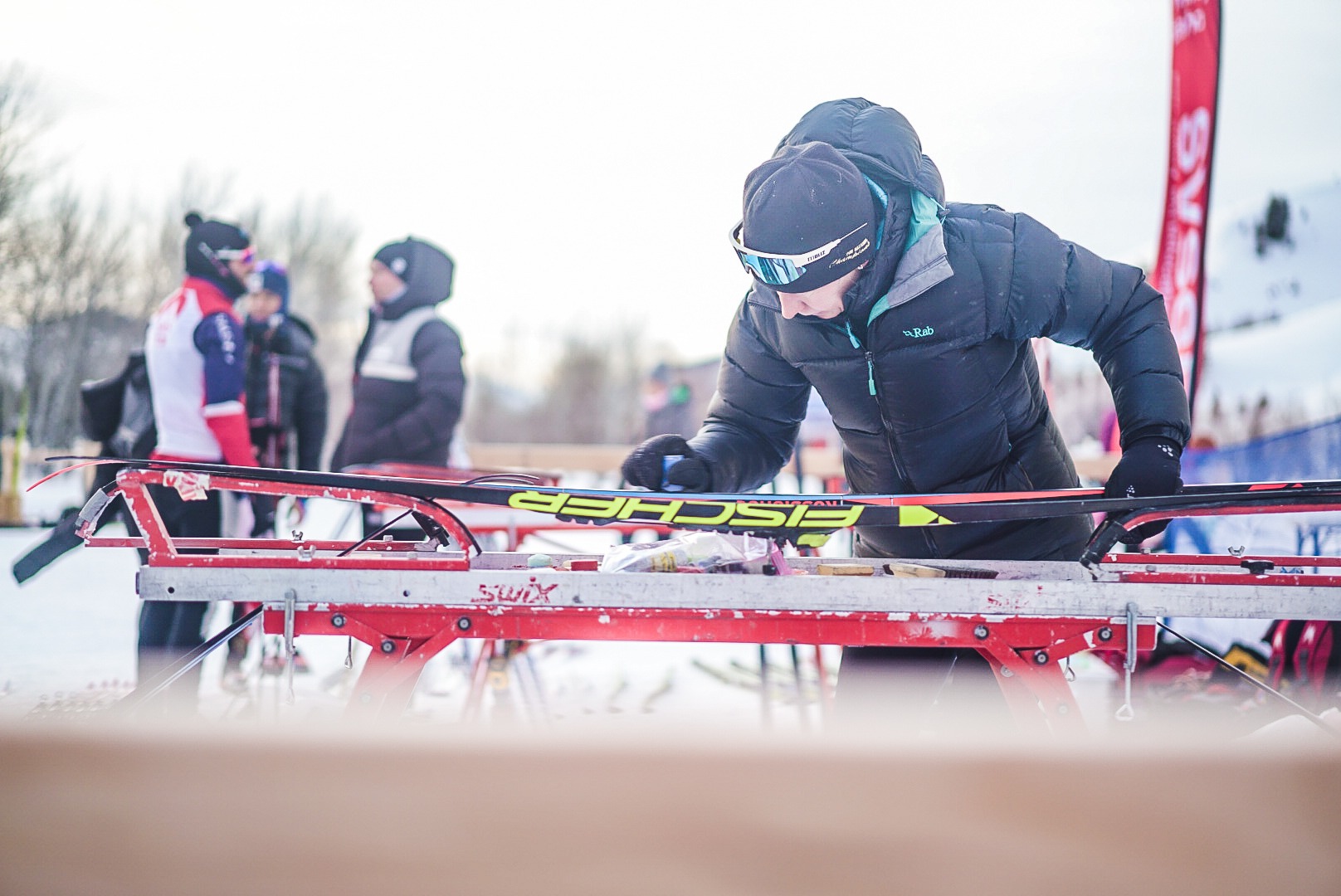
    University of Colorado head coach Jana Weinberger waxes skis for her athletes during an 2022 RMISA/US SuperTour race weekend in Sun Valley. (Photo: Tobias Albrigtsen / @untraceableg)

    The Evolution of Western Club Wax-Protocols 

    There’s a lot to unpack surrounding the impact of wax policies on the sport, and it is not reasonable to project that what makes sense for junior club programs can be extrapolated to the sport as a whole, which includes everything from the recreational level to masters racing to the World Cup. However, as a major player in the U.S. development pathway and a collective that encompasses a large volume of the nation’s athlete base, considering the evolution and impact of wax policies at the club level provides valuable insight into what the objectives and outcomes may be more broadly. 

    Conversations on this subject began long before any official policies were accepted, and their initial aim was to uniformly address the use of fluorocarbons at Junior National Qualifiers (JNQs). With both the health of athletes and coaches, and the inequity of buying power among clubs, the goal was to reduce spending and expensive fluorinated top coats.

    Timelines are now blurred, but long-time Sun Valley Ski Education Foundation Program Director Rick Kapala indicated that Rocky Mountain had perhaps been the division who got the ball rolling. Though the policies have since converged on a single wax call made in advance by host coaches depending on forecasted conditions, Kapala explained that at the onset, Intermountain’s policy was only focused on the elimination of pure fluoros. 

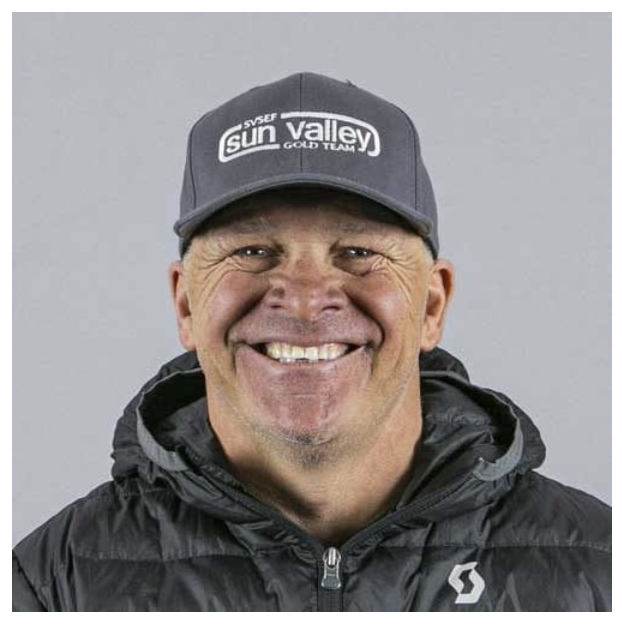
    Long-time SVSEF XC Program Director Rick Kapala explains the evolution and impact of IMD’s wax protocol. (Photo: SVSEF.org)

    “Initially, Intermountain had what we could call ‘wax policy-lite’… Our policy was: you can use any wax as long as it wasn’t pure-fluoro. You can use a high-fluoro, a low-flouro, or non-fluorinated version, and of course, in different brands, that meant different things. But basically, we went for a number of years with a no powder, no liquid and no rub-on policy. And that had some effect on trying to mitigate the arms race, if you will.”

    Executive Director at Methow Valley Ski Education Foundation Pete Leonard explained that the Pacific Northwest Ski Association, for whom he is the Nordic Director, was developed with a similar progression.

    “It initially started in the fluorocarbon era, moving away from powdering skis to just having blocks and liquids – the top coat type of applications – and then to a base paraffin application… I think we had a year of that and then [the policy] went to fluoro-free – the same basic, simple base paraffin called several days out.”

    Further motivation to align policies stemmed from  “cross-pollination” between these three leagues, which with the addition of the California-Nevada Far West division and Alaska, encompass the Western region as defined by U.S. Ski & Snowboard. In particular, these divisions overlap during the Junior National Super Qualifier Event held in January at Soldier Hollow, hence landing on a very similar model.

    “There’s a little bit of a cascade effect, and it’s just simpler for us to match what IMD has,” Leonard explained. 

    Kapala felt strongly that it was important to emphasize that this slow progression happened organically, which he felt was in stark contrast to the Wisconsin Nordic Ski League, where a sponsorship proposal made by a corporate entity included stipulations on waxing at league events. 

    “It’s a wholly different thing when a grassroots community, like a bunch of clubs in a division, promulgates a policy that they think results in the best athletic outcomes,” he said. “And it is very important to differentiate the genesis of a given policy… the order in which you arrive at a policy really informs a lot of the motivations about why you’re doing what you’re doing.” 

    Kapala said IMD would have “given the Heisman” to a wax company that required a policy; however, Swix products have been selected based on trust in the availability for all programs.

    “We settled on Swix without getting into the specifics of brand value,” he said. “I.e., Swix is better than Start, and Start is better than Toko, or whatever – it’s just simply because virtually everybody knew they had enough access to that wax.”  

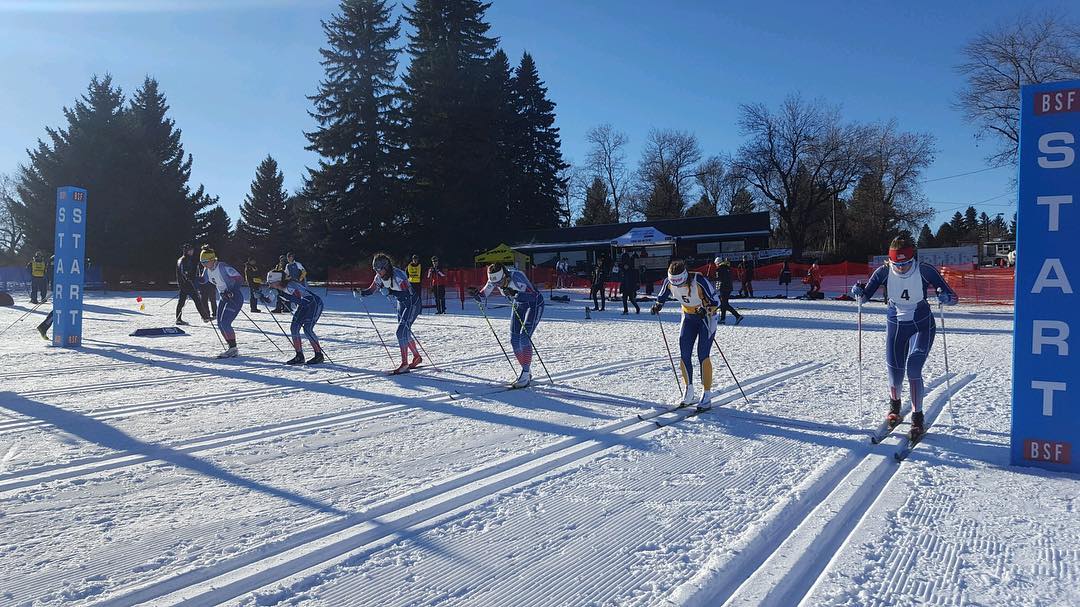
    A scene from the start line of a 2018 Intermountain JNQ in Bozeman, MT. (Photo: Sun Valley Ski Education Foundation Facebook)

    Observed Program Benefits 

    There’s a sizable jump between eliminating fluoros and further reducing a wax box to a small array of products, but Kapala emphasized that these “athletic outcomes” are the central tenet around which discussions regarding changes take place within Intermountain. How does the protocol impact the opportunity and capacity for athletes from clubs of all sizes to be successful on race day and have a positive experience in the sport?

    We’ll start with the impact to a program’s budget, which on its own is a source of inequality among clubs in a given region. Speaking specifically for Intermountain, but also the West more broadly, Kapala pointed out that there are a number of “super clubs” whose financial means and staff power made it hard for smaller clubs to compete in an open wax environment. 

    “They’re usually clubs that are in these mountain towns that are part of [larger] ski foundations or clubs that are multi-discipline, really big clubs. And so they have a lot of administrative function, a lot of underpinning financial security, and so on.”

    He was quick to include SVSEF in that pool, saying cost was not a primary concern when it came to his wax purchasing or race staffing prior to the enactment of IMD’s policy. 

    He went on to explain that within Intermountain, there are six JNQs which are subject to the wax policy, plus an Intermountain opener. However, what he called the “lion’s share” of races, including U.S. Nationals, SuperTours, and any Canadian-based races, remain open wax events where the policy does not apply. Still, with IMD’s policy in place, Kapala said SVSEF has been able to shave $5,000 dollars annually off its spending on wax, equating to a reduction of 30-40%. 

    “The question then is: ‘What am I doing with that $5,000?’” posed Kapala. “Well, what I’m really doing with it now, in my particular case, we have put that money into our merit scholarship program. So instead of me spending money on just making sure I have every wax in the universe in my wax box, I’m actually leveraging those dollars to help kids get to training camps or to go to competitions they wouldn’t normally be able to afford. And that’s huge.” 

    Rather than ignoring the impact this reduction in spending has on the landscape for suppliers, he acknowledged that this could be detrimental, as other clubs are likely reducing their spending by similar percentages. But bringing the focus back to the athletes, he said, “what we’re really spending less of is human capital on things other than coaching.”

    For Kapala, this makes the cost-benefit analysis check out.

    “We think being available to coach kids – that are especially young in their developmental process – at events like JNQs, is actually what the [coaching] game should be all about. So while it’s true that there can be impacts regarding the finances, it is also undoubtedly true that athletic outcomes – true athletic outcomes, the actual ones that we should be concerned about – are actually being serviced way more effectively. And if those two competing interests are both true, we have to pick one. And the one we’re picking is we’re making it more fair for athletes.”

    August Teague supports AVSC alumna Kate Oldham while teching at the 2022 FIS World Junior Ski Championships in Lygna, NOR. (Photo: flyingpointroad.com)

    Speaking for what he has observed within his own program and the Rocky Mountain Nordic division more broadly, August Teague – Cross-country Program Director at the Aspen Valley Ski and Snowboard Club (AVSC) – shared similar sentiments. 

    “I guess the real question to me becomes: ‘What is the purpose of a waxing protocol and at what level and why? And I certainly believe that barriers to entry in sport are a real good reason to have a waxing protocol, and time allocation or time management.”

    Adding specificity to the statement, he said, “The biggest thing that I see is that I can spend more time coaching instead of teching. And there certainly is an argument as to the need for better wax techs both from this country and elsewhere, but I think that’s a separate discussion than the coaching discussion and where my time is best served.”

    While the AVSC nordic program is significantly smaller than that of SVSEF, Teague also noted differences in how his monetary budget is allocated. “We have started to explore structures more than we ever have. So money that was being spent on product is now being spent on different structure devices and/or ways to test that structure.”

    Similarly, Steamboat Winter Sports Club U16/U18/U20 head coach Josh Smullin wrote to FasterSkier that the protocol has supported a safer environment for both coaches and athletes while on the road. In particular, he cited driving – there are roughly 3,200 serious injuries and 600 fatalities on average annually in Colorado – as a place where some relief in the toll on coaches during a race weekend has shown value.

    “It used to be that we coaches were up late waxing,” he explained. “Waking up the next morning to go set up at the venue, and then would drive many hours home after the race. A waxing protocol has helped us to be safer drivers, less sleep deprived, and more present with the athletes.”

    Smullin also commented on ventilation, which remains important for the health of waxers even without fluorinated products.

    At many of our home clubs we have some sort of ventilated wax facility. We do not have that on the road [while staying in hotels] unless the weather is nice and we are able to wax outside. Regardless of the fluoro ban, [proper] ventilation is healthier for coaches and athletes.”

    Methow Valley Nordic skiers take to the course during the December 2021 Ski Rodeo event. (Photo: Methow Valley Nordic Ski Education Foundation Facebook)

    “Everybody’s got their opinion…” said Leonard on behalf of PNSA. “There’s no overarching study on these things, and costs, and whether there’s a major difference [in ski speed], but I think what is clear to the coaches is that there’s less time spent testing glide products at races and there’s less of an incentive to do that, especially with the calling it [a few days] prior. There’s also more time that they can focus during that weekend on other things, like with the athletes and their preparation, instead of testing wax, waxing skis and leaving [coaching and direct athlete support] right up to the race time.”

    For Leonard, the question of whether the policy widens the gap for skiers based on the quality or condition specificity of their skis was not a priority when it came to identifying how the policy has served PNSA teams. For a club based in the Methow Valley which travels to regional competitions across Oregon and Washington, as well as to the Super Qualifier in Utah, the policy has reduced the toll of travel. 

    “I don’t know that it’s necessarily a parity – it’s really difficult to get that down.. but I think for us, calling the wax several days out just makes it simpler for people, and there is less [equipment and product] to travel with, one less thing to think about when you’re booking hotels, and all those details. It makes it simpler for teams.”

    He said he has also found it quicker and easier to apply structure on race day without the variable of glide wax testing. And without the need to cart around as much product and equipment, getting his athletes’ skis race ready has been “way easier to manage”.

    “Rather than bringing a wax box with several waxes in it, irons, enough benches that you can get your whole team through, scrapers, brushes, etc. – already, you’re packing the van to the ceiling and then, sometimes it’s driving eight hours, or for the Super Q for us, it’s driving four hours to the airport, [hauling our skis and gear through the airport on both ends], then driving another hour-plus to SoHo, and then doing it all again on the way back.”

    Stay tuned for the final installment, where you can read more on leveling the playing field, the arms race (or lack thereof) for skis, and the reception among Western Division coaches.