From the FasterSkier archive — posts syndicated from athletes’ and coaches’ own blogs between 2004 and 2012, kept online as published. Current coverage is at fasterskier.com.

Tag: Roar Hjelmeset

  • Bjørgen, Krüger Top Distance Skate Races in Beito; Hart 19th

    Bjørgen, Krüger Top Distance Skate Races in Beito; Hart 19th

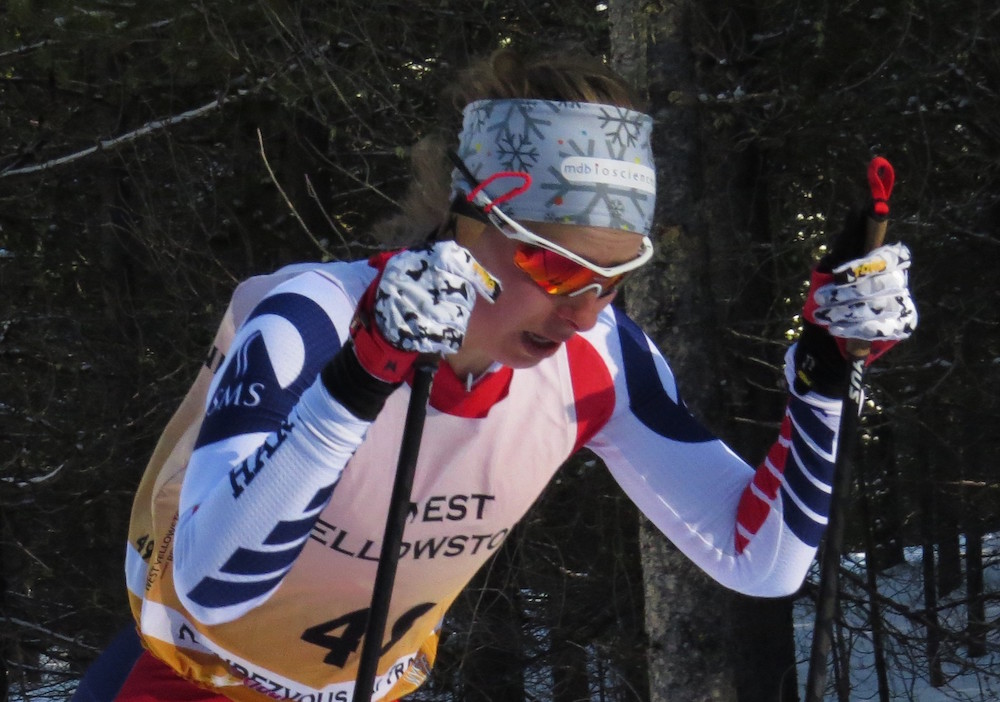
    Anne Hart (SMST2) racing at last year’s 5 k classic FIS race in West Yellowstone, Montana, where she finished 12th. A year later, Hart placed 19th in the Beitostølen, Norway, 10 k freestyle race. (Photo: Ian Harvey/Toko)

    In one weekend of racing, Anne Hart has already learned a lot, the types of things you can only learn from careful observation and reflection. And for Hart, a 25-year-old member of the Stratton Mountain School (SMS) Elite Team, the season doesn’t truly begin until Dec. 2.

    After racing to 19th in the women’s 10-kilometer freestyle individual start on Sunday in Beitostølen, 2:41.9 minutes behind Norwegian winner Marit Bjørgen, Hart talked about being inspired by numerous speedy Norwegians there — many of which are gunning for a spot on Norway’s World Cup team.

    Hart ventured to Norway earlier this month to jumpstart her season before heading back to the U.S. to race the SuperTour opener in West Yellowstone, Montana, Dec. 2-3. In two previous races in Beitostølen on Friday and Saturday, she finished 31st in both the 10 k classic and classic sprint.

    On Sunday, she resolved to leave it all out there, just as she’d seen Norwegian World Cup regular Finn Hågen Krogh do.

    “Today we were watching the men’s race [before our race], and we watched Finn Hågen Krogh halfway up the hill the last time, the third time. I kid you not, he just stopped, bent over and he went on and finished fifth,” Hart reflected. “He went out hard, he blew up, but he made up so much time at the beginning that he just had to make it in.”

    That’s precisely what Hart’s been working on.

    “I really just pushed it from the go,” she said of her race. “After watching the [top] women start the classic race [on Friday], and then watching how fast they go in the sprints [on Saturday], there is just no easy pace out there … You just keep on going, and you suffer. But the harder you suffer the faster it is over.”
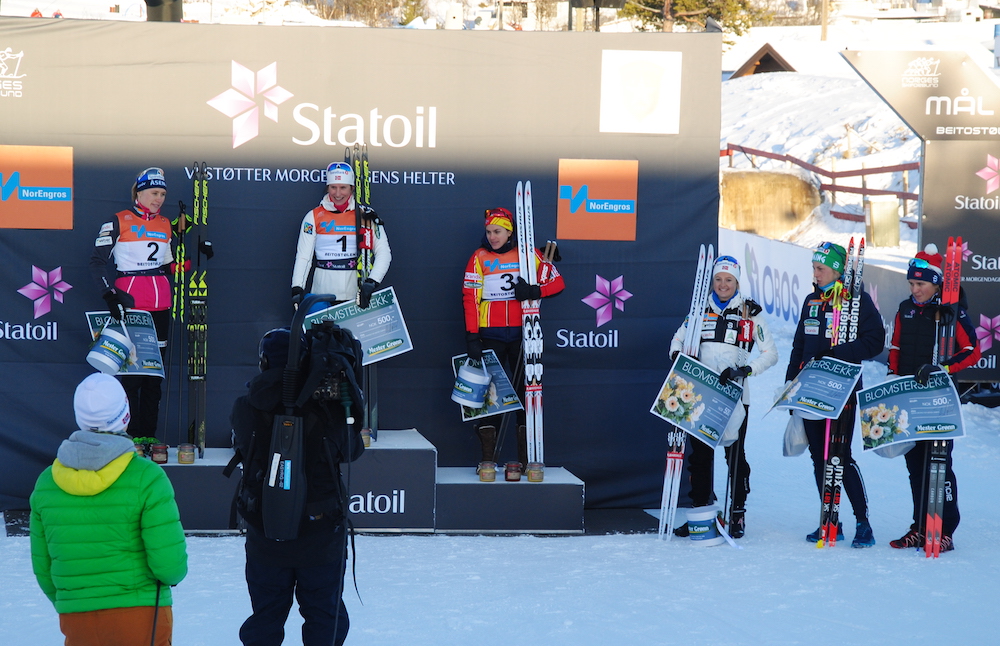
    The women’s podium (and top six) after Sunday’s 10 k freestyle in Beitostølen, Norway, with Norway’s Marit Bjørgen (1) in first, Ragnhild Haga (2) in second, Heidi Weng (3) in third, Ingvild Flugstad Østberg in fourth, Astrid Uhrenholdt Jacobsen in fifth, and Tiril Udnes Weng in sixth. (Photo: Aleks Tangen)

    Hart finished her 10 k, in what she described “beautiful skiing” conditions, in 26:37.1. Bjørgen raced to first for her second distance win of the long weekend in 23:55.2, 12.6 seconds ahead of Ragnhild Haga in second place. Norway once again swept the podium with Heidi Weng in third, 30.1 seconds behind Bjørgen.

    “It’s a course that doesn’t have a lot of rest in it … basically I was just trying to V2 as much as I could, because I noticed that’s another thing they do over here,” Hart said. “It’s like riding a bike; it’s easier to go in a lower gear. … I know I am a stronger V2-er, and the longer I can V2 up the hills, I figured the better I would do overall. Then [I] backed off, worked on quick turnover, and then really tried to push the V2-ing.”

    For much of the race, her split times hovered between 19th and 20th. But after a strong effort from 7 to 9.8 k, where she clocked the 15th fastest time in 7:58.2, Hart secured 19th, 8.5 seconds behind 18th-place finisher Silje Theodorsen, of the Norwegian National U23 Team, and 12 seconds ahead of 20th, which went to Norway’s Magni Smedås (Lillehammer Ski Club).

    That stands as Hart’s best international finish outside of an Alpen Cup last season in Seefeld, Austria, where she notched two top 20’s. Each year, Norway’s season-opening FIS races in Beitostølen attract most of Norway’s top skiers and upcoming talent.

    So 19th in Beitostølen is a big deal.

    At the time of her post-race interview with FasterSkier, Hart wasn’t sure where she ended up. But she knew she pushed herself to the limit.

    “I think last year I suffered from over-pacing, and it’s gonna hurt no matter what you do,” she said. “And I am very much of the mentality, for me anyways, to just go all in, no fear. And the worst thing that happens is you blow up.”

    In terms of how her results in Beito will affect her moving forward, she said it was about building confidence with each race and “having faith in my training and my fitness. The worst feeling in the world is when you finish and are like, ‘Damn, I could have gone harder.’ I would much rather literally collapse out on the course.”

    Great Britain’s Annika Taylor, who grew up in Truckee, California, and raced at the University of New Hampshire, placed 23rd (+3:09.9). Taylor, 24, finished 29th in the 10 k classic two days earlier

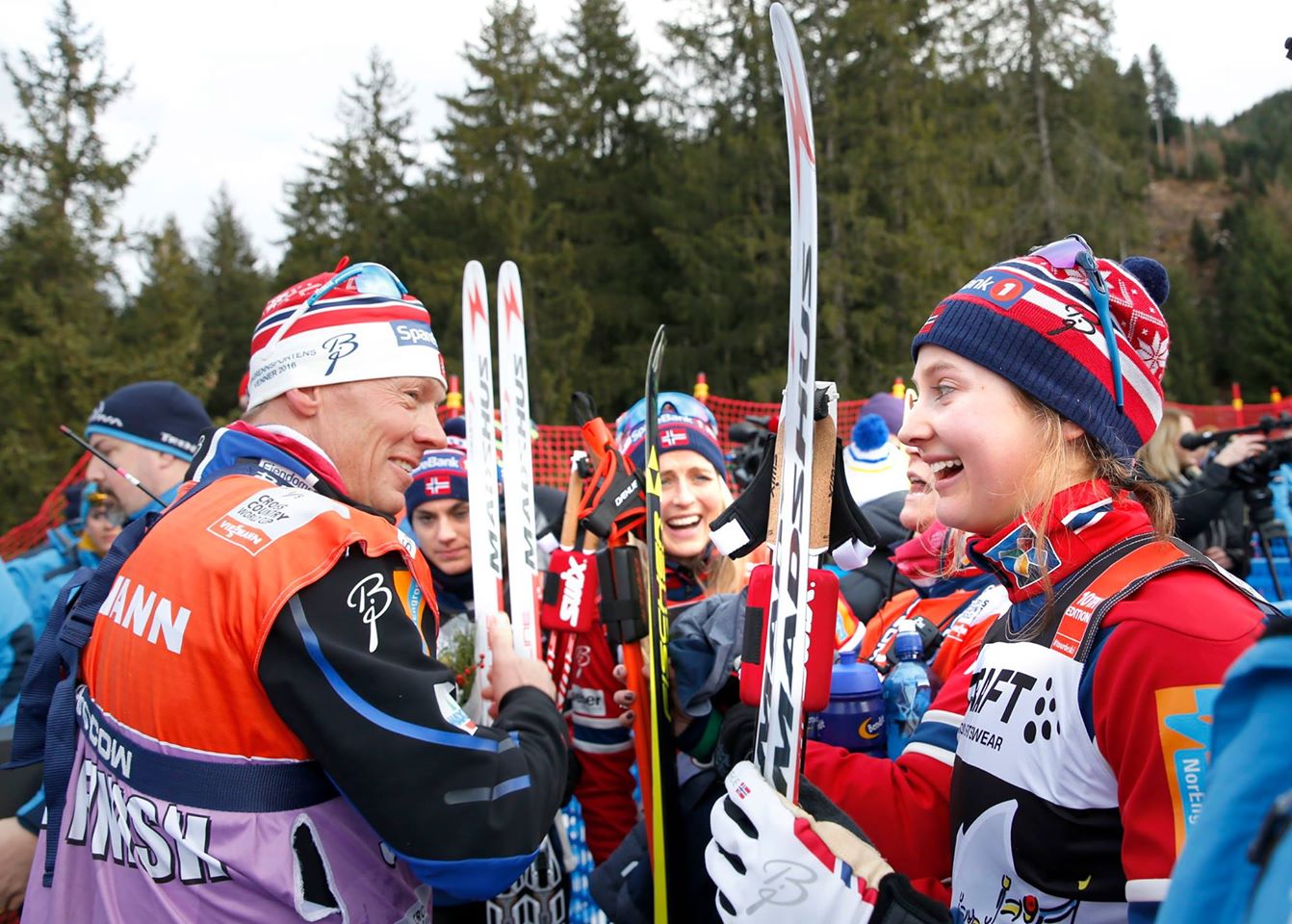
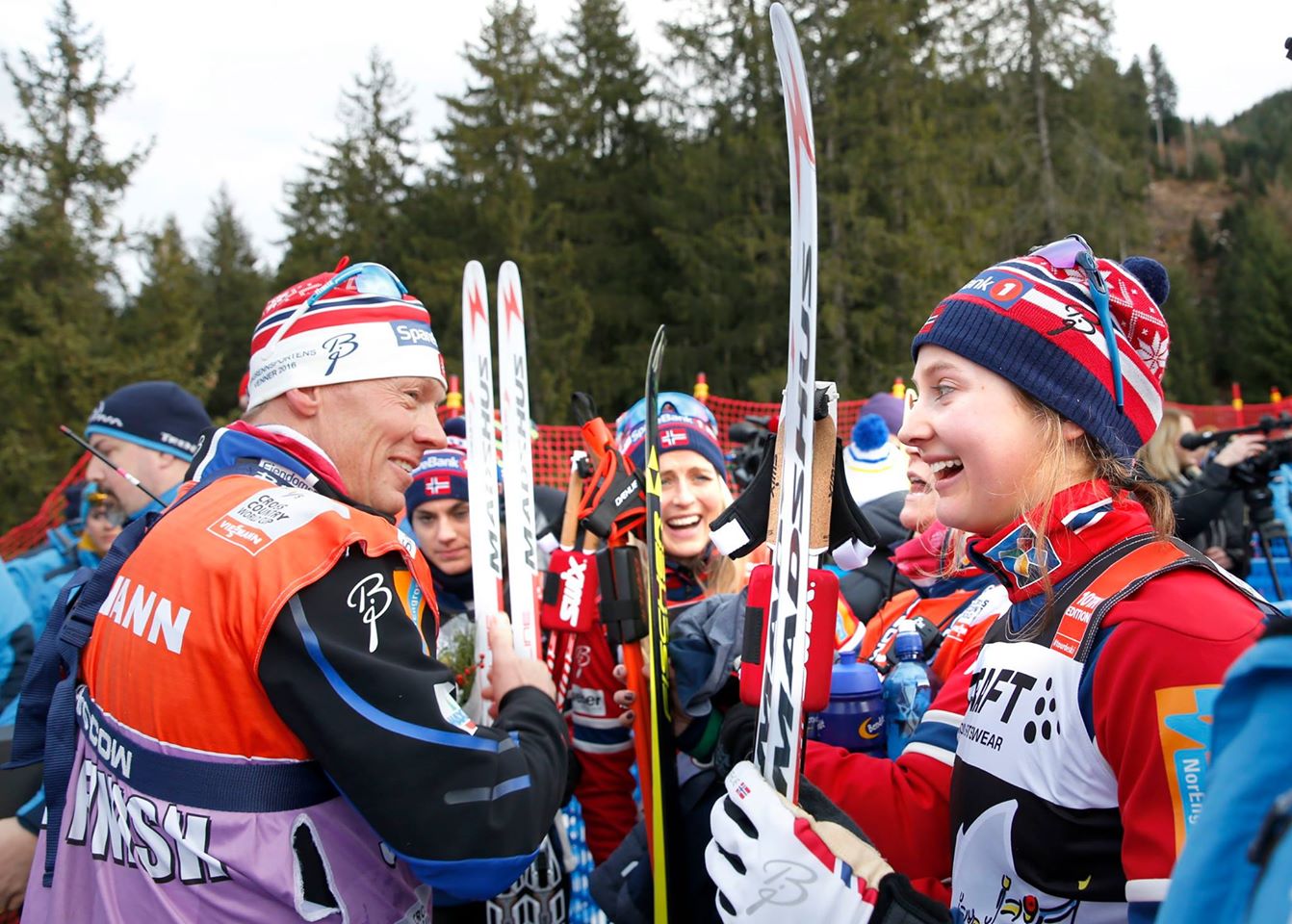
    At the front of Sunday’s race, the final time between Bjørgen and runner-up Haga was what made the news. One Norwegian journalist asked Norwegian women’s team coach Roar Hjelmeset if “this was almost like a victory since the gap was so small”. He replied “no” but added that it was “a very good performance” for Haga.

    Bjørgen started last in bib 63 and, as she typically does, clocked the fastest times through essentially every checkpoint and put more time into her competition with each passing kilometer. Haga’s time from 4.9 to 6.1 k was actually 2.5 seconds faster, but Bjørgen later told reporters that she expected a strong performance from her 26-year-old teammate.

    “The race was acceptable,” she told NRK. “I was prepared for Ragnhild’s approach since she’s better at skating, but I felt like I was somewhat in control.”

    Haga was pleased to hold on to second ahead of fellow World Cup Team members Weng (who ended up third) and Ingvild Flugstad Østberg in fourth (+32.3).

    “I had hoped to kick harder from the start so that Ingvild wouldn’t catch up to me,” Haga told NRK. “I didn’t tighten up and was able to keep pushing. I couldn’t really do anything about Marit, but I was closer than normal.”

    Both Weng and Østberg told NRK how impressed they were with Haga’s performance.

    “Ragnhild has shown strength over a lot of years,” Østberg said.

    Weng added that she was impressed Haga gave Bjørgen a fight for first place.

    “[Haga] does this because she’s been able to train well over the course of long time, and she has done very well leading up to this season,” Hjelmeset explained to a group of reporters.

    Krüger: ‘It’s a big deal’

    In the men’s race, Norway’s Simen Hegstad Krüger took advantage of the optimal conditions — with temperatures between -6 and -9 degrees Celsius, firm tracks and a clear blue sky — to win the 15 k freestyle by 16.5 seconds in 32:59.6.

    He did so after starting in bib 122 of 124 and taking control of the race at 2.1 k. Krüger led from that point on, clocking the fastest splits in every stretch except from 11 to 11.9 k. At the finish, he beat out the likes of fellow Norwegian World Cup Team members Hans Christer Holund in second, Hågen Krogh in fifth (+42.1), Sjur Røthe in sixth (+42.8), and Martin Johnsrud Sundby in seventh (+52.9).
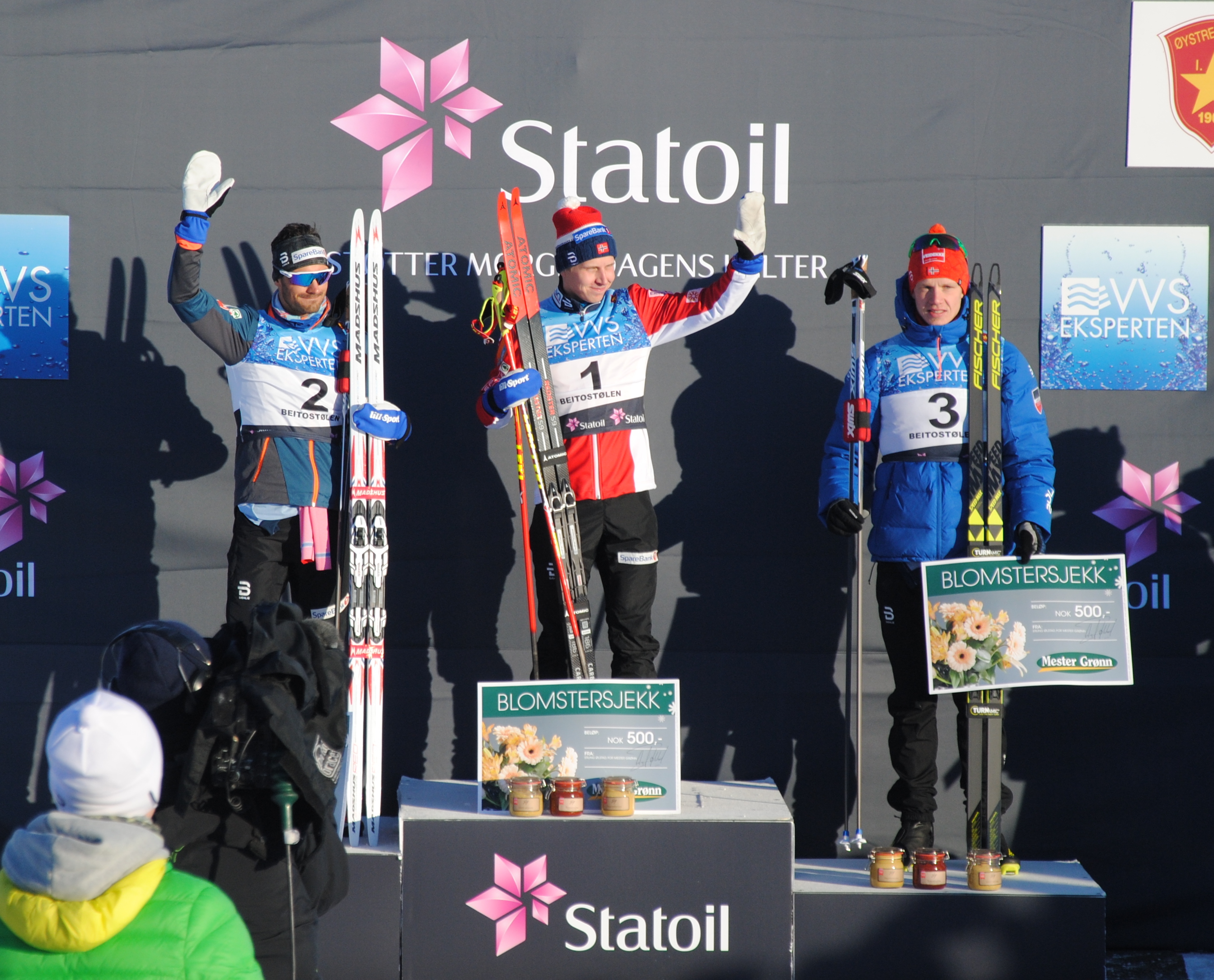
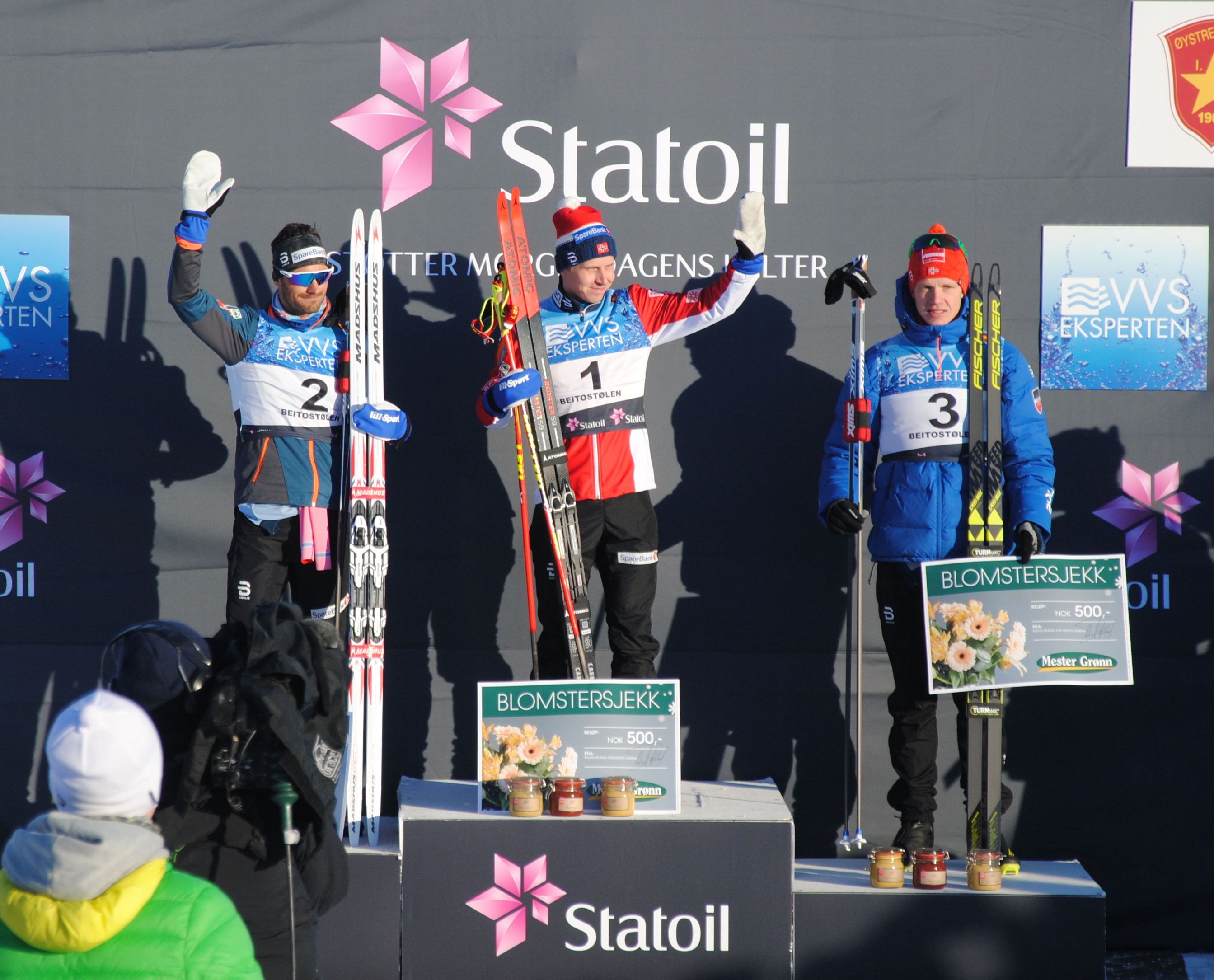
    The men’s podium after Sunday’s 15 k freestyle FIS race in Beitostølen, Norway, with Norway’s Simen Hegstad Krüger (1) in first, Hans Christer Holund (2) in second and Jan Thomas Jenssen (3) in third. (Photo: Aleks Tangen)

    “This is incredibly cool,” Krüger told NRK. “Even if it’s early in the season, it’s not common to win at this level. It’s a big deal when entire Norwegian elite is here.”

    Notably, 21-year-old Norwegian Jan Thomas Jenssen, of Hommelvik Il, placed third (+30.7). He’s never raced on the World Cup.

    “What should I say? This is amazing,” he told NRK, adding that the experience was “indescribable.”

    Great Britain’s Andrew Musgrave raced to fourth place (+37.1) as the only non-Norwegian in the top 24. American Noah Hoffman was next in 25th (+2:09.6), and Andy Newell (U.S. Ski Team) finished 52nd (+2:56.0).

    “It was better than the other day, a step in the right direction and I feel pretty good and looking forward to next weekend,” Hoffman, who finished 29th in Friday’s 15 k classic, told FasterSkier on Sunday. “Part of it is just having a race under my belt, but beyond that, I think on these more gradual courses I’m better at skating than I am classic, and the conditions were better for me today.”

    While he was able to navigate traffic on the course by picking off several racers, Hoffman was frustrated with his “lapse of concentration” that caused him to clip a V-board on the biggest downhill and fall on his second lap.

    “[I] went down really hard, lost my glasses, but at least I didn’t hurt myself,” Hoffman said. “Got a little bit of whiplash, I think I might be sore from it. … I probably lost 10 seconds. It was just silly. It still was a good effort and it doesn’t make too big of a difference.”
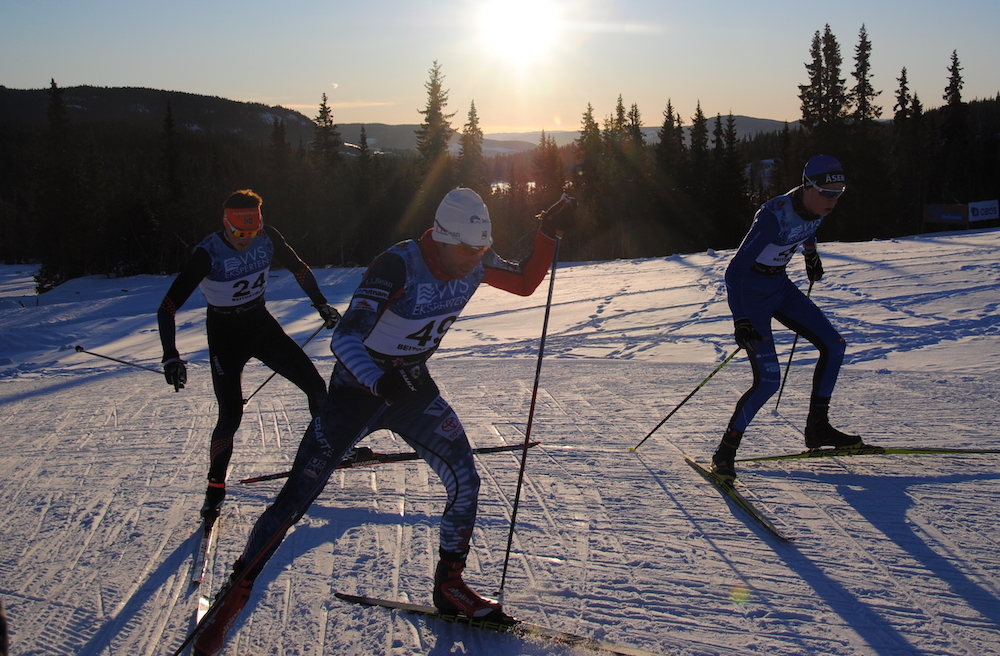
    Andy Newell (c) racing to 52nd in the men’s 15 k freestyle FIS race on Sunday in Beitostølen, Norway. (Photo: Aleks Tangen)

    Newell started out skiing around 70th and made his way up to 38th mid-race, but lost time over the final three kilometers to finish 52nd. When he spoke with FasterSkier immediately after, he was unsure of how he placed.

    “I don’t think my time will be great, but it was a good workout and my body felt good despite being a little tired and sore from yesterday,” said Newell, who placed 16th in Saturday’s classic sprint. “It was a good training race, and these guys are so fast, and since skating is not my best, I just looked for a good feeling in the body. …. I think I have a little more in the tank. I can save that for next weekend.”

    The World Cup opens next Friday, Nov. 24 with the three-day Ruka Triple in Kuusamo, Finland.

    Of the four Canadian men that raced on Sunday, Scott James Hill of Barrie Cross Country (BXC) led them in 64th (+3:09.8).

    “Today was good, a lot better,” said Hill, who placed 84th in Saturday’s sprint and 99th in Friday’s 15 k classic. “The classic race was kind of my first race and time trial of the year so I wasn’t expecting much, but today I felt like I was ready to race.

    “I think everything worked out well,” the 23 year old continued. “I was never skiing alone other than maybe the first half lap, so I was always being pushed, which was really good.”

    Ryan Jackson (Team Asker) followed in 102nd, Maks Zechel (Team Asker) was 113th, and Joey Foster (BXC) finished 118th.

    Results: Women | Men

  • A New Dawn for Diggins: Learning to ‘Do it for myself’

    A New Dawn for Diggins: Learning to ‘Do it for myself’

    Jessie Diggins (U.S. Ski Team) loving on her Salomon boards after placing second in Tuesday's 10 k skiathlon at Stage 3 of the Tour de Ski in Oberstdorf, Germany. (Photo: Salomon/NordicFocus)
    Jessie Diggins (U.S. Ski Team) loving on her Salomon boards after placing second in Tuesday’s 10 k skiathlon at Stage 3 of the Tour de Ski in Oberstdorf, Germany. (Photo: Salomon/NordicFocus)

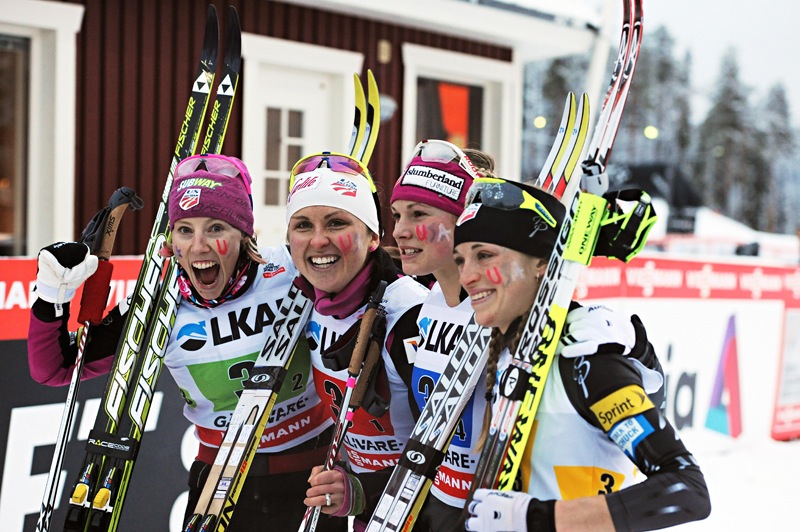
    A little more than four years ago, a group of women clad in all black race suits and bib 3 huddled in an athlete warming room. The muffled voice of an announcer speaking in Swedish could be heard broadcasting outside, an English translation relaying the same message: 10 minutes to start.

    The quartet departed the building, four blondes — one highlighted pink — headed for the start gate. A pass through a patch of sunlight revealed a second similarity. Cheeks swiped in sparkles, artwork courtesy of the then and now, youngest U.S. Ski Team (USST) A-team member, Jessie Diggins.

    Diggins would go on to anchor the team in what became a historic cross-country World Cup relay for the U.S. — it was the first time an American women’s team reached the podium, with the group finishing in third overall.

    The U.S. women (l-r Kikkan Randall, Holly Brooks, Jessie Diggins, and Liz Stephen) after their first ever World Cup relay podium in November 2012 - the team is confident they can get back. (Photo: Fischer/NordicFocus)
    The U.S. women (l-r Kikkan Randall, Holly Brooks, Jessie Diggins, and Liz Stephen) after their first ever World Cup relay podium in November 2012. (Photo: Fischer/NordicFocus)

    It could be said that the game-face glitter and a give-it-all relay leg performance from Diggins was the kickstarter of her World Cup career.

    For the next few years, team races such as the above, would become some of the Afton, Minn., native’s favorite, and arguably, better performances. Her first individual podium came almost exactly a year ago at the 2015/2016 Tour de Ski.

    “For years, I would pull out these awesome performances on relay day and I was like, ‘Oh my God, where did that come from?’ ” Diggins said during a phone conversation in November.

    Now, at 25 years old, Diggins has reached the World Cup podium 13 times. Of the eight individual podiums, six occurred last season. The other two more recent: her win in the 5 k freestyle race last month and her second place finish  in Tuesday’s Stage 3 skiathlon in Obsterdorf, Germany.

    With close to five years of World Cup racing now under her belt, Diggins explained that while her love for team racing and facepaint has not changed, her mental approach toward individual races has. Part of the difference stemmed from her discovery that her individual effort is no less important than the one she puts forth for the team.

    “I finally realized it’s OK to race that hard in an individual race, too,” she said. “Like that doesn’t make me a bad person for wanting to do it for myself and for my hometown and for all the people cheering for me.”

    That said, Diggins is not bent on lining up and looking for the win at the start of every ski race this season. Her focus, as she indicated, will be where it matters: the Tour de Ski — which she currently ranks fifth in — and 2017 World Championships in Lahti, Finland.

    “You’re not going to be able to race to the point of being barely conscious 40 times,” Diggins said, predicting that, if this season matches last year’s competition count, she’ll probably tackle close to 40 ski races. “I’m going to get ready for the big races, like the tours, World Championships, the ones that are the most important to me.”

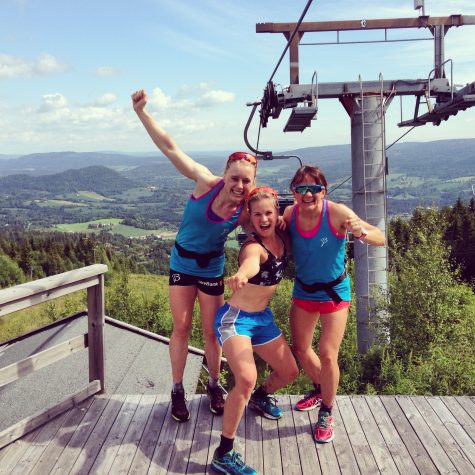
    Left to right: American Jessie Diggins along with Norway's Kari Øyre Slind and Ragnhild Haga after a strength training session with the Norwegian Ski Federation this summer. (Photo: Roar Hjelmeset)
    Left to right: American Jessie Diggins with Norway’s Kari Øyre Slind and Ragnhild Haga after a strength training session with the Norwegian ski team this summer. (Photo: Roar Hjelmeset)

    A firm believer in the role every individual plays within the team structure, Diggins described her part within the women’s USST as that of a “spark plug.” While some individuals show strength in race analytics, others psychological breakdown, hers comes as enthusiasm for the sport itself, which includes her signature sparkles.

    “You know, everyone has very unique skills that they bring to the table and mine is energetic optimism,” Diggins said. “I’m kind of the cheerleader of the team, if you will, covered in glitter. My job is to make the team, get people excited about what we’re doing.”

    Diggins does her job well. As an athlete ambassador for Fast and Female, once again aiding with the ‘dance and endurance’ station at this fall’s annual event in Park City, Utah, she acted as inspiration for more than 160 girls in attendance.

    Her enthusiasm for the sport is also proactive. Before last season came to a close, she approached the Norwegian women’s head coach at the time, Egil Kristiansen, at the Ski Tour Canada, proposing the notion of her joining his Norwegian team for a summer training camp.

    Three months after her conversation, Diggins received an email from Norway’s new women’s head coach, Roar Hjelmeset, listing training camps she could attend.

    “If you want to be the best, why not go train with the best?” Diggins said of why she chose Norway.

    With many of the Norwegian women a similar age as herself (to include some of Norway’s leading talent: Heidi Weng, Maiken Caspersen Falla and Ingvild Flugstad Østberg), and the potential of racing alongside these same athletes for the next few years, Diggins also saw an opportunity to create connections as more than just competitors.

    “If you want to be the best, why not go train with the best?” — Jessie Diggins on spending a week training with the Norwegian national team

    “Why not make good friends and have a coffee buddy in between races on the World Cup?” Diggins said. “I love making friends and learning more cultural things. It’s about more than just skiing, I guess, for me.”

    Her time in Norway gave her more than just a few extra World Cup coffee buddies. She was also able to compare notes on Norway’s training strategies with those of the U.S. What she found was, surprisingly, there were no big secrets. Much of the training she did with the Norwegians mirrored work she’d  done at camps on North American soil. 

    “The training we did over there in Norway was almost identical to what we did at our Bend camp,” Diggins said of the U.S. Ski Team’s annual spring camp. “We just need to believe in ourselves as a nation and know that eventually we will get there too.”

    It wasn’t that her Norwegian counterparts were doing more intervals than what she was used to or even longer. What it did come down to, according to Diggins, was the complete conviction with which they approached their training plan, even if it meant doing less than others around them.

    “They go into every workout with this awesome confidence, like what I’m doing today is the right thing for me and it’s going to make me faster and I’m going to kick ass,” Diggins said. “It’s just a really good mindset I really admire.

    “It’s really hard because a lot of us are wired in that more, more, more, more is better,” she added. “It’s my job to train, so I’ll just train a ton. But it doesn’t always make you faster, unfortunately. Or else it be super easy and we’d all be winning World Cups.”

    As she continues to become a regular podium contender and challenger of Norwegian names, Diggins proves that the trust she has placed in her training is not to be taken lightly. With another individual win added to her first one from last year, Diggins doesn’t doubt her ability do it for herself or her team. 

    “Last year was a big confidence boost,” she said. “Now [coming into this season], I know that I can do it, because I’ve done it before.”

    ***

    We asked Diggins to give our ’17 Questions for 2017′ a go. Here are her responses:

    1. Biggest change in your life in the last five or so months since the ski season ended?

    Not a whole lot has changed! I’m still a ski bum living out of my suitcase, and the longest I’ve been in one place was 3 weeks in a row. I guess the biggest change is that I can now pack up my life in under an hour (yep, I clocked it).

    2. Biggest change in your training?

    I’m still slowly getting better at finding the line between training a lot and recovering from it before moving on, and paying a lot of attention to how I’m feeling day to day is something that’s helped me a lot over the past year.

    3. Major areas of improvement you’ve seen so far?

    Classic technique! I’ve been putting a lot of work into classic over the years and I’m finally feeling as comfortable striding as I am skating. I can’t believe I just wrote that.

    4. Whom you’ve been working closest with this offseason (coaches or training partners)?

    I work with a lot of people! Jason Cork has been my personal coach (and tech!) for a looooong time, and I also train and work with the USST coaches and athletes. I spend the summer bouncing between USST camps and living and training with my teammates at SMS and our SMS team coach, Pat. Basically, I love working with everyone. I even got a special trip to Norway to train with their National team girls, and I had such a great camp with them. I firmly believe that the more we can get together and help each other get better and faster, the better everyone will be!

    5. Best trip in the last five months (and why)?

    I have a serious thing for New Zealand. We had another amazing training camp there this August, and I love everything about that country! The training was amazing with 35km of groomed trails, the food was spectacular, the views were inspiring and the people were super friendly.

    6. Favorite cross-training?

    I like long adventure runs. Point to point, NOT out and back, please.

    U.S. Ski Team A-team member Jessie Diggins (r) with her boyfriend, Wade, during a trip to Winnipeg, Canada this summer. (Photo: Jessie Diggins)
    Jessie Diggins (r) with her boyfriend, Wade, during a trip to Winnipeg, Manitoba, this summer. (Courtesy photo)

    7. Favorite non-athletic activity or pastime this summer?

    Spending time with my boyfriend in Boston, and my family in Minnesota! There are a lot of pretty amazing people in my life, and I like being around them as often as I can.

    8. Song that was your jam this summer?

    “Handclap” by Fitz and the Tantrums got me through my own set of glacier skiing tantrums 🙂 

    9. All-time favorite race moment?

    OH man. There are so many! Every relay I’ve ever been a part of is a great memory for me…even the times we really blew it 🙂 But it’s a tie between the moment I crossed the finish line and barreled right into Sophie, Sadie and Liz’s arms in Nove Mesto, and when Kikkan and I won the World Champs team sprint relay. Those were days when the whole team was jumping up and down!

    10. First thing you pack in your bag when you leave for Europe?

    Glitter. Aeropress coffee maker.  Peanut butter/Almond butter and American Gum (I swear, it’s different. And very important!). But the first thing is always glitter for race days

    11. Venue/event you’re most excited to visit this season?

    I am really excited to see the new one in Ulricehamn, Sweden. It’ll be fun to see a new place!

    12. Who will win the men’s and women’s World Cup titles this year?

    Your guess is as good as mine!

    13. Biggest sacrifice you feel you’ve made choosing this career path?

    Being far away from the people I love in my life. I’m a cuddly, got-to-be-with-you-there-in-person kind of person, and it’s hard to be gone so much. Thank goodness for Skype, but it’s not the same when you really need a hug from home.

    14. If you could change one thing about your sport, what would it be?

    Have more World Cups in North America, and finally bring some back to the US! Our sport is growing and it would be incredible to bring all the exciting action back home to keep the next generation of skiers fired up.

    15. What did you have for breakfast this morning?

    Oatmeal with berries, nuts, yogurt and local honey made by my friends at home! Lucky me.

    16. In 5 years, I’ll be ____?

    Still racing the World Cups, of course!

    17. In 50 years, I’ll be ____?

    Embarrassing my grandkids by dressing up, glittering my cheeks and skiing the Slumberland American Birkie.

  • Wednesday Workout: Diggins Dives into Norwegian Camp, Leaves with Big Takeaways

    Wednesday Workout: Diggins Dives into Norwegian Camp, Leaves with Big Takeaways

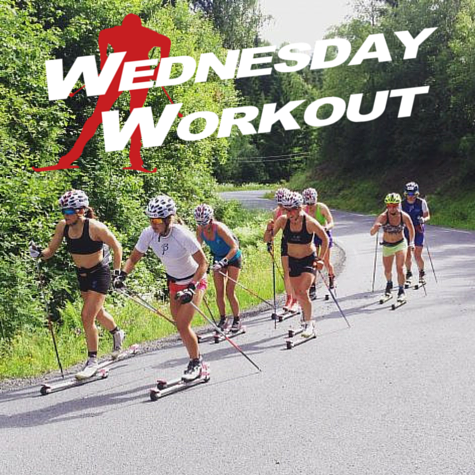
    The women's Norwegian national team and Diggins (second from right) during a classic rollerski workout late last month in Norway. (Photo: Roar Hjelmeset)
    The Norwegian national women’s team and U.S. Ski Team member Jessie Diggins (second from right) during a classic rollerski workout late last month in Norway. (Photo: Roar Hjelmeset)

    Update: This article formerly read that the Norwegian national team training camp took place in Farstad, Norway. The camp was actually held in Svarstad Vestfold, Norway and the article has been updated accordingly. 

    Booking a plane ticket for a 10-hour overnight flight seldomly stirs airline passengers to jump for joy. Yet when current U.S. Ski Team member Jessie Diggins clicked the ‘buy’ button for a red-eye flight to Oslo, Norway, departing June 18, she couldn’t contain her excitement. The Afton, Minn., native had spent plenty of time lunging to the line competing against Norway’s fastest nordic women, but the opportunity to work out with them as a training partner and short-term teammate was altogether new.

    Diggins’s Norwegian Ski Federation (NSF) camp invite stemmed from a conversation she had with Norway’s women’s coach at the time, Egil Kristiansen. Following the final races of the Ski Tour Canada this past March in Canmore, Alberta, Diggins, 24, approached Kristiansen and asked about the possibility of joining one of their camps. Despite his initial response, she remained determined in convincing him the value of international shared training experiences.

    Left to right: Norwegian Ragnhild Haga, American Jessie Diggins, and Norwegian Maiken Caspersen-Falla at the top of a mountain hike during one of the Norwegian National Team camps in late June. (Photo: Courtesy Photo)
    Norway’s Ragnhild Haga (l) and Maiken Caspersen Falla (r) with U.S. Ski Team member Jessie Diggins at the top of a mountain hike during one of the Norwegian team’s camps in late June. (Photo: Jessie Diggins)

    “I said, ‘Hey, you know I’m always looking for ways to make summer training exciting, new and adventurous, and if you have a spot open at any of your camps, I would really love to come,’ ” Diggins recalled on the phone Monday, back at her training base in Vermont.

    “The coach laughed, and then I was like, ‘No, I promise I’ll have a great attitude.’ And we started talking and he was like, ‘You know, we we’re actually thinking we might start inviting a new athlete to camps,’ ” she explained. “Previously the [Norwegian team] never really did that.

    Three months later, Diggins found herself opening a forwarded email from the new Norwegian women’s coach Roar Hjelmeset with a list of available national-team camps for her to attend.

    “They sent [U.S. women’s coach] Matt [Whitcomb] the official [invite] … and I booked my ticket the next day,” Diggins said. “I flew to Oslo on the night of the 18th … and I stayed with Astrid [Uhrenholdt Jacobsen] then I drove with her and Roar to the camp.”

    Diggins kicked off her weeklong adventure with a rollerski in Drammen, Norway, the site of her first World Cup race before the Oslo World Championships in 2011.

    “It was really funny that my first World Cup race happened to be this place where I was [now] coming to do intervals with the Norwegian girls,” Diggins said.

    After that, athletes piled into the vans and made the remaining 45-minute drive up to Svarstad Vestfold, Norway, where the rest of the camp took place. During the next six days, Diggins immersed herself in the team’s workouts, discovered the difference between the Norwegian women’s training plans and those of the U.S. women, and baked banana bread with the team.

    “If you’re a guest at a camp, you go there willing to work,” Diggins said. “At least I can do that. I’m willing to work, I’m ready to be there, I’m ready to just be jumping. Whatever they do, I’ll do, too. And that was really fun; that was the best part … I just tried to be as much a part of the team as possible.”

    Team ‘Norge’ Sample Workout: Distance rollerski, ending with pickups

    Length: 2 hours

    End with: Set of 5 x 10-second pickups, done about three-fourths of the way through the workout. Start head-to-head for the pickups.

    Diggins’s Top-Three Takeaways from Training with Norway:

    1. Training is Training. “The biggest thing I found out right off the bat was that there really ARE no training secrets. In all the big ways, we train exactly the same as the Norwegians, which was really awesome (and reassuring) to find out,” Diggins wrote in a blog post. “The training plan for the camp was almost identical to one we would have at our training camps – a mix of long slow distance training, L3 and L4 intervals, strength and speed training.”

    2. Don’t Be Afraid to Take Charge. According to Diggins, the Norwegian women hold eight camps throughout their training season, with two weeks “on their own” in-between. Post-training camp, the Norwegian women evaluate their own needs and write their own training plans for those two weeks in between camps. “The Norwegian girls, they are their own main coach in between camps,” Diggins said, “which I think is really cool because at the end of the day, you are the one in your body. You’re the only one who knows, oh, my legs are really tired, I shouldn’t do bounding I should just double pole or something. So I think it’s really cool that they take charge that way.”

    3. Tally Your Worth as a Teammate. “The skill and ability to be a great teammate is often under-valued but can make the biggest difference in how you look back on your career and feel about your work as an athlete,” Diggins wrote on her blog.

  • Kristiansen Out, Norwegian Coaching Shuffle Continues

    Kristiansen Out, Norwegian Coaching Shuffle Continues

    Egil Kristiansen announced his resignation as Norwegian cross-country women's team coach earlier this week. Kristiansen has led the women's team for the last 10 years. (Photo: Skilandslaget/Facebook)
    Egil Kristiansen (l) announced his resignation as Norwegian cross-country women’s team coach earlier this week. Kristiansen has led the women’s team for the last 10 years. (Photo: Skilandslaget/Facebook)

    Proud moments are not always performance based. After leading the Norwegian women’s cross-country team to 47 World Championship and Olympic medals — for a total of 23 gold — over the past 10 years, it was not the results that have meant the most to Egil Kristiansen, the Norwegian national team women’s coach who announced his resignation Sunday via a team press release. It was the pressure he, his athletes, and Norway put on others to push themselves in the sport.

    “It’s actually what we have managed to achieve,” Kristiansen told NRK, according to a translation, of his proudest coaching moment during the last decade with the team. “Managing to keep the pressure up, regardless of whether the results are bad or good; to do the damn job one hundred percent anyway. Not being dragged down by a poor outcome, or about to take off for good results. To paint on paint anyway.”

    Kristiansen, 50, began heading up the women’s team in 2006, after working as an assistant coach under Svein Tore Samdal. The next 10 years are history.

    In 2009, Kristiansen coached the now-retired Kristin Størmer Steira to silver in the women’s 15-kilometer pursuit at World Championships in Liberec, Czech Republic.

    In 2010, he helped Norwegian Marit Bjørgen to her first Olympic gold at the Vancouver Olympics in the women’s classic sprint. She went on to achieve four more medals at those Olympics after that, including two more gold. Prior to Vancouver, Kristiansen worked with Bjørgen for 10 years and would work with her for five more.  

    “Egil has meant a lot to me,”Bjørgen told VG.no during a press conference, according to a translation. “There has been a security for me to have him there … He’s been a crazy good leader, a manager type that has gathered the group.”

    Beyond Bjørgen and Størmer Steira, Kristiansen has worked with numerous other Norwegian superstars, including Olympics or World Championships medalists Therese Johaug, Maiken Caspersen Falla, Heidi Weng, Ingvild Flugstad Østberg, Vibeke Skofterud, and Astrid Uhrenholdt Jacobsen.

    Norway’s “Coach of the Year” in 2011, Kristiansen said he’s ready to move forward and feels the the Norwegian women’s team should as well.

    “I feel privileged to have worked with the world’s best cross-country skiers,” Kristiansen told Aftenposten, according to a translation. “But I’ve determined that it’s time to move on. As a coach, it is difficult to always give one’s best to the same group athletes over many years. Therefore, I believe this is the right time to resign, and it will help the athletes receive new inspiration.”

    Therese Johaug races to bronze as Norwegian women's sprint coach Roar Hjelmeset calls out to her.
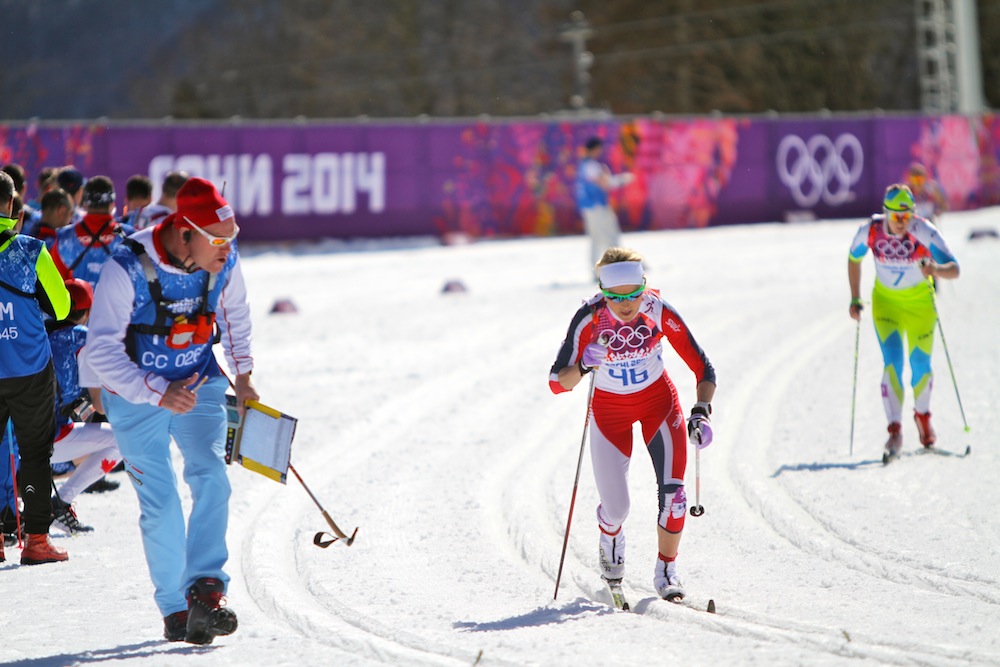
    Norwegian women’s sprint coach Roar Hjelmeset calls out to Therese Johaug as she races to bronze in the 10 k classic at the 2014 Sochi Olympics.

    There is no official word as to who will look to replace Kristiansen’s shoes. Women’s sprint coach Roar Hjelmeset has said he’s interested in filling in, but only for a year.

    “I‘ve said I want to be national coach a one year period for women. The problem is that they were looking for someone who can train [through the] Olympics in 2018,” Hjelmeset, who first coached national-team juniors in 2008 then the women’s sprint team since 2011, told NRK. 

    National team director Vidar Løfshus indicated that Kristiansen’s successor must be willing to make a commitment through the 2018 Winter Olympics. 

    “I was prepared that [his decision] could go either way, hoping of course that he would continue,” Løfshus said to Langrenn, according to a translation. “To sum up his time as coach of the national team will be the one long tribute.”

    Hetland Takes Over Norway’s Men’s National Team

    Kristiansen’s resignation is not the only change in the nexus of Norwegian nordic skiing. Tor-Arne Hetland was hired this spring as the new men’s cross-country coach.

    Tor-Arne Hetland, Swiss sprint coach from 2010-2014 (Photo: FIS) http://www.fis-ski.com/cross-country/news-multimedia/news/article=tor-arne-hetland-nor-become-world-cup-team-coach-for-canada.html
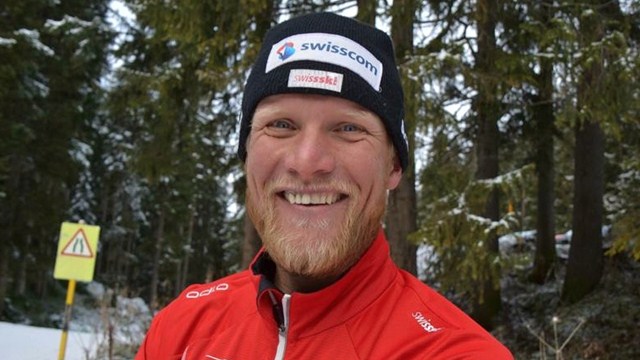
    Tor-Arne Hetland was a Swiss sprint coach from 2010-2014, then coached the Canadian World Cup Team for a season (2014/2015) before taking an assistant coaching position with his alma mater, the Norwegian national team. He is now the Norwegian men’s head coach. (Photo: FIS) 

    A 2002 Olympic gold-medalist sprinter, Hetland, who competed for Norway, previously worked as a national coach for Germany, Switzerland and Canada before assisting the Norwegian team last season under former men’s coach Trond Nystad.

    “Trond has been generous and given me great responsibility allround team this season,” Hetland told Skiforbundet, according to a translation. “I want to continue a culture where athletes together take responsibility for their own training and development. Created to be the best trained and set a standard that new generations of skiers want to strive for. I look forward to continue working with the team and with the rest of the support develop each athlete so that they can bring out their maximum potential.”

    Trond Nystad, the coach of the Norwegian men's cross-country ski team, takes questions from the media after Sunday's relay.
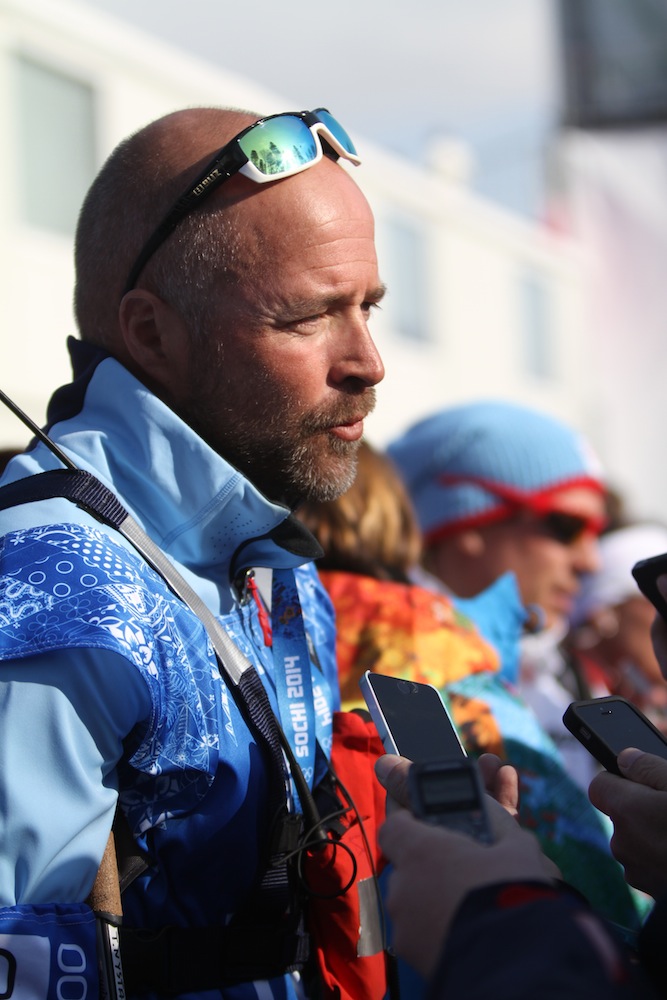
    The outgoing coach for the Norwegian men’s cross-country team Trond Nystad fields questions at the 2014 Sochi Olympics

    Nystad, 45, had been the head coach for the men since 2011, working with his twin brother Knut Nystad, Norway’s head wax technician. Trond had previously coached the U.S. and Swiss teams.

    Nystad’s contract with the team ends May 31. Earlier this month, he dispelled rumors that he would advise Russia’s Alexander Legkov this winter. Rather, after spending what he estimated to be nearly 250 days on the road in the last five years, Nystad wanted to focus on being a dad.

    “Nothing is certain, nothing is excluded, but in relation to their family situation is probably not wise to continue with 240-250 days of travel,” he told NRK. “But I still want to work with sport.”


  • Roar Hjelmeset New Norwegian Sprint Coach

    Roar Hjelmeset will replace Jon Arne Schjetne as the Norwegian women’s national sprint team.

    Hjelmeset replaced Fredrik Aukland as the Norwegian junior national team in 2008. After three years as the head coach for the Norwegian junior and U23 national teams, Hjelmeset was supposed to be the head coach for the new recruitment/development national team for the upcoming season.

    “A month ago, I was approached about the position as the women’s sprint team coach, and I’ve spent a lot of time making my decision. We’ve worked with a lot of very inspiring and talented young skiers on the junior national team and on the U23 team.  I’ve really enjoyed working with these skiers, but I felt like I couldn’t turn down this opportunity. I also thought that it might be a long time to be with the development team for three years, given that the senior head coaches most likely will continue in their positions at least through the Olympics in Sotchi,” Hjelmeset said in a press release from the Norwegian Ski Association.

    Roar Hjelmeset, who is Odd-Bjørn Hjelmeset’s younger brother, has extensive experience with elite cross country skiing, both from the racing and the coaching perspective. He retired from racing after the 2005 season and started coaching. After six years in the coaching profession, he is now the coach for some of the best sprint skiers in the world.

    “The girls on the women’s national sprint team are not very old either, and there are several skiers who are developing rapidly. I’ve signed up to coach a very accomplished sprint team,” Hjelmeset said.

    National team director Vidar Løfshus is excited that Hjelmeset accepted the offer.

    “We know what qualifications he has. Roar will work closely with the women’s national team head coach Egil Kristiansen, who was actively involved in the final selection,” Løfshus said, adding that there were several highly qualified applicants to the position.

    However, when Hjelmeset accepted the sprint coach position, the head coach for the new recruitment/development team is now open. But Hjelmeset has a clear opinion on what kind of coach the team needs.

    “The ideal candidate is an up-and-coming person who is capable of seeing the whole picture. The coach needs to be aware of the second-tier skiers as well as the top young racers. The coach needs to attend a lot of race venues, including Norway Cup events and Scandinavian Cup events,” Hjelmeset said. He admits that it will be hard for him to leave the new recruitment/development team already, when the 2011-12 season is just barely underway.

    Press release from the Norwegian Ski Association May 11, 2011. Translation by Inge Scheve

  • Russians Take Two More Medals In Men’s WJ’s Sprint; Bjornsen 14th

    Russians Take Two More Medals In Men’s WJ’s Sprint; Bjornsen 14th

    Russia's Gleb Retivykh in qualifying.

    Russia’s Sergey Ustiugov was 100 yards away and three minutes from the start of his own classic sprint final when his teammate Elena Soboleva crashed out of the front of the women’s race.

    Rather than collecting a medal, Soboleva was last in the heat, leaving it up to Ustiugov to cash in. And cash in he did, overpowering Norway’s Sondre Fossli and his own teammate Gleb Retivykh on the homestretch to take World Junior Championships gold in Estonia.

    After Soboleva’s crash, “we had to take the medal that belongs to us,” Ustiugov said through a translator.

    Erik Bjornsen (USA) was the only North American to make to the heats, after Canada’s Andy Shields got stuck in 31st—just one spot away from advancing. There had also been high hopes on Bjornsen’s teammate Skyler Davis, who had taken third in the classic sprint at U.S. Nationals earlier this month. But Davis said he felt “flat” in qualifying – without the pop he’d had in training sessions earlier this week. He finished 35th, roughly a second away from the heats.

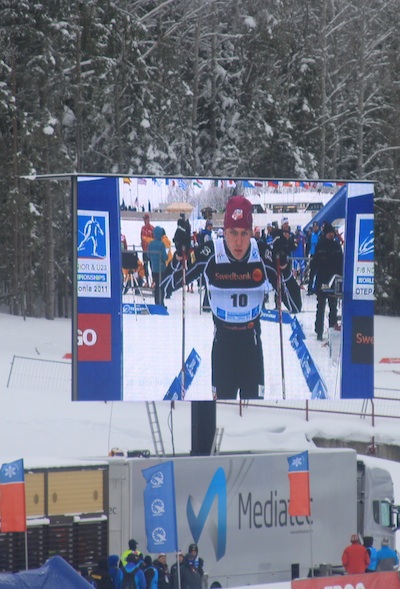
    American Erik Bjornsen on the video board in Otepaa.

    Bjornsen was eliminated in his quarterfinal, but was in it all the way, at the back of a tight pack led by Fossli until the homestretch. There, he moved up to fourth, then third when a finisher in front of him was disqualified.

    Despite ending up a respectable 14th, he said that the snap he’d felt in the qualifier was gone in the heats.

    “I just didn’t quite have it,” he said.

    Unlike the women’s rounds, which were pinned from the gun, the men’s racing was tactical—Bjornsen said that he could have skied at the front early on, but chose not to.

    “I was feeling comfortable. I just didn’t really want to go into the lead,” he said. As things picked up, “every chance I had to try to make a move, I was trying to—but everybody else is too. Everybody’s fighting for it.”

    Initially, Bjornsen’s third place in the heat left him in the mix to advance as a lucky loser, but faster finishers in the later rounds pushed him out.

    To get to the finals, Ustiugov had to battle his Russian teammates all the way there. In the quarters, he skied alongside Dmitriy Golub, who stubbornly double-poled his way all the way to the finals—the only man to try the maneuver—where he ended up fifth.

    In the semis, Ustiugov and Golub were joined by Retivykh, and all three moved along to the finals, along with Fossli and two of his Norwegian teammates from the other heat. The stage was set for a battle between two of the world’s premier ski nations.

    Ustiugov led from the start, with Fossli straining to keep up on the course’s two climbs. The pair came into the homestretch together, but with 25 meters to go, Fossli had to give up.

    Ustiugov was jubilant—afterwards, he said it was the first time he had ever topped his teammate Retivykh. Along with Golub, the three had swept the classic sprint at the Russian Junior National Championships in Rybinsk earlier this month.

    Still, though, even with the two medals from Friday’s race, the Russians’ six medals still trail the Norwegians in the standings by two.

    And in Fossli, the Norwegians clearly have a deep reservoir of talent. He’s just 17, a year younger than Ustiugov and two younger than Retivykh, and he won the summer’s World Cup rollerskiing competition for juniors.

    “He’s better in the classic sprint than skate sprint, but he’s a good skier, technically,” said Roar Hjelmeset, the team’s junior coach. “Three medals today—it’s very good.”

    Link to heats results. Qualifier results.

    Norway's Sondre Fossli in qualifying. Photo courtesy of Langd.se