From the FasterSkier archive — posts syndicated from athletes’ and coaches’ own blogs between 2004 and 2012, kept online as published. Current coverage is at fasterskier.com.
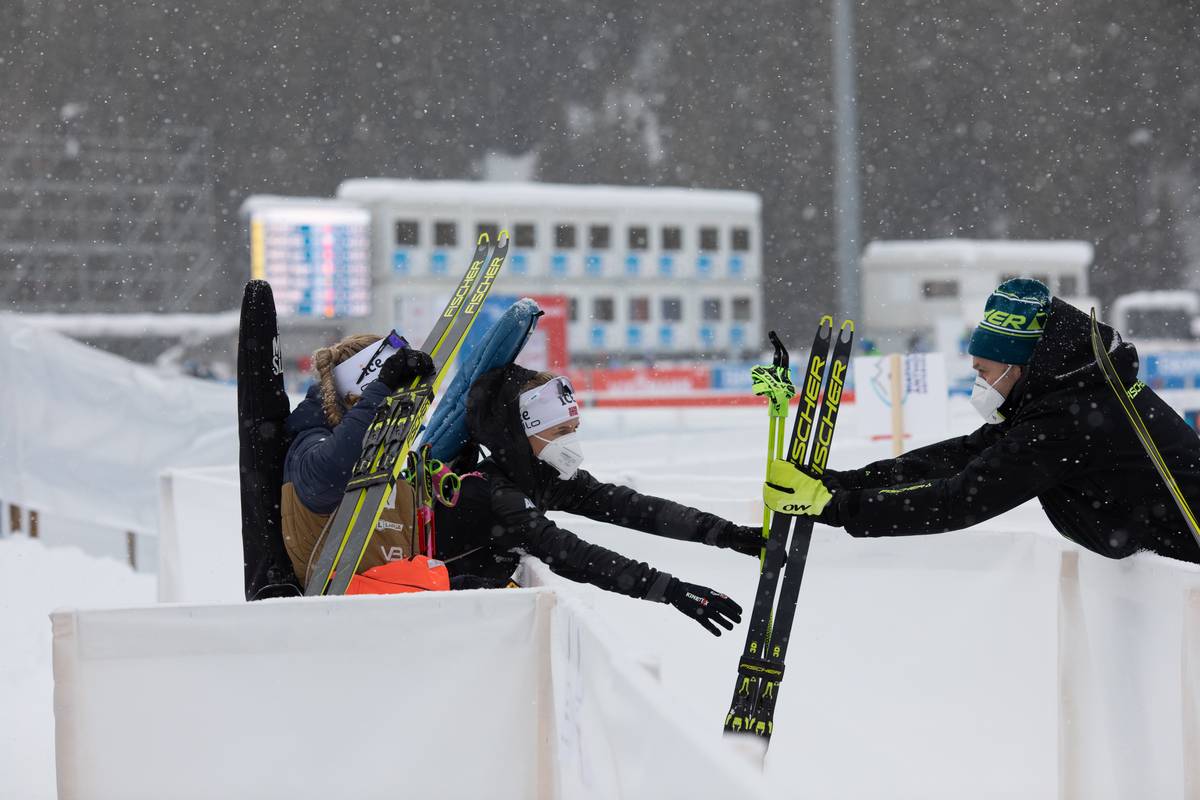
Biathete Tiril Eckhoff (NOR) hands over the skis to Gerhard Urain, Nordic Race Director for Fischer. (Photo: NordicFocus)
Will there be enough skis this season? That’s the question every ski shop and many consumers are asking. With demand predicted to remain high this winter, and some unique challenges faced by ski producers, ski scarcity may remain a reality.
“I imagine if demand stays high we will see some significant shortages this season,” said Nathan Shultz, owner of Boulder Nordic Sport.
The problem, from a supply-side, started with the pandemic. People thought that the demand would be low and the most popular would be home-based activities like online games from Casinosters. “In the beginning, everyone freaked out and thought that no one was going to buy anything,” said Schulz. “Factories had to adapt to that expectation and then everything started going gangbusters, and demand escalated at a pace we haven’t seen. So on top of supply disruptions, there was a huge demand, everything sold out, and then the fire happened.”
In October 2020, a massive fire tore through the ski production line of Fischer’s factory in Mukachevo, Ukraine, requiring much of the production floor to be rebuilt. Most of the skis for the 20-21 season, however, had already been produced and were awaiting shipment in a separate facility.
Fischer—the world’s largest ski manufacturer—produced around sixty percent of its skis across all disciplines at the Ukrainian site, which handled ski production for several other brands as well. In all, it has been reported that a quarter of the world’s skis came out of the Mukachevo factory.
“Globally the loss of that factory is a big hit, and not only for Fischer but the brands that they manufacture for,” said Zach Caldwell of Caldwell Sport. Like many large ski factories, the Ukrainian factory produced cross country and alpine skis for a number of brands including Rossignol, Alpina, Scott, and Dynafit.
Jeff Courter, the Nordic Manager for Rossignol said the Fischer factory fire was, “shorting the worldwide ski supply because the factory made skis for a lot of different brands. When you think about finding a home for all those skis, not only for our brand, but for Fischer and anyone else they made skis for, that’s a lot of skis you have to find factories for. So that’s putting a lot of pressure on all the other ski factories as well.” (Rossignol’s high-end race skis are manufactured at their production facilities in Spain and France.)
“Without Covid, we might have been able to absorb [the Fischer factory loss]…but with Covid—impossible. So this is why all the big brands need to shut down for business early.” Said Robert Lazzaroni, the Regional Commercial Manager of Salomon, referring to the earlier than the normal deadline for retailers to order skis.
In a normal year, ski shops order equipment for the following season in the late spring and reorder products as demand requires. “Normally if we need something specific we call and get something,” said Schulz. “We do a lot of small juniors orders, because it’s so hard to know what juniors are going to need…we call Fischer if we need something.”
This year, the flexibility to order small batches on the fly has dissolved. “We’ve been told, ‘don’t expect any reorder capability,’” Schulz said. According to some ski reps, many retailers are left with little ski stock heading into the 2022 season and will have to rely on their preseason order made in March to get them through the winter.
“I believe the shops did learn the lesson last year with the crazy demand for our product,” said Lazzaroni. “And I think the shops did go a little bit heavier on the preseason versus the reorder.”
In recent years, with the retirement of Canada’s Alex Harvey, U.S. skier Jessie Diggins has become the face of the France based ski brand. (Photo: NordicFocus)
What was already a perfect storm of increased demand and faltering supply chains as the pandemic ensued, was only compounded by the Ukraine fire. Factories able to upscale their ski production worked at full capacity to meet the preseason order requirements.
Courter said that the Rossignol factories had been, “really maxing out on what it can make, and not only make, but ship in a timely manner. These production ceilings we have rarely, if ever, been bumped into until now—so it’s been a learning experience.”
Ski production has seasonal constraints as retailers need to receive products during their selling window, most of which happens between October and January. “We could keep making skis and boots all year,” said Courter, “but it’s not going to do the retailers any good if we send them a bunch of stuff in March.”
Fischer compensated for the production loss in part by transferring some of its Ukrainian ski makers to its factory in Ried, Austria allowing production there to ramp up, with the factory running additional shifts.
Steve Reeder, Fischer’s Nordic Sales Manager in the U.S., said that under the circumstances, Fischer was handling the demand well. ”Can we absolutely get as many as we want? No,” Reeder said, “but we’ll have more product out there this season than we did last season.”
Fischer’s high-end products are mainly produced in Austria and were unaffected by the fire. “The two factories have been separated on the nordic side by their core technologies,” said Reeder. “Ried [Austria] has specialized in Air Core, and the Ukraine is kind of a complete tree to ski facility. Everything other than our entry-level price point is Air Core, so it’s coming out of Ried.” Reeder continued, “For the FasterSkier audience there’s actually minimal impact from the fire. We’re still making the majority of our race ski product in Ried, Austria. So the supply concerns are focused more on the touring category which has been compounded by the impact that Covid has had on outdoor recreation sales, and the fact that the increase in business we’ve seen in the States is happening globally.”
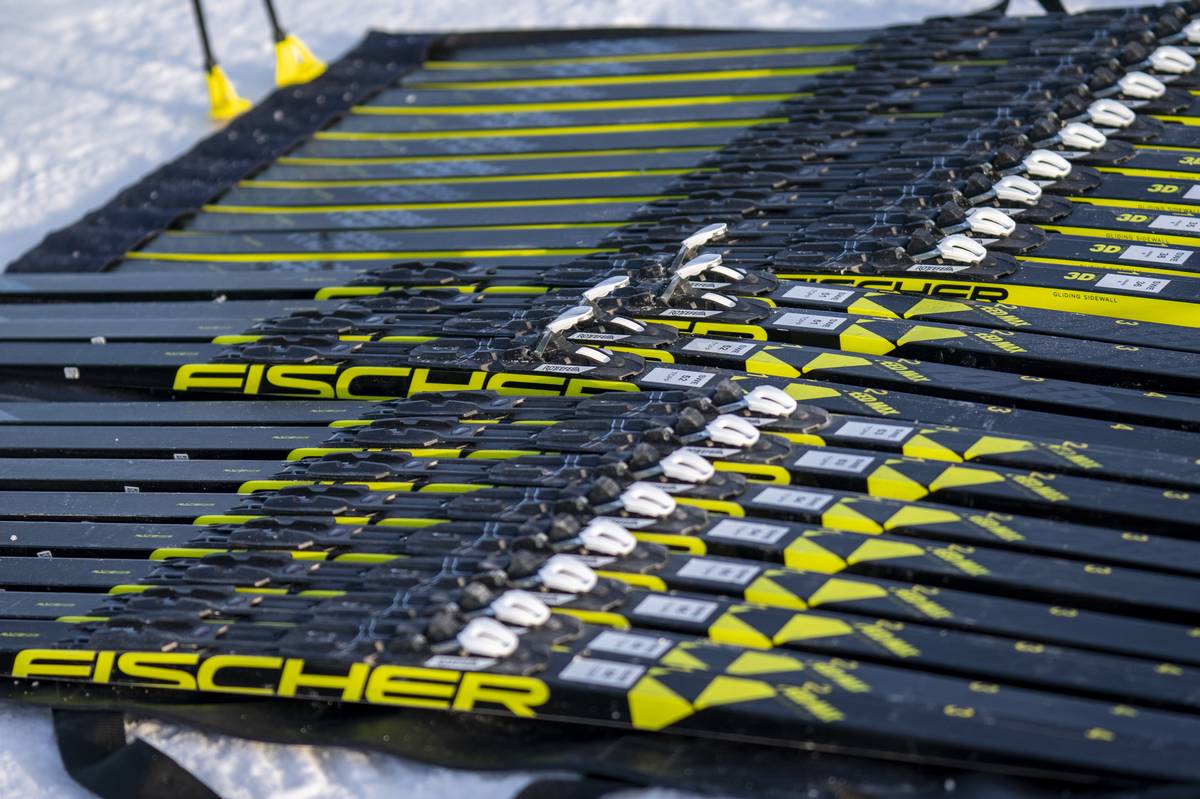
A fleet of Fischer race bred Speedmax. According to Fischer, production of the high-end race ski will not be affected by the Ukraine factory fire. (Photo: NordicFocus)
The supply-side strain is most acute on the recreational and backcountry ski category that sold so well last winter, according to ski reps and shops that spoke to FasterSkier. “Touring and backcountry is where, not only us, but a lot of the other brands will not have the availability, unfortunately,” Courter said.
“Already last year the supply [for touring] was very short, and this year we are facing known shortages,” Caldwell said. “I know we’ve been promised that our preseason orders would be filled, but on reorders we’re anticipating having zero availability.”
For high-end race skis, the situation is calmer, though demand for racing equipment has rebounded. “Even in the performance and race categories the demand is really high, which is great considering that last year was troubling to get races off the ground,” said Courter. With factories working at full tilt to produce orders, manufacturers are unable to produce an excess of high-end models. “With top-end race skis, we’re anticipating getting what we ordered,” Caldwell said, “but also anticipating some short supply as we get closer to winter.”
Apart from skis, there are ramifications for other nordic products due to the topsy turvy global supply chain.
“The wax folks I’ve talked to have acknowledged that material costs have gone up and their margins have gotten really lean. I wouldn’t be surprised to see costs go up at some point,” said Caldwell. “I bet some companies might introduce them already this year, but a lot of companies are stuck with what they’ve promised, so it might be something to recoup from in the future—but that’s a price thing. The absolute chemical that goes into it is pretty small, it’s not a big industry.”
Another question Caldwell has considered is whether ski poles will be affected by global pressures. “Who knows, maybe poles will be difficult with a ton of Asian carbon manufacturing,” said Caldwell who clarified that he was, “totally speculating.” He added that, “Pretty much every pole out there is made in Asia, and that Asian supply chain…I just don’t know at what point that becomes an issue. Because of the cross over into other industries, the ski pole factories aren’t always ski pole factories, so that introduces a level of vulnerability and knock-on effect from other supply chain issues and excess orders.”
While burgeoning demand, reduced stockpiles, and the loss of the largest ski factory have strained the industry, it is in a relatively better position than that of other outdoor sport manufacturers, notably the bike industry.
“I think everyone recognizes that the bike supply chain is really screwed up,” said Caldwell. “With skis, it’s a limited range of raw materials and according to the companies I’ve spoken with, they’re not seeing shortages in raw materials. So in terms of assembling the products, it’s not so much a problem, the problem is on the demand side and on the capacity of factories to produce the skis. The nice thing about skis is they make a finished product in one factory.”
The ski brands that spoke to FasterSkier were confident in their ability to deliver on their preseason orders, and to varying degrees, believe they may be able to offer reorders on high-end race skis. Shop owners, however, expressed some concern that orders would be delivered in full.
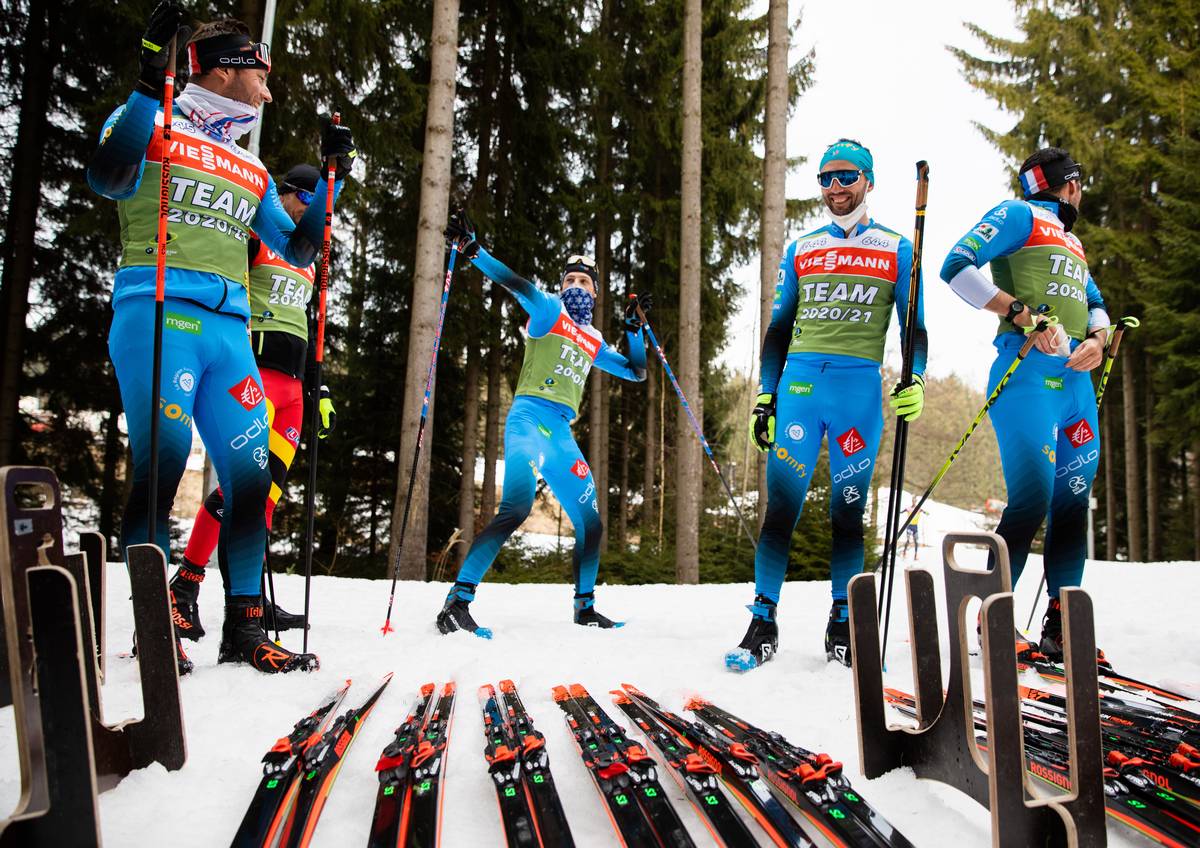
French World Cup athletes hover over the Rossignol goods. (Photo: NordicFocus)
In any case, possible ski shortages this upcoming winter will likely be decided by the size of retailers’ preseason orders and, most of all, snowfall. “Our sport is dependent on snow on the ground, so assuming that some of our markets like New England and the Midwest—if they get early snow, then there’ll be a point somewhere in the year that shops could get a little lean on in-stock product,” said Courter.
Lazzaroni put it succinctly, “If, and it’s always an if, we have a decent early winter, the industry will lack product. I do believe what we saw last winter will continue into this winter and there will be a crazy high demand for nordic product,” said Lazzaroni. “The question is, has our retailer network been optimistic enough, and crazy enough with their preseason order to cover future needs from the consumer? I don’t think so, to be honest.”
For skiers looking for new boards this winter, the message was clear: buy early. “People would be advised to get their names on orders early,” said Caldwell, “because I would be unsurprised to see some brands fall short
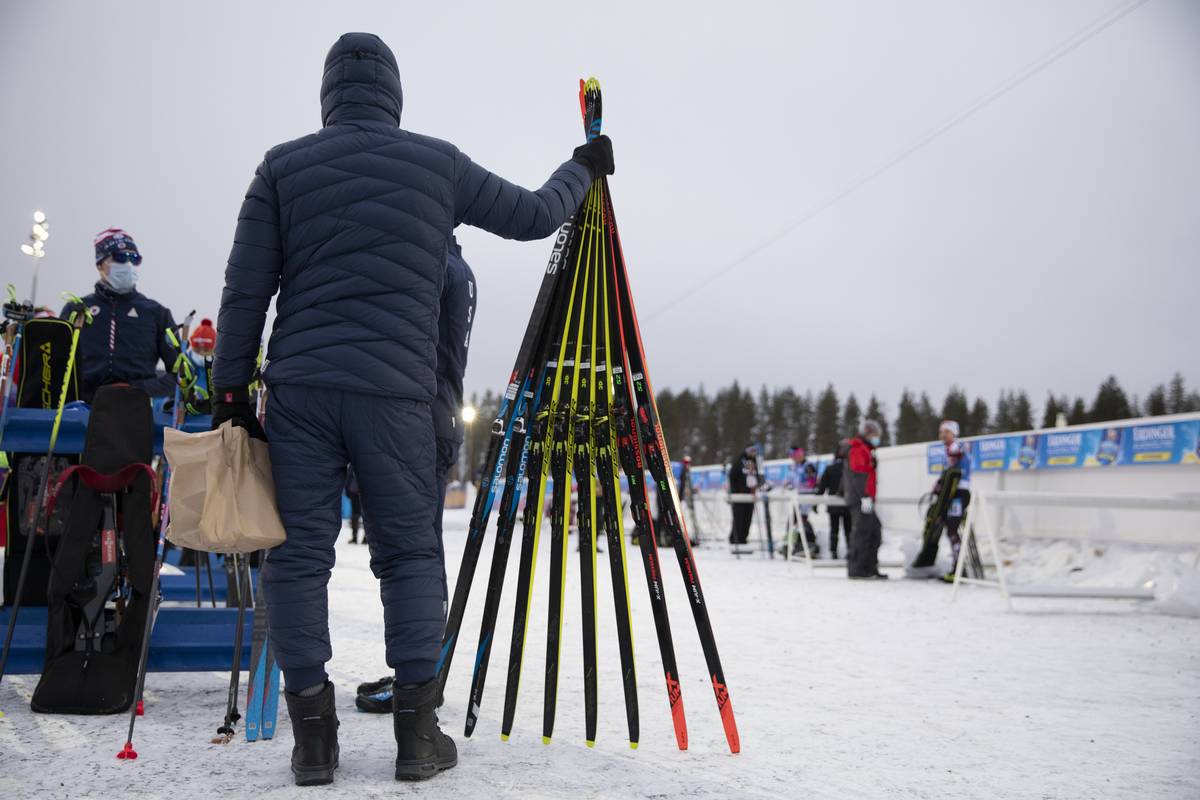
A U.S. ski technician holds different skis in the warm up area on the IBU World Cup. in Kontiolahti, Finland. (Photo: NordicFocus)
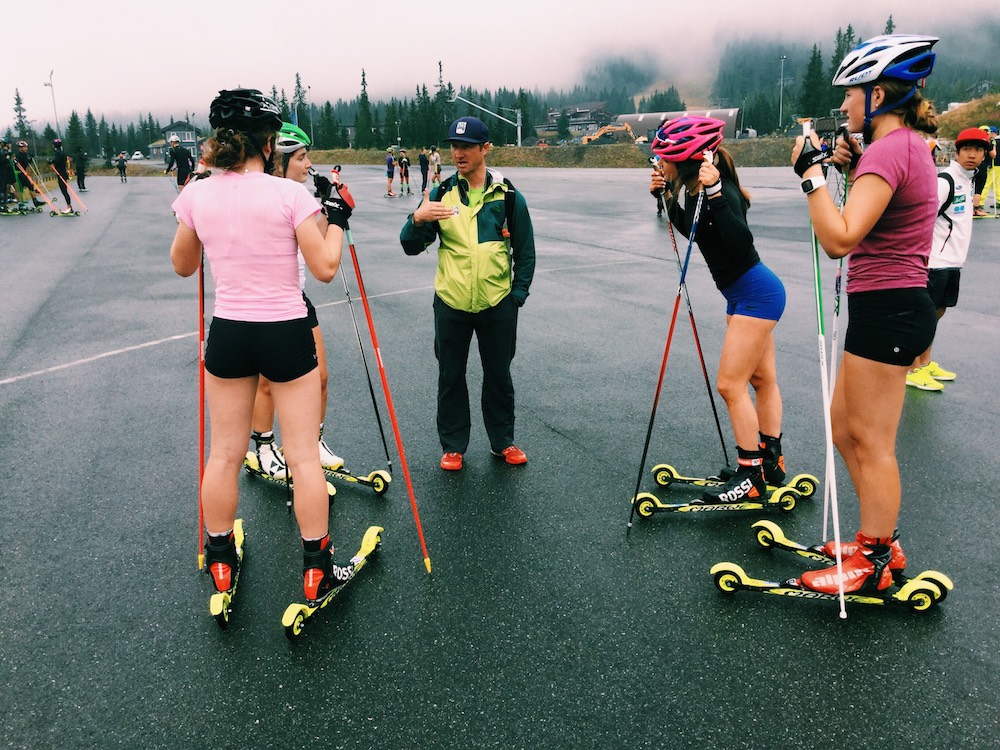
Bryan Fish (yellow jacket) coaching American athletes in Norway this summer. (Photo: Maria Stuber)
(Press release)
PARK CITY, Utah (August 30, 2018) U.S. Ski & Snowboard has announced that Bryan Fish has been promoted to the position of Cross Country Sport Development Manager. This is a new position and includes many of Bryan’s current duties at U.S. Ski & Snowboard, in addition to the key domestic and development responsibilities held by former Nordic Domestic Program Director Robert Lazzaroni. U.S. Ski and Snowboard will not fill that role but will hire a coordinator to assist Fish as he takes on his new role.
“This is an exciting time for the U.S. Cross Country Ski Team, and promoting Bryan Fish to fill the this new role could not come at a better time,” said U.S. Ski & Snowboard Chief of Sport Luke Bodensteiner. “Bryan has done great work as the development coach and the team is now seeing the positive outcomes of his well-orchestrated strategy. He has been a large contributor to the strong results we are seeing at Junior Worlds and most recently at the International Junior Camp in Norway. With these added responsibilities, Bryan will continue to be the driving force with the development pipeline and become a larger player in the national cross country scene.”
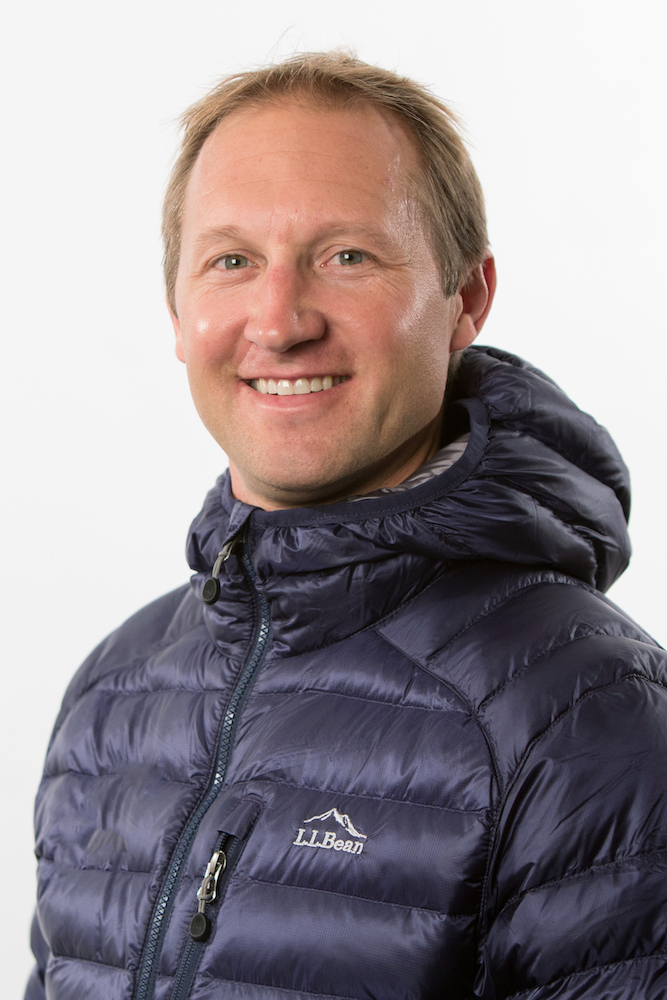
Bryan Fish (Photo: Lincoln Benedict/L.L. Bean)
Bryan’s new role as Sport Development Manager is unique in that it will allow Fish to continue to coach in camps and lead trips including Junior World Ski Championships and OPA Cup. Sustainability has been built in these programs and it is important that this consistency for the athletes continues.
“Thanks to U.S. Ski & Snowboard for offering me the opportunity to expand my support to the Cross Country community,” Fish said. “As the Cross Country Development Coach, I have focused on collaborating with our ski community to build out the development system. We have worked together with coaches, clubs, divisions, and regions to fill in structural gaps with needed programming. We have also made significant strides in building a stronger national development system. The preparation and performance of our athletes at every level is proof we are moving in the right direction. I am excited to place a greater focus on establishing a clear pathway as we move ahead.”
Based in Park City, Utah, Fish assumes his new role effective immediately and will be actively seeking an additional hire to assist in in this new role.
Martin Benes, who has coached at Sugar Bowl Academy for the last seven years, was recently hired as head coach of U.S. Paralympics Nordic. (Photo: U.S. Paralympics)
(Note: This article has been updated to include the hiring of Miles Havlick as the University of Utah’s head nordic coach, which was announced Monday afternoon.)
There have been several notable career changes in North American nordic skiing this summer. Here’s a quick look at who moved where:
Robert Lazzaroni, the nordic director at U.S. Ski & Snowboard, will soon begin his new role as Salomon’s nordic regional commercial manager for the Americas. (Photo: Salomon)
Robert Lazzaroni:from U.S. Ski & Snowboard to Salomon. Last week, Salomon announced via a press release that Lazzaroni, of Park City, Utah, will join its staff as nordic regional commercial manager for the Americas, starting Aug. 27. For the last three years, Lazzaroni served as nordic director at U.S. Ski & Snowboard in Park City. Before that, he was program manager at Utah Olympic Park, and before that, a nordic division manager for Rossignol and later One Way Sport. Asked about his new job at Salomon, Lazzaroni told FasterSkier he’d be willing to talk more in depth after he starts. Until then, he’s still employed at U.S. Ski & Snowboard.
According to U.S. Ski & Snowboard’s Chief of Sport Luke Bodensteiner, many of Lazzaroni’s duties as nordic manager “have been or will be distributed across existing staff, and we’re taking the opportunity to re-align our staffing positions to make sure that we have an efficient structure that supports our priorities of athlete development, coach education, and strong domestic competition,” he wrote in an email to FasterSkier. “This will likely require hiring an additional position, but the nature of that job is TBD based upon where we determine that we need the human resource to support those priorities.” Bodensteiner expected to know more about the shift in staff responsibilities later this month.
Martin Benes:from Sugar Bowl Academy to U.S. Paralympics Nordic. Also last week, the U.S. Olympic Committee announced the hiring of Martin Benes as its new head coach of U.S. Paralympics Nordic Skiing. He replaces Eileen Carey, who was promoted to program director following the departure of John Farra (to USA Triathlon) this spring. Benes began coaching as an assistant ski coach at Bates College, then spent the last seven years as head nordic coach and director at the Sugar Bowl Academy near Truckee, California, according to his LinkedIn profile. As head coach of the U.S. Paralympics program, he will “lead the development of annual and seasonal training plans for the national team, track athlete performances, workout data, sport science data and annual progress reports, contribute to the U.S. Paralympics athlete identification and development strategy, and assist in planning travel and logistics for the Nordic skiing program to competitions, camps and events,” according to the press release.
“It’s an incredibly exciting time to join the program following such a successful performance in front of the world at the Paralympic Winter Games PyeongChang 2018,” Benes stated in the press release. “I’m eager to get started in my role so we can continue to strengthen the program and win medals on the international stage.” He’s set to begin on Aug. 20.
Fredrik Landstedt:from the University of New Mexico to the University of Utah. Late last month, the University of Utah announced it had found a new director of skiing to replace Kevin Sweeney. Landstedt had been a staple on the University of New Mexico (UNM) Ski Team for the last 21 years, spending the last 11 years as head coach of both the nordic and alpine programs (and 10 years before that as head nordic coach). His decision to take the job at Utah came less than 24 hours after the UNM Board of regents unanimously approved a proposal to eliminate four sports starting in the 2019/2020 season, according to the Albuquerque Journal. Those sports are men’s and women’s skiing, men’s soccer, and women’s beach volleyball. The proposal would also significantly impact funding for cross country and men’s track and eliminate the women’s diving program. In the meantime, UNM announced assistant coach Joe Downing will assume the role of interim head skiing coach.
“I am honored to have the opportunity to lead a program with such a rich history,” Landstedt stated in the Utah press release. “Utah has a strong winning tradition and the support that the University provides its ski team is incredible. I look forward to bringing NCAA titles back to Utah!”
Miles Havlick in November 2015 in West Yellowstone, Montana.
Also at the University of Utah, Miles Havlick: new head nordic coach. In a press release on Monday, the university announced that Havlick, one of its former skiers and a two-time NCAA champion (2012 and 2013), was hired to head up its nordic team for the coming season. Havlick, 28, skied for the the Sun Valley Ski Education Foundation Gold Team after college and won the 42-kilometer Australian Hoppet Worldloppet last August. He delved into coaching last summer in Australia with the Birkebeiner Nordic Ski Club and Victorian Junior cross-country ski team, and last winter, was an assistant coach and wax technician for the Australian junior national team at Junior World Championships. Havlick also waxed for the Australian national team last March in China. He has also assisted the Utes ski team, most recently as an assistant coach at 2018 NCAA Championships.
Eliška Hájek Albrigtsen:from Central Cross Country to the University of Alaska Fairbanks. After spending the last year filling multiple roles with Central Cross Country (CXC) out of Madison, Wisconsin (including CXC Team head coach and junior development coach), Albrigtsen has accepted an assistant-coaching position with the University of Alaska Fairbanks Ski Team, replacing Josh Eide. Albrigtsen was a four-time All-American skier for the University of Colorado Boulder and an NCAA champion in 2011.
Cross Country Canada seeks senior national team coach: Two days ago, the CCC headquarters in Canmore, Alberta, put out an announcement for applications for a full-time senior national team coach. The position indicated it requires both domestic and international travel. “Reporting to the HPD [high-performance director], the Senior National Team Head Coach (NST Head Coach) is responsible for leading the technical delivery and alignment of Senior National Ski Team (Senior NST) programs in order to achieve podium performances at Olympic Games and FIS World Championships,” the job description stated. “The NST Head Coach will have the responsibility to plan, coordinate and monitor the training and competition of NST athletes in line with CCC’s collective goals.” CCC’s senior team includes 10 athletes, five of which are on the World Cup Team. The other five are on the U25 (under-25) Team. View the job posting here.
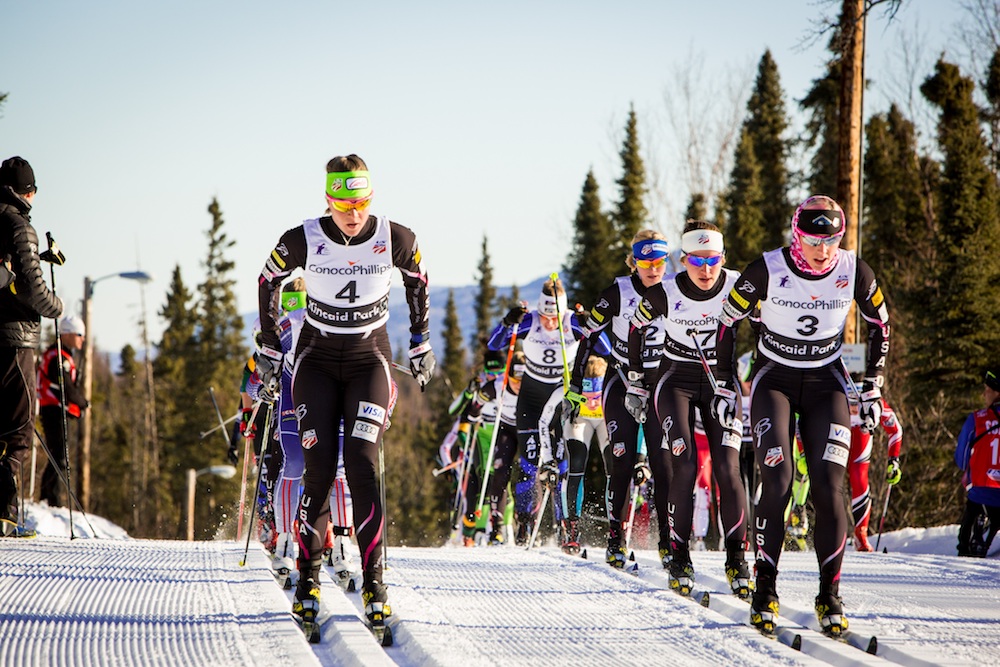
ANCHORAGE, AK (Courtesy of U.S. Ski & Snowboard) – Top cross-country skiers from across America will compete for national titles, FIS Junior World Championship spots and potential Olympic berths at the 2018 L.L. Bean U.S. Cross Country Championships January 3-8. All events will take place at Kincaid Park. U.S. Ski & Snowboard will also carry a live stream of the events on its Facebook page (www.facebook.com/usskiandsnowboard/).
Alaska is a hotbed for cross-country skiing and past U.S. Championships in Anchorage have attracted large fields. The Alaskan city most recently hosted the event in 2010. The U.S. Championships are being organized by the Nordic Skiing Association of Anchorage.
The week’s competitions feature two freestyle and two classic events for both men and women. The top American in each race will be crowned national champion. Results from the freestyle races and the classic distance events will be used to determine the teams for the 2018 FIS Junior & U23 World Ski Championships in Goms, Switzerland January 28-February 3.
“The U.S. Championships is a stop for our top domestic skiers seeking not just U.S. titles but spots on international teams,” said U.S. Ski & Snowboard Nordic Domestic Program Director Robert Lazzaroni. “Anchorage is an excellent venue as the event will capture the great enthusiasm we have for cross country skiing in Alaska.”
“Anchorage has an amazing infrastructure for cross country skiing,” said organizing committee chair Joey Caterinichio. “Events such as the U.S. Cross Country Championships help keep the circle of cross country skiing alive and give our youth an atmosphere to thrive in at all levels of skiing and to witness the pinnacle of U.S. racing.”
All races in Anchorage are also part of the 2017-18 SuperTour and points will count towards the overall SuperTour titles, Olympic Winter Games selection and international World Cup starts. The long distance and team championships will take place March 23-28 in Craftsbury, Vermont.
While primary selection for the 2018 Olympic Cross Country Team will come from World Cup races, some final spots will be determined from results in Anchorage. The Olympic team nominations will be announced the week of January 23.
The show will go on in West Yellowstone, Montana. After organizers of the Yellowstone Ski Festival (YSF) announced in an e-blast on Monday that the West Yellowstone SuperTour, set for this coming weekend, was canceled due to “damage done to the snowpack from the significant rainfall over the past few days,” it’s back on — according to a YSF press release on Tuesday.
“After much deliberation, alternate planning, checking and re-checking weather forecasts, and some more deliberation, the West Yellowstone Organizing Committee, Coaches, and US Ski & Snowboard officials, the decision has been made to hold the Super Tour openers in West
Yellowstone,” the release stated. Robert Lazzaroni, U.S. Ski & Snowboard’s nordic domestic program director, confirmed the races would be held in West in an email to FasterSkier.
As of Tuesday, the snow in the stadium and race course at the Rendezvous Ski Trails were suitable for 1.3-kilometer freestyle sprints to be held as planned on Saturday, Dec. 2, according to the release.
Sunday’s classic races (originally supposed to be 10/15 k classic mass starts) are another story. Organizers are considering four race options, the first three of which are classic races.
“On Saturday, December 2, the powers that be and the powers that ski will meet to decide on one of the following options for the race scheduled for Sunday, December 3,” the release stated, while listing the following:
“A. Classic Distance Mass Start Super Tour
a. We need 10 cm of natural snow to make this happen plus some help spot shoveling
B. Classic Distance Interval Start on homologated trails and with the Super Tour designation
a. We need 6-7 cm of snow to make this happen plus some spot shoveling
C. Classic Distance Interval Start on Dead Dog Super Tour
a. We need 4-5cm of snow to make this happen
D. Skate Distance Interval Start NOT A Super Tour, NRL with prize money
a. If we do this the Super Tour will move to Silver Star on Friday Dec 8th or Monday Dec 11th with the preference being on the 8th”
After this weekend, the SuperTour circuit will head north to link up with Canada’s NorAm opener as scheduled at Sovereign Lake near Vernon, British Columbia. Sovereign is set to host classic sprints and 10/15 k freestyle NorAm/SuperTour races Dec. 9-10.
If there’s no classic distance event in West this weekend, SuperTour organizers will aim to hold a classic distance mass start at Sovereign on Friday, Dec. 8. And if Dec. 8 doesn’t work, they’ll move it to Monday, Dec. 11.
“The West Yellowstone OC will meet tomorrow morning to begin the process of scouting for snow to harvest. An announcement will be made about a meeting time and plan of attack,” the release stated. “An agreement has been made to keep the race courses closed to preserve the snow as much as possible. Please respect this closure and keep off the course. We will do our best to get as many kilometers groomed as we can and will attempt to groom more on the Plateau Road. Keep your eyes on the daily grooming reports for the most up-to-date trail conditions.”
As of Wednesday morning, there was no rain in West Yellowstone’s forecast, but rather a chance of snow showers on Wednesday, Saturday and Sunday.
FIS Race Results
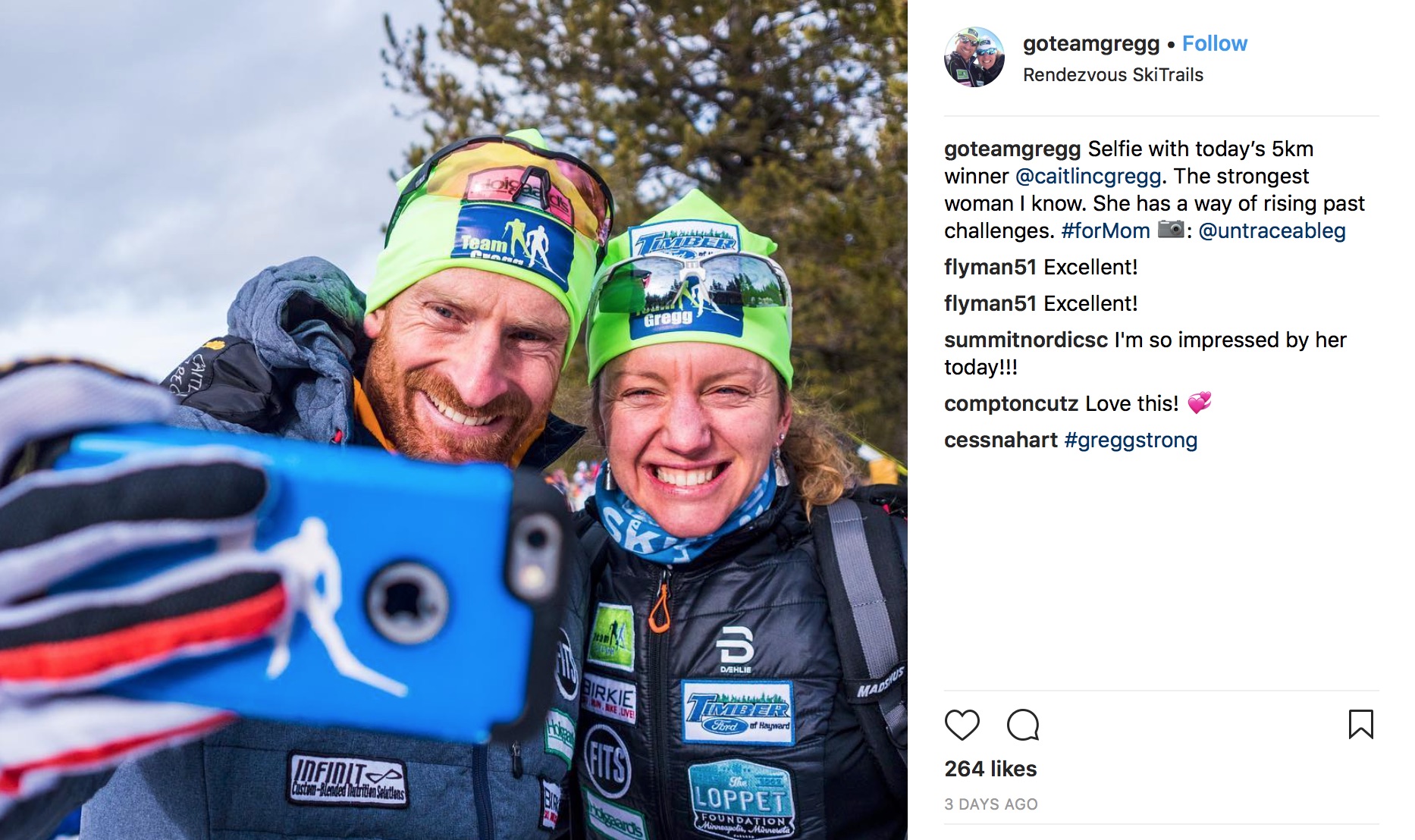
Last Saturday, Nov. 25, season-opening International Ski Federation (FIS) sanctioned races were held on the Rendezvous Trails, with Caitlin Gregg (Team Gregg) winning the women’s 5 k freestyle and Kyle Bratrud (CXC Team) topping the men’s 10 k freestyle.
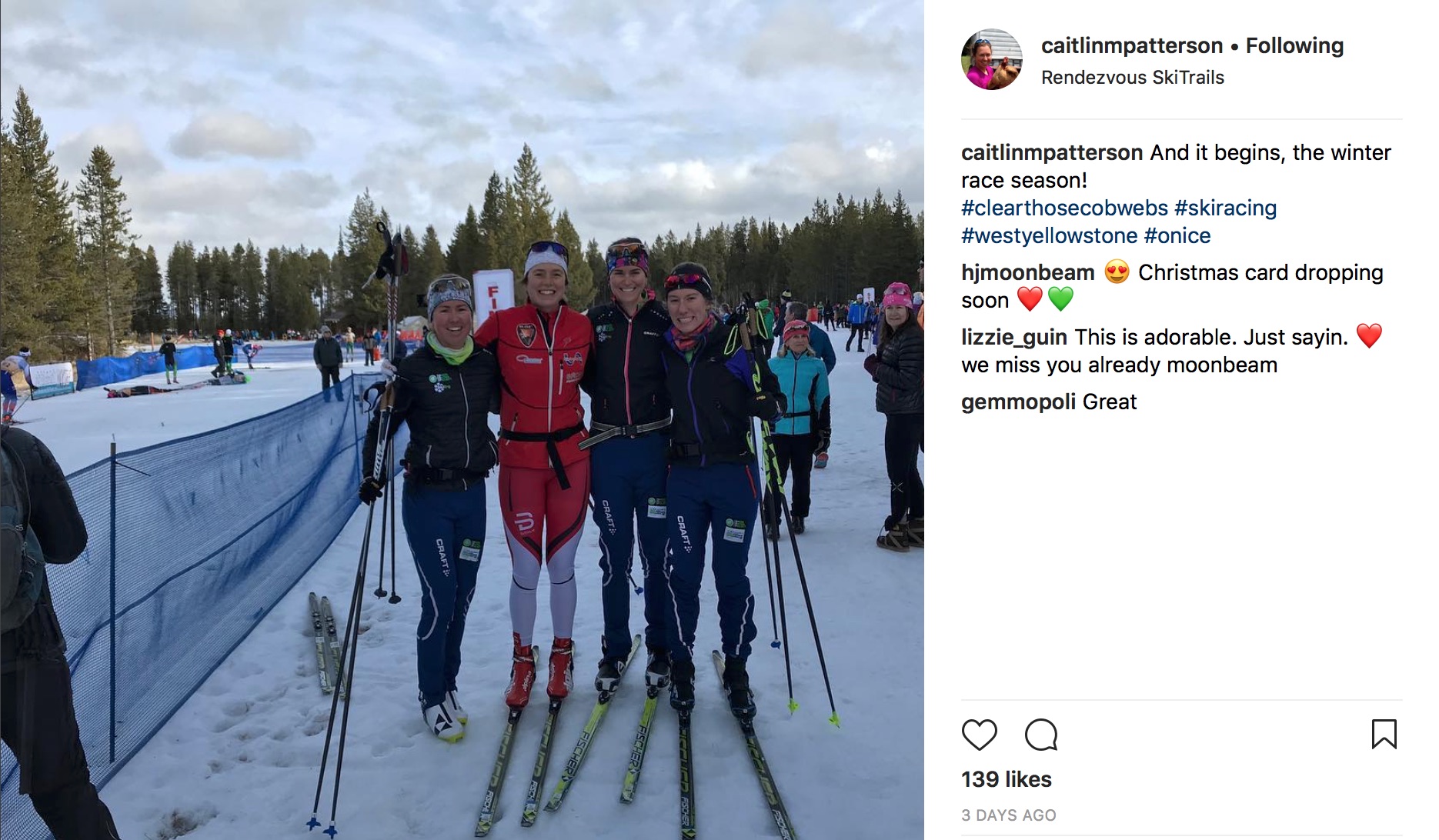
Gregg won the individual start by just 0.9 seconds over Caitlin Patterson, of the Craftsbury Green Racing Project (CGRP), in 12:01.0 minutes. Petra Hyncicova, a University of Colorado Boulder (CU) senior from the Czech Republic, placed third, 5.6 seconds back.
Erika Flowers, of the Stratton Mountain School (SMS) Elite Team), finished fourth (+11.1), and Christina Rolandsen, a CU junior from Norway, took fifth (+19.7). Another Norwegian Anne Siri Lervik (Team Asker) finished sixth (+21.2), Mary Rose, of the Sun Valley Ski Education Foundation (SVSEF) was seventh (+28.0), Sydney Palmer-Leger (UOP Sports Clubs) was eighth (+32.5), Felicia Geisor ninth (+33.8), and Corey Stock, of the Bridger Ski Foundation (BSF) 10th (+41.1) out of 38 women.
In the men’s race, Bratrud edged Rogan Brown (SVSEF) by 0.6 seconds with a winning time of 21:32.0. Sun Valley had two on the podium and three in the top four with Kevin Bolger in third (+3.7) and John “Jack” Hegman in fourth (+8.7). Karsten Hokanson, a Montana State University junior, placed fifth (+12.2), Brian Gregg (Team Gregg) was sixth (+15.5), Akeo Maifeld-Carucci (Bend Endurance Academy) seventh (+22.9), Ben Lustgarten (CGRP) eighth (+30.3), Cole Morgan (SVSEF) ninth (+32.8), and Silas Talbot (BSF) 10th (+37.8) out of 49 men.
Team R.A.D.’s Russell Kennedy (r) powering through the snow to finish at the top Canadian in ninth in the men’s 15 k freestyle on Sunday, Dec. 11, at the Sovereign Lake NorAm/SuperTour. (Photo: Marie-Éve Bilodeau-Corriveau)
VERNON, B.C. –The combined Noram/SuperTour last weekend at Sovereign Lake, British Columbia, produced some exciting skiing and some challenging photography conditions with almost non-stop snowfall both days. Some of our best photos that didn’t make the two-day race recap are included below, but first, a little background and feedback:
The NorAm circuit has not been a fully North American circuit since 2006. This year, Canada and the U.S. planned two combined NorAm/SuperTour events in Bozeman, Montana, and Sovereign Lake, B.C. With the relocation of the Bozeman event to West Yellowstone, Sovereign Lake became the only combined event of the season.
While many athletes dream of a return to the glory days of this series, the 2006/2007 birth of the SuperTour coincided with a second Continental Cup quota spot, allowing each country to send one “COC” leader of each gender. Effectively, each country became a “continent” in the eyes of the International Ski Federation (FIS). Combining the two series could reduce North America to one COC position per gender.
FasterSkier asked athletes and organization leaders what they thought of the 2016 combination of the early season NorAm and SuperTour:
“I think what became very clear last year [in] the discussion with the coaches and the Canadian people, instead of trying to send to our athletes East to West, maybe it’s better to send them North to South. In terms of saving cost, obviously, and more competition between better athletes, [this] is better to improve the quality of our athletes in Canada and the US.” — Robert Lazzaroni, U.S. Ski & Snowboard Association (USSA) nordic domestic program director
“If you back to the NorAm races, when we used to do them with the U.S., when Devon Kershaw was racing Justin Wadsworth … ‘x’ number of years later, the one guy is coaching the other guy. Crossing over generations is very important.” — Thomas Holland, Cross Country Canada (CCC) high performance director
“The altitude at West Yellowstone is too high to use it as a selection race for the Canadian team.” — Holland, on applying the FIS limits to selection races.
“I think it’s an incredible opportunity. I think we as North Americans don’t get the opportunity to have such a competitive field and I think coming together and making each other better is super important and think there’s just so much more to learn.” — Julia Kern, Stratton Mountain School (SMS) Elite
“I really like it. This has been a very well-run, well-organized event. It’s really fun to race against other athletes, more people than the usual SuperTour field. It would be awesome to have more.” — Kaitlyn Miller, Craftsbury Green Racing Project (CGRP)
“I can’t express to you how much I love it and how happy I am. I’ve been telling everyone I run into that I absolutely love it, and I would wish that the entire circuit could be combined the way it is today. I know that logistically, that’s not totally possible, but it’s so good for us, it adds such a depth of field. It’s just so much more fun, I love it. Yeah, I love it.” — Olivia Bouffard-Nesbitt, Alberta World Cup Academy (AWCA)
“I think it’s awesome. I think we should do more of these, for sure. Rossland and Silver Star and Canmore, it’s always beautiful snow and great grooming, and a really hilly, challenging course. I think all three of those have some really good terrain; it’s always fun to come up here and get a little bit different than our usual back courses back home.” — Jennie Bender, Bridger Ski Foundation (BSF)
“It’s been great. I’ve been amazed at the professionalism here. They’ve put on an amazing event. For us in North America, we have it unique that we are separate from Europe and it’s cool to be able to challenge each other against the Canadians, and I think we should have more of it.” — Heather Mooney, CGRP
“It’s just great. In sport and in skiing, I always believe that you need to race against the best. That’s why we’ll be racing in Europe in February. It’s a super good idea, and I don’t know why we didn’t do it earlier. They’re so close to us, so we need to race against them, and they need to race against us.” — Antoine Briand, Pierre-Harvey National Training Centre (CNEPH)
“I think it’s incredible. Last year at our athlete meeting at Canadian Nationals, I made that point very strongly a couple times. I raced U.S. nationals in Houghton last year. That was an awesome event, I thought. Having a higher level of competition benefits everyone and then when we get to racing deeper fields in Europe, we’re not caught quite as offguard.” — Evan Palmer-Charrette, Thunder Bay National Team Development Centre (NTDC)
“I think it’s awesome. I think it’s better for both the Americans and the Canadians. Everybody that I’ve talked to likes it. It raises the level of competition, we’re still competing for SuperTour points and NorAm points respectively. It just makes a deeper, faster field.” — Reese Hanneman, Alaska Pacific University (APU)
“It raised the level of competition a lot, brings everyone’s game up, I think it’s good for North American skiing.” — Cole Morgan, Sun Valley Ski Education Foundation (SVSEF)
“It’s the best, we need to do this all the time. It’s so good to mix it up and see all of our best racers. I think if you look back generations, guys like [Chris] Jeffries and [George] Grey and Kersh [Devon Kershaw], like [Ivan] Babikov, they cut their teeth on a combined circuit. I think their success on the world cup is definitely in part due to that. I hope we get a couple more opportunities to keep racing each other.” — Ben Saxton, SMS Elite (Note: Jeffries is the AWCA head coach, Grey placed eighth in the skiathlon at the 2010 Vancouver Olympics, Kershaw was second overall in the 2012 World Cup, and Babikov is one the Canadian World Cup coaches.)
“I think it’s a great idea. It’s really nice to get some deeper fields, to get the Americans and Canadians racing together. It wasn’t so fun to watch the podium here, to watch it filled up with Americans, but when all the Canadians go down in the semi, that was happens. We’ll be down at US Nationals for sure.” — Angus Foster, NTDC Thunder Bay
“It’s really good, because the level is really high with the U.S. Good for us to see other skiers, and other fast guys.” — Alexis Dumas, CNEPH, the second Canadian and 15th overall in the men’s 15 k
“I love it! I think it’s like the best thing for our sport. The camaraderie, and also you learn so much from your peers, it’s super important and so valuable.” — Chelsea Holmes, APU
“I love it, I hope we do more. I think it’s awesome for everyone involved.” — Katharine Ogden, SMS Elite
“I love it. It’s fun having a bigger field and a new venue. I love Silver Star, this place is hard to beat.” — Erika Flowers, SMS Elite
APU’s Reese Hanneman earned the NorAm leader’s big in Saturday’s sprints. (Photo: XTS Photography)
Three Canadians won’t be advancing to the A final. CNEPH’s Simon Lapointe (standing) watches NTDC TBay’s Angus Foster try to stand up with Lapointe’s ski stuck through his bib. Evan Palmer-Charrette is more interested in breathing after getting the wind knocked out of him. (Photo: XTS Photography)
Bend Endurance Academy’s Nick Michaud passes the 83% test during the heats. (Photo: XTS Photography)
Denver U and Finland’s Jasmi Joensuu powers to a 17th place qualification. (Photo: XTS Photography)
Cole Morgan and Reese Hanneman are easily through to the A final. (Photo: Russell Kennedy)
SMS Elite’s Katherine Ogden was the top junior with her second overall in the 10km free. (Photo: Marie-Éve Bilodeau-Corriveau)
Junior Gareth Williams found the one hour drive worthwhile, qualifying 27th overall and top junior, before winning the junior men heats. (Photo: XTS Photography)
FasterSkier was on the scene, learning how to spell Joensuu’s hometown of Kuortane. (Photo: XTS Photography)
Get your hot chocolate here! (Photo: XTS Photography)
The open women’s A final. (Photo: XTS Photography)
Angus Foster (309) untangles himself after a semifinal crash at the Sovereign Lake NorAm/SuperTour on Dec. 10, as his NTDC Thunder Bay teammate Evan Palmer-Charrette tries to get his breath back. The ski through the bib belongs to Simon Lapointe. (Photo: Shelley Woodman)
Vail’s Tad Elliot leads Brian Gregg to third and fourth place. (Photo: XTS Photography)
APU’s Jack Novak can hear his teammate Scott Patterson coming up fast on his way to victory. (Photo: XTS Photography)
Two each from NTDC TBay and Dartmouth on the final climb of the loop. (Photo: XTS Photography)
Three skiers on three different laps. Canmore’s Sebastian Boemler-Dandurand leads Dartmouth’s Paolo Takagi-Atilano and APU’s David Norris. (Photo: XTS Photography)
SVSEF’s Matt Gelso leads Denver U’s Lars Hannah through the falling snow. (Photo: XTS Photography)
Team R.A.D.’s Russell Kennedy (r) powering through the snow to finish at the top Canadian in ninth in the men’s 15 k freestyle on Sunday, Dec. 11, at the Sovereign Lake NorAm/SuperTour. (Photo: Marie-Éve Bilodeau-Corriveau)
AWCA’s Olivia Bouffard-Nesbitt in the lap lane on her way to a second day as top Canadian. (Photo: Marie-Éve Bilodeau-Corriveau)
CNEPH’s Antoine Briand stretches for the last lucky loser spot in semifinal 1. (Photo: Russell Kennedy)
Sovereign Lake’s junior Hannah Mehain was 20th overall in the 10 km free. In the sprint, she qualified 8th overall before easily winning the junior A final. (Photo: Jeff Bassett)
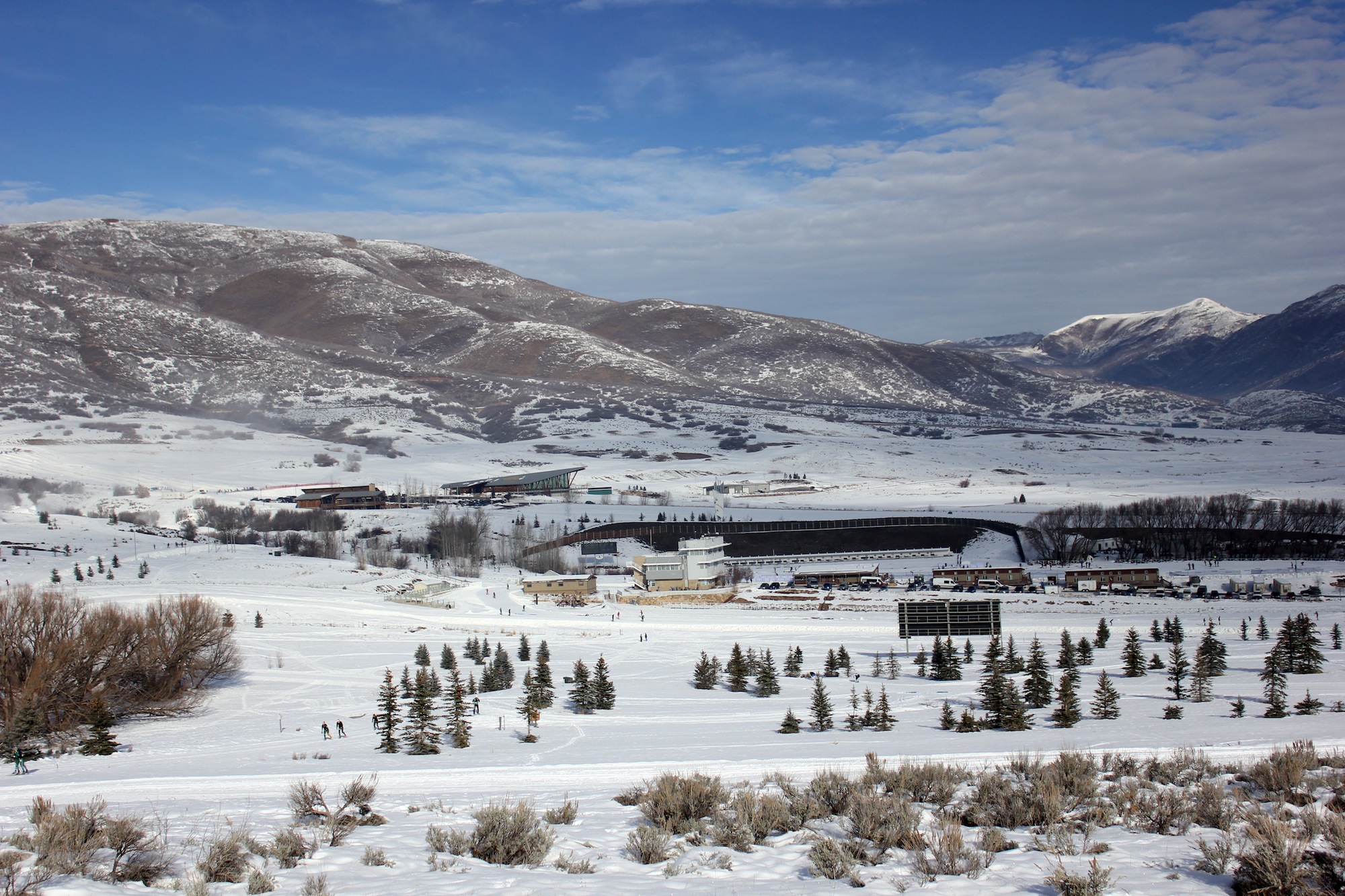
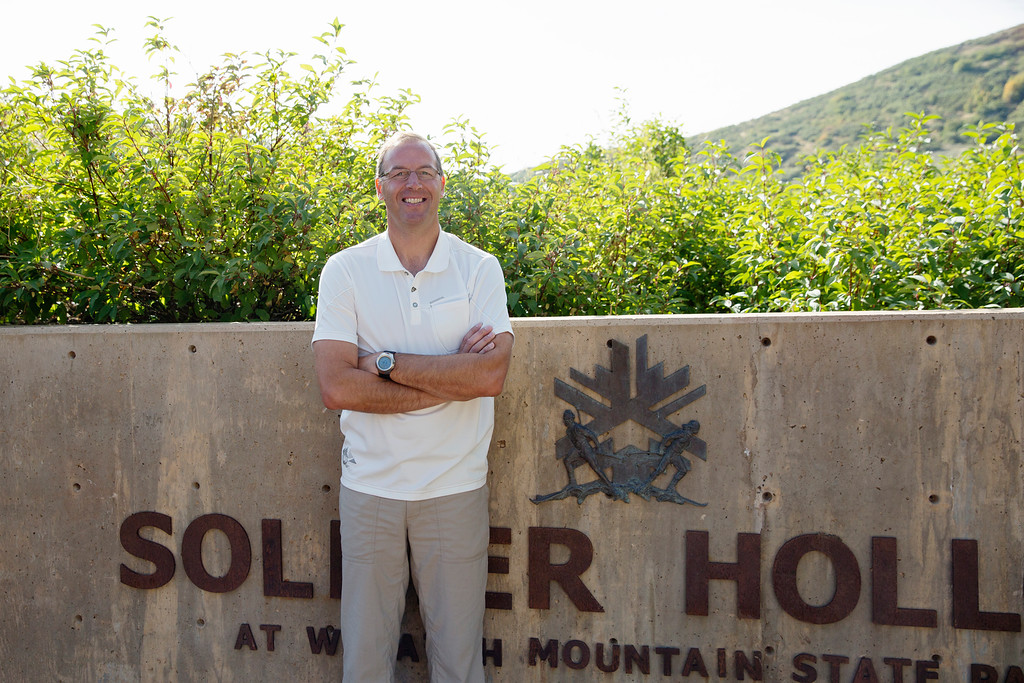
A view of Soldier Hollow’s stadium from the highest point of the 5 k Olympic course as seen in January 2014, with the timing building and Soldier Hollow Charter School (white building) at the center.
As the 2016/2017 race season approaches, plans are proceeding for the International Ski Federation’s (FIS) Nordic Junior/U23 World Championships to return to the U.S. With both the U.S. Cross Country Championships (which take place Jan. 7-12) followed by Junior Worlds (Jan. 30-Feb. 5), the Utah Olympic Legacy Foundation (UOLF) has a full plate this winter.
Scheduled for just two-and-a-half weeks after U.S. nationals at Soldier Hollow, preparations are well underway.
“Without a doubt it’s the largest nordic event we’ve had in Utah since the 2002 [Winter Olympic] Games,” said Greg Poirier, the organizing committee’s technical advisor who has been instrumental in bringing the championships to Park City and Soldier Hollow, Utah. “And it’s been 30 or 31 years since we’ve had Junior World Championships in this country.
“This has been a dream of mine for quite a while, to bring the championships back to the USA,” he said.
The last time Junior Worlds took place in the U.S. was 1986 in Lake Placid, N.Y. Senior World Championships goes back even further to 1950. That year, Lake Placid was supposed to hold the senior championships, but could only host the jumping events due to lack of snow. The cross-country events were moved to Rumford, Maine.
“If it goes well, pat me on the back; if it goes bad, then I had nothing to do with it,” Poirier, who previously coached for U.S. Nordic Combined when his hometown was awarded the upcoming Junior Worlds in 2015, said with a laugh.
According to Poirier, the UOLF and Soldier Hollow are ready to host the championships.
“If we did nothing from now to January 30, facility-wise, we’re ready to go,” he said in early August. “From a technical point of view, I think we’re on schedule. The courses, the ski jumps, the actual competitive side of the event. If athletes showed up tomorrow, we’re ready. We still have to build the stadium and make everything kind of pretty.”
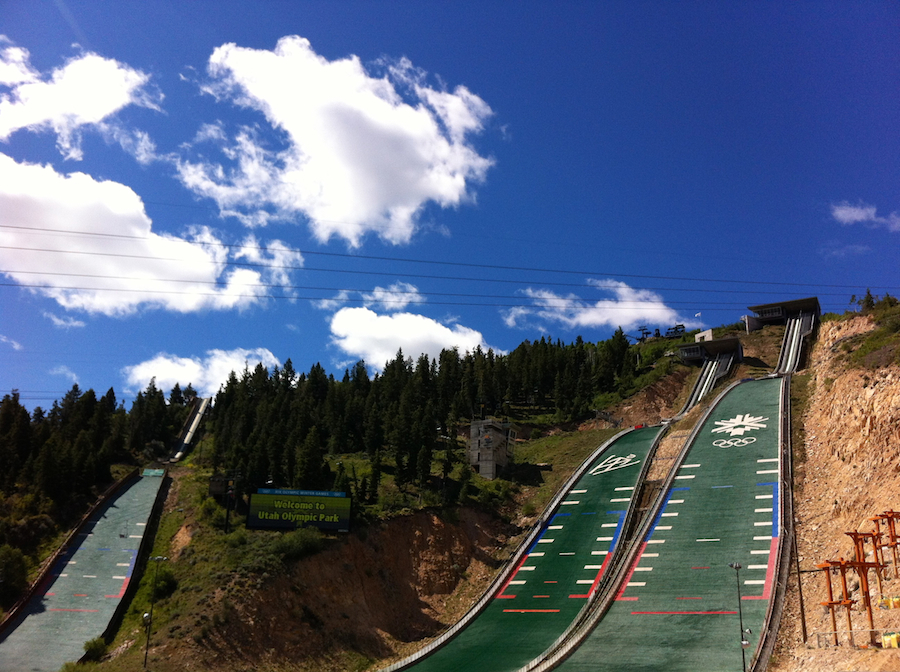
The jumping facility in Park City, Utah, as seen in 2012. (Photo: Mikko Kokslien)
In addition to women’s individual ski jumping and a co-ed team competition, Poirier said that the 2017 Junior Worlds will have a women’s ski jumping team event, which includes four women per team “just like the men’s competition. It’s something the [local] organizing committee wanted to do,” he said.
Poirier initially approached the local organizing committee (OC), seeking approval for this women’s team event. The local OC then asked the U.S. Ski & Snowboard Association (USSA) to ask FIS to add it to the championships program. FIS did so, based on its desire to include women’s ski jumping as a team event for years to follow. Poirier said they were still several years away from women’s nordic combined events.
Logistically, Junior Worlds are a bigger event than U.S. nationals. UOLF Vice President of Sport and Venues Marc Norman expects more than 800 athletes and 400 support staff. The cross-country and nordic-combined skiers and their support staff will be housed in Midway, Utah (near the Soldier Hollow venue), while jumpers and their coaches will stay in Park City (near the jump hills). In contrast, Norman expected about 450 skiers, including some from Canada and Australia, to compete at 2017 U.S. nationals. He anticipated more than 300 volunteers for Junior Worlds, compared to about 100 for nationals.
The Soldier Hollow Charter School, a K-6 public charter school located in the heart of the ski stadium, operates partly in the timing building. Because the school will closed for vacation during Junior Worlds, organizers will have access to the whole building. While school will be in session during U.S. nationals, by agreement, there will be designated space in the building for timing.
Updated Sprint Course
While the distance courses remain the same, there will be changes to the sprint course Soldier Hollow has used for the last several years. The long downhill to the stadium after the last big climb will be broken up.
Racers start their descent on the final downhill of the “old” sprint course at 2013 U.S. nationals at Soldier Hollow in Midway, Utah.
“The sprint is kind of clustered up,” Luke Bodensteiner, USSA’s executive vice president of athletics, said on the phone in August. “It’s become a 200-meter race at times. So they’ve made some modifications … to break up that last long downhill.”
Previously, racers would crest the last climb and descend into a downhill straightaway. That created a substantial draft, helping the tail end of a broken-up group regain contact on that final downhill.
According to USSA Nordic Director Robert Lazzaroni, the revised sprint course will also be used for nationals. Lazzaroni serves as the USSA advisor on the 2017 Junior Worlds organizing committee.
While the facility side of preparation is going well, finding dollars has been a challenge.
“I know they feel they’re behind,” Bodensteiner said. “They’re concerned about how fundraising is going. We remain optimistic it will be a financially healthy event. That’s a concern with any of these events, and Junior Worlds is no exception.”
“The base budget to put on the event is $365,000,” Norman wrote in an email in late September. “We also have an enhanced budget that would allow us to exceed the minimum FIS requirements at a cost of $465,000. Hopefully we can find additional sponsors, suppliers, and donors that will help us close the gap to the base budget and even allow for us to do some or all of the enhanced pieces (more event look, athlete functions, event broadcast, etc…).”
Bodensteiner explained that there was no guaranteed revenue source, and said that organizers would “have to really hump” to raise funds. “Before we decided to bid for the event, we collectively identified enough revenue sources that were reliable that we could make it work. There’s still a little bit of unknown, but it’s not atypical for events to be in that position.”
SMST2 senior skier Ben Saxton, who has been to a total of four Junior/U23 World Championships, paces a young skier during the U.S. Ski Team’s dryland training camp at Soldier Hollow last month. (Photo: Liz Arky)
As of mid-October, USANA Health Sciences, a nutritional supplement company, had signed on as the title sponsor for 2017 Junior Worlds.
“We are still working on sponsorships for the event to fully meet our budget,” Norman wrote on Oct. 12.
“Junior Worlds is a little different beast than other events that we run,” Bodensteiner said. “The World Cup events that we run, you have a broader media footprint. You’re looking at national and in some cases international sponsors for those. They’re easier to get out in front of. With the Junior Worlds here, even though it’s an international event, it’s going to be reliant on local sponsorship. Oftentimes those don’t materialize until the last minute.”
When asked if hosting the Junior Worlds bid would lead to USSA bidding for World Cup events, Bodensteiner hesitated.
“We’re at the point where we’re anticipating it,” he said.
“We haven’t found a financial pathway that makes it realistic,” he said.
Bodensteiner outlined some of the cost differences between hosting Junior World Championships and a World Cup in a follow-up email.
“The main cost drivers are prize money (both for the races hosted and a share of the season overall prizes), lodging and travel cost reimbursement for the top group of athletes and their staff (and a number of Continental Cup athletes), event production (grooming, timing, snowmaking, staffing, wax rooms, course installations, travel costs for various FIS officials, medical evacuation, etc), and TV production (camera installations on course, cabling, satellite truck to send a live signal, production crew to shoot, edit the feed and graphics, etc),” he wrote. “Obviously some of this gets recouped through the sale of sponsorship and TV rights. FIS also keeps a portion of the advertising rights for its own purposes, which do not get passed along to the host organizer.”
If U.S. athletes achieve the goals set by USSA, will there be additional funding for junior cross-country development?
“When we budget for our programs, we always look at results at different levels,” Bodensteiner said. “We look where ‘our best bet is’ and allocate support to be the best in the world. Results at multiple levels including Junior Worlds are always a consideration.”
SuperTour skiers won’t be starting their season at the Rendezvous Ski Trails in West Yellowstone, Mont., this November. For the first time in the Yellowstone Ski Festival’s history, SuperTour races are not on the schedule. Citing altitude and frigid temperatures, the series is starting north in Bozeman, Mont.FasterSkier previously shared a press release from the U.S. Ski & Snowboard Association (USSA) giving the where and when of the 2016/2017 SuperTour schedule for high-level domestic racing. This article provides the why – why are the season’s first races not in West Yellowstone? Why are some U.S. SuperTour races in Canada? Why are U.S. nationals returning to Soldier Hollow after just two years away? And so on. FasterSkier spoke with various members of the American cross-country ski community to help get some answers about why the country’s top skiers will be going where when this winter.
Period One: Western Swing (but no West Yellowstone)
The single most noteworthy change to this year’s schedule may be the move away from West Yellowstone for the season’s opening races. Skiers have flocked to West Yellowstone in search of early-season snow, and often raced there, for a very long time. For how long? And why the change now?
As FasterSkier previously reported, elite skiers have made the Thanksgiving-week pilgrimage to West for nearly forty years: It was 1978 when the U.S. Ski Team held its first Fall Camp there, “with then-U.S. Ski Team coach Marty Hall and skiers like Bill Koch, Dan Simoneau and Tim Caldwell. Koch didn’t come too many years after because of exercise-induced asthma, which worsened with altitude.” People kept coming back. In 2004, Fall Camp, which had long since expanded to include a range of citizen skiers from around the country, was renamed the Yellowstone Ski Festival, with a full slate of clinics, demos, and a gear expo.
So why the change? Well, here’s another number from our article on the history of early-season skiing in West Yellowstone: “6,663: Elevation of West Yellowstone. The Rendezvous Ski Trails are about 6,800 feet above sea level (2,000 meters), and the South Plateau just outside the park is about 1,000 feet higher.”
The athletes have noticed. Bill Koch evidently noticed in the early 1980s. More recently, as Alaska Pacific University (APU) skier Reese Hanneman blogged in December 2015, “For as long as I have been racing, these first two weekends of elite racing have been held in the high mountain west, at illegally high altitude (according to FIS), which always makes them a little funky.”
USSA and club coaches noticed, too. As Robert Lazzaroni, USSA’s nordic domestic program director, explained in a phone interview, the impetus to move away from opening the season in West Yellowstone “came from the club coaches when we met in Craftsbury” following last season’s SuperTour Finals in March. The decision to move elsewhere was close to a consensus, Lazzaroni said: “It was very clear that the season starts too early. It’s too early – November 23rd – to start to chase points, when we want the athletes to peak at Nationals [in early January].”
West Yellowstone, known as “West” for short, is also at altitude, Lazzaroni noted. And finally, Lazzaroni made the uncontroversial observation that “West can be very cold.”
Putting all that together, he said, it just seemed like too much to ask of the athletes: “When you ask the athletes for the first race of the season to be at full speed, and to be fit, and in a cold place – it can be too much. And it puts their season in jeopardy. The risk was too big in their [the club coaches’] mind – too early, too high and the weather can be difficult. And that’s not good that early in the season.”
Hence the move from West in late November to Bozeman in early December: later, lower, and hopefully a little warmer.
So what will be left in West Yellowstone over Thanksgiving week, without elite athletes eyeing the competition, washing their hands, and chasing SuperTour points? Quite a bit, both USSA and West Yellowstone boosters agree.
As Lazzaroni noted, it was a “bummer” to lose the SuperTour component of the Yellowstone Ski Festival, but the festival “will continue. They will still have the junior race, they will still have the Masters race. It will just not be a SuperTour. … We believe a lot of the clubs will be there, training.”
Moira Dow seemed to agree. The program director of the Yellowstone Ski Festival, Dow said on the phone that she was “disappointed” to lose out on the opportunity to host the SuperTour races, but had no hard feelings toward USSA and appreciated the need to structure a race series to support athlete development.
“We understand that the athletes have to look out for the best of their development on the national stage,” Dow said. “While we recognize that, we are disappointed. We think that having the SuperTour held in a small town of West Yellowstone is fun and exciting. So we’re disappointed, but we understand the need.”
Dow admitted that the schedule change “was a surprise” to the organizers of the Yellowstone Ski Festival.
“Going into the [USSA] Congress [in mid-May] I thought it was still up for debate,” she said.
But given “the way it was presented at Congress,” Dow continued, “the athletes made their statement – I think the schedule was decided before Congress.”
Despite the surprise, Dow underscored that she had no hard feelings, and certainly did not view the schedule change as a personal attack on her or the festival. And she emphasized that everything that citizen skiers have come to expect from West Yellowstone in Thanksgiving week – clinics, demos, etc. – will still be there, including the races: “We’ll be holding just as many races, they just won’t be designated SuperTour” races, she said.
“SuperTours are not the most important part of our festival,” concluded an upbeat Dow. “We hope to see you in West Yellowstone.”
(So will the SuperTour return to West next year? The short answer is that likely nobody knows. In August 2015, quoting then-USSA nordic manager Joey Caterinichio, we reported, “West is the perennial host for Period I and could potentially rotate with Alaska, although, ‘there is no intention of changing West Yellowstone,’ according to Caterinichio.” That obviously didn’t last long. As Dow said when asked about her plans for November 2017, “we’re waiting to see – it changes from year to year.” She added, reflecting the development of this year’s schedule, “we find out in May what the athletes are looking to do to help put them on the national stage,” and then respond to that.)
An early December morning at the Sovereign Lake Nordic Centre in Vernon, B.C.
So the opening SuperTour weekend will be in Bozeman, Mont., starting with a skate sprint on Saturday, Dec. 3. A 10/15 kilometer classic individual start follows on Dec. 4. It will be a short week before athletes return to action with a classic sprint at Sovereign Lake in Vernon, British Columbia, on the evening of Friday, Dec. 9, with another short turnaround before 10/15 k skate interval starts the next day. (A relay that is not scored for SuperTour points will be held at the same venue on Sunday.)
If the move away from West Yellowstone was the first thing that struck many skiers about this year’s schedule, the move across the border was probably the second thing of note. The races in Silver Star will be a joint SuperTour/NorAm weekend (that is, they will be held together with the Canadian high-level domestic race series), an arrangement that has occurred in the past but not for some time. Ski representatives from both countries – which are identified as “children of a common mother” in the inscription on the Peace Arch at the border crossing between Blaine, Wash., and Surrey, B.C. – agree that the cooperation is welcome.
As Cross Country Canada (CCC) High Performance Director Tom Holland said on the phone earlier this summer, “We had a couple of phone meetings this year and there’s a willingness to work more together on a NorAm/SuperTour. Why not? To have more of these North-South relationships in the East and the West so people don’t have to travel so far. We’re sort of repeating history here. We’ve wanted to do this, but we did a lot of it in the ’90s, if you look at the results there were some great races back then. So it’s kind of a common-sense thing to have a North American race circuit where we compete against each other. We went down to West Yellowstone the last couple of years. It would be nice if there was more than that one weekend, but the U.S. has some other commitments in December. It would be nice if we had three or four weekends. The Euros ski more than us before Christmas, so the more we do the better.”
Holland continued, “We have those races every year anyway. It’s more about getting a high level of competition so we’re competing against the best in each nation and get warmed up for the season. There’s lots of examples of it working in the past, but it sort of faded as the SuperTour got stronger at one point. Anyway, we’re totally committed, and the U.S. is making a commitment, and we’re happy about U23/World Juniors being down there. So we’re going to do our trials down there. There’s a lot of cross-border stuff going on this year. I hope that sets a good tone for the future.”
Lazzaroni concurred, explaining that USSA wanted to hold consecutive race weekends relatively close together in order to make transportation somewhat easier. He also said they were pleased to combine with Canada in order to create a larger and more competitive field. Lazzaroni said that he hoped to have more joint SuperTour/NorAm weekends in the future.
Period Two: SoHo and Truckee
Athletes and coaches test skis in the stadium at Soldier Hollow in Midway, Utah, at 2014 U.S. Cross Country Championships.
Athletes will have nearly a month off before racing resumes with U.S. Cross Country Championships in January at Soldier Hollow in Midway, Utah. There is a 10/15 k skate individual start on Jan. 7, a full classic sprint the next day, and a 20/30 k classic mass start on Jan. 10. A qualification-only skate sprint event rounds out the week on Jan. 12.
U.S. nationals visited Soldier Hollow fairly recently. The races were held there in 2013 and 2014, before moving to Michigan’s Upper Peninsula for 2015 and 2016. The move back to Utah after only two years away is atypical.
The “main reason” for the quick return to Soldier Hollow, Lazzaroni said, “is because of World Juniors.”
The U23/Junior World Championships will be held at Soldier Hollow from Jan. 30 to Feb. 5, 2017, and will include roughly 750 athletes from dozens of nations. Some of those athletes will be junior and U23 skiers from the U.S., and Lazzaroni said that USSA wants to provide American skiers with a home-field advantage: “It was very important to us to bring the Championships back to the U.S., to show our commitment to FIS, and also to provide our athletes home-field advantage.” Lazzaroni explained that the best way to give American athletes this advantage was to give them an additional chance to race at Soldier Hollow in advance of the championships.
Therefore, Lazzaroni explained, USSA did not look back to the last time when U.S. nationals were held at Soldier Hollow in setting this year’s schedule. Rather, they looked forward, asking how best to prepare American athletes for Junior Worlds. And the answer was to let them race at Soldier Hollow in January before – for some skiers – racing there again in February.
But there will be something missing from this year’s edition of U.S. nationals: a national championship skate sprint. Instead, in the 2016/2017 season only, the national championship skate sprint will be held at the season-ending SuperTour Finals, as part of a race series colloquially known as Spring Series.
This schedule change, Lazzaroni explained, is due to the overall load on the Soldier Hollow volunteers and local community. It is “asking a lot of the venue” to hold both U.S. nationals and Junior Worlds at Soldier Hollow within the same month, Lazzaroni said. Among other inconveniences, he noted that there is an elementary school at Soldier Hollow, which also serves as the timing building and race headquarters, that has to be shut down when high-level races are held. Lazzaroni said that the local community was unable to commit to a full U.S. nationals schedule, including a full skate sprint day, on top of its other hosting obligations.
A quarterfinal in the freestyle sprint at 2013 U.S. nationals at Soldier Hollow in Midway, Utah. There will be no heats at this year’s national skate sprint; a qualification-only skate sprint will be held instead.The initial solution was just to take away the sprint race, moving U.S. nationals week from four races down to three. But, Lazzaroni said, this created a problem from the perspective of U.S. Ski Team Head Coach Chris Grover, who needs to oversee the selection of the U.S. team for the 2017 World Championships in Lahti, Finland, later this winter.
The races in Lahti include an individual skate sprint and a team classic sprint. The first half of the SuperTour schedule includes two classic sprints, but only one skate sprint.
The compromise, Lazzaroni explained, was a qualification-only skate sprint event at Soldier Hollow on Jan. 12. This was acceptable to Soldier Hollow event organizers and volunteers. And, Lazzaroni states, he feels that this “was a good compromise.” This way, “Grover can still have a qualification to make sure he has the best skiers to go to Lahti, and we don’t burn out the skiers and volunteers at Soldier Hollow.” The result will be a qualification-only skate sprint day, with no rounds contested. Results from the qualification will be used for purposes of qualifying for the U.S. World Championships team, but will not be scored for SuperTour points.
Following the skate-sprint qualification event, athletes have nine days off before racing on the Auburn, Calif., trail system in late January. A classic sprint will be held on Jan. 21, and a 5/10 k skate individual start on Jan. 22.
Period Three: Why not Ishpeming?
Roughly a month later, the SuperTour resumes with two races in Ishpeming, Mich., about 15 miles outside of Marquette on the state’s Upper Peninsula. There will be a skate sprint on Friday, Feb. 17, and a 5/10 k classic individual start on Sunday. (A 15/20 k mass start skate race, which will be a FIS-sanctioned collegiate race but will not be scored for SuperTour points, will be held on Saturday.) The race weekend will be held in conjunction with the NCAA Central Region Championships hosted by Northern Michigan University.
Al Quaal Recreation Area (Photo: Travelmarquettemichigan.com)The trails at Ishpeming’s Al Quaal Recreation Area last hosted a FIS event in February 2016. Before that, the previous and only entry for Ishpeming in the FIS results database is for a race weekend in February 1993. Suffice to say that it’s been a while.
So why Ishpeming? As Lazzaroni explained, repeating part of a reporter’s question, “You say, ‘Why Ishpeming?’ I would say, ‘Why not Ishpeming?’ ”
He said USSA attempts to rotate the SuperTour sites within the regions each year, and that this year the mid-season races are coming to the Midwest. It also recognized that the American Birkebeiner is held in the Midwest in late February, so there is an incentive to keep the SuperTour in the area. And Theodore Wirth Park in Minneapolis is undergoing construction work at present, and so was unable to host SuperTour races this year.
Lazzaroni explained that USSA was looking for a venue that could host SuperTour races for two weekends in a row, but was unable to find any venue that would take on this commitment. He said that they were pleased to get a taker for just one weekend in Ishpeming (population approximately 6,500), which has newly homologated trails and was eager to show them off. When the discussion was opened regarding bringing the SuperTour to the Midwest, Lazzaroni said, Ishpeming jumped on board.
“They have a long tradition of nordic skiing,” Lazzaroni noted, adding that Ishpeming was hosting cross-country races as early as 1905. The National Ski Association of America, a group that would later become the modern-day USSA, was founded in Ishpeming that same year.
Although last year’s Birkie was only scored for half SuperTour points, USSA has since revisited this assumption. At this year’s working group for the SuperTour schedule, Lazzaroni explained, they opened the question of whether the Birkie should count for full points or half points. Although some people had argued over the past few years that the Birkie should count for only half points, because it is often not a “normal” race distance, he clarified that the USSA Nordic Competition Guide makes “no mention that it should be half points.” Accordingly, USSA opted to follow the Comp Guide and restore the Birkie to full-points status.
Something less than a full SuperTour field typically races the Birkie; there were 17 American skiers with FIS points in the men’s elite race last year, and nine in the women’s.
Period Four: Spring Series in the Golden Heart City
A month after the Birkie, racers will travel north to end the season at Spring Series in Fairbanks, Alaska. Races will be held every other day over a week-long period from March 27 to April 2. A skiathlon, a skate sprint, a mixed club relay, and a 30/50 k mass start skate race are on the calendar. With a full skate sprint not being held at U.S. nationals in January, all events save the skiathlon will be national championship races.
Longtime Fairbanks race director John Estle is already excited. In an email to FasterSkier, Estle explained that the races will be held on a series of newly homologated and re-homologated courses at Fairbanks ski area Birch Hill. He noted that the new men’s sprint course will be “between 1500 and 1600m, which seems to be the preferred distance for sprint courses. Guys seem to like them to be about 3:30 in duration.” The women’s course will be “just a bit shorter than the men’s course.”
A 2012 photo from the trails at Birch Hill in Fairbanks, Alaska. (Photo: Lauren Fritz)After explaining the combinations of homologated loops that will be used for the various races, particularly the 30 and 50 k races on the last day of the season, Estle concluded, “The courses for those races will be quite challenging.”
Of the four races at Spring Series the skiathlon stands out, for its presence as well as its non-canonical distance. The suggestion on the official schedule that the distances will be 14 k for the women and 24 k for the men is apparently not quite accurate. Rather, Estle wrote, the distances will be 15 k and 22.5 k, respectively. “That is because we will have two homologated 3.75Km courses, one for the classic leg and one for the skating leg. Two laps of each course for women, three laps of each course for men” comes to 15 k and 22.5 k.
Estle is well aware that, at the Olympic Games or World Ski Championships level, women typically race a 15 k skiathlon and men a 30 k. “But most of the feedback I got from coaches and athletes was that at the end of a long, long World Cup season 30Km would just be too much,” Estle wrote. “At the World Cup finals in Canmore last year they did a 30Km skiathlon on a 3.75Km course and a large chunk of the field was pulled from the race (and hence the tour) after getting lapped. That was on a really tough course on a really warm day, but still. Those were damned good skiers, and they were completely shot at the end of that race.” So 15 k and 22.5 k it is.
A skiathlon, over any distance, is a rare event at the SuperTour level. Estle recalled hosting skiathlons in Fairbanks in both 2008 and 2009, but it is unclear whether they have occurred in this country at the highest levels of domestic competition since then. (The races are often entered in the FIS database as “pursuit” rather than “skiathlon” when they are held in this country, making it difficult to search for them. They are held more broadly at the high school and citizen racer levels.)
Skiathlons may be uncommon at this level of competition, but there seems to be widespread agreement that there should be more of them.
As Estle wrote, speaking as a race director, “One of the reasons that we are doing a skiathlon is that nobody ever does them in the US. … A skier’s first experience in a format contested at the World Championships should not be at those championships: Junior WC or U23 WC. If we are thinking about developing skiers who can compete at the highest levels, and coaches who can support them, then we need to make sure that our domestic schedule (FIS or otherwise) provides the types of experiences that will prepare them for the next highest levels of competition. Our skiers need a broad spectrum of experiences, and right now, because there are very few, if any, skiathlons on the domestic schedule, we are not preparing those skiers as well as we could or should.”
Lazzaroni sounded similar notes on behalf of USSA, saying that the skiathlon is contested at various international championships, and “why not prepare our athletes for that?” Echoing Estle, he noted that athletes reported back from the most recent World Junior Championships that they had never done a skiathlon before, “And that’s not right.” Lazzaroni said that he wouldn’t expect to see “many, many more [skiathlons] in the future” – but he added, “my vision is that, yes, we should train our skiers to be better at skiathlon, to be better prepared to do skiathlon.”
U.S. Ski Team Women’s Coach Matt Whitcomb was in complete accord, telling FasterSkier in a recent interview, “It’s often that at the junior and even U23 level when we go internationally, that we’re scrambling last-minute to find skiathlon boots, or to teach athletes how to load an exchange zone and what the rules are. So we’ll consider this just a quick dose of education for our entire community, and I think it’s going to have a big effect.”
The athletes seem to agree as well. Lex Treinen of APU, a top domestic athlete who has recorded SuperTour podiums but has not yet raced on the World Cup (which sees a handful of skiathlons each year), wrote in an email that he had done a skiathlon in Fairbanks some years ago – but that otherwise, “I have just done a couple at World Juniors and U23s.”
As Treinen explained, “Skiathlons are great and there is a good reason that they don’t do them very often on the Supertour: they are a pain in the ass logistically … for coaches and athletes and as the APU SuperTour team operates right now, we would not have the resources to wax for a skiathlon very effectively most of the season. Fairbanks will surely be an exception, since #1 it is closer to home and #2 it is Nationals which means there is a little bit of extra tech support from our team. Either way I don’t have a doubt that the fittest person will win this March and I really think it is a positive thing to be able to race some new formats. I am very excited that the Fairbanks organizers have decided to do something novel.”
Annie Pokorny, of the Sun Valley Ski Education Foundation (SVSEF) Gold Team, expressed similar sentiments. “The only skiathlons I’ve raced were at U23 World Champs, one in the Czech Republic and one in Italy,” Pokorny wrote in an email. “Despite my slim experience, however, I was incredibly excited to hear that USSA had integrated the skiathlon into domestic racing.”
Pokorny wrote that, “While it will certainly take some adjustment, I am always excited to see a diversified schedule on the SuperTour circuit. The more events we have, the more opportunities there are for varied competition and exposure to certain skills that our World Cup brethren see on a regular basis. Personally, the skiathlon is one of the most fun and exciting races I’ve ever entered. Having a switch in technique changes the rules of the game so there are more chances for comebacks than in a traditional mass start.”
When asked whether she was going to do anything special to prepare for this addition to the schedule, Pokorny wrote, “Few people know this, but in my first skiathlon I literally had the slowest transition time in the world, by many seconds. I don’t think I’ll need to change training much to be ready for the racing part, but it would be in my best interest to spend some time skiing while taking on and off my poles.” (Pokorny, who finished 29th in that race, is correct that her transition time ranked 48th out of 48 skiers.)
Looking to the future: Cross-country ski cross?
While this year’s SuperTour aims at selecting the U.S. team for Lahti and assigning start rights for upcoming World Cup events, USSA is also looking toward the future. And to hear Lazzaroni tell it, the future may involve cross-country ski cross.
Hannah Halvorsen (Far West/Sugar Bowl Academy) qualified 10th in the first-ever Cross-Country Cross event at the 2016 Youth Olympic Games in Lillehammer, Norway. (Photo: Far West/Facebook)“The cross-country cross has been a big success at the Youth Olympic Games in Lillehammer this winter,” he said. “It’s a format that the TV likes, the athletes like, that everybody likes. … I do hear from FIS that this is a format they want to push forward. We don’t know yet where it is going to go, but this is something we are keeping our eyes open [for], and I would not be surprised if you will see cross-country cross at some of the national events in the near future.”
Lazzaroni clarified that, by “near future,” he does not mean right away – “Obviously not next winter.” He added that this could become an important event to prepare U.S. athletes for larger stages: “Again, if this is going to be an event at World Juniors down the road – in two, three, four, five years, I don’t know – at Olympics, down the road – we should prepare our kids. And we have this discussion at Congress with the club coaches at a younger age, and we did encourage them to put some cross-country cross events at the local races. And again, the kids love it, because it’s fun. It’s working on agility, and it’s working on balance, and they become better skiers. It’s not now on the calendar, but I wouldn’t be surprised if in the near future we see more and more of this type of events.”
Snowmakers in action at Soldier Hollow in January 2014. The 2002 Olympic venue in Midway, Utah, last hosted the U.S. senior national championships in 2014 (as well as the year before in 2013) before Houghton, Mich., hosted in 2015 and 2016. Nationals are returning to SoHo this coming January.
PARK CITY, UT – Top cross country athletes from across America will participate in 16 races at seven different stops as part of the U.S. Ski and Snowboard Association’s (USSA) annual USSA SuperTour. The 2016-17 tour kicks off in December in Bozeman, MT.
The SuperTour is a series of International Ski Federation (FIS) sanctioned cross country ski races taking place across America, produced by the USSA, together with its divisions and clubs. The Tour is a vital piece of the USSA’s development program, providing top level racing at key cross country centers around the nation. It’s a proving ground for club athletes with aspirations of making it to the U.S. Ski Team and competing on the FIS World Cup tour and in the Olympic Winter Games. Caitlin Patterson (Craftsbury, VT; Craftsbury Green Racing Project) and Eric Packer (Anchorage, AK; Alaska Pacific University) took the season long titles in 2015-16.
“The USSA has had great support from its clubs and divisions in putting together this year’s calendar,” said USSA Nordic Domestic Program Director Robert Lazzaroni. “We’ve rotated a few sites this year and will continue to move around in the future to get the SuperTour to new places. Moving the event around helps stimulate top-level racing in America.”
Period 1 includes stops in Bozeman, Mont., and Silver Star (Sovereign Lake), British Columbia. The decision was made at USSA Congress to start the series one week later than previous years and to combine with Canada to increase the field.
Period 2 will open in January with the L.L.Bean U.S. Cross Country Championships at Soldier Hollow in Midway, Utah. Soldier Hollow is also a site for the 2017 FIS Nordic Junior and U23 World Ski Championships. Athletes will then continue on to Truckee, Calif., for races on the Auburn trail system.
The third period will feature two stops in the midwest. Athletes will race on a new homologated trail in Ishpeming, Mich., before participating in America’s largest cross country race, the Slumberland American Birkebeiner, on Feb. 25 in Hayward, Wis. The series wraps up with the SuperTour Finals Mar. 27- April. 2 in Fairbanks, Alaska. Finals will also double as the L.L.Bean U.S. Championships for long distance and freestyle sprint.
“The divisions, venues, technical delegates and homologation inspectors have been working hard to develop new venues and evolve current courses to strengthen the SuperTour,” stated USSA Cross Country Development Coach Bryan Fish. “We are making strides to include junior and collegiate racing within the SuperTour to enhance head-to-head racing with juniors, college athletes and our top World Cup competitors. Our collaboration with Cross Country Canada will also better prepare athletes for international competition. It’s an exciting year for cross country in the United States, and we’ll get to showcase this to the world during Junior World Championships.”
Athletes will also vie for for points across the tour to earn Continental Cup leader starts and World Cup starts. There will also be spots available for the 2017 FIS Nordic World Ski Championships Feb. 22 – March 5 in Lahti, Finland. Those spots will be awarded after the conclusion of the U.S. Cross Country Championships in January.
(*Note: U.S. championships also include a freestyle sprint qualifier, which serves as a qualifier for 2017 World Championships but will not be scored as a U.S. nationals or SuperTour event)
Jan. 21-22, 2017
Truckee, CA
Men: Sprint CL, 10 km Free
Women: Sprint CL, 5 km Free
Period 3
Feb. 17-19, 2017
Ishpeming, MI
Men: Sprint Free, 10 km CL
Women: Sprint Free, 5 km CL
Feb. 25, 2017
American Birkebeiner
Hayward, WI
Men’s and women’s 50 km Free
Period 4
Mar. 27-April 2, 2017
SuperTour Finals
Fairbanks, AK
Men: 24 km Skiathlon, Sprint Free, Relay, 50 km Free
Women: 14 km Skiathlon, Sprint Free, Relay, 30 km Free
When members of the USSA Cross Country Sport Committee head to Park City next week for the annual USSA Congress, they will be deciding the fate of the High Plains division.
Before the 2015/2016 season began, the regional cross-country ski associations around America hammered out a deal with the U.S. Ski and Snowboard Association (USSA): they crafted “affiliation agreements” detailing the relationship between geographic divisions and the national governing body.
Until that point, regional bodies like Central Cross Country (CXC), Intermountain Division (IMD), the New England Nordic Ski Associaion (NENSA), and the Pacific Northwest Ski Association (PNSA) had been organizing much of skiing on their own. They ran USSA-sanctioned races, placed members on USSA committees, and were represented as teams at Junior Nationals. But in terms of day-to-day governance and regional racing, they were their own non-profits and to a large extent their own bosses.
15 conference calls later, the divisions are still their own nonprofits but are now legally affiliated with USSA.
Two weeks ago, the chair of the board of the High Plains division got a call from Robert Lazzaroni, the nordic domestic programs director for USSA.
“He was asking a few questions about High Plains, and just getting a better feel for how our division is laid out and what we’re made up of,” said Rebecca Watson. “How many U14s do we have coming up? How many NRL races do we have? Details like that.”
Lazzaroni was hired by USSA in August of last year, and the national governing body has been pushing to make additional partnerships with cross-country ski organizations at all levels and gain members in the nordic world.
It seemed to Watson like Lazzaroni was doing an educational fact-finding mission about a remote division. High Plains includes all of Wyoming except for Jackson Hole (which is part of Intermountain), and also serves some communities in eastern Montana and western South Dakota which are far from their designated divisions’ resources. It is a geographically large region in a sparsely populated part of the country.
Then an email arrived in Watson’s inbox.
“About four days later I got an email from Alex [Natt, USSA’s executive vice president and general counsel] saying that they had decided not to renew our affiliation agreement and that we would talk about it at Congress,” Watson said. “That was a little bit of a shock, that it wasn’t going to be renewed. It seemed like they didn’t give me much of a reason for the non-renewal.”
Since the affiliation agreement system has only been in place for a year, it’s unclear what ending the agreement will mean for Wyoming skiers and teams — other than, as Lazzaroni made clear in a later email to Watson, no High Plains team at Junior Nationals.
There’s still a chance that High Plains will be an affiliate of USSA next year, because the decision has to be voted on by USSA’s Cross Country Committee.
“At Congress, there will certainly be a continuation of the discussion on [High Plains],” USSA CEO Tiger Shaw wrote in an email. “This is a constructive and engaging discussion that is fully in flight, and as such it wouldn’t be right for me to comment on anything about it. I want the players to sort it out.”
Those in the High Plains region are perplexed, and leaders of other divisions concerned.
“Let me tell you, I have gotten an incredible amount of support from around the nation, from other team leaders and coaches,” Watson said. “It’s been really amazing. I’m just hoping that we can continue to grow the sport, and to make it accessible to everybody. That’s my biggest thing, is access.”
Like his boss, Lazzaroni did not elaborate on the reasons for the decision.
“See below the exact wording,” he wrote in an email on Tuesday. “USSA has decided not to renew the Affiliation Agreement with High Plains which would otherwise auto renew effective May 1, 2016. High Plains’ status as a USSA Affiliate will be considered at the USSA Congress later in May.”
Why Affiliate?
According to another divisional leader, one of the main purposes of the affiliation agreements were to cover everyone’s legal backs.
PNSA is one of the few divisions where alpine and cross-country skiing are still integrated under one governing body. The association’s Director of Nordic Alan Watson – no relation to Rebecca – was able to watch the alpine divisions go through the same process a year earlier.
“One of the things the McKinsey study had pointed out is that there’s no legal relationship between the divisions and USSA – they weren’t really divisions, they were their own nonprofit organizations,” Alan Watson explained. “They thought it would be good to have a contract … My understanding is that one reason to have the affiliation agreements is to protect us against some sort of unfortunate legal repercussions that could happen, but for practical purposes nothing changes.”
Indeed, once the agreements went into effect, not a lot changed. One main thing, said Rebecca Watson, is that divisions could now purchase liability insurance from USSA at a lower cost.
There were also agreements about race organization fees and head taxes, the use of the USSA logo, and communication between USSA and the affiliates, for instance about education and coach and official certification. In many cases, regional races now require a USSA membership, which is more affordable thanks in part to initiatives by Shaw and also to agreements worked out by Joey Caterinichio, Lazzaroni’s predecessor who stayed on with USSA this winter despite resigning last summer.
“Through all 15 or so conference calls, I most definitely got the feel from Tiger [Shaw, the USSA CEO] that he just wanted to have a better understanding of what the divisions were doing and to help grow the sport,” Rebecca Watson said. “That was the biggest thing that he kept saying: ‘I just want to increase membership and help grow the sport and help the health of the divisions.’ ”
Shaw confirmed as much in an email, writing, “You are correct in that the goals and initiatives of USSA have not changed. We do want to grow membership, enable competition and foster all of our sports. That is core to our mission.”
FasterSkier obtained a copy of an affiliate agreement from another division, with the source requesting anonymity in order to protect ongoing relations with USSA.
The agreement had virtually no references to elite racing, results, or the development pipeline: while divisions were responsible for communicating with USSA when they wanted to schedule USSA-sanctioned races, they were also welcome to continue to host non-sanctioned races (i.e., without points) and allow non-members to enter them. Junior Nationals was never mentioned.
‘Bottom of the Ranking List’
When Rebecca Watson asked Lazzaroni for a rationale about why her affiliate agreement was being terminated, however, high performance and the development pipeline seemed to be the focus.
Watson gave FasterSkier a copy of an email Lazzaroni had sent her (after also sharing it with other divisional leaders and the Sports Committee), and it focuses mainly on junior programming and racing.
Among his concerns: the division organizes few races, and even fewer that are USSA-sanctioned National Ranking List (NRL) competitions; there are few year-round clubs, and most of the teams are high school teams; and the region finished at the “bottom of the ranking list” at 2016 Junior Nationals.
With just 584,000 people and few major population centers in Wyoming, it’s not surprising that there are a limited number of ski teams in the state. As for the matter of most of them being high school teams, Watson said that’s partially a matter of logistics.
“Because of the distances that we have to travel it would be crazy to have two separate race series,” she explained. “I think people can look at that and say that we’re just high school. But we do have both club and high school, it’s just that we try to work it out so that we can do things together.”
Watson said that High Plains is looking into hosting more NRL races, but that it’s an ongoing challenge in part because of the expense. According to USSA’s website, hosting a USSA race costs $50 dollars, plus a $3 per person head tax up to a maximum of $300 per gender. That’s potentially $650 in cash to hand over. Hosting a FIS race series carries an additional $500 fee.
Several venues in Wyoming are upgrading their race-hosting abilities, including Watson’s hometown of Laramie and, perhaps most notably, Casper — which is using donated land and pouring more than $700,000 into putting up a state-of-the-art biathlon facility.
But still, in 2016 the 22-member High Plains team was last in the Junior Nationals Alaska Cup scoring, by a wide margin. They had only one skier hit the top 30: Adam Pickett, who finished 23rd in the U16 5 k and 26th in the U16 sprint.
Mike Elliott, a head of the Rocky Mountain division and a member of the USSA Cross Country Committee, said that during the affiliation agreement negotiations, he had interpreted some of the top goals of the process to be increasing membership and gaining more non-competitive members.
The process was not as contentious as it had been for alpine, he said, and everyone seemed to be talking in good faith.
“That is why I was so surprised at USSA notifying [High Plains] that they were not renewing the affiliation agreement,” he wrote in an email on Thursday. “Judging how the conference calls were handled, I would have thought USSA would have reached out to [High Plains] to offer professional help. There was no notification to the USSA Cross Country Committee that USSA was even thinking about not renewing the affiliation agreement that I am aware of, and I am on the Cross Country Committee.”
Geography
Another issue Lazzaroni seemed to have with the division was geography: he told Watson that one-state divisions don’t make sense.
“One division should represent more than one state (High Plain represent only Wyoming, minus Jackson Hole). Club, state, division, region, national is the map. AK is clearly a unique geographical situation,” Lazzaroni wrote in the email Watson shared.
In fact, there are other divisions which represent primarily one state. Great Lakes includes Michigan, Indiana, Kentucky, and Ohio, but almost all of its skiers hail from northern Michigan. It is considered a sub-division of Midwest, also governed by CXC.
Mid-Atlantic comprises New York, New Jersey, Pennsylvania, Delaware, West Virginia, Maryland and the District of Columbia. But its skiers are almost exclusively from New York.
The reason for High Plains encompassing primarily one state is partly the size of Wyoming (the organization does also include parts of Montana and South Dakota). The state is roughly 280 miles wide and 360 miles long. Cut out and put together, all of the traditional ski regions of Lazzaroni’s native France would easily fit within the borders of Wyoming.
“Before [2003] Wyoming was split into four different divisions,” Watson explained. “It made it very dysfunctional within the state. Laramie was with Rocky Mountain, Pinedale with Intermountain, Cody went up to what was Northern, but now no longer exists.”
High Plains teams do travel to the western Super JNQs; to get to Soldier Hollow, Utah, might be a six-hour drive. Sun Valley, Idaho, is over nine hours from Casper, Wyoming.
“I was actually on that coaching crew which put forward the initial proposal for [High Plains to exist],” Watson said. “One of main reasons was, geographically, it was impossible to get to the IMD qualifiers. One skier attempted it, and was driving 21 hours in a weekend to and from a qualifier. It was just absurd.”
In his email to Watson, Lazzaroni suggested that once High Plains no longer exists, Wyoming athletes could choose between “geographically close divisions”: IMD, including Idaho, Montana, Utah, and Jackson Hole, or Rocky Mountain, which comprises Colorado and New Mexico.
This plan has not yet been sussed out.
“We have not had any discussions within IMD about what would happen to [High Plains] regarding their participation in other divisions,” IMD Competition Committee member Rick Kapala, also the Cross Country Program Director of the Sun Valley Ski Education Foundation, wrote in an email.
Furthermore, there was confusion as to why this was surfacing now, rather than last year when several of the first conference calls were dedicated to mapping out regions and divisions.
“[A goal of the affiliation agreements was] clarification of geographic boundaries for all divisions to include states that may have a limited number of participants,” Elliott wrote. “I do not remember any discussion regarding there were issues about High Plains representing only one state.”
“Why did we go through all this stuff last summer, and why did nobody say, ‘OK, High Plains, you’re sort of a weak division, you’re on probation?’” Alan Watson asked.
Another Theory?
There might be one other factor: Jackson Hole. The town stayed part of IMD, but recently a skier who lived in Pinedale, Wyoming, and skied with Jackson Hole as a J3 (U14) decided to compete in the High Plains junior national qualifiers instead, and thus was able to meet qualification criteria where she would have failed in IMD.
The idea that this could happen provoked strong reaction.
“What, if anything, does our non-renewal have to do with the border town issues with Jackson?” Watson asked in her email.
“We do not believe that offering a way for skiers to qualify to junior national Championship that do not require skiers to train more and to become better skier is the right way,” Lazzaroni replied.
But others, including Alan Watson, don’t see this as a major issue.
“One thing that Tiger [Shaw] clearly said is that kids in border towns should be able to choose which division they want to compete in,” the PNSA head said. “Which makes sense to me, because we want kids to want to race.”
What is clear is that if the Sports Committee follows USSA’s recommendation, there will be no more High Plains division.
That, Watson believes, would be unfortunate.
“We took [the state] and were able to join it as one division,” she said. “And it’s been huge for Wyoming skiing. The accessibility to skiing, and to skiing at the national level, has increased so dramatically.”
Following a yearlong study by an independent sport task force, the U.S. Ski and Snowboard Association introduced sweeping nordic membership changes with broader offerings and prices as low as $15. This summer the USSA brought on experienced nordic leader Robert Lazzaroni to help grow USSA Nordic programs. A veteran of two decades in the cross country ski industry, he was Rossignol nordic division manager and, most recently, program manager at the Utah Olympic Park where he was instrumental in Park City Nordic being awarded the USSA’s Club of the Year honor last season.
Robert, welcome to the USSA. You started in August and are starting to roll out new programs already.
It’s been a smooth transition to bring my skills from the nordic ski industry to the USSA. The membership task force did a good job in opening the door to the possibilities and it’s been fun to start the process of engaging clubs and divisions, ski instructors, touring centers, ski industry, races organizers and retailers to grow our sport.
What were some of the outcomes of the task force?
The group represented all areas of our sport from athletes to clubs to industry and more. The key focus was ‘how do we grow our sport.’ We have over 20,000 nordic skiers actively competing but only a small percentage are USSA members. We now have memberships as low as $15 and have lowered the competitor membership from $150 to $95.
(Interview continues below)
Why is membership growth important?
Nordic skiing is a family – we’re all very close. We’re proud of our sport heroes. We need to give our entire family an opportunity to feel the pride of supporting our national team and the development system that helped them reach the top. Now, for just $15, you can be a part of their success.
What’s important for USSA competitors?
One of the most important elements of a sport program is having high quality, fair competitions. USSA events like Junior Nationals, the nationwide USSA SuperTour and the annual USSA Cross Country Ski Championships are excellent events produced by the USSA and our clubs.
Are you adding new benefits?
Last year we introduced USSA Rewards, a great discount program from our sponsors. This season we’re adding a fun program where every week we’ll do an opportunity drawing from all members who have just registered and award a lucky winner with free product from one of our sponsors.
What are some of the ‘behind the scenes’ programs implemented by the USSA?
Sport education has become much stronger with excellent cross country level 100 and 200 programs. We’ve modified our Club Liability Insurance Program (CLIP) to offer clubs more relevant coverage and pricing. And we keep a keen focus on SafeSport, with education and background screening, to ensure we provide kids and families with a safe environment.
How important is partnership?
The USSA can’t do this alone. We need to grow our partnership with the ski industry. Our new partnership with the American Birkebeiner is thriving. Soon we’ll announce partnerships with CXC (Central Cross Country) and NENSA (New England Nordic Ski Association) to work together on sport growth and membership. Our current partnership with NNF (National Nordic Foundation) is fundamental for the development of our athletes.
How can America help beyond membership?
First, we hope fans and skiers alike simply start with a USSA nordic membership for $15. But we’ve also expanded our fundraising efforts with the ability for donors to now give specifically to cross country, for example. We’re also developing a program similar to the alpine Gold Pass – a single pass with access to nordic ski areas nationwide with money going to support our nordic athletes.
Finally, Robert, where do you see this heading?
We have a great national team and excellent events here in the USA. There’s a wonderful spirit for nordic skiing. I just think about what we could do to help kids prosper in the sport if we had 10,000 members working together towards their success. Skiers and fans can learn more about USSA Nordic programs at: my.ussa.org/joinnordic
On Thursday, the U.S. Ski and Snowboard Association announced Robert Lazzaroni has accepted the position of nordic domestic program director, a new position within the organization meant to fill the vacancy of outgoing nordic manager Joey Caterinichio. (Photo: USSA)
(Press release)
PARK CITY, UT (Aug. 4, 2015) – The U.S. Ski and Snowboard Association (USSA) has named longtime nordic business leader and enthusiast Robert Lazzaroni as its new nordic domestic program director. Lazzaroni will be responsible for administering domestic programs in partnership with USSA nordic clubs, including membership, club development, competition management, rankings, judges/officials education and other overall program tasks in cross country, ski jumping and nordic combined.
Lazzaroni brings over 20 years of nordic knowledge, on both the athletic and sport business side, to the USSA’s team. He spent 17 years as the nordic division manager for Rossignol, helping to grow sales and market share to position Rossignol as one of the top nordic suppliers in the U.S. Lazzaroni most recently managed the nordic programs at the Utah Olympic Park where he doubled the number of participants and increased revenue by 40 percent in the first year.
“A key focus of this new position is to further grow and develop the USSA’s nordic programs,” said USSA Executive Vice President, Athletics Luke Bodensteiner. “Robert’s experience in this area, complemented by his business and management background, will be of great value as we look to better serve our current members and provide more opportunities for kids to get involved, particularly with cross country.”
This past season, the USSA empowered special task forces in each sport to look at the best ways to grow membership. A product of these task forces is the new membership structure present in cross country. Lazzaroni will continue to work with the cross country task force and sport committee to further expand membership.
As a club leader, master skier and parent of a junior skier, Lazzaroni has interacted with a variety of the USSA’s programs in different capacities. He actively engaged in the USSA’s Club Development process this past season, earning the Park City Nordic Ski Club a gold certification as well as USSA’s Club of the Year award. His experience as a club leader, and one that has been through the USSA Club Certification process, will serve him, nordic clubs and the USSA well in continuing to expand this program in the nordic sports.
“I see a great way to improve our sport by spreading best practices across the nation,” said Lazzaroni. “My ultimate goal is to help develop better programs across the country with well-educated coaches, a good understanding of long-term athlete development, better competition resources and an increased number of participants. The USSA is the legitimate organization in the country to lead these efforts and I’m proud the lead the charge.”
Noname is a genuine Scandinavian sports brand, established in 1999, specializing in design, production and sales of custom made sport textiles for clubs and companies. The Noname head office and warehouse is located in Vaasa, Finland while national offices are situated in Borlänge in Sweden, Halden in Norway, Moscow in Russia and Tartu in Estonia.
At Noname we live and breathe running, skiing and orienteering, it’s in our veins and it’s built into our textiles. Noname sports gear lives up to the highest standards of every aspect in sports textiles. The excellent function and style is designed by people who love their sport. No matter if you are a world class athlete or if you just exercise for your own fun; we have the products that will help you go all the way.
These team/athletes trust Noname products. Finland: Vuokatti Ski Team, Jamsankosken Ilves, Lahden Hiihtoseura, Ounasvaaran HS, Kuusamon Era-Veikot. Russia: Ski Team Rotchev. Sweden: Bergeforsens SK, Vansbro AIK, Linkopings SK.
Athletes: Ilya Chernousov (RUS), Michael Devjatjarov Jr (RUS), Riitta-Liisa Roponen (FIN), Mari Laukkanen (FIN) Anssi Pentsinen (FIN), Martti Jylha (FIN), Kalle Lassila (FIN), Lasse Paakkonen (FIN). National orienteering teams of Norway, France, German, Japan and Italy and Minna Kauppi, best female orienteerer in the world.
For winter 2013-2014, Noname is available for Nordic Teams/Clubs in USA and CANADA. Get started now.
Noname offers soft shell warm up, vest, two-piece racing suit, retro jacket, hats and headband.
Most of which are available with digitally printed designs that give your teams or clubs a distinctive, personal look with a cool design and high quality sponsor prints.
MyDesign will enable you to design a unique kit for your team or club. Play with your ideas first on MyDesign, then you will be put in contact with our in-house designers. They will help you finalize your products exactly as you want and can reproduce any older design/colors you would like.
Lead time is 7-8 weeks from order acceptation to shipping (may vary during busy season). All prices are in USD. There will be no additional set-up fees, no artwork fees. Shipping charges are from Utah to you. Minimum quantity: 15. Sizes samples available upon request. Prices for Canada upon request.
The Utah Olympic Park is excited to announce the hiring of Robert Lazzaroni as program manager of Park City Nordic Ski Club. Lazzaroni will oversee the organization’s day-to-day operations and manage cross-country, Nordic combined and ski jumping coaching staff.
“We are very fortunate to have the caliber of experience that Robert brings,” said Marc Norman, vice president of sport and venues. “His proven leadership and management style will contribute greatly to the club’s future growth.”
Lazzaroni brings to the organization more than 25 years of Nordic experience. Most recently, Lazzaroni represented sales and marketing for Park City-based One Way Sport. His career also spans 17 years with The Rossignol Group. In progressively more senior management roles, Lazzaroni spent time in France, Finland and Vermont during his Rossignol tenure, relocating to Park City in 2006 to manage the Nordic Division. Lazzaroni has also served as a member of the Board of Trustees of the National Ski Foundation.
Lazzaroni was a member of the French Ski Team in Nordic Combined from 1983 to 1988. After pursuing a degree at IUT Annecy and an international business MBA at IAE of Grenoble, both located in France, he coached the French Nordic Combined B team from 1992 to 1994.
Beyond his passion for Nordic disciplines, Lazzaroni is also an avid alpine and telemark skier, mountain and road biker, and hiker. Fluent in English, French, Italian and Finnish, he lives in Jeremy Ranch with his wife, Susan, and two children, Julia and Joanna.
In his new role, Lazzaroni will work closely with cross-country elite team coach Gordon Lange and ski jumping elite team coach Alan Alborn to continue to provide leadership and guidance to the club’s elite team athletes. His focus will be in the areas of communication with parents and other stakeholders, evaluation of current offerings and the development of new programs, and ultimately, growing the Nordic culture in Park City and Wasatch Front.
Along with the hiring of Lazzaroni, the UOP is also excited to announce the promotion of Kris Seymour to full-time coach focused on the clubs’ outreach efforts, learn-to programs – Kickers and Gliders – and development programs. Seymour will work closely with development team coach Steve Cook as well as part-time coaches to develop and grow the critical programs that create a Nordic foundation for athletes moving though the club’s progressive offerings. Lazzaroni and Seymour began their new positions on April 15.
FasterSkier caught up with One Way’s nordic brand manager, Robert Lazzaroni, at the US Junior National Championship to find out what is new for this summer and next winter. He walks us through their new line which will for the first time include nordic skis and boots.
Rossignol's new nordic division manager for the U.S. market, Ryan Green, poses for a photo on the Flume Trail at Lake Tahoe in August. A former field sales associate for the company, Green accepted the job in late September. (Courtesy photo)
When Rossignol first hired Ryan Green back in 1998, the field sales associate felt he should hide his nordic ties a little bit – at least when dealing with alpine companies.
A nordic rep as well, he had picked up the sport in college to stay fit during the cycling offseason. He developed his skill sets in both markets, and in 2006, delved further into downhill as product manager for Lange and Dynastar.
“I’ve always had the alpine stamp on my forehead,” Green said in a phone interview from Rocklin, Calif. “The joke I’ve had with everyone is, I’ve been a (secret) nordic skier all my life.”
He came out a little bit while at Rossignol, deepening his affection for the sport with racing. An alpine racer at a similar level, he had never been elite – he just loved to ski.
Still, he had to be careful of where he flaunted his skinny skis.
“When I was product manager, not many alpine ski companies want people to know their manager is a cross-country ski guy,” he said.
As of about two weeks ago, Green was proud to be branded as such. He accepted Rossignol’s position of nordic division manager for the U.S. market in late September, about two years after he left Lange and Dynastar for Superfeet.
According to Ron Steele, Rossignol’s vice president of sales, the company underwent major structural changes in 2006 as the economy turned sour, and Green was a casualty. He stayed close to Rossignol as product manager at its affiliated alpine companies.
Meanwhile, Rossignol moved its headquarters from Vermont to Park City, Utah, and brought longtime employee Robert Lazzaroni with it. Formerly a nordic combined athlete on the French National Team, Lazzaroni became the U.S. nordic manager in 2004 after representing Rossignol in Finland.
Robert Lazzaroni, center, with his two daughters in Park City, Utah, last winter. Rossignol's former nordic division manager for the U.S., Lazzaroni recently became the head of sales and marketing at One Way Sport. (Courtesy photo)
Seventeen years after he started with the company in France, Lazzaroni, 44, announced his departure from Rossignol this summer. He left to manage the new U.S. distribution branch of another company, One Way Sport, which began in Finland and struck a deal with Rossignol in 2007.
Back then, Lazzaroni facilitated One Way’s pole distribution, working closely with the company’s president and CEO, Andreas Bennert. A few years later, it became apparent that a separation was inevitable.
One Way wanted to sell its own skis and boots by 2012/13, which directly conflicted with Rossignol’s retail line, Lazzaroni said. He had also pushed for Rossignol to sell One Way’s soft goods, but its executives weren’t interested.
“I have been for many years with Rossignol so it was very difficult to make the move,” he said, adding that One Way would continue to distribute through Rossignol through the winter of 2012.
“Rossignol U.S.A., we have been so strong, the (market share) unbelievable, and I don’t see how we can make a step up,” Lazzaroni said. “If I could not do better, it’s not fun anymore. There is good possibility and good potential for the One Way product.”
In early September, he helped the company establish a base in Park City, just minutes away from his old workplace. There, Steele said Lazzaroni’s decision to leave was a loss, but he was excited to rehire Green.
“At least we know who we’re getting,” Steele said after first hiring Green in 1998. “We had an 11-year experience with Ryan and that was something that was weighed quite heavily.”
On Monday, the 37-year-old Green will start in earnest with a plane trip to France for an international meeting.
“It’s baptism by fire, if you know what I mean,” Steele said.
Moving about 700 miles east with his wife and 23-pound cat, Bernie, Green said he was looking forward to it.
“The most important aspect of my job going forward is really having an understanding of what the market needs,” he said.
An avid athlete in several endurance sports, including triathlons and various forms of cycling, Green said he knew what the demands were in terms of testing and product decisions despite not being an elite skier. On the recreational side, he said it was important to provide compelling products at appropriate price ranges.
His time spent as a sales rep at Superfeet improved his retail skills, he said, and gave him a unique understanding about how the foot works. That translated to product knowledge, especially with ski boots.
Despite being away from Rossignol, he kept skiing.
“In general, it’s like I haven’t left,” he said. “Just a little sabbatical.”