Tag: Robin McKeever

  • How do you solve a problem like Johannes? The World Cup weighs in on how to dethrone him.

    How do you solve a problem like Johannes? The World Cup weighs in on how to dethrone him.

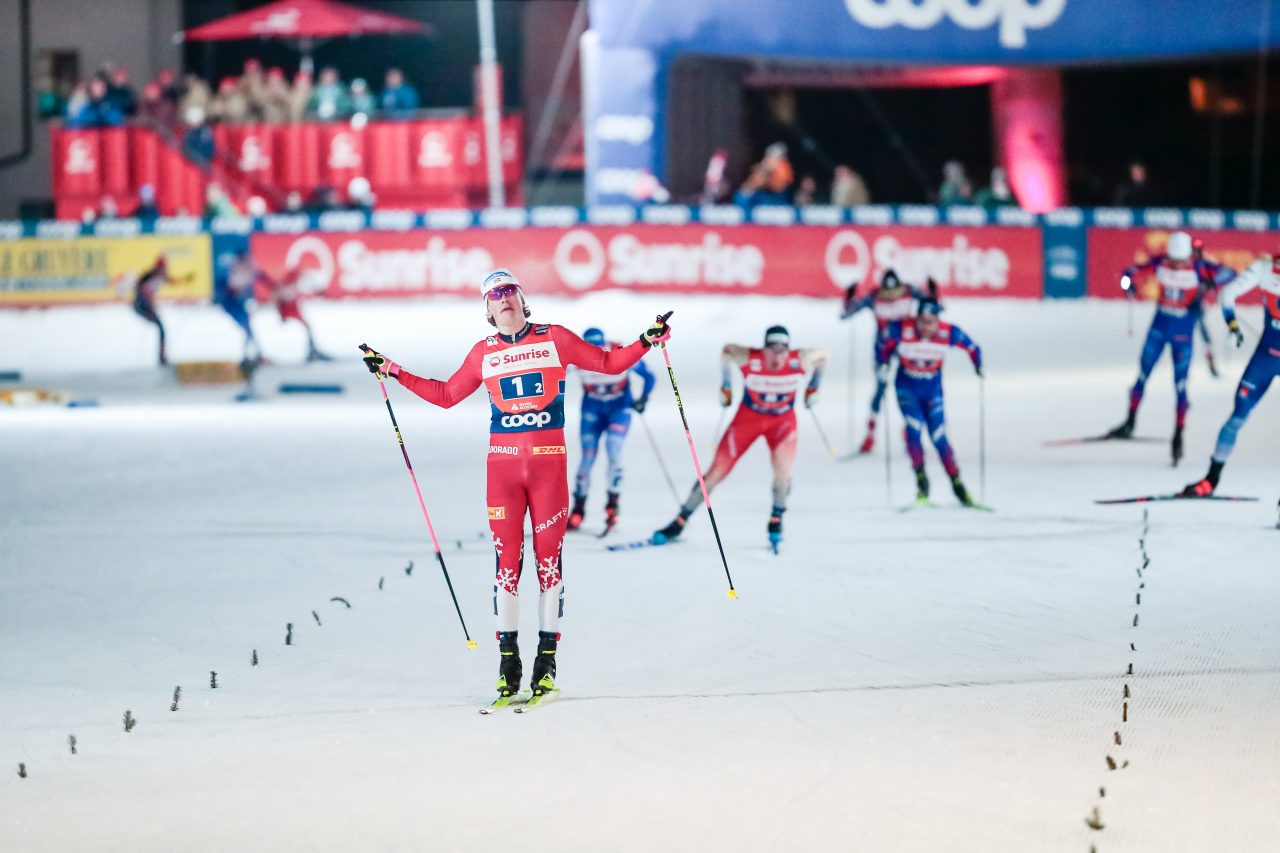
    Johannes Høsflot Klæbo, in typically dominating fashion, anchored the Norwegians to a victory in the team sprint in a World Cup in Switzerland earlier this month. (Photo: Modica/NordicFocus)

    In cross-country skiing, sprinting is a notoriously inconsistent discipline for a single competitor to dominate. The short distance leaves little time for racers to recover from even small mistakes; sharp corners and tight spaces often produce race-ending crashes.

    Which makes the track record of Norway’s Johannes Høsflot Klæbo almost impossible to comprehend.

    Klæbo, a five-time Olympic gold medalist, has won the last 10 straight sprint races he’s entered on the World Cup — the highest level of international competition. He often crosses the finish line far enough ahead of his rivals — if you can call them rivals — that he has time to unstrap his poles before crossing the finish line.

    Klæbo, 28, has won five out of the six Olympic and World Championships sprints he’s contested, and 52 of his 69 sprint World Cup starts — missing the World Cup sprint podium just once since 2018, according to data from the International Ski Federation.

    So: How do you beat this guy?

    FasterSkier, when the World Cup made its swing through Canada and Minnesota last season, decided to pose that question to an array of the circuit’s athletes and coaches. We’ve put together a kind of brief oral history below, seeking to appropriately describe Klæbo’s supremacy and the best ideas about how to take him down.

    Enjoy.

    What kind of tactics would you use to beat Klæbo in a sprint?

    Håvard Solås Taugbøl, a Norwegian World Cup racer and one of the nation’s (and globe’s) best sprinters: That’s the $1 million question. I have never managed to do it. 

    Swiss sprinter Valerio Grond: Maybe break his poles or something? I don’t know.

    French sprinter Lucas Chanavat: I mean, if I had the answer, I would have won the last one. You just focus on yourself, do the best race you can. It’s about my strengths. I think you have to be really perfect on every move you do. That’s the fun part about competing with him. It’s, like, you have to be perfect. And that’s really motivating.
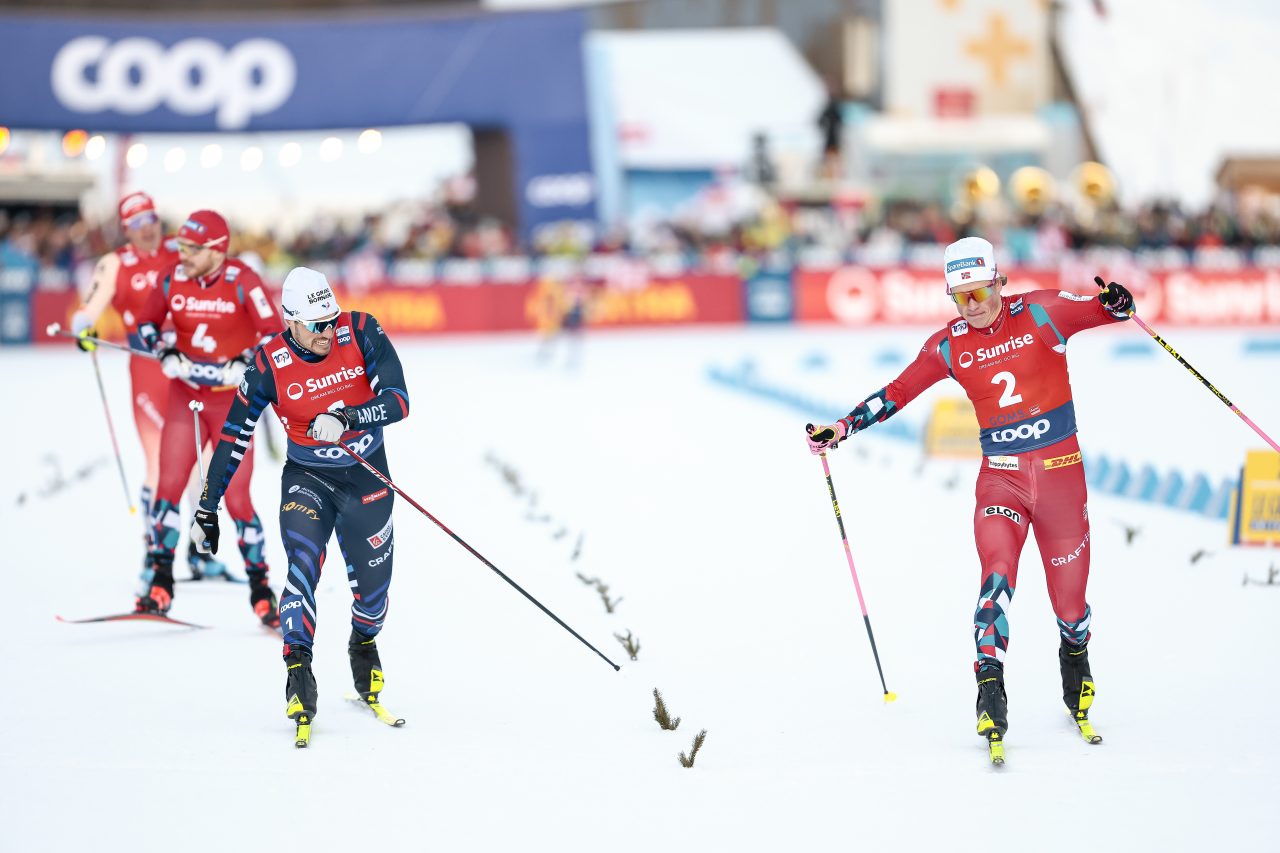
    Lucas Chanavat of France alllllmost beat Klæbo at a World Cup sprint race in Switzerland last year. But he didn’t. (Photo: Modica/NordicFocus)

    Sweden’s team manager, Anders Bystrom: I think, first of all, you have to mentally know that he’s not unbeatable. Because I think many people think so. He’s shown that he is almost unbeatable, so it’s fair that people think that. But we don’t talk about him like that.

    Jonna Sundling, the Swedish Olympic champion from 2022 in the women’s sprint: I would go hard from the start, and don’t leave any power. Just go, all that I have. I don’t think I could take him in the final meters — he’s too quick for me. The men, maybe they’re scared sometimes — I don’t know, I think they can do more than what they think they can do. Maybe.

    Maja Dahlqvist, a Swedish Olympic sprint medalist: I would try to sprint him down, like waiting til the end. But I guess a lot of people try to do that, and people are not so successful.

    Grond: If he’s in his top shape, he’s almost unbeatable. He’s really, really always in a good spot. But when he’s maybe not in the best spot, you have to take advantage of this and put in an attack.

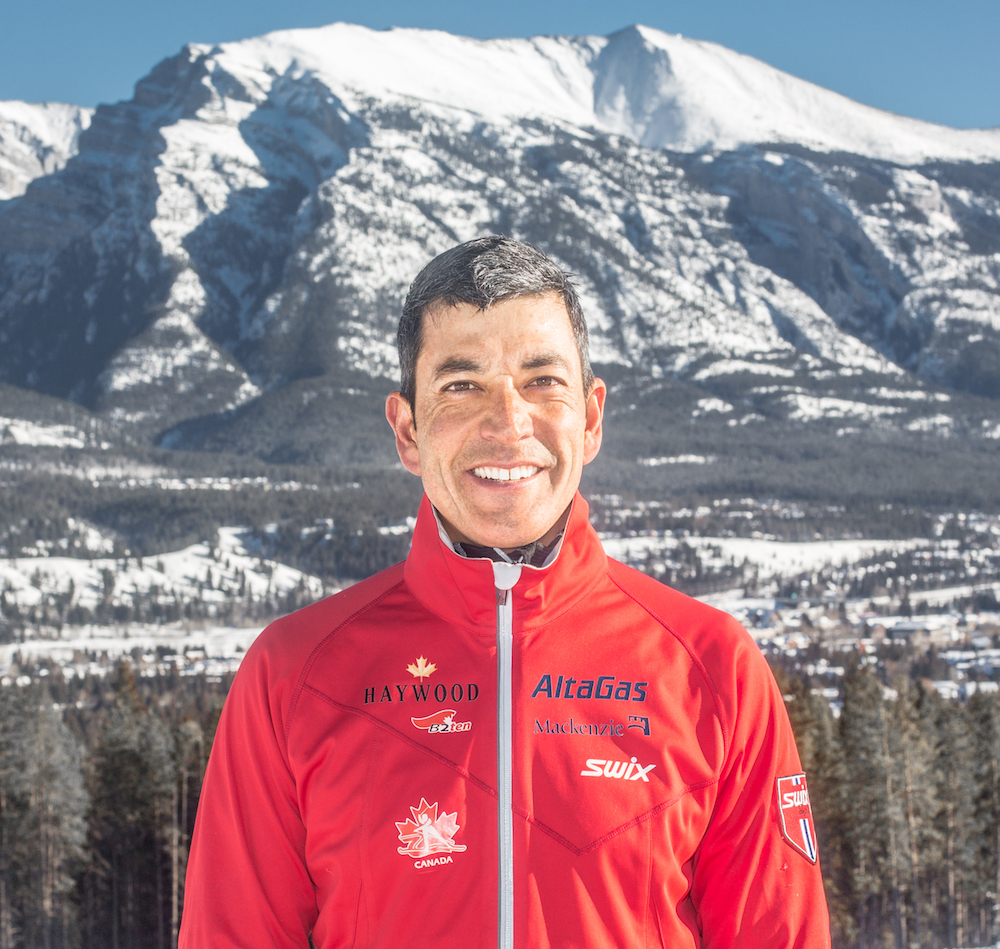
    Canadian national team coach Robin McKeever: Break his pole? 

    Swedish sprinter Edvin Anger: I think we need to push him really hard, and take our chances. I don’t think I need to go hard early, but I think I need to have a good place. And when I take my chance, I really need to take my chance. And I need to push from the place in the track that I think is best for me. I can’t wait to see what he will do, because I need to do the thing first.

    Norwegian sprinter Erik Valnes: How to beat Johannes in sprint is all about him being in bad shape. [Laughs] I think maybe it’s about the finish — or, to be able to have a good finish after a high-speed final. There are many things that have to be right to beat him. You just need to start the finishing sprint before him, and be ahead. Because as long as you’re behind him, you’re one step behind him in the mind games as well.

    McKeever: I think the only way is by surprising him. And they’re trying.

    What makes Klæbo so good at sprinting?

    Chanavat: He’s strong in every aspect of the sprint race. He has, like, amazing turns, an amazing finishing sprint, he’s insane in stamina. He’s good at everything. He’s the GOAT [Greatest Of All Time]. 

    Grond: He’s so good in every technique and part of the race, and also tactically. He’s simply the best skier in history.

    Dahlqvist: He’s good in everything. He can go hard, he can wait, he can go from the start.

    Norwegian distance specialist Simen Hegstad Krüger: He often likes to control the heat and he gets a lot of respect. And you have — I think there’s a lot of guys that think there’s no chance to beat him so they just give him room and then they give it away to him. He has earned the respect but especially in sprint you can’t give anything away and you have to take your place and take your positions. And I think he’s the best in that but I think sometimes he gets the best positions a little bit too easily.
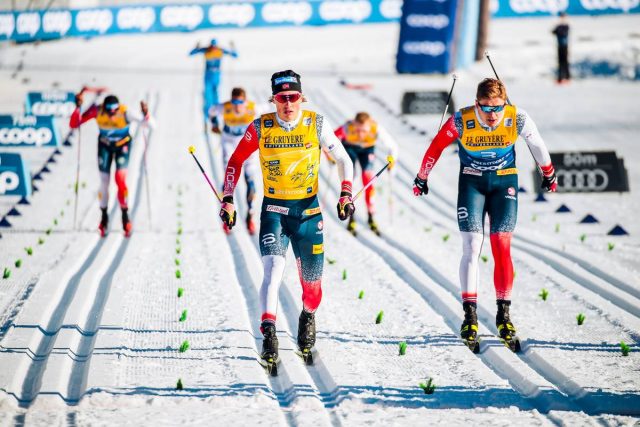
    Klæbo wins a Tour de Ski stage just ahead of his Norwegian teammate Erik Valnes. (Photo: Modica/NordicFocus)

    Valnes: I’ve been angry with myself sometimes because of bad tactical decisions. Because many times I’ve just, in my unconsciousness — you think, ‘Just follow him, and you’ll get a good result.’ But then you will not get past him.

    Bystrom: If you meet him in a heat, you almost adapt to what he’s doing. Because you have to see, ‘Okay, what’s Johannes going to do now?’ Because you know he has this X-factor in many parts of the course. 

    Does Klæbo have any weaknesses in sprinting?

    Chanavat: You should probably ask him. That would be the best.

    Klæbo: That’s going to be a secret. [chuckles] I don’t think I will tell everyone. I think I’ll keep that for myself and I’ll tell everyone when I’m done racing. That’s my answer.

    Norwegian sprinter Even Northug: Maybe none.

    Valnes: No. That’s the thing with him. He’s not having any weaknesses. You can say, like, maybe double-poling long flats. But he’s quite good there.

    Krüger: Not that I’ve seen so far. Even in distance races, it’s not so many weaknesses to find. 

    French sprinter Jules Chappaz: I think running [uphill], like in Ruka [the Finnish ski resort that hosts the season-opening World Cup races each year]. First it was the ‘Klaebo run,’ but now I think I’m really good at it. Maybe, hopefully next year in Ruka, I can run faster, beat him. [He didn’t.] He is sick a lot of times — maybe that’s sort of his weakness. 

    Klæbo coasts to the win in Ruka this year, beating everyone, including Jules Chappaz. (Photo: Modica/NordicFocus)

    Anger: It’s a hard question. But I think we need to push him and then make him a little stressed — that’s what I think.

    Bystrom: Mayyyyyybe it’s skating without poles — using your legs to be able to, maybe, go past him. But it’s really hard to say. He’s the best. He’s shown that many times. He’s so good in so many areas. It’s hard to say there’s one where you could beat him when there’s 28 areas where you can’t beat him.

    Are there ways athletes can train over the long-term, like over next summer or multiple seasons, to beat Klæbo?

    Chappaz: Just trying to focus on ourselves. This spring, I will compete in the Ski Classics [marathon races] to improve my double poling. To look to the Olympics, 2026, with the Val di Femme finish — I hope it will improve my double poling skills, to [be able to] beat him.

    Dahlqvist: Maybe they need another team like us, like the Swedish women, because you can use your team more. So, maybe a whole team needs to be stronger, to try to beat the Norwegian. They could do team tactics in a way, like everyone knows where they will go. 

    Anger: I’m still young — I’m just 21 years old. And he has a lot of training hours. A lot more than I have. With one or two years more, with good summers, also with a lot of hours, I think it will be better for me. And maybe I will be better in the final — I’m good in the quarters and the semis right now, but maybe I miss a little in the finals. I need to be a little harder and stronger.
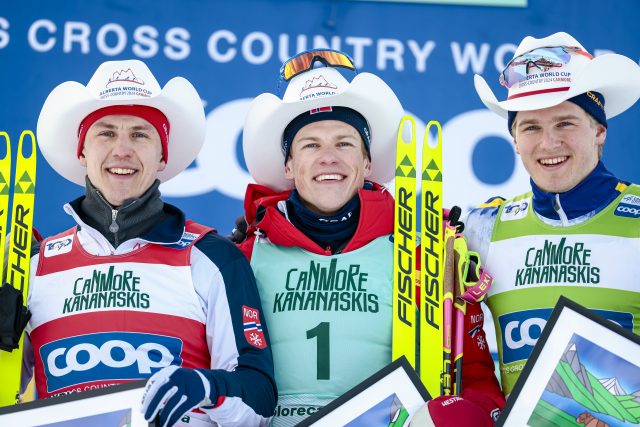
    Valnes, Klæbo and Anger pose for a podium photo after Klæbo won a World Cup sprint in Canada last year. (Photo: Modica/NordicFocus)

    Grond: We’ve just got to work hard. It’s also about learning how to ski against the best skier, for me. So, I’m trying, also, to get some experience on how they ski and where I can be better than them.

    Valnes: It’s more about improving the base level, the capacity, the VO2 max. If you have that base, from May until September, then you can build a little bit on that with specific training in October and November and just before the season starts.

    McKeever: The reality is, how do you beat Klaebo? Have him age out a little bit. 

    Northug: Training.

    Norwegian national team coach Eirik Myhr Nossum: You have to train, of course. But there were a lot of people training for the 100-meter dash, as well: Usain Bolt still won. So, if everybody in the world trains the best they can, still one will win — and it’s hard to beat Johannes. It’s possible, but he’s probably the best skier that’s ever been. And now it’s harder than ever, and he still wins.

  • Nordiq Canada Rolls Into 2023

    Nordiq Canada Rolls Into 2023

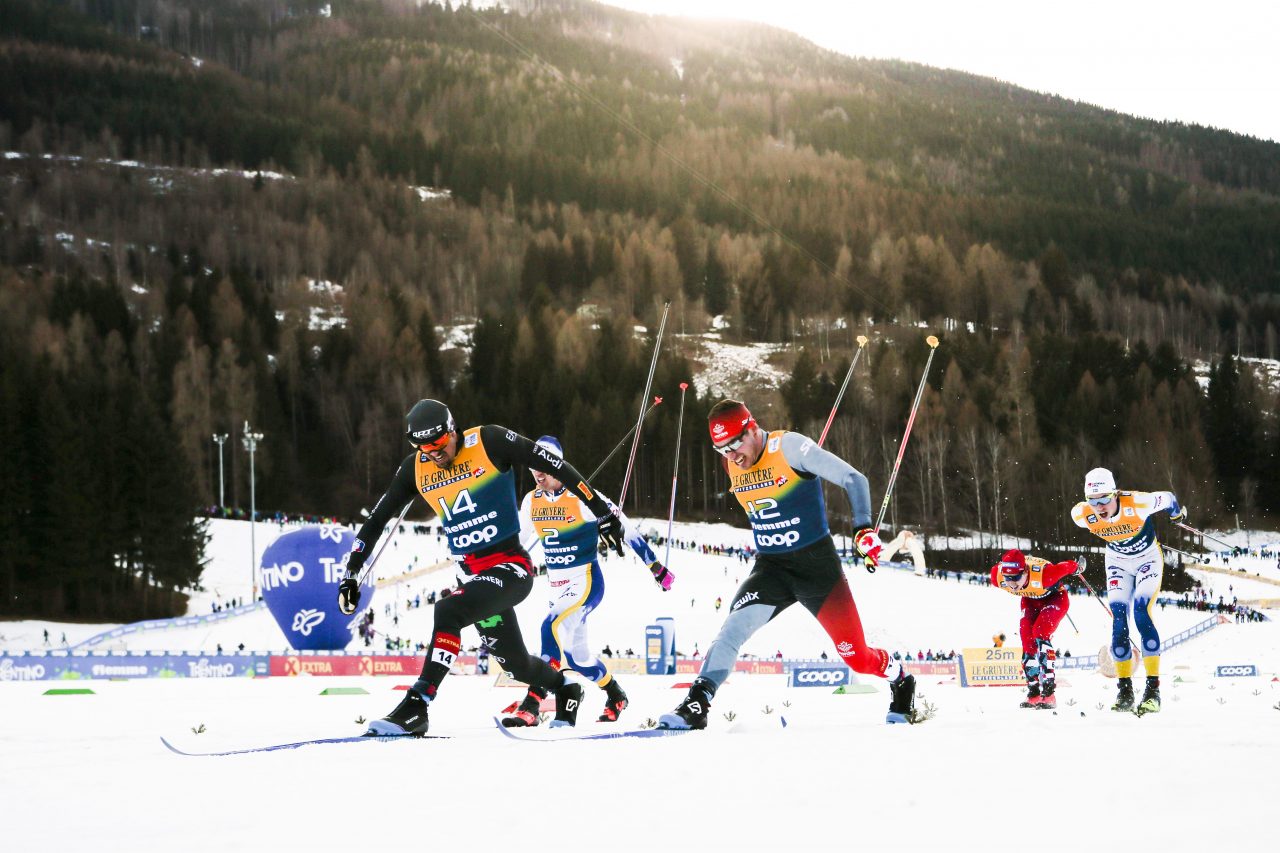
    Francesco de Fabiano (14) edges Tony Cyr (12) in stage 6’s 15km classic at Val di Femme. (Photo: Modica/NordicFocus)

    Canada is in the rebuilding part of the success rollercoaster, with many changes to the High Performance team and the development programs.

    Since May 1st, Chris Jeffries has joined Nordiq Canada (NC) full time as the High Performance Director, Robin McKeever has transitioned from the extremely successful Para program to become the Olympic Stream Head Coach. NextGen coach Eric de Nys and Dev coach Matt Smider are in their first full year in those roles and have shifted modes from planning to delivering.

    This season, Canada returned to the Tour de Ski with three top ten finishes and is hosting the World Junior/U23 Championships.

    The Tour de Ski was an obvious highlight, with all of the nine athletes and six of eight support staff experiencing the Tour for the first time.

    “Yves Bilodeau has obviously has done a few Tour de Ski’s and Simon Boisvert was on the trip with us as a wax tech,” McKeever told FasterSkier, “but yeah, everybody else was pretty much rookies there, I think just the tech, so we were following the tech’s lead to learn from them as much as anything.” For non-Canadians, Bilodeau represented Canada at two Olympics before becoming a wax tech and VW bus driver for the Beckie Scott generation.

    Asked to pick just one highlight, McKeever chose one result and one process goal: “My personal highlight from the Tour has to be Tony’s fourth place and coming ever so close,” he said, referencing Antoine Cyr losing a photo finish for a podium spot in Val di Femme the day after finishing 6th in the sprint. “That’s I think beyond some of our expectations through this year, but at the same time, it is belief in the system and belief for the younger up and coming athletes and others around him that it is possible. We need to get that back in the system. We’ve lost it since you know that Beckie, Chandra [Crawford], Sarah [Renner] years of Olympic medals, and with Alex Harvey’s retirement, things were kind of frayed. So it’s time to rebuild that and get positive focus forward and making sure that we’re looking at growth mindset and looking for positive solutions, rather than always complaining about the issues.”

    Katherine Stewart-Jones (CAN) racing up the Alpe di Cermis in the final stage of the 2023 Tour de Ski. (Photo: Barbieri/NordicFocus)

    Katherine Stewart-Jones, who has this season scored her first top 10 plus six top 20’s, and joined the red group as the 15th ranked distance skier, is another obvious highlight for Canada.

    Canada will select athletes for U20/U23 Championships in Whistler and World Championships in Planica at the Trials event at Caledonia Nordic this week, with many younger skiers expecting to qualify. There is also a good field of older skiers planning to hand out some learning experiences on their way to Planica, which should result in exciting racing. Live timing and full results will be here.

    For Planica, three athletes were pre-selected: Katherine Stewart-Jones and Tony Cyr met the standard of two top 20s on the World Cup this season, and Graham Ritchie earned a discretion pick with a 17th, a 21st, and two top 20 sprint qualifiers. Everyone else is at Caledonia.

    When FasterSkier was interviewing NC staff this season during race weekends, the phrases “that’s Julie” and “Julie does” got used a lot. Julie Beaulieu is in her second year at NC as Development Director. What does that role entail? It appears that it is mostly enabling the more visible staff members to succeed. The most visible of those is McKeever.

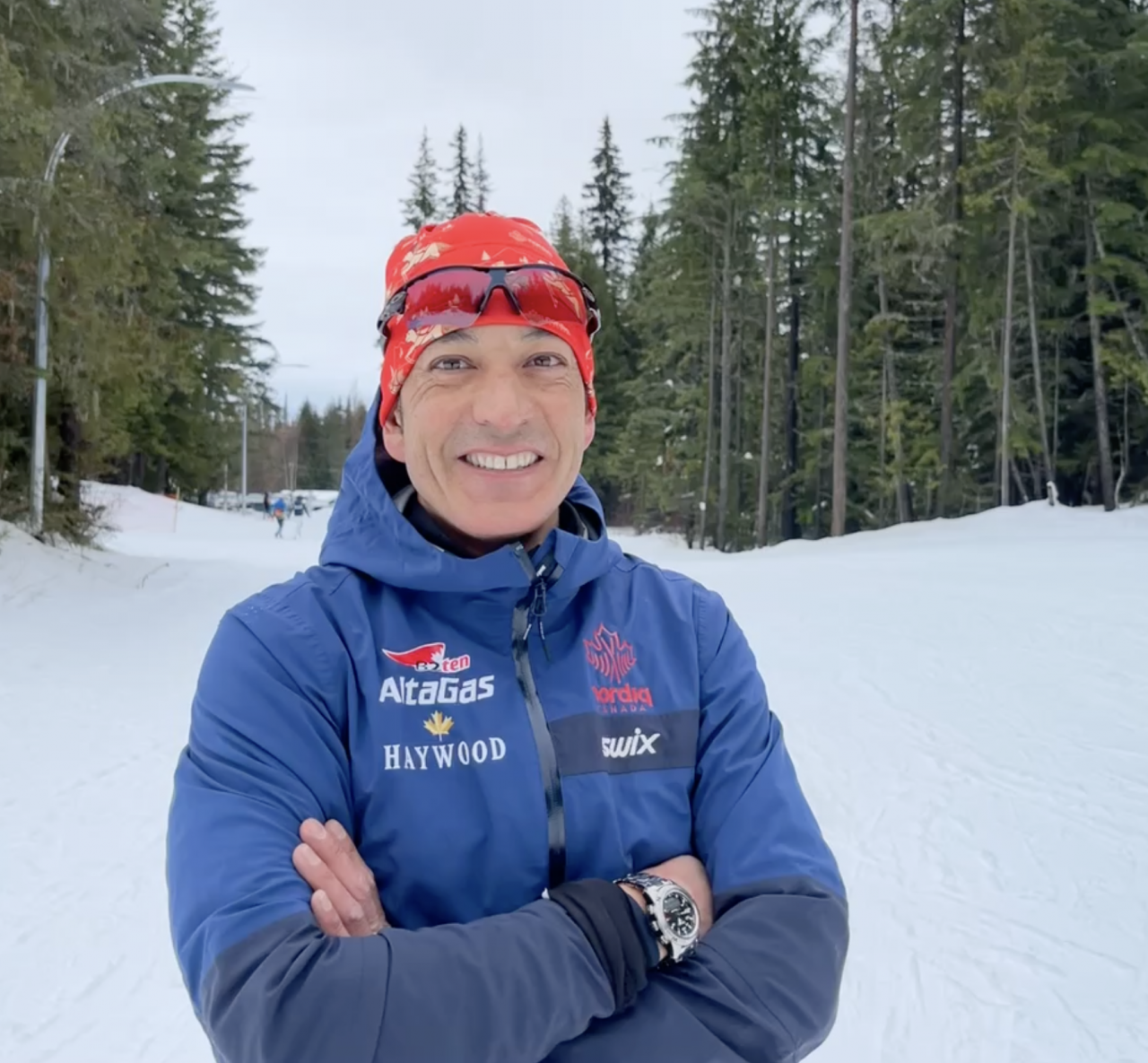
    Robin McKeever stopped in at the Reino Keski Salmi Loppet on the way to Prince George for Trials, providing wax support to his family and answering questions for FasterSkier. (Photo: FasterSkier)

    If asked about McKeever, most ski fans will remember his time guiding his younger brother to Para glory, or his leadership that brought Canada to the elite of the Para-nordic world. This has eclipsed his own history of podiums, multiple national titles, and Olympic experience since he joined the Junior National team in 1990. McKeever has been part of the National team system every year since then: the good, the bad, and the Nagano ugly.

    From the outside view, McKeever never produces inspirational speeches that would make Hollywood proud. If he shouts, it is encouragement to a racer on course, and he is most often seen having a quiet one-on-one conversation. Every conversation loops back to “moving forward” and what can be learned to be better in the future.

    So what makes McKeever a leader? He is surrounded by inspired people. Athletes produce year over year improvement. Retired athletes look back with a smile at their team memories. And there are a lot of “team” moments, among both the athletes and the staff.

    Para athletes often talked about lessons learned from teammates and the support they felt. Asked how to bring the Para success to the rest of the team, McKeever focussed on culture.

    “Para … it’s it’s a small community overall. Tiny,” he said. “So it’s a lot easier to create that team environment and attitude around our culture.”

    “So the funny thing is, we think Nordic or cross country skiing is such a big community overall but compared to the world, it’s actually a fairly small community. I still remember a lot of people [on the World Cup circuit] from when I raced back in the late 90s, early 2000s. So this is a small community overall.”

    And the next step is change.

    “So changing the culture within Canada is about being open to others’ ideas. And we have gone to a decentralized program where athletes are training within their home environments. And then we’re camp-based. So we create our team environment in camps and on the World Cup in the winter. Bit more similar, probably, to what the US system is right now under Matt Whitcomb.”

    While McKeever listens to others, he has a solid core of philosophy.

    “And that culture is about being a positive influence on the program, always forward. No, we’re not always going to have successful days,” he explained. “But to come in and improve on the tough days and look at the positives, but also look at where we can improve every single day. And I think that just that philosophy and the culture that is behind that creates a safe environment where athletes are free to express themselves as they will. And they’re not scared to speak openly. And so when they do that, we can create a space where they can be happy to operate in, so that creates the smiles. Cohesion as a group and a team becomes the number one key focus that I try to look at.

    With the decentralized structure, athletes work primarily with their club/personal coaches with support from the national system. This adds continuity as skiers enter and exit the World Cup and the National Team; it also helps knowledge trickle down into the clubs.

    This fits in with an overall goal of integrating the National Team system more tightly with the clubs.

    Next up in the Canadian series is the NextGen and Development changes, along with an explanation of why the USST’s Bryan Fish and Greta Anderson were using the same phrases as Jeffries and de Nys at the combined Nordiq Cup/SuperTour at Sovereign Lake in December.

  • Canada Back at Tour de Ski

    Canada Back at Tour de Ski

    Nordiq Canada is back at the 2023 Tour de Ski. L to R: Dahria Beatty, Liliane Gagnon, Robin McKeever, Katherine Stewart-Jones (Photo: NordicFocus)

    The world of skiing is changing and Canada is changing with it.

    This season, Canada has a new head coach and is hitting the Tour de Ski for the first time in four years.

    New head coach Robin McKeever is bringing nine athletes, five wax techs, an osteopath, a coach, and a wax truck to Val Mustair. This is less bodies than Norway’s wax team, but it is still a big commitment from a country that has traditionally brought smaller groups.

    “One, it’s not the same Tour de Ski that it used to be. Seven races in ten days versus a whole whack of them, and a lot shorter distance overall than what it used to be,” McKeever told FasterSkier during his Christmas break back home in Canmore.

    Devon Kershaw’s podcast has talked a lot about how much easier the current Tour de Ski is compared to the early days. It is now down to three venues, with only two short travel days that are also rest days, and the race days are much shorter. Gone are the days of Canada renting a rock star bus for Alex Harvey, Kershaw, Ivan Babikov, and Lenny Valjas so they could get massages while driving to the next venue. Gone are long races like 30km over the mountain pass from Cortina to Toblach, while the women raced the downhill half.

    Skiers like Russell Kennedy and Graham Ritchie (seen here “training” before Stage 1 of the 2023 Tour de Ski in Val Mustair, Switzerland) are bringing a whole new attitude—and a whole new level of potential to Nordiq Canada. (Photo: NordicFocus)

    McKeever’s second reason is the timing and the compact nature of the trip.

    “We have a lot of our top athletes in the NCAA program and the one time that they can potentially come and race and not miss that much school is this time.

    Sam Hendry (U of Utah) and Rémi Drolet (Harvard) will take advantage of this for their first World Cup starts of the season.

    A possible third reason for Canada’s return to the Tour is cost.

    “It’s just expensive to compete against the best in the world and Norway showing up with two wax trucks,” McKeever said.

    While neither McKeever nor Nordiq Canada’s High Performance Director Chris Jeffries directly said that the trip cost to athletes and the National Ski Federation is lower than the trip cost of World Cup period 3, it is tempting to read between the lines of what they did say.

    McKeever: “We are not doing p3 unless we have red group qualified athletes, because we just don’t have the current funding levels to operate the entire year.”

    The free Thursday to Sunday accommodation and per-diem for red group athletes is a small thing to rich nations like Norway and Russia, but it is a game changer for Canada. And a game changer for athletes who have to pay trip fees. For a longer discussion on this topic, check out Kershaw’s podcast from the Davos weekend.

    Canada’s much-loved wax truck is distinctly smaller than either of Norway’s trucks, and was the Swedish truck until 2011. At that time, one Swede (name withheld to protect the guilty) said that this vehicle was ‘no longer useful’ at the World Cup level. It may not be ‘useful’, but it is hard to imagine producing competitive skis without the facilities it contains (vented wax benches, a grinder, ski storage).

    All nine Canadians will experience their first Tour de Ski: Dahria Beatty, Katherine Stewart-Jones, Liliane Gagnon, Antoine Cyr, Graham Ritchie, Olivier Léveillé, Russell Kennedy, Drolet, and Hendry. Six of these have a World Cup top 20 result on their palmares, while Hendry is getting his first World Cup start, and Gagnon got her first starts in Davos before Christmas.

    Long time ski fans will know McKeever from his athletes’ success as the head of Canada’s national Paranordic program, some skiers will remember his time as his younger brother’s guide, but you have to be Canadian to remember the junior who fought his way onto the National Team in 1990. Here is a teaser from an upcoming detailed look at Nordiq Canada’s direction.

    My whole goal in coaching, and this was from my upbringing, is about not only trying to create Olympic champions, but it is about creating good people. And if we support the people for who they are, and how they are, and try to guide them through that, as well as get them to Olympic podiums, then I think we’re on the right track.” — McKeever

    Graham Ritchie on his way to qualifying 14th before finishing 21st on day one of the Tour de Ski. (Photo: NordicFocus)
  • The Devon Kershaw Show: New Canadian XC Coach Robin McKeever

    The Devon Kershaw Show: New Canadian XC Coach Robin McKeever

    We have no excuses for our prolonged absence other than it being the summer time. Devon has school and kids to take care of; Nat has…well, Nat really has no excuse. We taped this show with Robin McKeever, the new Canadian coach, and we’re just getting around to posting it now.

    You can email us at devon@fasterskier.com and nat@fasterskier.com.

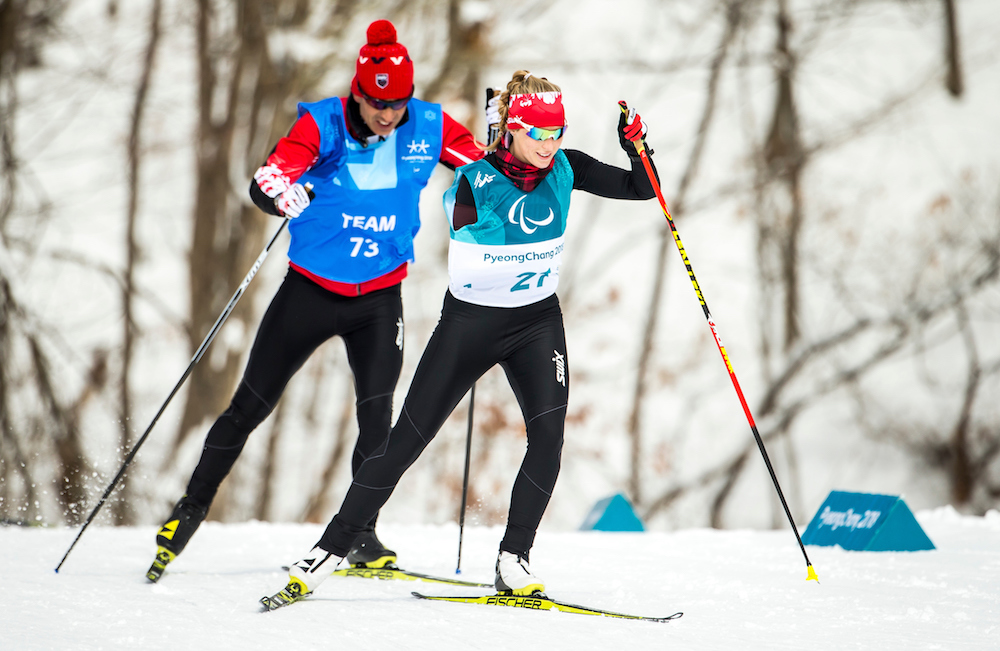
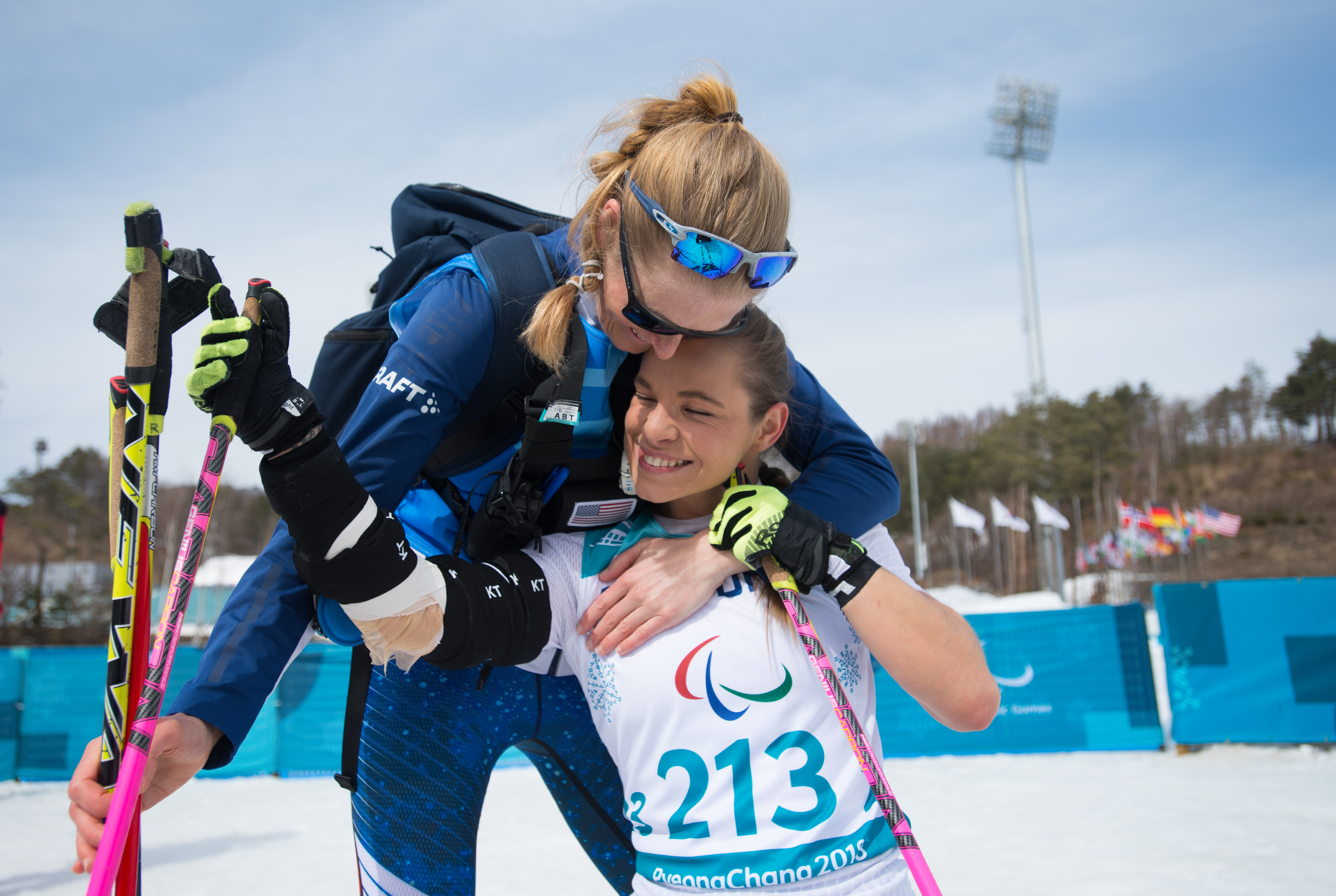
    PyeongChang 9/3/2018 – Emily Young, of Kelowna, BC, and Coach Robin McKeever, of Canmore, AB, during a biathlon/cross country training session at the Alpensia Biathlon Centre during the 2018 Winter Paralympic Games in Pyeongchang, Korea. Photo: Dave Holland/Canadian Paralympic Committee
  • Listening in: Nordiq Canada’s Webinar – Group vs Individual Training

    Listening in: Nordiq Canada’s Webinar – Group vs Individual Training

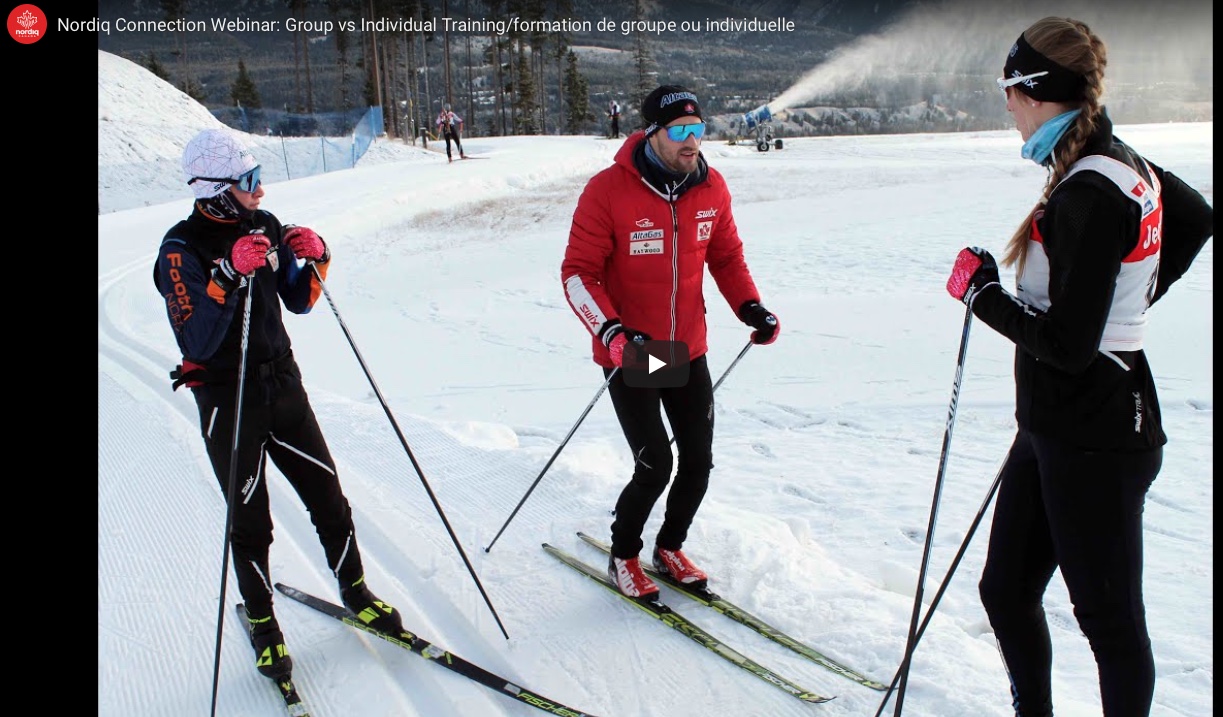
    As part of an ongoing webinar series, Nordiq Canada held a webinar titled Group vs Individual Training.  Senior National Team athlete Dahria Beatty, National Team coach Erik Bråten, Para Nordic head coach Robin McKeever, and sports psychologist Jon Coleman were on the panel.


    For any person interested in learning about the yin-yang of individual versus group training sessions, the video, which runs nearly an hour, is well worth a viewing.

    Bråten, originally from Norway, was hired as a national team coach in 2018. During the webinar, he quickly informed viewers his comments might possess a counterculture perspective.

    I think that there is a culture maybe, not specifically Canada but maybe a little bit everywhere, where you put some things in the box of what to do together and a box of what not to do together,” Bråten said. “Overall what I have seen in Canada is a lot of training together,” he continued. “It is almost daily at a lot of programs. Up to five or six sessions a week which is extremely big in my opinion. There are a lot of ways to roam — it might work for your program and I do not have all the insight and the details, but that is a big number for me. I am more used to two to three times a week.”

    Bråten explores the notion of allowing for more autonomy in an athlete’s training and how that often allows for more creativity. He challenges clubs, coaches, and athletes to think about what exactly the individual and group would like to achieve and then drills down on what makes the best sense in balancing group and individual needs. He provides a clear example of how group intensity sessions can inform an athlete when they set out for a solo workout. Bråten describes it as building awareness in a “standardized session to learn what it is supposed to feel like.” Once the athlete knows their individual sensations at a specific training intensity, an individual intensity session may have benefits.”[They can] flip between a group and individually, they know how they should feel,” Bråten added. 

    Beatty (26) is based in Canmore and is a longtime member of the Alberta World Cup Academy (AWCA) and Senior National Team. As she developed as a skier in Whitehorse and became a member of the AWCA where her training loads increased, she began to balance the group and individual conundrum. Beatty suggested her individual workouts are most often very focused and many times are organized around a session where she is gauging periodic progression.

    “When I plan in workouts like that with my coaches, [the periodic progressions],  then I am less willing to budge or change the format in order to do it as a group,” she said in a follow-up phone call. “But, I would say pretty rarely, for a harder session, if someone wants to join in am I going to say ‘no don’t join, I want to do this all by myself’. If it is something historically that I have done by myself, for example, and I don’t want to get a draft from another skier, then I would do the workout by myself.”

    Beatty explained that as a veteran elite skier, she’s had to be clear in defining and meeting her specific goals. And in turn, reflect on the group-individual balance.

    Really just knowing how you are going to get to these goals that you have made,” she said. “I know athletes of all ages are good at making a goal, a big goal, that is an easy thing to do. It is often harder to make those small goals in between. Or actually make the conscious steps to follow through and get to those goals.”

    For his part, Coleman unpacked the concept of intrinsic and extrinsic motivators as well as the opportunities and challenges of training in a group and individually. A key take away was guiding skiers through the ups and downs of seeing a teammate make gains while they themselves may be struggling.

    We’ve embedded the Nordic Canada video in the story. However, you can find a menu of Nordiq Canada’s Nordiq Connection webinars here.

  • Coach McKeever on Canada’s Unprecedented Paralympic Success and the Future

    Coach McKeever on Canada’s Unprecedented Paralympic Success and the Future

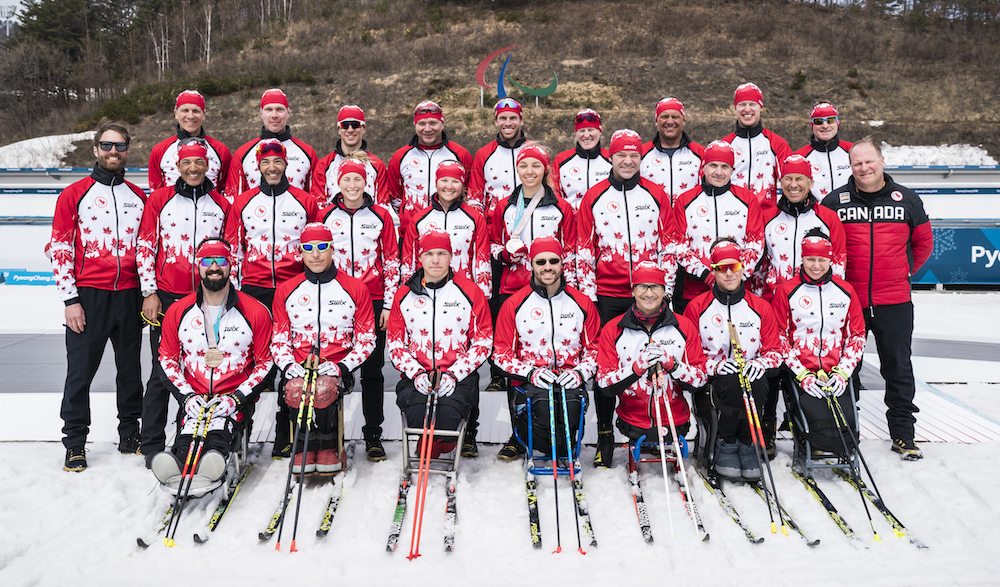
    Canada’s 2018 Paralympic cross-country and biathlon team at the Alpensia Biathlon Centre on the last day of the Games in Pyeongchang, South Korea. (Photo: Dave Holland/Canadian Paralympic Committee)

    The 2018 Winter Paralympic Games was one for the books for Team Canada. Its athletes racked up a total of 28 medals in PyeongChang, South Korea, surpassing its previous record of 19 in Vancouver 2010.

    Of those 28 medals, 16 came from Cross Country Canada’s (CCC) Para Nordic skiers (which includes both cross-country and biathlon). In comparison, five of the 19 medals Canada won in Vancouver were a product of a para-nordic team made up for two athletes: Brian McKeever and Colette Bourgonje.  

    Following the 2010 Games, Brian McKeever’s brother and guide at the time, Robin McKeever, became CCC’s Para-Nordic head coach in the fall of 2010. Around the same time Robin made the transition from athlete to coach, CCC experienced budget cuts that impacted its para-nordic program.

    “When the program came to me as head coach, it was a, ‘Hey, you’re going to have to take this and rebuild it, somehow,’ starting point,” Robin McKeever said during a recent phone interview.

    Brian McKeever follows guide Graham Nishikawa during the men’s visually impaired 20 k freestyle at the 2018 Paralympics in PyeongChang, South Korea.  (Photo: Scott Grant/Canadian Paralympic Committee)

    Over the course of eight years, McKeever, 45, has guided the program into a international powerhouse, as evidenced by its unprecedented success and increased presence in PyeongChang.

    “It was a little bit of luck finding the right athletes at the right time, then it’s … working hard to keep them together as teammates who want to work and push each other to achieve their goals,” he explained.

    The mindset seemed to work well for his team; with 14 athletes, it was seven times the size of that in Vancouver. And its athletes brought home more than three times the hardware it did in 2010.

    “It’s attributed to having some pretty phenomenal athletes in the program, first and foremost,” Robin said, regarding the program’s surge in success. “Secondly, it’s attributed to having an awesome team supporting the athletes all working together … from medical staff to the physiologists to the development coaches to all of our wax team. They’re great people who love to be together. ”

    Four women and 10 men comprised the 2018 Paralympic team roster, with two of the men being Brian McKeever’s guides, Russell Kennedy and Graham Nishikawa. Brian, 38, has long been a longtime para-nordic force, and in PyeongChang he left no room for doubt that he pervades as the cross-country king. A visually impaired athlete, he won all three cross-country races in PyeongChang: the 20-kilometer freestyle, the 1.5 k classic sprint and the 10 k classic. He also raced to bronze in the 4 x 2.5 k open relay.

    With his performances in PyeongChang, Brian became Canada’s most decorated Winter Paralympian of all-time. Lana Spreeman, a para-apline skier, previously held the record at 13 medals, which she accumulated over the course of five Paralympics.

    Brian currently holds 17 Paralympic medals from five Paralympics, 13 of which are gold.

    “I wasn’t aware of this record, but it is pretty cool,” Brian said at the time, according to a Canadian Paralympic Committee press release. “I think for me more than anything is this is a testament to our entire program. We’ve had so many great skiers leading the way for me with my brother, Robin who is now coaching us, and Colette Bourgonje.

    “Now it is awesome for me to be a part of a new generation that has arrived in Mark [Arendz], Collin Cameron, and the young women like Emily [Young], Brittany [Hudak] and Natalie [Wilkie], who are ready to carry the torch. I’m so excited to be around all of them this week and to be there cheering them on,” he added.

    Also in PyeongChang, Canada’s Mark Arendz, Natalie Wilkie, Collin Cameron, Emily Young, Brittany Hudak, and Chris Klebl also earned their share of hardware on the Alpenesia ski trails.

    Prior to Pyeongchang, Arendz had competed in Vancouver and then Sochi, coming away from the 2014 Paralympics with silver and bronze finishes in biathlon events. Four years after he earned his first two Paralympic medals, Arendz tallied six more in South Korea, the most medals ever won by a Canadian at a single Winter Paralympics.

    Canada’s Mark Arendz en route to bronze in the men’s 1.5 k standing classic sprint at the 2018 Paralympics in PyeongChang, South Korea. (Photo: Scott Grant/Canadian Paralympic Committee)

    Arendz showed versatility and strength, as his medal winning performances came in both the biathlon and cross-country events over the course of nine days in PyeongChang. He won a gold in the 15 k standing biathlon event, followed by a silver in the 7.5 k standing biathlon, silver in the 4 x 2.5 k mixed relay, along with three bronze medals, one in the 12.5 k standing biathlon, one in the 1.5 k standing sprint and one in the 10 k standing competition.

    “Every time I stepped on the podium this week, I kept thinking I want to hear ‘Paralympic Champion’ and then my name announced,” Arendz, 28, told Cross Country Canada at the time, according to a press release. “I wanted nothing more than to hear my country’s anthem played. I’ve seen the maple leaf on top of the podium three times this week, but to finally have it behind the top step of the podium for me is an amazing feeling.”

    Canada’s success story in South Korea did not end there. In her debut Paralympics, 17-year-old Wilkie scored big, earning bronze in the standing sprint, silver in the mixed relay, and gold in the 7.5 k classic in PyeongChang.

    The youngest on her team, Wilkie was a skier before she lost four fingers on her left hand in a shop-class accident two years ago. 

    “Natalie was a medalist in able-bodied competition at Junior Nationals the year before,” Robin explained. “We knew that she was a strong skier that had an acquired disability and we knew that it was possible for her to race at the Paralympics one day if she wanted to. It’s a learning process and a real mental process to get over your injury and for her it was then also turned into an opportunity.”

    Yet another individual medalist in multiple events in PyeongChang, Cameron, now 30, brought his team another first. With his third-place finish in the 7.5 k sitting biathlon race, he became Canada’s first male sit skier to medal in biathlon. He later earned two more bronze medals, one in the 15 k and the bronze another in the open relay.

    Until four years ago, Cameron had been a sledge hockey player. He happened across his hometown’s para-nordic club by chance over the internet, joined that club and was later recruited to the national team.

    “Being a part of the open relay team with Brian, and his guides Graham [Nishikawa] and Russell [Kennedy], was something really special and I will never forget it,” Cameron wrote in a previous email to FasterSkier. “Getting my third Paralympic medal with those guys was pretty cool … just being a part of this amazing and successful team of athletes, techs, and coaches has to a favourite moment.”

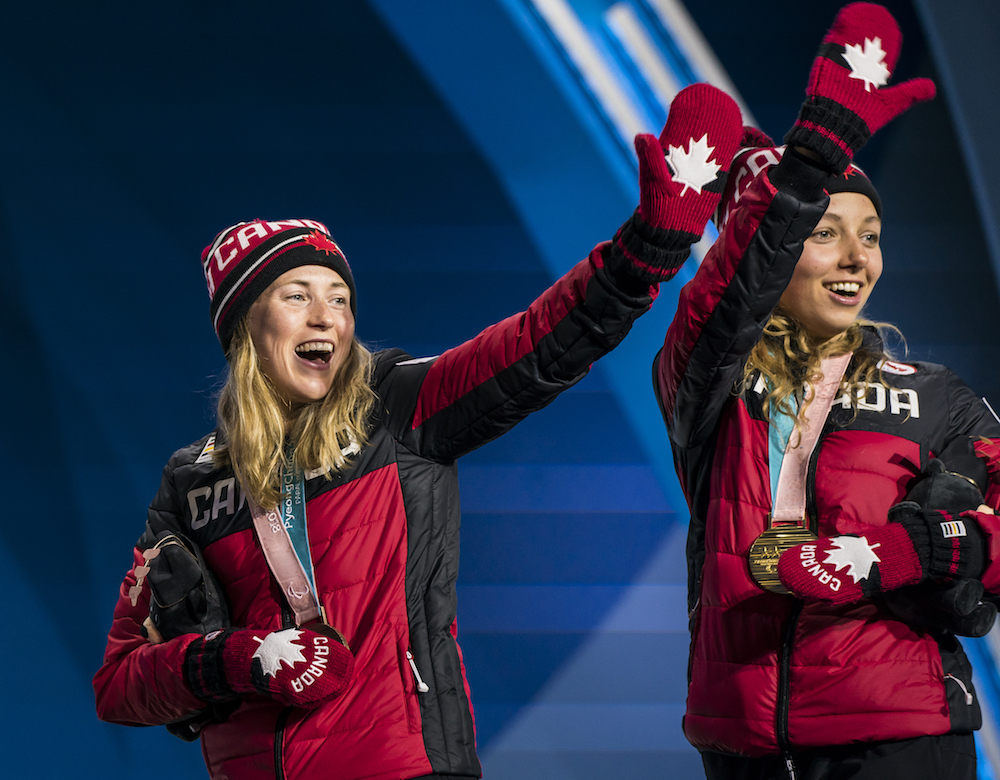
    Natalie Wilkie (r) and Emily Young at the 2018 Paralympic medal ceremony with their gold and bronze medals in the women’s 7.5 k standing classic race in Pyeongchang, South Korea. (Photo: Dave Holland/Canadian Paralympic Committee)

    Notably, every member of Canada’s seven-member Para-Nordic World Cup Team claimed a medal in  PyeongChang, with Young taking bronze in the 7.5 k classic standing for her first Paralympic medal followed by silver in the mixed relay, Hudak notching bronze in the 12.5 k standing biathlon, and Klebl helping the mixed relay to silver.

    Since the end of last season, CCC has undergone some changes that are affecting its Para-Nordic program. Both CCC’s para-nordic and able-bodied programs are tied under one organization, and Nic Lemyre was recently hired on as the new high-performance and development advisor for both programs. Previously, Mark Edwards served as the Para-Nordic high-performance director.

    “Cross Country Canada came under some very strategic shifts with the prior organization,” Robin explained. “We’re not sure exactly how that’s going to play out. That is still in the works. We get to deal with that as it comes around, but it’s about putting a sport pillar and business pillar under two different ones and so we’re working hopefully closer with the able-bodied program.”

    In terms of how CCC’s budget cuts are expected to affect its Para-Nordic program, CCC CEO Shane Pearsall expected the amount going to para-nordic to be “about the same as last year”. Asked how much of CCC’s roughly $4 million-dollar budget will go to the Para-Nordic national team’s elite programming, Pearsall estimated that amount to be about $600,000 dollars (comparable to between $500,000 and $600,000 for able-bodied national team programming).

    In Robin’s opinion, working closer with the able-bodied program means the transference of ideas and potential to strengthen each other through teamwork and communal outreach. Expanding to skiers of all abilities and levels may take work from the ground up, as well as the top down.

    buy antabuse online, buy tretinoin online

    “We need to be working together to rebuild that whole system,” Robin said, pointing out that currently, CCC’s able-bodied A-team consists of one member, Alex Harvey.

    This season’s Canadian Para-Nordic World Cup Team includes eight members, plus another six on the development team.

    “The whole focus of the [Para-Nordic] program is about the process,” he added. “For the athletes to have their best race on a given day, the team has to also provide the best skis on a given day, the best feeds, say or whatever that requires. It’s really more about the process.”

  • FasterSkier’s Coach of the Year: Eileen Carey; Runners-Up: Matt Whitcomb and Robin McKeever

    FasterSkier’s Coach of the Year: Eileen Carey; Runners-Up: Matt Whitcomb and Robin McKeever

    Eileen Carey congratulating Oksana Masters after a gold medal at the Paralympic Games. (Photo: Mark Reis/U.S. Paralympics)

    With the 2017/2018 season officially in the rearview, FasterSkier is excited to unveil its annual award winners for this past winter. Votes stem from the FS staff, scattered across the U.S., Canada, and Europe, and while not scientific, they are intended to reflect a broader sense of the season in review. This set of honors goes to coaches of North American teams in any nordic discipline, at any level – although in an Olympic and Paralympic Games year, that’s what we focused on.

    Previous categories: Junior Skiers of the Year | Collegiate Skiers of the Year | Biathletes of the Year| Para-Nordic Skiers of the Year | NoCo Skier of the Year | Canadian Breakthrough Athletes of the Year | American Breakthrough Athletes of the Year

    ***

    Eileen Carey, U.S. Paralympics Nordic

    As we have already noted recently on the site, the U.S. Paralympics Nordic program made a huge jump between the 2014 and 2018 Games, winning three medals in Sochi but 16 – from five different athletes – in PyeongChang. That also included both men and women, and two types of para-nordic events: sitting and visually impaired.

    A big architect of the team’s success has been head coach Eileen Carey. It’s not an easy or simple job to coach athletes at all different levels of sport and different athletic backgrounds, and bring them all towards success.

    “The diversity in disciplines and levels of athlete in our program is one of the most interesting and motivating parts of my job,” Carey wrote in an email last week. “On one hand, I love getting into the details of what might make someone a fraction of a percent faster. I love the process of breaking down a performance into parts and working with athletes to problem solve how to make a small element better.  So much of that is about failure, modification, and trying again.  The potential gains are so small, but so are the gaps from 4th to 1st and every once in a while something sticks and that is incredibly motivating for me. Andy [Soule]’s sprint finish [for a gold medal] in PyeongChang is a great example of that.

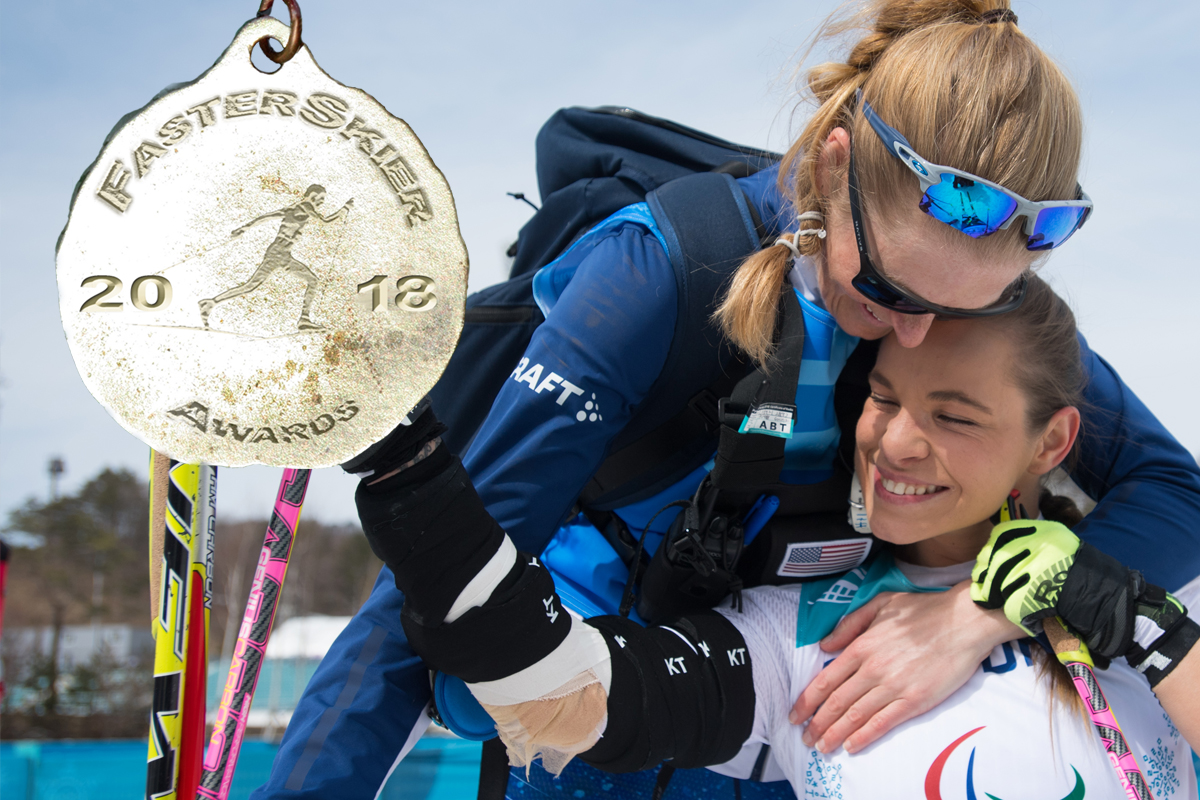
    Oksana Masters of U.S. Paralympics Nordic is hugged by head coach Eileen Carey after her gold-medal finish in the women’s sitting 5 k cross country race at the 2018 Winter Paralympic Games in PyeongChang, South Korea. (Photo: Mark Reis/U.S. Paralympics)

    “On the other hand we have some promising new athletes in our program who are at such a different level in what they need as athletes,” she continued. “For our program, our goal is always to provide best in the world service to our athletes. For our athletes who are aiming for the podium today, that involves every detail coming together, the execution of their plan. For Grace [Miller] and Mia [Zutter] and Ruslan [Reiter], our next generation of podium-potential athletes, providing best in the world service is more about making sure they see what their medal winning teammates and competitors are doing to achieve their performances and showing them a roadmap to get to that point.”

    Development coach BethAnn Chamberlain is a big piece of that effort. For the top-level athletes, Carey lives in Bozeman, Montana, where she works intensively with the sit-ski team,

    antabuse

    “They move to Bozeman in the winters,” Carey explained. “I am with them every day from November through March, in addition to training camps that we have most months from May-October. Most of them compete in summer sports, so in the off season, there is always an individualized balance of figuring out how to optimize their preparation for skiing, while working with their goals for other sports.”

    The standing and visually-impaired athletes have a different situation, and are primarily supported by clubs in their local areas. Carey works with both the athletes and their home coaches and teams to make sure they are getting the best development, but a big part of that can be training with an able-bodied ski team.

    “We can help with funding, or workout ideas that might be unique to Paralympic skiing,” Carey wrote. “But at the end of the day, Jake Adicoff and Sawyer Kesselheim’s success at the Games [where they took silver in the visually-impaired 10 k classic, the first visually-impaired medal by the U.S. in modern Paralympic history] is much more about Sun Valley SEF and Bowdoin (Jake’s club/school) and Bridger Ski Foundation and Montana State (Sawyer’s club/school)… We can help fill the gaps with funding and equipment and communication with their coaches, but their best path to the podium is the same as every skier who wants to be on an Olympic podium.”

    Carey and her colleagues, such as High Performance Director John Farra, have intentionally written their criteria so that standing and visually-impaired athletes can make the para-nordic national team without actually competing in para events – instead, they can make the C Team or Development team using USSA points from SuperTours, college races, or regional races. That means that they can spend more time with their home teams.

    “We are lucky in that we have incredible partners in the USSA community who are really the ones developing many of our athletes,” Carey wrote. “I hope the more that coaches and clubs around the country see our athletes competing in USSA and collegiate races, the more they see opportunities for providing a ski development pipeline to even more members of their communities. As much progress as we have made as a program over the last several years, we have at least that much again to improve, and this is the next big opportunity for us as a program, and also for ski clubs and communities around the country.”

    But while Carey is thinking about those big-picture goals and opportunities, she is also working one-on-one to help Americans become the best para-nordic skiers in the world.

    “The fall after Sochi, we started a technique modification process to target Andy [Soule]’s speed on flats, in particular finishing speed,” she explained. “In Sochi, he was moving quickly and had great hand speed but he was not going fast compared to the athletes he was competing against. We tried and failed at so many things in the past four years to improve that. Every once in a while, we would find a mental cue or some technical detail that seemed to make a difference and we would build on that and find ways to analyze it. It can be so frustrating, because there are inevitably times when progress stalls or reverts and there rarely is a clear answer why… When he turned it on during that finishing stretch of the sprint to take the gold, that was the epitome of a plan coming together at the right time.”

    A few minutes later, Oksana Masters won gold in the women’s sprint, overcoming an injury that had happened just weeks before the Paralympics. It was her first gold medal after collecting a silver and bronze earlier in the Games, to go with a silver and bronze from Sochi and a bronze from the 2012 summer Paralympics in rowing.

    “Both of those races, strictly from a sport performance standpoint, were just incredible,” Carey wrote. “In addition, those two athletes have really been the architects of our program’s rise over the last quad. The two of them were at every camp and World Cup, and their instincts as athletes drove the strategies of our program. That day could not have been a more meaningful culmination of the last four years for them as individuals, for us as a program, and for me as a coach.”

    Honorable Mention: Robin McKeever, Canadian Para-Nordic Skiing

    Also taking home 16 medals from PyeongChang? The Canadian Para-Nordic team, which like the Americans had a big jump in both the number of medals and the number of athletes winning them. Far from being just the Brian McKeever show – although the veteran went undefeated for the third Paralympics in a row – the team also picked up multiple medals from Mark Arendz, Natalie Wilkie, and Collin Cameron, plus an individual medal by Emily Young and two relay medals.

    Robin McKeever. (Photo: Noel Rogers/CCC)

    Carey’s counterpart up north is Robin McKeever, who incidentally said that he looked at what Carey was doing as an inspiration in being able to recruit summer-sports athletes and successfully transform them into winter gold medalists. The two gold medals by Kendall Gretch, an American triathlete who didn’t pick up cross-country skiing until 2015, were “eye-opening”.

    The para-sport landscape is slightly different in Canada, which also has a much smaller population to draw from (while at the same time having some of the same issues associated with far-flung geography). McKeever faces different development challenges, but has helmed the program towards depth and diversity in the last four years.

    “It started as an eight-year process in 2010,” McKeever said in an interview last week. “At that time, we only had funding for Brian. I was given the reins to rebuild, effectively. Now there are some next-generation funds we have the opportunity to access, and now that helps build the base. In the last few years we have had a development coach on board, Kate Boyd, and that has been huge.”

    There have been notable successes, such as the three medals Cameron took home; having picked up skiing just a few years ago after being involved with sledge hockey, Cameron was named one of our Breakout Athletes of the Year.

    Emily Young and coach Robin McKeever during a training session at the Alpensia Biathlon Centre during the 2018 Winter Paralympic Games in Pyeongchang, Korea. (Photo: Dave Holland/Canadian Paralympic Committee)

    Then there was Wilkie, a teenager who came to the program after losing four of her fingers in an accident.

    “We know where our pool of athletes comes from,” McKeever said. “It’s about the un-luck of athletes having trauma, which starts their Paralympic path. And it’s about luck in terms of recruiting athletes from summer sport.”

    Those newer athletes in the program have veterans to look up to, whether that is McKeever’s brother Brian, or now Mark Arendz, who took home a remarkable six medals between biathlon and cross-country skiing.

    “Mark was no surprise,” McKeever said. “Six medals was maybe a surprise, but he was a World Champion coming in.”

    Given the limitations on how the team can find new athletes, McKeever didn’t want to be too concrete about whether the program would see a big swell in numbers coming off its recent success.

    “It is still to be seen where that will go,” he said. “Some of it is a bit of luck, and some of it is really good management… A lot of staff has been around for eight years. They remain keen and excited. They stick around and are really integral to my support, and to the team’s support.”

    One of the biggest highlights for McKeever, and an illustration of how the program has changed in just a few years, was the mixed relay team of Arendz, Young, Wilkie, and Chris Klebl taking silver, the first ever relay medal for Canada.

    “The mixed relay is a real highlight,” he said. “Even if the full Russian contingent had been there, that would be a podium for us. I didn’t know eight years ago that the possibility was even there.”

    Honorable Mention: Matt Whitcomb, U.S. Ski Team

    Another team that had a huge jump this year? The U.S. Ski Team women. Jessie Diggins and Kikkan Randall took gold in the Olympic team sprint, the first-ever gold medal for the U.S. in the sport.

    But the Olympics weren’t the only thing that happened this season. Diggins also won a World Cup, was third in the Tour de Ski, and second in the overall World Cup standings. Randall picked up a World Cup podium; Sadie Bjornsen picked up several; and Sophie Caldwell had enough to earn third place int he Sprint Cup standings. The team had more days with many women in the sprint heats, and more good distance results, too.

    Matt Whitcomb with Sadie Bjornsen and Sophie Caldwell in Seefeld, Austria, this winter. (Photo: Garrott Kuzzy / LumiExperiences.com)

    Its been a many-year goal of ours to be ranked in the top three for the womens team and we secured that for the first time today,” U.S. Ski Team Women’s Coach Matt Whitcomb told FasterSkier of his team’s best-ever Nations Cup ranking after the final World Cup of the season in Sweden. “Weve come into [past] finals, I believe, ranked third and then come out of finals ranked fourth. Weve been fifth… It was really quite an achievement.

    The U.S. women all spend large amounts of time with their club teams and coaches, including at APU and Stratton. But they come together to form a national team, the strength of whose relationships are a storied aspect of building their own success. And Whitcomb is a big ingredient there, facilitating not just training but atmosphere and long-range goals.

    When Caldwell secured third in the Sprint Cup, she thought back two years to a conversation she had with Whitcomb about race goals. Whitcomb wanted Caldwell to write down goal in particular: to be in the Sprint World Cup overall top three.

    “At the time I was like, ‘Eh, no, that seems pretty far off,’” Caldwell reflected in a post-race interview with FasterSkier.

    But it wasn’t, and the determination to work seriously on big goals, and believe you can get them, is a hallmark of the U.S. team.

  • Kennedy Headed to Paralympics as McKeever’s Second Guide

    Kennedy Headed to Paralympics as McKeever’s Second Guide

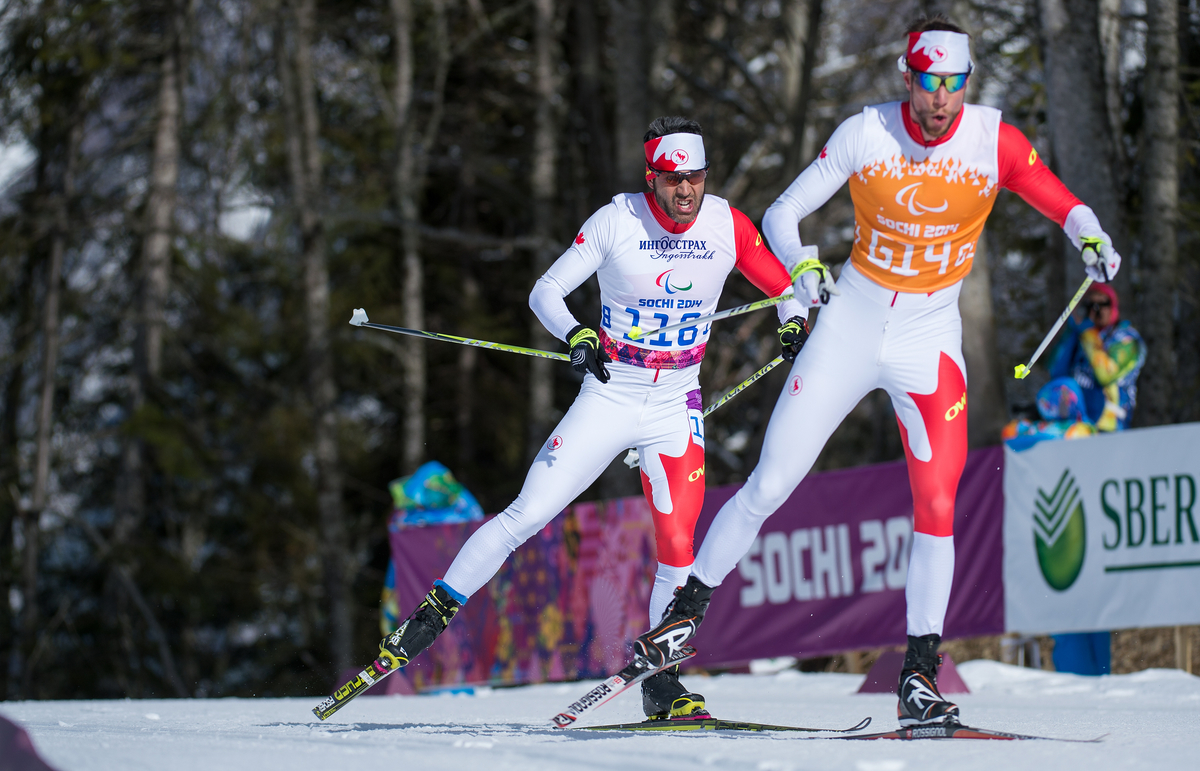
    Brian McKeever and his longtime guide and friend Erik Carleton race to McKeever’s third gold of the 2014 Winter Paralympics, and Carleton’s second, in the cross-country 10 k visually impaired freestyle race on the last day of racing in Sochi, Russia. (Photo: Matthew Murnaghan/Canadian Paralympic Committee)

    Picture trying to ski after staring directly at the sun. Bushes blend into the snow. Turns become an illusion; one second they are there and the next they are not. If it sounds somewhat impossible, consider it’s the field of vision Canadian Paralympic cross-country skier Brian McKeever has had for the past 19 years of his professional cross-country career.

    “If you stare at the sun for a long time and turn away, you get these fuzzy spots. Well for me, the fuzzy spots don’t go away,” McKeever said of his vision, according to his Canadian Paralympic Committee bio.

    Diagnosed with Stargardt disease at the age of 19, the loss of vision in no way slowed McKeever’s desire to ski — a sport he started when he was 3 — or his success. In 2010, he made history after being named to both Canada’s able-bodied Olympic squad and its Paralympic team. Though he did not race at the 2010 Winter Olympics in Whistler, he competed in the 2010 Paralympics there, coming away with three gold medals.

    Three years prior to that, he raced against able-bodied athletes in the International Ski Federation (FIS) World Championships 15-kilometer freestyle in Sapporo, Japan, and finished 21st. Over the course of four Paralympics, he has accumulated 13 medals, 10 of which are gold. A Paralympic World Championships competitor since 2003, McKeever holds 19 world titles. He also competed in last year’s U.S. nationals in Midway, Utah, finishing 12th in the men’s 30 k classic mass start and 23rd in the men’s 15 k freestyle.

    When it comes to racing, the difficulty often is not ensuring McKeever, 38, is fit, but that his guides are fit enough to not be left behind. His brother Robin McKeever, now head coach of Cross Country Canada’s Para-Nordic Ski Team, served as Brian’s guide from 2001 through the 2010 Paralympics. Following Robin’s transition to becoming head coach, Erik Carleton, Brian’s childhood friend growing up in Calgary, Alberta, joined the team as Brian’s new guide.

    “I don’t think the guides get nearly as much recognition as they should,” McKeever said after winning the 2013 World Championships 20 k with Carleton as his guide, according to the Canadian Paralympic Committee. “It is tough being the guide because you are out front and not skiing your own race. He needs to be out front and controlling the pace. When I need him to hold off he has to, and when I need him to increase the pace he needs to do that as well.”

    Graham Nishikawa pacing Brian McKeever to his eighth Paralympic gold at the 2014 Paralympics in the 20 k visually impaired classic race in Sochi, Russia. McKeever used both Nishikawa and Erik Carleton as guides, switching halfway through the distance race. (Photo Scott Grant/Canadian Paralympic Committee)

    A former World Cup skier and Cross Country Canada (CCC) senior development team member, Graham Nishikawa joined Brian and Carleton as a second guide a few years later, in the leadup to the 2014 Paralympics. The two have guided Brian in the years since, but with Carleton’s departure before the upcoming 2018 Paralympics in PyeongChang, South Korea, a new member joined Brian’s crew: Russell Kennedy.

    Kennedy, who races for Team R.A.D., which is in partnership and based out of Canmore Nordic, was approached by Robin this spring and offered a spot on the Para-Nordic Team as one of Brian’s backup guides. The offer also came with the opportunity for Kennedy to join the team at its on-snow training camp in New Zealand this summer, as well as the elevation camp it held at Mammoth Mountain in Mammoth Lakes, California, this fall.

    “They’ve got a lot of resources and a lot experience, so it’s pretty awesome for me,” Kennedy, 26, said on the phone in October.

    Russell Kennedy (Team R.A.D.) recently agreed to attend the 2018 Paralympics as the second guide for Canadian Paralympian Brian McKeever (not shown). (Courtesy photo)

    “I’ve been on my own schedule this year because the Team R.A.D. is mostly younger athletes and … I have to do my own thing because I’m going for the Olympics,” explained Kennedy, last season’s overall NorAm winner who earned Period 1 World Cup starts with CCC’s able-bodied team. “So it actually works better for me to be training with Brian because he has similar goals as me. Those camps were both really well placed with volume load and elevation load for my training plan so that really was another thing that drew me to the program.”

    Kennedy, whose father is Canadian and mother American, was born in Truckee, California, and grew up skiing with Far West Nordic. According to The Tahoe Weekly, he took advantage of his dual citizenship and moved to Canada fresh out of high school in 2010 to train with the Alberta World Cup Academy. In the years since, he has accumulated 18 World Cup starts (including two this season). After attending both Para-Nordic camps this summer, Kennedy plans to head to PyeongChang for the Paralympics, but is hoping to qualify for Canada’s Olympic squad as well. 

    With that as one of his primary goals, Kennedy departed for Gällivare, Sweden, on Nov. 11 and competed at the FIS season-opener there before diving into World Cups in an effort to meet CCC’s Olympic selection criteria. Later this month, he’ll head home to Canada to get ready for NorAm trials Jan. 6-10 in Mont Sainte-Anne, Quebec.

    In the Gällivare FIS races, Kennedy raced to 43rd in the classic sprint and 48th in the 10 k freestyle.

    “It is always a bit hard with sprints, but the goal was to close really well,” Kennedy wrote in an email after that sprint. “I felt strong and was much more happy with this sprint than my Frozen Thunder qualifier.

    He did not race the following weekend’s World Cup opener in Kuusamo, Finland, due to illness. 

    “I caught a really small head cold,” Kennedy wrote in an email late last month. “It was a bit silly, but it was not worth racing and making it worse as I have a month over here, so I sat out the weekend.”
    At the second World Cup stop in Lillehammer, Norway, he raced to 63rd in the classic sprint and 53rd in the 30 k skiathlon. McKeever also started his season in Gällivare, where he finished 97th in the FIS 10 k skate and 110th in the 15 k classic, without a guide in either race.
    “I didn’t get to ski with him as much as I would have liked to, but got a quick one in before my race and chatted with him about fitness and how he was feeling,” Kennedy wrote in an email after the Gällivare classic sprint.
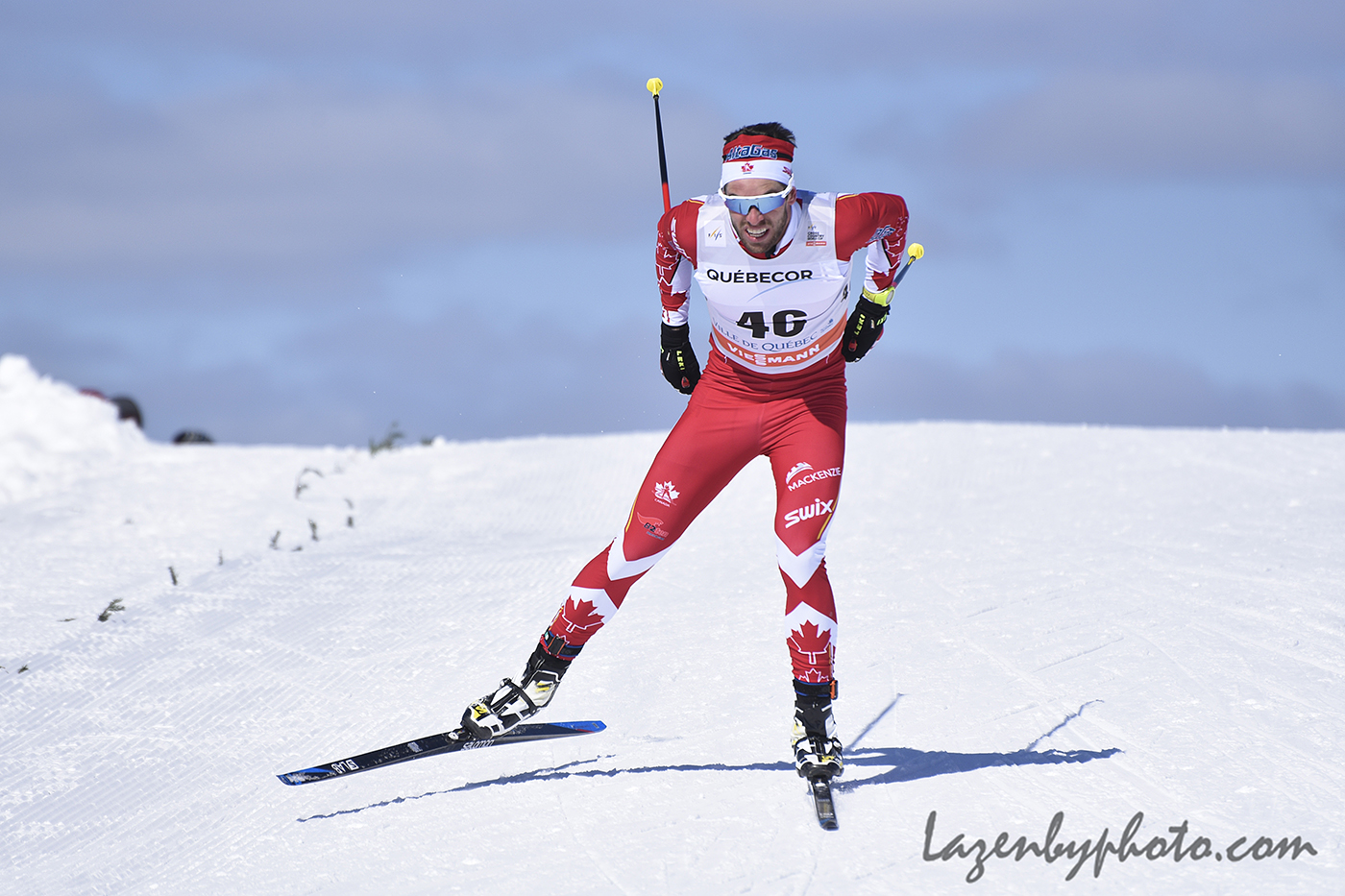
    Russell Kennedy (Canmore Nordic/Team R.A.D.) racing to 36th in the men’s skate sprint qualifier at 2017 World Cup Finals in Quebec City last March. (Photo: John Lazenby/Lazenbyphoto.com)

    Kennedy, who has spent all of his senior skiing years in Canada, has had some experience guiding, but this will be his first year at McKeever’s level of racing.

    “It’s hard for Para to find a guide that can match Brian’s pace because he’s quite fit, as I’ve been finding out more and more,” Kennedy said.

    McKeever is also based out of Canmore and the two coordinated training sessions as frequently as they could this summer and fall, Kennedy explained.

    “He’s a really really fit dude and there’s not too many people who can hold that pace. They basically have to be on the national team,” he continued. “The guy that’s guiding is, I guess, a bit less difficult than just being fit enough to guide him.”

    With the start of the World Cup race season well underway and the 2018 Paralympics exactly three months away, the primary goal for Kennedy right now is to simply stay fit.

    “[The Paralympics] are so far away that I can kind of peak for the [World Cup] and then rebuild if I need to,” Kennedy said. “We’re going to have to play it a bit by ear and see what happens. But we both trust in each other’s fitness so I think it will work out.”

    (Note: Neither Brian McKeever nor Robin McKeever could be reached for comment.) 

    Russell Kennedy of the Canmore-based Team R.A.D. racing to third in the men’s 10-kilometer freestyle at 2017 Frozen Thunder in early November in Canmore, Alberta. (Photo: Doug Stephen)
  • IPC Suspends Russia from Rio Paralympics

    IPC Suspends Russia from Rio Paralympics

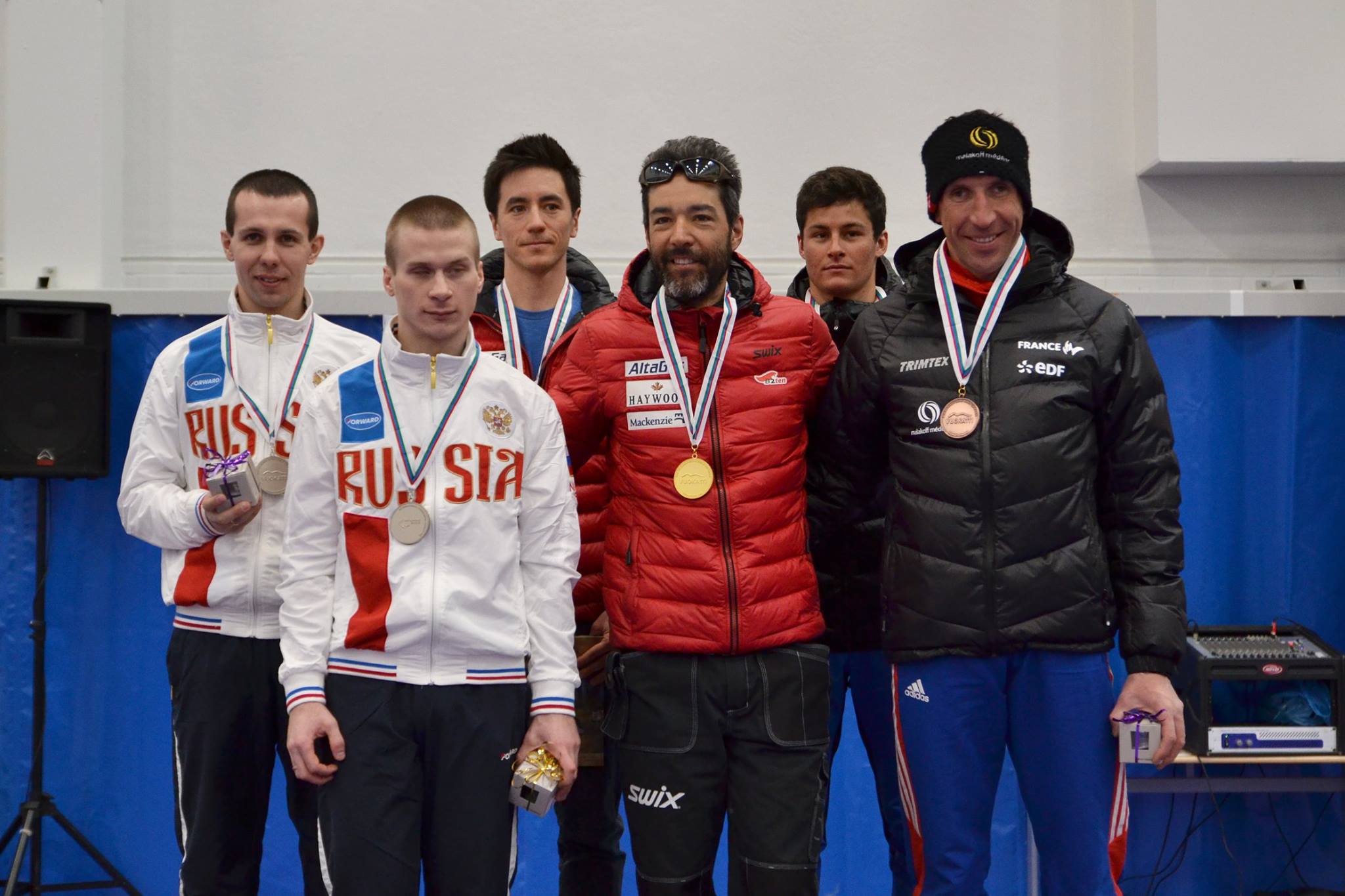
    Brian McKeever (c) and his guide Graham Nishikawa with their gold medals after the men's visually impaired 30 k at 2016 IPC World Cup Finals in Vuokatti, Finland. Russia's Alexsander Artemov (l) placed second and France’s Thomas Clarion (r) was third. (Photo: IPC Nordic Skiing/Facebook)
    Brian McKeever (c) and his guide Graham Nishikawa with their gold medals after the men’s visually impaired 30 k at 2016 IPC World Cup Finals in Vuokatti, Finland. Russia’s Alexsander Artemov (l) placed second and France’s Thomas Clarion (r) was third. (Photo: IPC Nordic Skiing/Facebook)

    As many athletes continue to prepare for the upcoming Paralympic Games taking place exactly one month from Sunday in Rio de Janeiro, Brazil, those sporting the white, blue and red flag of Russia will not. On Sunday, Aug. 7, the International Paralympic Committee (IPC) announced its decision to suspend the Russian Paralympic Committee from competition in Rio and upcoming IPC competitions.

    A press conference was held Sunday morning in Rio to announce the IPC Governing Board’s unanimous ultimatum that the Russian Paralympic Committee had failed its duties as an active member to the IPC in light of recent investigations. Namely, the Russian Paralympic Committee was found at fault in their inability to comply with sanctions set forth by the IPC Anti-Doping Code and the World Anti-Doping Code. Prior to any decision from the IPC Governing Board, the Russian Paralympic Committee was permitted to provide a written and verbal claim during the conference.

    The logo for the 2016 Summer Paralympic Games, which will be held Sept. 7-18 in Rio de Janeiro, Brazil.
    The logo for the 2016 Summer Paralympic Games, which will be held Sept. 7-18 in Rio de Janeiro, Brazil.

    The repercussions of the decision for the Russian Paralympic Committee include the suspension of its IPC membership rights and privileges. This means Russia is not allowed to vote at IPC member meetings nor enter athletes in IPC-sanctioned events, which includes the 2016 Summer Paralympics and IPC competitions (involving summer and winter sports) beyond that.

    Much of the decision, according to IPC President Sir Philip Craven, was based on the findings of the McLaren report. Within the report, “35 disappearing positive samples from Paralympic sport in 2012 to 2015,” were included in the report’s findings.

    “Since the publication of the McLaren Report on 18 July our priority has been to establish the full facts in respect of Para sport,” Craven stated in the press release.

    “In particular, we have taken the necessary time to ask further questions of Professor McLaren and his investigation team, to await the results of samples undergoing further forensic examination and to invite the Russian Paralympic Committee to present its case to the IPC and enter into dialogue with the IPC Governing Board. With the full facts to hand, we were deeply saddened to find that the State-sponsored doping programme that exists within Russian sport regrettably extends to Russian Para sport as well.”

    As head of the IPC, Craven maintains it is his and the governing body’s responsibility to ensure equity between all competitors. The motion to suspend Russia, he indicates, represents an attempt to create fair competition among all para-athletes.

    “Tragically this situation is not about athletes cheating a system, but about a State-run system that is cheating the athletes,” Craven said. “Our decision is driven by the need to hold our members accountable for their obligations. On the basis of the evidence we have, in the current environment our member the Russian Paralympic Committee cannot comply with the IPC’s Anti-Doping Code and the World Anti-Doping Code.  Those obligations are crucial to the IPC’s guarantee of fair competition for all.”

    Tragically this situation is not about athletes cheating a system, but about a State-run system that is cheating the athletes.“– IPC President Sir Philip Craven on the decision to suspend Russia from the Rio Paralympics

    Also on Sunday, the World Anti-Doping Agency (WADA) announced its support of the decision.

    “WADA supports the decision taken by the IPC, which we believe is in the interest of clean athletes and the clean sport movement,” a WADA statement noted. “The IPC’s decision follows the WADA Executive Committee’s 18 July recommendation to the IPC that they consider declining entries of athletes by the Russian Paralympic Committee for Rio 2016 as a result of the McLaren Report.”

    Robin McKeever, head coach of the Canadian Para Nordic Ski Team, pointed that beyond the summer games in Rio, the decision will also impact the upcoming winter ski season.

    “It’s a very sad day for IPC sports and in the end, the athletes pay the heaviest price overall in sport,” McKeever wrote in an email to FasterSkier. “From what I read the entire RUS IPC is banned from competition so that includes winter sports for the upcoming season. Whether or not that changes in the coming days or weeks time will tell. This obviously will have a huge effect on the size of the IPC Nordic World Cup field for this winter…True Sport must prevail and the line between what’s fair or unfair has to be drawn. I only hope we can all play on an equal playing field and move forward from this point.”

    In a phone interview before the IPC decision on Russia, McKeever emphasized that the Russian doping scandal is rooted in far more than just the athletes themselves.

    “The opportunities that the paralympics provide for some countries athletes are astronomical,” McKeever said last month.  “Russian athletes winning a gold medal at the paralympics is 145,000 euros for athlete, guide — if there’s a guide involved — and the coach. All paid out by the state. So this is a huge, huge organization from the political side all the way down. There’s one Russian who won six medals in Sochi and that’s the difference between living life in a wheelchair — pretty much fighting day to day to have a meal — versus living life as a rock star.”

    With the present decision instated, the IPC is currently working to redistribute the 267 slots that had been given to Russian athletes for Rio 2016. No action will be taken, however, until the 21-day time period that the Russian Paralympic Committee has to appeal the decision is complete. The Rio Paralympics start in 31 days on Sept. 7.

  • Masters Ends IPC World Cup Season Undefeated in Cross Country

    Masters Ends IPC World Cup Season Undefeated in Cross Country

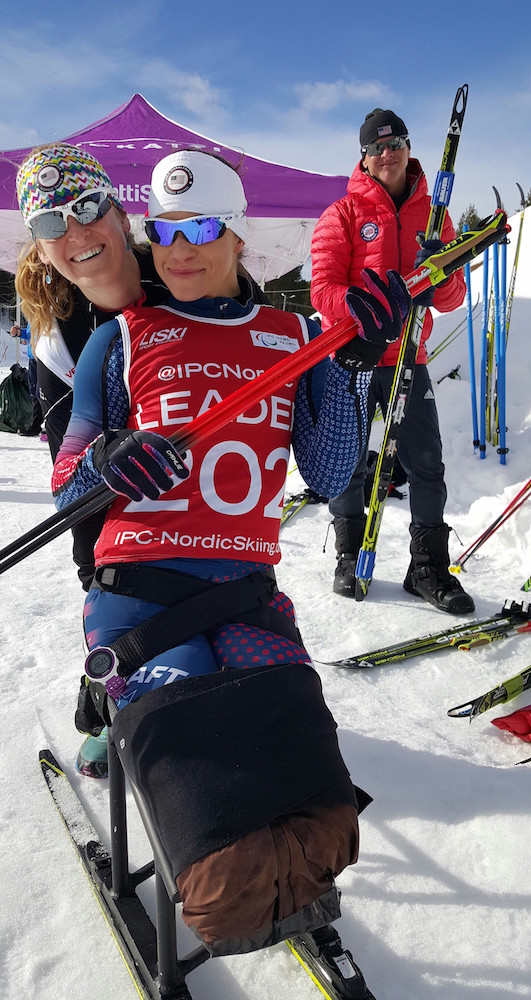
    Oksana Masters (front) and U.S. Paralympics Nordic coach Eileen Carey at 2016 IPC World Cup Finals in Vuokatti, Finland, with wax tech Dave Mark (behind). Masters won the overall cross-country World Cup for the second-straight year. (Photo: U.S. Paralympics Nordic)
    Oksana Masters (front) and U.S. Paralympics Nordic coach Eileen Carey at 2016 IPC World Cup Finals in Vuokatti, Finland, with wax tech Dave Mark (behind). Masters won the overall cross-country World Cup for the second-straight year. (Photo: U.S. Paralympics Nordic)

    When an athlete finishes a World Cup season undefeated, it’s not just a win for the athlete, it’s a win for their teammates as well.

    After U.S. Paralympics Nordic sit skier Oksana Masters completed the 2015/2016 International Paralympic Committee (IPC) World Cup race season as the undefeated victor in the cross-country events, from the 1-kilometer sprints to the debut of the 20 k marathon event, her success was seen as one for and from the team.

    “Oksana is an amazing athlete and I have been privileged to be a [part] of her cross country skiing career since she started the sport,” her teammate Andy Soule wrote in an email.

    “We have both become better skiers by learning from one another and training together,” Soule added. “She is hard-working, motivated, and a joy to be around as a teammate and as a person; and it makes me incredibly happy to see her having the level of success she had had these past couple of years.”

    Last week at IPC World Cup Finals in Vuokatti, Finland, Masters raced to three wins in a row, including the cross-country sitting sprint, but she didn’t let it get to her head.

    “It [was] the last sprint of the season and I didn’t want to leave anything behind!” Masters, of Louisville, Ky., told Inside the Games.

    Throughout the season, nobody came close to the 26-year-old Masters in the cross-country events. According to a U.S. Paralympics press release, nearly eight seconds separated her from her closest competitor in the sprint, and more than 28 seconds separated her from the field in the middle distance 5 k.

    “Oksana brought impressive consistency to her racing this season,” U.S. high-performance coach Eileen Carey wrote in an email to FasterSkier. “We had longer travel to our World Cups this season than is typical, so quality recovery was hard to come by at times.  Oksana made gains this winter in making smart decisions for her recovery and health, even when it meant backing off from training.  She made a few mistakes early in the winter, training through some sickness, but she learned from it and made smarter decisions for the rest of the season.  Her performances in cross country races would not have been possible without that adjustment. That self-knowledge will pay off in future seasons.”

    Day 1: Canada’s Arendz Fifth, Top 10’s for Weekes and Hudak 

    The first day of IPC World Cup Finals took place Tuesday, March 15, with a biathlon sprint.

    In the women’s 6 k visually impaired biathlon sprint, Ukraine’s Oksana Shyshkova won in a time of 20:55.8 after shooting clean. Also with perfect shooting was Mikhalina Lysova of Russia who finished in second overall. Third place went to Russian skier Elena Remizova after she missed two shots (1+1).

    In the women’s 6 k standing biathlon sprint, Oleksandra Kononova of Ukraine placed first in a time of 20:53.2 after two penalties (1+1). Russia’s Anna Milenina finished in second, also with two penalties (2+0). Russian teammate Ekaterina Rumyantseva rounded out the podium in third with three penalties (1+2).

    Two Canadians competed in the 6 k standing biathlon sprint, including Emily Weekes and Brittany Hudak. With three misses (0+3), Weekes finished ninth, while teammate Hudak finished just behind her in 10th place with four penalties (2+2).

    In the women’s 6 k sitting biathlon sprint, the top two spots went to Russia, with Irina Guliaeva coming in first in 23:31.8, after missing one shot (1+0). Her teammate Nadezhda Fedorova, came in second after shooting clean. Third place went to Germany’s Anja Wicker after she missed one shot (1+0).

    Masters finished sixth in a time of 25:47.0 after missing three shots (3+0).

    In the men’s 7.5 k visually impaired biathlon sprint,  Russia’s Stanislav Chokhlaev emerged victorious, winning the event in a time of 20:36.9 after perfect shooting. Also shooting clean was second place finisher, and Russian teammate Nikolay Polukhin. Third place for the men’s visually impaired event went to Ukraine’s Anatolii Kovalevskyi with one miss (1+0).

    U.S. Paralympics Nordic veteran Andy Soule tucking at 2016 IPC World Cup Finals in Vuokatti, Finland. (Photo: U.S. Paralympics Nordic)
    U.S. Paralympics Nordic veteran Andy Soule tucking at 2016 IPC World Cup Finals in Vuokatti, Finland. (Photo: U.S. Paralympics Nordic)

    American skier Jake Adicoff also competed in the event, racing to 11th after four misses (2+2).

    In the men’s 7.5 k standing biathlon sprint, Ukraine’s Ihor Reptyukh, raced to first place in a time of 18:49.5 after perfect shooting. In second place was Vladislav Lekomtsev of Russia with two misses (2+0). France’s Benjamin Daviet rounded out the top three, finishing third with one miss (0+1).

    Canada’s Mark Arendz competed in the men’s standing biathlon sprint, racing to fifth place overall with two misses (1+1).

    “Going into today I felt I had a lot more. The body felt ready to go, but it didn’t materialize in today’s race,” Arendz said in a Canadian Para Nordic Team press release.. “I was close on the skiing, but I’m still finding myself needing to tweak my shooting. Two misses is two too many for me right now.”

    In the men’s 7.5 k sitting biathlon sprint, the top three spots all went to Russia, Grigory Murygin leading the trio in first in 25:23.6 with one miss (1+0). Ivan Golubkov and Roman Petushkov both shot clean and finished second and third, respectively.

    Soule was the sole U.S. skier in the event, racing to an 11th place overall after five misses (3+2).

    “[I] had a broken pole early in the sprint and I am grateful to team Russia for their display of sportsmanship in offering me one of their spare poles until a coach could get mine to me,” Soule wrote in an email.

    Canada’s Derek Zaplotinsky also competed in the event, finishing in 15th overall after shooting the same as Soule.

    Results: Women Day 1 | Men Day 1

    Day 2: Arendz, Weekes Fourth

    The second day of racing, Wednesday, March 16, brought athletes out for another biathlon event.

    In the women’s 12.5 k sitting biathlon, Russia’s Maria Iovleva took her first victory of the week, finishing first in a time of 53:20.6 with just one miss (0+0+1+0). She led a Russian podium sweep with  Guliaeva placing second with three misses (2+0+1+0) and Svetlana Konovalova taking third with two misses (1+0+1+0).

    Masters finished seventh, after skiing eight penalty loops (2+0+4+2).

    In the women’s 12.5 k visually impaired biathlon, Ukraine’s Shyshkova took her second consecutive title of the week, completing the course in a time of 40:43.0 after one missed shot (1+0+0+0). Finishing in second once again behind Shyshkova was Russia’s Lysova after skiing four penalties (2+1+1+0). Third place went to Vivian Hosch of Germany, who missed three (0+3+0+0).

    In the women’s 12.5 k standing biathlon, Ukraine’s Kononova continued her winning streak, taking first place in a time of 43:15.2, after missing two shots (0+0+1+1). Second place went to Russia’s Natalia Bratiuk, with one penalty (0+0+0+1). Rounding out the podium finishers for the day was Russia’s Milenina in third after missing six shots (0+1+2+3).

    Weekes finished just off the podium in fourth, with two misses (0+0+0+2).

    “Emily led the way for us again today, and showing steady development,” Canadian head coach Robin McKeever, said of Weekes in a team press release. “The classic sprint is a bit of a tough test for Emily, but she faired well today and skied strong.”

    In the men’s 15 k visually impaired biathlon, Russia’s Polukhin bested his previous second place finish for first, winning the 15 k in a time of 43:31.3 with perfect shooting. In second place was Russian Nikita Povarov, who also shot clean. Ukrainian skier Iurii Utkin rounded out the podium in third, after two misses (1+1+0+0).

    In the men’s 15 k standing biathlon, France’s Daviet raced to the win in 44:12.0 after skiing three penalties (2+0+1+0).  Second place went to Ivan Kodlozerov of Russia with one miss (0+0+1+0). Russian teammate Lekomtsev finished third after missing four (0+2+1+1).

    Mark Arendz (Canadian Para-Nordic Ski Team) at 2015 IPC World Cup Finals in Surnadal, Norway. He placed fourth overall in the 2014/2015 IPC World Cup biathlon standings. (Photo: IPC Nordic Skiing/Facebook)
    Mark Arendz (Canadian Para-Nordic Ski Team) at last year’s 2015 IPC World Cup Finals in Surnadal, Norway. This year in Finland, he placed fifth in the 2016 World Cup Finals biathlon sprint. (Photo: IPC Nordic Skiing/Facebook)

    Arendz finished just off the podium in fourth after skiing three penalty loops (0+1+1+1).

    In his second victory of the week, Murygin of Russia, raced to first in the men’s 15 k sitting biathlon in 54:18.1 with one penalty (0+1+0+0). Germany’s Martin Fleig finished second after missing four (2+0+2+0). The third podium spot went to Poland’s Kamil Rosiek with two penalties (2+0+0+0).

    Soule finished sixth, with seven penalties (4+1+0+2).

    “Both biathlon races were difficult shooting races for me. I have struggled in the range somewhat this year and will be working in the of season to return to some solid shooting fundamentals,” Soule wrote. “I am really excited for the mass start 20km marathon race [later that week] … This is a type of race that we do not get to do often and I an looking forward to the challenge.”

    Canada’s Derek Zaplotinsky was the second North American to compete in the event, finishing 11th with 12 penalties (2+4+3+3).

    Results: Women Day 2 | Men Day 2

    Day 3: Masters Wins Sprint; Adicoff, Weekes and Soule All Reach Respective Finals

    Thursday marked the third-consecutive day of racing with a 1 k cross-country sprint, where Masters continued her streak to finish the season with her fourth cross-country sprint win in as many races. She won the sprint in 2:12.68, besting Russia’s Iovleva in second and Germany’s Wicker in third.

    The women’s 1 k visually impaired cross country sprint went to Lysova of Russia, who won in 3:31.34. Crossing after Lysova in second was her Russian teammate Remizova.  Ukraine’s Shyshkova took the final podium spot in placed third overall.

    Thursday brought the third-straight win for Ukraine’s Kononova, who won the women’s 1 k standing cross-country sprint in 3:28.44. Crossing behind her in second was her Ukrainian teammate Liudmyla Liashenko. Rounding out the top three was Russia’s Milenina in third.

    Weekes advanced to the final where she finished fifth. Her teammate, Hudak finished ninth overall.

    Three Russians dominated the men’s 1 k visually impaired cross-country sprint, with Vladimir Udaltcov taking first in 2:52.66.  Chokhlaev placed second, while Oleg Ponomarev took third.

    Jake Adicoff (c) and his two guides, U.S. Paralympics high-performance coach and director John Farra (r) and Germany's Florian Grimm. (Photo: U.S. Paralympics Nordic)
    Jake Adicoff (c) and his two guides, U.S. Paralympics high-performance coach and director John Farra (r) and Germany’s Florian Grimm. (Photo: U.S. Paralympics Nordic)

    Finishing just off the podium after advancing to the final was Adicoff of the U.S. in fourth.

    The men’s 1 k standing cross-country sprint saw Russian Lekomtsev stand at the top of the event podium, ahead of Ukraine’s Vovchynskyi in second place. Third place went to Japan’s Yoshihiro Nitta.

    Arendz missed advancing to the final by one spot, finishing seventh overall.

    Competition in the men’s 1 k sitting cross-country sprint went to Ukrainian athlete Maksym Yarovyi, who crossed the final in first in a time of 1:55.47. Russia’s Golubkov and Aleksandr Davidovich finished second and third, respectively.

    Soule advanced to the final, where he placed sixth overall.

    Canada’s Chris Klebl advanced to the semifinal, where he placed 12th and Canadian teammate Zaplotinsky finished the day in 14th overall.  

    Results: Women Day 3 | Men Day 3

    Day 4: McKeever, Masters Take Marathon Titles; Klebl Second

    After a day of rest, IPC World Cup athletes returned to the Vuokatti ski trails for Saturday’s marathon events.

    Masters raced to first place in the women’s 20 k sitting marathon on Saturday, March 19, completing the course in a time of 1:00:57.0.

    Two Russians, Guliaeva and Fedorova finished behind Masters in second and third, respectively.

    The women’s 30 k visually impaired marathon event went to Remizova of Russia, who won in 1:36:22.6. Her Russian teammate Lysova placed second. Ukraine’s Shyshkova earned her fourth-straight podium of the week, after placing third.

    Ukraine’s Kononova rolled to her fourth-straight win of the week in the women’s 30 k standing cross-country marathon. She won in 1:39:09.6, while Sweden’s Helene Ripa finished second and Russia’s Rumyantseva placed third.

    Hudak raced to fifth in the women’s 30 k.

    Brian McKeever (c) and his guide Graham Nishikawa with their gold medals after the men's visually impaired 30 k at 2016 IPC World Cup Finals Vuokatti, Finland. Russia's Alexsander Artemov (l) placed second and France’s Thomas Clarion (r) was third. (Photo: IPC Nordic Skiing/Facebook)
    Canada’s Brian McKeever (c) and his guide Graham Nishikawa with their gold medals after the men’s visually impaired 30 k at 2016 IPC World Cup Finals Vuokatti, Finland. Russia’s Alexsander Artemov (l) placed second and France’s Thomas Clarion (r) was third. (Photo: IPC Nordic Skiing/Facebook)

    Canadian team veteran Brian McKeever took the victory in the men’s 30 k visually impaired cross-country marathon, completing the course in a time of 1:20:43.0. Behind him in second was Russia’s Alexsander Artemov and France’s Thomas Clarion in third.

    Adicoff was the second North American in the men’s visually impaired marathon in sixth overall.

    After winning Thursday’s standing sprint, Russian Lekomtsev took his second win of the week in the men’s 30 k standing in 1:17:52.8. The next closest competitor was his Russian teammate, Rushan Minnegulov in second. Third place went to France’s Daviet.

    Arendz raced to eighth place in the 30 k standing marathon.

    In the men’s 20 k sitting, Klebl narrowly out on a victory, placing second behind Maksym Yarovyi of Ukraine. Yarovyi completed the 20 k course in a time of 52:31.0.

    Soule was one spot off the podium in fourth, behind Korea’s Eui Hyun Sin in third.

    “The 20km was an interesting race,” Soule wrote in an email. “It was formatted as a mass start, which is not how we usually race. Because of the way we adjust times for differing disabilities, it was not actually first across the line wins. While we do not actually train specifically for this distance, the fast conditions and relatively flat course made it run much like a long individual race.”

    Results: Women Day 4 | Men Day 4

    Day 5: Masters Defends Unbeaten Streak; McKeever Wins Again

    Athletes geared up for the final World Cup race of the season on Sunday, March 20, with the men’s and women’s middle-distance cross-country races.

    American Oksana Masters (c) on the podium with one of her three gold medals from this year's IPC World Cup Finals in Vuokatti, Finland. (Photo: IPC Nordic Skiing/Facebook)
    American Oksana Masters (c) on the podium with one of her three gold medals from this year’s IPC World Cup Finals in Vuokatti, Finland. (Photo: IPC Nordic Skiing/Facebook)

    Masters displayed her strength with one final win, topping the women’s 5 k sitting cross-country in a time of 17:16.3, for her third win of the week.

    Finishing behind Masters in second was Russia’s Fedorova and in third was Guliaeva, also of Russia.

    In the women’s 7.5 k visually impaired cross-country, Lysova won in a time of 20:02.0. Second place went to her Russian teammate Remizova and Ukraine’s Olga Prylutska finished behind her in third place overall.

    In the women’s 7.5 k standing cross-country, Russia’s Milenina won in 19:59.2. Ukraine’s Kononova finished in second and Russian Rumyantseva placed third.

    McKeever secured his second win of the week, finishing first in the men’s 10 k visually impaired cross-country. McKeever completed the 10 k course in 22:31.1. Second place went to France’s Clarion.

    “We put in a really good effort today. Nish was on fire for the first five kilometres, and that moved us into a solid position,” McKeever said of his guide, Graham Nishikawa, in a team press release. “We were able to build on that pace, and nobody was able to respond.

    Adicoff once again just missed the podium in fourth overall, finishing behind Russia’s Chokhlaev in third.

    France’s Daviet took his second win of the week in men’s 10 k standing cross-country. Behind Daviet in second was Russia’s Minnegulov and Ukraine’s Reptyukh finished third.

    Arendz placed eighth in the 10 k standing event.

    In the final men’s sitting cross-country event, Russia’s Golubkov finished first in a time of 23:47.4. Second place went to Ukraine’s Yarovyi and Korea’s Eui Hyun Sin took third.

    Soule led the North Americans in that race in fifth, while Canada’s Klebl and Zaplotinsky finished behind him in 12th and 16th, respectively.

    “Overall the event has been a lot of fun,” Soule wrote. “I always enjoy coming to Vuokatti, a place where we have competed on a regular basis for my entire nine-year career.”

    Results: Women Day 5 | Men Day 5

    Masters Wins World Cup Globe for Second-Straight Year

    Overall, Masters won the season-long World Cup title for the second year in a row in the women’s sitting cross-country. She topped the rankings with 760 points, beating out Russia’s Maria Iovleva, who had 545 points, and Russia’s Nadezhda Fedorova, who was third with 526 points.

    Andy Soule was 30 points short of the cross-country podium in fourth overall, with 390 points to Russian winner Ivan Golubkov’s 689 points in first.

    Emily Weekes placed seventh in the women’s standing cross-country, McKeever was eighth in the men’s visually impaired.

    Soule placed fifth overall in the biathlon World Cup men’s sitting, while Masters was sixth in the women’s category. Weekes finished the season in ninth overall in the biathlon World Cup, and Mark Arendz tied for ninth in the men’s standing biathlon.

    World Cup rankings

  • Canada’s 10-Time Paralympian, Bourgonje Bows Out, Keeps Spreading Paralympic Message

    Canada’s 10-Time Paralympian, Bourgonje Bows Out, Keeps Spreading Paralympic Message

    Colette Bourgonje racing at her 10th Paralympics in March, the 2014 Winter Games in Sochi, Russia. (Photo: Cross Country Canada)
    Colette Bourgonje racing at her 10th Paralympics in March, the 2014 Winter Games in Sochi, Russia. (Photo: Cross Country Canada)

    Twenty-two years ago, Colette Bourgonje was a grade-school teacher with a ticket to the Albertville Paralympics in France. A Saskatchewan native, she had learned how to nordic sit ski a year earlier — all while teaching physical education in Saskatoon.

    But the school wasn’t about to let her take off to compete at her first Paralympics. At the time, Bourgonje was paying her own way to do so, and since landing a temporary teaching contract in 1989, she was trying to secure more job stability.

    Yet passing up the Paralympics wasn’t an option, she told herself. Bourgonje quit her job and resolved to find another one when she returned.

    Ten-time Paralympian Colette Bourgonje (l) with Melanie Florizione, vice principal of a school in Regina, Saskatchewan. (Courtesy photo)
    Ten-time Paralympian Colette Bourgonje (l) with Melanie Florizione, vice principal of a school in Regina, Saskatchewan, during an appearance after the Sochi Paralympics. (Courtesy photo)

    A national-level cross-country runner as a teenager, Bourgonje was in a car accident her senior year, leaving her paralyzed from the waist down. Four years later in 1984, she took up wheelchair racing and became the first to graduate the University of Saskatchewan’s physical-education department in a wheelchair.

    With the competitive bug back in her system, she tried sit skiing for the first time in 1991 and immediately fell in love. More similar to cross-country running than wheelchair racing, she began to work at improving in that sport as well.

    After competing in Albertville in the winter of ’92, Bourgonje qualified for the Barcelona Olympics that summer. There, she won two bronze medals in wheelchair racing, and went on to claim two more bronze medals at the 1996 Atlanta Summer Games. She also raced at the 2000 Summer Olympics.

    Not one to take a breather, Bourgonje became the only athlete in the world to compete in all seven Paralympic Winter Games from 1992 to 2014. She tallied six Winter Paralympic medals — three silver and three bronze — between the 1998, 2006 and 2010 Games, and went down in history as the first Canadian to win a Paralympic medal at home in Vancouver (she earned silver in the 10 k sit ski).

    On the phone from her home in Prince Albert, Saskatchewan’s third largest city along the North Saskatchewan River, Bourgonje reflected on some of her career highlights in the last 24 years. At 52, she announced her retirement from the Canadian Para-Nordic Team late last month.

    “Carrying the flags out in Nagano and Torino, carrying the Canadian flag out was absolutely fantastic,” she said of her flag-bearing honors. “Getting the first medal in Canada was an amazing experience. Being on the podium in that 10 k was just like, whoa. I was so happy.”

    At Vancouver’s closing ceremony in 2010, she received the Whang Youn Dai Achievement Award, given to an individual at each Paralympics who has shown to conquer adversities through sporting excellence.

    In her third nomination for Saskatchewan’s Female Athlete of the Year award, she won it in 2010. She remembered writing the acceptance speech, which she never expected to deliver, before a friend attended the awards ceremony for her in Saskatoon.

    “I just whipped it off in five minutes really thinking I would never get that award,” she recalled. “We were in Russia and I think the other thing that happened that same week … I finally got a [World Cup] medal in Russia that was the only gold I ever won. I was just like, I cant believe this is happening! That’s why I would’ve been satisfied to say this was a great career.”

    After finding success in Russia, Bourgonje decided to commit to another season through 2011 World Championships in Russia. There, she racked up another gold medal to add to her growing list, which included two overall International Paralympic Committee (IPC) World Cup victories in 1998 and 2005.

    “After 2010, I did say that was going to be my last Paralympics,” she recalled.

    Around that time, she asked one of her coaches, Peter Eriksson, the Athletics Canada Olympic and Paralympic head coach, how you know when you’re ready to be done. “He said you’ll know,” Bourgonje said. “And I did.”

    Colette Bourgonje competes in Cross Country Skiing Women's 5km Sitting at the 2014 Paralympic Winter Games in Sochi, Russia. (Photo: Matthew Murnaghan/Canadian Paralympic Committee)
    Colette Bourgonje competes in the 5 k sitting at the 2014 Paralympic Winter Games in Sochi, Russia. (Photo: Matthew Murnaghan/Canadian Paralympic Committee)

    The courses in Sochi simply weren’t for her. “It’s a great course for double amputees,” she said, with  massive climbs and descents, not the kind of flowing course she favored. She had raced well at the December World Cup in Canmore, Alberta, placing fourth and fifth, but suffered from low iron and vitamin B12 levels in Sochi.

    “I knew I did everything I could to be physically ready to race,” she said.

    But she was tired. In three races, Bourgonje placed 13th twice (5 k and 12 k) and 16th in the sprint.

    “It’s all good; it was fun,” she added.

    Perhaps one of her greatest sports successes was Brittany Hudak, Bourgonje explained. Two years ago, she met Hudak, now 20, working at a local Canadian Tire in Prince Albert and persuaded her to try nordic skiing. Not exactly sure how to coach an arm amputee at the time, Bourgonje quickly became her mentor.

    This past season, Hudak made her World Cup debut and qualified for the Sochi Paralympics.

    “This year traveling and training with Brittany was great — it was great to see a different kind of success,” Bourgonje said. “She’s just having the time of her life.”

    Without Bourgonje on the team this coming season, she said three men remain on Canada’s Para-Nordic World Cup squad and Hudak is the lone development-team member.

    “She has a lot of people willing to help her,” Bourgonje explained. “I’ve been her mentor and the person she’ll come to asking questions, but she definitely has it all together and will get what she needs  … I would like to see her racing in Korea [in 2018]. That would be pretty awesome.”

    One of Bourgonje’s early coaches (along with Para-Nordic Head Coach Robin McKeever), Bruce Craven will continue to work with Hudak on her training plans.
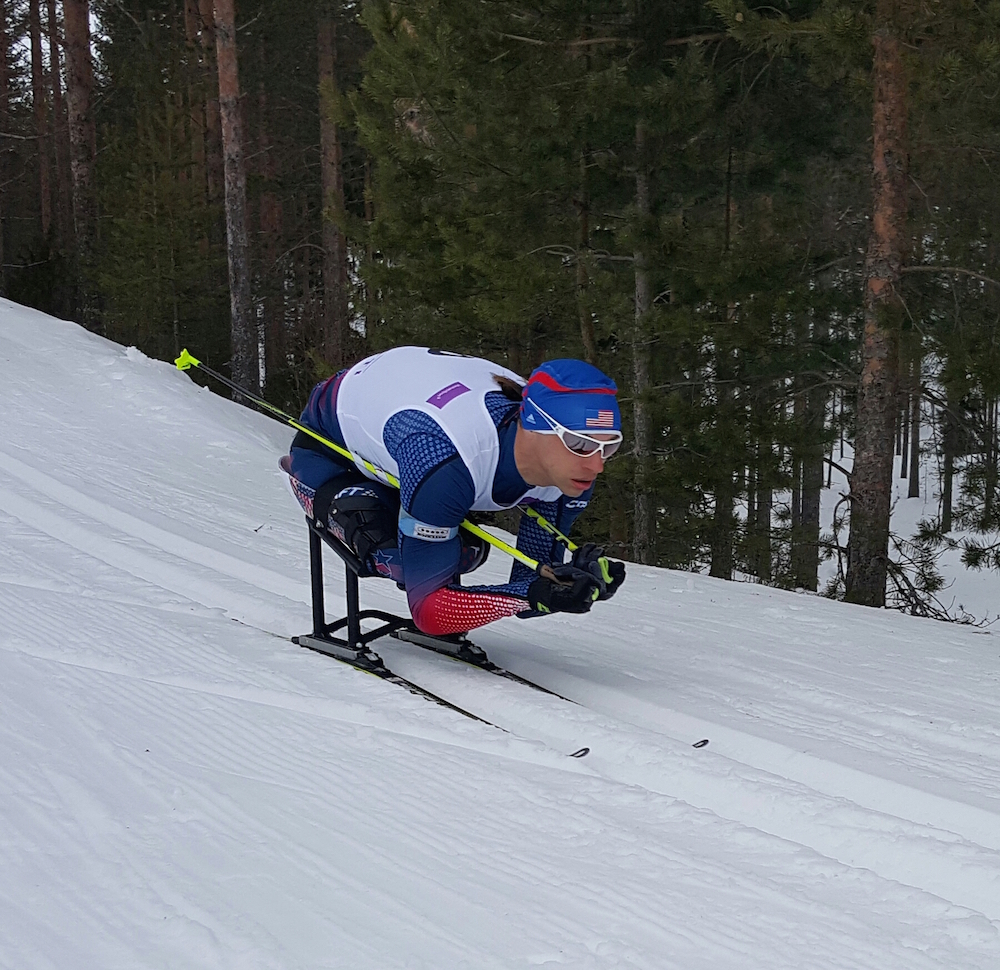
    “[Craven] has been providing me with programs since July of last year and still continues to write them but we are in the process of trying to get me on a yearly training plan which is different from what I did last year,” Hudak wrote in an email.

    “Colette has had a huge impact on me in the sense that she was first an inspiration and a role model for me. Then she became a mentor for me which really helped me become a better skier in a short period of time.

    Brittany Hudak competes in Cross Country Skiing Women's 5km Standing at the 2014 Paralympic Winter Games in Sochi, Russia. (Photo: Matthew Murnaghan/Canadian Paralympic Committee)
    Brittany Hudak competes in the 5 k standing at the 2014 Paralympic Winter Games in Sochi, Russia. (Photo: Matthew Murnaghan/Canadian Paralympic Committee)

    “Since I was new to the sport I didn’t know who I could contact to learn more about getting started in the sport so Colette helped me out a lot with the resources that were available to me and informed me of what steps I needed to take in order to get to a high performance level of sport,” she added. “Colette was also willing to chat with me at any time if I ever had questions and wanted some advice so I think she was very good with being a friend and a mentor.”

    As for what Bourgonje’s up to now, she recently returned from an Olympic/Paralympic tour at schools around the province and will continue to do similar speaking appearances throughout the summer.

    “The Paralympics have not really been in the forefront — every speaking opportunity I get, I say it’s a parallel event to the Olympics…” she said. “It’s picking up, but it’s not yet at an equal … [or] seen as a parallel movement yet.

    “When you medal at the Paralympics, you don’t come home to $20,000 dollars for medaling,” she added. “It’s a great movement, but it’s not well known.”

    Between traveling around the Canada to deliver her message, Bourgonje also wants to return to teaching. While she’s taught everything from phys ed to health, math, and science, it’s the energy of the students she’s missed. Substitute teaching could be a good remedy for that, she said.

    During her full-time racing days, Bourgonje taught part time until 2008, largely paying out of pocket to compete until 2005, when Team Visa started sponsoring her. She met Canada’s carding (government-funding) criteria for wheelchair racing at the Atlanta marathon in 1996, then received assistance from Cross Country Canada for nordic in 1998 leading up to the Nagano Olympics.
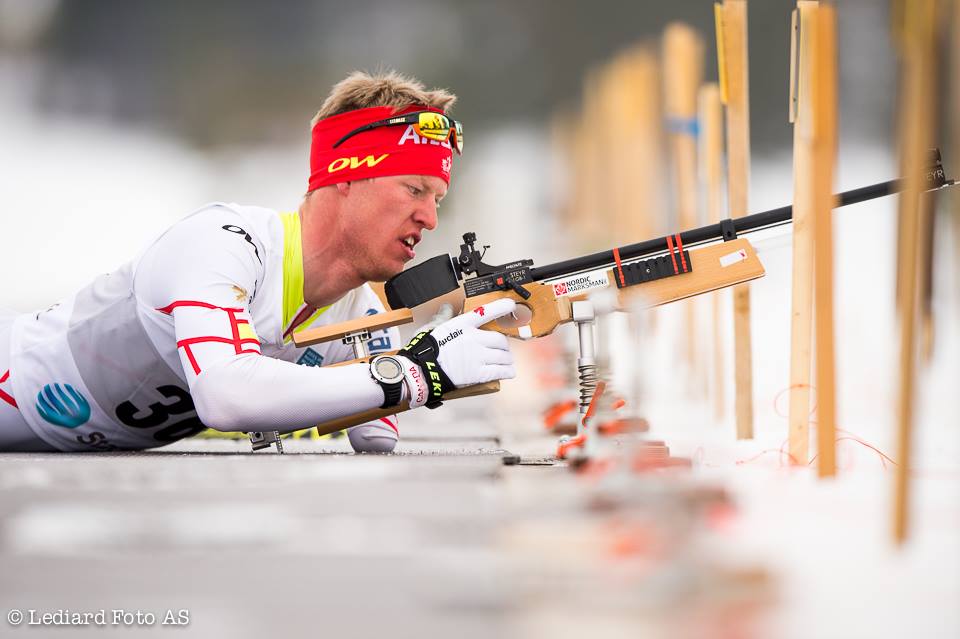
    “You can be carded in one sport and they give you [$]1,500 a month at that time (that was the highest funding at the time),” she explained in an email. “Carding has now increased to [$]1,800 a month to live and train on.”
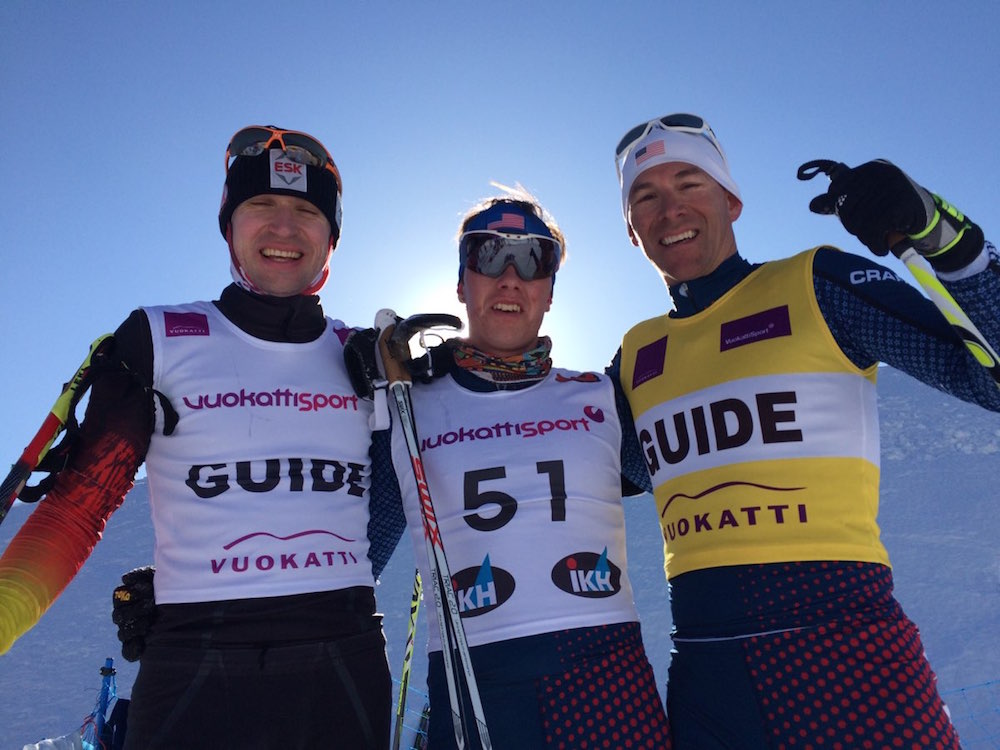
    Eighteen months before the 2010 Olympics, she quit her Saskatoon elementary school job and moved to Canmore for what she thought was one final push.

    “It was very stressful. I’d put everything on the line,” she told The Star Phoenix.

    After the ’92 Winter and Summer Paralympics, she landed a job in Saskatoon’s recreation department. In 1994, the Burnsville school district hired her.

    “I do feel that teaching part-time kept me grounded and very appreciative of what I received,” she told FasterSkier. “You know what they say whatever doesn’t kill you makes you stronger. I also loved my job and was only stressed out when I had to apply for leaves in the winter to go to compete.”

    Colette Bourgonje doing some mountain-board work during a Canadian Para-Nordic Team training camp in Arizona two years ago. (Photo: Robin McKeever)
    Colette Bourgonje doing some mountain-board work during a Canadian Para-Nordic Team training camp in Arizona two years ago. (Photo: Robin McKeever)

    In the last couple months Bourgonje has backed off full-time training to enjoy more recreational outings — like kayaking — and said she’s looking forward to skiing in the Nisbet Provincial Forest with her partner George, who grooms the trails right out of their backyard.

    “I’m really wanting to enjoy and not feel stiff and tired — no more four-hour skiing for me,” she said. “A couple hours to enjoy wherever we are absolutely [doing] … or skiing with kids.”

    Last year, she met an 8-year-old boy named Tyrese, who’s missing part of his arm, while shopping for batteries for her heart-rate monitor.

    “He was getting into a little red car they have set up at the mall, I asked him if he liked skiing he said he did so I asked him where his parents were,” Bourgonje recalled.

    She talked to his mother, gave her a card with her contact info and asked where Tyrese went to school — just in case they forgot to get back to her. After a training camp last October, Bourgonje went to his school to see if he was still interested.

    “We set him up with skis/poles but he had no boots. While we were in Canmore, the school bought boots for him,” she explained.

    Later, Bourgonje brought him to ski on the trails near her house. When she returned from Russia in March, she took Tyrese and a sit-skier out on less-than-ideal conditions. But they stuck with it.

    “Right now we have another 12 year old with no arms, Tyrese, Kristen, a girl in the hospital, a six year old, and a girl I am [bringing] a racing chair to today…” she wrote on Friday. “So setting up something for all of them to be active seems to be the way to go.

    “[Tyrese is] a reason to stay in shape and go skiing with him and see the smile on his face,” she said. “Exercise is a lifestyle and you can’t just stop.”

  • Double Gold for Canada on Last Day of Paralympics: Klebel Gets First Medal, McKeever Notches 10th Win

    Double Gold for Canada on Last Day of Paralympics: Klebel Gets First Medal, McKeever Notches 10th Win

    Chris Klebl with his Men's 10km Sitting gold medal and Brian McKeever with his 15km free Visually Imaired gold medal at the 2014 Paralympic Winter Games in Sochi, Russia. (Photo: Matthew Murnaghan/Canadian Paralympic Committee)
    Chris Klebl (l) with his gold medal from the men’s 10 k sit ski and Brian McKeever (r) with his third gold of the week, which he won in Sunday’s 15 k visually impaired freestyle visually at the 2014 Paralympic Winter Games in Sochi, Russia. (Photo: Matthew Murnaghan/Canadian Paralympic Committee) 

    (CCC press release)

    SOCHI, Russia — Mission accomplished!

    Canada’s Para-Nordic Ski Team wrapped up the 2014 Paralympic Winter Games in thrilling fashion with a double-gold performance in cross-country skiing on Sunday.

    In two of the most challenging classifications, Chris Klebl, of Canmore, Alta., shocked the world to win the men’s 10-kilometre sit-ski race, while Brian McKeever won his third gold medal of the week in the visually impaired category.

    The 42-year-old Klebl put down the performance of the Games when it counted most to win Canada its final gold medal, and secure the country its goal of finishing in the top-three in the overall medal count. Klebl clocked a time of 30 minutes, 52.0 seconds (30:52.0).

    “It feels pretty good for sure,” said Klebl. “I have exceptional skis for wet, sloppy conditions and today we got exactly those conditions. It just feels good. We prepare for this over and over and over again to try and get things to line up, and today it did.”

    Canada's Chris Klebl racing to gold in the last race of his third Paralympics on Sunday in the cross-country 10 k sit-ski  at the 2014 Paralympic Winter Games in Sochi, Russia.  (Photo: Matthew Murnaghan/Canadian Paralympic Committee)
    Canada’s Chris Klebl racing to gold in the last race of his third Paralympics on Sunday in the cross-country 10 k sit-ski at the 2014 Paralympic Winter Games in Sochi, Russia. (Photo: Matthew Murnaghan/Canadian Paralympic Committee)

    A three-time Paralympian, Klebl moved to Canmore, Alta. to join the Canucks from the United States following the 2010 Games. He first made history as a member of the Canadian Team in 2011 by winning the World Championships in the sit-ski distance race.

    Klebl, who grew up in Austria where he skied and snowboarded, became paralyzed from the waist down in 1995 in a snowboarding accident.

    Sunday’s victory was particularly important as Canada was in a fight for third spot in the overall Paralympic gold medal count with the Ukraines with the final sit-ski race remaining.

    Klebl held off the Ukraine’s Maksym Yarovyi, who finished second at 31:06.5. Russia’s Grigory Murygin skied to the bronze at 31:18.2.

    “It means a tonne to me to contribute to Canada’s medal count,” said Klebl. “Four years ago I made a major decision to move to Canada, and Cross Country Canada and the Own the Podium program have backed me since. I just wanted to pay them back.”

    While Klebl grabbed Canada’s final gold medal at the 2014 Games, it was Brian McKeever who secured the nation its first. On Sunday the legendary Paralympian was at it again.

    Battling race fatigue and strong headwinds, the 34-year-old McKeever utilized a two-guide strategy with Erik Carleton and Graham Nishikawa, for the second time this week to gut out an impressive come-from-behind victory. Team McKeever posted a time of 23 minutes, 18.1 seconds in the men’s 10-kilometre skate-ski visually impaired category.

    “That one was tough. It hurt,” said McKeever. “I woke up this morning and didn’t feel great. It was all on the guides again today. They did such a good job with the headwind. I was able to tuck in behind them and save a lot of energy. By the time we got to the last lap there was still a little gas left to get us by today.”

    Outside of sprint racing, it was the smallest margin of victory at a Paralympic Winter Games for McKeever, winning by just eight seconds.

    Russia’s Stanislav Chokhlaev skied to the silver at 23:25.1, while Thomas Clarion, of France, rounded out the podium in third with a time of 24:14.9.

    The Canadians leveraged a two-guide race strategy to pull McKeever to the top of the podium.

    The 36-year-old Carleton, of Canmore, Alta., led the way around the first 6.5-kilometres before coach Robin McKeever called in Graham Nishikawa, of Whitehorse, to pull him into the winner’s circle. McKeever was behind 12 seconds at the five-kilometre mark in the race.

    “Having guided for 10 years I know how incredibly hard it is to do this job in the wind,” said Robin McKeever, head coach, Canadian Para-Nordic Ski Team, who led his brother to 10 Paralympic podiums. “It is like a tow truck pulling a Ferrari out there in the wind.

    “For the guide, it is like doing a one-kilometre sprint race just to stay ahead of Brian. But the problem is you have to keep that pace for nine more kilometres. It is so difficult.”

    “Having guided for 10 years I know how incredibly hard it is to do this job in the wind. It is like a tow truck pulling a Ferrari out there in the wind.” — Robin McKeever, Canadian Para-Nordic Ski Team Head Coach and former guide for his brother, Brian McKeever

    Consummate team players, Carleton and Nishikawa shared the workload and trips to the podium this week to help McKeever accomplish his goal of a golden hat-trick.

    “It is so tough out there and I’m thankful Graham was here to help us out and get the job done,” said Carleton. “I went hard off the start and just tried to hang on.”

    “Brian is just such an incredible athlete so it is very difficult to stay ahead of him,” added Nishikawa. “This whole week has been such an awesome experience. I’ve been so impressed with everything, and of course I’d love to be back again.”

    The victories bring McKeever’s Paralympic gold medal count to 10, making him the only winter Paralympian to reach double digits. He has a total of 13 Paralympic medals.

    “The medals this week were very special,” said McKeever. “The way we did it was such a team effort. Both guides gave me a solid draft all week, which made a huge difference in the conditions. We orchestrated a great team effort and that makes it so special to me.”

    Brian McKeever and his guide Erik Carleton race to McKeever's third gold of the week, and Carleton's second, in Sunday's cross-country 10 k visually impaired freestyle race on the last day of the 2014 Paralympic Winter Games in Sochi, Russia. (Photo: Matthew Murnaghan/Canadian Paralympic Committee)
    Brian McKeever and his guide Erik Carleton race to McKeever’s third gold of the week, and Carleton’s second, in Sunday’s cross-country 10 k visually impaired freestyle race on the last day of the 2014 Paralympic Winter Games in Sochi, Russia. (Photo: Matthew Murnaghan/Canadian Paralympic Committee)

    Other Canadian results on Sunday included: Mark Arendz (Hartsville, P.E.I.) in 11th at 25:16.4; and Louis Fortin (Fredericton, N.B) 36th at 32:58.8 in the men’s 10-kilometre standing race. Brittany Hudak, of Prince Albert, Sask., was 12th at 15:35.0, and Ottawa’s Caroline Bisson 16th at 16:55.2 in the women’s five-kilometre standing category.

    Robbi Weldon (Thuder Bay, Ont,) and her guide Phil Wood (Canmore, Alta.) were seventh at 15:32.5, while Ottawa’s Margarita Gourbonova and her guide of Regina’s Andrea Bundon were eighth at 15:42.2 in the women’s five-kilometre visually impaired race. Saskatoon’s Colette Bourgonje was 13th in women’s five-kilometre sit-skiing at 18:13.0. Yves Bourque, of Becancour, Que., was 24th at 39:11.5, and Quebec City’s Sebastien Fortier was 26th (40:03.4) in the men’s 10-kilometre sit-ski race.

    In addition to McKeever and Klebl’s four golds, Canada’s Para-Nordic squad will leave Sochi with six medals. Mark Arendz also won a silver and one bronze in biathlon racing.

    Results

  • McKeever Wins Canada’s First Paralympic Gold, Eighth Total, with Both Carleton & Nishikawa

    McKeever Wins Canada’s First Paralympic Gold, Eighth Total, with Both Carleton & Nishikawa

    Brian McKeever locking up his eighth-career Paralympic gold and first of the Sochi Winter Games on Monday in the 20 k visually impaired classic race. (Photo Scott Grant/Canadian Paralympic Committee)
    Brian McKeever locking up his eighth-career Paralympic gold and first of the Sochi Winter Games on Monday in the 20 k visually impaired classic race. (Photo Scott Grant/Canadian Paralympic Committee)

    (CCC press release)

    Innovative Canucks use two guides, Carleton and Nishikawa, to lead McKeever to eighth Paralympic title

    SOCHI, Russia — Brian McKeever cracked Canada’s golden goose egg in the medal count at the Paralympic Winter Games in Sochi, Russia on Monday, and he did it with a unique twist.

    One of the most accomplished athletes in the history of Paralympic sport, the 34-year-old McKeever utilized both of his training partners and guides, Erik Carleton and Graham Nishikawa, in the 20-kilometre classic-ski race to slog through the summer-like warm and slow snow conditions and put one in the win column for Canada. The Canadian trio teamed up to clock a winning time of 52 minutes, 37.1 seconds.

    Canadian Brian Mckeever and guide Erik Carleton compete in the cross-country men's 20 k visually impaired classic race at the Sochi 2014 Paralympics in Sochi, Russia. Mckeever went on to win gold. (Photo Scott Grant/Canadian Paralympic Committee)
    Canadian Brian Mckeever and guide Erik Carleton compete in the cross-country men’s 20 k visually impaired classic race at the Sochi 2014 Paralympics in Sochi, Russia. Mckeever went on to win gold. (Photo Scott Grant/Canadian Paralympic Committee)

    “Today was a huge team effort having two guides out there sharing the work,” said McKeever, 34. “It was definitely needed because I couldn’t have done that on my own. They set the perfect pace with the snow being what it was. It is much faster skiing from behind in conditions like this, and unfortunately for the guides, they are forced to work pretty damn hard. It was all them today!”

    Russia’s Stanislav Chokhlaev skied to the silver medal at 53:43.3, while Sweden’s Zebastian Modin grabbed the bronze with a time of 56:34.9.

    Watching many of the world’s best Nordic nations struggle with the difficult warm weather and snow conditions at the Olympics and Paralympics in Sochi, the decision to leverage both of the guides that McKeever brought to these Paralympics – the first time he has done so in his legendary career – was made last night during a team meeting.

    “It was a convoluted plan and a risky plan that was needed to be done only because of the strength of the athlete,” said 40-year-old Robin McKeever, head coach of the Canada’s Para-Nordic Team who guided his brother to his previous 10 Paralympic medals. “Guiding in these conditions is brutal, and when you are leading a world class athlete like Brian it is very difficult to keep the pace he needs.

    “Brian controls the throttle. The risk bringing an athlete in mid-race is he can potentially go out to hard and blow himself up, or he goes to hard and wrecks Brian. Communication is absolutely critical all day between each of the athletes and coaches.

    “As the talent of the athletes continue to evolve at the Paralympics I think we are going to see more of this type of strategy because it is so hard to stay out in front of them, and for the guides to continue keeping the pace they need to win.”

    The strategy definitely seemed to pay off. With the original race plan to switch guides at the 12-kilometre mark, the Canadians were dropping further back into second place at the mid-way point of the race as the 36-year-old Erik Carleton was running out of gas.

    Graham Nishikawa pacing Brian McKeever to his eighth Paralympic gold on Monday in the 20 k visually impaired classic race in Sochi, Russia. McKeever used both Nishikawa and Erik Carleton as guides, switching halfway through the distance race. (Photo Scott Grant/Canadian Paralympic Committee)
    Graham Nishikawa pacing Brian McKeever to his eighth Paralympic gold on Monday in the 20 k visually impaired classic race in Sochi, Russia. McKeever used both Nishikawa and Erik Carleton as guides, switching halfway through the distance race. (Photo Scott Grant/Canadian Paralympic Committee)

    “I started steady and tried to build from there, but was getting tired setting the pace we were at so it was good we made the switch because I did all I could do today,” said Carleton. “It is tough to guide a guy as fast as Brian, but I’m happy we got it done today.”

    Childhood buddies, Carleton and McKeever teamed up following the 2010 Paralympics when Brian’s brother Robin packed in his racing career to focus on coaching Canada’s Para-Nordic squad. Recognizing the advantage of having additional arsenal in the wax room, the two Canmore, Alta. natives invited National Ski Team member, Graham Nishikawa, into their training group this fall with the goal of bringing both guides to the Paralympics.

    While Nishikawa continued to race able-bodied both domestically in Canada and on the World Cup circuit this year, he remained committed to McKeever at the Paralympics.

    “This is not only my first Paralympics, but my first time guiding Brian today so it is a whole new world for me,” said Nishikawa, who was on Canada’s World Championship team last year and raced last the World Cup in Lahti, Finland, last week. “I’m very excited to be here for Brian. It is a tough job to lead him out there. He is a world-class athlete, and we have to set a very fast pace to be out in front of him to deliver the performance.”

    Similar to a relief pitcher getting the call from the bullpen, the elder McKeever gave the Whitehorse native the nod to charge to the stadium at the midway point of the race and power Canada to gold.

    Canadian Brian Mckeever after winning the cross-country mens 20 k visually impaired classic race at the Sochi 2014 Paralympic Winter Games in Sochi, Russia. It was McKeever's first gold of the Games and eighth in his career. (Photo Scott Grant/Canadian Paralympic Committee)
    Canadian Brian Mckeever after winning the cross-country mens 20 k visually impaired classic race at the Sochi 2014 Paralympic Winter Games in Sochi, Russia. It was McKeever’s first gold of the Games and eighth in his career. (Photo Scott Grant/Canadian Paralympic Committee)

    “It really allowed me to keep the strength in the second half when the track started breaking down, getting wetter and slower. It allowed me to keep a good tempo. Like I said, this win is all on the guides today.”

    Two medals – three athletes – begs the question of which guide gets the hardware. It was Carleton’s name on the start list so he and McKeever will receive Canada’s first gold medals at a ceremony on Tuesday evening.

    “Having a medal doesn’t matter at all to me,” said Nishikawa. “I was just here for Brian and I’m so happy we got the job done. Nothing can beat that. It is all I could ask for.”

    The victory brings McKeever’s medal haul to 11 at the Paralympics, including eight gold.

    If he can chalk up two more victories in his other races this week, McKeever will become the first Canadian Winter Paralympian with at least 10 gold medals.

    “This one might be one of the most special,” said McKeever. “Just having both of these guys who have been very good friends of mine for a long time, sharing the work, it is pretty special.”

    Meanwhile, Brittany Hudak also made her Paralympic debut on Monday. Hudak, of Prince Albert, Sask., clocked-in at 59:10.6 to place 10th in the women’s 15-kilometre classic-ski standing race. Ottawa’s Margarita Gourbounova, and Regina-based guide, Andrea Bundon, were fourth in the women’s 15-kilometre visually impaired category.

    The biathlon middle distance races take centre stage at the Laura Nordic Stadium on Tuesday.

    Results

    Ottawa’s Margarita Gourbounova, and Regina-based guide, Andrea Bundon, were fourth in the women’s 15-kilometre visually impaired category.
    In her first Paralympics, Canada’s Margarita Gourbounova (r) and guide Andrea Bundon placed fourth in the women’s 15-kilometre visually impaired classic race on Monday at the Sochi Paralympics. Ottawa’s Margarita Gourbounova, and Regina-based guide, Andrea Bundon, were fourth in the women’s 15-kilometre visually impaired category at the 2014 Sochi Paralympics. (Photo Scott Grant/Canadian Paralympic Committee)
  • Post-Olympic Budget Cuts Hit Canada Para-Nordic Team

    Post-Olympic Budget Cuts Hit Canada Para-Nordic Team

    Brian McKeever (r), a member of Canada's Para-Nordic Ski Team, racing with his brother and guide, Robin, at the 2010 Paralympic Games. Photo used under Creative Commons from Mafue – http://bit.ly/d3DeMX

    Four months after the conclusion of the Vancouver Paralympic Games, Canada’s Para-Nordic Ski Team has suffered cuts amounting to roughly one-third of its total budget.

    According to Cross-Country Canada Executive Director Davin Macintosh, the cuts represented 56 percent of the program’s funding from Own the Podium (OTP), the high-performance sports initiative that was set up to propel Canadian athletes to medals at the 2010 Olympic and Paralympic Games in Vancouver.

    The exact impacts of the cuts are still uncertain, as Cross-Country Canada (CCC) works to restructure its program in the next few weeks. But Macintosh said that the cuts, first reported by the CBC, will force the team to scale back its athlete support.

    “In the long term, we’ll have to run a more streamlined program, which probably means fewer staff who can do a wider variety of jobs,” he said.

    Over the past five years, Canada’s Para-Nordic program had enjoyed a large infusion of cash from OTP, which was founded in 2005 and has since poured more than $100 million into Olympic sports.

    Cross-Country Canada’s Able-Bodied program fared much better in its level of funding from Own the Podium (OTP).

    According to Cross Country Canada (CCC) Executive Director Davin Macintosh, the able-bodied ski team received a three percent decrease in support from OTP in its budget for the coming year. (CCC received roughly $1.2 million for its able-bodied cross-country program in 2009-2010.)

    While that number may look bad when juxtaposed with the 56 percent cut to Para-Nordic, Macintosh said that the cuts merely reflect the quality of the athletes on each team—not a prioritization of able-bodied skiers.

    “If they knew we had three Para-Nordic athletes who were on the cusp of winning all the international competitions, they’d give us more money there, and that’s what we have on the able-bodied side,” Macintosh said. “Our Olympic results showed that we have a strong team of people who will be around for the next Olympics, and have obvious and proven potential to reach the podium.”

    According to OTP Director of Winter Sport Ken Read, his organization conducts yearly reviews, in which each sport receiving OTP funding is categorized according to its recent and historical results, as well as its future potential. The higher the category, the more support a sport receives.

    Able-bodied cross-country is a category two sport, as is visually impaired cross-country, given Brian McKeever’s success at the 2010 Paralympics, where he won three gold medals. But the other Para-Nordic disciplines are rated one rung down on the ladder, as a category three.

    “Those that have earned it get the broader…support,” Read said, “and the deeper down it will go. So it’s into supporting camps, supporting coaches, supporting the integrated support teams.”

    “That’s where you have the able-bodied program,” he continued. “The hope is, going forward to 2014, that Devon [Kershaw] will find a couple hundredths of a second, and…we are working with them right now on a nordic consortium of trying to entrench some of those programs that worked well.” One example he cited was a project involving base grinding and ski technicians.

    Read said that the categorizations were evaluated on a year-to-year basis, and that the level of support for the Para-Nordic team would be reconsidered next spring, “based on results.”

    The initiative was designed to provide extra financing specifically earmarked for athletes with strong chances of winning Olympic and Paralympic medals. But over time, the money allotted to the Para-Nordic Ski Team—some $630,000 last year—had come to finance a large portion of its operations.

    “When OTP first came into being, they put a lot of money into the development side,” said Jeff Whiting, who recently retired from his job as a Para-Nordic development coordinator for CCC.

    “The program grew extremely rapidly over the past four years thanks to rapid increases in support from OTP, and that created a much larger budget,” Macintosh said.

    After the conclusion of the 2010 Games, though, OTP’s future was uncertain, since funding from the soon-to-be-dissolved Vancouver Organizing Committee had made up a large proportion of its bottom line.

    While the Canadian government doubled its share of OTP support in the federal budget this spring, the total amount of funding available for high-performance programs was still reduced—$20 million, instead of $23 million, according to OTP Director of Winter Sport Ken Read.

    And while OTP had targeted three athletes during the 2010 Paralympics—Brian McKeever, Jody Barber, and Colette Bourgonje—only McKeever will continue to receive money for the next four-year Paralympic cycle.

    Bourgonje has said that Vancouver was her last Paralympic Games, and “the remainder of the athletes in the program weren’t seeming to have gold medal potential,” Read said, referring to OTP’s standard for funding Paralympic athletes.

    “In Paralympic [sports], it’s gold medal potential, not deep athlete development,” Read said. “The sport is supposed to be taking on that role of upkeep.”

    An increase in funding to CCC from Sport Canada, a separate arm of the federal government, has softened the impact of the OTP reductions slightly, but not entirely, according to Macintosh.

    CCC was informed of the cuts roughly two weeks ago, Macintosh said, and he called a meeting with athletes immediately. The team has been forced to cancel a planned summer training trip to New Zealand, and while funding exists for a trip to World Championships in Norway next year, the extent of the team’s participation in World Cup races earlier in the winter remains unclear.

    “We will probably be able to finance fewer athletes to go on the general World Cup circuit, although we will ensure that our athletes are well-prepared for [World Championships],” Macintosh said.

    No staff members have been laid off, but job descriptions will probably have to change, Macintosh added.

    CCC is currently negotiating with Para-Nordic Head Coach Kaspar Wirz, who Macintosh said will likely continue in a “less-than-full-time capacity.” Technical Coach Robin McKeever—who also serves as a guide for his brother, Brian—would have to take on “a few more responsibilities” to remain with the team.

    “We don’t have signed contracts with them,” Macintosh said. “It’s up to them.”

    Wirz wasn’t surprised at the cuts—just their magnitude.

    “We were thinking maybe 20, 30 percent,” he said. Reductions after Olympic cycles are typical, Wirz added, especially for Paralympic sports.

    But Robbi Weldon, a 2010 Paralympian and a member of the Canadian Para-Nordic team, said that she didn’t blame OTP for the cuts.

    “If an organization has strict criteria, and that’s what they put our in their documentation, I’m not going to bash them—that’s their mandate,” she said. Nevertheless, she continued, “it’s a huge hit, and I think there’s definitely a lot of questions to CCC—how they’re going to support us, and support the team.”

    Macintosh said that he hoped to be able to make up for some of the cuts by finding new sponsors for the Para-Nordic team. CCC has been discussing options with potential backers, and the exposure gained by the athletes during the Vancouver Games should go a long way towards helping them find potential supporters, Wirz said.

    “I think now, the public is ready to support that,” he said.