From the FasterSkier archive — posts syndicated from athletes’ and coaches’ own blogs between 2004 and 2012, kept online as published. Current coverage is at fasterskier.com.

Tag: Rodchenkov Anti-Doping Act

  • FasterSkier Explains: Rodchenkov Anti-Doping Act Passes Senate

    FasterSkier Explains: Rodchenkov Anti-Doping Act Passes Senate

    FasterSkier Explains: Rodchenkov Anti-Doping Act Passes Senate

    A new anti-doping bill that criminalizes international doping conspiracies, while pointedly focusing on high-level organizers rather than on individual athletes, and that makes an expansive claim for U.S. jurisdiction over doping occurring at international competitions while excepting the most high-profile American professional sports leagues, is on the verge of becoming law. Here’s what you need to know:

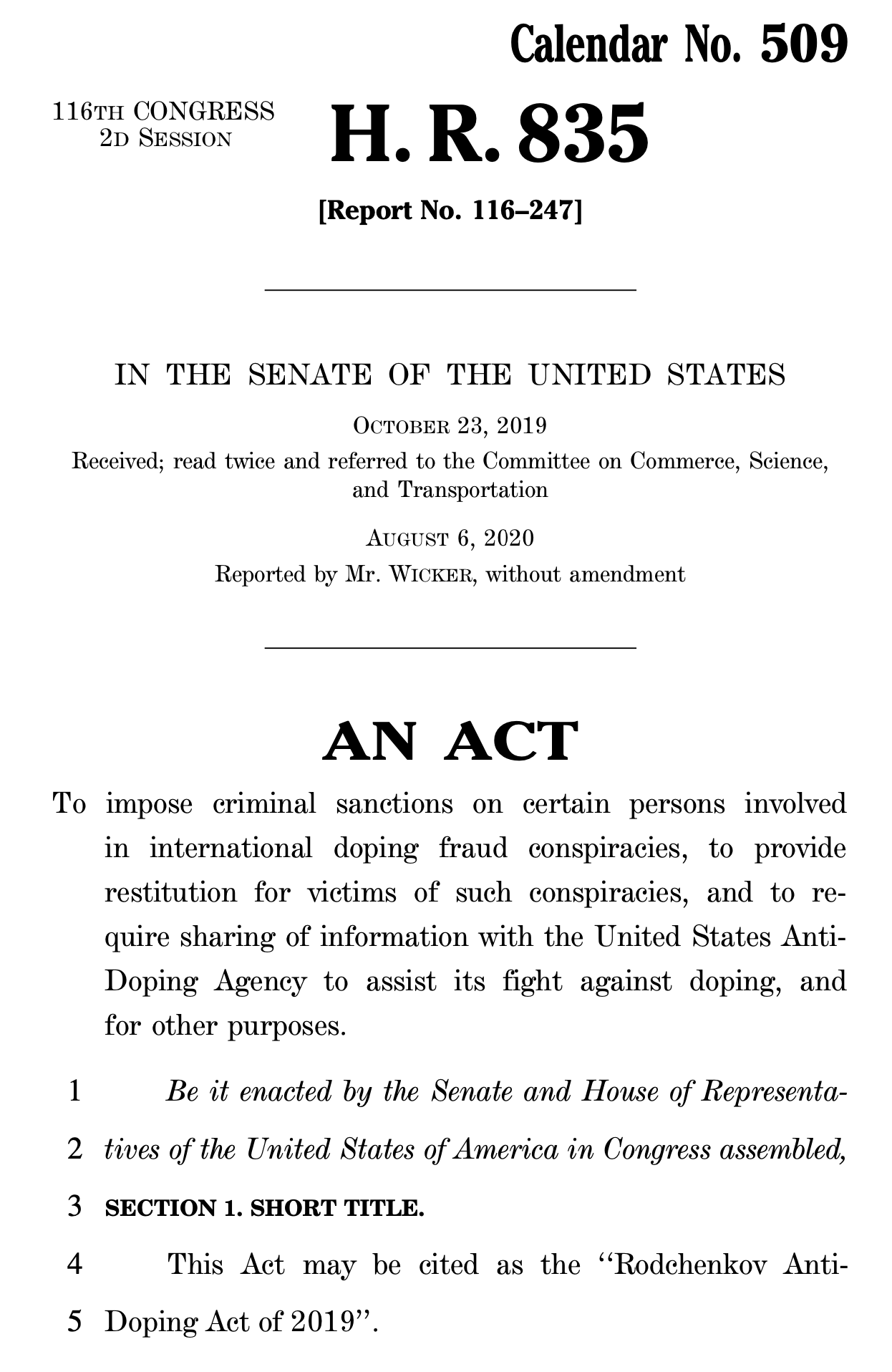
    What it is: “An act to impose criminal sanctions on certain persons involved in international doping fraud conspiracies, to provide restitution for victims of such conspiracies, and to require sharing of information with the United States Anti-Doping Agency to assist its fight against doping, and for other purposes.”

    What you can more casually call it in conversation: The “Rodchenkov Anti-Doping Act of 2019,” or even just the Rodchenkov Act.

    What’s its current legislative status: Passed the House, passed the Senate without amendment, sent to the President for his signature. It will become law when or if he signs it. [Update: The bill was signed into law on December 4, 2020.]

    What the bill does, summary form: Per the nonpartisan Congressional Research Service: “This bill makes it unlawful to knowingly influence (or attempt or conspire to influence) a major international sports competition by use of a prohibited substance or prohibited method. A violator is subject to criminal penalties – a fine, a prison term of up to 10 years, or both – and mandatory restitution. Additionally, property may be seized and forfeited to the U.S. government if it was used or intended to be used to commit an offense or traceable to the proceeds in connection with an offense.”
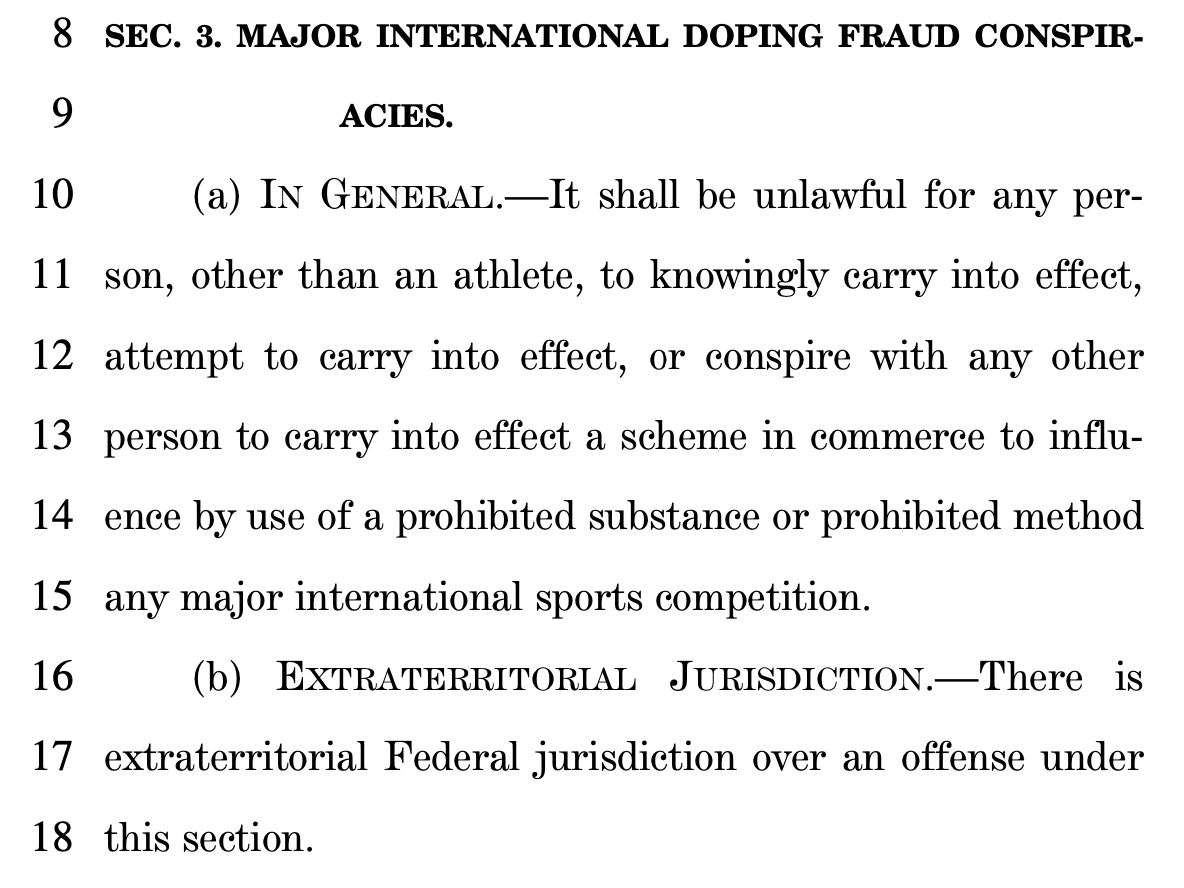
    What the bill does, actual statutory language form: Here’s the heart of the new law: 

    Section 3(a) of the Act provides, “It shall be unlawful for any person, other than an athlete, to knowingly carry into effect, attempt to carry into effect, or conspire with any other person to carry into effect a scheme in commerce to influence by use of a prohibited substance or prohibited method any major international sports competition.”

    Section 3(b) provides for extraterritorial federal jurisdiction over an offense described in 3(a), i.e., it gives the U.S. Department of Justice legal authority to prosecute alleged criminal conduct that took place outside the physical borders of this country.

    Extraterritorial jurisdiction of American criminal law is the exception rather than the rule. However, there are multiple areas where this exists, at least in theory, although in practice actions are relatively uncommon. As one overview of this issue states, “A surprising number of federal criminal statutes have extraterritorial application, but prosecutions have been relatively few. This may be because when extraterritorial criminal jurisdiction does exist, practical and legal complications, and sometimes diplomatic considerations, may counsel against its exercise.”

    The rest of the Act provides some definitions. Major international sports competition means a competition featuring at least one American athlete, plus at least three other athletes from other countries, which is governed by the World Anti-Doping Agency Code (aka “WADA Code”), and where the competition organizer or sanctioning body receives sponsorship or financial support from an organization that does business in the U.S., or received money for the right to broadcast the competition in the U.S. (“Competition” is defined in this manner so as to provide jurisdiction under the capacious expanse of the Commerce Clause, in Article I of the U.S. Constitution.)

    A scheme in commerce has a similarly broad definition, with the same aim of effecting Commerce Clause jurisdiction: “any scheme effectuated in whole or in part through the use in interstate or foreign commerce of any facility for transportation or communication.” Bottom line, if you send a text or email in support of your doping scheme (at a qualifying, multi-national competition subject to the WADA Code), the U.S. is going to have jurisdiction over you.

    … if you’re “any person, other than an athlete,” that is. (Write your own John Kruk joke here.) If you’re an individual athlete who has allegedly doped, this Act, by its explicit terms – “other than an athlete” – does not apply to you. You obviously remain bound by the WADA Code, as well as by American state and federal law (if you’re an American athlete), but this Act does not apply to you. The title of Section 3 in the Act hints at its true target: “Major international doping fraud conspiracies.” Individual athletes are, well, not off the hook, but also not targeted by this Act.
    Individual athletes are, however, eligible to receive restitution if they are defrauded as the result of someone else’s doping scheme. The Act amends 18 U.S.C. § 3663A, “mandatory restitution to victims of certain crimes,” to provide that someone who suffers financial damage as a result of someone else’s international doping fraud conspiracy is eligible to receive restitution. The Act itself provides for substantial fines for someone found guilty of violating it: $250,000 for individuals, $1,000,000 for associations or other groups. Jail time, of up to 10 years, may also be imposed.

    Restitution provisions are well and good, but as any family law attorney who has ever tried to collect alimony from a former spouse can attest, you can’t get money if it’s not there. Another provision of the Act, regarding forfeiture, provides broad powers for criminal forfeiture to the U.S. Department of Justice, for property used, or intended to be used, to commit or facilitate an international doping conspiracy. At least in theory, the U.S. DOJ could prosecute the bad guys, seize their assets, and financially compensate the American athletes who were harmed. In theory.

    What about whistleblowers: It has been widely reported, including in the New York Times, at Inside the Games, and in a Noah Hoffman op-ed (also this Noah Hoffman op-ed) that the Act “protects whistleblowers from retaliation.” This is true, but only sort of.

    The bill’s drafters certainly intended to provide protection to whistleblowers (that is, people who expose alleged doping conspiracies). The original version of S. 259, when it was first read in the Senate, contained a number of findings, including that “whistleblowers … can play a critical role in exposing doping fraud conspiracies and other fraudulent acts in international sport.” The final finding stated, “These whistleblowers, including Dr. Grig­ory Rodchenkov and Yuliya and Vitaliy Stepanov, often expose major international doping fraud conspiracies at considerable personal risk. By criminalizing these conspiracies, such whistleblowers will be included under existing witness and informant protection laws.”

    On the one hand, it is accurate to state that the drafters of the Act intended to provide some protection to whistleblowers, rather than not to provide such protection. That’s what the final sentence quoted above says. On the other hand, it is also accurate to conclude that the Act itself (that is, the statutory language actually enacted, which does not contain any findings) says nothing at all about whistleblowers, and that anyone coming forward to expose an alleged conspiracy will be protected, if at all, only under general criminal laws as they relate to whistleblowers.

    This reporter has worked as a criminal defense attorney for most of the past seven years (and clerked for a criminal appellate court before that), and retains considerable professional skepticism about the munificence of the federal Department of Justice. In his professional opinion, anyone planning to blithely avail themselves of the assumed generosity of federal prosecutors should carefully consult with legal counsel first, and should not assume that they will be automatically protected from prosecution for their role in an alleged conspiracy in exchange for revealing its existence. In practice, prosecutors have almost unlimited discretion regarding who they wish to prosecute or not. And the general protections of “existing witness and informant protection laws,” in criminal law, are far, far less robust than the explicit protections of whistleblower protection doctrines in other settings, largely civil employment law.

    Bottom line, if you have something incriminating to report, talk with a defense attorney first before you go anywhere near the feds. (But not this reporter; I’m a full-time stay-at-home parent these days, and am truly not soliciting business.)

    So, about those individual athletes: Again, they are explicitly not targeted by the text of this Act, nor are they intended to be. The Act covers only conspiracies, not individuals.
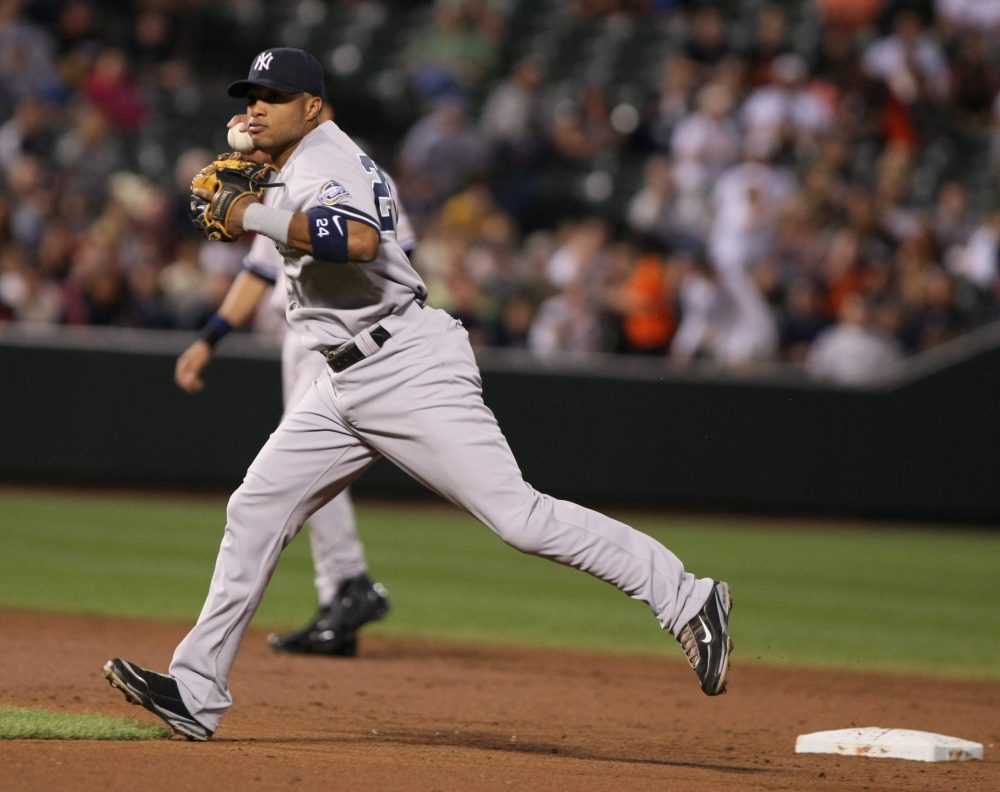
    MLB player Robinson Canó, shown here playing for the Yankees in August 2009, was busted for steroid use earlier this week. He will be suspended for the entire 2021 season, and forfeit $24 million in salary. These punishments come through a scheme reached through collective bargaining by the MLB players’ union, not from WADA. (photo: Creative Commons)

    So, about those individual athletes in major American team sports: Again, they are explicitly not targeted by the text of this Act, nor are they intended to be. The Act covers only major international competitions that are subject to the WADA Code; American college sports and the big four professional sports leagues (MLB, NFL, NBA, NHL) are not signatories to the WADA Code; therefore, this Act does not cover them.

    As the New York Times succinctly put it, “Because drug policies are collectively bargained in the North American pro sports leagues, penalties for doping violations in those organizations are far less stringent than they are for international sports. Professional athletes in the North American leagues who fail doping tests are usually suspended for a portion of a season. International violations usually bring suspensions of at least two years.”

    The exclusion of the most visible American professional sports leagues has raised some eyebrows. For that, and other reasons, let’s conclude with:

    Who doesn’t like this Act (viz., everyone other than America):

    The World Anti-Doping Agency:

    WADA issued a strongly worded statement expressing its concern over the Act. Here’s some sample language:

    “No nation has ever before asserted criminal jurisdiction over doping offences that occurred outside its national borders – and for good reason. It is likely to lead to overlapping laws in different jurisdictions that will compromise having a single set of anti-doping rules for all sports and all Anti-Doping Organizations under the World Anti-Doping Code (Code). This will have negative consequences as harmonization of the rules is at the very core of the global anti-doping system.


    “WADA remains concerned that by unilaterally exerting U.S. criminal jurisdiction over all global doping activity, the Act will likely undermine clean sport by jeopardizing critical partnerships and cooperation between nations. Further, the Act could impede the capacity to benefit from whistleblowers by exposing them to possible prosecution and preventing ‘substantial assistance’ deals in line with the provisions of the Code.”
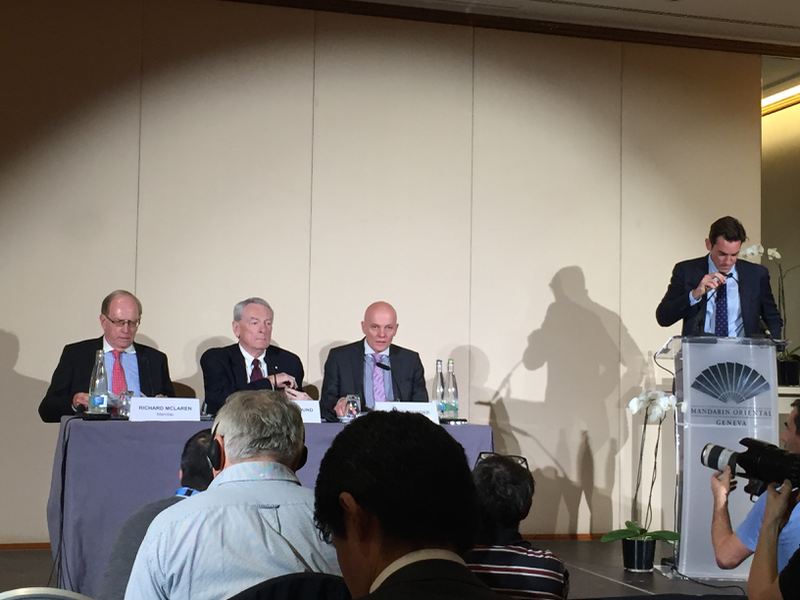
    The WADA Independent Commission

    The Central European Anti-Doping Organization:

    Sounded similar notes, in a statement largely copy and pasted from WADA. It ended with an original paragraph: “CEADO joins WADA and other stakeholders around the world in asking why this U.S. Act, which purports to protect athletes and claims jurisdiction overseas specifically excludes the main areas of professional and college leagues which are the show cases of sports in the U.S.?”

    Dick Pound:

    The former WADA president and IOC vice-president has expressed strong concerns about maintaining common international standards for testing and enforcement. “To try and destroy WADA does not provide any additional protections to American athletes,” Pound told British Columbia newspaper The Province earlier this year. “In fact, it increases the risk. If you don’t have a harmonized international approach to international doping, you’re going to have more and more doped athletes competing against America.” He claimed that the legislation is based on “intentionally inaccurate and misleading information” from American anti-doping officials.

    Pound added, “It’s unfathomable why they would do that, unless it’s some kind of a takeover bid, an untimely takeover bid, to come and say, ‘Throw your money around, we’ve put in more than anyone else,’ which is of course not true. But that doesn’t seem to bother the executive branch of the U.S. government these days.”

    Ulrich Haas:

    One of the drafters of the WADA Code penned an op-ed entitled, “Flawed Rodchenkov Act risks a return to anti-doping chaos.” Its opening paragraph is, “Be careful what you wish for. Designed to protect clean sport, the Rodchenkov Anti-Doping Act will have the opposite effect.” It gets more caustic from there.

    Haas expressed particular concern that the Act’s treatment of whistleblowers could expose them to criminal prosecution from non-WADA sources, while compromising WADA’s ability to provide them with immunity: “How could WADA carve out an agreement with this [hypothetical] whistleblower in exchange for her collaboration if there existed legislation that allowed for her criminal prosecution? The Rodchenkov Act and other similar laws would leave her exposed to criminal prosecution by various extra-territorial jurisdictions. There is no legal security for these whistleblowers in exchange for coming clean and providing valuable intelligence. The effect of the Rodchenkov Act will be to discourage people from coming forward with information.”

    The Kremlin:

    As a Russian presidential spokesman told an English-language Russian news agency earlier this week (headline: “Kremlin blasts US attempts to extend its jurisdiction to other countries”), “In the context of this document and in general we are extremely critical of any attempts by the United States to extend its jurisdiction to other countries. … This can cause nothing but concern. Such transborder practices do not suit us and we disagree with them.”

    Who likes this Act (viz., Americans):

    United States Anti-Doping Agency:

    USADA CEO Travis Tygart issued a statement earlier this week. Tygart said, “The Act will provide the tools needed to protect clean athletes and hold accountable international doping conspiracies that defraud sport, sponsors and that harm athletes. … The Act establishes criminal penalties for systems that carry out doping-fraud schemes that rob athletes, citizens and businesses. It also protects whistleblowers from retaliation and provides restitution for athletes defrauded by conspiracies to dope. It is a monumental day in the fight for clean sport worldwide and we look forward to seeing the Act soon become law and help change the game for clean athletes for the good.”

    USADA also made the following statement on Twitter on Tuesday: “Myth: The Rodchenkov Act doesn’t apply to athletes at all. Conspiracies to distribute & administer performance-enhancing drugs are already a felony under US conspiracy, narcotics & fraud laws, which carry stiff sentences. In that regard, RADA would have been completely redundant.”

    This is quizzical, because the Rodchenkov Act, by its explicit terms (“other than an athlete”), literally does not apply to individual athletes at all. And the statement regarding a redundancy seems to admit that the Act does not in fact cover athletes, as they are already subject to the criminal laws described in the tweet’s second sentence.
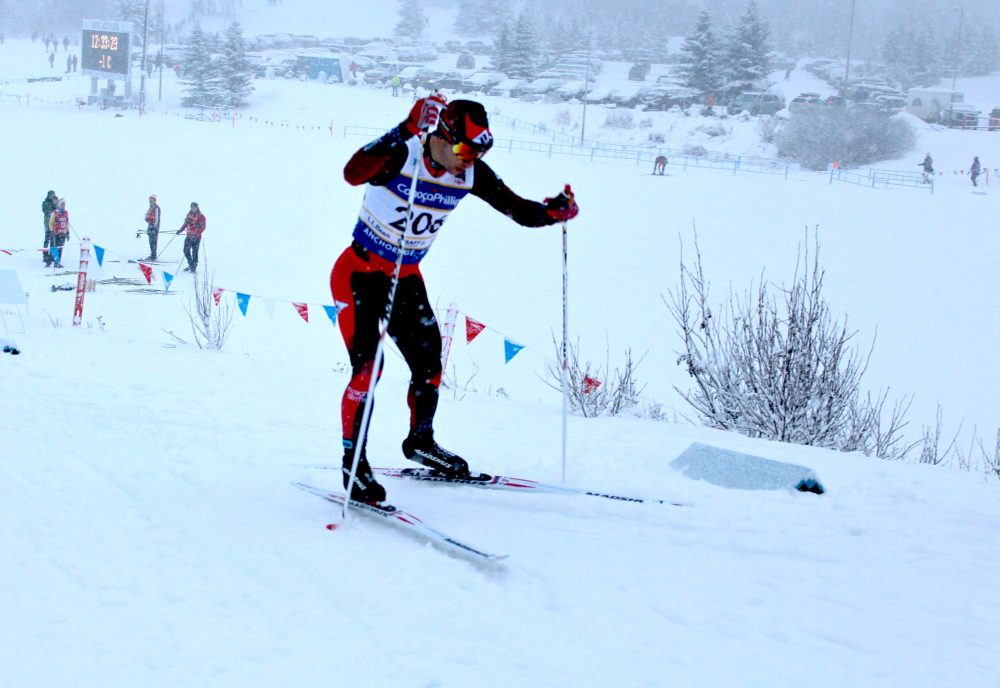
    Noah Hoffman racing to second in the men’s 15-kilometer freestyle individual start on Wednesday at 2018 U.S. Cross Country Championships in Anchorage, Alaska. It was his first January nationals appearance since 2012. (photo: Gabby Naranja)

    Noah Hoffman and Jessie Diggins:

    In an op-ed written in March of this year for the Minneapolis Star-Tribune, the two American Olympic skiers spoke to the importance of clean sport as a force for good. They wrote, in part, “The global anti-doping system, though well-intentioned, has failed to stem the tide of doping conspiracies that have undermined confidence in international sport. The current system does not have the power nor the independence to counter state-sponsored programs that corrupt the Games we hold so dear. The Rodchenkov Anti-Doping Act will bring the power of federal law enforcement to the fight for clean sport. The bill will criminalize international doping conspiracies, protect brave whistleblowers who expose malicious behavior, require information sharing between law enforcement and anti-doping authorities, and allow athletes like us to seek restitution when we are defrauded by cheaters.”

    Hoffman also responded to Pound’s statements in the Province article with a letter of his own addressing some of Pound’s arguments. Hoffman writes, in part, “the article implies that the Rodchenkov Anti-Doping Act will undermine WADA and the global harmonization of anti-doping rules. This assertion disregards the fact that the bill uses the global WADA code to determine what is or is not doping fraud. The bill also mandates information sharing between law enforcement and the U.S. Anti-Doping Agency, the organization that works in partnership with WADA to enforce global anti-doping rules in America.” Hoffman also, accurately, states that the Act “covers both Americans and non-Americans who commit doping fraud at events that occur inside or outside of the United States” – but does not engage with the argument that it only covers events subject to the WADA Code, which rules out roughly 99% of professional sport in this country.

    Grigory Rodchenkov:

    The Act’s namesake, through an attorney, told the New York Times that the law represented “the dawn of a new day. This will be an immediate worldwide deterrent.”


  • Nordic Nation: Zach Caldwell and Noah Hoffman Talk Anti-Doping Reform

    Nordic Nation: Zach Caldwell and Noah Hoffman Talk Anti-Doping Reform


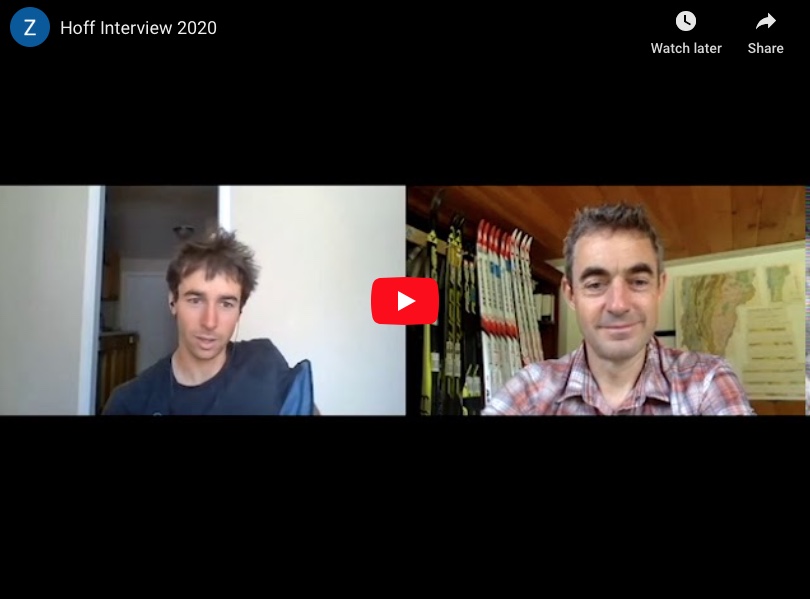
    With a kowtow to Zach Caldwell and Noah Hoffman, we are repurposing their recent video conversation about anti-doping reform. On Nordic Nation, you’ll find just the audio. If you are more visual by nature, you can find the video here.

    Hoffman is a former longtime U.S. Ski Team member. Caldwell is Hoffman’s former coach and runs Vermont based Caldwell Sport.

    In this conversation, you’ll get solid details about anti-doping policy in the U.S. and abroad. Think of this as an advanced level remote learning opportunity to up your game when discussing anti-doping affairs. From Noah’s involvement with Global Athlete, to details on the Rodchenkov Act, USADA, and efforts to magnify athlete voices via labor unions, Caldwell and Hoffman cover lots of ground.

    For those that have followed Hoffman’s career, this is an opportunity to hear him as he emerges as a nascent expert in anti-doping policy. It is easy to envision Hoffman leading international clean sport efforts in the years ahead.


    Noah Hoffman (left) and Zach Caldwell (right). This is a screenshot of the video, clicking the white triangle will not prompt the video to begin.

  • The Rodchenkov Anti-Doping Act and the Power of One

    The Rodchenkov Anti-Doping Act and the Power of One

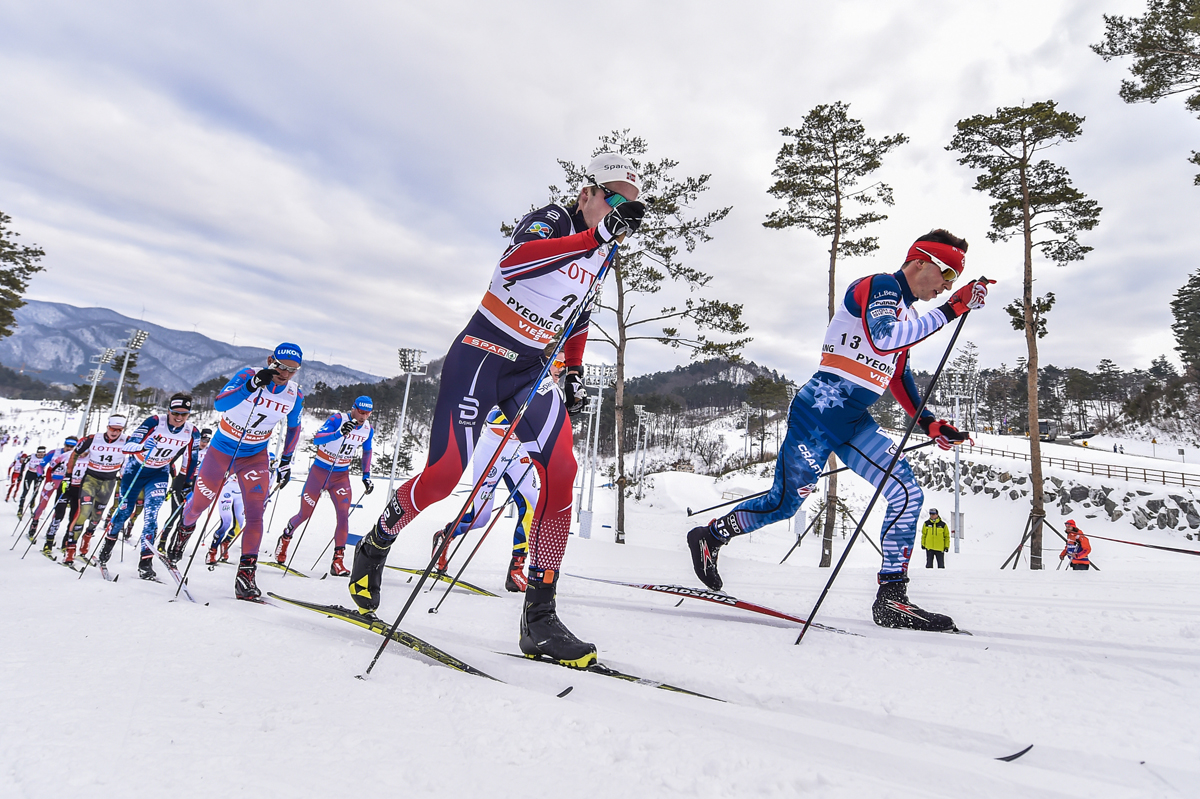
    American Noah Hoffman (r) racing alongside Norway’s Daniel Stock during Saturday’s 30 k skiathlon at the 2017 World Cup in PyeongChang, South Korea. (Photo: Fischer/Nordic Focus)

    Noah Hoffman, retired athlete, and current sophomore at Brown University is part of the movement to upgrade anti-doping enforcement. On October 28, he posted a blog highlighting why he supported the Rodchenkov Anti-Doping Act (RADA). RADA is federal legislation that will criminalize doping. More specifically, as Hoffman notes, it criminalizes doping conspiracies involving international sporting events like the Olympics and World Championships.

    Here are the details of RADA as highlighted by Hoffman in his October 28 post:

    The Act will

    • Criminalize doping conspiracies that target international sporting events
      • International jurisdiction extends to any sporting events that has
      • 1 or more U.S. athletes and 3 or more international athletes competing
        • AND
      • is a signatory to the WADA code
        • AND
      • has a sponsor that does business in the U.S. OR sells rights to be broadcast in the U.S.

    If the act is passed, the U.S. would be able to apply broad discovery tools when it comes to investigating doping schemes: Tools that carry with them the financial and investigatory weight of the federal government. Although RADA unanimously passed in the House, it has not been voted upon in the Senate. But just the prospect of the pending legislation already has WADA speaking out against it. In fact, the AP reported that the IOC and WADA have hired a Washington D.C., lobbying firm to “discuss” the legislation. 

    It appears WADA and the IOC are concerned about the extraterritorial powers potentially given to the U.S. when it comes to pursuing doping syndicates abroad. 

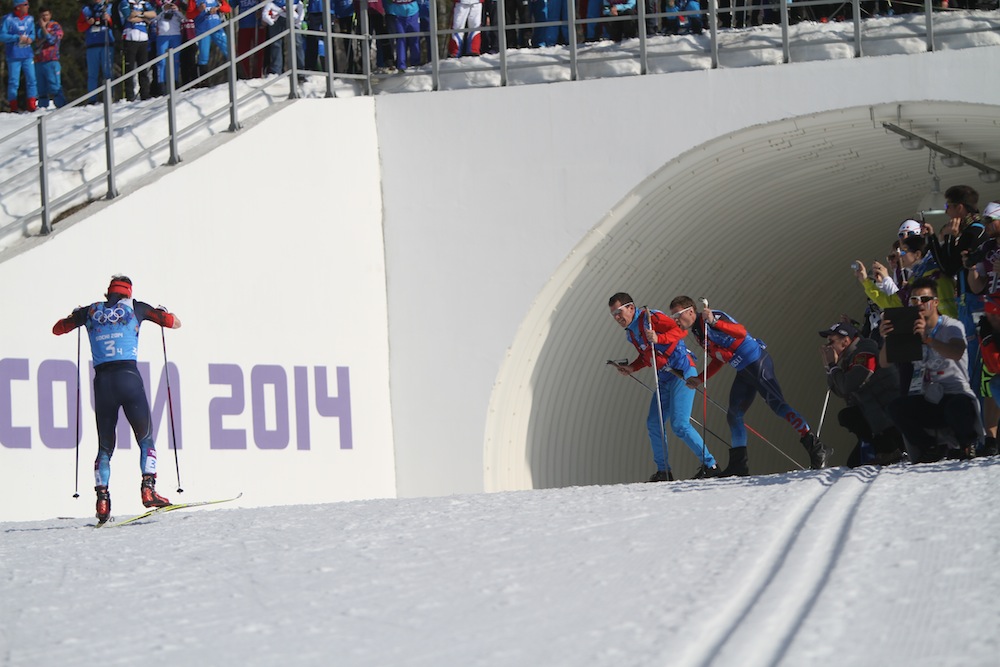
    Noah Hoffman (bib 26) skiing with Anders Soedergren of Sweden inthe 2014 Olympic 50 k.

    With all the white noise and maneuverings surrounding the issue, Hoffman brings a human face to the topic. And he brings passion, which had this been a podcast, you’d pick up on right away. For many years, Hoffman’s skin in the game when competing against alleged dopers had one degree of separation. There he was in the closing kilometers of the men’s 50-kilometer skate at the Sochi Olympics near the front of the pack. Followers of the sport now know the Russians who swept the podium 1-2-3 had the tailwind of state sponsored doping at their backs.

    This past winter, one of Hoffman’s closest friends, Karel Tammjärv of Estonia, was arrested in Austria during the 2019 World Championships, for his involvement in a blood doping ring. In the following interview, Hoffman refers to Tammjärv as he discussed the details of RADA.  

    We interviewed Hoffman on October 30, a few days after his RADA blog post. The interview has been lightly edited for clarity. 

    FasterSkier: Let’s start with why you are pushing for this piece of legislation to pass?

    Noah Hoffman: At its most basic level, the current system just doesn’t work. The Russian Federation faced no real consequences for corruption in world sport on a scale that we have never seen before, maybe since East Germany. We are seen athletes like Karel and the other athletes that were caught in Austria taking actions that reflect the belief that there are no consequences for disregarding the rules and corrupting sport. We have also see law enforcement as one of the very effective tools to counter this corruption. 

    Pointing specifically at Karel, and I say Karel because he is one of my best friends, but it was really five cross-country athletes and the cyclist and everyone else who was caught up in the Worlds doping scandal from last year — That disrupted doping network was virtually entirely due to the work of Austrian and German law enforcement. 

    Law enforcement has no tools to address this massive state sponsored doping in this country because it is not a criminal liability to dope — or to orchestrate doping more importantly. To be clear, the Rodchenkov Act does not criminalize doping for athletes. There are numerous reasons why that cannot happen and is not actually something that should be desired. 

    This criminalizes doping conspiracies, international and national level doping conspiracies where malicious actors are facilitating the doping of numerous athletes on a substantial scale. 

    FS: Can you advance the argument that addresses why law enforcement should be involved?

    NH: We need law enforcement’s help. Law enforcement has tools that even a really well intentioned and independent anti-doping agency like USADA does not have: the powers to search people’s homes, the powers to have a warrant issued, the powers to subpoena people to testify. Those are all things that we cannot do without law enforcement’s help. 

    And the other thing I will say again is the fact that the exposure of doping that happened in Austria is a direct result of law enforcement. 

    We are also seeing that the whistleblowers are exposing even bigger doping scandals like the Stepanovs and Gregory Rodchenkov, who are the reason we know that the Olympics in 2014 were so corrupted by urine bottles being passed back and forth through a wall and replaced with clean urine. The reason we know all that is because of these whistleblowers. 

    The way the current criminal code stands right now, they are not reporting a crime, so these whistleblowers are not subject to whistleblower protections, which is insane. Because we know Rodchenkov has been indicted in Russia. We know that he is sought, and we know that the Russian power structure, Putin to put a name on it, is not above any means necessary of punishing people who speak out against the Russian Federation. 

    To say that these people are not in danger is insanity. To say that we as a country do not have a responsibility to protect them, I think it is just wrong. And yet Rodchenkov’s protection is entirely privately funded right now. That is another huge point that this Act addresses, it offers whistleblower protections to people that are in grave danger and are risking their lives for the integrity of global sport. 

    FS: Can you discuss the aspects of RADA that have to do with extraterritorial jurisdiction? For many, this aspect of the federal government getting involved with enforcing doping aboard is perceived as overreach. 

    NH: I’d like to answer your question on two different levels. One on a moral ground of extraterritorial jurisdiction and two, on the practical implications.

    I’ll start with the practical implications because those are easier. That is to say, we do this in U.S. criminal code all the time. If a mob in Italy is engaged in dealing cocaine in China but they are laundering money through U.S. banks, we claim jurisdiction over that even though neither of the harms per se are experienced by U.S. persons — if they are routing money through U.S. banks and U.S. dollars, then we claim jurisdiction. 

    This is by no means unique. And it is essentially how the system works. I believe that we as a world sporting movement need the power of law enforcement involved in every country in the world if we can get it to investigate corruption in sport. Because it is a global problem and if you limit U.S. law enforcement to only events that happen in the U.S. you very quickly handicap them in being able to bring any charges because these events that are harming real people in this country are defrauding American citizens worldwide, athletes, and we are limiting our ability to prosecute them. 

    One job of American law enforcement is to protect the welfare of American citizens. For example, the U.S. Postal scandal of the early 2000s was entirely focused on the Tour de France. So if you said that is not within U.S. jurisdiction because it happened in France, to say that Lance Armstrong’s ascension did not have real harm on real people in this country is ridiculous. 

    I would feel personally offended by that claim because watching Lance Armstrong and the inspiration that he gave was basically my reason for getting into endurance sports. So to say the revelation that the whole thing was a scam didn’t harm me is ridiculous and then there’s the real monetary harm that happens to the U.S. government, that happened to the U.S. Postal service an arm of the government.

    FS: State sponsored doping, like we have seen in Russia, rang the alarm bells. How is this playing out behind the scenes with the bill’s passage?

    NH: The state sponsored doping that we are seeing now in relation to Russia 2014, and some more recent revelations, they are in alignment with the corruption of democratic values worldwide that we see from the Russian Federation. They are in alignment with Russia meddling with elections worldwide — democratic elections. They are just one more way Russia is undermining democratic ideals, the ideals of equity and the ideals of national welfare for individuals.

    We need as many tools to fight that corruption as we possibly can. And if we say, “oh, we only care about election meddling when it happens in this country and you can go ahead and interfere in democratic elections in the rest of the world.” That is an irrational stance because it doesn’t consider the fact that the destabilizing of the global Western World and the destabilizing of the global economy which would be the result, has profound implications in this country. 

    This is why many legislators have voted to advance this bill in the House. Organized doping is just one more form of international corruption from the Russians and we need to fight this at every opportunity. And that is not just when it happens in this country. This affects us no matter where in the world it happens. 

    FS: You wrote at length in your blog post explaining why you were against criminalizing doping by individual athletes. Do you care to add anything to that piece?

    NH: To be clear in Austria, that situation would not have happened if the Rodchenkov Act were the law of the land here in the US. I mean, athletes will not have been arrested for doping. I outlined in my summary on my blog many reasons why that cannot be the case. Notably, because it is unconstitutional. Also because, Karel will tell you that any fine or the one day in jail he spent in Austria, that is not the bulk of his punishment for doping. The bulk of the consequence is that Karel faces are from the sports world. They are from the public shaming. They are from how this will affect his future opportunities. People are forever going to associate him with this. Anytime he applies to a job, if people don’t already know his name is associated with doping, it would take just one Google search to find out. Those criminal liabilities in those countries are not the main deterrent for athletes’ doping and nor would it be in this country if it were implemented. 

    Again, I am focused, in this bill, on the actual criminal penalties associated with the act of orchestrating the doping conspiracy which is what is criminalized in this. I am focused on the fact that if it is a criminal liability in any capacity, it allows law enforcement to pursue doping cases and it mandates information sharing between law enforcement and U.S. Anti-Doping. To me as an athlete, the benefit of this bill is to strengthen the World Anti-doping system; the benefit is not to start throwing dopers in jail. That is not the point. I don’t even know if we want to be throwing administrators in jail. 

    What we want to be doing is exposing doping corruption so that we can then take action to prevent it in the future. This is about providing the tools to be able to address the crisis — not about locking people up and throwing away the key. 

    The bill is vague, it is not very long — maybe up to ten years in prison and up to $100,000 in fines or something like that. There are not mandatory minimums. The penalties that would be handed out would be up for a judge to decide. Thank goodness, I am not in the business of administering justice.

    I believe in this bill because it’s a necessary step to give us the tools we need to let sport live up to its potential, not because I am interested in locking everyone behind bars. 

    That was the point of my blog. I hope that I answered some of those questions in my text.

    FS: Can you speak a bit about personal accountability? At the end of the day, many would say it comes down to the athlete…it’s the athlete makes the final choice to dope. 

    NH: One is that in order for Karel to make that choice, he has got to have the knowledge to implement it. That is something that I never would have known how to do. If I had decided at some point in my career, personally, that I wanted to start doping, and I thought hard about this, I would not have known who to approach or where to go to make that happen. Clearly, you need the assistance of a doctor. But, how do you find that person and how do you do so so that it does not expose them to your intentions? 

    And who could I ask for help in that process? I don’t know how I would have answered those questions. I don’t believe that anybody on my direct team, and by that I mean not only my teammates but all of the coaches that I worked with, all of the doctors and physical therapists and administrators that I worked with, I don’t know of a single person on my team that would have assisted me through that process. Who I would have trusted to go work through that– to start the process of doping?

    The first thing, in order for Karel to make that decision, he has got to have the tools to do so. I think that the most effective way that we can curb doping, is limiting the athlete’s ability to dope, not necessarily their decision to do so. 

    That being said, Karel and Johannes Duerr and Max Hauke and Dominik Baldauf have personal responsibility and personal accountability and they made a really bad decision. 

    I believe that those athletes, clearly they have personal responsibility. Especially athletes like Karel who wasn’t having trouble putting food on the table. He doesn’t have kids to feed. This was not a life or death decision for him. This was a decision that he wanted better results in sport and he felt pressure to achieve better results for him personally, for his family, and his network but also for his country and their fall from grace a little bit in terms of cross-country skiing proficiency. 

    Absolutely Karel had personal responsibility in that. And I believe that we can continue to espouse as a sports world the benefit of a strong moral compass and personal responsibility and personal accountability. That is the type of thing that in 30 years, when your sports career is over, that you are going to be proud of. 

    I don’t know what the answer is when it comes to personal accountability. I think those are harder questions to answer than structural ones. 

    FasterSkier: What are your thoughts on lifetime bans for offenders? 

    NH: I recall Matt Whitcomb had those bumper stickers made, “lifetime ban for dopers”, sometime early in the 2010s

    Banning someone from sport for life is not the same as taking away their liberty. And so I think that it is appropriate for people who orchestrated massive doping schemes that were harmful, that caused real harm to many people, many athletes, that they would not be welcome again in the sports world. 

    An athlete, even an athlete with multiple offenses who choose to dope personally, and did not push doping on others, and did not require people to support the doping system or they weren’t welcome on the teams — and I am thinking of specifically of what Lance Armstrong did, Lance to me yes, he was an athlete, but he was also an administrator in the system, as was clearly outlined in the USADA report on his doping — And so, for example, I think Lance should not ever be welcomed back into the international sports world. That is not saying Lance should be locked up and go to jail, you know that is a different question. 

    It may be that I believe that Lance has some criminal liability, but the question of a lifetime ban for an athlete in the case of Lance where someone was acting as both an administrator and an athlete in doping, that yeah potentially a lifetime ban from sport is appropriate. 

    To wrap this into the work I am doing with Global Athlete, I believe that all of these questions would be better answered with input from athlete voices that actually have real power in the process. 

    So far most of what I have said is fairly non-controversial. I am going to say also that I actually think, that that major league baseball anti-doping structure is preferred in my eyes to the WADA and IOC anti-doping structure. 

    It has had lots of instances of doping, it is by no means a clean sport. And people think of the American sports leagues as having no vested interest in anti-doping. And yet, the athletes in Major League Baseball and to an extent, the other professional leagues in this country have real power and real say in what both the rules and punishments are around anti-doping. And as a result, you get a system that has a lot more buy-in from the players than you do on the world system. 

    This comes through the Union, and the MLB players association, and I have been learning a lot about this in the past year. Ans this is where, if I do continue to work in the sports world, after my time at Brown, I think it will be around elevating the athletes’ voice to have real power in decision making. And that is what we are trying to do at Global Athlete. 

    Because I believe that the WADA code is not handed down from some deity or is something that is morally correct. 

    And that is interesting, I am fighting for the Rodchenkov Act which is fighting to criminalize people who conspire against the WADA code, and yet I am not like ‘oh the WADA code is perfect and that is what we should all be aspiring to.’ 

    It is just that I believe in sport with integrity and anti-corruption measures. I think one way to achieve that integrity is to get more buy-in from everyone involved including the athletes. And the way to do that is to give athletes a real voice at the table. 

    The ability for athletes to speak with a professional independent powerful voice 

    There is literally no check on the IOCs and WADA’s power. That power trickles down to the national Olympic committees to the national governing bodies to the IFs — international federations. 

    FS: What’s the next step for RADA and how do folks provide their opinion on the legislation?

    NH: The senate is the next step. Bandwidth is the biggest limiting factor in the Senate, this is not a controversial bill. 

    We need Senate leadership to bring this about. The most effective way to do that is to call their office or write a handwritten letter. In my post, I link to contact info for your Senator. We would love to get this thing done by the end of the year. This is not a long term project.