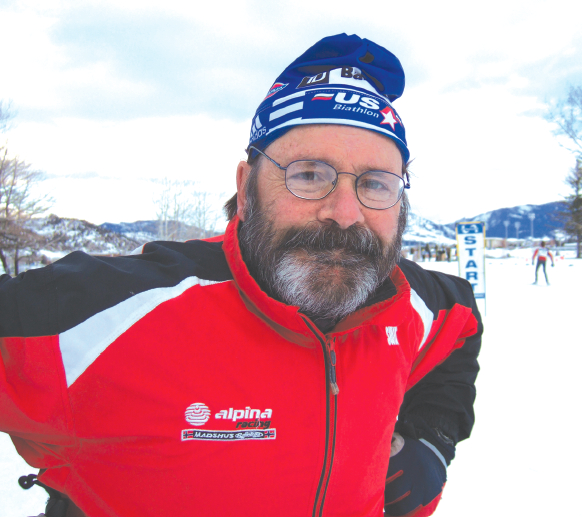
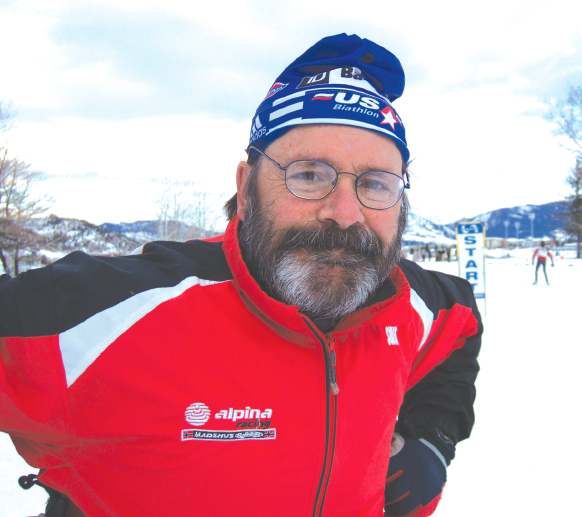
Editor’s Note: The following is a tribute to Peter Hale, who died Sunday at age 66 after battling cancer. Hale remained active in the ski industry and community until about a month ago, when he returned home for hospice care in Bozeman, Mont. This is a compilation of thoughts and memories from some of the many people Hale impacted, from his days as a fledgling biathlete to one of the most-loved men in the U.S. ski business.
***
Terry Aldrich still remembers the first time he saw Peter Hale. It was memorable.
Aldrich went on to coach the Middlebury College ski team for 34 years, but back then he was on the biathlon national team based out of Fort Richardson, outside of Anchorage. The team had traveled up to Fairbanks to compete in the Gold Discovery Run footrace, a 16-mile run with 1,500 feet of elevation gain. Tough stuff. Nearing the end of the race, Aldrich was in about third place. As it turns out, Hale was just behind him.
“There was a truck that came by too close to him,” Aldrich explained in a phone interview this week. “He put up his hand to motion to the truck, and he smashed his hand on the truck mirror, which caused his hand to bleed. That shot of adrenaline must have been something, because my memory of that race is him going flying by me with 400 meters to go, with blood literally spurting out of his wrist. I thought, man, that is one tough character.”
It wasn’t just Hale’s gutsiness, but his speed that got him noticed. At that point, Hale was stationed at Fort Greely, the Army’s cold-weather testing center south of Fairbanks, Alaska. Watching Hale run, the biathlon coaches thought he obviously had talent and they should offer him the chance to try biathlon. Since the team was also run through the Army at that point, Hale was transferred down to Fort Richardson, near Anchorage, to join the unit.
Whichever Army bureaucrat approved that move, the ski world thanks you.
We all liked him so much, we didn’t want him to be shipped out of the unit. So we all helped him become an accomplished cross-country skier. – Terry Aldrich, longtime Middlebury coach and Peter Hale’s former teammate on the U.S. Biathlon team
Talk to any skier who knew Hale and they’ll tell you: he was the nicest guy in the sport, the most generous, the most selfless. Hale passed away on Sunday at age 66 after a long battle with malignant melanoma, and in the final week of his life, stories and messages of support from every corner of the ski world poured in on his Facebook page.
That he would come to be so important to the sport was not a given. Many other men might have given up when after joining the biathlon unit.
“It was obviously difficult – we lived at Independence Mines, which was very tough living conditions,” Aldrich said. “Not much heat and sometimes no hot water. We trained up there for months at a time in the early fall.”
Aldrich wasn’t sure exactly how much skiing experience Hale had before joining the unit, but his technique needed some work. Immediately, his new teammates set out to make it happen.
“We all liked him so much, we didn’t want him to be shipped out of the unit,” Aldrich laughed. “So we all helped him become an accomplished cross country skier… He had the aerobic background, he just didn’t have the skiing skills that he needed to ski at that level. But when you have people like John Morton, Dennis Donahue, and those guys – all of us really, I don’t want to single anyone out – helping you become a better skier, well, he certainly did. He really improved. We all have great, great memories of him up there.”
“Peter was a very capable skier,” Morton told the Bozeman Daily Chronicle, remembering him as “such a good guy, always friendly, gregarious, and outgoing,” and an open book when it came to pre-race secrets. The group had a common goal of making the 1972 Olympics, and even when teammates like Hale didn’t, most of the U.S. Biathlon team remained tied to the sport.
Aldrich and the others watched as Hale turned to a new job as a ski rep, first for NorTur and then for Madshus as the Northwest sales representative and U.S. race services manager. If anything, the generosity and good spirit they had come to know in those tough days in Alaska only grew.
He started in the business right after he was on the Olympic team for Biathlon…he worked for a company called NORTUR out of Minneapolis that primarily focus on nordic stuff back in the “old” days (late 70’s)…Distribution companies generally had multiple lines/companies they represented. Nortur had a tons of brands and most are gone/out of business except Swix and Rottefella. Swix used several outlets to sell their wax and Rottefella did the same.
As you well know, he worked for me when [Alpina] had Madshus skis…he actually brought the skis in himself before we took it over. He continued selling under my rep in the West (Spence Bocks) and then went on with Madshus when K2 took the brand over from us in 2004. – Steve Kvinlaug, former Alpina Sports president
Helping and Encouraging…
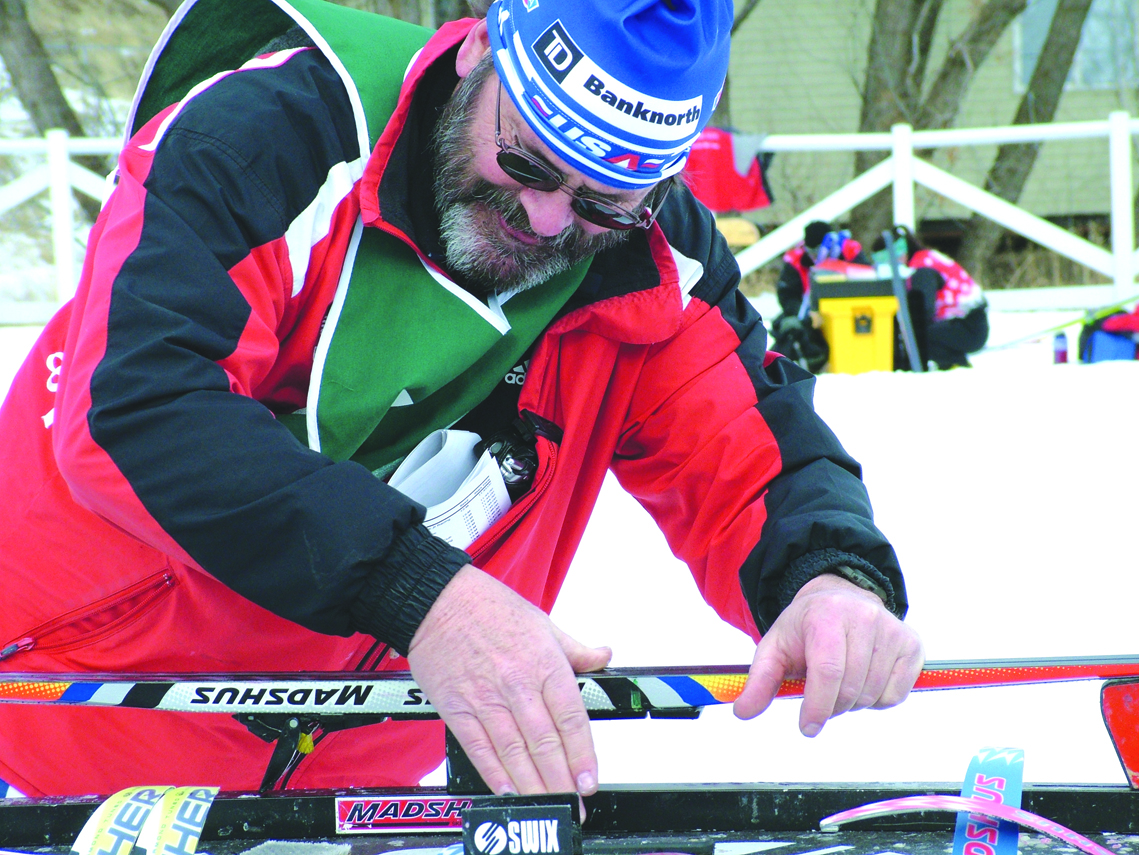
Even in his days at Fort Richardson, Hale was already supporting a ski community: the one back home in Minnesota, where he grew up.
“To those of us who came along five or six years later, he was a mentor and fount of encouragement,” Shaun Koos, the father of Olympian (and 2014 Olympic hopeful) Torin Koos, wrote in an email. “I’ve never encountered a person with more passion for xc skiing. Peter would arrive home for the Christmas holidays extolling Alaska’s virtues and warning us that he already had several thousand ski kilometers in the bank.”
After joining Madshus seven years ago, that attitude continued.
“His modus operandi over the years remained remarkably consistent,” Koos wrote. “Peter was a friend to anyone who shared his passions, and his support and encouragement meant a great deal to hundreds of young skiers anxious to explore their potentials. Peter was in on the ground floor, and for forty years played a meaningful part in the development of cross-country and biathlon in the United States. He modeled the development pipeline. We will see some of his influence and impact this February in Sochi.”
Dennis Donahue – involved in the U.S. Biathlon Association at its inception as well as coaching the Ford Sayre high school nordic team in Hanover, N.H., for many years and pitching in for the New England team at Junior Nationals – noticed the same thing.
“Peter did a lot quietly behind the scenes – providing skis for motivated juniors,” Donahue wrote in an email. “I think this reveals the profound posture Peter assumed, a posture many people have already cited but is worth repeating. Not too many ski reps did/do as much as Peter. He definitely was a fixture and a truly unique person. He really got a kick out of supporting lots of skiers. And I am pretty certain Madshus of Norway recognized and approved of Peter’s approach.”
According to K2 Sales Director Van Brinkerhoff, who oversees Madshus distribution in the U.S.: “Peter’s roll with Madshus was simply and extension of who he was as a person,” he wrote in an email. “He loved both Nordic skiing and the brand, Madshus. Essentially Peter’s whole career in the Nordic industry was with a single company. It is truly a rare thing for one person to be so associated with a single brand and to have such influence with so many for so long. His life might have been cut short but his influence will have a lasting effect on many within our sport.”
Hale worked for the company up until mid-October, “talking with racers and dealers about their needs for a fall product and skis,” Brinkerhoff explained. Hale even apologized to Brinkerhoff for not being able to attend the Madshus sales meeting in early November in Seattle.
“He just felt as though he might not have the energy to participate,” Brinkerhoff wrote.
Not too many ski reps did/do as much as Peter. He definitely was a fixture and a truly unique person. He really got a kick out of supporting lots of skiers. And I am pretty certain Madshus of Norway recognized and approved of Peter’s approach. – Dennis Donahue, Hale’s former U.S. Biathlon teammate
For almost 40 years, new and developing skiers got their help from Hale. Consider Sarah Konrad, who got her start in skiing in the early 1990s in Bozeman, Mont. She later went on to become the first American woman to compete in two different sports at the same Winter Olympics, representing her country in both skiing and biathlon in 2006. Back then, she says, she was “nobody.”
“I was living in Bozeman and just starting doing the marathon circuit,” Konrad said on the phone. “After I did that for one year, [Hale] took me on and gave me a couple of pairs of skis. You know, he just believed in me, and he never stopped believing in me for those 20 years. I was pretty excited about it – you’re still trying to even believe in yourself, and so when someone else does, you’re like, all right! That’s a little affirmation for you to keep going for it.”
Another skier Hale represented: consider current U.S. Ski Team member Noah Hoffman.
“He would dig in to his own pocket to make sure I had the equipment I needed to succeed,” Hoffman wrote in an email.
Konrad eventually joined the Alpina team and traveled around the country racing with a group of other athletes. Hale went with them. But when the team folded, he kept helping her out.
“He would stay on to support people individually through Madshus, and he actually came to biathlon Olympic trials after I had switched over to biathlon and waxed my skis before the tryouts,” Konrad said. “That was really, really awesome… the truth of the matter is, he’s just there to help. It’s not like I’m paying him or anything. He’s just helping out of the goodness of his heart.”
Even if you weren’t American, Hale was still there to help you out – more than that, to go above and beyond. Dutch biathlete Herbert Cool remembers arriving in the U.S. to train for a year, long before he made three World Championships appearances. All he wanted was a deal on a new pair of bindings.
“Next thing I know I’m spending an entire evening with Peter changing all the bindings on my 10 pairs of skis from the back of his truck in an underground garage,” Cool explained. “I come from a country where there is never any snow and there are no facilities for biathlon, so it was great to be able to experience such an open-minded nordic community in North America. Peter personified this feeling for me. He was simply crazy about skiing and for him this meant that if a guy like me needed help, he’d help out! His work was very close to his heart and he was one of those rare examples of people who truly love what they do for a living.”
No matter whom you ask, most of the people that knew or met Hale agree.
“When he was a rep, the thing that I really noticed about him was that it didn’t matter if it was one of his athletes who was skiing on his equipment or not, if someone came up to him and needed a quick wax job five minutes before the race, he would always help, anyone, with anything, related to skiing,” Aldrich said.
… and Being A Friend
He helps in every way. It wasn’t just skis. He took care of people. – Sarah Konrad
But if Hale was just a guy who gave out and waxed skis, he wouldn’t be so beloved. It was his cheerfulness and friendship that mattered more to almost everyone he met.
“I’ve stuck with Madshus that long – you know, the skis are great, but primarily because of him,” Konrad said. “You get better and other companies say, ‘Hey! we can give you a better deal, come ski with us!’ People hop from one company to another, but I would never leave Peter! That would be ridiculous. So that was the two-way loyalty. He was always there for me, but I also felt like I would always be with him, too.”
For Hoffman, too, Hale was far more than just a ski rep.
“Peter was an amazing guy,” Hoffman wrote. “He loved to talk – I would have to schedule large chunks of my day anytime I needed to give him a call. He had so much faith in me as a skier and a person. He got to know my family because he cared about me, and he always made sure to pass his best wishes on to them.”
U.S. Biathlon Association President Max Cobb remembers the first time he met Hale. Cobb had just been hired by the biathlon team and had driven a van full of equipment from Vermont to West Yellowstone. The team was supposed to be able to cook in their hotel, but when he arrived, the kitchens were gutted. Cobb called up Hale, who helped arrange a local café to allow them to use the restaurant kitchen.
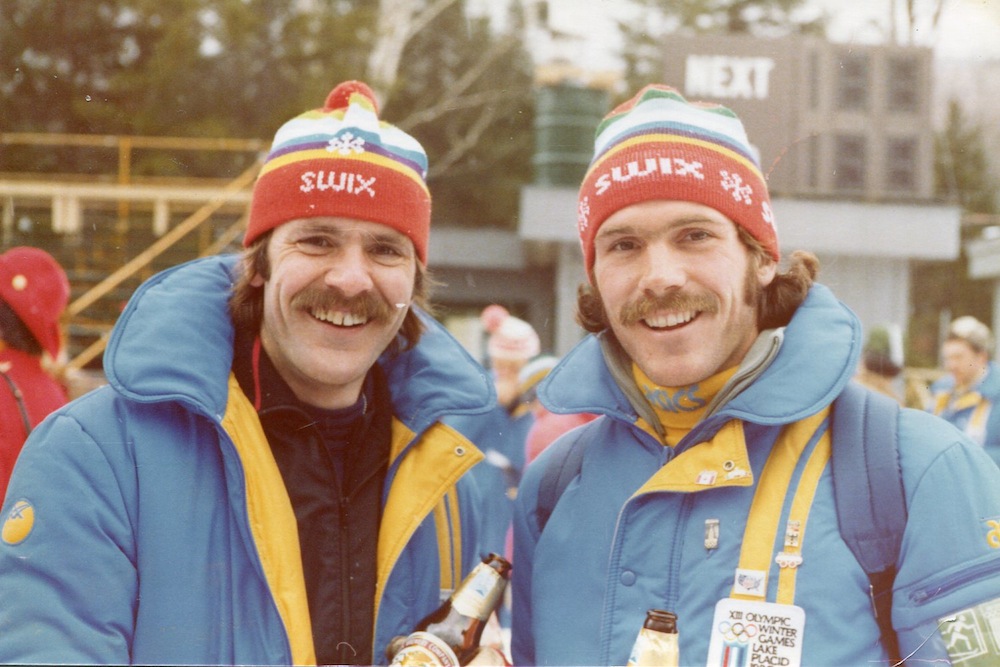
“Peter was a regular there!” Cobb laughed.
For the next five years, though, their friendship deepened. As much as Hale did for the sport of biathlon – and it was a lot – Cobb also got to enjoy skiing the trails of West Yellowstone with the Madshus rep.
“He always tried to find time to squeeze in a ski at the end of a long day, which is not always easy to do when you have been coaching or out giving splits or whatever,” Cobb said. “It really speaks to just how much he loved and enjoyed skiing, and the people in skiing. I can remember many late afternoons, meeting at the trailhead in Yellowstone, putting on our headlamps, and getting in an hour at the end of the day. It was always fun.”
Hale could even make the strain of traveling easier. All winter, skiers and coaches spent time away from their family and friends, staying in crappy hotels and eating on a budget. Hale was there to cheer them up.
“I remember very vividly a New Years Eve that we spent together at a bar in Lake Placid,” Aldrich said. “We were racing up there and we celebrated just he and I, talking about old times. Neither one of us had any family around… we ended up sitting at this bar for three or four hours and just talking.”
Even after Konrad retired from full-time racing, she and Hale would catch up on the phone once every few months.
“He helps in every way,” she said. “It wasn’t just skis. He took care of people.”
In 1980 I had the opportunity to work at the Lake Placid Olympics for Chummy Broomhall on the XC events, actually I worked for Sven Wik but Chummy got me in. When I first showed up at the XC venue I was confronted, on a few different occasions, by some other XC workers thinking I was their old friend Peter Hale (maybe they haven’t seen him for some years). Strangely, I thought back to the night before when I checked in for my ID card and uniforms and was being turned down because I had already checked in once. And then, ahhh, they discover there are 2 Peter Hales. Yes, my name is also Peter Hale, from Rumford Maine and at the time living in Telluride. Throughout the first week I’m being told I gotta meet Peter Hale who was announcing at the biathlon venue next door. After the first week both venues got together for a few beers at the XC venue and alas I meet Peter Hale.
So there you have it, a once in a lifetime meeting of your (kind of) doppleganger and with the same name, so I thought. A year or two later while in liftline at Telluride there’s Peter Hale. We chatted, he was at the time living in Montrose, Colorado 65 miles from Telluride. After a few meetings like that on the Telluride ski area that season we finally got to make some turns, and had a few beers, well, a bunch of beers, and a couple shots. Peter and his friend Gary ended up staying at my place that night. The next morning, with some explaining to wife Rayna, I went to work and let Peter use my ski pass for the day.
My brief acquaintance with Peter was special, he was such a genuine guy. RIP Peter Hale. — Peter R. Hale, of Rumford, Maine
Business Model?
If you’ve been in this sport any amount of time in the US, you realize that the brand territory of the few elite skiers who exist and are sponsored or supported by a brand, can be overtly partisan—clearly divided. At times even petty. To me, that is the impression about Peter that sticks. It says a lot about him. He made his tight living on the strength of the Madshus brand, yet he supported everyone. – Chad Salmela, former U.S. Biathlon member
Konrad and Hoffman are just a few of the exceptional athletes that Hale backed. But their success had little to do with how he acted towards them.
“I don’t think it mattered to him, although I think it did help him,” Konrad said. “He was always kind of going to bat with Madshus and Alpina to just get as much funding as he could for his athletes. So obviously when you have one that’s more successful and breaks through, that helps. It helps say, ‘Okay, Peter can call them. Look what he did with Sarah, he can do that with someone else.’ But he didn’t care, that’s not why he was doing it, not at all.”
Hale wasn’t out there to try to make money. In fact, Hoffman wrote, he sometimes felt guilty asking Hale for things, because he knew the consequences: “I worried about the sustainability of the setup, and I hesitated to ask him for equipment because I knew he would do anything he could to get it for me.”
U.S. Nordic Combined Head Coach Dave Jarrett started working with Hale shortly after the 2006 Olympics, and not long after, the entire National Training Group (NTG) was outfitted in Madshus. In a phone interview, Jarrett said Hale’s willingness to create affordable options for up-and-coming juniors boosted U.S. Nordic Combined’s overall development.
“[He] made it possible for them to get really, really high-quality equipment for extremely good prices, and a lot of times a lot of things were free,” Jarrett said. “In this day and age, with tight margins, it’s not heard of much.”
With the news of his passing, Jarrett said he was also learning how much Hale invested into all nordic sports.
“Not only was Madshus supporting us, but Peter Hale was covering the difference,” he said Monday. “He never said anything about it; he was always willing to make sure everybody had everything they needed. … He was doing a good job to cover everybody and everything as best as he can. It’s a sad day for sure.”
In addition to several Madshus-sponsored B-team athletes, Bryan Fletcher, one of U.S. Nordic Combined’s most promising A-teamers, has been with Madshus (and Hale) since making the national team in 2006.
“He was very enthusiastic about having us represent Madshus and it was just the start of a great partnership,” Fletcher said on the phone. “I still remember the first day I met him, we saw him in the grocery store and just got to chatting and I knew that it was the right call.”
Not only was Madshus supporting us, but Peter Hale was covering the difference. – Dave Jarrett, U.S. Nordic Combined head coach
After six years with Hale, Fletcher had a breakthrough season in 2012 and joined Madshus Norway. Despite the promotion, Fletcher stayed in contact with Hale, especially as Hale’s cancer intensified. A cancer survivor, Fletcher was diagnosed with lymphoblastic leukemia at age 3 and beat it seven years later.
“It just reminds you of the things you’ve been through,” Fletcher said. “It’s extremely hard to watch him go through the same thing. You wish you could step up and help fight that battle … That’s what’s so hard about cancer.”
Catching up a couple times a year, the two found humor in things like the tiring effects of chemotherapy.
“Little things like that I hoped would keep his spirits up,” Fletcher explained. “He was already such a positive person. You just talk to him and give him a few little words of encouragement and he was already off and running and just motivated to keep fighting even harder.”
Thinking about this winter without Hale, Fletcher knows several people will ski in his memory and participate in events in his honor. “I wouldn’t be surprised if Madshus came out with something to commemorate Peter,” he said. “His legacy will, for sure, live on.”
Hale was recently nominated for the biathlon Hall of Fame, partly for his unrivaled generosity (his own athletic exploits being the other, although, as Konrad said, “he never talked about that.”) A fringe sport within a fringe sport, ski companies didn’t always find it worth their money to put a lot of equipment or advertising into such a small community.
“We’re really well-supported now by the industry, but there were many, many years where the athletes were not that well-supported, with the notable exception of Peter,” Cobb said. “He always made the extra effort to get to events, whether it was nationals or World Cups or trials races, to support the athletes, and particularly the ones who didn’t have a national team behind them, or who didn’t have the best coaching situation… it was the special attention that he paid to athletes, and especially developing athletes, that really makes him the right person to be in our Hall of Fame. It meant a lot to us.”
Going above and beyond did have its consequences.
“Peter was so giving and so selfless, so much so that he could never stay on schedule!” Cobb said. “There was always someone who called him at the last minute, or something he needed to do for someone. It was always a question when we were getting ready to go – would he be there that day, or would it be the next day?”
“Some people have always kidded about him being a little scatterbrained or late with things, but he was always there,” Aldrich said.
And that’s the point, said Konrad: at first, she didn’t mesh easily with Hale’s working style. But he never let her down, so she quickly adjusted.
“Your start time is your start time, and you have got to be there,” she said. “Sometimes with Peter, prepping skis and stuff, it could be really down to the wire. At times it could be a little stressful because of that. But I never missed a start! … It’s hard to get too mad. And he just loved doing it.”
Maybe he was late sometimes, and maybe he gave out too many skis. These aren’t traits that you’d think would go in a ski rep’s job description, but they are the types of things that earned him such a loyal following – the reason that people like Konrad would never leave him.
“He really wasn’t selfish,” Konrad said. “He just gave and gave of himself. The athletes around him would be like, ‘all right, Peter, you’ve got to go home now!’ And he’d say, ‘no, no, just one more thing…’ He would never switch off.”
“He truly loved the sport, and he loved everybody in it,” Aldrich said. “He was just a rally special, caring, generous person. He never had a bad word about anyone else, but it’s also that I don’t remember ever hearing anyone say a bad word about him.”
Sendoff
Hale received his diagnosis several years ago. Considered the most dangerous cancer, malignant melanoma causes the most deaths in the U.S. despite not being the most common cancer. Hale fought hard anyway, and stayed involved in the ski world the whole time.
“He really did not step away,” Konrad said. “I think it is a mutual thing. He really loved being involved with skiers and the ski world, and he got a lot of energy from that, as well. I’m glad it was a mutually beneficial thing. Given the seriousness of [the diagnosis], he probably lasted lot longer than a lot of others would have. I’m not a doctor, I have no medical opinion of it, but that’s my sense. It’s been serious for a long time, and he just kept beating it.”
And in the last few years, he made plenty more memories. He met more young and developing skiers. He kept supporting his roster of athletes. He stayed in touch with his friends.
“After the last big race at Rumford, he was a rep there and we all knew that he was not well,” Aldrich said. “So George suggested that those of us in the East should come over to a dinner with Peter. Many of us did. John Morton was there, Dennis Donahue, David Cole, George and Jenny, and it was great to see him. We went for walks in the woods on George’s property, and it was great to just touch base with him.
“He was a great friend, and I’m really going to miss him.”
In the last week, Kris Zimmerman posted updates on Hale’s condition on his Facebook page. This was the main way that Hale got messages, so friends around the ski world began leaving him notes. They all professed their love for their friend, some by remembering a special moment together, others by leaving photos of ski trails.
“Your wonderful posts continue to bring a smile to Peter’s face and warms all of our hearts!” Zimmerman posted at one point.
The messages came from every corner. Reading the names was like a who’s who of the ski world – and not just a who’s who of people you might read about in the news. There were current national team members and former ones. Olympians and their families. Ski reps from other companies. Citizen racers who had met Hale on the trails; athletes who you would never find on a factory team roster. Friends old and new across the entire age spectrum.
“It was really great that he got a lot of enjoyment from that before he passed, seeing all that love from everywhere,” Konrad said. “But I think for all of us, too, it was really nice to see. They’re doing a celebration on Thursday night for him, and it was neat that Facebook has almost allowed that to go global. You almost don’t have to be there. I mean, that would be great, but we’ve almost been able to participate in this celebration of his life already. And it started happening before he died, so he could see it.
“You could almost see it as the community doing a sendoff, of Peter. I thought it was just great. It’s making me teary-eyed just thinking about it.”
Endless Stories of Admiration
- “I have known Peter from the early 70’s, when he was affiliated with the U.S. Biathlon team. Peter worked as a representative for NorTur in Alaska and the Northwest for many, many years, where he represented the finest in Norwegian made cross-country gear. I traveled with Peter often during my tenure as NorTur CEO, and came to know him very well. He was a great friend to me, his customers and cross country skiing. Rest in Peace, Peter.” – Ross Gronfield
- “I have known Peter since we were on the US Biathlon team together; he as a Senior & I as a Junior. Everyone who knows Peter agrees that he has been a keen XC skier & selfless supporter of skiing & junior skiers in particular since men were men &skis were made of wood! I had the good fortune of meeting Peter’s parents as well as hearing peter’s many stories of their family life. My memorable story from our days on the biathlon team begins with our new lodgings at “The Range” aka: the biathlon training center at Underhill, VT. The concrete barracks in which we were housed was quite a step up from the mobile home & dilapidated house we occupied previously. A few of us had gone into Burlington to buy groceries and do our errands ,one of which was picking up the mail at the National Guard HQ. When the clerk brought out the mail one small parcel was segregated from the rest by being kept outdoors. When we retrieved it we understood why; from it emanated a foul odor. We placed it under the windshield wiper of the van for the drive back to Underhill. We delivered the aromatic gift to Peter who recognized the return address as his sister’s. He bravely opened it to find a letter from his sister and a pig’s snout wrapped in plastic. The message from Peter’s inventive sibling was her wish for good luck in the tryout races and her hope that he would prevail “by a nose!” over his competition. The good luck charm was stored outside Peter’s window on the sill. I’m not sure if it made it through the entire race series before someone disposed of it. Peter was fun to have around; his stories always brought levity to sometimes stressful times. We love you “Omar”! (AKA:Peter the whale).” — Russell Scott, USA Biathlon 1973-1980
- “Peter (Biathlon alias Omar) was one of a kind, they broke the mold after he was born. Peter and I were teammates on the U. S. Biathlon Team and we had a blast! Wax them fast in Valhalla, Omar!” – Deadwood Dan
- “Skiers are a good bunch and much of is learned from people like Peter. Four decades of my skiing life was blessed by his presence and help. Peter was always up before the rest of us on race day to help make the fastest skis possible. He was the guy who would loan you his favorite rifle if you needed it. Never the guy to take the limelight, but always the guy help you to the next level. Before becoming the unwavering face of Epoke, Landsem and Madshus, Peter was a great inspiration for a skinny buck-toothed kid in Montana. Skiing at Lone Mountain Ranch I caught sight of a guy wearing a USA Biathlon jacket gliding effortlessly through the woods. Giving chase on my wood Jarvinen skis barely kept him in sight. Catching a glimpse of ski pole basket or sleeve disappearing behind a tree spurred me on, but Peter gracefully disappeared into the woods ahead. I sure wanted to be able to ski as well as that guy! It took many years to catch him. Last year when I told Peter of this memory he realized that he was “that guy”. He characteristically chuckled at the thought of being an inspiration to someone, but acknowledged my thanks. Once again Peter has quietly disappeared behind the trees up ahead.” — Josh Thompson
- “I will remember Peter for his great big smile and the unwavering happiness in which he seemed to live. As with many others, I mainly saw Peter in the Fall in West at Thanksgiving Camp. Each and every year I was greeted with a genuine smile, hug and “How are you?” He always took the time to catch up and learn about the little munchkins coming up in the program. This will be my first year not going to West Yellowstone for Camp in over 15 years. I have to admit it would be strange to be there and not run into Peter out on the trails. Even in 2012 at West, we were able to ski for 5 min or so together catching up on the little things. He was so happy to be out on the trails, enjoying the snow and the crisp surroundings. I will always remember him for his big smile and happy heart.” – Allison Sehnert
- “[Peter] was the first guy to sponsor me as an athlete. He just always had a smile on his face and always went way out of his way, above and beyond. Looking back, I appreciate the sacrifices he made for me and other people trying to make it. He was just always happy. I never saw him unhappy. He always seemed to be extremely tired from running around in every direction, trying to help as many people as he possibly could: his athletes and other people who just needed help. He was always there for anyone. It’s a big loss for the cross-country community.” — Brayton Osgood
- “Peter, you have always been a take charge guy and when you found an impossible situation, would turn it turn into a reality. There were many, many times we had a saying, “that we would take a pigs ear and turn it into a silk purse.” My fondest memories of the Birkie, were when we would not have what the ‘Big Boys’ had, but Peter would send me off to the Hardware Store to get 2X4’s, and we would build stands that the skiers and the public did take note of, and in fact, would stop in, to see our Skis and Boots. You always made the best of all situations. Peter, remember the DRY LAND TRAINING at my house? and THE ITALIAN RAVIOLI DINNER??? OF COURSE ‘A LITTLE Aquavit’ for all!! We all miss your optimistic and enthusiastic attitude. I will give you a call. All our best wishes to you.” — Frank and Linda Rorvick
- “A force. A legend. an inspiration, and a teacher for all of us in this wonderful sport. Rest well. You’ve sure earned it. Blaze some new trails for us Peter. Can’t wait to ski em.” – Larry O’Heren
- “I don’t know Peter well but he was always available and helpful and, given our similar ages, ski community friendships, and “take on the world” it was always a treat and pleasure to be with him. I last saw him when he was in Wilson, WY quite a number of years ago and came “off pattern” to hang with me, shoot the shit, drink a bunch of coffee at our place, catch up on the comings and goings of mutual friends, and then proceed to give me a killer deal on both skis and boots … a deal an aging coach really didn’t deserve; but that he was happy to extend. His understanding of the sport, its luminaries (At least the ones I consider luminaries!), and its idiosyncrasies were extensive and I always learned something in conversation with him. Like many folks I know, I wish I had more time to be around him.” – Mark Clark
— Lander Karath contributed reporting
Letters to a Friend
“My Friend Peter Hale. One cannot talk about Peter Hale without that smile being mentioned. Whether it was after an all day on snow working hard, or sharing a beer Peter had a smile that could light the building up. This smile shouldn’t have been a surprise to anyone. It was just the precursor to Peter’s positive outlook on life. He was a hard man to get down, he just had a positive spirit and a belief in the good in people. Most of us would honestly have trouble having one day as positive as Peter lived his life. That is what made him a friend to so many people.
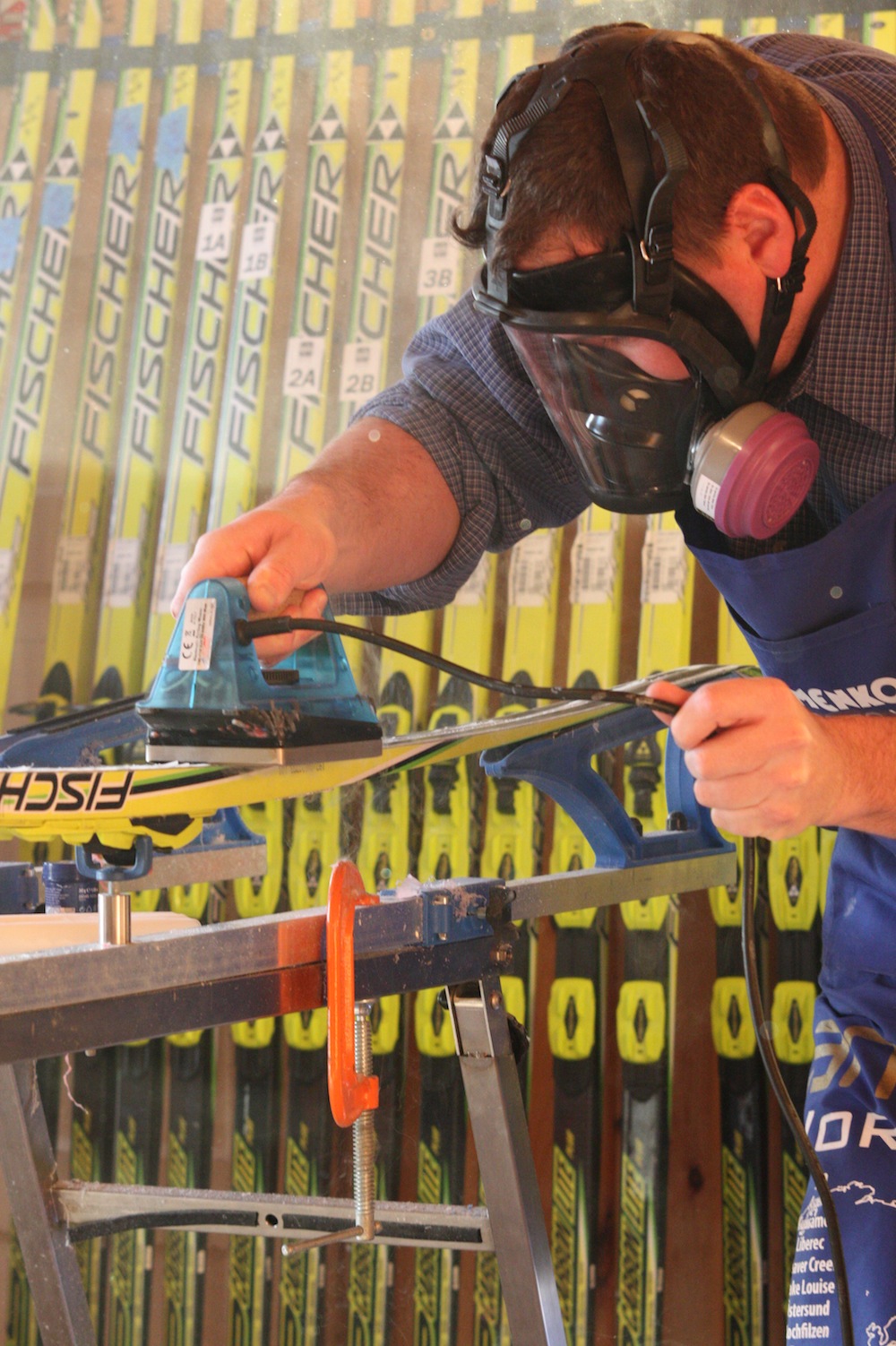
His love for the sport of Nordic has been well known. He made his living in the ski world, but that was not why he worked among the Nordies. He lived and breathed Nordic. He was always willing to help any skier even if they were no on his brand. As I started working in the ski business I quickly realized that if we had more guys like The Big Madshus Bear, as I called him, we would be better off as a ski nation. He just wanted to take care of you to help you be a better skier and he flat out didn’t care if you were the best around or just getting into it. He saw across company lines while still protecting his brand. He was always willing to help out on the wax bench and it was common to see him with his ski hat on crooked working a late night bench and sharing a beer and a story with a friend. These are some of the moments I will miss most about Peter, staring over the bench at his infectious smile. It always made my day easier and better.
A few years ago at Nationals in Rumford Peter sat down with me and shared some of his health issues. We had a long frank conversation about what he was facing and what was going to happen in the future. Peter always just said I will do my treatments, show up when they tell me, and do whatever they tell me. He fought a long time, longer than I believe most could. Still over the past three years every single time we talked, he first asked about my health. He next asked how my Mother, who is also ill was. He had to know those two things first before we could move on to him and how he was. This summer was a struggle for Peter, things turned worse and he knew that things may not turn out the way we had all hoped in full recovery. Yet still Peter never once made it about himself. Quite the opposite, he genuinely wanted to know how things were for everyone else. He didn’t feel sorry for himself one bit, just wanted to continue to share that smile and positivity.
These are the things that mad him not only my friend but really everyone’s friend. If I live a day or week like Peter lived his whole life it would be an accomplishment. Yet Peter did this every single day of his life even while dying. Amazing man, amazing spirit. A legend of the Nordic world has passed but hopefully will never be forgotten. That is my friend Peter Hale.”
— Roger Knight, Boulder Nordic Sport director of team and Eastern operations
“As I tried to come up with something specific, all I could really think of was how Peter was ALWAYS there. It was uncanny. And I think that’s why his passing kind of hit me a little more than I would have expected. I wasn’t the closest friend Peter had, but I felt a kinship with him and have known him as long as I have been involved in national/international level ski racing.
I first met Peter in West Yellowstone, November 1989. It was my first US Biathlon Team camp. I was 18. I had recently committed to biathlon as my primary sport and was invited to train with the National Team in West as a member of the Junior National Team. Walter Pichler was coaching there as a consultant but was really kind of just trying out for the head coach position, as it turned out. He started calling me “Yunior” (for “Junior,” with the German soft pronunciation of the J). It stuck. Peter was one of the few people I still saw regularly in recent years to call me by no other name.
I met Peter in the lobby of the Best Western Ambassador Inn. I was sort of hanging around after dinner, somewhat in pinch-me mode with Josh Thompson’s recent arrival to the camp. I had taken to the notion that given this opportunity, I would watch like a hawk, everything Josh did, while I had the chance. Josh had skied on Landsem and won a silver medal at biathlon worlds 2 winters prior, but Landsem went under after 1988, in some unknown manner to me—whether it was actually in Norway or just lost distribution in the US, I can’t remember. What it did was send Josh and others who were on Landsem (a good portion of the USBT at the time) to sort out a new ski affiliation. I was skiing as a sponsored Peltonen skier at the time, and was very proud that Josh had recently gone with a Peltonen contract. It was a small commonality, but it was cool to me. He was working through a bunch of Peltonens that whole camp.
I believe that winter was Peter’s first year with Madshus, as a reaction to Landsem folding (I believe that maybe Landsem was absorbed by Madshus?). Madshus retained most everyone who had been on Landsem the years prior, except Josh—clearly Landsem’s biggest US athlete. That had to hurt Peter to some extent, but he never let on. The first impression I had of Peter was made to me by Josh. Peter arrived in the lobby to great fanfare with the almost universal roar of “Omar!!!” Peter spent the next half hour or so catching up with everyone in the room as he continued to do his whole life, no matter where he went. It was clear that everyone loved Omar.
I can’t say exactly how Peter became Omar. I feel like there is a back story I never got clearly. The most basic answer I got was that he looked like Omar Sharif when he was younger (you could see the resemblance), but I still felt that the story has more to it, and may even have some off-color content, which as an impressionable 18 year-old, might have been why I never got the full scoop. As luck would have it, I don’t feel I ever completely filled that one in. Regardless, Peter remained Omar to me since the day I met him, and I remained Yunior to him as well.
Omar said he had to get all his new Madshus stuff from his truck and into the hotel. Josh slugged me in the shoulder and said come on Yunior, Peter is a good man. Let’s help him with his stuff. I would see this same lack of brand territory that Josh was exhibiting, easily a hundred fold from Peter over the next 24 years, even though Peter’s professional existence depended on the success of his brand. If you’ve been in this sport any amount of time in the US, you realize that the brand territory of the few elite skiers who exist and are sponsored or supported by a brand, can be overtly partisan—clearly divided. At times even petty. To me, that is the impression about Peter that sticks. It says a lot about him. He made his tight living on the strength of the Madshus brand, yet he supported everyone. I never skied on Epoke, Landsem, or Madshus skis as a ski racer. The closest I ever came to being squarely in Peter’s professional camp was when a small ski shop I was a partner in, sold Madshus. I remember feeling really good about selling Madshus when we brought in the skis, specifically thinking it was my first and only professional connection with Omar in the ski industry I ever had. Coming up with a specific story about Omar beyond how I met him, and how he became Omar to me, and I Yunior to him, is almost like pulling a needle from a haystack. For 24 years, he was always there. You never knew where or when he was going to show up, how he got there, where he was staying, or how he paid for it; but you knew you were going to see him 2-5 times a winter. You were never surprised to see him. Just happy to.”
— Chad Salmela, College of St. Scholastica head coach and former U.S. Biathlon member
“The passion Peter has had for Nordic skiing throughout his career is hard to match. From competing to selling, he was always promoting the sport and “softly” providing you with a wealth of knowledge from history to the latest in ski technology. Peter loved Norway and felt very much at home every time he came to visit. He certainly had a spot in his heart for any product made in Norway and was never shy in promoting the birthplace of modern skiing.On the other side of passion… well… comes a little frustration (in a funny way) Peter worked for me at Alpina Sports and we had wonderful conversations and some in depth discussions on the technical side that could include racing or touring. We all knew Peter loved racing.When it came to being organized….well…Let’s say not a strong suit for Mr. Hale. Being on-time was not part of Peter’s plan on a regular bases. It was never a question who would show up last for meetings or on-snow demo’s….we could even establish some small wagers on when we would see him…The time came…a few words was said and his smile was as wide as ever and we were back in action, as if nothing was different. He always had his spot.
Following deadlines for orders was also an issue most of the time, but he was always in the retailers corner supporting them and explaining to me that we would see it soon…”don’t worry Steve” Needless to say, I had some high blood pressure moments for sure that would generally end up in a smile and a quick laugh.
However Peter….’NOTHING a shot of Aquavit and some salmon would not cure,’ Love you man! ”
– Steve Kvinlaug, former president of Alpina
“Peter Hale, and his wonderful outlook on life, saved my butt one day. It was the American Birkebeiner and I sat in my warm car in the parking lot waiting for the start. I thought I was all set. I was ready. Skis waxed and packed in my box on the roof. It was 20 minutes to my Wave 1 start, so I casually got out of my car and reached up to unlock the box. The keys didn’t work.It was then I realized I had my wife’s box from HER car on top of my car and didn’t have HER keys. I had locked my race skis and poles in a box I couldn’t open.It was panic time. What to do? The first person I thought of was Peter Hale, because he’s always so helpful to everyone. I drove my car, fast, out of the lot to the house Peter rented on the Telemark road about a mile from the start.
People walking to the race were yelling at me, ‘You’re going the wrong way!’ as I pulled up in the driveway just as Peter locked the door and was headed to the start.
‘I need a pair of skating skis and a pair of poles for a short guy,’ I cried out. ‘Just a second,’ Peter said as he walked back into the house. A minute later he came over and handed me a pair of skis and poles.
‘Calm down,’ he said. ‘This is the only pair I have left, but you’ll be fine. Just have fun,” and he gave me that great smile of his, got in his car and went to the start.
Well, I had fun and I won my age class skiing with the shortest skis ever made and only able to get two fingers in the straps because I didn’t have time to adjust them.
Peter’s inspiration had me laughing all the way to the finish line. I lost a pole three times going up hills, but that didn’t matter. I would simply stop, turn around with a smile, and ask the skiers behind me to pass the pole up, and they did!
We will all miss you, Peter. RIP.”
— Bob Gregg, publisher, The Master Skier Ski Journal
Peter Hale: The Man with the Nordic Spirit
By Ian Harvey (published in The Master Skier, Aug. 28, 2012)
“I first attended one of Nat Brown’s summer training camps in Princeton, B.C. when I was 14 years old. I hardly knew anyone there, could barely rollerski, and was generally pretty intimidated. As my folks were dropping me off in the dirt driveway of the ranch, I saw a huge boat of a Cadillac roll down the drive with a seven inch-tall pink flamingo adorning the hood. The car pulled up and Peter got out; I’d never met the guy but he walked straight up to me with a huge grin, shook my hand and said, ‘Hi, I’m Peter Hale – you’re gonna have the time of your life up here’. I was so surprised by his entrance that I actually forgot my apprehension and nervousness. After that, I DID have an amazing time at the camp, and at many camps afterward, and it was largely due to Peter’s presence and ever-thoughtful attitude toward me and all the other athletes. Working with Peter now as an elite skier, I’m grateful for that same generous spirit and energy that I first saw nearly fifteen years ago and for his personality which invites everyone in to enjoy this amazing sport.” – Sam Naney, Methow Olympic Development Team
The example given above by Sam exemplifies why I wanted to salute Peter Hale who has worked for Madshus as a type of Nordic manager (product manager or racing manager) for many years. Simply put, I think this man embodies the Nordic Spirit. Peter is eager to help others, loves the outdoors and the ski sport, absolutely loves people, makes everyone around him feel warm and cared for, is very much “himself” (an original), and despite working hard, is always cheerful. I feel that Peter is one of many shining examples of the kind of wonderful people that we have in our Nordic community.
“The ski industry, like all industries, has a major trade show every year. Peter and I made it a point for many years to get together at the end of the show for an Italian dinner. As the show wound down, I would meet with accountants, people in the credit department and guys involved with shipping to go over administrative and accounting issues. These meetings could be so depressing, the skis were turned into basic commodities and all the passion for the sport disappeared. I would leave our booth, sit down with Peter at a fun Vegas restaurant and it was such a refreshing contrast to the day’s meetings. With genuine vigor and enthusiasm, Peter would talk about racing, how the industry could improve the gear, what we can do to better support athletes, how we can grow the sport… It was a long and very positive list of topics that would basically cover the romance of skiing. After a day of talking about bottom lines and going over spread sheets, Peter would bring back the love of the sport and remind me why I got into this industry in the first place.” – Rick Halling, Atomic Nordic Product Manager
Peter uplifts those around him either through his oddball and endearing sense of humor or by exhibiting genuine interest and concern for virtually all with whom he has contact. Peter is the rare type of guy who can drive through the night to get to an on snow demo, set up, stand around in the cold for 10 hours enthusiastically helping people with a smile and then go for a ski and marvel to his ski companion about how much he is enjoying himself and how much he enjoys this person or that person before loading up and heading out to the next event.
“Peter was the best man at the wedding of Tina and me. Who else has pictures of Peter Hale wearing a tuxedo? He wore a fish tie to the rehearsal dinner, looking like he had a fish hanging around his neck. He has been a member of our family for over 20 years and has known our children since they were babies. They grew up knowing him as Uncle Peter. Peter would bring new little skis for my children from his Norway trips.
It is quite natural in our house for me to come home from work some days in October and find Peter asleep on the couch in the living room after a tough day of Madshus store clinics in Anchorage.
Returning from the World Cup in Park City in 1988 the road from West Yellowstone to Bozeman was ice and we hit a big elk. Fortunately with the icy road the elk went spinning when hit and didn’t end up in our lap. For as long as Peter drove that Volvo, the elk hairs remained embedded in the trim.” – Patrick McGownd, Toko Tech Team member, Anchorage, AK
“Peter has always had a flair for the unexpected. His Cadillac was a surprise to us at a junior training camp back in the summer of 2000: he arrived in the largest white Caddy anyone had ever seen: white body, red-leather interior, a plastic pink flamingo duct-taped to the hood, and a circus-sized, yellow-and-black Epoke hospitality tent in the trunk, complete with a folding bed and chair. Our camps always ended with a roller ski race, and that year the prize was a ride into town in the Cady. Thomas Wassberg was guest coach and probably the most puzzled/impressed person there – a prize possession is a snapshot of Peter showing the dazed Thomas what can only be called the “engine room”. Coming from Sweden, Thomas had never seen anything a quarter as large or gas-consuming. To say nothing of the flamingo.” – Nat Brown, Past US Ski Team Technician (and coach and mentor to many)
“After the World Cup at Silver Star in 2001, Peter and I were told to jump into a Subaru and head for the East Coast for another World Cup at Ironwood Hills. We were the last car over the pass into Calgary that night, in a blinding snow storm, and about 10 o’clock the next day we arrived at Moose Jaw, starved and in need of fuel. After years of travel together, we share a predilection for the right kind of greasy spoon café, and decided to cruise the main street in search of one. We found The National Café – perfect: linoleum on the floors, half the police force having coffee in a booth in the corner, and a semi-grouchy waitress “of a certain age” who splashed some coffee into those heavy white cups that turn up only in that kind of café.
“So, does Rosy still work here?” asked Peter – never having been within 500 miles of Moose Jaw before. I shrank…“No, she quit a month or two go.” “Really? We wanted to see her. How come she quit?” “She wanted to get married.” “Married? Really? Who’s the lucky guy?” “Herb.” “Herb? I thought they’d never get together… “ By this time I was kicking Peter under the table. He quit, but we sure got good service. Traveling with Peter is always an adventure. That’s why “Peter stories” are a genre of their own.” – More from Nat Brown
“One quality I admire most about Peter is the way he takes genuine interest in anyone he has a conversation with. As a ski rep, his job is to talk to potential customers of skis. But he goes above and beyond the sales floor. He has forged thousands of true friendships, inspired young skiers, advised elite athletes, and motivated masters all around the world. He is a true ambassador to our sport! I always enjoy an engaging conversation with Peter and his dry, mid-west humor. And you have to appreciate his love for the wacky, somewhat extravagant sunglasses and retro ski apparel! I’m honored to work with such an influential member of U.S. skiing and to call Peter Hale a good friend!” – Leif Zimmermann, long time US Ski Team and BSF Ski Team member
Peter Hale, whether driving an elk hair embedded Volvo or his pink flamingo ordained white Cadillac, whether cheerfully helping people with whatever they might need or relaxing with friends in the bar after a long day adorned with the same sweaty cockeyed Nordic cap, lycra suit, and ski boots that he had eaten breakfast in is a person that we, the Nordic community can look at, smile, and proudly say, “Yeah, he’s one of us”.
Peter has been battling Cancer for over a year now and the treatment looks hopeful. I look forward to sharing many more entertaining and heartwarming years with Peter Hale.