From the FasterSkier archive — posts syndicated from athletes’ and coaches’ own blogs between 2004 and 2012, kept online as published. Current coverage is at fasterskier.com.
The 2nd annual Schutzenski Festival is set to be held at Soldier Hollow in Midway, Utah from October 10th-16th. This year’s Schutzenski celebrates the culmination of a full offseason calendar for Soldier Hollow and beyond, offering a full weekend of cross-country and biathlon rollerski racing on the world-class Soldier Hollow course. Held amid the beautiful Heber Valley fall colors, and featuring US Ski Team and US Biathlon Team members competing on home soil one more time before heading out for the World Cup in Europe, the Schutzenski promises to be a kind of Homecoming for US skiing; a unique gathering combining a full competition program with a host of other industry and community programs.
The week will feature a suite of top ski industry members showing off the latest innovations in equipment, and a series of athlete meet and greets and scheduled social gatherings will give festival attendees the chance to connect with members of the ski community from across the country. A full updated event schedule can be found here.
Schutzenski Race Weekend – Friday, October 13th-Sunday, October 15th
A full weekend of biathlon and cross-country roller ski races kicks off Friday, October 14th with a series of biathlon sprint races (7.5 k/10 k). Saturday, October 15th features distance biathlon races (7.5 k/10 k/12.5 k Mass Start) and distance cross-country races (6.5 k/10 k Mass Start). A 5 k and 10 k running race will also be held Saturday morning. In between Saturday’s racing, a King/Queen of the range biathlon competitions will be held, and an opportunity to try biathlon for festival participants will round out the day’s events. Sunday, October 16th finishes out the weekend with fast and fun action with a full cross-country classic sprint race.
The whole racing program is one that’s busier than most World Cup weekends, and combines the disciplines of cross-country and biathlon throughout. In each race, a set of matched skis will be available for top-seeded competitors, and racers can compete across Open, Elite, and Junior classifications.
Schutzenski is being held concurrently with US Ski Team and US Biathlon Team Fall camps, and a number of top pro club altitude camps, meaning the Schutzenski is a one-of-a-kind opportunity to participate and watch the top skiers in North America all in the same field. Friday’s US Biathlon races are part of the World Cup Team selection process, and the whole festival will be a unique preview into US Skiing going into an exciting 2022-2023 winter season.
Full details are available on the Schutzenski website.
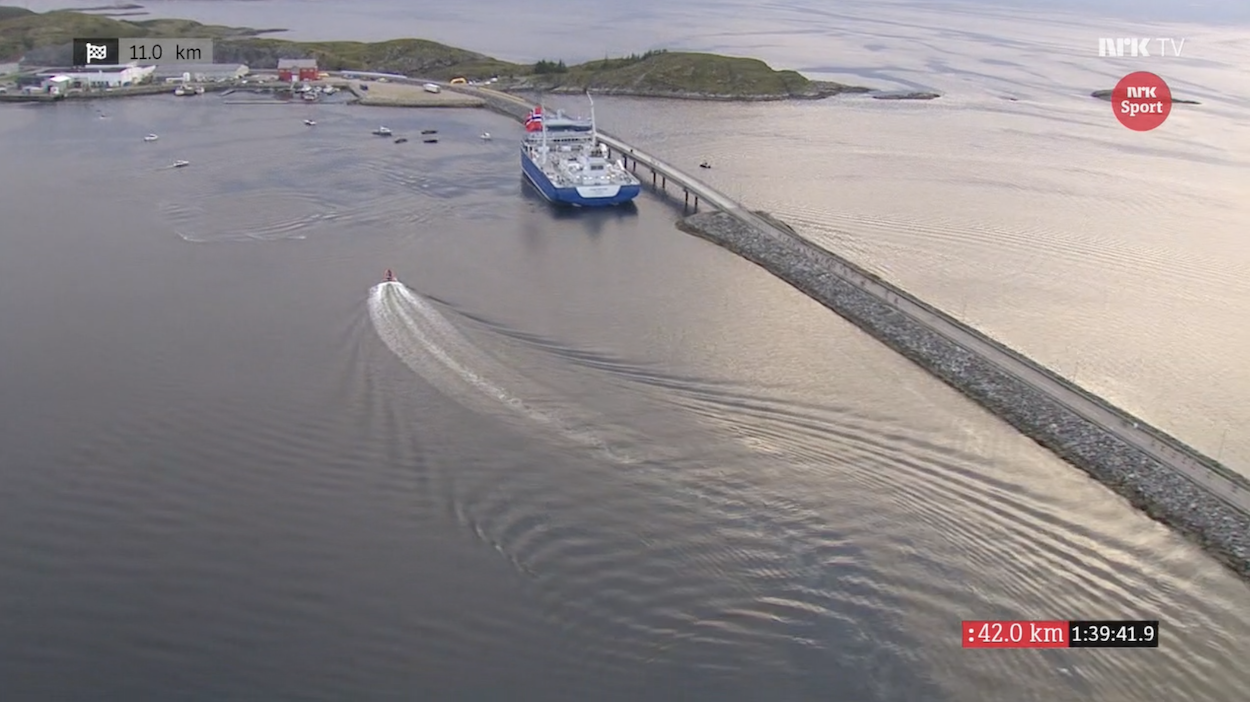
Athletes race across a causeway approaching Hitra in Toppidrettsveka 2022. (photo: screenshot from NRK broadcast)
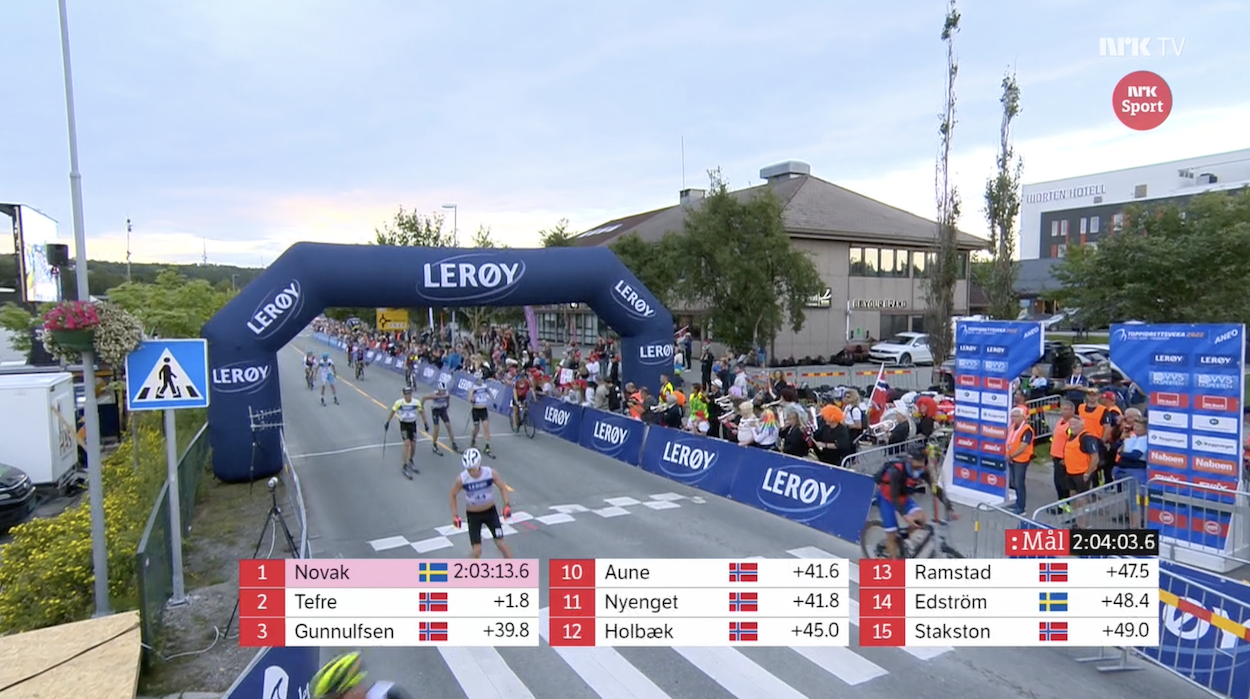
After technique work on snow comes race effort on rollerskis. Racing Thursday evening in Hitra, Norway, Ben Ogden led four American men when he placed 18th in a field of nearly 100 in the 54-kilometer classic mass start, the opening race of the Toppidrettsveka race series in the Trondheim region of western Norway.
Ogden finished 50.2 seconds back of the winner, and 10.4 seconds off the podium. He was followed by fellow USST athletes Finn O’Connell in 47th (+3:57.4), Johnny Hagenbuch in 55th (+6:38.4), and JC Schoonmaker in 65th (+9:26.0). Kevin Bolger and Walker Hall are also on this trip, and may compete in upcoming races.
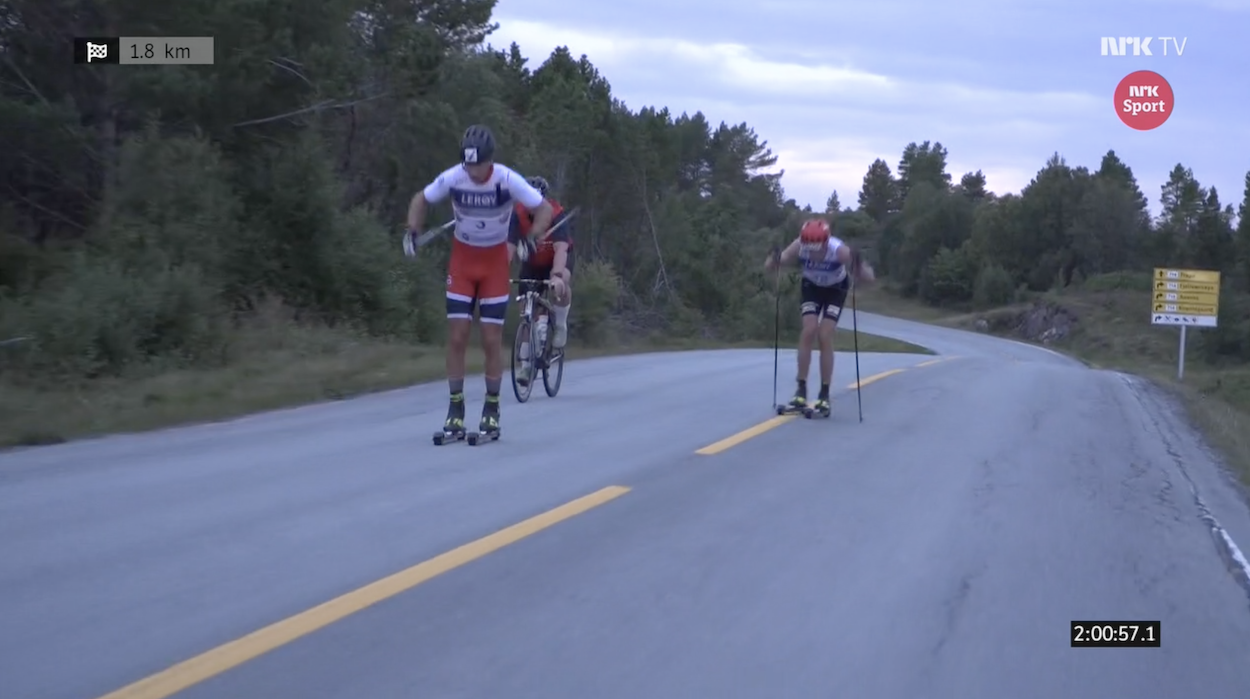
Max Novak makes the winning move, Toppidrettsveka 2022. (photo: screenshot from NRK broadcast)
The race was won by Max Novak of Sweden in 2:03:13.6, after he and Norwegian Gjøran Holstad Tefre distanced themselves from a 17-man chase pack within the final 10 kilometers. Novak used a powerful acceleration on a small uphill 1.8 kilometers out to open up a small gap on Tefre, which he held all the way to the finish. Tefre finished 1.8 seconds back of Novak. Mikael Gunnulfsen of Norway won a group sprint to finish third (+39.8).
Perhaps the best-known retired skier in the field, Petter Northug, 36, finished 38th (+2:53).
The women’s race, in which no Americans competed (there are no American women on this training trip), was won by Norwegian Astrid Øyre Slind, who covered 54 k in 2:10:40.5, a staggering 12+ minutes ahead of Lotta Udnes Weng in second. Friend of the program Frida Karlsson finished in 2:25:31.2 to place fifth in a field of twelve women.
Ben Ogden crosses the finish line in 18th, back middle, to the right of the athlete in a yellow top. (photo: screenshot from NRK broadcast)
U.S. Ski Team Head Coach Matt Whitcomb was buoyant about the team’s fitness and recent training heading into the race.
“Everyone is healthy,” wrote Whitcomb in an email to multiple media outlets Thursday morning, “and we’ve all had one of the best training camps of my coaching career. The guys have had a blast together. We’ve trained hard, both on and off snow. While we’re training into these races, everyone feels ready to race. Training through the summer races is a common approach.”
Thursday’s races started at 6:20 p.m. in the evening local time, with the men’s winner finishing at 8:23 p.m. and the final American not finishing until after 8:30 p.m., suggesting a late night for all after cooldown, recovery, and coming down from the high of racing.
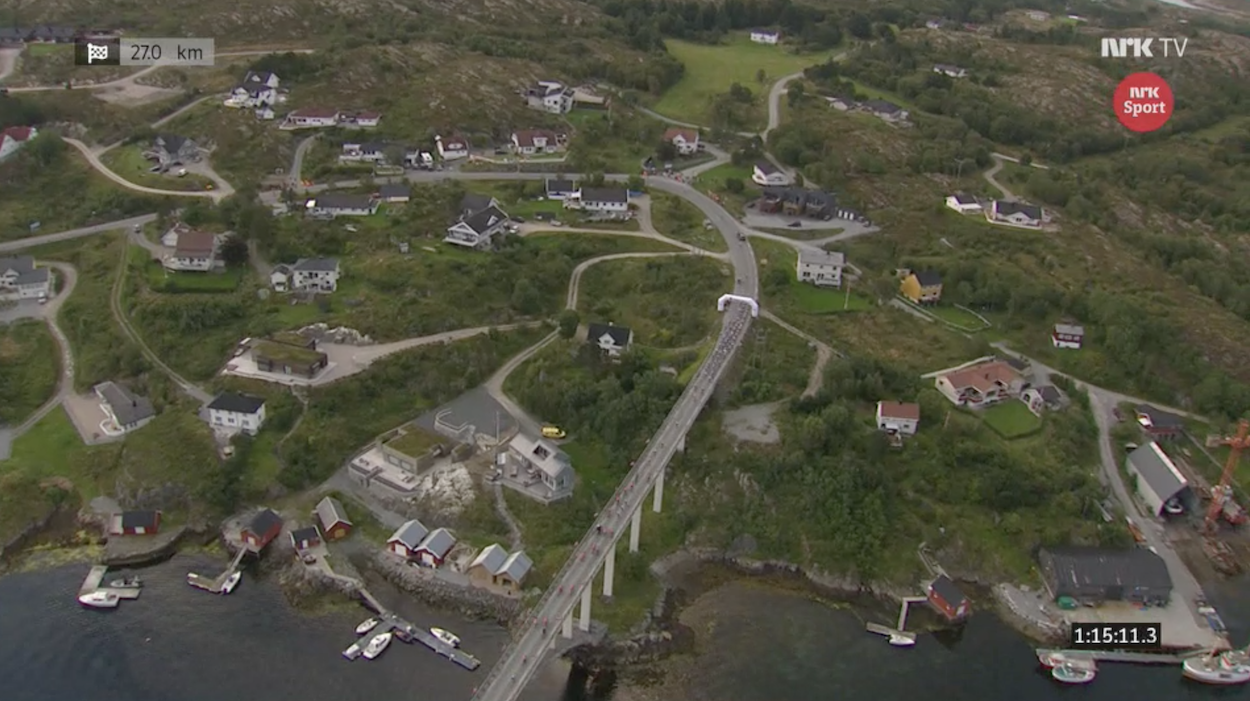
Scenery shot, Toppidrettsveka 2022. (photo: screenshot from NRK broadcast)
Competition continues in western Norway with a classic sprint on Friday, then a 10/15 k interval-start skate race on Saturday morning and a 5/10 k classic pursuit Saturday afternoon. FasterSkier will publish a more detailed article after the final race. The races will be shown on NRK, if you can manage to access the Norwegian broadcaster from where you live, and may be livestreamed on the event’s Facebook page.
Logan Diekmann, Nina Seeman win on the streets of Bozeman, and BSF’s Rollerski races look to harness the momentum of summer training out West. Featuring Results and Video Highlights.
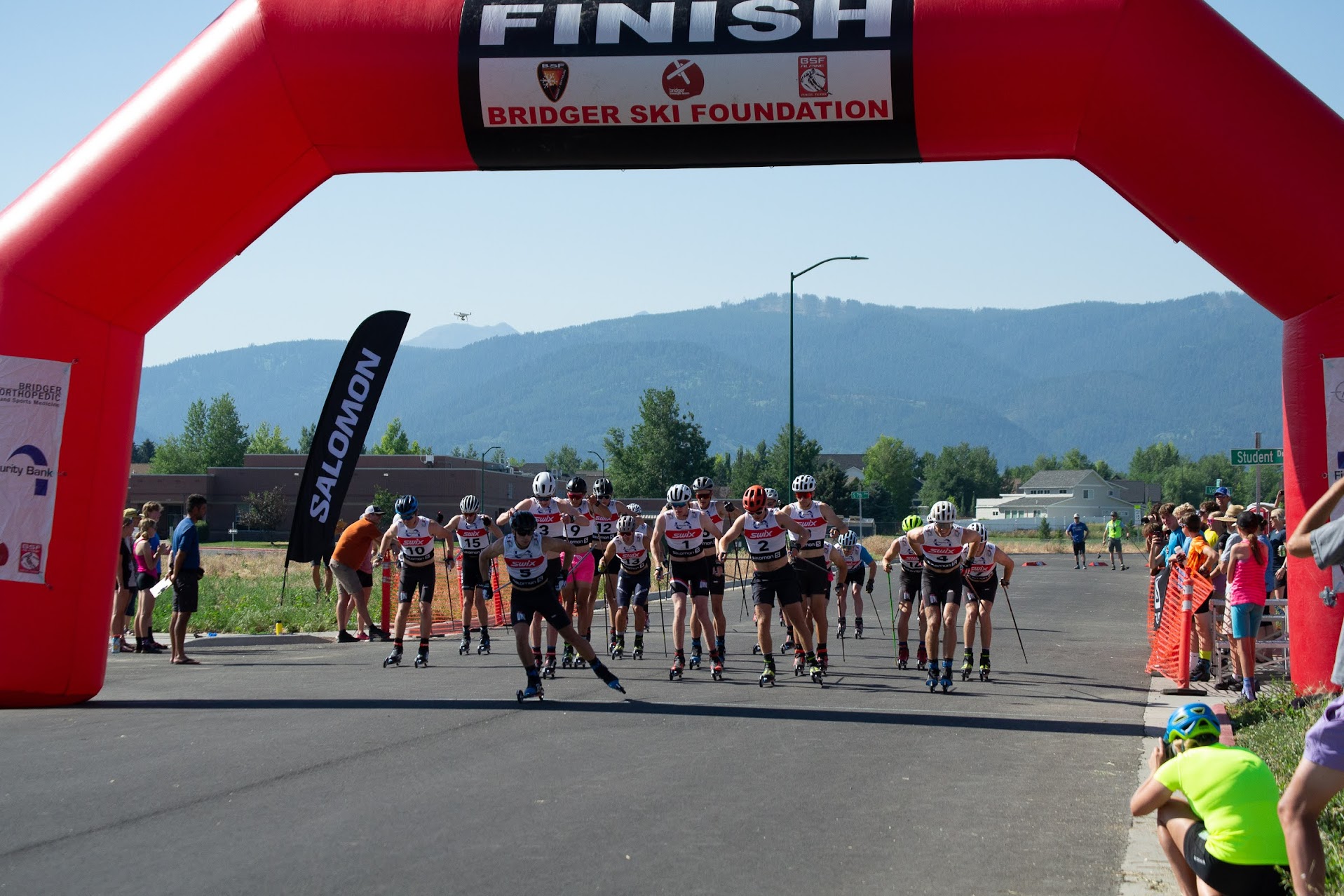
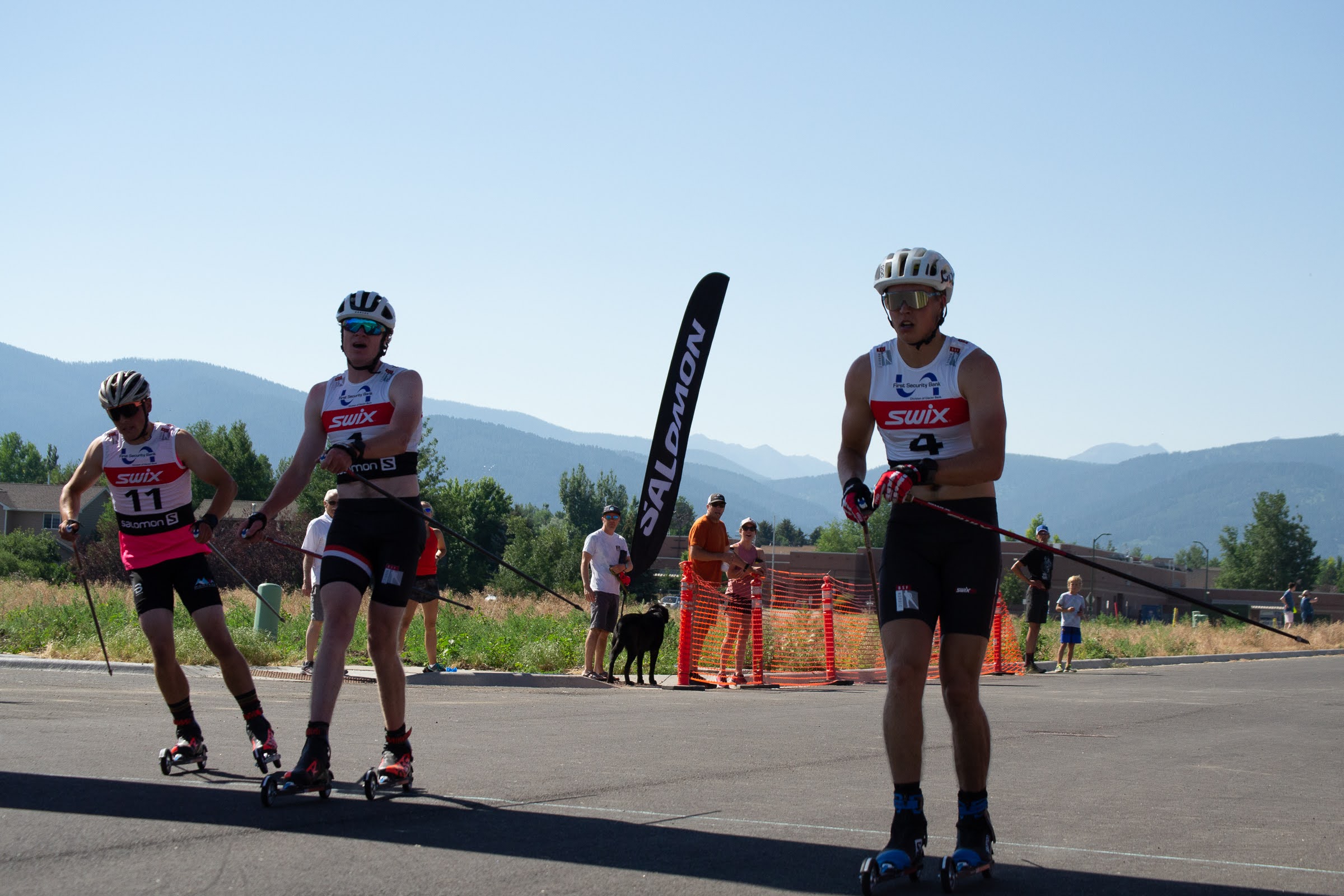
Men’s Open field rolls out at last weekend’s Jim Bridger Rollerski Races, held in Bozeman, MT (Photo: Jenny White/BSF).
BOZEMAN –Jim Bridger was a mountain man. One of those figures born firmly entrenched in the old ways back East, before he split for the Mountain West for something new. A character to chart a theme pervasive through the American vision of the West – that ability to make something new and pursue it with everything you got.
It’s a tortured and uncomplicated metaphor (Bridger was one of the first white men into the intermountain West, but of course, wasn’t the first person to existthere). But if you were going to distill that character, and tap in purely to that “Pioneer, O Pioneer” spirit, you could do worse than the Bridger Ski Foundation (BSF) Pro Team Head Coach Andy Newell.
For most of the 21st century,Andy Newell was a metonym for the very top of American men’s skiing. Through four Olympics, 220 World Cup starts, and breakthroughs every step of the way, Newell was there, making the in-roads that a generation of men’s skiers is nowpicking up on. Newell retired from racing in 2018, and in just four years has quickly transitioned his ebullient energy into setting up a coaching consulting business,Nordic Team Solutions,expanded BSF’s Nordic programming to include a successful Pro Team, and made Bozeman’s mountains and plains a popular training ground forcollegiate athletes during their summers.
Andy Newell in his latest roll as Race Director last Saturday in Bozeman. (Photo: Jenny White/BSF).
Long home to an established nordic community withMontana State’s NCAA program andBSF, the efforts of Newell and the athletes he works with have been based in an effort to re-think and try out approaches to skiing development, training, and culture in Bozeman, and in the larger U.S. Ski Community. And in the latest example, that meant looking at a nearly 30-year-old BSF-held running race and saying, why not add a rollerskiing event?
The 29th annualJim Bridger Trail Run last weekend then, also marked the 1st annual Jim Bridger Roller Ski Races. And the impetus, as for many things with Andy Newell, was to simply go all in on nordic in the pursuit of promoting the sport. “I’ve always loved racing the big European rollerski races likeBlink andToppidrettsveka. I thought this would be a fun opportunity to pair a legit rollerski event with a trail run and host them back-to-back. Having races like this is a great development tool for athletes” said Newell, in an email to FasterSkier. The races also acted as a fundraiser specifically for the BSF Pro Team, which has been one of the fastest growing and competitive programs in the U.S. since it was founded. Something that Newell talked about at length with FasterSkier earlier thissummer.
Andrew Morehouse, BSF’s Nordic Program Director also added that the impulse to bring rollerski races inspired by those in Scandinavia to the United States is one that has been successful in the East and Midwest, but hasn’t found its way out West quite yet, “We’ve seen the success of roller ski races in the East and have talked within the Intermountain Division of how we can create a meaningful roller ski race series for our athletes in the West. I think this race, along with theSchutzenski Festival in Utah (to be held at Soldier Hollow during the US Ski Team’s Fall Camp there this October), is a great step towards that goal.”
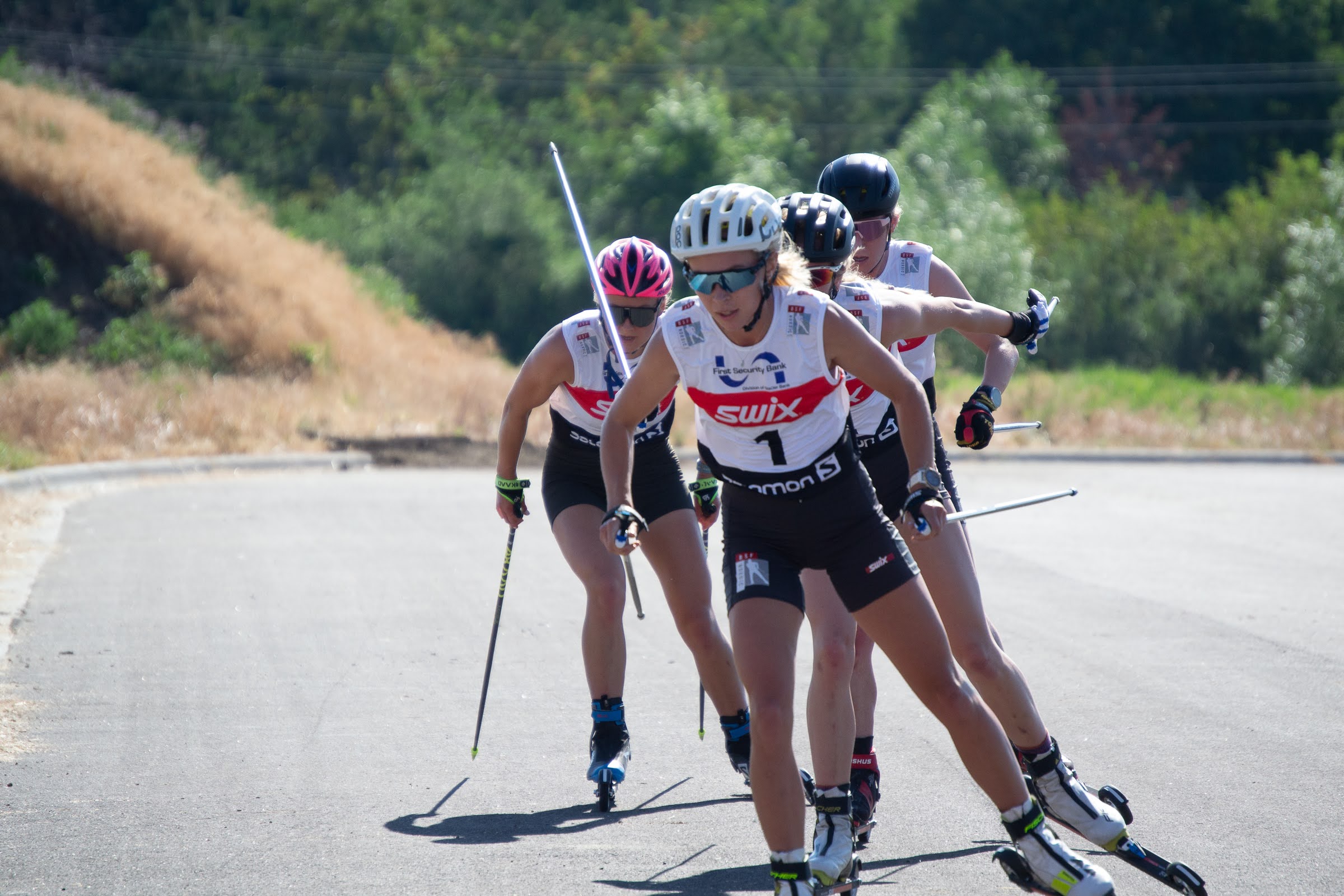
The Women’s Open field goes into a corner during their 12 k race in Bozeman last Saturday. (Photo: Jenny Smith/BSF).
Inaugural Jim Bridger Rollerski Race Report
In the pursuit to bring top-level rollerski racing to the hot, dry, and high Mountains out west, BSF’s efforts were a success.
A field full of BSF’s Pro and Comp (U14-U20) program athletes, along with racers from across the Intermountain West and a strong contingent of collegiate racers sure to show up on Eastern Carnival result sheets this winter made for an incredibly competitive and robust field.
They raced distances of either 6 k for the U16/U18 fields, or 12 k for U20/Open field on a 1.5 k loop that took them around the streets south of the Montana St. campus in Bozeman. The design was in line with the vision of promotion for the event, “high speed, multi-lap races right in [town] to make it spectator friendly and exciting,” said Newell. As with many roller ski events, racers also were provided matched skis, in this case from sponsors Swix and Solomon.
All races were skate, and with relatively flat terrain on course, that made for an event in which there was hardly a V1 to be seen. This was a day for V2, and a great opportunity for athletes to work theirs at max-effort next to other skiers and see where they can tweak their power application and tempo. Rollerski races, by design, are meant to be a stepping stone in training on the way to next winter, after all.
The early going in both the men’s and women’s open field were tight-packed affairs. Racers hemmed and hawed through tight-corners to bring the top-end of the field together, until slowly but surely, those lead packs became smaller and smaller.
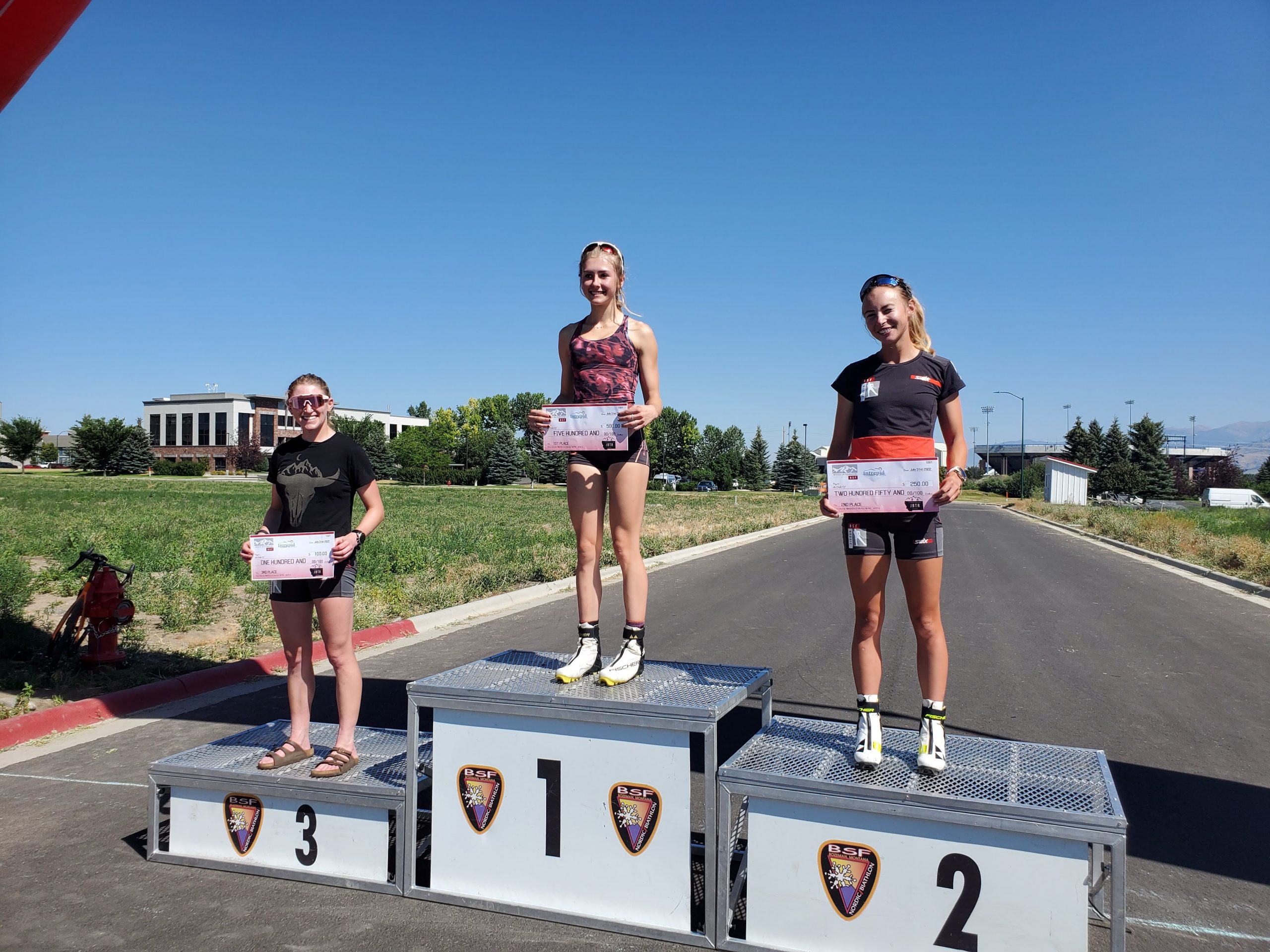
In the women’s field, the last couple laps saw a group containing Dartmouth College (DAR) skier Nina Seeman, along with BSF Pro members Mariah Bredal and Sarah Goble gain an advantage. There was nothing between them until the race’s end, when Seeman and Bredal broke for a final sprint, and Seeman came away the winner (27:58). Bredal finished second (27:59), with Goble coming in shortly after (28:07) to complete the podium.
Mariah Bredal (BSF) leads the Women’s field. Bredal finished 2nd overall to Nina Seeman (Dartmouth), tucked in 2nd place here. (Photo: Jenny Smith/BSF).
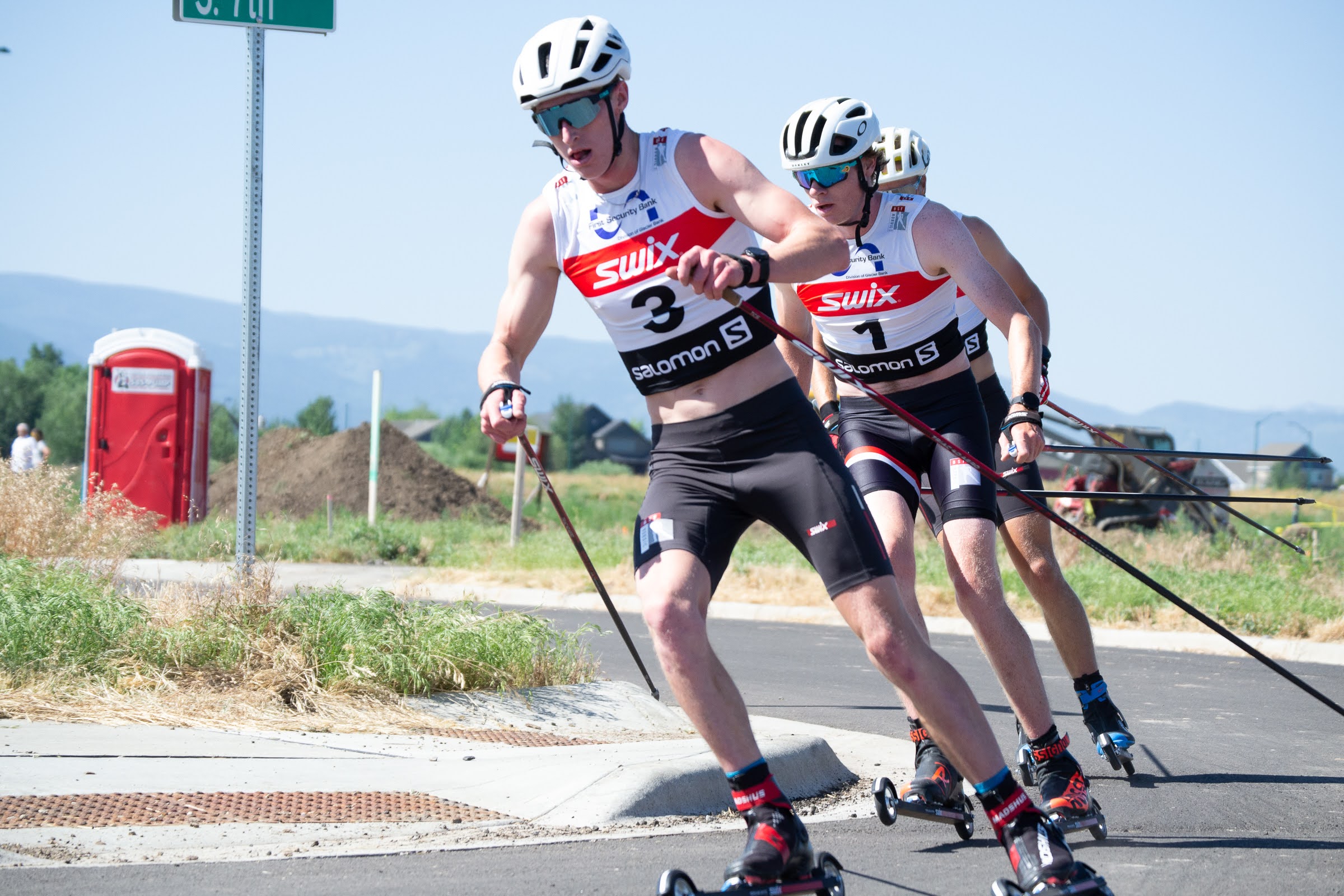
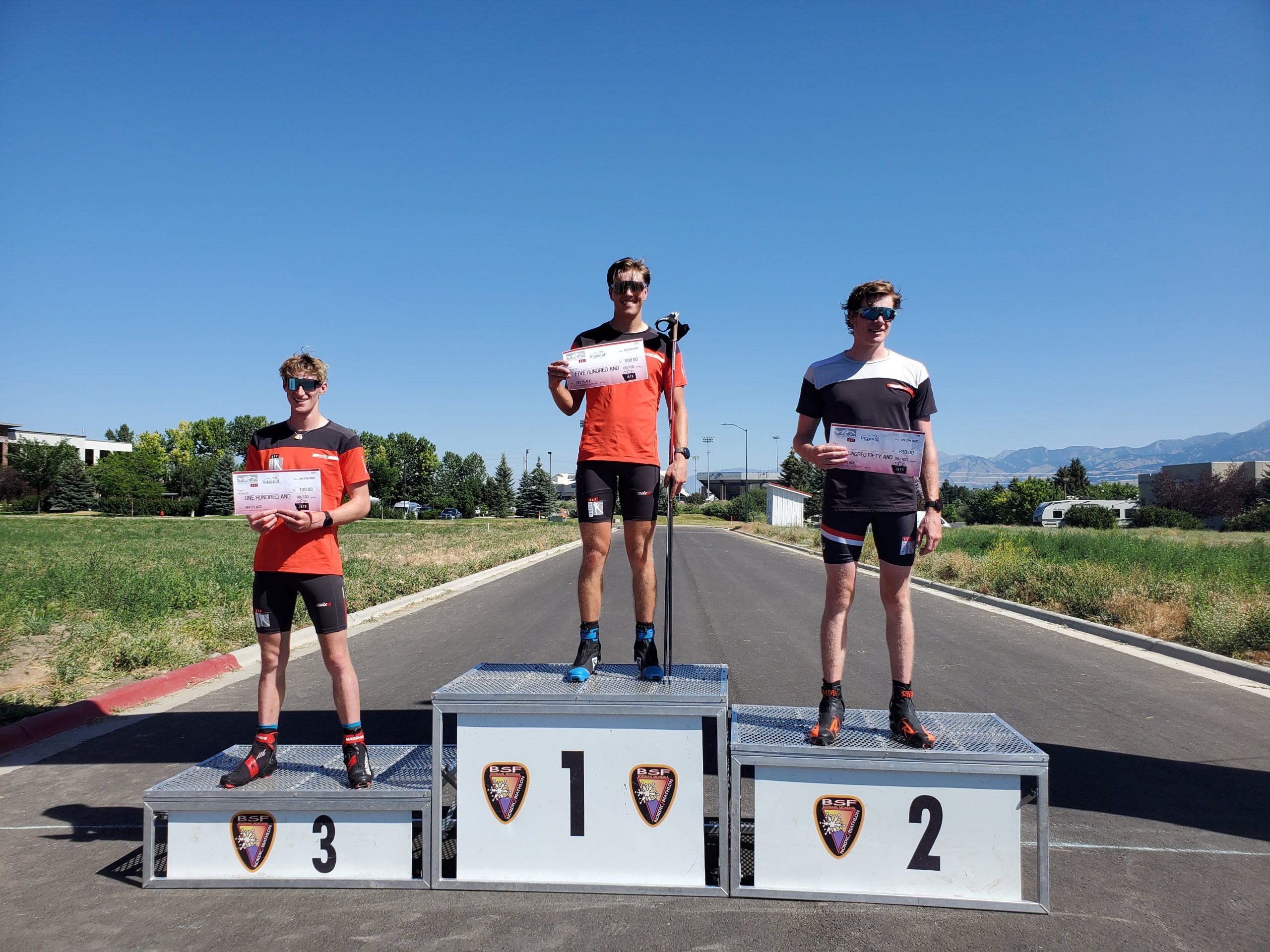
The men’s field saw a similar battle at the finish between three of BSF Pro’s leading lights. Into the final lap, Logan Diekmann, Finn O’Connell and Reid Goble were locked into a pack, with the promise of a true sprint all but assured for spectators. Goble found himself leading the pack for most of the lap, with O’Connell taking second wheel and Diekmann in third. Diekmann and O’Connell then launched their attack from behind their would-be lead-out, with Diekmann putting just enough gap over the line that the rare (and dangerous) rollerski lunge finish wasn’t needed. Diekmann in first (24:44), O’Connell in second (24:45), with Reid Goble rounding out the podium in third place (24:57).
Above – Reid Goble (BSF) leads Finn O’Connell (BSF) and Logan Diekmann (BSF) in the final lap of the Men’s Open 12 k. Below – Diekmann takes the sprint finish ahead of O’Connell. (Photos: Jenny White/BSF).
In the 12 k U20 Women’s race, St. Scholastica (CSS) skier Mia Case took the win over Park City’s Elena Grissom in second, and Sidney Benyon. The 12 k U20 Men’s race BSF’s Phin Fischer took first place ahead of Sumner Cotton (BSF) in second and third place Soren Davidson (BSF).
The inaugural BSF roller ski races were filled with fields of those who will find themselves at the top of NCAA, SuperTour, and even perhaps a World Cup this winter. That’s not bad for an inaugural running on the southside streets of Bozeman, and is yet another marker of the city, and Bridger Ski Foundation’s growth and development into a leader in the country’s ski community.
Many skiers then showed up to put impressive results up in Sunday’s Jim Bridger 10-mile Trail Run. Reid Goble (BSF) placed second overall (1:20:24), Peter Wolter (Sun Valley) was third (1:21:17), and Finn O’Connell (BSF) fourth (1:22:24). Mariah Bredal won the Women’s race (1:26:59), with Hannah Rudd (BSF) third (1:35:03), and Sarah Goble (BSF) fourth (1:37:37).
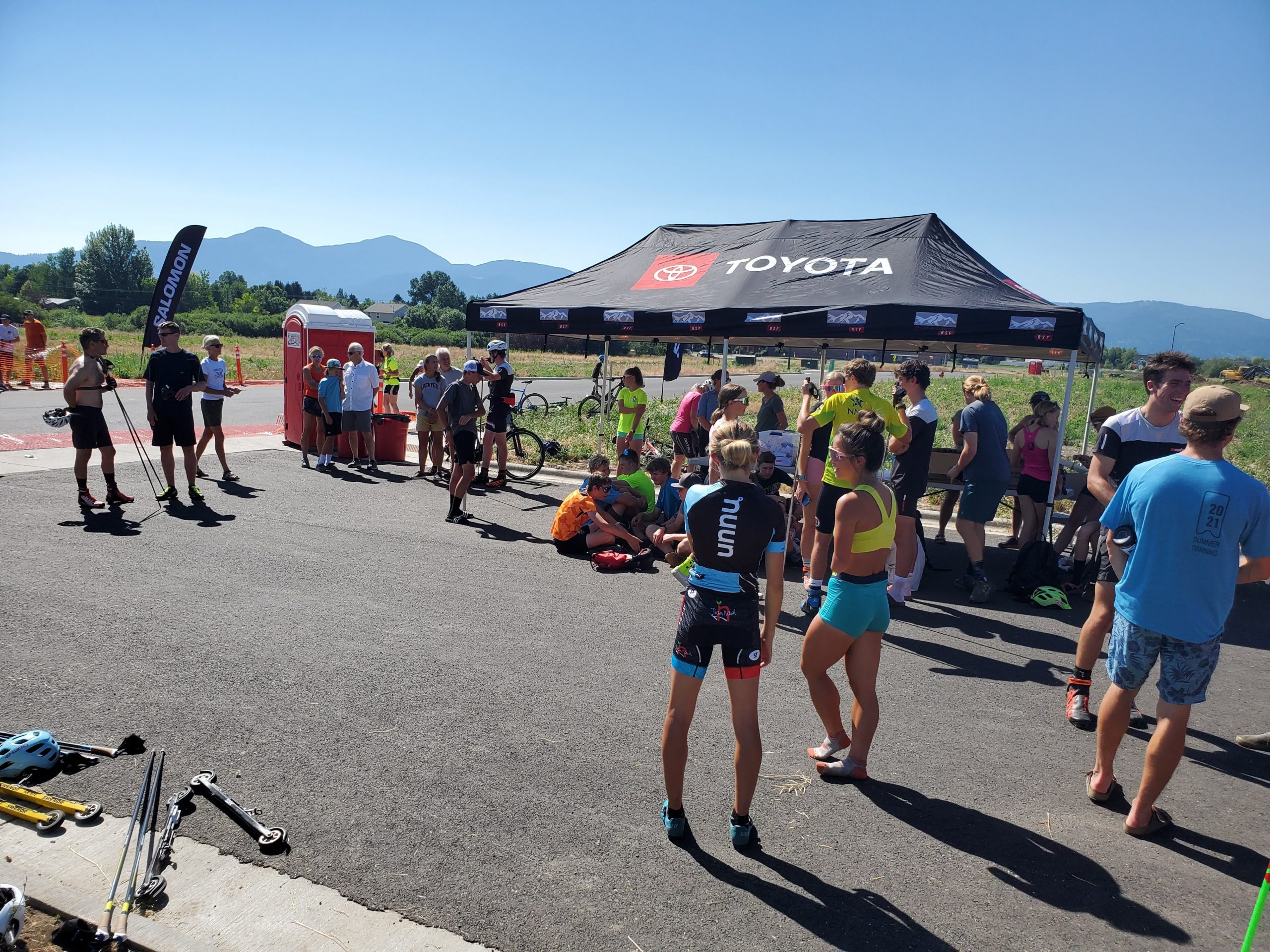
The BSF, and Bozeman, Nordic community together in Bozeman for some rollerski racing. (Photo: Jenny Smith/BSF).
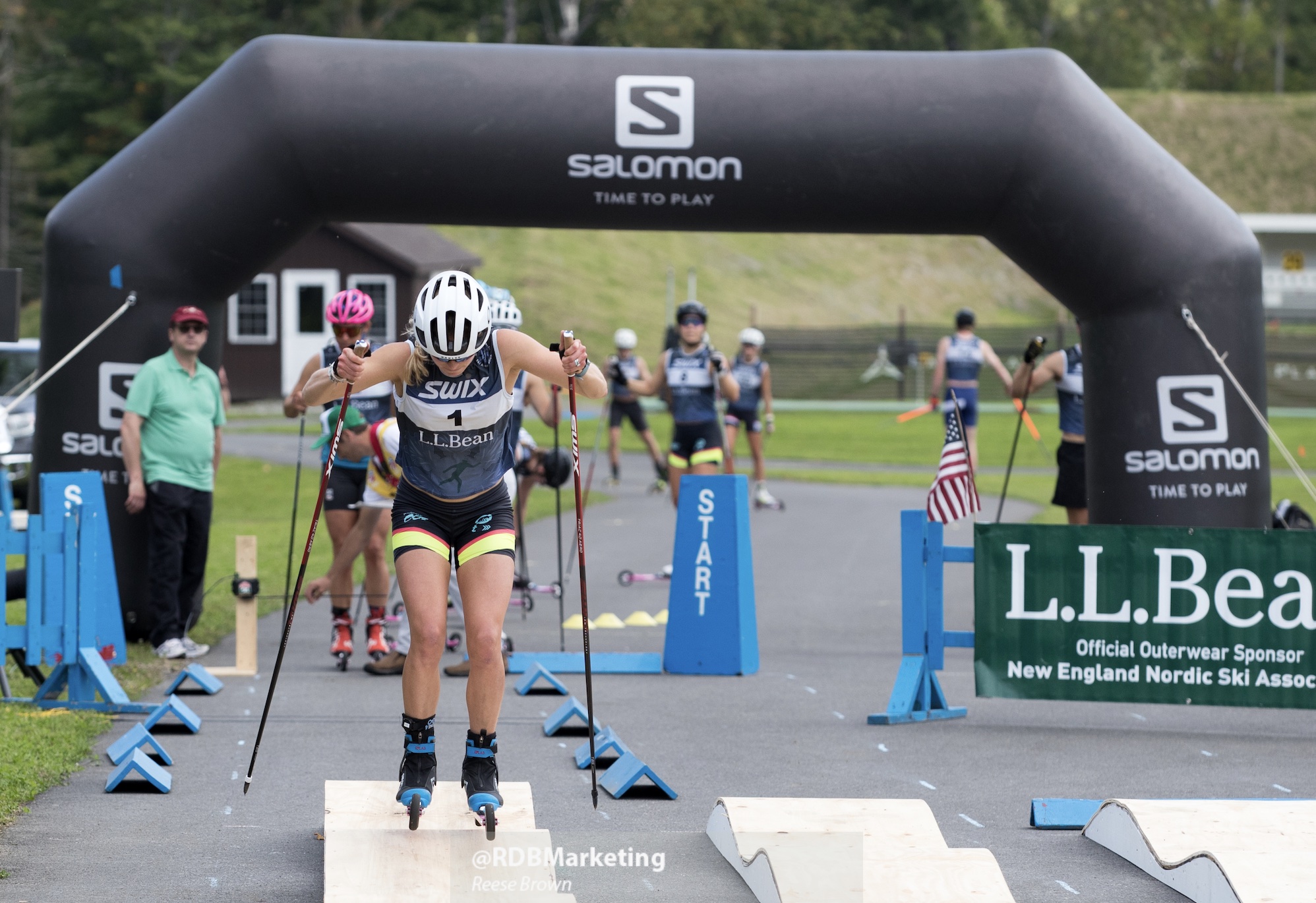
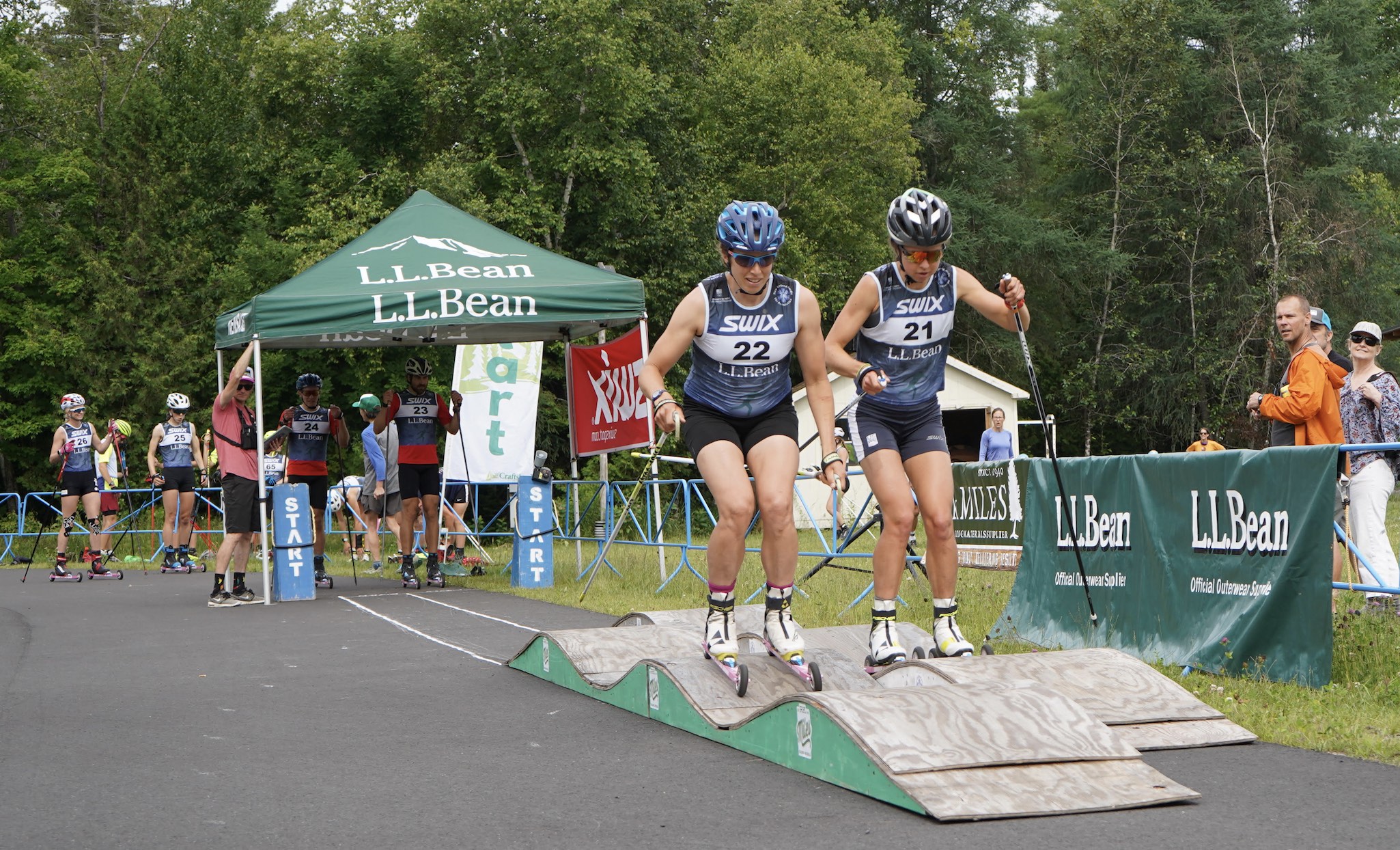
Over the bumps, Jessie Diggins heads out for her qualifier during the Keys to the Castle rollerski race in Lake Placid, NY. (Photo: Reese Brown / RDB Marketing)
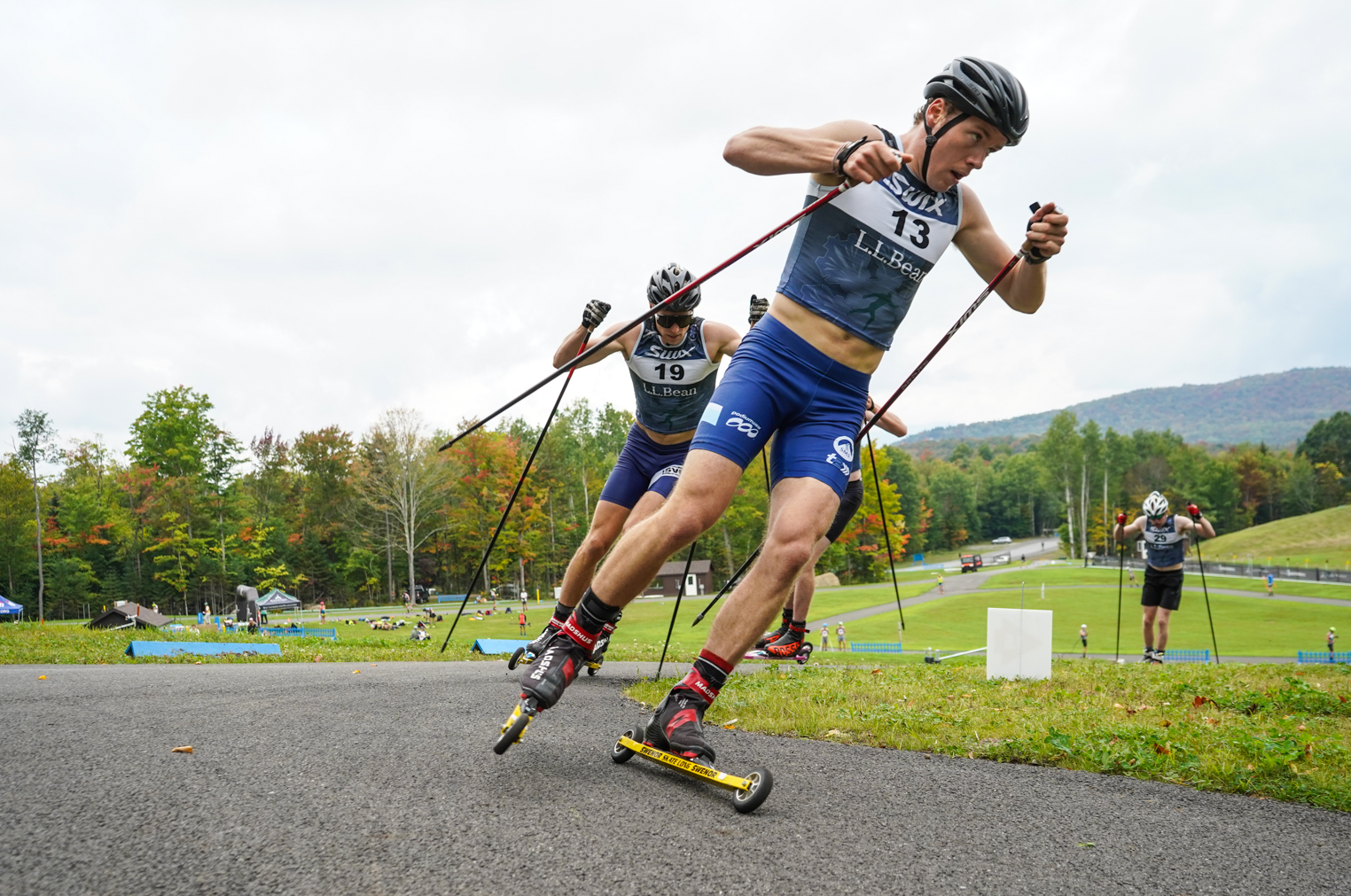
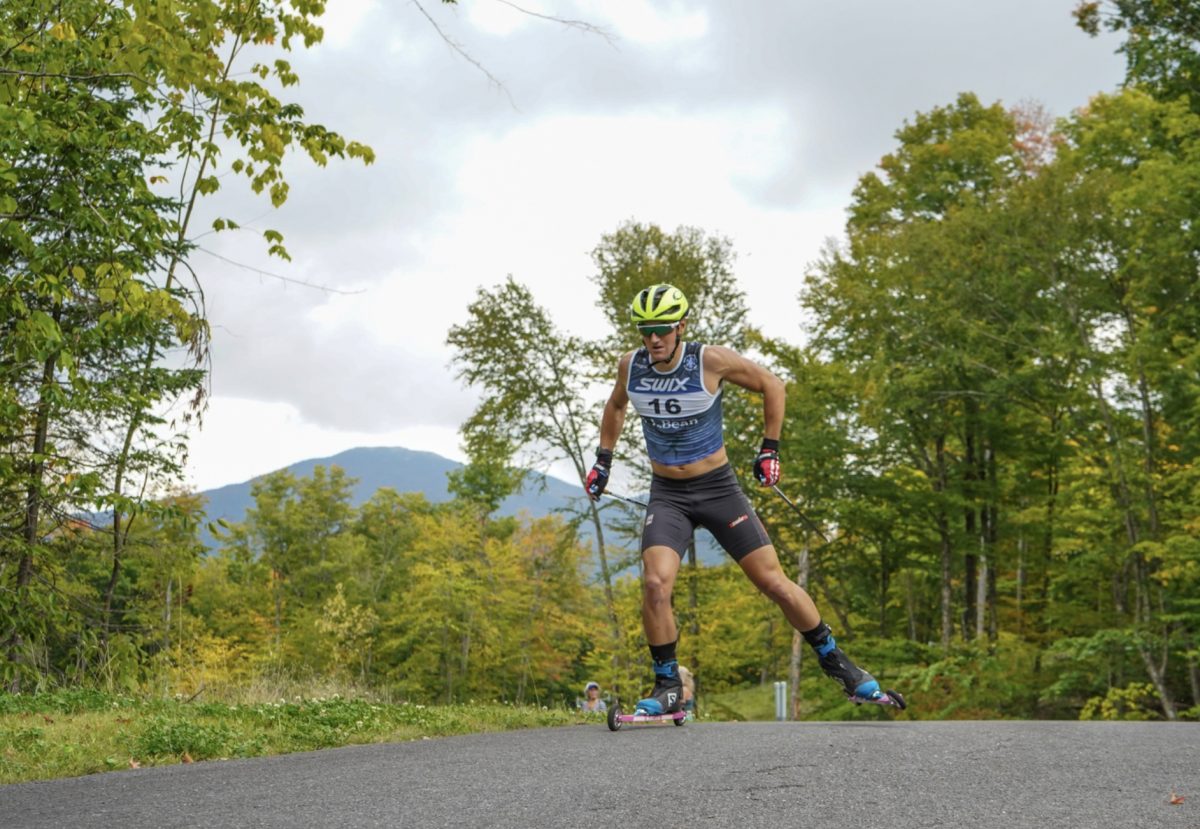
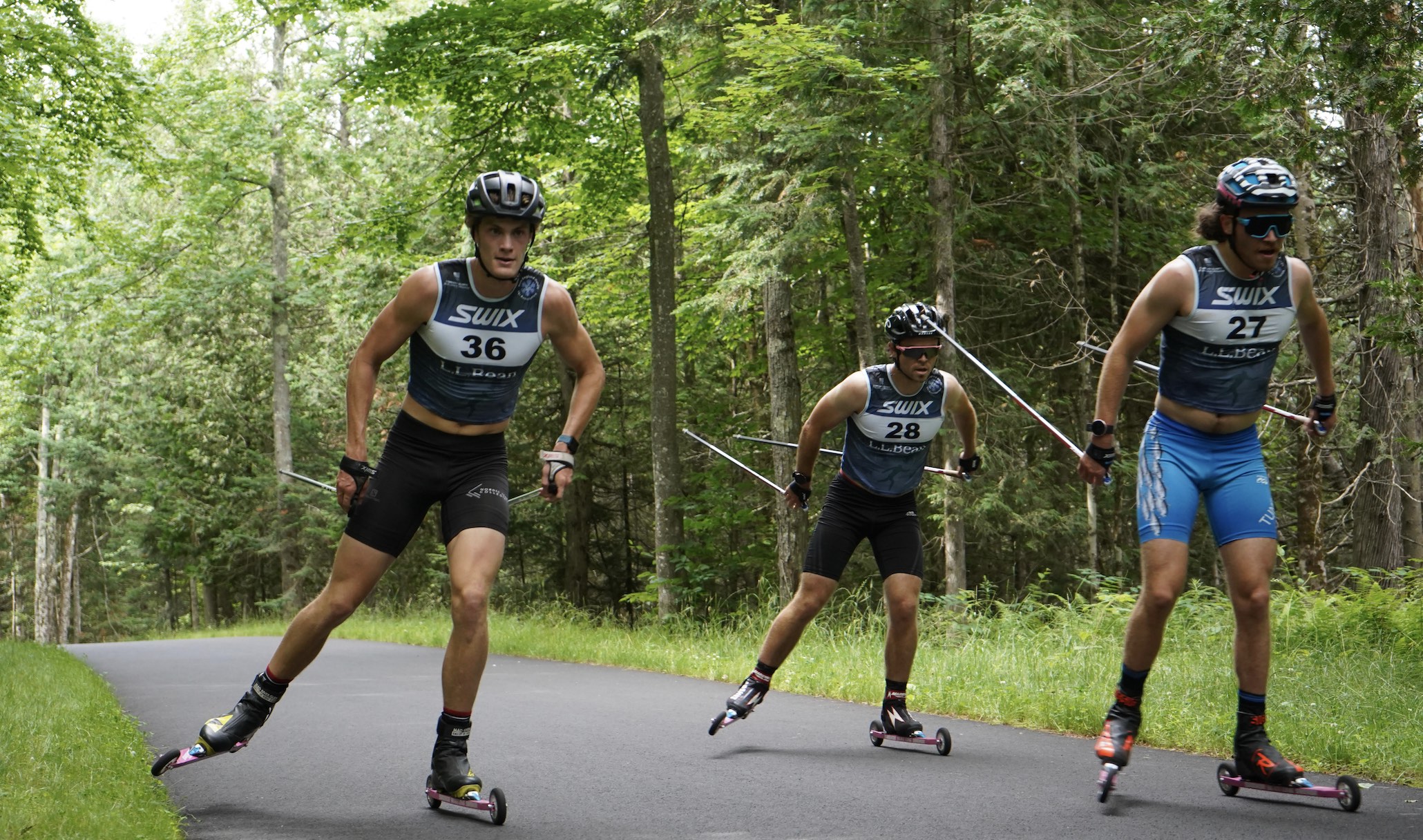
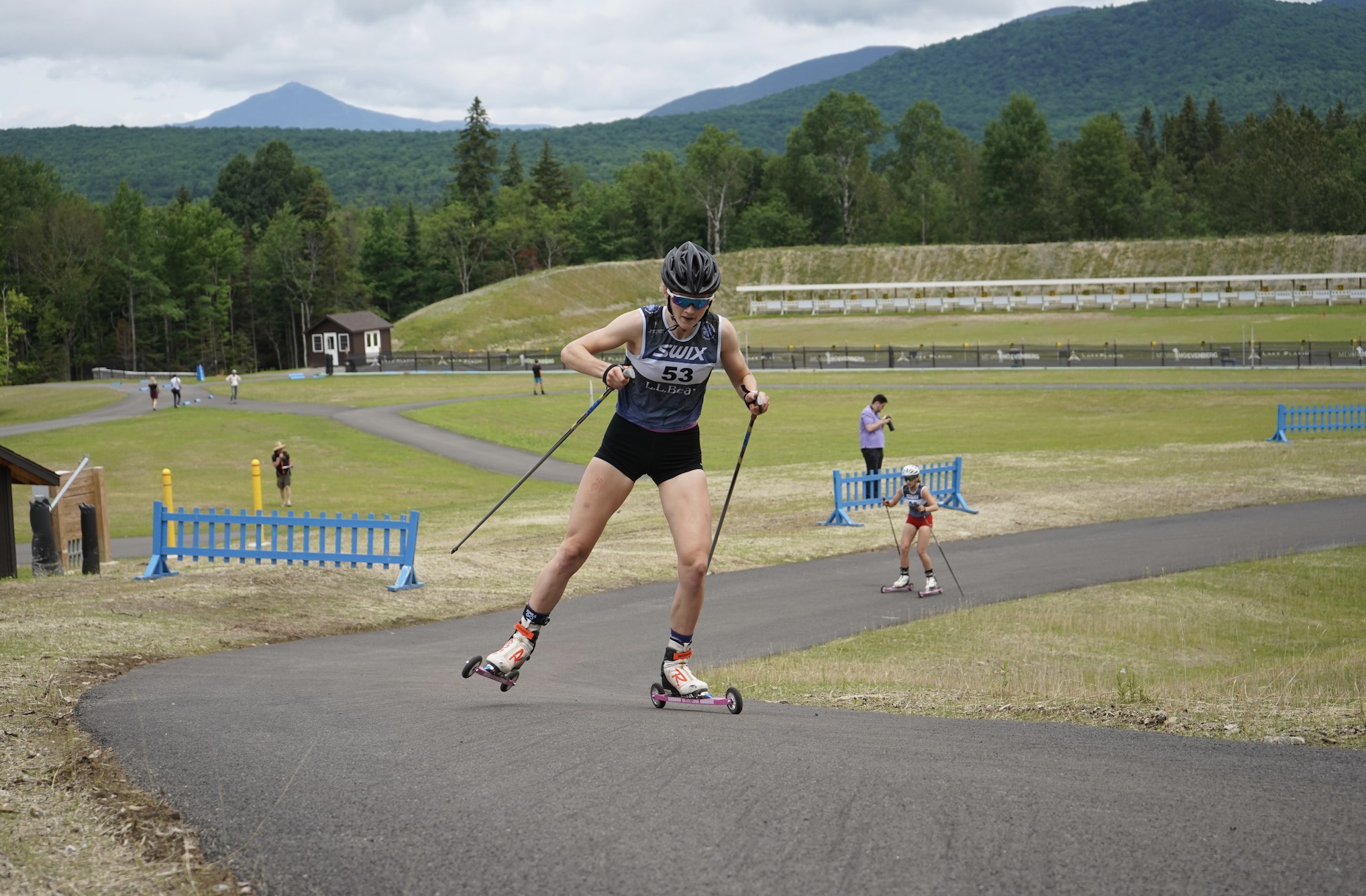
As summer turned to fall, skiers from the Stratton Mountain School T2 team (SMS T2), the Sun Valley Gold Team (SVSEF), and the Bridger Ski Foundation Pro Team (BSF) met in Lake Placid, NY for a collaborative training camp, capped off with two stages of rollerski racing. The weekend featured a freestyle sprint event — The Keys to the Castle — on the rollerski track at Mt Van Hoevenberg, followed by a distance stage dubbed the Free Fall Rollerski Race in Jericho, VT. These events are perhaps the climax of NENSA’s summer rollerski series, which has helped feed the energy and momentum of the cross country ski community throughout the Northeast.
“Lake Placid and Jericho were fantastic events and the beginning of the vision becoming a reality,” NENSA competitive programs director Justin Beckwith shared in an email. “They also highlight the amazing partnerships we have with clubs, venues and sponsors. We have four more roller races this fall including Climb to the Castle this weekend, which is paired with our Eastern Coaches Symposium — back in the Empire State. The really exciting part is we hope to carry the enthusiasm from rollerski into our Popular Race calendar, which will be released in the coming month.”
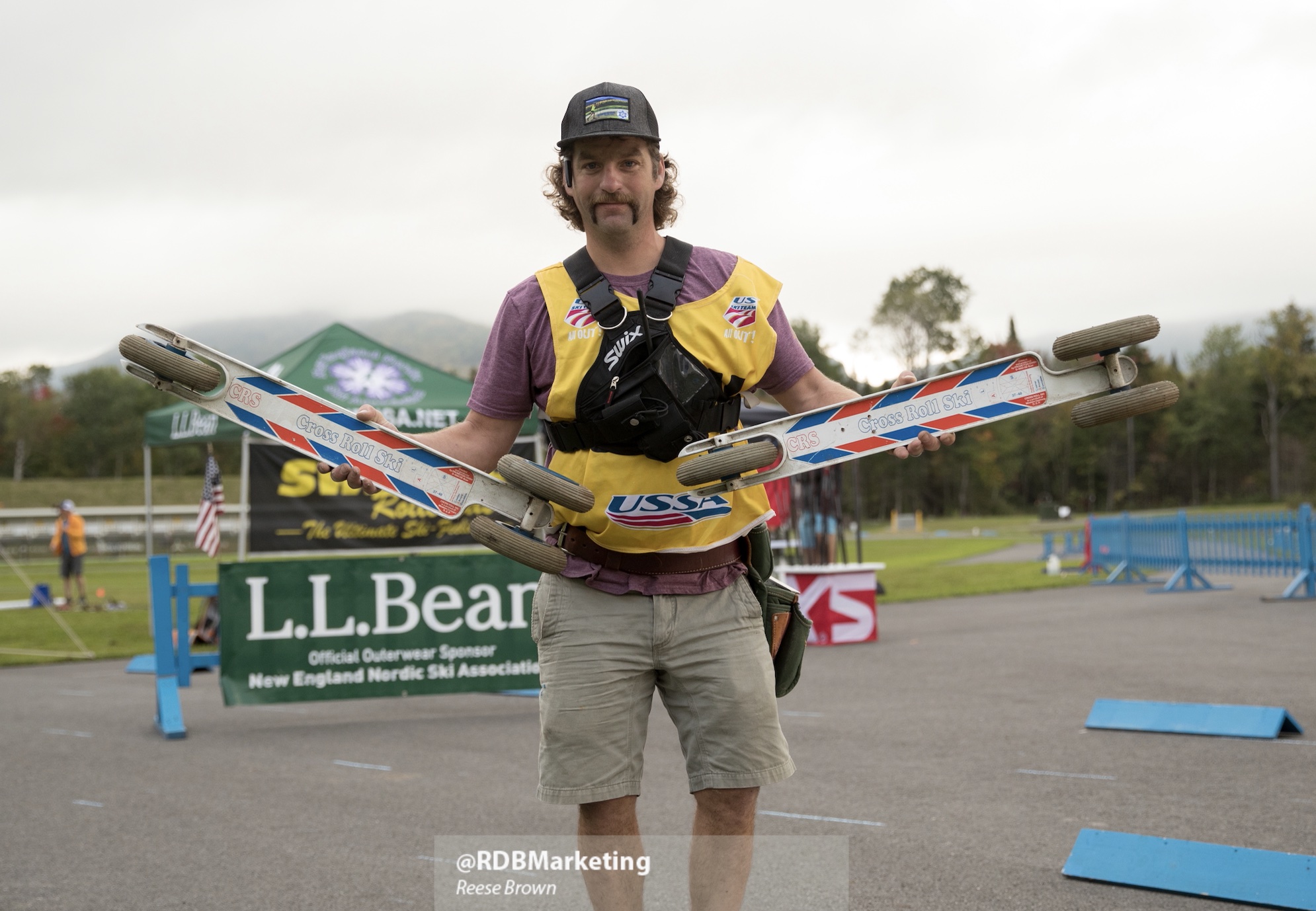
The man behind the wheels: NENSA competitive programs director Justin Beckwith. (Photo: Reese Brown / RDB Marketing)
After a year with minimal opportunity for cross-club collaboration, the events provided not only a solid training stimulus, but also invigorated the teams as they prepare for the upcoming season. It left U.S. Ski Team head coach Matt Whitcomb scheming about the opportunity to grow the events in the years to come.
“Pulling off a stage-style roller ski race weekend, with over 100 competitors on two different roller-ski tracks, reminds me of summer racing in Norway and Sweden,” wrote Whitcomb in an email. “NENSA has upped its game. Think of the potential, too; we could do four stages, using four different tracks, and all within 1-2 hrs in VT and NY. Start in Craftsbury, move on to Jericho, and then to each of Lake Placid’s tracks. Everyone camps together at each location, and it’s just a giant summer ski party.”
The facilities at Mt Van Hoevenberg, home to the 1980 Olympics and an Olympic & Paralympic Training Center, have been undergoing extensive renovations and improvements, including the building of the new four-kilometer rollerski track which was finished this past August. (You can take a tour of the track via YouTube courtesy of Paul Schommer/Biathlon Uncharted.)
“If I win the lottery, I’m putting in more roller-ski tracks in the U.S.,” said Whitcomb. “It’s a game-changer to not have to worry about cars. Also, the best way to replicate the demands of a ski course is to ski on a ski course.”
Bill Harmeyer (SMS T2) makes his way through the heats during the Keys to the Castle rollerski sprint. Harmeyer finished 4th overall on the day. (Photo: Matt Whitcomb)
Mt Van Hoevenberg has also improved their snow making operations, allowing for 5k of groomed skiing with 3-4 days of blowing snow in cold weather. Whitcomb explained the value this provides to American cross country skiing.
“This was our second time utilizing New York’s investment in its facilities at Mount Van Hoevenberg. I’d be surprised if we’re not racing World Cups here in the future. A lot of work by ORDA has resulted in a world class roller-ski track and new race trails. What excites me is the chance for easterners to have early November skiing in years when the weather cooperates. Their snow-making capacity is impressive.”
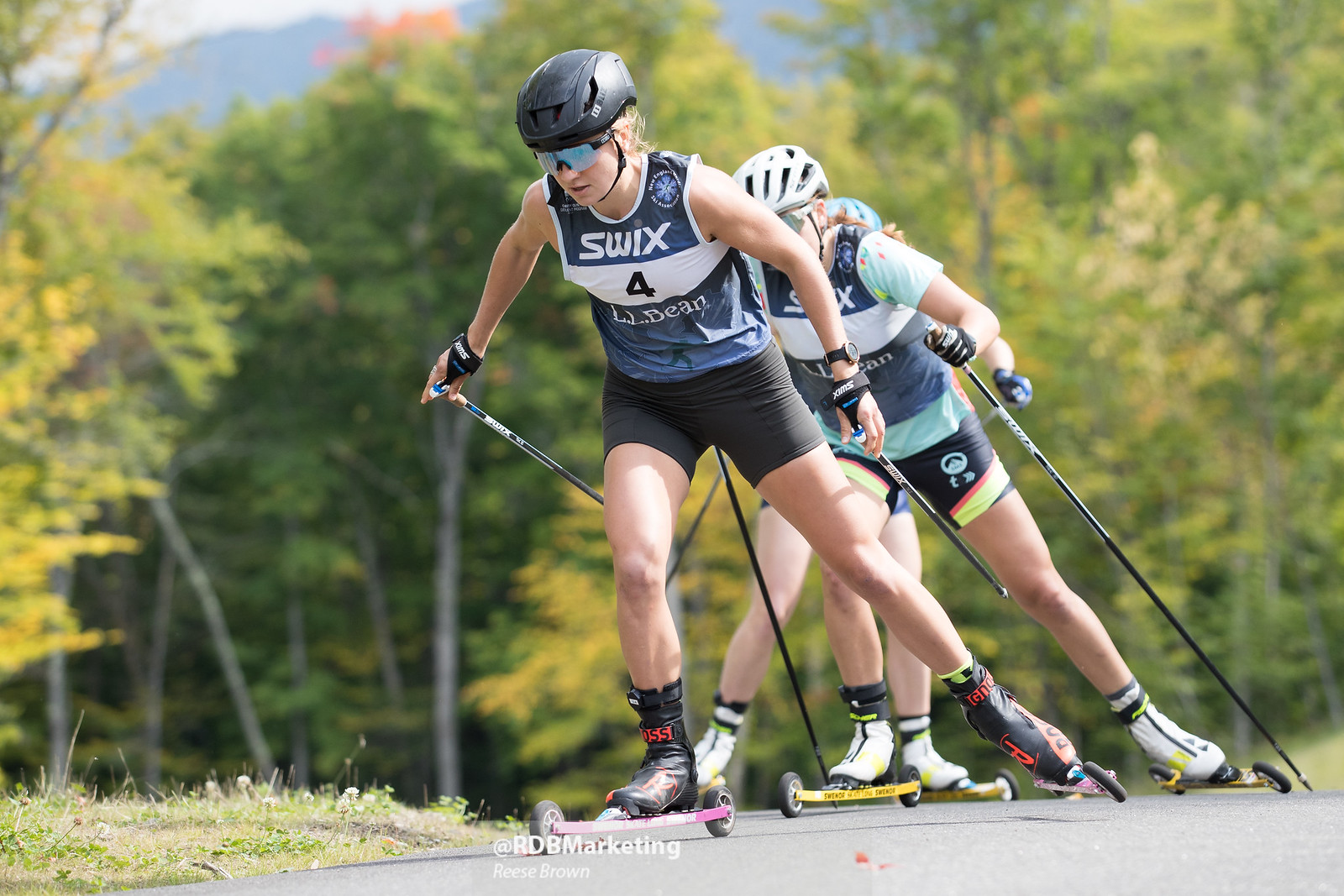
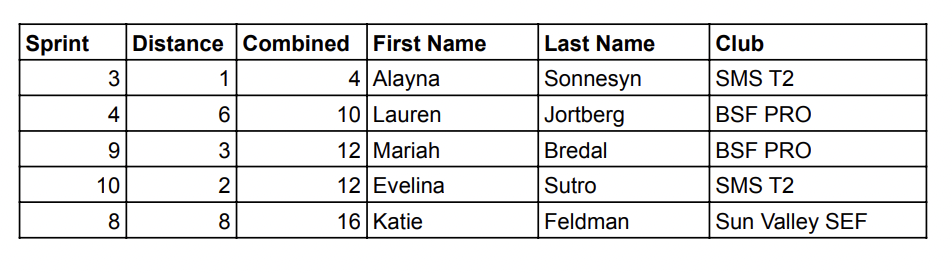
With the added twist of a rolling ramp at the start, racers skied their way through the qualifier and rounds. In the women’s field, Jessie Diggins (SMS T2/USST) won the qualifier, cruising onward to snag the top spot on the podium, followed by teammates Julia Kern (SMS T2/USST) in second and Alayna Sonnesyn (SMS T2) in third.
Jessie Diggins (SMS T2/USST) over the climb during the final round of the Keys to the Castle sprint. (Photo: Matt Whitcomb)
“This is the time of year where the intensity in training starts to ramp up and it’s always awesome to have the chance to test out your race day preparation,” wrote Diggins after the race. “Things like the timing of pre-race meals to warmups and what you do in between sprint heats to stay activated but not get tired — this was a perfect chance to tune in to those little details at the race in Lake Placid!”
Diggins only competed in the sprint stage of the weekend, bowing out before the teams headed to Vermont.
“I’m super grateful to the organizers and hosts as it was an amazing new roller ski track and venue, and it was very cool to have so many teams and athletes there, from junior skiers to professional teams. The track was challenging and honestly just like a world cup sprint course, in terms of length, challenge and technical aspects. It was fun to fire up the engines and see what I still need to be working on in our final prep phase before the season begins!”
Jessie Diggins stomps the qualifier, continuing through the rounds to win the overall at the Keys to the Castle. (Photo: Reese Brown / RDB Marketing)
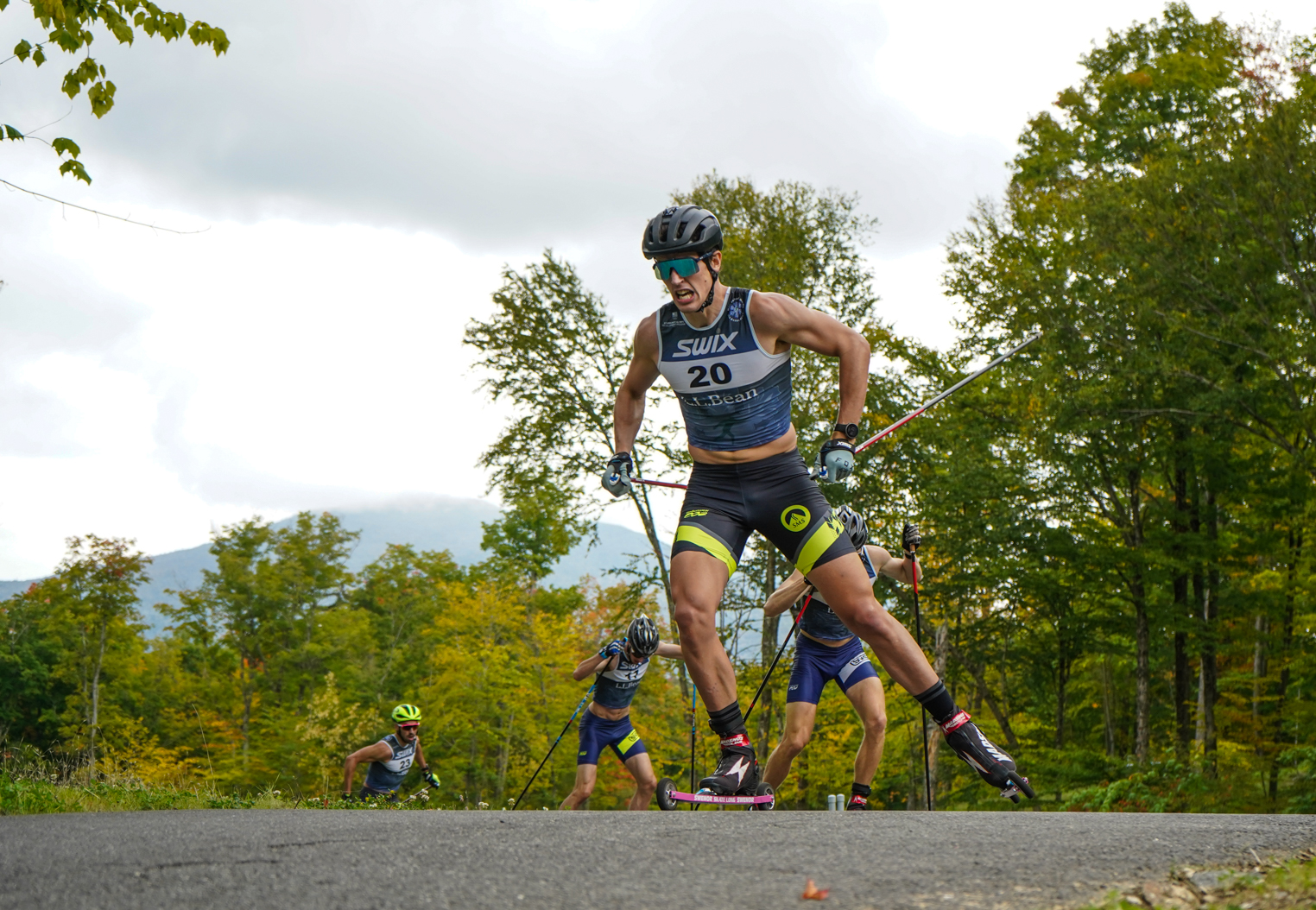
On the men’s side, Ben Ogden (SMS T2) also doubled up on the qualifier-final victories. He was followed by Peter Holmes (SVSEF) in second, and Logan Diekmann (BSF) in third.
“This weekend’s rollerski race was like a breath of fresh air for me and I think most of the competitors,” wrote Ogden in an email. “As fun as constant training, time trials and quarantining was, ski racing is all about racing. Getting together with such a talented group and pushing each other on such a beautiful New England weekend seemed almost too good to be true. Having the BSF Pro Team, Sun Valley gold team, and SMS T2 team, all on sight made it a crazy stacked fall time trial, which was such a treat after a year of so many small group time trials.
“This weekend was especially cool for me because It bridged the gap between all the ski worlds, something that has certainly not happened in a long time. Many of the college skiers were there, the SMS t2 team (who I ski with in the summers) was there, even a few fellow US ski team athletes and coaches were there. It’s rare that all these groups get together so that was a lot of fun.”
Putting on a clinic, Ben Ogden powers through the Keys to the Castle, winning both the qualifier and the overall. (Photo: Matt Whitcomb)
While racing in Vermont was not possible for much of the ‘20/21 season, Ogden, now 21-years-old, had a solid first run of international World Cup racing. On form when the stakes were highest, he qualified in 11th in the classic sprint at the World Championships in Oberstdorf, Germany and finished 17th. He was also the third fastest qualifier in the same event at U23 World Championships in Voukatti, Finland, where he finished 11th overall.
Ogden provided insight into his current status with training, and how the races provided him with insight into how his body is responding.
“I had a big period of training ending in these races and in true fall rollerski race style I didn’t change up much of my training for the races. I just thought of them as hard workouts with a bunch of friends who I don’t ski with all too often. I was really pleased to find some good speed through the entire skate sprint day. The course was really fast and tons of fun on rollerskis, so it was awesome to ski all three heats on Saturday…
“I’m really excited to get this winter underway. Feeling good about summer training in Stratton and the beginning of fall training at Groovy. (‘Groovy UV’ = University of Vermont, where Ogden is beginning his third year.) Lots of work to be done!! I think it’s going to be a fun year.”
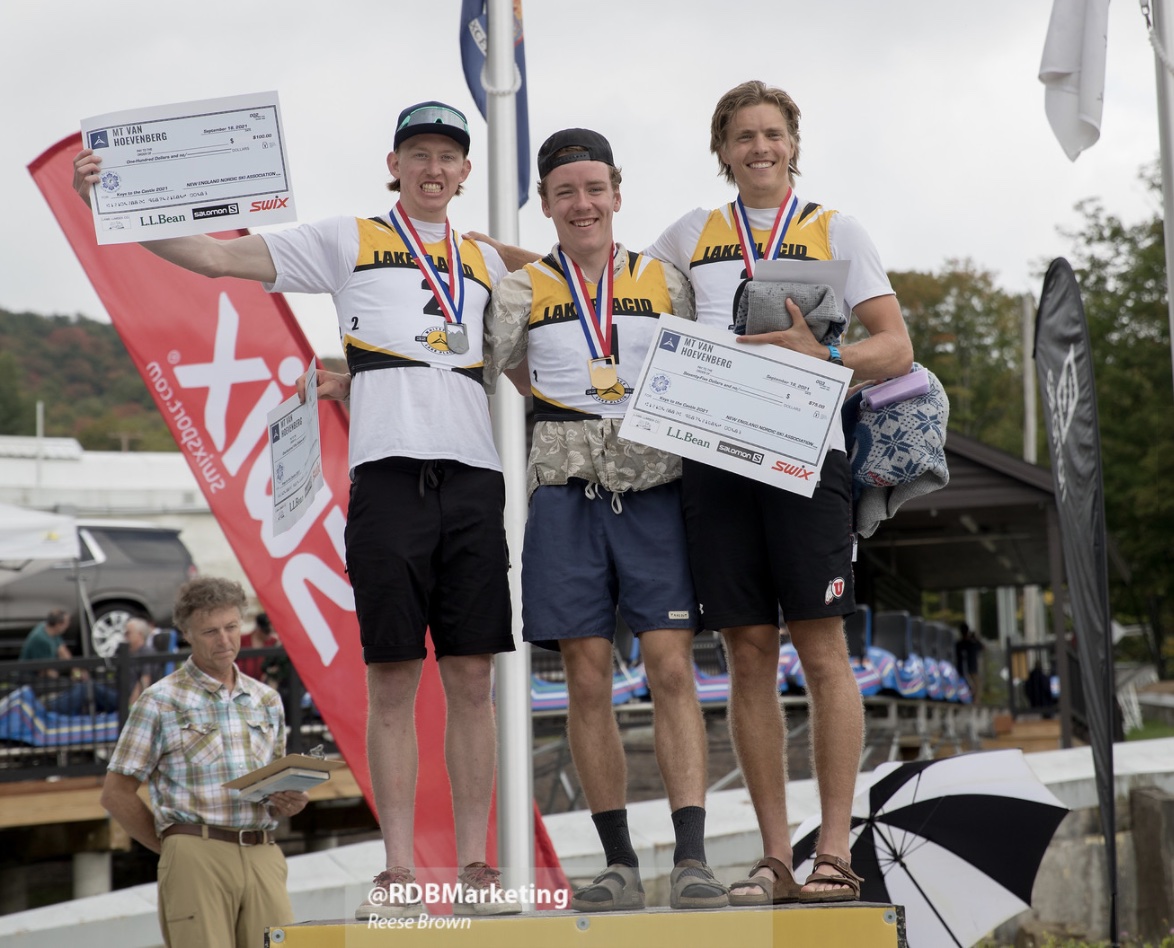
The men’s podium of the Keys to the Castle rollerski sprint in Lake Placid. Ben Ogden (SMS T2) was the top qualifier and overall winner ahead of Peter Holmes (SVSEF) and Logan Diekmann (BSF Pro). (Photo: Reese Brown/RDB Marketing)
Heading east to the Camp Ethan Allen Training Site, men and women in the open division raced a 15k skate while juniors completed 5k.
For the men, Johnny Hagenbuch (SVSEF) stopped the clock at 32:00.9 with the fastest time of the day. He was pursued by Ben Ogen in second (+1:07.3), with Ian Torchia (SMS T2) on his tails in third (+1:07.6) with a tight finish.
“It was an awesome way to cap off a productive training camp!” wrote Hagenbuch after his race. “Being from altitude in Sun Valley, the main goal for the camp was to capitalize on some great venues for intensity training in and around Lake Placid. We had a bunch of really good sessions on rollerskis and foot, and it was awesome to collaborate with Andy Newell’s BSF Pro Team crew on a number of those quality workouts.”
20-year-old Hagenbuch was born and raised in Ketchum, ID. After taking a gap year following high school graduation, Hagenbuch will be attending Dartmouth College in the fall. He explained that his time spent in the east surrounding these events left him eager for what is to come in the years ahead.
“The new venues in Lake Placid at the Mount Van Hoevenberg were incredibly well-designed, and I really look forward to checking out the ski trails in the winter as opposed to bounding. The rollerski track is a really great resource, and NENSA did a fantastic job of hosting that event. There was a surprisingly robust field for a rollerski race in Upstate NY, and it was cool to see how much energy there is for skiing and rollerskiing in the East. I actually had never previously spent any substantive period of time in New England – winter or summer, so it was great to experience orientation at Dartmouth the week before the camp as well. My perception of the East has completely changed; it’s very different from the West, but I love it!”
Johnny Hagenbuch powers through his qualifying round during the Keys to the Castle rollerski sprint in Lake Placid, NY. (Photo: Matt Whitcomb)
Breaking down the combined stages that led Hagenbuch to a third place finish in the overall standings, he explained his approach to the weekend including how it fits within his overall summer training plan.
“The sprint went pretty well for me, especially considering that I historically and currently have not self-identified as the most talented sprinter. At this point in the season, it was a fun, low-stakes way to throw down with a great group of guys. Ben Ogden is fun to watch. The distance day in Jericho was much more my wheelhouse, as distance skate races are typically my best format. The 5km rollerski track on the National Guard base in Jericho was a treat to experience. I haven’t skied on Craftsbury’s rollerski track, but the Jericho rollerski track could easily be the best in the nation. Given that I’m still training at a relatively large volume, I wasn’t really expecting to feel particularly good or race anywhere near to my best form, but it was still a pretty good effort.
“One of my goals for the past couple of seasons has been to get stronger and ski more powerfully, and it was cool to see some of that effort pay off in Jericho. I felt that I was skiing much more powerfully in general, and I don’t think I lost much on the uphills – despite having gained 25 pounds in the last year. It was an encouraging result in the end, and I’m excited for the next couple of months of training before the season kicks off in earnest in West Yellowstone. I’ll be pretty consistently alternating between being at home for two weeks and away training or racing for two weeks until January, which’ll be a nice way to break it up (and will make time fly)!”
The women’s podium of the Free Fall distance race in Jericho, VT. Alayna Sonnesyn (SMS T2) took the win ahead of teammate Lina Sutro, with Mariah Bredal (BSF Pro) in third. (Photo: Matt Whitcomb)
On the women’s side, Alayna Sonnesyn took the win on the second day in a time of 37:55.3, sealing the overall victory for the combined events. Her SMS T2 teammate Lina Sutro rolled through in second (+49.3) with BSF Pro Team member Mariah Bredal in third (+2:33.6).
“In Lake Placid, it was really cool to ski on the new roller ski track,” wrote Sonnesyn in an email after the events. “I had heard stories about a pretty twisty and technical track but to finally have the opportunity to ski on a course similar to a World Cup level race was pretty sweet. Not to mention the new facilities at Mt. Van Hoevenberg are unbelievable! It was really fun to get into a sprint simulation with all of the other elite ski teams that were there and it felt almost like a SuperTour. That being said, it’s still September so although I brought a competitive spirit to the races, I still approached them as a workout. It was great to practice going super hard in the qualifier and then play around with tactics in the heats, but it was all in good fun too. With a pretty sketchy corner coming out of the last downhill, the women agreed this race wasn’t worth losing skin over. All in all, a great day!”
Alayna Sonnesyn leads her heat during the Keys to the Castle rollerski sprint in Lake Placid, NY. (Photo: Reese Brown / RDB Marketing)
“The following day in Jericho I was definitely feeling a little tired from the sprints the day before, but that was great practice for wintertime when we frequently race back to back,” Sonnesyn continued. “Also, during my time at UVM we skied at Jericho almost every week so it felt good to be back on a track that I knew so well and felt like home. Adding to that, it was great to see the UVM ski team and other junior/college racers attending this event. It had been a while since I had been at an event with so many New England skiers and I felt like everyone was just really happy to be there. Again, I was finding the balance in this race to approach it as a workout while still taking advantage of the opportunity to practice race warm ups, tactics, fueling, pacing, etc.”
Sonnesyn also concluded with insight into her overall feelings at this point in the season.
“I’m feeling really good and lucky to have these races to test things out. I gained a lot of takeaways on little things I can work on in the next few months, but also built some confidence behind what we have already been doing all summer. I’m excited to potentially compete in a few more NENSA races this fall and get ready for snow to fall!”
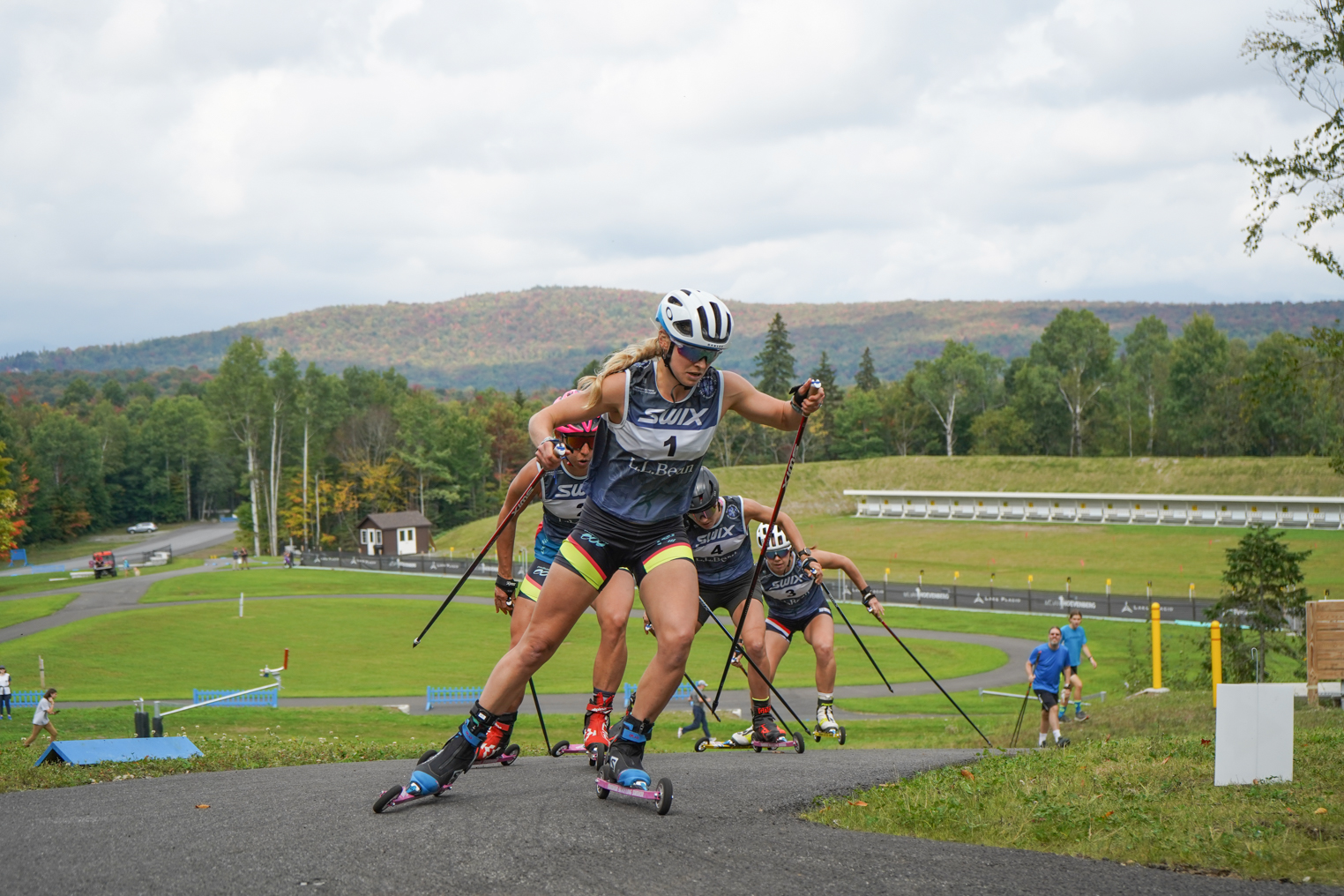
The women’s final of the Keys to the Castle rollerski sprint in Lake Placid, NY. From left to right, Lauren Jortberg (BSF Pro), Julia Kern (SMS T2/USST), Jessie Diggins (SMS T2/USST), Alayna Sonnesyn (SMS T2). (Photo: Reese Brown RDB Marketing)
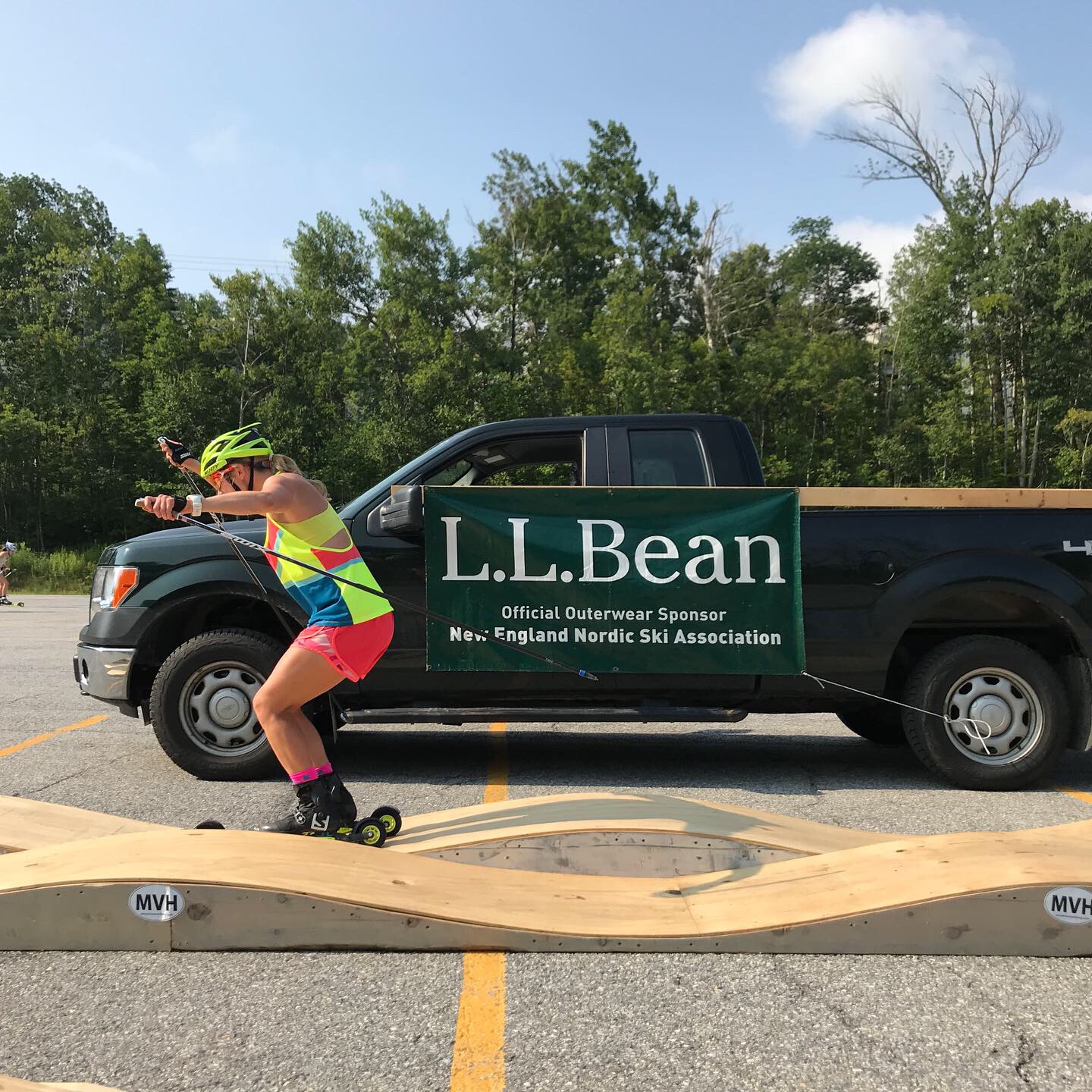
Jessie Diggins takes a first crack at NENSA’s rollerski ramps, which will be featured in the sprint qualifier and rounds in Lake Placid this weekend. (Courtesy photo)
On the heels of our coverage of the Martin Fourcade Nordic Festival and the Alliansloppet Action Week, we turn our attention to the Northeast where the burgeoning New England Nordic Ski Association (NENSA) rollerski race series is well underway. The next round of racing will take place this upcoming weekend, starting with a freestyle sprint event dubbed “The Keys to the Castle” on September 18th at Mt. Van Hoevenberg in Lake Placid, NY, followed by a freestyle distance race the on the rollerski track in Jericho, VT the next day. Men and women will each race 15-kilometers in the open division, while juniors will have the option to race 5k.
For those interested in seeing the show, in-person spectating is encouraged at the Lake Placid stage, however, as the ski track in Jericho is at a Vermont National Guard base, names must be submitted for entry prior to the event. Events will also be live-streamed on the NENSA Facebook Page, and live timing will be available through Bullitt Timing. Updated COVID considerations for participants and community members can be found here.
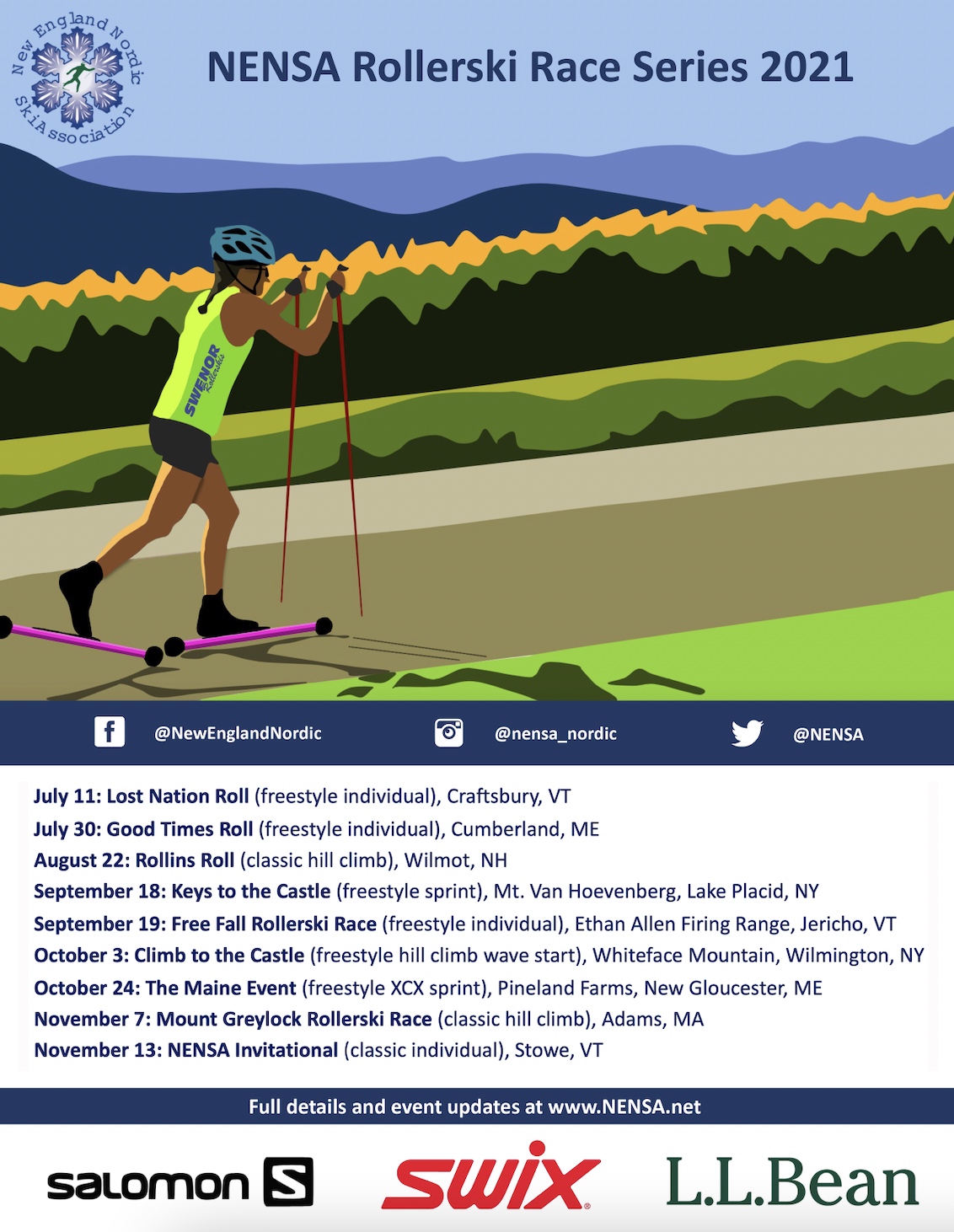
Building from past years, the series features nine events beginning with the Lost Nation Roll in Craftsbury, VT in July and ending in mid-November with the NENSA Invitational in Stowe. Captaining the ship and still rocking the mullet-mustache combo is competitive programs director Justin Beckwith, with whom FasterSkier connected in mid-August to learn more about this year’s widened scope of event offerings, supporting a thriving culture of skiing in the region, and whether the dream of a New York City rollerski event is still alive.
Beckwith explained in the call that one of NENSA’s objectives as the rollerski series evolves is to reach more athletes and to make opportunities for rollerski racing more accessible. Given the high density of cross country skiers and high level clubs in Vermont, the well-attended and highly competitive App Gap Challenge, and the designated rollerski tracks in Craftsbury and Jericho, past events have primarily taken place in that state. However, these venues can be quite a drive for skiers living in Western Massachusetts, New Hampshire, or Maine.
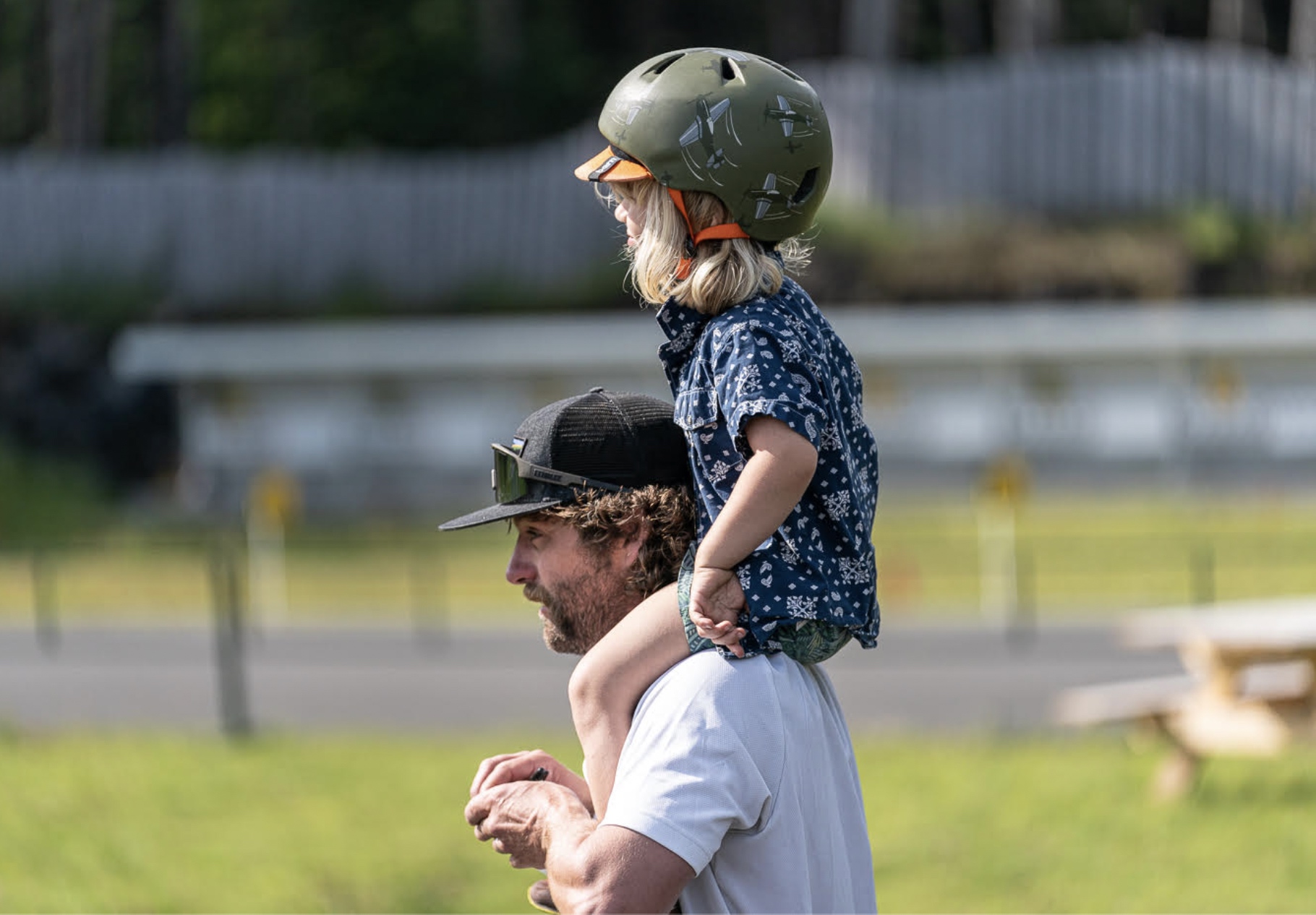
NENSA Competitive Programs Director and rollerski race series organizer Justin Beckwith with his son, Red, at an event in Craftsbury. (NENSA photo)
One of the first steps to expanding opportunity in the region? Outreach. Rather than bringing more people to Vermont, bringing the races to the people.
“One of the primary goals was to try and bring our programming across the entire Eastern region,” Beckwith said. “So we’ve done a race in Southern Maine, which Clare Egan so eloquently said at awards that she doesn’t think anyone’s had a rollerski race in Southern Maine before. And just this weekend, we’re going over to New Hampshire. It will be the first event we’ve done in New Hampshire on rollerskis. So that’s really cool.”
The first event he mentioned — the Good Times Roll in Cumberland, ME in collaboration with NonStop Nordic — featured a 4.3k freestyle race for Middle School and beginners, and a 7.5k open race on a closed roadway. The start and an agility course took place inside the Cumberland Fairgrounds. The second stage, The Rollins Roll in Warren, NH, led classic skiers up the Mt Kearsarge auto road, which was closed during the event. Bringing together the community, both events saw participants from the junior level through the 50+ age bracket.
In the Lost Nation Roll, which was co-hosted with the Craftsbury Outdoor Center, youth skiers had the opportunity to race the same course as elite athletes from the Craftsbury Green Racing Project (GRP) whom they admire. Likewise, the GRP athletes had the opportunity to ski their home track with outside stimulation. This event was followed by a learn-to-rollerski clinic and a free biathlon clinic to bring in additional members of the community who were not up for racing or wanted to learn more about shooting.
Now, midway through the series, the events are catered more toward the top juniors and seniors in the region, though some are still open to all levels. Beckwith explained that NENSA was “lucky” to have such a high density of top skiers in the area, including regional high-performance junior clubs, elite teams like SMS T2 and the Craftsbury Green Racing Project, and EISA collegiate teams including Dartmouth College and the University of Vermont.
“We’ve had pretty good success incorporating at least the college programs that are within striking distance — driving time — and who can participate in the races that sort of start in September, October and then in the November.”
From left to right, Greg Burt, Raleigh Goessling, and Luke Brown go head-to-head during the 2021 Lost Nation Roll in Craftsbury, VT. (Courtesy photo)
In addition to new venues, the series is also incorporating a more diverse array of events, including sprint stages. Beckwith explained that the first round of sprint rollerski racing took place at the Eastern REG camp in early July in Lake Placid.
“At Mt Van Hoevenberg — that was really our first sprint course. It was actually our first sprint event that we’ve done in total since Junior Nationals 2020. But it was also the first heat format we’ve ever done in rollerskiing. And it’s an excellent venue for it. I think you can’t make a track wide enough [for rollerski sprints], so we actually pared down [the heats]. And I think the event we’ll do on September 18th… we’ll probably be running heats of four again in that. So it’s a little different than a winter format just because of the track width. But yeah, it’s exciting.” (Beckwith added that long-term, a wider track is something NENSA hopes to develop.)
More specifically, the events will still feature the typical structure of qualification followed by three progressive rounds, only modified to four skiers per section. Lucky losers will be incorporated based on time, as Bullitt Timing is providing a FIS level timing system. Juniors will compete in a mixed gender “Kings Court”-style sprint in order to ski more rounds, gaining more tactical experience.
The events this weekend will include athletes from the Sun Valley Gold Team, the Bridger Ski Foundation Pro Team, and SMST2. (The Craftsbury squad is currently in Germany training in the ski tunnel in Oberhof.) Because the number of athletes on course is limited, these events will have a bit more “vetting of the competition” — i.e., being current U.S. Ski & Snowboard members and holding a current FIS license. However, recreational skiers still have the opportunity to test their mettle at Climb to the Castle in Lake Placid on October 3rd or the Mount Greylock Rollerski Race on November 7th in Adams, MA. Both are uphill classic challenges.
“We created a permitted opportunity to ski up a closed State Park Road. So why not? Even if you’re not racing, go try it out, right?”
NENSA athlete Evelyn Walton on course in Lake Placid during the Eastern REG camp. (Courtesy photo)
Before the pandemic, the series averaged roughly 100 participants in each stage across all ability levels. While numbers have been lower in 2021 thus far, a summer series still remains a valuable touch point to keep the ski community engaged until the snow flies.
“A lot of these races this year, the focus is kind of building — not just out of COVID and building back into events, but into thinking about how we can better support the community and create opportunities. That’s our mission statement: to support a vibrant ski culture.”
To bring in people from all aspects of the community, NENSA is partnering with ORDA — Olympic Regional Development Authority — to organize an Eastern Coaches Symposium and a TD training opportunity in concert with the Climb to the Castle on October 3rd. Climb to the Castle is co-hosted with NYSEF, the New York Ski Education Foundation.
While this race up the Whiteface Toll Road in Lake Placid has plenty of history, it is also quite a grueling and climbing 2,300 feet in five miles is not universally accessible. Beckwith explained that they’ve considered a shorter distance where beginner or youth skiers could start further up the road to make it more manageable, or perhaps supporting a fleet of fast or “juiced” wheels to reduce the load.
Speaking to the concept of growing and sustaining the nordic community across all ages through the rollerski series, Beckwith recalled a conversation with longtime Sun Valley Ski Education Foundation coach Rick Kapala, who had contacted Beckwith to learn more about putting on the series in hopes of putting on similar events out West.
“The idea I think Rick hit on the head is just that you’re creating excitement, to keep the kids engaged, right? And adults — all of it keeps skiers engaged throughout the year, and I think that’s really the goal. There’s no qualification [to enter]. In the past, we’ve built prize money in and I think we’re gonna be building prize money into a few of those bigger events I was telling you about in the coming days, but that’s just fun to roll that out as it comes… So really the most enjoyable piece of it and the broader scope is that we’re bringing together people from different communities, regions, abilities, all of that.”
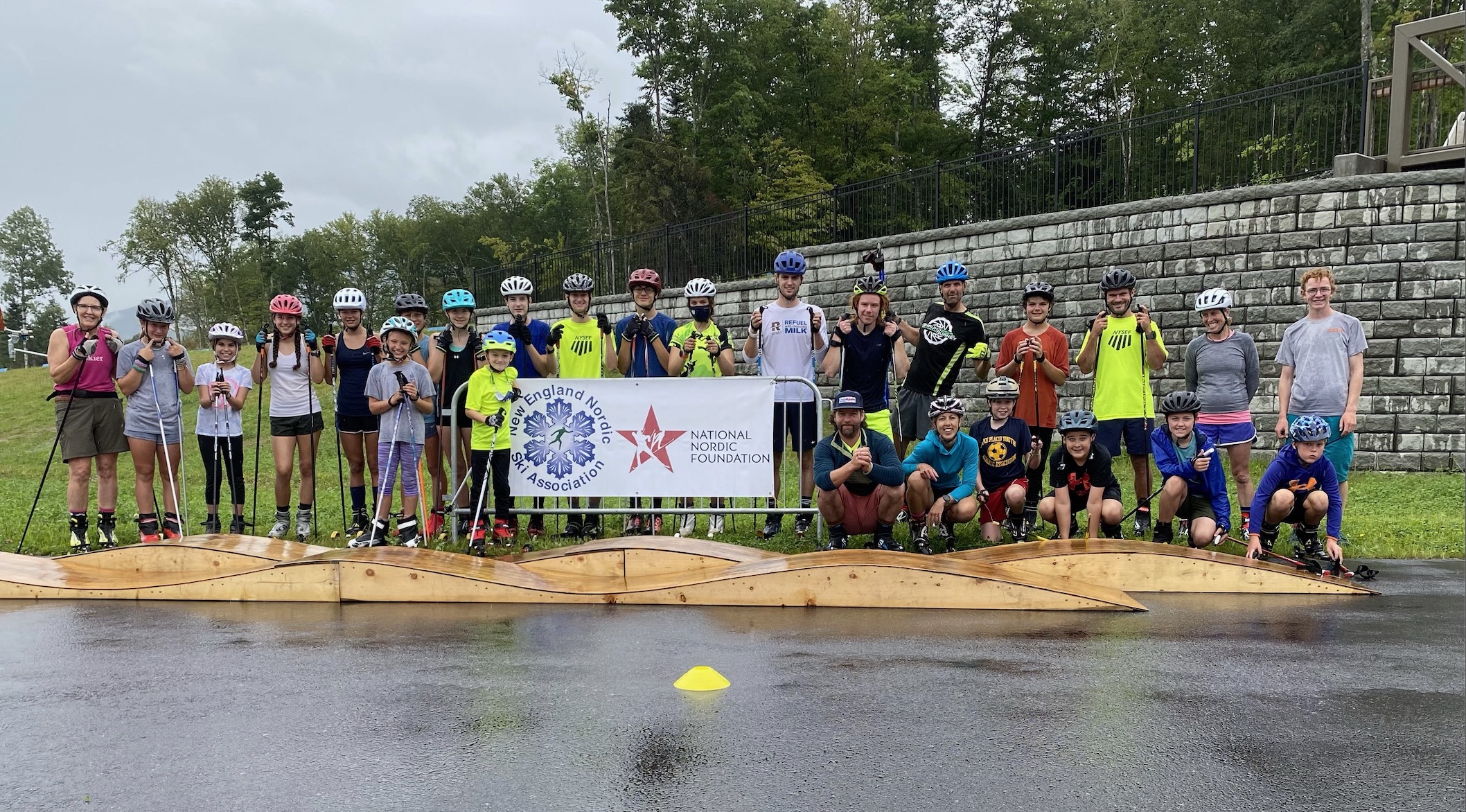
A host of rollerskiers get together after a NENSA event. (Courtesy photo)
He explained that NENSA’s team will similarly highlight regional popular racing opportunities during the winter.
“We’re really gonna highlight those races, popular racing opportunities, and also let people know that we feel like those are great developmental opportunities. Versus, we’ve been maybe a little Eastern Cup and Junior National qualifying centric in the past. So we’re really trying to support those, you know, it’s inclusive, but more so than that, creating festive opportunities that are available regionally. And the level of competition will be at those events regardless, because there’s really good skiers throughout the region, and they’re already utilizing those events.
“We know people will go to sanctioned events in winter and summer, try to qualify for JN’s, but how can we create opportunities beyond that? If we can bring it to people’s backyard communities, so to speak, or within that sweet spot of an hour or two from their doorstep, then hopefully, we just get more people involved and excited throughout the year.”
Green Racing Project members Susan Dunklee (left) and Caitlin Patterson (right) take on NENSA’s rollerski ramps at the opening event in Craftsbury, VT. (Courtesy photo)
FasterSkier spoke with Beckwith about the nascent series in 2019 shortly after the App Gap Challenge, a skate-to-classic skiathlon that led skiers up a mountain pass on a closed State Highway near Fayson, VT. (The App Gap took a hiatus in 2021 due to construction on the road.) When considering what it took to pull off an event of that magnitude, Beckwith said: “The beauty of a rollerski series is that nobody has any expectations or guideline of how we do this.”
He also said that he envisioned an event closer to the scale of the many summer rollerski festivals in Europe, perhaps in New York City or Boston. While this may seem like a pipe dream, with Beckwith behind the wheel, the idea came closer to fruition than one might have thought.
“Let’s say we were seriously exploring a race in Central Park this fall as part of the series early on. And I think it’s very possible for 2022 — it takes time to do that. But we’re close, we’ve got our foot in the door. People know who we are. And we have developed some key contacts that came up down there, which is exciting.”
NENSA also grew its staff this year to make organizing larger events more sustainable, adding an Event Support position filled by Fred Bailey.
“It definitely takes a team to pull this off,” Beckwith stated.
NENSA will be offering a youth clinic in Boston in collaboration with two other organizations whose goals also include getting kids outside on skis and supporting equity and inclusion in the cross country ski community. Like other clinics NENSA has run this summer, this clinic will introduce current ski program participants and potential future participants to rollerskiing for the first time with a focus on having fun, broadening exposure to different aspects of the sport, and encouraging an active and healthy lifestyle. Beckwith identifies that added exposure in populated areas may also help NENSA create larger highlighted events in the future.
“But there’s twofold to that. Because if we’re getting into urban areas, metro areas, whatever, then the visibility grows.”
With better understanding of the concept, urban venues might be more open to hosting. Beckwith explained that NYC stands at the top in terms of ideal venues. As so many events from 2020 were postponed into 2021 due to the pandemic, permitting became very challenging, which impeded the feasibility of running an event there in 2021.
NENSA athletes Jack Young and Jack Lange compete in the sprint event during the Eastern REG camp in Lake Placid. (Courtesy photo)
“One other issue beside the permit was just that it’s an Olympic year, and the availability and openness of National Team athletes [may be less than non-Championship years]. If we pull off a race in New York City, we’re talking about a budget at a minimum of 10 to 30 grand, so if we’re going to do that we want to have [high caliber athletes racing to] capitalize on it.”
While it may be nearly 300 miles north of Central Park, Jessie Diggins is confirmed to be competing this weekend in Lake Placid. Given the caliber of the elite training groups participating, it’s clear that the level of competition is high and the racing will be spicy.To add to the excitement, qualifier and rounds will feature a 24 foot bicycle ramp directly out of the start.
The NENSA rollerski series is now in its fourth year. If it wasn’t already abundantly clear how dedicated Beckwith is, he became emotional when reflecting on what he is proud of.
“Oh, geez, what am I proud of. We lost, you know, a year of in-person rollerski races with COVID. So that was a real doozy because we had Craftsbury coming online with a roller ski track, we had Van Hoevenberg coming online with a roller ski track, we were really excited to build into that. And then you know, the wheels fell off the bus from the outside — that wasn’t anything that we did. We created some really great regional events, as much as you can in a safe manner. But they were quite engaging challenges, and we saw literally worldwide participation in virtual events.”
Adapting to the times, Beckwith also pulled off running the 2020 App Gap challenge over the course of a week where athletes from the same club could race on matched skis in a designated window. Breaking these groups down further into waves of 15 made it such that there were never more than 30 people in the area at a time.
“So that kept us together a little bit… This year, it’s definitely a big step to re-engage after having a year where you didn’t. If you host an event, at the end of the day, you’re talking about what you’re going to do better the next year to build on it, and that’s just tricky with everything that we had coming down the pike. So I’m just really excited about where we are right now. We’re gonna have more rollerski races than we’ve ever had. I think that we’re gonna have the most competitive races we’ve ever had. It was pretty hard to top the women’s field in that Lost Nation Roll last year. I think it was about a 33 FIS point race or something like that — in no small part because Jesse [Diggins] was there.”
He acknowledged that there were plenty of other strong athletes there also — women and men — but that this weekend’s races will be a step higher.
“I think the big success of this year is going to be just that we’ll have more participation overall. Partly because we have more events — well attended events — but that we’re reaching many more skiers by taking the show to them basically. That’s probably going to be the biggest takeaway win for this year.”
Beckwith also thanked the associate sponsors of the series: Swix, L.L. Bean, and Salomon. Apart from direct funding, he noted that Salomon sharing a video clip of one of Beckwith’s signature agility courses helped it see over 80,000 views internationally.
“We also have a really amazing partnership with Enjoy Winter, and Swenor rollerskis, which has really been a part of the series from the beginning and what makes it work for us. So that’s a really important piece to a partnership. Worthy of mentioning are the great people like, I’m teared up now, but Marty Hall, Joe Lamb. They’re just really supportive. So that’s incredible.”
Hattie Barker attacks a climb with Mansfield Nordic coach Adam Terko collecting video. (Courtesy photo)
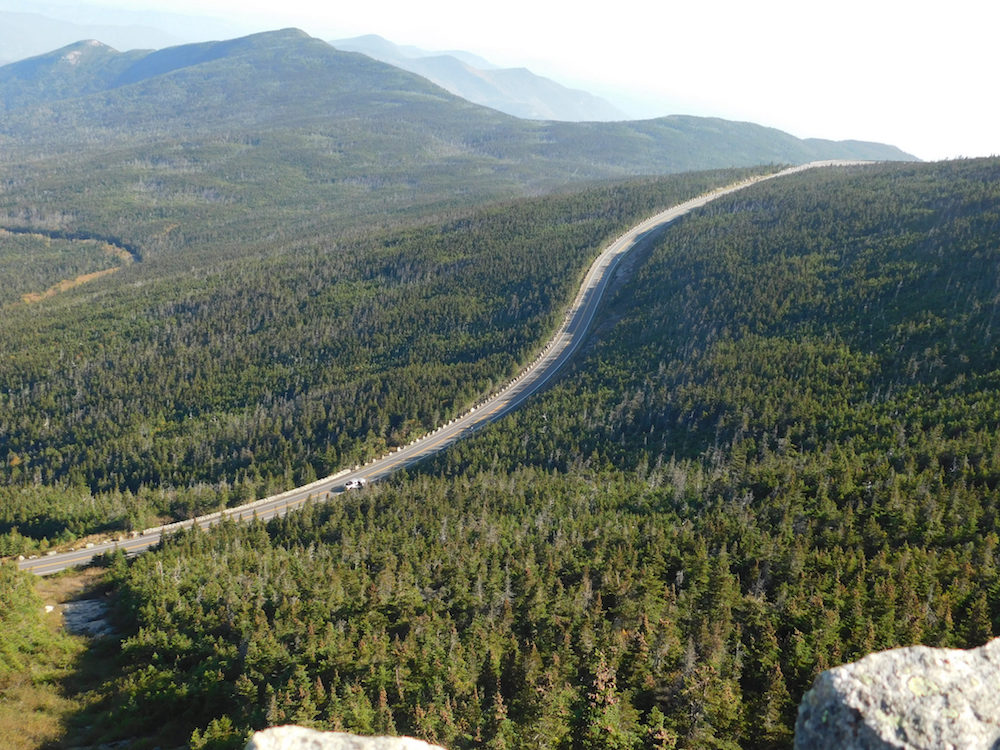
Looking down at the Whiteface Veterans Memorial Highway, a five-mile toll road to the top of Whiteface Mountain in Wilmington, N.Y., as seen on Sunday, Sept. 24, for the 2017 NYSEF Climb to the Castle rollerski race. (Photo: NYSEF)
On the eve before a full weekend of rollerski racing in Lake Placid, New York, we spoke with NENSA’s Justin Beckwith and cross-country ski supporter Marty Hall about their involvement with developing rollerski races in the Northeast.
Here’s an audio short of the interview with two people making things happen.
Notable for the Norwegian names in the field, several Brits, and a lone American, a series of sprint and distance rolllerski races were held this past week in the Telemark region of Norway. Jessie Diggins of the U.S. Ski Team spent the week in Norway training with the Langrenns Rekruttlag ski team prior to the weekend’s racing.
On Friday, organizers held a skate sprint called the Sommarlandsprinten.
Women’s Podium:
Maiken Caspersen Falla, Gjerdrum IL 2:24.28
Anna Svendsen, Tromsø Skiklubb +1.22
Heidi Weng, BUL IL +1.41
Women’s sprint bracket: (click bracket for large view)
Men’s Podium:
Sindre Bjørnestad Skar, Bærums Verk og Hauger IF 2:14.98
Pål Trøan Aune, Steinkjer Skiklubb +0.22
Andrew Young, Storbritannia +1.26
Men’s Sprint Bracket: (click bracket for large view)
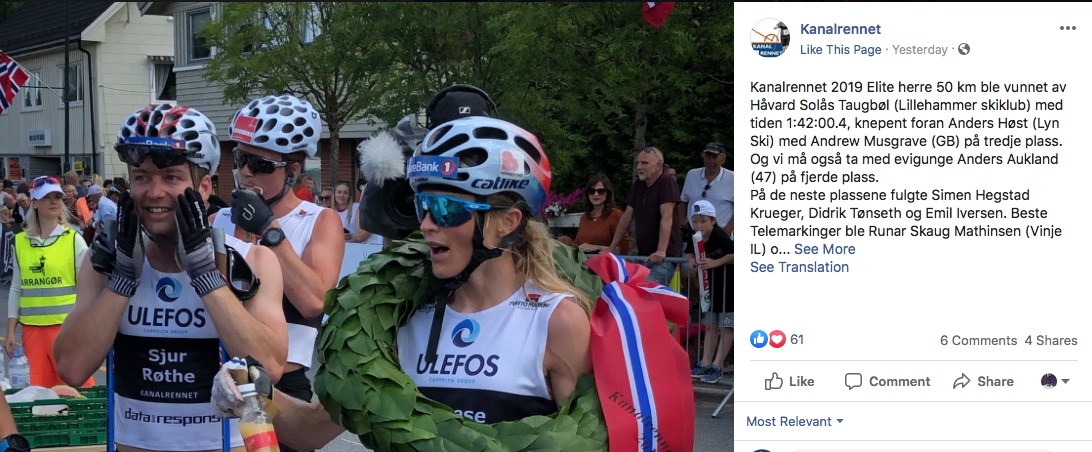
Sunday featured the Kanalrennet, a 50-kilometer classic rollerski race with the women’s event won by the high turnover queen Therese Johaug. Diggins placed fifth in the women’s field. Athletes raced twice around a 25 k loop, featuring three climbs per lap.
2018 Olympian and Craftsbury Green Racing Project skier Caitlin Patterson (in the yellow bib as the NENSA Rollerski Race Series leader) en route to a win in the open women’s 10 k at the NENSA Rossignol Fall Rollerski Classic on Saturday, Oct. 13, in Jericho, Vt. (Photo: Dave and Carl Priganc)
This past weekend, more than 170 skiers descended upon the Camp Ethan Allen Training Site at the Vermont National Guard base in Jericho, Vermont, for the New England Nordic Ski Association (NENSA) Rossignol Fall Rollerski Classic. According to NENSA Competitive Programs Director Justin Beckwith, the field size nearly doubled from last year, and he believed 172 finishers made it the largest North American rollerski race.
The event was hosted in conjunction with the Mansfield Nordic Club on Saturday, Oct. 13, which was described as a “chilly morning replete with the first snow of the year on Mount Mansfield as a backdrop” and rain drizzling throughout the day, according to a NENSA press release.
In the 10-kilometer open (over-18) women’s race, Caitlin Patterson of the Craftsbury Green Racing Project (CGRP), also located in northern Vermont, took the win with a time of 25:14.4 minutes, about 18 seconds ahead of her Craftsbury teammate Ida Sargent (of the U.S. Ski Team) in second. About 30 seconds back from the win, Lina Sutro of the University of Vermont (UVM) placed third.
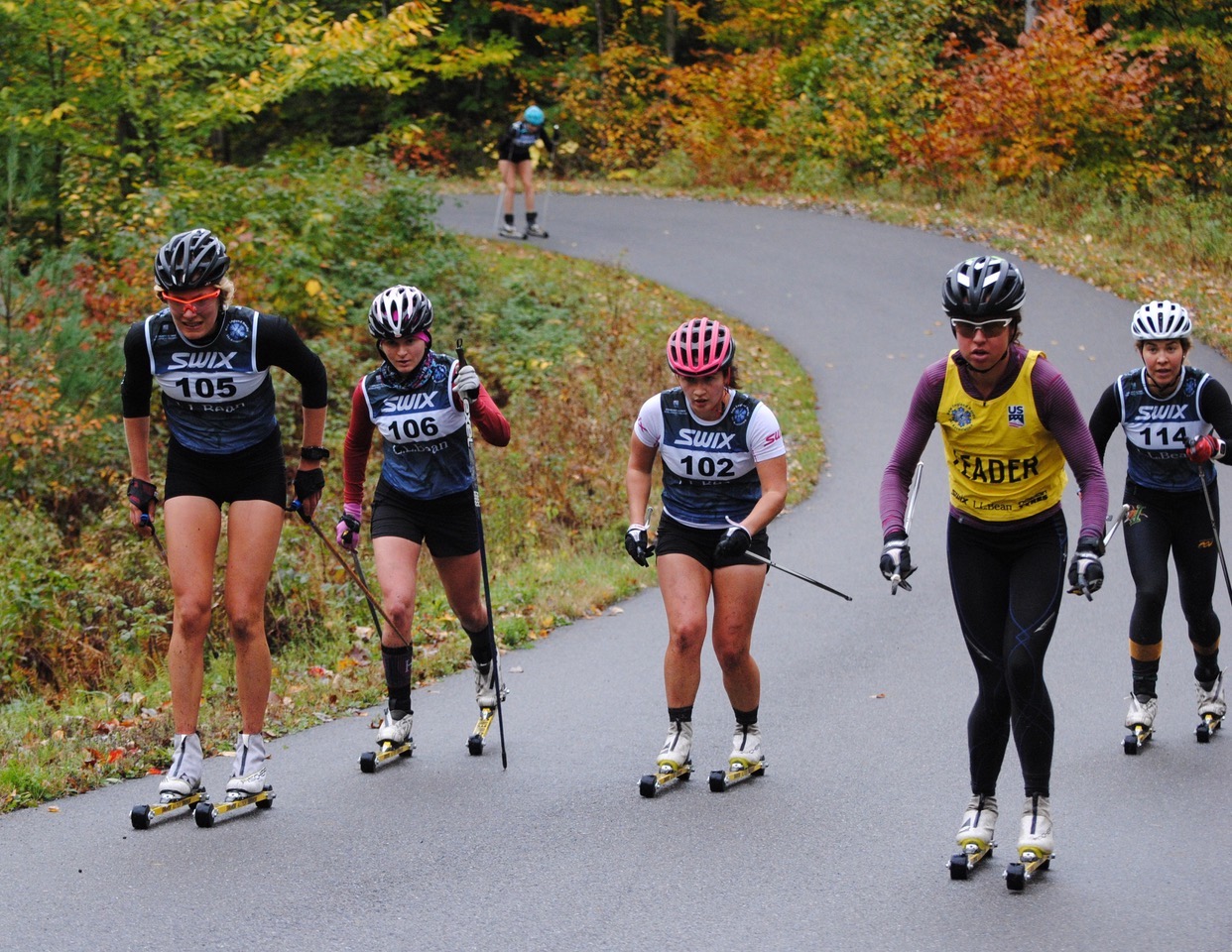
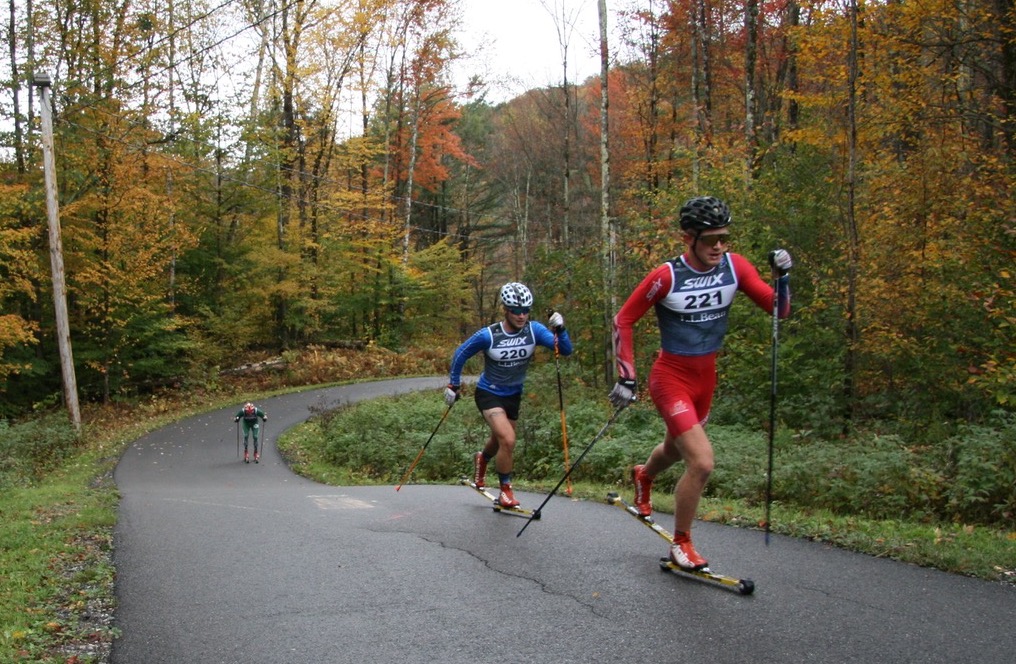
Racers stride up a hill during the open men’s 10 k race at the NENSA Rossignol Fall Rollerski Classic on Saturday, Oct. 13, in Jericho, Vt. (Photo: Dave and Carl Priganc)
In the open men’s 10 k race, another UVM skier and last year’s winner Bill Harmeyer won in 22:09.6, just 5.5 seconds ahead of Adam Martin (CGRP) in second. Another 12 seconds back, Kyle Bratrud, of the Stratton Mountain School (SMS) T2 Team in southern Vermont, placed third.
Notably, the top 30 in both the men’s and women’s senior races competed on matched Swenor Alutech Classic rollerskis. “We managed a fleet of 38 – 20 from our NENSA fleet and 18 sent out to us on loan from the Midwest fleet,” the press release stated.
After the races, athletes were able to try out an agility ramp.
“The whole day had a carnival-like feel with a balance of world-class competition and camaraderie,” the release noted.
For more on this event and the highlights of the 5-kilometer U16 races, click here.
NENSA Rollerski Race Series standings(with two events left: Maine Agility Festival on Oct. 27 at Pineland Farms in New Gloucester, Maine, and Trapp Invitational Rollerski Race on Nov. 3 at Trapp Family Lodge in Stowe, Vt.)
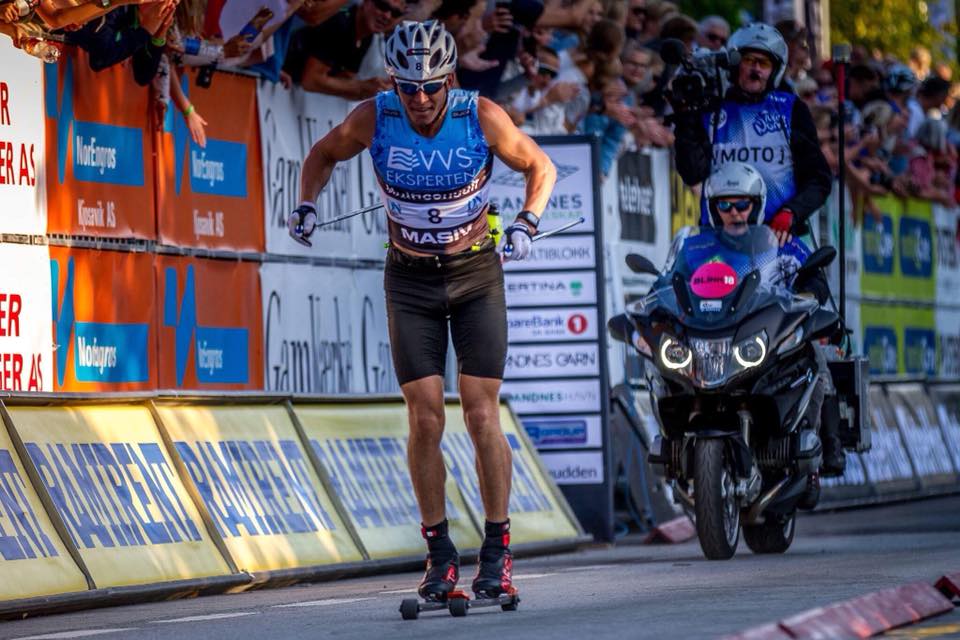
Russia’s Alexander Bolshunov racing to first in the Blink Classics men’s 60 k on Wednesday in Sandes, Norway. (Photo: Blink Ski Festival/Facebook)
A predictor for the winter ski season ahead? Could be. Either way, Norway’s Blink Ski Festival, or as it’s called in Norway, Blinkfestivalen, remains the ultimate in rollerski racing and returned for the 12th year in a row on Wednesday.
The festival opened with elite men’s and women’s distance rollerski races, known as the Blink Classics. For the third-straight summer, the Blink Classics featured a 60-kilometer mass start for the men and a 50 k for the women.
Eighty-six men competed in Wednesday’s 60 k, which began in the city center of Ålgård and finished in the municipality of Sandnes. A complete course map, which deviated little from last year’s rendition, may be found by clicking here.
By the end of the men’s 60 k, it was Russia’s Alexander Bolshunov who finished first in 2:10:51.6 hours. The 22-year-old Bolshunov had a number of World Cup podiums last season and one win in the final 15 k of the year. He also earned three silver medals and one bronze at the 2018 Winter Olympics in South Korea.
Finishing just 5.9 seconds behind him was another Russian, 19-year-old Sergey Ardashev, in second place. The third elite man across the line was Norway’s Anders Mølmen Høst, 27, of the Lyn Ski club, who finished 1.8 seconds out of second place and 7.7 seconds back from first.
Norwegians occupied the rest of the top 10, with Tord Asle Gjerdalen in fourth (+8.1), Øystein Petterson in fifth (+8.3), Hans Christer Holund in sixth (+8.3), Sjur Røthe in seventh (+8.7), Simen Hegstad Krüger in eighth (+8.7), Runar Skaug Mathisen in ninth (+10.3) and Martin Johnsrud Sundby — the winner of last year’s Blink Classics 60 k — in 10th (+10.8).
Nearly half of the men’s field came from nations from outside Norway, with athletes hailing from Russia, France, Canada, the U.S., Great Britain, Finland, Sweden, and Italy. Canadian World Cup skier Alex Harvey was the top North American in 14th (+1:19.0).
Also for Canada, Scott James Hill placed 53rd (+11:00.0) and Bob Thompson was 56th (+11:53.1). Ian Torchia was the lone American in the event, racing to 55th (+11:52.3). Canada’s Evan Palmer-Charrette did not start.
Norway’s Kari Vikhagen Gjeitnes finishing first in the Blink Classics women’s 50 k on Wednesday in Sandes, Norway. (Photo: Blink Ski Festival/Facebook)
In the elite women’s 50 k, which had just nine finishers, Norway’s Kari Vikhagen Gjeitnes finished first in 2:21:19.0. Second place went to Astrid Øyre Slind, who crossed 33.9 seconds after Gjeitnes, and the third and final podium spot went to Poland’s Justyna Kowalczyk (+5:55.4).