Tag: rolling speeds

  • Wednesday Workout: Bust Out of the Gate with the U.S. Ski Team

    Wednesday Workout: Bust Out of the Gate with the U.S. Ski Team

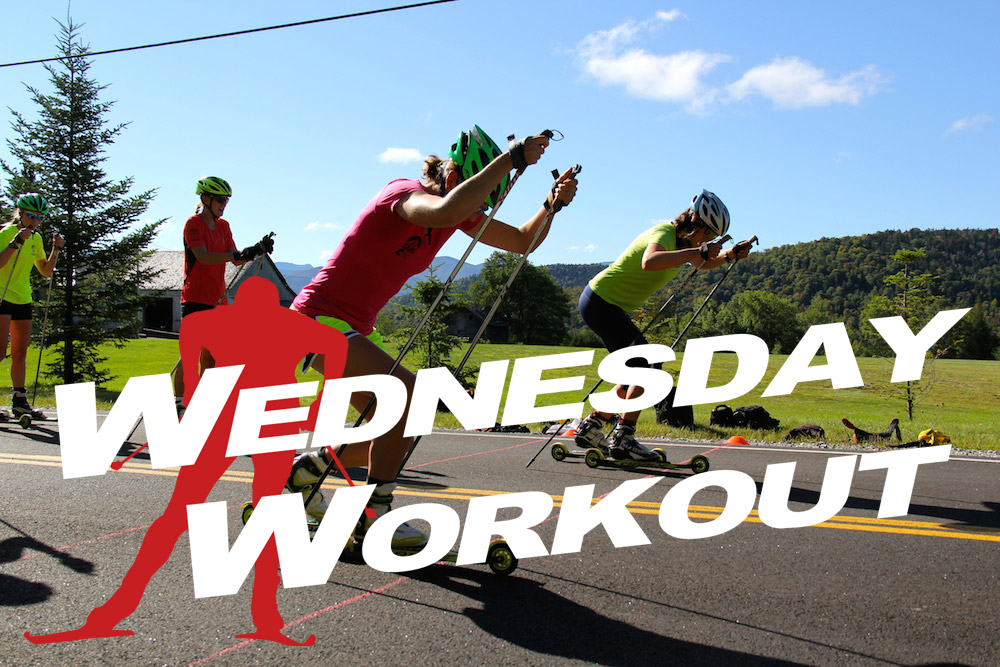
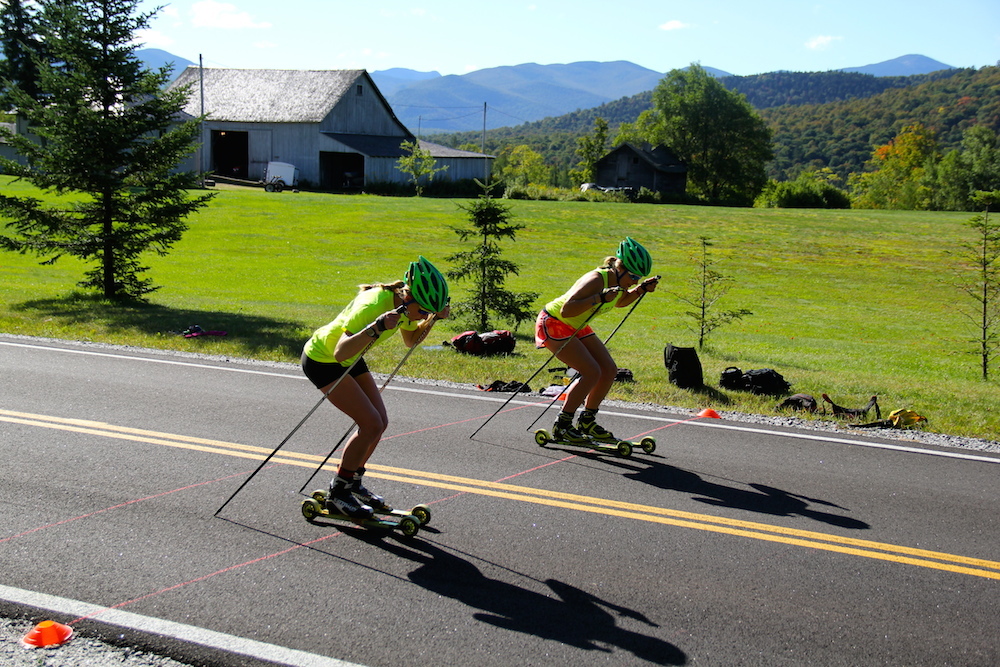
    Middlebury's Heather Mooney (l) and Stratton T2 skier Annie Pokorny (r) start together during the skate-speed-starts workout at the U.S. Ski Team camp in Lake Placid, N.Y., last week on Aug. 29. (Photo: Bryan Fish)
    Stratton T2 skier Annie Pokorny (l) and Middlebury’s Heather Mooney (r) start together during the skate-speed session on Aug. 29 at the U.S. Ski Team camp in Lake Placid, N.Y. (Photo: Bryan Fish)

    Growth is good, and when it comes to improvement, even the U.S. Ski Team has areas it wants to work on collectively. Sprinter or not, if racing’s in your future, chances are you could benefit from some speed work off the starting line.

    That’s why U.S. Ski Team (USST) Head Coach Chris Grover adjusted one of his team’s workouts last week at its camp in Lake Placid, N.Y. Instead of doing 16 to 18 skate-speed accelerations on rollerskis (each lasting about 10 seconds), Grover and his staff decided to cut down the number of accelerations, or rolling speeds, and add some sprint starts (transitioning from double pole to skate).

    The Workout: 4-5 x rolling speeds and 12 x sprint starts

    Where: Bear Cub Road (about 2.3-miles long to a dead-end) next to the Olympic Training Center in Lake Placid

    Why: “We decided that we wanted to change the focus of the session to improving skate sprint starting technique,” Grover explained in an email. “We had a very productive session where most athletes made some excellent changes, and we have a follow-up session scheduled for Park City in October.”

    What: Warmup as usual, then begin rolling speeds: 4-5 accelerations (each lasting about 10 seconds), with about 3 minutes of recovery in between.

    When you’re done with that, recover for 3 minutes, and move to skate-sprint starts. From a standstill, build speed off the line: double pole then transition to V2. After 10 seconds, stop, recover for three minutes, and start again (for a total of 12 times).

    “We do practice starts regularly since they are important for certain sprints in some conditions,” Grover wrote. “We generally keep our speed training closer to 10 seconds for maximal neurological benefit and less fatigue.”

    Length: The workout itself should take about an hour. With warmup and cool down, you’re looking at 2 hours.

    Out of the USST’s 12 training days of camp in Lake Placid, there were about a dozen rollerski sessions scheduled and seven cross-training workouts. One of them was VO2-max bounding at Whiteface Mountain, an annual staple of their Lake Placid camp.

    “Bounding/ski walking intensity is a go-to workout for most cross-country ski racers around the world, most likely because you can access grades that are not available on pavement for rollerskiing,” Grover explained. “You can find long, steep pitches that resemble some of the bigger hills you might find on a ski course, and the mechanics, body position, and power application of bounding is identical to good steep classic striding or herringbone.”

    All of this can be done without worrying about cars or road hazards.

    “The question has been asked many times why don’t cross-country skiers simply rollerski and ski for all training,” he added. “After all, runners run, bikers bike, and swimmers swim. For me, there are two answers to this question. The first is that the preparation period for cross-country ski racing is so long, and the training volume is so high at the elite level, that cross-training modes like running become essential for preventing over-use injuries and for keeping training mentally fresh for the athlete.

     “Cross-training modes like running become essential for preventing over-use injuries and for keeping training mentally fresh for the athlete.” — U.S. Ski Team Head Coach Chris Grover

    “The second is that running provides increased leg strength because the athlete actually carries 100% of their own body weight (unlike biking or rollerskiing) and lifts that weight off the ground repeatedly,” he continued. “Agility is also improved by running, especially if you are constantly hopping from rock to rock in the Adirondacks!”

    The USST camp wraps up on Sept. 7 following the Climb to the Castle on Saturday, Sept. 6, of which Liz Stephen and U.S. Biathlon’s Tim Burke are the defending champions.
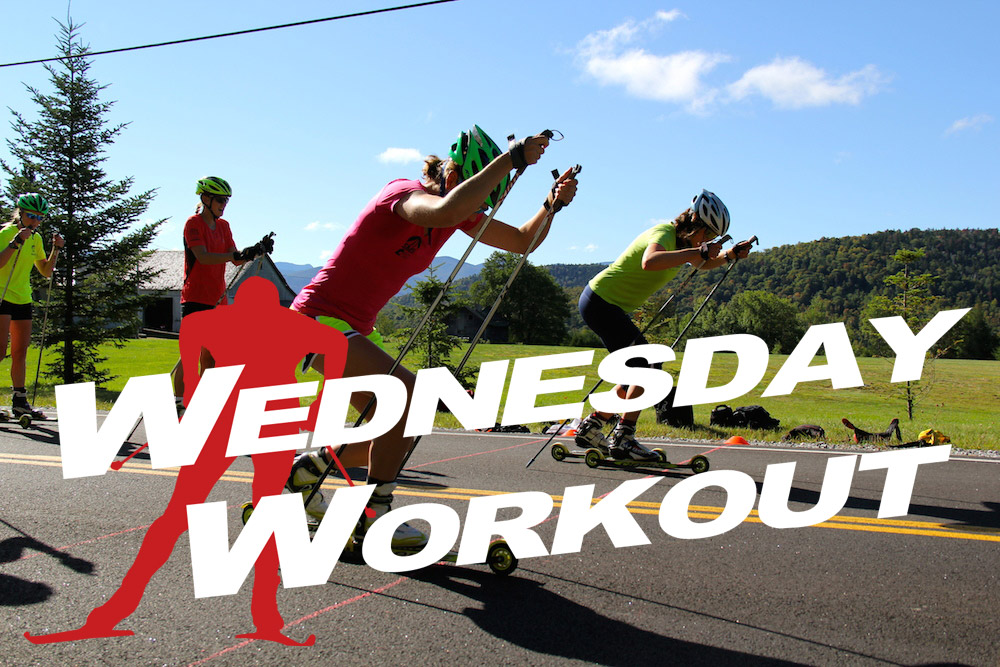
    Anne Hart (l) & Erika Flowers (r) work on skate-sprint starts on Aug. 29 at the U.S. Ski Team dryland camp in Lake Placid, N.Y. (Photo: Bryan Fish)
    SMST2 teammates Erika Flowers (l) and Anne Hart work on skate-sprint starts on Aug. 29 at the U.S. Ski Team dryland camp in Lake Placid, N.Y. (Photo: Bryan Fish)
  • Wednesday Workout: Kaeding Says Speeds Not Just For Sprinters

    Wednesday Workout: Kaeding Says Speeds Not Just For Sprinters

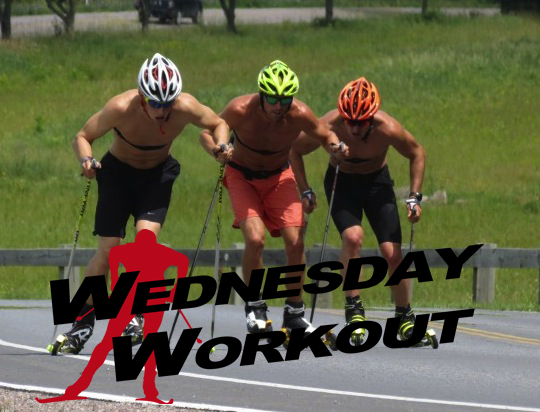
    Stratton Mountain School T2 skiers (l-r) Eric Packer, Andy Newell and Ben Saxton battle during a speed workout in Vermont. (Photo: Gus Kaeding)
    Stratton Mountain School T2 skiers (l-r) Eric Packer, Andy Newell and Ben Saxton battle during a speed workout in Vermont. (Photo: Gus Kaeding)

    Welcome to Wednesday Workout, where we round up training ideas on a weekly basis. This week, Gus Kaeding, head coach of the Stratton Mountain School (SMS) T2 Team provides some ideas for coaches and athletes looking to spice up their training plan and see improvement in multiple areas.  

    ***

    Many skiers and coaches associate speeds with sprinting. That’s true, to an extent, but I believe this workout has additional benefits. With the rapid change in pace, a skier can learn technique, tactics and acquire neuromuscular adaptations, which help with distance skiing. Since there is often a lot of skiing back and forth, it is an easy workout for a coach to watch and have continued dialogue with the athletes.

    After a full summer and fall of doing speeds regularly, athletes learn to ride their ski in a more forward position, even at a lower intensity. Additionally, they find it easier to go faster for a longer duration, because they are able to use their skeletal structures efficiently and not “muscle” each movement.

    The actual structure of the workout can vary, depending on the time of the year and the goal of the workout. Generally, the Stratton Mountain School T2 elite athletes will do 15-24 speeds in a single session, ranging from 10 to 15 seconds each. At the beginning of the summer we will do fewer, shorter speeds, once a week. As the preparatory period goes on, we add in more speeds and the duration becomes longer (up to 40 seconds per speed). We’ll do these almost religiously throughout the preparatory period, up to twice a week at times during the late summer/fall.

    Speed workouts can be set up a couple of different ways. One is stations, where we’ll do 5-8 speeds in one area, take a break (5-10 minutes of easy skiing), then rotate to another station and repeat. Full recovery between each individual speed is important.

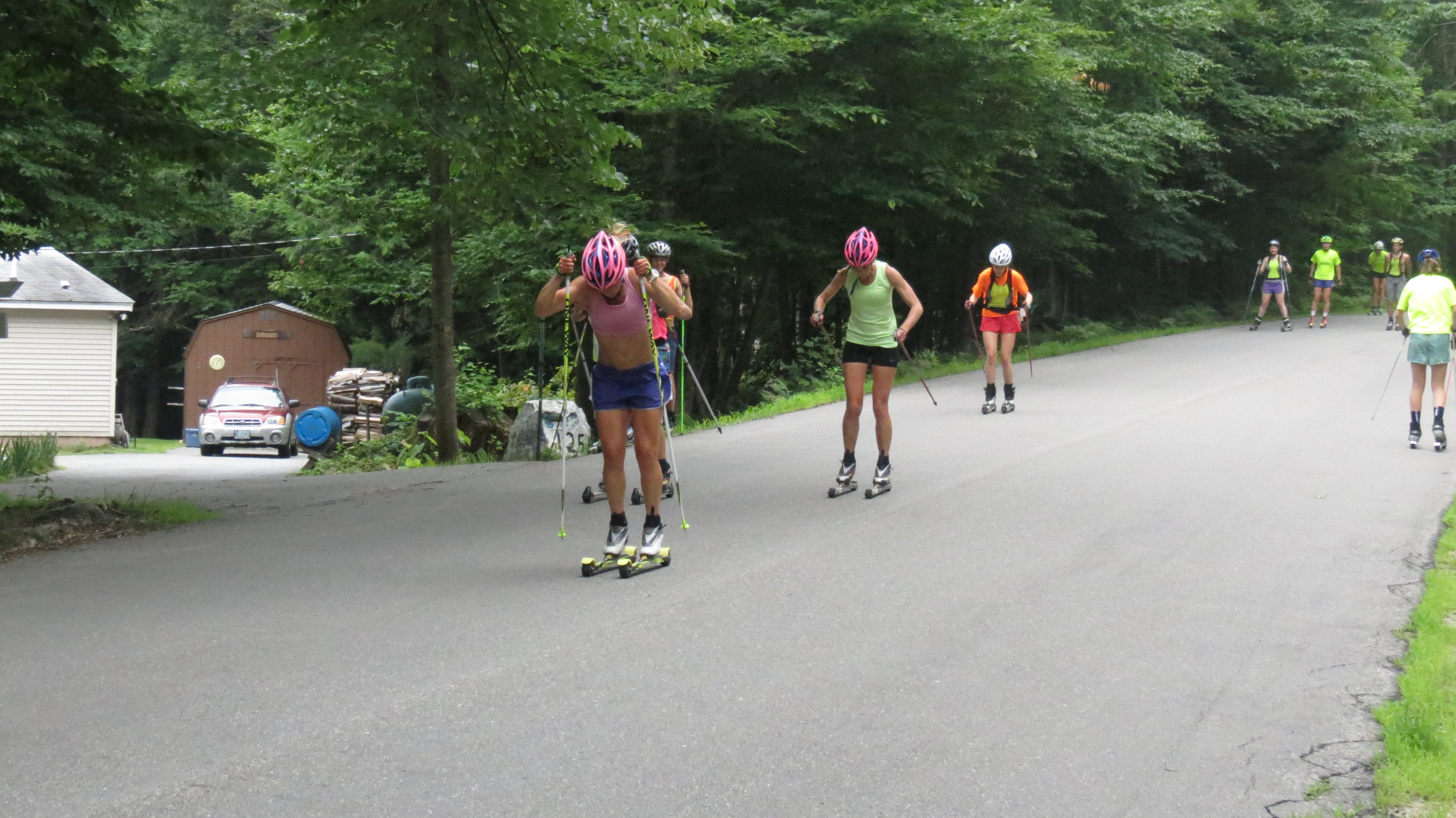
    Jessie Diggins (U.S. Ski Team/SMS T2) leads a women’s group during a speed workout session. (Photo: Gus Kaeding)

    When coordinating stations, we like to have one that practices starts, set up to mimic World Cup qualifiers and heats. Another station will have terrain requiring a technique transition, whether it be from V2 to V1 or striding to double pole. The final station usually involves a drop-in from a downhill to a flat. The flat mimics a finish.

    By coming off a downhill, skiers are forced to either double pole or V2 at a higher speed than they are used to (overspeed). These will help athletes become more comfortable and efficient at higher speeds.

    Another workout format is “rolling” speeds. For these, the athlete skis a 3-5 kilometer repeatable loop with three designated speed zones. Skiers never completely stop between speeds, giving the workout a continuous distance benefit.

    Using the rolling format, the course is constantly changing. We try to find terrain features that are semi-unique to that trail or road. That way, the workout stays fresh and the athlete is ready for whatever race courses around the world may throw at them.

    When our athletes ski the same terrain feature several times, they are encouraged to approach it in a variety of ways. Correct technique is always emphasized, even if it means backing off to a lesser exertion.

    Often we’ll start speed workouts with the athletes skiing alone, so they can concentrate on technique. As they become comfortable, they will group up. Group speeds help with tactics and becoming comfortable skiing at high speed in a group. It also allows them to be pushed by an external force.