From the FasterSkier archive — posts syndicated from athletes’ and coaches’ own blogs between 2004 and 2012, kept online as published. Current coverage is at fasterskier.com.

Tag: Roman Furger

  • Case Closed, Italy Wins Team Sprint in Ulricehamn; Hamilton-Bolger Place Sixth

    Case Closed, Italy Wins Team Sprint in Ulricehamn; Hamilton-Bolger Place Sixth

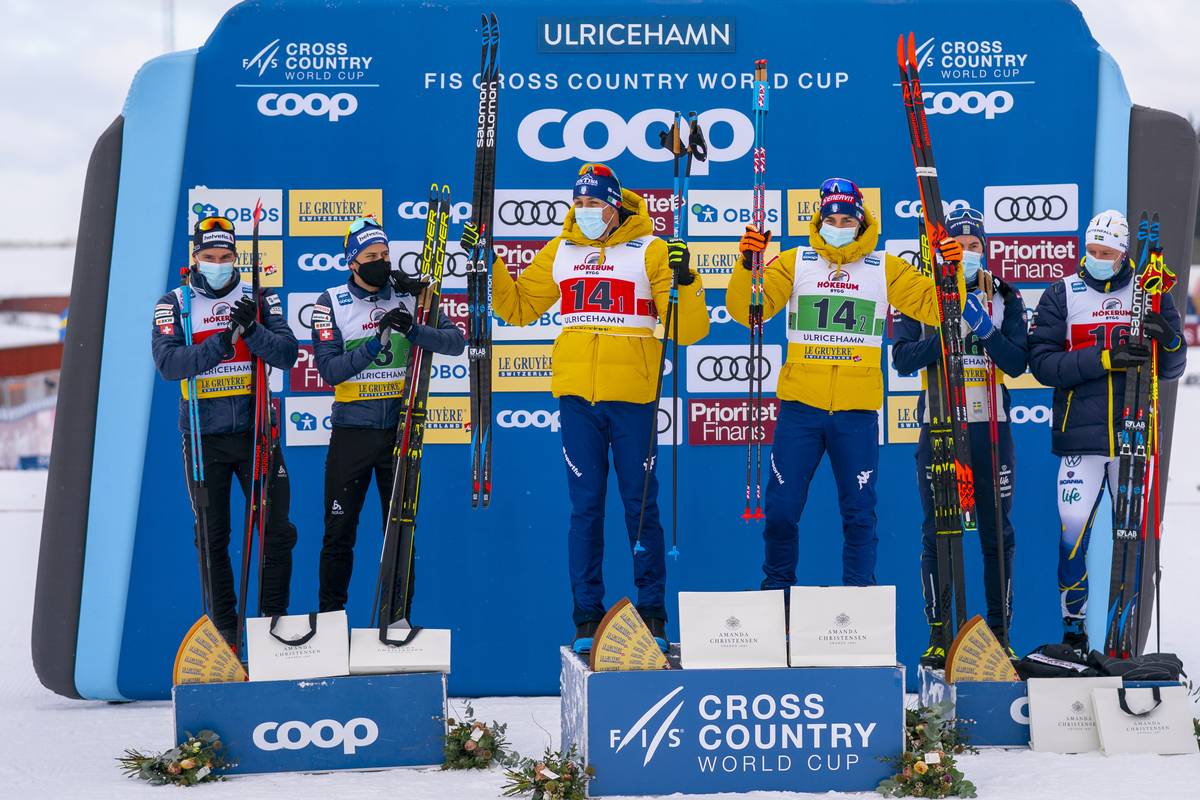
    Men’s team sprint podium, Italy in first, Switzerland in second and Sweden in third. (Photo: Nordic Focus)

    This World Cup coverage is made possible through the generous support of Marty and Kathy Hall and their A Hall Mark of Excellence Award. To learn more about A Hall Mark of Excellence Award or to learn how you can support FasterSkier’s coverage please contact info@fasterskier.com. 

    Ten teams toed the line Sunday morning, representing eight nations (Sweden and Switzerland both having two teams in the final) in the skate team sprint in Ulricehamn, Sweden. After advancing from the semi-final rounds earlier in the day, the men were geared up to race the relatively-flat 1.6 k loop completing three laps per athlete. 

    Heading out for another lap, Ludek Seller (CZE), Jovian Hediger (SUI), and Lucas Chanavat (FRA), (l-r)

    Notably absent from the final was team Russia I, composed of powerhouse sprinters Sergey Ustiugov and Gleb Retivykh who finished 9th (+15.32) in semi-final B and did not advance. Both Russians were in Saturday’s skate sprint final with Retivykh second and Ustiugov sixth. Additionally, no Norwegians were present in the final lineup as both Norway I and II were eliminated in semi-final A.   

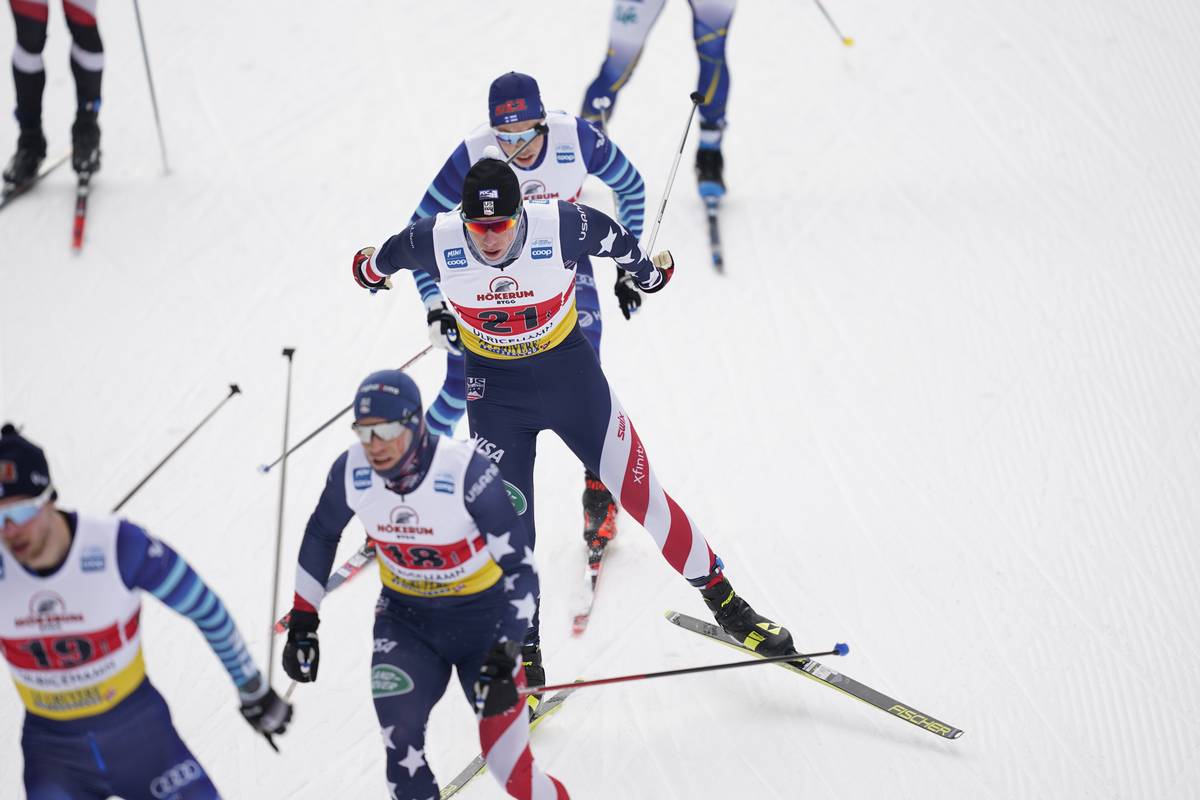
    Men’s semi-final B, team Russia I was eliminated although Italy (left) and USA I (bib 18) advanced to the final. (Photo: Nordic Focus)

    The race began slow and steady for the first laps, gradually ramping up in intensity. Much like the team sprint earlier this season in Dresden, Germany, the course layout in Ulricehamn featured no punchy climbs. Pack skiing, by default, was encouraged. Fliers off the front were not incentivized. Simi Hamilton and Kevin Bolger, representing team USA I, took on the lead for much of the second and third laps.

    “Our main tactic for both the semis and the finals was to get to the front but if you found yourself off the front in the lead, just ski relaxed and fast, but ski relaxed,” said Hamilton after the race. Ideally, we wanted to be in second, third, or fourth so we could get a good draft on the gradual climb and coming back down from the top. But with such a high-speed course like this, and a few, I would not call them technical corners, but some fast corners and a lot of moving around, we did not want to be stuck in the back where there could be some crashes and some broken poles and you are also spending a lot more energy moving up through the pack.”
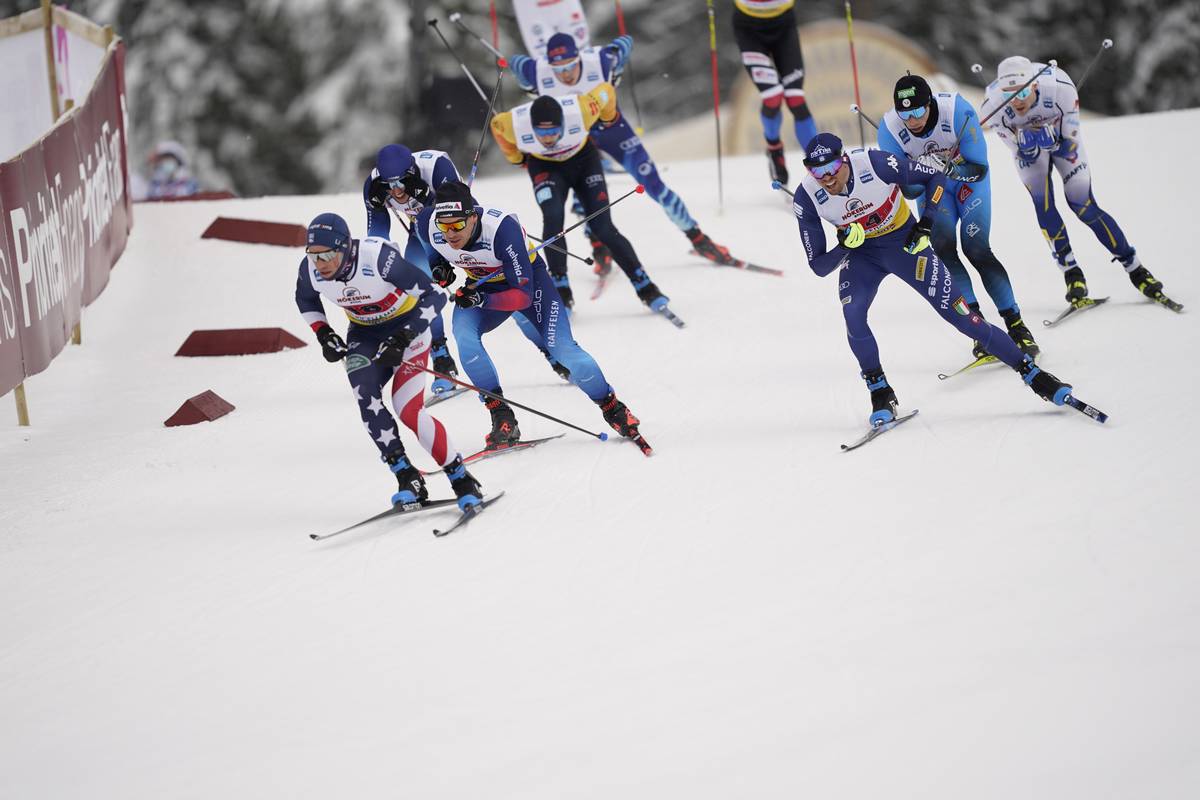
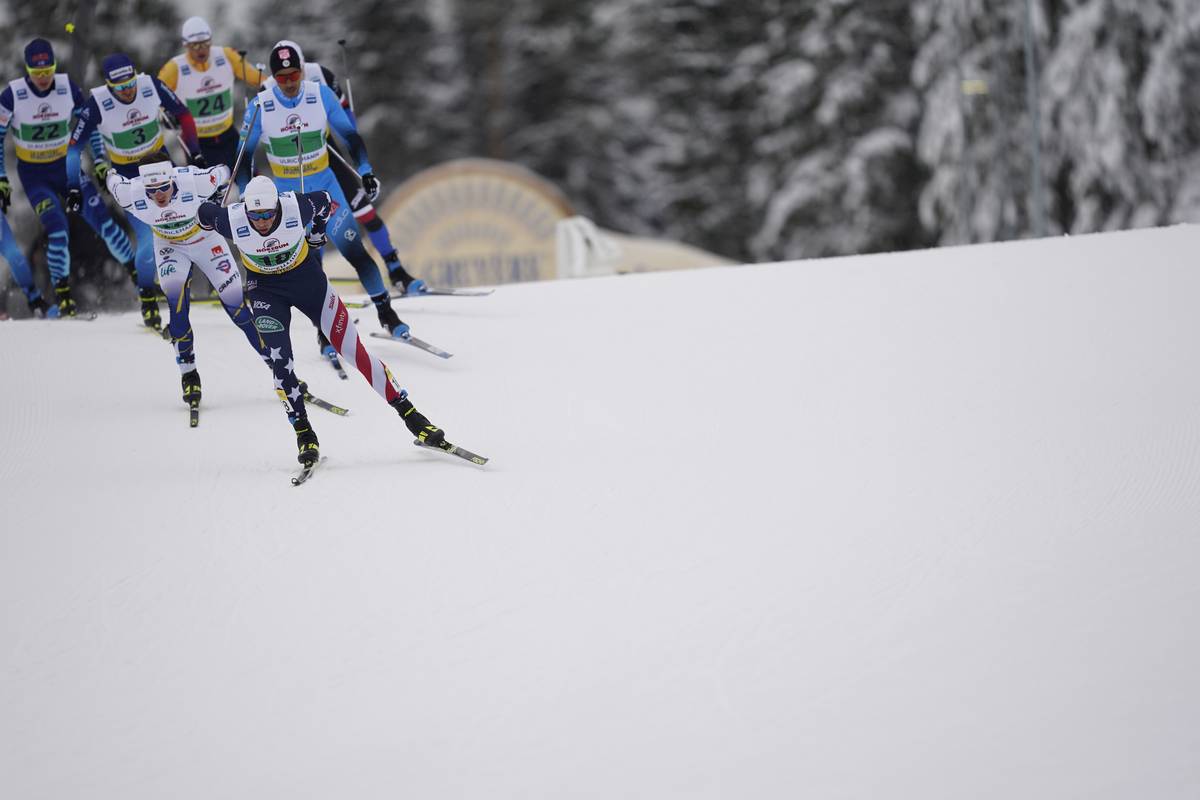
     

    Simi Hamilton makes the descent into the stadium, followed in hot pursuit by Roman Jovian Hediger (SUI) and Francesco de Fabianai (ITA). (Photo: Nordic Focus)


    Kevin Bolger (USA), Richard Jouve (FRA), (l-r). (Photo: NordicFocus)

    Heading into the fifth and final exchange, the men jostled for position as they rounded the corner towards the stadium. Lucas Chanavat, who had held the advantage out front, clipped his skis and went down, effectively eliminating team France I from contention.

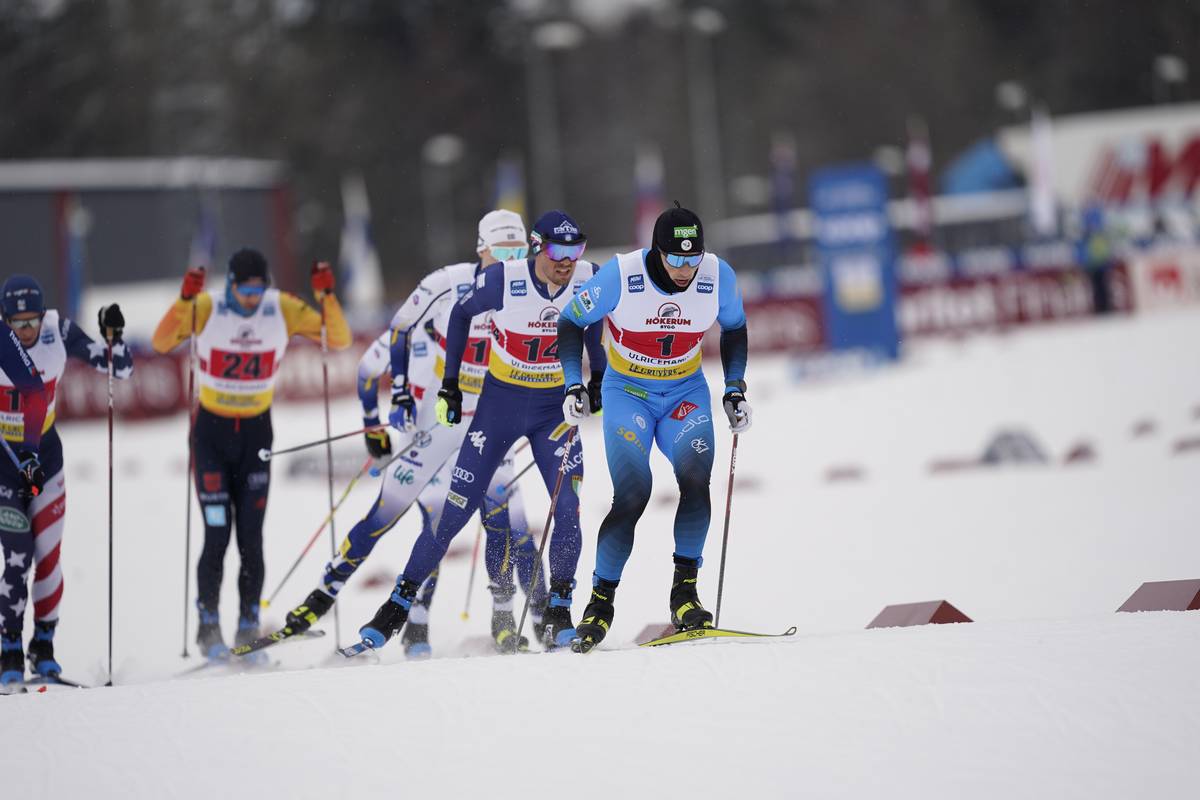
    Lucas Chanavat (bib 1), Renaud Jay (bib5), and Sindre Bjørnestad Skar (bib 2), during their semi on Sunday. This image provides a good indication of the tight pack skiing with ten teams on course. (Photo: NordicFocus)
    Lucas Chanavat (FRA) with the lead before a fall took him out of contention (Photo: Nordic Focus)

    The workhorse of the Italian sprint team, and always a threat when skate sprinting for that matter, remains Federico Pellegrino. With his usual Norwegian foils absent this weekend in Ulricehamn, at least on paper, he could be considered a lock for Saturday’s individual skate sprint. He placed third – outhustled and outmaneuvered down the final straight by Oskar Svensson and Retivyk, to place third. Sunday, however, was another day. With speed and precision, Pellegrino took control at the front as the race got real leading into the stadium for the finish. He was closely followed by Roman Furger skiing for Switzerland I. In classic form, which means pulling away and displaying stoke, Pellegrino took the victory for himself and teammate Francesco de Fabiani in a time of 18:29.
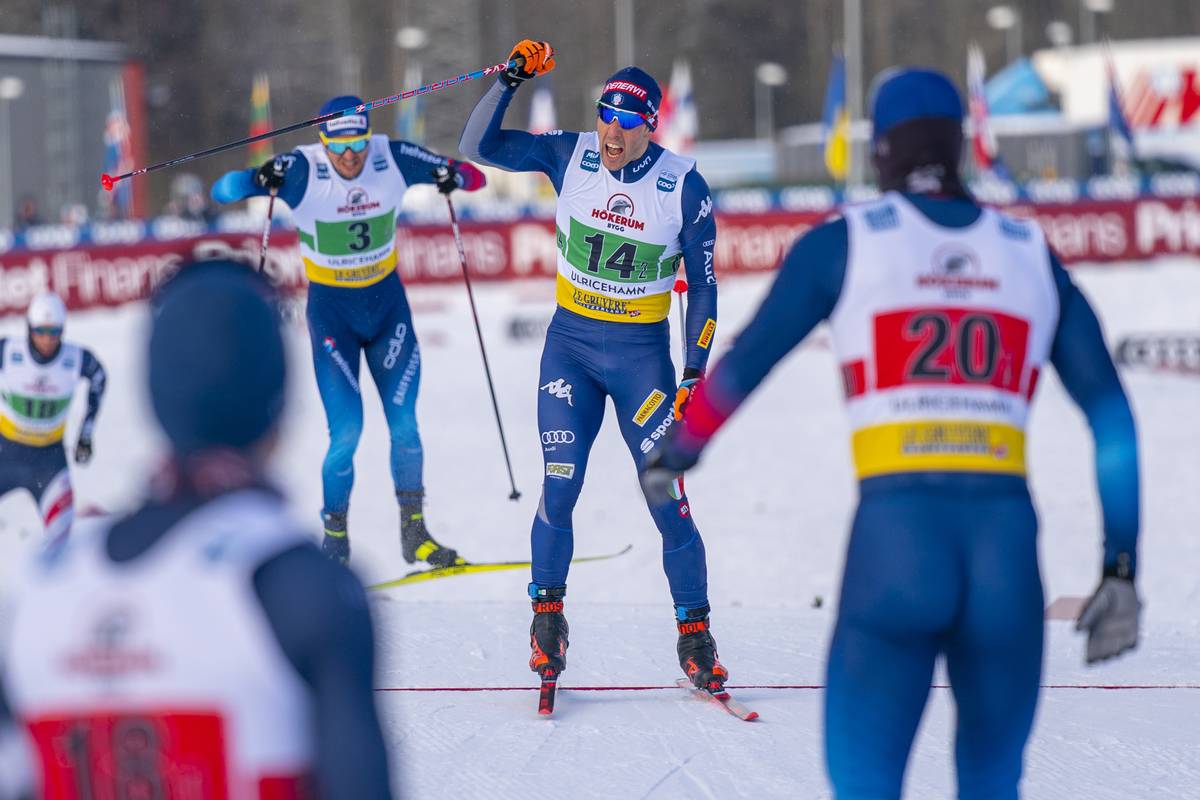
    Federico Pellegrino (ITA) celebrates the win. (Photo: Nordic Focus)

    Securing second, with much enthusiastic cheering and shouting from his teammates, Furger and Jovian Hediger made it a double podium day for the Swiss (the Swiss women having finished third). Rounding out the podium in third was Sweden II, represented by Karl-Johan Westberg and Johan Häggström.

    The Americans, Hamilton and Bolger, finished the day in sixth position, +3.11 back from the Italian victors. 
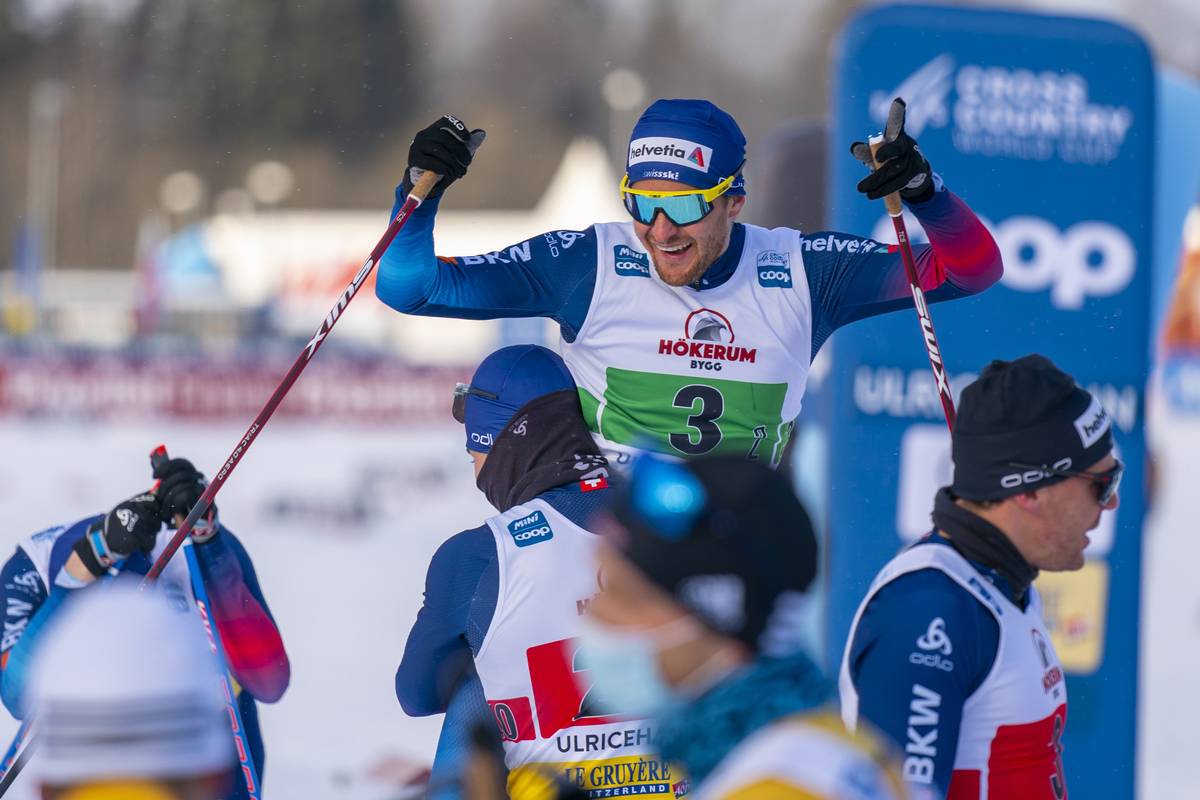
    Jovian Hediger (SUI) gets a boost from some happy teammates at the finish line. (Photo: Nordic Focus)


    Logan Hanneman (USA) representing USA II in semi-final B. (Photo: Nordic Focus)

    Competing in the first semi-final (A) team Canada placed 10th, +20.74 back from heat winners France I, and did not advance. Racing in semi-final B, team USA II (Logan Hanneman and Peter Holmes) finished 8th (+8.89).
    Men’s Team Sprint Final Results

  • With a Klæbo Anchor Leg – Norway Claims 4 x 7.5 k Relay in Lahti

    With a Klæbo Anchor Leg – Norway Claims 4 x 7.5 k Relay in Lahti

    Sunday, for the men’s 4 x 7.5-kilometer relay in Lahti, Finland the scene was decidedly more fitting for winter sport: The race began amidst falling snow despite bare firs and hardwoods lining the course. It’s been a sparse winter in Lahti. 

    Eleven teams contested the relay, with ten nations represented; Russia fielded two teams. The U.S. was not represented. 

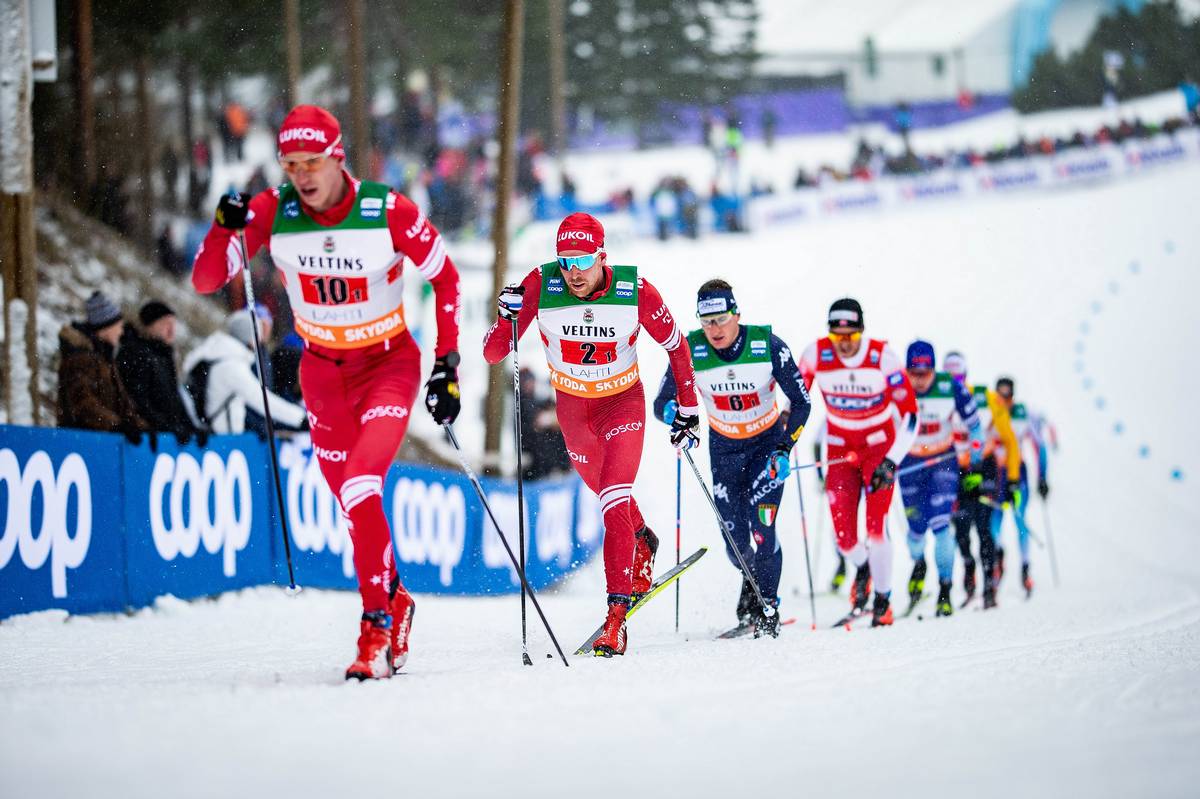
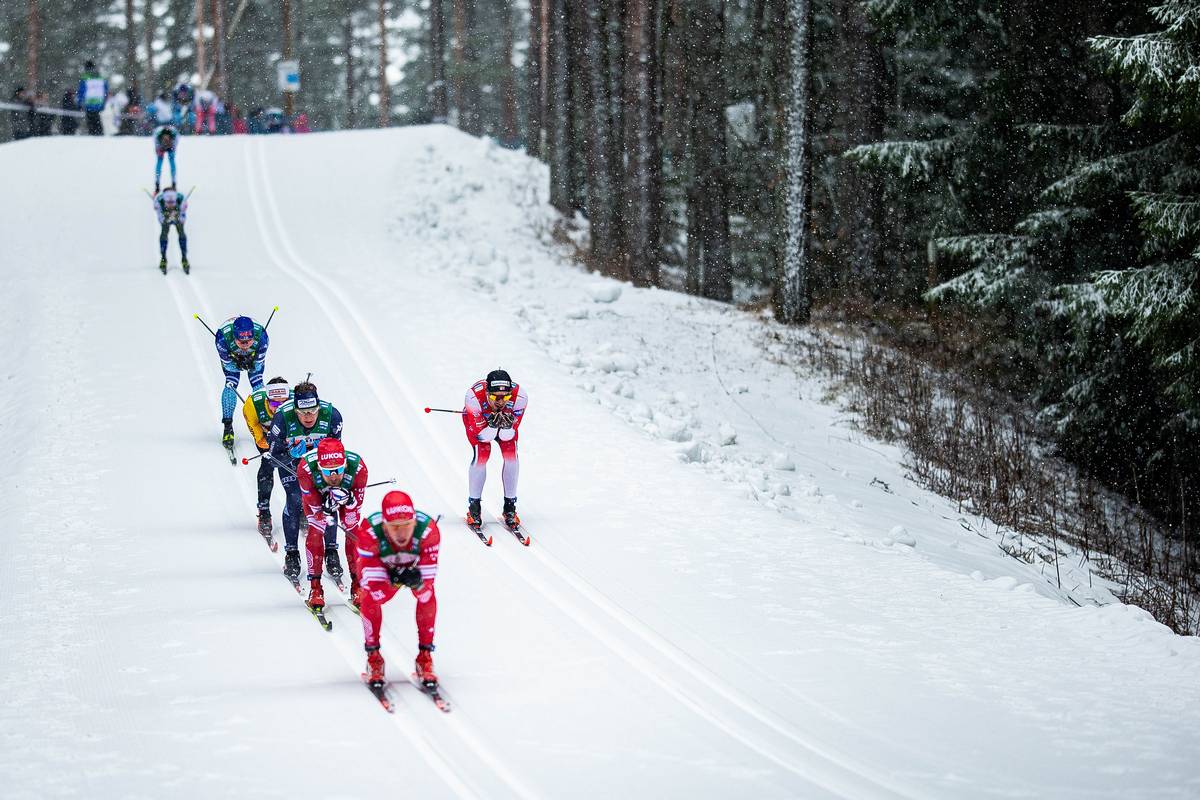
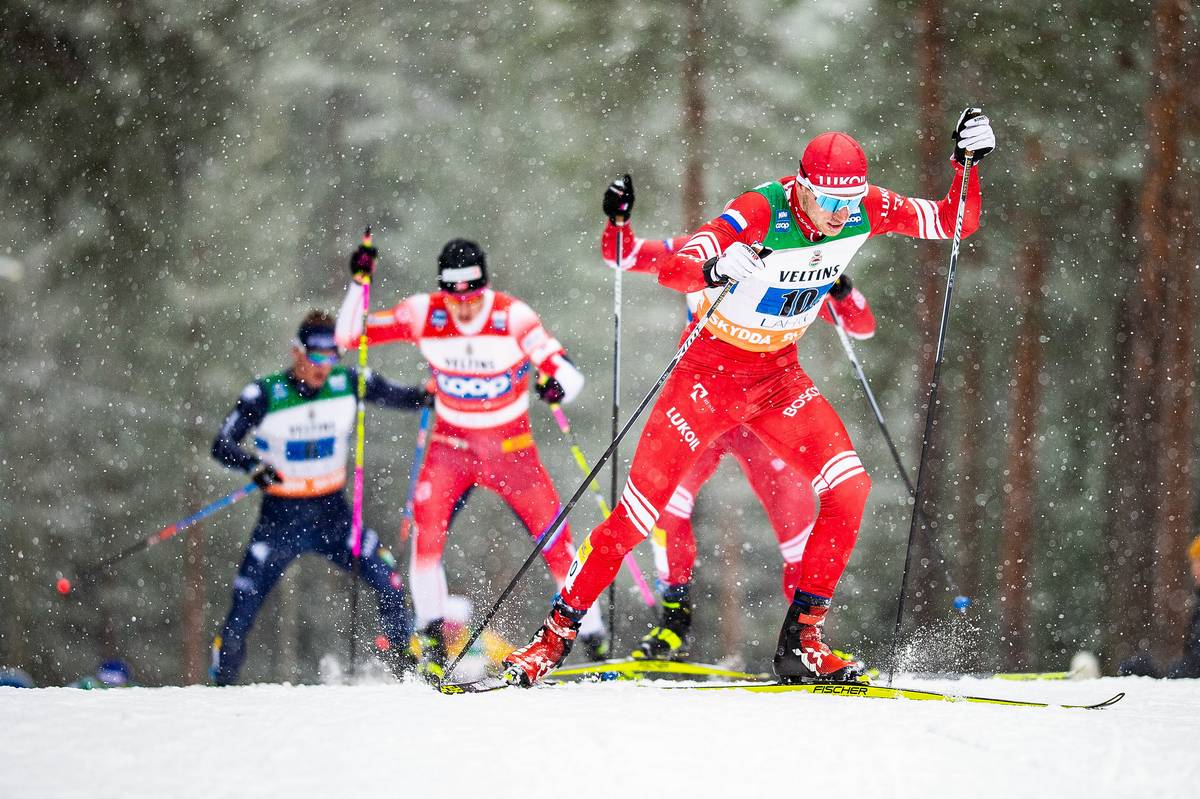
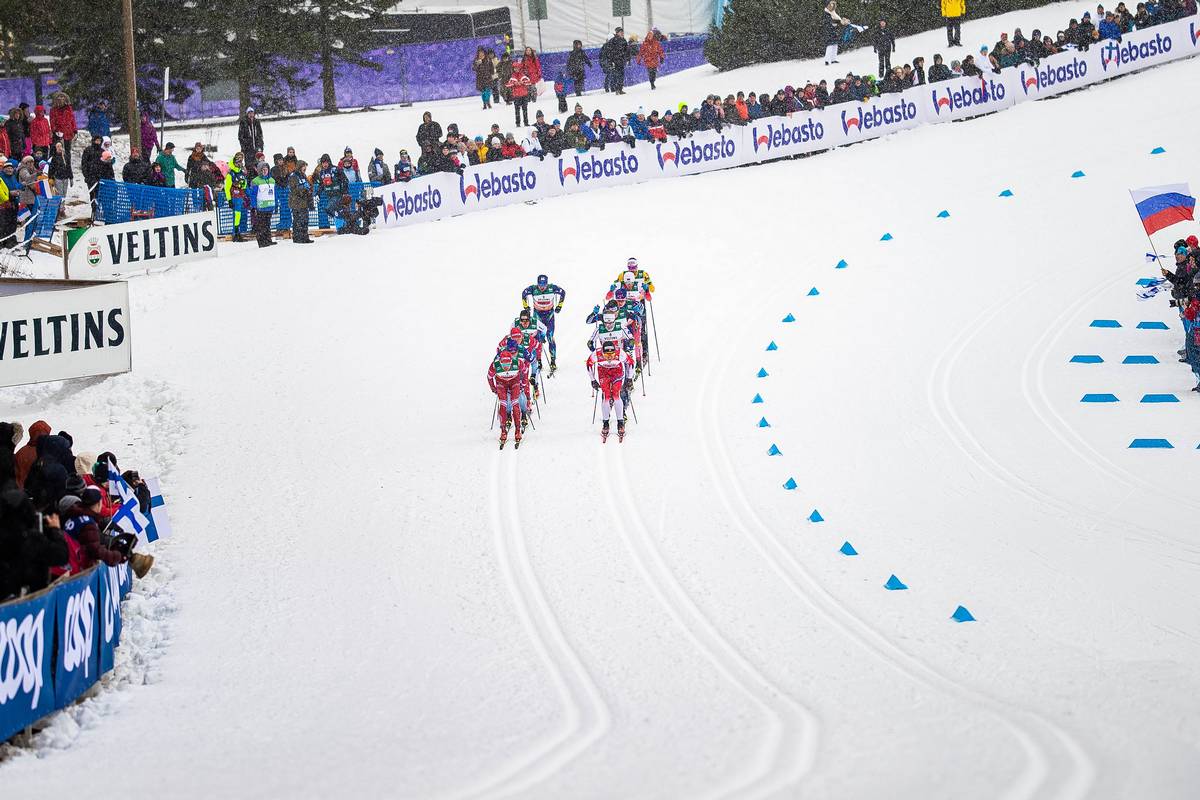
    First leg pack racing in Lahti, Finland. (Photo: NordicFocus)


    Russia II’s Andrey Sobakarev and Russia I’s Ilia Semikov leading out the first leg of the men’s 7.5 k relay in Lahti. (Photo: NordicFocus)

    For the first 7.5 k leg, Russia I’s Ilia Semikov and Russia II’s Andrey Sobakarev animated the sharp end with several pulses of energy to make a slinky of the pack. Norway’s Pål Golberg took some commensurate pulls too. The calories expended broke this into a front group of six teams at the first exchange separated by 2.4 seconds. The teams came through in this order: Norway, Russia I, Germany, Finland, Russia II, and Italy. Switzerland and Sweden, who had been loosely attached to the pack here and there, had popped – coming through roughly 20 seconds back.

    Leg 1 of the men’s 4 x 7.5 k relay in Lahti, Finland: Pål Golberg (NOR), Ilia Semikov (RUS), Lauri Vuorinen (FIN), Bjoern Sandstroem (SWE), Beda Klee (SUI), Giandomenico Salvadori (ITA), (l-r). (Photo: NordicFocus)

    The second leg played out much like the first, with the Russian teams, Norway, Italy, and Finland maintaining a gap. Finland’s Iivo Niskanen kept Finland in the hunt, and Russia II’s Alexey Chervotkin took a runner through the 13.6 k time check – otherwise the drama was subdued. 

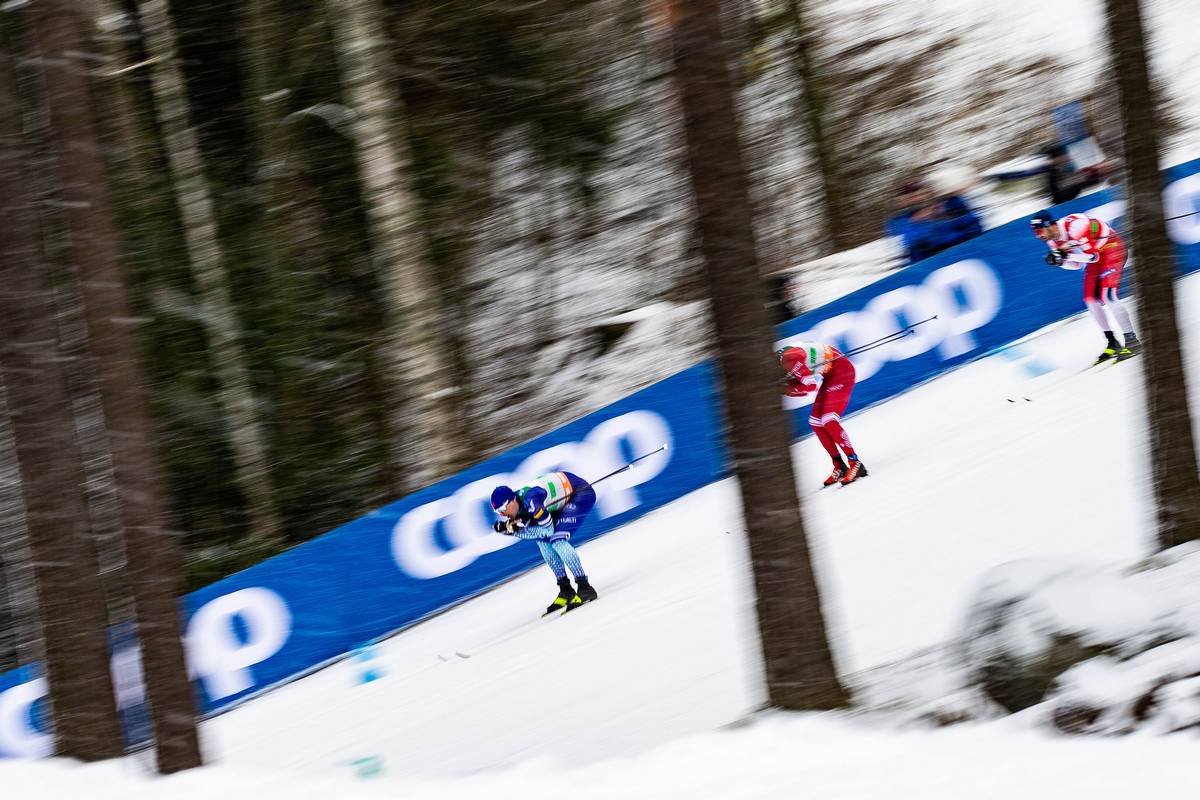
    Through the woods, a leading Iivo Niskanen of Finland. (Photo: NordicFocus)

    During the first skate leg, the front group ballooned modestly to seven with the addition of Germany beyond the original six teams. As the third leg skate moved towards the tag off for leg four, Finland had popped for good, and coming down into the stadium for the tag, it became a five team affair, with Russia I, Russia II, Germany, Norway, and Italy coming through in that order. Switzerland tagged off in sixth (+6.9). 

    Artem Maltsev of Russia II taking the pull: fourth leg of the men’s 4 x 7.5 k relay in Lahti, Finland. (Photo: NordicFocus)

    During the fourth leg the Russians gave several hungry digs. But on the first pass through Lahti stadium at 25 k with a long glide out speeding into the lap area, Norway’s anchor, Johannes Høsflot Klæbo, clearly sported the slickest pair of skate skis as he moved to the front with little friction under his feet. And we all know how Klæbo can close. 

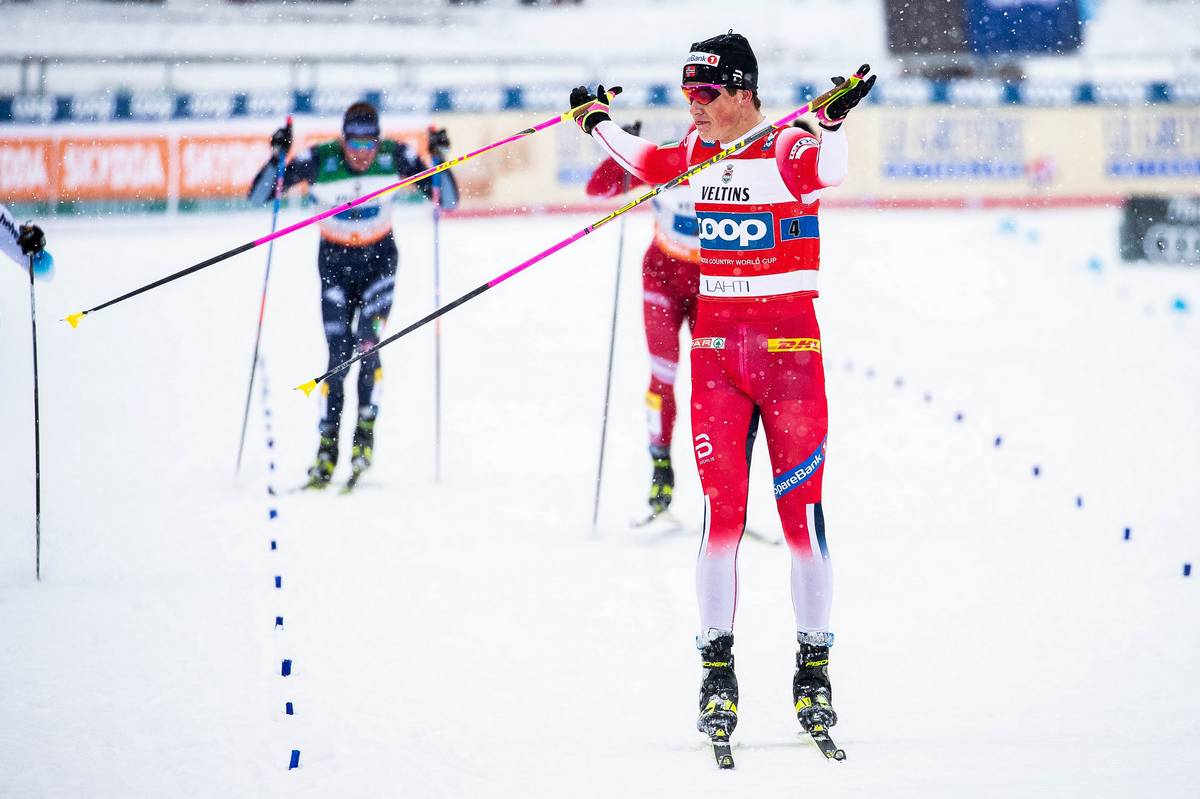
    At 27.5 k, the start of the last lap, Germany was no longer in the podium game. Five teams came through in a line led by the indomanable Klæbo. For the final 2.5 k lap, Klæbo killed the pace initially and then Russia I’s Andrey Melnichenkov tried in earnest to pull away and thin out the latched on Klæbo, Italy’s Stefan Zelger, and Switzerland’s Roman Furger. To no avail. Like he’s done before in countless sprints, Klæbo tapped into his vast stores of fast twitch muscle fiber and pulled away in the home stretch for the Norway win in 1:09: 53.

    Norway’s combo of Golberg, Hans Christer Holund, Sjur Røthe, and Klæbo momentarily reclaimed the men’s relay title over Russia -the Russians had won the last two relays, one in Lillehammer this season, the other in Ulricehamn, Sweden last year. 

    Switzerland’s Beda Klee, Dario Cologna, Jason Rueesch, and Furger placed second (+1.2), and Russia I’s Semikov, Alexander Bessmertnykh, Denis Spitsov, and Melnichenkov were third (+1.7). 

    For the Swiss, this was thier first men’s World Cup relay podium in nearly a decade.

    “Russia has won the previous two relays, it was time to take the throne back,” Golberg told FIS after the race. 

    Klæbo’s comments to FIS post-race underscored his finish speed gift. “In the start it was quite high speed and I think that all of the other guys saw that it was really difficult to get a gap,” Klæbo said of his leg. “So I was just in the front and slowing the pace down, it was almost just like training, it was a really slow pace. But in the end it was all-in and I think it was a really fun and interesting race.” 

    Racing continues in Drammen, Norway on Wednesday with a classic sprint. 

    Results

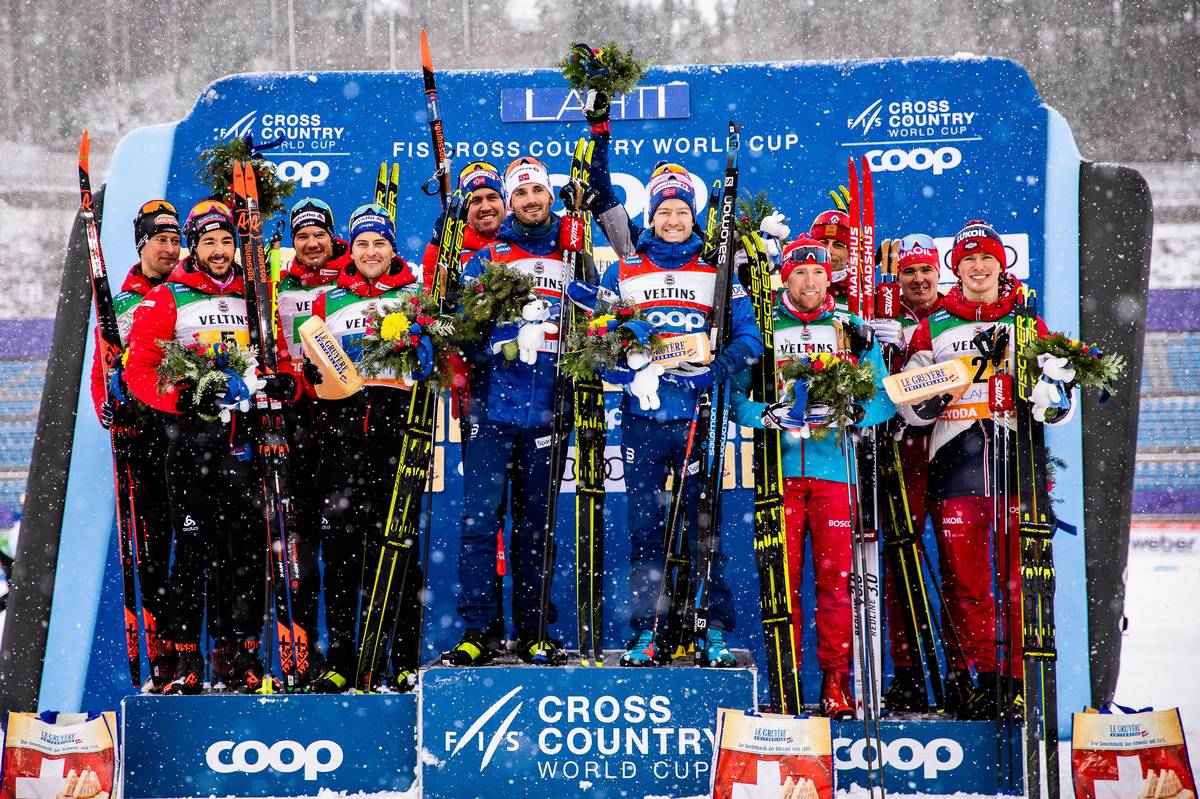
    The men’s 4 x 7.5 k podium in Lahti, Finland:
    Switzerland second, Norway first, and Russia I third (l-r). (Photo: NordicFocus)


  • Big Results for Geraghty-Moats, Harvey at Summer GP, Toppidrettsveka

    Big Results for Geraghty-Moats, Harvey at Summer GP, Toppidrettsveka

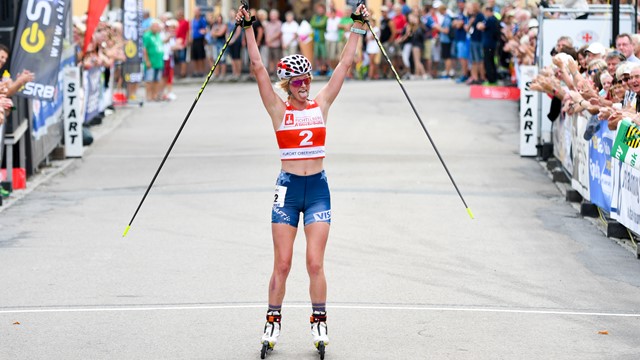
    Tara Geraghty-Moats winning Sunday’s normal hill/5 k Gundersen at the 2018 Women’s Nordic Combined Summer Grand Prix in Oberwiesenthal, Germany. (Photo: Romina Eggert/FIS)

    Two North Americans posted impressive results at nordic events in Germany and Norway over the last week, with Vermont native Tara Geraghty-Moats racing to first overall in the first-ever Women’s Nordic Combined Summer Grand Prix and Quebec’s Alex Harvey placing second, fifth and 10th in three races at the Toppidrettsveka rollerski series.

    Geraghty-Moats 1st and 2nd at Inaugural Women’s NoCo Grand Prix

    Brand new to nordic combined as well as the jump hill in Oberwiesenthal, Germany, Geraghty-Moats took the inaugural women’s Nordic Combined Summer Grand Prix by storm this past weekend, placing first and second in two competitions. That tied her for first place in the overall Grand Prix standings, alongside Russia’s Stefaniya Nadymova — the defending champion of last winter’s inaugural women’s Nordic Combined Continental Cup.

    On Sunday, Geraghty-Moats, 25, of USA Nordic and the New York Ski Education Foundation (NYSEF), handily beat Nadymova and the rest of the 10-woman field after starting the 5-kilometer Gundersen rollerski race in second, four seconds behind Germany’s Jenny Nowak. While Nowak had posted the best jump of 96 meters on Oberwiesenthal’s 106-meter “normal” hill, Geraghty-Moats tied for the second-best-scoring jump (94.5 meters), with Austria’s Lisa Hirner (95 meters). From there, Geraghty-Moats dropped Hirner, Nadymova and Nowak on the first of three laps in the rollerski race and went on to finish in 11:04.8. Nowak ultimately placed third, 1:29.2 behind Geraghty-Moats.

    ortho tri-cyclen, buy clomid online

    “I was really satisfied by how my first weekend of being a nordic combined-er went, and I think the patience of waiting to be a nordic combined-er really paid off,” Geraghty-Moats told the International Ski Federation (FIS) after. “I struggled with the jump a little bit the first couple days. I had never jumped this hill before, and I sort of figured it out today so I got to ski a little bit easier than yesterday, but I was also happy that yesterday I was able to have a good fight and ski fast to my potential and end up on the podium.”

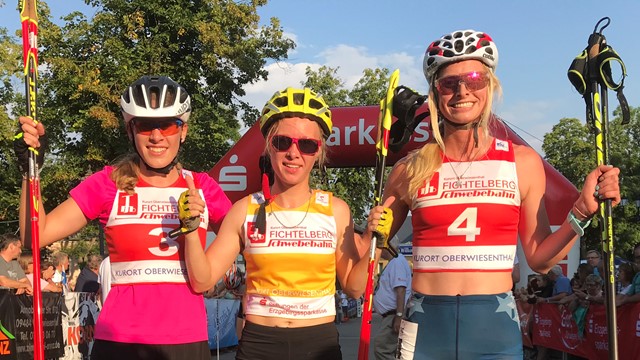
    The women’s individual normal hill/5 k Gundersen podium on Saturday at the 2018 Women’s Nordic Combined Summer Grand Prix, with Russia’s Russia’s Stefaniya Nadymova (c) in first, American Tara Geraghty-Moats (r) in second, and Germany’s Jenny Nowak (l) in third in Oberwiesenthal, Germany. (Photo: FIS/Silke Tegethof)

    On Saturday, the American (who started as a ski jumper, then raced cross-country before taking up biathlon, and finally returned to jumping) placed second to Nadymova, who won the individual 5 k Gundersen in 12:21.4. Geraghty-Moats finished just 3 seconds back after starting the race in fourth, 1:13 minutes behind Nadymova in first. Nowak placed third in that race as well, 50.3 seconds back.

    “It was a dream come true to finally be able to compete in women’s Nordic Combined on an international level,” Geraghty-Moats told FIS on Saturday. “I’m using this weekend to learn the level I have to be at to have success in Nordic Combined. I made some mistakes today and learned a lot but I came away with a good result and having had a huge amount of fun competing with small but strong field.”

    Eleven women competed in Saturday’s normal hill/5 k.

    Results:

    Day 1 (ski jumping | final) 

    Day 2 (ski jumping | final)

    Overall Grand Prix

    Harvey on Toppidrettsveka Podium

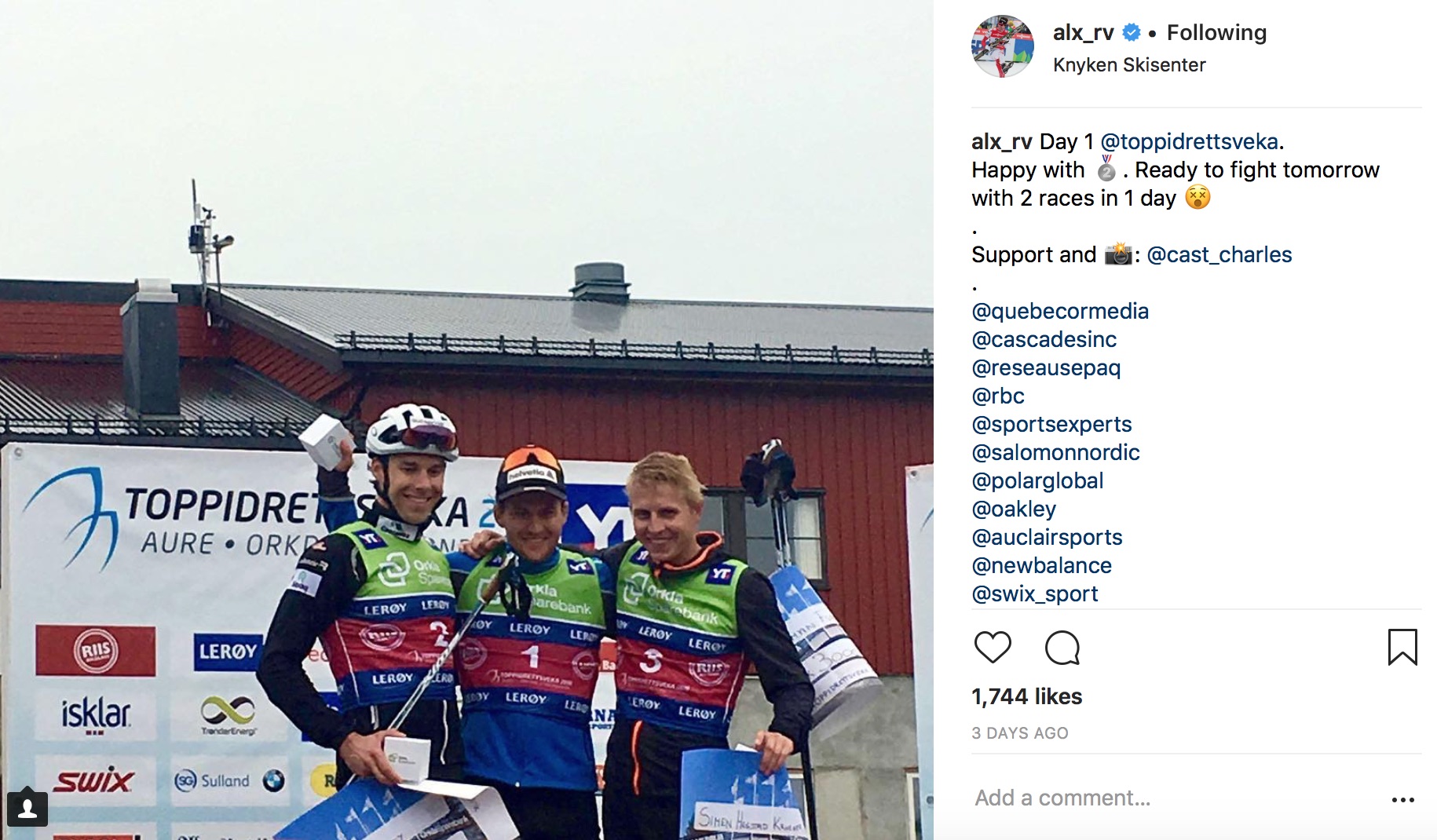
    Alex Harvey (l) on the podium with Roman Furger (c) and Simen Hegstad Krüger (r) at the 2018 Toppidrettsveka rollerski festival in Norway last Thursday, Aug. 16. (Photo: Alex Harvey/Instagram)

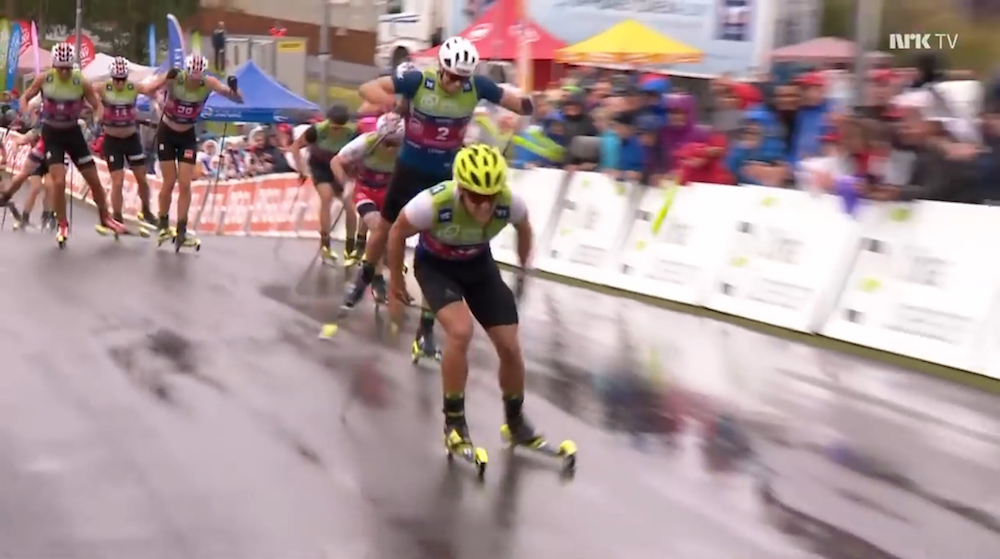
    At the Toppidrettsveka rollerski festival in Norway, Canada’s Alex Harvey raced to second in the 15 k skiathlon last Thursday in Orkdal, missing out on first by just 0.6 seconds to Switzerland’s Roman Furger, who won in 30:43.3. Norway’s Simen Hegstad Krüger, the reigning Olympic skiathlon champion, finished third, 1.5 seconds back. In a stacked international field of 125 men, Canada’s Evan Palmer-Charrette placed 75th in that race (+2:14.4), Bob Thompson was 84th (+2:32.7), and Scott Hill 89th (+2:52.5).

    Canada’s Alex Harvey (2) gunning for first in the men’s 15 k skiathlon on Aug. 16 at the Toppidrettsveka rollerski festival in Orkdal, Norway. (Screenshot: NRK broadcast)

    Heidi Weng beat her cousin Tiril Udnes Weng by 0.7 seconds in the women’s 10 k skiathlon that day, finishing in 22:52.1. Norway swept the top five of the women’s race, with Anne Kjersti Kalvå reaching the podium in third (+1.3), and national-team members Kathrine Harsem and Astrid Uhrenholdt Jacobsen placing fourth (+1.4) and fifth (+1.5), respectively, out of 43 women.

    In the men’s 24 k classic mass start around Aure/Brekka on Friday, Harvey finished fifth, 19 seconds after Krüger, who won in 59:57.5. Norway’s Hans Christer Holund placed second in that race (+2.6), Norway’s Magnus Stensås was third (+13.0), and Switzerland’s Dario Cologna fourth (+17.1). Also for Canada, Palmer-Charrette finished 61sth (+2:30.9), Hill 78th (+4:02.3), Thompson 86th (+5:40.3), and Maks Zechel 88th (+7:01.4) out of 125.

    Heidi Weng repeated in first in the women’s 24 k mass start, finishing in 1:10:02.4 hours, while Tiril Udnes Weng again placed second, 25.4 seconds back, and Jacobsen reached the podium in third (+27.7).

    Later on Friday in Aure, Norway’s Sondre Turvoll Fossli topped the men’s freestyle sprint final ahead of four other Norwegians, including Pål Trøan Aune in second and Jan Thomas Jenssen in third, and Switzerland’s Furger in fifth, while Harvey did not qualify for the heats and ended up 37th overall. Palmer-Charrette was once again 61st in qualification, Hill 107th and Thompson 109th out of 121.

    In the women’s sprint, Norway’s Mathilde Myhrvold won the final in 2:56.54, 1.05 seconds ahead of Slovenia’s Katja Visnar in second. Heidi Weng placed third in the final (+1.97), ahead of Tiril Weng (+2.64) in fourth, another Norwegian Anna Svendsen in fifth (+2.76), and another Slovenian Alenka Cebasek in sixth (+3.73). 

    In the final race of the series, the classic pursuit on Saturday, Harvey started second, 10 seconds behind Furger in first. The Canadian went on to place 10th, 4.2 seconds out of first, in the 15 k race, while Stensås took the win in 37:45.5 after starting seventh. (Furger slipped to 55th and 1:55.5 behind at the finish.) Norway’s Mikael Gunnulfsen rose from eighth to second (+0.7) and France’s Jean-Marc Gaillard made it all the way up to third (+1.7) after starting 15th. 

    Palmer-Charrette finished the pursuit in 59th (+2:04.2), Thompson placed 80th (+2:55.2), Hill 87th (+3:41.5), and Zechel 93rd (+3:48.9) out of 105. 

    Jacobsen ended the weekend as the women’s 12 k mass start winner, after the entire women’s field (of 33) started at the same time. She crossed the line first in 34:20.8, 0.4 seconds ahead of Heidi Weng in second and 1.2 seconds ahead of Kalvaa in third. 

    Results:

    Men’s skiathlon | Women’s skiathlon

    Men’s mass start | Women’s mass start

    Men’s sprint | Women’s sprint

    Men’s pursuit | Women’s mass start

  • Retivyk, Belov Deliver 1-2 Punch for Russia at U23s; Scott, Packer Lead North Americans In Top 30

    Retivyk, Belov Deliver 1-2 Punch for Russia at U23s; Scott, Packer Lead North Americans In Top 30

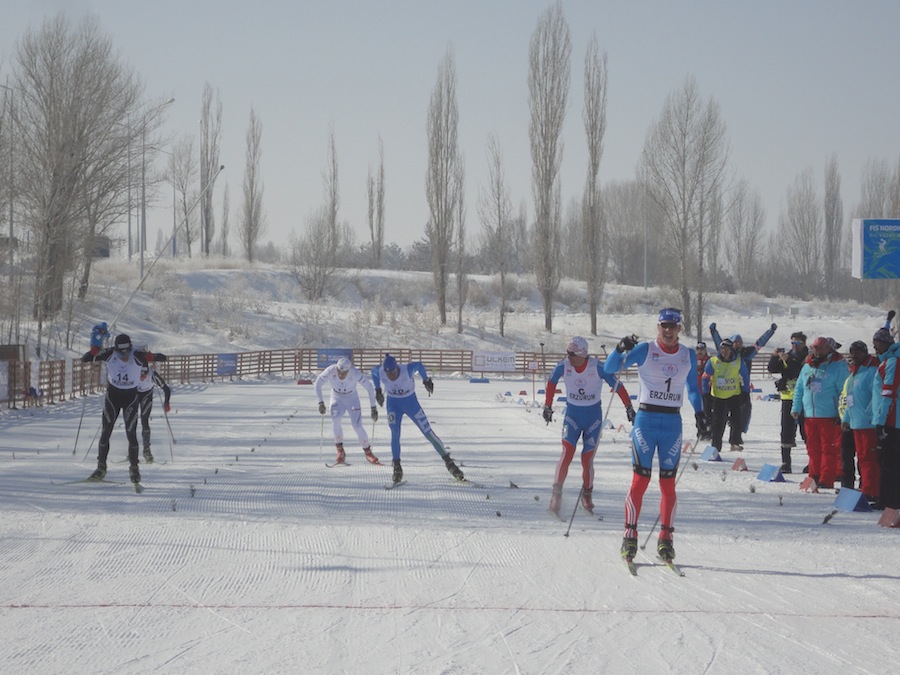
    Gleb Retivyk (RUS) coasting past the finish line for the U23 skate sprint title in Erzurum.

    ERZURUM, Turkey — With two gold medals in as many days at the World Junior/U23 Championships, Russia is clearly on top of its mens’ sprint game. Gleb Retivyk (RUS) took home a decisive win on Tuesday, skiing into the stadium in the final out of reach of his competitors, and maintained his lead all the way around the last corner and through the straightaway. His compatriot Evgeniy Belov (RUS) took second, and in a fight for third, Roman Furger (SUI) pulled off the bronze.

    Retivykh skiing through the stadium during qualifying. Photo: Erzurum WJSC 2012.

    Retivyk was recently fifth in the Moscow World Cup city sprint, but said success at U23s his motivation for training this year.

    “The race was perfect for me today as two Russian skiers were on the podium,” he said his win. “I have been preparing for this competition the whole year. I was working on the strength a lot before the season.”

    This was Retivyk’s first age-group victory; he was twice on the junior podium in Otepaa, Estonia last year, but never for gold.

    Belov, more of an all-around skier than sprint-specialist, called his silver-medal performance a good wake-up for the rest of the week.

    “I am immensely glad today,” he said. “When I was a junior I was quite good at free technique sprints.”

    Furger’s result surprised himself—“I never expected I could win a medal here,” he said.

    Other performances of note:

    –  Andrew Musgrave (GBR) qualified in third in the morning behind Retivyk and Gianluca Cologna (Dario’s brother). His strong V2 up the first hill turned many a European coach’s head, though it should no longer be a surprise when Musgrave does well. Musgrave looked posted to qualify for the finals, but in the semis took a spill at the top of the final downhill after getting caught up with another skier. He ended up in ninth.

    –  Norway had a surprisingly down day,with all failing to advance past the quarterfinals. Eivind Bakkene was the first red-clad skier in 14th; Finn Haagen Krogh was 16th.

    Scott and Packer lead the U.S. In 25th and 26th

    Americans Ryan Scott and Eric Packer were the lone North Americans to make the heats on Tuesday. Packer set the 18th-fastest qualifier while Scott scraped in with 30th. Three more fell just outside the cutoff: Graeme Killick in 31st, Erik Bjornsen in 32nd and Reese Hanneman in 33rd.

    Ryan Scott (USA) leading Retivyk and the rest of the first quarterfinal at the top of the first hill. Photo: Reese Hanneman.

    Before the first heat came into sight on the first hill out of the stadium, excited U.S. coaches radioed to each other that Scott had gotten off to a fast start. A few seconds later, the black American suit came into view a few paces ahead of Retivyk—the 30th qualifier leading the first.

    Scott remained ahead through the rolling downhill and until the second uphill, when he began to lose ground to the rest of the pack. He ended up crossing the line in fifth, which eventually put him in 25th overall.

    “It wasn’t the plan,” said Scott of his fast start. “Originally I thought I’d try to hang back and go on the second hill, but sometimes it’s nice to get out a little faster, you can stay out of trouble—a lot of people were falling and breaking stuff. That was my thinking on the spot.”

    He expected more of his competitors to be right with him on the first hill, but “no one really came until the next climb,” said Scott.

    When Retivyk made his move to overtake him, Scott thought he got “bogged down” trying to stay with him.

    “I haven’t trained a whole lot for sprints this year, this is the only time since U.S. Nationals I’ve ever skied heats,” he said. “Tactically, it would be nice to have a bit more practice rather than watching World Cup races.”

    Scott lives at altitude in Bozeman, Mont., which he thinks “definitely” gave him an advantage over skiers only used to sea level.

    U.S. trip leader and USST development coach Bryan Fish was pleased with Scott’s performance.

    “With a number 30 bib, he did absolutely everything he could. He ran out of gas at the end, but on the flip side, when you do that, you can never say you didn’t try—he left it all out on the course. You have to be pretty pleased with that.”

    Packer fared less well in his quarterfinal. He said he is used to being the one in control during head-to-head racing in the U.S, but here at U23s, he felt the butt end of aggressive skiing.

    Packer (USA) in fifth up the first hill of his quarterfinal.

    Out of the gates, Packer was in third, but rounding the corner to head out to the course, another skier skated right across his equipment.

    “I should have asserted myself more, but I kind of sat back for just a second and immediately dropped to sixth place,” said Packer.

    “For the rest of the race I tried to move up. It was a game of cat and mouse—people were driving in front and then walking, and I was between fourth and sixth for the rest of the race.”

    Packer believed he had the fitness to pass people, but wasn’t able to move quickly enough to sneak by before getting blocked.

    “When I’d come up behind someone, they move out in front of you because they sense you coming from behind. So that was a little bit frustrating, and a little different from what I’ve experienced.

    “What I found is that if you’re not in the first three spots in a race like this, then you have to have incredible speed to pass people—it can’t be a slow move, they won’t let it happen.”

    Despite disappoinment in not moving on, Packer was confident for the 15 k classic and the pursuit hat he could ski with the competition.

    “Normally I struggle a little racing at altitude, so feeling good today, especially in the qualifier, was really encouraging.”

    Erik Bjornsen, 32nd.

    For Bjornsen, who just missed the top 30, the qualifier was more fuel for next year, as got a better sense of when starting conservatively is too slow.

    “I don’t think I would change anything technically, but I probably should have gone out harder—I had a little left at the end,” he said. “But who knows, if I’d gone out harder, maybe I would have died in the finishing stretch.”

    In the difference of one place, Hanneman was 1.46 seconds behind Bjornsen, and was satisfied that he’d given the qualifier 100%.

    “I probably went the hardest I’ve gone all year, and technically I think I skied it almost perfectly,” he said. “In that respect I’m glad, I thought I had as good a race as I could have, considering it was a prelim at altitude with a lot of free skating, which is not my forte.”

    But, “30th I would have been happier with,” said Hanneman.

    After Killick, Bjornsen and Hanneman, Jesse Cockney (CAN) was 39th, David Greer (CAN) finished 47th and Christopher Hamilton (CAN) 50th.

    Final results

    Qualifier results

    Graeme Killick, 31st.


    Reese Hanneman, 33rd.