Tag: Rosie Brennan

  • After the World Cup, Rosie Brennan Still Has More Skiing Ahead

    After the World Cup, Rosie Brennan Still Has More Skiing Ahead

    This article was made possible through the generous support of our voluntary subscribers. If you value coverage like this, please support FasterSkier with a voluntary subscription.

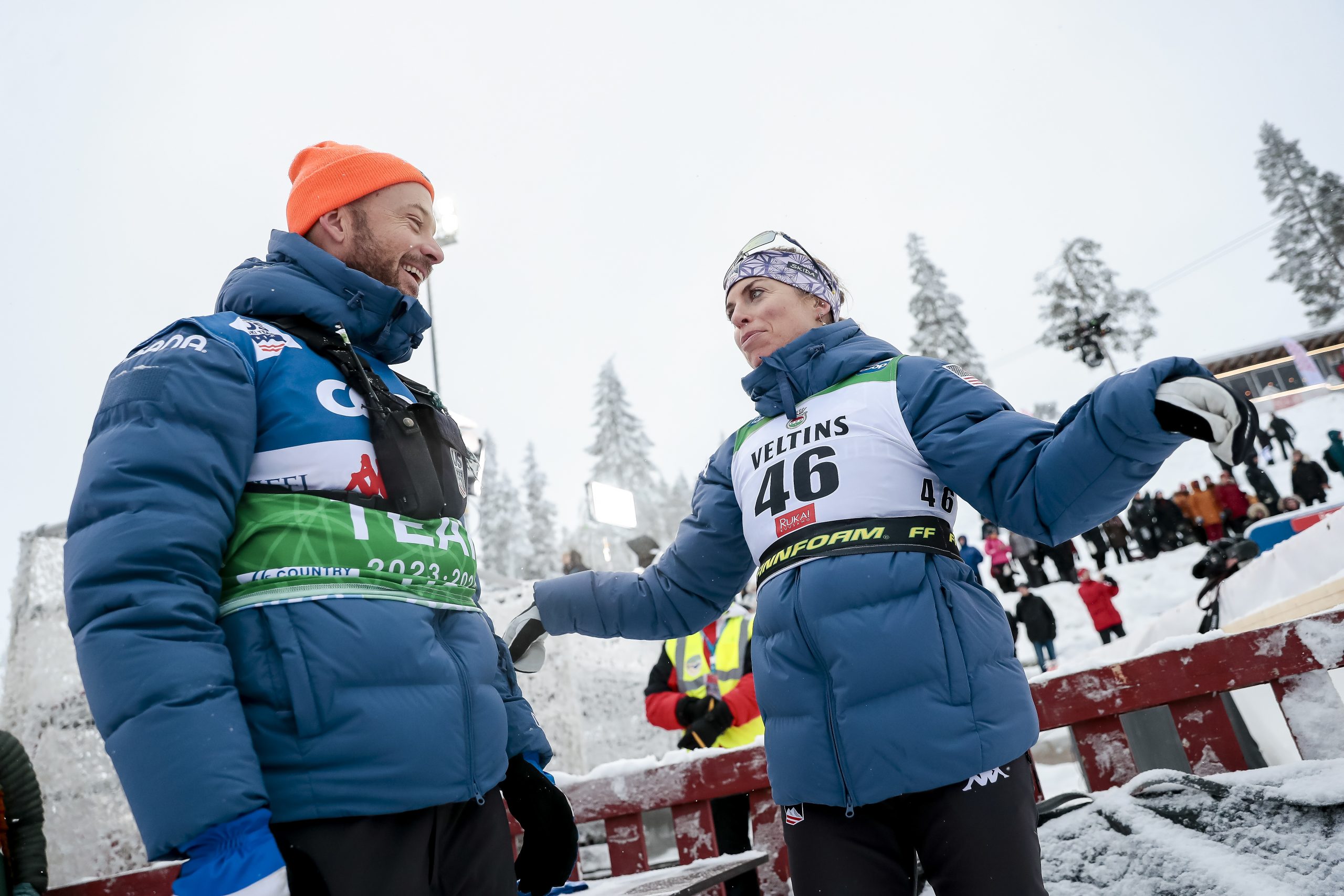
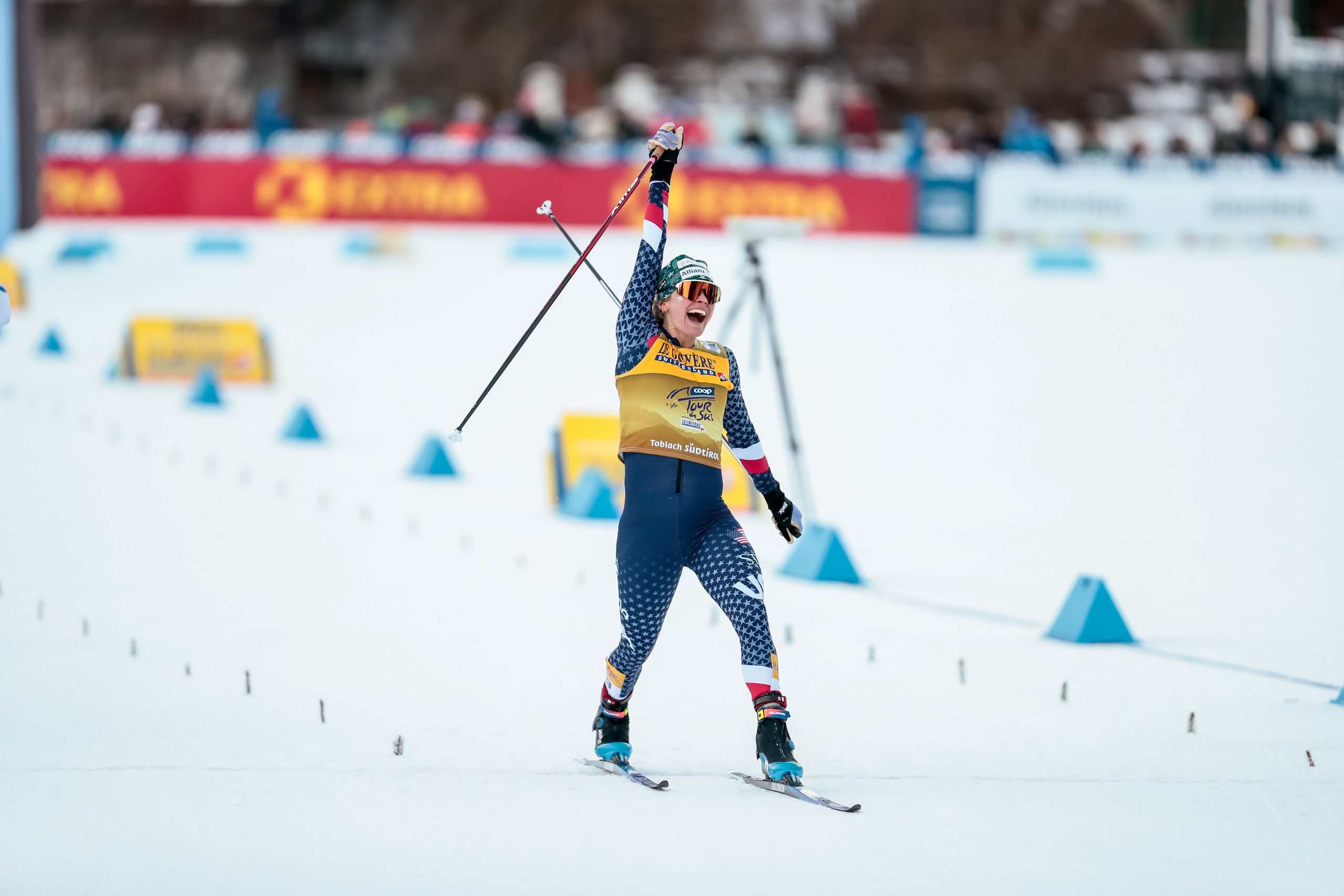
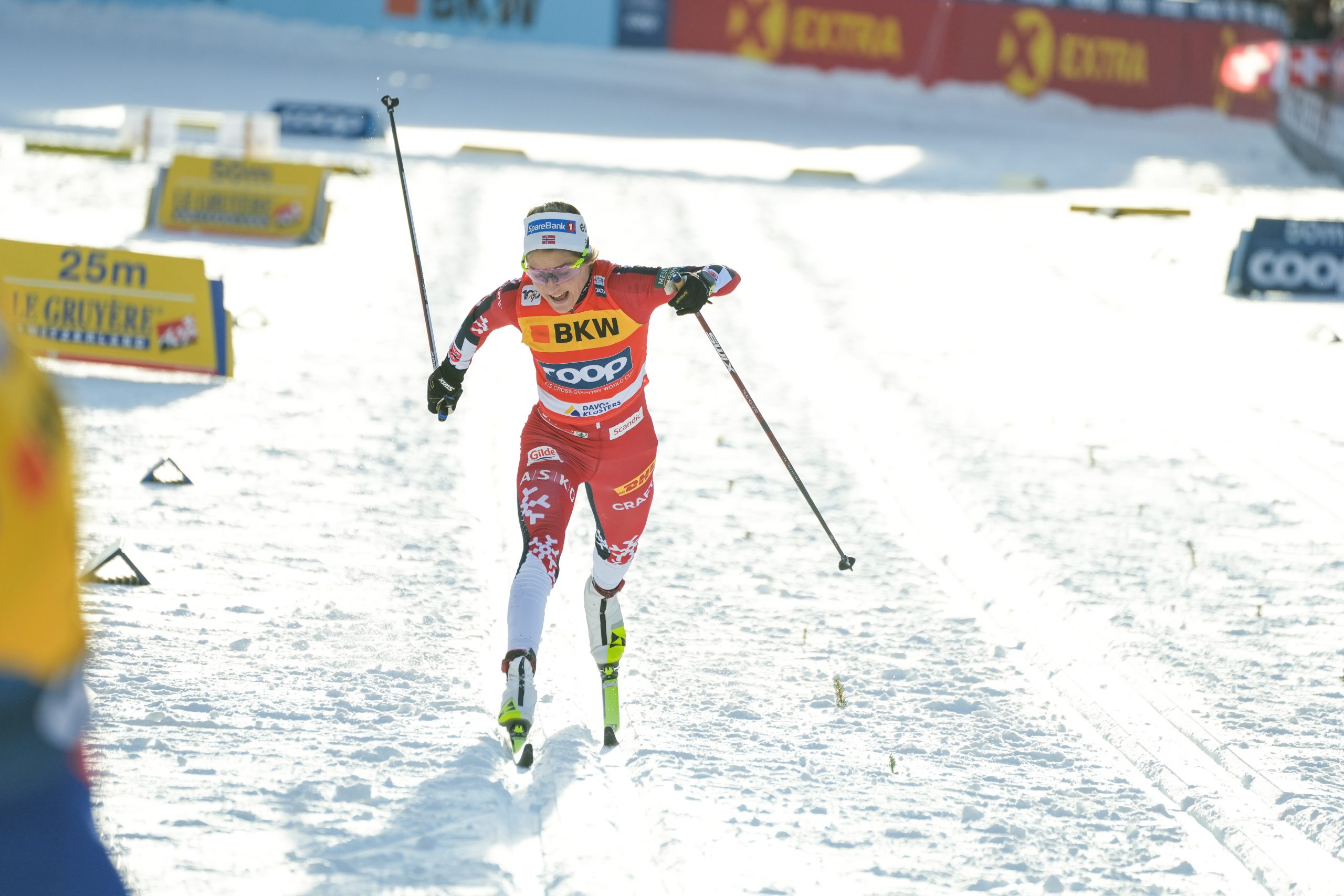
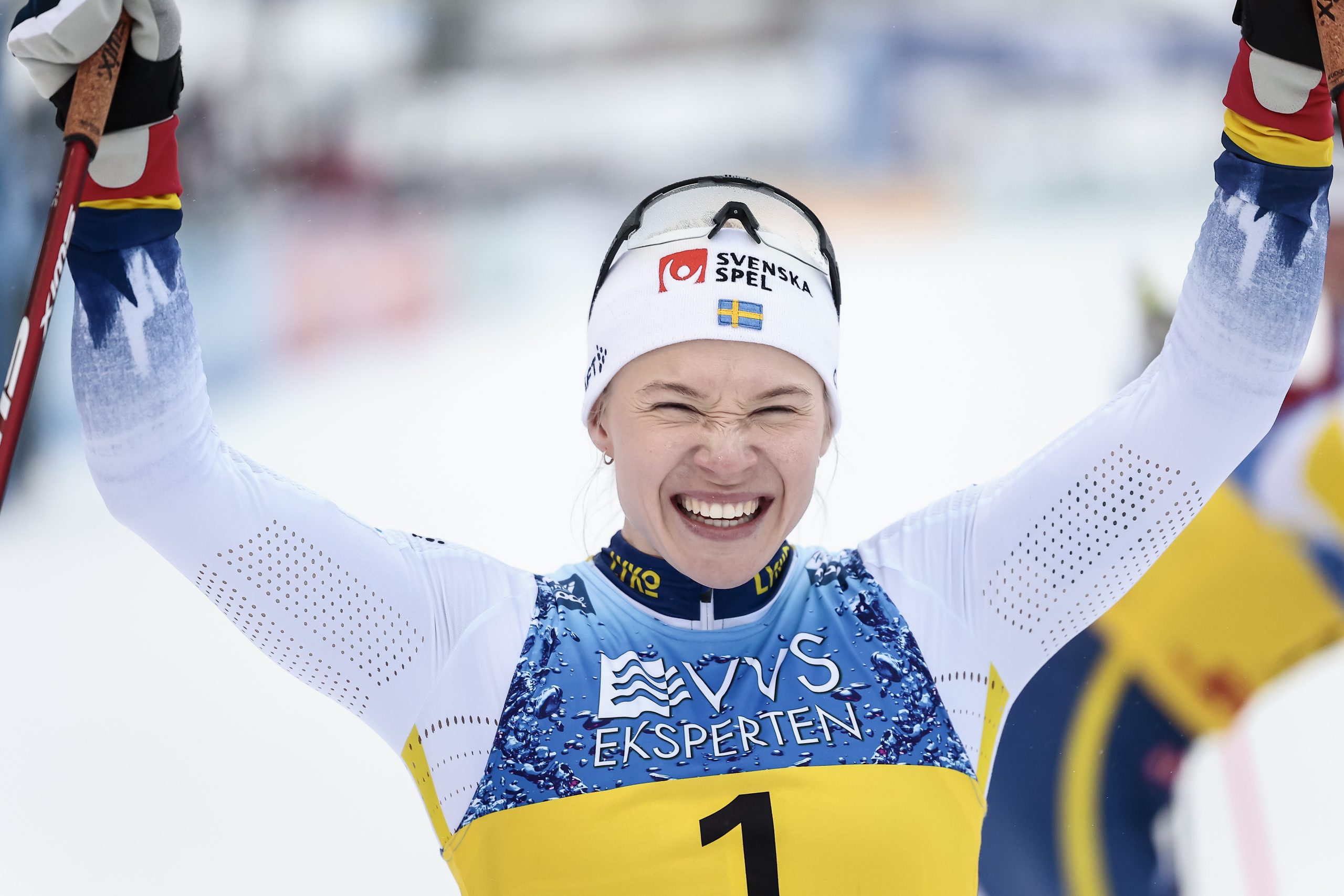
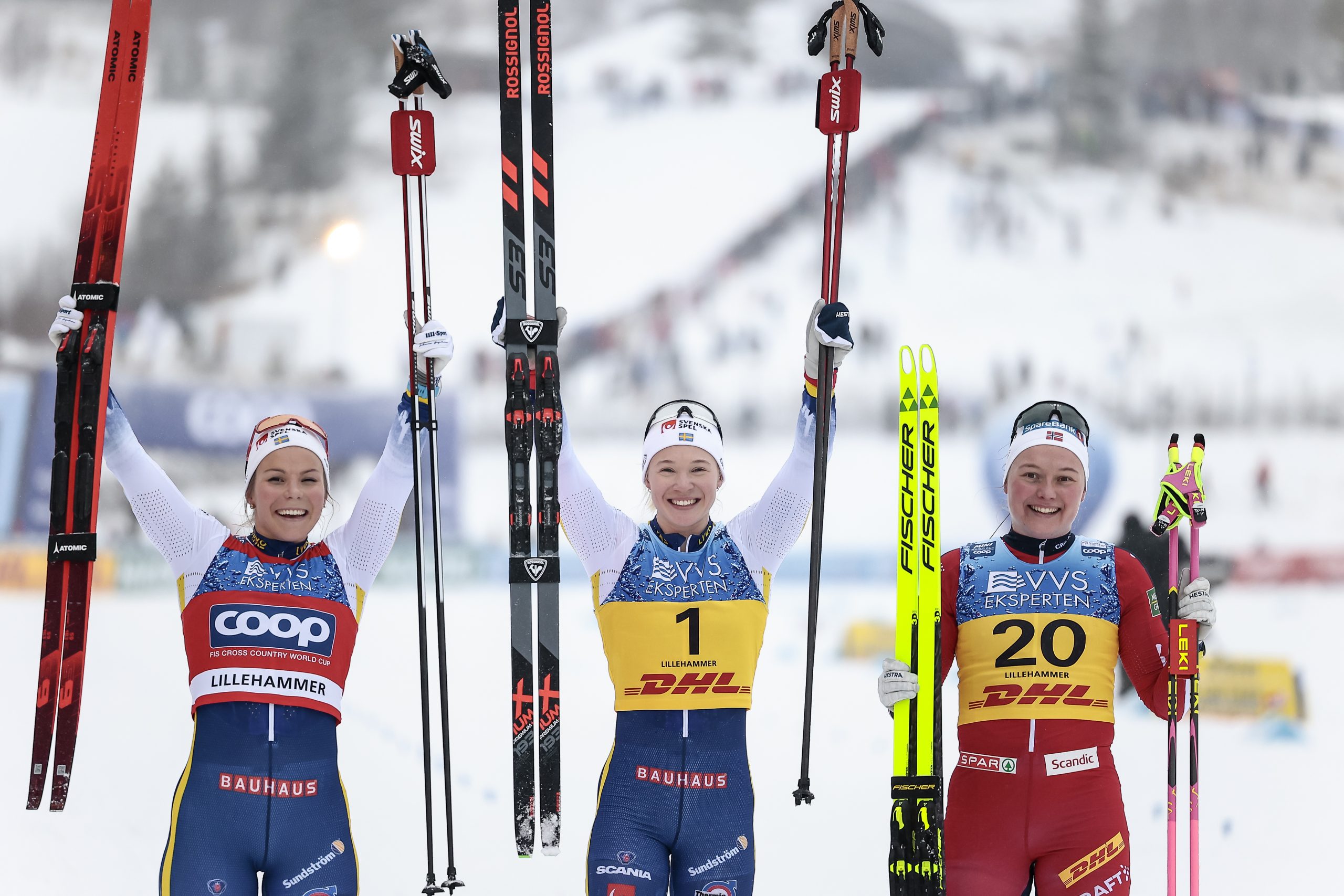
    Rosie Brennan (USA) celebrates in Ruka (FIN) in 2023 after finishing 2nd in Saturday’s 10 k classic race. The result was Brennan’s first classic World Cup podium of her career. (Photo: Nordic Focus)

    Rosie Brennan has stepped away from the World Cup, though she’s still figuring out exactly how to define the next chapter in her life.

    Retirement is the easy word, and in some ways, the accurate one. She is done with the World Cup. She is done with the version of cross-country skiing that demands five months in Europe, constant travel, start lists, team schedules, narrow margins and the unrelenting pressure of measuring a career in seconds. 

    After more than a decade with the U.S. Ski Team, three Olympic appearances, hundreds of World Cup starts, two World Cup wins and a place among the best all-around skiers the United States has produced, Brennan has stepped away from the highest level of the sport.

    But if retirement is supposed to mean the end of something, Brennan is not quite sure the word fits.

    “Retirement has been a tough word for me,” Brennan said. “It feels very black and white.”

    “One of my friends and older teammates called it rewiring.”

    To Brennan, that seems closer. She’s not walking away from skiing so much as trying to build a new relationship with it. The shape of her days may change, and her focus will no longer be “110 percent” on racing, but skiing itself remains too central, too familiar and too joyful to simply leave behind. 

    “I love skiing and ski racing,” Brennan said. “I want to continue to be able to use my body in ways that challenge and push me in the world of skiing and competition again at some point, maybe sooner than later.”

    “Skiing is just not that for me,” Brennan said of the idea of retiring and never doing the thing again. “It’s something that I hope to do till the day I die, honestly.”
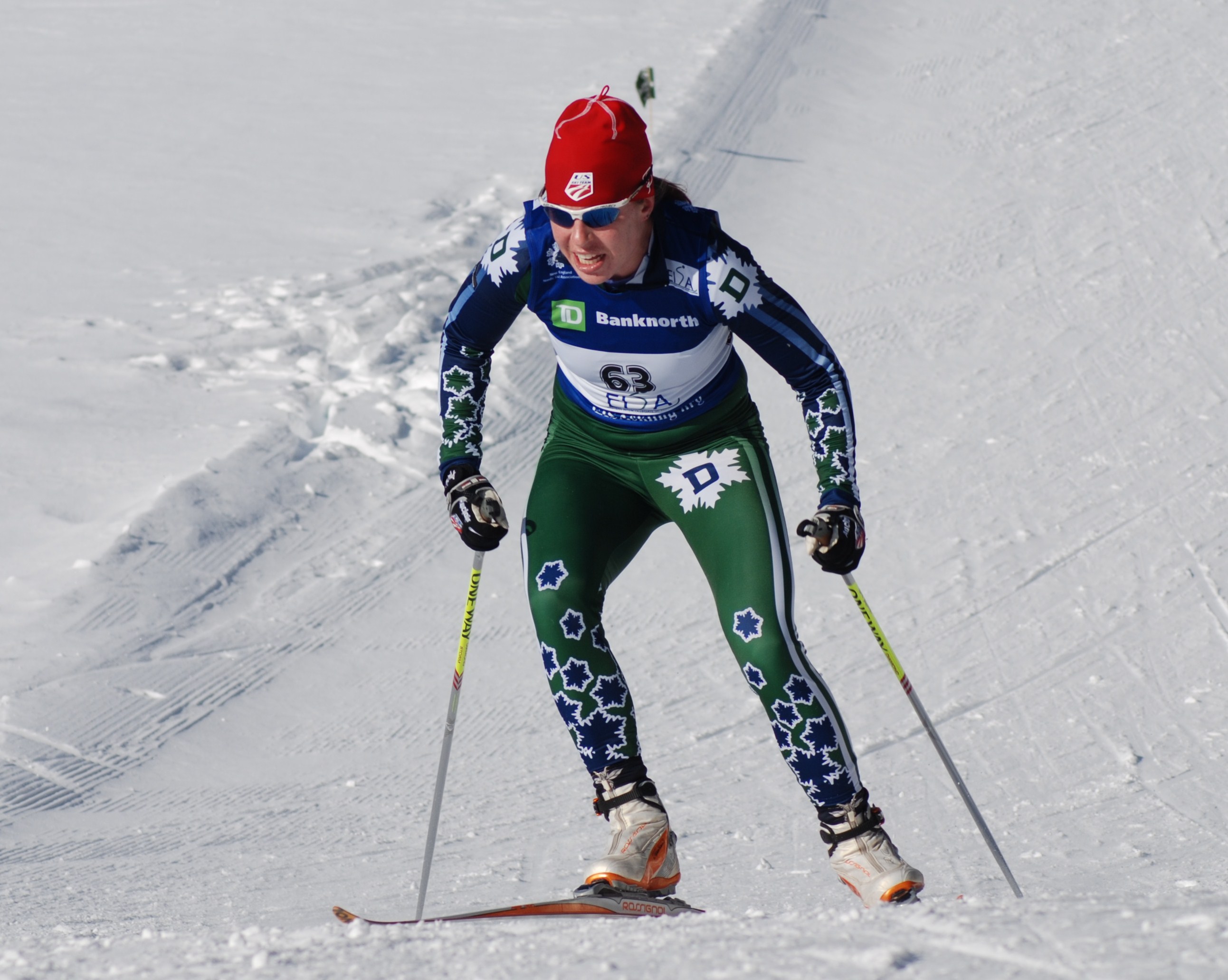
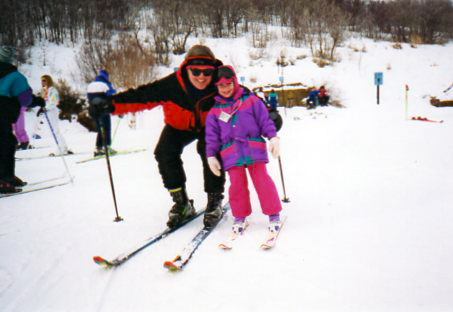
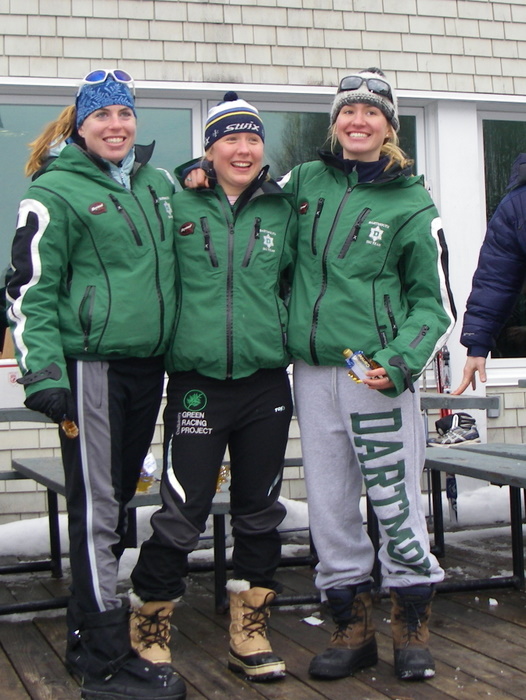
    The first uploaded image of Rosie Brennan in the FasterSkier archives after she won both EISA women’s races in Feb. 2009 (Photo: Ruff Patterson)

    A Career Built on Perseverance

    When Brennan looks back now, the first thing she points to is not a specific race, podium or result sheet, but rather the belief in herself that made all of those things possible.

    “I’m really proud of, I guess, the perseverance of my career,” Brennan said. “It takes perseverance to have longevity in a career, to weather the inevitable obstacles that appear throughout a long career, and to find belief when things aren’t going your way.”

    That perseverance became the throughline of a career that took time to reveal itself. Brennan was not a teenage prodigy who moved smoothly from junior success to World Cup podiums. She came to skiing later than many of her peers, waited longer for the biggest results and had to weather the doubts that creep in when progress slows, injuries interrupt momentum and other paths begin to look more practical. Then when the results did arrive, those earlier years felt even more meaningful. 

    In a career defined by patience and progress, one of the things Brennan says she is most proud of is not just that she reached the top level, but that she continued to expand what she could do once she got there. She never settled into one lane as only a distance skier or only a classic specialist. Instead, she kept working to become more complete, finding reward in the challenge of improving across formats, distances and techniques.

    “I’m also proud of the range that I maintained throughout my career,” Brennan said. “Continuing to be an all-arounder throughout my career and finding some success in all the disciplines and both techniques throughout — that was something that was just, I don’t know, I guess a personal challenge that I found a lot of reward in.”

    That sense of progress extended beyond Brennan’s own results. Her career also unfolded during the strongest era in the history of American women’s cross-country skiing, and as the U.S. team continued to raise its standard internationally, Brennan came to see herself as part of something larger than her own race days.

    “I’m proud to have been part of a really amazing wave of American women skiing,” Brennan said, “and to have done my best to carry that wave forward and to help push things forward and pass things on to future generations as well.”
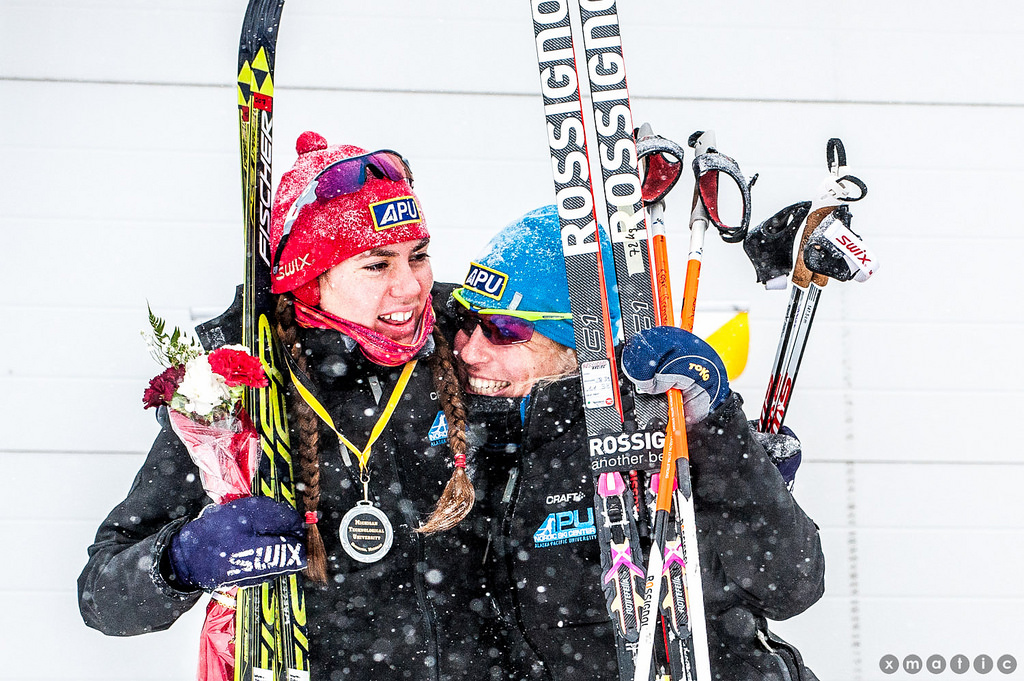
    APU’s Rosie Brennan (r) embraces close friend and APU teammate, Becca Rorabaugh (l), after they finish first and second, respectively, in the Women’s 1.5 k Classic Sprint at the 2015 U.S. Cross Country Championships in Houghton, Mich.

    Starting Late, Staying Long Enough

    Brennan started skiing at 14, late by the standards of an international sport where many athletes first step onto a set of fish scales as young children. But she never saw her development as a simple matter of being behind.

    “I was older when I kind of found top-level success in podiums on the World Cup,” Brennan said. “But because I started skiing so late, I guess I never really saw it that way.”

    In her mind, the clock did not start with age, but when she first found herself on a pair of skis.

    “If you look at when I started at 14 to when I had success, those accumulated hours of skiing and training are probably actually fairly equivalent to somebody who started at eight,” Brennan said. “So I always just chose to look at it that way, as if it was just going to take time to learn those skills, and it was fine that I started late.”

    “I’m not good at being patient,” Brennan said.

    But skiing gave her little choice. It took time to develop the specific strengths required of the sport, to learn how to race and to absorb the small skills that many skiers pick up almost without realizing it when they start young. Brennan had to build the engine and the instincts at the same time.

    There were moments when she wondered whether it was worth it. In college, after injuries and difficult stretches, she decided she was done with skiing when she graduated. She looked toward other paths. At times, she quit, or at least tried to. But the sport kept pulling her back.

    “I think what I enjoyed the most that made me keep coming back was just the challenge of it,” Brennan said. “Waking up every day with some purpose to get a little bit better, and to have the challenge of seeing if it was possible.”

    Eventually, that challenge became a way of life.

    “I just learned to really enjoy and thrive and love the lifestyle of skiing,” Brennan said. “And so that made it a lot easier to just keep coming back.”

    Brennan is quick to point out that she did not do that alone. The support systems around her mattered. At Dartmouth and later at Alaska Pacific University, she found teams and coaches that helped her keep believing when she could not quite do it herself.

    “There were definitely moments that it’s easy to question, and it’s hard to keep going,” Brennan said. “I was really fortunate to be part of some really, really amazing groups, and have coaches that fostered that belief in me, and made me see things in myself that I couldn’t see on my own.”
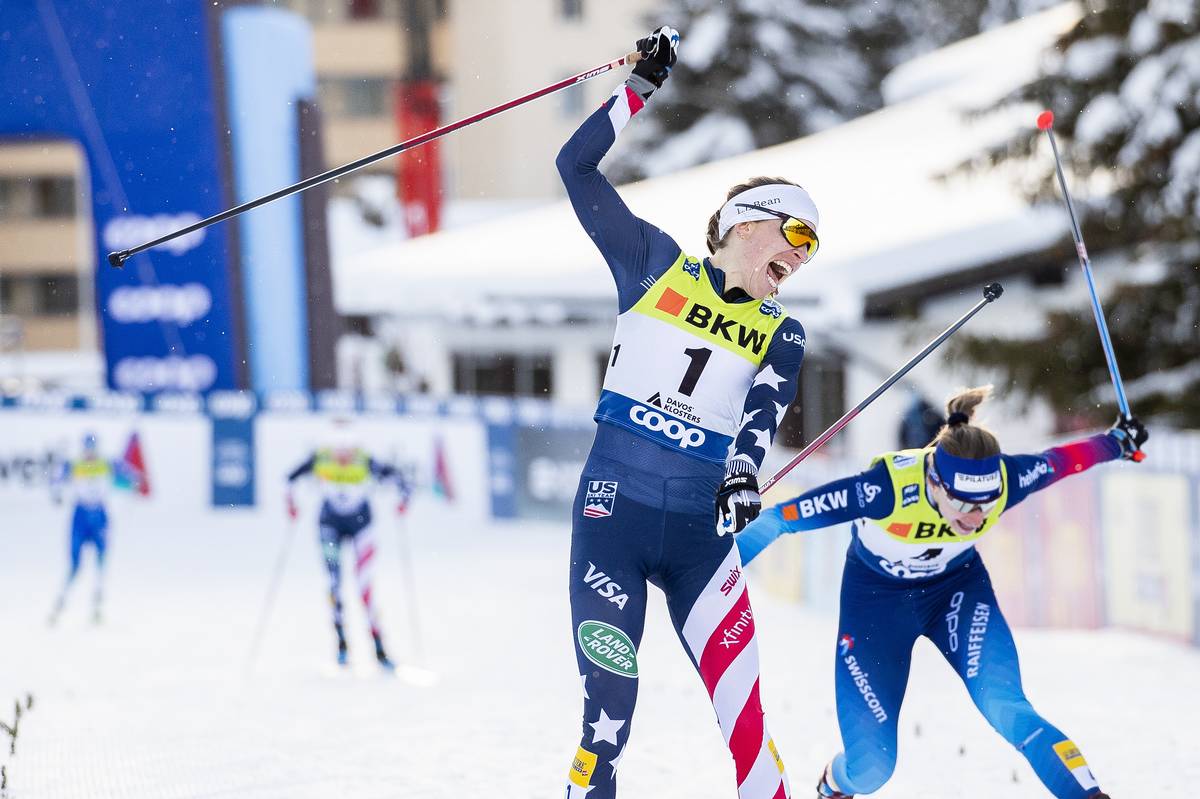
    Rosie Brennan celebrates her victory and first World Cup podium after the freestyle sprint in Davos, Switzerland. Photo: NordicFocus

    When the World Was Put on Notice

    For years, Brennan’s career was a slow and steady build, but then came that famous weekend in Davos.

    In December of 2020, during a World Cup season shaped by the uncertainty of the pandemic, Brennan won twice in two days in Switzerland. On Saturday, she claimed her first career World Cup victory, in a freestyle sprint, and then the very next day, she won again in the 10-kilometer freestyle.

    From the outside, it looked like a breakthrough and a historic moment for U.S. skiing. Brennan does not dispute that. She says what stays with her the most now is not only the winning, but everything she had to manage in order to ski that way.

    “Davos 2020 was definitely a breakthrough moment for me,” Brennan said. “That year was challenging for the whole world, and being a ski racer during that time certainly had its challenges too.”

    The uncertainty of that season weighed heavily. Rules changed, travel was complicated and athletes did not always know whether races would happen. The risk of illness carried not just health concerns, but career implications for athletes whose bodies were their livelihoods.
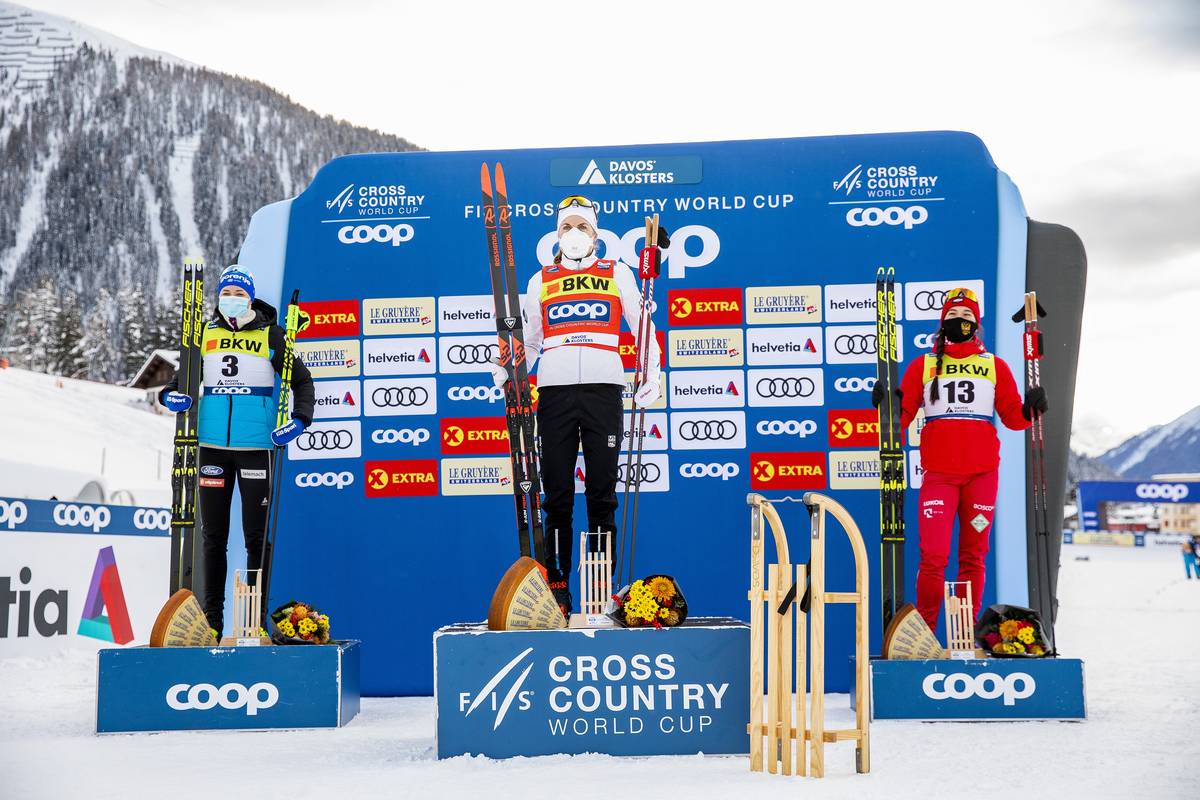
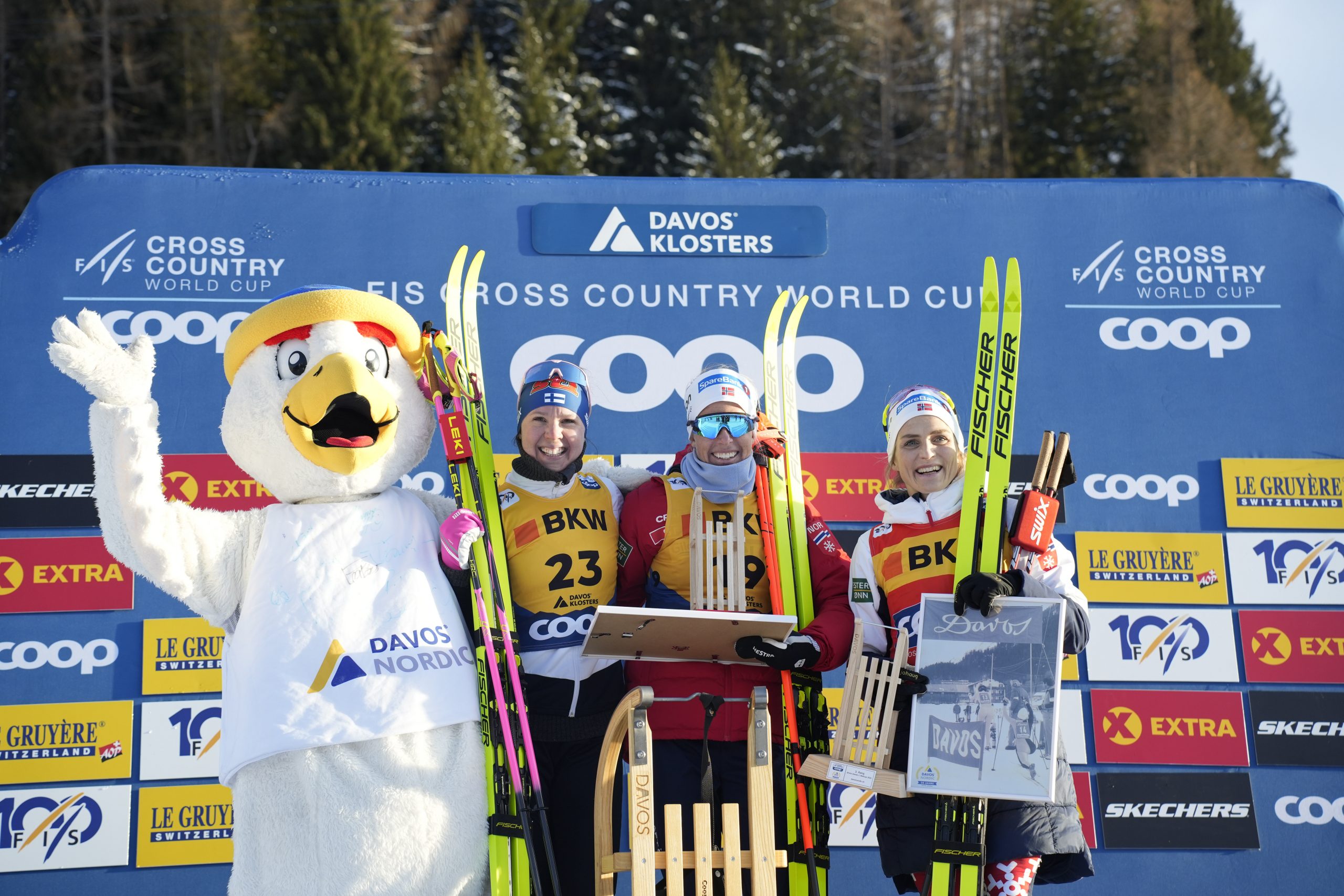
    Taking the victory and the sled, Rosie Brennan stands atop the podium in Davos, Switzerland. (Left to right) Anamarija Lampic (SLO) 2nd, Brennan (USA) 1st, Natalia Nepryaeva (RUS) 3rd.

    “I really struggled with the anxiety of it all,” Brennan said. “Just never knowing — traveling in foreign countries, where the rules were changing all the time, and you didn’t know what would happen if you got sick.”

    Hence why Davos still means something more than two entries on a results page. Brennan was proud of the wins, of course, but she was even more proud of how she managed everything around them.

    “It definitely showed me what I was capable of,” Brennan said, “and that I could manage these really high-stress environments and all the uncertainty and thrive in that setting.”

    That weekend did not just give Brennan her first World Cup wins. It helped confirm the range she had been building toward for years. Later that season, she became the first American to hold the overall World Cup leader’s bib, sprint leader’s bib and distance leader’s bib at the same time. Which was both a major accomplishment and also a fitting reward for all the work she had put in to become a more complete racer.
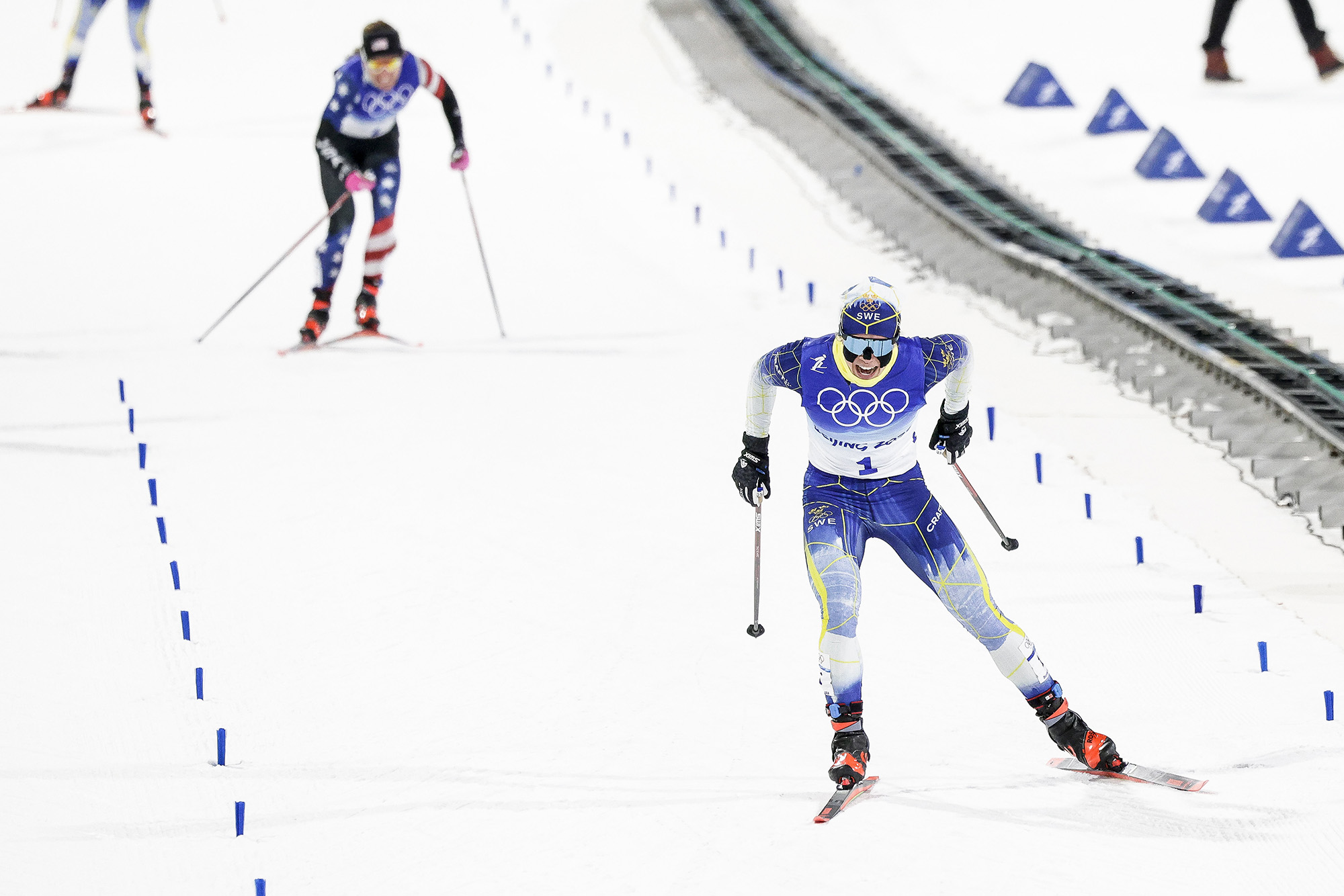
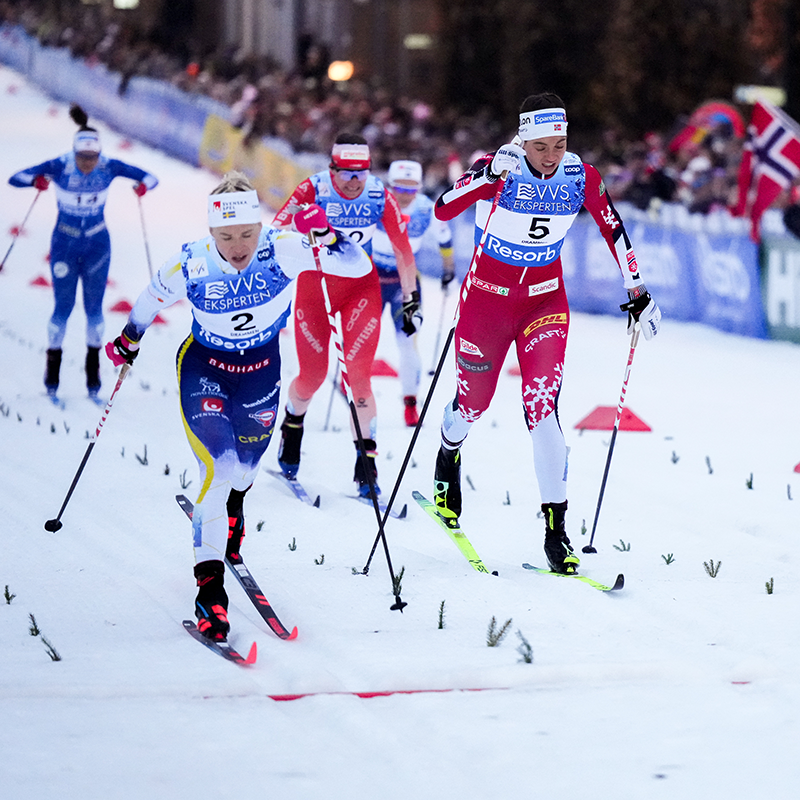
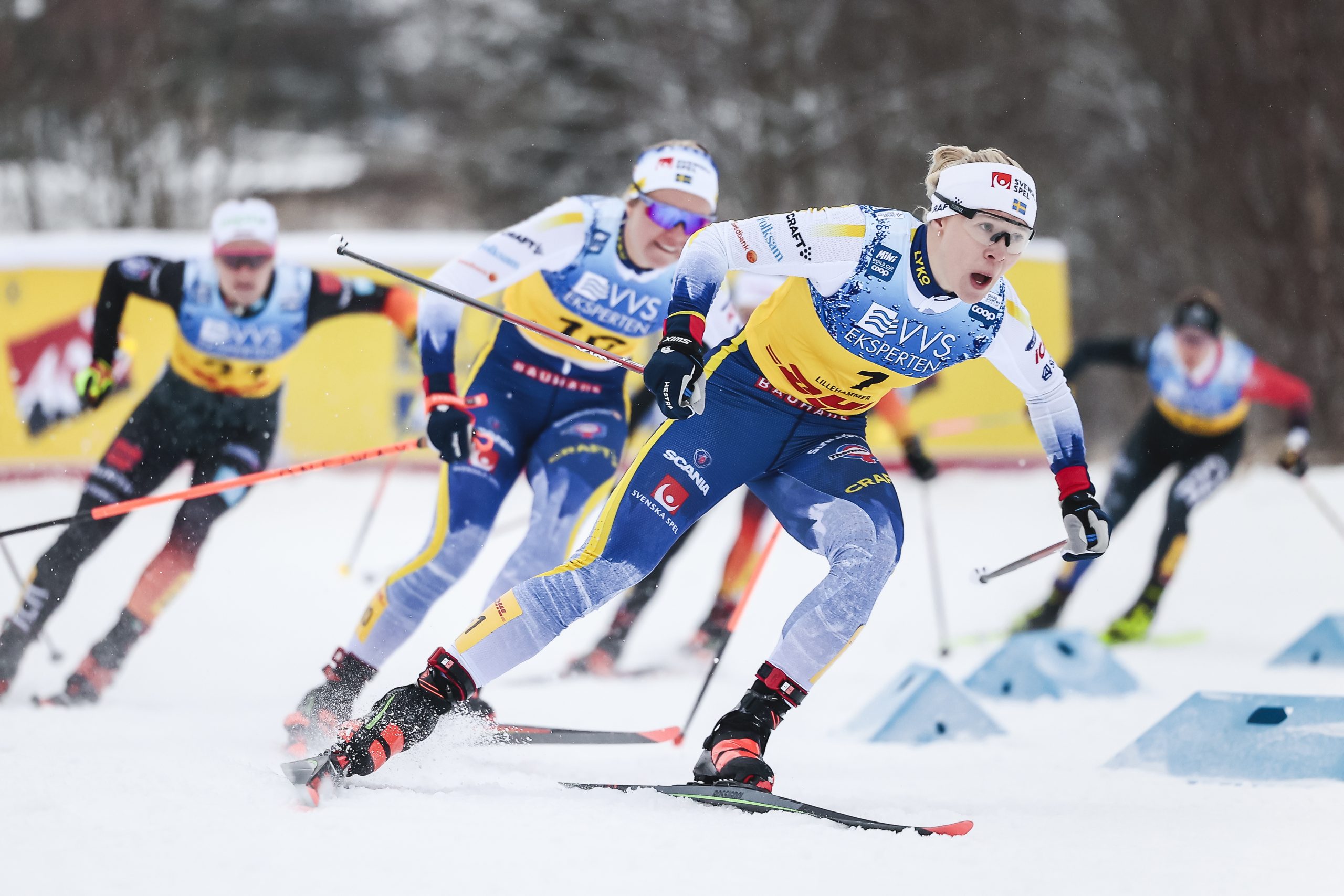
    Jonna Sundling (SWE), with a commanding victory in the 2022 Olympic individual freestyle sprint, comes to the finish with Rosie Brennan (USA) in the background on her way to fourth. (Photo: NordicFocus)

    What the Career Adds Up To

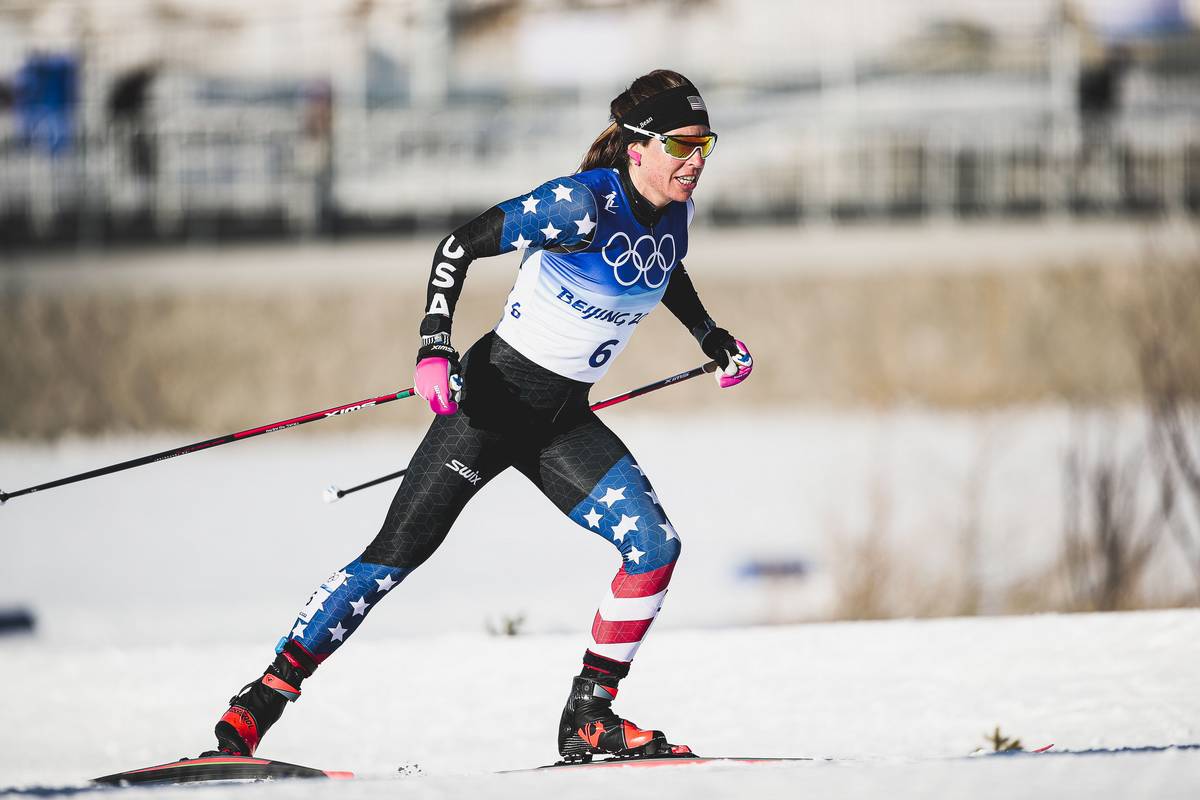
    Brennan will take a step back from her professional career after amassing quite the résumé, representing the United States at the 2018, 2022 and 2026 Winter Olympics. She finished fourth in the freestyle sprint at the Beijing Olympics in 2022, the kind of result that can feel both extraordinary and excruciating, by missing out on an Olympic podium by a single place. She reached World Cup podiums across seasons and disciplines. She became a two-time World Cup winner, a fixture in the American women’s team and one of the athletes who helped move the U.S. from occasional contender to regular presence near the front of international races.

    But Brennan’s own accounting of her career is not limited to the results she garnered over the years. She is proud of showing up. Proud of learning. Proud of becoming competitive in every event. Proud of the people who helped her and the younger athletes she helped in return. Proud that a career that could have ended several times kept expanding instead.

    That may just be why the end of her World Cup career does not feel like a true breakup. For Brennan, skiing was never just a job. It provided her with structure, challenges, community, identity and gave her something to work toward every day and a way to test what was possible. Even now, when she is no longer organizing her life around World Cup racing, she says she’s not suddenly becoming someone else.

    “When you train that many years, it’s hard,” Brennan said. “I’m still going out twice a day most days, because it just feels so normal to me.”

    That may change when she starts school again and other commitments begin to fill the space skiing once occupied. Brennan says she plans to pursue new interests and give attention to parts of herself that the World Cup lifestyle did not always allow. But the habits of a skier are not easy to unwind, and she does not seem especially eager to unwind all of them.

    “I definitely hope to bring forward a lifestyle that’s active, that treats your body well, that’s also willing to push yourself and see where the limits are,” Brennan said.

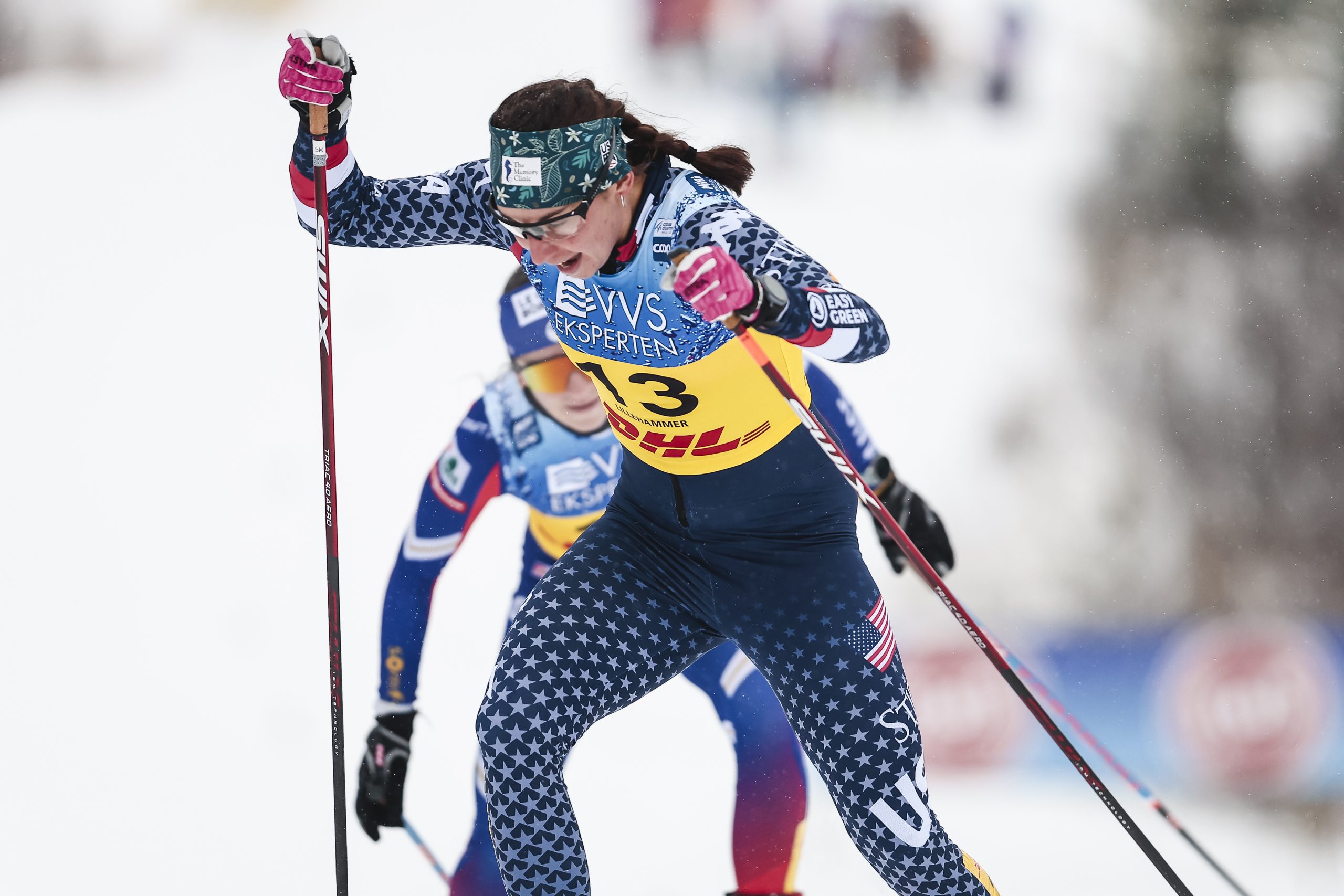
    Rosie Brennan (USA) during the individual sprint qualification at the final World Cup weekend this past March in Lake Placid, New York. (Photo: Modica/NordicFocus)

    Rewiring, Not Retiring

    That is why “rewiring” works. Brennan is not flipping a switch. She is just rearranging the circuitry.

    There will be no more full World Cup campaign, no more life built entirely around the next race weekend. But there will still be skiing, there will still be movement and there will still be competition. The habits and lessons of her career that she built through years of resilience and patience are not things Brennan expects to leave behind.

    “I’m sure there are countless skills, probably most of the skills I’ve learned in my adult life, that I will have to lean on in any of the various careers that I may pursue, and in my studying as well,” Brennan said. “The lessons that I’ve learned will undoubtedly come with me, along with the character and strength that I’ve built throughout my career.”

    Those lessons were built through the less tidy parts of Brennan’s career, from the late start and the years before the podiums to the injuries and doubts that forced her to keep adjusting. But the same career that asked so much of her also gave her something lasting. Skiing was more than a pursuit or a profession, it was the driving rhythm of her adult life, and one she still feels lucky to have followed for so long.

    “It’s definitely an incredible lifestyle to be a ski racer,” Brennan said. “I feel insanely lucky to have called that my career, and to have done so for so long.”

    That gratitude does not make the transition simple. After so many years of organizing life around training, racing and the rhythm of the World Cup, stepping back from that structure means more than changing a schedule. It means figuring out what skiing looks like when it is no longer the center around which everything else has to turn.

    Rosie Brennan (USA) during her final World Cup of her career — the 20 k Freestyle Mass Start in Lake Placid (USA). (Photo: Thibaut/NordicFocus)


    But there is also freedom in that. Brennan no longer has to prove she belongs. She already did. And now, instead of defining skiing only through the World Cup, she gets to decide what parts of it she wants to keep.

    Maybe that means races. Maybe it means long days outside. Maybe it means testing herself in new settings, with new stakes, away from the circuit that shaped so much of her adult life. Maybe it means all of that.

    What seems clear is that Brennan is not disappearing from the sport. She is stepping out of one version of it and into another.

    She is retired, if that is the word people want to use. But it is not the sunset kind. Not the final-page kind.

    For Rosie Brennan, skiing will always be there, just not in the all-consuming way it once was. Now, she gets the chance to redefine her relationship with the sport as something woven into the life she is building next.

    “It’s truly been a dream,” Brennan said.


    Help Support Our Coverage!

    If you value the thoughtful work and access FasterSkier provides, please consider becoming a Voluntary Subscriber. Your support directly fuels our work to cover the people, places, and moments that make our sport special.

    Join the FasterSkier community!


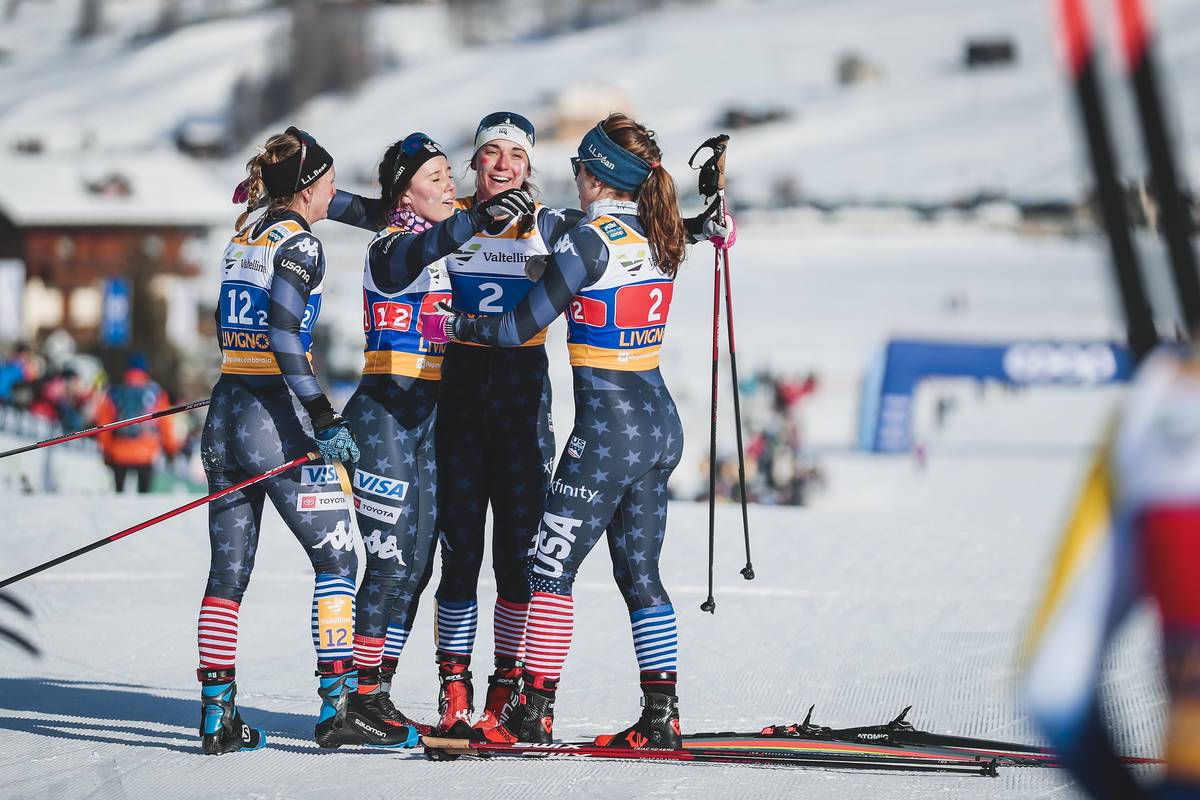
    Brennan’s U.S. teammates wait at the line to greet her after her final World Cup race, a 20-kilometer start in Lake Placid on March 22. (Photo: NordicFocus)
  • The Case for More American World Cups

    The Case for More American World Cups

    This coverage is made possible through the generous support of Marty and Kathy Hall and A Hall Mark of Excellence Award. To learn more about A Hall Mark of Excellence Award, or to learn how you can support FasterSkier’s coverage, please contact info@fasterskier.com.

    Johannes Hoesflot Klaebo (NOR) back in action and lifted by the roar of American ski fans during the World Cup 10 k Classic in Lake Placid, New York. (Photo: Dils / FasterSkier)

    LAKE PLACID, NEW YORK — Ten kilometers into the second World Cup on American soil in as many decades, and the verdict is already clear: We need more racing in the United States.

    That’s the message panted into my microphone by every athlete in the Mix Zone; shouted over the undulating din by every supporter I spoke with on the ice-lacquered walkways lacing Mt. Van Hoevenberg. And it’s the irresistible outcome of the turnout this afternoon in Lake Placid — with a crowd that came out in droves for Diggins, the Schumacher-Ogden’s Silver Medal Squad, and a host of homegrown heroes; that braved five inches of wet, driving snow; and that stayed to see Jessie clinch the Overall Crystal Globe, a reconstituted Klæbo overtake Amundsen in the Distance standings, and to welcome the world’s best to the conclusion of the 2025-26 season.

    The reaction to racing in the United States in 2023 was overwhelmingly positive – and, it had seemed, sui generis. With four snowmaking venues spread across the Twin Cities, along with the (purportedly) highest concentration of cross-country skiers outside of Oslo, the energy that embraced Jessie Diggins in her home state and buried a generation of “almosts” for the U.S. Men’s Team in the snow and mud at Theodore Wirth could have been lightning in a bottle.

    Jessie Diggins (USA) racing on home soil in Minneapolis and did so again in Lake Placid as she concludes her storied World Cup career. (Photo: Modica/NordicFocus)

    I will admit my own skepticism that Lake Placid could field the fans, or the volume, of spectators to match Minneapolis. Perhaps my flight into Saranac Lake Regional Airport on Wednesday morning was my first evidence of error. Of seven passengers bobbing our way through the cloud-laden Adirondacks, four were here for the World Cup: Charlie, from Seattle; Billy (as in, Demong, the Nordic Combined gold medalist) and his son, from Salt Lake City; and myself, from D.C. Bussing to the venue the next day, I’m seated with a dozen of University of Minnesota alumni – they’ve taken off of work, graduate school, and medical school to spectate. “I’m excited just to see the number of people out cheering,” Alex Gude, who organized the trip, tells me. “I think one of the best parts about Minneapolis is just seeing the community come together, and now, away from home, we’re seeing another whole ski community come out and cheer.”

    And, indeed, they are – from across the United States, from across New England, from across the Canadian border, and from right here in Lake Placid. Once we disembark, I wade through the corn snow and the first of many falling flakes to Mt. Van Hoevenberg’s sprawling Nordic Center, where the racecourse coils around the podium and snakes below the pedestrian bridge. Patricia Damp is herding thirteen might-be-members of the local ski community across the bridge; she’s a third-grade teacher here in Lake Placid, chaperoning a class field trip to the World Cup Finals.

    Are the kids already Diggins die-hards, Ogden acolytes, Gus bus-riders? Not really, Patricia tells me. The class “was out here a couple months ago, cross-country skiing. We get to do the Olympic venues. We were at the museum a month ago. We have a friend who we watched ski jump. So, we’re very Olympic-oriented, and today we’re just out here to support the athletes and get some autographs.” Her students back her up. “We’re excited to get the players’ signatures,” Riley tells me. And while Declan is “excited to see the racers,” there’s no-one in particular he’s cheering for.

    Gus Schumacher (USA) during the Men’s 10 k Classic in Lake Placid, New York. (Photo: Dils / FasterSkier)

    From the mouths of children, our first – and perhaps strongest – argument for future American World Cups. The glitter-dusted kids in fan club bibs, wielding cardboard-cutout faces as large as they are, make for compelling pictures and undeniable evidence of Team USA’s impact on its next generation. But racing in the United States creates opportunities to draw an entirely new cohort of young people into the cross-country skiing community – kids who may have never tried skiing before; who may not have heard of Kikkan or Klæbo ; and whose parents certainly are not waking up before sunrise to livestream Ruka, Falun or Holmenkollen. They will not see themselves in this sport until they see this sport. What better way to do so than on a Friday field trip with Mrs. Damp?

    After bidding them good luck with the signature-hunting, it’s not an easy task to wade against the current of the rest of the Lake Placid Class of 2035. Also threading his way through the third-graders is Niklas Dyrhaug, immediately recognizable even five years into retirement from World Cup racing. He’s on the other side of the v-boards this weekend, broadcasting for Norwegian television. In his first sentence, he tells me: “We are enjoying being back in the U.S. In my opinion, we should be here every year.” He’s not surprised by the number of spectators, either. “Everybody who knows the U.S. crowd knows they are really enthusiastic . . . We know the tradition, the culture, and Lake Placid’s place in that history. So, personally, I’m not that surprised. It’s really cool that we’re back here.”

    That’s the sentiment just after Coaster Hill, some four kilometers into the racecourse, where Norwegian national team coach Eirik Myhr Nossum prowls the striding zone. Being back in the United States is “awesome, it’s amazing. I think we should be here every year, because you guys show up; you guys cheer for everyone, and it’s always fun to be in the U.S. and to be overseas to compete.”

    And it’s the sentiment at the finish line.

    Harald Oestberg Amundsen (NOR) after the 10 k Classic in Lake Placid, New York. (Photo: Thibaut/NordicFocus)

    Harald Amundsen (NOR) tells me, “In the outer part of the track, there were so many people I couldn’t hear my own thinking. That’s a really good thing.” Even before he arrived at the venue, “We had a run this morning in the city. Everyone was screaming at us, ‘Good luck!’ It’s a really nice atmosphere.”

    For Elia Barp (ITA), conditions were “very tough because it was really slow with this new snow, but it was fun racing for me. So I enjoyed it – at least I tried to enjoy it – it was a pack of people screaming my name so that gave me even more motivation, and was fun . . . I loved racing two years ago in Minneapolis, and here it’s packed with people, even with the snowfall, so thank you to everyone for coming. It’s really good to race here.”

    Mika Vermeulen (AUT) admits, “Honestly, this is probably the worst race I’ve done in a long time. But I don’t think I’ve ever had so much fun out on the track . . . on top there, out in the forest, I just heard, ‘MI-KA, MI-KA,’ the whole time. It was insane. I had a bad race and a lot of fun.”

    As for how he feels about returning to the United States: “Great, great, actually—and feeling a bit frustrated, because it just gets me pissed that we race these [bad] courses in Europe all the time, over and over and over again, and we have these freaking jewels out here which we never use. It’s crazy. I want to go to the U.S. every year for at least a whole period. It’s called the World Cup. It’s not called the European Cup, right?”

    Fans all over the course with custom gear showing their fandom. (Photo: Dils / FasterSkier)

    Klæbo’s opinion is a bit more measured – perhaps because he has more microphones hovering around his face. “I heard some rumors that it was supposed to be quite well [attended], and when I searched up Lake Placid and read a little bit about the place, I understood there’s not that many people living [here], but when you see how many people are here, I was pretty shocked.”

    A second argument, then, in favor of World Cup racing in this country: the athletes love it. They embrace not just the energy, but the venues that push the World Cup beyond the geographic and cultural confines of Transalpine Europe.

    Benjamin Dohlby (USA) at the finish of the Men’s 10 k Classic in Lake Placid. (Photo: Thibaut/NordicFocus)

    For the closing statement, Ben Dohlby is among the last athletes I interview. This is Ben’s first World Cup start; a junior at University of Alaska-Fairbanks, he was 3rd in the American Birkebeiner in February. How does it feel to be making his first professional start in the United States?

    “It was crazy. I went out so hard. The fans were so loud that I didn’t feel anything, and then I felt it all and got so tired – but it was awesome; a great atmosphere.” It wasn’t too long ago that Ben was skiing laps around the glazed kilometer of manmade snow at Lapham Peak State Park in Delafied, Wisconsin; now he’s here. To his former teammates, to other up and coming skiers, and to novices across similar ribbons of snow in Wisconsin, Michigan, and Minnesota, his message is simple: “Follow your dreams and you can make it happen.”

    Most of the fans hiked up on the course, but the stadium filled up as the day went on. (Photo: Dils / FasterSkier)

    That, then, is our concluding point: More World Cup starts on American soil means more starting berths for American skiers, and more chances for our most talented young skiers to make it to the starting line. We should savor the privilege of, as a host nation, pitting our athletes against the most accomplished figures in the sport, dreaming that a World Cup podium, an Olympic medal, could be in their future. When a lifetime of discipline and preparation meets the opportunity of a lifetime, the promise of Lake Placid – that miracles can happen – becomes deliverable.

    I will leave the invariable complex problems of bidding, organizing, and logistically managing future events to far wiser pundits. But, in the meantime, the verdict is clear: FIS, U.S. Ski & Snowboard, and the American Nordic community should be eager, and determined, to have them here.


    Love Stories Like This? Help Keep Them Coming.

    Feature stories like this one take time, access, and care to produce. If you value thoughtful storytelling and independent ski journalism, please consider becoming a Voluntary Subscriber. Your support directly fuels the work we do to cover the people, places, and moments that make our sport special.

  • Sundling Seizes Drammen, Denying Skistad on Home Snow

    Sundling Seizes Drammen, Denying Skistad on Home Snow

    This coverage is made possible through the generous support of Marty and Kathy Hall and A Hall Mark of Excellence Award. To learn more about A Hall Mark of Excellence Award, or to learn how you can support FasterSkier’s coverage, please contact info@fasterskier.com.

    The women’s sprint final comes into the finish in Drammen, Norway with: Laura Gimmler (GER), Ane Appelkvist Stenseth (NOR), Jonna Sundling (SWE), Nadine Faehndrich (SUI), Johanna Hagstroem (SWE), and Kristine Stavaas Skistad (NOR), (l-r). (Photo: Nordnes/NordicFocus)

    The snow was trucked in, the rock band was playing near the finish, and Norwegian children cheered from second-story windows along the course. On a rare midweek World Cup race day in Drammen — a small city just southwest of Oslo where the sprint course loops through the streets, wraps around an old fountain, and finishes on the snow-covered steps of an iconic church — Jonna Sundling of Sweden took home another World Cup sprint victory.

    Sundling won the women’s classic sprint, going stride for stride with Norway’s Kristine Stavaas Skistad before pulling away in the final meters. Switzerland’s Nadine Faehndrich, racing her final classic sprint before retirement, earned the bronze.

    It was Sundling’s fifth individual World Cup victory of the season and the latest chapter in an intensifying rivalry with Skistad that has captivated ski fans, especially Scandinavian ones, for the last few seasons. From the World Championship final in Trondheim last year to the Olympic final in Milano Cortina, Sundling, with the rest of the Swedish sprinters, and Skistad have been locked in a tactical chess match. On Thursday in Drammen, it was Sundling who played the final move.

    Quarterfinal number one heads up the first climb with: Barbora Antosova (CZE), Mathilde Myhrvold (NOR), Jessie Diggins (USA), Melissa Gal (FRA), (l-r). (Photo: Nordnes/NordicFocus)
    Qualification and Quarterfinals

    Sweden’s Linn Svahn, the reigning Olympic sprint champion, posted the fastest qualification time at 2:41.87 — nearly three seconds clear of Sundling’s 2:44.39. But qualification speed, as World Cup sprinting always reminds us, is only the entry ticket.

    Two Americans advanced to the heats. Jessie Diggins, the overall World Cup leader wearing the yellow bib in what she called a “full circle moment,” qualified 17th in 2:50.91. Rosie Brennan, seeded 28th, also made the top 30.

    Diggins chose Quarterfinal 1 alongside Sundling and Skistad — a loaded heat. Skistad took the win with Sundling second via a photo finish, just 0.18 seconds separating them. Diggins fought hard for third, advancing as a lucky loser after finishing just 0.22 seconds behind Sundling.

    Rosie Brennan (USA) said after the race, “Drammen is one of my favorite races, it’s a fun course and always has a lively atmosphere.” (Photo: Nordnes/NordicFocus)

    Brennan’s day ended in the quarterfinals. Racing in Heat 3, she bobbled heading into the downhill and lost the draft, which was a costly moment on a course where the slipstream effect was enormous all afternoon. She finished fifth in her heat.

    “I was happy to get a chance in the rounds, but the conditions were very tough,” Brennan said. “They salted the course, and it was skiing great in the qualifier and then got really icy for the rounds. Anyway, I bobbled into the downhill and lost the draft and then just don’t have the power I need to pass that many people up the finish stretch, so I was disappointed to not be more in the mix.”

    Meanwhile, Svahn survived a scare of her own… as her quarterfinal rounded the fountain that anchors the bottom of the course behind the start gates, five of the six athletes ended up in a pile and Svahn seemingly had the most bodies and equipment to navigate as she got back out on the course, but somehow recovered to advance. The Olympic champion’s troubles, however, were only beginning.

    Maja Dahlqvist (SWE) and Jessie Diggins (USA), (l-r) during the second semifinal. (Photo: Nordnes/NordicFocus)
    Semifinals

    The two semifinals told entirely different stories, and the contrast between them shaped the final.

    In Semifinal 1, Skistad took the win with Sundling second, just 0.20 seconds back. Both advanced automatically. Behind them, Svahn finished third and would not advance.

    Semifinal 2 was a different race entirely. Johanna Hagstroem and Ane Appelkvist Stenseth pushed the pace from the gun, stringing the field out over the first climb. But on the long downhill, the draft did its work. Faehndrich and Laura Gimmler of Germany surged past, using the slipstream to slingshot into the lead.

    Nadine Faehndrich (SUI), who is planning to retire after the season, found a little extra Drammen magic today as she finished on the podium in third. (Photo: Nordnes/NordicFocus)

    Faehndrich won the heat decisively. Gimmler was second. The fast overall times meant Hagstroem would advance along with Stenseth, who just out-lunged Diggins for fourth and the second lucky loser position.

    For Diggins, the day ended in 10th. But she left Drammen at peace.

    “This was really cool because the Drammen area was my first ever World Cup start and it was a skate sprint,” Diggins said. “So it’s kind of a very full circle moment to close it out with a classic sprint here as the last classic sprint of my career.”

    She had tried something new in the heats, sitting in the draft instead of going to the front, a departure from her usual aggressive approach. “Normally, because literal strength is not my strength, I usually just try to go really, really hot and try to go off the front,” she said. “I was like, nope, I don’t think that’s gonna work for me here with the crazy draft and slingshot effect. I was taking a lot of notes in warm-up, and in the quarterfinal, I had the smallest tuck of my life. It was just really fun to try to believe in myself as more of a pure sprinter and to try to be a little more tactical.”

    She acknowledged she ran out of power in the semifinal, but had no regrets. “I still felt like I executed my plan to the best of my ability, and that’s always a cool feeling.”

    Jonna Sundling (SWE) crosses the finish line just ahead of Kristine Stavaas Skistad (NOR) for the win in Drammen, Norway. (Photo: Nordnes/NordicFocus)
    The Final

    Six women lined up for the final: Sundling and Hagstroem for Sweden, Skistad and Stenseth for Norway, Faehndrich for Switzerland, and Gimmler for Germany. Svahn and Maja Dahlqvist, the Olympic gold and bronze medalists in the sprint classic, were both absent.

    On the opening climb, Skistad sat behind Sundling in a familiar posture — patient, conserving, waiting for the right moment. As Kikkan Randall mentioned on the broadcast, Skistad almost never leads into a downhill. She baited Gimmler into taking the front position, then tucked into her slipstream.

    Coming off the descent and around the final hairpin, Faehndrich made her bid, surging past Gimmler and into third. But the race was between the two women everyone expected.

    Sundling and Skistad skied side by side on the final climb, and what followed was a scene that encapsulated their rivalry. Stride for stride, shoulder to shoulder, neither yielding a centimeter. Sundling’s transition from double pole to striding was fractionally sharper — she carried more momentum through the final meters — and she crossed the line with a small advantage.

    “It is usually very tight in Drammen, but today it was extremely tight,” Sundling said on air afterward. “Till the last meter. I was like, okay, I need to continue all the way over the finish line. It was tough, but I’m happy that I was the first person over the line.”

    For Faehndrich, the bronze was a fitting farewell. The 30-year-old Swiss racer, who announced her retirement this season, now sits third in the sprint World Cup standings at 700 points — just behind Hagstroem (708) and within striking distance of leader Dahlqvist (720) heading into the final sprint of the season in Lake Placid next weekend.

    Jessie Diggins (USA) gave her fans something to cheer about during her quarterfinal when she charged to the finish line. (Photo: Nordnes/NordicFocus)
    Looking Ahead

    Diggins continues to lead the overall World Cup standings with 1,961 points, 275 points ahead of Sweden’s Moa Ilar, a margin that appears insurmountable with four races remaining. The distance globe, too, seems firmly in her grasp. But the sprint crystal globe race is wide open: Dahlqvist, Hagstroem, and Faehndrich are separated by just 20 points at the top of the standings, and the final sprint in Lake Placid could decide everything.

    For Diggins, there’s another milestone ahead — she’s only a few nights away from sleeping in her own bed before racing in front of an American crowd at the World Cup Finals. “Very, very, very excited about that,” she said.

    The World Cup moves to the historic Holmenkollen venue in Oslo on Saturday for the Women’s 50 k Freestyle Mass Start, before the season concludes in Lake Placid, New York, March 20-22.


    Drammen Women’s Classic Sprint QUALIFICATION RESULTS

    Drammen Women’s Classic Sprint FINAL RESULTS


    Love Stories Like This? Help Keep Them Coming.

    Feature stories like this one take time, access, and care to produce. If you value thoughtful storytelling and independent ski journalism, please consider becoming a Voluntary Subscriber. Your support directly fuels the work we do to cover the people, places, and moments that make our sport special.

    Join the FasterSkier community!


    Kristine Stavaas Skistad (NOR), Jonna Sundling (SWE), and Nadine Faehndrich (SUI), (l-r) share the Classic Sprint podium in Drammen, Norway. (Photo: Nordnes/NordicFocus)
  • Diggins Podiums in Lahti as Karlsson Wins 10 k Classic

    Diggins Podiums in Lahti as Karlsson Wins 10 k Classic

    This coverage is made possible through the generous support of Marty and Kathy Hall and A Hall Mark of Excellence Award. To learn more about A Hall Mark of Excellence Award, or to learn how you can support FasterSkier’s coverage, please contact info@fasterskier.com.

    Jessie Diggins (USA) on her way to third place in the 10 k Classic Individual Start in Lahti, Finland. (Photo: Authamayou/NordicFocus)

    As Jessie Diggins climbed the final hills in Lahti on Sunday, she could hear something unusual rising above the crowd noise. Scattered along the course were hand-made signs held by Finnish fans and young skiers. Many carried the same simple message: “Thank you, Jessie.”

    For Diggins, racing through what has increasingly become a farewell tour of World Cup venues that have defined her career, the moment carried emotional weight. Lahti has not always been a place where the American felt the course played to her strengths, particularly in classic technique. But on Sunday, she delivered one of her most meaningful performances there, skiing to third place in the women’s 10-kilometer classic interval start.

    “There were so many people out on the course with signs saying ‘Thank you, Jessie,’ and it was really emotional in the best way,” Diggins said afterward. “It was incredibly touching. Seeing all the little kids in glitter after the race was just really special.”

    Frida Karlsson (SWE) on her way to the 10 k Classic win in Lahti, Finland. (Photo: Authamayou/NordicFocus)

    Sweden’s Frida Karlsson powered to the victory in 25:57.6, edging teammate Linn Svahn by just over four seconds. Diggins followed in third, 6.2 seconds behind the winner, securing the 90th World Cup podium of her career — a milestone that came in her 375th World Cup start.

    The podium also represented a breakthrough for Diggins in a discipline she has spent years working on. Despite her long list of accomplishments, Sunday marked her first World Cup podium in a standalone 10-kilometer classic interval start.

    “The Lahti course hasn’t always suited my strengths in classic skiing,” Diggins said. “So it felt really cool to pull it together a bit more today.”

    The result allowed Diggins to maintain control of both major season-long competitions. With only three World Cup stops remaining this winter, she continues to lead Sweden’s Moa Ilar by 264 points in the Overall World Cup standings and by 188 points in the Distance standings, positioning herself strongly in the race for the sport’s coveted crystal globes.

    Moa Ilar (SWE) and Linn Svahn (SWE), (l-r) reflecting at the finish. (Photo: Authamayou/NordicFocus)
    Svahn Sets the Early Benchmark, Karlsson Finishes the Job

    With the interval format — one athlete starting every 30 seconds — stretching the field across the Lahti course, the first major time to chase appeared almost immediately.

    Sweden’s Linn Svahn, starting with bib 5, was among the earliest contenders onto the course and quickly posted the fastest times through the early checkpoints. Known primarily as one of the World Cup’s dominant sprinters, Svahn skied aggressively over the opening kilometers and established the benchmark that much of the field would spend the next hour chasing.

    Her time held atop the standings as racer after racer attempted to match it.

    Later in the race, however, another Swede began to close the gap. Frida Karlsson, wearing bib 40, remained within seconds of Svahn through the intermediate checkpoints before edging ahead in the final kilometers.

    “I was just trying to stay in my own skiing,” Karlsson said afterward. “I heard it was between me and Linn, and I was super excited to get that fight.”

    Karlsson ultimately crossed the line in 25:57.6, securing the victory by 4.1 seconds over her teammate.

    The win came after a brief illness, which prevented her from competing in the Olympic 50 k, but Karlsson said she was eager to keep racing despite the setback.

    “I was sick after the Olympics, but I was really excited to keep racing and just do what I know best,” she said. “So I’m super glad to be here.”

    Diggins, starting shortly after Karlsson, kept herself in contention throughout the race, skiing within striking distance of the Swedish pair at each checkpoint before finishing 6.2 seconds back in third place.

    Linn Svahn (SWE) on her way to second place. (Photo: Authamayou/NordicFocus)
    Three Different Approaches to the Same Race

    The split times revealed three distinct pacing strategies among the podium finishers.

    Svahn, starting fifth, set the tone early. She posted the fastest time through the opening 1.1 kilometers and maintained the lead at the 3.4-kilometer checkpoint, immediately putting pressure on the rest of the field as they left the start gate.

    Karlsson, starting later in bib 40, remained just seconds behind through the early checkpoints, skiing a controlled opening before gradually closing the gap. By the middle of the race, she had moved into contention, and over the final kilometers, she proved strongest of all, ultimately pulling ahead to secure the victory.

    Diggins, meanwhile, delivered perhaps the most evenly paced effort of the three. She remained within striking distance of the leaders at every checkpoint — fifth at 1.1 kilometers, third by 3.4 kilometers, and still in podium position through the final lap.

    That steadiness proved decisive in the final standings. While the two Swedes battled for the win, Diggins’ consistent pace allowed her to secure third place and another important podium in the fight for the season-long crystal globes.

    Jessie Diggins (USA) sprints for the finish line. (Photo: Authamayou/NordicFocus)
    Diggins’ Classic Progress

    Diggins’ podium also reinforced one of the season’s quieter developments: the continued evolution of her classic technique.

    For much of her career, the American’s greatest moments have come in skating events, where her aggressive pacing and powerful finishing speed often prove decisive. But this season she has shown remarkable consistency in classic distance races, finishing in the top ten in every classic distance event on the World Cup calendar.

    Conditions in Lahti — warming temperatures and increasingly soft tracks — placed an additional premium on ski preparation, something Diggins was quick to acknowledge after the race.

    “I had great skis, which is a huge part of the equation, especially when the conditions get slushy,” Diggins said. “This podium really belongs to the team. I’m so grateful for all the hard work they put in.”

    Rosie Brennan (USA) on her way to 12th place. (Photo: Authamayou/NordicFocus)
    Brennan Continues Return to Form

    A bit further down the results list, fellow American Rosie Brennan continued a gradual return toward form after a long battle with illness that has affected much of her season.

    Brennan finished 12th (+38.6) in Lahti, a result that reflected both solid skiing and a cautious approach early in the race.

    “This whole process has really been a game of time,” Brennan said. “There have been many moments when I’ve wondered if I’ll ever feel normal again in my life. But the last three days are the most normal I’ve felt racing since December 2024.”

    The Lahti course, known for its steep climbs and technical demands, offered a test of efficiency in classic technique — a challenge Brennan felt she handled well.

    “Lahti requires really good technical skiing,” she said. “I felt like if I could relax and focus on my classic technique, that would give me the best chance.”

    Kendall Kramer (USA) working her way up one of the many Lahti climbs. (Photo: Authamayou/NordicFocus)
    Kramer Finds Lessons in the Lahti Hills

    For American Kendall Kramer — 42nd in 27:40.8 (+1:43.2) — the Lahti race presented a different kind of challenge: starting first.

    Wearing bib 1, Kramer had the advantage of pristine tracks before the course began to break down as temperatures warmed. But the early start also meant racing without reference splits from the rest of the field.

    “I was actually okay starting with bib 1 today, given the state of the tracks,” Kramer said. “They tend to break down as the race goes on, and the corners can get icy, so it was nice to have cleaner conditions early.”

    Without other athletes on course to gauge pacing against, Kramer said the race became more about skiing freely and trusting her own effort.

    “Racing without reference splits definitely makes pacing tougher, but at the same time it lets you ski freely and focus on your own race.”

    The steep Lahti climbs also highlighted the technical demands of classic skiing at the World Cup level.

    “The punchy hills were fun because I could really bound up them, which is something I haven’t done much in World Cup racing so far,” Kramer said. “But the sections where it turns into pure power striding showed me I still have a lot to work on.”

    Despite the challenges, Kramer described the experience as valuable for understanding the technical standards required to compete consistently at the highest level.

    “I’ve learned so much from racing here this season,” she said. “At the World Cup, every strength and every weakness gets highlighted, and that really helps show what to work on heading into the summer.”

    Julia Kern (USA) catches a rest from both the climbs and the sunlight. (Photo: Authamayou/NordicFocus)
    Kern Heading Home Early to Recover

    Julia Kern, who finished 51st — 28:11.4 (+2:13.8) — today, said she will return home early from the World Cup circuit as she continues working through health issues that have lingered since the Olympic races.

    “I’ve been battling my body on various fronts since the Olympics,” Kern said in a team media statement. “One of my strengths is showing up and continuing to try and believe despite the challenges, while also being patient and smart.”

    Kern added that she will take additional time to recover while seeking answers about her condition, with hopes of returning to competition at the Stifel World Cup Finals in Lake Placid later this month.

    “Right now, my body needs more time to recover and is in search of answers, so I’m headed home early with the hopes of being in a place to race in Lake Placid.”

    Lauren Jortberg (USA) and Katherine Weaver (CAN), (l-r) charge for the line. (Photo: Authamayou/NordicFocus)
    Jortberg Gets a Front-Row Look at Karlsson’s Pace

    For American Lauren Jortberg — 55th in 28:32.7 (+2:35.1) — the Lahti race offered a unique opportunity to measure herself against one of the sport’s best.

    Early in the race, Jortberg found herself skiing behind Sweden’s Frida Karlsson for several kilometers as the eventual winner was completing her second lap while Jortberg was still on her first.

    “I skied with Frida for about three kilometers, which was really cool,” Jortberg said. “She’s obviously a beast, and it was cool to hang with her and get a taste of what that pace actually feels like.”

    Jortberg said the experience offered valuable insight into the demands of racing a 10-kilometer interval start at the World Cup level, where pacing often means pushing near maximum effort from the start.

    “Ten-k pacing on the World Cup is basically as hard as you can go the whole way,” she said. “It’s about learning how to navigate that kind of effort and still ski your own race.”

    She added that the race reinforced both the progress she has made in classic technique and the areas she hopes to continue developing as she gains more experience at the international level.

    “I’m really proud of how my classic skiing is coming along,” Jortberg said. “There’s still a lot to work on, but it was definitely a good first start in a distance race.”

    Jortberg said she hopes to carry the fitness and lessons from Lahti into the next stop on the World Cup circuit in Drammen, Norway.

    Emma Albrecht (USA) giving it everything she can all the way to the finish. (Photo: Authamayou/NordicFocus)
    Albrecht Sees the Margins Up Close

    Further back in the start order, fellow American Emma Albrecht — 58th in 28:50.7 (+2:53.1) — experienced firsthand just how tight the margins can be in World Cup distance racing.

    “The tight margins were shown by skiers finishing at similar times,” Albrcht said after the race. “For me, I was not passed, and I did not pass anyone. Which meant the skiers in front and behind me were skiing at a similar pace to me.”

    Like Kramer, Albrecht said the steep Lahti climbs emphasized the technical demands of classic technique, particularly the efficiency required to stride uphill without losing grip.

    “The uphill sections are the most technical and demanding here,” she said. “The climbs in Lahti are steep, and striding up efficiently requires really good technique to avoid slipping.”

    For Albrecht, the race served as a clear reminder of the areas she hopes to refine moving forward.

    “One of my biggest takeaways is that I want to keep working on my striding technique and get better at adjusting my tempo based on the terrain.”

    Dariya Nepryaeva (AIN) and Novie Mccabe (USA), (l-r) come to the line. (Photo: Authamayou/NordicFocus)
    Other North Americans in the Field

    Novie McCabe raced her way to 43rd in 27:45.0 (+1:47.4) in the 64-skier field.

    For Canada, Jasmine Drolet led the team in 41st place with a time of 27:39.8 (+1:42.2). Liliane Gagnon finished 46th in 27:56.4 (+1:58.8), and Katherine Weaver placed 59th in 29:00.9 (+3:03.3). Teammate Olivia Bouffard-Nesbitt, who had been listed on the start sheet, did not start the race.

    Take a bow, Jessie Diggins (USA) . (Photo: Authamayou/NordicFocus)
    The Season’s Final Push

    Sunday’s race in Lahti brought us even closer to the end of the season, now with only two sprint races and three distance races remaining until the sport’s biggest prizes will ultimately be decided.

    For Diggins, the third-place finish represented more than another podium in an already historic career. It also reinforced the remarkable consistency that has defined her season. With top-10 finishes in every classic distance race this winter, she has transformed what was once considered a relative weakness into one of the foundations of her bid for both the Overall and Distance crystal globes.

    Three stops remain on the calendar: the classic city sprint in Drammen, Norway, the iconic 50-kilometer race at Holmenkollen in Oslo, and the Stifel World Cup Finals in Lake Placid, New York.

    For Diggins, those races now carry both competitive stakes and emotional significance. As the American continues what has increasingly felt like a farewell tour across the World Cup circuit, the crowds that gathered along the Lahti course on Sunday offered a glimpse of how much her career has meant to fans of the sport, not just in the United States, but all around the world.

    And as Diggins pushed across the final climbs toward the stadium — signs waving, glitter-clad children cheering from the side of the course — she did what she has done so often over the past decade: she kept fighting for every second and left everything she had, once again, on the course.

    Lahti Women’s 10 k Classic RESULTS


    Love Stories Like This? Help Keep Them Coming.

    Feature stories like this one take time, access, and care to produce. If you value thoughtful storytelling and independent ski journalism, please consider becoming a Voluntary Subscriber. Your support directly fuels the work we do to cover the people, places, and moments that make our sport special.

    Join the FasterSkier community!

     

    Linn Svahn (SWE), Frida Karlsson (SWE), and Jessie Diggins (USA), (l-r) share the 10 k Classic podium in Lahti, Finland. (Photo: Authamayou/NordicFocus)
  • Sundling Returns to Win Lahti Sprint as Crystal Globe Battle Tightens

    Sundling Returns to Win Lahti Sprint as Crystal Globe Battle Tightens

    This coverage is made possible through the generous support of Marty and Kathy Hall and A Hall Mark of Excellence Award. To learn more about A Hall Mark of Excellence Award, or to learn how you can support FasterSkier’s coverage, please contact info@fasterskier.com.

    Jonna Sundling (SWE) during qualification in Lahti, Finland. (Photo: Authamayou/NordicFocus)

    The World Cup season returned to Finland this weekend, closing a circle that began more than three months ago in Ruka. In the time since Olympic teams were selected, dreams realized or deferred, experience forged, and farewells offered week after week as the long winter wears on. If the stakes in Lahti feel slightly lower than they did earlier in the season, they are tightening in another way — especially in the races for the Crystal Globes.

    With only a handful of races remaining in the season, the women’s Freestyle Sprint offered more than just another podium. The fight for both the Sprint Crystal Globe and the Overall Crystal Globe continues to tighten.

    In tricky conditions, Sweden’s Jonna Sundling emerged as the day’s winner, navigating the heats with authority before closing out the final to claim victory.

    “I think all day it’s been difficult with the conditions because it seems so nice, but when you ski it’s like icing underneath,” Sundling said in a post-race interview with FIS on the broadcast. “There were some challenges with the skiing, but I’m glad that I could ski as I did today and go all the way.”

    The victory marked a strong return for Sundling, who said she had recently been dealing with a cold and missed racing in Falun before arriving in Lahti.

    One of the most interesting moments of the women’s race came when Kristine Stavaas Skistad (NOR) was disqualified during the semifinals for what appeared to be a very minor incident.  She received a yellow card for the incident, and because she was already carrying one from a previous violation, she was disqualified. (Photo: Authamayou/NordicFocus)
    A Tactical Sprint Course

    The Lahti freestyle sprint course rewarded patience as much as power. After the individual qualification round, the top 30 athletes advanced into the head-to-head heats — five quarterfinals of six athletes each, with the top two finishers and the two fastest “lucky losers” advancing to the semifinals.

    From there, the field narrowed again: two semifinal heats would determine the six skiers racing for the win.

    While the course appeared straightforward on paper, athletes quickly discovered the conditions made positioning critical. The climb before the final hairpin offered one of the few reliable passing opportunities before the long run to the finish, which saw the race often gather back together around the final corner before the finishing stretch. And throughout the heats, several favorites discovered how narrow the margin for error could be.

    Maja Dahlqvist (SWE) got out well, but was unable to advance from the quarterfinals. (Photo: Authamayou/NordicFocus)
    Globe Leaders Falter

    Two of the athletes who have dominated the sprint standings this season — Maja Dahlqvist (Sweden) and Nadine Fähndrich (Switzerland) — both saw their days end earlier than expected, failing to advance beyond the quarterfinals.

    Their early exits added intrigue to the sprint globe race as the season heads toward its final stretch.

    Meanwhile, Sundling continued to build momentum, advancing smoothly through her heats despite the difficult snow conditions.

    “I’m super motivated,” Sundling said of the final weeks of the season in the broadcast interview. “It’s my favorite time of the year.”

    Hilla Niemela (FIN), Johanna Hagstroem (SWE), and Jessie Diggins (USA) (l-r) charge up the opening climb of the Freestyle Sprint in Lahti, Finland. (Photo: Authamayou/NordicFocus)
    Diggins Attacks, But Falls Short

    For the United States, Jessie Diggins came closest to advancing deep into the rounds.

    In her quarterfinal, Diggins launched a decisive move on the final climb, surging to the front of the group in an effort to create separation before the tight hairpin turn at the top of the hill. Over the crest, she continued the attack, aggressively no-pole skating the downhill in an attempt to open a gap.

    For a moment, the tactic appeared to work.

    But the chasing group quickly organized behind her, the draft pulling them back together on the descent into the stadium. Sweden’s Johanna Hagström surged in the final meters, lunging at the line to edge Diggins and end the American’s day in the quarterfinal.

    Diggins said the Lahti crowd helped make the experience memorable.

    “It was so cool to hear the crowd roaring. There were so many people out, really filling the stadium and along the course. It’s just a very cool environment. It was sunny and beautiful, which made it really fun.

    “I was really happy with my energy today. I feel like I skied a pretty good race and did everything I could. But again this year, I feel like I just don’t quite have that ultimate power, especially in the finishing stretch.

    “I’m excited for tomorrow and just excited to be finishing out my last stretch here in Europe. That feels really special. It’s kind of cool to take a moment to reflect on my many years spent on the road in Europe. That chapter is coming to a close now, which is really cool and really special. I’m just grateful thinking back on all the memories over all the different years.”

    Rosie Brennan (USA) fighting to maintain contact with the group as Gina Del Rio (AND) takes the opening climb out fast during their quarterfinal. (Photo: Authamayou/NordicFocus)
    Brennan Knocked Out in Quarterfinal*

    Veteran American Rosie Brennan also reached the quarterfinals but was unable to advance.

    Lauren Jortberg (USA) on her way to 37th place in qualification in Lahti, Finland. (Photo: Authamayou/NordicFocus)
    Jortberg Reflects on Qualification Miss

    For Lauren Jortberg, the Lahti sprint was a reminder of how thin the margins can be in World Cup qualification.

    Jortberg finished 37th in the qualification, just outside the top-30 cutoff needed to advance to the heats. After the race, she said the conditions on the Lahti course made it difficult to find the right balance between glide and stability.

    “There was kind of an ice sheet underneath with some sugar on top,” Jortberg told FasterSkier after the race. “So it was hard to find skis that were running really well while also being able to push off and plant well. It made the skiing a little tricky, but that’s pretty typical for what we’ve seen in Lahti the last few years.”

    Jortberg also felt she left something on the course in terms of pacing.

    “I think I just didn’t pace it very well,” she said. “I probably paced it too much. I didn’t really finish feeling that tired, so that was a bit of a bummer.”

    Part of that caution, she explained, stemmed from having dealt with illness in the days leading into the race.

    “I had been sick the last week, so I think I held back a little bit,” Jortberg said. “That’s frustrating because I felt really good and I think I could have been competitive today.”

    Even so, Jortberg said the past months of racing have helped build confidence as she continues gaining experience on the World Cup circuit.

    “One of the big takeaways from these World Cup weekends is that when I can put down a really solid qualifier, I’m very much in the mix,” she said. “Even though today wasn’t a great qualifier, I wasn’t that far out of the heats, so I think that’s something I can take confidence from going into the next few weekends.”

    Julia Kern (USA) during qualification. (Photo: Authamayou/NordicFocus)
    Julia Kern Trying to Get Back to Form*

    Julia Kern, returning to racing after illness following the Olympic Games, placed 44th in the qualification round.

    Albrecht Gaining World Cup Experience

    Emma Albrecht, competing in her fourth World Cup weekend, finished 48th in the qualification round in Lahti as she continues gaining experience at the highest level of the sport.

    Albrecht said one of the biggest adjustments to racing on the World Cup has been the razor-thin margins in sprint qualification.

    Emma Albrecht (USA) gaining experience during the qualification in Lahti, Finland. (Photo: Authamayou/NordicFocus)

    “The biggest adjustment to racing at this level is how tight the race margins are,” Albrecht told FasterSkier after the race via email. “The U.S. SuperTour field is obviously not as competitive, and it has been a shift — especially in sprinting — to have to have a fast qualifier. You are no longer guaranteed to make heats.”

    The Lahti sprint course also served as a reminder of the confidence and technical skills required to compete in crowded sprint fields.

    “Today’s qualification reminded me to take up space on the course and not be afraid of a little hop skate,” she said.

    Even with the challenges, Albrecht said the experience is fueling motivation heading into the offseason.

    “This weekend is making me very excited for summer training,” she said. “A field as deep as this really highlights weaknesses on course. I would love to become a more efficient jump skater and be more confident in my high-speed V2. I’m definitely walking away with a lot of motivation to improve.”

    Liliane Gagnon (CAN) charges up the first climb during her quarterfinal, where she narrowly missed advancing to the semifinals. (Photo: Authamayou/NordicFocus)
    Canadian Results

    Canada’s top performance came from Liliane Gagnon, who finished third in her quarterfinal — just short of advancing to the semifinals.

    Teammates Olivia Bouffard-Nesbitt and Katherine Weaver placed 43rd and 46th, respectively, in qualification.

    Jonna Sundling (SWE) celebrates the win while Coletta Rydzek (GER) and Johanna Hagstroem (SWE) lunge for third behind her. (Photo: Authamayou/NordicFocus)
    The Season’s Final Push

    With only a handful of races remaining on the World Cup calendar, the results in Lahti could prove important in shaping the final standings.

    For Sundling, the victory served as both a return to form and a statement heading into the closing weeks of the season.

    “I’m looking forward to the rest of the season,” she said.

    For others — particularly those chasing the Crystal Globes — the margin for error continues to shrink.

    And with more racing still ahead in Lahti this weekend, the battle for the season-long trophies is far from settled.


    Lahti Women’s Freestyle Sprint QUALIFICATION RESULTS

    Lahti Women’s Freestyle Sprint FINAL RESULTS


    *We hope to add more quotes above from athletes if we hear back from them, but wanted to get this race report posted in a timely fashion.


    Love Stories Like This? Help Keep Them Coming.

    Feature stories like this one take time, access, and care to produce. If you value thoughtful storytelling and independent ski journalism, please consider becoming a Voluntary Subscriber. Your support directly fuels the work we do to cover the people, places, and moments that make our sport special.

    Join the FasterSkier community!


    Linn Svahn (SWE), Jonna Sundling (SWE), and Coletta Rydzek (GER), (l-r) share the Freestyle Sprint podium in Lahti, Finland. (Photo: Authamayou/NordicFocus)
  • Matintalo First, Diggins Second: A Classic 20 K Test Before the Olympics

    Matintalo First, Diggins Second: A Classic 20 K Test Before the Olympics

    This coverage is made possible through the generous support of Marty and Kathy Hall and A Hall Mark of Excellence A Hall Mark of Excellence Award. To learn more about A Hall Mark of Excellence Award, or to learn how you can support FasterSkier’s coverage, please contact info@fasterskier.com.

    Emma Ribom (SWE), Moa Ilar (SWE), Kerttu Niskanen (FIN), Karoline Simpson-Larsen (NOR), (l-r) lead early in the women’s 20 K Classic Mass Start in Goms, Switzerland. (Photo: Authamayou/NordicFocus)

    The sky above the Goms Nordic Centre on Sunday morning had the washed-out look of winter at altitude — pale and reflective. Snow had fallen overnight — not enough to transform the valley, but enough to affect ski behavior. The tracks were glazed in some places and soft in others, offering a surface that challenged kick, balance, and restraint.

    This was the third and final race of the last World Cup weekend before the Olympic Games. The final challenge came in the form of a 20-kilometer Classic Mass Start — a distance long enough to punish impatience, short enough to reward precision. In many ways, it felt like a rehearsal, a partial preview of the Olympic 50 k to come, even as two of the discipline’s defining figures — Sweden’s Ebba Andersson and Frida Karlsson — were notably absent.

    Fifty-six women started. Not all of them finished. None of them were anonymous by the time the race ended.

    Jessie Diggins (USA) and Astrid Oeyre Slind (NOR), (l-r) got away early in the first lap before being brought back by the chase pack around 6.5 K. (Photo: Authamayou/NordicFocus)
    An Early Question — and a Fast Answer

    From the opening kilometers, the field confirmed what the course profile had suggested: this would be a race shaped less by outright speed than by rhythm and positioning. Short climbs arrived in quick succession, descents offered only brief relief, and the peloton stretched and compressed like an accordion with every change in gradient.

    The first clear question of the day was posed early.

    On the opening lap, Norway’s Astrid Øyre Slind moved decisively off the front. Jessie Diggins, wearing bib one and leading both the overall and distance World Cup standings, responded immediately. For a moment, the two skied clear — a clean, purposeful break that suggested collaboration rather than desperation.

    The gap grew briefly, then stalled. By roughly 6.5 kilometers, the chase pack — patient, organized, and unwilling to let the race fracture too soon — closed the door. The break dissolved without drama, but not without meaning. The message was clear: separation would be earned later, not gifted early.

    Through the first full lap and into the second, the splits told a consistent story. No one was allowed to escape. The front group remained compact, with the top ten separated by only a few seconds at successive checkpoints. Every surge was answered. Every acceleration absorbed.

    Karoline Simpson-Larsen (NOR), Dariya Nepryaeva (AIN), Katharina Hennig Dotzler (GER), Johanna Matintalo (FIN), and Kerttu Niskanen (FIN), (l-r) work to bring back Diggins and Slind. (Photo: Authamayou/NordicFocus)
    The Long Middle: Where Races Are Actually Won

    What followed was the part of mass-start racing that rarely makes highlight reels but defines outcomes: the long middle.

    The snow conditions amplified this dynamic. The fresh layer over a firmer base rewarded good kick but punished over-striding. Downhills carried enough draft that working alone was inefficient. On climbs, being out of position meant burning matches simply to stay attached.

    Julia Kern spent much of this phase skiing in between packs — strong enough to feel underutilized, cautious enough to avoid overreaching.

    Julia Kern (USA) and Tiril Udnes Weng (NOR), (l-r) trying to maintain contact. (Photo: Authamayou/NordicFocus)

    “Today’s race was definitely a really hilly one, and not that fast, given the new snow,” Kern said afterward. “The tracks were a bit glazed, but also powder. The techs did a really good job giving us great kick, and I really needed that for how much climbing there was.”

    She described a race defined by indecision forced by circumstance rather than confidence.

    “I skied a lot of the race kind of stuck in between two packs,” she said. “In the second lap, I wasn’t sure if I should really go with the pack and risk it. I didn’t want to blow up, especially at semi-altitude. It was just hard to say with such a long, slow race.”

    When a small bridge attempt formed later in the race, Kern hesitated — not from fear, but from realism.

    “It was one of those days where I was feeling stronger than the pack I was skiing in, but not quite sure I could keep up with the pack in front,” she said. “They started to slow down, so it was a little bit of yo-yoing.”

    For Kern, the result — 16th — came with clarity rather than frustration. The margins were small, the lessons specific, and the work ahead clearly defined.

    Hailey Swirbul (USA) coming up the final climb with teammate Kendall Kramer (USA) slightly behind. (Photo: Authamayou/NordicFocus)
    Moving Forward from the Back

    If Kern’s race unfolded in the gray area between groups, Novie McCabe and Hailey Swirbul experienced the race from its deepest end.

    McCabe started with bib 57. Swirbul with 58. Both expected chaos early — and neither panicked when it arrived.

    “I kind of expected the accordion,” McCabe said. “I talked to my tech before the race, and he thought it would be a good idea to stay calm early. When it strung out, that’s when I should try to move up.”

    That patience paid dividends. As the field gradually fractured, McCabe began to advance — not in dramatic surges, but in deliberate steps.

    “I tried to push up to whoever was ahead, then tuck in and rest,” she said. “Eventually, I got into a good group with Catherine Stewart-Jones and some others. At that point, it was about hanging on a little more.”

    The effort came at a cost. McCabe admitted she was suffering late, but also recognized the value of the experience.

    “It was nice to have such a good classic skier to ski behind and try to relax in there,” she said.

    Swirbul’s approach mirrored that composure, shaped by perspective earned through time away from the sport.

    “The start of the race actually didn’t feel stressful to me,” she said. “There’s not much you can do to move up until it breaks up a little bit, so I took that as an opportunity to relax and work into the race.”

    She broke the race into manageable pieces.

    “I like trying to pick people off in a mass start,” she said. “It helps to focus on closing one gap at a time.”

    Swirbul finished 24th, McCabe 22nd — both having moved forward through nearly the entire field.

    Samantha Smith (USA), Hailey Swirbul (USA), and Rosie Brennan (USA), (l-r) early on in the women’s 20 K Classic Mass Start in Goms, Switzerland. (Photo: Authamayou/NordicFocus)
    Rosie Brennan: The Value of a Steady Day

    For Rosie Brennan, Goms was not a race defined by sharp inflection points or dramatic movement through the field. Instead, it was a professional, workmanlike effort — the kind that rarely demands attention but often proves essential when teams begin to think about Olympic lineups, relays, and durability.

    Brennan skied much of the race just outside the most active chase groups, navigating the same glazed tracks and punchy climbs that tested everyone else. On a course that punished inefficiency, her race was marked by steadiness rather than volatility. She did not chase moves that would cost more than they offered, nor did she allow the race’s elastic rhythm to pull her into repeated accelerations that would compound fatigue.

    In a season where results are scrutinized as much for how they are achieved as where they land, Brennan’s day in Goms served as a reminder of her role within the U.S. program: a veteran presence capable of managing long classic efforts even when conditions and dynamics do not invite heroics.

    These are the kinds of races that rarely make headlines — and yet, as part of Olympic preparation, they often matter most.

    Kendall Kramer (USA) comes to the line with a top 30. (Photo: Authamayou/NordicFocus)
    Kendall Kramer: Learning in Plain Sight

    Kendall Kramer’s race unfolded quietly, but not inconsequentially. Still early in her World Cup career and newly named to her first Olympic team, Kramer approached the 20 K Classic as both an examination and an education.

    She remained engaged with the race as it evolved, skiing within her limits while absorbing the tactical realities of a mass start at altitude: when the field compresses, when it stretches, and how much energy it costs simply to stay connected on repeated climbs. In a race where early overcommitment was punished and late positioning proved decisive, Kramer’s task was not to force relevance, but to understand it.

    Her finish inside the top 30 (27th) reflected a growing familiarity with World Cup distance racing — not yet a statement, but a step. For an athlete still building the physical and tactical base required for races of this length, Goms offered clarity about where the work remains, and confidence that she belongs in the conversation.

    Samantha Smith (USA) nears the end of the 20 K in Goms, Switzerland. (Photo: Authamayou/NordicFocus)
    Samantha Smith: Building the Long View

    For Samantha Smith, the 20 K Classic represented another piece in a longer developmental arc — one that continues to unfold quietly but deliberately.

    Smith skied the full distance with control, settling into the rhythm of the race rather than fighting it. In a field that included Olympic medalists, Crystal Globe contenders, and seasoned distance specialists, her goal was not to dictate the race but to measure herself against it. The result reflected that intention: steady pacing, minimal volatility, and a complete performance on a demanding course.

    At this stage of her career, races like Goms are less about immediate return and more about accumulation — learning how long classic efforts feel when contested at World Cup intensity, how fatigue presents itself late, and how small tactical decisions compound over 20 kilometers.

    Those lessons are not always visible on a results sheet. But they are foundational — and necessary — for what comes next.

    Alison Mackie (CAN) continued her strong season as the U23 leader. (Photo: Authamayou/NordicFocus)
    The Canadian Women: Depth That Shapes the Race

    While the podium fight ultimately played out among familiar names, the Canadian women were far from passive participants in the race’s structure.

    Alison Mackie, wearing the under-23 leader’s green bib, skied assertively within the main chase group for much of the race. Starting deeper in the field, she navigated the accordion effect with composure, staying attached as the pace fluctuated and the snow conditions demanded constant adjustment. Her performance reinforced why she has emerged as one of the most promising young distance skiers in the World Cup field.

    Katherine Stewart-Jones, meanwhile, played a quieter but equally influential role. Her presence in the chase packs — particularly later in the race — provided both pace and stability. For athletes moving forward from the back, including Novie McCabe and Hailey Swirbul, Stewart-Jones’ classic proficiency offered a valuable reference point, a wheel worth following when the race began to exact its toll.

    Together, the Canadian performances underscored a broader truth about modern World Cup distance racing: influence is not limited to podium contenders. Nations with depth — even without a skier contesting the final sprint — shape how races unfold, how packs form, and how energy is spent.

    Astrid Oeyre Slind (NOR), Johanna Matintalo (FIN), and Jessie Diggins (USA), (l-r) charge for the podium. (Photo: Authamayou/NordicFocus)
    The Final Selection

    By the final lap, the race had distilled itself down to a familiar truth: six women remained, and no one else was coming back.

    Diggins had conserved. Øyre Slind remained vigilant. Finland’s Johanna Matintalo had been quiet — almost invisible — in the way that often precedes a decisive move.

    Diggins knew exactly what she had left, and just as importantly, what she didn’t.

    “I knew I was going to need to ride the draft as much as possible and save my energy,” she said. “It’s been a really big training week for me, so I knew I kind of had one shot.”

    Her plan was precise.

    “I was going to need to launch that move as late as possible, probably on the hill,” she said. “I had amazing kick. Double-poling isn’t quite my strength right now.”

    On the final major climb, Diggins moved. So did Øyre Slind. But Matintalo matched them — and crested first.

    From there, the race tipped irrevocably. Matintalo exited the climb with speed, controlled the final straight, and claimed her first World Cup victory. Diggins finished second, securing her 77th individual World Cup podium. Øyre Slind followed in third.

    Johanna Matintalo (FIN) claims the victory, with Jessie Diggins (USA) second, and Astrid Oeyre Slind (NOR) third. (Photo: Authamayou/NordicFocus) 


    What It Means Going Forward

    This was the final race before the Olympic Games. Diggins left Goms having extended her lead in both the overall and distance World Cup standings. More importantly, she leaves having confirmed — again — that her classic skiing is no longer something she manages, but something she trusts.

    “I try not to overthink it,” Diggins said of the looming 50 k. “All you can do is the best you can in the moment with the tools you have that day.”

    That sentiment echoed through the U.S. team’s performances — from podium contention to patient rebuilding.

    The race in Goms did not offer easy answers. But it did offer honest ones.

    Jessie Diggins (USA), Johanna Matintalo (FIN), and Astrid Oeyre Slind (NOR), (l-r) share the 20 K Classic Mass Start podium in Goms, Switzerland. (Photo: Authamayou/NordicFocus)
    A Quiet Confidence

    By the time the fog settled back into the valley and the stadium emptied, the course had revealed itself fully. It had rewarded patience. It had punished haste. And it had reminded everyone watching — and skiing — that distance racing rarely announces itself loudly.

    The Olympic 50 k will be longer. The stakes will be higher. The margins may be smaller still.

    But the questions asked in Goms were the right ones — and the answers, for those willing to listen, were already there.


    Goms World Cup Women’s 20 k Classic Mass Start RESULTS

    Women’s World Cup DISTANCE STANDINGS

    Women’s World Cup OVERALL STANDINGS


    Help Support Our Olympic Coverage!

    FasterSkier will have our own Nat Herz on the ground at the Olympics. If you value the thoughtful work FasterSkier provides at championships like this one, please consider becoming a Voluntary Subscriber.

    Join the FasterSkier community!


    Jessie Diggins (USA) and the US team celebrate another podium in Goms, Switzerland. (Photo: Authamayou/NordicFocus)
  • Ilar Surges, Diggins Rebounds in Oberhof 10 k

    Ilar Surges, Diggins Rebounds in Oberhof 10 k

    This coverage is made possible through the generous support of Marty and Kathy Hall and A Hall Mark of Excellence Award. To learn more about A Hall Mark of Excellence Award, or to learn how you can support FasterSkier’s coverage, please contact info@fasterskier.com.

    Moa Ilar (SWE) continued to solidify her position in  the chase for the overall World Cup. she stands second, 149 points behind Jessie Diggins (USA). Ironically, the strongest Swedish skiers—and those who will be the strongest contenders for medals in Milano-Cortina—may be Ilar’s teammates who stayed away from Oberhof. (Photo: Authamayou/NordicFocus)

    When it comes to World Cup cross-country ski racing, season-long progress can be difficult for spectators and commentators to assess. It’s always hard to tell: are skiers getting faster? Are they fading? Or are they holding steady? This is the time of the season when event results begin to swirl and performances can become confusing. Three weeks from now, when the Olympics begin in Milano-Cortina, today’s winners could find themselves on the podium, or off the back. It’s all about the accuracy of their progression, the physiological and psychological costs of their efforts, their ability to remain healthy, and their commitment to the training peak that comes before the taper. And each skier handles it differently.

    Jessie Diggins races . . . that’s what she does. Others rest, others taper, others plan and plot, others pick and choose. Diggins races, a level of every-week race commitment that has decorated her trophy case with three World Cup Crystal Globes. Diggins has said that she doesn’t rely so much on “tapering” for big events as she intends to continue progressing through the races of each successive week. It’s a strategy that has seen her reach extraordinary levels, but not always at the times when she might’ve hoped. Last season, Swedish contenders went home to train and recover in the weeks leading to the World Championshp in Trondheim. It was a successful strategy, as Swedish women—Ebba Andersson, Frida Karlsson, and Jonna Sundling—definitely dominated those events. The Swedes are, once again, back at home in the weeks before the Olympics. It will be fascinating to watch events unfold in the two weeks of Olympic racing. The Swedish strategy may work again . . . but on the days that those races are run, they’ll be forced to deal with the power and the intensity and the will of Jessie Diggins.

    Olympic Talk

    Much of the media coverage of late has been about Olympic qualification: will Norway continue to make their would-be Olympians jump through hoops? Will the USA consider finishes at US Nationals, rankings in SuperTour, point standings on the World Cup . . . or will coaches exercise discretion in filling the team? Those are interesting discussions—rife with intrigue and opportunity, with aspiration and realization, disappointment and heartbreak—but it’s also a conversation that concentrates more on likely Olympic also-rans, and less on the skiers whom fans really follow. Even in talent-rich Norway, the skiers most likely to claim medals in Milano-Cortina have already been named to the team. Same for Sweden. Same for the USA. The contenders are well known, and their tickets to the Olympics were punched long ago. So while some Olympic hopefuls continue working to climb the rankings toward eventual places on their Olympic teams, the races in Oberhof highlighted the efforts of those who may contend for medals in Milano.

    And the Norwegians just keep coming . . . who is this Karoline Groetting getting her first world Cup start in Oberhof? Kristin Austgulen Fosnaes knows: Groetting is the upstart who nearly undid Fosnaes’ hopes of qualifying for an Olympic spot in Milano-Cortina. Fosnaes continued to elevate her profile with a win in the Norwegian National Championships 10 k, potentially paving the way for her naming to the Norwegian Olympic Team. She was followed onto the podium by Groetting who has now placed her name into the running for Olympic Team selections. Fosnaes has been a regular on the roster of the Norwegian Ski Team, but one who has from time to time, been viewed with skepticism by her countrymen, especially after her leaden performance in last season’s World Championship Team Relay in Trondheim all but handed the gold medal to Norway’s arch rival, Sweden. Fosnaes is a fine skier, a skier who would be a franchise player on the national team of nearly any other ski-country in the world. In any other country, Fosnaes would’ve been named to her Olympic Team two months ago. But as a skier competing for  Norway, she’s forced to keep racing and racing, always hoping to sufficiently impress the committee that selects the Norwegian Olympic Team. How interesting it is, then, that Fosnaes was not on the starting line today in Oberhof. Either she thinks she’s secured a spot on her Olympic team, or the committee selecting that team has already decided to stop looking at her. Either way, the focus today was on Groetting.

    Karoline Groetting (NOR) delivered quite a World Cup debut, leading the field through many of the early checkpoints, and finishing in fifth place on the day. Perhaps more important in her quest to be named to her nation’s Olympic Team, Groetting was the fastest Norwegian finisher in Oberhof. (Photo: Reichert/NordicFocus)
    Oberhof 10 k Classic

    With the Olympics remaining at the forefront of many contenders imaginations—and with resting for those races becoming a priority for many of those competitors—there were plenty of stars missing from today’s 10 k Classic start list: Finland’s Classic specialist, Kerttu Niskanen, is not on the starting line. Nor are Sweden’s Ebba Andersson or Frida Karlsson, Norwegians Astrid Oeyre Slind, Heidi Weng, Karoline Simpson-Larsen, or Kristin Austgulen Fosnaes (who is still yet to be named to Norway’s Olympic Team).

    Chasing an Olympic berth of her own, American Hailey Swirbul was the final starter of the day in Oberhof; she seems to be making the very most of her return to World Cup racing.

    “The smiles have been genuine!” beamed Swirbul. “I’m making sure to enjoy this life the most I can (but) I did not enjoy the feelings in the middle of this 10k today though, I won’t lie. I think a lot of us who came from Nationals, straight to international travel, straight to the World Cup were fighting some demons out there. It feels the most challenging, in my opinion, to find the will to keep fighting when your body feels heavy and the suffering feels unrewarding. But that’s also what keeps us coming back: the days where you can keep leaning into the discomfort and be in the fight and be rewarded for it is like no other feeling!”

    “I was the last starter today,” Swirbul continued. “So I was getting splits to know where I stood. An interval start race is a unique mind game because you can’t gauge if the imaginary people on front of you are pulling away or starting to fade. You just have to focus on your own race and get around the course as fast as you can, regardless of how others pace. That is easier said than done, especially with higher expectations on the World Cup. I try to remember that I don’t need to do anything that I haven’t done before. I just want to try to race my own race, regardless of the stage it’s on.”

    Contenders in Oberhof included Sweden’s Jonna Sundling, Maia Dahlqvist, and Moa Ilar (who is chasing Diggins in the season-long chase for the FIS Crystal Globe), Austria’s Teresa Stadlober, and newly discovered Norwegian phenom, Karoline Groetting. An early starter wearing bib 7, Groetting led the field at many of the early splits, and crossed the finish line with an advantage of 30 seconds over her nearest rival, and 37 seconds over her more famous countrywoman—and long-time national team member—Tiril Udnes Weng. But while Groetting settled into the leader’s chair, the more recognizable contenders began racing: Ilar, Stadlober, Sundling, and Diggins.

    Diggins was 15 seconds behind Ilar at the 2.6 kilometer checkpoint. Ilar led again at the 5.8 kilometer mark, coming across 13 seconds ahead of Groetting. At the finish line, Karoline Hennig-Doetzler (GER) challenged Groetting’s time, but fell just six seconds short. Groetting dodged another bullet when Maia Dahlqvist crossed the lone a mere .1 seconds behind Groetting’s finishing time. It was a tremendous finish for Dahlqvist—best known as a sprinter—as she continues to show great form in the approach to Milano-Cortina where she will certainly be a capable partner for Sundling in the Team Sprint event.

    It was later revealed that Diggins unusual split times resulted from her suffering quite a dramatic fall when her tip got caught in soft snow at the course’s edge.

    “I think that the reason my splits looked a litle funny is that I had a crash on one of the downhill corners. I caught my tip in some really deep sugar, and used my arm as a brake to keep myself from sliding off the course!”

    “It was time lost, and it was also a lot of adrenaline lost,” Diggins continued. “But it was honestly a really great practice in mental toughness, in refocusing, my energy and my attention on ‘what can I do in this moment. How well can I ski?’ I’m just really glad that’s really all that the crash was.”

    Ilar crossed the finish line with an advantage of 31 seconds over Groetting, but there were still other stars shining brightly out on Oberhof’s Classic course. Stadlober had begun the chase back at 7.6 kilometers when she was still 17 seconds behind Ilar. The gap narrowed to 10 seconds at 9 kilometers, and Stadlober was pouring it on. Over the final kilometer, the Austrian flew in pursuit of the Swede, only to find herself falling short by the narrowest of margins. Ilar would hold on to win by .7 seconds showing that hers is the best Classic skiing form today. Even so, she was surrounded by serious rivals—Stadlober in second, Sundling in third, Diggins in fourth, Groetting in fifth—who may be on their way up.

    18.01.2026, Oberhof, Germany (GER):
    Rosie Brennan (USA) – FIS world cup cross-country, 10km, Oberhof (GER). www.nordicfocus.com. © Authamayou/NordicFocus. Every downloaded picture is fee-liable.

    Rosie Brennan has continued to navigate her return to world-class form. “I’m still living in a day-by-day world, trying to figure everything out,” she said. “I had some really good training at home but have struggled again for the last two weeks. I haven’t been able to discover a pattern, so I truly feel I have no control over when my body is ok and when it isn’t, and now I’ve added some vascular complications to the whole thing. I had to come race this weekend to qualify for the Olympics and I am very pleased to have accomplished that! Now I need to look forward as best I can to the Games and try to prepare as best as possible.

    “Erik Flora is over here now,” Brennan continued. “Which will help that process immensely. But overall, it’s been a long year and change of living in an unknown, complicated medical world.”

    Brennan would finish the day in 30th, followed by Hailey Swirbul 33rd, Novie McCabe 35th, Alayna Sonnesyn 45th, Sammy Smith 49th, Kendall Kramer 54th. Alison Mackie led her Canadian teammates in 31st, followed by Sonjaa Schmidt 36th, Katherine Stewart-Jones 38th, Amelia Wells 56th.

    Now trailing by only 149 points, Ilar trimmed a bit of Diggin’s advantage in the World Cup overall race. And Ilar’s plans for the season? She was quite frank in her response to those asking if she’s going for the World Cup overall win now. “Of course I am,” Ilar smiled.” I would lie if I said anything else!”
    And what about the others who stayed home this weekend? We shouldn’t forget the impending return of Andersson, Karlstad, Niskanen, Slind, Weng, and Simpson-Larsen. The plot thickens.


    Oberhof Women’s 10 k Classic RESULTS

    FIS World Cup Distance STANDINGS (entering Oberhof)

    Teresa Stadlober (AUT), Moa Ilar (SWE), Jonna Sundling (SWE) on the podium in Oberhof . (Photo. www.nordicfocus.com. © Authamayou/NordicFocus. Every downloaded picture is fee-liable.


  • Ruka Launches an Olympic Winter: Karlsson Victorious, Diggins Fifth in 10k Classic Opener

    Ruka Launches an Olympic Winter: Karlsson Victorious, Diggins Fifth in 10k Classic Opener

    This coverage is made possible through the generous support of Marty and Kathy Hall and A Hall Mark of Excellence Award. To learn more about A Hall Mark of Excellence Award, or to learn how you can support FasterSkier’s coverage, please contact info@fasterskier.com.

    Okay, who else didn’t sleep last night? It felt like waiting for Santa Claus on Christmas Eve — that fizzy, restless anticipation you can’t shake, even as an adult who should know better. Part of it was simply the joy of finally watching World Cup racing again after eight long months. But more than that, this morning in Ruka felt like the beginning of something bigger: the start of the Olympic year, the opening chapter of a season that will define so many careers, answer so many questions, and launch a web of storylines that will stretch from today all the way to Milano-Cortina.

    This year, the stakes are different. For veterans, it’s legacy. For rising athletes, it’s opportunity. For everyone, it’s a race against time.

    And for those of us who follow this sport as if it were a second bloodstream, the first race in Ruka is the moment winter starts breathing again.

    Frida Karlsson (SWE) poses with Mr. and Mrs. Claus following the 10k Classic in Ruka (FIN). (Photo: Modica/NordicFocus)

    Before the Gun: What Was at Stake

    Even before the racers hit the snow, there were subplots everywhere.

    Norway opened the season in a moment of transition. Therese Johaug — retired again and pregnant with her second child — leaves a vacuum on the women’s team that hasn’t existed in over a decade. Who leads now? Is Heidi Weng’s late-career renaissance real? Is this the year Norway’s depth must finally be enough?

    Sweden, meanwhile, enters the Olympic season with the most complete women’s distance squad on earth. Their classic technique is crisp, balanced, efficient — a signature advantage on days like this.

    Finland carries the emotional core of the weekend. Krista Pärmäkoski, racing her final season, took her last opening-day start in Ruka on home snow. Kerttu Niskanen, always a threat in classic, lined up ready to test herself in front of the home crowd.

    And for the United States, the arcs were wide-ranging:

    • Jessie Diggins begins the final season of her career.
    • Rosie Brennan enters winter in deeply untraditional circumstances after an Epstein-Barr reactivation.
    • Julia Kern arrives healthier and steadier than in years.
    • Sophia Laukli brings a redesigned training life out of Norway.
    • And three additional American women (Kate Oldham, Kendall Kramer, and Alayna Sonnesyn) who begin the short, intense race for Olympic qualification.
    Alayna Sonnesyn (USA) lunges for the line at the end of the 10k Classic in Ruka (FIN). (Photo: Modica/NordicFocus)

    A Day Shaped Before It Started: New Snow, Glazing Tracks, and Wax Tech Calculus

    Ruka had been bitterly cold in recent weeks — until a foot of new snow fell and temperatures climbed toward freezing. The result was a wax technician’s nightmare: soft snow in the shade, glazing climbs in the sun, and a classic course twisting through varying microclimates.

    Kick wax that worked at the start failed on the climbs. Skis that kicked well on the climbs dragged on the flats. Double-pole sections demanded freedom; the final climbs demanded grip. There was no perfect answer — only compromise and risk.

    This race was always going to reward the skiers with the best technical balance and the wax techs bold enough to choose the right kind ofwrong.”

    Moa Ilar (SWE) charges down the finishing stretch at the end of the 10k Classic in Ruka (FIN). (Photo: Modica/NordicFocus)

    The Race: Karlsson Sets the Standard, Weng Returns, Ilar Rises, Diggins Surges

    1.1 km — Jessie Diggins Takes the First Lead of the Season

    From the moment the race began, the tone was unmistakable.

    With bib #1 Julie Bjervig Drivenes setting the baseline, Jessie Diggins blasted through the first checkpoint with the early lead — 1.3 seconds ahead of Frida Karlsson.

    It was classic Diggins: joyful, aggressive, fearless.

    3.3 km — Karlsson’s Stride Takes Control

    By 3.3 km, the race reshaped itself. Frida Karlsson, with her strong hip stability and long, economical stride, surged into the lead on the climbing sections. Diggins, whose double-poling and downhill flow looked excellent, lost time on the steepest pitches and slid to seventh.

    Behind Karlsson, Sweden formed a front of precision:

    • Moa Ilar at +3.0
    • Ebba Andersson at +5.1
    • Three Swedes in the top three splits.

    A message, delivered early.

    6.1 km — Heidi Weng Charges Back Into the Story

    Heidi Weng, skiing 30 seconds behind Diggins, mounted the late charge of the day. She began cutting into Karlsson’s lead — from 14 seconds at 6.1 km to only 10.5 by the line.

    After several up-and-down years, Weng signaled something unmistakable: she’s not done yet.

    Final Kilometers — Diggins Closes Hard, Ilar and Andersson Duel, Fosnæs Threatens

    Jessie Diggins mounted her own push on the flats and downhills, gaining time between 6.1 and 8.1 km. She crossed the line in a time that held the top spot until the final seeded skiers, ultimately placing fifth — one of her strongest classic results ever on this course.

    Moa Ilar executed a poised final push, taking third and bumping Andersson to fourth. Kristin Austgulen Fosnæs threatened Diggins’ time but ultimately finished behind her in sixth.

    Jessie Diggins (USA) was all smiles after the 10k Classic in Ruka (FIN). (Photo: Modica/NordicFocus)

    Jessie Diggins: Racing the First Day of Her Last Season

    As Diggins enters the last year of her storied career, her goals have nothing to do with podiums.

    “My goals are really not about race results at all,” she said. “My goals for the season are to be happy and healthy and just in the present moment… just really soaking in the moment and the feeling of, like, wow, I get to do this.”

    She brought that joy directly into today’s start.

    “I just wanted to go hard and use this race to get the season started.”

    And yet, the question remains: when Diggins puts on a bib, does instinct overtake the plan?

    “I do like to push myself to the max whenever I race — maybe not 100% where I’m scraped off the snow, but really darn close,” she said.

    “It’s part of my training plan with Cork — we use early season races to build sharpness.”

    On a tricky waxing day, Diggins was clear-eyed about the team effort.

    “I was really happy with my skis… a great mix of just enough kick but also really free. We needed the skis to be fast in the double-poling, and knowing I was going to herringbone the climbs anyway, we went for that in-between.”

    For Diggins, this wasn’t just a top-five finish. It was a signal: the last season of her career may feature some of her best classic skiing.

    Rosie Brennan (USA) with her signature long stride during the 10k Classic in Ruka (FIN). (Photo: Modica/NordicFocus)

    Rosie Brennan: “This Is Uncharted Territory”

    Rosie Brennan entered the winter with one of the most unconventional lead-ups of her career — a necessity after an Epstein-Barr reactivation forced her into weeks ofmicro-intervalsand tightly controlled volume.

    Her return to full-distance racing revealed both progress and uncertainty.

    “If I’m honest, I had a little higher expectations for myself today, so I’m feeling a bit mixed about it,” she said.

    “There were some moments of skiing I was really happy with and some that left me wanting more.”

    The hardest part, she explained, has been adapting to Europe — travel, fatigue, recovery — with a body that no longer responds as it used to.

    “It’s been a really hard adaptation to Europe with a body that isn’t as resilient as I’m accustomed to… this is uncharted territory for me, and I just don’t know what will happen.”

    Still, she holds hope — and patience.

    “I have to keep trying and experimenting and figure out what will work for me this winter. I’m sure there will be a lot of ups and downs in the process.”

    For Brennan, today wasn’t a verdict — it was the next step in a complicated, courageous return.

    Ebba Andersson (SWE), Julia Kern (USA), (l-r) push up the climb in Ruka (FIN). (Photo: Modica/NordicFocus)

    Julia Kern: A Personal Best Hidden Behind the Result Sheet

    Julia Kern’s final ranking might not have turned heads on the results page, but the performance meant far more than the number beside her name. For Kern — often a slow starter in Ruka — today marked meaningful progress.

    “Actually, I’m proud of my race today,” she said. “If you just look at the result… You would think I’d be quite dissatisfied, but this was a personal best for me in the opening Ruka 10km.”

    The opener in Ruka has long been one of the toughest venues for her, a course whose steep climbs, cold temps, and early-season timing rarely align with her strengths.

    “This was my eighth time doing this race, and the result has never been great or representative of other races later in the season,” Kern explained. “I was proud of having moments out there where I skied with good technique, and my body had good energy.”

    Her long-term confidence remains intact — today was a step, not a verdict.

    “Of course, I want to climb higher in the results list, but my result today doesn’t worry me,” she said. “I use this race to race myself into shape and wake up the body for the sprint tomorrow and the rest of the season.”

    Like many in the field, she dealt with some of the day’s most fickle challenges: a mix of new snow, fog, drizzle, and instant glazing that made finding kick nearly impossible.

    “It was on and off snowing/light fog or drizzle… a classic Ruka day where the tracks seem to glaze in an instant,” she said. “The glaze made it really challenging to kick from the start, and even harder in the second lap.”

    But where the climbs demanded compromises, the flats rewarded her strengths.

    “Otherwise the conditions felt fast on the downs and flats,” Kern added, “and I felt strong on the flatter terrain today.”

    Kern leaves day one not discouraged, but energized — a skier who knows this course never tells the whole story and who trusts what today’s moments of good skiing suggest about what’s ahead.

    Heidi Weng (NOR), Frida Karlsson (SWE), Moa Ilar (SWE), (l-r) share the podium of the 10k Classic in Ruka (FIN). (Photo: Modica/NordicFocus)

    The Podium: Sweden Opens the Olympic Year With Authority

    The final standings reflected both power and depth:

    1. Frida Karlsson (SWE) 23:31.8
    2. Heidi Weng (NOR) +10.5
    3. Moa Ilar (SWE) +18.3
    4. Ebba Andersson (SWE) +21.2
    5. Jessie Diggins (USA) +27.6
    6. Kristin Austgulen Fosnæs (NOR) 37.2

    Sweden finished with three in the top four. Karlsson earned her 16th career victory; Weng her 139th career podium; Ilar her 9th.

    On the Finnish side, Krista Pärmäkoski delivered a valiant final Ruka classic performance. Kerttu Niskanen, traditionally a force here, struggled to find her usual early-season spark.

    And for the Americans, the opener delivered clarity: Diggins strong, Brennan resilient, the younger athletes gaining essential early-season data for Olympic qualification.

    The 10k Classic podium with Heidi Weng (NOR), Frida Karlsson (SWE), Moa Ilar (SWE), (l-r) in Ruka (FIN). (Photo: Modica/NordicFocus)

    What It All Means

    Today’s 10k classic didn’t answer every question — but it answered enough to shape the early contours of an Olympic year:

    • Sweden has the momentum.
    • Norway has a leader again.
    • Finland is beginning a farewell tour.
    • The U.S. has real reasons for belief — and real reasons for patience.
    • The waxing cabins will decide as much as the athletes.
    • The Olympic shadow looms over every split, every selection, every training day.

    And for those of us lying awake the night before the opener, waiting for winter like children waiting for Christmas — the season is here again.

    It begins in Ruka, with a direct path to the Olympics in Italy, and ends in Lake Placid.

    And today was the first chapter.

    Complete Results:  Women’s 10k Classic


    Love Stories Like This? Help Keep Them Coming.

    Feature interviews like this one take time, access, and care to produce. If you value thoughtful storytelling and independent ski journalism, please consider becoming a Voluntary Subscriber. Your support directly fuels the work we do to cover the people, places, and moments that make our sport special.

    Join the FasterSkier community!
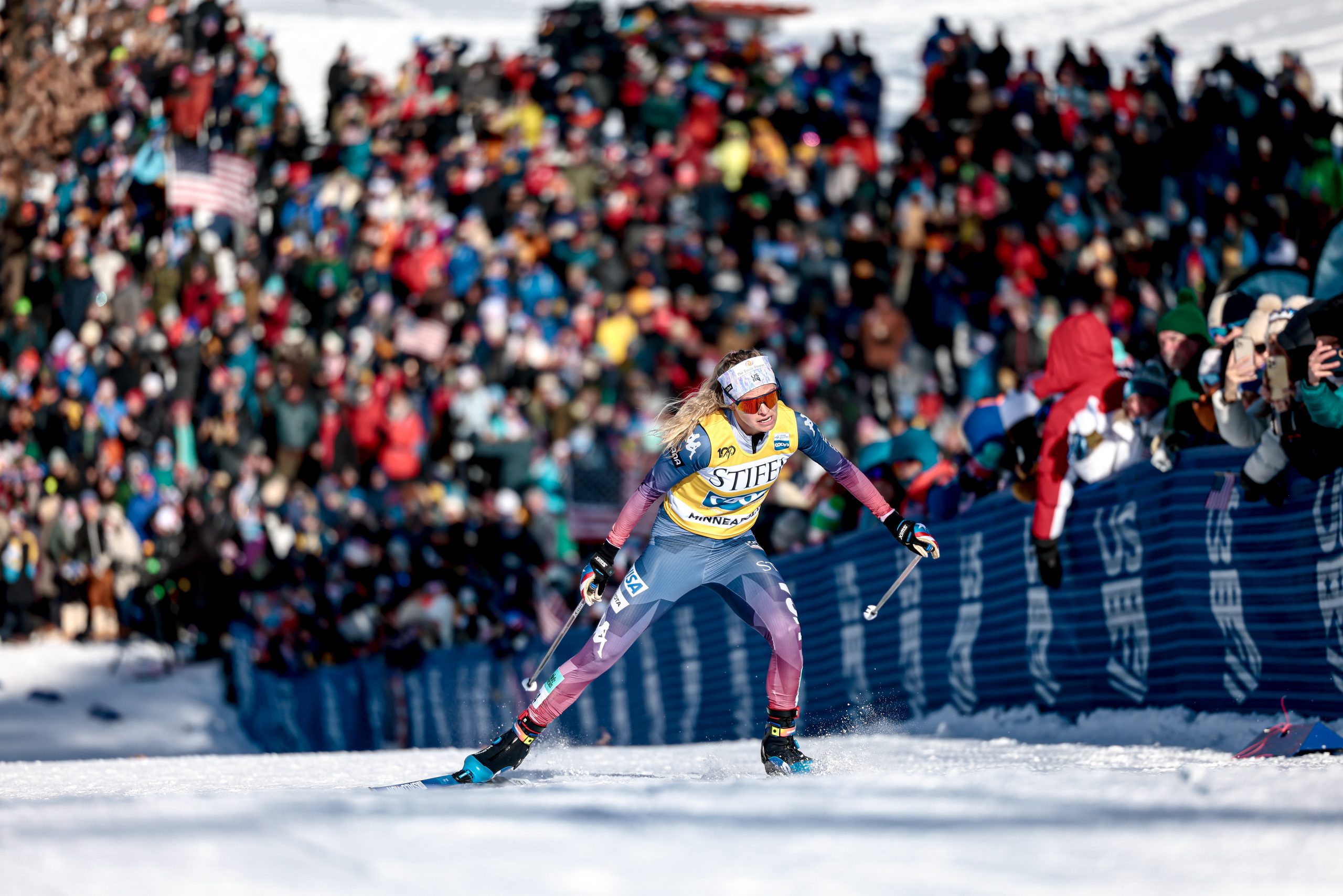
     

    Frida Karlsson (SWE) looked pretty comfortable in the reindeer pelt-covered leaders chair following the 10k Classic in Ruka (FIN). (Photo: Modica/NordicFocus)
  • Holding Her Own: Rosie Brennan’s Quiet Mastery of Independence on the World Cup

    Holding Her Own: Rosie Brennan’s Quiet Mastery of Independence on the World Cup

    The first flakes had finally settled on the branches behind Rosie Brennan’s window in Anchorage. “Yeah, finally,” she said, turning from the screen toward the light outside. “God, it was slow to come, but we are getting there.” Snow matters in November for any cross-country skier. Still, for Brennan—now entering her fifteenth season on the U.S. Ski Team—it has always represented something deeper: familiarity, grounding, the landscape she moves through on her own terms.

    Independence, more than victory or longevity, is the quiet force running through her career. Long before she became an Olympian or a World Cup all-arounder, before the podiums and the endurance of her late-blooming rise, she was a kid in Park City who needed space—space to move, explore, test herself, figure out where she belonged. Ski racing would give her a path, but the structure of the World Cup would also challenge the part of her that had always craved autonomy.

    Rosie Brennan (USA) celebrates after finishing 2nd in the 10 k classic race in Ruka, Finland in 2023. The result was Brennan’s first classic World Cup podium of her career. (Photo: Nordic Focus)

    “I’m a very independent person,” she told me. “So to suddenly be told what your day is gonna look like every single day is mentally… exhausting for me.” It’s the kind of line that quietly explains everything: her training, her rituals, her late-career resilience, and the internal negotiations required to live five months of every winter inside a system built around tight schedules, shared spaces, and routines she cannot control.

    That independence—both threatened and defended—shapes the story of Brennan’s life in skiing as much as any result sheet.

    From the FasterSkier Archives: While I never actually went cross country skiing with my Dad, he was incredibly influential in his love for the outdoors and ability to truly enjoy life. My dad taught me to alpine ski and mountain bike, both were activities in which he challenged me and was always up for a race. I don’t know if my mom will ever get over just how much I ski like him. My dad had a great ability to do things in a big way in order to maximize the enjoyment out of each adventure and he did so with incredible passion. I can’t say I have fully learned this yet, but his spirit and enjoyment of life certainly are in me and I think often about how to embrace this a little more each day. At the very least, I have learned to be very passionate about the things I love. My favorite place in the world is the Southern Utah desert and I think my love for the desert stems entirely from family fun, particularly with my Dad.”

    A Childhood of Motion

    Brennan grew up in Park City, not in some improbable ski-wilderness origin story, but in a family that valued movement the way others emphasize music lessons or math tutoring. “Everyone did outdoor activities, she said. “We were pretty typical in that sense. Winters were alpine ski weekends. Summers meant hiking and biking. Gymnastics arrived because she liked the conditioning. Soccer came because she could run “a whole game.”

    She was athletic but not yet an athlete. “I participated in soccer, she said, without pretense. “I won’t say I was crazy competitive in that. And same with gymnastics—I didn’t compete at all, but I really loved it.”

    What she loved about gymnastics, specifically, she said, was the work:

    I think it was more, actually, just the strength component… the actual conditioning part. That’s what I really liked.”

    The shift toward cross-country skiing came from her mother, whose winter rule was simple: pick an activity. “She was the one who just kept suggesting, ‘You should try the Nordic team,‘” Brennan said. Finally, I was like, well, I got no better idea, so fine, I’ll try it.”

    If her mother’s persistence nudged her toward snow, the 2002 Salt Lake Olympics made the possibility feel real. Brennan was in seventh grade. Her family hosted a Nordic combined athlete. Youth camps sprang up everywhere across Utah.

    “I think a lot of it was subconscious, she said. “But that obviously had a massive impact on my wanting to pursue other things.”

    Then came the moment that still feels slightly mythical in her telling: she found skiing, and skiing made sense to her in a way nothing else had.

    “I could see the path forward, she said. “It was just… really motivating to me.”


    The First Signs of Something

    Her early results were small but decisive. “I actually won my first race, but there were only two people in it, she said, laughing. But I honestly think that was kind of powerful for me. Like, oh—if I can beat one person, I can probably beat some other people.”

    Within two years, she went from missing Junior Nationals to winning all the distance races at JOs. She remembers calling her mom.

    “Mom, I won.”
    “No, you didn’t.”
    “No—really, I did.”

    When Brennan made World Juniors and cracked the top ten, she earned her first spot on the U.S. Ski Team. It felt surreal, but the reality is that she wasn’t fast because of some stroke of talent. She was fast because she’d been training with boys for years, trying to keep up. “It was one of those social situations in which it’s like, keep up or don’t have friends, she said. “So I was like, all right, I’m keeping up.”

    Her team was small, her training unorthodox. “I did quite high intensity for junior, she said. “But very low volume. Meanwhile, she ran fall seasons because running was what she could control.

    Autonomy was already the central language of her development.

    Rosie Brennan (DAR) Lake Placid SuperTour 2011

    The Dartmouth Choice

    By the time she visited colleges, Brennan had become a known junior—national team member, World Juniors top-10 skier, and a real recruit. Her first choice was Colorado. They didn’t offer a scholarship. Dartmouth didn’t offer scholarships either, but it did offer something better: Cami Thompson-Graves.

    “Her investment was in me and not, like, an NCAA title, Brennan said. “That was very obvious… she was willing to help me manage all of it.”

    Dartmouth gave her what she needed: an independent women’s team after training primarily with men, a coach who saw the whole person, and a program flexible enough to accommodate a U.S. Ski Team schedule. She raced all four years, graduated in the traditional four, absorbed the mentorship of teammates like Ida Sargent, Sophie Caldwell, and Erica Flowers, and even shared training space with Susan Dunklee.

    Dartmouth let her remain the version of Rosie that worked.

    But the World Cup—its structure, its relentless pacing—would test that.

    Rosie Brennan, Ida Sargent and Sophie Caldwell of Dartmouth, March 2010

    Learning to Live in Europe

    Her early World Cup years were steady—no fireworks, no collapses. She attributes the eventual breakthrough to something simple: time. “If you think about someone who starts at five, she said, “they’re good at 22. That’s the same number of years it took me. It just skewed by a decade.”

    But the other part of her progression came from learning how to survive Europe.

    “I mean, I finally had trained at a consistently high volume, she said. “But I also found it just took a long time to figure out how to manage in Europe.”

    What was so hard about it? Not the racing. Not the waxing. Not the altitude.

    It was the loss of personal freedom.

    “To suddenly be told what your day is gonna look like every single day is exhausting for me, she said. “The freedom of being able to jump in your car and go somewhere—that’s gone for like five months.”

    The World Cup removes the choice of when you sleep, where you eat, and how you move through your day. Athletes share hotel rooms, team vans, dining halls, training sessions, and travel itineraries. It works beautifully for some. For Brennan, it was disorienting.

    There were no models for how to do it differently. “The example they have is Jessie, she said. “She thrives on the road. She’s happy as she can be living in a bag for five months. But if you are not Jessie Diggins, Brennan said, “that’s really hard.”

    So she began—to use her word—to “navigate.”

    I learned to get pretty good at the bus schedule, she said. She found bakeries in every town. She found grocery stores that sold the one piece of candy she liked in that country. She found trails “maybe off the beaten path that she returned to each year. She learned to take mountain days, not for training but for sanity.

    These rituals were tiny, private rebellions—the things she could choose inside a world where most things were selected for her.

    Rosie Brennan and coach Erik Flora (APU) ski on the World Championships sprint course in Trondheim on Wednesday, February 26, 2025. (Nathaniel Herz/FasterSkier)

    A Coach Who Understands Her

    If Europe tested her independence, her relationship with APU Head Coach Erik Flora reinforced it.

    “He has been, like, everything for me, she said. “He’s kind of saved my life many times over.”

    What she means is that Flora understands her wiring. He sees what she cannot always express.

    “He has this ability to just watch you train and know exactly what’s going on in your life, she said.

    That sensitivity carried her through some of the most challenging years of her career. During Covid, Flora couldn’t travel much; last season he could only watch occasional race film. It wasn’t enough. Brennan needed someone who knew her patterns—her real patterns—not just her splits.

    “When I was in the thick of it last winter, she said, “he wasn’t there… that’s why ultimately I did end up coming back [to Anchorage]. I needed some of that support.”

    Their relationship—its longevity, its trust—became essential when her body began to unravel.

    Rosie Brennan (USA) after finishing the 10 K Classic at the FIS Nordic World Ski Championships in Trondheim (NOR). (Photo: Modica/NordicFocus)

    A Year the Body Wouldn’t Cooperate

    For a year now, Brennan has dealt with a medical mystery—post-viral symptoms likely tied to Epstein-Barr reactivation. “It just, like, really screwed up a bunch of my internal systems, she said. “My endocrine system has been shot. The effects were unpredictable: inability to push hard, severe inflammation, poor recovery, and muscle shutdown during intensity.

    “Last season I was struggling with… I just had zero ability to use my muscles to push hard, she said. “I was just racing on base fitness.”

    It wasn’t one bad race. It was the absence of the feeling she loved most that was most frustrating.


    The Training Fix

    She and Flora tried to solve it through training, but even threshold sessions wiped her out. “It was more the duration part that was killing me, she said. They tried sub-threshold work. They tried controlled sessions. Nothing stuck.

    So they invented something new: Sub-one-minute Level 4 efforts, hundreds of them, designed to keep neuromuscular pathways awake without triggering overload.

    Basically, what I’ve been doing is what I call micro intervals, she said. “I do go level four, but under a minute, many times.”

    Strength? Gone. “Strength was destroying me, she said. “So I haven’t done any weight-room strength.”

    Endurance? Reduced to what she could handle. “I got to a place where I was like, all right—I’ll have to be super excited when I get to go for an hour.”

    Most of the battle, though, wasn’t physical.

    “There were many times this last year that I have seriously contemplated walking away, she said. “I actually tried pretty hard to in August.”

    But Flora kept calling—checking in, refusing to let her disappear into the uncertainty.

    “I guess I’m not getting away that easy, she said.

    Brennan took second in the 10-k Classic in Trondheim in 2023. 
    Rosie Brennan (USA), Victoria Carl (GER), Ebba Andersson (SWE), (l-r) 10km podium in Trondheim (NOR). (Photo: Modica/NordicFocus).

    Why She Keeps Going

    When asked what pulls her back to the sport each day, Brennan didn’t talk about results, medals, or even the Olympics.

    She spoke of the feeling.

    “I truly love the feeling of being able to push myself, she said. “It gives me this sense of freedom that I can’t find anywhere else.”

    Freedom—that word again. Not competition. Not performance. Not success. Freedom.

    It’s the sensation she’s chased since she was a kid, running entire soccer games simply because she could. It’s the sensation skiing first gave her at 14. It’s the sensation the World Cup often constrains, and the sensation her body has withheld for a year.

    But it’s also the sensation that makes her keep trying.

    She has leaned heavily into mental work this year. Meditation, mindset projects, and conversations with a U.S. Ski Team sports psych, as well as a teammate who has faced similar issues.

    “I was very motivated by her, Brennan said. “It was cool that she was taking this time to strengthen her brain, too.”

    The process has made her reflective, grounded, and more self-aware than at any point in her career.

    Rosie Brennan (USA), shares a podium moment with coach Matt Whitcomb in Ruka, Finland in 2023. (Photo: NordicFocus)

    Leaving for Finland, and What Comes After

    Now, on the eve of the World Cup opener, Brennan is set to travel to Finland. She will not race everything. “Maybe two races a weekend, she said. They’ll experiment. Observe. Adjust. She plans to return to Utah for Christmas, meet with her medical team, and decide what the rest of the season should look like.

    It’s possible I try to race, and it’s a disaster, she said. “We may have to totally redo the plan.”

    She won’t do the Tour de Ski—too risky. The goal is simply to get to the Olympics “in the best way possible.

    The million-dollar question, of course, is whether this will be her last year.

    “I don’t really know, she said. “Most likely something will look different next year. Whether that involves racing or not, I’m not totally sure.”

    But she’s proud of the career she’s built. Proud of navigating Covid. Proud of her longevity. Proud that she became a true all-arounder.

    “That was definitely a big career project, she said. “When I finally did that, it felt really big.”

    Rosie Brennan races the individual freestyle sprint qualifier during the 2022 Olympic Winter Games in Zhangjiakou. (Photo: NordicFocus)

    Holding Her Own

    What emerges from Brennan’s story isn’t a tale of triumph or decline. It’s the portrait of a person who has made peace with the complexity of the life she leads.

    She has learned how to navigate Europe—not by loving it, but by building rituals that let her remain herself within it. She has learned to trust her body even when it betrays her, and to trust her coach when she doesn’t trust herself. She has learned that the World Cup isn’t designed for independence, and that independence—her independence—is worth defending.

    She has also learned that racing is only part of who she is. She’s a geography major who loves the Arctic for its unique beauty, a mountain person who seeks out quiet trails, and a traveler who can always find a town’s best bakery.

    And she’s someone who, after a year of medical uncertainty and near-retirement, still wants one more chance at the feeling she can’t find anywhere else.

    That, ultimately, is why she’s boarding the plane.

    Because even in a world that demands structure, she is still defining her own path.


    Love Stories Like This? Help Keep Them Coming.

    Feature interviews like this one take time, access, and care to produce. If you value thoughtful storytelling and independent ski journalism, please consider becoming a Voluntary Subscriber. Your support directly fuels the work we do to cover the people, places, and moments that make our sport special.

    Join the FasterSkier community!


    We don’t yet know if this season is Brennan’s final curtain call, where she will ski off into the sunset, but we do know she has nothing left to prove.. (Photo: Nordic Focus)
  • The Energy Equation: Julia Kern’s Formula for Olympic Success

    The Energy Equation: Julia Kern’s Formula for Olympic Success

    On a late-October morning, Julia Kern sat in San Diego, sunlight spilling through the window after cradling her infant nephew. “He’s a cutie for sure,” she laughed. In a few short weeks, she’ll trade baby giggles for the squeak of ski pole baskets on the cold Finnish snow, but the warmth in her voice already says a lot about where she is mentally this Olympic year: grounded, grateful, and still having fun.

    “It’s been a really good lead-up this year,” Kern said. “I’ve been able to stay healthy. I’ve done a lot of physical therapy on my back from my injury last year, and that’s finally going well. So being able to link consistent training together without major disruptions has been the biggest difference this year. That makes me really excited to see what will happen this season.”

    Cycling gives Julia Kern a place to turn her mental rhythm and flow into motion. (Courtesy Photo)

    The Year of Steady Rhythm

    After an injury-plagued 2024 season, Kern’s return to full health has been both physical and psychological. She’s worked closely with physical therapist Brie Beckwith and coaches Kristen Bourne and Colin Rogers to rebuild her movement patterns and ski technique. “A lot of what I’m doing from my back rehab is retraining movement patterns—learning to actually use my glutes, push through the right way, fully transfer weight,” she explained. “Part of it is having less pain, which lets me move more fluidly. But it’s also about translating that from the gym to skiing.”

    For the first time, she spent a full three-week training block with Bourne in New Zealand, where daily feedback deepened their connection. “That was really cool because I’ve never had that before,” Kern said. “It’s one thing to text once a week; it’s another to work together every single day. We built a real rhythm.”

    That word—rhythm—is perhaps the throughline of Kern’s 2025 Olympic campaign. Rhythm in training, in recovery, in how she manages a long World Cup season without burning out. Her “don’t reinvent the wheel” approach to the Olympic year reflects a maturity hard-won through injury and experience. “You do what’s working well,” she said. “Changing things is always a risk.”

    Jessie Diggins and Julia Kern flank their US Ski Team coaches Jason Cork (kneeling) and Kristen Bourne (standing) at their annual on-snow training camp in New Zealand. (Courtesy Photo)

    Learning the Language of the Body

    If Kern’s early career was marked by her ability to push, her recent evolution is defined by knowing when to pull back. “Recovery is a big one,” she said. “Not just lying in bed—but mental recovery, physical therapy, fueling, hydration. As I get older, I spend more time on that. I’ve learned what works and what doesn’t, and how to read cues—whether I’m ‘good tired or ‘bad tired.’

    Her typical week includes two or three intensity sessions, distance training, and strength work, but with flexibility to fit around life: weddings, visits home, mountain-bike trips. “Working around the life schedule is what makes it rewarding, she said. “You’re excited to go do it, and you also feel like you can do all those fun life things too.”

    That balance shows in how she approaches her mental game. Kern has worked with the same sports psychologist for over five years, meeting weekly or monthly. Together, they’ve developed what she calls a “good energy framework: a way to make decisions rooted in joy rather than obligation. “It doesn’t mean bouncing off the walls, she explained. “It means asking: What makes me feel good in skiing? If I’m dreading something because I’m missing an important life event, that probably isn’t bringing me good energy. So I make decisions based on that.”

    Patience, she says, has been her greatest teacher. “Everyone has their bumps in the road, she said. “Taking those as learning experiences rather than failures is huge. Setbacks force you to approach things differently, and you can actually learn a lot about yourself that way.”

    Spending time being active and relaxing with friends and family is a cornerstone to Julia Kern’s success. (Courtesy Photo)

    A Culture of Team First

    If there’s a single quality that defines Kern, according to U.S. Ski Team Head Coach Matt Whitcomb, it’s her blend of positivity and perseverance. “She’s had a hard road, Whitcomb said. “Even as a junior, she battled compartment syndrome, mono, back troubles, shoulder troubles, nerve issues—you name it. That would defeat most athletes. But despite it all, Julia goes on to win World Cup and World Championship podiums.”

    Whitcomb sees her as both a survivor and a student. “She had incredible leaders to follow—Sophie, Liz, Kikkan, Sadie—and she was always listening, always learning, he said. “Julia’s a scholar. Her parents are scholars, her sister’s a scholar. She comes from a learning family. And now she’s the sum of all those experiences. She reminds me so much of Kikkan Randall—so driven individually, but without a team to celebrate it with, she’d quit skiing. Julia’s the same way: such a team-oriented person.”

    That team ethos is something Kern now passes along to younger teammates, such as Kate Oldham. “I really appreciated when older athletes just showed by doing, Kern said. “Now I try to do the same. When we do race prep, anyone who wants can join. Like at World Champs—Kate, Jessie, Rosie, and I practiced that final corner together. It was so slushy and tricky, and Kate ended up being the best one out of all of us. So we said, ‘Okay, we’re learning from her here. Everyone has value on this team.”

    It’s a culture built not on hierarchy, but on collaboration—crafting beaded bracelets during camps, sharing meals, and creating ways to connect off the snow. “It’s easy to be isolated in hotel rooms, Kern said. “We make time for activities that bring us together. Everyone brings something.”

    The American women celebrate after United States I – Rosie Brennan and Julia Kern – finished 3rd in a Team Sprint in 2023. (Photo: Nordic Focus).

    Learning from Leaders, Leading by Example

    When asked what she’s learned from her longtime teammates Rosie Brennan and Jessie Diggins, Kern doesn’t hesitate. “Rosie’s been such a great example of someone who’s had more adversity than maybe anyone I know and still shows up for the team, Kern said. “When I was first named to the team and had compartment-syndrome surgery, Rosie—who I didn’t even know—emailed me. She told me it would be tough but that I’d get through it. That stuck with me.”

    From Diggins, Kern learned the art of curiosity. “Jessie never goes around thinking, ‘I’m the fastest in the world, I know everything,‘” she said. “She’s always got a growth mindset—always wanting to follow someone, to learn something. That’s really rare for someone at the top.”

    Whitcomb has noticed the same instinct. “Julia’s evolved from someone who needed guidance into someone others now look to, he said. “She embodies that positive feedback loop of mentorship that defines this team.”

    Mental Toughness in the Grind

    On the World Cup circuit, there’s little room for reflection. Races pile up; travel blurs weeks together. Kern’s approach to a long season is both pragmatic and optimistic. “I love to race, she said. “The World Cup is part of the bigger plan. Early season, we’re still training on the road. You’re not trying to peak at Ruka. It’s about understanding where you are in the load of the season.”

    She deliberately builds in breaks—two weeks at home after the Tour de Ski, Christmas with her boyfriend, family visiting during the Olympics. “Those resets make all the difference, she said. “They help you stay excited.”

    You’re probably already following Kern on Instagram, but if you aren’t, you are missing out on a lot of delicious food inspiration. Cooking has become another activity for her to recover and connect with her friends and family. (Courtesy Photo)

    Her outcome goals are clear: make sprint finals consistently, push into the top-10 in distance races, and—if everything lines up—fight for a team-sprint medal at the Olympics. “That’s what I think about during hard intervals, she admitted. “The team sprint is a big goal of mine.”

    But Kern’s definition of success extends well beyond medals. “A successful season for me, she said, “is staying healthy, enjoying the process, and feeling good about how I carried myself. Pressure is a privilege. I want to soak up the experience and make it fun again.”

    Beyond the Podium

    For Kern, the sport’s meaning has broadened. As an athlete representative to FIS and an advocate with Protect Our Winters, she’s become a voice for climate responsibility and athlete well-being. During the 2025 World Championships, when environmental protests threatened to disrupt races, Kern helped mediate between activists and organizers. “We agreed that protesting during the race wasn’t the way to send a strong message, she said. “Now we have an open dialogue. These things take time, but they’re moving.”

    Her motivation, she said, “is less about results and more about impact. She wants younger athletes to know that skiing fast can be both a platform and a privilege. “I feel grateful that I had such an active childhood and want that for the next generation, she said. “Clean air affects everyone. Being outside isn’t something we can take for granted anymore.”

    Using her success as a platform to make a lasting impact on children has become a priority for Kern. (Courtesy Photo)

    The Joy of Motion

    Talk to Kern for long enough, and you realize skiing is just one part of her athletic identity. She’s an all-around mover—mountain biking, surfing, beach volleyball. “I’ve always loved doing every sport imaginable, she said. “Even as a kid, I just wanted to move. There’s so much value in being active and having fun. You don’t have to specialize too early. Playing lots of sports keeps it fresh and helps you avoid burnout.”

    Cooking has become her creative outlet. “My boyfriend and I love to cook together, she said. “We have a CSA, so we get creative with whatever veggies we have. It’s like art—making the food look pretty, connecting with what we eat. It’s a kind of recovery, too.”

    From the Gym to the World Stage

    Whitcomb sees this blend of drive and joy as Kern’s secret strength. “Julia’s positivity isn’t surface-level, he said. “It’s a choice she makes every day despite setbacks. That’s what makes her such an anchor on this team.”

    For her part, Kern sees the season ahead not as a culmination, but as another chapter in a long-term process. “Fourteen-year-old me would be surprised I’m still ski racing, she said, laughing. “Back then, I thought junior nationals were the pinnacle. I didn’t even know what the World Cup was. I think she’d be proud that I’m still doing this—and still having fun with it.”

    Enjoyment is what keeps Kern chasing perfect rhythm through the snow, trusting that good energy leads to good skiing, and that joy and excellence can, in fact, coexist.

    Kern seems fully ready to send it this season. (Courtesy Photo)

    Love Stories Like This? Help Keep Them Coming.

    Feature interviews like this one take time, access, and care to produce. If you value thoughtful storytelling and independent ski journalism, please consider becoming a Voluntary Subscriber. Your support directly fuels the work we do to cover the people, places, and moments that make our sport special.

    Join the FasterSkier community.


  • Corners and Confidence: Kate Oldham’s Steady Rise to the U.S. Ski Team

    Corners and Confidence: Kate Oldham’s Steady Rise to the U.S. Ski Team

    At the World Championships last winter, a slushy, rutted corner near the finish line became a proving ground for precision and poise. The turn was taking down skiers all week — an icy edge here, a soft patch there — the kind of technical trap that can shake even the most seasoned racers.

    On the U.S. team’s final course preview, Jessie Diggins, Julia Kern, Rosie Brennan, and newcomer Kate Oldham took turns testing different lines. It was part of their customary pre-race ritual — playful, low-stakes, but essential.

    “And you know,Kern recalls,when we do race prep, we make sure anyone who wants can join. I think those moments are really cool. Like this year, Kate [Oldham] at World Champs — we did race prep together, Jessie, her, and I, and maybe Rosie too. We were practicing that final corner because it was so slushy and tricky, and Kate ended up being the best one out of all of us in that corner.”

    Kate Oldham (USA) during the Individual Sprint at the FIS Cross-Country Ski Championships in Trondheim (NOR) last season. (Photo: Modica/NordicFocus)

    It was a small moment, but it spoke volumes — the rookie demonstrating to her mentors not through bravado but through calm instinct and feel. For Oldham, it was proof that she belonged.

    “Pre-race days are really fun,she says.It’s a time to try stuff out in a low-stakes way. You don’t necessarily want to be experimenting once the heats start, so we’ll trade off who goes in front and see how different approaches work. That corner was taking people down left and right — and none of them were Americans, so that was cool.”

    For the team, it was just one corner on one course. For Oldham, it was the quiet confirmation that her precision and poise could stand alongside the best in the world — that she could carve her own line through the sport.

    From Carbondale to the World

    Oldham, who was recently named to the U.S. Ski Team, grew up in Carbondale, Colorado. In this mountain town, Nordic skiing runs through the community as naturally as snowmelt through the Roaring Fork Valley.My parents just introduced me to it as a little kid,she recalls.We played sharks and minnows on skis.She skied with the Aspen Valley Ski Club (AVSC) development team, more for fun than ambition—until a trip to West Yellowstone changed everything.

    Her dad was helping the high-school team with meals, and Kate got to tag along.I thought they were the coolest kids ever,she laughs.I got a little taste of what it was like to train more seriously—but in a really low-stress way. I could ski when I wanted to, hang out with my dad when I didn’t. I just started liking it more and more.”

    By freshman year, she had joined AVSC’s National Comp Team, with coach August Teague guiding her progression.He had a big hand in shaping my love for training and the structure that cross-country skiing brings to your life,she says.I love being able to map things out and plan.”

    Teague’s wife, Kara LaPoint, became another key influence.She’s a pro triathlete and just a really badass person,Oldham says.We love training together when I’m home.From the AVSC coaches to her parents to the national-team staff she works with now, Oldham has always been surrounded by people who bring joy and perspective to the grind of elite sport.The whole community fuels my fire,she says.

    Oldham recharging back home with good friend Kara LaPoint. (Photo: Courtesy Photo)

    The College Shift

    Oldham began her college career at Middlebury but transferred to Montana State after two semesters, drawn by the environment and energy of Bozeman. She completed a degree in environmental studies with a minor in sustainability.I absolutely loved MSU,she says.Being in Bozeman just fit me.”

    The NCAA circuit gave her a crash course in balancing intensity and independence.It’s extremely competitive now—good skiers in every region,she says.You’re racing against Scandinavians, Europeans, all kinds of strong athletes. It’s a great way to get better.”

    Equally valuable was learning to juggle priorities.That balance between school, life, and skiing teaches you communication and time management,she says.It’s the same skill set you need later, navigating different coaches and support staff.”

    Oldham’s affection for the Bobcats remains strong.I’m still really close with the team. Sometimes I’ll text my old coach, Sam Benzing—’Hey, do you remember what we were doing at this time last year?They’re always willing to help, and I’m super grateful for that.”

    Oldham celebrates making First Team All-American at the 2024 NCAA Championship. (Photo: Courtesy Photo)

    A Pro’s Life in Bozeman

    When she graduated, Oldham decided to stay in Bozeman and train with Andy Newell and the Bridger Ski Foundation.Andy’s a great mix of laid-back and professional, she says.He’s flexible with what I want to do but still really on top of things.”

    Without classes or side jobs, Oldham has ramped up her training—but carefully.We’ve been cognizant not to make big changes when what I’ve been doing has been working, she says.There’s already a lot of change in an Olympic year. I wanted to keep what I could the same.”

    Her days follow a rhythm familiar to many full-time athletes: morning training, lunch, laptop chores, a second session, and quiet evenings.I like to have a routine, but I also adjust based on life, she says.That’s a good skill, especially once you’re on the World Cup. Travel, fatigue, sickness—you have to be adaptable.”

    This summer included a mix of Bozeman training and U.S. Ski Team camps.It’s nice to get new perspectives, new venues, and then come home for family time, she says.I love riding my bike, hanging out with my family—just that balance.”

    Oldham’s focus on recovery is equally pragmatic.A lot of my body care happens in the gym—PT and strength work. Tschana [Schiller], our strength coach, does a great job keeping us balanced and mostly injury-free, she says.Then it’s good food, good sleep, and time to unwind. It’s simple, but it adds up.”

    Oldham and BSF teammate Emma Albrecht. (Photo: Courtesy Photo)

    Lessons from the Veterans

    One of the most significant changes this past year was joining a national team full of skiers she grew up watching on TV.It’s wild, she admits.They’re all so different in great ways. Seeing them up close, you realize—they’re real pros. It’s their job. But they’re also incredibly humble and welcoming.”

    She has learned as much from how Diggins, Kern, and Brennan think about training as from what they do.They all pay close attention to what they need on a given day, Oldham says.At a camp, they might all have slightly different plans. Not because they’re doing something special, but because they know what works for them. They balance that with the team sessions so everyone gets what they need.”

    It’s a lesson she wishes she’d known earlier.Even though it’s scary sometimes, it’s okay to be confident in yourself and your plan, she says.Doing what you need is a huge asset. Trusting yourself can be hard, but it’s worth it.”

    That self-trust carries into her goals for the season.Obviously, I’d love to make the Olympic team, she says.That would be an incredible experience. But I’d also be really happy with some top-30s on the World Cup.”

    After spending time with Kate, it quickly becomes apparent that she is cooler than most of us. (Photo: Courtesy Photo)

    More importantly, she wants to manage the grind.I learned a lot last year, and I’m still figuring out what I need to stay happy and motivated through a long season of travel, she says.That’s a big process goal—dialing in what works for me.”

    She’s also been working on how she handles the inevitable rough patches.My tendency can be to isolate when something goes wrong, she says.But I’m learning to use my support team. There are people who want to help, and when I let them in, they always have a great perspective. Sometimes it’s just someone saying,What did you learn today? That can shift the whole mindset.”

    Looking Ahead

    Oldham envisions a long career—but only if she keeps loving it.I want to love skiing forever, she says.As long as my body’s healthy and I’m enjoying it, I’ll keep going. But not at the expense of that joy.”

    Her advice to the younger version of herself, and to the next generation coming up through AVSC, is simple.Don’t count yourself out, she says.So much can happen in a race that you don’t expect. Sticking with it is the only way to find out. Enjoy it, and pay attention to the relationships you build along the way—they’re what you take with you.”

    Kate and her father, Nelson, out on a hike. (Photo: Courtesy Photo)

    The Roots That Keep Her Grounded

    When she’s not training or racing, Oldham gravitates back to Carbondale, where her family’s restaurant—Dos Gringos Burritos—is about to turn twenty-five. She’s been part of it since before she can remember.I’ve been around it my whole life, she says.It’s a pretty important staple in our town, and my parents are huge role models for me.”

    Working at the restaurant keeps her connected to real life.The service industry teaches you a lot, she says.Everyone should do it once—how to deal with people, how to work hard behind the scenes. It grounds you.”

    Her go-to order?The summer salad wrap, she says instantly.But after twenty-three years of hanging around the place, you have to keep it fresh.”

    Outside the restaurant, she finds calm in the same things that shaped her childhood: horses, bikes, and the Colorado mountains.I grew up around horses and hope to return to that life after skiing, she says.Being outside, cooking, baking—it’s all part of keeping balance.”

    That balance, she’s learning, is the fundamental foundation of confidence. It’s not just about speed through a corner or times on a results sheet—it’s about knowing where you came from and who you are when the racing stops.

    Oldham loves getting outside, especially on horses. (Photo: Courtesy Photo)

    Love Stories Like This? Help Keep Them Coming.

    Feature interviews like this one take time, access, and care to produce. If you value thoughtful storytelling and independent ski journalism, please consider becoming a Voluntary Subscriber. Your support directly fuels the work we do to cover the people, places, and moments that make our sport special.

    Join the FasterSkier community.


  • Fast Tracks: World Champs—US Women discuss influencing climate change following the relay

    Fast Tracks: World Champs—US Women discuss influencing climate change following the relay

    This reporting costs money. Please support this coverage with a voluntary subscription (below) so FasterSkier can provide this level of access to the sport we all love year-round.

  • Fast Tracks: World Champs—Rosie Brennan Says, ‘Everyone did everything we could to get me here in the best shape possible’

    Fast Tracks: World Champs—Rosie Brennan Says, ‘Everyone did everything we could to get me here in the best shape possible’

    This reporting costs money. Please support this coverage with a voluntary subscription (below) so FasterSkier can provide this level of access to the sport we all love year-round.

  • Diggins Electric in Tour de Ski Opener. Wins Freestyle Sprint

    Diggins Electric in Tour de Ski Opener. Wins Freestyle Sprint

    This coverage is made possible through the generous support of Marty and Kathy Hall and A Hall Mark of Excellence Award. To learn more about A Hall Mark of Excellence Award, or to learn how you can support FasterSkier’s coverage, please contact info@fasterskier.com.

    Jessie Diggins (USA) claimed the Sprint victory to propel herself to the Tour de Ski lead. (Photo: NordicFocus)

    Today marks the opening round of the 19th edition of the Tour de Ski, and this year it will be an all Italy based event with races in Toblach and Val Di Fiemme. On the women’s side, this year’s Tour promises to be one of the most compelling in years, as three time Tour champion Therese Johaug (NOR) marks her return to the Tour and will face perhaps her stiffest Tour competition ever. Challenging Johaug for the top spot will be two time champions Jessie Diggins (USA), and Heidi Weng (NOR). Weng looks reinvigorated this season and is turning in some of her best racing in years.

    But Diggins has an advantage over her two main rivals in today’s event, the Freestyle Sprint. Diggins is a capable Sprinter while Johaug and Weng rarely make Sprint heats. However, the Tour’s Sprint rules are different than the regular season and everyone must at least try to Sprint.

    That’s because the Overall winner of the Tour is whoever has the lowest cumulative time; Sprints included. Times from the qualifying Sprint rounds are added onto each competitor’s total running time. For skiers who make it to the heats, bonus seconds are removed from their overall time. If you win the Sprint competition you have a massive 60 seconds deducted from your overall time. So, there’s lots of incentive to ski fast in the qualifiers and go all out in the Sprints. It’s quite possible that the Sprint winner could gain as much as 70 seconds on her rivals.

    Besides the Tour’s unique rules, the normal Sprint dynamics were thrown into further disarray as Jonna Sundling (SWE) —who has been sprinting great lately— did not start the Tour. This opened the window for her teammate Lin Svahn (SWE) who has twice won the Sprint crystal globe, and when she is healthy can beat anyone in the world in a Sprint showdown. Also absent from the Sprints is Norway’s Kristine Stavaas Skistad, who while never a threat at winning the Tour, could always upset the apple cart by affecting the Sprint results.

    Day one of the Tour got off to a rollicking start when Diggins qualified with the third fastest time only behind Johanna Hagstroem (SWE) and Federica Cassol (ITA). Svahn was lurking right behind Diggins qualifying fourth. But Diggins was able to ski wise tactical races and used all her accumulated racing knowledge to work her way to the finals. In the final heat Diggins skied smartly and tactically the entire way with a great entry into the stadium which propelled her to the finish ahead of Jasmi Joensuu (FIN). It was a great victory for Diggins, giving her a huge surge of momentum going into day two of the Tour.

    After the race, Diggins was clearly very happy to have proven that she could still win a Sprint race. It was her first Sprint victory since 2021. “I thought I was getting old and maybe didn’t have another Sprint victory in my life.” She continued by thanking her wax technicians and the fans and family members in attendance. “I’m super surprised, it was unexpected, but I think that’s what makes it more exciting and joyful. I’m really thankful for our team. We had awesome skis, it’s a win for the whole team.”

    Other American finishers were Julia Kern 14th, Alayna Sonnesyn 19th, Rosie Brennan 29th, and Sophia Laukli 63rd.

    The top Canadian finishers were Liliane Gagnon in 36th, and  Katherine Stewart-Jones 45th.

    The Women’s Tour de Ski Freestyle Sprint—Quarterfinals

    Rosie Brennan (USA) raced in the first heat having qualified 24th. Moa Lundgren (SWE) and Joensuu lead through most of the heat. Joensuu won the heat to move on, but Julie Myhre (NOR) put in a late surge to knock Lundgren out of a qualifying position. Brennan finished sixth and her day would be over. After the race she said, “I felt cautiously optimistic entering the Tour.” Brennan continued that, “things have just not been perfect for me by any means. I don’t have any current injuries … things haven’t been ideal. I had some better feelings today, so I’m hopeful that I can continue to carry that with me and move forward in a way that I am happy with, but I’m just taking it day by day and we’ll see how things go.”

    Rosie Brennan (USA) could not advance out of the quarterfinals. (Photo: NordicFocus)

    Linn Svahn (SWE) was one of the favorites going into the second heat. She would be challenged by Helene Marie Fossesholm (NOR) and Laura Gimmler (GER). Gimmler and Fossesholm took the early lead with Svahn asserting herself about a minute into the race. After about two minutes Fossesholm put in a burst to take the lead and increased the tempo for the entire field. Gimmler and Fossesholm crossed the line first with Svahn having made a tactical error by leaving too much distance between her and the leaders to be able to catch up at the finish. One of the Sprint favorites was now out in the first round as her time would not hold up for a lucky loser position.

    Julia Kern (USA) (second from left ) skied well, but couldn’t advance out of the quarterfinals. (Photo: NordicFocus)

    Julia Kern (US) was in the third heat. Kern looked good in the qualifying round having finished 10th. Also in the heat was hometown favorite and surprise winner of the qualifying round Cassol. Nadine Faehndrich (SUI) took the early lead and kept the tempo brisk. Kern was able to stay with the lead group through the race and at the two minute mark was sitting in second place. But then Faehndrich put in a little extra turn of pace taking Dahlquist with her. Kern was in third coming into the stadium but couldn’t manage to close the gap. She finished third, but her time was fast enough to put her in a lucky loser spot for the moment and knocked Svahn out of the lucky loser spot. “I was happy with today’s qualifier,” said Kern. “This course has always suited me pretty well and I love racing in Toblach. I don’t feel like I’m in top form yet, but there were a lot of positives from how I felt and skied today, and I hope to continue to build on that.”

    Alayna Sonnesyn (USA) qualified for the heats, but couldn’t advance out of the quarterfinals. (Photo: NordicFocus)

    American Alayna Sonnesyn was in the fourth heat along with Lotta Udnes Weng (NOR) and Sofie Krehl (GER). Krehl went to the early lead along with Jasmin Kahara (FIN). A little over a minute into the race Weng fell just in front of Sonnesyn who was able to avoid her. The tangle seemed to spark Sonnesyn who moved into fourth going into the final uphill alongside Kerttu Niskanen (FIN). The five remaining skiers were in one pack entering the stadium and out of nowhere Niskanen surprisingly shot to the front to take the win, her teammate Kahara finished second. Sonnesyn was fourth and would not advance. It was a surprise win for Niskanen who is known more for her Classic Distance skiing than her Sprinting.

    Diggins was in the fifth and final heat along with the second fastest qualifier Hagstroem. Diggins went to the lead early as she has been doing all season in the quarterfinal heats. In the first turn several racers tangled and Hagstroem fell, immediately losing contact with the group. That left Diggins with Anja Weber (SUI) right behind her. Diggins was able to hang on to the lead coming into the stadium to take the win with Weber holding on in a photo finish to take second. Diggins had set a fast pace which meant that both lucky losers would come from her heat. Kristin Austgulen Fosnaes (NOR) would move on to the semifinals along with Katerina Janatova (CZE). The fast pace meant that Kern had lost her lucky loser spot and would not move on.

    So, after the quarterfinals, Jessie Diggins was the only American still standing.

    The Semifinals

    Joensuu, Fossesholm, Dahlqvist, Myhre, Gimmler, and Janatova were in the first semifinal. Joensuu and Gimmler immediately went to the front of the race with Dahlqvist right with them. Dahlqvist then used an excellent race strategy to slingshot to the front about 1:30 into the race. But at the two minute spot the entire field was still together with Joensuu now setting the pace into the final climb. Joensuu was able to shoot over the top of the final climb and establish a bit of a gap on the field. She entered the stadium first with Dahlqvist right behind her. But just at the finish line Dahlqvist was able to throw her foot ahead of Joensuu to take the victory. Myhre and Fossesholm would have to wait for a lucky loser spot.

    Diggins was in the second semifinal along with Niskanen, Kahara, Faehndrich, Weber, and Fosnaes. Faehndrich took the early lead with Diggins off her right shoulder. Faehndrich continued to push the pace with Diggins hanging with her, but the speed wasn’t fast enough to break up the field. About two minutes in, Diggins put in a burst to go by Faehndrich. But Faehndrich wouldn’t let her go and tenaciously hung on Diggins’ coattails. Going into the stadium Diggins took the entering turn a little wide giving Faehndrich an inside opportunity. But Diggins was able to maintain her speed and held on for the victory. Fosnaes snuck by Faehndrich at the finish to take second, but Faehndrich and Weber were able to move on as lucky losers. Once again, Diggins’ fast tempo had benefitted the other racers in the heats by bringing them along as lucky losers.

    The Finals
    Jessie Diggins (USA) was able to maintain her speed into the stadium to win the Sprint. (Photo: NordicFocus)

    Joining Diggins in the finals were Dahlqvist, Joensuu, Fosnaes, Faehndrich, and Weber. On paper, the field looked like a good opportunity for Diggins to take the podium. It was the first Sprint finals for Weber. But Joensuu and Dahlqvist are experienced Sprinters and had skied very well through their heats.

    Jasmi Joensuu (FIN) couldn’t hold off Diggins coming into the finish. (Photo: NordicFocus)

    At the start, Diggins dropped back quickly, with Faehndrich and Joensuu going to the front. But Diggins didn’t stay in the back for long and quickly moved toward the front just behind Joensuu, with Faehndrich next to her. Dahlqvist broke a pole early in the race and had to ski with one pole for a very long stretch. That ended her chances.

    While Dahlqvist was struggling, Diggins was surging to the front with Joensuu going with her up the final hill. Joensuu had established a gap on Diggins at the top of the last hill, but she was able to close the gap on the final downhill into the stadium. Diggins put in a huge burst in the final 50 meters to fly past Joensuu to take the win. An exuberant Diggins waved to the crowd at the finish while the rest of the field was laying on the ground around her. Faehndrich held on to third to round out the podium.

    It was as good a start to the Tour for the American star as she could have hoped for. Her first place gave her a minute bonus over her two primary competitors, Johaug and H. Weng. Additionally, Diggins would gain about an additional eight seconds over the two Norwegians because of her faster qualifying time to put her 1:08 ahead of H. Weng and 1:09 ahead of Johaug.

    Jasmi Joensuu (FIN), Jessie Diggins (USA), Nadine Faehndrich (SUI), (l-r) (Photo: NordicFocus)

    Tour de Ski Freestyle Sprint: Results

    Tour de Ski Overall Standings


  • The Devon Kershaw Show: Christmas recap in Davos with the US Ski Team men

    The Devon Kershaw Show: Christmas recap in Davos with the US Ski Team men

    It’s vacation time. We hear from some of the U.S. Ski Team men holed up in their Christmas cottage in Davos, Switzerland — featuring a new lightning round quiz segment — and Devon and Nat take us through the weekend’s results. Happy holidays: We’ll be back during the Tour de Ski.

    Questions, comments, want us to use less (or more) profanity? Reach us at devon@fasterskier.com and nat@fasterskier.com.


  • Slind Claims First-Ever World Cup Victory – Diggins and Brennan Finish Seventh and Eighth

    Slind Claims First-Ever World Cup Victory – Diggins and Brennan Finish Seventh and Eighth

    This coverage is made possible through the generous support of Marty and Kathy Hall and A Hall Mark of Excellence Award. To learn more about A Hall Mark of Excellence Award, or to learn how you can support FasterSkier’s coverage, please contact info@fasterskier.com.

    As cowbells and horn music echoed through the course, the women’s 20 k classic marked the final competition before athletes enjoy a brief rest ahead of the Tour de Ski later this month. However, the start list for today’s race was missing several notable names, hinting that some top competitors may still be opting for a conservative start to this World Championships season.

    Astrid Oeyre Slind (NOR) earned her first-ever World Cup victory. (Photo: NordicFocus)

    Many had written off the top position on the podium as an easy win for Therese Johaug (NOR), a skier renowned for her dominance in distance events and current leader of the distance standings. With key Swedish athletes like Frida Karlsson, Ebba Andersson, Linn Svahn, and Jonna Sundling sitting out, as well as Heidi Weng (NOR), the start list for today’s competition was shorter than usual. 

    This created an opportunity for others to challenge for the podium. On the final day of the Davos World Cup, it became evident who was feeling the effects of the weekend’s racing. With many top athletes strategically opting to skip Friday and Saturday’s sprint competitions, tired legs certainly played a role in today’s performances.

    Victoria Carl (GER), Astrid Oeyre Slind (NOR), Krista Parmakoski (FIN), Kerttu Niskanen (FIN), Kristin Austgulen Fosnaes (NOR), Katharina Hennig (GER), and Teresa Stadlober (AUT), who have all achieved consistent top-15 results in distance events this season, were waiting for an opportunity to advance onto the podium. Perhaps having known this, none of these athletes started Saturday’s sprint. For Americans Jessie Diggins and Rosie Brennan, who competed in both the sprint qualifier and heats yesterday, the additional fatigue may have posed a slight disadvantage.

    The podium was largely decided from the outset of today’s competition, as Johaug, Slind, and Niskanen established an early lead that steadily grew throughout the race. Johaug led through most intermediate checkpoints but began losing ground after the 16.5 k checkpoint. Slind, meanwhile, maintained her momentum and accelerated through the final kilometers to secure her first-ever World Cup victory, finishing 10.1 seconds ahead of Niskanen. Johaug crossed the line in third, 13.5 seconds behind Slind. 

    Diggins and Brennan skied comfortably, finishing 7th and 8th, respectively, to secure spots in the top-10. Other American finishers included Sydney Palmer-Leger in 28th, Haley Brewster in 35th, and Alayna Sonnesyn in 37th. Canada’s Katherine Stewart-Jones also skied to a 22nd place finish.

    Rosie Brennan (USA) skied a strong and consistent race, finishing 8th overall (Photo: NordicFocus)

    “Today, I definitely wanted to just feel like I was in the race, and able to push when I wanted to and hold pace throughout,” Brennan shared following the competition. “I feel when I am racing at my best, that puts me in the fight.” 

    As Team USA eases into the season, these early races may highlight room for improvement, especially given the team’s recent transition to on-snow training. “I don’t think I was quite there today,” Brennan reflected, “but it was definitely a step in the right direction for me. I felt a bit more open and able to ski the way I wanted to and find some ability to push a bit out there. I think I’m still missing that top end that will hopefully bring me closer to where I want to be, but all you can ask for is a step in the right direction.”


    Women’s 20 k Classic Individual Start

    While Johaug was a strong favorite entering the competition, the other podium spots were open for new names to step up today, with some of the strongest World Cup distance skiers missing from the start list. Early starters Niskanen, Slind, Brennan, and Hennig maintained similar splits through the first five kilometers, with Niskanen and Slind gradually pulling away to build a steady lead over the others. By the 9.3 k checkpoint, Niskanen and Slind had established a commanding 45 second advantage over Brennan and Hennig, positioning themselves as clear contenders for the podium. 

    Kerttu Niskanen (FIN) delivered an impressive performance, posting strong splits that secured her a second-place finish on the podium. (Photo: NordicFocus)

    In many ways, the podium positions were already decided within the first few kilometers of the race. The early lead by Niskanen and Slind, combined with Johaug’s well-established strength in distance events, solidified the trio as podium contenders. By the second half of the competition, it was clear that the podium was out of reach for the chasing pack. At the 16.5 k checkpoint, Slind, Niskanen, and Johaug held a lead of more than 30 seconds over Carl and Parmakoski, and a 1.5-minute lead over early contenders Brennan and Hennig. 

    The specific order on the podium remained uncertain until the final moments of the race. While Johaug may have dominated this competition two years ago, her return this season left more to be decided. Though she established an early lead through the initial checkpoints, Niskanen also positioned herself as a strong contender in the middle kilometers. Only second to Johaug, Niskanen’s lead over Slind grew to 7 seconds around the 12.4 kilometer checkpoint. 

    Between 14 and 16 kilometers, Slind shifted into high gear, steadily closing the gap on Niskanen and ultimately overtaking her. From there, Slind continued to build her lead through the final kilometers of the competition.

    Spectators held their breath through the final kilometers of the day, watching Johaug’s narrow lead over Slind dwindle. By the 16.5-kilometer checkpoint, Johaug was just 1 second ahead, a margin that shrank to 0.5 seconds by 18.5 kilometers. In the final stretch, Johaug couldn’t maintain her pace, dropping back to finish 13.5 seconds behind Slind and 10.1 seconds behind Niskanen, settling for third place. 

    Therese Johaug (NOR), adorned in the red bib as the reigning distance leader, struggled to maintain her dominance in today’s race, fading in the final kilometers to finish third. (Photo: NordicFocus)

    With Johaug out of the way, Slind skied to her first-ever World Cup victory after 59 race starts and five podiums.  “I can’t really believe it,” Slind shared following the race. “I never thought this would happen and at least not when Therese is back in the start. I thought I was fighting for second place the whole time and suddenly I realized this could be a win. I don’t know what to say.”

    Outside the podium, positions in the top-10 saw more movement throughout the competition. Carl had a strong start, achieving some of the fastest splits early in the race. An exciting battle unfolded between Carl and Johaug in the opening kilometers, with Johaug leading by 3.2 seconds at the first checkpoint before Carl reclaimed the advantage by the 4.2-kilometer mark, edging ahead by 1.1 seconds.

    As the race progressed, Johaug extended her lead over Carl, who contended for a position in the top-5 against Parmakoski. However, Carl began to fall off the pace around the 15-kilometer mark and ultimately dropped back during the final lap. In the end, Parmakoski skied to a 4th place finish and Carl followed closely behind in 5th. 

    Teammates Diggins and Brennan joined Carl in the battle for top-5 positions. Diggins posted strong splits early in the race but appeared to be fading by the 16-kilometer checkpoint. As one of the few top-athletes who competed in all three competitions this weekend, including all three sprint heats, it’s likely this may have been one of the few occasions in which Diggins ran out of steam. Brennan with strong splits throughout, maintaining her position in the top-10. “I was happy with my pacing, I held very consistent through the whole race which is always a good thing,” Brennan shared with FasterSkier. 


    Results from the Davos women’s 20 k classic individual start

    Kerttu Niskanen (FIN), Astrid Oeyre Slind (NOR), and Therese Johaug (NOR) claimed the podium in the Davos women’s 20 k classic individual start race. (Photo: NordicFocus)
  • Short-handed Sweden Still Dominates in Davos Sprint. Diggins Sixth

    Short-handed Sweden Still Dominates in Davos Sprint. Diggins Sixth

    This coverage is made possible through the generous support of Marty and Kathy Hall and A Hall Mark of Excellence Award. To learn more about A Hall Mark of Excellence Award, or to learn how you can support FasterSkier’s coverage, please contact info@fasterskier.com.

    Jessie Diggins (USA) made it to the finals finishing sixth. (Photo: NordicFocus)

    The U.S. women’s cross-country team really likes the site of today’s Freestyle Sprints, Davos, Switzerland. Last season in Davos, Jessie Diggins (USA) claimed the podium twice including third place in today’s event, the Freestyle Sprint. She also finished first in Davos in 2022 in the 20 kilometer Freestyle and picked up second place that year in the Freestyle Sprint. Last year, Rosie Brennan (USA) finished second in the Classic Pursuit, and also won two races in Davos in 2020, one of them being the Freestyle Sprint. So, it’s fair to say that the top American women like Davos, and like their odds there.

    But a quasi-home field advantage by itself wouldn’t be enough for the U.S. squad, as their affection for the Swiss super-luxe resort would be put to a stern test as the American women expected to face off against the usual Swedish all-star Sprint team, and Norway’s always deep roster. But as the day unfolded, and before the racing had even begun, Sweden’s dominance suddenly appeared to unravel. Last year in Davos, Linn Svahn (SWE) re-established herself as a Sprint force winning the race. But Svahn would not be able to defend her crown, as the Swedish team announced that she wouldn’t compete in Davos due to illness. Also, before the start of the qualification round Sweden’s Johanna Hagstroem withdrew. Hagstroem has already been on the Sprint podium twice this season and is one of Sweden’s big Sprinting guns. With two of the top Swedes out before the race even began, the door was thrown wide open for other countries to make it to the podium.

    Jonna Sundling (SWE) was dominate all day and was never seriously threatened. (Photo: NordicFocus)

    In the qualification rounds, other teams quickly capitalized on Sweden’s thinning ranks, with the Americans qualifying four racers. Jessie Diggins qualified fourth, and she would be joined in the heats by Alayna Sonnesyn, Rosie Brennan, and Julia Kern. Norway also filled the void qualifying six racers. But missing from Norway’s lineup was Kristin Stavaas Skistad. The media adverse Skistad did not race today, and her status is unknown. Last week in Lillehammer marked Skistad’s return to racing after recent abdominal surgery, and her resumption of racing was not auspicious, as she didn’t advance out of the quarterfinals. To add insult to literal injury, she received a yellow card for obstruction and was relegated to last in the heats.

    Sweden still had high hopes for the top spot as Jonna Sundling again qualified first beating the field by over four seconds. But she would not have the usual armada of teammates surrounding her as Emma Ribom was the only other Swedish woman to qualify. Ultimately, it didn’t make a difference as even with Sweden fighting shorthanded, Sundling dominated throughout the heats and the finals taking an impressive victory. Mathilde Myhrvold (NOR) took second, with Julie Myhre (NOR), finishing third.

    Diggins kept her lead in the Overall World Cup competition over Sundling and Therese Johaug (NOR) by reaching the finals and finishing sixth.

    Other American finishers were Rosie Brennan in 18th, Alayna Sonnesyn 22nd, Julia Kern 28th, Lauren Jortberg 38th, Erin Bianco 47th, Haley Brewster 50th, and Renae Anderson 54th.

    Liliane Gagnon (CAN) also took advantage of the Swedish lineup changes and put in an impressive performance in the qualifying round, finishing 14th and ended up 26th after the heats. The other Canadian finisher was Sonjaa Schmidt in 49th.

    The Women’s Sprints—Quarterfinals

    Davos is a bit of a cross-country carnival as the races are held at night under the lights with shooting flames going on and off around the two lap course. “I do like racing at night here,” Brennan said after the race. “That was kind of a new thing last year, and it was cool. You definitely get good crowds, and the course is really well lit, and the flames are cool. It definitely throws off your schedule a bit and makes it super hard to sleep after revving the body like that and probably consuming too much caffeine!” Diggins was also enthusiastic about night racing. “I loved it, I thought it was really-really cool. Having the flame shooters on the final curve was really fun. And also, I kind of forgot that was a thing, so in my quarterfinal when they went off, I was like ‘wow,’ you can actually really feel the heat from the flames so that was pretty exciting. It does change things a little because we’re used to racing in the morning. So you have the day shifted a little bit later, it’s harder to kind of come down from the buzz of racing at night. So we’ll see how sleeping goes tonight, should be really interesting.”

    It was also snowing hard at the start of the qualifiers which would create a bit of a wild card. “It made it a little bit harder to pass and maneuver like it has in the past,” said Kern. “My past strategy didn’t work as well today given the strong headwind and new snow. There was really only one lane skied in, so it made it a little tricky to move around, or more costly at least.” Diggins agreed that the falling snow affected racing. “It did affect the conditions a bit. I feel there kind of became one line that was better to ski in, so I think you saw people getting into a single file line a little bit more.” She also noticed that the Norwegian skis in particular were getting faster as the snow continued to fall.

    In the first quarterfinal Sundling immediately went to the front and asserted her dominance. She was able to string out the field early and controlled her race from start to finish. The hometown fans were disappointed as Anja Weber (SUI) was not able to advance. Lotta Udnes Weng (NOR) finished second to reach the semifinals.

    Liliane Gagnon (CAN) (number 14) had an excellent qualifying time and reached the heats. (Photo: NordicFocus)

    Canada’s Gagnon was in the second heat and would face off against the strong Jasmi Joensuu (FIN) and Myhrvold. Myhrvold and Joensuu jockeyed for position at the front and the two led the entire race with Myhrvold winning in a photo-finish. Gagnon was not able to stay with the leaders, finished sixth and would not advance.

    Rosie Brennan (USA) skied well and looked good reaching the quarterfinals, but could not advance. (Photo: NordicFocus)

    In the third heat, Brennan faced Germany’s Laura Gimmler and Coletta Rydzek as well as Norway’s Hedda Oestberg Amundsen, and Ane Appelkvist Stenseth. Brennan hung with the lead group at the start and was with them about a minute into the race. She was in the front group coming up the final hill but took it wide and was pushed back into third. Rydzek put in a fierce acceleration coming into the stadium with Stenseth behind her. Brennan finished fourth, and her time wouldn’t be good enough for a lucky loser spot; her day would end. “I felt some fatigue today definitely from the team sprint yesterday,” Brennan said to FasterSkier. “I really like this course and I like racing in Davos. I didn’t quite have the speed that I needed to move through the rounds, but I felt a bit more myself than I have been, so that was encouraging for me.”

    Kern (USA) (outside) made it to the quarterfinals, but could not advance. (Photo: NordicFocus)

    Kern was in the fourth quarterfinal. She faced a formidable field going up against the ascending Julie Myhre (NOR), hometown favorite Nadine Faehndrich (SUI), and Katerina Janatova (CZE). Kern has been challenged this season as she still struggles to return to form dealing with an off season injury which forced her to alter her training. Kern was with the leaders early, but she too was pushed wide through a turn and drifted into the back of the field. About halfway through Myhre put in a turn of pace and moved to the front splitting up the pack. She was able to hold her lead into the finish with Nicole Monsorno (ITA) finishing just behind her. Kern finished fourth and she would be done for the day. The local crowd was disappointed as Faehndrich finished fifth and she would not advance, which ended the day’s chances for Switzerland. “I think I am finding my Sprint legs,” Kern told FasterSkier after the race. “But, I feel I’m missing a little bit of the fitness I normally have this time of year, due to the fact that I wasn’t able to do much hard intensity this fall due to my back injury.”

    Alayna Sonnesyn (USA) was able to reach the quarterfinals. (Photo: NordicFocus)

    Diggins and Sonnesyn were together in the fifth and final quarterfinal and were next to each other at the start line. They would have to contend with Ribom and Elena Rise Johnsen (NOR). Ribom stumbled at the start, fell, immediately dropped to the back, and her chances of qualifying were over. Diggins took advantage and shot out to the front with Johnsen following her and staying with her through the first half of the race. Diggins forced the pace the entire way and created a large gap over the rest of the field. She cruised into the stadium beating the field by almost two seconds. Lena Quintin (FRA) took a surprising second. Sonnesyn finished fifth and would not advance. Ribom was unable to overcome her catastrophic start and finished sixth.

    The Semifinals

    Sundling was in the first semifinal and would face off against Myhrvold, Rydzek, Joensuu, Lotta Weng, and Janatova. Sundling has been dominant in Freestyle Sprints and the question at the start of the race was whether anyone could keep up with her initial pace. Once again, Sundling went to the front. The two Norwegians—Myhrvold and Weng— stayed in contact with Sundling, but never really appeared to threaten her. She confidently skied in front the entire way, controlled, and not appearing stressed at all. Sundling maintained her lead all the way across the finish with Myhrvold finishing second. Lotta Weng and Joensuu would secure lucky loser spots.

    Jessie Diggins (USA), (front) raced from the front in the heats, but couldn’t keep with the leaders in the finals. (Photo: NordicFocus)

    Diggins was in the second semifinal. She would have to contend with Myhre, Quintin, Monsorno, Stenseth, and Melissa Gal (FRA). Notably, she would not have to face a Swedish woman in this heat. Diggins went out hard at the start and fought with Myhre for the lead. Diggins continued to push the pace as she shot down the first hill. Myhre was able to slingshot past Diggins at the bottom of the hill, but Diggins quickly went back to the front to continue to set the pace. Entering the last downhill Diggins continued to push the pace and Myhre again closed the gap appearing to have the faster skis on the down hills. Diggins pushed to the finish to take the win. Myhre finished second with both lucky losers coming out of the first semifinal.

    The Finals

    Diggins and Sundling were the most dominant in the heats both having led most of the entirety of their heats. Something would have to give in the final. But Lotta Weng had demonstrated in the semifinal that she had fast skis, and the favorites would need to take that into account. Those three were joined by Myhre, Joensuu, and Myhrvold. It was Sundling who jumped into the lead with an incredible sprint out of the start. Myhrvold was following Sundling with Diggins forced back into fourth. Diggins took a nice inside line on the first corner but couldn’t keep pace with the group. Sundling turned up the pace and Diggins began to be gapped at the back of the group. Entering the final big hill Sundling found another gear and surged away from the pack creating a huge gap. Myhrvold was fighting for second and she managed to hang on to secure the runner’s up spot. Myhre finished third. Diggins was unable to keep up with the tempo and finished sixth.

    It was an impressive day for Sweden; despite facing a depleted lineup, they were still able to take the win and cement their spot as the team to beat in Sprint competitions. The American women would have to recalibrate as once again only Diggins was able to advance out of the quarterfinals.

    Women’s Freestyle Sprints Davos, Results

    Davos, Switzerland (SUI): Mathilde Myhrvold (NOR), Jonna Sundling (SWE), Julie Myhre (NOR), (l-r) (Photo: NordicFocus)
  • Lillehammer Freestyle Sprints—Sweden Dominates, Diggins Top American

    Lillehammer Freestyle Sprints—Sweden Dominates, Diggins Top American

    This coverage is made possible through the generous support of Marty and Kathy Hall and A Hall Mark of Excellence Award. To learn more about A Hall Mark of Excellence Award, or to learn how you can support FasterSkier’s coverage, please contact info@fasterskier.com.

    Jonna Sundling (SWE) (number 1) dominated all day racing from the front. (Photo: NordicFocus)

    World Cup competition in Lillehammer, Norway continued today with the Freestyle Sprints. Notably, it also marked the return of Norway’s Kristine Stavaas Skistad after she missed the first weekend of competition recovering from abdominal surgery. Once again Norway’s list of starters was long—12 racers—due to the additional start spots it received from being the host nation. But among all of those skiers, it was Skistad’s return which was the most interesting story. No one is certain about what level she would be performing at, and there has been precious little information about the exact nature of her medical condition. With last week’s second place Classic Sprint finish by fellow Norwegian Julie Myhre, it would set up some interesting intra-team dynamics.

    There were also some interesting sub-plots for team USA’s roster. Yesterday, Rosie Brennan revealed that she was dealing with an undisclosed injury. Given that revelation, it was a little surprising to see her name on the qualification start list. “I still don’t fully understand what’s going on,” Brennan stated after the race. “So I don’t know what the future looks like. I was able to ski with less pain today, but my skiing is far from where I want it to be so I’m not sure what my plan will be from here.”

    Another American with a bit of a question mark around her is Julia Kern. She came into the season recovering from her own injury and is still rounding into form. Today’s Sprint would be a good barometer of how she is progressing. “I feel like the past two days is definitely a step in the right direction,” said Kern. “I hope with more races I can continue to race my way back into shape! Definitely a bittersweet day today where I felt like I had more in me but didn’t have the opportunity to show it, but in sprinting there isn’t much room for error out there with tight margins.”

    Diggins qualified third and made it to the semi-finals. (Photo: NordicFocus)

    And as usual, almost any of the six skiers from Sweden could find their way to the top of the podium, with Johanna Hagstroem (SWE) having taken home her first World Cup victory last week by winning the Ruka Sprint after having been a runner up four times. She would hope to continue with that winning momentum.

    Part of the question surrounding Skistad’s fitness was answered early when she qualified in fourth place, slightly behind Diggins who qualified third. But Jonna Sundling (SWE), grabbed everyone’s attention when she won the qualifying round by over six seconds. It certainly grabbed Jessie Diggins’ attention, “I actually went and found her when we were warming up for the heats because I just wanted to tell her how amazing that is. I think sometimes we’re in danger of forgetting how incredible it is because she does it so often. That’s absolutely amazing and incredible.”

    Sundling continued to dominate all day, and no one really came close to matching her performances as she took the victory by winning every heat and the finals. Hagstroem gave another good performance, finishing second with Myhre coming in third. Diggins made it to the second round and finished eighth.

    Julia Kern (USA) skied well but an unfortunate pole break ended her chances early. (Photo: NordicFocus)

    Julia Kern and Rosie Brennan were the other American qualifiers. Brennan squeezed into the heats by finishing 29th in the qualifier, Kern qualified 13th. Brennan and Kern were unable to advance out of their quarterfinals finishing 29th and 17th respectively.

    In what could be a harbinger for the rest of the season, Diggins was able to vault ahead of Therese Johaug (NOR) in the Overall standings since Johaug didn’t accumulate any Sprint points. There is an interesting possibility of a season long see-saw between Diggins and Johaug as they alternate between high placing Sprint and Distance finishes.

    Other American finishers were Alayna Sonnesyn in 38th, Lauren Jortberg 40th, Erin Bianco 47th, Haley Brewster 53rd, and Renae Anderson 58th.

    The top Canadian finisher was Liliane Gagnon in 24th. Sonjaa Schmidt did not start today.

    The Lillehammer Freestyle Sprint-Quarter Finals
    Skistad returned to the World Cup but could not advance out of the first round. (Photo: NordicFocus)

    Skistad would be tested right from the get-go as she chose to race in the first heat, and she would not be able to dominate as she did last year. Sundling easily won the heat with Skistad finishing third. She would have to wait for a lucky loser spot. But the wait would be short lived. She received a yellow card and was relegated to last place in the heats. She would not be able to advance regardless of her time.

    Rosie Brennan (USA) (number 29, middle) qualified 29th and couldn’t advance out of the first round. (Photo: NordicFocus)

    Brennan was in the second heat. She took an outside line at the start and remained toward the back of the pack but was still within striking range. As the race opened up Brennan remained in contact, but as the skiers went up the final climb, the group spread out and Brennan was unable to remain in contact. Coletta Rydzek (GER) and Emma Ribom (SWE) would take first and second. Jasmi Joensuu (FIN) and Lotta Udnes Weng (NOR) for now took over the lucky loser positions, and their times would have knocked out Skistad regardless of her disqualification. Brennan ultimately could not hang with the winning group and finished sixth. Her day was over with more questions than answers pending.

    Kern was in the third quarterfinal. She immediately went out in the middle of the pack, but her race was quickly turned upside down when just a few seconds in she snapped a pole with an errant pole placement. She received a replacement quickly. Fortunately, the damage happened early in the race, and she would have a chance to recover. As she spent the next 30 seconds trying to get her new pole strap around her wrist, she bravely was able to stay with the pack and was somehow still in contention going up the second to last climb. “Kristen Bourne (USA coach) absolutely crushed the pole handoff,” said Kern. She continued that, “I think it went as smooth as it could have. I don’t feel like it took too much out of me, just a little extra leg energy to catch back up, but what impacted me more was losing the positioning and dropping back into 6th, a place you do not want to be on this course.”

    But the last climb splintered the pack with Katerina Janatova (CZE) and Jasmin Kahara (FIN) finishing first and second. Kern finished fourth and her time was not fast enough to qualify as a lucky loser.

    Jessie Diggins (USA) (far left) led in her quarter-final and advanced into the semi-final round. (Photo: NordicFocus)

    Diggins was in the fifth and final quarterfinal heat. She has clearly established a pattern of choosing to race in the final heat. It’s a bit of a divergent strategy from typical tactics as it affords the least amount of rest. She would face the Swedish duo of Johanna Hagstroem and Moa Ilar, as well as last week’s podium finisher Myhre. This field would not present an easy opportunity for Diggins to advance.

    At the starting gun, Hagstroem false started and the field had to reset. She would have to carry a yellow card for the rest of the day.

    At the second start Diggins, who was in the outside lane went into the lead right from the start. She quickly pressed her advantage and put initial distance between herself and the pack. Given the undulating course, it was a tall task to lead start to finish as there were too many opportunities for racers to slingshot past the leaders. “I was essentially riding on base fitness to get out of the quarters,” said Diggins. “I feel like my strength isn’t necessarily power and ultimate speed, it’s more pushing the whole time, so to push out of the quarters I wanted to try that strategy. I obviously reversed it in the semis because the slingshot was becoming astronomically important the further we got into the race. It was really cool to try opposite strategies and I feel like I learned a lot.”

    About two minutes in, Hagstroem and Myhre closed in on Diggins, but she was able to maintain her lead up the final climb. Diggins led going into the stadium where the other skiers would now try and slingshot past her, which they did. Diggins put in a final surge to make it close at the end, but still finished third. However, her hard work paid off as she had set a fast enough pace that she was able to advance as a lucky loser. She would be the only American to advance out of the first round.

    Semi-Finals

    The second heat featured the novel composition of three Germans; Rydzek, Victoria Carl and Pia Fink all of whom made it through to the semi-finals. They were joined by Sundling, Ribom, and Janatova. Sundling went to the lead early, which had not been a winning strategy for any of the other racers. She was joined by her teammate Ribom. The two were able to create a bit of a gap, but Carl put in a hard burst up the final climb and moved into second place. Sundling was safely in the lead with the rest of the skiers strung out. Sundling easily took the win with Carl holding on for second. For the time being Ribom and Janatova were in the lucky loser positions.

    Diggins was in the second semi-final. She was joined by Myhrvold, Hagstroem, Kahara, Hedda Oestberg Amundsen (NOR), and Myhre. Diggins started from the inside position and this time she immediately drifted to the back of the pack.

    The initial pace was very relaxed. Myhre took the early lead and continued to lead for over the next minute. Myhre upped the tempo and created a bit of a gap which Hagstroem was able to close. Going up the second to last hill Diggins charged hard around the corner and went into third. There was a lot of jostling as the racers approached the home stretch with Diggins getting a photo finish in fourth place. However, her time was not fast enough for a lucky loser position and her day would end.

    Jonna Sundling (SWE) felt good and had skis to match as she dominated the field. (Photo: NordicFocus)

    Again, the finals would see three Swedish women; Sundling, Hagstroem, and Ribom all advancing to the finals. Only one German, Carl remained. They were joined by Myhre and Janatova. Sundling had thoroughly dominated the qualification round and her heats. At the start of the finals, she immediately went to the front again. Sundling was the only racer all day—including Johannes Hoesflot Klaebo (NOR) in the men’s races— who had been able to win racing from the front. It quickly became a Swedish wall at the front with Sundling pressing her advantage and Hagstroem and Ribom following. Today, Sundling was clearly in a class of her own. Hagstroem was hanging on for second with Myhre moving up to third. Sundling seemingly effortlessly glided to the finish line with a lead of over three seconds. Her teammate Hagstroem took second with Myhre finding the podium again to finish in third place.

    It was as dominating a performance as is ever seen in the women’s Sprints. For Sundling today, she was simply untouchable from start to finish. She acknowledged as much after the race when she commented about how good she felt all day, and how the Lillehammer course required top form. For the Americans it was another difficult day with Diggins once again leading the charge, but the rest of the American team unable to get much traction.

    Lillehammer Women’s Freestyle Sprints Results

    Lillehammer, Norway (NOR):
    Johanna Hagstroem (SWE), Jonna Sundling (SWE), Julie Myhre (NOR), (l-r) (Photo: NordicFocus)
  • The Devon Kershaw Show: A breakout McWeekend in Ruka, and much more from Finland

    The Devon Kershaw Show: A breakout McWeekend in Ruka, and much more from Finland

    Devon has a cold, but don’t let that deter you — he perseveres, and we welcome special guess Zanden McMullen after his breakout weekend in Ruka. We’ve got recaps of the astonishingly entertaining racing in Finland, plus bonus discussion of sponsorship feuds and other news.

    Send us your questions, comments, fan mail and hate mail: nat@fasterskier.com and devon@fasterskier.com. We’ll be back after Lillehammer.


  • Ruka Sprints: Hagstroem Gets First Win. Rough Day For USA

    Ruka Sprints: Hagstroem Gets First Win. Rough Day For USA

    This coverage is made possible through the generous support of Marty and Kathy Hall and A Hall Mark of Excellence Award. To learn more about A Hall Mark of Excellence Award, or to learn how you can support FasterSkier’s coverage, please contact info@fasterskier.com.

    It was a special day for Johanna Hagstroem (SWE) as she notched her first individual World Cup victory. (Photo: NordicFocus)

    Last year the theme for much of the women’s sprint season was whether anyone from team Sweden could defeat Kristine Stavaas Skistad (NOR). However, this year, things will be different, for at least a while. Sweden still presents an incredibly formidable team of Sprinters, with Emma Ribom, Johanna Hagstroem, Jonna Sundling, Linn Svahn, and Maja Dahlqvist headlining the Sprint roster and creating the most powerful women’s Sprint team in cross-country. But the rivalry with Skistad will have to wait as she is sidelined from abdominal surgery, and a date for her return to racing is uncertain. So, the duel between Sweden and Skistad is delayed for now with no one knowing what Skistad’s form will be like when she returns. Expectations for today’s Sprint were further complicated when Sweden lost some of its firepower early in the day when Emma Ribom withdrew before the start of the heats after having qualified 18th.

    Jessie Diggins (USA) looked good early in her heat, but couldn’t keep up with the pace. (Photo: NordicFocus)

    The bad luck for Norway and Sweden created an opening for other teams which America’s Jessie Diggins, Rosie Brennan, and Julia Kern would have loved to fill. But it was a tough day for the American women with only two qualifying for the heats with Diggins qualifying in 27th and Brennan in 28th.

    The first day of Sprinting is a big of an adjustment. “What is different is the technique on snow,” said Diggins. “I think that becomes one of the biggest things. At this point I’ve had maybe 10-12 hours of Classic skiing on snow. Ruka especially is a course that is super technically demanding … that’s the thing that’s hardest to get used to because it’s so different than roller skiing. You have to do pretty specific motions in order to close down your skis and kick.” She continued that, “I am pretty much where I normally am this point of the year. I really like to work into the year and I really like to work into my fitness, and so right now, I’m not super sharp, and that’s ok. I don’t expect to be. I’m not at all surprised by where I am right now. I think the base fitness is fine and the sharpening will come later. ”

    Instead, it was the hometown favorites from Finland who took advantage of the opening day change of pace and qualified seven racers and raised the hometown hopes for a Finnish woman to be standing on the podium at the end of the day. The Finnish onslaught was noted by Brennan. “It seems the Finns were flying this morning. I think they had some incredibly good skis, and that’s really cool to see. It’s been a little while since they’ve had a super-super strong team, so that’s awesome, and it was really great to see. Homefield advantage is always fun.”

    In the end form was maintained, but with different characters playing key roles as Sweden yet again found a way to the top of the podium with Johanna Hagstroem taking her first World Cup individual victory. But there was renewed optimism in the Norwegian camp as Norway found a new hope in Sprinting with Julie Myhre coming in second, Maja Dahlqvist (SWE) finished third.

    Other American racers were Julia Kern in 41st, Renae Anderson 42nd, Erin Bianco 43rd, Alayna Sonnesyn 44th, and Lauren Jortberg 48th.

    Kern was happy to just be in Ruka given the back injury she’s been fighting. “Qualifying is always really challenging here and I’ve never really had much buffer room. I’m proud of how I skied. I’m just really psyched to be at the start line right now. “Kern revealed that since her back injury, “it has been just a battle to be able to ski and train, and do everyday things. So, I’m happy to be at the start, and obviously wanting a lot more. “She acknowledged that she is uncertain about her fitness. “I always race into form, especially given a disruptive fall of training. Ruka is such a special beast … and from the first to second weekends, things can change a lot.”

    The only Canadian competitor today was Katherine Stewart-Jones: she finished 45th.

    Ruka is a technical and physically challenging course with a large hill close to the finish which usually plays an outsized role in determining the winners. At least today, the skiers wouldn’t have to contend with the difficult at freezing waxing conditions they faced yesterday, as today’s temperatures were in the mid-teens at the start of the competition.

    The Quarterfinals
    Rosie Brennan (USA), pictured qualifying, had a golden opportunity in her heat when three skiers went off course. (Photo: NordicFocus)

    Rosie Brennan (USA) was in the second heat and would face the Sprint champion from last year Linn Svahn, and the formidable Victoria Carl (GER). Brennan was boxed out early at the start and was pushed toward the back of the pack immediately. But in the blink of an eye, she was catapulted into third place when the three leading skiers tangled in the first turn, including pre-race favorite, and last year’s Sprint champion Linn Svahn, and went crashing off the course. Suddenly the race was down to three skiers. Brennan immediately took advantage going to the front of the remaining pack of three. But she couldn’t hold that lead going up the final hill and ended up battling for second with Carl. Carl was able to glide away from Brennan going into the stadium finishing second with Anne Kyllonen (FIN) winning the heat. Brennan finished third. Her time was not fast enough to qualify as a lucky loser and after only the second heat, her day would end. “It was definitely scary to watch those three girls said Brennan.” She added that, “I saw Linn take flight and I was quite worried that they were severely hurt so I had a moment of wondering whether I should stop or not because people’s safety is more important than a ski race.” She then decided to push the pace as much as she could. “Not for any other reason than just wanting to continue to open up my body and make a hard effort and maybe take some sprint out of somebody, because I know I don’t have the speed that I want right now.”

    Jessie Diggins (USA) was unable to move past the quarter-finals. (Photo: NordicFocus)

    Jessie Diggins was in the fourth heat. It was in a very competitive field with Nadine Faehndrich (SUI), Laura Gimmler (GER), Katharina Hennig (GER) and Frida Karlsson (FIN) in the field. The field stayed together early with Diggins looking to have quick skis as she had to stand up early on to avoid running up on her competitors. The group stayed together up the first challenging hill with Diggins keeping an outside line. Faehndrich then pushed to the lead with Diggins up toward the front of the pack. Going into the start of the final hill all the skiers were still grouped together as the final charge began. But Diggins couldn’t keep up with the pace and was pushed off the back. She dropped back even more toward the end of the race and finished sixth. Her day was also over. She attributed her inability to keep pace as being, “a technique and ski decision thing on the final hill.” She continued that, “I made the mistake of not asking for extra kick, I had tested my skis and I thought I was in a good place with them, but in hindsight I needed more kick.” Diggins said that the lack of kick caused her to ski “hesitantly, tiptoeing up the hills to not slip.” Diggins took full responsibility for the lack of kick wax. “That’s on me. It’s important for me to communicate with my tech. I own the fact that I thought I had enough kick, and I was wrong with that.”

    Norway has new hope in Sprinting with Julie Myhre (NOR) coming in second. (Photo: NordicFocus)
    The Semi Finals

    Jasmi Joensuu (FIN) continued to keep Finnish hopes alive as she took off to an early lead, but racers quickly consolidated and they were one big pack going into the first hill in what quickly turned into a very tactical race. Sundling was able to put in a last second sprint to take the win along with Dahlquist who finished second. Joensuu hung on for third and would keep Finnish hopes alive by advancing to the finals. But so far, the Swedes had been able to overcome the Finn’s numeric advantage and were beginning to assert themselves.

    Finland’s Sprint hopes were riding on Jasmi Joensuu (FIN), (far left), but ultimately Finnish fans would go home empty handed. (Photo: NordicFocus)

    In the second heat it was an unusual position for Johanna Hagstroem as she was the only Swedish skier. But the lack of teammates didn’t deter her. Going into the final hill Hagstroem displayed a preview of what fans would see in the finals and put in a huge burst of speed to shoot to the front. All day long, Hagstroem looked like she had something extra to offer on the big final hill and she worked her advantage perfectly throughout the heats. Her only mistake was slowing up too much coming into the finish line where she was joined by Coletta Rydzek (GER) in what became a photo-finish. But Hagstroem was still able to eke out the win.

    The Finals

    Sweden fielded three skiers in the finals with Sundling, Dahlqvist, and Hagstroem qualifying. After its initial surge of qualifying seven skiers, Finland was down to only one skier remaining; Jasmi Joensuu. She joined Norway’s Julie Myhre, and Rydzek.

    The emotion of Johanna Hagstroem’s (SWE) first win was showing during and after the race. (Photo: NordicFocus)

    The Swedish trio went to the front early with Rydzek gamely hanging with them. Things again turned very tactical with all the skiers slowing down on the first climb with no racer wanting to lead. It wasn’t until the big hill at the final that things opened with Hagstroem putting in another incredible burst which ultimately catapulted her to victory.

    It was a special day for Hagstroem as she took the victory which was the first win of her career. Julie Myhre (NOR) hung on for second with Dahlqvist finishing third. Myhre’s podium had to provide team Norway with some level of solace giving them hope that someone would step up in Skistad’s absence.

    After the race Hagstroem said that, “I cant believe it. It feels crazy.” She continued that “I had a really good day. I like Ruka and love the last hill.” She explained that as part of her strategy she likes to go outside of the track and run on her skis. “I kept thinking don’t screw it up. I’m in shock.”

    The incredible promise of the beginning of the day for the Finns turned sour when after qualifying seven racers, none of them could make it to the podium.

    It was also a rough day for team USA who will hope to rebound next weekend in Lillehammer, Norway when the Sprints will be in the Freestyle technique and hopefully their fortunes will improve.

    Johanna Hagstroem (SWE) – FIS world cup cross-country, individual sprint, Ruka (FIN). (Photo: NordicFocus)

    Ruka Women’s Classic Sprint Results

    Ruka Women’s Classic Sprint QUALIFICATION