
Tag: rowing

  • Wednesday Workout: Rowing with the Craftsbury Green Racing Project

    Wednesday Workout: Rowing with the Craftsbury Green Racing Project

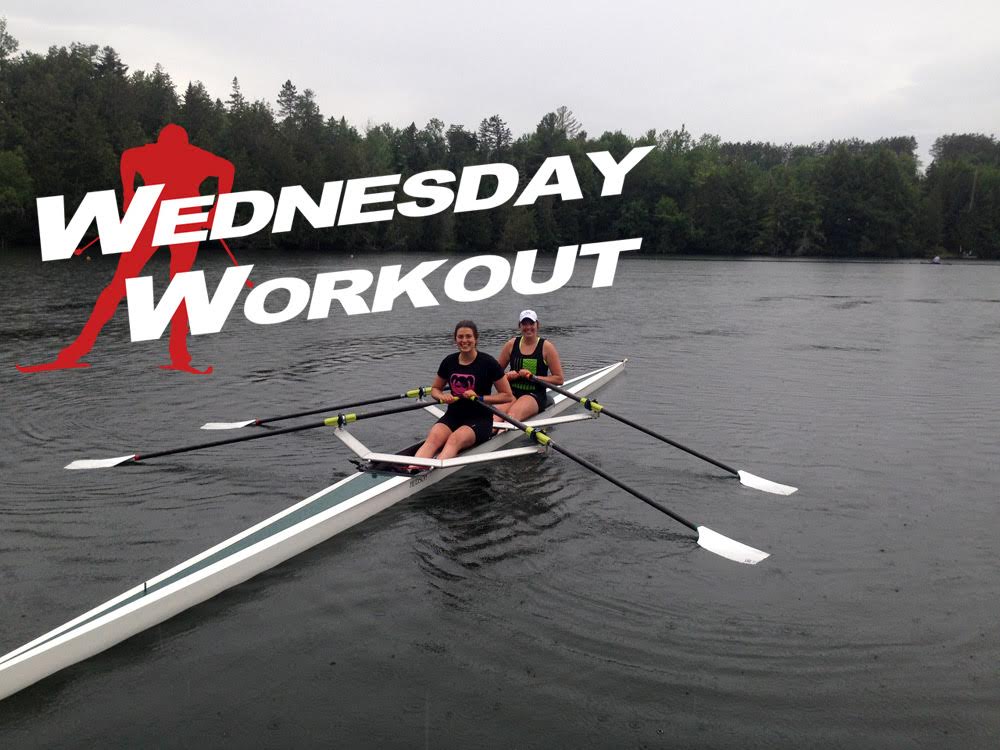
    CGRP skier Heather Mooney gets out on the water with her sister, Brooke, as part of her cross training program.
    CGRP skier Heather Mooney gets out on the water with her sister, Brooke, as part of her cross training program. (Photo: Heather Mooney)

    This week’s Wednesday Workout comes from the Craftsbury Green Racing Project, centered at the Craftsbury Outdoor Center in Vermont. With professional rowers also based at the center, the GRP ski team takes advantage of the center’s facilities to partake in full-body cross training. Don’t have access to rowing equipment? You can partake in one of the exercises below on an erg, which are located at most gyms. 

    ***
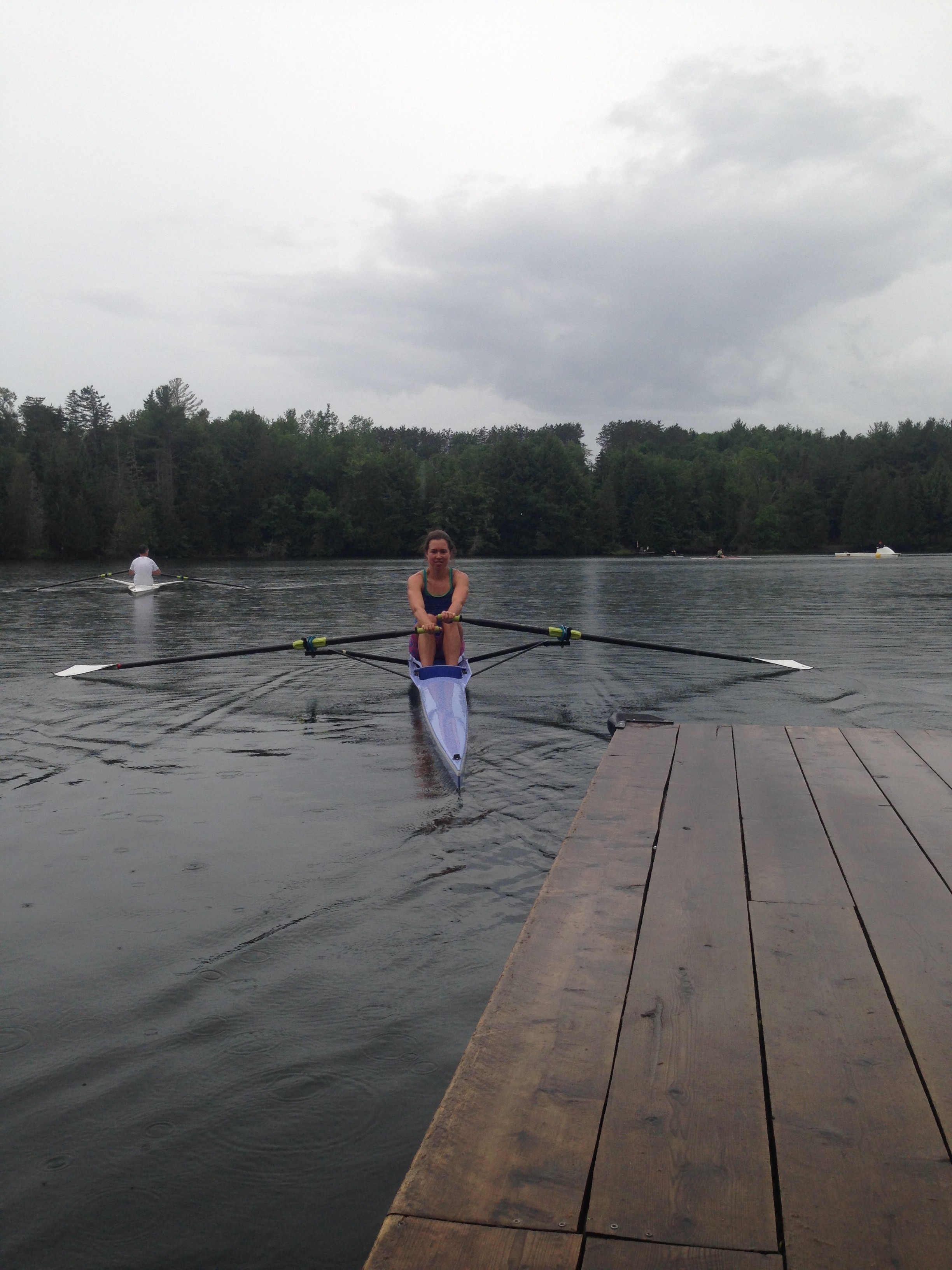
    CGRP skier Caitlin Patterson heads out on the water for a rowing workout out. (Photo: Heather Mooney)
    CGRP skier Caitlin Patterson heads out on the water for a rowing workout out. (Photo: Heather Mooney)

    The Craftsbury Green Racing Project has a couple afternoons each week for cross training built into our general training plan. Our cross training activities of choice include mountain biking, road biking, and rowing, and in a big volume week we have plenty of time for just about all of them. Although it is easy to spend as most of our training hours doing exercise that will relate directly to speed on skis, we like to mix up or routine with other activities to get our other muscles working, minimize the monotony of one activity, and to learn something new.

    Several of us enjoy rowing and the prime facilities, equipment, and coaching available to us at the Craftsbury Outdoor Center make it it very easy. A few times a week, the GRP rowers host “community rowing” where residents from around the area come to work on their rowing. For us on the nordic side of things, it’s a good chance to learn from our fellow GRP rowing teammates.

    Rowing is good cross training for skiing as it is another full body sport — and aerobic once you’re good at it. It also requires good balance to keep your boat upright, which involves the use of all the limbs and a strong core to connect them. With some basic skills, it is a great option to know the technique on a rainy day at the gym on a rowing erg.

    There are a lot of options from hard intervals to just easy steady state workout, with benefits ranging from speed to strength to endurance — just like in skiing — and can be done either on the water or on an erg. Many of us go out for an easy row, “Level 1”, like we’d go for an easy run or bike or ski, but here are some more advanced options that our fellow GRP rowers use:

    The “workout”, courtesy of Steve Whelpley, one of the GRP rowers: 

    5 x 5: Five minutes at 24 strokes per minute (spm) done five times with two minute rest. Ii is a simple Simple workout that builds aerobic capacity and power.

    10 minutes pieces: Four minutes at 22 spm, three minutes at 24 spm, two minutes at 26 spm, one minute at 28 spm.  Typically do it three to four times.  it builds in intensity and forces power at the lower ratings.

    40/20 seconds: 40 seconds on 20 seconds off, two sets of 10 intervals with a longer break in between them.  These shorter intervals build anaerobic capacity, and with short enough rest, they force a lot of oxygen exchange and heavy breathing.

    Rowing is great cross training as it is a full body workout. Like skiing, it necessitates a lot of oxygen consumption, builds VO2 max, and encourages more anaerobic development since it can be more power based than skiing, as well as being slightly antagonistic exercise to stay healthy and well rounded. Moreover, although there are no uphills in rowing, there also are no downhills, so it is a good chance to work on endurance with no breaks.

  • GRP Rowers Strap On Their Skis

    With the end of the fall rowing season upon us and Thanksgiving just around the corner, it’s time for the rowers to put up their oars and try their hand at skiing. In the words of Coach Roock: “Your rowing future depends on this, no pressure.” Temperatures have started dropping to the point where the snow guns are roaring full blast at night to make enough snow for us to start skiing. So far there is a 750m “lollipop” loop where we have started testing our skills, or lack thereof.

    Mt. Craftsbury grows on the lower field behind Cedar Lodge (photo credit: Judy Geer)


    Fresh new gear, good to go! (Photo Credit: Liz Donald)


    Some of the novice skiers learn from the best (Photo Credit: Liz Donald)


    Dan shows us how it’s done (Photo Credit: Juliet Hollingsworth)


    Some of the rowers have more of a background than others in snow sports, such as Emily Dreissigacker who actually started her athletic career in nordic skiing, and Steve Whelpley who has competed in downhill ski races. However, for some of the rest of us there has been a bit of a learning curve.

    Steve Whelpley and Phil Henson quickly progressed from casual laps around the course and immediately challenged one another to a no poles race or three:

    No poles final

    And then at the other end of the spectrum there was this:

    Another one bites the dust

    (Movie credit to Juliet Hollingsworth)

    All in all though it’s been a successful start to the winter season and we’re excited to get some experience on skis and enjoy even more of what Craftsbury has to offer.

    -Phil “Jr”


  • New Oar Rack

    To the new sculling campers, the oar rack they are using this week has always been there. But everyone else knows otherwise: with space for 90 pairs of sculling oars – double the capacity of the old rack – and about two times closer to the docks, the new rack will help get campers on the water faster and will free up space for more boats in the boathouse.

    Old Oar Rack

    Previous Oar Rack

    The oar rack team consisted of Dick Dreissigacker, Judy and Carlie Geer, Kyle Lafferty, Phil Grisdela, and me, with helpful insight from a variety of others. After settling on a space for the oar rack in the waterfront, we came up with a design that would use the existing trees as posts, taking advantage of the natural landscape without having to uproot any trees or dig post holes. Our first step was to put together a rough prototype, figure out the various dimensions to get an idea for the capacity of the oar rack, and decide what kind of wood we would need and how much. Then, we cleaned up the rack location a bit by clearing the low branches using a tree trimmer made from an extra-long Concept 2 carbon fiber oar shaft and a saw blade. We screwed some 2×4’s into the trees to add structural stability to the cross beams, and then went to work on cutting boards. After a couple days in the workshop with a table saw, circular saw, wood glue, nail gun and a good supply of local lumber milled right here at the center, we were ready to start putting everything together.

    Adding the "teeth" that hold up the oars by their collars

    Adding the "teeth" that hold up the oars by their collars

    After all the pieces were put together, we filled out the uneven terrain with soil and woodchips.

    A truckload of fresh dirt helps to even out the ground

    A truckload of fresh dirt helps to even out the ground

    There is only one more weekend of sculling camps this season, but hopefully we can get some good feedback on the oar rack to see if it needs any tinkering before the boathouse starts closing things down for the winter.

    (left to right) Phil Grisdela, Phil Henson, and Kyle Lafferty stand in front of the new oar rack

    (left to right) Phil Grisdela, Phil Henson, and Kyle Lafferty stand in front of the new oar rack

    A picture from the back of the oar rack shows its proximity to the docks

    A picture from the back of the oar rack shows its proximity to the docks

  • Zumba as Cross-training

    This Monday evening Jamie, Kyle, and I headed up to the church on the common to check out the Zumba class taught by Rosa, one of our community rowing regulars. For those of you who don’t know, Zumba is a dance fitness class that combines a little of everything, from belly-dancing to kick boxing to the samba. We were expecting to get a workout similar to that of yoga but an hour of booty shaking, shoulder shimmying, and dynamic footwork later we were drenched in sweat and already sore.  So, we decided to take a closer look at the benefits of Zumba as cross-training.

    Maximum Heart Rate: 169 I’m pretty sure this was reached during the belly-dancing portion of the class. Rosa conveniently had three extra belly-dancing hip scarves, the kind that jingle when you move, which she had us wear. Yes, Kyle wore one, and yes it was jingling.

    Average Heart Rate: 140 but the only reason it wasn’t higher was because we didn’t bring our Zumba hand weights. Some of the dances were a little slower but incorporated rhythmic bicep curls with small dumbbells that doubled as maracas.

    Favorite Dance Move: Butt-shake drum-walk. How it’s done: Shimmy your hips in a slight squat as you walk forward while simultaneously playing air bongo drums with your hands. Targeted muscle groups: Glutes, calves, quads, obliques, and deltoids.

    Hardest Dance Move: Brazilian Samba. How it’s done: Who knows.

    Easiest Dance Move: The “I workout” move. How it’s done: During the song “Sexy and I know it” by LMFAO flex both biceps in a power stance when you hear the words “I workout” followed by a sequence of hip thrusts.

    Stretching: The last song was the cool down. This actually was pretty similar to yoga, if you did yoga to the beat of music and strung the poses together with a little interpretive dance.

    Conclusion: It’s going in the training log.

  • Pictures from Canadian Henley

    SBTC on Front Page!

    Maddie waves to the camera on her way to the dock

    Twins

    Astrid and Molley show off the guns

    Josh Wins Henley Gold

    First win of the regatta for Craftsbury's SBTC!

    SBTC Dash

    Emily and Erin duke it out over 500m in the dash

    Craftsbury finishes second in the mixed 500m dash

    Craftsbury finishes second in the mixed 500m dash

    Henry and Ricky win Henley Gold!

    Henry and Ricky win Henley Gold!

    Another shot of the mixed 8+ for the Da$h for Ca$h

    Another shot of the mixed 8+ for the Da$h for Ca$h

    Craftsbury qualifies for the final at the finish line in the Men's Champ 8+

    Craftsbury qualifies for the final at the finish line in the Men's Champ 8+

    Another win for Craftsbury!

    Another win for Craftsbury!

    The lovely ladies of SBTC 2012 (plus Dan!)

    The lovely ladies of SBTC 2012 (plus Dan!)

  • SBTC in Canada

    After we all got over the fact that our destination of St. Catharine’s, Ontario is actually SOUTH of Craftsbury, the athletes and coaches of the Small Boat Training Center hit the road on Sunday to start our journey to the place where legends are made: The Royal Canadian Henley Regatta.

    Some of us spent the night somewhere in New York State, while others went all the way through to Canada in one trip. Regardless, we all got across the border without any difficulties, and wound up on Henley Island to rig boats (all 19 of them) on Monday morning.  We then moved ourselves into four town houses that we’ve rented from Brock University for the week. With air conditioning, a full kitchen, and a bed for each of us, we couldn’t have asked for a better setup!

    Due to the nature of the regatta, some SBTC athletes started racing on Day 1, while others have had to wait with excessive amounts of taper-induced energy, waiting for their chance to battle it out on the water. Craftsbury has been doing very well so far, with many boats advancing all the way from the heats to the finals, and even on to winning Henley Gold (U23 Men’s Lightweight Single and Senior Men’s Lightweight Four). Results so far can be found on the Canadian Henley website or you can check out the latest press release for SBTC specific results.

    That’s all for now – check back in a couple days for a new blog post, and don’t forget to look at the press releases to see results of all the Craftsbury athletes!

    [I apologize for the lack of pictures, but it’s been difficult to send large files over the internet here. We’ll be sure to post a bunch at the end of the racing.]

  • 5.31.12 – Adventures off the Water

    On our active rest day this past Sunday, Lisa “The General” Schlenker took us on a nice 2 hour bike ride on the trails surrounding Craftsbury, with a few pit stops along the way.
    Our first stop was Hosmer Point, the kids’ camp down the road from the center.  Jon Hammond, the camp director, introduced us […]

  • And so it Begins…

    First, I’d like to announce a new addition to the Green Racing Project: Rowing! This blog will document the the exciting lives of the all new GRP Rowers both on and off the water, and will hopefully provide some insight as to what it is like to be living and training at the Craftsbury Outdoor […]

  • Cross Training: Rowing

    Cross Training: Rowing

    During the summer months, it can be hard to stay focused and keep your muscles snappy when all you seem to do is rollerskiing, rollerskiing and more rollerskiing. Cross training is important in order to avoid burnout or injury–especially for juniors or masters looking to mix it up during the off-season.

    In a new series to FasterSkier, we’re going to take a look at some of the ways skiers keep themselves and their bodies sane by use of cross training. Some of the workouts are as familiar as a pre-breakfast run, while others may be as exotic as Cirque de Soleil.

    Craig Pond, coach of the UBC Women’s rowing team, strongly believes in the diversity of sport as a means of teaching athletes to live an active lifestyle–instead of merely participating in a specific sport.

    “It’s important, when you are a developing athlete, to have a broad range of sports. Just rowing and rowing and rowing is boring, and it’s the same with skiing. It tends to lose some of its excitement,” Pond said. “Try to keep variation so you’re not just hammering away at the same thing.”

    For athletes who have been brought up in the ski arena, the sport can lose some of its shine by the time they hit the senior level. Rowing can help in keeping things fresh and new, with a little time off from the specific–but not from athletics.

    Pond started out as a cross country skier in Belleville, Ontario, but was convinced to try rowing in high school. He went on to become first an elite rower, then, after injury, a coach.

    “Both sports require most muscle groups in your body. Both are leverage sports that require force from your entire body,” said Pond.

    Rowing can also help build strong muscles. Photo: Thomas Auer

    Rowing and skiing are similar in that they both require the use of the body’s major muscle groups. A rowing stroke has both a drive and a recovery phase, not unlike skiing and both start with the bigger muscles in the body and end with the smaller ones. They’re also similar in they both have diversity in their races—sprints, mid-distance and long distances.

    Andrea Bundon is a part of University of British Columbia’s (UBC’s) women’s team. She trains with them during the spring, summer and fall, then switches over to skiing for the winter to race.

    She was also a guide for one of Canada’s blind skiers, Courtney Knight, in the Vancouver 2010 Paralympic Games this past winter. She finds that rowing gives her a mental break while still maintaining her fitness.

    “When I hit the snow again, I feel refreshed and ready for the ski season,” said Bundon.

    Here’s a sample workout from UBC’s playbook. If it’s too rainy and awful outside to rollerski, erg (or rowing) machines can usually be found at a gym to get a great interval session in. It can also be modified to become a longer interval. Pond thinks it’s a good workout because it keeps the structure of a race.

    The Five -Thou-Five Workout

    1. Do a good warm up. Either a 30 minute run or ride, or do a 30 minute rowing warm up so your muscles are ready to go.
    2. Start with a 500-meter interval, which simulates of the beginning of a race. Make it a strong, steady burst.
    3. Take an active break, light rowing or a couple minutes on the bike. It should be at least the same amount of time as your interval.
    4. Hold a threshold pace for a thousand meters. This simulates the middle of a race. You should hold a strong pace with a consistent heart rate.
    5. Take an active break.
    6. Final 500-meter sprint to the finish line. This simulates the final sprint in a race and should be all out.
    7. Cool down.
    Rowing is a way to work at a team or solo. Above, the UBC women's lightweight four races on the Fraser River, B.C. Photo: Emmett Tuyp