Tag: Royal Gorge

  • The Wrong 30,000

    The Wrong 30,000

    This article was made possible through the generous support of our voluntary subscribers. If you value coverage like this, please support FasterSkier with a voluntary subscription.

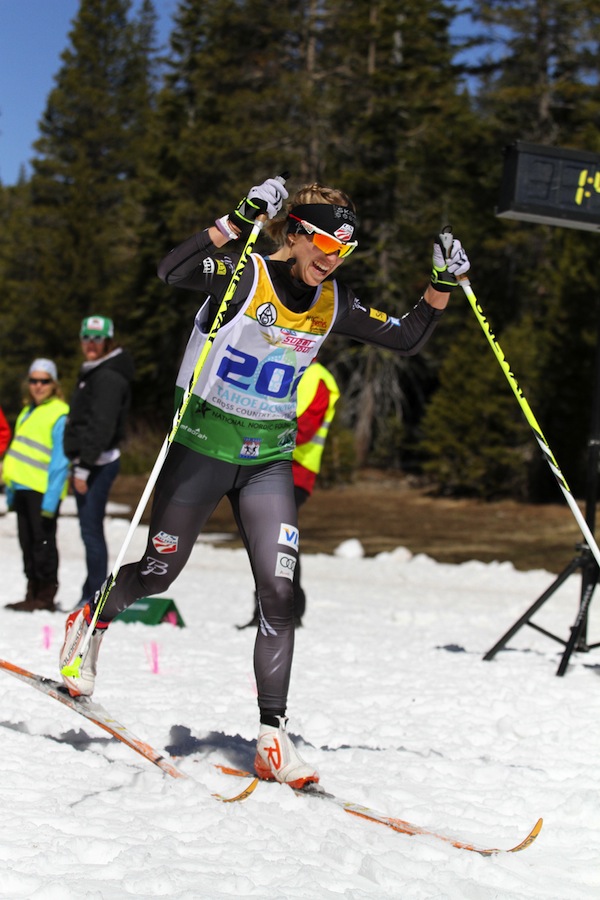
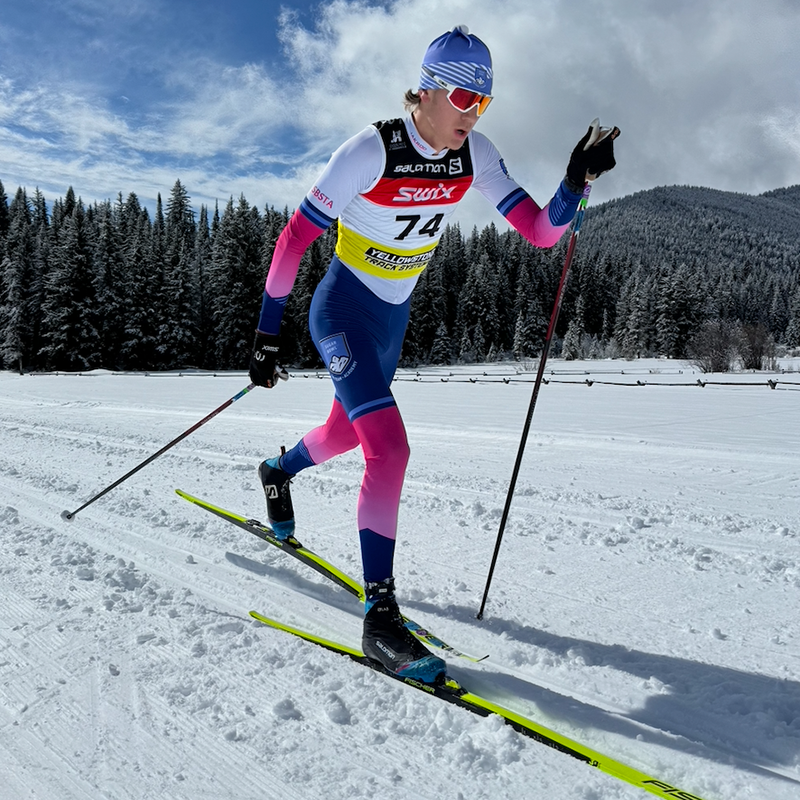
    Quinn Holan on his way to a top 5 junior finish at US Nationals Lake Placid. (Photo: Courtesy Photo)

    Will Sweetser thinks American Nordic skiing is recruiting in the wrong places. Here is what he is building on Donner Pass to prove it. This is the second of two parts — be sure to read part one, to learn about Sweetser’s background and coaching philosophy — Keep Showing Up: Will Sweetser’s Unglamorous First Principle

    The number Will Sweetser carries around is thirty.

    That, he says, is roughly how many development and junior racers a competitive Nordic ski club will produce from any 30,000 Americans with access to snow. The figure does not move much. Aroostook County, Maine, from Houlton to Fort Kent, about that. Stratton, Vermont, about that. Truckee, California, where he lives now, about that. He has been watching the number hold for thirty years.

    “Maybe it’s a little richer in some of these alpine resort towns like Jackson or Aspen,” Sweetser said. “But in general, I think that’s a pretty good estimation of what you’re going to get.”

    If he is right, the implication cuts against how most American Nordic clubs are organized. Truckee has three programs competing for that local pool. Each ends up with roughly ten development-age athletes. Sweetser, who runs the Nordic operation at Royal Gorge on Donner Pass, calls the result “not functional. And actually bad for athlete development.”

    His conclusion is the one most clubs in snow country do not want to hear. He thinks they are fighting over the wrong 30,000 people.

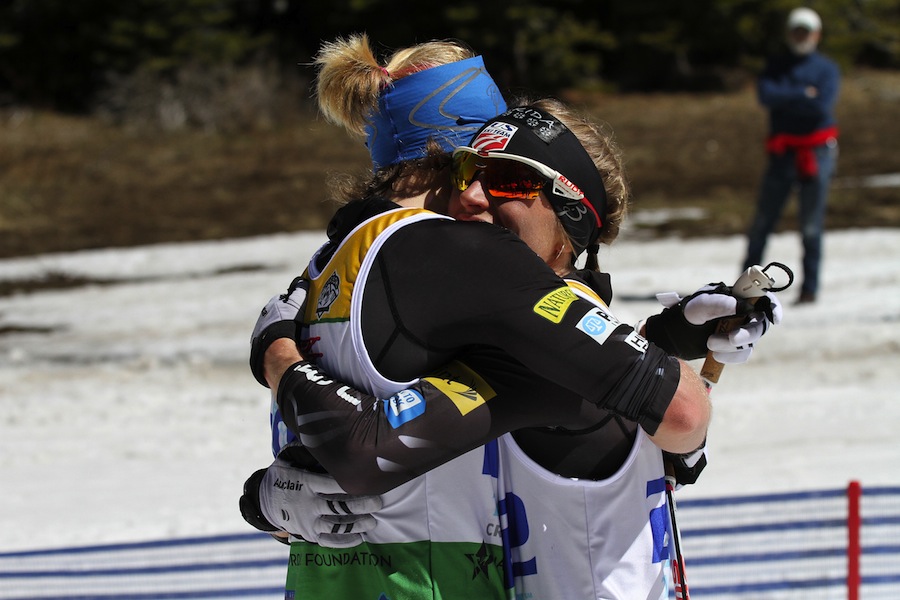
    Quinn Holan, Walker Rawlinson and Cabot Godoy celebrating learning at Jackson Hole International Spring Series 2023. (Photo: Courtesy Photo)

    The 30,000 that interest Sweetser sit on the other side of the Sierra crest.

    The Reno valley, by his count, holds about 650,000 people. The slice he is targeting — the corridor running from Gardnerville up through northwest Reno into Verdi, Nevada — is roughly 140,000 of that. He likes to compare it to the state of Vermont, where the total population is about 648,000. From west Reno to Royal Gorge is under 50 minutes. To Auburn Ski Club, the next program over, it is 40.

    That, he points out, is shorter than what plenty of Vermont families drive to ski on Saturday mornings. It is shorter than what he himself drove from Bates to find usable snow in the 1990s.

    “Why am I fighting over the 30,000 who live in Truckee,” Sweetser said, “who are frankly inundated with sports options?” Lacrosse. Soccer. Dance. Most of his daughter’s friends, he said, are doing two or three sports a season through elementary school. “How do you compete? Do cross-country ski training on top of all of that?”

    There is a second front in the same argument. Truckee is a snow-sport town, but it is also a freeride town, and Nordic, in his telling, is losing the adolescent attention war to a sport that was built for the camera roll. “It’s never going to look as good as huck yourself off of a classic line at Palisades or Sugar Bowl or Heavenly,” he said. “You’re just not going to.”

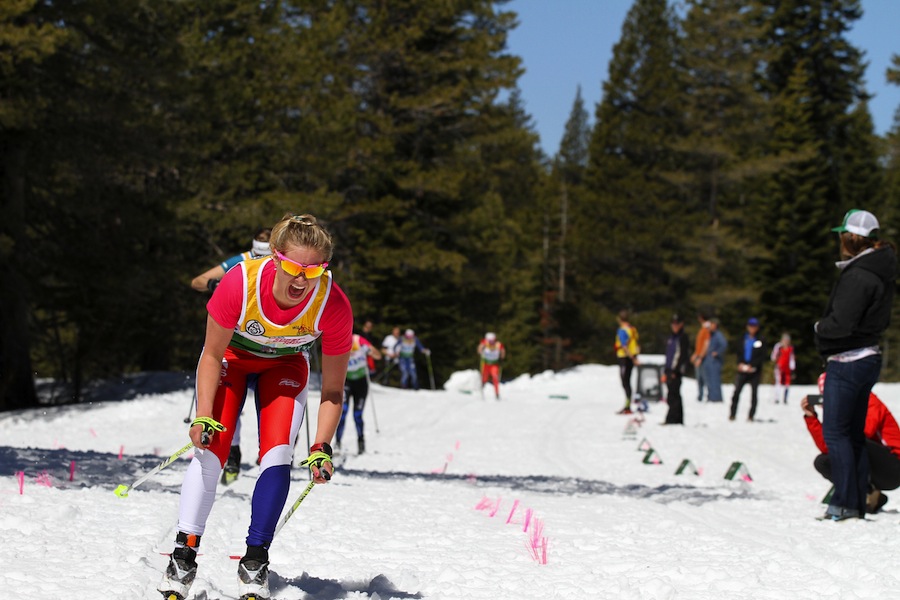
    Quinn Holan, Walker Rawlinson and Cabot Godoy. (Photo: Courtesy Photo)

    So Royal Gorge is being repositioned. Sweetser describes it as a destination training center, by which he means destination for both racers and resources. The piece that interests him most is the labor pool.

    A generation of Eastern Intercollegiate Ski Association graduates moved to the Bay Area for jobs in tech and finance over the last decade or so. Sweetser, off the top of his head, can name seven or eight. Widen the age range and he says he can name another thirty. They are not coaches by trade. Most of them make considerably more money than coaching pays. But they are skiers, and Sweetser’s bet is that a meaningful number of them would take three and a half hours twice a week — a Tuesday and a Thursday morning, say, or a Tuesday and a Saturday — to be paid by Royal Gorge to run a session in the Bay.

    “The ones who are older don’t care about the money. They’ll do it anyway,” he said. “But the younger guys probably care about the money even less. They’re psyched to be out.”

    He has tried this before with a Bay Area satellite through Sugar Bowl Academy and lost it to a turnover in headmasters. The current effort is being underwritten by Royal Gorge, whose general manager, Tom Miner, took over a few years ago and has been, in Sweetser’s description, the institution willing to write the checks. Bay Area families would still drive up Thursdays and Fridays for weekend training; the satellite sessions supplement, they don’t replace. “Four to five sessions of skiing per week,” Sweetser said. “Which is pretty crazy if you think about it. You can develop a lot.”

    His reference point was his own résumé. He coached at Bates in the 1990s, when the team was off Mondays, didn’t ski Tuesdays or Wednesdays most weeks, and drove an hour each way the rest of the time or just left on Thursday for the next carnival stop. “I don’t think it’s the worst development plan for kids who want to ski in college,” he said. “Nor do I think it’s going to hurt your lifelong love of the sport to ski three or four days a week instead of six.”

    JC Schoonmaker and Emma Ribom giving back at a Far West dryland clinic. (Photo: Courtesy Photo)

    “I think it’s also a thought exercise more than a practicality,” he said. The snow-belt population is small to begin with, he argued, and within it, Nordic competes against alpine, against freeride, against every other thing a kid with a phone can see. He went looking for the counterexample and landed on Great Britain. Their entire cross-country skiing base, he estimated, is “maybe a thousand” people. Three British men finished in the top eight of a World Cup race in the lead-up to last year’s Olympics. The United States, from a population orders of magnitude larger, did not have three.

    “So I think we have to apply both systems simultaneously,” he said. “You want the best possible resource application and preservation, as well as the recruiting.”

    The recruiting, in his version, is what is taking him to Reno and to the foothills around Auburn and Grass Valley, towns at 2,000 feet of elevation, with populations several times Truckee’s, that have a history of ski teams without a current knowledge base. He has also been watching California middle-school track results, the way a baseball scout reads box scores. He is looking for the eleven- and twelve-year-olds who will hit puberty, stop being runners, and still have an engine.

    Long view of program and athlete development. (Photo: Courtesy Photo)

    The institutional pieces have been moving in the meantime, some faster than others.

    Sweetser submitted a bid this month to host the 2028 Junior Nationals at Royal Gorge. The bid still needs approval from the sport committee and the junior working group, and the organizing committee is largely the one already preparing for an earlier event. He said the bid is in part a consequence of another organization having stepped back, and would not elaborate.

    He is also in the middle of homologating four race courses at Royal Gorge — a sprint, a 2.5, a 3.3, and a 3.75 kilometer loop, with options for a 5K and additional sprint variants. Sweetser did the initial mapping himself; a professional GIS contractor is doing the formal version now.

    The third moving piece is administrative. Sweetser owns a company called Ydalir, which is the U.S. importer for the Italian wax brand Maplus and the holding entity for his coaching operation. Ydalir’s junior and weekend programs are being folded into the Royal Gorge brand. “Weekend program up through juniors is branded Royal Gorge cross country,” Sweetser said. The older athletes — gap-year skiers, elite development athletes, masters groups — sit one tier up, with the financial arrangement still being worked out.

    The deal makes sense to him because of what an institution provides. “I can’t just be running around in the woods all the time,” he said. “I need a home.”

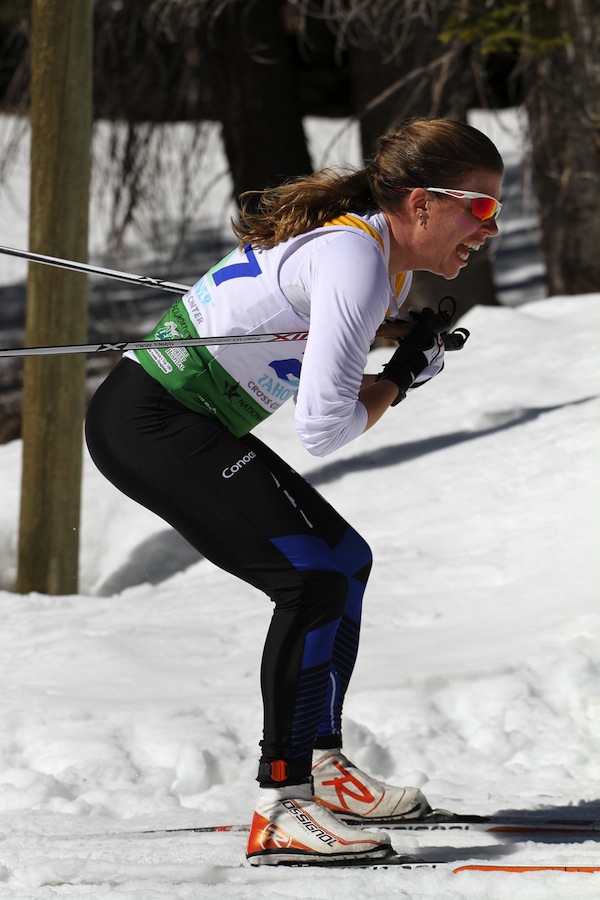
    Walker Rawlinson (Menlo CA) in a breakthrough race Jackson Hole 2023. (Photo: Courtesy Photo)

    The home matters because of who he wants in it.

    The NCAA is on the verge of changes that will give skiers a five-year clock from high school graduation, capped at age 24, in which to use four years of eligibility. Sweetser thinks the new rule will quietly squeeze out the gap-year athlete — the kid who could use a year at a prep school, the kid who is simply not ready at 18, the kid who would be a different athlete and a different person at 20. The five-year window is generous in theory and tight in practice.

    What Royal Gorge can offer those athletes, Sweetser said, is a landing pad. Last year the resort gave passes to the three older skiers he was coaching. This year, in addition to the passes, it will offer them paid work with the ability to ski before and after a shift.

    “It’s a pretty decent deal when you’re trying to make it,” he said.

    None of this is new in concept. The Maine Winter Sports Center built something close to it in the 2000s, and produced a long run of national-team athletes from it. Sweetser was part of that operation. The Royal Gorge version inherits the DNA and adds a piece Maine never had: a population base on the other side of the mountains big enough to recruit out of.

    Whether his thirty-out-of-30,000 math holds in California the way it held in Aroostook is the experiment.

    “You take an 18-year-old and go out as a 20-year-old,” Sweetser said, “you’re a different person.”


    Help Support Our Coverage!

    If you value the thoughtful work and access FasterSkier provides, please consider becoming a Voluntary Subscriber. Your support directly fuels our work to cover the people, places, and moments that make our sport special.

    Join the FasterSkier community!


    Superfluous photo of Sweetser’s dogs… but we love dogs too, so had to include this photo! (Photo: Courtesy Photo)
  • Keep Showing Up: Will Sweetser’s Unglamorous First Principle

    Keep Showing Up: Will Sweetser’s Unglamorous First Principle

    This article was made possible through the generous support of our voluntary subscribers. If you value coverage like this, please support FasterSkier with a voluntary subscription.

    Two older girls on the Edward Little ski team went looking for bodies. It was the mid-1980s, the boys’ Nordic program at the Auburn, Maine, high school was thin and not very good, and the girls’ team was strong. The two girls, Becky Flynn (SVSEF) and Sarah Pribram (NWVE), knew a freshman who had skied a little in middle school. They asked him if he wanted in.

    Will Sweetser’s second cross-country ski race ever was the Maine High School State Championship, he finished 34th, the best result on the team.

    The next winter Edward Little won the state title. Sweetser placed seventh in the state — and fourth on his own squad. “I was the fourth guy running, I was the fourth guy skiing,” he said. The sport was tilting toward skating then, and almost nobody his age had figured out how to skate yet. Technique was a wash. So the results sorted themselves out the only way they could.

    “It turned out that engines won,” Sweetser said.

    That phrase could serve as an epigraph for everything he has done since, except for one inconvenient fact. His own engine was nothing special, at least by his own standards.

    He learned exactly how unspecial his was as a freshman skier at Dartmouth, when the team did VO2 max testing. The results put Sweetser, the slowest man on the roster, “squarely in the bottom half of the women’s team.” He ran the numbers on his own future and did not like the answer. “I was already running almost the times they suggest for my VO2 max,” he said. The writing, he decided, was on the wall.

    If the engine couldn’t get bigger, the speed had to come from somewhere else.

    “Wax makes things faster. Strength makes things faster. I better learn technique,” Sweetser said. “Maybe I was a genetic predeterminist, and that’s why I started learning all the physiology.”

    After graduating from Dartmouth, Sweetser took an assistant coaching position at Bates College in Lewiston, Maine, where he went to the library and more or less stayed there.

    At Bates, Sweetser became a fixture in the stacks while living with his grandfather, working into the evening. “I literally was in the library more than the team,” he said. For two years, he averaged four or five interlibrary-loan requests a week. He calls what he built in that period “a self-taught, master’s-level survey course” in exercise physiology. He was also, by his own account, one of the first coaches in the country mailing away for VHS tapes of World Cup races, freeze-framing technique frame by frame because there was no other way to see it.

    Will Sweetser (right) has worked with Olympian JC Schoonmaker (left), who now lives in Alaska and races for APU, since Schoonmaker was a young skier.

    Three decades later, that reading has produced one of the more idiosyncratic coaching minds in American skiing. Sweetser is now based in Soda Springs, California, high on Donner Pass, after a long stretch running the program at the Maine Winter Sports Center. And the first principle he’ll hand you is almost aggressively unglamorous.

    It’s consistency. Just showing up.

    Sweetser points to a Norwegian study he came across years ago — his recollection puts it around 2006 to 2008 — that examined the country’s top 14 nationally ranked women, essentially its entire World Cup pipeline. Researchers measured everything: VO2 max, speed broken into 20-second segments, correlation after correlation. The single factor that most cleanly separated the top seven from the next seven, Sweetser says, wasn’t engine size or top speed. It was days lost to illness and injury. The lower group averaged roughly two weeks of missed training a year. The top group averaged two or three days.

    “That seems to be the most correlated thing,” he said. Stretch it across a four- or five-year Olympic cycle and the gap stops being trivial.

    It sounds obvious. It is also not how a great many junior programs actually behave, which is where Sweetser’s second idea comes in, and that one is stranger.

    He builds training around fiber type, and he has a field test for sorting it. He’ll have an athlete — 15 or older — run a 400 meters, rest 20 minutes, then run a 3,000 meter. Then he looks at the ratio. A “normal” distance athlete, he says, holds about 76.5 percent of 400-meter pace over 3k. He can quote the figure to the hundredth. Drop below 68 percent and the athlete is built to sprint; climb above 82 and they’re built to grind. “This is how specific they are,” he said of the research he leans on.

    The athletes all come to the same session. What changes is the leash. The sprinter types get a short one, where Sweetser wants the heart-rate alarm to go off the instant it “faintly whispers” the next zone, because those athletes overshoot every interval.

    Where the distance types might run eight intervals, the sprinters run five or four. Body position stays the same for everyone. Cadence and power output are already different on their own. What he actually teaches, he says, is tactics — where on the course to spend, and where to wait based on each athletes strengths and weaknesses.

    This is also why he keeps reaching for the treadmill. It is measurable and it is controllable, and that combination lets him do something he values more than almost anything: build what he calls “an athlete persona that’s rooted in belief, not hope.”

    The clearest proof he offers was from an athlete he met at Bates, Sarah Dominick — the woman who would later become his wife and is now his coaching partner. At Bates, her running coaches kept pushing her mileage up, and every time she got much past 25 miles a week, she broke down. It made sense to Sweetser: she had a sprinter’s makeup, but was being asked to train like a distance runner. She was miserable enough that she sat out her junior year of competition entirely.

    When she came back as a senior wanting to race the 3k and 5k, Sweetser says her coach called it a waste of time.

    His plan went the other direction. He capped her running at roughly three hours a week and backfilled the volume with cycling and roller skiing. Warm-ups and cool-downs were run on grass, in the opposite direction around the track, to spare the leg that always flared. The key session, twice a week, was deceptively small: two sets of 15-seconds-on, 15-seconds-off at 3k race pace, jogging the corners, six minutes of rest between sets. Start to finish, it took about an hour.

    She went from 11:38 to 10:00 for 3,000 meters in a month. She became a Division III All-American and set a school record. The following year, training off skiing and running on a dirt road at altitude, she ran 9:27.

    The lesson Sweetser took from it is the one he now spends most of his time trying to give away. “Your best training computer is still between your ears,” he said.

    Will Sweetser doing lactate testing during a hill-bounding session two season ago with Quinn Holan.

    You can see what that looks like in Quinn Holan, the 18-year-old Sweetser coaches most directly and has worked with since the athlete was 11. These days, Holan, Far West’s standout U20 skier, writes his own training plans and brings Sweetser the questions, not the other way around. Increasingly, when the two disagree, the athlete keeps his own counsel, which is exactly the point. “You can call me his coach,” Sweetser said, “but it’s sort of like Klæbo’s grandpa is his coach.”

    It is a strange arc for a man who started with so little to work with. Sweetser was the high school freshman recruited because the team needed a warm body, the college skier in the bottom half of the women’s VO2 results, and the coach who had to teach himself the sport one interlibrary loan slip at a time. Thirty years on, the whole project — the fiber-type tests, the treadmill data, the athlete who outgrows his coach — is really just an effort to spare the next kid the loneliness of that library.

    Sweetser never did get the engine he wanted as an athlete, but as a coach, he has built something much more durable.

    Next: why Will Sweetser thinks American skiing is fighting over the wrong 30,000 people — and what he’s building on Donner Pass to prove it.


    Help Support Our Coverage!

    If you value the thoughtful work and access FasterSkier provides, please consider becoming a Voluntary Subscriber. Your support directly fuels our work to cover the people, places, and moments that make our sport special.

    Join the FasterSkier community!


    Will Sweetser and Matt Seline
  • Royal Gorge XC Resort to Offer Expanded Programming for Winter 2026-2027

    Royal Gorge XC Resort to Offer Expanded Programming for Winter 2026-2027

    Thanks to the fantastic success of the redesigned youth programs at the resort this past winter, Royal Gorge XC will offer expanded teams for the 2026-2027 season.

    New team offerings for the coming season will include middle school age racing, junior racing, gap year programming, pro level racing and masters training groups.

    Youth programming will remain the same as offered this past season, with groups comprised of young skiers from Kindergarten through 8th grade with a focus on skill development and fun.

    The new racing and training focused offerings will put into place a full ladder of nordic ski development at Royal Gorge XC, allowing every level of skier to see the complete range of possibilities this life-long sport can offer.

    Programs will be headed by Will Sweetser, now in his 33rd year of professional coaching. An expanded staff of U.S. Ski and Snowboard certified coaches will support programming and lead the Royal Gorge XC Teams as they represent the resort and Far West Nordic in local, regional and national racing.

    All programs will be competitively priced, with both à la carte and full menu pricing options. Registration for programs will open at SkiReg.com by April 1, 2026.

    Royal Gorge XC Programs 2026-2027

    Manzanitas — Grades K–2
    Fun, fun and more fun. Saturdays only. Classic skiing focus. Weekend and seasonal rentals available.

    Aspens — Grades 3–5
    Fun, coordination and skill development weekend program. Classic and skate skiing. Limited racing opportunities for those interested.

    Lodgepoles — Grades 6–8
    Fun, skill development and fitness focused weekend program for middle schoolers. Independent Middle School racing and limited racing opportunities for those interested.

    Devo — Ages 12–15
    September through March programming options, both fall/winter and winter only. Summer camp offered. Coached sessions held 3 days per week. Local and regional race support with experienced, certified coaches.

    Comp — Ages 15–19
    June through March programming options, both full year and winter only. Coached sessions held 4 days per week on average. Local, regional, and national race planning and support with experienced, certified coaches.

    Gap Year — Ages 18–20
    By application only. Program limited to 5 athletes. 4–5 days per week in conjunction with Pro Team. Head coach: Will Sweetser.

    Pro Team — Ages 19+
    By application only. Program limited to 5 athletes. Individual training and competition planning. Job opportunities. Coaching requirement. Head coach: Will Sweetser.

    Senior/Masters Training Groups — Ages 21+
    Multiple training groups offering beginner to expert skate and classic training. From “learn to” to racing level groups. 1–3 days per week. Scheduled in conjunction with youth and junior training groups and offering race/experience travel.

    Registration opens April 1, 2026 at skireg.com/rgxc-nordic-ski-team-2026.

  • Gold Rush Races Cancelled, But Festival Lives On at Royal Gorge

    Gold Rush Races Cancelled, But Festival Lives On at Royal Gorge

    Low snowfall and warming temperatures across the Sierra Nevadas have forced Royal Gorge XC Resort to cancel the Gold Rush, Silver Rush, and Bronze Rush races originally scheduled for March 21, 2026. Pre-registered racers will be offered a refund or a deferred entry to the 2027 races.

    The long course races are off, but the Gold Rush Festival itself will carry on in a modified form on Saturday, March 21. Royal Gorge is planning a full day of activities, including live music, food, ski demos from Atomic, waxing clinics from Maplus, a laser biathlon demo courtesy of the U.S. Biathlon Association, and their redesigned Slush Cup Super Sprints.

    The festivities kick off Friday evening with the cafe and bar opening at 4:00 p.m. serving tacos, pizza, fries, and drinks, followed by a free Maplus-USA glide waxing clinic at 5:00 p.m.

    Gold Rush 2010 (Photo: MacBeth Graphics)

    Saturday’s schedule runs from 8:00 a.m. through the afternoon:

    8:00 a.m. — Resort opens for demos and skiing
    9:00 a.m. — U.S. Biathlon Association “Take a Shot” laser rifle demo
    10:00 a.m. — Cafe opens; Maplus-USA glide waxing clinic
    12:00 p.m. — Music on the deck
    1:00 p.m. — Slush Cup Super Sprints qualifiers (day-of entry only; $20 adults / $10 under 20)

    The Slush Cup Super Sprints will feature a super short loop with single-lap qualifying, terrain elements, and gates. There will be Beginner, Fitness, and Expert classes, with heats of six following qualifying. Expert Class heats will be a minimum of 600 meters.


  • Sugar Bowl Academy Accepting Applications for Elite Team

    Sugar Bowl Academy is pleased to announce they are accepting applications for their Elite Nordic Team for the coming 2016/2017 season. The team will provide world-class coaching and training opportunities to its athletes.

    Head Sugar Bowl Nordic coach Martin Benes will oversee the program along with the Sugar Bowl Academy coaching staff. Athletes will be based out of the Royal Gorge-Sugar Bowl resort and have access to the wealth of training sites in the Truckee-Tahoe region. In addition, the athletes will make use of the recently constructed Sugar Bowl Academy facilities, including a state-of-the-art gym. Team members receive funding to offset camp and race expenses, as well as a housing subsidy.

    Interested applicants should send an athletic resume and letter outlining their goals for the upcoming season(s) to mbenes@sbacademy.org by May 1st.

  • 2016 AXCS National Masters Coming To Royal Gorge March 19-20

    2016 AXCS National Masters Coming To Royal Gorge March 19-20

    With several feet of recent fresh snowfall to replenish the trails, the world-famous Royal Gorge ski resort is ready and waiting for master skiers from across the USA to visit for the 2016 National Masters coming up March 19-20.

    Racing will start off on Saturday, March 19 with a 10km classic race. Skiers will start in various waves based on age category registration. An open 5km is also offered for juniors and adults not interested in the full 10km distance. Current plans are for the classic race to begin at 8am, but that time may be adjusted to allow for additional kick wax testing if temperatures and snow conditions permit.

    Then on Sunday, March 20 the NM2016 will wrap-up with the California Gold Rush taking center stage offering 42km, 28km (Silver Rush) and 14km (Bronze Rush) freestyle races. A new 14km course will be used for 2016 with all races starting at the Summit Station trailhead beginning at 8am.

    As is traditionally the case at the AXCS National Masters, skiers are welcome to enter any distance race they wish, but only the official distances designated for each masters age category will count towards points for the 2016 U.S. Masters Team presented by Podiumwear and also the honorary NM2016 official podium.

    AXCS National Director J.D. Downing is excited for the NM2016 to be returning to the Far West. “It’s been a long time since we’ve had the National Masters in California, the last time was in 2002 so this is a really special opportunity for skiers across the nation. The recent snowfall has bolstered the snowpack quite a bit so we are looking for great conditions March 19-10. Hopefully a bunch of skiers from places that haven’t enjoyed the best winter will consider hopping on a plane to come join the fun!”

    Royal Gorge Event Director David Eastwood adds, “Royal Gorge XC is very proud to host the NM2016 Classic and Marathon races. We believe our varied terrain, sunny weather and enjoyable spring skiing conditions will challenge the athletes and provide great competitive racing!”

    Registration for all events is available at RoyalGorge.com with links and supplemental NM2016 info also available on xcskiworld.com.

  • Royal Gorge Seeking Full- and Part-Time Groomers + Ski Instructor

    Royal Gorge Seeking Full- and Part-Time Groomers + Ski Instructor


    Royal Gorge

    Royal Gorge Cross Country is seeking a full-time and a part-time groomer and a full-time ski instructor for the 2015/16 season. On-snow season runs December through April. Experienced candidates, who are willing to relocate to the Tahoe/Truckee area of California, please direct letters of interest to jtoeppner@sugarbowl.com.

  • Sugar Bowl Academy’s Hannah Halvorsen Named to U.S. Scandanavian Cup Team

    us nats

    By Peyton Jobe

    When fifteen-year-old Hannah Halvorsen filled out the “Nutrition” section of her Goal Setting Worksheet at the beginning of her sophomore year at Sugar Bowl Academy, she pledged to herself that she would do the following:

    “Leave room on my plate during lunch for the salad bar” and “eat salad every day.”

    Under “Conditioning Goals,” Halvorsen’s short-term performance goals were “to push myself above and beyond.” Finally, under “Dream Athletic Goal,” she listed “To travel the world skiing.”

    She will soon be doing just that.

    After impressive results in early season Nordic ski racing against the best competition in the country, Halvorsen has been named to the U.S. Scandanavian Cup Nordic Ski Team, and will travel with her five teammates to Finland for a series of races later this month.

    “I had been working hard towards this goal for a long time,” said Halvorsen, “I look at this as an incredible opportunity and as another step in the right direction towards future goals to come.”

    For her coach and Sugar Bowl Academy school advisor, Caitlin Curran, it is Halvorsen’s focus and work ethic that has helped her succeed at the highest levels of competition in the Nordic ski-racing world.

    “I am very proud of Hannah, not only for earning a spot on this year’s U18 trip to Europe, but mainly for all the focused work that she put in throughout the year to meet this goal,” said Curran, who accompanied Halvorsen last week to race at U.S. Nationals in Soldier Hollow, Utah.

  • Video: U.S. Distance Championships Women’s 30 k Classic

    Video: U.S. Distance Championships Women’s 30 k Classic

    FasterSkier’s coverage of SuperTour Finals and U.S. Distance Nationals is brought to you by the generous support of Concept2, the leading manufacturer of indoor rowers, racing oars, and the SkiErg.

    NORDEN, Calif. — Liz Stephen (Burke Mountain Academy/U.S. Ski Team) put on another show of dominance in the women’s 30 k classic at Royal Gorge XC for U.S. Distance National Championships, winning the race by over a minute. Kikkan Randall (Alaska Pacific University/USST) claimed silver and Rosie Brennan (APU) took third a minute after that. Our footage from the race.

    Special thanks to Mark Nadell/MacBeth Graphics for contributing video.

  • Stephen Buckles Down on Single Pair of Skis, Wins U.S. Distance Nationals 30 k

    Stephen Buckles Down on Single Pair of Skis, Wins U.S. Distance Nationals 30 k

    Liz Stephen celebrates her second major win of the week at Spring Series in California, winning Wednesday's 30 k classic mass start at U.S. Distance Nationals at Royal Gorge. Two days early, she claimed the SuperTour Finals title. (Photo: Mark Nadell/MacBeth Graphics)
    Liz Stephen celebrates her second major win of the week at Spring Series in California, winning Wednesday’s 30 k classic mass start at U.S. Distance Nationals at Royal Gorge. Two days early, she claimed the SuperTour Finals title. (Photo: Mark Nadell/MacBeth Graphics)

    FasterSkier’s coverage of SuperTour Finals and U.S. Distance Nationals is brought to you by the generous support of Concept2, the leading manufacturer of indoor rowers, racing oars, and the SkiErg.

    NORDEN, Calif. – As the minutes ticked by in Wednesday’s 30-kilometer classic mass start, coaches paced around the start-finish area, checking their phones for updates.

    More than 30 minutes had passed without any sign of the leaders at the end of the first 10 k loop. Temperatures were already soaring into the 50s around 10:30 a.m. at Royal Gorge Ski Resort, making the three-lap endurance test even more of a grind.

    On the first of the two-day U.S. Distance Nationals, team-support staff readied for a surge through the exchange zone, an optional loop estimated to take about 40 seconds. Despite the penalty, most figured their skiers would want to use at least one of their two changes on a new pair.

    U.S. Ski Team veterans Kikkan Randall (APU) and Liz Stephen (BMA) take control from the gun in Wednesday's 30 k classic mass start at U.S. Distance Nationals at Royal Gorge in Norden, Calif. Stephen went on to win by more than a minute. (Photo: Mark Nadell/MacBeth Graphics)
    U.S. Ski Team veterans Kikkan Randall (front right) and Liz Stephen (behind) take control from the gun in Wednesday’s 30 k classic mass start at U.S. Distance Nationals at Royal Gorge in Norden, Calif. Stephen went on to win by more than a minute. (Photo: Mark Nadell/MacBeth Graphics)

    Liz Stephen of the U.S. Ski Team (USST) and Burke Mountain Academy emerged out of the woods first, followed closely by USST teammate Kikkan Randall. Without any hesitation, the two began their second lap, skipping the exchange and setting the tone for the rest of the race.

    Randall’s teammate at Alaska Pacific University (APU), Rosie Brennan skied just a few seconds behind in third. If they weren’t going to switch skis in the soft-and-slushy snow, she wasn’t going to either.

    Suddenly, the race became a battle of sheer grit on average-at-best skis. Sixty degrees and sunny wasn’t going to be ideal for classic skiing no matter how you cut it. Might as well keep going.

    “I didn’t think they’d be any faster,” Stephen said of her decision not to change skis. “I tend to kind of be someone who’s pigheaded and just keeps going even if it’s not the fastest way.”

    Stubborn or just strong-willed, Stephen kept on plugging. The 26-year-old Vermont native led Randall by about 15 seconds through the end of the second lap at 20 k. Stephen continued with the same pair, waxed by USST serviceman Randy Gibbs and his support staff with the Craftsbury Green Racing Project, and Randall followed suit.

    Accelerating on the last lap, Stephen went on to finish first uncontested in 1 hour, 41:54.8 minutes. It was her second victory in as many races after Stephen won the SuperTour Finals title on Monday. She went on to take top honors at Distance Nationals in the last race of the season.

    Liz Stephen leading through the second of three laps in Wednesday's 30 k classic mass start at Royal Gorge in Norden, Calif. Stephen went on to beat Kikkan Randall by more than a minute for the U.S. Distance Nationals title. (Photo: Mark Nadell/MacBeth Graphics)
    Stephen leading through the second of three laps in Wednesday’s 30 k classic mass start at Royal Gorge. Stephen went on to win the U.S. Distance Nationals title. (Photo: Mark Nadell/MacBeth Graphics)

    “I’m super happy with it, and I mean, heck, I’m just excited to finish the season,” Stephen said. “As I’ve said before, this is a dream season and … as a U.S. team right now we’re really strong. It’s not just winning SuperTour Finals and U.S. championships. It’s a big deal now. We’re a very fast nation.”

    Unable to match Stephen’s attack up the long A-climb on the second lap, Randall took silver, 1:05.2 behind. Brennan, who skied most of the race alone, held on to third, 2:04.4 after Stephen.

    “On the second lap, last hill, [I] just kind of made a gap on Kikkan, didn’t really mean to make a move, it just kind of happened,” Stephen said. “I wasn’t sure whether I should keep going and try to make it bigger or whether I should chill out a little bit. … When she didn’t catch right back up, I thought, ‘What the heck? Let’s just see if I can hold it.’

    “I knew if she caught me again, it’d be really hard for me to stay with her and then try to beat in the end,” she added. “That’s not gonna happen. She’s got a globe full of jellybeans for a reason. I was telling myself over the tops of hills, ‘Just get over the top so she can’t see you!’ ”

    Cramping and tired after a long-yet-successful season, in which Randall won her second-consecutive Sprint World Cup and accompanying Crystal Globe, the world champion couldn’t respond. Her skis had been fast enough on the downhills and good on the climbs when she could find her kick, but as the race progressed (and her last feed went flying over her head with about 4 k remaining), that became harder for Randall to do.

    “I felt like I had the energy to do it, I just couldn’t,” Randall said. “My arms were starting to cramp and I couldn’t quite get on top of my skis to carry my momentum. For me in these kind of things, it’s such a technique thing, and sometimes I get it and sometimes I don’t.”

    Kikkan Randall (l) congratulates USST teammate Liz Stephen on her victory at U.S. Distance Nationals on Wednesday at Royal Gorge. Stephen won the 30 k classic mass start by more than a minute over Randall. (Photo: Mark Nadell/MacBeth Graphics)
    Kikkan Randall (l) congratulates USST teammate Liz Stephen on her victory at U.S. Distance Nationals on Wednesday at Royal Gorge. Stephen won the 30 k classic mass start by more than a minute over Randall. (Photo: Mark Nadell/MacBeth Graphics)

    Friends and housemates for the week with APU, Randall and Stephen talked about the ski exchange right before the race. Stephen wasn’t as confident in her second pair of skis. Randall felt they should see how the first lap went and make a call.

    “Coming into the exchange, I just decided, ‘No, I’m not gonna change, that’s my vote,’ ” Stephen said. ‘And she said, ‘Yeah, me neither. I’m just gonna keep going.”

    Forty seconds was too much time to waste, and the penalty ended up taking longer than a minute as the snow continued to soften.

    “With this added distance, it really changes the race,” said Randall, an International Ski Federation (FIS) athlete representative.

    “After they tested it out on the World Cup, I would say the majority of athletes didn’t like it. It’s definitely gonna be under review at the FIS meeting this spring. I was a little surprised they were gonna try it here.”

    As for the men’s 50 k classic mass start on Thursday, chief of competition August Teague told coaches they would shorten the zone to make it less of a penalty.

    But on Wednesday, it was an option few of the top finishers explored. After the first lap, Sadie Bjornsen (APU/USST) was the first to change her skis in sixth. She had been trailing Stratton Mountain T2 teammates Sophie Caldwell and Jessie Diggins (USST) in fourth and fifth, respectively. They nearly entered the transition until their coaches called them back, telling them to chase down the top three on the skis they were on instead.

    “I wish I would’ve known that everyone in front of me was not doing it,” Bjornsen said of the exchange. She spent the rest of the race trying to catch the chase group behind Brennan and succeeded on the second lap before falling behind on the third.

    “I think I just did it out of habit because I’ve done a couple ski exchanges in 30 k’s, never that you lose time on,” she added.

    An exhausted Jessie Diggins (SMST2/USST) after outsprinting four others for fourth place in Wednesday's 30 k classic mass start at U.S. Distance Nationals at Royal Gorge. (Photo: Mark Nadell/MacBeth Graphics)
    An exhausted Jessie Diggins (SMST2/USST) after outsprinting four others for fourth place in Wednesday’s 30 k classic mass start at U.S. Distance Nationals at Royal Gorge. (Photo: Mark Nadell/MacBeth Graphics)

    Diggins was one of the few top women who took a pit stop the second time around, rising from 10th to seventh toward the end of the last lap.

    She overtook Swedish B-team member Linn Sömskar, who double poled the first lap on skate skis along with fellow Swedes Lisa Larsen and Hanna Falk.

    Sömskar and Larsen led Randall and Stephen early in the race, but on a tough 10 k course marked by two significant climbs and several gradual hills, they fell behind before the end of the loop and switched to classic skis.

    “After the first lap, there was actually zero rest on the whole course,” Brennan explained of the slowing conditions. “There was not one place you could tuck without losing time.”

    On the last lap, Diggins worked her way up to Bjornsen, Swedish World Cup skier Maria Graefnings, Nicole Deyong (Sun Valley Ski Education Foundation), Caitlin Gregg (Central Cross Country), and Caldwell. She outsprinted them all to the finish, taking fourth 2:03.7 minutes behind Brennan and 1.5 seconds ahead of Caldwell in fifth.

    “It took me the entire nine k to catch them back again,” Diggins said. “Once I caught them, the skis had better glide. It’s kind of a risky, risky move, but I felt like I didn’t have a choice because they were getting slick. I decided I needed to switch.”

    The key to Brennan’s success was effectively not thinking about exchanges, but rather following the two World Cup veterans ahead of her. At the finish, she said it was one of the hardest races she’d ever done.

    “I’m beyond happy. That was one of the best races I’ve had this year,” Brennan said. “I’ve never had a good 30 k so to have it be the last race of the year is pretty awesome.”

     Rosie Brennan (APU) racing to third in Wednesday's 30 k classic mass start at U.S. Distance Nationals at Royal Gorge. (Photo: Mark Nadell/MacBeth Graphics)
    Rosie Brennan (APU) racing to third in Wednesday’s 30 k classic mass start at U.S. Distance Nationals at Royal Gorge. (Photo: Mark Nadell/MacBeth Graphics)

    Not far behind Stephen and Randall, who came through together after the first lap, Brennan remembered what APU head coach Erik Flora told her this season.

    “[He] had talked to me a lot about taking risks because I usually race too timid,” Brennan said. “So I was like, ‘Why the hell not? It’s the last race.’ ”

    With a good start and fast skis, she stuck with the two leaders. Stephen and Randall picked up the pace toward the end of the first lap, and Caldwell worked to stay with them. Brennan latched on as well.

    “I just got in the other track and went for it,” Brennan said. “I was able to catch back up to them, and I skied with them for another half lap.”

    The thought of changing skis hardly entered Brennan’s mind as Flora waved both Randall and her into the third lap behind Stephen.

    “I heard that it took a minute to do [the exchange] and a minute is so long to lose,” Brennan said. “Once you’re out of sight, it’s so hard mentally so I just was like, ‘That’s not worth it.’ ”

    Caldwell didn’t give it much thought, either. Pushing herself outside her comfort zone on the first lap, she said she was “a little worried” heading into the second. She recovered on the second loop while skiing with Diggins and Bjornsen, who had regained contact with them.

    “I figured as long as I stayed in a pack, speed wouldn’t matter as much ’cause I could try to draft,” Caldwell said. “I was afraid if I did change and I lost the group, I’d struggle to catch back up.”

    In search of better skis after the first lap, Graefnings followed Bjornsen into the exchange, and like Bjornsen, spent the rest of the race paying the price. Both worked to regain their spot in the chase group, and once there, Graefnings put on a final attack with what she guessed was “three or four” kilometers to go.

    “I’m a little mad at myself,” Graefnings said after losing the hunt for fourth and placing seventh, 4.7 seconds behind Diggins.

    “I did some tactical mistakes,” she explained. “I was starting with my second pair and that was not a good choice. I should’ve had my first pair all the way … I think the best three girls had their first pair all 30 k.”

    She was right. The top three skied on the same boards from start to finish. Diggins notched fourth with one change, Caldwell was fifth with none, and Deyong placed sixth (1.2 seconds after Caldwell) after switching her skis before lap two.

    “I know I lost some time, but once I realized that I had caught that second pack I just tried to hang on and survive,” Deyong said.

    The 30-year-old Sun Valley coach ended up surprising herself in her first distance race in a month since placing second in the 50 k Rendezvous Race in West Yellowstone, Mont. She also raced Monday’s hill climb up Sugar Bowl Resort, the final event of SuperTour Finals.

    “I hadn’t raced in a while and I jumped into the hill climb and I was like, ‘Why am I doing this?’ ” Deyong said after posting the 17th-fastest time up the mountain. “But I think jumping into that race helped me kind of blow the fumes out and just kind of get into that race mode again.”

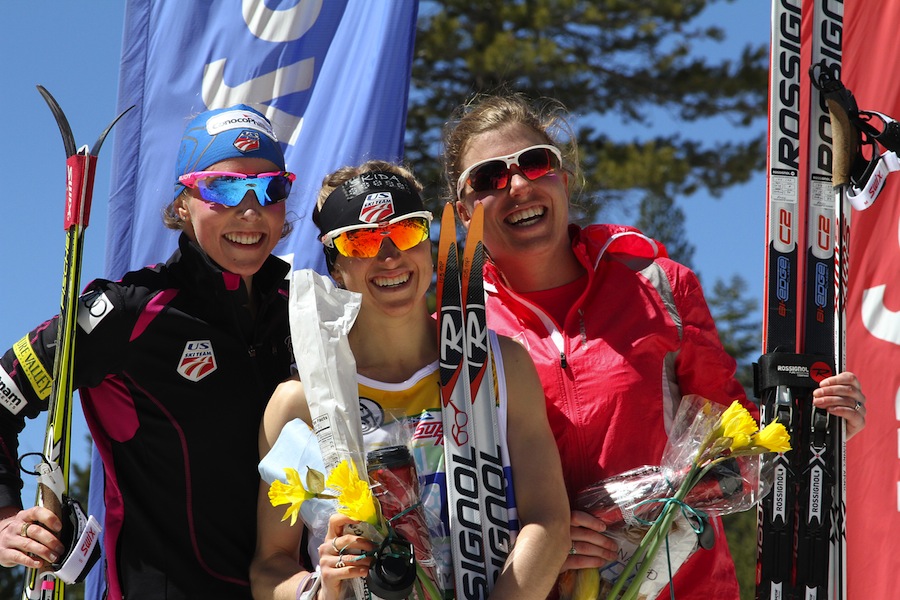
    The women's 30 k classic mass start at 2013 U.S. Distance Nationals. From left to right: runner-up Kikkan Randall (APU/USST), winner Liz Stephen (BMA/USST), and bronze medalist Rosie Brennan (APU). (Photo: Mark Nadell/MacBeth Graphics)
    The women’s 30 k classic mass start at 2013 U.S. Distance Nationals. From left to right: runner-up Kikkan Randall (APU/USST), winner Liz Stephen (BMA/USST), and bronze medalist Rosie Brennan (APU). (Photo: Mark Nadell/MacBeth Graphics)

    Graefnings finished 2 seconds behind Deyong on Wednesday, and Bjornsen took eighth, 3.4 seconds behind the Swede. Gregg finished ninth, 8.3 seconds after Bjornsen, and Sömskar was 10th.

    “I was falling off the back, catching back, falling off the back, catching back,” Bjornsen said. “The last kilometer it was just everything you had left in your tank. Mine was a bit limited.”

    Though disappointed, Bjornsen would remember her stellar SuperTour Finals, where she was third overall with four podiums in as many races.

    “Today was more just to test what I could do with what I had left,” she said. “All of us were out there absolutely digging, giving as much as we could, ever last bit of fuel we had. That’s a fun way to end because we dropped at the end. That was everything.”

    Standings outside in T-shirts and sports bras, several of the top women sipped champagne and celebrated the end of the season.

    “Today was kind of epically tough conditions so you really feel like you had to grit it out,” Randall said. “When you get to that finish line, you just feel really satisfied about the race and the whole season.”

    “[It was a] really great way to end it here in California; the volunteers have done great things,” Stephen said. “Big thanks to everybody for the season. It was fun as hell.”

    — Audrey Mangan contributed reporting

    Results | Photos

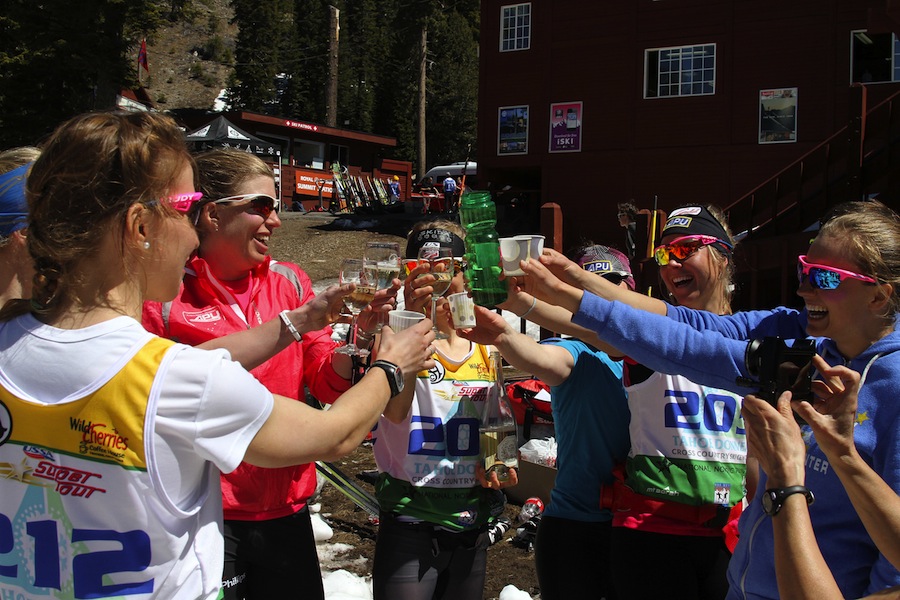
    Clinking glasses (and plastic water bottles) to celebrate the end of the season at U.S. Distance Nationals on Wednesday at Royal Gorge Ski Resort in California. (Photo: Mark Nadell/MacBeth Graphics)
    Clinking glasses (and Dixie cups and water bottles) to celebrate the end of the season at U.S. Distance Nationals on Wednesday at Royal Gorge Ski Resort in California. (Photo: Mark Nadell/MacBeth Graphics)
  • Facing Driest Winter on Record, Organizers Get Creative For SuperTour Finals

    Facing Driest Winter on Record, Organizers Get Creative For SuperTour Finals

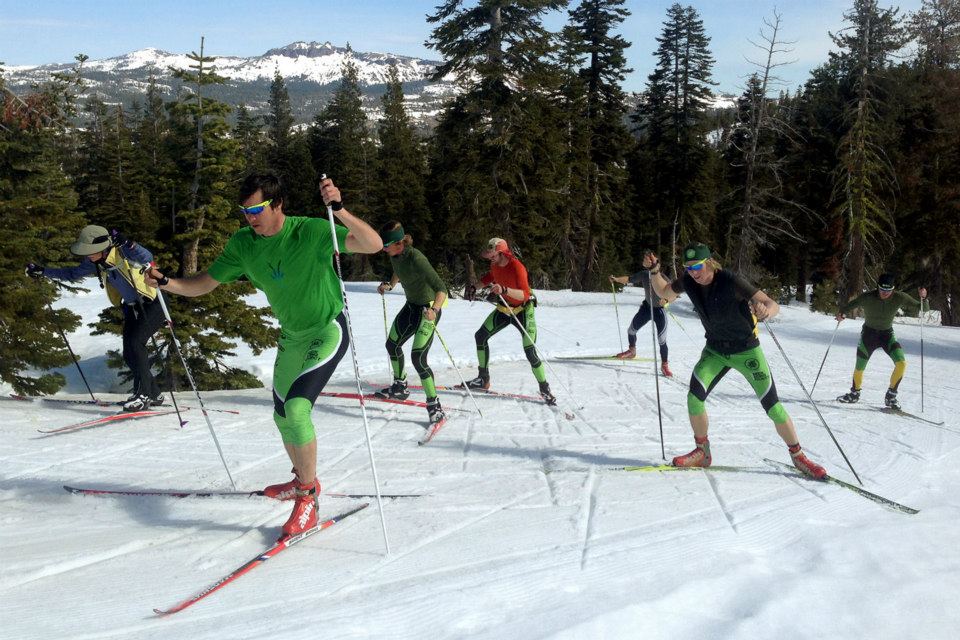
    Craftsbury Green Racing Project skiers training at Royal Gorge this week in preparation for SuperTour Finals. Photo: Mark Nadell, Macbeth Graphics.
    Craftsbury Green Racing Project skiers training at Royal Gorge this week in preparation for SuperTour Finals. Photo: Mark Nadell, Macbeth Graphics.

    If it wasn’t already official, it is now: if you want to host a major cross-country ski championship in the United States, you’d best have a contingency plan for worst-case snow scenarios. The area around Lake Tahoe, Calif., usually one of the best places to go spring skiing in the country, just recorded its driest January through March on record. Race organizers for the 2013 SuperTour Finals and Distance Nationals, faced with insufficient snowpack on the newly-homologated championships courses at Tahoe Donner Cross Country Ski Center this week, were recently forced to move three races to higher ground. The 30/50 k was moved to Royal Gorge Cross Country Ski Resort and the freestyle prologue and 10/15 k classic will take place at Auburn Ski Club.

    “[The original course] has melted out, particularly in the stadium and a couple key parts of the trails,” said chief of competition August Teague on Monday afternoon. “We spent two weeks really trying to find snow and really make it work and it just wasn’t… We ran out of snow where we were planning on racing, and Royal Gorge stepped up.”

    The freestyle prologue, 10/15 k classic and classic sprint will now all take place at Auburn Ski Club and the hill climb will remain at Sugar Bowl Resort. The entire series was set up to be a tour that showcased ski areas in northern California, so the decision to cut Tahoe Donner from the lineup was a tough one for organizers. Homologation improvements were made to the trail system in preparation for the championships, but given the limited snow cover it was either move the races or shrink the original loop from 10 k to a few kilometers — not an ideal way to race a marathon, as athletes learned in Craftsbury, Vt., last year.

    “It’s really unfortunate that we’re not able to showcase those trails, because there was a lot of time and energy spent to make sure they were championship- and Olympic-caliber courses,” Teague said.

    Though the backup 10 k course at Royal Gorge is not fully homologated nor as wide as Teague would have liked, volunteers have worked overtime since the venue changes became official to make the reserve courses as good as they can be. A new section of trail was built up out of snow in the last three days to make sure the distance nationals course includes an challenging ascent of A-climb caliber.

    Now that the backup plan is in place, Teague thinks Royal Gorge has plenty of snow. The biggest remaining challenge for organizers is the threat of runoff from underneath. Teague estimates the new course still has a half-meter to a meter of snowpack on north-facing aspects and predicts they’ll have to divert drainage away from the trails to minimize melting from below. Rain and temperatures in the 60s are forecast this week.

    The organizing committee planned for the possibility of a low snow year, but the driest winter on record was an unusual curveball. Average snowfall over the last 30 years for Tahoe City between January an March has been about 16 inches. On Monday, the region officially tallied a whopping low point of 2.68 inches of precipitation for the same time frame.

    “We had backup plans in mind, but we never thought we’d have to go to them because an average snow year would have been fine, even last year would have been fine,” Teague said. “Things are changing whether people want to admit or not.”

    In the days before the race, the weather has been variable — Auburn Ski Club received a dusting of new snow on Monday morning. But despite the snow woes, the best skiers in the country have been showing up in Truckee over the past week to get ready for the upcoming series and to finish off the season. There are valuable Continental Cup points to be had in Truckee in the jockey for World Cup start rights next fall, and as long as there are races the field will show up to compete. At Teague’s last check, 175 athletes had signed up, including several international names from Sweden, Switzerland and Norway. Lisa Larsen (SWE), Maria Graefnings (SWE), Hanna Falk (SWE) and Bettina Gruber (SUI) are among the entrants, as is most of the U.S. Ski Team athletes that were racing on the World Cup all winter.

    Petter Northug, Jr. (NOR), was almost among the list of entrants as well. According to Teague, the 2013 World Cup champion had been seriously considering a trip Truckee to log a high-altitude training and racing block away from the spotlight, but race obligations in Norway ultimately kept him at home.

    “He really wanted to come and train at altitude, but unfortunately Norwegian championships [in Løten] was the same week and there was a lot of pressure from the Norwegians that he partake in that,” Teague said.

    2013 SuperTour Finals begin on Thursday with a 3.3 k freestyle prologue at Auburn Ski Club.

    Event website.

  • An Uncertain Future for Royal Gorge

    An Uncertain Future for Royal Gorge

    Royal Gorge ski resort
    Skiers pause in the Devil's Peak area at Royal Gorge Cross Country Ski Resort in early 2011. Photo courtesy Mark Nadell — www.macbethgraphics.com

    The thing about Royal Gorge is, nobody really knows how big it is.

    Trail reports have varied since the cross-country ski resort went up on Donner Summit in 1971, suggesting the nearly 3,000-acre property offers anywhere between 195 to 320 kilometers of groomed terrain.

    Back in the early stages of the Royal Gorge’s rapid development in Soda Springs, Calif., founder John Slouber claimed it was the largest nordic ski area in North America. Forty years later, one would be hard-pressed to refute that.

    “I don’t know of anyone that grooms more kilometers than them,” said Mark Nadell, the former head of Far West Nordic who designs the area’s trail maps. “Whether they were 300 or 150 it didn’t matter, it was always more than you could eat.”

    A local skier from nearby Truckee, Calif., Nadell tried to ski Royal Gorge’s perimeter with friends. Six or seven hours later, he figured they had only scratched the surface.

    The obscurity that surrounds the resort’s total kilometers matches its current financial situation. Simply put, it’s a tough one to pin down and could be harder to sort out.

    Six years ago when California developers Kirk Syme and Todd and Mark Foster bought the business for a reported $35 million, they had big plans in mind. Their vision, which included some 900 condominiums and two manmade lakes, never panned out for a myriad of reasons. To name a few, the economy turned sour in a saturated market, Donner Summit’s environment was both fragile and historical, and the community rallied to conserve it.

    In June, news broke that Royal Gorge’s owners defaulted on a $16.7 million loan. Their continued inaction on the nonpayment put the resort under court-appointed receivership in August. The owners were given 45 days to resolve the situation with the receiver, Douglas Wilson Companies of San Diego.

    Time expired without resolution in mid-September, delegating the resort’s operations to the receiver for the upcoming winter and leaving its future undecided.

    For Royal Gorge and its influx of skiers, that arrangement won’t affect much, said the area’s marketing and sales coordinator Lauren Birtwhistle. General manager David Achey remains at the helm and the rest of the resort’s usual staff is in place, ready to offer lessons, rentals and the deluxe nordic ski experience unique to Royal Gorge.

    “Royal Gorge will be open this season,” Birtwhistle said. “There isn’t any reason to be hesitant to make plans to come up here. … There aren’t any big dramatic changes going on.”

    As part of an ongoing marketing effort, Royal Gorge reduced its season-pass price from $425 to $375 per adult and extended the early-season discount to Oct. 31.

    Operating hours would most likely be similar, Birtwhistle said, from Thursday to Monday (9 a.m. to 4 p.m.) and Tuesday (9-1:30), except for holidays when the resort was open seven days a week. She didn’t anticipate major alterations to grooming, especially not at Ice Lakes Lodge, which is under separate ownership.

    “The lodge is the lodge; we have the trail systems and the land,” Birtwhistle said. “Everyone has their rumors and this and that, but you wouldn’t be able to see anything different from day-to-day operations. … We’re really expecting one of our biggest years.”

    The Royal Gorge Experience

    Royal Gorge Cross Country Ski Resort
    The entrance to the Royal Gorge Cross Country Ski Resort. Photo courtesy of David Madison — Royal Gorge.

    The ski area’s original visionary, John Slouber reportedly chose the property when he discovered a hunting lodge on Donner Summit, according to Moonshine Ink of Truckee and North Lake Tahoe.

    Born in Auburn, Calif., he ski raced and guided in Europe, picking up influences from Scandinavian resorts. Starting with four trails on about 10 kilometers, Slouber quickly expanded Royal Gorge with the help of Donner Summit landowner Rancho Monterey. The resort soon encompassed some 3,000 acres, from Van Norden Meadows near the Sugar Bowl alpine resort to the edge of the 4,417-foot-deep Royal Gorge on the North Fork of the American River.

    “Creation of this thing is the fun part,” Slouber once said, according to the San Francisco Chronicle. “I want to see how far it can go.”

    He initially wanted an Olympic Village – a multisport playground in the heart of Royal Gorge, complete with luge runs, ski jumps, ice rinks, a biathlon stadium, five lodges, two lifts and 510 “condotel” rooms, Moonshine Ink reported.

    That idea hit a snag in the early ’90s when the economy took a dive, but Slouber kept thinking. He proposed a lodge and 18 residential units on Van Norden Meadows, but Donner Summit homeowners and conservationists strongly objected.

    In the end, Slouber left Royal Gorge in 2005 with plenty of developmental marks, including four lifts, two overnight lodges and a day lodge, and eight warming huts scattered among 90 trails.

    Six years later, the resort stands as one of the nation’s largest. Development, however, has stalled and one surface lift remains.

    “John Slouber was brilliant,” said Nadell, who worked with Royal Gorge since 1977. “He got out at just the right time, buy low, sell high.”

    The Master Plan

    When Syme and the Foster cousins took over in 2005, they neither anticipated the economic recession that hit the nation less than three years later nor the regulatory problems of developing Donner Summit.

    The real-estate investors reportedly discovered the property in a Wall Street Journal advertisement while living in the San Francisco Bay area. Considering the building boom that was taking place in Truckee – with nearly 10 new golf courses in a few years – they figured they couldn’t lose.

    Before submitting their proposals to Placer County, the new owners took the time to meet the Donner Summit locals. In January 2006, they held a public meeting and noted the community’s concerns, which mostly involved public access. Syme and Todd Foster touched upon their development plans without too much detail, and encouraged people to submit comments and stay updated on their website: royalgorgefuture.com.

    Five years later, that web address did not work.

    In March 2007, the developers held another meeting with Donner Summit residents, this time with concrete plans. Among them, Syme and Foster proposed 600 residential units (for a total of 900), two hotels, two artificial lakes, several ski lifts and trails and a series of retail stores and restaurants.

    The community and several conservationist groups wouldn’t have it.

    “We have felt that the development does not match our community, that it would be very harmful to the environment,” said Serene Lakes Property Owners Association President Ken Hall, specifically pointing out the area’s small lakes and surrounding mountains.

    “We were very opposed to Mr. Syme’s plan,” Hall added. “There were just so many problems with his proposal.”

    Finding an adequate water supply was a major issue. The developers suggested pulling from a lake, which would have caused a significant drop in water level, Hall said. Their expansion would have doubled the population on Donner Summit, which posed septic problems and would have required the construction of a second road in case of emergency.

    According to Hall, the plans did not evolve past the talking stages and were never submitted to the county. While conservationist groups like Sierra Watch stepped in and argued their case, the developers’ lack of progress most likely came down to finances.

    Perry Norris, president of the Truckee Donner Land Trust, said the market was developmentally saturated by 2007, and Donner Summit wasn’t exactly conducive to year-round activities.

    “Literally, there are two or three months where there’s not snow,” Norris said.

    Skiers stop at Palisade Peak Warming Hut, one of eight huts at Royal Gorge Cross Country Ski Area. Photo courtesy of David Madison — Royal Gorge.

    Moving Forward

    While the business didn’t work out as Syme and Foster had planned, skiers can plan on recreating Royal Gorge in the future.

    Conservationists and homeowners agree: it’s a must for the area.

    “We really do value the Royal Gorge cross-country ski area,” Hall said. “We don’t want to lose the resort.”

    With the recent merger of the Squaw Valley and Alpine Meadows alpine resorts, the Tahoe area could be approaching an era of increased tourism, he said. The continued operation of Royal Gorge would add to that.

    “When people come to visit Tahoe for say a week, they’ll typically visit different areas,” said Kevin Murnane, general manager of Tahoe Cross Country and a member of the Cross Country Ski Areas Association board of directors.

    Besides Tahoe Cross Country and Royal Gorge, nordic skiers can also visit Tahoe Donner.

    “In terms of a joint marketing of the area, it shows how much terrain there is,” Murnane added. “From the association side, Royal Gorge was traditionally pretty influential. John Slouber brought about this great revolution. It was creating this presence in cross country … because he had this larger approach. At the same time, the sustainability of that becomes the greater challenge.”

    If all goes according to the plans of the Truckee Donner Land Trust, the property will go up for sale by November and Norris will move toward purchasing it. The land trust’s president for 11 years, he first considered Royal Gorge’s conservation potential in the early 1990s. Back then, the trust tried to buy the 1,000-acre Van Norden Meadows.

    The pending acquisition, which would include more than 3,000 acres in and around the resort, would not be the land trust’s biggest deal in terms of size, Norris said.

    “We’ve done larger acreages and we’ve done more expensive properties,” he said. “But I don’t think we’ve ever done one that’s so important to the community.”

    Devoting some 60 hours a week to the project, Norris has met and spoke with several stakeholders regarding the transition. Foreclosure was an initial concern, but Norris said the owners cooperated with the bank, and the resort would mostly likely not go to auction.

    In the meantime, the Truckee Donner Land Trust was pooling its resources, reaching out to national land trusts and calling for outside help.

    “Our long term goal is to protect the property, keep the nordic center running and most likely, running it better,” Norris said. “We’re going to be looking 100 percent to the private sector to finance this opportunity, and we’re going to be looking to the nordic ski community to step up as well.”

    According to Sugar Bowl Ski Resort President Rob Kautz, his alpine area — with trails that connect to Royal Gorge — was interested in purchasing the land and expanding into the nordic market. If a partnership played out, the land trust wouldn’t run the area, Sugar Bowl would.

    “Royal Gorge is a great brand; it’s a wonderful cross-country resort,” Kautz said. “We would ultimately like to take over the operation. I think the community is supportive of that concept.”

    “The investors in Sugar Bowl are a kind of who’s who in San Francisco,” Norris said of the downhill resort, which opened in 1939. “So they’ll be able to make the investment that the resort needs.”

    As for other potential buyers, Norris said not to expect any.

    In order for the Truckee Donner Land Trust to reach a deal, a long negotiating process was likely, he said. For starters, they would need to convince the Missouri lender, Armed Forces Bank, that Royal Gorge’s price tag shouldn’t be based on sheer acreage.

    “In some ways, a very capable developer looked at this property for six years and wasn’t able to move the property one inch,” Norris said. “I don’t think there’s any developer that is going to come out of the woodwork and buy this property.”

    If there were, the “Save Donner Summit” bumper stickers still clinging to the backs of local vehicles could dissuade them.

    “A reasonable appraiser would probably conclude that the property would best be used as an open space,” Norris said. “And nordic ski area.”

  • Swank, Vinogradova Win 2009 California Gold Rush in White-Out Conditions

    Swank, Vinogradova Win 2009 California Gold Rush in White-Out Conditions

    Challenging conditions for Gold Rush competitors

    Women's Winner Katerina Vinogradova (photo by Emma Garrard)
    Women's Winner Katerina Vinogradova (photo by Emma Garrard)

    Donner Summit, CA—

    More than a foot of snow fell on Donner Summit overnight Saturday and continued prior to the start of the annual California Gold Rush, a 46k cross country ski race held at Royal Gorge.

    The weather resulted in a delayed start and slight course change.

    The races started at 9:30 a.m. and instead of a two-lap 21k loop, Gold Rush competitors skied three laps of a 15.3k loop.

    Silver Rush Competitors skied two laps (30.8k) and Bronze Rush skied a 9k.

    The only thing more challenging than trying to skate ski through the soft, fresh snow was the visability, or lack of.

    Adam Swank, 33, of Duluth, Minn. won the Gold Rush race with a time of 2:28.49.

    The Minnesotan said the conditions were the toughest he’d ever seen at the race.

    There were sections where it was coming down so hard, he was trying to skate through “boot-high” snow.

    “It was like an expedition out there,” he said. “There were times when you couldn’t see the trail in front of you.”

    Adam Swank (Fischer-Craft) finishes lap 2 and heads out on his final lap. Photo by Emma Garrard.
    Adam Swank (Fischer-Craft) finishes lap 2 and heads out on his final lap. Photo by Emma Garrard.

    Swank took the early lead and broke away from the pack around 7k, along with local skier Ian Case of Truckee.  The two were soon joined by Nikolai Aniken, also from Duluth, who bridged the gap within two or three kilometers after Swank’s initial break.

    The three leaders worked together for the first two laps before Case dropped off heading into the final lap, leaving Aniken and Swank to battle for the win. Swank was able to put an impressive two minutes on Aniken on the long final climb up to the finish.

    His best finish prior to Sunday was 2nd in 2007.

    Aniken easily took second with a time of 2:30.36, while Case hung on for third with a time of 2:34.17 after skiing the entire third lap alone.

    On the women’s side, Katerina Vinogradova of Auburn won with a time of 2:45.22.

    Behind Vinogradova were Sarah Max of Bend, Ore., with a time of 2:51.03 and Lenka Palanova of Boulder, Colo., with a time of 2:56.00.

    Swank had nothing but praise for the race organizers and groomers who dealt with the challenging conditions.

    “They did a good job,” Swank said. “Free beer and chili (for racers) will keep you coming back.”

    Besides the racing, Swank said he enjoys coming to the Sierras to train in the 60-degree spring weather.

    “I love coming out here,” Swank said.

    photo by Emma Garrard
    2nd Place Woman Sarah Max laps through the stadium. Photo by Emma Garrard

    Silver and Bronze Rush

    In the shorter races it was all about girl power.

    Joanne Reid, 16, of Palo Alto was the first-place female (2nd overall) finisher with a time of 32:50.5 in the Bronze Rush. Behind Reid was Janelle Webb with a time of 40:18.0 and Nancy Rosenblum with a time of 40:29.7

    The first place male was Truckee junior Justin Ondry, with a time of  31:58.3 followed by Alex Kopytko (38:02.8) and Bill Aaron (39:40.5).

    The top two finishers in the Silver Rush were Beth Reid (Joanne’s mom) of Palo Alto with a time of 1:47.46 followed by Cathy Howard of Truckee with a time of 1:57.48. The 3rd place female was Kari Rust with a time of 2:04.09.

    The men’s race was won by Adam Wright of Truckee with a time of 2:00.58 followed by Glenn Jobe with a time of 2:01:21 and Scott Fairman with a time of 2:01.30.

    Results:

    GOLD RUSH 46km – WOMEN

    Place Class
    Name
    Time Place Overall
    1 GFM1 Katerina Vinogradova 2:45:21 10
    2 GFM1 Sarah Max 2:51:03 14
    3 GFS2 Lenka Palanova 2:56:00 22
    4 GFS1 Chelsey Holmes 3:02:29 27
    5 GFM3 Julie Young 3:07:34 31
    6 GFS2 Stephanie Howe 3:08:25 32
    7 GFS2 Abbie Harris 3:09:25 34
    8 GFM4 Carol Bennett 3:12:41 40
    9 GFS1 Kara LaPoint 3:13:41 41
    10 GFM2 Dayna Deuter 3:26:28 51
    11 GFS1 Jessica Snyder 3:27:08 52
    12 GFM2 Amy Petersen 3:32:16 56
    13 GFS2 Alexandra Jospe 3:33:07 57
    14 GFM4 Laura Stern 3:33:22 58
    15 GFM4 Darlene Young 3:50:39 65
    16 GFM3 Jody Burrill 4:07:48 70
    17 GFM4 Susan Hida 4:48:10 73

    GOLD RUSH 46km – MEN

    Place Class
    Name
    Time Place Overall
    1 GMM1 Adam Swank 2:28:49 1
    2 GMS2 Nikolai Anikin 2:30:36 2
    3 GMS2 Ian Case 2:34:17 3
    4 GMM5 Jon Engen 2:38:04 4
    5 GMM3 Peter Hanson 2:39:50 5
    6 GMM3 Dan Packman 2:40:33 6
    7 GMS2 Zach Violett 2:43:55 7
    8 GMM1 Tav Streit 2:44:44 8
    9 GMM5 Rick Reynolds 2:44:57 9
    10 GMM3 Barry Makarewicz 2:47:00 11
    11 GMM4 Terry Daley 2:50:35 12
    12 GMJO Dimitri Luethi 2:50:49 13
    13 GMM2 Matt Zak 2:51:03 15
    14 GMS2 Chris Mallory 2:51:55 16
    15 GMS2 Jakub Benes 2:52:57 17
    16 GMJO Alexander Taylor 2:54:30 18
    17 GMM5 Jeff Schloss 2:55:06 19
    18 GMM4 Michael Dietzman 2:55:07 20
    19 GMM5 David Stover 2:55:25 21
    20 GMM2 Matthew Sanford 2:57:32 23
    21 GMM3 Randy Anderson 2:58:05 24
    22 GMM5 Mark Nadell 2:59:19 25
    23 GMM3 Bill Arnoff 2:59:58 26
    24 GMS1 Nick Sterling 3:04:56 28
    25 GMM6 Russell Reid 3:05:22 29
    26 GMM2 Daniel Buchanan 3:07:07 30
    27 GMM2 Jason Walenta 3:08:34 33
    28 GMM6 Peter Rayton 3:09:35 35
    29 GMM6 James McClatchy 3:09:35 36
    30 GMM3 Willie Stewart 3:10:09 37
    31 GMM5 Joe McDaniel 3:10:09 38
    32 GMM5 Terry Tansley 3:11:27 39
    33 GMM5 Mark Clifford 3:13:50 42
    34 GMM4 Peter Mayfield 3:15:55 43
    35 GMS2 Greg Walker 3:18:49 44
    36 GMM6 Richard Knoebel 3:20:08 45
    37 GMM3 Ryan Gini 3:23:42 46
    38 GMM5 Paul Mckenzie 3:23:45 47
    39 GMM5 Bruce Pauly 3:23:52 48
    40 GMM2 John Juba 3:24:27 49
    41 GMM6 Byron Beagles 3:25:35 50
    42 GMM5 Gary Bowlin 3:27:08 53
    43 GMM3 Gunnar Lille 3:27:47 54
    44 GMM4 Ed Klotz 3:31:57 55
    45 GMM5 Bruce Eisner 3:35:22 59
    46 GMM4 Kyle Brutschy 3:40:47 60
    47 GMM5 Mark Mench 3:47:23 61
    48 GMM6 George Hall 3:47:23 62
    49 GMM6 Robert Lopez 3:50:00 63
    50 GMM7 Nick Wynn 3:50:00 64
    51 GMM2 Trevor Hallstein 3:53:13 66
    52 GMM5 Patrick Joda 3:53:44 67
    53 GMM6 James Rosen 3:54:30 68
    54 GMM6 Rick Mitchell 4:04:55 69
    55 GMM6 Ralph Hendrix 4:16:43 71
    56 GMM7 Chris Courter 4:40:56 72

    SILVER RUSH 30.8km

    Place
    Class Gender
    Name
    Time Place In Gender
    1 SFM4 F Beth Reid 1:47:46 1
    2 SFM3 F Cathy Howard 1:57:48 2
    3 SMJO M Adam Wright 2:00:58 1
    4 SMM6 M Glenn Jobe 2:01:21 2
    5 SMM3 M Scott Fairman 2:01:30 3
    6 SFM2 F Kari Rust 2:04:09 3
    7 SMM2 M Ben Grasseschi 2:05:39 4
    8 SMM3 M David Eastwood 2:06:56 5
    9 SMM5 M Steve Miller 2:10:35 6
    10 SFM5 F Debbie Hakansson 2:12:15 4
    11 SMM7 M John Cobourn 2:18:29 7
    12 SFM4 F Cheri Kopytko 2:19:13 5
    13 SMM4 M Michael Svalberg 2:19:45 8
    14 SFM5 F Martha Bellisle 2:21:56 6
    15 SMM7 M Tomas Pastalka 2:22:06 9
    16 SMM8 M Otis Kantz 2:23:43 10
    17 SFM1 F Jamie Noble 2:25:03 7
    18 SMM7 M Peter Werbel 2:28:57 11
    19 SMM6 M Thomas Altenbach 2:29:07 12
    20 SFM7 F Dagmar Eriksson 2:35:34 8
    21 SMM4 M Stan Tissue 2:36:59 13
    22 SMJO M Samuel Joda 2:39:45 14
    23 SFM6 F Maggie Fillmore 2:39:51 9
    24 SMM1 M Benjamin Sturm 2:42:45 15
    25 SMM5 M Mark Huffman 2:43:30 16
    26 SMM8 M Frank Sarnquist 2:48:21 17
    27 SFM2 F Helen Pelster 2:48:40 10
    28 SFM2 F Valli Murnane 2:48:40 11
    29 SMM4 M Paul Quinlan 2:49:40 18
    30 SMM1 M Joseph Merydith 2:49:57 19
    31 SMM7 M Norm Ploss 2:54:52 20
    32 SMM4 M Russ Jones 3:03:09 21
    33 SFM6 F Sandy Hill 3:03:59 12
    34 SFM4 F Jennifer Willmann 3:05:11 13
    35 SMM7 M Chris Ward 3:12:12 22
    36 SMJ2 M Joe Piercy 3:12:23 23
    37 SMM7 M Mike Shaw 3:15:45 24
    38 SFS2 F Jaimi Ellison 3:21:12 14
    39 SMM5 M John Gerbino 3:21:19 25
    40 SMM5 M Allen Takahashi 3:22:31 26
    41 SMM6 M Chris Polk 4:38:38 27

    BRONZE RUSH 9km

    Place Overall Class Gender
    Name
    Time Place In Gender
    1 BMJ2 M Justin Ondry 31:58.3 1
    2 BFJ1 F Joanne Reid 32:50.5 1
    3 BMJ2 M Alex Kopytko 38:02.8 2
    4 BMM6 M Bill Aaron 39:40.5 3
    5 BFS1 F Janelle Webb 40:18.0 2
    6 BFM4 F Nancy Rosenblum 40:29.7 3
    7 BFJ3 F Katrin Larusson 41:31.6 4
    8 BMM3 M Joel Chew 42:23.4 4
    9 BFM6 F Karen Seaward 43:09.9 5
    10 BMM6 M Bruce Culbertson 44:04.3 5
    11 BFJ3 F Raylene Chew 44:19.4 6
    12 BMM9 M Jack Wilson 45:35.9 6
    13 BFM8 F Hedda Anya 48:19.2 7
    14 BMM8 M Bill Goerke 48:29.8 7
    15 BMM3 M Collin Morton 50:26.3 8
    16 BMM8 M William Thauvette 53:01.4 9
    17 BMJ4 M Skyler Mullings 56:54.9 10
    18 BMM9 M Jerry Colligan 1:01:48 11
    19 BFJ4 F Kyla Burrill 1:03:58 8
    20 BMM5 M Todd Burrill 1:04:02 12
    21 BFJ3 F Bria Riggs 1:07:05 9
    22 BFM7 F Renate Ringsven 1:20:56 10
    23 BFM7 F Gloria Ploss 1:22:58 11
    24 BFM7 F Marlene Mirassou 1:25:01 12
    25 BFM11 F Bev Biggar 1:40:59 13
    photo by Emma Garrard
    photo by Emma Garrard
    photo by Emma Garrard
    photo by Emma Garrard