From the FasterSkier archive — posts syndicated from athletes’ and coaches’ own blogs between 2004 and 2012, kept online as published. Current coverage is at fasterskier.com.

Tag: Ruhpolding mass start

  • Crawford Fourth in Ruhpolding Mass Start; Burke 21st

    Crawford Fourth in Ruhpolding Mass Start; Burke 21st

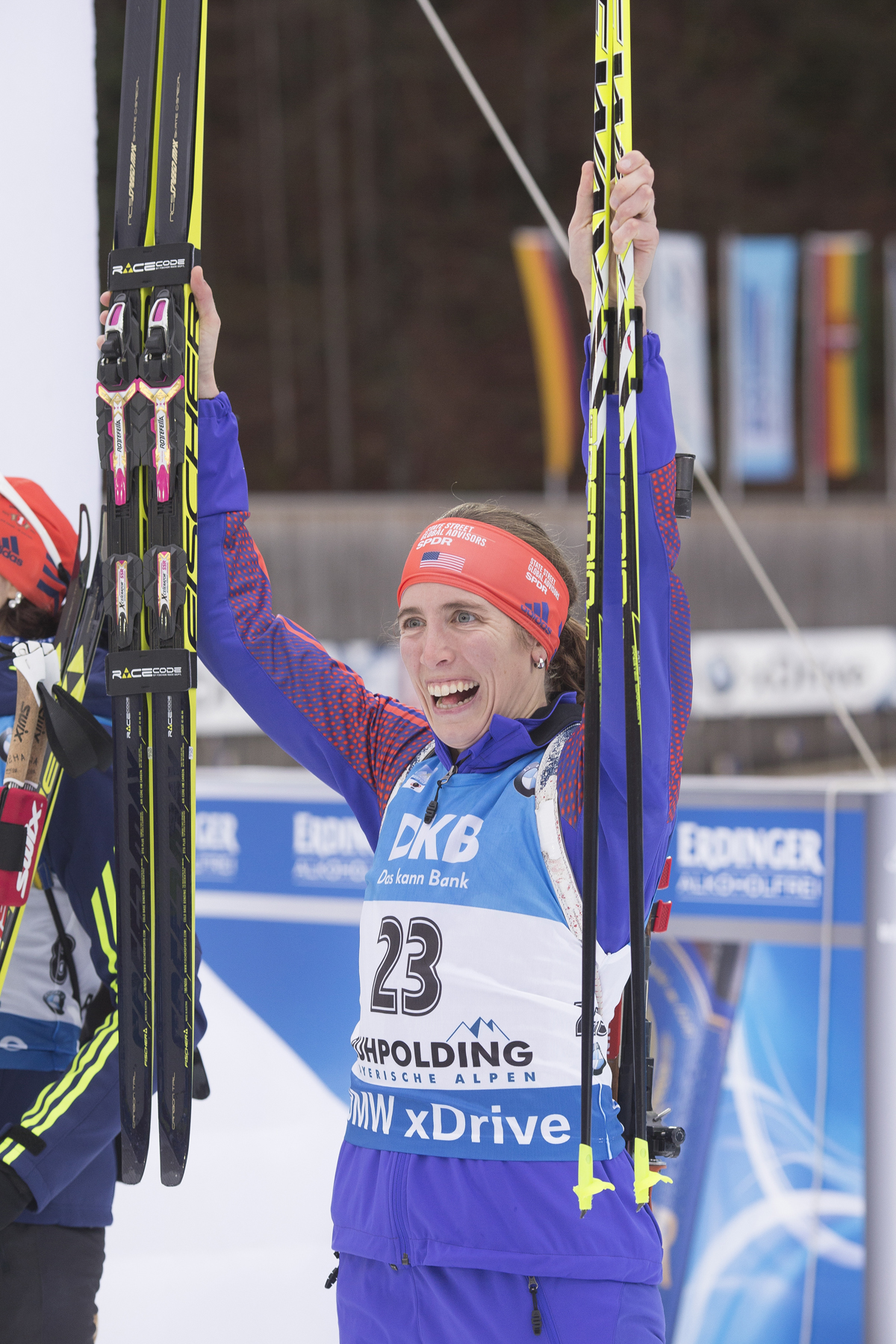
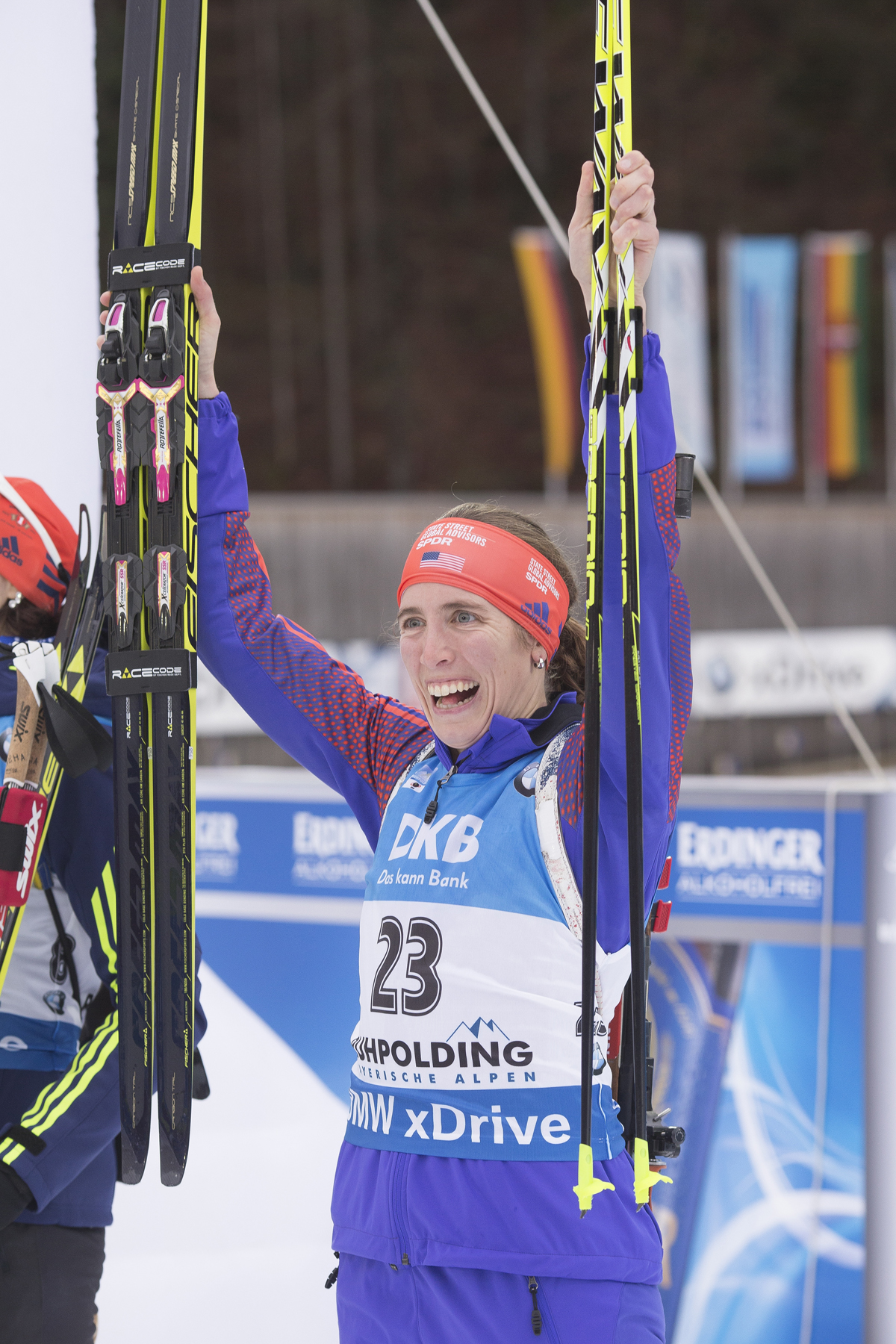
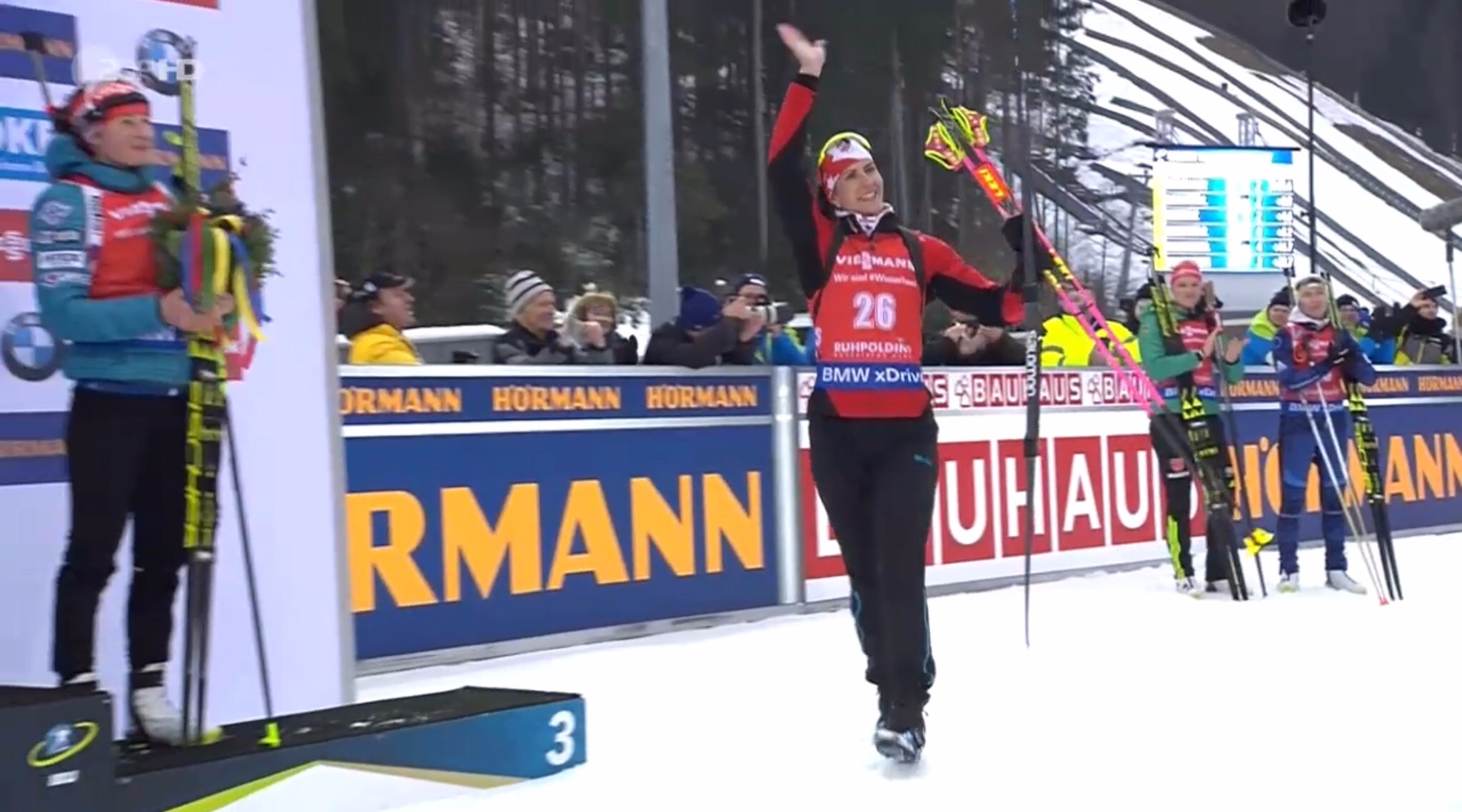
    Biathlon Canada’s Rosanna Crawford (26) waves to some 20,000 spectators in the stands during the flower ceremony of the women’s 12.5 k mass start at the 2018 IBU World Cup in Ruhpolding, Germany, after finishing in fourth place. (Screenshot: ZDF broadcast)

    Note: This article has been updated to include comments from Rosanna Crawford.

    For a few minutes, it looked like Biathlon Canada’s Rosanna Crawford could clutch her second podium in her second-straight individual race in Ruhpolding, Germany, in the women’s 12.5-kilometer mass start on Sunday. Maybe it could even be the first World Cup victory of her career.

    After cleaning also the 20th of 20 targets — as the only competitor to achieve that on Sunday in the elite mass start field of just 30 athletes — Crawford headed out on the final loop 16 seconds ahead of Czech Republic’s Veronika Vitkova, with Finland’s Kaisa Mäkäräinen and Germany’s Laura Dahlmeier a few additional seconds behind, all of them former World Cup winners and world champions.

    “I was really surprised to leave the range in 1st, these are the 30 best women in the world,” Crawford wrote in an email.

    On the prior loop, Crawford had lost just about ten seconds to those three and Darya Domracheva of Belarus, before passing them on the range with her flawless shooting. Mäkäräinen and Dahlmeier each incurred a penalty, having to ski 150 extra meters before they could return to the course to chase after her, while Vitkova had also remained clean in that stage.

    But would the Canadian’s lead be large enough to reach the finish first, keeping some of the strongest skiers of the field at bay?

    Anxiously looking behind several times, Crawford was overtaken by Dahlmeier and Mäkäräinen, but kept Vitkova behind her to stay in podium contention. Yet her lead was dwindling.
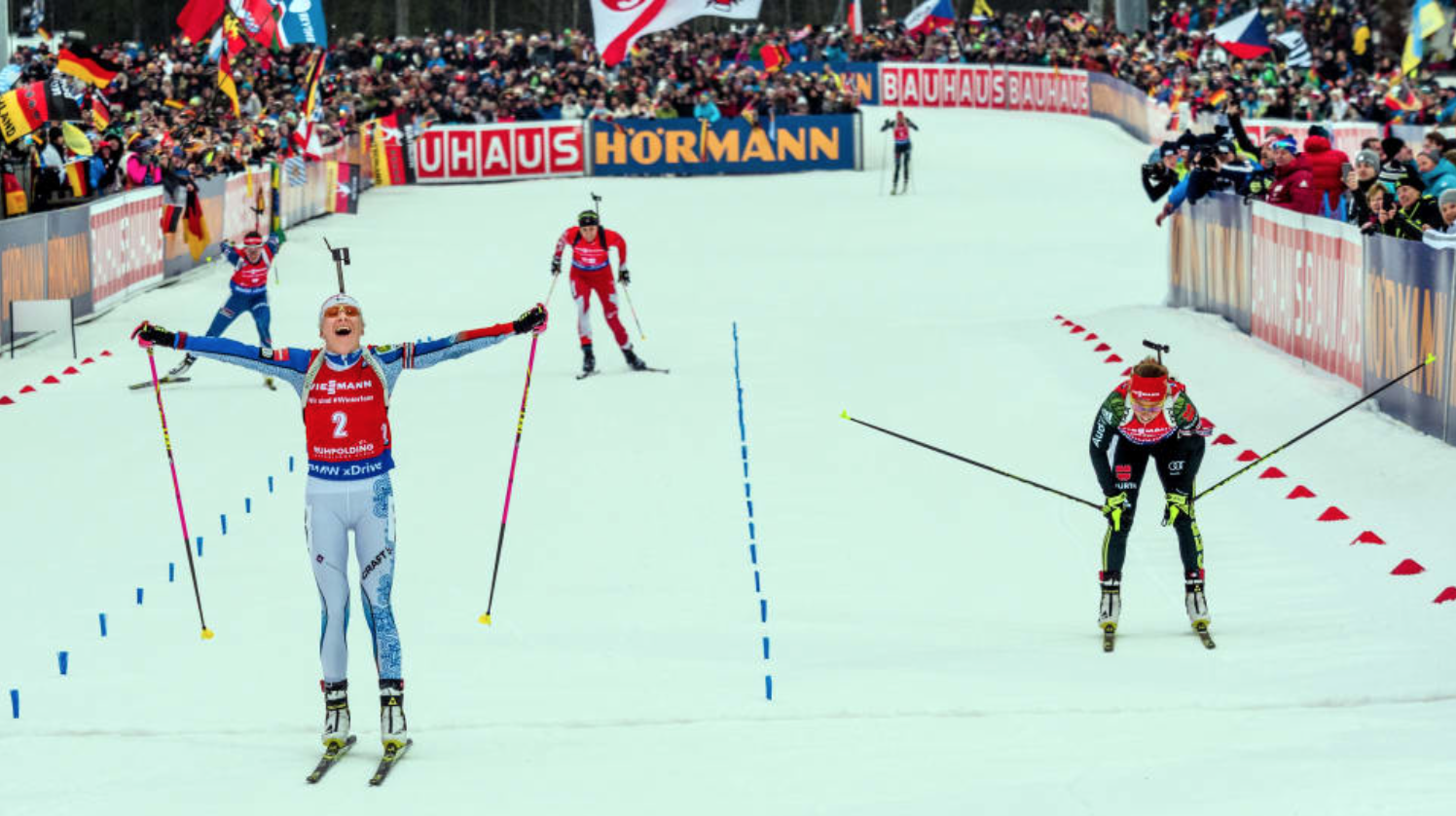
    Kaisa Makarainen of Finland celebrates winning the women’s 12.5 k mass start in Ruhpolding, Germany, as Germany’s Laura Dahlmeier (r) takes second, Veronica Vitkova of the Czech Republic (far left) races to third, and Canada’s Rosanna Crawford (c) fourth. (Photo: IBU/Biathlonworld)

    Out of the final downhill in a meandering section of turns, Mäkäräinen moved in front of Dahlmeier and held that ski-length lead into the finish. She crossed the line in a time of 34:05.6 minutes (with two penalties), with Dahlmeier just 0.8 seconds behind (also with two penalties) before collapsing to catch her breath.

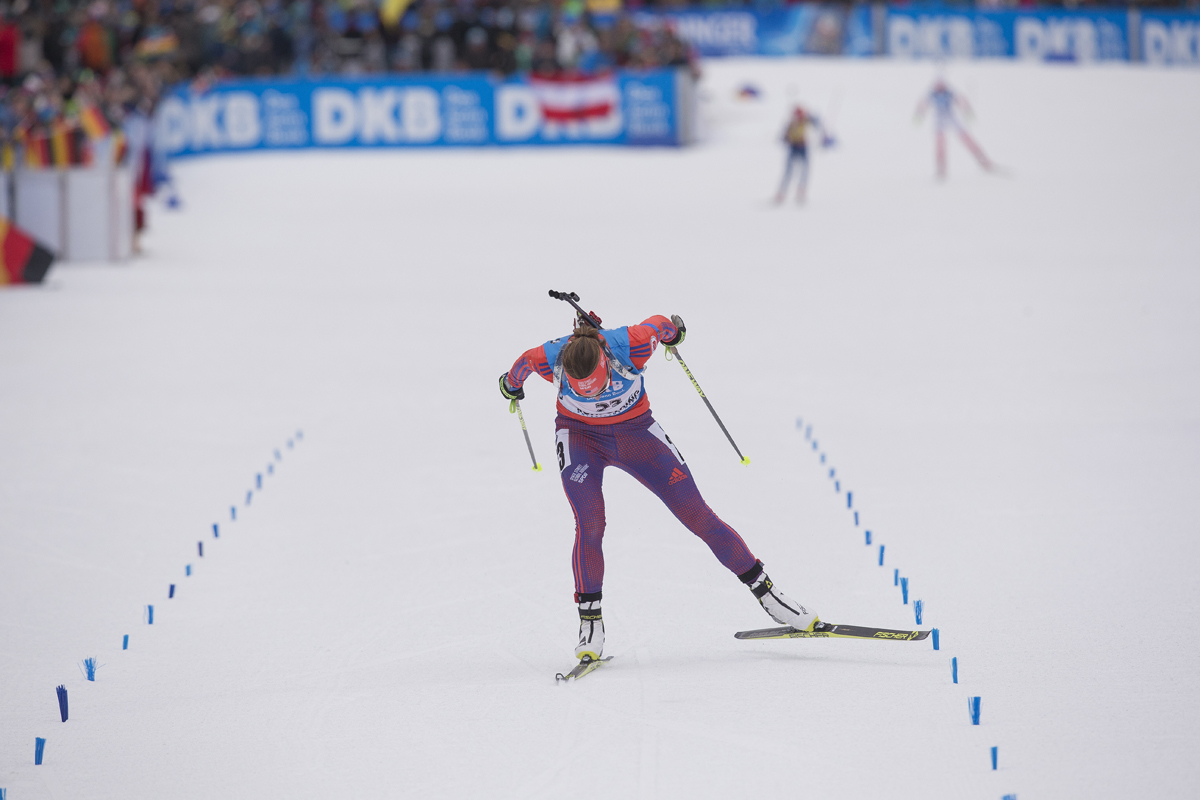
    Cheered on from the side of the track by coaches and teammates, Crawford remained in front right until the little tree branches marking the finishing lanes, but Vitkova was already on her tails.

    “I really thought if I made it to the stadium in front of Vitkova I’d be able to hold her off, but she had the slip stream and I my legs just felt like concrete,” Crawford wrote.

    Choosing the lane to her right, Vitkova pushed hard and managed to outsprint Crawford to the line for third (+4.6, with two penalties) while Crawford finished 0.6 seconds back in fourth (+5.2, with no penalties). For Crawford, the result was her career best in a mass start, and she received many congratulations from her peers and the ovations from thousands of spectators during the flower ceremony following the race.

    “I would have love to hold onto a podium but was pretty dead on my last loop,” she continued, adding that she had woken up to a sore throat and congestion on Saturday, which persisted on Sunday. “In hindsight it was a mistake to be looking over my shoulder to see how close they were, I really should have just kept pushing, but this being a position I’ve never been in before I was pretty overwhelmed! Next time I will just keep fighting till I cross that red line in the snow! But having the two of the strongest women chasing me down was a bit scary! Kaisa is so fast and Laura I’m sure wanted to give the fans what they came for, a German podium!

    “I was pretty disappointed when I crossed the line in 4th, but as time went by I got more and more happy,” she added. “To have hit another 20/20 is fantastic, especially in the high pressure situation of a Mass Start. With that race I went 50/50 in Ruhpolding!”


    Germany’s Denise Herrmann followed in fifth (+16.7), almost making up for a penalty lap in each of the four stages by also skiing the fastest course time on each loop. Domracheva finished sixth (+23.7) after she had missed two more targets in the final standing stage (0+0+1+2).

    For Vitkova it was the second podium of the season, after another third place in the sprint in Oberhof, Germany.

    “I knew that Kaisa and Laura are behind me,“ Vitkova said of the exciting last loop in the post-race press conference. “My feeling on the skis was very good, and I believed that I can catch Rosanna. … It was very nice, now we have Olympic season and my results are better and better, so I am very happy.”

    For Mäkäräinen, it was her first victory of the season and 22nd overall in her career. She also moved into the lead in the overall World Cup Total Score, 19 points ahead of Slovakia’s Anastasia Kuzmina in second.

    “I appreciate silver and bronze a lot, too, since all podium places mean you had a good race, but victory is victory,” Mäkäräinen said in the press conference. “We were skiing quite fast all the last loop, I was on my limit all the time. … Happy that it ended this way.”

    Dahlmeier, coming off a cold that forced her to forego the previous week of races in Oberhof, Germany, was satisfied with her result as well, despite narrowly missing out on another victory in front of her fans after anchoring her relay team to a win on Saturday.

    “It was a lot of fun today, a really great race that had everything, suspense at the shooting range, a fight on the loop … and incredibly exciting with that finish sprint,” Dahlmeier told German broadcaster ZDF after the flower ceremony, according to a translation. “For me this was the perfect race to close out the week in Ruhpolding.”

    “It was like Kaisa said, a really fast loop for us,” Dahlmeier later explained in the press conference. “We had really good equipment today, so for me it was a little bit easier on the downhill parts. We [caught] Rosanna Crawford, and I was in front on the last hill up the [shooting range climb]. Then we had the final sprint, and Kaisa was a little bit faster than me today. But I am very happy about this second place, and I think it is a really good sign that I am in good shape.”

    As Crawford had told FasterSkier following her podium in the individual race, she considers Ruhpolding a “special place”, after she raced her first Junior World Championships there in 2008, her first World Cup in there in 2010, and on Thursday, her first World Cup podium (when she was third in the 15 k individual). She has followed that up with another one of her best results of her career.

    “The crowd was amazing in Ruhpolding this whole week! I loved having my first podium at one of the most popular World Cup venues,” she wrote. “We had incredible skis all week and our techs worked so hard, a big shout out to them! I think none of them have voices this morning from cheering so hard in yesterday’s race!!”

    And regardless of whether or not Crawford reached the podium on Sunday, multiple-time World Champion Dahlmeier pointed out, “There is no big difference even between a place in the 40s or a victory,” she said of the ups and downs of her weekend and the sport in general during the press conference. “With the shooting, you can have one or two [misses] more and you are somewhere out of the best 30. Then the next day you can win a race or be on the podium … That’s the difference between cross-country and biathlon, and that’s why we love it.”

    J.T. Bø Wins Men’s Mass Start Ahead of Fourcade; Burke 21st
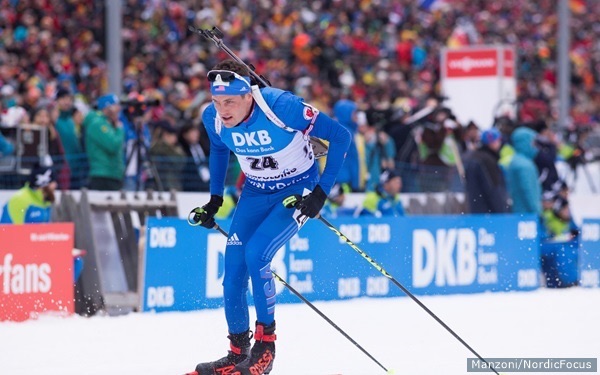
    US Biathlon’s Tim Burke racing to 21st in the men’s 15-kilometer mass start at the 2018 IBU World Cup in Ruhpolding, Germany. (Photo: US Biathlon/NordicFocus)

    Earlier on Sunday, US Biathlon’s Tim Burke successfully cleaned the first two stages in the men’s 15 k mass start to stay in contention for a top position. He left the range in 11th position and just 8 seconds behind the pace set by World Cup leader Martin Fourcade of France in first and his Norwegian rival Johannes Thingnes Bø in second.

    “The atmosphere was great out on the course today with 25,000 fans,” Burke wrote in and email to FasterSkier. “No matter how many times I have done this, racing in that environment is always exciting.”

    Then Burke missed the last shot in his first standing bout and had to ski a penalty lap. He came back on the course in 13th, just ahead of Fourcade who had incurred two penalties in that stage. Then Burke skied the fifth-fastest course time on the next loop, trying to again close a gap to the group ahead.

    “I felt decent throughout the race but am definitely looking forward to racing on some different courses that better suit my strengths,” Burke wrote. “Ruhpolding is filled with short, steep climbs that are almost always followed by some type of recovery. Because of that, it ends up being an endless cycle of sprint then recover, which is definitely not my forte.”

    After he missed two more targets in the final standing stage, Burke lost 10 positions and another 50 seconds to the leaders, leaving the range in 23rd. On the final loop he made up two places, passing Norway’s Lars Helge Birkeland and Bulgaria’s Krasimir Anev, to finish 21st (+1:30.2, with three penalties).

    “Overall, I am happy with where I am at right now,” wrote Burke, who placed fourth in a 10 k sprint at the previous World Cup in Oberhof. “I just have to work on a few small details and then a top result should be possible.”

    Ahead of Burke, the mass start was decided when Johannes Bø extended his lead on the fourth loop before the final shooting to almost 20 seconds, then returned to the course in first place despite a penalty in the last standing.

    On the last loop he defended his lead ahead of three French athletes with Antonin Guigonnnat, Quentin Fillon Maillet and Fourcade chasing after him. Though Bø skied the second-fastest course time overall, he lost 14 seconds to Fourcade on the last loop and crossed the finish line 4.5 seconds ahead of Fourcade in 37:11.2 minutes (with one penalty).
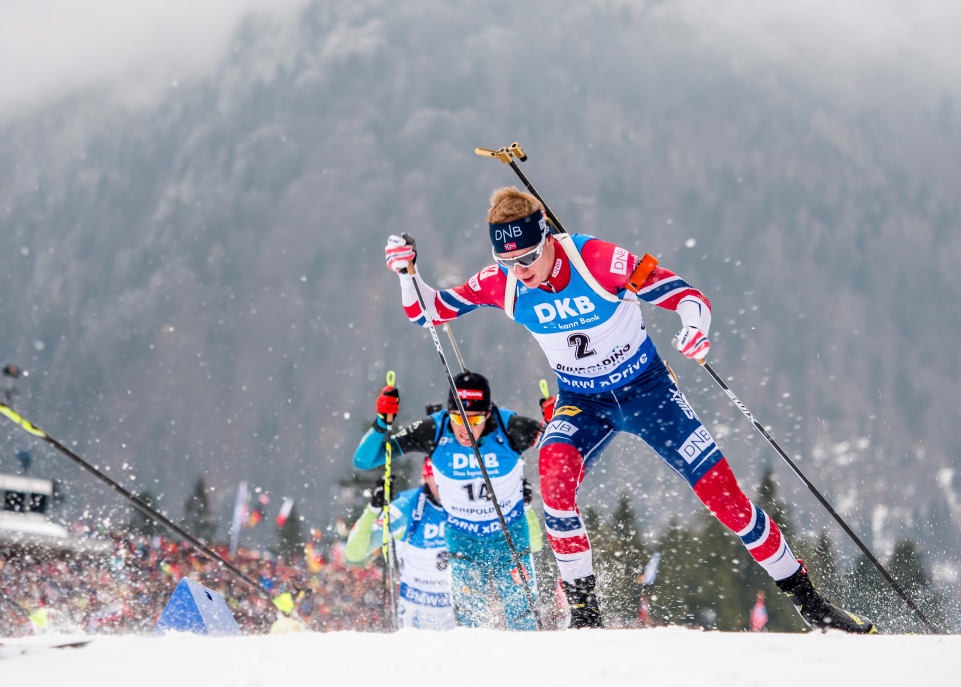
    Norway’s Johannes Thingnes Bø (2) racing to a win in the men’s 15-kilometer mass start at the 2018 IBU World Cup in Ruhpolding, Germany, with France’s Martin Fourcade behind him. (Photo: IBU/Biathlonworld)

    At the press conference, Bø acknowledged that he was worried Fourcade would catch him.

    “I was thinking about it when I saw him out on the tracks there, but I tried to just stay in my own lane for the tracks, and it was very good practice to stay on the lead on the last lap,” Bø said. “It’s very tough, mentally, and you just have to think forward and not so much about the people behind.

    “When you fight for the win, you don’t want to be weak, you know?” Bø added when asked what gave him strength on that last loop. “So it’s just to be happy with the pain in the legs and ski as fast as you can.”

    Fourcade — who temporarily dropped to 15th following two misses in the third stage — could not quite catch Bø and settled for second (+4.5), with two penalties (0+0+2+0).

    “It was a really good fight at the front of the competition,” Fourcade said inatthe press conference. “I didn’t take enough time to be stable on my [first standing stage] and I missed two, but I think I could [have missed] three on that; it was a really bad one. … I knew that with two mistakes advantage, it would be really hard to come back on Johannes, and when I saw that he missed only one on the last shooting, I knew that it was already over for me.”

    So he focused on at least catching his teammates Guigonnat and Fillon Maillet on the final loop, who had left the range in second and third, respectively.

    “It was really special to fight with them because we know each other — our strong points and our weaknesses,” Fourcade said. “I knew that I had to be really faster than Antonin before the last finish [stretch], because he’s a really good sprinter.”

    Fourcade’s 26-year-old teammate Guigonnat, who had been called up to the French World Cup team for the last three races, finished third place (+8.4, with no penalty). It was the second World Cup podium of his career, following up on another third place in the sprint in Annecy, France, earlier this season.

    “I didn’t feel much pressure because I’m clearly an outsider, so nobody’s cheering for me, I think,” Guigonnat modestly said in the press conference. “And the other guys, they are fighting each other for maybe the yellow bib [of the World Cup leader] or things like this, and then I just do my job and that’s it.”

    Fillon Maillet finished fourth (+12.6, with one penalty), and Bø’s older brother Tarjei Bø placed fifth (+14.2, with one penalty) after he made up by five positions on the final loop.

    Burke learned Saturday that he could race the 30-man mass start, after being listed as the third alternate based on his current World Cup Total Score. After Sunday’s race, he’s up to 26th in the overall standings.

    “A few athletes in front of me were sick so they decided to sit out,” Burke explained in his email. “This is very normal for a mass start, you can usually count on 1 to 3 athletes sitting out. I ended up doing that earlier this season [for the World Cup in Annecy] when I sat out the Mass Start because of a cold.“

    Aside from Crawford and Burke, no other North Americans qualified for Sunday’s mass starts via the top-25 positions in the World Cup Total Scores, respectively the five best results of those outside those ranks in the individual race.

    The IBU World Cup continues in Antholz, Italy, with sprints on Thursday, Jan. 18 for the women and Friday, Jan. 19 for the men.

    “My fiancée will come down, so I’m looking forward to have her on her first World Cup outside Norway, so that will be fun,” Bø revealed when asked about Antholz at the press conference.

    “That’s good news for me, because he will be really tired for competitions,” Fourcade quipped, as both laughed.

    Fourcade continues to lead Bø in the Total Score standings, now just 44 points ahead with 666 points.
    Results: Women| Men

  • Lesser Silences Doubters with Mass Start Win; Smith 15th; Bailey 21st

    Lesser Silences Doubters with Mass Start Win; Smith 15th; Bailey 21st

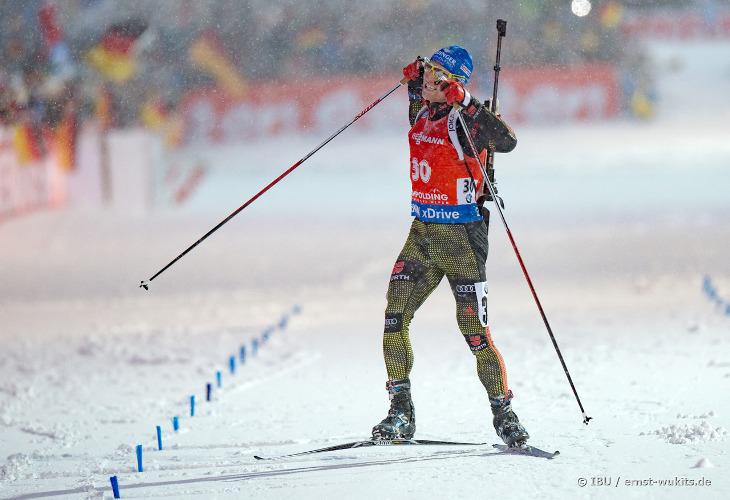
    Germany's Erik Lesser celebrates his first victory of the season in the men's 15 k mass start at the IBU World Cup in Ruhpolding, Germany. (Photo: IBU/Ernst Wukits)
    Germany’s Erik Lesser celebrates his first victory of the season in the men’s 15 k mass start at the IBU World Cup in Ruhpolding, Germany. (Photo: IBU/Ernst Wukits)

    In recent weeks, Germany’s Erik Lesser had become annoyed with questions on a single topic: whether he was concerned about not having fulfilled the “World Championships norm” yet.

    German biathletes are required to post at least one top eight or two top 15’s in an IBU World Cup within a season to qualify for major championships. And Lesser, a gold medalist in the pursuit and relay at 2015 World Championships in Kontiolahti, Finland, was the only senior team member — male or female — who had yet to achieve that mark ahead of 2016 World Championships.

    On Saturday evening, in front of a home crowd of more than 20,000 spectators in the biathlon arena and around the course in Ruhpolding, Germany, Lesser put all doubts to rest, winning the men’s 15-kilometer mass start in 40:29.3 minutes with perfect 20-for-20 shooting. Despite heavy snowfall, Lesser cleaned all four shooting stages, and on the final loop, he held his own ahead of France’s World Cup leader Martin Fourcade, beating him by 9.8 seconds.

    Fourcade had a single penalty on the last stage to place second, and Russia’s Evgeniy Garanichev missed one on the last shooting to finished third (+13.1). Fourcade and Garanichev had come into the final stage just ahead of Lesser, but then had to complete the 150-meter penalty lap after each missing a target.

    The two North Americans in the mass start, Canada’s Nathan Smith placed 15th (+1:20.8) and American Lowell Bailey finished 21st (+2:08.4), both with one penalty.

    After the race, Lesser was highly satisfied, and claimed he never had any doubt about his ability to qualify for the upcoming IBU World Championships in Oslo, Norway.

    “Now you have to shut up about that, huh. Now I don’t want to hear about that again after giving you what you wanted,” Lesser said with dry wit when he got interviewed by German TV broadcaster ZDF. “I couldn’t care less about the norm. I knew I had that in me; I just couldn’t put it together. Today thankfully everything worked out.”

    Questioned again if his coaches were also as convinced, and whether he had been anxious to achieve that kind of result, Lesser added:

    “Yeah, the next time I’m waiting for my World Championships norm, I’m taking you guys with me into the [athletes’] container, then you can watch us while you analyze our races, and there really was everything but a bad mood after my races. Everything was good, also between the coaches and me. Everyone was understanding,” he said.

    Outside the top 25 in the overall World Cup standing, Lesser had to qualify for the mass start as one of five additional athletes with the best performances of the race week. He narrowly managed to do that by placing 17th in the 20 k individual competition on Wednesday, earning the final start in bib 30.

    Since he thus had to start at the back of the field in the mass start, Lesser decided to set out at a steady pace allowing a little gap to form, in order to avoid what he called the “accordion effect” of constantly having to slow down and accelerate again as the field bunches up before climbs and then extends again like pearls on a string.

    “The bib number at the start really doesn’t matter. But I always heard the public announcer in the arena bellowing, ‘Oh Erik Lesser runs behind the field on the first loop.’ But it was planned exactly like that,” Lesser told ZDF. “I could ski behind others for four loops, and then only had to lead on the last one; that suits me well. The [wax] technicians really put together great equipment again, like the whole time here in Ruhpolding, and that makes it a little easier.”

    In the first prone shooting, 16 starters shot clean, including all of the eventual podium finishers, and US Biathlon’s Bailey. That put Smith, of Biathlon Canada, who had missed one target, at an early disadvantage, leaving the penalty lap and range in 23rd place and about 30 seconds behind the leaders.

    “Since my miss came in the first prone, I ended up a little back heading out onto the second loop,” Smith explained in a Biathlon Canada press release. “With the next three cleans, I moved up a little each time, but the field as a whole was shooting so well today, it was tough to make any big moves.”

    “I was aiming for a top 10 finish and knew that would take [hitting] 18 or 19 [targets] with strong skiing,” Smith wrote in an email to FasterSkier. “13 of the top 30 athletes shot 19 or better, even with snowy conditions. That’s some cut throat competition!”

    After the second prone, a large group still remained in contention. However, this stage did set back a few favorites, such as Norway’s Tarjei Bø, who had entered the range in first and left in 20th after two misses. He would eventually finish in 11th (+1:07) with three penalties.

    France's Martin Fourcade leads the snowy men's 15 k mass start on Saturday at the IBU World Cup in Ruhpolding, Germany. He went on to place second after a penalty on the last shooting. (Photo: IBU/Ernst Wukits)
    France’s Martin Fourcade leads the snowy men’s 15 k mass start on Saturday at the IBU World Cup in Ruhpolding, Germany. He went on to place second after a penalty on the last shooting. (Photo: IBU/Ernst Wukits)

    On the third 3 k loop, Fourcade, Norway’s Johannes Thingnes Bø and Garanichev emerged as the top three, with five athletes not far behind them: Lesser, Russia’s Maxim Tsvetkov, Norway’s Emil Hegle Svendsen, as well as the Czech Republic’s Ondrej Moravec and Michal Krcmar.

    At this point, slugging through the heavy snowfall was visibly hard, and several athletes took feeds to keep up their energy.

    Lesser was able to separate himself from that chase group, slowly closing the gap. “Super equipment, super speed,” one of his coaches yelled from the side of the course.

    Before the third shooting stage, Lesser had closed the gap, and while Johannes Thingnes Bø missed two of his targets to fall out of contention (he ended up 12th with three penalties), the other three leaders stayed clean, leaving the range together again, all within two seconds.

    On the penultimate loop, Fourcade tried to force an early decision, jumping up the longest climb with great speed, and created a gap of a few seconds to Lesser. Garanichev followed in Lesser’s draft, and Moravec trailed the group by about 25 seconds in fourth.

    “Martin did a really good fourth lap, and I had some problems in the uphills,” Lesser said during the post-race press conference.

    In the final shooting, Lesser entered the range in third, but shot clean while his two opponents each missed their first and only target of the day.

    Lesser headed out on the final loop just 12.3 seconds ahead of Fourcade with Garanichev 0.6 seconds behind as the two stormed out of the penalty lap eager to catch the German. On the first long climb it looked like his lead was starting to shrink, but at the next timing point, Fourcade was 12.6 seconds behind in second.

    Then Garanichev started his final attack and overtook Fourcade, but was not able to create a significant gap, coming through the next split still 10.9 seconds behind Lesser.

    “Nine seconds ahead, go Erik, go!” cheered a German assistant coach while running next to him on the side of the track.

    The last loop took Lesser a little longer than most of his previous times around the track, but he was able to stay ahead over a flat section and downhill leading into the arena, finally coming into the finish with the welcoming roar from the sold-out arena, while Fourcade managed to take second back from Garanichev in the final sprint.

    Asked to describe his feelings on the final loop, Lesser said at the press conference: “From happy, to exhausted, to really happy.”

    “The relay yesterday was hard for me, I was really exhausted after the race” Lesser added in a video interview with the IBU’s Jerry Kokesh. “But I’m really happy that I had the right power for today’s last lap. After all the sh*tty races this season, yup, really happy to be on the podium again.”

    “I did the grooming machine all the competition,” Fourcade said at the press conference of skiing at the front of the pack. “So I felt a bit exhausted on the last lap. In the beginning I thought I could catch Erik, but then I also wanted to keep my second place … So I focused on the Evgeniy fight, and am happy about my second place today.”

    “I am really happy about my two weeks in Ruhpolding. I created a good gap for the overall ranking and am really satisfied, that was my main goal for January,” he added. “I must say that when I see the crowd today, and the atmosphere, it was something crazy, so I am a bit sad to move because it was better every day. Great competitions, great organization, and I think all the athletes really enjoyed their stay these two weeks.”

    “Starting from the first stage in the World Cup season [in Östersund, Sweden] I have been good in speed, and just performing on the same high level,” Garanichev said at the press conference through a translator. “I am glad to be on the podium again, but I have to be careful about saying this is my best race so far because it was a really tough race, the sixth in ten days. So I would say it was a good race,”

    “Martin is not the type of guy who will easily let someone go,” he said of passing Fourcade on the final loop, not really expecting to create a gap. “So I just focused on fighting with Erik, and tried to do my best.”

    With a significant distance to the three podium finishers, Garanichev’s teammate Anton Shipulin placed fourth (+42.5) with one penalty, Krcmar was fifth for the best World Cup result of his career so far (+47.2 with one penalty), and Germany’s Simon Schempp finished sixth (+48.0, two penalties).

    This was Schempp’s first race this year after returning from the lengthy aftereffects of a respiratory infection, which caused him to drop from third in the World Cup standings (after the races in Pokljuka, Slovenia, just before the holiday break) to seventh.

    “I was really satisfied with my race,” Schempp told the IBU. “I was not so aggressive in the beginning, but I feel okay, and happy with sixth place…. It’s so much fun, especially because I’m at home here, training the whole year in this stadium. Really happy to see so many spectators, and the atmosphere is great.”

    Lowell Bailey (US Biathlon) racing to 21st in the men's 15 k mass start at the IBU World Cup in Ruhpolding, Germany. He shot 19-for-20 amid heavily falling snow. (Photo: USBA/NordicFocus)
    Lowell Bailey (US Biathlon) racing to 21st in the men’s 15 k mass start at the IBU World Cup in Ruhpolding, Germany. He shot 19-for-20 amid heavily falling snow. (Photo: USBA/NordicFocus)

    “It’s always a great atmosphere here in Ruhpolding. I love the German fans!” Bailey wrote in an email.

    Sweden’s Torstein Stenersen was the only athlete in the field besides Lesser who cleaned all four stage, but skied considerably slower to finish 20th (+1.54.4).

    Smith skied the 23rd-best overall course time in the difficult conditions, but was able to move up a bit on each loop thanks to three clean stages after his early miss (1+0+0+0) to place 15th.

    “The ski course was extremely slow going with the fresh snow falling. The 15 kilometre time was close to what the winning time was for the 20 kilometre individual race,” Smith told Biathlon Canada. “I had been feeling kind of fatigued the last few races, but I am happy that I was able to overcome that by performing well on the shooting range and end up with a very respectful final result.”

    Bailey cleaned three out of four stages, missing one on his first standing (0+0+1+0) for 21st.

    “I had the goal of staying with my shooting focus and not getting distracted by the excitement of the competition,” Bailey wrote. “I accomplished this, and overall I’m happy with the way shooting is going at the moment.”

    Asked if his solid shooting throughout back-to-back World Cup weeks in Ruhpolding was a result of the range (which most athletes generally considered to be easy due to the downhill approach and good wind protection, though in heavy snowfall, that might be drastically different) or any newfound adjustments, he wrote:

    “You work your whole career on the small little details that comprise a solid shooting approach, but at the end of the day, sticking to simple key cues has been what I’ve been using throughout the season. The fundamentals have to be developed, but then the key is getting your mind and body in a place where they can execute the things you’ve trained to do.”

    After posting the 20th-fastest time on the first loop out of the start, Bailey’s skiing became a bit slower on the subsequent rounds, and he ended the day with the 28th course time.

    “It was one of the more challenging races of my career. I just felt tired from the start,” Bailey wrote. “We’ve had six races in the last eight days, most of which occurred in slow conditions … I just think I reached my limit and didn’t quite have the energy required to ski with the best today”.

    Bailey and Smith were certainly not alone feeling their energy run low after a hard block of races. Norwegian biathlon legend Ole Einar Bjørndalen finished last in 30th (+5:42.6), with 10 penalties and the third-slowest course time.

    After two weeks in Ruhpolding, the World Cup tour now moves to Antholz-Anterselva, Italy, with sprints on Thursday and Friday, followed by pursuits on Saturday, and another relay on Sunday.

    “Antholz is always really good competitions, good snow, good for fights, and most of all the weather is often good,” Fourcade said. “I am also really happy to move to Antholz, and to have some Italian food, too, that’s something I like.”

    Results

  • Dunklee’s Podium Fight Ends in Sixth; Dahlmeier Wins Again in Ruhpolding

    Dunklee’s Podium Fight Ends in Sixth; Dahlmeier Wins Again in Ruhpolding

    Susan Dunklee pushes for sixth, tying a season best, on Sunday at the IBU World Cup 12.5 k mass start in Ruhpolding, Germany. (Photo: Fischer/NordicFocus)
    Susan Dunklee pushes for sixth, tying a season best, on Sunday at the IBU World Cup 12.5 k mass start in Ruhpolding, Germany. (Photo: Fischer/NordicFocus)

    The third International Biathlon Union (IBU) World Cup race in the three-straight days in Ruhpolding, Germany, was one wild ride for American Susan Dunklee, but in a good way.

    During Sunday afternoon’s 12.5-kilometer mass start, Susan Dunklee — who had made the top-30 cut for the race in 23rd — found herself in second place after the second of four shooting stages.

    The 29-year-old American then incurred just one penalty in the first standing stage to remain in contention for a spot on the podium until the final loop. Ultimately, two competitors passed her the last time around Ruhpolding’s 2.5 k loop, and Dunklee finished sixth, 31.4 seconds behind Germany’s Laura Dahlmeier, who won her second-straight race of the weekend in 33:17.7.

    “This is really fun for me,” Dunklee said in an IBU video interview. “I’m super psyched to shoot that well in a head-to-head situation. It’s taken me years to get to this level, and I’m happy to be there finally.”

    For Dunklee, the result tied her season best from last month’s sprint in Pokljuka, Slovenia.

    “I did put a lot of thought and work into cutting down my shooting times this summer and I have clearly seen that work paying off,” Dunklee wrote in an email to FasterSkier after hitting 95 percent of her targets on Sunday (0+0+1+0). “This was by far my best ever shooting performance in a World Cup.”

    “I’m super psyched to shoot that well in a head-to-head situation. It’s taken me years to get to this level, and I’m happy to be there finally.” — Susan Dunklee, after placing sixth in Ruhpolding mass start

    Dahlmeier Doubles Up in Ruhpolding

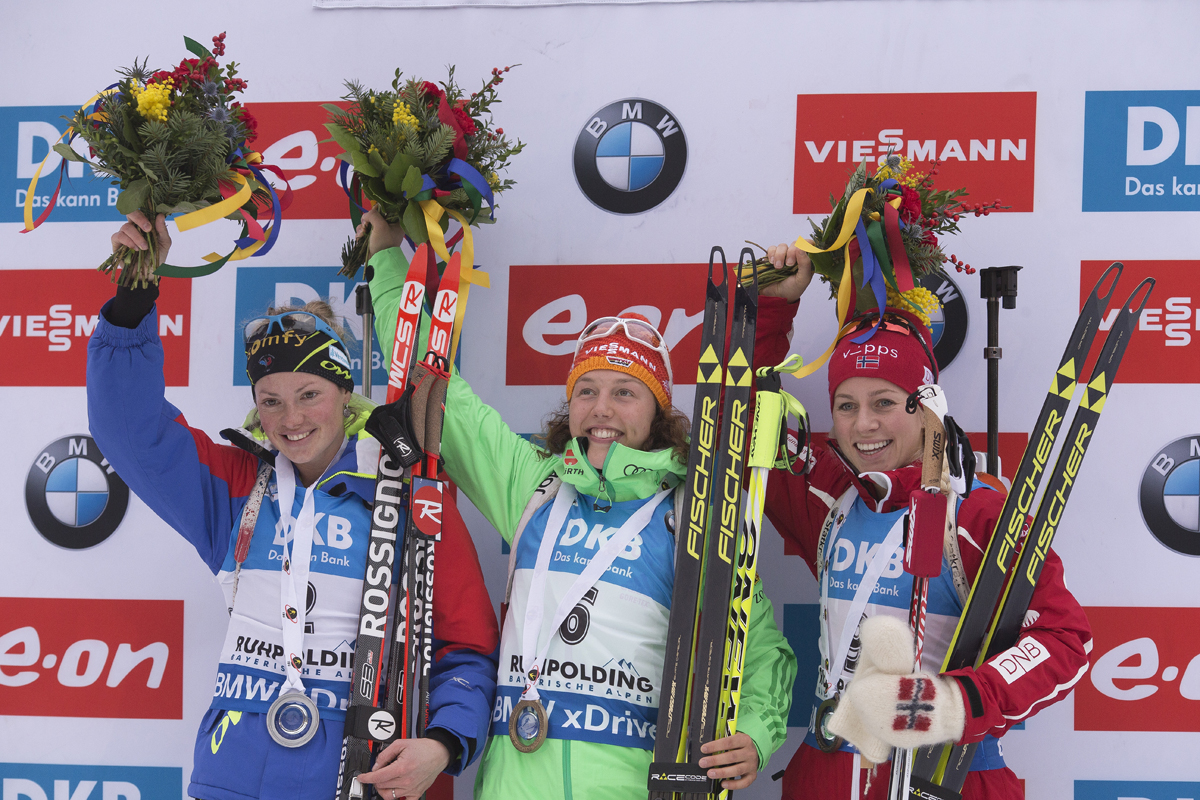
    The women's 12.5 k mass start podium at the IBU World Cup in Ruhpolding, Germany: with German winner Laura Dahlmeier (c), France's Marie Dorin Habert in second (l) and Norway's Tiril Eckhoff in third (r). (Photo: Fischer/NordicFocus)
    The women’s 12.5 k mass start podium at the IBU World Cup in Ruhpolding, Germany: with German winner Laura Dahlmeier (c), France’s Marie Dorin Habert in second (l) and Norway’s Tiril Eckhoff in third (r). (Photo: Fischer/NordicFocus)

    Saturday’s pursuit winner, Dahlmeier also won on Sunday — in convincing fashion — as she cleaned in all four stages and skied to the third-fastest course time to beat runner-up Marie Dorin Habert of France by 15.3 seconds.

    Habert had a single penalty in the first prone stage, and third place was decided in an extremely close photo finish between Norway’s Tiril Eckhoff, who had two penalties between the last two stages, and France’s Anaïs Bescond, who shot clean but was slower on the course.

    A few years ago, the race might have been called a tie with both awarded the third place (i.e. 2003 World Championship in Khanty-Mansiysk, Russia, with the gold medal of the pursuit race awarded to both France’s Sandrine Bailly and Germany’s Martina Glagow). But with more advanced timing and imaging technology, the race jury ruled Eckhoff took third and Bescond fourth, both 21.9 seconds back from the winner.

    Dunklee started out skiing fast with the seventh-best course time on the first loop. Once she reached the first prone stage, she also shot clean and fast with the fifth-best shooting time. Dunklee left the range in second, at that time just 0.3 seconds behind Germany’s Vanessa Hinz.

    “Sometimes I have a habit of starting out a little too fast in the early loops and not having enough left to lay down a killer last loop,” Dunklee wrote. “I was actually talking with my coach before the start about maybe trying to pace a little more evenly. Then the gun went off and I just took whatever opportunities came my way. The reality is that I’d rather take some risk and put myself into the race early and then see if I can hang on.”

    “For the shooting, my plan was to use the same rhythm and focus keys as I usually do and I did that,” she continued. “In mass starts, you shoot on the same lane as your bib number for the first stage and I got to my lane earlier than the ladies I was skiing around.”

    After staying close to the front of the field on the second of five loops, Dunklee again managed to shoot clean and fast in the second prone (with the sixth-best time), leaving the range still in second, 2.2 seconds behind Eckhoff, with Dahlmeier trailing 2.7 seconds behind Dunklee.

    A little surprised by this race development, a TV commentator for Germany’s ARD had to consult his notes: “Tiril Eckhoff, that was to be expected, but Susan Dunklee, she keeps up exceptionally well. She turns 30 next month; lives in Craftsbury, Vermont, the American here in second position. She shares hobbies with Laura Dahlmeier, mountaineering, especially when training in Utah, she has good opportunities for that.”

    Susan Dunklee (US Biathlon) at the flower ceremony. Dunklee tied a season-best sixth on Sunday in the mass start at the IBU World Cup in Ruhpolding, Germany. (Photo: Fischer/NordicFocus)
    Susan Dunklee (US Biathlon) at the flower ceremony. Dunklee tied a season-best sixth on Sunday in the mass start at the IBU World Cup in Ruhpolding, Germany. (Photo: Fischer/NordicFocus)

    On the third loop, Dunklee lost a few positions, coming through the next split times at 6.1 and 6.4 k in third, then fifth place, but still just 1.9 seconds back and a few meters ahead of the next chase group.

    In the third shooting — the first standing stage — Dunklee missed one target and had to ski through the 150-meter penalty lap, leaving the range in sixth, 21.6 seconds behind Dahlmeier.

    She kept that position on the loop, skiing just behind overall World Cup leader Gabriela Soukalová of the Czech Republic and ahead of Poland’s Magdalena Gwizdon.

    In the final stage, Dunklee cleaned all of her targets in a high-pressure situation, standing in the range with a group of at least five others, where every miss would be one too many. She started out on the final loop in fourth, 24.5 seconds back, chasing Bescond who had left the range 10 seconds ahead of her, with Eckhoff and Ukraine’s Olena Pidhrushna (who had cleaned all four stages) within eight seconds behind her.

    Dunklee’s US Biathlon coaches and teammates in their new brightly colored orange-and-purple uniforms cheered her on from the side of the course.

    “I did hear my coaches and teammates cheering on all the loops,” Dunklee wrote. “Clare [Egan] had an American flag and was sprinting up the last hill, urging me to chase down Tiril and Anais. She gave me a tremendous burst of energy there.”

    Dunklee tried everything in her power to reach the podium, but Eckhoff passed her on a climb shortly before the arena. Eckhoff quickly created a little gap and chasing down Bescond.

    “Oh, I was so tired,” Dunklee explained in her interview with the IBU. “I don’t think my ski shape is perfect yet, but hopefully will be in Oslo [for World Championships]. I was a little bummed I couldn’t keep up with a couple of girls who passed me on that loop.”

    Overall, Dunklee posted the eighth-fastest course time. She skied the fifth-fastest last loop.

    The second-fastest on the last loop (and fourth-fastest overall), Eckhoff caught Bescond before the finishing stretch and outlunged her by about an inch to achieve her first podium of the season.

    “It was really, really exciting on the last loop,” said Eckhoff in an IBU video interview. “I was really tired, so I was very luck to get the margins on my side, and I’m happy.”

    “I haven’t actually been on the podium this year, so I really wanted to get on the podium,” she added. “So I just had to stick my [ski out]… Yeah, do whatever I could to be on the podium.”

    In the finishing stretch, Pidhrushna overtook Dunklee and edged her by 0.9 seconds at the line. Dunklee ended up 9.5 seconds off the podium.

    After a hard fight, Dunklee seemed happy with her result, kneeling in the snow for a while in the finishing pen to catch her breath, but smiling for the TV cameras and waiving to the large crowd in the stands.

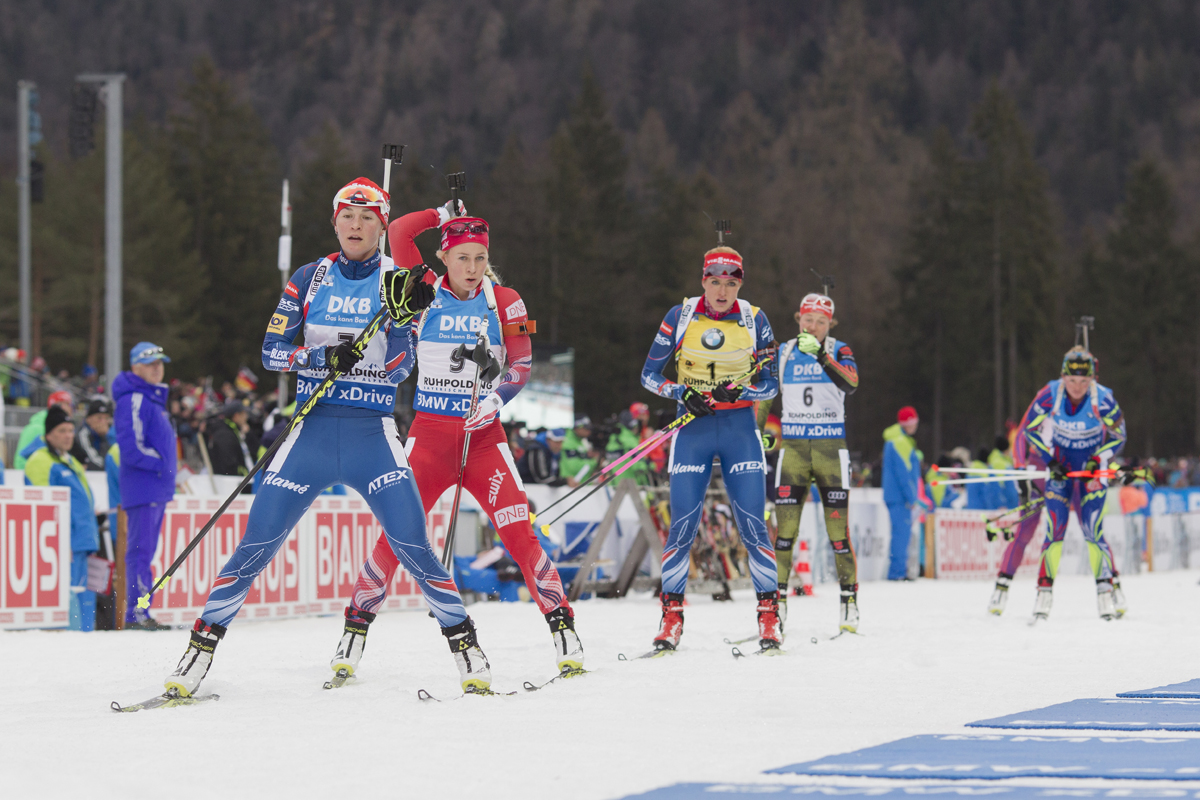
    From left to right: Veronika Vitkova of the Czech Republic, Norway's Tiril Eckhoff, and Czech Gabriela Soukalova prepare to shoot during one of two standing stages in the women's mass start on Sunday in Ruhpolding, Germany. (Photo: Fischer/NordicFocus)
    From left to right: Veronika Vitkova of the Czech Republic, Norway’s Tiril Eckhoff, and Czech Gabriela Soukalova prepare to shoot during one of two standing stages in the women’s mass start on Sunday in Ruhpolding, Germany. (Photo: Fischer/NordicFocus)

    On Sunday she succeeded at keeping a number of athletes behind her who already achieved World Cup victories this season, including Soukalová in seventh place, Finland’s Kaisa Mäkäräinen in 13th, and Germany’s Franziska Hildebrand in 17th.

    “The conditions were so good today,” Dunklee commented in the video. “Yesterday was a little deep, was a little warped. Today it was all good; it was beautiful skiing.”

    “Range race conditions were very similar to the zero for the women [target practice to adjust the rifle sights before the race]; no tricky winds like the men had,” she added in her email.

    First and second place were already mostly decided after the last shooting, with Dahlmeier leaving the range 6.9 seconds ahead of Habert and extending that to 15.3 seconds until the finish. Habert skied the fastest course time of all athletes, but was visibly tired on that final loop only recording the 17th best time.

    “I am hungry for other wins and I hope to be on the podium next week,” Habert said Sunday, according to an IBU press release. “I didn’t see a chance to catch Laura in this form, I knew she was strong. … I made a miss at the first shooting, and it was hard to come back to the top of the race.”

    “This was definitely a perfect race for me,” Dahlmeier told ARD in a post-race interview. “Four times zero [misses], and skiing was good again, too. Really crazy, a dream, a wicked race today.”

    Asked why she went all-out on the final loop when she appeared to be comfortably in the lead, Dahlmeier recounted a story from her early years of racing with a laugh:
    “I had an experience at the student-level [youth], when I got still outsprinted in the finishing stretch of a cross-country race by the little sister of Miri Gössner [her current teammate on the German biathlon national team]. And I swore to myself that would never happen again in my life, unnecessarily giving away a race at the finish. That’s why it’s hard for me to ski relaxed on the final loop. I tried to not go full-throttle today, but didn’t really succeed at that. Main thing was to win.”

    “I tried to not go full-throttle today, but didn’t really succeed at that. Main thing was to win.” — Laura Dahlmeier, winner of the Ruhpolding IBU World Cup mass start on Sunday

    No other North American female athlete qualified for the mass start on Sunday, where only the top-25 in the overall World Cup standings plus five additional athletes with the best performances of the weekend are given a start.

    The World Cup circuit stays in Ruhpolding, with races starting again on Wednesday with the men’s 20 k individual race , and on Thursday with the women’s 15 k individual race.

    “We’ll hope our men can reach the podium again,” Dahlmeier told ARD. “We are in great shape. I particularly feel really strong right now. Each race is a lot of fun, and I’m looking forward to part two of our World Cup at home.”

    Results