Tag: Ruka World Cup

  • The Road to Ruka: A Sunset Bus Ride into the World Cup Winter

    The Road to Ruka: A Sunset Bus Ride into the World Cup Winter

    This coverage is made possible through the generous support of Marty and Kathy Hall and A Hall Mark of Excellence Award. To learn more about A Hall Mark of Excellence Award, or to learn how you can support FasterSkier’s coverage, please contact info@fasterskier.com.

    Aerial view of Ruka (FIN) this morning, with the start of the World Cup season less than a day away. (Photo: Modica/NordicFocus)

    For six hours on Tuesday, the U.S. Cross-Country Ski Team watched Finland scroll past the windows of a northbound bus, the day’s thin slice of sunlight slanting low across the snow. The sun in late November never rises entirely above the horizon there—”maybe ten degrees,” Matt Whitcomb noted—and so the world outside was washed in a pastel light that never quite felt like midday. In that part of the Arctic, sunrise and sunset are effectively the same event.

    That is the moment Whitcomb pays attention to every year.

    “As it sets, as you’re driving in those first two hours of the bus ride,” he said, “it sort of feels like it’s the official close of the preparation season.” The athletes may have left Muonio only hours earlier, but that sunset marks a boundary: everything before is training; everything after is racing. “That’s it,” he said. “The prep season’s over. It’s time to race now.”

    The bus carried all seventeen athletes—nine men and eight women—each holding a different version of readiness. Some were energized, some were still finding their legs, some were quietly anxious. An Olympic season magnifies everything. For veterans, this opener in Ruka is familiar and charged; for athletes on the bubble, the weekend marks the start of a two-month test whose outcomes will determine whether they get to ski in Italy in February.

    But for one last window of time, before the waxing trucks and the bib pickup and the official training, the whole team was suspended in this Arctic twilight. It is a soft entry into what quickly becomes a hard world.

    When the bus crested the final kilometers into Ruka, the athletes looked out the left side toward the hill that dominates the course—a climb they will race up and over repeatedly in the coming days. “Every year,” Whitcomb said, “that road goes right up the largest hill on the course… your first trip up that is in the bus.” The hill glowed under floodlights. Below it, the village looked like it had been placed inside a glass ornament. “It’s lit up like a snow globe around here.”

    By the time the athletes stepped off the bus and into the cold, the World Cup season had begun.
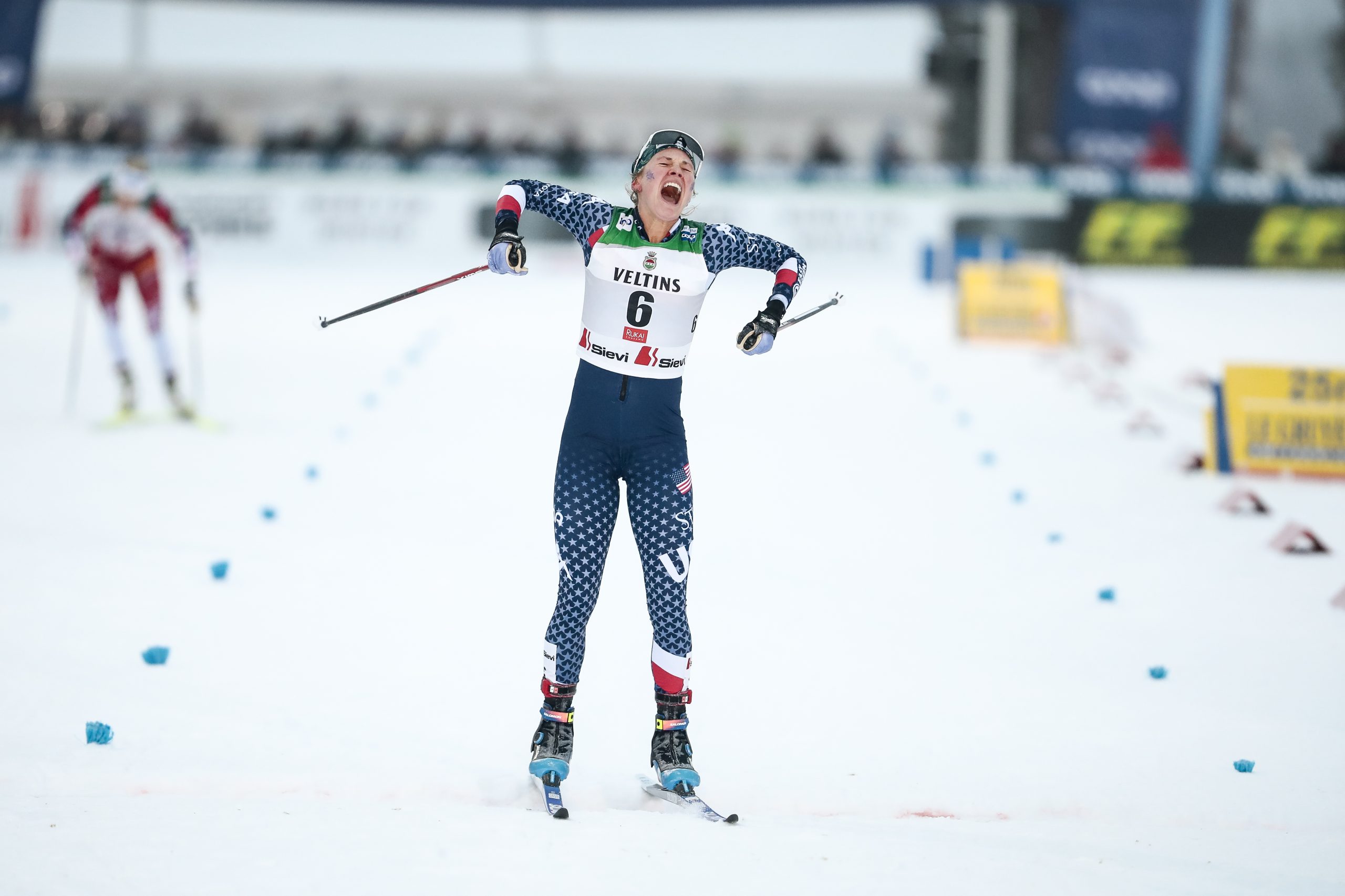
    Jessie Diggins (USA) was able to find another gear at the finish which no one could match to take victory in Ruka a year ago in the Mass Start. (Photo: NordicFocus)

    What They Carry From Muonio

    A week earlier, the team was skiing through air so cold it could freeze eyelashes. Muonio is remote even by Finnish standards, a strip of trails and cabins surrounded by deep quiet. The temperatures dropped to –5°F for the high and –10°F for the low, and the athletes masked up, moving carefully to avoid frozen lungs. No one did intensity that day; even the coaches agreed the cost wasn’t worth the risk.

    And yet the camp was a success.

    “It was right on the edge of being too cold,” Whitcomb said, “but we made it work. And nobody has residual coughing, so I think that’s the tangible indicator that we didn’t push too hard.”

    More importantly, Muonio was calm this year. There were no lingering illnesses, no cascade of early-season injury setbacks. “This year has been a better year with regard to preparation,” he said. “We’ve had fewer long-term illnesses, fewer acute injuries.” In an Olympic season, where every missed week feels like a month, that is no small thing.

    Muonio is the last place where the athletes can simply train, ski, nap, and repeat. Once they arrive in Ruka, the season accelerates in a way no one can fully control.

    Zanden Mcmullen (USA) coming to the line in Ruka in 2024. (Photo: Thibaut/NordicFocus.)

    Ruka’s Glow and Ruka’s Pressure

    Ruka is where the World Cup hardens into its proper form. The quiet trails of Muonio are replaced by a carnival of nations: wax trucks pulled side by side, technicians moving in practiced circuits, athletes from every powerhouse country striding around the stadium. For all teams, the opener reveals the truth of the summer: whose fitness is real, whose technique held up, whose body needs another two weeks before coming online.

    “The moment we arrived here in Ruka,” Whitcomb said, “you start to see the waxing vehicles from other nations… the reality of it hits, and you could feel butterflies sort of emerge as a team.” Even the veterans feel it. “Munio last week was all about recovering from jet lag… and you arrive here, and it’s like: official training, then race, race, race. It’s go time now.”

    He emphasized that the stress is not negative. Stress, in his framing, is a sign that something meaningful is at hand. “It’s indicative of the privileged environment that we live in,” he said. “We’re doing something important, something these athletes work really hard for, and something that they’re ready for—and that’s why they feel stressed.”

    In an Olympic year, there is no such thing as a low-pressure opener.
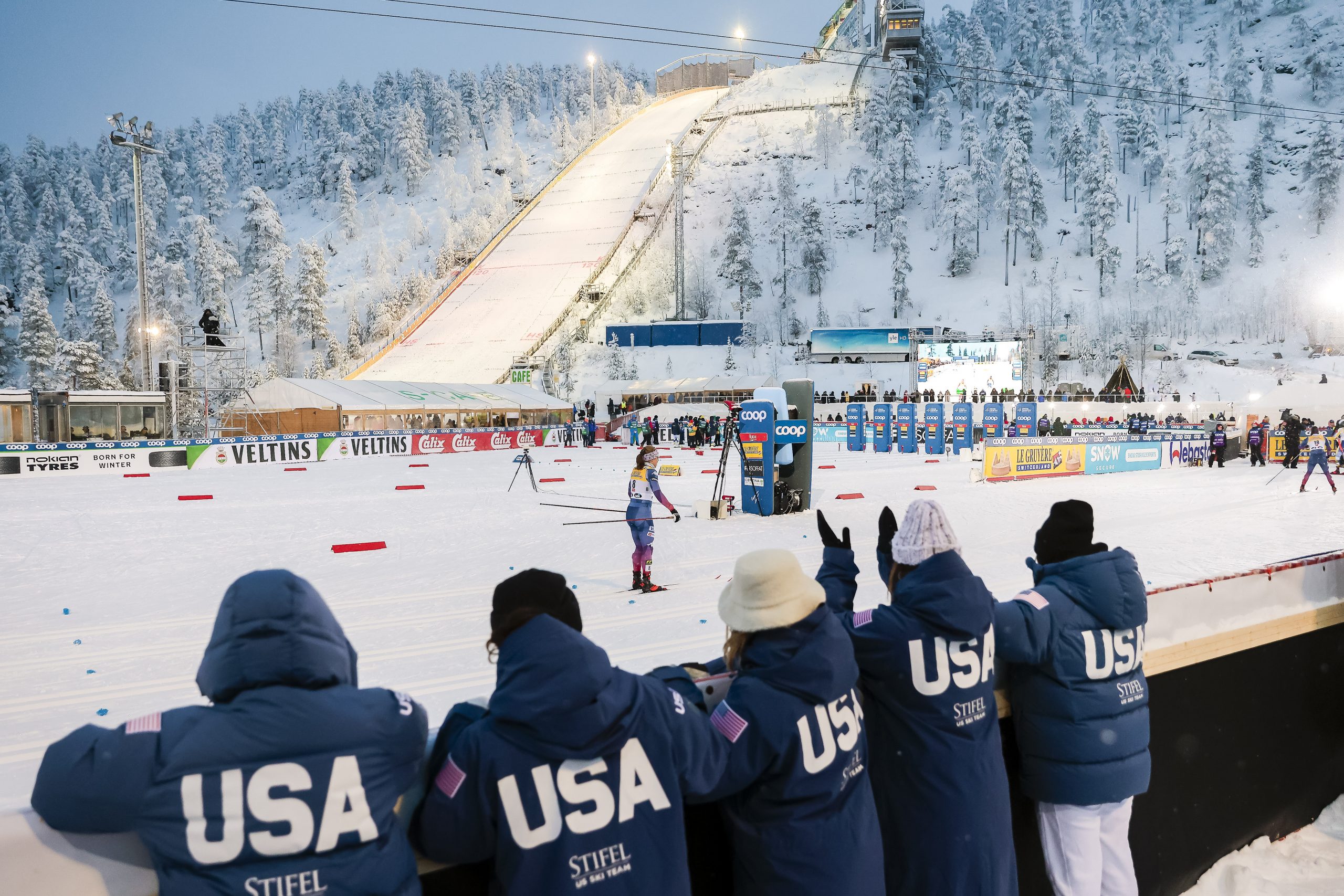
    The U.S. team looks on in Ruka in 2023.  (Photo: NordicFocus)

    The Team Within the Team

    The most striking thing about this group, Whitcomb said, is not its athletic potential—though several athletes are carrying top-10 ambitions into the weekend. It’s the internal energy.

    “It feels as supportive a team as I think we’ve ever had,” he said. “Not better, but certainly as good as any team we’ve ever had.” A year ago, he described a similar feeling, but something about the last month apart has deepened it. “They just vibe together,” he said. “They’ve really missed each other.”

    From outside, the U.S. team can look like a logistical patchwork—athletes based in Vermont, Alaska, Idaho, Colorado, Norway; college skiers who drop in and out; development athletes rotating through Europe. But when they’re together, Whitcomb believes the culture gives them a competitive advantage.

    “One of the privileges our nation has,” he said, “is that we are not as competitive as Norway is.” He doesn’t mean competitive in results—he means internally. In Norway, a single race in Beitostølen can determine whether an athlete gets a World Cup start or disappears back into domestic anonymity. “Literally that one race… has a lot of say in whether your winter is going to be successful,” he said.

    In the U.S., the pressure comes from the Olympics, not from your teammates. “A positive team vibe really does some work for you,” he said. It prevents the “little stresses”—the ones that accumulate in toxic environments—from becoming overwhelming in an Olympic year.

    “When the only stress you have to worry about is the silly one that is racing,” he said, “you can overcome that.”
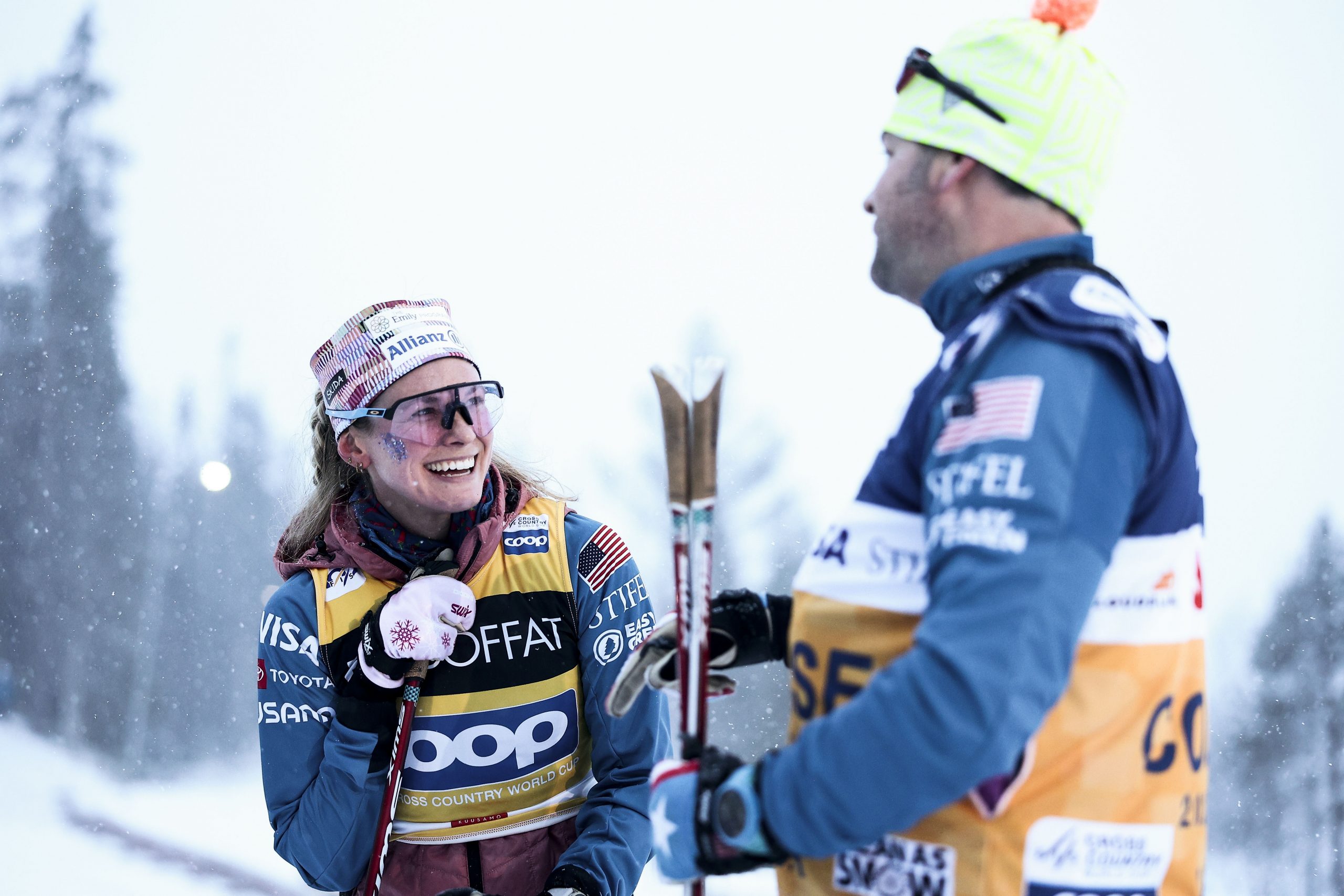
    Jessie Diggins (USA) keeping it light with her coach, Jason Cork. (Photo: NordicFocus)

    Olympic Stakes, Explained Clearly for Once

    For athletes and coaches, the rules of Olympic selection are a map that everyone has memorized; for the public, they are a maze. Whitcomb walked through the system with the clarity of someone who helped write it.

    There are three primary pathways:

    1. Top-8 in an Olympic event on the World Cup

    If an athlete finishes top-8—but only in a race that exactly matches an Olympic event—they automatically qualify.

    Classic sprint in Trondheim? Yes.

    20k Skiathlon in Trondheim? Yes.

    10k skate in Davos? Yes.

    Team sprint? No.

    Any race similar but not identical (ie, the 15k Skiathlons)? No.


    2. Top-45 on the World Cup ranking list (by Oberhof)

    Any athlete inside the top-45 overall (distance or sprint, depending on discipline) meets the selection criteria. They still need a spot available, but their case becomes strong.


    3. Discretionary selection

    This exists—but is avoided whenever possible.

    “To be candid,” Whitcomb said, “that’s a goat auction in itself.”

    In an Olympic year, the staff prefers not to touch discretion at all.
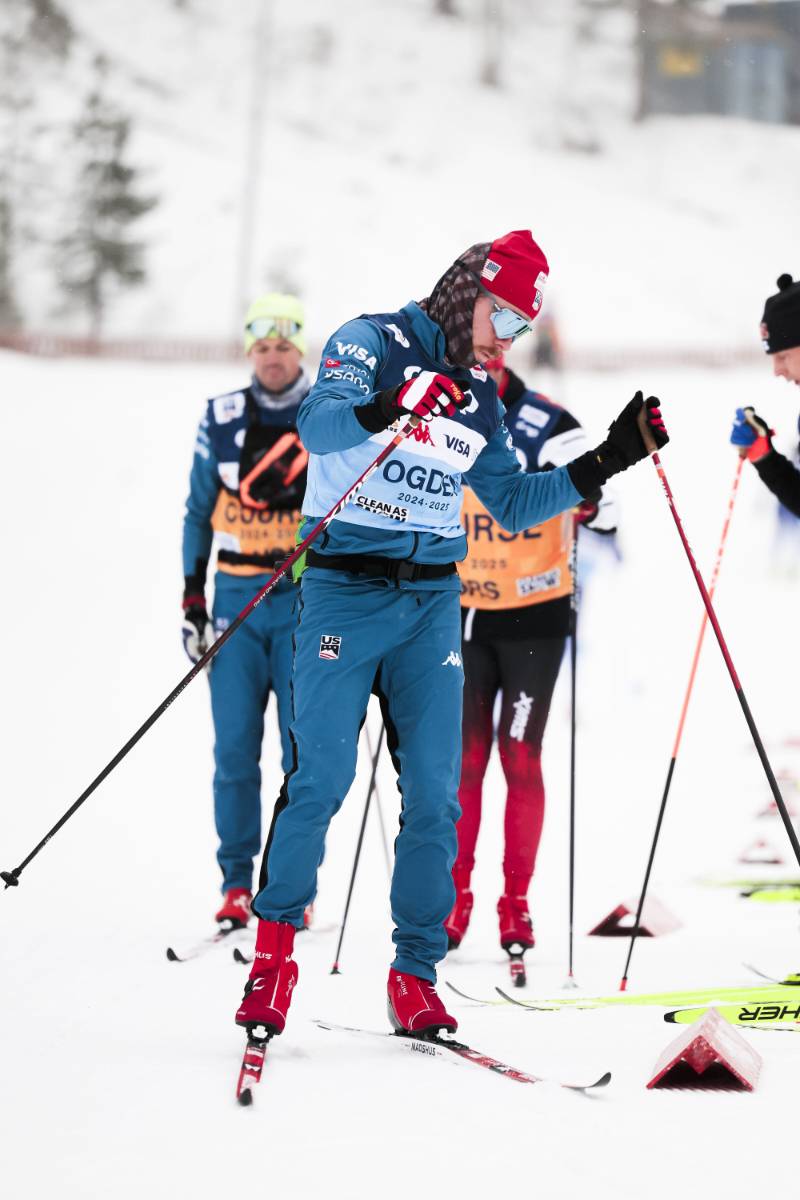
    Ben Ogden (USA) working on ski selection on Thursday in Ruka (FIN) a year ago. (Photo: NordicFocus)

    Roster limits

    Right now, the U.S. holds seven men’s spots and eight women’s spots, with a realistic chance of earning an eighth men’s spot. It will not exceed 8 + 8.

    Domestic results?

    For someone skiing exceptionally well at Senior Nationals to force their way in, there must be vacancies left by athletes who didn’t meet criteria on the World Cup. In most years, Olympic qualification is won or lost by Christmas.

    This is why every World Cup start in Period 1 matters. Every 12th place, every quarterfinal, every decent distance day contributes to the math.

    But to Whitcomb, that math isn’t the point. It’s how athletes handle pressure that determines whether the season becomes joyful or claustrophobic.

    “Meet Your Body Where It Is”

    On Thursday night, in the team meeting before the weekend races, Whitcomb planned to give a simple message.

    “You start that 10k, and you’re going up the first hill,” he said, “you just meet your body where it is. You do your very best that day.”

    He wants the athletes to tune out the noise:

    • the coaches on the sides of the trail
    • the athletes they pass
    • the athletes who pass them
    • the crowd, the music, the reporting, the points

    “You deal with the one vehicle that you’re driving,” he said. “And you try to enjoy it.”

    Because fitness today doesn’t predict February.

    Because the Olympic Games begin on February 7th, the only date that truly matters.

    Because early-season expectations are a trap: some athletes are ready this weekend; others won’t feel themselves fully until the Tour de Ski.

    “The human body,” he said, “is a wildly unpredictable thing.”

    If there is one truth that governs the first weekend of racing, it is that.
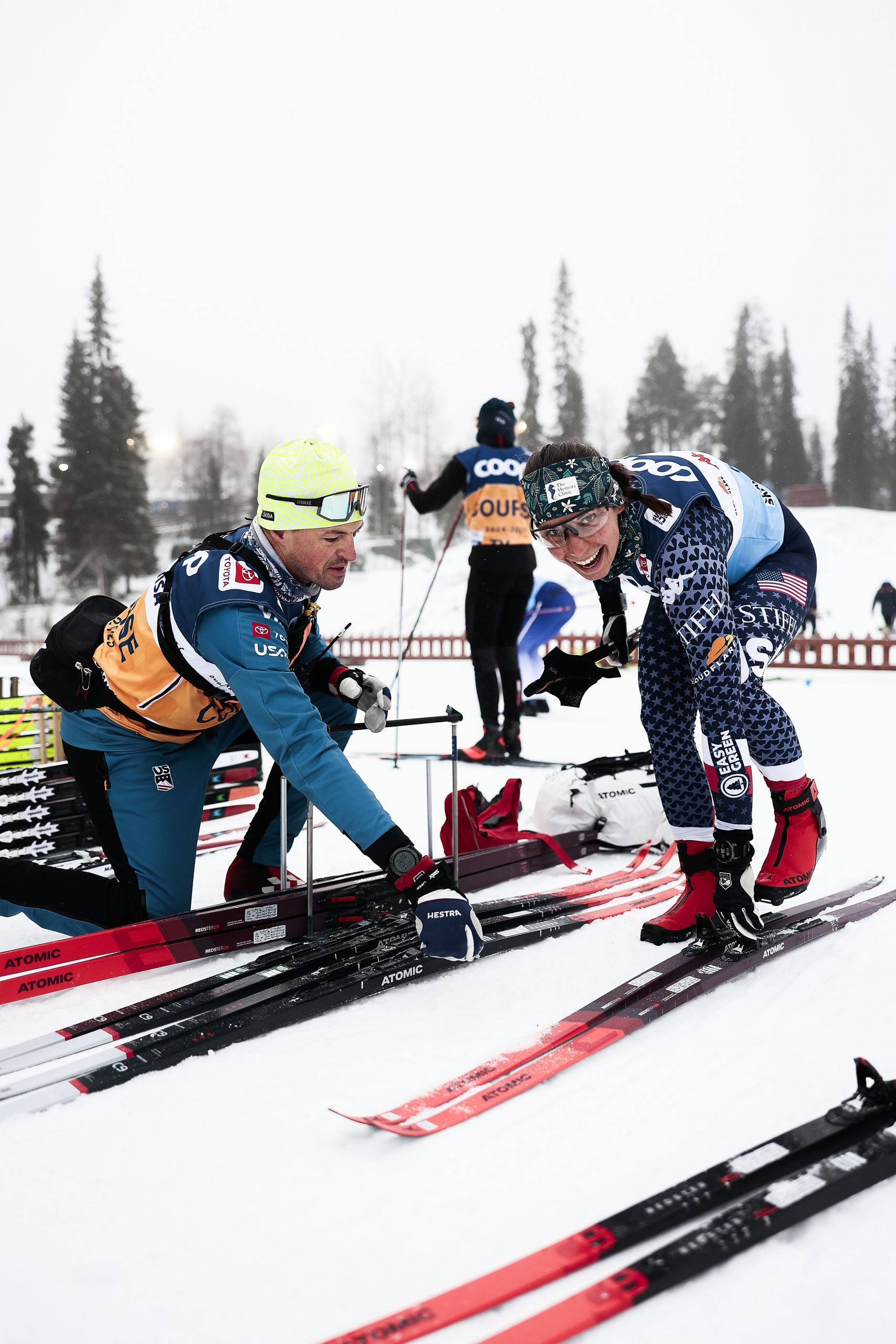
    Julia Kern testing her skis with her longtime tech, Eli Brown a year ago. (Photo: NordicFocus)

    Why Ruka Still Matters

    Still, the weekend is not symbolic. It is competitive, decisive, and formative. Whitcomb believes the team is “positioned well to have a great opener,” but he also knows that Ruka rarely tells the whole story of a winter. The temperatures are often frigid, and the travel is too recent. But it gives athletes one thing they cannot simulate anywhere else: the clarity of racing.

    “Early,” he said, “but it can’t come soon enough. We’re really excited.”

    Ruka is where the starting gun echoes for the first time, but it’s also where the season’s unseen forces begin working: confidence, doubt, momentum, cohesion, luck, health, and perspective. Many Olympic stories begin here without anyone realizing it until months later.

    The First Night in the Snow Globe

    By Tuesday evening, the team had unpacked their bags in the small condos near the stadium. By Wednesday, when we spoke, through Whitcomb’s thin door, we could hear athletes talking after dinner—laughing, telling stories, building team chemistry. “You can hear people probably through my door,” he said, because “they’ve really missed each other.”

    Outside, the northern lights edged across the sky.

    Inside, there were skis to prep, race plans to finalize, nerves to manage.

    And in the morning, the first climb of the season would begin at the bottom of that hill they had ridden over on the bus.

    There are a few actual rituals in a sport defined by travel and unpredictability. But in the U.S. team’s calendar, the bus ride to Ruka is one of them. It marks the line between the world that was and the one that’s about to begin. Between training and racing. Between imagining and knowing.

    The sun had long since set, but the trail lights of Ruka glowed through the fog, warm against the cold.

    The World Cup season officially starts tomorrow.

    And for the U.S. team—healthy, united, a little nervous, and very ready—there is nothing left to do but ski.

    Rosie Brennan (USA) dialing in her skis a year ago. (Photo: Modica/NordicFocus)

    How to Watch

    In the United States:

    Ski and Snowboard Live


    Schedule

    November 28th:  

    10k Interval Start Classic – Women at 4:30 am EST and Men at 7:15 am EST

    November 29th:  

    Classic Sprint – Heats begin at 5:25 am EST

    November 30th:  

    20k Mass Start Freestyle – Men at 4:00 am EST and Women at 5:45 am


    Love Stories Like This? Help Keep Them Coming.

    Feature interviews like this one take time, access, and care to produce. If you value thoughtful storytelling and independent ski journalism, please consider becoming a Voluntary Subscriber. Your support directly fuels the work we do to cover the people, places, and moments that make our sport special.

    Join the FasterSkier community!


    Jessie Diggins (USA) celebrates a hard earned victory in the Ruka 20k Freestyle in 2024. (Photo: NordicFocus)
  • Friday Rundown: Sadie Bjornsen Opens with Career-Best Second in Ruka

    Friday Rundown: Sadie Bjornsen Opens with Career-Best Second in Ruka

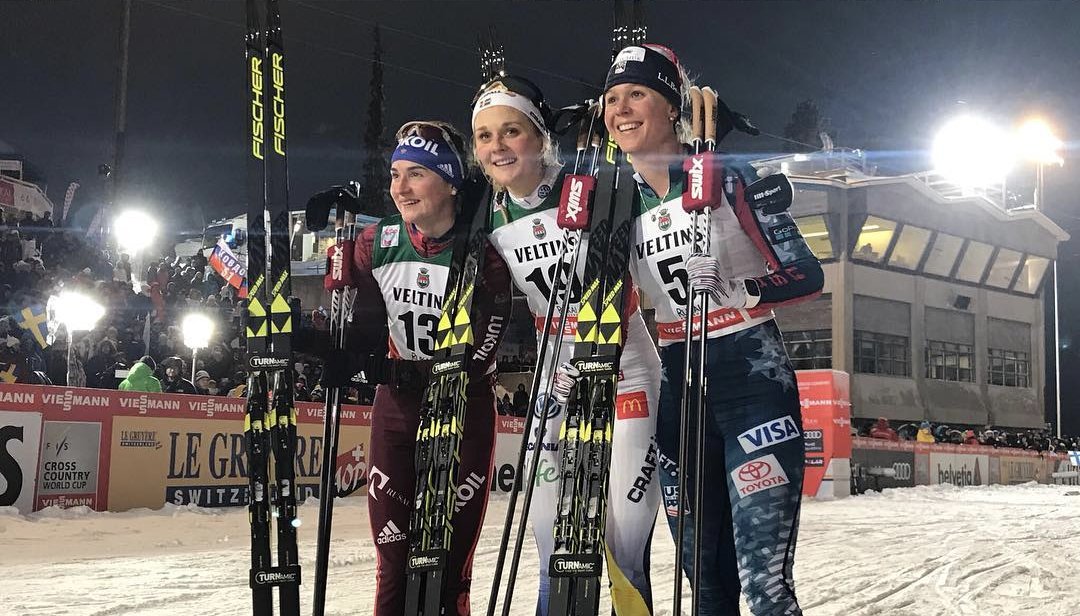
    The women’s podium for the first race of the 2017/2018 World Cup season, the Ruka classic sprint in Kuusamo, Finland, with (from right to left) American Sadie Bjornsen in second, Sweden’s Stina Nilsson in first, and Russia’s Yulia Belorukova in third. (Photo: U.S. Ski Team/Twitter)

    FIS Cross Country World Cup (Kuusamo, Finland): Classic sprints

    Women’s race report

    Men’s race report

    In the first race of the 2017/2018 cross-country World Cup season, U.S. Ski Team (USST) member Sadie Bjornsen, who turned 28 on Tuesday, raced to the best result of her career, placing second to Sweden’s Stina Nilsson in Friday’s classic sprint in Kuusamo, Finland.

    Last season, Bjornsen notched her first World Cup podium in third place in the 5-kilometer freestyle in Toblach, Italy, and teamed up with USST teammate Jessie Diggins to take third in the 2017World Championships classic team sprint. Friday’s 1.4-kilometer classic sprint — the first race of the Ruka Triple mini tour to kick of the 2017/2018 World Cup season — was Bjornsen’s first race of the season. She did not participate in any preseason International Ski Federation (FIS) races.

    Bjornsen started out the day by clocking the fifth-fastest time in the qualifier, 1.98 seconds behind Sweden’s Ida Ingemarsdotter, who won the qualifier in 3:11.69 minutes. Bjornsen’s USST teammate Sophie Caldwell qualified third (+0.59) after another Swede, Hanna Falk in second (+0.19), and a total of four American women finished in the top 30 to qualify for the heats. Ida Sargent finished 22nd (+8.70) and Rosie Brennan was 26th (+9.51) to reach the quarterfinals.

    There, Bjornsen won her quarterfinal by 0.39 seconds over Russia’s Yulia Belorukova. Caldwell also advanced to the semifinals by placing second in her quarterfinal, 0.7 seconds behind Sweden’s Charlotte Kalla in first.

    Sargent finished third in her quarterfinal, 0.65 seconds behind the winner of that heat,  Sweden’s Anna Haag. Brennan placed sixth in her quarterfinal, 4.3 seconds behind Sweden’s Nilsson in first. Neither Sargent nor Brennan advanced to the semifinals.

    In the semifinals, Bjornsen again raced to first, and once again held off Belorukova — this time by just one-hundredth of a second. Caldwell followed in fourth in that semifinal, 0.5 seconds behind Bjornsen in first and 0.11 seconds behind Russia’s Evgenia Shapovalova in third (+0.39). Neither Caldwell nor Shapovalova advanced to the final.

    In the final, Nilsson took the overall win in 3:17.62 and Bjornsen captured a career best in second place, 0.24 seconds out of first. Belorukova rounded out the podium in third (+0.91), while Ingemarsdotter placed fourth (+2.72), Norway’s Kathrine Rolsted Harsem was fifth (+3.54), and Finland’s Krista Parmakoski sixth (+18.62).

    Overall, Caldwell placed eighth, Sargent 15th and Brennan 29th for the U.S. Diggins and Kikkan Randall missed out on qualifying in 34th and 36th, respectively. Julia Kern placed 57th, Liz Stephen 70th, and Chelsea Holmes 86th.

    None of the Canadian women qualified, with Dahria Beatty in 64th, Emily Nishikawa in 74th and Cendrine Browne in 87th.

    (Continues below)

    In the men’s 1.4 k classic sprint, Norway’s Johannes Høsflot Klæbo won out the day after winning the qualifier, quarterfinal and semifinal en route to another dominant performance in the final.

    Klæbo started off by winning the qualifying round by 2.26 seconds in 2:46.53. Finland’s Anssi Pentsinen qualified second and another Finn, Ristomatti Hakola, qualified third (+2.35), ahead of Italy’s Federico Pellegrino in fourth (+2.66).

    Cross Country Canada’s Alex Harvey was the top North American man in the qualifier, finishing 13th (+6.13), while Erik Bjornsen of the USST qualified in 26th (+8.71).

    Both Harvey and Bjornsen finished fifth in their quarterfinals and did not reach the semifinals. Harvey ended up 21st on the day, after finishing 2.16 behind the winner of his heat, Finland’s Lauri Vuorinen. Bjornsen was 24th overall after finishing 5.12 seconds behind Klæbo, who won the first men’s quarterfinal.

    Klæbo used the extra recovery time he had from racing an early quarterfinal to prime himself for another win in the semifinals, where he beat Sweden’s Calle Halfvarsson by 0.29 seconds. Another Norwegian, Pål Golberg, followed in third (+0.49), and Hakola placed fourth in that semi (+1.72). Both Golberg and Hakola had fast enough times to advance to the final, where they met Pellegrino — the winner of the second semifinal — and Norway’s Sondre Turvoll Fossli, who was second in the second semifinal (+0.1).

    In the final, Klæbo once again won convincingly, this time by 1.35 seconds with a finishing time of 2:48.19. Golberg took second place and Halfvarsson reached the podium in third (+4.03), while Hakola placed fourth (+5.65), Pellegrino fifth (+8.87), and Fossli sixth (+17.31).

    For the U.S., Andy Newell missed qualifying by 0.38 seconds in 34th and Simi Hamilton finished 60th. Scott Patterson was 84th, Paddy Caldwell was 103rd, and Noah Hoffman was 105th.

    For Canada, Julien Locke, of the national U25 Team, finished 59th, Len Valjas was 63rd, Knute Johnsgaard 73rd, Devon Kershaw 74th, Graeme Killick 85th, and Jesse Cockney 95th. Last year’s NorAm winner Russell Kennedy did not start.

    Results: 

    Women’s qualifier | Women’s final

    Men’s qualifier | Men’s final

  • Wednesday Workout: Saarinen’s New Morning Routine, World Cup Return

    Wednesday Workout: Saarinen’s New Morning Routine, World Cup Return

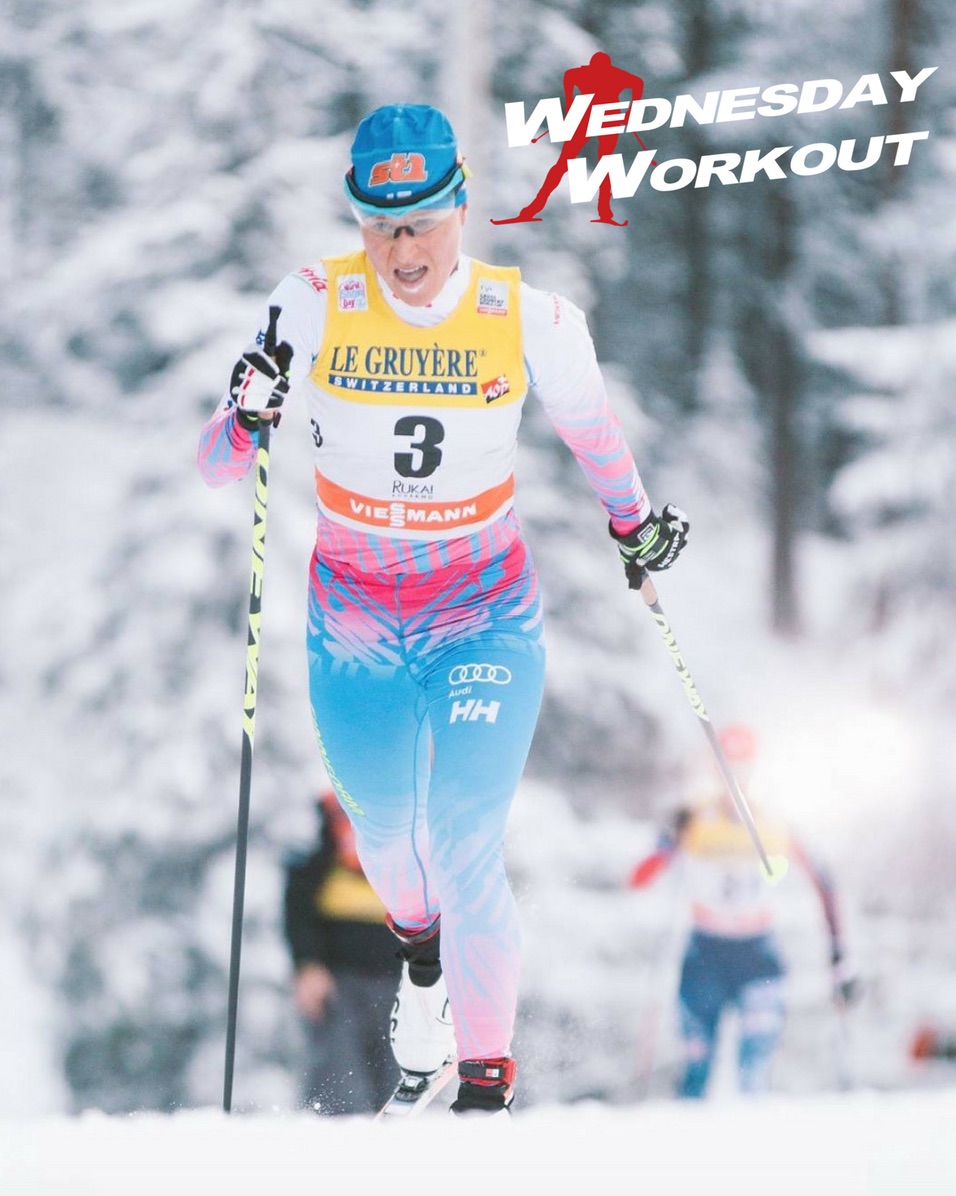
    Aino-Kaisa Saarinen racing in the first distance race of the 2016/2017 World Cup season, the 10 k classic, where she placed 16th on Sunday, Nov. 27, in Kuusamo, Finland. (Photo: Aino-Kaisa Saarinen/Instagram)
    Finland’s Aino-Kaisa Saarinen racing to 16th in the first distance race of the 2016/2017 World Cup season, the 10 k classic, on Sunday, Nov. 27, in Kuusamo, Finland. (Photo: @AinoKaisaSaarinen Instagram)

    Moms are famous for multitasking, but how do these World Cup mommas do it? We recently heard from Kikkan Randall on her return to the circuit after a year off to have her first child in mid-April, and we got a second opinion from Finland’s Aino-Kaisa Saarinen, who gave birth to a baby girl in early May.

    (Article continues below)

    https://www.instagram.com/p/BM5vJqPATfa/?taken-by=ainokaisasaarinen&hl=en

    (Above, clockwise from left: Saarinen and her husband, Tom Gustafsson; Saarinen and Randall starting their seasons in Rovaniemi, Finland; “SuperDads” Randall’s husband, Jeff Ellis, and baby Breck with Gustafsson and baby Amanda; Saarinen and Amanda with Randall and Breck)

    At 37, Saarinen has been to three Olympics and racked up five medals, including an individual bronze in the 30-kilometer classic in Vancouver in 2010. Now with a 7-month-old infant in tow, she’s back for another World Cup season.

    In an email in late October, Saarinen explained that her training had returned to a normal level.

    “But I had to do some adjutments in early months,” she wrote. “The total training amounts were a little bit lower than normally, because there was not enough time or strength to do normal training. Therefore I tried to do more training times.”

    What that amounted to was slightly fewer training hours than past years, but more training sessions. The length of these sessions was her biggest change, she explained. They were shorter.

    “My new normal morning routine was to do short but intensive strength and running before breakfast when baby (Amanda) was still sleeping,” she wrote. “I did 10 – 15 minutes intensive running. At 4 min/kilometer pace.”

    That’s 9.3 miles an hour, or 6:27 minute/miles, for 10 to 15 minutes.

    Then she did 20 to 25 minutes of intensive strength, which she rotated among three series. One focused on core work, another was hard, intensive training to raise the heart rate, and the third was basic strength.

    “This running and strength routine I did every second day,” Saarinen explained. “This worked for me good. For some reason I was lucky for being able to run very early, which is not so normal, but felt good for me. Little by little, when body feels ok, I started to do longer trainings and about three months from birth I was dong completely normal trainings.”

    So that’s it — (part of) her recipe for success. Last weekend at the World Cup opener at home in Finland, Saarinen scored points in both races (her first World Cup races since last year’s opening races in Kuusamo) placing 16th in the 10 k classic and 29th in the sprint.

    “World Cup season started and progressing in schedule,” she wrote Monday on Instagram. “Thumbs up for Ruka atmosphere as well as #xcteamfin success.”

    (In the classic sprint, Saarinen was one of six Finnish women in the top 30, and in the distance race the next day, six Finnish women cracked the top 20.)

    While Saarinen couldn’t be reached after the races, her social media posts indicated little Amanda was at the races with her.

    “Finally the world cup starts with usual ski test stress :)” Saarinen wrote last Friday before the races, with a photo of her stroller (and baby inside) parked on the snow. “Inside #Thule #Urbanglide there is no stress, only cozy day nap.”

    https://www.instagram.com/p/BNPU5ZOA1Gs/?taken-by=ainokaisasaarinen&hl=en

  • Finland’s Next Messi? Iivo Niskanen Breaks Through with Kuusamo World Cup Win

    Finland’s Next Messi? Iivo Niskanen Breaks Through with Kuusamo World Cup Win

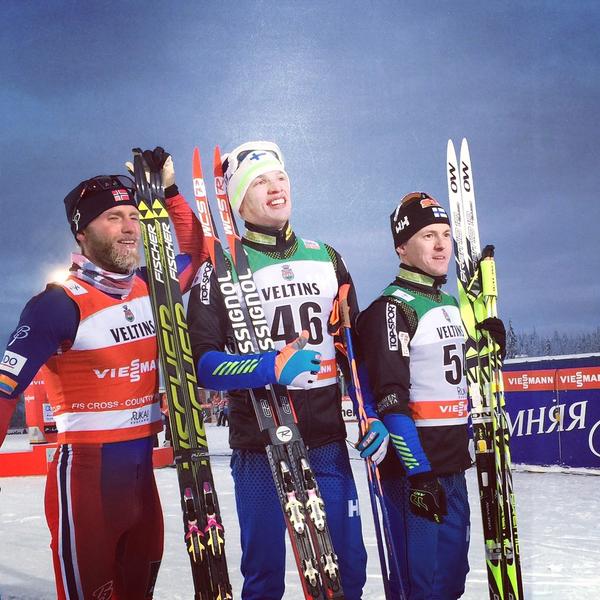
    The men's 15 k classic podium in the first World Cup distance race of the season on Sunday in Kuusamo, Finland: with Finland's Iivo Niskanen (c) in first and Sami Jauhojärvi (r) in third, and Norway's Martin Johnsrud Sundby in second. (Photo: FIS Cross Country/Twitter)
    The men’s 15 k classic podium in the first World Cup distance race of the season on Sunday in Kuusamo, Finland: with Finland’s Iivo Niskanen (c) in first and Sami Jauhojärvi (r) in third, and Norway’s Martin Johnsrud Sundby in second. (Photo: FIS Cross Country/Twitter)

    Iivo Niskanen appeared itchy in the leader’s chair on Sunday, after finishing with the fastest time of the day through 46 racers in the men’s 15-kilometer classic sprint — the first distance race of the 2014/2015 season.

    Itchy, anxious, whatever you want to call it, but happy.

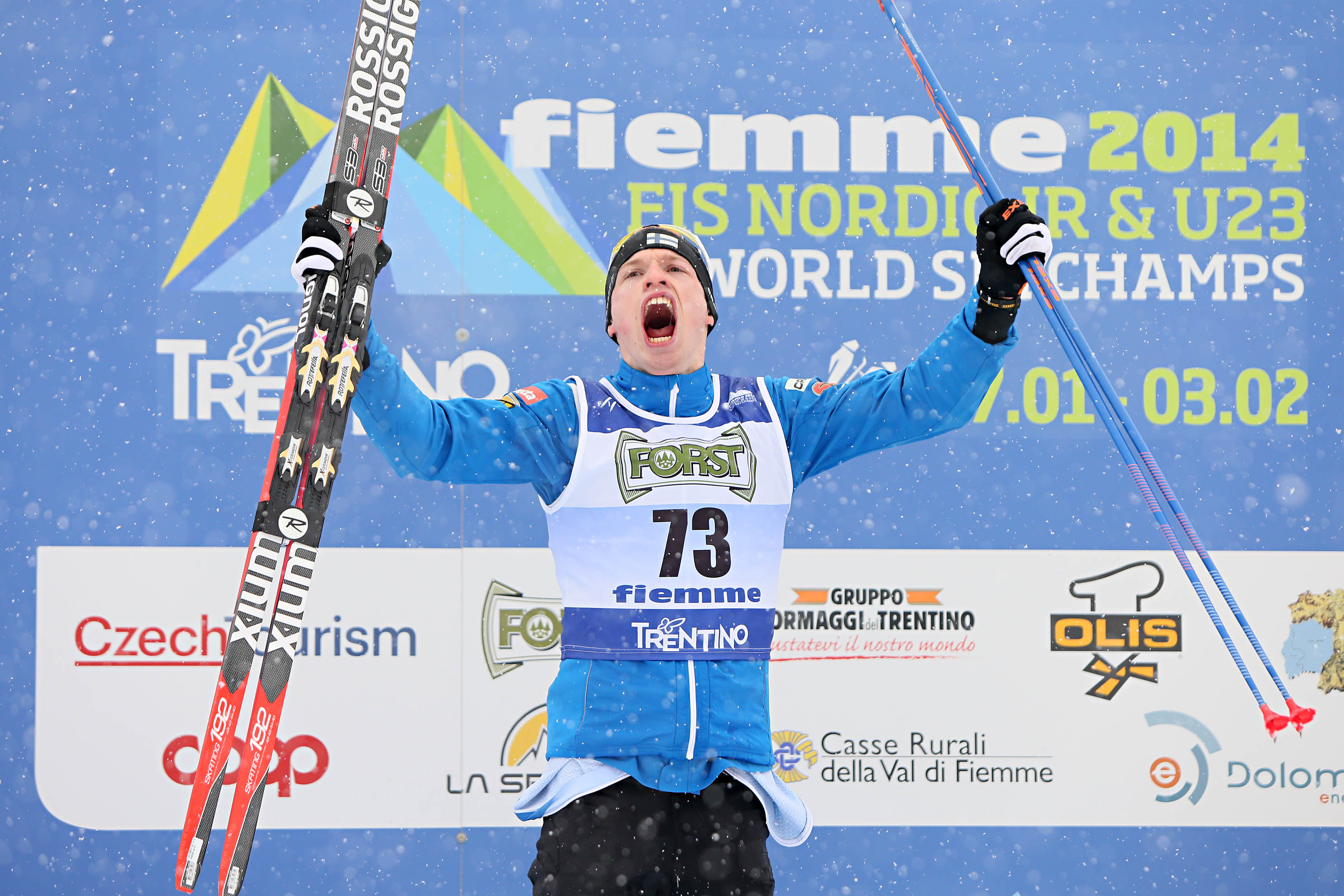
    Livo Niskanen (FIN) celebrates his win in the 15 k classic at the 2014 U23 World Championships in Val di Fiemme, Italy. (Photo: Fiemme 2014)
    Iivo Niskanen (FIN) celebrating his win in the 15 k classic at the 2014 U23 World Championships in Val di Fiemme, Italy. (Photo: Fiemme 2014)

    The 22-year-old Finnish A-team member, defending U23 World Championships 15 k classic champion and younger brother of Kerttu Niskanen, had never been on a World Cup podium before.

    He won gold in the 2014 Olympic classic team sprint with teammate Sami Jauhojärvi, but individually, this was a big deal.

    Fourteen men raced for Finland on Sunday in front of Ruka’s packed stadium in Kuusamo, Finland, but the man of the hour was Niskanen. The 33-year-old veteran Jauhojärvi wasn’t far behind him — 12.5 seconds at the finish — and ended up on the podium, too, but Niskanen soaked up the most crowd love and blew the most kisses after the race was over.

    Moments before he officially won it in 35:09.4 — by 10.3 seconds over Norway’s Martin Johnsrud Sundby — Niskanen jumped out of the cushiony chair and got ready to run like crazy down the finishing stretch.

    “It’s amazing that this [victory] came in front of a home audience,”  Niskanen told the Ilta-Sanomat, according to a translation. “I just realized a little boy’s dream. Thanks to the military forces. We have two men on the podium; it is a fine specimen of a job well done.”

    Niskanen started early in the seeded group, 46th of 96 men, and consistently clocked the fastest times through each passing checkpoint about every 1.5 kilometers. That’s impressive enough for a U23 in his first full-time World Cup season, but Niskanen’s times held up as more than 30 other races passed through.

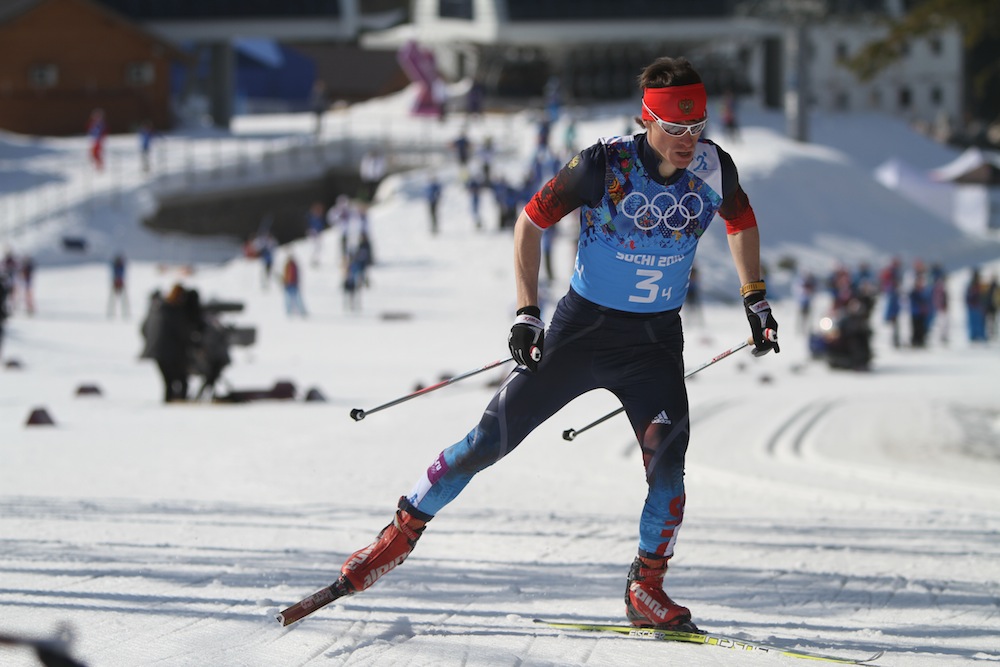
    Maxim Vylegzhanin skating the Russian 4 x 10 men's relay to silver in the 2014 Sochi Olympics.
    Maxim Vylegzhanin skating the Russian 4 x 10 men’s relay to silver in the 2014 Olympics in Sochi, Russia.

    By the time Russia’s Maxim Vylegzhanin in bib 82 hit the 1.4 k marker, Niskanen had his match. The 32-year-old Vylegzhanin came through the checkpoint 2 seconds faster than Niskanen, and by 3.1 k, he remained 1.5 seconds ahead.

    A third of the way through at 5 k, Niskanen had the edge over the Russian by 4.3 seconds, followed by Jauhojärvi, Sweden’s Daniel Richardsson, Sundby, Sweden’s Lars Nelson, and Russia’s Sergey Turyshev, respectively.

    By 6.4 k, Niskanen and Vylegzhanin were dead even, 8.8 seconds ahead of Jauhojärvi. One-and-a-half kilometers later, Niskanen had a 7.1-second cushion as Vylegzhanin began to fade.

    Jauhojärvi was still third fastest through that checkpoint, 9.7 seconds back, and Norway’s Niklas Dyrhaug was up to fourth after a conservative start.

    Dyrhaug, who started 30th, took his position in the leader’s chair after finishing in 35:22, 28.5 seconds faster then previous leader Francesco De Fabiani of Italy. The Norwegian would stay there until Niskanen bested his time by 12.6 seconds.

    At the 10 k mark, both Niskanen and Jauhojärvi were faster then Vylegzhanin, and it seemed first and second was possible for Finland. But there were still more competitive racers to come, including Sundby, the reigning overall World Cup champion.

    Niskanen had nearly 15 seconds on Jauhojärvi at 11.4 k, and Vylegzhanin was 14.8 seconds back in third. The Russian slipped to eighth by 13.1 k, and Sundby slipped momentarily on what looked like slightly slick skis — or maybe he was just getting tired on Kuusamo’s relentless three-lap course.

    With less than two kilometers to go, Sundby was up to second regardless, 14 seconds behind Niskanen. Jauhojärvi was another 1.5 seconds back in third.

    Niskanen sat grinning from ear to ear under the lights in the Ruka stadium. As Sundby hoofed up the final climb, grimacing through a thick beard and big sunglasses, it was fairly evident he wasn’t going to touch the young Finn. Sundby put on a strong finishing kick around a Russian at the finish, and secured second, 2.2 seconds ahead of Jauhojärvi in third.

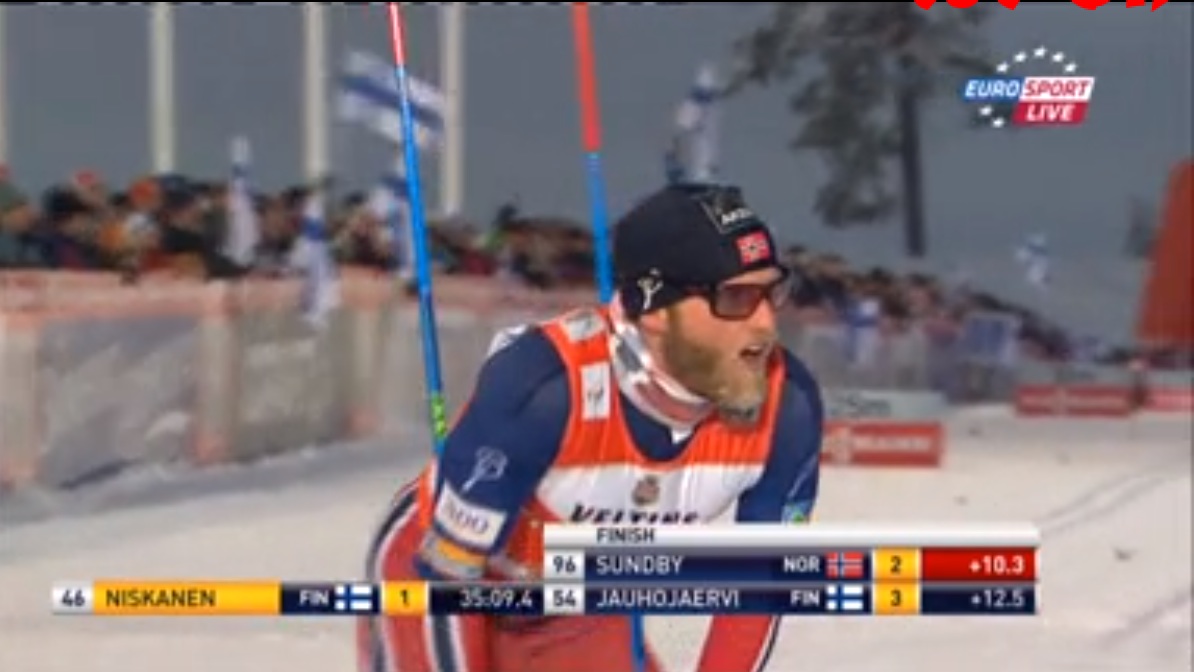
    Sundby finishing and looking up to confirm he placed second in Sunday's World Cup 15 k classic in Kuusamo, Finland.
    Sundby finishing and looking up to confirm he placed second in Sunday’s World Cup 15 k classic in Kuusamo, Finland.

    “It is lovely to get on the podium, although I wanted to win,” Sundby said to NRK, according to a translation. “I was basically shot against Iivo.”

    While he said he was “not flying on skis yet,” he hoped it would come with time.

    “My ultimate goal is to be in my best shape in Falun,” he told FIS.

    Sundby bumped fellow Norwegian Dyrhaug to fourth, just one-tenth of a second off the podium. But he wasn’t too upset.

    “I am very, very happy to be back in top form,” Dyrhaug told NRK. “I’ve had two tough years, so it’s good to know that the body is working again.”

    Standing on the podium with him for the first time in a World Cup since 2010, Jauhojärvi said he felt like he skied smoothly, but he wasn’t completely satisfied.

    “I heard from Norwegian split times that Niklas [Dyrhaug] was in the lead,” Jauhojärvi told FIS. “He was skiing behind me so I had to speed up in the last kilometers. I did not feel strong and fast today, but I had extremely good skis.”

    Niskanen, who became Finland’s first male to win in Ruka in 19 races there, said both his grip and glide were perfect.

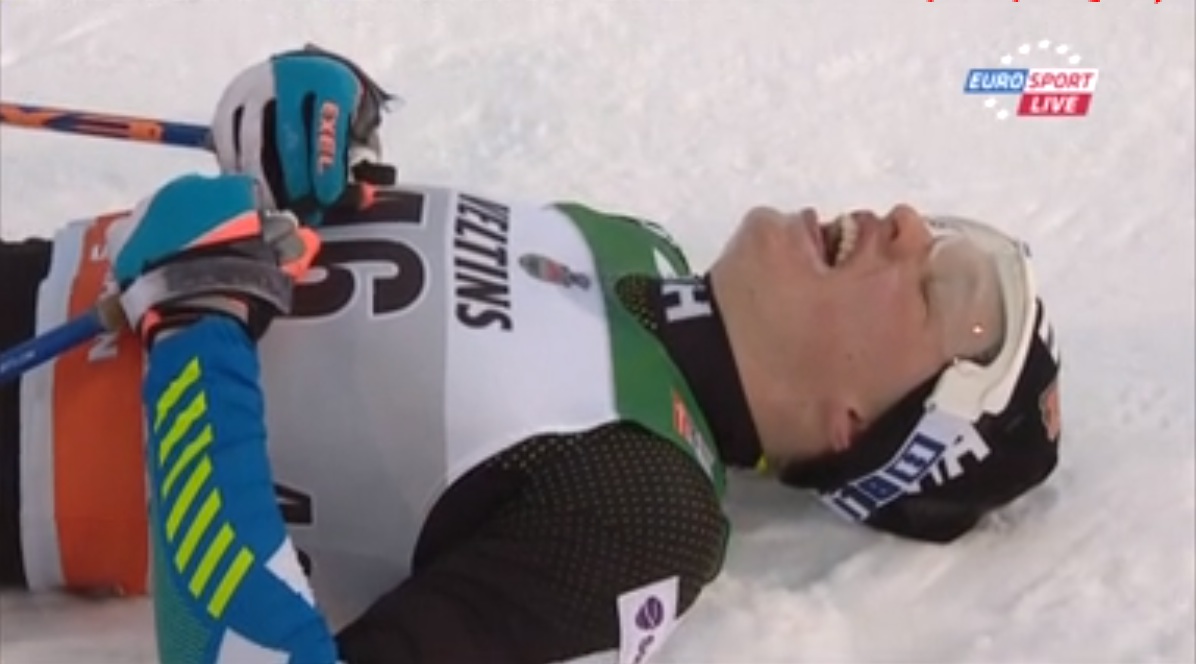
    An exhausted Iivo Niskanen at the finish of Sunday's  15 k classic in Kuusamo, Finland, which he won for his first World Cup podium.
    An exhausted Iivo Niskanen at the finish of Sunday’s 15 k classic in Kuusamo, Finland, which he won for his first World Cup podium.

    Walking through the mixed zone, Finnish coach Magnar Dalen yelled to journalists, “Watch out for that boy there! He is a cross-country Messi!” referring to the Argentine soccer great.

    “I was an amazing day; I had to be smart,” Niskanen told NRK. “I have done many races here and knew I had to turn down the pace two notches on the hills and makes it up [on other parts of the course].

    “It was really noisy along the course,” he said to FIS. “Before the race I thought I could be in top six. I tried to improve the summer training and I seem to have done a good job. It was pretty nice that my family could be here today with me.”

    “It was impressive,” said Petter Northug, who placed 23rd and 1:02.7 back, to NRK. “Niskanen looks like he has risen.”

    Vylegzhanin tied Didrik Tønseth for 11th, 37.5 seconds behind Niskanen. Russia’s top skier, Alexander Bessmertnykh finished fifth, Calle Halfvarsson of Sweden was sixth, Canada’s Alex Harvey seventh, Simen Håkon Østensen eighth, Pål Golberg ninth, and Finland’s Matti Heikkinen 10th.

    Turyshev ended up 25th, four seconds behind Switzerland’s Dario Cologna in 24th (+1:05.2).

    "Iiiiivoooo !! Unbelievable !!!
    “Iiiiivoooo!! Unbelievable!!!” Kerttu Niskanen tweeted after Sunday’s race.

    Note: Two men did not finish Sunday: American Noah Hoffman and Poland’s Maciej Starega, who stopped somewhere after 3.1 k. Hoffman crashed hard on an icy downhill about 1 k before the finish and was taken off the course in a stretcher.

    According to U.S. Ski Team coach Matt Whitcomb, Hoffman “sustained a lower left leg injury today and will be headed home to the US as soon as possible for further evaluation. He will fly home either Monday or Tuesday. The World Cup organizers and medical personnel in Kuusamo / Ruka, as well as our US Ski team medical staff member Peter Dickenson handled the situation very well.”

    Results | with Splits