From the FasterSkier archive — posts syndicated from athletes’ and coaches’ own blogs between 2004 and 2012, kept online as published. Current coverage is at fasterskier.com.
The above discretionary selection process will be repeated for each period of World Cup this coming season. As always, if you have questions or concerns about this process, feel free to contact me directly.
The International Ski and Snowboard Federation (FIS) unveiled its proposed 2026/2027 cross-country skiing World Cup calendar this week at the FIS Spring Meetings in Portorož, Slovenia.
The schedule — first shared publicly through FIS social media and still pending FIS Council approval — builds the season around the 2027 World Championships in Falun, Sweden, with three pre-Christmas stops, a nine-race Tour de Ski, a stretch of three weekends between the Tour and Worlds, and a Scandinavian closing kick that ends with the Finals in Ulricehamn.
For North American fans, the calendar is once again entirely European, with no scheduled stops in Canada or the United States.
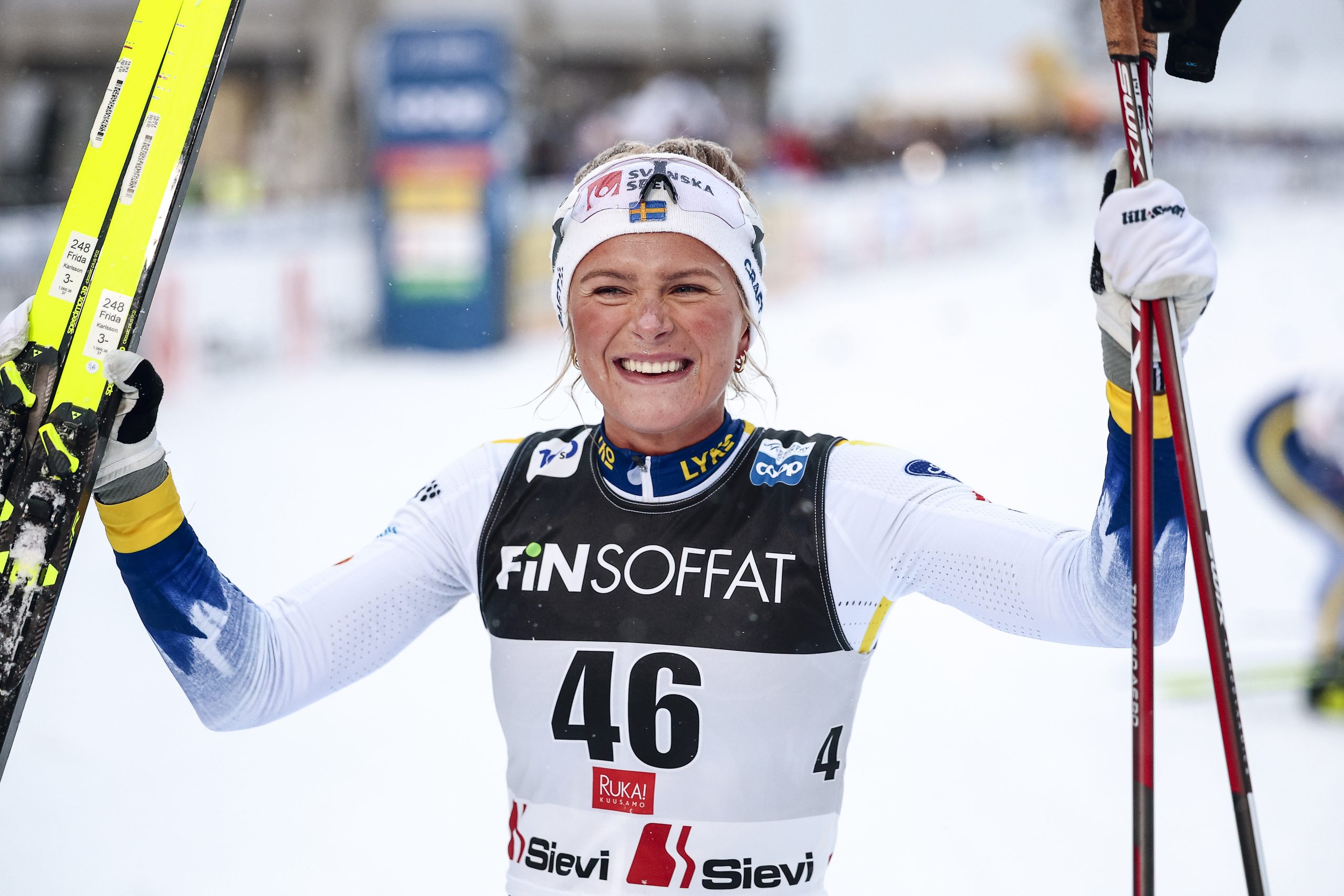
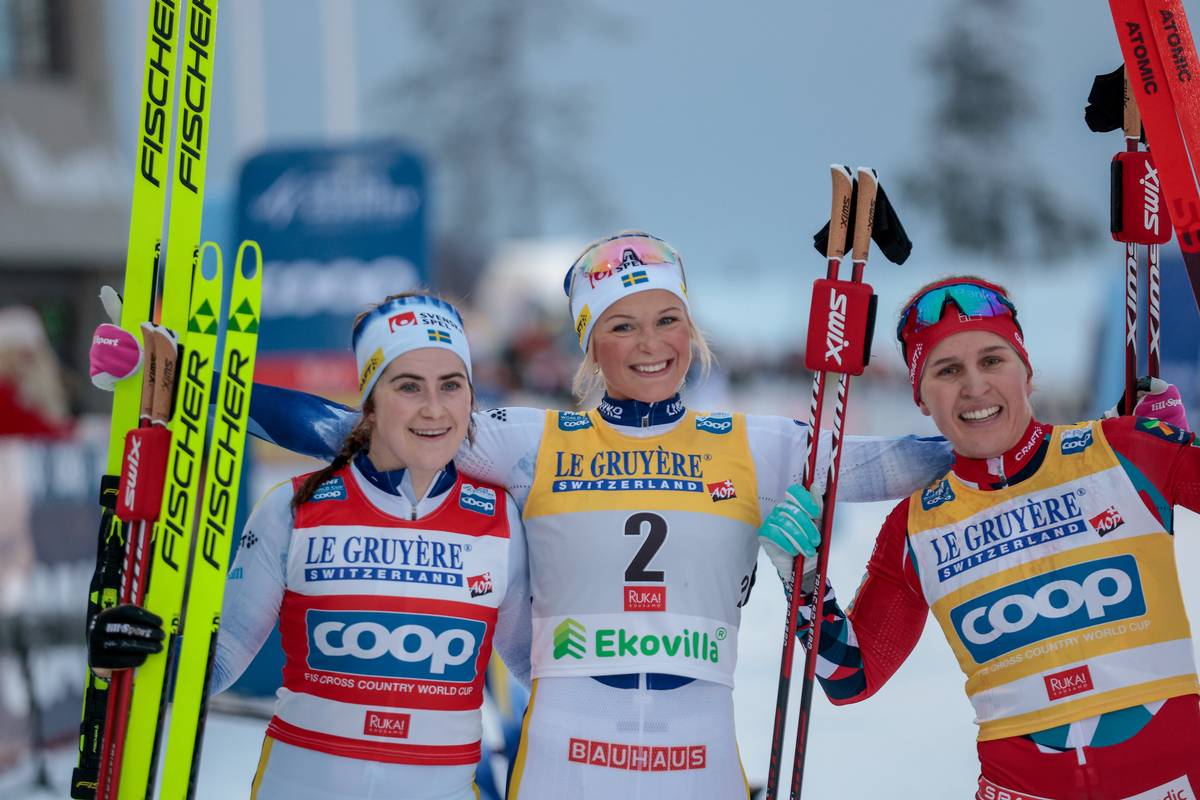
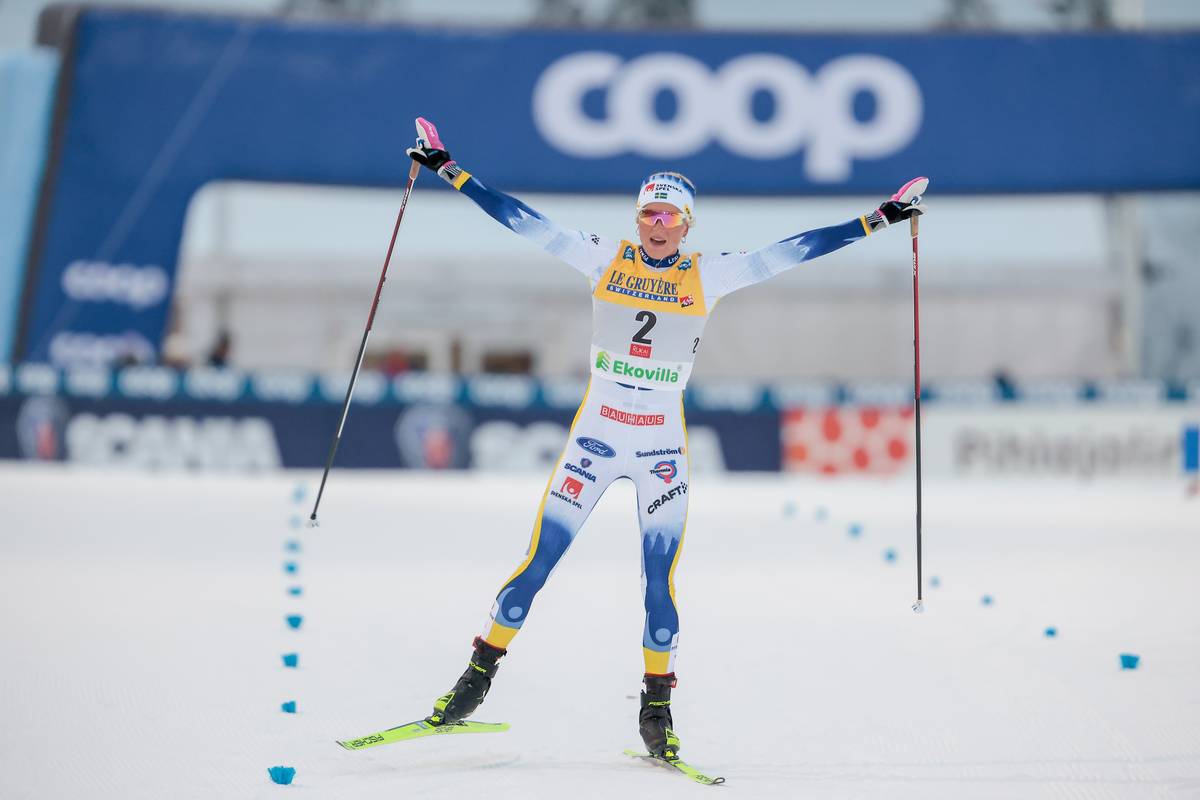
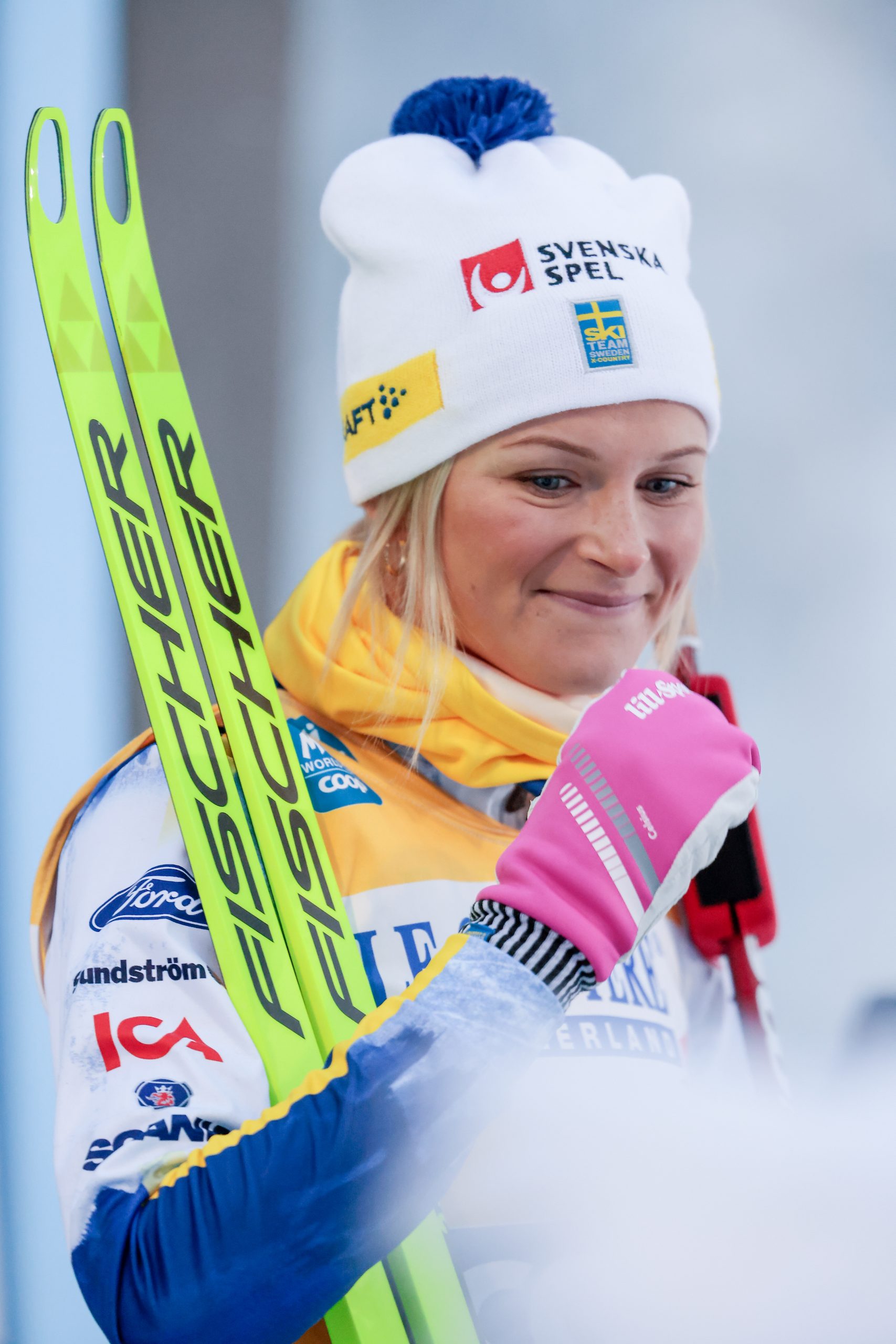
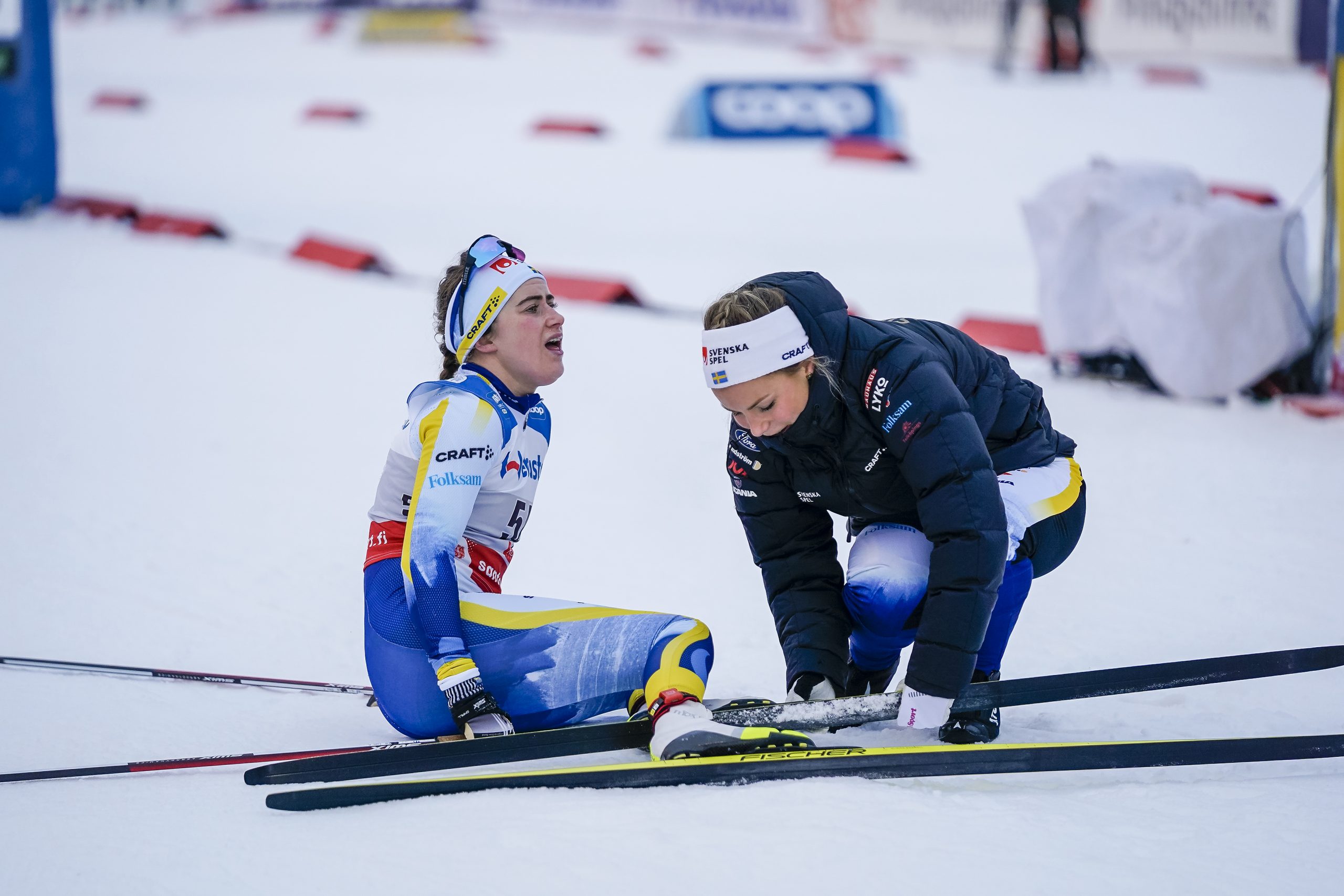
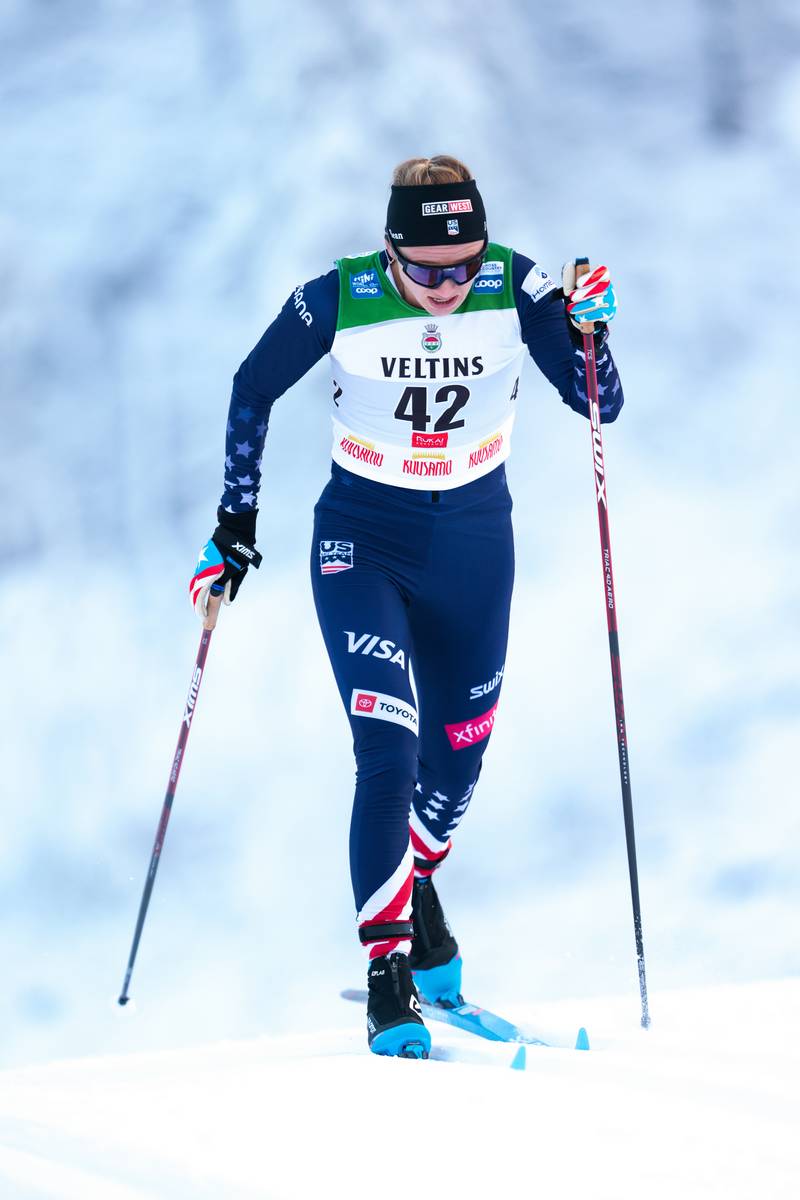
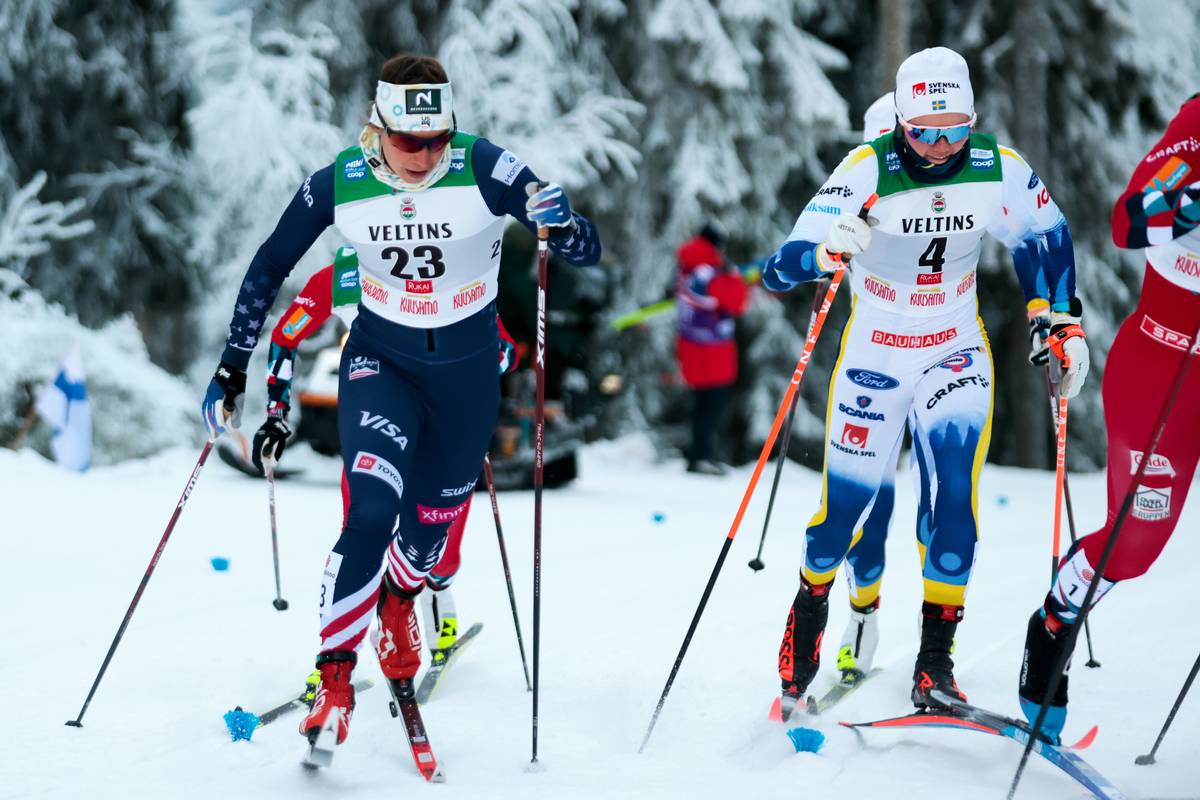
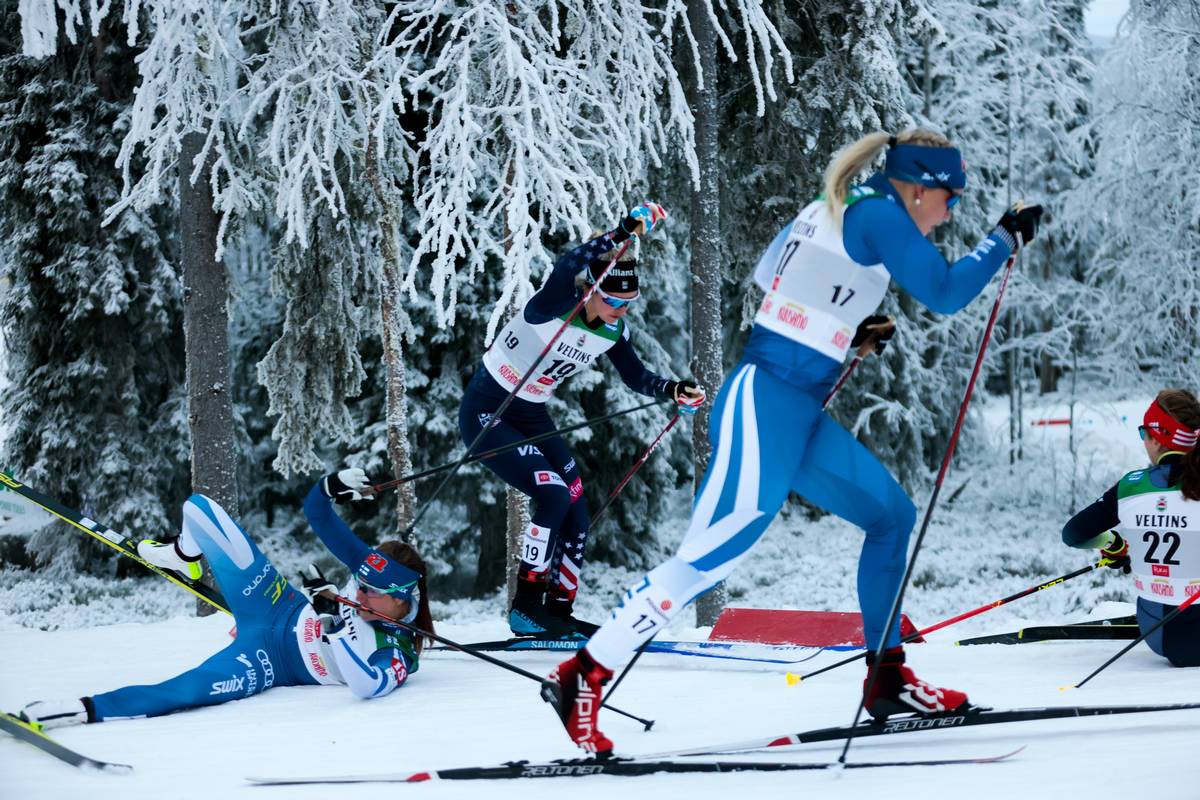
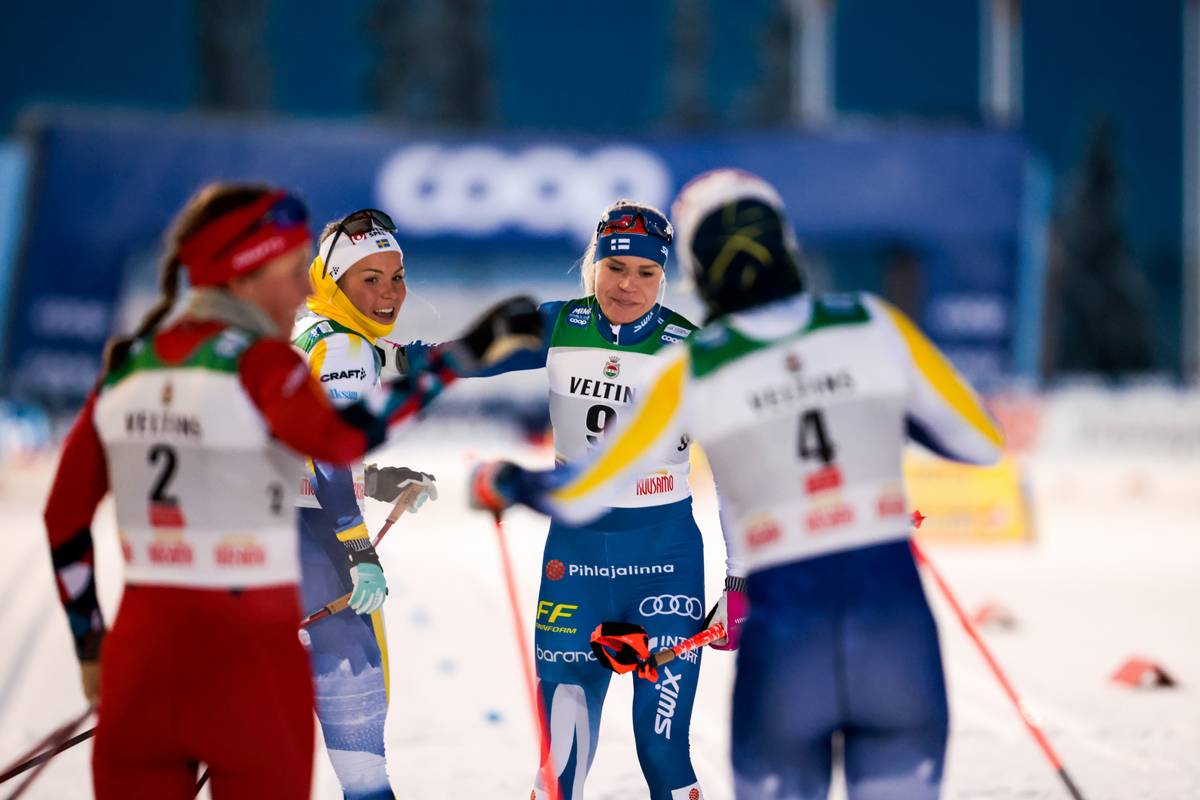
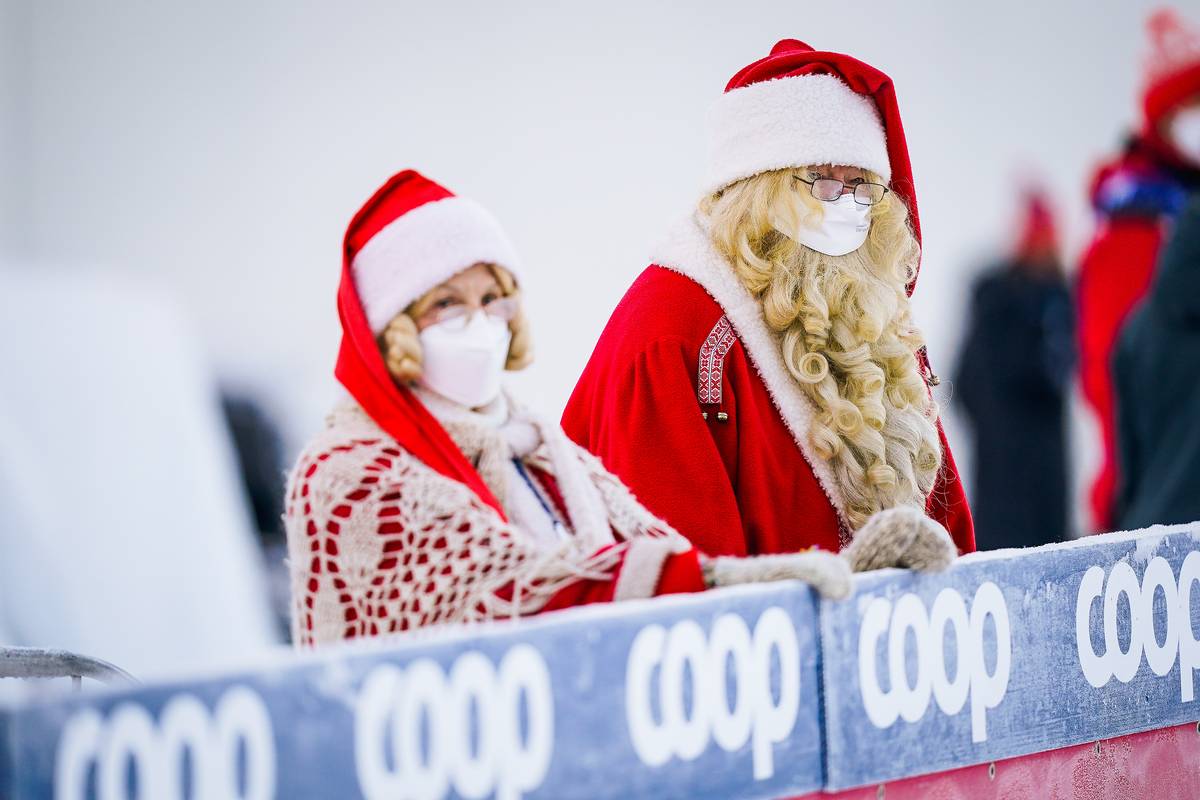
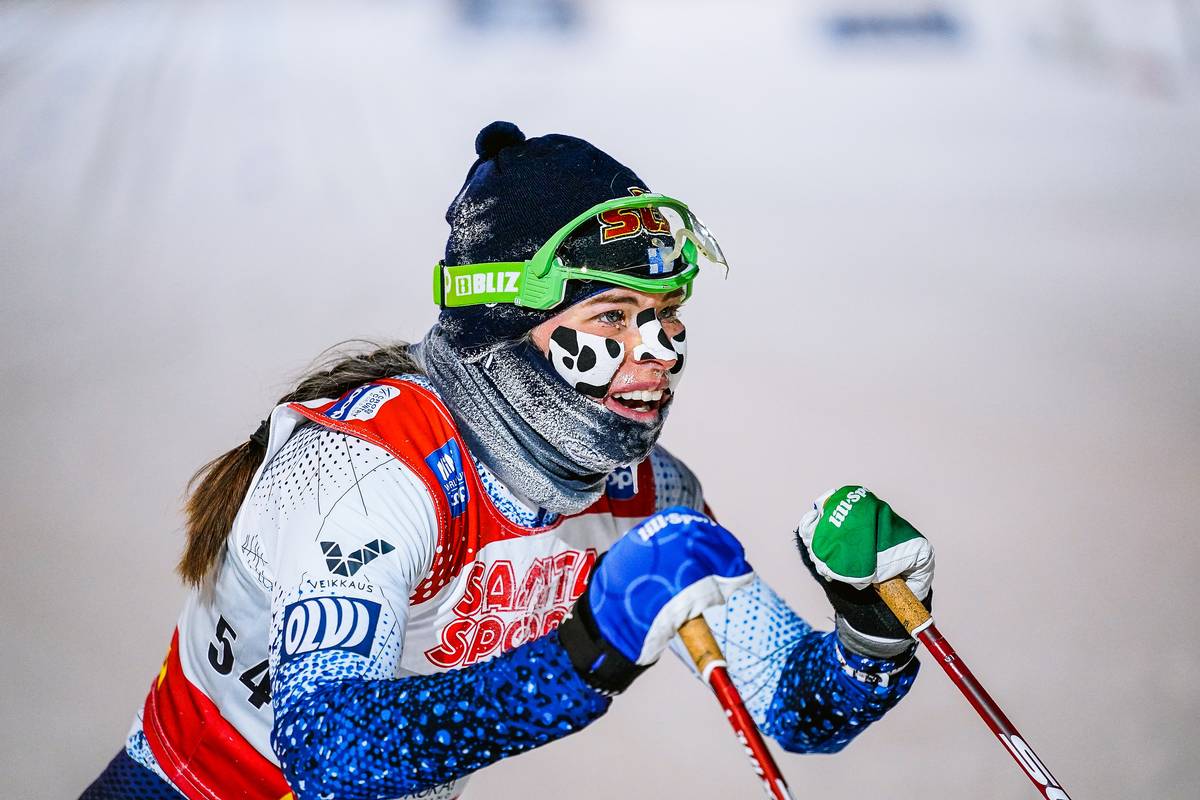
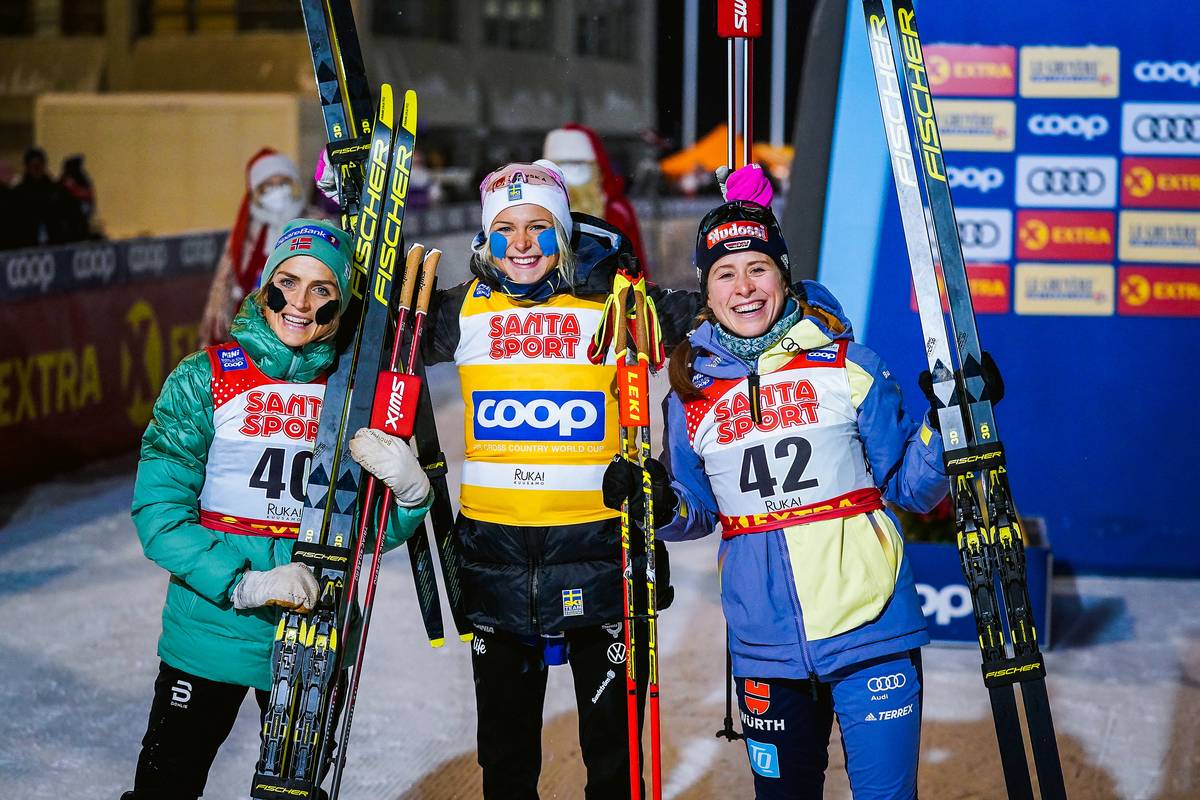
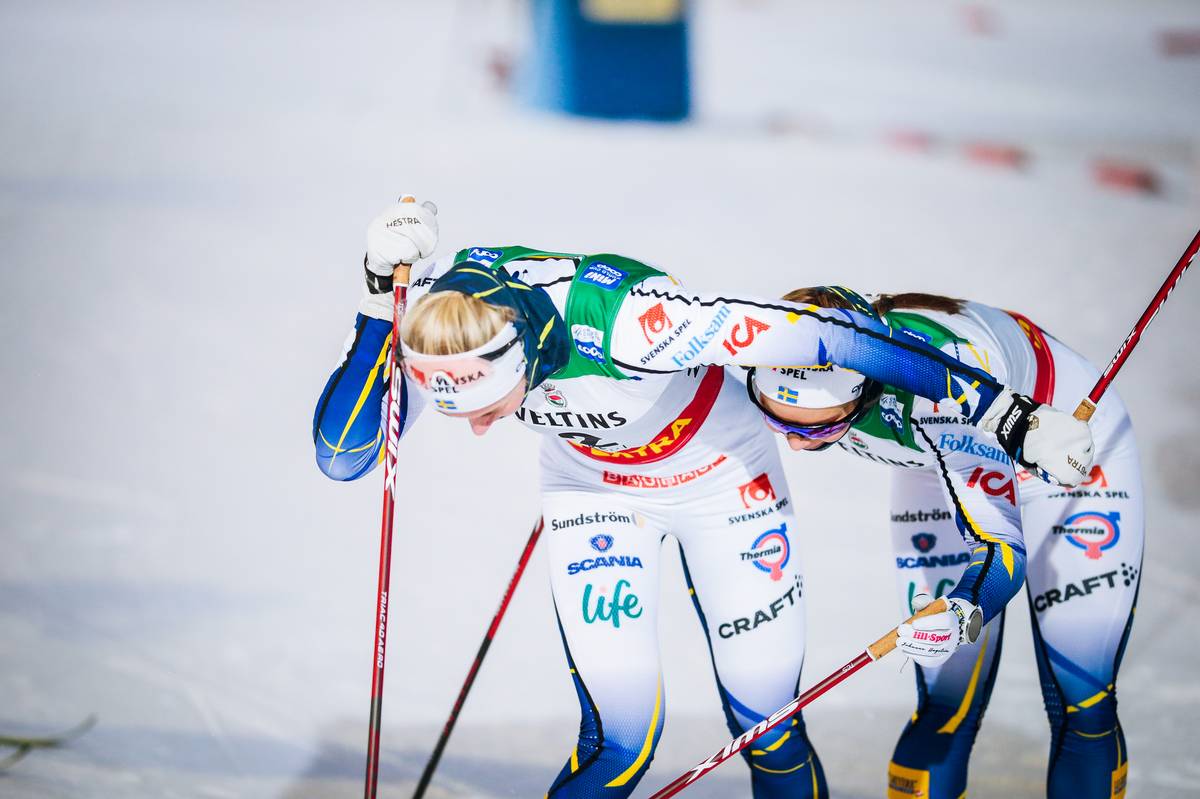
Frida Karlsson (SWE) poses with Mr. and Mrs. Claus following the 10k Classic to start last season in Ruka (FIN). (Photo: Modica/NordicFocus)
Pre-Holiday: Ruka, Trondheim, Davos
The season opens where it almost always does — in Ruka, Finland, where the World Cup begins November 27. From there, the circuit moves to Trondheim, host of the 2025 World Championships, before the pre-Christmas block closes in Davos, Switzerland, with a team sprint.
November 27-29, 2026: Ruka, Finland
27/11: 10km Interval Start Classic
28/11: Sprint Classic
29/11: 20km Mass Start Freestyle
December 1-3, 2026: Trondheim, Norway
01/12: 10km Interval Start Classic
02/12: Sprint Freestyle
03/12: 20km Skiathlon
December 11-13, 2026: Davos, Switzerland
11/12: 5km Heat Mass Start Freestyle
12/12: Sprint Freestyle
13/12: Team Sprint Freestyle
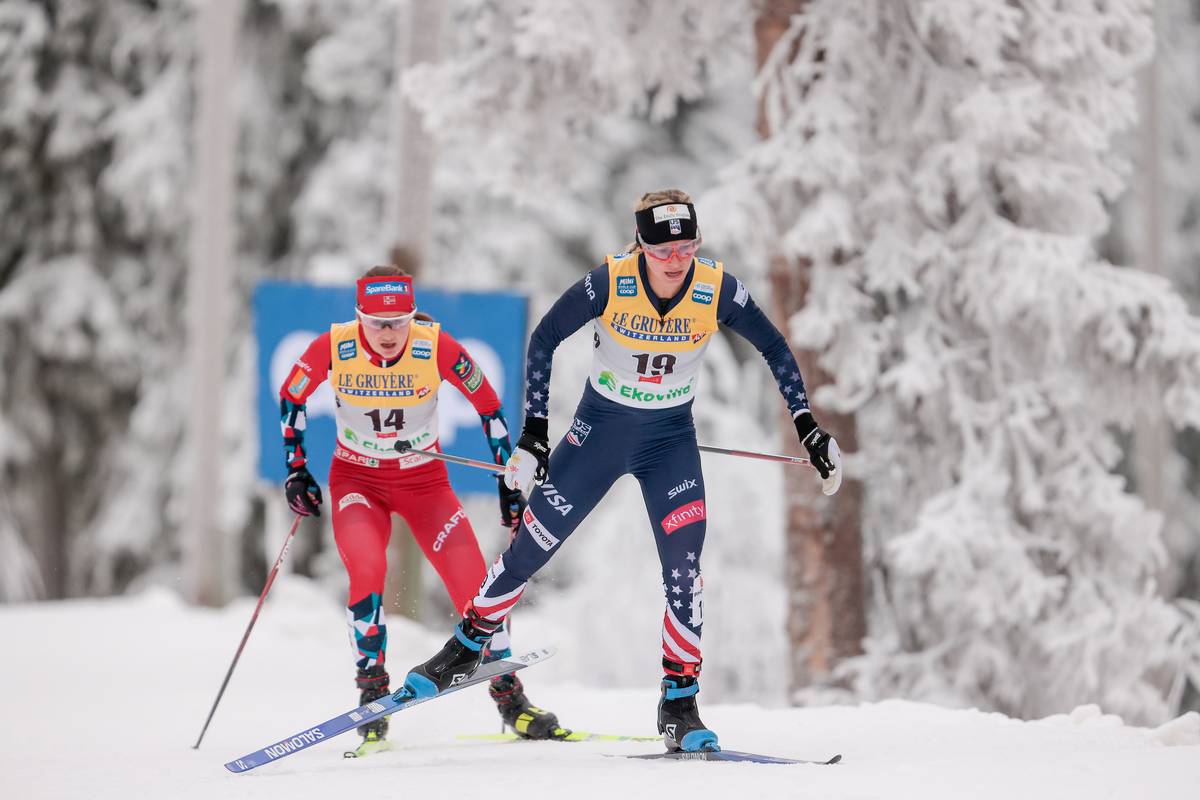
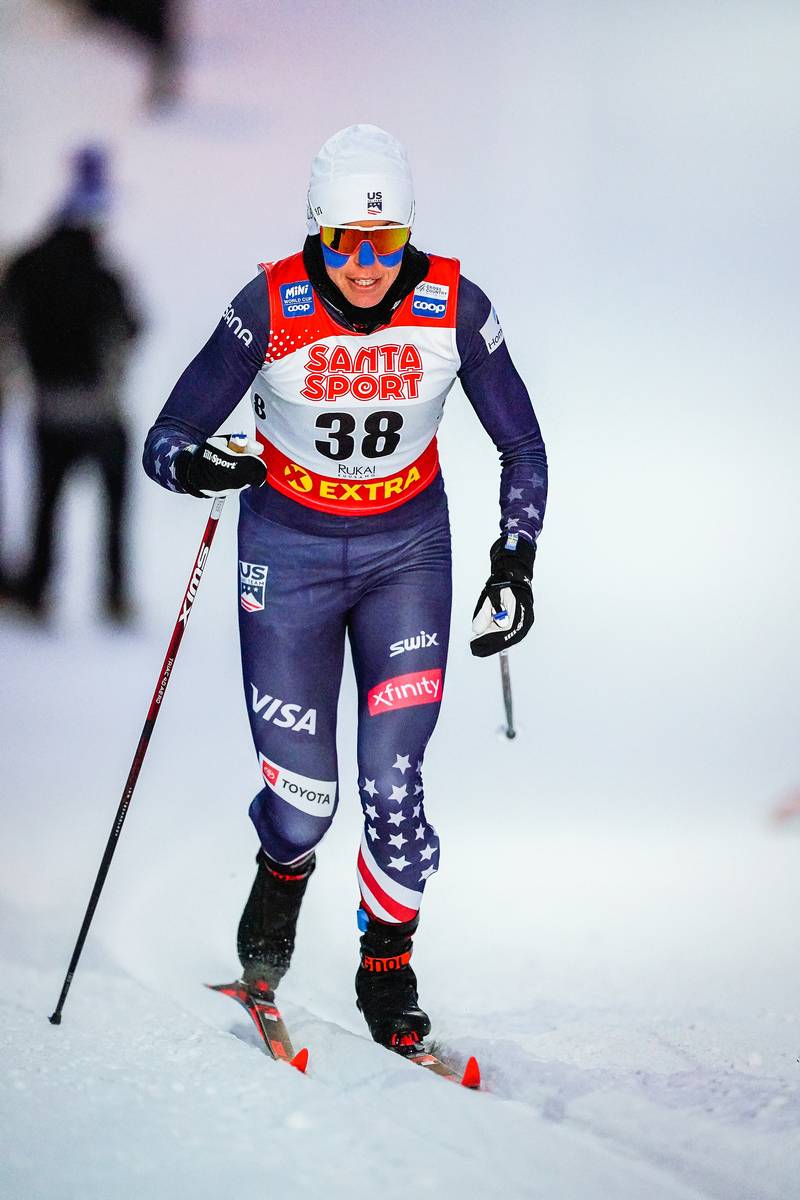
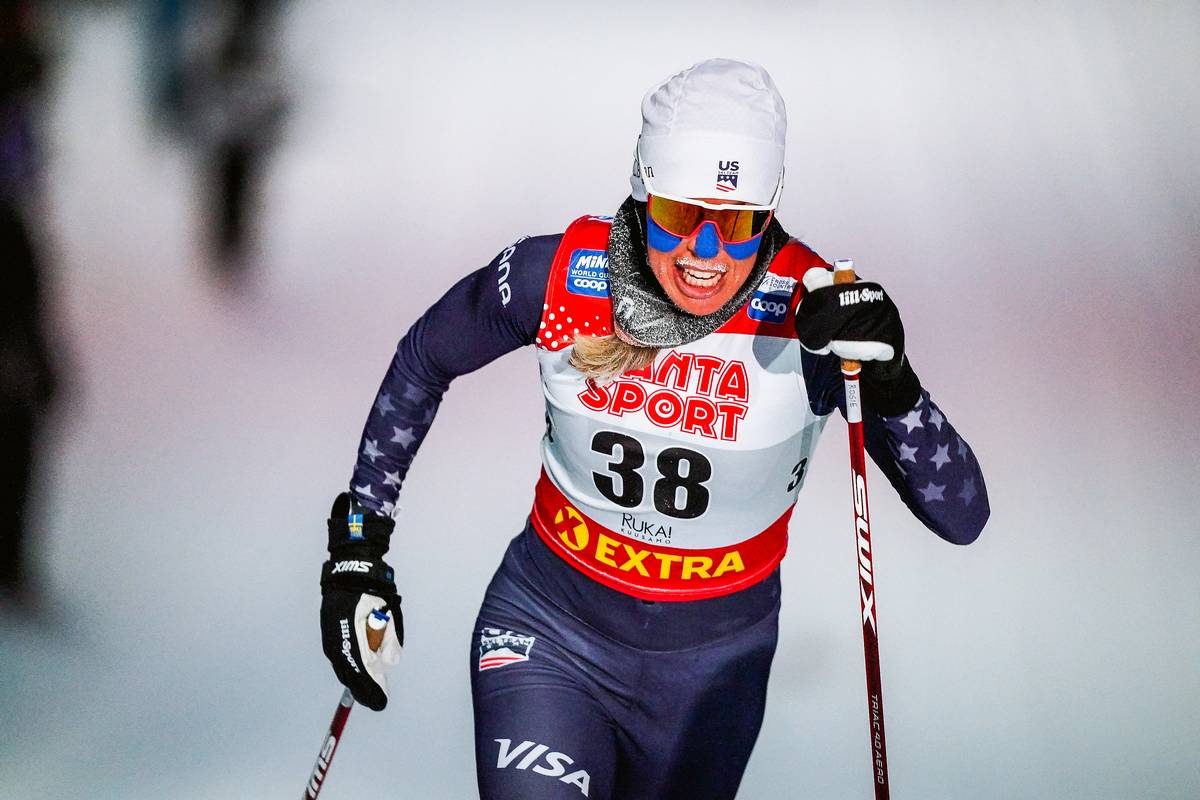
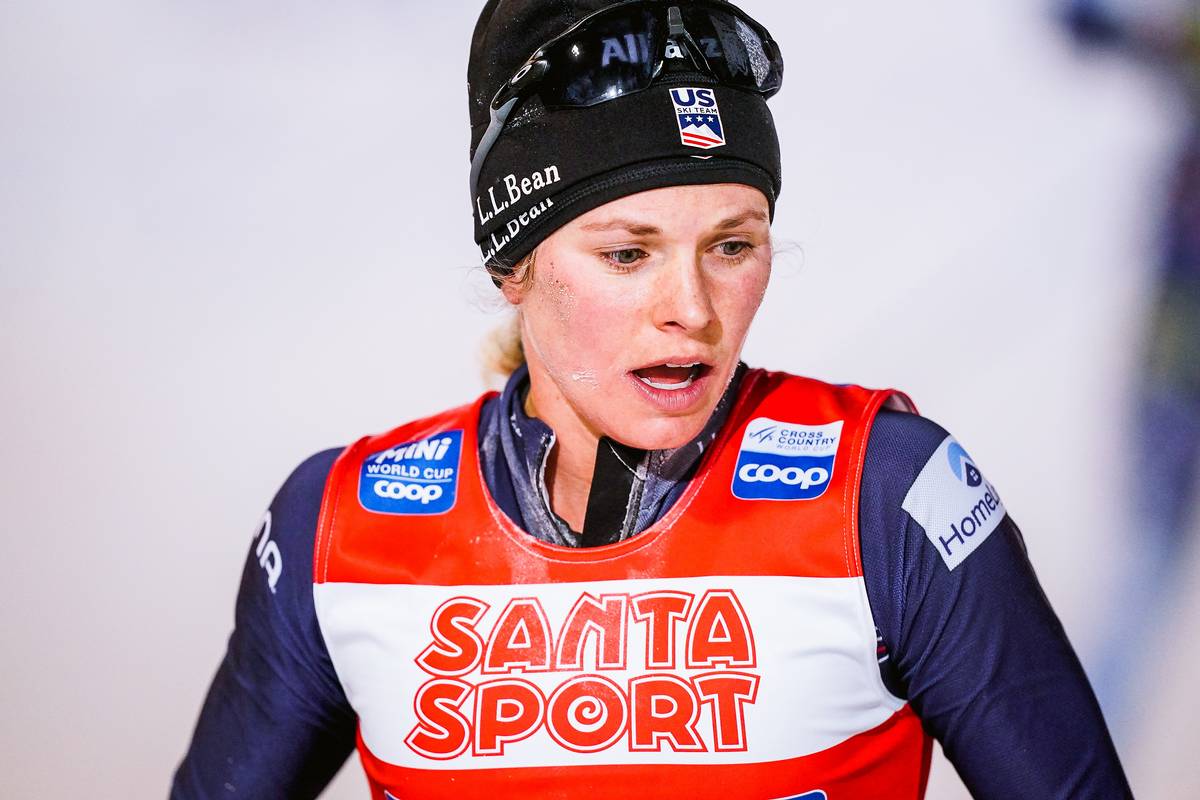
With Jessie Diggins (USA) now retired, there will be a new FIS Overall Crystal Globe and Tour de Ski champion next season (Photo: Vanzetta/NordicFocus)
Tour de Ski 2026/2027
The Tour de Ski returns to a three-country format, opening in Les Rousses, France, on New Year’s Day, moving to Oberstdorf, Germany, and finishing with three races in Val di Fiemme, Italy — capped, as ever, by the Final Climb up Alpe Cermis.
January 1-3, 2027: Les Rousses, France
01/01: Sprint Classic
02/01: 20km Mass Start Classic
03/01: 15km Pursuit Freestyle
January 5-6, 2027: Oberstdorf, Germany
05/01: 15km Mass Start Classic
06/01: 5km Heat Mass Start Freestyle
January 8-10, 2027: Val di Fiemme, Italy
08/01: 15km Skiathlon
09/01: Sprint Freestyle
10/01: Final Climb
Gus Schumacher (USA) and the rest of the US team will hope to continue their success in Toblach (ITA). (Photo: Modica/NordicFocus)
After the Tour, Before Worlds: Engadin, Toblach, Lahti
Three weekends bridge the Tour de Ski and the World Championships. Engadin opens its weekend with a mixed relay — a format the FIS has been working into more World Cup weekends — and Lahti closes the pre-Worlds stretch with its classic 20km skiathlon and 10km interval start.
January 22-24, 2027: Engadin, Switzerland
22/01: Mixed Relay
23/01: Sprint Freestyle
24/01: 20km Mass Start Freestyle
January 29-31, 2027: Toblach, Italy
29/01: 10km Interval Start Freestyle
30/01: Sprint Freestyle
31/01: 20km Mass Start Classic
February 12-14, 2027: Lahti, Finland
12/02: Sprint Classic
13/02: 20km Skiathlon
14/02: 10km Interval Start Classic
Kendall Kramer (USA) had a breakout World Cup Skiathlon in Falun (SWE) last season. (Photo: Authamayou/NordicFocus)
2027 FIS Nordic World Ski Championships: Falun, Sweden
The 2027 FIS Nordic World Ski Championships run from February 22 through March 7 in Falun, Sweden, with all title formats on the program. Falun last hosted Worlds in 2015.
Final Period: Oslo, Drammen, Ulricehamn
The closing stretch is a Scandinavian one. Oslo’s Holmenkollen weekend features back-to-back 50km mass start classic races on March 13 and 14 — long a fixture of the late-season calendar — before a one-day sprint stop in Drammen and the World Cup Finals in Ulricehamn, Sweden.
March 13-14, 2027: Oslo, Norway
13/03: 50km Mass Start Classic
14/03: 50km Mass Start Classic
March 16, 2027: Drammen, Norway
16/03: Sprint Classic
March 19-21, 2027: Ulricehamn, Sweden (World Cup Finals)
19/03: 10km Interval Start Freestyle
20/03: Sprint Freestyle
21/03: 20km Mass Start Classic
The calendar remains subject to FIS Council approval.
This coverage is made possible through the generous support of Marty and Kathy Hall and A Hall Mark of Excellence Award. To learn more about A Hall Mark of Excellence Award, or to learn how you can support FasterSkier’s coverage, please contact info@fasterskier.com.
Okay, who else didn’t sleep last night? It felt like waiting for Santa Claus on Christmas Eve — that fizzy, restless anticipation you can’t shake, even as an adult who should know better. Part of it was simply the joy of finally watching World Cup racing again after eight long months. But more than that, this morning in Ruka felt like the beginning of something bigger: the start of the Olympic year, the opening chapter of a season that will define so many careers, answer so many questions, and launch a web of storylines that will stretch from today all the way to Milano-Cortina.
This year, the stakes are different. For veterans, it’s legacy. For rising athletes, it’s opportunity. For everyone, it’s a race against time.
And for those of us who follow this sport as if it were a second bloodstream, the first race in Ruka is the moment winter starts breathing again.
Frida Karlsson (SWE) poses with Mr. and Mrs. Claus following the 10k Classic in Ruka (FIN). (Photo: Modica/NordicFocus)
Before the Gun: What Was at Stake
Even before the racers hit the snow, there were subplots everywhere.
Norway opened the season in a moment of transition. Therese Johaug — retired again and pregnant with her second child — leaves a vacuum on the women’s team that hasn’t existed in over a decade. Who leads now? Is Heidi Weng’s late-career renaissance real? Is this the year Norway’s depth must finally be enough?
Sweden, meanwhile, enters the Olympic season with the most complete women’s distance squad on earth. Their classic technique is crisp, balanced, efficient — a signature advantage on days like this.
Finland carries the emotional core of the weekend. Krista Pärmäkoski, racing her final season, took her last opening-day start in Ruka on home snow. Kerttu Niskanen, always a threat in classic, lined up ready to test herself in front of the home crowd.
And for the United States, the arcs were wide-ranging:
Jessie Diggins begins the final season of her career.
Rosie Brennan enters winter in deeply untraditional circumstances after an Epstein-Barr reactivation.
Julia Kern arrives healthier and steadier than in years.
Sophia Laukli brings a redesigned training life out of Norway.
And three additional American women (Kate Oldham, Kendall Kramer, and Alayna Sonnesyn) who begin the short, intense race for Olympic qualification.
Alayna Sonnesyn (USA) lunges for the line at the end of the 10k Classic in Ruka (FIN). (Photo: Modica/NordicFocus)
A Day Shaped Before It Started: New Snow, Glazing Tracks, and Wax Tech Calculus
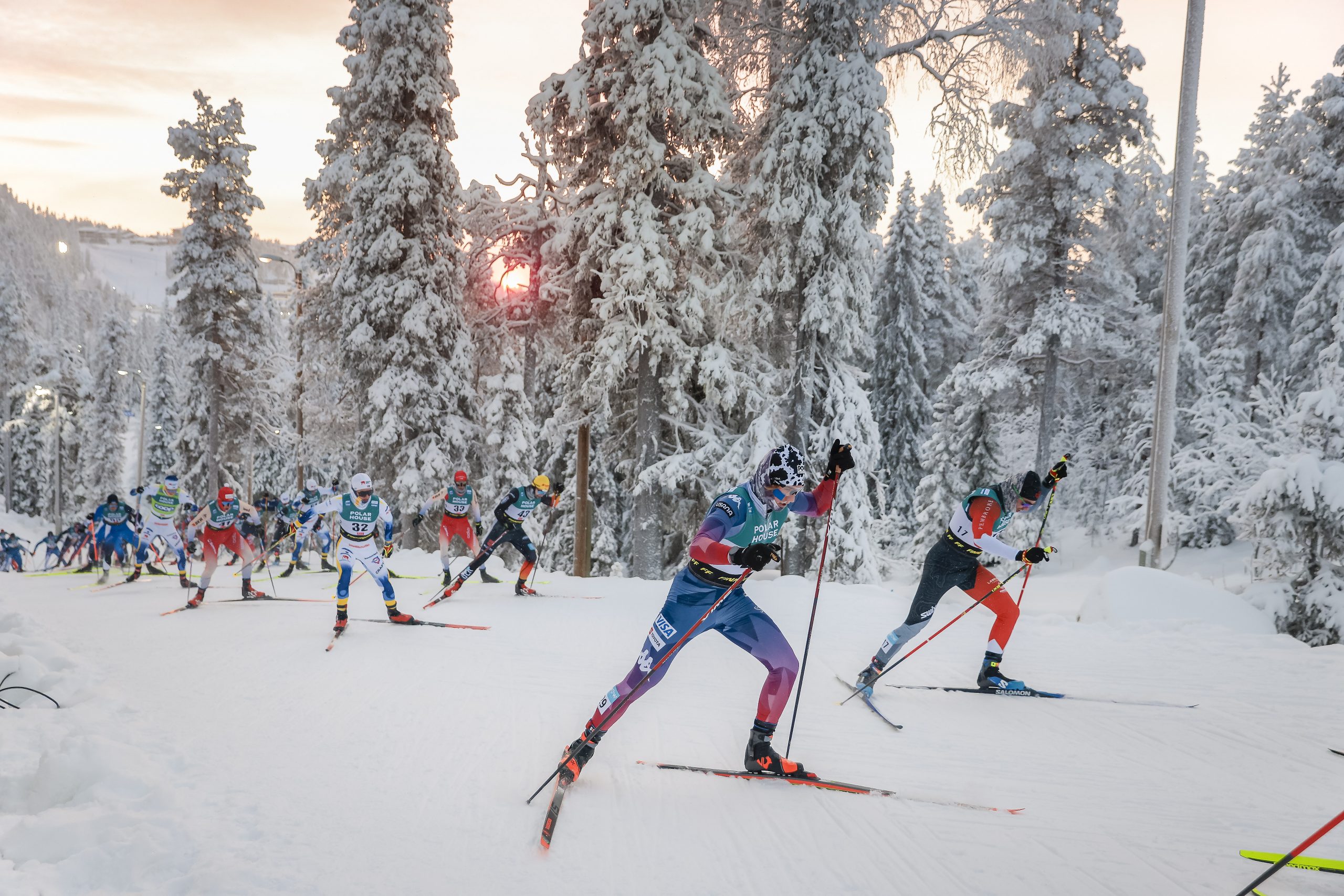
Ruka had been bitterly cold in recent weeks — until a foot of new snow fell and temperatures climbed toward freezing. The result was a wax technician’s nightmare: soft snow in the shade, glazing climbs in the sun, and a classic course twisting through varying microclimates.
Kick wax that worked at the start failed on the climbs. Skis that kicked well on the climbs dragged on the flats. Double-pole sections demanded freedom; the final climbs demanded grip. There was no perfect answer — only compromise and risk.
This race was always going to reward the skiers with the best technical balance and the wax techs bold enough to choose the right kind of “wrong.”
Moa Ilar (SWE) charges down the finishing stretch at the end of the 10k Classic in Ruka (FIN). (Photo: Modica/NordicFocus)
The Race: Karlsson Sets the Standard, Weng Returns, Ilar Rises, Diggins Surges
1.1 km — Jessie Diggins Takes the First Lead of the Season
From the moment the race began, the tone was unmistakable.
With bib #1 Julie Bjervig Drivenes setting the baseline, Jessie Diggins blasted through the first checkpoint with the early lead — 1.3 seconds ahead of Frida Karlsson.
It was classic Diggins: joyful, aggressive, fearless.
3.3 km — Karlsson’s Stride Takes Control
By 3.3 km, the race reshaped itself. Frida Karlsson, with her strong hip stability and long, economical stride, surged into the lead on the climbing sections. Diggins, whose double-poling and downhill flow looked excellent, lost time on the steepest pitches and slid to seventh.
Behind Karlsson, Sweden formed a front of precision:
Moa Ilar at +3.0
Ebba Andersson at +5.1
Three Swedes in the top three splits.
A message, delivered early.
6.1 km — Heidi Weng Charges Back Into the Story
Heidi Weng, skiing 30 seconds behind Diggins, mounted the late charge of the day. She began cutting into Karlsson’s lead — from 14 seconds at 6.1 km to only 10.5 by the line.
After several up-and-down years, Weng signaled something unmistakable: she’s not done yet.
Final Kilometers — Diggins Closes Hard, Ilar and Andersson Duel, Fosnæs Threatens
Jessie Diggins mounted her own push on the flats and downhills, gaining time between 6.1 and 8.1 km. She crossed the line in a time that held the top spot until the final seeded skiers, ultimately placing fifth — one of her strongest classic results ever on this course.
Moa Ilar executed a poised final push, taking third and bumping Andersson to fourth. Kristin Austgulen Fosnæs threatened Diggins’ time but ultimately finished behind her in sixth.
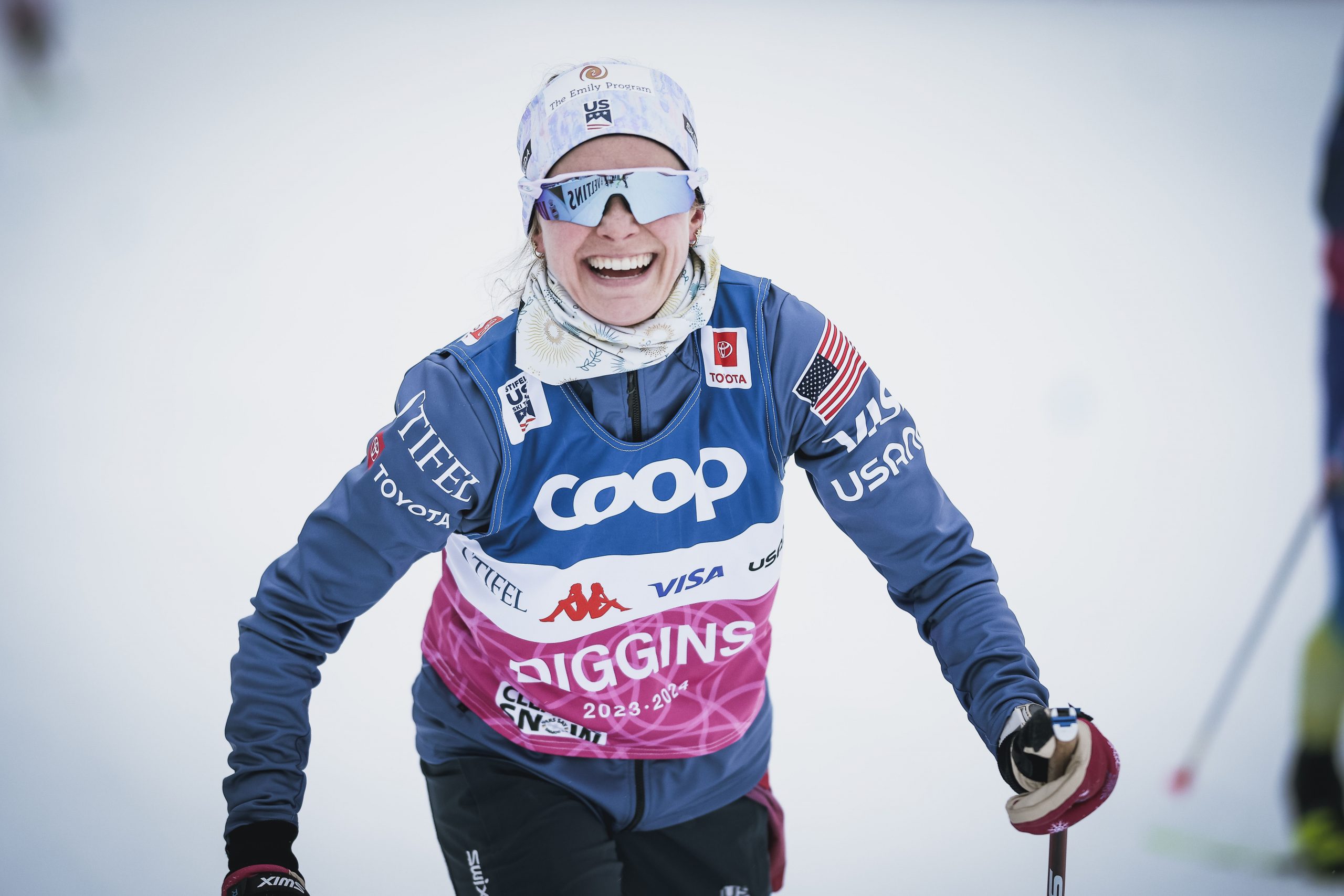
Jessie Diggins (USA) was all smiles after the 10k Classic in Ruka (FIN). (Photo: Modica/NordicFocus)
Jessie Diggins: Racing the First Day of Her Last Season
As Diggins enters the last year of her storied career, her goals have nothing to do with podiums.
“My goals are really not about race results at all,” she said. “My goals for the season are to be happy and healthy and just in the present moment… just really soaking in the moment and the feeling of, like, wow, I get to do this.”
She brought that joy directly into today’s start.
“I just wanted to go hard and use this race to get the season started.”
And yet, the question remains: when Diggins puts on a bib, does instinct overtake the plan?
“I do like to push myself to the max whenever I race — maybe not 100% where I’m scraped off the snow, but really darn close,” she said.
“It’s part of my training plan with Cork — we use early season races to build sharpness.”
On a tricky waxing day, Diggins was clear-eyed about the team effort.
“I was really happy with my skis… a great mix of just enough kick but also really free. We needed the skis to be fast in the double-poling, and knowing I was going to herringbone the climbs anyway, we went for that in-between.”
For Diggins, this wasn’t just a top-five finish. It was a signal: the last season of her career may feature some of her best classic skiing.
Rosie Brennan (USA) with her signature long stride during the 10k Classic in Ruka (FIN). (Photo: Modica/NordicFocus)
Rosie Brennan: “This Is Uncharted Territory”
Rosie Brennan entered the winter with one of the most unconventional lead-ups of her career — a necessity after an Epstein-Barr reactivation forced her into weeks of “micro-intervals” and tightly controlled volume.
Her return to full-distance racing revealed both progress and uncertainty.
“If I’m honest, I had a little higher expectations for myself today, so I’m feeling a bit mixed about it,” she said.
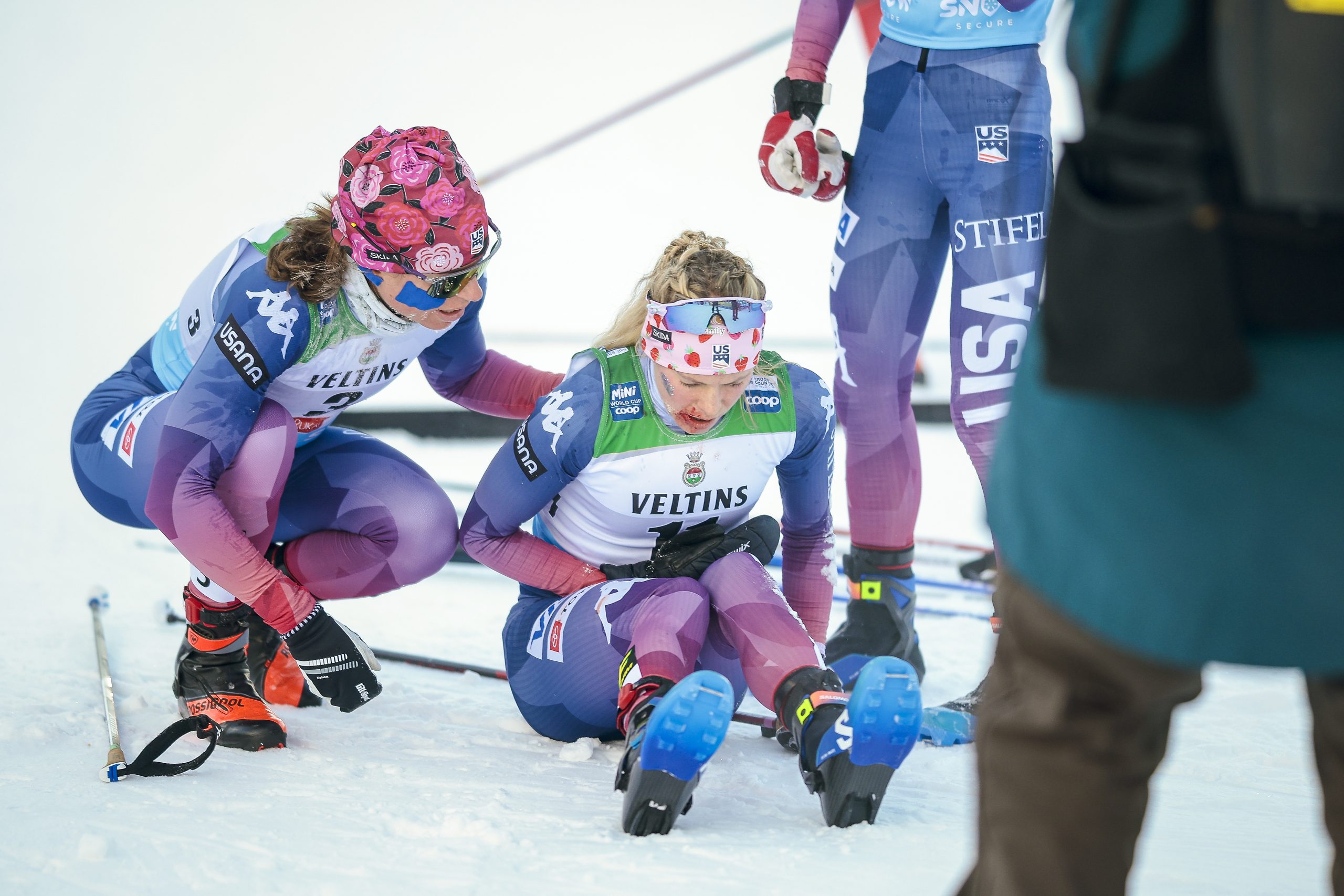
“There were some moments of skiing I was really happy with and some that left me wanting more.”
The hardest part, she explained, has been adapting to Europe — travel, fatigue, recovery — with a body that no longer responds as it used to.
“It’s been a really hard adaptation to Europe with a body that isn’t as resilient as I’m accustomed to… this is uncharted territory for me, and I just don’t know what will happen.”
Still, she holds hope — and patience.
“I have to keep trying and experimenting and figure out what will work for me this winter. I’m sure there will be a lot of ups and downs in the process.”
For Brennan, today wasn’t a verdict — it was the next step in a complicated, courageous return.
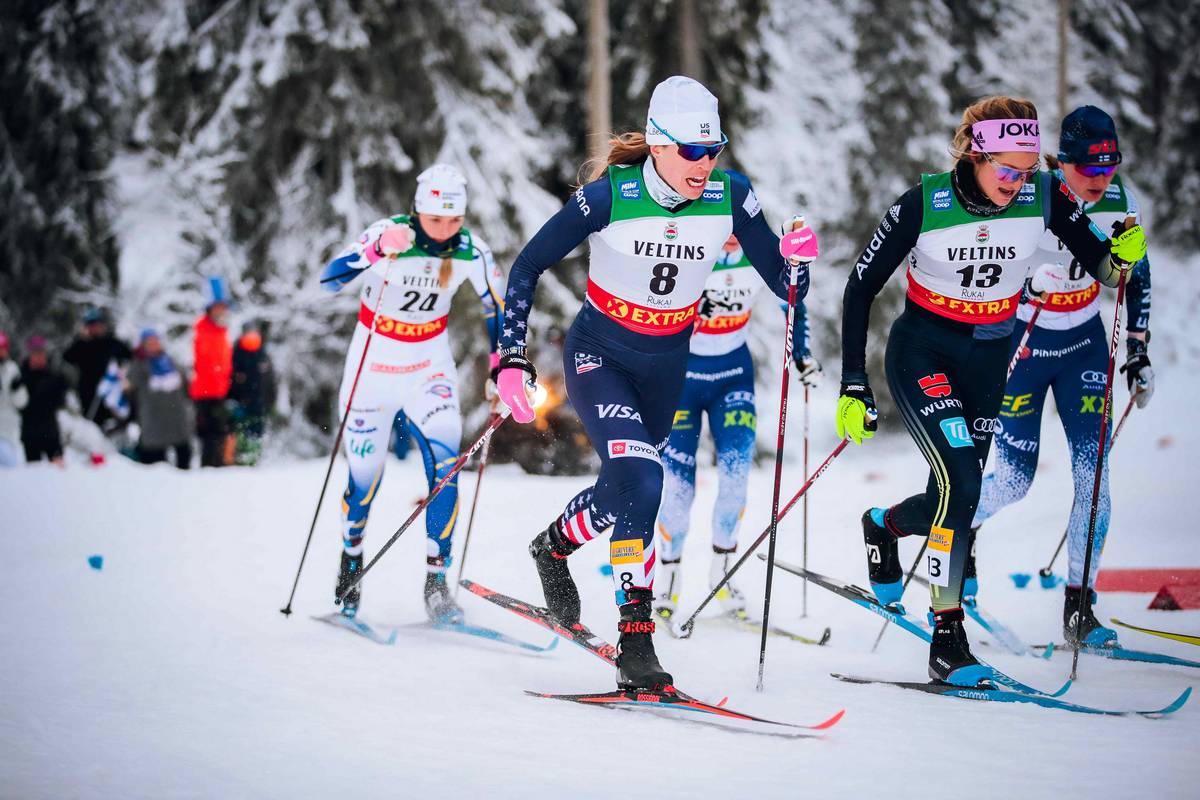
Ebba Andersson (SWE), Julia Kern (USA), (l-r) push up the climb in Ruka (FIN). (Photo: Modica/NordicFocus)
Julia Kern: A Personal Best Hidden Behind the Result Sheet
Julia Kern’s final ranking might not have turned heads on the results page, but the performance meant far more than the number beside her name. For Kern — often a slow starter in Ruka — today marked meaningful progress.
“Actually, I’m proud of my race today,” she said. “If you just look at the result… You would think I’d be quite dissatisfied, but this was a personal best for me in the opening Ruka 10km.”
The opener in Ruka has long been one of the toughest venues for her, a course whose steep climbs, cold temps, and early-season timing rarely align with her strengths.
“This was my eighth time doing this race, and the result has never been great or representative of other races later in the season,” Kern explained. “I was proud of having moments out there where I skied with good technique, and my body had good energy.”
Her long-term confidence remains intact — today was a step, not a verdict.
“Of course, I want to climb higher in the results list, but my result today doesn’t worry me,” she said. “I use this race to race myself into shape and wake up the body for the sprint tomorrow and the rest of the season.”
Like many in the field, she dealt with some of the day’s most fickle challenges: a mix of new snow, fog, drizzle, and instant glazing that made finding kick nearly impossible.
“It was on and off snowing/light fog or drizzle… a classic Ruka day where the tracks seem to glaze in an instant,” she said. “The glaze made it really challenging to kick from the start, and even harder in the second lap.”
But where the climbs demanded compromises, the flats rewarded her strengths.
“Otherwise the conditions felt fast on the downs and flats,” Kern added, “and I felt strong on the flatter terrain today.”
Kern leaves day one not discouraged, but energized — a skier who knows this course never tells the whole story and who trusts what today’s moments of good skiing suggest about what’s ahead.
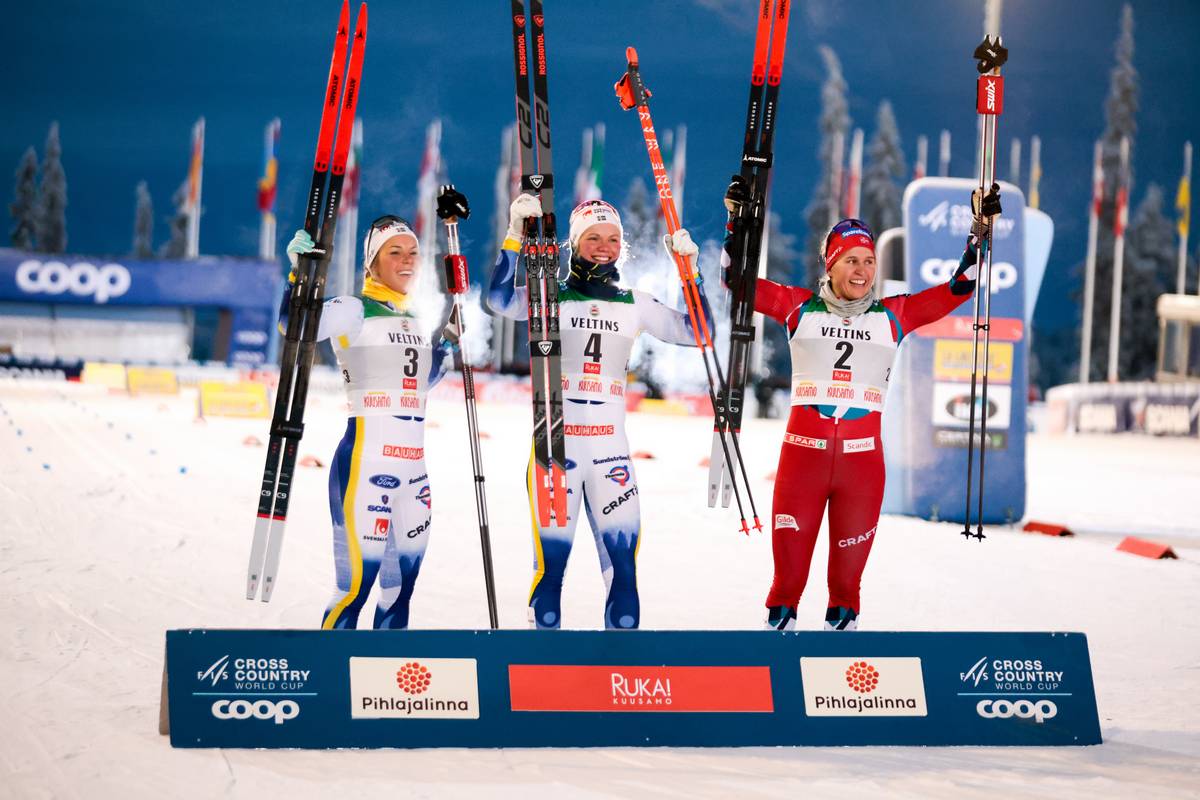
Heidi Weng (NOR), Frida Karlsson (SWE), Moa Ilar (SWE), (l-r) share the podium of the 10k Classic in Ruka (FIN). (Photo: Modica/NordicFocus)
The Podium: Sweden Opens the Olympic Year With Authority
The final standings reflected both power and depth:
Frida Karlsson (SWE) 23:31.8
Heidi Weng (NOR) +10.5
Moa Ilar (SWE) +18.3
Ebba Andersson (SWE) +21.2
Jessie Diggins (USA) +27.6
Kristin Austgulen Fosnæs (NOR) 37.2
Sweden finished with three in the top four. Karlsson earned her 16th career victory; Weng her 139th career podium; Ilar her 9th.
On the Finnish side, Krista Pärmäkoski delivered a valiant final Ruka classic performance. Kerttu Niskanen, traditionally a force here, struggled to find her usual early-season spark.
And for the Americans, the opener delivered clarity: Diggins strong, Brennan resilient, the younger athletes gaining essential early-season data for Olympic qualification.
The 10k Classic podium with Heidi Weng (NOR), Frida Karlsson (SWE), Moa Ilar (SWE), (l-r) in Ruka (FIN). (Photo: Modica/NordicFocus)
What It All Means
Today’s 10k classic didn’t answer every question — but it answered enough to shape the early contours of an Olympic year:
Sweden has the momentum.
Norway has a leader again.
Finland is beginning a farewell tour.
The U.S. has real reasons for belief — and real reasons for patience.
The waxing cabins will decide as much as the athletes.
The Olympic shadow looms over every split, every selection, every training day.
And for those of us lying awake the night before the opener, waiting for winter like children waiting for Christmas — the season is here again.
It begins in Ruka, with a direct path to the Olympics in Italy, and ends in Lake Placid.
Feature interviews like this one take time, access, and care to produce. If you value thoughtful storytelling and independent ski journalism, please consider becoming a Voluntary Subscriber. Your support directly fuels the work we do to cover the people, places, and moments that make our sport special.
Frida Karlsson (SWE) looked pretty comfortable in the reindeer pelt-covered leaders chair following the 10k Classic in Ruka (FIN). (Photo: Modica/NordicFocus)
On the Wednesday before the World Cup season opens in Ruka, Jack Young sits in a small condo, looking out at over a foot of new snow that’s been drifting down all morning. The air is much warmer today than it was before he and the U.S. Ski Team loaded onto a six-plus hour bus ride yesterday — “Muonio was friggin’ cold,” he says — and the mood is calmer, quieter, the way he wants it. This is his final runway before an Olympic year truly begins, and he is spending it doing almost nothing.
Not nothing-nothing, of course. But nothing extra. No bonus minutes, no filler skis, no threshold for confidence, no volume for psychological reassurance. “The biggest thing right now is taking these two weeks absolutely as seriously as possible with rest and just not doing anything extra training-wise that I do not need to be doing,” he says. “I’m training so little right now because of how important Ruka and Trondheim are for me.”
Growing up in Northern Vermont, Jack Young had an All-American childhood. (Photo: Courtesy Photo)
Outside, the classic sprint course cuts through the forest — the first of two classic sprints in Period 1. They matter—more than they ever have. To make the Olympics, he must qualify. To qualify, he must have transformed himself into something he has never consistently been: a classic sprinter capable of making heats on the hardest stage in the world.
That he is even here, on the cusp of an Olympic selection fight, is strange enough. Stranger still is the way he got here — not built from the standardized American skiing pipeline but stitched together from its edges. A football quarterback. A baseball outfielder. A skier whose parents “didn’t know what Nordic skiing was.” A D3 athlete who reverse-engineered sprint training out of 800-meter track plans and the writings of a Swedish speed skater. A young man who kept such detailed training logs that, by the time he made the World Cup, he could begin writing his own plan.
In a sport that often rewards conformity, Young’s ascent is something close to a jailbreak.
Jack Young as he started his racing for Craftsbury. (Photo: Courtesy Photo)
A Vermont Childhood Without the Usual Skiing Script
“Neither of my parents knew what Nordic skiing was,” he says with a laugh. They loved the outdoors, yes — mountain biking, alpine skiing, the typical northern Vermont mélange of mud, woods, and winter — but their son’s athletic identity formed somewhere else entirely. “I played every sport. I loved baseball. I played basketball through elementary school. I started football as soon as I was allowed to, which I think was in fourth grade.”
He became the kind of athlete rural towns understand intuitively: the quarterback on fall afternoons, the center fielder chasing down balls in the summer dusk, the kid who could pick up anything and find competition in it. Skiing entered sideways, almost accidentally, through his sister Callie. She joined the small Nordic program in Newport, and he was brought along because that’s what families do — pack the car, hand over snacks, make it work.
“I immediately fell in love with racing,” he says. “I just love the competition.” Running around on skis made sense to him. Movement, speed, chaos — he could do that. But even with training days at Craftsbury beginning around sixth grade, he didn’t think of skiing as his primary outlet. “I wasn’t as focused as my sister was, but I would still get dragged along,” he says. “I loved skiing, but I loved football and baseball just as much.”
The irony — one he now sees clearly — is that he was training for skiing without realizing it. “All summer was spent doing fun things in the woods. We’d go to Craftsbury a couple of times per week. But I never thought of skiing as my main sport. I weighted those sports equally, even though I was putting a lot more time into skiing.”
If northern Vermont had offered a travel football club or competitive baseball without days of driving south, the story may have gone a different way. But mountain running and biking were nearby, and elite baseball diamonds were not. “I’d so much rather go for a long run in the mountains or go mountain biking than I would hit on the tee for two hours,” he says.
Sometimes this is what talent looks like in real time: a kid choosing the fun version of hard work without realizing he’s choosing a future.
When we spoke, Jack Young sat in a small condo in Ruka wearing a Boston Red Sox baseball hat, just added evidence for how important the game has been for him since he was a boy. (Photo: Courtesy Photo)
The Late Bloom: A Breakthrough and a Decision
He kept skiing in the winter, of course. Not obsessively. Not in the way some junior skiers live their lives by FIS points before they have a driver’s license. But enough to stay close. Enough to remain good. Then came the summer after his sophomore year of high school — the first time he trained like someone who had decided to see what was possible.
“I put a good summer of training in,” he says. “Had a bad football season… but that was the first time I was really starting to push the limit on what I could do training-wise while in season for football.”
He mountain-biked in races on weekends, squeezed workouts around football practices, and tried to make the whole geometry hold together. Then came Junior Nationals, and with it, proof. “I had a pretty good result in the sprint. I think I was like 18th or something… and that was the moment where I was like, okay. I am decent at least at this sport. I’m doing a lot better than I’ll ever be at baseball.”
That spring, Young emailed coaches — the NESCAC schools, Dartmouth, and UNH. Bowdoin and Dartmouth joined Colby on his shortlist. Colby won on something less quantifiable: belief.
“Tracy [Cote] was very excited about me,” he says. “And I think that resonated with me. Maybe it’s my ego, but it was nice to hear.”
He would later call it “a perfect decision.”
Jack Young enjoying some backcountry skiing in Jay. (Photo: Courtesy Photo)
Colby: Building an Athlete in a Place That Shouldn’t Have Worked
Winters in college can blur into one another — classes, training, snow, the strange mix of exhaustion and euphoria that defines 19-year-old life. But Young remembers his freshman fall with clarity: meeting people, finding balance, doing “good, not great” training, and then, once the season started, traveling west for Senior Nationals.
There, in Soldier Hollow, everything sharpened. “I think I qualified in the top 20 in the skate sprint,” he says. “That was an absolutely massive result for me. I never had anywhere near that level of success on the national level.”
He didn’t transform overnight — not yet. His sophomore season brought a “fine college season,” a top-30 at NCAAs in the 10k skate, and the sense that distance skiing was finally, mercifully making progress. But the turning point came not in results but in imagination. He learned that the U.S. would receive twelve start spots for the Canmore World Cup the following year. Twelve starts. “I was like, 12 starts… that’s not that far off,” he says. “I kind of feel like I’m in contention for that.”
To chase it, he would need to master something specific: the sprint qualifier.
And this is where the story breaks from the template completely.
Jack Young hits some big lactate numbers during a hard training session. (Photo: Courtesy Photo)
Reinventing Sprinting from Scratch
“I’ve always thought that sprint qualifiers were really similar to an 800-meter race on the track,” he says. Physiologically, mechanically, conceptually — they looked more alike than different. So he dug into 800m training. He looked for the extreme version, the distilled essence of what sprinters do when they train specifically for the thing that matters. Qualifiers are discrete. Defined. Precise. Why train them like a generalist?
Then he read Nils van der Poel.
The legendary Swedish speed skater’s manifesto, How to Skate a 10k, isn’t a skiing manual, but to Young, it may as well have been scripture: the idea of building huge aerobic capacity, then sharpening with brutally specific intervals at exact race pace. “He wants to skate as many possible laps at world record pace as possible,” Young says. “And that really struck me. I’m like — I can apply this to skiing.”
He wasn’t going to become a single-event specialist, not in college. But he could take the principle and adapt it. So he built a sprint-qualifier program composed of things like:
6 × 1 minute
4 × 90 seconds
10 × 30 seconds
8 × 45 seconds
All at precisely what he believed to be his sprint qualifier pace.
“That was the bread and butter,” he says. “I’d do those workouts once or twice a week. I didn’t actually find them that strenuous, but I was accumulating a good amount of time at exactly what I thought sprint qualifier pace was.”
He went completely dry that fall — no beer, no casual nights out, nothing that compromised sleep. “I was just recovering a lot better all the time,” he says. “I didn’t get sick at all.”
Meanwhile, Colby head coach Tracy Cote allowed him to blend his ideas into the fall plan. “We were working together. I think we ended up writing the training plan together that fall,” he says. “She was pretty stoked about the focus on recovery… and she’d let me get away with doing things a bit more geared towards sprinting.”
He trained more overall, too — a heavy summer that gave him the resilience to handle so much intensity once fall arrived. “My freshman year, I trained a little under 600. Sophomore year was around 650. My junior year I trained like 750 or something.”
This was not an American development pipeline approach.
It was an experiment.
A smart one.
A successful one.
Jack Young, who a week earlier had a 3rd and 5th place in the EISA college races for Colby College delivered the 11th fastest qualifying time in the freestyle sprint at the Canmore World Cup in 2024. (Photo: Cockney/FasterSkier)
Anchorage, SoHo, Canmore — and the Race That Changed Everything
He targeted Anchorage for his first chance at the Canmore World Cup spot. He knew what he had to do: fly across the country in the early winter, race well, then perform at Senior Nationals in Soldier Hollow. Anchorage was the linchpin.
“I went into Anchorage with a lot of confidence,” he says. “I won that qualifier; it was such a surprise.”
He didn’t replicate the magic at Soldier Hollow — “I think I got like 11th” — but the Anchorage win held. He made the Canmore start list.
And then came the race of his life.
“That’s still my lowest FIS points ever,” he says. “I didn’t match that last year.”
When he crossed the line, something shifted internally. “Once I did that in Canmore… that was the first time I really thought I wanted to keep skiing after college,” he says. “That was the moment I realized how good I thought I could get.”
Call it the ignition point, the place where belief calcified into ambition.
Where a multi-sport kid from a non-skiing family, attending a D3 school, doing self-designed intervals, suddenly saw himself in a World Cup heat map and thought: Yes. Here.
Jack Young training on Eagle Glacier this past summer. (Photo: Courtesy Photo)
Writing His Own Plan on the World Cup
Two years later, he is living in Europe, often for months at a time. He is in his second year of racing full-time on the circuit. He is older, stronger, andmore certain. And he is, in many ways, coaching himself.
“For this time of year, it’s entirely guided by what I’ve done the last two years,” he says. “Which workouts worked in which places, which workouts didn’t… the comments are much more important than the hours.”
He still works closely with Pepa Miloucheva at Craftsbury — “She’s the number one on that” — but when he’s on the World Cup, he is the primary author of his training. He reads his patterns. He analyzes sensations. He looks for the combinations of stress and stimulation that make him feel dangerous on race day.
He isn’t reinventing his body now — he’s listening to it.
The independence he cultivated at Colby has become his competitive advantage.
With the Olympic sprint being in the classical technique, Jack Young (USA) hopes to find the form he has historically shown in freestyle sprinting during the early season World Cup stops. (Photo: Modica/NordicFocus)
The Classic Sprint Problem — and the Olympic Dream
To make the Olympics, the math is simple, even if the execution is brutal.
“The simplest answer is: make a big jump in classic sprinting,” he says. “If I can start qualifying for classic sprints consistently, I have a very clear path to making the Olympics.”
Last year’s results would meet the published criteria — “hypothetically, if I had the exact same season… I would technically make the team,” — but this year is different. The Olympic sprint is classic. Period 1 has two classic sprints and only one skate sprint. Some of the contenders for Olympic spots are stronger in classic than he is.
So the path is narrow: qualify in Ruka. Qualify in Trondheim. Hold form in Davos. Don’t step back. Don’t stagnate.
At the philosophical level, the criteria are simpler still.
“It’s all about execution at this point,” he says. “A good season is continuing with progress I’ve made… scoring more World Cup points than I did last year. Anything else is a step back.”
He knows progress isn’t linear. He knows failure is part of sport. But he also knows what a step backward would feel like. “I’d be lying if I said I could look at this season as successful if I don’t maintain what I’ve been doing in skating and at least make a little bit of progress in classic skiing.”
It is clear-eyed. Unsentimental. The kind of assessment you get from someone who has built his career on self-honesty.
Jack and his sister Callie after winning a slow pitch softball tournament. (Photo: Courtesy Photo)
What It Means to Make It This Way
There’s a certain poetry in the fact that Young’s rise mirrors the very way he races: a precise, deliberate accumulation of moments. Nothing in his career came from the prescribed steps, the standard routes, the familiar trophies of a groomed junior-star life. Instead, his path looks more like a map drawn after the fact — connecting points that didn’t seem aligned until the picture emerged.
A sister’s Craftsbury workouts.
A baseball-heavy early adolescence.
Mountain biking and football collisions.
A D3 program that let him try things.
A manifesto by a Swedish speed skater.
A dry collegiate fall at age 20.
A logbook of sensations.
A day in Canmore.
A belief.
There is no template for this. There never was.
But here he is anyway — on the World Cup, in an Olympic year, taking the biggest swing of his life.
And as he sits in a Ruka apartment, resting more than he ever has before a race that matters more than most, he reflects not on what’s missing from his résumé but on what got him here in the first place: a way of building a skier that is his alone.
Love Stories Like This? Help Keep Them Coming.
Feature interviews like this one take time, access, and care to produce. If you value thoughtful storytelling and independent ski journalism, please consider becoming a Voluntary Subscriber. Your support directly fuels the work we do to cover the people, places, and moments that make our sport special.
Somewhere over the Atlantic, on a red-eye to another winter in Europe, Ben Ogden opens his laptop and stares at a grid of digital joinery. Tiny posts, miniature knee braces, angled mortises — a small timber-frame sauna, scaled down to the dimensions of an airline tray table. He sketches in precise strokes, clicking through angles and offsets, rotating the model the way he rotates race courses in his head: looking for structure, looking for flow.
“I learned CAD in college,” he says. “Something that I hope to use in a future career post-skiing. It feels good to keep those skills up.” For the past several winters, Ogden has leaned into his engineering degree, which he earned at the University of Vermont. When you talk to him outside of training and racing, you realize this engineering mind was not learned at UVM; it is deeply ingrained in who he is, who he has always been. On planes, in wax truck corners, in small Scandinavian hotel rooms, he opens the software that once helped him model truss systems for class projects. Now, it helps him breathe.
“It kind of gives me a good outlet,” he says. “It’s exactly like you say — the projects in the summertime are fun, and you learn a lot, but ultimately for me the biggest reason to do them is that it gives me this outlet from skiing… gives me a break from everything that’s going on.”
This winter’s project is ambitious in a miniature way: a timber-framed sauna built from small hand-cut pieces, a practice run for a full-sized dream he can’t yet afford the time or money to tackle. In his travel bag, he carries a book — The Art of Japanese Joinery — the same way another skier might carry a novel. “I’m gonna use my CAD software and sort of build all the little pieces,” he says. “Then I’ll have a little plan for what joints get cut where.”
The sauna will be small. The intention behind it is anything but.
Like many New Englanders, Ben Ogden has made it a tradition to conclude his season every spring at Cochran’s Nordic Cross at Cochran’s Ski Are in Richmond, Vermont. (Photo: Courtesy Photo)
Vermont Roots, Wide Horizons
Ogden left for Finland on November 17 — a date marked not with dread, but with a kind of vibrating readiness. “I’m super pumped,” he says. “This season has come with more anticipation than any other.” Partly because it’s the Olympic year, but also because he feels “a little bit better equipped” each season, even as he accepts that no amount of planning can smooth the chaos of a World Cup winter.
“There’s guaranteed curveballs and sicknesses and highs and lows,” he says. “You can only manipulate that so much… at a certain point, you just have to get going.”
He arrived in Europe later than many teammates. While some seek early-snow training blocks, Ogden stays in Vermont — a deliberate choice, not an oversight. “I decided not to change that this year,” he says. “It’s important for me to be home, and the season is very long. I didn’t really want to elongate that by going to Europe or finding snow pre-Finland.”
That choice means his first days on snow in Ruka can feel awkward, but the tradeoff is worth it. It’s also an expression of who he is. Ogden’s identity is tied to Vermont in ways both obvious and subtle — in his work ethic, his self-sufficiency, and the ease with which he moves between elite training sessions and OD runs with college teams.
He feels tugs of longing, at times, when he thinks of the powerhouse men’s group training year-round with Alaska Pacific University. But the pang is mild, not consuming. “I do,” he admits, “feel a little bit” of FOMO. But he has “recognized the importance for me to just kind of live my own life, be a little bit removed from the intense, Nordie vibe all the time.”
Staying rooted means staying whole. It also means arriving each winter hungry for the team environment, not burnt out from it.
It is unusual for a top U.S. skier to build a World Cup foundation outside of a mega-group or a Western training hub. But Ogden sees the value in his separateness. “I kind of took pride in the fact that I was a little bit different,” he says. “Came from a different group and was able to mesh right in when we did come together.”
This, too, is its own kind of engineering: building stability into a system that demands constant travel, constant performance, constant uncertainty.
The Body as a Machine, the Mind as a Circuit
When Ogden talks about training, he toggles easily between the physical and the psychological — but if asked which is more important, he leans toward the mind.
“I think… ski training is a combination of physical and mental adaptations,” he says. “It can be fun to think of things as mental adaptations. I like to, because the power of the mind is just so huge.”
In the fall, he transitions into higher-intensity workouts earlier than he did in college, where the NCAA season starts late and dictates the timeline. “It’s just really good,” he says, “because I find that coming to Ruka and getting into the race season… I’ve had to remind myself what it feels like to go hard for that long.”
That reminder is primarily mental. Hard workouts aren’t just about generating lactate or cardiovascular strain; they’re about rehearsing discomfort.
“You have to learn how to push yourself,” he says. “You have to learn how to go hard, and you have to learn how to pace for a 10k… that, to me, feels like a mental battle.”
This is where his internal monologue — the one few athletes talk about, but all experience — becomes central to his craft.
His best sessions come when he stops listening to the noise inside his body — the burning legs, the heavy breathing — and instead directs his mind outward. “My best races… come when I’m not dwelling on ‘my legs hurt’ or ‘I’m breathing really hard,’” he says. “I’ll be thinking: ‘All right, the top of the hill is right there. I’m gonna push hard until there, and after that I’ll figure it out.’”
But the ideal and the real don’t always align. Not every October time trial feels like a breakthrough. Sometimes he finishes intervals worried that the heaviness in his legs signals doom for the season ahead.
“You sort of forget that you’re still training hard otherwise,” he says. “You don’t have respect for the fact that you’re just tired… it wasn’t a day you wanted to be in peak form, so you’re not.”
In those moments, doubt tries to multiply. It’s a habit of the mind he has learned to anticipate. And anticipation is power.
“When it happens, you can say, ‘Remember, I knew this was gonna happen,’” he says. “Every time, I’ve been happier if I don’t allow it to take over.”
Landmarks on the Course, Checkpoints in the Head
Ogden’s most vivid explanation of mental strategy comes when discussing something humble and universal: a hill in a cross-country running race.
If you tell him two high school runners are nervous about a big climb at the two-mile mark. His response is instant and intuitive — as if he’s revisiting a dozen races at once.
“I would set goals on the course,” he says. “Each goal would have a physical location attached to it.” A tree. A signpost. A bend in the trail. Something visible and near.
He creates segments rather than distances—dividing the race into digestible tasks rather than one looming ascent. “You can really make a hill feel like nothing,” he says, “because you’re like, ‘Okay, I know I can do it if I check these boxes.’”
He gives the example of a 14-minute climb he does in Vermont, a personal benchmark of suffering. The first five to eight minutes are brutally hard. “All you’re thinking about is, ‘Oh my God… this isn’t even the first half.’” But with preparation — knowing where a micro-rest appears, where the next pitch starts, where the end is “in striking distance” — the pain becomes structured. Predictable. Contained.
The same approach guides his 10ks. In the first 5k, he aims to crest hills “breathing, but able to ski crisp.” In the second half, he allows himself to reach the edge — “gassed to the point where I can’t ski with as good of technique” — but only once it’s time.
This is pacing, not as restraint, but as architecture.
The Gus Workout
If the sauna project is the mental escape hatch, then the “Gus Workout” is Ogden’s sharpening stone — a ritual he returns to every year to feel strong again.
“It’s a workout I randomly did in college before a Junior Worlds event with Gus [Schumacher],” he says. The structure is beautifully nerdy and deeply painful:
Six minutes of 20 seconds on / 40 seconds off
Another six minutes of the same
Three minutes of 1 minute on / 1 minute off
All layered on top of an L3 warmup and a progressive L4 effort
Sometimes he does two sets of the 6-minute blocks. The effect is both physiological and emotional.
“It’s an awesome, total sharpening workout,” he says. “It gets you moving at high speed without being a huge cost… By the time you’re done, it’s a pretty hard L4 workout.”
But the real value is how it makes him feel.
“It has often mentally made me feel really good. I think it makes me feel strong… confident.”
He’s done it before “every major championship and before every season since 2017.”
Ben Ogden poses with his UVM coach, Patrick Weaver and his children. (Photo: Courtesy Photo)
Coaching the Machine
Ogden works closely with both longtime mentor Patrick Weaver and newer SMS T2 coach Colin Rodgers, each offering different inputs into the system.
Weaver provides the long arc — the accumulated wisdom of years together, the memory of what has always worked. “Having Patrick involved… is really nice for me mentally,” Ogden says. “We’ve had so many good years together.”
Rodgers provides the in-person structure: “Colin is kind of coming in as the day-to-day,” Ogden says. “He’s the one at practice.” They build training plans collaboratively, with Ogden adjusting based on feel, Weaver offering feedback from afar, and Colin guiding technique and lactate testing.
It’s a three-person engineering team working on a single, complex machine.
Paal Golberg (NOR), Iver Tildheim Andersen (NOR) and Ben Ogden (USA), (l-r) share the World Cup podium after a 10K in Les Rousses (FRA). (Photo: Modica/NordicFocus)
The Long Game: From Sprinter to All-Arounder
Ogden first burst onto the circuit as a sprinter, but his distance results have steadily climbed. He attributes that evolution to two things: years of accumulation and a physiological quirk he had to learn to manage.
“I’m capable of generating tremendous lactate,” he says. “If I went out right now and sprinted for 90 seconds, my lactate could easily be in the 20s.”
That makes him a powerful sprinter — and a volatile distance racer. Early in his career, he went out too hard too often. The memory that stays with him is the 2020 Junior Worlds 10k, when he led early and paid dearly late. “I just pushed so freaking hard,” he says. “I think I was winning the race by… 10 seconds. And then at the end, I just lost so much time.”
Learning patience, he says, has been “huge.” Now, he races distance events with far more control — waiting, building, resisting the temptation to detonate early.
Every year, he gets better at it, not by magic, but with patience and discipline.
Kevin Bolger, Ben Ogden, JC Schoonmaker, and Zak Ketterson, (l-r) teamed up for the FIS World Championships relay in Trondheim (NOR) last season. (Photo: Modica/NordicFocus)
The Olympic Year and the Team Sprint Dream
His biggest goal this year is clear: “An Olympic medal for sure.” He’s unafraid to say it out loud. It’s a reach, he says, but not an impossible one — especially in the team events.
“I’ve had a big asterisk on the team sprint,” he says. “I really want to be on that team, and I really want to just dream big for that event.”
He spent the summer training specifically for it — brutal intervals on the Lake Placid roller-ski track, demanding repeats in Park City. The process goals between now and February are equally mental and physical: “Coming at those two team sprints before the Olympics mentally prepared and ready to execute at a high level.”
Team sprinting is a balancing act. “There’s always this balance of exerting energy… staying at the front, staying out of trouble… and saving energy, staying in the pack,” he says. Believing he can do both — that duality — is the mindset he’s chasing.
Friends, family and fans will be surrounding Ben Ogden with all the Vermont vibes in Lake Placid later this season for the World Cup Final. (Photo: Courtesy Photo)
The Lake Placid Homecoming
After the Olympics, he returns to something nearly as meaningful: a World Cup in Lake Placid, practically down the road from home.
“I’m so fired up for that,” he says. Friends from UVM plan to come — people who helped him survive the missed classes, late assignments, and months of absences that came with racing the World Cup while still in school.
“I always joke with them… they helped in my success as much as anybody,” he says. “They helped me by sending notes, helping with homework.” The Lake Placid races are his chance to show them the world he kept disappearing into.
He’s excited for Vermonters — new fans, old friends, teachers, kids from ski programs — to see a World Cup in person. “Everybody who ever goes to a World Cup has a good time,” he says. “Even if they’re not huge ski fans.”
The people who buoyed him will finally see the thing he disappears into all winter.
Ben Ogden (and his SMST2 teammates) always make time to give back to Vermont’s local communities. (Photo: Courtesy Photo)
Legacy: What He Wants to Build
Ask Ogden how he wants to look back on his career decades from now, and the answer arrives with unmistakable clarity.
“More than results,” he says, “I want to be remembered as something that was positive for the ski community.”
He talks about the junior camps, the youth programs, the OD runs with college teams, andthe way he feels energized by the enthusiasm of younger skiers. He talks about his “little side quest” of collecting T-shirts from New England ski programs: “Every one represents a skiing community I’ve reached out to or been part of in some capacity.”
He lights up when discussing a recent run with the St. Michael’s College team. “It was raining and miserable, and we just had a great time,” he says. “That is so inspiring to me.”
He wants to help more people get out the door. He wants skiing to feel accessible, exciting, and normal.
And, like all good stories, this one has a lineage. His late father, a beloved figure in Vermont skiing, built communities the same way Ogden now does — with enthusiasm, generosity, and the kind of spirit that makes kids believe in themselves.
“There’s nobody I’ve ever wanted to be like more than him,” he says. “He just made kids fired up. And I feel like I can do the same.”
The Ogden children (Charlotte, Katharine, and Ben (l-r)) pose with their father, John. (Photo: Courtesy Photo)
The Blueprint Ahead
By the time January arrives, the first pieces of the miniature timber-frame sauna will be designed, and the digital modeling will start to look recognizable, even to those of us without an engineering degree.
His book on Japanese joinery tucked among race suits and heart-rate straps — a reminder that even in the chaos of a World Cup season, he is building something.
A structure.
A mindset.
A legacy.
He is engineering a career that is not only about skiing fast, but about making more people love the sport he grew up in.
He is designing a life that holds both ambition and community.
Both suffering and joy.
Both structure and imagination.
He is building — in every sense of the word — something that will last.
Love Stories Like This? Help Keep Them Coming.
Feature interviews like this one take time, access, and care to produce. If you value thoughtful storytelling and independent ski journalism, please consider becoming a Voluntary Subscriber. Your support directly fuels the work we do to cover the people, places, and moments that make our sport special.
BONUS ARTICLE: This article was made possible through the generous support of our voluntary subscribers. If you would like to see more articles like this one, please support FasterSkier with a voluntary subscription.
In the early morning hours of any FIS World Cup race day, messages are bouncing back and forth among a team of diligent FasterSkier writers, doing their best to craft illuminating articles on the race coverage flitting across our screens. And on mornings when race results either exceed—or fall short of—viewers expectations, the message bouncing gets even more intense. What those writers hope is that Team USA representatives will continue to communicate with us as they’ve done for many seasons now: friendly, honest, prompt, revealing comments offered in the interest of providing the best and most compelling story. That’s what we received today . . . and we figured readers would want to peek behind the curtain a bit to see what kinds of athletes, coaches, and staff members wear the USA brand. We’re proud of them this morning; we hope our readers are, too.
Something was “off” for Team USA in today’s Classic Sprint in Ruka, Finland. True, Ruka’s Sprint course is a challenging one, and the field of FIS athletes is as strong and competitive as that of any sport . . . but something was “off.” Only two American women (Jessie Diggins and Rosie Brennan) qualified to advance to Sprint heats, while no American men managed to qualify (on a team that justifiably hopes to send athletes to semifinals, finals, and podiums). FasterSkier crafted articles that alluded to what appeared to be team-wide issues. Within that process, our writers always seek quotes from Team USA members. On this day—the day of the Ruka Classic Sprint—Team USA truly responded. We thought our readers might like to see and hear it all. It’ll make you proud . . .
Jessie Diggins shares a close relationship with her coach and technician, Jason Cork, which reflects the strength of the entire team competing on the World Cup circuit for the United States. All the athletes, coaches, and technicians form a supportive family, and their communication and teamwork are tested at every race. While today’s results did not meet their expectations, they understand that by trusting one another, they will soon achieve their goals. (Photo: NordicFocus)
Jessie Diggins
Ben Ogden
Certainly surprising and extremely disappointing to not make the top 30 today. I feel as though I was just not strong enough today and will just have to keep working and hope that I can build into this season.
Ben Ogden (USA) working on ski selection on Thursday in Ruka (FIN). (Photo: NordicFocus)
Julia Kern
Julia Kern testing her skis two days ago with her longtime tech, Eli Brown. (Photo: NordicFocus)
Matt Whitcomb
Hello from Ruka, and the first World Cup sprint of the season. Needless to say, this was a disappointing day for the team. We were excited, and athletes are feeling good. We wanted more. Our staff had a long debrief after the races were completed where we took a hard look at our ski preparation process, and some potential areas where mistakes in ski speed may have been made. While it’s difficult to gauge ski speed in a qualifier, a team-wide shift toward the bottom of the page makes it clear that something was off. While this wasn’t the case for every athlete, it’s possible that our skis didn’t have the best glide, and we’ve zeroed in on some solutions for tomorrow.
It’s early in the season, and our team is still adjusting to the pace of being on the World Cup where the margins are very small. If three of our guys could’ve shaved a second from their time, we would’ve had five qualifiers, instead of two. Certainly, we’re not in mid-season form, and I want to make it clear that the skis were just a piece of the puzzle today. We operated seamlessly as a team, and still, we had an off day. It’s a hard game. We’ll bounce back tomorrow. We’ve already bounced back.
This coverage is made possible through the generous support of Marty and Kathy Hall and A Hall Mark of Excellence Award. To learn more about A Hall Mark of Excellence Award, or to learn how you can support FasterSkier’s coverage, please contact info@fasterskier.com.
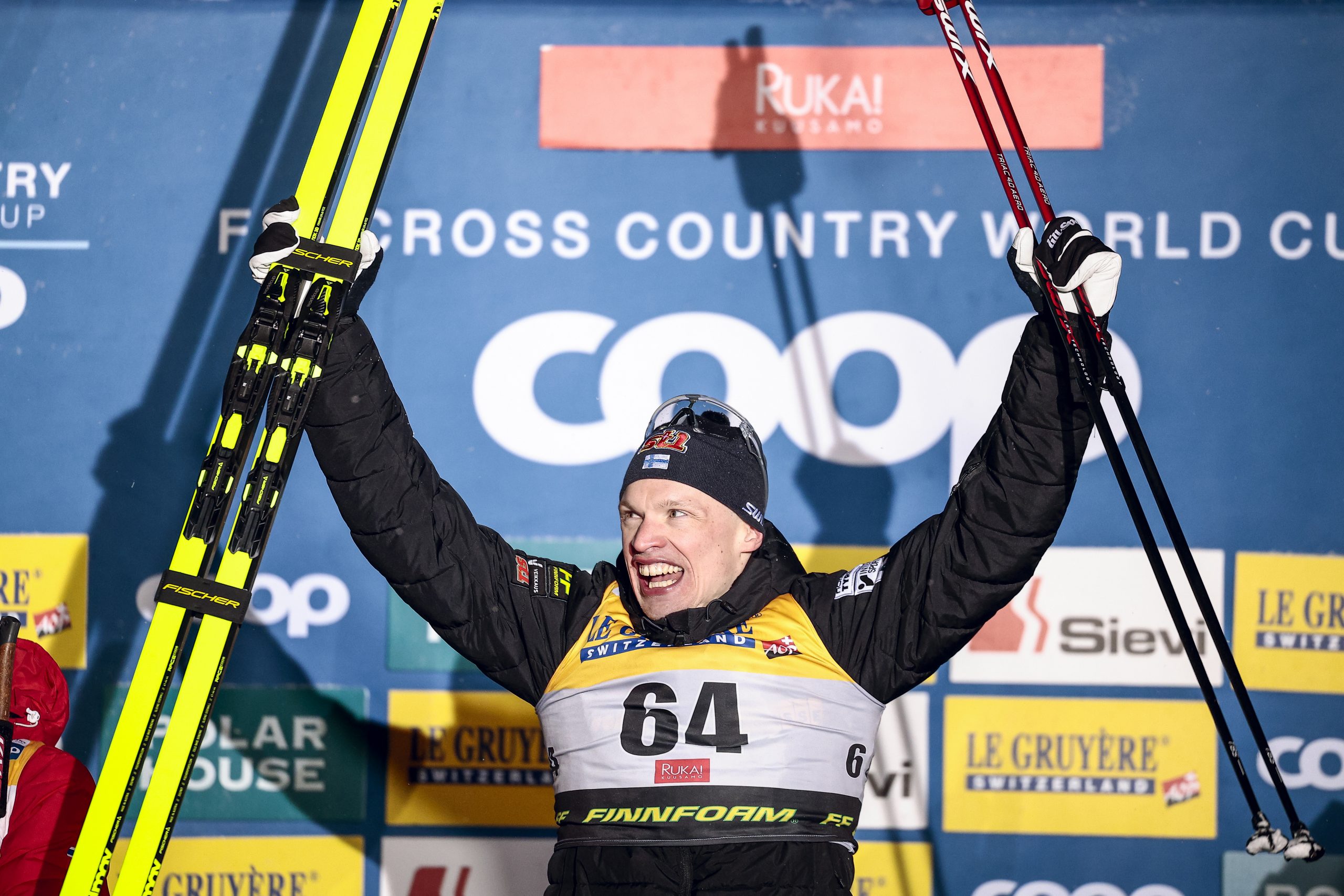
Finland’s Classic skiing legend, Iivo Niskanen, raced to a victory in the men’s 10 k Classic Interval Start in Ruka, leading the field by 12 seconds into the finish (Photo: NordicFocus)
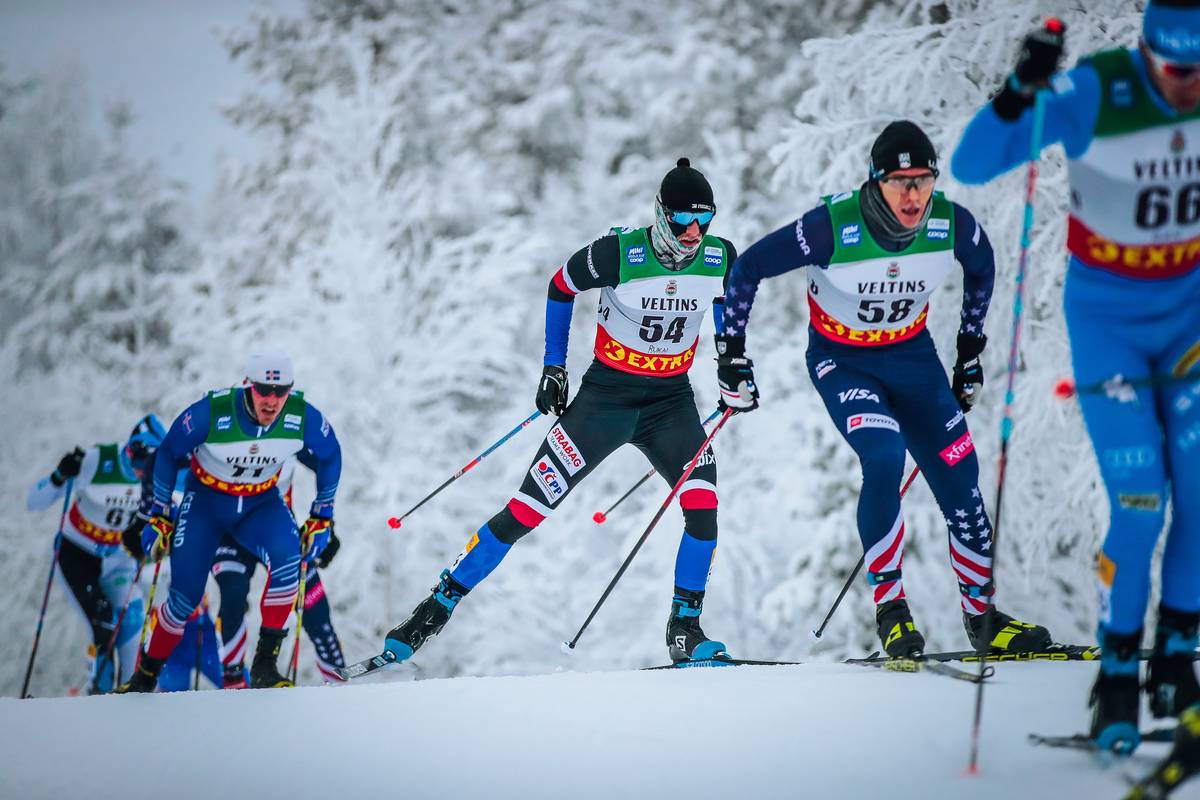
Ruka, Finland is an area known for challenging race courses and rapidly changing conditions. As the women’s field wrapped up the morning race, the men took on the course under snowfall and near-freezing temperatures. With dusk settling in and the stadium lights casting a glow over the trails, it was a classic start to the World Cup season in Ruka. For the wax technicians, the unexpected snowfall added extra complexity to the afternoon’s preparations. With no precipitation predicted, technicians battled the fresh snow and near-freezing temperatures to craft a kick that would allow athletes to stride on Ruka’s infamous climbs. The loose snow on the uphills forced racers into herringbone, a technique that saps energy and momentum, while the choppy surface caused slips and stumbles as skiers fought to maintain their rhythm.
The biggest question of the day: could Finland’s Iivo Niskanen finally outpace Norway’s Martin Loewstroem Nyenget in their highly anticipated battle after a close finish in last year’s event?
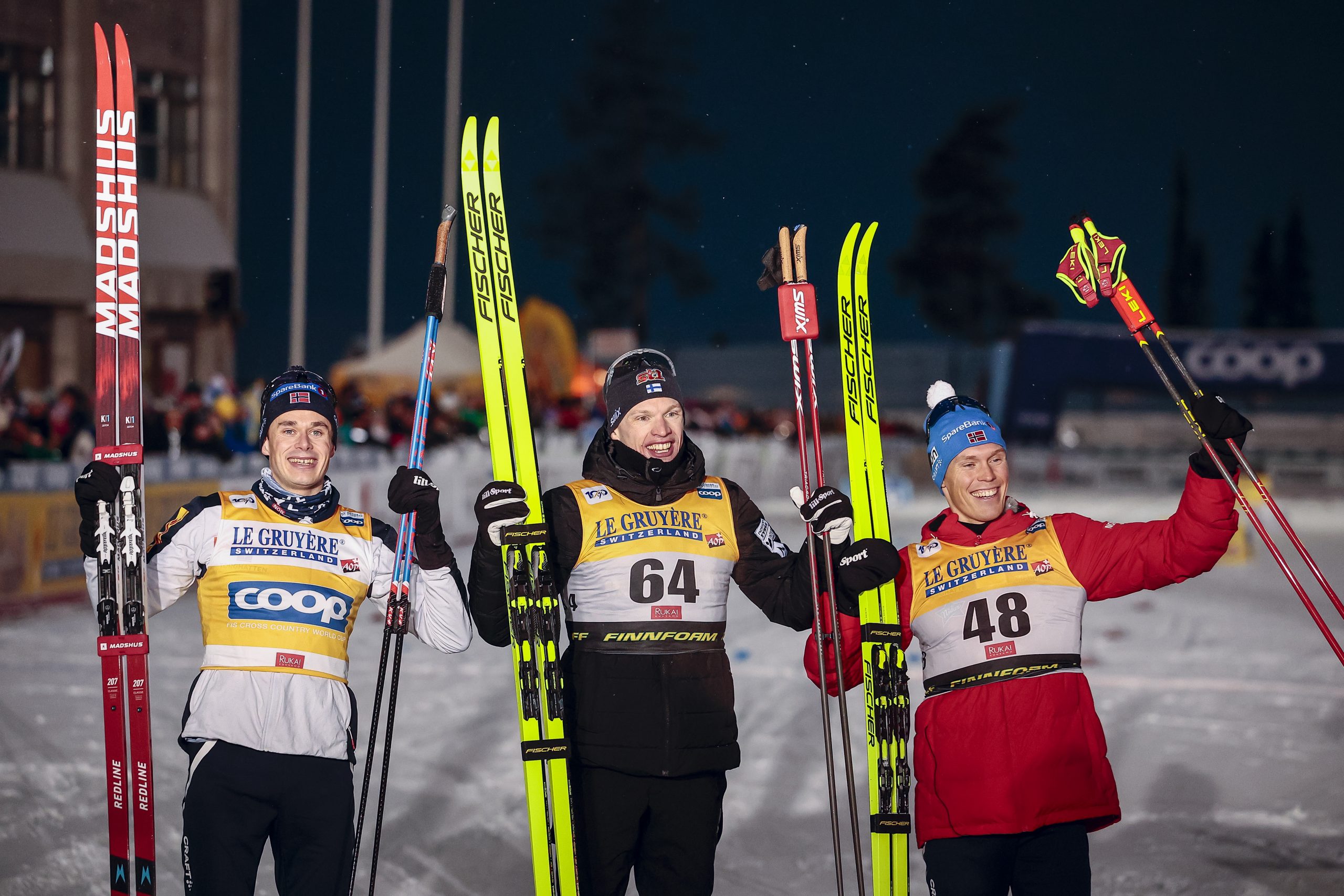
It turns out he could. Niskanen claimed the top spot on the podium, delivering a thrilling victory for his home crowd by more than 12 seconds. He was followed by Norwegians Harald Oestberg Amundsen in second, and Nyenget in third, with just two seconds separating the teammates. This pair fought for the podium positions alongside other Norwegian teammates with similar splits over the course of the race.
North American skiers also celebrated strong results today: Gus Schumacher finished 18th, Ben Odgen, 29th, Zanden McMullen, 30th, Zak Ketterson, 36th, Hunter Wonders, 48th, and Michael Earnhart, 57th.
The two Canadian athletes, Xavier McKeever and Max Hollmann, finished 32nd and 50th, respectively.
Men’s 10 k Classic Interval Start
Home-country favorite and distance specialist, Niskanen, claimed the victory, delivering a commanding performance before a crowd of his boisterous countrymen. Starting mid-pack, Niskanen quickly established his dominance, leading the field by the 1.5 k check. He extended his advantage to 5.1 seconds at 3.1 k, 10 seconds at 5 k, and maintained a steady pace to finish 12.5 seconds ahead of Amundsen in second place. Amundsen was a favorite for the podium, defending his overall World Cup win last season. Niskanen crossed the line beaming, pounding his hands in celebration toward the crowd, clearly thrilled with his victory on familiar terrain. Nyenget claimed third place, finishing just two seconds behind Amundsen after delivering a strong performance in the early stages of the race.
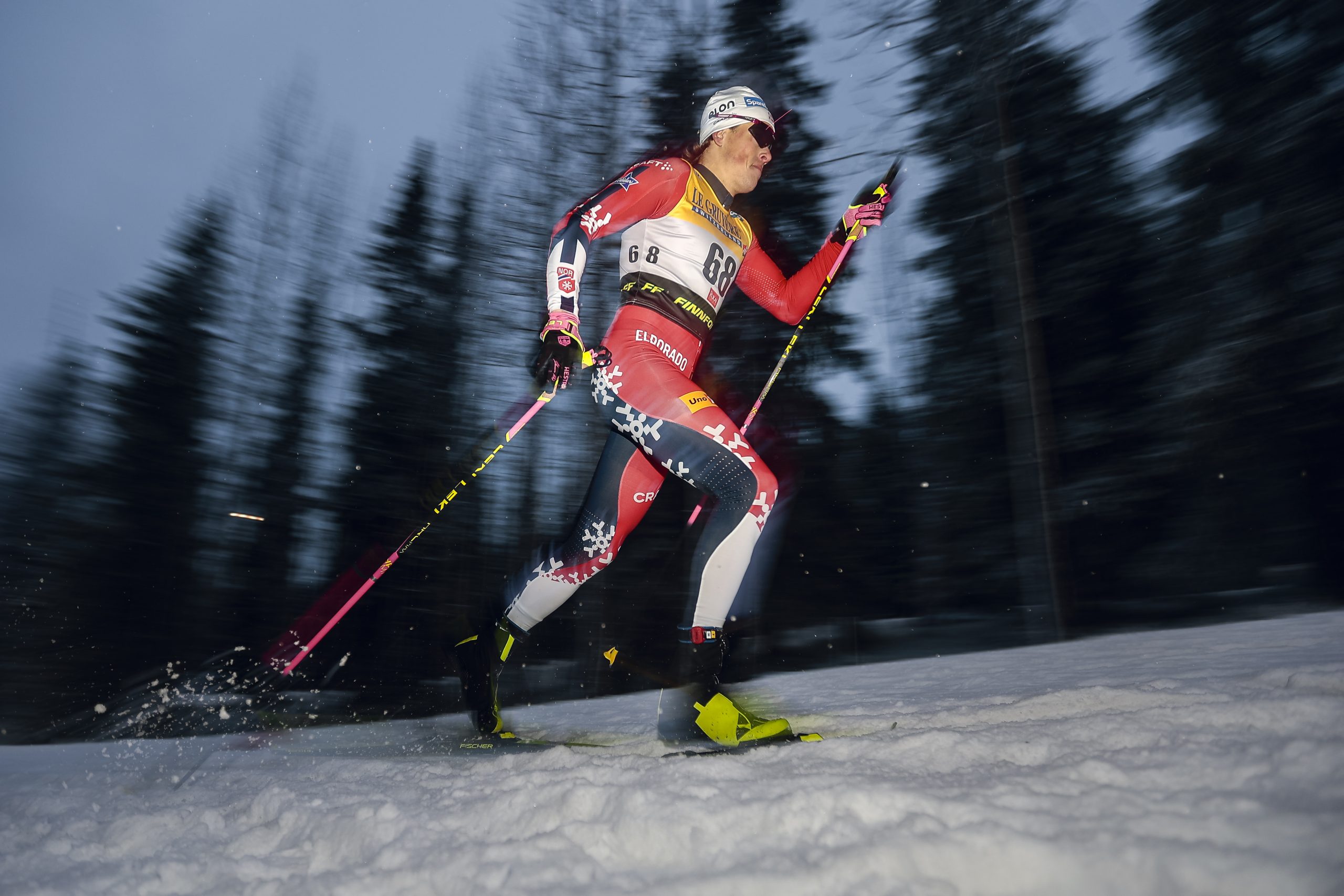
A strong group of Norwegians competed for the following positions, coming in with similar splits throughout the race. This group included medalists Amudsen and Nyenget, as well as their teammates Erik Valnes, Johannes Hoesflot Klaebo, and Andres Fjorden Ree. Ree dropped back after 5 k and Simon Hegstad Kreuger caught up to the pace set by his teammates around 6 k. Just seconds behind this pack of six Norwegians was Jens Burman (SWE), a strong mid-distance skier who has seen success in this discipline before.
Johannes Hoesflot Klaebo (NOR) skied to fourth place in the 10 k classic in Ruka, 28 seconds off the winning time. (Photo: NordicFocus)
Klaebo was favored to contend for the win after his dominance late last season, though finished 28 seconds behind Niskanen in fourth place today. While this might seem surprising, it’s not an uncharacteristic early season result for Klaebo, who placed 14th in this race last year before dominating the second half of the season. If he has taken a similar strategy this year, we might expect Klaebo to start challenging the top of the distance podium positions by the start of January.
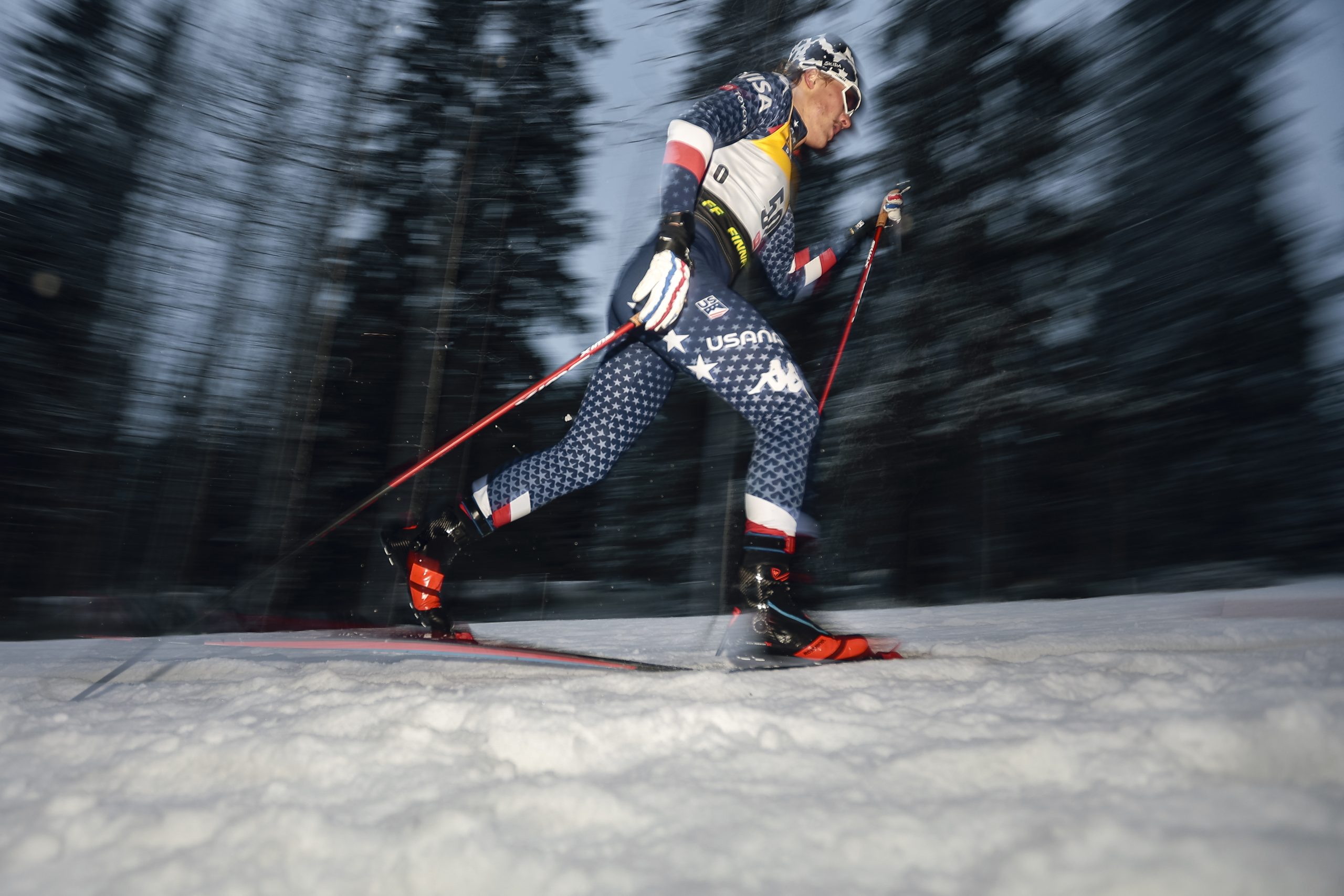
The American men also saw progress compared to their results in last year’s Ruka 10 k classic. Schumacher delivered a strong 18th place performance, improving on last year’s 22nd place in this race with one of his best-ever finishes in this discipline, second only to his 15th-place results in Toblach (2023–24) and Oberstdorf (2022–23). “I’m always thinking about technique and I feel like that leads to slight improvements over the long term, Schumacher said. “I think that idea of slight improvements over long term is what gets me here today.”
Gus Schumacher (USA) raced to 18th place in Ruka, an improvement over last year’s 22nd place finish. (Photo: NordicFocus)
Ogden, who is returning to the circuit after his previous season was cut short by mononucleosis, showed he’s back in form. “I worked on pacing in workouts,” Ogden noted regarding his transition back to the race circuit. “While today wasn’t perfect, I feel like It wasn’t bad by my standards, especially for not racing in a while. Excited to see how this can develop and make me faster over the next few months.” After finishing 39th in Ruka last year, Ogden opened this season with a strong 29th place finish today—a promising ten-spot improvement that bodes well for the upcoming season.
“It’s so fun being back with everyone, team USA and beyond,” Ogden shared following his race. “Cross country skiing is a small community and sometimes I don’t appreciate how awesome everyone from all the nations are until I have to leave them for a while. Congratulating everyone after the races and getting fired up is just so fun.”
Coach Matt Whitcomb is pleased with the team’s results.“We’re in a pretty good spot right now,” Whitcomb shared. “Very representative of a team that’s going to have a great season and isn’t quite sharp yet. So we all feel good about it.”
Be sure to follow the action in tomorrow’s skate sprint and Sunday’s 20 k skate, as the Americans continue to build strength and momentum heading into the rest of the season.
Harald Oestberg Amundsen (NOR), Iivo Niskanen (FIN), and Martin Loewstroem Nyenget (NOR) topped the podium in the Ruka men’s 10 k Classic. (Photo: NordicFocus)
This coverage is made possible through the generous support of Marty and Kathy Hall and A Hall Mark of Excellence Award. To learn more about A Hall Mark of Excellence Award, or to learn how you can support FasterSkier’s coverage, please contact info@fasterskier.com.
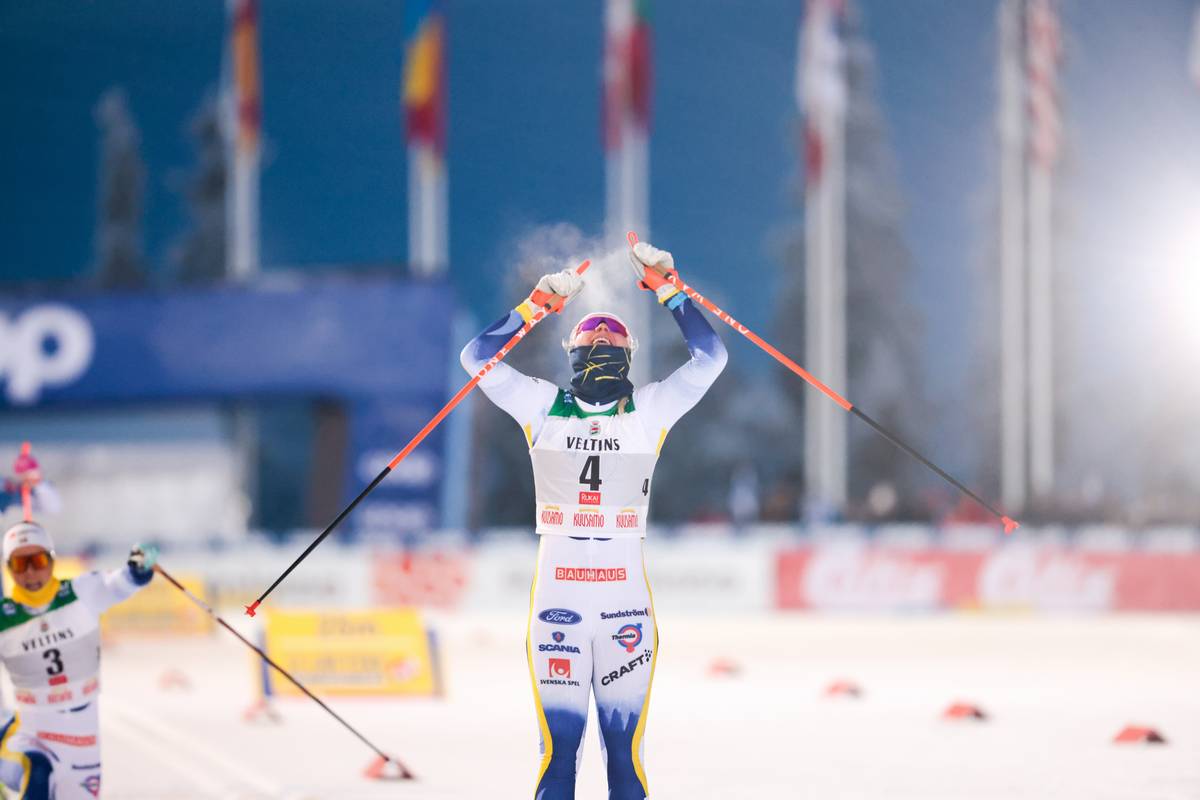
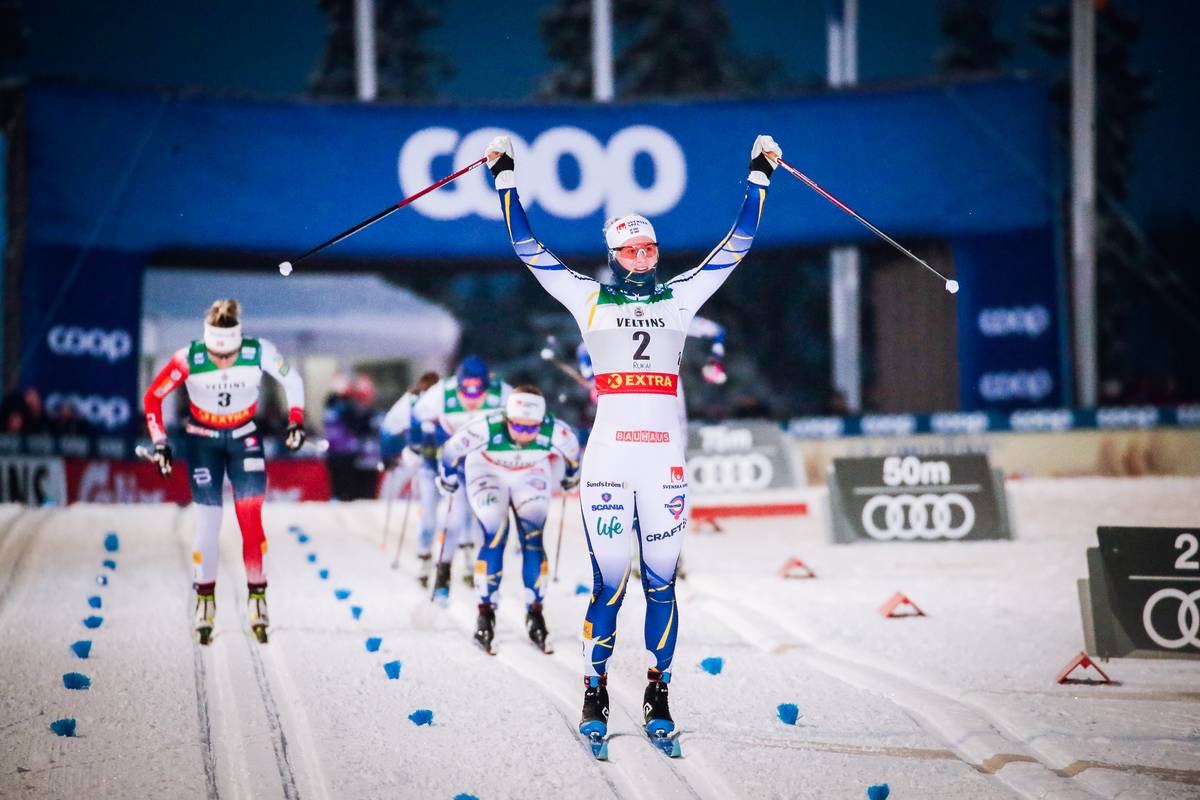
Frida Karlsson (SWE) exults in the finish area after her dominant victory in the Women’s 10 k Classic Interval Start in Ruka, Finland. The World Cup season has begun, and Therese Johaug (NOR) has returned. But all eyes are likely to remain fixed on Karlsson. (Photo: NordicFocus)
It’s been two full seasons since Therese Johaug last toed a starting line in a FIS World Cup distance event. In that time, the field has been able to convince itself that they were the best in the world. But Johaug has been lingering in the background all along—having a life, having a daughter, writing books, creating fashion empires—just waiting for the chance to come back to international competition. On Friday in Ruka, Finland, her long wait came to an end.
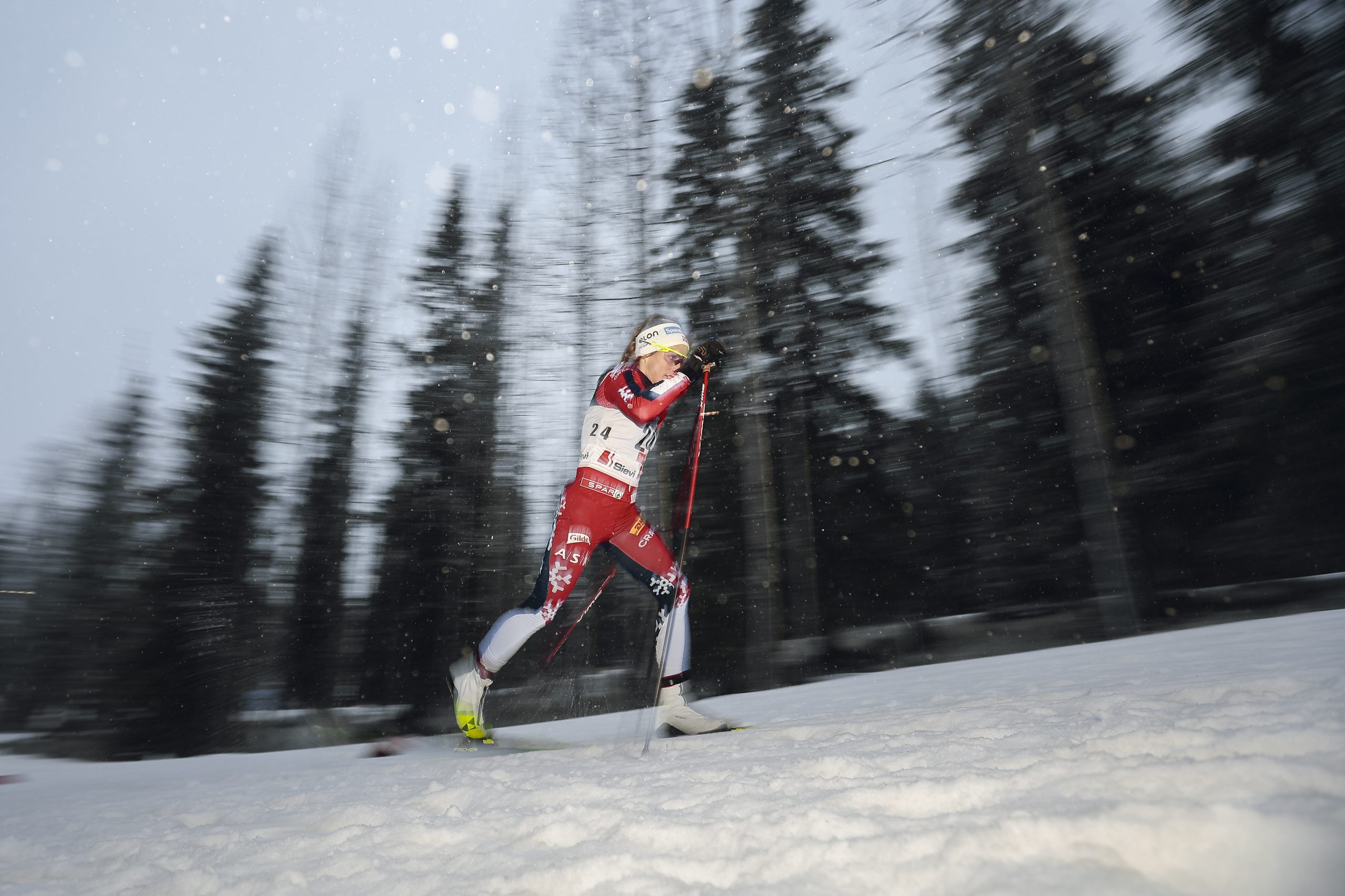
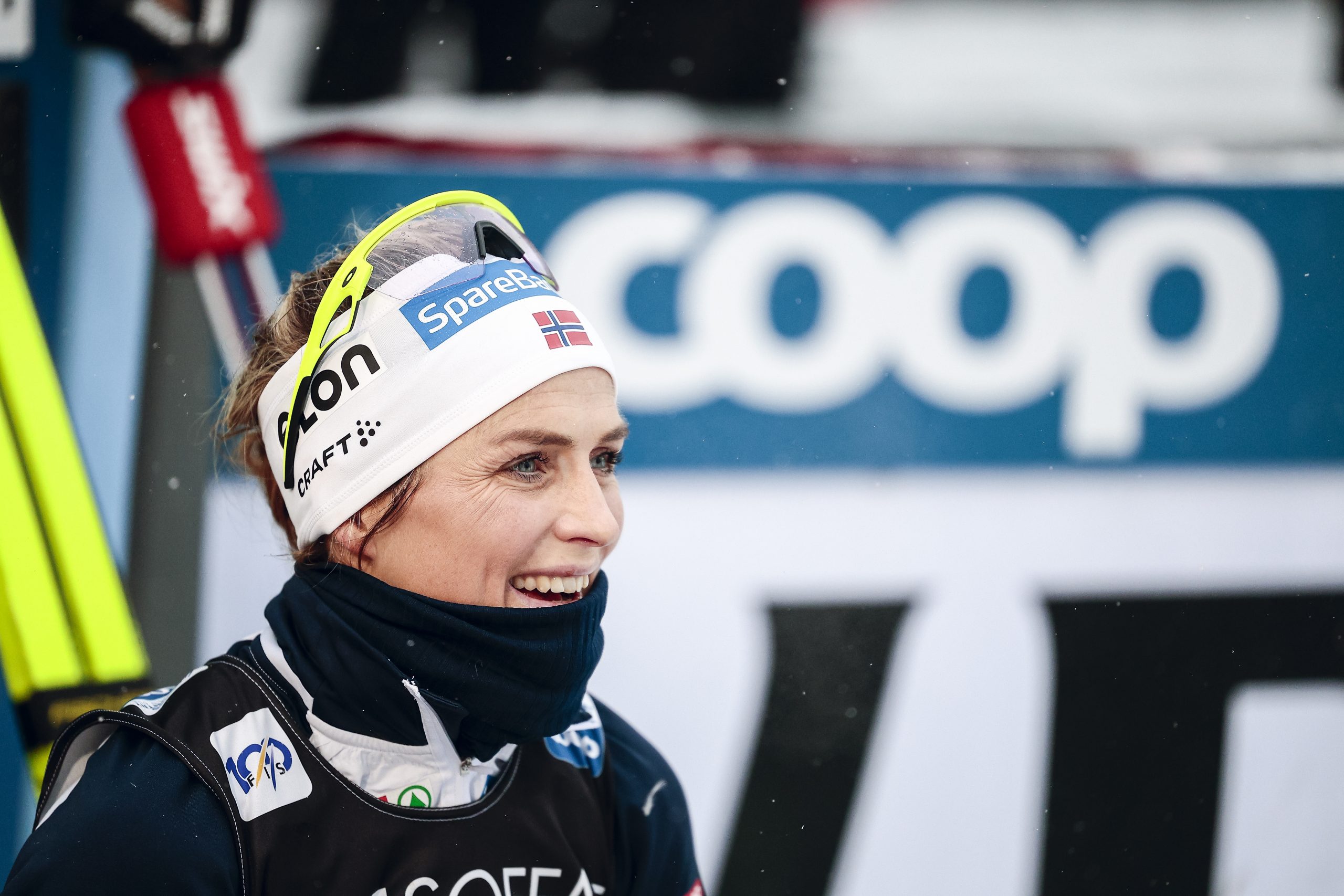
Therese Johaug (NOR) on her way to a brilliant second place finish in the Ruka 10 k Classic. Only Sweden’s Frida Karlsson was faster. (Photo: NordicFocus)
Therese Johaug (NOR) navigating a racecourse in full flight is an awesome sight to behold. Her competitive mode is flat-out intensity, un-stoppable momentum, wind-up-toy tempo. It looks for all the world like her only strategy is “go!” That degree of competitive abandon defined Johaug’s historic career, one in which she earned 82 World Cup wins, six Olympic medals, and 14 World Championships. Toward the end of Johaug’s storied career, a young Swedish challenger arrived on the scene: Frida Karlsson (SWE) showed unique abilities and a penchant for emulating Johaug’s style: high tempo, light touch, fearless pacing. Today in Ruka, Karlsson was the only athlete who could match Johaug; the only athlete who could better her. In the end, Karlsson snatched the fairytale ending from Johaug’s comeback story (at least for the moment), racing to victory by a shockingly large margin.
“Maybe my best race ever,” said Karlsson in postrace interviews. “I felt really good.”
Karlsson had her 2024 season interrupted by illness and injury—and a summer season in which she struggled with foot problems—but evidently her preparation has gone according to plan as she dominated Ruka’s 10 k Classic course like few before her ever have. Perhaps only Johaug . . .
Ten kilometers after her first start in more than two years, the Nordic skiing world was reminded of Johaug’s grit, determination, fitness, and talent. She ultimately crossed the line with a large lead, only to see it evaporate into the Arctic sky with every new split recorded by Karlsson. In the end, Karlsson triumphed over Johaug by more than 45 seconds, with Astrid Oyre Slind (NOR) finishing third, another 7.5 seconds behind.
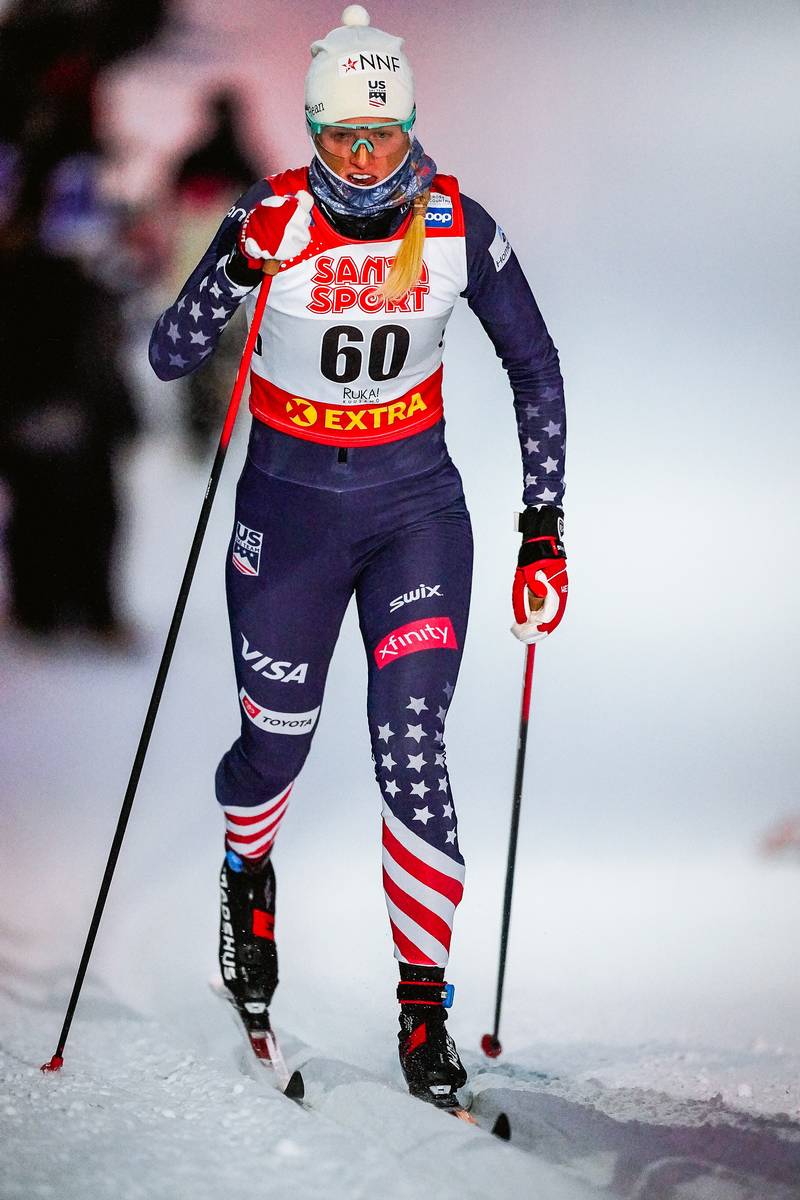
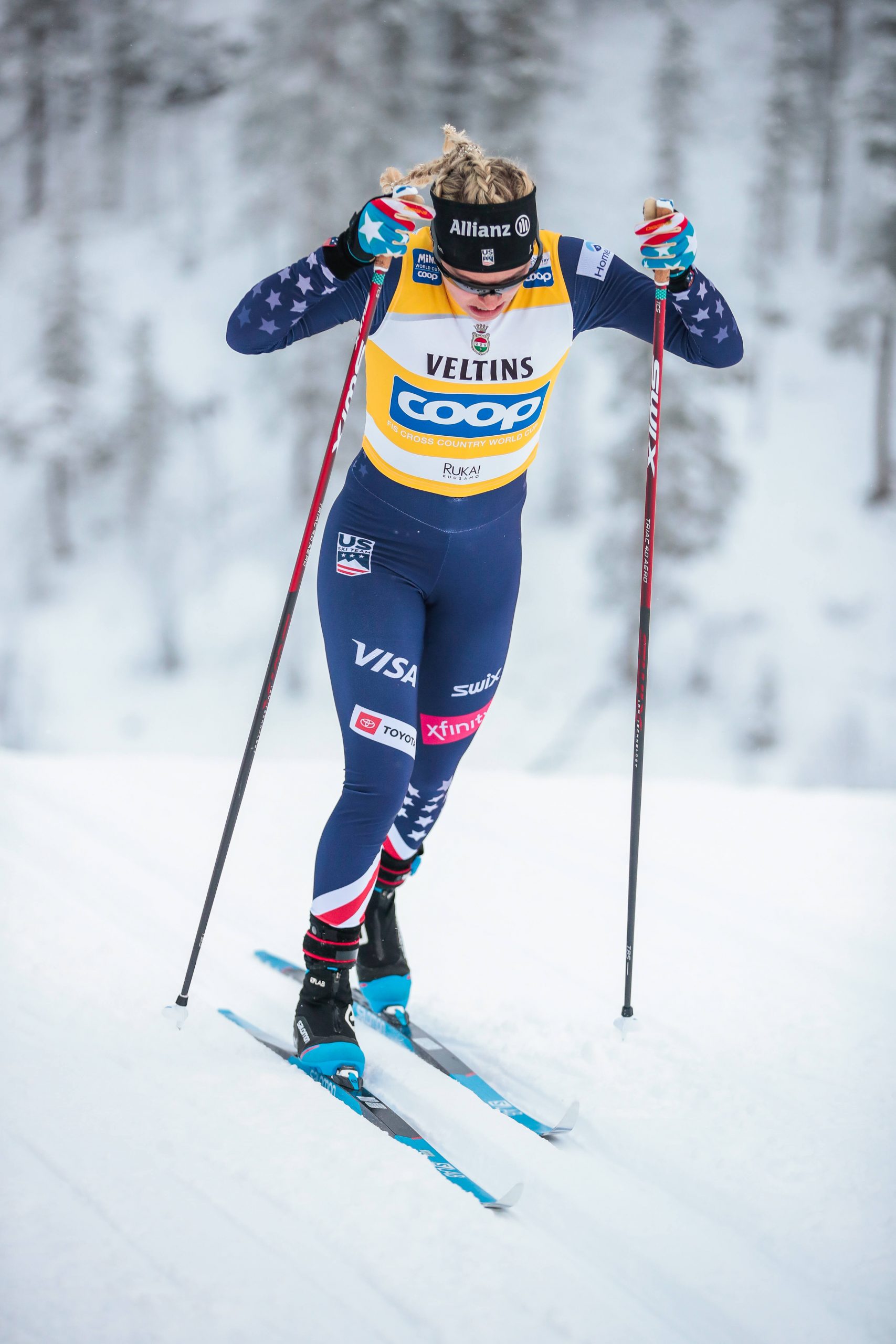
Jessie Diggins (USA) raced to seventh place in Ruka, an improvement over her finish of a year ago when she ultimately claimed the FIS Overall World Cup. (Photo: NordicFocus)
Jessie Diggins (USA) is the reigning World Cup Overall Champion, a distinction that also increases the number of her teammates allowed to enter World Cup races. In Ruka, eight American women raced the 10 k, with two finishing in the top ten. Behind Diggins steady 7th place (an improvement on her Ruka finish of a year ago), American finishers included Rosie Brennan (9th), Sophia Laukli (31st), Alayna Sonnesyn (48th), Julia Kern (49th), Sydney Palmer-Leger (56th), Haley Brewster (57th)
Canadian finishers included Katherine Stewart-Jones (42nd) and Liliane Gagnon (46th)
“Before I look at the results, I look back on the race,” Diggins continued. “How did it go? How did I communicate with my tech about my skis? Did I ask for what I needed? How’d the warmup go? How’d the race go: mentally, tactically, technique-wise, racing-wise? Then I come up with my scoring for myself before I look at the results. Today I was really really proud of all those categories, able to push really hard and stay very technique-focused.”
Women’s 10 k Classic Interval Start
November is the time of year when skiers wish for snow. Regrettably, those snow-wishes aren’t always granted, and November is often a month of roller ski pole tips clacking and slipping on near-frozen asphalt roadways. This year, though, the hills and trails appear different: Snow has arrived. The Central Rockies got totally dumped on this week—cars and trucks skidding and colliding up and down Vail Pass. New England finally got the Thanksgiving nor’easter that ski areas hope for every season. Now if they can just arrange another one for Christmas, then a couple more for President’s Day and Spring Break. Western Canada is blanketed in snow; Silverstar, BC is hosting camps for those programs savvy enough to plan early.
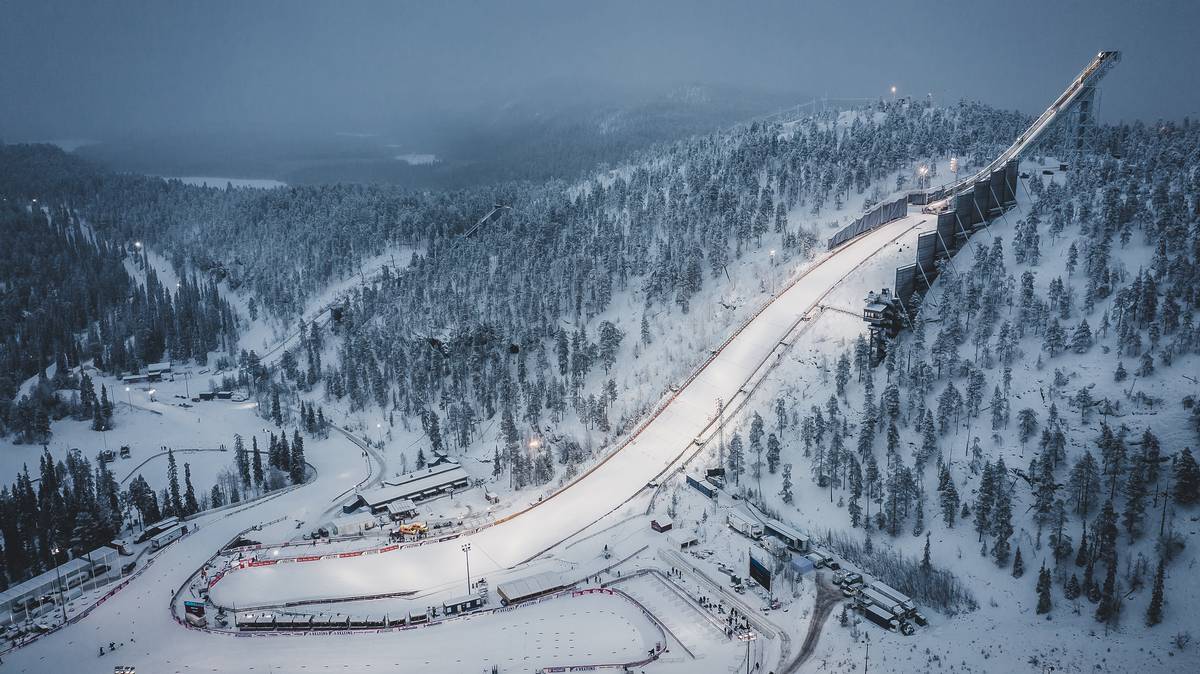
The International Ski Federation (FIS) doesn’t take chances when scheduling season openers. For many seasons, the first World Cup stop has been in Ruka, Finland (25 kilometers north of the Arctic Circle). It may only be November, but skiers are pretty sure to find snow in Ruka.
Skiers are also likely to find challenging conditions on Ruka’s Classic course that is designed to test the best athletes.
“Both up and down, (Ruka) is very technical, said Diggins. “Very steep hills, and you need really dialed-in technique in order to run them. You also have to be able to transition in and out of herringbone really well. I’m still getting there, and I have more that I want to do. It’s exciting to feel like all that hard work is sinking in.”
The first World Cup of the season—the Women’s 10 k Classic Interval Start—was raced in fresh snow with temperatures hovering around minus 2 centigrade. Conditions would be slower and more challenging than most athletes might’ve liked for the first test of the season, and many athletes lacked the snap typically seen in World Cup Classic races. The snow dragged at their skis, the hills sapped their energy. In the near-constant twilight of Arctic winter, racers struggled to find the form and rhythm that they’d refined all through the summer training season.
It’s been two full seasons since the skiing world watched Therese Johaug (NOR) race. Ruka’s 10 k Classic was a reminder of her long and excellent career, and of the potential she still possesses with the Trondheim World Championships looming on the Norwegian horizon. (Photo: NordicFocus)
Now 36 years old, Johaug had retired after the 2021-2022 season. The day’s 24th starter in Ruka, Johaug was seeking her 83rd World Cup victory. She departed the stadium in her usual staccato style, attacking a familiar course that has delivered victories for her many times before. Johaug was seen to be exiting the tracks in search of greater kick on the challenging uphills (as were many of her Norwegian teammates). Nevertheless, she established large leads at all her early splits.
Other contenders (Diggins, Slind, Weng, Andersson) would match or better Johaug’s early splits, but ultimately each of her rivals faded . . . except for Karlsson. She stormed on through the Finnish forest, increasing her lead at each juncture. In a field of world class skiers who seemed generally to struggle with the day’s conditions, Karlsson appeared the lightest, most energetic, most efficient on her skis. Rarely out of the tracks, she was able to attack where others needed to measure their efforts.
At the midway point, fast times had been turned in by Karlsson, Slind, and Katharina Hennig (GER) who were all positioned ahead of Johaug. Diggins hovered in fifth, just ahead of Heidi Weng (NOR). But only Karlsson and Johaug were able to maintain their technique—and their momentum—all the way to the end. Slind raced bravely as well, recovering her technique near the end to finish a strong third.
“I think I went out a little hard,” Diggins confessed after the race. “I don’t necessarily regret it; sometimes you gotta go big and see what happens. But I think I was folding a little bit in my technique on that second lap.
So, the 2024-2025 World Cup season is underway. Many weekends and many races lie ahead, and much will transpire before the FIS World Championships in Trondheim. Those races are what Therese Johaug identified as her goal event for the season, a week of racing that Frida Karlsson is likely to have circled on her calendar, as well.
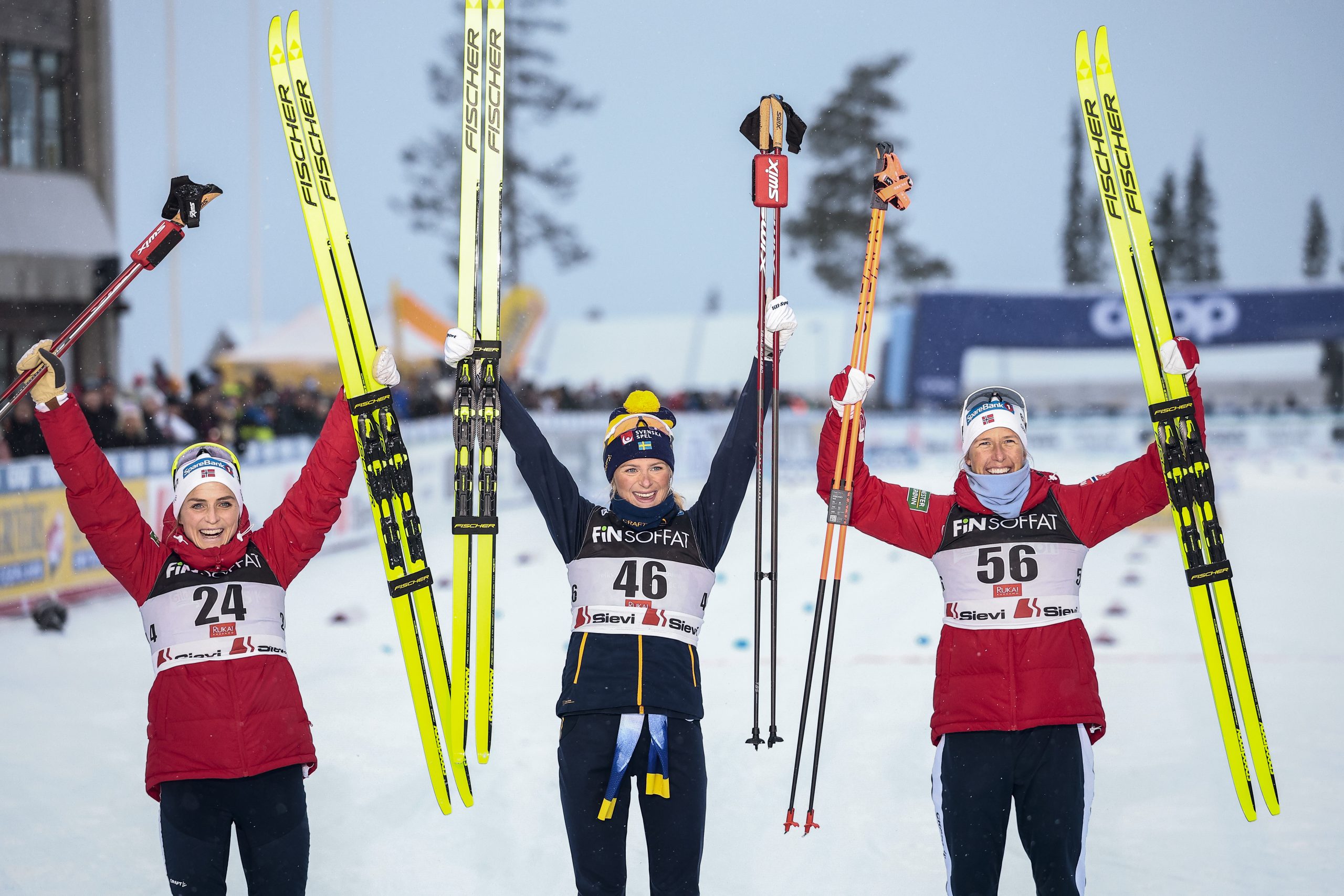
First podium of the World Cup season: Therese Johaug (NOR), Frida Karlsson (SWE), and Astrid Oyre-Slind (NOR) celebrate on the podium in Ruka. (Photo: NordicFocus)
This coverage is made possible through the generous support of Marty and Kathy Hall and A Hall Mark of Excellence Award. Learn more about A Hall Mark of Excellence Award—or about supporting FasterSkier coverage—by contacting info@fasterskier.com.
It’s hard to believe, but the start of the World Cup ski season is upon us. The weekend opener in Ruka, Finland begins November 29th. While many of us will be bemoaning our Thanksgiving excess and recovering from NFL binge watching, the best skiers in the world will assemble in Finland’s northern remote regions— hovering around the Arctic Circle— for the start of the 2024/25 season.
The U.S. team looks on in Ruka in 2023. (Photo: NordicFocus)
All systems are go for the season opener, with FIS (International Ski Federation) reporting that “after the last snow control meeting … the event preparation group confirmed the event is to take place as scheduled.” There’s a lot at stake for the season opener in Ruka, but cross-country fans may forget that there are other Nordic sports using the same snow for the season opener. Nordic combined, ski jumping, freestyle skiing, and cross-country will all share the Ruka venue so getting the green light from FIS is huge for many ski fans and athletes. The forecast for the area calls for warmer temperatures and rain mixed with snow early in the week, but by Friday, temperatures are predicted to drop well below freezing with several inches of snow each day. Jessie Diggins stated in her press conference on Monday that Ruka just experienced a huge snowfall. So it’s likely the races will be held on a mix of natural and artificial snow. If it’s snowing during the races, the weather could play an outsized role with two of the races scheduled being Classic.
Last year, Jessie Diggins (USA) finished 11th in the 10 kilometer Classic in Ruka. (Photo: NordicFocus)
The cross-country race season will kick off with the women’s 10 kilometer Classic interval start on Friday, November 29th at 4:00 a.m. Eastern time. The men’s event will follow at 6:40 a.m. Eastern. You can spare yourself from the dreadful rising time and join us for our same day coverage at FasterSkier.com. As always, our vigilant FasterSkier staff will be watching the races live, so you don’t lose out on your precious beauty sleep, and you can catch up with the results with coverage from us any time.
Dreaming of the Season Ahead
The beginning of the ski season is like the start of any new sport season. In front of the athletes is only a blank slate, and visions of glory of what might be. It’s time to dream big. For Rosie Brennan’s big dream to come true this ski season she told FasterSkier it would mean “a relay medal at the World Championships.” Same dream for Julia Kern. Same for Jessie Diggins. It’s fair to say that the women’s team is focused on one goal.
Ruka will be an early test for Julia Kern (USA) to see if she has successfully worked through injury. (Photo: NordicFocus)
U.S. head coach Matt Whitcomb has a slightly different angle on what a dream come true season would be. For Whitcomb a dream season would be “a million dollar donation to the NNF (National Nordic Foundation), because we finish in the top three as a nation.” It’s a dream that would set up the team for continued success and cement their prestige which has been only building over the decades. It’s a fitting ideal for a coach who must take a long term view of the entire program.
Dealing With Opening Day
While it’s a very long season, it’s nice to get out to a good start, but not imperative. One big thing that Jessie Diggins has learned about opening weekend is to not worry too much about the results. “Unless you lose a glove and end up with a pole in the face (as happened last year), no one is going to remember what happened in Ruka. In the moment it feels bigger than big, but it’s ok to work your way into the season.” Diggins continued that, “you get this back to school vibe and you’re excited to see everyone … I would tell younger Jessie that one data point is not a trend, and it’s not who you are.”
“The first period of racing can vary in importance for the season, depending on the goals and the training build-up,” said Julia Kern. “It is always a confidence boost if the first period goes well; however, it’s not indicative of the rest of the season. Momentum is always a good thing, but sometimes it takes time to build up to speed.” Kern’s gaze is looking beyond the weekend opener. “I am excited for World Champs and going back to some less frequent venues like Cogne, Italy and Tallinn, Estonia. I think the calendar has great flow this year, where there are a lot of exciting stops and formats such as Davos adding a team sprint this year.”
For some, there might be a rush to get opening day jitters over with, but certainly not everyone feels that way. “I want to enjoy it,” said Rosie Brennan. “I’m anxious to get started but I love the early season nerves and the blank slate you start with every year. I think it’s fun to move through all the different parts of the season and embrace all the different emotions each part brings.” Looking down the road a bit, not surprisingly, Brennan is anticipating the World Championships the most. “I’m looking forward to sharing Trondheim (site of the world championships) with my favorite fans, my mom and aunt.”
Whitcomb shares Brennan’s sense of not just wanting to get opening day over with, but to savor it. “Getting our rhythm back always feels good, but we aren’t looking to get through it, so much as to get to it. Ruka is one of my favorite venues, and perhaps is my all-time favorite sprint course. The Skate mass start is always thrilling. The opener is exciting. I’m lucky to work with this staff and these athletes. To be a part of a tribe that gets to perform rather difficult jobs in occasionally stressful environments is such a gift. I feel lucky every day.”
The start of the season also signals the seemingly endless parade across Europe and being away from home for months. Everyone has their own way to cope with the challenge. For some, it’s bringing a little piece of home with them. Brennan has perhaps the most unique and frankly surprising approach. The thing from home she absolutely doesn’t leave without? “Teddy! It may sound crazy to be the oldest one of the team and still traveling with my childhood teddy, but don’t knock it till you try it! Teddy is small and at this point, kinda disgusting, but he represents my whole life, my family, and my support team that’s with me no matter how great or tough life on the road is at that moment. I need that daily reminder and something that gives me that sense of safety and peace that family can bring.” So perhaps a message to all of the aspiring junior skiers out there is don’t give away that childhood stuffed animal just yet!
Whitcomb carries with him an inspirational note from former U.S. coach Pete Vordenberg. (Photo: U.S. Ski Association)
While Brennan favors plush toys for comfort, coach Whitcomb turns to something a little more directly related to skiing. He always takes with him, “a motivational note from Pete Vordenberg (former U.S. Olympian and longtime team coach). He slipped it in my bag in 2009.” That’s a pretty cool motivational keepsake. He continued that, “also, depending on whether it’s in my possession at the time, a wooden heart that Chris Grover (current program director) and I have been furtively stashing in each other’s backpack for a long time.”
Diggins won’t leave home without American gum and toothpaste. “Those are two things that I just really like having from home and I know that’s kind of weird, but I like my things!” She also brings along her own supply of biodegradable glitter. And yes, biodegradable glitter is a thing. Diggins has engaged with Dermatone to launch biodegradable glitter kits, so she can spread the glitter love and be environmentally responsible at the same time.
Besides the items that cheer the psyche and act as a salve for homesickness, there are practical matters like dealing with the lack of sunlight and its proven debilitating effect upon the Circadian rhythm. “I actually find the lack of light rather cozy and exciting,” said Whitcomb. “Personally, I’m not affected by the loss of light, but I know some people travel with special happy lights that are used in various ways. They might stretch under it for 30 minutes a day, for instance. It’s a real thing.”
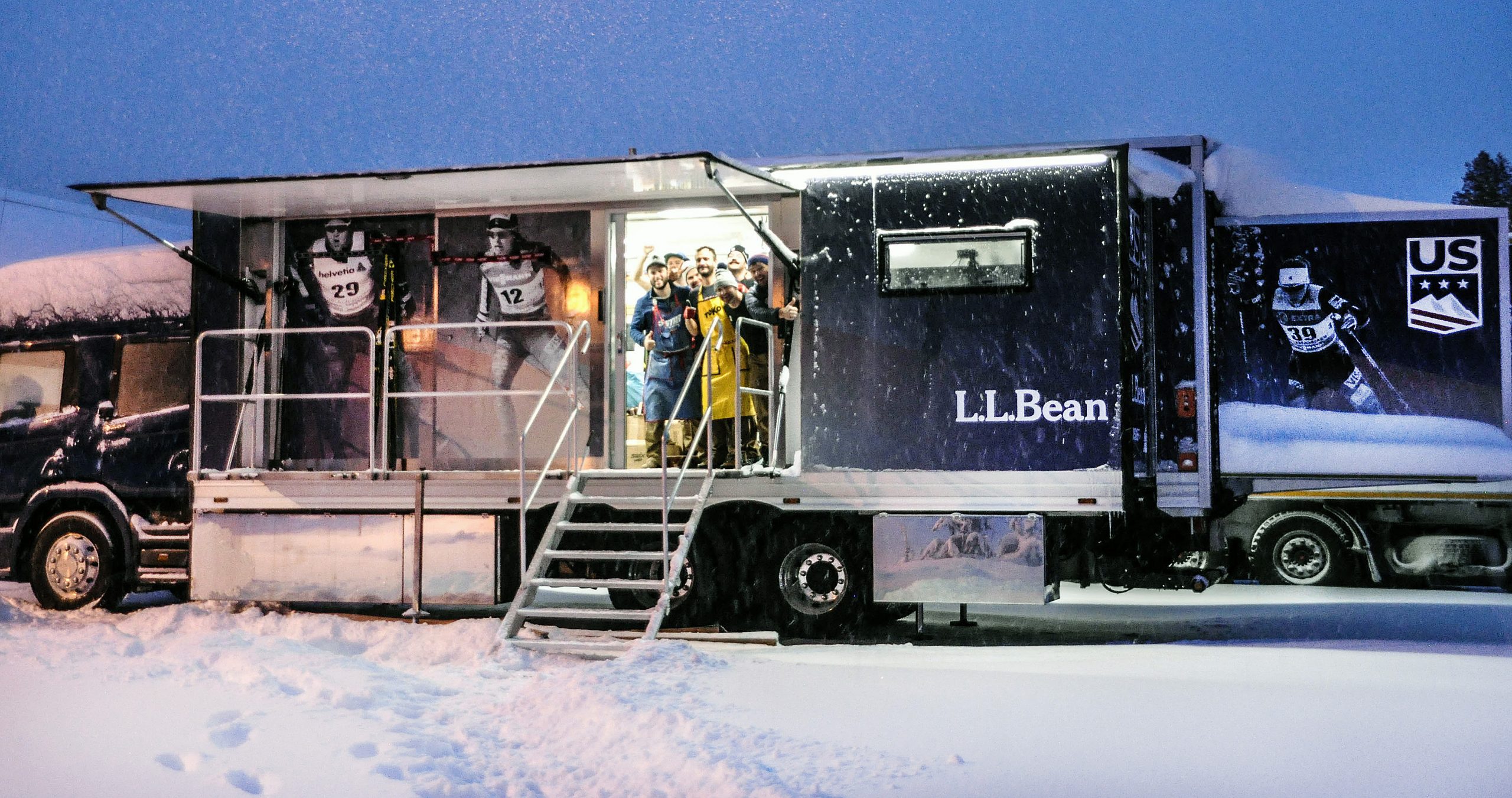
One thing that won’t fit into Whitcomb’s pocket is the addition of another wax truck for the team. The new truck is, “currently set up and is being waxed in. The grinder is running. Ultimately, the new stone grinder truck is our answer to a fluoro-free waxing world. We are unlikely to be using team grinds in the first year or two, though we will be very dedicated to testing grinds, and developing our system. This is the beginning of a project that will never end but is likely to take several years to really impact the team.” The underlying message is clear. In the arms race for faster ski speed– with fluoros now out of the picture– selecting the best ski grind for the day will be the new weapon of choice.
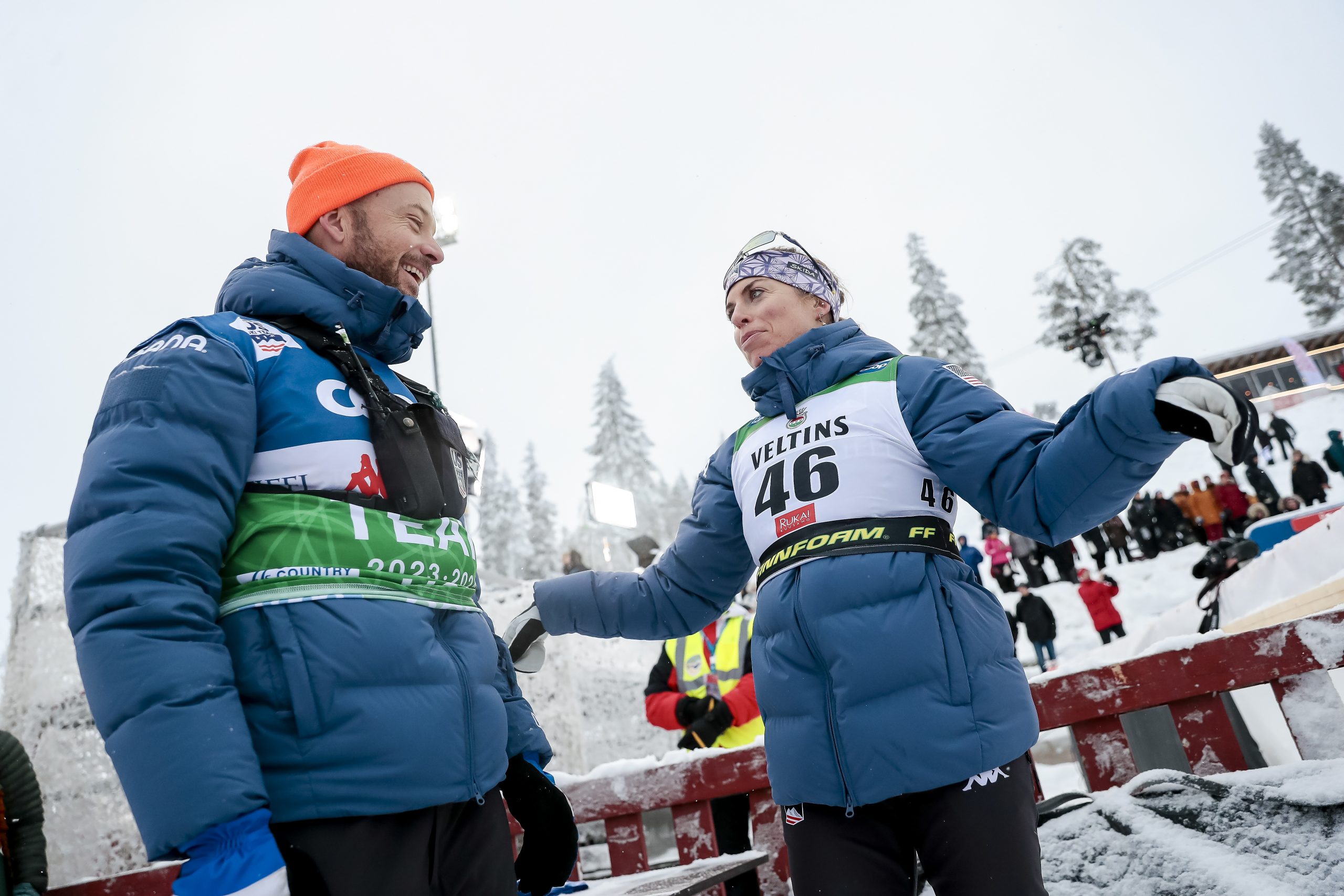
U.S. head coach Mattt Whitcomb and Rosie Brennan (USA) share a moment last year in Ruka. (Photo: NordicFocus)
The U.S. team is now a nice blend of accomplished veterans and up and coming athletes and coaches. The veteran’s perspective helps to guide the team over a long season. Part of that perspective is understanding that there are many possible roads to take to reach the final destination. One of the big lessons learned is, “the acceptance that many training plans can work,” said Whitcomb. “The road of the insecure is to negatively judge that unusual training, and the high road is to support it, and consider its merit. While I believe I have an understanding of what works for the 10 days that lead up to the first World Cup, I’ve seen many different approaches work. One needs belief in their plan. Inter-team judgment hurts this, and support promotes this. If you look at it that way, many ways can work, and it takes the pressure off. It’s pretty simple.”
Opening Weekend Up Close: Friday’s Opener
Whenever there’s a Classic race in Finland, Iivo Niskanen (FIN) is certain to be in contention. (Photo: NordicFocus)
Last year, the 10k Classic was on the second day of the Ruka weekend, this year it will be the first race. In last year’s 10k Classic, Norway took two of the podium spots in the men’s race, with hometown favorite Iivo Niskanen (FIN) finishing second by a scant 2.9 seconds. It was a bitter pill for the Finn who was looking to thrill the locals with the top spot in his Classic specialty. There’s no reason to think that the Norwegians won’t dominate the podium again. But if the snow falls during the race, it could make it a wide open contest.
The best American man was Gus Schumacher’s 22nd place finish. Schumacher has been on what feels like a straight upward trajectory since then, so there is a lot of optimism for improving upon that finish. Ben Ogden, Luke Jager, and Zanden McMullen all finished outside of the top 30 in that race. They will be hoping to start the season off with a better opening day showing to get the season’s momentum going early. Ruka will be an early test for Ogden who had to call it quits early last season—and was forced to miss Minneapolis— because of illness.
Another racer to keep an eye on will be Canada’s Antoine (Tony) Cyr. Cyr’s results started ramping up toward the end of last season. On the last weekend of racing, he placed 11th in the 10k Classic in Falun. Last year in Ruka, Cyr finished 27th in the 10k. If he can build off of last year’s Falun momentum with a good start in a Classic race, he could be a North American sleeper to keep an eye on.
Norway’s Therese Johaug celebrates her final 30 k race at Holmenkollen, before retiring at the end of the 2021/22 season at age 33. (Photo: NordicFocus)
She’s Back
The biggest wildcard in the women’s field will be the return of Therese Johaug (NOR). Johaug retired at the end of the 2022 season, but she has quickly reestablished herself at the top of the game. Her performance in the opening of the Norwegian domestic racing season last weekend certainly grabbed everyone’s attention. For those who thought Johaug’s return would be some kind of skiing social victory lap, think again. Last weekend she won the Women’s 10 kilometer individual start Classic race in Beitostoelen, Norway by beating the venerable Heidi Weng by almost 40 seconds. It bears repeating that her margin of victory was 40 seconds over only 10 kilometers!
Weng got revenge and eked out a victory over Johaug the next day in the 10k individual start Freestyle. Weng managed to hold onto a 0.6 second advantage to take the win. Weng’s victory notwithstanding, it looks like Johaug will be a force to be reckoned with throughout the season. Whether she will be as dominant as she was two years ago, and whether she races throughout the entire season remains to be seen. But no matter what, everyone is on notice to watch out for Therese. Given her performance in the Classic at Beitostoelen how can she not be the favorite going into the first Classic race of the season?
The American women had a great day in last year’s 10k Classic, with Rosie Brennan taking her first individual Classic podium by finishing second, Jessie Diggins finishing 11th, and Novie McCabe 30th. Brenan has told FasterSkier that she really likes the grinding nature of the start of the season races, so expect her to be in contention for a podium again. The unknown factor will be how her Classic legs are feeling. Last weekend, she told FasterSkier that, “I know that I have the ability to succeed right off the bat, but success is never a given, and there are many variables at play.” The pressure of performing on opening day doesn’t bother Brennan, “There are many people that support me in order to have success and I want to deliver. I enjoy that type of pressure, it makes me feel like I‘m doing something for more than just myself and it allows me to better find my limits.”
Jessie Diggins (USA) is feeling very positive about her mental and physical state entering the season. (Photo: NordicFocus)
But all eyes will be on Jessie Diggins, as she begins the defense of her Crystal Globe championship. If she can duplicate the hot start she had to last season, it will only help her in her title defense. “I’m very excited for a new season,” Diggins said in her news conference Monday. “I feel like I’m sitting here as a different stronger version of myself.” Diggins went on to address her mental health status, “I feel like being vulnerable has actually let me connect in a very different way with a lot of people. I feel like I’m coming back in a much stronger place.” Diggins feels that, “I’m in a much more solid place than I’ve ever been in before.”
Sophia Laukli (USA) had a strong opening in Ruka last year in the 20k Freestyle. She’s hoping to improve on her Classic results. (Photo: NordicFocus)
American fans should also keep an eye on Sophia Laukli. Laukli has been working on her Classic technique, and though a 10k race is a little too short to be exactly in her wheelhouse, it could be an interesting barometer for an early glimpse into whether her striding game has improved. Last year she finished 44th in the 10k Classic. Last weekend she took an impressive 7th place in the Norwegian season opener in the 10k Classic beating out many impressive names and finishing only 38 seconds off the podium It’s hard to believe that she won’t see a dramatic improvement from last year’s 44th place.
Opening day will also be an early test for Julia Kern. Kern has been struggling with injury and has had to resort to alternative training methods throughout the summer. Ruka will be an early marker to see if she’s been able to maintain her skiing fitness. “I am both excited and feeling a bit uncertain,” Kern told FasterSkier. “I was in a great place during New Zealand camp. Unfortunately, since that training camp, I have been dealing with back issues that have greatly impacted my normal training routine. However, my energy has been good, and I had a good last week of training at home. This time of year, I think the most important launching point is having good energy going into a long season of racing.”
Saturday’s Sprints
Saturday will be for the Classic Sprinters with the heats beginning at 5:30 a.m. Eastern. For those who just can’t get enough racing and may need to fill time during bouts of insomnia, you can follow the Sprint qualifiers live through the FIS website starting at 3:00 a.m. Eastern—enjoy that!
Last year Norway dominated the men’s Ruka Classic Sprint, but in an unexpected way. The Norwegians advanced seven skiers into the semifinals. But, in a true shocker, Johannes Hoesflot Klaebo (NOR) didn’t make it to the top of the podium. Klaebo was in the midst of recovery from illness. His countryman Erik Valnes (NOR) took the victory. It was no secret that Klaebo had been sick, but seeing other skiers blow by him still felt extremely unsettling and shocking to witness. But there was no reason to remain feeling badly for Klaebo for long, as he went on to dominate the Sprints later in the season like no one else ever has. He won the Sprint in the Norwegian opener last weekend and looks ready to dominate again.
Ben Ogden (USA) had a good Sprint day last year in Ruka. (Photo: NordicFocus)
The top American finisher that day was Ben Ogden, in 11th place. Later in the season Ogden would go on to claim his first World Cup podium in Toblach in the Freestyle Sprint. After Friday’s 10k and Saturday’s Sprint, we should have some solid insight into where Ogden’s conditioning stands.
For the women last year, the first Sprint race of the season was a preview of the rest of the year. It was all of the Swedes against Norway’s Kristine Stavaas Skistad. Emma Ribom (SWE) won the opener, but Skistad later went on a late season tear which saw her winning the last three World Cup Sprints in Klaebo-like dominating fashion. When Skistad is firing on all cylinders she is in a league of her own. But there is a huge question mark facing her this winter. In a still developing story, Skistad is reported to have undergone stomach surgery of an undisclosed nature several weeks ago and is not scheduled to be in Ruka. She is reportedly returning to training, but there isn’t any detail on when she is expected to return to competition. Until Skistad returns to the field, Swedish podium sweeps could be a common sight this winter.
Kristine Stavaas Skistad (NOR) was at times dominating last year. She will miss the opening weekend due to surgery. Her return date is unknown. (Photo: NordicFocus)
For the Americans the test will be to see if Julia Kern can rebound from her aforementioned injury. Diggins and Kern finished 7th and 8th respectively last year. It will also be interesting to keep an eye on Diggins’ early season Sprint performances. Last year, once she had gained control of the Overall points standings, Diggins sprinted very strategically choosing to go out hard in the first round and ensure accumulating points by reaching the second round of heats. It will be intriguing to see if she will adopt a more traditional strategy early in the season and go out more conservatively in the opening rounds.
It will be interesting to see how Jessie Diggins (USA) approaches the Sprints early in the season. (Photo: NordicFocus)
Sunday’s 20 Kilometer Freestyle
Sunday will be the first Distance race of the year, featuring the 20 kilometer Freestyle mass start. The men race first, with coverage starting at 3:30 a.m. Eastern, followed by the women at 5:25 a.m. Eastern.
Jessie Diggins (USA) is comforted by her teammate Rosie Brennan (USA) after receiving a pole grip to the lip. (Photo: NordicFocus)
Epic—that was the only word to describe the American women’s performance in this event last year. Sweden’s Moa Ilar won the race, but it didn’t get as much attention as the results of those behind her. It wasn’t just that Diggins and Brennan finished second and third, but Diggins crossed the finish line with a bloody mouth having had her pole yanked off her hand toward the end of the race, and then getting plunked in the lip during the new pole exchange. The finish line picture was one for the ages. It’s hard to imagine that the 20k will be as compelling as last year’s race, but you never know. As Whitcomb said, the 20k Freestyle mass start is “always thrilling.”
Keep an eye on Sophia Laukli during this race. The race features two things she really likes: distance and skating. It will also be a good indicator of whether she was able to fully recover from her running season injuries to start the season in top form. Last year she finished a solid 14th, and a move into the top ten would announce that she’s a real presence in distance racing, and not just at the extremes of Alpe Cermis. Last weekend she finished 11th in the 10k Freestyle in the Norwegian opener, and she looks to be ready to start the season in fine form.
Also keep an eye on Canada’s Katherine Stewart-Jones who finished 22nd in last year’s 20k Freestyle. Jones had a difficult season last year, as her World Cup racing ended after Minneapolis. She’ll be looking to return to her form from two years ago when she had multiple top 20 finishes, including finishing 18th overall in the Tour de Ski.
Gus Schumacher (USA) is hoping to build upon his success from last season. (Photo: NordicFocus)
In the men’s race last year, American Gus Schumacher showed a harbinger of things to come with a 16th place finish. It will be another opportunity for Schumacher to prove that his star is rising. Norway took two podium spots that day with a sweep only being interrupted by the feel good second place showing of Michal Novak (CZE). In addition to dominating the podium, Norway placed six skiers in the top ten, and until proven otherwise, they will be the favorite for every podium position in every men’s race until someone proves that they can pry the podium out from under Norwegian feet.
Moving Hundreds of Skis and Dozens of Team Members Across Europe
Yolanda, the wax truck, can accommodate 800 pairs of skis. It’s still not enough. (Photo: Matt Whitcomb)
Success at the World Cup level requires much more than just skiing fast. The logistics of moving around Europe with hundreds of skis and dozens of team members can be daunting, and part of it falls onto Whitcomb to coordinate. If you’ve ever flown for a cross-country ski trip you know that handling a bag of skis can be a huge hassle and make or break your ski trip. But for the pros, there’s much more riding on it, and the logistics are just a bit more elegantly managed. “The most successful athletes know by March that they are likely to be on the World Cup in November,” said Whitcomb. “So 90% of their fleet stays in our wax truck, Yolanda (the team’s name for their pet wax truck). Everyone on the team brings at least a small ski bag home in March that covers SuperTour Finals, as well as spring, summer, and fall skiing needs. It’s the athlete’s responsibility to bring that bag back. In September or October, our techs make a visit to the factories in Europe and pick up skis from the summer and fall ski run productions. Lastly, the industry brings a few pairs for the athletes to the first World Cups, and the various ski companies always have additional skis on hand at nearly every venue. We have capacity in Yolanda for something like 700-800 pairs of skis. If you can believe it, this fills up quickly, so we try to only keep the performing skis on hand. If we get new skis, we try to trade the old, poorly performing skis out.” Managing 800 pairs of skis might sound like a nightmare, but it’s just part of the process for preparing for the rest of the season.
Whitcomb explained the way the season long logistics management works. “The World Cup is a system that has a nice flow to it. Most weeks, our team will travel to the next venue on Monday, and then train Tuesday, Wednesday, and Thursday. We race Friday, Saturday, and Sunday, and then repeat the process. Chris Grover, our Program Director, runs the majority of pre-season logistics. That largely includes flights and working with each organizing committee to secure housing and a good meal plan. We place a lot of emphasis on our “Curran Family Nutrition Program” (named after supporters of the team), which involves, among other things, organizing chefs for as many venues and winter training camps as makes sense for our housing. If we have houses or apartments, we often have a chef so we can control the quality of our food. This accounts for about 1/3 of the winter. This has made a massive difference to our health and performance. Zoom in a bit and the logistics change focus to training day and race day performance. We have 22 athletes racing in Period 1, which means we have 22 different training plans. We plug them all into a shared document so athletes can easily find a training group that matches their workout on a given day. Winter life is a little more lonely than summer life, so we emphasize the importance of long, big group meals, team walks at night, or game night. If we don’t vibe as a team, we’ll be beaten by the teams who do. The waxing and grinding trucks are a whole other deal. When the athletes and coaches travel by bus or plane on a Monday, many of the techs will have swiftly departed after the races on Sunday for the next event. The drives are often long. In Period 1 for this season, they first drive the trucks from Tallinn, Estonia, which is where the trucks summer, to Muonio, Finland. That’s 600 miles, plus a several hours ferry across the Gulf of Finland. Then it’s back to Ruka, Finland, which is only five hours. Then they’re off to Lillehammer, Norway which is about 900 miles, and then down to Davos, Switzerland, which is another 1,200 miles. Know, too, that the big truck is limited at 89 kph (55mph).”
It takes a lot to make the giant World Cup wheel go around, and with the 2024/25 season now upon us, fans can now go through their own process of gearing up for another exciting season of racing.
We’re back, with some incremental improvements to our audio production and full stoke for a new season of the Devon Kershaw Show. On this first episode of the new season, Devon and Nat break down the winter’s opening races in Sweden, Finland and Norway, and prime the pump for the World Cup kickoff in Finland next weekend. As always, email us at devon@fasterskier.com and nat@fasterskier.com.
A resurgent Calle Halfversson had a breakout weekend in Ruka — until his encounter with the race jury on Sunday. (photo: Fischer/NordicFocus)
This World Cup coverage is made possible through the generous support of Marty and Kathy Hall and A Hall Mark of Excellence Award. To learn more about A Hall Mark of Excellence Award or to learn how you can support FasterSkier’s coverage please contact info@fasterskier.com.
Women’s 20K Pursuit.
Today, Ruka, Finland was home to the inaugural running of the women’s 20K pursuit. The format is now a 20-kilometer skate race with interval starts based upon skiers’ finishing times taken from yesterday’s classic race. The weather has stayed consistent over the weekend. Temperature at the start was 21 (-6.0 Celsius). The humidity has been high all weekend, this morning it was 93 percent.
Frida Karlsson (SWE) celebrates the victory as she nears the finish of the 20k pursuit in Ruka (FIN). (Photo: NordicFocus)
The course was different from yesterday’s 10-kilometer race. Skiers raced six laps on a 3.33-kilometer course.
Ebba Andersson (Sweden) started first with a six second advantage over Frida Karlsson (Sweden) and 13 seconds over Katharina Henning (Germany).
American Rosie Brennan started 29 seconds back. Her teammate Jessie Diggins started at plus 1:18. Diggins usually performs well in this format but had a long way to come back to reach the podium. However, the new longer format could work to her advantage. The other Americans, Novie McCabe, Sophia Laukli, Alayna Sonnesyn, and Julia Kern, all began over two minutes after the starting gun.
Prior to the race Rosie Brennan expressed her excitement on the 20-kilometer format. “I’ve never done 20k on the world cup, but it is a distance I’ve done in the U.S. before, it’s super tight at the top ten and it will be fun and exciting.”
The Results.
First: Frida Karlsson (Sweden)
Second: Ebba Andersson (Sweden)
Third: Tiril Weng (Norway)
Fourth: Heidi Weng (Norway)
Fifth: Silje Theodorsen (Norway)
Sixth: Rosie Brennan (U.S.A)
Seventh: Maja Dahlqvist (Sweden)
Eighth: Anne Kalvaa (Norway)
Ninth: Krista Parmakoski (Finland)
Tenth: Jessie Diggins (U.S.A.)
Other American finishers: Novie McCabe, 25th, Alayna Sonnesyn 33rd, Sophia Lauklia 34th, and Julia Kern 35th
Jessie Diggins (USA) leads Ingvild Flugstad Oestberg (NOR) during the 20k pursuit. (Photo: NordicFocus)
The Race.
One minute before the race, competitors were part of one of the stranger sights at a World Cup start. The entire field of athletes were holding their hands over their ears trying to block the incredibly shrill piercing noise of the pre-race alarm going off. It was much like the frequency of a smoke detector. The athletes were visibly bothered, but the race began without a hitch.
Within the first two minutes, Karlsson had closed the initial gap on Andersson. The unanswered question arose: was this intentional team tactics to try and work as a group or was it simply two skiers racing?
At the 1.1-kilometer mark, Brennan had reduced her deficit by three seconds, and was only six seconds out of third place. Diggins had already shaved six seconds from her deficit moving into 19th place.
Pacing for the new 20-kilometer distance was going to be a challenge. It remained to be seen how racers would manage the new event. Brennan hooked up with a seven-person chase pack at about 2.5-kilometers. It included Maja Dahlquist, Heidi Weng, Tiril Weng, and Anne Kalvaa. Kalvaa had put in a strong performance yesterday, barely missing out on a podium.
By the 3.3 mark, the leading Swedes had slightly extended their advantage over the chase group. Brennan was 27.6 seconds back. But the lingering question of whether the leading Swedes were working together had been answered: they were.
Rosie Brennan (USA) leads the chase pack during the 20k pursuit. (Photo: NordicFocus)
At the 3.3-kilometer mark Diggins was 1:03.8 behind the two leaders and was now skiing in a group. She had trimmed 15 seconds from her original deficit. But the lead Swedes continued to press their advantage, increasing the gap on the next chase group by another couple of seconds at the 4.4-kilometer time check.
Going into the 6.6-kilometer mark, the lead Swedes continued to swap spots, while the chase group had now increased to ten racers. Brennan—perhaps realizing that the pace was not good enough to catch the leaders—moved to the front of the pack, but the group was still bleeding time to the lead Swedes, now 38.3 seconds behind.
Meanwhile, the second chase group—which contained Diggins—was working hard. Diggins was now only 57.2 seconds behind with over 13-kilometers to go. But, closing the gap to the next chase group would be a monumental task.
At 7.7-kilometers Brennan was clearly trying to push the pace and began to try and pull away from the rest of the chase group.
By the halfway point, the lead Swedes had extended their lead over the chase group to 49 seconds. It appeared that much of the chase group had given up the hunt and were jockeying for third place. Their pace had slowed enough to allow Diggins to join the group. At this point the chase group had swelled to twelve athletes with Diggins tucked in the middle.
Meanwhile, the front running Swedes calmly exchanged the lead, skiing in tandem, in almost perfect rhythm which each other.
At the start of the fifth lap, if any doubt had remained, it was clear that the chase group was now competing for third place. The chasers were about 50 seconds behind the leading Swedes.
27.11.2022, Ruka, Finland (FIN): Frida Karlsson (SWE),- FIS world cup cross-country, pursuit, Ruka (FIN). www.nordicfocus.com.
It was at this point that Norway tried to assert itself as a wave of red suits went to the front of the chase group. But Diggins would have none of it, and at 14.3 kilometers she had broken through the Norwegian wall and pushed herself to the front of the pack and was now in third place overall, having started the day in 19th.
With 3.5-kilometers to go, race tactics took over as the skiers in the chase group began to position themselves for what would surely be a sprint finish. The chase group was now over a minute back from the leaders, but it didn’t really matter as the top two spots had been conceded.
At the front of the race, Karlsson put in a gigantic turn of speed to establish a small gap over Andersson. It was the first time since the start that there had been any space between the two Swedes. Karlsson then shot up the next big climb putting several more seconds on her compatriot.
27.11.2022, Ruka, Finland (FIN): Rosie Brennan (USA) – FIS world cup cross-country, pursuit, Ruka (FIN). (Photo: NordicFocus).
At about the same time, the chase group pushed the pace and began racing for third.
With 2.4 to go Karlsson had amazingly gapped Andersson by over 18 seconds; a remarkable push to the lead in the short span of only 1.1-kilometers.
By the time the chase group reached 2.4-kilometers to go, the Norwegians created a gap on much of the group; fracturing it. Kalvaa went to the front trying to earn the podium spot which had barely eluded her yesterday.
Diggins gamely held onto the surging Norwegians. She then jumped to the front of the group with about 1.5- kilometers to go trying to break the Norwegian red suits. Having committed so much energy into making up her original deficit would she have enough left to gain a podium spot?
Julia Kern (USA) on her way to 35th place. (Photo: NordicFocus)
While the rest of the field was still fighting, Karlsson calmly skied across the finish line having broken away from Andersson, never looking back. Karlsson had put in such an impressive burst of speed that she ended up finishing 33 seconds ahead of Andersson.
Coming into the stadium the large chase group mounted a frenetic charge toward the finish with Diggins remarkably out front. But it was too much to ask, even for Diggins, as she faded slightly going up the final hill and the Norwegian skiers swallowed her up. Diggins eventually slowed up the final hill, as she stumbled slightly, but American hopes were kept alive as Brennan asserted herself and moved into third position in the chasse group. Coming into the finishing straight it was T. Weng, H. Weng, and Brennan.
Brennan gave it everything and tried to outsprint the Norwegians, but she fell just short as T. Weng, H. Weng and Silje Theodorsen beat her out at the finish. Brennan, having started seventh, ended up finishing sixth, in a photo finish with Theodorsen, missing the podium by just under one second!
Having started 19th, Jessie Diggins ended up in tenth, but, Diggins final placing didn’t reflect just how close she had come to making the podium as she lost several spots going into the finish. She ended up missing the podium by just eight seconds. A remarkable comeback.
Overall, the inaugural women’s 20-kilometer did not disappoint.
27.11.2022, Ruka, Finland (FIN):Jessie Diggins (USA) – FIS world cup cross-country, pursuit, Ruka (FIN). www.nordicfocus.com. .
After the race Karlsson said that she went hard from the start to maintain the gap and had planned to not push the pace until the final lap.
U.S. coach Matt Whitcomb was pleased with the day. “We are satisfied with our opening World Cup weekend. We had some very good results, but not as many big fireworks compared to what we are capable of. This is the fourth year of a team strategy of not doing a longer training camp prior to the first weekend of racing. The idea is that we shorten the amount of time on the road between day one, and World Championships. It’s a strategy to win races in February. Next season, we’ll consider a longer pre-camp, as it’s a non-championship year, and a good opportunity to test our strategies and try new things.”
This World Cup coverage is made possible through the generous support of Marty and Kathy Hall and A Hall Mark of Excellence Award. To learn more about A Hall Mark of Excellence Award or to learn how you can support FasterSkier’s coverage please contact info@fasterskier.com.
Ebba Andersson (SWE) on her way to victory in the women’s 10k classic in Ruka, Finland. (Photo: NordicFocus)
Women’s 10K Interval Start:
Today began a new chapter in World Cup racing as women and men competed at the same distances on the same course for the first time ever. This also marked the first distance competition since the retirement of Therese Johaug. With that competitive force no longer dominating the races, it would be left to the field to decide who would lead it into the future.
The Results:
The race was won by Ebba Andersson of Sweden, followed by Frida Karlsson of Sweden, and Katharina Henning of Germany. The top American was Rosie Brennan finishing in seventh place, 29 seconds out of first. Jessie Diggins was the second American, finishing 21st, 1:18:0 out of first place. Rounding out the field for the Americans were Novie McCabe in 39th, 2:03.4 back. Sophia Laukli in 45th, 2:26.2 back, Alayna Sonnesyn in 49th 2:38.4 back, Julia Kern 51st, 2:49.7. The top Canadian was Katherine Stewart-Jones, followed by Dahria Beatty and Olivia Bouffard-Nesbitt.
Ebba Andersson (SWE) earned the win in the season’s first distance World Cup, the 10km classic individual start at Ruka, Finland. (Photo: NordicFocus)
The Race:
The women’s individual race in Ruka, Finland was held this morning in cold, overcast conditions. The athletes competed on a five-kilometer course with a mix of natural and artificial snow with temperatures around 17 degrees Fahrenheit (-8.0 Centigrade) at the start. Humidity was 93%. Conditions were favorable as skiers used a mixture of klister and hard wax for kick.
First out for the American’s was Alayna Sonnesyn starting in the 18th spot, followed by Novie McCabe in 22nd, Sophia Laukli in 23rd, Julia Kern in 25th, Jessie Diggins in 38th, and Rosie Brennan in 42nd.
Racing to an impressive seventh place finish, Rosie Brennan (USA) was the top American finisher. FIS world cup cross-country, 10km, Ruka, Finland. (Photo: NordicFocus)
Karlsson Jumps out to the Lead:
The steep hills of Ruka proved challenging as many skiers stepped out of the tracks to take advantage of loose snow going up hills. Most were resorting to herringbone on the second lap. Karlsson asserted herself early, taking a lead at the 3.1kilometer interval by ten seconds over Andersson by 6.5 seconds. Even so, by the 6.1 kilometer mark, Ebba Andersson took a 2.7 second lead over Karlsson. Henning was in third place, 9.5 seconds back. At this point, Rosie Brennan was 21.9 seconds back in sixth place.
Frida Karlsson (SWE) on her way to 2nd place. (Photo: NordicFocus)
Andersson Takes a Slim Lead:
By the 8.1 K mark Andersson’s lead had been reduced to the narrowest of margins, leading Karlsson by just 0.6 seconds. Henning had dropped back to fourth place, 8.5 seconds back. Brennan was in fifth place, just behind Heidi Weng who had a very fast second half.
Karlsson crossed the finish line and had to wait to see how Andersson would fare. Karlsson had looked very strong as she finished, but would it be enough to hold off the surging Andersson? As it turned out, Karlsson’s time in the winner’s chair was short-lived as Andersson ferociously attacked the last hill to make time on Karlsson. Anderson had an incredible final two kilometers and ended up beating her teammate by 5.7 seconds to give Sweden first and second place.
The surprise of the day was Anne Kjersti Kalva of Norway. Kalva missed the Olympics with Covid, but on this day she battled back to a fourth place finish, falling just two tenths of a second short of a podium finish.
Frida Karlsson (SWE) – second place, Ebba Andersson (SWE) – first place and Katharina Hennig (GER) – third place share the women’s podium of the 10k classic in Ruka, Finland. (Photo: NordicFocus)
This World Cup coverage is made possible through the generous support of Marty and Kathy Hall and A Hall Mark of Excellence Award. To learn more about A Hall Mark of Excellence Award or to learn how you can support FasterSkier’s coverage please contact info@fasterskier.com.
Ruka Men’s 10K Classic Individual Start
Ruka presented less challenging conditions this year compared to last year for the athletes. Temperatures were in the high teens (-8.0 Centigrade) with racers running on green cold waxes. Humidity was 100 percent, which posed the possibility of tracks glazing during the race. The racers competed on a 5-kilometer course with 30 seconds between the start of each racer.
Johannes Hoesflot Klæbo (NOR) on his way to victory in the 10k in Ruka (FIN). (Photo: Nordic Focus)
Results:
The Norwegians dominated the field. Johannes Klæbo finished first, besting countrymen Paal Golberg by 20.5 seconds followed by Martin Nyenget who was 28 seconds behind Klæbo. An outstanding performance was turned in by Andrew Musgrave of Great Britain, who finished in fifth, 40.3 seconds behind Klæbo. Norweigans took six of the top ten spots.
The top American was Ben Ogden, finishing 28th, 1:23.9 back. He was closely followed by Zak Ketterson who finished 31st, 1:24.6 out of first. Rounding out the field for the Americans was Hunter Wonders, who is also a competitive canoe racer, finishing in 39th. 2020 Junior World Champion in the 10 kilometer, Gus Schumacher, finished 48th. Scott Patterson finished 54th.
The top Canadian was Graham Ritchie, finishing 35th. He was followed by Olivier Leveile who finished 44th.
Hunter Wonders (USA) on his way to 39th place in the 10k classic. (Photo: Nordic Focus)
The Race:
The steep climbs of Ruka proved challenging for the men who consistently jumped out of the tracks early on climbs, preferring to run up the loose snow on the sides of the course. Prior to the race there had been much discussion about Klæbo’s health. Questions continued to swirl when he hit the one-kilometer split in 21st place and still trailed at the 3.1- kilometer split.
Calle Halfvarsson (SWE) on his way to 4th place in the 10k in Ruka (FIN). (Photo: Nordic Focus)
Calle Halfvarsson of Sweden gave many of the Swedish fans in the crowd a thrill as he led the race at the first three splits. Ogden was in the hunt at the one-kilometer mark, only 12.5 seconds out of the lead, but by the 3.1 checkpoint, his trailing margin had widened to 22.4 seconds.
Starting at about the six-kilometer mark, Klæbo removed any doubt about his nagging injury when he jumped into the lead establishing a six second advantage over countryman Halfvarsson. Meanwhile, Musgrave had pulled himself from 23rd to sixth place, only seven seconds away from a podium spot. Musgrave turned in the fastest time from the 3.1 to 5.0-kilometer split.
Andrew Musgrave (GBR) – FIS world cup cross-country, having an outstanding weekend in Ruka. (Photo Credit: NordicFocus)
However, because of the start order, Klæbo was never really able to relax since he had started the race ahead of Golberg. When Klæbo finished he had a 28 second lead over the next best finisher. But most of the contenders were still on course, so he was uncertain as to where he would finish. However, the writing was on the wall as Golberg entered the stadium and it became apparent that he wouldn’t be able to catch Klæbo.
The only remaining question was would Norway capture all of the podium positions? The question was only partially answered when Halfvarsson crossed the eight-kilometer checkpoint in fourth but was only 0.2 seconds behind Nyenget. At the finish it appeared that Halfvarsson was struggling mightily but was able to hang on for a fourth place finish. The results; Norway 1-2-3.
Paal Golberg (NOR), Johannes Hoesflot Klaebo (NOR) and Martin Loewstroem Nyenget (NOR) share the 10k classic podium in Ruka (FIN). (Photo: NordicFocus)
Ruka covered in a fresh layer of frost ahead of the first World Cup race of the season Friday. (Photo: NordicFocus).
This World Cup coverage is made possible through the generous support of Marty and Kathy Hall and the A Hall Mark of Excellence Award. To learn more about A Hall Mark of Excellence Award or to learn how you can support FasterSkier’s coverage please contact info@fasterskier.com.
The temperature was a balmy -11℃ (12℉). A glow hung in the sky and new snow decorated the trees; a welcoming winter scene in Ruka, Finland. With the FIS Cross-Country World Cup making its start there on Friday, the crisp, clear, sub-arctic conditions seemed to be an indicator of good things ahead.
Ruka’s 1.4 k classic sprint course remains unchanged from previous years. (To see a breakdown on this course, check out our video from 2018 with Andy Newell here). The straightforward read on the Ruka loop is that for all the jockeying and positioning possible in the first 1 k of rolling terrain, the last hill—the big one—plays an outsized role in deciding who wins. Yet, the critical read on why it has produced such awesome racing over the years is that the place in the racing calendar is just as important. The jitters and nerves of an entire offseason bear down on skiers in a way where the decisive moments in a day come not on the hill meant to test their mettle, but in the moments before where they know that test is coming. Don’t miss the forest for trees. Don’t miss the whole race because of the big hill.
Alayna Sonnesyn on the 1.4 k Ruka classic sprint course during qualifying on Friday. (Photo: NordicFocus).
The women’s field came into that course today anticipating an extra degree of variability. For all the variety of the World Cup last season, its classic sprints were surprisingly predictable. Only four skiers notched wins: overall sprint champion Maja Dahlqvist (SWE), Natalia Nepryaeva (RUS), Maiken Caspersen Falla (NOR) and Jona Sundling (SWE). This season, Falla has retired, and Nepryaeva is out due to the FIS’ Russian suspension. With no skier showing a firm hold on the sprint events, today looked to be anyone’s race.
The Americans started a full lineup of six skiers, with Jessie Diggins qualifying for heats in 11th place, +4.68 seconds off winner Ane Appelkvist Stenseth (2:48.85). Julia Kern also qualified for the heats, placing 23rd (+5.39 sec). Kern ended up in the first quarterfinal along with the winner Stenseth, while Diggins took to the 3rd quarterfinal in a match up with 2nd place qualifier Tiril Udnes Weng (NOR) (+0.56).
The first quarterfinal also featured Sweden’s Emma Ribom, who was coming off an FIS sprint victory over most of the Swedish national team last week. For the 24 year old, that result follows an offseason in which she had top results in rollerski races of all types, from sprints to a 42 k classic marathon win in Trollhaettan.
Julia Kern (USA) and Emma Ribom (SWE) in the first quarterfinal on Friday. (Photo: NordicFocus).
In that quarterfinal, Stenseth (NOR) set a pattern her countrywomen would follow throughout the day; taking the inside lane at the start and leading out the early action. The Swedish counter throughout the day was to let the Norwegians do the pace-setting and hit that decisive last hill hard. Kern meanwhile comfortably moved in the pack, always near the front but never commanding the lead. When they hit the last hill, Ribom surged and Stenseth followed from the other side of the trail. Ribom crossed in 1st – 2:47.54, and Stenseth crossed in 2nd – 2:48.21 (+0.67). Kern had followed the Stenseth move up the hill, and held on in a late sprint with Anna Svendsen (NOR) for 3rd place 2:48.60 (+1.06).
The first heat had been fast, though Kern in 3rd place would be forced to wait out the rest of the quarterfinals before learning if her time was good enough to earn a lucky loser spot.
In the 3rd quarterfinal, Jessie Diggins tucked in behind the Norwegian pair of Tiril Udnes Weng and Kristine Stavås Skistad, and through the early part of the race was in a comfortable position in the pack. As that field rounded the corner that led to the course’s only prolonged downhill, however, Finn Katri Lylynpera and German Katharina Hennig tangled up and went down. Diggins was held up ever-so-slightly, but the spot on the course was unfortunate, stifling the momentum Diggins hoped to build by skiing out from the back of the field. She ended the heat in 5th place.
Jessie Diggins (USA) got caught behind a pile-up during her quarterfinal Friday. Diggins qualified 11th on the first day of World Cup season. (Photo: NordicFocus).
When the rest of the dust had settled on the quarterfinals, the first heat proved to be the fastest, sending Julia Kern into the semi-finals where she would race out of the second heat.
In the first semi, Emma Ribom and Maja Dahlqvist formed a Swedish contingent matching up to a three-strong Norwegian contingent of Tiril Udnes Weng, Ane Applekvist Stenseth and Anna Svendsen. The sixth skier in the heat was the host nation’s Jasmi Joensuu (FIN), who also has a strong American skiing connection – an alumni of Denver University, where she was an All-American and part of DU’s NCAA national title winning teams in 2016 and 2019.
Former Denver University skier Jasmi Joensuu (FIN) (3rd from left) had a breakout day, finishing 4th place overall. (Photo: NordicFocus).
On the Ruka hill, Joensuu earned the distinction of having the best finishing kick of the day. In a heat where the Norweigans took it out fast, and then Maja Dahlqvist took them out even faster, the Finn was able to hold on to the pack just long enough so she could kick back into contention in the final climb. Joensuu followed Weng and Stenseth on the hill, who overtook Ribom and Dahlqvist, but saw themselves be out-double poled in the sprint. The result: Emma Ribom 1st place, 2:44.99, Dahlqvist 2nd (+0.05), Weng 3rd (+0.09), and Joensuu 4th (+0.67). It was the fastest heat of the day.
Julia Kern started her semi-final alongside Johanna Hagstroem (SWE), Frida Karlsson (SWE), Kristine Stavås Skistad (NOR), Lotta Udnes Weng (NOR), and Tereza Beranova (CZE). The Norwegians again took the inside track and took the heat out in front. Kern, for her part, chose to stick behind the pairing of Swedes early in the race, The pack didn’t have the same ferocious pace as the previous heat, instead seeing a quiet battle for positioning going into the final hill. Kern came into that in 3rd place, before losing ground as Czech Tereza Beranova made a massive push. That broke the field into a final sprint early, with Hagstroem (SWE) coming out on top in 1st – 2:47.16 and Skistad (NOR) getting Beranova by a boot’s throw for the 2nd spot (+0.43). Kern finished the heat in 6th place (+4.92).
Julia Kern after the semi-finals on Friday. Kern finished the heat after a strong performance in the qualifier and quarterfinal. (Photo: NordicFocus).
The Final: three Swedes – Emma Ribom, Johanna Hagstroem, and Maja Dahlqvist, two Norwegians – Kristine Stavås Skistad, and Tiril Udnes Weng, and one Finn – Jasmi Joensuu. The dynamic was everything a spectator would expect watching the rest of the days racing, but the decisive moment was not.
The Norweigans took the final out hard from the gun, while the Swedes took the early part of the race to find the right position. That eventually led to a moment of attrition, where the field slowed and stared over into the downhill, not daring to be the first down into it. That led to a more jumbled pack going into the final hill than usual, but it was still a similar race to what had been seen all day. The Swedes took to the uphill at full speed, and seemed to gain a slight advantage on their Norwegian and Finnish pursuers. The final turn looked to be all that was left between them and a podium sweep. Dahlqvist led it out, then Ribom, then Hagstroem.
And then, Dahlqvist went down. One of those trips that every skier has tripped. A little touch of the toe under the boot, and she hit the ground. Ribom and Hagstroem were left to sprint for the victory, and Ribom took the win, 2:49.22.
Hagstroem in 2nd (+0.91) and Weng in 3rd (+0.93) rounded out the podium in the first race on the first day of the World Cup season. Last year’s sprint champion, Maja Dahqvist, crossed the line well after the field, broken Swix Triac in hand.
Emma Ribom crosses the line for her first World Cup win in the Ruka classic sprint. (Photo: NordicFocus).
On a course designed to open the World Cup with a piece of decisive terrain, its latest chapter was defined by an accident that no amount of engineering could snuff out. Maja Dahlqvist, the reigning sprint champion takes a tumble. Emma Ribom, the 24 year-old, takes her first World Cup win. New season, same Swedes.
Women’s podium: 1st – Emma Ribom (SWE), 2nd – Johanna Hagstroem, 3rd – Tiril Udnes Weng (NOR). (Photo: NordicFocus).
American skiers had strong results further down the qualifying list. Rosie Brennan placed just outside of heats in 32nd (+9.15), while Alayna Sonnesyn placed 43rd (+12.36), Novie McCabe placed 52nd (+17.28), and Lauren Jortberg placed 54th (+19.33).
Lauren Jortberg (USA) during qualifying on Friday. (Photo: NordicFocus).
The Canadians also saw a strong grouping of skiers in the results, with Dahria Beatty 38th (+10.16), Katherine Stewart-Jones in 45th (+12.48), and Olivia Bouffard-Nesbitt in 46th (+14.03).
Novie McCabe (USA) during qualifying on Friday (Photo: NordicFocus).
We’re back with this week’s episode of the Devon Kershaw Show!
Devon and FasterSkier’s Nat Herz break down the World Cup’s exciting season-opening weekend of racing in Finland, along with a special guest: U.S. Olympian Sadie Maubet Bjornsen, who retired in the spring.
The trio breaks down Ruka’s frigid temperatures, legit results from North American racers, Frida Karlsson’s surprising victory over Therese Johaug, and some Russian men’s distance domination — with the inevitable aside about doping. We hope you find the conversation anything but numbing.
FIS race director Pierre Mignerey makes the call to postpone the women’s skate pursuit in Ruka after the temperature that measured -22.7C. (Photo: NordicFocus)
This World Cup coverage is made possible through the generous support of Marty and Kathy Hall and the A Hall Mark of Excellence Award. To learn more about A Hall Mark of Excellence Award or to learn how you can support FasterSkier’s coverage please contact info@fasterskier.com.
By Ryan Sederquist
It was another very cold day in Ruka, Finland. Temperatures hovered between -19 and -23.2 degrees Celsius around the course, rising to -18.6C by the start of the men’s 15-kilometer freestyle pursuit. In response to the conditions, the Norwegian men’s team decided to pull from competition, which created confusion at the start line.
For context, the women’s event, which was scheduled to take place first, had been postponed because temperatures were below the legal cutoff of -20C shortly before their schedule start. It is unclear whether other teams or organizers were privy to conversations happening among the Norwegian team, however, coaches had made the decision along with athletes and team doctors to withdraw despite the thermometer showing a temperature above the cutoff at race time.
With little time before the start, the Norwegians were missing from the field and the individuals working the start gate were scrambling. Perhaps the only ones having no trouble keeping warm, the officials at the start could be seen waving their arms, jumping, yelling, and sprinting around in an apparent search for the Norwegian team. Ultimately, the stadium announcer notified the field that all members of the Norwegian team who were scheduled to race were missing, and eventually, the clock simply started without them.
“It is based on the fact that it is terribly cold here,” Norwegian coach Eirik Myhr Nossum told the Norwegian news source NRK about the decision to withhold the team. “It may be skiing that is just inside the rules, but they think it was terribly cold yesterday and felt it in their lungs. They know they have important weekends ahead of them. They did not want to take any chances in the cold here.”
After warming up, Johannes Høsflot Klæbo decided along with team staff to withdraw from competition in Ruka due to conditions. (Photo: NordicFocus)
Sprint coach Arild Monsen said Johannes Høsflot Klæbo, Pål Golberg and Erik Valnes wanted to get a feel for the course before making a call. In communicating with a doctor present, they all agreed to not go.
“It is too cold. It’s within the cold limit. But the long-term effects that it can have on the respiratory tract … Then we came to the conclusion that they try with a little breathing on the heating. But we did not want this, there will be many other matches later,” the coach said to NRK in justifying the decision. (NRK comments have been translated to English.)
Yesterday’s classic winner, Iivo Niskanen, also chose to withdraw from the competition, and felt the race should have been canceled altogether. When asked by NRK, he said, “Yes, it should be [cancelled]. It is 75 kilometers per hour in the descents here and it is completely safe above 20 degrees below zero. So it is not good for the athletes nor before the Olympics.”
With Niskanen out, the clock ticked away for eight seconds until Alexey Chervotkin blasted away from the start pen. Alexander Bolshunov, wearing bib three, was still putting on his skis when he slowly skated out of the gate without his pole straps on, three seconds after his scheduled start time. After the frenzy of action and realization that all systems were go, the race proceeded more normally.
However, the absence of this group of men paved the way for Russian dominance. The group of three Russians – Chervotkin, Bolshunov, and Sergey Ustiugov – quickly assembled upfront. By the end of the first of six 2.5-kilometer laps, Ilia Semikov and Ivan Yakimushkin had joined them.
A train of red lycra. A bearded Sergey Ustiugov pulls Russian teammates Alexey Chervotkin and Alexander Bolshunov during the 15k freestyle pursuit in Ruka. (Photo: NordicFocus)
Behind the group of red was a chase group of Canadian Antoine Cyr, Frenchmen Hugo Lapalus, the Czech Republic’s Michal Novak, and Germany’s Lucas Boegl. Cyr, who finished a career-best 11th yesterday, continued his strong showing in the skate, holding the sixth place position for the first quarter of the race.
While the Russians at the front appeared to be out for a steady-state workout – not altogether easy, but with an earnest threshold-like tempo perhaps for no other reason than to preserve warmth and get off the course as soon as possible – several chase groups emerged. Behind the five Russian leaders, fellow Russian Artem Maltsev was working to close the gap to within 29 seconds through the 5-kilometer checkmark. He towed Cyr, Lapalus, Boegl, and Novak along with him. Behind that peloton was another group of five athletes, led by Francesco De Fabiani. Finally, Gus Schumacher, who started in bib 31 but moved up throughout the race, was guiding a final group of 11 athletes.
Working in a group, Gus Schumacher (bib 31) skis his way into 11th, just 0.5 seconds out of the top-10, during the 15k freestyle pursuit in the final stage of the Ruka mini tour. (Photo: NordicFocus)
The primary deciding move of the race came 16 minutes in when Maltsev pushed hard to bridge the gap to the leaders. He brought Michal Novak and Lucas Boegl with him, but the Canadian Cyr was fading and left behind.
This group was on the upswing, steadily gaining ground on the leaders. Among this pack was Schumacher, who continued to take advantage of the drafting effect.
By 10-kilometers, it was a group of six Russians plus Boegl and Novak in front, with Cyr and Lapalus holding on for dear life 16 seconds back, and the 10-member train, with Schumacher and Canadian Olivier Leveille at the caboose, just 19 seconds behind them.
Alexander Bolshunov on his way to win the 15k freestyle pursuit on day 3 of the Ruka Triple. (Photo: NordicFocus)
Approaching the penultimate stages of the race, Bolshunov remained relaxed and seemingly content to let Yakimushkin lead, responding to his surges and allowing his teammate to block the wind.
The 25-year old Novak, who was 54th in the distance standings last year and 13th in the sprint standings, appeared strong and capable of disrupting a Russian sweep of the podium. 22 minutes into the race, wearing a Gunde Svan Swix beanie in lieu of a team cap – presumably for additional warmth – the Czech athlete went to the front.
Alexey Chervotkin, who was second in the 15k classic, fell steadily backward in the rankings during the subsequent 15k freestyle pursuit in Ruka. (Photo: NordicFocus)
Coming into the bell lap, however, it was Bolshunov who emerged to take the lead in the descent into the stadium. At this point, with pace increasing, the lead pack was down to seven, having dropped Chervotkin. The chase group remained 39 seconds back, but Schumacher, who started with a 1:42 disadvantage, had closed it to 47 seconds as he sat in 15th.
With 1.4 kilometers to go, Bolshunov turned up the effort, charging up a hill. Novak appeared unable to respond to this surge, leaving the four Russians to settle things for themselves at the line. The gap of 2.7 seconds would not hold, though, as all four contending upfront – Bolshunov, Maltsev, Yakimushkin, and Ustiugov – paused to decide who would lead out on the final, critical downhill. Taking advantage of the moment of indecision, Novak decided to make one final run at glory. He burst into the lead down the hill, but was caught again as the five men headed into the deciding final sprint uphill.
Bolshunov leads the way in the 15k skate pursuit in Ruka. (Photo: NordicFocus)
Bolshunov and Ustiugov demonstrated the purest and most efficient hop skating, and separated from the others. Looking for an inside line, Ustiugov just didn’t have the speed to overtake the 24-year old two-time defending overall globe winner. As they headed into the straightaway, Bolshunov glided comfortably across the line for the win, followed by Ustiugov (+0.5) and Maltsev (+0.7), who never faltered after charging hard to close the gap between racers. Yakimushin (+5.3) made it a one-through-four run of Russians, but a fifth place finish for Novak (+9.2), whose previous best individual finish to date was a 9th place sprint from Ulricehamn, Sweden last February, ruined the Russians’ ability to achieve a cross-country running “perfect score.”
It was an all-Russian podium on Day 3 of the Ruka mini-tour. Alexander Bolshunov took the win ahead of Sergey Ustiugov (left) and Artem Maltsev (right). (Photo: NordicFocus)
At the finish line, Bolshunov spoke through a translator and discussed how the confusion at the start led to a few unknowns, but ultimately, when the race started, the game plan was still the same.
“I still made the task to do the best I could and I am really happy with the victory,” he said of the situation.
Alexander Bolshunov wins his first World Cup of the 2021-22 season in the 15k skate pursuit in Ruka. (Photo: NordicFocus)
Surging in behind the initial group of finishers was American Gus Schumacher, who would climb all the way to 11th place (+58.2). He was only half of a second out of the top 10, as he was unable to overtake De Fabiani in the final sprint, but he did claim top North American honors, passing Antoine Cyr (+58.8) in the closing stretches. Cyr ended his day in 12th.
With back to back Top-15 finishes, Nordiq Canada’s Antoine Cyr is 12th in the 15k freestyle pursuit in Ruka. (Photo: NordicFocus)
In a post-race interview, Schumacher explained his race plan, including how he considers the athletes around him as potential rides that he may use during the opening laps. He also discusses how he was able to lean on fast skis to take advantage of downhills and drafts, conserving his energy to hang onto the other strong men in his group. Having been in cold weather and on snow in Alaska before heading to Europe, Schumacher provides additional insight into his management of the conditions.
Gus Schumacher skis to 11th place in the frigid 15k freestyle pursuit in Ruka. (Photo: NordicFocus)
Completing a strong showing for Canada, Olivier Leveille (+1:00.7) finished in 17th followed by Russell Kennedy in 21st (+1:39.9).
The American contingent, largely made up of Alaskans, showed no fear in the face of the cold temps. David Norris (+2:35.1) finished in 37th, Zanden McMullen (+2:46.0) was 40th, and Hunter Wonders (+3:33.0) was 45th. Ben Ogden (+4:52) and Luke Jager (+5:38) rounded things out in 55th and 60th places, respectively.
Hunter Wonders on course during the 15k freestyle pursuit in Ruka. (Photo: NordicFocus)Ben Ogden (bib 58) works with a train of athletes during the 15k freestyle pursuit in Ruka. (Photo: NordicFocus)
Mr. and Mrs. Claus took a break from their Christmas preparations (less than one month to go!) to watch the classic distance race in Ruka. (Photo: NordicFocus)
This World Cup coverage is made possible through the generous support of Marty and Kathy Hall and the A Hall Mark of Excellence Award. To learn more about A Hall Mark of Excellence Award or to learn how you can support FasterSkier’s coverage please contact info@fasterskier.com.
By Ryan Sederquist
If Friday’s sprint signaled a potential changing of the guard, with 22-year old Alexander Terentev displacing Johannes Høsflot Klæbo atop the podium, the men’s 15-kilometer interval start classic represented a return to normalcy. Racing in perhaps his best event, Finland’s Iivo Niskanen collected his fourth Ruka World Cup victory and sixth total World Cup win, skiing the fastest time in today’s stage of the Ruka Triple.
In his signature event, Iivo Niskanen wins the 15k individual start classic race in Ruka. (Photo: NordicFocus)
Of Niskanen’s five World Cup wins, four have come in Finland and all have been at the 15-kilometer distance. His time of 33:08.6 was 8.3 seconds ahead of second-place finisher Russia’s Alexey Chervotkin and 14.1 seconds ahead of Alexander Bolshunov, who took third.
As fans have grown accustomed, aside from Niskanen, the rest of the top ten was littered with only Norwegians and Russians. However, shortly thereafter, Canada’s Antoine Cyr finished in a notable 11th place, just in front of former World Champion Hans Christer Holund.
Racing under clear skies on cold, hard-packed conditions, the -17.0 Celsius (about 1.4 degrees Fahrenheit) temperatures seemed only to aid the gritty Niskanen as he attacked the three-loop course in his native country. Other than being .4 seconds back from France’s Richard Jouvre at the 1.1-kilometer checkpoint, Niskanen came through every split ahead of his competitors.
Iivo Niskanen takes the win in the 15k individual start classic in Ruka. (Photo: NordicFocus)
“It can’t get any better. This is a great feeling,” Niskanen told FIS reporters after the race. “Beautiful day, really nice conditions even though it’s quite cold,” he said, visibly struggling to get his speaking muscles to cooperate in the frosty air.
“I’m very happy about this kind of start of the season. Service team did everything great. Great speed, great kick, perfect start.”
The men’s podium after the 15k classic in Ruka. Finland’s Iivo Niskanen took the win ahead of Russians Alexey Chervotkin (left) and Alexander Bolshunov (right). (Photo: NordicFocus)
While Niskanen’s and Chervotkin’s split positions never wavered, the battle for the third podium spot seemed up for grabs until late. Bolshunov, who has won the distance World Cup in each of the last three seasons, came through the 8.1-kilometer checkpoint in second place. At 10-kilometers, he had slid to fifth, falling behind teammate Sergey Ustiugov and Norwegian Erik Valnes. While that triplet was separated by just a few tenths of a second, Emil Iversen, the only male skier to have won at least one World Cup distance event in each of the past six seasons, and Ivan Yakimushkin loomed within striking distance, sitting just 4.4 seconds back from Bulshonov.
Alexander Bolshunov skis to third in the 15k individual start classic in Ruka. (Photo: NordicFocus)Alexander Bolshunov finishes third in the 15k classic in Ruka. (Photo: NordidFocus)
The 23-time World Cup winner showed that his recent dental woes might be behind him, as he threw down the fastest sector split from 11.1 to 13.1-kilometers and firmly secured his podium position. The Russian came into the race having won each of the last five World Cup distance events in the classic style, which was a men’s all-time record.
Klæbo, who won the distance opener in Ruka in both 2017 and 2020, was 41.7 seconds back in 9th. With his combined results from the first two stages, he currently holds the overall World Cup leader bib.
After taking second place in the classic sprint and ninth in the 15k classic distance race, Johannes Høsflot Klæbo leads the overall World Cup standings. (Photo: NordicFocus)
In 32nd place, Gus Schumacher (+1:42.0) was the top American finisher, sandwiched between Great Britain’s Andrew Young and Andrew Musgrave. Schumacher was just 1.1 seconds out of a scoring top-30 position, which was occupied by Canada’s Olivier Leveille.
“Gus was quite happy, quite content with his race,” said head coach Matt Whitcomb. “A long ways ahead of where he was last year on this day.”
Gus Schumacher was the top-American in the 15k classic in Ruka, finishing just outside the points in 32nd. (Photo: NordicFocus)
Whitcomb said the focus going into Ruka was more on process-based results, and he is pleased with Schumacher’s current status in terms of general fitness and racing.
“I think [Gus is] just encouraged to know that he’s where he should be right now, and is excited about tomorrow.”
The neighbors to the north had a fine showing, led by Cyr in 11th (+52.3), Russell Kennedy in 27th (+1:34.8), and Leveille in 30th (+1:40.9).
Nordiq Canada’s Russell Kennedy skis to 27th in the men’s individual start classic in Ruka. (Photo: NordicFocus)
“Today was a great day for the team. We all have had a good training season and it’s sweet to build this confidence early in the season and know you have done the right things,” Kennedy wrote in a post-race email.
“It’s always hard with these early season races because you don’t have the confidence in your fitness yet. So it helped me to know I had raced fast earlier this season in Muonio,” he said, noting that he felt lacking in fitness during the second lap but was able to recover for a strong final loop.
“Our techs gave us really good skis and I was able to use them well. Very excited for the day and stoked for tomorrow!”
Canada’s Antoine Cyr skied to a career best 11th place (+52.3) in the 15k classic in Ruka. (Photo: NordicFocus)
Antoine Cyr’s previous best came last year in a 15-kilometer classic in Engadin, when he placed 21st. The 23-year-old hails from Gatineau, QC, home to an extensive cross-country trail system where Cyr grew up skiing.
“I felt really good today,” Cyr wrote in a post-race email. “It was good course for me with lots of long uphill and cold weather is good for us Canadians. We are use to racing in the cold and I don’t mind it. I am really stoked and surprised about this result. It is the work of all my team, staff, tech and coach that is reflecting. I feel confident for the rest of the season and I am excited to race the rest of period 1 on the World Cup. There will be plenty of good opportunity to come and I am looking forward to it.”
Whitcomb was thrilled to see the North American comrades race well, too.
“They’re sort of our second family over here a little bit,” he said, elated by the opportunity to speak to Canada’s successes. “So exciting to see three men in the top 30. Antoine Cyr — just a huge race — so fun to watch. To hear the noise coming out of the Canadian truck after the race is super cool. Very happy for our northern neighbors.”
In his World Cup season opener, David Norris skis to 51st in Ruka. (Photo: NordicFocus)
David Norris was the second American, placing 51st (+2:20.8). Zanden McMullen was the 8th U23 athlete to come through, placing 55th overall (+2:29.7). Luke Jager, who earned 13 points on Friday from his 18th place finish in the sprint, finished in 60th (+2:42.4), two places ahead of teammate Ben Ogden in 62nd (+2:46.6). Hunter Wonders rounded out the American contingent in 67th (+2:53.4).
Whitcomb said the sentiment for many of the men’s team members was that they were “going as hard as they could, but couldn’t go as hard as they needed to.”
“That’s fairly typical this time of year and sometimes also on really cold days,” he said. “We just need some hard efforts. It’s starting to feel normal but we’re just not there yet.”
Hunter Wonders on course in the 15k individual start classic in Ruka. (Photo: NordicFocus)
Still, he and the rest of the team are optimistic about the opportunity presented by tomorrow’s pursuit skate.
“We have a lot of people looking for more.”
Full audio from post-race conversation on both the men’s and women’s performance in Ruka.
This World Cup coverage is made possible through the generous support of Marty and Kathy Hall and the A Hall Mark of Excellence Award. To learn more about A Hall Mark of Excellence Award or to learn how you can support FasterSkier’s coverage please contact info@fasterskier.com.
Aerial views of Ruka, Finland showed a venue coated in thick rime, a visual representation of the temperatures and conditions on the course. At nearly 66 degrees North, Ruka currently sees just four and a half hours of daylight. Despite the women’s race happening at 1:30PM local time, shadows were long, the course was lit with supplemental beams, and little warmth could be absorbed from the trickle of fading sunlight that did find its way through the trees.
Before the women’s 10-kilometer individual start classic event kicked off, FIS spoke with technical delegate Pokikvar Uros of Slovenia to discuss the temperatures relative to the threshold which would delay or cancel the competition.
“We measure the temperature at the coldest point on the course, which happened to be down by the lake,” Uros explained.
In the morning, he said this temperature was -18.6 C, while temperatures in the stadium hovered closer to -14.
“If the temperature is below -20C, the jury must decide whether to postpone or cancel the competition.”
Ultimately, this did not impede the competition from taking place, but the temperatures were nonetheless apparent in the athletes’ appearance. They warmed up in hooded puffy coats and raced with face tape, helping minimize the surface area of exposed skin.
Local favorite, Krista Pärmäkoski (FIN), highlights the temperatures in Ruka with her frosted appearance after the race. Pärmäkoski was 5th on the day. (Photo: NordicFocus)
As we begin a new season, it’s natural to question whether narratives of seasons past will continue onward. Would this race report mirror that of last year, where Norway’s Therese Johaug won the individual start classic by a comfortable margin, her metronomic tempo and refined technique carrying her around the course seemingly unmatched?
Since 2018, when she returned from an 18-month ban following an anti-doping violation, this repetitive storyline has made race reporting both simple and boring on many occasions. If Johaug is in the race, the result seemed almost pre-written. However, this has, perhaps, made the occasions where women have interrupted the dominance even more exciting to witness.
Therese Johaug sets the bar during the 10k individual start in Ruka. (Photo: NordicFocus)
Among the women who seemed to be prime candidates for a plot twist are Johaug’s teammates, Heidi Weng, who finished second to Johaug in the FIS races in Beitostølen last weekend, and relative dark horse, Ingvild Flugstad Østberg, who made a long-awaited return to the World Cup in Ruka after an extended absence to address personal health issues. In seasons prior to her departure, Østberg was a podium regular and the winner of the 2019 Tour de Ski.
However, Østberg last raced on the World Cup in March, 2020. She began that season late after failing to meet national team health criteria; it was speculated that these criteria included body weight and bone density. In March, after jumping off a three-foot concrete step, she sustained a stress fracture in her heel, which ended her season. She did not race in the 2020-21 season.
Another contender was Sweden’s Frida Karlsson, who first turned the tables on Johaug on the Norwegian’s home course in the Holmenkollen 30k in March, 2020. The 22-year old won the FIS distance openers in Gällivare, Sweden, and showed her range yesterday with a 6th place finish in the classic sprint.
As splits from the seeded group began to roll in, this was the narrative that became the one to follow. Karlsson started in bib 52, six minutes behind Johaug in bib 40, receiving information from coaches on the sidelines about her time relative to Johaug throughout the day. Johaug could set the bar as high as she was able, but Karlsson would be the one with the information on the exact time needed to overtake her.
Chasing Johaug’s rabbit, Frida Karlsson lays down the fastest time on a cold day in Ruka. (Photo: NordicFocus)
As expected, Johaug did set the bar high, beating the times set by previous women by more than ten seconds at each checkpoint.
But, as Karlsson chased the imaginary rabbit past the 3.1k mark, she had 4.1 seconds on the Norwegian. This time decreased to 2.1 seconds at 5k. As she kicked and poled uphill past a section of spectators, the chant of “Free-Da! Free-Da! Free-Da!” could be heard, encouraging her onward as she powered toward the finish line.
Therese Johaug watches the clock after finishing the 10k individual start classic in Ruka. (Photo: NordicFocus)
By 8.1k, Karlsson had rebuilt her time gap to 5.6 seconds, and she fired on all cylinders over the final 2k over the course.
Wobbly legged, Karlsson collapsed after her final push over the finish line, her chest rising and falling as her lungs reoxygenated her blood. Sitting up to view her final standing, her arms rose into the air and the lungs expelled a celebratory shout. She had beaten Johaug by 13.7 seconds.
After knocking down each of Johaug’s benchmarks, Frida Karlsson crosses the line in Ruka as the winner of the 10k individual start classic. (Photo: NordicFocus)Sweden’s Frida Karlsson takes the win in the 10k individual start classic in Ruka. (Photo: NordicFocus)
Let that sink in for a second: Johaug did not win the first distance race of the year.
“I’m super happy,” a smiling Karlsson told FIS from the leader’s chair after the race. “Today I felt really strong. I was having the control from the start, and I think it was really fun to ski today.”
Commenting on how it feels to be at the top this early in the year, Karlsson continued, “This is an exciting season because of the Olympics, and I feel like I am having really good control over the situation.”
The women’s podium of the 10-kilometer individual start classic race in Ruka. Sweden’s Frida Karlsson had the fastest time on the day, ahead of Therese Johaug (NOR) and Katharina Hennig (GER). (Photo: NordicFocus)
Rounding out the podium, Germany’s Katharina Hennig was third (+15.2). Hennig moved into this position at the 5k mark, skiing a very strong second lap to decrease her time gap to Johaug from roughly ten seconds at her first lap through the stadium, to just 1.5 seconds at the finish.
Germany’s Katharina Hennig crosses the line for third place in the 10k individual start classic in Ruka. (Photo: NordicFocus)
This is Hennig’s third World Cup podium, each of which has been achieved in 10k classic events. Her other two podiums, a second and third, have both been in Val di Fiemme, ITA, during the Tour de Ski.
Ebba Anderson (SWE) was fourth today in Ruka (+31.8), with Krista Pärmäkoski (FIN) just behind in fifth (+35.1). The aforementioned Weng finished 10th (+55.7), while Østberg was outside the points in 33rd (+1:52.0).
Skiing strong and steady, Rosie Brennan finishes 6th in the 10k individual start classic race in Ruka. (Photo: NordicFocus)
On the American side, Rosie Brennan was the woman of the day, skiing back-to-back strong and steady laps to finish 6th (+38.6).
“We had a frigid and dark 10k today in Ruka,” Brennan wrote in a post-race email to multiple news sources. “We had a solid morning of worrying about what layers to wear and how dark it’s going to be. All worked out in the end and I stayed warm out there and only had a few moments where it was truly too dark to see where I was going. I had really good skis and tried to just dig in and see where my body was at. I didn’t quite have the extra push I needed in the end, but stayed consistent and strong to hold on for a good result. I am really happy to be in the mix and to have a strong group to go chasing with tomorrow. I feel good about where my body is at and where I need to go from here.”
Rosie Brennan charges over the line to finish 6th in a cold individual start classic race in Ruka. (Photo: NordicFocus)
As the 10k classic is one of the cross-country events in the Olympic schedule, Brennan’s Top-8 result meets the objective criteria for team selection, potentially punching her ticket to Beijing. Head coach Matt Whitcomb commended Brennan for her consistency on the day, recognizing the result as a positive indicator despite a focus on process on the day and longer-term goals of the season ahead.
This audio includes comments on both the men’s and women’s distance classic races in Ruka.
Jessie Diggins was next for the American team, finishing 18th (+1:13.7). In a press conference earlier this week, Diggins explained that she has been working with her coaches on a peaking plan for the Olympics. In general, Diggins, who was last year’s overall World Cup winner, builds into the season, with her best results coming much later than Period 1. She indicated that fans can expect the same this season, as she’ll use the Tour de Ski as a fitness booster, followed by an altitude camp to prepare for her goal races during the Olympics.
Jessie Diggins skied to 18th place on a cold afternoon in Ruka. (Photo: NordicFocus)
Outside the Top-30, Katharine Ogden finished 38th (+1:58.3), followed by Hailey Swirbul in 41st (+2:06.3), and Caitlin Patterson in 43rd (+2:16.0). Novie McCabe was 53rd in Ruka (+2:51.6), while Julia Kern took 55th (+2:54.2). Sophia Laukli rounded out the American squad in 61st (+3:21.1).
Hailey Swirbul on course on a cold afternoon in Ruka. (Photo: NordicFocus)
Racing for Nordiq Canada, Katharine Stewart-Jones was 35th (+1:54.0), followed by Cendrine Browne in 49th (+2:40.6).
An aerial view of the wintery venue in Ruka, Finland. (Photo: NordicFocus)
This World Cup coverage is made possible through the generous support of Marty and Kathy Hall and the A Hall Mark of Excellence Award. To learn more about A Hall Mark of Excellence Award or to learn how you can support FasterSkier’s coverage please contact info@fasterskier.com.
And so it begins. The first round of World Cup racing took place in Ruka, FIN today with conditions one might expect in late November at almost 66 degrees North latitude: long shadows, low light, and squeaky tracks, with strong, eager athletes kicking and gliding around a 1.4-kilometer loop. The temperature showed in the athletes’ appearance, as they were bundled with mittens and buffs through the heats, layering with jackets and vests on the warm up and between rounds. Perhaps good practice for the forecasted conditions in Zhangjiakou, China, during the upcoming Olympics.
While Jessie Diggins normally comes into form later in the race season once she has a handful of races under her belt, she surprised herself with her opener in Ruka. Diggins may not be considered a favorite for classic sprints, but she has shown time and time again that she should never be ruled out in a classic race. Today, she raced the fastest qualifier with a time of 2:58.85, 0.77 seconds ahead of the next woman.
Jessie Diggins with the surprise win in the qualifying round of the classic sprint in Ruka. (Photo: NordicFocus)
In an interview with FIS before the rounds, Diggins credited her techs for preparing her winning skis, laughing that “no one looks at her in a classic sprint qualifier.” (We expect there might also be a fitness component at play here.) In terms of a return to the World Cup, she expressed her excitement that the season is upon us.
“I feel great,” she said. “It’s so fun to be back in Europe, back with my team. This is such cool energy. For me, it feels like the first day in school. I just love being here with these people.”
Heading into the rounds, Diggins selected the fifth and final quarterfinal heat.
Also among the top-30 qualifiers were Rosie Brennan in 8th (+1.90) and Julia Kern in 21st (+5.6). Kern raced in the second heat of the quarters, while Brennan selected the fourth.
Rosie Brennan skis to 8th place in the qualifying round in Ruka. (Photo: NordicFocus)
A quick note on the sprint course in Ruka. You’ll notice from the profile that the A-climb begins just before the 1k mark, leading into a false flat before winding into the final straightaway to the finish. There is no downhill out of this climb; athletes simply climb a little over 20 vertical meters, then fight the subsequent flood of lactate as they make their way to the finish.
The course profile in Ruka. (Photo: FIS Broadcast)
In the second quarterfinal, a pair of Swedes, Maja Dahlqvist and Anna Dyvik, got out quickly to establish position at the front. Kern tucked in behind the Swedes out of the gate, then made a commanding move using momentum from the first descent to put herself at the front of the pack for the first climb. Heading up the A-Climb, the Swedes began to pull ahead, along with Slovenia’s Anamarija Lampič. Kern held her position in fourth place into the stadium and across the line, however, the time was not fast enough to secure a lucky loser position and she was knocked out.
During Brennan’s heat, she remained tucked into the middle of the group at the halfway mark. She dialed the effort up a notch on the A-climb, but as she neared the top, there were still four women vying for the lead. Brennan was tucked in on the tails of Finland’s Johanna Matintalo coming down the final stretch to take third in the heat. Unfortunately for the American, this was less than half a second off the time needed for a lucky loser spot in the semis.
Diggins took the lead early in her quarter, her fast skis having allowed her to capitalize on the first downhill. She held her ground into the A-climb, where Krista Pärmäkoski and Katri Lylynpera, both of Finland, followed by Sweden’s Frida Karlsson, caught the American, leaving the climb as a pack of four.
Jessie Diggins holds the early lead in the quarter final of the classic sprint in Ruka. (Photo: NordicFocus)
In the final stretch, Karlsson gained ground with her double pole to take the win just ahead of Lylynpera. Diggins crossed the line in a photo finish with Pärmäkoski, but timing showed that the American was 0.04 seconds behind the Finn, leaving her in fourth for the heat, which did not see any lucky losers.
Despite not advancing further in the rounds, Diggins said she knows she is “exactly where I need to be” at this point in the season. She acknowledged how much she has put in with her coaches to improve her classic skiing, and sees this as a positive indicator of the progress they’ve made. Here’s more from Jessie:
Post-race audio clip from Jessie Diggins.
Jessie Diggins holds the early lead in the quarter final of the classic sprint in Ruka. (Photo: NordicFocus)
In the first round of the semis, all six women remained tight through the halfway mark. You’ve probably caught on to the theme of the day: positioning oneself at the front heading out of the A-climb proved critical for final placement. Deciding moves were made here. Using this tactic, Johanna Hagström (SWE) and teammate Dahlqvist ran powerfully uphill to pull ahead. The women entered the final straightaway side-by-side, but Dahlqvist soon made ground on her teammate, taking the win in the round. Russia’s Natalia Nepryaeva was close on the women’s tails, closing the gap in the last 50 meters and sliding across the line just behind Hagström in third, not quite fast enough for a lucky loser spot in the final.
Moving on to the second round. Russia’s Yulia Stupak led the women through the first half. On the A-climb, Norway’s Maiken Caspersen Falla held the lead with Lylynpera close behind. Moving from the back of the pack into third, Karlsson took the inside around the curve heading into the stadium. She steadily gained ground on the other women in the double pole sprint to the line, edging Lylynpera out at the line to take the heat. Falla took third, with Matintalo close behind. As the second was the faster heat of the semis, both of these women advanced to the final.
In the final round, Sweden was looking to repeat their podium sweep from last year in Ruka. With Dahlqvist, Hagström, and Karlsson in the final, the possibility remained on the table.
Despite a brief failure in grip and consequent slip, Dahlqvist charged the A-climb to put herself in excellent position for the final meters. A few stride lengths behind, Falla and Hagström were matched as they vied for the second and third podium spots.
The final straightaway as the women head for home in the Ruka Classic Sprint. (Photo: NordicFocus)
As they rounded the final left-hand bend into the stadium, the Swede had enough space to take the preferred line into the second track from the left of the curve heading into the final straight, leaving Falla to make a lane change behind her. This advantage carried Hagström to the line for second (+1.77) with Falla just behind for third (+2.02).
Sweden’s Maja Dahlqvist takes the win in Ruka. (Photo: NordicFocus)
“I couldn’t say better — perfect start,” Dahlqvist told FIS after the race. “I had really good shape and my skis were so good, so I just wanted to ski fast. I couldn’t wait for the uphill, and that’s never happened with me before.”
This is Dahlqvist’s second World Cup win, but 13th time on the podium. She was second in last year’s classic sprint opener in Ruka.
Maja Dahlqvist (SWE) takes the win in Ruka ahead of teammate Johanna Hagström. (Photo: NordicFocus)
Off the podium, Finland’s Matintalo finished fourth in the final (+3.21) with teammate Lylynpera next over the line for fifth (+3.74). Karlsson was sixth across the line (+3.97) to close out the final heat.
Once final rankings from the heats were solidified, Brennan was deemed the top American in 15th, with Diggins just behind in 16th. Still inside the Top-20, Kern ended her day in 18th.
Rosie Brennan skis to 15th in the classic sprint in Ruka. (Photo: NordicFocus)
Reflecting on her opener, Brennan shared the following in a post-race email:
“Ruka is such a unique course and being the first race of the season, it’s always hard to know what to expect. My goal was to be in the mix and skiing well. I am happy with my effort and really happy to be underway with racing. I think this was my best result in Ruka so even though I always want more, I am happy to be where I am right now. I felt I was missing a little top end speed today, but feel that I am on track and moving in the right direction. I’m excited to do some distance racing and to continue working out the kinks this weekend.”
Kern also posted her career-best result in Ruka. She finished outside the heats in 40th last year. Remarking on this progress, Kern wrote:
“I was really happy with the energy I brought today, with the added bonus of figuring out how to qualify in Ruka. The final climb is always the crux on this course; every year it gets greasy, washed out and tricky. I am proud with how I skied with confidence and figuring out how to ski the last part of that final climb fast will hopefully come with more days skiing on snow! I am excited that the season has started and feel that I am in a much better place coming into the race season this year.”
In a post-race interview, Whitcomb shared his thoughts on Diggins’ win in the qualifier, along with Brennan’s result and the outlook for the women’s program heading into the season. We did have some technical issues on the call. You’ll notice that the first question was cut off, which was regarding the cold conditions in Ruka and whether there is any additional emphasis by the team or techs on cold events this year, considering the Olympic venue is predicted to be very cold.
Outside the heats, Hailey Swirbul was 37th in the qualifier (+8.59). Katharine Ogden was next for the U.S. in 52nd (+12.23), immediately followed by Hannah Halvorsen in 53rd (+12.95). Novie McCabe was 61st (+16.43), with Sydney Palmer-Leger closing out the American team in 66th (+21.61).
Hannah Halvorsen skis the qualifying round of the classic sprint in Ruka. (Photo: NordicFocus)
The first weekend is in the books, and we can cross off a top 10, top 5, and technically a top 3 off of the to-do list.
Being behind the scenes and waxing in the wax truck is a whole different perspective. It is far more stressful but also incredibly fun. I am mainly a part of the glide team and will help with testing, picking, and applying waxes for any given day.
The conditions in Ruka for kick were extremely easy, and we ended up running on a hard wax binder with a purple/violet hard wax. It gave us plenty of kick without compromising the glide, and the athletes were very happy both days with the kick options.
The glide side of things, however, was a little more difficult. With the colder, new snow underneath our groomed snow, a lot of moisture was coming up through the snow the more it was skied on. This changed the snow from really dry in the morning to glazed and wet in the afternoon. We often tested before the races and then in between the races, changing from cold dry waxes in the morning to warmer wet waxes for the second part of the day.
Athletes seemed to be really happy with the glide and kick all weekend and we have had numerous athletes saying they were able to roll up or drop other skiers on many of the downhills, which is always a good feeling on the first weekend of racing.
I would not have been able to get through the weekend without the help of the other guys on our wax tech staff. Everyone one of us brings some really skilled knowledge, and we are a team that will always listen to opinions and suggestions. We collectively make the decisions on both glide and kick, and it is really fun to be with a team that wins and loses together.
We are already in Davos, Switzerland preparing for the next world cup races two weekends from now, and we will start testing later in the week for athletes’ skis and also testing some of the future non-fluoro waxes!