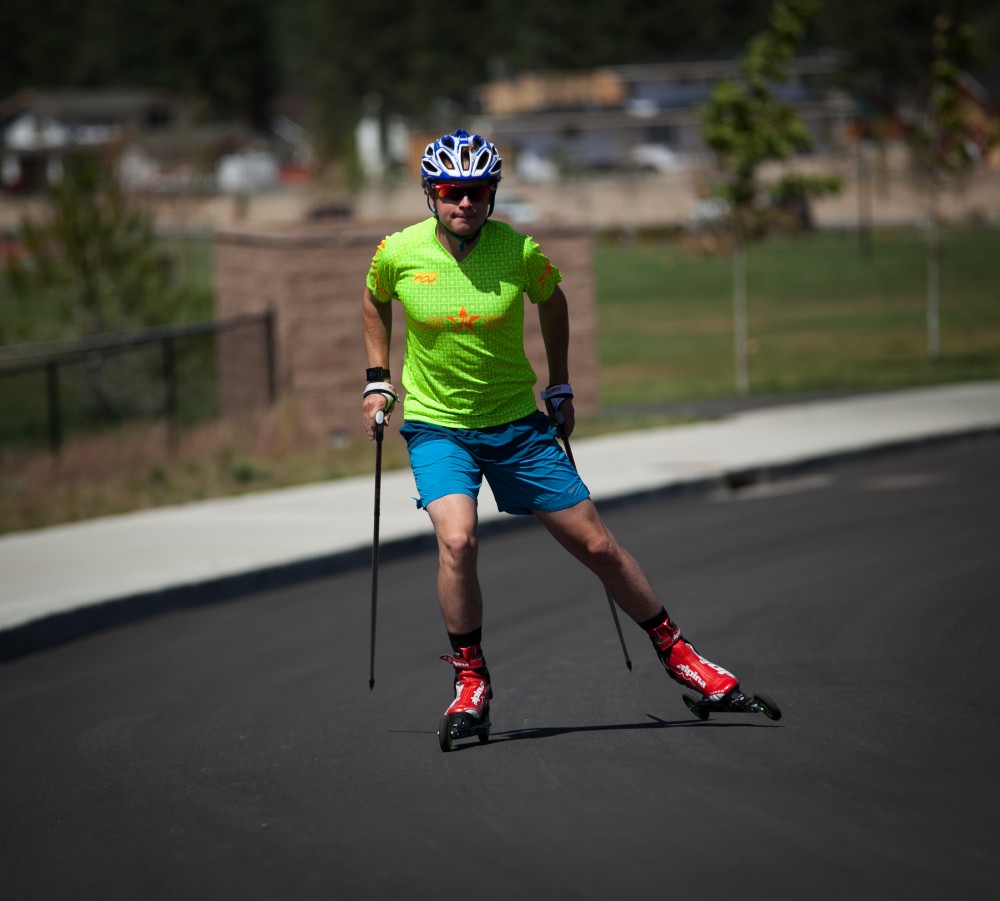
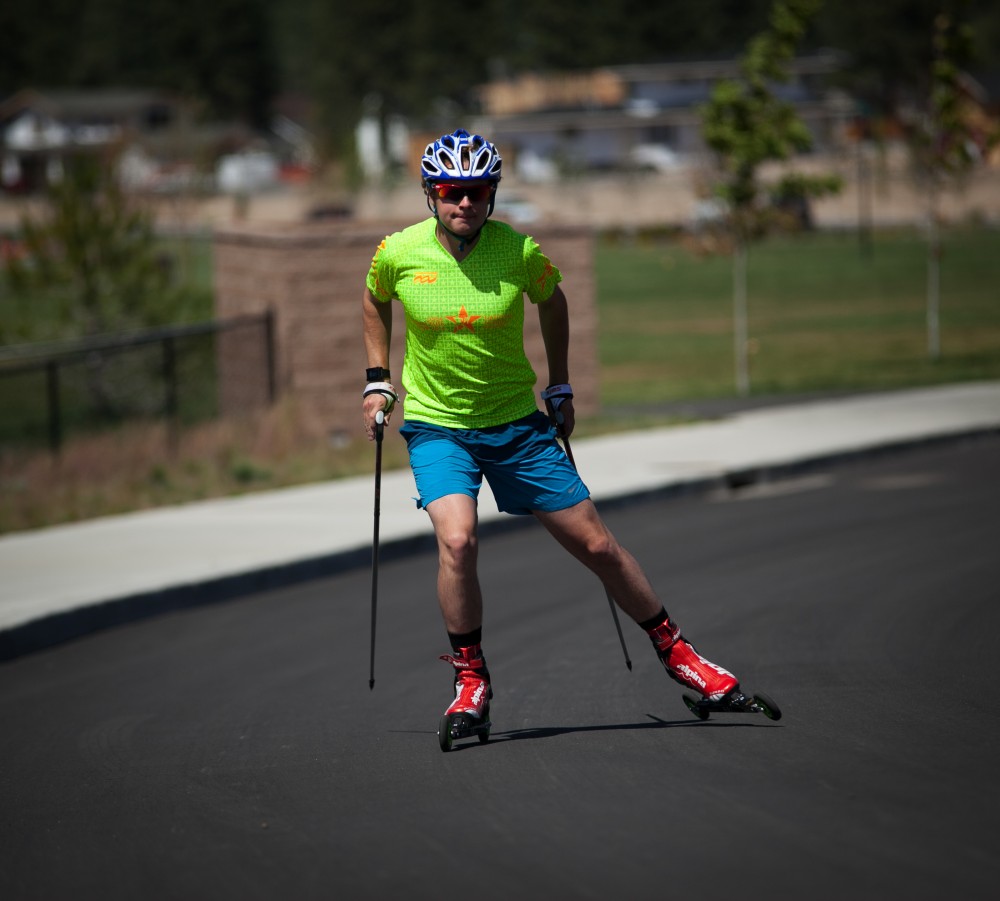
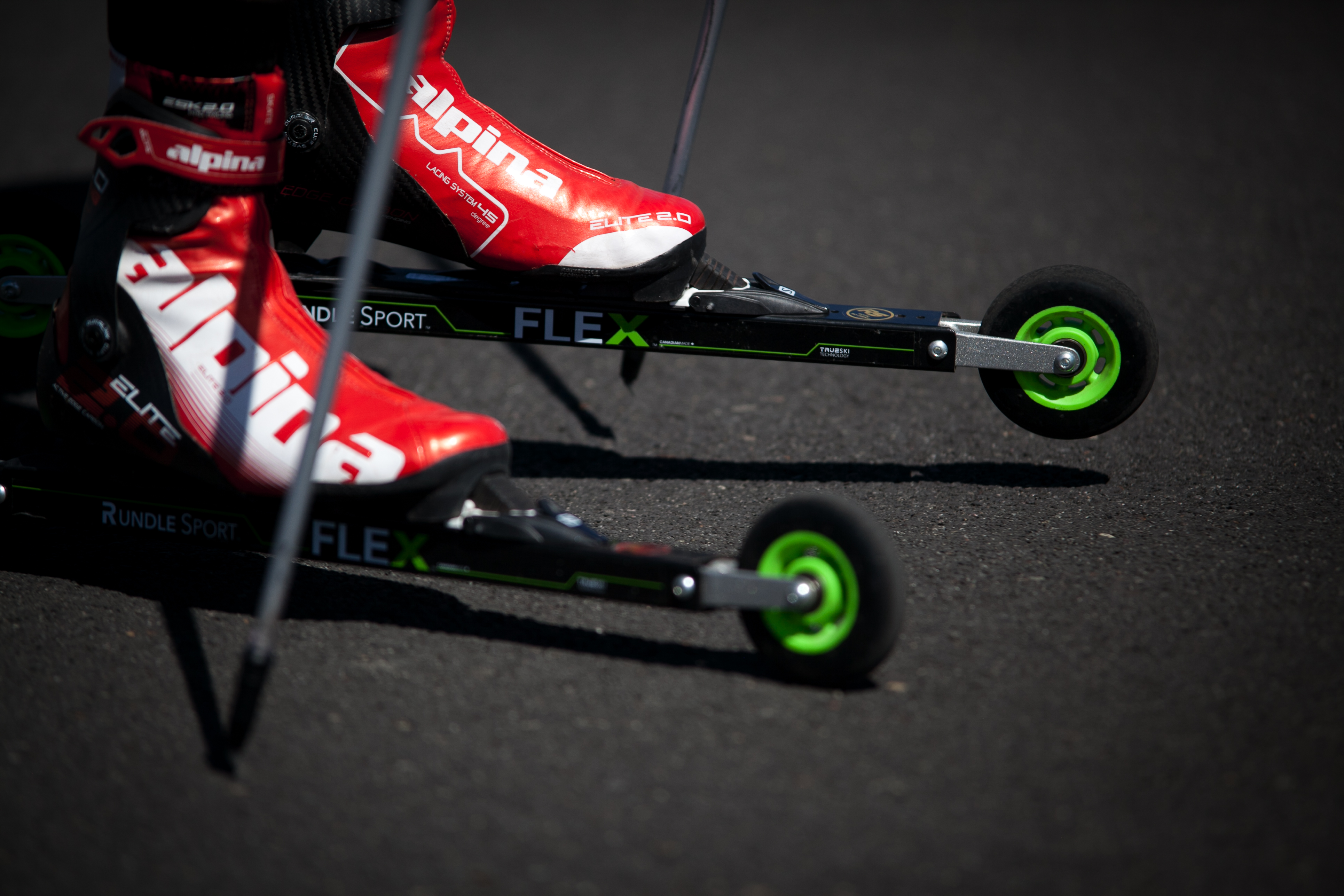
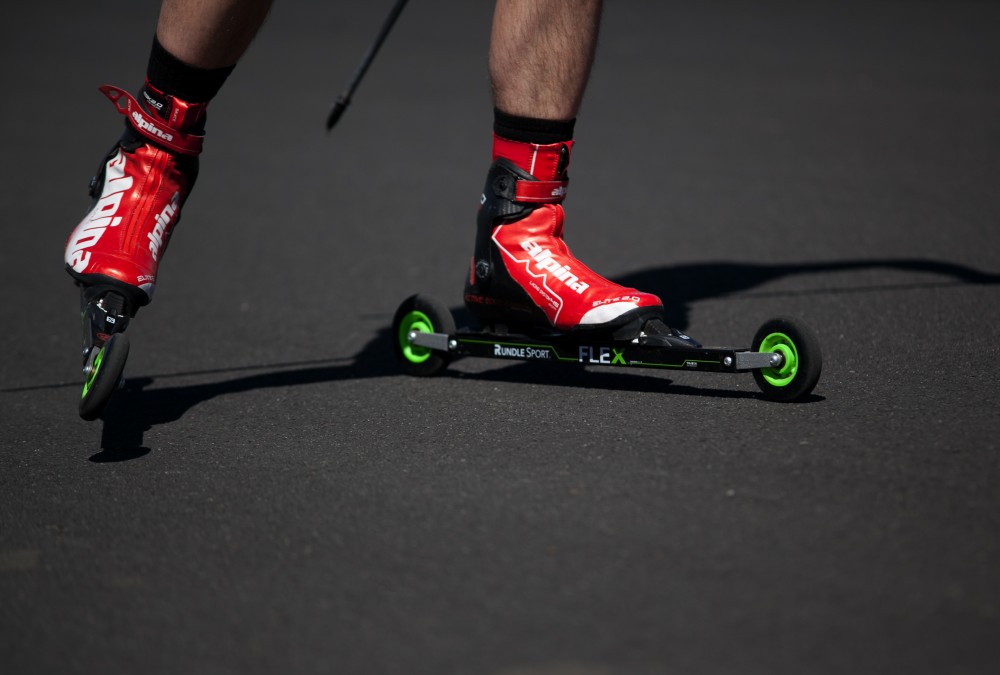
(CANMORE, Alberta) — Rundle Sport Inc. and Cross Country Ski de fond Canada (CCC) have announced that Rundle Sport will be an Official Equipment Supplier of CCC. As a Canadian company with world-class products, Rundle Sport is a perfect fit for the Canadian National Ski Team and is excited that the National Ski Team athletes have put their trust in Rundle Sport roller skis.
Of the new partnership, Cross Country Canada stated, “CCC is thrilled to announce Rundle Sport as an official equipment supplier of the Canadian National Ski Team. After excellent feedback from several Olympic and Paralympic athletes, CCC will be distributing Flex Skate roller skis to all Senior National Team athletes, U25 National Team athletes, and National Para-Nordic Team athletes. The athletes who have been on the Flex Skate roller skis tell us the roller skis’ smoothness, reliability, and on-snow feel will allow them to optimize their roller ski training and transition from roller skiing to snow skiing.”
Partnering with CCC will allow Rundle Sport to continue its history of product development and technical innovation while improving the roller ski training of Canada’s top athletes. Rundle Sport looks forward to supporting CCC and watching Canadian athletes reach their potential while training on Rundle Sport products.
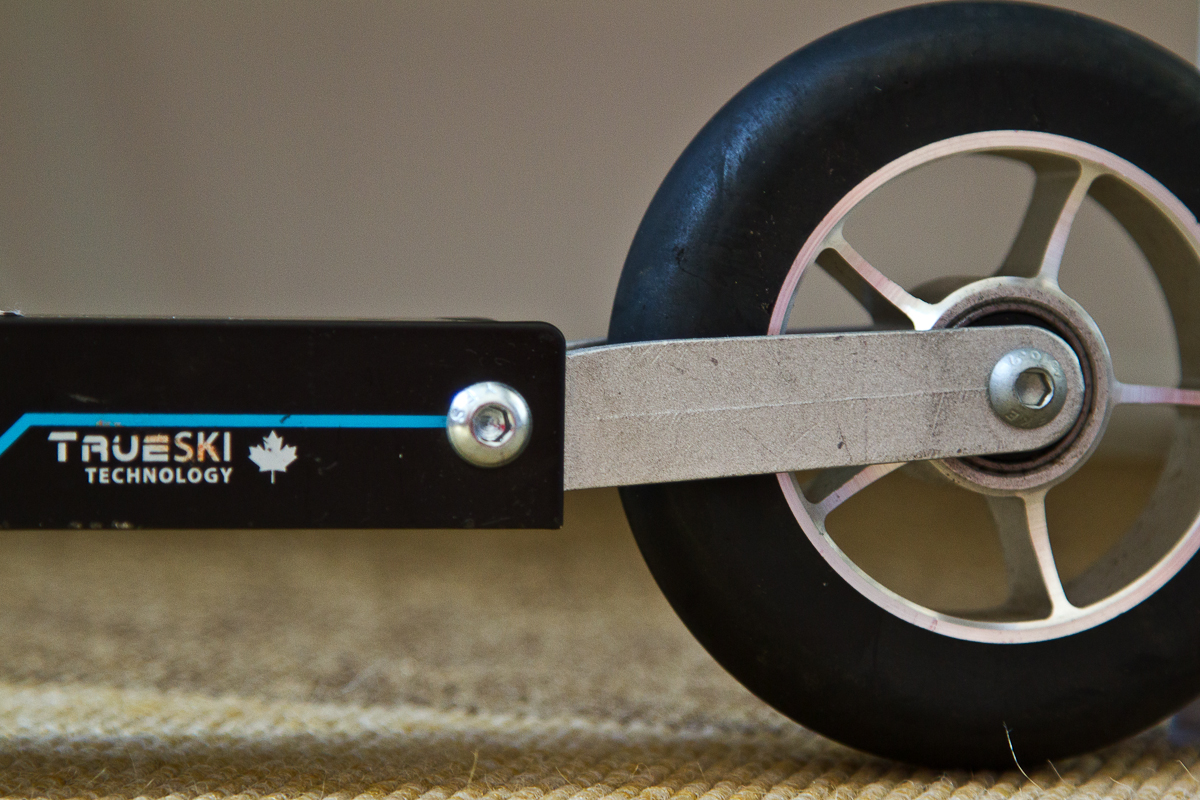
About Rundle Sport Inc.: Rundle Sport is an athlete driven company whose mission is to give athletes an edge over their competition. Rundle Sport was launched in 2013 with the release of TrueSki™ Technology, the world’s first and only rubber-damped roller ski suspension system. TrueSki™ Technology is found exclusively in Rundle Sport Flex Skate roller skis and is the smoothest roller ski technology available. Rundle Sport’s product line has grown to include an assortment of professional level and value-oriented roller skis ensuring all skiers have the opportunity to make the most of their roller ski training. Quality, performance, value, and competitive creed make Rundle Sport the choice of dedicated athletes.
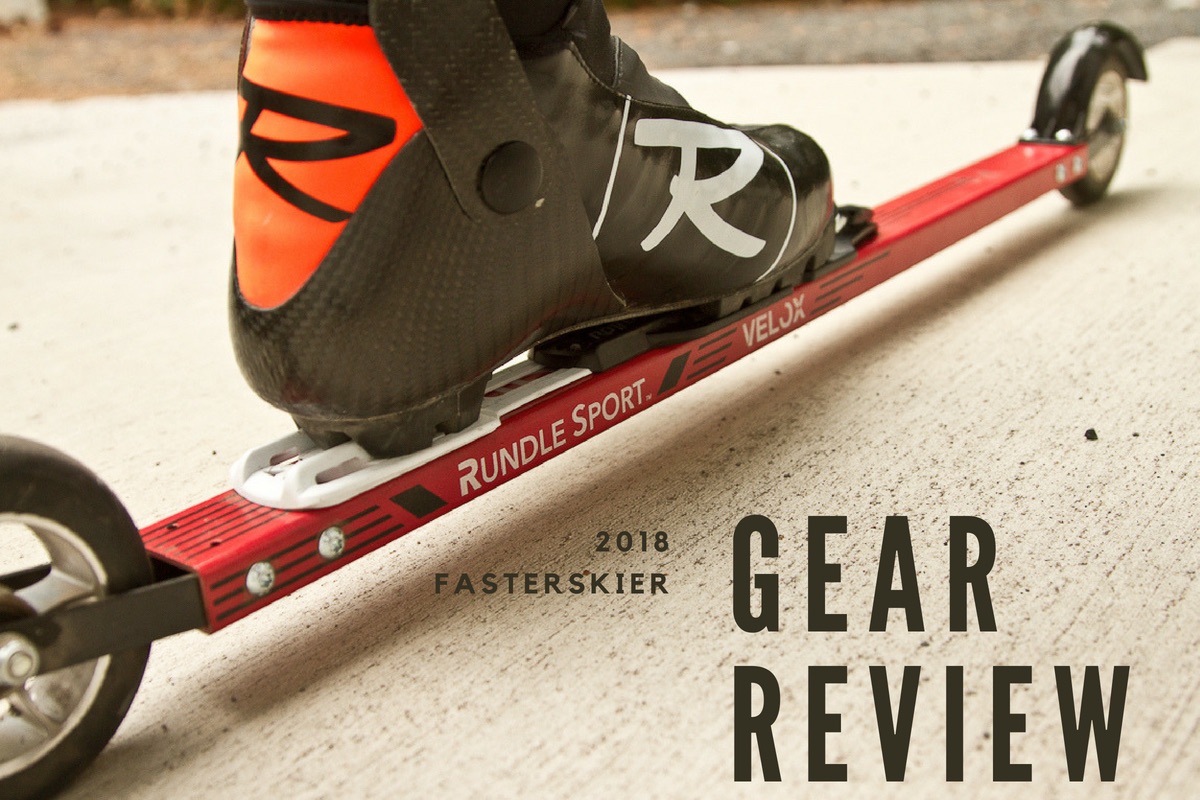
The Velox Long from Rundle Sport comes in at 720 mm in length. They are long but proved exceptionally smooth, easy to ski, and stable.
Let’s go niche for a second as this will be a recurring theme of this rollerski review. It’s not exactly the dark web, but this esoteric rollerski site lists over 50 manufacturers. Presuming each brand builds out several models of rollerskis, we’re talking well over 100 styles and permutations of dryland training gear. That’s only considering skate rollerskis. The basic engineering premise is the same for all of those: two wheels, four ball-bearing sets per ski, two axles, throw in some bolts, two forks and a shaft. Some brands have more flex, some more rigid. Some fast. Some slow. Some safer than others. Those include a braking mechanism.
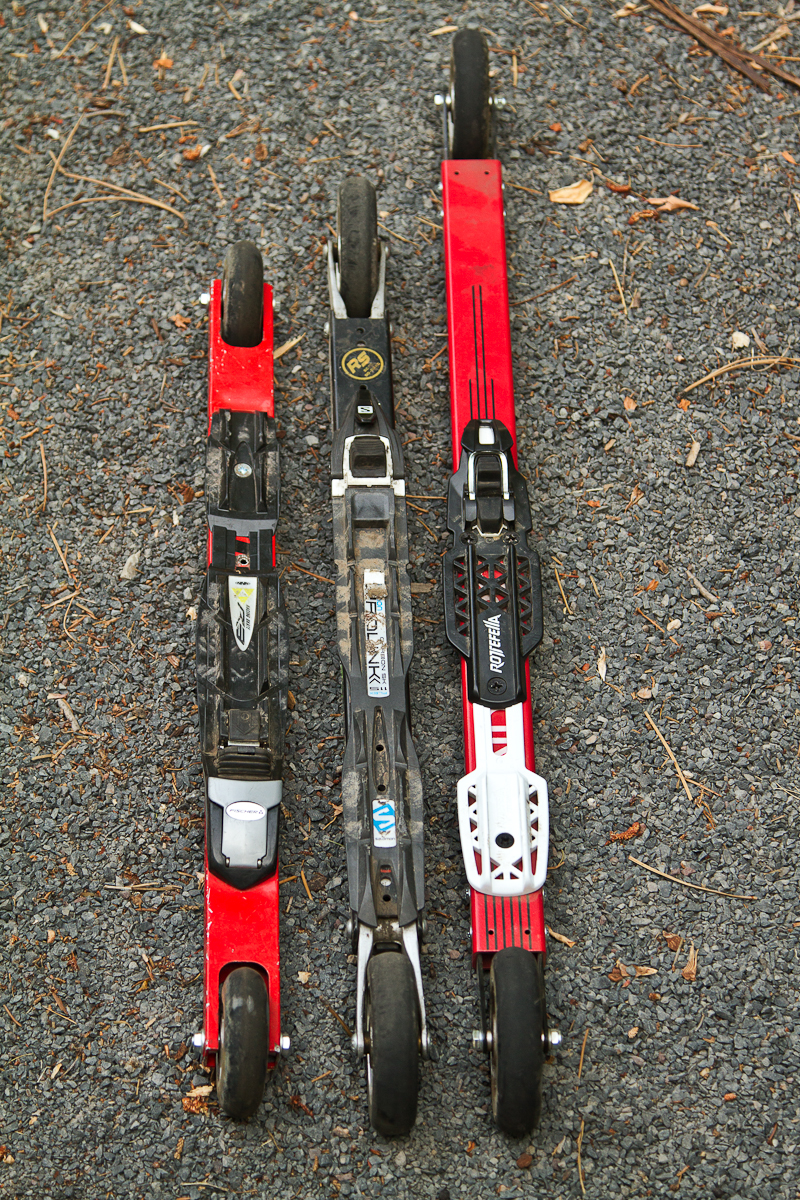
Short to long: from left to right, a 530 mm length junior skate rollerski, a 580 mm length skate rollerski, and the 720 mm length Rundle Sport Velox Long skate rollerski.
Beyond experimenting with flex either in the shaft or forks, the ingredients for baking the rollerski cake are basic. That brings us to the Rundle Sport Velox Skate Long rollerski. (Rundle Sport is an advertiser on FasterSkier.)
As the name suggests, the Velox model comes in two varieties. The standard Velox model, not reviewed here, is no outlier when it comes to length. It sits in the “normal” range of what we think of as the all-purpose length for a rollerski at 610 millimeters. The Velox Long is an apt name. We’re talking a full 720 mm-length rollerski. They are long.
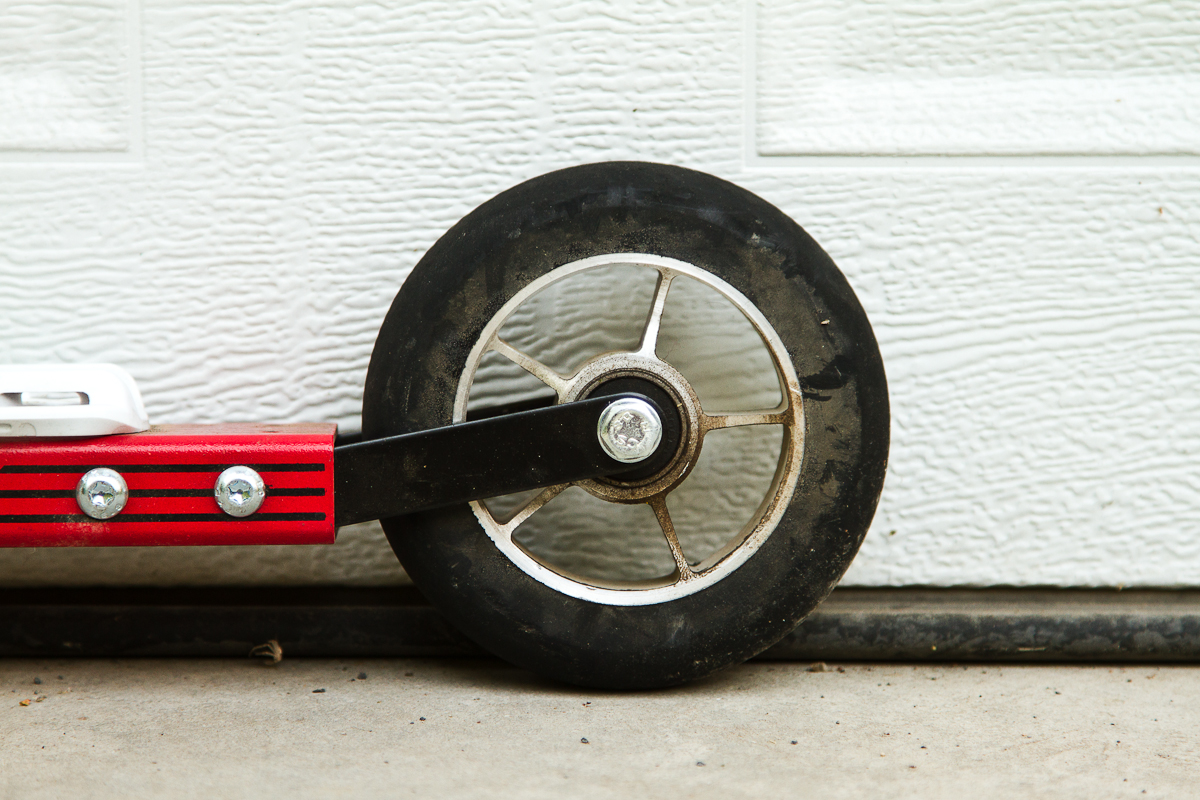
Paired with that length, Rundle Sport used aggressive forks that drop a full 11 mm. The shaft bottom sits 29 mm off the pavement — comparable to most top brands.
It’s pretty clear from first glance and first roll what these rollerskis are not. They are not designed to shine on the agility course. (This is particularly true of the more modern-type agility course featuring bigger air, runs across dirt, sod, gravel, and 360’s.)
With the quick movements required by agility courses, these rollerskis felt just too long and unwieldy for those training days. With that in mind, the Rundle Sport suggests that the Velox Long is better suited for skiers 5 foot 8 and taller.
Rundle Sport states the Velox Long was designed for “technique training”. We took that to mean all types of training beyond technique honed on the agility course.
The Velox Long delivered.
The Nitty Gritty:
Rundle Sport Velox Skate Long Rollerski:
– Cost: $280 Canadian, $215 USD – Weight/pair (without binding): 1860 g/pair with fenders – Wheel size (width / diameter): approx. 24 mm x 100 mm – Wheel speed: #2 – Effective length (center wheel to center wheel): 720 mm – Height (bottom edge of the shaft to the ground): 30 mm
Number one — these rollerskis are über stable. Although sitting 30 mm off the ground, the longer shaft coupled with the big drop from center-wheel to the binding, and the shaft’s thin side width, makes these rollerskis feel like you’re rollersking on a secure platform. Milking speed from the weighted ski while V2-ing is no problem. There’s absolutely no desire to transfer weight prematurely from one foot to the other. On the downhills, the Velox Long glides in what feels like cruise control. No wobble. No drifting from underfoot. They lure you into simply point and go.
Some longer downhills take some getting used to. But after a few rolls under the belt, tucking is an option. With the Velox Long’s stability and straight-ahead tracking, the first impression is not noticing higher speeds. The perception is that the foot feels low to the ground — lower than the measured 30 mm from the shaft bottom to the pavement. If you’re comfy flying downhill, you’ll feel even comfier on the longer shaft. That translates into looking for more speed even when you think you’re top-end fast. (Parents of speed demons — you’ve been warned.)
If you are taking a high-speed corner, that, too, is no problem when stepping through the apex. With the longer ski, it just takes a bit more pre-meditation to initiate fast-paced cornering.
Slowing down or stopping with the Velox Long does take some getting used to. It’s a steep learning curve and nothing earth-shattering. With more rollerski, one must be more intentional.
The Velox Long comes with 100 x 24 mm size wheels that are the staple #2 speed. They also include removable fenders.
Sitting approximately 30 mm off the ground and sporting a big-drop fork, the Velox Long oozes stability.
Number two — the long wheelbase translates into feeling more like you’ve got a ski on your foot. With properly positioned bindings, the swing weight is more ski-like than rollerski. Again, that was a perceived positive.
The longer shaft does flex. And on smooth pavement, the Velox Long damped vibrations and made it feel more like a composite shaft rollerski.
A particular qualitative attribute of the Velox Long was it smooth and steady sensation when pushing side to side. The extra length made the push-off phase of the skate motion feel more efficient and effective. In terms of the glide phase, you actually feel like you are gliding. For old timers, think Cadillac smooth. For the younger set and young at heart, think longboard skateboarding.
The longer shaft does not inhibit the up-tempo work if you throw in quicker V1 efforts. Yet, for group-sprint simulation training, we’d opt for traditional length rollerskis.
These rollerskis are pre-drilled for NIS, SNS, Rottefella, and NNN bindings. NIS (front) has two possible binding positions, Rottefella has two, whereas NNN and SNS both have one position. (Not compatible with Fischer rollerski bindings or Turnamic.)
If you’re somebody concerned with what everybody else is using, then these rollerskis may not be for you. Amongst the niche sport of XC skiing and amidst the niche group of us who rollerski, you might get a few nods and glances with a 720 mm length skate rollerski.
Or you might get a few nods for being an iconoclast. A rollerskiing disrupter. The cost won’t set you back a ton at $280 Canadian / $215 U.S. dollars. A similar-length ski from in-trend IDT will cost approximately $388 USD.
You’re a nordic skier. Have no fear. The Velox Long might be niche. Yet it might just be the piece of gear that allows you to experience unparalleled rollerski stability so you can focus more on how to ski technically sound.
***
Note: FasterSkier is open to gear-review suggestions from advertisers as well as non-advertisers. To inquire, email info@fasterskier.com with the subject line “Gear Review Inquiry”.
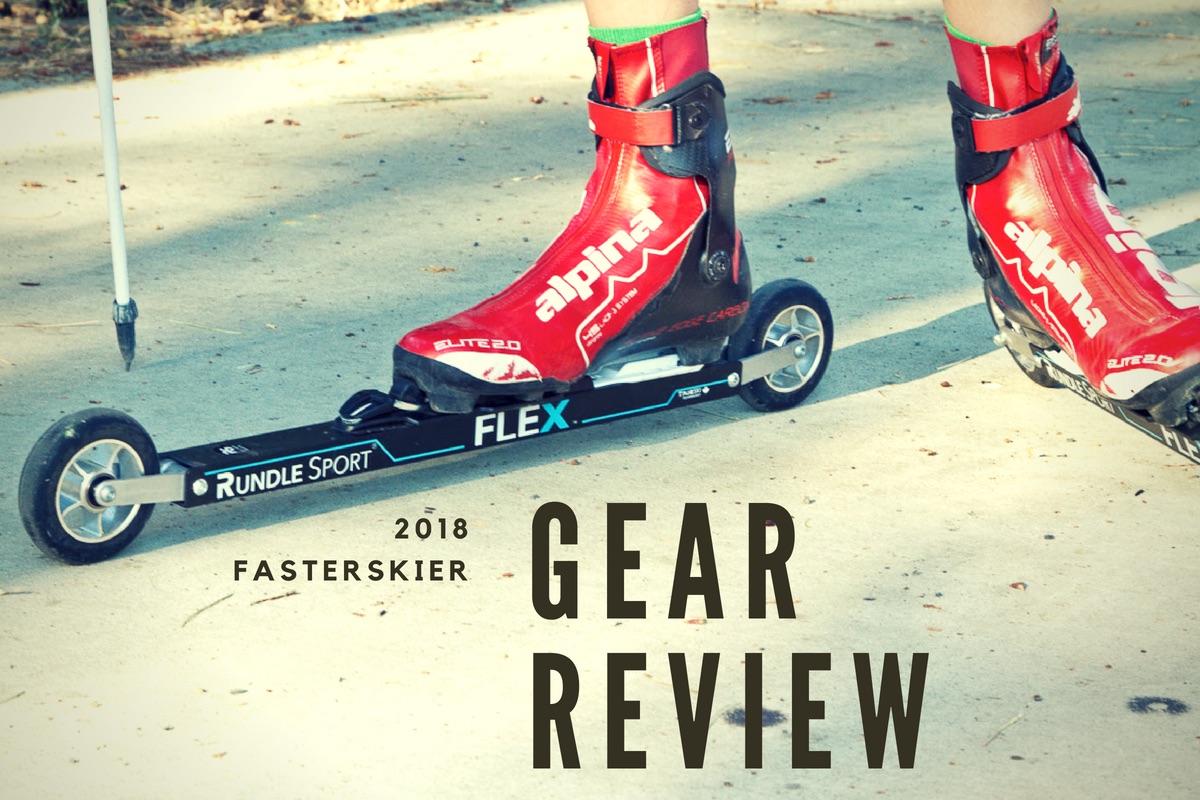
Got Flex? Check. Got vibration absorption? Check. Here’s a review of Rundle Sport’s updated 2018 FLEX skate rollerski.
With the evolution from aluminum-shaft rollerskis to composite laminates (think a combination of wood, sometimes a honeycomb matrix and layers of fiberglass/carbon fiber) manufacturers have built rollerskis with “flex”. A skate rollerski’s flex pattern is part of the design process to better mimic that ubiquitous “on-snow feel” nearly all rollerki manufacturers claim and few master.
For the purposes of this review, “on-snow feel” for rollerskis will be defined as the following: smooth, relative vibration-free sensations while in the glide phase. Add a slight “flex” under foot during the glide phase for good measure and dash of return energy on the push off.
The “flex” underfoot makes it more like real skiing. During real on-snow skiing, a ski’s camber, or curved shape, begins to flatten out against the snow when weighted. Many skate rollerski manufacturers try to recreate the sensations of loading and unloading a ski while skate skiing on snow. In other words, the rollerski is dynamic under load.
So back to the pavement and the mythical and over-marketed “on-snow feel”. Skate rollerskis range from those feeling like a rollerblade to highly engineered, skate-ski-like-camber aspirants.
The “on-snow feel” is very much an on-pavement feel for the rollerblade end of the spectrum. Short, aluminum-shaft rollerskis trend towards a “buzzy” quality under foot on less-than-ideal pavement. Little of the road noise is dampened. And the rigidness of shorter aluminum shafts allows for no discernible flex under load. The feedback and response from the push-off phase is immediate. That’s great for an efficient rollerblade-type experience. If you skate ski on stiff boards and boilerplate, and that puts a smile on your face, then maybe that’s the “on-snow feel” experience you’re looking for.
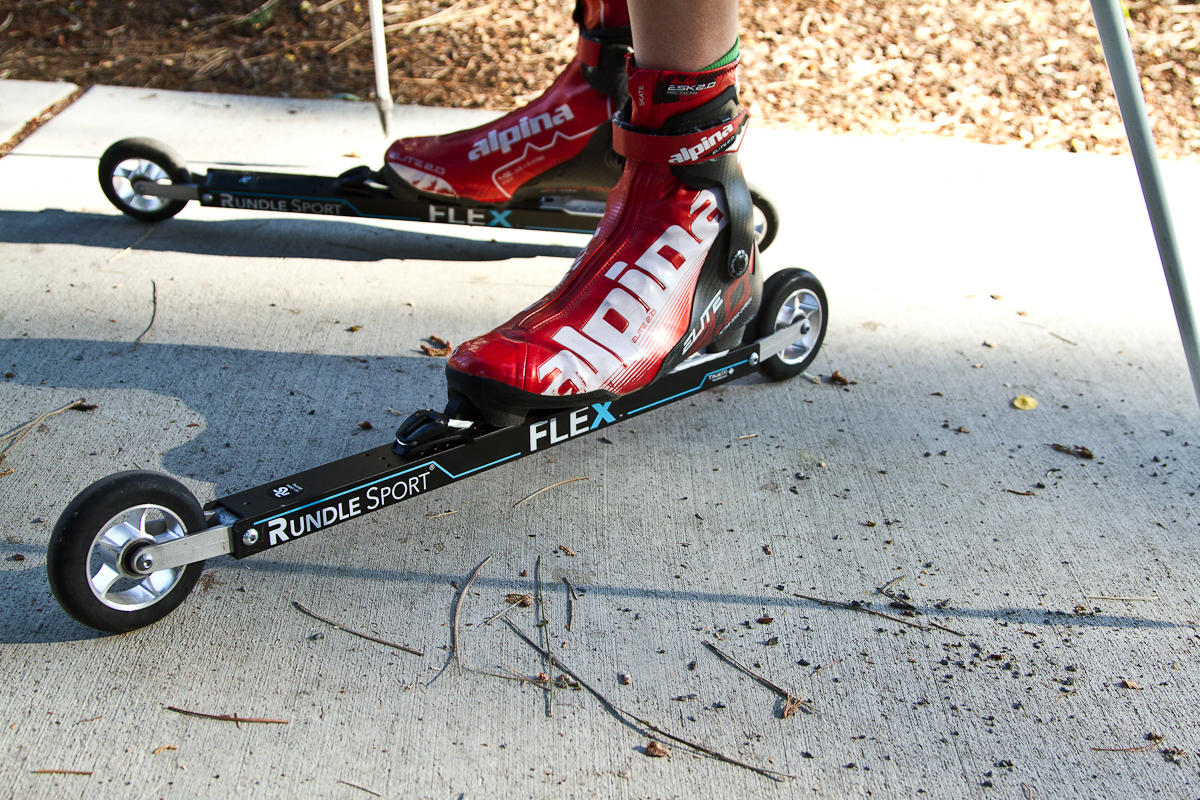
The FLEX rollerski allows for the front and rear forks to pivot indepently to create a suspension that helps smooth out rougher-feeling pavement and create a skate-ski-like flex.
There are, however, a few options for skate rollerskiing where boilerplate will be far from the mind. For the past few years, several companies have created rollerski fork systems that flex at the front and rear forks independently. Most notable here in North America are two different brands: the Pursuit Fork Flex skate rollerskis (sold by rollerskishop.com) and an offering from Rundle Sport based in Canmore, Alberta. In this review, we’ll drill down on Rundle Sport’s latest FLEX skate rollerski. (Rundle Sport is an advertiser on FasterSkier.) The parts for their FLEX skate rollerski are sourced internationally and assembled in Canada.
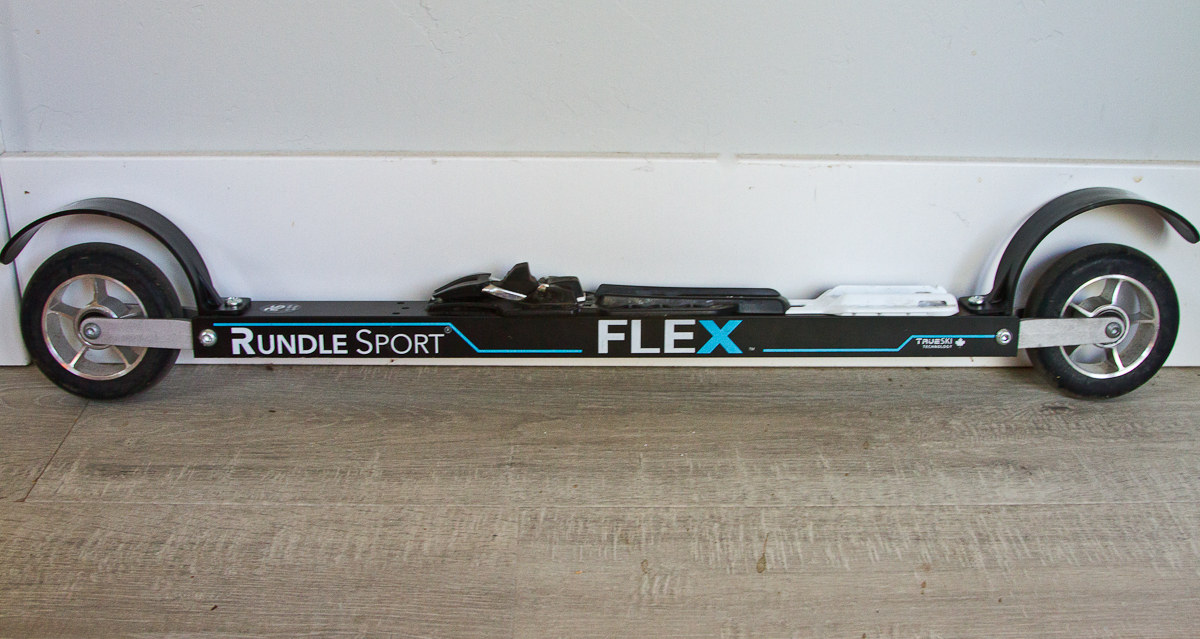
The Rundle Sport FLEX has been updated since the 2016 model was released. The aluminum shaft has has been lengthened for a longer wheelbase. The older version ran 580 millimeters, center wheel to center wheel. The updated version stretches 610 mm. (We’ll get to how this impacts the rollerski experience in a bit.) For comparison, Marwe’s top of line skate rollerski measures 620 mm, the equivalent Swenor 615 mm.
The wheels are standard 100 mm x 24 mm. They, too, are updated and are a standard #2 speed wheel sourced from Serbia (where many leading brands source their wheels) and are comparable in speed to Marwe and Swenor #2 wheels.
The FLEX comes with front and rear fenders for those wet days.
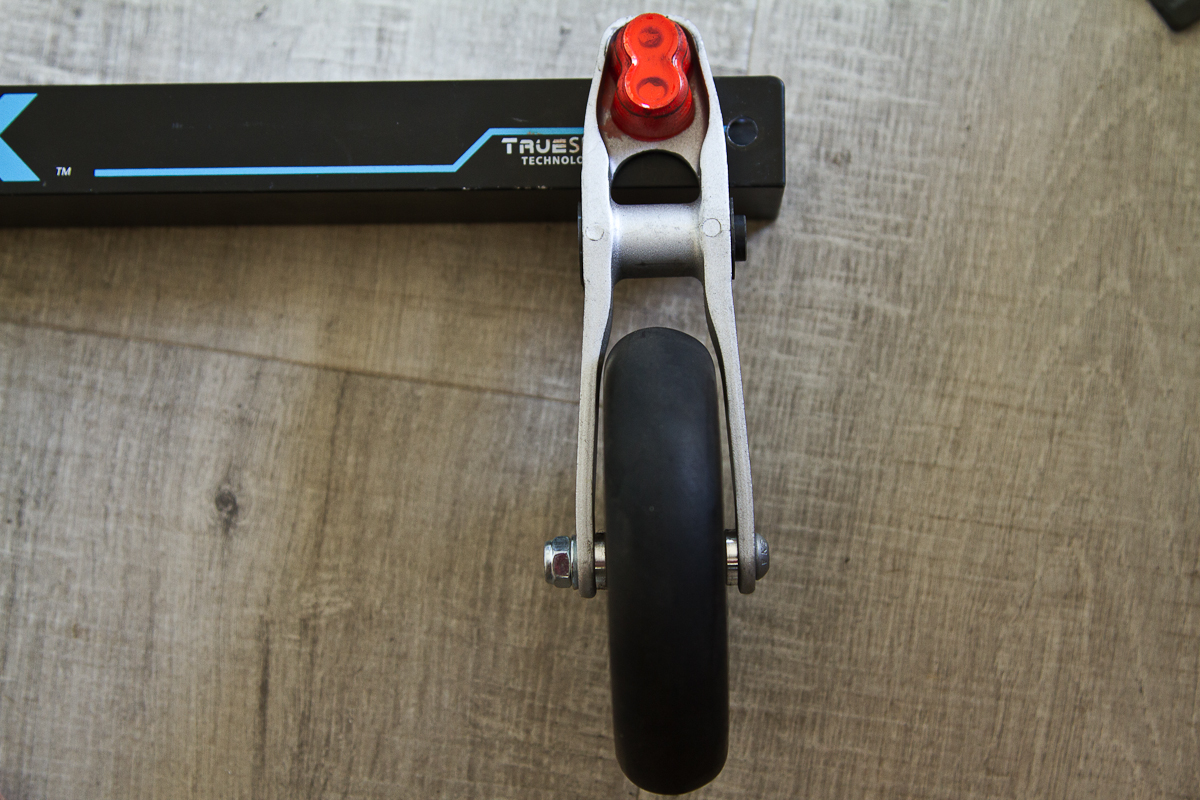
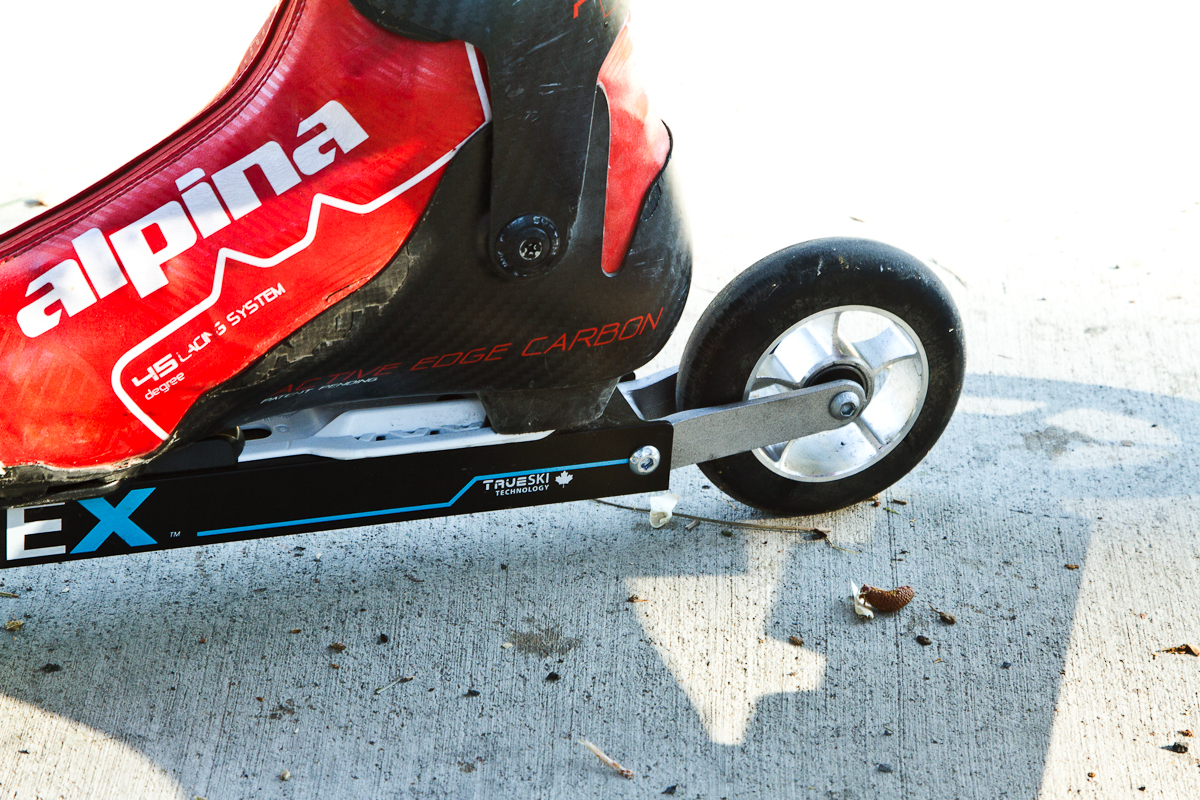
Close-up of an unweighted rollerski/fork that provides a 7 mm drop from the center wheel. The fenders were not installed for this photo.
Most notably, the aluminum forks have been redesigned. The old model’s forks created what looked like a barely noticeable drop from the wheel center to the shaft’s bottom edge. Using the same size wheels, 100 mm x 24 mm, the older model sat higher off the ground than many rollerskis when unweighted.
The new forks allow for a full 7mm drop. As a result, the newer model rests 30 mm off the pavement unweighted. That lower off-the-deck height makes for a solid and stable rollerski experience. That stability is most evident during the V2 glide phase while bleeding speed before the push off. Which is to say the newest version of the FLEX won’t throw instability into the mix if you’re a beginner rollerskier.
I have been on the older FLEX model for two years. In that time, instability was not an issue. Yet while using the old and new models simultaneously, the newer model’s lower running surface coupled with its slightly longer shaft feels more secure. Less like you’re balancing on two wheels and more like there’s a ski underfoot. It’s a case of not knowing an alternative might be better until presented with a different option. The Rundle Sport engineers in Canmore received feedback that the older models were a bit tippy. They evolved their thinking and designed the 7 mm drop fork. Rundle Sport offers a fork retrofit for older models by making the new forks available for purchase separately.
Here the fork is removed to display how the dampener sits in the fork. When installed, the dampener faces towards the pavement/bottom of the shaft.
What was true of the older model FLEX is true of the 2018 version. The suspension system, which is basically a pivoting fork that compresses a rubber dampener, makes rougher pavement tolerable. We’re not talking alchemy here, as in a miraculous smoothness on gnarly chip and seal. But, no doubt when the FLEX folks boast their product reduces vibrations — it’s the truth. (Here’s a link to Rundle Sport’s own vibration test. You’ll need to scroll down a bit.)
The Nitty Gritty:
Rundle Sport FLEX Skate Rollerski:
– Cost: $400 CND – Weight/pair (without binding): 1850 g/pair – Wheel size (width / diameter): approx. 24 mm x 100 mm – Wheel speed: #2 – Effective length (center wheel to center wheel): 610 mm – Height (bottom edge of the shaft to the ground when unweighted): 30 mm
On less-than-butter-smooth pavement, it allows for long rollerski loops while still being able to focus on technique rather than vibration-trashed feet. For athletes who like variety, depending on where you live, an unadvertised benefit to the FLEX is that it might open up more paved terrain.
Testing the new version of the FLEX is much like the older version: they feel more like a ski that compresses under load. The amount of flex at the interface of the fork and shaft can be fine tuned with Rundle Sport’s color coded rubber dampeners. (The dampeners are easily changed, yet when ordering a pair, Rundle Sport will ask for the skier’s weight.)
Blue (less than 120 lbs or less than 55 kg)
Orange (121-150 lbs or 55-68kg)
Purple (151-180 lbs or 69-81 kg)
Black (181 lbs or more or 82 kg or more)
I rollerskied on the purple dampeners for three weeks and then began experimenting with orange dampeners on one ski, purple on the other. I weigh approximately 158 pounds (always round down) so I fall on the light side of the purple dampeners, and the heavy side for the orange.
Under full weight, as expected, the ski with orange dampeners flexed slightly more than the purple-dampener ski. Yet both skis could be described as smooth and responsive. On both skis, vibration reduction was noticeable on poorer pavement. I really did not prefer one dampener set over the other. Yet, if I had higher fidelity to more active and energetic skiing, the purple dampeners would be the go-to. (It takes approximately five minutes per ski to swap out dampeners.)
In this close-up, note the rollerski is under full weight, and the fork is flexed.
On smooth black top, the rollerskis shine. It is there that one can ski actively and feel the response of the FLEX’s high-camber like properties. Compress the FLEX rollerski and there’s no immediate force back into the knees and hips as one might find on overly stiff aluminum or composite rollerskis. It’s a smoother transition from the load to glide to push off.
The FLEX feel comfortable and easier on the body. Something this aging skier appreciates.
Again, I’ve been on a suspension rollerski for two years. Sure, it is interesting demoing rollerskis. But after that much time skiing on pavement with skate-ski-like flex on a rollerski, I have a tough time convincing the brain and body I could go back. As far as weight without bindings, the updated FLEX are 1850 gm/pair.
Technical cornering, speeding downhill, and tracking were non-issues with the updated FLEX skis. During a 2016 review of the FLEX, I experienced what I would call a wandering ski during high-speed downhills. One of the two rollerskis would drift outward and I found myself being vigilant to keep the rollerskis shoulder width apart. Maybe that was due to the higher shaft height of the older model or its shorter length. Either way, there was no drifting on the same hills at comparable speeds using the newer version of the FLEX rollerski. They tracked straight with no deviations over the duration of the testing period.
FLEX with fenders installed. The new shaft is 3 cm longer than the older version of the FLEX.
That brings us to the new longer shaft. I realize now I was a sucker for the shorter shaft length. Less rollerski just seemed more efficient and playful. Three centimeters might not be much, and it’s not. But the longer FLEX shaft is noticeable in a key department. The longer shaft, and thus longer wheelbase, make for a more ski-like platform when pushing off.
We foresee no durability issues in the long term for the new FLEX model. In the two years I’ve been on the older FLEX model, I replaced all four wheels once. Admittedly, I was less than vigilant in those two years about swapping the left and right skis to prevent uneven wear. (Currently, Rundle Sport sources wheels for the new FLEX model from a different manufacturer as the stock wheels on the 2016 FLEX model.) On my personal 2016 pair, the forks, dampeners and shafts are original vintage. They have been abused by a curb-hucking teenager and have no evident signs of wear besides normal scuffing on the shaft. Nothing beyond the wheels have been replaced. The newer 2018 forks, dampeners, and shafts are manufactured to the same quality standards.
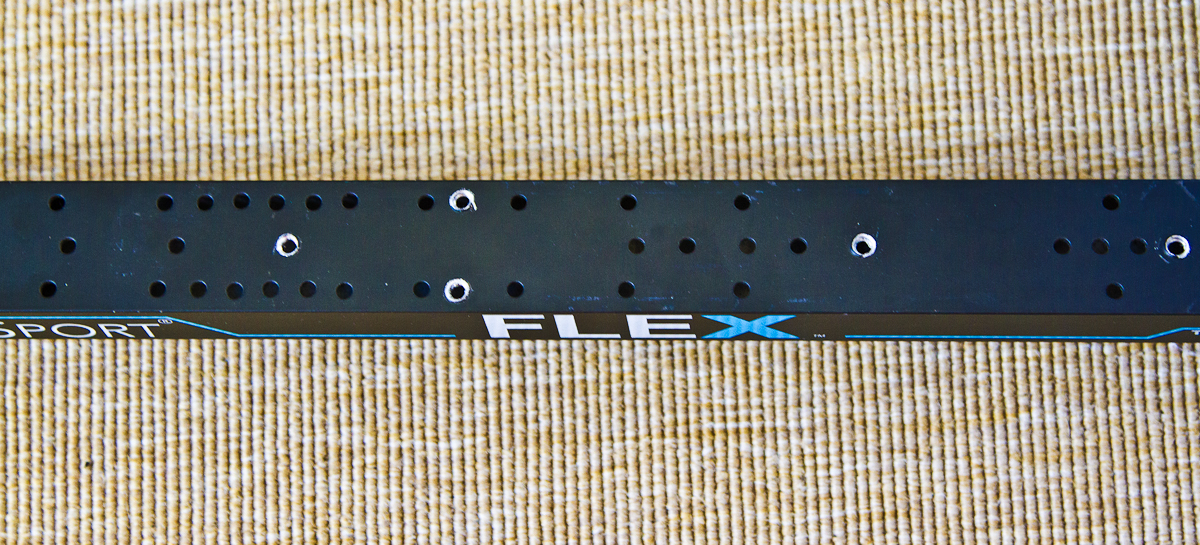
Lots of options for mounting bindings. The FLEX comes pre-drilled for several popular bindings.
The updated shaft comes pre-drilled for both SNS/Prolink, NNN, NIS, and Rottefella’s rollerski binding. If you’re a skier who experiments with binding placement, it’s possible to mount bindings in different positions to accommodate different size boots and rollerski feel.
Here are the relative number of binding positions for each specific binding type:
SNS: 2 positions
NIS: 3 positions
Rottefella rollerski bindings: 3 positions
NNN: 2 positions
Rundle Sport notes that the pre-drilled hole pattern accommodates boot sizes 36 to 50. However, the hole pattern is not currently compatible with the 2018 Fischer roller ski bindings.
These FLEX rollerskis do have a quirky attribute that bugged one tester in particular. During the unloading phase while skating, essentially when taking the weight off the rollerski, the forks make a slight audible “click” as the forks return to their neutral position. After two years on a FLEX model, it is something I don’t notice. However, for those dialed into the zen of rollerskiing, the “click” might be initially bothersome.
If you are based in the U.S., currently the exchange rate sits in your favor. At the time of this report, the rate was roughly $1 USD to $1.30 CDN. The FLEX skate rollerski will set you back approximately $307 U.S. dollars, or $400 Canadian. Rundle Sport offers a lifetime warranty on the FLEX rollerski.
***
Note: FasterSkier is open to gear-review suggestions from advertisers as well as non-advertisers. To inquire, email info@fasterskier.com with the subject line “Gear Review Inquiry”.
Incoming Bates College freshman Leo Lukens tests out a pair of Rundle Sport FLEX rollerskis in Bend, Ore.
Let’s face it, rollerskiing lacks the romanticism of skating or striding through just about any type of snow-covered terrain. But if you’re serious about maintaining in-season ski specific form, it’s pretty much a must these days. Add to that list the cadre of masters skiers who suffer joint pain when running and you’ve got a steady population of skiers who rollerski during the no-snow months.
This past March, while covering the Ski Tour Canada in Canmore, Alberta, I poked around the gear booths for a few moments. Catching my eye were two items of note: FIS Cross Country sponsor Le Gruyère — you know them from those big cheese wheels skiers receive on the podium — had a booth with tasty samples. And Canmore-based Rundle Sport displayed their snazzy rollerskis.
Rundle Sport’s higher-end rollerskis, the FLEX models, use what they call TrueSki Technology. (Built-in rollerski suspensions are not new, different companies have experimented with the concept, with some products having been brought to market). In simple terms, the proprietary technology is a clever combo of rubber dampeners and pivoting forks to create a suspension system. Basically, you should be thinking mini-shock absorbers when you hear suspension system. Otherwise the Rundle Sport rollerskis use a traditional aluminum shaft with pre-drilled holes making SNS/Prolink, NIS and NNN binding mounts a breeze.
If you happen to live in a community where butter-smooth pavement is plentiful and the words “chip and seal” sound more like a Ben and Jerry’s ice cream mash-up, then the idea of a rollerski with suspension may seem like overkill. But in places like Bend, Ore., where this reviewer lives, smooth pavement is scarce. A few out-and-back runs of blissfully smooth asphalt remain, but chip and seal are king. The city and county have been resurfacing roads with the bumpy mix for several years now. If linking up roads to create longer loops in town are on your agenda, the vibrations poor-quality pavement jolt through the rollerski and into your foot can be a deal breaker. That’s the first reason I checked out Rundle Sport’s Flex series after getting my Le Gruyère cheese fix in Canmore.
Rundle Sport makes three claims about their TrueSki technology: it reduces vibration, mimics skiing on snow and their skis are more durable. Let’s take those claims in order.
Vibration reduction:
This is where Rundle Sport’s FLEX Skate Rollerskis shine. Bert Hinkley, one of the godfathers of nordic sport here in town, and I tested out several pairs of rollerskis on both vibration-inducing pavement and the smoothest section of asphalt pretty much between Bend and the Pacific Ocean. We tried all sorts of combinations — straight-up aluminum shaft ski on one foot, FLEX on the other, hi-tech composite ski, FLEX on the other, and even two FLEX skis set up with different dampeners. More on that in a bit.
The FLEX ski in the the background is unweighted. Note the suspension has returned to its neutral position.
Want a smoother ride? In other words, less vibration, use the FLEX ski. It was that obvious. What I am describing is not a complete elimination of vibration or road noise, but a dampening of those vibrations.
Both Hinkley and I discussed road noise as if it were a sound wave with a discernible frequency and amplitude. If the frequency and amplitude of the waves were greater with the aluminum and composite shaft skis (read more chatter), they were mellowed considerably with the FLEX ski.
Do the FLEX skis reduce vibration? A straight-up yup!
Rundle Sport also claims it will tailor the FLEX rollerski suspension to a skier’s weight. The dampeners, part of the suspension system, come in a range of densities that are color coded. For example, the black dampeners are extra stiff, for skiers 80 kilograms (176 pounds) or more. (It takes about ten minutes using an allen wrench to swap out the four dampeners per pair.)
Rundle Sport sent the entire range of dampers, from extra stiff to extra soft. I began the test with red dampeners (medium 60-69 kg) in both skis. I tilt the scales around 68 kg — so in theory, a good fit for my weight. Just to test out what a softer flex might feel like, after skiing several days with the red dampeners, I set one ski up with orange dampeners (soft 50-59 kg), for comparison.
In our side-by-side tests, all of the above observations comparing the FLEX skis to the composite and aluminum skis hold true for both the medium and soft suspensions. (Hinkley and I are the same weight.) The only discernible difference in terms of vibration between the two different FLEX set ups was that the softer dampeners reduced road noise a bit more. If I had to choose between the two on rougher roads, I’d pick the softer set up.
This brings us to Rundle Sport’s second claim: “TrueSki rollerskis mimic skiing on snow”.
On-Snow Feel
First off, we are talking rollerskis on pavement. Undoubtedly any road surface is harder, hotter and less forgiving than snow. (I’m not throwing ice into the snow-crystal matrix.) An on-snow feel in this reviewer’s eyes seems like a dicey claim that many rollerski manufacturers make. Here’s what I will say, the FLEX rollerskis do flex — the vibration-reducing suspension flexes in the front and rear of the ski — kind of like a skate ski during the loading and push off phase on snow.
The FLEX ski on the right is weighted (in the glide phase). Note the suspension is loaded/flexed.
Given the same weight skier, the flex is more noticeable using the soft dampener compared to the medium dampener. This reviewer liked slightly more flex. Hinkley on the other hand would choose the stiffer setup.
“I liked the softer elastomer for vibration. I think if I were going to ski on one pair, I would use the elastomer suited to my weight,” Hinkley said. “It still reduced vibration but at the same time it gave me more feedback and more transmission of power. I just felt like if I wanted to step it up, and do some sprinting, or if I really wanted to step it up and hammer hard up a hill, then I wasn’t losing energy pushing against a softer elastomer.”
Another tester, Mount Bachelor Ski Education Foundation skier Lydia Youkey took the FLEX skis out for a spin. Her impressions left nothing up to interpretation. “The rollerskis were AWESOME,” Youkey wrote. “They really skied smoothly over rough roads, and felt much more like skiing on-snow than the aluminum rollerskis I’m used to. They had a sort of bounce that simulated the flex of a ski … I didn’t want to give them back :).”
This much is worth mentioning, prior to my use of the FLEX rollerskis, I’d never really thought about how stiff my rollerskis were. I’ve heard folks talk about skate rollerskis flexing, but for me — not exactly hummingbird light and not clydesdale class — my composite rollerskis feel stiff and responsive. If I have a complaint other than their considerable “noisiness” compared to the FLEX skis, I now would consider my rollerskis too responsive.
Ultimately, does the FLEX ski mimic skiing on snow? It’s real close. But again, I’m a realist, there’s no denying I’m rollerskiing on pavement in Oregon’s high desert — not skiing on snow.
If you live in a place with deteriorating pavement, the FLEX rollerski may be your best option.
An on-snow feel in this reviewer’s eyes seems like a dicey claim that many rollerski manufacturers make. Here’s what I will say, the FLEX rollerskis do flex … kind of like a skate ski during the loading and push off phase on snow.
Durability
Any comments about general durability are beyond the scope of this review. We simply have not used the FLEX rollerskis long enough to make any claims about the product’s longevity. Rundle Sport has a lifetime warranty, which in this day and age is a statement in terms of product support. Here’s the warranty language posted on Rundle Sport’s website:
“FLEX rollerskis carry a lifetime original owner warranty. Excluding wheel wear, Rundle Sport will repair or replace any part which under normal service proves defective in material or workmanship. The claimed defective product must be returned to Rundle Sport Inc. The warranty applies for the original owner and only if the skier weighs less than 95kg.”
Unless you are shuttling, what goes up, must come down. The only minor complaint Hinkley and I had regarding the FLEX rollerski was that it had a tendency to “wander” slightly while descending at high speeds. The composite and non-FLEX aluminum skis tracked a bit straighter. I returned several times to a long bombing descent and found I simply had to have a degree more focus while descending on the FLEX skis. Nothing scary, just more mindful of the ski under foot.