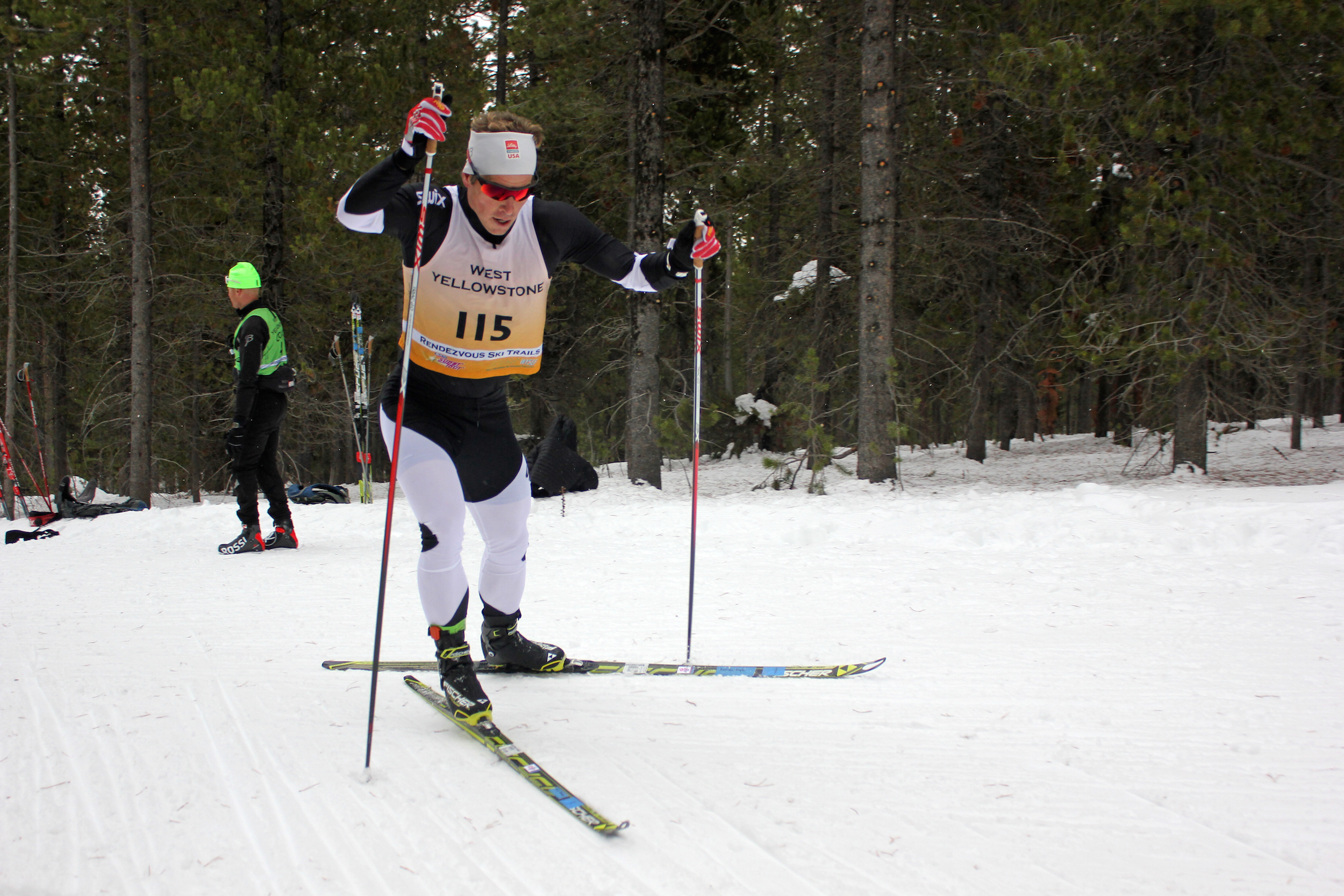
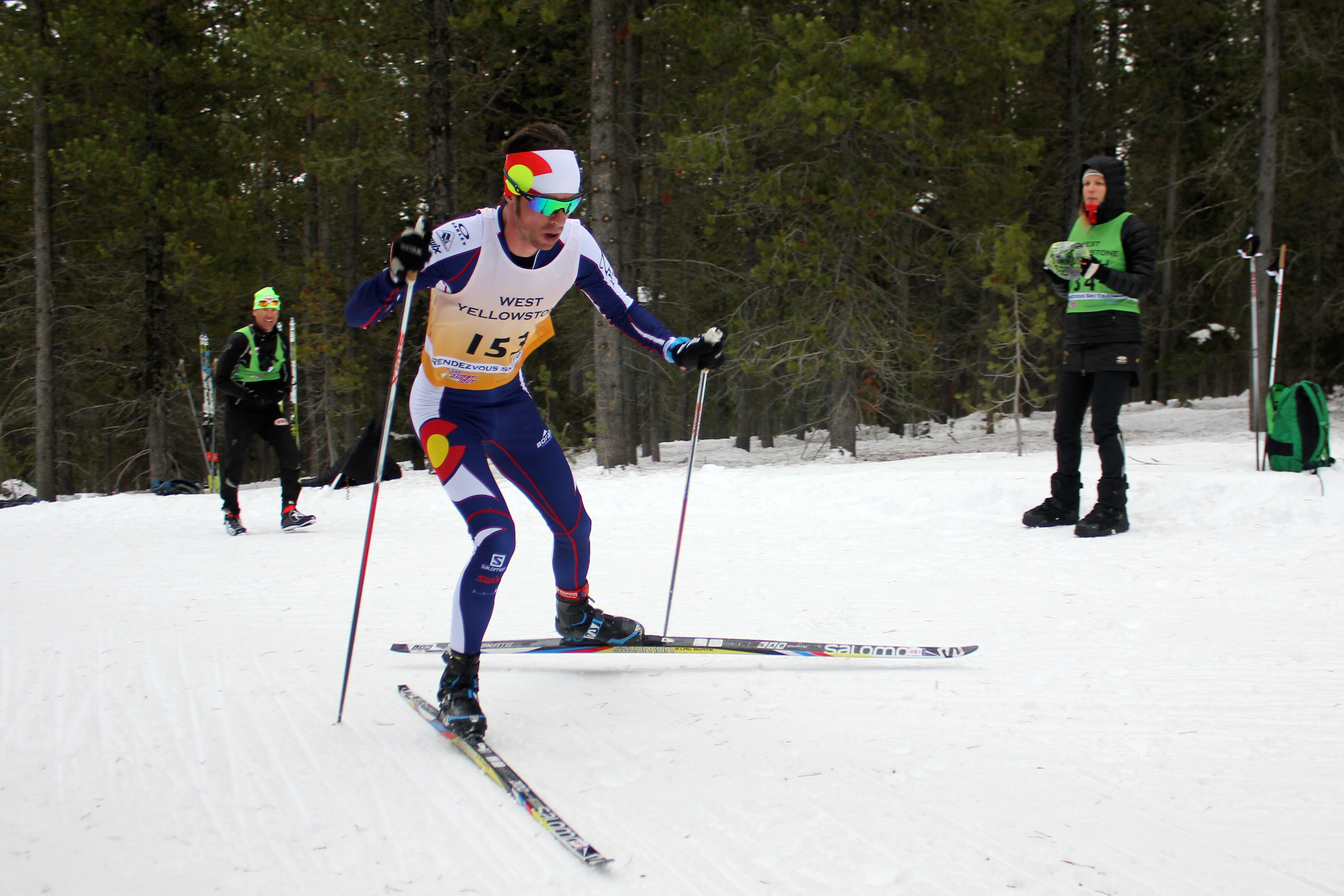
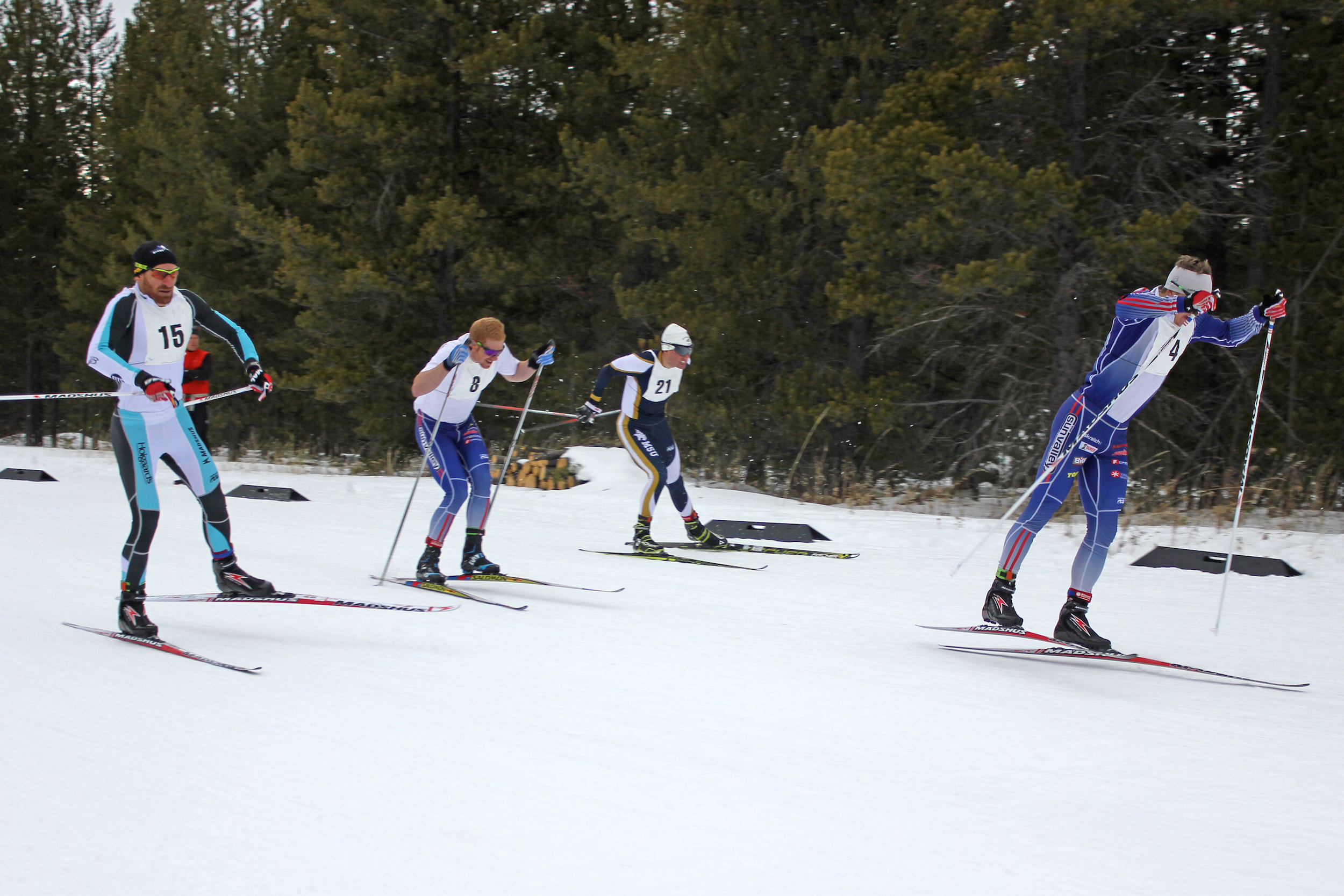
SUN VALLEY, Idaho — Although the 30- and 50-kilometer freestyle mass starts at the 2015 U.S. Distance Nationals took place last Thursday, we’re still reminiscing about the amazing races, sun, and merriment that took place on the trails of Galena Lodge. Check out our photos of day’s events below to relive Caitlin Gregg’s astounding 30 k victory or Ivan Babikov’s smart skiing in the 50 k.
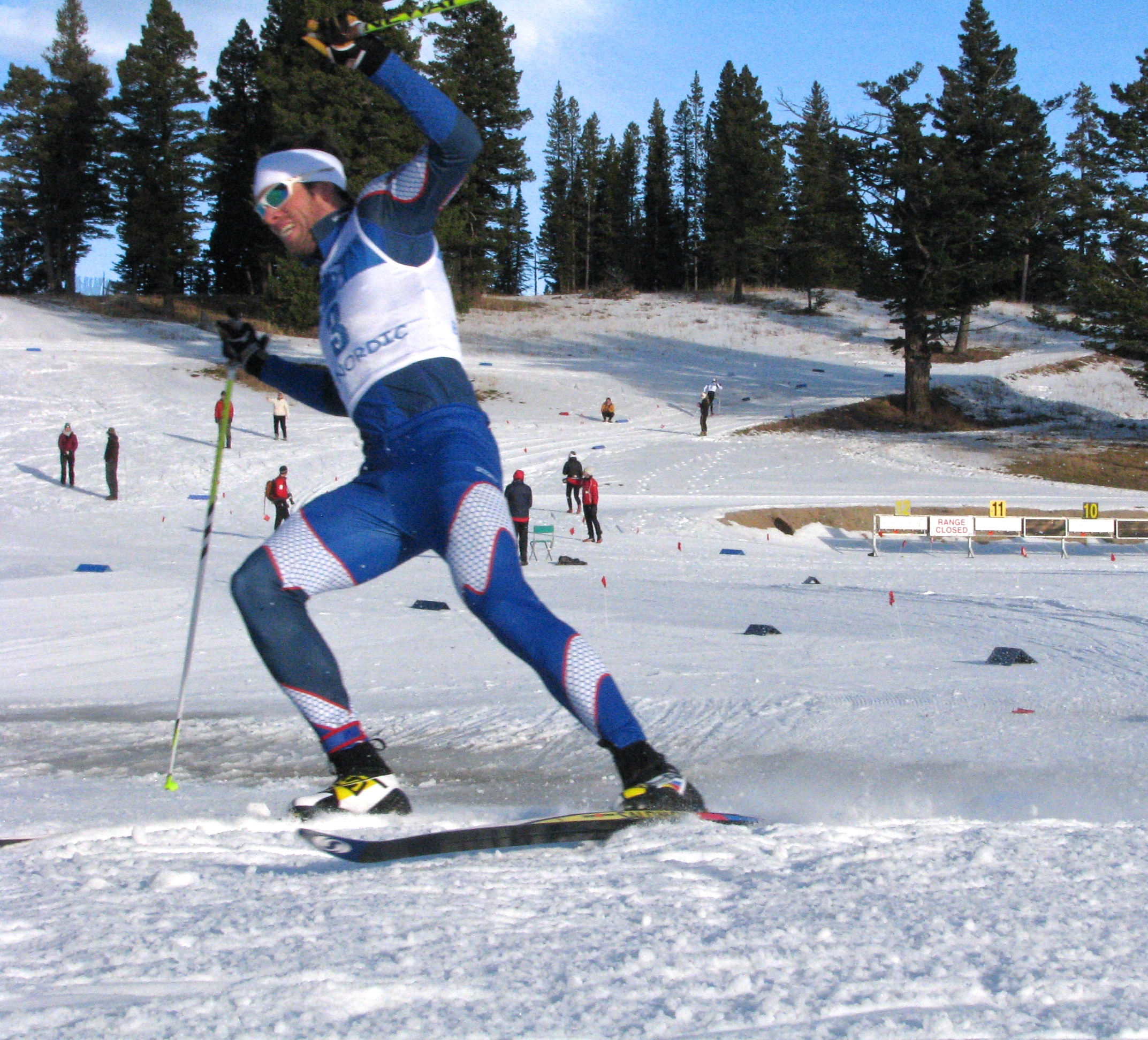
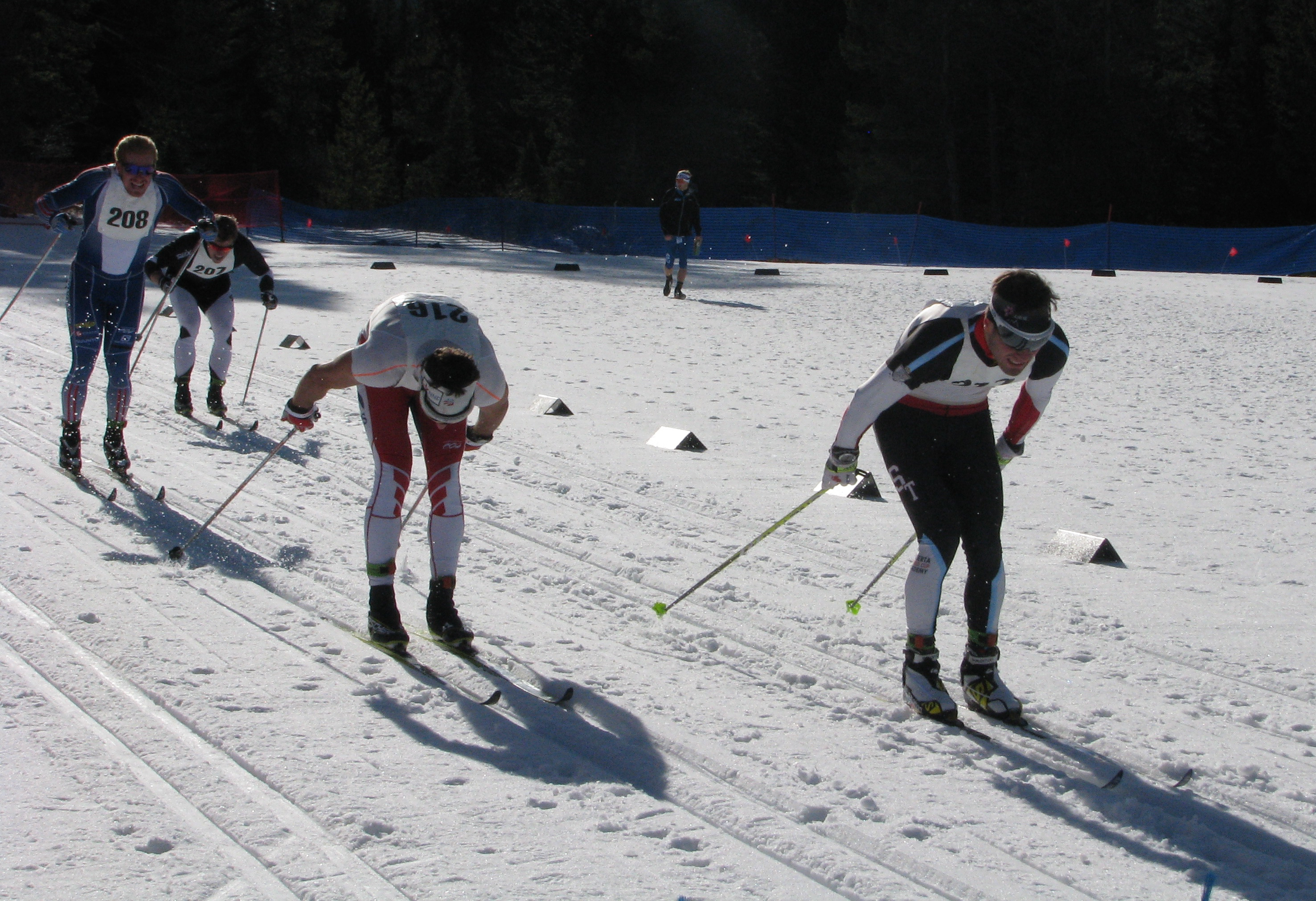
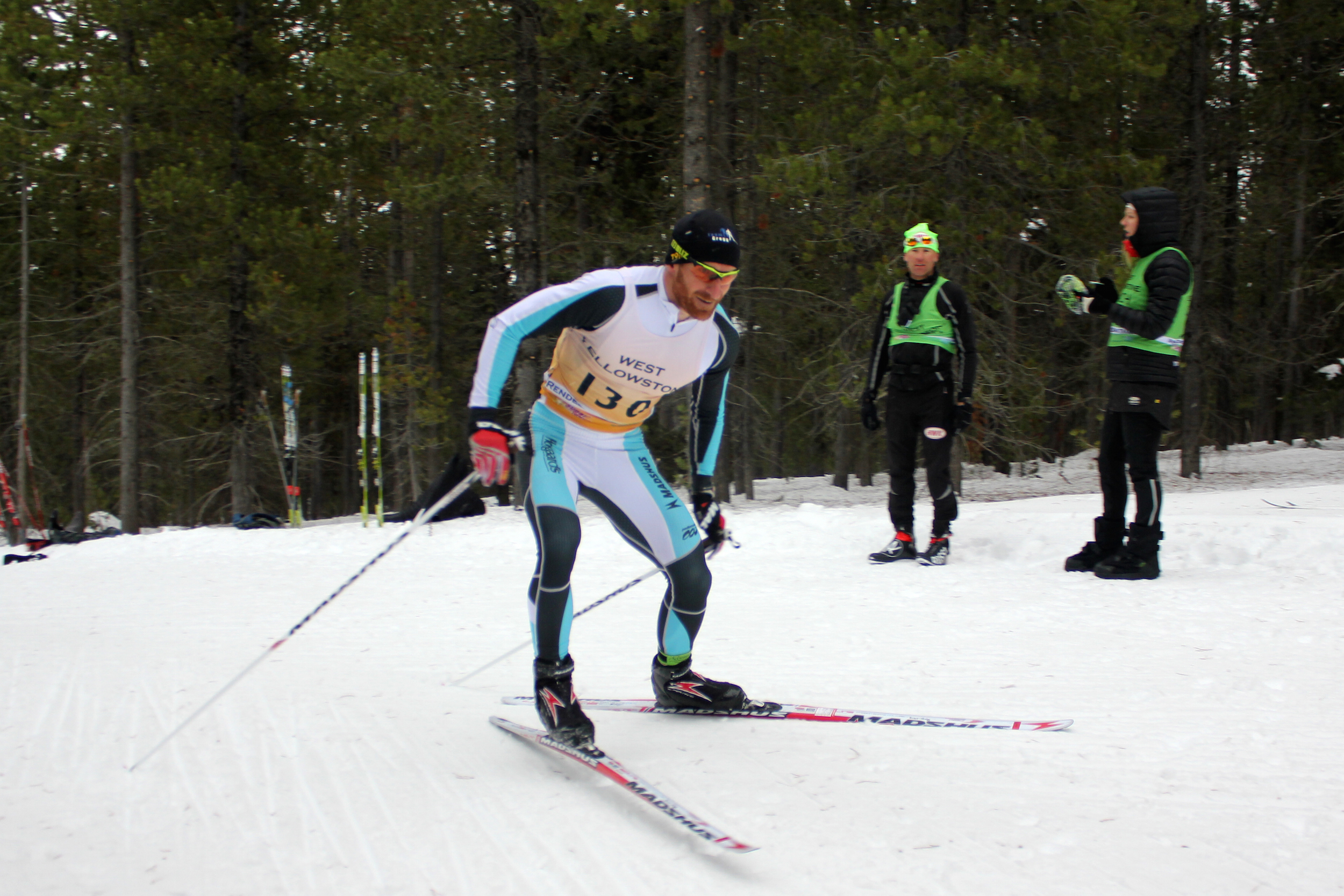
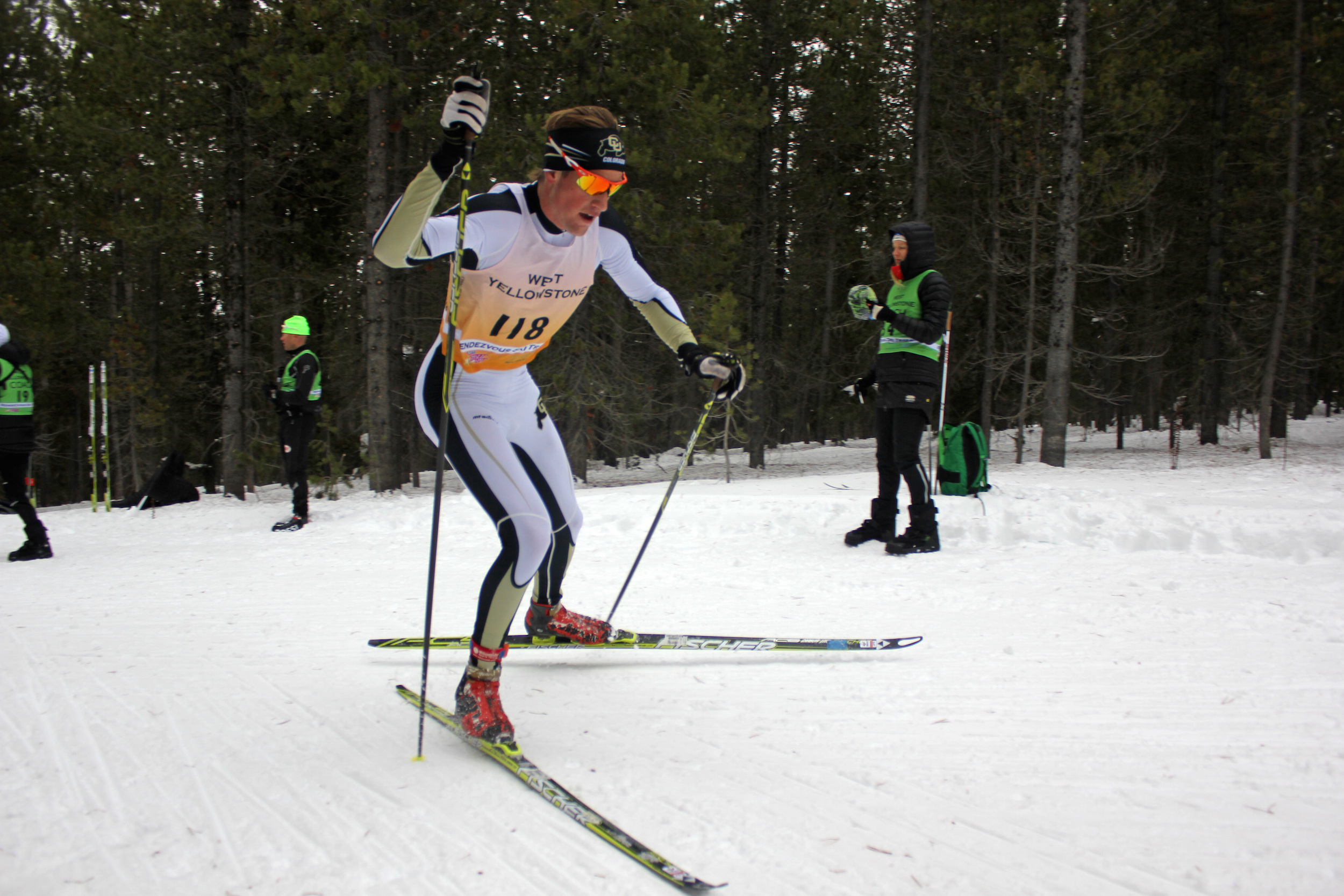
2015 U.S. Distance Nationals 50 k freestyle mass start in Sun Valley, Idaho.
2015 U.S. Distance Nationals 50 k freestyle mass start in Sun Valley, Idaho.
2015 U.S. Distance Nationals 50 k freestyle mass start in Sun Valley, Idaho.
2015 U.S. Distance Nationals 50 k freestyle mass start in Sun Valley, Idaho.
2015 U.S. Distance Nationals 50 k freestyle mass start in Sun Valley, Idaho.
2015 U.S. Distance Nationals 50 k freestyle mass start in Sun Valley, Idaho.
2015 U.S. Distance Nationals 50 k freestyle mass start in Sun Valley, Idaho.
2015 U.S. Distance Nationals 50 k freestyle mass start in Sun Valley, Idaho.
2015 U.S. Distance Nationals 50 k freestyle mass start in Sun Valley, Idaho.
2015 U.S. Distance Nationals 50 k freestyle mass start in Sun Valley, Idaho.
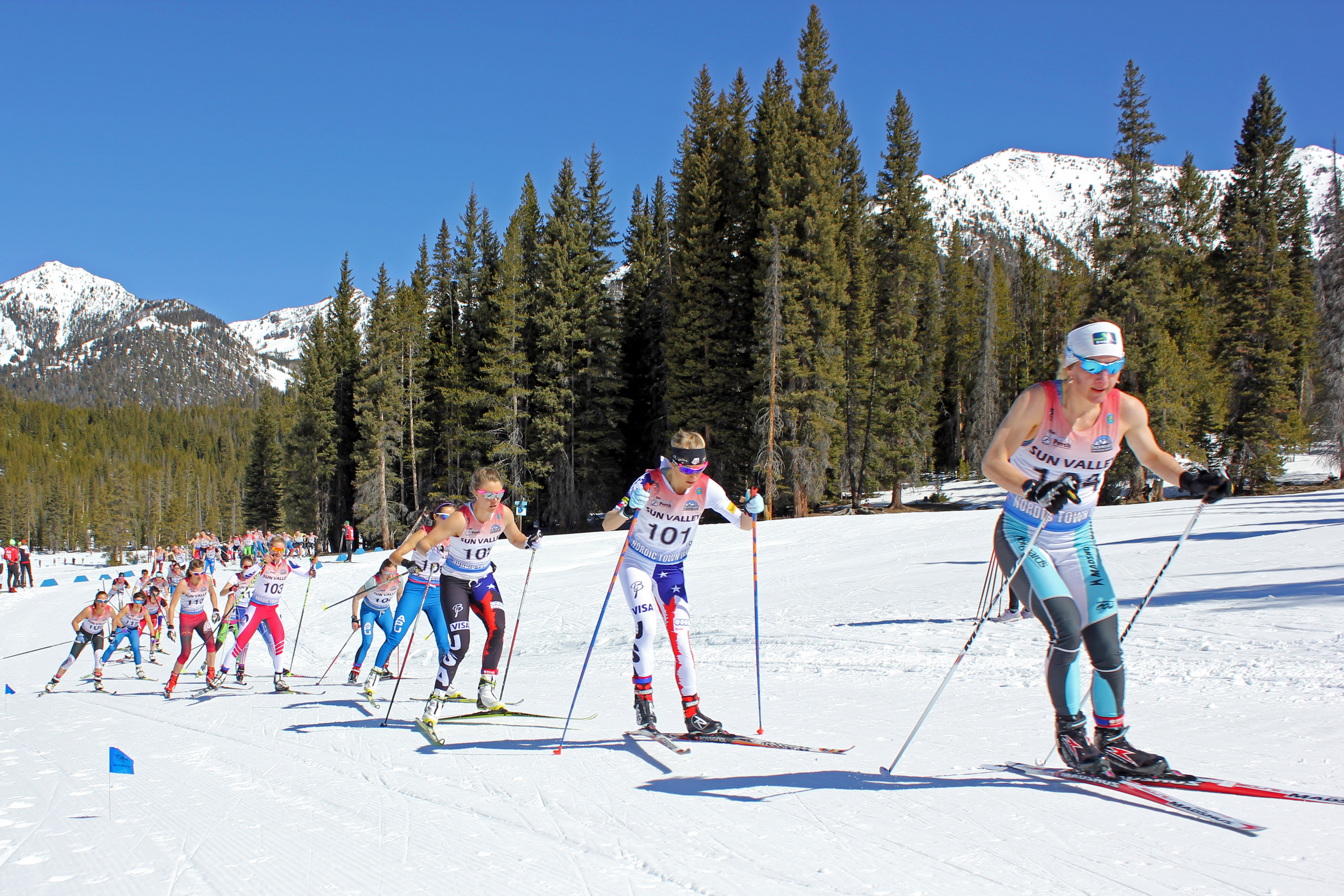
Caitlin Gregg (Team Gregg) leads the start of the women’s National Championships 30 k freestyle mass start at the 2015 SuperTour Finals in Sun Valley, Idaho.
2015 U.S. Distance Nationals 30 k freestyle mass start in Sun Valley, Idaho.
2015 U.S. Distance Nationals in Sun Valley, Idaho.
2015 U.S. Distance Nationals 30 k freestyle mass start in Sun Valley, Idaho.
2015 U.S. Distance Nationals 30 k freestyle mass start in Sun Valley, Idaho.
2015 U.S. Distance Nationals 30 k freestyle mass start in Sun Valley, Idaho.
2015 U.S. Distance Nationals 30 k freestyle mass start in Sun Valley, Idaho.
Caitlin Gregg (Team Gregg/Madshus) skis to a nearly three minute win in the 2015 U.S. Distance Nationals 30 k in Sun Valley, Idaho.
2015 U.S. Distance Nationals 30 k freestyle mass start in Sun Valley, Idaho.
2015 U.S. Distance Nationals 30 k freestyle mass start in Sun Valley, Idaho.
2015 U.S. Distance Nationals 30 k freestyle mass start in Sun Valley, Idaho.
2015 U.S. Distance Nationals in Sun Valley, Idaho.
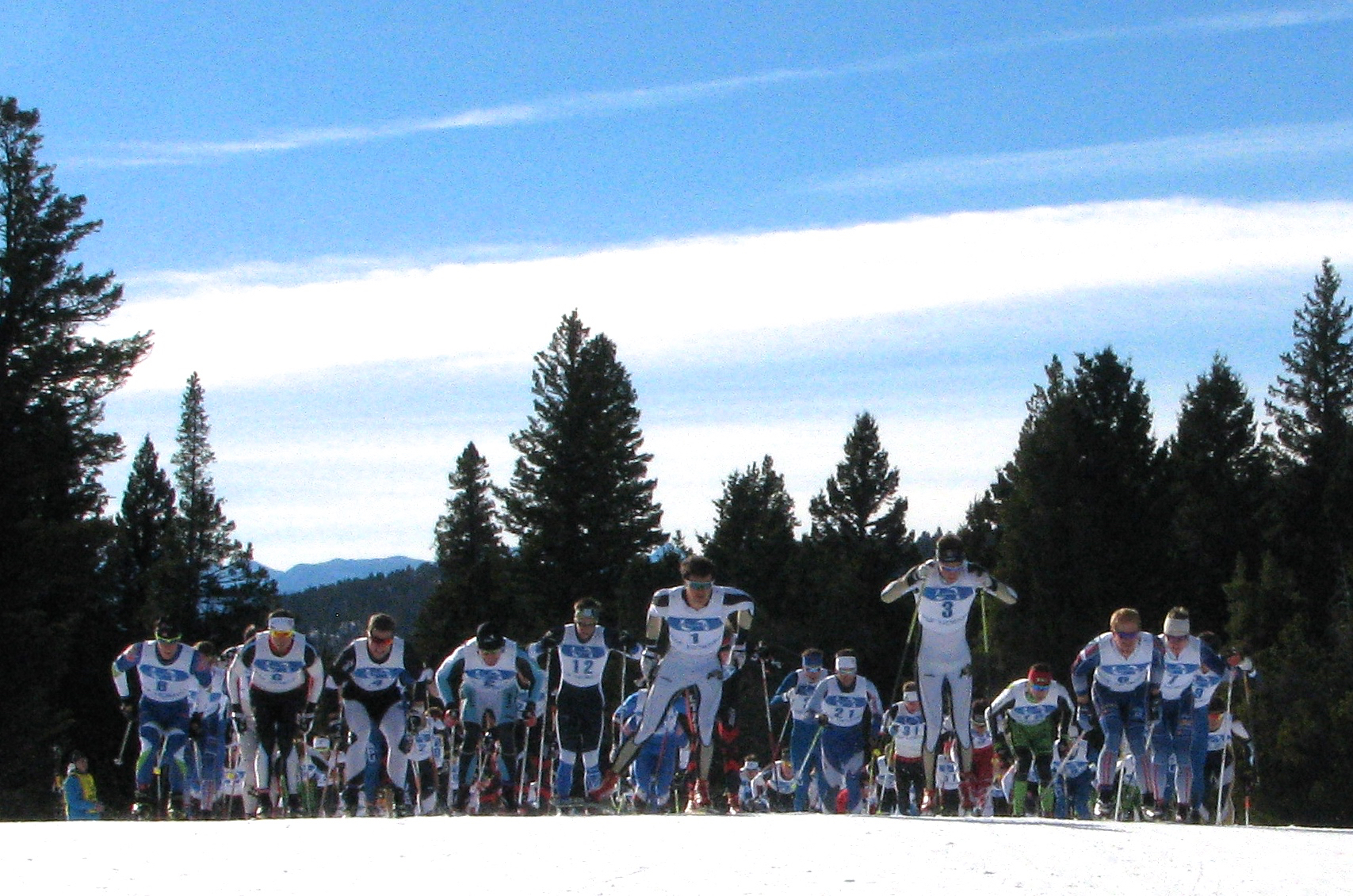
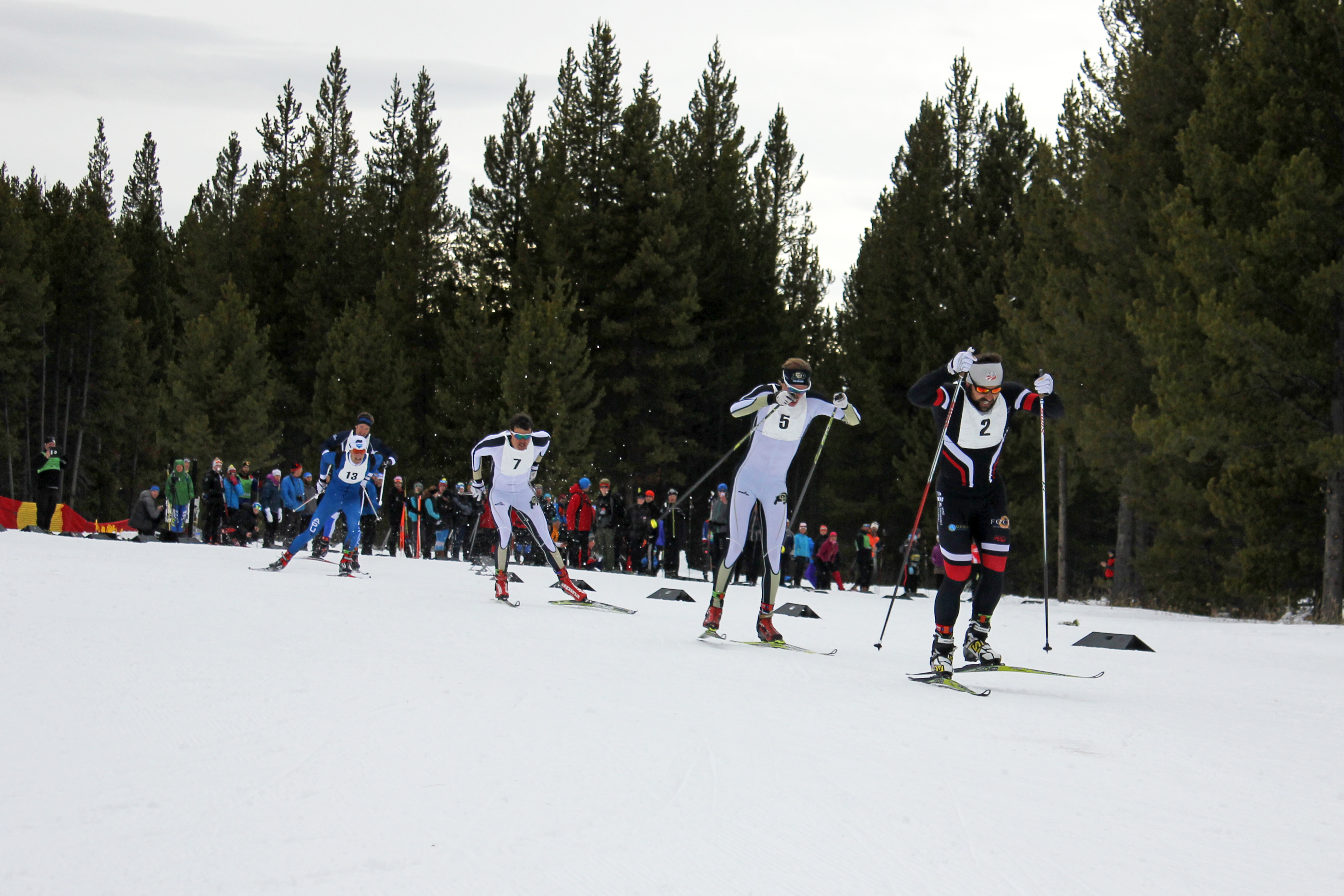
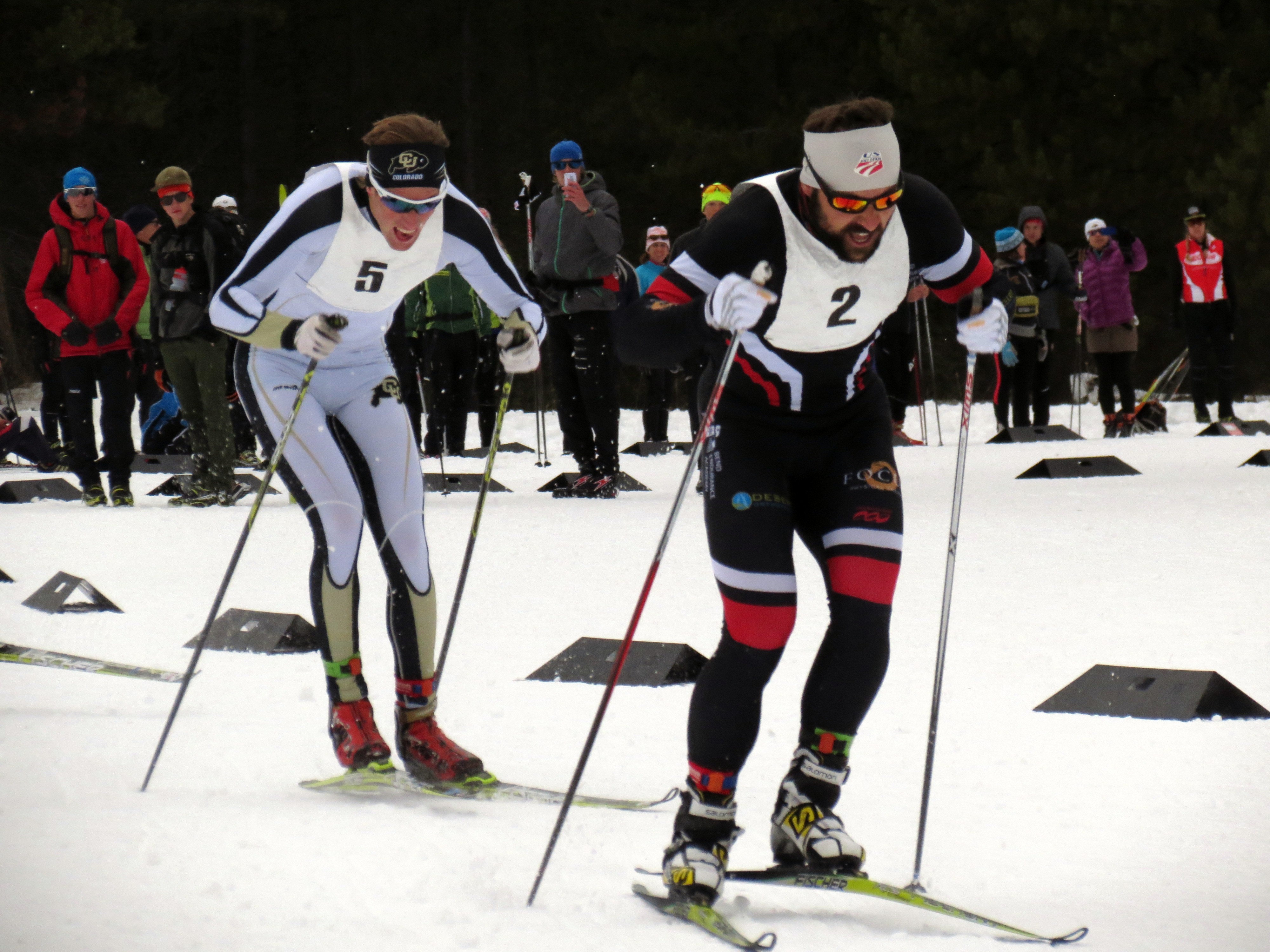
The start of the men’s U.S. National Championships 50 k freestyle mass start at the 2015 SuperTour Finals in Sun Valley, Idaho. (Photo: flyingpointroad)
SUN VALLEY, Idaho — Sun, warm weather and abundant smiles welcomed the final day of competition at 2015 SuperTour Finals, which featured the U.S. Distance Nationals 30- and 50-kilometer freestyle mass starts.
The men’s 50 k took place on icy and fast snow that made it difficult for skiers to find traction as they skated around the 9-lap course. The 62 starters of the race remained relatively close throughout the first laps, but as the kilometers continued a pack of 14 skiers gained nearly a minute on the field.
The pack was often led by University of Colorado’s Rune Malo Ødegård while other top skiers such as SSCV’s Noah Hoffman and Tad Eliot, Canadian National Team’s Ivan Babikov and Graeme Killick, Alaska Pacific University’s Erik Bjornsen, New Mexico’s Aku Nikander and Brian Gregg shuffled in the mix as well.
Just before the final two laps, Babikov switched his right and left skis to take advantage of intact, smoother edges for further stability on the icy downhills. Regardless of whether the ski switch helped, the Canadian demonstrated his superiority in the remaining 10 kilometers.
On the eighth lap, Babikov sped up one of the 5 k course’s early hills, leaving the remainder of the leading men behind. He held the advantage until the finish, where he crossed in first with a time of 1:57:06.2. Behind him, a four-man fight for second was brewing as Ødegård, Hoffman, Killick, and Bjornsen drew closer towards the finish. The skiers entered the last meters together, but Ødegård used a strong final kick to claim silver, 51.9 seconds from Babikov. Hoffman crossed the line in a close third, 52.4 seconds from the win.
Bjornsen (+52.8) was fourth, while Killick (+54.5) took fifth.
Canada’s Ivan Babikov celebrates his win in Thursday’s 50 k freestyle mass start at the 2015 SuperTour Finals in Sun Valley, Idaho. (Photo: flyingpointroad)
After his finish Babikov, who is fresh off a week of racing at Canadian Ski Nationals, said that he expected the competition to respond to his game-changing move, but soon realized they were nowhere in sight. “The altitude actually works well for me. I pushed a bit with two laps to go and I was surprised I dropped the guys,” he explained.
Babikov’s strategy for the 50 k was to stay at the front of the pack to avoid any mishaps on what he described as “dangerous” conditions.
“To be honest, even at the end, the track was poorly prepared. The downhills were super dangerous and people were all over the place,” he said. “I just tried to stay ahead, not to get in a crash and not to get into a pile up. Then I wanted to go faster in the last laps and that’s what happened.”
Babikov was pleased with his win, especially given his history with U.S. domestic racing. Babikov was once a member of the Subaru Factory team and a regular at SuperTour and U.S. Championships events.
“This is really important for me,” Babikov said of his win. “ U.S. Nationals, I’ve done it so many times, and doing all the SuperTours. I love coming here, all the people are so friendly. Graeme [Killick] was really surprised because all the coaches were offering help, and everyone was really friendly.”
After his second place finish Ødegård said that since the 50 k was the last race of the season he entered with nothing to lose. Like Babikov, the University of Colorado skier worked to stay at the front to control the speed and avoid crashes on the treacherous downhills. “I felt really good in the warm up so I just felt like I should be offensive today and stay in front and control it, especially the downhills,” he said.
As the race became a four-way fight for second, Ødegård said that he was focused on conserving energy for the final meters instead of chasing Babikov.
“When he got the gap I thought it was not that smart for me to chase that down,” he said of Babikov’s move. “I would die and I probably won’t even be able to take second, so it was better to focus on second place today.”
The senior recently finished his college skiing career with a pair of third-place finishes at the 2015 NCAA Championships in Lake Placid earlier this month. He plans to make the jump into professional skiing within the next year and hopes that Thursday’s performance will catch the eyes of teams in his home country.
“It means a lot,” the Norwegian said. “It’s really good skiers around me today, World Cup skiers, and you know they are top performers in 50 kilometers. I hope people back home can notice that I went fast today and that could help me get in some team for next year.”
Colorado’s Rune Malo Ødegård celebrates his second place finish over Noah Hoffman (r) and Erik Bjornsen (l) in the U.S. National Championships 50 k freestyle mass start at the 2015 SuperTour Finals in Sun Valley, Idaho . (Photo: flyingpointroad)
Hoffman placed third overall and was crowned U.S. National Champion in the 50 k as the first American finisher. Hoffman, who suffered a fractured leg in November and returned to racing in February, said that he was happy to end the season on a high note.
“It’s a good way to end a challenging season,” Hoffman said. “I’m happy with the way I skied today especially given the conditions. It was so hard to stand out there, especially on that hill. It was so icy in places.”
Before the race, Hoffman said he was discouraged from a week of mediocre racing at the SuperTour Finals. In the first laps of the race he felt like the 50 k was headed in a similar direction, but he recovered as the race progressed.
“I wanted to feel it out,” Hoffman said of his strategy. “It’s been such a rough week and not an encouraging two months of racing. To be honest, I was really hurting and I thought it was going to be a really rough day, but then I felt better as the race went on and the conditions softened.”
Hoffman said he was proud of his finishing sprint, which is not something the distance skier is known for; “I’m happy with that finishing sprint. Not that long ago I would have gotten last out of the group,” he said. “Bjornsen is a great sprinter so it’s a little team battle there. It’s fun for me to come out on top.”
Caitlin Gregg (Team Gregg/Madshus) leads the start of the women’s National Championships 30 k freestyle mass start at the 2015 SuperTour Finals in Sun Valley, Idaho.
Gregg Skis Away with 30 k Victory
The women’s 30 k welcomed vastly diverse conditions as the sun and warm weather transformed the icy course into a wet, speed-sucking loop. From the start of the race USST/Burke’s Liz Stephen took an early lead on the first uphill. By the top it was just Stephen and Team Gregg/Madshus’ Caitlin Gregg with he rest of the field several seconds behind. Originally suggesting to work together, Gregg took the lead on the downhill but at the bottom of the course her superior skis gave her a large lead over Stephen.
Over the course of the 30 k Gregg increased her lead and crossed the finish line in first with a time of 1:42:46.2. Stephen maintained her second-place standing throughout the race and crossed the line 2:40.8 behind Gregg.
The fight for third proved more competitive, with four skiers – APU’s Sadie Bjornsen, Rosie Brennan, Chelsea Holmes, and Utah’s Veronika Mayerhofer – vying for the final spot on the podium. The three APU skiers eventually dropped Mayerhofer and entered the finish together. In the end it was Sadie Bjornsen who claimed bronze, 3:54.0 behind Gregg.
Brennan (+4:01.8) and Holmes (+4:05.7) finished fourth and fifth.
Gregg’s victory was reminiscent of the 2014 U.S. Cross Country Championships in Midway, Utah where she skied to a massive victory in the 20 k freestyle mass start. Unlike 2014, many strong skiers from the USST like Stephen and Bjornsen were present in Thursday’s 30 k, making the blowout win even more impressive.
Although it was apparent that Gregg was in top-shape, she was unsure if she would participate in the 30 k prior to its start. Earlier this month, Gregg suffered a concussion after being hit with a feed in the Homenkollen 30 k. She explained that she hadn’t raced or trained significantly since the incident.
“To be quite honest I woke up this morning and I sat a little bit and thought I wasn’t going to race,” she said in a post-race interview. She explained that after watching the men’s 50 k she began to change her mind especially as the snow became slower.
Caitlin Gregg (Team Gregg/Madshus) hugs her husband, Brian, after her large win in the 30 k freestyle mass start at the 2015 SuperTour Finals in Sun Valley, Idaho.
As the conditions began to change more rapidly than expected, Gregg realized she had skis that would match the wet conditions – a pair of new Madshus that she hoped to use in the Holmenkollen 30 k that were ultimately never skied on due to the lack of a ski switch. As the race began, it was clear the skis were the answer to the warm Idaho afternoon.
Gregg said that she had originally wanted to ski at the front and slow the pace. However, after a couple hard pushes from the start she realized it was just her and Stephen ahead of the pack.
“Liz skied an amazing first climb and I was doing everything I could do to hang on,” Gregg said of the first part of the course. “I could tell we had a lead and I said, ‘let’s work together, I’ll lead on the downhill because I’ll be a better draft.’ I started going on the downhill and I turned around and she just looked at me and couldn’t keep up.”
Once alone in the front Gregg said her strategy was to ski the uphills efficiently and the downhills aggressively – knowing that was where she could make up the most time. Even with her large lead, Gregg said that there were times when she doubted her ability to maintain the distance.
“There were moments out there where I felt like ‘oh man maybe I only have 10 k in me,’ but after you get positive feedback you just start to build on that,” she said.
Thursday’s win marks the end of a historic season for Gregg where she earned a bronze medal in the 10 k freestyle at the FIS Nordic World Ski Championships in Falun, Sweden in February. Originally, Gregg wasn’t sure if she would continue to pursue international racing in the upcoming season, but with her continued successes she plans to try and prove herself on the World Cup circuit once again.
“I wasn’t sure if I was going to keep racing, but it seems kind of silly to stop now,” she explained. “I feel great and we are really fired up about the rest of our careers going forward. I know what I need to work on and where I’m at. I have a lot more confidence after this year.”
The start of the women’s 30 k freestyle mass start at the 2015 SuperTour Finals in Sun Valley, Idaho. (Photo: flyingpointroad)
In second, Stephen said the 30 k was the hardest race she’s ever completed and was happy to end the season knowing that she earned a break. “I’m really psyched to put an end to the season. It’s been awesome and I’m ready for a break… and to find a beach,” she explained after her finish.
Stephen skied the majority of the race alone and said that she played some “little games” to keep her mind from the slowing and wet conditions. Whenever she hit the shade she would work as hard as possible until she reached the slow snow in the sun.
“Dropping out definitely goes through your head,” Stephen said with a laugh, after being asked what was on the Burke Mountain Academy skier’s mind throughout the lonely 30 k. “You just ski it in and keep fighting. I was focused on not having the pack behind me catch me.”
As Stephen crossed the finish line she collapsed from exhaustion and burst into tears. “Sadie and I have been calling this the trail of tears,” Stephen explained of the finish. “The last five weeks we’ve done three 30 kilometers. Today the trail was definitely a teary one. I was just so happy to be done and have my team around me.”
Although Stephen is focused on getting as much rest as possible in the coming weeks, she said that her mind is already going to next season.
“We’ve had a great season as a team and we’ve all had highlights,” she said. “Even though I’m so exhausted, I am looking forward to making some changes and starting the training up again.”
Taking the final podium position, Bjornsen was happy to ski the race with two APU teammates. She explained that the three were able to take advantage of eachother’s strengths to ski the long race in the most efficient way possible. “It also made for some more smiles than we would have had in a 30 k,” she added.
“It’s a great way to end the season with my teammates,” Bjornsen said of the final race of the year. “I’m really glad we had spring series because I finished the World Cup wanting more. I never felt like I found that shape and had some unlucky things at the end. It was fun to come here and go into the training season with some confidence and believe in my shape.”
SuperTour Final Rankings
With the culmination of the 2015 SuperTour, Brennan and Kris Freeman (Freebird) were named the overall leaders. The two will automatically earn starting rights on the World Cup this coming fall.
Holmes claimed the distance title, while Bridger Ski Foundation’s Jennie Bender won the women’s sprint rankings. For the men, Freeman was the top-ranked distance skier while bend Endurance Academy’s Dakota Blackhorse-von Jess earned the sprint title.
Brennan and Freeman also won the titles of U.S. Grand Champion after earning the most points combined from Thursday’s races and the week of racing in Houghton, Mich. in January at the 2015 U.S. Cross Country Championships.
The final award of the season, the National Nordic Foundation Cup, was given to APU for its domination on the domestic circuit in the 2015 season.
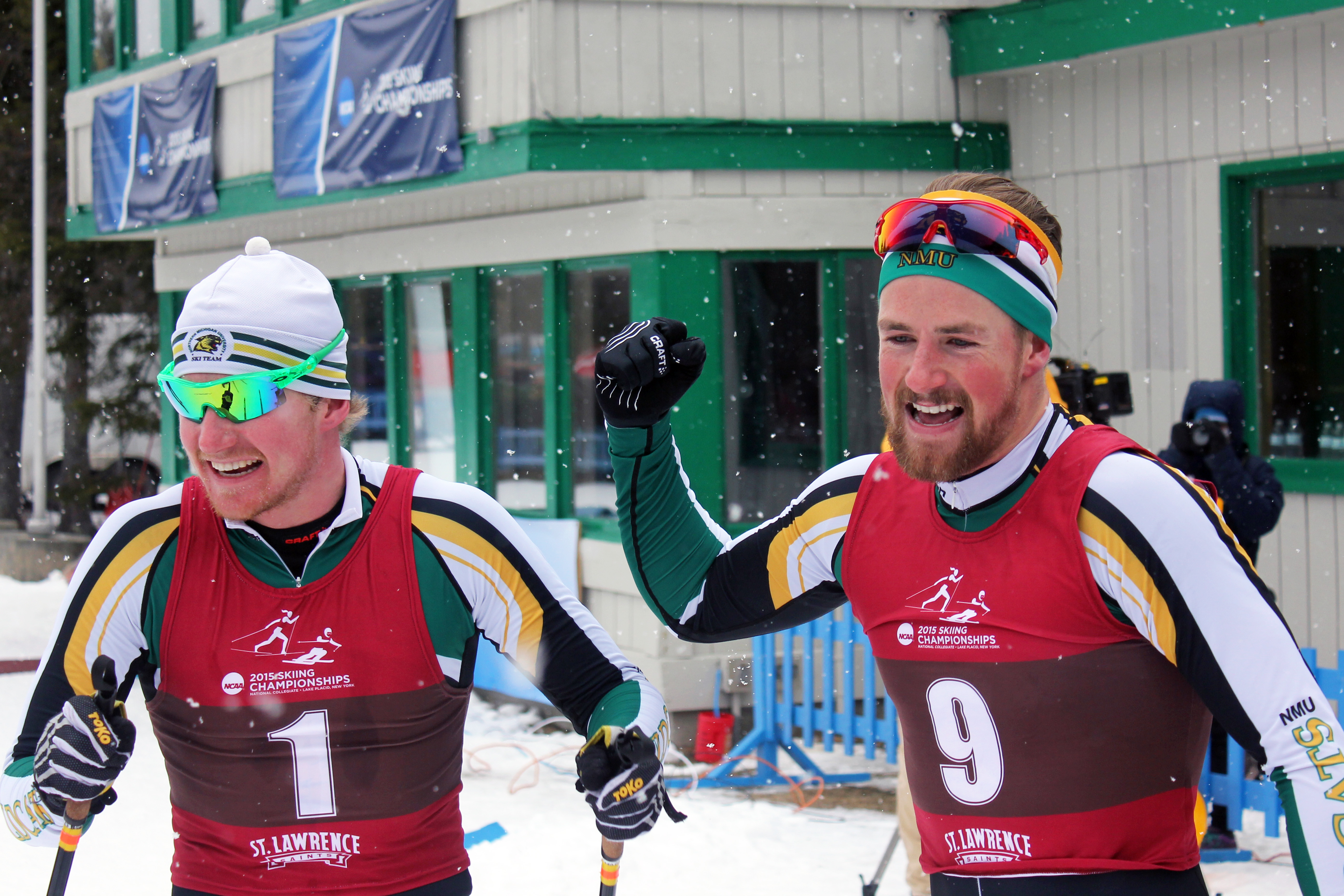
Fredrik Schwencke (9) of NMU celebrates his win in the 2015 NCAA 20 k classic mass start with teammate Kyle Bratrud.
LAKE PLACID, N.Y. – The second day of nordic racing at the 2015 NCAA Championships was exciting to say the least, with both the 15 and 20 kilometer classic mass starts coming down to a sprint finish. In the women’s race a fight between two skiers resulted in a new NCAA champion, while the men’s race saw a controversial 100-meter sprint between four competitors.
Ahead of the final sprint’s mayhem, Northern Michigan’s Fredrik Schwencke crossed the finish line with a time 56:12.3 to earn his first national title. He was followed by the University of Colorado’s Mads Ek Strøm and Rune Malo Ødegård who finished 0.6 seconds and 6.9 seconds behind the winner respectively.
In fourth was New Mexico’s Aku Nikander (+11.4), while Utah’s Niklas Persson (+21.2) ended his day in fifth.
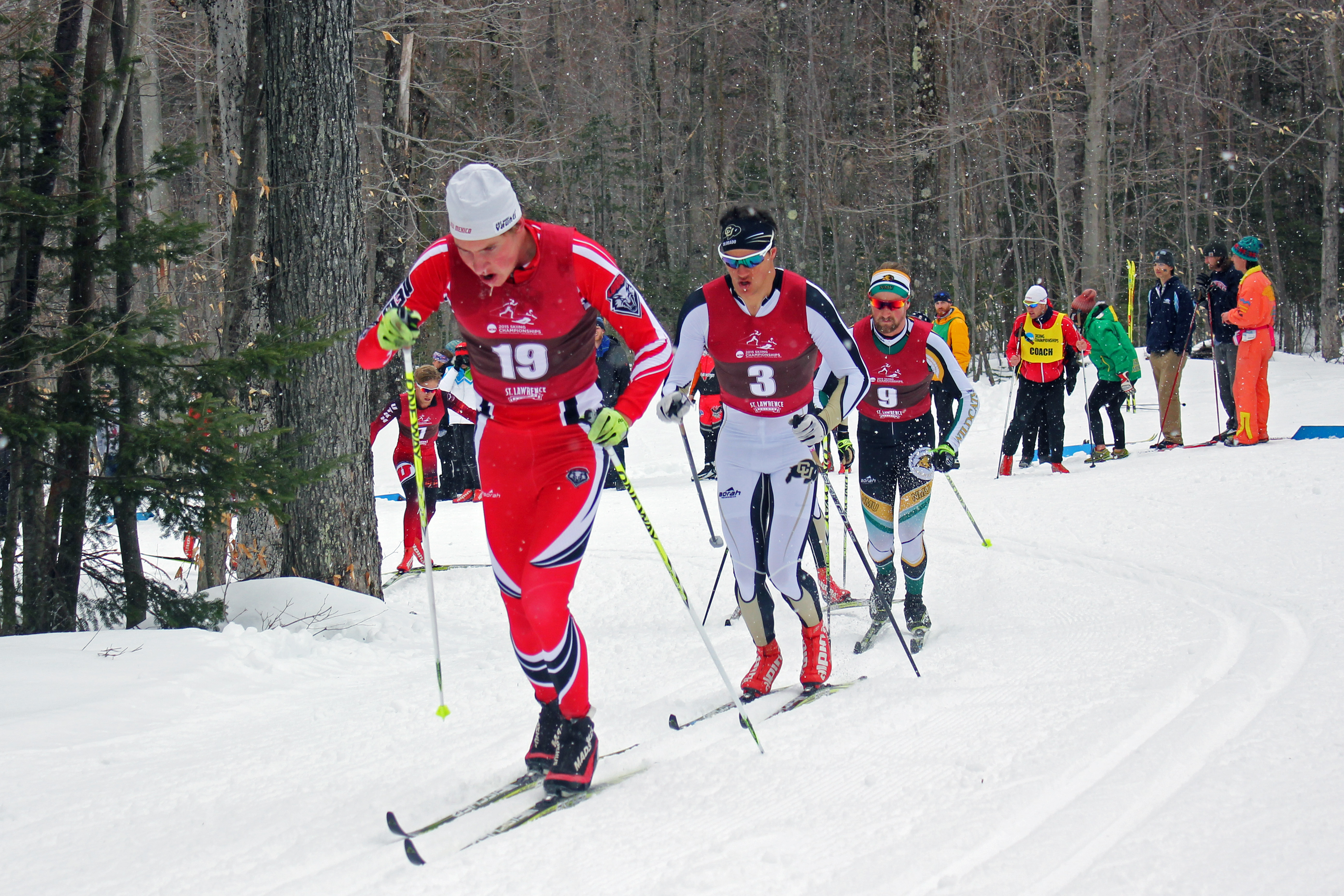
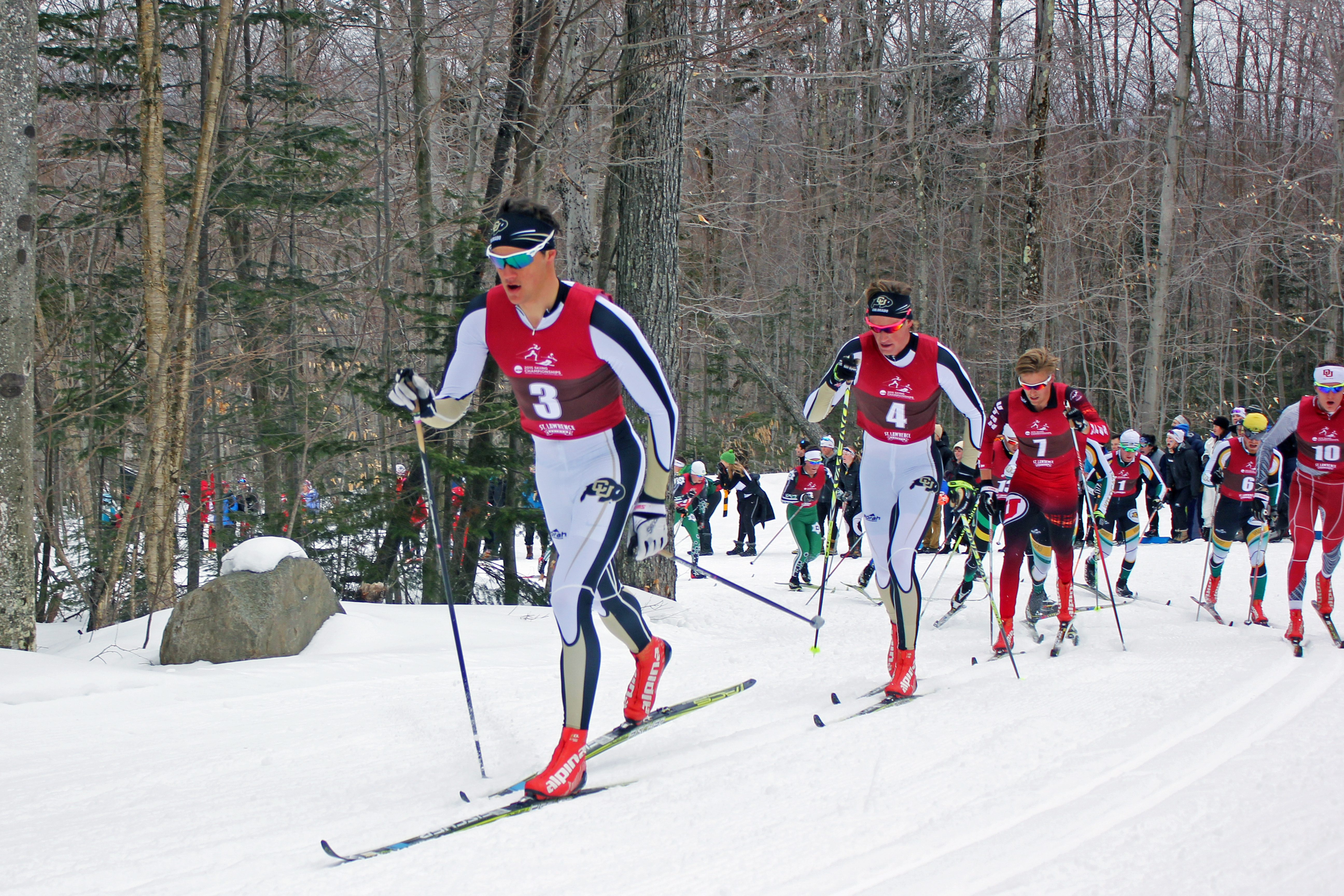
The 20 k began with a blistering pace as the Colorado skiers led the group of 40 men through the hilly 5 k Olympic course that features almost 600 feet of elevation gain per lap. As the pack progressed through the four-loop race its size dwindled and by the first kilometer of the final lap there were four remaining skiers in the lead pack – Schwencke, Strøm, Ødegård, and Nikander. The New Mexico skier led for much of the final lap until the final downhill where all four skiers jockeyed for the lead.
They rounded the corner into the final 100 meters with Scwencke in first and Strøm in second. Behind them, Ødegård and Nikander skied in the farthest left-hand lane, with the Colorado skier in the tracks and the New Mexico skier just outside the tracks to Ødegård’s left.
Aku Nikander of NMU leads Rune Malo Ødegård of CU and Fredrik Schwencke of NMU in the final lap of the 2015 NCAA 20 k classic mass start.
All four skiers were in the hunt for gold until Ødegård and Nikander suddenly crashed. While the Colorado skier said it was unclear why he fell, video footage later revealed that Ødegård had planted his pole on Nikander’s ski and lost balance. He fell to the left taking Nikander with him.
By the time the two got up they were far from the win, as Schwencke and Strøm crossed the line in first and second. Ødegård was the first to recover from the crash and nabbed the final podium position. Race officials said that there was no disqualification due to the nature of the crash and the lack of obstruction by either skier.
Ahead of the messy fight for third, Schwencke celebrated his win amongst the many Northern Michigan teammates and coaches who came swarming into the finish pen. At one point the first-time NCAA Champion was hoisted upon the shoulders of a coach to the cheers of the crowd.
After the jubilation of the finish, Schwencke said that he didn’t expect to be on top of the classic podium due to his wellbeing the previous day. The Norwegian from Oslo said he didn’t feel well and had trouble sleeping. Despite his misgivings, Schwencke explained that he kept faith in his skiing throughout each of the four laps in the 20 k.
“I know that I am better in classic so I was just kind of hoping for the best. I just tried to ski smart and save as much energy as possible,” he said. “Then after a while, one by one they dropped off and we were four guys in the very end there and I just gave it my all.”
Due to the falling snow throughout much of the race, the Northern Michigan skier said that his plan was to stick behind the leaders and make a move in the final meters. “I sort of wanted to be third or fourth position because it was snowing so it was a bit slower to be leading so I sort of wanted to be a bit back there and be ready to attack,” he said. “Then they went for it and I felt good so I just tried the best I could to be first in the last turn. The plan worked out very well.”
Schwencke led the Northern Michigan Wildcats to earn the most team points in the 20 k, as teammate Kyle Bratrud was the first American in seventh and Erik Søderman placed 11th. The Norwegian attributed much of his success to his teammates and said that their collective performances were especially pleasing after a freestyle race that was below their expectations.
“We have a really strong team and we really wanted to do well. Wednesday wasn’t up to our potential so we really wanted to go for it today and do well and prove that we should be up there,” he said.
Bratrud, who recently returned from the 2015 FIS Nordic World Ski Championships in Falun, Sweden echoed Schwencke’s sentiments and said that he was happy to be the first American across the line. At the 2014 NCAA Championships, Bratrud was also the first American in the 10 k classic and finished sixth.
“Freddy [Schwencke] and I, we are rooming together and both of us woke up and felt really bad this morning. He has been sick, and after the skate race I was pretty much done with the season,” he said. ” I am happy with the day, I didn’t think I was going to finish in the top 30 today so to finish seventh is pretty sweet.”
“Now the three NMU guys here have all won a national championship at some point so it is a pretty sweet team to be on,” he added. Søderman won the 10 k freestyle at the 2012 NCAA Championships, while Bratrud won a national title in the 15 k freestyle at the 2015 U.S. Cross Country Championships in Houghton, Mich. earlier this year.
In second, Strøm received a written warning after the Colorado skier took more than one skate before entering the tracks in the final 100 meters. Officials said that they chose not disqualify Strøm because they believed he gained no clear advantage from the technique violation. Before he received the written warning, Strøm explained that the extra skate was due to the layout of the tracks into the finish.
Colorado’s Rune Malo Ødegård leads teammate Mads Ek Strøm in the first lap of the 20 k classic mass start at the 2015 NCAA Championships.
Strøm, who set the race’s pace for much of the fist half of the 20 k, said after the race that he was pleased with second place, especially after finishing fourth in Wednesday’s 10 k freestyle – a race he hoped to win. Strøm also added that he was dealing with a sore throat and had been on antibiotics for several days.
“The race overall was really good and I think it was a high-level race, especially the four in front there. There were a lot of good skiers that couldn’t keep up today,” he said. “Of course I wanted to win but second is not bad, especially with everyone crashing in the end. I could have been fourth.”
After his third place finish, Ødegård said that he enjoyed the majority of the race and was glad that the pace was challenging from the start. Like Schwencke, the Colorado skier avoided the lead to save energy given the falling snow, and by the time he reached the final turn Ødegård believed he was in good position to take the win.
“I think I had a really good turn into the sprint, and I gained a spot or two in the finish,” he said about his standing before the crash. “I don’t know what happened. Stuff happens in a sprint and when there’s four people coming in and two meters apart, a lot can happen.”
The Norwegian has won the last two NCAA Championships classic races, and is the only NCAA male in history to win back-to-back classic titles. His third place finish is his second of the 2015 Championships. While Ødegard was disappointed to miss a third Championship, he said that Schwencke and Strøm deserved to finish ahead of him.
“I think the best skiers manage not getting into trouble like that, so today I got into trouble so maybe I wasn’t the best skier,” he said.
As a senior, the 20 k was Ødegård’s last race as a collegiate skier. While he may be done racing for the Buffs, the Norwegian explained he plans to race professionally next year. “I had a great career at CU and I really enjoyed all four years of it,” he said. “Right now I really wanted that win today so I’m a little disappointed with that but I guess to get two third places at NCAAs is good. It shows that I’m consistent and up there. I’m going to ski professionally next year and see if I can do better.”
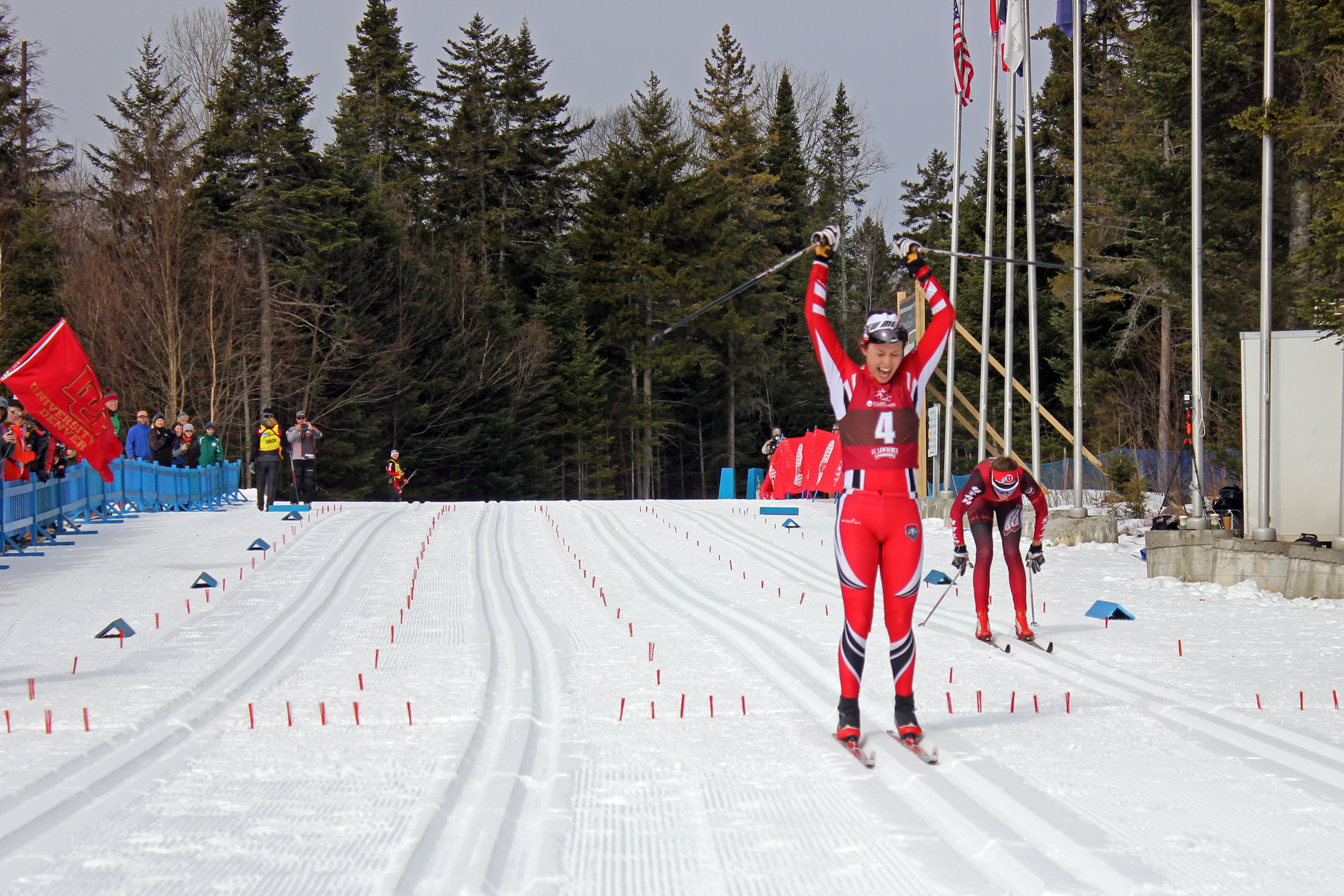
New Mexico’s Emilie Cedervaern celebrates her win in Friday’s 15 k classic mass start at the 2015 NCAA Championships in Lake Placid.
Cedervaern Out-Sprints Mayerhofer For 15 k Victory
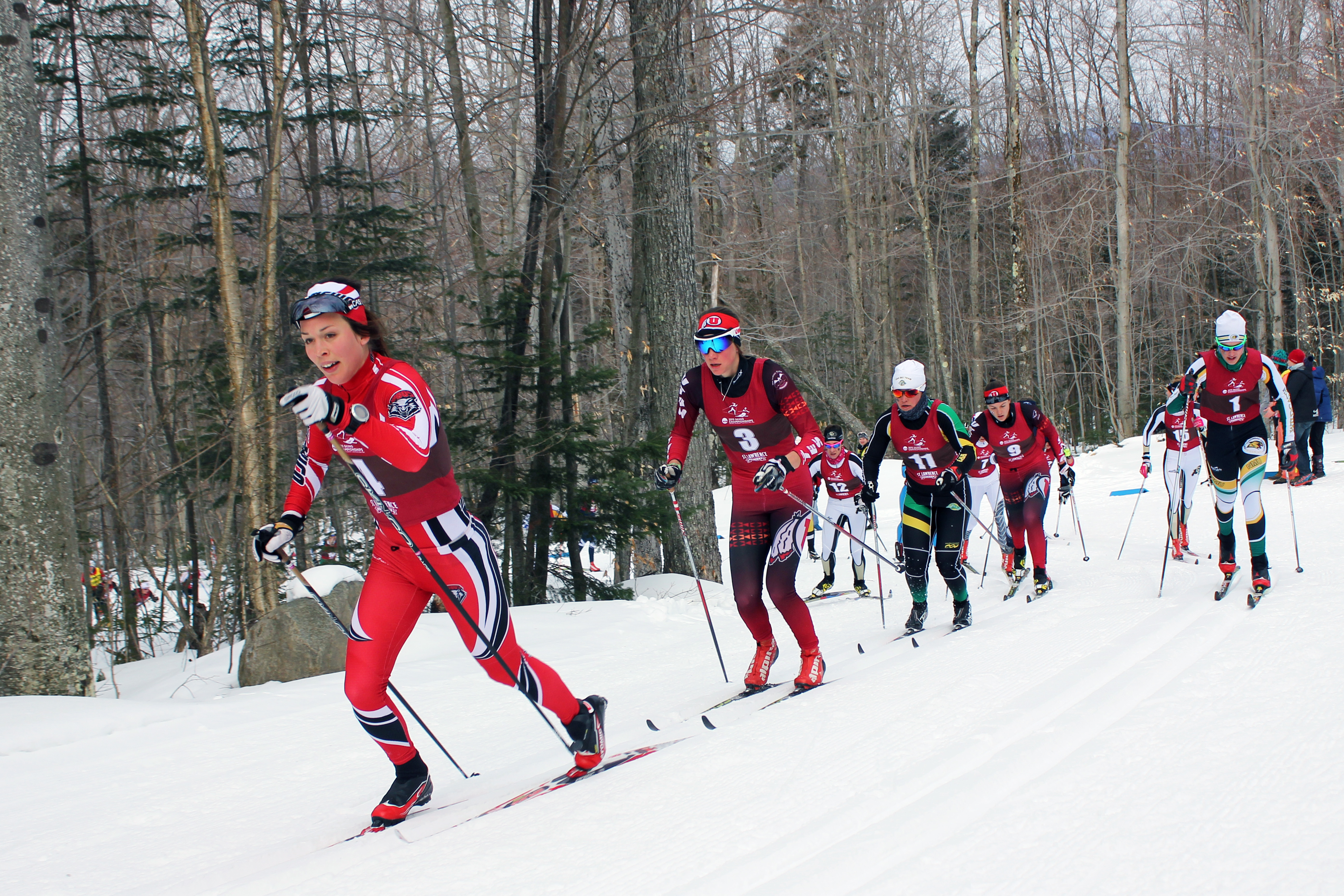
The women’s 15 k classic mass start also featured a sprint finish, but instead it featured two skiers – New Mexico’s Emilie Cedervaern and Utah’s Veronika Mayerhofer. The two began the race at the front of the lead pack, which eventually whittled down to three skiers as Denver’s Sylvia Nordskar entered the fray.
Nordskar lost contact with the Cedervaern and Mayerhofer in the third and final lap as the New Mexico and Utah skiers battled for the lead. Each tried to make a move on the course’s many hills to no avail, util Cedervaern crashed on the last major downhill of the course. The fall gave Mayerhofer a roughly 20 meter advantage as she entered the stadium, but Cedervaern eventually caught the Utah skier and strode into the final meters to take the win.
The Lobo finished with a time of 47:40.3 and bested Mayerhofer by 1.5 seconds. Nordskar took the final podium spot, 1:11.0 behind the victor. The top three women also finished on the podium in Wednesday’s 10 k freestyle, with Mayerhofer taking the win over Nordskar and Cedervaern.
Rounding out the top five were Colorado’s Maja Slobakken (+1:15.2) and Utah’s Sloan Storey (+1:15.7).
Cedervaern said that she believed the win was out of reach immediately after her crash. As she made gains on Mayerhofer, however, she began to realize victory was possible.
“I fell on the last corner, so I was like ‘oh shoot’ because I felt so good and was like ‘why did I mess this up,’” she said. “But then I was very strong in the double poling so I felt like I was catching her all the time. On the last turn when I was on her back I thought that I should go for it.”
New Mexico’s Emilie Cedervaern leads Utah’s Veronika Mayerhofer in the first kilometers of Friday’s 15 k classic mass start at the 2015 NCAA Championships in Lake Placid.
The win marks Cedervaern’s first NCAA title and second podium at her first Championships. The New Mexico junior said she believed it was possible to win Friday’s race due her successful season on the RMISA circuit. She entered the 2015 NCAA Championships as the top ranked skier from the region.
“It was so close on Wednesday and we have been close the last weeks of the season too, so I thought it was possible, but you never know,” she said. “It is so hard with classic, you have to have good skis and a good day and everything, but I definitely thought that it was possible to do it.”
In second, Mayhoffer said that she was pleased with her placement despite being out-sprinted in the final meters. The Ute explained that she experienced breathing problems throughout race, which affected her ability to find the energy needed to stave off Cedervaern’s advance.
“Today I had some breathing problems. I had that last year but this time was the first time I had hard time for breathing, so I didn’t have any energy left for [the finish],” she said. “I just tried my best but [Cedervaern] was definitely stronger today. She was leading more and she was stronger so it’s good that she won.”
The Austrian said that she didn’t expect to have such a successful NCAA Championships in her first year of collegiate racing due to the challenges of balancing school and skiing. She explained that the support of the Utah team was essential to her and her teammates’ success. With Storey’s fifth place finish and Ane Blomseth’s 10th, the Utah women earned the most points in Friday’s 15 k.
“Everybody supports each other, and the coaches too do an awesome job. They do everything they can, not just great skis but they try to make everything as easy for us as possible,” she said. “The team spirit is one of the important things because we spend time skiing but also free time most of the time together so that’s the most important advantage for the Utes I think and I really enjoy that.”
Over a minute behind the fight for first, Nordskar earned her second podium of the week with her third place finish in the 15 k. The Norwegian dealt will illness for much of the 2015 season and given the circumstances, Nordskar was pleased to be in the fight for a top position. Although she struggled with kick and energy the last lap of the course, Nordsakr said the prospect of team points motivated her to maintain third position as Slobakken and Storey attempted to catch her.
“Today was a very tough day, it was really just getting through because my body is not a 100 percent ready and healthy after this long illness period,” she said. “But I am very satisfied that I got the podium and I got to hold the other girls behind me. It was really important to get these points for the total.”
Nordskar, a sophomore, earned both second and third in the 2014 Championships – a feat she repeated in 2015. “I got second and third place last year so I kind of wanted to get the first place, but when you are not 100 percent that is not possible. You have to be ready and in good shape to win NCAAs,” she said.
“I have two more years so four more chances,” she added with a smile.
After the third day of competition, Colorado leads the 2015 NCAA Championships standings with 288 points. Utah is in second and only seven points behind while New Mexico trails by 61 points.
The men’s 10 k freestyle interval start podium at the 2015 NCAA Championships in Lake Placid, N.Y. Taking the top three spots were Dartmouth’s Patrick Caldwell, Denver’s Moritz Madlener (not pictured), and Colorado’s Rune Malo Ødegård.
LAKE PLACID, N.Y. — Excitement was high in upstate New York as the 2015 NCAA Skiing Championships kicked off in Lake Placid with the men’s 10 kilometer and women’s 5 k freestyle interval starts. Dartmouth’s Patrick Caldwell claimed his first national title, while the University of Utah’s Veronika Mayerhofer led a western sweep in the women’s race.
While Lake Placid has faced a colder-than-average winter, Wednesday welcomed temperatures in the 40s and occasional sun. Snow was hard packed for the men’s race, and conditions were incredibly fast despite the difficulty of the course.
Caldwell finished the 10 k with a time of 25:09.1. The University of Denver’s Moritz Madlener placed second, just 2.1 seconds off the Big Green skier’s winning time. The Univeristy of Colorado’s Rune Malo Ødegård finished third, 26 seconds behind.
Fellow Buff, Mads Ek Støm (+29.8) took fourth, as Montana State University’s Forrest Mahlen (+1:00.7) finished fifth.
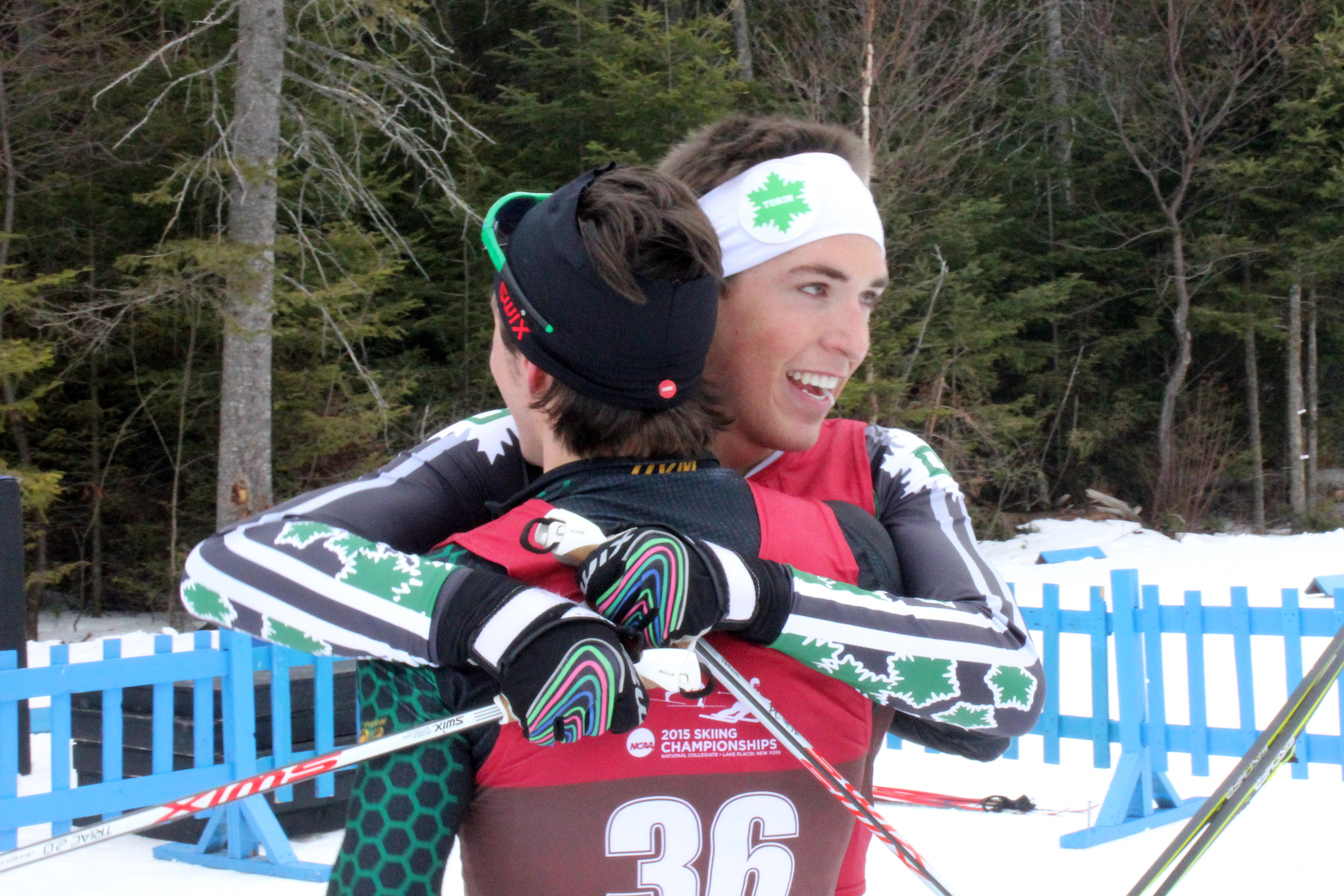
Dartmouth’s Paddy Caldwell hugs Vermont’s Rogan Brown at the finish of the 10 k freestyle at the 2015 NCAA Championships in Lake Placid, N.Y.
Starting in bib 40, Caldwell was the last skier to begin the two-lap race on the challenging Women’s Cross Country Olympic 5 k course at the Mt. Van Hoevenberg Nordic Center. Given the conditions, the Dartmouth sophomore said he entered the race planning to begin fast and maintain high speed until the finish line.
“With the fast conditions I just wanted to go as hard as I could. I tried to get a fast pace from the start and hold it,” he said in a post-race interview.
Caldwell notched the fastest time at the halfway mark, 8 seconds ahead of Madlener. As the Big Green’s skier traversed the second lap his lead over Madlener gradually decreased – at one point it reached 10 seconds but eventually whittled down to 2 seconds. Cakdwell said that he was fading fast by the last kilometers. “The wheels were coming off at the end but I was able to hold it just long enough,” Caldwell said in an interview.
After his victory, Caldwell said that the 10 k freestyle was a target of his in the 2015 season. “I was definitely shooting for this race,” he said. “This is one of my favorite events. I definitely wanted to have a good one today.”
Caldwell is also a member of the U.S. Ski Team D-Team. Given his position between collegiate and national team skiing, the 20-year-old faced a decision – focus solely on skiing or continue racing for Dartmouth. Caldwell chose to spend the winter at school and said that his focus of the season has been to have strong individual and team performances in Lake Placid.
Moritz Madlener of The University of Denver skied to second in the 10 k freestyle at the 2015 NCAA Championships in Lake Placid, N.Y.
In second place, Denver sophomore Madlener earned his best finish at a NCAA Championships. Last year the German skier placed fifth in the 10 k classic individual start and said his goal was to top the result in either race in Lake Placid. Although he hoped to place better than fifth, Madlener never expected to land on the freestyle podium. The Pioneer said that he was surprised by his second place finish because he is traditionally performs better in the classic technique and didn’t feel strong in the days prior to Wednesday’s race.
Although Madlener was one of the highest ranked skiers he started his race in bib 1, a position that he said had benefits and a drawbacks. “In some ways it’s a disadvantage because you don’t know what the other guys are doing, but I think I had better conditions. I didn’t get information about the others and I think that was good too because you start thinking during the race what the others are doing,” he said.
Madlener has played second fiddle to the dominating Colorado duo of Ødegård and Strøm for the entirety of the western collegiate season. He said it felt good to finish higher than third, especially at the year’s most important races. “There’s always been two Norwegian guys in our region who got third and fourth today. They always tease me and tell me it’s my favorite spot to be third, so I thought today I’m going to show them that I like the second spot too,” he said with a smile.
Ødegård, a senior at CU and two-time NCAA champion, said that the 10 k was one of the best freestyle races of his career. He explained that he paced his race to start slow and finish strong.
“I felt like I had a really strong race, it’s probably one of the best skate races I’ve ever done,” the Norwegian said. “I felt like started smart and I skied faster and faster throughout. I couldn’t believe I was behind because I had a super, super strong race.”
One of the later starters, Ødegård explained he spent much of the race chasing Madlener’s time, which he was ultimately unable to match. He said was impressed with Caldwell’s finish, especially given the slowing conditions that the last starters faced.
“I lost a lot from the top and the end of the last lap. Probably conditions were slowing a bit down there in the last lap but you saw by Caldwell that it was possible to beat it. I just wasn’t strong enough,” he said, adding that he was looking forward to Friday’s classic mass start. Ødegård won the 2013 and 2014 classic races at the NCAA Championships.
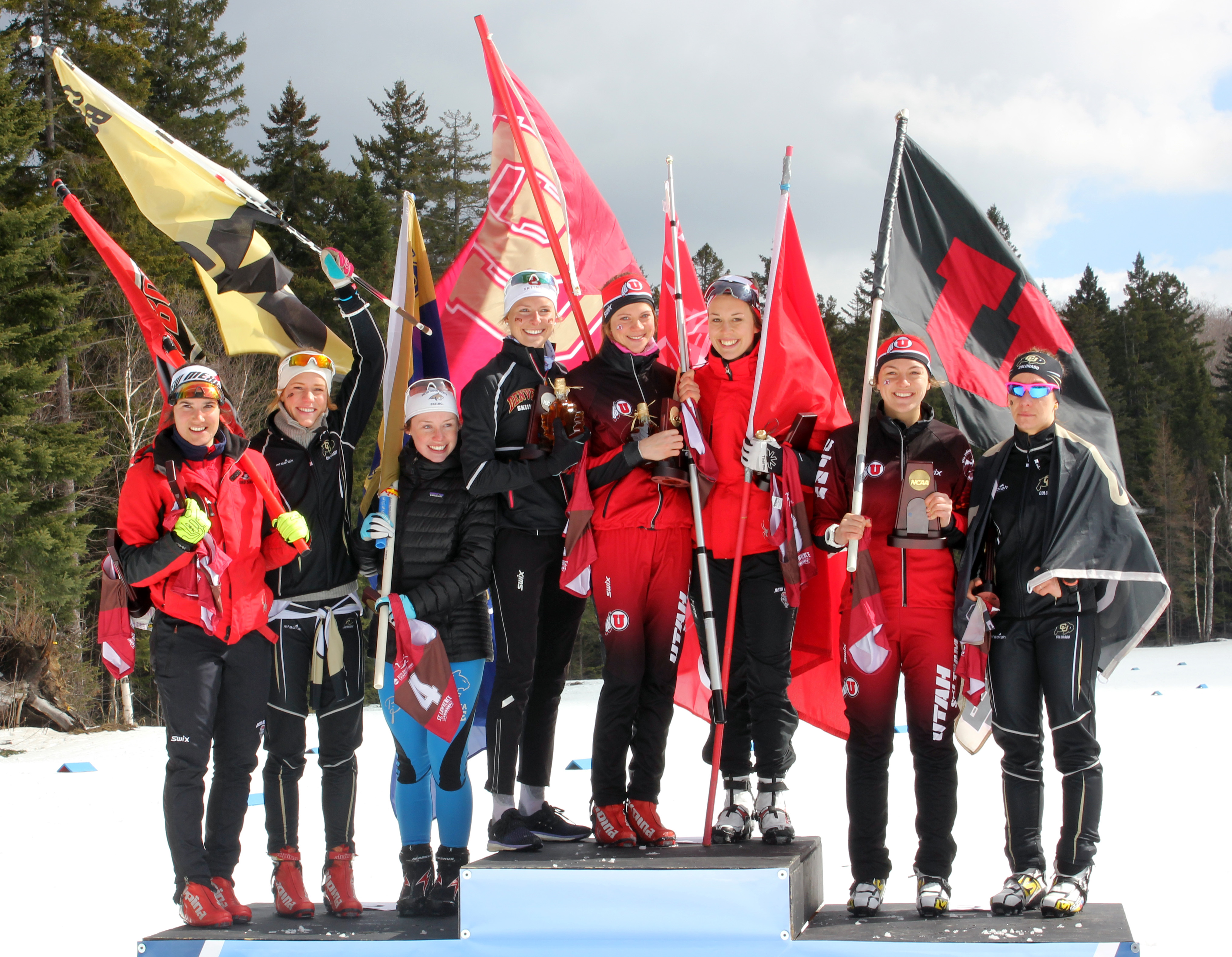
The women’s podium in 5 k freestyle at the 2015 NCAA Championships in Lake Placid. Utah’s Veronika Mayerhofer took the win, while Denver’s Sylvia Nordskar placed second and Emilie Cedervaer claimed third.
Mayerhofer Victorious in 5 k
In the women’s 5 k freestyle the University of Utah’s Veronika Mayerhofer skied to a convincing win with a time of 14:21.4. She bested Denver’s Sylvia Thorson Nordskar by 13.2 seconds. Emilie Cedervaern of the University of New Mexico raced to third, 15.8 seconds back from the victor.
The first American skier, Montana State’s Cambria McDermott (+15.9), finished fourth and 0.1 seconds from third. In fifth was Utah’s Sloan Storey (+22.7).
The women began their race two hours after the men to slightly warmer temperatures and softer snow. Despite the change, the course remained fast and intact for all 40 starters. The western women swept the top 11 to dominate the 5 k. The eastern skiers originally hoped to capitalize on a home course, but their best finish on the day came from Mary Kate Cirelli in 12th. The central regions best finisher was Jordyn Ross in 13th.
Mayerhofer, a freshman, entered Wednesday with low expectations. She had a cold in the days prior to the race and was feeling flat in training. At the start of the race Mayerhofer said her race felt slow. Everything changed after a coach told her she had a one second lead over Nordskar in the first kilometers. According to the Austrian, the news of the lead motivated Mayerhofer to fight for the win and reach the next level of exertion.
The Ute said that she had no particular strategy while fighting on the challenging course that featured several kilometers of climbing. “In a 5 k you have to go as fast as you can,” she said. “Through the first kilometer you have to not kill yourself because it’s a tough course. I think it’s one of the toughest. We are very used to high elevation so you never know how you’re going to feel.”
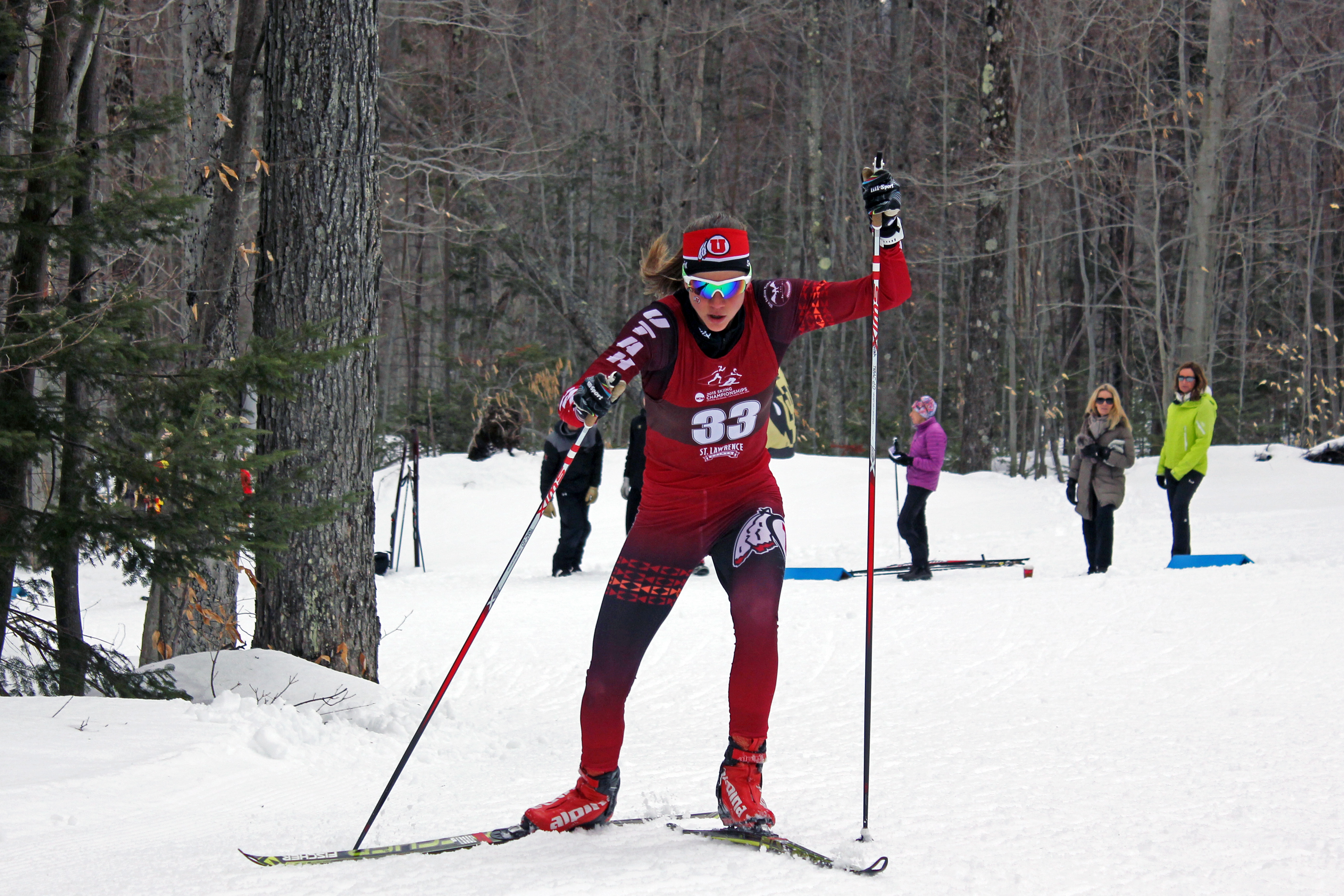
Veronika Mayerhofer en route to a win in the 5 k freestyle at the 2015 NCAA Championships in Lake Placid.
Mayerhofer said that she enjoys the collegiate circuit because of its focus on the team rather than the individual. With her teammate, Storey also in the top five, Mayerhofer said she was happy to see the team’s training be rewarded at the end of the season.
“It’s my first year of college racing and I was so happy that I could go to the NCAAs,” she said. “I really enjoyed it so much because it is so much for the team and not just individual racing, because cross country skiing is so much on your own. It’s maybe less pressure and everyone is so happy for you.”
Nordskar entered Wednesday’s race with little training or racing logged since the start of the new year, as she sat out much of the season due to illness. Her last race before the Championships was at the Colorado Invite in late January. Although she complained of breathing troubles, Nordskar said she was happy to race again after the draining illness. “I’ve been sick the whole last month and haven’t been able to train,” she said. “That has been difficult but I think I’ve done a good job to comeback and now race.”
Like her DU male counterpart, Nordskar was also the first starter and set the time to beat early on in the race. She said that while the course was challenging, she enjoyed racing at the Olympic venue.
“It was a very hard race but I really liked the course. It’s some brutal hills,” she said. “I really pushed myself today. It was fun and I’m satisfied with my race today even though I couldn’t get to the very top, which was my goal.”
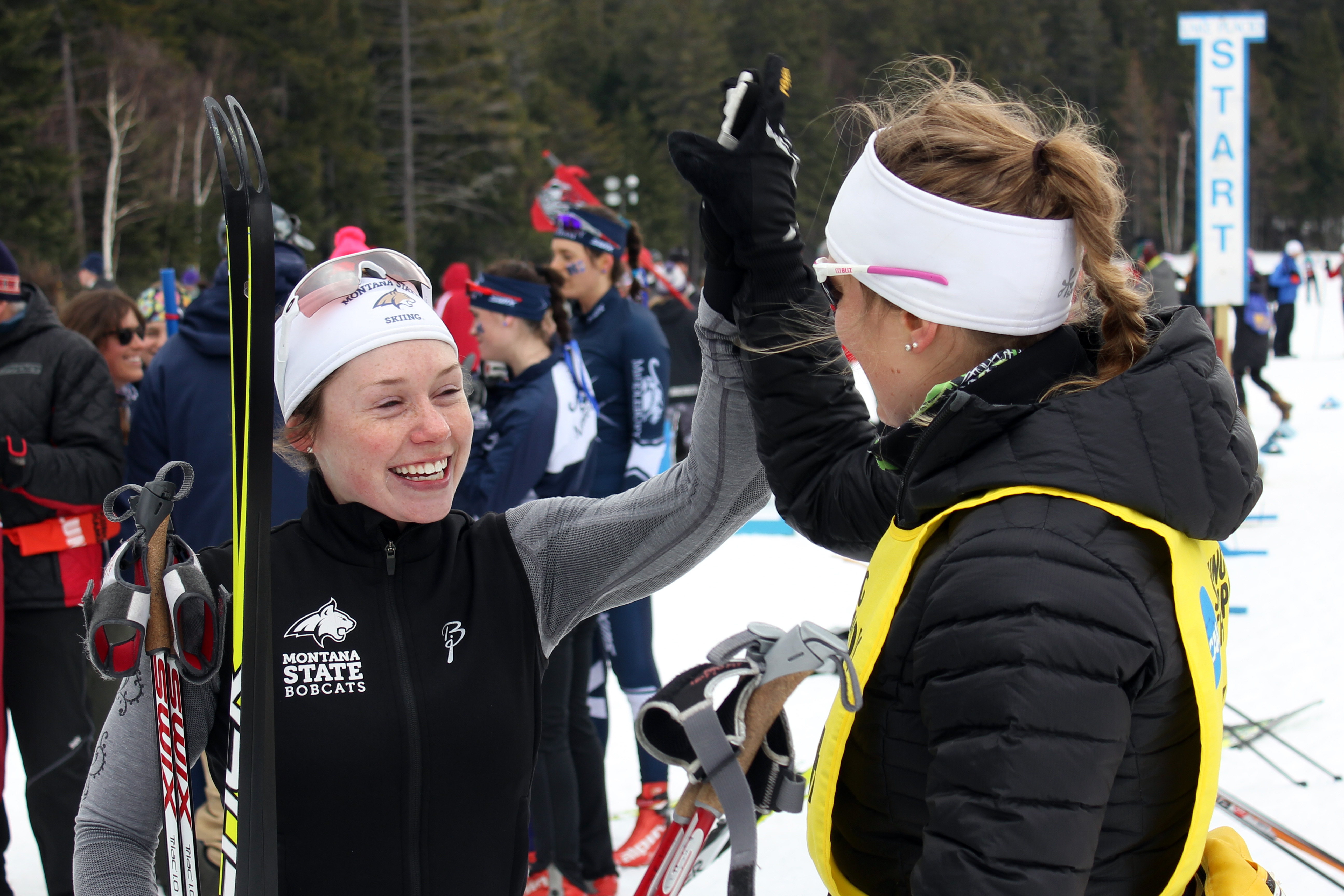
Cambria McDermott, fourth place and top American finisher in the 2015 NCAA 5 k, high fives Montana State University Head Coach Kristina Trygstad-Saari.
In third was Cedervaern, a New Mexico Junior from Falun, Sweden. The trip to Lake Placid was the Swede’s first NCAA Championships.
“That was good. I was very tired after 2.5 k so I just tried to hammer all the way in,” she said of her race. “5 k is too short to think and I was just trying to hammer the whole way.”
McDermott, a senior at Montana State, said her achievement as the 5 k’s first American was especially satisfying because she was able to share it with her friends and family in attendance. “I’m really excited. It was an awesome course. It was a lot of climbing but I had fast skis and that made it pretty quick,” she said. “I was so happy that my family here to cheer me on and all my friends from home.”
NCAA Standings
With the first races of the 2015 NCAA Championships complete, the University of Colorado leads the points with 155. The Buffs have won the last two Championships in the East and Wednesday’s race gives them a good beginning to their quest for their 28th championship title. They will have to overcome the University of Utah which sits in second and less than 25 points behind.
The NCAA championships continue on Thursday with the giant slalom at Whiteface Mountain,
2015 NCAA Championships standings after Wednesday (link):
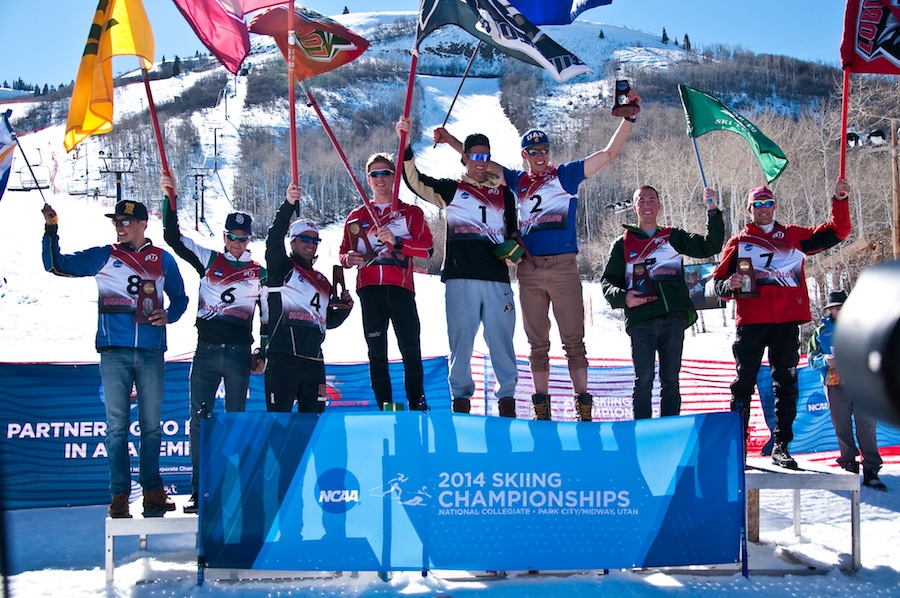
The men’s podium in the 20 k freestyle mass start at the 2014 NCAA Championships in Soldier Hollow. (Photo: http://bertboyer.zenfolio.com) All proceeds from photo sales will be directly donated to NNF.
LAKE PLACID, N.Y. — Come Wednesday, the 148 best collegiate skiers in the U.S. will descend upon Lake Placid for the 2015 NCAA Skiing Championships. Hosted by St. Lawrence University, NCAA’s will serve as the premier collegiate races of the season as skiers aim for both individual and team success. The last time Lake Placid hosted the Championships was 33 years ago in 1982, when the national races were only for men.
The nordic portion of NCAA’s will take place on the trails of the Mt. Van Hoevenberg, the site of the cross-country events in the 1980 Olympic games. The first day of competition on Wednesday will comprise of the 5- and 10-kilometer women’s and men’s freestyle interval starts, while Friday will feature the 15/20 k classic mass starts. Conditions should be pristine in the Adirondacks as recent weather has provided ample snow and below average temperatures.
The 2015 NCAA Championships will have similar team favorites in 2014. At last year’s championships in Park City, Utah, the University of Denver dominated the nordic races to win the overall team title. With several departures from the Pioneers’ squad, however, other schools from the west and east will look to capture the trophy.
The University of Colorado enters the NCAA’s as the top-ranked team from the Rocky Mountain Intercollegiate Ski Association (RMISA). The Buffs earned the most combined points throughout the season and were recently crowned the RMISA regional champions. If that wasn’t enough to boost their pre-championships confidence, their history in the east certainly will. Colorado has won the last two national collegiate titles in the east in 2011 and 2013.
Utah and Denver followed close behind in the 2015 RIMSA points rankings and will likely be Colorado’s top competition in New York, while the University of Vermont will look to extend its Eastern Intercollegiate Ski Association (EISA) dominance to the national stage. The last time Vermont won the NCAA team title was in 2012 in Bozeman, Mont.
University of New Hampshire’s Annika Taylor races in the 2013 NCAA Championships.
The East:
If there are two skiers from the EISA to know before the start of NCAA’s, they are Middlebury College’s Heather Mooney and University of New Hampshire’s Annika Taylor.
With five wins apiece in the 2014/2015 season, Mooney and Taylor have shut out the rest of the eastern competition from the top of the podium. While their fight for eastern dominance will continue in Lake Placid, it remains to be seen how they will match up with the western and central women.
The Middlebury College women’s nordic team has qualified a full team for the first time in many years, including Mooney, Kelsey Phinney and Stella Holt. The trio has won many women’s nordic competitions throughout the season and will look to do the same in Lake Placid. If the recent EISA Regional Championships results are any indication — where Mooney and Phinney finished second and third, respectively, in the 15 k classic mass start — the Panthers are well on their way to their goal.
Paddy Caldwell (Dartmouth College) finishes the men’s 15 k freestyle in fourth place at the 2015 Cross Country Championships in Houghton, Michigan.
If the eastern women have been defined by two individuals, the region’s men are characterized by dueling schools — Vermont and Dartmouth. The Vermont trio of Rogan Brown, Jørgen Grav and Jack Hegman ended the eastern season ranked second, third and sixth, while Paddy Caldwell, Fabian Stocek and Silas Talbot took the first, fourth, and fifth spots.
Caldwell, who spent a large chunk of the season in Europe at the U23 World Championships in Almaty, Kazakhstan, enters as one of the favorites at NCAA’s. Last year, his best finish was fifth in the 20 k freestyle mass start. Talbot’s best finish at 2014 NCAA’s was 11th in the 20 k freestyle.
Brown’s best finish at the same championships was 13th in the 20 k freestyle, while Grav’s was 20th in the 10 k classic.
The West:
Rune Malo Ødegård of CU races to first in the 10 k individual classic at the 2014 NCAA Championships in Soldier Hollow. (Photo: http://bertboyer.zenfolio.com) All proceeds from photo sales will be directly donated to NNF.
If Caldwell wants to step atop the NCAA podium, he’ll have to overcome the RMISA frontrunners from the University of Colorado, Rune Malo Ødegård and Mads Ek Strøm. With the exception of one race, the two have alternated on the top rungs of the 2014/2015 RIMSA podium in every single competition. By the end of the regular season, Ødegård won five of 10 races while Strøm won four.
Ødegård is no stranger to NCAA’s as the Norwegian won two national titles in 2013 and 2014. His wins made NCAA history, as he is the first collegiate skier to repeat as an individual national championship in the classic discipline. Strøm earned his national title in the 20 k freestyle mass start in 2014.
While the two Buffs are the RMISA favorites, there are several other standouts to watch in this week’s races. German Moritz Madlener of DU and enters Lake Placid as the third-ranked westerner after earning bronze in four western qualifiers. The University of Utah’s Niklas Persson is another potential top finisher. The Ute finished third at 2014 NCAA’s in the 10 k classic. Mats Rudin Resaland of the University of New Mexico is also another top contender, and will look to improve on his bronze from last year’s 20 k freestyle.
The University of New Mexico’s Emilie Cedervarn is the top-ranked western woman after winning the last four RMISA races of the season. The Utes’ Veronika Mayerhofer is close behind for total wins in the west with three. Denver’s Sylvia Nordskar will look to repeat her podium performances from 2014 NCAA’s where she placed second and third. The Norwegian only raced the first four RMISA races this season. She won both the races in the Utah qualifiers and placed first and second at the Colorado invite before taking a six-race hiatus.
Other skiers to watch from the West are the Buffs’ Petra Hyncincova and the Utes’ Sloan Storey.
Central:
Kyle Bratrud of Northern Michigan University racing to 52nd in the men’s 15 k freestyle at 2015 World Championships in Falun, Sweden.
Kyle Bratrud of the University of Northern Michigan is the favorite from the central region after a successful season that saw him win the 15 k freestyle at the 2015 U.S. nationals and compete at the U23 World Championships in Almaty, Kazakhstan, followed by senior World Championships in Falun, Sweden.
Bratrud will look to overcome the fatigue of weeks of international racing and travel to fight for a spot on the NCAA podium. In 2014, he was the top American in the 10 k classic in sixth overall.
Joining Bratrud in the quest for collegiate success will be teammates Fredrik Schwenke and Erik Soderman. If the UNM trio can repeat their impressive performances from U.S. nationals, they have the possibility of leading the men’s nordic at NCAA’s. Last year, the men finished third overall in the 10 k classic and helped their coach, Sten Fjeldheim, earn 2014 national coach of the year.
Logan Hanneman of the University of Alaska – Fairbanks is another strong skier to watch from central.
Despite the graduation of Rosie Frankowski, the central women have a chance at top performances from NMU’s Jordyn Ross and Michigan Tech’s Deedra Irwin, among others. They will look to build on the region’s successful 2014 Championships to gain more starting spots in future national events.
Live timing will be available at BartTiming.com. FasterSkier will be on site for both days of nordic racing, so stay tuned for recaps from Wednesday and Friday.
With temperatures above 40 degrees Fahrenheit, the men take off in Sunday’s SuperTour 15 k classic mass start at Bohart Ranch near Bozeman, Mont.
BOZEMAN, Mont. — In yet another thrilling men’s SuperTour finish, Mads Strøm of the University of Colorado outsprinted Miles Havlick of the Sun Valley Ski Education Foundation (SVSEF) Gold Team on Sunday to win the men’s 15-kilometer classic mass start at Bohart Ranch.
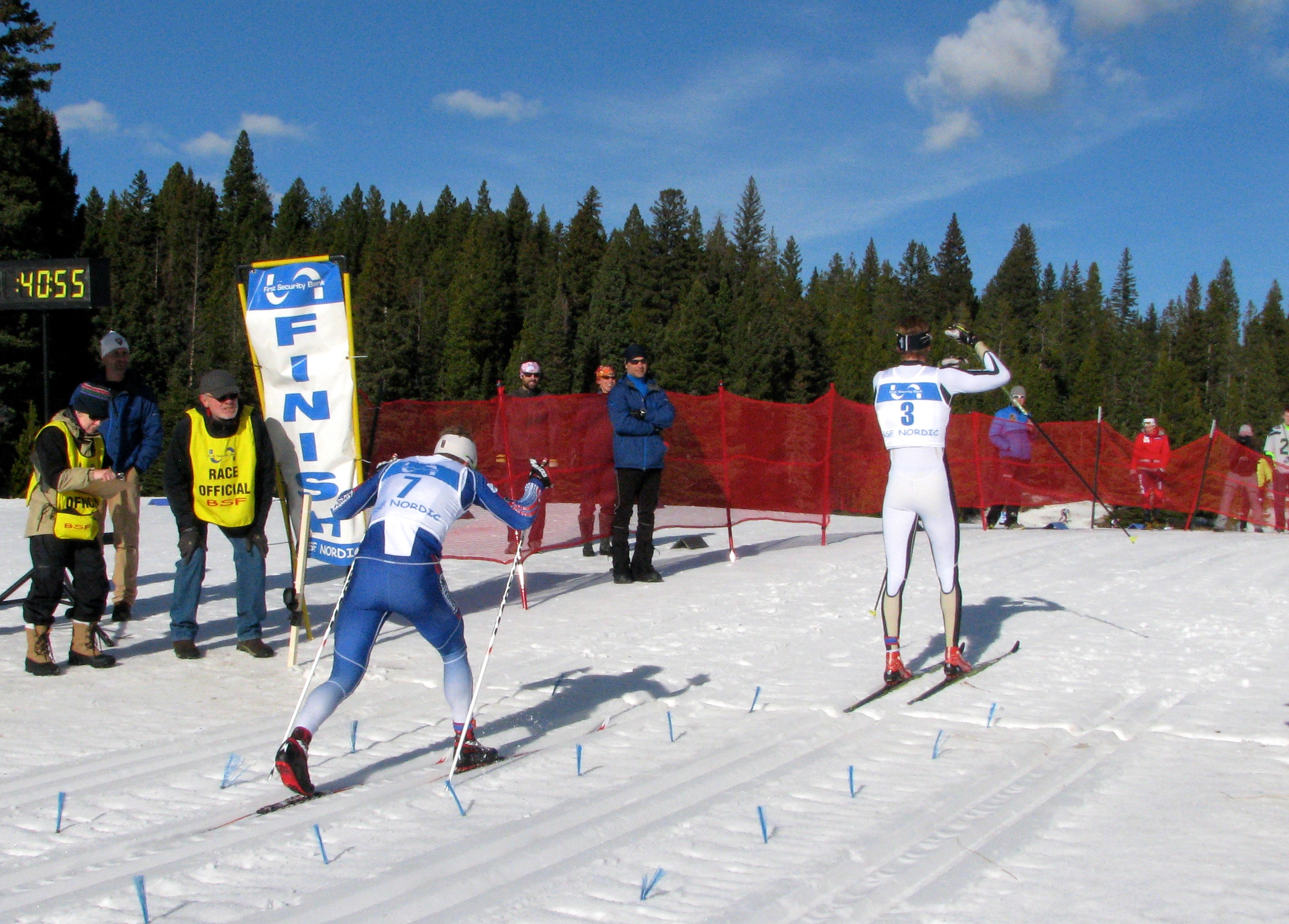
Strøm finished fast and icy three-lap course in 40:55.3, holding off Havlick by 0.7 seconds. Havlick’s teammate Matt Gelso racked up another SuperTour podium in third (+9.9), after placing third in Saturday’s classic sprint. Brian Gregg (Team Gregg/Madshus) finished 27.4 seconds back in fourth.
Kris Freeman (Team Freebird), who was fourth in Saturday’s sprint, finished another 10 seconds back in fifth. Strøm’s CU teammate, Rune Ødegård, placed sixth (+48.4) after starting the final 5 k lap in second.
Havlick jumped out to an early lead and held it for most of the race, entering the last lap 8 seconds ahead of the chase group of Ødegård, Freeman, Gregg and Gelso. Strøm was 15 seconds behind.
Mads Strøm (CU) celebrates after winning the men’s SuperTour 15 k classic mass start near Bozeman, Mont., while Miles Havlick (SVSEF) finishes 0.7 seconds behind.
“I noticed my skis were running pretty well, better than other guys in the pack, so I just decided to pick up the pace and see what would happen,” Havlick said of the first 10 k.
However, Havlick felt the gap closing throughout the last 5 k, and was caught by Strøm as they entered the stadium.
“I was hoping I could get him at the finish, because I know I have a pretty good finishing speed,” Havlick said. “But this time he got me.”
Strøm said that while he was “struggling” through the first two laps, his double poling was strong and he felt his confidence grow throughout the race. By the final lap, he was warmed up and ready to make his move.
“With four kilometers left I got the killer instinct and just tried to win. I double poled as much as I could – that’s one of my strongest strides,” the 23-year-old Strøm said.
As Gelso and Havlick began to pull away down the final stretch, Strøm hung with them, double poling past Gelso and catching Havlick on the final hill. He then passed Havlick in the stadium and held him off in a furious sprint to the finish.
After a disappointing result in Saturday’s sprint — when Gelso and Havlick beat him in the quarterfinals — Strøm was “really satisfied” with the result. “I feel great,” he said.
Gelso skied a strong final lap, separating himself from Gregg, Freeman and Ødegård while trying to catch his teammate.
Matt Gelso (SVSEF) double poles through the stadium on his way to his second third-place finish of the weekend in the men’s SuperTour 15 k classic mass start near Bozeman, Mont.
“I was feeling pretty good, my skis were really fast, and I threw down hard to try to catch Miles,” Gelso explained. “But I did it such that I would gap the people I was with, so that I wouldn’t drag everybody up to my teammate. I made a conscious effort to go hard.”
However, Gelso did bring Strøm along with him.
“He’s good at conserving, sitting in and then going hard when it’s important,” Gelso explained.
After racing through slushy snow on Saturday, Gelso enjoyed the firmer conditions, saying the course was much faster than during the sprint. However, he noted that the racers had to be incredibly careful on some sections and corners, especially where the previously wet snow had been groomed.
In those places, “the corduroy got melted in so it was like smooth ice, and that was a little bit scary,” he said. “You can’t hold a plastic edge in that.”
Meanwhile, the course was kinder to Havlick than it was on Saturday — “I definitely wanted to stay on my feet today,” he said. Havlick fell during his sprint semifinal of the sprint and missed advancing to the final.
Havlick was excited about what he called “the first really good result for the season.”
“It’s a confidence builder,” said the former NCAA champion in the 20 k. “I know my form is coming around.”
The next SuperTour races take place Jan. 4-10 at U.S. nationals in Houghton, Mich.
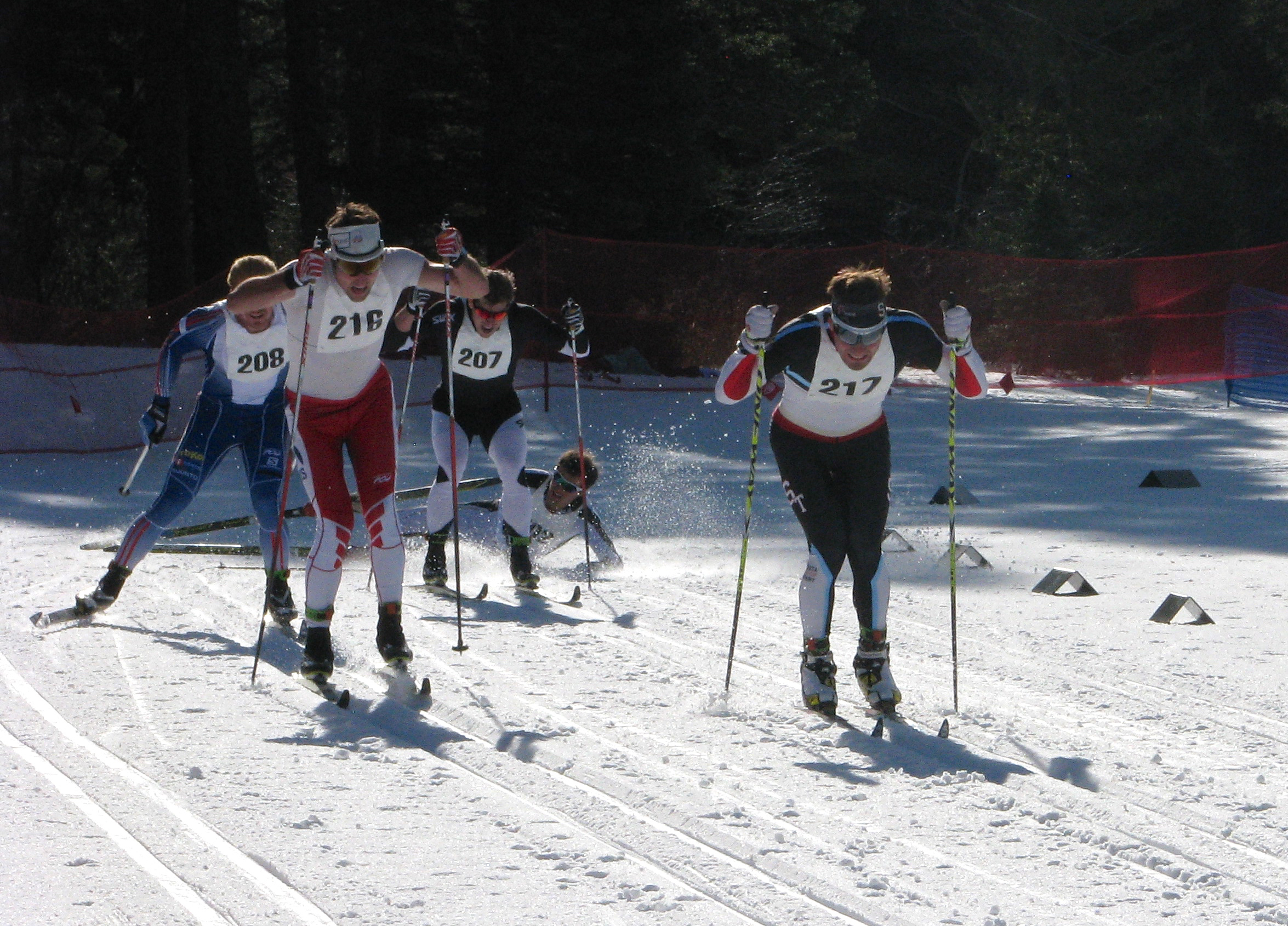
Canada’s Patrick Stewart-Jones (r) holds a narrow lead over Ben Saxton (second from l), Matt Gelso (l), Kris Freeman (third from l) while charging to the finish in the men’s SuperTour classic sprint final in Bozeman, Mont. Ødegård fell while rounding the final curve.
BOZEMAN, Mont. —In a race that was undecided until the final seconds, Canadian Patrick Stewart-Jones of the Alberta World Cup Academy (AWCA) narrowly outlunged Ben Saxton of the Stratton Mountain School (SMS) T2 Team and U.S. Ski Team to win the 1.5-kilometer men’s SuperTour sprint-classic final at Bohart Ranch on Saturday.
With the sun out and temperatures rising to 45-degrees Fahrenheit for the afternoon rounds, Stewart-Jones conquered the soft, slushy course in 3:26.22 minutes. Just 0.11 seconds later, Saxton took second after racing alongside the Canadian to the finish.
Matt Gelso, of the Sun Valley Ski Education Foundation (SVSEF) Gold Team, followed last weekend’s SuperTour distance win in West Yellowstone, Mont., by landing on the podium again, finishing a close third, 1.37 seconds behind Stewart-Jones.
Four-time Olympian Kris Freeman (Team Freebird) placed fourth (+2.58), while the West Yellowstone skate-sprint winner, Dakota Blackhorse-von Jess (Bend Endurance Academy), finished fifth (+7.26). Rune Malo Ødegård (University of Colorado) rounded out the final in sixth (+23.11).
Russell Kennedy (Canmore Nordic Ski Club) managed to stay upright on this icy curve, though others were not so lucky during the men’s SuperTour sprint classic at Bohart Ranch near Bozeman, Mont. Kennedy placed 19th overall.
After the race, the 23-year-old Stewart-Jones said he was “ecstatic” about his first SuperTour win. In the West Yellowstone skate sprint on Nov. 28, he placed 27th.
“Qualifiers didn’t go so great this morning. I probably used the wrong pair of skis, and maybe wasn’t quite ready to go,” he explained.“I just had to fight every round in the heats. But any day you win is a really good day.”
Eric Packer of Alaska Pacific University (APU) won the qualifier in 3:13.76. Stewart-Jones ranked 17th, 10.6 seconds behind Packer, before finishing second in both his quarterfinal and semifinal behind Blackhorse-von Jess and Saxton, respectively.
“Every race today I felt better and better,”Stewart-Jones said.
The final was tight throughout, with the top four skiers — Stewart-Jones, Saxton, Gelso and Freeman — staying close together on the large climb halfway through the course. Stewart-Jones was in no rush to take the lead, later explaining he looked for “the easiest ways to get by people without having to fight too much for it.”
Upon reaching the horseshoe curve about a hundred meters before the finish line, Stewart-Jones and Saxton were shoulder-to-shoulder and lunged for first, with Gelso just a ski length behind.
Saxton said was happy with his “tactical skiing” throughout the day – he qualified in 16th (+10.48) and won both his quarterfinal and semifinal.
“I opted to tuck behind instead of push it and swing wide, and that ended up costing me more than swinging wide would have,” Saxton said. “He ended up getting me by just a boot.”
Patrick Stewart-Jones edges out Ben Saxton (third from l), while Kris Freeman (second from l) and Matt Gelso (l) challenge for third near the finish of the men’s SuperTour classic sprint final in Bozeman, Mont.
Regardless, the 21-year-old explained he was “psyched” with a second-place finish and was happy for the quality racing.
“Everybody had good skis, good effort, good tactics and there were no mix-ups,” he said.
Gelso had not been in a sprint final since winning the Bozeman SuperTour skate sprint two years ago (he was 10th last weekend in West Yellowstone), and said he was “super happy” with his “solid sprint result” — especially as usually excels more in distance racing.
In the final, the 26-year-old stayed in the back of the pack until the approach to the stadium, when he pushed his way into third while double-poling up the final hill. However, he said he “didn’t ski the last corner tactically very well,” and fell behind Stewart-Jones and Saxton during the final stretch to the finish line.
“That was my bad,” Gelso said. “But all in all, it was a pretty good day.”
Gelso also mentioned the difficult conditions, saying they produced a number of crashes, particularly on a treacherous corner that came after a steep downhill halfway through the course.
“People get knocked off balance for a second or two … and they don’t move on,” he said.
That is what happened to fellow Sun Valley Gold Team skier Miles Havlick, Gelso said. After qualifying in third and winning his quarterfinal, Havlick fell on the corner during the second semifinal and could not recover, finishing fifth, 13 seconds behind Freeman.
Then, in the final, Ødegård fell while rounding the final curve and trying to challenge the leaders.
“There was just punchy, squirrelly skiing,” Gelso said.
Though he was happy with his win, Stewart-Jones is looking for bigger things in the future. Racing well here, he explained, means a better shot at racing at a World Cup in Europe.
“When you do well like this, it always bodes well for trying to get those [national-team] spots to go overseas,” he said. “Hopefully that’ll happen.”
The Bozeman SuperTour continues Sunday with 10 and 15 k classic races at Bohart Ranch.
Matt Gelso (SVSEF) en route to a 9.6 second win over Brian Gregg (Team Gregg/Madshus) in Saturday’s 15 k freestyle in West Yellowstone, Mont.
WEST YELLOWSTONE, Mont. — Matt Gelso’s strategy in Saturday’s SuperTour 15-kilometer freestyle individual start was to traverse the 5 k course as hard as he could from the beginning of the race. The Sun Valley Ski Education Foundation Gold Team (SVSEF) member saw only two possibilities – he was either going to ‘blow up’ or rely on fitness to earn a place on the podium. Either way he was going all out.
After finishing three laps of the demanding course, it was clear that Gelso had accomplished the latter of the two outcomes, crossing the line in 36:20.2 to earn the top spot in the first domestic distance race of the season.
“I just wanted to go out hard and since it’s early season, see what happens … I struggled the last lap, but I was able to ski smooth and ski smart. I had a flat ski and that’s super important on this course, because a lot of it’s about skiing smooth and powerful,” Gelso said in a post-race interview.
The 26-year-old started the race with little knowledge of where he ranked among his fellow competitors during the course of the 15 k. Because Gelso started near the front of the A-seed, splits had little meaning during his first and second laps.
According to Gelso, it wasn’t until the third lap that he learned he was battling University of Colorado’s Mads Strøm for first place from on-course splits. Gelso said the splits gave him confidence to keep himself going and hang on to the top position.
On a day where many racers had slow skis due to warmer-than-average temperatures and winds that showered a mix of new snow and dirt on the trials, Gelso said the Sun Valley wax crew gave him impeccable skis.
Brian Gregg (Team Gregg/Madshus) finished second in Saturday’s SuperTour 15 k freestyle in West Yellowstone, Mont.
Furthermore, Gelso pointed to a 10 k time-trial that he and fellow Sun Valley teammates performed earlier in the week as a reason for his succes. Utilizing the same 5 k loop as Saturday’s race, Gelso said the time-trial helped him understand how to ski the course’s terrain, which is known for its lack of rest.
The other two members of the Sun Valley’s Gold Team also benefited from the team’s preparation, as both finished in the top-ten with Ben Lustgarten placing seventh (+58.2) and Miles Havlick finishing eighth (+1:13.2).
While Gelso was working to outlast Strøm, another skier was getting dangerously close to winning the race.
Brain Gregg (Team Gregg/Madshus) began his 15 k conservatively and was 13 seconds back from Gelso at the 5 k mark. However, as the race continued Gregg maintained his pace while others slowed.
It was a conscious strategy by Gregg, who has seen what it takes to be successful in West Yellowstone over his years of racing. He pointed to retired Bridger Ski Foundation athlete and multiple West Yellowstone SuperTour victor, Leif Zimmerman, as a prime example of someone who was able to make up ground in the final kilometers.
That’s exactly what Gregg did. According to the 30-year-old, he was 23 seconds behind Gelso at the 12.5 k mark but was able to reduce the deficit to 9.6 seconds by the time he crossed the finish line.
Although Gregg was unable to overcome the entire 23-second deficit he was happy to finish the day in second.
Mads Strøm (CU) fought for first but ultimately ended third in the 15 k freestyle in West Yellowstone, Mont. as part of the opening SuperTour weekend.
Strøm, who eventually finished third (+12.4), won the same event in the 2013 West Yellowstone SuperTour.
While he couldn’t match his previous performance, he fought for the victory throughout the majority of the race.
Strøm explained that the previous day’s sprint had left him lethargic throughout the first third of the race. However, around the 6 k mark he began to feel fresh and energized as he learned there was a contest for first between him and Gelso.
“I tried to fight as much as possible but I wasn’t able to get as much as I hoped to in the last 3 k,” the University of Colorado skier said.
Rounding out the top five were two skiers who faced the stomach flu only three days prior: Kris Freeman (Team Freebird) and Tad Elliott (Ski and Snowboard Club Vail Elite).
“Both Tad and I got a stomach virus, so I was vomiting three days ago. Yesterday I felt really, really flat and you have to be sharp in a sprint… Today was a step in the right direction but I didn’t feel like myself and I’m a little bummed,” Freeman said of Friday’s sprint race and Saturday’s fourth place finish.
Freeman, a favorite to win the the 15 k, had strong first lap in which he posted the second-fastest time. Once on the second and third laps, however, he was unable to maintain his speed after losing much of his energy to the illness.
Kris Freeman had a strong first lap in West Yellowstone but ultimately finished fourth in the SuperTour 15 k freestyle.
“I’ve had a great lead up to the season. I felt like I was in awesome shape here and I really thought I was going to stomp it, but instead life happens. I’ve been here before and I can’t let it bother me too much,” he said.
Elliott, who dealt with the Epstein-Barr Virus for most of the previous year, said that he had been feeling especially strong before he came down with the flu on Thanksgiving night. While he was unsure whether he would start Saturday’s race, he made the final decision to give the 15 k a shot after warming up just minutes before the race.
Once on course, Elliott explained that a combination of coaching, fast skis, and experience helped him progress from ninth place after 5 k to fifth as he crossed the finish line.
“Having the flu and having the fever wasn’t ideal but I think part of the reason for [my success] today was our coaches…I felt like my skis were some of the best in the field, to be honest, they were super quick. Being an experienced skier I think helped too. I did well on my splits out there,” he said of his race.
The two skiers finished roughly thirty seconds apart, with Freeman crossing the line 18 seconds from the lead and Elliott finishing 43.4 seconds back from Gelso.
Other notable results from Saturday’s race include Colorado’s Rune Ødegård in sixth (+49.2), GearWest/United XC’s Matt Liebsch in ninth (+1:18.8), and the USST’s Paddy Caldwell in tenth (+1:25.7).
All of the top-five finishers expressed that their races were solid starting points for the season, but were wary of putting too much emphasis in Saturday’s results
Tad Elliot (SSCV) progressed from 9th to 5th over the course of three laps in Saturday’s SuperTour 15 k freestyle in West Yellowstone, Mont.
“It’s always good start on a positive note so that you have so you have that positive feedback on your training, but it’s the last week of November and we’re racing all the way through the end of March,” Gregg said of his takeaway from the race.
For Gelso, the biggest benefit of winning Saturday’s race was the FIS and USSA points he would earn from the day’s effort.
“Today will be good in FIS and USSA points and that’s a consideration for World Championships,” he said, referencing USSA’s consideration of USSA points for World Championship selections.
The fact the they are distance points is especially promising for Gelso and other top finishers, as it is likely the U.S. coaching squad will be looking for more domestic distance skiers rather than domestic sprinters to fill their quota for the championships.
Gelso also explained that the SuperTour points he earned from the victory would be important in his quest to be SuperTour leader so that he could earn starts on the World Cup in either period 2 or period 3 of this year.
However, such a feat is a far away, and to maintain his momentum throughout the season, Gelso said that he’s working to maintain his fitness and consistency.
“I’ve got to keep my training consistent and focused so I don’t peak up here and then dive off into the great depths when U.S. Nationals and the rest of the season comes around. So, I’m definitely going to be focused on keeping the race fitness and general fitness up,” he said.
Dakota Blackhorse-von Jess of Bend Endurance Academy (r) leads (from r-l) Mads Strøm (CU), Rune Oedegaard (CU), and Eric Packer (APU) in the A-final of Friday’s Super Tour freestyle sprint in West Yellowstone.
WEST YELLOWSTONE, Mont. — Dakota Blackhorse-von Jess used a strong finish to edge out two skiers from the University of Colorado in Friday’s men’s 1.5 k skate sprint in West Yellowstone, Mont., marking the first U.S. SuperTour race of the season.
The 28-year-old Blackhorse-von Jess, of the Bend Endurance Academy, took command of the lead after the final hill when the University of Colorado’s Mads Strøm made a last-ditch attempt to pass him on the outside. The 23-year-old Norwegian had been working with CU teammate and fellow countryman Rune Malo Ødegård to hold second and third position throughout the race, waiting for the opportunity to make a move on Blackhorse-von Jess. However, Strøm finished in second while Ødegård, 25, crossed the line in third.
Eric Packer of Alaska Pacific University (APU) finished fourth, 2.98 seconds after Blackhorse von-Jess. Welly Ramsey of the Maine Winter Sports Center (MWSC) finished in fifth (+3.52). Canadian Andy Shields of the Thunder Bay National Development Centre (NDC) was 36.49 seconds back in sixth place, though FasterSkier was unable to locate Shields to determine what happened on the course.
Dakota Blackhorse-von Jess of the Bend Endurance Academy pushes in front of the University of Colorado’s Mads Stroem during the A-final of the SuperTour men’s freestyle sprint in West Yellowstone, Mont. (Photo: Toko)
Blackhorse-von Jess was second in qualifying (after Stratton’s Ben Saxton) and made it safely through the quarterfinal and semifinal rounds, though he emphasized the challenging nature of the early-season race.
“West Yellowstone’s a hard place,” he explained. “I’m tired, everybody’s tired. You know, it’s just hard being here.”
However, he said winning is a good “confirmation of fitness,” and he was happy with his strategy.
“It just became apparent to me I had the speed at the end, but to really maximize it you need to be first on the hill,” he said, “So, that’s what I did. Worked out great.”
He said being in front was especially an advantage on the rolling course, as the corners are close together and “the straight line provides no opportunity for passing.”
Only 0.9 seconds behind Blackhorse von-Jess, Strøm was disappointed to not have overcome Blackhorse-von Jess, but recognized his attempt to take the lead was too little, too late.
“He went away from the other guys and I just tried to get past him and he was faster than me,” Strøm explained.
Strøm was happy for his Colorado team, saying they generally expect to do better in distance races. Having two skiers on the podium in the sprint was well above their expectations.
Ødegård was pleased with his third-place finish, echoing Strøm in saying the race went “a lot better than expected.”
The Norwegian has suffered from injuries and illness throughout the past year, including an ankle surgery, a meniscus tear and a bout of strep throat. Despite that, he said he was better in a skate sprint than he has ever been.
Ødegård and Strøm finished seventh and fifth, respectively, after qualifying, then comfortably made it through their quarterfinal races. They ended up racing together in the first semifinal, where they skied a strategic race and helped each other maintain and finish in the first and second positions.
Despite being happy with his race, Packer was a victim of the course’s lack of passing opportunities. According to the 24-year-old Alaska native, he started out in third or fourth and never had a real chance to move forward during the race.
“The final went out pretty hard and with this course it’s really difficult to pass,” he explained.
Packer qualified in 13th, surviving a competitive quarterfinal while squeaking through the semifinal to make it to the A-final.
Sun Valley’s Miles Havlick leads (from l-r) Brian Gregg (Team Gregg/Madshus), Matt Gelso (SVSEF), and Forrest Mahlen (MSU) in Friday’s B-final at the 2014 SuperTour freestyle sprint in West Yellowstone.
Finishing fifth, Ramsey was ecstatic about advancing to the A-final. The 23 year old is an accomplished distance racer, having finished eighth at last year’s 15 k at U.S. nationals, but hasn’t considered himself to be a sprinter in the past. Starting the day by qualifying in 12th, he finished just behind Blackhorse-von Jess in the men’s first quarterfinal. Then he led Blackhorse-von Jess going into the last hill during the second semifinal, before the eventual winner passed him on the closing stretch.
“I’m pretty stoked that I’m able to sprint this year,” Ramsey said, emphasizing how much technical work and “on-snow” time during the fall has helped him out.
The day started off well for Saxton, a 21-year-old U.S. Ski Team and SMST2 athlete, who was first after qualifying.
“I think the qualifier today rewarded smooth skiing and I don’t think very many people would list smooth skiing as one of my attributes thus far,” Saxton explained.
However, he fell behind Ødegård and Strøm in the semifinal and faded on the final hill, then ended up 11th overall after falling behind in the B-final. In that race, he said his right hamstring “balled right up” going into the tuck, leaving him unable “to put forward the effort” that was representative of his abilities.
Sun Valley’s Miles Havlick, who was fourth after qualifying, won the B-final, barely nudging out Brian Gregg (Team Gregg/Madshus) and Forrest Mahlen (Montana State University). Alaska Pacific University’s Lex Treinen was put out of the race at the start, falling immediately after the gun sounded.
Paddy Caldwell (SMST2) also suffered a race accident earlier in the day. After qualifying in 22nd, one of his poles broke at the top of the final hill during the fourth quarterfinal. Alex Schulz of Craftsbury Green Racing Project was on the inside, and as they rounded the curve Schulz’s ski and Caldwell’s pole collided.
There were certain issues on Day 1 of the event involving timing, bib numbers and placement into semifinals. Races and results were postponed, and athletes at times questioned when or if they would be racing.
SuperTour racing continues for the men on Saturday in West Yellowstone with the 15 k freestyle individual start. Snow is expected to fall throughout the day, making for interesting racing conditions.