Tag: Rune Ødegård

  • Wednesday Workout: Double-Pole Work with Newell and the Norwegians

    Wednesday Workout: Double-Pole Work with Newell and the Norwegians

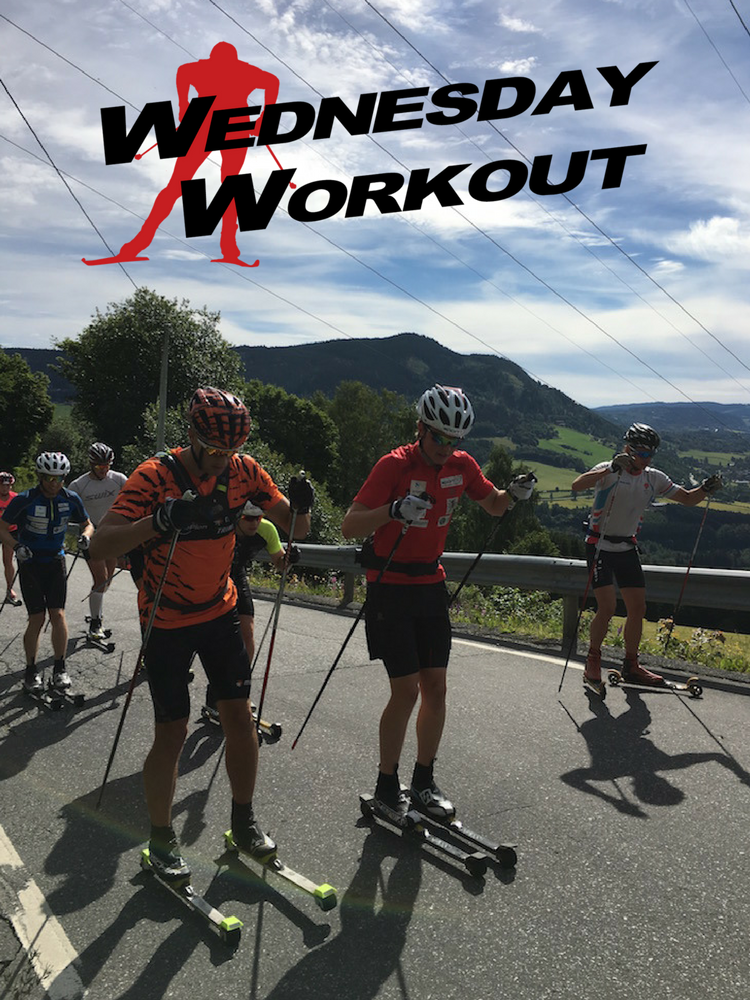
    Norwegian pro skiers Petter Skinstad, Kjetil Dammen and Marten Skinstad rollerskiing last month outside Lillehammer, Norway. (Photo: Andy Newell)
    Norwegian pro skiers Petter Skinstad, Kjetil Dammen and Marten Skinstad rollerskiing last month outside Lillehammer, Norway. (Photo: Andy Newell)

    Last month, Andy Newell of the U.S. Ski Team traveled to Norway to train with several Norwegian skiers. Why, you might wonder? Why not?

    “I chose to travel to Norway to train with some friends in Lillehammer for a few main reasons,” Newell explained in a recent email. “First — to learn a little about how a lot of these guys are training for double pole and second, just to have a cool new change of venue to put in some of the big volume hours I was training for those two weeks.”
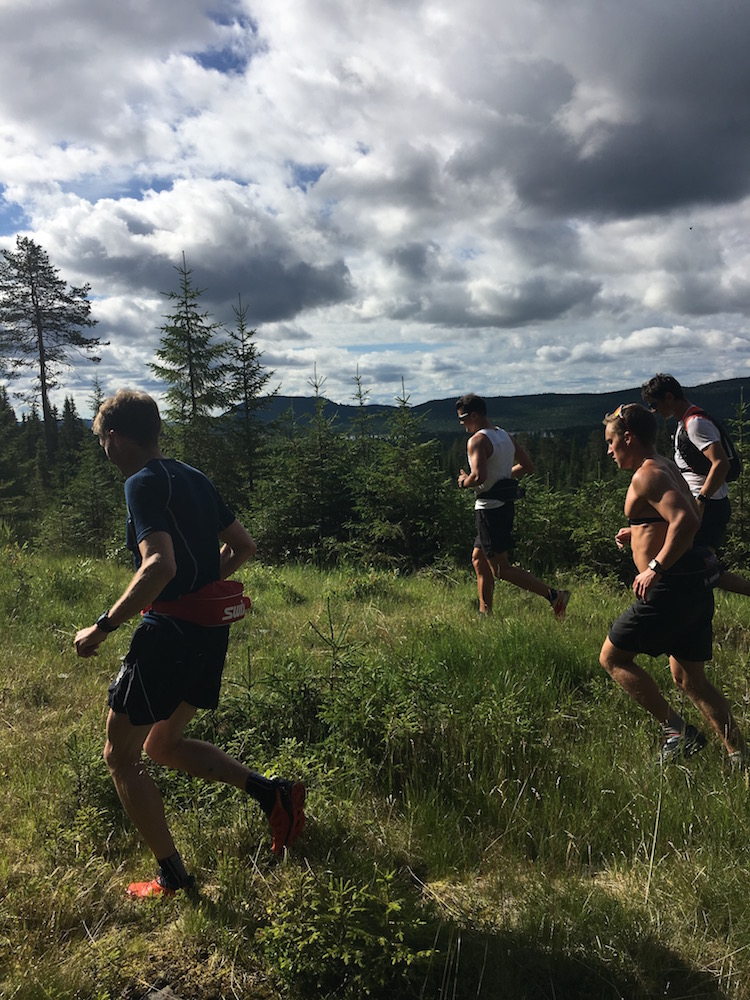
    Norwegians Erik Stange and Rune Ødegård, with Finland's Heikki Korpela, and Great Britain's Andrew Young running on the Birkenbiner ski trails in Norway in July. (Photo: Andy Newell)
    Norwegians Erik Stange and Rune Ødegård, Finland’s Heikki Korpela, and Great Britain’s Andrew Young running on the Birkenbiner ski trails in Norway in July. (Photo: Andy Newell)

    Lillehammer, a popular training base among World Cup skiers and the new home to his friend Øystein Pettersen, seemed like a perfect fit.

    “There wasn’t any real official training camp with a specific team that I was joining which made it kind of fun so I basically just got in touch with a lot of guys who lived in the area and lined up a big training schedule for two weeks,” Newell wrote.

    He stayed with Petter Skinstad, a professional Norwegian skier and the son of Åge Skinstad, head of the Norwegian Ski Federation’s cross-country division.

    “It was great to meet [Petter Skinstad] and his brother and do some training with them and learn a little more about the Norwegian ski culture,” Newell wrote. “To set a picture for you, Petter’s god father is Bjorn Daehlie so he really grew up in the thick of it so you can imagine he has some cool stories.”

    Without any single club or coaches overseeing their workouts, Newell explained that the Lillehammer group coordinated via Facebook by posting their planned workouts and aligning them as best they could.

    “It was a great way to meet some new training partners and connect with a few folks I already knew from skiing over the years like Erik Stange and Rune [Ødegård],” he wrote.

    He spent the first four days training with sprinters like Great Britain’s Andrew Young and Marius Caspersen Falla, the twin brother of Olympic champion Maiken Caspersen Falla. They did Level 4 intervals at a rollerski track at Lillehammer’s Olympic stadium, as well as a skate speed session, and logged several hours on the roads — mountainous roads that zig-zagged up big climbs and included fast descents.

    To focus on his double poling, which Newell estimates is 60 percent of these Norwegian athletes’ training (the remaining 40 percent being classic striding, running and “a little bit of skating”), he joined Øystein Petterson for some hard double-pole sessions. Formerly of Team United Bakeries, Petterson recently started a new team called Team BN Bank with Morten Eide Pedersen, Simen Østensen, and Nils-Ingar “Nilsi” Aadne, a famous comedian and now a professional skier. Newell trained with Petterson and Pedersen, as well as Team LeasePlan Go’s Kjetil Hagtvedt Dammen for the better part of a week.

    “We did everything from 3 hour+ double pole sessions to uphill double pole intervals. One slightly different workout we did was a 45 seconds on 15 seconds off continuous intervals at the rollerski track,” Newell wrote. “That was a really fun fast workout to do in a big group. it felt a lot like a distance race. In general I would say that those guys train very similarly to the way we do just with a much bigger focus on double pole to prepare for the Ski Classics [marathon series].”

    The Workout: Continuous Double-Pole Intervals (Norway style)

    You’ll Need: 5 k rollerski loop and ideally a group of 5-6 training partners

    Ready: Warm up together, then start the intervals together

    Set: 45 seconds on (pushing hard, exchanging leads at the front) followed by 15 seconds recovery (ski easy and “make sure anyone who fell off the pace and re-group before starting to hammer again,” Newell explains)

    Go: Repeat intervals continuously for 30 minutes. “It’s a lot like a mass start distance race, that builds in intensity until we are basically going all out by the end.”

    While in Norway, Newell tried to do as the Norwegians do, honing in on double poling — a technique that’s having a big impact on classic World Cup races — while also logging some big hours. At the same time, he added in “a little more skating compared to some of the pure double pole guys,” he wrote. “I think everyone in the skiing world is continuing to learn how to train to be the best double polers. It’s clear that you have to double pole a lot to be strong enough for the races, but at the same time having a wide range of training modes… especially all body exercises, is the best way to get fit.”
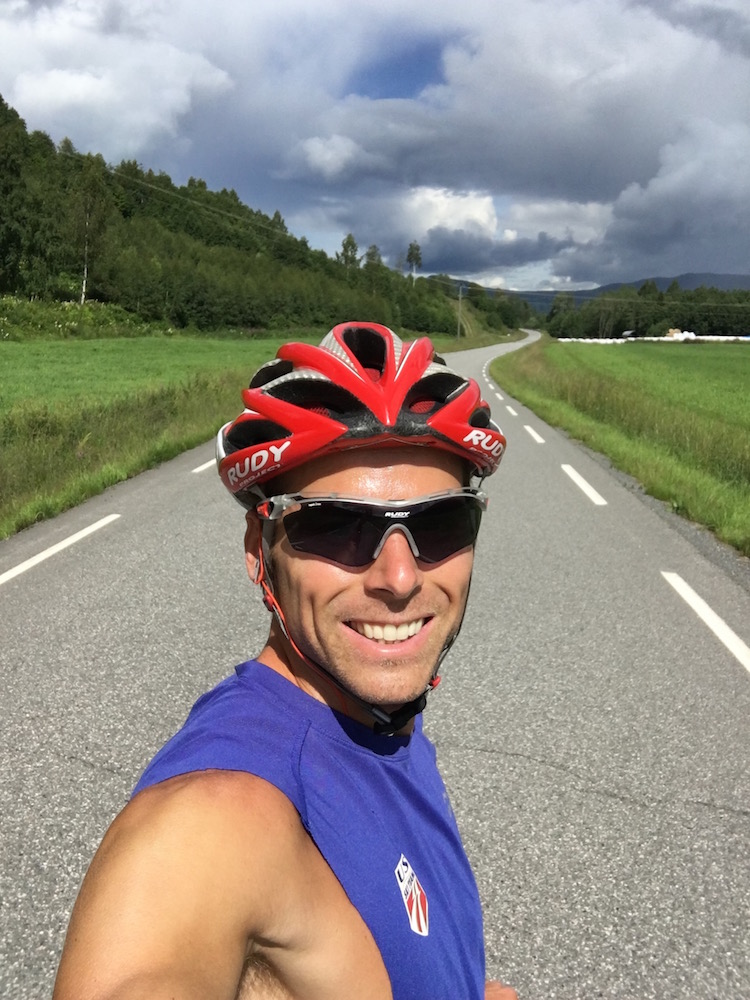
    Andy Newell is all smiles on a rollerski in Norway. He enjoyed some "sweet roller skiing pavement" leading up to Nordseter, not far from Sjusjøen, Norway. (Courtesy photo)
    Andy Newell is all smiles on a rollerski in Norway. He enjoyed some “sweet roller skiing pavement” leading up to Nordseter, not far from Sjusjøen, Norway. (Courtesy photo)

    While Newell explained that he’s certainly upped his amount of double-pole training this year, he’s also trying to improve his skating to achieve his all-around goals on the World Cup.

    Looking back, he reflected that the skiing culture in Norway — in the heart of summer — was one of the best parts of his trip.

    “You could go out roller skiing and see at least 2 or 3 other groups of good skiers out for a training session as well, and all the people driving tend to respect the roller skiers on the roads over there because it’s their national [pastime],” he wrote. “I think those two weeks were some of the most productive training I’ve ever had.”

    Outside of training, Newell was in Norway when the news broke about the country’s defending World Cup champion Martin Johnsrud Sundby being suspended and stripped of his 2015 Overall World Cup and Tour de Ski titles.

    “I was out skiing with the guys on my third or fourth to last day there and they were doing that thing when they started to speak a lot more Norwegian than normal,” Newell reflected. “Typically our training talk was in English. So I could tell something was up, and all I got was ‘tomorrow sh*t is going to hit the fan in Norway’ referring to Sundby and his doping ban. So I guess the word was already starting to spread through the skiing community and it was defiantly big news when the story broke.”

    The news was all over Norwegian TV, and Sundby appeared on a multitude of televised interviews and press conferences.

    “I would say that most of the skiers support him as would most teammates in an instance like that,” Newell said of the Norwegians he was with in Lillehammer. “If anything I’m sure they were worried about how it would reflect on the ski federation.”

    A day or two later, all the chatter about Sundby faded.

    “I don’t know if thats good or bad but that’s what you have to do if you are an athlete,” Newell said. “We are all the same in that regard. No need to worry about what others may or may not be doing, there are only so many hours in the day and focusing on your own training is what we have all learned to do over the years.”

  • RMISA Season Concludes in Anchorage with Colorado Crowned Season Champs

    RMISA Season Concludes in Anchorage with Colorado Crowned Season Champs

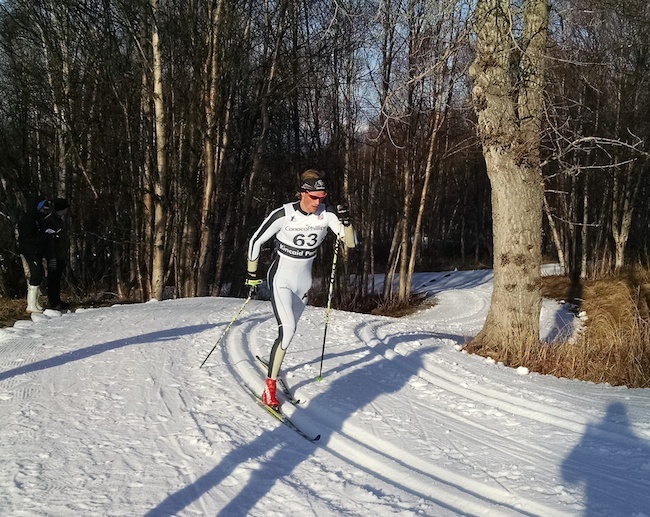
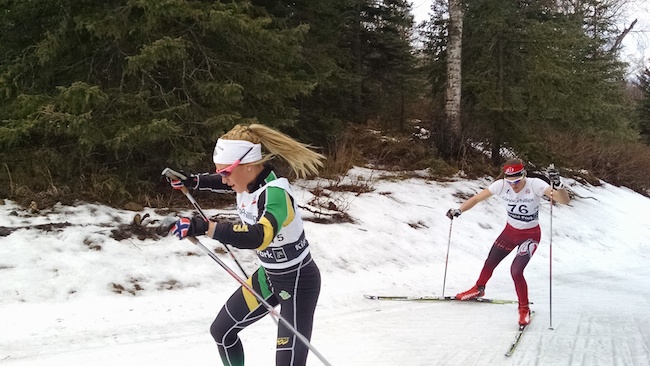
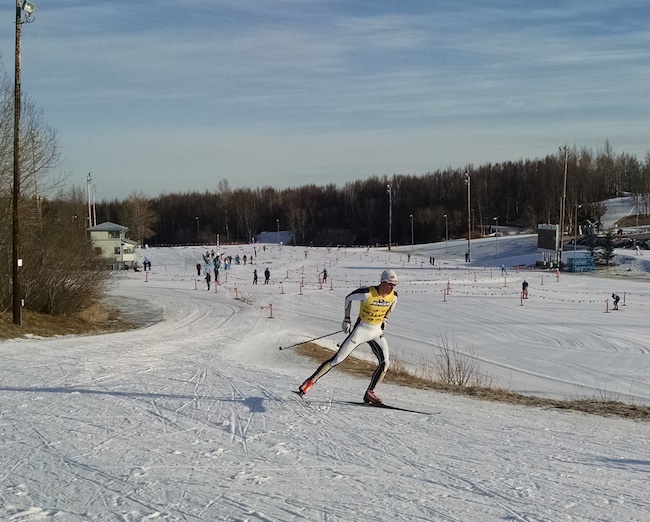
    Colorado University's Mads Stroem on his way to victory in the 7.5 k classic race at Kincaid Park, part of the University of Alaska Anchorage Invitational held last week. (Photo: Tim Whiton)
    University of Colorado’s Mads Stroem on his way to victory in the 7.5 k classic race at Kincaid Park, part of the University of Alaska Anchorage Invitational held last week. (Photo: Tim Whiton)

    After a three-week break of racing after the University of New Mexico Invitational in Red River and the University of Colorado Invitational in Steamboat Springs, the Rocky Mountain Intercollegiate Ski Association (RMISA) shifted gears to sea level and the University of Alaska Invitational and this year’s RMISA Championships. The UAA Invite was originally scheduled to be held at Girdwood, but a lack of snow and an abundance of cold rain moved all four of the final RMISA races to Anchorage.

    “Seven days ago at this time, we didn’t have hardly any snow on the ground and we were in the middle of three days of steady rain,” the UAA team wrote on their blog this weekend. “We’d scrapped our original plan to race our first two (of four) races on the new Girdwood racing trail because there was no snow at all in Girdwood. Not even a thin film of ice. Just brown dirt and gray rocks. Skis hardly glide on that kind of surface.”

    Cambria McDermott of Montana State, who would eventually finish eighth, leading Emilie Cedervärn in the interval-start 5 k skate held at Hillside.
    Cambria McDermott of Montana State, who would eventually finish eighth, leading Emilie Cedervaern in the interval-start 5 k skate held at Hillside. (Photo: Tim Whiton)

    Despite the wet weather that greeted most teams on Saturday’s arrival, races began on Monday, Feb. 23, at the Hillside Nordic trails with 5- and 10-kilometer skate races for women and men respectively. The course was fully saturated with some standing water, dirt, and icy uphills. Using the Spencer loop as the beginning of the course, racers faced a challenging climbing section for roughly two kilometers before a slow, grinding descent past the start, and two kilometers of short, steep uphills and downhills before the finish.

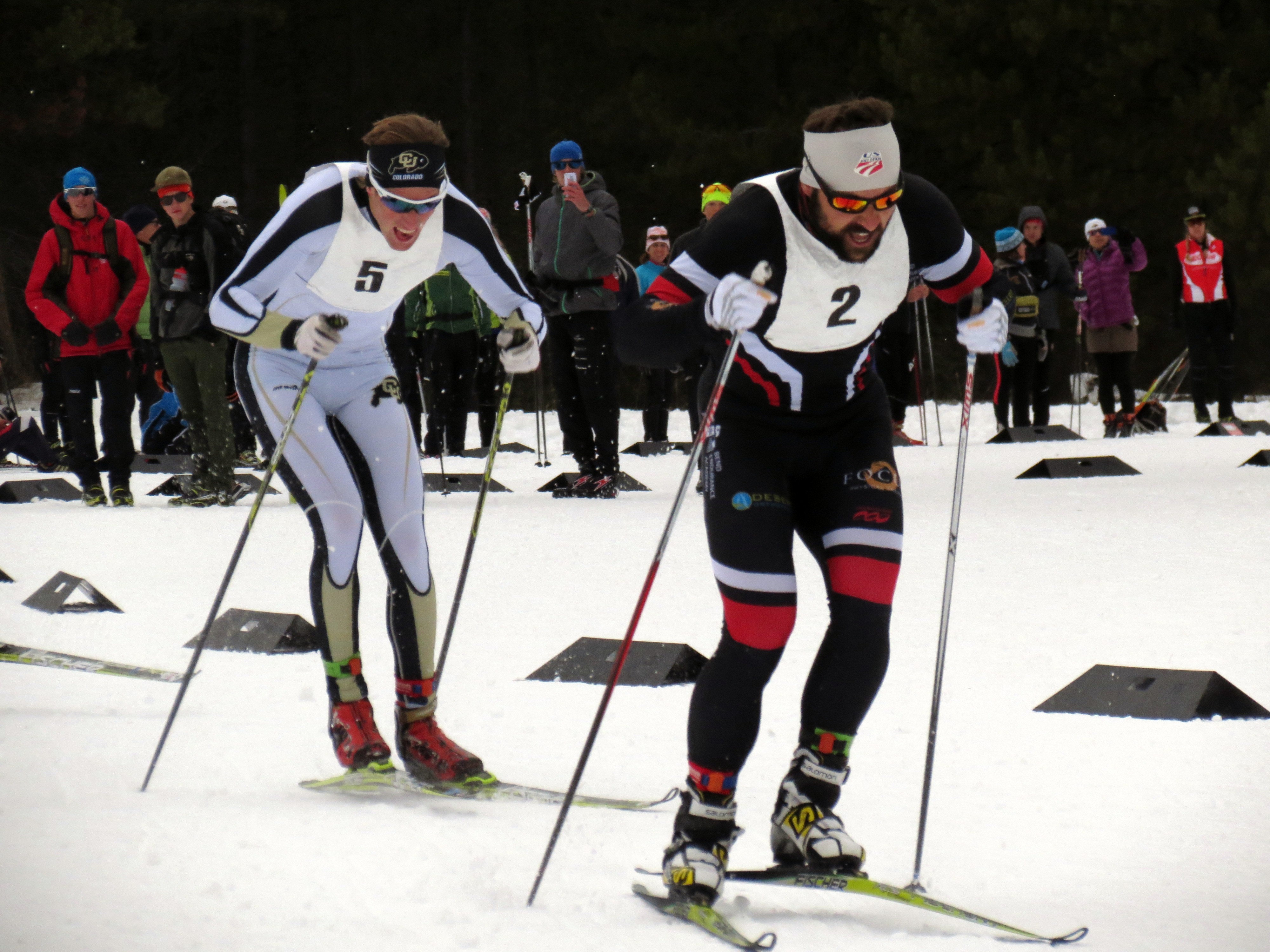
    As much of the season has gone, the University of Colorado’s duo of Mads Strøm and Rune Ødegård paced the men’s field. Ødegård won the 10 k in 25:18.6, after starting slowly and speeding up on the second lap, with Strøm nipping University of Utah’s Niklas Persson by two-tenths of a second in 25:26.4. The rest of the men’s top ten was over thirty seconds back, but tightly bunched together despite the tough conditions and hilly course.

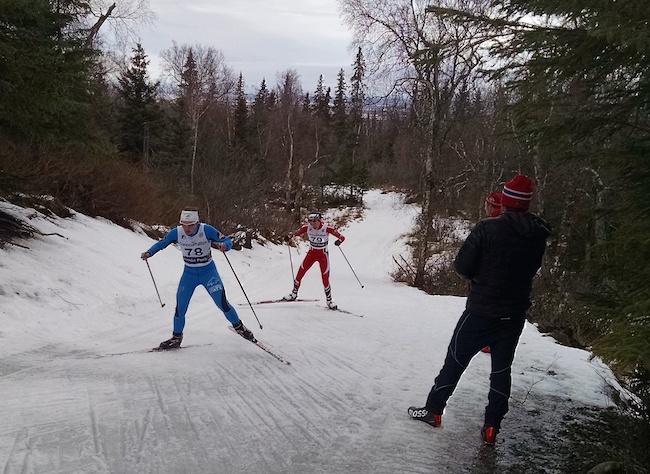
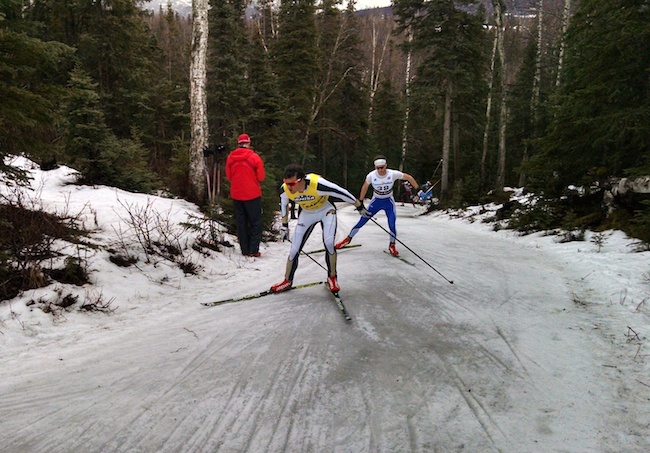
    Race winner Rune Ødegård of Colorado University leads Michael Fehrenbach of University of Alaska Fairbanks in the 10 k skate at Hillside. Fehrenbach placed 16th. (Photo: Tim Whiton)
    Race winner Rune Oedegaard of the University of Colorado leads Michael Fehrenbach of University of Alaska Fairbanks in the 10 k skate at Hillside. Fehrenbach placed 16th. (Photo: Tim Whiton)

    In the women’s 5 k race, University of New Mexico’s Emilie Cedervärn led New Mexico to the team win over Utah. Cedervärn won in 14:46.9 to Utah’s Veronika Mayerhofer’s 14:58.9 and New Mexico’s Eva Severrus’ 15:11.5. Much of the women’s top ten was strung out, finishing less than a minute out of the lead.

    After the first day of racing, the University of Utah led the University of Colorado by eight points.

    With the skate races finished, it was obvious the Hillside courses would not allow for another day of racing. With a return of freezing temperatures Monday evening, the trails turned to a sheet of ice and Tuesday’s races were tentatively postponed to Wednesday with the prospect of shifting even to Thursday depending on how Kincaid park, the site of the weekend’s RMISA Championships looked in the morning.

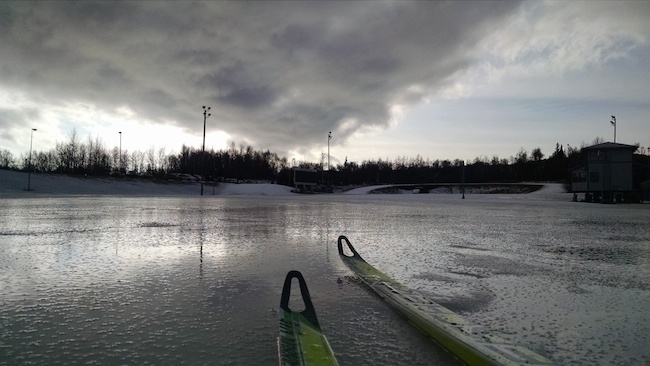
    Conditions at Kincaid Park were not always ideal, but organizers and racers made the best of things. (Photo: Tim Whiton)
    Conditions at Kincaid Park were not always ideal, but organizers and racers made the best of things. (Photo: Tim Whiton)

    Luckily, Kincaid did manage (mostly) to freeze over night. The traditional stadium remained under water so the courses focused on short 2.2 k loops starting and finishing in the biathlon stadium and racing resumed on Wednesday morning with five and seven and a half kilometer classic races. Despite aggressive grooming, the course was mostly chunked ice and sugar, resulting in fast times and challenging conditions.

    In the women’s race, Cedervärn made it two wins in a row in a time of 15:50 by beating  Mayerhofer, who had started wearing the yellow discipline leader bib. Mayerhofer’s 15:57.8 put her in front of teammate Sloan Storey’s 16:01.9 and UAA’s Manon Locatelli’s 16:06.1. The top four women were clearly in a league of their own, with a gap of 25 seconds between Locatelli and fifth-place Kathrin Schratt of UAA. However, after that it was again close racing for the women, with places five through nine separated by less than nine seconds.

    Storey’s third place finish was the only time in four days of racing in Alaska that an American skier stood on the podium in an RMISA race.

    Macjenzie Kanady of University of Alaska Anchorage, who finished seventh, and runner-up Veronika Mayerhofer of the University of New Mexico in the 5 k skate at Hillside. (Photo: Tim Whiton)
    Macjenzie Kanady of University of Alaska Anchorage, who finished seventh, and runner-up Veronika Mayerhofer of the University of  Utah in the 5 k skate at Hillside. (Photo: Tim Whiton)

    The men’s race saw the same top three from Monday’s race, but with a small shift. Strøm and Ødegård used some fine classic skiing to distance themselves, once again, from the men’s field. Strøm won in 20:22.2 and Ødegård finished second in 20:33.5. Persson finished third again in 20:57.4, just ahead of Clement Molliet of UAA. Places five through 18 were separated by only 35 seconds, making for some tight and exciting racing. Interestingly, four of the men’s top 10 raced the steep uphills on skate skis and double poling. Moritz Madlener of Denver University led the four in seventh place, while Montana State University’s threesome of Forest Mahlen, Erik Axelsson, and Martin Muan finished close together in 8th and tied for 10th respectively.

    After the two races of the UAA Invitational, the University of Utah won the team competition on the nordic side with 351 points to the University of Colorado’s 319. University of New Mexico rounded out the top three teams with 299 points. Combined with alpine, Utah took overall top honors.

    UAA Invitational Results: men & women at Hillside / men & women at Kincaid / overall scores

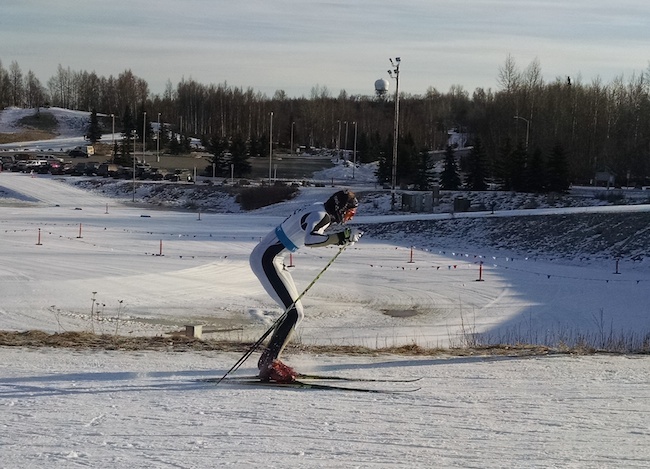
    CU's Rune Ødegård racing to second place in the 10 k skate at Kincaid Park as part of RMISA Championships. (Photo: Tim Whiton)
    CU’s Rune Oedegaard racing to second place in the 10 k skate at Kincaid Park as part of RMISA Championships. (Photo: Tim Whiton)

    After a training day at Kincaid on Thursday marked by late morning grooming that left the track soft and sugary, RMISA regional championships commenced on Friday with 5/10 k skate races. Thankfully, the Kincaid groomers did incredible work which, coupled with overnight lows around 15 degrees, made for a first and fast track. The extensive work allowed for an increase in track length to 3.7 k with several short, steep climbs and limited rest.

    Strøm made quick work of the challenging three lap course and stormed to a nearly twenty second victory in 22:49.3 over his teammate Ødegård’s second place 23:08.1. One second behind was Denver University’s Dag Frode Trollebø. Just as in the classic race on Wednesday, places four through 17 were separated by 35 seconds. The women’s race saw domination by New Mexico’s Cedervärn and Severrus. Cedervärn won the lap and a half course in 13:40.5 ahead of Severrus in 13:49.3 and Colorado’s Petra Hyncicova’s 13:51.1.

    Unfortunately, Anchorage, as it has much of the year, did not see very cold temperatures and come Saturday morning the track was soft and quickly turned into a loose mealy ice. Nevertheless, great racing occurred on the same courses at Kincaid with 15/20 k classic mass start races.

    The women raced first on a slightly longer course and the lead pack of seven stayed tightly bunched through about halfway despite some aggressive skiing. Early on the third lap, Cedervärn made a hard push on the steep climbs, breaking apart the field, and dropping everyone except Utah’s Mayerhofer. Despite a gritty chase, Mayerhofer lost time on the final lap and Cedervärn won in 42:35.3 with Mayerhofer in 42:59. UAA’s Locatelli finished strong in third in 43:10.8.

    Mads Strøm of CU became the RMISA Champion in the 10 k skate at Kincaid Park in Anchorage. (Photo: Tim Whiton)
    Mads Stroem of the University of Colorado was the RMISA Champion in the 10 k skate at Kincaid Park in Anchorage. (Photo: Tim Whiton)

    The men’s race, despite the end result, was quite different and more exciting than any other race this season.

    A large pack 11 formed on the first of six laps and stayed bunched together through four laps. Several skiers made hard pushes to get off the front and ski away, but the fast conditions, lack of long uphills, and strong drafting made the chase pack very strong. Aku Nikander of New Mexcio was aggressive in covering many of the attacks and Ødegård of Colorado also brought the race back together several times.

    Ultimately, the race came down to the last lap with Colorado’s Ødegård and Strøm attacking the uphills and creating some separation. Nikander continued to fight and managed to solidify a podium spot partway through the lap by closing down the gap several times. The three were together in the last climb, but the CU boys made a gap on the final downhill and rise into the stadium, distancing Nikander by two seconds at the finish.

    In the last hundred meters, Ødegård, visibly tiring from pushing the pace hard for the last two laps, was overtaken at the line by Strøm by three tenths of a second. The men finished in a blistering 50:20 for the over-21 kilometers. The rest of the men’s top ten was within 45 seconds of the lead.

    With final scores for RMISA Championships tabulated, Colorado won the nordic standings with 337 points to New Mexico’s 324 and Utah’s 295; CU also took the overall title, this time over New Mexico.

    Results from RMISA Championsips: men & women classic / men & women skate / overall standings

    The Western schools are looking forward to heading east shortly for NCAA’s. After racing at sea-level for a week, the RMISA skiers are psyched for some fast skiing and ready to see how the other divisions are skiing. Mostly though, they are all hoping for some cold snow and extra blue skiing, something not seen out west yet this season!
  • Blackhorse-von Jess Outlasts CU Skiers to Win SuperTour Sprint in West Yellowstone

    Blackhorse-von Jess Outlasts CU Skiers to Win SuperTour Sprint in West Yellowstone

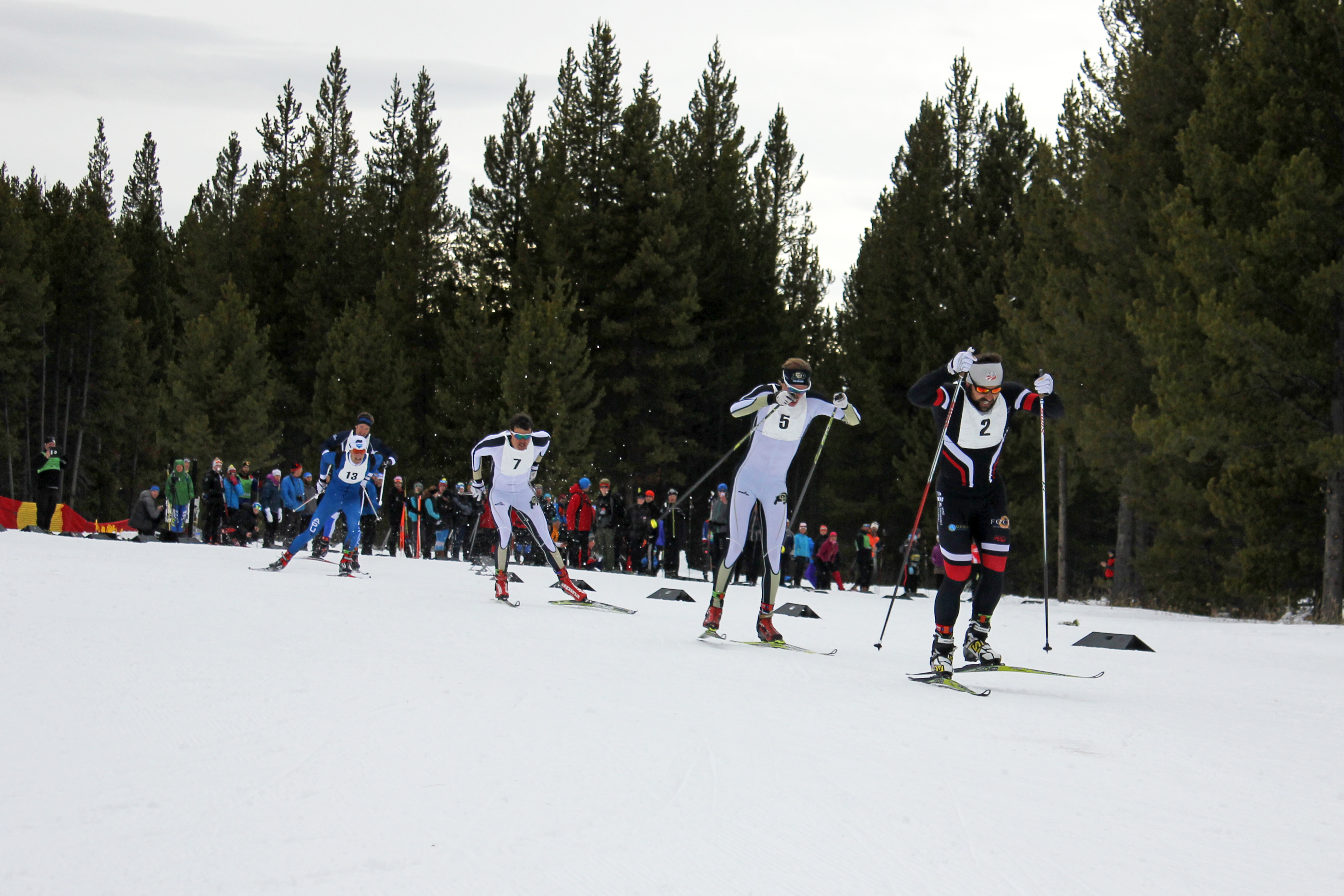
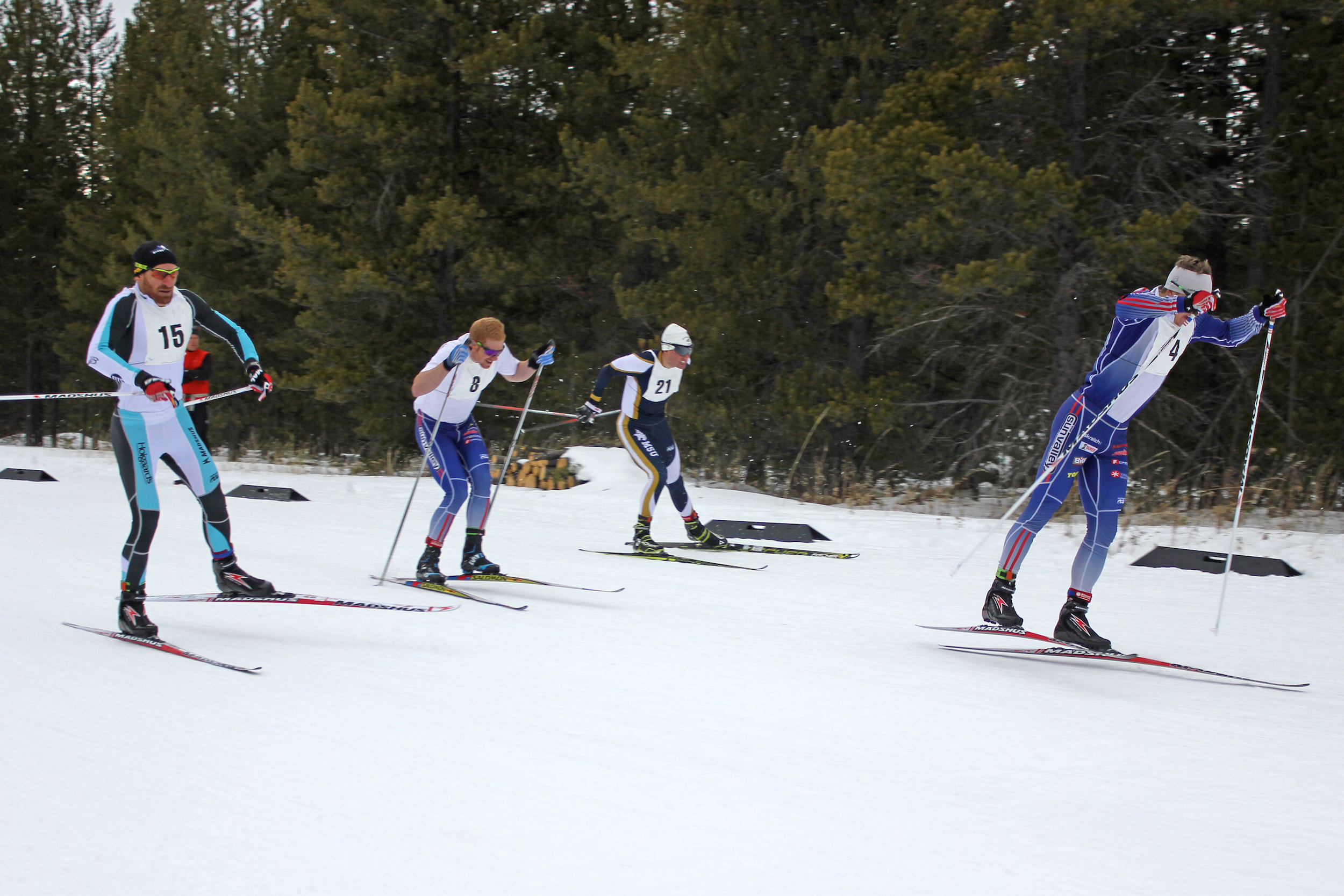
    Dakota Blackhorse-von Jess of Bend Endurance Academy (r) leads (from r-l) Mads Stroem (CU), Rune Oedegaard (CU), and Eric Packer (APU) in the A-final of Friday's Super Tour freestyle sprint in West Yellowstone.
    Dakota Blackhorse-von Jess of Bend Endurance Academy (r) leads (from r-l) Mads Strøm (CU), Rune Oedegaard (CU), and Eric Packer (APU) in the A-final of Friday’s Super Tour freestyle sprint in West Yellowstone.

    WEST YELLOWSTONE, Mont. — Dakota Blackhorse-von Jess used a strong finish to edge out two skiers from the University of Colorado in Friday’s men’s 1.5 k skate sprint in West Yellowstone, Mont., marking the first U.S. SuperTour race of the season.

    The 28-year-old Blackhorse-von Jess, of the Bend Endurance Academy, took command of the lead after the final hill when the University of Colorado’s Mads Strøm made a last-ditch attempt to pass him on the outside. The 23-year-old Norwegian had been working with CU teammate and fellow countryman Rune Malo Ødegård to hold second and third position throughout the race, waiting for the opportunity to make a move on Blackhorse-von Jess. However, Strøm finished in second while Ødegård, 25, crossed the line in third.

    Eric Packer of Alaska Pacific University (APU) finished fourth, 2.98 seconds after Blackhorse von-Jess. Welly Ramsey of the Maine Winter Sports Center (MWSC) finished in fifth (+3.52). Canadian Andy Shields of the Thunder Bay National Development Centre (NDC) was 36.49 seconds back in sixth place, though FasterSkier was unable to locate Shields to determine what happened on the course.

    Dakota Blackhorse-von Jess of Bend Endurance Academy pushes in front of the University of Colorado's Mads Stroem during the A-final of the SuperTour men's skate sprint in West Yellowstone, Mont.
    Dakota Blackhorse-von Jess of the Bend Endurance Academy pushes in front of the University of Colorado’s Mads Stroem during the A-final of the SuperTour men’s freestyle sprint in West Yellowstone, Mont. (Photo: Toko)

    Blackhorse-von Jess was second in qualifying (after Stratton’s Ben Saxton) and made it safely through the quarterfinal and semifinal rounds, though he emphasized the challenging nature of the early-season race.

    “West Yellowstone’s a hard place,” he explained. “I’m tired, everybody’s tired. You know, it’s just hard being here.”

    However, he said winning is a good “confirmation of fitness,” and he was happy with his strategy.

    “It just became apparent to me I had the speed at the end, but to really maximize it you need to be first on the hill,” he said, “So, that’s what I did. Worked out great.”

    He said being in front was especially an advantage on the rolling course, as the corners are close together and “the straight line provides no opportunity for passing.”

    Only 0.9 seconds behind Blackhorse von-Jess, Strøm was disappointed to not have overcome Blackhorse-von Jess, but recognized his attempt to take the lead was too little, too late.

    “He went away from the other guys and I just tried to get past him and he was faster than me,” Strøm explained.

    Strøm was happy for his Colorado team, saying they generally expect to do better in distance races. Having two skiers on the podium in the sprint was well above their expectations.

    Ødegård was pleased with his third-place finish, echoing Strøm in saying the race went “a lot better than expected.”

    The Norwegian has suffered from injuries and illness throughout the past year, including an ankle surgery, a meniscus tear and a bout of strep throat. Despite that, he said he was better in a skate sprint than he has ever been.

    Ødegård and Strøm finished seventh and fifth, respectively, after qualifying, then comfortably made it through their quarterfinal races. They ended up racing together in the first semifinal, where they skied a strategic race and helped each other maintain and finish in the first and second positions.

    Despite being happy with his race, Packer was a victim of the course’s lack of passing opportunities. According to the 24-year-old Alaska native, he started out in third or fourth and never had a real chance to move forward during the race.

    “The final went out pretty hard and with this course it’s really difficult to pass,” he explained.

    Packer qualified in 13th, surviving a competitive quarterfinal while squeaking through the semifinal to make it to the A-final.

    Sun Valley's Miles Havlick leads (from l-r) Brian Gregg (Team Gregg), Matt Gelso (SVSEF), and Forrest Mahlen in Friday's B-final at the 2014 SuperTour freestyle sprint in West Yellowstone.
    Sun Valley’s Miles Havlick leads (from l-r) Brian Gregg (Team Gregg/Madshus), Matt Gelso (SVSEF), and Forrest Mahlen (MSU) in Friday’s B-final at the 2014 SuperTour freestyle sprint in West Yellowstone.

    Finishing fifth, Ramsey was ecstatic about advancing to the A-final. The 23 year old is an accomplished distance racer, having finished eighth at last year’s 15 k at U.S. nationals, but hasn’t considered himself to be a sprinter in the past. Starting the day by qualifying in 12th, he finished just behind Blackhorse-von Jess in the men’s first quarterfinal. Then he led Blackhorse-von Jess going into the last hill during the second semifinal, before the eventual winner passed him on the closing stretch.

    “I’m pretty stoked that I’m able to sprint this year,” Ramsey said, emphasizing how much technical work and “on-snow” time during the fall has helped him out.

    The day started off well for Saxton, a 21-year-old U.S. Ski Team and SMST2 athlete, who was first after qualifying.

    “I think the qualifier today rewarded smooth skiing and I don’t think very many people would list smooth skiing as one of my attributes thus far,” Saxton explained.

    However, he fell behind Ødegård and Strøm in the semifinal and faded on the final hill, then ended up 11th overall after falling behind in the B-final. In that race, he said his right hamstring “balled right up” going into the tuck, leaving him unable “to put forward the effort” that was representative of his abilities.

    Sun Valley’s Miles Havlick, who was fourth after qualifying, won the B-final, barely nudging out Brian Gregg (Team Gregg/Madshus) and Forrest Mahlen (Montana State University). Alaska Pacific University’s Lex Treinen was put out of the race at the start, falling immediately after the gun sounded.

    Paddy Caldwell (SMST2) also suffered a race accident earlier in the day. After qualifying in 22nd, one of his poles broke at the top of the final hill during the fourth quarterfinal. Alex Schulz of Craftsbury Green Racing Project was on the inside, and as they rounded the curve Schulz’s ski and Caldwell’s pole collided.

    There were certain issues on Day 1 of the event involving timing, bib numbers and placement into semifinals. Races and results were postponed, and athletes at times questioned when or if they would be racing.

    SuperTour racing continues for the men on Saturday in West Yellowstone with the 15 k freestyle individual start. Snow is expected to fall throughout the day, making for interesting racing conditions.

    — Lander Karath contributed reporting

    Men’s 1.5 k freestyle sprint results

    Saturday’s 10 k/15 k freestyle start list 

  • Photos: 2014 NCAA Championships

    Photos: 2014 NCAA Championships

    The University of Denver won the 2014 NCAA Championships for the 22nd time this past weekend in Park City, Utah. Check out some amazing photos of the event taken by superstar photographer Bert Boyer. All proceeds from photo sales will be directly donated to NNF. Buy them here: http://bertboyer.zenfolio.com

    2014 NCAA Championships: women’s 5 k classic reportmen’s 10 k classic report | 15 k and 20 k freestyle mass start report

  • 2014 NCAA Preview: Colorado, Utah, Vermont, and Others Hungry for Title

    Photo: Flyingpointroad.com (All proceeds benefit NNF)
    An NCAA banner hangs at the 2013 NCAA Skiing Championships in Vermont. The 2014 Championships are set to begin Wednesday in Park City Utah. Photo: Flyingpointroad.com (All proceeds benefit NNF)

    FasterSkier’s coverage is made possible through the generous support of Madshus.

    One-hundred and forty-eight. That’s the number of skiers who have descended upon the ski town of Park City, Utah, to participate in the 2014 NCAA Skiing Championships. The championships will be hosted by the University of Utah, who last had the honor in 2000. The four day event, which consists of two alpine and two nordic races, begins Wednesday and continues through Saturday.

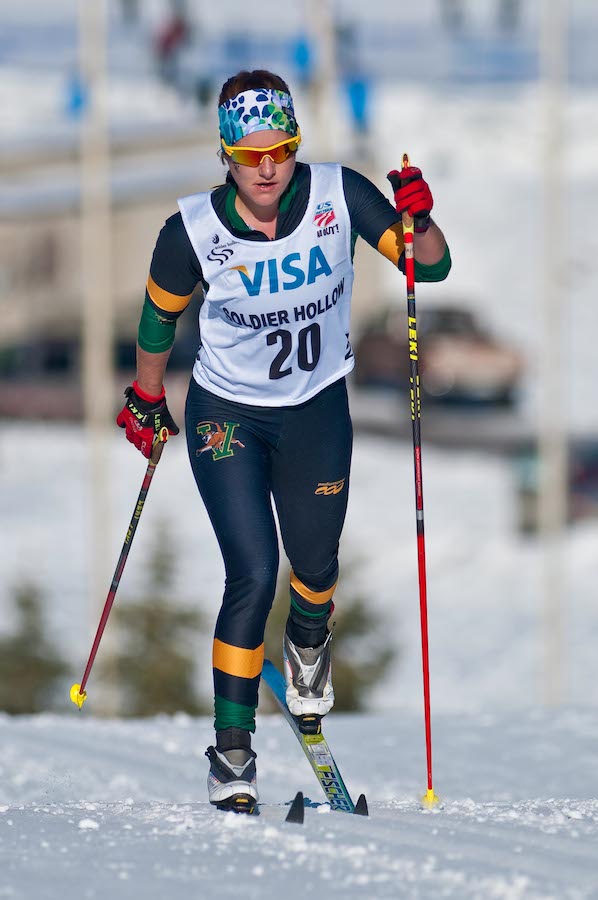
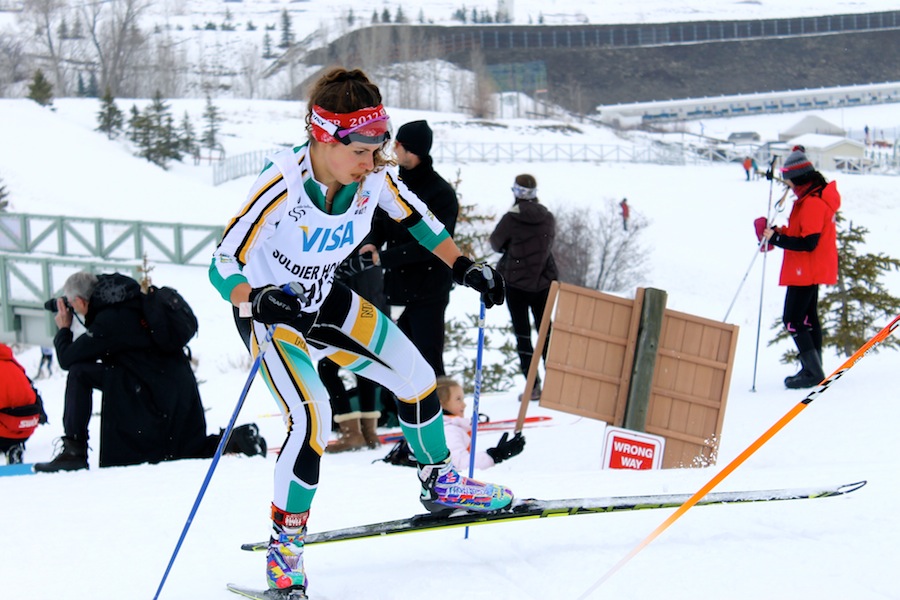
    The cross country portion of the event will take place at Soldier Hollow in Midway, Utah, the site of the 2002 Olympic Games and many national events, including the 2014 U.S. Cross Country Championships.

    The weather in Utah looks to be warm and wet with highs in the mid 40s to lower 50s and precipitation expected on Thursday and Friday, making for tricky waxing and racing conditions. 

    Given the nature of course, sloppy conditions, the field, and the stakes, the competition is set to be fierce. Several schools will be in the hunt for the title of america’s fastest skiing school, but only one will walk away with the championship title.

    Last year at the 2013 NCAA Championships in Ripton, Vt., it was the University of Colorado that came out on top followed by the University of Utah and the University of Vermont. Colorado’s chances in Utah seem a more slim in 2014, as they were unable to win a collegiate weekend all season. However, with a strong showing for men’s nordic, the Buffs may be able to make up for their other weaknesses.

    The University of Utah is hungry to break a three-year-streak of finishing second at NCAAs. After winning last weeks Rocky Mountain Intercollegiate Ski Association (RMISA) Championships, Utah goes into this week’s races with confidence and energy. Having the home advantage should certainly help Utah as well. However, if they want the title that’s slipped out of their hands the past three years, they’ll have to rely less on their alpine team and see better results from their nordic squad.

    It would be asinine to discount the University of Vermont, whose skiers have been looking especially strong this year. In the 2012 Championships they demonstrated that they could tackle western altitudes with ease in Bozeman, Mont. And with Soldier Hollow looking to be warm and wet this week, the conditions may favor eastern skiers who are used to rough easter weather.

    The East

    The eastern skiers are as strong as ever this year with the undefeated University of Vermont setting its sites on another NCAA victory. The 2012 champions have a strong team in both alpine and nordic which has contributed to their uncontested dominance this season.

    Anja Gruber (University of Vermont) racing to fourth in Saturday's 10 k classic mass start at Soldier Hollow for her best U.S. nationals result by more than 20 places. (Photo: Bert Boyer/http://bertboyer.zenfolio.com/) All proceeds from photo sales will be directly donated to NNF.
    Anja Gruber (University of Vermont) racing to fourth in the 10 k classic mass start at Soldier Hollow for her best U.S. nationals result by more than 20 places. (Photo: Bert Boyer/http://bertboyer.zenfolio.com/) All proceeds from photo sales will be directly donated to NNF.

    The east finds its greatest strength in its women. Anja Gruber, a native of Germany, has been UVM’s shining star this year, and finishes the regular season as the top-ranked skier in the Eastern Intercollegiate Ski Association (EISA). Last year’s NCAA 5 k classic champion, she placed fourth at the 2014 U.S. nationals at Soldier Hollow on the same course where the NCAAs are being held. Throughout the season the senior has been a top contender in the EISA circuit, consistently winning all but one classic race and finishing in the top three in every freestyle race.

    UVM’s talent doesn’t stop there, with sophomores Linda Danvid-Malm of Umea, Sweden and Stephanie Kirk of Anchorage, Alaska, showing that Gruber isn’t the only catamount with claws. Danvid-Malm has been dominant in freestyle, winning three out of six EISA races this season. Kirk, who competed in Italy as part of the U23 World Championships, has been a consistent performer as well highlighted by a spectacular win in the 15 k skate mass start at the EISA Championships at Middlebury College last weekend.

    Annie Hart of Dartmouth College has been the only real threat to Vermont’s dominance all season, having been the only non-UVM woman in the east to win a scored collegiate race this season. Consistently on the podium in classic races, Hart finally saw her hard work pay off at the EISA championships when she won the 5 k classic. With the same event being held on Thursday, Hart is hungry for a national championship title. Corey Stock, also of Dartmouth, has had a decent season as well, ranking fifth in the eastern points standings.  

    While not as dominant as their women, the UVM men shouldn’t be taken lightly. Their lead skier, Scott Patterson of Fairbanks, Alaska, has won three of the six collegiate races he’s participated in this season. Patterson made the headlines earlier this year when he riskily tried to break away from the men’s field in the 30 k mass start. Unsurprisingly, the move failed on the national level, but a similar move with in a collegiate field may be what Patterson needs to secure a title..

    Sophomore Jorgen Grav is another UVM skier to watch in Soldier Hollow. The Oslo, Norway native finished fifth in the EISA rankings, followed by teammate Rogan Brown of Durango, Colo., in sixth.

    Silas Talbot (DAR)
    Silas Talbot of Dartmouth racing in the 2013 NCAA Championships at Middlebury, Vermont.

    Two Dartmouth College skiers have the chance to dethrone the dominant catamounts. Paddy Caldwell and Silas Talbot have both been atop the results this year both winning multiple carnival races. Caldwell skied to a convincing win in the men’s 20 k freestyle at the ESIA Championship and was named 2014 rookie skier of the year for the region.

    A notable emission from this year’s NCAA Championships will be Ben Lustgarten of Middlebury College. Lustgarten had a spectacular year which started with strong skiing at the 2014 U.S. National Championships, continued with racing at the U23 World Championships, and finished with a win in the 10 k classic (by 50 seconds!) at the EISA Championships. Lustgarten would have been a top contender in Soldier Hollow this year but due to an knee injury he sustained in the 20 k mass start at the EISA Championships the senior will be on the sidelines.

    The West

    Unlike the east, there has been no clear contender for the top spot in the west. At the beginning of the season it looked as if the University of Denver might be ready for another NCAA Championship, but by the time the RMISA Championships was over last week, Denver had finished fourth, roughly 60 points behind the winner, the University of Utah. Despite the end-of-season falter, Denver still held the top spot in the regular season standings demonstrating their potential.

    Sylvia Nordskar (University of Denver), fourth
    Sylvia Nordskar of the University of Denver racing in West Yellowstone, Montana earlier in the 2013/2014 season.

    Sylvia Nordskar of Bærum, Norway, is the most-likely woman from the West to capture an NCAA title. The University of Denver freshman has either won or placed second in every collegiate race that she has competed in this season and has no signs of stopping.

    Senior Makayla Cappel, a Sun Valley native skiing for Denver, became a late-season standout after winning the 5 k classic and taking third in the 15 k freestyle mass start at the RMISA Championship in Minturn, Colo. After dealing with illness upon her return from the World University Games in Italy, Cappel recovered from a slow start to her season to rocket herself onto the first team All-RMISA. Rounding out the Denver women is Silje Benum, who has also had many top finishes this season.

    Only two non-Denver skiers have been able to top Nordskar this season. The first is Marine Dusser of the University of Alaska Anchorage, who was third in the women’s 15 k in 2013 and has had several wins in the RIMSA circuit this year. The second is Slovenian Eva Severrus of the University of New Mexico, a freshman who has helped New Mexico improve its standings in the west.

    Sloan Storey of the University of Utah is another western woman to watch. Storey joined the U.S. contingent at the Junior World Championships in Italy earlier this year and made first team All-RMISA after and exemplary collegiate season.

    Rune Oedegaard (CU) 8th place classic
    Rune Ødegaard racing in the West Yellowstone Super Tour.

    Like its women’s team, the Denver men were the top team in the west during the regular season. The trio of Moritz MadlenerPierre Guedon and Trygve Markset made the Pioneers proud in 2014 and hope to continue the trend into the NCAA Championships. However, they’ll need to have a better performance than they did at the RMISA Championships, where they garnered only 46 points compared to the University of Colorado’s 93.

    Norwegians Rune Ødegård and Mads Strøm, a junior and freshman, have been the top skiers from Colorado throughout the latter half of the 2014 collegiate season. After sitting out the first two weekends of collegiate racing the duo has consistently been in the top five. Ødegård won last year’s 10 k classic at the 2013 NCAA Championships and looks to continue that success into 2014.

    The University of Utah men have shown that the best skiers in the west aren’t just based in Colorado. Niklas PerssonOscar Ivars, and Noe Bellet have all performed well this season, garnering spots on the second team All-RMISA. However, all three will need to up their game if they want to outpace the Catamounts and the Buffs.

    Colorado, Denver, and Utah have had steady competition from the 2013 RMISA skier of the year, Lukas Ebner of the University of Alaska Anchorage. The senior, who hales from Germany, hopes to build on a season that has included multiple podiums.

    Central

    The Central Collegiate Ski Association (CCSA) has traditionally trailed the east and west in terms of results at past NCAA Championships, which is reflected in the small numbers of qualifiers from the region. Despite that fact, there are several top performers who have a chance at an NCAA podium in Utah. 

    Rosie Frankowski of Northern Michigan University in the 20 k freestyle mass start at U.S. Nationals at Soldier Hollow.
    Rosie Frankowski of Northern Michigan University in the 20 k freestyle mass start at U.S. Nationals at Soldier Hollow.

    Rosie Frankowski, a senior of Northern Michigan University, has had an excellent season and looks to continue her speed into her time in Utah. Frankowski finishes her regular season as the top skier in the CCSA.

    Freshman Nicole Bathe of University of Alaska Fairbanks has turned out to be quite the powerhouse in classic races. Bathe has had excellent start to the season after finishing third in the classic sprint at the 2014 U.S. Cross Country Championships.

    Fellow Fairbanks  teammate Logan Hanneman looks to be the top male competitor for the CCSA in Utah. The junior finished fifth in the freestyle sprint at U.S. Nationals earlier this season.

    Whether Colorado can reclaim its title, Utah can snap its second place curse, or Vermont use the sloppy conditions to their advantage, the NCAA Championships will be an exciting display of talent from the fastest skiers in the country.

    The 5 k and 10 k classic will take place this Thursday at 10 a.m. and 12 p.m. MST. The Championships will conclude with the 15 k and 20 k freestyle mass starts on Saturday, also at 10 a.m. and 12 p.m, MST. Watch the action unfold live on the NCAA site and check FasterSkier for reports.

  • West Yellowstone SuperTour Men’s 15 k (Photo Gallery)

    West Yellowstone SuperTour Men’s 15 k (Photo Gallery)

    WEST YELLOWSTONE, Mont. — A look at the top 10 and some others in the men’s 15-kilometer freestyle individual start on Saturday — the second and last race of the West Yellowstone SuperTour. Read more.

  • Newell Skis Away with Classic Sprint Win at SuperTour Finals

    Newell Skis Away with Classic Sprint Win at SuperTour Finals

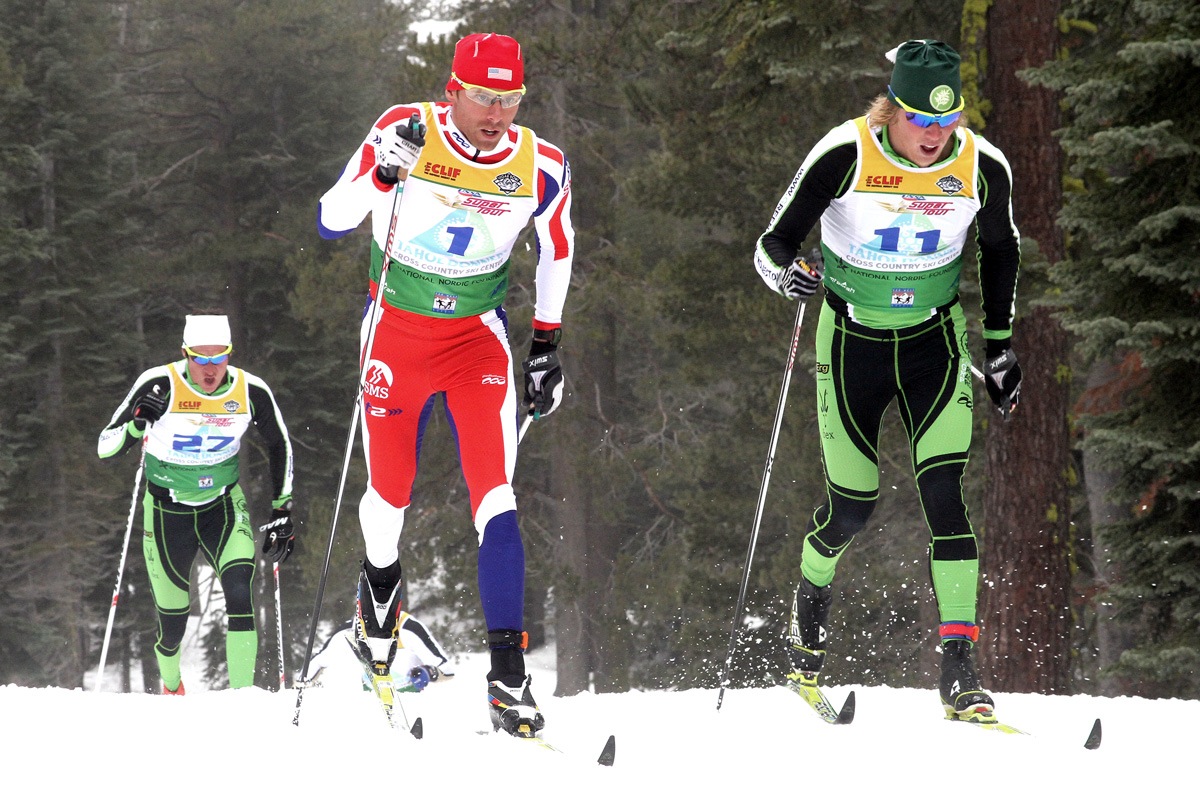
    Andy Newell fighting Pat O'Brien up a climb in the classic sprint A-final on Saturday at SuperTour Finals. Newell won the race and O'Brien took second. Photo: Mark Nadell/MacBeth Graphics.
    Andy Newell (c) fighting Pat O’Brien (r) up the last climb in the classic sprint final on Saturday at SuperTour Finals. Newell won the race, and O’Brien took second. (Photo: Mark Nadell/MacBeth Graphics)

    FasterSkier’s coverage of SuperTour Finals and U.S. Distance Nationals is brought to you by the generous support of Concept2, the leading manufacturer of indoor rowers, racing oars, and the SkiErg.

    SODA SPRINGS, Calif. — When Andy Newell (SMS T2/U.S. Ski Team) shows up to a sprint in the U.S., his name carries a certain cache with it. As the fifth-ranked sprinter on the World Cup this season and the only man in the world to qualify for the heats in every sprint he started, he is undoubtedly the standard-bearer in short distances whenever he returns to the domestic circuit. His name precedes him; Newell’s younger competitors grew up with posters of him on their walls, and when they meet him in an A-final they plan their entire strategies around him.

    “I remember my first Andy Newell poster I got in, like, elementary school,” says Erik Bjornsen (Alaska Pacific University/USST), a teammate of Newell’s on the national team. “I remember my friends and I talking about him in school, like, ‘That guy’s such a badass!’”

    There may come a day when one of the upstart generation of American sprinters upsets him, but Saturday was not that day. Four rounds of the sprint course later and Newell lived up to his reputation, winning the third stage of SuperTour Finals in commanding fashion against Pat O’Brien (Craftsbury Green Racing Project), Bjornsen, Tim Reynolds (CGRP), Rune Ødegård (University of Colorado) and Mike Sinnott (Sun Valley Ski Education Foundation) in the A-final.

    It’s been two years since Newell last entered a sprint race in the U.S., as he was sick for spring series a year ago, but he picked up right where he left off in Sun Valley, Idaho, in 2011. Based on his track record, the casual observer might conclude that Newell’s win was a sure thing at the Auburn Ski Club; that nobody in the domestic field could hope to touch someone who has been competing on the World Cup since he was 20 years old and has since proven himself to be one of the most consistent sprinters in the world.

    But Newell has been around long enough to know that losing is always a possibility, no matter what the field. His finish in the prologue in variable conditions put him nearly a minute out of the lead and limited his chances at winning the four-race tour on day one. Forced to shift focus from the SuperTour Finals title to individual races, Newell showed up for the sprint aware that nothing is ever a sure thing, particularly against a rabid domestic group of skiers.

    “There’s a lot of good sprinters in the U.S.,” Newell said. “Obviously qualification isn’t quite as competitive as the World Cup, but when you’re racing heats against these people it’s like, anybody can win. It’s sprint racing; so much can happen out on the snow. A lot of these guys are really fast. So I wouldn’t say I expect to win, but I definitely go into a sprint in the U.S. hoping to win.”

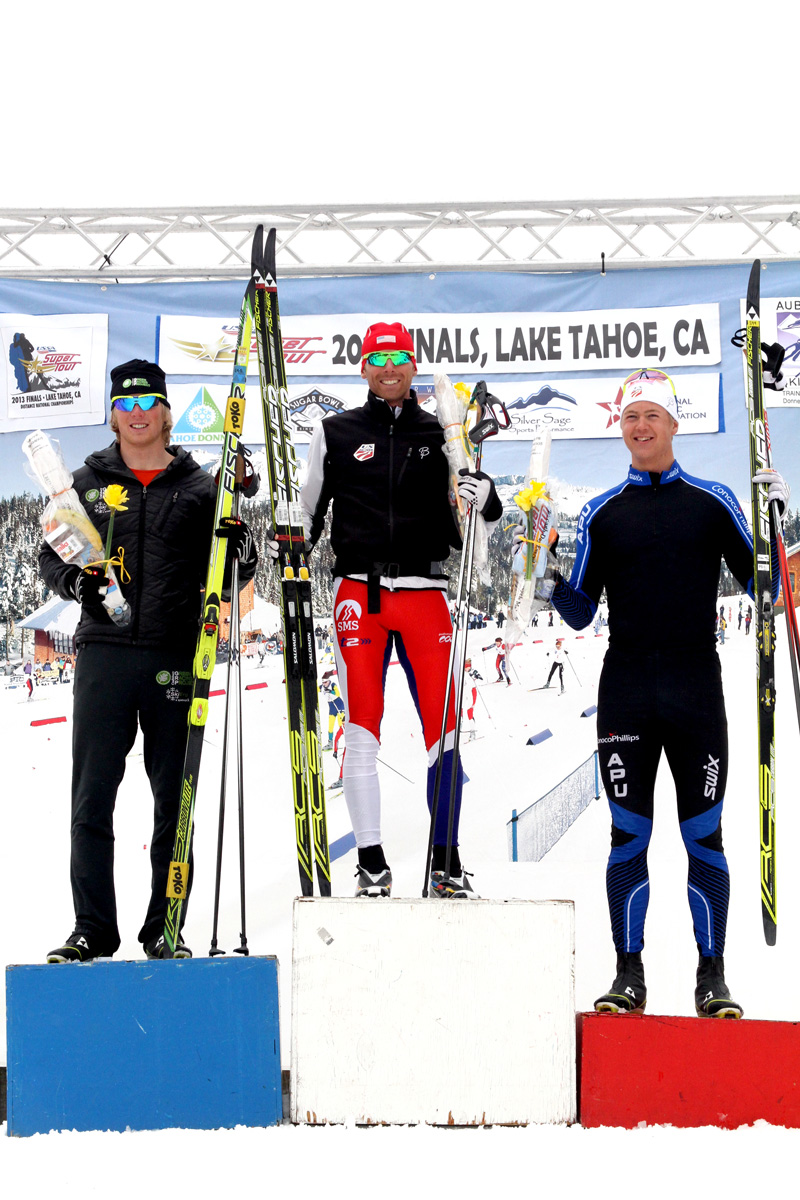
    The men's podium: 1. Andy Newell, 2. Pat O'Brien, 3. Erik Bjornsen. Photo: Mark Nadell/MacBeth Graphics.
    The men’s podium: 1. Andy Newell, 2. Pat O’Brien, 3. Erik Bjornsen. (Photo: Mark Nadell/MacBeth Graphics)

    From word ‘go’ in the qualifying round through to the A-final, Newell made his supremacy known. He was one of a small set of athletes with the confidence to start the preliminary round on skate skis in conditions that were changing and softening in steadily falling snow, and on a course with two serious climbs to boot. Newell’s double-pole is unparalleled in this field, however, and it was clearly the right choice for him — he won a three-minute qualifier by five seconds over CU’s Gustav Nordstroem to start the day.

    In the heats, Newell played a more tactical game. Back on classic skis, he took second behind O’Brien in each round and never used more energy than he needed to advance.

    For the final, both Newell and O’Brien went in with a good idea of what the other would do. O’Brien was riding the high of an unanticipated late-season resurgence and “really good” skis, and led each of the early heats from start to finish. He left the start line knowing he wanted to get out fast enough to pick his own lane again after the scrub zone, as a difference in track speed developed as the day wore on.

    Newell, for his part, guessed O’Brien would go to the front early again, and planned to tuck in behind him down the descent out of the stadium and take control on the climbs.

    “I was thinking I wanted to conserve as much energy as possible, but that didn’t really happen,” O’Brien said. “I don’t know; it was just kind of racehorse instincts. I wanted to try to take it pretty easy, but it was also pretty easy to ski from the front there and be able to choose your own lines.”
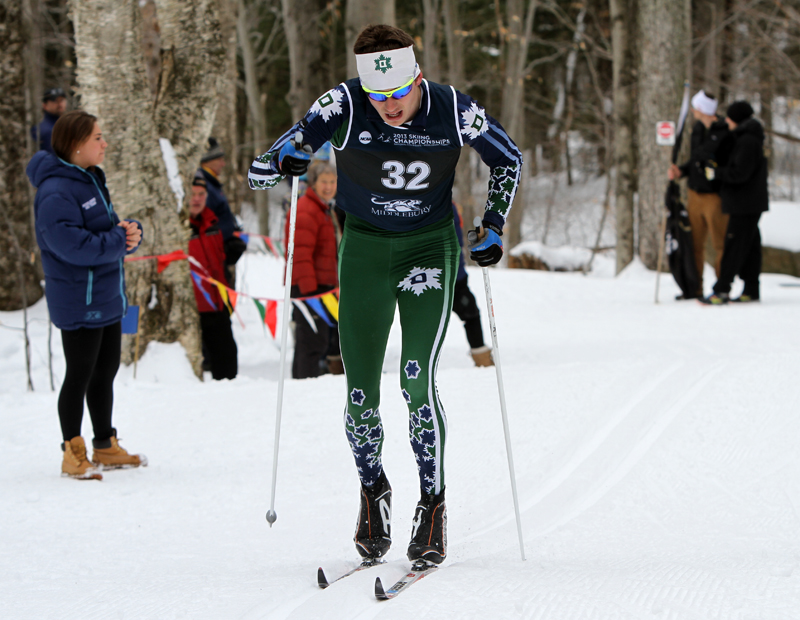
    With O’Brien out front, Newell was able to decide when to ramp up his own power output. He made his move on the first climb and O’Brien was unable to respond; nor was Reynolds, Bjornsen, Ødegård or Sinnott in line behind them. When Newell emerged from the woods and climbed the hill back into the stadium, he had an even bigger lead than he had expected.

    “I was able to choose my own line and was able to get my own track on the uphill, which is what I wanted to do,” Newell said. “I just put my head down and went, and I didn’t know I had such a big lead because I was hammering into the first part of the stadium. I looked back and I couldn’t see anybody. So I guess it worked out.”
    O’Brien expected the move when it came, but was to gassed to respond.

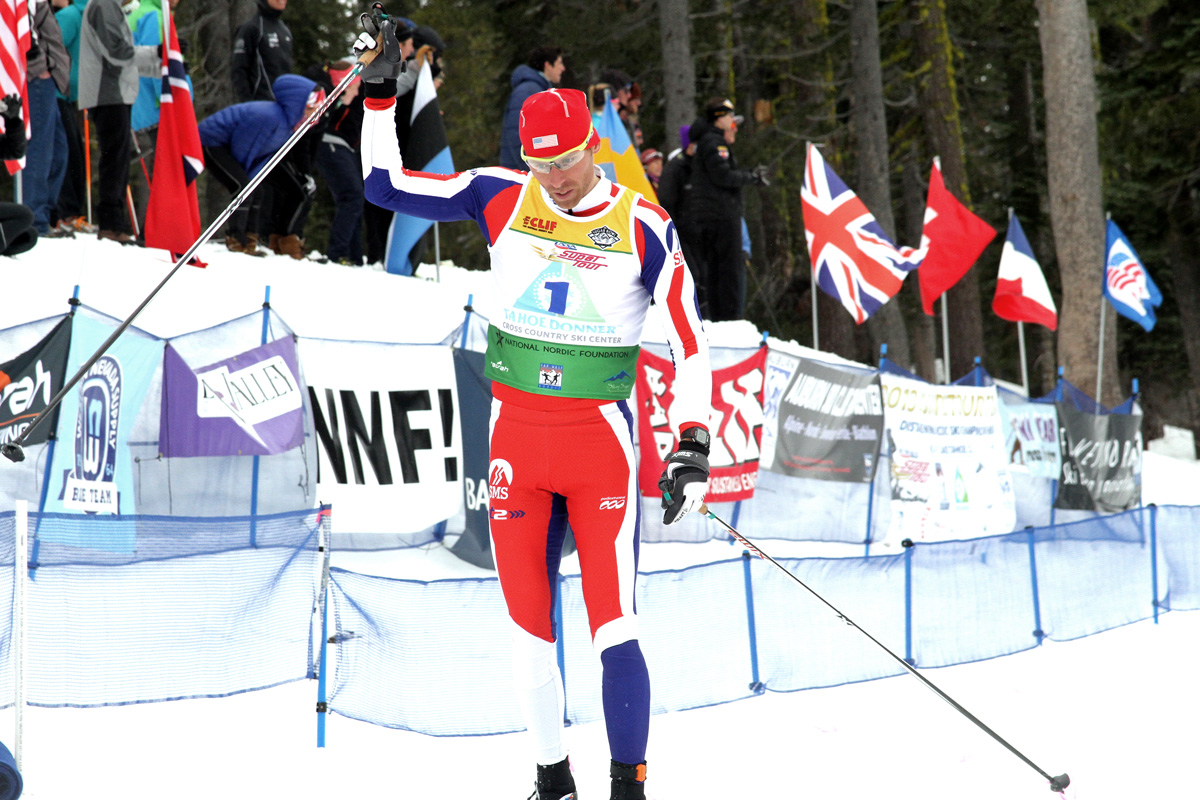
    Newell tiredly raising a triumphant arm across the finish line. Photo: Mark Nadell/MacBeth Graphics.
    Newell raising a triumphant but tired arm across the finish line. (Photo: Mark Nadell/MacBeth Graphics)

    “He opened up a little bit over the top and I just couldn’t quite close him,” O’Brien said. “I knew that’s how he’d been skiing the quarter and semis, so I knew he was going to go there and I expected it, I just couldn’t really match it.”
    O’Brien hung on long enough to hold onto second, and behind him Bjornsen passed Reynolds and Ødegård in the final straight to claw his way onto the podium. Reynolds skied across the line in fourth for his best result of the year, Ødegård held on to fifth and Sinnott took sixth.

    Finishing second to someone like Newell left O’Brien extremely pleased with the way the end of his season has been going.

    “It’s a really good feeling,” O’Brien said. “It’s been a tough winter and I haven’t really felt myself. So to come out here to altitude, where I normally struggle, and feel good on the last three races…I’m super happy with today.”

    Bjornsen, winner of the prologue and runner-up in the 15 k, was ecstatic with third. Slow skis left him far off the pace in fifth at the furthest point on the course, at which point he nearly gave up on the idea of a top-three. He had asked for more kick before the start of the A-final, and the extra wax slowed him down on the flats.

    “I really had to work on the double-pole section, and I actually got to the far end of the course and I was like, ‘I think my day is over,’” Bjornsen said. “But no, I started gaining back on the first hill and coming down into the next one I could see people were dying a little bit, and I saw third place up there and that really fired me up, so I just went for it.”

    Reynolds said he had nothing left in the finish stretch when Bjornsen caught him from behind.

    “I thought I closed pretty well on the uphill, and then just kind of died in the finish stretch,” Reynolds said. “Bjornsen blew by me.”

    Though Reynolds just missed out on the podium, fourth is “easily” his best result of the season.

    “I mean, it doesn’t really erase the 20-odd bad races I’ve had…but obviously it’s nice to feel a little more like yourself and ski a little faster,” he said. “I’d actually felt pretty good this week, so I was hoping to have a good race. And we had great skis and my body felt good.”

    Ødegård, the 2013 NCAA champion in the 10 k classic, repeated his result from a week ago at Canadian Nationals in taking fifth.

    Behind Ødegård, Sinnott conceded that sixth was as much as he could muster at the end of a sprint day. He delaminated a ski in his quarterfinal, and though he managed to advance second in the heat anyway, he had to scramble to find a good replacement for the next round.

    “I didn’t really notice it until we went up to rewax some top sauce, and was like, ‘Oh, this isn’t going to work,’” Sinnott said.

    He advanced as a lucky loser in his semifinal, and in the final he was “pretty exhausted.”

    “I was tired and just couldn’t keep up,” he said. “I kind of slipped a couple times on the climb and just blew my arms out and didn’t have much for the finish. But so it goes.”

    The bonus seconds available in the sprint were substantial. With only the hill climb left to go in the tour, Bjornsen now sits in the lead just over 40 seconds ahead of Newell and Freeman in the overall standings. The trio will be separated by this margin in the pursuit-style start of the hill climb on Monday, and whoever makes it to the top of Sugar Bowl will win SuperTour Finals.

    “I’m feeling pretty good,” Newell said. “I thought I’d be hurting more, but this late in the season your body’s so used to racing you don’t even really get sore any more, you’re just kind of tired. Hopefully the sun will come out tomorrow and we can hang out more and do more California-style things, because I’m kind of over winter at this point.”

     — Alex Matthews contributed reporting.

    Results | Photo gallery (via Mark Nadell/MacBeth Graphics)

    Other notes from the classic sprint:

    —   Kris Freeman (Maine Winter Sports Center/USST), who led the tour after winning the second stage on Friday, finished outside of qualifying in 39th. MWSC head coach Will Sweester took responsibility for the wrong ski call — he brought skate skis to Freeman at the last second after observing the success Newell and others had with double-poling and being convinced it would be the right call for Freeman, too.

    “We’ve had a steep learning curve, him and me, and all the skis he has,” Sweester said. “Today I sprinted up at the start with skate skis at the last minute and it was definitely the wrong call on my part. We had good classic skis but the snow made me nervous.”

    —   Torin Koos (Bridger Ski Foundation/Rossignol), in his first race of the tour after being ill for the prologue and 15 k, did not advance to the final after tangling with another competitor and falling in his semifinal. He qualified in sixth position on skate skis in the preliminary round, eight seconds behind Newell. A coach approached the jury with “grumblings” about Koos’ lane crossing technique in the qualifier, but no official protests were filed. According to Technical Delegate Al Serrano, three jury members reviewed the relevant video footage of the qualifier and determined that Koos did not skate when changing lanes at the point in question.

    —   Sylvan Ellefson (Ski & Snowboard Club Vail Team HomeGrown) collided with a spectator in his quarterfinal a few hundred meters from the finish, which resulted in his automatic advancement to the semifinals. The spectator stood in the tracks with her back turned when Ellefson, double-poling with his head down, clipped her with his shoulder and “from what I heard, I knocked her over,” he said.

    Ellefson was in fifth at the time of the collision and finished fifth in the quarter. As the fourth qualifier he wore the lowest bib number of his heat and only needed to finish third in order to advance to the next round. Unable to say whether the spectator prevented Ellefson from advancing, the jury decided to put him through anyways as a seventh man at no prompting from Ellefson or his coaches.

    “I don’t know if I was in striking distance or not,” Ellefson said. “It’s their fault I guess for not having the v-boards up.”

    Serrano said there is no rule in the FIS rulebook that covers interference with a bystander, and the jury decided to advance Ellefson as if it he had instead been the victim of obstruction from a competitor.

    “There’s a specific rule for what happens if someone is taken out and the person that takes them out is disqualified,” Serrano said. “If another competitor takes them out, then they advance. Basically [that’s] the way we ended up advancing Sylvan, as the seventh person in the heat, starting two meters back.”

  • Havlick Repeats as NCAA Champion, Leads Utah to Silver: ‘It’s Just Perfect’

    University of Utah senior Miles Havlick celebrates his second NCAA title in the 20 k mass start, 0.6 seconds ahead of Colorado's Rune Ødegård (l) in second and Utah teammate Einar Ulsund (r) in third on Saturday at the Rikert Nordic Center in Ripton, Vt. (Photo: Steve Fuller/flyingpointroad.com. All photo sales benefit NNF)
    University of Utah senior Miles Havlick celebrates his second NCAA title in the 20 k mass start, 0.6 seconds ahead of Colorado’s Rune Ødegård (l) in second and Utah teammate Einar Ulsund (r) in third on Saturday at the Rikert Nordic Center in Ripton, Vt. (Photo: Flyingpointroad.com/All photo sales benefit NNF)

    RIPTON, Vt. – Standing with a microphone in hand shortly after winning Saturday’s 20-kilometer freestyle mass start at the 2013 NCAA Skiing Championships, Miles Havlick smiled as he fielded playful questions from the announcer.

    Friends, fans and impressed spectators surrounded him at the Rikert Nordic Center, and as soon as he was done thanking the crowd and his University of Utah teammates, Havlick was bombarded with hugs.

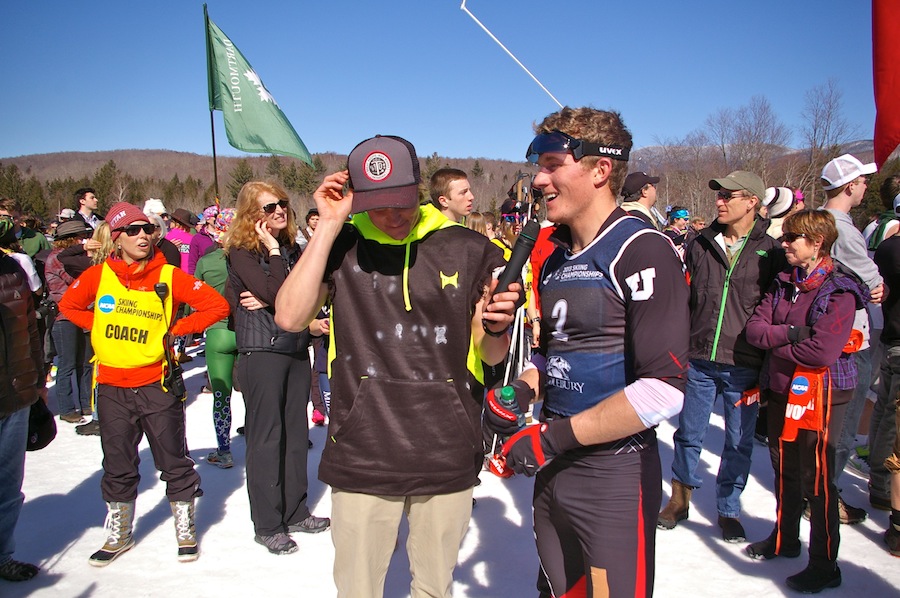
    Miles Havlick (r), the 2013 NCAA 20 k freestyle mass start champion, during a post-race interview with the NCAA announcer on Saturday at Rikert Nordic Center in Ripton, Vt.
    Miles Havlick (r), the 2013 NCAA 20 k freestyle mass start champion, during a post-race interview with the NCAA announcer on Saturday at Rikert Nordic Center in Ripton, Vt.

    With watery eyes, the two-time NCAA Champion was either emotional or simply tanked after four laps around Rikert’s deceivingly hard 5 k course – probably a little of both.

    The senior had just defended his 2012 national title in the 20-kilometer mass start, this time in a skate race. Skiing up into the stadium with six others less than half a kilometer before the finish, Havlick rose from a possible podium contender to a repeat champion, passing Dartmouth College’s Sam Tarling and catching Rune Ødegård of the University of Colorado, who won Thursday’s 10 k classic individual start.

    In edging Ødegård by six-tenths of a second in 50:13.4, Havlick led a trio of Utes in the top five. With Norwegian teammate Einar Ulsund in third (+1.0) and Swede Niklas Persson in fifth (+3.1), Utah captured second in the final team standings (43 points behind NCAA champion the University of Colorado) and bumped the University of Vermont (UVM) to third.

    “It’s hard to do it again,” Havlick said of his second-straight NCAA mass-start title. “Just an awesome team this fall, all new guys. I was the only one returning and you never know what to expect, but it was an unbelievable senior year.”

    At breakfast Saturday morning, he said they talked about goals – three in the top five – which they knew would be hard, but wanted to strive for nonetheless. Havlick set the tone early, leading Viktor Brännmark of the University of Alaska-Anchorage (UAA) and Tarling through the first downhill. Tarling took the lead up the toughest climb on the loop, while Brännmark, Dartmouth teammate Silas Talbot, Ulsund and Havlick stuck near the front of the large pack.

    Ødegård pushed the pace on the second lap while Ulsund, Brännmark, Tarling and Middlebury’s Ben Lustgarten chased, along with some 20 others. The group remained some 25 strong through the third lap, in which David Norris (Montana State University) made a move to the front. Halfway through the last time around, it dwindled to seven (with Ulsund, Soderman, Tarling, Ødegård, Talbot, Persson, and Lustgarten).

    Utah senior Miles Havlick on his way to winning Saturday's 20 k freestyle mass start for his second-straight NCAA Championships title. Havlick topped Colorado University sophomore Rune Odegard by 0.6 seconds for the victory at Rikert Nordic Center in Ripton, Vt. (Photo: Steve Fuller/flyingpointroad.com. All photo sales benefit NNF)
    Utah senior Miles Havlick on his way to winning Saturday’s 20 k freestyle mass start for his second-straight NCAA Championships title. Havlick topped University of Colorado sophomore Rune Ødegård by 0.6 seconds for the victory at Rikert Nordic Center in Ripton, Vt. (Photo: Flyingpointroad.com)

    Havlick had lost contact, but regained it on the final climbs. Following Tarling up the last ascent into the field before the finish, Havlick watched as Ødegård charged to the front. He responded, outsprinting the Norwegian in the final straightaway.

    “It was deafening skiing up that hill,” Havlick said of the crowd near the finish. “Ears just ringing really takes the pain away.

    “It’s unbelievable today,” he added. “You never know what’s gonna happen in a mass start. It’s just perfect.”

    Sharing the podium with his teammates after with their second-place showing, Utah’s skiing director Kevin Sweeney handed Havlick the large trophy to hoist over his head for photos.

    “This championship is one of the most, I would say, competitive that I’ve experienced and I’ve been collegiate coaching for a long time,” Sweeney said. “So for this to finish up the way it did, it’s a true highlight of my career and such a great group of guys. Everybody skied where they needed to. I’m ecstatic.”

    Even though CU and UVM were the favorites battling it out for first, Sweeney knew his skiers could get into the mix. He just wasn’t sure where they’d stack up against strong teams, including Dartmouth, he said.

    “You know they’re gonna be in it, just exactly where,” Sweeney said. “I was very happy to see the race unfold and see our three guys basically in the top 10. I felt good about that.”

    Last year’s 10 k freestyle individual start champion, Soderman placed fourth (+2.6). Mats Resaland of the University of New Mexico was fifth (+2.8), Tarling seventh (+5.2) and Lustgarten notched his second top 10 of the week in eighth (he was fourth on Thursday). Talbot placed ninth and Kyle Bratrud of Northern Michigan University was 10th.

    “It was a hard race because we were like 20 people pretty much the whole race,” Persson said. “You didn’t really know if you were skiing fast enough, if you were gonna end up top five or top 20, you never know.”

    According to Ulsund, the Utes were out for redemption after Thursday’s race, in which Havlick led the team in sixth, Ulsund was 13th and Persson was 15th.

    “We just decided that this should be our day,” Ulsund said.

    Anticipating an attack from UVM’s Scott Patterson, undefeated in eastern carnival freestyle races this season, Ulsund said it never came (Patterson ended up 26th). Meanwhile, the pace stayed mostly consistent in soft conditions on a 40-degree afternoon.

    “Usually we try to switch the lead, but today our tactic was mostly to stay in the pack and do something on the last lap,” Ulsund explained. “I’m a pretty slow sprinter so I was really worried, like, what’s going to happen now? Thankfully, the others were tired and the first three got the gap and that’s what set my podium spot today.”

    Just about as thrilled with his personal and team performance, CU sophomore Ødegård said the Buffs went into the 20 k thinking they were down to UVM. In reality, they were up by 16 points after Joanne Reid and Eliska Hajkova took first and second, respectively, in the preceding women’s 15 k.

    “We went into today chasing and that’s where we want to be,” he said. “When I saw during the race there were no Vermont skiers up in the lead, I knew we had the team victory. It was just awesome to ski around and do whatever I could to finish.”

    As for doing achieving the highest collegiate honors with his American team, Ødegård said, “We have an amazing group. Everyone’s enjoying being together. This week staying at the peaceful hotel, really team bonding all week, everyone had a good time I think and that’s most important.”

    2013 NCAA men's 20 k freestyle mass start podium (Photo: Steve Fuller/flyingpointroad.com)
    2013 NCAA men’s 20 k freestyle mass start podium. From left to right: Sam Tarling (Dartmouth/7th), Mats Resaland (UNM/6th), Erik Soderman (NMU/4th), Einar Ulsund (Utah/3rd), Miles Havlick (Utah/1st), Rune Odegaard (CU/2nd), Niklas Persson (Utah/5th), Ben Lustgarten (Middlebury/8th). (Photo: Flyingpointroad.com)

    Men’s results | Team results | Photos

    See also: Reid, Hajkova Land Top Two to Lift CU to NCAA Title

    For more photos from the 2013 NCAA Skiing Championships, visit Flying Point Road Photography. All proceeds go to the National Nordic Foundation (NNF).