From the FasterSkier archive — posts syndicated from athletes’ and coaches’ own blogs between 2004 and 2012, kept online as published. Current coverage is at fasterskier.com.

Tag: running race

  • An Editor’s Report of the Bridger Ridge Run

    An Editor’s Report of the Bridger Ridge Run

    The course of the Bridger Ridge Run looms ahead from the top of Sacajawea Peak in Bozeman, Mont. The Ridge Run is a 20-mile race that traverses the Bridger Range. The race attracts runners from across the country and many from the nordic ski community participate each year.
    The course of the Bridger Ridge Run looms ahead from the top of Sacajawea Peak in Bozeman, Mont. The Ridge Run is a 20-mile race that traverses the Bridger Range, finishing at the base of Baldy Peak (seen in the far distance.) The race attracts runners from across the country and many from the nordic ski community participate each year.

    The Bridger Ridge Run has been called one of the most rugged running races in the U.S. It was named one of America’s top trail running races by Runner’s World, claiming the title of “Most Raw Exposure” in 2012. In 2013 Outside Magazine included the race as one of its top 10 trail runs in its bucket list.

    It’s no secret that the Bozeman, Mont. race is a challenge. The course begins at the base of Sacajawea Peak and continues along the ridge of the Bridger Range for 20 miles until runners descend and finish at the “College M” that overlooks town. Over the course of the run, racers climb 6,800 ft. and face 9,500 ft. of steep decent. For much of the course, the trail is barely distinguishable and racers must maneuver their way through the sharp and unforgiving rocks.

    The only thing more difficult than finishing the race is entering. The run allows roughly 300 competitors to register each year. Guaranteed spots are reserved for those who have either previously won the race or have participated at least 10 times in the past. Everyone else must be chosen by lottery.

    The race was founded by Bozeman local Ed Anacker in 1985 in an effort to bring attention to the acclaimed trail running in the Montana town. Since its inaugural race, the Ridge Run has become a Bozeman staple and draws runners from across the country.

    The Bridger Ridge Run is an attraction for the many nordic skiers in the area as well, and many former and current ski racers from the nordic community participate every year.
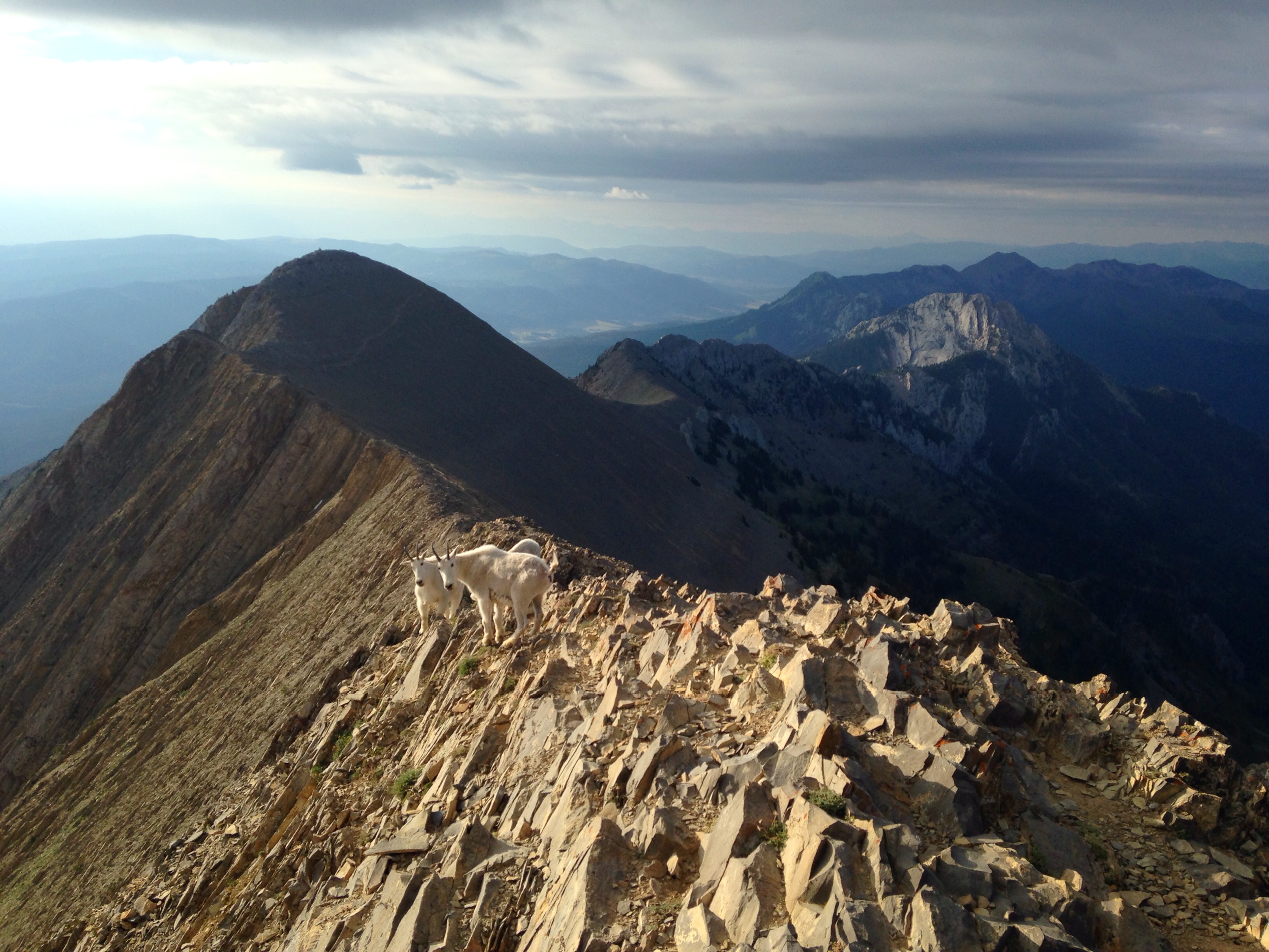
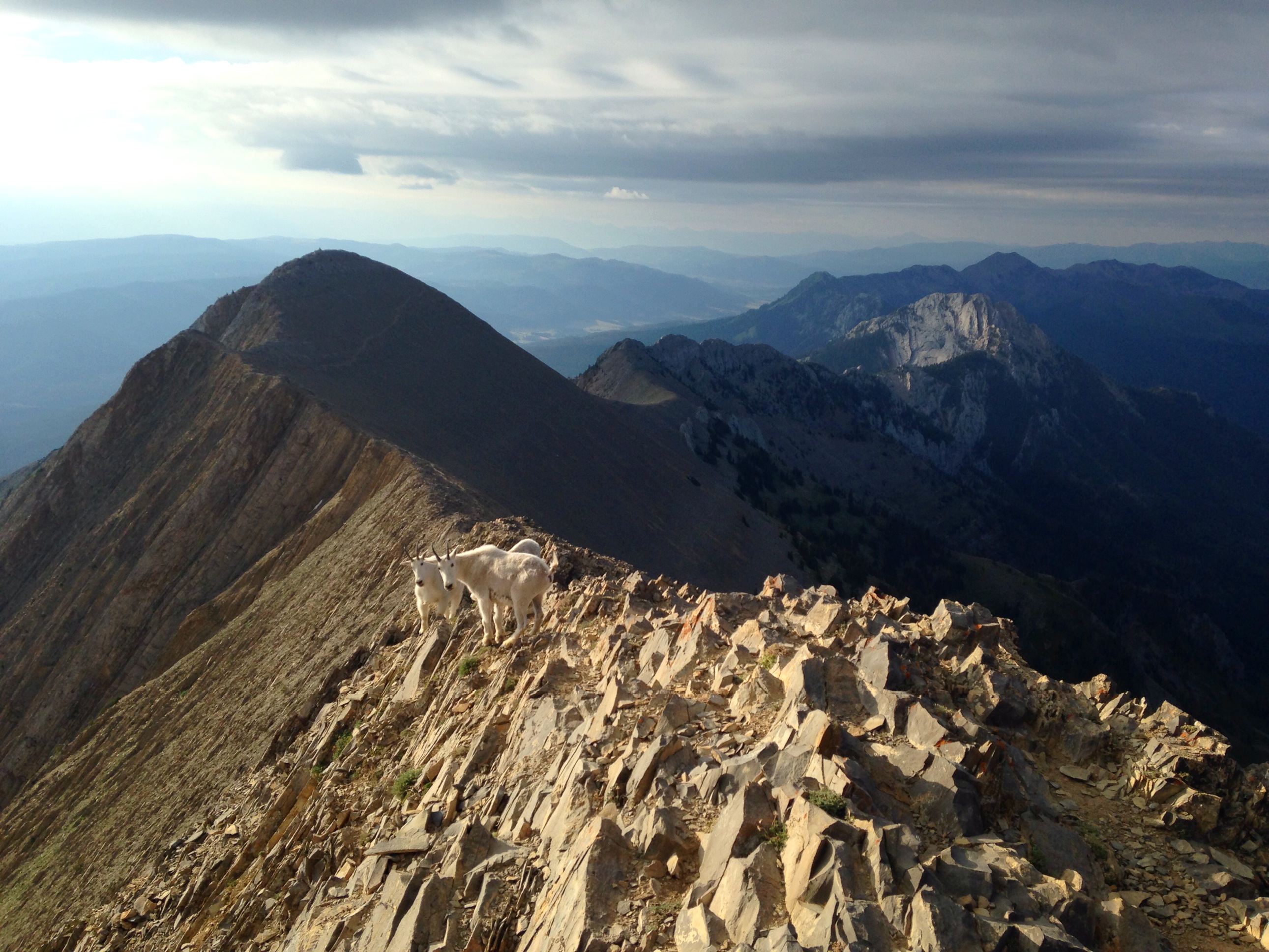
    Mountain goats are a common site during the Bridger Ridge Run.
    Mountain goats often act as race spectators during the Bridger Ridge Run.

    This past May, I made the fateful decision to enter the Bridger Ridge Run. Having ended my ski racing career several years before, I missed working towards a specific athletic goal and the Ridge Run sounded like the perfect race to get me on a regular training plan over the summer.

    When I was chosen as one of the entrants in June, however, the training did not follow. Due to an extremely painful IT band related knee issue, I was stuck biking most of the summer and a month before the race, it seemed as if I wouldn’t be lining up for the race on August 9.

    However, after several weeks of physical therapy and a few practice runs just weeks before the race I deemed myself “ready” for the to run. At this point my main goal was only to finish.

    Come race morning participants wound their way up Bridger Canyon to the start of the race. With the sun just beginning to rise, moods of the racers and their chauffeurs were incredibly high considering the early start.

    At 7:00 am the first wave of racers, including University of Vermont’s Cole Morgan and 2002 Olympic biathlete and former Montana State University assistant nordic coach Dan Campbell, took off.

    As part of the second wave, I began five minutes later.

    From the very start racers face an unforgiving climb. As we made our way from the base of Sacajawea Peak to it’s summit, which sits at 9,839 feet, I instantly regretted starting near the front of the second wave. However, the adrenaline and cheering crowds made the pace manageable.

    Halfway up the peak we met more encouragement in the form of a lone bagpiper. Every year he and his pipes make the journey to provide racers a distraction with his belting tunes that echo on the mountain cliffs.

    From the top of Sacajawea, the bagpiper’s tune was no longer audible but a new sight had caught our attention. The remaining 18 miles of the course appeared before us, both stunning and daunting at the same time.

    Heading down from the summit into our inevitable “pain cave,” we faced multiple descents where I felt a fall was imminent. Fortunately I never tumbled off the trail, but every so often I’d hear someone go down around me or pass a fellow racer with bloodied knees and elbows.
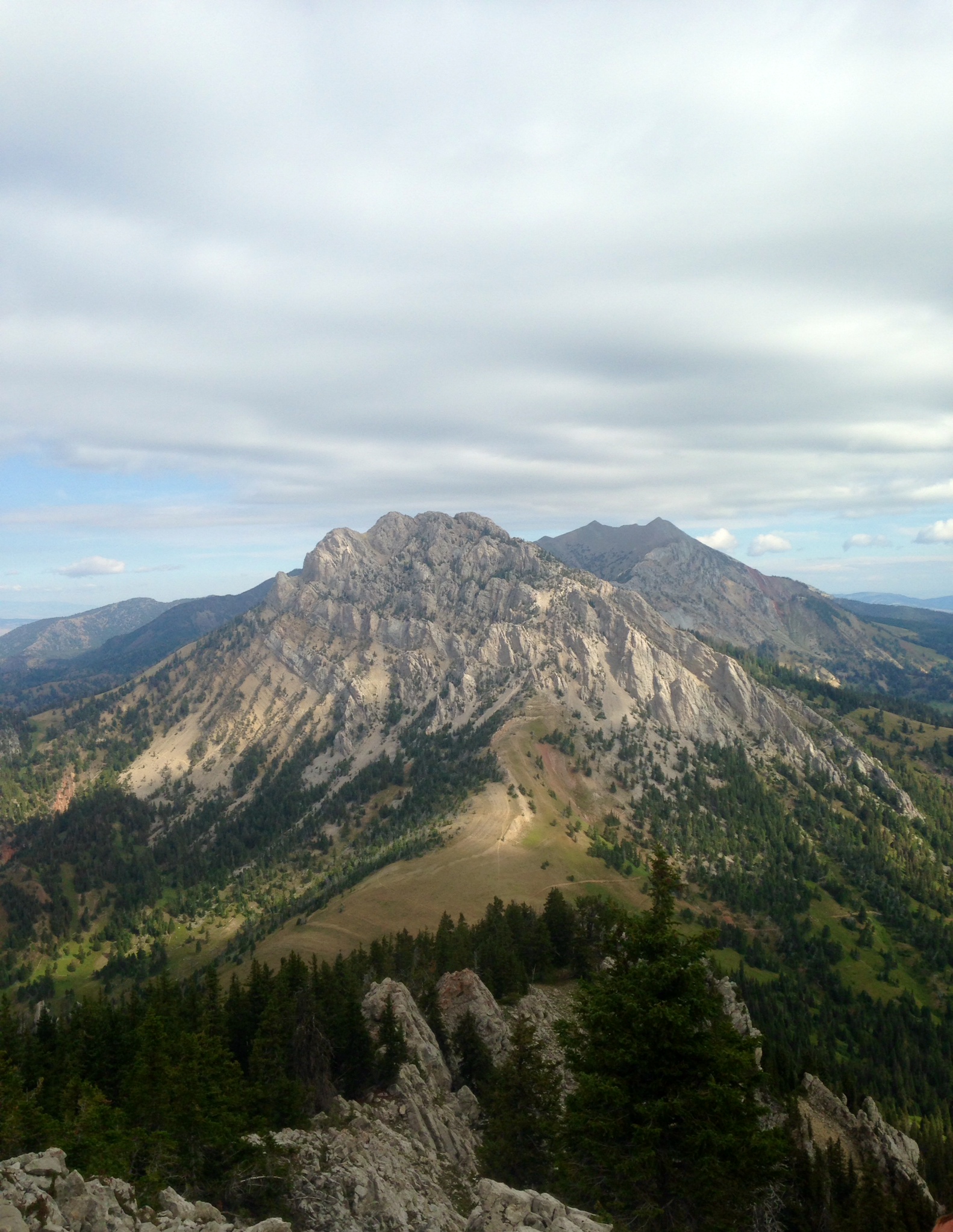
    Looking back at Ross Peak with Sacajawea Peak (the start of the Bridger Ridge Run) far in the distance.
    Looking back at Ross Peak with Sacajawea Peak (the start of the Bridger Ridge Run) far in the distance.

    As we made our way along the rolling Bridger Range the trail became less apparent, the rocks more jagged, and fatigue started to set in. Fortunately, I was stocked with Shot Bloks and HoneyStinger waffles that kept me well fed and energized. Former University of Denver skier and past participant of the Ridge Run, Kate Dolan had advised me to eat every 20 minutes, so I set the timer on my watch and did my best to pop in a sugary Blok every time the alarm went off. After two-and-a-half hours had passed I was thankful for her advice.

    Passing the halfway point at the top of the local ski area, Bridger Bowl, my legs were starting to feel a bit shaky and my energy started to wane. There were two major climbs and a steep, unforgiving 5-mile decent between me and the finish.

    By the time I reached the final aid station at the top of Baldy Peak, volunteers, friends, and other spectators gave me words of encouragement. While I wanted to believe their statements that the race was almost over and that it was an “easy” downhill from there, I knew my legs were shot and that the nearly vertical decent for the next five miles was going to be painful.

    Even armed with my skepticism of the spectators’ encouragement, I was not prepared for the difficultly of the decent. The mixture of dust, loose rocks, and jello-like legs kept me at a turtle’s pace. Each step made it feel as if knives were repeatedly stabbing my legs. At this point, the lack of preparation was starting to haunt me.

    Finally I reached the finish to find a cheering crowd. With the last bit of energy I could muster, I crossed the finish line, a grimace-like smile plastered to my face, with a time of 5:04:49.

    I later found that Peder Andersen had garnered the best time of the day, finishing the race with a time 3:28:41. Campbell earned sixth, with a time of 3:56:02 and UVM’s Morgan finished eighth, with a time of 3:57:10.

    For the women, ultra-marathon veteran Nikki Kimball, who earned multiple NCAA All-American distinctions during her time at Williams College, was the top finisher with a time of 4:02:47. Bridger Ski Foundation coach, Emily Allison finished fifth with a time of 4:29:08. Former and current Bates College skiers, Samantha Forrest and Maddy Ekey finished with times of 5:21:55 and 6:26:51.

    After ample time spent relaxing in the finish line hot tubs filled with ice, I already began to forget the pain I had experienced only minutes before. I even began talking with other finishers about training for next year’s race.

    That’s the magic of endurance sports: one minute it feels as if mental and physical collapse is imminent; the next you’re ready to get out and conquer the next big adventure.
    2014 Bridger Ridge Run Results

  • Despite Back Injury, Newell Recovers to Win Bozeman Running Race

    Despite Back Injury, Newell Recovers to Win Bozeman Running Race

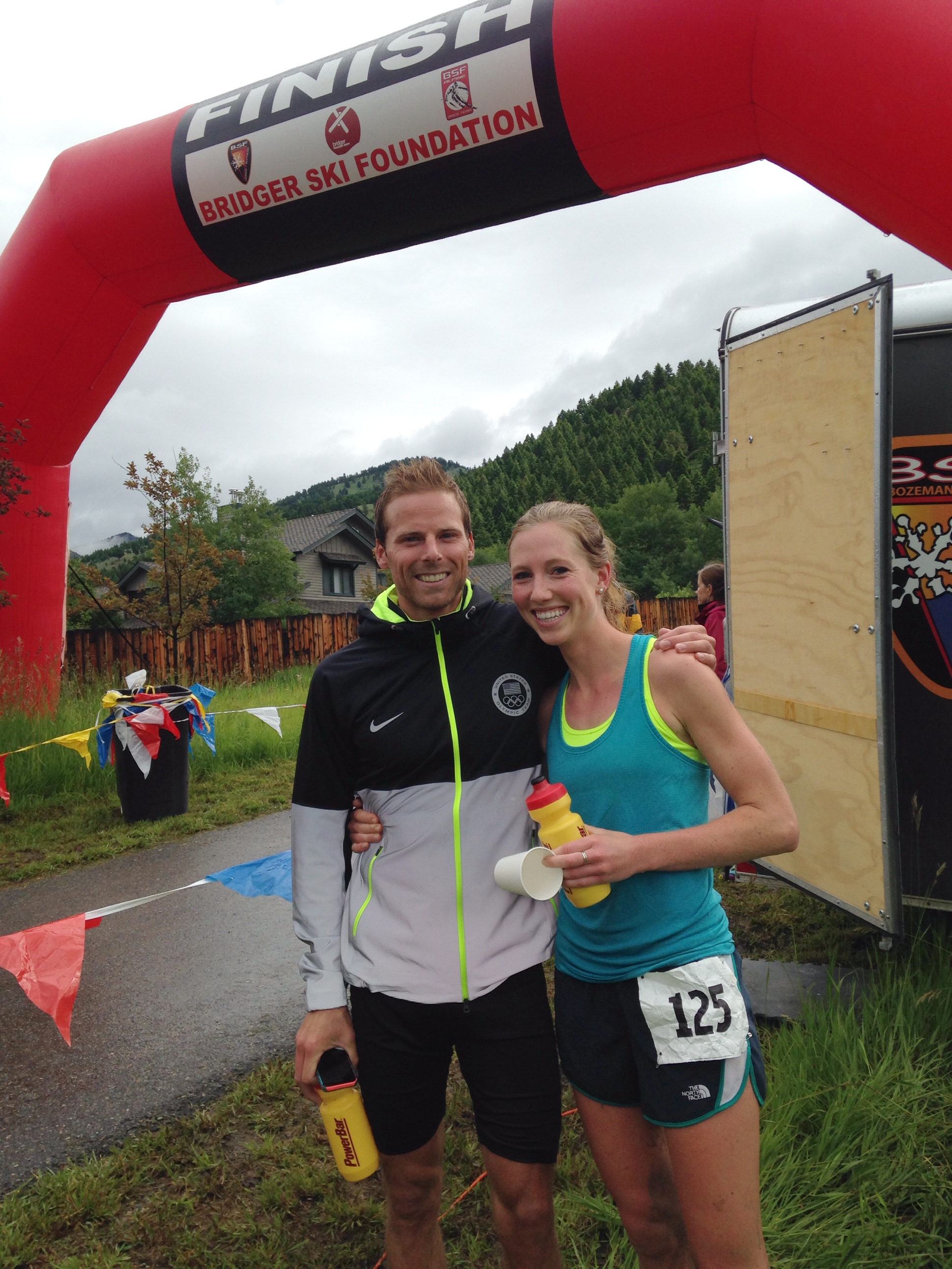
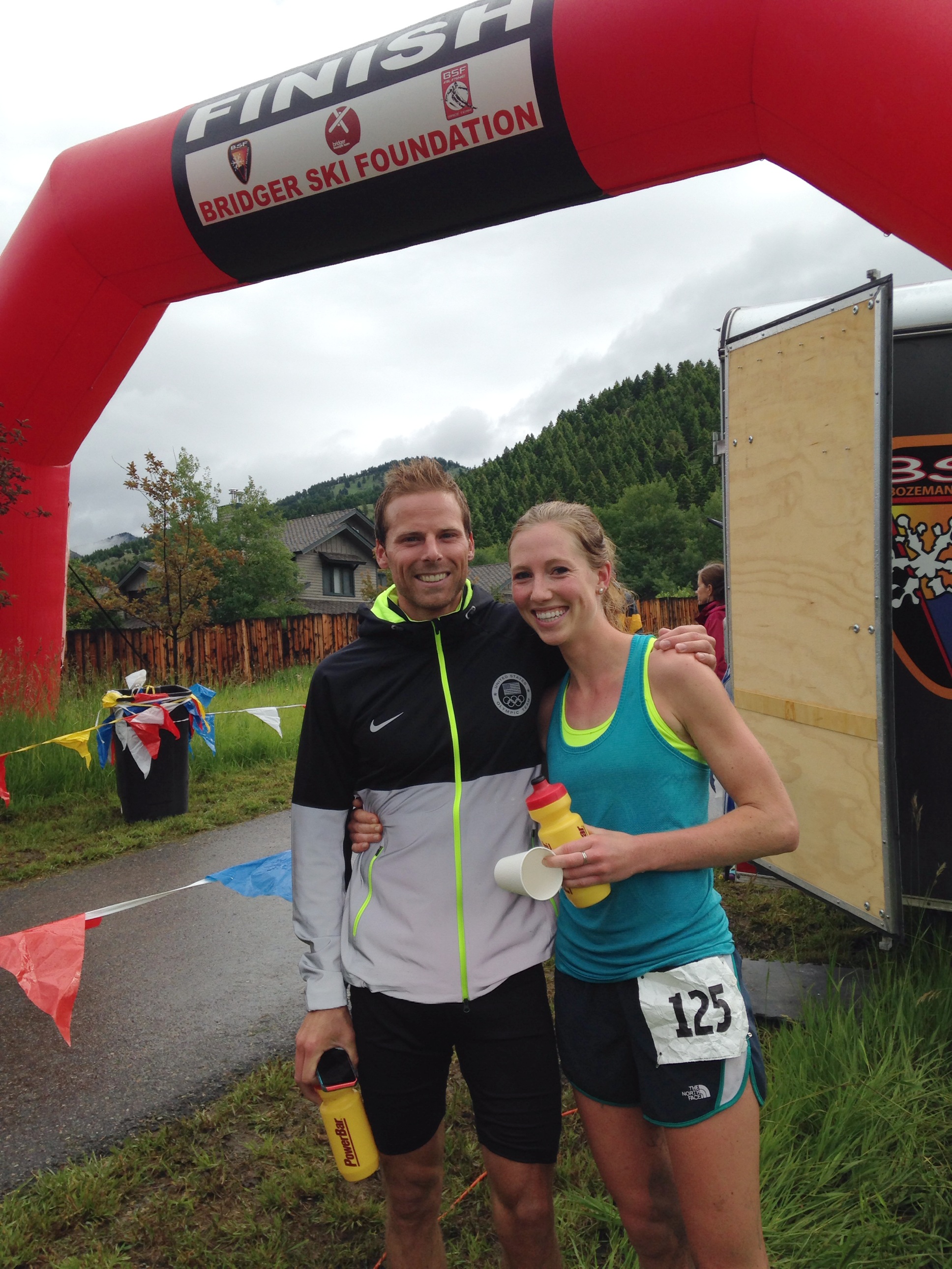
    Andy Newell and Erika Flowers, both of the Stratton Mountain T2 Elite Team, pose after both won the Jim Bridger Trail Run in Bozeman, Mont. for their respective genders.
    Andy Newell and Erika Flowers, both of the Stratton Mountain T2 Elite Team, pose after both won the Jim Bridger Trail Run in Bozeman, Mont. for their respective genders. The two skiers were in Bozeman for the wedding of Flowers’ father.

    As Andy Newell flew down the drenched foothills of Bozeman, Mont., during the Jim Bridger Trail Run last Saturday, there was no guessing that the U.S. Ski Team member had been unable to run only a few days before.

    Having thrown out his back two weeks earlier while doing power-cleans, the 29 year old had neither run nor weight lifted since the incident.

    With a strong start to this year’s training, including a trip to Oregon for the U.S. Ski Team’s Bend training camp, the injury was disappointing.

    “It was a bummer,” Newell said.

    Despite his injury, he came to Montana with teammate and former Bozeman resident Erika Flowers for the wedding of her father, Pat. Upon their arrival from Vermont, Pat brought Newell to a local physical therapy practice where he received care for his back.

    After some much-needed adjustments, Newell was quickly healing, and by the time the Jim Bridger Trail Run rolled around on Saturday, he decided that his back was ready for the challenge.

    It appeared that the combination of the physical therapy and the crisp mountain air served Newell well as he crossed the finish line of the 10-mile race first in 1:20:03. Former biathlete, Dan Campbell finished the race roughly a minute and a half behind him in second.

    Flowers also seemed to benefit from her trip home, finishing first for the women with a time of 1:30:52, almost six minutes ahead of the next competitor. Having competed in the race as a junior with the Bridger Ski Foundation, she was happy to find success at home especially on the day of her father’s wedding.

    According to Newell, the race, which boasts over 2,000 feet of elevation gain, was an excellent way for both him and Flowers to train during an otherwise extremely busy trip to Bozeman.

    “We’re here in town for the wedding, but we need to train too,” Newell said. “Doing a running race is a lot more fun than doing intervals. This was a great chance to say hi to the ski community here.”

    After the race Newell and Flowers rushed home to prepare for the wedding and its numerous activities that took place later that the day. Newell and Flowers were later recognized for their efforts in the run by the race-organizer during the wedding reception.

    Newell and Flowers will continue their summer training in Alaska at the U.S. Ski Team’s on-snow training camp in July.

  • Spray Drag Running Race Returns to Canmore

    Spray Drag Running Race Returns to Canmore

    2ND ANNUAL SPRAY DRAG RUNNING RACE
    October 20th, 2012
    Men – 7.5km

    Women – 5km

    Come challenge World Champion Devon Kershaw along with the entire Alberta World Cup Academy in a running race up the Spray Lakes road! All proceeds go to helping support the team for their upcoming season…

    According to AWCA coach and race organizer Stefan Kuhn, “It’s basically all up hill … Starts on the river and we run all the way up then past the nordic center and up to the Spray dam, which looks over Canmore.”


    Race Information:

    • Entry Fee $35.00 – registration on Zone4.ca, deadline is October 18th, 2011
    • Bib pick up Friday October 19th between 2 – 6pm at Ultimate Fit Center on Main Street

    Last minute pick up can be done at Bill Warren Training Centre between 7:45 – 8:15am on race morning

    8:15am briefing at cross country ski stadium at the Canmore Nordic Centre

    A van will be at the Nordic Centre parking lot and at each starting point for shuttling clothing to the finish line. Shuttling from the finish line to the Nordic Centre will be available.

    There will be 3 Vans to shuttle people down from race finish to Nordic center parking lot.

    Awards/snacks/prizes at BWTC – TBD room 12-2pm


    Start Times:

    • Women and Junior Boys/Girls 17 and Under – 9:30am – 5km – Rundle view Entrance. 
    • Open M 18+ – 9:40am – 7.5km – Green gate about 400meters from power plant spill way.

    Finish at the top of Spray Road by the dam for both men and women


    Course Records:

    • Graham Nishikawa – 29:23
    • Madeleine Williams – 25:41


    Course maps: Men | Women | Overall Course Layout


    Lactate Challenge

    Lactate: During power exercises such as sprinting, when the rate of demand for energy is high, lactate is produced faster than the ability of the tissues to remove it, so lactate concentration begins to rise.

    Think you have what it takes to have the highest lactate? $50 will enter you in the 50/50 draw which will measure your lactate at the finish line.  The harder your push, the better your chances!

    50% of entry goes to AWCA and 50% goes to the winner. Separate draws for men and women. Registration for Lactate Challenge on Zone4.

    Hope to see you out!