From the FasterSkier archive — posts syndicated from athletes’ and coaches’ own blogs between 2004 and 2012, kept online as published. Current coverage is at fasterskier.com.
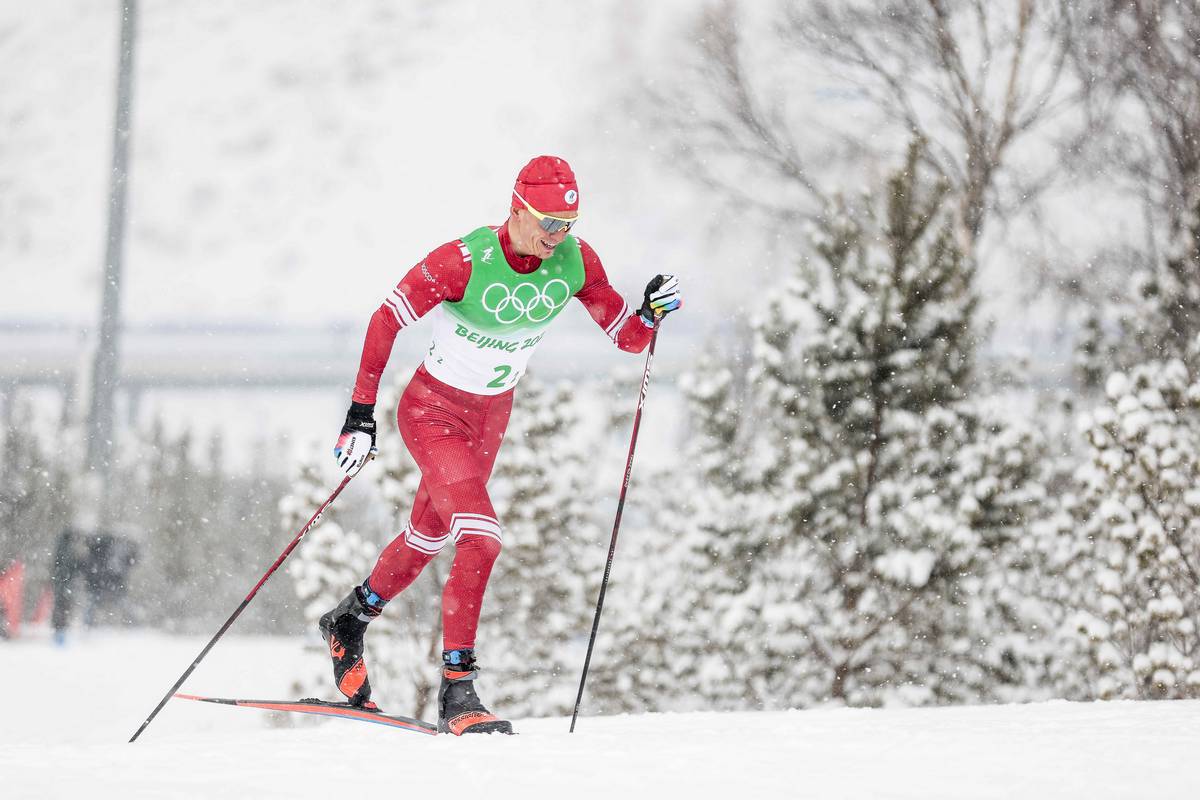
Alexander Bolshunov helps the ROC to a gold medal in the 4 x 10 k relay during the 2022 Olympic Winter Games. (Photo: NordicFocus)
Alexander Bolshunov, the Russian skier who is the odds on favorite to win Saturday’s 50-kilometer freestyle marathon at the Beijing Olympics, may have more on his mind than a momentous ski race: A potential Russian invasion of Ukraine will likely pass near to his childhood home in the rural village of Podyvot’e, in Russia’s Bryansk region.
Bolshunov grew up in Podyvot’e where his father taught him to ski on a pair of green wooden Malyshokas on trails he built by hand in the fields and forests near their home. “I don’t remember my childhood without skis,” Bolshunov has said in an interview.
When Bolshunov was a kid he could travel by ski or otherwise into Ukraine, whose border is only a couple of kilometers from town. That changed in 2014 when Russian forces and Russian backed separatists invaded the Crimea and Donbas regions of Ukraine. Since 2018, Russian men between the ages of sixteen and sixty are banned from entering Ukraine.
Now, with tensions rising as the Russian military surrounds Ukraine, some analysts have pointed to a potential invasion route of Ukraine that would take Russian forces close to Bolshunov’s family home.
A major arterial highway runs through Troebortnoe. On the Russian side of the border it is called the M3 and leads to Moscow. On the Ukrainian side it is the M2 and runs close to Kiev. A Russian invasion would likely need that highway to move forces quickly toward the Ukrainian capital.
The border crossing at Troebortnoe is only about 14 miles from Podyvot’e, separated by fields and a forest that stretches near to the doorstep of Bolshunov’s family home. “Just 500 meters from the house begins a large forest,” said Bolshunov, “Where there are those [loops] that I always run when I go there – 10 k, 15 k.”
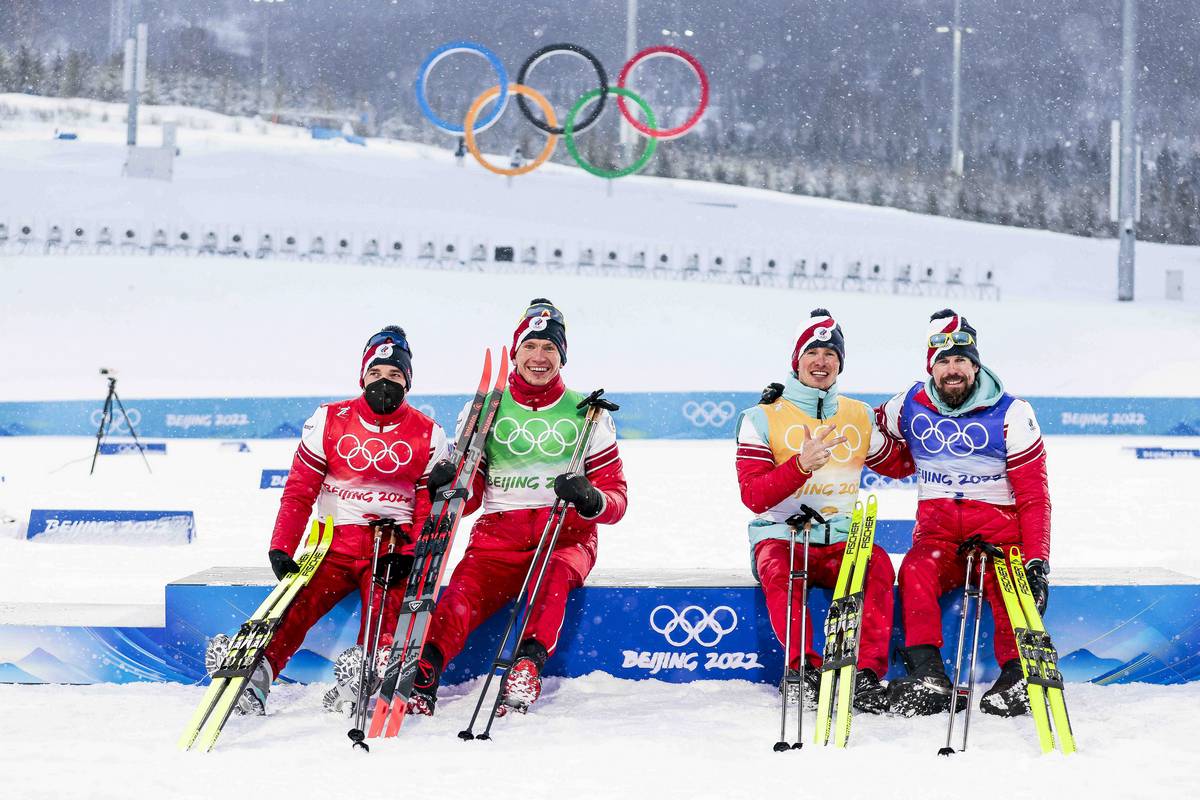
The Olympic gold medal relay team: Alexey Chervotkin, Alexander Bolshunov, Denis Spitsov, and Sergey Ustiugov (l-r) (Photo: NordicFocus)
For Bolshunov, this landscape of birch and pine represents the natural idyllics of his youth. “I love to go to the forest picking mushrooms, [and] also fishing if I have enough time.” Bolshunov said in an interview with FIS.
“Childhood memories of the village—strawberries, for which we often went,” recounted Bolshunov. “Sometimes, 10 liters were collected. Another [were] blueberries—it took six hours to collect a bucket of 5-6 liters. Everything grew near our house.”
For the older residents of Podyvot’e, the forest also carries somber memories: A quiet memorial remembers the 182 villagers that were massacred by the Nazis as they hid in the forest.
Whether conflict will arise again in the area remains to be seen. Should Russian President Vladimir Putin decide to invade this weekend, it would mark the second time he has done so in conjunction with the men’s Olympic 50 k race.
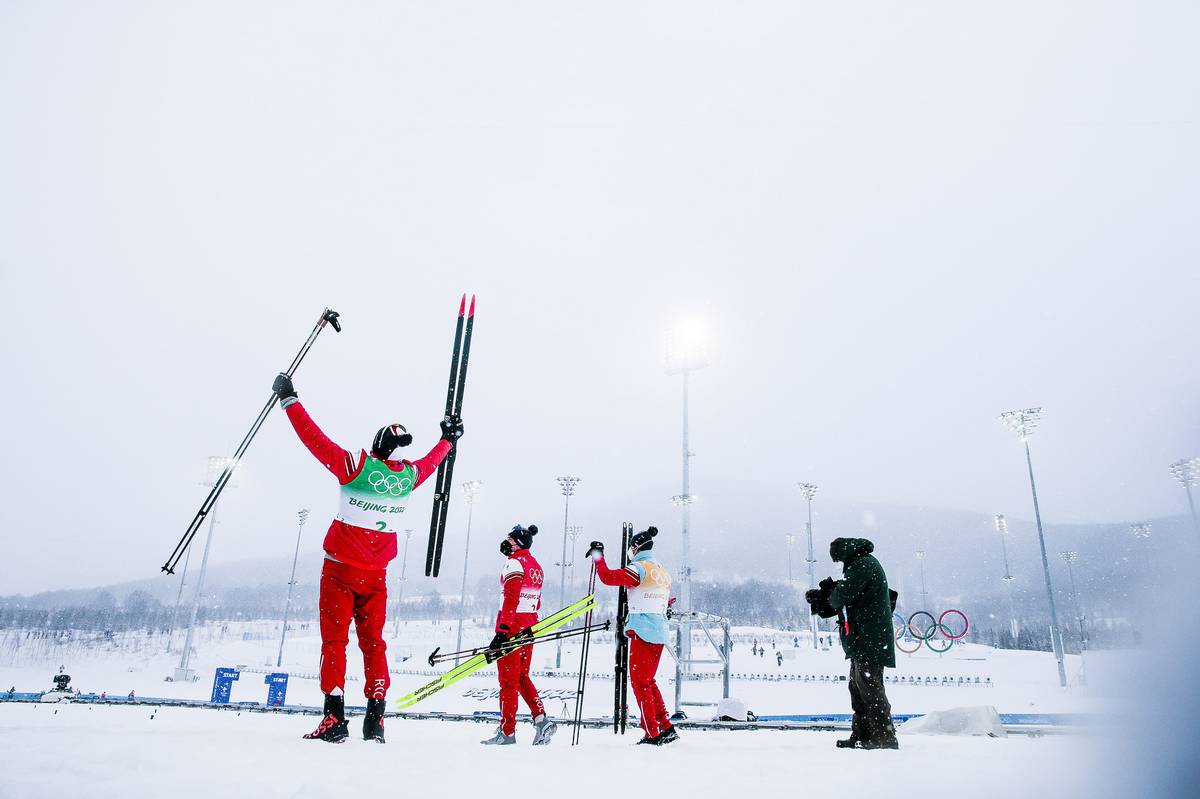
Alexander Bolshunov (ROC) celebrates a gold medal performance as his teammate, Sergey Ustiugov, races the final meters of the 4 x 10 k relay. (Photo: NordicFocus)
In 2014, the night before the final cross country race at the Sochi Olympics—the men’s 50k—Putin held an all night meeting at the Kremlin with his security and defense leaders to discuss the annexation of Crimea.
“We finished about seven in the morning.” Putin told a Russian TV documentary as reported by the BBC. “When we were parting, I told all my colleagues, ‘We are forced to begin the work to bring Crimea back into Russia’.”
Four hours later, the men’s 50 k race kicked off in Sochi and the Russian men notoriously swept the event. Putin would fly back in time for the closing ceremonies where the three skiers received their medals before a packed stadium.
The correlation between the Olympics and Russian military adventures is quite direct. At the Sochi Olympics, the Russian medal haul helped boost Putin’s public approval numbers to record highs, and in his all night war room meeting that February, Putin carefully considered secret polling that showed favor to the annexation issue.
In the Netflix documentary Icarus, former RUSADA head Grigory Rodchenkov who helped to orchestrate the 2014 Russian state sponsored doping program, said of the post Olympic invasion of Crimea, “I felt my personal guilt for such [an] event. [If] Russia had [won] less medals, Putin would not be [so] aggressive.”
Alexander Bolshunov (ROC) celebrates victory in the 30 k skiathlon, the first event of the 2022 Olympic Winter Games. (Photo: NordicFocus)
In terms of medal count, the Russian Olympic Committee (ROC) heads into the final weekend in second place. Their medal haul has been bolstered by the cross country ski team which has won a third of all ROC medals. Of those, four have involved Alexander Bolshunov, who at 25 years old has already become the winningest cross country skier in Russian history. He has won a medal in every Olympic race he has entered and is poised to deliver again in the men’s 50 k on Saturday. For his success, he has been nominated by the State Duma to carry the ROC flag at the closing ceremonies.
For Bolshunov’s father in Podyvot’e, the results of his son have meant more than any economic advantage that his career has provided, and Bolshunov Sr. still prepares his ski trails in the hope that his son might make an unscheduled return. “Neighbors think I’m crazy,” Bolshunov Sr. has said. “But my son has such results. This is worth living for. Money is not manna from heaven, I never needed it.”
Bolshunov Sr. has no plans to leave Podyvot’e. “You can’t kick me out of there with a stick,” Bolshunov’s father said in 2018. “As we lived, so we live. We don’t get into politics. Ukraine is nearby, but no one seems to be coming to us from there. Everything is fine.”
Through no fault of Bolshunov’s own, a possible gold medal in the Olympic 50k could help burgeon feelings of confident nationalism in Russia and put his hometown on the frontlines of what could be the largest European war this century. When it comes to the men’s Olympic 50k race, the stakes are often much greater than gold.
ZHANGJIAKOU, CHN — International Ski Federation officials say they’re exploring backup options for season-ending races in Russia amid fears of a war between that country and Ukraine, though they’re still planning on holding the event as scheduled next month unless circumstances change.
The final races of the top-level World Cup are scheduled to be held in Tyumen, Russia, in an oil-rich area in Siberia — about 1,000 miles away from the border with Ukraine, where American officials are warning that Russia could invade.
In an interview at the Beijing Olympic cross-country ski venue, an official from the federation, known as FIS, said that if conditions remain unchanged, the World Cup finals will happen as planned.
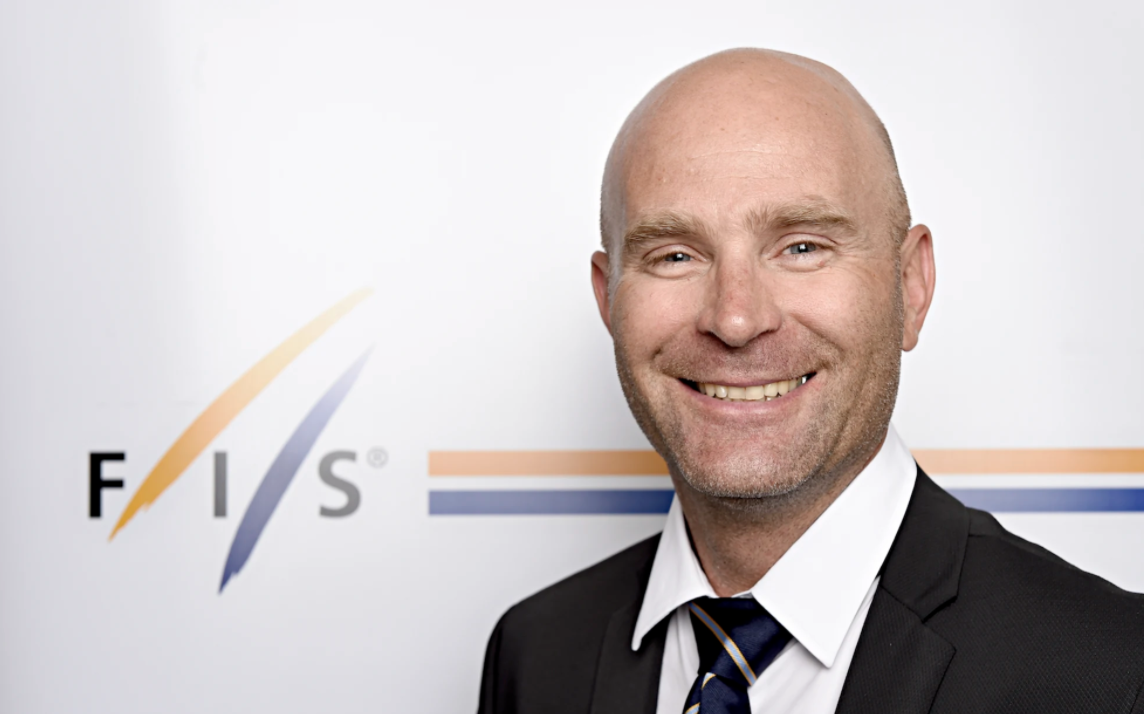
FIS cross country race Director, Pierre Mignerey. (Photo: FIS-Ski.com)
“But of course, we need to see what will go on in the upcoming days,” said Pierre Mignerey, FIS’s cross-country race director. “We will start to prepare some backup solutions, in case.”
Mignerey said he’s had conversations in the past few days with organizers in Sweden and Norway, which could be convenient backups since the World Cup circuit will be racing in Scandinavia before it’s scheduled to head to Russia. The coronavirus pandemic also forced cancelations of races in Slovenia and France last month, so those countries could also be potential replacements, Mignerey said.
The U.S. Ski Team is still planning on attending the races in Russia and is excited to see the new venue in Tyumen, said Head Coach Matt Whitcomb. But he also said the team is monitoring the situation.
“There’s never any guarantee, particularly with the political climate, currently, but also with COVID,” Whitcomb said. “We’re only going to go places we feel like will be safe.”
Officials working with Tyumen’s race organizing committee didn’t respond to a request for comment Tuesday.
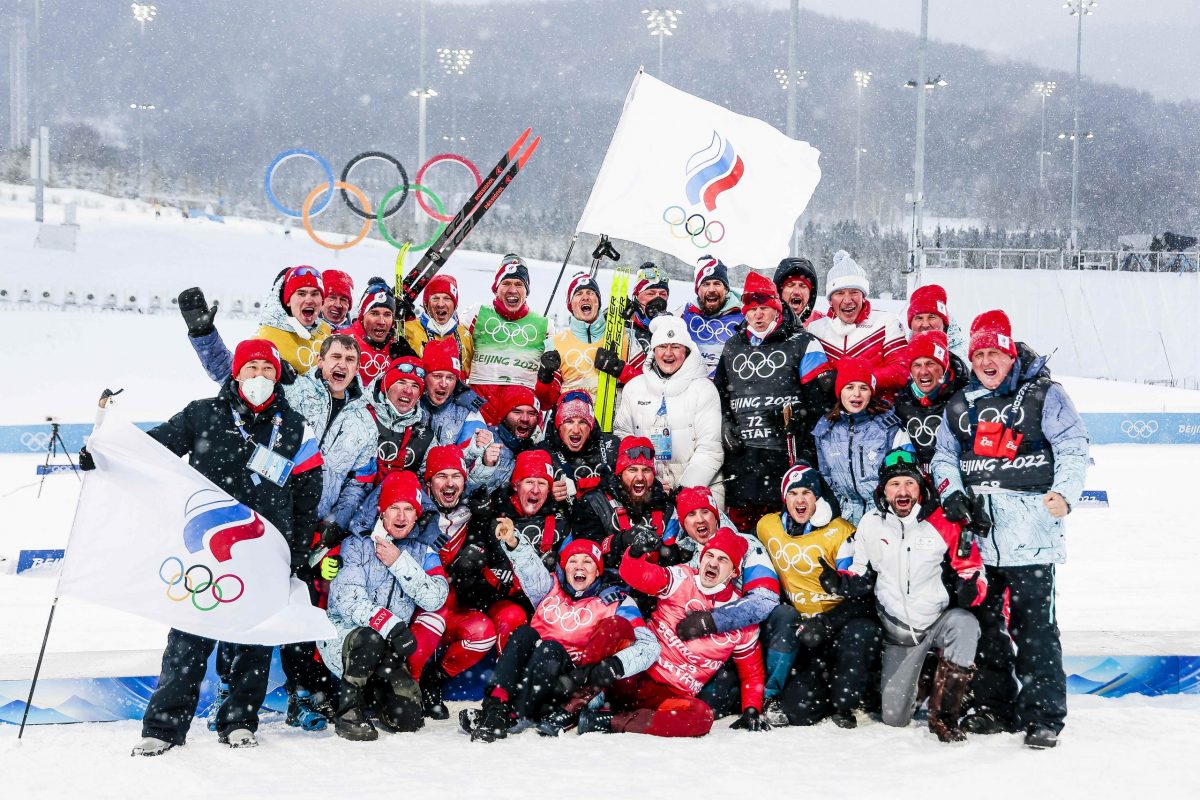
The ROC contingent celebrates their gold medal performance in the men’s 4 x 10 k relay. (Photo: NordicFocus)
Russia is one of the world’s leading nations in cross-country skiing, with its athletes winning gold medals in both the men’s and women’s distance relay events at the Olympics.
The World Cup finals are the first events set to held in Russia in several years, a consequence of doping-related sanctions.
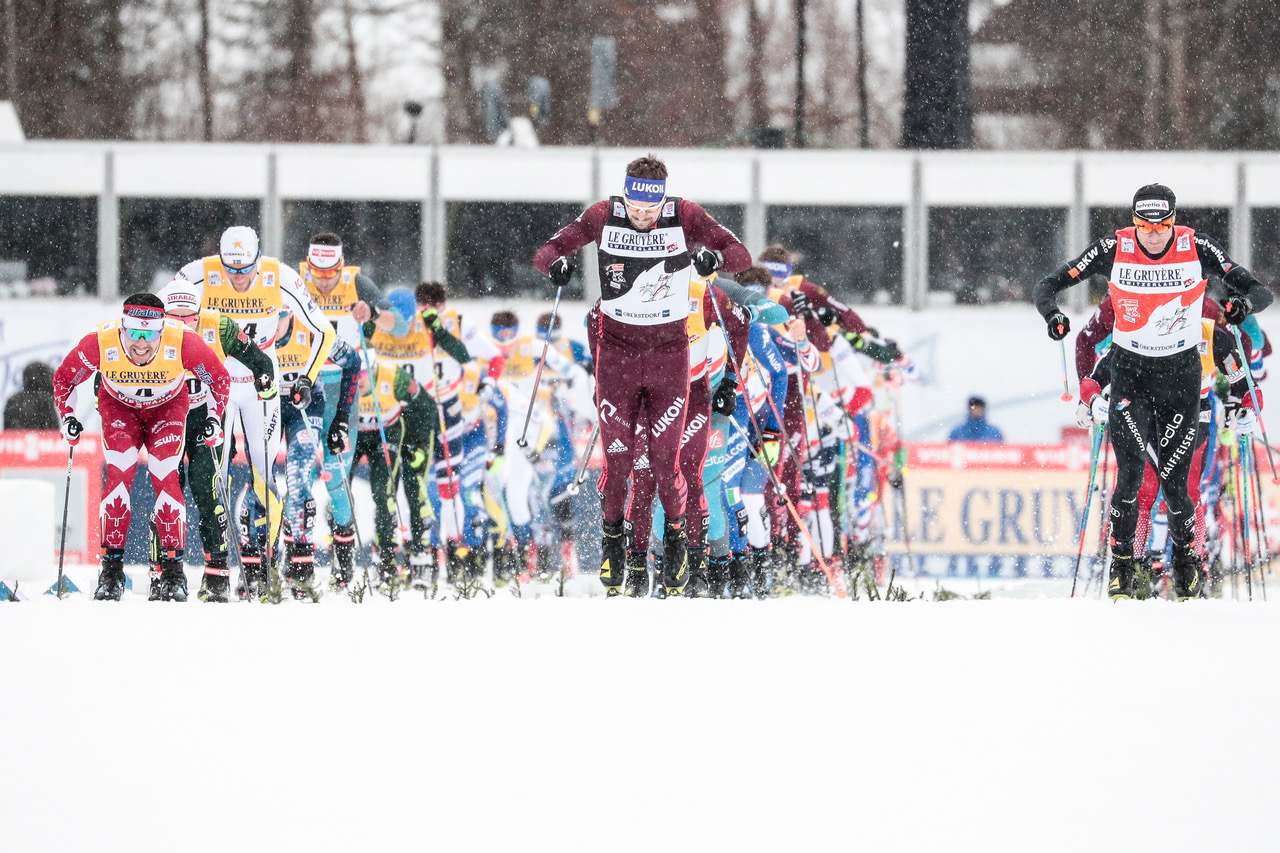
Sergey Ustiugov (c) leading out of the start of the men’s 15 k freestyle at Stage 5 of the 2018 Tour de Ski in Oberstdorf, Germany, alongside Canada’s Alex Harvey (4) and Switzerland’s Dario Cologna (red Tour leader’s bib). On Tuesday, it was confirmed that Ustiugov has been banned from the Olympics. (Photo: Fischer/NordicFocus)
Three notable Russian Winter Olympians, Sergey Ustiugov, Anton Shipulin and Viktor Ahn are the most recent to be banned from the upcoming 2018 Olympics, which start in just over two weeks in PyeongChang, South Korea, for their alleged involvement in systematic doping at the 2014 Winter Olympics in Sochi, Russia.
The International Olympic Committee (IOC) confirmed the decisions on Tuesday, Inside the Games reported.
Ahn, 32, a South Korean-born Russian speedskater (who joined the Russian team in 2011), is the most successful Olympic short-track speed skater of all time with six Olympic golds.
Ustiugov, 25, one of the world’s top male cross-country skiers, placed first or second in all five 2017 World Championships races he contested last year, winning the skiathlon and classic team sprint.
Shipulin, 30, is a two-time Olympic biathlete who helped the Russian men win gold in the relay at both the 2014 Sochi Olympics and 2017 IBU World Championships.
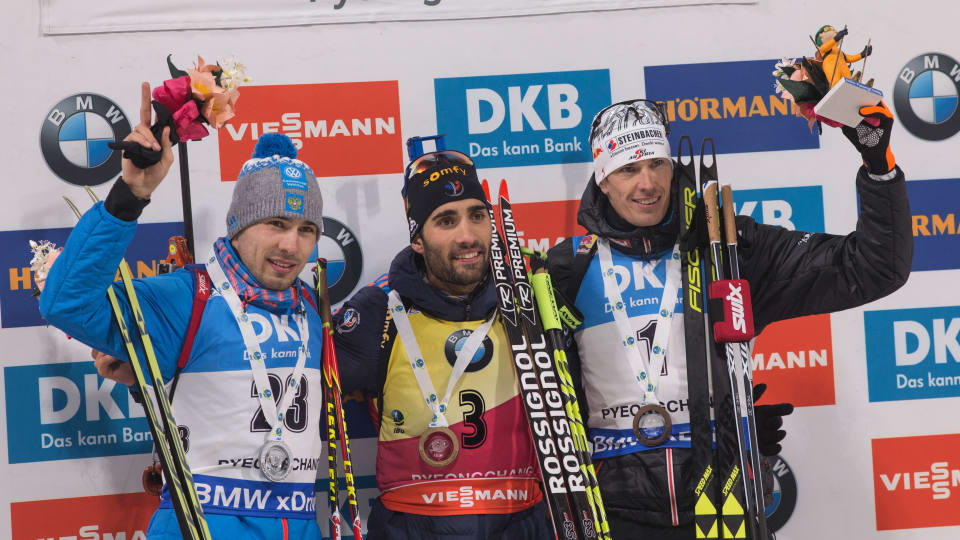
Russia’s Anton Shipulin (l) on the podium after placing second at an IBU World Cup last March in PyeongChang, South Korea, alongside France’s Martin Fourcade (c) in first and Austria’s Julian Eberhard (r) in third. (Photo: IBU)
“All three are reportedly among 111 athletes excluded by the IOC after the [Russian Olympic Committee] drew up a 500-athlete shortlist for consideration for Pyeongchang 2018 selection,” Inside the Games reported.
Le Monde reported that Ahn’s samples could have been among those manipulated at the 2014 Olympics in Sochi, Russia. The Russian Olympic Committee (ROC) has reportedly sent a letter to the IOC challenging the decisions, which it emphasized was “preliminary,” according to a Sputnik report.
“Athletes, such as Ahn, Shipulin or Ustiugov, were not involved in the proceedings within the framework of the Oswald Commission, they were also never involved in any doping scandals, and all the numerous tests they took during their career prove that they are ‘clean’ athletes,” the letter authored by ROC First Vice President Stanislav Pozdnyakov stated. “Nevertheless, their names are currently included in the list of potential participants of the Games. … As regards all the other items on the agenda of the talks related to technical and organisational issues, a lot of work has also been done, but now we focus, first of all, on the composition of our team.”
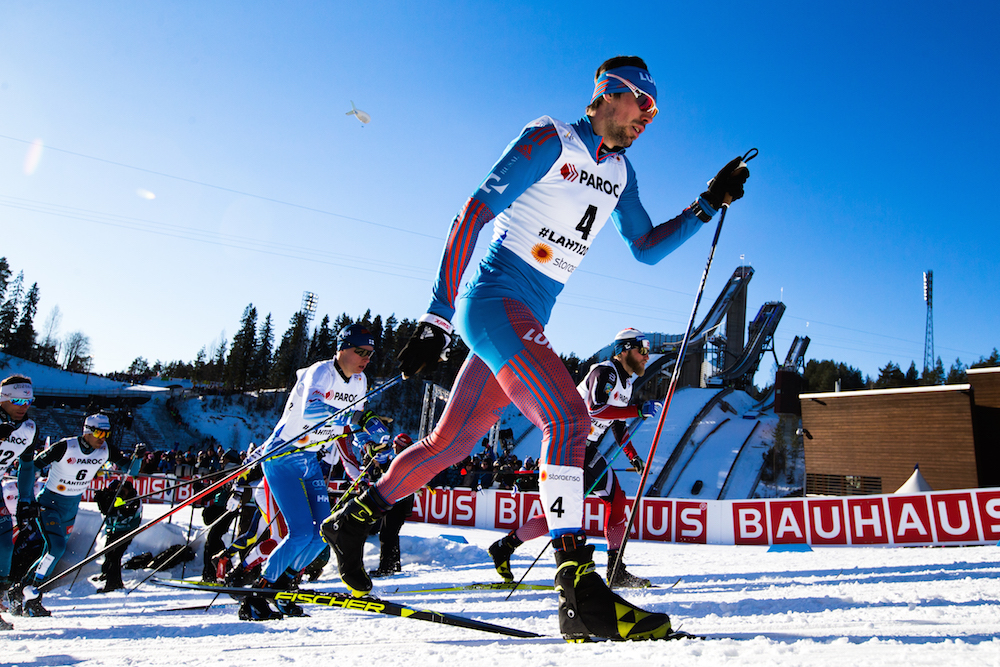
Russia’s Sergey Ustiugov (4) leading the pack in the men’s 30 k skiathlon on Feb. 25 at 2017 FIS Nordic World Ski Championships in Lahti, Finland. He won gold in that event. (Photo: John Lazenby/Lazenbyphoto.com)
If approved by the IOC, the Russian athletes being considered for their eligibility in PyeongChang would have to compete as neutral athletes. If they were to win an event, they would be awarded gold to the tune of the Olympic anthem, rather than the Russian national anthem.
Several Russian authorities have claimed these IOC decisions are aimed to provoke a Russian boycott.
“This is what they [the IOC] want from us,” Mikhail Degtyarev, head of the State Duma Committee on Sport,told Echo Moskvy. “The scenario is to present Russia as an evil, incompetent and isolated country.”
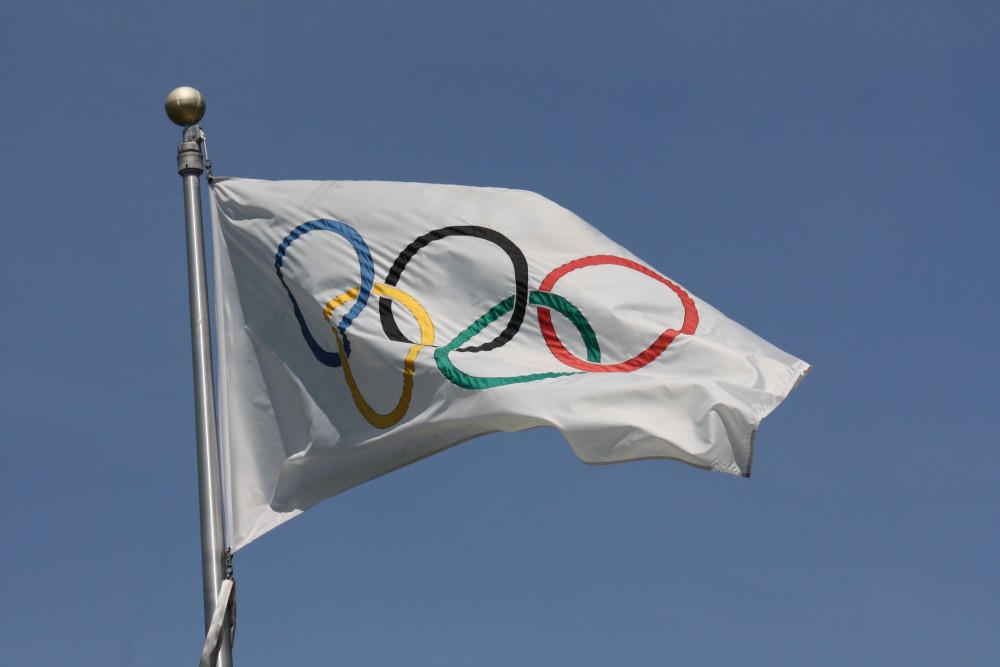
Early next month, the Olympic flag will fly at the upcoming 2016 Summer Olympics in Rio de Janiero, Brazil, but what message is its governing body, the International Olympic Committee, sending in its most recent decision regarding Russia? (Photo: Wikimedia Commons)
Note: The following is an editorial from FasterSkier’s editorial board, consisting of its editors, and is not meant to reflect the opinions of our broader staff.
***
On Sunday, the International Olympic Committee (IOC) Executive Board decided against an all-out ban on Russian athletes at the 2016 Summer Olympics, which start Aug. 5 in Rio de Janeiro, Brazil.
Instead, the IOC asked each individual sports federation (IF) to do a rigorous review of the Russian entries for Rio and determine whether they have undergone sufficient drug testing to be deemed “clean” and cleared to compete.
The IFs have been left just 12 days and no guidance for how to do this.
The decision was the culmination of a long process – just how long depends on who you ask.
Perhaps the process began in 2010, when whistleblower Vitaly Stepanov initially contacted the World Anti-Doping Agency (WADA) with information about systematic doping in Russia.
Or perhaps the process began in December 2014, when German documentarian Hajo Seppelt finally broadcast Stepanov’s information to the public on ARD. It was quickly seen around the world.
Later, WADA commissioned several independent reports, the first of which revealed extensive systematic doping in track and field. The first report, led by former WADA President Dick Pound, dropped in November 2015. Maybe the process began then.
Instead of enacting such a ban, the IOC Executive Board delivered a confusing, unclear decision where Russian athletes may participate after meeting supposedly stringent criteria which are not defined; where Russians with past doping violations are treated differently than those from other countries; and where Russian athletes in different sports may be treated completely differently from one another.
The result will be neither fair to clean athletes who were affected by the Russian government’s manipulation of hundreds of positive doping samples over the last five years, nor to Russian athletes themselves.
Some have noticed. Canadian biathlete and two-time Olympian Brendan Green was one of many sharing this image:
With this in mind, here are some questions for IOC President Thomas Bach and his Executive Board.
1) Do you listen to athletes?
A group of influential athlete representatives held a press conference after McLaren’s last Monday. Among them were Canadian cross-country skier Beckie Scott, the chair of the WADA Athlete Committee, and IOC Athletes’ Commission chair Adam Pengilly.
The group advocated for an unequivocal ban on Russian athletes in both Rio and PyeongChang. Before the McLaren report had even dropped, Pengilly explained, they had circulated a letter stating those aims. The letter was endorsed by athlete representatives from more than 20 different sports federations. Clearly, there was widespread support for such a position.
After the McLaren report came out, that position was solidified.
“We would like to highlight our belief that WADA must allow Professor McLaren and his team to continue their investigation, that Russia should be banned from the Rio Olympics, Paralympics, and other international events, and that International Federations must enact sanctions so as to protect clean sport,” the WADA Athlete Committee said in a statement.
It has been clear for quite some time that the Olympics are not about the needs or wishes of the athletes, but that was underlined by the Executive Board’s decision.
“I believe that the Russian federation has mocked the Olympic movement and I worry about the future of clean sport, I worry about the future for clean athletes, the Olympic movement and the Olympic Games,” Pengilly said told the BBC, where he later said he was “embarrassed” by the Executive Board’s decision. “Some have suggested the IOC has passed the buck and I’d have to agree. There’s been an abdication of responsibility here.”
Fellow IOC Athletes’ Commission member Hayley Wickenheiser, the Canadian four-time gold medalist in ice hockey, had this to say:
2) Do you listen to WADA?
For years – literally – WADA obfuscated, ignored whistleblowers and failed to take action when provided with compelling evidence of doping in Russia.
But in the last few weeks, it appeared that WADA had grown a backbone. After the McLaren report was delivered, the WADA Executive Committee published a list of seven recommendations.
The very first one: “The International Olympic Committee (IOC) and the International Paralympic Committee (IPC) to consider, under their respective Charters, to decline entries, for Rio 2016, of all athletes submitted by the Russian Olympic Committee (ROC) and the Russian Paralympic Committee.”
WADA also suggested that Russian government officials be banned from attending Rio.
That might be the main recommendation that the IOC actually upheld: in their decision they wrote that “Nobody implicated [in the McLaren report], be it an athlete, an official, or an NF, may be accepted for entry or accreditation for the Olympic Games.”
In the McLaren report, Russian Minister of Sport Vitaly Mutko is named as having interfered with at least one positive doping case. Russian President Vladimir Putin’s name is mentioned in the report as having personally appointed a Deputy Minister of Sport who helped hide positive tests.
Will either be banned from Rio? Is that under the purview of any international federation, or only the IOC? Will President Bach sign deny those credentials himself?
Otherwise, WADA – a body which is partially funded by the IOC, but did not have the power to enact a ban on Russian athletes itself – was left in the cold.
“WADA is disappointed that the IOC did not heed WADA’s Executive Committee recommendations that were based on the outcomes of the McLaren Investigation and would have ensured a straight-forward, strong and harmonized approach,” said WADA President Sir Craig Reedie. “The McLaren Report exposed, beyond a reasonable doubt, a state-run doping program in Russia that seriously undermines the principles of clean sport embodied within the World Anti-Doping Code.”
3) What do you mean by “reliable adequate international tests”?
The IOC clearly wanted the process to approve Russian athletes for the Rio Games to be onerous, or at least to seem that way.
Long jumper Darya Klishina will be the only Russian track and field athlete competing in Rio this August. The IAAF cleared her because she lives in Florida and has thus been outside the Russian system. Other federations have clearly not been so strict in making their decisions. (Photo: Wikimedia Commons)
“Under these exceptional circumstances, Russian athletes in any of the 28 Olympic summer sports have to assume the consequences of what amounts to a collective responsibility in order to protect the credibility of the Olympic competitions, and the “presumption of innocence” cannot be applied to them,” the IOC wrote in the preamble to its decision.
And so the board mandated that all athletes be subjected to review by their relevant IFs.
“The absence of a positive national anti-doping test cannot be considered sufficient by the IFs….The IFs should carry out an individual analysis of each athlete’s anti-doping record, taking into account only reliable adequate international tests, and the specificities of the athlete’s sport and its rules, in order to ensure a level playing field.”
Yet there is no definition of reliable – which testing agencies does this include? And there is no definition of adequate – how many tests, over what period of time?
Russian Olympic Committee member Alexander Zhukov was invited to give a presentation to the IOC Executive Board. In it, he asserted that since the first WADA report Russian athletes have been repeatedly tested by international anti-doping agencies and, according to the IOC press release, “the vast majority of the results were negative.”
Yet, the main agency tasked with these tests, UK Antidoping, reported via WADA in June that 16 percent of scheduled tests could not be collected from athletes; a further 736 tests were canceled or declined; and that doping control officers were sometimes harassed and intimidated when they tried to collect samples.
Is this international testing reliable and adequate?
4) Is this fair to Russian athletes?
Without a definition of what constitutes reliable and adequate testing, outcomes for various sports are already vastly different.
The International Association of Athletics Federations (IAAF) has banned all but two Russian track and field athletes from the Games. (The IOC went on to actually kick out one of those two, Yuliya Stepanova, a whistleblower who helped bring the entire scandal to light. Nice.)
In the past weeks Bach has talked extensively about the need to balance collective punishment for government action against individual justice. He has said that clean Russian athletes who had nothing to do with the scandal should not be punished. But it seems clear now that in some sports they will be, whereas in other sports they will not (or their doping teammates might even be able to compete alongside, or instead of, them).
5) Is this what zero tolerance means?
One of the IOC guidelines states that any Russian athlete who has served a doping ban cannot compete in Rio.
One can almost see the logic: with many tests manipulated, the chances are higher that those athletes could have had a second positive test. If true, this should have led to a second and potentially longer ban which they would still be serving.
But maybe not — what if they did reform and are now clean? The provision sends an extremely confusing message: past dopers from some countries are allowed a second chance, but there’s no redemption if you’re from Russia. How is that zero tolerance, much less fair?
When Justin Gatlin and Tyson Gay (American sprinters previously banned for doping) likely medal in the men’s 100 meters, how will a Russian track and field athlete feel? Probably that it’s absolutely fine to dope – as long as you’re not from Russia.
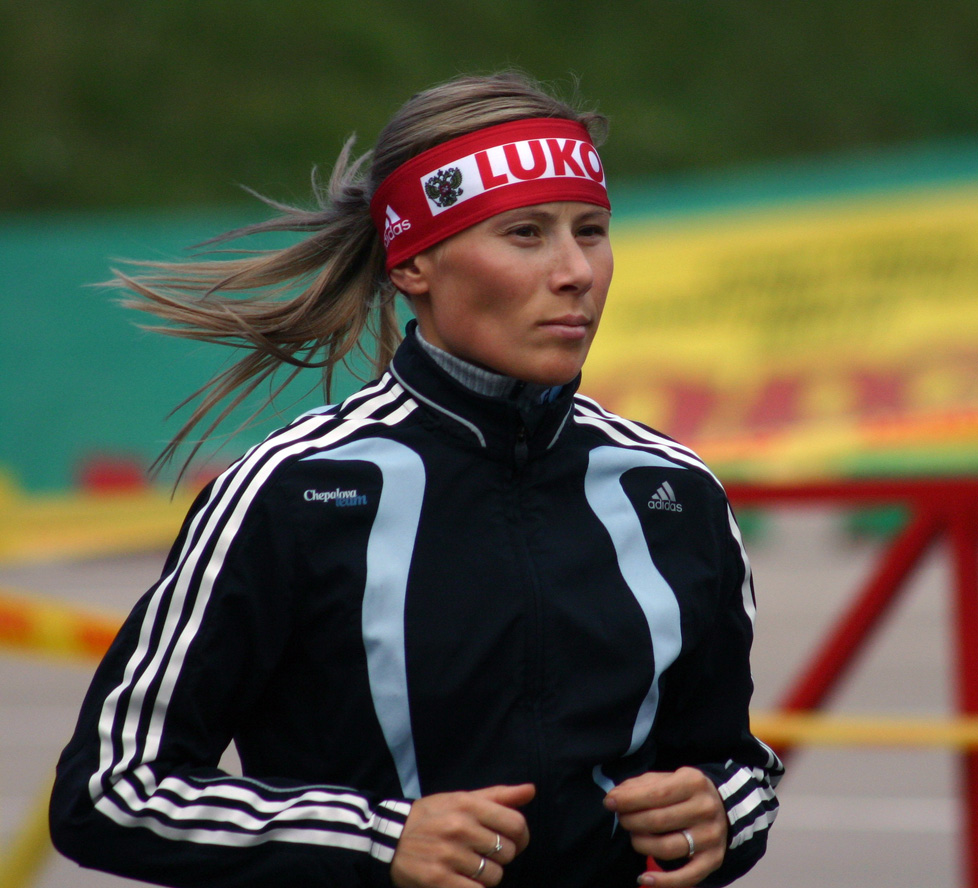
Julia Chepalova is one of seven Russian athletes suspended by FIS in the last year. On Thursday, FIS issued a formal request for her father, Anatoly Chepalov, to be removed from his coaching position. Photo: Ivan Isaev, Russian Ski Magazine
After seven Russian athletes were suspended in the past year for doping violations, the International Ski Federation (FIS) has voted to sanction the country’s national ski association, despite arguments that the program has already cleaned up its act.
“The onus is on them to demonstrate their commitment to anti-doping,” FIS Secretary General Sarah Lewis wrote in an e-mail.
At its council meetings in Turkey on Thursday, FIS levied a $154,000 fine against the Russian Ski Association (RSA), and also issued a “strong recommendation” that the association install a new group of coaches and officials with no links to the doping scandals of the past few years.
FIS also made a specific, formal request for the removal of several officials, including Anatoly Chepalov–the coach and father of suspended former Olympic champion Julia Chepalova–as well as the removal of the coaches and “medical personnel” of Natalia Matveeva, Eugeni Dementiev, and Nina Rysina, who all tested positive for EPO in the winter of 2008-2009.
According to Lewis, the request for the removal of Chepalov and the other coaches is not binding.
But in a press release, FIS said that Russia will also be required to issue a report on the progress of its anti-doping work no later than November 1, or face further sanctions. Additional measures could include more fines, revocation of start rights for Russians at FIS races, cancellation of events in the country, or even suspension of the country’s FIS membership.
If changes are to occur in the RSA, they will likely come at the behest of the new leadership of the country’s Olympic Committee, said Andrey Kondrashov, a Russian sports commentator, in an interview.
Anatoly Chepalov, one of the coaches that FIS requested to be removed. Photo: Ivan Isaev, Russian Ski Magazine
While the RSA is an independent organization, Kondrashov said that the opinion of the Russian Olympic Committee still carries clout, given the country’s respect for “tradition.” Thus far, Alexander Zhukov, the Olympic committee’s new chairman, has taken a strong public stance against doping, saying that old attitudes should be stamped out “with scorching steel.”
However, in an Agence-France Press report on Friday, Russian Sport Minister Vitaly Mutko argued that the country had already made the necessary changes to prevent doping.
“We already assumed the measures for solving all these problems. We have changed the medical staff of both federations and seriously strengthened the coaching personnel,” he said.
No Russians were caught at the Olympics, and in its press release, FIS did acknowledge that the RSA has “expressed its sincerest remorse for the situation and informed FIS about the serious work that has been initiated at the very highest level in Russia.”
But FIS said that it still imposed the sanctions for three reasons: as a “retrospective measure, to reflect the [organization’s] strong disapproval of the situation”; to encourage the RSA to bring about “necessary, immediate” changes within the organization; and to send a message to Russia, and the world, that FIS is serious about its anti-doping work.
Alexei Sotskov, a former head coach of the Russian nordic combined team now living and working in the U.S., agreed that attitudes within the Russian ski team had already shifted.
Sotskov worked as a coach at the 2010 Olympics for the New Zealand team, and after his conversations at the Games with Russian officials—including national team sprint coach Yuri Kaminsky—Sotskov said he felt that the team was clean.
“Especially with Sochi coming up, they understand that everybody’s watching them, so they don’t want to be caught,” he said. “To say that the system is still supporting this, I think it’s a false statement—especially after talking with Kaminsky and a couple other guys.”
“Kaminsky is a smart guy, and he was clearly saying that ‘we can’t cheat—it’s not worth it for us,’” Sotskov said.
Informed of the sanctions, American athlete Kris Freeman, an outspoken critic of the Russian program, said that he welcomed the steps taken by FIS.
“It does seem like they are taking it seriously,” he said. “I didn’t really know what FIS was going to do. In the past, they’ve been too passive, but that sounds like a pretty appropriate sanction.”
FIS also officially announced Thursday the two-year suspension of Kornelia Marek, the Polish skier who was caught using EPO at the 2010 Olympic Games. Marek has 21 days to appeal the decision to the Court of Arbitration for Sport (CAS); otherwise, she will be banned until March 16, 2012.