
From the FasterSkier archive — posts syndicated from athletes’ and coaches’ own blogs between 2004 and 2012, kept online as published. Current coverage is at fasterskier.com.

Tag: Russian track and field

  • As Sports World Watches for Precedent, IAAF Bars Russia from Olympics

    As Sports World Watches for Precedent, IAAF Bars Russia from Olympics

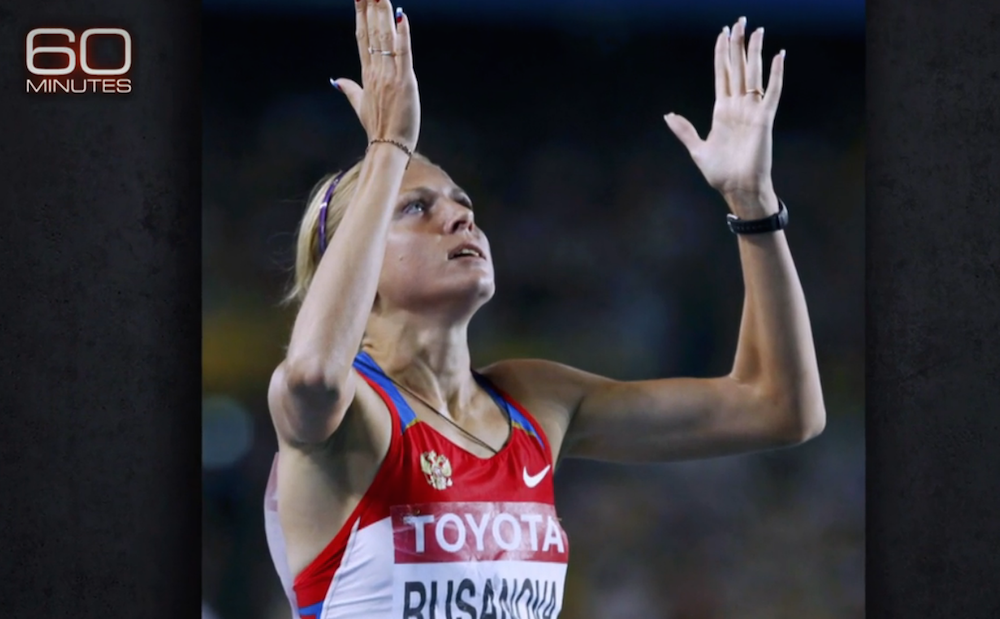
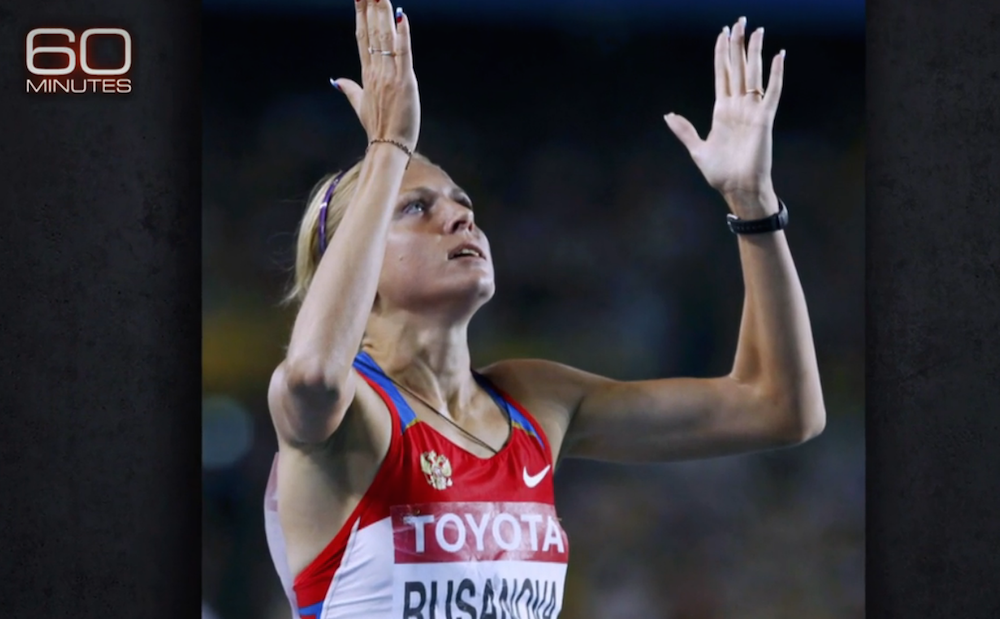
    Yuliya Stepanov, a former Russian track and field athlete who admitted to using several steroids and then became a whistleblower bringing the Russian doping scandal to light. She was cleared by the IAAF to compete in the 2016 Olympics as a "neutral" athlete after having fled Russia. (Photo: CBS News)
    Yuliya Stepanov, a former Russian track and field athlete who admitted to using several steroids and then became a whistleblower bringing the Russian doping scandal to light. She was cleared by the IAAF to compete in the 2016 Olympics as a “neutral” independent athlete after having fled Russia. (Photo: CBS News)

    The International Association of Athletics Federations (IAAF), the global governing body for track and field, has decided to prohibit Russian athletes from competing at the 2016 Olympics in Rio de Janeiro, Brazil.

    Widespread, systematic doping, along with cover-ups, political connections and bribery in Russian track and field were revealed over the course of the last year in a series of news documentaries and then investigations by the World Anti-Doping Agency (WADA).

    With the reports of systematic doping now spreading into other sports – for instance, 14 Russian cross-country skiers have been accused of doping at the 2014 Olympics, while a top government official admitted that the entire ski team was doped in 2010 – many in the Olympic sphere are watching the IAAF decision closely to see what options other federations might have for dealing with renegade countries in the future.

    The All-Russia Athletics Federation (ARAF) was initially suspended from international competition last November. The IAAF then had to decide whether to uphold the ban through the Rio Olympics or whether Russia had made enough progress toward Code compliance to be deemed eligible.

    The decision: no.

    “Although good progress has been made, the IAAF Council was unanimous that … Russian athletes could not credibly return to competition without undermining the confidence of their competitors or the public,” IAAF President Lord Sebastian Coe said in a live-streamed press conference on Friday.

    It is the first time since the World Anti-Doping Code came into force in 2004 that a team has been banned from participating in the Olympics. On the IAAF Council, the effort to keep Russia out of Rio was reported to be led by Canada’s Abby Hoffman and France’s Bernard Amsalem.

    The IAAF Task Force, which worked for five months to investigate Russian track and field and was led by Norway’s Rune Andersen, suggested four action points, the first of which was that Russia would not be reinstated.

    The IAAF Council unanimously adopted the recommendations.

    “Under the reinstatement conditions, [ARAF] must show that there is now a culture of zero tolerance towards doping in Russian athletics…,” Andersen said in the press conference, before detailing that he didn’t see those conditions having been met.

    “In particular, the deep-seated culture of tolerance or worse towards doping that got [ARAF] suspended initially appears not to have been changed today,” he said. “Certain coaches and athletes appear willing to ignore the doping rules. A strong and effective anti-doping infrastructure capable of detecting doping still has not appeared … [ARAF] appears unable to enforce doping bans.”

    WADA filed a report on Wednesday showing widespread avoidance of doping controls by Russian athletes. In a three-month period, over 700 tests failed to be administered because athletes could not be located.

    “In order to fix a problem, you have to realize and accept that there is a problem … so I think that is the first step that needs to be taken by Russia, is to acknowledge that there is a problem, from the top level of government and through all levels,” Andersen said.

    In their responses to the decision, key players in Russian sports did not acknowledge a problem, and instead pledged to fight the decision.

    “[Today’s] decision on the ARAF’s suspension was expected and easy to guess,” Russia’s Sport Minister Vitaly Mutko told Russian news agency TASS. “We will come up with a response.”

    How international organizations handle the decision, and Russia’s attempts at appeal, will determine the true precedent of the decision. With allegations of systematic doping by Russian teams popping up in numerous sports (including skiing and biathlon), other federations are likely watching closely to see what leverage they might have over teams if Russia, or other countries, fail to make progress on anti-doping commitments.

    Russia could, and likely will, appeal to the Court of Arbitration for Sport (CAS). John Coates, the head of the CAS, has recently said that he found Russian sports to be “rotten to the core”. But since Russia has not yet filed an appeal, it is not yet known who potential arbitrators will be and whether they share his opinion.

    There’s another option for Russia, too: the International Olympic Committee (IOC).

    “We now appeal to the members of the IOC to not only consider the impact that our athletes’ exclusion will have on their dreams and the people of Russia, but also that the Olympics themselves will be diminished by their absence,” the Ministry of Sport said in an announcement.

    The IOC will be having a stakeholder meeting on Tuesday in Lausanne, Switzerland, to discuss the outcome of the IAAF decision.

    “Ahead of the Olympic Games Rio 2016, the Olympic Summit will coordinate and harmonise the approach among the International Federations, which take the first decision on the eligibility of athletes with respect to qualification for and participation in the Olympic Games,” the IOC media office said in an announcement. “The discussion will have to address the difficult decision between collective responsibility and individual justice.”

    Some see this as an attempt by the IOC to keep Russia in the Olympics.

    The IAAF did offer one lifeline to Russian athletes: that if they could prove “clearly and convincingly” that they were clean, for instance because they lived outside of Russia and were tested repeatedly by other authorities (a “credible” testing program, Andersen asserted), then they could compete – but not for Russia.

    Andersen said that this decision was made in part after an outside counsel advised them that legally, their ban on the Russian team would be easier to uphold in court if they made some allowance for proven clean athletes to compete, even if the burden of proof was substantial.

    In addition, the IAAF decided that athletes who had provided substantial assistance in anti-doping investigations could also compete under an independent flag. That opens the door for Yuliya Stepanova, a whistleblower who helped initially bring the Russian doping scandal to light.
  • Insider Couple Implies Widespread Doping in Russian Sports in 60 Minutes Interview

    Insider Couple Implies Widespread Doping in Russian Sports in 60 Minutes Interview

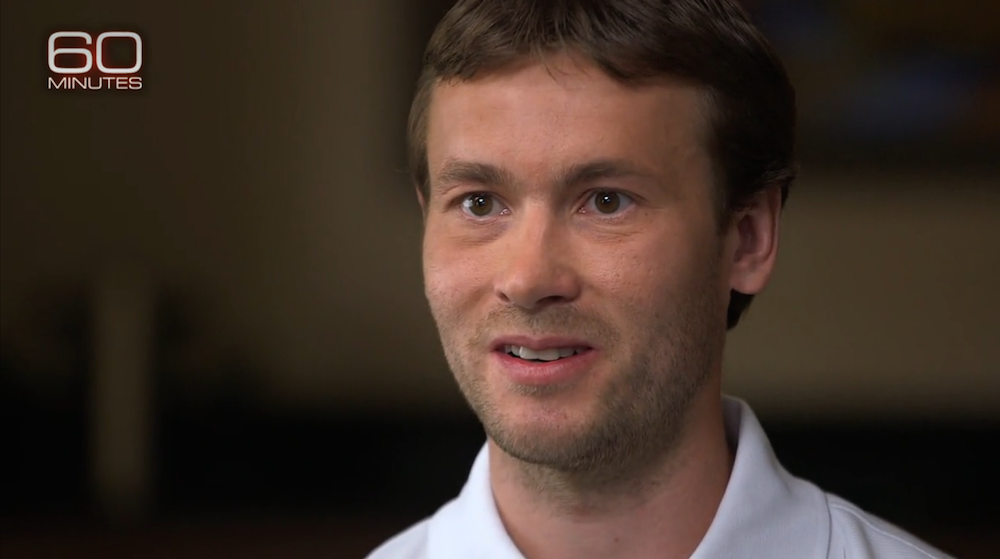
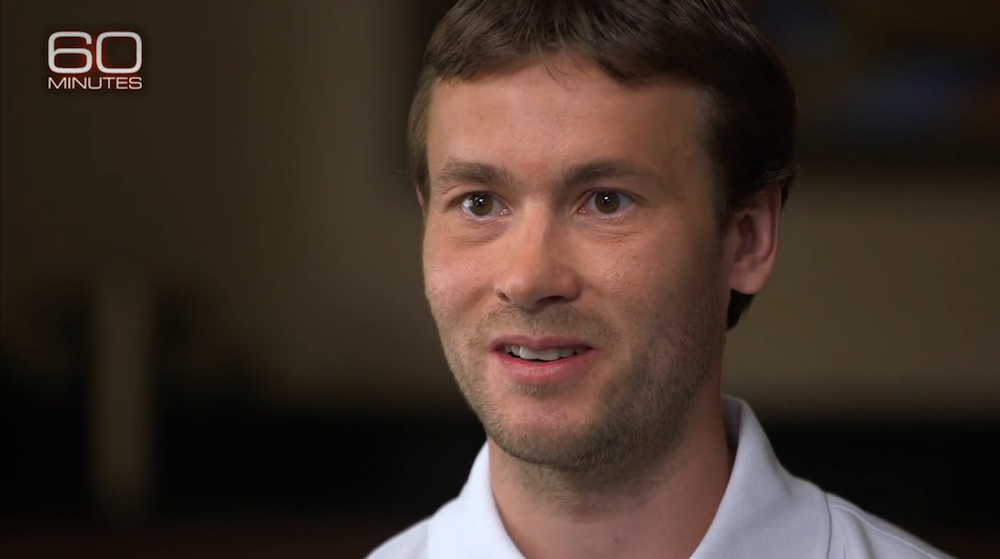
    Vitaly Stepanov, a former RUSADA employee, during an interview with 60 Minutes' Armen Keteyian, which aired Sunday, May 8. (Photo: CBS News)
    Vitaly Stepanov, a former RUSADA employee, during an interview with 60 Minutes’ Armen Keteyian, which aired Sunday, May 8. Click here for the video. (Photo: CBS News)

    At least four Russian gold medalists in Sochi used performance-enhancing drugs to reach the top of the podium at the last Winter Olympics, and the FSB — Russia’s equivalent of the FBI — helped with the cover-up.

    That’s the story that was told to 60 Minutes, which aired Sunday evening in the form of a 13-minute interview with Vitaly and Yuliya Stepanov, as well as U.S. Anti-Doping Agency CEO Travis Tygart and American runner Alysia Montaño.

    Yuliya Stepanov was one of Russia’s top runners in track and field — a program the World Anti-Doping Agency (WADA) suspended in November after its independent investigation found it was engrossed in a “culture of cheating” and widespread corruption. Yuliya’s husband, Vitaly, previously worked at what the 60 Minutes described as “a low-level job collecting urine and blood samples” for RUSADA, the Russian Anti-Doping Agency, in Moscow.

    “Together, they exposed the dark secrets of their country’s doping program and, as you will learn for the first time, damning new details about cheating at the 2014 Winter Games in Sochi, Russia,” the news segment stated.

    Yuliya Stepanov, a former Russian track and field athlete who admitted to using several steroids. (Photo: CBS News)
    Yuliya Stepanov, a former Russian track and field athlete who admitted to using several steroids. (Photo: CBS News)

    Yuliya doped and all of her teammates doped, she stated. Vitaly didn’t agree with it, asserting that he wanted sports to be fair and clean. The two decided to get divorced, Vitaly lost his job, yet they would later reunite under a common cause.

    Just before the 2012 London Games, Yuliya — who was no longer a medal contender — “lost the protection of the system and tested positive for EPO,” the segment stated. “Facing a two-year ban, she called Vitaly just days before their divorce would be final.”

    “And he suggested, ‘Let’s tell the truth, Let people know the whole truth, the way things happen in Russia,’ ” Yuliya said. “To destroy the system one has to talk about it.”

    Yuliya used her phone to secretly video her coach giving her steroids, her teammates discussing their drug use and the team’s medical director telling her how to get back on the drug program. The video recordings were used in a documentary by Germany’s ARD, which aired in December 2014 and prompted WADA to take action — banning the Russian track and field team as a result.

    The couple now lives in a one-bedroom apartment with their child at an undisclosed location in the U.S. — 60 Minutes did not say where for their protection.

    Over the last few months, Grigory Rodchenkov (who ran the drug-testing lab in Sochi, was fired following the WADA investigation and has also sought refuge in the U.S.) shared what he knew with Vitaly. Apparently, Rodchenkov was unaware that Vitaly recorded 15 hours of their conversations, and “what Rodchenkov has revealed threatens the credibility of the results at the 2014 Winter Games in Sochi, Russia,” 60 Minutes reported.

    “What Rodchenkov has revealed threatens the credibility of the results at the 2014 Winter Games in Sochi, Russia.”

    “He told me what I and Yulia did, we could only see this much. But what was happening with cover-ups, it’s like this,” Vitaly said, holding his hands out wide.

    Rodchenkov apparently bragged that he had what he called “the Sochi list” of Russians who used prohibited substances at the 2014 Winter Games. What’s more: Russia’s FSB, its federal security service, was directly involved.

    Vitaly said that, according to Rodchenkov, some FSB agents worked as doping-control officers at the Sochi Olympics and “tried to control every single step of the anti-doping process in Sochi.”

    Rodchenkov also said at least four Russian athletes won gold medals in Sochi while using banned drugs, and his lab aided the cover-up. He did not specifically name the athletes, but speculation surrounds a list of 26 Russian gold medalists from 13 events in Sochi, with some athletes earning more than one gold. A representative for Rodchenkov told 60 Minutes that, for now, he was not available for comment.

    “It’s a stunning revelation,” USADA’s Travis Tygart said. “And if true it’s a devastating blow to the Olympic values.”

    In the next month, the governing body of track and field will decide whether it will allow the Russian team to compete at the Rio Olympics this summer.

    “It’s clearly the final nail in the coffin for Russian track and field,” Tygart said. He said USADA is not in favor of allowing Russia to compete in track and field in Rio.

    US Biathlon President and CEO Max Cobb reacted on Twitter Sunday evening, posing a few questions: “… How, after over 200 emails on the corruption, did #WADA designate the Moscow lab for Sochi?”

    Cobb followed up with a series of other tweets and retweets regarding the interview.

    “2. Why is it that @CBSNews, @ARD_Presse & London papers are investigating & validating what Pound suspected, while #WADA does nothing?” and “3. Verification of heretofore suspected widespread doping & coverup at Sochi has HUGE impact & demands immediate investigation by #WADA”

    “With brave whistleblowing by Stepanovs & Rodchenkov’s statements, time for #WADA to investigate Sochi & all sports in RUS. If not now, when?” Cobb added.

    “Thank you @60Minutes for bring this harsh reality to the masses. Heartbreaking and infuriating!” US Biathlon A-team member Lowell Bailey tweeted Monday morning.