From the FasterSkier archive — posts syndicated from athletes’ and coaches’ own blogs between 2004 and 2012, kept online as published. Current coverage is at fasterskier.com.

Tag: Sam Dougherty

  • From Biathlon to College and Back Again, Dickinson Eyes Olympic Berth

    From Biathlon to College and Back Again, Dickinson Eyes Olympic Berth

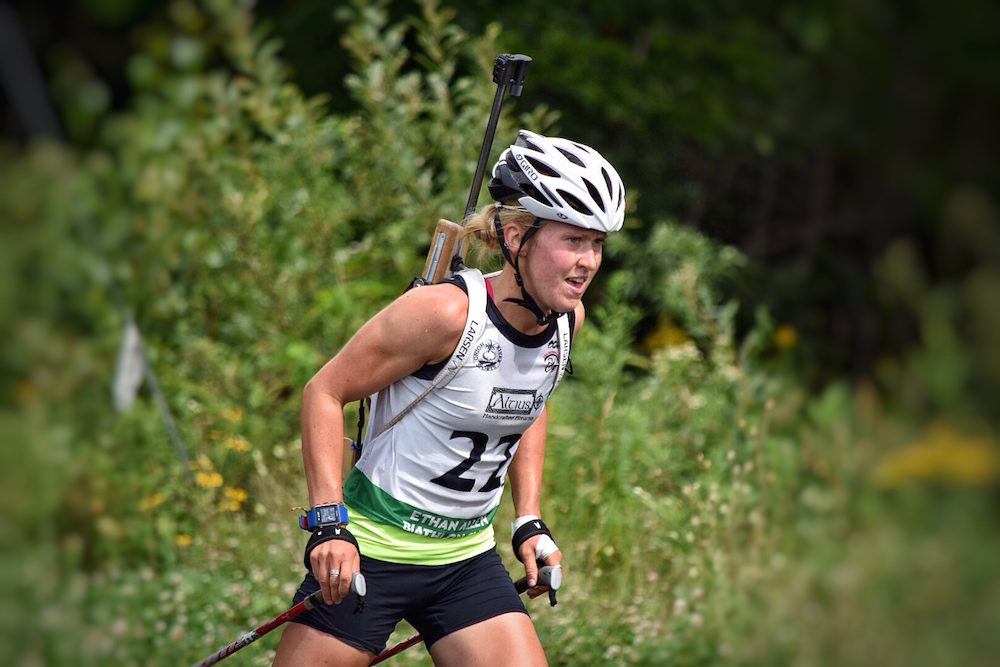
    Kelsey Dickinson during the women’s mass start at the 2016 US Biathlon National Rollerski Championships on Aug. 14 in Jericho, Vt. (Photo: Katrina Howe)

    Two and a half years ago, Kelsey Dickinson was wondering how she could keep doing biathlon.

    The Washington native had been training at the Maine Winter Sports Center (now the Outdoor Sports Institute), and had been a member of the U.S. Biathlon Association’s development team. But when team nominations came out in the spring of 2015, she wasn’t on them. At the same time, the Maine Winter Sports Center cut most funding to its senior teams.

    With few options, Dickinson headed back to the College of Saint Scholastica, where she had done one year of college already.

    “When I left biathlon, part of it was because I just wasn’t skiing fast enough,” Dickinson said in an interview this month. “So I asked how I could keep skiing, one, but also how could I get faster. I realized that going back to college was going to be the best way to do that, but I wasn’t going to be able to go back to college, and do biathlon, and get better at skiing. I decided that I would just ski in college and finish out my eligibility.”

    Dickinson still has one year of that eligibility left, but her biathlon career has come back sooner than expected. After strong college results last season, she was accepted into a summer training program at the Craftsbury Outdoor Center in Vermont. This summer, she spent time training with some of the country’s best cross-country skiers as well as having dedicated biathlon training and easy access to a shooting range.

    The result: she performed so well in rollerski trials in August and October that she automatically landed a spot on the U.S. World Cup squad for December.

    “Our goal for her this year is to make that Olympic team, for sure, but she’s really four years ahead of schedule with it,” Dickinson’s ski coach at Saint Scholastica, Maria Stuber, said.

    “Nothing about what’s going on right now is what I expected to happen,” Dickinson, a double-major in philosophy and natural science, said. “I thought that I would make it through this semester and not have to be traveling that much. I’m just going by communicating with my professors on a day-by-day basis and playing it by ear.”

    Kelsey Dickinson (St. Scholastica) racing to 26th in the women’s 15 k freestyle mass start at 2017 NCAA Skiing Championships on March 11 at the Jackson Ski Touring Center in Jackson, N.H. (Photo: flyingpointroad.com)

    Stuber had only positive things to say about Dickinson’s work ethic and professionalism.

    “She was really clear about her goal to be a biathlete, and she has not wavered on that at all,” Stuber explained. “We said, okay, if you want to be a biathlete at the end of college, what needs to happen for you to be in the top few women, not a bubble skier but someone who is going to be on the World Cup? The bottom line was that she needed to ski a lot faster.”

    The work Dickinson put in paid off, and last season she ended up ranked sixth in the Central Collegiate Ski Association rankings, the top woman not from perennial powerhouse Northern Michigan University. She has now represented her team at NCAA Championships twice.

    “She made some big technical improvements last winter,” Stuber said. “But she was sick from early January, for over a month. She had some really good races but I don’t know if either of us felt like she really got to show her stuff last winter like we thought she could… I think mainly we just made it apparent that she had it in her to go even faster.”

    That was enough to get her to Craftsbury. Dickinson had applied to the summer training program the previous year but not gotten in.

    “I had a really good summer of training,” Dickinson said. “I’m really grateful to be able to have gone to Craftsbury and trained with the team there. That made all the difference for me, just to be around a lot of high-level athletes.”

    At Saint Scholastica, she is the one leading the team. One of the big focuses of going to Vermont was to get Dickinson used to seeing how more efficient technical skiers moved.
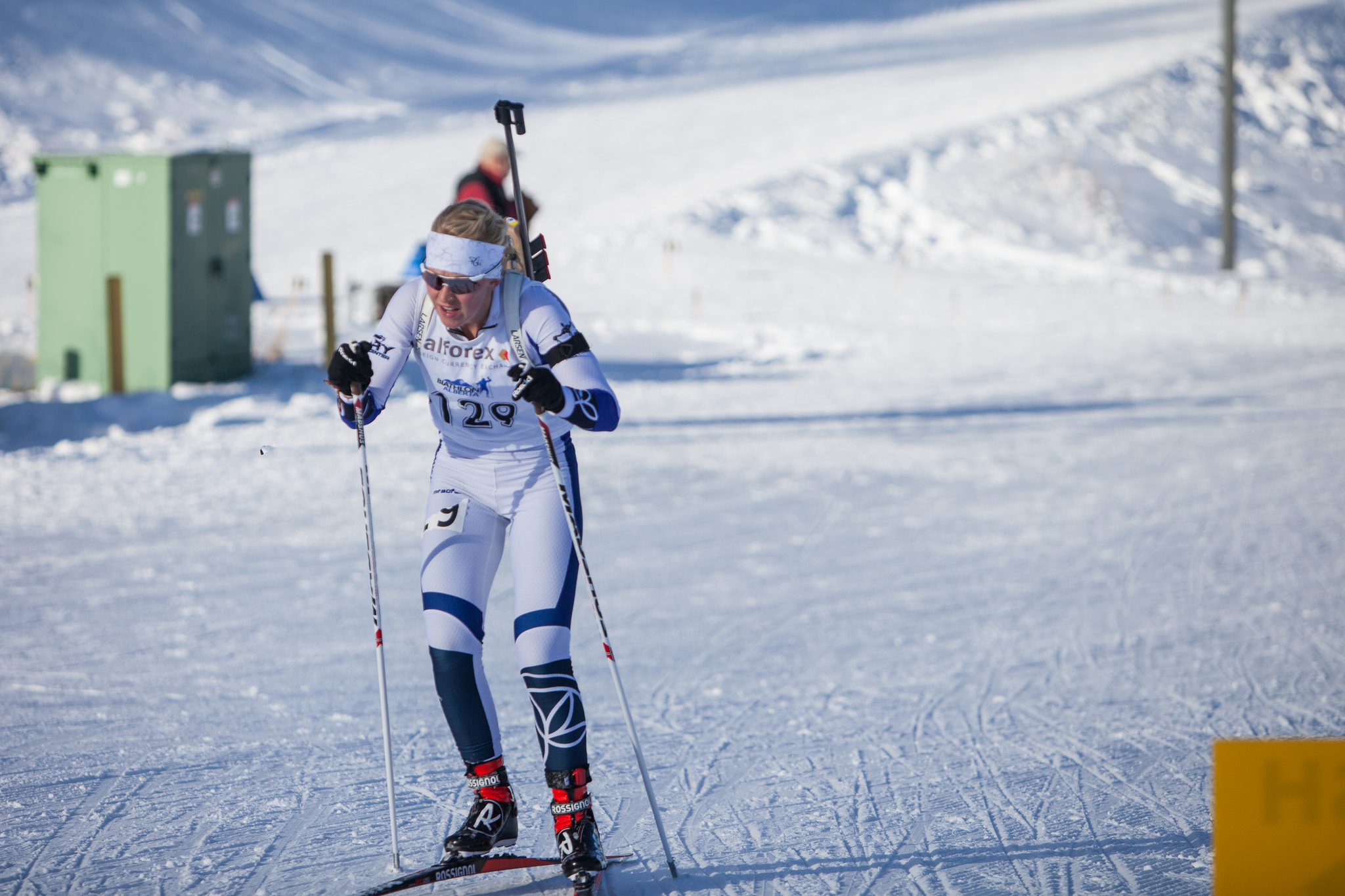
    Kelsey Dickinson representing the Maine Winter Sports Center at NorAms in Canmore in December, 2014. Her last international biathlon races were at IBU Cups in Canmore in March, 2015, where she twice finished 28th.

    “She could sit behind someone and try to figure out how to make skiing easy, instead of always trying to think in intervals of how to make it hard, and how to go harder,” Stuber said. “There’s this awesome mindshift when you’re going hard but trying to make it easy, which you don’t get to do when you are leading so much.”

    Stuber herself was a senior athlete at Craftsbury at one point, so she knew head coach Pepa Miloucheva well and was not worried that there would be any problems with Dickinson adjusting to the training approach. (“She was my coach before and I have a ton of respect for what she is doing there — so to be able to work with Pepa as a peer was really cool for me,” Stuber said.)

    In addition, Dickinson knew Sam Dougherty, the biathlon coach at Craftsbury.

    “Sam and Pepa work together to build the plan depending on what the biathlon schedule requires and what the cross-country athletes are doing,” Dickinson explained. “They try to make it comprehensive so people can train together… I have known Sam for a while because of we overlapped racing a little bit back when I was a junior. And Pepa, her philosophy is very similar to Maria’s. I get along great with Pepa and she has been an amazing coach. I’m lucky that the transition was really easy.”

    Dickinson turned in two third-place finishes at rollerski biathlon races in August.
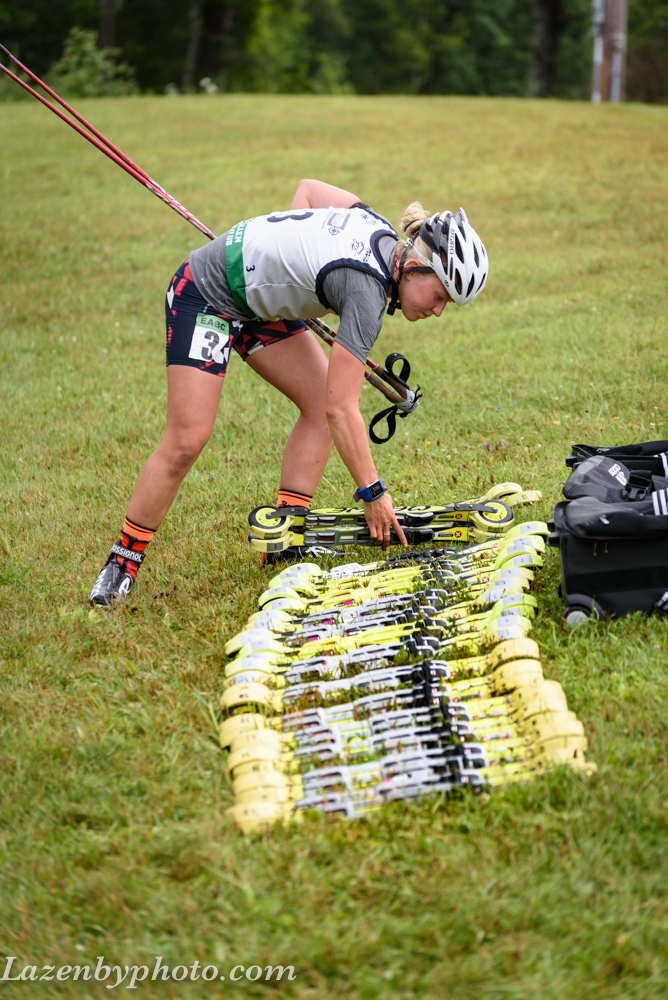
    Kelsey Dickinson (Craftsbury Collegiate Summer Team) picking out rollerskis for the women’s mass start on Aug. 13, at USBA Rollerski Championships in Jericho, Vt. She placed third on both days of the two-day championships. (Photo: John Lazenby/Lazenbyphoto.com)

    “I knew I was feeling good and that if I put all the pieces together then things could go well, but I wasn’t quite expecting that for sure,” she said.

    That put her in a good position to fight for a World Cup spot. Susan Dunklee, who was pre-qualified for the World Cup, had won both races. Dickinson could even afford one less-stellar race when the qualification series wrapped up with two more competitions in October.

    Because she was still in school and had options for how to spend her race season – including competing domestically in December, in an attempt to qualify for the IBU Cup in January and from there trying to make the Olympics – she didn’t feel pressure.

    “I think actually having school was a little bit helpful in that way,” she said. “I just was looking at the weekend as an opportunity. If things went well then that would be great, but if things hadn’t gone well then I still had a lot of great things going on back at school with the team there… I was in a good place emotionally, just happy to be there.”

    At those last two trials races, Dickinson finished second and fifth, and locked up the World Cup spot.

    Her goal is still the Olympics. As such, when she gets to the World Cup later this month – she has to first go to the second-tier IBU Cup in Sjusjøen, Norway, and score qualification points – she will focus mainly on process.

    While at least one more woman will be added to the Olympic roster based on December World Cup results, the team won’t be filled until January, when several athletes will be sent to the IBU Cup to fight for the last spots. That means that Dickinson can focus on performing well in January, when the season is in full swing and she has some races under her belt, and fight for an Olympic berth there.

    “Her process is going to be the most important thing,” Stuber said. “I don’t think she needs to be concerned with what her results are at those first World Cups… if she can use these World Cups to get a really good process dialed in, then when she goes to the IBU Cup she will be really ready to do what she needs to do there to secure an Olympic spot.”

    “It was such a huge goal just to get to this point,” Dickinson agreed. “Looking forward I’m just going to approach things as an opportunity. It’s an opportunity for learning, it’s an opportunity to race, to do what I love to do. So I think that in that sense, I obviously want to do well and I want to hold myself to a high standard. But I am just very grateful that I can have this opportunity and I’m very open to what it will bring.”

    In the past two seasons, Dickinson bought into college racing completely.

    “She tries really hard to be a good captain and sometimes I think that adds to her stress level,” Stuber said. “She just tries to do everything that she commits to, to do it really well.”

    But now, she’s back to biathlon.

    “If I could come across saying anything, I just want to express how grateful I am to all the people who have supported me,” Dickinson said. “Like Maria and Chad [Salmela], and Pepa, and everyone thoughout the years who have allowed me to get to this point. Because it has been a really long journey.”

  • New Craftsbury Biathlon Coach

    Craftsbury

    (Press Release)

    This November marks a year since Miro Segrt came to the Craftsbury Outdoor Center from Serbia to serve as our Biathlon coach. In early November, Miro will be leaving Craftsbury to move on to his next adventure.

    Miro farewellMiro brought seven years of biathlon coaching in Serbia to Craftsbury. His extensive competitive shooting experience brought a shooter’s perspective to the program, helping juniors in learning proper position, breathing, focus– and always emphasizing safety. He also improved the organization and care of our biathlon equipment. We thank Miro for his many contributions to our program and we wish him well in what he takes on next!

    Sam-Dougherty-AnnouncementAs we lose Miro, we will be gaining Sam Dougherty as our new biathlon coach. Sam began his skiing and biathlon career in Alaska, attended Montana State University, and most recently held the position of Coaching Intern with the US National Biathlon Team in Lake Placid. Sam competed as a member of the US Junior Biathlon team, and raced with the Division I Nordic team at MSU. He has experience coaching biathlon at all levels, from youth to Masters, and from beginners to the National team. FasterSkier recently did a story on Sam’s intern experience (article here).

    We look forward to welcoming Sam to Craftsbury in early November!

  • The Intern Coaching the National Team: Dougherty Learns and Looks Ahead

    The Intern Coaching the National Team: Dougherty Learns and Looks Ahead

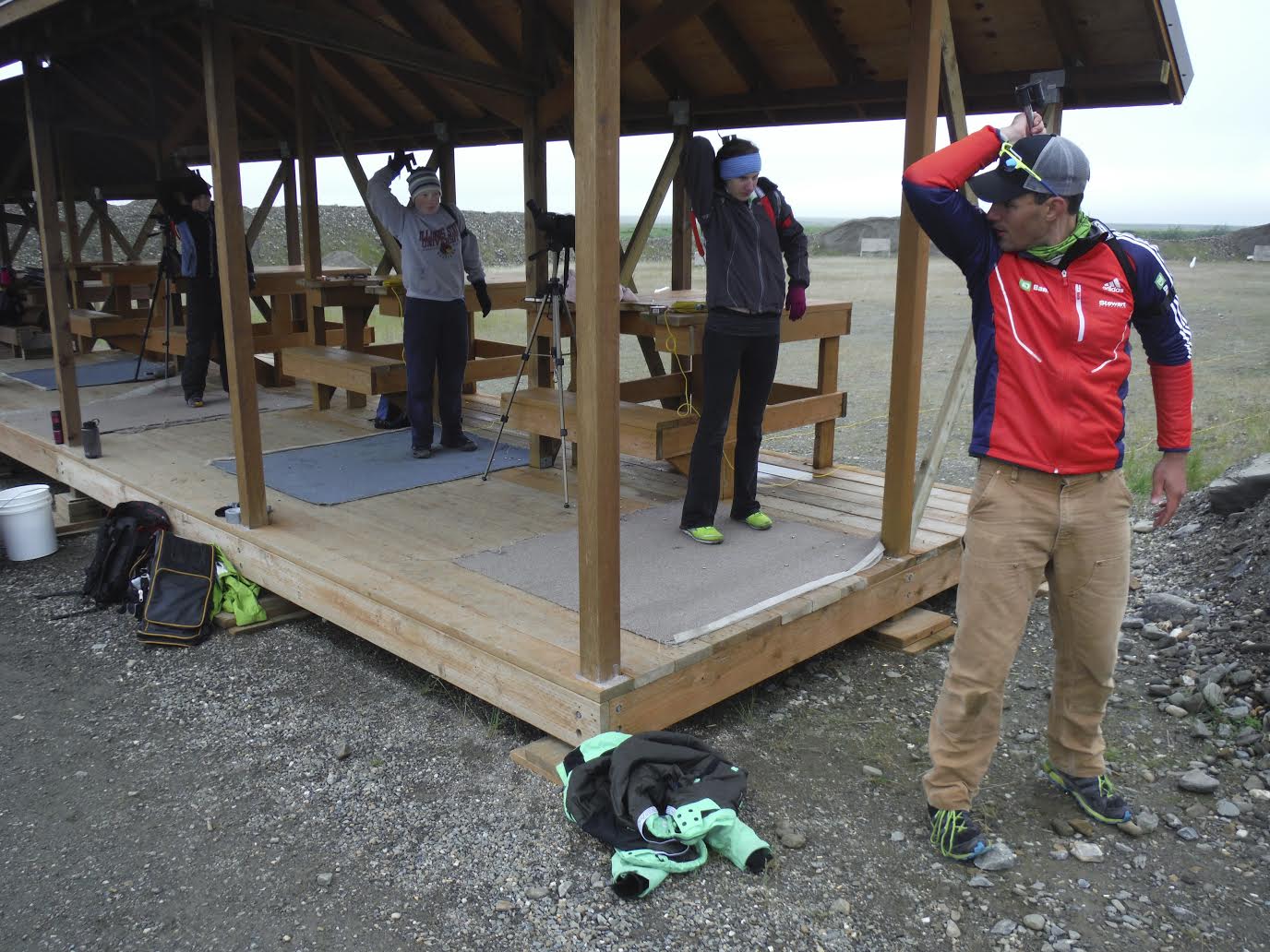
    Sam Dougherty (right) coaching a girls' biathlon clinic in Nome, Alaska. He now has a coaching internship with the U.S. national team. (Photo: Sam Dougherty)
    Sam Dougherty (right) coaching a girls’ biathlon clinic in Nome, Alaska. He now has a coaching internship with the U.S. national team. (Photo: Sam Dougherty)

    In recent years the U.S. Biathlon Association offers a coaching internship with the national team. It can be a springboard for a career in nordic sport: last year’s intern, Erik Lewish, is now an assistant coach with the team.

    This year the spot went to Sam Dougherty, a former junior biathlete who recently graduated from Montana State University.

    In the long run, Dougherty wants to have a career in management and administration. He studies business at MSU. But for now, he wants to take that approach with biathlon, the sport he has been passionate about for so long.

    “I want to immerse myself in every facet of programming at every level across the nation in order to have a non-condescending finger on the pulse of biathlon,” Dougherty wrote in an email interview. “In business school I was surrounded by incredibly gifted people who are hell-bent on changing the vocabulary of their field of interest. I want to be that kind of person for biathlon and the greater American nordic community.”

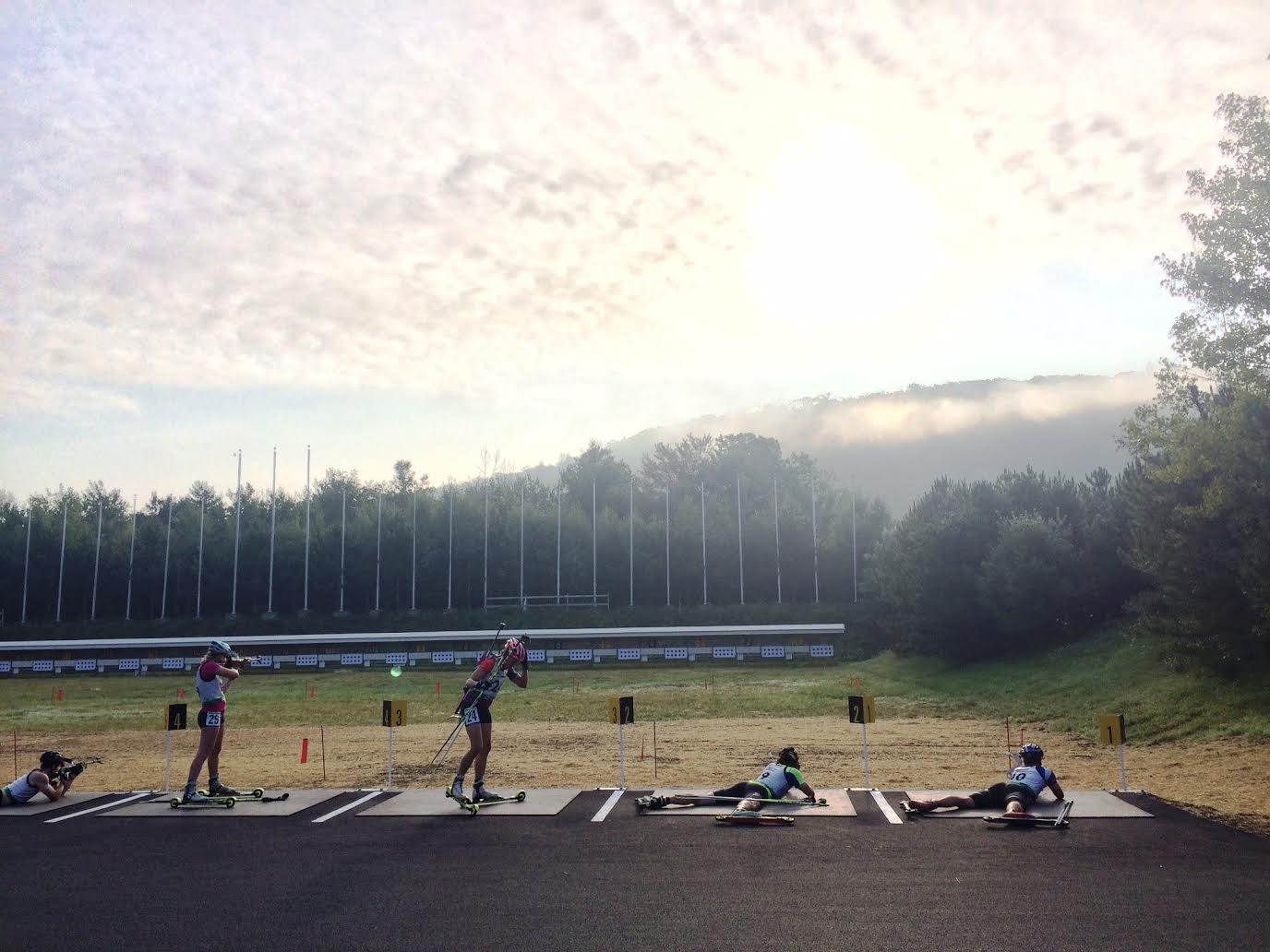
    The view from the range at the North American Rollerski Cup race this summer in Jericho, Vermont. (Photo: Sam Dougherty)
    The view from the range at the North American Rollerski Cup race this summer in Jericho, Vermont. (Photo: Sam Dougherty)

    In the meantime, he based himself in Lake Placid with the national team and has been involved in every aspect of training. Dougherty said that he had filled two notebooks already with coaching notes.

    That’s impressive considering Dougherty’s previous involvement in coaching and management. although he’s 22 years old, he has been coaching for a while – partly because the biathlon community is small and coaches and range help are always needed, even from the current pool of athletes.

    So Dougherty has worked with elementary schoolers, high shoolers, and masters athletes. That includes as a village coaching director for NANA Nordic (now called Skiku) and as a program head and coach for 75 biathletes at the Nordic Skiing Association of Anchorage.

    And he earned more practical experience a few years ago when he tried to start up a training group and team for elite junior biathletes who were attending MSU. Four or five serious college-age athletes gave it ago, but the effort came apart after most left the sport.

    After competing as a skier for the first part of his time in Bozeman, Dougherty transitioned to managing the MSU Ski Team his senior year. That meant learning under the guidance of Kristina Trygstad-Saari, who coached the team last year, and Tim Whiton, who was her assistant.

    Sam Dougherty’s Coaching Checklist
    Here’s how Dougherty aims to get the most out of his internship experience, while also giving the mot to U.S. Biathlon’s athletes and staff. His organizational and managerial philosophy, as well as his background as an athlete, are why he was picked for the position. “I try to remind myself of a version of this every day,” Dougherty wrote in an email.
    Communicate: Know the plan, explain the plan, execute the plan.
    Be a Sponge: Never stop learning and absorbing. Be a derivative of your mentors
    Mold my Style A’ la Carte: Take what qualities I like from all of my mentors, and build a model coach from those qualities.
    Respect the Totem Pole: I deserve to be at the bottom. How do I make myself invaluable?
    Be The Best at What You Do, then Do It Better: Is “Business as Usual” the most efficient and cost-effective?
    Always Think 4 Weeks Ahead: Where are we going and why?
    Control What You Can, Respect What You Can’t: Make sure athletes are in a place that they feel well but still ask for performance. In return ask for self-motivation.

    “I’ve done my best to receive as much formal training in coaching as possible,” Dougherty explained. “US Biathlon has a tier-level coaching certification program, much along the lines of USSA. I received my Level 1 coaching certification in 2012… I also took a semester-long sports coaching class at Montana State, which gave me a basic understanding of exercise physiology, nutrition, planning, and mediation.”

    Many of the national team staff he’s now working with come from European countries which have a more formalized coaching education system, like Sweden, Finland, and Germany. He’s hoping to absorb their knowledge.

    “I definitely see a difference in my style of coaching compared to the National Team coaches [from] Europe,” he wrote. “A lot of it is in their confidence and experience, and it’s something I hope to emulate by the time I’m their age. I think a more formal education in coaching can prepare a person for success a lot sooner in their career and take a lot of the guesswork out of their approach for the first few years.”

    With Jonne Kahkonen and Jean Paquet as his main mentors, Dougherty has been working mainly with the women’s “A” team, although he also works with other athletes. He does whatever is necessary, which encompasses a wide range of tasks.

    “I’m an excellent van driver,” he wrote.

    That sounds like a joke about the typical internship experience. However, Dougherty is not just relegated to managerial tasks, he also helps out on the range and is learning more about physiology, which he considers his biggest weakness as a coach at the moment.

    “I am responsible for timing, scoring, and recording every shot our athletes make,” Dougherty explained. “I then put the information into a database that our coaches and athletes can analyze for progress and trends. Every round our athletes fire has a reason. I feel that’s unique to this team.”

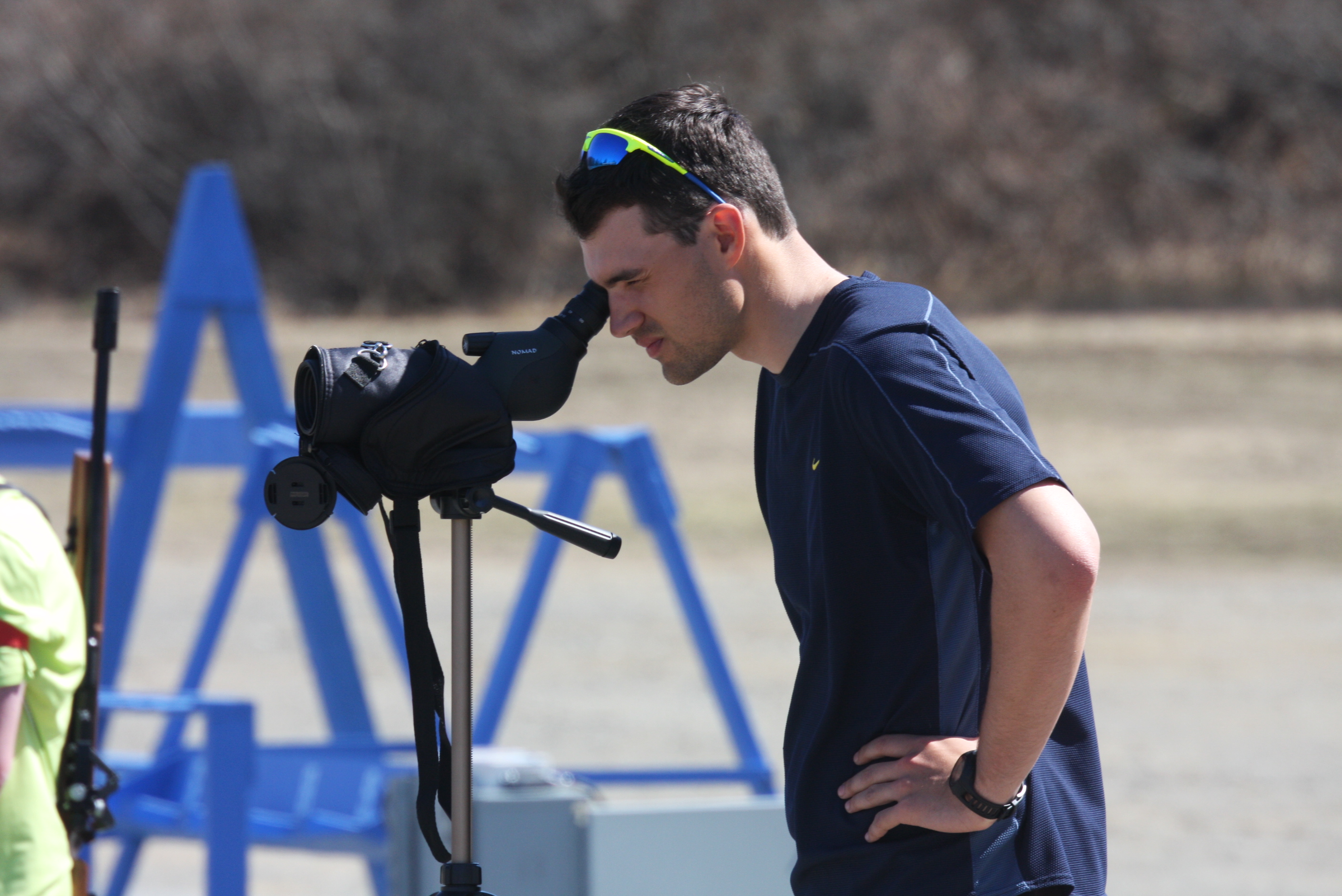
    Looking through the scope is something Dougherty has been doing plenty this summer. (Photo: Sam Dougherty)
    Looking through the scope is something Dougherty has been doing plenty this summer. (Photo: Sam Dougherty)

    That means managing the shots for athletes like World Championships medalist Tim Burke, World Cup podium finisher Lowell Bailey, World Junior Champion Sean Doherty, and American recordbreaker Susan Dunklee, and the rest of the team’s big names.

    “I’m still really star struck when I look down the scope for these guys,” Dougherty wrote. “I still have posters of them on my wall in Alaska. The biggest unknown for me going in was how I could assist in the development of athletes 10 years my senior that have achieved more success than I could’ve ever imagined in my own biathlon career.”

    But he is having an effect. Kahkonen wrote that Dougherty has quickly earned the respect of the athletes with his hard work.

    “Sam stood out [from other applicants] with his overall approach to it and his former career as a biathlete,” Kakkonen wrote in an email. “Now having Sam and working with him am I really happy that we selected him. He has a very good, calm approach to coaching and has a very open mind to keep learning as we go.
    Sam has been getting along really well both with the staff and more importantly with the athletes; he has the respect through his actions at training.”

    As the summer has worn on, Dougherty has been trusted with more responsibility.

    “More recently I have been given the opportunity to work one-on-one with the athletes, and even run some of the training on my own,” he explained.

    And when more bodies are needed, Dougherty relies on his own experience as a top-30 World Juniors finisher several years ago.

    “It’s also nice to know I’m capable of jumping into a shooting drill every so often,” he wrote.

    He’s now looking forward to the future. The internship will end on November 1.

    “I’ve been in contact with a few programs that may have a place for me after my internship is done, and I’m still looking to see what is out there for biathlon and Nordic management and coaching,” he wrote. “Wherever I decide to go I hope to positively impact the overall athlete experience… As an athlete I wanted to be the best. Once I started coaching, I realized that it was just as rewarding for me, and maybe all along I just wanted the team and the program to be the best.”

    And although coaching national-team athletes might seem a bit different than some of the other options open to a young coach, Dougherty has learned plenty that he hopes to take to another job.

    “At the national team level, athletes are much more involved in the planning and execution of their personal training plan,” he explained. “It’s much more collaborative. At this level it’s more about removing obstacles for the athletes than enforcing a universal training plan. It’s something I would incorporate if I coached a collegiate team in the future.”

  • In Land of Caribou Hunts and 10-Dollar Gas, Biathlon’s Message Rings True

    In Land of Caribou Hunts and 10-Dollar Gas, Biathlon’s Message Rings True

    U.S. national team biathlete Hannah Dreissigacker demos her sport for kids in a village in the Alaskan Arctic. Photo: Brendan Smith/ANTHC.
    U.S. national team biathlete Hannah Dreissigacker demos her sport for kids in a village in the Alaskan Arctic. Photo: Brendan Smith/ANTHC.

    Note: a quick read of Alex Matthews’ piece on NANANordic, published yesterday, will be helpful but not essential background.

    Anyone familiar with the NANANordic project – whether from a friend who has participated, reading about it online, or glimpsing tantalizing Facebook photos of skiing in the Arctic – will find Zach Hall’s account of how he got involved pretty familiar.

    “Lars (Flora) posted on Facebook that he was looking for volunteers to coach in the Arctic… and I jumped on the chance,” Hall, an Anchorage-based former U.S. national team biathlete, told FasterSkier.

    That’s the usual way the story starts: excitement at the chance to give something back while also getting something in return: a glimpse of a part of America that most people might go their whole lives never thinking about. The largest of the northwestern Alaskan region’s eleven villages has a population of roughly 3,000, a number that sounds tiny to city-dwellers and suburbanites alike; one that’s 1,800 miles from the northern border of the contiguous 48? It’s not a trip that many get to make.

    Noorvik students learning to ski under the blue sky of the Arctic. Photo: Chris Arend, NANANordic.
    Noorvik students learning to ski under the blue sky of the Arctic. Photo: Chris Arend, NANANordic.

    Then, the adventure begins, and those feelings only get stronger as athletes work with students who have zero background in skiing, a different view of the world, and seemingly boundless enthusiasm.

    “There’s something about being involved in a program that is launched and sustained by passionate people,” Hall said of his experience last year. “All the volunteer coaches were psyched to be there and the excitement was palpable from the students. I’ve been blessed throughout my ski career with so many people that invested time and energy into my development, and it’s fun and rewarding to be in a position to begin passing that on.”

    As it happened, Hall’s biathlon skills gave him an extra opportunity to pass it on, something that Flora quickly picked up on. He asked Hall and his girlfriend, current national-teamer Sara Studebaker, to bring their rifles along and introduce the kids in the village of Kiana to biathlon last year.

    It was such a success that Hall, who coaches a few juniors in the Anchorage area, took on the challenge of organizing a broader biathlon program for this year. From recruiting to logistics, he was in charge of getting biathletes to six different communities in the region.

    A Different Biathlon Introduction

    There’s a lot of reasons that Flora thought biathlon would be a good fit for the program.

    “The patience and focus needed to participate in biathlon is amazing,” Flora, an Olympic cross-country skier, told FasterSkier. “In addition, the time needed to learn about gun safety, and practicing marksmanship are extremely valuable for students and skiers.”

    But as Hall, Studebaker, and Flora learned when the biathletes demoed their sport in a single village last year, there are many more reasons that it was an excellent choice for the program. Unlike most people who are introduced to the sport through nordic skiing, the villagers could see real practical use in the combination of skiing and shooting. Furthermore, biathlon, which in modern times is a military sport, actually has its roots in their type of lifestyle.

    An aerial view of the town of Noorvik, where Susan Dunklee helped out as a coach.
    An aerial view of the town of Noorvik, where Susan Dunklee helped out as a coach. Photo: Chris Arend, NANANordic.

    “I would tell a story about the history of biathlon, tie in how peoples of the north have hunted on some form of ski for thousands of years and then describe the development of this most practical hunting method into one of the most popular winter Olympic sports,” Hall said.

    And the kids got the message; coach Susan Dunklee said that after a demonstration, there was always a group that wanted to hang around and talk with her about hunting.

    “The hunting link isn’t too hard to make for the kids since it’s such a way of life for them,” said Hall. “It’s convenient for villagers when the caribou pass near the village, but that’s not always the case. At over $10 a gallon, the price of fuel can make hunting on a snow machine cost prohibitive, so I also tried to get kids to think about skiing as a means of transportation that is economical and sustainable.”

    So the participants definitely “got” the first part of Hall’s message. But the part about how this activity, old and necessary, transformed into a sport where each race broadcast on television is watched by over 15 million people?

    They got that, too.

    “We had several kids that told us they want to go to the Olympics as skiers,” Hall said.

    Nuts and Bolts

    Sam Dougherty and a student checking out the ice in Kotzebue. Photo: Carol Richards, NANANordic.
    Sam Dougherty and a student checking out the ice in Kotzebue. Photo: Carol Richards, NANANordic.

    Besides looking at the big, inspirational and aspirational picture, Hall had to get down to the gritty details, too: how do you teach hundreds of kids a sport that involves an unfamiliar endurance component, as well as a firearm component with all of its associated safety headaches?

    The biggest lesson from his first year with NANANordic is that there’s no single by-the-book way to teach biathlon to the kids.

    “It’s important to be really flexible with the programming, so for this year the we wanted to get biathletes into a few more of the villages and then provide a framework for how to present biathlon but to ultimately leave it up to them to respond to the interest levels of the students as well as the climate of each village,” he said.

    As such, he and Flora, along with school administrators in the villages, decided that no bullets would be fired. That’s right: biathlon without bullets. They would get the participants familiar with the sport and the guns, and in future years incorporate actual shooting instruction (the kids were certainly clamoring for it). Flora reported that he and Hall are working on getting more rifles to use next year.

    Meanwhile, athletes in the six villages came up with a range of different ideas of how, and how much, to teach the sport. Many incorporated what they called “biathlon basketball,” combining skiing with the kids’ favorite other sport. Shots were taken into trash cans, and the penalty loop headed out around a ski pole stuck in the snow. Many of the instructors showed the kids the routine of skiing into a stage and shooting; Hannah Dreissigacker reportedly used a caribou fur as a shooting mat.

    In other places, biathlon was less actively included. One was Kotzebue, where several-time World Junior Championship team member Sam Dougherty had taken time off from school at Montana State University to travel as an instructor. His problem? The kids had a little too much enthusiasm.

    “Just because of the sheer number of hysterically infatuated and enthusiastic kids we had to have our eyes on, along with dozens of sled dog teams cruising around our usual ski spots in preparation for the big Kobuk 440 race, I decided it wasn’t a smart or safe idea to be wielding a rifle,” he explained. “My biathlon exposure was unfortunately limited to discussion with the older kids.”

    But despite that, he still thought it was a valuable addition to the program.

    “I related biathlon to hunting caribou. If you shoot and miss the caribou, it’ll run off and you have to chase it down to take another shot (penalty loop), but if you’re smart and steady you can take the caribou sooner and don’t have to travel as far,” Dougherty said. “It worked.”

    The goal of NANANordic is to create sustainable ski programs in the village; further developing a biathlon program could be a big draw to that, in that it creates another attraction and helps keep more different kids interested in skiing.

    “Overall I think what we did with biathlon was a success because it exposed kids to another facet of the Nordic skiing lifestyle, and they were really excited to learn more about the sport,” Hall said. “Rifles [are] another way to connect with kids and capture their imaginations. Some kids love the freedom of being able to go exploring, others just want to jump, and biathlon leverages their existing ties to firearms in a unique way that lets us pull them into the awesome world of Nordic.”

    A New Area, and New Champions?

    Both Hall and Dougherty have been Alaskan their whole lives, yet the experience of living in a village was completely new for them.

    “Like most Alaskans, I had never been farther north than Fairbanks and never off the road system before,” Dougherty said. “I really didn’t know what to expect… in the beginning I was a stranger in my own state.”

    “Bush Alaska” refers to the roadless area where all transport is by boat, plane, or snowmobile. Athletes were flown into the villages to coach; the absence of easy transportation means that life is much, much different than in the lower part of the state.

    But for Hall, it was also unbelievably rich.

    Future racers? Noorvik students go for a ski. Photo: Chris Arend, NANANordic.
    Future racers? Noorvik students go for a ski. Photo: Chris Arend, NANANordic.

    “I had conceived of the Arctic as being a desolate place with villages that were all pretty similar to each other,” he said. “It’s not that simple. The area can certainly be desolate, but at closer examination you realize that the region teams with fish and wildlife and the people who live there have fascinating cultures that are intricately linked to the landscapes and resources that surround them.”

    Dunklee was amazed at how the athletes were welcomed into the villages and befriended by family after family. Many were offered a full-access look at what it would be like to live in a village.

    “Skiing around the village we saw fresh dead caribou in the back of snow mobile sleds, as well as bear and wolf skins hanging from porches,” she said of her time in Noorvik. “One couple in the village, Dave and Audrey, invited us over to dinner several times. They hunt and gather a lot of their own food, such as caribou, swan, and blueberries… Fresh caribou meat was plentiful but I would crave fruits and veggies if I stayed there long term. The people were super friendly and welcoming- that part would not be hard to get used to.”

    Most of the kids in the NANA region will likely stay there. Dunklee said that some might move to Anchorage or other southern parts of the state – a few had already been through the city to visit relatives – but that life outside Alaska itself seemed very foreign to them. Her description of her home state of Vermont was met with mostly blank looks.

    But the introduction to skiing may be changing that. For one thing, the vast number of volunteer coaches, many of whom have international racing experience, provided another glimpse of the world to their students. Racing, too, might appear on their radar screen. The kids certainly have the talent.

    “I was so amazed at how fast these guys picked it up,” Dougherty said. “In one week, with every day being sub-zero temperatures, I was having to chase down kids that could give the middle school racing scene a run for its money in Anchorage… We had a great coaching staff, and with such an organized program, I wouldn’t be surprised if Alaska starts to see champion skiers coming out of the NANA region in years to come.”

    After the recent passing of Canadian champion Shirley Firth and the renewed focus on that country’s now-defunct Territorial Experimental Ski Project, we asked Dougherty if he thought something similar could be put in place in the NANA region. After all, the prospect of moving kids from village to village for ski races is fairly daunting.

    But there is a “no road” ski conference a few hundred miles south in a different group of villages, and Dougherty said that Alaska provides other opportunities, too, for kids to start to get involved in racing if they want to.

    “The Arctic Winter Games is a sports competition for countries that touch the Arctic Circle,” he explained. “I went for snowshoe biathlon in 2006, and it’s a great way to get international race experience at a young age. The Russians and Norwegians are always very good. Qualifying for Team Alaska is split up by regions of the state, so the bush areas are always represented at these events as well as urban Alaska… I do know that many village kids look at Arctic Winter Games as the highest level of competition. I certainly did when I went as a youngster.”

    For Grownups, too

    Finally, while NANANordic is undoubtedly focused on the kids, Hall couldn’t deny that it was fun to give another group of athletes the chance to join the NANANordic experience.

    “It didn’t take too much arm twisting to get other biathletes involved,” he said. “I’ve always felt that travel is one of the best ways to challenge the assumptions we all carry of places we’re not familiar with and NANANordic is doing a great job of creating what amounts to a cross cultural exchange that benefits everybody involved… I anticipated that the program would have a big impact on each of them and based on the feedback I’ve received so far, it did.”

    The athletes weren’t just being nice when they talked to Hall; the experience had made a deep impression on them.

    “We spent our time playing games on skis, just delighting in being outside, in being active, and sharing that with other people,” said Susan Dunklee, the top-ranked American woman on last year’s World Cup circuit. “Sometimes in the middle of the race season you can lose sight of what you love about skiing, and this was a great reminder for me.”

    The trip wasn’t quite all fun and games; athletes also had the chance to challenge themselves in a way that was every bit as tough as racing, but also completely different. They were offered the opportunity to ski from one village to the next.

    “Dylan Watts, Odin Brudie and myself skied 35 miles to Selawik,” Dunklee said. “We carried heavy packs with food, dry clothes and water, plus a rifle for safety. It was cold enough that I wasn’t able to stop moving for more than a couple minutes at a time or my fingers went numb. Going into it, I was very confident in my ability, but it turned out to be surprisingly tough. We skied for 6 hours and I bonked hard the last few miles. I recovered at the end by eating a piece of muktuk [whale blubber].”

    Last year, when Hall and Studebaker skid 48 miles from Deering to Buckland, 30 of that over pack ice, they surprised themselves and everyone else.

    “Kids in both villages couldn’t believe that it was possible because nobody had ever done it before,” Hall explained. “Trips like that are typically reserved only for airplanes, snow machines and the occasional dogsled.  With one long ski we opened their imaginations to how incredible and capable the human body is!”

    For Dunklee, who had never been to Alaska even to race, the trip opened up the wonders of the state, too.

    “The terrain was mostly flat and treeless with some big hills off to one side,” she said. “Sometimes when the fog lifted we could see the trail stretching out for miles ahead of us. We passed wolf tracks and a herd of caribou.”

    It will be a memory to hang onto as athletes hit the roads and trails this month, writing another season of hard training into the books.

  • Doherty and Geraghty-Moates Top-Twenty in Youth Biathlon Sprints; Turning Point for U.S. Team?

    Doherty and Geraghty-Moates Top-Twenty in Youth Biathlon Sprints; Turning Point for U.S. Team?

    Sean Doherty fighting for seconds at the end of his 13th-place sprint effort. Photo: Judy Geer.

    In the first four days of racing in Kontiolahti, Finland, American hopes for its biathletes just hadn’t panned out. In race after race at the World Youth and Junior Championships, the U.S. racers were held back by one thing after another. They notched a few finishes in the high 20’s and 30’s – and mostly placed far lower on the results sheet.

    On Friday, two Americans broke out of the slump and raced into the top-twenty, collecting the best results of their careers so far.

    “Just got back from the venue and definitely with more of a smile on my face,” U.S. coach Algis Shalna told FasterSkier after the race.

    Sean Doherty of Conway, New Hampshire placed 13th in the youth men’s 7.5 k sprint and Tara Geraghty-Moates of West Fairlee, Vermont placed 18th in the youth women’s 6 k sprint.

    Geraghty-Moates clocking in the ninth-fastest ski time of the day. Photo: Judy Geer.

    “I’m stoked,” Geraghty-Moates told FasterSkier in an e-mail. “Everything has been going smoothly: the coaching staff here has been completely on their game, the wax has been fast, the weather is warmer than we predicted… I’ve just been having a stellar week so far, and I’m hoping to keep the trend going.”

    Doherty, who could not be reached for comment, missed a single shot and finished 1:48 behind winner Johannes Thingnes Bø of Norway. Bø, whose older brother Tarjei won the overall World Cup last season,  raced to a colossal 50-second victory. Behind him, the field was tightly packed; Doherty was 56 seconds from the podium and eight from the top ten.

    “Great shooting and fast skiing put him in a competitive position for pursuit race,” Shalna said of Doherty’s performance. “The pursuit will be very challenging for all of them and will require a lot of effort to control the emotions on the range and speed control on the skiing course.”

    The result was reminiscent of Doherty’s other successes this year, including 12th– and 14th-place finishes and a strong relay leg at the Youth Olympic Games.

    For Geraghty-Moates, the 18th-place finish is a big improvement. She had placed 44th in Monday’s individual race, and her top finish at 2011 World Youth Championships was 57th. In those races, she had been plagued by poor shooting, but on Friday she only missed two of ten targets.

    Sam Dougherty, 35th place. Photo: Judy Geer.

    “I’ve been pretty happy with my shooting so far,” Geraghty-Moates wrote. “All my races are consistent with the results I’ve been having so far this year – all way better than last year.”

    A former standout nordic combined athlete who has a cross-country background, Geraghty-Moates picked up biathlon in 2010. Shalna, who is one of the Vermonter’s coaches back in the States, was impressed with how far she’d come in a short period of time.

    “Tara had an excellent performance that exceeded my expectations,” he said. “Most importantly her shooting performance was beyond my goals for this race. Considering the level of competition and being only her second year in biathlon, 80 % shooting is a very solid performance.”

    Predictably, Geraghty-Moates, who has a history of top-five finishes at cross country junior national championships, was quick on her skis.

    “She had 9th-fastest course skiing time, and it was only 54 seconds from the winner and nine seconds from the [second-fastest skier],” Shalna said. “This is a pretty good example how a competitive former skier can get among the best in the world in biathlon if you have skiing speed, even with the the short amount of time for shooting.”

    Of course, things didn’t go perfectly. After being thrilled to clean her prone stage, Geraghty-Moates succumbed to pressure in standing.

    “I was in sixth coming in to the standing, but I made the mistake of looking at the result board coming into the range before standing and realizing that if I cleaned I had a shoot at the medals,” she wrote. “Of course then I proceeded to miss two shots, but that was predictable.”

    Nick Proell, 40th place. Photo: Judy Geer.

    Both Doherty and Geraghty-Moates have had to get creative with their training this year, given the lack of snow in New England (as with many other parts of the U.S.). While competing against the best biathletes in the world might be intimidating when on-snow training has been scarce, Geraghty-Moates said that in a way, it had prepared her well.

    “I think the shitty conditions we’ve had back east actually ended up helping me because I’ve been skiing up Storrs Hill [alpine] ski area for a lot of my training,” she explained.  “This means that the hills here don’t look über huge even when they’re half a kilometer long.”

    Geraghty-Moates had said after the relay that the course suited her, and that the hills “kept me on my toes.” Friday’s conditions made her even happier.

    “Today it was warm and a little icy which made the fast course even faster, a plus in my book,” she said.

    The rest of the U.S. team struggled to keep up with Doherty and Geraghty-Moats. Anna Kubek, who had led the U.S. women in the individual with a 30th-place result, missed half of her shots and placed 67th, missing the 60th-place cutoff for Sunday’s pursuit. The result was an unexpected blow to the American squad.

    “The race did not go well for Anna, who is a great young athlete,” Shalna lamented. “Her shooting was not as good what she is capable of, but biathlon can be a roller coaster and the less experienced you are, the more roller coaster rides you get.”

    Mikaela Paluczek and Melissa Manning will be joining Kubek as spectators on Sunday after placing 65th and 71st. Both are first-time international competitors.

    “None of the last three girls made the pursuit race on Sunday, but for all of them the races over the last week were a priceless experience for becoming better biathletes in the future,” Shalna said.

    On the men’s side, Sam Dougherty and Nick Proell placed 35th and 40th after missing two and one shots respectively. They are separated by just 12 seconds – less than the time it takes to ski a penalty loop – and Dougherty is just 13 seconds from the top thirty and less than a minute from the top fifteen going into Sunday’s pursuit.

    Jake Prince rounded out the squad, placing 80th with five penalties.

    Results: youth men’s sprint / youth women’s sprint

    Melissa Manning, exhausted after her final effort of the championships. Photo: Judy Geer.
  • French Men, Ukrainian Women Post Big Victories in Youth Biathlon Relays

    French Men, Ukrainian Women Post Big Victories in Youth Biathlon Relays

    The start of the youth men's 3 x 7.5 k relay in Kontiolahti, Finland on Wednesday. Photo: Judy Geer.

    On Wednesday, Kontiolahti, Finland, became a venue that was hospitable for biathlon for the first time in perhaps several weeks.

    After the bitter cold of the World Cup races two weeks ago, a general lack of sunlight, and a persistent wind that has dogged even the best shots at World Youth and Junior Championships this week, today’s balmy sunshine was a welcome reprieve.

    Geraghty-Moates in action. Photo: Judy Geer.

    “Today was an amazing bluebird day and there was almost no wind,” U.S. racer Tara Geraghty-Moates told FasterSkier in an e-mail. “We couldn’t really have asked for better conditions. My favorite thing about Finland so far is the snow – unlike at home we have a ton of it here!”

    No team capitalized more on the relative calm than the Ukrainian youth women, who over eight shooting stages, or a total of forty shots, missed just four and thanks to the use of spare rounds avoided the penalty loop completely. Yuliya Zhuravok, Yuliya Bryhynets, and Anastasiya Merkushyna raced to a 58-second win in the 3 x 6 k relay, besting runner-up Sweden by a landslide.

    Bryhynets took the lead after her first shooting stage, and by the time she tagged off to anchor Merkushyna had amassed a lead of almost a minute – which actually intimidated her teammate.

    “It was very difficult to go with such a big lead,” Merkushyna told the IBU news service after the race. “My legs were shaking; that is not normal. My hands were shaking and my head stopped working. I only thought ‘please shoot as normal as possible.’”

    Good shooting was the order of the day for the women’s race: the Swedes used six spare rounds and the third-place Austrians five. The same could not be said of the youth men’s  x 7.5 k relay, where only three of the 22 teams used fewer than ten spare rounds and most ended up in the penalty loop at least once.

    While the French led the men’s relay from start to finish and ultimately won by 38 seconds, that outcome didn’t seem certain when the racers entered the range the final time. French anchor Aristide Begue, who won the individual competition on Monday, needed all three spare rounds to clean his targets, and almost all of the leaders missed with at least one bullet.

    That was what saved Begue, who was able to leave the range with a 22-second lead and then extend it in the last loop of skiing to hang onto the win for teammates Clement Dumont and Florian Rivot.

    The Swedish youth men’s team placed second and the Germans third; the most exciting finish of the day came when Kazakhstan, Italy, and Belarus sprinted to the line for fourth-place honors, with the Kazakhs beating out the Italians by just 0.1 seconds.

    Top-Ten Finishes For Both Canadian Teams

    Sarah Beaudry anchoring the Canadian women to eighth place. Photo: Judy Geer.

    The Canadian women placed eighth today and the men ninth; coach Richard Boruta was satisfied with the results, but no more.

    “I think it has been a relatively good day, probably reflecting our current position in this category in the world,” he told FasterSkier in an e-mail.

    The women used only six spare rounds, all in prone. Rose-Marie Cote used two in the opening leg, and tagged off in 13th, roughly a minute and a half behind the leadrs.

    “Rose-Marie had a good shooting day, but her ski speed this week is not quite there,” Boruta said.

    The performance of the day came from Julia Ransom, who is fresh off a top-ten finish in the individual race. Using a single spare round in prone and cleaning her standing stage, Ransom also excelled on the trails, turning in the third-fastest time for second-leg skiers and moving the team up to eighth. Sarah Beaudry held the team’s position despite hitting the penalty loop once.

    “Julia actually had a really good race,” Boruta said. “She was third overall in her leg and she had a good shooting performance as well. And for Sarah, her ski speed is fine, but her shooting seems to suffer this winter a little bit.”

    Albert Bouchard. Photo: Judy Geer.

    In the youth men’s race, both Stuart Harden and Christian Gow turned in strong performances, and after two legs the Canadians were sitting in sixth place, just 30 seconds behind the winning French team – despite having already used eight spare rounds. After anchor skier Albert Bouchard was stuck skiing three penalty loops, the team dropped to ninth.

    “It was a very interesting race for first two legs and both Stuart and Christian raced up to their potential,” Boruta said. “Christian has been skiing really well and he has a good chance to do very well in the sprint race.”

    Gow placed 11th in the opening individual race, and after that effort told FasterSkier that he was looking forward to races that placed more of an emphasis on skiing rather than shooting.

    “Looking at the results though I am happiest at the potential I see moving foward into the upcoming races,” Gow explained. “I now know that I am very competitive with the top of the competition. I think that in the sprint, pursuit, and relay to come I will be able to really push on the skis, and I would consider my skiing to be my strength in biathlon.”

    Gow mixes straight cross country races into his competition schedule in Canada, so he knew that he’d be ready in that regard.

    “I have done more biathlon than cross-country races [this year], but not much more,” he said. “I find that doing the ski races helps to keep myself in check with my ski speed; they are the best test to see how fast I am going at any point in the season.”

    Young Americans Gain Experience With Relay Finishes

    Anna Kubek kicking things off for the U.S. Photo: Judy Geer.

    If the Canadians were lukewarm about their relay results, then the Americans were luke-cold after placing 13th in the women’s relay and 15th in the men’s.

    “I can’t say we are happy with their results, but we are happy seeing kids racing hard and giving their best,” U.S. coach Algis Shalna told FasterSkier.

    The women’s team matched their result from the 2011 event, but second-leg skier Geraghty-Moates pointed out that the Americans had actually skied a better race, despite being comparatively younger than last year’s squad.

    “There was a much larger field from last year, so I think our overall performance was much better,” she wrote. “Last year we were close to 13 minutes off the pace, this year we were only 6:53 off the pace. When Anna tagged me she was a minute back. I was able to hold her tenth place, but I lost some more time off of the leaders.”

    In Shalna’s view, that’s not bad given that leadoff racer Anna Kubek and Geraghty-Moates are both relatively new to the sport, having started in 2010, and anchor Melissa Manning is at her first World Junior Championships.

    Kubek coming in for the tag to Geraghty-Moates. Photo: Judy Geer.

    “Two girls had good performances, especially Anna, who shot well – no penalty loops – and skied well, tagging to Tara in tenth place one minute back from the leader,” Shalna said. “Tara skied very strong but had a penalty in prone, but she is second year in biathlon and this is a very respectable performance. Her range times were slower than top biathletes in the world, but she just needs more practice time and experience racing.”

    Manning also hit the penalty loop, and dropped the team to 13th.

    “Melissa, as a first year on the team, worked hard to keep us where we were,” Shalna said. “Is not easy to compete at this level the first time, with a lot of excitement and a fair amount of pressure.”

    Geraghty-Moates was honest in her assessment of the team’s performance, but still positive.

    Sean Doherty awaiting the handoff. Photo: Judy Geer.

    “We are definitely off the European pace but we’ve made huge progress from last year,” she said. “For me it’s important to keep it all in perspective and just focus on making improvements one at a time.”

    The youth men finished 15th after a promising start by Sam Dougherty, who hovered around tenth place for most of his leg.

    “The boys could have done a little better and placed around tenth to twelfth place, but few penalties did not favor them,” Shalna said. “The best race was for Sam who had good start, them cleaned his prone shooting and used only one extra round to clean the targets. It was solid performance for him skiing and shooting.”

    Sean Doherty kept the momentum going and lost only one place over the course of his leg despite hitting the penalty loop twice; Nick Proell replicated Doherty’s shooting errors, and the team eventually slipped to 15th.

    “Sean skied well but struggled on both shooting staged and had one penalty on each,” Shalna said. “He was making time on skiing, but the extra time on the range to use spare rounds kept us from getting any closer [in the last two legs].”

    Results: youth women’s relay / youth men’s relay

  • Gow 11th in Youth Biathlon Individual; Americans Place Doherty and Dougherty in Top 30, Career-Best for Each

    Gow 11th in Youth Biathlon Individual; Americans Place Doherty and Dougherty in Top 30, Career-Best for Each

    Christian Gow of Canada (bib 19) catches his breath after an 11th-place finish. Photo: Judy Geer.

    The U.S. team at biathlon World Youth and Junior Championships in Kontiolahti, Finland, is hoping that things will heat up in the next few days – both literally and figuratively.

    “It has been pretty cold all week but it warmed up today,” American racer Anna Kubek told FasterSkier.

    At World Cup races one last weekend, the Finnish venue flirted with legal temperatures and athletes swaddled themselves in layer upon layer of clothes, as well as rendering their faces expressionless with protective physio tape. For most of the juniors’ training days, similar conditions prevailed.

    Today, temperatures were listed in the balmy mid-20’s Fahrenheit at race time, and the trend should continue for the rest of the week.

    Kontiolahti provided plenty of other challenges on this opening day of competition, however. The youth biathletes, who were contesting individual-format races, had to contend with strong and shifting winds as well as uncharacteristically soft snow.

    Julia Bartolmaes of Germany and Aristide Begue of France had no trouble racing through the powder, besting fields of over 90 athletes each, all born no earlier than 1993, en route to collecting wins of 18 and 47 seconds respectively in their 10 and 12.5 k races.

    New Hampshire racer Sean Doherty leading the U.S. in 26th place. Photo: Judy Geer.

    For the U.S., the individual races weren’t a wash – but they weren’t spectacular either.

    “Today was pretty good day for us and better than last year when we started World juniors,” said U.S. Biathlon Association coach Algis Shalna, who also works at the Ethan Allen Biathlon Club in Jericho, Vermont, and with Vermont Collegiate Biathlon. “The championships just started and we’re hope for more good results.”

    The team was hampered by poor shooting, with the best shooter, Sam Dougherty, missing five shots and the worst, Jake Prince, twelve of a possible twenty. Plenty of racers struggled on the range – only the winner had a single penalty, and only the runner-up had just two – but the U.S. was left wishing it had shot better.

    “With the increased psychological element of a one minute penalty for each missed shot, it’s easy to look back with a woulda-shoulda-coulda attitude,” Dougherty told FasterSkier, before adding that he was relatively happy with his performance given the conditions.

    The top two results, predictably, came from two similarly-named Americans who had attended the championships last year: Sean Doherty of Conway, New Hampshire, and Dougherty, who is a native of far-away Anchorage, Alaska. Doherty placed 26th and Dougherty 28th after missing seven and five shots, respectively, and receiving an additional minute of time for each penalty.

    “These results we are considering pretty good for our youth group,” Shalna said.

    Doherty and 55th-place Nick Proell are the youngest members of the U.S. men’s squad, but they both already have international experience this season after representing their country at the Youth Olympic Games last month.

    Dougherty charging down the finishing lanes. Photo: Judy Geer.

    Doherty in particular was expected to succeed in Kontiolahti; as the top qualifier to the Youth Olympic Games, he hadn’t even attended World Junior trials. And in Innsbruck, he finished 12th and 14th in the sprint and pursuit races before turning in a seminal leg of the third-place U.S. mixed-sport relay.

    In Kontiolahti on Monday, seven penalties were too much for Doherty to overcome; his ski time was the 27th-fastest, and he ended up just under six minutes behind Begue

    Dougherty, who also competed at World Juniors last year, was 17 seconds and two places behind him. Both collected their best World Juniors finishes to date.

    “This time around at World Juniors has been a lot more relaxed for me. I know what to expect so I can now focus solely on performance,” Dougherty said.

    Dougherty, who in his last year as a youth is considerably bigger than some of his competitors, said that the conditions weren’t ideal for him – “I had to muscle my way through the course a little more than the smaller racers” – and that he considers the individual his weakest discipline, so he’s hoping to improve on his finish in the upcoming races.

    As for the wind, which is always a factor in Kontiolahti? It didn’t faze him.

    “I’ve become accustomed to shooting in all types of wind from my years in Anchorage, and I’m comfortable with making mid-race sight adjustments,” he explained. “This came in handy today with the wind being so erratic.”

    Unlike Doherty, Dougherty hasn’t competed in any high-level biathlon races this year. In fact, he’s barely done any biathlon races in general. A student at Montana State University, Dougherty tried to walk on to the varsity ski team, but was turned down.

    Gow on course. Photo: Judy Geer.

    “The majority of my training this season has been on my own. It wasn’t an ideal situation, but I’m happy that this hasn’t slowed me down any,” he said. “I’m a firm believer that nordic performance above all is key to being a good biathlete, and with that mentality I’ve entered every nordic race available to me this season.

    “Due to school I haven’t been able to travel for Nor-Ams or any other upper-level races this year, so my biathlon racing experience this year has been extremely limited,” he continued. “One day I will have the time and funding to establish myself on the Nor-Am circuit.”

    Dougherty’s fellow Alaskan, Prince, rounded out the scoring by placing 83rd.

    The Canadian team was led by Christian Gow, who placed 11th; he could not be reached for comment. Gow was followed by Albert Bouchard in 36th, Stuart Harden in 38th, and Carsen Campbell in 41st.

    youth men’s results

  • Dreissigacker, Del Frate, and Geraghty-Moats Dominate as Junior Biathlon Trials Kick Off in Anchorage

    Dreissigacker, Del Frate, and Geraghty-Moats Dominate as Junior Biathlon Trials Kick Off in Anchorage

    Kelly Kjorlien (Mount Itasca) leads Andrea Mayo (BATCave) and Melissa Manning (Maine Winter Sports Center) in the first day of racing in Anchorage, Alaska. Photo: Judy Geer.

    Today in Anchorage, World Youth/Junior Biathlon Championships Team Trials kicked off with a bang – or lots of bangs, as rifles knocked down target after target at Kincaid Park’s world-class shooting range. Thirty-eight athletes from teams in seven different states converged on the Alaskan racing mecca’s trails — which are luckily one of the few spots in the U.S. to have plenty of natural snow.

    The championships themselves won’t happen until February in Kontiolahti, Finland, where youth (17 and 18 years old) and junior (19 and 20 years old) racers will compete for international titles. The U.S. will send up to four athletes of each gender in each age division, with two racers prequalified based on leading the Youth Olympic Games nominees: Sean Doherty of Saratoga Biathlon and Anna Kubek of Mount Itasca, who was also nominated to the senior IBU Cup team last week. In their absence, the rest of the team will be picked by the best two of three races as measured by percent back.

    Sprint racing was the order of the day, with youth men and youth and junior women racing 7.5 kilometers, and junior men 10; Juniors are 19 to 20 years old and youth 17 to 18, although some competitors in the youth division are actually even younger. Sprints consist of only two shooting stages, prone followed by standing, for a total of ten shots for each competitor. Missed shots mean a trip to the penalty loop.

    Dreissigacker. Photo: Judy Geer.

    In the first race of the day, the junior men, Vermont Biathlon/Craftsbury Nordic Ski Club athlete Ethan Dreissigacker was nearly perfect on the range and skied to a 1:17 win over Maine Winter Sports Center’s Ben Greenwald. Both men missed a single shot, Greenwald in prone and Dreissigacker in standing. Starting fourth, Dreissigacker’s skiing propelled him past most of the previous starters; as he neared the finish, he closed in on Casey Smith of Methow Valley Biathlon, but the Washington athlete was able to turn on the afterburners and cross the line first en route to a third-place finish in the division. All three men were members of last year’s team, although Smith was a youth, and this is his first year racing as a junior.

    In the youth men’s race, the margin of victory was a bit smaller with Sam Dougherty, Jake Prince and Nick Proell all finishing within 30 seconds; the men also had three penalties each, meaning that they skied very similar times. Dougherty, the only athlete in the field who has already competed in a World Youth Championships, ended up edging his Alaska Biathlon teammate by 22 seconds, with Minnesota Biathlon’s Proell — who will be representing the U.S. at the Youth Olympic Games in January — finishing just behind them. Two more athletes, Kyle Rutar of Casper Mountain Biathlon and Erik Rupert of the Maine Winter Sports Center, finished within twenty seconds of Proell and remain close in the percent-back rankings.

    Kimberly Del Frate. Photo: Judy Geer.

    Kimberly Del Frate of Alaska Biathlon dominated the junior women’s division, winning by over a minute and a half despite two trips to the penalty loop. While three previous World Youth Championships competitors were in the field, none had represented the U.S. as a junior, and two of them — Andrea Mayo of BATCave and Silke Hynes of Vermont Collegiate Biathlon — finished at the bottom of the field. Kelly Kjorlien of Mount Itasca, a leader of last year’s youth delegation, finished second after cleaning both shooting stages, while Del Frate’s sister Amanda picked up third place with four penalties, narrowly beating out Danika Frisbie of Vermont Collegiate Biathlon.

    Finally, Tara Geraghty-Moats of Vermont Biathlon/Craftsbury Nordic Ski Club won the youth women’s sprint by 1:03 despite hitting just half of her targets. The Vermonter was the only returning team member in the field, and it showed; second-place Melissa Manning of the Maine Winter Sports Center had three penalties and Jenna Ruzich of Nisswa NW four. Using the precent-back measurements, Geraghty-Moats had the most dominant win of the day.

    Racing continues on Thursday with pursuit competitions.

    Full results (Excel spreadsheet)

    Dougherty sprinting off the start line. Photo: Judy Geer.
    (l-r) Dreissigacker, Greenwald, and Raleigh Goessling (Maine Winter Sports Center) settle in on the range. Photo: Judy Geer.
    Geraghty-Moates en route to a big win. Photo: Judy Geer.
    Dreissigacker at the start. Photo: Judy Geer.
    Dougherty, Prince, and Proell on the podium. Photo: Judy Geer.
  • Anchorage’s New World-Class Biathlon Range Is a Game-Changer

    Anchorage’s New World-Class Biathlon Range Is a Game-Changer

    Participants in the first-ever "Eagle Eyes" camp last March in Anchorage, Alaska. Courtesy photo.

    Anchorage has long been home to many of the country’s best nordic skiers. With elite teams like APU, Alaska Winter Stars, the University of Alaska Anchorage, several strong high school programs, and a thriving recreational and masters race scene, skiers couldn’t ask for a more supportive community.

    But biathletes? That was another story.

    “I started biathlon in 2003, back when the Kincaid [shooting] range was at its old location,” 2011 World Junior Championships team member Sam Dougherty wrote in an e-mail to FasterSkier.

    “The old range was equivalent to many of the ranges across the country at the time, with metal pull-string targets and carpet mats for prone shooting. [It] was built into a hill, so wind was a major factor in shooting accurately. The range had the usual problems: rusty paddles, broken prone targets, and so on. There were no lead traps, and all shots fired would inevitably land into the side of the hill.”

    While Dougherty said that the old range was good to learn on, it certainly wasn’t perfect.

    But all of that began to change in 2007, when the range was upgraded and moved to a new location as part of an $11 million project to support a variety of sports at Kincaid Park, the site of the 2009 and 2010 cross country national championships.

    “When I trained there, I regularly had to deal with target paddles that broke off in the middle of practice,” two-time Olympian Rachel Steer told FasterSkier. “The new biathlon range, built to World Cup standards including a 30-point Hora target system, is located in an area that is less windy and offers many more trail options.”

    The range is still awaiting its finishing touches, including a range house and paved loops connecting to the ski trails for summer training. But already, it has made a difference for Anchorage’s biathlon community.

    “We’re growing, and the new range has been a big spark for us,” said Tom Grenier, the biathlon committee chair of the Nordic Skiing Association of Anchorage (NSAA).

    Olympic Support, Olympic Standards

    Steer is only one of many biathletes to have trained in Anchorage: for fifteen years spanning the late 50’s, 60’s, and early 70’s, the city hosted the U.S. national team at Fort Richardson.

    Among the dozens of young men who trained there was Dick Mize, who represented the U.S. in two World Championships as well as the 1960 Olympics. According to Mize, Anchorage hasn’t always been the ski paradise that it is now.

    “Back in 1958 is when they established the biathlon training center out at Fort Richardson,” he told FasterSkier. “I was in the army with several other skiers from Western State College, and we were transferred to Anchorage to be part of that unit. We were skiing on the golf course and then started designing the Arctic Valley biathlon range.”

    After finishing his career as a biathlete, Mize moved to Anchorage permanently to teach in the local school system and coach skiing. Once again, he was faced with only one real set of ski trails: the golf course.

    Since then, Mize has been relentless in his quest to develop more and better ski trails in the city. He listed Russian Jack Springs, Kincaid Park, and the Service High School systems as several of the many projects he had contributed to; he also helped Kincaid become one of the first ski areas in the country to go through the FIS homologation process. This year the Alaska School Activities Association inducted Mize into their hall of fame, noting that “there are few individuals that have contributed more to Nordic skiing than Dick Mize.”

    So it’s not surprising that Mize eventually set his sights on a new biathlon range for Anchorage.

    “In 2003, Dwayne Adams met with a small group of us out at Kincaid… we were talking about [soccer and snowmaking], and I felt that if we were going to do some major construction out at Kincaid, that the biathlon range really needed to be upgraded,” he said.

    Adams eventually created the Kincaid Project Group (KPG), a nonprofit organization with a mission to “create world-class, year-round recreational opportunities at Kincaid Park for the benefit of Anchorage and the greater Alaskan community.” Both Mize and Steer joined the board.

    “As more enthusiastic and motivated people got involved, the project gained momentum and increased its scope to relocating the old biathlon range, building seven natural turf fields and one stadium-style artificial turf field, a new disc golf course and an in-ground snowmaking/irrigation system,” Steer wrote. “While I have been on the board of directors for many years, it has truly been a collaborative effort to make this vision a reality.”

    Although then-governor Sarah Palin vetoed a legislative funding request in 2007 and cut a million dollars out of the 2008 request, KPG has come up with nearly all of the money to fund its projects. The old biathlon range was scrapped, resurfaced, and included in an area devoted to soccer fields; nearby, a brand-new, state-of-the-art range was constructed.

    (The soccer fields on the site of the old range are facing legal issues due to lead contamination, a topic that FasterSkier will examine in a later article.)

    “Since this project includes so many stakeholders, we have had broad support from community organizations, private businesses and the public sector,” Steer said. “Even U.S. Biathlon Association [President] Max Cobb made a last-minute trip up to Alaska a couple of years ago to offer guidance on layout and design when we were looking at the new biathlon range location.”

    The range in winter.

    While fundraising is still in progress for projects such as the range house and paved connector loops linking the range to other ski trails, the core of the range is complete, and it’s one of the best in the country. Out of the handful of venues which have a full 30 points, many still rely on hand-pulled targets. In Anchorage, that isn’t necessary; there’s a Hora electronic target system instead.

    “We have pretty much the same equipment they’d be looking at on the World Cup circuit as far as the electronic targets and the resets and the look of the range,” Grenier said. “So once you’re on the firing line looking down you’re essentially looking down at a World Cup-level facility.”

    The venue will host the U.S. World Junior Championship Trials in December, and Grenier hoped that a successful race series would position Anchorage as a potential host for other big events.

    “We’re trying to build up a reputation of being capable for that stuff,” he said. “We’re doing that by hosting our second World Junior Championship Trials this December. We did that two years ago and the races were really well-received. So we’re hoping that we’ll have that quality event again, and hopefully build on that to get a nationals bid, and take it one step at a time from there.”

    Mize was more upfront about his hopes for the venue.

    “We could easily host our national competitions,” he told FasterSkier. “I’d say that once we have our range building completely finished up and have everything out there including a small snowmaking system, we can host regional and World Cup races as well as Nationals. We’re set up so that we can host almost any type of race.”

    It’s quite a change from when Mize first arrived in Anchorage, and the improvements are symbolic of a resurgent biathlon community in the city.

    Eagle Eyes

    Biathlon in Anchorage is a division of the NSAA, and it’s run with an almost entirely volunteer coaching staff. While the club has produced excellent juniors, it’s surprisingly small for such a ski-crazed town.

    “We aren’t the largest biathlon community, but we have a ton of dedicated volunteers and athletes,” said Dougherty, who is now at Montana State University.

    The key to growing the club, according to Grenier, is to get a greater number of young skiers involved in the sport early. With that in mind he launched a new entry-level biathlon program last March.

    Eagle Eyes participants. Courtesy photo.

    “Eagle Eyes”, as the program is called, began as a day camp during winter vacation. Grenier decided to keep running practices through the summer, and was surprised at the turnout; he had eight to twelve young athletes coming to almost every practice, with a few more attending less regularly.

    “I thought it would die off when the snow went away, but we’ve pretty much had a consistent turnout throughout the summer, and now with the snow coming back, turnout is starting to climb up again,” Grenier said.

    This fall, the NSAA added a button to their online ski registration form that parents could check to receive information about biathlon. So far, Grenier has received 70 requests.

    “My limiting factor is being able to find coaches,” he said. “The guys I want to use are all our older juniors, and they’re all college-age, so they’re not in town or frequently they are taking night classes. [I want to have] a good coaching ratio for everybody.

    “And then my other limiting factor is just having enough rifles.”

    Dougherty, who was once a junior just like the Eagle Eyes participants, credited the surge of awareness about the sport to the new range.

    A young shooter uses a wooden block to steady his rifle. Courtesy photo.

    “The range has also drummed up people’s interest in biathlon,” he said. “I am excited to see our biathlon community start to grow again.”

    Even though he’s having trouble finding enough coaches and equipment, Grenier hopes to develop the Eagle Eyes program even more.

    “I’m hoping to expand it from a one weeknight program to a two weeknight program, and have a second opening on weekends for kids to get together,” he said. “So far it’s growing nicely and interest is really solid. Hopefully I should be able to have 20 or 30 kids training consistently for biathlon in a year or two, which would be wonderful… We’re hoping to build a base of kids who will stick with the sport and become leaders for more high-end juniors.”

    Catering to the Elite

    While Grenier is working on entry-level programs at the moment, improving the club’s service for elite biathletes is also in the plans. One of the biggest changes will come when the group can finally hire a full-time biathlon coach.

    “If we have a good facility like we have now, hopefully we’ll be able to hire a coach whose primary job would be developing and working with biathletes,” Mize said.

    While that goal is still unmet, the new range has already made a huge difference for the area’s athletes.

    Sam Dougherty (USA) shooting in the youth men's individual race at 2011 World Junior Championships. Photo: Judy Geer.

    “I believe that training at the Kincaid range has definitely helped me become a better biathlete, not only because it is such a nice facility, but because I feel like I have to live up to its impressiveness,” Dougherty said. “The new range helped motivate me to become a better shooter and the best biathlete I can be. I think every biathlete in Anchorage feels that way.”

    Mize hopes so, and also hopes that the facility – and the future full-time coach – would lure some athletes away from skiing.

    “I think we are competing for athletes with just the regular cross country,” he said. “Each coach wants to keep their skiers on their schedule. But when we finally have a coach in place, I think the coaches from the high schools and also the universities and other areas can work together so that the individuals who are really interested in biathlon can do biathlon as well as their regular cross country program. Hopefully there can be some coordination there that will help.”

    Once skiers become interested in biathlon, Dougherty was confident that the shiny new range would keep them coming back. Even after a few years of training there, he is still awestruck by the new facility.

    “The new range has it all,” he said. “Sheltered electronic HoRa targets from Germany, a concrete barrier behind the targets, shooting specific shooting mats, a paved firing line, and a new stadium and lighting for night races, just to list a few. In all of my travels as a biathlete, I have never shot at a nicer range than the one in my hometown.

    “When I went to Biathlon World Juniors this past year, I felt confident racing on the world stage. This confidence came in part from my experience with training at a world-class facility.”

    Hometown heroes are certainly benefitting from the upgrades at Kincaid Park, but biathletes from further afield are taking advantage of the new range as well. U.S. national team members Jay Hakkinen and Sara Studebaker stopped by while they were passing through Alaska, and Olympians Tracy and Lanny Barnes, originally from Durango, Colorado, stayed for nearly a month this summer.

    2006 Olympian Tracy Barnes supervises young biathletes in Anchorage this summer. Courtesy photo.

    “We went to Alaska because our parents have a cabin in Homer and they will eventually retire there, and we wanted to see their place,” the sisters explained in an e-mail. “The Kincaid facility is awesome… the range is world class, with 30 targets and paved shooting points. Anchorage was a great place to train.”

    Unlike Studebaker and Hakkinen, the twins settled into Anchorage and helped with the club’s junior program.

    “It ended up working out wonderfully,” Grenier said. “For June we had this really great situation of high-end biathletes using the range and then taking an hour or so after their training sessions to do mini-clinics with all of our juniors, from middle-school aged beginners and younger up to our folks who made the Junior World Championships team last year. You couldn’t ask for anything better.”

    While the Barnes sisters raved about the training opportunities in Anchorage, they were also impressed with the club itself, and said that they enjoyed their stay.

    “It was a blast, the kids were so great!” the sisters gushed. “It was a really great group to train with. The kids were really motivated and super nice. We had quite the range of ages and abilities for the clinics. The kids from Anchorage are super talented and great skiers and shooters- some of them have previously made junior and youth world teams. The coaches and parents were really helpful and made working and training at Kincaid biathlon range really easy.”

    Grenier said that he would like to have more elite athletes come to use the range, especially in the summer when the days are long and the training conditions are perfect.

    “That’s something we’re thinking about, is especially in the summer months, when people are doing volume, opening our doors and inviting as many high-end athletes up for summer training as we can,” he said. “So hopefully we can get that kind of buzz going.”

    While he was incredibly enthusiastic about what the Barnes had done to help the program, he said that he wouldn’t require other athletes to be so involved if they were too busy.

    “The last couple folks who came through just worked the range and passed on through and we have no problem with that,” Grenier explained. “When a national team member contacts us, we ask them for their schedule and we set them up with Range Safety Officers so they can just drop in on the range and train and not have to worry about opening it or closing it.”

    The Barnes didn’t see any reason why their teammates and competitors shouldn’t head north and take advantage of the new range.

    “Alaska may be one of the best places to train for nordic,” they wrote. “You have snow in the summer, you can get altitude training if you need it, and also be in the mountains, but get the benefits of low altitude training. The weather during the summer is typically cooler too, so it suits nordic skiers better than those super hot places. There is great rollerskiing, and tons of great trails, too.”

    The takeaway message about the range, Dougherty said, is that it draws you in.

    “The Kincaid Range has the potential to host National and International events, and it is my dream to see that become a reality,” he wrote. “I can’t wait to get home from college at winter break to shoot on my home range. I miss it.”

    If the range has a similar effect on other biathletes, then it could have a huge effect on the geography of U.S. biathlon – and make Anchorage once again a center of excellence for the sport.

  • Canadian Stuart Harden 18th in Youth Individual at Biathlon World Juniors – Updated

    Canadian Stuart Harden 18th in Youth Individual at Biathlon World Juniors – Updated

    Sam Dougherty (USA) shoots during the youth men's individual race on Tuesday. All photos by Judy Geer.

    How poor was the shooting on the third day of biathlon World Junior Championships in Nove Mesto, Czech Republic?

    In two races on Tuesday – the youth men’s and women’s individual – only a single athlete, Pavel Hancharou of Belarus, shot clean for the four stages of the race. He was rewarded with a 48-second victory in the 12.5 k race and his first World Juniors gold medal.

    Second-place Steffen Bartscher of Germany was so impressed with Hancharou’s shooting that he told IBU News, “You never wish a miss on anybody and he deserves the win today, with this performance!”

    Casey Smith (USA).

    Further down in the field, Stuart Harden of Canada had another exceptional race, finishing 18th with three penalties. Harden is actually 16 years old, one year younger than the technical definition of a youth, and is skiing up an age category, making his performances particularly impressive.

    “I’m really pleased with my race and I’ve exceeded my hopes and goals,” he told FasterSkier. “I was disappointed in my prone shooting- I missed two total and I usually don’t have to worry about any errors in the prone position. [But] my standing was super with only one miss.

    “I started out a little sluggish, but as my shooting improved at the end I increased the pace on the course. I received some good splits off of my teammate Macx Davies on my last loop so I knew my time was competitive. I was able to pick up some time on the more technical parts of the course and had an advantage on the downhills thanks to the team wax techs Tom, Pavel and Patrick.”

    Harden began racing when he was 11 years old with Biathlon Canada’s Biathlon Bears program, which since the ’90s has been introducing 9- to 13-year-olds to the sport of biathlon.

    “From there I joined the Rocky Mountain Racers and I’ve had John Jaques as a coach since then,” Harden said. “I owe a lot to my coach and parents who have helped me improve so much each year that I’ve been in the sport, the most recent season giving the most opportunities and results. I hope to grow as much as I have the last several years in the coming ones, and I hope to be competitive in my own age group at World Championships for the next few seasons.”

    Davies was the next Canadian finisher, notching a 34th-place result. Davies, too, has had a successful race series so far: Tuesday’s race was his worst result to date, with the high point being a 19th-place finish in the opening sprint on Saturday. Unlike Harden, however, Davies is in his last year of eligibility as a youth and will have to move up to the more competitive junior division next season.

    Sean Doherty (USA).

    Christian Gow and Albert Bouchard rounded out the Canadian squad by finishing 53rd and 63rd.

    For the U.S., Casey Smith finally hit his stride and led the team in 30th place. It was his best race in two years of World Juniors starts. Smith had four penalties and secured his spot by charging hard in the last lap of racing, finishing with the 12th-fastest fifth-loop time.

    Sam Dougherty was the next U.S. finisher, like Smith notching the best result of his career. He finished 54th with five penalties. Normally, such shooting would be more disappointing; but in Tueday’s race, with only seven athletes having two or fewer penalties and twenty of them shooting 50% or worse, it was good enough.

    “Unless you’re at the top of the podium, there’s always room for improvement, but I am really satisfied,” Dougherty said in an e-mail. “As long as I know I left it all out on the trail, I accept my results happily, regardless of contention… I really enjoy the individual discipline, although it’s becoming a rare event in American biathlon competition.

    “I was disappointed in my Sprint result, and unfortunately didn’t qualify for the Pursuit competition the next day, which I felt was to be my strongest event. In saying that, I’m happy to prove to myself in the individual competition that if I shoot consistently and keep my skis pointed straight I can improve upon past results.”

    Dougherty said that the talent of his competitors had impressed him so far, and that he thought the U.S. had a long way to go in order to be competitive on the world stage.

    “It is becoming very obvious to me that ski ability plays a huge part in the contention of these races. After the race today I was hypothetically skeptical if a U.S. Junior National Champion could be anywhere close to some of these biathletes in a regular nordic competition. Biathletes are friendly people the world round though, and it’s hard to stay intimidated by people who are nice to you.”

    Kelly Kjorlien (USA).

    Sean Doherty and Ray Wonders finished 65th and 69th.

    In the youth women’s 10 k individual, Norwegian Thekla Brun-Lie won by 11 seconds over Russia’s Elena Badanina. The top four finishers all had two penalties, and no women shot clean.

    Brun-Lie, whose sister Celine represented Norway in skiing at the Vancouver Olympics, was contesting her first race of the series.

    “I was sick before the sprint and the pursuit and simply not fit,” she told IBU News. “I knew this was my only chance today to do well so I was very nervous. I thought I could win only on the last lap.”

    Galina Vishnevskaya of Kazakhstan finished third.

    Sarah Beaudry of Canada, Kelly Kjorline of the United States, and Beaudry’s teammate Julia Ransom made the best of a handful of penalties and finished 33rd, 34th, and 36th.

    “I was really looking forward to the individual and I felt like it went pretty well,” Kjorlien said in an e-mail. “I was slightly disappointed that I didn’t shoot a little better, but I’ve come to the conclusion that I’m never completely satisfied. Having a rest day on Monday was very helpful. I felt fairly fresh this morning and was comfortable on the course.”

    Ransom was less satisfied with her results.

    “It has definitely been an interesting tour,” she told FasterSkier. “I went into it expecting top ten results, just based on my performances last year. Unfortunately, it didn’t work out as planned. Saturday’s sprint and Sunday’s Pursuit were really disappointing for me as I felt as though I was severely underperforming. Nothing more frustrating than knowing that you can do better.

    “I went into the Individual excited and focused knowing that I was starting with a ‘clean slate’. Skiing felt better than it had all week and prone shooting was great. Standing however, was not so nice. I couldn’t settle into it and my rhythm just wasn’t there. As disappointed as I was with my results, I am so happy with my experience. I have learnt a tremendous amount of valuable lessons and feel as though I have grown as an athlete.”

    Rose-Marie Cote and Danielle Vrielink finished 44th and 47th. For Cote, a World Juniors medalist from 2010, the result wasn’t what she was hoping for. But for Vrielink, who is at her fist World Junior Championships, it was the best finish of her career.

    Carly Wynn (USA).

    “I started the race with really cold hands so it was very hard for me to shoot,” Vrielink told FasterSkier. “I think I really pulled the shooting together on my second prone and then continued to be very pleased with my second standing. 17/20 is very good for an individual, although I wish that I could have skied just a little bit harder. But all and all I was very happy to have been able to race here.

    Vrielink is at 15 years of age one of the youngest competitors in the field, and she said that the races made her realize that she needed to up her game.

    “It has been quite the opportunity to race in Nove Mesto for team Canada at my age. The competitions has been quite eye-opening in regards to just how fast my competition can ski and how well they can shoot. I guess in Canada, you can get away with just being able to shoot well, but out here, it’s a whole new playing field and you’ve got to ski fast if you want to win. Despite my results, I have really enjoyed this opportunity to race and look forward to next years Youth and Junior World Championships.”

    Carly Wynn was the second U.S. finisher, missing eight targets and skiing to 43rd place. She was followed by a pair with opposite problems: Silke Hynes had only five penalties, but the 62nd-fastest ski time of the day, which left her in 57th place. Tara Garaghty-Moates was the 20th-fastest skier, but missed an excruciating 16 targets and finished 66th.

    Racing continues on Wednesday with the junior men’s and women’s individual races.

    Full results: youth men / youth women