Tag: Sam Tarling

  • Celebrating 27 Years of College Coaching, Patterson Departs Dartmouth

    Celebrating 27 Years of College Coaching, Patterson Departs Dartmouth

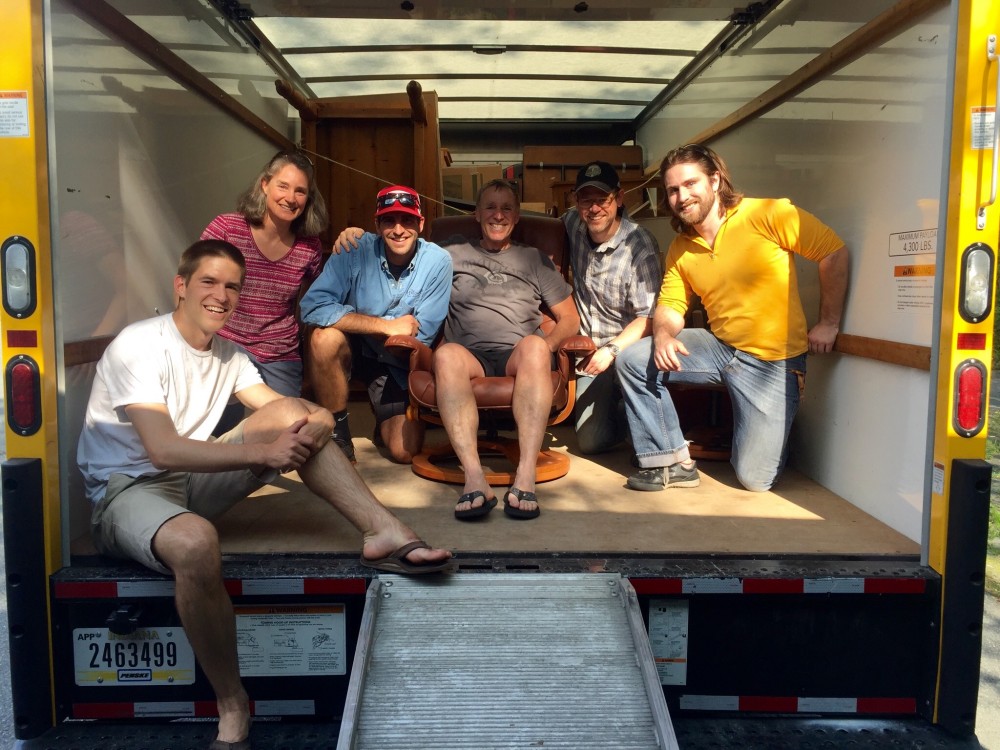
    The crew (left to right) Austin Caldwell '14, Scottie Eliassen '90, Sam Tarling '13, Ruff Patterson, Erik McEwen, and Leif Johnson '13 in the back of Patterson's Uhaul on Tuesday, prior to Patterson's departure west. (Photo: Courtesy of Sam Tarling)
    (From left to right) Austin Caldwell ’14, Scottie Eliassen ’90, Sam Tarling ’13, Ruff Patterson, Erik McEwen, and Leif Johnson ’13 in the back of Patterson’s U-Haul last Tuesday, May 24, prior to Patterson’s departure west. (Photo: Sam Tarling)

    In late March, Ruff Patterson, 61, announced he was stepping down as head coach of the men’s nordic team at Dartmouth. This is a story of his impact and legacy as a coach, first as a U.S. Ski Team assistant and later at Dartmouth in Hanover, N.H.

    “There were no non-heroes out there today.” — Ruff Patterson, after a four-hour rainy run with the Dartmouth men’s nordic team, circa 2007

    ***

    Twenty-seven years ago, a group of men convened in the basement of Robinson Hall, home of the Dartmouth Big Green ski team. Veteran faces intermingled with those of eager newcomers — including the likes of current U.S. Ski Team Head Coach Chris Grover.

    Wisecracks and an accompanying chorus of chortles percolated amongst those assembled, drifting up into the stairwell. A few shuffled their feet as they awaited their coach’s arrival for the first fall practice of the ski season.

    However, the figure that eventually greeted the gang beneath the building’s floorboards was not that of John Morton — the coach who recruited Grover the prior spring and whom Grover expected to work with during his four years of undergraduate study at Dartmouth.

    That autumn afternoon, September 1989, the individual who approached the group was as novel to the Dartmouth ski team as any of Grover’s fellow freshman teammates. With time, however, he would become synonymous with the school’s ski program.

    “This was all happening pre-internet, pre-email, pre-mobile telephones,” Grover on the phone of his recruiting process to Dartmouth. “There was never any sort of news release or anything that went from Hanover to where I grew up in Anchorage, that would’ve said, ‘Hey, by the way, John Morton quit and there’s a new coach named Ruff Patterson and he’s going to be taking that coaching place.’ So here I was that following September, expecting to see John Morton show up for practice, when Ruff Patterson rolls in … That was an interesting transition. We were all getting to know somebody new on the first day.”

    The Patterson Siblings, Sun Valley and the USST

    “You gotta love it!” — Ruff Patterson on skiing, racing and training with the Dartmouth men’s nordic ski team, circa 2013

    Situated nearly 6,000 feet above sea level, the city of Sun Valley, Idaho, holds a unique history as one of the first destination ski resort areas in America. Famed names such as Dick Durrance, Ernest Hemingway and Picabo Street have carved the region’s mountainside slopes and the locals’ love for skiing, particularly alpine, goes almost unparalleled.
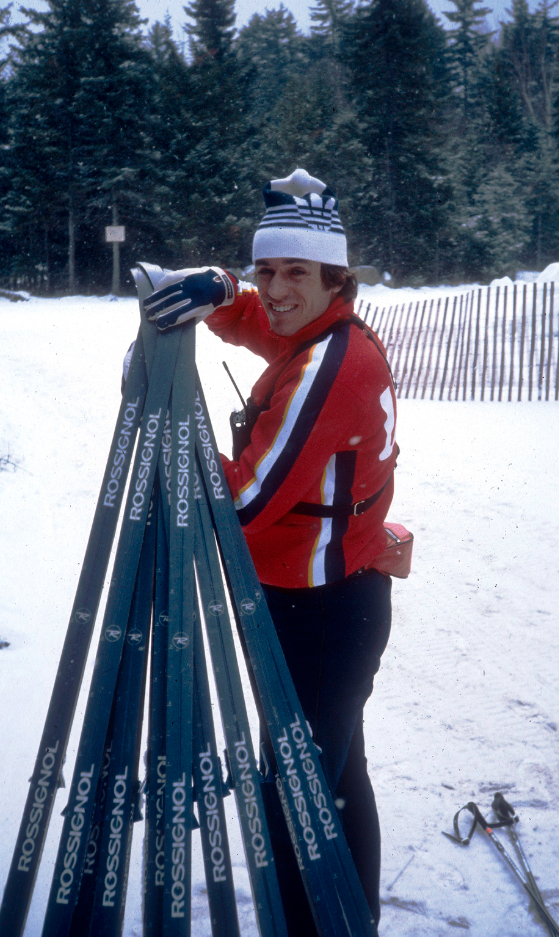
    Ruff Patterson coaching with the U.S. Ski Team in the 1980's. (Photo: Rettrieved by Gordon Vermeer and Eric Packer)
    Ruff Patterson coaching with the U.S. Ski Team in the 1980s. (Photo: Gordon Vermeer and Eric Packer)

    This held especially true for Susie, Pete, Barbie and Matt Patterson, Ruff Patterson’s four younger siblings. Surrounded by Idaho’s Sawtooth Mountain Range, and with support from their parents Joannie and Jim Patterson, all five developed a deep devotion to skiing. To many in the community, they became known as Sun Valley’s “First Family” of skiing.

    In a way, however, Ruff was the ‘black sheep’ of the household. Susie became a two-time national champion alpine skier, Pete qualified for the Winter Olympics in downhill skiing twice, and both Barbie and Matt established themselves as adept alpine skiers. Meanwhile, Ruff chose a slightly different ski path than his siblings. He chose cross-country.

    “[In] high school, I had a brother and sister who were both traveling, very young, for the national alpine team and I was kind of the guy in the background helping them get through school and fixing skis and stuff like that,” Ruff said in a phone interview in April, shortly after he announced his retirement from Dartmouth. “Contact with people, having to deal with traveling and and competing started really young for me, but [ski coaching] was not something I planned on doing after college.”

    As a student enrolled at the University of Colorado Boulder (CU), Ruff originally intended to become a doctor. He placed himself on the pre-med track and graduated with a degree distributed in the fields of biology, chemistry and psychology. Ruff also competed for the Buffs’ ski team. During his undergraduate years, CU won four NCAA Championship titles — though in his senior year the title, ironically, ended in a two-way tie with Dartmouth.

    Despite his initial plan, post-grad life did not leave Ruff pouring over MCAT entrance exams or medical-school applications. Instead, he found himself back in his beloved hometown, ski coaching with Rob Kiesel, the founder of the Sun Valley Ski Education Foundation (SVSEF) nordic program.

    The first few years of coaching for Ruff were far from glamorous. He spent most of his time supporting the SVSEF junior racing team and acting as a professional porter and nordic roadie for the U.S. Ski Team (USST).

    “Rob hired me as the national team coach, and you know when you start out, you’re carrying a lot of ski bags and traveling a lot,” Ruff said. “Those first years I was traveling internationally with the team and just doing a lot of the groundwork. I don’t think a lot of the groundwork has changed for those poor guys. They earn every cent.”

    Kiesel, the man who hired Ruff, influenced Ruff’s path into coaching. As Ruff put it, Kiesel was more than just a family friend. Kiesel was Patteron’s role model and mentor.

    “I wouldn’t be coaching today, nor begun coaching if it weren’t for Rob,” Ruff previously wrote in an email after Kiesel passed away in 2011. “Both my sister Susie and brother Pete wouldn’t have had the Alpine skiing careers they had if it weren’t for Rob. My brother Pete wouldn’t be guiding in Greenland or Nepal if it weren’t for Rob. More importantly, Rob was an integral part of our family.”

    As Patterson’s grip on the nordic race world grew, he began to move up in position and expertise. For 10 years, he worked for the USST,  a better part of those alongside Mike Gallagher. While co-coaching with Gallagher, Ruff assumed the role of “primary assistant” coach to the USST, often working with the women.
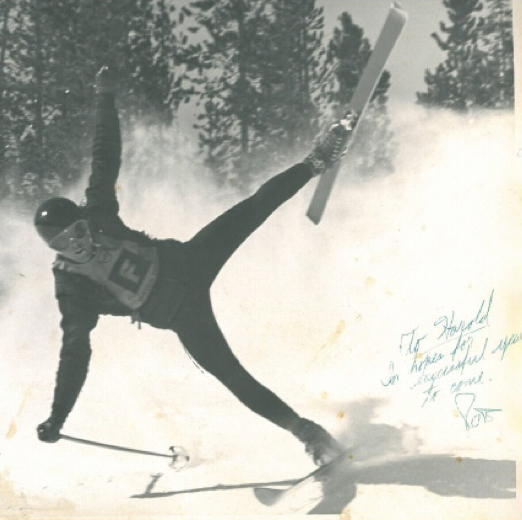
    Winter Park 1964
    Rob Kiesel, Patterson’s coach, showing off his downhill skills at Winter Park in 1964 (Photo: Harald Bjerke)

    “[Mike Gallagher] and I would worked really closely together and I was sort of his primary assistant as the year grew on,” Ruff said. “When we’d split up, I would end up taking the women and there were a few years where I was actually labeled the women’s coach. But for the most part, he and I were more of a team and I was more of his assistant during my primary coaching year.”

    Ruff’s stint with the USST brought him to the Olympics, alongside Kiesel at the 1980 Winter Olympics in Lake Placid, N.Y., and with Gallagher at the 1984 and 1988 Games in Sarajevo, Yugoslavia and Calgary, Alberta, respectively. He mentioned working alongside U.S. Ski Team coaches Torbjørn Karlsen and Peter Ashley as major influencers in his career as well.

    His work for the USST helped women like current Methow Valley Nordic Team head coach, Leslie Hall –the sister of Patterson’s future Dartmouth College co-coach, Cami Thompson-Graves — to the Olympics.

    “He was one of the main coaches at the 1988 Olympics, my first Olympic experience and the main memories that stick with me are his smile, laugh and bad jokes!” Hall wrote in an email. “My relationship with Ruff has evolved so much over time, from being an admiring junior who wanted his attention and help, to being a friend on mountain biking trips to Moab, to being the sister of his co-coach at Dartmouth.”

    He also helped current Middlebury College assistant coach and University of New Hampshire alum Patty Ross, and Bates College alum Nancy Fiddler to Olympic levels of racing.

    “Ruff was always there with a joke or someway to diffuse a tense situation,” Fiddler said on the phone. “Everybody gets so caught up in [skiing] and if you were feeling kind of involved in a way that wasn’t healthy, he just brought you back and reminded you that, ‘Hey it’s ski racing it’s supposed to be fun, and if you’re not having fun, what the hell are we doing.”

    Changes To Hold Onto: Skating and the Mental Breakthrough

    “Weight shift, weight shift, that’s the key.” — Ruff Patterson during a skating technique workout with the Dartmouth men’s nordic ski team, circa 1989

    Little did Bill Koch know that when he entered Sweden’s 1980 Worldloppet marathon, he would rock the ski world forever. During that winter’s fated 50-kilometer ski race, Koch witnessed what has since become a staple in cross country skiing: the skating technique.

    After Koch began to implement skate skiing into his own national and international races, the sport changed forever — a change Patterson perceived first-hand.
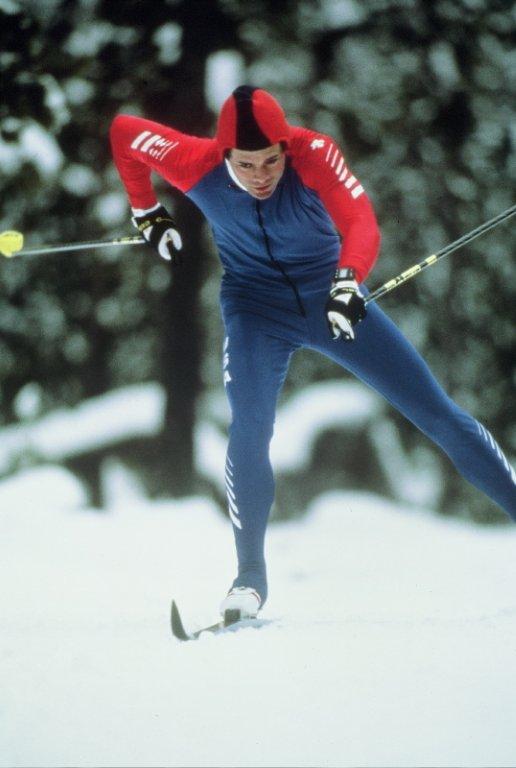
    U.S. cross-country skiing great Bill Koch, who pioneered the skating/freestyle technique in the 80s. (Photo: Peter Ashley)
    U.S. cross-country legend Bill Koch pioneering the skating/freestyle technique in the ’80s. (Photo: Peter Ashley)

    “I was incredibly fortunate to live through the skating revolution,” Patterson said. “To see the live world change, everybody else’s world change and how people react to that, that whole thing was, man, something to live through.”

    “You can sort of compare it to — right now there’s this big double poling thing,” he added. “Skating was very much the same thing. It was a complete unknown. So for everybody, including sports staff like myself, it was like, ‘What’s going to happen here?’ ”

    What happened was rattling to some and rectifying for others. Patterson pointed out that he saw many attempt to prevent the change, but the skating technique, ultimately was here to stay.

    “You know, they were trying to do everything possible to make it less possible to skate,” Patterson said. “A lot of the controls they tried were almost laughable now.”

    As Patterson sees it, there are certain circumstances when evolution of the sport is inevitable. Occasionally, adaptation outweighs resistance.

    “What I’ve discovered during those periods is … if you’re here to play the game, you have to figure out a way to go with it,” he said.

    Skating and double poling aren’t the only areas Patterson says he has seen development in skiing. To Patterson, the mentality of American ski racers is what has changed the most. Especially for the U.S. women.

    “When Kikkan [Randall] opened the door, the barrier, for Americans to do well in Europe, I think the whole mental game changed,” Patterson said. “I’m hoping that this mindset moves into the boys’ group [in the U.S.], that mentality of just, ‘Hey, we can compete and win against the big boys and the big girls.’ That’s probably one of the most significant changes I’ve seen since I’ve started coaching.”

    Dartmouth Dudes and Loving What You Do

    “Boys, I want medals!!” — Patterson to the Dartmouth men’s nordic ski team, circa 2012

    Freezing rain. Mosquitoes. Heavy, humid heat. The Northeast Coast makes many westerners go weak in the knees. Patterson was one of them. Located in the heart of Hanover, N.H., a move to Dartmouth promised Patterson the very bipolar weather, bug bites,and Vitamin-D deficiency he dreaded the most.
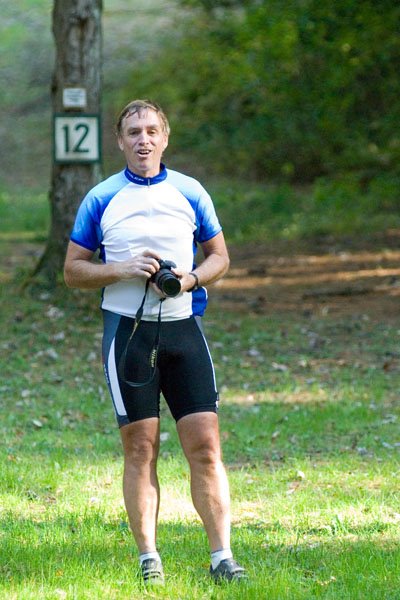
    Ruff Patterson, discovering that the eastern biking may make up for his dislike of east coast climate. (Photo: Dartmouth Ski Team Facebook)
    Ruff Patterson discovered that the eastern biking may make up for his dislike of East Coast climate. (Photo: Dartmouth Ski Team Facebook)

    “When I first took the job I was a western guy and I thought, if I lasted three or four years I’m going to be lucky,” Patterson said. “I was terrified of bugs and humidity and once I got here the bugs and humidity were terrible, but then I realized that the road biking and other stuff in the East were just incredibly great. But I never planned on being here as long as I did.”

    Patterson’s original estimated three-to-four-year window turned into seven, soon 11, and eventually 27. Overcoming his fear for East Coast climate was only part of it. His deepening devotion to the Dartmouth men’s team also drew him to stay.

    “I just kept saying over and over again ‘I love what I do,’” he said. “Just absolutely love what I do and I just felt that it stayed like that all the way through.”

    Patterson’s philosophy to love what you do and see it through transferred to his athletes. During his 27 years at Dartmouth, he coached three men to individual NCAA Championship titles — Glen Randall in 2008, Sam Tarling in 2011, and Patrick Caldwell in 2015 — and he also helped Dartmouth to an NCAA team title in 2007, with All-American athletes Mike Sinnott and Ben True.

    “When I came in as a freshman, I was very hesitant to fully buy into his philosophy of training,” Tarling, a 2013 grad, wrote in an email.  “After my first year working with Ruff, our relationship strengthened and I decided to stay in Hanover for the summer and work with him. I discovered that some of the silly things we did in training had the most influence on my performance, and that what seemed like random workouts and drills had a purpose. I ended up staying every summer after that to work with Ruff.” 

    Tarling was not the only athlete who at times questioned some of Patterson’s practices. Both Grover and Carl Swenson, a 1992 graduate and three-time Olympian, recalled recovery runs with Patterson as conclusively easy, in spite of athletes’ attempts to do otherwise. Patterson wanted his skiers to be fast when they needed to be and to step back and enjoy training the rest of the time.

    “We’d go out for a ‘Ruff Waddle’ recovery run,” Swenson said. “Ruff would make us run behind him. It was to teach us to go easy … because all we wanted to do was race every workout.

    “He was just the right coach at the right time for me,” Swenson added. “He kept me at it, really. I think it’s a period where a lot of people get interested in other things and, as everybody knows it takes some time to develop as a distance athlete, and he really kept me on track as best as anybody could have in a period when I was not on track by any means.”

    Gaining credence with athletes like Tarling and Swenson and witnessing their progress, for Patterson, was another piece of what made college coaching worthwhile.
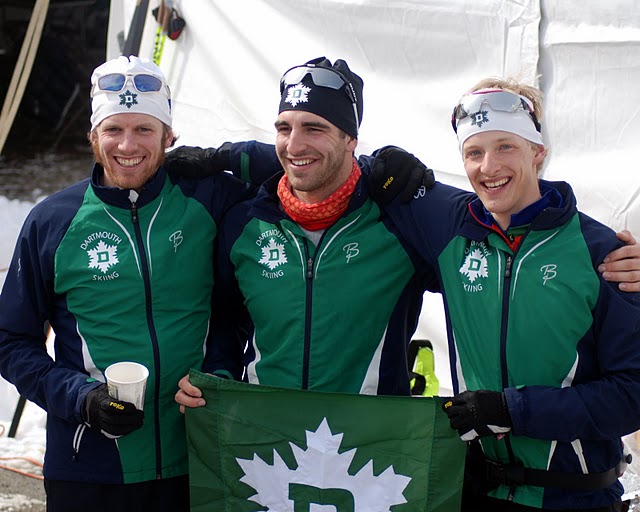
    Just a few of "the kids" as Ruff Patterson (not shown) calls them (left to right): Nils Koons, Sam Tarling, and Eric Packer (Photo: Ruff Patterson)
    Just a few of “the kids” as Ruff Patterson (not shown) calls them (left to right): Nils Koons, Sam Tarling, and Eric Packer (Photo: Ruff Patterson)

    “Winning over athletes and gaining their trust, I can’t tell you the rewards behind something like that,” Patterson said. “That’s just another piece of this overall puzzle, but sort of everything. Once again, it’s the people and stories behind them that have made it for me.”

    Though Tarling, who is now working as a software engineer in Denver, Colo., indicated he’s “happily enjoying being a recreational athlete for a change,” he still feels indebted to Patterson for all that he’s helped him achieve.

    “Our relationship began with many conversations about how we could best work together to help me achieve my goals in ski racing, but progressed to the point where Ruff was much more than my ski coach,” Tarling wrote. “He was – and is still – my mentor, my confidant, my hero, my friend.”

    Patterson was much more than a coach to many of his athletes. He was a pillar, the adviser and ally searched for not only on the trails, but off them as well. He did not force his athletes to grow. He fostered them to take the steps on their own. As numerous athletes indicated, his door was always open to whoever happened his way.

    “Ruff impacted my life on so many different levels beyond skiing,” Patrick O’Brien, current head coach for Stratton Mountain School T2 Team and 2010 graduate, wrote in an email. “He wanted you to grow as an athlete and an individual. He was always there for support when you needed him but understood many decisions or choices had to be yours alone to make. He asked for, and brought out the best people had to offer.”

    Patterson did bring out the best people had to offer, but in ways beyond just results. He saw value in every athlete, carnival circuit caliber ski racer or not.

    “The guy who never makes it, the ones who just make these incredible strides … the really talented guys,” Patterson said, “All athletes are rewarding.”
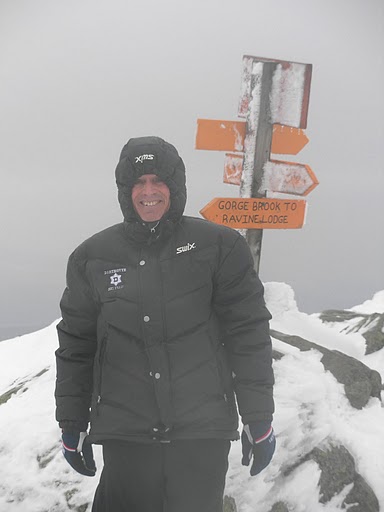
    Ruff Patterson on Mt. Moosilauke in New Hampshire's White Mountains with the Dartmouth team (Photo: Gordon Vermeer and Eric Packer)
    Ruff Patterson on Mt. Moosilauke in New Hampshire’s White Mountains with the Dartmouth team (Photo: Gordon Vermeer and Eric Packer)

    Patterson’s ability to work with athletes of all kinds, stems from his coaching style. Passionate, patient, perceptive, he held the unique capacity to turn the complexities of cross country skiing into common sense.

    “Ruff has that elusive quality you see only in the very best of coaches — he makes skiing seem simple,” Packer, who graduated in 2012 and is now racing for Alaska Pacific University (APU), wrote in an email. “He has the ability to use just a single suggestion to make really dramatic improvements in your skiing.

    “Hand in hand with that, Ruff really believes in the importance of building a quality training group, and holds that at the core of his coaching philosophy,” Packer added. “You learn from the group, push the group, and rely on the group.  In an atmosphere like that, when everyone is working together, pushing each other in a competitive but also fun atmosphere, everyone improves.”

    Humor and having fun was also a training philosophy greatly prized by Patterson.

    “I call them the kids.The gang. The team. I’ve been so lucky to be able to work with these guys. Even the ones that have been nightmares, looking back that’s what’s kept me here. The people, for sure.” — Patterson on his 27 years as the Dartmouth men’s nordic head coach

    “One of my favorite memories started about midway through my time at school when he would finish every pre-race meeting with a story from his previous coaching experiences,” O’Brien wrote. “All would have you rolling over laughing and reminding you that although the sport may change over the years, the spirit of it never did. It made you feel connected the people who have come before you, understanding the challenges they faced were the same as the ones in front of you now.”

    However, Patterson’s impact on the nordic community cannot be pinned solely to skiers he worked with directly. As Sinnott pointed out, numerous of individuals have been influenced by the former Dartmouth head coach, whether he realizes or not.

    Ruff Patterson
    In two words or less…
    “A Mentor” — Thompson-Graves
    “Unassuming”– Tarling
    “Wise” — Tarling
    “Passionate” — O’Brien
    “Remarkable” — Sinnott
    “Solid” — Grover
    “Supportive” — Grover
    “An Icon” — Packer

    “You go through his office and he’s got handwritten thank you notes from John Nystad from when John Nystad was skiing for UVM [University of Vermont],” Sinnott said on the phone. “Ruff had these powerful impacts on skiers that he wasn’t even mentoring or that weren’t in his program.”

    With the women too, Patterson was — and still is — a hit.

    “Ruff used to get more Valentine’s Day cards than anyone else on the team,” Sinnott reflected, referring to the Dartmouth Carnival tradition of ‘Carni Crush.’ “Everyone on the circuit felt the warmth and the magnitude of Ruff. And that’s the cool thing. It’s not just the people that are obvious on a piece of paper, but it’s everyone else that might have glossed by him.”

    While many of Patterson’s athletes cite him as the reason they are where they are today, Patterson is adamant that his athletes are the ones who’ve kept him in the game.

    “I call them the kids,” Patterson said. “The gang. The team. I’ve been so lucky to be able to work with these guys. Even the ones that have been nightmares, looking back that’s what’s kept me here. The people. For sure.”

    Dartmouth’s Dynamic Duo: Patterson and Cami Thompson-Graves

    “Are we having fun yet?” — Patterson to the Dartmouth men’s nordic ski team, circa 2010

    Bonnie and Clyde. Ernie and Bert. Starsky and Hutch. Cami and Ruff. While not many modern day duos find themselves in competition with the infamy of the previous pairs, Cami Thompson-Graves and Patterson are two that do.

    In a coaching partnership that’s lasted longer than some marriages, the two have carried each other through the numerous highs and lows of coaching a Division I college ski program.

    “We’ve been together longer than most people have been married,” Patterson said. “We’ve definitely had our ups and downs, but because of it, the two of us have become incredibly close.”

    Though the two admit they’ve spat like siblings at times, they also agree that what they have gained out of their 27 years together is irreplaceable.

    “She’d be the first one to tell you, it’s not like it was all wine and roses the whole time,” Patterson said. “ It’s just we’ve been through a lot together.”
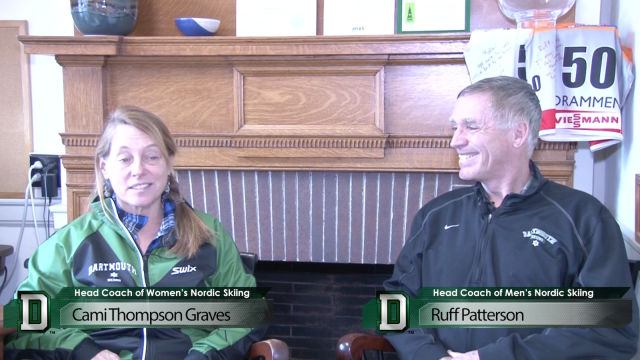
    Dartmouth co-coaches Cami Thompson-Graves (l) and Ruff Patterson. (Photo: DartmouthSports.com)
    Dartmouth’s longtime duo Cami Thompson-Graves (l) and Ruff Patterson during a 2015 interview .(Photo: DartmouthSports.com)

    The two have also supported each other — and their teams — through the loss of Dartmouth athlete, teammate and friend, Torin Tucker. Tucker, who died of a heart anomaly while competing at the Craftsbury Marathon two years ago, was also from Sun Valley and described by many as having a similarly contagious smile.

    A rare verve to come across, no loss the magnitude of Tucker’s is easy. For Patterson, learning to live in the memories and moments of Tucker as the epic adventuring, intellectually curious and compassionate mountain town-er he was, no matter the time it took to get there, helped he and the Dartmouth community move forward with Tucker in their hearts.

    “There’s no way you can tell somebody to get over stuff,” Patterson said. “You just have to deal one day at a time, one minute at a time.”

    The support and history between Thompson-Graves and Patterson, therefore, goes far beyond just van rides, wax benches, and debates over who’s who.

    “We had some great moments, talked about skiing endlessly and also fought and bickered like siblings at times,” Thompson-Graves wrote in an email. “But, along the way, there were many ​fun race days where we worked hard, shared our nerves, and when things had to come together, they did!”

    More than anything during their time together, Thompson-Graves was a firsthand witness to the dedication Patterson put towards his athletes and coaching.

    “​Ruff loved his guys, they meant everything to him,” Thompson-Graves wrote. “He was there, day in and day out and knew them all well.  Some of them might have driven him crazy but, even with the frustrations, he loved the times when it all came together for them.”

    All in all, it takes a special circumstance for two individuals to work together toward a common goal for that length of time.

    “When you sum it up, I wouldn’t have traded that for anything,” Patterson said. “Because being able to figure out a way for two quite different people to work together and do as well as we have done together … boy, that doesn’t happen very often in life.”

    What’s Next?

    “Don’t overthink it.” –Ruff Patterson to the Dartmouth men’s nordic ski team, circa 2006.

    Forty years ago, Patterson — clad in a black graduation cap and gown — strolled across the CU stage to receive his diploma. Like many of the student athletes he would eventually coach, he had post-college plans that would inevitably change, a passionate fervor for cross country skiing, and an anything but linear trajectory ahead.

    Forty years later, with his final cohort of college senior skiers before him, not much has changed. As Patterson departs Dartmouth, there is a piece of him that feels as if he is once again striding across the graduation stage, leaving school behind to discover what’s next.

    “It wasn’t until the day before I resigned that I actually knew I was going to do it,” Patterson said. “I didn’t sleep that night, I can tell you that much.”

    “It sort of feels like I jumped off a cliff doing this,” Patterson said of his resignation. “I was in a little bit of a shock for a few days, but I’m going to sell my place here, pack up a U-Haul and return west, which I’ve been wanting to do forever. And then stir the pot up a little bit and try to find something else to do. I have no idea what that’s going to be. I feel like a college kid again.”
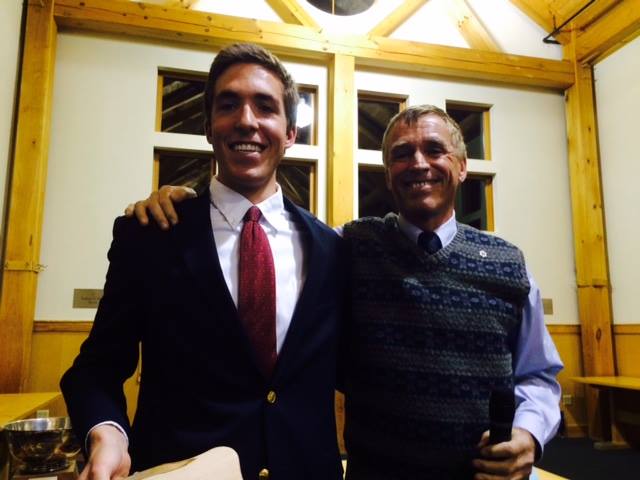
    2015 NCAA Champion Patrick Caldwell (l) and coach Ruff Patterson. (Photo: Dartmouth Ski Team Facebook)
    2015 NCAA Champion Patrick ‘Paddy’ Caldwell (l) with coach Ruff Patterson. (Photo: Dartmouth Ski Team Facebook)

    Even if Patterson is now physically distanced from Dartmouth — he headed west last week Tuesday — his legendary role and presence is not. His impact extends beyond Dartmouth, into the lives of past, present and future mentees — some of which he will never meet in person. Many he will have infiltrated with his coaching philosophy alone.

    “Ruff was really responsible for creating that atmosphere with the [Dartmouth men’s] team, in terms of camaraderie he created in the group,” Grover said. “And certainly, as you know, that’s a big thing for us these days with the USST. The team and the athletes are quite successful on an individual basis because we tend to try to build a family atmosphere around the team. Ruff really did the same.”

    Patterson’s stamp survives in the USST, the skiers who are now software engineers, lawyers, coaches, writers and more.

    “You know, I came into a great group early on,” Patterson said of his first few years coaching at Dartmouth. “It took a while to establish my own style. It doesn’t mean that the style that Mortie [John Morton] had way back when was, there’s no way you could say it was bad or good … I absolutely know that the next person that’s going to come in in my place is going to be exactly the same; have their own style … I got to put my stamp on things and the next person here is going to put their stamp on things.”

    Semi-uncertain of what his future holds beyond bike trails, mountain towns, and some RV roaming, Patterson is certain that Dartmouth has green grass ahead and he, a wanderlust for western blue skies.

    “I know they’ll find somebody good,” Patterson had said of prospective coaches for the Dartmouth head coaching position, prior to the hiring of Brayton Osgood in May. “And I know that the school will always support skiing … My personal opinion is that they’re going to just keep going and there’s nothing wrong with that … Field of dreams.”

  • Returning to Her Roots: Trygstad-Saari Becomes Elite/Post-Grad Coach with Bridger Ski Foundation

    Returning to Her Roots: Trygstad-Saari Becomes Elite/Post-Grad Coach with Bridger Ski Foundation

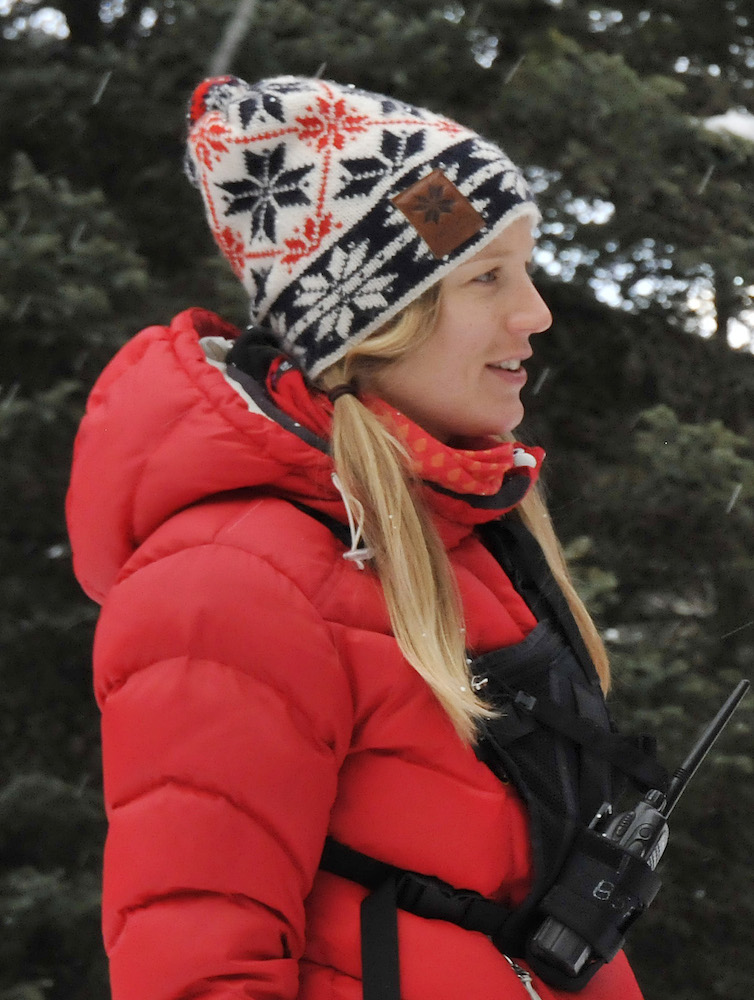
    Former Bridger Ski Foundation (BSF) elite team racer Kristina Trygstad-Saari was recently named head coach of the BSF elite nordic team. (Photo: Mary Klotz)
    Former Bridger Ski Foundation (BSF) elite team racer Kristina Trygstad-Saari was recently named head coach of the BSF elite nordic team. (Photo: Mary Klotz)

    A return to one’s roots can often lead to new opportunities. Such is the case with Kristina Trygstad-Saari, a Bozeman, Mont., native and Bridger Ski Foundation (BSF) alumnus who was recently named the ski club’s elite and post-graduate coach for the 2014-2015 season.

    Trygstad-Saari found her start in nordic ski racing with the Bridger Ski Foundation and found great success in her skiing under the guidance of head coach, Dragan Danevski. After nine junior-national titles, Trygstad-Saari attended the Junior World Championships in 2002 and earned one of the top finishes by an American woman in the championships after finishing sixth in the 5 k freestyle.

    After her junior years were over, Trygstad-Saari made her leap to the collegiate circuit at Dartmouth College, where she skied with the Big Green for two seasons. She left New Hampshire in 2007, ready for a break from ski racing. However, when the 2010 Olympic Games were on the horizon Trygstad-Saari was ready to give it another go, and adorned the red BSF racing suit along with former teammate Leif Zimmermann. While she didn’t make the Olympics, she continued to stay involved with the Bridger Ski Foundation.

    Kristina Trygstad-Saari (BSF)
    Former Bridger Ski Foundation (BSF) elite team racer Kristina Trygstad-Saari was recently named head coach of the BSF elite nordic team.

    With her beginnings as a coach in the U14 age group, she made her way up through the ranks of the coaching staff, until she left Bozeman to be the men’s assistant team coach at Dartmouth for the 2012-2013 season, helping the team earn a fifth place finish at the 2013 NCAA Championships in Middlebury, Vt.

    Since her season-long stint at Dartmouth, Trygstad-Saari, returned to Bozeman and BSF in the hopes of revitalizing the masters program as well as creating a new citizen’s race series aimed at attracting members of the community who were uninvolved with the ski club.

    “In the past we had a masters coach but it hasn’t been super established and we’ve rotated coaches through each session,” Trygstad-Sarri said in a recent phone interview. “I kind of wanted to take that on and make it a more established program for a year.”

    She considers her work last season a success, especially in regards to the citizen’s race series, hoping that the progress she made will continue in the future. “It was our first year doing it and it actually went really well. We had between 50 and 75 skiers at every race and a lot of those were citizens racers and not from BSF. We felt really great about how it went.”

    With the departure of BSF coaches Tim Baucom, who is headed to Sun Valley as a wax technician, and Andrew Morehouse, who was hired as an assistant coach at Montana State University, a void was opened in the elite coaching staff of BSF. Due to her history with the club, success in both national and international racing, and experience coaching, Trygstad-Saari was viewed as the perfect fit.

    According to Baucom, he simply “needed something different” after several seasons of working as a wax technician and assistant coach at BSF.

    “[Andrew] and I both decided, independently of course, to move on from BSF,” he wrote in an email. “I really value everything I have learned working for BSF over the last 5 years, and believe it is a excellent club.”

    In her new role, Trygstad-Saari said her main goal is to create a cohesive team atmosphere that not only helps skiers attain their individual goals but also helps further the team as a whole.

    “Even though skiing is an individual sport, we’ve seen that it’s really important to have a good group to train with and be with and live with and travel with,” she said. “I would really like to establish a more cohesive group and bring more people to Bozeman and up our elite team status in the world of elite teams.”
    Former Bridger Ski Foundation (BSF) elite team racer Kristina Trygstad-Saari was recently named head coach of the BSF elite nordic team. (Photo: Doug Edgerton)
    Former Bridger Ski Foundation (BSF) elite team racer Kristina Trygstad-Saari was recently named head coach of the BSF elite nordic team. (Photo: Doug Edgerton)

    This spring, an influx of new skiers joined the team, which already included veteran Jennie Bender, the 2014 U.S. national champion in the freestyle sprint. They include Trygstad-Saari’s former Dartmouth athlete, Sam Tarling, Eric Wolcott (formerly of St. Lawrence and CXC), Riley Eusden (Bowdoin College), former BSF skier Sawyer Kesselheim, as well as a variety of post-grad skiers.

    Asked whether Torin Koos, a multiple Olympian and national champion, would return to the elite team in any capacity, Trygstad-Saari said he was finishing up school and making that decision about racing next season.

    “We’re not sure about that,” she said. “I think he’s done with his full-time skiing career but we’re open to other options.”
    As for Danevski, he will retain his role as BSF head coach, and Trygstad-Saari will assume the role of elite coach.

    “She’ll run workout and communicate with athletes and I will be in the back supporting,” he said in a phone interview. “I’m working with Kristina on developing the year round plan and trainings and volume of training and intensity and wax. Athletes will have access to talk to me, or they will go through Kristina, and Kristina will ask me these things.”
    At the end of the day, Trygstad-Saari is happy to be working with her former coach in the community where she developed her skiing career.

    “Dragan is a really great leader and he provides a foundation for all of this and I’m excited to work with him and learn from him and be able to execute the job on my own on a daily basis but have him back me up and help me out,“ she said. “I think that BSF and Bozeman have a lot to offer skiers and we have a lot of potential in this area. We’ve spent a lot of time trying to put these teams together so I think that we have the opportunity to take another step in the right direction.”
  • Trygstad-Saari to Head Bridger Ski Foundation Elite Team

    Trygstad-Saari to Head Bridger Ski Foundation Elite Team

    Former Bridger Ski Foundation (BSF) elite team racer Kristina Trygstad-Saari was recently named head coach of the BSF elite nordic team. (Photo: Doug Edgerton)
    Former Bridger Ski Foundation (BSF) elite team racer Kristina Trygstad-Saari was recently named head coach of the BSF elite nordic team. (Photo: Doug Edgerton)

    (Press release)

    Former BSF athlete returns to coach the club’s highest-level Nordic skiers

    BOZEMAN, MT – Bridger Ski Foundation has named a new Head Coach for its Nordic Elite Team. The Bozeman-based nonprofit ski club announced today that Kristina Trygstad-Saari, one of their former Elite athletes and accomplished international ski racer, has filled this leadership role.

    Bridger Ski Foundation’s Nordic Elite Team strives to offer the highest quality individual and team training experience for talented, committed skiers, giving them the opportunity to reach their full athletic potential and achieve success at the highest levels of National and International competition.

    Former Bridger Ski Foundation (BSF) elite team racer Kristina Trygstad-Saari was recently named head coach of the BSF elite nordic team. (Photo: Mary Klotz)
    Trygstad-Saari (Photo: Mary Klotz)

    Kristina Trygstad-Saari grew up racing for Bridger Ski Foundation (BSF). A nine-time junior national champion, Kristina was on multiple World Junior and U23 teams, and qualified for the 2003 World Championship team. She competed in 2001 World Cup races, placed 6th at the 2002 World Junior Championships, and won a NorAm at age 18. Kristina continued racing for the BSF Elite Team and the Saab-Salomon Factory Team, with top-5 U.S. and Canadian Nationals finishes, and Super Tour podiums.

    She attended Dartmouth College, where she raced for two seasons and graduated with a B.A. in Philosophy in 2007. Since then, Trygstad-Saari has coached youth and adult BSF skiers, and also spent one year coaching at Dartmouth. She is currently pursuing a master’s degree in English.

    “I am so excited to have this opportunity to work with the Elite Team,” said Trygstad-Saari. “We have a tremendous group of athletes, coming from many different backgrounds, and I look forward to working with each of them. My experiences skiing and coaching for BSF have brought me to this point, and I think I have a lot to offer this team as we head into the 2014/2015 season.”

    While BSF Nordic Program Director and Head Coach Dragan Danevski will still be very involved with the Team, Trygstad-Saari will take over the day-to-day coaching and race travel.

    Last season’s Elite Team included four-time Olympian Torin Koos, who competed at Sochi, and two-time national sprint champion Jennie Bender. Koos and Bender both took national skate sprint titles at the U.S. Championships at Soldier Hollow in January 2014.

    This coming season, Trygstad-Saari will coach returning Elite Team member Bender, as well as new members Sam Tarling (Dartmouth), Eric Wolcott (St. Lawrence), Riley Eusden (Bowdoin), and former BSF junior athlete Sawyer Kesselheim (Montana State). BSF is still accepting Elite Team applications for the 2014/2015 season.

    Learn more about the BSF Nordic Elite Team at www.bridgerskifoundation.org/nordicelite

    ***

    Bridger Ski Foundation is a nonprofit community organization based in Bozeman, Montana, that promotes athletic and personal excellence through educational and competitive programs in three Olympic ski disciplines.

  • Wednesday Workout: Lickety-Split Christmas Zone 4 Intervals

    Wednesday Workout: Lickety-Split Christmas Zone 4 Intervals

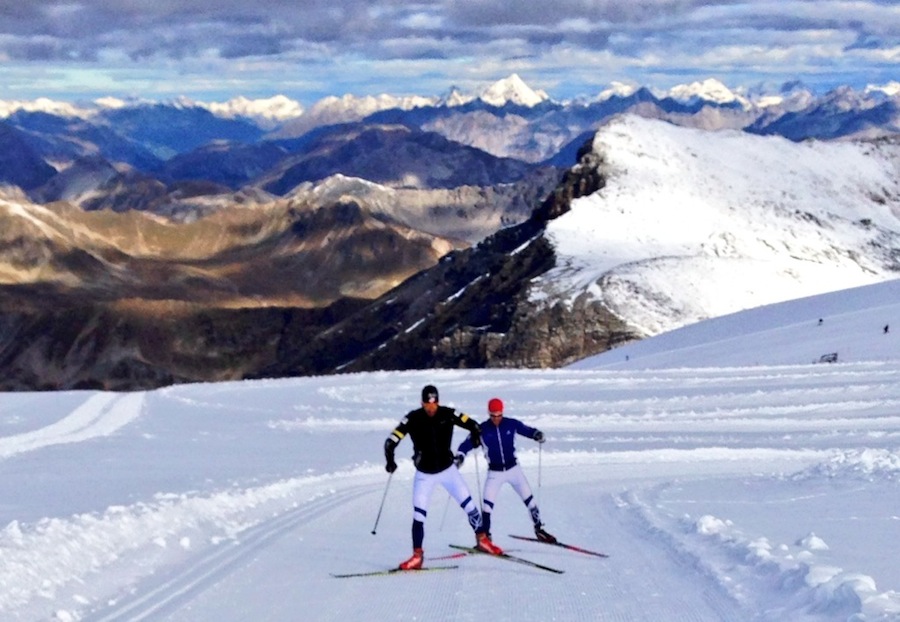
     Sam Tarling and teammate Welly Ramsey skiing on the Stelvio Glacier in September. (Photo: Will Sweetser)
    Sam Tarling and teammate Welly Ramsey skiing on the Stelvio Glacier in September. (Photo: Will Sweetser)

    Merry Christmas!  On the rare chance that you can sneak out for a workout during the busy holiday season, try the following 45-60 minute workout from Sam Tarling of the Maine Winter Sports Center. 

    ***

    4×4 Zone 4 Intervals

    By Sam Tarling

    “This is one of the simplest workouts anyone could think up, but it’s also one of the best for dialing in your top-end race pace.”

    The holidays can be a stressful time for the North American ski racer.  With US Nationals and Canadian trials races coming up in the beginning of January, it’s not easy to sneak away from the holiday parties and family gatherings. But if you have a spare hour between last-minute gift shopping and baking another batch of cookies, you have enough time to squeeze in a very effective intensity session!

    This is one of the simplest workouts anyone could think up, but it’s also one of the best for dialing in your top-end race pace.  It’s a great workout for anytime of year, but very useful in the busy holiday season, because it takes only one hour and you can do it on foot or on snow.

    Start with a 15-minute warm-up.  Don’t be afraid to push out of Zone 1 for a minute here, or 30-seconds there, but the majority of the warm-up should be easy.

    After 15 minutes, it’s time to get things rolling! The first 4-minute interval should be about 5km race pace, but you shouldn’t yet be hitting your maximum. Take 3 minutes of easy recovery before starting the second interval. The second, third, and fourth intervals should be maximum effort, with 3 minutes recovery in between each.

    By the end of the intervals you should be approaching 45 minutes of total workout time. It is important to have a dry shirt, hat, and even some warmer gloves for the cool-down. Your body will be pretty depleted at this point and quite vulnerable.  Dry clothes are a good way to prevent the development of any holiday head colds.

    After quickly changing, continue skiing easy for another 15 minutes.  Even though you are tired it is important to focus on skiing with good technique.

    Be sure to eat an energy bar or quick snack within 10-15 minutes of finishing the workout, and try to have a meal within an hour.  This will help stimulate quick recovery.  Don’t forget to shower and change again as soon as you’re home!

  • Kowalczyk, Poltoranin Take First Two Muonio Races; Americans and Canadians Jump in the Mix

    Kowalczyk, Poltoranin Take First Two Muonio Races; Americans and Canadians Jump in the Mix

    Each November, it’s tradition for some of the world’s best nordic skiers to go where the sun don’t shine – or appears very little. The fact is that Muonio, Finland, above the Arctic Circle has snow this time of year when other parts of Europe are still waiting for the skiable stuff.

    Justyna Kowalczyk of Poland during one of last year's FIS races in Muonio, Finland. This weekend, Kowalczyk won two out of three Muonio competitions from Nov. 15-17.(Photo: Petri Ikävalko/Hevoskuuri.fi)
    Justyna Kowalczyk of Poland during one of last year’s FIS races in Muonio, Finland. This weekend, Kowalczyk won two out of three Muonio competitions from Nov. 15-17.(Photo: Petri Ikävalko/Hevoskuuri.fi)

    Starting Friday, the unofficial Finland Triple began in Muonio, with hundreds of skiers flocking to the northern region for their first International Ski Federation (FIS) races of the season.

    Poland’s cross-country celeb Justyna Kowalczyk jumpstarted her season with a sizable victory in the 1-kilometer classic sprint, topping Russian Evgenia Shapovalova by more than 7 seconds in the final, as well as Russia’s Julia Tikhonova in third and Natalia Matveeva in fourth. Finland’s Mona-Lisa Malvalehto placed fifth out of 146 female competitors.

    In the men’s 1.3 k classic sprint on Friday, Alexey Poltoranin of Kazakhstan beat Finland’s runner-up, Ari Luusua, by 3.23 seconds in the final, as well as third-place finisher Russian Anatoliy Volkov (+5.56). Ales Razym of the Czech Republic was fourth and Estonia’s Peeter Kummel placed fifth out of 255 men.

    Leading a small American contingent in Muonio, Dakota Blackhorse-von Jess (Bend Endurance Academy) placed 34th in the sprint qualifier. Welly Ramsey was the fastest from the Maine Winter Sports Center (MWSC), placing 113th, teammate Sam Tarling came in 209th, and post-grad Austin Huneck was 239th. Another MWSC post-grad, Emily Ramsey finished 128th in the women’s race.

    On Saturday, Kowalczyk and Poltoranin again topped their respective podiums – this time in the 5 and 10 k classic races. Kowalczyk defeated Russia’s Yulia Tchekaleva in second by 21.6 seconds, and Germany’s Nicole Fessel in third (+27.3). Finland’s Anne Kyllönen and Kertu Niskanen placed fourth and fifth, respectively, out of 199 women.

    Poltoranin edged Lukas Bauer of the Czech Republic by 6.8 seconds, and German Hannes Dotzler in third (+24.2). Razym finished fourth for the second-straight day, and Germany’s Tim Tscharnke placed fifth out of 331 finishers.

    Kris Freeman in Muonio last year. (Photo: Petri Ikävalko / Hevoskuuri.fi)
    Kris Freeman in Muonio last year. (Photo: Petri Ikävalko/Hevoskuuri.fi)

    Kris Freeman (MWSC) led the Americans in his first race of the season in 34th, 1 minute and 11 seconds behind Poltoranin, who won in 24:33.7. Tarling placed 109th, 2:09.8 back from the winner. Canadian Para-Nordic veterans Brian McKeever placed 160th and Erik Carleton was 242nd.

    Racing ended Sunday with the women’s 10 k and men’s 15 k individual skate. Russian Petr Sedov stole the spotlight from Finland’s Matti Heikkinen, who was leading until Sedov finished 7.8 seconds faster in 34:56.5. Two other Finns rounded out the top four with Tero Similae in third and Lari Lahtonen in fourth, and Franz Goering of Germany was fifth out of 188 men. Poltoranin did not race.

    Freeman finished 32nd, 1:15.1 after Sedov, McKeever was the top Canadian in 63rd, (+2:13), and Welly Ramsey was 116th (+3:24.7) Carleton placed 125th (+3:38), and Tarling was 126th (+3:39.5).

    Russian Irina Khazova won the women’s 10 k in 25:46.2, ahead of teammate Tchekaleva in second (+28.3), and Eva Vrabcova-Nyvltova of the Czech Republic in third (+49.5). Finland’s Gretel Niskanen placed fifth, and Russia’s Svetlana Nikolaeva was fifth out of 159 women. Kowalczyk fell to 24th, behind teammate Sylwia Jaskowiec in 21st. American Emily Ramsey placed 155th.

    ***

    Results: 

    Friday’s classic sprint: women | men

    Saturday’s 5 and 10 k classic: women | men | photos

  • The 12: Maine Winter Sports Center

    The 12: Maine Winter Sports Center

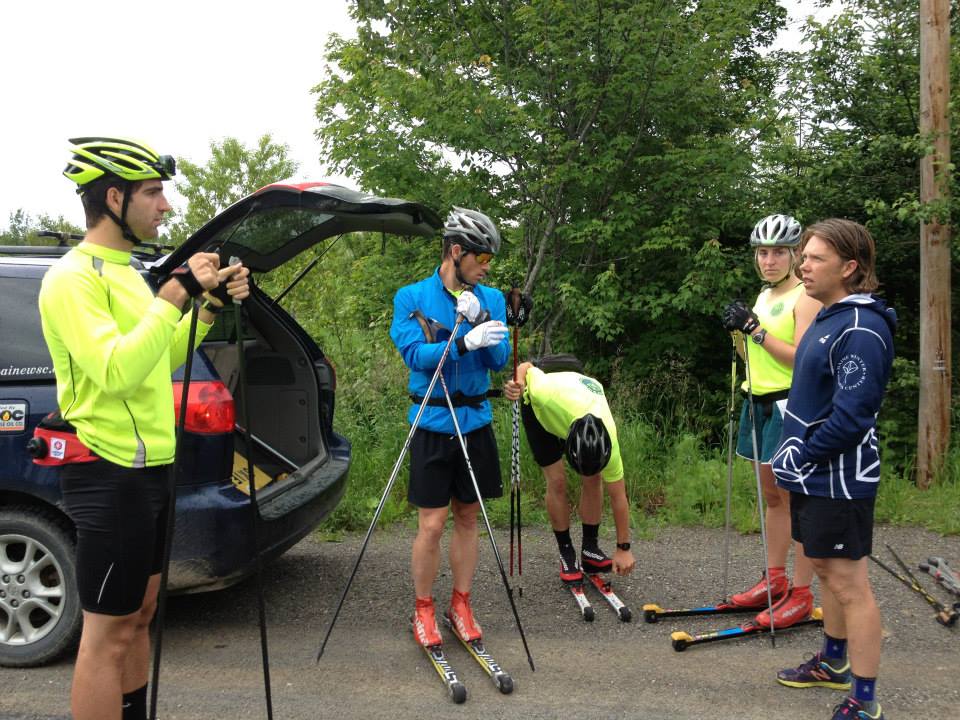
    The Maine Winter Sports Center Cross-Country Olympic Development Team (ODT) gets ready for a rollerski in northeastern Maine, with Kris Freeman (in blue), Welly Ramsey, Hilary McNamee and competitive programs director Will Sweetser (r). (Photo: https://www.facebook.com/maine.Winter.Sports.Center)
    The Maine Winter Sports Center Cross-Country Olympic Development Team (ODT) gets ready for a rollerski in northeastern Maine, with Kris Freeman (in blue), Welly Ramsey, Hilary McNamee and competitive programs director Will Sweetser (r). (Photo: MWSC/facebook.com/maine.Winter.Sports.Center)

    Note: This is the sixth preview in our series on U.S. elite teams, which we’ve dubbed the “The 12.” We asked coaches to tell us what’s new and whom to look out for in the coming season and will publish additional previews in the coming weeks in no particular order.

    Team: Maine Winter Sports Center (MWSC)

    Coaches: Will Sweetser (competitive programs director), Seth Hubbard (biathlon coach), Amber Dodge (development coach)

    Roster:

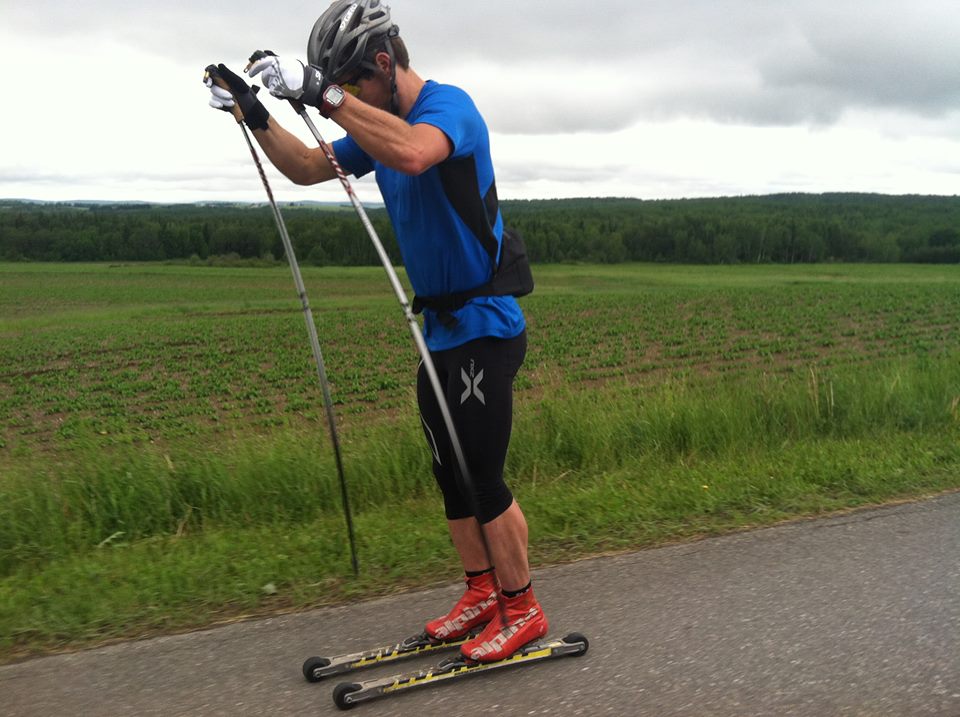
    Kris Freeman training with the MWSC in northeastern Maine. (Photo: MWSC/https://www.facebook.com/maine.Winter.Sports.Center)
    Kris Freeman training with the MWSC in northeastern Maine. (Photo: MWSC/facebook.com/maine.Winter.Sports.Center)

    Cross-Country Olympic Development Team (ODT): Kris Freeman, Sam Tarling, Welly Ramsey; Hilary McNamee, Anna Van der Rhee (trying to qualify for Sochi Olympics for The Netherlands). According to Sweetser, McNamee is focusing on finishing her studies at Dartmouth and will race primarily in New England.

    XC Post-Grads: Emily Ramsey (New Sharon, Maine), Zoe Chase-Donahue (Freeport, Maine), Sarah Becker (Yarmouth, Maine), Abby Popenoe (Portland, Maine), Austin Huneck (Clifton Park, N.Y.)

    Collegiate Summer Program: Nick Michaud (Bates College), Gabby Naranja (Bates).

    Biathlon ODT: Russell Currier (U.S. Biathlon), Raleigh Goessling, Casey Smith, Annelies Cook (U.S. Biathlon), Katrina Howe

    Biathlon Post-Grads: Brian Halligan (N.Y.), Maddie Pfaneuf (N.Y.), Mikaela Palusek (N.H.)

    Adaptive ODT: Omar Bermejo

    Katrina Howe during skate hill workout. Katrina Howe during skate hill workout. (Photo: Seth Hubbard)
    Biathlon ODT member Katrina Howe during skate hill workout. (Photo: Seth Hubbard)

    Who’s new: Tarling (2013 Dartmouth graduate), Smith (formerly of Montana State University), Bermejo (Grand Rapids, Mich.), all post-grads except Emily Ramsey (second year).

    Who’s missing: None.

    Top results last season: Sweetser intends to send a minimum of four athletes to the Olympic Winter Games or in Bermejo’s case, the Paralympics. The most-obvious four that could make that goal a reality are Freeman, Currier, Cook, and Bermejo. But look out for the new guys, including Tarling and Smith, training with the Caribou-based MWSC on the northeastern tip of Maine.

    A three-time Olympian, Freeman, 32, was not renominated to the U.S. Ski Team for the first time in a decade. He won his 16th national title last January in the 50 k classic, but finished the 2012/2013 World Cup season with with three top-30 results. Sweetser said Freeman and Ramsey have had some very productive training sessions this summer.

    “[Freeman] is nowhere near the crazy specific fitness he had late last summer, however, he is lighter, faster [ran fastest 5 k (15:53) since 2004 in June] and happier than he’s been in years,” Sweetser wrote in an e-mail.

    Sweetser added that Tarling has been an “instant plus” in MWSC’s community programs, which include juniors, high-school skiers and adults. He was a presenter at the Maine Team Camp in Fort Kent earlier this month, which hosted 43 of the state’s best high school skiers.

    MWSC teammates, biathlete Raleigh Goessling leading Welly Ramsey, a cross-country skier, during bounding intervals in northeastern Maine. (Photo: Seth Hubbard)
    MWSC teammates, biathlete Raleigh Goessling leading cross-country skier Welly Ramsey during bounding intervals in northeastern Maine. (Photo: Seth Hubbard)

    The 2011 NCAA 10-kilometer freestyle champion won twice on the Eastern Intercollegiate Ski Association (EISA) circuit in his senior season at Dartmouth and finished fifth in the 30k classic at U.S. nationals.

    “(Tarling) is very professional in his approach to creating a career as a ski racer,” Sweetser wrote. “He is gelling well with our entire team and is a fantastic addition at junior training camps.”

    Van der Rhee (formerly Sprague), a native of Stockholm, Maine, and Utah alum, married a man from The Netherlands and has since established citizenship there. To qualify for the Olympics, she needs World Cup starts, which may be earned with either a sub 100-point distance race or sub 120-point sprint in International Ski Federation (FIS) competition. Last year, in returning to racing after a seven year hiatus, Van der Rhee had one sub 150-point race.

    Cook leapt 38 spots (83rd to 45th) in the biathlon world rankings last year. She tallied her first World Cup top 20 in Italy and two more in the pre-Olympic races in Sochi, Russia. This will be her second year with MWSC.

    Currier, 26, is trying for his first Olympics as a returning member of the U.S. Biathlon Team. The MWSC veteran pulled out a pair of sixth-place finishes on the World Cup in 2012 and was a critical component of the U.S. relay team that finished fifth in January in Oberhof, Germany.

    Smith, 21, is one of the most promising young biathletes in the country. He competed in the International Biathlon Union (IBU) youth and junior World Championships four times each, with his best junior-world finish coming last January in the 12.5-kilometer pursuit, where he was 23rd. Smith got a feel for northern Maine when he competed at U.S. Biathlon Nationals in Fort Kent last March.

    “As expected, Casey has been a great fit with our program,” Hubbard wrote in an e-mail. “He has great energy and focus.”

    Coach’s comment:

    “From my perspective as director, this group is more of a team than we’ve ever had,” Sweetser said of the multi-tiered elite team, now in its 11th year. “We are prioritizing group training twice each week with biathletes and XC skiers together. There is no doubt that our program will have one of the best men’s distance teams in U.S. XC. These guys could easily meet all of their goals this year given the progress we’ve seen thus far.”

    ***

    Other previews: Alaska Pacific University | Bridger Ski FoundationCraftsbury GRPSSCV/Team HomeGrown | Stratton Mountain School T2

  • Tarling Returns to Maine to Start Post-College Career

    Tarling Returns to Maine to Start Post-College Career

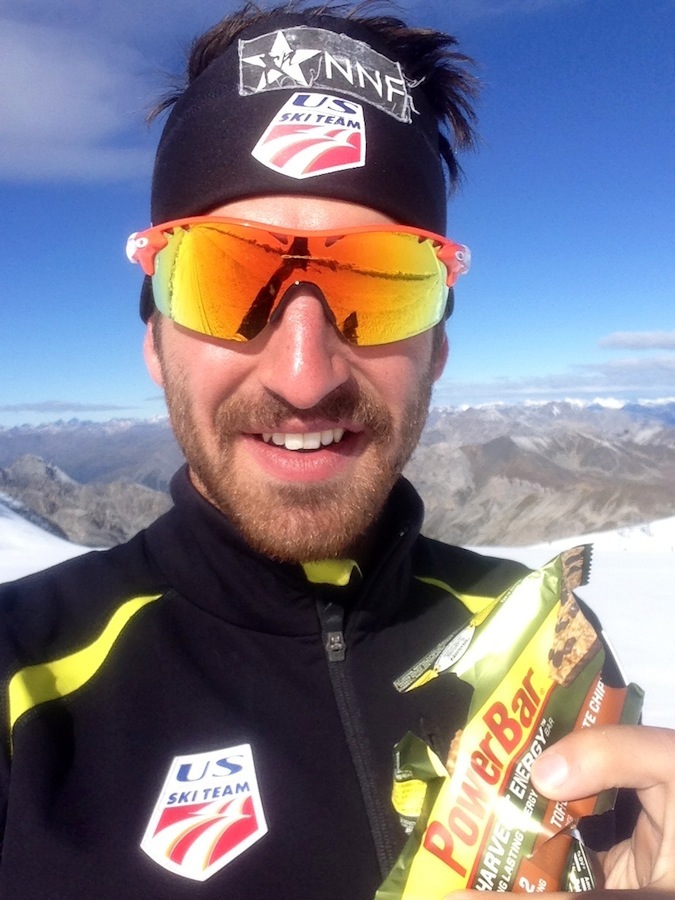
    Sam Tarling (Maine Winter Sports Center) refueling while training on the Stelvio Glacier. (Courtesy photo)
    Sam Tarling (Maine Winter Sports Center) refueling while training on the Stelvio Glacier in Italy. (Courtesy photo)

    With his four years of NCAA eligibility completed, Sam Tarling will return to his roots to begin his professional career. The Maine native and 2011 NCAA 10 k freestyle champion for Dartmouth College will again race in the white and blue of Maine Winter Sports Center next season, joining a roster that includes the likes of Kris Freeman, Annelies Cook and Russell Currier.

    “MWSC offers and unparalleled level of support that will enable me to pursue my goals,” Tarling wrote in an email. “I’ve worked with the program in the past and it seemed like a great fit for me.”

    The 23-year-old has been a force for Dartmouth on the eastern college circuit for the last four years, racking up two individual classic EISA wins in his final season with the Big Green and taking fifth in the 30 k classic U.S. Nationals in January.

    (Photo: Steve Fuller/Flying Point Road. All photo sales to benefit NNF)
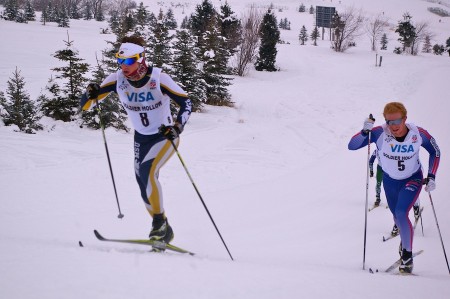
    Tarling (bib 5) in the lead pack of the 20 k freestyle at 2013 NCAA Championships. (Photo: Steve Fuller/Flying Point Road.)

    Tarling has taken a unique path through college skiing and put considerable thought into choosing an elite program. For the past few years he’s taken advantage of Dartmouth’s flexible academic schedule and trained or traveled with most of the elite teams in the U.S. during the fall. This both gave him insight into how each team operates, but he says it also made choosing one to ski for next year more difficult.

    “Throughout my years at Dartmouth, I’ve taken a good look at almost all of the professional programs in the country,” Tarling said. “Part of the reason I’m so behind the ball in joining up with a program is that I wanted to give each team a good look. There are a ton of great programs out there, and I’m lucky to be coming out of school at a time where there are many strong skiers looking to keep skiing.”

    Will Sweester, MWSC’s Director of Competitive Programs, is happy to have Tarling back and representing Maine once again.

    “He’s an interesting guy in that he’s a self-directed athlete,” Sweester said. “He knows what he wants to do, and I’m glad we could do that back in Maine… We have a mandate to put most of our resources into this state, so it’s always a plus when our top-level athletes are from Maine.”

    Other additions to MWSC’s roster for next year include National Development Team member Omar Bermejo to the adaptive program and Casey Smith to the biathlon Olympic development team.

    “I’m really excited that we’re as close to a full-service program as there is in the U.S.,” Sweester said. “We’ve got athletes from 12 years old to Olympians, and cross-country, biathlon and now adaptive, with Omar joining our program. So I’m pretty excited about that. If there was any way for us to add jumping, I would.”

    For the summer, Tarling plans to split his time between Maine and Hanover, N.H., while continuing to work off the training program he’s followed for the last few years. His semesters off means that he still have classes left to complete before finishing his undergraduate degree at Dartmouth. But for the first time since beginning college four years ago, Tarling’s winter season will be free of the academic obligations that are a necessary part of competing in the NCAA.

    “For the most part, not a lot is going to change for me,” Tarling said. “The biggest difference is going to be flexibility in the winter race season. I’ve always been obligated to take classes in the winter — which really isn’t too big an issue it just means you have to focus on managing your time a bit more. I’m looking forward to a little break from the regimented lifestyle of being a student-athlete, although I’m sure I’ll miss it.”

    His goals for the coming season involve both racing well — “strong international results, race World Cups, podium at U.S. Nationals and SuperTour Finals,” he said — and giving back to his home state.

    “Working with the MWSC also gives me the opportunity to give back to my home state of Maine, and hopefully I’ll be able to inspire the some future Olympians in the strong youth and junior programs that the club supports,” Tarling said.

  • With New National Training Group Criteria, USST Brings NCAA Skiing into Official Pipeline

    (Photo: flyingpointroad.com)
    The men’s 20 k at 2013 NCAA Championships. Photo: Steve Fuller/flyingpointroad.com.


    This spring, the U.S. Ski Team made a small but notable adjustment to the selection criteria for one of its development groups. For the first time ever, the U24s in this year’s National Training Group (NTG) will include podium finishers from NCAA Championships in addition to athletes who qualified based on certain SuperTour, U.S. Nationals and international results.

    The change officially opens the doors of the national team’s pipeline to skiers in full-time college programs, a shift in the official stance on where collegiate skiing fits into its development system. According to USST head coach Chris Grover, the addition of an NCAA Championship top-three to the NTG criteria is meant to include the high-level college athletes into its pipeline that haven’t been there before: the ones who don’t compete in many races outside the college circuit.

    “A lot of those NCAA skiers are not participating in a full SuperTour schedule, or much of one, and some of them aren’t even participating in any spring nationals,” Grover said. “So we want to have another pathway for athletes.”

    The new criterion was added in the same year that the USST decided to temporarily shelve its Development (D-) Team. Other programs designed to identify up-and-coming U.S. skiers remain, including the NTG, the national J2 camp, and the National and Regional Elite Group training camps.

    In some ways, the addition of an NCAA result to the NTG selection process doesn’t change much. NCAA athletes have not been excluded from the group in the past; rather, they earned invitations through extracurricular results at national-caliber events or participation in Junior and U23 World Championships.

    But as Grover pointed out, there are sometimes a few top college skiers who don’t attend those events. And the 2013-2014 nominees to the USST include six skiers who have spent time racing in the NCAA; Holly Brooks, Sophie Caldwell, Ida Sargent, Simi Hamilton, Sadie Bjornsen and Erik Bjornsen.

    Several athletes have recently spoken about college skiing’s role in their athletic development. Annie Pokorny, who decided to move on to professional skiing this spring, praised Middlebury College for its part in her recent progress. Sophie Caldwell, in discussing her nomination to the U.S. Ski Team last week, credited her four years at Dartmouth College with keeping her fit and excited about the sport by the time she graduated. Her former teammate Sam Tarling, who will graduate Dartmouth in June, wrote on the National Nordic Foundation website in March that he made the transatlantic trip to OPA Cup Finals after NCAA Championships, along with Montana State University’s David Norris, in part to prove that it could be done — that college and international racing were not “mutually exclusive,” as he writes of being told throughout his career.

    “It’s actually quite sad how many times coaches have told me that competing internationally and competing in college cannot work,” Tarling said.

    The USST’s addition of an NCAA podium to its NTG criteria is a notable change, but not everyone looks at it as entirely productive.

    Bruce Cranmer, head nordic coach of the recently crowned 2013 NCAA Champions at the University of Colorado, had conflicting opinions about one of his own athletes, 15 k freestyle champion Joanne Reid, being invited to the NTG.

    “I think that’s great that [the USST is] interested in trying to recognize and potentially help college skiing that way,” Cranmer said. “But there’s not much that you really get for it. It’s like a tiny carrot out there… It’s like, ‘OK, I get to go to camps, which I might not be able to go to anyway, and might get a jacket and ski suit, and I come up with $10,000 or whatever to do all this.

    “So I think while in some ways it’s nice, I don’t feel its doing all that much,” he continued. “From my perspective and from an athlete’s perspective that’s in college, why would I do something where I have to raise all this money? I get tremendous support at the collegiate level.”

    For junior skiers with top results, that support is most evident in the form of potential college scholarships. But the USST has interest in those same athletes, and in the last two years several juniors confirmed having received letters from USST recognizing their potential and urging them to consider the college decision carefully; these athletes did not want to speak publicly about the situation.

    In a phone interview last fall, USST coach Matt Whitcomb posited that there is no right way for skiers to approach the college decision, but suggested that certain athletes consider other post-graduate (PG) options before committing to a four-year NCAA program.

    “There’s no blanket statement that can apply to everyone and cover this issue effectively so that it matches everybody’s needs,” Whitcomb said last October. “We have a great asset in collegiate ski teams here in the U.S. We also have a great asset in our PG programs, elite clubs and national team. When high school seniors are graduating, [we] just look at how they’ve done in that past season. And if, as an OJ they’re on the podium [at Junior Nationals]…or as a J1 they’re top-10 or better, then I recommend pretty highly that they take one or two PG years.”

    Whitcomb believes this allows skiers to decide whether a full-time approach to skiing is a positive thing while giving themselves additional time to become better athletes.

    “For everybody I think it’s important to keep your undergraduate degree in the plans, but I don’t think it has to happen in those four years immediately following high school,” Whitcomb said. “If the athlete going to college is a more mature athlete, the college gets a faster product and the athlete is better able to handle the pressure of academics and athletes combined. I think it’s a win-win for everybody.

    “That said, the athlete may improve dramatically in their PG years and decide that maybe national team skiing is not for them, and want to go to college and try to progress as much as they can there,” he added. “We’re certainly seeing some athletes do quite well in these collegiate programs; I’m excited the way Sophie Caldwell’s been looking this year. There’s no one way to do it.”

    The national team has named college athletes to its team in the past, including Alexa Turzian and Matt Gelso while they were at CU and Rosie Brennan while she attended Dartmouth. But USST coaches say they’ve learned from those cases that they need to require a higher level of dedication from its national team members in terms of time, and college skiers have too many conflicting obligations.

    “It’s really difficult for an athlete that’s also attending college to meet the requirements we set for our national team athletes,” Whitcomb said.

    That difficulty has gotten more challenging as the national team has increased its presence and success in Europe, he continued.

    “Even eight years ago, [Andy] Newell was trying to figure out which period of World Cup racing he wanted to do that next year,” Whitcomb said. “Now we have B-team athletes trying to figure out which couple of World Cup weekends to skip so [they] can train and recover and race fast from start to finish.”

    An invitation to the National Training Group is not a national team nomination, but it is designed to facilitate the jump between the two. By including athletes who podium at NCAA Championships on the list of skiers it wants to help improve, the national team has broadened the options available to athletes who wish to take part in its development pipeline.

    And as Pokorny discussed last week about her departure from Middlebury, navigating those options is a very personal process.

    “I think there’s a lot of negative stigma around leaving school,” she said. “It comes from this idea that kids who leave school are somehow brainwashed or counseled into it by someone else. But this is a decision I made on my own.”

    She also echoed Whitcomb in noting there was no single pathway right for everyone.

    “There’s no right or wrong way to do it as long as you’re confident in what you’re doing and believe in your training and believe in your choices,” she said.

    — Chelsea Little contributed reporting.

  • Reid and Havlick are FasterSkier’s Collegiate Skiers of the Year

    Reid and Havlick are FasterSkier’s Collegiate Skiers of the Year

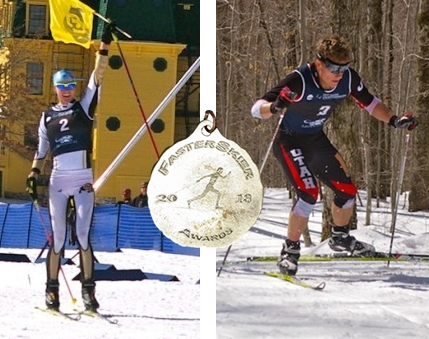
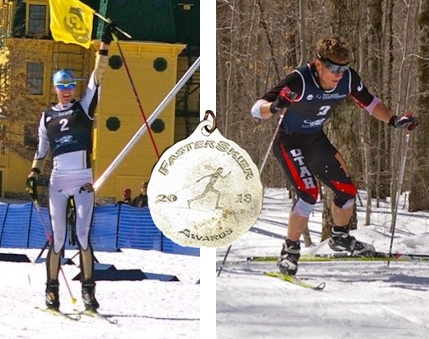
    Joanne Reid (University of Colorado) and Miles Havlick (University of Utah) are FasterSkier's 2013 Collegiate Skiers of the Year.
    Joanne Reid (University of Colorado) and Miles Havlick (University of Utah) are FasterSkier’s 2013 Collegiate Skiers of the Year.

    After a one-year hiatus, our Skier of the Year awards are back. We start with the collegiate category, where for the first time in FasterSkier’s history of giving such prizes Americans took both of the top honors: NCAA freestyle champions Miles Havlick (University of Utah) and Joanne Reid (University of Colorado).

    Miles Havlick (USA/University of Utah)

    Havlick (Photo: Flyingpointroad.com)
    Havlick (Photo: Steve Fuller/Flyingpointroad.com)

    When it came time to nominate athletes in the college division, Havlick was at the top of a very short list. There is no question he deserves the honor; in college skiing all roads lead to NCAA Championships and his performance there was the storybook ending to a stellar college career. Not only did the senior from Boulder, Colo., defend his 2012 20 k NCAA title this year, which is no easy feat, he did so against one of the most competitive fields the NCAA has ever seen. The freestyle race, with its dramatic sprint finish and Havlick’s six-tenths winning margin, is not one to be forgotten any time soon. And at an event that’s all about team, Havlick was the first of all three Utes in the top five in the mass start, which propelled Utah from fourth to second on the last day of the Championships. For Havlick, it was a “perfect” ending to his time in Utah’s black and red.

    Leading up to NCAAs, the signs were all there that Havlick was bound for success in Vermont; he won six out of ten RMISA regional races and never once finished outside the top 10. At the Montana SuperTours prior to the beginning of the college season, he just missed out on a trip to Canmore, Alberta, as an American representative on the World Cup. He’s our 2013 award-winner because of his achievements in college skiing, but when Havlick makes the transition to racing professionally after graduation he’s bound to shake up the men’s field at the national level.

    Joanne Reid (USA/University of Colorado)

    Joanne Reid leads her Colorado University teammates, Eliska Hajkova (4) and Maria Nordstrom (9) early in Saturday's 15 k freestyle mass start at the 2013 NCAA Championships. Reid won by nearly 27 seconds and Hajkova was second. (Photo: Steve Fuller/flyingpointroad.com. All photo sales benefit NNF)
    Joanne Reid leading CU teammates Eliska Hajkova (4) and Maria Nordstrom (9) in the 15 k freestyle at NCAA Championships. Reid won by nearly 27 seconds and Hajkova was second. (Photo: Steve Fuller/Flyingpointroad.com.)

    The skier-of-the-year choice was also clear in the women’s collegiate category. Joanne Reid, in a ridiculously dominant senior season, won eight out of ten regional races leading up the final showdown in Ripton, Vt. At NCAAs, she added another ‘W’ to her resume in the 15 k mass start classic to lead CU to an improbable come-from-behind team win on the final day. It’s hard to call a team with 18 NCAA Championships in its trophy case (now 19) an underdog, but that’s what the Buffs were when they entered the last day of NCAAs 54 points down to the University of Vermont. Colorado relied on its nordic women for the lion’s share of the team score, and with the pressure on Reid delivered a 27-second victory over teammate Eliska Hajkova. Reid later said was unaware of her gap on the rest of the field until she realized the crowd would fall silent after she skied by.

    A look back at Reid’s previous record demonstrates just how big a jump she made in the last year: though she’d already been on the NCAA podium as a sophomore in 2011, winning is quite a different thing. Illness plagued the Palo Alto, Calif., native midway through last season, and prior to this year she had only two collegiate wins to her name. What happened next, of course, is history: in the last few months Reid more than quadrupled her win record as she tore through the RMISA circuit like it was no big deal. Reid comes from an intimidating lineage of elite endurance athletes, but with her new individual NCAA title she’s on her way to creating a powerful reputation of her own.


    Honorable Mention:

    David Norris (USA/Montana State University)

    David Norris’ wide-reaching accomplishments this year are worth noting. He particularly didn’t stand in the college circuit, but that was because he skipped half the season to race internationally — first at a little thing called the World Cup in Canmore, then at U23 World Championships in the Czech Republic. In between he was third in the 30 k classic at U.S. Nationals to Torin Koos and Erik Bjornsen. Norris finished a respectable 11th and 12th in the NCAA races, and immediately thereafter he jumped on a plane to compete for the U.S. at OPA Cup Finals in Italy. When he returned, he continued racing at Spring Series. It’s been said that college and skiing are difficult to pursue at the same time, but Norris and his coaches proved this year that the logistics are doable.

    Sam Tarling (USA/Dartmouth College)

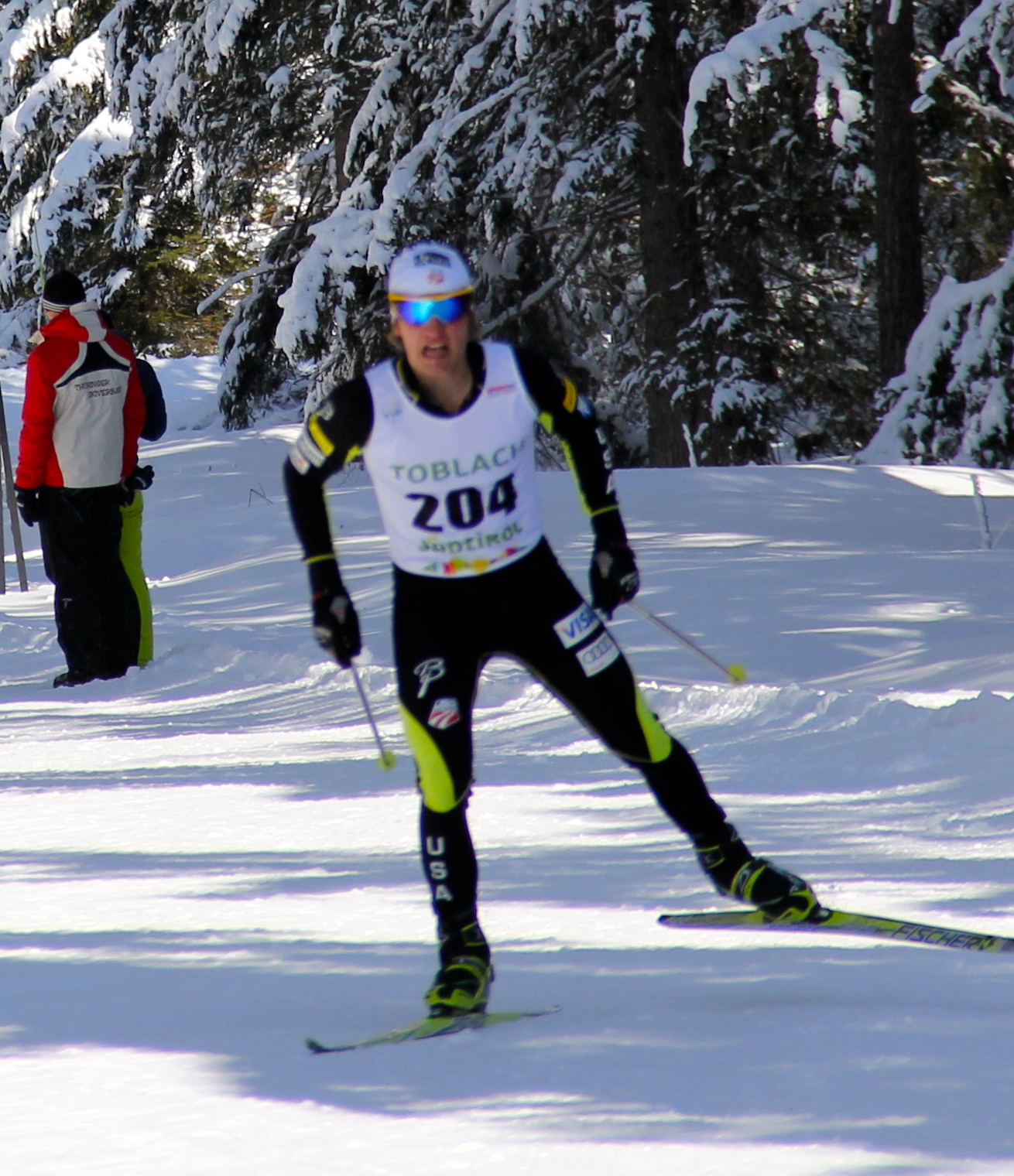
    Like Norris, Tarling put together solid performances both in and out of the college circuit this year. A repeat NCAA title remained elusive for the Mainer, but like Norris the Dartmouth senior accrued impressive results domestically and internationally. Tarling was fifth in the 30 k at U.S. Nationals, joined Norris in representing the U.S. at U23 World Championships, and despite having to miss the first two EISA carnivals he was the second-ranked Eastern qualifier to NCAAs, where he finished 10th and seventh in the 10 k and 20 k, respectively. He joined Norris again in Toblach, Italy, for OPA Cup Finals, where was the top American man in the mini-tour final standings. After SuperTour Finals Tarling announced he’s going pro, and if past results are any indication he’s headed for big things next year.


    medal-final-layer-2013Previous winners:

    2011

    Maria Graefnings (SWE/UU)

    Sam Tarling (USA/Dartmouth)

    2010

    Antje Maempel (GER/DU)

    Franz Bernstein (GER/UVM)

    2009

    Antje Maempel (GER/DU)

    Vegard Kjoelhamar (NOR/CU)

    2008

    Maria Grevsgaard (CZE/CU)

    Marius Korthauer (GER/UAF)


  • Bjornsen Gives OPA Final ‘Every Last Drop;’ Takes Close Second in Pursuit

    Bjornsen Gives OPA Final ‘Every Last Drop;’ Takes Close Second in Pursuit

    Sandra Ringwald (GER) and Sadie Bjornsen (USA) skied a closely-fought 10 k pursuit on Sunday to wrap up OPA Cup Finals in Toblach, Italy. Bjornsen took second place by 1.0 seconds. Photo: Bryan Fish.
    Sandra Ringwald (GER) and Sadie Bjornsen (USA) skied a closely-fought 10 k pursuit on Sunday to wrap up OPA Cup Finals in Toblach, Italy. Bjornsen took second place by 1.0 seconds. Photo: Bryan Fish.

    At the final showdown of the OPA Cup circuit on Sunday in Toblach, Italy, Sadie Bjornsen closed out her European season in a close battle with Germany’s Sandra Ringwald in the 10 k freestyle pursuit. It was a tough way to round off six races in nine days — “my very own Tour de Ski,” Bjornsen called it — and after 10 k of close racing Ringwald just nipped the American in the final meters to take the OPA Cup Finals victory by exactly one second. Bjornsen claimed silver in 26:51.7 to lead the sizeable U.S. team in the results.

    “I was happy with the result,” Bjornsen said. “I gave every last drop of energy, and it was a great way to the end the season feeling tired, happy and knowing I finished my season giving my best.”

    Based on her accumulated times from the previous two races Bjornsen began the pursuit five seconds in front of Ringwald, a strong skier who competed at World Championships last month for Germany and reached the podium at U23s in January.

    “Five seconds isn’t much, so Sandra caught me maybe 15 seconds in,” Bjornsen said. “I wanted this though, so that we could work together and stay ahead of the rest of the field. Sandra is in good shape right now, so I knew that I needed to stay with her and hope to outsprint her at the finish.”

    Bjornsen and Ringwald switched leads on and off for most of the race, but at 3 k from the finish Bjornsen began to fatigue.

    “My goal was to just hang on for dear life,” she said of the later kilometers. “I knew it would come down to a sprint finish and I didn’t have hardly any gas left. We both surged on the final climb and crested the top of the hill into the stadium even with each other. Her skis were very fast though, so I lost contact down the final hill into the finish. Again we sprinted for the finish, but I just wasn’t able to get back up to her. It was a hard effort though, and I gave every last ounce of energy left in my body.”

    Caitlin Patterson (CGRP) skiing in a pack. Photo: Bryan Fish.
    Caitlin Patterson (CGRP) skiing in a pack. Photo: Bryan Fish.

    The pace that Ringwald and Bjornsen set together created a 16.2-second gap to the bronze medalist, Alenka Cebasek (SLO). After Bjornsen, Kate Fitzgerald (APU) finished 16th for the U.S., 1:08.7 back, Caitlin Patterson (CGRP) was 19th (+2:02.8), Erika Flowers (SMS T2) finished 25th (+2:32.4), Becca Rorabaugh (APU) was 30th (+3:03.8), Lauren Fritz (APU) took 33rd (+5:15.4) and Anna Van Der Rhee (MWSC) was 35th (+8:17.1).

    With nothing but SuperTour Finals left on her schedule, Bjornsen will stay in Europe for a few more days to catch her breath before heading to Truckee, Calif.

    “As I collapsed at the finish for maybe five minutes, I was laughing in my head thinking about all the hard efforts in the last week,” Bjornsen said. “I ended my season truly challenging myself. It is not often I have had to dig so deep as I did this weekend, but it was also a great feeling!”

    Bjornsen could have raced in the Olso World Cup 30 k on Sunday, but chose the shorter distances of OPA Cup Finals instead thinking they would better suit her current strengths.

    “I knew that my fitness was in a better place for some shorter quicker racing than a 30 k skate, so I wanted to challenge myself at the end of the season and test myself against the top OPA athletes,” she explained. “I have never even been close to winning an OPA race, so it was fun to compete this time.”

    Women’s 10 k pursuit results.

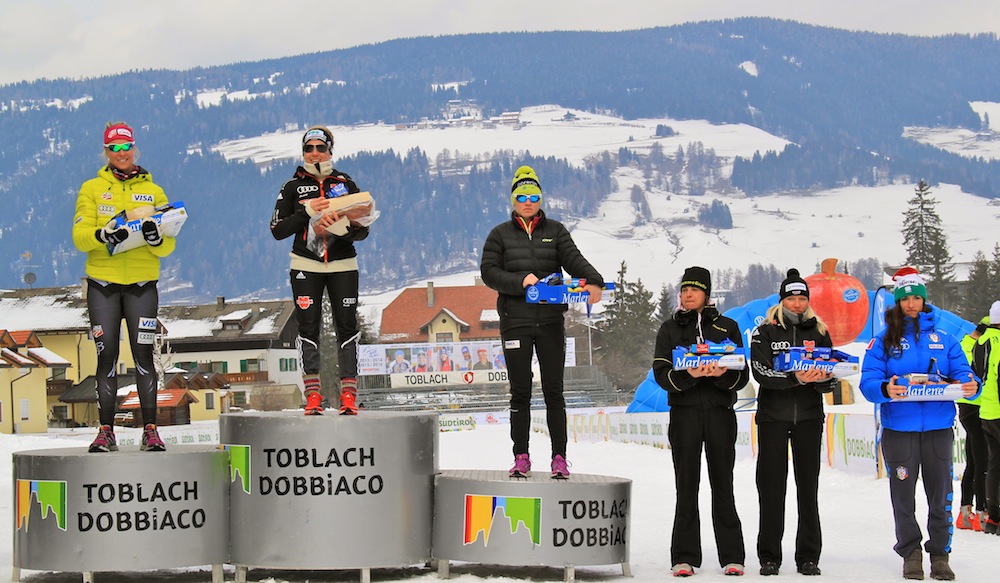
    Bjornsen, left, on the podium with race-winner Sandra Ringwald and bronze-medalist Alenka Cebasek (SLO). Photo: Bryan Fish.
    Bjornsen, left, on the podium with race-winner Sandra Ringwald and bronze-medalist Alenka Cebasek (SLO). Photo: Bryan Fish.


    Tarling Leads U.S. Men in 15 k with 23rd-Place Finish

    Thomas Bing, a 22-year-old German skier who podiumed at U23 Championships in January and has two complete Tour de Ski finishes under his belt, won the men’s OPA Cup Final by 0.1 seconds in a sprint finish with Sebastian Eisenlauer (GER) and Fabio Clementi (ITA). Bing began the 15 k pursuit with a one-second lead but held off a hungry group of seven to take the mini-tour title.

    Sam Tarling (Dartmouth College) led the U.S. men on Sunday with a 23rd-place finish in the 15 k pursuit. Photo: Bryan Fish.
    Sam Tarling (Dartmouth College) led the U.S. men on Sunday with a 23rd-place finish in the 15 k pursuit. Photo: Bryan Fish.

    Sam Tarling (Dartmouth College) led the American men’s squad with a 23rd-place finish, 1:42.4 back from Bing. He entered the pursuit as the 26th starter with a 1:08.0 handicap, and in the process of picking up a few places he skied with two other Americans, Erik Bjornsen (APU/USST) and Matt Gelso (SVSEF).

    “Today was a blast,” Tarling said. “I think all our guys were feeling pretty sore from the classic race but I feel like we all skied really well and managed to make some jumps in the overall standings.”

    Bjornsen moved up from 31st after the classic race to 24th, 11.9 seconds behind Tarling, and Gelso climbed from 34th to 25th, 4.1 seconds behind Bjornsen.

    “We had a pretty good group of us go all within maybe 10 seconds so we had some nice pack tactics to nip some guys ahead of us struggling alone,” Tarling said. “There really isn’t a ton of rest on that course, and you learn a few things skiing with these guys. It seemed like you could make or lose serious chunks of time just from really pushing it over the crests of hills, which has been something I can definitely improve on.”

    Gelso had hoped for a top-ten overall finish prior to arriving in Toblach and was ultimately disappointed with his performances, but he managed to overcome some pre-race fatigue on Sunday to compete with the pack that eventually formed around him in the pursuit.

    “Erik and I started about ten seconds behind Sam and skied hard early on to catch him,” Gelso said. “A sizeable group formed around us and provided some good skiing. The pace was fast but not outrageous. Being a little tired heading into the day it was very helpful to be skiing around people in that it kept you focused and pushed you harder.”

    The three Americans all finished within fifteen seconds of each other to lead their compatiots in the final standings. Mike Sinnott (SVSEF) placed 32nd in a photo finish with Mario Roncador (ITA) 2:33.5 back from the leaders, Pat Johnson (SVSEF) finished 37th (+2:55.2) and David Norris (MSU) was 40th (+3:12.9).

    In the junior men’s division, Paddy Caldwell (SMS) led the way for the U.S. in 12th place, 1:54.1 behind Clement Parisse’s (FRA) winning time. Caldwell skied the sixth-fastest freestyle time of the day after starting the pursuit in tenth with a 1:00.0 deficit. Kevin Bolger (SVSEF) maintained his starting position to finish 15th, 3:00.0 back from the leaders.

    Men’s senior 15 k pursuit results

    Men’s junior 15 k pursuit results

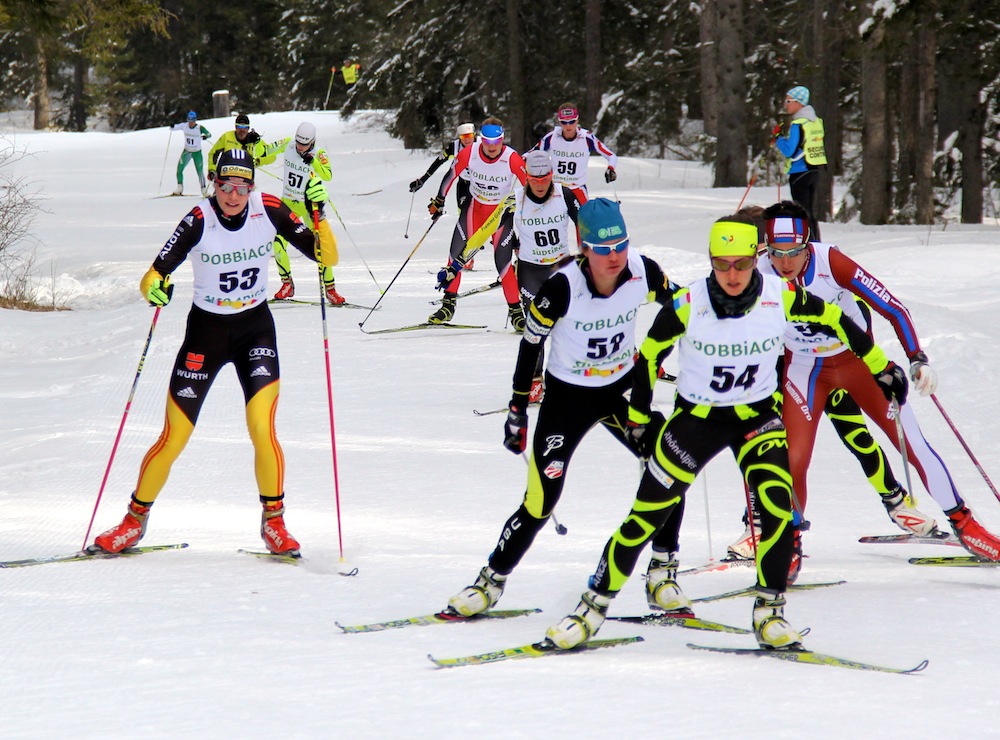
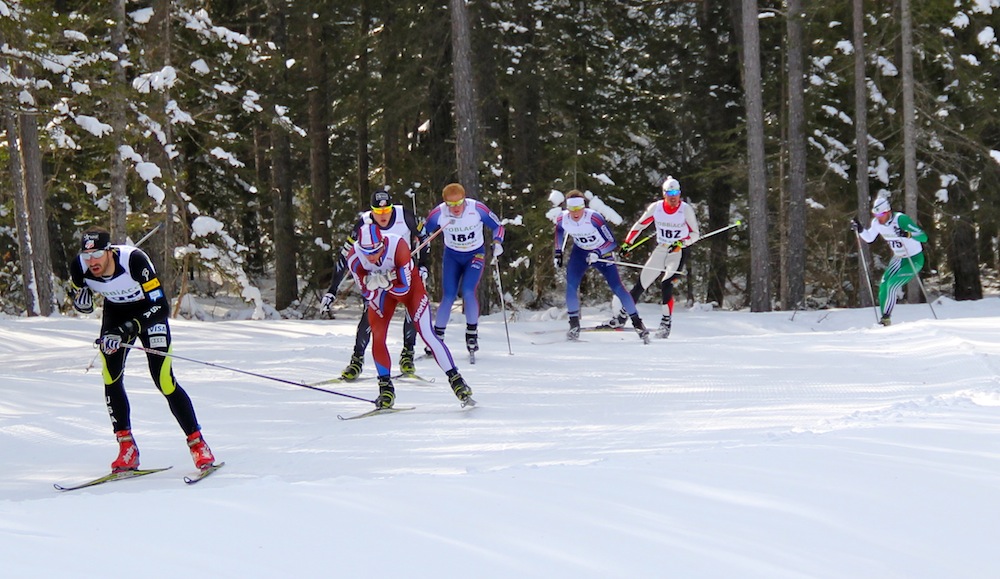
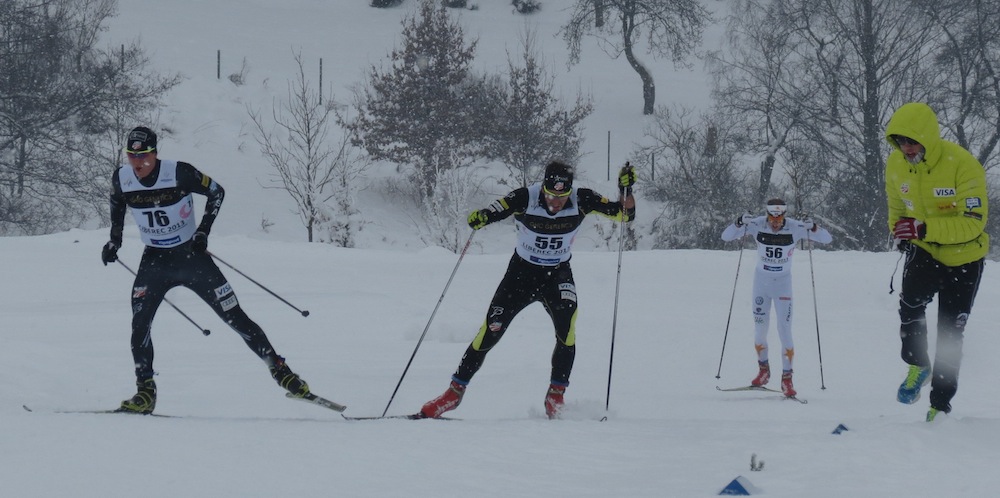
    Tarling, Bjornsen, Gelso and Johnson all skiing in a  pack. Photo: Bryan Fish.
    Tarling, Bjornsen, Gelso and Johnson all skiing in a pack. Photo: Bryan Fish.
  • Bjornsen Posts Classic Win in OPA Cup Finals, Leads Tour Before Pursuit

    Bjornsen Posts Classic Win in OPA Cup Finals, Leads Tour Before Pursuit

    Sadie Bjornsen (USA) in qualifying. She was 0.15 seconds out of 30th.
    Sadie Bjornsen (USA), shown here competing at World Championships this February, won the 5 k classic at OPA Cup Finals on Saturday in Toblach, Italy.

    After taking third in the prologue at OPA Cup Finals on Friday in Toblach, Italy, Sadie Bjornsen (USA) followed up on Saturday with an outright win in the second stage of the mini-tour, a 5 k individual classic. She completed the course in 14:37, 5.1 seconds ahead of runner-up Sandra Ringwald (GER).

    “I just tried to ski right under sprint speed the entire time, because I knew it was going to be fast out there,” Bjornsen said of her race. “At about 3 k I started to get scared as my legs really began to flood, but I managed to hold on.”

    With another day in Italy under her belt after a long day of travel from the Drammen World Cup, Bjornsen said she felt more adjusted to the new venue on Saturday.

    “I felt a lot better today,” she said. “Much more like a racer in control of my feelings and effort.”

    As the race-winner, Bjornsen leads OPA Finals going into Sunday’s pursuit and will start the 10 k freestyle being chased down by the rest of the field.

    “We start the season chasing the Euros. Now I get to end running from the Euros,” she said. “It should be a good race. I have limited energy left I can feel, but I will give it all and see what happens. I am of course nervous. It is always nerve-racking when you are the rabbit.”

    Bjornsen led six other American women in the 5 k classic. Kate Fitzgerald finished twelfth, 42.6 seconds back, Caitlin Patterson was 24th, Becca Rorabaugh placed 25th, Erika Flowers was 29th, Lauren Fritz finished 25th and Anna Van Der Rhee was 36th.

    According to Fitzgerald, conditions were “perfect” for classic skiing in Toblach.

    “It was pretty much some of the best snow conditions I have seen all season!” she said. “Cold hard track and fresh snow. The course had some really great gradual striding sections so my plan was to just ski big and strong.”

    Though it’s late in the season and many athletes are starting to feel fatigued, Fitzgerald said she is still feeling good.

    “It is a very long season but I am still excited to race!” she said.

    Women’s results


    Sam Tarling (Dartmouth College) led the Americans in the men's 10 k classic at OPA Finals. Photo: Bryan Fish.
    Sam Tarling (Dartmouth College), pictured above competing in Friday’s prologue, led the Americans in the men’s 10 k classic at OPA Cup Finals. Photo: Bryan Fish.

    The two collegiate athletes in Italy led the U.S. in the men’s 10 k; Sam Tarling (Dartmouth College) took 21st, 46.7 seconds behind Basen Poirrier’s (FRA) winning mark, and David Norris (Montana State University) was 28th (+57.1). Both athletes made their plans to race in Europe this weekend knowing OPA Finals fell just after NCAA Championships and also coincided with spring break.

    Tarling, despite feeling “flat” in the prologue, felt recovered and more confident on Saturday.

    “I went out to test classic skis in the afternoon and finally felt much better,” he said. “I was hoping mostly just to have good skis and good feeling and I felt confident if it all went well I’d be able to get in the top-30.”

    Relative to the warm conditions the East has been experiencing lately, Tarling said the Toblach conditions were a welcome change.

    “It was textbook classic skiing, perfect course with long skiable hills and bulletproof tracks,” he said. “We’ve been dealing with some pretty warm and variable conditions in the East lately and it was nice to get back to skiing real solid tracks.”

    Norris, who says he’s struggled this season to put together good races, felt good about his 10 k.

    “I was really conservative and then just tried to rock the last lap,” he said. “I’m happy today and would love to have a very good one tomorrow.”

    Four other U.S. men competed on Saturday. Matt Gelso was 30th, Erik Bjornsen took 33rd, Pat Johnson finished 34th and Mike Sinnott tied a Spanish skier for 51st.

    Tarling and Norris’ decision to race at OPA Finals was a deliberate one. Not many college skiers choose to keep racing after NCAAs, much less in Europe, but both ambitious student-athletes believe strongly in continuing their athletic development while demonstrating that international competition is possible while going to school.

    “We looked at the schedule while we were at U23’s and thought it would fit really well,” Tarling explained. “It was great to get good feeling back today for both me and David, since we weren’t sure how we’d be able to adjust after NCAAs and traveling to Europe the next day. We both believe strongly in college skiing, so we want to help prove that international races and college races are not mutually exclusive, and more importantly that college skiers can compete at an international level.”

    David Norris competing in Toblach on Friday. Photo: Bryan Fish.
    David Norris competing in Toblach on Friday. Photo: Bryan Fish.

    Norris and Tarling both plan to compete at SuperTour Finals in April as well.

    “My class load is a little easier this semester so I figured I would try to get over seas more this season,” Norris said. “It probably didn’t help my NCAA performance, but it motivates me to train harder and I think it’s important to work within the US Ski Team pipeline while doing NCAAs and pursuing an under grad.”

    OPA Finals also features junior races, and the U.S. has two men competing. Paddy Caldwell and Kevin Bolger finished with 20 seconds of each other in 10th and 14th, respectively. For Caldwell, it was one of his best results of the season.

    “I’m really excited about today’s race,” Caldwell said. “That was one of the best classic races I have had all year. Going into the race I was really focused on skiing techniquely well and trying to improve my start position for the pursuit on Sunday. I am feeling really good right now. This is my last race series for the year; it’s great to finish off the season on a high note here in Italy.”

    Beginning with National Junior Championships in Lillehammer, Norway, in early February, Caldwell has been racing in Europe for five straight weeks now. The primary purpose of his stay has been to accumulate international experience.

    “My main goals were to feel good racing and to try to mix it up with some international junior fields,” he said. “Another big focus of this trip was to get more comfortable racing in Europe. I have learned a lot about what works best for me for travel and on the road training. This has been an amazing trip and learning experience.”

    OPA Finals concludes on Sunday with a 10/15 k freestyle pursuit.

    Men’s senior results

    Men’s junior results

  • Patterson, Bjornsen Lead U.S. with Top 15s in U23 Freestyle Races

    Patterson, Bjornsen Lead U.S. with Top 15s in U23 Freestyle Races

    Caitlin Patterson (Craftsbury Green Racing Project) en route to a 14th-place finish in the 10 k freestyle at U23 World Championships. Photo: Gus Kaeding.
    Caitlin Patterson (Craftsbury Green Racing Project) en route to a 14th-place finish in the 10 k freestyle at U23 World Championships. Photo: Gus Kaeding.

    When some athletes go to U23 World Championships, they come in with an enormous amount of pressure on themselves to perform well in the biggest race of the year. The mentality can work for some, but Caitlin Patterson (Crafstbury Green Racing Project) prefers the opposite approach. The 23-year-old has been to these championships a few times before and is careful not to place more importance on them over any other race. On Thursday in Liberec, Czech Republic, the even-keeled perspective helped Patterson towards 14th place tie in the women’s 10 k individual freestyle event for her best finish in three appearances at these championships.

    “I’m happy with the result today,” Patterson said. “My main goal today was to ski my own race and push myself to the limit, to ski as fast as possible… I’m happy to have skied well today in a strong international field while representing the US, and I know the race experience will improve my confidence for future races and help me learn to ski faster.”

    Patterson skied a conservative 20th-ranked first lap to come on strong in the second half to finish in 29:31.9, 1:41.5 behind Ragnhild Haga’s (NOR) winning mark. She says her opening pace wasn’t by design, exactly, she just took a few kilometers to warm into the race.

    Patterson catching her breath after finishing. Photo: Liberec2013.
    Patterson catching her breath after finishing. Photo: Liberec2013.

    “I definitely skied my own race, starting off slowly and building momentum from there,” she said. “Actually I felt a bit disconcertingly weak on the first lap, and so while the coaches said it looked like I was skiing relaxed or maybe starting (very) conservatively, I was actually trying to wake up and feel more energetic. Luckily I worked my way into the race and felt much better on the second and third laps.”

    Pepa Miloucheva, Patterson’s coach at Craftsbury, was on course giving splits and said as much of her athlete’s race. “I was able to see most of the race,” Miloucheva said. “Caitlin had a little slow start, but looked great on the second and third lap, so was able to make time and finish strong.”

    As the 37th starter in a field of 49, Patterson started just in front a few of the fastest-seeded women in the field. She planned to work the positioning to her advantage and work with people around her, but she wound up skiing much of the course alone. She briefly skied with teammate Liz Guiney in the stadium before the latter turned into the finish lanes, but for the most part had to set her own pace.

    “My third lap was particularly lonely, with no one ahead or behind for what seemed at least a few minutes each direction (the course twists and turns enough to be able to see people, and I know no one finished for several minutes after I crossed the line),” she said. “Luckily at that point I was comfortable with my own pace and enjoying the race.”

    Many have commented this week on how difficult the Liberec trails are, and on Thursday they were made even more difficult by a fresh layer of new snow that slowed ski speed. In such conditions, Patterson focused on transitions and riding a ski well.

    “It was also important not to let yourself think that the few flat areas were parts of the course where you could rest; there was very little rest available, especially with new falling snow slowing everything down,” she said. “It was at least as important to push along the flats as it was to work hard on the hills.”

    Looking ahead to the 15 k skiathlon on Saturday and beyond to the rest of the season, Patterson is more excited than ever.

    Sophie Caldwell, 17th. Photo: Gus Kaeding.
    Sophie Caldwell, 17th. Photo: Gus Kaeding.

    “The pursuit will certainly be a different race, with classic technique, longer distance, and mass start thrown into the mix, but I think I can build off the strengths of today’s race and I should be able to do well in the pursuit too,” she said. “I’m very excited! It’s easier to look forward to future races when current races are going well, and my experience today will help me progress towards racing faster during the rest of the season.”

    Finishing just three places and 23 seconds behind Patterson, Sophie Caldwell (SMS T2) was very nearly the second of two American women in the top 15 on Thursday. She finished 17th after crashing on a major downhill on her final lap, but until that point had skied comfortably in the top 15 and within a few seconds of a top 10.

    “She was definitely in the hunt for a top-10 and unfortunately lost a fair amount of time but still ended up 17th, which is a solid result,” said U.S. Ski Team development coach Bryan Fish.

    In light of managing a top-20 even with the fall, Caldwell is looking forward to the skiathlon on Saturday.

    Annie Pokorny, 29th. Photo: Gus Kaeding.
    Annie Pokorny, 29th. Photo: Gus Kaeding.

    “Overall I was happy with it,” she said. “I felt good today and am excited to do some more distance races in the next couple weeks. My fitness feels like it’s still improving and I’m definitely learning more each time I race over here against such strong competition.”

    Annie Pokorny (Middlebury College) came through in 29th to put three Americans in the top-30. Considering this is her first international event and she was sick with the flu in the week leading up to the championships, Pokorny was “very happy” with the result.

    “I went into the first lap challenging myself to ski as smoothly as possible,” she said. “I think I did that. From there I planned to catch as many rides as possible, which I managed to do from [Anastasia] Slonova and [Ragnhild] Haga — short, very speedy rides! I think the coolest moment for me was going up the last climb behind Haga. It was sobering to see how a U23 world champion skis—to be in the same race as that person. It was exciting… Racing today was the coolest thing I’ve ever done.”

    Liz Guiney (University of New Hampshire) finished fourth for the U.S. in 42nd.

    Women’s 10 k freestyle results.


    Erik Bjornsen (left) on his way to a 15th-place finish in the 15 k at U23 World Championships. Photo: Gus Kaeding.
    Erik Bjornsen (left) on his way to a 15th-place finish in the 15 k at U23 World Championships. Photo: Gus Kaeding.

    In the men’s race Erik Bjornsen (Alaska Pacific University/U.S. Ski Team) led the way for the U.S. once again with a 15th-place finish in the  15 k freestyle. The result was another personal best — he was 10th in the sprint on Tuesday, and this is his new high mark in a distance race at U23s — but for someone with ambitions like Bjornsen, it ranked somewhere between a “decent” and “pretty good” day.

    There were aspects to his race he was happy with and others that didn’t sit well. His finish time for the four-lap event was 37:44.4, exactly two minutes behind Sergey Ustiugov’s (RUS) winning time.

    “Fifteenth isn’t bad but being two minutes out is not awesome,” Bjornsen said. “I think it was a decent day for me, but I think I could have been in the top 10 if I’d had a good day. That’s kind of how it goes sometimes.”

    Sergey Ustiugov (RUS) en route to winning the men's 15 k freestyle at U23 World Championships in Liberec, Czech Republic. Photo: Liberec2013.
    Bjornsen finishing just behind race-winner Sergey Ustiugov (RUS) after skiing the final few kilometers with him. Photo: Liberec2013.

    Ustiugov actually caught Bjornsen from two minutes back with two kilometers to go, which for some could have been a disheartening development, but Bjornsen took the opportunity to catch a ride with the fastest guy in the field and pick up a few places with a strong finishing kick.

    “That was really impressive to watch, because this kid was flying out there,” Fish said of Ustiugov. “I was out in the field and was basically able to watch the last kilometer and they were absolutely flying up the last climbs. It was really impressive to watch both those guys come in and the powering speed that they were carrying.”

    Bjornsen didn’t let Ustiugov put any more time on him, and even moved up alongside him at certain points. The Russian only pulled slightly ahead of him as they came into the finishing lanes.

    “I like to finish strong, usually I’m able to kick up the pace with a kilometer or two to go, so it was really nice to have him there,” Bjornsen said. “He pulled me for a k or so and then … we kind of duked it out to the finish line. He had a better lane so he actually beat me to the finish but it was sweet to ski with the leader for a k or two.”

    The fact that he could ski with Ustiugov, who won every single U23 event in Turkey last winter, left Bjornsen wondering what could have been if he had started closer to the Russian.

    Bjornsen climbing. Photo: Caitlin Patterson.
    Bjornsen climbing. Photo: Caitlin Patterson.

    It would have been nice though if he started 30 seconds closer to me,” he said. “I think that it would have been sweet to have someone to ski with or try to hold onto. So that was too bad, with it being a four-lap course a lot of guys got to ski with people and I felt like I was just working on my own for 13 of the 15 k.”

    Bjornsen also feels his top-end gear for low-altitude skiing is still coming around. He spend his entire November, December and early January skiing at high-altitude venues in Montana and Utah, and this was his first distance race close to sea level. Bjornsen thought of several places where he should have skied more quickly.

    “It’s definitely a different feeling,” Bjornsen said. “I want to keep working on that and I think I’ll get some more chances this year, but its hard because when you’re at low altitude like this you have to be hammering the whole time, you can’t let up for 10 seconds or anything just because you lose time so quickly.”

    On the positive side, though, Bjornsen now knows with even greater certainty than he did after his classic sprint that he can ski with the fastest of his peers in the world.

    “I’m starting to know a lot of the guys and I follow their results and stuff,” he said. “It’s cool to know these guys and start feeling like I’m kind of in it, to race with a lot of these guys. So I’m feeling a lot more confident. The top ten dudes all have World Cup experience, which is the same as where I’m at, starting to race some World Cups. I still have one more year [at U23s] so it’s always been my goal to get a medal or at least a top 5 at these championships. Hopefully in the pursuit or next year.”

    The new snow that fell in Liberec on Thursday morning created tricky waxing conditions. Bjornsen felt he had the best skis he possibly could have, but some of the American men were frustrated with slow equipment.

    Sam Tarling (Dartmouth College), in his first race of the week, placed 39th with a time of 38:47.4, three minutes off the winning time.

    Sam Tarling and Eric Packer working with a Swede. Photo: Gus Kaeding.
    Sam Tarling and Eric Packer working with a Swede. Photo: Gus Kaeding.

    “I felt pretty good about it,” Tarling said. “I was hoping for better, but you can’t have everything go perfectly in every race. I felt fit in the race, but my skis could have been better… I’m super stoked to be with such a talented group though, and I’m looking forward to making a better impression in the skiathlon.”

    David Norris (Montana State University) was 50th, 33 seconds behind Tarling.

    “The result is very disappointing,” he said. “I wanted to be top 20 at the very least. Based on fitness and how hard I pushed the race I am confident this is my best race yet this season, but with such awful skis you just cant compete in such a strong field and wish to look good on paper.

    Norris noted that he was able to ski with most of the men who started around him and that it was important to stay positive about it.

    David Norris, 50th. Photo: Gus Kaeding.
    David Norris, 50th. Photo: Gus Kaeding.

    “I out climbed those around me and was very pleased with my fitness, and it is important for me to remember that I was skiing well when the result looks so bad,” he said.

    “Our techs are working super hard and today was just a tough one, the coaches are super generous and offer advice and help us out any chance they can. Looking towards the 30 k now!”

    Eric Packer (SMS T2) finished fourth for the Americans in 54th.

    “I’ve struggled with distance racing this year, and today was probably my best race so far this season,” Packer said. “I’m obviously not happy with the end result, but at least things seem to be moving in the right direction.”

    Men’s 15 k freestyle results.

    Special thanks to Caitlin Patterson and Gus Kaeding for their photos.


  • Koos Makes it a Double with 30 k Victory at Soldier Hollow

    Koos Makes it a Double with 30 k Victory at Soldier Hollow

    Torin Koos (Bridger Ski Foundation/Rossignol) won his second national championship race this week with his 30 k classic victory on Sunday at Soldier Hollow. Photo: USSA/Tom Kelly.

    FasterSkier’s coverage of the 2013 US Cross Country Championships is brought to you through the generous support of The Memory Clinic in Bennington, Vt.


    MIDWAY, Utah —Torin Koos (Bridger Ski Foundation/Rossignol) knew he had a pretty good shot at winning another national title on Sunday. Carrying momentum from a classic sprint victory and a distance skate result that made him optimistic for the mass start, he was pretty confident he would have a good 30 k classic.

    “I just had a feeling that I’d have the capacity and the moxie to make it happen,” Koos said.

    Make it happen he did, skiing patiently tucked into the lead pack for most of the race to make a move at the base of the final climb up Hermod’s Hill. When he came off the top, he had put enough distance on the field to give himself a margin of a few seconds over Erik Bjornsen (Alaska Pacific University/U.S. Ski Team), and when they entered the final stretch it was a practically insurmountable distance. Koos won the 30 k in 1:26:04, 3.1 seconds ahead of Bjornsen and 8.1 seconds over bronze-medalist David Norris (Montana State University).

    The 2013 national 30 k champion. Photo: USSA/Tom Kelly.

    “I was optimistic going into it,” Koos said as he awaited to step onto the podium. “I won’t say it was a surprise to me.”

    For someone who had completed his first distance race of the season only two days prior, the race played out perfectly: tactically and not too fast. The lead pack, instead of gradually thinning, remained 20 men strong as far along as the 20 k mark. Koos began the race in bib 39 towards the middle of the chevron and had time to work his way up a train that refused to dissipate.

    “I just said [to myself], ‘If I made it to the top of the hollow, nobody was going to drop me,’” Koos said of his final lap. “I thought I was going to have real good energy at the end.”

    He made it to that point and was still with the leaders. Perhaps if anyone had known the prolific sprinter still had energy to burn they would have made a point of dropping him earlier. But they didn’t, or couldn’t, which enabled Koos to hold on, make a move and employ his notorious closing speed in the straightaway.

    Koos making his move at the beginning of Hermod’s Hill.

    “I was on the bottom of Hermod’s right when he went and he looked unbelievable,” said BSF coach Tim Baucom. “Just really good skiing on his part and I think he was happy to have it come down to the last lap… If those guys had decided to go out early it would have been a bit tougher for him.”

    With a main group as big as it was, a handful of skiers had opportunities to control at various points in the race. Miles Halvick (University of Utah), the 2012 NCAA classic champion, took the first move to the front and directed the race for the most of the first lap.

    “I was just trying to keep the pack as thin as possible,” Havlick said. “I don’t know, I was just feeling good and relaxed.”

    Havlick’s opening pace a bit faster than expected to the rest of the pack. When the group came through the first feed zone at 4 k, he pushed through without stopping while those behind took swigs of Gatorade. Sylvan Ellefson (SSCV Team HomeGrown), Matt Gelso (Sun Valley Ski Education Foundation), Tad Elliott (SSCV/USST), Bjornsen and Norris clustered behind Havlick as he briefly put space between himself and the others.

    “The pace was hard the first lap with Miles leading,” Elliott said.

    By the time they climbed Hermod’s Hill for the first time, the focal point of the course profile, and descended back into the stadium, the pack had reabsorbed Havlick. Gelso, Ellefson, Norris and Bjornsen moved to the front, and the pace slowed. At that point, it was still anyone’s race. The pack was still over 20 skiers deep on lap two of six.

    Ellefson and Gelso leading the pack over Hermod’s Hill early in the race.

    One athlete, however, began to set himself apart. Gelso, with ambitions for his second podium of the week, was the workhorse of the day, consistently pushing the pace from the front.

    He said afterwards that he decided to lead just to stay out of trouble, not because he was feeling particularly good.

    The pack climbing Hermod’s on the second lap.

    “I skied towards the front to keep the pace down and do what I could,” Gelso said. “I was just kind of skiing my own race. Lots of times it’s easier to ski at the front of the pace you want to ski instead of in someone else’s stride, screwing around. With some of the turns around here and where people were feeding, it made sense to be in front in a lot of places.”

    Gelso’s competitors were impressed with his effort. “He was skiing awesome all day, Gelso,” Elliott said.

    Elliot and Ellefson also took turns pulling at the front, and would move into the front for the same reasons everyone else seemed to: the pace was still under control and it was best to steer clear of traffic if possible.

    “I feel like every time I led I just happened to be in there,” Elliott said. “I would lead on the downhills to stay out of trouble and I had fast skis. On the steep uphills I got my own track a lot of the time; I would try to take it easy on the uphills.”

    Ellefson, meanwhile, was having the race of his season. Plagued by illness and fatigue this winter as he raced on the World Cup in Europe, on Sunday he felt things finally coming back around.

    “I was feeling really good,” Ellefson said. “The whole time I was really just skiing my own race, and when I was out in front I was skiing at just a pedestrian level, as the Eurosport announcers would say.”

    Gelso leading, halfway through 30 k.

    Just as he was relaxing into the pace, however, disaster struck. With the lead group still quite crowded, someone stepped on Ellefson’s skis right before they began to climb Hermod’s for the third time.

    “I lost my balance and couldn’t lift my skis out of the track, because he was on top of them, so I went down and the whole pack just blew past me,” Ellefson said. “It’s nice to have coaches and everyone out there telling you to relax and stay calm, you’ll catch back up. That’s kind of where it helped me out today.”

    Elliott attempting a surge, with Koos hanging on.

    Elliott and Ellefson thought they had some of the best skis in the field. After Ellefson fell he felt the fast wax prevented an unfortunate situation from becoming worse, and he was able to mitigate the loss of time.

    At the front of the pack, meanwhile, Elliott was at the front putting on a small surge. “I kind of made an attack when [Ellefson] was just getting back on,” Elliot said, adding he regretted not knowing his teammate had fallen in the moment.

    Apart from Ellefson, the pack did not go away when Elliott quickened the pace; its numbers began to dwindle but the contenders remained unbroken. There was still hardly any distance at all between Bjornsen, Norris, Koos and Gelso. Havlick began to lose contact, but Sam Tarling and David Sinclair (Dartmouth) stayed in the mix, having the race of their lives.

    “I was a little worried when I was out in front, but I wasn’t working all that hard,” Tarling said. “There were sections where I was feeling a little bit tired but also sections where I was feeling great.”

    Lap four is where things started to get serious. Elliott, going for the win, made another surge in an attempt to break away. More skiers dropped off the back.

    “Tad tried to make a move with 9.5 k to go,” Koos said. “That could have been a defining move, but I was able to cover him.”

    Koos was able to regain 100 m on Elliott to reestablish contact, but he didn’t want to take over the lead.

    “I wasn’t interested in pushing the pace and he wasn’t tell me, like, ‘Go, go, go,’ and we let the pack kind of come back,” Koos said.

    Gelso, Elliott and Koos the fifth time up Hermod’s.

    The surge may have ultimately cost Elliott. “I felt great all day and I think I just went a little too — I was racing for the win and felt like I was really charging, but those other guys were busting it out pretty hard,” Elliott said.

    In a race filled with shuffling leads, Koos and Bjornsen were particularly coy. They were almost always just behind the leaders, trying not to draw too much attention to themselves and conserve from the middle of the pack. When it was finally time to go they had more energy than anyone. On the last lap, when everyone was hanging on for dear life, they were able to attack afresh.

    “At the base of Hermod’s all of us came over the sprint hill together and everyone took their own lane,” Koos said. “I just started going, not 100% at the base of it, but with a lot of snappy power.”

    Koos bounded up the incline and nobody could match it.

    “I tried to kind of kick it up to catch Torin, but he was moving at a really fast pace,” Bjornsen said.

    Bjornsen.

    Down the other side of the hill and into the stadium, Koos skied as if Bjorsen was right on his tail, not knowing if he’d managed to create a break.

    “I heard quite a few people cheering for Erik in particular right behind me, so I could tell I was maybe breaking him a little bit but that it was going be tight,” Koos said.

    A bunch of powerful double-poles later and the 30 k title was his. Does it get old after the eighth time at the top of the podium? Not really, he says.

    “I mean, it’s awesome to win a race like that,” Koos said.

    Bjornsen, having climbed his second podium in two days, was feeing pretty good about how things went.

    “I practiced some tactics this time and think it paid of well,” he said. “I still felt like I had a kick at the end. I couldn’t quite match Torin’s kick, but felt pretty relaxed going up that last hill.”

    His coach thought Bjornsen skied the race flawlessly.

    “It’s just exceptional,” said APU head coach Erik Flora. “For Erik, for his age, for a 30 k today, it was tremendous and he played it perfectly. You watched him in the pack and where he made time.”

    Norris crossed the finish line five seconds behind Bjornsen to take the bronze. Like Bjornsen and Koos, he played a smart race and let others do the work. He was second in the 30 k in Rumford, Maine, last year, and seemed satisfied with third on Sunday.

    Norris and Gelso on the final climb up Hermod’s.

    “I expected some of those bigger guys to hammer that last hill,” he said. “I didn’t feel that great during the race; I was trying to just ski along. I kind of felt sick from some of the feeds.”

    Gelso, who had spent so much time working out in front, finished fourth (+11.7). In retrospect he admitted he had led “maybe too much.”

    “I’m a little bummed I wasn’t in the top three. 30 k is a huge effort so when you lose out by 10 meters you’re like, ‘Aw, God,’” Gelso said. “Whatever. It was a solid day and it was fun racing, so…”

    Though Gelso was disappointed with fourth, the next two finishers behind him were ecstatic with huge personal bests. Tarling and Sinclair placed fifth and sixth, respectively, to lead the Dartmouth men.

    “I’m just psyched to have one of my teammates up here with me,” Tarling said, who skipped nationals last January due to illness. “I knew if I could hang on over the top of Hermod’s I’d be in a position to do pretty well.”

    Tarling climbing early in the race

    Tarling finished 18.1 seconds back from Koos’ time and Sinclair came through less than five seconds after Tarling.

    “I was just trying to hang in the pack as long as I could,” Sinclair said. “It felt pretty good for the first four laps and then it started to get hard, and I was just hanging on for dear life.”

    Elliott, meanwhile, had spent his energy on mid-race surges and slipped to seventh, 23.3 seconds behind Koos. He had hoped for more, and after the race he regretted not being able to deliver a win for his team more than anything else.

    “I wanted to deliver a win for those guys,” Elliott said. “It would have been really nice; [Team HomeGrown] works really hard.”

    At the end of the day the top 10 were almost all under the age of twenty-five, a demonstration of impressive depth to the up and coming field of American distance skiers. All but one, of course: the seasoned veteran who can still school them all. Koos, 32, has now won eight national titles in his career.

    After the podium ceremony, someone asked Bjornsen if he remembered the first time he met Koos. Without a moment’s hesitation Bjornsen recalled asking for Koos’ autograph as a junior skier at the West Yellowstone Ski Festival.

    “I went into a West Yellowstone bar to ask if I could have his signature when I was probably, like, 12 or something,” he said. “I saw him playing pool and I asked him for his signature, I had a little postcard of him.

    “I’ve learned a lot from him… Every once in a while Flora is like, ‘You’re skiing like Koos!’”

    Results.

    — Alex Matthews contributed reporting.


    The men’s podium: 1. Torin Koos (BSF/Rossignol). 2. Erik Bjornsen (APU/USST) 3. David Norris (MSU).


  • U.S. Nationals Men’s 30 k Classic Mass Start Video

    U.S. Nationals Men’s 30 k Classic Mass Start Video

    MIDWAY, Utah – The action at the 2013 U.S. Cross Country Ski Championship heated up this morning when the senior men started off the day with the 30 k classic mass start.  Six laps of the challenging 5 k loop at Soldier Hollow made for an exciting race as eighteen skiers were together in the lead pack for the majority of the race, but during the final kilometers only a handful of men were in contention for the national title.  As they climbed Soldier Hollow’s fabled Hermode’s Hill for the final time it was Torin Koos (BSF) who made a decisive move to claim the national title with Erik Bjornsen (USST/APU) and David Norris (MSU) finishing second and third respectively.  Check out our footage of the race.

  • The Adventures of Sam Tarling: One Long Road Trip

    The Adventures of Sam Tarling: One Long Road Trip

    Sam Tarling on the Slickrock Trail in Moab, Utah, in mid October, where he went to "unwind" after training with APU, CXC and the U.S. Ski Team in Park City. "It ended up not being as good a recovery because I was so excited," Tarling said. "(I) just started hammering around on my bike. I'm not a good biker, but I was trying really hard to keep up with Chelsea Holmes (SVSEF), so I got pretty banged up." Photo by Evan Martell.

    Note: This article has been updated.

    Peering up at a sign inside a pizza joint in Colville, Wash., Sam Tarling saw an opportunity. Like so many other spontaneous offers 21-year-old Dartmouth College racer seized to get out West, Tarling jumped at the chance to eat for money.

    With an evening to kill and a stomach of steel, Tarling reasoned he couldn’t lose. The defending NCAA 10-k champion trumped similar challenges in the past.

    Three quarters of the way through the seven-pound pizza less than an hour later, Tarling rethought his decision.

    “I sort of did it on a full stomach,” he said almost two weeks after during an interview in Rossland, British Columbia.

    He had already ordered a different meal when several Bridger Ski Foundation (BSF) juniors dared him to get the pizza. If he finished the seven-pounder, the restaurant would eat the cost and give him $100 dollars and another pizza for free.

    “I’m a total sucker for eating challenges,” the 6-foot-2 college junior said. “I was probably a little too confident going in.”

    The pizza proved too mighty. Tarling got sick and paid for the pie.

    “It had every topping on it and was a little undercooked and … was a little too doughy and sloppy for me,” he said. “Instead of paying for half of the cost of the trip to Canada, I ended up losing like a quarter of it.”

    That was Tarling’s life in a nutshell — at least for the last three or so months.

    Tarling’s Fall Travels:
    1. Middlebury (late August/early September, stayed with Chase Marston, trained in Craftsbury)

    2. Lake Placid, N.Y. ( 10 days in mid September for U.S. Ski Team camp, also trained with CGRP)

    3. Sun Valley, Idaho (11 days with Burke Mountain Academy, also trained with SVSEF)

    4. Park City, Utah (14 days in October for USST camp, trained with APU and CXC)

    5. Moab, Utah (3 days, mountain biking with SVSEF)

    6. Vail, Colo. (1 month with Ski Club Vail and Team Homegrown)

    7. West Yellowstone, Mont. (10 days, SuperTour opener)

    8. Bozeman, Mont. (1 week with Green Mountain Valley School and BSF)

    9. Silver Star, British Columbia (1 week, BSF)

    10. Rossland, B.C. (5 days, BSF)

    11. Bozeman (1 night then flew home to Portland, Maine)

    Since late August when he wrapped up finals and left Hanover, N.H., Tarling had been on the road training and racing independently for Dartmouth. While he chose a similar route last year as a sophomore, taking the fall semester off and attending classes in winter and spring, Tarling has been more places and slept on more couches than expected.

    His travel-intense schedule — starting in Middlebury, Vt., and ending in Canada — wasn’t entirely unplanned, Tarling said. It wasn’t exactly organized, either.

    “I haven’t really told many people about my plans because I know what’s going to be good for me,” he said. “On paper, it might not look like the best plan to be traveling around, but most of this sport, to me, is mental.

    “As long as I’m happy and eager to go training, I’m going to train my best,” he added.

    While watching football with friends during his last night in Bozeman, Mont., Tarling considered extending his trip. Sun Valley racer Mike Sinnott, Team Homegrown’s Sylvan Ellefson and the Bridger crew were all headed to Silver Star, British Columbia. They suggested Tarling come, too.

    Tarling called up his Dartmouth coach, Ruff Patterson, who said the team would rollerski in Hanover rather than travel to Mont-Sainte-Anne, Quebec, for its annual camp. There was no natural snow back east.

    “That was kind of a deal breaker right there,” Tarling said. “I called up the airline and luckily there was another flight that mimicked my flight pattern exactly two weeks later, same flight and no extra fees or anything, so that was an easy decision.”

    The next day, he hopped in one of the BSF vans and started chatting with head coach Dragan Danevski. They decided to work out the financial details later and chatted about the Bridger program in the meantime.

    After two nights on the road — one of which the pizza scarred — Tarling found himself in western Canada without a place to stay a few days before the NorAm races at Sovereign Lake. Upon hastily planning the trip, BSF athlete Leif Zimmermann suggested his friends in Silver Star might have an extra room, Tarling said. They didn’t.

    “I found a nice little couch in the BSF house that I could put my stuff down and sleep on,” Tarling said. “But it was kind of like my head up on the arm and my feet were up on the end.”

    He slept in his first bed in nearly a month in Rossland, where Tarling ended up by default when there wasn’t enough room in the BSF van back to Bozeman.

    Since September, Tarling had bounced around seven states and provinces, joining the U.S. Ski Team in Lake Placid, N.Y., and Park City, Utah, and working out with teams like the Sun Valley Ski Education Foundation (SVSEF) in Idaho and Team Homegrown in Vail, Colo.

    He spent three days mountain biking in Moab, Utah, camping in the dirt outside a friend’s house because there wasn’t enough room inside, and lived at 8,000 feet (nearly 2,500 meters) in Vail for a month before first racing in West Yellowstone, Mont.

    Vail
    Conor Wallace (l) and Sam Tarling (r) during bounding intervals in Vail, Colo., in November. Photo by Sylvan Ellefson

    The idea was to get in as much training as possible before his college season started at U.S. Nationals in Rumford, Maine, Jan. 2-8. With about two years left before he graduates college — most likely with a degree in environmental studies and/or geography — Tarling figured it was a good time to check out ski programs as well.

    “I didn’t really plan this to be like a review of all the clubs, but it just sort of worked out that way,” he said.

    Most were extremely accommodating, he said. While staying with a friend in Middlebury, Tarling trained with the Craftsbury Green Racing Project in northern Vermont. His next stop was Lake Placid, after USST development coach Pete Vordenberg invited him to join as many national team camps as he could.

    Tarling looked at his school schedule and training goals, and found a way to make two of them. He worked the rest of his fall travel around that.

    Based mostly out of the east last year, Tarling rode around with the Maine Winter Sports Center. He similarly spent most of the preseason on the road, but occasionally stopped to visit his parents in Maine.

    This year, he made it home to Cumberland for one night after Lake Placid. He spent the summer at school and went to Maine once in August for a few nights while sick with a stress- and sinusitis-induced migraine. That was an isolated incident, he said, which hadn’t happened since.

    Asked about the wear of nearly four months of travel and several nights on futons, Tarling responded, “My neck kind of hurts.”

    “This is definitely the first time that I’ve been on the road and not had a definitive plan of where I’m going to be sleeping that night or what I’m going to be eating,” he said. “It’s kind of like an adventure.”

    For Tarling, that’s what made the fall so fun. Sure, he ran out of money in Canada after only budgeting through the West Yellowstone races in late November. But he valued experiences like training with the Alaska Pacific University (APU) and Central Cross Country (CXC) teams while in Park City. He learned more about a rival of his alma mater (Burke Mountain Academy) when the Green Mountain Valley School let him sleep on its couch in Bozeman.

    “Things fell into place and I was really fortunate,” Tarling said. “I wouldn’t have been able to do any of my fall without support from friends and coaches.”

    He also credited his parents and the New England Nordic Ski Association for helping support him financially. Last summer, he saved as much as possible while instructing sailing in Enfield, N.H., and tutoring for his main classes and French on the side. He acknowledged his work wasn’t the most profitable.

    “I made as much money as I could without impacting my training at all,” Tarling said, explaining his goal to increase training hours by 10 percent yearly. By the time he graduates college, he hopes to be at the competitive range of 800-900 hours.

    “Obviously, my biggest sponsor is my parents,” he added. “I’m totally dependent on whatever they’re willing to support me with.”

    Upon leaving the east for Sun Valley in late September, he brought the emergency credit card his parents gave him in case of emergency. That could entail anything from a much-needed meal to a flight change, Tarling said.

    On his last night in Rossland, where Tarling did not race but rather helped the BSF support its lone racer there in Zimmermann, Tarling said he was out of money and ready to get home. He hadn’t anticipated the costs of NorAm race fees in Silver Star and the race support, lodging and food that came with it.

    He had kept receipts and hoped Dartmouth would have something left in its budget at the end of the season to pay some of his race fees. If nothing else, Tarling would know how much to anticipate spending in the future.

    Ready for some rest before giving his all at nationals, Tarling said his fall had gone as well as he could have imagined.

    “I have nine starts already and usually by this time, I have two or six if I’m lucky,” he said. “I definitely have a little bit more of a restless personality so when I get into a program where I’m just stuck in the same place for a long time, I really want to mix it up and get out of it and do something else. This fall has been really easy that way for me.”

    For that, he was grateful for Patterson’s flexibility and Dartmouth’s academic D-plan that allowed him to take the fall off. His parents as skiers also understood what he was doing, but tried not to get overly involved, Tarling said.

    “I really appreciate that they’ve sort of been able to step back a bit and let me develop as a skier in my own way,” he said.

    Six days before Christmas, Tarling took a series of three flights to get to Portland, Maine. There, his mother picked saw him for the first time since September, one bag lighter. On his second stopover, he discovered the airline lost his gate-checked bag and the four pairs of ski boots, two pairs of running shoes, wax kit and training jackets in it.

    He went home for the night, and two days later, left for Craftsbury to get on snow. Back with his parents for the holiday weekend, Tarling wrote in an email that the airline returned his bag on Christmas Eve.

    Happy to have his hats, gloves, headbands and Buffs in place, Tarling went back to Craftsbury on Monday for a time trial on Tuesday.

    “I gotta find snow,” Tarling said. “It’s not that I hate Christmas or anything, it comes at the total wrong time. I want to be focused on tapering and prepping for nationals and getting on snow as much as possible, and then I have to, like, go home and eat cookies and … go to all these dinner parties and stuff like that, be social.

    “All I want to do is train,” he said.

  • Graefnings, Tarling Win FS Collegiate Skier of the Year

    Graefnings, Tarling Win FS Collegiate Skier of the Year

    FasterSkier Collegiate Skier of the Year

    Collegiate Skier of the Year (women):

    Maria Graefnings (SWE/University of Utah) A senior at the University of Utah, and a native of Falun, Sweden, Graefnings dominated the RMISA circuit during the regular season, winning seven of eight starts.

    Maria Graefnings (UU)

    Graefnings transferred to Utah from the University of Nevada when that program was cut. In addition to her success in the western region, Graefnings won the NCAA national title in the 5km freestyle event, and placed second in the 15km classic mass start.

    The 25-year-old also had plenty of success outside the collegiate ranks, finishing the year with three SuperTour podiums, including a victory in the Owl Creek Chase, and a second place finish in the US National Championship 30k.

    Honorable Mention:

    Eliska Hajkova (CZE/University of Colorado) Hajkova spent most of the 2010 seaosn in the shadow of Graefnings. In the first four races of the RMISA season, she placed second to the tall Utah star, and went on to place outside the top-3 just once – a fourth in the UNM Invitational classic race.

    The trend continued in the first race of the NCAA Championships in Stowe, Vermont. Graefnings took the victory in the 5km skate, with Hajkova ten seconds back in second. But the 23-year-old former member of the Czech National Team saved her best for last, upsetting Graefnings in the 15km classic and earning her first NCAA title. Her effort helped propel CU to the national championship.

    Caitlin Patterson (USA/University of Vermont) Patterson may have been hard-pressed to match the performances of Graefnings and Hajkova, but at just 21 years of age, Patterson gave up several years, and significant experience to her European competition.

    The Alaskan native, in her junior year at the University of Vermont, won seven of eight regular season EISA starts, placing second in her one “off-day.”

    She placed sixth in the 5km skate at the NCAA Championships, but struggled in the classic event, finishing 23rd.

    Patterson also managed to squeeze in a trip to the U23 Championships in Otepaa, Estonia, where she skied to 20th in the 15km pursuit, and 26th in the 10km freestyle.

    [poll id=”56″]

    Collegiate Skier of the Year (men):

    Sam Tarling (USA/Dartmouth) The men’s collegiate field lacked the domination at the top that highlighted the season on the women’s side. Six different men won EISA races, and five took top honors in the RMISA, while the CCSA had several strong contenders as well.

    Sam Tarling (DAR)

    Ultimately, Tarling gets the nod over the likes of Miles Havlick (USA/UU) and Vegard Kjoelhamar (NOR/CU) on the strength of his NCAA National Championship title and consistency throughout the season.

    Tarling won two regular season EISA races and finished in the top five in each of his eight starts – a strong campaign to say the least, but not even the best in the Eastern region. It was Tarling’s victory in the 10km skate that put him over the top. In an upset victory over Colorado’s Kjoelhamar, Tarling joined the relatively sparse ranks of American skiers to win an individual NCAA title in recent years.

    He was unable to duplicate the performance, or even come close in the 20km classic two days later, placing 32nd in the 39 skier field, but with top challengers Havick and Kjoelhamar unable to claim a victory of their own, Tarling becomes the first American to win the FasterSkier Collegiate Skeir of the Year award.

    Honorable Mention:

    Vegard Kjoelhamar (NOR/University of Colorado) Kjoelhamar won two RMISA races and finished second two other times before placing second in the 10km skate at the NCAA Championships.

    The 2009 winner of this award, Kjoelhamar ended a successful collegiate career with another podium, taking third in the NCAA Championship 20km classic.

    Miles Havlick (USA/University of Utah) Havlick ended the 2011 season as the top ranked skier in the RMISA, edging Kjoelhamar by a single point. The sophomore won three races, finished second twice, and fifth once in his six starts.

    At the NCAA Championships, he took the final podium spot behind Tarling and Kjoelhamar in the 10km skate, and placed sixth in the 20km classic.

    Eric Packer (USA/Dartmouth) Packer deserves recognition as the top ranked EISA skier, besting Tarling, among others, and leading the circuit with three victories

    He started all ten regular season races, never finishing outside the top five. At the NCAA Championships, he finished 5th in the 10km skate and 25th in the 20km classic.

    [poll id=”57″]

    Previous Winners:

    2010
    Antje Maempel (GER/DU)
    Franz Bernstein (GER/UVM)

    2009
    Antje Maempel (GER/DU)
    Vegard Kjoelhamar (NOR/CU)

    2008
    Maria Grevsgaard (CZE/CU)
    Marius Korthauer (GER/UAF)

    FasterSkier Awards 2011:

    Rookie of the Year
    Breakthrough Skier of the Year
    Collegiate Skier of the Year
    Adaptive Skier of the Year
    Continental Skier of the Year
    Biathlete of the Year
    Nordic Combined Skier of the Year
    Performance of the Year (cross-country, biathlon, nordic combined)
    Cross-Country Skier of the Year

  • NCAA: Sam Tarling (DAR) and Maria Graefnings (UU) take titles on first day of Collegiate Nationals

    NCAA: Sam Tarling (DAR) and Maria Graefnings (UU) take titles on first day of Collegiate Nationals

    Racers starting and lapping through stadium at Trapps

    NCAA 5/10 k skate race

    There are always a lot of questions and unknowns coming into the NCAA nordic competition every year. The best athletes and schools from one region rarely get to compete head-to-head with athletes and schools from a different region until they travel to the collegiate nationals, making NCAA’s the first time they get test their mettle against the rest of the nation’s elite.

    It was fitting then, that the first race of this year’s NCAA competition, hosted in the east, would be won by an Eastern school.  Today Dartmouth took the trails at Trapp Family Lodge in an impressive storm of Green, putting 5 out of their 6 racers in the top 5, and all 6 in the top 10; a feat no other school came close to matching.

    It was a blue-bird morning at Trapp Family Lodge in Stowe, Vermont, and the 5 kilometer course was a hard-packed and polished corduroy that held firm through both laps of the men’s 10k and the women’s one-lap 5 k race.

    At the start of the men’s race at 10am the temperature was still in the low 20’s.

    The Dartmouth men, led by Sam Tarling, definitely put some heat to the cold tracks.  Sophomore Sam Tarling found his speed again just in time, finishing 4.6 seconds ahead of the field with a time of 26:05.7.   Tarling, who was the strongest eastern competitor through the middle of the season, missed Regionals due to sickness. In today’s race however, Tarling looked as if he had not only picked his speed back up but added a higher gear.

    Sam Tarling (DAR) photo: Ruff Patterson

    Also finding their higher gear, Dartmouth teammates Nils Koons and Eric Packer finished 4th and 5th, posting the top men’s team score ahead of the University of Utah.  Koons, a senior for Dartmouth who recently returned from the World Championships in Oslo where he was competing for his native country of New Zealand, may have been lacking on sleep going into today’s race, but seemed to still have the energy created by the cheers of thousands of Scandinavian ski fans.  Packer started right after Tarling on the start list, and finished right after Koons in the final placings.

    Tarling, who was sick through Regionals and did not compete that weekend, used this past weekend as a way to get in some time trials and find his race pace again. Though he hoped for a top 5 today, he didn’t know what to expect.  He decided to take it “a little conservative on the first lap” in order to check his energy levels and be able to pick up time in the finishing kilometer when some of his competitors might slow down.

    “I just wanted to ski relaxed. I knew people would go out too hard today – it seems like this course is easier than it is ‘cause you can just go out and V2 the whole thing, but training is a lot different than racing it and on the second lap people are hurting.”

    Did the Dartmouth men have any idea what they were capable of today?

    “It’s AWESOME to have three guys in the top 5,” said Tarling. “I am thrilled to have those guys to train with, it’s a great group.  We have probably three more guys that could have been right up there with us if we had the spots, but we have a lot of depth this year and we’re really lucky.”

    Vegar Kjoelhamar (CU)

    Colorado’s Vegard Kjoelhamar was the runner up in today’s competition.  A senior, Kjoelhamar was 4th in last year’s NCAA classic race.  He has been skiing at the top of the western region this season, along with Utah’s Miles Havlick.  A sophomore from Boulder, Colorado, Havlick posted the third fastest time today, just 1.5 seconds behind Kjoelhamar.

    Didrik Smith was the second Utah racer to finish, placing 6th.  Scott Patterson was the first finisher from host school UVM, in 7th, ahead of Denver’s first racer, Andrew Dougherty. NMU’s Andy Leibner and UNM’s Tor-hakon Hellebostad rounded out the top ten All-American contingent, finishing 1.2 seconds apart and 40 seconds from first.

    The winner of the women’s 5k skate race was no surprise to anyone, as she had dominated the western region for all but one weekend of the RMISA season.  Utah’s Maria Graefinings, a senior from Sweden, took the one lap race in a time of 13:51.9, almost ten seconds up on one of her main rivals from the west, Colorado’s Eliska Hajkova.

    Maria Graefnings (UU) photo: Ruff Patterson

    “Maria’s been skiing super strong all year,” said Colorado coach Bruce Cranmer, “and even though Eliska had good regionals, she probably felt that Maria was the person to beat.”

    The two competitors smoked the competition, putting more than 30 seconds up on the rest of the field.

    Though her team’s flight to the east was delayed, making for a nightmare travel schedule, Graefning was nothing but energetic, on and off the course.

    “I just wanted to have fun and ski just as fast as I possible could,”Graefnings said, smiling widely as she praised the course. “I like it a lot, I like the V2 and V2 alternate a lot, and being from Sweden, I’m used to racing at low altitude, too, so I was super excited to race today, and just to be here!”

    Hajkova’s teammate, Joanne Reid, was next to finish, grabbing third place to round out the women’s podium and help the CU women’s team post the top score of the race.

    The Dartmouth women continued the success of their men’s team, Erika Flowers and Rosie Brennan finishing in consecutive 4th and 5th places.  Flowers, a junior from Bozeman, Montana, is a notoriously strong racer in the skate technique, while Brennan is just a fierce all-around competitor, especially when it comes to the big races.

    Eliska Hajkova (CU) photo: Ruff Patterson

    UVM’s Caitlin Patterson, who won most of the eastern regional races this year, finished in 6th, 2 seconds up on 7th place finisher Jamie Bronga of UAA.  Patterson’s teammate, Lucy Garrec, cam in 8th. CU’s Alexa Terzian and Dartmouth’s Sophie Caldwell finished in 9th and 10th, respectively, to grab the last All-American honors.

    Dartmouth posted the top nordic score over Colorado by 28 points, CU grabbing second individual titles in both races but lacking that top score and the depth of Dartmouth.

    “It was an awesome day,” said CU coach Bruce Cranmer. “We were so close to getting top of the podium, so it’s sad just missing it, for both skiers. ..  . .but, yeah, I was super happy with the way everyone skied.”

    Cranmer is looking forward to the next races to show off his team’s strength, though he is a little worried that wax might play more of a role in Friday’s classic race (the forecast calls for rain).

    Today, however, the easy waxing made for fair races.

    “Best person for sure, won,” Cranmer assured. “I don’t think many people were hampered by poor skis or waxing today.”

    Dartmouth Coaches and men's team: Cami Thompson, Sam Tarling, Nils Koons, Eric Packer, Ruff Patterson

    Full Results

    Top 5 Nordic Team Scores:

    1. Dartmouth: 240

    2. Colorado: 212

    3. Utah: 191

    4. Vermont: 181

    5. Denver: 118

    All-American Podium, Men's 10k skate
              
              1       34  Tarling, Sam            DAR            26:10.3  47.0
              2    36  KJOELHAMAR, Vegard         CU            26:10.3  47.0
              3    30  HAVLICK, Miles             UU            26:11.8  44.0
              4    27  KOONS, Nils                DAR           26:15.1  41.0
              5    35  PACKER, Eric               DAR           26:19.7  39.0
              6    31  SMITH, Didrik              UU            26:25.8  37.0
              7    37  PATTERSON, Scott           UVM           26:31.1  35.0
              8    29  DOUGHERTY, Andrew          DU            26:36.6  33.0
              9    39  LIEBNER, Andy              NMU           26:45.1  31.0
             10    20  HELLEBOSTAD, Tor–hakon     UNM           26:46.3  30.0
    Women's All-American Podium, 5k skate
              1    37  GRAEFNINGS, Maria          UU            13:51.9  50.0
              2    34  HAJKOVA, Eliska            CU            14:01.7  47.0
              3    38  REID, Joanne               CU            14:32.0  44.0
              4    35  FLOWERS, Erika             DAR           14:37.6  41.0
              5    32  BRENNAN, Rosie             DAR           14:37.9  39.0
              6    36  PATTERSON, Caitlin         UVM           14:44.2  37.0
              7    20  BRONGA, Jaime              UAA           14:46.2  35.0
              8    29  GARREC, Lucy               UVM           14:47.5  33.0
              9    39  TURZIAN, Alexa             CU            14:49.8  31.0
             10    17  CALDWELL, Sophie           DAR           14:52.4  30.0


    Miles Havlick (UU)
    Joanne Reid (CU) photo: Ruff Patterson
    Morning tracks at Trapps
  • EISA: Dartmouth Tops First Day Of Home Carnival

    EISA: Dartmouth Tops First Day Of Home Carnival

    Caitlin Patterson skates her way to victory on Oak Hill

    The temperatures were bitter cold in Hanover, New Hampshire this morning – when the first racer started it was a slight 5 degrees Fahrenheit – but the tracks around Oak Hill were hard pack and fast.

    Despite the hype around their home carnival – slated as the 100th annual – the Dartmouth team kept their focus and  showed their home town crowd how a ski race is won.

    Sam Tarling (DAR) pushes through the last kilometer to win the men's 10km skate

    Sam Tarling led the team to victory with his time of 24:17.5 , taking the win by 11.2 seconds over his teammate Erik Packer in the fast-paced, two-lap race.

    Snagging the top two spots was enough to ensure a top team score in the men’s race, though not for lack of form from the men of UVM, who filled the next three slots on the scoreboard.  Just 1.5 seconds behind Packer, Scott Patterson took 3rd and finished 13.4 seconds up on teammates Franz Bernstein and Alexander Howe.  In true teammate style, Bernstein and Howe tied for fourth place, both posting times of 24:43.6.

    Tarling, who said he received splits of 10th after the first lap and 4th in the middle of the second lap, thought he made up time on the course by racing strong through the transitions and the last “gradual, grueling” kilometer to the finish.

    “I was psyched to get back on this course,” said Tarling, “I haven’t raced it since high school, and I won my first Eastern Cup here, so I like this course a lot and I was just hoping that things would come together today.”

    With Tarling’s win, the Dartmouth men posted a score of 134 points, 10 points up on rival UVM.

    Eric Packer (DAR)

    Though Dartmouth missed out on the individual title, they accumulated the top team score in the women’s race as well, posting 126 points to UVM’s 117 points.

    UVM’s Caitlin Patterson continued to dominate the field in the women’s race, finishing with a gaping margin of 25 seconds on a 5km loop which took just under 14 minutes to complete.  Patterson, who has not lost a race she has entered yet this year, only tightened her hold on the yellow jersey.

    Patterson said she was pleased to be racing fast, admitting that the two weeks of  class she missed while racing overseas was now catching up to her in the way of make-up work, tests, and less-than-optimal rest.  However, Patterson pointed to the terrain on Oak Hill as a major factor for her strong race.

    “There are some good, steep uphills that are sort of hard to climb – but I like those – and then some good, fast downhills that you really have to be on your toes for,” said Patterson, who sympathized with some of her competitors that got caught off-guard on the first sharp left-hand turn out of the stadium.  Dappled sunlight made for tough visibility, though the turn was heavy with V-board and signage, and several women slid out of control.

    With her strengths as a climber, Patterson planned to make up time in the hilly section between 3 and 4.5 kilometers if she was down to a competitor in a split.  But though she received winning splits the whole way around the course, knowing one of her fiercest competitors was behind her made Patterson charge all the way across the finish line.

    Erika Flowers led the Dartmouth women's team to victory on their home course

    “I got one split at 3 k that said I was 13 seconds up on Erika Flowers, but Rosie [Brennan] was still behind me so I wasn’t about to let up,” said Patterson.

    Not to be completely outdone on their home course, Erika Flowers and Rosie Brennan made a team win possible for Dartmouth with their 2nd and 3rd place finishes.  With a time of 14:09.6 Flowers was just 2.6 seconds ahead of Brennan on the podium.

    Having a stand-out race, Kirsten Gill of Bates placed 4th, four seconds up on Clare Egan of UNH to round out the top 5.

    After the first day of racing, the top three nordic scores are:

    1. Dartmouth: 260

    2. UVM: 241

    3. Middlebury: 155.5

    Full Results

  • Flora Flies to SuperTour Win in Lake Placid

    Flora Flies to SuperTour Win in Lake Placid

    SuperTour leader Lars Flora (APU) skiing to victory

    Lars Flora finally got the hard course he was looking for.

    After the two distance races at last week’s U.S. national championship were held on relatively pedestrian courses—to Flora’s disappointment—Friday’s SuperTour race in Lake Placid, a 10 k classic, featured five trips up an unrelenting, steep climb: a full kilometer from the landing of the town’s Olympic ski jumps, all the way up to the take-off point.

    Flora (APU) made the most of the challenge, skiing to an 11-second victory over Noah Hoffman (USST) for his fourth victory of the year.

    “It’s fun to finally be on a course that has a lot of climbing,” Flora said.

    UVM’s Scott Patterson was third in a breakout race, 20 seconds behind. Friday’s SuperTour was a combined event with the Eastern Intercollegiate Ski Association’s opening weekend, and the students didn’t disappoint: just behind Patterson, Dartmouth’s Sam Tarling was fourth, and UVM’s Franz Bernstein fifth.

    The competition was Flora’s fifth in 13 days, and although he looked relaxed in the race’s early stages, he said he was tired—there’s a chance he could skip Saturday’s 15 k freestyle.

    Noah Hoffman (USST) finished second.

    Athletes completed five laps on a two-kilometer course at Lake Placid’s Olympic Jumping Complex. Flora said he felt good for the first three, tucked in behind a teammate for the fourth, and then “really flooded” on the last one.

    “It’s a good climb,” he said. “I kind of fell apart.”

    But if things did collapse for Flora, he had still created enough of a cushion to hold off Hoffman, who said that his effort on Friday was an improvement on his races at nationals last week.

    The two athletes are a study in contrasts. Flora’s technique is long, slow, and smooth, while Hoffman’s is short, fast, and choppy—but they both work.

    Hoffman said that he was also a fan of Lake Placid’s course.

    “Three-and-a-half minute climb, and then full recovery, five times,” he said. “That would be my kind of course, for sure.”

    There were no U.S. Ski Team staff members in Lake Placid to support Hoffman, so his skis were waxed by Janice Sibilia, the competitive programs director for the New England Nordic Ski Association.

    Sibilia also waxed for eight other athletes, including a few from CXC and the Sun Valley Ski Education Foundation, and she said that she was up until 1 a.m. Thursday night. It paid off, though—Hoffman said he had “great skis—some of the best out there.”

    Scott Patterson (UVM) striding out on his way to third.

    Patterson, an 18-year-old Alaskan, went out like a bullet, and never slowed down. Another strong climber, he was a whirlwind of high energy heading up the first hill, and held on to take top honors in the collegiate race.

    “I’m not very good at double-poling. I definitely like the hills,” he said. “I knew I had a pretty good day—I was getting pretty good splits against the college people.”

    Patterson leaves shortly for the World Junior Championships in Estonia, where he said that his goal is the top 10, though he’s really “shooting for the podium.” He placed 17th and 19th in two races last year in the same event.

    Andrew Johnson, UVM’s assistant coach, said that Patterson “certainly has the talent, and he’s tough enough to make a race like this happen.”

    And as long as Patterson’s travel goes well, Johnson said, there’s no reason he shouldn’t be able to hold his form for the next few weeks.

    “He’s a pretty unflappable kid. He gets his plan, and he’s pretty confident,” Johnson said. “As long as he can get over there and get adjusted, he’ll be pretty fast.”

    Men’s 10km Classic SuperTour – Results

  • Currier and Sellegren Dominate 2010 Lobster Roll

    Take a 12-mile ferry ride from Rockland, Maine to North Haven Island at the end of October, and you might find yourself watching the Maine Winter Sports Center’s (MWSC) annual Lobster Roll rollerskiing race.

    The perfect roads and low traffic, “make for one of the most scenic rollerskiing experiences possible,” according to Andy Shepard, President of the MWSC.

    On October 30, athletes from MWSC, Bates, Colby, Bowdoin, UMO, UMPI, along with other individuals, undertook the fourth annual 15km freestyle race that is also known as Maine’s collegiate rollerski championship.

    Russ Currier (MWSC) led the men’s field with a winning time of 36:54. Second place was taken by Bates’ Lucas Milliken (37:58), while Sam Tarling (MWSC) rounded out the podium with a time of 38:46.

    Gretchen Sellegren of Bates led the women’s field with a blazing time of 42:27. Sellegren was followed by UMO’s Lauren Turner (46:20), and Colby’s Emma Donohoe (46:33).

    Professional photos of the race form Flyingpointroad can be found here.

    Men’s Results:

    1. Russ Currier            MWSC            35:54

    2. Lucus Milliken            Bates                        37:58

    3. Sam Tarling                        MWSC            38:46

    4. Raleigh Gosseling            MWSC            39:15

    5. Jake Barton                        Colby                        39:23

    6. Corey Park                        Colby                        39:40

    7. Joey Bard                        UMPI                        39:58

    8. Jeremy Blazar            Colby                        40:00

    9. Jordan Buetow            Bates                        40:27

    10. Welly Ramsey            UMPI                        40:30

    11. Wyatt Fereday            Colby                        40:54

    12. Austin Ross            MWSC            41:19

    13. John Dixon            Colby                        41:19

    14. Alex Hamilton            Bates                        41:25

    15. Chase Hammond            Colby                        41:36

    16. Mike Lessard            MWSC            41:38

    17. Tim Whiton                                    42:02

    18. Nick Michaud            MWSC            42:57

    19. Sam Mathes                                    43:09

    20. Ben Greenwald            MWSC            43:12

    21. Peter Cowan            Bates                        43:24

    22. Jim Burnham            Bates                        43:56

    23. Jared Supple            Colby                        44:01

    24. Wilson Dippo            Bowdoin            44:02

    25. James Crimp            Bowdoin            44:05

    26. Sean Woods            Bates                        44:07

    27. Cody Spencer            Colby                        44:14

    28. Justin Greely            UMPI                        44:50

    29. Adam Fissette            MWSC            45:05

    30. Paco DeFrancis            Colby                        45:25

    31. Derek Rowe            MWSC            45:58

    32. Alec McGovern            Bowdoin            46:00

    33. Rainer Kenney            Bowdoin            47:41

    34. Taylor Jepson            UMO                        48:11

    35. Mark Hansen            Bowdoin            50:39

    36. Riley Eusden            Bowdoin            58:45

    37. Pat Ryan                        UMO                        1:04:42

    Women’s Results:

    1. Gretchen Sellegren            Bates                        42:27

    2. Lauren Turner            UMO                        46:20

    3. Emma Donohoe            Colby                        46:33

    4. Meagan Toussaint            MWSC            46:35

    5. Megan Mclelland            Bates                        46:49

    6. Olga Golovkina            Colby                        47:06

    7. Kat Howe                        MWSC            48:00

    8. Maeve McGovern            Colby                        48:42

    9. Grace Hyndman            Bowdoin            49:27

    10. Kirsten Gill            Bates                        49:49

    11. Sarah Dominick            MWSC            50:07

    12. Beth Taylor            Bates                        50:07

    13. Mary Beth Kelsey            UMO                        50:08

    14. Molly Susla            Colby                        51:06

    15. Kaitlyn Miller            Bowdoin            51:41

    16. Sarah Brockett            Colby                        52:08

    17. Samantha Forrest            Bates                        53:14

    18. Lizzy Anderson            Colby                        53:30

    19. Caroline Daniels            Bates                        53:53

    20. Hannah Wright            Bowdoin            53:53

    21. Meghan Cornwall            Colby                        55:10

    22. Hilary McNamee            MWSC            55:46

    23. Amy Lones            Colby                        56:24

    24. Stephanie Lynn            Bowdoin            57:41

    25. Lauren Olson            MWSC            57:41

    26. Danni Anderson            MWSC            58:56

    27. Melanie Ross            Colby                        1:02:02

    28. Kaitlyn Bernard            Colby                        1:03:00