
|
|

|
|
From the FasterSkier archive — posts syndicated from athletes’ and coaches’ own blogs between 2004 and 2012, kept online as published. Current coverage is at fasterskier.com.
|
|
|
|


(Job posting)
Soldier Hollow Nordic Center (Midway, UT) is in search of coaches for the 2018-19 season. We are looking for individuals to work with Team Soldier Hollow Development athletes (ages 10+) and someone to both coach and supervise Nordic Center operations. These are year-round positions beginning May or June. We have both full- and part-time positions to fill. Please see the general job descriptions below, and visit www.utaholympiclegacy.org/careers/ to see full job descriptions and apply. Contact Nordic Manager and Head Coach Sara Studebaker-Hall (shall@uolf.org 435-709-3467) with any questions.
Nordic Center Supervisor/Development Coach
Overview
The primary role of the Nordic Center Supervisor is to manage all daily operations of the Center. Outreach, marketing and organization skills, as well as a long-term vision are important. Ability to multi-task and oversee several programs are crucial. This person should be comfortable coaching all ages and working with Nordic Manager to increase public awareness and accessibility. This position reports to the Nordic Manager.
Major Tasks, Responsibilities and Accountability
Required Knowledge and Essential Skills
Minimum Qualifications
Development Coach
Overview
The primary role of the Development team Coach is to implement and assist in managing all aspects of the Devo and Devo Plus Team/program. Understand and apply Long Term Athlete Development (LTAD) philosophy to Development athletic plans. Support the vision and mission of the UAF, Fulfill the goals and plans of the Nordic club and work with other departments and UAF staff as necessary. The position reports to the Soldier Hollow Nordic Center Nordic Manager.
Major Tasks, Responsibilities and Accountability
Required Knowledge and Essential Skills
Minimum Qualifications


Last September, amidst the chatter of others gathered for the 11th annual U.S. Olympic and Paralympic Assembly in Colorado Springs, Colo., Sara Studebaker-Hall and the CEO of the Utah Olympic Legacy Foundation (UOLF), Colin Hilton, shook hands. Studebaker-Hall, a two-time Olympic biathlete, was attending the meeting as an athlete rep for the US Biathlon Board of Directors and was introduced to Hilton by US Biathlon Association (USBA) President and CEO Max Cobb.
The three were partaking in the U.S. Olympic and Paralympic Assembly’s two-day fall symposium, an event that included seminars on athlete rights and anti-doping. At the time of their introduction, Studebaker-Hall had no idea that her conversation with Hilton would evolve into a job opportunity and eventually, her return to the Intermountain region. Originally from Boise, Idaho, Studebaker-Hall was starting her third season as the assistant coach for the University of Alaska Anchorage (UAA).
But last fall, her coaching position and the future of the UAA Ski Team were in question. Financial restraints at Alaska’s state universities had put more than one cross-country ski program in limbo.
Back in Anchorage and also unsure about the future was Studebaker-Hall’s husband, Zach Hall, a former national-team biathlete himself. A native of Nikiski, Alaska, Hall had been working to develop a competitive youth biathlon program in Anchorage and was questioning whether or not it was time to make a career move.
Then Studebaker-Hall learned through Hilton that UOLF was looking to add a new biathlon program to Soldier Hollow, its cross-country ski resort in Midway, Utah. A world-class venue, the Soldier Hollow (SoHo) shooting range had hosted biathlon competitions during the 2002 Winter Olympic Games, yet no biathlon, development (devo) or competition (comp) teams existed in the SoHo or Midway area.
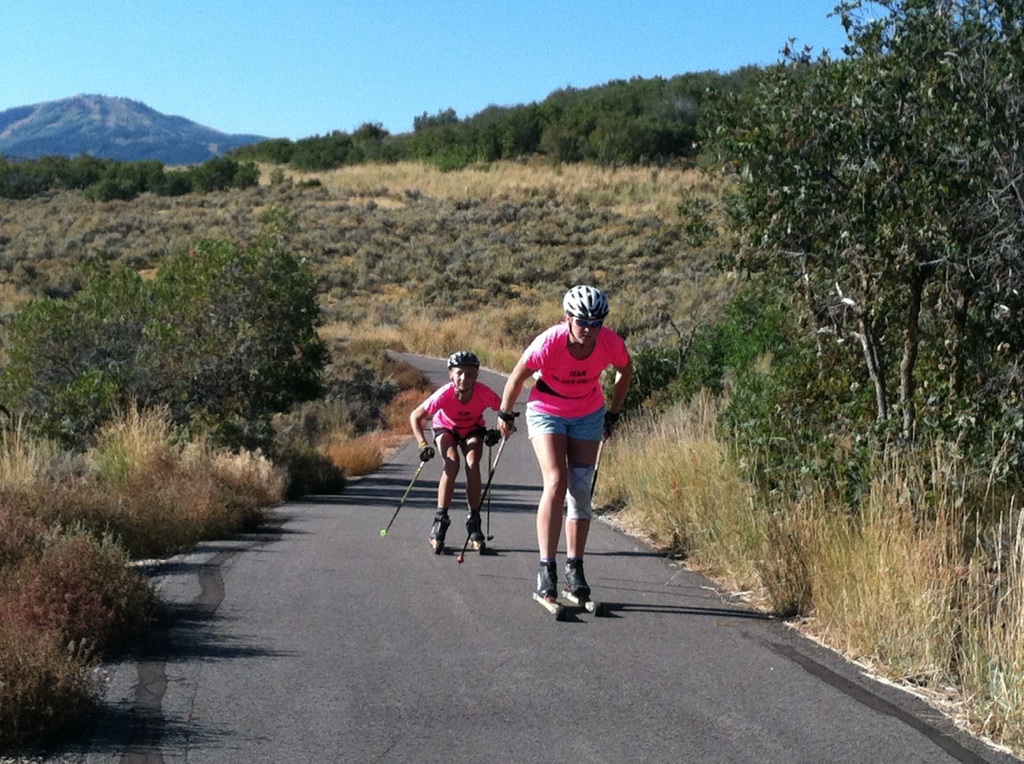
“One thing I look at is what are we doing with our venues, are we providing the sport we out to provide,” UOLF Vice President of Sport and Venues Marc Norman said on the phone in September. “The fact that we weren’t hosting [biathlon] and weren’t running any programs in it was a quick red flag for me.”
Along with the addition of a biathlon program, Team Soldier Hollow was also in need of a youth coach for its nordic program. From 2012 to 2015, Morgan Smyth served as the program manager, overseeing the Comp and Devo teams, the Youth League and the Charter School Ski Program. At the time of her departure, 145 kids were enrolled in SoHo’s programs — 10 on the Comp (competition) team, a number which has almost tripled since then.
“I left Soldier Hollow to work for Park City Nordic Ski Club [PNSC] as the Nordic Manager,” Smyth wrote in a recent email. “PNSC was part of the Utah Olympic Legacy Foundation. Ironically Soldier Hollow became a part of the Legacy Foundation less than a year later but I live in Park City so it was nice to work closer to home.
“I left Park City Nordic this fall and started a Physical Therapist Assistant program,” Smyth continued. “I am excited to try something new but plan to stay involved in the ski community. Hopefully coaching the younger kids during the winter months.”

Last fall, after Studebaker-Hall returned to Anchorage, she and her husband were offered the opportunity to work with Team Soldier Hollow, with Hall heading the new biathlon program and Studebaker-Hall leading the pre-existing nordic ones. When the offer was made, the UAA Ski Team’s future remained uncertain, and the two ultimately accepted UOLF’s offer, viewing it too good to pass up.
“It was hard to leave UAA,” Studebaker-Hall explained on the phone earlier this summer. (The UAA Ski Team was ultimately saved three weeks after she and Hall accepted). “But moving to a head-coaching position and managing a program here and getting this off the ground was kind of a once in a lifetime opportunity, so we had to take it.”
Studebaker-Hall is now serving as the head coach and program manager for Team Soldier Hollow’s Devo Plus and Comp teams. The competition team alone has 25 athletes, many of which Studebaker-Hall described as being “on the precipice of just getting going”. As she transitions from coaching collegiate skiers to juniors, she expects a few challenges mainly involving the mindset of younger skiers.
For most of the college skiers she’s coached, knowing the fundamentals of being an endurance athlete were automatic: get adequate amounts of rest between training sessions, practice good hydration. In contrast, a majority of her Team Soldier Hollow athletes are still learning the basic principles, such as the importance of recovery, nutrition and getting decent amounts of sleep.
“With youth kids, you’re trying to instill in them this idea that coming to training everyday is really important,” Studebaker-Hall observed, “Even just how to think about training, all these things I think that maybe I took for granted a little bit, that all the kids that I previously worked with knew already. That’s definitely a challenge, but one that I’m really excited about because these kids are so moldable.”
Most of the juniors she’ll coach this winter range in ages from 10 to 20 years old.
“They’re really ready to take in everything you say,” Studebaker-Hall continued. “You have a huge opportunity as a youth coach to do that for kids, maybe even more so than on a collegiate level, because you’re their first real coach.”
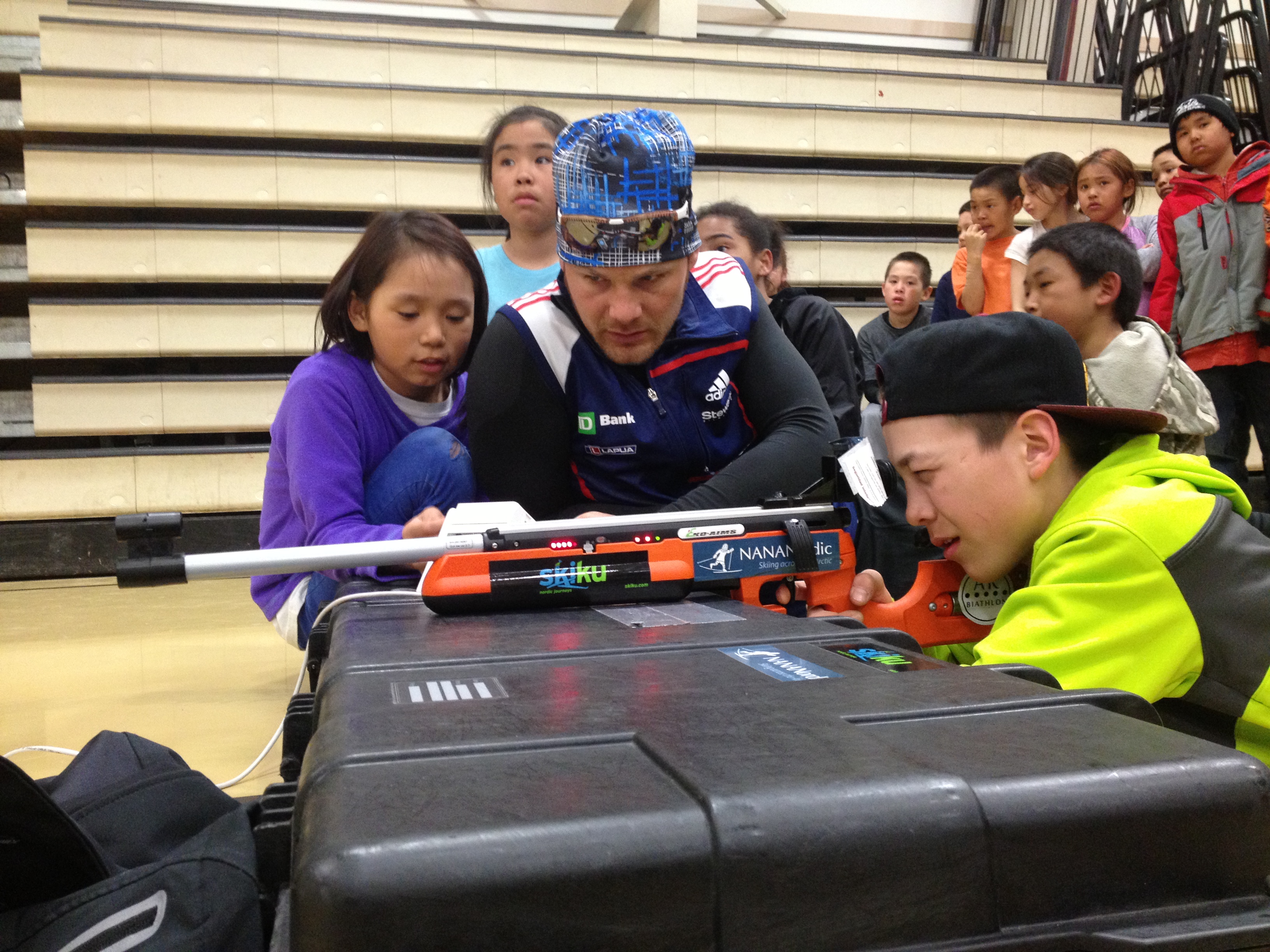
Though Studebaker-Hall only started working with Team Soldier Hollow this summer — Hall arrived last December — she’s already made a positive impression on many of her athletes. Pearl Harvey, 16, who has been involved with Soldier Hollow’s nordic program since she started walking, highlighted Studebaker-Hall’s interest seeing her athletes succeed.
“I have never had a coach so involved with technique and caring about my progression as a skier and a person,” Harvey, who hopes to one day receive a college scholarship for skiing, wrote in an email. “Sara, for me, is a big role model and she is shaping me as an athlete with being more conscious of my technique, eating, drinking and sleeping habits. She is also shaping me as a person and keeping us in check and making sure we are on the correct path.”
As Studebaker heads Soldier Hollow’s nordic programs, her husband is in charge of SoHo’s new biathlon programs: Intro Flex , Devo Plus Flex and Comp Flex (development team). Hall estimates he has a total of 20 athletes in the biathlon program, though not all belong to Team Soldier Hollow. The Utah Nordic Alliance (TUNA), the Park City Nordic Ski Club or Wasatch Nordic have athletes participating in SoHo’s biathlon program, thanks to what they dubbed a “flex” program option. With this “flex” program, members from any of the surrounding nordic ski clubs can join Team Soldier Hollow for biathlon training without changing their club affiliation.

“We’ve got the only range in the area, so what we’re trying to do is work with all the area coaches to schedule training sessions, so that it works as much as we can with them working with their local nordic clubs, ” Hall said on the phone in July. “A big part of the program is just pushing general nordic development and adding opportunities with biathlon.”
Sparking interest is the first step for Hall, as well as getting the word out about the biathlon program. Having U23/Junior World Championships held at Soldier Hollow last season was also helpful in promoting the biathlon and nordic programs there, as well as giving younger athletes an idea of where skiing could take them.
“This is my first summer trying Biathlon, and I am loving it,” Lina Farra, 16, wrote in an email in September. “Both Zach and Sara have very high-level Biathlon experience, and that combined with their great passion for sport sets this program apart from others around the nation.”
SoHo is currently bidding to host an International Biathlon Union (IBU) World Cup in 2019. According to Studebaker-Hall, an exploratory committee is also forming for a potential Olympic bid — the last Olympics held at SoHo took place in 2002.
“From a programmatic standpoint, we definitely want to see Utah kids participating in this sport,” Norman said. “There’s no reason we shouldn’t have a strong biathlon program. That’s our goal, is to build up and be one of, if not the best biathlon programs in the nation. And have kids of all ages and abilities participating in biathlon.”
(Holly Brooks, a former U.S. Ski Team member, two-time Olympian and Anchorage local, sent FasterSkier a copy of the following letter of support, addressed to the University of Alaska President Jim Johnsen, and granted permission to post.)
***
Dear President Johnsen,
My name is Holly Brooks and I am one of Alaska’s Olympic Cross Country skiers. I am writing this on behalf of several of our local Olympians, who have agreed to sign their names below, and encourage you to take the time to read this letter and gain an understanding of how much we care about the health of our ski community. We are aware that the fiscal situation facing the University is challenging and that difficult and unpopular decisions will have to be made, but we urge you to continue funding the most “Alaskan” sport UA has, ski racing. From what we understand, men’s and women’s skiing seem to be one of the few “unprotected sports” under your leadership. Thus, the purpose of this letter is to “raise our hand” in support of the University of Alaska ski team.
Alaska has a strong skiing background. UAA’s NCAA program is an integral part of the heart and soul of a sport that is a natural fit for our great state. Nordic and alpine skiing are wildly popular recreational sports in Anchorage and the collegiate teams serve as examples or “pedestals” of what many Anchorage citizens aspire to in their own athletics. Anchorage hosts the largest high school ski race in the entire country, the Lynx Loppet. Many youth in Anchorage including the Junior Nordic Program and the ASD high school programs look forward to seeing UAA skiers zip by them on the trails, serving as a “real-life” example of fitness and/or technique. What other sports can recreational or developing athletes literally jump in behind collegiate athletes and hang on for the ride?
The UAA ski team also has a long history of community service and activism. Last spring the UAA Ski Team hosted the Turnagain Arm trail race, a perennial favorite for Anchorage Trail runners. This spring the athletes and coaches volunteered their time for a program called Skiku teaching nordic skiing in remote Alaskan villages one week at a time with the goal of instilling healthy, active lifestyles. Every fall, UAA skiing athletes have volunteered for a program Sadie, Kikkan and I help host called Fast and Female – a youth empowerment through sport program that attracts 300 of Anchorage’s girls ages 9-17. At this event, adolescent girls get to meet their athletic role models including your UAA college skiers!
Skiing in particular is an amazing sport because once athletes “retire” from competing at a high level they keep skiing 9 times out of 10. Skiing is a lifelong sport. For this community it means those people are giving back as coaches and role models. I sincerely believe that a community is only as strong as it’s members and a community of people who give back are what creates economic, social & emotional stability. In these pressing times our community is our most valuable asset.
Last but not least, skiing is a sport occurring in the winter. While we haven’t had great snow lately, winter is historically a time when Alaskans opt to stay indoors. Drinking, domestic violence, and levels of depression are elevated. Because of these reasons and SAAD (Seasonal affective disorder) we believe it is imperative to support activities that promote health and wellness during our coldest and darkest months. Skiing does that and the UAA’s ski teams serve as a vehicle. Your team provides healthy heroes and role models and without that, I believe Alaskan skiing would take a large hit.
So please, I know we’re in a budget crisis but I hope that you decide to retain skiing as a UAA NCAA Division II sport. If you have any further questions or would like to speak with me, I’m all ears. Thanks for your time.
Sincerely,
Holly Brooks
Kikkan Randall
Tommy Moe
Megan Gerety
Lars Flora
Sadie Bjornsen
Erik Bjornsen
James Southam
Adam Verrier
Sara Studebaker-Hall
Anna Berecz
Rachel Steer
Alex Wilson

