From the FasterSkier archive — posts syndicated from athletes’ and coaches’ own blogs between 2004 and 2012, kept online as published. Current coverage is at fasterskier.com.

Tag: Sarah Fussek

  • Lack of FIS Action on Banned Russians Causing Confusion: ‘It Shouldn’t Be This Difficult’

    Lack of FIS Action on Banned Russians Causing Confusion: ‘It Shouldn’t Be This Difficult’

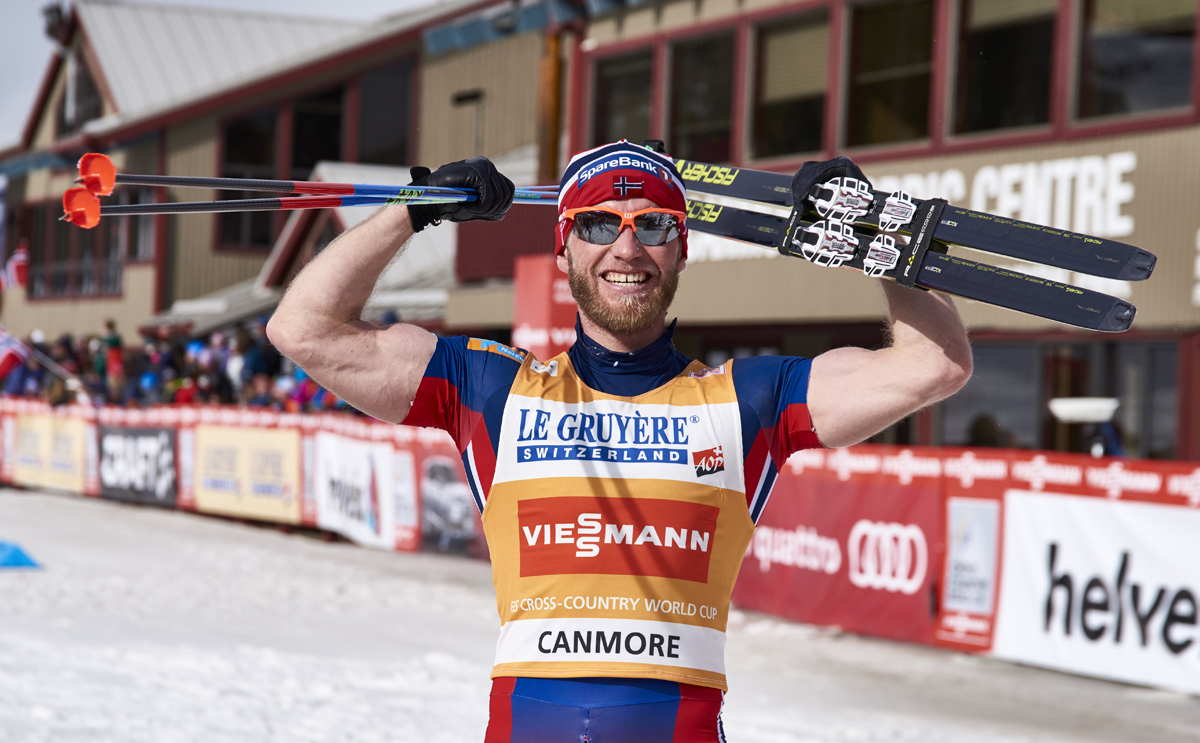
    Maxim Vylegzhanin competing in the 10 k classic in Falun, Sweden, in 2016. Vylegzhanin has been banned by the International Olympic Committee for doping at the 2014 Olympics, but is currently free to compete in other ski races, and collected two top-six finishes in Muonio, Finland, this weekend. (Photo: Fischer/NordicFocus)

    Note: On. Nov. 23, the day before the first World Cup race of the season, the FIS Doping Panel released a statement regarding the FIS eligibility of the six Russian skiers specified in the following article. 

    In the last two weeks, the International Olympic Committee (IOC) has disqualified six Russian cross-country skiers from the 2014 Olympics and barred them from ever competing in a Games again.

    This weekend, one of them – Maxim Vylegzhanin – was competing in pre-World Cup races in Muonio, Finland, where he collected fifth- and sixth-place finishes.

    That is because although the athletes were banned by the IOC, the International Ski Federation (FIS) has not made any changes to the athletes’ status.

    “It’s troubling that certain athletes are now banned from ever competing in IOC events in the future, yet are seemingly allowed to compete on the FIS circuit unimpeded,” Canadian Olympian Devon Kershaw wrote in an email (which is printed in full at the end of this piece). “I feel this is unprecedented. Talk about confusing. The Olympics themselves are FIS sanctioned races.”

    Vylegzhanin isn’t banned by FIS, and so he’s not breaking any rules by racing in non-Olympic competitions. Likewise, Alexander Legkov, also banned by the IOC but not by FIS, will race in Gällivare, Sweden, this weekend, along with three other athletes in the same situation.

    “I’m not ashamed to look into the eyes of athletes, going to the start line, I did not break any rules and my conscience is clear!” Vylegzhanin wrote in an Instagram post.

    “We can not comment on it,” Gällivare organizing committee member Stefan Nieminen told Sweden’s SVT broadcaster. “They are free to compete, it is not our decision or our problem to handle that issue.”

    It has led to something of a delicate balancing act for his competitors, many of whom have competed next to these athletes on the World Cup for years.

    “What I mean when I say it’s not personal is I don’t feel like we need to take the punishment into our own hands and ostracize him on the World Cup or anything like that,” American skier Noah Hoffman said, when asked specifically about Vylegzhanin. “I want to see FIS take action. I don’t want to see extrajudicial action in the sense that it’s not overseen by the organizations that oversee the sport. I want to see the organizations that oversee the sport take adequate action.”

    How Did We Get Here?

    Previously, the six skiers had been provisionally suspended while investigations into systematic doping by Russia at the 2014 Olympics were ongoing. The athletes appealed to the Court of Arbitration for Sport (CAS), and FIS was given until Oct. 31 of this year to bring a case against the six, or else let their suspensions lapse – in effect, the athletes couldn’t be held in limbo forever.

    Oct. 31 came and went, and the IOC’s Disciplinary Commission ruled against the athletes in early November (Nov. 1 for Alexander Legkov and Evgeniy Belov, and Nov. 9 for Vylegzhanin, Alexey Petukhov, Julia Ivanova, and Evgenia Shapovalova).
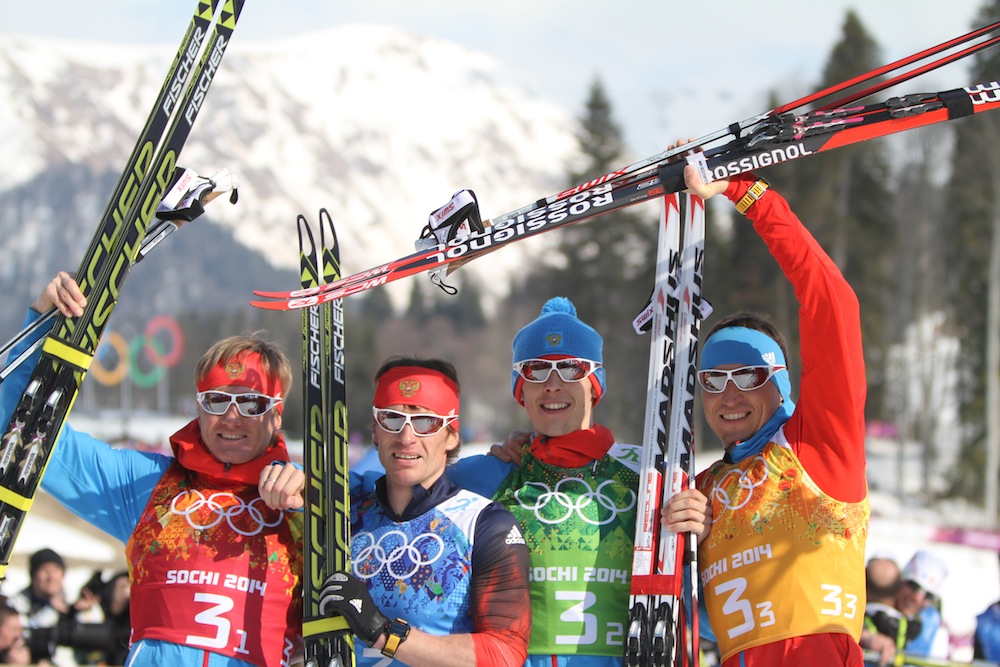
    The silver-medal winning Russian men’s relay team at the 2014 Olympics. Maxim Vylegzhanin (second from left) and Alexander Legkov (right) have both been banned by the International Olympic Committee for doping, but will be competing in Sweden this weekend.

    Despite the change in the athletes’ status, FIS says that this does not constitute new evidence that would justify further provisional suspensions or an anti-doping rules violation (ADRV).

    “The FIS Doping Panel is obliged to wait until the reasoned decisions are provided by the IOC Disciplinary Commission before it can undertake further action,” FIS Anti-Doping Administrator Sarah Fussek wrote in an email to FasterSkier. “This is a consequence of the CAS decision that the provisional sanctions of the Russian cross-country athletes would expire on 31st October and can only be reinstated if there was more specific evidence of individual anti-doping rule violations.”

    In the CAS press release announcing the Oct. 31 deadline for FIS to bring a case against the skiers, the court only wrote that “a further provisional suspension may be imposed on the athletes by the International Ski Federation (FIS) after that date, if the facts and circumstances so merit, and would be subject to appeal.” No further specification was made in terms of what type of evidence would be required to impose another provisional suspension.

    Fussek wrote that the IOC sanction on the athletes did represent a change in circumstance, but that it was not enough to impose a suspension.

    “The fact that the IOC banned Russian athletes constitutes a change of the status of these athletes,” she wrote. “The IOC decision is a consequence of the assessment of the available evidence by the IOC Disciplinary Commission but does not by itself justify the imposition of a new provisional suspension by the FIS Doping Panel (FDP). The decision of the IOC DC is subject to appeal to the CAS. Before the FDP will independently review the matter of another provisional suspension (or a decision on the merits), it must know and examine the reasons on which the IOC DC based its decision.”

    However, Fussek confirmed that both she and Stephan Netzle, FIS’s Legal Counsel, were present at the IOC Disciplinary Commission’s hearings for the athletes.

    According to Russian Cross-Country Ski Federation President Elena Valbe, the hearing took ten hours. In the press, Valbe said that a commission from the University of Lausanne discussed finding scratch marks on sample bottles used for anti-doping work at the 2014 Olympics, saying that “they found that there were [marks] from specific people, some of our athletes had it… today there were results on salt [in the urine sample] of Julia Ivanova… there is a salt excess, it’s unclear how it got there, it’s all amazing.”

    While FIS had representatives at the same hearing that Valbe discussed, they are awaiting the “reasoned decision”, a longer, written explanation, before acting.

    “The FIS Doping Panel will afford the athletes the right of due process to examine the reasoned decision of the IOC before it will proceed,” Fussek wrote. “Until then, the Russian athletes, who are subject to a very rigid and tight doping control regime, will be admitted to competitions.”

    In a follow-up email, she explained that Legkov had been tested 10 times by FIS in 2016-2017; Belov 12 times; Petukhov six times; Vylegzhanin 13 times; and Shapovalova nine times. Ivanova has retired and is out of the testing pool.

    Athlete Reactions

    Several athletes told FasterSkier that the Olympics is the biggest sporting event in the world, and it was most important to them that athletes who had cheated at past Games be excluded from the Olympics.

    Canada’s Alex Harvey skating his way to a bronze medal in the 30 k skiathlon at World Championships in Falun, Sweden, in 2015. He is followed by Evgeny Belov of Russia, who is currently banned by the IOC for doping. (Photo: FlyingPointRoad)

    “My view is that you have to pick your battles,” Alex Harvey, the Canadian who won World Championships gold in the 50-kilometer mass start last season, wrote in an email. “And this year the big battle is the Olympics, and I’m glad that the IOC was strong enough against doping to ban these six Russians from the Olympics, so there’s that battle.”

    “I think the most important thing is the Olympic sanctions because the Olympics are so much more important than anything else,” American 2014 Olympian Hoffman said.

    But from there, their views diverged.

    Harvey believed that FIS had not found enough evidence to ban the athletes, despite their IOC bans.

    “I feel like I have a decent understanding of the law since I’m six courses away from finishing my law degree, and I read the CAS judgement that said FIS couldn’t extend the temporary ban on those six Russians unless they came up with additional evidence, which, so far, didn’t happen,” he wrote. “I think it’s important to understand that this is a precedent that the IOC (and FIS for the temporary ban they gave those six Russians last winter) is/are setting. Never before in our sport have we seen athletes get a doping ban from an infraction other than a positive test, even though there are more ways to ban an athlete than just a positive test.”

    Hoffman, however, didn’t understand why evidence that was sufficient for a ban by the IOC would not lead to a ban by FIS.

    “The answer I want from FIS is, why does the IOC have enough evidence and FIS does not?” he asked. “Where is the disconnect coming from? And I don’t know the answer to that… I believe in a punishment that fits the crime, but that’s a punishment from every organization involved, not just the IOC. I’m glad the IOC is taking action because I believe it’s necessary to ensure clean sport in the future and that’s the most important thing, right? We can’t change the past, but we want to ensure clean sport in the future.”

    Hoffman said repeatedly that for him, the issue of whether the Russian athletes should compete or not was “not personal.”

    “How will I feel about racing against Vylegzhanin, for instance, on the World Cup this year?” he asked. “The answer is, for me as an athlete, I’m still just focused on what I can control and what I’m doing, and he’s just one more person within the field and I know the World Cup field is going to be strong… But then it does get personal when you look at last year. I missed the objective criteria for the U.S. Ski Team by one point and one place [on the World Cup distance list], and three places ahead of me was Legkov. Individual spots and individual points do matter, but I’m just focusing on what I can control.”

    When asked about FIS’s handling of the situation, U.S. skier Kikkan Randall, who was formerly the FIS Athlete Representative for cross-country skiing, wrote, “I’m not the Athlete Rep any more so it’s not my place to comment on this. I’m also about ready to start racing and that’s where my focus is.”

    Kershaw’s Take

    When contacted about competing against Vylegzhanin, Canada’s Devon Kershaw wrote the following response.

    Devon Kershaw training with American sprinter Andy Newell in Sjusjøen, Norway, last week. (Photo: Noah Hoffman)

    “The entire situation regarding this scandal is flabbergastingly odd. The findings in the three major ‘investigative reports,’ with Parts #1 and #2 of the McLaren report issued by [the World Anti-Doping Agency], and then the Oswald commission by the IOC, have caused a maelstrom in the cross country ski world. With good measure to be sure, but at the same time the dysfunction that this situation has unveiled is troubling.

    “’The Russians athletes, who are subject to a very rigid and tight doping control regime…’ is a cute response from FIS. Lance Armstrong was also subject to a rigid and tight doping control regime, and never officially failed a test while he was an active athlete, and yet…

    “The list of cyclists that are ‘subject to a tight doping control regime’ is long. But so too is the list of athletes like David Millar or Thomas Dekker, who also didn’t fail a test, getting banned. I know, they found actual EPO in David Millar’s apartment in France during a raid, and Thomas Dekker was one of the earliest athletes to be caught with the ‘biological passport’ but the facts remain that both they and others – Did. Not. Fail. An. Antidoping. Test.

    “And may I ask who is supposedly overseeing the ‘doping control system?’ Researching and publishing the list of banned substances for example, or in charge of the whereabouts systems in place? WADA? And didn’t WADA publish two explosive reports laying out some pretty troubling findings?

    “What is going on? That’s my question for FIS. It’s troubling.

    “Troubling in the fact that certain athletes are now banned from ever competing in IOC events in the future, yet are seemingly allowed to compete on the FIS circuit unimpeded. I feel this is unprecedented. Talk about confusing. The Olympics themselves are FIS sanctioned races, haha.

    “I wish that with all these competing governing bodies with stakes in this (IOC, WADA, FIS) could come to a consensus and do it soon. The image and integrity of our sport could be likened to that of a dumpster fire; raging with the sickly stench of incompetence. Fans, athletes, staff, sponsors, all are left scratching their heads going ‘is this shit for real?’ and trying to understand how athletes can be banned, have their medals stripped for breaking doping rules and yet also be free to compete because ‘they are subject to a very rigid and tight doping control regime.’ I just cannot see something like this happening in other sports that have had similar issues (cycling comes to mind, or track and field for example).

    “Am I happy to compete against the IOC banned Russians? Is it bad to say I don’t really care? I mean, me personally, as an aging athlete that week-in, week-out has been fighting between 10th and 85th in World Cups of late, I don’t exactly have a whole lot of clout. Caring changes nothing. BUT –  what I would like to see is some continuity and clarity. That – or I’d like to see major funding partners leave FIS. Because at the end of the day, money talks. Cross country skiing is a tiny sport globally. Is this really what FIS wants the story to be? Apparently they don’t really care or are paralyzed at the moment, but maybe if their TV contracts, sponsors, etc., started asking the same questions WADA and the IOC are asking (by threatening to pull funding), perhaps we could get a clear answer out of FIS with this. Something grandiose seemingly needs to happen before change occurs. If not, this will be the story our sport carries at the forefront of the ‘biggest show on earth’ come February in Korea.

    “And that would be sad, because there are a lot of beautiful stories that will be lost along the way. Stories that could help and inspire others.

    “What I do care about is the sport of cross-country skiing. I believe unequivocally in the importance of clean sport. I want to see our sport thrive and succeed. This mess needs to be straightened out. I call upon those with the means and the information to please get to the bottom of this before our tiny sport becomes damaged further. It shouldn’t be this difficult and opaque.”

  • FIS on Allowing Suspended Russian Skiers to Rejoin National Team: It’s ‘Special Circumstances’

    FIS on Allowing Suspended Russian Skiers to Rejoin National Team: It’s ‘Special Circumstances’

    Maxim Vylegzhanin competing in the 10 k classic in Falun, Sweden, in 2016. Vylegzhanin is provisionally suspended while the International Olympic Committee investigates possible doping infractions at the 2014 Olympics. (Photo: Fischer/NordicFocus)

    In part of the media storm following the Court of Arbitration for Sport’s response to an appeal by six Russian cross-country skiers, Russian Ski Federation President Elena Valbe made a surprising assertion: that the athletes, who remain provisionally suspended by the International Ski Federation (FIS), are allowed to train with the national team.

    This is not generally the case for athletes serving suspensions, but FIS Anti-Doping Coordinator Sarah Fussek confirmed the organization’s stance.

    “You cannot really say it is a deviation [from the norm] because we have not had these [types of] facts on the table before,” she said in a phone interview on Friday. “This is a special case and it requires special handling.”

    Are All Provisional Suspensions Created Equal?

    FIS more often deals with cases which start with a positive drug test, or “adverse analytical finding”. A positive test results in a nearly-automatic suspension while the case proceeds – called a “mandatory provisional suspension”.

    The cases of Alexander Legkov, Maxim Vylegzhanin, Alexey Petukhov, Julia Ivanova, and Evgenia Shapovalova arose via investigation started by journalists, continued by Richard McLaren on behalf of the World Anti-Doping Agency, and now being conducted by the International Olympic Committee (IOC).

    “The investigation of the alleged anti-doping rule violations will be carried out by the IOC Disciplinary Commission, which has the results and case management authority for anti-doping at the Olympic Winter Games, whereby the provisional suspensions are imposed by FIS,” stated a FIS press release announcing the suspensions on Dec. 22, 2016.

    In cases without a positive drug test, sports federations are allowed to implement an “optional provisional suspension”. This is what FIS put in place on the six Russian skiers, whose samples were allegedly tampered with at the 2014 Olympics.

    Fussek said she awaited a written explanation from the FIS Anti-Doping Panel, which gave the recommendation to the athletes that they could train with their national team again. For privacy reasons and due to rules governing ongoing cases, FIS cannot not share documents which were provided to the athletes explaining such decisions.

    However, Fussek understood that it was because of the optional nature of the provisional suspension that the athletes were being allowed to officially train again (all had been training on their own while serving their suspensions).

    “As you know, we do not have an adverse analytical finding where a mandatory suspension would have been put in place,” Fussek said. “Presumably they have decided for that, because it was special circumstances… they would give them a special allowance to train. They have decided not to prohibit them to train in order to keep a balance between the provision of the suspension and the actual consequences. It is an ongoing case with special circumstances.”

    Indeed, considerable time that has passed with no news or hearings from the IOC investigation. In the ruling from the Court of Arbitration for Sport (CAS), the organization gave FIS until Oct. 31 to bring a formal case against the athletes, or else their suspensions will be lifted. At that point, they would have waited 10 months.

    “The provisional suspension switches into a sanction in face of its duration and the ongoing investigations from which nobody knows how long they will last,” the lawyer for Legkov and Belov wrote in a press release. “The provisional suspension is no longer appropriate if the federation is not in the position to provide full proof that the athlete is guilty of an anti-doping rule violation within a reasonable time.”

    FIS is in a strange position because it is waiting on the IOC commission and doesn’t necessarily have control over the time frame. But if allowing the athletes to train with the national team was FIS’s attempt to mitigate these special circumstances and the long wait, it does not appear to have a formal basis in anti-doping rules. There are no specific guidelines in the FIS Anti-Doping Rules or the World Anti-Doping Code specifying what is allowed of athletes under mandatory versus optional provisional suspensions, if indeed there is a difference.

    Those rules only note the meaning of a provisional suspension more generally: “Provisional Suspension means the Athlete or other Person is barred temporarily from participating in any Competition or activity prior to the final decision at a hearing conducted under Article 8,” the 2016 FIS Anti-Doping Rules state at the top of page 61.

    In prior rulings against the skiers, it was made clear that anything involving the national team was off-limits.

    On Dec. 30, 2016, FIS denied an appeal by the skiers, who wanted to be reinstated in time for the Tour de Ski.

    “As a result of the decision, all of the above mentioned athletes may not take part in any competitions or national team activities,” FIS wrote in their press release at the time.

    And in a Jan. 25, 2017, press release confirming the decision to uphold the provisional suspensions of Alexander Legkov and Evgeny Belov, FIS again wrote, “as a result of the decisions, the above-mentioned athletes may not take part in any competitions or national team activities.”

    So what constitutes “activities”? The 2017 International Standard for Testing and Investigations, published by the World Anti-Doping Agency (WADA), defined “team activity” as “Sporting activities carried out by Athletes on a collective basis as part of a team (e.g., training, travelling, tactical sessions) or under the supervision of the team (e.g., treatment by a team doctor).”

    However, that was in reference to whereabouts reporting, not to allowable activities under a suspension.

    Unwittingly, A Trap?

    The skiers may want to be wary of FIS’s allowance. One reason that an athlete’s treatment during a provisional suspension is important is because the time served in a provisional suspension is usually included in the period of their final suspension as well – credit for time served.

    “If an Athlete or other Person voluntarily accepts a Provisional Suspension in writing from FIS and thereafter respects the Provisional Suspension, the Athlete or other Person shall receive a credit for such period of voluntary Provisional Suspension against any period of Ineligibility which may ultimately be imposed,” read the FIS Anti-Doping Rules (page 43).

    And once an athlete is ineligible, they cannot participate in training or any other national team events.

    “No Athlete or other Person who has been declared Ineligible may, during the period of Ineligibility, participate in any capacity in a Competition or activity (other than authorised anti-doping education or rehabilitation programs) authorised or organised by FIS or any National Ski Association or a club or other member organisation of FIS or any National Ski Association, or in Competitions authorised or organised by any professional league or any international or national level Event organisation or any elite or national-level sporting activity funded by a governmental agency,” the FIS Anti-Doping Rules state (page 44).

    Below this rule, FIS goes out of its way to clarify even further what types of activities are not allowed during a period of ineligibility.

    “For example… an Ineligible Athlete cannot participate in a training camp, exhibition or practice organised by his or her National Ski Association or a club which is a member of that National Ski Association or which is funded by a governmental agency… The term ‘activity’ also includes, for example, administrative activities, such as serving as an official, director, officer, employee, or volunteer of the organisation described in this Article. Ineligibility imposed in one sport shall also be recognised by other sports.”

    Logically, time served under a provisional suspension should be counted in any final duration of ineligibility only if an athlete behaved the same way during their provisional suspension as they are required to during ineligibility.

    The Russian skiers hope to be proven innocent, and act confident that they will be.

    “The athletes will be free to participate in the competition season 2017/2018 and the World Cup 2017/2018 starting 24.11.2017 in Ruka if the ongoing investigations of Oswald Commission of IOC will not bring out new facts and new evidence beyond the facts published by Prof McLaren and if the athletes will not be definitely sanctioned based on such new facts,” Legkov and Belov’s lawyer wrote in their press release. “The defense has no reason to believe that the investigations will bring out such new facts.”

    But if the skiers do face sanctions after their final hearings — it would no doubt devastate them if those suspensions started from the hearing date, not from Dec. 22, 2016, when they were very first provisionally suspended.

  • FIS Rules and Keeping Quiet: Why You Didn’t Hear About Sundby Sooner

    FIS Rules and Keeping Quiet: Why You Didn’t Hear About Sundby Sooner

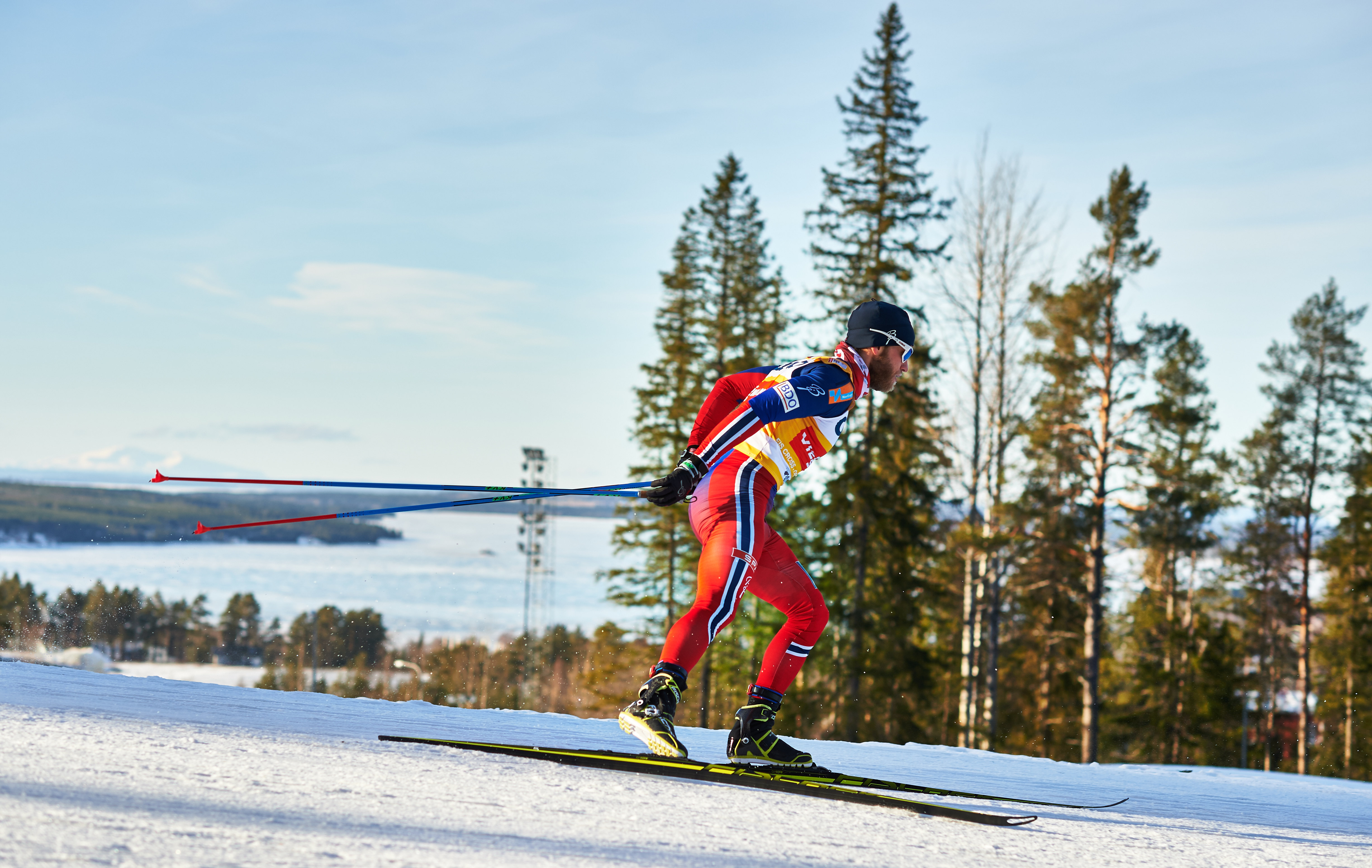
    Norway's Martin Johnsrud Sundby lost is 2014-2015 overall World Cup title after breaking rules about the use of asthma medication. (Photo: Fischer/Nordic Focus)
    Norway’s Martin Johnsrud Sundby lost is 2014-2015 overall World Cup title after breaking anti-doping rules regarding the use of asthma medication. (Photo: Fischer/Nordic Focus)

    News broke on Wednesday that Norwegian cross-country skier Martin Johnsrud Sundby lost his 2015 World Cup overall title after an anti-doping rule violation (ADRV).

    Among athletes and fans, one of the biggest reactions was of surprise: Sundby’s samples had been collected in December 2014 and January 2015, yet the case had never been publicized.

    Screen Shot 2016-07-23 at 7.35.05 PM

    That is primarily because despite the adverse analytical finding (AAF) of salbutamol — a common asthma medication — in two of Sundby’s urine samples, the International Ski Federation (FIS) concluded that he had not broken any rules.

    First, because salbutamol is a “specified substance”, according to the WADA Code, FIS was not required to give Sundby a provisional suspension while they resolved his case. Thus he did not miss any races after the AAF’s were reported to FIS.

    Then, because the eventual Anti-Doping Hearing Panel conclusion was that there was no ADRV, FIS was also not required to publicize the result – in fact, they could not publicize it at all without Sundby’s consent, which he did not provide.

    “FIS and the Norwegian Ski Association have followed the regulations and procedures as provided for in the FIS Anti-Doping Rules and WADA Code concerning communication of the decision of the FIS Doping Panel,” FIS Secretary General Sarah Lewis wrote in an email to FasterSkier.

    Confidentiality is oft-discussed and highly prized according to FIS Rules. Thus only after the Court of Arbitration for Sport supported an appeal by the World Anti-Doping Agency (WADA) and ruled that an ADRV did occur, was FIS required to publicize the case.

    Why No Rule Violation?

    One common circumstance where an AAF can lead to no rule violation is if an athlete has a Therapeutic Use Exemption (TUE) for the substance in question.

    Although he has long discussed his asthma diagnosis, Sundby did not have a TUE for salbutamol because he believed he didn’t need one.

    As a class of drugs, the World Anti-Doping Agency (WADA) prohibits the use of beta-2 agonists, with the following exceptions (as described in the 2015 Prohibited List):

    “Inhaled salbutamol (maximum 1600 micrograms over 24 hours);

    Inhaled formoterol (maximum delivered dose 54 micrograms over 24 hours); and

    Inhaled salmeterol in accordance with the manufacturers’ recommended therapeutic regimen.

    The presence in urine of salbutamol in excess of 1000 ng/mL or formoterol in excess of 40 ng/mL is presumed not to be an intended therapeutic use of the substance and will be considered as an Adverse Analytical Finding (AAF) unless the Athlete proves, through a controlled pharmacokinetic study, that the abnormal result was the consequence of the use of the therapeutic inhaled dose up to the maximum indicated above.”

    Sundby’s urine samples both had over 1300 ng/mL of salbutamol, triggering an AAF and beginning the investigative process into whether he had an appropriate TUE.

    He didn’t, based on advice of a team doctor. The reason — that he was taking the medication through a nebulizer rather than an inhaler and believed that this made a TUE unnessecary — was explained in a previous article.

    “We know the rule for use of the the nebulizers now and we will not do the same mistake again,” Norwegian men’s coach Tor-Arne Hetland told FasterSkier in an email. “We will for sure ask for a TUE one extra time instead of one too little in the future. Martin would have gotten a TUE if he asked for it. To get a TUE happens quickly, but the decision is made separately in each case.”

    Marit Bjørgen, the winningest female skier of all time, also uses asthma medication. “I have medical test results that indicate that I am qualified to use Symbicort," she said in a press release from the Norwegian ski federation. "I have the necessary permissions from the International Ski Federation (FIS) to use this medication, and all research studies show that this asthma medicine does not have any performance enhancing effect unless you have asthma. Just like Martin, I could not have become the best in the world without using my asthma medicine." (Photo: Fischer/NordicFocus.com)
    Marit Bjørgen, the winningest female skier of all time, also uses asthma medication. “I have medical test results that indicate that I am qualified to use Symbicort,” she said in a press release from the Norwegian ski federation. “I have the necessary permissions from the International Ski Federation (FIS) to use this medication, and all research studies show that this asthma medicine does not have any performance enhancing effect unless you have asthma. Just like Martin, I could not have become the best in the world without using my asthma medicine.” (Photo: Fischer/NordicFocus.com)

    Most people don’t consider the use of the salbutamol to be performance-enhancing. Doctors and medical researchers have concluded that salbutamol is not ergogenic for athletes who are not experiencing constricted airways through asthma or exercise-induced bronchiospasm.

    “The net effect for anyone whom does not have [exercise-induced bronchiospasm] is negligible: you can’t relax smooth muscle in the airway if it has not been contracted,” Dr. Michael Kennedy told FasterSkier in January, referring to the drug’s mode of action.

    Numerous studies have backed this up, showing that giving asthma medication to athletes does not improve performance in time trials or races.

    None of this changes the fact that WADA prohibits inhalation of the drugs in high concentrations, or via injection or ingestion. And salbutamol is also banned because it is a masking agent – that is, it could be used to hide the presence of another performance-enhancing drug.

    In the “masking agents” section of the Prohibited List, the organization writes that “The detection in an Athlete’s Sample at all times or In-Competition, as applicable, of any quantity of the following substances subject to threshold limits: formoterol, salbutamol, cathine, ephedrine, methylephedrine and pseudoephedrine, in conjunction with a diuretic or masking agent, will be considered as an Adverse Analytical Finding unless the Athlete has an approved TUE for that substance in addition to the one granted for the diuretic or masking agent.”

    One might expect that after an AAF, an athlete would be provisionally suspended. But according to FIS Rules, that was not necessary.

    No Provisional Suspension

    Martin Johnsrud Sundby placed 12th in the 15 k skate World Cup in Oestersund, Sweden, in February 2015 - one day after FIS decided to cancel his scheduled Anti-Doping Hearing Panel and instead subject him to lab tests to determine how much salbutamol showed up in a urine sample after using a nebulizer as he had described. That trial eventually took place in April, long after the World Cup season (and Sundby's victory for the overall title) had wrapped up. (Photo: Fischer/Nordic-Focus.com)
    Martin Johnsrud Sundby placed 12th in the 15 k skate World Cup in Östersund, Sweden, in February 2015 – one day after FIS decided to cancel his scheduled Anti-Doping Hearing Panel and instead subject him to lab tests to determine how much salbutamol showed up in a urine sample after using a nebulizer as he had described. That trial eventually took place in April, long after the World Cup season (and Sundby’s victory for the overall title) had wrapped up. (Photo: Fischer/Nordic-Focus.com)

    FIS rules about confidentiality are clear. In the early stages of a case, only those who “need to know” should be told about it, according to the rules. For instance, from the 2015 Anti-Doping Rules: “FIS shall ensure that information concerning Adverse Analytical Findings, Atypical Findings, and other asserted anti-doping rule violations remains confidential until such information is Publicly Disclosed in accordance with Article 14.3.”

    If a case makes it into the media at this point, it is usually because it has been publicly announced by the athlete or their national federation, or else leaked by someone else who has inside knowledge.

    “Information sometimes reaches the public domain since the athlete or person defending an anti-doping rule violation is communicated during the course of the proceedings,” FIS Secretary General Lewis wrote. “This has not been the case this time.”

    It could have been obvious that something was going on if Sundby had disappeared from the World Cup based on a provisional suspension. But he didn’t, because salbutamol does not lead to a mandatory provisional suspension.

    According to Provision 7.9.1 of the 2015 FIS Anti-Doping Rules, only athletes who have tested positive for a drug which is not a “Specified Substance” must receive a provisional suspension. Provision 7.9.2 states that for drugs which are Specified Substances, a provisional suspension is not mandatory.

    “7.9.1 Mandatory Provisional Suspension: If analysis of an A Sample has resulted in an Adverse Analytical Finding for a Prohibited Substance that is not a Specified Substance, or for a Prohibited Method, and a review in accordance with Article 7.2.2 does not reveal an applicable TUE or departure from the International Standard for Testing and Investigations or the International Standard for Laboratories that caused the Adverse Analytical Finding, a Provisional Suspension shall be imposed upon or promptly after the notification described in Articles 7.2, 7.3 or 7.5.

    7.9.2 Optional Provisional Suspension: In case of an Adverse Analytical Finding for a Specified Substance, or in the case of any other anti- doping rule violations not covered by Article 7.9.1, FIS may impose a Provisional Suspension on the Athlete or other Person against whom the anti-doping rule violation is asserted at any time after the review and notification described in Articles 7.2–7.7 and prior to the final hearing as described in Article 8.”

    What is a Specified Substance? WADA’s 2015 Prohibited List defines those as all substances except: anabolic agents, peptide hormones, growth factors, and related metabolic substances and mimetics, anti-estrogenic substances, agents modifying myostatin functions, and some stimulants.

    As a beta-2 agonist and masking agent, salbutamol does not fall into any of these categories.

    “Salbutamol is a Specified Substance,” FIS Anti-Doping Administrator Sarah Fussek wrote to FasterSkier in an email. “Therefore a provisional suspension is not mandatory.”

    FIS did not opt to give Sundby a provisional suspension through Provision 7.9.2, either. Instead, they asked him a series of questions about his use of the drug, consulted an Australian expert, and then sent his case to an Anti-Doping Hearing Panel. During this time, Sundby continued to compete.

    The way that FIS handles public disclosure of ongoing cases is notably different than that of some other federations. The International Biathlon Union (IBU), for example, releases information on provisional suspensions when “A” samples test positive for prohibited substances, but do not include the name or nationality of the athlete. Here’s an example.

    Why Wasn’t Sundby’s Case Made Public?

    The Anti-Doping Hearing Panel concluded, as previously described, that no ADRV had occurred – partly because it deemed the WADA Prohibited List’s language unclear as to whether “inhaled” referred to the specific method of use, i.e. from an inhaler, or the general method of consumption, i.e. inhalation versus injection or ingestion.

    At this point, FIS was constrained by its own rules as to whether it could publicize the case.

    If a hearing panel determines that no ADRV has occurred, FIS can only publicize the case with the athlete’s consent, according to Provision 14.3.3:

    “In any case where it is determined, after a hearing or appeal, that the Athlete or other Person did not commit an anti-doping rule violation, the decision may be Publicly Disclosed only with the consent of the Athlete or other Person who is the subject of the decision. FIS shall use reasonable efforts to obtain such consent. If consent is obtained, FIS shall Publicly Disclose the decision in its entirety or in such redacted form as the Athlete or other Person may approve.”

    This language is similar to that of rules from FIFA, soccer’s governing body.

    “After the decision of the FIS Doping Panel, the decision not to communicate the decision is the prerogative of the athlete, and yes FIS officially made this request to the athlete and Norwegian Ski Association in accordance with the FIS Anti-Doping Rules and WADA Code,” Lewis wrote.

    After the CAS decision asserted that an ADRV had in fact occurred, the situation changed. FIS must report the final result of an appeals case — or three other types of cases, included those where the athlete does not challenge that a rule violation has occurred — within 20 days.

    That’s in keeping with language in the Anti-Doping Rules of some other international federations, for instance the International Federation for Equestrian Sports (FEI). The language in the rules of the International Judo Federation (IJF) and International Swimming Federation (FINA) are identical to the FIS rules, down to the numbering of the relevant articles in section 14.3.

    Sundby, who has vigorously defended himself in the press once the case went public, clearly wanted it to stay private. One can assume that’s why he opted not to go public after he was initially vindicated by the FIS Anti-Doping Hearing Panel.

    “Reactions in Norway have been on different levels positive for Martin,” Hetland wrote. “The athletes in the team and from the other sports support him, the federation support him, sponsors for the federation and for Martin support Martin [and the federation] and media that have read and understood the case support Martin. Of course some media ask questions… The case is hard for Martin. He takes his punishment and [is] looking forward to get back to training with the team again.”

  • FIS, IBU Respond to Latest Documentary; Did WADA System Enable Doping Test Evasion?

    FIS, IBU Respond to Latest Documentary; Did WADA System Enable Doping Test Evasion?

    Gold and Silver for Russia
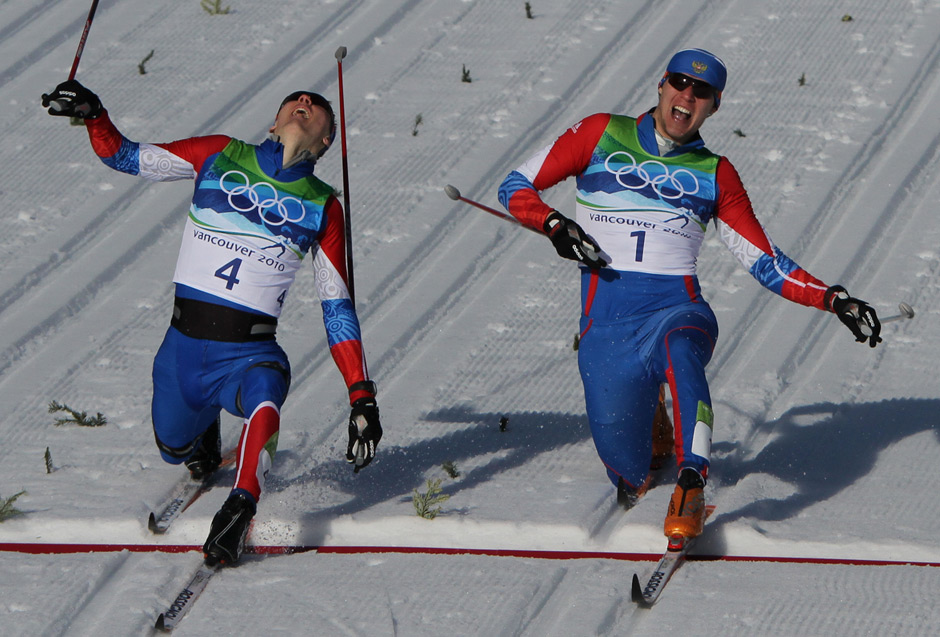
    Russia’s Nikita Kriukov (l) and Alexander Panzhinskiy placed first and second in the men’s sprint at the 2010 Olympics in Vancouver, B.C. Russian Minister of Sport Vitaly Mutko recently told Russian media that the entire cross-country ski team was doping at those Olympics: “Of course, I knew all about this, they were all doing the doping,” he said. There are several ways in which the team allegedly avoided positive doping tests.

    A new documentary titled “Doping – Top Secret: Showdown for Russia” aired on Germany’s ARD news channel on Wednesday.

    Allegations in the documentary opened a new possibility for how Russian sports officials avoided positive tests by doped athletes: did they use the Anti-Doping Administration and Management System, ADAMS, to learn when their athletes would be tested and warn staff who might be able to help athletes avoid positive tests?

    “The ADAMS doping control database provided to [Anti-Doping Organizations] is an essential tool for managing both an in- and out-of-competition doping control program,” the World Anti-Doping Agency (WADA) explains on its website. “Coordination of doping control programs in the ADAMS system helps to avoid duplication of testing efforts and harmonizes communications between testing authorities, sample collection agencies as well as WADA accredited laboratories.”

    But it may have been used for something else.

    Government Interference

    The 35-minute piece put together by journalist Hajo Seppelt primarily focused on what Russia should have to do in order to send athletes to the upcoming 2016 Summer Olympics in Rio de Janeiro, Brazil.

    After widespread indignation over the last year about rampant doping in Russia, Seppelt questioned whether Russia was making a good-faith effort to change. Collusion had been revealed in several of his previous documentaries, as well as by pieces in The New York Times, Sunday Mail, 60 Minutes, and by the World Anti-Doping Agency Independent Commission.

    This time, Seppelt revealed more than ever about the involvement of the Ministry of Sport and specific government officials in covering up doping so that Russian athletes could compete – with great success – on the international stage.

    Buried in the documentary was an allegation that for two winter sports, the Ministry of Sport had worked to warn coaches and athletes before visits from doping control officers.

    The allegations involved Minister of Sport Vitaly Mutko and his anti-doping advisor Natalia Zhelanova, and came from a document signed by Grigoriy Rodchenkov, the former head of the Moscow anti-doping laboratory who has since fled to the U.S. and cooperated with The New York Times.

    “Zhelanova deliberately evaded and undermined Test Distribution Plans of [International Ski Federation] and [International Biathlon Union]. Usually, RUSADA was informed two or three days before their [doping control officers] should collect samples from the Russian national team. [Name redacted] immediately notified Zhelanova, then the latter notified Head coaches, and the national team had change location, just escaped.”

    Zhelanova was a member of the WADA Finance and Administration Committee from 2010 until 2015.

    The documentary notes that not everyone approved of this policy. RUSADA Executive Director Nikita Kamaev apparently registered his concern, telling Zhelanova that “RUSADA was losing credits” in terms of respect and credibility.

    Kamaev died unexpectedly in February at age 52. He had resigned after the first WADA Independent Commission report.

    ADAMS Violations

    The ADAMS system is used by anti-doping agencies for a variety of purposes. One of the main uses is for athletes to report where they are living, training, or staying, a so-called “whereabouts” report.

    If a doping control officer comes for a visit and the athlete cannot be located where they said they would be, it is considered a whereabouts violation. Three such violations over the course of 12 months can lead to a suspension from competition.

    According to WADA numbers, 21 athletes from different countries had third-strike violations in 2014.

    But another use of ADAMS is for the multiple authorities which test athletes to report and coordinate their efforts. For instance, an athlete is subject to testing by both their international federation and their national anti-doping organization.

    “Where reasonably feasible, testing shall be coordinated through ADAMS or another system approved by WADA, in order to maximize the effectiveness of the combined testing effort and to avoid unnecessary repetitive testing,” the 2015 World Anti-Doping Code states.

    This use of the system actually addressed complaints by athletes that they were tested to often and too disruptively, according to International Biathlon Union (IBU) Vice President for Medical Issues Jim Carrabre.

    “Each nation has access to that data for their national athletes in the IBU test pool so that we minimize the probability of having two separate test authorities test an athlete on the same day,” he wrote in an email. “We each could still choose to do this if we wished but the benefits would be minimal. This was earlier a major complaint by athletes from many countries, and this access in ADAMS improved this complaint immensely.”

    FIS Anti-Doping Administrator Sarah Fussek explained the use of the ADAMS system slightly differently.

    “If you do register an exact mission in ADAMS beforehand, another organisation can only see this planned testing if the testing organisation has set explicit access in ADAMS for this purpose for each individual organisation,” she wrote in an email on Saturday. “At FIS this is currently not the case for any [national anti-doping agency] and vice versa.”

    FIS does register tests in ADAMS once they have been completed.

    Carrabre has been a huge proponent of targeted testing, which snagged two Russian biathletes in the leadup to the 2014 Olympics.

    But he confirmed that all of the tests ordered by the IBU were not only carried out by RUSADA, historically, but were also entered into ADAMS where RUSADA could access them.

    “RUSADA could therefore notify internally any one if they had intentions of cheating the system,” he wrote. “This could have occurred but they would have had to check the system regularly if they wanted to know IBU test plans on Russian athletes when they were tested outside Russia. I presume that this was not done or otherwise we would have not caught the ones that we did.”

    That’s why even aggressive testing by international federations could have been circumvented by individuals or agencies in Russia: whereabouts violation in reverse.

    And, if this was the mechanism used by Zhelanova to warn teams before testing occurred, it could potentially have jeopardized testing by any international federation using ADAMS to pre-register its tests with the national anti-doping organization, as was encouraged by WADA.

    Aggressive Testing, For Good or For Naught

    Some federations have had concerns about Russian anti-doping efforts for years.

    The International Ski Federation (FIS) caught a number of Russian cross-country skiers doping in the mid- to late-2000s, and in June 2010 sanctioned the Russian Ski Association. After fining the federation $185,000, FIS declined to press further sanctions and in November 2010 wrote in a press release that the federation had taken “positive steps” in anti-doping.

    At the same time, FIS was avoiding relying on RUSADA to carry out testing missions to a large extent, instead relying on companies which train doping control officers and do the sample collection themselves.

    “There was quite a lot of testing missions which were coordinated with [the Russian Anti-Doping Agency, RUSADA], but most were carried out by the FIS-appointed doping control agency with their own personnel and equipment,” FIS Secretary General Sarah Lewis explained to FasterSkier in May. “Most samples were transported to a different laboratory, in Lausanne or Cologne or somewhere else. We weren’t in the position that they could be manipulated in the Moscow laboratory.”

    In an email on Thursday, FIS Anti-Doping Administrator Sarah Fussek said that the organization also did not usually notify RUSADA if and when tests were going to take place.

    “With the exception of a handful missions, testing in Russia was carried out by a private sample collection provider,” she wrote. “We did have a couple of joint missions some years. Otherwise FIS testing did not give notice to RUSADA when conducting missions within Russia.”

    As such, Fussek was confident that the FIS testing program was adequate to ensure that Russian athletes were mostly not cheating.

    “Keeping in mind that you can never guarantee that every athlete is clean, we strongly believe that our programme covered testing in the country well and that we did all possible efforts to achieve a regular at home testing on Russian athletes (who most time of the year travelling on the World Cup circuit, plus training camps outside Russia and are tested there regularly as well),” she wrote.

    The IBU was also watching Russia closely. The biathlon governing body fined the Russian Biathlon Union in 2015 after multiple athletes had positive tests.

    “In the years three years prior to Sochi, the new administration in [the Russian Biathlon Union], Mr Mikhail Prokorov and Mr Sergei Krushenko, were verbally and financially committed to antidoping,” Carrabre wrote. “I had personal meetings with them and they went from one of the countries with the least number of internal antidoping tests to the country with the most number of internal tests in IBU. This effort was appreciated by myself and IBU and was, in my opinion, a large step in the right direction. I even publicly commended the RBU for this action. As I also said publicly, the number of tests does not always equal quality tests so the IBU would not decrease its efforts despite the testing of the RBU.”

    The increased number of tests did catch some regional-level athletes, but no Russian Biathlon Union testing ever led to the suspension of a national-team athlete.

    IBU testing, however, did, in particular when they tested outside of Russia. As Fussek had noted, athletes spend almost the entire winter, as well as periods of the offseason, training and competing in Europe, offering ample time to take many anti-doping samples.

    “No national or international level athletes were ever found with their testing,” Carrabre said of the Russian Biathlon Union. “It was therefore surprising that the IBU would catch several of their athletes in the year prior to Sochi with testing performed outside of Russia while their athletes were at international training camps.”

    Superficial Admissions of Guilt

    The Ministry of Sport denied that they had interfered with RUSADA business in any way – or that such interference would even be possible.

    “How can I exert influence there?” Mutko asked, rhetorically, in the new ARD documentary. “What influence can we exercise on the personnel of the anti-doping organizations?”

    Just two days before the documentary aired, Zhelanova had done a question-and-answer session on Twitter, where she stressed that Russia was changing. The full exchanges from June 6 can be found on her twitter feed.

    “The state has taken a lead in doing everything to demonstrate we are reforming and have nothing to hide,” she tweeted to Associated Press reporter Rob Harris.

    In discussing the past doping problems, she put the blame squarely on athletes.

    “We think guilty athletes should be punished individually,” she tweeted to University of Colorado professor Roger Pielke Jr.

    And Zhelanova seemed to admit that even today, it is difficult for doping control officers to do their jobs. U.K. Anti-Doping, which took over testing in Russia after RUSADA was stripped of its authority, reported in May that 40 percent of the tests it was supposed to carry out were impossible because they couldn’t locate the athlete.

    Evading a sample or refusing to give a sample are both considered Anti-Doping Rule Violations, the same as a positive test or three missed whereabouts.

    The current procedure for testing seemed to still be under negotiation. U.K. Anti-Doping had reported that Russia requested 30-day notice before testing of any athletes in military areas, which is clearly not standard operating procedure in the world of anti-doping.

    “We agreed a procedure with WADA to help doping inspectors to carry out their important jobs,” Zhelanova tweeted in response to Rachel Axon of USA Today.

    But what is there to discuss? In 2006, the Russian Federation ratified the International Convention Against Doping in Sport, under the purview of the United Nations Educational, Scientific, and Cultural Organization (UNESCO).

    Article 12 states,

    “States Parties shall, where appropriate:

    (a) encourage and facilitate the implementation by sports organizations and anti-doping organizations within their jurisdiction of doping controls in a manner consistent with the Code, including no-advance notice, out-of-competition and in-competition testing…”

    The 2015 World Anti-Doping Code further states that “Each government will take all actions and measures necessary to comply with the UNESCO Convention.”

    After the documentary aired on Wednesday, Zhelanova was less than thrilled.

    “I was very upset and disappointed by the allegations made against me in the recent ‪@ARDde documentary,” she stated in a series of tweets. “These claims are untrue and are made by 1 disgraced person who disagreed with me on the importance of fair & clean sport. I really believe in the fight against doping and dopers and am doing everything I can to create change and restore trust. Reforms are under way but our system won’t be perfect immediately – cultural change takes time.”

  • FIS Treads Carefully But Confidently in Latest Doping Scandal

    FIS Treads Carefully But Confidently in Latest Doping Scandal

    The women's 15 k skiathlon  cross-country at the XXII Winter Games in Sochi, Russia. (Photo: Fischer/NordicFocus)
    Competitors in the women’s 15 k skiathlon crest a hill at the 2014 Winter Olympics in Sochi, Russia. (Photo: Fischer/NordicFocus)

    “There needs to be an investigation by WADA,” International Ski Federation (FIS) Secretary General Sarah Lewis told FasterSkier in a phone interview on Monday. “FIS totally supports it and we have already expressed that anything we can provide, we will do. And it needs to be done [quickly], but carefully.”

    With allegations published last week in The New York Times of state-sponsored doping at the 2014 Olympics in Sochi, Russia, attention turned immediately to the World Anti-Doping Agency (WADA) and the International Olympic Committee (IOC).

    FIS runs its own anti-doping program, as does each country which sends skiers to the World Cup. Those programs add up to thousands of urine tests done on skiers each year. When it comes to the Olympics, however, the IOC takes over all in-competition testing and WADA provides Independent Observers to watch the process.

    There had been allegations as early as November of last year, in the WADA Independent Commission report, that Russian state security personnel had infiltrated the Sochi anti-doping laboratory; WADA did not follow up on the finding.

    Thus when Grigoriy Rodchenko, the former head of Russia’s anti-doping laboratory, said that 66 Russian athletes had been protected from testing positive by laboratory and security staff who swapped out their dirty urine samples, there was outrage from many sides.

    Outrage – and bewilderment. Lewis was the head of the WADA Independent Observers at the 2008 Summer Olympics in Beijing, China. She is intimately acquainted with the anti-doping process and the tamper-proof bottles which were allegedly opened in a secret lab and filled with replacement urine.

    Sarah Lewis, secretary general of the International Ski Federation. (FIS file photo)
    Sarah Lewis, secretary general of the International Ski Federation. (FIS file photo)

    “Frankly, these bottles, having seen the whole thing in action, to imagine that they can be reopened– wow,” Lewis said. “The fact that they could even be taken out of the lab is really quite shocking.”

    WADA has pledged, finally, to investigate winter sports and the Sochi Olympics. But should the investigations confirm the allegations, all the IOC can do is ban an athlete from the Olympics, including retroactively. With 14 Russian cross-country skiers implicated in The New York Times report, including superstar Alexander Legkov, many are wondering whether World Cup results will also be shaken up.

    For instance Legkov – who won the 50 k skate in Sochi as well as helping the Russians take home silver in the men’s relay – was on the podium three more times later that season, including at World Cup finals; he then earned a number of top-ten World Cup results in the next two seasons. Are those results in jeopardy?

    In the 2014/2015 season, Russian Olympians Evgeniy Belov and Maxim Vylegzhanin – who have not been implicated by name but were members of the 20-athlete team of which 14 were supposedly on the doping list – both finished in the top 10 of the overall World Cup standings. Are the many individual race results that went into those standings also in jeopardy?

    Whether to negate results going forward from the date of a positive test – if such a test exists – would be a decision left to FIS, which is also shaking its head about how doping could have happened in its sport, on the world’s biggest athletic stage.

    “The story has to be verified – that’s a basic principle,” Lewis said of the allegations. “If any elements of it are true, then it’s a huge throwback, a huge step back for all anti-doping efforts. Especially that this could happen at the Olympic Games where there are so many resources in terms of money, personnel, global expertise – it’s such a major blow.”

    Why Weren’t Cheaters Caught?

    Russia led the world in anti-doping rule violations in 2014: 148 athletes faced sanctions, 14 of which were in Winter Olympic sports and more specifically four in biathlon and seven in skiing. Despite those numbers, no star cross-country skiers were caught in the leadup to the Olympics.

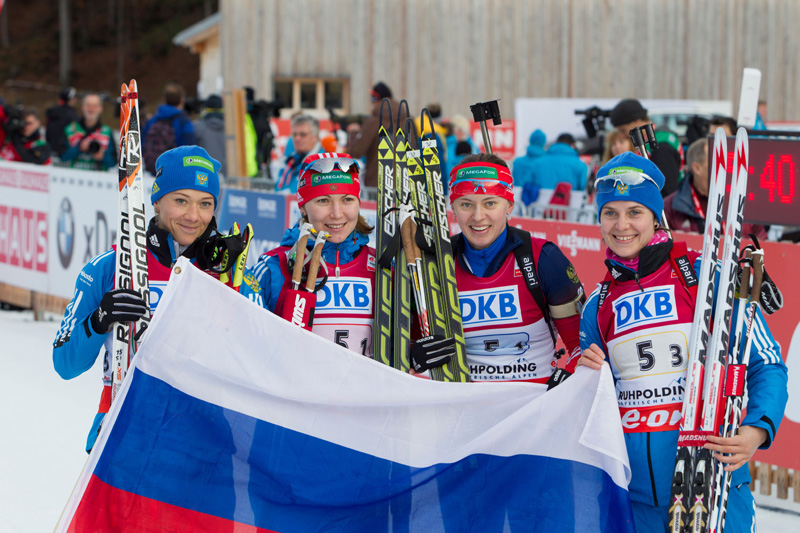
    Irina Starykh (far right) celebrates with the Russian team after their IBU World Cup biathlon relay victory in Ruhpolding, Germany, in January. The result is among those which will be voided with Starykh's doping ban, from a sample collected in December. (Photo: Fischer / Nordic Focus.)
    Irina Starykh (far right) celebrates with her Russian teammates after they won an IBU World Cup biathlon relay in Ruhpolding, Germany, in January 2014. The result was voided as a result of Starykh’s doping ban, from a sample collected in December 2013. (Photo: Fischer / Nordic Focus.)

    That is in contrast to a sport like biathlon, where the top Russian woman was disqualified before the Games began for testing positive for recombinant erythropoietin (EPO), a blood doping drug.

    So could FIS have done more, and tested harder, in order to prevent the cheats from reaching the Games in the first place?

    “To be honest, with what they are talking about, namely a steroid program during the Games, it’s likely that the program was very specifically targeted around the Games,” Lewis argued. “Of course you’re always looking at your processes, but with the out-of-competition program we have in place it’s very comprehensive … Nevertheless in hindsight, of course you ask those questions. Until we know what the time scale was, it’s hard to know.”

    A total of 6,439 anti-doping samples were collected by various testing agencies from athletes across the skiing disciplines in 2013, a number that shrank to 5,764 in 2014, the Olympic year.

    But here, too, numbers don’t tell the full story, FIS argues.

    “Let us respectfully point out that this question is rather outdated,” FIS Anti-Doping Coordinator Sarah Fussek wrote in an email on Tuesday. “The WADA policy and guidance to [anti-doping agencies] many years ago was to move away from large testing numbers and move to more quality testing. For example to organise a doping control at a remote location takes much more planning efforts, logistics, transport costs as 10 tests collected at a training camp at an easy to reach place. So comparing numbers only says nothing about the quality of a testing programme.”

    In fact, Lewis said that the Russian skiers had been targeted with plenty of tests. That fact was underscored in an interview over the weekend where Legkov claimed to have been tested 33 times in the season leading up to the Games.

    “Our specialists are monitoring the results of the testing from a clinical perspective, but also performances, participation, history of that nation, it’s all connected together,” Lewis said. “There’s no question that there’s been extensive targeting of the Russian team for more than ten years.”

    That testing did lead to a rash of positive tests and disqualifications before the 2010 Olympic Games in Vancouver, Canada. But despite the bans, some athletes and coaches who were picked up in the sweep stayed in the sport. In one case, Russian athletes who had previously served doping bans decided not to train with the national team, and instead took up with a coach who had been barred from working with the national team because of his involvement in doping.

    Rodchenkov – the head of Russian anti-doping who admitted massive fraud to the New York Times – also remained on the FIS Medical Committee until November, when he was suspended after the initial WADA Independent Commission report.

    The history of Russian doping in skiing is not lost on anyone. But the biggest personality on the current scandal, Legkov, is a different case from the doping Russian skiers of six or seven years ago, at least in terms of lifestyle. He trained not only away from the standard national team coaching staff, but also primarily outside of Russia, basing himself instead in Davos, Switzerland, with non-Russian coaches in the seasons leading up to Sochi.

    Legkov has said that he is considering suing the anti-doping lab whistleblower for defamation.

    Additionally, Lewis had confidence in FIS’s out-of-competition testing.

    “During the winter season, you have the athletes more or less with you the entire time,” she said. “It’s possible to carry out very extensive testing.”


    Chain of Custody

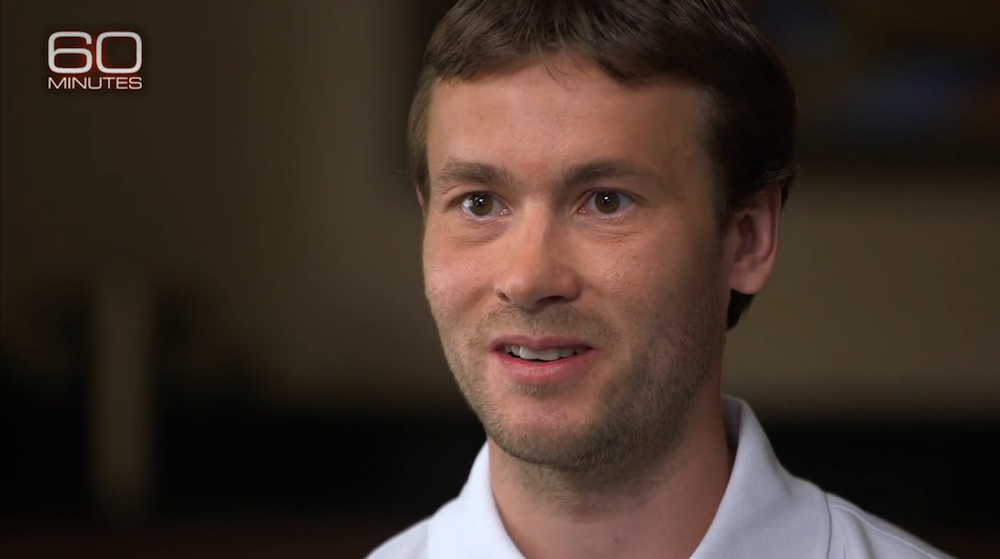
    Vitaly Stepanov, a former RUSADA employee, during an interview with 60 Minutes' Armen Keteyian, which aired Sunday, May 8. (Photo: CBS News)
    Vitaly Stepanov, a former RUSADA employee, during an interview with 60 Minutes’ Armen Keteyian, which aired Sunday, May 8. (Photo: CBS News)

    With the accounts of malpractice in Russian anti-doping laboratories in not only The New York Times piece but also by another whistleblower to CBS News’ 60 Minutes, there’s also a question as to whether previous anti-doping samples belonging to Russian skiers were manipulated.

    Rodchenkov, for instance, said that he had destroyed over a thousand samples to prevent them from being re-tested by a different testing authority.

    According to Lewis, samples collected by FIS were rarely stored in Russia.

    “There was quite a lot of testing missions which were coordinated with [the Russian Anti-Doping Agency, RUSADA], but most were carried out by the FIS-appointed doping control agency with their own personnel and equipment,” she explained. “Most samples were transported to a different laboratory, in Lausanne or Cologne or somewhere else. We weren’t in the position that they could be manipulated in the Moscow laboratory.”

    In addition, after RUSADA was suspended and the Moscow laboratory lost its accreditation from WADA, FIS took any samples that had been stored there immediately out of the country.

    “In fact, all the samples were delivered to Cologne,” Lewis said. “They were evaluated again, all of the profiles, the blood profiles but also the steroid profile. That information was analyzed again as to whether there was the need to re-tests … They all returned negative.”

    FIS anti-doping samples are handled primarily by a company called PWC, which is based in Germany and also offers services to other international and national federations.

    “PWC is currently the main sample collection provider for FIS on the basis of an annual contract, but FIS uses regularly also the services from various national anti-doping agencies, and does not have an exclusive contract with PWC,” Fussek explained in her email.

    The company then delivers samples to WADA-accredited laboratories around the world.

    “The samples are not left overnight somewhere in a vault,” Lewis said. “Doping control officers carry out the tests and then ship or take them to the lab. That period for tampering doesn’t exist.”

    Moving Forward

    News broke on Tuesday that the U.S. Department of Justice would investigate the Russian doping claims. Earlier that day, the IOC announced that it directed the Lausanne laboratory where Sochi samples are stored to cooperate with WADA on potential re-testing, a move that many have urged for months.

    “The statement by WADA and the IOC in terms of re-testing samples stored in Lausanne, we fully support that and have championed that cause for a long time,” Lewis said. “But that is an issue for the IOC, they are responsible for doping controls at the Olympics.

    “In terms of what could be found through the re-testing, we would also support DNA testing of the urine samples in case there has been switching of urine and some errors,” she continued. “How it reads in the [Times] article is that they have used those athletes’ own urine, but nevertheless the experts are able to assess if there has been a change in terms of the composition of the samples. Plasticides were mentioned and that sort of thing.”

    FIS already worked with the Russians to ensure that testing was carried out in the 2015/2016 season, even after RUSADA and the Moscow laboratory lost a say in the process.

    “On the request of the Russian ski association, they asked FIS to step in and arrange in-competition testing,” Lewis said. “They didn’t have RUSADA to do it. We did that through the group appointed to help them, which was UK Antidoping. There was some additional blood testing carried out by the FIS agency during competitions during the season.”

    That said, the testing arranged by UK Antidoping over the last six months was not exactly a roaring success.

    Forty percent of the tests the agency was prescribed to carry out were unsuccessful, with one test being flat-out refused by an athlete. Of the tests which were collected, 49 were positive. UK Antidoping is reportedly considering ending its role in Russia altogether.

    Nevertheless, Lewis asserted that athletes who competed in 2015/2016 should not worry that they were facing an unfair playing field.

    “Anti-Doping holds a very high priority in our organization,” she said. “We have a strong commitment to clean sport. There’s no question that we’re horrified by these stories and absolutely support this investigation to clarify that situation. But when it comes to the statements of how the manipulation was done, in terms of exchanging samples and tampering with the bottles, those things can’t happen with the testing which is carried out by the FIS-appointed agency.”

    For FIS, internal discussions are ongoing and the organization’s top brass has already set aside time at their biennial Congress in the second week of June.

    “To be perfectly honest, the situation was and is on the agenda based on the WADA report on November,” Lewis said. “The situation with the Russians is on the agenda of the FIS Council already, and then obviously there is more information to be able to discuss and address.”

    Correction: The author previously quoted Lewis as saying that she had “dropped a note through to Alex.” She was referring to Fasterskier’s Alex Kochon, not Alexander Legkov. We apologize to Lewis and to readers for this misunderstanding. 

  • FIS Moving, With Care, Toward Harmonization with IOC Blood Passport Testing at Olympic Games

    FIS Moving, With Care, Toward Harmonization with IOC Blood Passport Testing at Olympic Games

    FIS LogoThe International Ski Federation (FIS) is undergoing preliminary talks to harmonize its Olympic blood testing program with other federations and potentially hand testing responsibilities over to the International Olympic Committee (IOC), the organization says.

    FIS has conducted its own blood screening at past Olympic Games, using hemoglobin cutoff values to implement no-start rules and in 2010 also using an Athlete Biological Passport (ABP) model to develop long-term blood profiles on its athletes. In 2014, FIS took about 150 ABP blood samples from cross country skiers and over 50 from nordic combined athletes, including at the Olympics.

    The 2014 Olympic Games in Sochi were the first winter Games where the IOC also did ABP testing.

    “At previous Games until Sochi 2014, the IOC did not conduct ABP testing and therefore pre-competition testing was carried out by FIS at the Games (which until 2010 was only screening),” FIS Anti-Doping Coordinator Sarah Fussek wrote in an e-mail to FasterSkier. “Since the IOC is now organising ABP testing at the Games, preliminary discussions have taken place to harmonise the ABP programmes.”

    The issue was originally brought up when the Internatioinal Biathlon Union Executive Board voted to suspend its own Olympic blood testing program, a decision which was made without consulting its Medical Committee. IBU President Anders Besseberg later explained to FasterSkier that he was working based on requests from the IOC to bring blood testing protocols from multiple winter sports federations into line, and then hand the responsibility for implementing testing over to the IOC at future Olympic Games.

    FIS, however, is not taking major steps so quickly. Fussek did not entirely support Besseberg’s assertion that he had been personally asked by the other winter sports federations to head up the effort, or that there was substantial communication with other federations.

    “WADA stakeholders and especially the IOC as a major event organiser are in regular contact with FIS about harmonising the programmes and resources,” Fussek wrote. “The discussions take place between FIS and the IOC, as well as between the IFs [international federations]… Anders Besseberg is the AIOWF [Association of International Olympic Winter Sports Federations] representative on the WADA Executive Board, so he is regularly discussing anti-doping activities with WADA and the IOC in this capacity.”

    Instead, Fussek implied that if the IOC did take over Olympic blood passport testing completely, it would free up FIS to deploy some of that sampling effort at other major competitions and throughout the year.

    Across all disciplines, FIS carried out 1,379 out-of-competition tests last season, of which 723 – more than half – were ABP tests on cross country skiers. That complements the 635 total in-competition tests.

    “Harmonisation – one of the main elements of the WADA Code and its stakeholders – is that programmes and testing shall be harmonised, even more under the new WADA Code coming into force on 1st January 2015,” Fussek wrote. “The IOC can set its own testing numbers, but they certainly take the available knowledge and input from the IFs into consideration. FIS continues to carry out own testing all year round with a special focus in advance of major events. And if the IOC will decide to enlarge their programme to a larger number of athlete passport testing pre-Games, then the FIS will adapt the programme to complement the testing at other times of the year.”

    Fussek repeatedly emphasized that harmonization discussions were still in the very preliminary stages and that she couldn’t comment on what any final arrangement would be.

    Dr. Arne Ljungqvist, until recently the head of the IOC Medical Committee and a longtime antidoping advocate and researcher, confirmed that this was the direction he would like Olympic testing to move in.

    “It is a logical step in the evolution of what has been done since 2009,” he said in a phone interview in June. “Starting in Vancouver and then in London and in Sochi, we had the passport working… This is not at all a step in an alarming direction. It is just an addition to the evolution.”

    An athlete has never faced an anti-doping violation because of blood passport testing at an Olympic Games; all the blood passport cases which have been prosecuted have come from individual federations like UCI, the cycling union.

  • How Andrus Veerpalu’s Doping Case Turned into a Mudfight

    Veerpalu racing on the World Cup last season.

    As soon as the news broke that Estonian Olympic gold medalist and world champion Andrus Veerpalu had tested positive for human growth hormone (HGH), the ski world knew that a fight lay ahead.

    For Veerpalu and the Estonians, a doping ban would be disastrous; as FasterSkier reported earlier this summer, the tiny country had built its ski program from the ground up after achieving independence from the Soviet Union in 1991, and a young but powerful legacy of success was at stake for the whole nation, not just its biggest star. Most of the Estonian Ski Federation’s leadership promised to step down if Veerpalu was convicted.

    For the International Ski Federation (FIS), the pressure was on, as well. For years, the ski community had accused the Estonians of doping as they won medal after medal at World Championships and the Olympics. But none of the racers had ever been caught, and rumors continued to be just that.

    While everyone knew that they were in for a battle, the minutes from the doping panel’s hearing, obtained by FasterSkier, show a full-on war, with Veerpalu launching protest after protest against everything from the HGH test itself to a typo in the blood sample’s documentation package. The minutes also show a misunderstanding between FIS and the Estonian ski federation, and finally, a harsh penalty from FIS that is almost without precedent.

    Veerpalu is currently appealing a three-year ban handed down by FIS; his case is now before the Court of Arbitration for Sport. In the meantime, we dig into the details.

    How it All Began

    As soon as Veerpalu and the Estonian federation were notified of the positive A-sample on February 15th, they launched into damage control.

    That very day, the doping panel’s minutes show that the federation’s president, Toomas Savi, called Sarah Lewis, the secretary-general of FIS. Savie reportedly told Lewis that Veerpalu’s career was ending immediately due to a knee injury – the star missed almost the entire 2007 season after coming back too quickly from arthroscopic surgery in 2006 – and asked that FIS not disclose the positive test to the public until after World Championships in Oslo had concluded. Lewis acquiesced, and also agreed to investigate whether the B-sample could be examined after World Championships, not sooner as in many other doping cases.

    Savi recently explained to the press that he had wanted to protect other members of the Estonian ski team; had the media storm begun before World Championships, he worried that other athletes would have been distracted, and that the whole team would not have performed well.

    FIS and the Estonians each thought that they had some sort of agreement, and proceeded accordingly. Roughly a week after the initial notification from FIS, Veerpalu announced his withdrawal from the World Championships in Oslo, and his immediate retirement.

    “We have prepared for the World Ski Championships, and all the team put in a lot of work, but health, and probably age too, have sent signals that even the most ambitious sportsman has to take into account,” he said in a statement at the time. “I would have dearly liked to cap off a career nicely at the World Championships, but real life is something else.”

    As World Championships progressed, and rumors about Veerpalu began to swirl, FIS denied that a positive test had occurred.

    “I have heard rumors about the alleged doping case against Veerpalu, but…we have no case against him now,” FIS Anti-Doping Administrator Sarah Fussek told the Norwegian Aftenposten newspaper on March 4th.

    Four days later, FIS notified the Estonian federation that it would proceed with the case, and it soon became clear that Savi’s phone conversation had sparked some sort of misunderstanding.

    The first hint of trouble was that FIS’s letter stated that Veerpalu had admitted to doping, which both Veerpalu and the Estonian federation deny.

    The B-sample was another point of contention. The Estonians apparently believed that FIS had agreed to allow the sample to be opened later; they responded to the letter by requesting that the B-sample be examined. FIS, however, pointed out that the period during which the athlete could request that the sample be analyzed had closed on February 24th. But “considering the achievements of the[a]thlete as a former champion,” they accepted the request anyway.

    Veerpalu and a scientist he had chosen were present for the opening of the B-sample, which also came back positive for HGH.

    Desperate Times Call for Desperate Measures

    After six Olympic Games and 20 years on the World Cup circuit, Veerpalu had made a name for himself as a quiet, humble champion. He was reclusive, spent most of his time with his family, and tried to avoid the media circus. But as has been the case with many other famous athletes who have been accused of doping, the Estonian was willing to go to almost any length to prove his innocence.

    The doping panel’s minutes show Veerpalu tried not just any tactic, but all of them. He mounted a truly exhausting number of arguments in the hearing, many of which had little scientific or legal basis.

    For instance, Veerpalu claimed that because more than the recommended 36 hours had elapsed between when his blood sample was collected and when it was centrifuged, the result should be invalid. In the hearing minutes, Dr. Osquel Barroso noted that the longer delay would lead to under-reporting the true concentration of HGH in the blood, not to a false postive. Barroso, who works for the World Anti-Doping Agency (WADA), was serving as the independent expert, although FIS acknowledged its ties to WADA.

    Because antidoping test protocols are not publicized, FasterSkier was unable to confirm either side of the argument. Confusingly, the test window for HGH is aproximately 36 hours, after which injected hormones are no longer detectable in the bloodstream if a sample is collected. Veerpalu, however, is talking about a 36-hour delay between the sample collection and processing, which is a separate issue.

    Veerpalu also claimed that the long workout he had just completed must have changed his blood chemistry.

    But while a 1999 study by a group of European and Australian researchers showed that exercise did spike HGH levels in the bloodstream by more then tenfold, the decline was dramatic after exercise stopped. The scientists reported that the half-life of HGH was just twenty minutes, meaning that if Veerpalu experienced a normal-sized spike in HGH, by the time he was tested two hours later the concentration in his blood would have returned to normal.

    However, his team also argues that he was genetically predisposed to a higher-than-usual spike in HGH. An Estonian scientist named Anton Terasmaa claims to have sequenced Veerpalu’s DNA and revealed a mutation.

    “Andrus Veerpalu exhibits uniquely strong post-exertion production of  growth hormone,” he told Estonian Public Broadcasting in late August. “It became evident that while other skiers had a tenfold rise in the level of  growth hormone, in Veerpalu it was a hundredfold.”

    If Veerpalu did experience a hundredfold increase in HGH, then after two hours his blood would still show higher-than-normal levels of the hormone.

    Terasmaa, who is a geneticist at the University of Tartu and works on mice, said that he had sent his analysis to FIS, but that the panel had ordered it sealed until recently. The doping panel, however, wrote in its minutes that “the Athlete has not provided any evidence that would indicate the existence of that genetic particularity.” It’s unclear whether the panel meant that it never received the documents that Terasmaa alluded to, or that it did not find them convincing. Without the actual documents, it’s tough to assess the legitimacy of Terasmaa’s claims.

    Terasmaa’s genetic explanation was tarnished by his next argument, which had little scientific basis. Terasmaa told the panel that Veerpalu showed higher levels of HGH because he had been living in a hotel room pressurized to simulate a high elevation. Terasmaa said that that this would increase production of HGH, but the relationship between altitude and HGH has not been researched with any degree of rigor; FIS noted that there is only a single study on how elevation affects HGH concentrations in the blood, which concluded that there was no effect.

    FasterSkier found the study, which was published in 1994 by researchers from Milan, Italy. They selected seven men to run a marathon at 4,000 meters of elevation, and found that the increased HGH concentrations found following the marathon were smaller than the increases reported by previous researchers working at sea level.

    The champion’s last major line of defense was that the HGH test was not reliable.

    Strictly speaking, he is right: The test doesn’t always tell whether an athlete is doping or not. It is very difficult to detect actual HGH use, and Veerpalu is among a very small handful of athletes that WADA has caught. (After years of testing, an English rugby player produced the first positive test in February 2010). The HGH test has a false-positive rate of roughly one in 10,000, and much more frequently produces false negatives.

    Not only was the weakness of the test not in Veerpalu’s favor, but WADA, not FIS, selects test procedures, so even if the panel had bought his argument, they would not have been able to erase his positive finding, FIS said.

    “It is not the responsibility of the FIS Doping Panel to question the applied testing method as long as a method which is validated and admitted by WADA and documented by the respective document has been used,” the panel noted in its hearing minutes.

    There were other arguments, including that there was a typo on the sample documentation package. But the doping panel rejected each of Veerpalu’s many claims.

    The Flip Side

    One of the most interesting arguments from the pre-decision minutes is not one that was made by Veerpalu and his legal team. Instead, it was a simple question for FIS: Why did its panel assert that the Estonian star had admitted to doping?

    Back when FIS notified the Estonian federation that the doping panel was opening a case against Veerpalu, they included one piece of surprising information.

    “By a letter dated 8 March 2011, the FIS informed the [Estonians] that since the Athlete had admitted the use of the prohibited substance verbally and through his withdrawal from the FIS World Ski Championships in Oslo 2011 and his immediate retirement from sports, the case would now be dealt with by the FIS Doping Panel,” FIS wrote in its minutes.

    But Veerpalu and his lawyers immediately replied that the skier had never admitted to doping. While fans may remember a tear-filled press conference in early April, that event transpired later. And while Veerpalu was crying as he announced that he had tested positive, he still publicly denied taking any banned substances.

    There’s no evidence that he made a confession in private, either. The doping panel’s minutes do not record any conversation in which Veerpalu admitted to doping. In fact, the minutes note that FIS notified the Estonian federation of the positive test and that the president asked to avoid public disclosure, but do not show that FIS and Veerpalu ever interacted at all.

    Lewis, the FIS secretary general, declined to comment, citing the fact that the case was still pending, and Patrick Smith, a Canadian judge who heads the FIS doping panel, did not respond to a request for an interview.

    But Ilmar-Erik Aavakivi, a partner in the law firm representing Veerpalu, said that FIS had pulled the admission out of thin air.

    “The information about the Athlete’s ‘confession’ is not accurate,” Aavakivi wrote in an e-mail to FasterSkier. “It is just not true. Andrus Veerpalu has never admitted the doping use. He has always said that he has not used doping. Moreover, he has not personally communicated with FIS (Ms. Sarah Lewis), after the blood samples’ results.”

    So what made the panel decide that he had confessed? And, even after Veerpalu’s lawyers told FIS that he had not, in fact, confessed, continue to assert that he had?

    “FIS attributes the admittance of doping use to the contacts the general secretary of [the] Estonian Ski Association has made on behalf of the [a]thlete in February,” Aavakivi wrote. “FIS has interpreted this communication and the following withdrawal /retirement as the admittance of doping use. In reality, the [a]thlete has never said that he has used doping, and has never authorized anyone to say something like that on his behalf.”

    Aavakivi pointed out that Veerpalu had little choice but to retire, since he was planning to do so at the end of the season anyway and could not compete with a provisional suspension.

    “What was left for him to do?” the lawyer asked.

    A Ban Above and Beyond

    After squabbles, misunderstandings, and myriad arguments from Veerpalu, the FIS doping panel did something that took his team by surprise: instead of a standard two-year ban, they tacked on one more, prohibiting Veerpalu from competing for three years.

    At no time in the last decade does FIS appear to have handed down a three-year ban, and their guidelines state that it is rare to do so for a first-time offense.

    The rules do address increased sentences, and describe situations when they are appropriate. Four examples of “aggravating circumstances” include systematic or methodical doping, the use of multiple banned substances and methods, the use of a masking agent to hide a banned substance, or an instance where the effects of the substance are so long-lasting that after a standard ban, the athlete would still have some benefit. Veerpalu was not accused of these types of violations.

    In its minutes, the panel gave two reasons for the three-year ban. First, they said, they considered his immediate announcement of retirement “rather disturbing,” and believed that it was obstruction of justice, akin to using a masking agent.

    However, Veerpalu is not the first athlete to have immediately announced his retirement following a positive test. CAS documents from Yuliya Chepalova’s 2010 doping case show that the Russian Ski Federation sent FIS administrators an e-mail when they learned that the Olympic champion had tested positive for EPO.

    The case “could be closed,” the federation wrote, because Chepalova was retiring.

    And like Veerpalu, even after filling out the official retirement form for FIS, Chepalova continued to fight the charges against her. And at the end of the day, FIS handed Chepalova a two-year ban, without tacking on additional punishment for her efforts to avoid a ban by retiring.

    The second reason cited by FIS for its increased penalty was essentially that Veerpalu meant to dope.

    “The FIS Doping Panel is also disturbed by the fact that [the HGH] cannot have been applied incidentally like, e.g., a substance contained in medication negligently prescribed or administered by a doctor,” it wrote in the minutes. Instead, the HGH use “required a high degree of expertise, and a methodical approach with the help of medical personnel.”

    If an athlete accidentally takes a prohibited substance, like the recent case of Ukrainian biathlete Oksana Khvostenko, sanctions can be reduced. (In that instance, the International Biathlon Union imposed a one-year ban.)

    But the vast majority of doping cases do not address instances of accidental doping, and over the last decade, FIS has not increased the period of ineligibility for any other skiers, even if they appeared to have doped intentionally.

    Even the handful of Russians who tested positive for EPO – the presence of which, like HGH, isn’t generally ascribed to accidental application – received standard, two-year bans. Yuliya Chepalova was joined on the bench by teammates Yevgeniy Dementiev, Sergey Shiryaev, Nina Rysina, Nikolai Pankratov, and Natalia Matveeva, many of whom are just finishing their sentences and will return to competition this season.

    So why did FIS increase the length of the Veerpalu’s ban? Aavakivi, the lawyer, has a theory.

    “According to the decision, with imposing the sanction of three years (instead of two years), FIS is rebuking the Athlete for not requesting the opening of B-sample immediately,” Aavakivi wrote in an e-mail. “We believe that the actual reason behind increasing of the sanction is that the Athlete put up a very strong defence against the adverse analytical finding. The fact that he dared to scientifically attack the reliability of the whole WADA test was definitely a bad surprise for FIS and WADA.”

    What’s Next

    Since Veerpalu’s legal team recently appealed the case to CAS, the drama isn’t over yet. Both sides are working to strengthen their evidence before they argue head-to-head in the independent courtroom.

    The stakes are even higher for the appeal than they were for the original hearing, but the outcome of the case is unlikely to change significantly: out of all of the doping cases in CAS’s online archives from the last ten years, not a single ban has been overturned. All of the decisions by sport-specific or national governing bodies have been upheld or partially upheld, and many appeals have been dismissed outright.

    Aivar Pilv, Veerpalu’s lead lawyer, recently told Estonian Public Broadcasting that more information has become available since the end of the FIS case, which he claims will buttress his arguments.

    “We now clearly know FIS’s conclusions, and now we have reason to provide additional explanatory – and we believe, countermanding – arguments,” Pilv said.

    But FIS may have added ammunition of its own. Dr. Inggard Lereim, a Norwegian doctor who is a member of FIS’s medical team, told several Estonian news sites that he had been threatened regarding of the case. He would not reveal the nature of the threats or even where they came from, saying that “I cannot and do not want to go into the details.”

    Fussek, the FIS administrator, told the Baltic news service Delfi that she had no knowledge of any threats.

    A date has not yet been set for the CAS hearing. But in many ways, the results of the case are only relevant for Veerpalu’s legacy, not to his future as a racer. In an interview with FasterSkier last November, far before the doping allegations surfaced, he indicated that he would retire and that he had no plans to race for another Olympic medal representing Estonia.

    “I would like to go to my seventh [Olympics] as a journalist, or something like that,” he said.

    -Nat Herz contributed reporting.

  • FIS: Pankratov Gets Two-Year Ban


    Russian cross-country skier Nikolai Pankratov. Photo, Ivan Isaev.

    Russian cross-country skier Nikolay Pankratov has received a two-year ban from the International Ski Federation (FIS), FIS Anti-Doping Administrator Sarah Fussek said Tuesday morning.

    Pankratov, who was caught by Swiss customs in September with intravenous equipment and 22 vials of Actovegin—a suspicious, though legal drug—was barred from FIS competitions through September, 2012.

    Pankratov was sanctioned based on article 2.6 of the FIS Anti-Doping Rules, which addresses the possession of “prohibited substances” or “prohibited methods.” According to Fussek, the specific provision that Pankratov violated was one that bars athletes from using intravenous infusions, known as “M2” on the World Anti-Doping Agency’s Prohibited List .

    Intravenous infusions are indeed illegal, though Markus Hoss, Pankratov’s lawyer, had maintained that the equipment found in the athlete’s car was insufficient to perform such a procedure—the paraphernalia allegedly included just two “butterfly” needles and some tubing.

    Hoss could not be reached Tuesday, but in December, he told FasterSkier that “you have to prove that you have a complete prohibited method.”

    Furthermore, Hoss had argued that the Actovegin in Pankratov’s car was in vials of two millileters—too small to be administered intravenously.

    Instead, he said, it was meant to be injected into Pankratov’s muscles—a procedure that is not banned. Actovegin itself is not a prohibited substance, either, though experts say that it is sometimes used as part of a doping regime that does include illegal drugs.

    Over the past two years, the Russian Ski Association has run afoul of FIS for the large number of doping cases among its athletes. The association was fined more than $185,000 last spring, though it escaped further sanctions this fall after barring several coaches from working with the Russian national team.

    The FIS decision will not be made public until Wednesday, Fussek said, but she added that it did not mention the Russian Ski Association. Further sanctions, she said, would have to be addressed by the FIS Council—an 18-member executive body that meets a few times a year. (The decision on Pankratov’s case was made by the FIS Doping Panel—a three-member committee convened to address rules violations by individual athletes—while the council generally considers cases involving national federations.)

    “This would be an issue for the council, only, to decide,” Fussek said.

    Hoss was in meetings all of Tuesday, and he did not immediately answer an e-mail query as to whether Pankratov would appeal the ruling to the Court of Arbitration for Sport. In December, Hoss had said that an appeal was likely.

    If the ban stands, Pankratov would be able to return to the sport for the 2012-2013 season, when he’s 29 years old.

    A former World Championships medalist in the relay in 2005 and 2007, Pankratov’s career seemed to be on the wane after last season—he broke into the top 10 on the World Cup circuit just three times in individual races, without a podium.

    In the spring, Pankratov was dropped from the Russian national team, and he had spent time in Norway last summer training with some of the country’s elite, including Martin Johnsrud Sundby.

  • Jauhojaervi Still Waiting for Cash After Dementiev DQ

    Jauhojaervi Still Waiting for Cash After Dementiev DQ

    Sami Jauhojaervi racing at the 2010 Tour de Ski. Photo, Iso76, Wikipedia.

    Hidden away 50 pages into the International Ski Federation’s (FIS’s) anti-doping rules is a policy that has received little publicity in the charged debate surrounding performance-enhancing drug use. “As a condition of regaining eligibility after being found to have committed an anti-doping rule violation,” it reads, “[an] Athlete must first repay all prize money forfeited.”

    After the 2009 Tour de Ski, Finland’s Sami Jauhojaervi stood to benefit from the application of that rule. In that race, Jauhojaervi finished tenth overall—one place behind Russia’s Evgeni Dementiev, who was later announced to have tested positive for a blood-boosting drug before the race’s sixth stage on January 3, in Italy.

    Russian media reported earlier this month that Dementiev would be making his return to the sport for the 2011-2012 season, after serving a two-year suspension. But in an e-mail to FasterSkier on Sunday, Jauhojaervi said he has never been awarded the difference between ninth and tenth place—2,187 Swiss francs, or $2,226 U.S.

    “I have never received the difference after Tour de Ski 2009, so maybe I should ask after the money!” Jauhojaervi said.

    According to FIS rules in place when Dementiev tested positive, each national ski association must make agreements with its athletes that provide a legal basis for reclaiming prize money in the event of a positive drug test. Those agreements, the rules read, should include a provision stipulating that when a skier is convicted of doping, he or she will “immediately” give back all prize money earned after the violation occurred.

    In an e-mail to FasterSkier, FIS Anti-Doping Administrator Sarah Fussek said that Dementiev’s money from his finish at Tour de Ski should already have been redistributed, and she did not respond to a question about Dementiev’s eligibility.

    “As far as we are aware this has been done. If the funds have not reached the adressate, we will check with the book keeping,” Fussek said.

    An e-mail inquiry sent to the Russian Ski Federation regarding its policies was not immediately returned; a representative reached by phone said that the federation’s president and general secretary were traveling until next week.

    Prize money for the overall 2009 Tour de Ski was paid 10 athletes deep, so Czech skier Lukas Bauer, who finished 11th, also stood to received 2,187 Swiss francs after Dementiev’s disqualification. Lucie Švarcová, Bauer’s publicist, did not immediately respond to an e-mail inquiry.

    Earlier this month, a story published in the Norwegian newspaper Verdens Gang highlighted a similar policy in the International Biathlon Union’s (IBU’s) anti-doping rules that will cost three suspended Russian biathletes a combined total of more than $135,000.

    FIS and IBU’s rules diverge slightly—under those in place at the time the biathletes were caught, they were not required to return prize money immediately. But according to Verdens Gang, all three have declared their intentions to make a comeback, and before they can do so, the Russians will have to pay. Ekaterina Iourieva owes the most—over $85,000 U.S.—while Albina Akhatova owes $38,000 and Dmitri Yarochenko $18,500.