Tag: Sarah Goble

  • Getting the Call To the Big Show

    Getting the Call To the Big Show

    This coverage is made possible through the generous support of Marty and Kathy Hall and A Hall Mark of Excellence Award. To learn more about A Hall Mark of Excellence Award, or to learn how you can support FasterSkier’s coverage, please contact info@fasterskier.com.

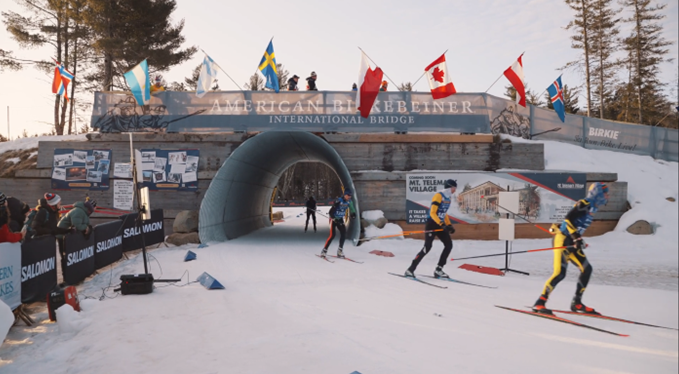
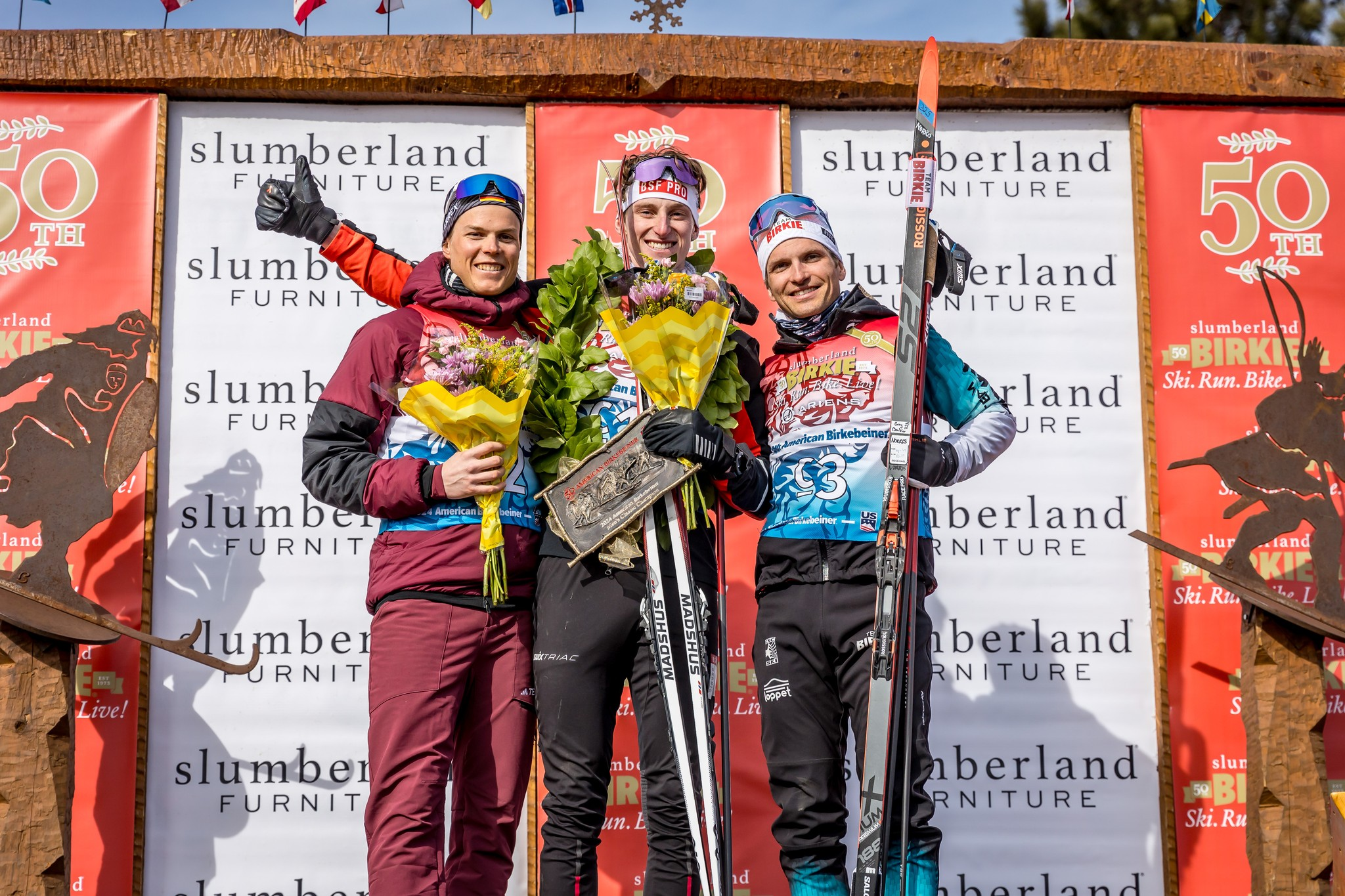
    Reid Goble won the Birkie Classic after recently being called up to the US team. (Photo: 2024 American Birkebeiner Ski Foundation)

    Most people visiting FasterSkier are probably familiar with the lives led by the American “A” team athletes. Their lifestyles and races are thoroughly documented. But, with the addition of new racers for North American World Cup events, due to the host nations being allotted extra positions, it’s time to look in on some lesser known names and learn what their lives are like.

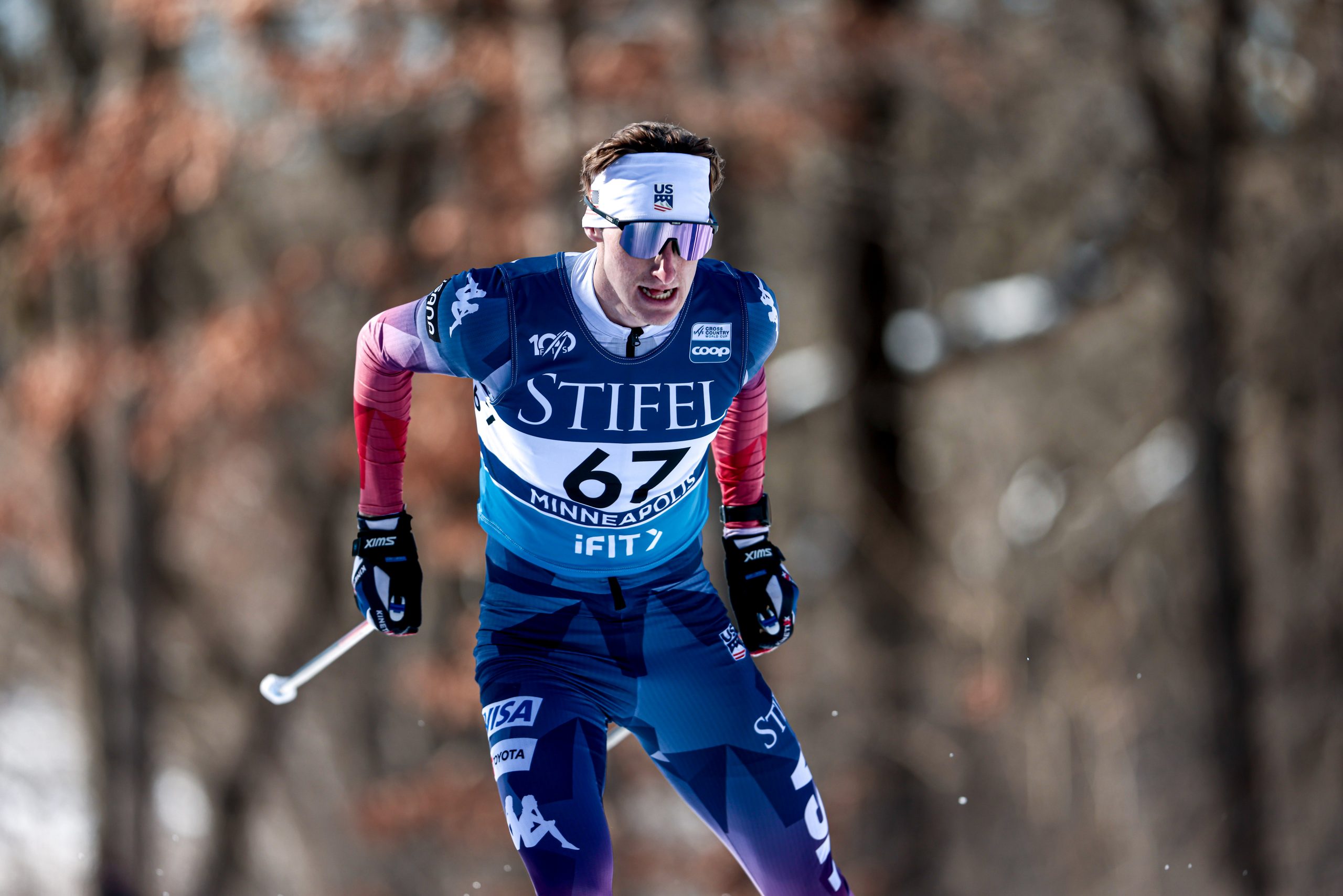
    Reid Goble (USA) got the call up to the American team to race in the World Cup. (Photo: NordicFocus)

    Reid Goble is a 24 year old American who races for the Bridger Ski Foundation (BSF), and lives in Bozeman, Montana. He got the call up to join the U.S. squad for the North American World Cups after the Super Tour races in Lake Placid, New York, only a couple of weeks before he would be racing in Canmore. His plan was to race Canmore and Minneapolis, then travel to Wisconsin and ski the Birkie 50-kilometer Freestyle on Saturday, and then the 30- kilometer Classic race Sunday. However, illness forced him to modify his plans, and he decided to skip the Freestyle Saturday and ski the Classic on Sunday. Still feeling under the weather, he nonetheless managed to go out and win the Classic race finishing ahead of some stiff competition; edging out David Norris (USA) and Scott Patterson (USA).


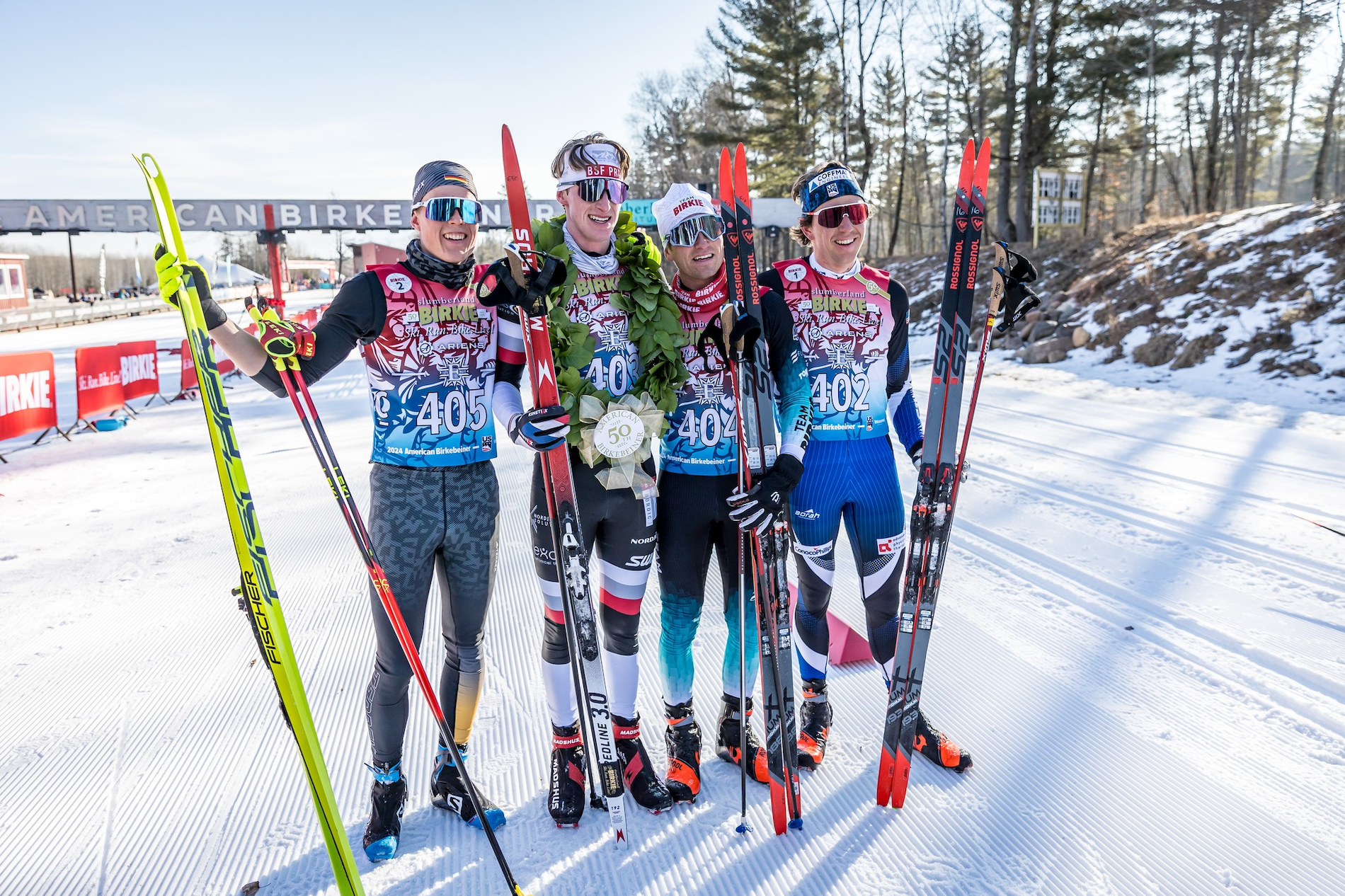
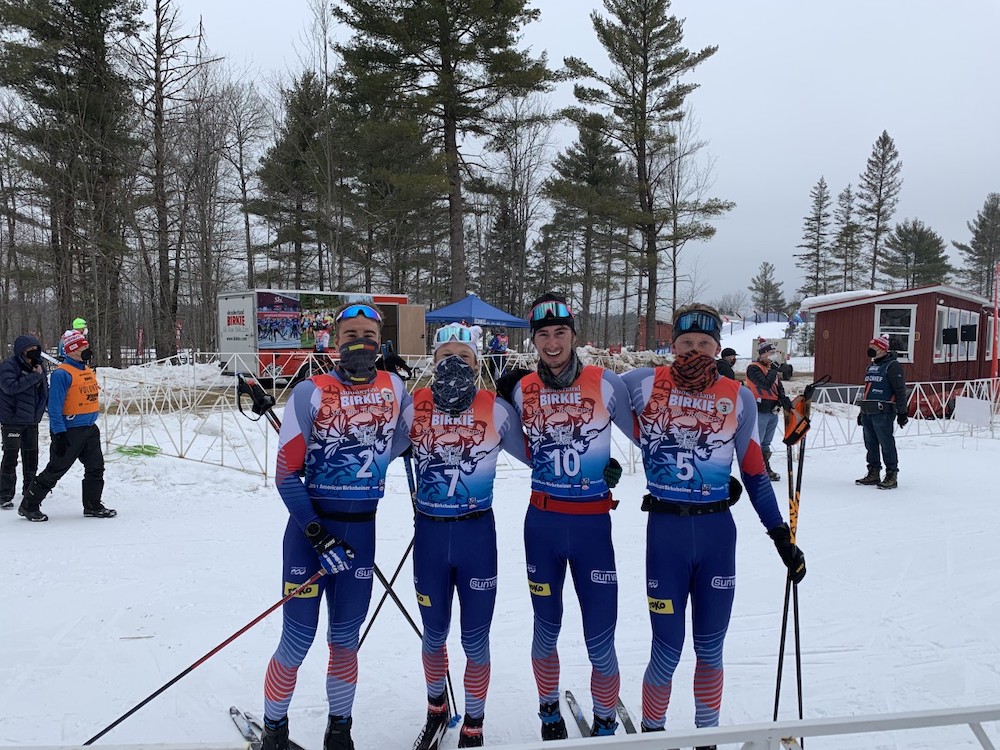
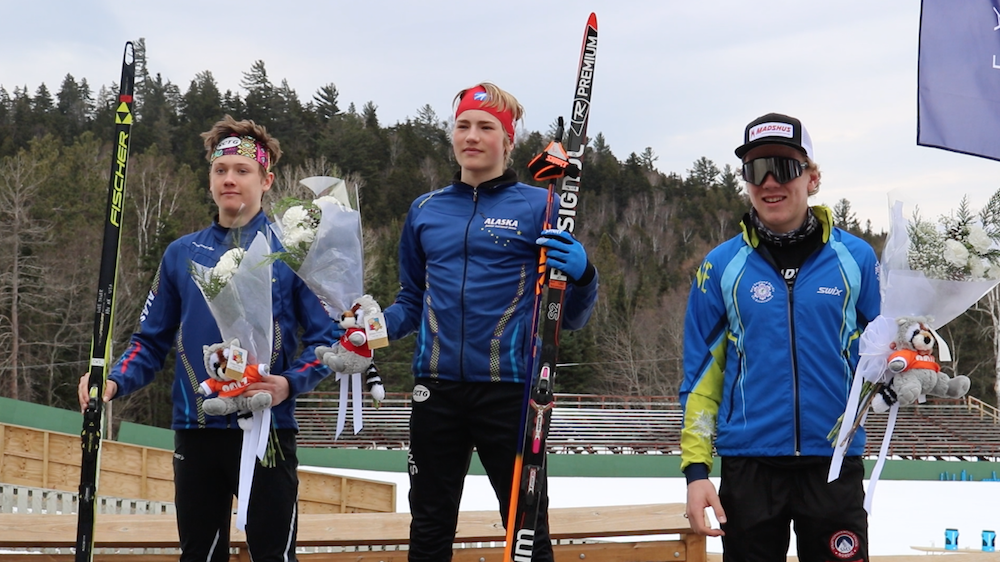
    Goble and the other top Birkie Classic finishers after the race. (Photo: 2024 American Birkebeiner Ski Foundation)

    For Goble, the weeks spent racing between Canmore and Hayward were the most exciting of his ski career. “[Making the World Cup has been] one of my main goals,” Goble said. “And it was exciting to make it, but it’s not everything. It’s the stuff you do along the way that counts.” But checking that box isn’t Goble’s end goal. “I want to do well on the World Cup, not just make it.”

    The life of a professional skier who isn’t on the national team is in some ways similar to that of a national team member, but is also starkly different. Goble competes regularly on the U.S. Super Tour, noting that the BSF provides great support, but that he still is responsible for much of his own financing. In fact, a fundraiser was held recently in his native Michigan for Goble and his sister Sarah—who also competes professionally— with local ski areas and ski shops donating prizes to help raise money.

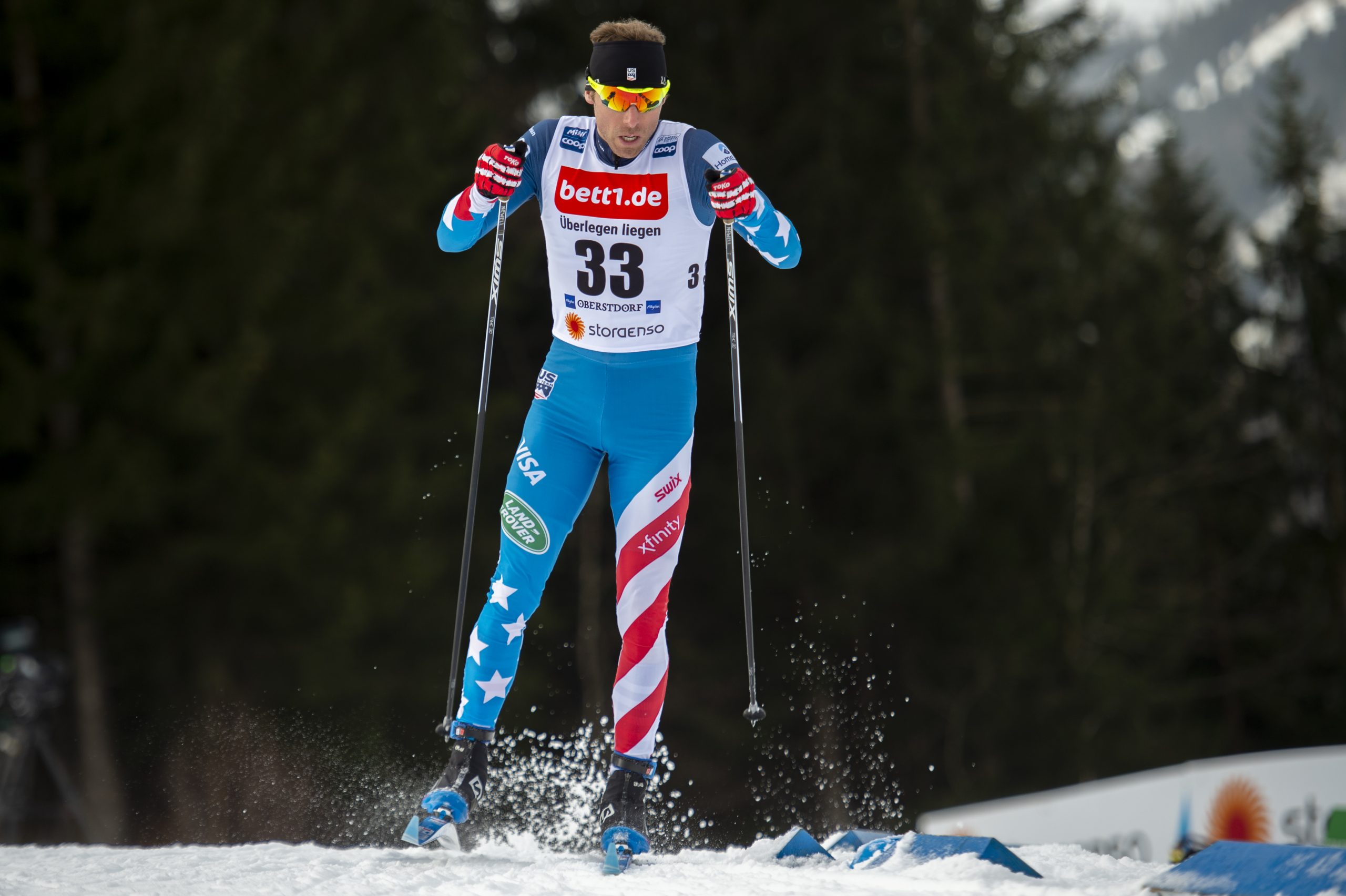
    Former US ski team member Andy Newell (USA) shown racing in Oberstdorf, Germany now coaches at the Bridger Ski Foundation. (Photo: NordicFocus)

    He is coached by Andy Newell at BSF, and the Foundation provides a good basic amount of support, but doesn’t cover everything. “We do very well with fundraising. Fundraising is hard, but BSF supports us generously. Most of us have part time jobs and support ourselves through that as well.”

    Goble works part time as a home health care aid to help pay for his expenses and day to day living costs. It’s a job that not only helps to pay the bills, but also dovetails nicely with what he hopes will one day be his future career as he plans to attend medical school after his racing days are over. He isn’t rushing to walk away from ski racing, but realizes he needs to plan for the future.


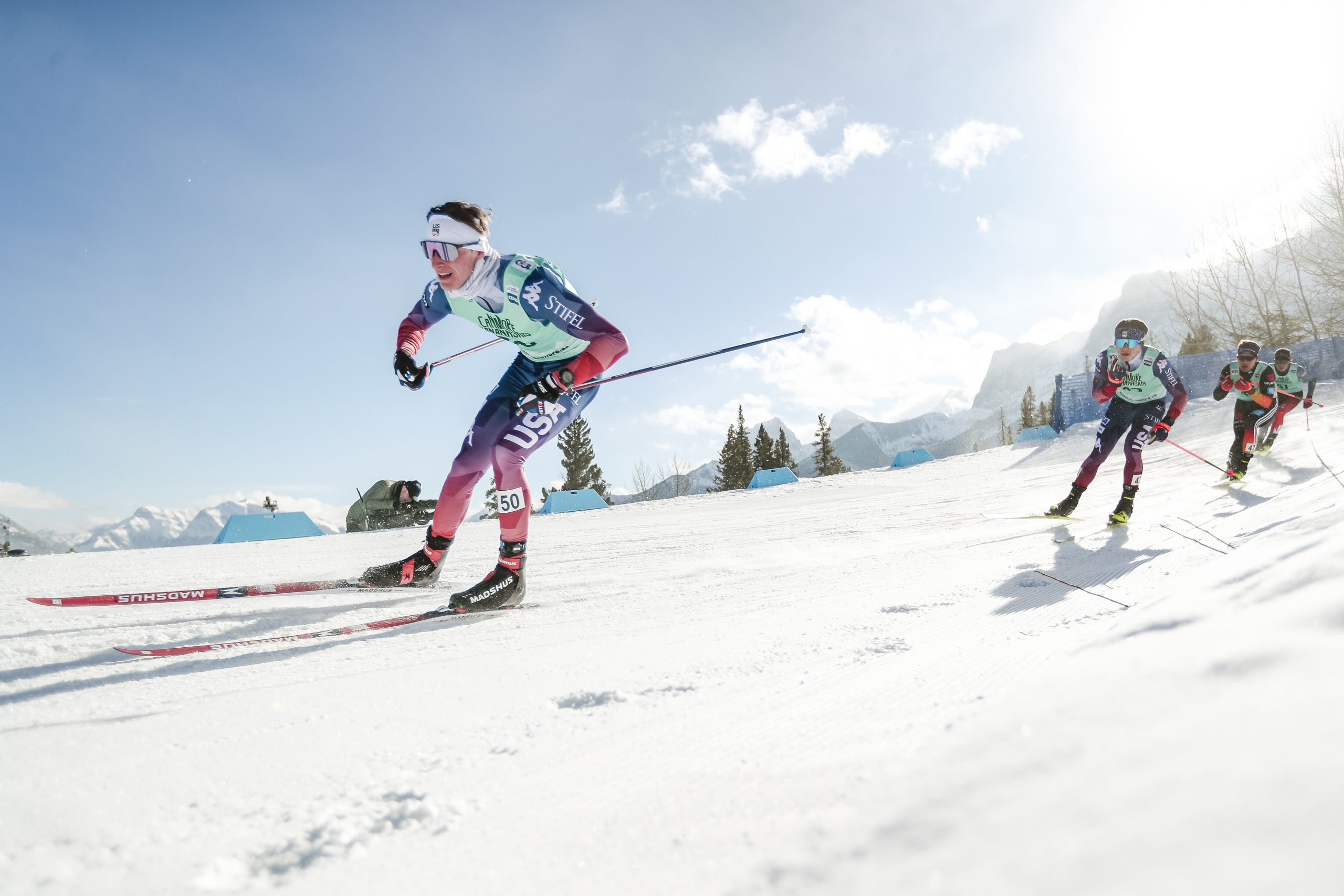
    Reid Goble (USA) racing in Canmore in his first ever weekend of World Cup skiing. (Photo: NordicFocus)

    Unfortunately, Goble was ill for much of his World Cup experience, so his Birkie victory was particularly sweet. “It’s a special experience,” he said. Even in a terrible snow year like this one it was still special. “We’re driving into Hayward, and there’s no snow, and then you get to the Birkie course, and they have 10k of trail. I don’t how they did that. It’s really impressive and you definitely can’t complain. It was fun that you got to do laps and people got to cheer for you. It was kind of special.” He noted that after Saturday’s race one hill was removed from the course which had presented problems with numerous falls. This change allowed the top contenders—and Goble, himself—to double pole the entire course.

    Doing the first ever Birkie lap course was in some ways a special treat. (Photo: ©2024 American Birkebeiner Ski Foundation)

    Racing the World Cup in the Nations Quota group is a little different. With 12 athletes starting each race, the wax technicians are spread thin. “Andy came up and waxed for all the BSF athletes,” Goble said. “And other clubs had their coach come and wax. It was collaborative, and seemed to work well.”

    Racing in Minneapolis was particularly rewarding for Goble. “I got to race in front of my friends and family,” he said. “You’re also with the regular US team members, which is fun, so that was special.” Also special is the international level of competition. In the 10 k Individual Start, Goble started sandwiched between Jens Burman (SWE), and Simen Hegstad Krueger (NOR), a rather intimidating position. “Yes, Krueger is a very good skier,” Goble noted in a bit of an understatement, while also recognizing that they are human. “If they pass me and I feel good, I’m not going to not try and ski with them.” But waking up sick the morning of the Minneapolis race took a little wind out of his sails. “Normally racing sick is not the move, but this was an acceptable move, especially with Gus’ results. It was really cool to be a small part of it.”

    Competing in the World Cup is a goal, but it doesn’t necessarily occupy all of Goble’s focus. “The US ski team is always a goal” he said. “But day to day and race to race, I just try to think about racing fast.” He recognizes that making the team isn’t a black and white question. “There are really good athletes who don’t perform at the right time. There has to be a cut off somewhere; this time I was on the right side.”

    The work-life-training balance isn’t always easy. It’s definitely challenging to support yourself. “You sometimes have to remind yourself that doing this is still a privilege, Goble observed.” I remind myself why I’m doing this and why it’s worth it.” Goble takes a philosophical view toward the divide between his colleagues on the US team and those who race domestically. “Racing is fun if you’re doing well. It can be frustrating when you’re not doing well, at any level. It’s easy to compare yourself to other skiers but, really, you’re just trying to be the best skier you can be no matter what level that is.”

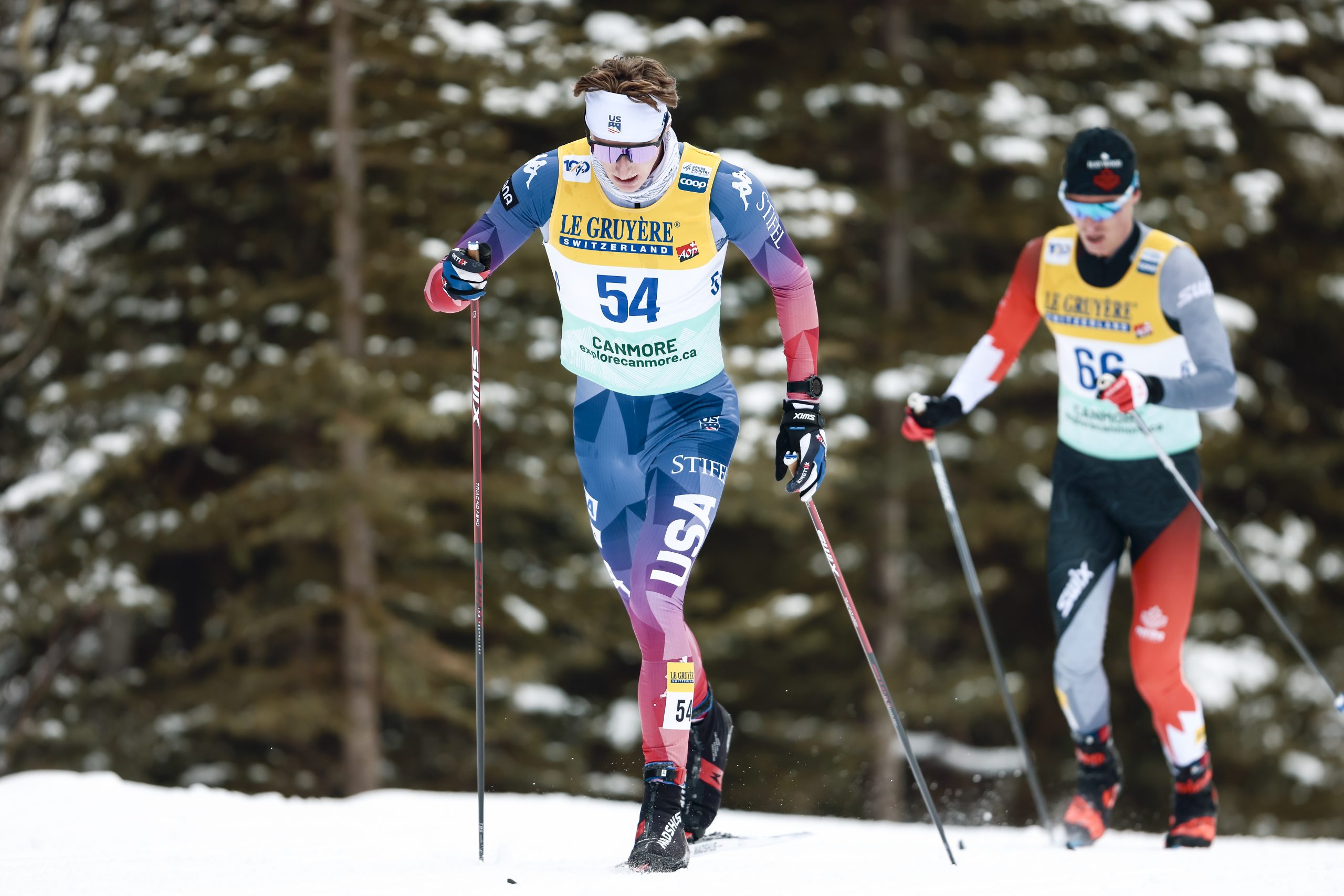
    Reid Goble (USA) doesn’t focus on just making the U.S. team. His goal is to ski as fast as he can every race. (Photo: NordicFocus)

    The next big stop in the race circuit for Goble will be at the end of March when the Super Tour stops in Duluth, Minnesota beginning March 21st. It’s expected that many of the U.S. team members will join the race circuit after completing World Cup racing. But in the meantime, starting this week, Goble will be back to work in his part-time job, and resume training, fundraising, and trying to live the life of a professional American skier who isn’t on the American team.

  • Norway Wins, US Women Battle to Podium as Germany Disqualified in Team Relay

    Norway Wins, US Women Battle to Podium as Germany Disqualified in Team Relay

    This World Cup coverage is made possible through the generous support of Marty and Kathy Hall and A Hall Mark of Excellence Award. To learn more about A Hall Mark of Excellence Award, or to learn how you can support FasterSkier’s coverage, please contact info@fasterskier.com.
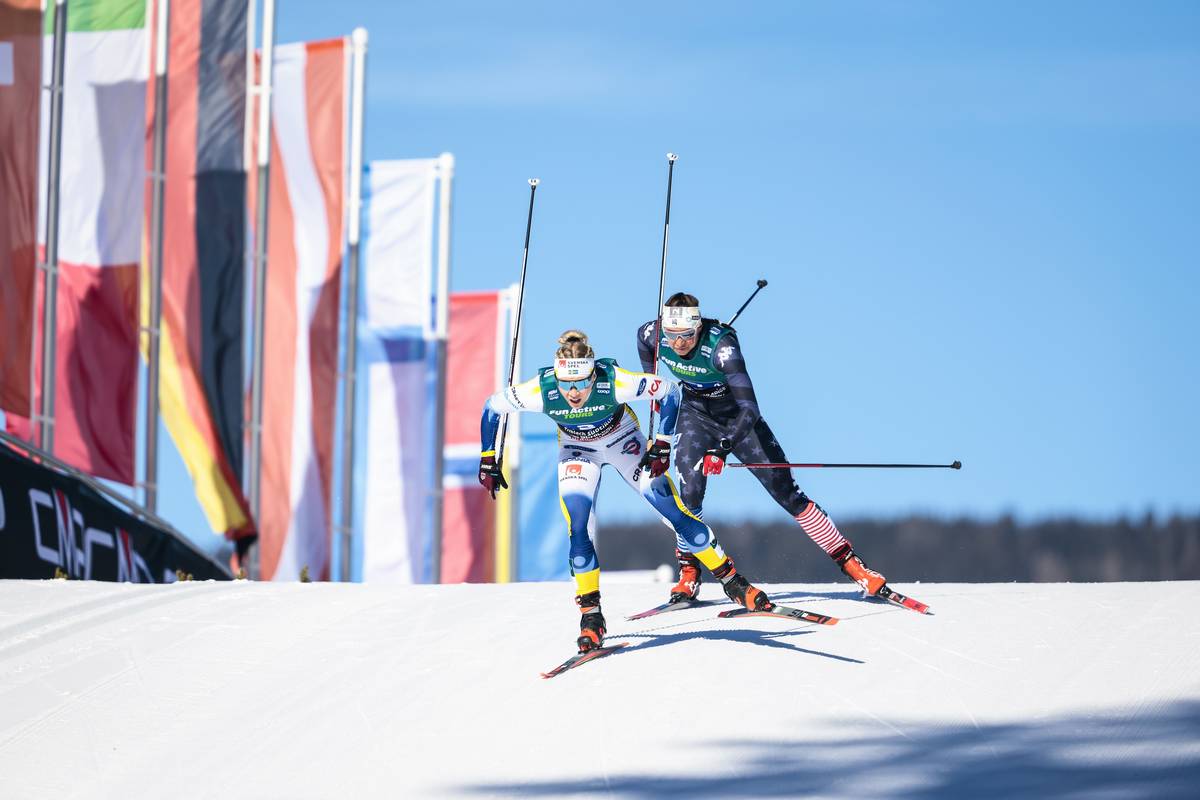
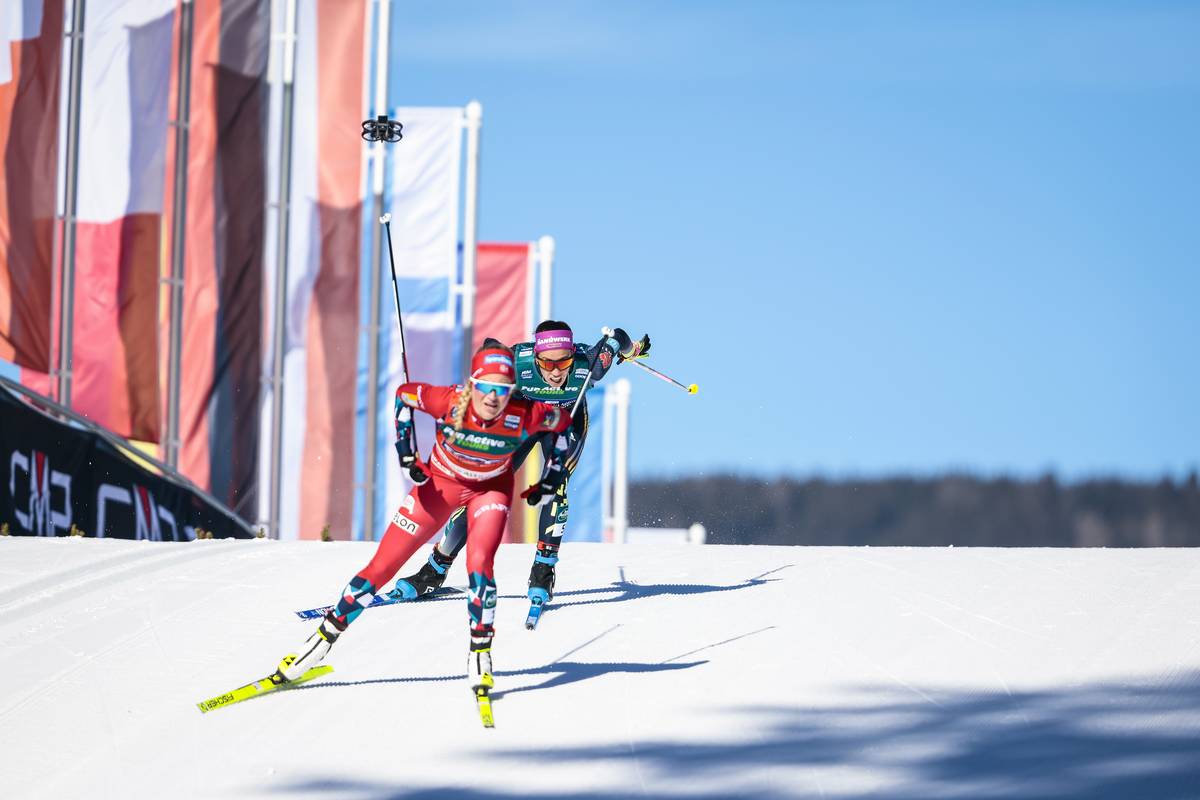
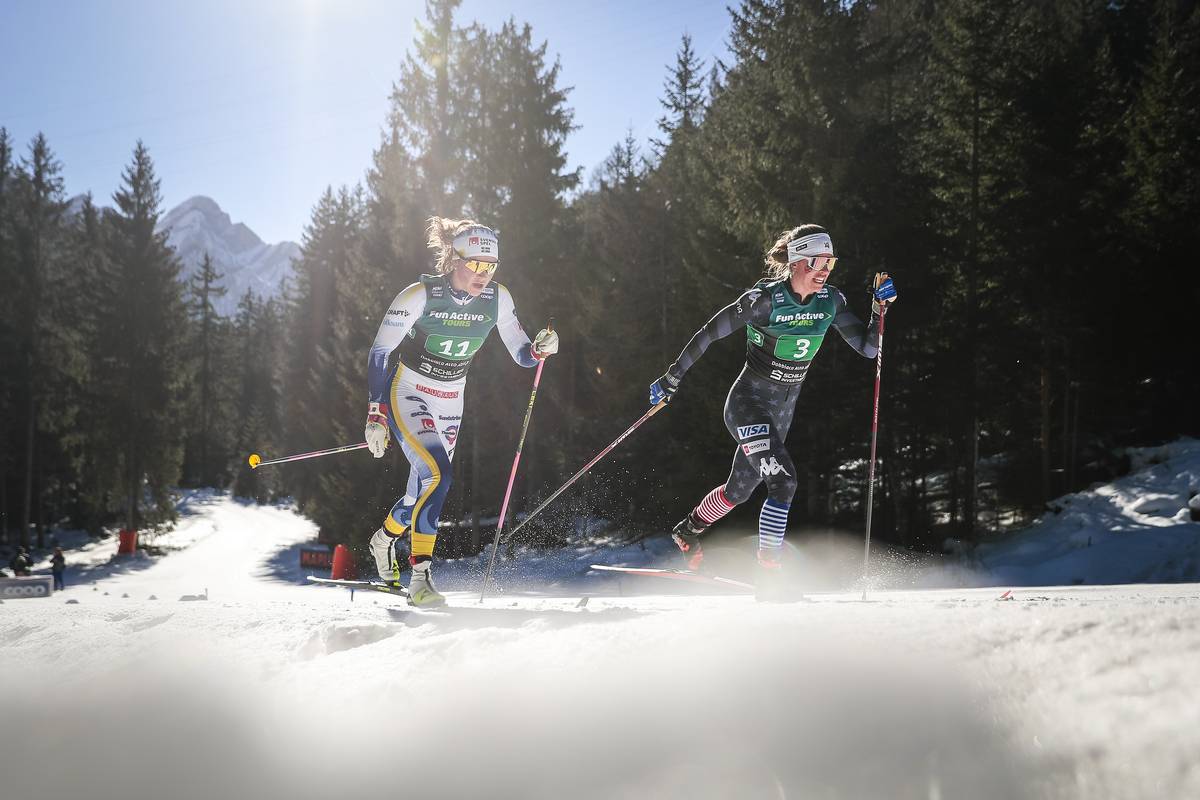
    Julia Kern (USA) follows Jonna Sundling (SWE) on the anchor leg of Sunday’s Team Relay in Toblach. Sundling would edge out Kern in a sprint for second place. (Photo: NordicFocus)

    As the World Cup entered its third day of racing in Toblach for a 4 x 7.5 km Team Relay, the tone was one of anticipation: what would happen in the race? Even more so, what was beyond this final day in the Italian Sud Tirol? This was the last race before a two week hiatus in the World Cup schedule, after which the best skiers in the world will gather in Planica, Slovenia for the World Championships.

    Looking forward to those championships, fans and spectators may anticipate the familiar site of another Norwegian relay victory. Today in Toblach, Norway I (Heidi Weng, Anne Kjersti Kalvaa, Ingvild Flugstad Oestberg, Silje Theodorsen) won the 15th of its last 16 World Cup relays, setting the stage for a showdown with Team Sweden at the World Championships in Planica. Sweden I (Emma Ribom, Ebba Andersson, Moa Ilar, Jonna Sundling) was second on the day. USA I (Hailey Swirbul, Rosie Brennan, Jessie Diggins, Julia Kern) would finish the relay as the fourth team across the line, but would later be elevated to third place after the disqualification of the German team (more on the later). USA II finished seventh with the young team of Alayna Sonneysn, Alexandra Lawson, Sarah Goble, and Lauren Jortberg.

    Hailey Swirbul (USA) scrambled for USA I during Sunday’s Team Relay, a position she previously held at the Beijing Olympics. Swirbul’s turn put USA I in a position to push for the podium in Toblach. (Photo: NordicFocus)

    Team relays are the intersection where team tactics meet individual and collective will. The relays staged in Toblach would also hint at choices that national teams were likely to make in weeks to come as they prepare for World Championships. For the United States, Toblach was a chance to try out a new lineup in preparation for making a run at a World Championship medal. The most recent World Cup-level team relay happened at the Beijing Olympics, where the US Women took sixth place. In that race, Swirbul scrambled (first leg), Brennan took second leg, Novie McCabe took third leg, and Diggins anchored. In Toblach, Swirbul and Brennan still skied first and second classic legs for USA I, but Diggins moved to the third (and 1st skate) leg, as Julia Kern—following her strong sprint results this season—took the anchor leg. 

    The most notable team tactics on the field today concerned the Swedish Women’s team, which has been the dominant team at these World Cup races in Toblach, and throughout the season. Sweden fielded two teams in Toblach, but the lineup shuffle within those two was a clear deviation from their strongest possible lineup. Of the team that won a Bronze at the Beijing Olympic Team Relay—Maja Dahlqvist, Ebba Andersson, Frida Karlsson, and Jonna Sundling—Karlsson was absent from the lineup. Dahlqvist would lead Sweden II, while Sundling and Andersson joined Sweden I. Dahlqvist’s Sweden II team also included Linn Svahn, who decided to withdraw from the relay after start lists were made, meaning that Sweden II would start the race, but scratch after the third leg.

    All of that decision-making still led to a familiar sight when the race started: Heidi Weng surging to the front in the first leg. Norway’s Women had won 14 of the last 15 relay events on the World Cup, and Heidi Weng has been in the line-up for the past 11 of those wins. Her first leg in Toblach was an early hint that the winning trend among Norwegian team relays would continue today. A pack formed as Weng was joined by Sweden, Germany, the United States, and Finland. All the main players present in World Cup relays of the past were back to challenge once again.

    Heidi Weng (NOR) resumed her scrambling duties for the Norway I team on Sunday. Weng, in the 1st leg position, has been part of Norway’s last 12 wins in the event after Toblach. (Photo: NordicFocus)

    Weng handed off to Anne Kjersti Kalvaa, who leveraged the advantage into a definitive split in the field. The only woman to follow the Norwegian was Katharina Hennig for Germany, who arrived as an unassuming, yet unsurprising, presence at the front of Team Relay field. Despite Hennig being the only German Women to have individually podiumed in the last three seasons of World Cup racing, the Germans have had a strong contingent of women present near the top 15 places of the World Cup. Germany won silver in the Beijing Olympic Team Relay (Hennig, Victoria Carl, Katerine Sauebrey, and Sofie Krehl) ahead of many of the notable individual names from other nations that populate podiums week-to-week on the World Cup.

    Silje Theodorsen (NOR) pushes ahead of Sofie Krehl (GER) during the anchor leg of Sunday’s Team Relay. Theodorsen would secure Norway’s 15th win in 16 tries at the Women’s Team Relay event. (Photo: NordicFocus)

    As the Norwegians looked to open a gap early in the race, the German’s strongest skier was right there to continue on the move from Gimmler in the first leg. Hennig skied confidently up with Kalvaa, and the pairing would form the lead pack alongside Ebba Andersson for Sweden I, who kept with her recent streak of strong skiing by pushing the lead group into a pack that held through the 3rd leg of the race. Pia Fink held the pace for the Germans through the 3rd leg as Oestberg pushed the pace for Norway, as Sweden I faded. Norway’s anchor, Theodorsen, conducted a masterclass closing leg, taking control a kilometer out from the finish-line and driving all the way through. Germany’s Sofie Krehl couldn’t keep up, and Theodorsen finished in the arms of her teammates. The Norwegians had won their 15th in 16 tries at the World Cup Team Relay.

    Rosie Brennan (USA) and Moa Lundgren (SWE) on the second leg of Sunday’s Team Relay. Brennan began the USA I charge towards the lead pack during her leg, which landed the USA I team in third place in Toblach. (Photo: NordicFocus)
    USA I

    Clad in the striped relay socks of Team USA, Swirbul handed off to Brennan in fourth place. Brennan knew the hard task ahead of her, saying in post-race comments that “Leg 2 is a hard one that tends to be pretty stacked with strong distance skiers,” said Brennan. “So I knew I had my work cut out for me. I wanted to ski my own race in an effort to minimalize time lost, [which] I felt like I did well, but still managed to lose more time than I would have liked…I felt we all had some good battles out there and also know where we need to look to improve.”

    Brennan’s hand-off to Jessie Diggins found the Americans 41 seconds off the lead group, and Diggins went straight into reducing that gap. Diggins didn’t let up, going into the unrelenting turn-over that has become her signature on the World Cup. When she caught Ilar (Sweden I) near the end of her leg, the full scope of Brennan and Diggins combined move had become clear. In a Team Relay, where the field can string out, paces can drop, and energy can falter, the Americans had attacked every meter of the course with jolting energy today.

    Jessie Diggins (USA) during her leg of the Team Relay on Sunday. Diggins’ efforts during the team’s third leg reduced a gap that helped set up Julia Kern (USA) to sprint to third place in Toblach. (Photo: NordicFocus)

    That energy was transferred to their anchor, Kern, whose rival in the race for third was none other than the weekend’s sprint champion, Sundling (Sweden I). As Sofie Krehl led the Germans across the line to claim second, Kern continued to do battle with Sundling. They swept into the stadium, Sundling went out from behind Kern and gained a slight advantage in the run-up. Kern pushed again, but ran out of room. The pair lunged across the line with Sundling .2 seconds ahead of Kern: Sweden I in third, USA I in fourth.

    Julia Kern (USA) during her anchor leg on Sunday. Kern lost a close battle across the line to Jonna Sundling (SWE) for third place. USA I was eventually elevated in the standings after Germany’s disqualification for an illegal substitution. (Photo: NordicFocus)
    German Disqualification

    Across the line would prove a key phrase in the post-race melee. When final results were posted, it was revealed that the race jury disqualified the 2nd place German team for “participating under false pretenses.” The FIS International Competition Rule cited was “ICR 352.2.2.,” a vague piece of international competition law can be translated as “who was on the course was not who was on the start list.” In this case, Krehl had been substituted for Colleta Rydzek after official start lists had been made. The decision to disqualify Germany meant that the USA I was elevated to third place. It was a strange, but auspicious, sign for the Team USA as they look toward making the podium at World Championships in the same event in just a few weeks. In post-race comments, Rosie Brennan said “Germany’s disqualification [was] something I haven’t ever experienced before and was certainly unfortunate. That is not how I want to land on the podium. They all skied really strong legs. It’s unfortunate that the athletes have to take the hit there.”

    The German team awaits a race jury decision after crossing the line in 2nd place on Sunday. The race jury reached a decision to disqualify Germany after a late substitution saw Sofie Krehl anchor the team instead of Coletta Rydzek, who was on the official start list. (Photo: NordicFocus)
    USA II

    Lauren Jortberg smiled into her teammates’ arms in seventh place. With her crossing the finish line, came a symbolic close on the sequence of the World Cup that has served as a broad introduction for the young skiers that made up USA II today. For Jortberg and Sonnesyn, that has meant an introduction to the demands of racing the World Cup calendar with all challenges that commitment brings. For Goble and Lawson, Toblach marks the end of the beginning of their World Cup careers. In comments to FasterSkier, Alex Lawson said, “The biggest thing I took into and out of Toblach is to be confident in myself! [The World Cup] is a different scene, field, and venue but it is still a ski race and something that I have spent years training for.”

    The USA II Team on Sunday, which finished 7th place. (L-R) Alex Lawson, Lauren Jortberg, Alayna Sonnesyn, and Sarah Goble. (Photo: NordicFocus)

    Lawson’s reflections on her first World Cup will serve as wisdom for all the Team USA as they look ahead in the season’s calendar. Next up for the American women is the event that the season has been building towards: World Championships begin in Planica, Slovenia on Tuesday, February 21st with a 5 k Freestyle Individual Start. The Americans are sure to come into Planica the way they left Toblach today, with a persistent drive and energy, fighting for every second.

    Women’s 4 x 7.5 km Team Relay RESULTS

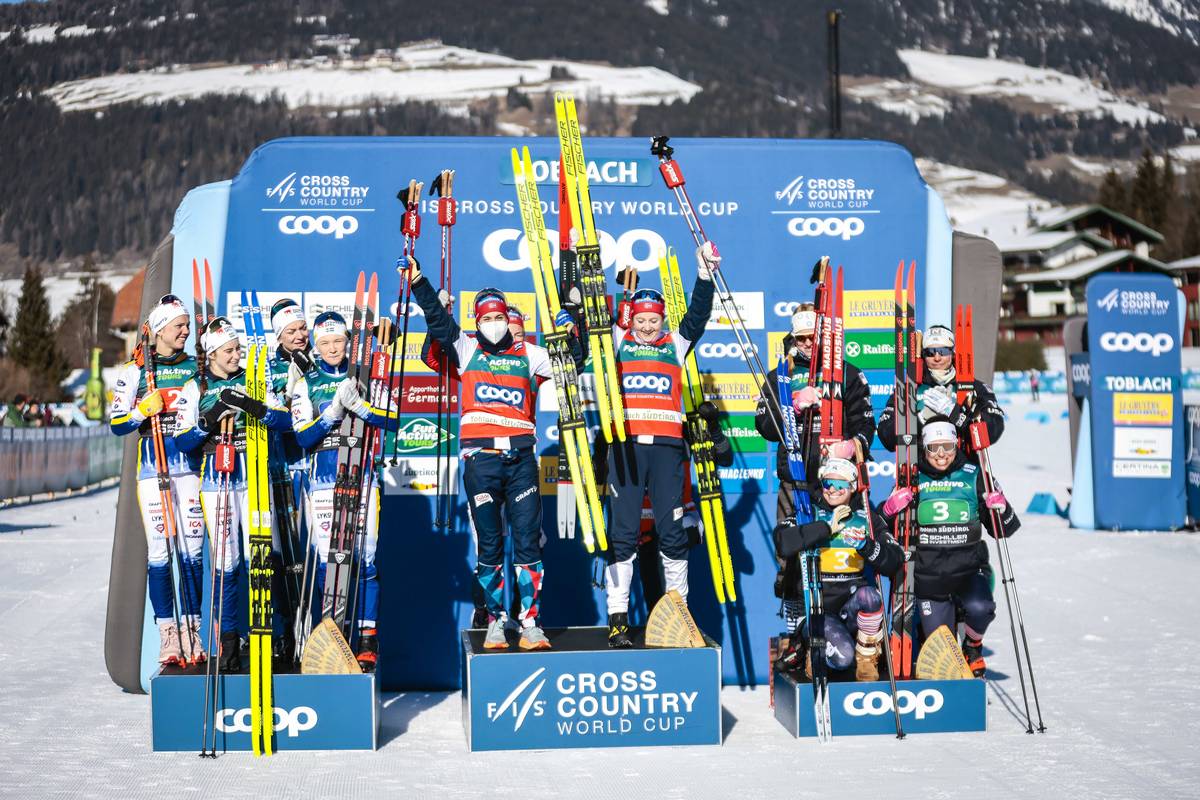
    The Official Women’s Podium featuring USA I in third place. Norway won its 15th of the last 16 Team Relays, while Sweden took second. (Photo: NordicFocus)
  • Jessie Diggins Returns to World Cup Podium, Rosie Brennan 5th in Les Rousses

    Jessie Diggins Returns to World Cup Podium, Rosie Brennan 5th in Les Rousses

    This World Cup coverage is made possible through the generous support of Marty and Kathy Hall and A Hall Mark of Excellence Award.  To learn more about A Hall Mark of Excellence Award, or to learn how you can support FasterSkier’s coverage, please contact info@fasterskier.com.

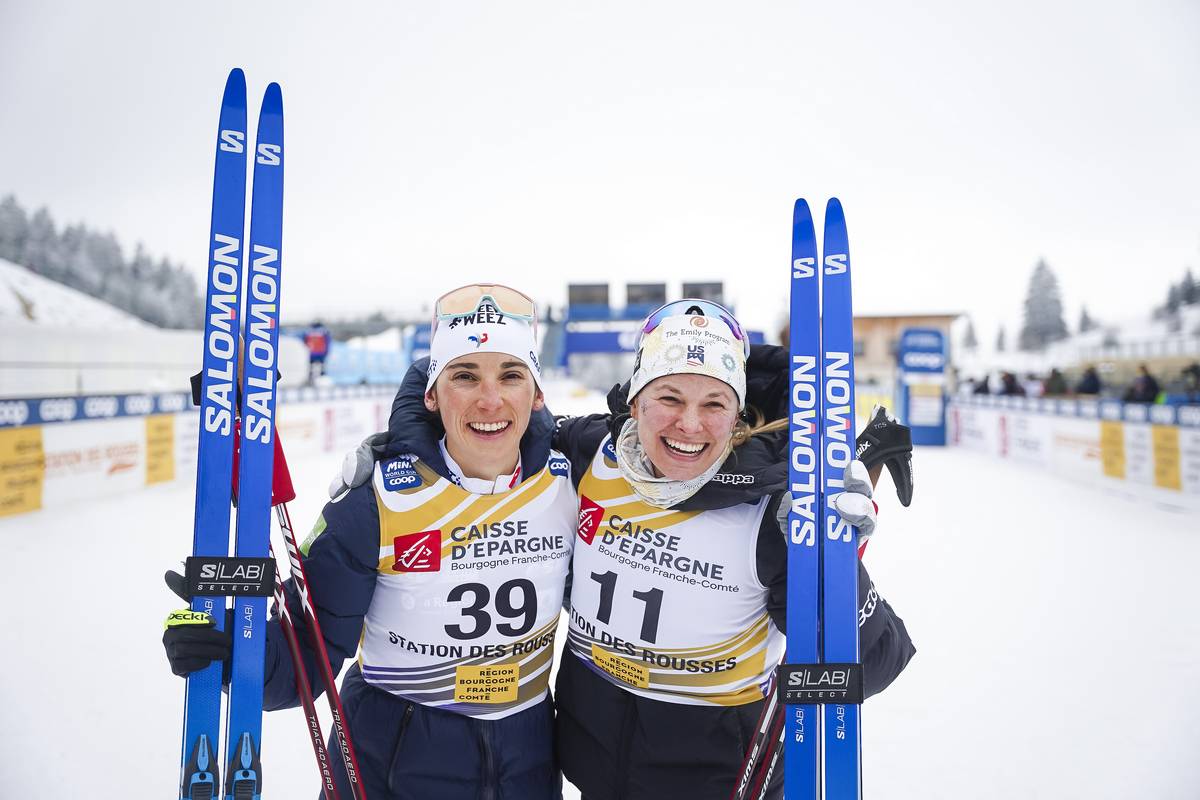
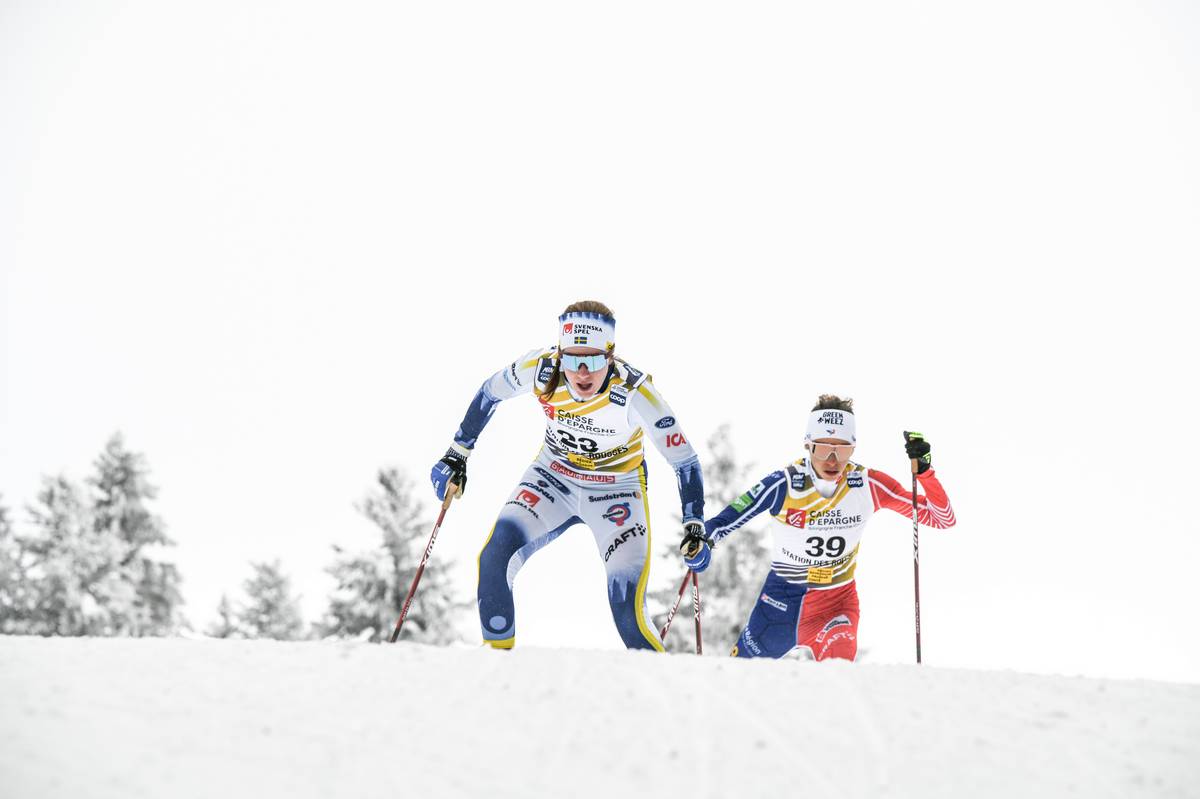
    Delphine Claudel (FRA) and Jessie Diggins (USA) embrace after placing second and third in the 10 k Skate in Les Rousses. (Photo: NordicFocus).

    If there is a common theme to the cross country skiing World Cup, it is change. Tweaks, adjustments, selections, illness, and injury all factor into who even makes it to the starting line; certainty is just too much to ask for. For many seasons, Jessie Diggins has been an outstanding performer on the Women’s circuit, though in past weeks she has looked anything but her best. Today in Les Rousses, Diggins returned from time off; she was ready to start anew. And the 10 k skate—an event that relies on speed, confidence, and guts—seemed the perfect event for her to do so. Diggins’ efforts paid off with a return to the World Cup podium, finishing third behind first-place Ebba Anderson (SWE), and runner-up Delphine Claudel (FRA).

    “That was an awesome day,” Diggins said. “I want to make sure I never take a great day for granted. It was just so fun to be back on the podium.”

    Rosie Brennan (5th) and Julia Kern (11th) both skied exceptional races in Les Rousses. Other American finishers included Hailey Swirbul 23rd, Alayna Sonnesyn 32nd, Sarah Goble 34th, Alexandra Lawson 35th. Nordiq Canada did not enter racers in today’s World Cup events.

    When Diggins started today’s 10 k Individual Start Skate, it marked new steps taken toward the World Championships in Plainça, less than a month away. Diggins has preached patience this year, both for herself and for the ever-expanding ensemble of American women on the Team she leads. That US Ski Team ensemble today included Swirbul who returned to the World Cup after an early season spent patiently pursuing goals on the domestic circuit, and becoming a triple National Champion in the process. It also included World Cup debuts for Goble, the Michigan native and Bridger Ski Foundation Pro Team skier, and Lawson, the through-and-through Vermonter from Craftsbury Green Racing Project.

    “[I’m] honestly just so happy for the whole team,” commented Diggins. “It’s been so cool this week, seeing Alex, Will, and Peter all start their first World Cups. I’ve been thinking a lot about that . . . when you do something for a while, you kind of forget how cool it is; you kind of lose the magic a little. I kind of made a promise to myself that I was going to ski it like it was my first World Cup.”

    Diggins wore bib 11 on the day, the first of the main contenders to race the three laps of Les Rousses’ 3.3 k loop. Diggins had the job of setting the bar; from check-point to check-point, she did so. When she crossed the finish-line, she was in first place with over a 20 second gap to second place. No matter what happened in the field that followed, it was clear that Diggins had raced as Jessie Diggins could.

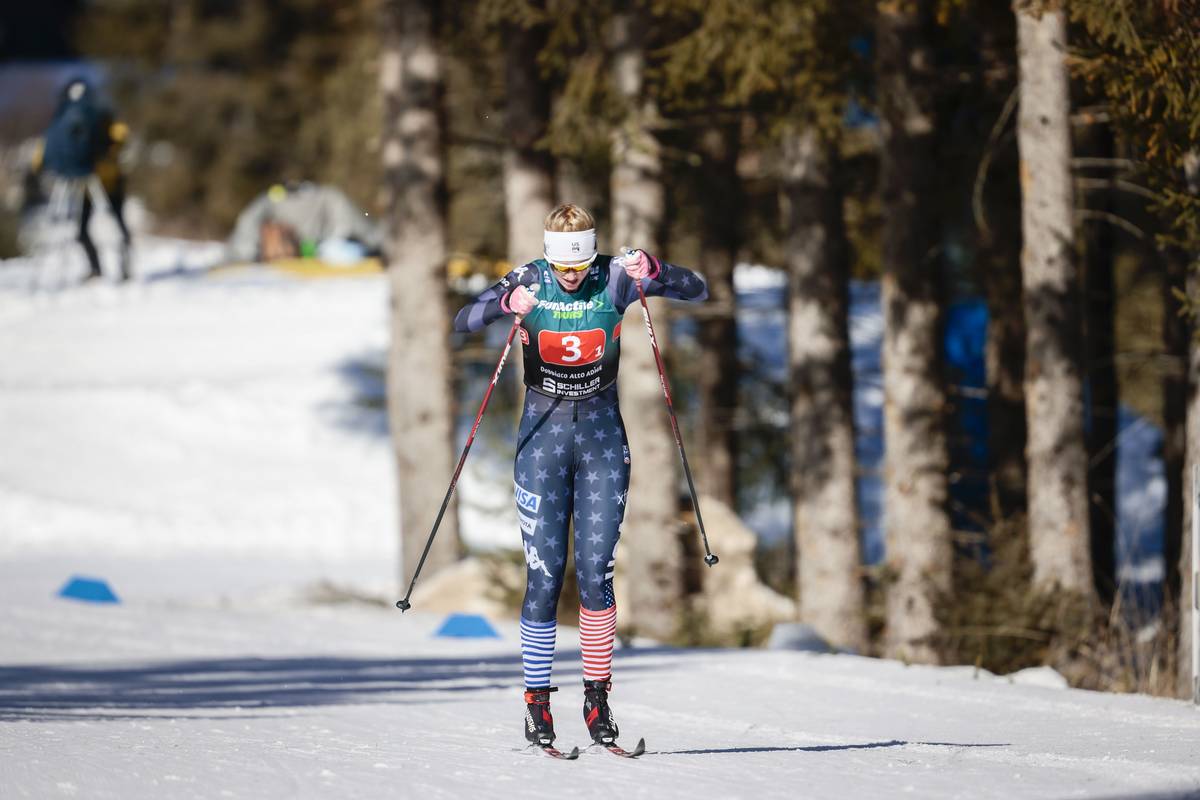
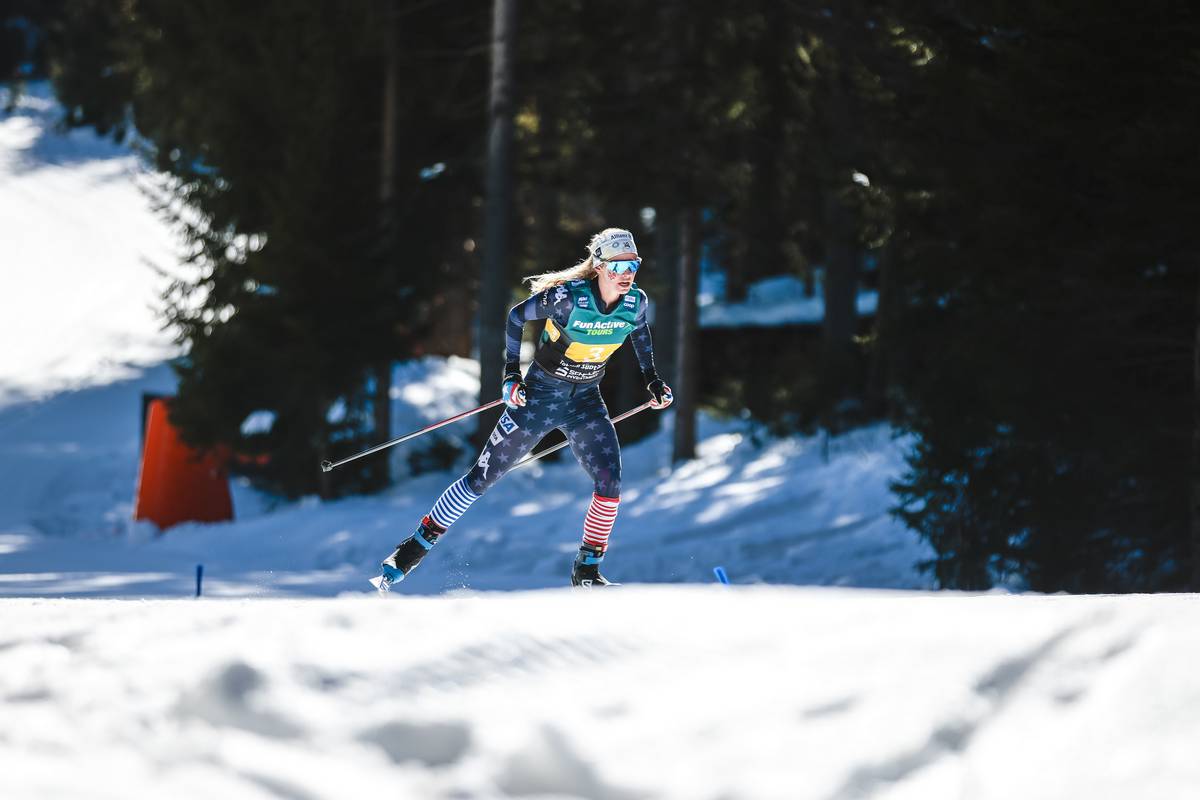
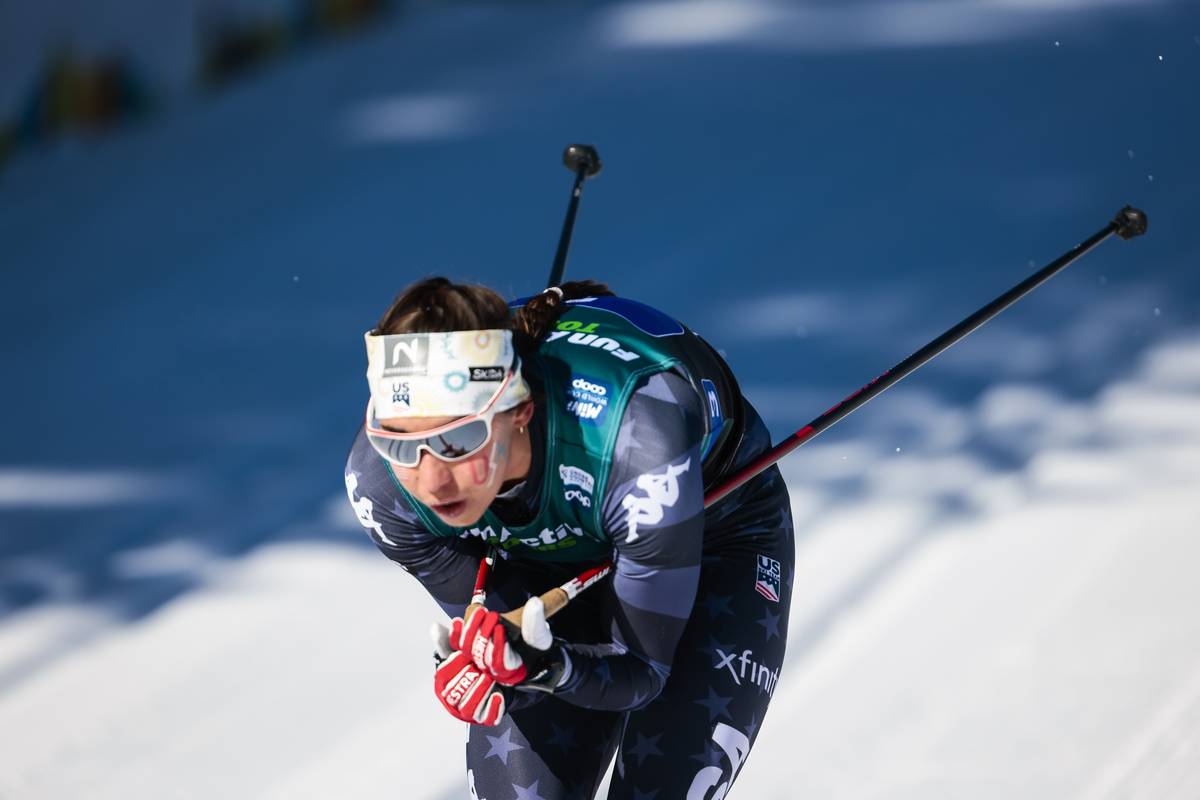
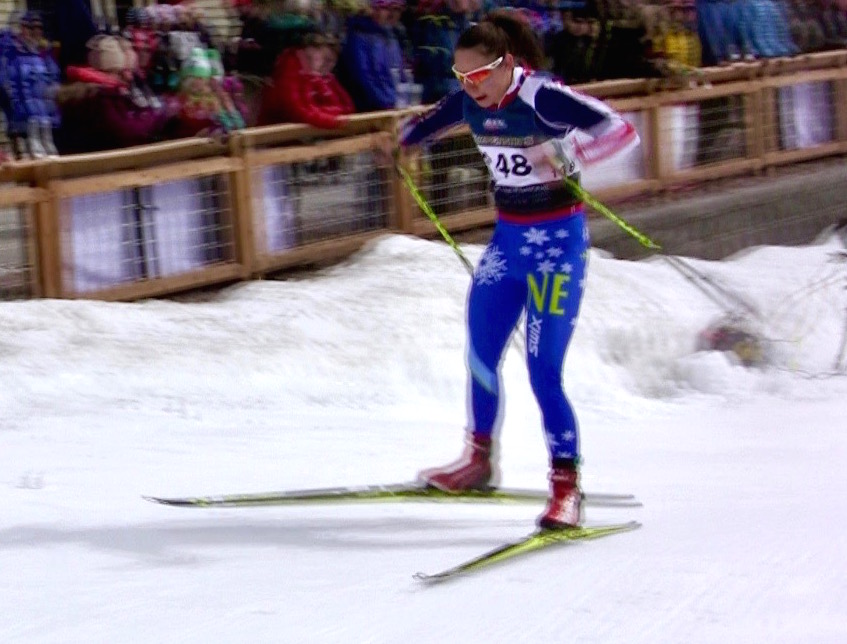
    Sarah Goble (USA) during her World Cup debut on Friday in Les Rousses. (Photo: NordicFocus).

    For Americans, extra excitement abounded on the day as Rosie Brennan sped around the course, trading close margins with Diggins at the time-checks. Brennan continued her steady, season-long march toward the top of the World Cup field, finishing her race in fifth place only 20 seconds from the podium. Julia Kern also put in a strong performance on the day, finishing in 11th place.

    Behind Brennan, Ebba Andersson was leaving no doubt about who was the strongest skier in the field. In a testament to the depth and strength of the Swedish Women’s Team, it was almost easy to forget that Andersson herself was also returning to the World Cup for the first time since Lillehammer’s races in December (after an extended period of illness). She remained at the top of the field at each time check, and crossed the line 20.5 seconds ahead of Diggins to win her second World Cup of the season, and third of her career.

    Winner Ebba Andersson (SWE) ahead of 2nd place Delphine Claudel (FRA) on course Friday. (Photo: NordicFocus).

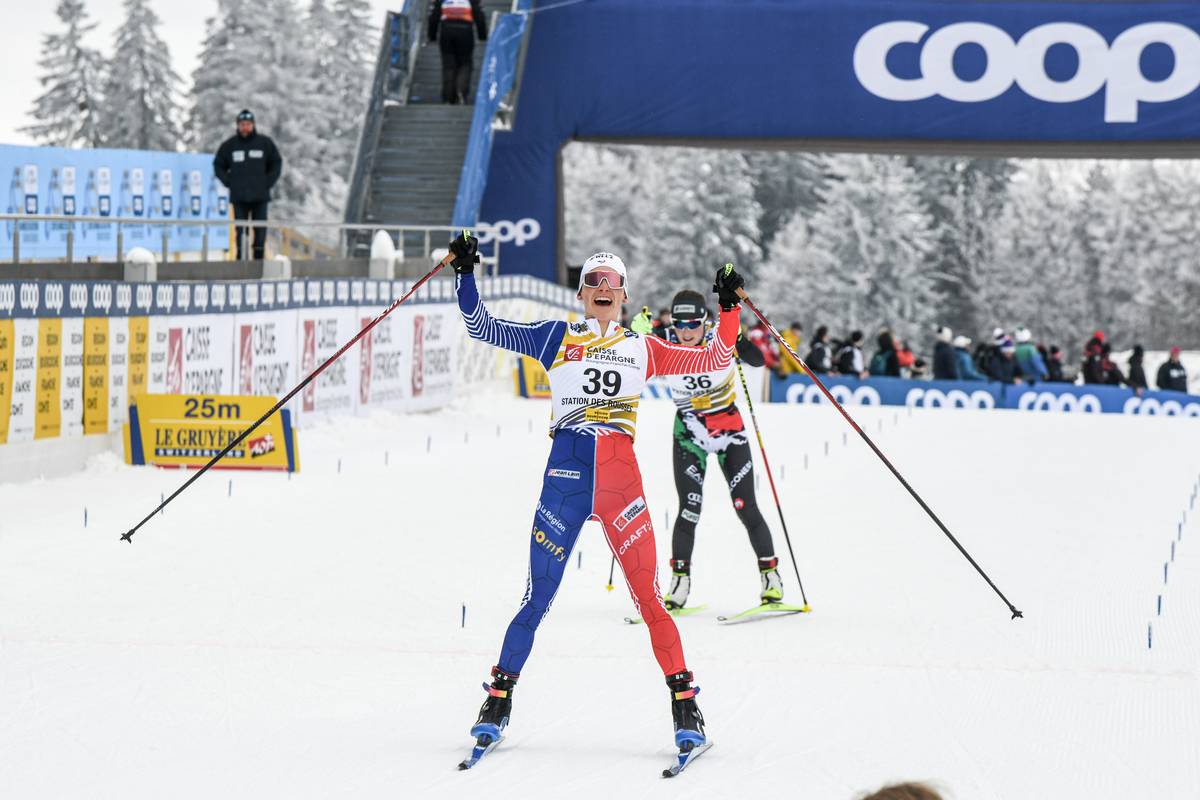
    Andersson and Diggins were both across the finish line, and the World Cup podium for the day looked reasonable enough for a World Cup podium. But one skier wearing the red and blue of the home country began drawing attention as she hovered around Diggins’ time in the check points. It was Claudel, bib 39, who a few weeks ago summited the Alpe di Cermis to win her first World Cup. Claudel had been on the World Cup podium before that win, but they had all been on the Alpe di Cermis Hill Climb. She was always considered a climbing specialist. Was, that is, until she finished today. As she closed in on the last three kilometers of the race, her split times showed a back and forth battle with Diggins. As Claudel entered the stadium in Les Rousses, the French crowd rose in unison for their countrywoman. Les Rousess has been on the World Cup for three years running, but has been denied its day in the sun by pandemic cancellations. Now, after three years of waiting, the French were watching one of their own sprint toward an implausible result. Claudel closed in on the line, lifted two poles towards the sky, and found herself on a World Cup podium in second place, 13 seconds behind Andersson and just ahead of Diggins. Andersson, rose from the leader’s chair, ran to Claudel in the finishing area. “That crowd was incredible,” she said to Claudel, still elated. The energy of the day had lifted both women, and Claudel’s performance affirmed for Les Rousses that the wait had been well worth it.

    Delphine Claudel crosses the line to finish 2nd place at the first World Cup held in France since 2016 (Photo: NordicFocus).

    Ebba Andersson added another win for a dominant Swedish National Team. Jessie Diggins returned to the World Cup, and returned to the podium. The skier who came between them on the podium, though, had showed that arriving at those conclusions is not simply an accident. Defying expectations, Delphine Claudel skied herself onto a World Cup distance podium. It was a reminder that for Claudel—and for the skiers surrounding her on the podium—the uncertainty of ski racing was one that could be met with will, patience, drive, and belief in one’s self. It was all there in the return of the World Cup to Les Rousses.

    Full Results

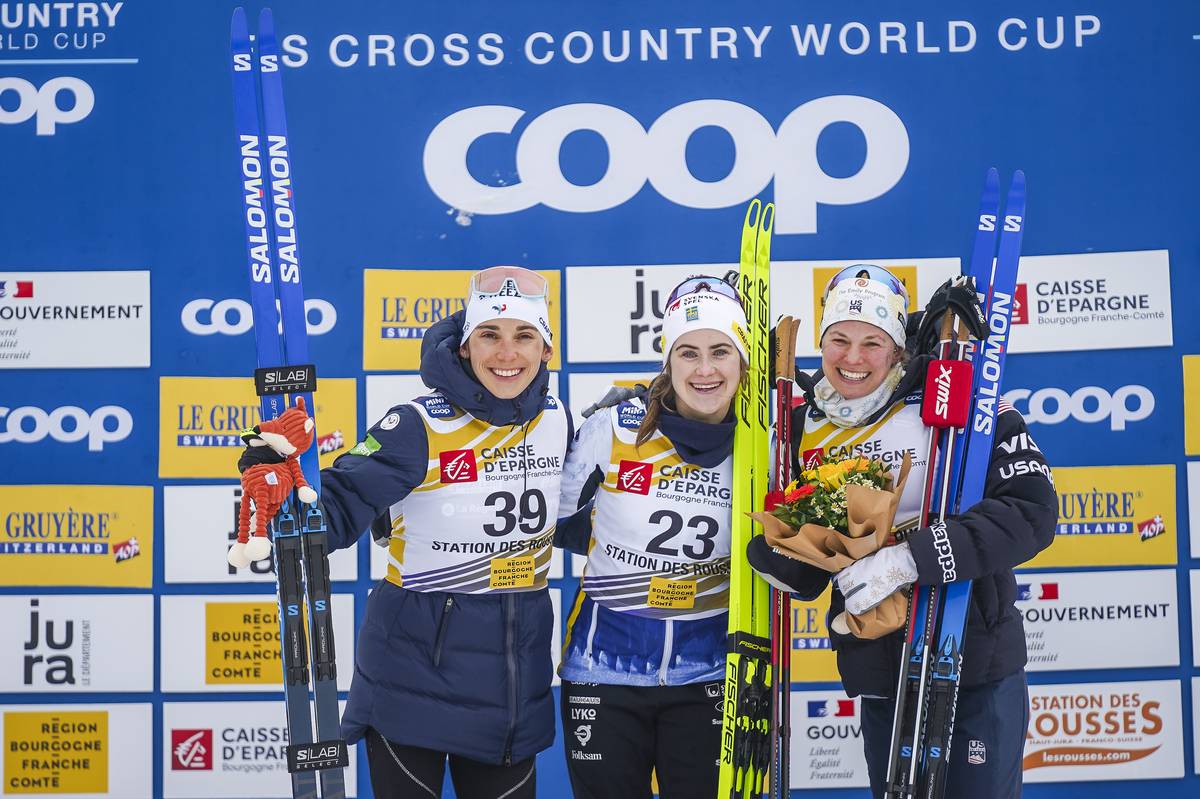
    The podium in Les Rousses: Delphine Claudel (FRA), Ebba Andersson (SWE), Jessie Diggins (USA). (Photo: NordicFocus).
  • In Bozeman, Jim Bridger Rollerski Races Look to Bring Summer Competition to the West

    In Bozeman, Jim Bridger Rollerski Races Look to Bring Summer Competition to the West

    Logan Diekmann, Nina Seeman win on the streets of Bozeman, and BSF’s Rollerski races look to harness the momentum of summer training out West. Featuring Results and Video Highlights.

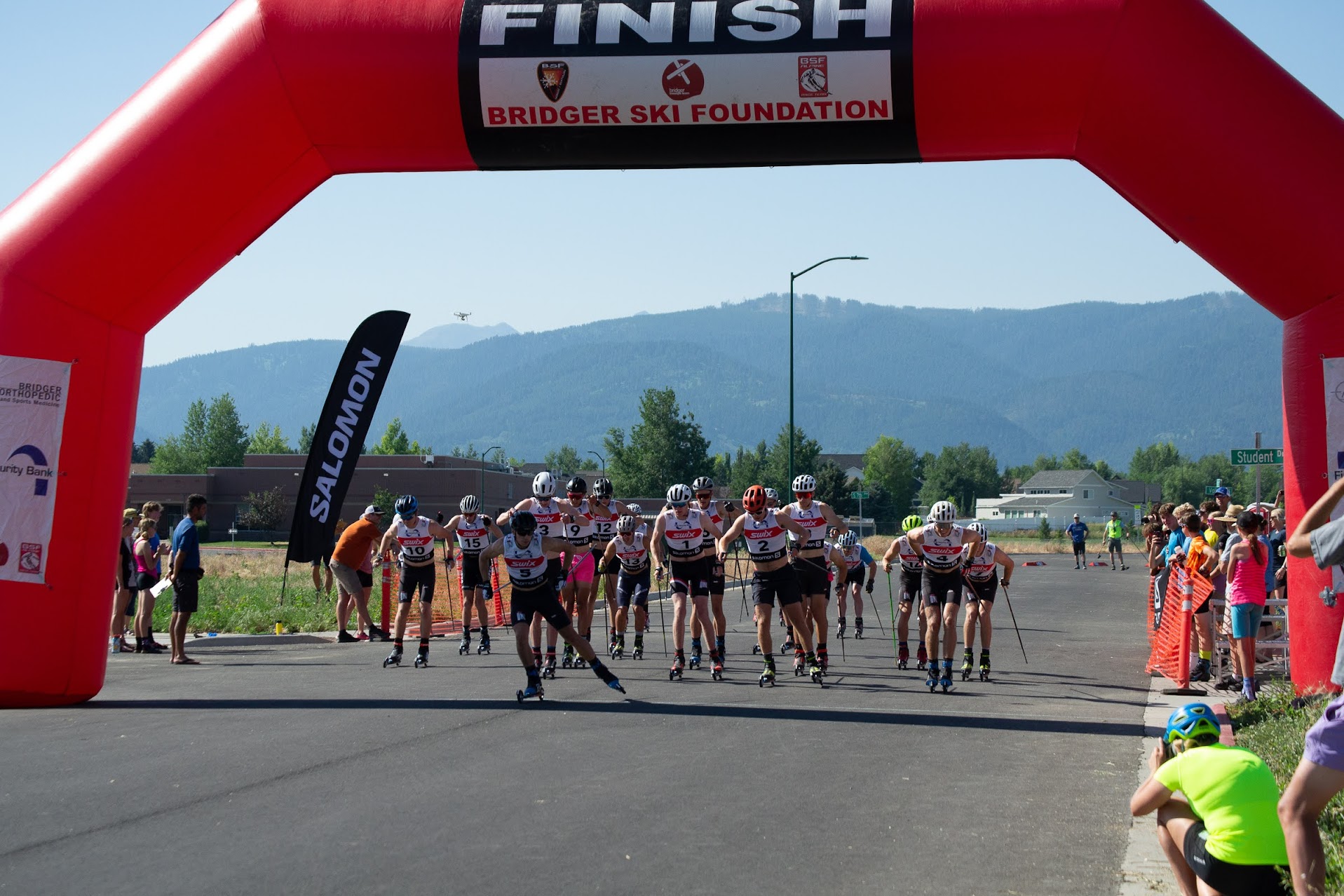
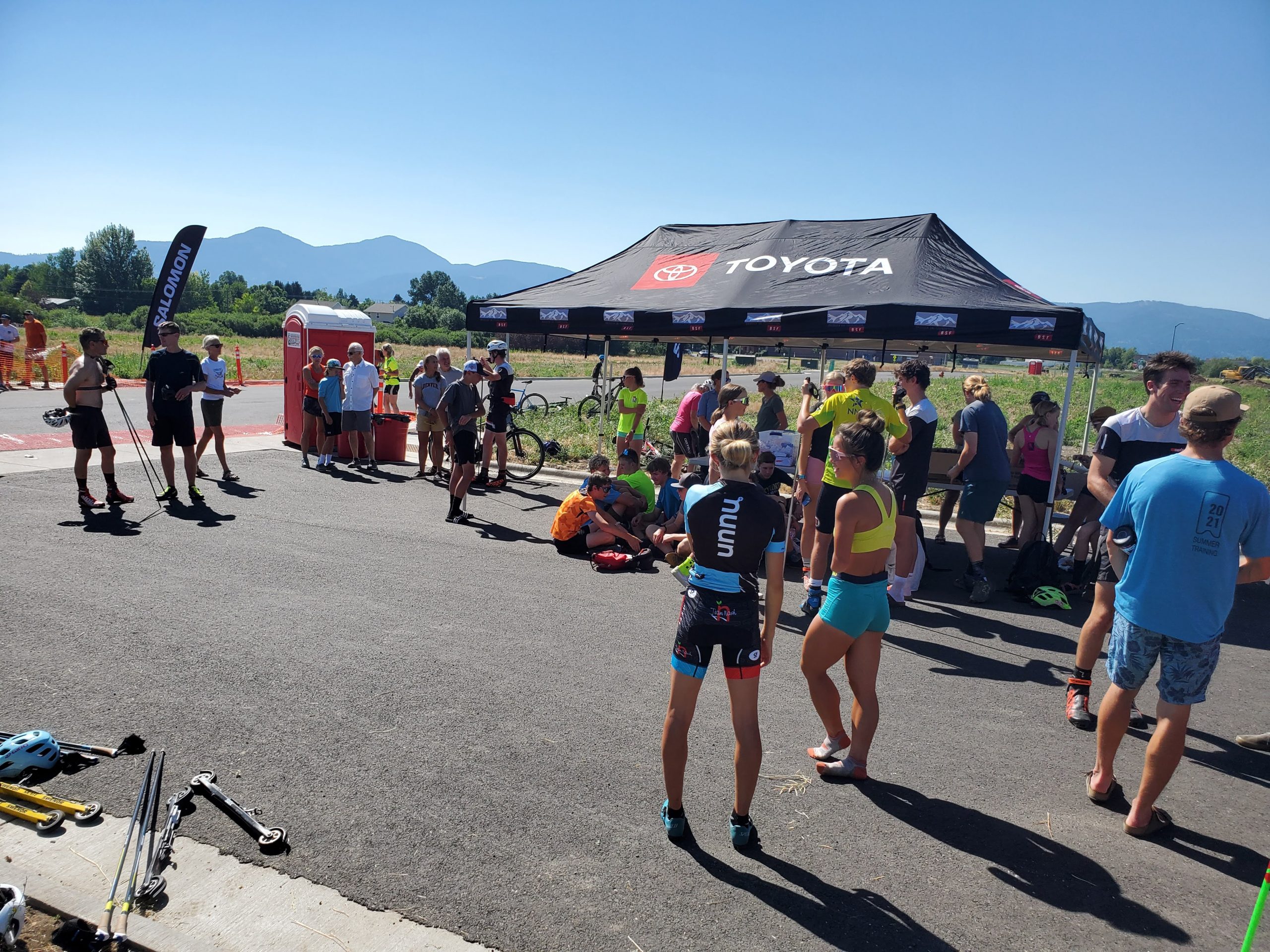
    Men’s Open field rolls out at last weekend’s Jim Bridger Rollerski Races, held in Bozeman, MT (Photo: Jenny White/BSF).

    BOZEMAN – Jim Bridger was a mountain man. One of those figures born firmly entrenched in the old ways back East, before he split for the Mountain West for something new. A character to chart a theme pervasive through the American vision of the West – that ability to make something new and pursue it with everything you got.

    It’s a tortured and uncomplicated metaphor (Bridger was one of the first white men into the intermountain West, but of course, wasn’t the first person to exist there). But if you were going to distill that character, and tap in purely to that “Pioneer, O Pioneer” spirit, you could do worse than the Bridger Ski Foundation (BSF) Pro Team Head Coach Andy Newell.

    For most of the 21st century, Andy Newell was a metonym for the very top of American men’s skiing. Through four Olympics, 220 World Cup starts, and breakthroughs every step of the way, Newell was there, making the in-roads that a generation of men’s skiers is now picking up on. Newell retired from racing in 2018, and in just four years has quickly transitioned his ebullient energy into setting up a coaching consulting business, Nordic Team Solutions, expanded BSF’s Nordic programming to include a successful Pro Team, and made Bozeman’s mountains and plains a popular training ground for collegiate athletes during their summers.

    Andy Newell in his latest roll as Race Director last Saturday in Bozeman. (Photo: Jenny White/BSF).

    Long home to an established nordic community with Montana State’s NCAA program and BSF, the efforts of Newell and the athletes he works with have been based in an effort to re-think and try out approaches to skiing development, training, and culture in Bozeman, and in the larger U.S. Ski Community. And in the latest example, that meant looking at a nearly 30-year-old BSF-held running race and saying, why not add a rollerskiing event?

    The 29th annual Jim Bridger Trail Run last weekend then, also marked the 1st annual Jim Bridger Roller Ski Races. And the impetus, as for many things with Andy Newell, was to simply go all in on nordic in the pursuit of promoting the sport. “I’ve always loved racing the big European rollerski races like Blink and Toppidrettsveka. I thought this would be a fun opportunity to pair a legit rollerski event with a trail run and host them back-to-back. Having races like this is a great development tool for athletes” said Newell, in an email to FasterSkier. The races also acted as a fundraiser specifically for the BSF Pro Team, which has been one of the fastest growing and competitive programs in the U.S. since it was founded. Something that Newell talked about at length with FasterSkier earlier this summer.

    Andrew Morehouse, BSF’s Nordic Program Director also added that the impulse to bring rollerski races inspired by those in Scandinavia to the United States is one that has been successful in the East and Midwest, but hasn’t found its way out West quite yet, “We’ve seen the success of roller ski races in the East and have talked within the Intermountain Division of how we can create a meaningful roller ski race series for our athletes in the West. I think this race, along with the Schutzenski Festival in Utah (to be held at Soldier Hollow during the US Ski Team’s Fall Camp there this October), is a great step towards that goal.”

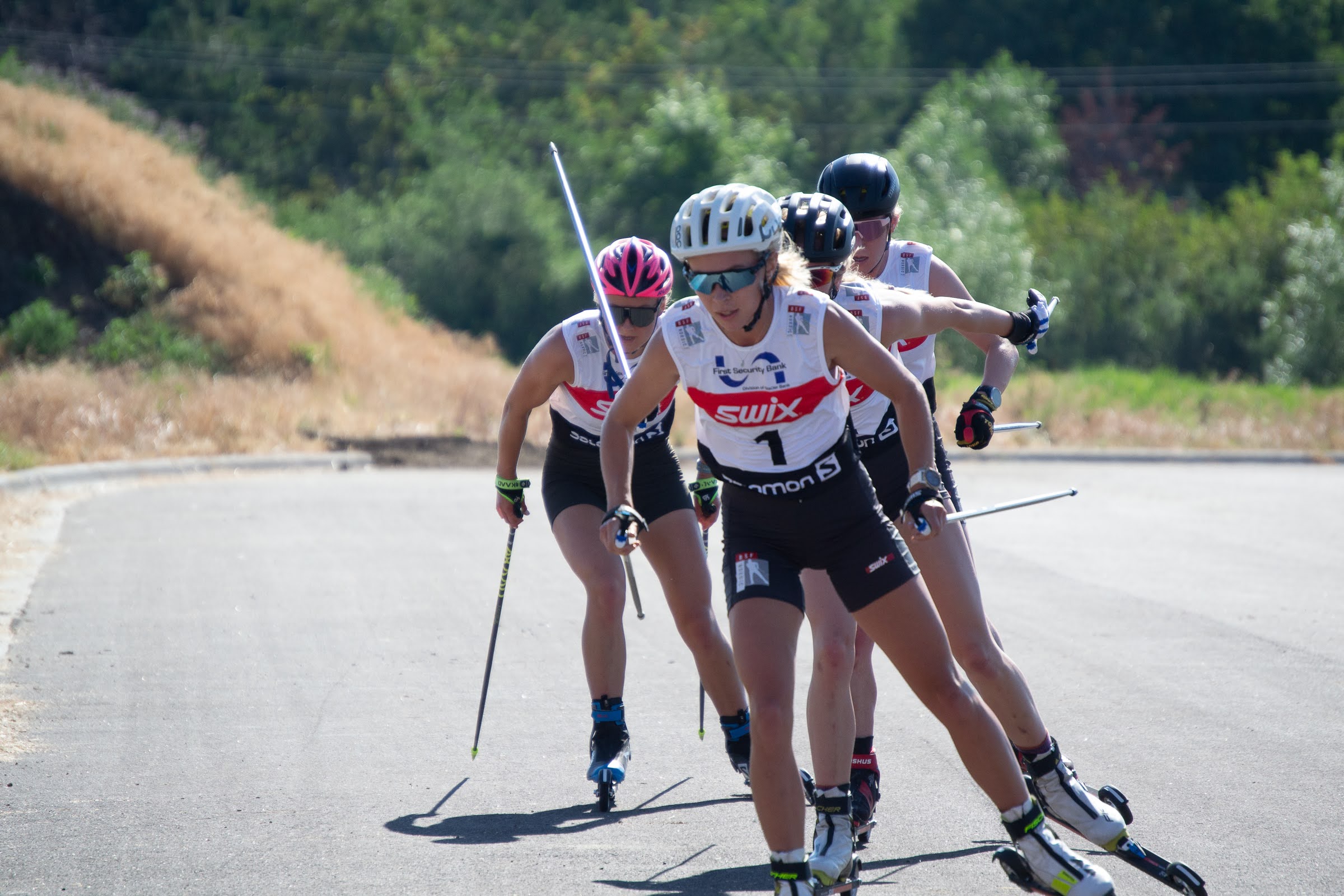
    The Women’s Open field goes into a corner during their 12 k race in Bozeman last Saturday. (Photo: Jenny Smith/BSF).
    Inaugural Jim Bridger Rollerski Race Report

    In the pursuit to bring top-level rollerski racing to the hot, dry, and high Mountains out west, BSF’s efforts were a success.

    A field full of BSF’s Pro and Comp (U14-U20) program athletes, along with racers from across the Intermountain West and a strong contingent of collegiate racers sure to show up on Eastern Carnival result sheets this winter made for an incredibly competitive and robust field.

    They raced distances of either 6 k for the U16/U18 fields, or 12 k for U20/Open field on a 1.5 k loop that took them around the streets south of the Montana St. campus in Bozeman. The design was in line with the vision of promotion for the event, “high speed, multi-lap races right in [town] to make it spectator friendly and exciting,” said Newell. As with many roller ski events, racers also were provided matched skis, in this case from sponsors Swix and Solomon.

    All races were skate, and with relatively flat terrain on course, that made for an event in which there was hardly a V1 to be seen. This was a day for V2, and a great opportunity for athletes to work theirs at max-effort next to other skiers and see where they can tweak their power application and tempo. Rollerski races, by design, are meant to be a stepping stone in training on the way to next winter, after all.

    The early going in both the men’s and women’s open field were tight-packed affairs. Racers hemmed and hawed through tight-corners to bring the top-end of the field together, until slowly but surely, those lead packs became smaller and smaller.

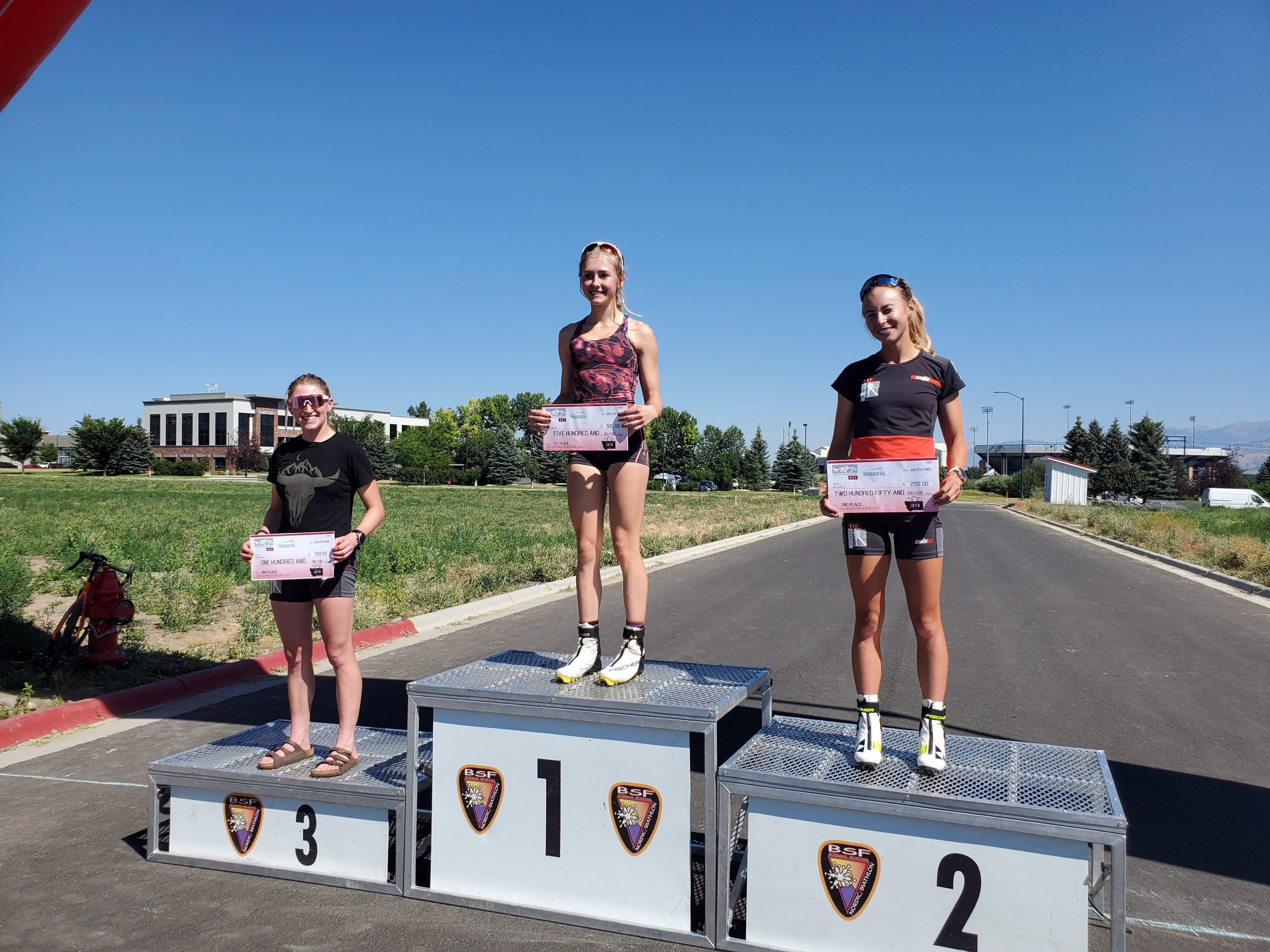
    In the women’s field, the last couple laps saw a group containing Dartmouth College (DAR) skier Nina Seeman, along with BSF Pro members Mariah Bredal and Sarah Goble gain an advantage. There was nothing between them until the race’s end, when Seeman and Bredal broke for a final sprint, and Seeman came away the winner (27:58). Bredal finished second (27:59), with Goble coming in shortly after (28:07) to complete the podium.

    Mariah Bredal (BSF) leads the Women’s field. Bredal finished 2nd overall to Nina Seeman (Dartmouth), tucked in 2nd place here. (Photo: Jenny Smith/BSF).

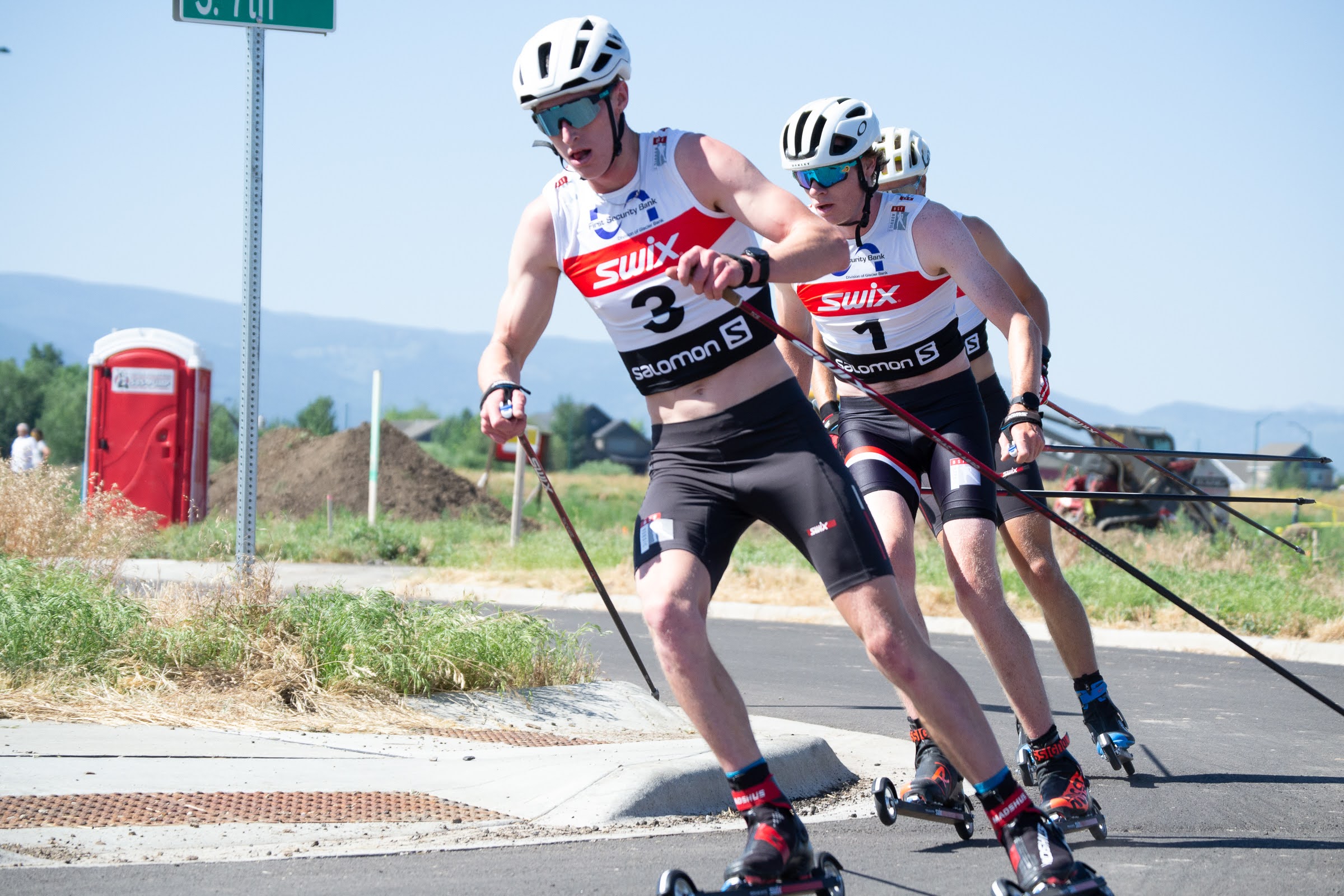
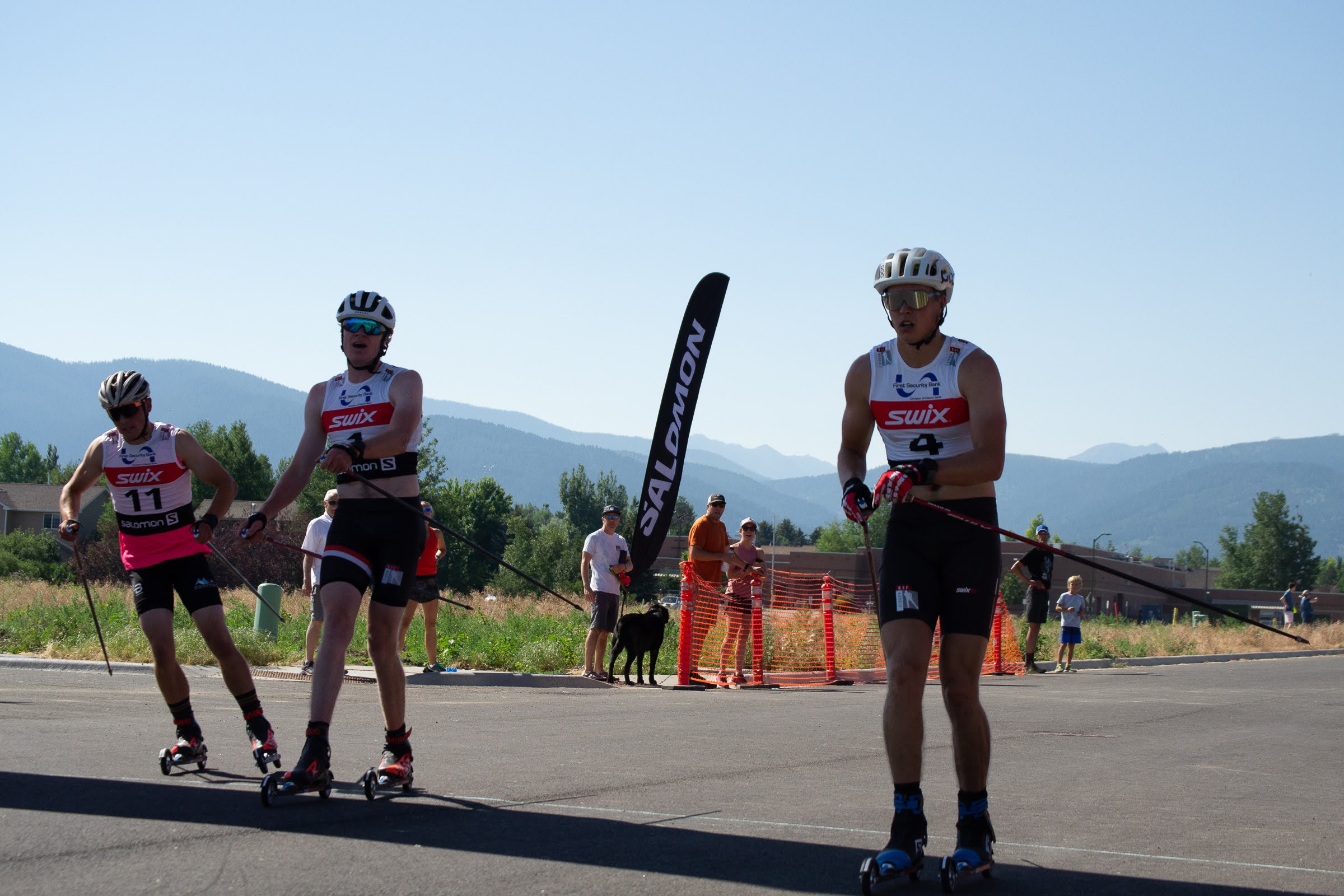
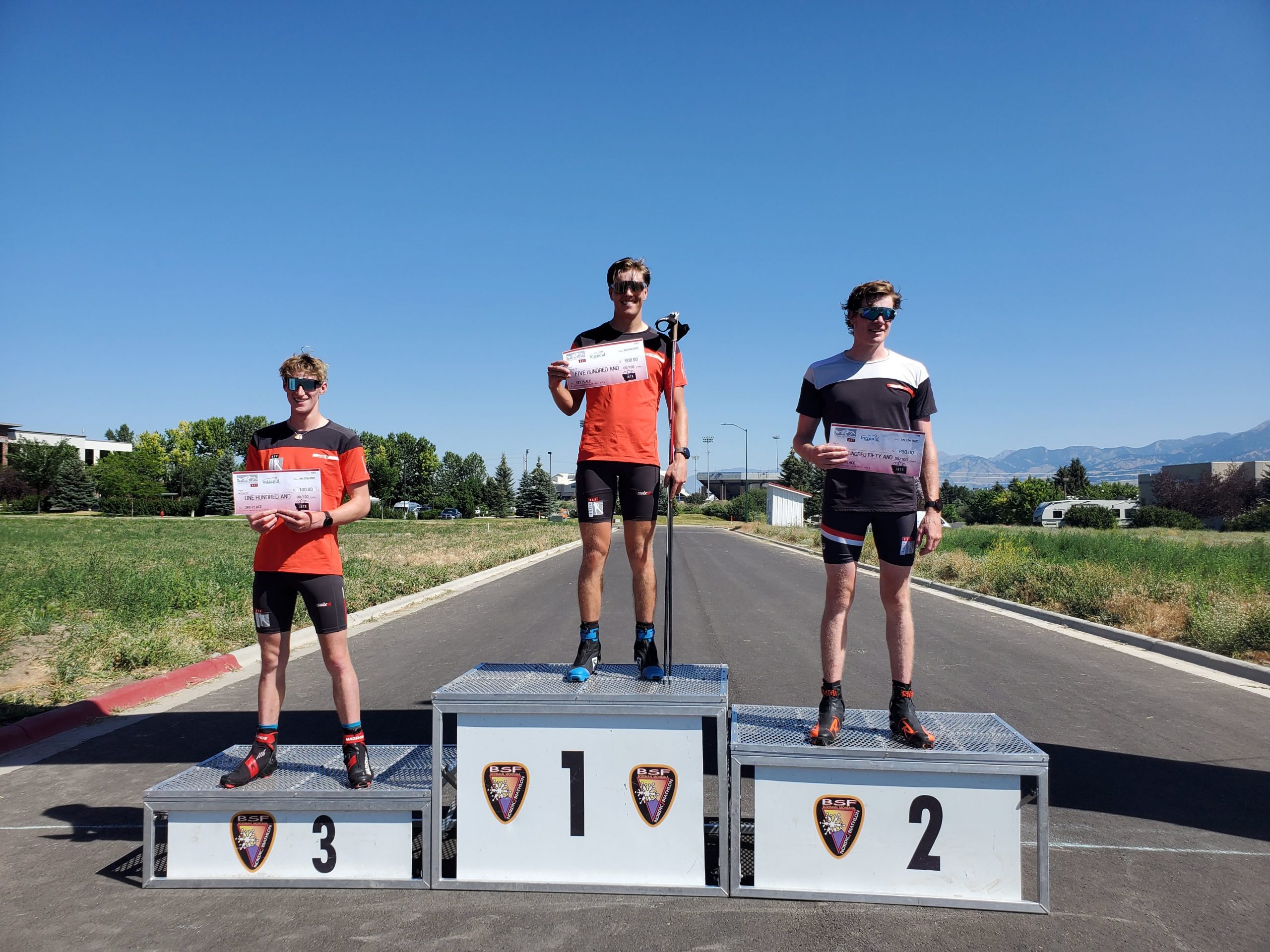
    The men’s field saw a similar battle at the finish between three of BSF Pro’s leading lights. Into the final lap, Logan Diekmann, Finn O’Connell and Reid Goble were locked into a pack, with the promise of a true sprint all but assured for spectators. Goble found himself leading the pack for most of the lap, with O’Connell taking second wheel and Diekmann in third. Diekmann and O’Connell then launched their attack from behind their would-be lead-out, with Diekmann putting just enough gap over the line that the rare (and dangerous) rollerski lunge finish wasn’t needed. Diekmann in first (24:44), O’Connell in second (24:45), with Reid Goble rounding out the podium in third place (24:57).

    Above – Reid Goble (BSF) leads Finn O’Connell (BSF) and Logan Diekmann (BSF) in the final lap of the Men’s Open 12 k. Below – Diekmann takes the sprint finish ahead of O’Connell. (Photos: Jenny White/BSF).

    In the 12 k U20 Women’s race, St. Scholastica (CSS) skier Mia Case took the win over Park City’s Elena Grissom in second, and Sidney Benyon. The 12 k U20 Men’s race BSF’s Phin Fischer took first place ahead of Sumner Cotton (BSF) in second and third place Soren Davidson (BSF).

    The inaugural BSF roller ski races were filled with fields of those who will find themselves at the top of NCAA, SuperTour, and even perhaps a World Cup this winter. That’s not bad for an inaugural running on the southside streets of Bozeman, and is yet another marker of the city, and Bridger Ski Foundation’s growth and development into a leader in the country’s ski community.

    Many skiers then showed up to put impressive results up in Sunday’s Jim Bridger 10-mile Trail Run. Reid Goble (BSF) placed second overall (1:20:24), Peter Wolter (Sun Valley) was third (1:21:17), and Finn O’Connell (BSF) fourth (1:22:24). Mariah Bredal won the Women’s race (1:26:59), with Hannah Rudd (BSF) third (1:35:03), and Sarah Goble (BSF) fourth (1:37:37).

    The BSF, and Bozeman, Nordic community together in Bozeman for some rollerski racing. (Photo: Jenny Smith/BSF).

    Junior Rollerski Results:

    U18 6 k Women:

    1st Natalie Nichols

    2nd Elsa Futch

    3rd Keely Fischer

    U18 6 k Men:

    1st Woody West

    2nd Jasper Jacobson

    3rd Nate Strubel

    U16 Women:

    1st Izzy Waters

    2nd Necia Nichols

    3rd Olivia Nelson

    U16 Men:

    1st Lucan Fascio

    2nd Colton Petsch

    3rd Ian Carmack

    Full Running Results here

    Video Highlights!

    Men’s Open Field podium. 1st – Logan Diekmann (BSF). 2nd – Finn O’Connell (BSF). 3rd – Reid Goble (BSF).
    Women’s Open Podium. 1st – Nina Seeman (Dartmouth). 2nd – Mariah Bredal (BSF). 3rd – Sarah Goble (BSF). (Photo: Jenny White/BSF).
  • Elite Team Preview: Sun Valley XC Gold Team

    Elite Team Preview: Sun Valley XC Gold Team

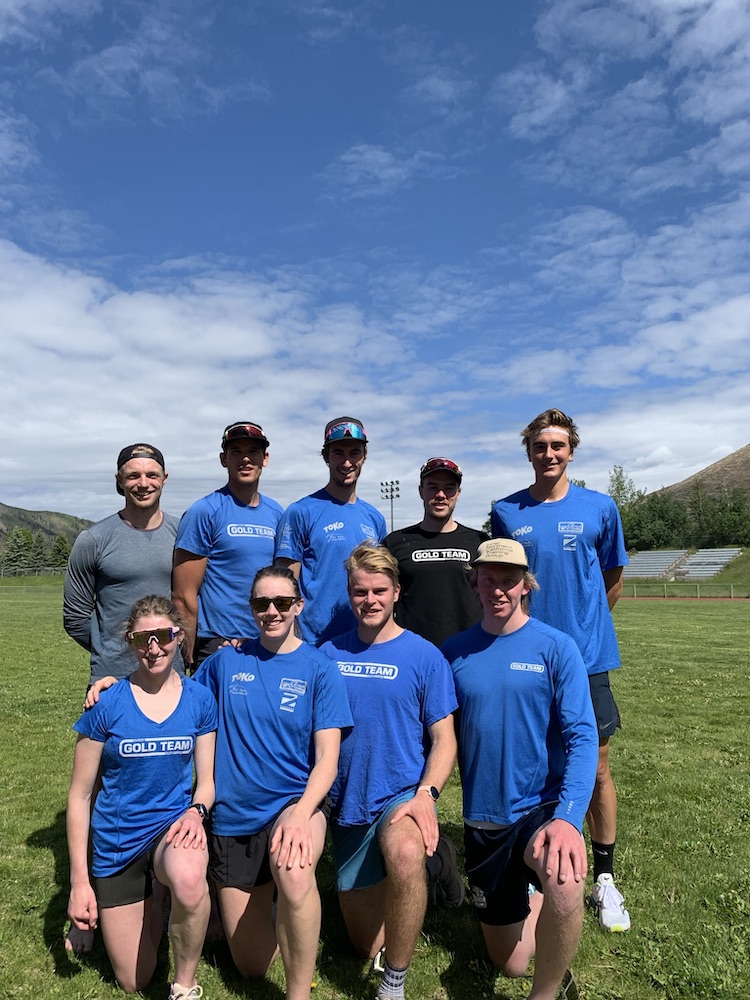
    SVSEF XC Gold Team. (photo: courtesy SVSEF)

    Team name and location: Sun Valley Ski Education Foundation XC Gold Team (Sun Valley or SVSEF); Ketchum, Idaho

    Coach: Chris Mallory

    Current roster: Kevin Bolger, Katie Feldman, Sarah Goble, Sam Wood, Karl Schulz, Johnny Hagenbuch, Peter Holmes, Peter Wolter, Jake Adicoff

    Who’s new: Peter Wolter and Jake Adicoff

    Who’s missing: n/a

    Who’s still on this team, or otherwise involved in American skiing, from when we did this in 2012: No one; Simi Hamilton recently retired, and Patrick Johnson was long involved in coaching, but no one currently

    SVSEF athletes at the 2021 American Birkebeiner. (photo: courtesy SVSEF)

    Top results last season: Bolger made five individual sprint heats last season, highlighted by 6th in the final in Dresden and 13th in Davos in the quarters, both in December. He finished the season ranked 16th in the Sprint Cup, and based on that metric, is the top returning American sprinter now that Simi Hamilton (14th) has retired. Hagenbuch made his World Cup debut with a pair of March distance races in Engadin, SUI (69th and 72nd) and had three starts at World Juniors in Vuokatti, FIN in February, with a best finish of 17th in the 10-kilometer skate. Domestically, he had two second-place finishes against deep regional fields in Soldier Hollow in January. Holmes raced in the World Cup sprint weekend in Ulricehamn, SWE last February, and was first and fourth in Soho January sprints.

    Domestically, the team had a very strong showing in the American Birkebeiner, with a combined nine top-10 finishes between the men’s and women’s skate and classic fields. In the skate race, Hagenbuch won the men’s race, with Wood 2nd, Schulz 9th, and Holmes 10th. Feldman was 4th for the women. In the women’s classic race, Feldman was 3rd. For the men, Hagenbuch was 2nd, Sam Wood 6th, and Holmes 8th.

    Going back to March 2020, Feldman was scheduled to make her World Cup debut in the ill-fated Québec City races. Bolger and Holmes had starts for the men.

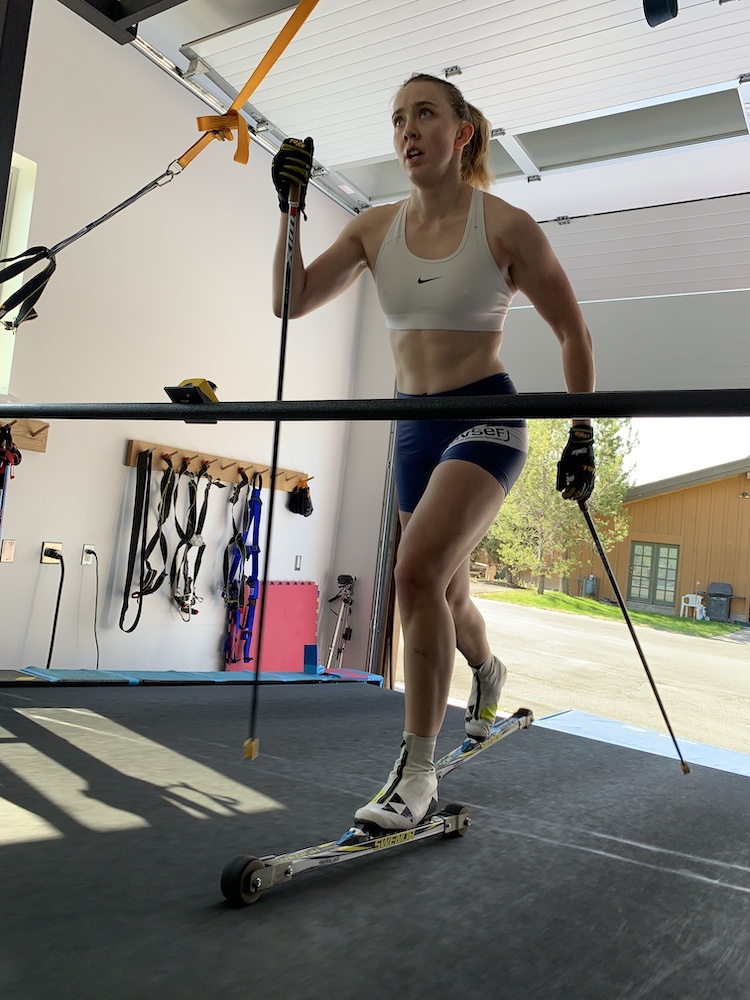
    Rollerski treadmill training, summer 2021. (photo: courtesy SVSEF)

    Coach’s comments: Here’s Chris Mallory on the new additions to the team: “Peter [Wolter] came up through the SVSEF program and is finishing up at Middlebury this spring. Jake [Adicoff, a visually impaired skier and biathlete] didn’t compete much the last few seasons, but found the fire again this past year and will also ski with the US Paralympic Team this season. One of our other current Gold Teamers, Sam Wood, will work as Jake’s guide, so that’s exciting going into Bejiing.”

    And here’s Mallory on recent training and the current team mood: “The training season has been going well. With the full team returning we were able to push the training pretty hard. We spent a large portion of the summer training in Sun Valley, so we had a lot of consistency there, but we were also able to add some camps again which was nice. We did a May Bend Camp, teamed up with BSF and Stratton some to put together an intensity block in Lake Placid, and recently spent a week in Park City with the National team. Kevin just traveled to Sweden to start prepping in Scandinavia for the World Cups, while the rest of the squad just arrived in Canmore yesterday to get some early snow time in at Frozen Thunder.
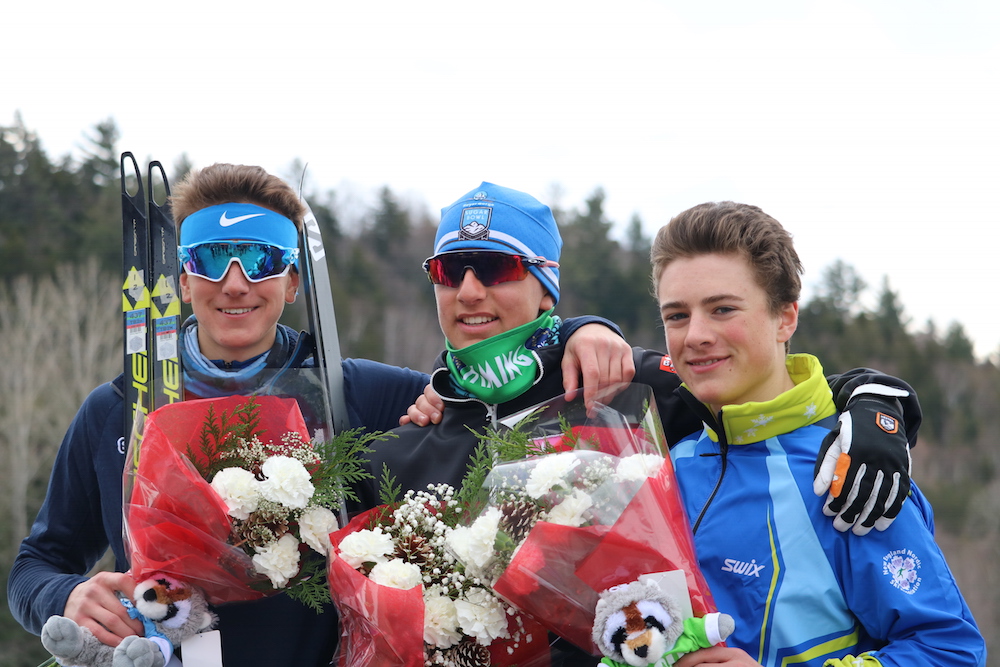
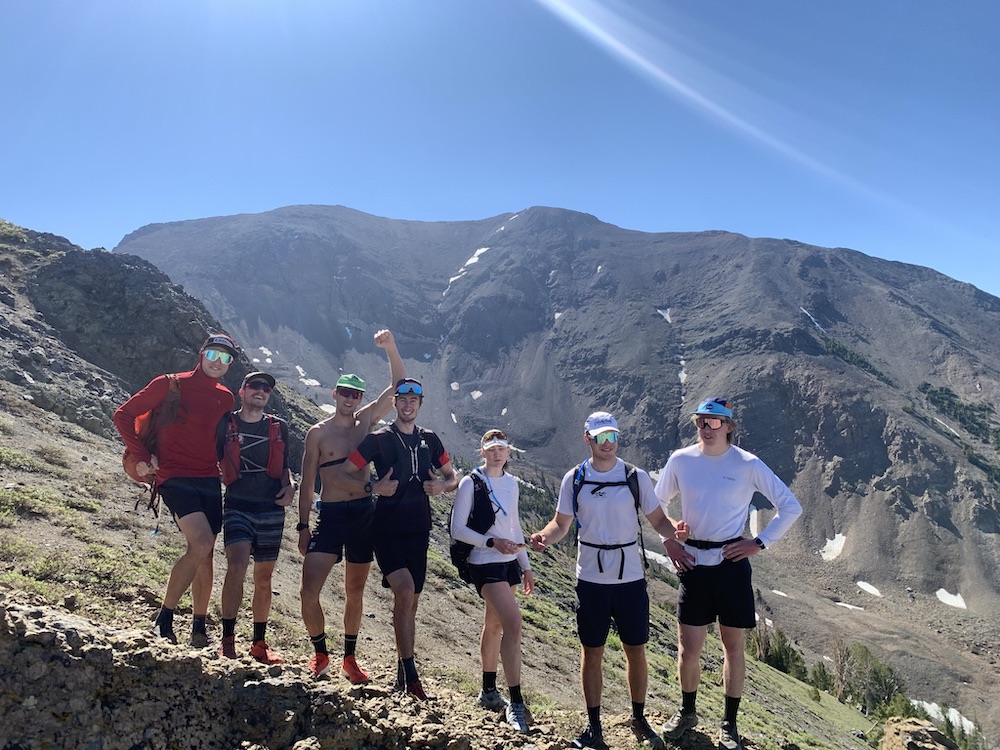
    SVSEF athletes, fall 2021. (photo: courtesy SVSEF)

    “We’re looking forward to a busy domestic race circuit. After spending last season racing regionally and putting together time trials to keep the motivation up, the team is looking forward to seeing friends again and the added competition the national circuit brings. SVSEF is hosting the post-Nationals SuperTour in January as a big Intermountain junior event/RMISA collegiate race, so we’re really looking forward to that as well.”

    Related coverage: September 2021 piece on Bolger’s summer training; 2019 Nordic Nation interview with Bolger; recent Expressen (Swedish tabloid) piece featuring Swedish sprinter Maja Dahlqvist’s plea to be able to see her boyfriend, Bolger, more this season: “you cannot stop love”

    Previously in this series: BSF | SMS | Team Birkie

    SVSEF athletes, summer 2021. (photo: courtesy SVSEF)
  • Monday Rundown: Junior Nationals Open in Lake Placid

    Monday Rundown: Junior Nationals Open in Lake Placid

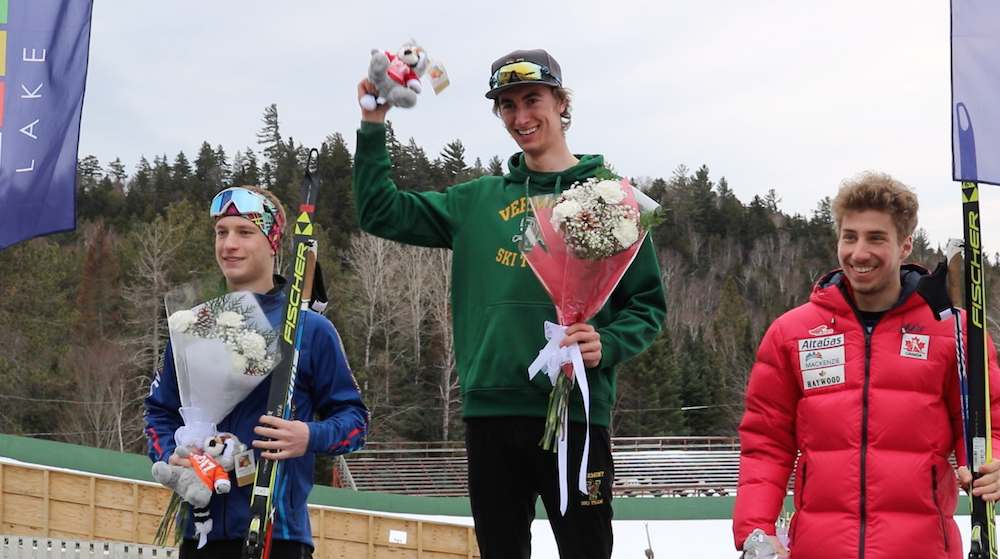
    The U20 men’s 10 k freestyle podium on Day 1 of 2017 U.S. Junior Nationals in Lake Placid, N.Y., with Lake Placid’s own Karl Schulz (c) of the University of Vermont in first, Hunter Wonders (l) of Alaska Pacific University in second, and Canada’s Étienne Hébert (r) of Montériski in third. (All photos: India Harvey)

    USSA Cross Country Junior Championships (Lake Placid, N.Y.): 5/10 k freestyle individual starts

    The U.S. Ski & Snowboard Association (USSA) Cross Country Junior Championships (a.k.a. Junior Nationals) opened Monday in Lake Placid, N.Y., with U16, U18 and U20 men’s and women’s 5/10-kilometer freestyle individual start races taking place at the Olympic Jumping Complex trails just up the road from Mt. Van Hoevenberg, where organizers had originally planned to host the weeklong event. A lack of natural snow led to the use of a 2.5-kilometer loop on manmade snow at the Olympic Jumping Complex, US Biathlon’s home training base.

    The U20 men’s 10 k freestyle proved to be the closest race of the day, with Karl Schulz, a University of Vermont (UVM) freshman who grew up in Lake Placid, winning by 0.1 seconds over Alaska’s Hunter Wonders, of Alaska Pacific University (APUNSC), in second place. Racing for the Mid-Atlantic division, Schulz clocked the fastest time in 24:58.6 minutes, which was 33 seconds faster than Canadian third-place finisher Étienne Hébert, of Montériski. New England’s Daniel Streinz (Mountain Endurance) was the third American in fifth overall, 59 seconds off Schulz’s winning time and 16.4 seconds behind another Canadian, Ty Godfrey (Canmore Nordic/Team R.A.D.) in fourth.

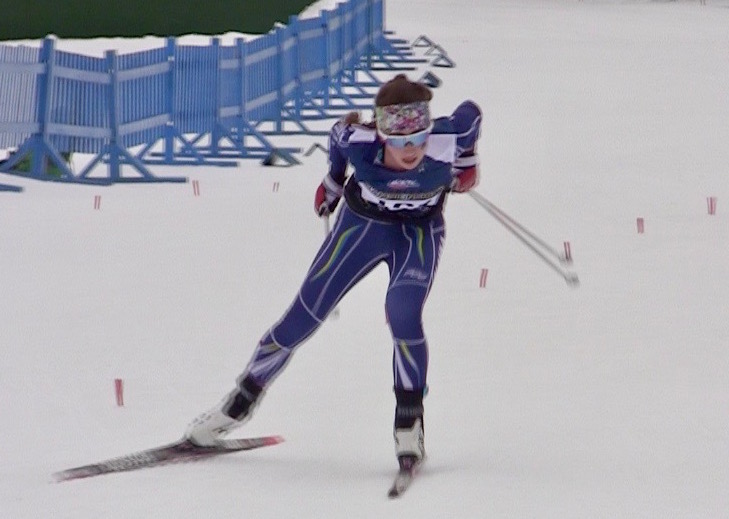
    Julia Kern (New England/SMS) racing to the win in the U20 women’s 5 k freestyle on Monday at 2017 U.S. Junior Nationals in Lake Placid, N.Y.

    Julia Kern, of New England and the Stratton Mountain School (SMS), won the U20 women’s 5 k by the biggest margin of the day: 42.4 seconds in 13:48.5. Canada’s Katherine Weaver (Hollyburn XC Ski Club) placed second and UVM’s Mackenzie Rizio took third (+43.9), while Sarah Goble (Great Lakes Division/Sun Valley) was the third American in fourth overall (+49.3).

    The U18 boys’ 10 k freestyle podium on Monday at U.S. Junior Nationals in Lake Placid, N.Y., with Gus Schumacher (c) of Alaska Winter Stars in first, Luke Jager (l) of APU in second, and Ben Ogden (r) of SMS third.

    In the U18 boys’ 10 k, Alaska took first and second with Gus Schumacher, of Alaska Winter Stars (AWS) topping the podium in 25:07.3, and Luke Jager (APUNSC) finishing 3.7 seconds back in second. New England’s Ben Ogden (SMS) notched third (+10.6).

    Alaska’s Margaret Gellert (Alaska Winter Stars) racing to a U18 girls 5 k freestyle victory at U.S. Junior Nationals on Monday in Lake Placid, N.Y.

    Alaska topped the U18 girls’ 5 k as well, with Margaret Gellert (AWS) winning by 17.6 seconds in 14:02.9. Intermountain’s Sofia Shomento (Bridger Ski Foundation) finished second and Rocky Mountain’s Ezra Smith (Summit Nordic Ski Club) placed third (+23.6).

    The U16 boys’ 5 k freestyle podium on the first day of 2017 U.S. Junior Nationals in Lake Placid, N.Y., with Haydn Halvorsen (c) of Sugar Bowl Ski Team & Academy in first, Johnny Hagenbuch (l) of SVSEF in second and Will Koch (r) of SMS in third.

    In the U16 boys’ 5 k race, Far West’s Haydn Halvorsen (Sugar Bowl Ski Team & Academy) raced to a 5.3-second victory over Intermountain’s Johnny Hagenbuch, of the Sun Valley Ski Education Foundation (SVSEF). Halvorsen finished in 12:35.2 minutes, and New England’s Will Koch (SMS) was 29.5 seconds back in third.

    In the U16 girls’ 5 k, Novie McCabe (Pacific Northwest/Methow Valley Nordic Ski Educational Foundation) earned a junior-national title by 1.7 seconds in 14:14.6. Intermountain’s Sydney Palmer-Leger (Park City Nordic Ski Club) placed second and Far West’s Nina Seemann (Auburn Ski Club Associates Inc.) reached the podium in third (+28.8).

    Novie McCabe (83) of Pacific Northwest/Methow Valley Nordic Ski Educational Foundation at the start of the U16 girls’ 5 k freestyle. She went on to win by 1.7 seconds on Monday at Junior Nationals in Lake Placid, N.Y.

    Results: U20 men | U20 women | U18 boys | U18 girls | U16 boys | U16 girls